



The NCERT Solutions for Class 11 Geography Chapter 1 Geography as a Discipline cover 13 exercise questions from the 2026-27 NCERT book. The chapter asks students to understand geography as a study of space, place, physical features, cultural features, maps, field observation, and links with other social sciences.
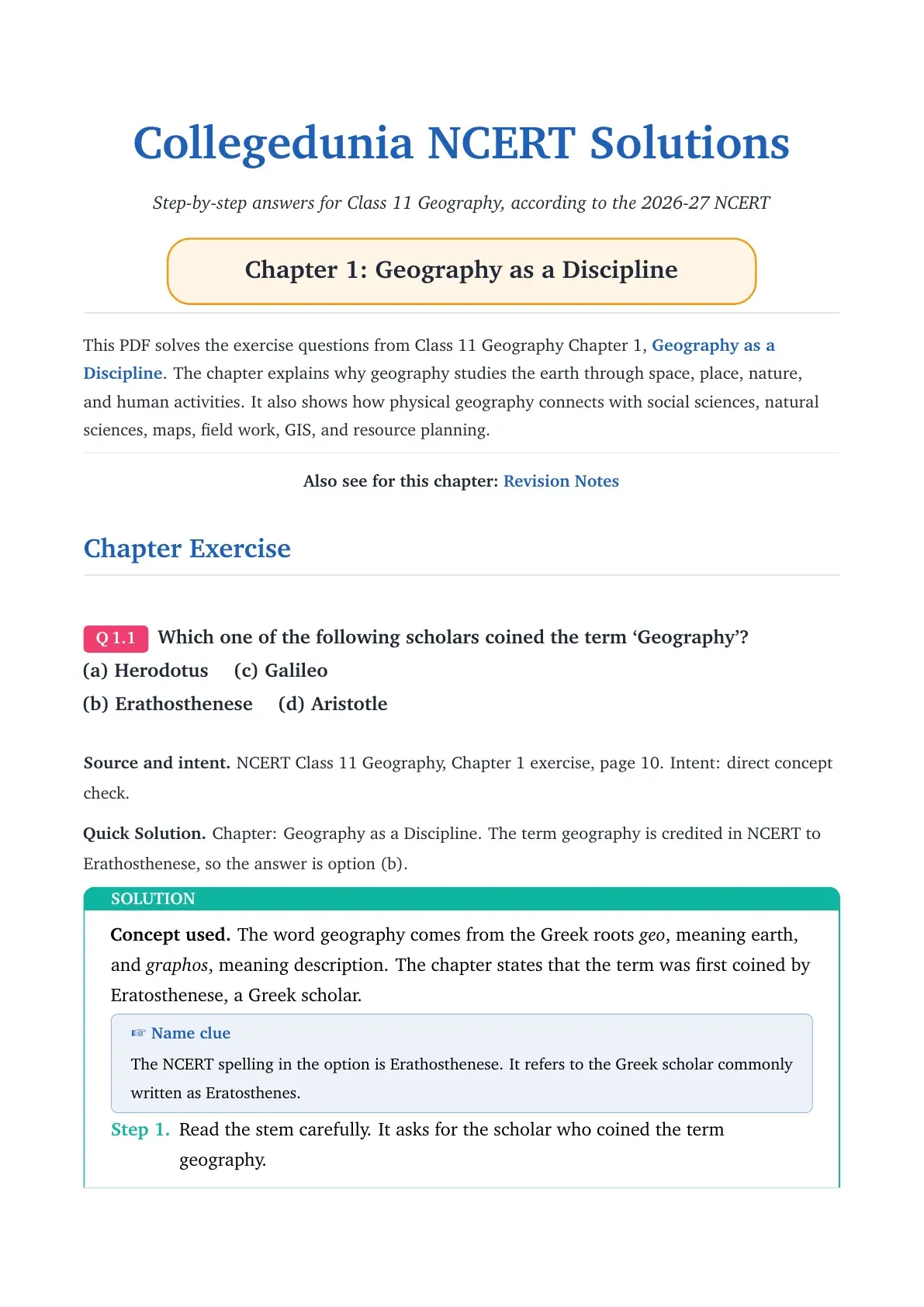
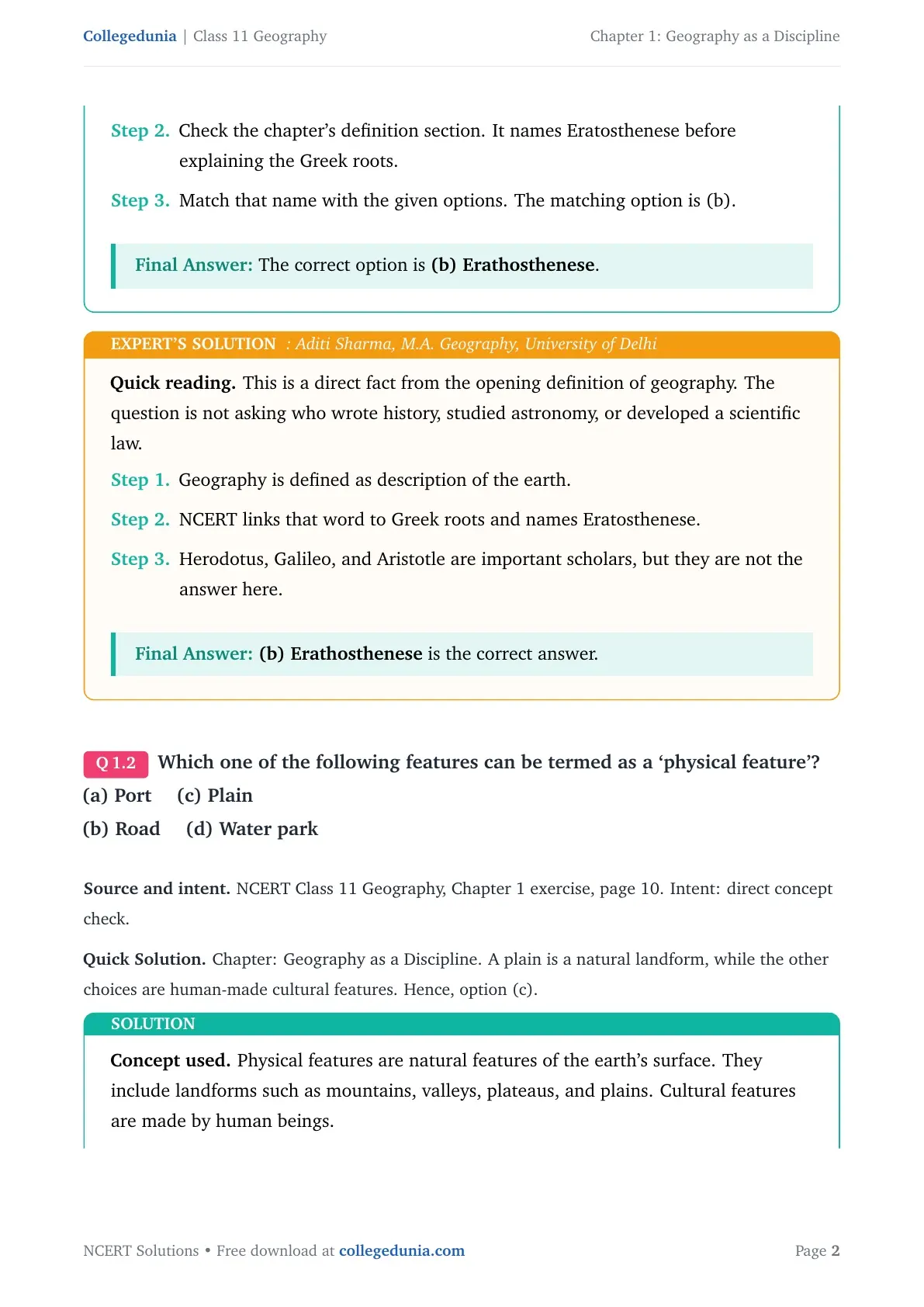
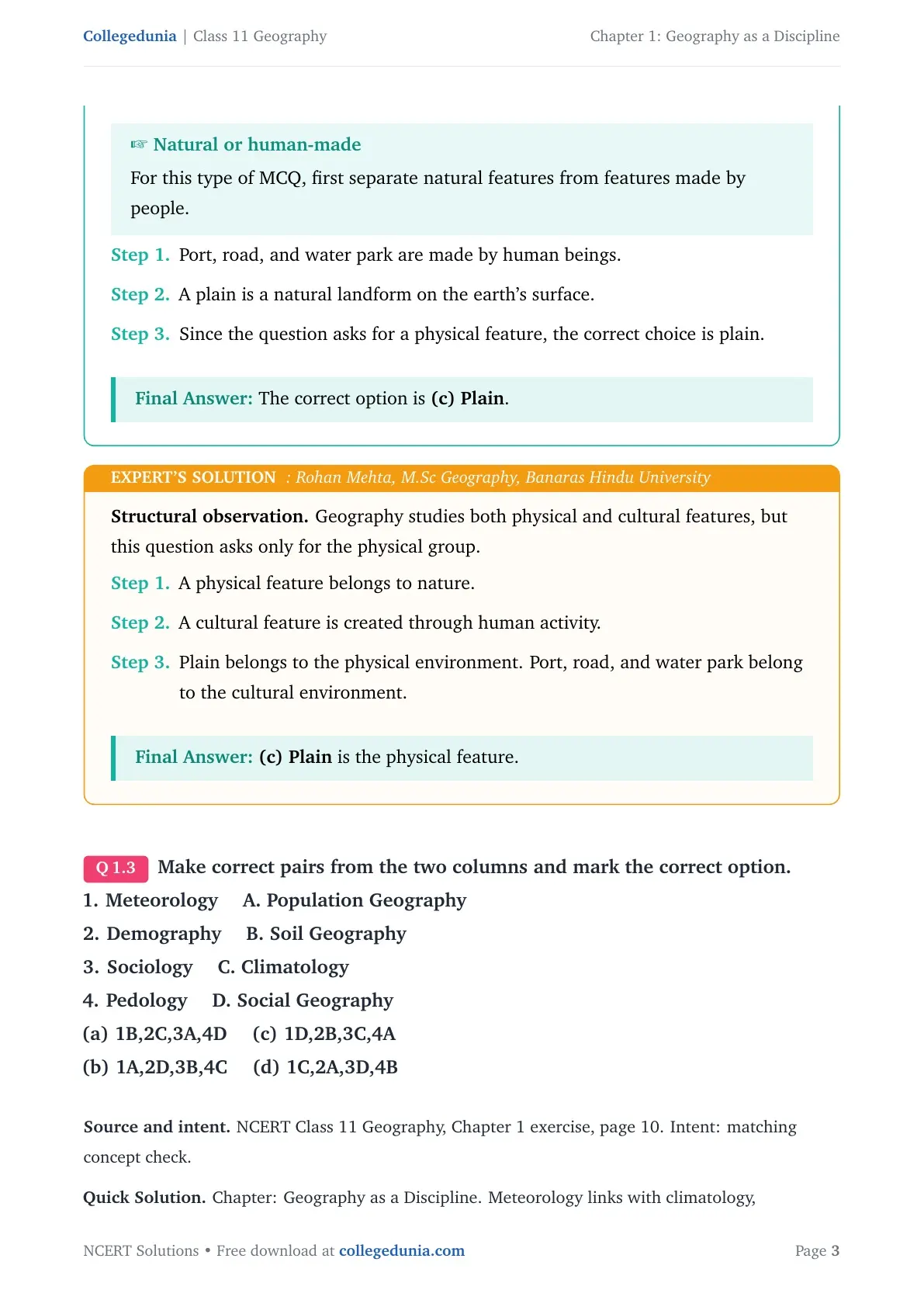
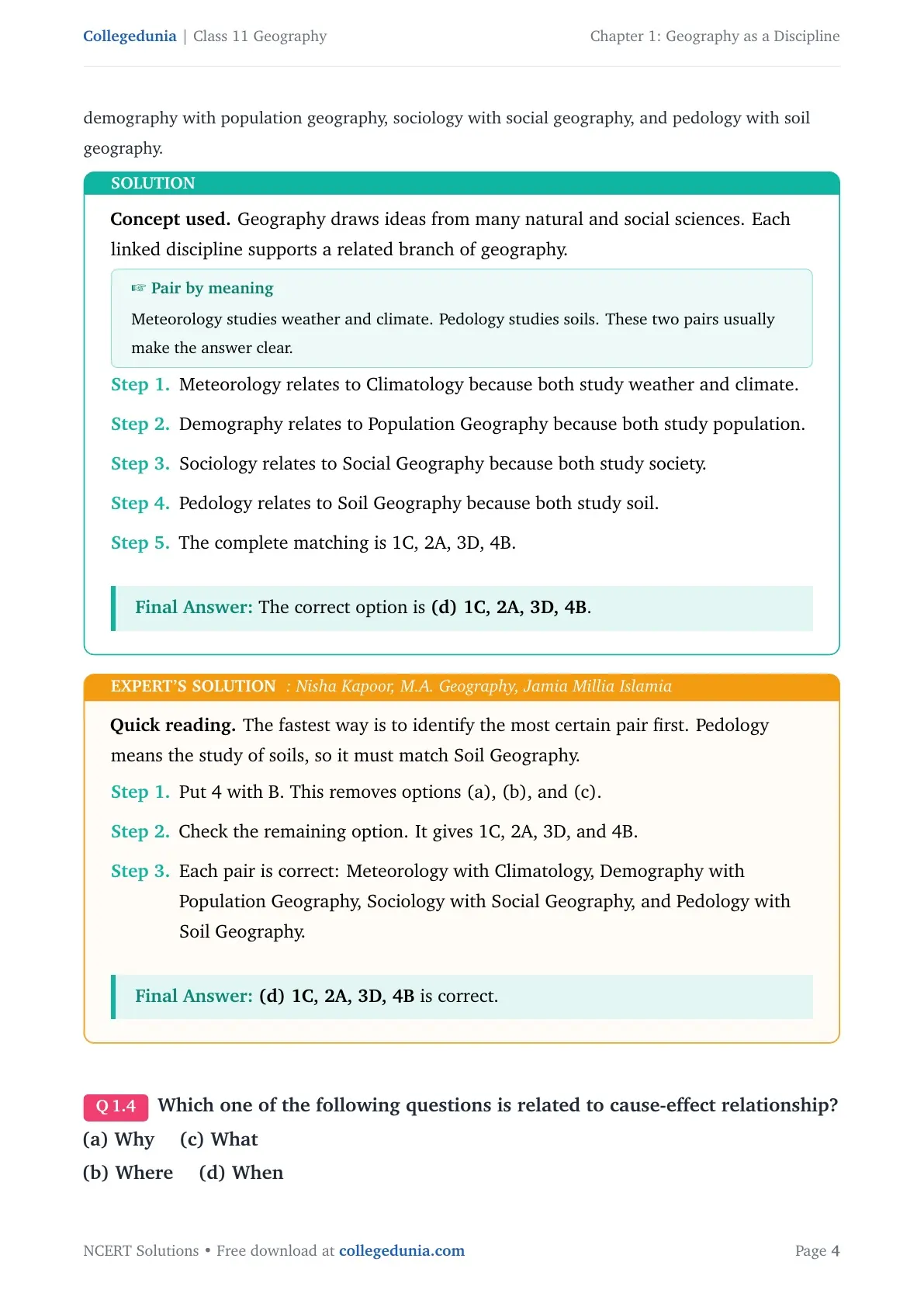
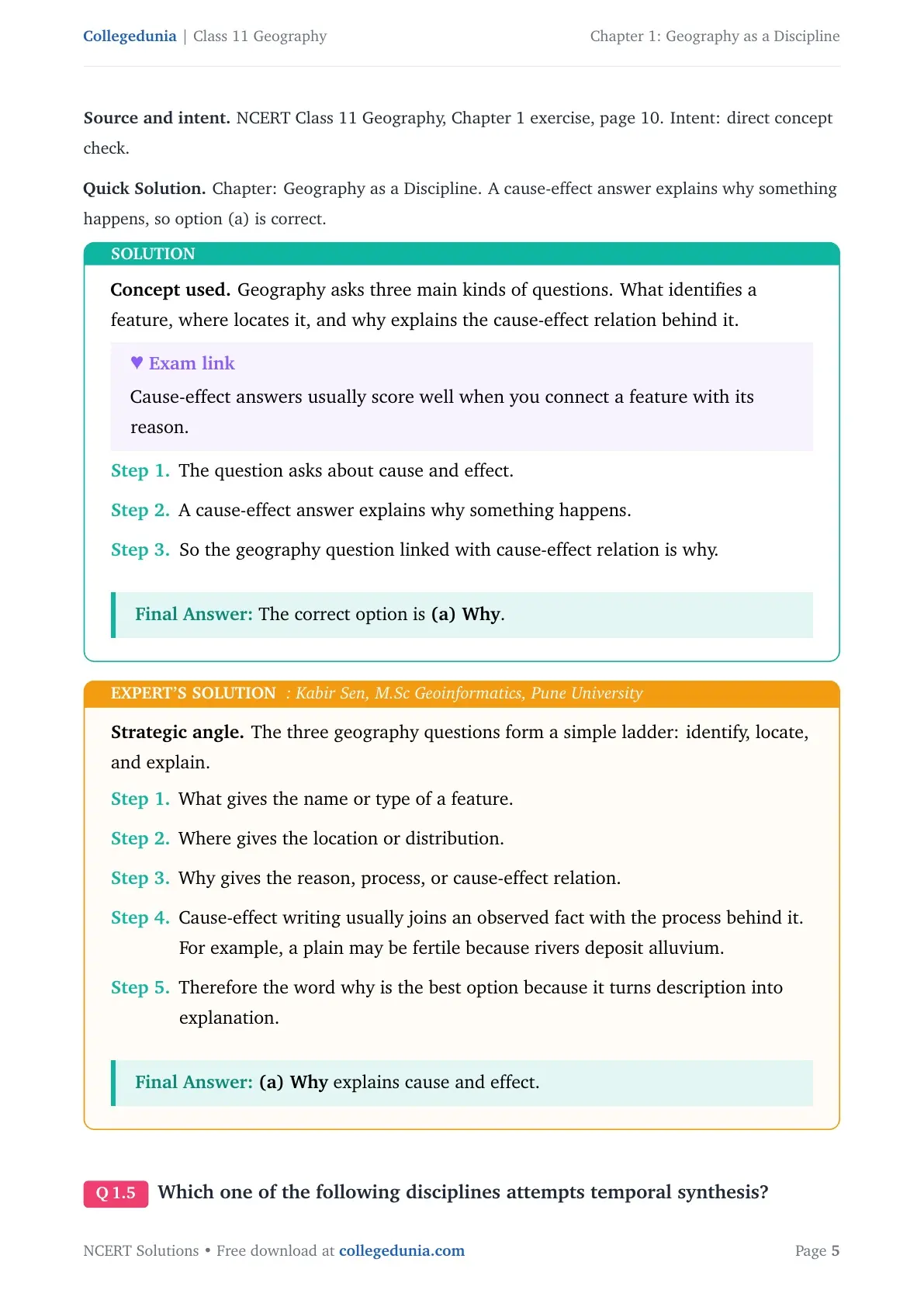
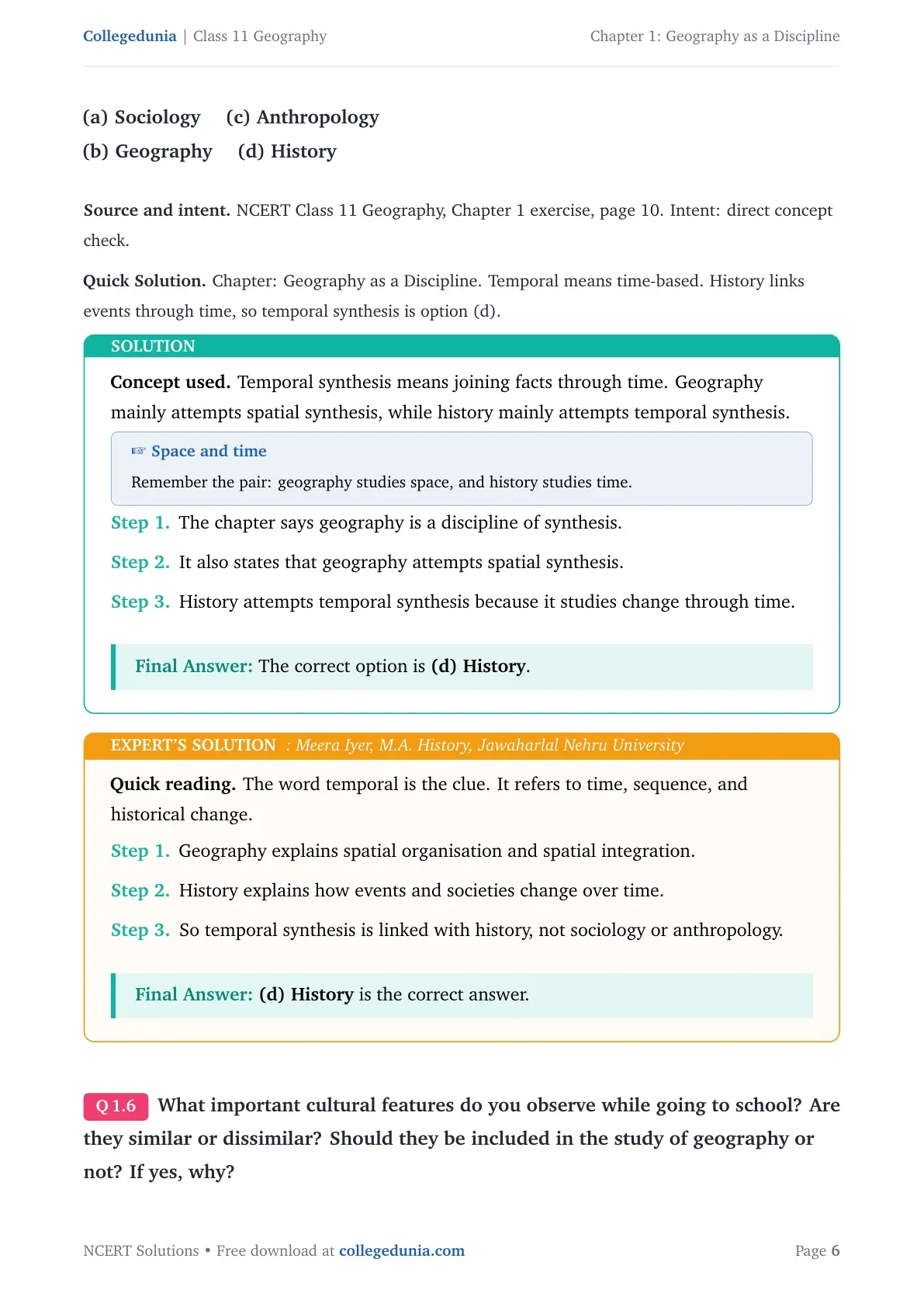
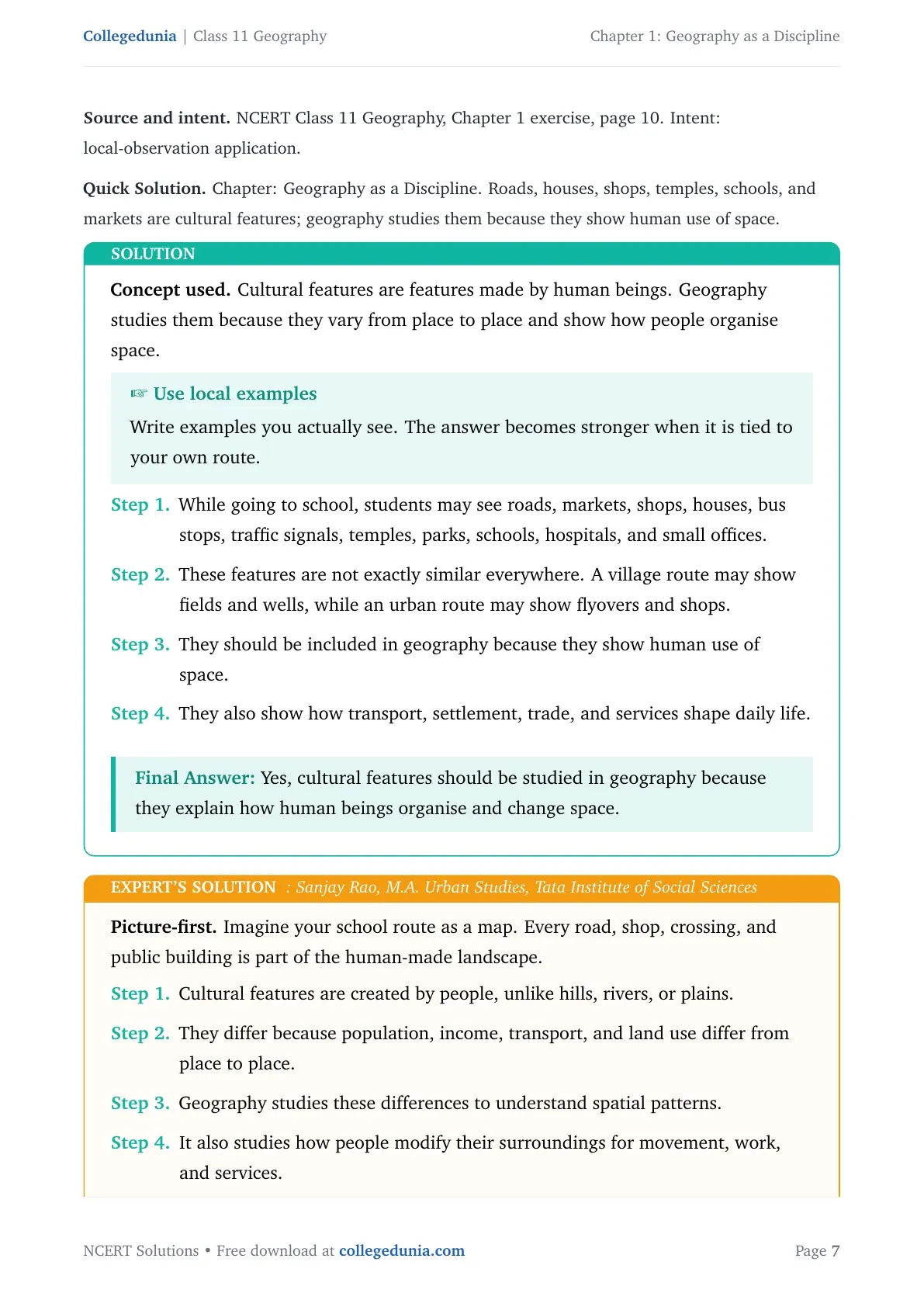
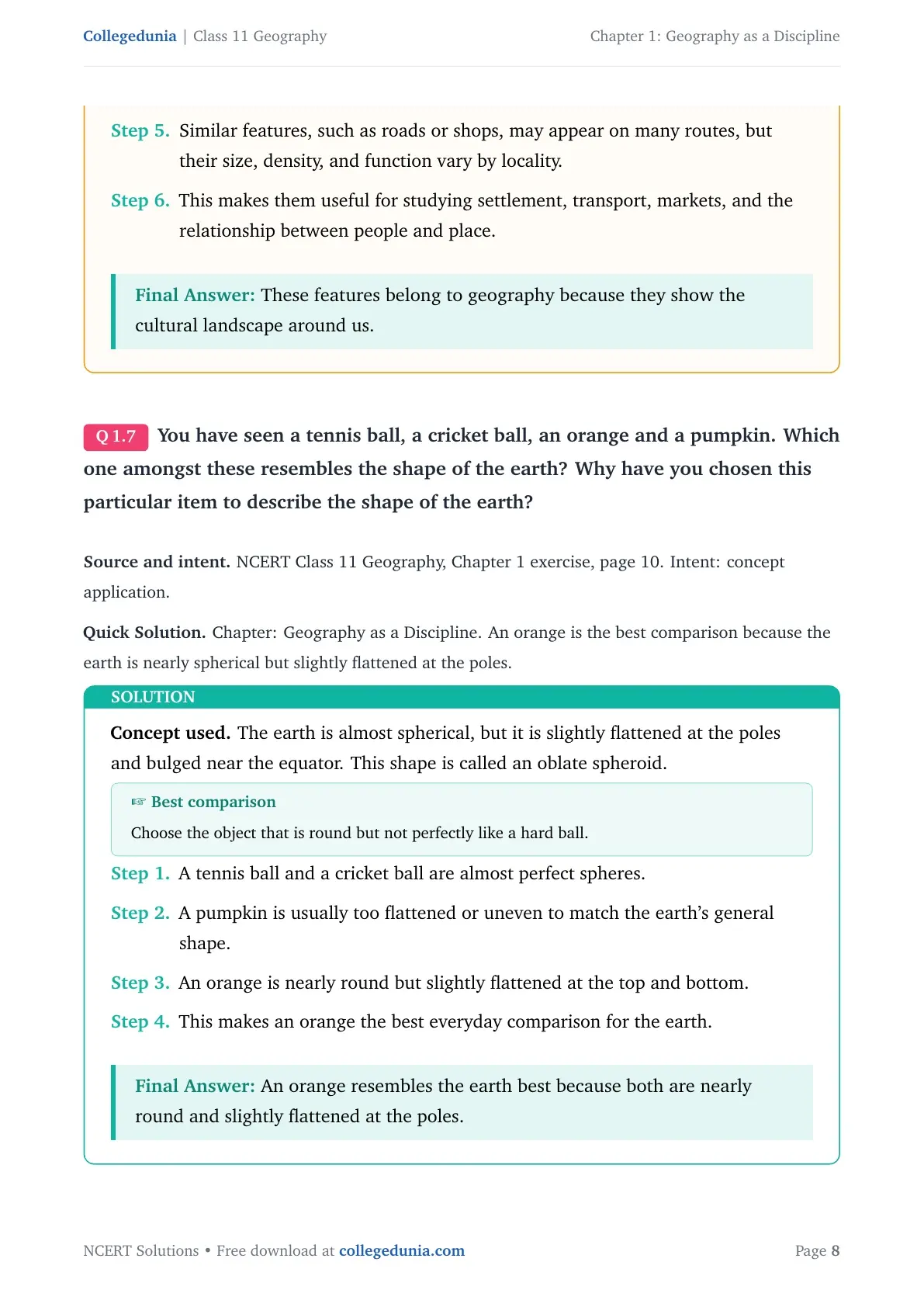
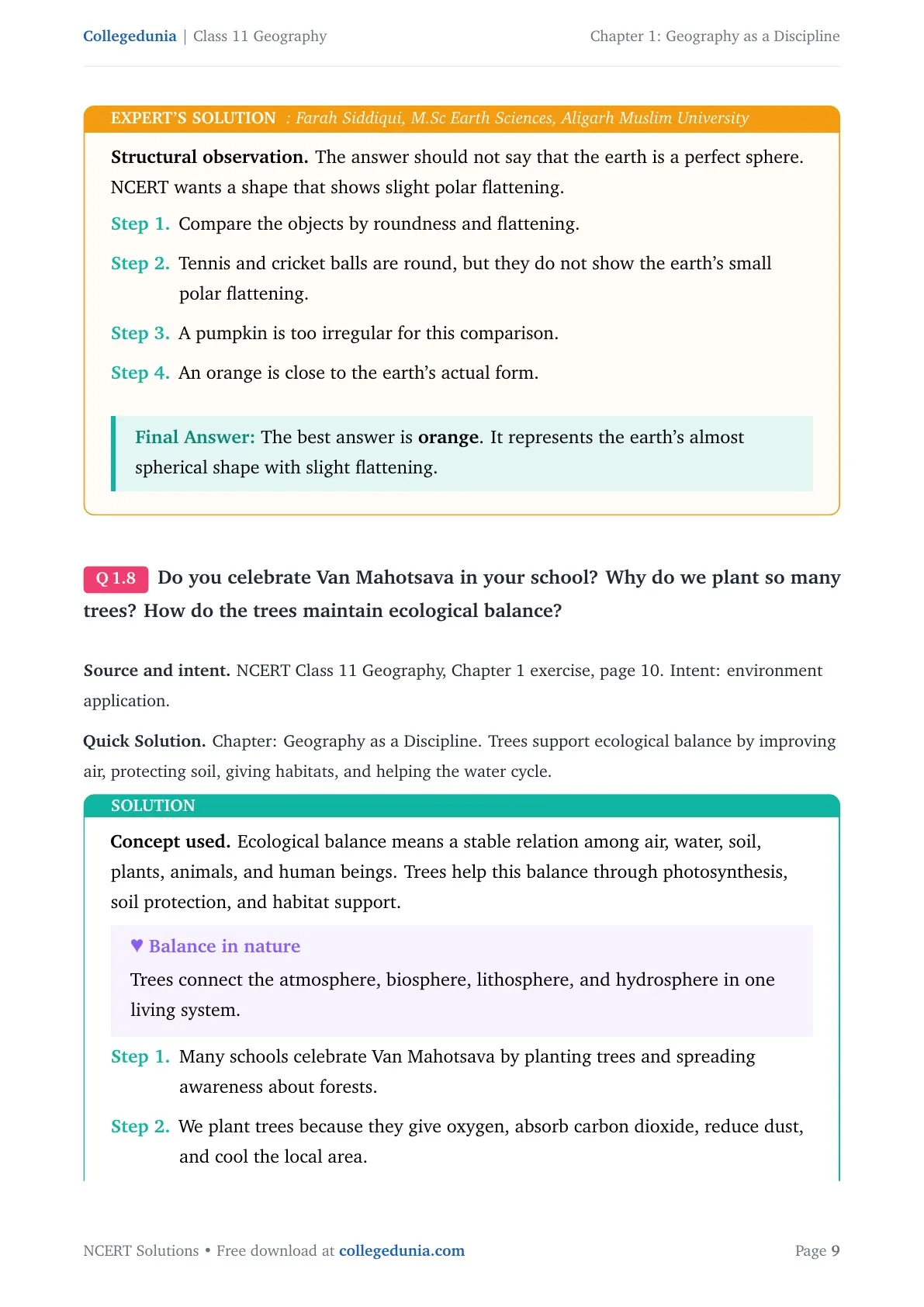
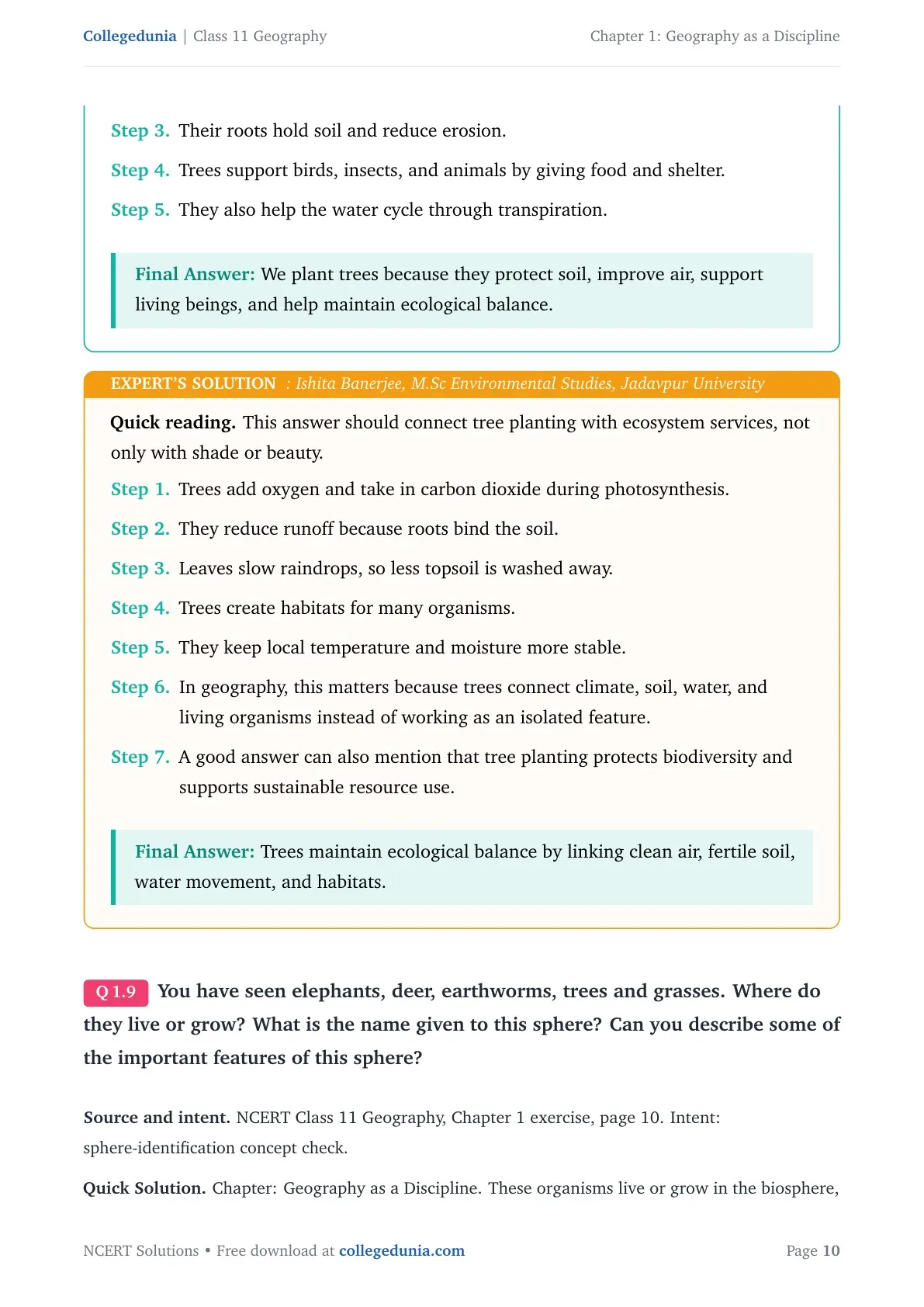
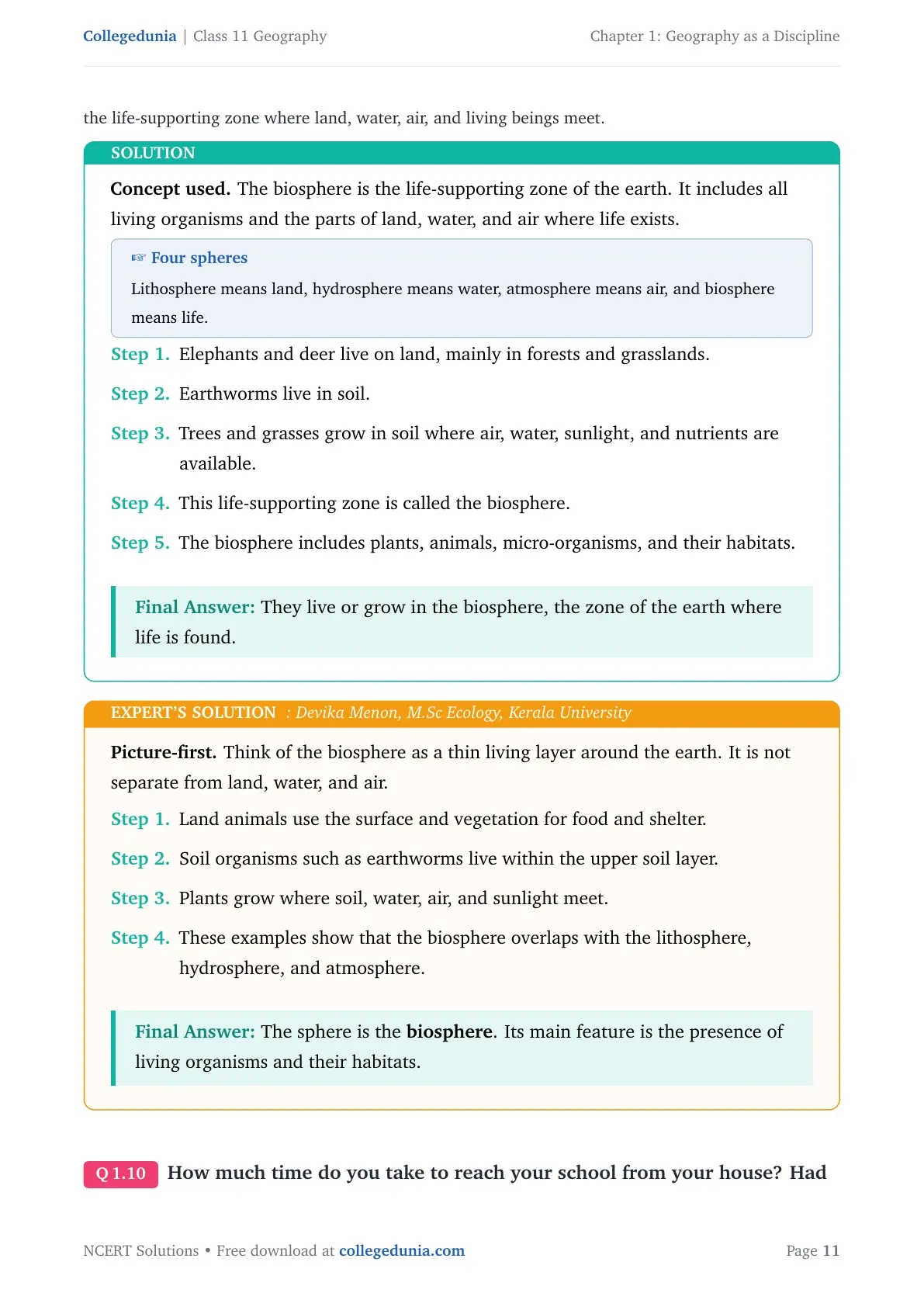
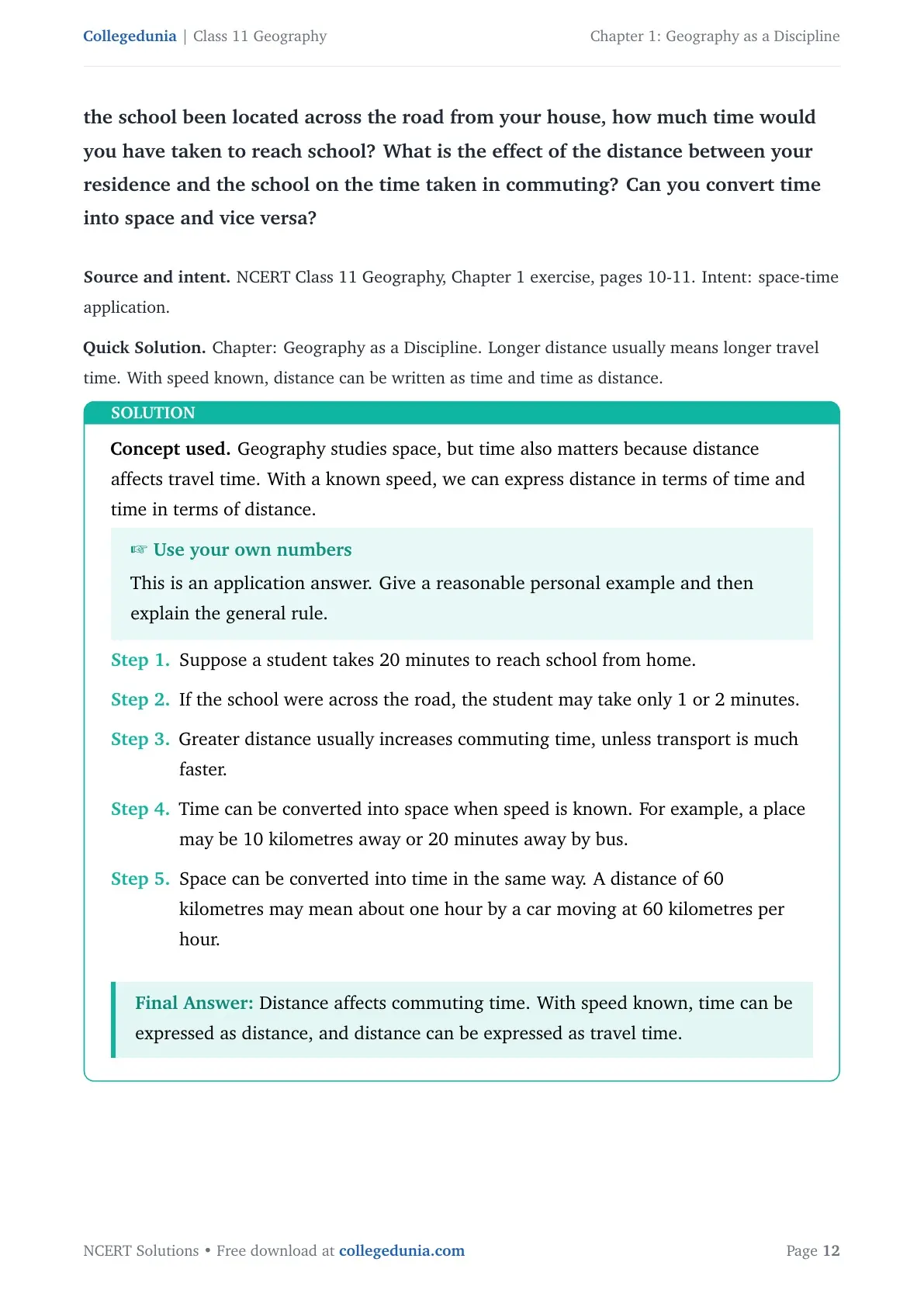
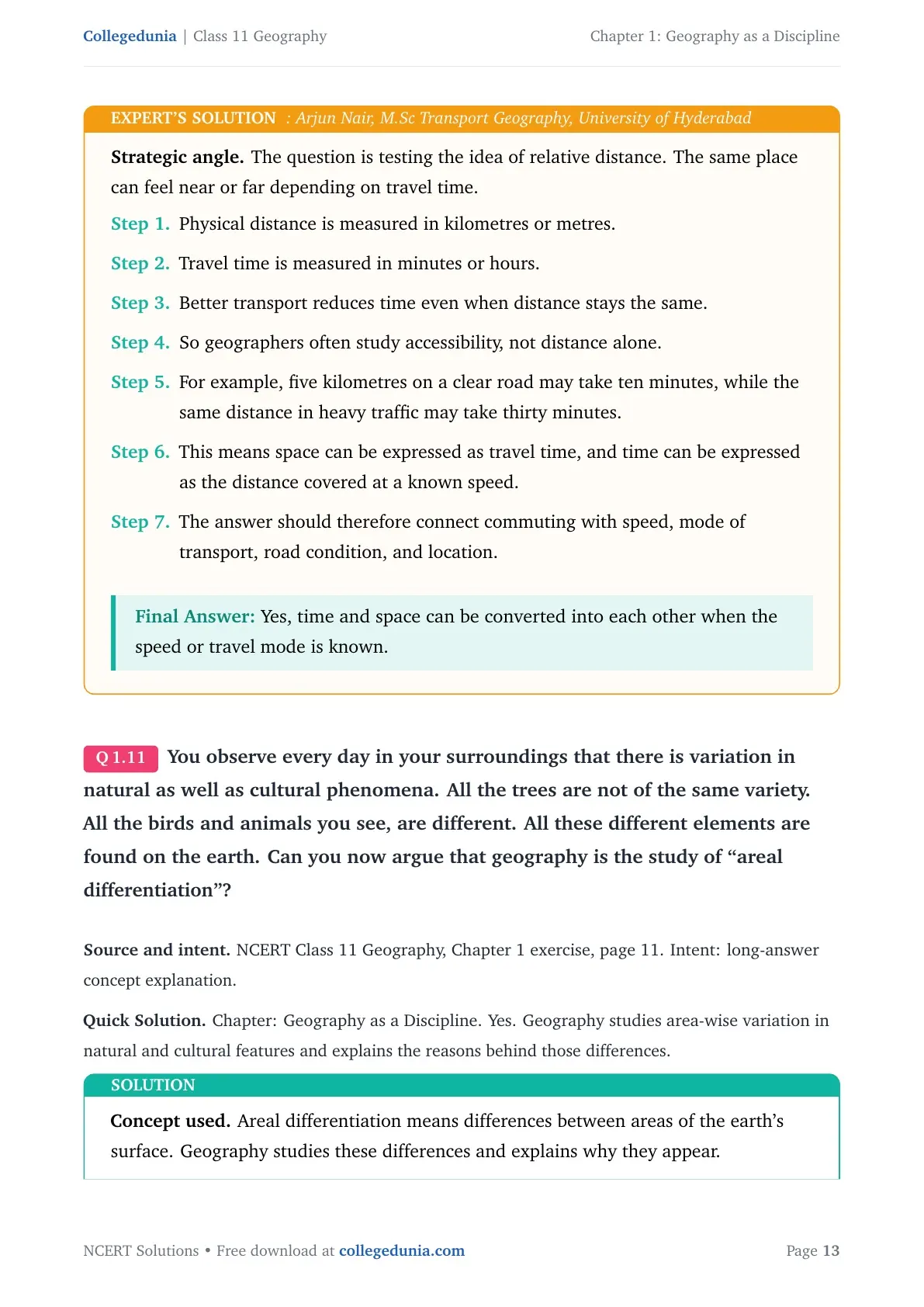
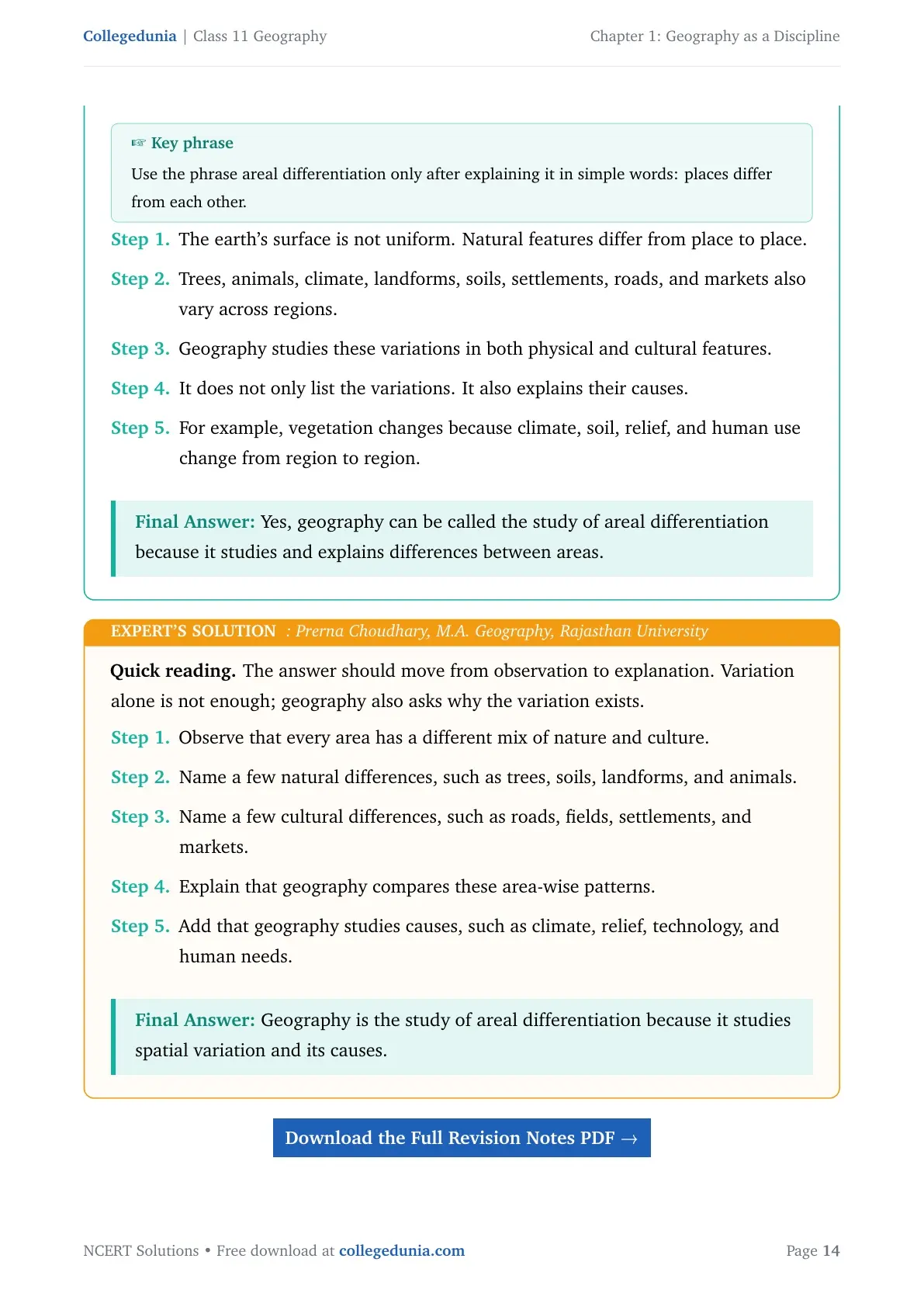
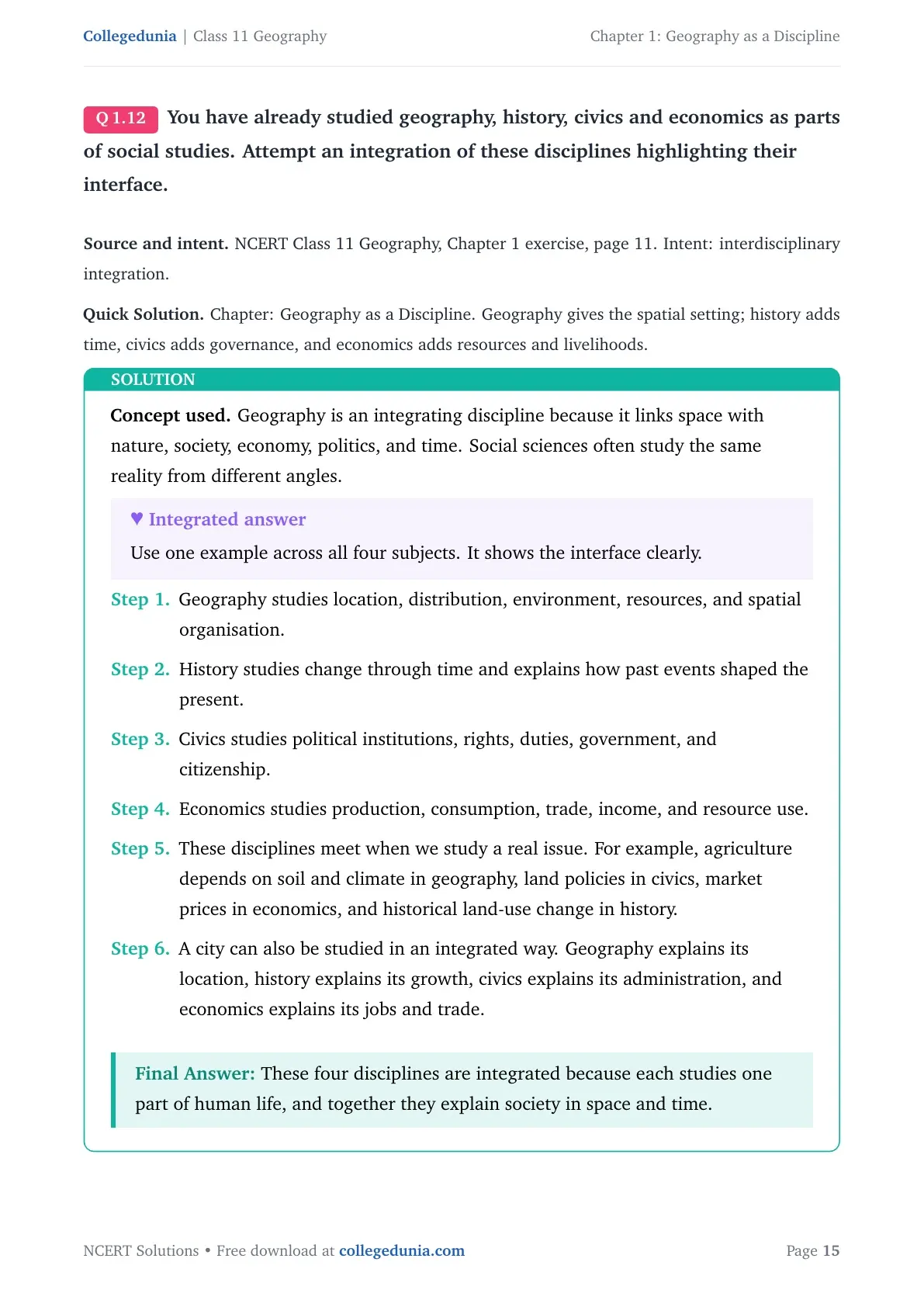
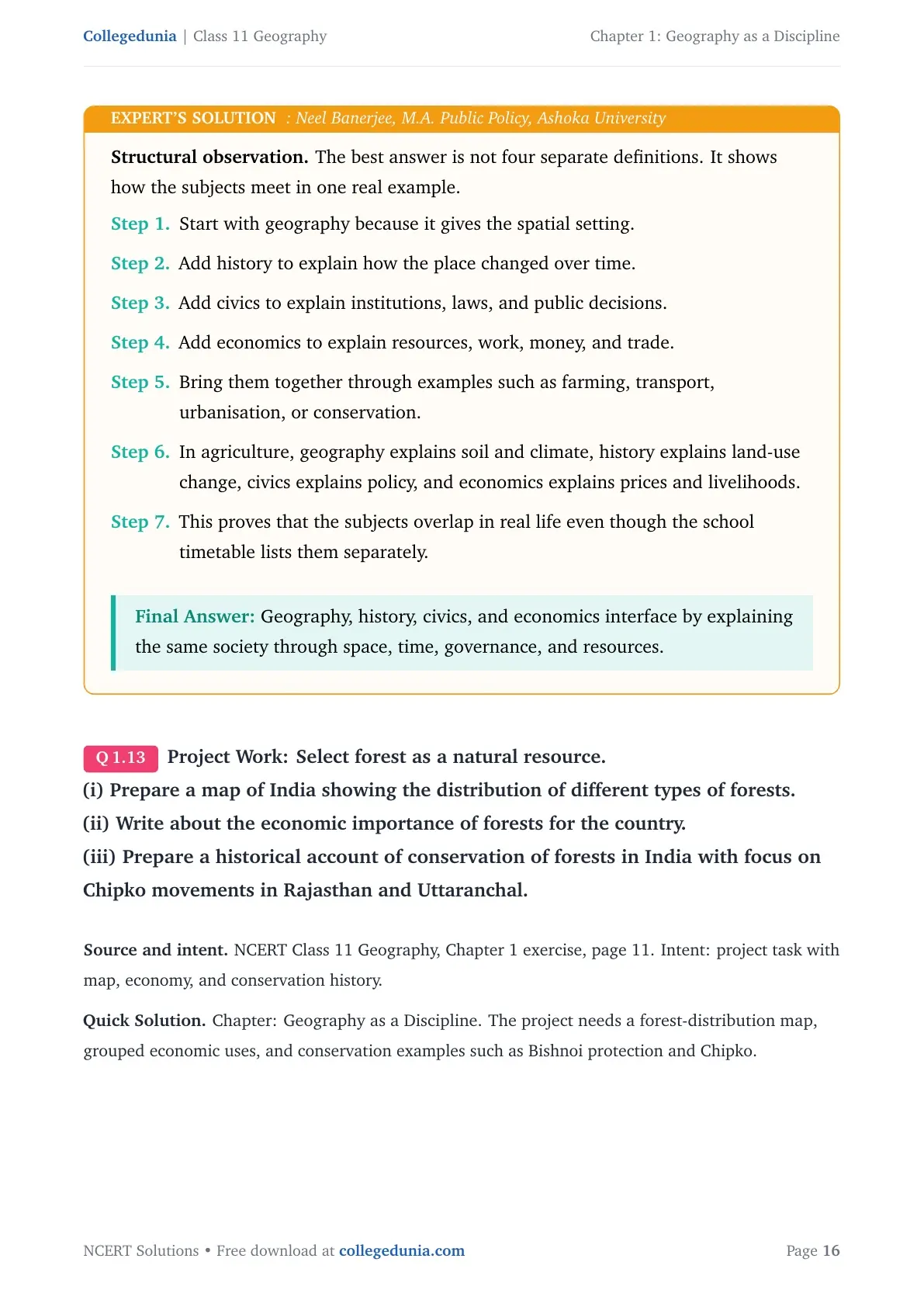
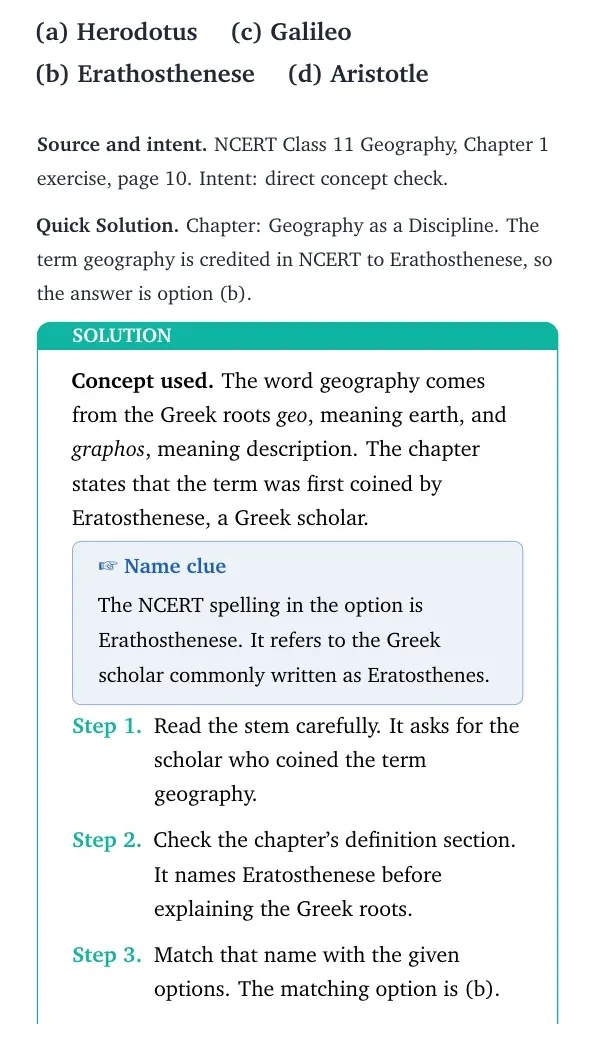
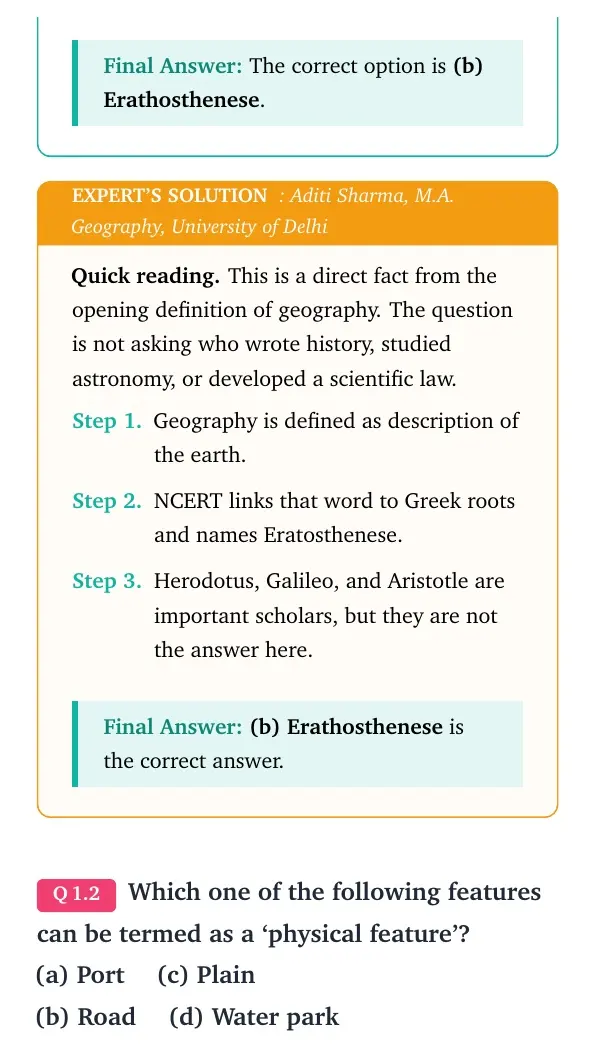
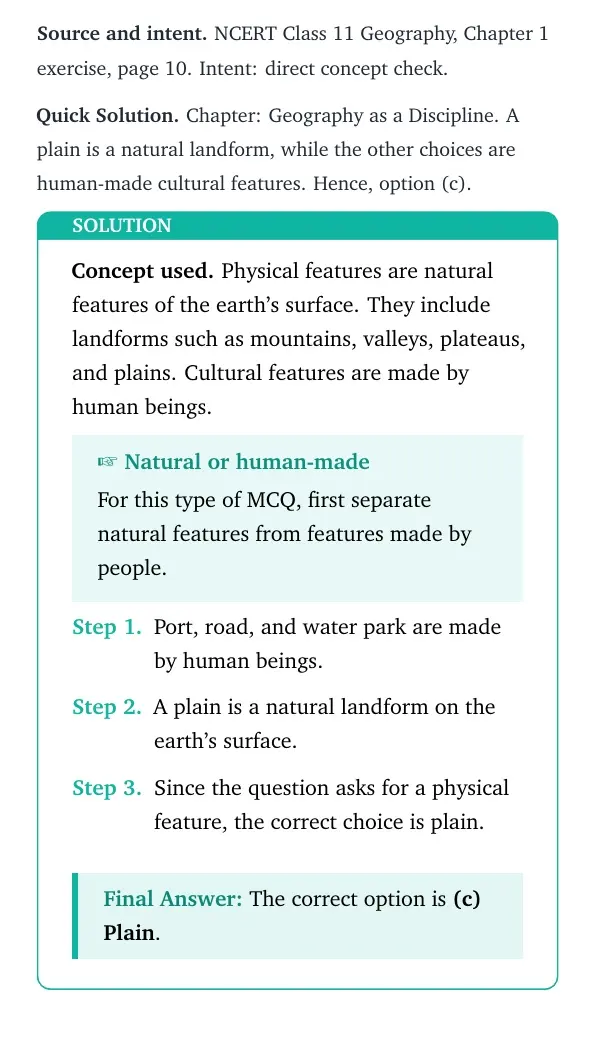
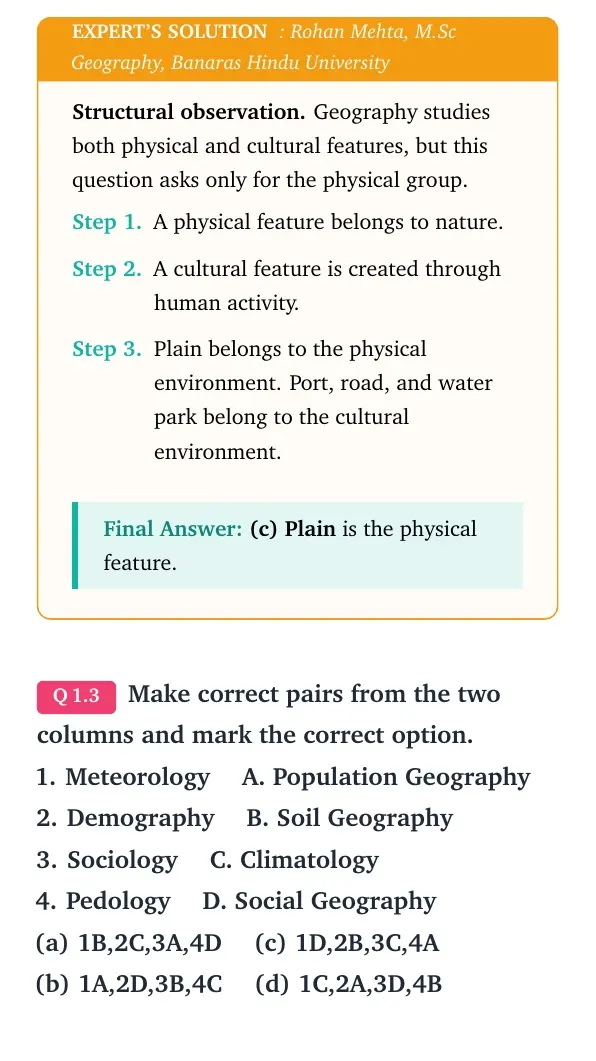
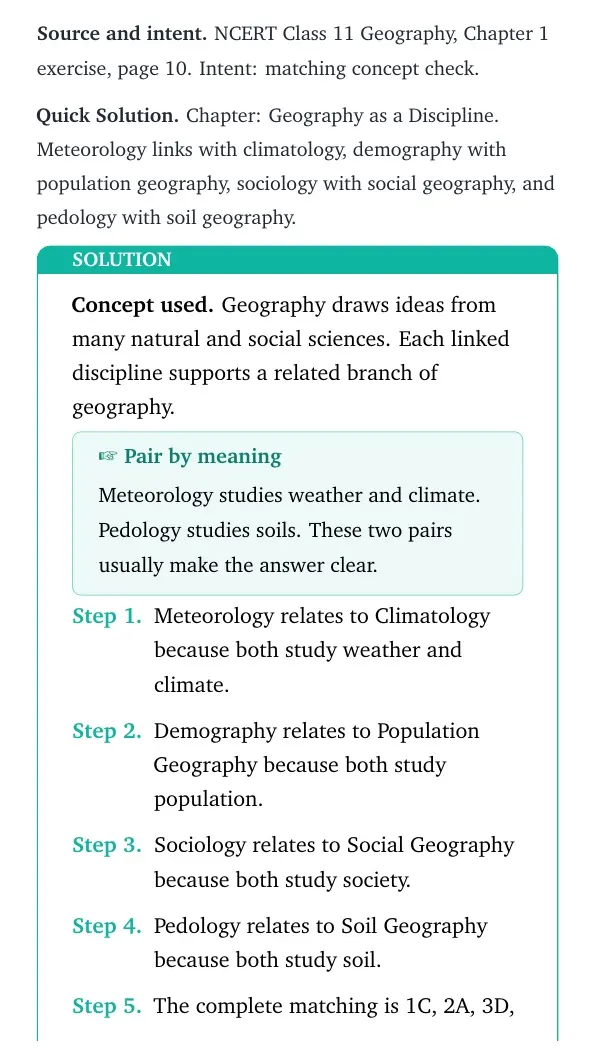
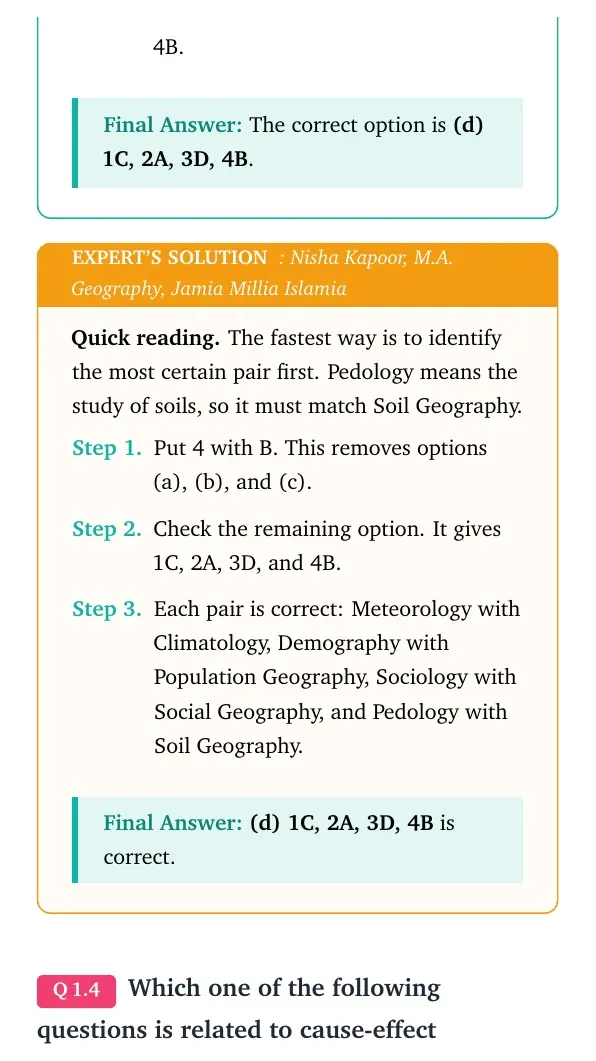
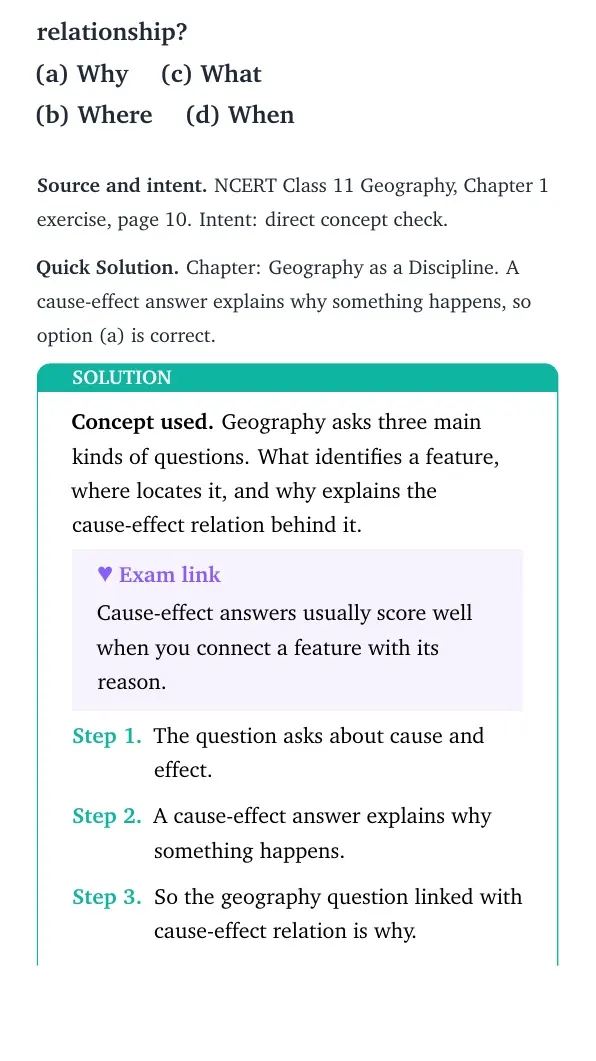
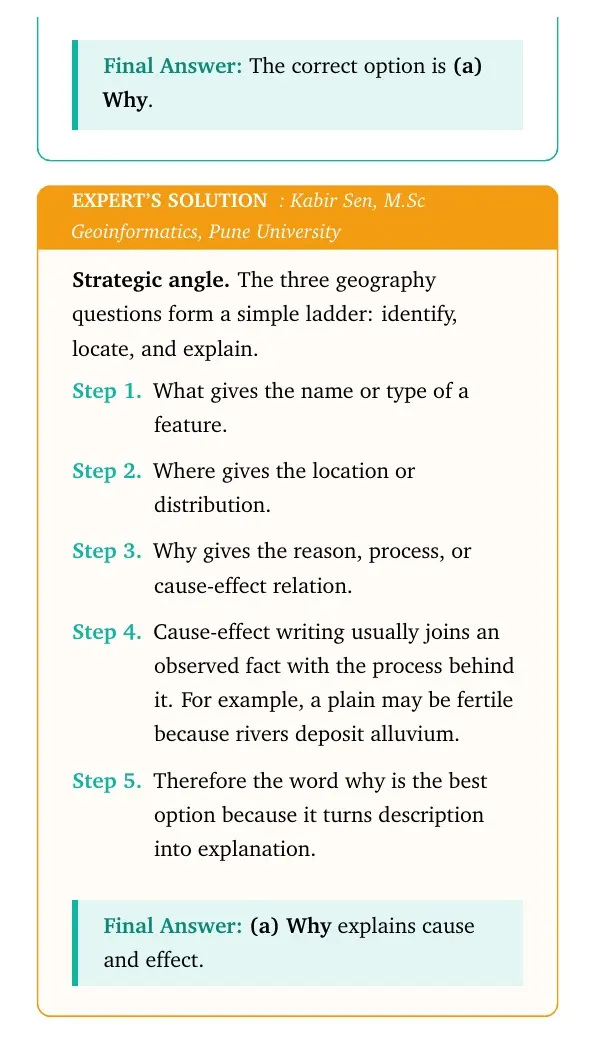
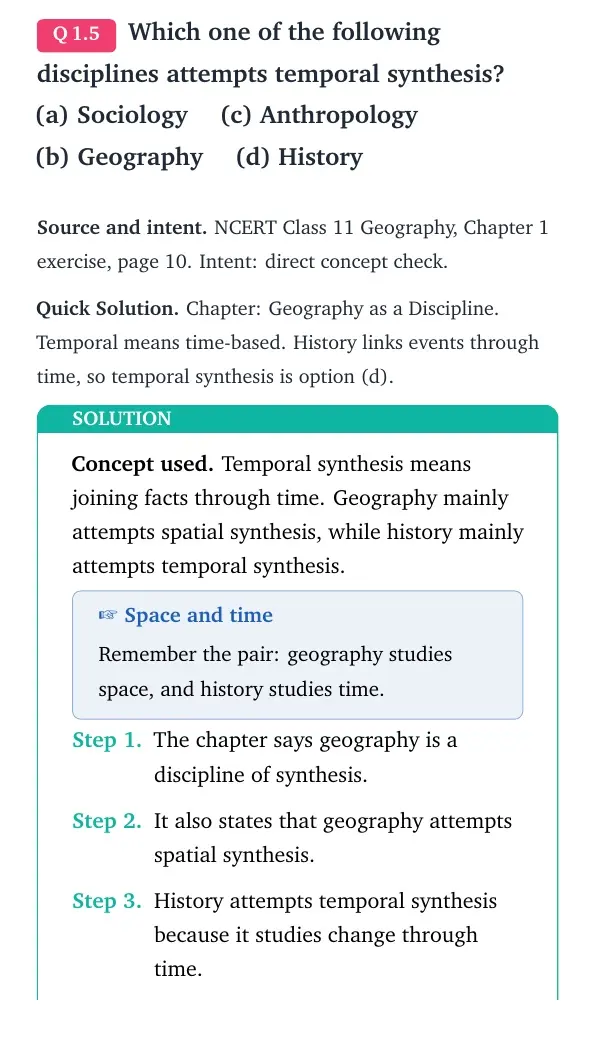
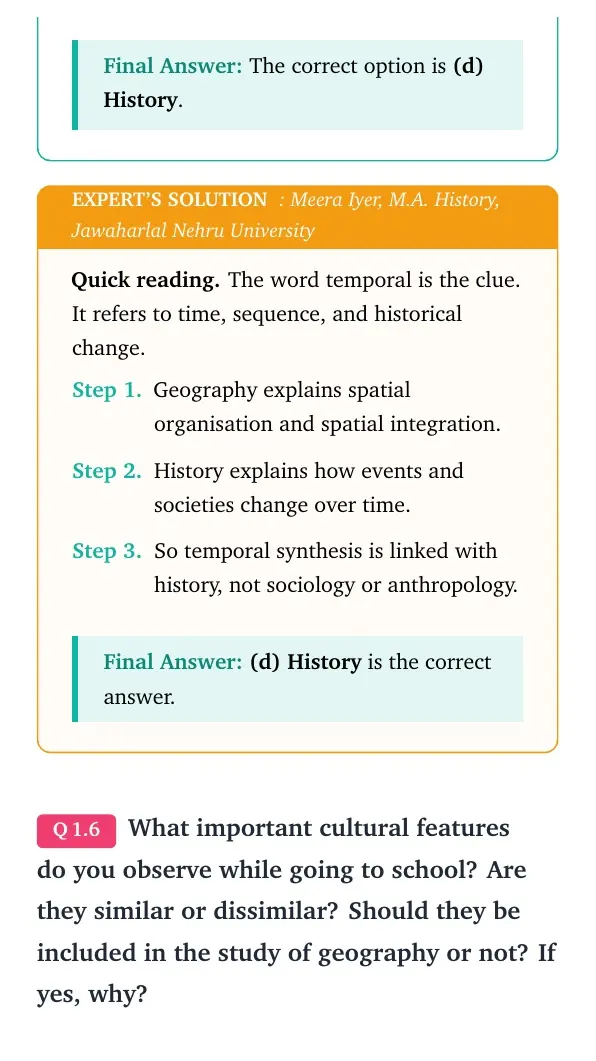
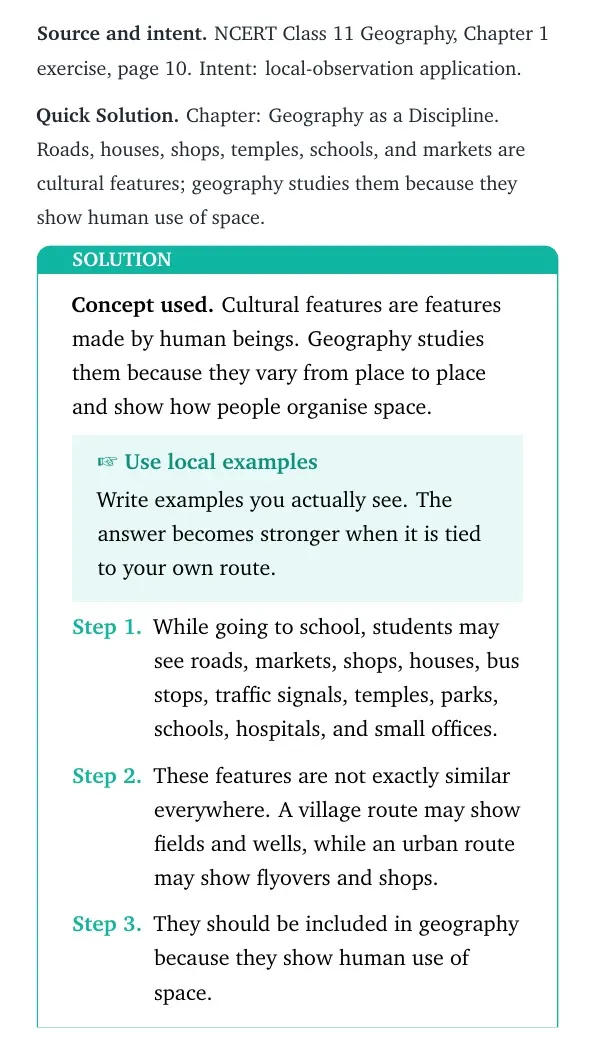
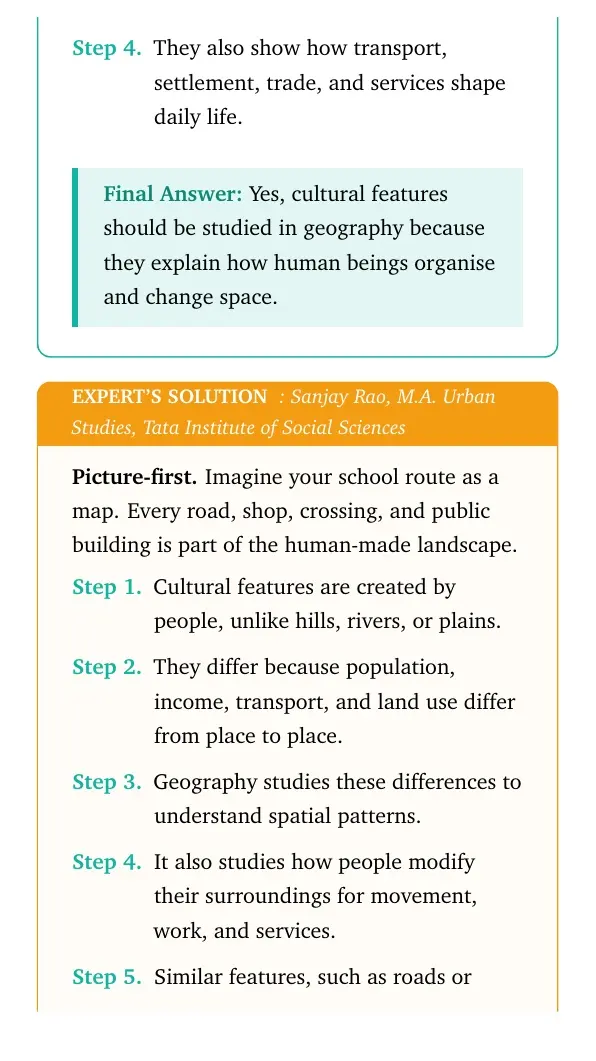
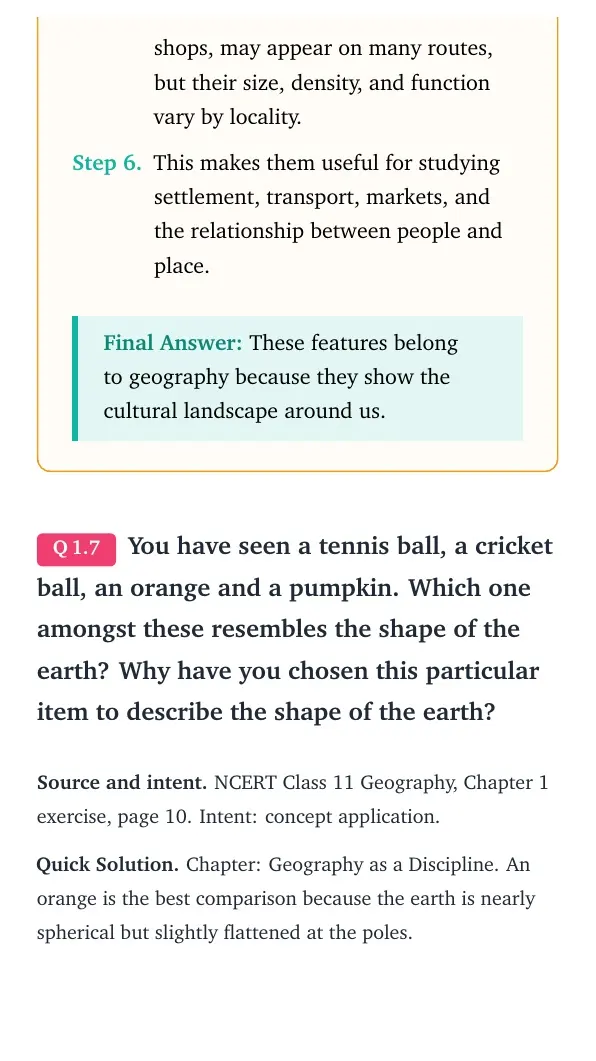
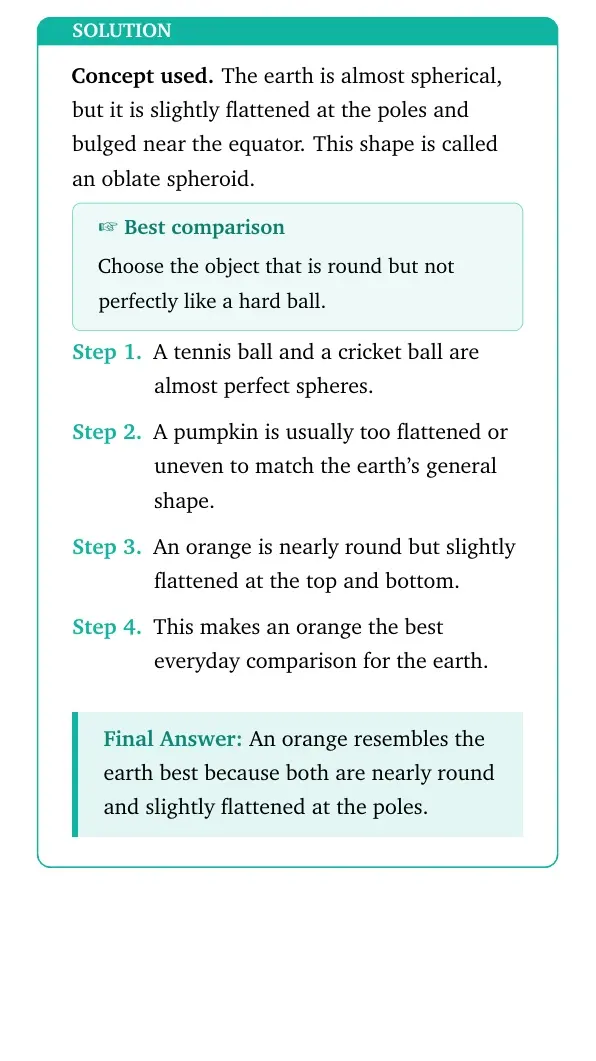
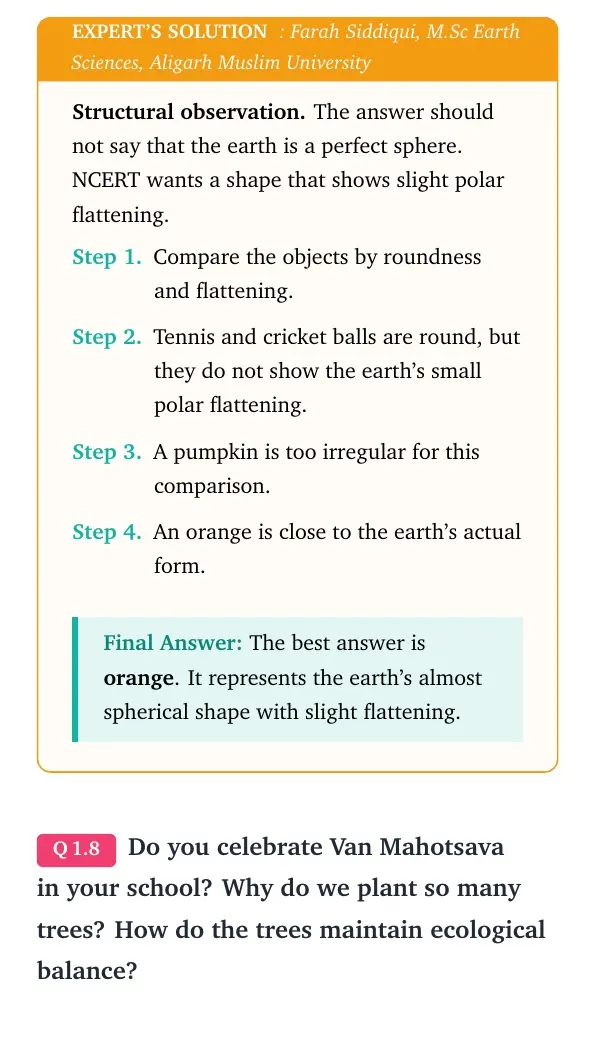
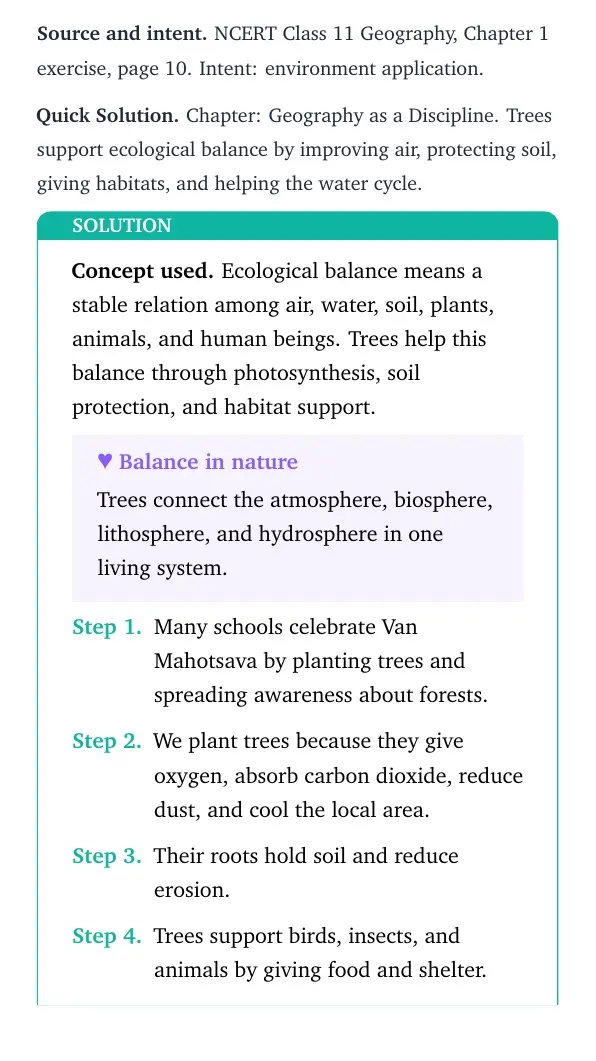
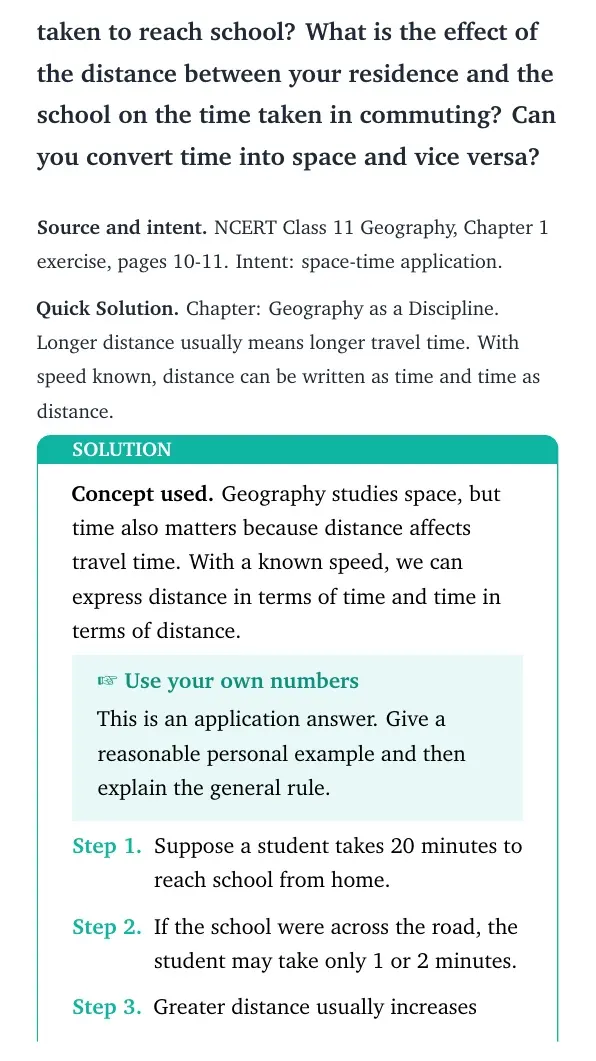
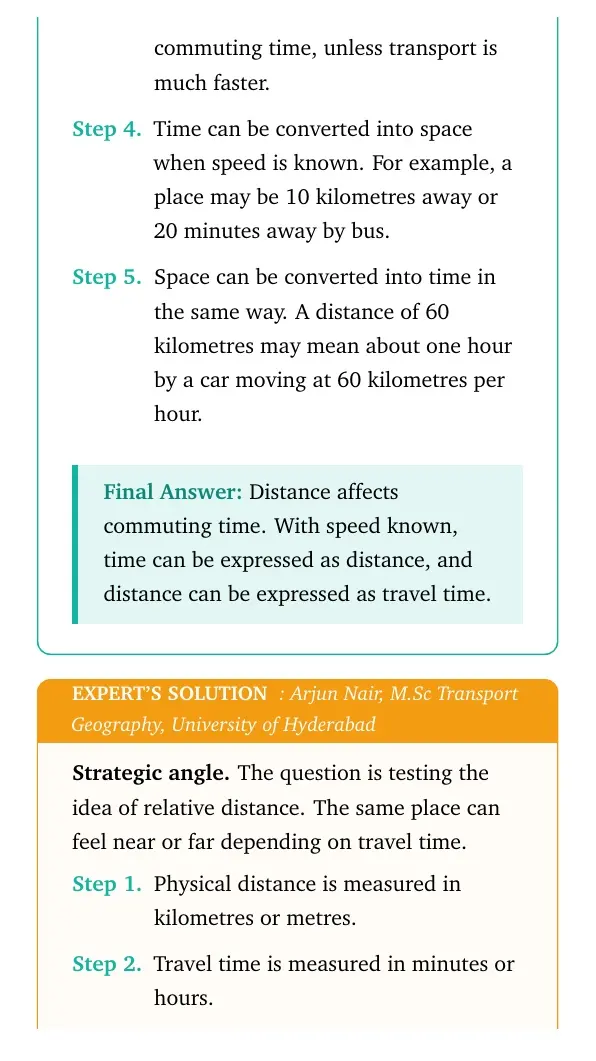
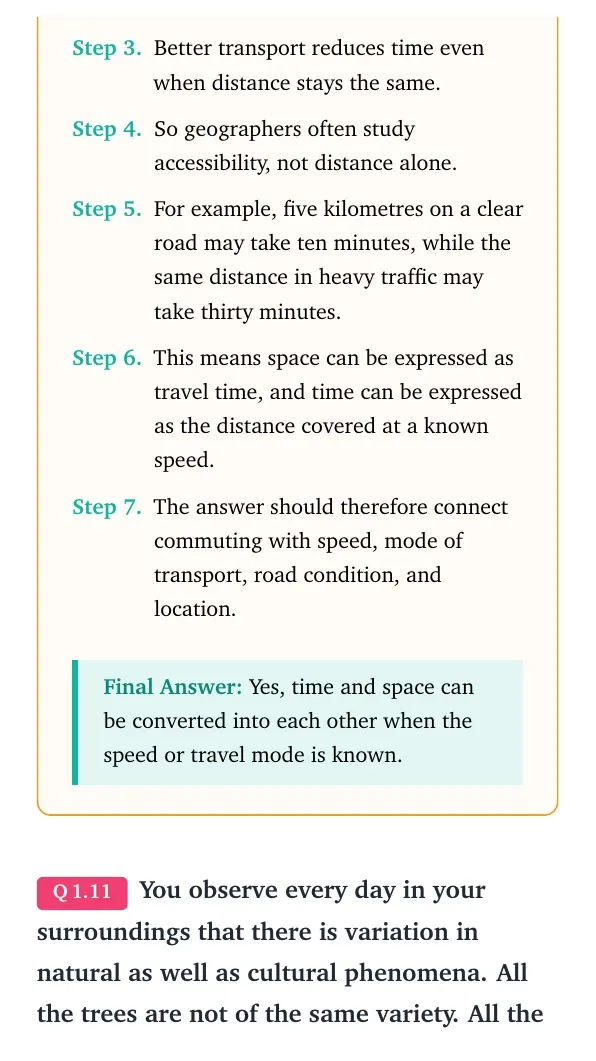
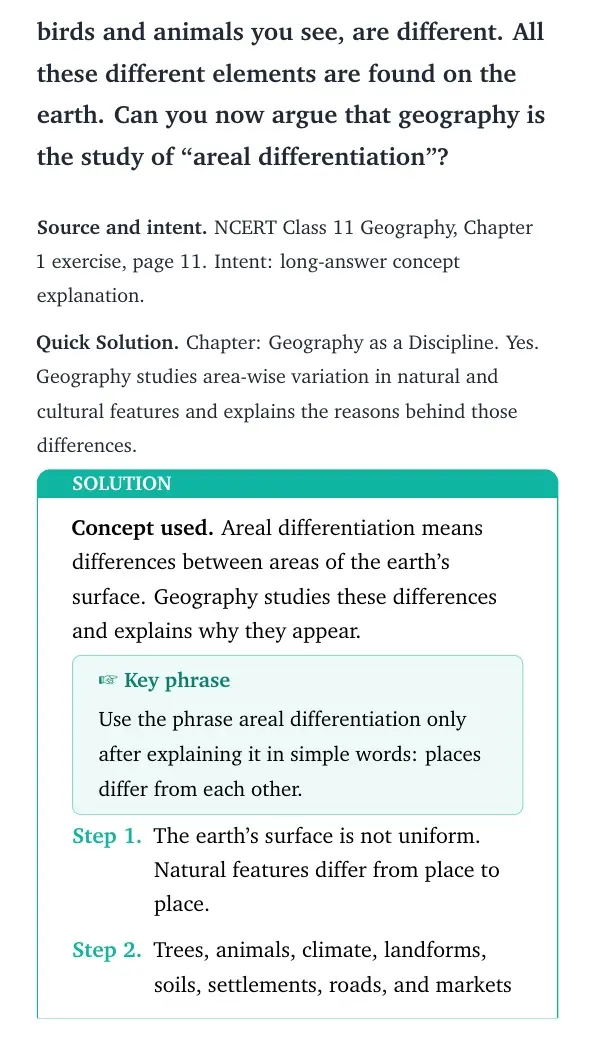
- The solution PDF includes all multiple-choice, short-answer, long-answer, and project-work questions.
- Key chapter terms include spatial synthesis, areal differentiation, physical features, cultural features, and biosphere.
- Each answer is written in a stepwise school-exam style for Class 11 Geography revision.
Student Feedback: Students usually find this chapter easier once they separate three questions: what is present, where it is found, and why it occurs. Keep that sequence beside you while revising the solved PDF.
What the Class 11 Geography Chapter 1 Solutions Cover
Chapter 1 works like an introduction to the whole Geography course. It explains why geography is not only a list of mountains, rivers, climates, and maps. It is a way of studying the earth by looking at location, distribution, variation, and cause-effect relations. The solutions therefore do more than mark the right option. They show why each answer fits the language of the chapter.
| Exercise area | Questions | What the answer checks |
|---|---|---|
| Multiple-choice questions | 5 | Terms, physical features, branches of geography, cause-effect relation, and temporal synthesis |
| Short-answer questions | 5 | Local examples, shape of the earth, ecological balance, biosphere, and space-time relation |
| Long-answer questions | 2 | Areal differentiation and the interface of geography with history, civics, and economics |
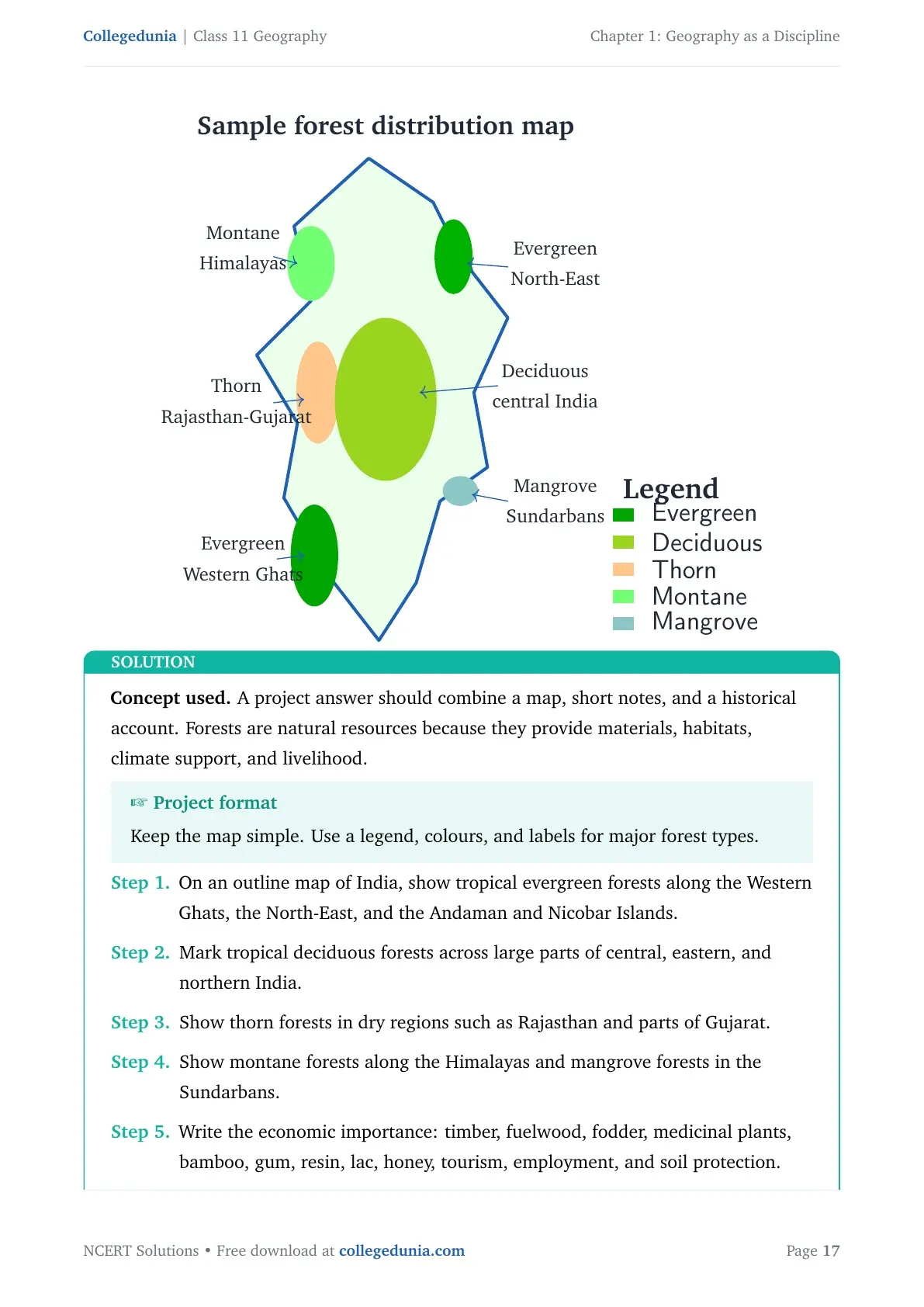
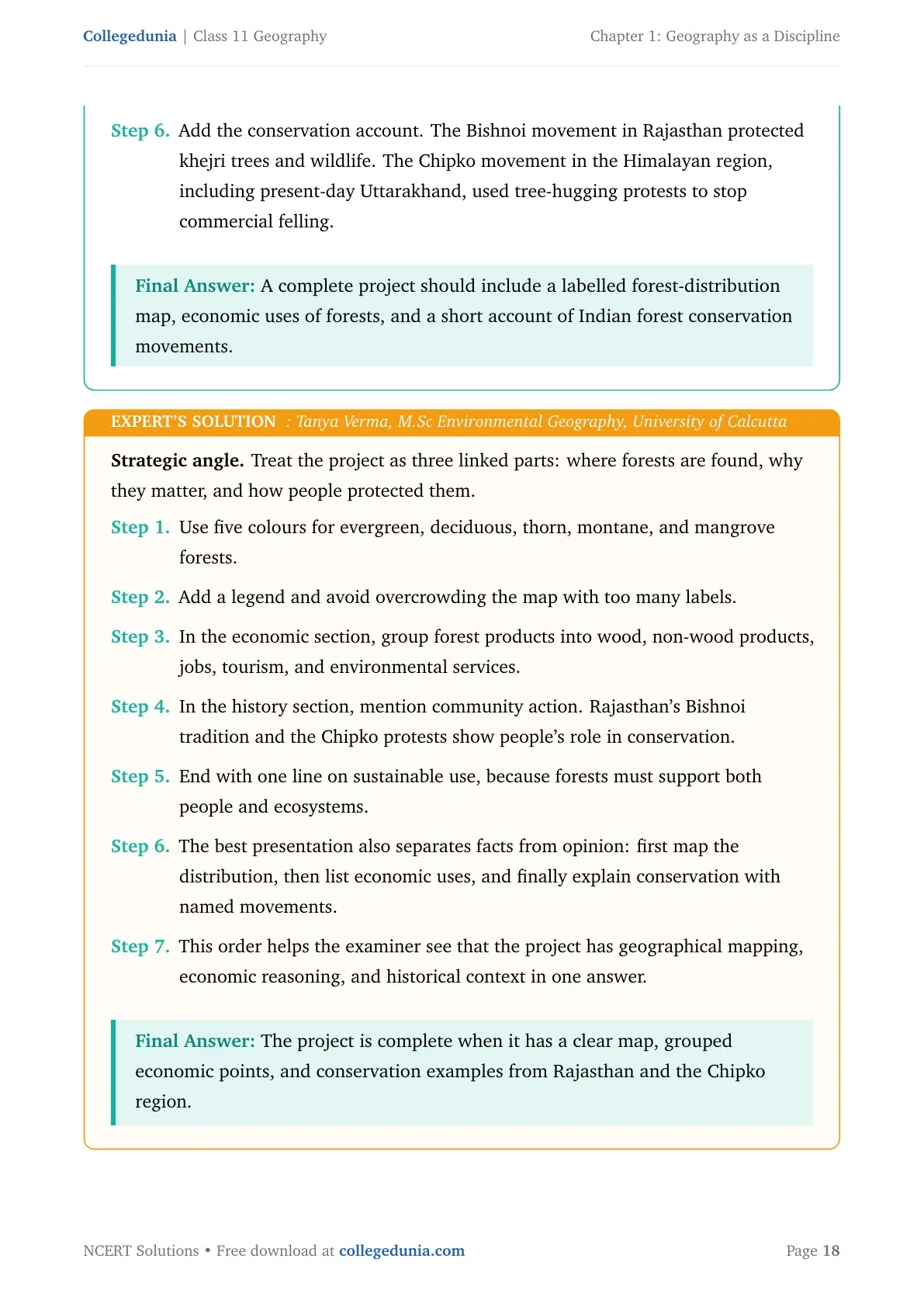
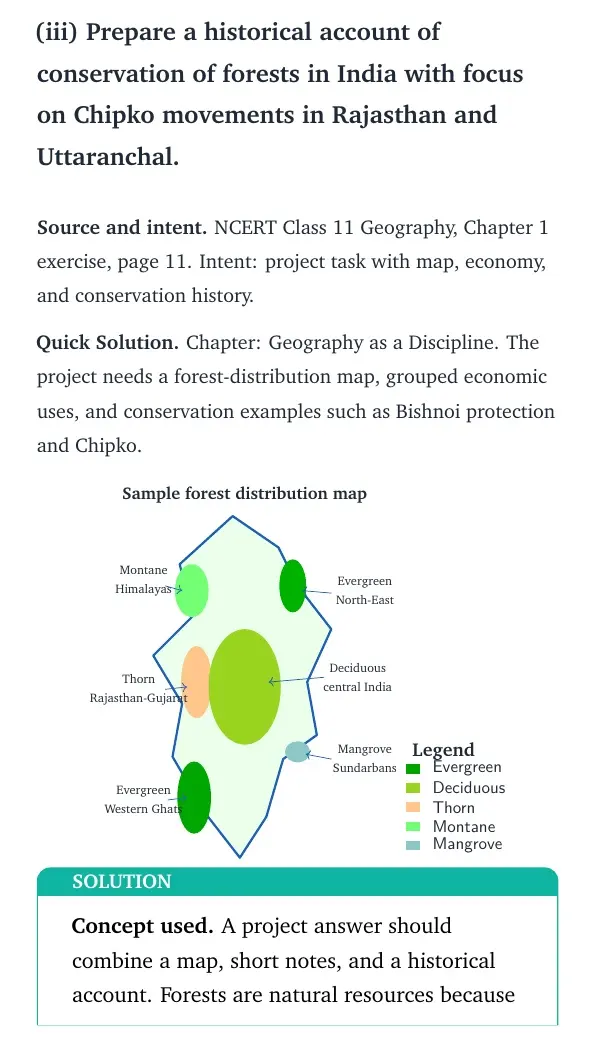
| Project work | 1 | Forest distribution map, economic importance of forests, and conservation movements |
Use the answer pattern in the PDF when the question asks for examples from your own surroundings. The exact route to school or local forest example may change, but the geography logic stays the same: observe, locate, compare, and explain.
Geography as a Discipline Class 11 Video Explanation
Source: Magnet Brains on YouTube
Geography as a Discipline Key Concepts for NCERT Answers
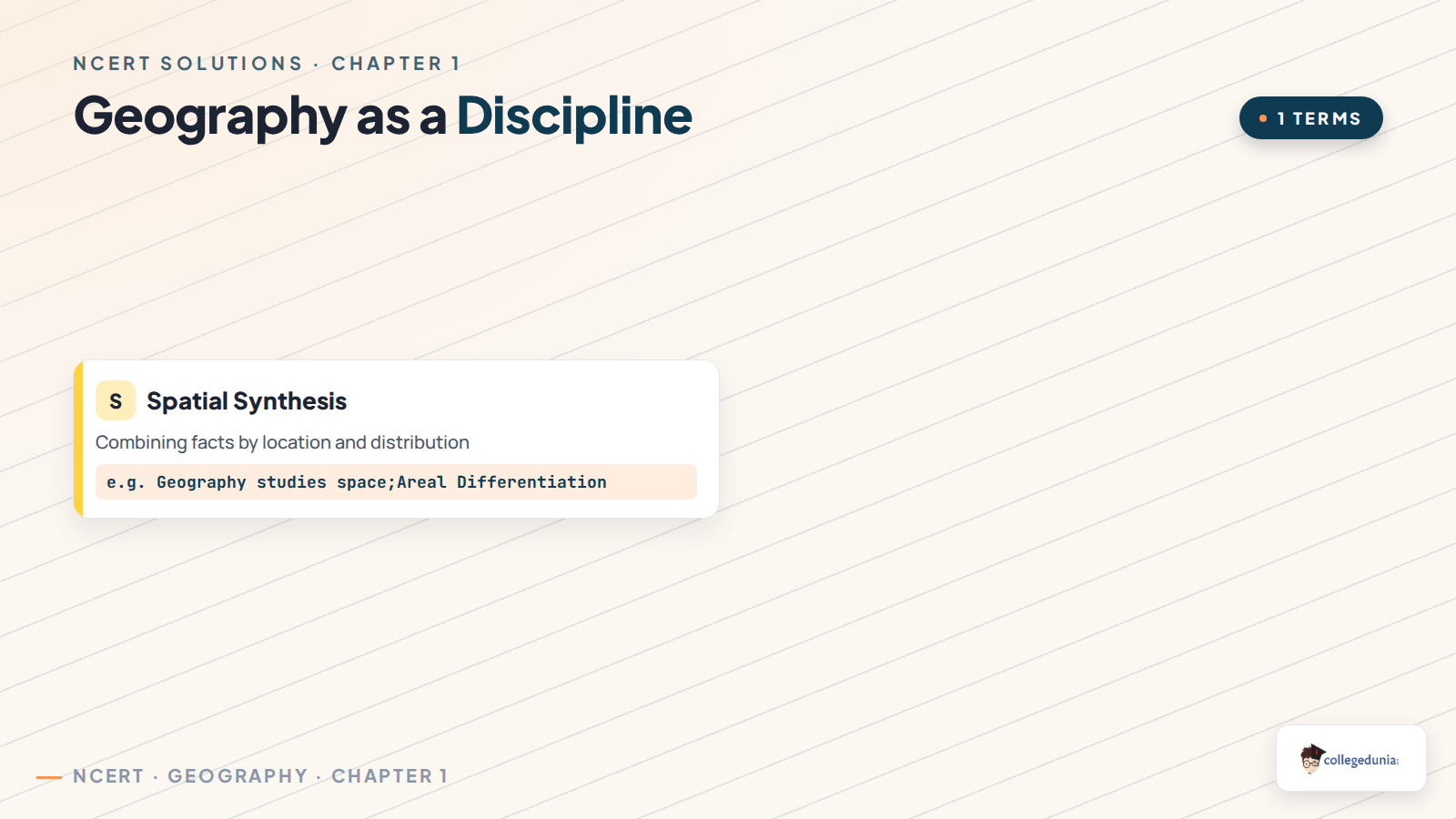
The first chapter introduces geography as a discipline of synthesis. In simple terms, geography studies how natural and human features come together on the earth's surface. The chapter also explains that geography borrows ideas from natural sciences and social sciences, but its special strength is the spatial point of view.
- Physical features are natural features such as plains, mountains, rivers, soils, and climate.
- Cultural features are human-made features such as roads, settlements, ports, markets, schools, and water parks.
- Areal differentiation means that places differ from each other, and geography explains why those differences exist.
- Temporal synthesis is linked with history because it connects events through time, while geography attempts spatial synthesis.
The PDF uses these concepts repeatedly. For example, the MCQ on plains tests the physical-cultural difference, while the question on the school route tests whether students can identify cultural features in daily life.
Spatial Synthesis and Areal Differentiation in the Chapter
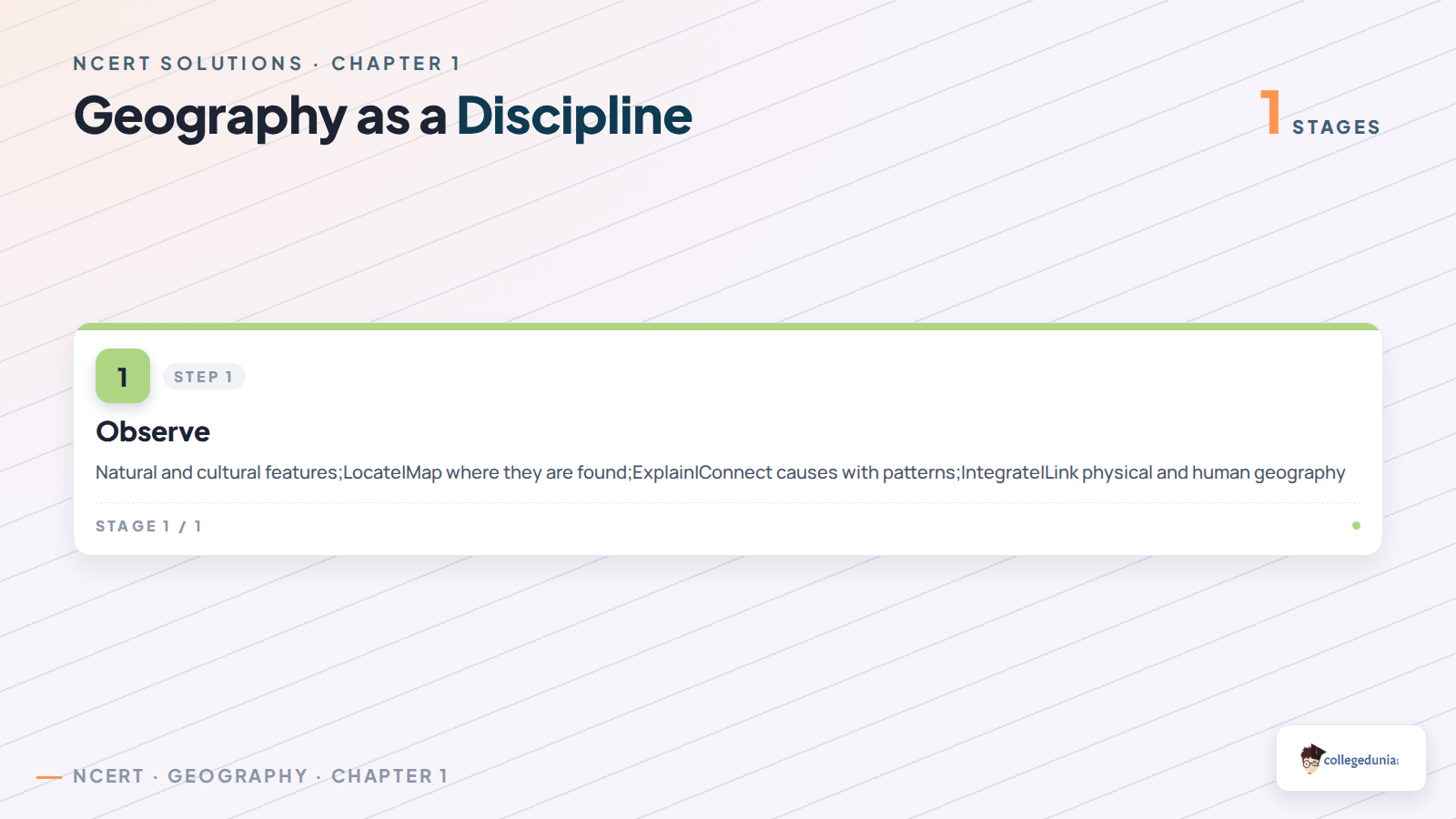
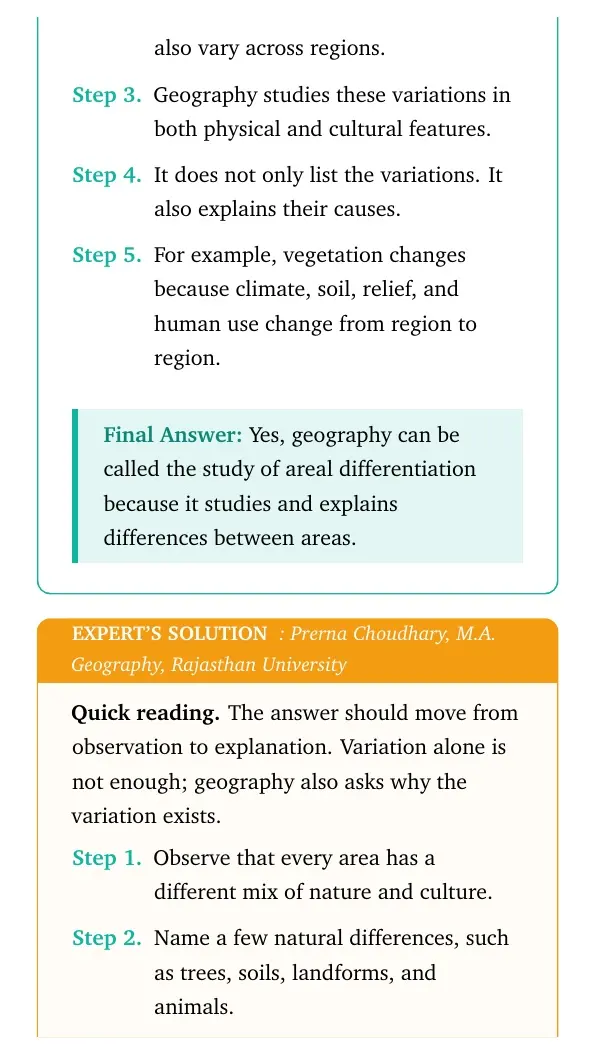
The most important idea in Geography as a Discipline is that geography studies patterns in space. When students observe different trees, roads, soils, animals, buildings, or landforms around them, they are not only listing examples. They are noticing that one area is different from another. That is why the chapter calls geography the study of areal differentiation.
- Observe the physical and cultural features in a place.
- Locate those features on a map or in relation to nearby places.
- Compare one area with another to find similarities and differences.
- Explain the causes behind those patterns, such as climate, relief, soil, transport, or human activity.
This is also why the chapter connects geography with field visits, maps, GIS, and remote sensing. The tools may differ, but the purpose is the same: to understand earth features in their location and relation.
Question Pattern and Answer Writing Plan
The exercise has direct MCQs as well as descriptive questions that need examples. Students should not answer every question in the same style. A definition-based MCQ needs a quick reason, while a descriptive answer needs two or three local examples and one clear conclusion.
| Question type | Best answer strategy | Common miss |
|---|---|---|
| MCQ | Write the option and one reason from the chapter term | Choosing a familiar word without checking the definition |
| Local observation | Use real examples, then connect them with geography | Listing examples without explaining why geography studies them |
| Concept explanation | Define the term first, then give examples | Writing a paragraph without the key term |
| Project work | Use a map, legend, grouped points, and conservation examples | Writing only notes and leaving out the map task |
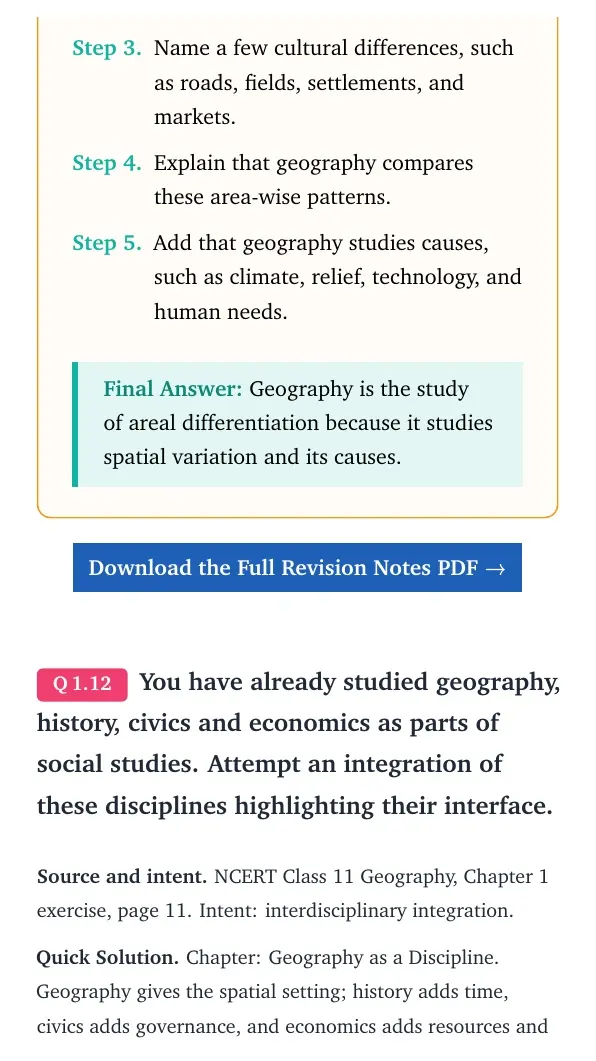
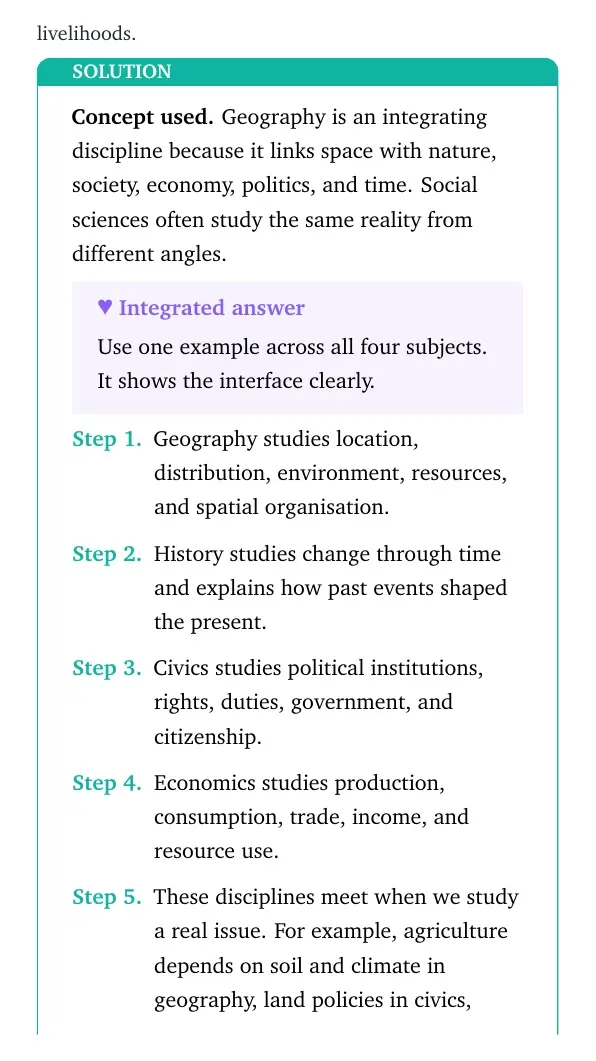
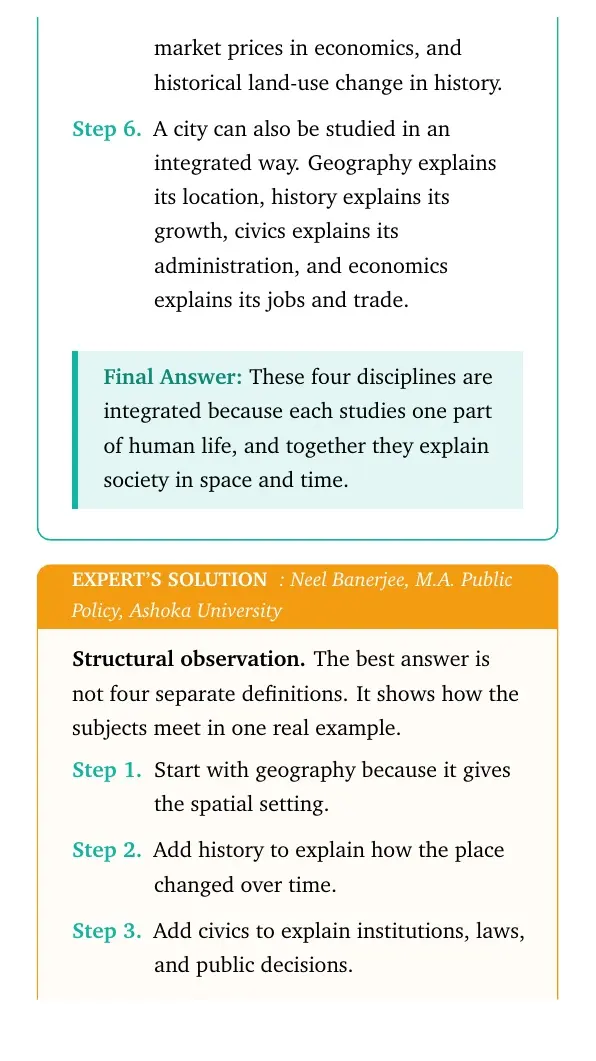
For long answers, keep the structure simple: definition, explanation, two examples, and final conclusion. This works especially well for areal differentiation and the interface of geography with history, civics, and economics.
All NCERT Solutions for Class 11 Geography Chapter 1 with Step-by-Step Solutions
The separate Q&A companion file contains every exercise question in a card format with Check Solution and Expert Solution tabs. Use it when you want to revise one question at a time before reading the complete PDF.
The PDF is still the best full-length version because it keeps the questions, long answers, expert explanations, and final answer boxes in one printable document.
How to Use the PDF for Geography Chapter 1 Revision
Start with the five MCQs because they fix the vocabulary of the chapter. Then move to the descriptive questions and write one-line headings before expanding them. The last project-work answer can be revised as a checklist rather than memorised word for word.
- Revise the MCQ key first: Erathosthenese, plain, 1C-2A-3D-4B, why, and history.
- For short answers, connect each example with a geography concept such as cultural feature, biosphere, or ecological balance.
- For the project, keep five forest types in the map legend: evergreen, deciduous, thorn, montane, and mangrove.
The chapter is short, but it sets up the thinking style used across Class 11 Geography. Once students understand why geography asks what, where, and why, later chapters become easier to organise.
More Class 11 Geography Chapter 1 Resources
| Resource | Use it for | Link |
|---|---|---|
| Revision Notes | Quick theory, definitions, and chapter summary before the exercise | Geography as a Discipline Class 11 Notes |
| Handwritten Notes | Last-minute visual revision of terms and examples | Geography as a Discipline Class 11 Handwritten Notes |
| NCERT Book PDF | Original textbook reading and exercise questions | Geography as a Discipline Class 11 Book PDF |
All Chapters of Class 11 Geography with NCERT Solutions
| Chapter | NCERT Solutions |
|---|---|
| Chapter 1 | Geography as a Discipline Class 11 NCERT Solutions |
| Chapter 2 | The Origin and Evolution of the Earth Class 11 NCERT Solutions |
| Chapter 3 | Interior of the Earth Class 11 NCERT Solutions |
| Chapter 4 | Distribution of Oceans and Continents Class 11 NCERT Solutions |
| Chapter 5 | Minerals and Rocks Class 11 NCERT Solutions |
Geography as a Discipline Class 11 NCERT Solutions FAQs
Ques. How many questions are solved in Class 11 Geography Chapter 1 Geography as a Discipline?
Ans. The PDF solves 13 exercise questions, including 5 MCQs, 5 short-answer questions, 2 long-answer questions, and 1 project-work question.
Ques. What is the main idea of Geography as a Discipline?
Ans. The chapter explains that geography studies the earth through space, place, location, distribution, physical features, cultural features, and cause-effect relations.
Ques. Which option is correct for temporal synthesis in the chapter?
Ans. History is the correct option for temporal synthesis because it studies events and change through time. Geography mainly attempts spatial synthesis.
Ques. Why is geography called the study of areal differentiation?
Ans. Geography is called the study of areal differentiation because it studies how places differ in natural and cultural features, and then explains the causes of those differences.



Comments