




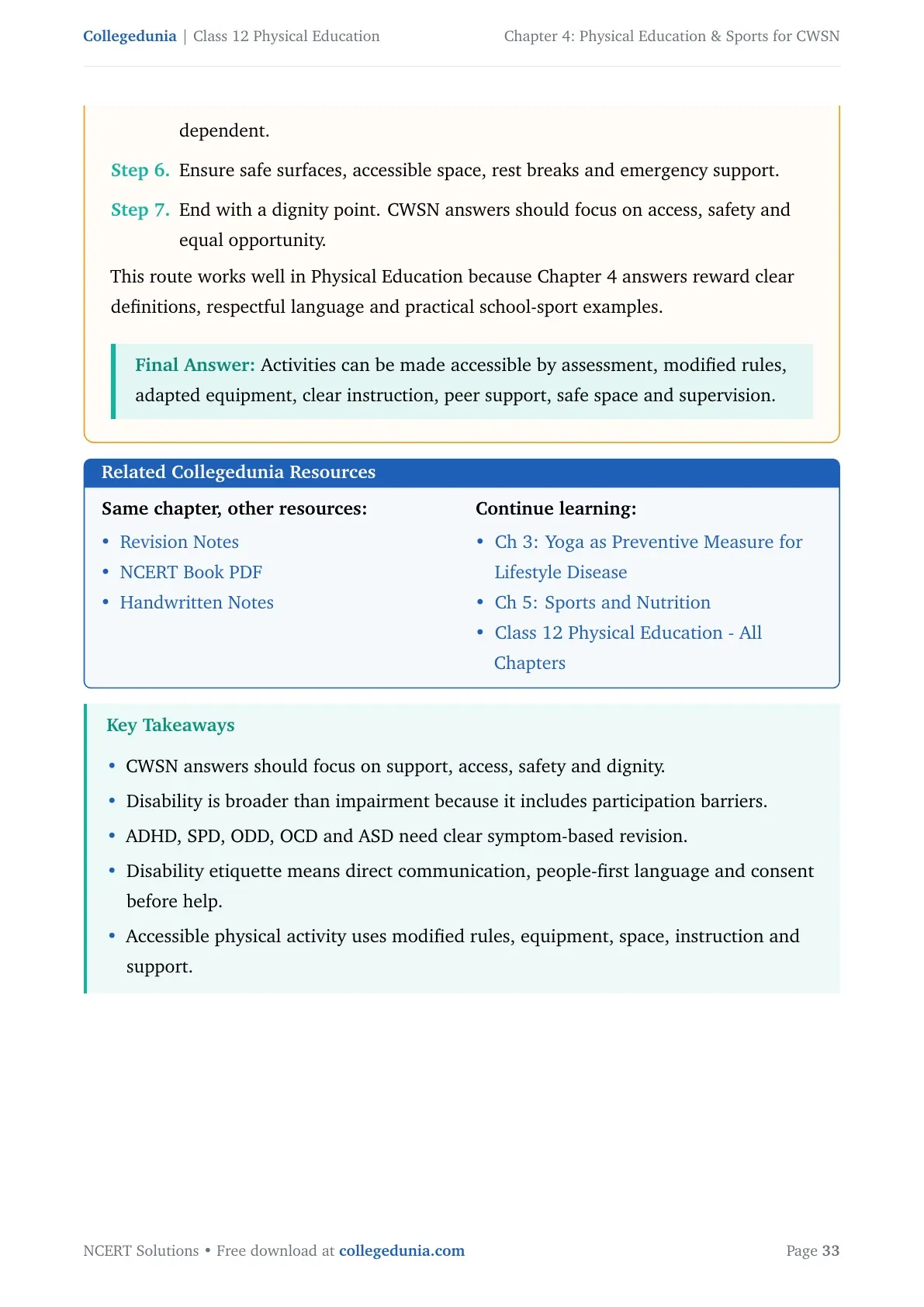
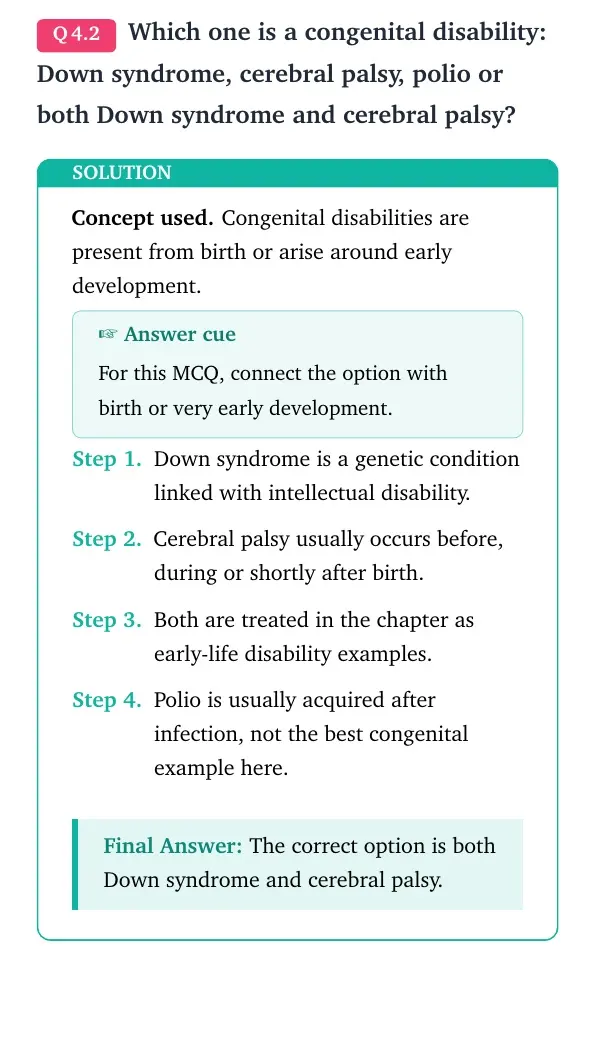
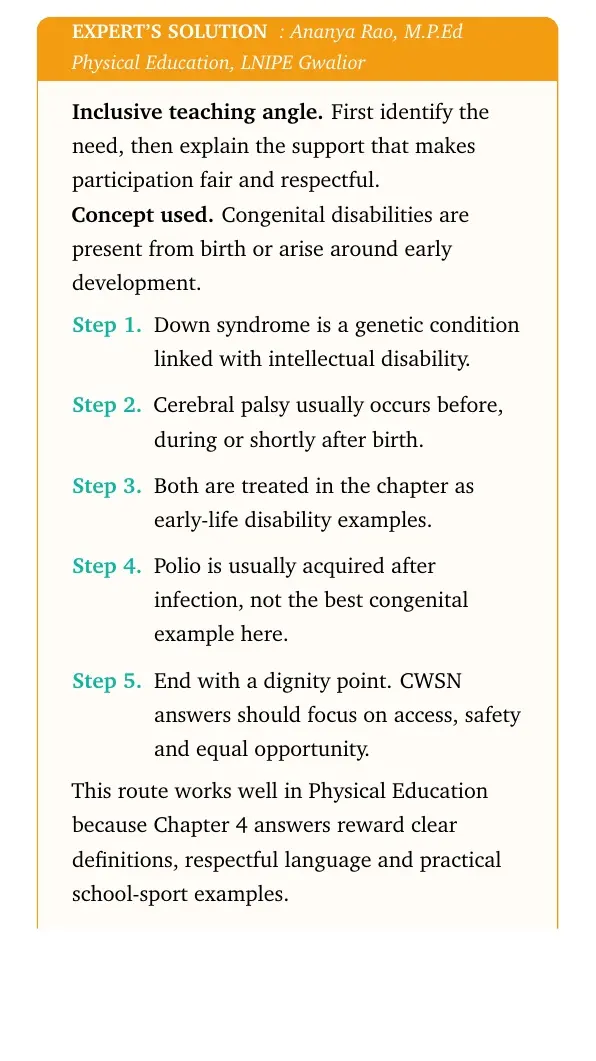
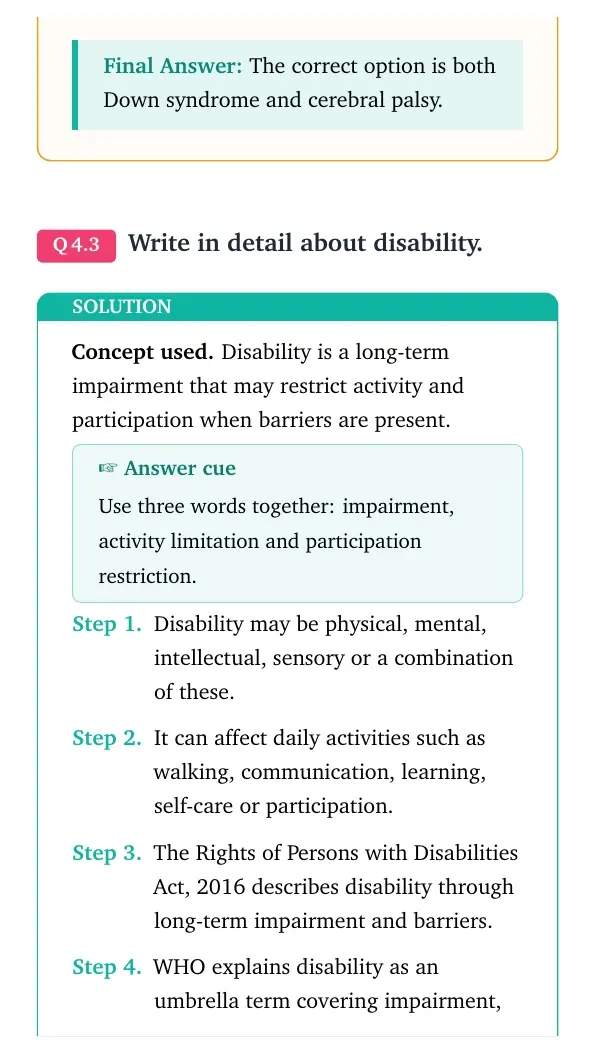
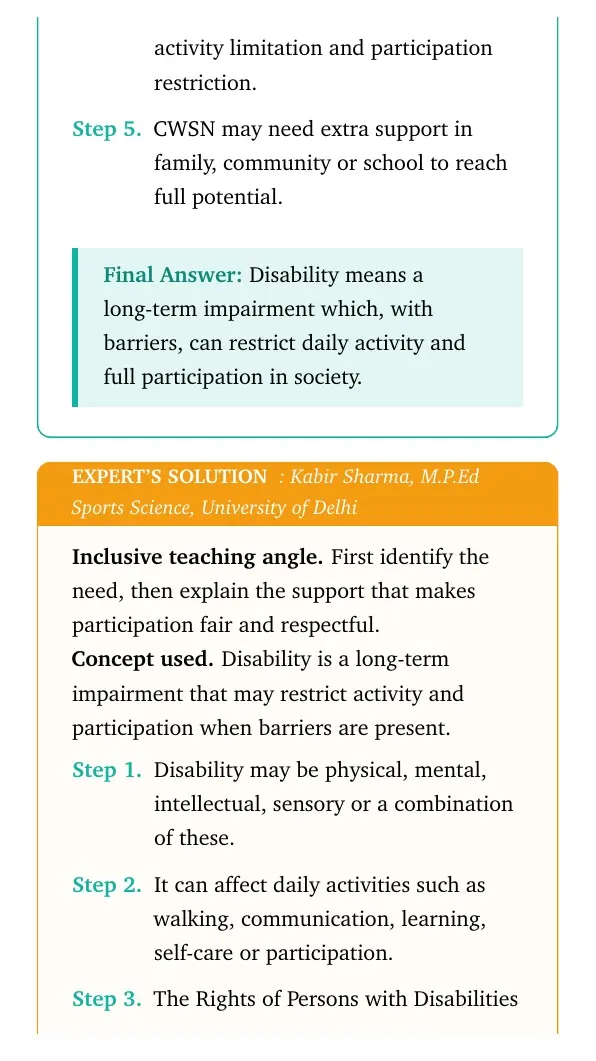
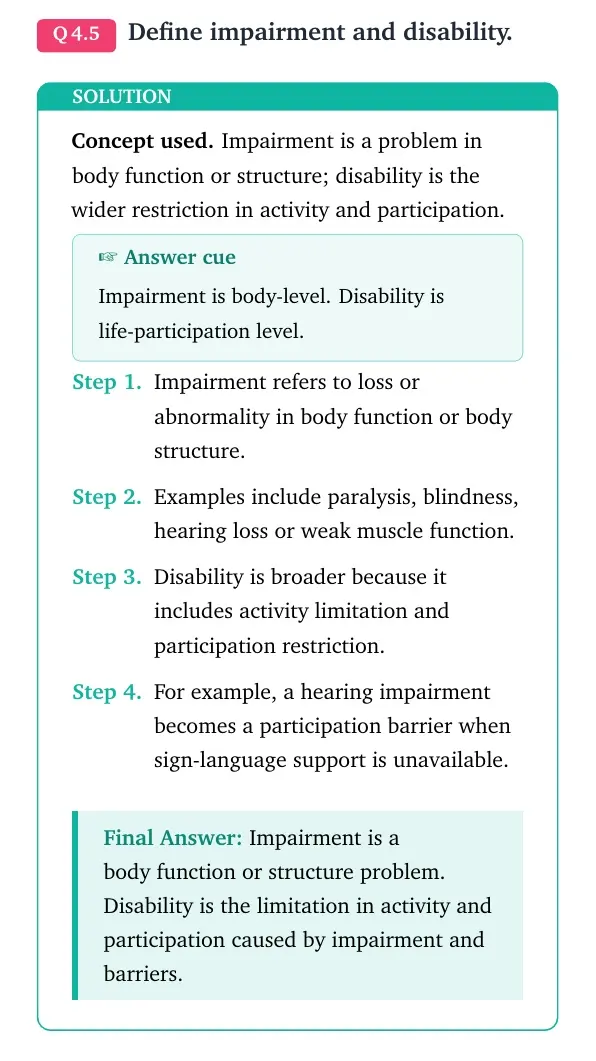
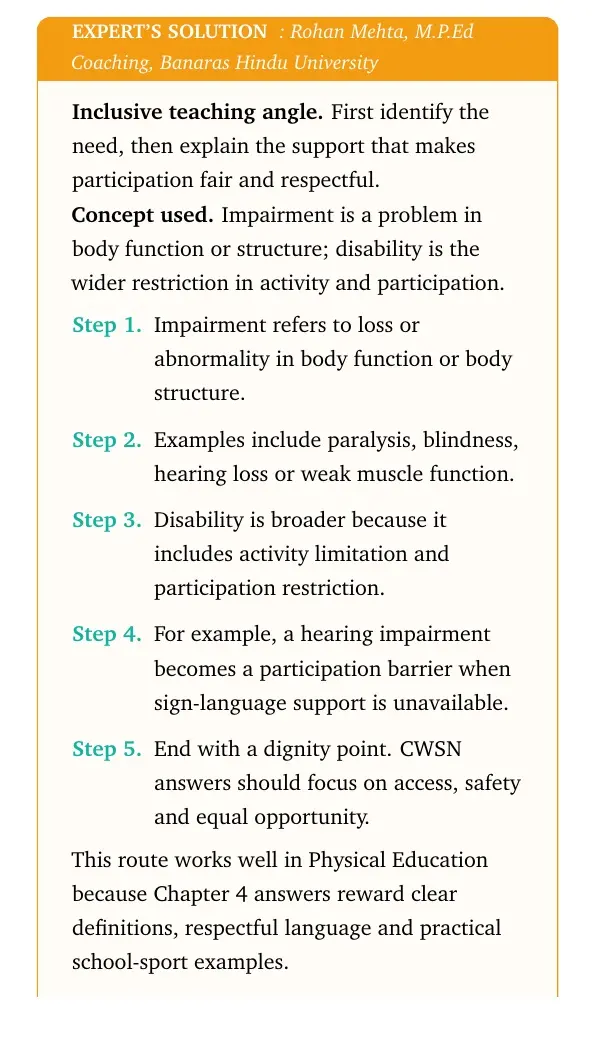
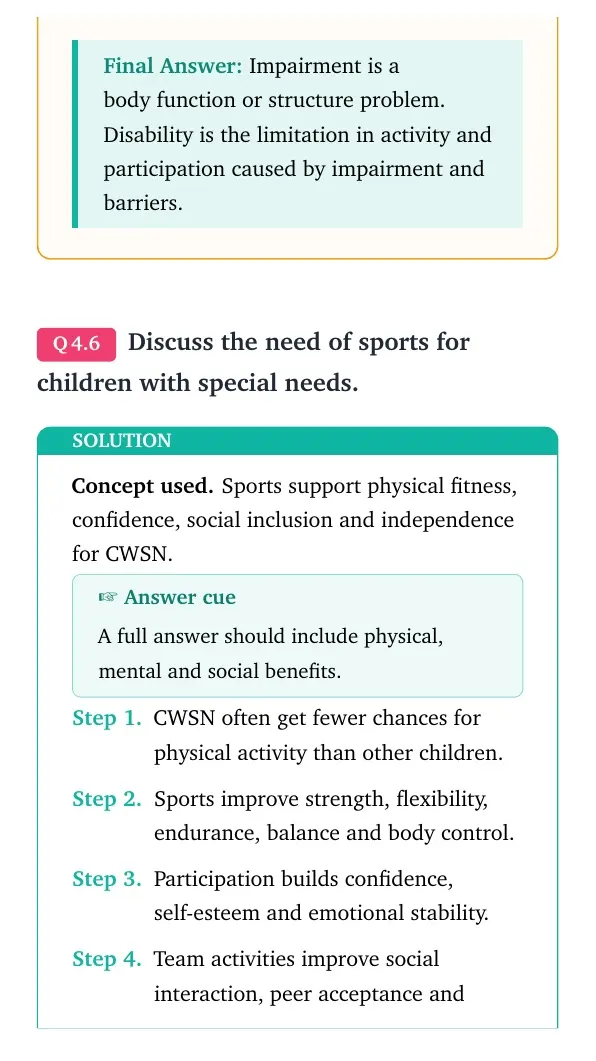
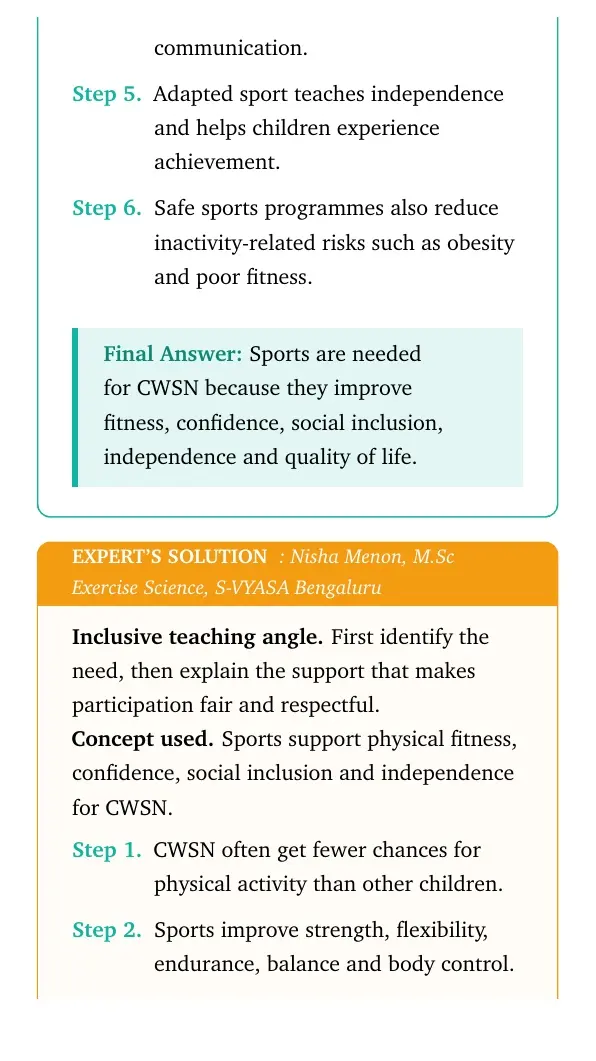
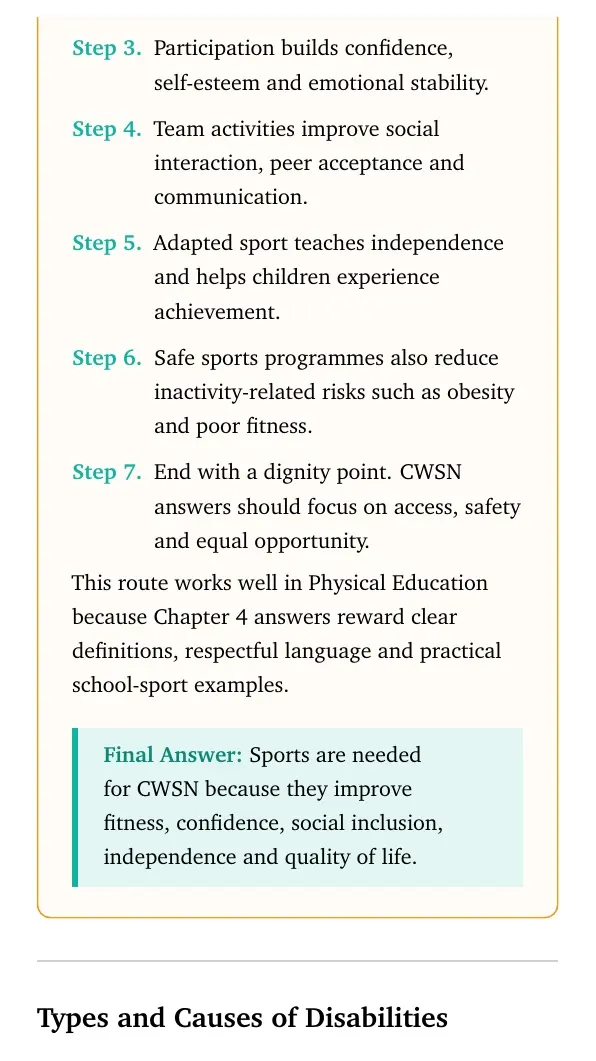
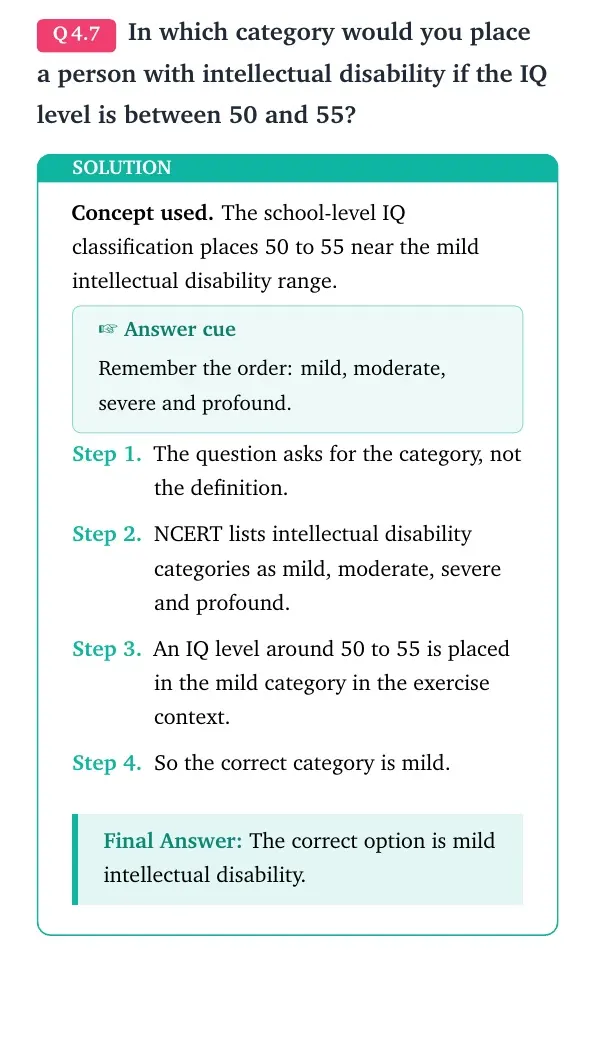
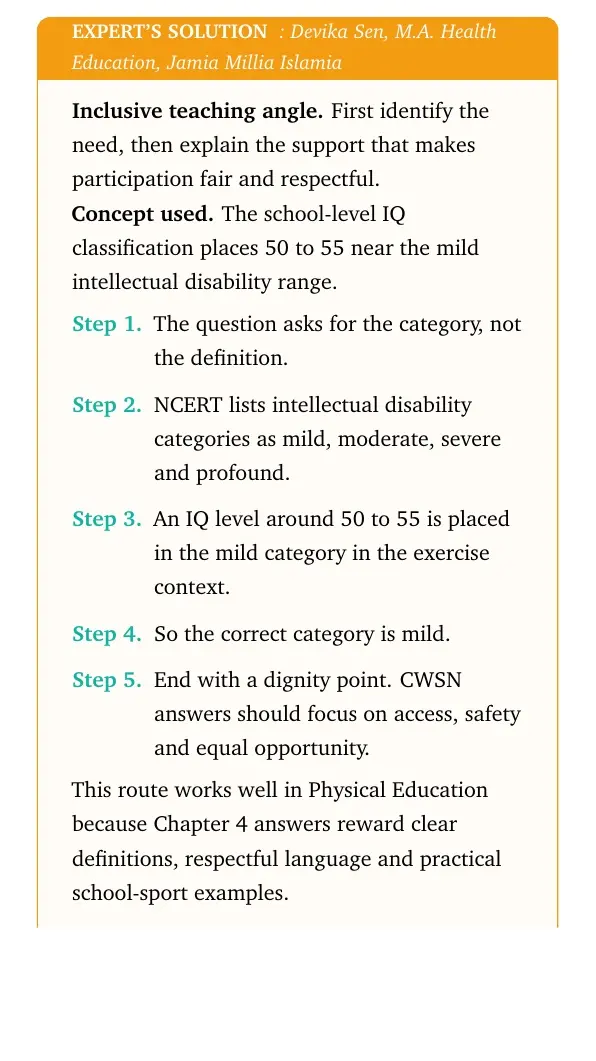
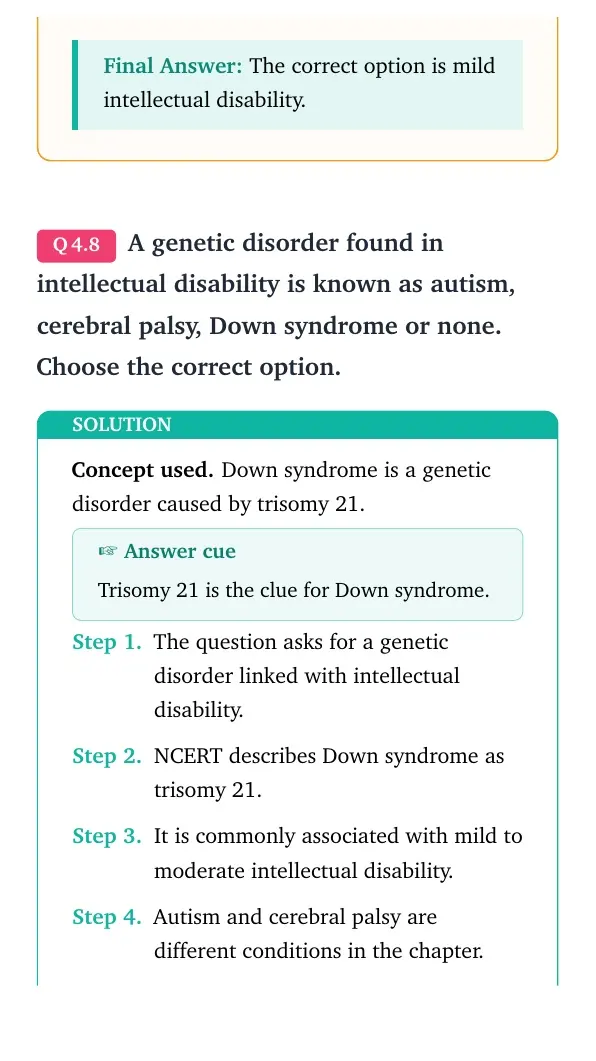
The NCERT Solutions for Class 12 Physical Education Chapter 4 Physical Education and Sports for CWSN cover disability, disorder, CWSN support, disability etiquette and accessible physical activities for the 2026-27 session.
- Best for: CBSE board revision, short-answer practice and viva preparation.
- Chapter focus: CWSN, disability types, ADHD, SPD, ODD, OCD, ASD, etiquette and access strategies.
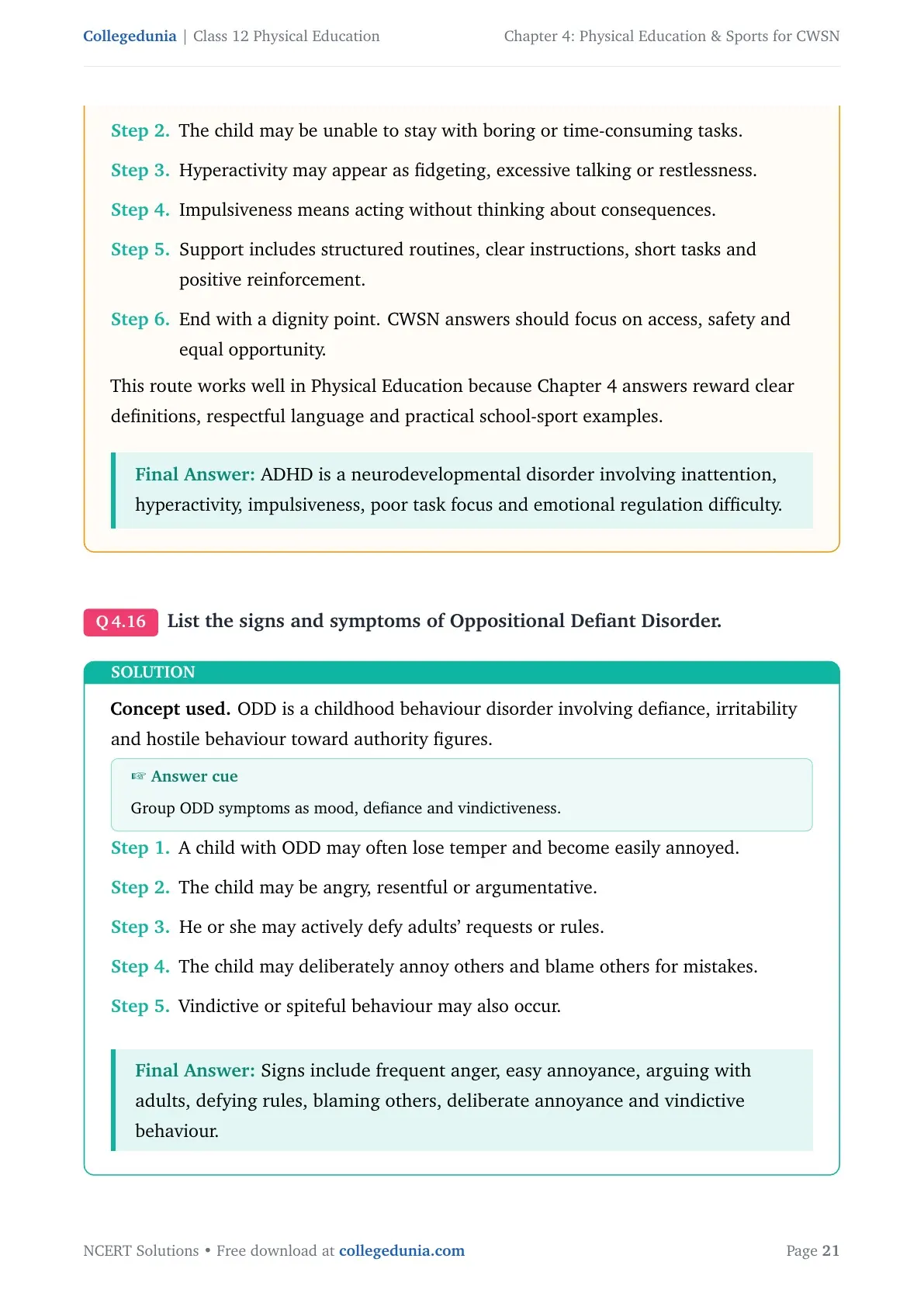
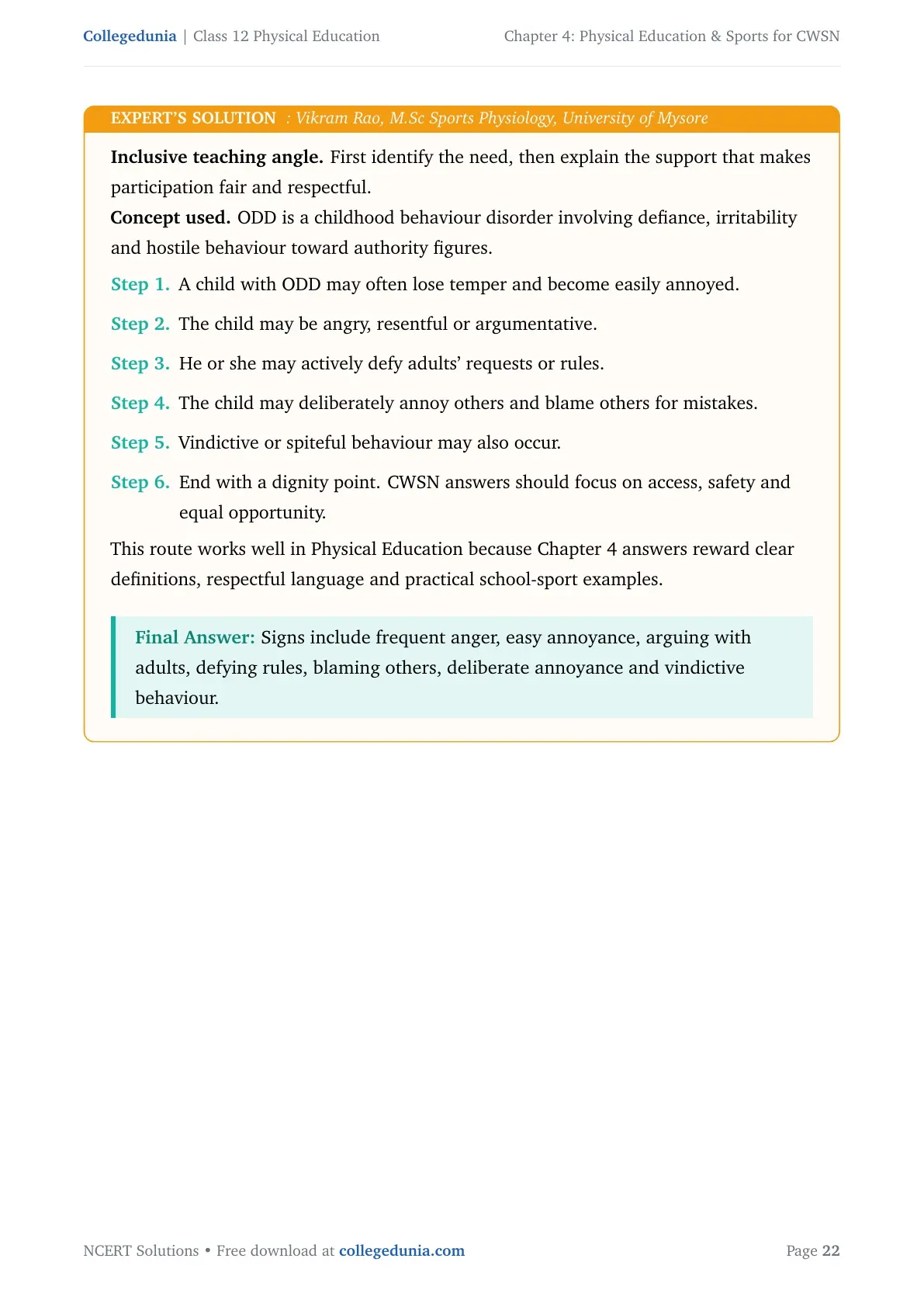
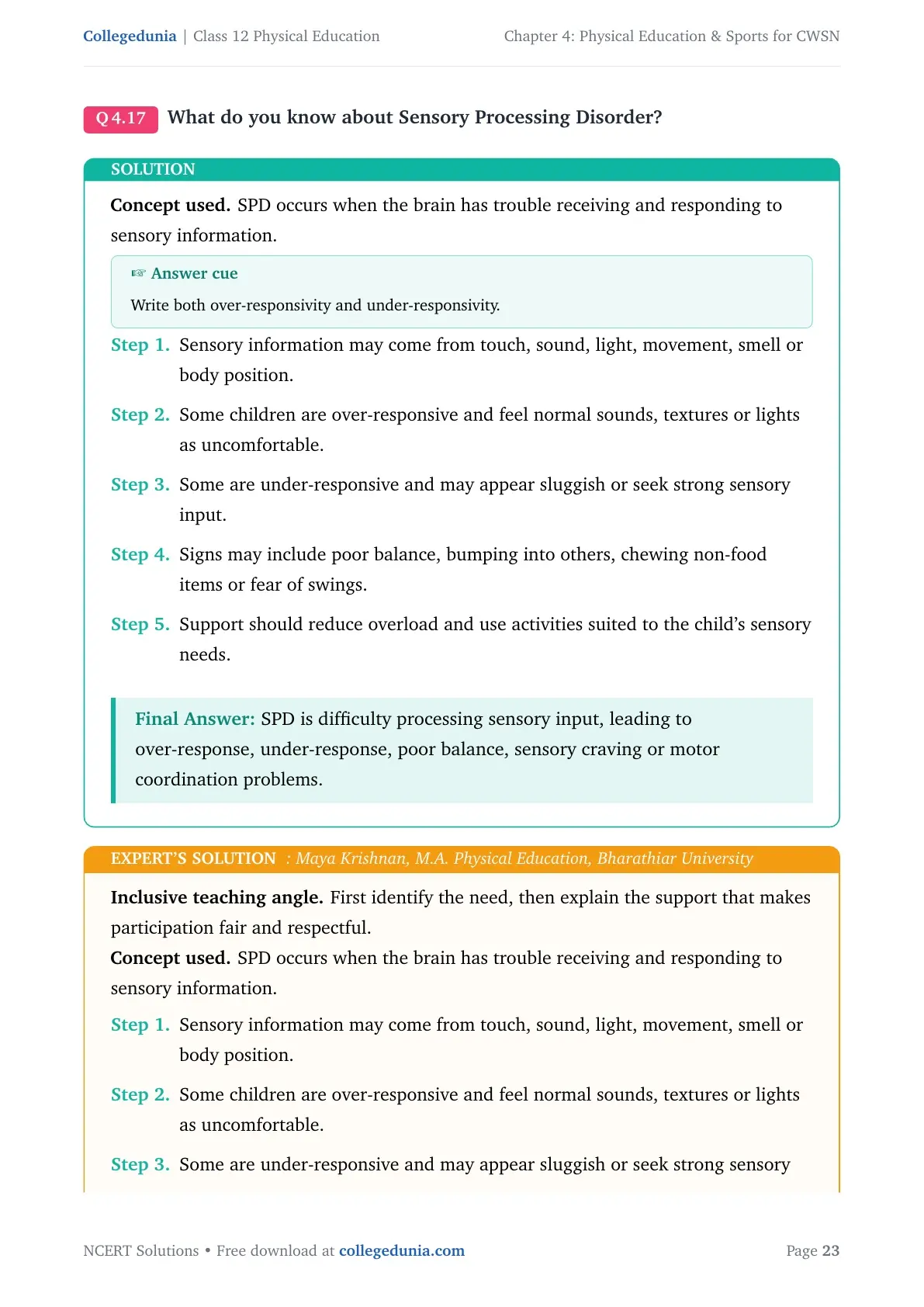
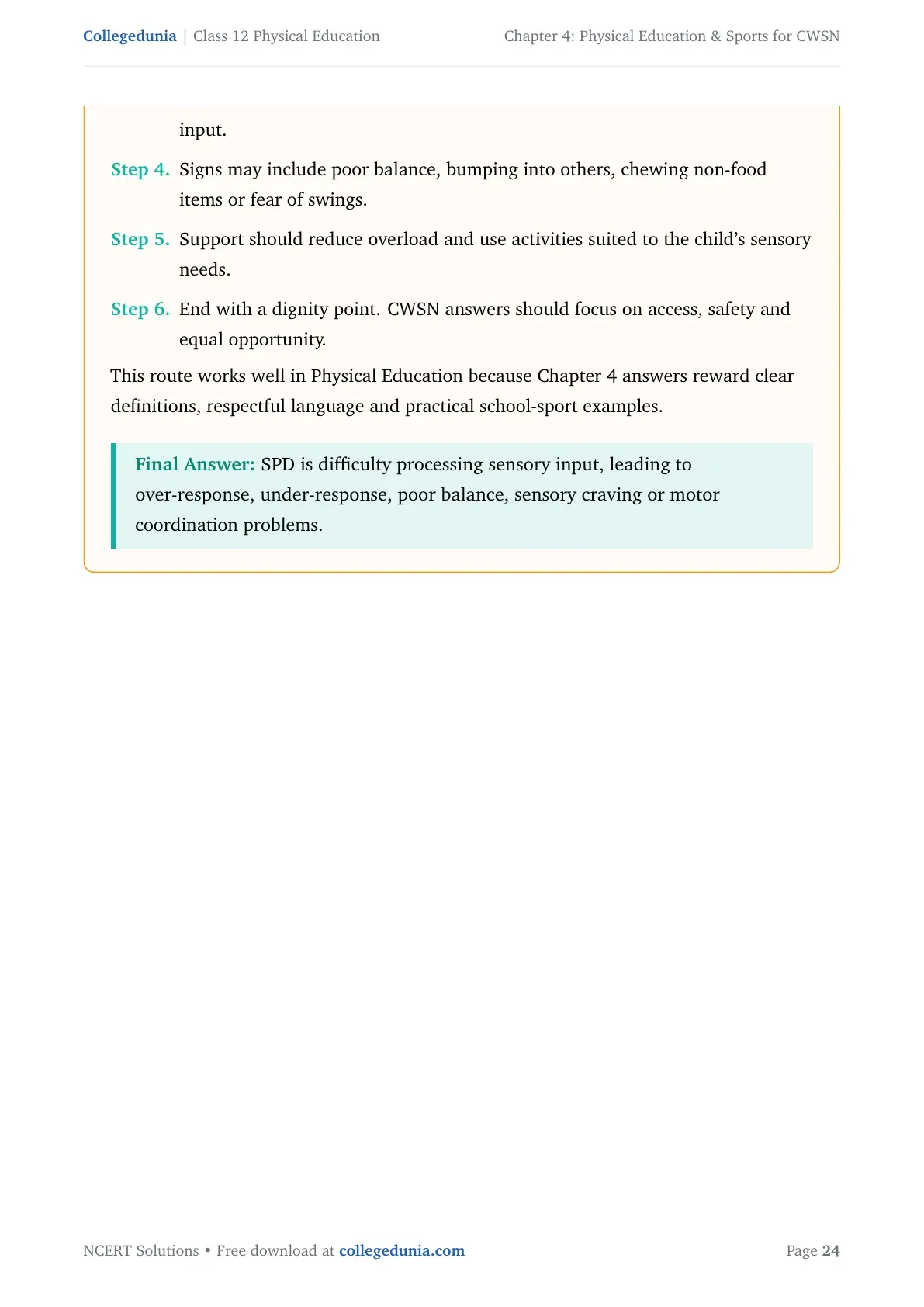
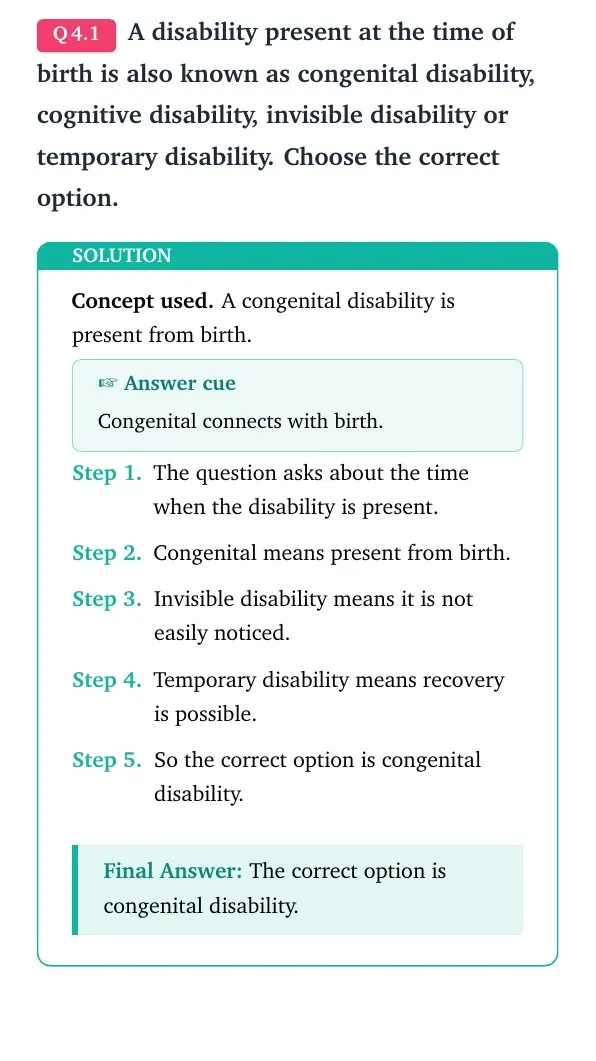
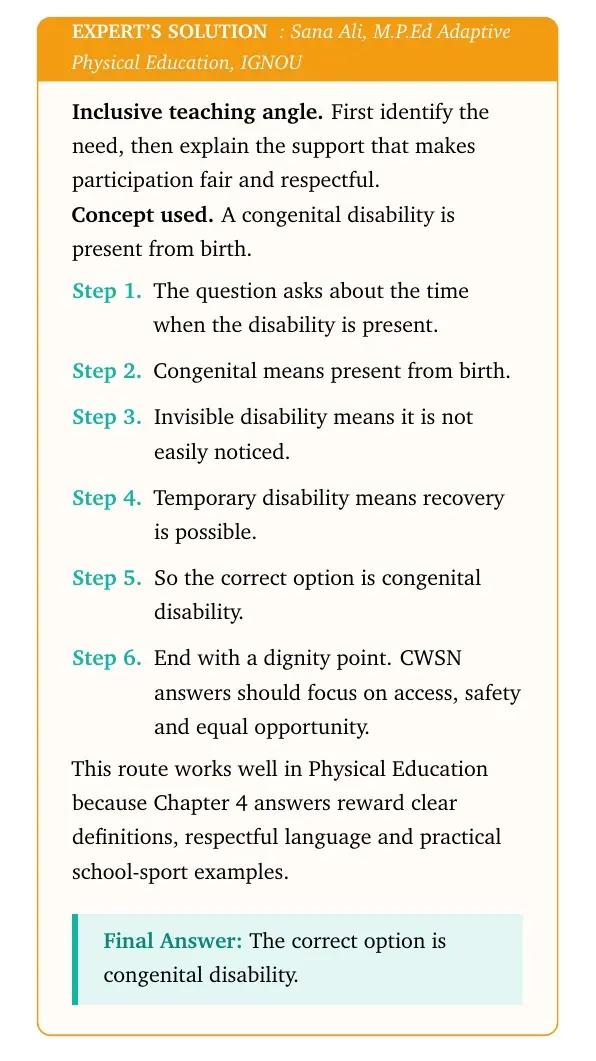
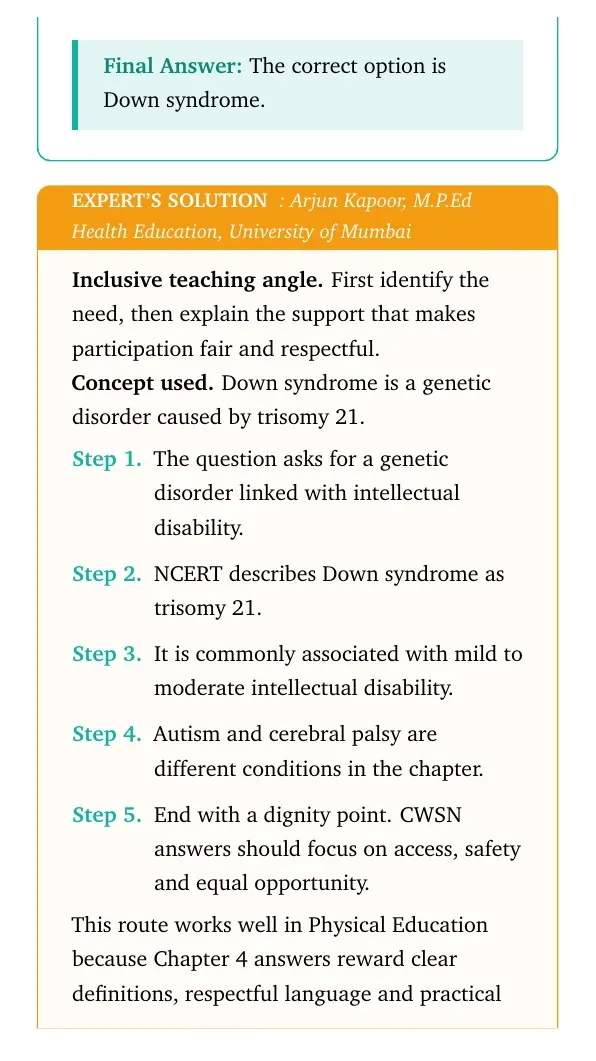
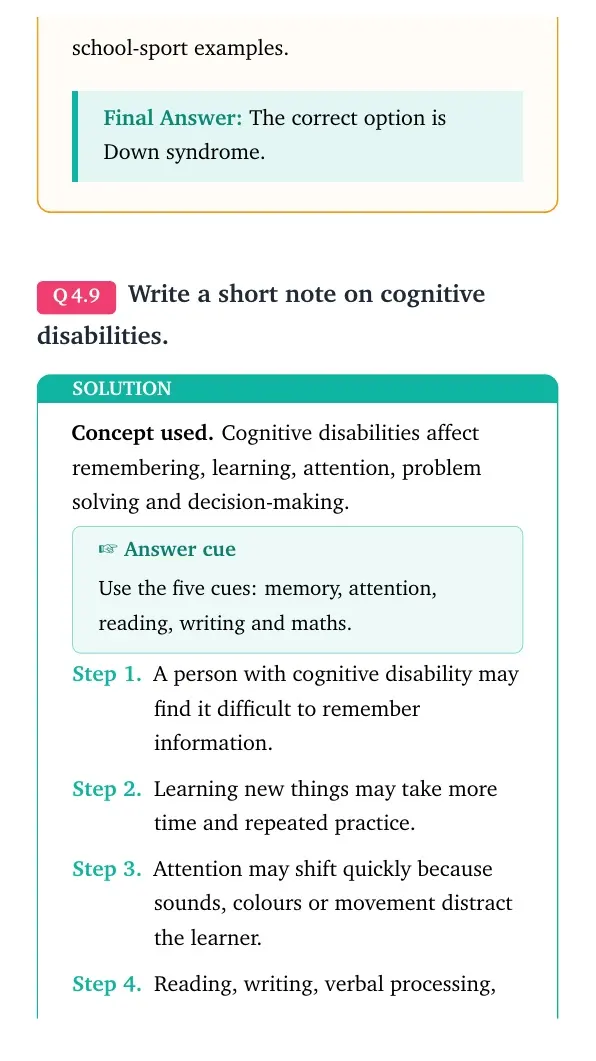
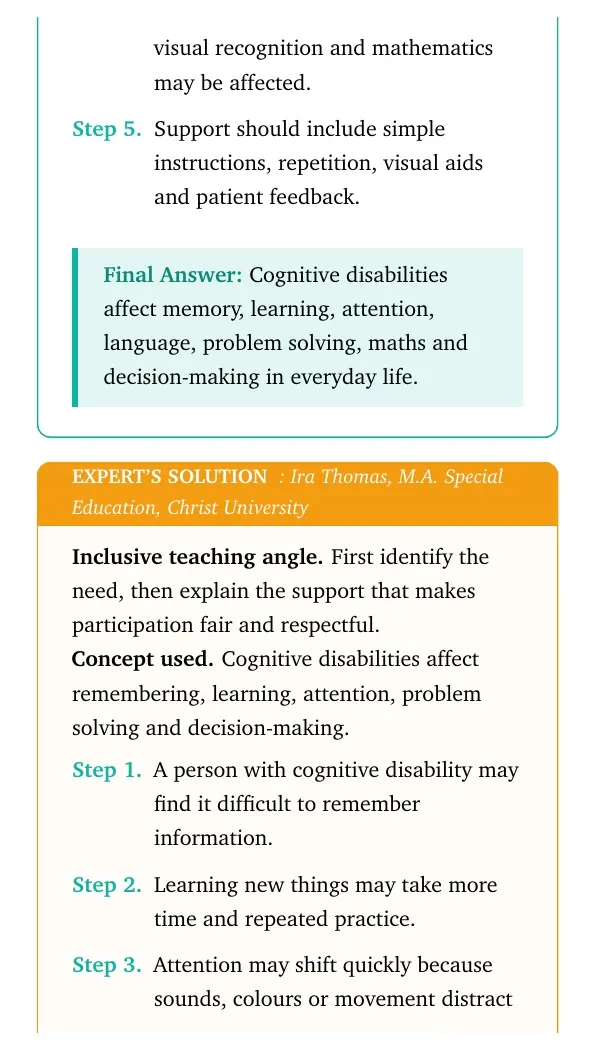
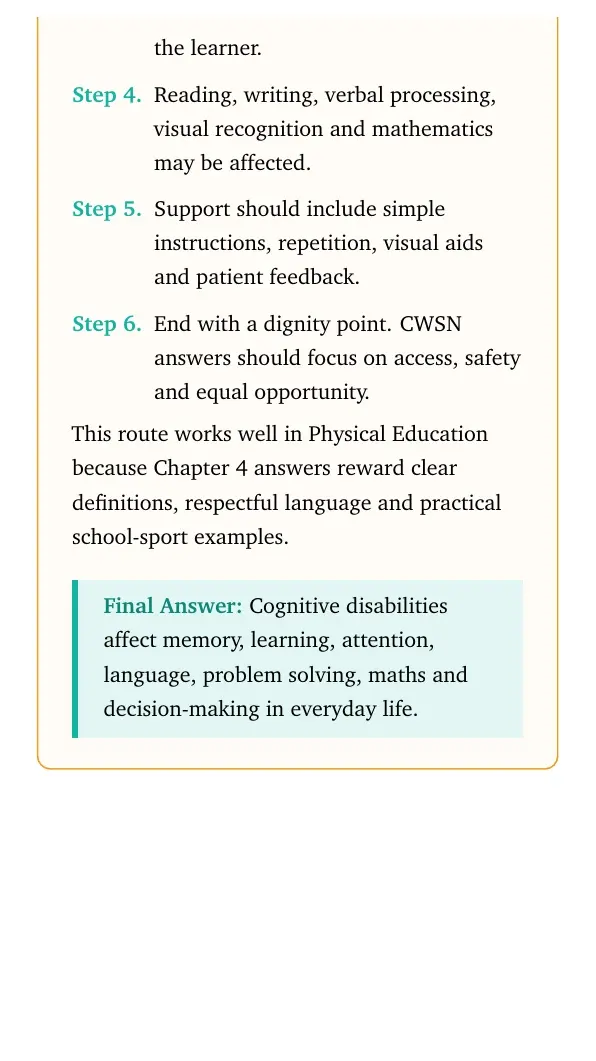
- PDF includes: 23 solved questions with expert explanations.
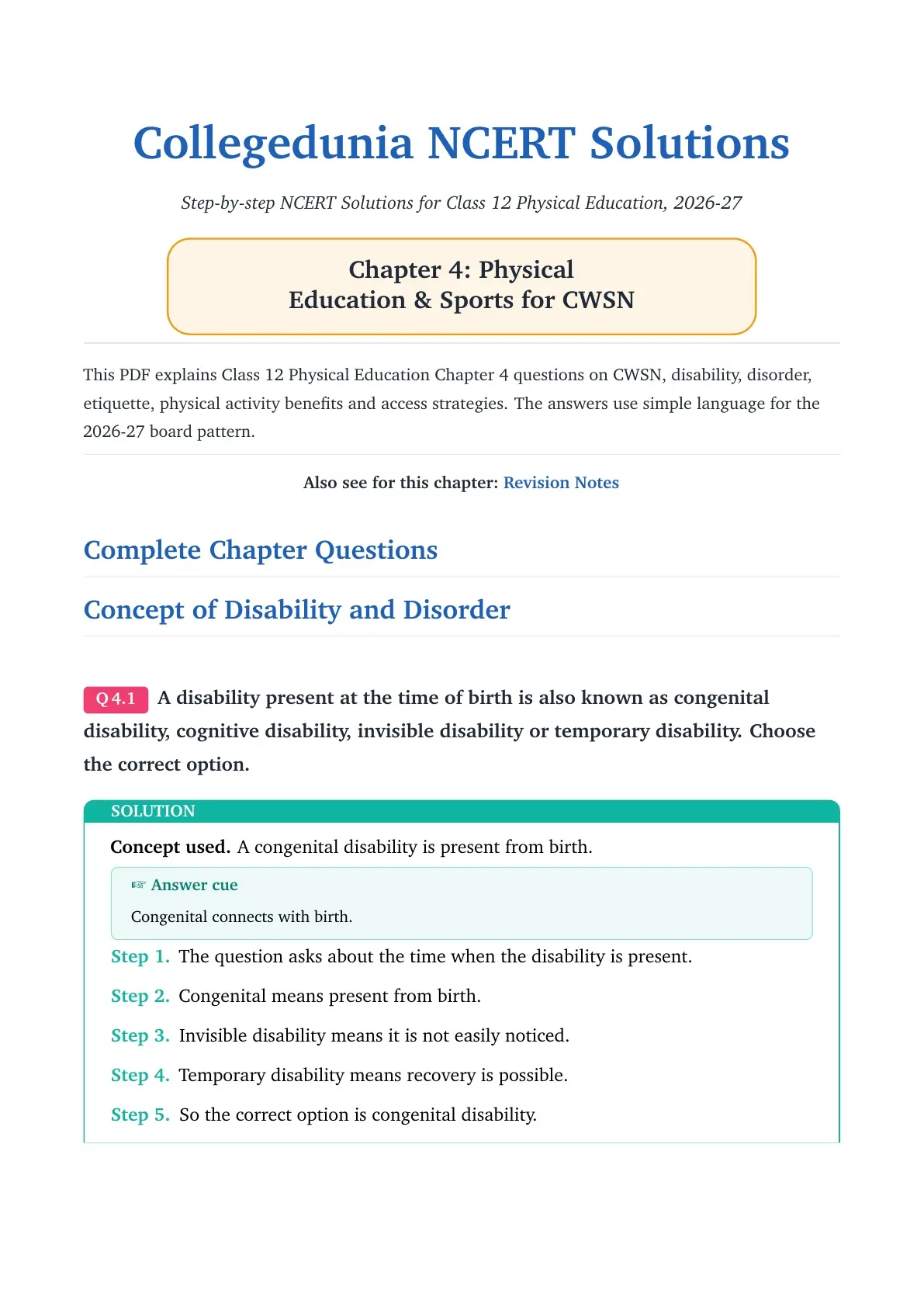
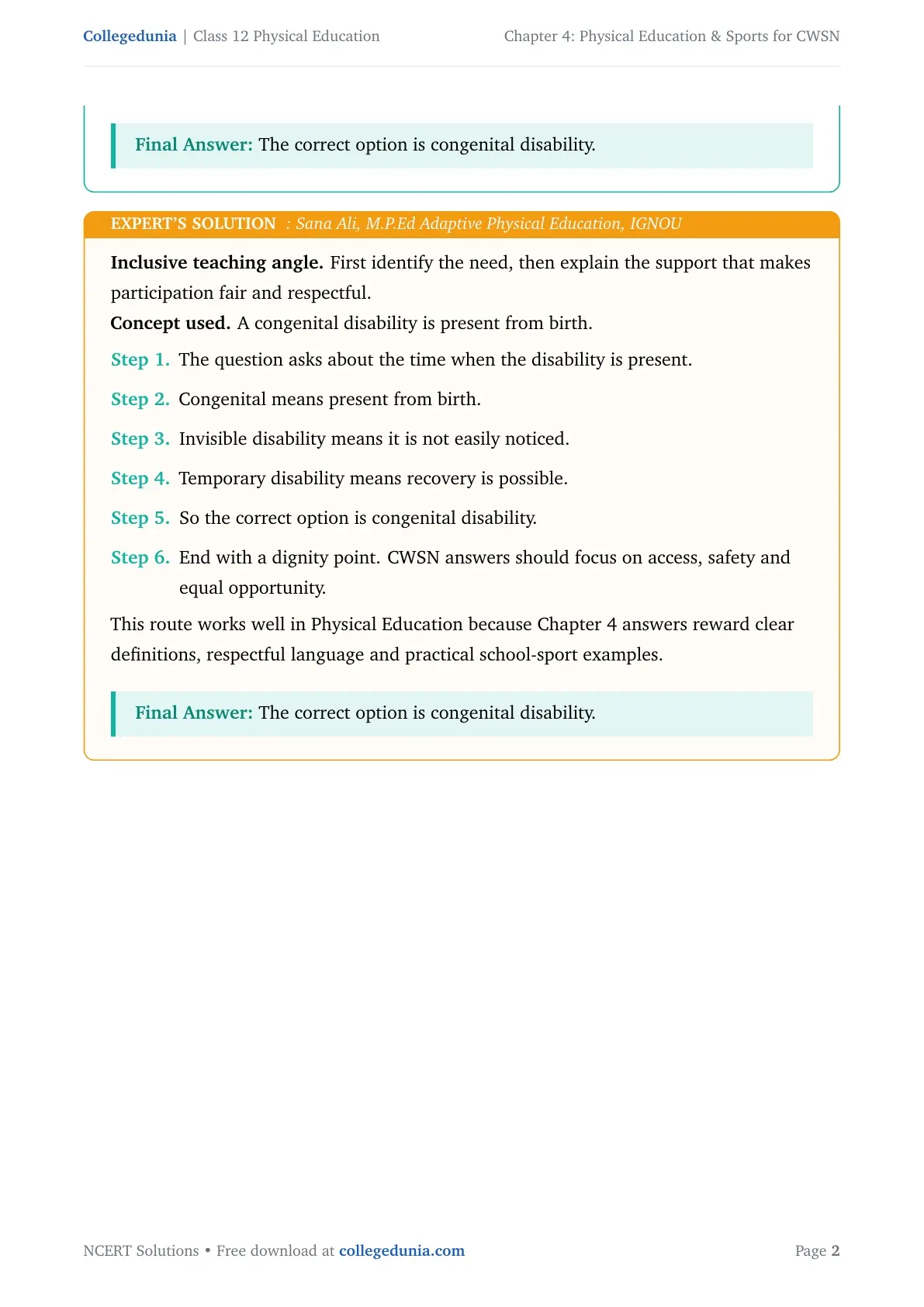
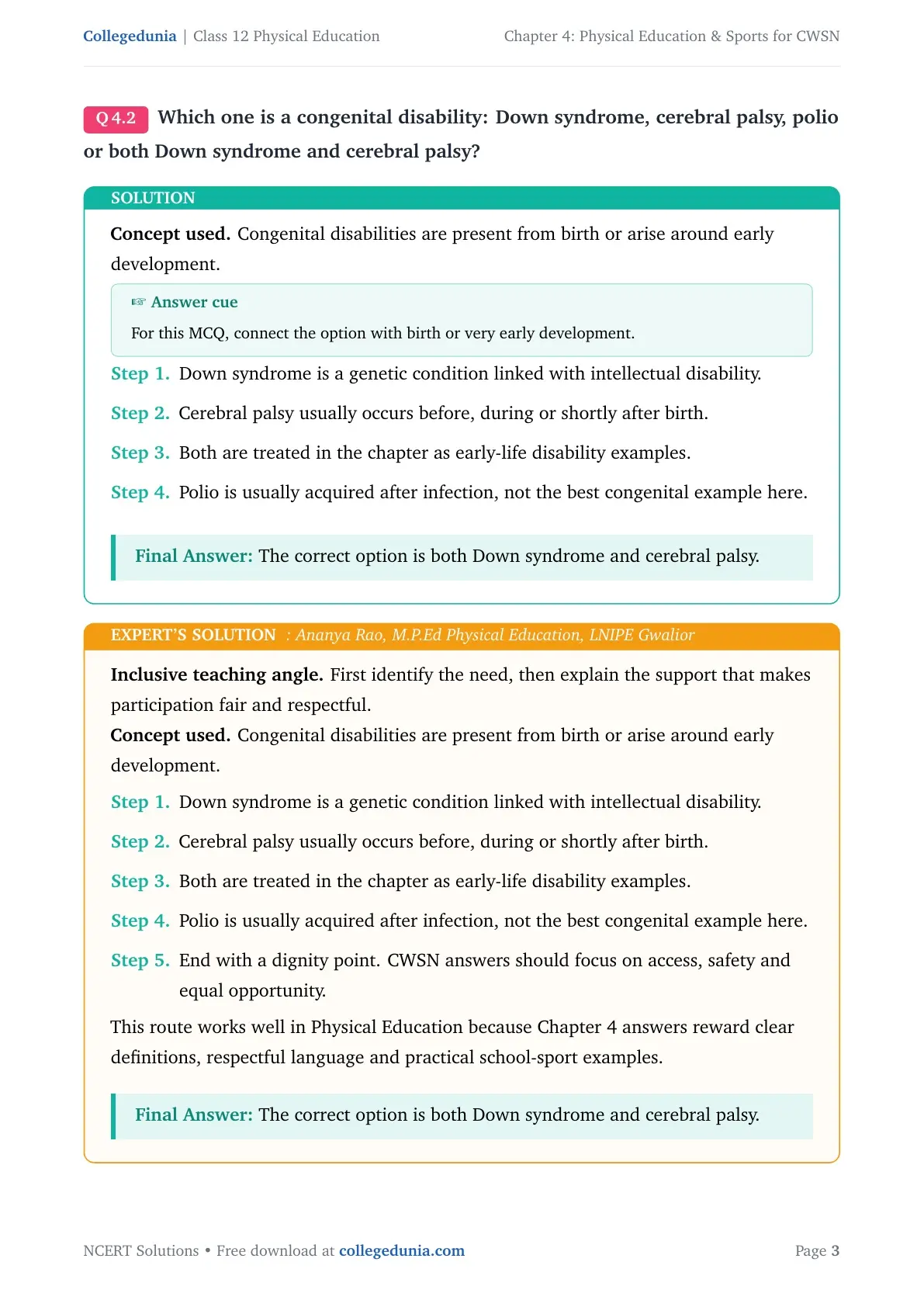
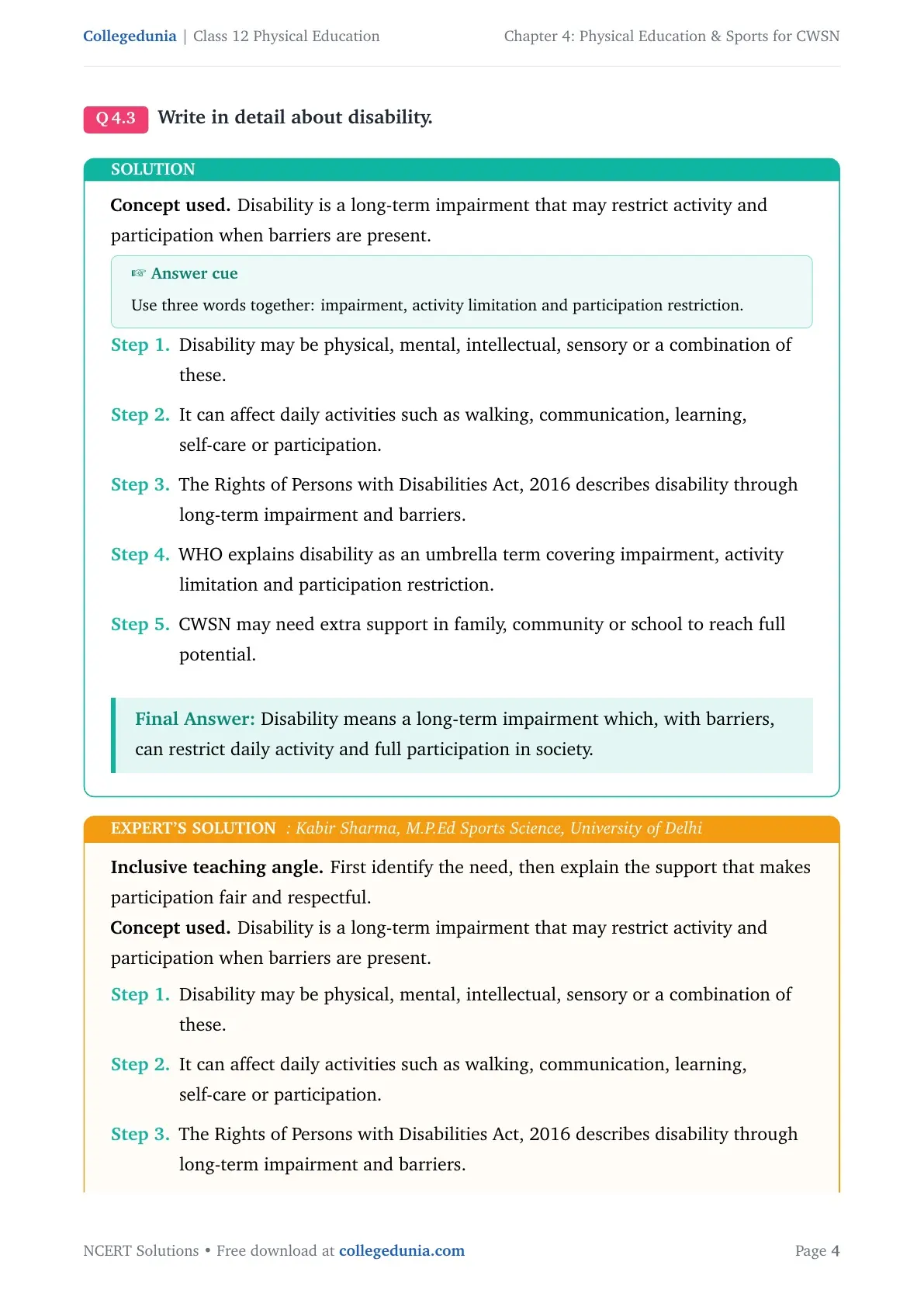
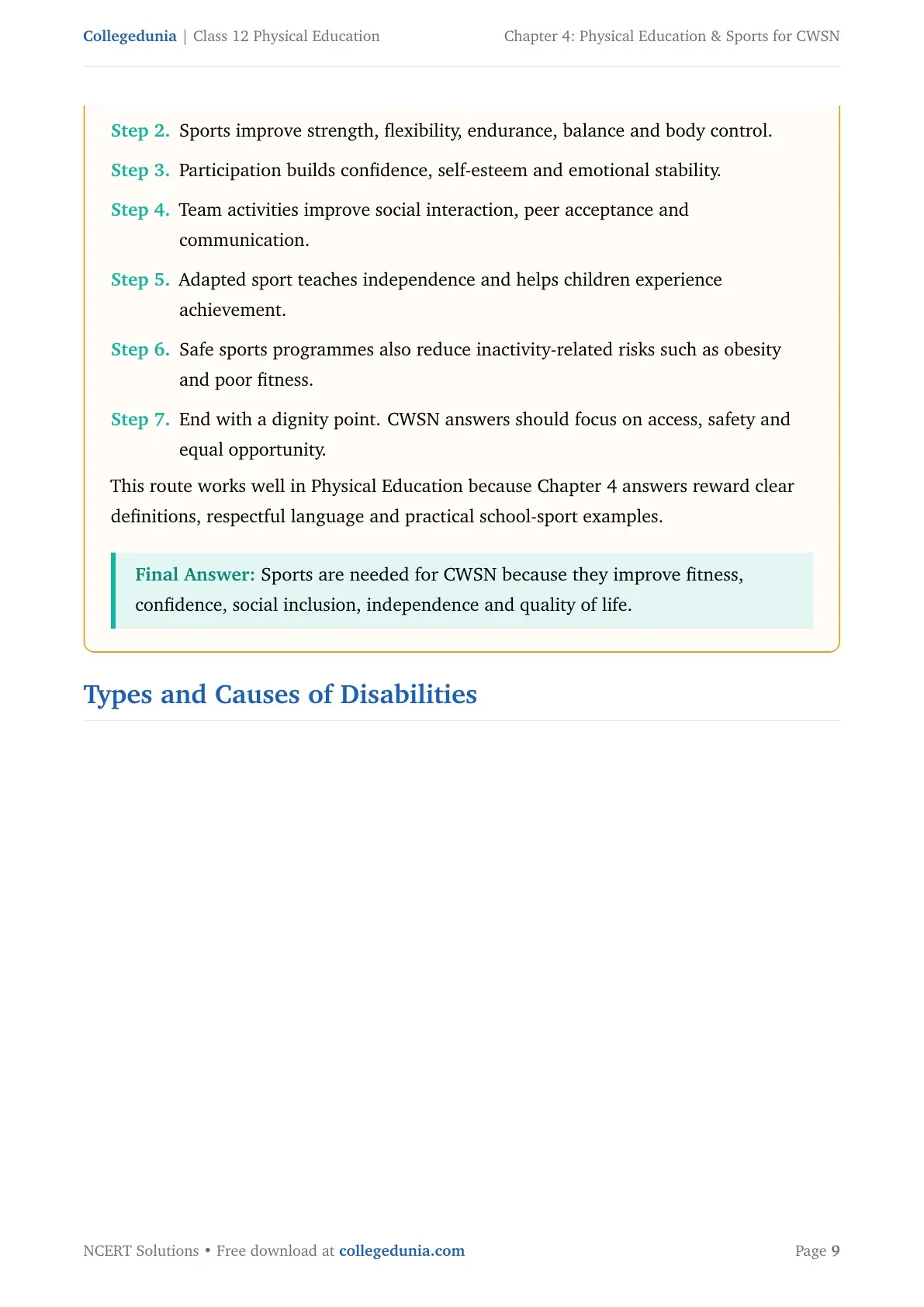
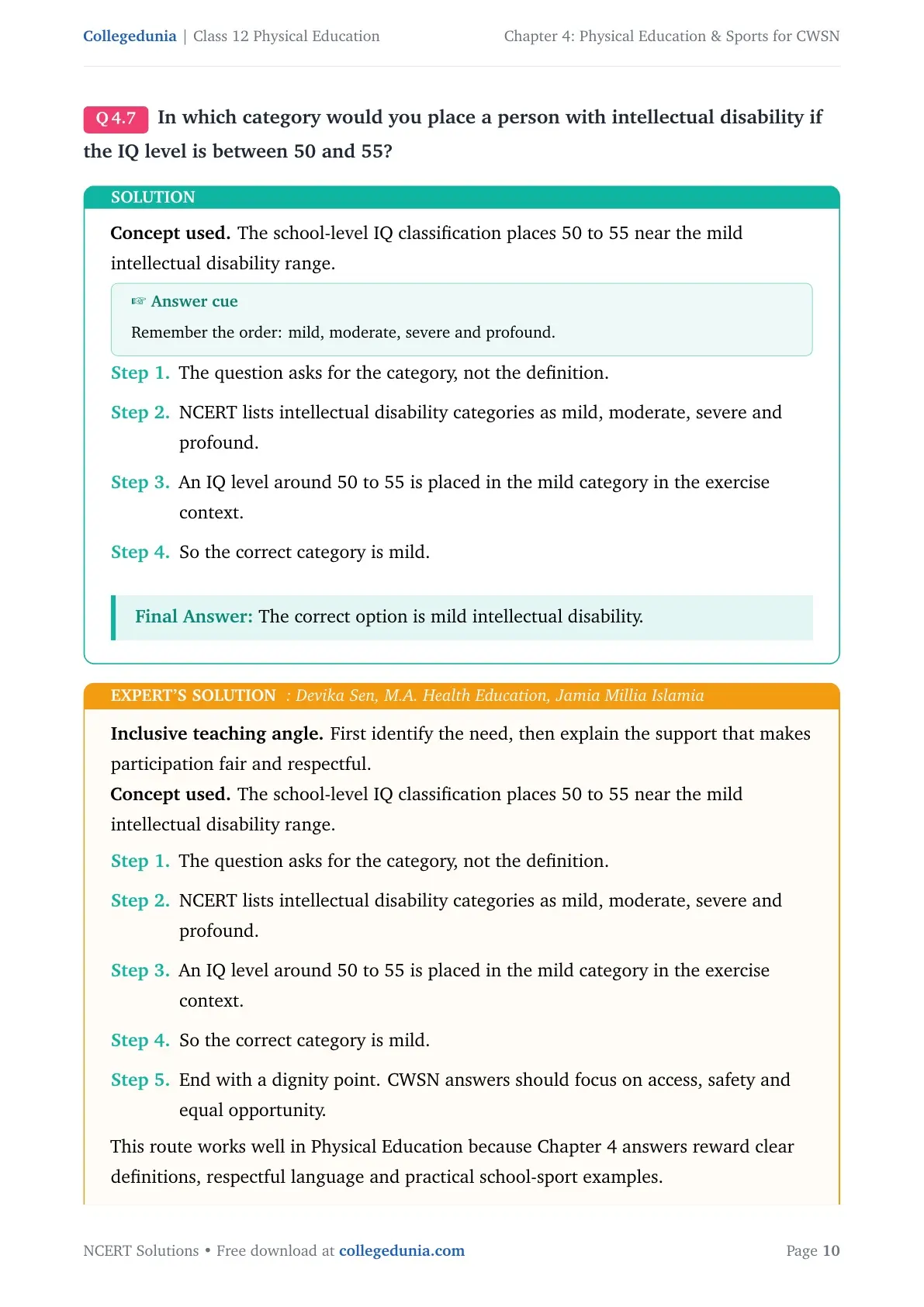
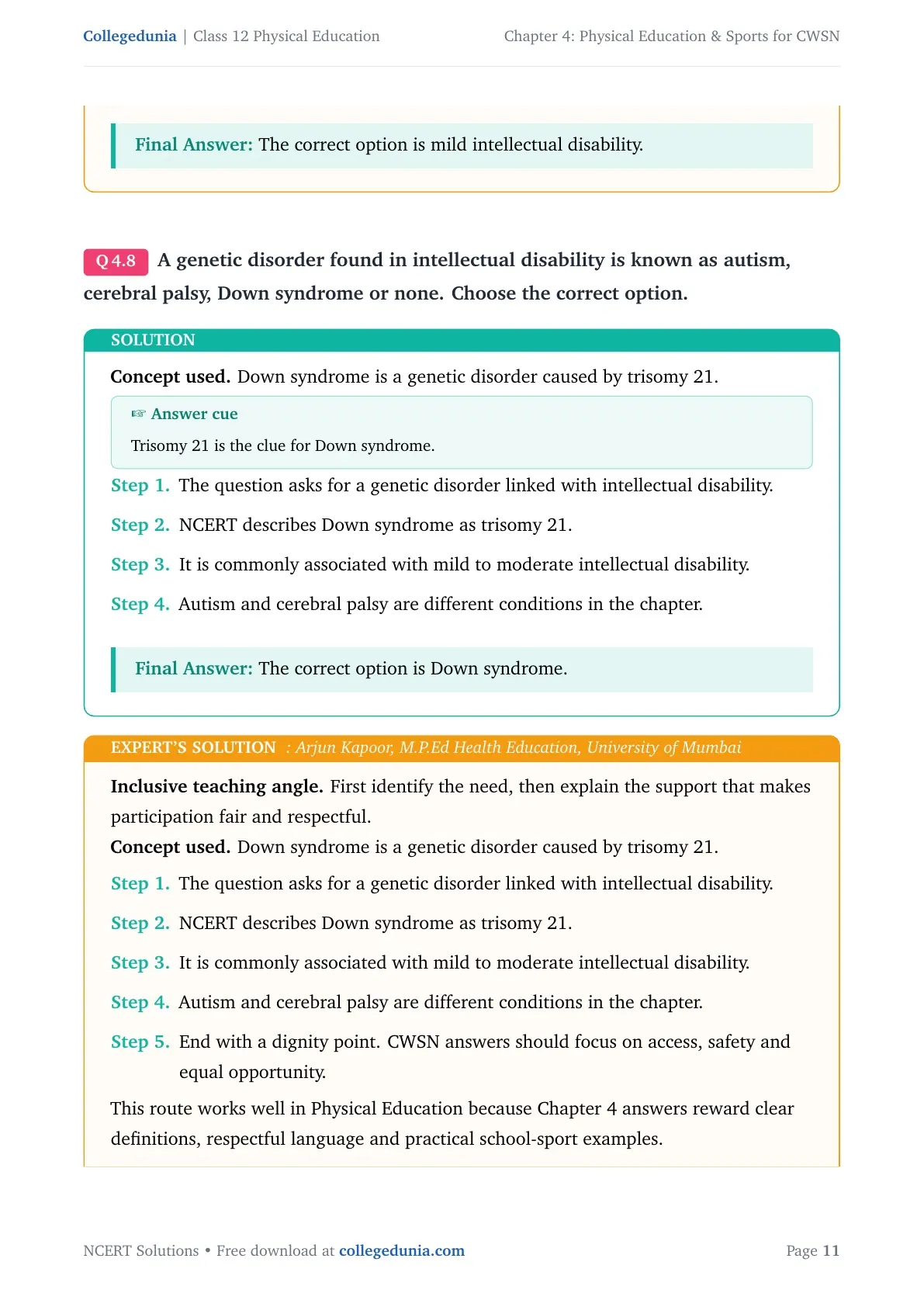
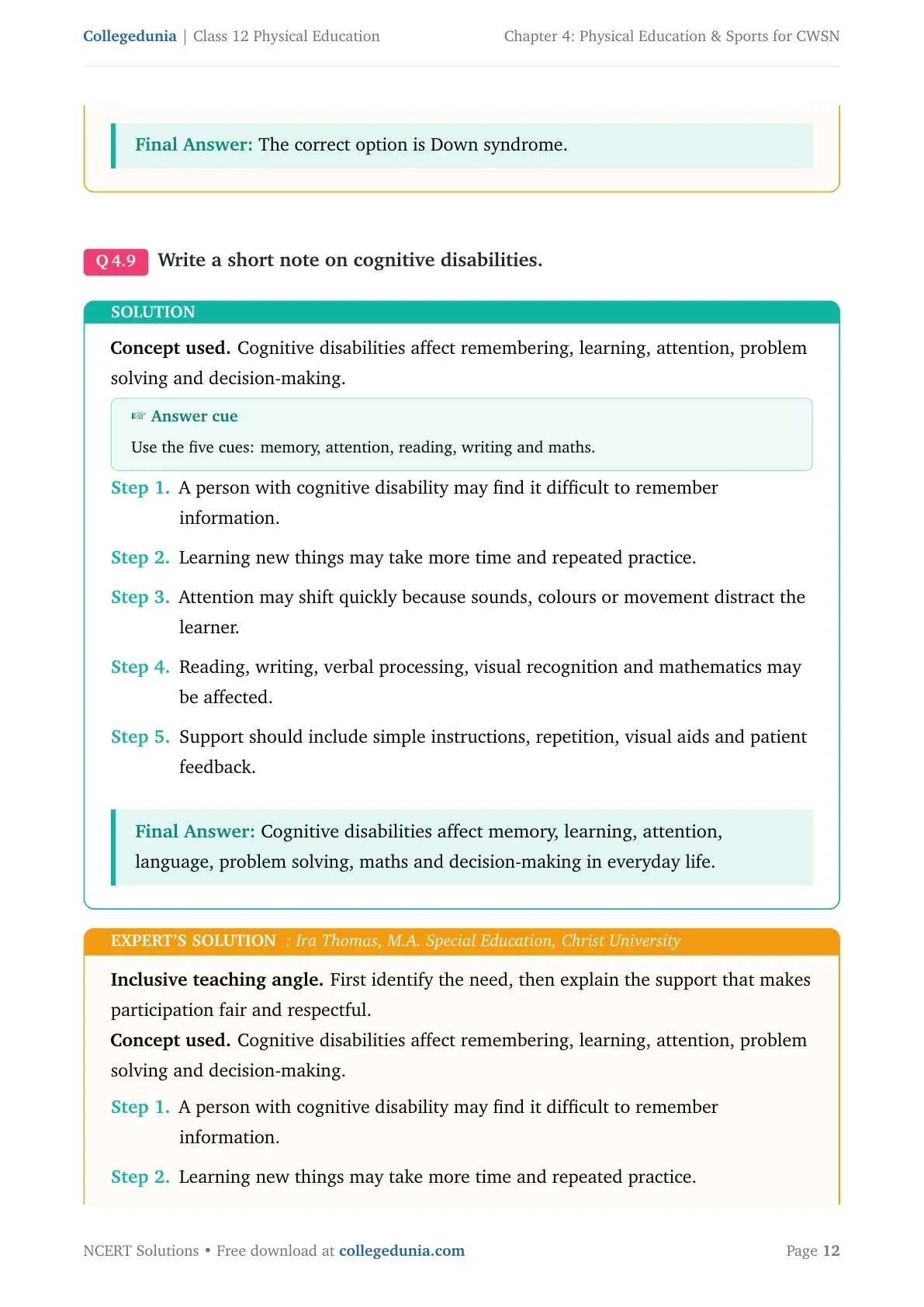
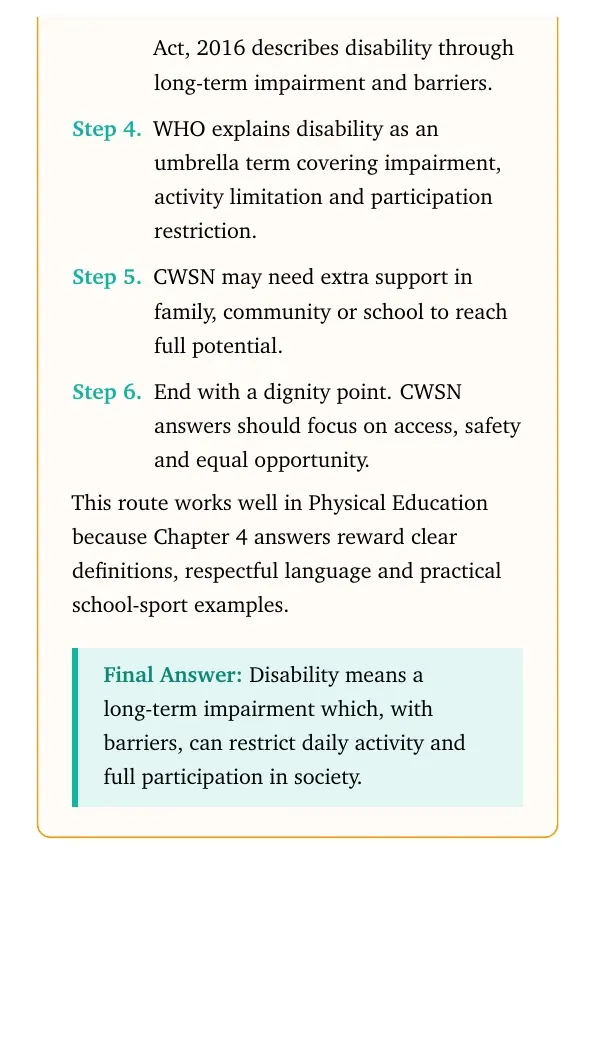
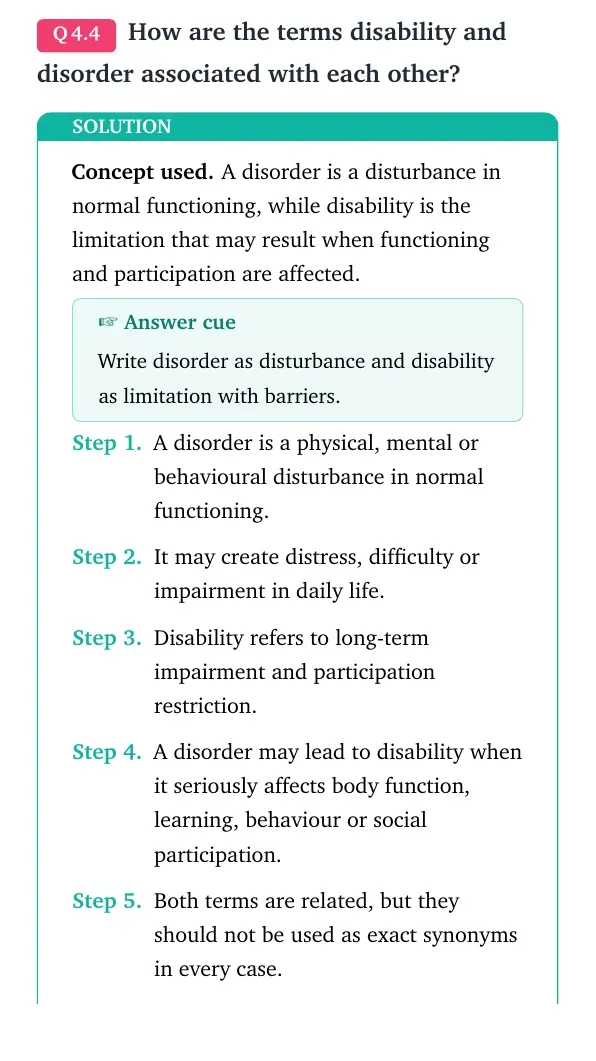
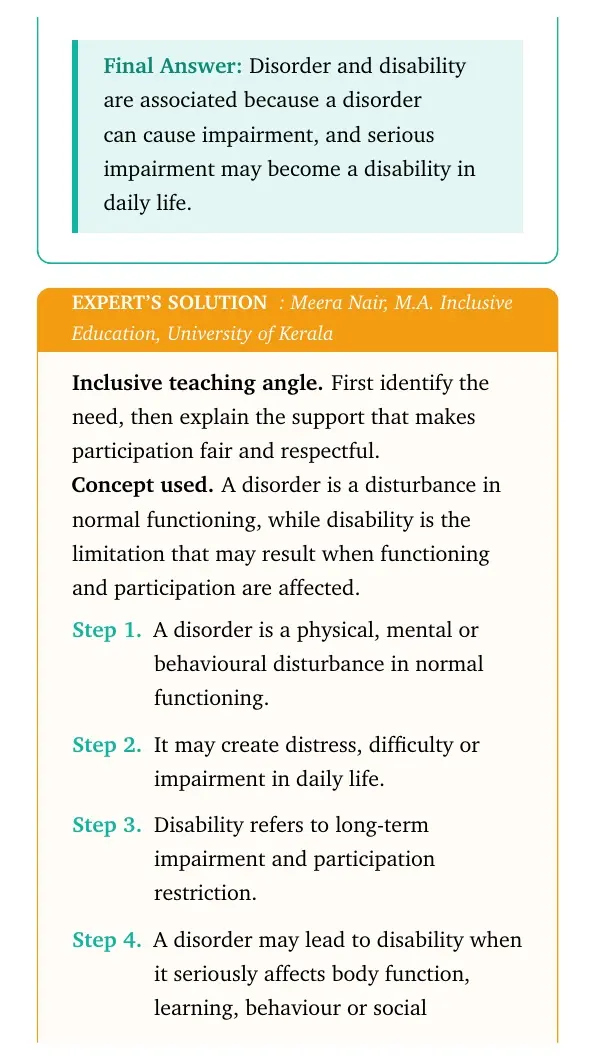
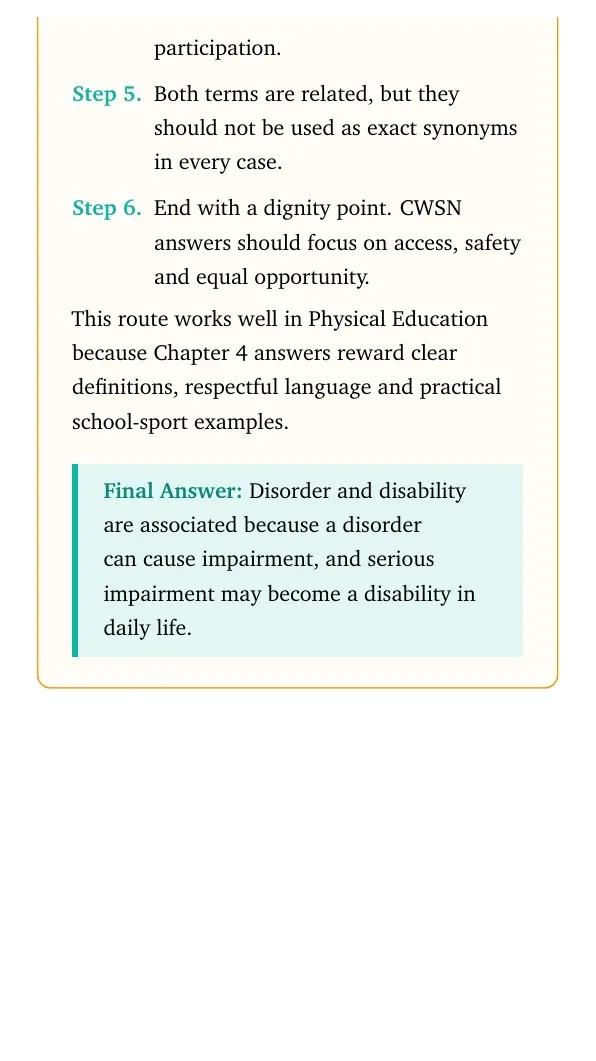
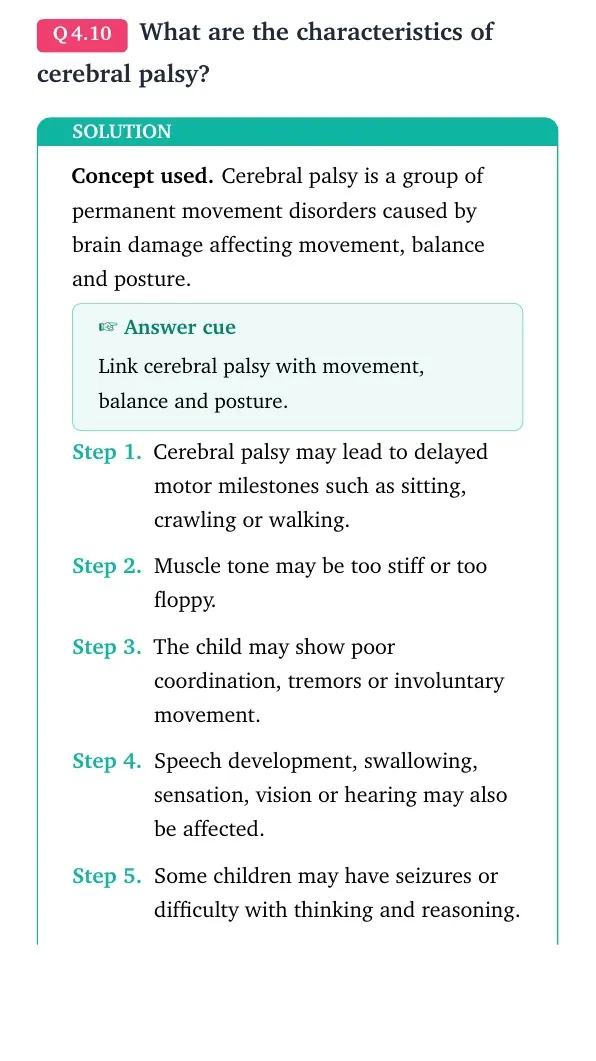
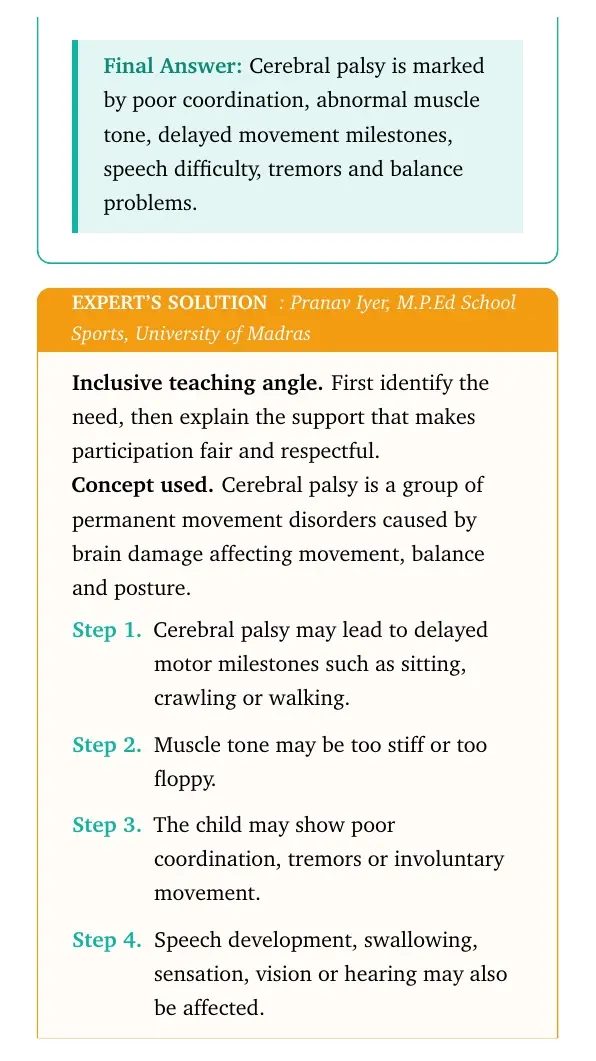
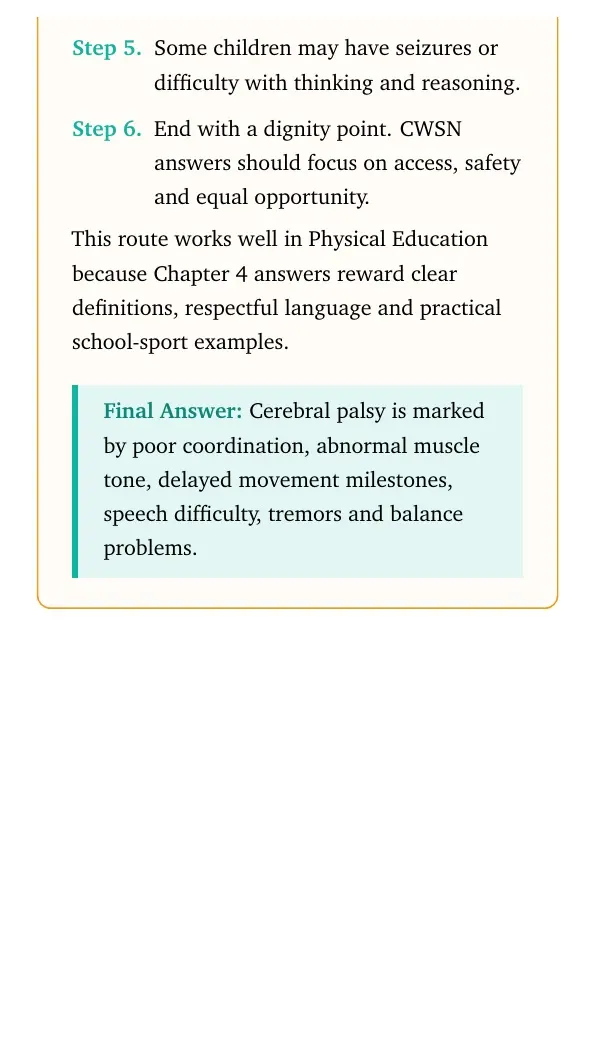
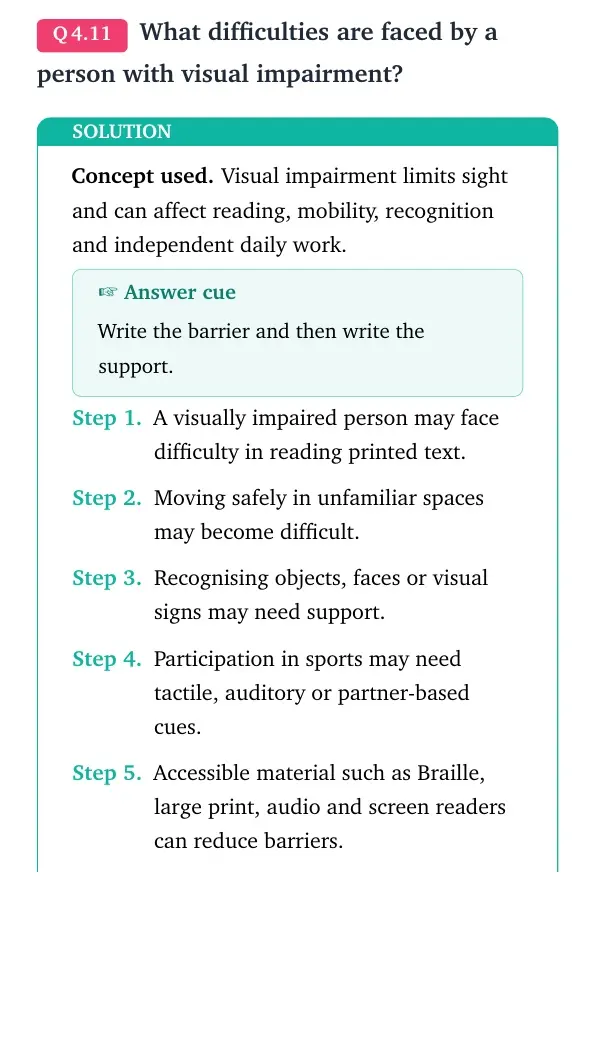
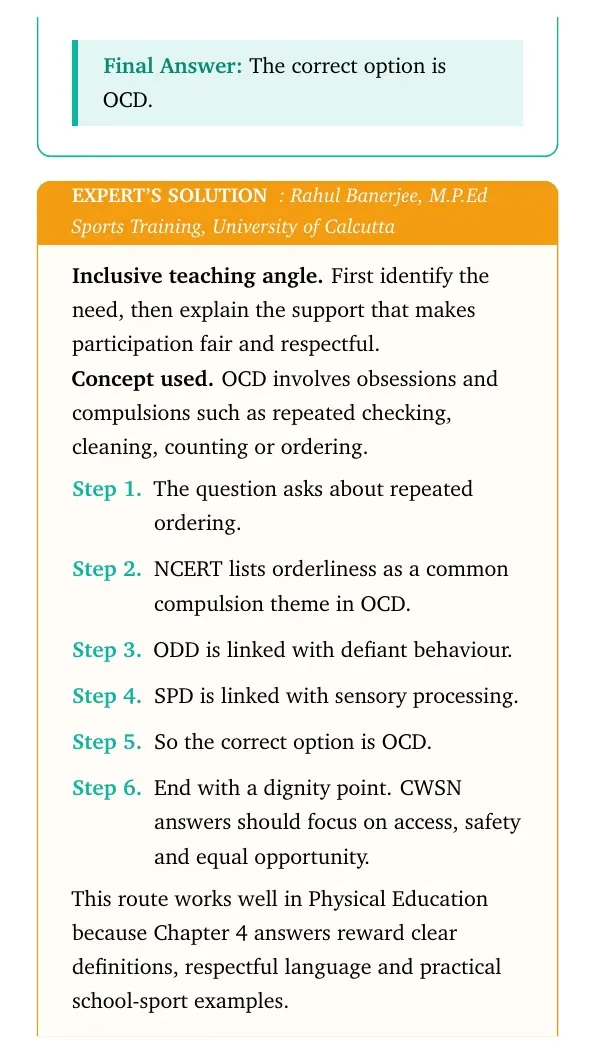
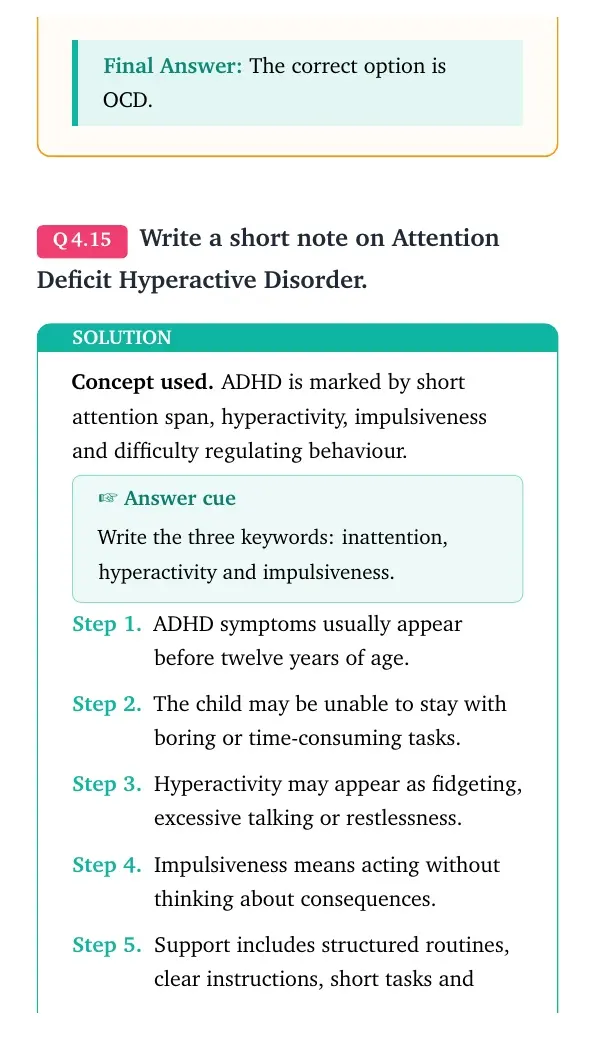
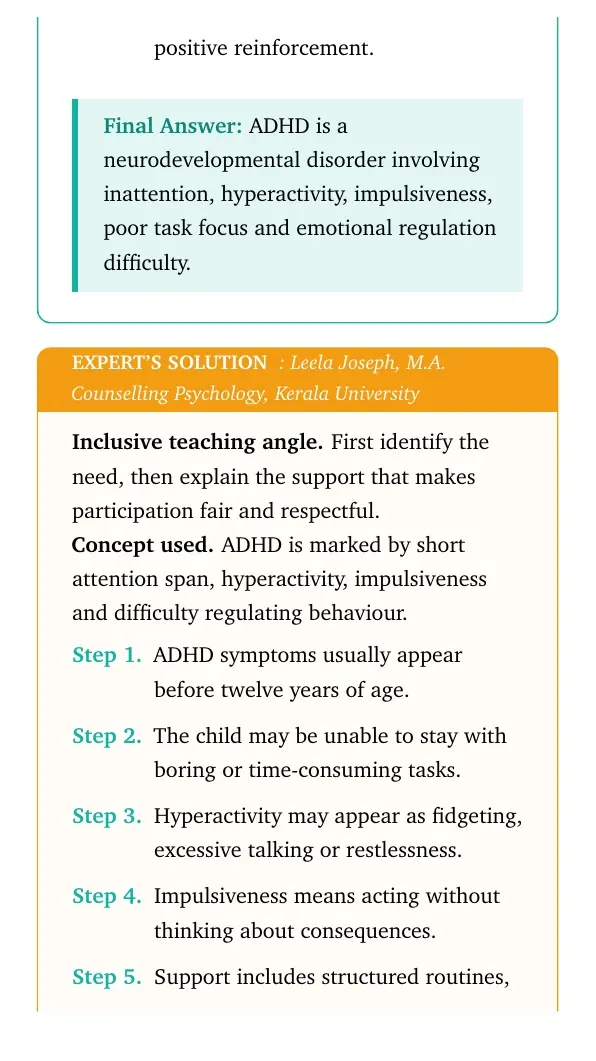
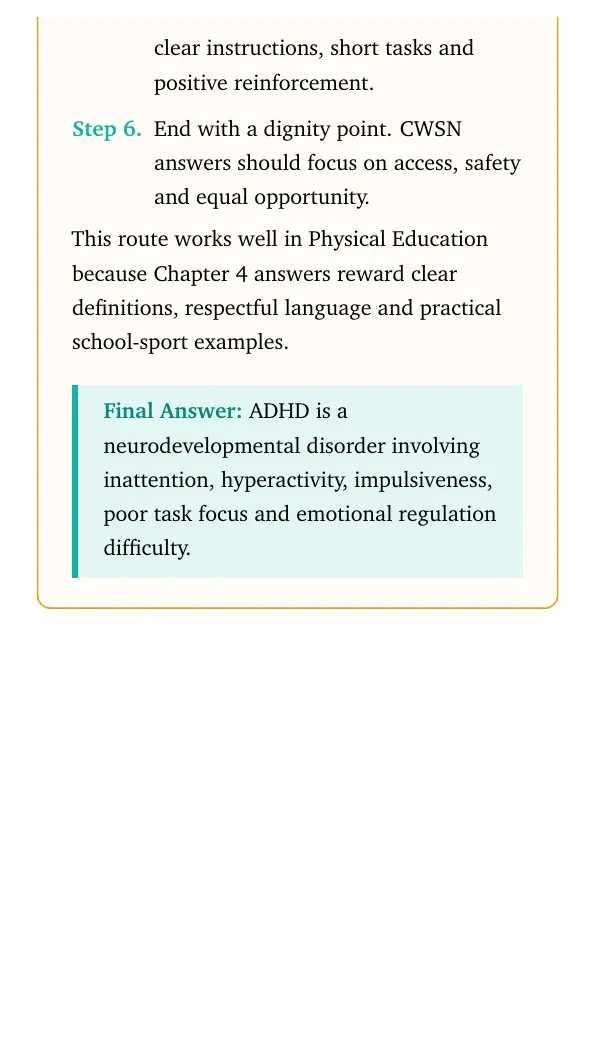
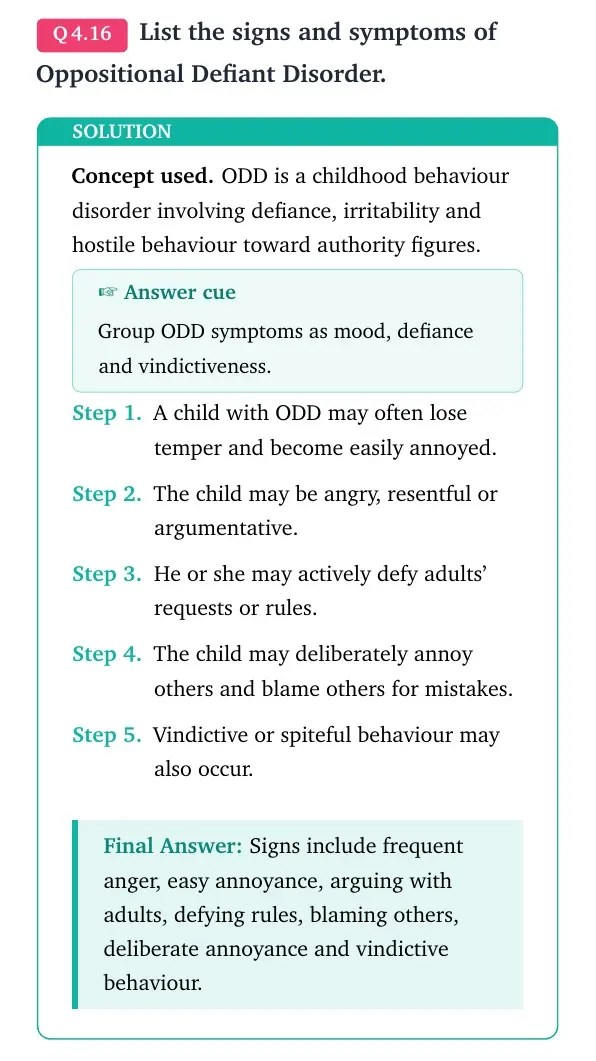
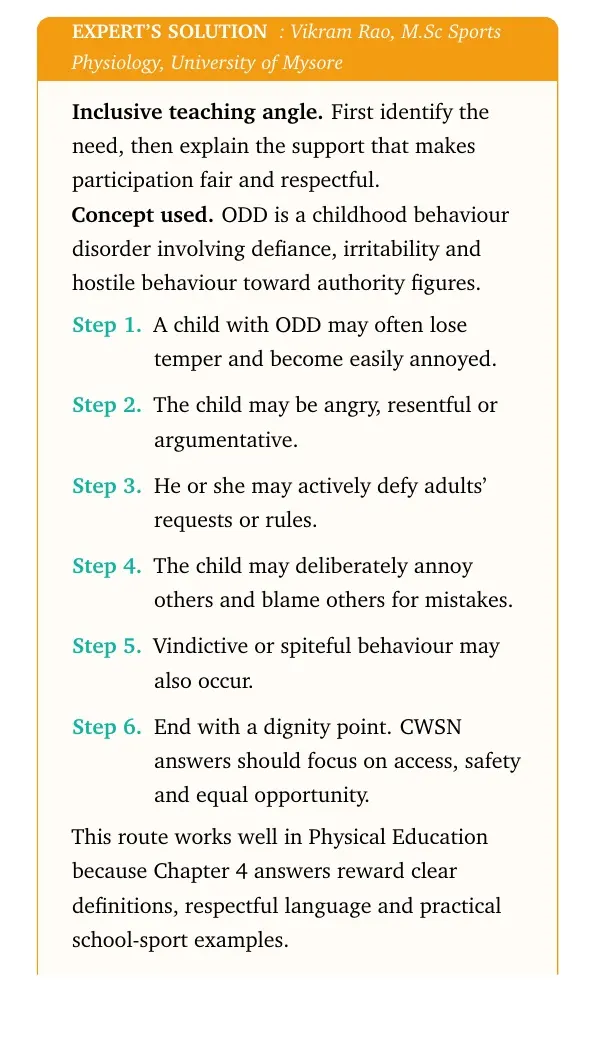
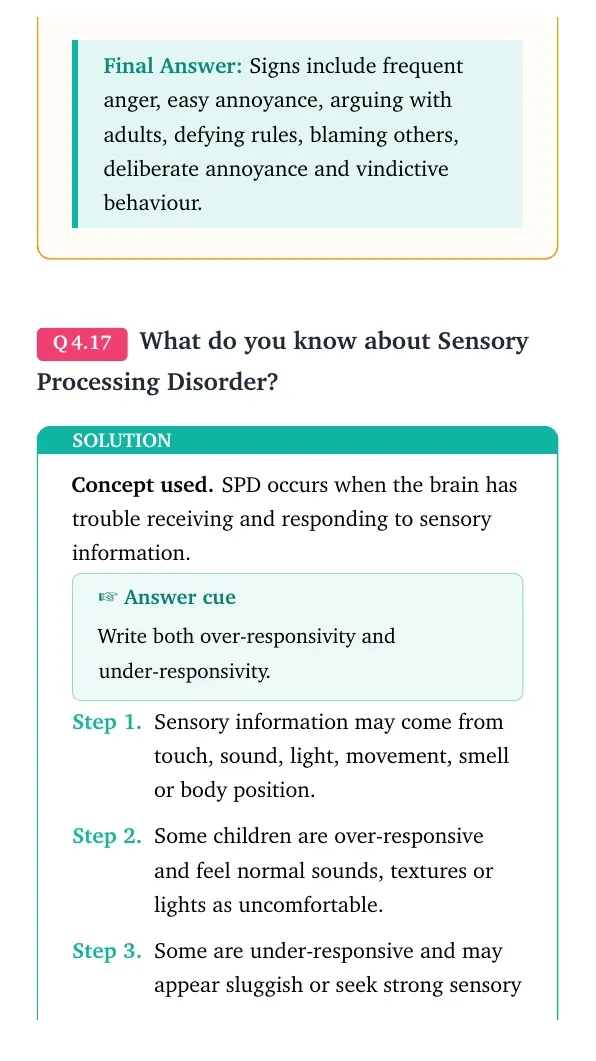
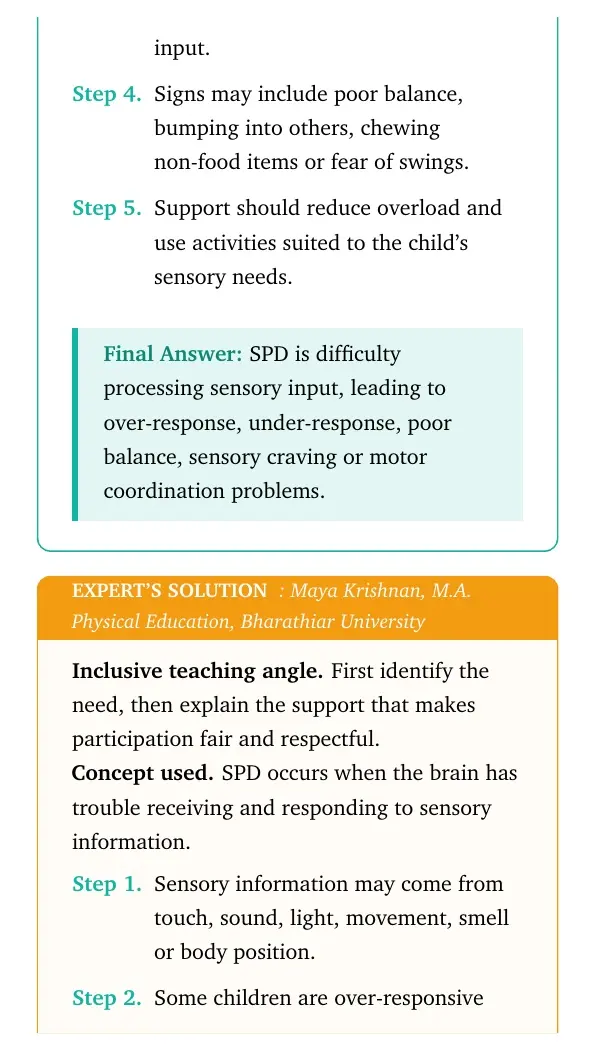
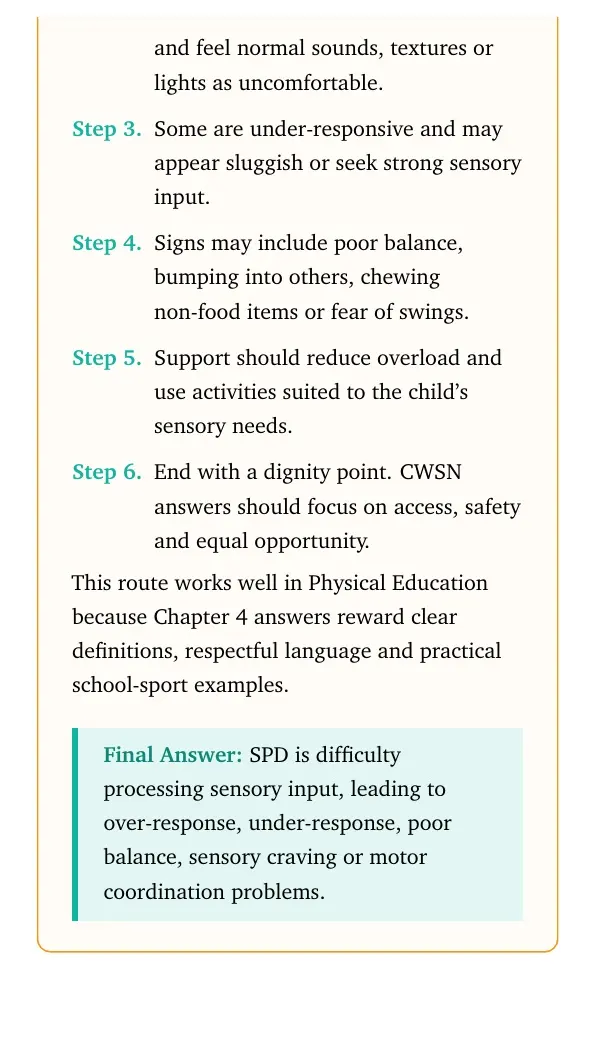
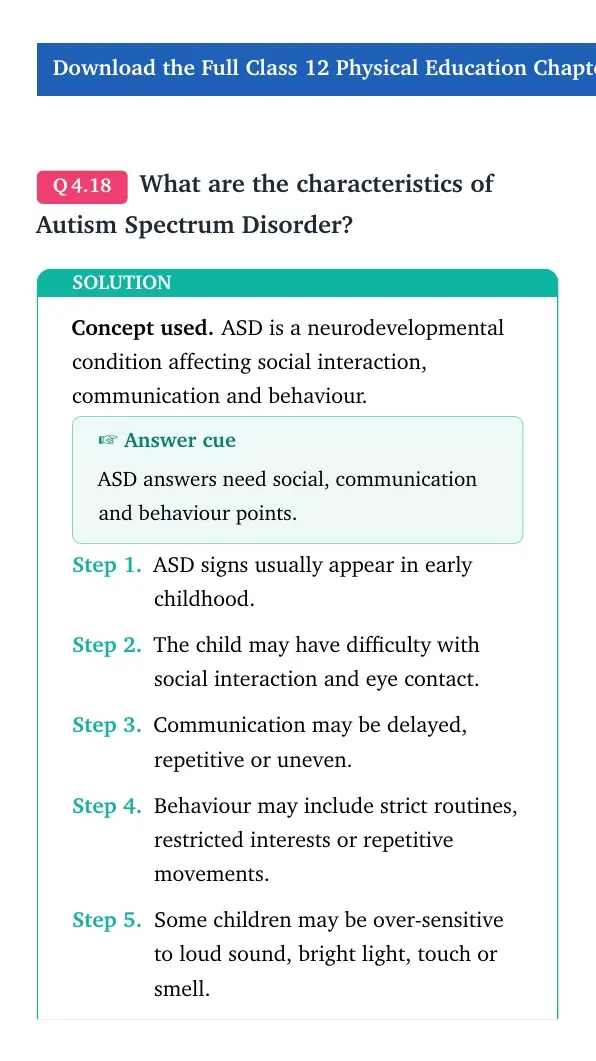
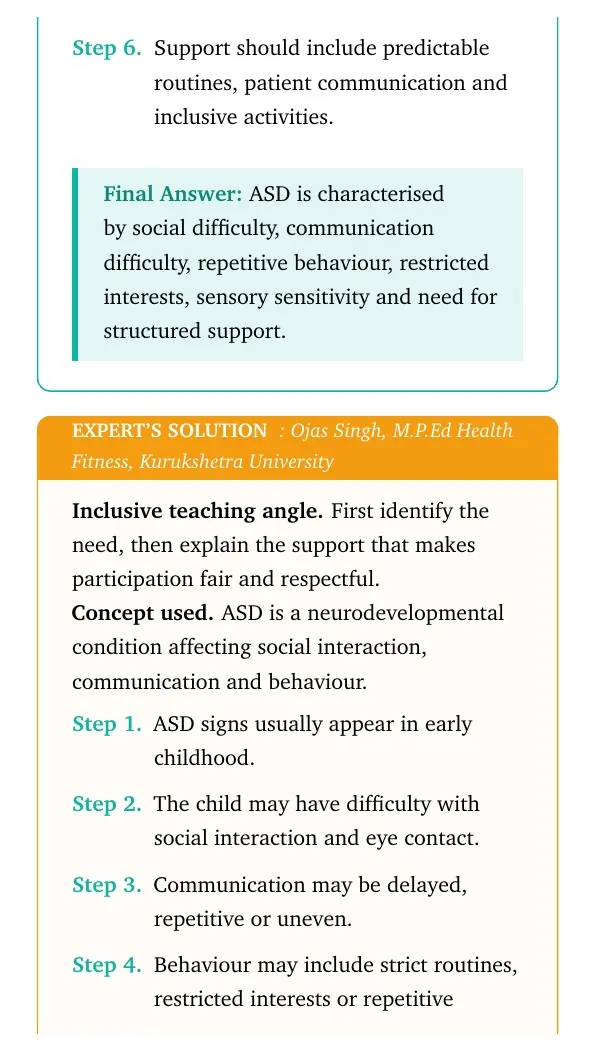
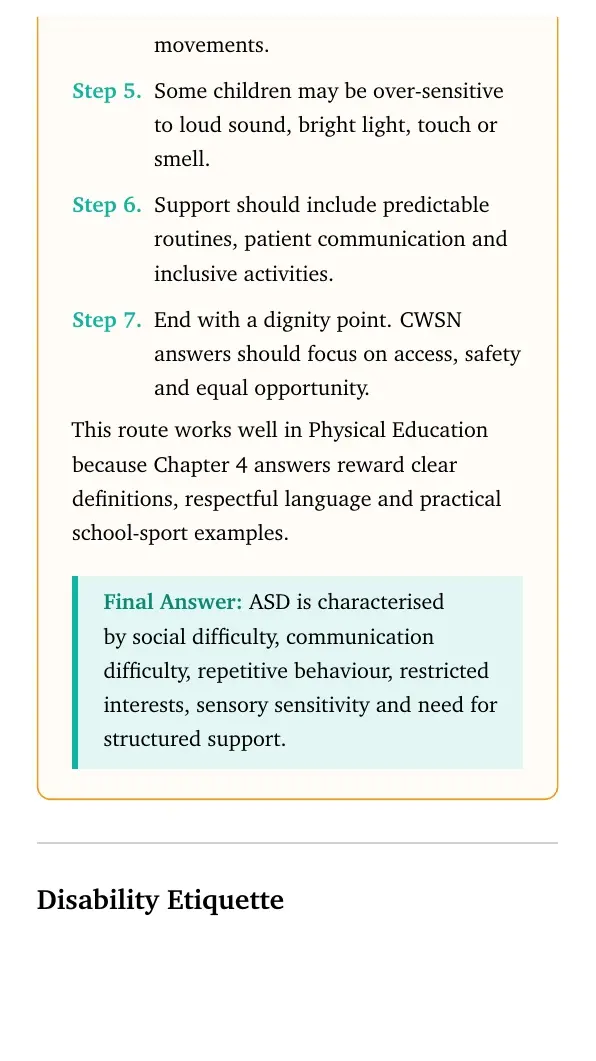
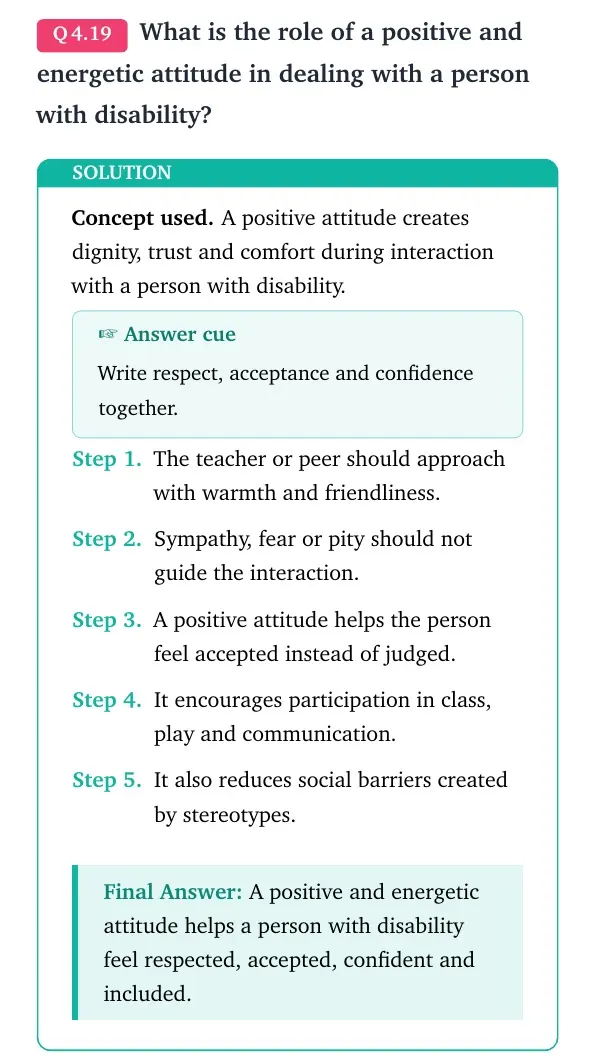
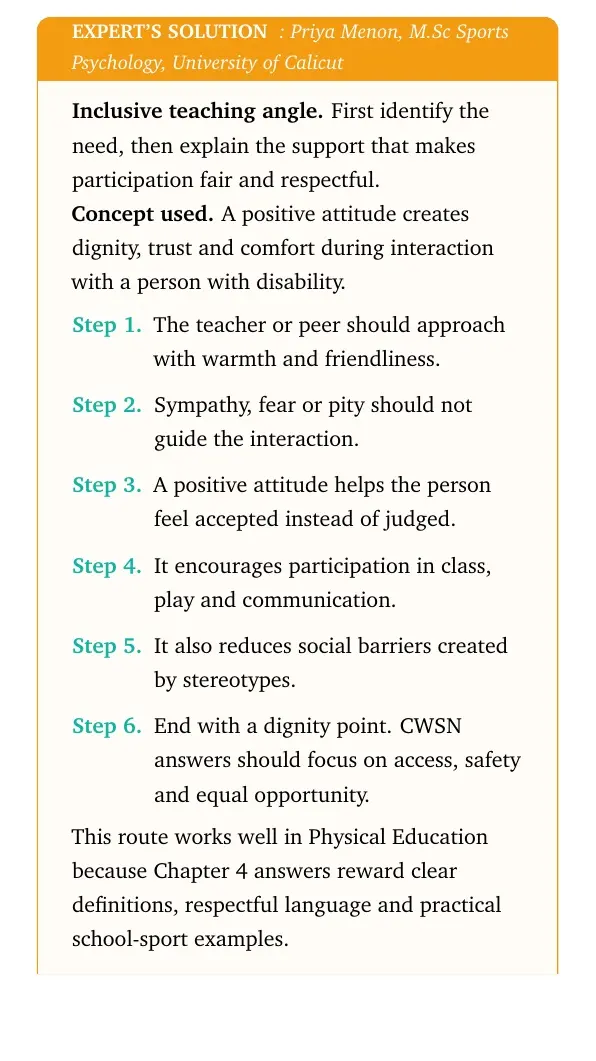
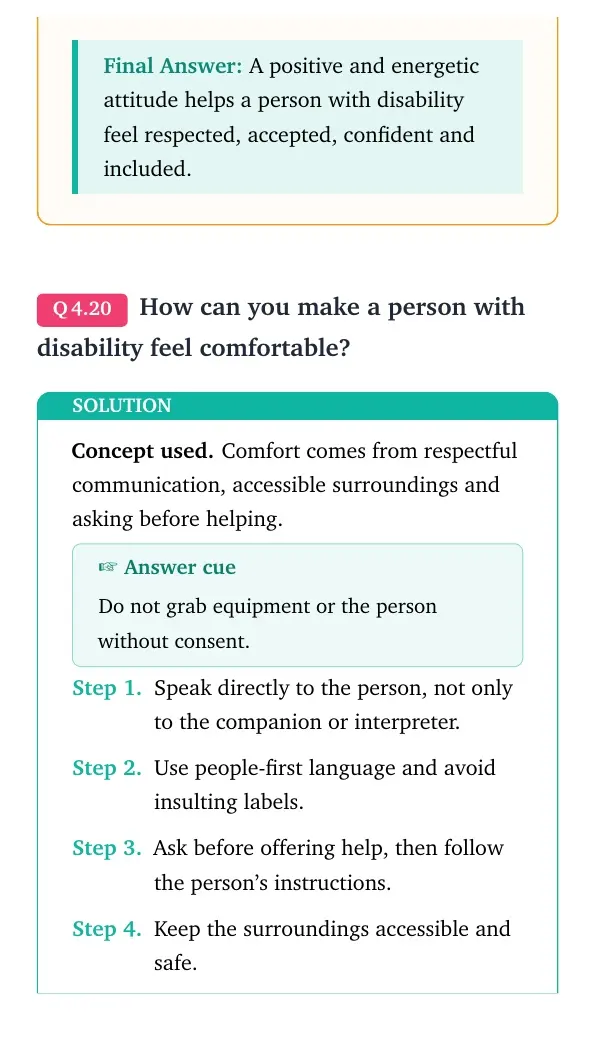
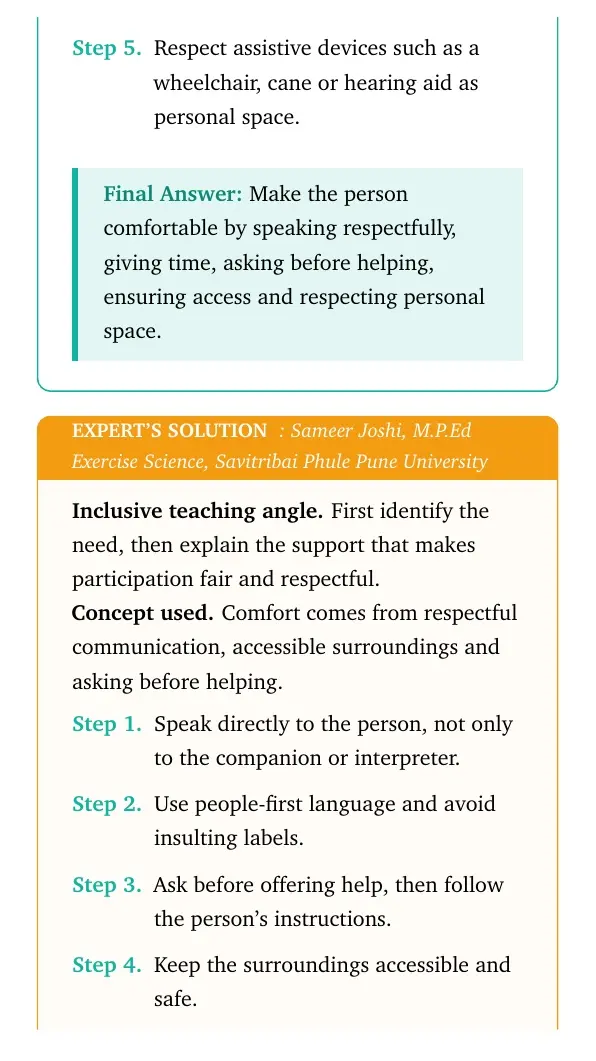
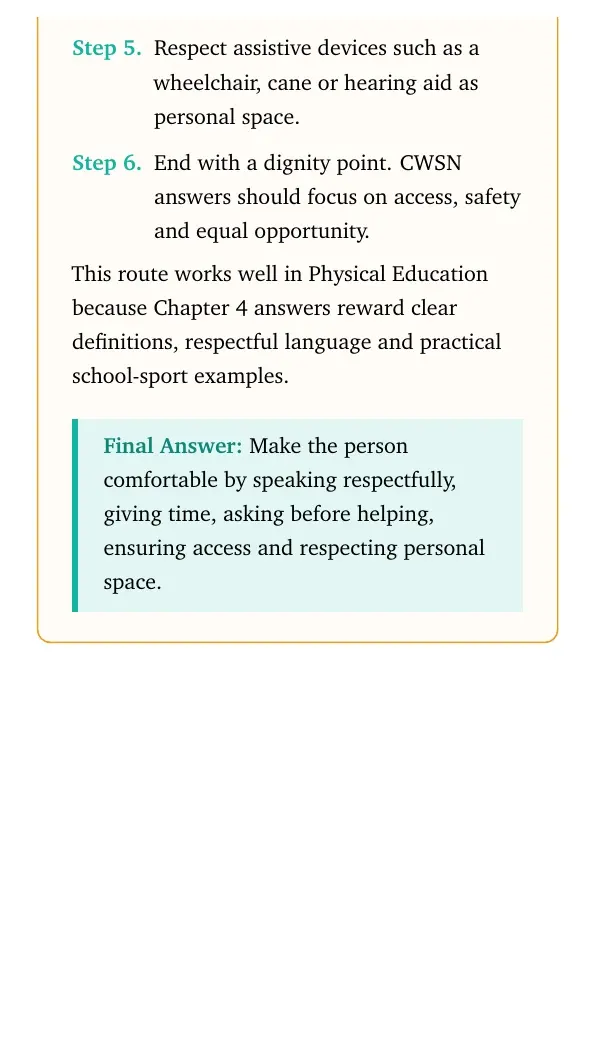
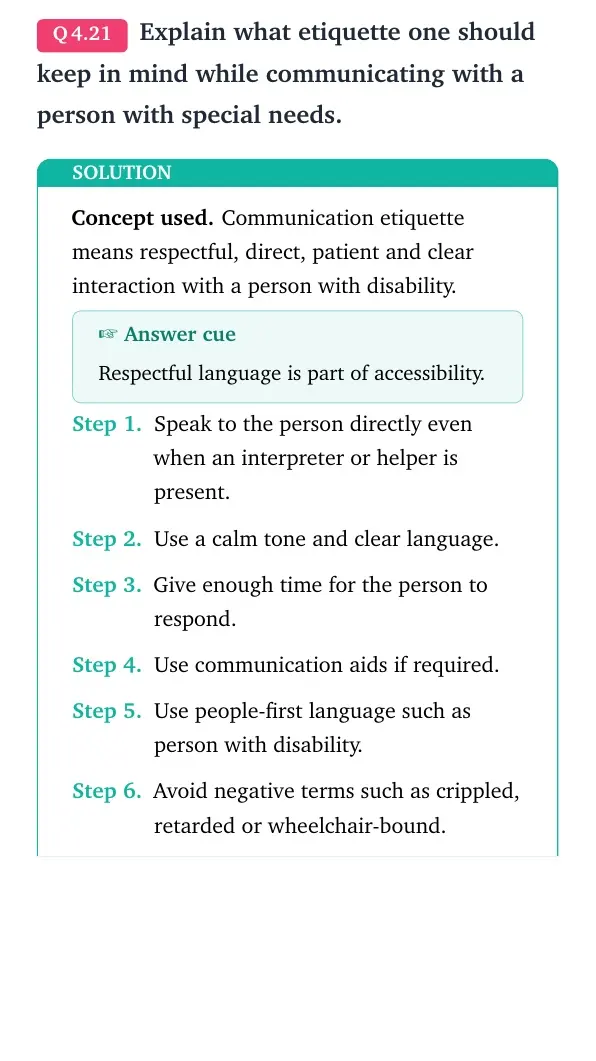
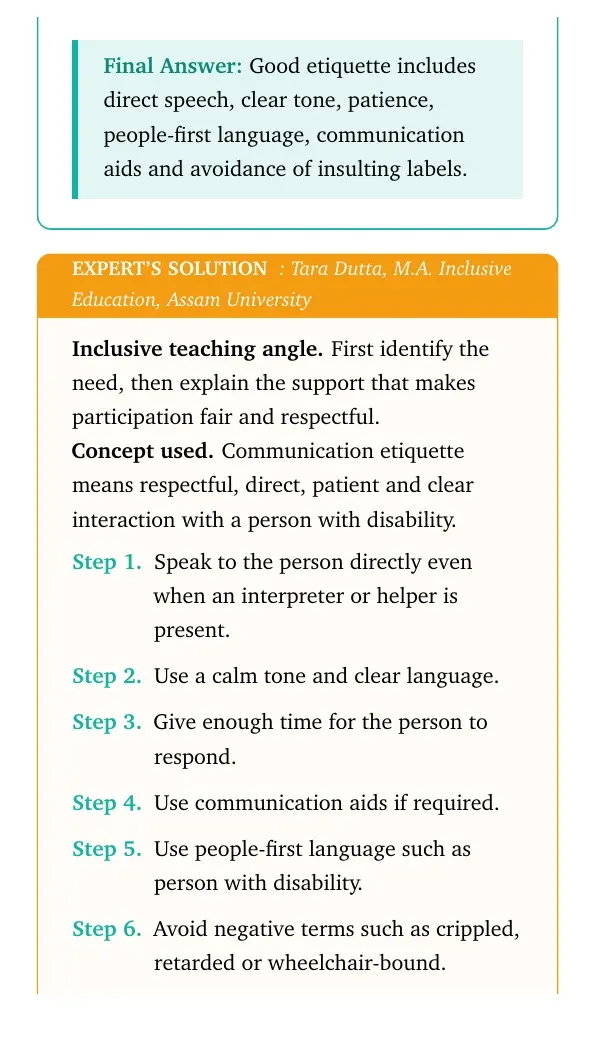
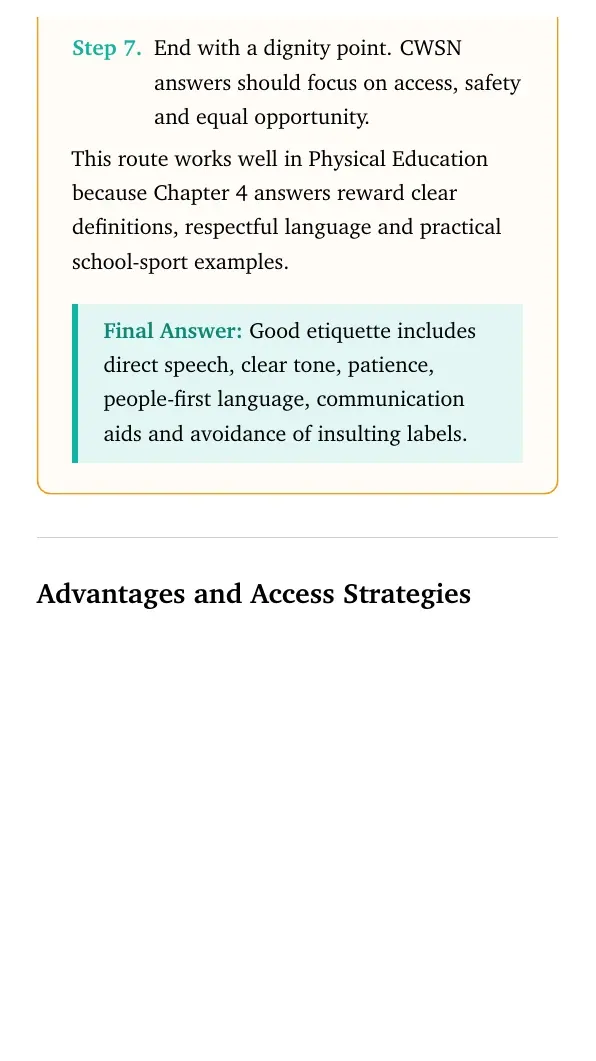
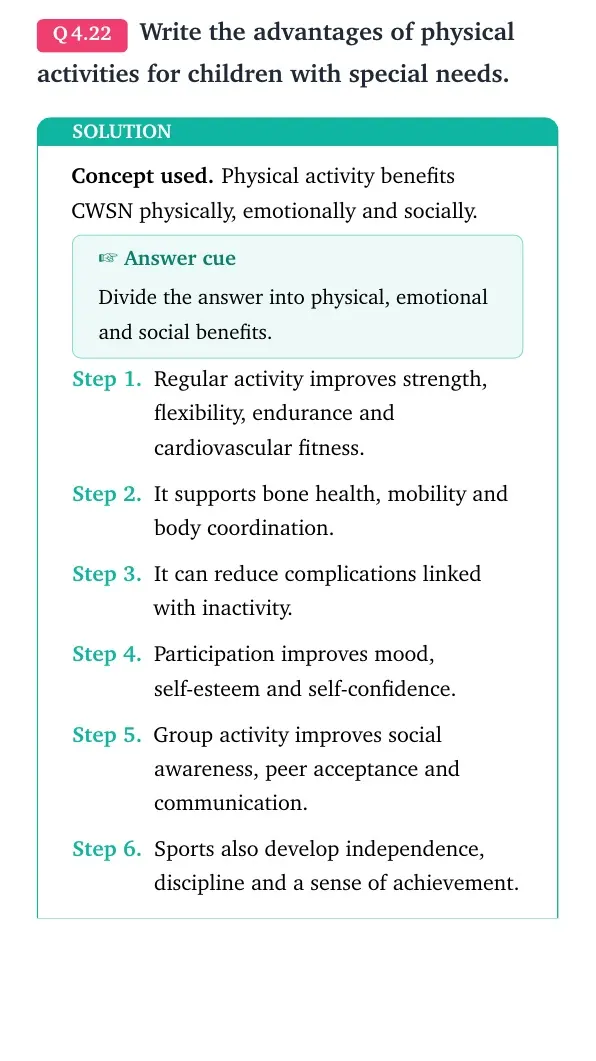
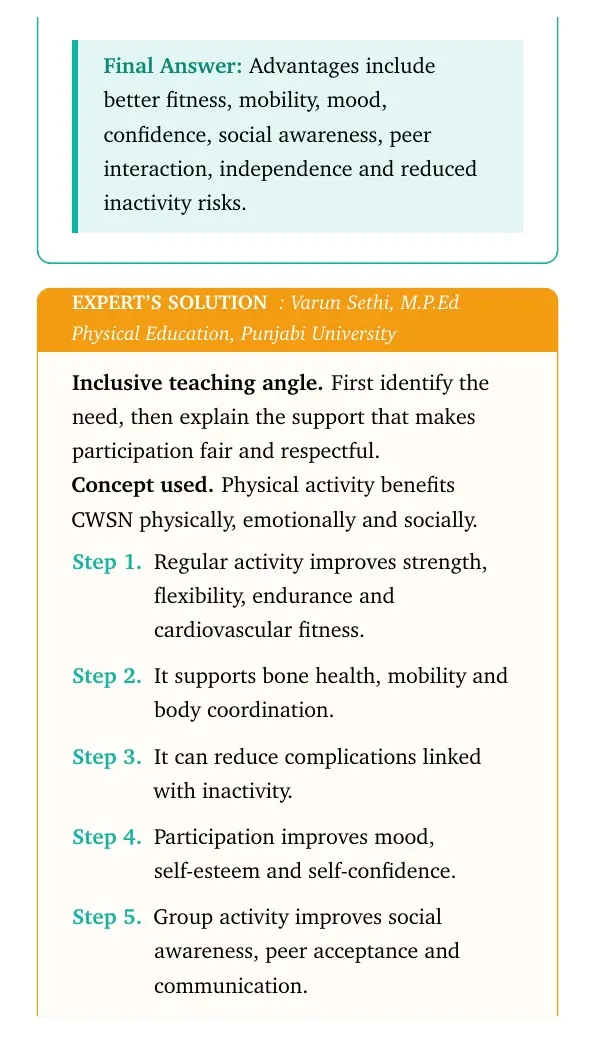
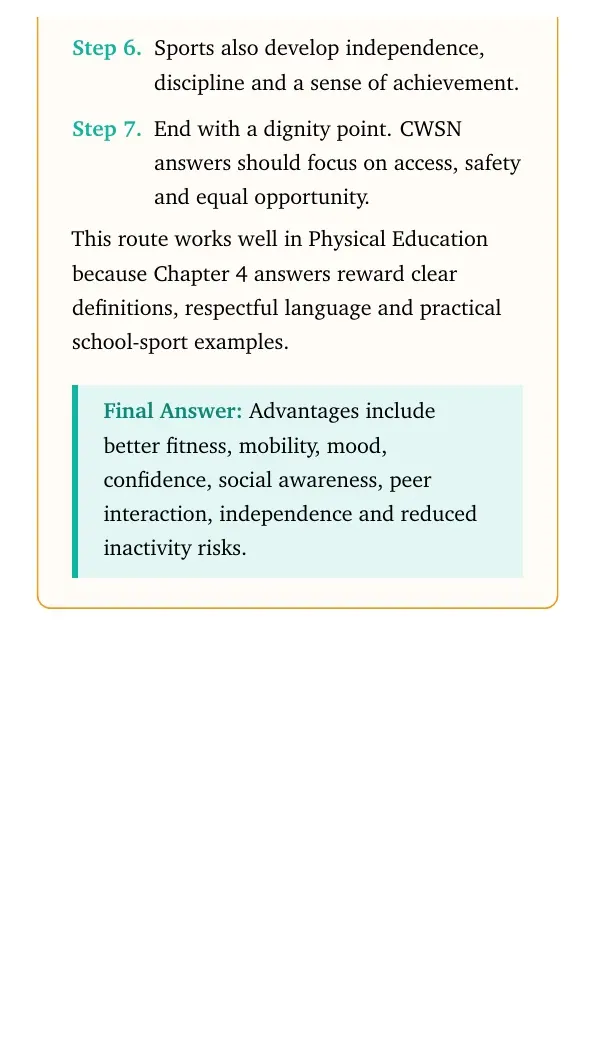
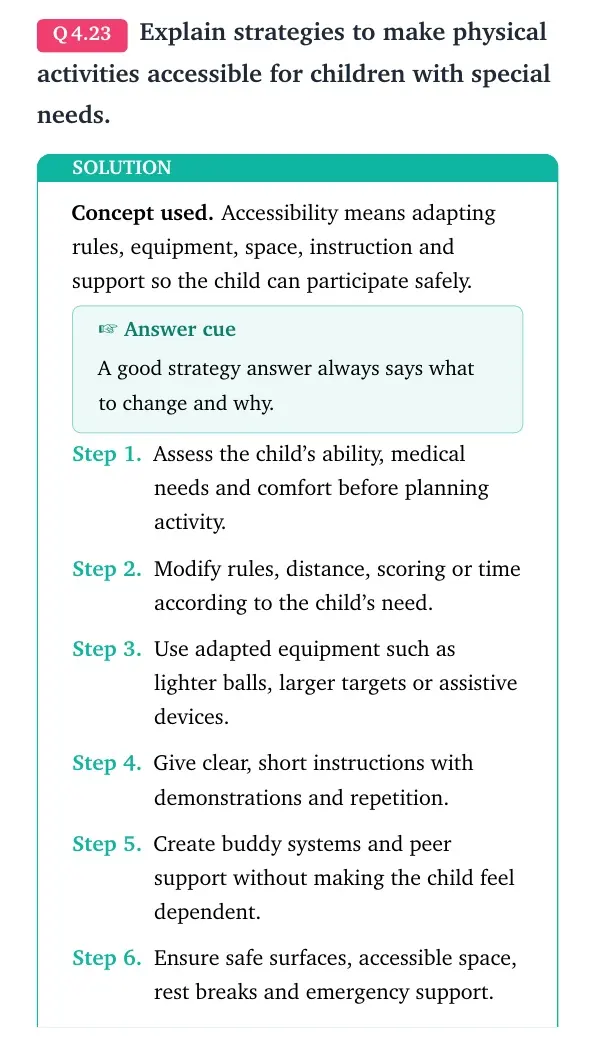
Student Feedback: In a Collegedunia classroom check with Class 12 students, most revised this unit faster after grouping answers into disability, disorder, etiquette and access strategy sections.
In This Article
Physical Education and Sports for CWSN Chapter Overview
Physical Education and Sports for CWSN links classroom theory with inclusive school sport. The unit asks students to write about disability, disorder, etiquette and ways to make activity accessible.
| Area | What to revise | Answer cue |
|---|---|---|
| Disability | impairment, activity limitation, participation restriction and CWSN meaning | define and add barriers |
| Types of disability | physical, intellectual, cognitive, visual and hearing disability | write nature and examples |
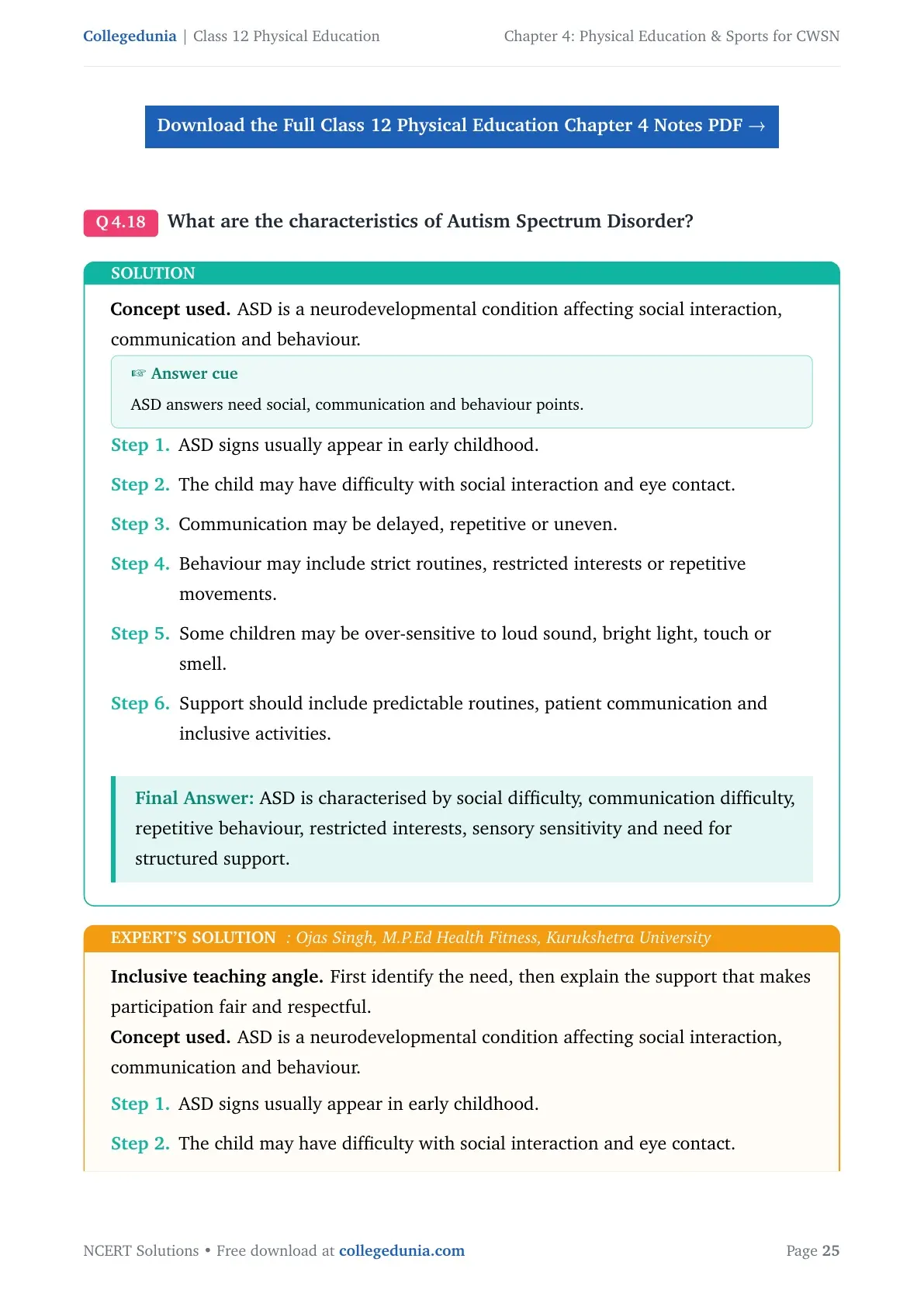
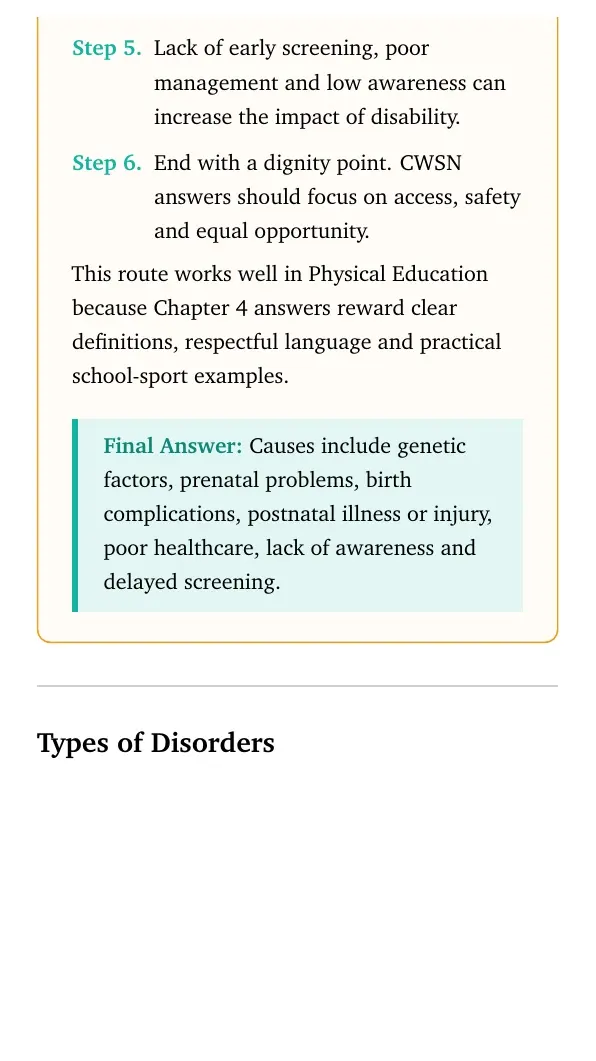
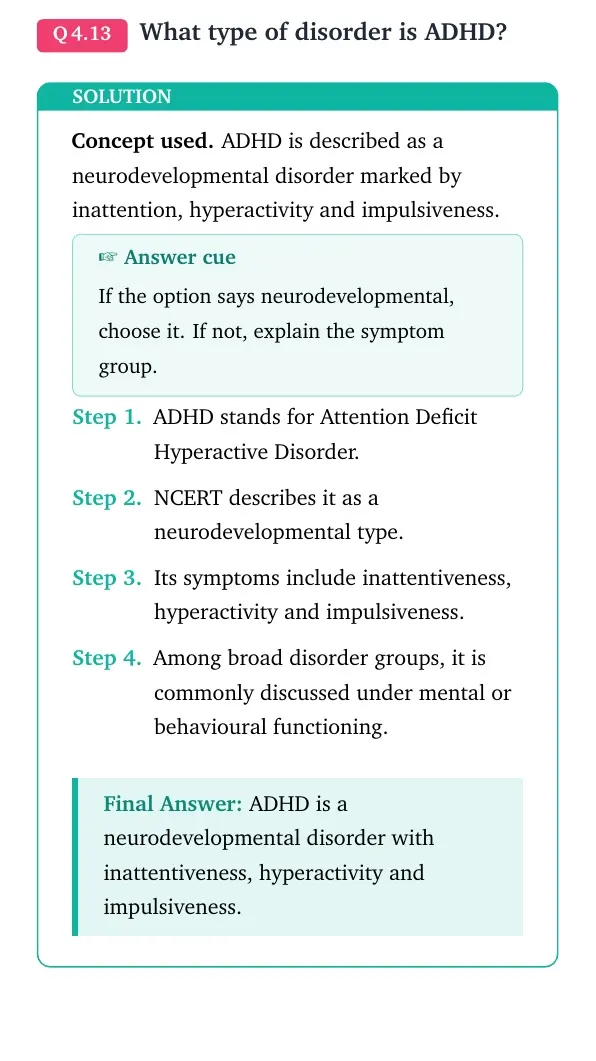
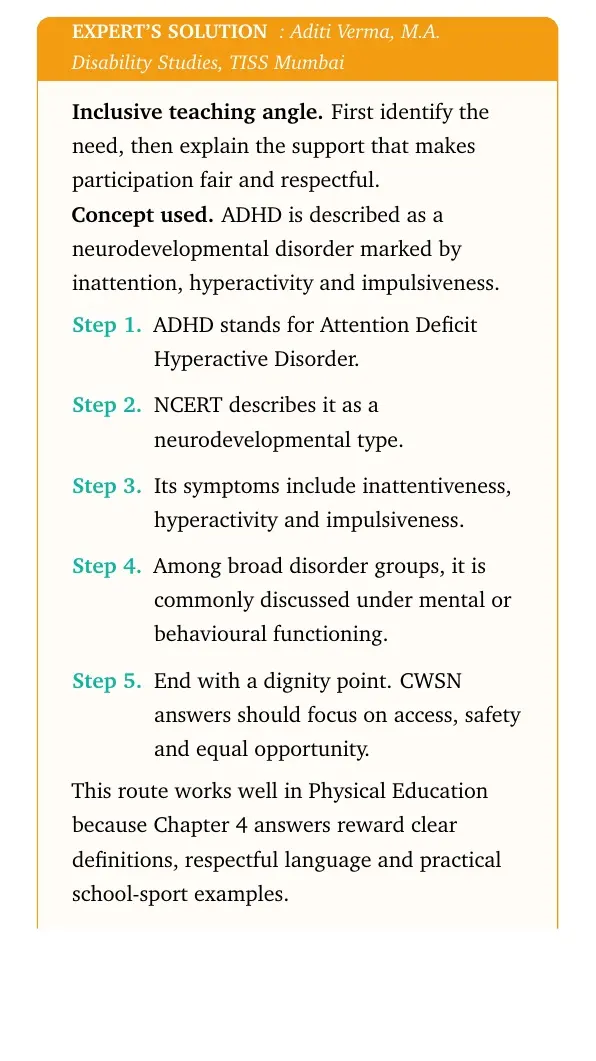
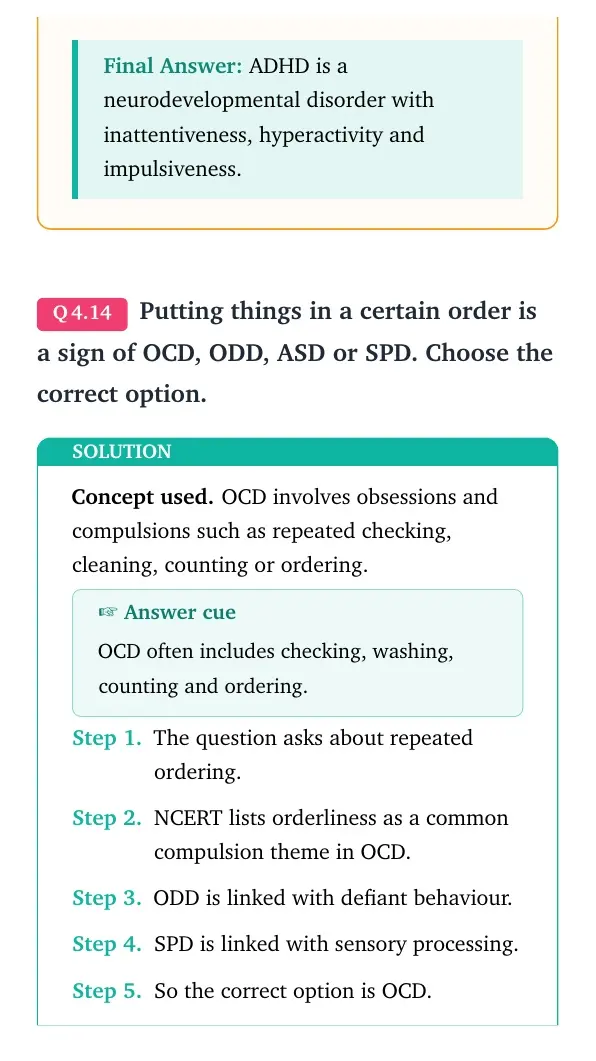
| Types of disorder | ADHD, SPD, ODD, OCD and ASD | write symptoms clearly |
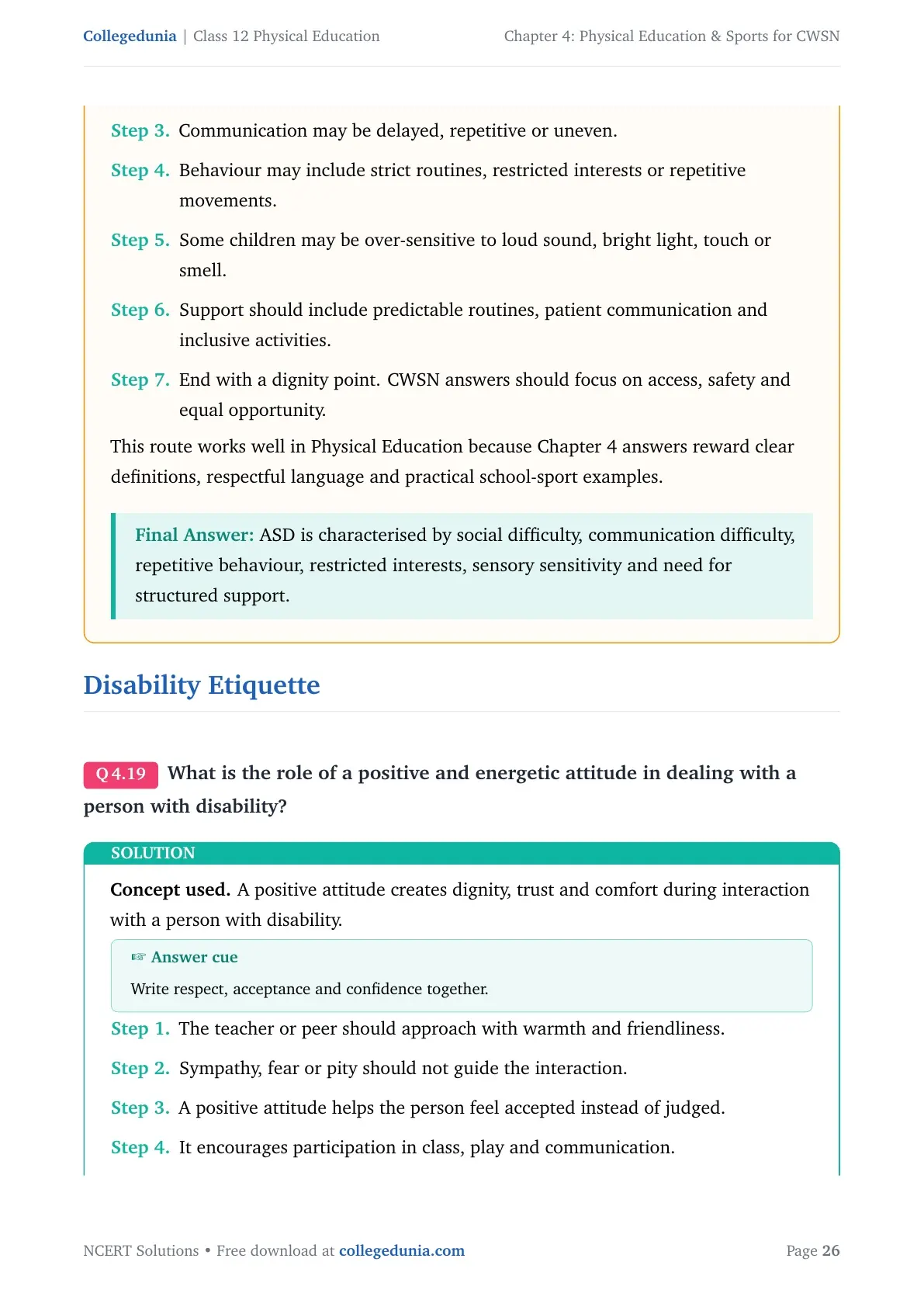
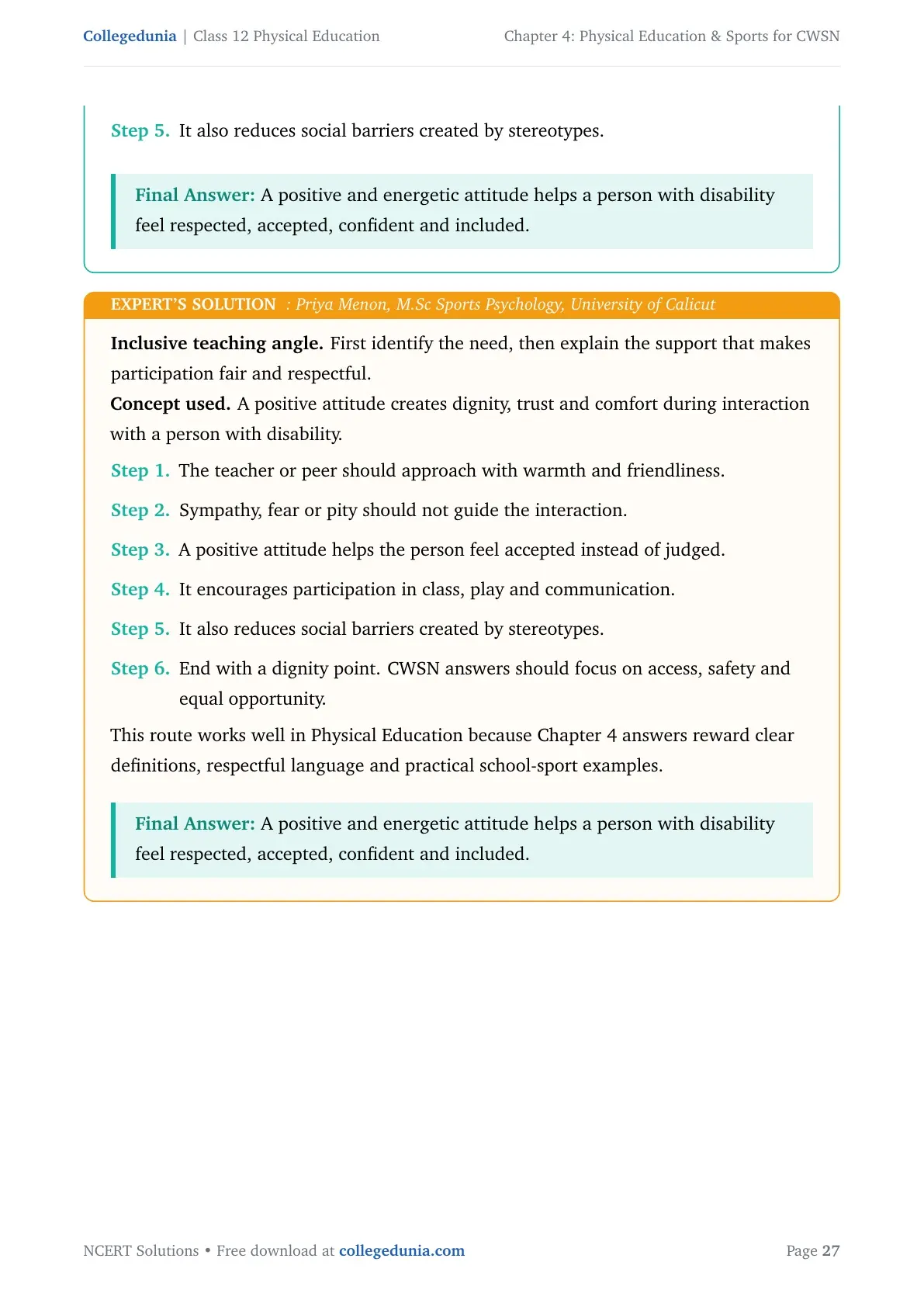
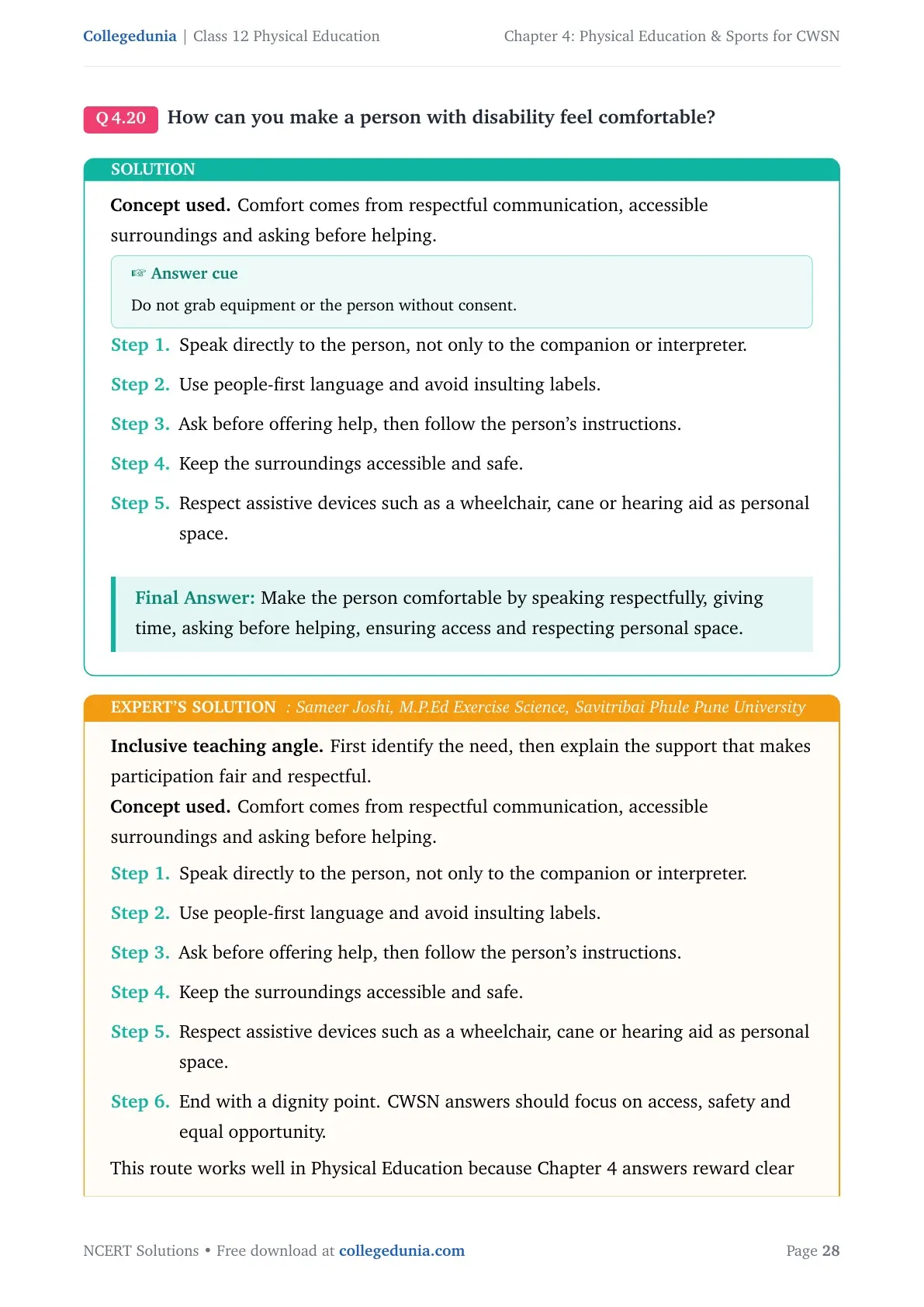
| Etiquette | positive attitude, direct communication, people-first language and consent | focus on dignity |
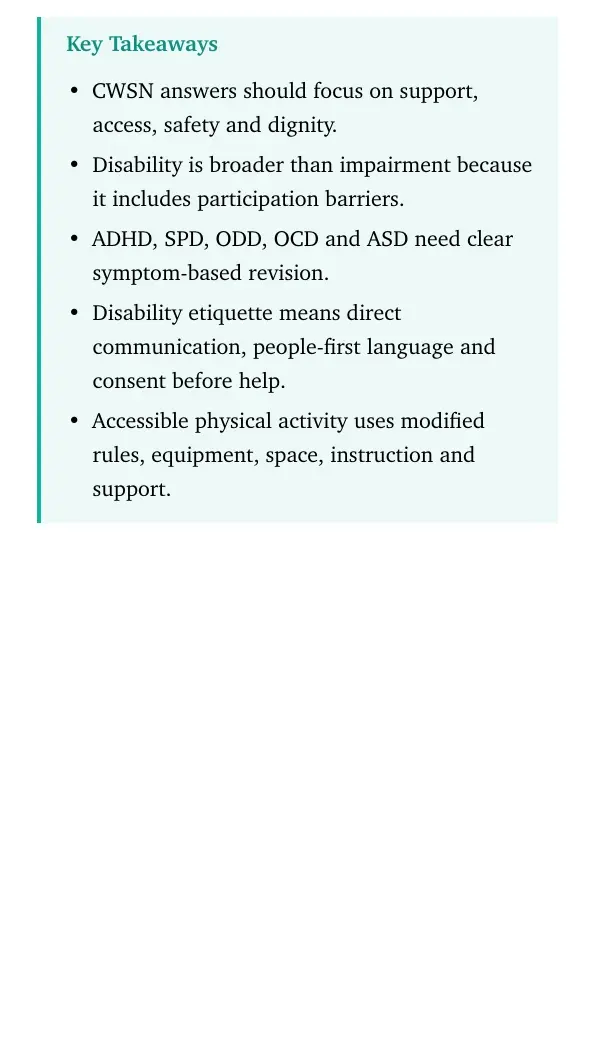
| Access strategies | modified rules, equipment, space, instruction and peer support | write practical school examples |
CWSN Inclusion and Support Map
CWSN answers should never sound pity-based. Write about equal opportunity, safety, dignity and meaningful participation.
- Access: make the playground, rules and equipment usable.
- Support: use teacher help, peer buddy systems and professional advice when needed.
- Respect: speak directly, ask before helping and use people-first language.
Important: inclusion means participation with support, not lowering expectations or isolating the child automatically.
Disability, Disorder and Access Chart for Class 12 Physical Education
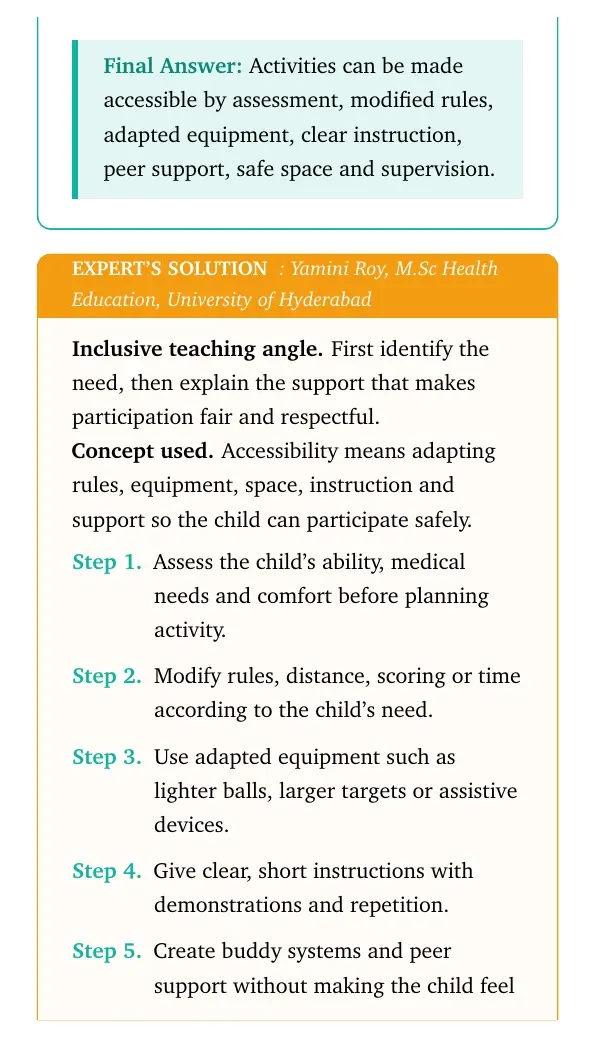
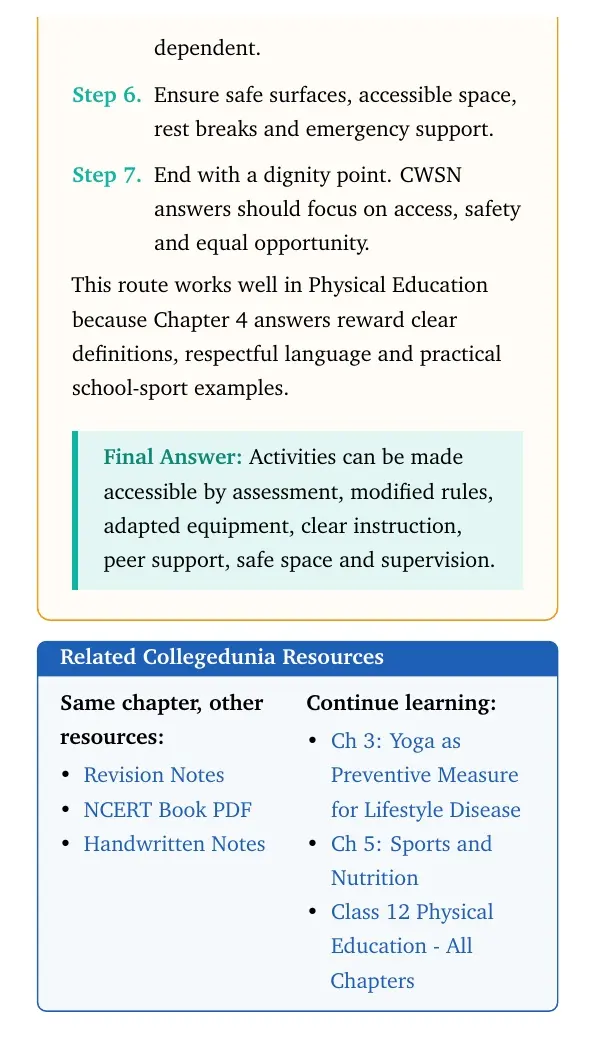
For board answers, define the term first. Then add textbook points, examples and a dignity-based closing line.
| Topic | High-value points | Exam-safe closing |
|---|---|---|
| Disability | long-term impairment, barriers, activity limitation and participation restriction | write impairment plus social barrier |
| Cognitive disability | memory, attention, learning, language, writing and maths difficulty | suggest simple instruction and repetition |
| Disorders | ADHD, SPD, ODD, OCD and ASD symptoms | write symptom groups, not labels only |
| Etiquette | direct speech, people-first language, ask before helping | respect personal space and assistive devices |
| Accessible activity | modified rules, equipment, space, instructions and buddy support | activity must be safe and meaningful |
Physical Education and Sports for CWSN Class 12 Video Lesson
Source: Class 12 Physical Education CWSN lesson on YouTube
All Chapter 4 Question Cards with Solutions
The companion question-card page gives every Chapter 4 prompt with a Check Solution panel and an Expert Solution panel.
Open question cards: Class 12 Physical Education Chapter 4 step-by-step solutions
Related Class 12 Physical Education Chapter 4 Resources
| Resource | Class 12 Physical Education Chapter 4 Link |
|---|---|
| Notes | Revise Chapter 4 notes |
| PYQ PDF | Practise Chapter 4 PYQs |
| Chapter 3 Solutions | Revise previous chapter solutions |
Class 12 Physical Education NCERT Solutions for All Chapters
| Chapter | NCERT Solutions |
|---|---|
| Chapter 1 | Management of Sporting Events Solutions |
| Chapter 2 | Children and Women in Sports Solutions |
| Chapter 3 | Yoga as Preventive Measure for Lifestyle Disease Solutions |
| Chapter 4 | Physical Education and Sports for CWSN Solutions |
| Chapter 5 | Sports and Nutrition Solutions |
| Chapter 6 | Test and Measurement in Sports Solutions |
Class 12 Physical Education Chapter 4 NCERT Solutions FAQs
Ques. What is covered in Class 12 Physical Education Chapter 4 NCERT Solutions?
Ans. The PDF covers CWSN, disability, disorder, disability etiquette, benefits of physical activity and accessible activity strategies.
Ques. What is the best way to write CWSN answers?
Ans. Define the term, add textbook points and close with access, safety, dignity and equal participation.
Ques. Which disorders are important in this chapter?
Ans. Revise ADHD, SPD, ASD, ODD and OCD with their major symptoms and classroom support needs.
Ques. Why is disability etiquette important?
Ans. Disability etiquette helps students communicate respectfully, avoid stereotypes and support independent participation.



Comments