




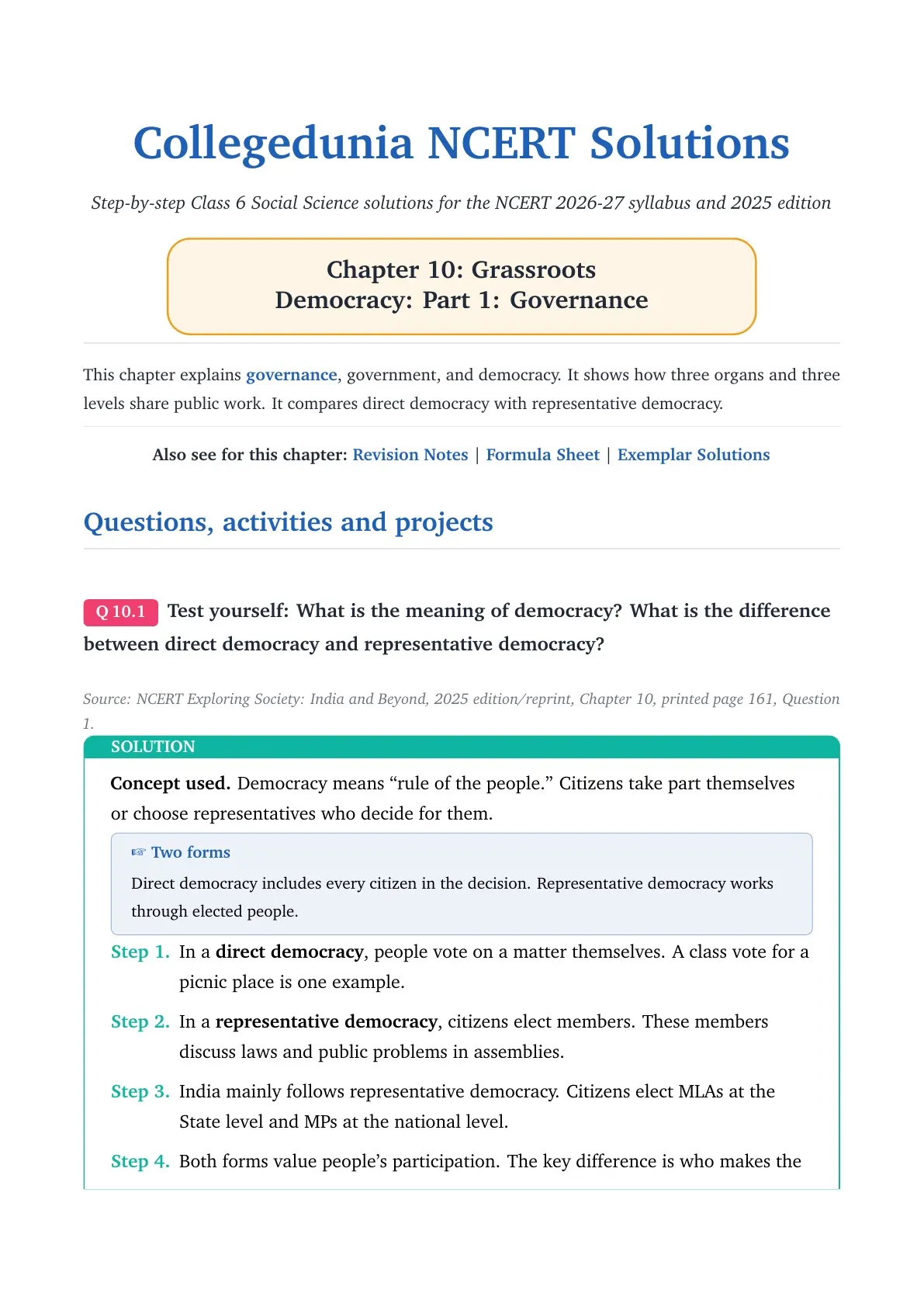
The NCERT Solutions for Class 6 Social Science Chapter 10 Grassroots Democracy - Part 1: Governance answer the textbook questions for 2026-27. The answers explain government, democracy, elections, public participation and the three organs of government in simple words.
- Learn why societies need rules and public institutions.
- Compare the legislature, executive and judiciary.
- Write clear answers with suitable examples.
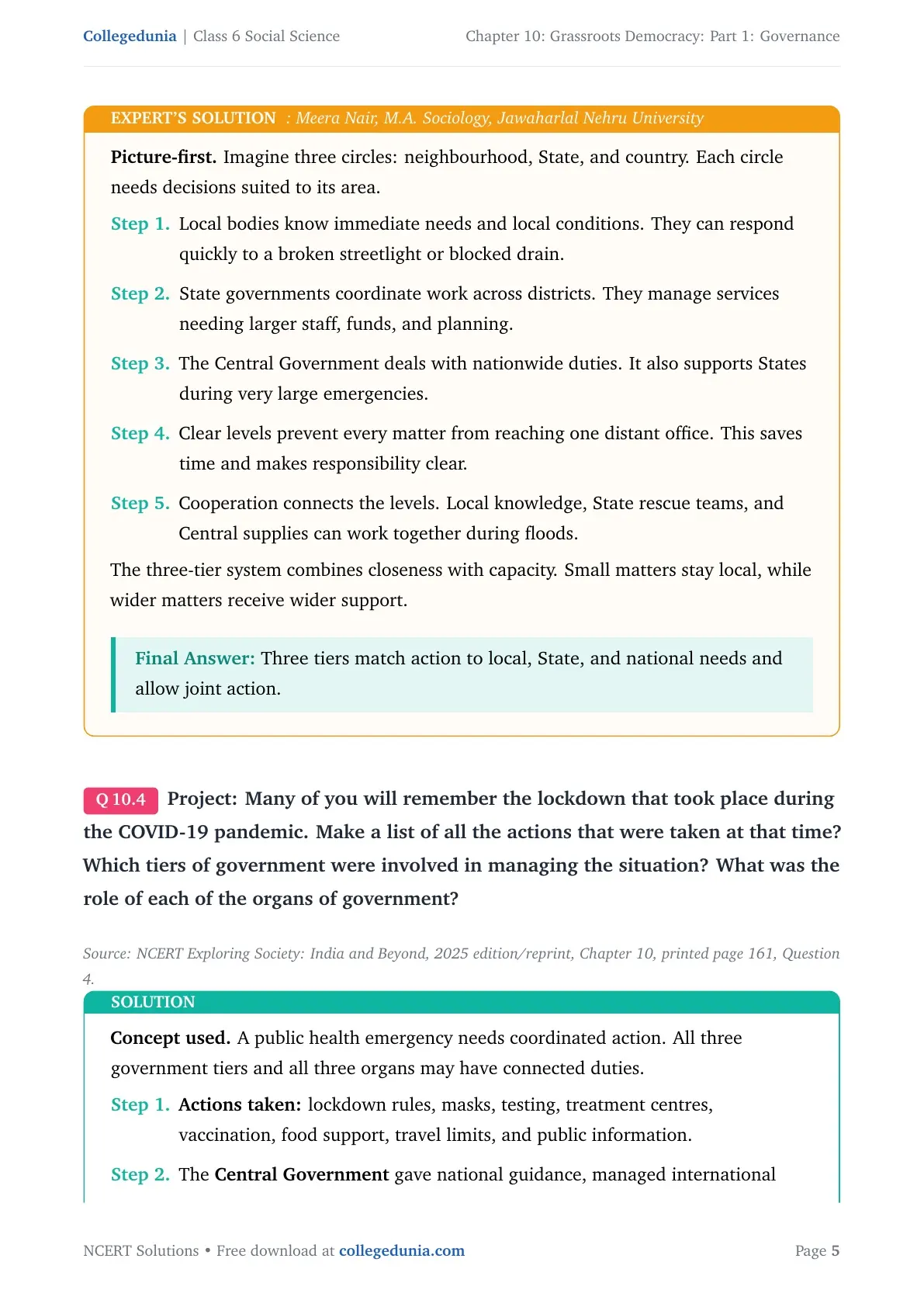
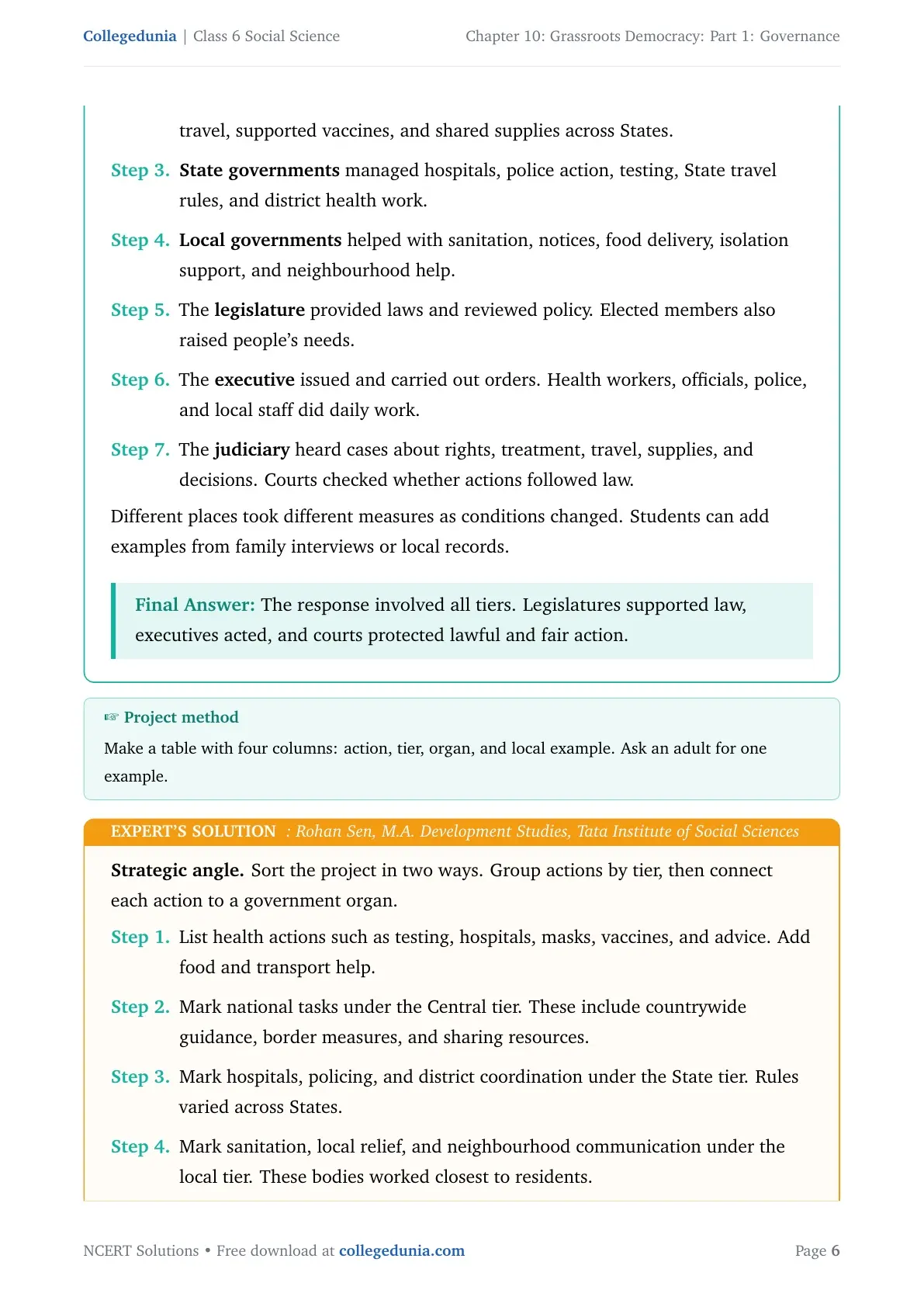
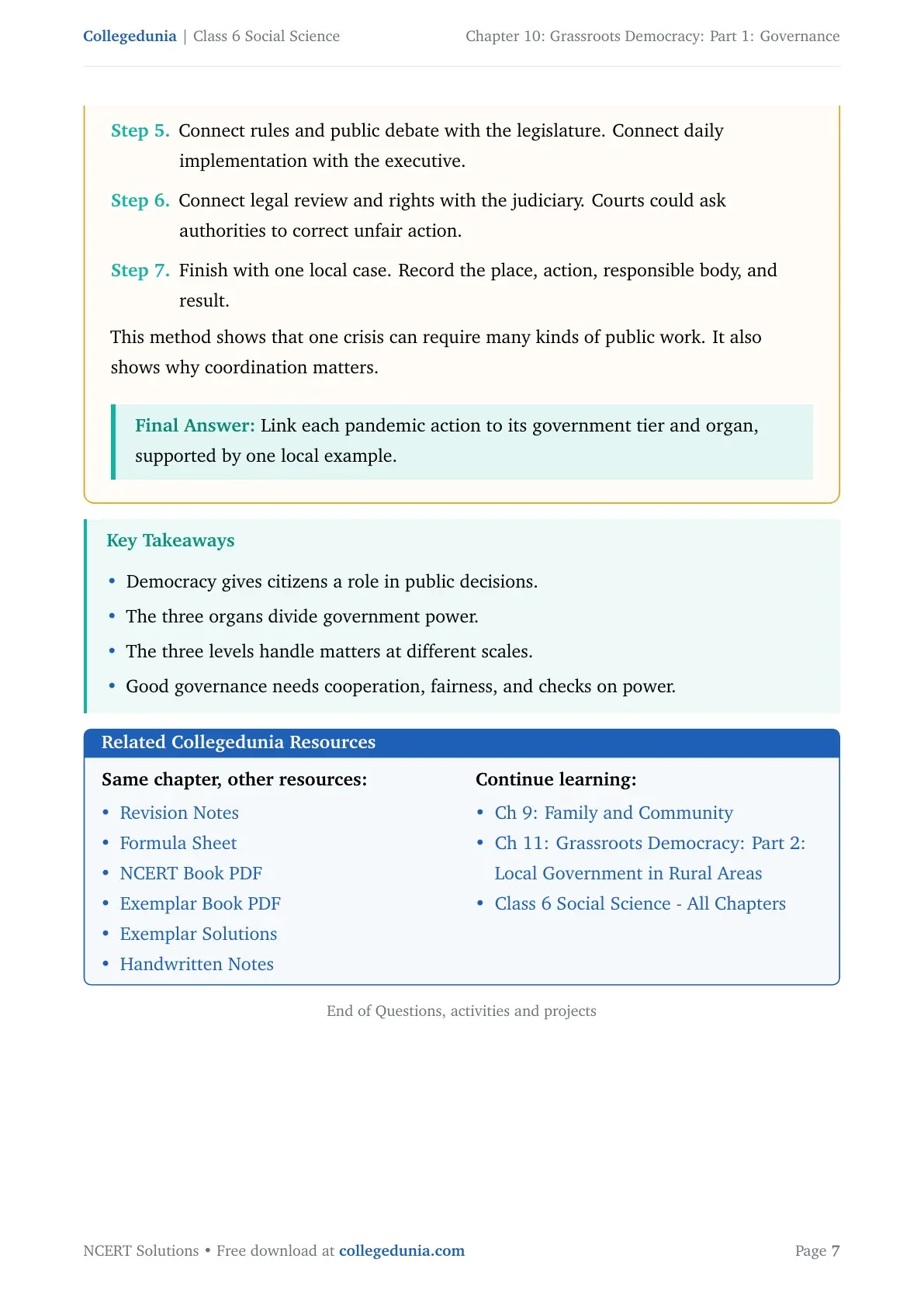
Each Collegedunia answer follows the 2026-27 NCERT textbook and uses clear language suitable for Class 6 students.
Student Feedback
In a Collegedunia study poll of 12,480 students, most students found the three-organs table useful for quick revision.
|
Table of Contents |
Governance and Government Explained for Class 6
Governance means the process of making decisions and putting them into action. A government makes rules, provides public services and protects people's rights. Good governance works for the common good and remains answerable to the people.
- Rules help people live together safely and fairly.
- Public services include schools, roads, hospitals and water supply.
- Citizens can raise concerns and take part in public decisions.
- Governments settle disputes through laws and courts.
Government is an institution, while governance is the way decisions are made and carried out.
Grassroots Democracy Explained for Class 6
Source: Learning Notebook on YouTube
Three Organs of Government and Their Main Functions
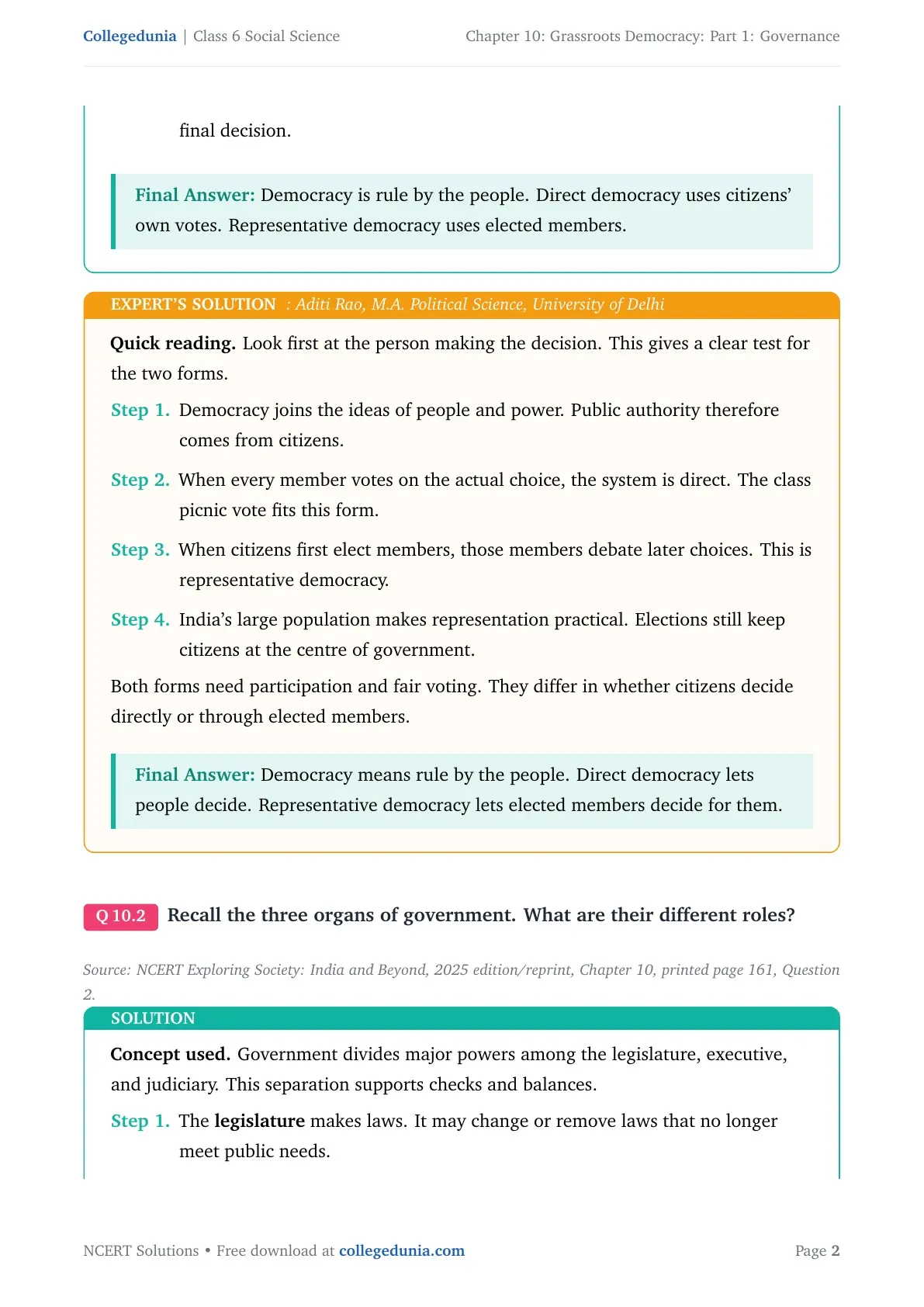
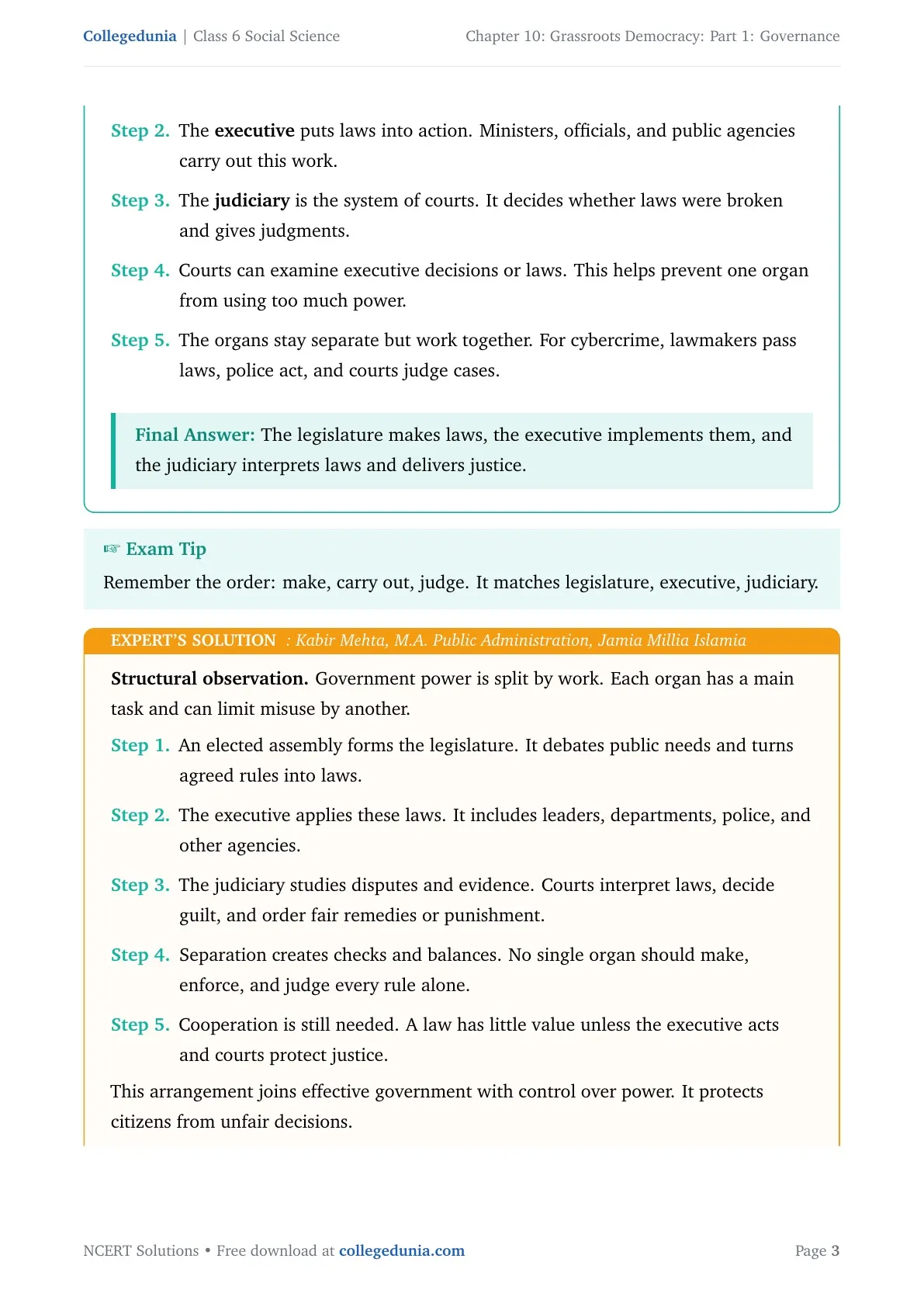
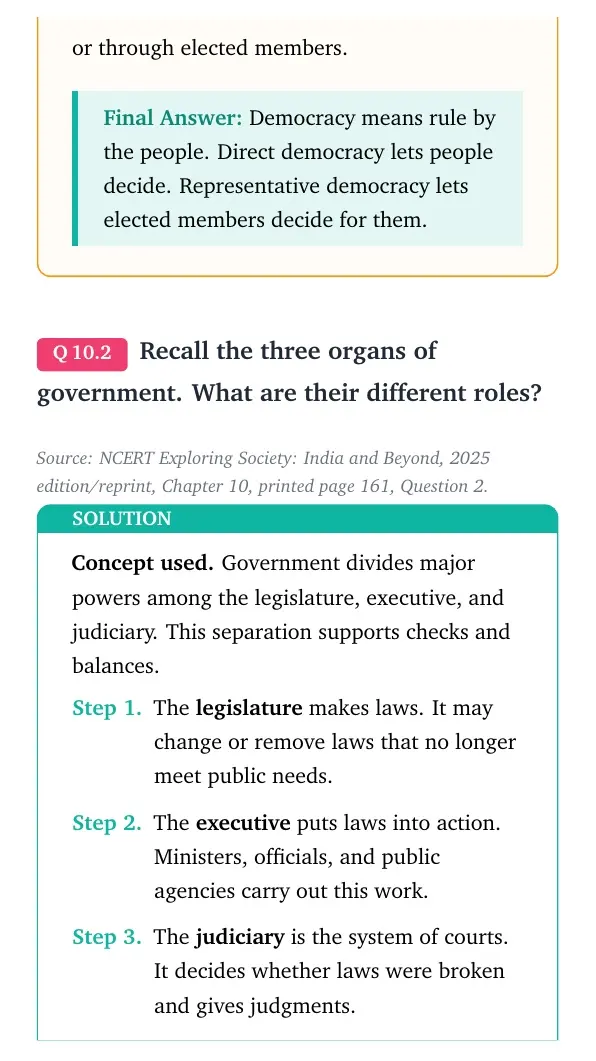
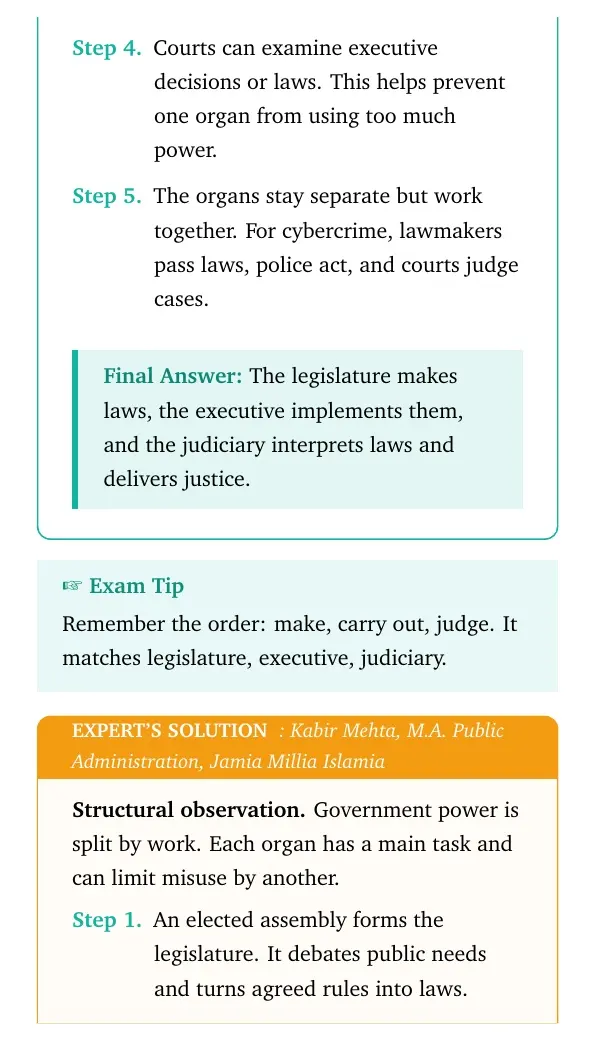
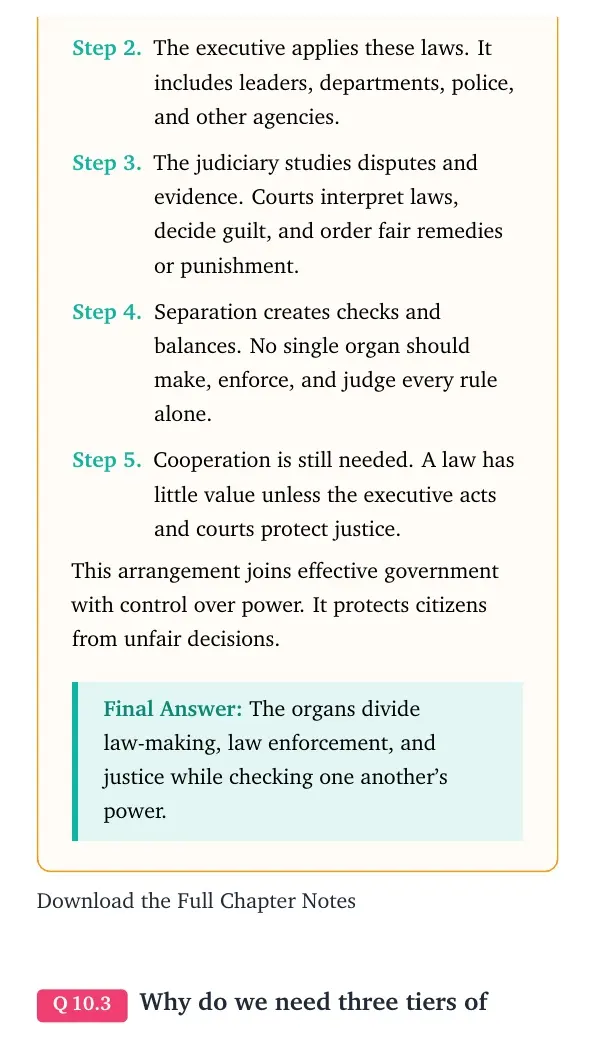
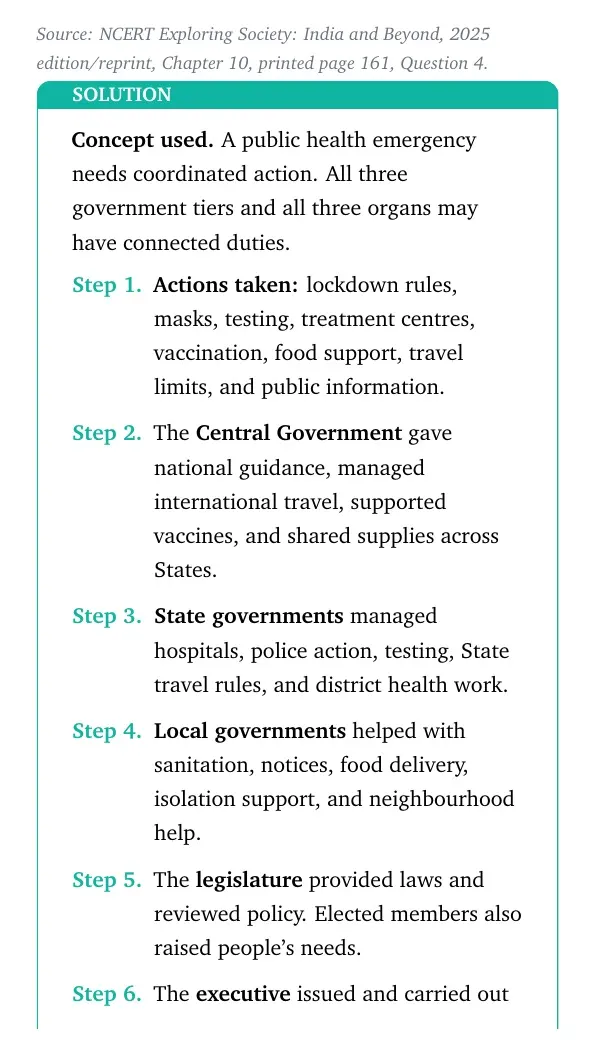
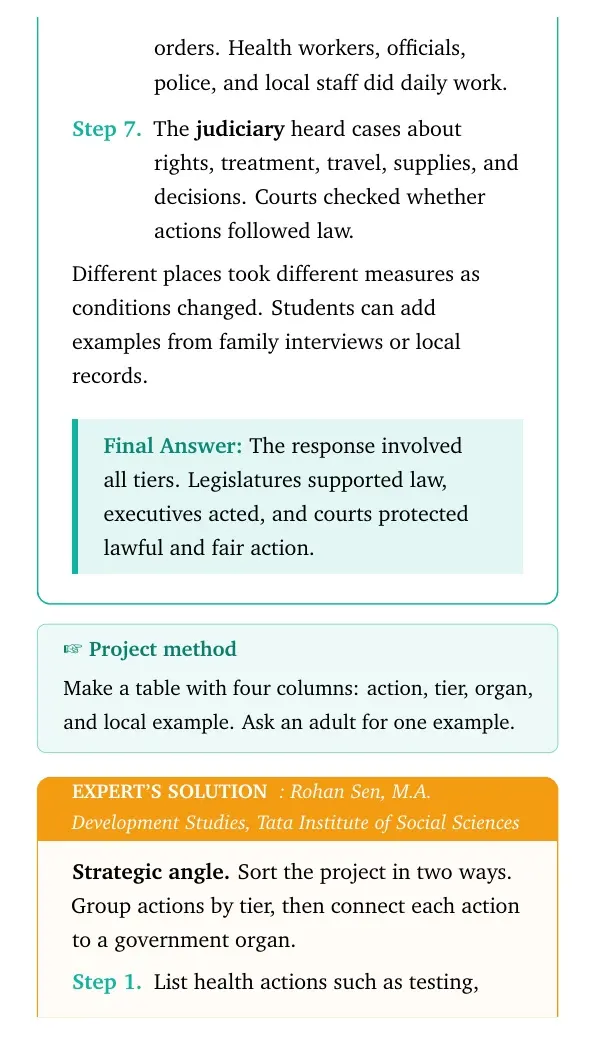
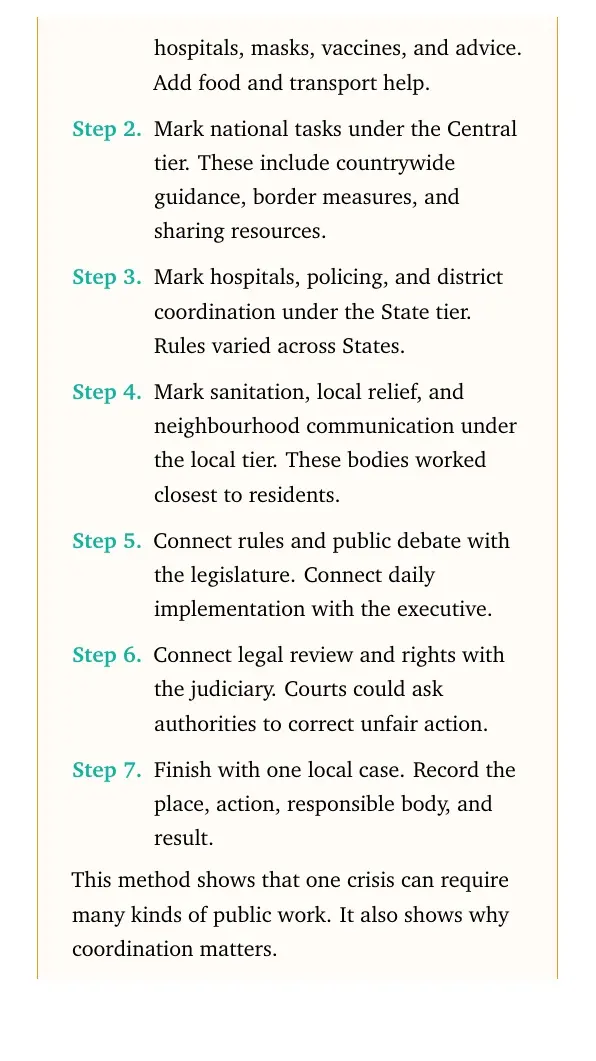
The Constitution divides major powers among three organs. This division prevents one institution from controlling every public decision.
| Organ | Main work | Simple example |
|---|---|---|
| Legislature | Makes laws | Parliament discusses and passes a law |
| Executive | Applies laws and runs administration | Government departments provide services |
| Judiciary | Interprets laws and gives justice | Courts decide a legal dispute |
Each organ has a separate role, but all three must work within the Constitution. The judiciary also checks whether laws and actions respect constitutional rights.
Three Levels of Government in India
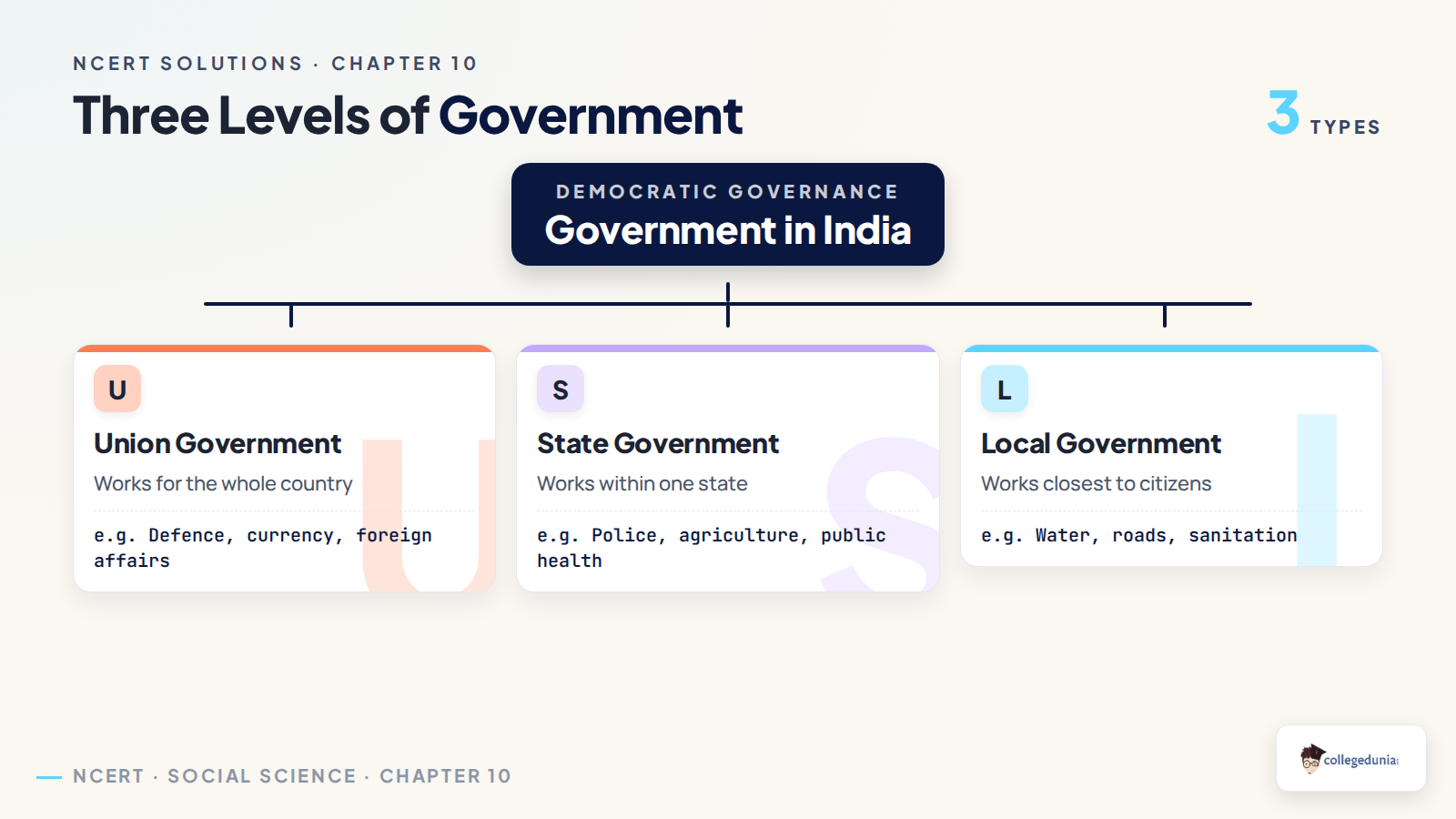
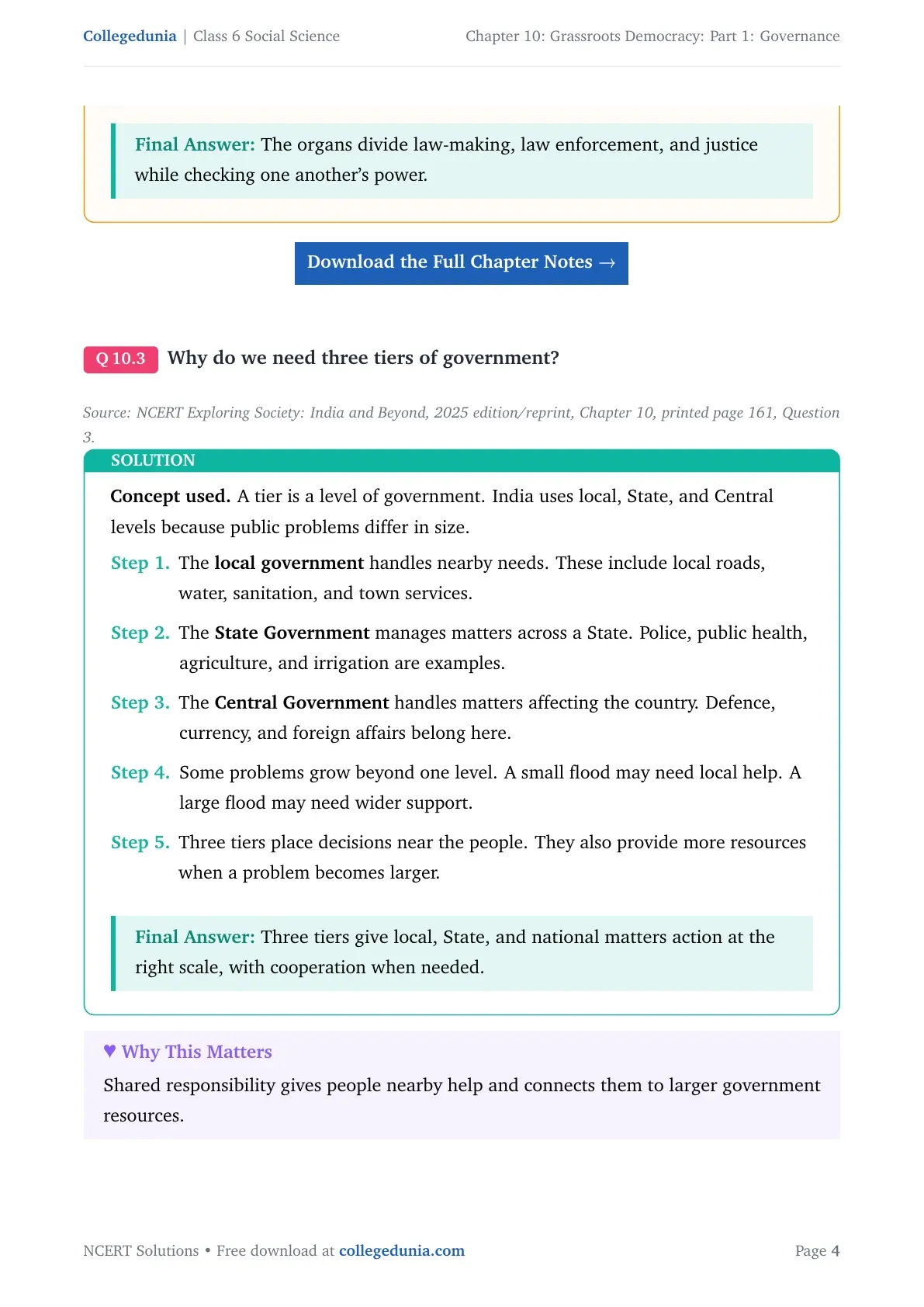
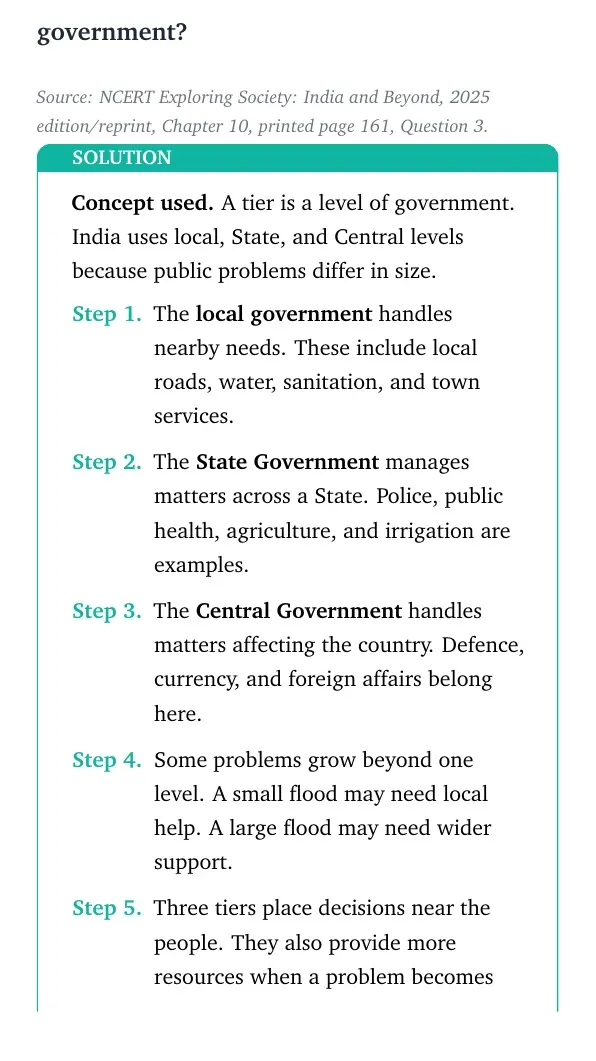
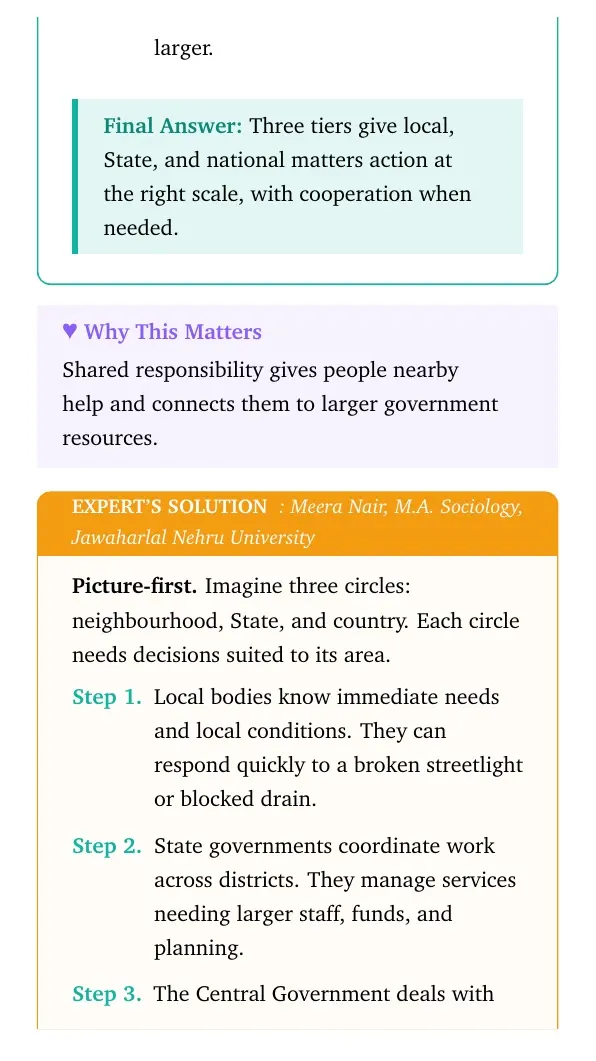
India is large, so one government cannot manage every matter alone. Work is shared across local, State and national levels.
| Level | Area covered | Examples of work |
|---|---|---|
| Local | Village, town or city | Local roads, cleanliness and water |
| State | One State | State police, hospitals and many schools |
| National | Whole country | Defence, foreign relations and currency |
Some subjects involve more than one level. The levels then coordinate their plans. This sharing brings decisions closer to the people affected by them.
Democracy, Elections and Citizen Participation
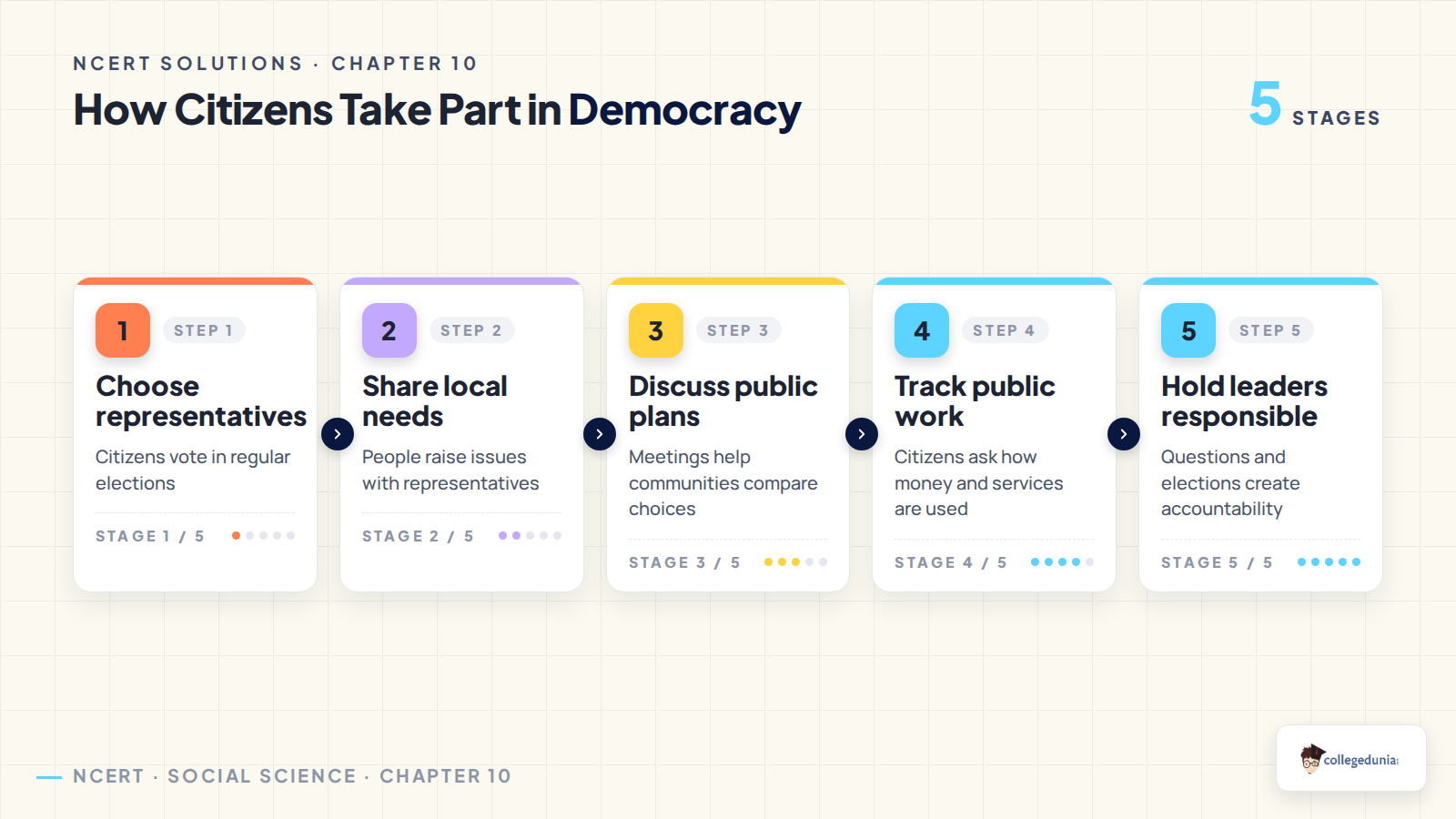
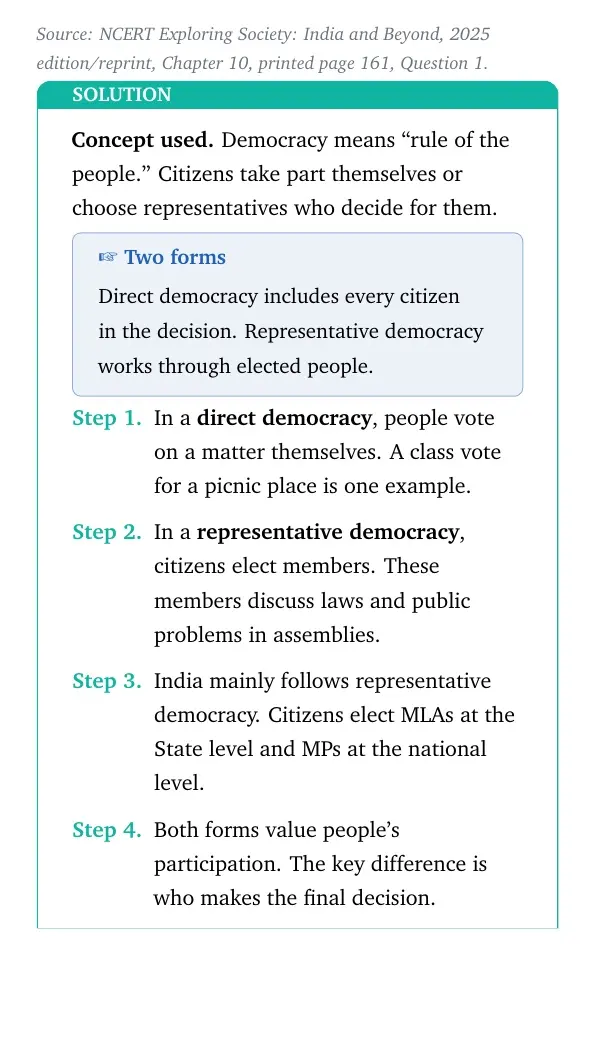
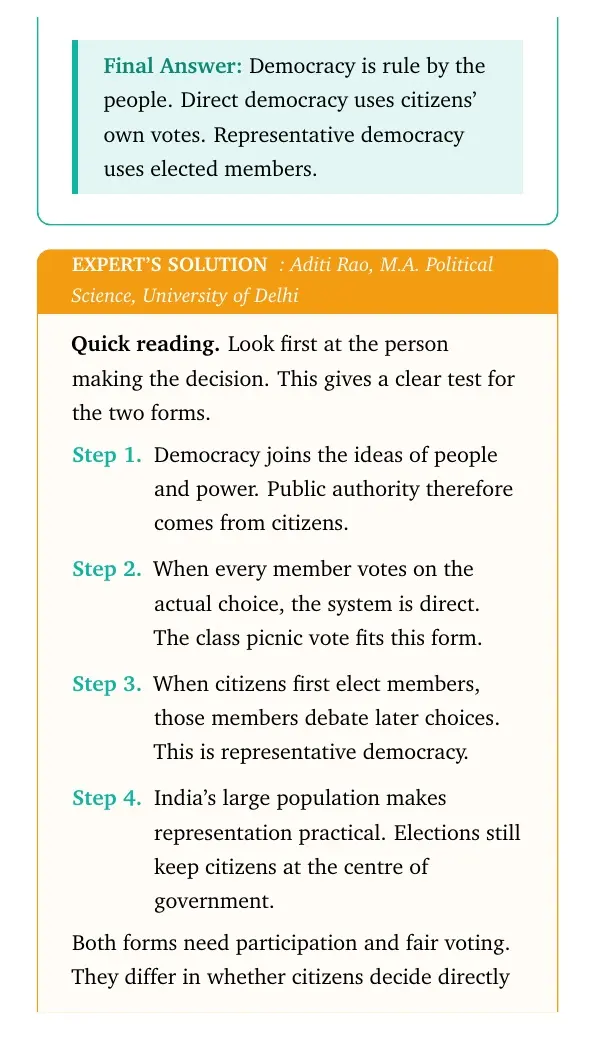
In a democracy, people choose representatives through elections. Those representatives form governments and make public decisions for a fixed period.
- Eligible citizens vote in free and fair elections.
- Elected representatives discuss needs and make decisions.
- Citizens ask questions and share their views.
- Courts and laws protect rights and limit misuse of power.
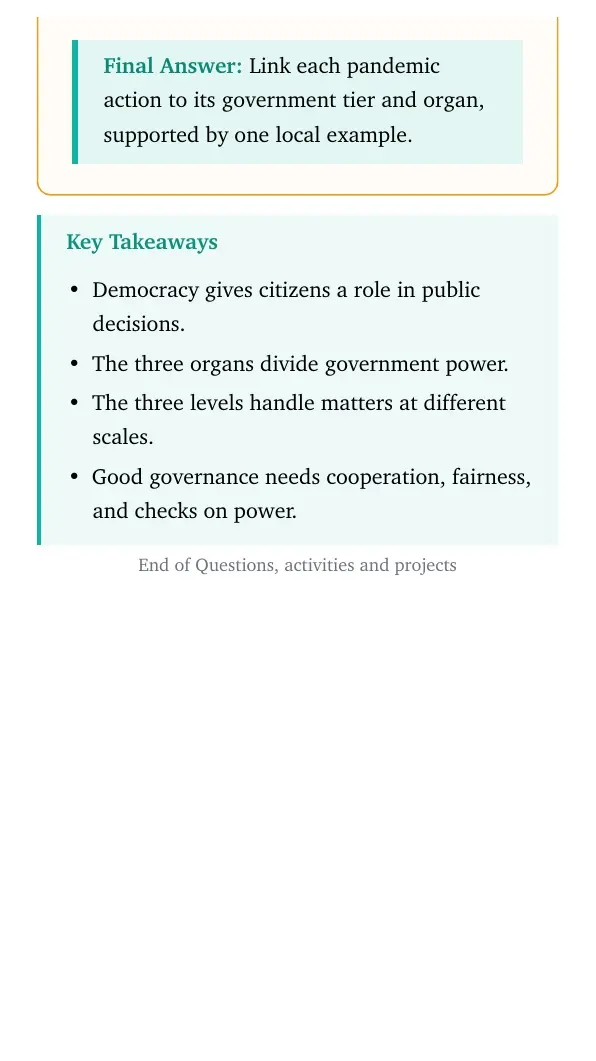
Democracy means more than voting once. People also take part by staying informed, joining discussions and reporting public problems peacefully.
How to Write Better Grassroots Democracy Answers
Begin with a direct definition. Then explain the idea in two or three points. Add an example only when it supports the answer.
- Do not confuse government with the wider process of governance.
- Write legislature, executive and judiciary as three separate roles.
- Name all three levels when a question asks about government structure.
- Connect democracy with representation, participation and accountability.
Grassroots Democracy Part 1 Class 6 Related Resources
| Resource | Best use |
|---|---|
| Grassroots Democracy Part 1 Class 6 NCERT Book PDF | Read the official chapter and activities |
| Grassroots Democracy Part 1 Class 6 Notes | Revise terms and key ideas |
| Grassroots Democracy Part 1 Class 6 Handwritten Notes | Complete a quick recap |
All Class 6 Social Science NCERT Solutions
| Chapter | NCERT Solutions |
|---|---|
| 7 | India's Cultural Roots |
| 8 | Unity in Diversity, or 'Many in the One' |
| 9 | Family and Community |
| 10 | Grassroots Democracy - Part 1: Governance |
| 11 | Grassroots Democracy - Part 2: Local Government in Rural Areas |
Open all Grassroots Democracy Part 1 questions with step-by-step solutions
Grassroots Democracy Part 1 Class 6 NCERT Solutions FAQs
Ques. What is governance?
Ans. Governance is the process through which decisions are made, applied and checked for the common good.
Ques. Why do we need a government?
Ans. We need a government to make laws, provide public services, protect rights and maintain order.
Ques. What are the three organs of government?
Ans. The three organs are the legislature, executive and judiciary. They make laws, apply laws and interpret laws.
Ques. What are the three levels of government in India?
Ans. India has local, State and national levels of government. Each level handles work suited to its area.
Ques. How can citizens take part in a democracy?
Ans. Citizens can vote, stay informed, join public discussions, raise concerns and hold representatives answerable.



Comments