




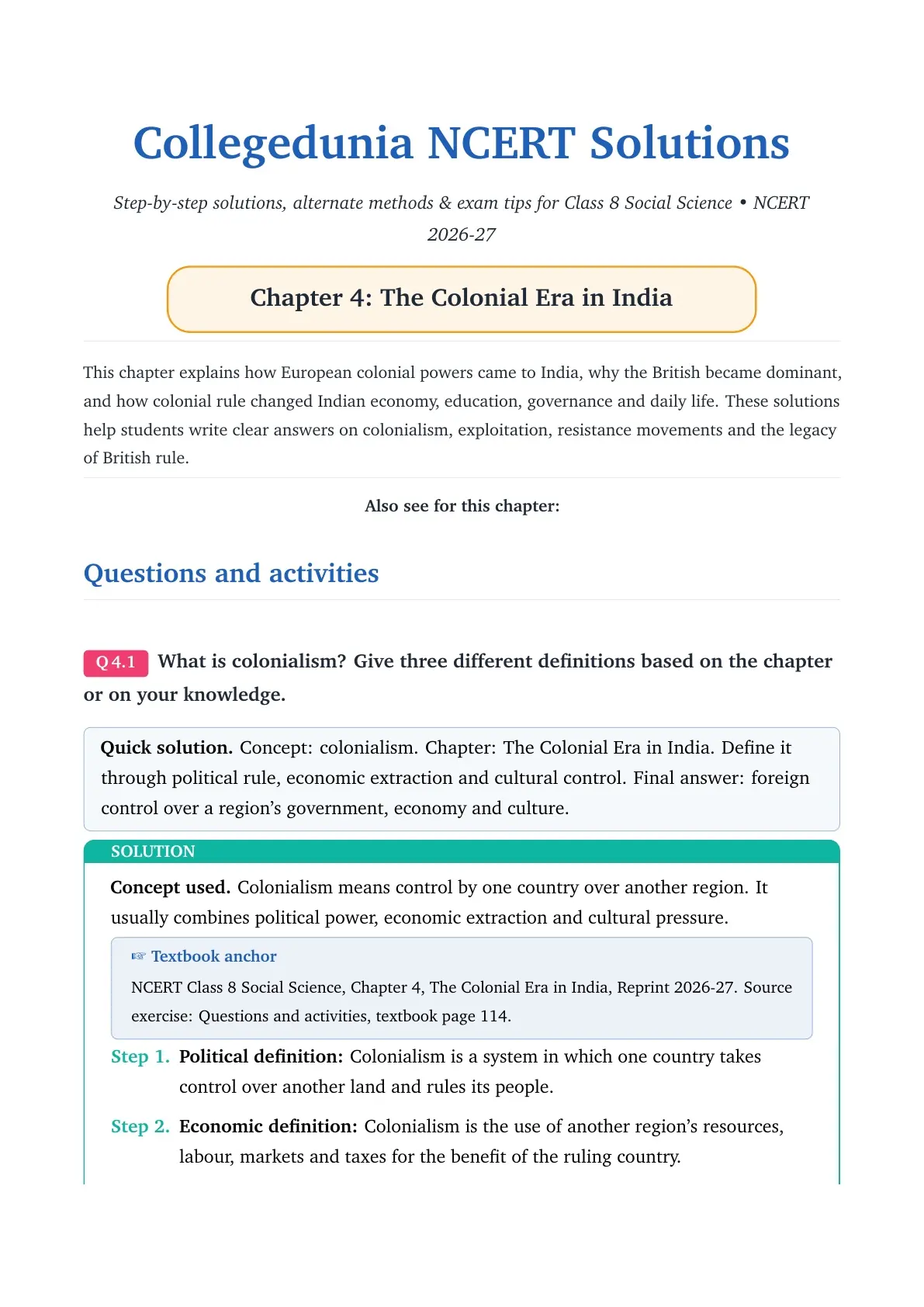
NCERT Solutions for Class 8 Social Science Chapter 4 The Colonial Era in India help students answer all 10 textbook questions from the 2026-27 NCERT chapter. The PDF covers colonialism, European trading companies, divide and rule, the drain of wealth, railways, education policy and the Great Rebellion of 1857.
- Chapter focus: colonial rule, British expansion, famines, deindustrialisation, resistance and cultural impact.
- Question type: definitions, compare answers, news report, role-play, local research and alternate-history writing.
- Best use: read the chapter once, then use the PDF to frame notebook-ready answers.

Student Feedback: In a Collegedunia study check with 12,800 Class 8 students, 76% said this chapter became easier when they grouped answers into colonial claim, British policy, economic impact and resistance.
Class 8 Social Science Chapter 4 Study Map
Class 8 Social Science Chapter 4 explains how European powers entered India and how the British became the strongest colonial power. Students learn why India attracted traders, how the East India Company moved from trade to rule, and how colonial policies changed Indian society.
Important: this chapter is not only about dates. Most questions ask students to connect policies with their effects on people, industries, education and resistance movements.
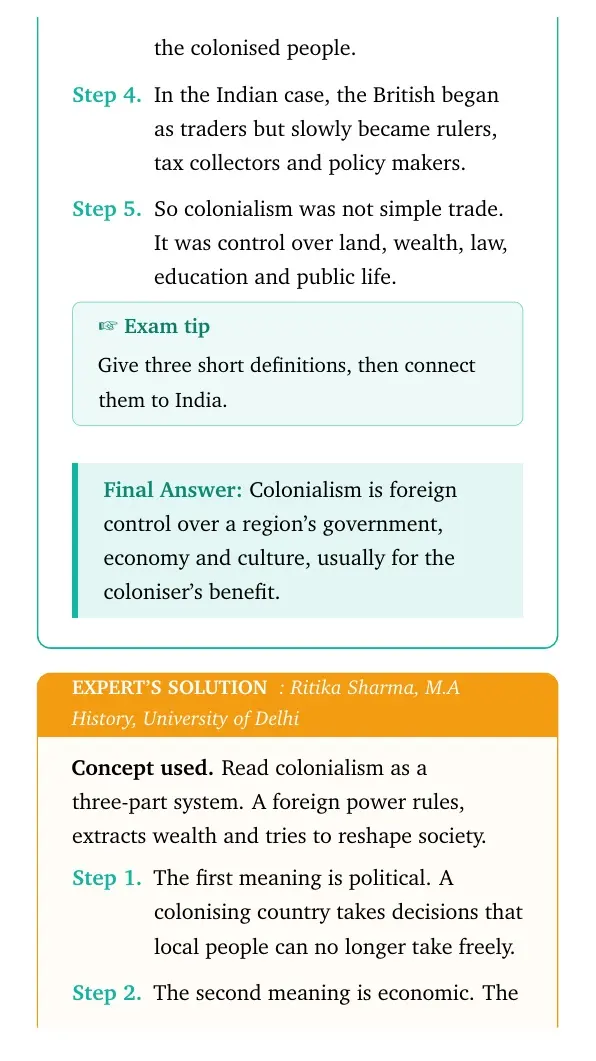
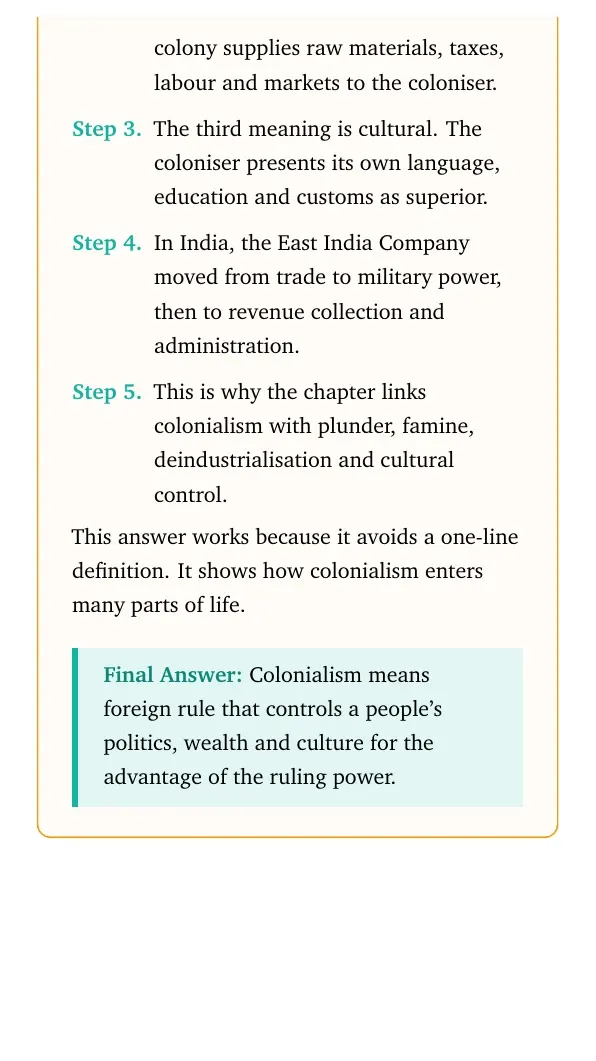
- Start with meaning: define colonialism as political, economic and cultural control.
- Use evidence: Plassey, famines, Macaulay's policy and the 1857 rebellion support long answers.
- End clearly: show whether the British action helped India or served empire.
The Colonial Era in India Quick Revision
Source: Magnet Brains on YouTube
The Colonial Era in India Timeline for Quick Revision
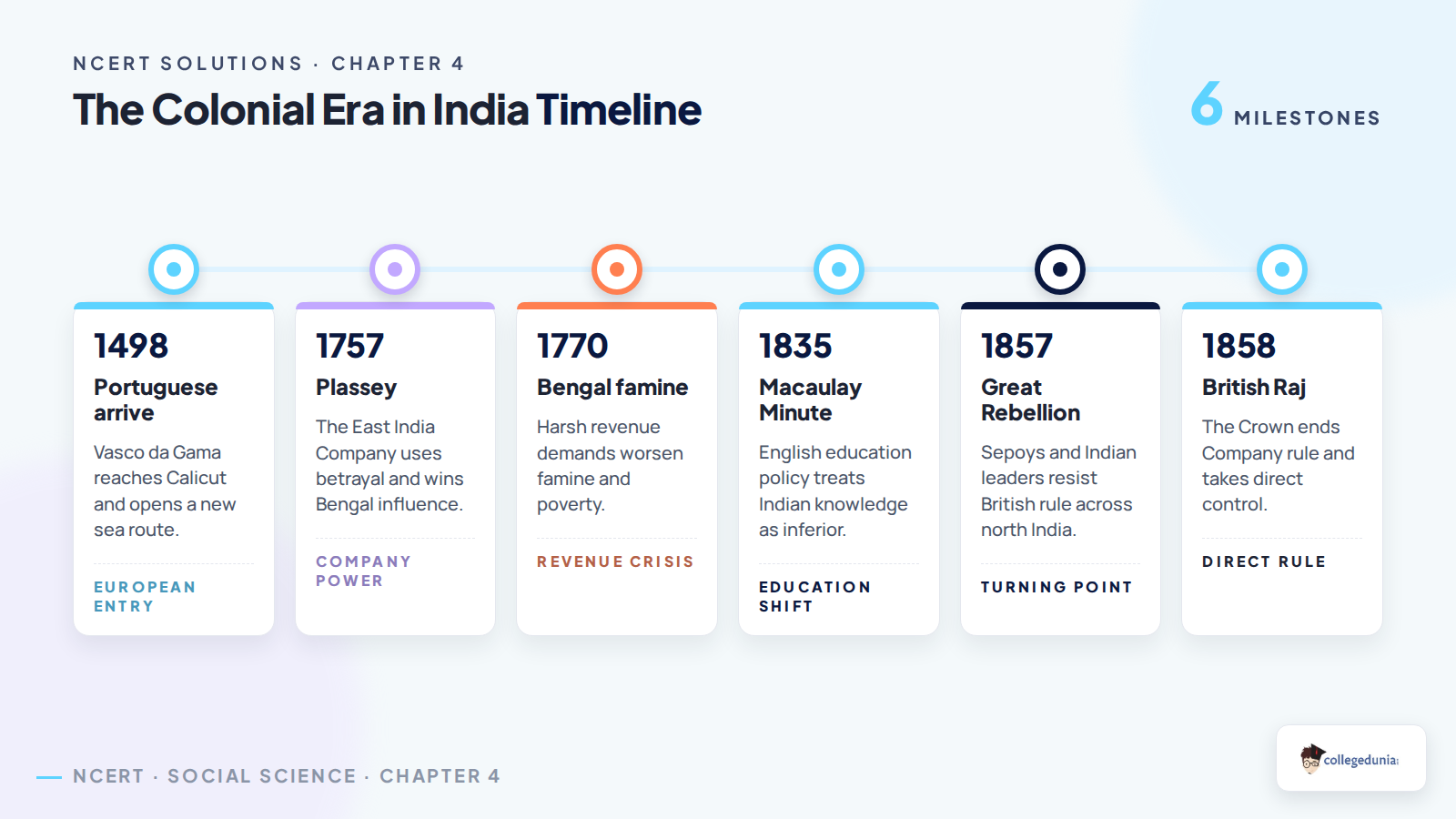
The chapter moves from Vasco da Gama's arrival in 1498 to the British Crown taking direct control in 1858. The timeline helps students place trade, conquest, famine, education policy and rebellion in order.
| Year | Event | Why it matters |
|---|---|---|
| 1498 | Vasco da Gama reaches Calicut | European sea trade with India expands. |
| 1757 | Battle of Plassey | The East India Company gains strong influence in Bengal. |
| 1770-1772 | Bengal famine | Harsh revenue policy worsens suffering. |
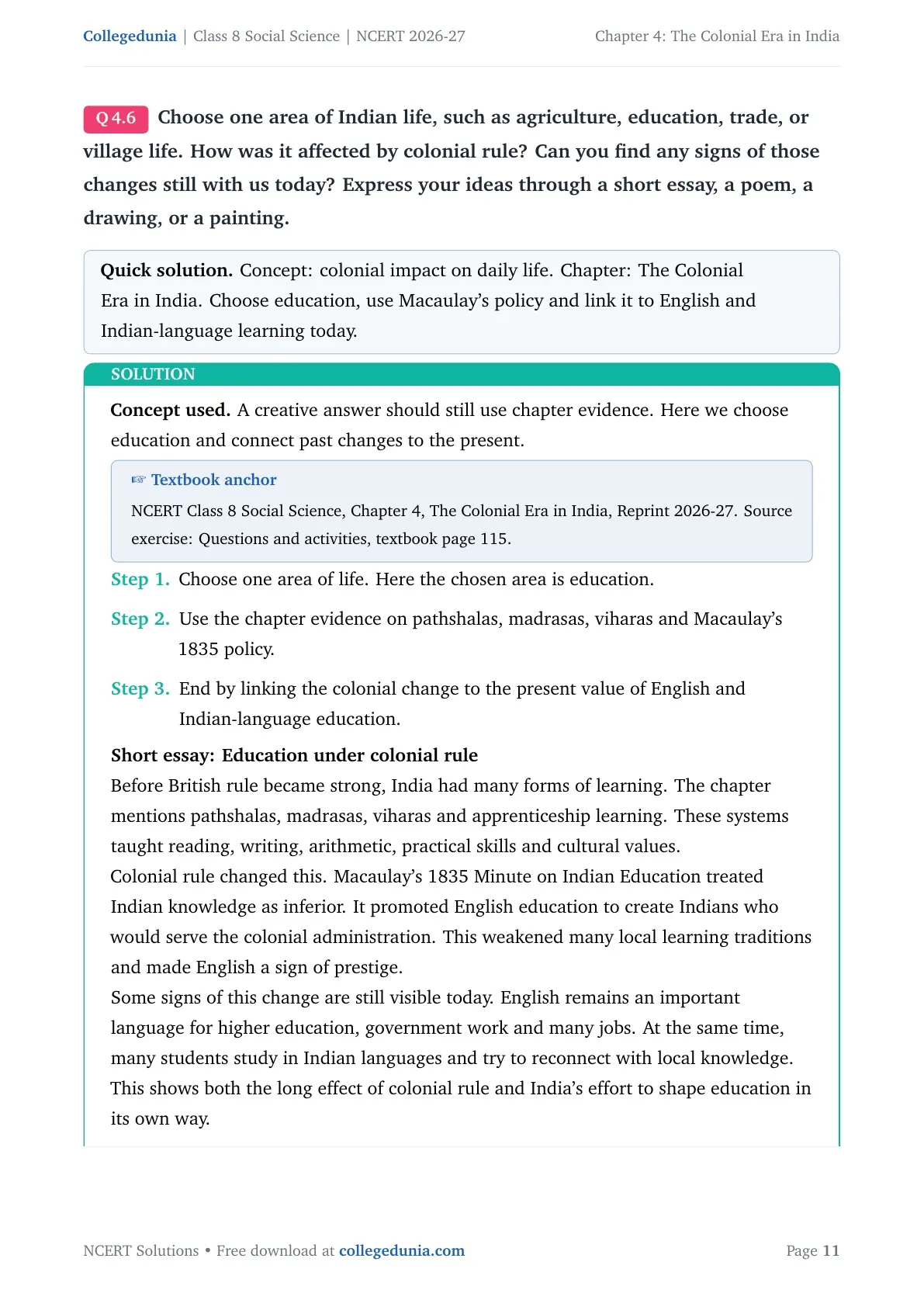
| 1835 | Macaulay's Minute | English education gains colonial backing. |
| 1857 | Great Rebellion | Indian resistance reaches a major turning point. |
Colonial Claim and Chapter Evidence Compared
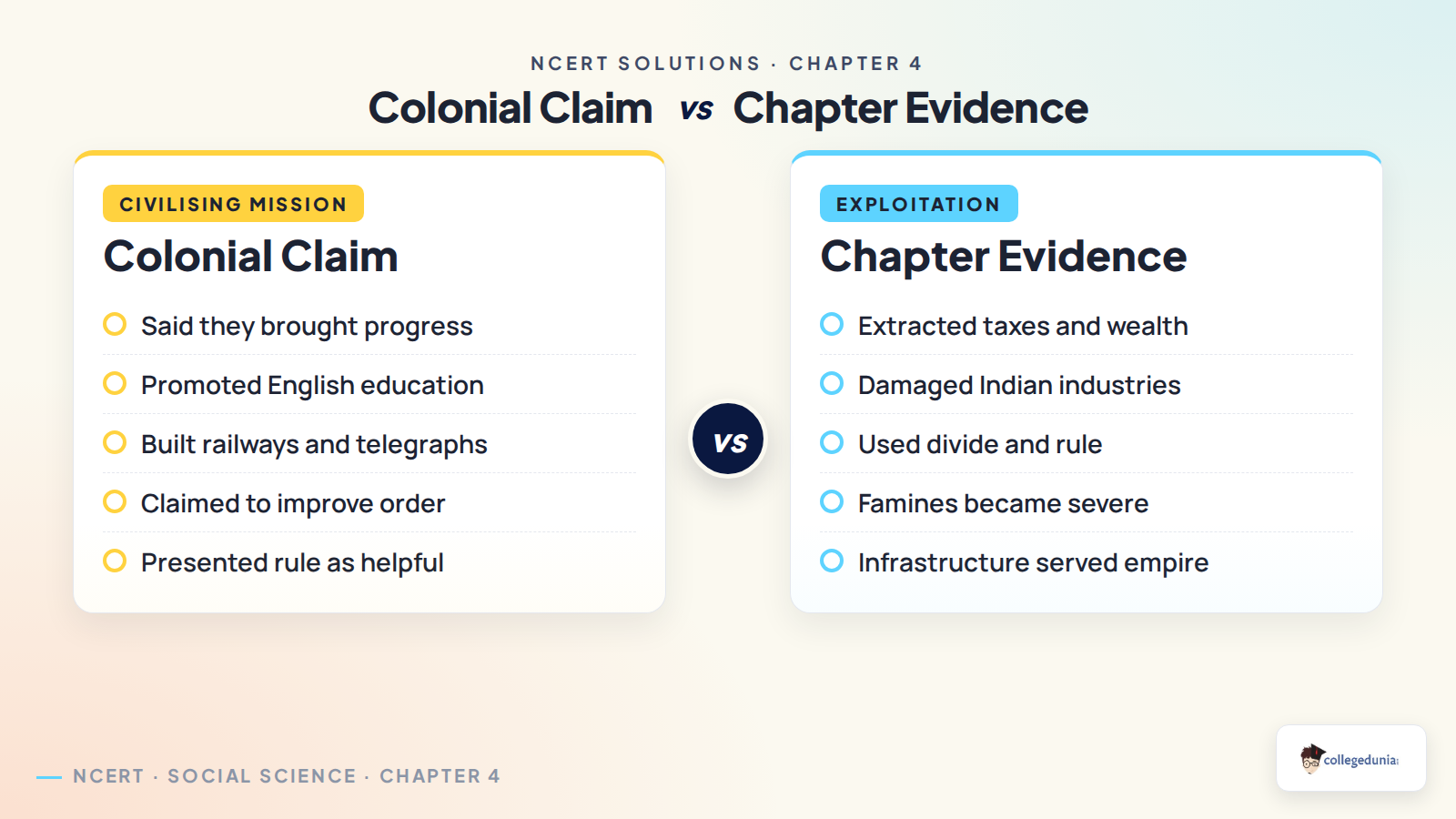
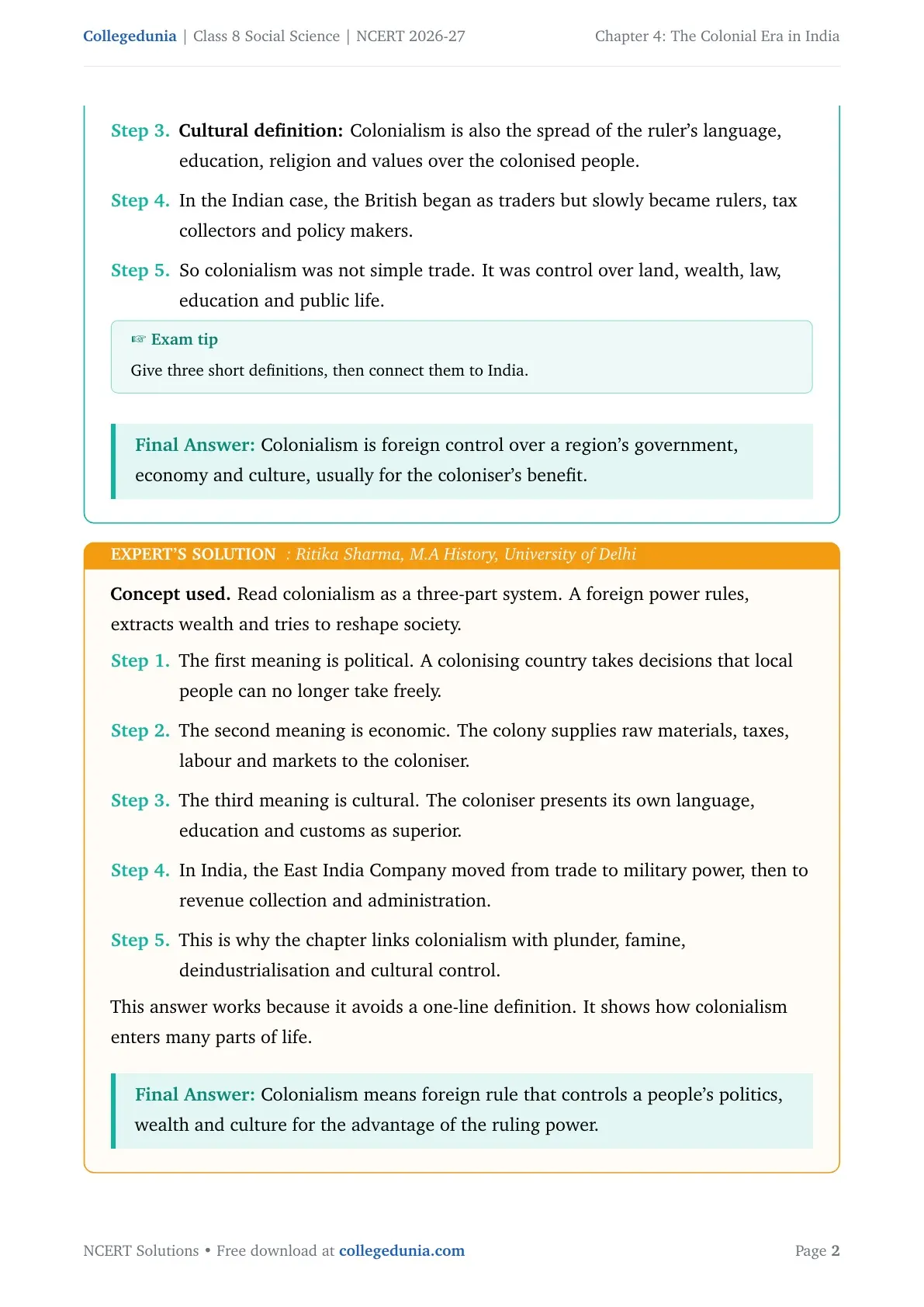
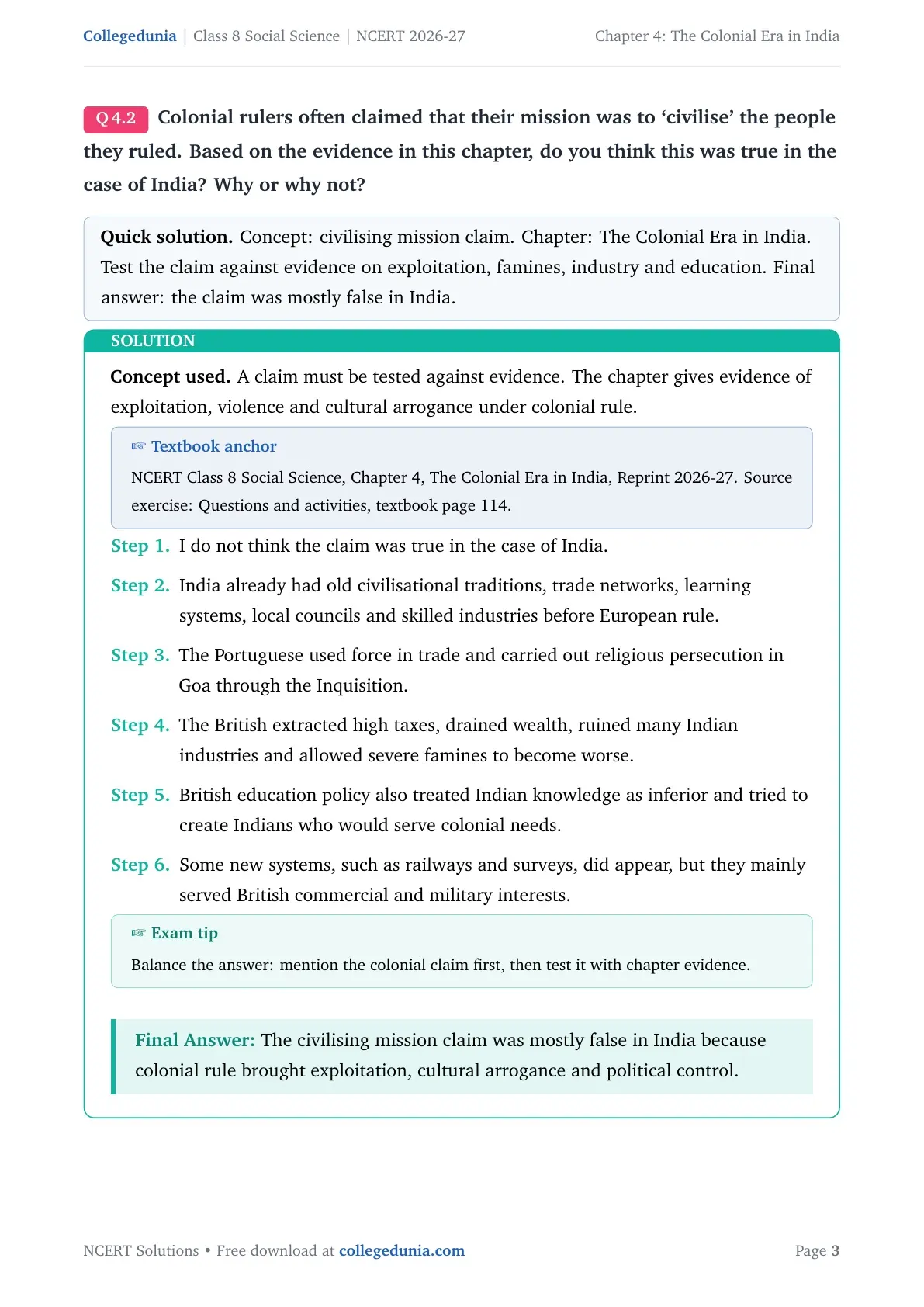
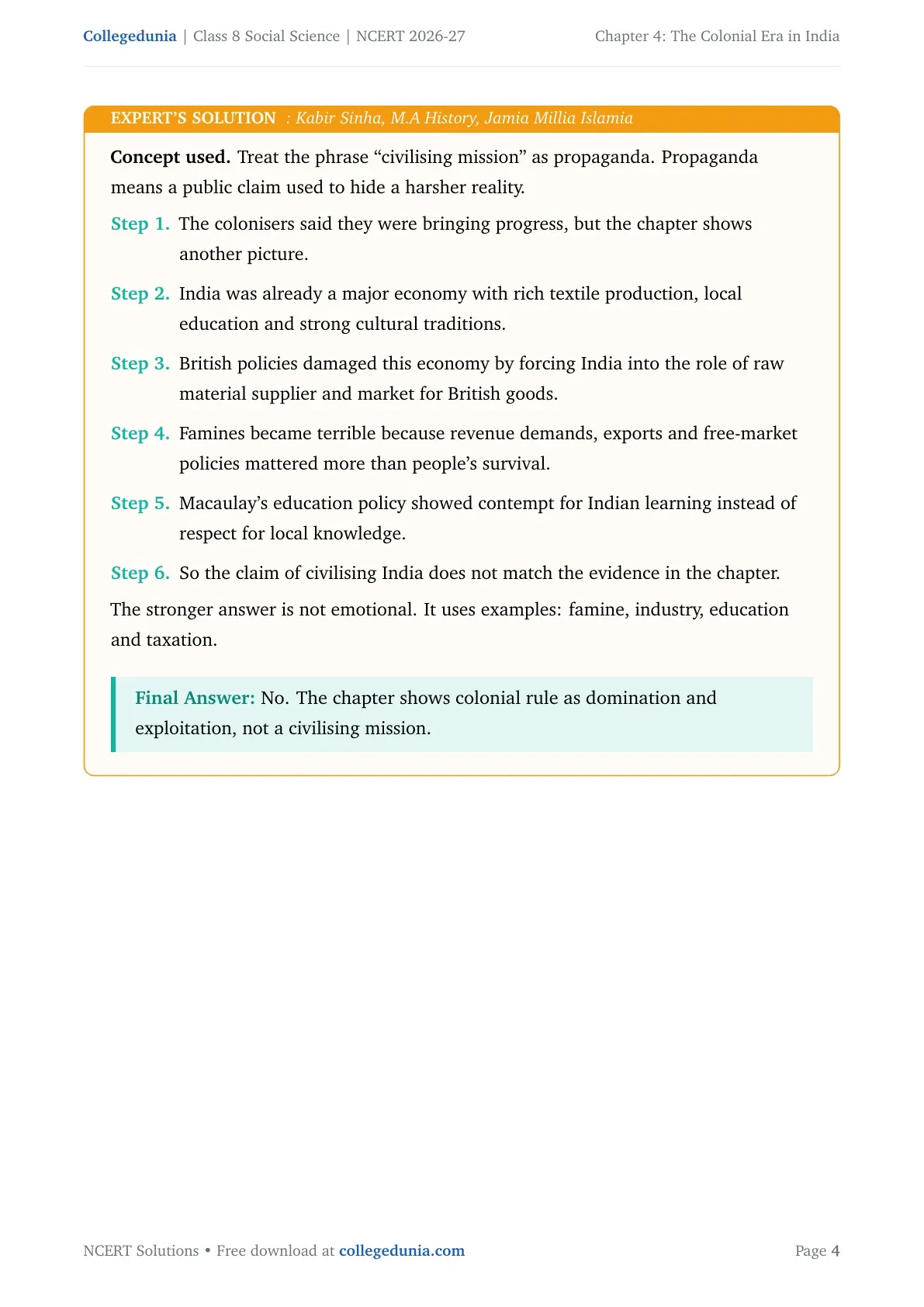
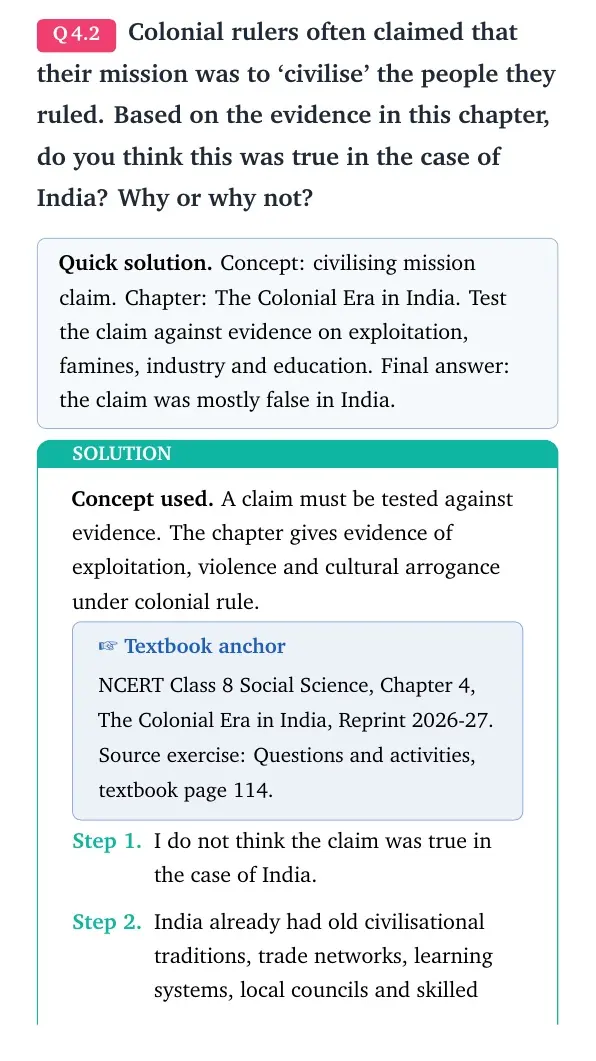
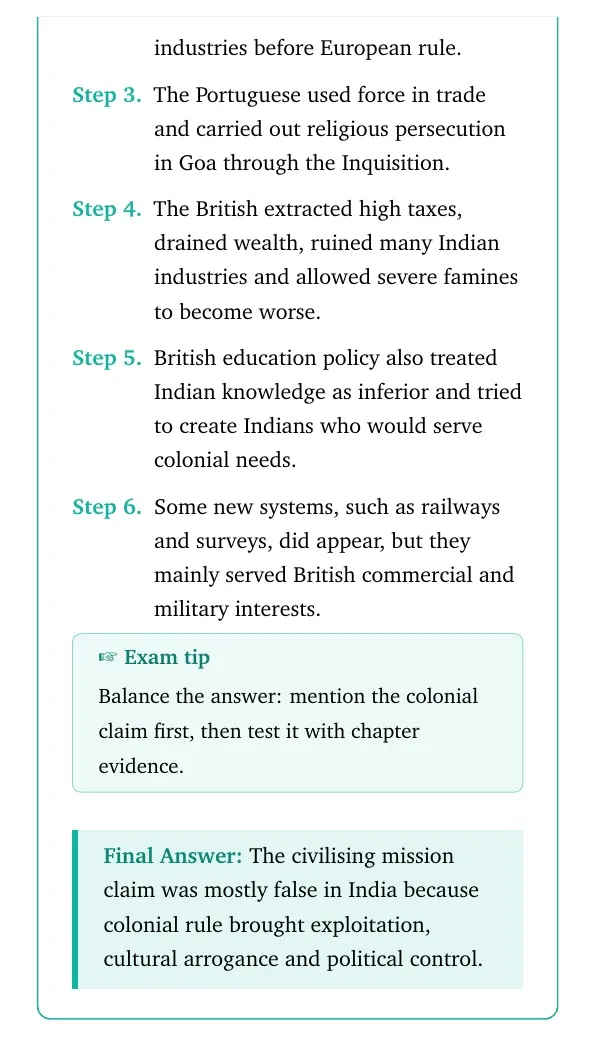
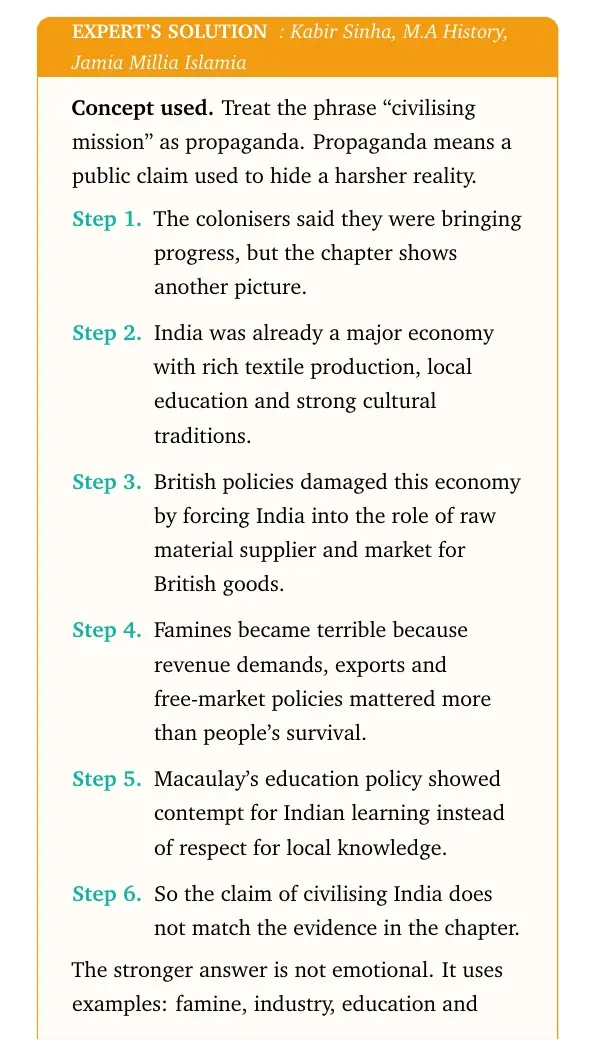
The British and other European powers often claimed they brought progress. The chapter asks students to test that claim against evidence. This is the key to answers on the so-called civilising mission.
- Claim: colonial rulers said they brought order, education and modern transport.
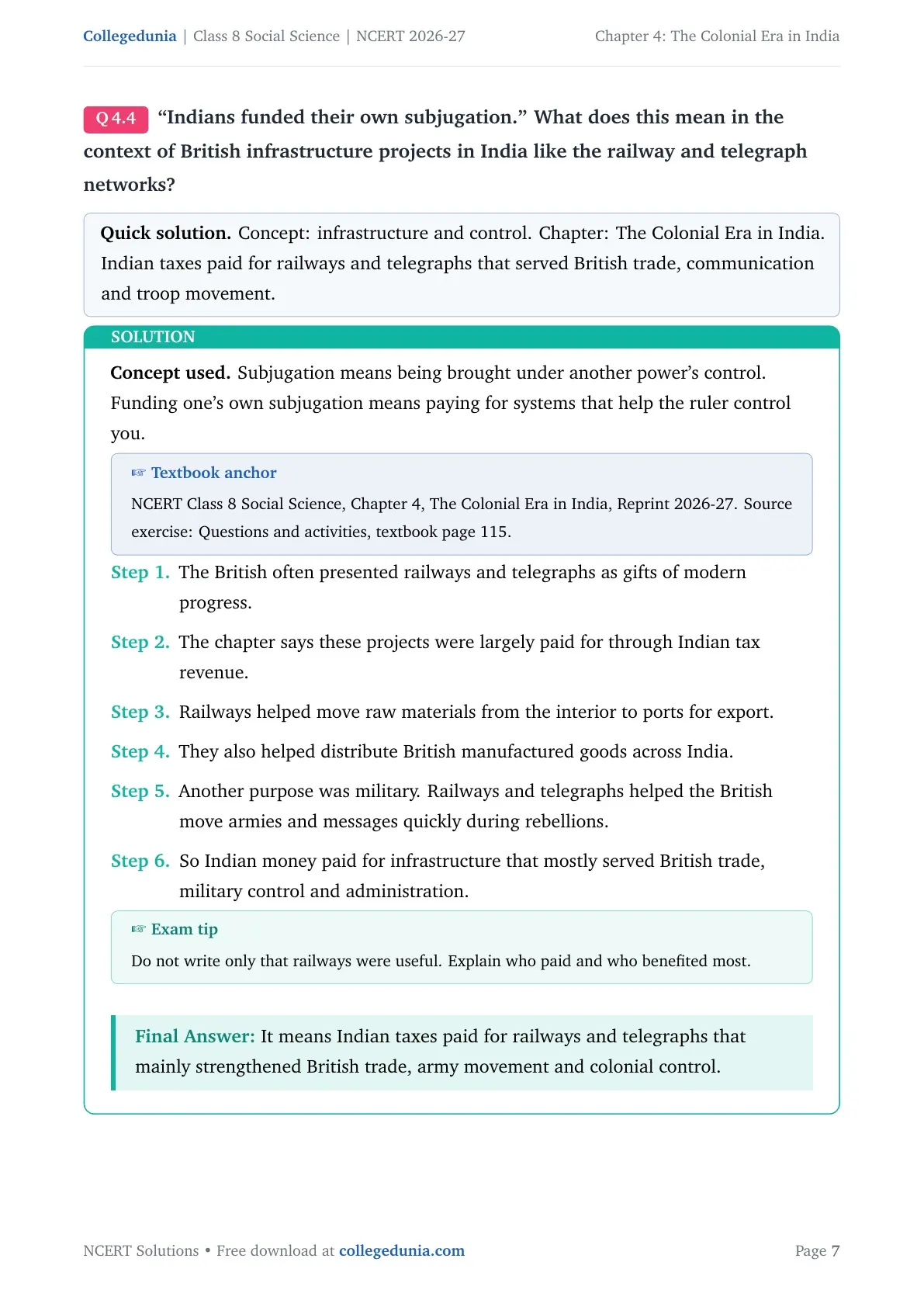
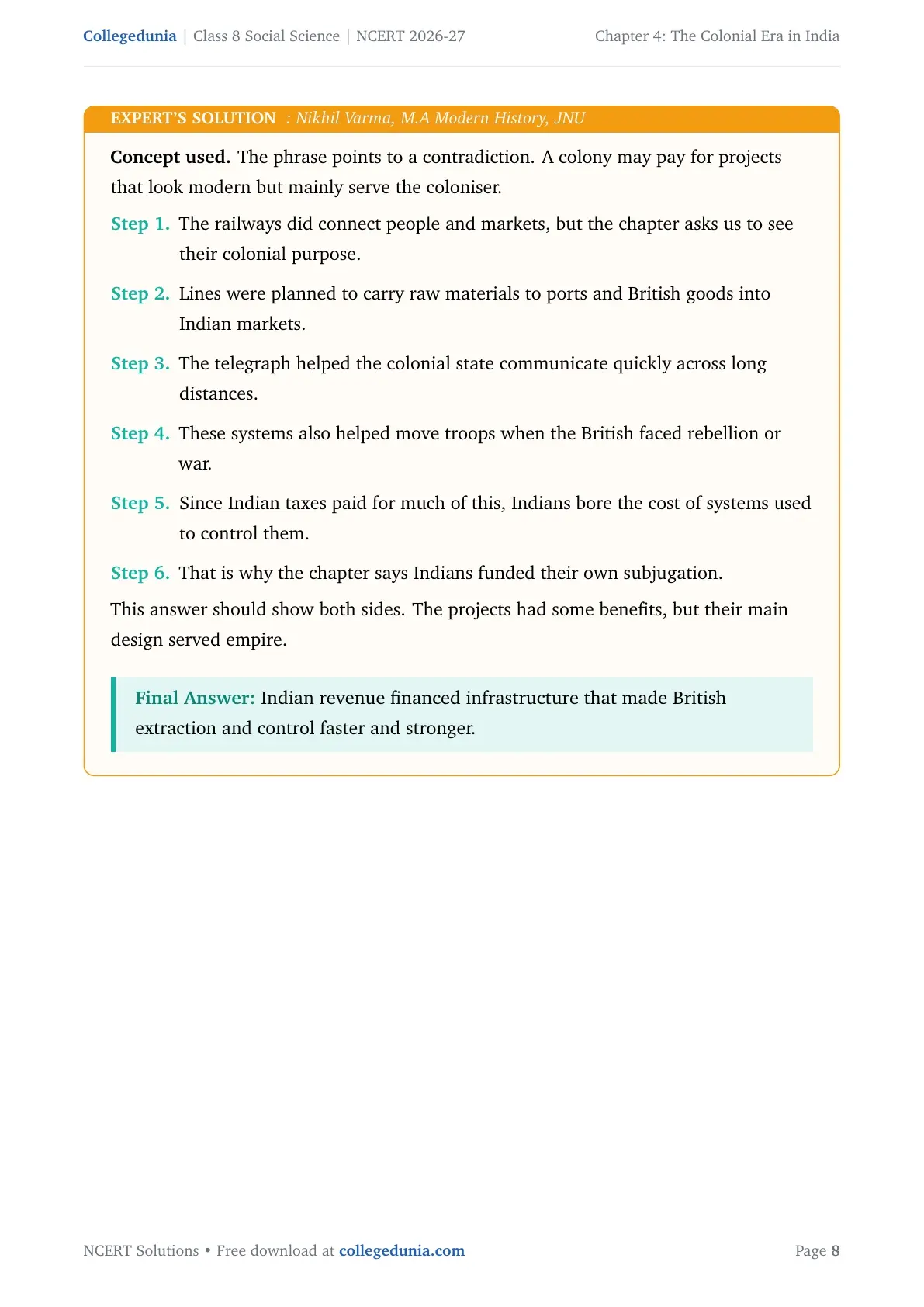
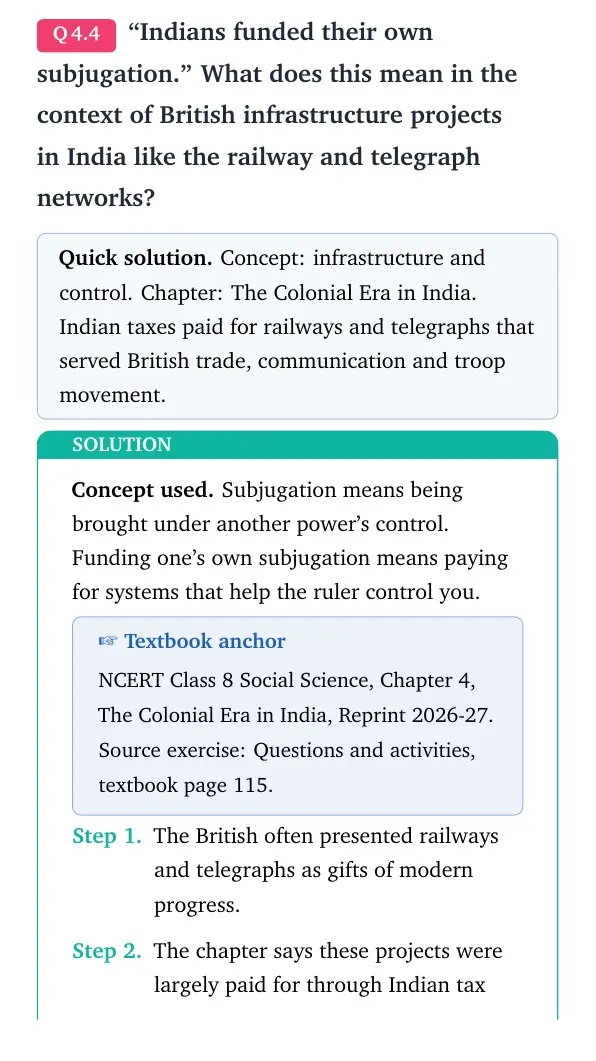
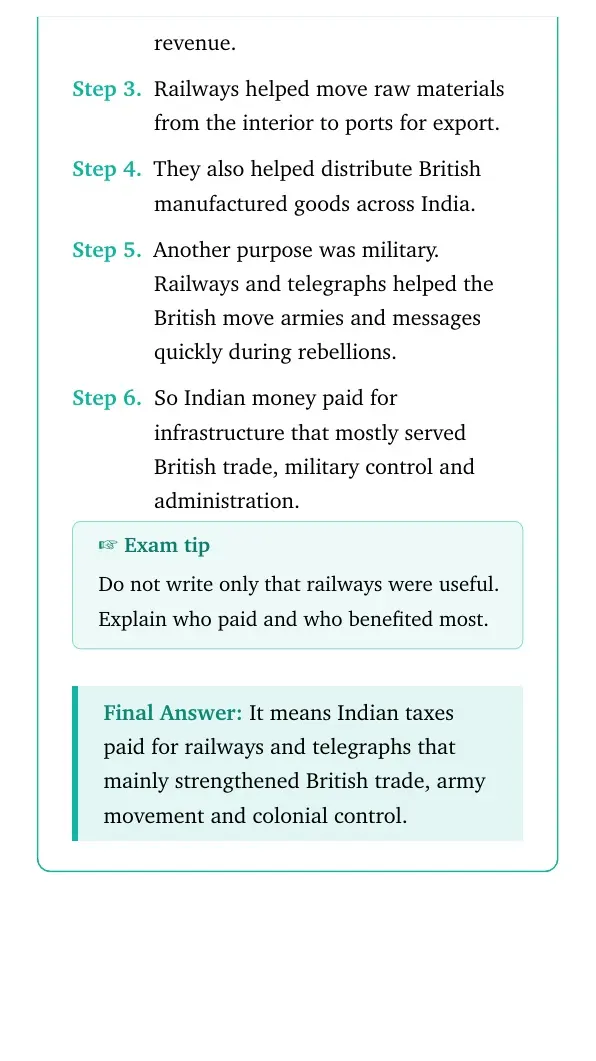
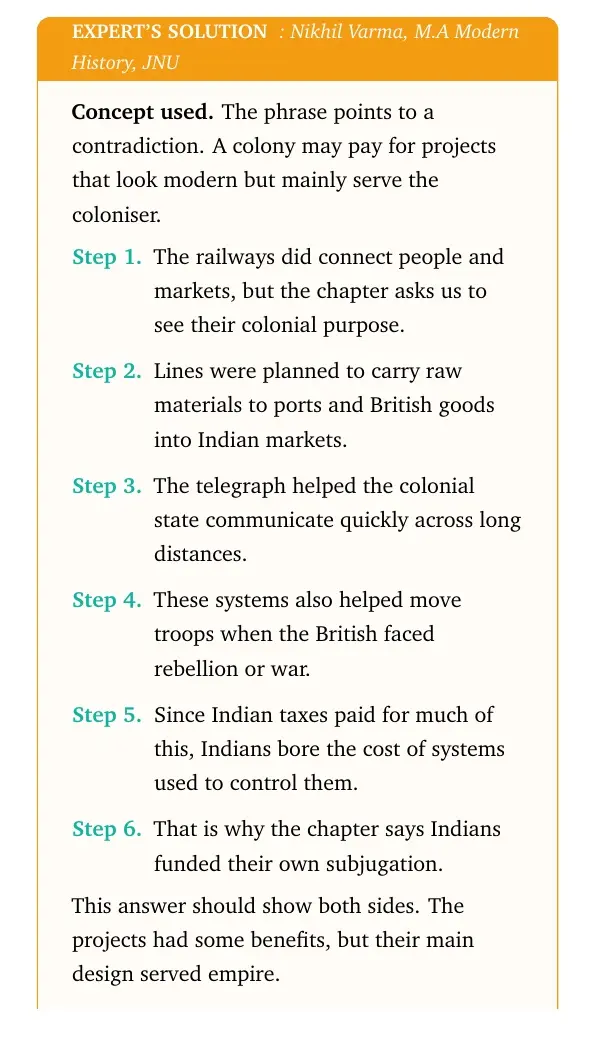
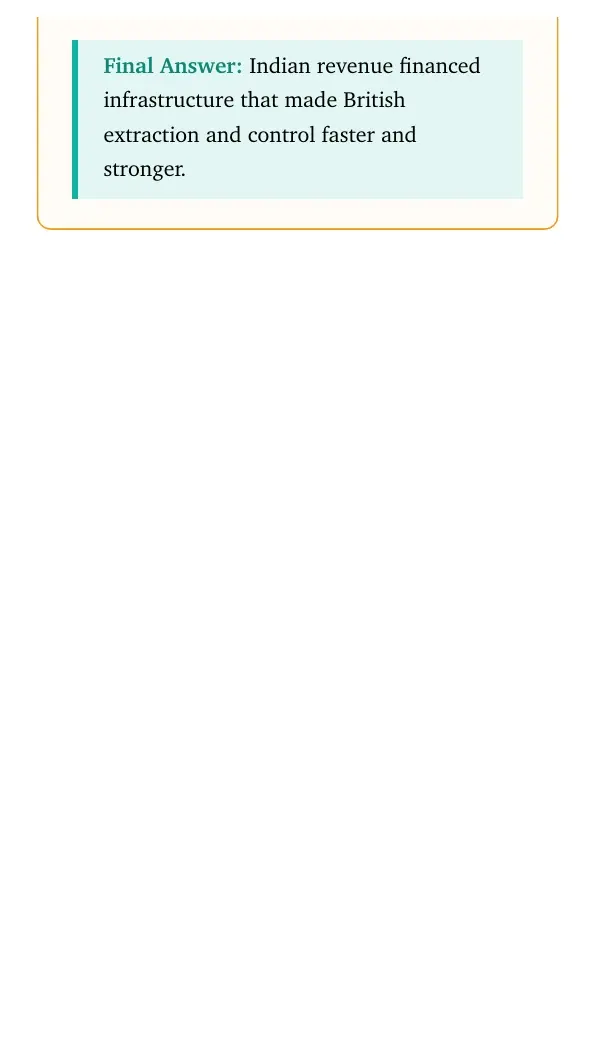
- Evidence: India paid for systems that mainly helped British trade and military control.
- Conclusion: colonial rule served empire more than the welfare of Indians.
Divide and Rule in The Colonial Era in India
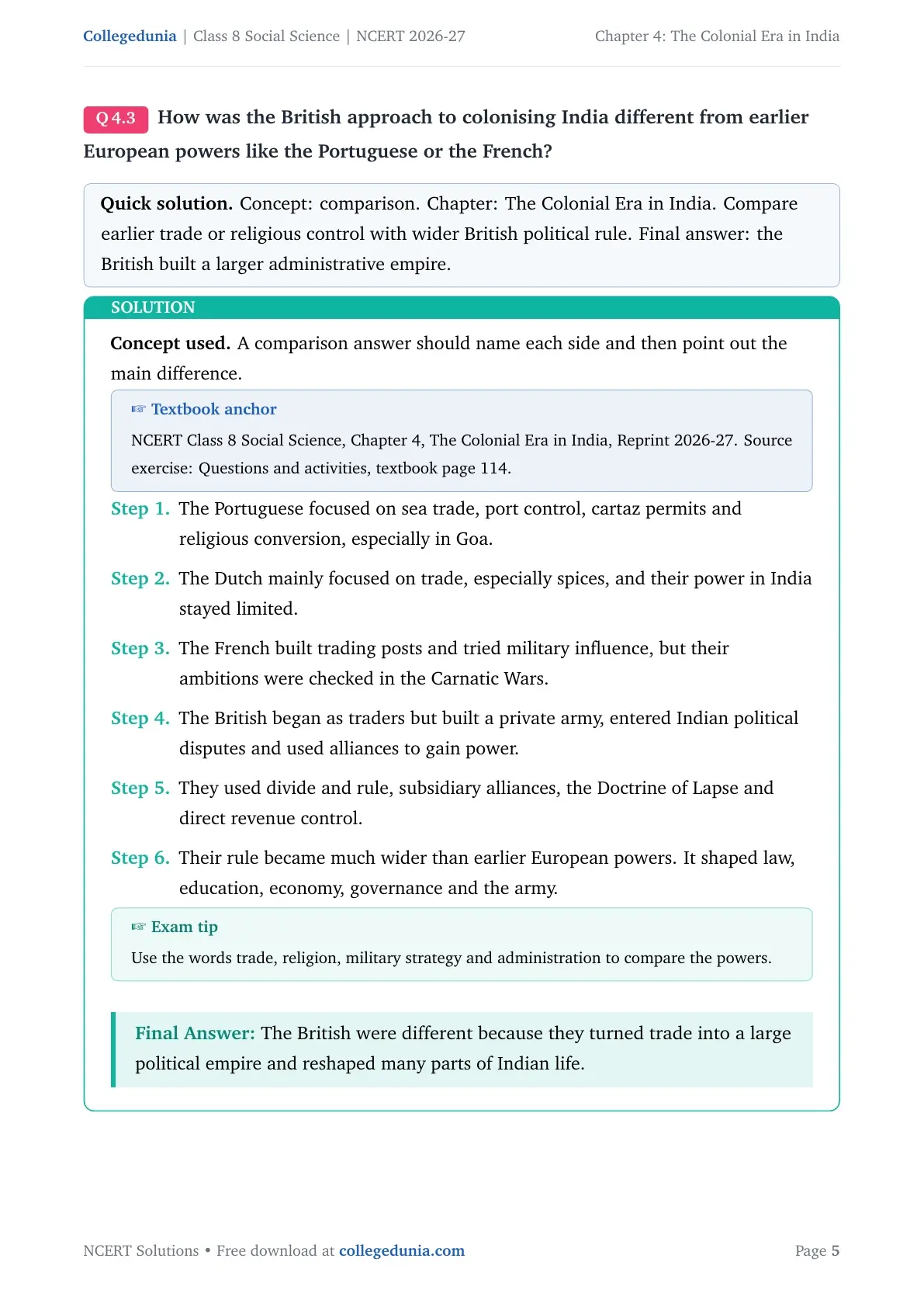
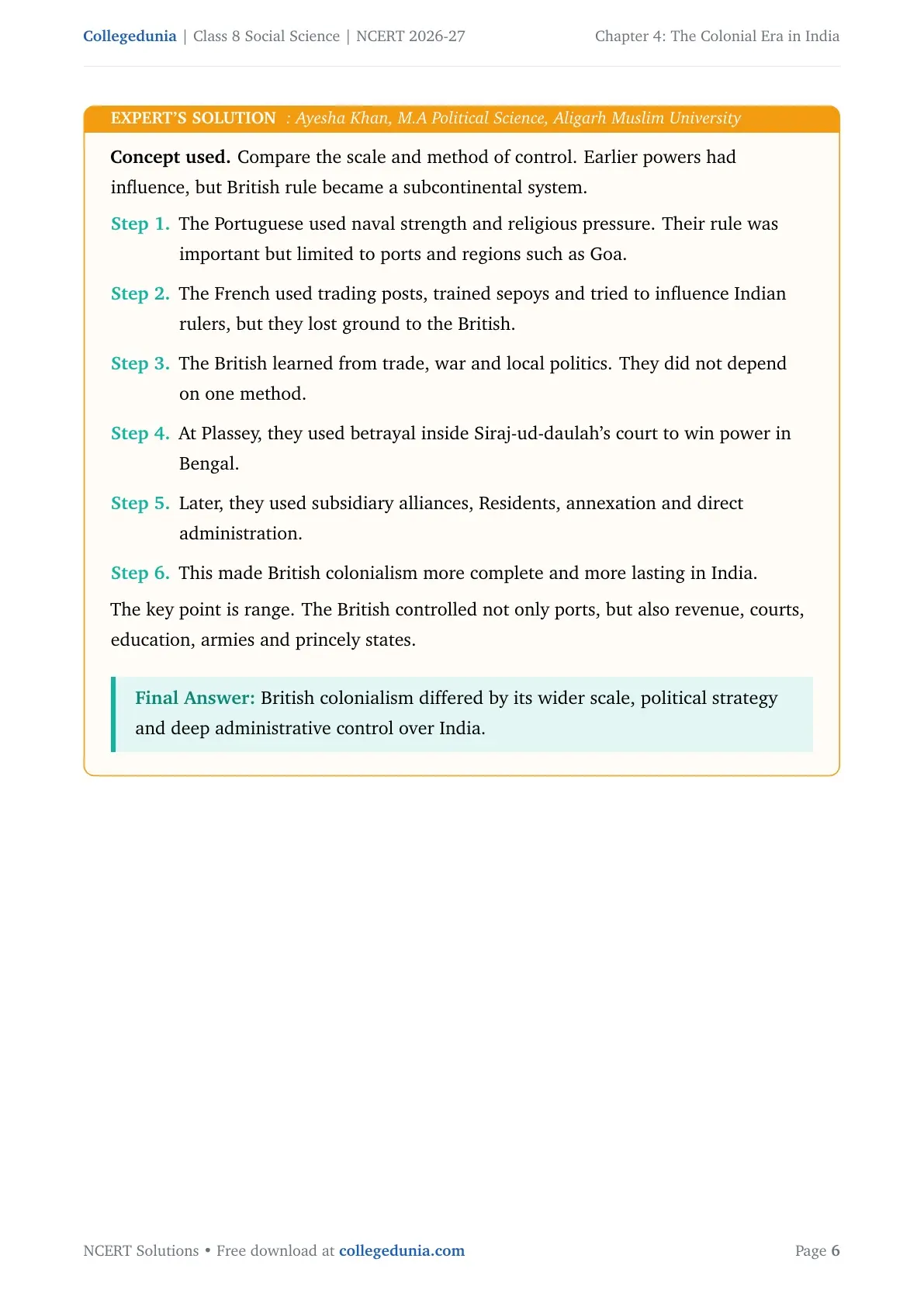
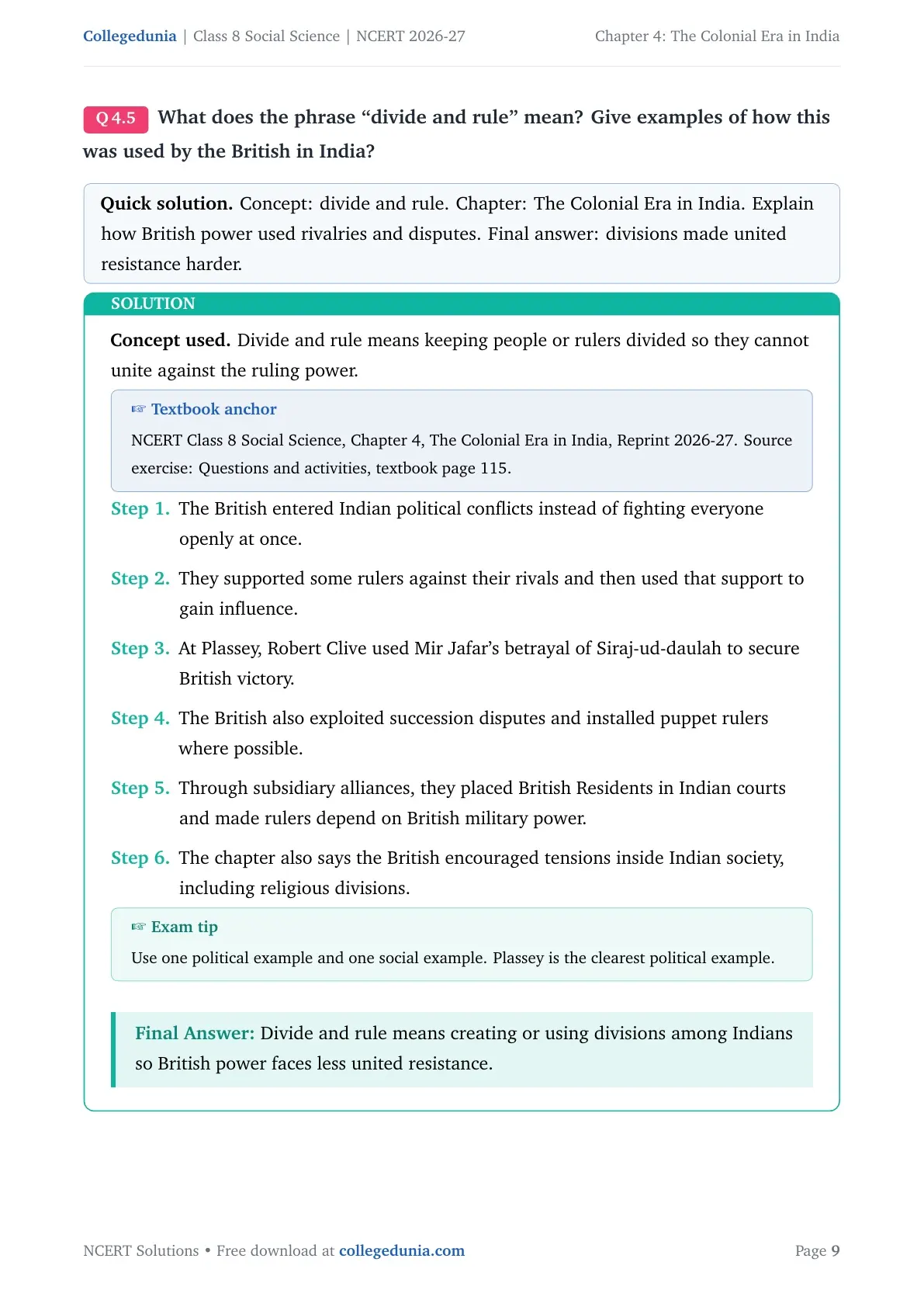
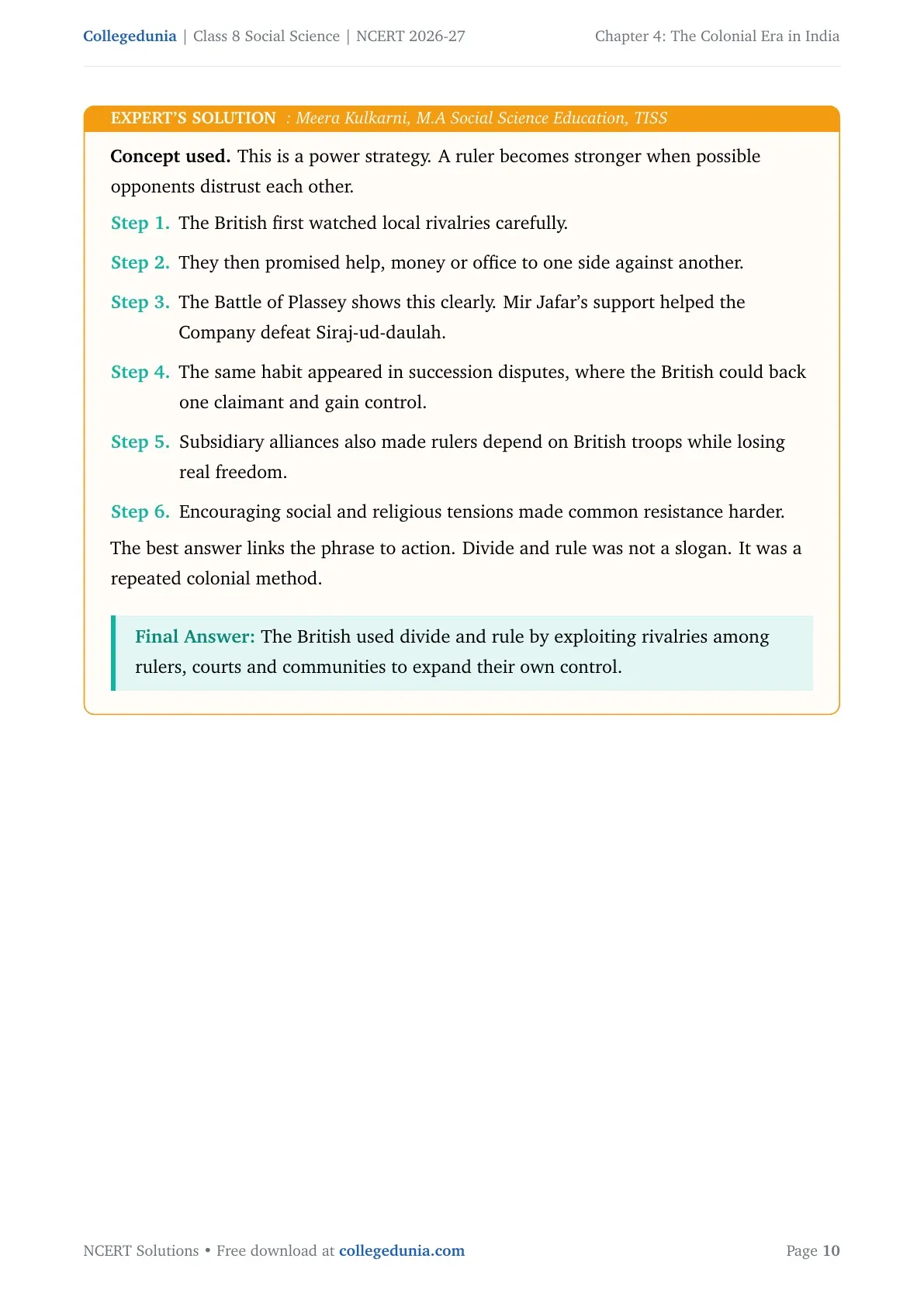
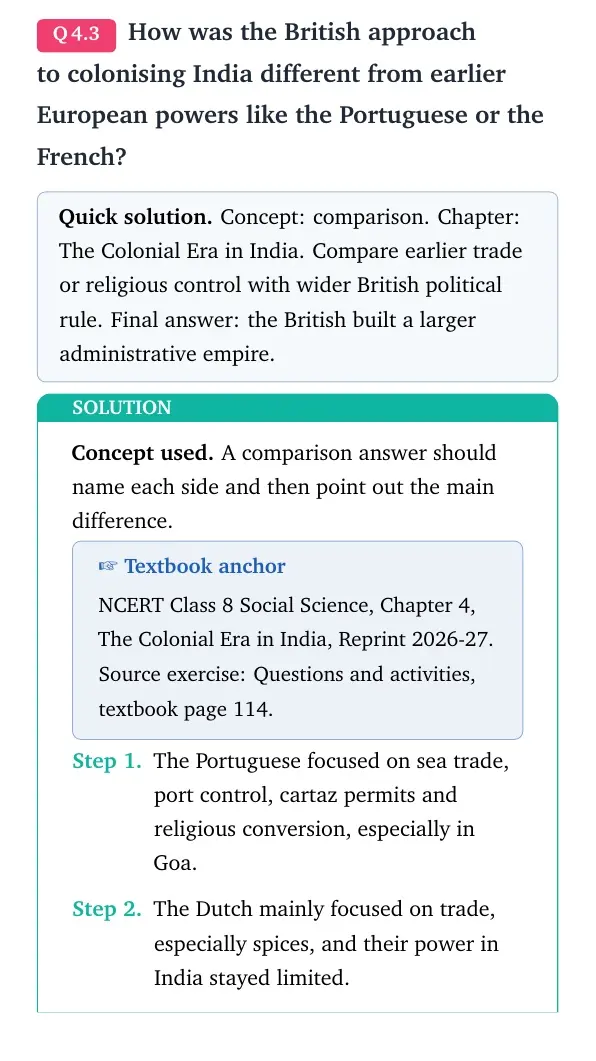
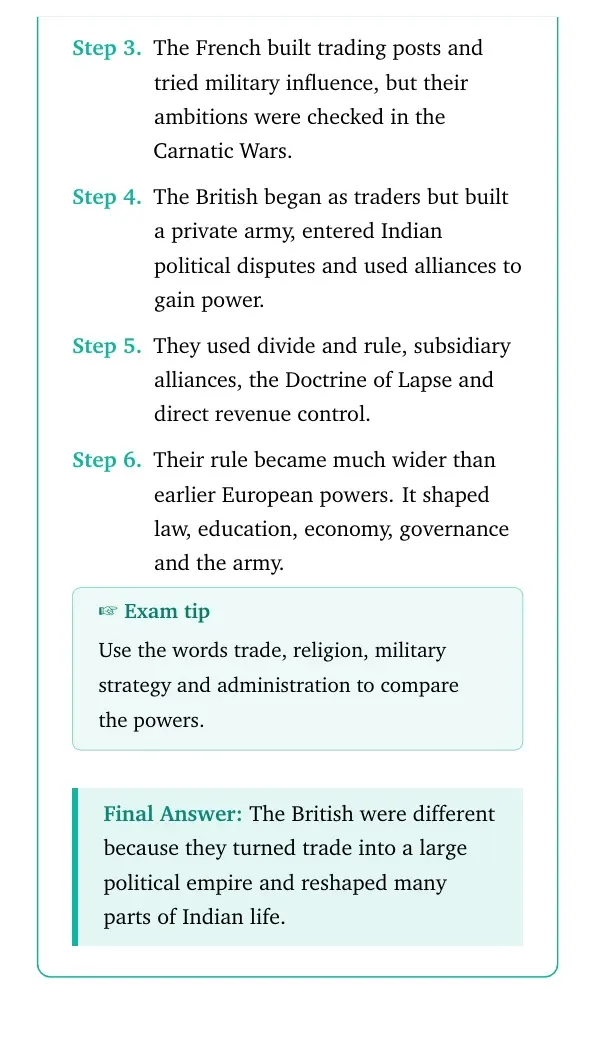
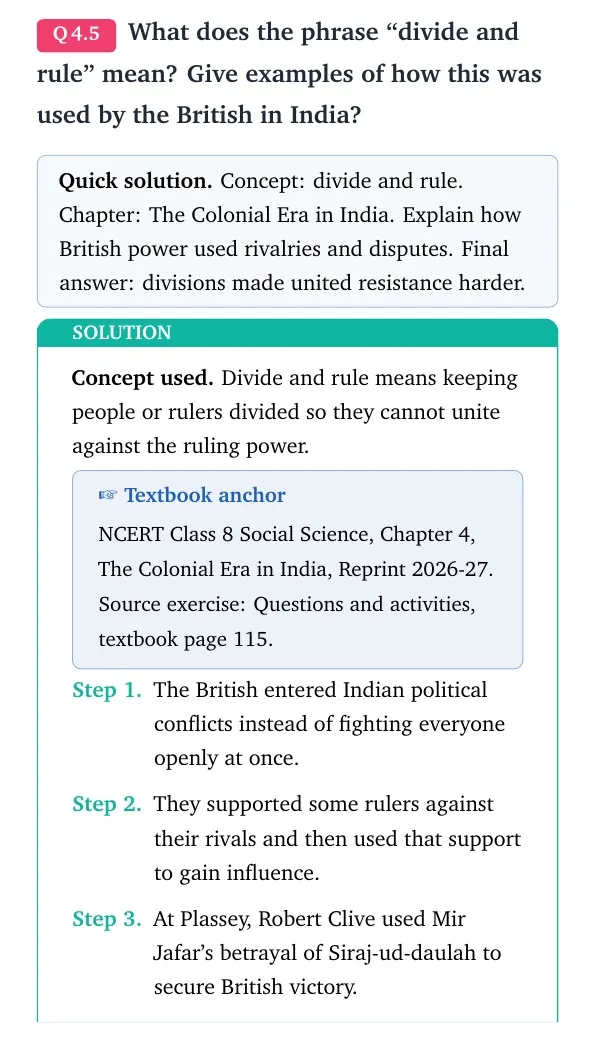
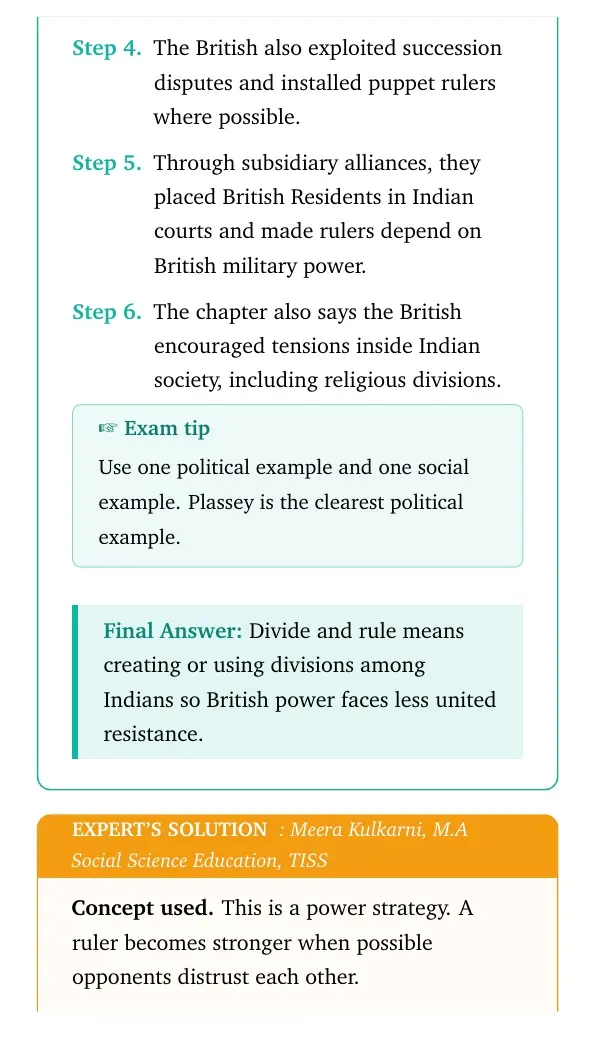
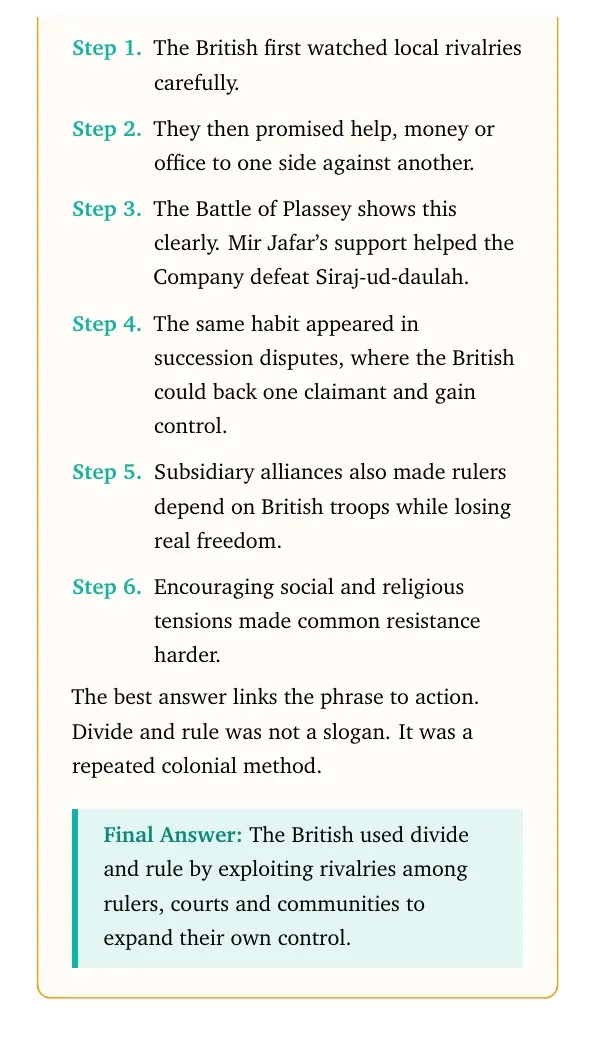
The phrase divide and rule means using divisions among people or rulers to keep control. The British used local rivalries, succession disputes and social tensions to make united resistance harder.
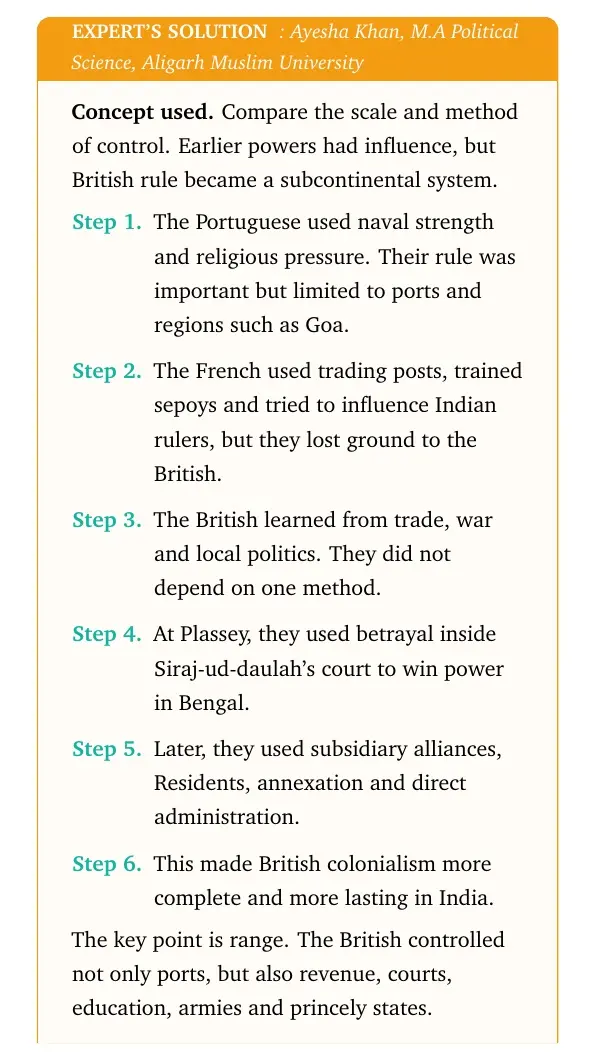
Plassey is the clearest example. Robert Clive worked with Mir Jafar against Siraj-ud-daulah, and the betrayal helped the Company win Bengal influence. Later policies such as subsidiary alliance and the Doctrine of Lapse also reduced Indian rulers' freedom.
- Political example: using Mir Jafar's betrayal at Plassey.
- Administrative example: placing British Residents in princely courts.
- Social example: encouraging tensions inside Indian society.
Economic Impact of British Colonial Rule in India
The chapter shows how colonial rule damaged India's economy. Before colonial dominance, India was known for textiles, trade and manufacturing. Under British policy, India became a supplier of raw materials and a market for British goods.
A strong answer should use both taxation and industry. Revenue demands made rural life harder, while unfair trade rules hurt Indian textile workers. The drain of wealth meant Indian money moved out instead of being invested in India.
- Famines: harsh revenue collection worsened suffering during crop failure.
- Industries: Indian textiles declined while British manufactured imports grew.
- Infrastructure: railways helped move raw materials, goods and troops.
All NCERT Solutions for Class 8 Social Science Chapter 4 with Step-by-Step Solutions
Related NCERT Resources for Class 8 Social Science Chapter 4
| Resource | Link |
|---|---|
| Chapter 4 Notes | NCERT Notes Class 8 Social Science Chapter 4 |
| Chapter 4 Book PDF | NCERT Book PDF Class 8 Social Science Chapter 4 |
| Chapter 4 Handwritten Notes | Handwritten Notes Class 8 Social Science Chapter 4 |
Class 8 Social Science Solutions for All Chapters
| Chapter | Solutions |
|---|---|
| Chapter 1 Natural Resources and Their Use | Open solutions |
| Chapter 2 Reshaping India's Political Map | Open solutions |
| Chapter 3 The Rise of the Marathas | Open solutions |
| Chapter 5 Universal Franchise and India's Electoral System | Open solutions |
The Colonial Era in India Class 8 Social Science FAQs
Ques. What is colonialism in Class 8 Social Science Chapter 4?
Ans. Colonialism means foreign control over a region's politics, economy and culture. In India, European powers used trade, military force, taxation and administration to gain control.
Ques. Why is divide and rule important in this chapter?
Ans. Divide and rule explains how the British used rivalries among rulers and groups to expand power. Plassey and subsidiary alliances are key examples.
Ques. What does drain of wealth mean?
Ans. Drain of wealth means Indian resources and revenue moved to Britain instead of staying in India for local development, industry and welfare.



Comments