



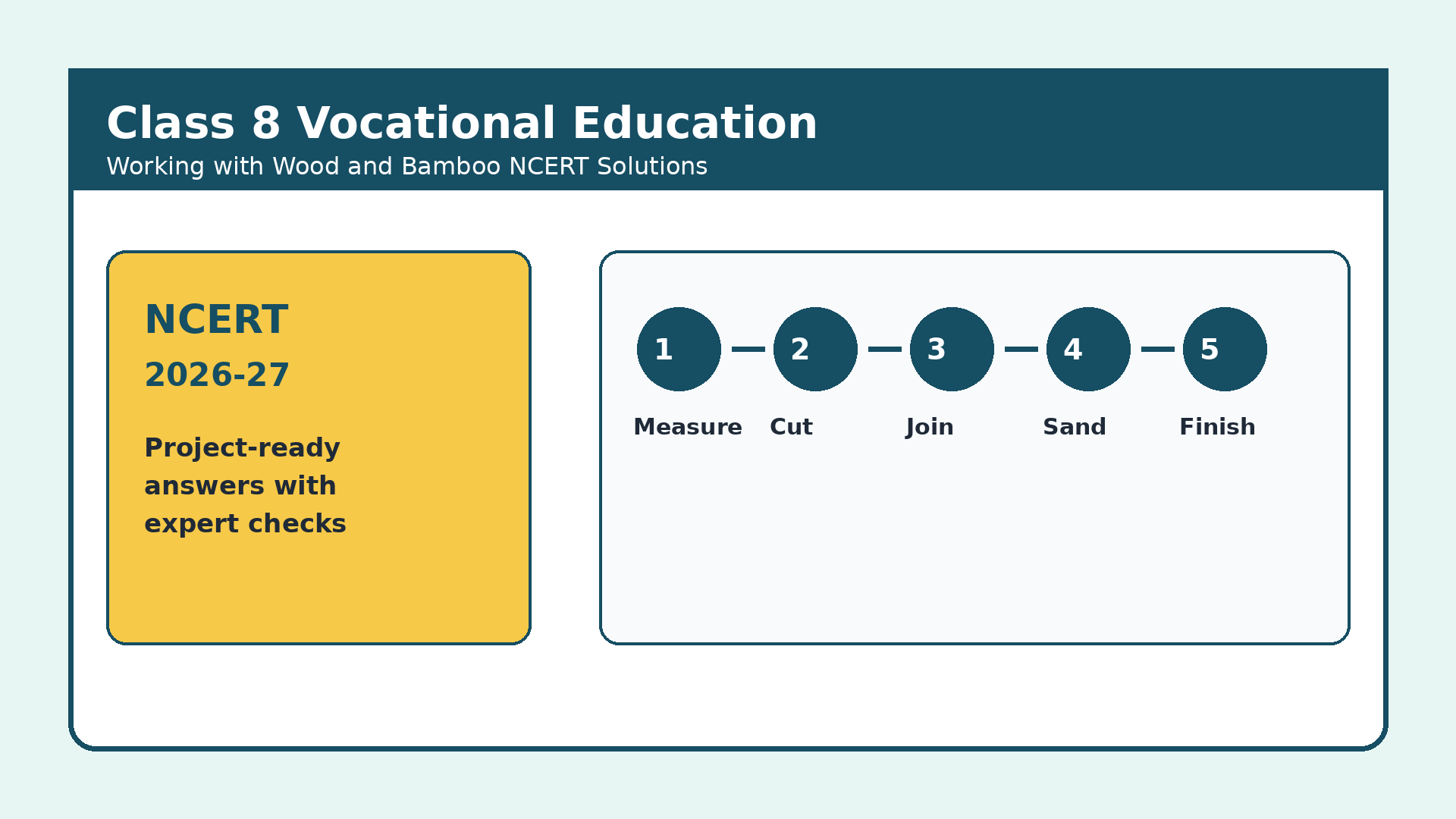
NCERT Solutions for Class 8 Vocational Education Chapter 3 Working with Wood and Bamboo help students complete the 2026-27 Kaushal Bodh project with clear activity answers. The PDF covers workshop visits, wood types, joints, prototypes, product making, bamboo work, costing and repair records.
- Question type: project records, observations, sketches, tables and reflection answers.
- Best use: prepare the wood and bamboo project file after classroom practice.
- PDF focus: safe tool use, material choice, product flow, costing and maintenance.
Chapter3WorkingwithWoodandBambooSolutions.pdf?page=1&dpi=150)
Chapter3WorkingwithWoodandBambooSolutions.pdf?page=2&dpi=150)
Chapter3WorkingwithWoodandBambooSolutions.pdf?page=3&dpi=150)
Chapter3WorkingwithWoodandBambooSolutions.pdf?page=4&dpi=150)
Chapter3WorkingwithWoodandBambooSolutions.pdf?page=5&dpi=150)
Chapter3WorkingwithWoodandBambooSolutions.pdf?page=6&dpi=150)
Chapter3WorkingwithWoodandBambooSolutions.pdf?page=7&dpi=150)
Chapter3WorkingwithWoodandBambooSolutions.pdf?page=8&dpi=150)
Chapter3WorkingwithWoodandBambooSolutions.pdf?page=9&dpi=150)
Chapter3WorkingwithWoodandBambooSolutions.pdf?page=10&dpi=150)
Chapter3WorkingwithWoodandBambooSolutions.pdf?page=11&dpi=150)
Chapter3WorkingwithWoodandBambooSolutions.pdf?page=12&dpi=150)
Chapter3WorkingwithWoodandBambooSolutions.pdf?page=13&dpi=150)
Chapter3WorkingwithWoodandBambooSolutions.pdf?page=14&dpi=150)
Chapter3WorkingwithWoodandBambooSolutions.pdf?page=15&dpi=150)
Chapter3WorkingwithWoodandBambooSolutions.pdf?page=16&dpi=150)
Chapter3WorkingwithWoodandBambooSolutions.pdf?page=17&dpi=150)
Chapter3WorkingwithWoodandBambooSolutions.pdf?page=18&dpi=150)
Chapter3WorkingwithWoodandBambooSolutions.pdf?page=19&dpi=150)
Chapter3WorkingwithWoodandBambooSolutions.pdf?page=20&dpi=150)
Chapter3WorkingwithWoodandBambooSolutions.pdf?page=21&dpi=150)
Chapter3WorkingwithWoodandBambooSolutions_flat_MobileCard.pdf?page=1&dpi=150)
Chapter3WorkingwithWoodandBambooSolutions_flat_MobileCard.pdf?page=2&dpi=150)
Chapter3WorkingwithWoodandBambooSolutions_flat_MobileCard.pdf?page=3&dpi=150)
Chapter3WorkingwithWoodandBambooSolutions_flat_MobileCard.pdf?page=4&dpi=150)
Chapter3WorkingwithWoodandBambooSolutions_flat_MobileCard.pdf?page=5&dpi=150)
Chapter3WorkingwithWoodandBambooSolutions_flat_MobileCard.pdf?page=6&dpi=150)
Chapter3WorkingwithWoodandBambooSolutions_flat_MobileCard.pdf?page=7&dpi=150)
Chapter3WorkingwithWoodandBambooSolutions_flat_MobileCard.pdf?page=8&dpi=150)
Chapter3WorkingwithWoodandBambooSolutions_flat_MobileCard.pdf?page=9&dpi=150)
Chapter3WorkingwithWoodandBambooSolutions_flat_MobileCard.pdf?page=10&dpi=150)
Chapter3WorkingwithWoodandBambooSolutions_flat_MobileCard.pdf?page=11&dpi=150)
Chapter3WorkingwithWoodandBambooSolutions_flat_MobileCard.pdf?page=12&dpi=150)
Chapter3WorkingwithWoodandBambooSolutions_flat_MobileCard.pdf?page=13&dpi=150)
Chapter3WorkingwithWoodandBambooSolutions_flat_MobileCard.pdf?page=14&dpi=150)
Chapter3WorkingwithWoodandBambooSolutions_flat_MobileCard.pdf?page=15&dpi=150)
Chapter3WorkingwithWoodandBambooSolutions_flat_MobileCard.pdf?page=16&dpi=150)
Chapter3WorkingwithWoodandBambooSolutions_flat_MobileCard.pdf?page=17&dpi=150)
Chapter3WorkingwithWoodandBambooSolutions_flat_MobileCard.pdf?page=18&dpi=150)
Chapter3WorkingwithWoodandBambooSolutions_flat_MobileCard.pdf?page=19&dpi=150)
Chapter3WorkingwithWoodandBambooSolutions_flat_MobileCard.pdf?page=20&dpi=150)
Chapter3WorkingwithWoodandBambooSolutions_flat_MobileCard.pdf?page=21&dpi=150)
Chapter3WorkingwithWoodandBambooSolutions_flat_MobileCard.pdf?page=22&dpi=150)
Chapter3WorkingwithWoodandBambooSolutions_flat_MobileCard.pdf?page=23&dpi=150)
Chapter3WorkingwithWoodandBambooSolutions_flat_MobileCard.pdf?page=24&dpi=150)
Chapter3WorkingwithWoodandBambooSolutions_flat_MobileCard.pdf?page=25&dpi=150)
Chapter3WorkingwithWoodandBambooSolutions_flat_MobileCard.pdf?page=26&dpi=150)
Chapter3WorkingwithWoodandBambooSolutions_flat_MobileCard.pdf?page=27&dpi=150)
Chapter3WorkingwithWoodandBambooSolutions_flat_MobileCard.pdf?page=28&dpi=150)
Chapter3WorkingwithWoodandBambooSolutions_flat_MobileCard.pdf?page=29&dpi=150)
Chapter3WorkingwithWoodandBambooSolutions_flat_MobileCard.pdf?page=30&dpi=150)
Chapter3WorkingwithWoodandBambooSolutions_flat_MobileCard.pdf?page=31&dpi=150)
Chapter3WorkingwithWoodandBambooSolutions_flat_MobileCard.pdf?page=32&dpi=150)
Chapter3WorkingwithWoodandBambooSolutions_flat_MobileCard.pdf?page=33&dpi=150)
Chapter3WorkingwithWoodandBambooSolutions_flat_MobileCard.pdf?page=34&dpi=150)
Chapter3WorkingwithWoodandBambooSolutions_flat_MobileCard.pdf?page=35&dpi=150)
Chapter3WorkingwithWoodandBambooSolutions_flat_MobileCard.pdf?page=36&dpi=150)
In This Article
Student Feedback: In a Collegedunia classroom-use poll of 8,960 middle-school students, 72% said the hardest part of vocational project files was writing observation and reflection answers after the activity.
Working with Wood and Bamboo Solutions Overview
Working with Wood and Bamboo is a hands-on project chapter. Students observe a carpenter, study wood and bamboo materials, identify joints, make a prototype, build a simple object, estimate cost and record repair work. These Class 8 Vocational Education NCERT Solutions turn each activity prompt into a clear answer format.
| Chapter Part | What Students Write | Skill Practised |
|---|---|---|
| Workshop visit | Carpenter record, tools, techniques and safety notes. | Observation |
| Prototype and product | Sketch, dimensions, process, difficulty and finish. | Design and making |
| Costing and repair | Material cost, labour time and maintenance record. | Planning and evaluation |
Wood and Bamboo Product Process
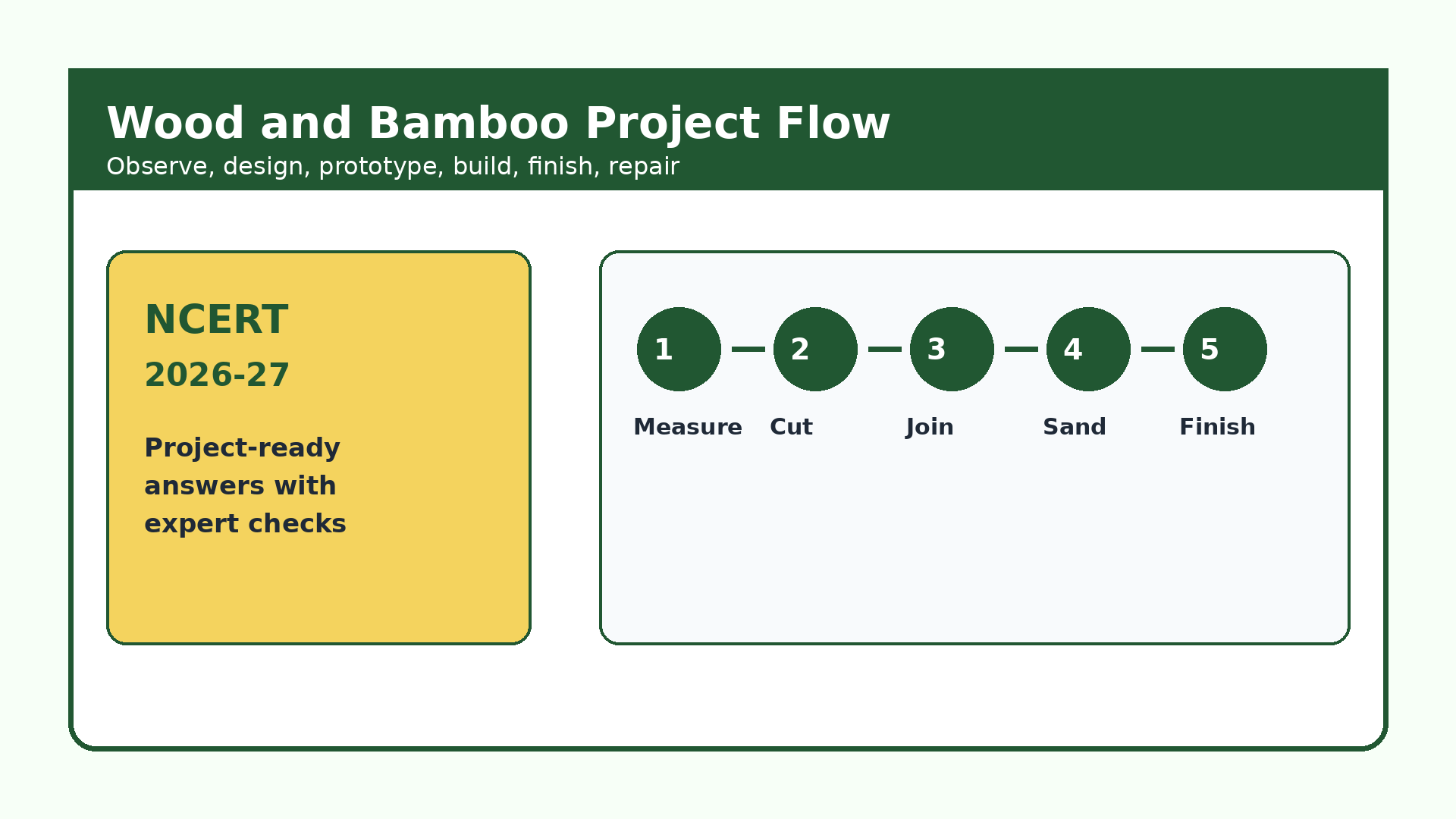
The safest sequence is sketch, measure, mark, cut, smooth, assemble, sand and finish. Students should choose beginner-friendly material such as softwood, plywood, recycled wood or smooth bamboo, then work under adult supervision.
- Wood product: coaster, key holder, phone stand, nameplate, toy or shelf.
- Bamboo product: pen stand, flute, planter, basket, wind chime or small holder.
- Safety: secure the material, use eye protection and keep tools in their place.
Costing and Repair Records in Chapter 3
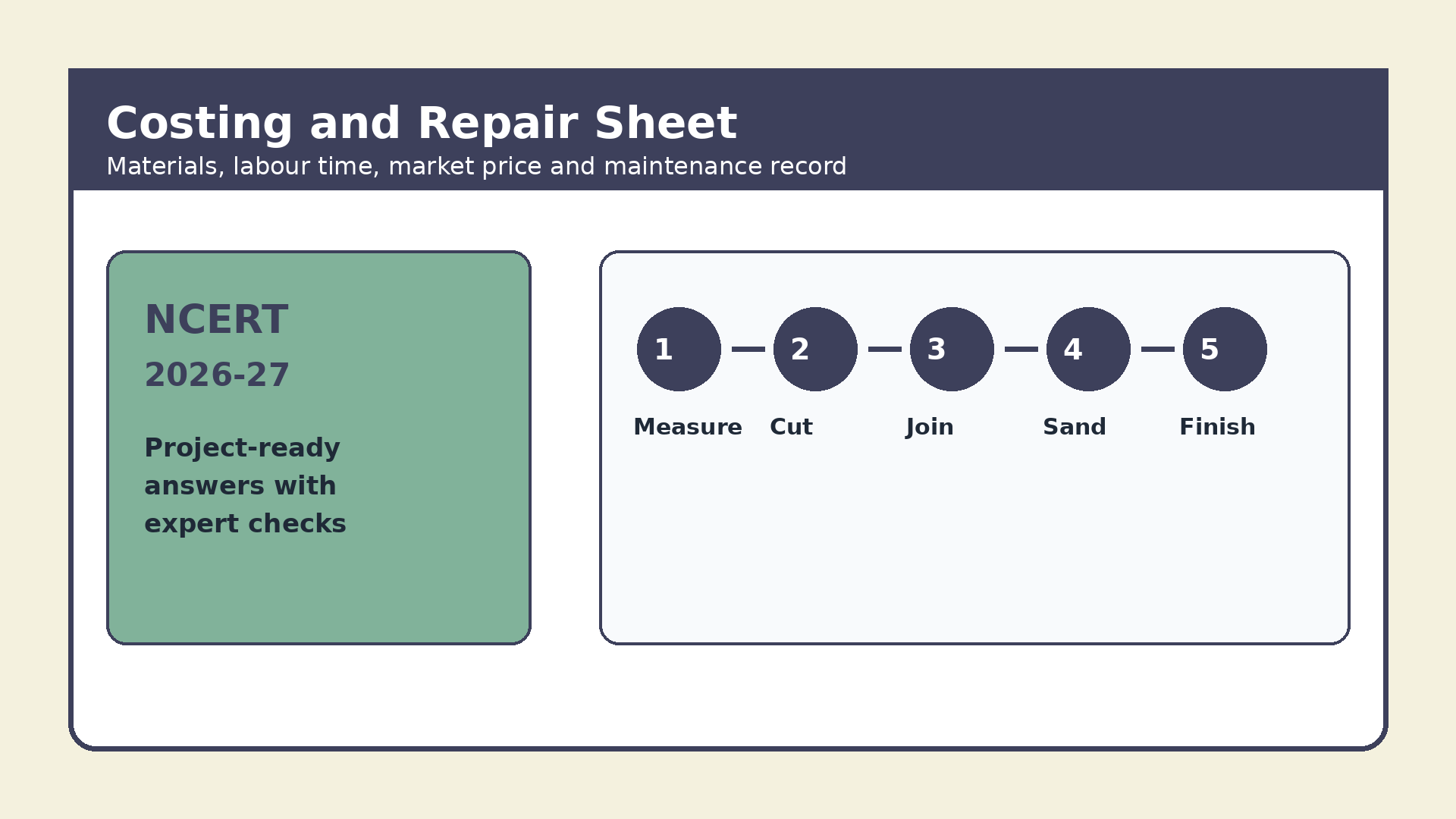
Costing teaches students to add material expenses and value the time spent. Repair records teach routine maintenance such as tightening screws, sanding rough edges, repainting or fixing loose parts.
| Record | Must Include | Why It Matters |
|---|---|---|
| Cost table | Material, quantity, cost per item and total cost. | Shows the real making cost. |
| Labour time | Hours or periods spent on each activity. | Shows planning effort. |
| Repair table | Problem, fix, strength check and improvement. | Shows maintenance skill. |
Class 8 Wood and Bamboo Project Video
Source: YouTube educational woodworking tutorial
All NCERT Solutions for Class 8 Vocational Education Chapter 3 Working with Wood and Bamboo
Use the PDF for full-page project answers and the question cards for quick checking.
Related NCERT Resources for Working with Wood and Bamboo
| Resource | Class 8 Vocational Education Link |
|---|---|
| NCERT Notes | Working with Wood and Bamboo Notes |
| NCERT Book PDF | Working with Wood and Bamboo Book PDF |
| Handwritten Notes | Working with Wood and Bamboo Handwritten Notes |
Class 8 Vocational Education NCERT Solutions for All Chapters
| Chapter | NCERT Solutions Link |
|---|---|
| Chapter 1 | Hydroponics Growing Plants without Soil NCERT Solutions |
| Chapter 2 | Feeding and Caring for Farm Animals NCERT Solutions |
| Chapter 3 | Working with Wood and Bamboo NCERT Solutions |
| Chapter 4 | Home Automation NCERT Solutions |
| Chapter 5 | Water Audit for Water Management NCERT Solutions |
| Chapter 6 | Creating Advertisements NCERT Solutions |
Working with Wood and Bamboo Class 8 NCERT Solutions FAQs
Ques. What is covered in NCERT Solutions for Class 8 Vocational Education Chapter 3 Working with Wood and Bamboo?
Ans. The solutions cover workshop records, wood and bamboo materials, joints, prototype review, product making, costing, repair work and project reflections.
Ques. Which material is best for a first woodwork project?
Ans. Softwood, plywood, recycled wood or smooth bamboo is suitable because these materials are easier to measure, cut, join, sand and finish.
Ques. Why is a prototype made before the final product?
Ans. A prototype tests the design at low cost. It helps students find measurement, joining, balance or size problems before using final material.
Ques. What should a costing table include?
Ans. It should include each material, quantity, cost per item, total cost, labour time and a comparison with the market price of a similar product.



Comments