




The Introduction to Probability Exercise 7.2 set moves from words to numbers. You collect results from real trials and turn them into a fraction. These NCERT Solutions Class 9 Maths Chapter 7 Introduction to Probability Exercise 7.2 solve all six questions in clear steps for the new Ganita Manjari book.
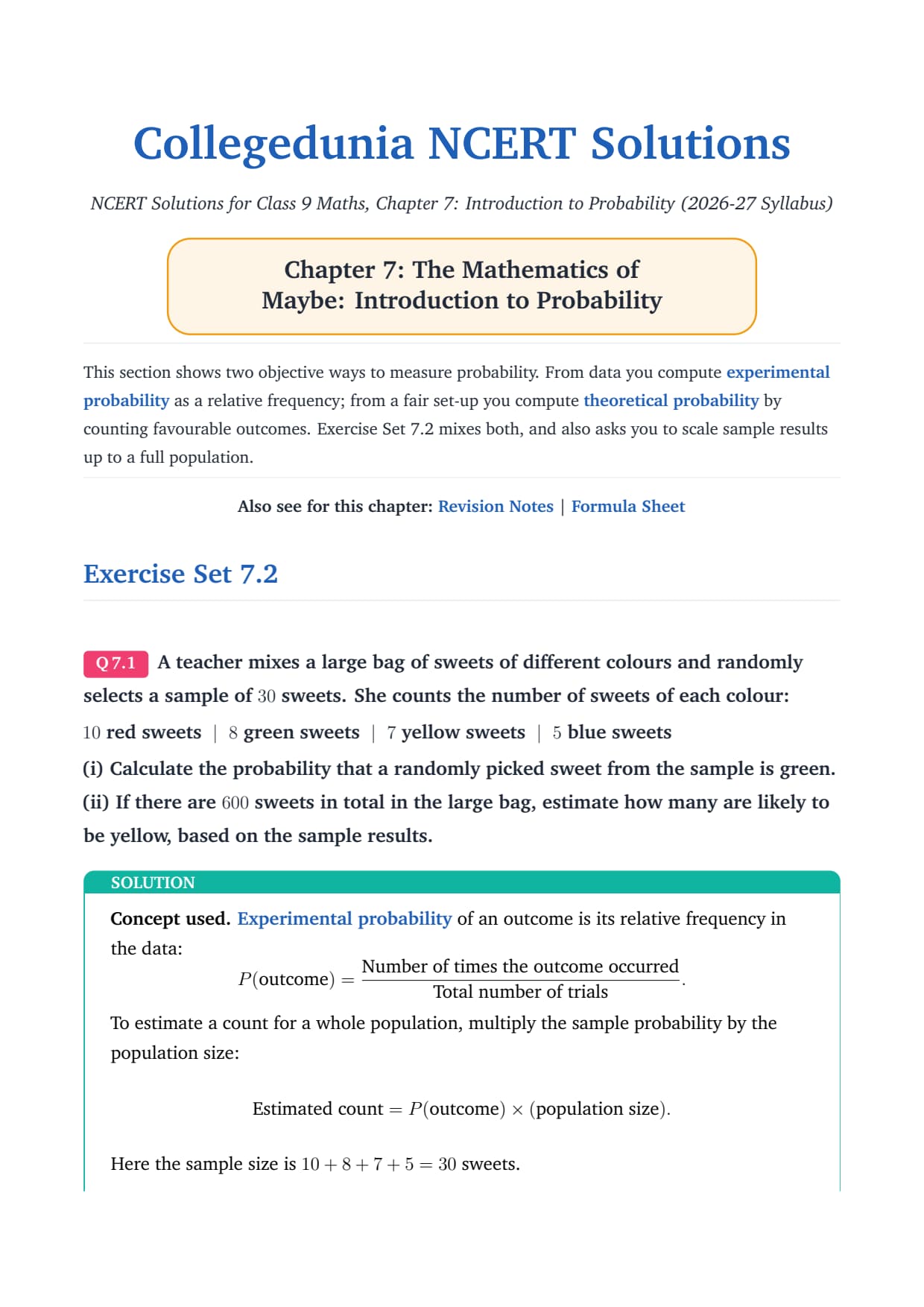
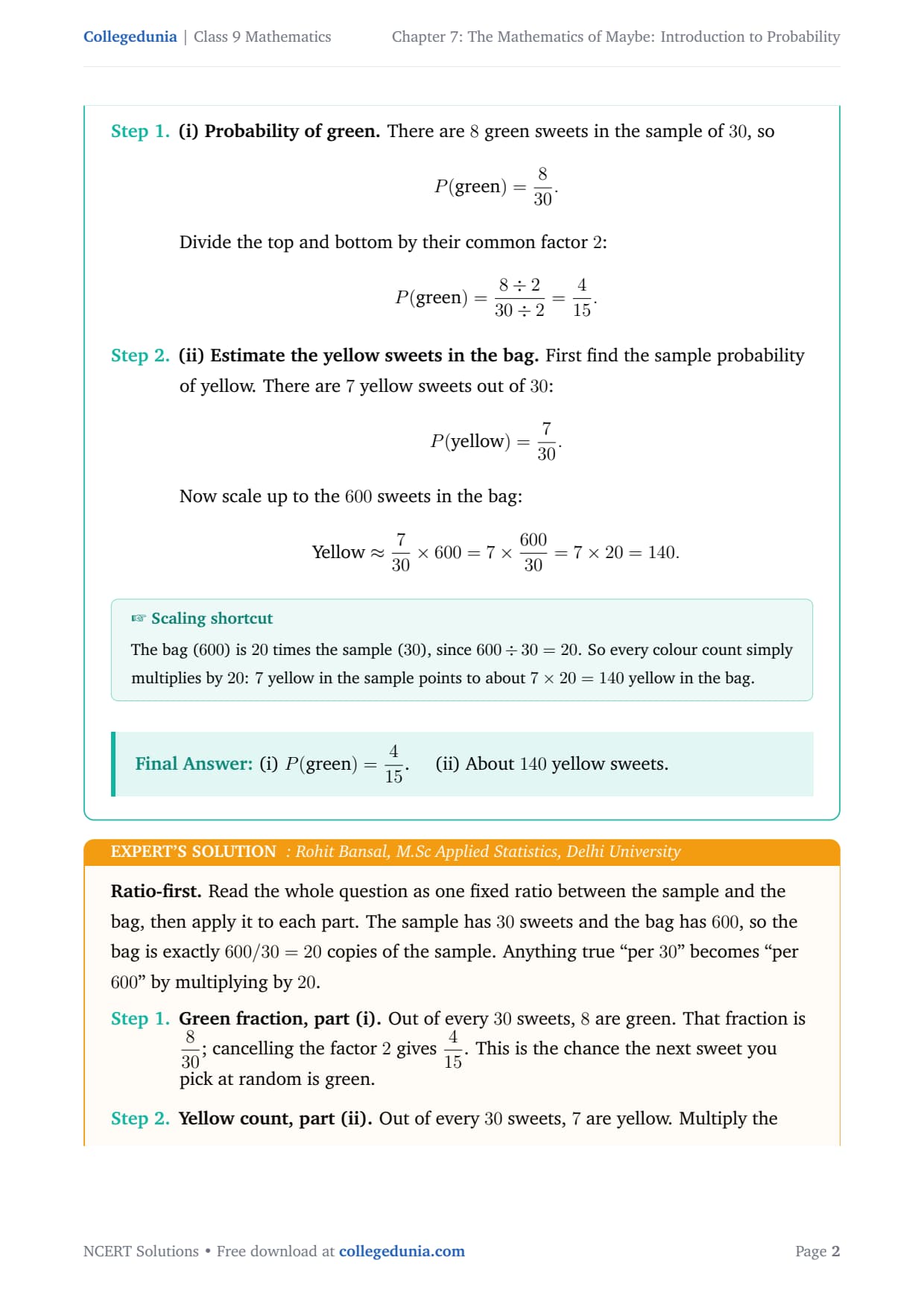
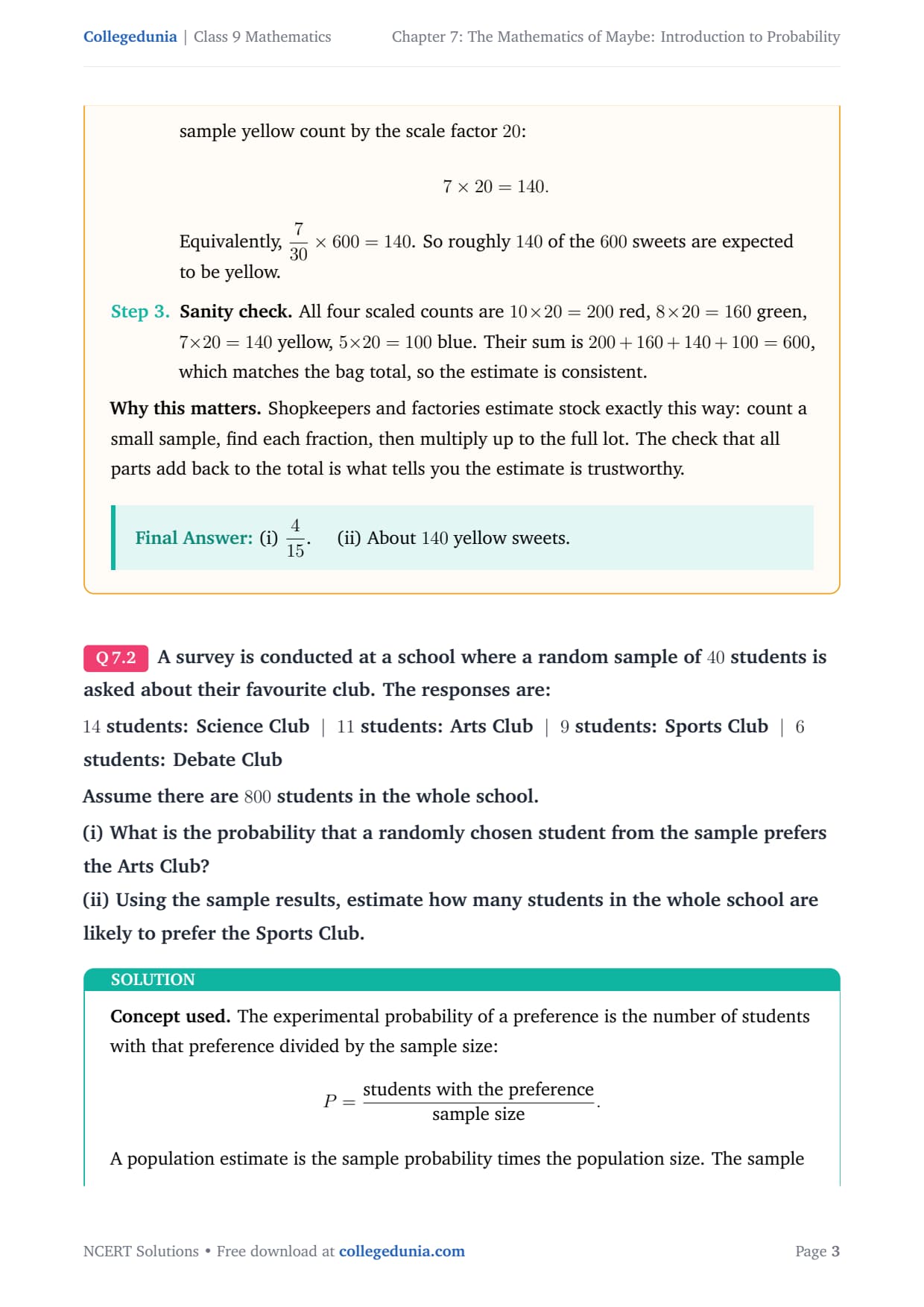
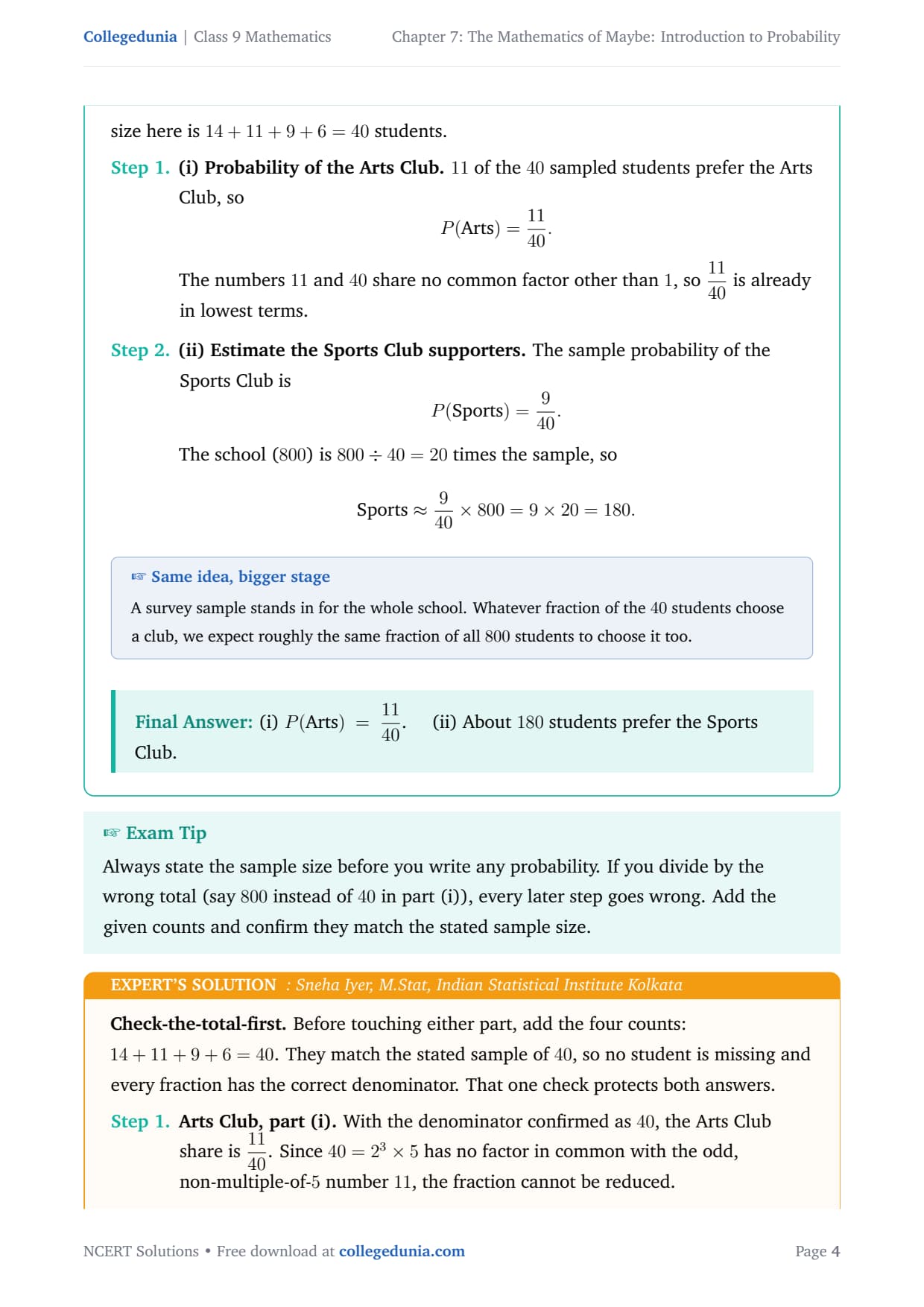
- Questions solved: all 6 questions on experimental probability.
- Main skill: turning trial counts into a probability fraction.
- Chapter link: it prepares you for sample spaces in Exercise 7.3.
These solutions are written by subject teachers, matched to the current 2026-27 NCERT book, and checked line by line so a Class 9 student can follow each calculation.
What Does Class 9 Maths Chapter 7 Introduction to Probability Exercise 7.2 Cover?
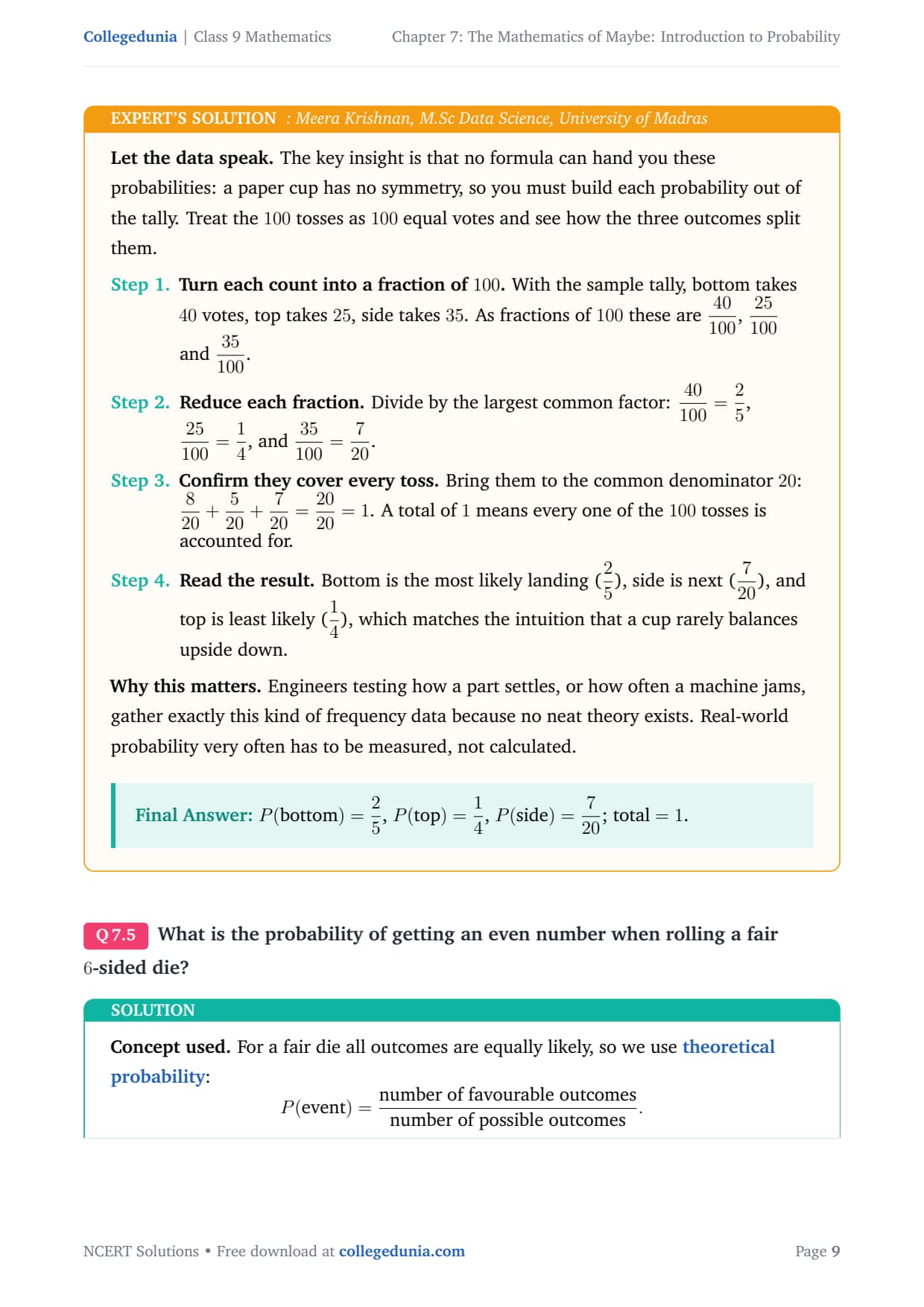
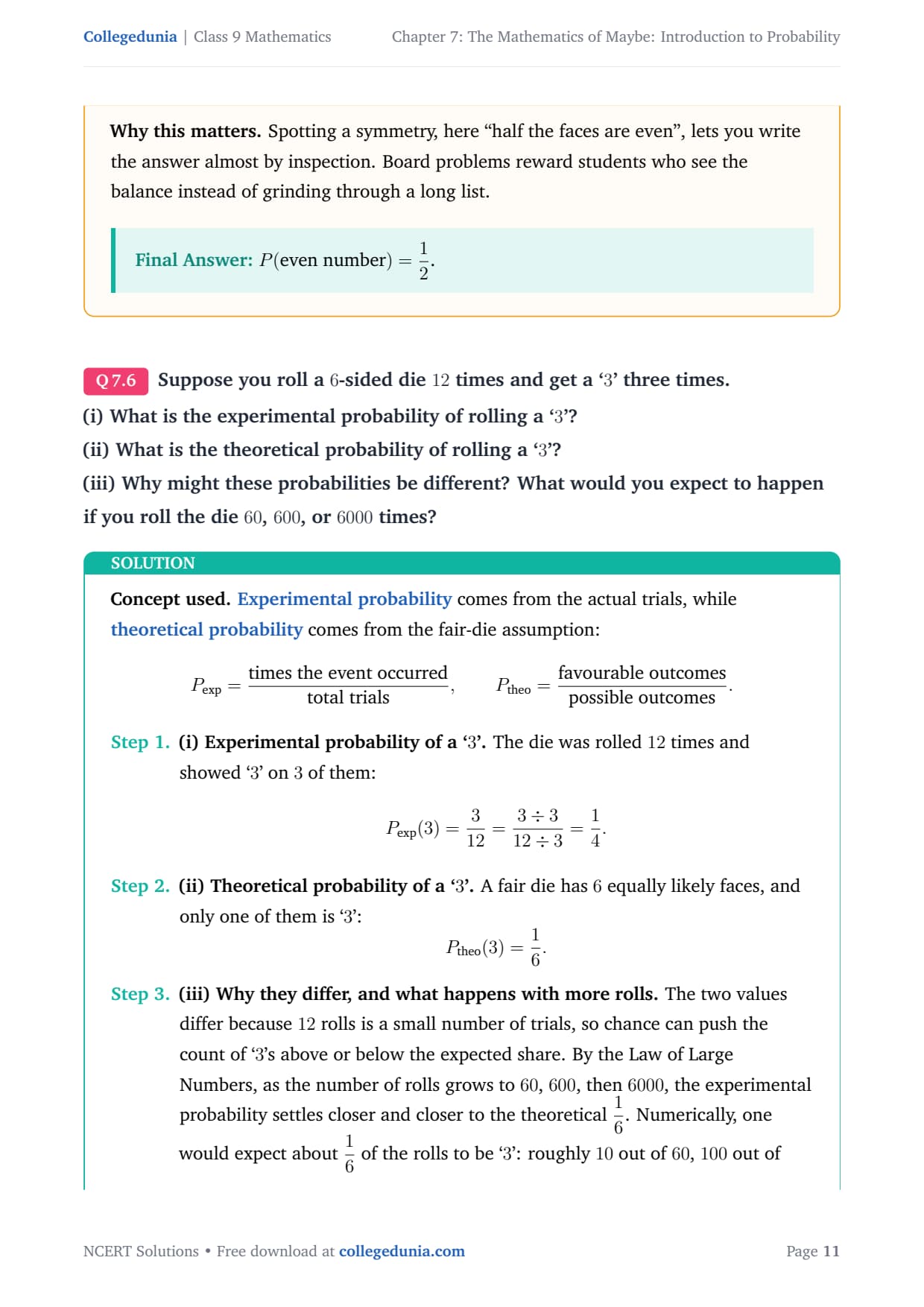
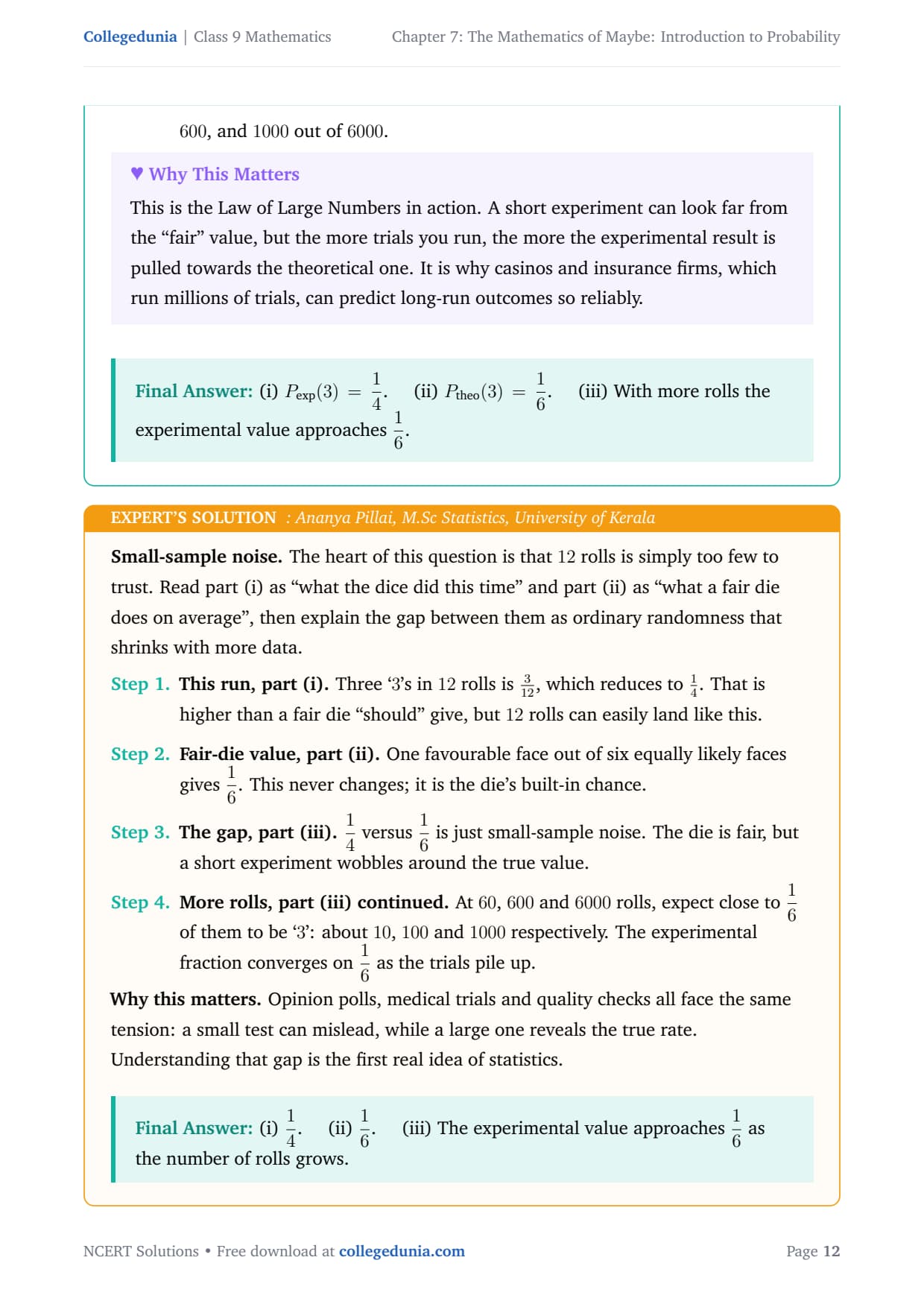
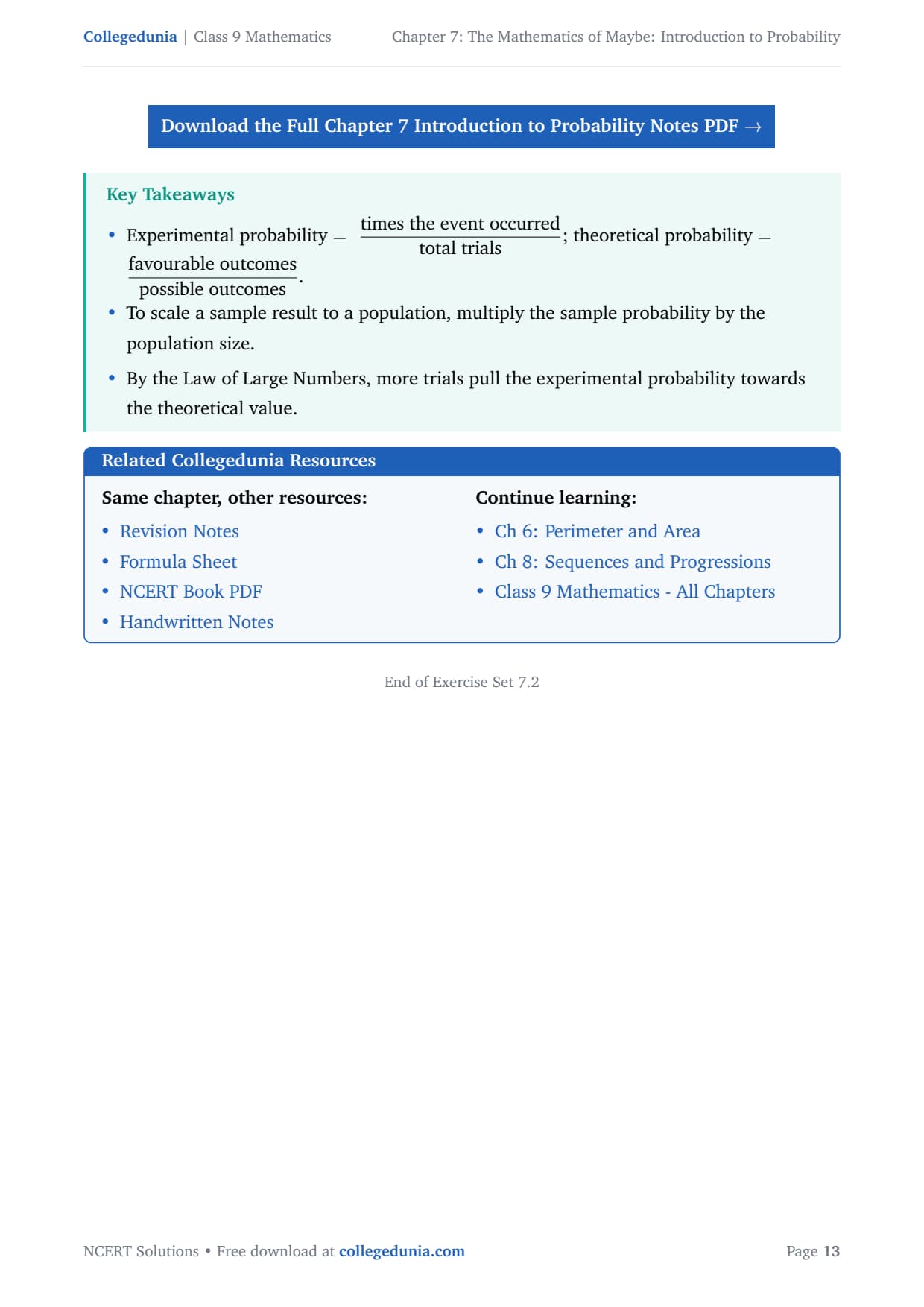
This exercise is about experimental probability, which comes from real data. You run a trial many times, count how often an outcome shows up, and divide by the total number of trials. The formula is P(outcome)=times it happenedtotal trials. The questions use coin tosses, dice rolls, surveys, and a paper cup drop. Some parts also ask you to scale a sample result up to a larger group, such as estimating counts in a full bag of sweets. To do this you multiply the sample probability by the group size. The exercise shows that with enough trials, experimental values move close to the true chance. It also lets you compare a real result, like three sixes in twelve rolls, with the value you would expect.
Video Walkthrough
Source: Magnet Brains on YouTube
Introduction to Probability Exercise 7.2 Question Breakdown
Exercise 7.2 has six questions. The bullets below show what each one asks, so you can plan your practice.
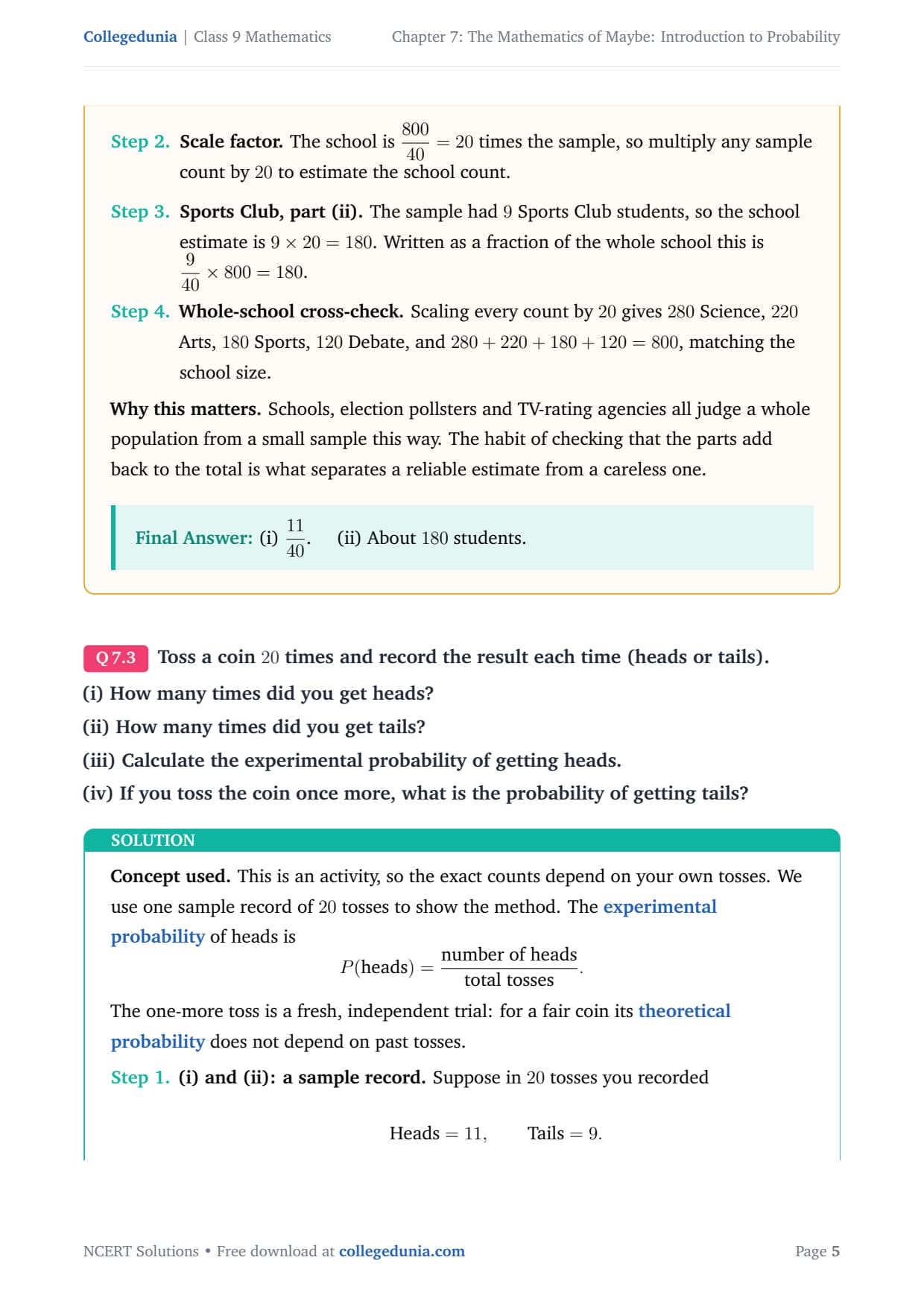
- Q1: sweets sample, find the probability of green and estimate yellow in the bag.
- Q2: a survey of 40 students, read frequencies as probabilities.
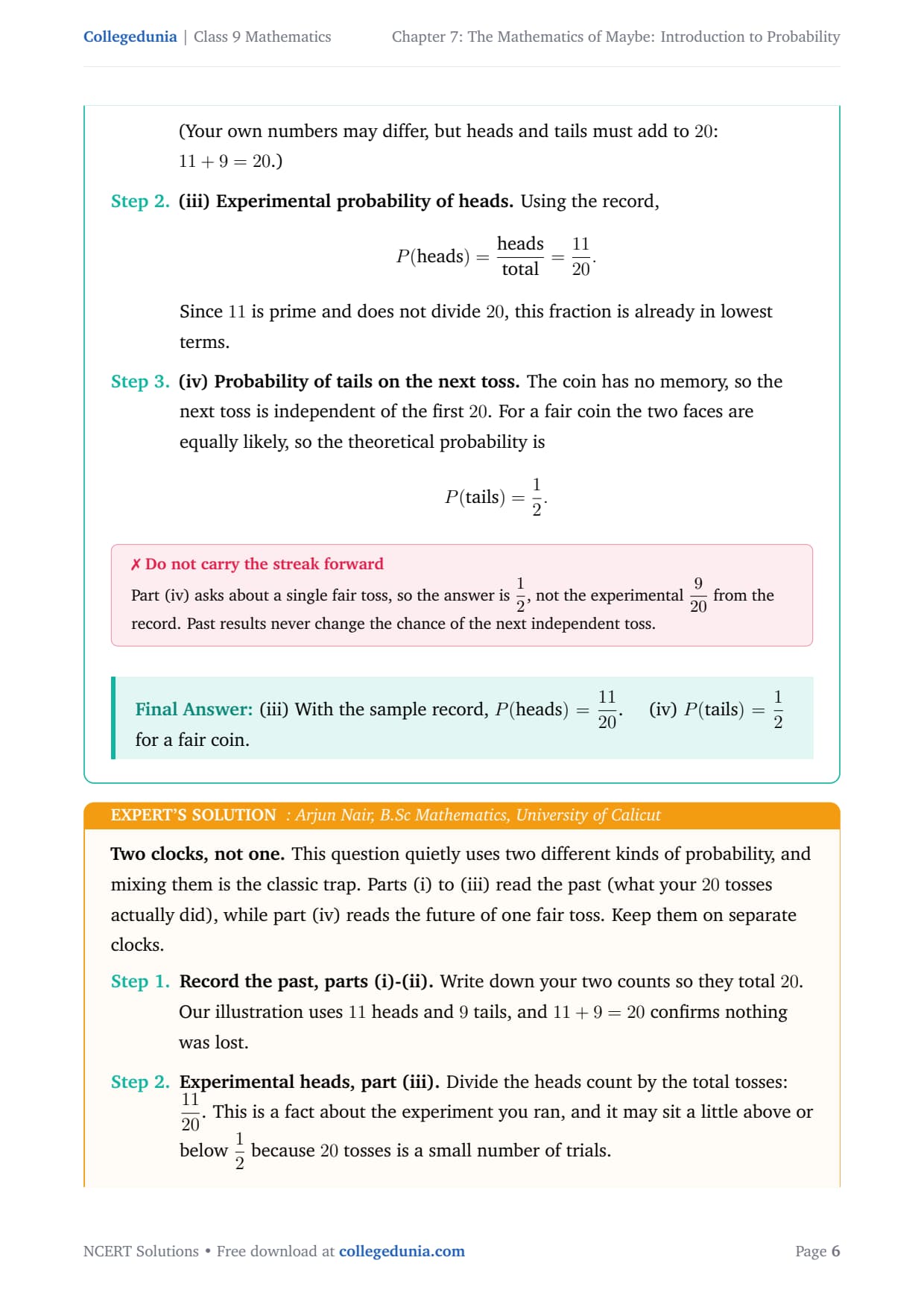
- Q3: toss a coin 20 times and record heads or tails.
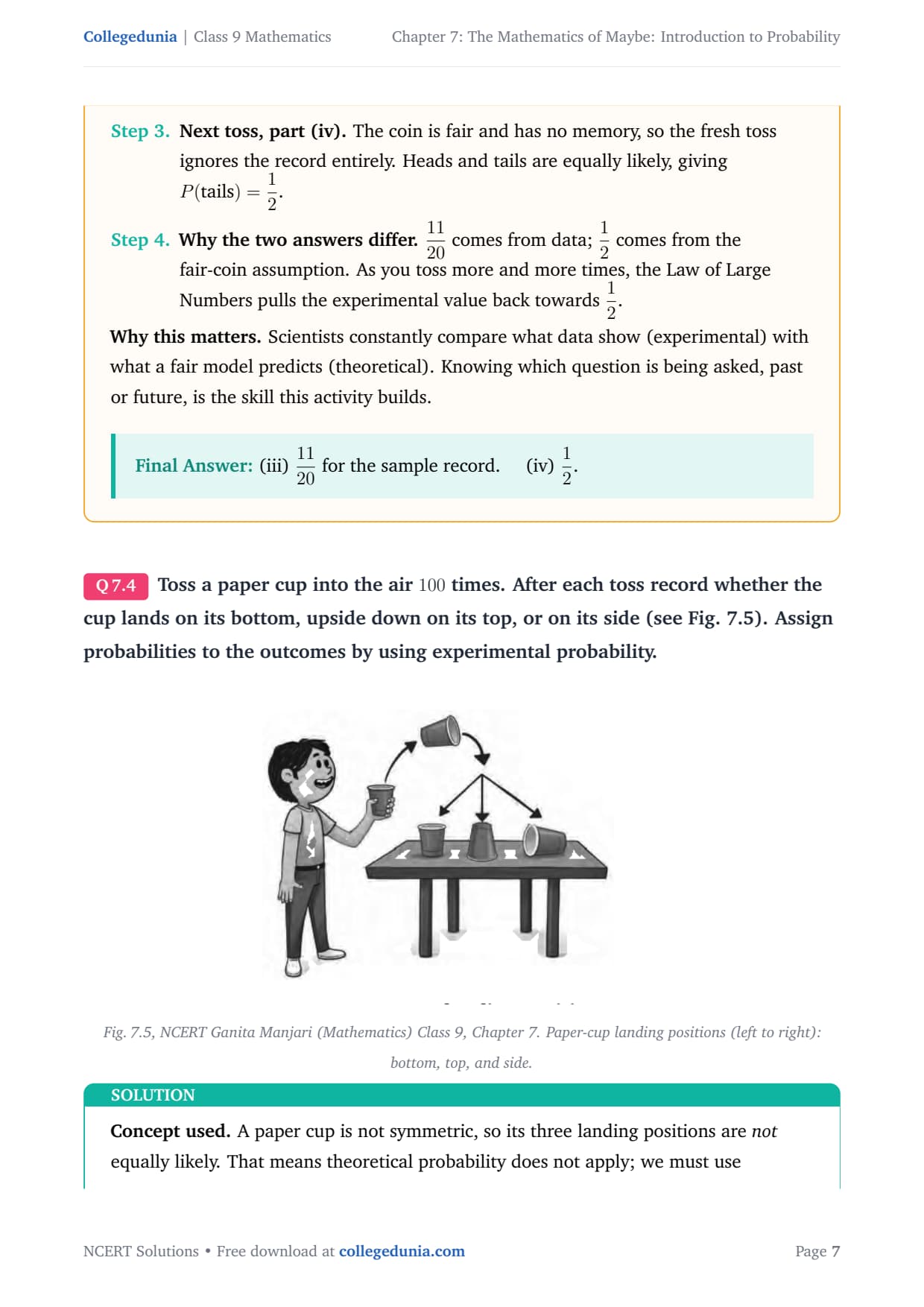
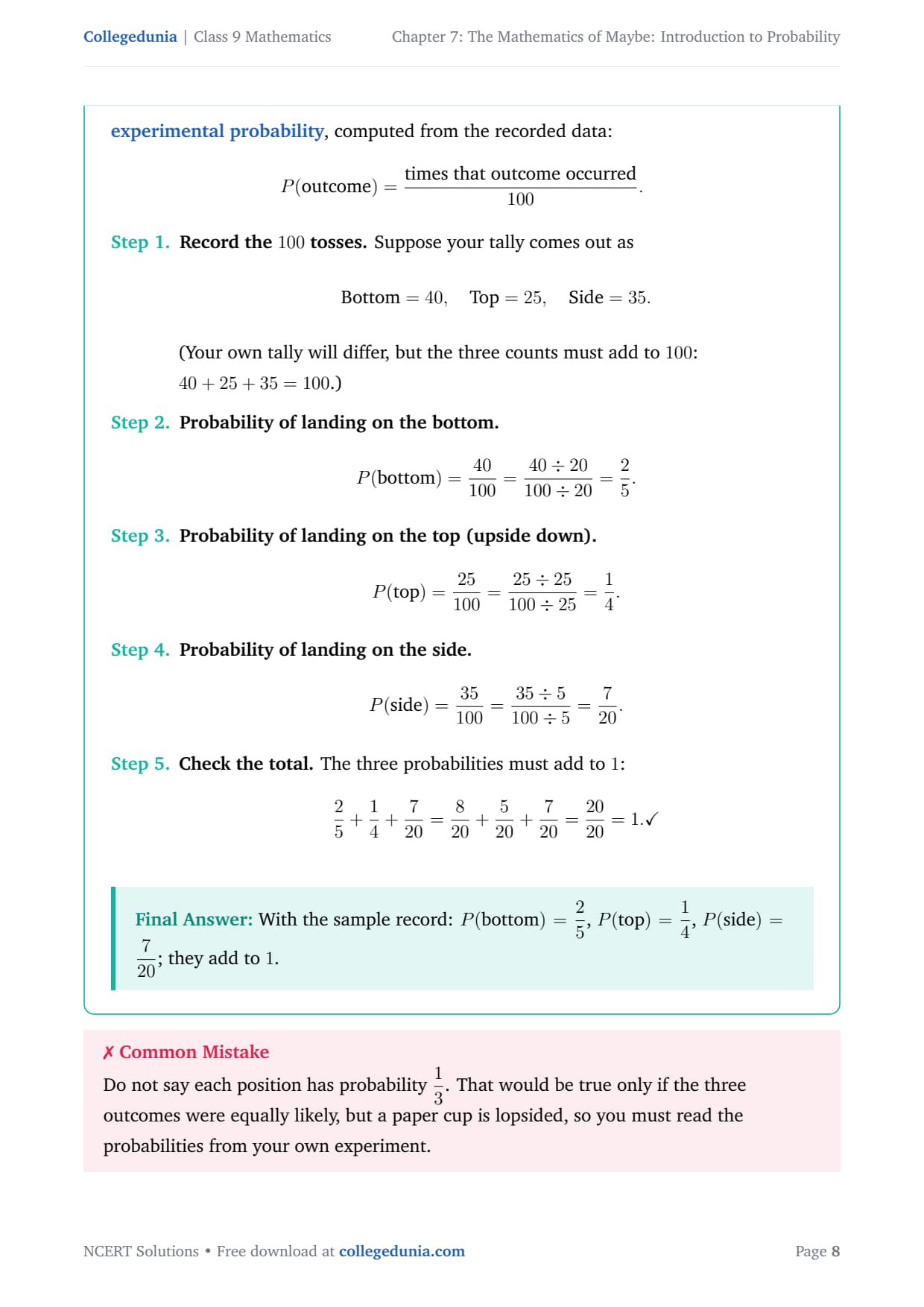
- Q4: toss a paper cup 100 times and record how it lands.
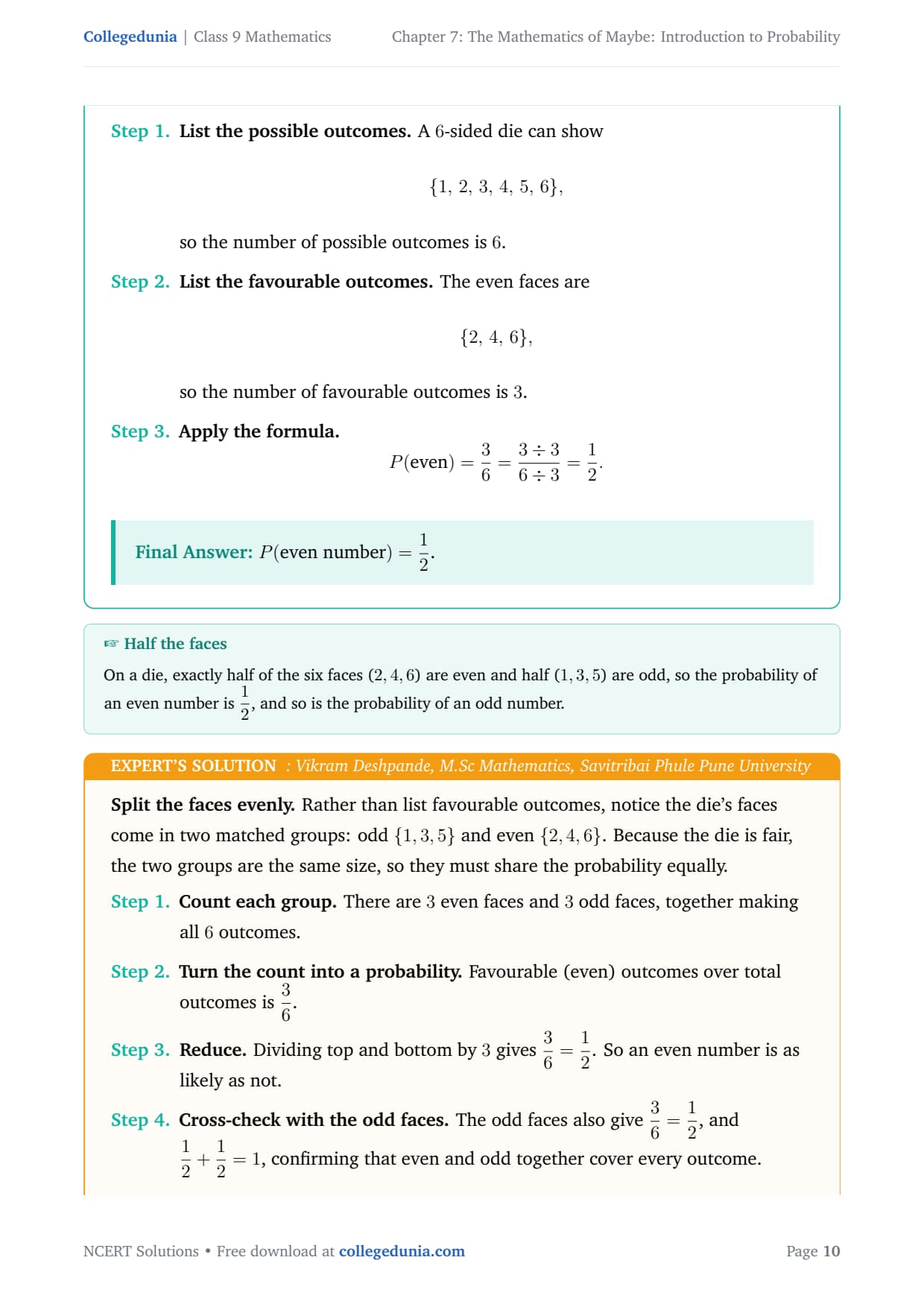
- Q5: find the probability of an even number on a fair die.
- Q6: roll a die 12 times and compare with the expected chance.
Sample Solved Question from Exercise 7.2
Here is Question 5, solved step by step, so you can see the method.
Question: What is the probability of getting an even number when rolling a fair 6-sided die?
Step 1. List the possible outcomes. A die can show 1,2,3,4,5,6, so there are 6 possible outcomes.
Step 2. List the favourable outcomes. The even faces are 2,4,6, so there are 3 favourable outcomes.
Step 3. Apply the formula P(even)=36.
Final answer. Reduce the fraction: P(even)=36=12.
How to Use These Introduction to Probability Exercise 7.2 Solutions
Do the trial questions with a real coin or die if you can. Recording your own results makes the idea of relative frequency stick. Then use these Collegedunia solutions to check both your counts and your final fractions.
- Always write the total number of trials before you form the fraction.
- Reduce every answer to its lowest terms, as we do in each step.
- Keep the probability between 0 and 1 as a quick self-check.
More Class 9 Maths Introduction to Probability Solutions
Use the table below to open the full chapter or any other exercise of this chapter.
| Page | Link |
|---|---|
| Full Chapter Solutions | Introduction to Probability NCERT Solutions |
| Exercise 7.1 | Introduction to Probability Exercise 7.1 |
| Exercise 7.2 | Introduction to Probability Exercise 7.2 |
| Exercise 7.3 | Introduction to Probability Exercise 7.3 |
| Exercise 7.4 | Introduction to Probability Exercise 7.4 |
| End of Chapter | Introduction to Probability End of Chapter |
Introduction to Probability Exercise 7.2 NCERT Solutions FAQs
Ques. How many questions are in Class 9 Maths Exercise 7.2?
Ans. Exercise 7.2 has six questions. They use coin tosses, dice, surveys, and a paper cup drop to teach experimental probability.
Ques. What is experimental probability in Exercise 7.2?
Ans. It is the number of times an outcome happens divided by the total number of trials. The value comes from real data, not just theory.
Ques. How do I estimate a count for a large group?
Ans. Multiply the sample probability by the group size. For example, 730 of 600 sweets gives 140 yellow sweets.
Ques. Where can I download the Exercise 7.2 solutions PDF?
Ans. You can download the Introduction to Probability Exercise 7.2 solutions PDF free from this Collegedunia page in both Normal and HD versions.



Comments