




AIAPGET 2026 Ayurveda Question Paper is available here. The National Testing Agency (NTA) is conducted the All India AYUSH Post Graduate Entrance Test (AIAPGET) on 22 August, 2026 from 10 AM to 12 PM. AIAPGET 2026 Ayurveda Question consists of 120 questions for 480 marks to be attempted in 2 hours.
- AIAPGET Ayurveda Question consists of MCQs from topics related to Kayachikitsa, Shalya Tantra, Dravyaguna, Rachana Sharir, and other core areas of Ayurveda.
- Each correct answer carries 4 marks and there is negative marking of 1 for incorrect answer.
Candidates can download AIAPGET 2026 Ayurveda Question Paper with Answer Key and Solutions from the links provided below.
AIAPGET 2026 Ayurveda Question Paper with Solution
| AIAPGET Ayurveda Question Paper 2026 | Download PDF | Check Solutions |
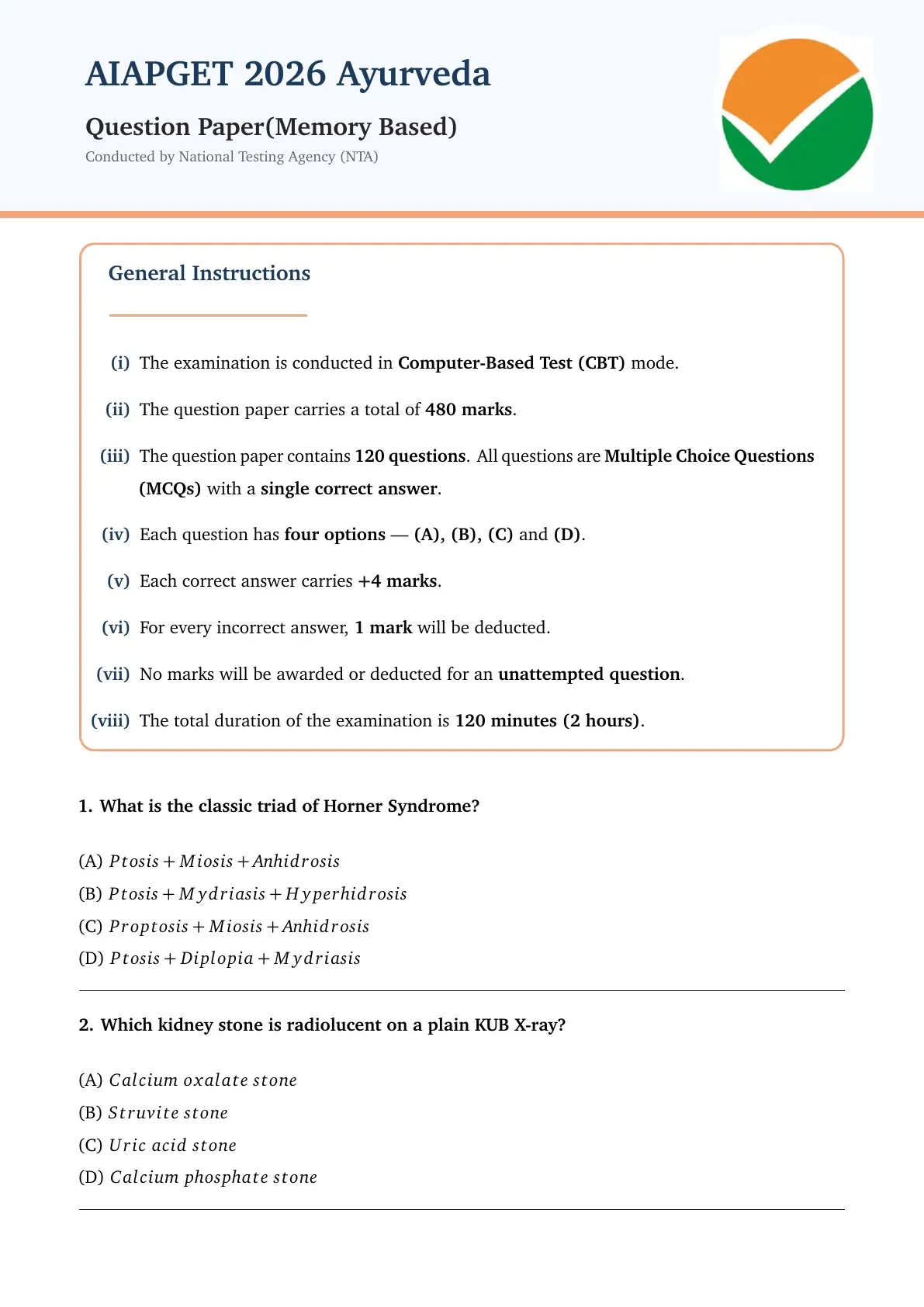


What is the classic triad of Horner Syndrome?
Detailed Solution
Concept:
- Horner syndrome, also known as oculosympathetic paresis, is a clinical condition resulting from a lesion or interruption of the sympathetic nerve supply to the eye and face.
- The sympathetic pathway is a three-neuron chain: first-order (central), second-order (preganglionic), and third-order (postganglionic) neurons.
Step 1: Understanding the sympathetic innervation loss
The sympathetic nervous system is responsible for maintaining pupil dilation, elevating the eyelid (via Müller’s muscle), and regulating sweat production on the face.
When this pathway is interrupted, the characteristic triad of symptoms appears.
Step 2: Identifying Ptosis
Ptosis refers to the drooping of the upper eyelid.
In Horner syndrome, this is caused by paralysis of the superior tarsal muscle (Müller’s muscle), which is smooth muscle innervated by the sympathetic system.
The ptosis is typically mild (1–2 mm).
Step 3: Identifying Miosis
Miosis is the constriction of the pupil.
It occurs because the dilator pupillae muscle (which normally dilates the pupil via sympathetic stimulation) is paralyzed.
This leaves the sphincter pupillae muscle (innervated by the parasympathetic system) unopposed, leading to a smaller pupil on the affected side.
Step 4: Identifying Anhidrosis
Anhidrosis is the absence or decrease of sweating on the affected side of the face.
The sweat glands receive sympathetic innervation.
Note that the presence or location of anhidrosis can often help localize whether the lesion is preganglionic or postganglionic.
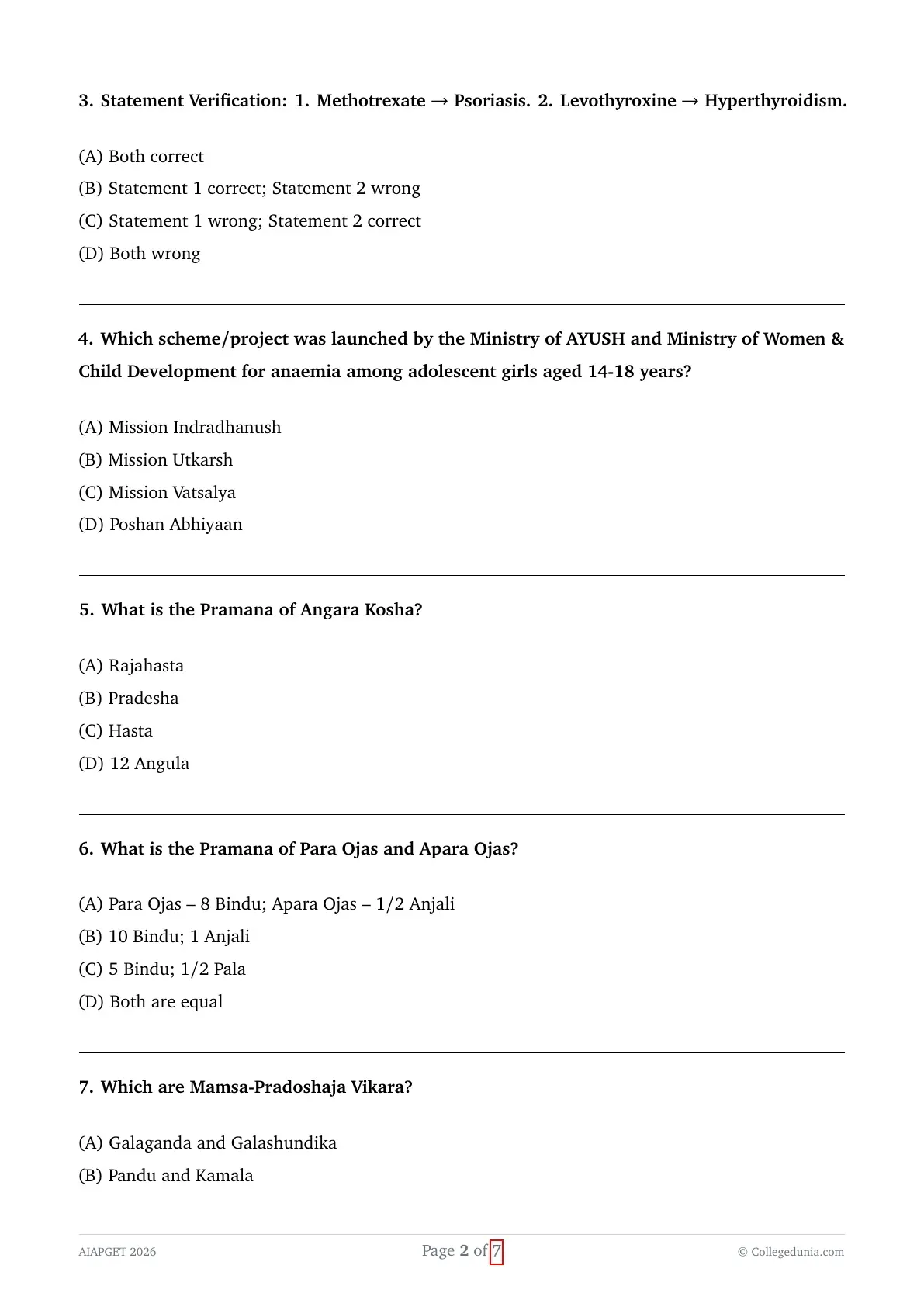
Which kidney stone is radiolucent on a plain KUB X-ray?
Detailed Solution
Concept:
- Radiopacity of a kidney stone depends on its mineral composition and density relative to surrounding tissues.
- Stones containing heavy atoms like Calcium (atomic number 20) are radiopaque, meaning they appear white on an X-ray.
- Stones made of light elements (Carbon, Hydrogen, Nitrogen, Oxygen) are radiolucent and do not show up on plain X-ray films.
Step 1: Analyzing radiopaque stones
Calcium oxalate and Calcium phosphate stones are the most common types and are highly radiopaque due to the high density of calcium.
Struvite stones (Magnesium Ammonium Phosphate) are also radiopaque, though often less dense than pure calcium stones.
Step 2: Analyzing radiolucent stones
Uric acid stones are composed of uric acid crystals, which consist of light organic elements.
Because these elements do not significantly attenuate X-ray beams, the stones are "invisible" or radiolucent on a plain Kidney-Ureter-Bladder (KUB) X-ray.
Step 3: Clinical Diagnosis
While they cannot be seen on a plain X-ray, uric acid stones can be visualized using other imaging modalities such as:
- Non-contrast CT scan (most accurate).
- Ultrasound (shows as a hyperechoic focus with posterior acoustic shadowing).
- Intravenous Pyelogram (shows as a filling defect).
Statement Verification: 1. Methotrexate \(\rightarrow\) Psoriasis. 2. Levothyroxine \(\rightarrow\) Hyperthyroidism.
Detailed Solution
Concept:
- Medical treatments often involve specific matches between pharmacological agents and the physiological conditions they are intended to treat or manage.
- Verification requires understanding the primary indication for the drugs mentioned.
Step 1: Evaluating Statement 1: Methotrexate \(\rightarrow\) Psoriasis
Methotrexate is a folate antagonist and immunosuppressant.
It is a standard systemic treatment for moderate to severe psoriasis as it slows down the rapid growth of skin cells.
Therefore, Statement 1 is correct.
Step 2: Evaluating Statement 2: Levothyroxine \(\rightarrow\) Hyperthyroidism
Levothyroxine is a synthetic form of the thyroid hormone thyroxine (T4).
It is used as a replacement therapy for patients with hypothyroidism (underactive thyroid).
In hyperthyroidism (overactive thyroid), the body already has too much thyroid hormone; giving levothyroxine would worsen the condition.
Therefore, Statement 2 is wrong.
Step 3: Concluding the verification
Since Statement 1 is correct and Statement 2 is incorrect, the correct choice is (B).
Which scheme/project was launched by the Ministry of AYUSH and Ministry of Women & Child Development for anaemia among adolescent girls aged 14-18 years?
Detailed Solution
Concept:
- Inter-ministerial collaborations in India aim to tackle public health issues through integrated traditional and modern healthcare approaches.
- Anaemia control in adolescent populations is a high-priority national health goal.
Step 1: Identifying the specific initiative
Mission Utkarsh is a collaborative initiative launched specifically by the Ministry of AYUSH and the Ministry of Women and Child Development.
The goal is to improve the nutritional status and control anaemia in adolescent girls.
Step 2: Analyzing the target demographic and method
The project focuses on adolescent girls in the age group of 14-18 years.
It utilizes Ayurveda-based interventions and nutritional supplements to combat iron deficiency.
The pilot was initially aimed at five aspirational districts.
Step 3: Differentiating from other schemes
- Mission Indradhanush is focused on universal immunization for children and pregnant women.
- Mission Vatsalya is related to child protection and welfare services.
- Poshan Abhiyaan (National Nutrition Mission) is a broader umbrella scheme for malnutrition, but the specific joint project for 14-18 year olds under AYUSH is Mission Utkarsh.
What is the Pramana of Angara Kosha?
Detailed Solution
Concept:
- In Ayurveda, specifically in the context of Rasashastra (latrochemistry), a well-defined pharmacy or laboratory (Rasashala) is essential.
- Classical texts like Rasaratna Samuccaya provide detailed measurements (Pramana) for various sections of the Rasashala to ensure functional efficiency and safety.
Step 1: Defining Angara Kosha
Angara Kosha refers to the storage area or pit designated for charcoal (Angara) within the Rasashala.
Since charcoal is a primary fuel for ancient metallurgical and pharmaceutical processes, its storage needs specific dimensions.
Step 2: Understanding units of measurement
Ayurvedic texts use traditional units like Angula (finger-breadth), Hasta (cubit), and Rajahasta (royal cubit).
A Rajahasta is generally considered to be a slightly longer cubit, often equivalent to about 28 Angulas.
Step 3: Textual correlation for the measurement
According to the principles of Rasashala construction, the Angara Kosha (charcoal pit/store) should have the dimensions of one Rajahasta.
This provides sufficient volume for fuel storage needed for intensive heating processes like Putas or smelting.
What is the Pramana of Para Ojas and Apara Ojas?
Detailed Solution
Concept:
- Ojas is considered the ultimate essence of all the seven Dhatus (tissues) and is the foundation of immunity (Vyadhikshamatva) and vitality.
- It is categorized into two types based on its location, function, and quantity: Para Ojas and Apara Ojas.
Step 1: Defining Para Ojas
Para Ojas (Superior Ojas) is high-quality essence located primarily in the heart (Hridaya).
It is vital for life; its destruction leads to immediate death.
Its quantity (Pramana) is extremely small, measured as \(8\ Bindu\) (8 drops).
Step 2: Defining Apara Ojas
Apara Ojas (Ordinary/Inferior Ojas) is the variety that circulates throughout the body via the Dhamanis (vessels).
It supports general health and immunity across all tissues.
Its quantity is significantly larger than Para Ojas, measured as \(Ardha\ Anjali\) (\(1/2\ Anjali\) or half a palmful).
Step 3: Comparing with the options
Option (A) accurately reflects these classical measurements:
- Para Ojas = \(8 Bindu\)
- Apara Ojas = \(1/2 Anjali\)
Which are Mamsa-Pradoshaja Vikara?
Detailed Solution
Concept:
- In Ayurveda, Dhatu Pradoshaja Vikara refers to diseases caused by the vitiation (Dushti) of specific body tissues (Dhatus).
- Mamsa Dhatu represents the muscle tissue. When the Doshas (primarily Kapha) affect this tissue, specific clinical conditions arise.
Step 1: Identifying Mamsa-Pradoshaja Vikara
According to Charaka Samhita (Sutra Sthana Chapter 28), the diseases resulting from Mamsa Dhatu vitiation include:
Adhimamsa (Granuloma/extra growth), Arbuda (Tumors), Galaganda (Goitre/Neck swelling), Galashundika (Tonsillitis/Uvular swelling), Alaji, Ganda, and Ganda-mala.
Step 2: Analyzing Option A
Galaganda is a swelling in the neck region, and Galashundika is an inflammatory condition of the throat/tonsillar region.
Both are classic examples listed under the diseases of muscle tissue (Mamsa).
Step 3: Differentiating other options
- Pandu and Kamala (Option B) are typically related to Rakta Pradoshaja Vikara (Blood tissue disorders).
- Prameha and Kushtha (Option C) are Bahudosha conditions involving multiple Dushyas, but often categorized under Medo-pradoshaja (Fat) or complex tissue vitiation.
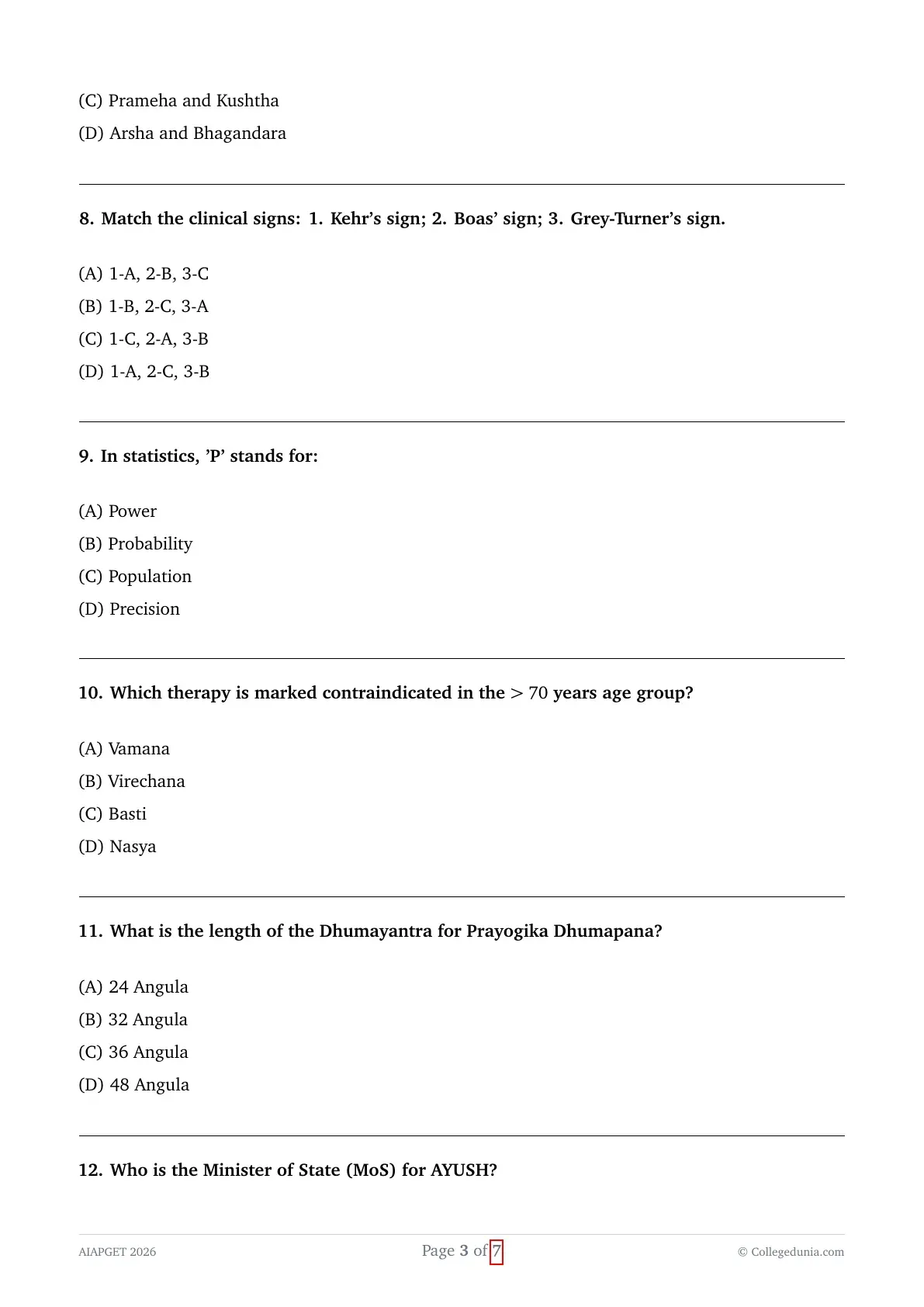
Match the clinical signs: 1. Kehr's sign; 2. Boas' sign; 3. Grey-Turner's sign.
Detailed Solution
Concept:
- Clinical signs are physical findings that aid in the diagnosis of specific internal abdominal or thoracic pathologies.
- These signs are often named after the physicians who first described them (eponymous signs).
Step 1: Analyzing Kehr's sign (1-A)
Kehr's sign is the occurrence of acute pain at the tip of the left shoulder due to the presence of blood or other irritants in the peritoneal cavity.
It is classically associated with a ruptured spleen, which causes diaphragmatic irritation; the pain is referred to the shoulder via the phrenic nerve.
Step 2: Analyzing Boas' sign (2-B)
Boas' sign refers to an area of hyperesthesia (increased sensitivity to touch) located between the \(9^{th}\) and \(11^{th}\) ribs on the right side posteriorly.
It is a classic clinical sign indicating acute cholecystitis (gallbladder inflammation).
Step 3: Analyzing Grey-Turner's sign (3-C)
Grey-Turner's sign is characterized by bruising or ecchymosis (bluish discoloration) of the flanks (the part of the body between the last rib and the hip).
It indicates retroperitoneal hemorrhage and is commonly seen in severe cases of acute pancreatitis.
In statistics, 'P' stands for:
Detailed Solution
Concept:
- In statistical hypothesis testing, the P-value is a fundamental metric used to determine the significance of research results.
- It helps researchers decide whether to reject or fail to reject the null hypothesis (\(H_0\)).
Step 1: Defining the P-value
The 'P' in P-value stands for **Probability**.
Specifically, it represents the probability of obtaining test results at least as extreme as the results actually observed, under the assumption that the null hypothesis is correct.
Step 2: Interpretation of values
A small P-value (typically \(p \leq 0.05\)) indicates strong evidence against the null hypothesis, leading researchers to reject it in favor of the alternative hypothesis.
A large P-value (\(p > 0.05\)) suggests that the observed results are likely due to chance, and the null hypothesis is not rejected.
Step 3: Differentiating from other terms
- **Power:** The probability of correctly rejecting a false null hypothesis (\(1 - \beta\)).
- **Population:** The entire group from which a statistical sample is drawn.
- **Precision:** The closeness of two or more measurements to each other (reliability).
Which therapy is marked contraindicated in the \(>70\) years age group?
Detailed Solution
Concept:
- Panchakarma therapies are intensive detoxification procedures that require significant physical and mental strength (Bala).
- Classical Ayurvedic texts define age limits for certain procedures to prevent complications due to the natural physiological decline in the elderly (Vriddhavastha).
Step 1: Understanding the nature of Virechana
Virechana (medicated purgation) is the specific therapy for Pitta disorders.
It involves the induction of multiple bowel movements to expel toxins. This process can be physically exhausting and leads to significant loss of fluids and electrolytes.
Step 2: Physiological state of patients \(>70\) years old
In the elderly, the body is in a state of Vata dominance and Dhatu Kshaya (tissue depletion).
Their digestive capacity (Agni) and overall immunity (Ojas) are reduced.
The strenuous nature of a full-scale Virechana can lead to severe dehydration, weakness, and cardiac stress in this age group.
Step 3: Identifying contraindications
While Basti (enema) is often considered the "half-treatment" for the elderly due to its nourishing and Vata-pacifying nature, Virechana is explicitly contraindicated or advised with extreme caution in those aged above 70 years unless it is a very mild form (Mridu Virechana).
What is the length of the Dhumayantra for Prayogika Dhumapana?
Detailed Solution
Concept:
- Dhumapana (medicated smoking) is a therapeutic procedure where the patient inhales medicated smoke through a specialized tube called the Dhumayantra.
- The length of this tube varies according to the therapeutic objective and the intensity of the smoke required.
Step 1: Categorizing the types of Dhumapana
According to Charaka and Sushruta, there are three main types of medical smoking:
- Prayogika (Daily/Habitual)
- Snaihika (Lubricating/Mild)
- Vairechanika (Purgative/Strong/Sharp)
Step 2: Relating length to smoke intensity
The length of the tube (Netra) is inversely proportional to the intensity of the treatment.
A longer tube allows the smoke to cool down and travel further, making it milder, whereas a shorter tube delivers more concentrated and "sharp" smoke.
Step 3: Recalling specific measurements
The standard lengths measured in Angula (finger-breadth) are:
- Vairechanika Dhumapana: \(24 Angula\) (Shortest/Strongest)
- Snaihika Dhumapana: \(32 Angula\)
- Prayogika Dhumapana: \(36 Angula\) (Longest/Milder for daily use)
Who is the Minister of State (MoS) for AYUSH?
Detailed Solution
Concept:
- The Ministry of AYUSH (Ayurveda, Yoga and Naturopathy, Unani, Siddha, and Homoeopathy) is headed by a Cabinet Minister and often supported by a Minister of State (MoS).
- Appointment details change according to the central government's cabinet reshuffles or new terms.
Step 1: Identifying the Cabinet Minister
Shri Sarbananda Sonowal is the Union Cabinet Minister for the Ministry of AYUSH (and Ports, Shipping, and Waterways) in the current administration.
Step 2: Identifying the Minister of State
Following the 2024 general elections and the formation of the new cabinet, **Shri Prataprao Jadhav** was appointed as the Minister of State (Independent Charge) for the Ministry of AYUSH.
He also serves as the Minister of State in the Ministry of Health and Family Welfare.
Step 3: Differentiating other names
- Shri Mansukh Mandaviya has previously held portfolios like Health and Chemicals/Fertilizers.
- Shri Rajesh Kotecha is the Secretary to the Ministry of AYUSH (a bureaucrat position, not a political MoS position).
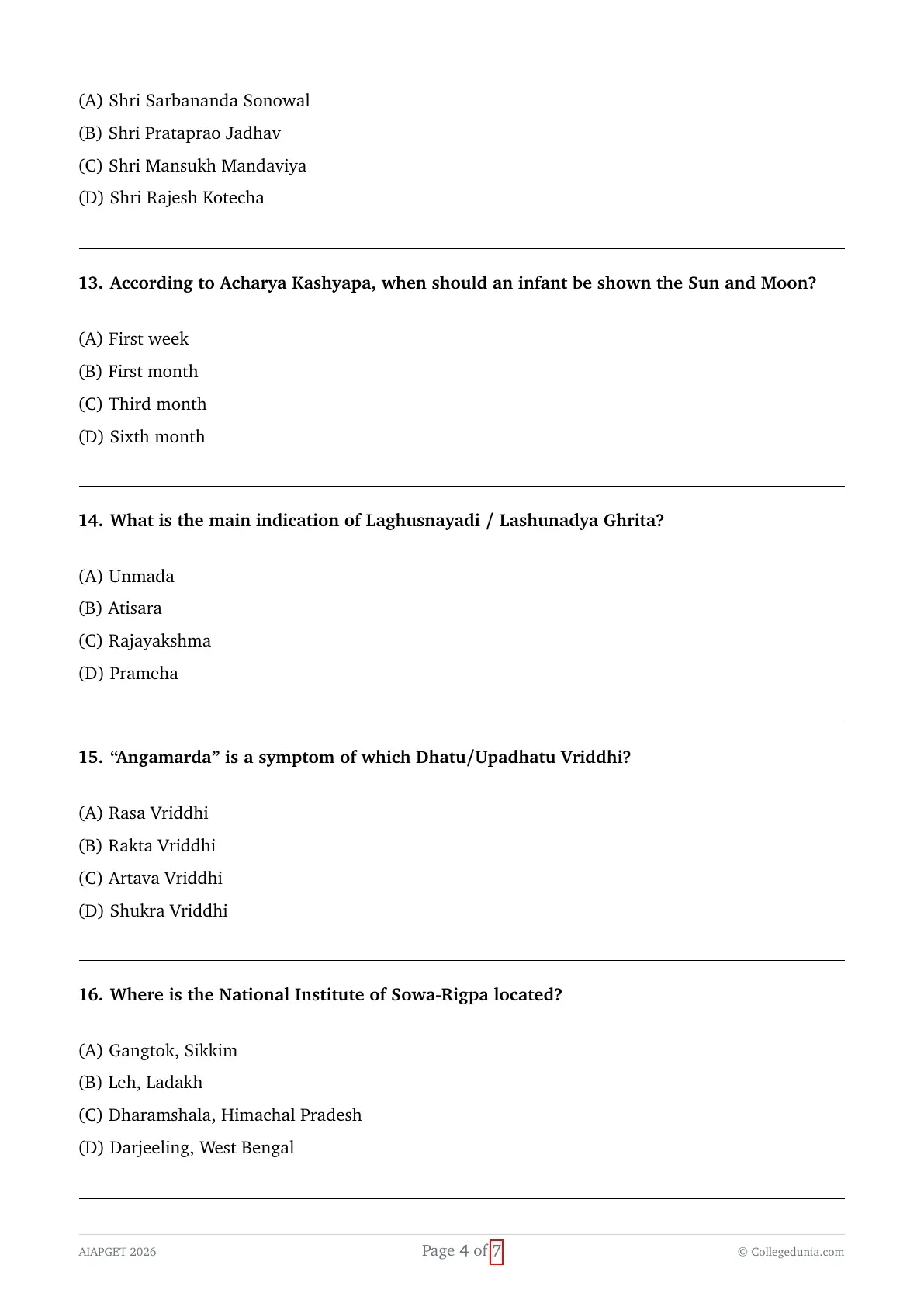
According to Acharya Kashyapa, when should an infant be shown the Sun and Moon?
Detailed Solution
Concept:
- Samskaras are various childhood rites or milestones described in Ayurvedic pediatric texts (Kaumarabhritya) to ensure proper growth and development.
- Suryadarshana (showing the Sun) and Chandradarshana (showing the Moon) are among the earliest sensory stimulations provided to an infant.
Step 1: Understanding the ritual significance
These rituals mark the first time the child is taken out of the protective environment of the Sutikagara (labor ward/nursery) to be exposed to external light and nature.
It tests and stimulates the infant's visual tracking and adaptation to natural light.
Step 2: Identifying Kashyapa's specific directive
Acharya Kashyapa, the foremost authority on Ayurvedic pediatrics (Kashyapa Samhita), prescribes that both the Sun and the Moon should be shown to the infant in the **first month** of life.
Step 3: Comparing with other Acharyas
Other Acharyas have different timelines:
- According to Acharya Sushruta and others, Nishkramana (taking the child out) and showing the Sun often occurs in the \(4^{th}\) month.
- However, for exams focusing on Kaumarabhritya specifics, Kashyapa's "1st month" rule is the definitive answer.
What is the main indication of Laghusnayadi / Lashunadya Ghrita?
Detailed Solution
Concept:
- Medicated ghee (Ghrita Kalpana) is a preferred dosage form in Ayurveda for treating disorders of the nervous system and mind because it can cross the blood-brain barrier.
- Lashunadya Ghrita (containing Garlic as the main ingredient) is a potent formulation specifically designed for Vata-Kapha dominant conditions affecting the Manovaha Srotas (channels of the mind).
Step 1: Understanding the primary ingredient
The key ingredient in this formulation is Lashuna (Garlic).
Garlic is known for its Ushna Virya (hot potency) and its ability to balance Vata and Kapha doshas. It acts as a stimulant and rejuvenator for the nervous system.
Step 2: Analyzing the therapeutic indication
In classical texts like Charaka Samhita and Ashtanga Hridaya, Lashunadya Ghrita is highlighted in the treatment of Unmada (insanity/psychosis).
It is also indicated for other neurological conditions such as Apasmara (epilepsy) and Jwara (specific types of chronic fever).
Step 3: Mechanism of action in Unmada
In Unmada, the mind is unstable due to the vitiation of doshas.
The penetrating (Tikshna) and stabilizing properties of garlic combined with the nourishing property of ghee help to clear the mental channels and restore psychological stability.
“Angamarda” is a symptom of which Dhatu/Upadhatu Vriddhi?
Detailed Solution
Concept:
- Dhatu Vriddhi and Upadhatu Vriddhi represent the clinical signs and symptoms that occur when body tissues or secondary tissues increase beyond their normal physiological limits.
- Artava (menstrual fluid) is considered an Upadhatu (secondary tissue) of Rasa Dhatu.
Step 1: Identifying the specific symptoms of Artava Vriddhi
According to Ashtanga Hridaya (Sutra Sthana Chapter 11), the clinical features of Artava Vriddhi (excessive increase in menstrual fluid) include:
- Angamarda (Generalized body ache/malaise)
- Atipravritti (Excessive menstrual flow/Menorrhagia)
- Daurgandhya (Foul smell)
Step 2: Defining Angamarda
Angamarda is described as a sensation of "crushing pain" or "breaking pain" throughout the body.
In the context of Artava Vriddhi, it reflects the systemic impact of the excessive tissue increase and the associated Vata disturbance caused by the heavy flow.
Step 3: Differentiating from other tissue increases
- Rasa Vriddhi: Leads to Hridaya-utkleda (nausea) and Praseka (excessive salivation).
- Rakta Vriddhi: Leads to Raktanga-akshita (redness of body/eyes) and skin disorders.
- Shukra Vriddhi: Leads to Atiharsha (excessive libido) and Shukra Ashmari (seminal calculi).
Where is the National Institute of Sowa-Rigpa located?
Detailed Solution
Concept:
- Sowa-Rigpa is one of the oldest, well-documented, and living medical traditions of the world, commonly known as the Amchi system of medicine.
- It is practiced in the Himalayan regions of India, including Ladakh, Himachal Pradesh, Sikkim, and Arunachal Pradesh.
- To promote and preserve this traditional knowledge, the Government of India established a dedicated national institute under the Ministry of AYUSH.
Step 1: Identifying the Nature of the Institute
The National Institute of Sowa-Rigpa (NISR) is an autonomous body under the Ministry of AYUSH.
It was established to provide an apex institution for higher education, research, and standard-setting in Sowa-Rigpa.
Step 2: Determining the Geographic Choice
Leh, Ladakh is considered the heartland of Sowa-Rigpa practice in India.
The region has a vast history of Amchis (practitioners) and a unique biodiversity of medicinal plants that are fundamental to this system.
Step 3: Verifying the Location
The institute was formally approved by the Union Cabinet in 2019 and is situated in Leh, Ladakh.
It serves as a bridge between traditional Himalayan healing practices and modern scientific research.
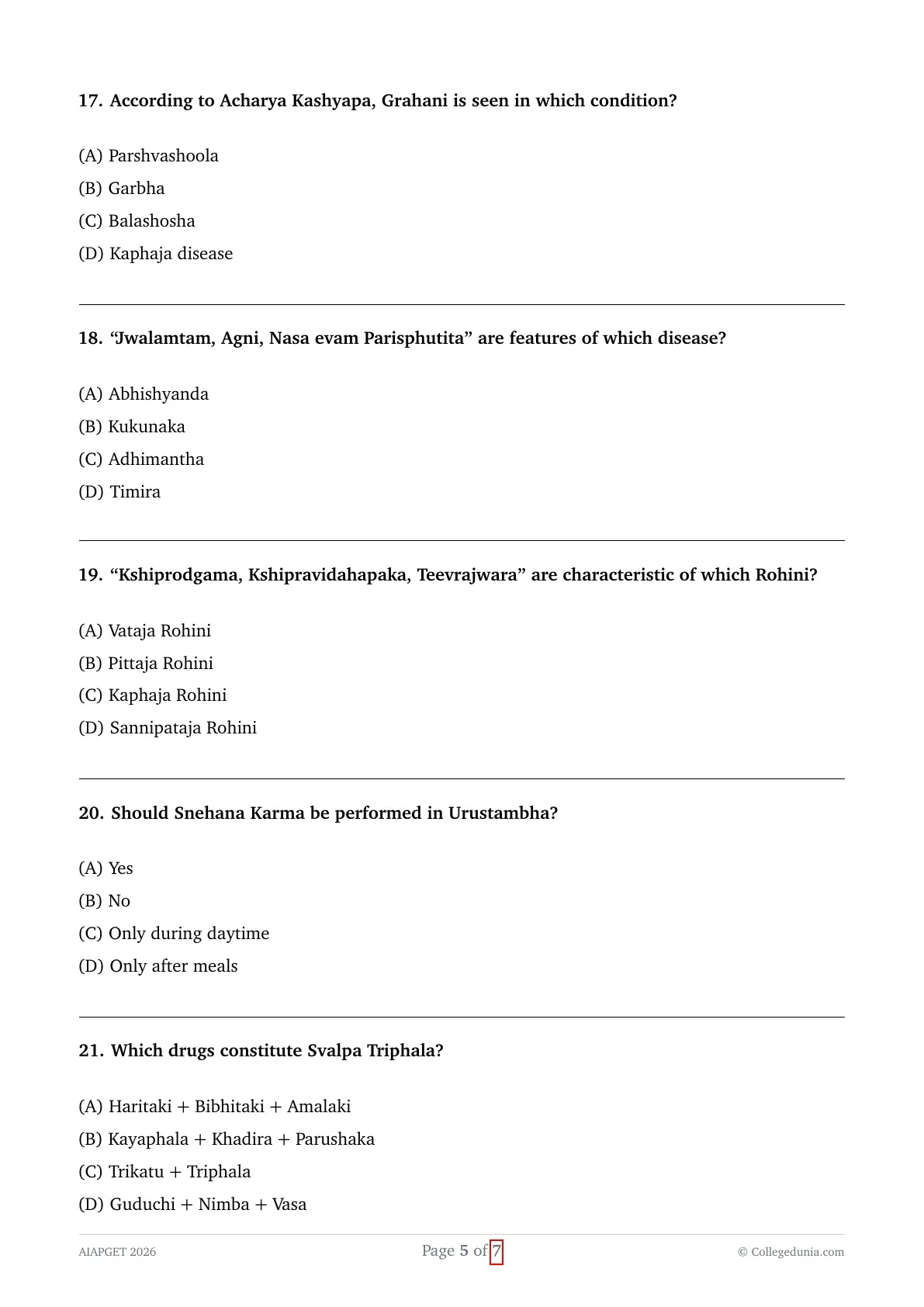
According to Acharya Kashyapa, Grahani is seen in which condition?
Detailed Solution
Concept:
- Balashosha is a pediatric condition characterized by progressive emaciation and wasting in children, often correlated with Protein Energy Malnutrition (PEM).
- Acharya Kashyapa, in his Kashyapa Samhita, provides detailed insights into the involvement of digestive fire (Agni) and its site (Grahani) in pediatric disorders.
Step 1: Defining Balashosha
Balashosha occurs primarily due to Kapha-avaruddha Rasavaha Srotas (obstruction of nutrient channels).
When the nutrient juice (Rasa Dhatu) cannot reach the tissues, the child begins to waste away despite consuming food.
Step 2: The role of Grahani in wasting
Acharya Kashyapa mentions that in the state of Balashosha, the Grahani (the anatomical and functional site of digestion) becomes severely compromised.
The failure of Grahani to properly transform food into essence (Sara) and waste (Kitta) is a hallmark of this disease.
Step 3: Clinical Correlation
The child shows symptoms like Aruchi (anorexia), Atisara (diarrhea), and Shosha (emaciation).
Kashyapa explicitly links the pathology of Grahani as a significant component or an associated condition within the clinical presentation of Balashosha.
“Jwalamtam, Agni, Nasa evam Parisphutita” are features of which disease?
Detailed Solution
Concept:
- Kukunaka is a specific pediatric ophthalmic disorder described in Ayurvedic texts, often compared to Neonatal Conjunctivitis or Ophthalmia Neonatorum.
- It is caused by the consumption of vitiated breast milk (Dushta Stanya) by the infant, which leads to the vitiation of Kapha, Rakta, and Vata in the eye.
Step 1: Interpreting the Sanskrit terminology
Jwalamtam and Agni refer to the intense burning sensation and heat felt in the eyes.
Nasa evam Parisphutita describes the inflammation or fissures/cracking appearing around the nose and eye corners.
The child typically rubs the eyes, nose, and forehead constantly due to irritation.
Step 2: Analyzing the clinical presentation
In Kukunaka, the eyelids show swelling, redness, and a characteristic discharge.
The irritation is so severe that the infant cannot tolerate light and keeps the eyes closed, with constant lacrimation.
Step 3: Confirming the diagnosis
While Abhishyanda is a general conjunctivitis and Adhimantha is a more severe form (glaucomatous), the specific combination of symptoms involving the nose (Nasa) and the severe burning (Jwalamtam) in a pediatric context is diagnostic of Kukunaka.
“Kshiprodgama, Kshipravidahapaka, Teevrajwara” are characteristic of which Rohini?
Detailed Solution
Concept:
- Rohini is a serious inflammatory condition of the throat, often correlated with severe pharyngitis or Diphtheria, characterized by the appearance of fleshy growths in the throat that obstruct the airway.
- There are five types of Rohini according to Ayurvedic classics: Vataja, Pittaja, Kaphaja, Sannipataja, and Raktaja.
Step 1: Analyzing the term "Kshipra"
The word "Kshipra" means fast, rapid, or acute.
In Ayurvedic pathology, rapid onset (Kshiprodgama) and quick progression are hallmarks of Pitta dosha and Rakta (blood) involvement.
Step 2: Analyzing "Vidaha" and "Paka"
Vidaha refers to a burning sensation, and Paka refers to suppuration or the process of "ripening" into pus.
Since Pitta is responsible for heat and metabolic transformation, any condition showing rapid burning (Kshipravidaha) and quick suppuration (Kshiprapaka) is inherently Pittaja in nature.
Step 3: Interpreting "Teevrajwara"
Teevrajwara refers to high-grade or acute fever.
High fever is a systemic manifestation of aggravated Pitta during an acute inflammatory process.
Step 4: Final Matching
Combining these features—rapid onset, intense burning, fast suppuration, and high fever—leads to the definitive diagnosis of Pittaja Rohini.
In contrast, Vataja would have intense pain and dryness, while Kaphaja would be slow-growing and steady.
Should Snehana Karma be performed in Urustambha?
Detailed Solution
Concept:
- Urustambha (Stiffness of the thighs) is a unique disease where Ama (metabolic toxins) and excessive Medas (adipose tissue) along with Kapha obstruct the Vata in the lower limbs.
- Although it manifests as stiffness and paralysis (suggesting Vata), the underlying cause is highly "oily" and "heavy" (Abhishyandi).
Step 1: Understanding the pathology
In Urustambha, the Ama and Medas are Sneha-sadarsha (similar to oil/fat in properties).
They saturate the channels, making them heavy and immobile. This is described as a "cold and oily" obstruction.
Step 2: The effect of Snehana
Snehana (oleation therapy) involves the application of oils or fats.
Since the disease is already caused by an excess of oily and heavy substances (Ama/Medas), performing Snehana would be adding "fuel to the fire."
It would further increase the obstruction, making the thighs even stiffer and more difficult to treat.
Step 3: Determining the treatment line
Standard Vata treatments like Snehana and Basti (medicated enemas) are strictly contraindicated in Urustambha.
The treatment must always be Rukshana (drying treatments) and Kshapana (depletion of fat/Kapha) to clear the oily obstruction first.
Which drugs constitute Svalpa Triphala?
Detailed Solution
Concept:
- In Ayurvedic Materia Medica (Dravyaguna), drugs are often grouped into sets of three (Triphala or Trayas) based on their pharmacological properties or clinical indications.
- While the standard Triphala is a household name, there are several "Lesser" or "Alternative" Triphalas described in various classical texts for specific therapeutic uses.
Step 1: Defining the standard Triphala
The most common Triphala consists of Haritaki (Terminalia chebula), Bibhitaki (Terminalia bellirica), and Amalaki (Phyllanthus emblica).
This combination is primarily known for its rejuvenating and laxative properties.
Step 2: Identifying Svalpa Triphala
Svalpa Triphala (also known as the "Small Triphala" or "Lesser Triphala") is a specific grouping of three drugs: Kayaphala, Khadira, and Parushaka.
These drugs are generally astringent (Kashaya) in taste and are often used in conditions involving oral health or specific inflammatory conditions.
Step 3: Differentiating other Triphalas
- Madhura Triphala: Consists of Draksha, Kashmarya, and Kharjura.
- Sugandhi Triphala: Consists of Jatiphala, Lavanga, and Ela.
What is the Anupana of Narayana Churna in Udara Roga?
Detailed Solution
Concept:
- Anupana (vehicle/adjuvant) is the substance taken along with or after the primary medicine to enhance its absorption, direct it to the target tissue, and minimize side effects.
- Narayana Churna is a classical formulation widely used for abdominal disorders, bloating, and constipation.
Step 1: Understanding Narayana Churna
This powder is a complex blend of salts and herbs designed to stimulate Agni (digestive fire) and pacify Vata.
It is particularly effective in clearing the intestinal channels (Srotovishodhana).
Step 2: Defining Udara Roga
Udara Roga refers to abdominal enlargements, including conditions like ascites.
The pathology involves a combination of Mandagni (low digestion) and obstruction of the Prana-Udaka-Anna channels.
Step 3: The role of Takra (Buttermilk)
In Ayurveda, Takra is hailed as the "Amrita" (nectar) for abdominal diseases.
It has Laghu (light) and Deepana (appetizer) properties.
When Narayana Churna is administered with Takra, the combination effectively digests Ama and relieves abdominal pressure, making it the specific adjuvant for this condition.
Which are the exceptions among wet drugs that are NOT taken in double quantity?
Detailed Solution
Concept:
- A general rule in Ayurvedic pharmacy (Bhaishajya Kalpana) states that when a drug is used in its fresh/wet (Ardra) state, its quantity should be doubled compared to its dry state to account for moisture content.
- However, there are specific exceptions to this rule for drugs that are highly potent or have specific properties in their fresh form.
Step 1: The "Double Quantity" Rule
The standard Paribhasha (definition) states: "Ardra dravyam tu dvigunam".
If a formula calls for 10g of a dry herb, and you only have fresh herb, you should use 20g.
Step 2: Identifying the exceptions
Certain drugs are so naturally potent or have such high therapeutic efficacy in their green/fresh state that doubling them would lead to an overdose or excessive bitterness/potency.
According to classical texts (Sharngadhara Samhita), the primary exceptions are: Guduchi (Tinospora), Kutaja (Holarrhena), Vasa (Adhatoda), Kushmanda, Shatavari, and Sahachara.
Step 3: Clinical Logic
For Guduchi, Kutaja, and Vasa, the fresh juice or the fresh plant material is considered superior.
Therefore, they are used in the same quantity as prescribed in the formula, without doubling (Sama-bhaga).
According to GOLD criteria, what is COPD severity classification by FEV 1% predicted?
Detailed Solution
Concept:
- The Global Initiative for Chronic Obstructive Lung Disease (GOLD) provides a standardized system for the diagnosis and management of COPD.
- One of its key components is the spirometric grading of the severity of airflow limitation.
- Airflow limitation is determined by measuring the Forced Expiratory Volume in 1 second (\(FEV_1\)) after administering a bronchodilator.
Step 1: Understanding the SPIROMETRIC criteria
For a clinical diagnosis of COPD, a post-bronchodilator ratio of \(FEV_1 / FVC < 0.70\) must be present.
Once this ratio confirms airflow obstruction, the severity is then graded based on the \(FEV_1\) percentage of the predicted value.
Step 2: Breaking down the GOLD Stages
The classification is divided into four distinct stages:
- GOLD 1 (Mild): \(FEV_1 \geq 80%\) predicted.
- GOLD 2 (Moderate): \(50\% \leq FEV_1 < 80\%\) (often expressed as 50-79%).
- GOLD 3 (Severe): \(30\% \leq FEV_1 < 50\%\) (often expressed as 30-49%).
- GOLD 4 (Very Severe): \(FEV_1 < 30\%\) predicted.
Step 3: Clinical application
These stages help clinicians decide on the appropriate pharmacological therapy and assess the prognosis and risk of exacerbations.
As the stage number increases, the degree of lung function impairment becomes more critical.
According to Sushruta, choose the correct matching for Dagdha Lakshana.
Detailed Solution
Concept:
- Dagdha refers to burns caused by fire or heat. Acharya Sushruta, the pioneer of surgery, classified burns into four types based on the depth of tissue involvement and clinical signs (Lakshana).
- These classifications are described in Sushruta Samhita, Sutra Sthana, Chapter 12.
Step 1: Matching Plusta Dagdha (1-A)
Plusta Dagdha (Scorching): This is the most superficial burn.
Symptoms include discoloration of the skin (Durvarnyata) and intense heat/burning without blisters.
Step 2: Matching Durdagdha (2-B)
Durdagdha (Improperly burnt): This involves more heat than Plusta.
Symptoms include severe burning sensation (Daha) and the formation of blisters (Sphota). It is extremely painful.
Step 3: Matching Samyak-dagdha (3-C)
Samyak-dagdha (Properly/Moderately burnt): The burn is deeper into the skin layers.
Symptoms include the area becoming dark or like the color of a Tala fruit (blackish), and it is not very elevated. It forms a stable crust.
Step 4: Matching Atidagdha (4-D)
Atidagdha (Over-burnt): This is a deep-tissue burn involving muscles and sometimes bones.
Symptoms include Charred tissues, severe loss of sensation, and deep destruction of the underlying structures.
“Upachaya of the body + Bala + Varna” comes under which Garbhaja Bhava?
Detailed Solution
Concept:
- Garbhaja Bhavas are the essential factors that contribute to the formation and development of the fetus.
- There are six factors: Matrija (Maternal), Pitrija (Paternal), Atmaja (Soul), Rasaja (Nutritional), Satvaja (Psychic), and Satmyaja (Wholesomeness).
Step 1: Defining Rasaja Bhava
Rasaja Bhava refers to the traits and developments that depend on the nutrition (Rasa) provided by the mother to the fetus via the placenta.
It represents the "nurture" aspect of fetal growth after the initial genetic blueprint is set.
Step 2: Listing the attributes
According to Charaka Sharira Sthana, the following qualities are derived from Rasaja Bhava:
- Abhinirvritti: Manifestation of the body.
- Abhivriddhi: Growth.
- Tripti: Satisfaction/Satiety.
- Bala: Strength/Vitality.
- Varna: Complexion.
- Sthiti: Maintenance of life.
- Upachaya: Accumulation of tissues/Physical development.
Step 3: Differentiating from others
- Matrija: Soft organs like heart, liver, spleen.
- Pitrija: Hard structures like bones, hair, teeth, nails.
- Atmaja: Longevity, sensory perceptions, desire.
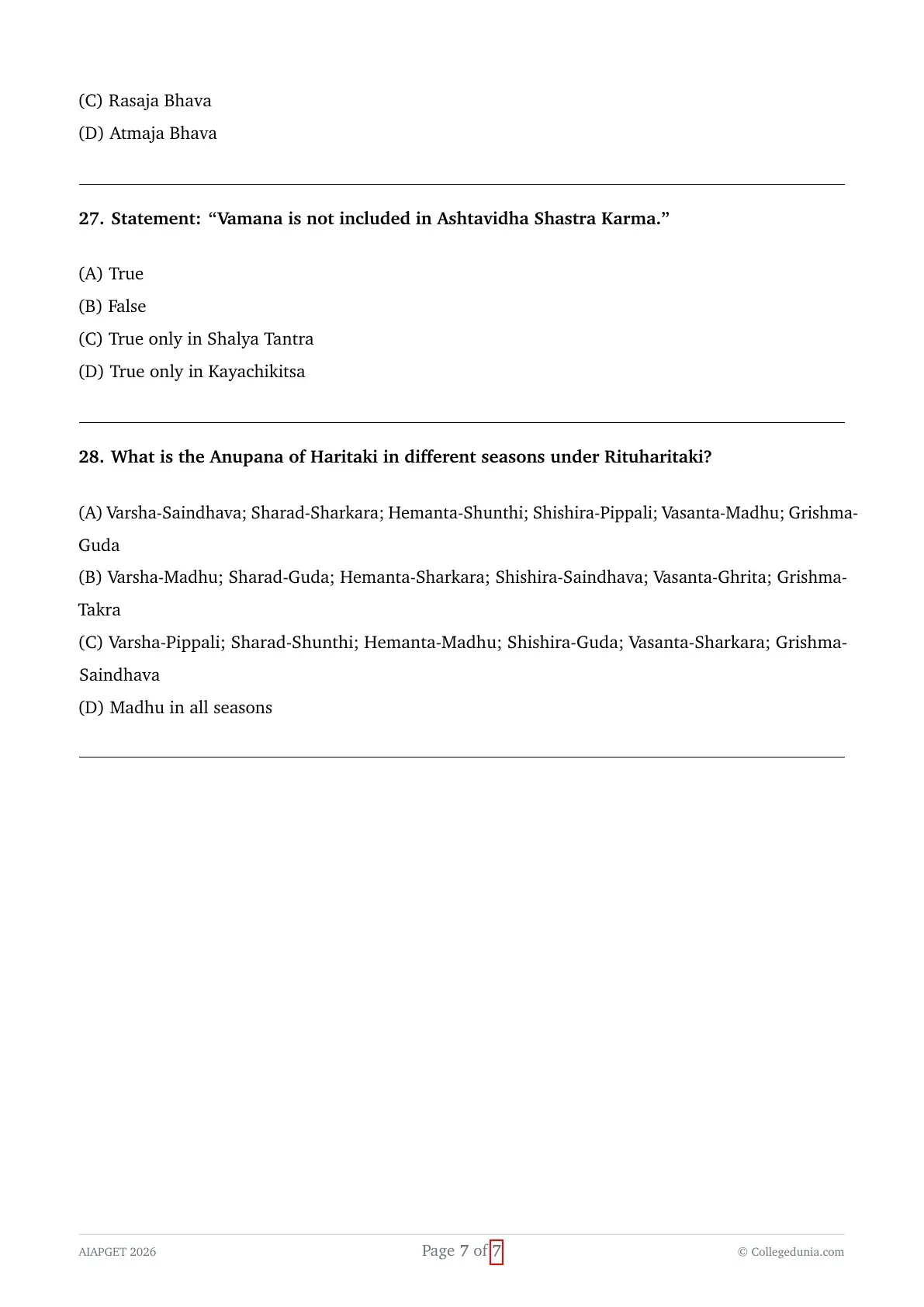
Statement: “Vamana is not included in Ashtavidha Shastra Karma.”
Detailed Solution
Concept:
- Ashtavidha Shastra Karma refers to the eight types of surgical procedures described by Acharya Sushruta, the father of surgery.
- These procedures represent the fundamental technical actions a surgeon performs with sharp instruments (Shastras).
- Understanding the difference between surgical acts (Shastra Karma) and medical purification procedures (Panchakarma) is essential in Ayurvedic clinical theory.
Step 1: Listing the Eight Surgical Procedures
According to Sushruta Samhita (Sutra Sthana Chapter 5), the eight Shastra Karmas are:
- Chedana: Excision (removing a part).
- Bhedana: Incision (opening a cavity).
- Lekhana: Scraping (clearing a surface).
- Vedhana: Puncturing (tapping a fluid collection).
- Eshana: Probing (exploring a tract).
- Aharana: Extraction (pulling out a foreign body).
- Visravana: Draining (releasing blood/pus).
- Sivana: Suturing (closing a wound).
Step 2: Evaluating the role of Vamana
Vamana is the therapeutic induction of vomiting.
It is a medical purification procedure (Shodhana) and is part of the Panchakarma (five detoxification therapies) primarily used in Kayachikitsa (Internal Medicine) for Kapha disorders.
It does not involve the use of surgical instruments to cut or alter tissue.
Step 3: Conclusion
Since Vamana is a medical therapy and not one of the eight surgical procedures listed in the classical surgical curriculum, the statement that it is "not included" is factually True.
What is the Anupana of Haritaki in different seasons under Rituharitaki?
Detailed Solution
Concept:
- Ritu Haritaki is a concept of Rasayana (rejuvenation) therapy where Haritaki (Terminalia chebula) is consumed with different adjuvants (Anupana) depending on the season (Ritu).
- This practice aims to balance the seasonal fluctuations of Doshas and maximize the tonic effect of the herb.
- The specific combinations were classically described by Bhavaprakasha.
Step 1: Analyzing the Logic of Adjuvants
The adjuvants are chosen to counteract the environmental effects of the season:
- Varsha (Rainy): Saindhava (Rock Salt) is used to mitigate the high Vata and dampness.
- Sharad (Autumn): Sharkara (Sugar) is used to cool the Pitta which peaks in this season.
- Hemanta (Early Winter): Shunthi (Dry Ginger) provides warmth during the cold.
Step 2: Continuing the Seasonal Cycle
- Shishira (Late Winter): Pippali (Long Pepper) acts as a powerful stimulant and Kapha pacifier in the coldest part of the year.
- Vasanta (Spring): Madhu (Honey) is the best Anupana to liquefy and remove the Kapha that melts during spring.
- Grishma (Summer): Guda (Jaggery) provides energy and cooling properties to counteract the intense heat.
Step 3: Matching with Option A
By following the chronological order of the six Indian seasons (Varsha, Sharad, Hemanta, Shishira, Vasanta, Grishma), the sequence of Rock Salt, Sugar, Dry Ginger, Long Pepper, Honey, and Jaggery perfectly matches the list provided in Option (A).
AIAPGET 2026 Exam Pattern
| Parameter | Details |
|---|---|
| Exam Mode | Computer-Based Test (CBT) |
| Total Marks per Paper | 480 |
| Type of Questions | Multiple Choice Questions (MCQs) — Single Correct Answer |
| Options per Question | 4 options (A, B, C, D) |
| Total Questions per Paper | 120 |
| Marks for Correct Answer | +4 |
| Marks Deducted for Wrong Answer | -1 |
| Marks for Unattempted | 0 |
| Duration | 120 minutes (2 hours) |
| Exam Shifts | Shift 1: 10:00 AM – 12:00 PM Shift 2: 3:00 PM – 5:00 PM |
| Medium of Exam | English & Hindi (Ayurveda); English & Urdu (Unani); English & Tamil (Siddha); English only (Homeopathy, Yoga & Naturopathy) |
| Disciplines Covered | Ayurveda, Unani, Siddha, Homeopathy, Yoga & Naturopathy, Sowa-Rigpa |
| Admission Purpose | MD / MS / PG Diploma in AYUSH disciplines |



Comments