




The UP Board Class 12 History 2026 question paper with solutions (Set 321 CG) is available here for free download. UP Board Class 12 History 2026 was conducted by the Uttar Pradesh Madhyamik Shiksha Parishad (UPMSP), as a 100-mark paper of 42 compulsory questions to be solved in 3 hours 15 minutes.
| UP Board Class 12 History 2026 Question Paper with Solutions (Set 321 CG) | Download PDF | Check Solutions |
UP Board Class 12 History 2026 (Set 321 CG) Questions with Solutions
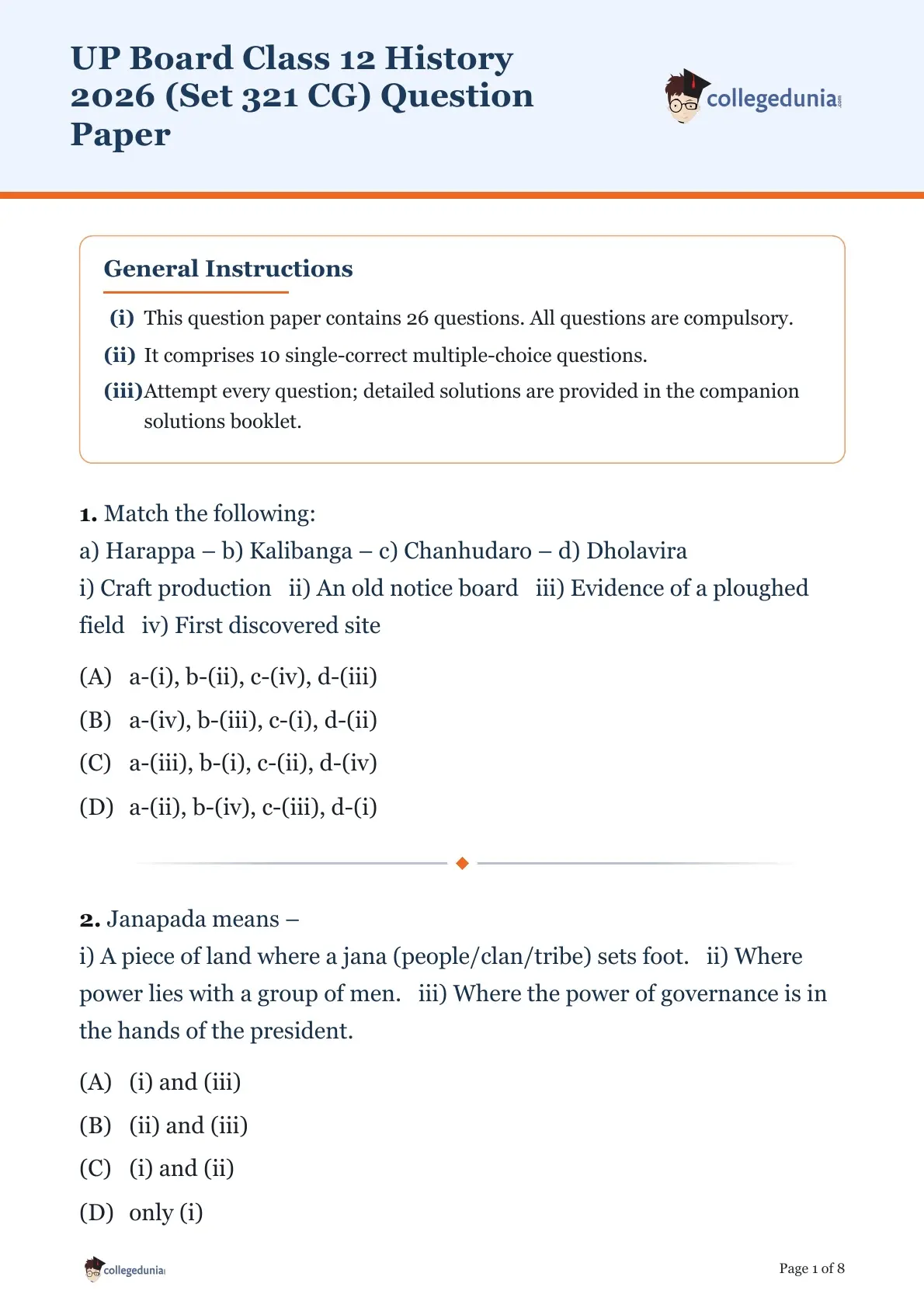
Match the following:
a) Harappa – b) Kalibanga – c) Chanhudaro – d) Dholavira
i) Craft production ii) An old notice board iii) Evidence of a ploughed field iv) First discovered site
Janapada means –
i) A piece of land where a jana (people/clan/tribe) sets foot. ii) Where power lies with a group of men. iii) Where the power of governance is in the hands of the president.
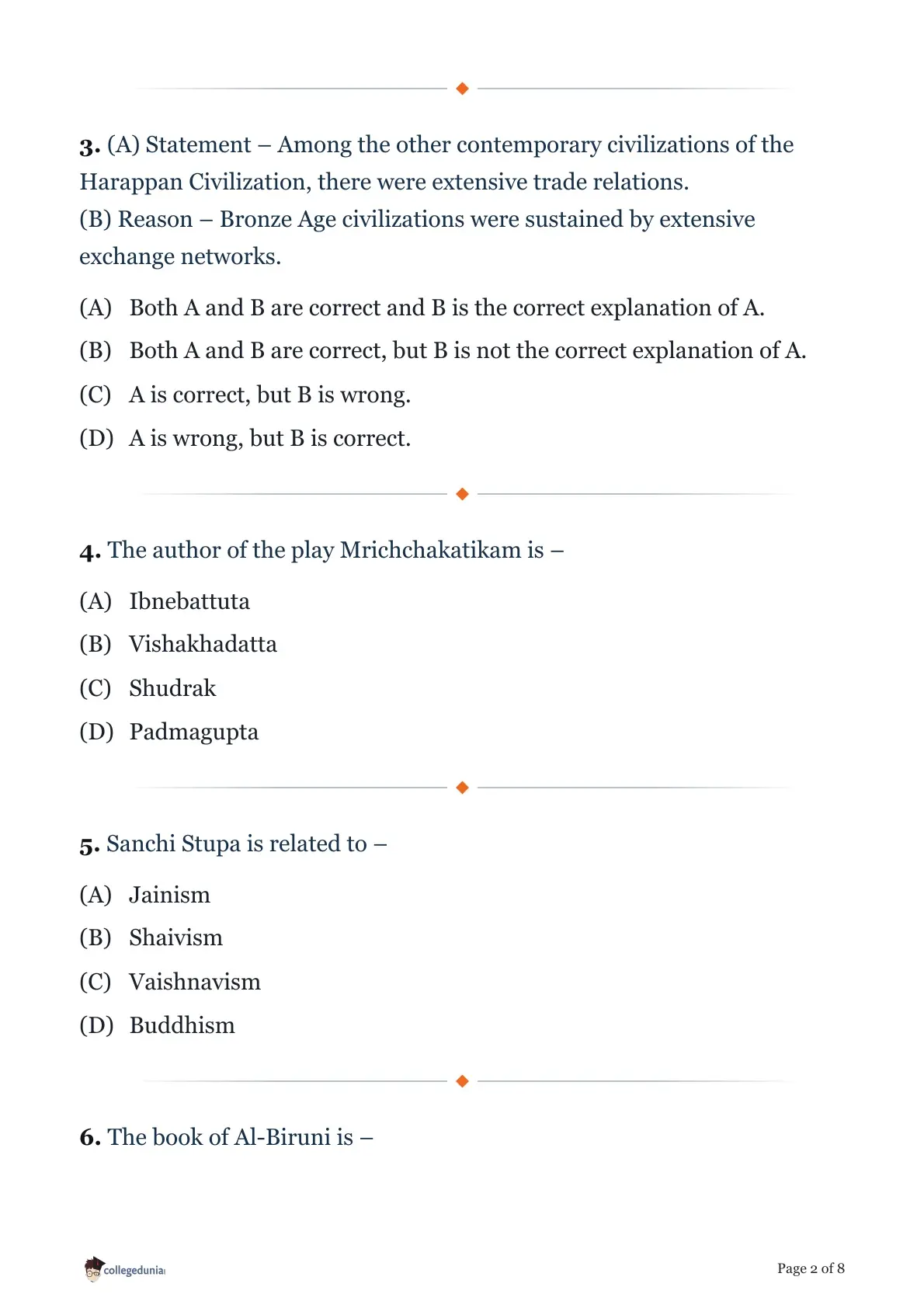
(A) Statement – Among the other contemporary civilizations of the Harappan Civilization, there were extensive trade relations.
(B) Reason – Bronze Age civilizations were sustained by extensive exchange networks.
The author of the play Mrichchakatikam is –
Sanchi Stupa is related to –
The book of Al-Biruni is –
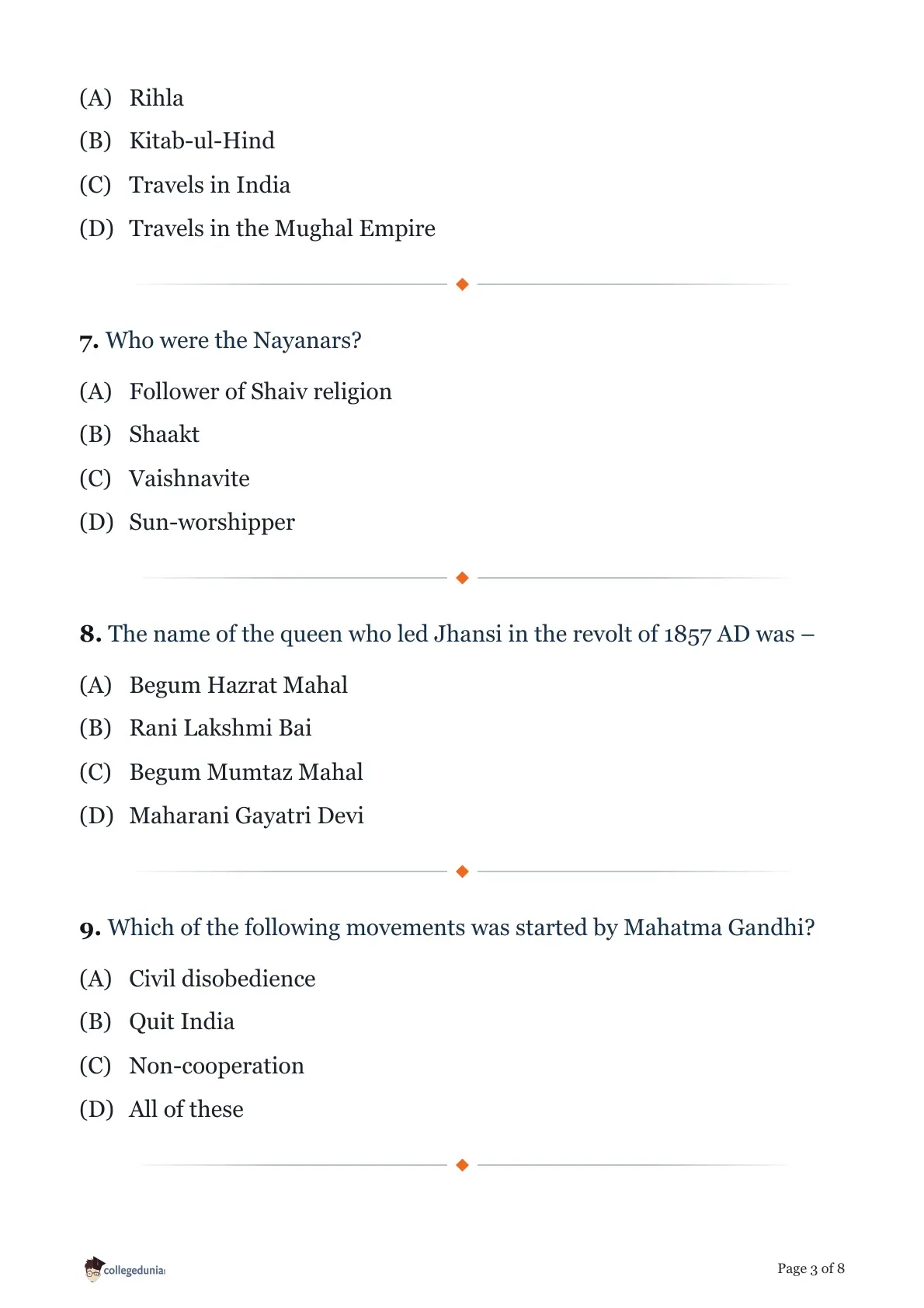
Who were the Nayanars?
The name of the queen who led Jhansi in the revolt of 1857 AD was –
Which of the following movements was started by Mahatma Gandhi?
Who introduced the ‘Objective Resolution’ of the constitution?
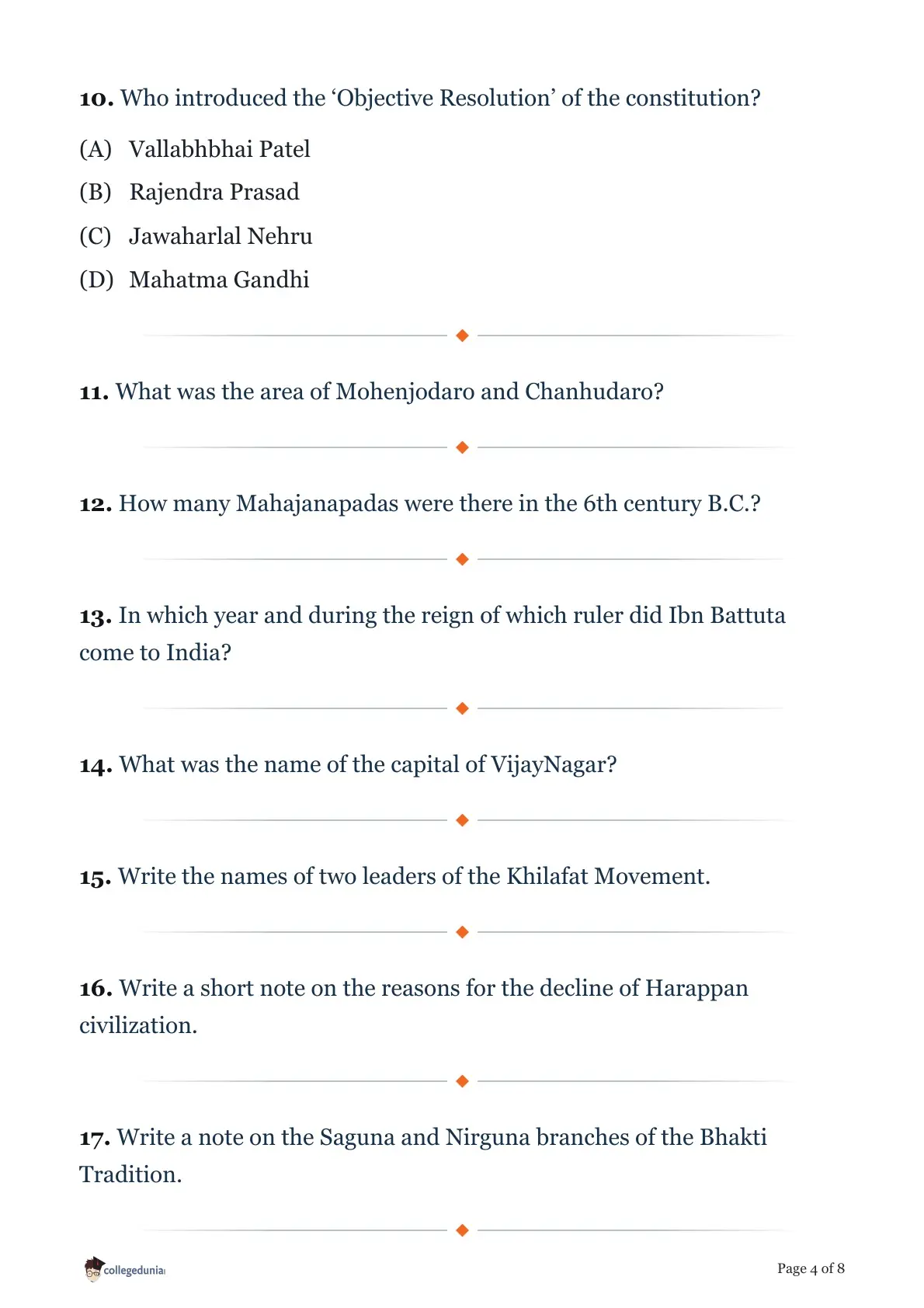
What was the area of Mohenjodaro and Chanhudaro?
How many Mahajanapadas were there in the 6th century B.C.?
In which year and during the reign of which ruler did Ibn Battuta come to India?
What was the name of the capital of VijayNagar?
Write the names of two leaders of the Khilafat Movement.
Write a short note on the reasons for the decline of Harappan civilization.
Write a note on the Saguna and Nirguna branches of the Bhakti Tradition.
Write a short note on Sanchi Stupa.
Write a note on the Mansabdari system.
Write a note on the Dandi March.
Write the characteristics of a national language.
Discuss in detail the Town Planning System of Harappan Civilization.
Describe the social life and religious life of the Vedic Period. (OR alternative to Q22)
Who were the Alvar and Nayanar Saints? Describe about the Alvar and Nayanar Saints of Tamil Nadu.
Describe the administrative system and water wealth of Vijayanagar. (OR alternative to Q23)
Describe Mahatma Gandhi's contribution to the Indian National Movement.
Describe the characteristics of the Indian Constitution. (OR alternative to Q24)
Mention the event related to the following historical date – 1921 A.D.
Mention the event related to the following historical date – 320 A.D.
Mention the event related to the following historical date – 1814 A.D.
Mention the event related to the following historical date – 1818 A.D.
Mention the event related to the following historical date – 1510 A.D.
Mention the event related to the following historical date – 1604 A.D.
Mention the event related to the following historical date – 1793 A.D.
Mention the event related to the following historical date – 10 May, 1857 A.D.
Mention the event related to the following historical date – 1918 A.D.
Mention the event related to the following historical date – 16 August, 1946 A.D.
On the given outline map of India, mark with a ● symbol and name: the place from where the first site of the Harappan civilization was discovered
On the given outline map of India, mark with a ● symbol and name: the place where Sudarshan Lake is located
On the given outline map of India, mark with a ● symbol and name: the place where Begum Hazrat Mahal took command of the revolt on 4 June, 1857
On the given outline map of India, mark with a ● symbol and name: the place where Mahatma Gandhi launched his first Satyagraha movement
On the given outline map of India, mark with a ● symbol and name: the place where Gautam Buddha was born
UP Board Class 12 History 2026 Exam Pattern and Marking Scheme Explained
UPMSP set this paper (Set 321 CG) in five sections, with Section D's 3 long-answer questions offering an internal choice.
- Total questions: Section A - 10 one-mark MCQs; Section B - 5 very-short-answer questions of 2 marks each; Section C - 6 short-answer questions of 5 marks each; Section D - 3 long-answer questions of 10 marks each with a choice; Section E - 10 historical-date questions of 1 mark each and 5 map-based questions of 2 marks each
- Total marks: 100
- Duration: 3 hours 15 minutes
- Question types: objective (MCQ), short and long descriptive answers, historical-date identification, and outline-map location work
- Internal choice: Section D's 3 questions (10 marks each, 30 marks total) each let you attempt one of two alternative questions
High-Weightage Topics in UP Board Class 12 History 2026 to Focus On First
Based on this paper's actual question distribution across Sections A-C (50 of the 100 marks, before the choice and Section E questions), a few eras clearly dominate.
- The Harappan Civilisation: 9 of 50 marks - the single biggest topic, spanning MCQs through short-answer questions
- Medieval Indian History, and Indian Freedom Movement: 8 of 50 marks each
- Buddhism: 6 of 50 marks
- Bhakti Movement, and Constitution of India: 5 of 50 marks each
Section D's 30 marks let you choose between long-answer essays on The Harappan Civilisation, Vedic Age, Bhakti Era, Vijayanagara Empire, Indian Freedom Movement, and Constitution of India - practise as many of these as you can. Section E's 20 marks reward memorising key historical dates and locations on the outline map of India.
UP Board Class 12 History Paper Solution Video
Source: Shivam Study Knowledge
How to Use the UP Board History Question Paper for Practice
Treat this Set 321 CG paper as a timed mock before you check the solutions.
- Attempt all sections, including the historical dates and map work, in 3 hours 15 minutes under exam conditions first
- For Section D, practise both alternatives of the internal choice, not just the one you'd normally pick
- Keep a running timeline of key dates and a labelled outline map handy while revising - Section E is worth 20 marks and rewards quick recall
- Review each answer against the step-by-step solution PDF, not just the final answer
UP Board Class 12 History Student Reactions 2026
- Reactions to this paper were mixed - some students found the matching-type MCQs and map questions familiar from practice papers, while others found the historical-dates section the hardest to recall exactly under time pressure
UP Board Class 12 History 2026 Question Paper FAQs
Ques. How many questions are there in the UP Board Class 12 History 2026 paper, and is there any choice?
Ans. The paper has 42 questions worth 100 marks across 5 sections. Section D's 3 long-answer questions (10 marks each) each give you a choice between two alternatives - you only need to attempt one from each pair.
Ques. What is the marking scheme for UP Board Class 12 History 2026?
Ans. The paper carries 100 marks in 3 hours 15 minutes: 10 one-mark MCQs, 5 very-short-answer questions of 2 marks each, 6 short-answer questions of 5 marks each, 3 long-answer questions of 10 marks each with internal choice, 10 historical-date questions of 1 mark each, and 5 map-based questions of 2 marks each.
Ques. Which topics had the highest weightage in UP Board Class 12 History 2026 Set 321 CG?
Ans. Based on this paper's actual questions, The Harappan Civilisation (9 of the first 50 marks) led, followed by Medieval Indian History and the Indian Freedom Movement (8 marks each) and Buddhism (6 marks). Section D's 30 marks cover a choice of long-answer essays across multiple eras, and Section E's 20 marks test historical dates and map locations.
Ques. What does Section E of UP Board Class 12 History 2026 cover?
Ans. Section E has 10 questions asking you to name the event linked to a given historical date (1 mark each), plus 5 questions asking you to mark and name specific locations on the outline map of India (2 marks each).
Ques. Where can I download the UP Board Class 12 History 2026 question paper with solutions PDF for free?
Ans. You can download both the question paper and the full step-by-step solutions PDF for Set 321 CG from the table at the top of this page, for free.



Comments