



Study Abroad Expert | Updated On - Aug 10, 2026
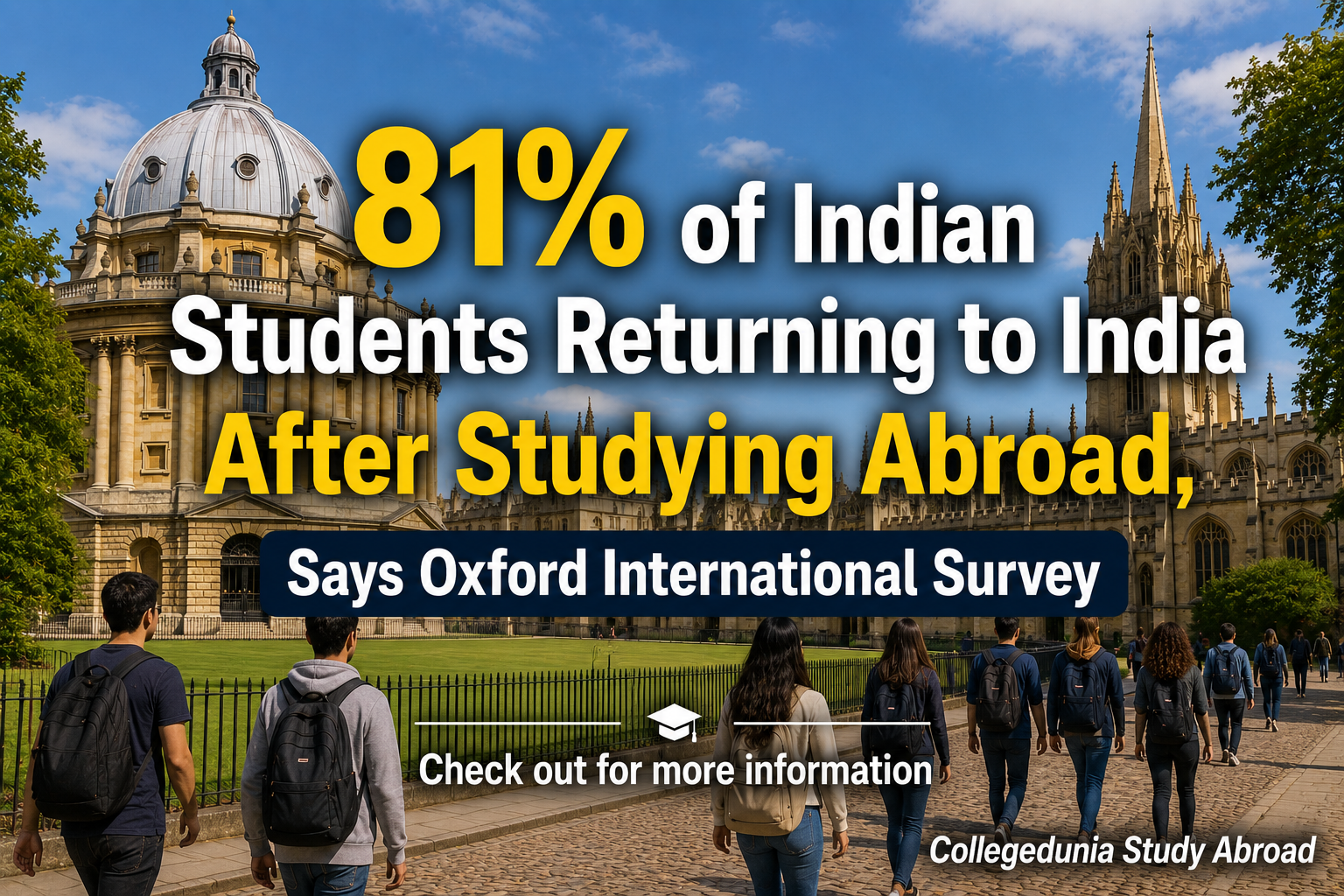
Oxford International released the third Student Global Mobility Index on August 7, 2026. It finds that 81% of Indian study abroad aspirants plan to return to India after finishing their course. The report is based on 17,925 core survey responses, with roughly 2,400 more on plans after graduation. It reframes the overseas degree as a phase of global exposure, not a one-way ticket out. The finding lands as tighter visa and post-study work rules in the UK, Canada and Australia have pushed many Indian families to plan the return leg upfront. That planning shift is now showing up in survey data, not just anecdote.
- 89% of respondents are the first in their family to study abroad.
- Independent decision-making rose from 29% in 2023-24 to 49% in 2025-26. Family as the primary driver fell from 60% to about one-third.
- 70% of the surveyed aspirants are applying for postgraduate programmes, and 75% picked business and management fields.
Also Read,
- Indian Students Going Abroad Fall 31% Since 2023 Amid Tighter Visa Rules
- Oxford University PhD for Indian Students Guide
- Oxford University: Acceptance Rate, Fees and Courses
What the Oxford Report Actually Shows
Oxford International runs the Student Global Mobility Index each year. The third edition surveyed current and prospective international students. India was the largest cohort in the sample. The headline number is the return figure. Four in five Indian aspirants told the survey they intend to come home after graduation. That is a sharp shift from the older "study, work, settle" template that shaped the last decade.
The report says the international degree now signals global exposure, not permanent migration. Employers back home, it argues, will see more returning talent than in earlier cycles.
Note: An 81% return intent does not mean 81% will actually return. Intent surveys capture pre-departure plans. Actual return rates depend on job offers, visa outcomes, and personal ties that only settle two to four years later.
Why Indian Students Are Rethinking Settling Abroad
Two shifts sit behind the number. The first is policy. The UK ended dependent visas for most taught master's students in January 2024. Canada cut new study permits and tightened post-graduation work rules through 2024 and 2025. Australia lifted the student visa fee to AUD 2,000 in July 2025.
The second is confidence at home. India’s NITI Aayog working paper on international student mobility notes rising hiring in tech, finance and consulting hubs. Returning graduates now see a clearer runway in Bengaluru, Hyderabad, Mumbai and Gurugram. Together these pressures have flipped the default answer. Where "settle abroad" was once the assumption, "return with a global degree" is now the base case.
Who These Aspirants Are and What They Study
The profile skews first-generation and postgraduate. Nine in ten respondents are the first in their family to attend a foreign university. Seven in ten are targeting a master's or doctoral programme, not an undergraduate degree. Course choice is narrow at the top. Three in four aspirants named business and management as their field. That aligns with the MBA, MSc Finance and MSc Analytics pipelines that dominate Indian outbound flows.
| Survey Signal | Share of Indian Respondents |
|---|---|
| Plan to return to India after studies | 81% |
| First in family to study abroad | 89% |
| Applying for postgraduate programmes | 70% |
| Choosing business and management | 75% |
| Decided independently in 2025-26 | 49% |
| Discovered institutions via Google | 39% |
What it means for Indian Students: If you plan to return within two years of graduation, weigh degree length and cost against Indian salary bands. A one-year UK master's at ₹40 lakh may pay back faster than a two-year US programme at ₹80 lakh if your target employer is in Bengaluru or Mumbai.
How the Decision Is Being Made Now
The report tracks a clear generational shift. In 2023-24, only 29% of Indian aspirants said they made the study abroad decision themselves. By 2025-26, that share had climbed to 49%.
Family influence, once dominant, has narrowed. Parents drove 60% of decisions two years ago. That share is now about one-third of the sample. Search behaviour has changed too. Google is the discovery point for 39% of respondents and the trusted source for 56%. Education agents and word of mouth still matter, but the first-touch has moved online.
Also Read,
- Financial Requirements for UK Student Visa
- UK vs Germany for Indian Students 2026: Which is Better?
- UK Higher Education System: A Complete Guide for 2026
- How to Apply to UK Universities as an Indian Student
What Employers and Universities Should Read Into This
For Indian employers, the message is a talent pipeline. A larger share of foreign-trained graduates is planning to come home within one to three years of graduation. That expands the pool for roles that once needed re-relocation packages.
For foreign universities and recruiters, the signal is on value framing. Indian applicants are paying attention to return-on-investment and to how the degree lands in the Indian market. Post-study work rights still matter, but they now sit alongside brand recognition among Indian recruiters. For Indian aspirants, the practical shift is in planning. Course, city and internship choices are being made with the return leg in mind from day one, not as a fallback.
Action Plan for Indian Students Planning to Return
- List your target Indian employers before you pick a university. Check where their recent hires studied.
- Choose programmes with a compulsory internship or capstone. Return offers often build on the summer placement.
- Model the full cost, including INR loan EMIs, against realistic Indian starting salaries in your field.
- Time your graduation to Indian campus and lateral hiring cycles, typically August-October and February-April.
- Keep your Indian bank, PAN and mobile number active during your degree to shorten the return paperwork.
The Oxford International finding does not tell any single student what to do. It does tell the market that the default has moved. An overseas degree is being planned as a two-to-three year global chapter, with the career arc still centred in India. The next test is whether the 81% intent translates into 81% actual returns when the class of 2026 graduates in 2027 and 2028.
Next Milestone for Fall 2027 Aspirants: Most US and UK master's applications for the Fall 2027 intake open between September and October 2026. Lock in test scores and recommenders now if you plan to apply this cycle.


1791978705.png?tr=w-305,h-145,c-force?h=40&w=40&mode=stretch)



Comments