



Bachelor of Science [BS] (Energy Engineering)
Field of Study:
$28,198 /Yr

Bachelor of Science in Energy Engineering at University of Calgary, Canada
The Bachelor of Science (B.S.) in Energy Engineering at the University of Calgary’s Schulich School of Engineering is a four-year undergraduate program designed to prepare engineers for careers in a rapidly evolving global energy landscape. Located in Calgary, Canada’s energy capital, the program uniquely positions students at the intersection of traditional energy sectors and emerging renewable technologies, addressing the world’s pressing need for sustainable energy solutions.
Energy engineering at Calgary combines mechanical, electrical, and environmental engineering principles to tackle real-world energy challenges. The curriculum spans fossil fuel technologies, renewable energy systems including solar, wind, and biomass, electricity distribution networks, and environmental impact mitigation. For Indian students, this program offers exceptional value: world-class engineering education in a country with straightforward international student pathways, post-graduation work permits of up to four years, and transparent pathways to permanent residency through Express Entry.
The Schulich School of Engineering enrolls approximately 4,000 students and maintains close partnerships with Canada’s oil and gas industry, renewable energy firms, and technology startups. With 138 countries represented on campus, Indian students comprise a significant portion of the international cohort, supported by dedicated international student services and a vibrant South Asian community in Calgary.
University of Calgary Energy Engineering: Cost of Study and Financial Breakdown
The total four-year cost of studying Energy Engineering at the University of Calgary includes tuition, mandatory fees, health insurance, and living expenses. International undergraduate tuition for 2026-27 is C$36,000 per year, or approximately 25.24 lakhs (?25,24,320) at the current exchange rate of 70.12 INR per CAD. This makes Calgary’s tuition competitive among top Canadian engineering schools, particularly when compared to universities in Toronto, Vancouver, or Waterloo.
Beyond tuition, all international students must budget for mandatory health insurance and ancillary fees. The university requires enrollment in the Students’ Union Health and Dental Plan at approximately C$2,270 per year (?15.92 lakhs annually), which covers medical services, dental care, and emergency coverage. An application fee of C$145 (?10,162) is non-refundable but required only once at application. Upon receiving an offer, students must submit a non-refundable deposit of C$500 (?35,060) within 30 days, which is credited toward first-term tuition.
Living expenses in Calgary are significantly lower than in Toronto, Vancouver, or other major Canadian cities. Monthly living costs average C$3,611 (?25.32 lakhs annually), with rent comprising C$1,800-C$2,500 per month. Over four years, the complete all-in cost including tuition, fees, health insurance, and living expenses totals approximately C$165,220 (?1.16 crores), making Energy Engineering at Calgary an affordable pathway to a top-tier Canadian engineering degree for Indian families.
| Cost Category | Per Year (C$) | Per Year (INR) | 4-Year Total (INR) |
|---|---|---|---|
| Tuition (International) | C$36,000 | ?25,24,320 | ?1,00,97,280 |
| Health Insurance & Ancillary Fees | C$2,270 | ?1,59,172 | ?6,36,688 |
| Annual Living Expenses | C$26,040-C$38,160 | ?18,27,168-?26,79,139 | ?73,08,672-?1,07,16,556 |
| Application Fee (One-Time) | C$145 | ?10,162 | ?10,162 |
| Deposit (Non-Refundable) | C$500 | ?35,060 | ?35,060 |
University of Calgary Energy Engineering: Scholarships and Financial Aid for Indian Students
The University of Calgary offers substantial financial support specifically for international undergraduate students, with several scholarships directly accessible to Indian applicants. The University of Calgary International Entrance Scholarship is the premier award, offering up to C$20,000 per year (?14,02,400 annually) for first-year international entrants meeting English language proficiency requirements. This scholarship is renewable through years two through four, provided recipients maintain a minimum 2.60 GPA while completing at least 24 units per term. For a strong Indian student, this reduces annual out-of-pocket tuition by approximately 55 percent.
High-achieving students with a final admission average of 95 percent or higher (equivalent to 9.5/10 in the Indian 10+2 system) qualify for the President’s Admission Scholarship with variable award amounts. The International Student Athletes Award provides C$10,000 per year for entering second, third, or fourth-year engineering students with athletic qualifications. For postgraduate study, the Alberta Graduate Excellence Scholarship (AGES) grants C$11,000-C$15,000 to merit-based graduate students.
Beyond entrance scholarships, Indian graduate students participate in the annual Graduate Award Competition, with individual awards ranging from C$700 to C$36,000. Additionally, the Faculty of Graduate Studies administers the International Graduate Tuition Award of C$3,060 per year specifically for international graduate students. Indian undergraduates are encouraged to apply early to the entrance scholarships; awards are distributed on a rolling basis to qualified applicants, with competitive pools filling by late winter.
Indian students should consult with the Schulich School of Engineering’s International Admissions team to explore sector-specific funding from energy companies sponsoring scholarships, as Calgary’s proximity to the petroleum and renewable energy sectors creates additional funding opportunities not always advertised in general university materials.
University of Calgary Energy Engineering: Admission Requirements for Indian Students
Admission to the Bachelor of Science in Energy Engineering at the University of Calgary requires Indian students to meet academic and English language proficiency standards. For secondary school applicants, a minimum of four major subjects in Grade 12 is required, including English, with an overall average of 70 percent and no individual course score below 65 percent. In the Indian context, this translates to a minimum 12th standard percentage of 70 percent across core subjects including English, Mathematics, Physics, and Chemistry, with no subject below 65 percent.
English language proficiency is mandatory for all international students. The university accepts IELTS, TOEFL, PTE, and Duolingo. Minimum acceptable scores are: IELTS 6.5 overall with a minimum of 6.0 in each band, TOEFL iBT 83, TOEFL PBT 580, PTE Academic 59, or Duolingo 110. These requirements are standard across Canadian universities and align with most global ranking frameworks. Indian students typically prepare with coaching classes in Delhi, Bangalore, and Mumbai, with most achieving IELTS 6.5-7.0 within three to six months of preparation.
The Energy Engineering program does not specify minimum standardized test scores (SAT, ACT, or JEE) for undergraduate admission, relying instead on high school grade averages and English proficiency. Transfer students from other post-secondary institutions must maintain a minimum cumulative GPA of 2.00 on the most recent 12 units attempted. For Indian students completing a foundation year or diploma program, transcript evaluation is required; most two-year diploma holders are considered for direct entry into second year if academic standards are met.
The program’s first year is a common engineering core, allowing students to explore various engineering disciplines including mechanical, electrical, civil, and environmental engineering before specializing in energy engineering in their second year. This structure benefits Indian students transitioning from a different educational system, as it provides foundational courses in calculus, physics, chemistry, and core engineering principles.
University of Calgary Energy Engineering: Application Process and Deadlines
The University of Calgary uses a centralized online application system for undergraduate admissions. The application portal opens on October 1 each year for fall and winter intakes starting the following academic year. Indian students must create an account on the UCalgary Future Students portal, submit official transcripts from all secondary and post-secondary institutions, and provide proof of English language proficiency via IELTS, TOEFL, PTE, or Duolingo scores.
For the Fall 2027 intake (most common for international students), the main application opens October 1, 2026, with a supplementary application deadline of February 1, 2027. Decisions on complete applications are typically released by May 31, 2027. For Indian applicants, submitting applications by December ensures adequate processing time and greater scholarship availability. The Winter 2028 intake has an expected opening date of July 1, 2026, with a supplementary deadline of November 1, 2026, and decisions by January 31, 2027.
Required documents include: official transcripts from 10th and 12th standard (translated and verified if not in English), valid passport copy, English language proficiency test results, a statement of purpose (if requested), and proof of financial support. Indian applicants must obtain official transcripts directly from their state board or school; digital copies sent by email are not accepted. The application fee of C$145 is non-refundable, payable via online credit card or bank transfer. Upon receiving an offer, students must submit a C$500 deposit within 30 days to secure their place.
| Intake Term | Application Opens | Supplementary Deadline | Expected Decision Date | Status |
|---|---|---|---|---|
| Fall 2027 | Oct 1, 2026 | Feb 1, 2027 | May 31, 2027 | Not Yet Open |
| Winter 2028 | July 1, 2026 | Nov 1, 2026 | Jan 31, 2027 | Expected to Open |
University of Calgary Energy Engineering: Campus Life and Lifestyle
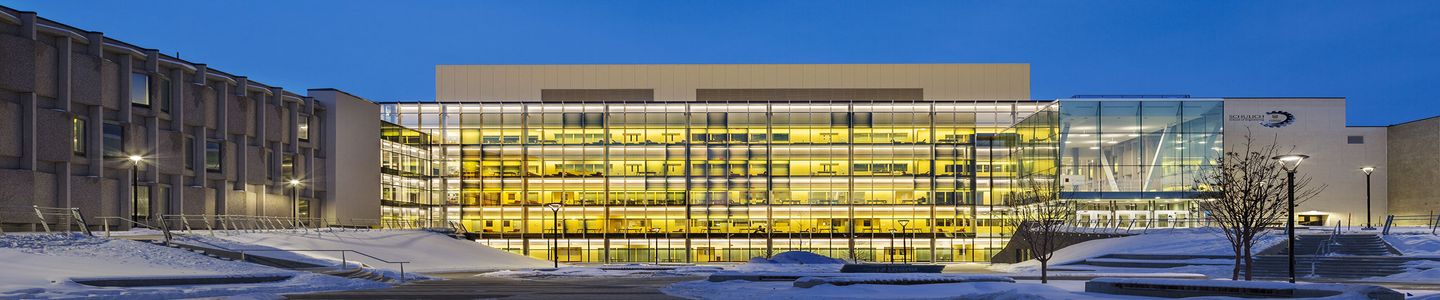
The University of Calgary’s main campus spans 200 hectares in northwest Calgary, with the Schulich School of Engineering located in modern, purpose-built facilities featuring the innovative Schulich Studio learning space. Students engage in hands-on learning through design projects, laboratories, and collaborative problem-solving in a state-of-the-art environment. The Foothills Campus, one kilometer south, houses the Cumming School of Medicine and veterinary facilities, creating an interdisciplinary research community.
Engineering students participate in a common first year, taking 10 core courses covering mathematics, physics, chemistry, and engineering principles with the same cohort of peers. This structure builds strong friendships and study groups, particularly beneficial for Indian students transitioning to Canadian educational norms. The class block system ensures students share schedules, reducing social isolation and facilitating knowledge-sharing. Students join design teams including the award-winning Solar Car Team, the Robogals mentorship program, and custom vehicle projects.
The campus hosts 400 student clubs spanning academic, cultural, recreational, and cultural interests. Indian students find vibrant communities through the Indian Students’ Association, cultural festivals celebrating Diwali and Holi, and shared religious spaces. Athletics facilities include the Olympic Oval (the fastest ice in the world), gyms, pools, climbing walls, and outdoor recreation centers. Students receive 10 percent discounts on rentals at the Outdoor Centre for hiking, skiing, and camping equipment, enabling affordable exploration of the Canadian Rocky Mountains and Banff National Park.
Calgary offers a safe, affordable, and welcoming environment for international students, with a cost of living approximately 20-30 percent lower than Toronto or Vancouver. The city is Canada’s energy and innovation hub, with major corporate offices from Shell, TC Energy, Suncor, and tech startups creating abundant internship and networking opportunities. For Indian students pursuing careers in energy, being in Canada’s energy capital provides unparalleled access to industry professionals and global energy discussions.
University of Calgary Energy Engineering: Career Outcomes and Graduate Placement
Graduates of the Bachelor of Science in Energy Engineering at the University of Calgary enter a robust job market with a placement rate of 96.3 percent within six months of graduation. The average entry-level salary for engineering graduates is C$70,000 annually (?49.08 lakhs), with energy engineering graduates typically earning in the C$65,000-C$75,000 range depending on employer sector and specialization. After five years of experience, engineers in energy sectors earn C$78,000-C$105,000 (?54.69-?73.63 lakhs), reflecting rapid career progression in the energy industry.
Co-operative education is integral to the Energy Engineering curriculum, with students alternating semesters between classroom study and paid internships. Co-op placements provide C$25,000-C$40,000 per four-month term (?17.53-?28.05 lakhs), allowing students to gain industry experience and offset education costs. Approximately 80 percent of co-op participants receive full-time job offers from their placement employers upon graduation, creating a direct pathway from education to employment.
Energy engineering graduates pursue careers across oil and gas operations, renewable energy development, utilities management, energy consulting, and sustainability engineering. Employers include Shell, TC Energy, Suncor, Enbridge, Equinor, and emerging renewable firms like Canadian Natural Resources and pattern Energy. Graduates also work in energy research, government policy (Natural Resources Canada, Alberta Energy Regulator), and international development organizations addressing global energy transitions.
For Indian graduates, the Post-Graduation Work Permit (PGWP) allows work in Canada for up to four years without employer sponsorship, providing time to gain Canadian experience and transition to permanent residency through Express Entry. Indian engineers with Canadian credentials and work experience qualify for skilled worker immigration pathways, with typical processing times of 6-12 months and annual salaries exceeding the threshold of C$62,000 required for most provinces. Many Indian Energy Engineering graduates establish themselves in Canada long-term, leveraging Canada’s energy sector expertise to advance global energy solutions.
University of Calgary Energy Engineering: Student Visa and Post-Study Work Pathways
Indian students entering Canada as study permit holders must demonstrate proof of financial support of at least C$20,000 (?14,02,400) in a Guaranteed Investment Certificate (GIC) to meet Canadian Immigration requirements, regardless of scholarship awards. This amount should be deposited in a Canadian bank or through an approved financial institution in India and presented at the port of entry or during visa processing. Most Indian families establish this GIC through State Bank of India, ICICI, or Axis Bank branches authorized to issue Canadian GICs.
The Canadian study permit is valid for the duration of the program plus one year, typically four years for a four-year undergraduate degree. During study, international students are permitted to work up to 20 hours per week during academic sessions and full-time during designated breaks, allowing supplementary income of C$3,000-C$5,000 per year. International student tuition fees are substantially higher than domestic fees; however, many provinces, including Alberta, offer work-study and part-time employment within campus facilities at wages of C$15-C$18 per hour.
Upon graduation, all international students, including Indians, are eligible for the Post-Graduation Work Permit (PGWP), an open work permit valid for up to four years matching the program length. Unlike traditional work permits, the PGWP does not require employer sponsorship, allowing graduates to work for any employer in any field and location within Canada. This flexibility is critical for Indians building Canadian work experience and establishing credentials for permanent residency applications.
Indian graduates who work in Canada for 12 months post-graduation qualify for Express Entry under the Federal Skilled Worker Program, with processing times of approximately six months and a Comprehensive Ranking System (CRS) cutoff typically around 450 points. Those earning above C$62,000 annually (the skilled worker threshold) with Canadian work experience and Language Benchmark Level 7 in English (IELTS 7.5 or TOEFL 100) have strong pathways to permanent residency. Full permanent residence including family sponsorship rights can be achieved within three to five years of program completion.
University of Calgary Energy Engineering: University Rankings and Program Comparison
The University of Calgary ranks 211th globally in the QS World University Rankings 2026 and 200th in the Times Higher Education (THE) World Rankings 2026, making it a top-200 research university globally. In Canada, UCalgary ranks in the top 10 for engineering programs. The Schulich School of Engineering specifically ranks among Canada’s top three engineering schools, competing directly with the University of Toronto, University of Waterloo, and University of British Columbia (UBC) for engineering talent and research funding.
For energy and environmental engineering specializations, the University of Calgary’s subject ranking in the QS Rankings for Engineering and Technology places it in the 251-300 band globally. However, within Canada, Calgary holds a unique position as the nation’s energy capital, with unmatched industry partnerships in oil and gas, renewable energy, and energy transition research. Compared to peer universities, this proximity to the energy sector provides distinct advantages for internship placement and career trajectory.
Peer energy engineering programs in Canada include: University of Alberta (Edmonton), which offers chemical, petroleum, and mining engineering with strong research in unconventional resources; University of Waterloo, Canada’s top engineering program with 41,000+ undergraduate engineers; and University of British Columbia (Vancouver), Canada’s second-ranked engineering school with emphasis on environmental and renewable systems. University of Calgary differentiates through its location, energy sector partnerships, and co-operative education model.
| University | Global Rank (QS 2026) | Canadian Rank | Engineering Strength | Tuition (Int’l, CAD) |
|---|---|---|---|---|
| University of Waterloo | 150 | 1st | Largest co-op program (5 work terms) | C$50,000-C$65,000 |
| University of British Columbia | 175 | 2nd | Renewable energy & sustainability focus | C$42,000-C$48,000 |
| University of Alberta | 205 | 3rd | Petroleum & chemical engineering depth | C$34,000-C$38,000 |
| University of Calgary | 211 | Top 10 | Energy capital advantage; industry partnerships | C$36,000 |
The University of Calgary Energy Engineering program offers exceptional value: lowest tuition among top-10 Canadian engineering schools, strong placement outcomes, and unparalleled access to the energy industry. For Indian students balancing cost and quality, Calgary provides the optimal combination of affordable tuition, direct energy sector exposure, and a welcoming multicultural environment.
Frequently Asked Questions: University of Calgary Energy Engineering for Indian Students
1. Is the IELTS 6.5 requirement for Energy Engineering different from other engineering programs at Calgary?
No, the English language requirement is consistent across all University of Calgary undergraduate programs. IELTS 6.5 (minimum 6.0 in each band), TOEFL 83 (iBT) or 580 (PBT), PTE 59, or Duolingo 110 are required for all international students. Energy Engineering does not have separate language requirements. Indian students typically achieve IELTS 6.5-7.0 through coaching in major metros within 3-4 months of preparation.
2. Can I work part-time as an international student while studying Energy Engineering at Calgary?
Yes, study permit holders are authorized to work up to 20 hours per week during academic sessions and full-time during designated breaks (May-August, December-January). Most international students work on-campus at the library, recreation center, or student services at C$15-C$17 per hour, earning C$4,000-C$8,000 per year. This income significantly offsets living expenses while providing Canadian work experience valued by employers.
3. What is the co-operative education component of Energy Engineering, and is it mandatory?
The co-operative education pathway (co-op) is integrated into the Energy Engineering curriculum but participation is elective. Students completing the co-op option alternate semesters between classroom and paid work placements with engineering firms, utilities, and energy companies. Co-op terms pay C$25,000-C$40,000 per four-month placement. Most energy engineering students elect co-op for the combination of industry experience, work visa sponsorship, and direct pathway to full-time employment post-graduation. Non-co-op students graduate after four years; co-op students typically graduate after 4.5-5 years.
4. How does the common first-year engineering structure benefit students transitioning from the Indian education system?
Energy Engineering requires completion of a common engineering first year alongside all engineering disciplines at Calgary. This foundational year covers calculus, physics, chemistry, mechanics, and basic engineering design with classroom and laboratory components. The structure is specifically designed for students from diverse educational backgrounds, including India. Students take courses in blocks with the same cohort, building peer support networks essential during the transition. By year two, students specialize in Energy Engineering with dedicated courses in thermodynamics, fluid mechanics, electrical systems, and renewable energy technologies.
5. What are the pathways to permanent residency after completing Energy Engineering at Calgary?
Upon graduation, international students, including Indians, receive a four-year Post-Graduation Work Permit (PGWP). After 12 months of work experience in Canada, graduates qualify for Express Entry under the Federal Skilled Worker Program. Energy engineering occupations (NOC codes 2241, 2243) are in-demand occupations in Canada. Applicants with Canadian education, 12+ months work experience, IELTS 7.5, and annual salary above C$62,000 typically score 450+ points on the Comprehensive Ranking System and receive permanent residency invitations within 6-12 months. Permanent residents can sponsor family members after three years and apply for citizenship after three years of permanent resident status.
Important Alert
- Application Deadline for Spring 2027 Intake - Feb 15, 2027
Tuition Fees
| Year | 1st Year Fees |
|---|---|
| Tuition Fees | $28198 (CAD 40283) |
Other Expenses
| Head | Avg Cost Per Year |
|---|---|
| Housing | $11536 (CAD 16480) |
| Books and supply | $420 (CAD 600) |
Previous Year Tuition Fees
| Year | 1st Year Fees |
|---|---|
| 2024 | $25330 (CAD 36186) |
| 2023 | $24595 (CAD 35136) |
| 2021 | $11649 (CAD 16642) |
Important Dates
| Event | Application Date |
|---|---|
| Application Deadline for Spring 2027 Intake | Feb 15, 2027 |
Scores Required
Required Document List
Complete Application
Application Fee
Official Transcripts
English Language Requirements
A copy of the Passport


Do you think the Rankings are wrong ? Report Here
Key Resources for Your Study Abroad Journey


Course Guides
BTech in Canada: Fees 2024, Top Colleges, Placements & Salaries
Top Undergraduate Courses in Canada: Fees 2024, Top Colleges, Admissions, Placements & Salaries
Career and Placement after Course
As an Energy Engineer, students will have global opportunities to work across the full energy life cycle in
- extraction
- production
- conversion
- refining
- transmission
- distribution
- reclamation including alternative energy
Scholarship Grants & Financial Aids
| Name | Scholarship Per Student | Level of Study | Type | |
|---|---|---|---|---|
| Calgary Senator Stan Waters Memorial Scholarship | Scholarship per student$ 3,500/Yr$5,000 | Level Of StudyBachelor | TypeCollege-Specific | |
| Trajan and Florica Nitescu Scholarship | Scholarship per student$ 2,198/Yr$3,140 | Level Of StudyBachelor | TypeCollege-Specific | |
| B.J. Seaman Scholarship | Scholarship per student$ 1,540/Yr$2,200 | Level Of StudyBachelor | TypeCollege-Specific | |
| Schulich School of Engineering Scholarship | Scholarship per student$ 3,500/Yr$5,000 | Level Of StudyBachelor | TypeCollege-Specific | |
| Engineering Students Society Memorial Award | Scholarship per student$ 917/Yr$1,310 | Level Of StudyBachelor | TypeAwards | |
| BP Canada Energy Group ULC Bursary in EPLM 2023 | Scholarship per student$ 1,527/Yr$2,181 | Level Of StudyBachelor | TypeCollege-Specific |
Similar Programs
| Program | Important Date | Total Fees | Median Exams Score | Action |
|---|---|---|---|---|
Application Deadline for Fall 2027 Intake (1st Apr 2027) | USD 28,198 /Yr CAD 40,283 /Yr |
| ||
-- | USD 31,337 /Yr CAD 44,767 /Yr |
|


Do you think the Dates are wrong ? Report Here

interested in this College ?
Follow & Share this college to get information about admission.



Comments
Found 9 Comments
To be eligible for admission to the MSc in Data Science program at the University of Calgary, you must have a four-year bachelor's degree in a relevant field such as computer science, mathematics, statistics, or engineering, with a minimum GPA of 3.0 out of 4.0, or an equivalent degree from a recognized institution. And if English is not your first lamguage, a valid ELP test score is necessary.
You can apply for the M.Eng Chemical and Petroleum Engineering proghram of the University of Calgary if you have completed a four-year bachelor’s degree in chemical or petroleum engineering with a minimum GPA of 3.0 on a scale of 4.0. You must submit your official transcripts as well as a copy of your cetificate. International students must also submit a valid ELP test score unless eligible for exemption.
The University of Calgary offers Masters programs in various academic disciplines. However, the university does not offer masters program in International Relations.