



Content Curator
Double circulation system is used by the majority of mammals, including humans. Heart is the most important organ for blood circulation, and twofold circulation is a good way to circulate blood since it is efficient. The key distinction is that blood travels in two directions: one for oxygenated blood and another for deoxygenated blood. As a result, the term "double circulation" was coined.
Also read: Open and Closed Circulatory System
| Table of Content |
Key Terms: Double Circulation System, Pulmonary Circulation, Systemic Circulation, Blood Circulation
What is Double Circulation?
[Click Here for Sample Questions]
Double Circulatory System refers to that human circulatory system that is responsible for circulation of blood in the heart in two specific directions of which one is dedicated for the oxygenated blood and the other one is dedicated for the deoxygenated blood. The two circuits involved in this Double Circulatory System are:
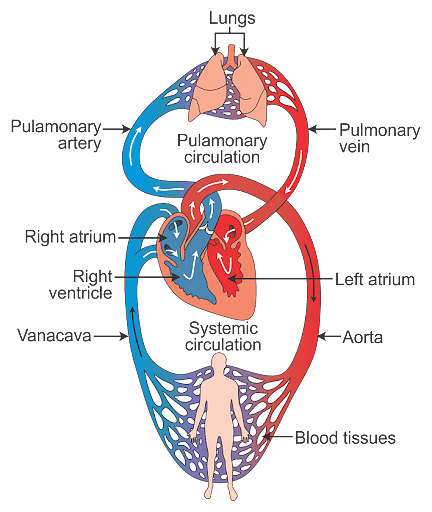
Double Circulation
- Pulmonary Circuit that lies between the Heart and Lungs
- Systemic Circuit that lies between Heart and other organs
The human heart is a four-chambered heart that includes the Left Atria, Left Ventricles, Right Atria and Right Ventricles. Furthermore, the pulmonary artery and vein connect the heart to the lungs. The two pathways Pulmonary Circulation and Systemic Circulation, through which blood flows in double circulation have been explained further in a detailed manner:
Read Also: Circulatory System
Pulmonary Circulation
Within the Pulmonary Circulation, the transfusion of blood takes place from the right atrium to the left atrium. The pulmonary artery is responsible for collecting the blood from the right ventricle and taking it to the lung for further oxygenation.

Pulmonary Circulation
As soon as the purification procedure gets over, the oxygenated blood is taken back to the left atrium via a pulmonary vein that is carried to the left ventricles. Lastly, the left ventricles of the heart pump out the oxygenated blood to the aorta for the systemic circulation further.
This step also includes the gaseous exchange in the lungs wherein Carbon Dioxide diffuses blood into the air in the alveoli and Oxygen diffuses the air in the alveoli in the blood which is thereafter absorbed by haemoglobin in the red blood cells.
Systemic Circulation
Within the Systemic Circulation, the oxygenated blood is carried from the left ventricles into the tissue capillaries. It majorly focuses on the transferring of oxygen-rich blood to the aorta for circulating it further into the different parts of the body.
The deoxygenated blood – which is high in carbon dioxide – is then collected by veins and venules from various areas of the body. Following this, the deoxygenated blood is then sent back to the superior vena cava and then to the right atrium. The right atrium transports blood to the right ventricle for pulmonary circulation after receiving deoxygenated blood.

Systemic Circulation
Read Also: Antibodies
Human Heart's Blood Circulation: Double Circulation
[Click Here for Sample Questions]
The blood in this system is referred to as a double circulatory system because it passes through the heart twice per circuit. The left pump circulates fresh oxygenated blood throughout the body, while the right pump circulates deoxygenated blood to the lungs, where it is oxygenated and returned to the heart.
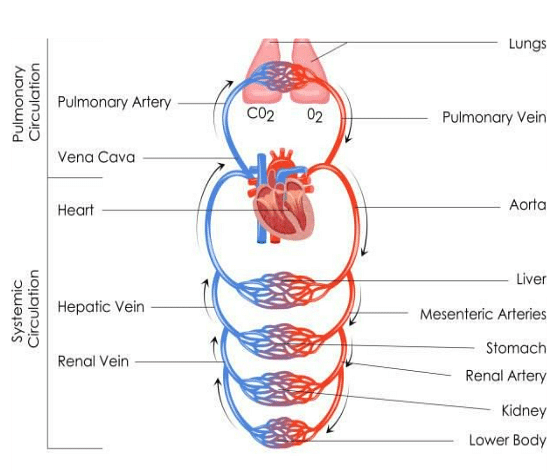
Human Heart’s Blood Flow/ Circulation
It is necessary in humans to separate oxygenated and deoxygenated blood because it improves the efficiency of the circulatory system and aids in the maintenance of a constant body temperature. The role of the four chambers of the human heart in the Double Circulation process has been listed below for your convenience:
- LEFT VENTRICLE: Receives oxygenated blood from left atrium through Bi-Cuspid Valve.
- LEFT ATRIUM: It receives the oxygenated blood from the lungs that includes oxygen.
- RIGHT VENTRICLE: Receives the deoxygenated blood that consists of CO2 from the right atrium through tricuspid valve.
- RIGHT ATRIUM: Receives the deoxygenated blood that consists of CO2 as a by-product of Metabolism.
The blood vessels that help in the Double Circulation process are as follows:
- PULMONARY VEIN: Responsible for carrying the oxygenated blood.
- VENA CAVA: Responsible for taking the deoxygenated blood.
- PULMONARY ARTERY: Responsible for taking the deoxygenated blood to the lungs.
- AORTA: Responsible for carrying the oxygenated blood to body tissues.
Also Read: Blood Circulatory System
Things to Remember
- The heart is the most important organ for blood circulation, and twofold circulation is a good way to circulate blood since it is efficient. The key distinction is that blood travels in two directions: one for oxygenated blood and another for deoxygenated blood. As a result, the term "double circulation" was coined.
- Double Circulatory System refers to that human circulatory system that is responsible for circulation of blood in the heart in two specific directions of which one is dedicated for the oxygenated blood and the other one is dedicated for the deoxygenated blood.
- Within the Pulmonary Circulation, the transfusion of blood takes place from the right atrium to the left atrium.
- Within the Systemic Circulation, the oxygenated blood is carried from the left ventricles into the tissue capillaries.
- The blood in this system is referred to as a double circulatory system because it passes through the heart twice per circuit. The left pump circulates fresh oxygenated blood throughout the body, while the right pump circulates deoxygenated blood to the lungs, where it is oxygenated and returned to the heart.
- It is necessary in humans to separate oxygenated and deoxygenated blood because it improves the efficiency of the circulatory system and aids in the maintenance of a constant body temperature.
Sample Questions
Ques. Why is the Blood Circulation in the Human Heart referred to as Double Circulation? (2 Marks)
Ans. The human heart's blood circulation is referred to as a double circulatory system since it circulates twice per circuit. The left pump pumps oxygenated blood throughout the body, whereas the right pump pumps deoxygenated blood to the lungs, where it is oxygenated and returned to the heart. Separating oxygenated and deoxygenated blood is vital in humans because it increases the circulatory system's efficiency and aids in the maintenance of a steady body temperature.
Ques. Why is Double Circulation important for blood circulation in the body? (2 Marks)
Ans. Both oxygenated and deoxygenated blood are kept separate in the double circulation system. As a result, this circulation guarantees that the body receives a constant supply of oxygen while also increasing body efficiency. This is also one of the reasons mammals are able to keep their body temperatures constant. A third portal system is available to boost circulation efficiency in addition to the double circulation.
Ques. Differentiate between Single Circulation and Double Circulation? (4 Marks)
Ans. The differentiation between Single and Double Circulation has been listed in the table below for your reference:
| SINGLE CIRCULATION | DOUBLE CIRCULATION |
|---|---|
| The blood flow takes place only once through the heart during a single cycle of passage through the body. | The blood flow takes place twice through the heart during a single cycle of passage through the body. |
| Only Fishes’ body face Single Circulations | All vertebrates except fishes have Double Circulation |
| Venous Blood only is passed through the heart | The heart pumps blood that is mixed, oxygenated, or venous. |
| Gill capillaries limit blood flow, so the body receives blood at a low pressure, slowing oxygen delivery to the cells. | Blood flows at a higher pressure in birds and mammals, making it more efficient. This increases the rate at which food and oxygen are delivered to the cell, as well as the rate at which waste is removed. |
Ques. Is it necessary to separate the deoxygenated blood from the oxygenated blood? If yes, why? (3 Marks)
Ans. Warm-blooded creatures like birds and mammals need to separate oxygenated and deoxygenated blood because they maintain a steady body temperature by cooling themselves when they are in a hotter environment and warming their bodies when they are in a colder environment.
As a result, these animals require more oxygen for cellular respiration in order to produce enough energy to keep their body temperature constant. As a result, they must distinguish between oxygenated and deoxygenated blood in order to improve the efficiency of their circulatory system and maintain a consistent body temperature.
Ques. What are the advantages of Double Circulation? Explain. (2 Marks)
Ans. During a cardiac cycle, blood flows through the heart twice in humans. Once the deoxygenated blood has passed through the heart, it is replaced with oxygenated blood. This is referred to as "double circulation." Deoxygenated blood is totally isolated from oxygenated blood in this scenario. As a result, this is a very effective way of blood circulation. Animals with double circulation have a higher level of activity, are more energetic, and are warm-blooded. Mammals and birds both have double circulation.



Comments