



Content Curator
Hydrosulfuric Acid is commonly known as hydrogen sulphide. It is a colourless chemical compound, with the odour of rotten eggs. In nature, it is a poisonous, flammable and corrosive chemical compound. Hydrosulfuric Acid is also known as chalcogen hydride gas, sewer gas and stink damp. Hydrosulfuric Acid (H2S) is found in natural gases, volcanic gases, hot springs and crude petroleum. A small amount of Hydrosulfuric Acid is produced by the human or animal body to utilise as a signalling molecule. Hydrosulfuric Acid is a chemical compound that can be produced in absence of oxygen gas by microbial breakdown of organic matter.
Also Read: Difference between Elements and Compounds
| Table of Content |
Key Terms: Hydrogen sulphide, acids, gas, natural gas, hydrogen, sulphur, organic compound, nomenclature.
Structural Formula of Hydro Sulfuric Acid
[Click Here for Sample Questions]
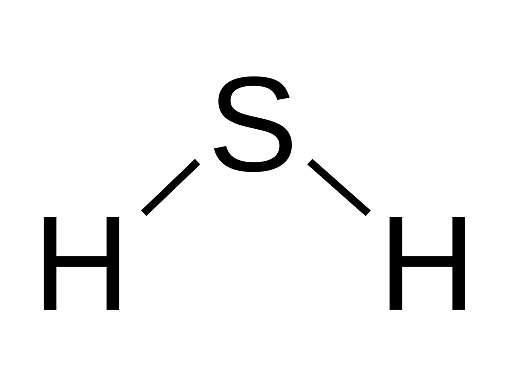
A Chemical compound formed by one element of non-metal and other elements of hydrogen is known as binary acids. It is also known as hydracids. Similar nomenclature is used for all the binary acids.
‘Hydro” followed by anionic part and ‘ic’ at the end. In simple words 'Hydro' is used as a prefix to the anionic non-metal and ‘ie’ is as a suffix. In the end, acid is used as the last word.
According to this nomenclature hydrogen is ‘Hydro’ anionic as sulphur and ‘ic’ in the end, so Hydro-sulfur-ic acid. The chemical formula derived from the rules of nomenclature is H2S.
The structure of Hydrosulfuric Acid (H2S) is similar to that of Water (H2O). Hydrosulfuric Acid is not as polar as water because sulphur is not as electronegative as water. Due to this, the intermolecular forces between H2S is lower as compared to H2O. Which results in low melting and boiling point of water.
Also Read: Classification of Organic Compounds
Properties of Hydro Sulfuric Acid
[Click Here for Sample Questions]
| Molecular Formula | H2S |
| Molecular Weight | 34.08 g/mol |
| Melting Point | -82 °C |
| Boiling Point | -60 °C |
| Density | 1.363 g/cm3 |
| Hydrogen Bond Donor Count | 1 |
| Hydrogen Bond Acceptor Count | 1 |
| Rotatable bond count | 0 |
| Physical Description | Gas |
| Colour | Colourless |
| Odour | Rotten eggs |
| Taste | Sweetish taste |
| Form | Colourless Gas |
| Solubility | Glycerol, gasoline, crude oil |
| Solubility in water | 3.980g/100ml water at 20 °C |
Production of Hydro Sulfuric Acid
[Click Here for Sample Questions]
As we know Hydrosulfuric Acid is present in large quantities in natural gas and sour gas. It is very easy to separate Hydrosulfuric Acid from these gases. It can also be obtained by treating the hydrogen gas with molten sulphur at 450°C. Some of the common lab preparation of Hydrosulfuric Acid can be produced by treating ferrous sulphide with strong acid in a Kip generator:
FeS + 2HCl → FeCl2 + H2S
It can also be produced by heating sulphur with solid organic compounds or by using hydrogen in the process of reducing sulfurized organic compounds.
Uses of Hydro Sulfuric Acid
[Click Here for Sample Questions]
- Hydrosulfuric Acid is used in petrochemical operations to prevent walls of reactors operating at high temperatures.
- It is used in the production of organic compounds with thiol function.
- Production of elemental sulphur and sulphuric acid is obtained from Hydrosulfuric Acid
- Hydrosulfuric Acid is used as an agricultural disinfectant.
- It is used in industries like pharmaceuticals, dyes, leather and pesticides.
- It is used in nuclear power plants to produce heavy water.
Things to Remember
- Hydrosulfuric Acid is commonly known as hydrogen sulphite.
- It is colourless gas, but smells like rotten eggs.
- It is poisonous, flammable and corrosive in nature.
- Chemical formula: H2S
- It is commonly found in natural gases, volcanic gases, hot springs and crude petroleum.
- Used for various purpose
- Used in Pharmaceuticals, dyes, leather and pesticides
- At nuclear plants
- Agriculture disinfectant
- It is heavier than air. So settle down at the bottom.
Sample Questions
Ques. What is the formula for Hydrosulfuric Acid? (1 Marks)
(a) H2S c. H2SO3
(b) H2SO4 d. HSO3
Ans. a. H2S
The formation of chemical bonds when atoms of different elements combine together are known as compounds. It is easy to understand when the compounds are named. ‘Hydro” followed by anionic part and ‘ic’ at the end. In simple words 'Hydro' is used as a prefix to the anionic non-metal and ‘ie’ is as a suffix. According to this nomenclature hydrogen as ‘Hydro’ anionic as sulphur and ‘ic’ in the end, so Hydro-sulfur-ic acid. The chemical formula derived from the rules of nomenclature is H2S.
Ques. Give any five properties of Hydrosulfuric Acid? (5 Marks)
Ans.
| Boiling Point | -60 °C |
| Melting Point | -82 °C |
| Solubility in water | 3.980g/100ml water at 20 °C |
| Colour and odour | Colourless and smells like rotten eggs |
| Molecular Weight | 34.08 g/mol |
Ques. Give uses of Hydrosulfuric Acid? (3 Marks)
Ans. Hydrofluoric acid is used in:
- As agriculture Disinfectant
- Used in nuclear plants to produce heavy water.
- Used in industries like leather, dyes, pharmaceuticals and pesticides.
- Production of elemental sulphur and sulfuric acid.
- Used in petrochemical industries to prevent walls of reactors operating at high temperature.
Ques. Where can we find Hydrosulfuric Acid? (2 marks)
Ans. Hydrosulfuric Acid is also known as chalcogen hydride gas, sewer gas and stink damp. Hydrosulfuric Acid (H2S) is found in natural gases, volcanic gases, hot springs and crude petroleum. A small amount of Hydrosulfuric Acid is produced by the human or animal body to utilise as a signalling molecule.
Ques. Hydrosulfuric Acid and Safety? (2 Marks)
Ans. Hydrosulfuric Acid also known as hydrogen sulphide is highly flammable, toxic and corrosive. It is heavier than air so at less ventilated places it can accumulate at the bottom and can be easily detected. It smells like rotten eggs and the smell is very strong. Therefore, it is easy to deduct the presence of hydrosulfuric acid before it's too late.
Ques. Give examples of preparation of Hydrosulfuric Acid in the laboratory. (3 Marks)
Ans. Hydrosulfuric Acid is commonly found in natural gas and sewage and it is easy to remove the gas from these places. On the other hand Hydrosulfuric Acid can be prepared in laboratories few examples can be like:
When we pass hydrogen gas through molten sulphur at 430 °C, in this reaction we get Hydrosulfuric Acid.
Treatment of ferrous sulphide with strong acid like HCl
FeS + 2HCl → FeCl2 + H2S
Ques. What is binary compound and how to derive nomenclature for binary acids? (5 Marks)
Ans. A chemical compound formed by one element of hydrogen and another element with non-metal is called binary acid. It is also known as hydro acid.
Nomenclature for binary acids.
Binary acid nomenclature consist of four parts:
- Prefix: due to use of Hydrogen in this compound, ‘hydro’ is used as prefix
- It is followed by anionic which will be nonmetal
- This is the last part of the first word.’ic’ is used as a suffix for the binary acids.
- The last part is the second word : ‘acid’
Example: consider Hydrogen sulphite
Chemical name: Hydrosulfuric Acid (H2S)
Word Breakdown: Hydro-sulfur-ic acid
- Prefix ‘Hydro’
- Non metal: sulphur
- Suffix ‘ic’
- Second word: Acid
Ques. Compare Water and Hydrosulfuric Acid. (2 Marks)
Ans. Formula for Water and Hydrosulfuric acid is almost similar. But Hydrosulfuric acid is not as polar as that of water. Because, compared to oxygen, sulphur is not more electronegative. This results in a relatively lower melting point and boiling point than that of water because of weaker intermolecular forces.
Ques: Hydrosulfuric Acid is intoxicant in nature. True or False (1 Mark)
Ans. False
Explanation: Even at lower concentration hydrosulfuric acid gas can be toxic. In certain conditions it can corrode the walls of manholes, sewers, concrete and steel structures. It reacts and forms sulphuric acids. It also corrodes the internal walls of the pump station. Hydrogen sulphide is naturally toxic, corrosive and flammable.
Ques: H2S is reduced to generate sulphuric acid. True or False (1 Mark)
Ans: False
Explanation: Hydrosulfuric acid (H2S) is nor reduced but oxidised in the production of sulphuric acid. It can also be converted to sulphuric acid at sewer headspace on the server wall. Oxidation is the process of removing hydrogen or any electropositive element or adding oxygen or any electronegative element
Ques. which of the following substance used to prepare H2S ? (2 Marks)
(a) Sulphur trioxide (c) sulphur dioxide
(b) Iron sulphide (d) All of the above
Ans. b- Iron sulphide
Explanation: It can also be obtained by treating the hydrogen gas with molten sulphur at 450°C. Some of the common lab preparation of Hydrosulfuric Acid can be produced by treating ferrous sulphide with strong acid in a Kip generator,
FeS + 2HCl → FeCl2 + H2S
Iron sulphide is also known as ferrous sulphide.
Ques: Hydrosulfuric acid is formed under which condition. ( 1 Mark)
(a) Anaerobic (c) Aerobic
(b) Anaerobic and Aerobic (d) All above
Ans. a- Anaerobic
Explanation: Hydrosulfuric is formed under Anaerobic conduction. Microbial breakdown of organic matter is caused by sulphate reducing microorganisms, this process is known as anaerobic digestion. Hydrosulfuric Acid is a chemical compound that can be produced in absence of oxygen gas by microbial breakdown of organic matter. It is naturally produced in swamps and sewers.
Also Read:



Comments