



Content Curator
Amino acids aid in the formation of the proteins that make up your body's tissues and organs. Aside from this vital function, several amino acids have additional roles. Methionine is an amino acid that helps body make several essential compounds. These substances are necessary for your cells to function properly. Methionine is often taken by mouth for a variety of reasons, including liver problems and viral infections.
Read Also: Cysteine
| Table of Content |
Key Terms: Amino acid, protein, sadenosyl methionine, seleno methionine, zinc methionine
Methionine
[Click Here for Sample Questions]
Methionine (L-methionine) is an important amino acid found in food as well as a dietary supplement. Methionine is a non-essential amino acid that is required for normal human tissue growth and repair. It cannot be synthesized by the body and must be received through the food, making it an "essential" amino acid. L-methionine (naturally occurring) and D-methionine are the two forms of methionine. Each has the identical chemical make-up as the other, but the molecules are mirrored. DL-methionine is a combination of the two.

Methionine is a sulfur-containing amino acid that enhances skin tone and suppleness, as well as promotes healthy hair and nail strength. 1 Methionine supplements are routinely used to treat a variety of illnesses and ailments, although there is little scientific evidence to back up their efficacy in treating diseases. Methionine, on the other hand, is regarded to be useful in treating Tylenol (acetaminophen) intoxication.
Also Read:
Methionine Structure
[Click Here for Sample Questions]
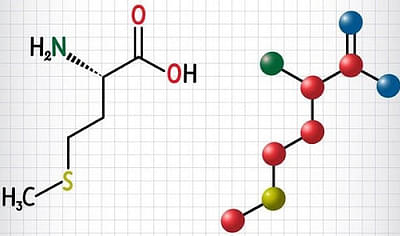
Methionine is one of two amino acids that include sulphur, the other being cysteine. Every amino acid has a similar structure, which consists of an amino group attached to one hydrogen, a chain group on one side, and a carboxyl group on the other. Furthermore, the molecular formula for methionine is C5H11NO2S, while its side chain is C2H7S.
Dietary Sources of L Methionine
[Click Here for Sample Questions]
Meat, eggs, Brazil nuts, and sesame seeds all have high levels of L-methionine. It can also be found in the seeds of several plants and cereals. The majority of vegetables and fruits, on the other hand, have low levels of L-Methionine.
Maximum legumes are low in L-Methionine because they have a low protein content. Furthermore, protein sources that are deficient in L-Methionine are not considered complete proteins. Because of this, racemic Methionine is sometimes added to pet meals. Individuals must also avoid overcooking or boiling dietary products containing L – methionine. Because amino acids are extremely soluble, they may cause damage to their structure.
Read More: Amino Acids
Sources of Food Containing Methionine
[Click Here for Sample Questions]
| Source of Food | g/100g |
|---|---|
| Eggs | 3.204 |
| Flour from sesame seeds | 1.656 |
| Rice | 0.052 |
| Beef | 0.749 |
| Parmesan and shredded cheese | 1.114 |
| Bacon | 0.593 |
| Peanuts | 0.309 |
| Tuna fish | 0.755 |
| Wheat germ | 0.456 |
| Oats | 0.312 |
| Seeds of chia | 0.588 |
| Chickpea | 0.253 |
| Chicken | 0.801 |
| Yellow Corn | 0.197 |
| Pork | 0.564 |
Read Further: Cysteine
Uses of Methionine
[Click Here for Sample Questions]
- Nourishing the hair, skin, and nails
- Protecting the cells from pollutants
- Facilitating the detoxifying process
- Slowing down the aging process
- Helping with the absorption of other nutrients (such as selenium and zinc)
- Aiding in the excretion of heavy metals (such as lead and mercury) helps the body’s excretion process
- Preventing excess fat buildup in the liver (by acting as a lipotropic agent—one that facilitates the breakdown of fats)
- Lowering cholesterol levels by increasing lecithin production in the liver
- Breast cancer is a disease that affects women. Higher levels of methionine in the diet have been linked to a lower risk of breast cancer.
- Colon cancer is a type of cancer that affects the intestine Consuming a diet high in methionine and folate, a type of vitamin B, appears to lower the risk of colon cancer. This appears to be especially true for persons who have a family history of colon cancer or who consume a lot of alcohol.
- Birth disorders of the neural tube During pregnancy, women who consume more methionine appear to have a lower chance of neural tube birth defects.
- Parkinson's disease is a neurological disorder. Early evidence suggests that taking L-methionine by mouth for up to 6 months improves Parkinson's disease symptoms such as tremors, inability to control movements, and rigidity.
Also Check:
Side Effects of Methionine
[Click Here for Sample Questions]
Nausea and vomiting, as well as tiredness and irritability, are all possible side effects of methionine. Nausea is said to be a common side effect of methionine supplements. Methionine overdose can result in brain damage and death. Homocysteine, a molecule linked to heart disease, can be elevated by methionine. Methionine may potentially aid tumor growth in some cases.
Things to Remember
[Click Here for Sample Questions]
- Hair greying is linked to a decrease in L-methionine. Hydrogen peroxide builds accumulated in hair follicles as a result of the loss of this amino acid, resulting in a lack of tyrosinase action. As a result, it causes hair discoloration.
- Herpes simplex virus (HSV), pancreatitis, asthma, schizophrenia, depression, liver function, shingles, human papillomavirus, allergies, and urinary tract infections are just a few of the problems that methionine can help with.
- It can be given to dogs as a supplement to help prevent the formation of kidney stones.
- It works as a pesticide against caterpillars (giant swallowtails) that wreak havoc on orange crops.
Check More: Serine Amino Acids Structure and Uses
Sample Questions
Ques. Is methionine safe for infants or children?
Ans. Methionine may be safe for infants and children, but it is always best to consult with a doctor before using it. Infants given two to five times the typical amount of methionine showed evidence of decreased growth in research published in the Journal of Nutrition, but no long-term harmful consequences were found.
Ques. How can Someone Reduce Methionine?
Ans. Glycine helps the liver eliminate Methionine from the body, hence it can be used to lower Methionine levels. Furthermore, a person can limit Methionine intake by eating a high number of fruits and a low amount of legumes, nuts, and grains.
Ques. What happens when you have too much methionine?
Ans. Intellectual incapacity and other neurological difficulties are common in people with hypermethioninemia, as are delays in motor abilities such as standing or walking, sluggishness, muscle weakness, liver problems, strange facial features, and a boiled cabbage-like odor in their breath, sweat, or urine.
Ques. Is methionine bad for the liver?
Ans. Too much homocysteine has been related to an increased risk of heart and blood vessel disease. Cirrhosis and other liver diseases: Methionine may aggravate the liver disease. Methylenetetrahydrofolate reductase (MTHFR) insufficiency is a genetic condition. It alters the body's homocysteine metabolism.
Ques. Should I take methionine?
Ans. Methionine is an amino acid that helps your body make several essential compounds. These substances are necessary for your cells to function properly. Some experts urge increasing methionine intake because of the crucial chemicals it creates. For normal health, you need 800-1,000 mg of methionine per day, depending on your body weight. Deficiency is unlikely because most people get enough methionine from their diet. Methionine can be found in meat, fish, dairy products, and other high-protein diets.
Ques. Does methionine cause weight gain?
Ans. The 0.1 percent methionine in the HFCD diet reduced body weight growth compared to the control diet. The HFCD diet with 0.2 percent methionine, on the other hand, produced similar body weight gains to the control diet, whereas the HF diet with more than 0.4 percent methionine produced similar body weight gains to the HF diet.
Ques. Do all proteins start with methionine?
Ans. However, methionine does not have to be the first amino acid in every protein. This first amino acid is frequently eliminated during protein processing. A methionine-charged tRNA attaches to the translation start signal. No aminoacyl tRNA binds to the empty A site when the ribosome reaches a stop codon.
Ques. Does methionine have side effects?
Ans. Methionine can induce headaches, heartburn, nausea, diarrhea, dizziness, and sleepiness in some persons. Methionine should not be used to treat oneself. Self-medicating with methionine by mouth or intravenously is POSSIBLY UNSAFE. Methionine overdose can result in brain damage and death. Excessive methionine consumption can raise homocysteine levels in the blood, especially if you're deficient in other nutrients like folate (6).
Biology Related Links:



Comments