



Content Curator
There might have been times when have been doing frequent rounds of washroom or your excretory system not allowing you to sit sometimes. Well, there’s a scientific and biological reason behind called Micturition. Sometimes doing frequent rounds of the bathroom can be an indication of an unhealthy body. Let’s dive deep into the process of Micturition.
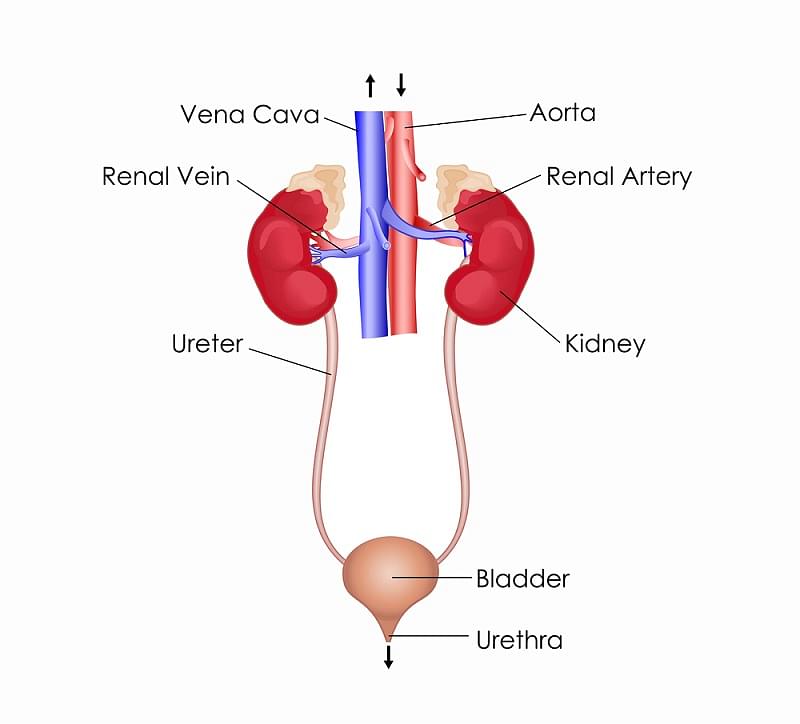
Micturition is the excretion of urine from the urinary bladder with the help of Kidney, Urethra, Bladder. The organs that help in Micturition are Urethra, Urinary Bladder, Ureter, Kidney, Renal Artery, Renal Vein.
Read Also: Kidney Infection
| Table of Content |
Key Takeaways: Micturition, Kidney, Urethra, Urinary Bladder, Storage Stage, Voiding Stage, etc.
Micturition
[Click Here for Sample Questions]
Micturition is a process by which human excreta (especially urine) is carried out of the body. The excretory system has two ureters, pair of kidneys, a urethra, and a urinary bladder as its key components. In humans, the process of urination or micturition is carried out by the kidneys and the bladder. The kidney filters the urine. It involves taking urine from the bladder and transporting it to the other side of the body. The urine is stored in the bladder and its other organs until it's expelled.

Micturition
Check Important Notes for Counter Current Mechanism
Stages of Micturition
[Click Here for Sample Questions]
Micturition is carried out in two stages:
- Storage Stage
- Voiding Stage
Storage Stage
The urinary bladder acts as a storage space for urine. The urine that comes from the kidneys is transported through the ureters to the bladder. The thin muscular tubes that come from the kidneys extend towards the wall of the bladder. The opening of the ureters into the bladder is not guarded by any muscle or other organs. Instead, the muscle that's responsible for controlling the movement of urine allows the bladder to relax and accommodate more urine.

Storage Stage
Read Also: Excretory Products and their Elimination
Voiding Stage
When the bladder is filled with urine, it triggers the muscles and nerves, stimulating the brain in response giving a signal to urinate. The muscles that control the movement of the bladder and the urethra are known as the external and internal urethral sphincters. These two sets of muscles are responsible for the smooth and controlled movement of the bladder.

Voiding Stage
Read More: Difference Between Egestion and Excretion
Mechanism
[Click Here for Sample Questions]
The micturition reflex is influenced by the brain, spinal cord, and peripheral ganglia. The dorsal system and the spinothalamic tract are afferent routes from the bladder to the brain. For micturition and storage, efferent routes from the brain to the bladder exist, requiring the bladder and an outlet (bladder neck, urethra, and urethral sphincter). Sympathetic fibers from the T11-L2 spinal segments go through the hypogastric nerve and connect to the bladder and urethra via the B3 and A1 adrenergic receptors, respectively.

Micturition Reflex – Neural Control of Urination
The M3 muscarinic receptor connects parasympathetic preganglionic fibers from the S2-S4 spinal segments to the bladder wall via the pelvic nerves. Through the nicotinic cholinergic receptor, somatic motor nerves from the S2-S4 motor neurons go through the pudendal nerves and connect to the striated muscles of the external urethral sphincter.
The B3 receptors are triggered to relax the bladder smooth muscle, whereas the A1 receptors are stimulated to contract the urethral smooth muscle to retain urine when sympathetic postganglionic neurons release noradrenaline (NA). The M3 receptors are triggered when the parasympathetic postganglionic axons produce acetylcholine (ACh), which causes the bladder smooth muscle to contract (detrusor). The nicotinic receptors are triggered to contract the external urethral sphincter when the somatic axons release ACh. These paths hence lead to urination.
Also Read:
Problems Associated with Micturition
[Click Here for Sample Questions]
The process of Micturition can face many problems that can be due to Psychological or physical trauma. The problem sometimes can be associated with a disease. Some of the disorders or Micturition Process are.
Detrusor Instability: the detrusor muscles present within the walls of the bladder, which are responsible for the contraction of the bladder, begin to contract without any specific reason. This results in frequent urination.
Urinary Retention: Urinary Retention is the problem of not being able to fully empty the bladder and hence some urine is left behind every time making the possibility of urinating more frequently. the cause of this problem can be urethra blockage, nerve problem, and weak bladder muscles.
Treatment of Micturition
[Click Here for Sample Questions]
- One of the best possible ways of treating Micturition-related problems is by the way of Anticholinergic that mostly helps in detrusor hyperreflexia.
- Mirabegron, Alpha-blockers, Topical estrogen are some of the medications that a doctor can recommend in case of Micturition disorders.
- Some doctors might even suggest surgeries and therapies in extreme cases.
Also Check:
Things to Remember
[Click Here for Sample Questions]
- Micturition is the excretion of urine from the urinary bladder with the help of Kidney, Urethra, Bladder.
- The micturition process is carried in two stages: The storage stage and the Voiding stage.
- Urine is produced in the kidney and collected in the nephron or uriniferous tubule before flowing into the ureter.
- Smooth muscular contraction is facilitated by the ureter muscle.
- The urinary bladder is a hollow, elastic, and muscular organ that stores pee.
- Urine is a waste removal system that removes waste from the body (mainly nitrogenous wastes if stored in the body may be very harmful and may even cause death)
Read Also: Difference Between Secretion and Excretion
Questions and Answers
Ques. During micturition, the urinary bladder_______and the urethral sphincter _______. (2 Marks)
Ans. Contracts, Relaxes.
Ques. What is Micturition? (2 Marks)
Ans. Micturition is the excretion of urine from the urinary bladder with the help of Kidney, Urethra, Bladder. The micturition process is divided into two phases: storage and voiding.
Ques. Explain the role of Renin-Angiotensin in kidney function control. (4 Marks)
Ans. When the Juxta-Glomerular Apparatus (JGA) is activated by a decrease in glomerular blood flow, it releases renin. In blood, renin transforms angiotensinogen into angiotensin I and further into angiotensin II which is a vasoconstrictor that increases the blood pressure in the glomerular and hence increases the Glomerular Filtration Rate (GFR). Also, the angiotensin II stimulates the adrenal cortex to secrete aldosterone, which in turn causes the reabsorption of water and sodium from the distal parts of the tubule resulting in an increase in the GFR and blood pressure, this is process is termed as RAAS (Renin Angiotensin Aldosterone System)
Ques. Describe micturition and excretory system abnormalities. (4 Marks)
Ans. The nephrons produce urine, which is then transmitted to the urinary bladder, which stores it until the CNS generates a signal. The signal is generated by the stretching of the urinary bladder caused by urine filling, which is reacted to by the stretch receptors on the bladder walls, which send signals to the CNS. The CNS sends motor impulses to the bladder muscles and simultaneously relaxes the urethral sphincter, resulting in urine release. Micturition is the term for the act of discharging urine. The disorders are as follows:
- Renal failure can result in an accumulation of urea in the blood, a disease known as uraemia, which can lead to kidney failure. Urea is removed from these patients through haemodialysis and, eventually, kidney transplantation.
- Renal calculi are insoluble or crystallized salt stones that occur within the kidney.
- Glomerulonephritis- an inflammation of the kidney's glomeruli.
Ques. What are the Functions of Kidney? (3 Marks)
Ans. Some of the functions of the kidney are as follows.
- Kidney filters blood.
- The kidney helps in producing urine.
- The kidney regulates electrolytes, Water and maintains the acidic base content of the blood.
- The kidney helps in removing excess foreign particles from the body.
Ques. What is a Urinary Bladder and what are its functions. (2 Marks)
Ans. The urinary bladder is a storage house of urine that is situated in the lower abdominal cavity. The main function of the Urinary bladder is to store urine until released from the urethra.
Ques. What does the Excretory System of Human Consists of? (2 Marks)
Ans. The Huma Excretory system consists of Urethra, Urinary Bladder, Ureter, Kidney, Renal Artery, Renal Vein.
Ques. Draw a schematic diagram of the Human Excretory System (4 Marks)
Ans. Following is a diagram of the Human Excretory System.
Biology Related Links:



Comments