



Exams Prep Master
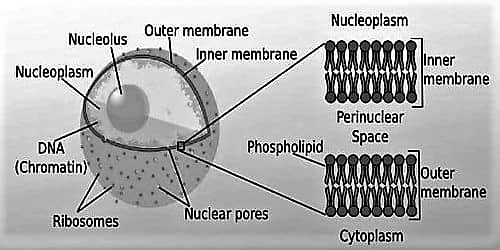
The nucleoplasm consists of chromosomes and nucleoli. Many substances such as nucleotides and enzymes, which direct the activities of the nucleus, are dissolved in the nucleoplasm. The soluble, liquid part of the nucleoplasm is called the nucleus or nuclear hyaloplasm. Nucleoplasm is also called nuclear milk or karyoplasm. Nucleoplasm is located inside the nucleus and resembles the cytoplasm in some respects. Here, we will discuss nucleoplasm along with some important questions.
What is Nucleoplasm?
Nucleoplasm is a type of protoplasm, consisting of water, a combination of various molecules, and molten ions, with a nuclear membrane or a nuclear envelope that closes it. In addition, the nucleoplasm is a highly sticky and adhesive fluid that supports chromosomes and nucleoli. The soluble and liquid part of the nucleoplasm is known as the nuclear hyaloplasm. Nucleoplasm has a complex chemical structure. Nuclear protein is its main ingredient, but it also contains other organic and rare organisms such as nucleic acids, enzymes, and minerals.

A nuclear matrix or nucleoplasm consists of a nucleolus and chromatin. The nucleoli are circles present in the file nucleoplasm. The contents of the nucleolus continue to evolve the nucleoplasm as it is not a structure bound to the membrane. It's a site for ribosomal RNA synthesis. Nucleoli are large and very numerous present in cells that actively activate protein synthesis.
The video below explains this:
Nucleoplasm Detailed Video Explanation:
Function of Nucleoplasm
- The primary function of the nucleus is to store and synthesize most of the human genome, but the major function of nucleoplasmic proteins also plays and regulates DNA-dependent functions and cellular processes, such as transcription, RNA cutting, RNP assembly, DNA modification, and repetition.
- The nucleus of many cells contains a building block inside a nuclear membrane. Like the cytoplasm found inside a cell, the nucleus contains the nucleoplasm, also known as the karyoplasm.
- A nucleoplasm is a type of protoplasm composed mainly of water, a combination of diverse molecules, and dissolved ions. Completely sealed inside a nuclear membrane or nuclear envelope.
- It is a highly dense adhesive that supports chromosomes and nucleoli. The soluble, liquid part of the nucleoplasm is referred to as the nuclear hyaloplasm.
- Other functions of the nucleoplasm include the maintenance of the nucleus and its structure, as well as the transport of ions, molecules, and other elements essential for cell turnover and function. Containing high water content, the nucleoplasm also contains many complex substances.
Components of Nucleoplasm
The various components of necleoplasm are as follows:
Nucleolus
The nucleolus is an important production center within the cell/nucleus. This is where ribosomal subunits and ribosomal RNA are made. From there, RNA and proteins are released from the entire nucleus, where they can be processed into ribosomes.
Ribosomes are proteins that make up proteins, one of the most important functions of any cell. Special proteins enter the nucleus through the nuclear pores to create the necessary subunits. Those ribosomal subunits then emerge from the nucleus through the nuclear pores, where they can be synthesized and begin to function. The nucleolus is considered to be the largest organelle in the nucleus, and the survival of eukaryotes would not have been possible without this critical, or small, space in the nucleus.

Nucleotides
The nucleoplasm is also home to nucleotides, which are essential for building DNA and RNA. DNA polymerase is one of the enzymes present in the nucleoplasm that can resemble the proper nucleotide bases to form long strands of DNA.
Although there are many different nucleotides, they all contain a nucleobase, a phosphate group, and deoxyribose sugar. The 5 maximum commonplace nucleotide bases are adenine, guanine, cytosine, thymine, and uracil. These bases can be assembled and made methylated to form a wide variety of complex foundations that make up our basic genetic material.

Chromatin
Chromatin is a complex of DNA, RNA, and protein molecules that specialize in reducing and binding long strands of DNA so that they can penetrate well into a cell. Chromatin not only helps regulate DNA folding, but also ensures that strands are not tied together, and helps to improve the efficiency of cellular duplication. They are also closely linked with the processes of genetic stress, DNA transcription, and gene expression.
There are chromatin proteins called histones, the context in which DNA is wound. There are forms of chromatin: euchromatin and heterochromatin. The first was a very small chromatin form that aids in DNA transcription to mRNA products. Heterochromatin, on the other hand, is more abundant and more commonly found in the nucleoplasm of the nucleus and is involved in the later stages of cell proliferation. Heterochromatin is found only in eukaryotes, while euchromatin is found in both prokaryotes and eukaryotes.

Nuclear Matrix
The nuclear matrix is found throughout the nucleus, and it plays an important role in maintaining the formation of the nucleus. Often compared to the cell cytoskeleton, this network of fibers helps to organize the genetic material in the cell and accelerates the process of cell duplication, and helps to produce genes.

Enzymes
The nucleoplasm is packed with various enzymes needed to stimulate the reaction of the nucleus. Perhaps the maximum vital enzyme found in the nucleoplasm is DNA polymerase because it enables to build of DNA from nucleotide bases, however, the nucleoplasm is also home to enzymes such as hexokinase, 6-P-gluconic dehydrogenase, TPN- linked isocitric dehydrogenase, P-fructokinase, glucose-6-P dehydrogenase, and glutamic dehydrogenase. The precise functions of all these enzymes extend beyond the scope of this but rest assured that our cells would not be able to function properly without these enzymes entering and leaving the nucleus.
Also Read:
Difference between Nucleoplasm and Cytoplasm
| Nucleoplasm | Cytoplasm |
|---|---|
| It is found inside the nucleus. | It is found inside the cell and outside the nucleus. |
| It is enclosed by the nuclear envelope. | While it is enclosed by the cell membrane. |
| It is highly gelatinous structure. | It is gelatinous structure. |
| It is found only in eukaryotic cells. | Whereas it is found in all the known cells. |
| It is composed of nucleolus and chromatin. | The inclusions and organelles are suspended in the cytoplasm. |
| It is released at the time of nuclear division and is refilled after the nuclear envelope forms. | It divides during cytokinesis. |
Things to Remember
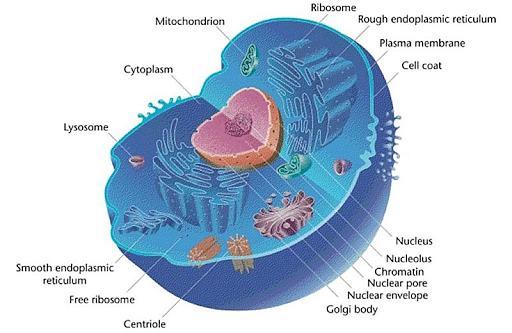
- Nucleoplasm is a type of protoplasm, consisting of water, a combination of various molecules, and molten ions, with a nuclear membrane or a nuclear envelope that closes it. In addition, the nucleoplasm is a highly sticky and adhesive fluid that supports chromosomes and nucleoli.
- The nucleus of many cells contains a building block inside a nuclear membrane. Like the cytoplasm found inside a cell, the nucleus contains the nucleoplasm, also known as the karyoplasm.
- A nucleoplasm is a type of protoplasm composed mainly of water, a combination of diverse molecules, and dissolved ions. Completely sealed inside a nuclear membrane or nuclear envelope.
- The nucleolus is an important production center within the cell/nucleus. This is where ribosomal subunits and ribosomal RNA are made. From there, RNA and proteins are released from the entire nucleus, where they can be processed into ribosomes.
- The nucleoplasm is also home to nucleotides, which are essential for building DNA and RNA. DNA polymerase is one of the enzymes present in the nucleoplasm that can resemble the proper nucleotide bases to form long strands of DNA.
- Chromatin is a complex of DNA, RNA, and protein molecules that specialize in reducing and binding long strands of DNA so that they can penetrate well into a cell. Chromatin not only helps regulate DNA folding, but also ensures that strands are not tied together, and helps to improve the efficiency of cellular duplication.
- The nucleoplasm is packed with various enzymes needed to stimulate the reaction of the nucleus.
Also Read:
Sample Questions
Ques: What is Nucleoplasm? (2 marks)
Ans: Nucleoplasm is a type of protoplasm, which consists of water, a combination of different molecules, and dissolved ions. Surrounded by using a nuclear membrane or a nuclear envelope. Nucleoplasm acts as a stopper for organelles within the nucleus. In addition, it helps to maintain the structure and structure of the nucleus.
Ques: What are the two main differences between Cytoplasm and Nucleoplasm? (2 marks)
Ans: The two main differences between a Cytoplasm and Nucleoplasm is that the Cytoplasm is found in every cell but nucleoplasm is found in eukaryotic cells. The second difference is that cytoplasm is found outside a nucleus whereas nucleoplasm is found within a nucleus.
Ques: Is Nucleoplasm present in animal cells? (1 mark)
Ans: Yes, Nucleoplasm is present in animal cells too. It works as a cytoplasm of the cell.
Ques: What is nucleoplasm made of? (2 marks)
Ans: Nucleoplasm is made of complex chemical composition which mainly consists of nuclear protein but also consists of inorganic and organic compounds like proteins, enzymes, nucleic acid, and minerals.
Ques: Who discovered Nucleoplasm? (1 mark)
Ans: Nucleoplasm was first termed by Edouard Van Beneden in 1875.
Ques: What are the functions of nucleoplasm? (4 marks)
Ans: The functions are as follows:
- The primary function of the nucleus is to store and synthesize most of the human genome, but the major function of nucleoplasmic proteins also plays and regulates DNA-dependent functions and cellular processes, such as transcription, RNA cutting, RNP assembly, DNA modification, and repetition.
- The nucleus of many cells contains a building block inside a nuclear membrane. Like the cytoplasm found inside a cell, the nucleus contains the nucleoplasm, also known as the karyoplasm.
- A nucleoplasm is a type of protoplasm composed mainly of water, a combination of diverse molecules, and dissolved ions. Completely sealed inside a nuclear membrane or nuclear envelope.
- It is a highly dense adhesive that supports chromosomes and nucleoli. The soluble, liquid part of the nucleoplasm is referred to as the nuclear hyaloplasm.
Ques: What are the components of nucleoplasm? (2 marks)
Ans: The various components of nucleoplasm are:
- Nucleolus
- Nucleotides
- Chromatin
- Nuclear matrix
- Enzymes
Ques: How does nucleolus play an important role in the production centre in the cell? (4 marks)
Ans: The nucleolus is an important production center within the cell/nucleus. This is where ribosomal subunits and ribosomal RNA are made. From there, RNA and proteins are released from the entire nucleus, where they can be processed into ribosomes.
Ribosomes are proteins that make up proteins, one of the most important functions of any cell. Special proteins enter the nucleus through the nuclear pores to create the necessary subunits. Those ribosomal subunits then emerge from the nucleus through the nuclear pores, where they can be synthesized and begin to function. The nucleolus is considered to be the largest organelle in the nucleus, and the survival of eukaryotes would not have been possible without this critical, or small, space in the nucleus.
Ques: Write the importance of chromatin in nucleoplasm. (5 marks)
Ans: Chromatin is a complex of DNA, RNA, and protein molecules that specialize in reducing and binding long strands of DNA so that they can penetrate well into a cell. Chromatin not only helps regulate DNA folding, but also ensures that strands are not tied together, and helps to improve the efficiency of cellular duplication. They are also closely linked with the processes of genetic stress, DNA transcription, and gene expression.
There are chromatin proteins called histones, the context in which DNA is wound. There are forms of chromatin: euchromatin and heterochromatin. The first was a very small chromatin form that aids in DNA transcription to mRNA products. Heterochromatin, on the other hand, is more abundant and more commonly found in the nucleoplasm of the nucleus and is involved in the later stages of cell proliferation. Heterochromatin is found only in eukaryotes, while euchromatin is found in both prokaryotes and eukaryotes.



Comments