



M.Phil from University Of Oxford [OXFORD UNIVERSITY], Oxford - Fees & Admission Details 2026


University of Oxford fees for Indian students range from £39,320 (INR 51.10 Lakhs) for MPhil International Relations to £66,690 (INR 86.70 Lakhs) for MSc Financial Economics, with the Oxford MBA at £94,120 (INR 1.22 Crore) per year. The MSc Advanced Computer Science, MSc Financial Economics, and Oxford MBA are among the key postgraduate programmes listed for Indian students.
Oxford University offers undergraduate and postgraduate programmes with annual tuition fees varying by course. For 2027-28 entry, postgraduate fees range from £39,320 to £94,120, while undergraduate fees range from £46,210 to £66,580 per year.
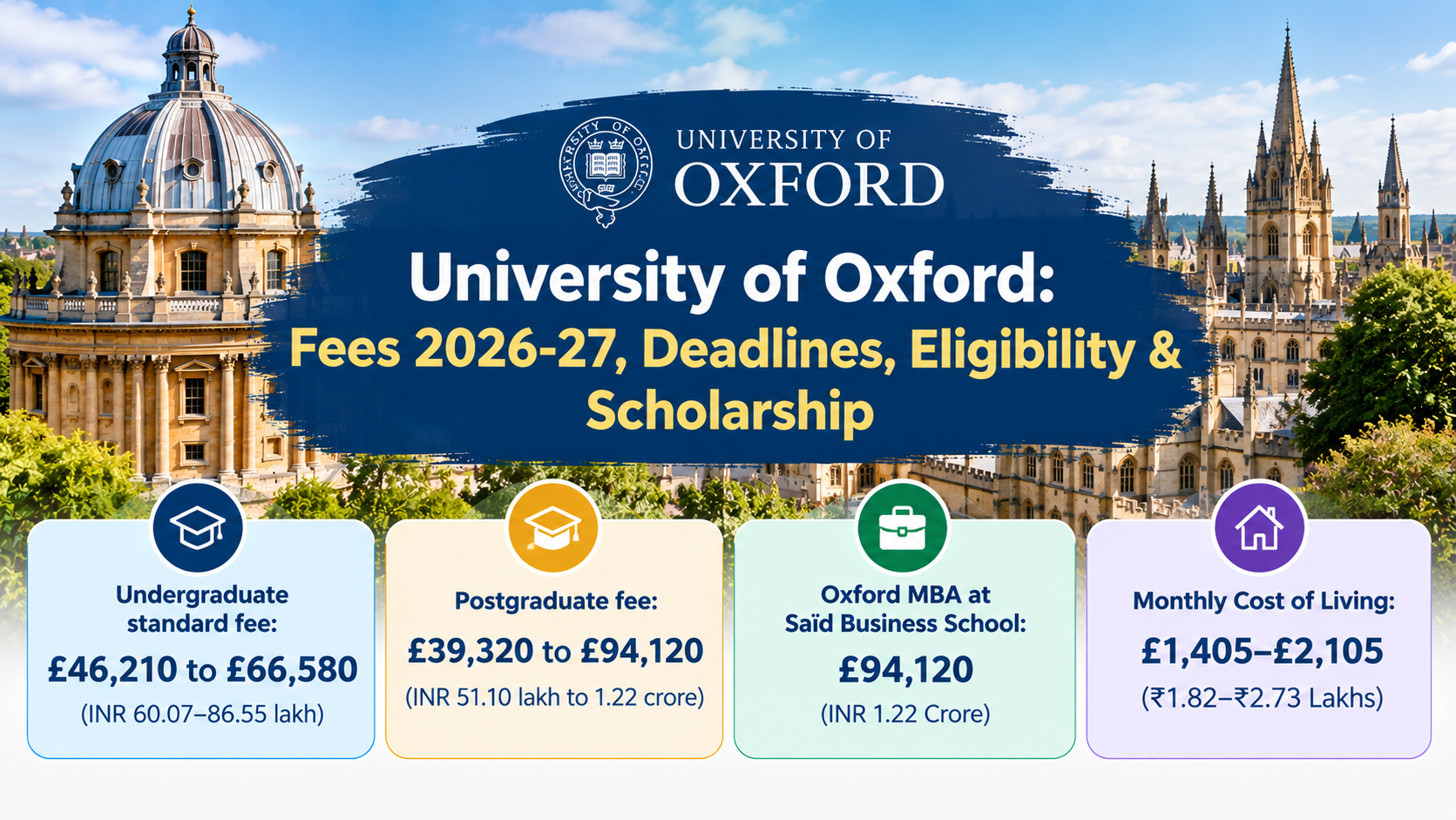
- Undergraduate standard fee: £46,210 to £66,580 (INR 60.07–86.55 lakh)
- Postgraduate fee: £39,320 to £94,120 (INR 51.10 lakh to 1.22 crore)
- Oxford MBA at Saïd Business School: £94,120 (INR 1.22 Crore)
- Monthly Cost of Living: £1,405–£2,105 (INR 1.82– INR 2.73 Lakhs)
- Weidenfeld-Hoffmann and Ertegun Scholarships: Full course fees + at least £20,780 (INR 26.86 Lakhs) annual living grant
Exchange rate used throughout the article: 1 GBP = INR 129.90.
Read More: University of Oxford Admissions Deadlines and Requirements for Indian Students
Table of Contents
- University of Oxford Tuition Fees by Programme
- Cost of Living in Oxford for University of Oxford Indian Students
- University of Oxford Scholarships for Indian Students
- Hidden Costs of Studying at University of Oxford
- Fee Saving Strategies for University of Oxford Indian Students
- University of Oxford Fees FAQs
University of Oxford Tuition Fees by Programme
For 2027-28, Oxford’s listed tuition fees range from £39,320 (INR 51.10 lakh) to £94,120 (INR 1.22 crore) for the postgraduate programmes, while undergraduate fees range from £46,210 (INR 60.07 lakh) to £66,580 (INR 86.55 lakh) per year.
University of Oxford Postgraduate Fees
For 2027-28, Oxford’s listed postgraduate tuition fees range from £39,320 (INR 51.10 lakh) for MPhil International Relations to £94,120 (INR 1.22 crore) for the MBA.
| Programme | Duration | 2027-28 Annual Tuition | Annual Tuition (INR) |
|---|---|---|---|
| MPhil International Relations | 21 months | £39,320 | INR 51.10 lakh |
| MSc Advanced Computer Science | 12 months | £46,350 | INR 60.26 lakh |
| MSc Social Data Science | 10 months | £40,730 | INR 52.95 lakh |
| MSc Financial Economics | 9 months | £66,690 | INR 86.70 lakh |
| MBA | 1 year | £94,120 | INR 1.22 crore |
Explore: Bachelor of Surgery [BM BCh] Medicine
University of Oxford Undergraduate Fees
For 2027-28, Oxford’s undergraduate tuition fees for the listed programmes range from £46,210 (INR 60.07 lakh) to £66,580 (INR 86.55 lakh) per year.
| Programme | Duration | Annual Tuition (GBP) | Annual Tuition (INR) |
|---|---|---|---|
| BA English Language and Literature | 3 years | £46,210 | INR 60.07 lakh |
| BA Computer Science | 3 years | £66,580 | INR 86.55 lakh |
| Bachelor of Engineering Science | 4 years | £66,580 | INR 86.55 lakh |
| BA Economics and Management | 3 years | £46,210 | INR 60.07 lakh |
| BA Biomedical Sciences | 3 years | £58,280 | INR 75.76 lakh |
Explore More:
Cost of Living in Oxford for University of Oxford Indian Students
The University estimates monthly living costs at £1,405 to £2,105 (INR 1.82 to 2.73 Lakhs) for 2026/27, translating to an annual living budget of INR 21.90 to 32.81 Lakhs for a twelve-month PG programme. Oxford is more expensive than most UK cities except London due to constrained housing supply.
| Particulars | Cost of Living (GBP/month) | Cost of Living (INR/month) | Notes for Indian Students |
|---|---|---|---|
| Accommodation | £825–£990 | INR 1.07–1.29 Lakhs | Includes rent only. Actual cost depends on whether you live in college accommodation or private housing. |
| Food | £315–£545 | INR 40,912–INR 70,785 | Covers groceries and meals. Costs vary based on eating habits and lifestyle. |
| Personal Items | £160–£310 | INR 20,781–INR 40,263 | Includes clothing, toiletries, and other day-to-day personal expenses. |
| Social Activities | £50–£130 | INR 6,494–INR 16,884 | Covers leisure activities and entertainment. Spending varies by individual lifestyle. |
| Study Costs | £35–£90 | INR 4,546–INR 11,689 | Includes books, stationery, printing, and other academic expenses. |
| Other Expenses | £20–£40 | INR 2,598–INR 5,195 | Miscellaneous day-to-day expenses not covered in other categories. |
| Total Estimated Monthly Cost | £1,405–£2,105 | INR 1.82–INR 2.73 Lakhs | Oxford's official estimate for a single full-time student living in Oxford. Applicable to both undergraduate and postgraduate students. |
Source: University of Oxford Living Costs Estimate 2026/27, published by Student Registry.
Note: Priority college accommodation for graduates is guaranteed only for the first year at most colleges. From Year 2, DPhil students often move to private rentals at £900 to £1,400 per month (INR 1.17 to 1.82 Lakhs), a 30 to 40% premium over college rent. Budget for this step-up if your programme runs longer than 12 months.
Also read: Cost of Living in the UK for Indian Students
University of Oxford Scholarships for Indian Students
University of Oxford offers several scholarships for international students across undergraduate and postgraduate study. For Indian students, major postgraduate awards can cover full tuition fees and provide living-cost support, while some scholarships are specifically linked to the MBA, Humanities, or leadership-focused programmes.
| Scholarship | Award Value | Eligibility | 2027 Deadline |
|---|---|---|---|
| Weidenfeld-Hoffmann Scholarship | Full course fees + at least £20,780/year living grant | Eligible international applicants with public leadership goals | Relevant Dec/Jan course deadline |
| Ertegun Graduate Scholarship | Full course fees + £20,780/year living grant | Eligible Humanities Master's/DPhil applicants | Early January 2027 |
| Skoll Scholarship | Full MBA tuition + living-cost support | MBA applicants with a strong social entrepreneurship background | 6 January 2027 |
| Saïd Business School Scholarships | Varies by scholarship | Eligible MBA/MFE applicants | Varies |
| Oxford-Pershing Square Graduate Scholarship | Full Oxford fees + living grant | Applicants to the 1+1 MBA programme | 6 January 2027 |
Source: University of Oxford Fees, Funding and Scholarships portal; Rhodes Trust India Selection Committee.
Hidden Costs of Studying at University of Oxford
For the October 2027 intake, the most time-sensitive hidden cost is the IHS (Immigration Health Surcharge), paid in full upfront with your Student Visa application 3 to 8 weeks before travel, at £776 per year of course length. Budget for these below.
| Expense | Official Cost | Notes for Indian Students |
|---|---|---|
| UK Student Visa Fee | £558 (INR 72,147) | One-time fee payable when applying for a UK Student visa from outside the UK. |
| Immigration Health Surcharge (IHS) | £776 (INR 1 Lakh) per year of visa permission | Paid in full at the time of the visa application. For example, a two-year course typically requires at least £1,552, while longer programmes will incur a higher upfront payment depending on the visa duration granted. |
| Academic Dress (Gown and Sub Fusc) |
Varies | Oxford requires students to wear academic dress for matriculation, examinations and certain formal ceremonies. Students may purchase, hire or borrow the required items, so the University does not publish a standard cost. |
| Course Materials and Personal Expenses | Varies | These are included within Oxford's published living cost estimate. The actual amount depends on your programme and personal spending habits. |
Note: Indian families most often forget the IHS upfront amount. It is not billed in instalments and cannot be paid annually; the full £776 per programme year is due at the Student Visa application.
Explore: How to Apply to UK Universities as an Indian Student
Fee Saving Strategies for University of Oxford Indian Students
For the October 2027 intake, the highest-urgency saving lever is the Rhodes India application closing 31 July 2026, worth roughly INR 65 to 85 Lakhs across two years. The four levers below cover post-Rhodes savings that stack on top.
- Apply for college accommodation from Year 1: College housing sits 30 to 40% below Oxford private rentals, saving INR 4 to 7 Lakhs per year versus off-college studios
- Claim Section 80E on your education loan: Full interest deduction on Indian education loans is available for up to 8 years post-graduation, with no upper cap on the amount claimed
- Choose shorter programmes where available: MSc Financial Economics runs 9 months versus 12 for other Master’s, saving 3 months of living costs (INR 6.84 to 8.19 Lakhs)
- Use the UK Graduate Route Visa post-study: Automatic 2-year post-study work rights after a Master’s (3 years after a DPhil), enabling loan repayment from UK earnings at £40,000+ (INR 51.96 Lakhs+) starting salary median
- Compare fee bands before final course choice: MPhil International Relations (£37,100, INR 48.19 Lakhs) undercuts MSc Financial Economics (£62,920, INR 81.73 Lakhs) by INR 33.54 Lakhs per year, while both feed comparable London careers
- Formal Hall over restaurants: College Formal Hall dinners at £5 to £8 (INR 650 to 1,039) undercut Oxford restaurants by 60%, saving INR 60,000 to 90,000 per year at 3 dinners per week
Tip for Indian Students: For the October 2027 intake, the single highest-value saving lever is layering scholarships. Rhodes India (deadline 31 July 2026) or Clarendon Fund (automatic with Oxford application, deadline 8 January 2027) each eliminate tuition. Stacking a JN Tata Endowment (INR 10 Lakhs, deadline 20 March 2027) on top covers living. This combination can reduce your net Oxford PG cost from INR 85 Lakhs to under INR 5 Lakhs for one year.
For October 2027 entry, Indian students should budget around INR 85 Lakhs to INR 1.11 Crore for a one-year Oxford Master’s and around INR 1.51 Crore for the MBA. A three-year undergraduate degree can cost INR 2.47 Crore, including college fees and living costs. Clarendon funding can significantly reduce the cost by covering course and college fees. For 2027 entry, the Rhodes India deadline is 23 July 2026, followed by Oxford’s course-specific deadlines between October 2026 and January 2027.
University of Oxford Fees FAQs
Ques. When are tuition instalments due at the University of Oxford?
Ans. Tuition splits into three termly instalments due at the start of Michaelmas (October), Hilary (January), and Trinity (April) terms.
Ques. Is there an application fee for the University of Oxford?
Ans. Undergraduate applications go via UCAS at £34.50 (INR 4,480) for the 2027 application cycle. Postgraduate applications carry a £75 (INR 9,743) fee per course.
Ques. Can Indian students work part-time to cover fees at the University of Oxford?
Ans. UK Student Visa allows 20 hours of part-time work per week during term and full-time during vacations. At Oxford’s minimum wage of £12.21 per hour (INR 1,586), 20 hours per week yields £244 (INR 31,696) weekly, approximately £8,000 (INR 10.39 Lakhs) over a term of 8 weeks. This covers living costs, not tuition. Full tuition still requires scholarship or loan funding.
Ques. Does University of Oxford accept Indian rupee payments?
Ans. No, tuition is charged and payable in GBP only. You transfer INR-to-GBP via SBI, HDFC, ICICI, Axis, or forex specialists like Wise. Bank-to-bank wires for tuition-scale amounts are cheaper than card-based transfers. Budget 3 to 5 working days for the transfer to clear before each termly instalment deadline.
Ques. Does University of Oxford have a January intake for Indian students?
Ans. No, Oxford runs a single annual intake in October for both UG and PG programmes across all divisions. There is no January or spring intake. Your only entry point is October, so the October 2027 intake is the current open cycle for applications closing between October 2026 and January 2027.
Popular Programs and Important Dates
| Program | Important Dates | Fees | Application Fees | Eligibility | Financial Aid |
|---|---|---|---|---|---|
MBA 1 year | Fall 2027 Stage 3 application deadline (4th Nov 2026) Fall 2027 Stage 4 application deadline (6th Jan 2027) Fall 2027 Stage 5 application deadline (15th Mar 2027) | INR 1.2 Cr/Yr GBP 94,120 /Yr | 75 | IELTS: 7.5, TOEFL: 110, GMAT: Required, Recognised Undergraduate Degree | |
Fall 2027 January application deadline (8th Jan 2027) | INR 58.8 L/Yr GBP 46,350 /Yr | 75 | IELTS: 7.5, TOEFL: 110, GPA: 3.7, First-Class Honours Degree in Computer Science or Mathematics | ||
BM BCh Medicine 6 years | Fall 2027 UCAS Oxbridge medicine deadline (15th Oct 2026) | INR 66.4 L/Yr GBP 52,360 /Yr | 29 | IELTS: 7.5, TOEFL: 110 | |
MSc Financial Economics 9 months | Fall 2027 intake Stage 1 deadline (24th Oct 2026) Fall 2027 intake Stage 2 deadline (7th Jan 2027) Fall 2027 intake Stage 3 deadline (4th Mar 2027) Fall 2027 intake rolling final deadline (31st Jul 2027) | INR 84.5 L/Yr GBP 66,690 /Yr | 75 | IELTS: 7.5, TOEFL: 110, GRE: Required, Bachelor's Degree with First-Class or Upper Second-Class Honours | |
DPhil Law 3 years | Fall 2027 intake application deadline (28th Jan 2027) | INR 41.8 L/Yr GBP 32,970 /Yr | 20 | IELTS: 7.5, TOEFL: 110, GPA: 3.7, First-Class Honours Degree in Law | |
DPhil Computer Science 3 years | Fall 2027 December round application deadline (2nd Dec 2026) Fall 2027 March round application deadline (3rd Mar 2027) | INR 46 L/Yr GBP 36,260 /Yr | 20 | IELTS: 7.0, TOEFL: 100, GPA: 3.5, First-Class or Strong Upper Second-Class Undergraduate Degree with Honours | |
DPhil Economics 3 years | Fall 2027 intake application deadline (27th Jan 2027) | INR 41.4 L/Yr GBP 32,690 /Yr | 20 | IELTS: 7.5, TOEFL: 110, GRE: Required, GPA: 3.6, First-Class or Upper Second-Class Undergraduate Degree in Economics | |
Fall 2027 November application deadline (18th Nov 2026) Fall 2027 January application deadline (28th Jan 2027) | INR 69.3 L/Yr GBP 54,650 /Yr | 75 | IELTS: 7.5, TOEFL: 110, GPA: 3.6, First-Class or Strong Upper Second-Class Honours Degree in Mathematics | ||
MSc Social Data Science 10 months | Fall 2027 November round application deadline (14th Nov 2026) Fall 2027 January round application deadline (9th Jan 2027) | INR 51.6 L/Yr GBP 40,730 /Yr | 75 | IELTS: 7.5, TOEFL: 110, GPA: 3.7, First-Class Undergraduate Degree with Honours | |
MPhil Economics 21 months | Fall 2027 intake application deadline (27th Jan 2027) | INR 44.2 L/Yr GBP 34,850 /Yr | 75 | IELTS: 7.5, TOEFL: 110, GRE: Required, GPA: 3.6, First-Class or Upper Second-Class Undergraduate Degree in Economics |
Do you think the Dates are wrong ? Report Here
Do you think the fees are wrong ? Report Here
Course Finder - Search from 50K+ courses
Popular Streams:
University of Oxford Reviews
Most Popular Tags
11 Reviews Found
Likes
- High standards of rigor in research
- Reknown professors and alumni in department
- Opportunity to network with like-minded academics and scholars
Dislikes
- Only thing I wish could be better with the department if if it could offer more scholarships to incoming students. The city has also increased cost of living since a few years. Excluding this, there are no complaints with the college.
- I have found private accommodation as my college accommodation was more expensive. I found my accommodation on the Spareroom website.
- The monthly rent is around 750GBP, including all utility bills. I suggest that students be proactive on various platforms like Facebook groups, Rightmove, and Spareroom to look at accommodations and have virtual viewings if possible.
- Feel free to ask prospective landlords all the questions that you want to. My accommodation is nearly 1km from my college. Most Indian students stay in Cowley Road.
Likes
- The University of Oxford has an immensely diverse student community. During my time there, I made friends from different disciplines and other countries, helping me engage myself in a very intercultural community.
- The coursework is very rigorous. It would prepare one for their career and helped me gain a lot of confidence since now I can deal with impromptu events or exams without stressing out since I went through the rigor of coursework at Oxford.
- There is a lot of support available to new students especially if you are struggling with mental health. I was going through homesickness and I feel the resources available helped me navigate that issue within months.
Dislikes
- I felt like transitioning into a new college life, especially for international students, needs more time to adapt. However, they might throw you directly into the coursework, which might make it stressful.
- The cost of living can be high, especially if you decide on dining in the college halls instead of cooking.
- Some of the departments are located far away which means you may have to heavily rely on transport, for eg, mine was at John Radcliffe Hospital.
-
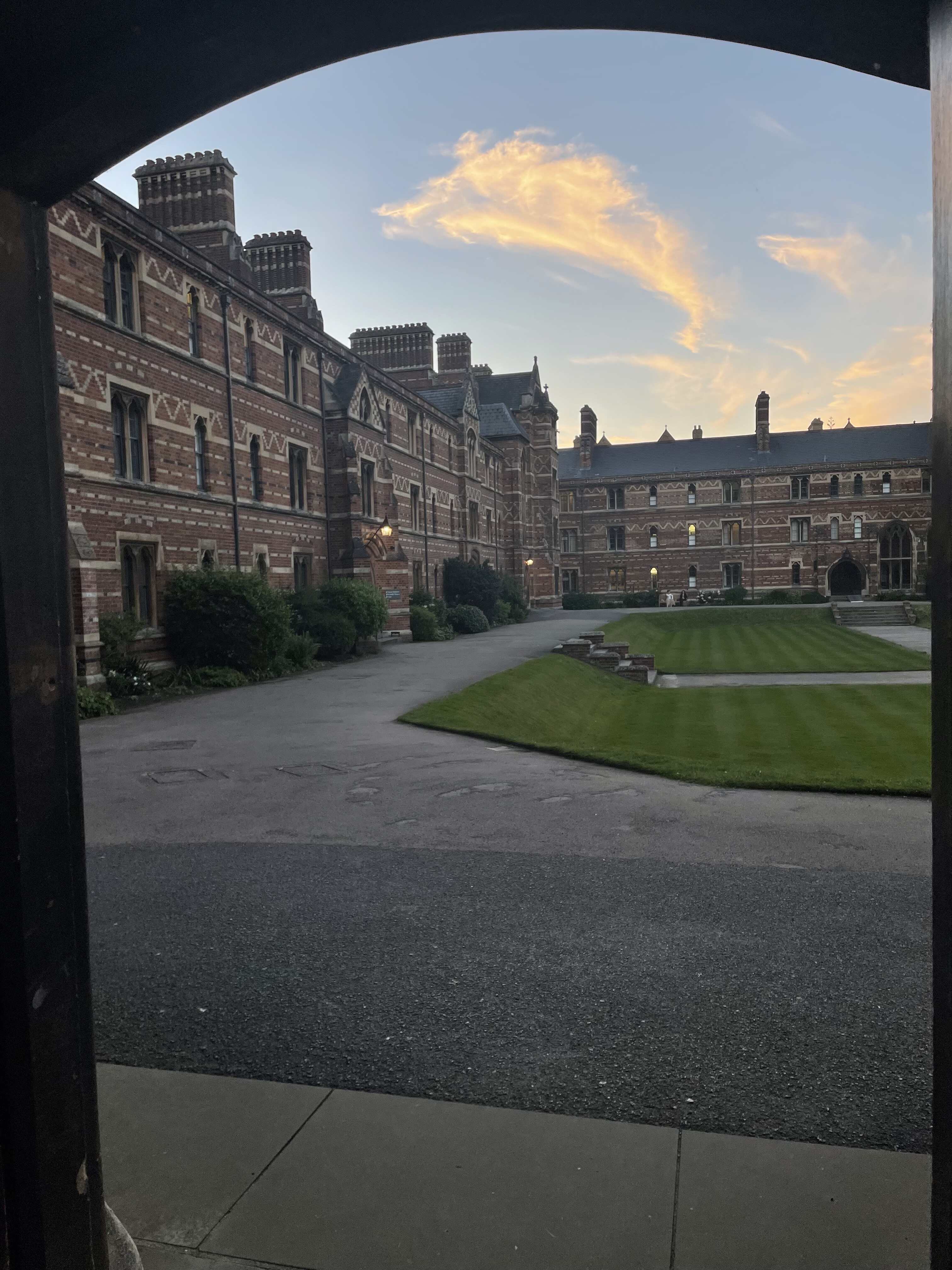
Once we are admitted to the university, we are also given a college. I was part of Keble College where the graduate assistant reached out to me to let me know of the accommodation choices available to me.
-
The monthly rent of my apartment was about 666 GBP, including all amenities and electricity covered. The structure was 1B1 in an apartment where 7 other people also resided and the only common sharing area was the kitchen.
-
I would say I had a very smooth journey when it came to securing the accommodation because the management is very efficient and gets back with a reply in a day or two.
-
My recommendation for future students would be to start the process of finding accommodation early on or as soon as you get an acceptance letter. That way you can always secure a spot for yourself within campus which will be cheaper and convenient than of-campus facilities.
-
My accommodation was about a 10 minutes walk from my department and an hour's distance by bus from my research institute.
Likes
- Faculty- To begin with, the department's faculty provides us with remarkable lectures. If we start with the online classes, we study from modules curated by our professors every semester. These modules are a blend of lectures and tasks hailing from practical experiments, refraining the lectures from becoming mundane. During the physical classes at Oxford, I realised how education could be imparted without having biases and rigidities regarding the correctness of a concept. To elaborate, in our class, no answer was wrong; it was always a different perception but not wrong. Furthermore, the lectures were usually not about theories but about the practical application of concepts that would help us become better writers.
- Cohort size- The size of the cohorts genuinely varies but does not cross 20 students and we had 4 cohorts in our batch. Particularly in my cohort, there are 14-15 students, making the entire course extremely close-knit. We not only interacted outside the course but also had a space to discuss everything we learnt. During the time we met, we spent most of the time together as a cohort, which brings me to my next point on networking.
- Networking opportunity- However, most of the networking was indeed done when we met for the course in July, the way the course is structured also provides countless networking opportunities. Let me explain: during the weekly tasks that we complete online, every student is repeatedly motivated to read and comment on the work of other students. This results in gaining different perspectives, and finding a safe space for interaction with peers.
Dislikes
- Leave structure- Even though the course is mindful of students working alongside the course, there are only two breaks given to the students- one after the first year ends and one during the Christmas holidays. The rest of the year, the students have to do weekly units with tasks and assignments after the end of the entire module, making the course slightly on the hectic side.
- Future help- As students usually enrol in such courses with the expectation of receiving resources such as agents and jobs, the availability of those is bleak. Even though one can connect with the tutors and ask for such materials, they are not formally provided. Furthermore, job and placement actively take place but as a student of a blended course without a visa, it is extremely unlikely to secure one with ease.
- Alumni network- Even though the University of Oxford has robust alumni, there is a lack of a platform for students to connect with these alumni. Better opportunities can be provided where students get easy access to the contacts in order to increase their network.
- I used Airbnb to find my accommodation. Even though hostel options were available as an option, they were filled up pretty quickly. No one from my course found a place in the hostel.
- Initially, we thought of renting an apartment but later decided to take our individual housing. My rent for 15 days was somewhere between 50 to 60 thousand but my peers' rent was upto one lake twelve thousand for fifteen days.
- My accommodation journey was pretty smooth as I was staying with a Nepali family, and I used to travel by bus and it would not take more than 15 minutes.


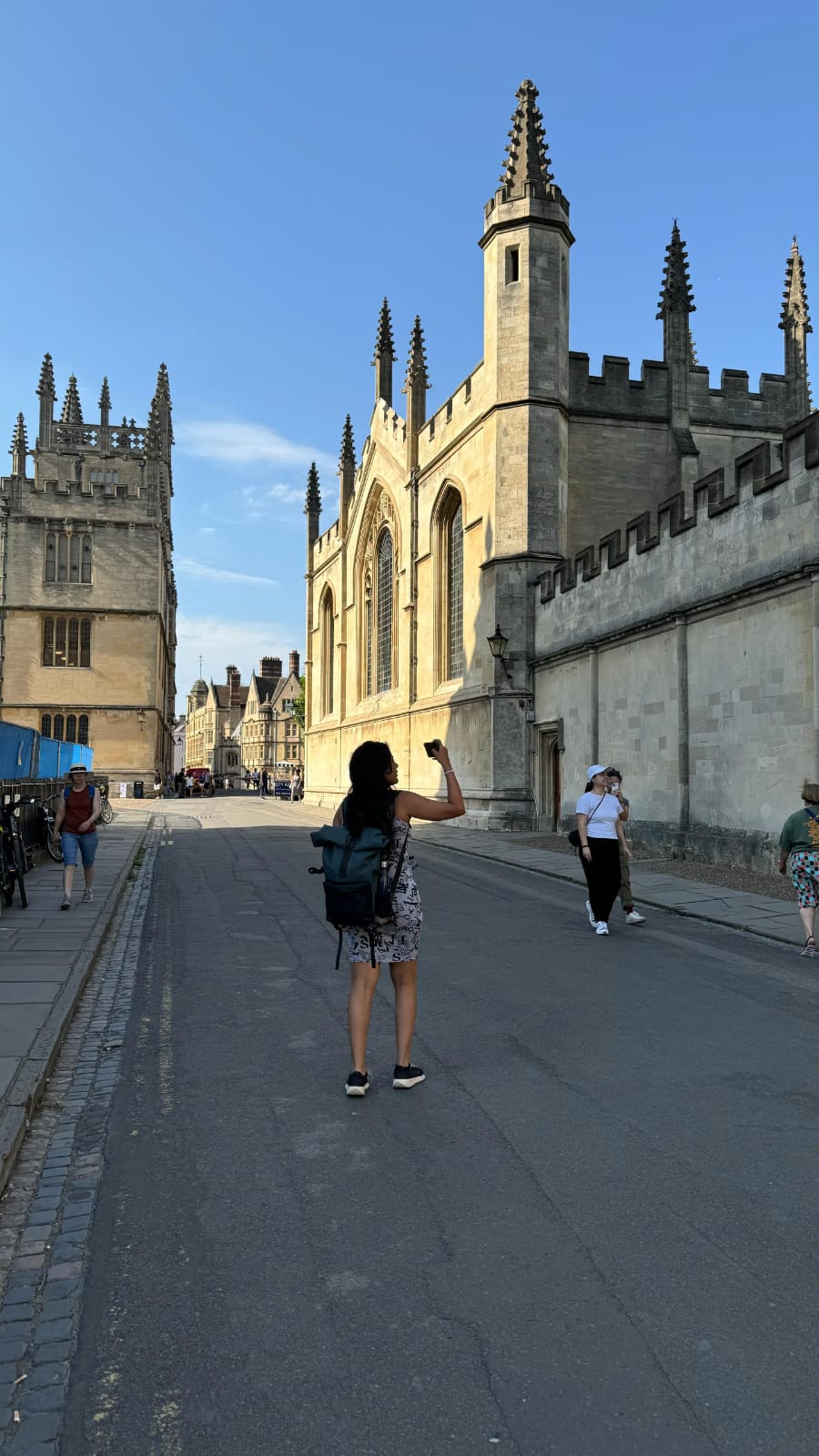
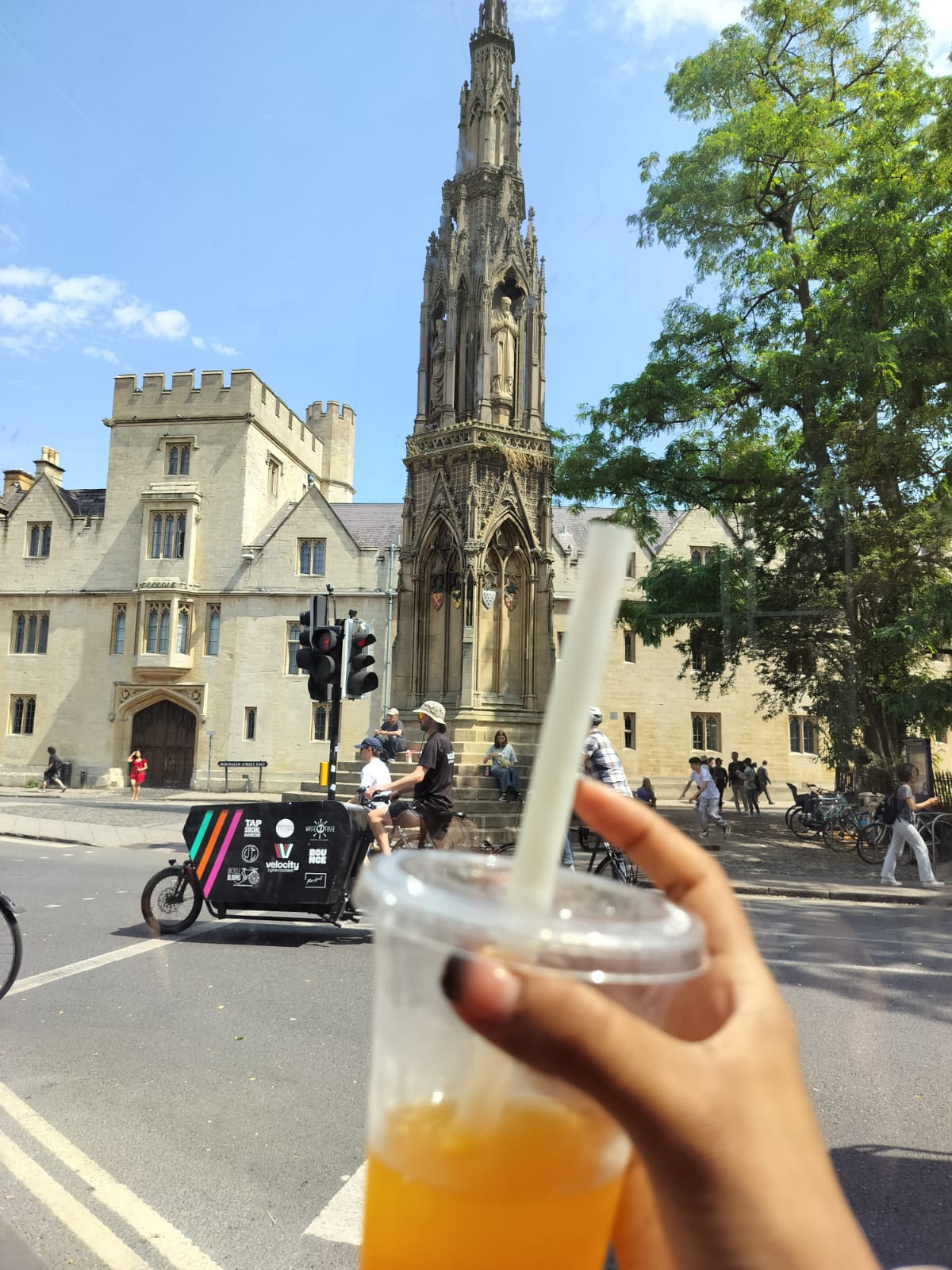
Likes
- I get to take courses only in my major which enables me to specialize early on.
- Bachelor's degree is awarded in 3 years with an optional masters in the 4th year which means I save a lot of money and can start working sooner with more qualifications.
- One on one tutorials two to three times a week with professors who have a lot of research experience enables me to learn the course material in greater depth.
Dislikes
- Unable to take courses outside my major but I chose Oxford specifically because I was sure I wanted to do only Computer Science in college.
- Sports facilities are decent but because everybody is academically focused there is not much investment in the sports teams.
- No investment in the infrastructure and most of the laboratory buildings and even the CS department has outdated infra that should be upgraded considering the amount of money they receive.
- All accommodation is on-campus although you can rent your own apartment and live outside (more expensive than the cheap accommodation provided by the university)
- The rent is about 30 pounds per night so it comes out to 5500 pounds per year.
- The food, rent and living facilities provided (laundry, kitchens, etc) come at a great subsidized cost and there are enough people around to help you in case of assistance.
- I would recommend future students to stay on-campus especially if they are not from the country because it is much cheaper and much easier to manage.
- My accommodation is right opposite the library and most Indian students live nearby to me in similar rooms.
Likes
- It is a renowned university. I liked the tutorial system - groups of 2-4 students being taught by a professor after the main lectures. I chose maths because it always felt natural and enjoyable to me.
- The course material, the gothic architecture, department facilities, the area, the food.
Dislikes
- The accommodation and its facilities, wifi, and the fact that the course is not as engaging as it could be (e.g. with more projects, in-person presentations, group activities)
The terms are fast-paced and highly academic. Even though sometimes the academic load can get high, it was always manageable for me. The problem sheets favor quality over quantity. As for other social activities, there are lots of opportunities to join clubs and societies, little social events in your college and also your subject department. Lots of talks and workshops. We have formal dinners every now and then where you dress up. The exams are also traditionally taken and you must wear formal clothing.
Likes
- Prestige and great faculty along. Additionally, Oxford University is very different from any university in terms of culture.
- The friends/classmates, the city, the buildings/infrastructure, the accommodation.
Dislikes
- The Admin, the weather.
Admin is not really great, it is not very systematic. But otherwise you meet a lot of smart people. I never thought I would enjoy going for debates but we have many debates at the Oxford Union where esteemed speakers from around the world come to exchange thoughts and ideas. The formal dinners let you explore the different colleges across Oxford University. There is almost no medical help available unless it is fatal so carry medicines/bandages etc.
The candidates need to pass IELTS with a minimum score of 7 and minimum 100 in TOEFL. You apply through UCAS, as for any other university. The full information is contained in the University's Undergraduate Prospectus.To become a student at Oxford you need to be accepted by a particular college, though you apply through a central admissions system. If you don't know which college to name as your preference you can make an open application: details of this are also in the undergraduate prospectus. Candidates are shortlisted for interview on the basis of their academic record and promise, as detailed in the selection criteria. Interviews take place in December.
I chose Oxford University for obvious reasons as it is top-ranked, and I needed foreign accreditation to progress in my teaching career. Plus, it was a distance learning program so I was able to study while I worked. It also had a residential module which gave me an opportunity to meet my peers from all over the world. Also, since the ratio of instructors to students is very low. Only 13 fellows were admitted each year, making it easy for professors to give individual attention to each student.
Oxford is best for my chosen course. It is one of the only courses in the world that lets students gain practical experience in micromanipulation, in vitro maturation and embryo biopsy.
Because University of Oxford is one of the best university in the world, always top 10 in almost all university ranking website and Oxford also has a lot to offer to students
SUBSCRIBE TO OUR NEWS LETTER



Comments