





University of Oxford admissions run on a single October (Michaelmas) intake for both undergraduate and graduate applicants. Indian applicants typically need Class XII scores of 90% or higher for undergraduate consideration, or a Bachelor’s degree at around 70% (a UK first-class equivalent) for taught postgraduate courses. IELTS Academic 7.0 to 7.5 overall applies depending on the course track.
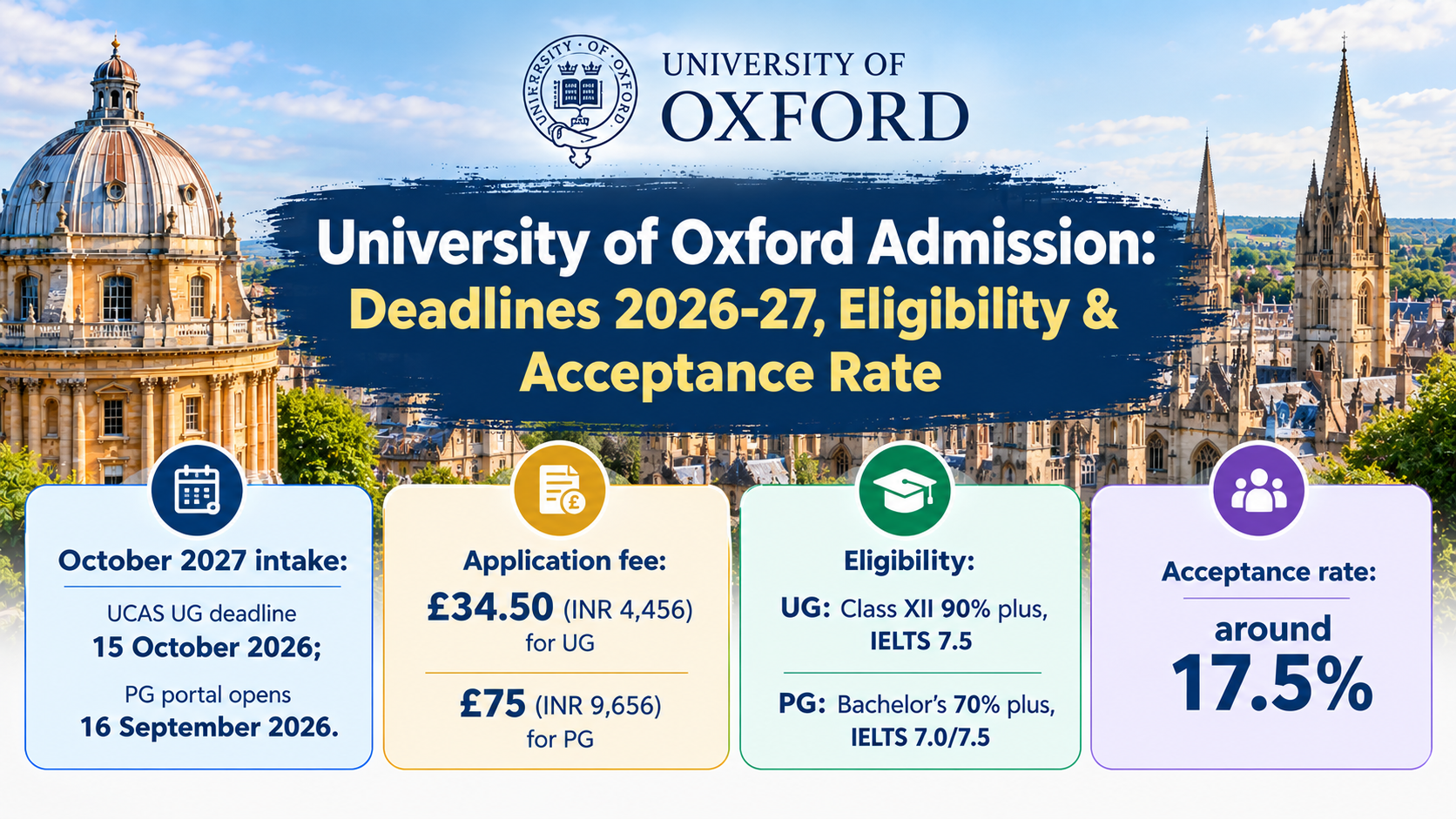
- October 2027 intake: UCAS UG deadline 15 October 2026; PG portal opens 16 September 2026 (recommended).
- Application fee: £34.50 (INR 4,456) for UG and £75 (INR 9,656) for PG.
- UG: Class XII 90% plus, IELTS 7.5; PG: Bachelor’s 70% plus, IELTS 7.0/7.5.
- Acceptance rate around 17.5 % (institutional estimate; Oxford does not publish an official rate).
Popular Indian-applicant targets at the University of Oxford include the MSc Advanced Computer Science, MSc Financial Economics, the MBA at Saïd Business School, and the MPhil International Relations. Indian students describe the collegiate system as academically intense but well-supported, with active Indian societies across most colleges and reliable careers advising for consulting, finance, and research paths.
Currency note: All INR figures in this article use GBP 1 = INR 128.75, the live rate in September 2026.
- University of Oxford Application Deadlines
- Oxford Eligibility for Indian Students
- Oxford PG Programs and English Scores
- University of Oxford UG Programs
- Oxford MBA Admissions and Rounds
- University of Oxford Application Process
- Oxford Documents Required
- Oxford Acceptance Rate for Indian Students
- University of Oxford Admissions FAQs
University of Oxford Application Deadlines for Indian Students
Both undergraduate (UG) and postgraduate (PG) full-time programmes at the University of Oxford primarily admit international students through a single annual intake beginning in October (Michaelmas Term).
- For postgraduate (PG) international students, Oxford does not have one university-wide deadline.
- The deadline is course-specific, and the same deadlines apply to international and UK applicants.
| Intake | Level | Deadline |
|---|---|---|
| Primary intake (UG) | UG (all courses) | 15 October 2026 |
| Primary intake (PG) | PG taught — main round | Course-specific, generally December 2026 to March 2027 |
Insider note: Deadlines for October 2027 entry are course-specific, with most Oxford graduate programmes closing applications in December 2026 or January 2027. Some courses have later deadlines in March 2027 or beyond, but these later deadlines are generally not eligible for Oxford scholarship consideration.
Also read: University of Oxford Courses and Fees 2026-27
University of Oxford Eligibility for Indian Students
Oxford’s admissions are competitive at every level, and academic thresholds sit above the UK norm. Indian qualifications are welcomed, but many courses expect scores at the top of the CBSE/ISC band or a Bachelor’s degree well above 65%.
Undergraduate Academic Requirements at University of Oxford
- Class XII (CBSE/ISC/state boards): 90% or higher in relevant subjects, with strong grades in subjects specific to the intended course.
- Admissions tests (2027 entry): ESAT for Engineering Science, Physics, Physics & Philosophy, Biomedical Sciences; TMUA for Mathematics, Computer Science, and joint schools; TARA for PPE, Economics & Management, History & Politics, and related humanities routes.
Postgraduate Academic Requirements at University of Oxford
- Taught master's (MSc, MPhil, MSt): A strong upper-second-class requirement generally corresponds to 60–70%, while a first-class requirement generally corresponds to 65–75%, depending on the institution and degree.
University of Oxford English Language Requirements
The university has paused acceptance of TOEFL iBT for applications from 21 January 2026 onwards pending policy review, per Oxford’s English-language-requirements page. Two thresholds apply:
| Level | Applies to | IELTS Academic |
|---|---|---|
| Standard | Most STEM PG courses | 7.0 overall, 6.5 each |
| Higher | All UG courses; most humanities, law, social sciences PG | 7.5 overall, 7.0 each |
Waiver for Indian applicants: Oxford does not offer a general Medium of Instruction (MOI) waiver based on English-medium Indian schooling or an Indian Bachelor’s taught in English. The only exemption available is completion of a degree course in the UK, or a small set of designated majority-English-speaking countries, within the two years before your course start date. Indian applicants should plan to submit IELTS Academic at the standard or higher band for their course.
University of Oxford PG Programs and English Requirements
Oxford offers around 350 taught and research graduate courses, spanning DPhils, MBAs, MSc, MPhil, MSt, and PGDip routes. Living costs, deposits, and college fees sit on Oxford’s separate fees page — the article below is admissions-focused. Deadlines and English thresholds below are drawn from each course’s own Oxford page.
| Programme | Duration | Minimum Eligibility (recommended) | English Req. Min. |
|---|---|---|---|
| MSc Advanced Computer Science | 12 months | Bachelor’s with 70%-plus in Computer Science or closely related | IELTS 7.5 |
| MSc Financial Economics | 9 months | Strong Bachelor’s, quant background, GMAT/GRE | IELTS 7.5 |
| MSc Statistical Science | 12 months | Bachelor’s at 70% in Mathematics, Statistics, or Data Science | IELTS 7.5 |
| MSc Machine Learning | 12 months (part-time) | Bachelor’s with strong quantitative and programming background | IELTS 7.5 |
| MPhil International Relations | 21 months | Bachelor’s at a UK university (around 70%) in a relevant social science | IELTS 7.5 |
University of Oxford UG Programs for Indian Students
Oxford’s undergraduate degrees run three years for most BA/BSc courses, with four-year integrated masters in sciences and engineering.
| Programme | Duration | Minimum Eligibility (recommended) | English Req. Min. |
|---|---|---|---|
| BA Philosophy, Politics and Economics (PPE) | 3 years | Class XII 90% plus; TARA admissions test in October 2026 | IELTS 7.5 |
| BA Economics and Management | 3 years | Class XII 90% plus with Mathematics; TARA admissions test | IELTS 7.5 |
| MEng Engineering Science | 4 years | Class XII 90% plus with Mathematics and Physics; ESAT test | IELTS 7.5 |
| BA Computer Science | 3 years | Class XII 90% plus with Mathematics; TMUA test in October 2026 | IELTS 7.5 |
Explore More:
University of Oxford MBA Admissions and Rounds
The Oxford MBA is a one-year full-time programme run by Saïd Business School, with tuition of £94,120 (around INR 121.18 Lakhs) for the 2026-27 intake.
- Cohort size sits at around 300 seats.
- The MBA runs a four-stage admissions round system rather than a single deadline, with applications assessed as each stage closes.
- Round dates below are drawn from Saïd Business School’s programme page.
University of Oxford MBA Application Rounds
| Stage | Application deadline (UK time) |
|---|---|
| Stage 1 | 2 September 2026 |
| Stage 2 | 5 October 2026 |
| Stage 3 | 04 November 2026 |
| Stage 4 | 06 January 2027 |
| Stage 5 | 15 March 2027 |
University of Oxford MBA Eligibility and Interview
- A recognised undergraduate degree or equivalent qualification (recommended: 60% or CGPA 6.5–7.5).
- Competitive GMAT or GRE score.
- At least 2 years of full-time work experience, with evidence of career progression, international exposure, and leadership potential.
University of Oxford Application Process for Indian Students
Oxford splits its application process by level. Undergraduate applications go through UCAS on a fixed October deadline, while graduate applications use Oxford’s own online portal on rolling course-specific deadlines. Below is a level-wise breakdown of the sequence for Indian applicants.
University of Oxford Undergraduate Application Steps
- Register on the UCAS portal from 1 September 2026; add Oxford as one of your five UCAS choices (no other Oxbridge choice allowed).
- Complete the personal statement (4,000 characters) and secure your academic reference from a Class XII teacher.
- Register for the relevant admissions test (ESAT, TMUA, TARA, LNAT, or BMAT-equivalent) by early September 2026 and sit the test in October 2026.
- Submit the UCAS application and pay the £34.50 UCAS fee (around INR 4,442) by 15 October 2026, 6pm UK time.
University of Oxford Postgraduate Application Steps
- Open the graduate portal at ox.ac.uk from 16 September 2026 and select your course; MBA applicants use the Saïd Business School’s MBA application platform instead of the general graduate portal.
- Upload transcripts, a CV, three references, a written work sample where required, and a statement of purpose.
- Submit the IELTS Academic score report (TOEFL is not accepted from 21 January 2026 onwards).
- Pay the £75 taught or £20 research application fee (around INR 9,656 or INR 2,575) at submission on the Oxford graduate portal.
- Decisions are released on a rolling basis after each deadline round; offers arrive by email typically within eight to twelve weeks.
University of Oxford Admission Decisions Timeline
- UG offer release: 12 January 2027 via UCAS Hub for all Oxford UG applicants.
- UG conditions: most offers are conditional on final Class XII results (typically 90% plus in specified subjects) and IELTS.
- PG offer release: six to twelve weeks after your course’s deadline round.
- Acceptance window: UG offer holders accept via UCAS by early June 2027; PG offer holders sign the online offer within one month, with any conditions cleared before August 2027.
- Deferral: UG deferrals to 2028 entry are considered case by case; PG deferrals are rarely granted.
Planning note: Indian applicants who receive a conditional Oxford UG offer in January 2027 must submit official Class XII marksheets by early August 2027 for CAS issuance. CBSE and CISCE result timing (May-June 2027) usually leaves a tight window — plan visa filing for the second week of August at the latest.
- University of Oxford Scholarships 2026-27 for Indian Students
- External Scholarships for Indian Students to Study in UK
University of Oxford Documents Required for Indian Applicants
The document set below applies to Indian applicants at the point of submission on UCAS or the Oxford graduate portal. Academic percentage and IELTS score expectations sit under Eligibility above — this list is paperwork only.
- Passport bio page: valid for at least two years beyond the intended course start date.
- Class XII marksheet: official copy from CBSE, CISCE, or state board; predicted grades for current Class XII students.
- Bachelor’s transcripts and degree certificate: for PG applicants, official transcripts with grading key and consolidated marksheet.
- Statement of Purpose or personal statement: 4,000 characters for UG UCAS; 500 to 1,000 words for PG.
- Three academic references: two academic plus one professional for PG; UCAS UG needs one academic reference.
- Written work sample: for humanities and social sciences PG only; typically two essays of 2,000 words each.
- Research proposal: for all DPhil and MPhil research applications; 1,000 to 2,000 words.
- IELTS Academic score report: issued in the last two years.
- CV or resume: for all PG applications; MBA applicants use a two-page format.
- GMAT/GRE score report: for MBA, MSc Financial Economics, and select MSc courses.
- Work experience letters: for MBA applicants; formal employer letters confirming role and dates.
- Financial evidence: uploaded post-offer for CAS issuance; not required at application.
University of Oxford Acceptance Rate for Indian Students
Oxford does not publish a single institutional acceptance rate. The headline figure of around 17.5% is an institutional estimate based on typical UG cycle patterns, and graduate acceptance rates vary sharply by course — competitive taught masters and the MBA typically sit below 15%. Around 550 Indian students currently study across all levels at Oxford. Data source: Oxford facts and figures page.
University of Oxford Acceptance Rate by Level
- Undergraduate (overall): around 17 to 18% across all courses; Indian applicant success rate typically lower due to competition in Medicine, Engineering, and Mathematics.
- Postgraduate taught: band of 15 to 30% depending on course; MSc Financial Economics and MBA are the tightest.
- DPhil: 20 to 30% typical, but heavily weighted toward supervisor availability.
University of Oxford Indian Applicant Trends
- Indian intake has trended steadily around 500 to 600 students across all levels since 2022.
- Common admits: Rhodes India cohort at DPhil level; strong intake into MSc Financial Economics and MPhil Economics.
- Undergraduate Indian admits skew toward Engineering Science, PPE, Mathematics, and Computer Science.
Insider note: Two Class XII 95% scores in relevant subjects are more predictive of an Oxford UG offer than a single 99% aggregate. Subject-specific rigour matters more than raw aggregate for shortlisting.
Oxford admissions reward specificity — a well-targeted application for the right course, IELTS band, and deadline round beats a broad approach. Indian applicants who submit by December or January rounds with clear Class XII results, IELTS 7.5, and course-fit personal statements maximise both admission odds and scholarship consideration; late-round applicants trade off funding for a longer preparation window.
Frequently Asked Questions
Ques. What is the University of Oxford application deadline for Indian students in 2027?
Ans. Undergraduate applicants must submit through UCAS by 15 October 2026, 6pm UK time for October 2027 (Michaelmas) entry. Graduate courses use course-specific December 2026, January 2027, or March 2027 deadlines, with the graduate portal opening on 16 September 2026.
Ques. What is the application fee for the University of Oxford?
Ans. UG applications route through UCAS at £34.50 (around INR 4,442). Graduate taught courses charge £75 (around INR 9,656) and research courses (DPhil, CDT, MSc by Research) charge £20 (around INR 2,575). Fee waivers are available for eligible applicants.
Ques. Does Oxford offer an IELTS or MOI waiver for Indian applicants?
Ans. No general MOI (Medium of Instruction) waiver is available for Indian applicants based on English-medium schooling. The only exemption is completion of a degree course in the UK, or a small set of designated majority-English-speaking countries, within the two years before your course start.
Ques. What Class XII percentage do I need for Oxford undergraduate admission?
Ans. Indian applicants typically need 90% or higher in Class XII (CBSE, CISCE, or state board) with strong grades in course-specific subjects. Mathematics and Physics are essential for Engineering; sciences for Medicine; humanities strength for PPE and Law.
Ques. Can I apply to both Oxford and Cambridge in the same UCAS cycle?
Ans. No. UCAS rules bar applying to Oxford and Cambridge in the same UCAS cycle. Indian applicants must choose one of the two before the 15 October 2026 deadline (except for graduate applications or specific medical courses).
College Student Profiles

University of Oxford Program Fees & Deadlines
| Program | Important Dates | Fees | Application Fees | Eligibility | Financial Aid |
|---|---|---|---|---|---|
MBA 1 year | Fall 2027 Stage 3 application deadline (4th Nov 2026) Fall 2027 Stage 4 application deadline (6th Jan 2027) Fall 2027 Stage 5 application deadline (15th Mar 2027) | USD 124,238 /Yr GBP 94,120 /Yr | 75 | IELTS: 7.5, TOEFL: 110, GMAT: Required, Recognised Undergraduate Degree | |
Fall 2027 January application deadline (8th Jan 2027) | USD 61,182 /Yr GBP 46,350 /Yr | 75 | IELTS: 7.5, TOEFL: 110, GPA: 3.7, First-Class Honours Degree in Computer Science or Mathematics | ||
BM BCh Medicine 6 years | Fall 2027 UCAS Oxbridge medicine deadline (15th Oct 2026) | USD 69,115 /Yr GBP 52,360 /Yr | 29 | IELTS: 7.5, TOEFL: 110 | |
MSc Financial Economics 9 months | Fall 2027 intake Stage 1 deadline (24th Oct 2026) Fall 2027 intake Stage 2 deadline (7th Jan 2027) Fall 2027 intake Stage 3 deadline (4th Mar 2027) Fall 2027 intake rolling final deadline (31st Jul 2027) | USD 88,031 /Yr GBP 66,690 /Yr | 75 | IELTS: 7.5, TOEFL: 110, GRE: Required, Bachelor's Degree with First-Class or Upper Second-Class Honours | |
DPhil Law 3 years | Fall 2027 intake application deadline (28th Jan 2027) | USD 43,520 /Yr GBP 32,970 /Yr | 20 | IELTS: 7.5, TOEFL: 110, GPA: 3.7, First-Class Honours Degree in Law | |
DPhil Computer Science 3 years | Fall 2027 December round application deadline (2nd Dec 2026) Fall 2027 March round application deadline (3rd Mar 2027) | USD 47,863 /Yr GBP 36,260 /Yr | 20 | IELTS: 7.0, TOEFL: 100, GPA: 3.5, First-Class or Strong Upper Second-Class Undergraduate Degree with Honours | |
DPhil Economics 3 years | Fall 2027 intake application deadline (27th Jan 2027) | USD 43,151 /Yr GBP 32,690 /Yr | 20 | IELTS: 7.5, TOEFL: 110, GRE: Required, GPA: 3.6, First-Class or Upper Second-Class Undergraduate Degree in Economics | |
Fall 2027 November application deadline (18th Nov 2026) Fall 2027 January application deadline (28th Jan 2027) | USD 72,138 /Yr GBP 54,650 /Yr | 75 | IELTS: 7.5, TOEFL: 110, GPA: 3.6, First-Class or Strong Upper Second-Class Honours Degree in Mathematics | ||
MSc Social Data Science 10 months | Fall 2027 November round application deadline (14th Nov 2026) Fall 2027 January round application deadline (9th Jan 2027) | USD 53,764 /Yr GBP 40,730 /Yr | 75 | IELTS: 7.5, TOEFL: 110, GPA: 3.7, First-Class Undergraduate Degree with Honours | |
MPhil Economics 21 months | Fall 2027 intake application deadline (27th Jan 2027) | USD 46,002 /Yr GBP 34,850 /Yr | 75 | IELTS: 7.5, TOEFL: 110, GRE: Required, GPA: 3.6, First-Class or Upper Second-Class Undergraduate Degree in Economics |
Do you think the Dates are wrong ? Report Here
Important Alerts
| Events | Dates |
|---|---|
| Master of Business Administration [MBA] Fall 2027 Stage 3 application deadline | Closing in 24 days |


Course Finder - Search from 50K+ courses
Popular Streams:
Reviews
Most Popular Tags
11 Reviews Found
Likes
- High standards of rigor in research
- Reknown professors and alumni in department
- Opportunity to network with like-minded academics and scholars
Dislikes
- Only thing I wish could be better with the department if if it could offer more scholarships to incoming students. The city has also increased cost of living since a few years. Excluding this, there are no complaints with the college.
Scholarship
- I have not received a scholarship, but a few of my batchmates have received external scholarships, college scholarships and their own national government-based scholarships.
- I am not sure about how many students receive scholarships each year on average, but I believe it is a minority rather than the majority (ranging from 5-10 students out of 30 students). These students typically receive full scholarships, including cost-of-living expenses.

Likes
- The University of Oxford has an immensely diverse student community. During my time there, I made friends from different disciplines and other countries, helping me engage myself in a very intercultural community.
- The coursework is very rigorous. It would prepare one for their career and helped me gain a lot of confidence since now I can deal with impromptu events or exams without stressing out since I went through the rigor of coursework at Oxford.
- There is a lot of support available to new students especially if you are struggling with mental health. I was going through homesickness and I feel the resources available helped me navigate that issue within months.
Dislikes
- I felt like transitioning into a new college life, especially for international students, needs more time to adapt. However, they might throw you directly into the coursework, which might make it stressful.
- The cost of living can be high, especially if you decide on dining in the college halls instead of cooking.
- Some of the departments are located far away which means you may have to heavily rely on transport, for eg, mine was at John Radcliffe Hospital.
Scholarship
-
One can be eligible for university scholarships as well as scholarships from your country including Inlaks Shivdasani, Rhodes Scholarship, etc. You may also be selected for the Clarendon Scholarships by your department.
-
I received several smaller amounts of bursaries and was a finalist for the Inlaks Shivdasani scholarship although I could not win it. Some of my batchmates were Rhodes scholars, Clarendon scholars etc.
-
On average it can be difficult especially for international students to get scholarships however the percentage varies every year.
Likes
- Faculty- To begin with, the department's faculty provides us with remarkable lectures. If we start with the online classes, we study from modules curated by our professors every semester. These modules are a blend of lectures and tasks hailing from practical experiments, refraining the lectures from becoming mundane. During the physical classes at Oxford, I realised how education could be imparted without having biases and rigidities regarding the correctness of a concept. To elaborate, in our class, no answer was wrong; it was always a different perception but not wrong. Furthermore, the lectures were usually not about theories but about the practical application of concepts that would help us become better writers.
- Cohort size- The size of the cohorts genuinely varies but does not cross 20 students and we had 4 cohorts in our batch. Particularly in my cohort, there are 14-15 students, making the entire course extremely close-knit. We not only interacted outside the course but also had a space to discuss everything we learnt. During the time we met, we spent most of the time together as a cohort, which brings me to my next point on networking.
- Networking opportunity- However, most of the networking was indeed done when we met for the course in July, the way the course is structured also provides countless networking opportunities. Let me explain: during the weekly tasks that we complete online, every student is repeatedly motivated to read and comment on the work of other students. This results in gaining different perspectives, and finding a safe space for interaction with peers.
Dislikes
- Leave structure- Even though the course is mindful of students working alongside the course, there are only two breaks given to the students- one after the first year ends and one during the Christmas holidays. The rest of the year, the students have to do weekly units with tasks and assignments after the end of the entire module, making the course slightly on the hectic side.
- Future help- As students usually enrol in such courses with the expectation of receiving resources such as agents and jobs, the availability of those is bleak. Even though one can connect with the tutors and ask for such materials, they are not formally provided. Furthermore, job and placement actively take place but as a student of a blended course without a visa, it is extremely unlikely to secure one with ease.
- Alumni network- Even though the University of Oxford has robust alumni, there is a lack of a platform for students to connect with these alumni. Better opportunities can be provided where students get easy access to the contacts in order to increase their network.
Scholarship
- I did not receive any scholarships, but there are scholarships and student finance options available. However, student finance usually covers students from the UK itself.
- One of my batchmates received a student finance which was basically a loan for one year at Oxford.
- When it comes to international students, they are more likely to secure a scholarship from the home government as the scholarship options for international students for the particular course are bleak.



Likes
- I get to take courses only in my major which enables me to specialize early on.
- Bachelor's degree is awarded in 3 years with an optional masters in the 4th year which means I save a lot of money and can start working sooner with more qualifications.
- One on one tutorials two to three times a week with professors who have a lot of research experience enables me to learn the course material in greater depth.
Dislikes
- Unable to take courses outside my major but I chose Oxford specifically because I was sure I wanted to do only Computer Science in college.
- Sports facilities are decent but because everybody is academically focused there is not much investment in the sports teams.
- No investment in the infrastructure and most of the laboratory buildings and even the CS department has outdated infra that should be upgraded considering the amount of money they receive.
Scholarship
- There are no scholarships or financial aid available for any international students in the UK.
- The only bursaries and need-based financial aid is available for UK citizens.
- There are no merit scholarships and the only one that used to exist for IMO Gold Medallists was removed this year. Hence it is important to be able to cover all your expenses on your own.
Likes
- It is a renowned university. I liked the tutorial system - groups of 2-4 students being taught by a professor after the main lectures. I chose maths because it always felt natural and enjoyable to me.
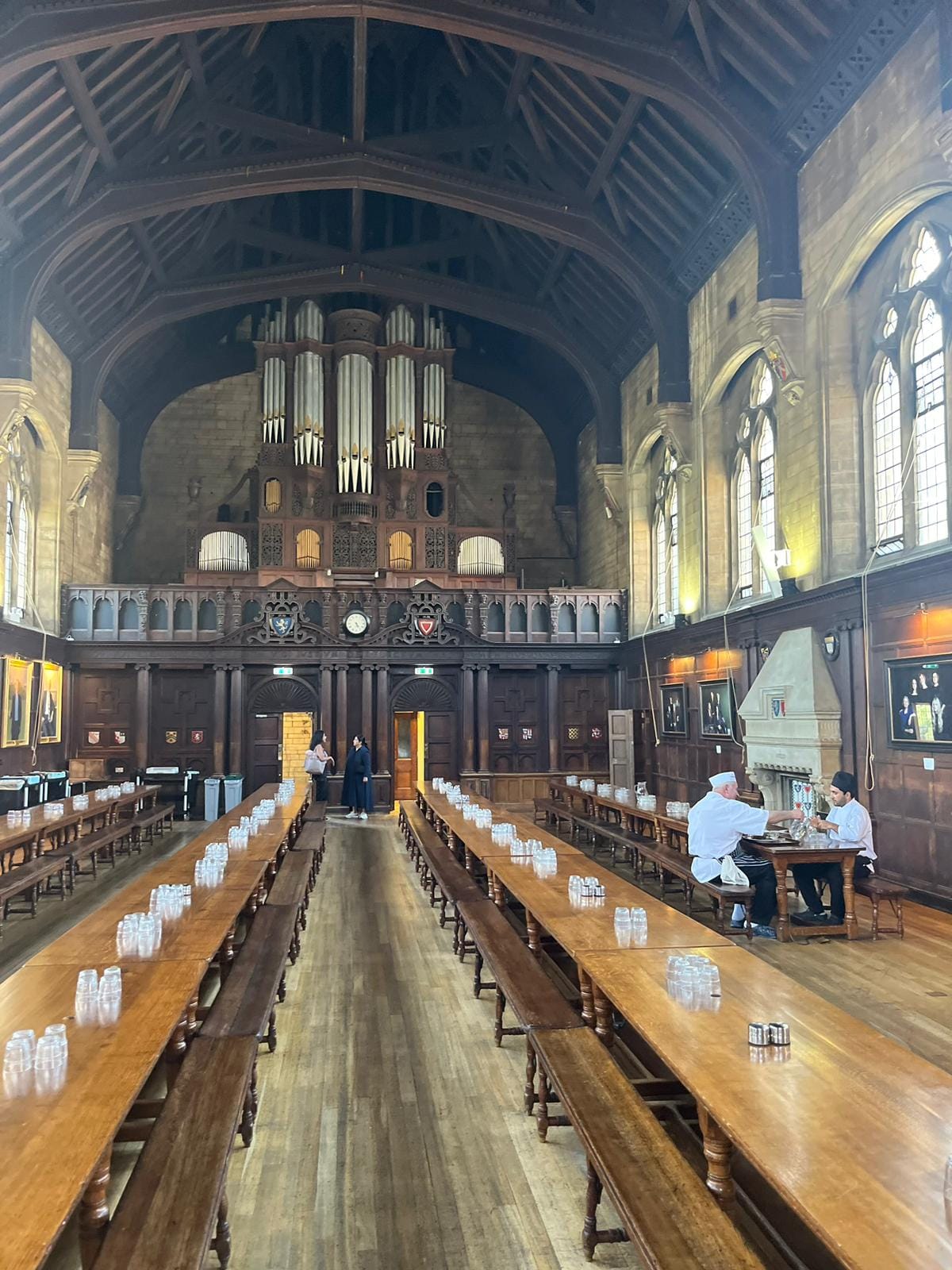
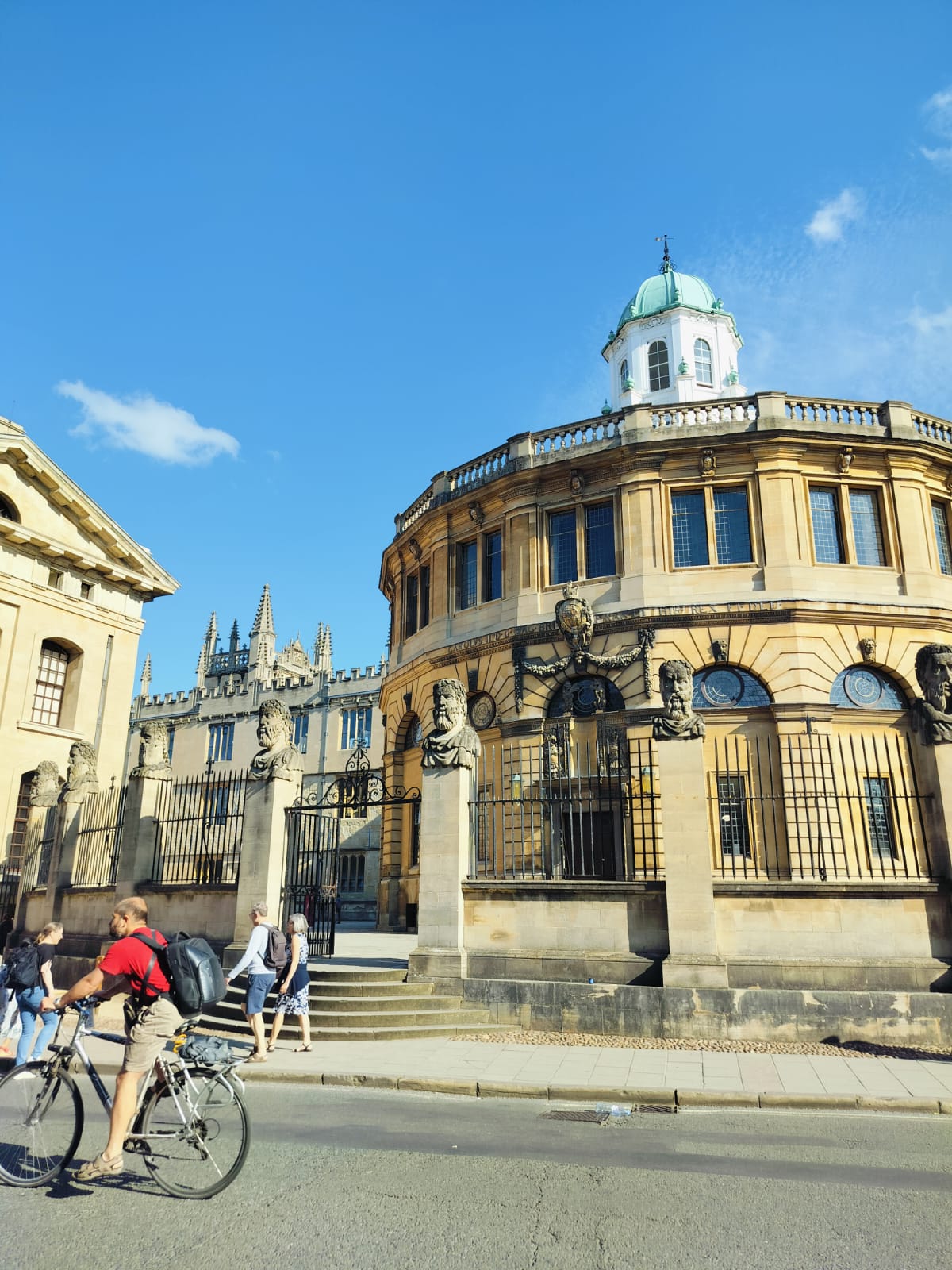
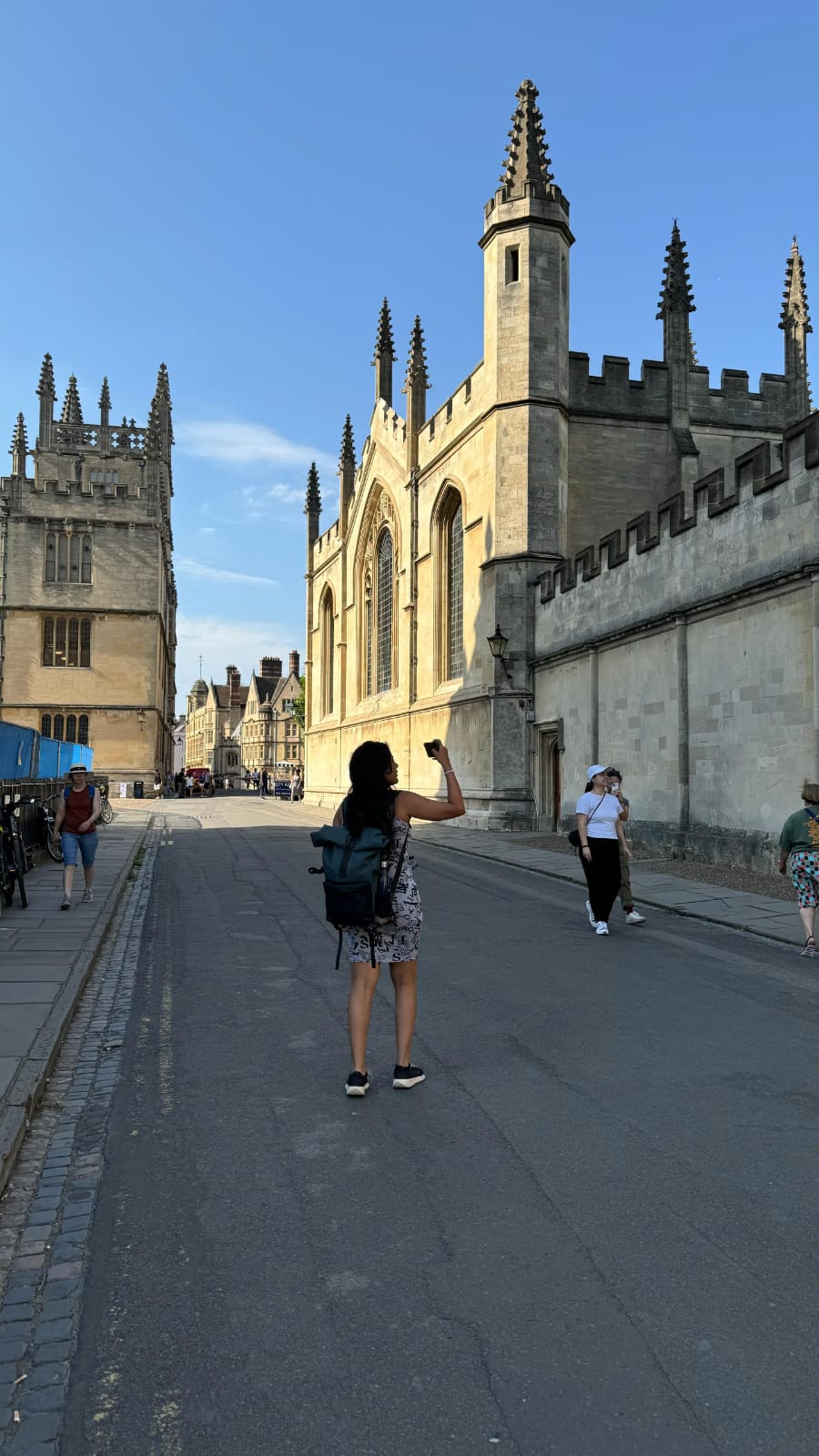
- The course material, the gothic architecture, department facilities, the area, the food.
Dislikes
- The accommodation and its facilities, wifi, and the fact that the course is not as engaging as it could be (e.g. with more projects, in-person presentations, group activities)
Overview
The terms are fast-paced and highly academic. Even though sometimes the academic load can get high, it was always manageable for me. The problem sheets favor quality over quantity. As for other social activities, there are lots of opportunities to join clubs and societies, little social events in your college and also your subject department. Lots of talks and workshops. We have formal dinners every now and then where you dress up. The exams are also traditionally taken and you must wear formal clothing.
Scholarship
No
Likes
- Prestige and great faculty along. Additionally, Oxford University is very different from any university in terms of culture.
- The friends/classmates, the city, the buildings/infrastructure, the accommodation.
Dislikes
- The Admin, the weather.
Overview
Admin is not really great, it is not very systematic. But otherwise you meet a lot of smart people. I never thought I would enjoy going for debates but we have many debates at the Oxford Union where esteemed speakers from around the world come to exchange thoughts and ideas. The formal dinners let you explore the different colleges across Oxford University. There is almost no medical help available unless it is fatal so carry medicines/bandages etc.
Scholarship
nope
Overview
The candidates need to pass IELTS with a minimum score of 7 and minimum 100 in TOEFL. You apply through UCAS, as for any other university. The full information is contained in the University's Undergraduate Prospectus.To become a student at Oxford you need to be accepted by a particular college, though you apply through a central admissions system. If you don't know which college to name as your preference you can make an open application: details of this are also in the undergraduate prospectus. Candidates are shortlisted for interview on the basis of their academic record and promise, as detailed in the selection criteria. Interviews take place in December.
Overview
I chose Oxford University for obvious reasons as it is top-ranked, and I needed foreign accreditation to progress in my teaching career. Plus, it was a distance learning program so I was able to study while I worked. It also had a residential module which gave me an opportunity to meet my peers from all over the world. Also, since the ratio of instructors to students is very low. Only 13 fellows were admitted each year, making it easy for professors to give individual attention to each student.
Scholarship
No, I didn't receive any scholarship.
Overview
Oxford is best for my chosen course. It is one of the only courses in the world that lets students gain practical experience in micromanipulation, in vitro maturation and embryo biopsy.
Scholarship
No
Overview
Because University of Oxford is one of the best university in the world, always top 10 in almost all university ranking website and Oxford also has a lot to offer to students
Scholarship
Yes, I got scholarship from Indonesian Endowment Fund for Education which is 15,300 pounds/ year + tuition fee + visa + transport + seminar and conferences + thesis + paper publication and research fee.
interested in this College ?
Follow & Share this college to get information about admission.



Comments