



Content Curator
Sine 0 is one of the three major trigonometric functions along with Cosine and Tangent. Sine explains the relation between the angle, perpendicular side and Hypotenuse of a right-angled triangle. Sin, along with other trigonometric functions can be used to find out the angles and lengths of right-angled triangles.
- The sine of 0 degrees is 0.
- The sine of an angle, in trigonometry, can be defined as the measure of the ratio of the side opposite the angle to the hypotenuse (the longest side) of a right triangle.
- In case of an angle of 0 degrees, the opposite side and the hypotenuse have the same length, which means that the sin 0 degrees is 0.
- The sine function is used in a variety of fields, including navigation, engineering, and physics.
- In a right triangle, the sine of an angle is simply the ratio of the length of the side opposite the angle to the length of the hypotenuse.
- The sine function maps an angle to a value which is between -1 and 1, with a periodic nature, meaning that the values repeat in a cycle as the angle increases.
Read Also: Inverse Trigonometric Formulas
| Table of Content |
Key Terms: Sin, Sin 0 Degrees, Triangle, Pythagoras Theorem, Cosine, Secant, Cosecant, Tangent, Cotangent, Perpendicular, Hypotenuse, Integrals, Trigonometric Ratio, Trigonometry
Sine Function
[Click Here for Sample Questions]
The relationship between the angle, perpendicular, and hypotenuse side of the triangle is defined by the Sine function. Sine \(\theta\) is the angle that is formed between the hypotenuse and the adjacent side of the triangle.
- The sine function has many applications, such as estimating the height of a building based on the angle of elevation, calculating wave displacement, and modelling the behaviour of physical systems.
- In mathematics and computer science, the sine function is denoted by the symbol "sin".
- The sine function can be assessed using a calculator, a computer program, or a table of values. It can also be graphed to visualize its behaviour.
- The sine function is also related to the cosine function, which can be expressed as the ratio of the length of the adjacent side to the hypotenuse of a right triangle.
Trigonometric Functions Detailed Video Explanation
Also Read:
Sin 0 Degrees
[Click Here for Sample Questions]
Sin 0 can be defined as the ratio of the length of the opposite side, hypotenuse and perpendicular of the right-angled triangle.
It can be represented as:
| Sin θ = Opposite Side / Hypotenuse Or, Sin θ = Perpendicular / Hypotenuse |
The value of Sine can be expressed in terms of:
- Sin 0°: 0
- Sin (-0 degrees): 0
- Sin 0° in radians: sin (0π) or sin (0 . . .)
Read More: Right Angle Formula
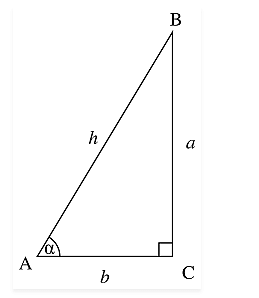
Sine
Here,
We need to check the coordinates points on the x and y plane if we are calculating Sin 0 Values.
Sin 0 means below
- x coordinate = 1
- y coordinate = 0
The value Zero is for opposite side or perpendicular side, while the value 1 is for the hypotenuse.
Hence,
Sin 0º = 0/1
So, Sin 0º = 0
In case of an angle of 0 degrees, the side opposite the angle and the hypotenuse carry the same length, meaning that the sine of 0 degrees can be indicated as:
| sin(0°) = opposite side / hypotenuse = 1 / 1 = 1 |
Thus, the sine of 0 degrees is equivalent to 1. However, this definition is only seen to apply to an angle of 0 degrees, meaning that the sine of other angles can have different values. The sine of an angle is simply a continuous function and has a periodic nature. This means that the values repeat as the angle increases.
Also Check: Value of Log 0
Experimental Method to Prove Sin 0
[Click Here for Sample Questions]
Below steps need to be followed to prove that Sin 0 = 0:
- In plane, from starting point A draw a straight line.
- Make a zero-degree angle with a protector on the horizontal line and make a cut at a point named it as B.
- Now, draw a perpendicular line from point B so that it makes line BC.
Now, in right angle triangle BAC
Sin 0 = Length of opposite side / Length of hypotenuse
Sin 0 = BC / AB
Sin 0 = 0/5
Therefore, sin 0 = 0
Also Check: Law of Sines
Sine Value for Full Revolution
[Click Here for Sample Questions]
Below table shows the values of Sin in full revolution.
| Sin Degrees | Values |
|---|---|
| Sin 0º | 0 |
| Sin 30º | ½ |
| Sin 45º | 1/√2 |
| Sin 60º | √3/2 |
| Sin 90º | 1 |
| Sin 180º | 0 |
| Sin 270º | -1 |
| Sin 360º | 0 |
In order to determine the values for the Cosine function then we need to reciprocate the Sin value because Sin θ=1/ Cos θ
- Sin 0º = Cos 90º = 0
- Sin 30º = Cos 60º = ½
- Sin 45º = Cos 45º = 1/√21/2
- Sin 60º = Cos 30º = √3/23/2
- Sin 90º = Cos 0º = 1
Similarly, the value for Tangent (tan) function can be calculated as below.
- Tan θ = Sinθ/Cosθ
- Tan 0º = Sin 0º/Cos 0º = 0
- Tan 30º = Sin 30º/Cos 30º = √3/2
- Tan 45º = Sin 45º/Cos 45º =1
- Tan 60º = Sin 60º/Cos 60º= √3
- Tan 90º = Sin 90º/Cos 90º = Undefined
Trigonometric Functions in Terms of Radian
Below mentioned table shows different values of Sin, Cos, Tan with respect to Radians.
| Degrees | Radian |
|---|---|
| 0º | 0 |
| 30º | π/6 |
| 45º | π/4 |
| 60º | π/3 |
| 90º | Π/2 |
| 180º | Π |
| 270º | 3π/2 |
| 360º | 2π |
Finding Value of Sin 0 Degrees
[Click Here for Sample Questions]
The value of Sin 0° can be represented in two ways:
- Using Trigonometric Functions
- Unit Circle
Sin 0° Using Trigonometric Functions
By applying trigonometry formulas, sin 0 degrees can be represented as:
- ± √(1-cos²(0°))
- ± tan 0°/√(1 + tan²(0°))
- ± 1/√(1 + cot²(0°))
- ± √(sec²(0°) - 1)/sec 0°
- 1/cosec 0°
Note: Because 0° falls on the positive x-axis, the definitive value of sin 0° will have to be 0.
We can use trigonometric identities to depict sin 0° as,
- sin(180° - 0°) = sin 180°
- -sin(180° + 0°) = -sin 180°
- cos(90° - 0°) = cos 90°
- -cos(90° + 0°) = -cos 90°
Sin 0° Using Unit Circle
The unit circle is a circle with a radius of 1 centered at the origin of a coordinate plane. In the case of a unit circle, the sine of an angle is equivalent to the y-coordinate of the point on the unit circle corresponding to that angle. For an angle of 0 degrees, the corresponding point is (1, 0), and it can be found on the positive x-axis.
Therefore, the sine of 0 degrees using the unit circle is equal to the y-coordinate of the point corresponding to 0 degrees, which is 0. So, sin(0°) = 0. This relationship between the angles and the points on the unit circle can be used to find the sine and cosine of other angles as well, and to understand the behaviour of these functions.
In order to determine the value of sin 0 degrees using the unit circle:
- The radius of the unit circle should be drawn first, thus, r to form a 0° angle with the positive x-axis. For sin 0°, the angle 0° corresponds to the point (1, 0) on the unit circle.
- The sin of 0 degrees is thus equivalent to the y-coordinate(0) of the point of intersection(1, 0) of the unit circle as well as r.
Therefore, the value of sin 0° = y = 0.
Also read:
Things to Remember
- Sine is one of the three major trigonometric functions along with Cosine and Tangent.
- Sine explains the relation between the angle, perpendicular side and Hypotenuse side of a right-angled triangle.
- Sine theta is the angle that is formed between the hypotenuse and the adjacent side of the triangle.
- Sin 0 can be defined as the ratio of the length of the opposite side, hypotenuse and perpendicular of the right-angled triangle.
- Sin 0 = Length of opposite side / Length of the hypotenuse
Read Also: Derivative of Inverse Trigonometric Functions
Sample Questions
Ques: What is the value of Sin 90º + Cos 90º? (4 marks)
Ans: As we know, value of:
Sin 90º is 1 and Cos 90º is 0.
The sine of 90 degrees is equal to 1, since in a right triangle, the sine of an angle is expressed as the ratio of the length of the side opposite the angle to the length of the hypotenuse.
For an angle of 90 degrees, the opposite side is the longest side of the triangle and has a length of 1, so sin(90°) = 1.
Similarly, Cos 90 degrees is equal to 0, since in a right triangle, the cosine of an angle is the ratio of the length of the adjacent side to the length of the hypotenuse.
For an angle of 90 degrees, the adjacent side has a length of 0, so cos(90°) = 0.
Therefore, the value of sin(90°) + cos(90°) is equal to:
sin (90°) + cos (90°) = 1 + 0 = 1
Therefore, value of Sin 90º + Cos 90º is 1.
Ques: What is the value of Sin 270° + 2Tan 45º? (2 marks)
Ans: Sin 270 = -1 and Tan 45 = 1
So, -1 + 2 x 1 = 1
Ques: Determine the value of 5 sin(0°)/7 sin(90°). (2 marks)
Ans: By applying the trigonometric values, te value of sin(0°) = 0 and sin(90°) = 1.
Hence,
⇒ 5 sin(0°)/7 sin(90°) = 0
Ques: Simply the following: 2 (sin 0° + sin 360°. (2 marks)
Ans: We are already aware that:
sin 0° = sin 360° = 0
Thus,
⇒ 2 (sin 0° + sin 360°) = 2(0) = 0
Ques: What is the value of Sin 150°? (2 marks)
Ans: Sin 150° = Sin (90+60)
Since, Sin (90+ \(\Theta\)) = Cos \(\Theta\)
So, using the above Sin 150° = Cos 60 = ½
Ques: What is the meaning of Sin 0? (1 mark)
Ans: Sin (x) is defined as the Opposite side of the triangle / Adjacent side of the triangle. So, if the angle between the hypotenuse side and adjacent side is 0, there is no adjacent side. Hence, the length of the opposite side is 0. That’s why Sin 0 = 0.
Ques: What is the value of Sin (180 + a)? (1 mark)
Ans: Value of Sin (180 + a) = Cos a.
Ques: Show the value of Sin 0 Degrees in terms of Cos 0°. (5 marks)
Ans: The value of sin(0°) in terms of cos(0°) can be determined by using the Pythagorean theorem. In a right triangle, the sine of an angle is simply expressed as the ratio of the length of the side opposite the angle to the length of the hypotenuse, and the cosine of an angle is defined as the ratio of the length of the adjacent side to the length of the hypotenuse.
In order for an angle of 0 degrees, the side opposite the angle and the adjacent side have the same length,
Hence, it can be shown that:
→ sin(0°) = opposite side/hypotenuse = 1 / 1 = 1
And
→ cos(0°) = adjacent side/hypotenuse = 1 / 1 = 1.
Now by applying the Pythagorean theorem, it can be said that the square of the hypotenuse is equal to the sum of the squares of the opposite and adjacent sides:
Hence,
hypotenuse2 = opposite side2 + adjacent side2
So, substituting the values of sin(0°) and cos(0°), we have:
12 = (1)2 + (1)2
Therefore, the value of sin(0°) in terms of cos(0°) is:
sin(0°) = √(12 - cos2(0°))
= √(1 – cos2(0°))
= √(1 – 12)
= √(1 - 1)
= √0
= 0
So, sin(0°) = 0 in terms of cos(0°).
Ques: Determine the value of sin(120°) + cos(90°). (4 marks)
Ans: The value of sin(120°) + cos(90°) can be found using trigonometry.
The sine of 120 degrees is equal to -0.5, since the sine function has a periodic nature and the values repeat in a cycle as the angle increases.
To find the sine of 120 degrees, you can use a table of values, a calculator, or a computer program.
The cosine of 90 degrees is equal to 0, since in a right triangle, the cosine of an angle is defined as the ratio of the length of the adjacent side to the length of the hypotenuse.
For an angle of 90 degrees, the adjacent side has a length of 0.
Thus, cos(90°) = 0.
Therefore, the value of sin(120°) + cos(90°) is equal to:
sin(120°) + cos(90°) = -0.5 + 0 = -0.5
Hence, the value of sin(120°) + cos(90°) is equal to -0.5.
Ques: Assume that tan 2A = cot (A – 18°), wherein 2A is an acute angle, then determine the value of A. (4 marks)
Ans: As per the given question, it can be shown that:
tan 2A = cot (A – 18°)
After applying the trigonometric identities, we get:
tan 2A = cot (90° – 2A)
Now by replacing the above equation with the given one, we can obtain;
⇒ cot (90° – 2A) = cot (A – 18°)
Hence,
⇒ 90° – 2A = A – 18°
⇒ 108° = 3A
A = 108° / 3
Therefore, the value of A = 36°
For the Latest Updates on Upcoming Board Exams, Click Here: https://t.me/class_10_12_board_updates
Check-Out:



Comments