


Biology MCQs: Frequently Asked Multiple Choice Questions, Explanation

Anjali Mishra logo

Anjali Mishra

Content Writer-SME

NEET MCQ on Biology covers all the chapters of CBSE class 11 and class 12 biology books. We have provided the multiple choice questions (mcq) links for all the updated chapters of class 11 and 12 through which students can easily check the topics explore as per the weightage in their respective exams. There are many branches of biology but the main focus area of biology class 11 and 12 books are: Microbiology, Anatomy & Physiology, Biotechnology, Genetics, Botany, Zoology, Molecular Biology, Ecology, Biochemistry, and Developmental Biology. 
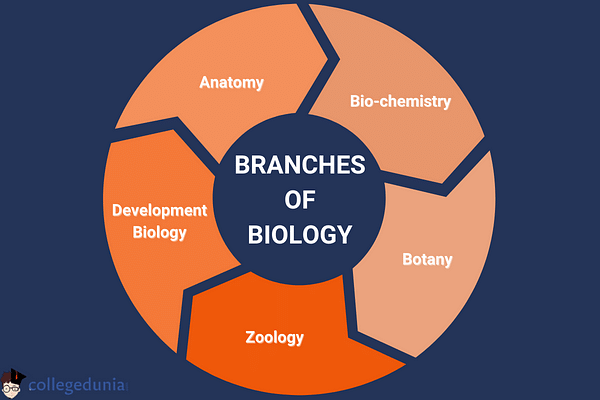
Branches of Biology

Main Branches of Biology

This article covers  multiple choice questions for all the updated topics of biology subject as per 2023-2024 (Class 11th to 12th).

Class 12 Biology Multiple Choice Questions

Class 12 Biology MCQs include several important concepts like Reproduction, Evolution, Food Production, Inheritance, Biotechnology, Ecosystem, biodiversity, etc. 

Class 11 Biology Multiple Choice Questions

Important topics covered in Class 11 Biology MCQs include The Living World, Biological Classification, Plant Kingdom, Animal Kingdom, Morphology of Flowering Plants, Anatomy of Flowering Plants, Structural Organisation in Animals, among others. There are a total of 22 Chapters included in Class 11 Biology.


NEET is a national eligibilty cum entrance test conducted every year for the admission to medical colleges. The syllabus for exam is categorized into three main subjects: Physics, Chemistry, and Biology. The NEET exam is of 3 hours and contain 180 questions each of 4 marks. Biology is the most scoring subject among all three. Students who prepare smartly and focus on main chapters of biology and practice mcq on biology books can score good marks. 

In biology, students study various life processes and learn how different organisms meet the challenges of living in their environment. Major biological concepts for student focus include the relationship between structure and function and change over time. Also, students’ experience in biology supports their developing environmental literacy. 

CBSE CLASS XII Related Questions

  • 1.
    Read the following passage and answer the questions that follow:
    India is one of the megadiverse countries housing around 8·1 per cent of global species diversity, although its land area is only 2·4 per cent of the world’s land area. Many of the species are highly threatened due to human activities like deforestation, mining and habitat fragmentation. Laws like Wildlife (Protection) Act, 1972 were enacted by the Government of India to preserve our biological wealth. Various conservation measures are being implemented to save the threatened species. The following bar graph shows the number of species conserved under different biodiversity conservation methods.

    Which other methods shown in the diagram are opposite to the one identified by you in question ? How are these two conservation approaches different?
    (c) Write two features of Biodiversity hotspots.
    (c) To which category do sacred groves belong and how do they help in bio-conservation?


      • 2.
        Describe the series of experiments conducted by Frederick Griffith. Comment on the significance of the result obtained.
        State the contribution of Avery, MacLeod and McCarty.


          • 3.
            Name the phenomenon that leads to situations like ‘XO’ abnormality in humans. Also name this genetic disorder. How are individuals with an XO chromosomal abnormality affected? Write its symptoms as well as karyotype.


              • 4.
                Explain any two basic principles/core techniques on which biotechnology is based.
                Describe any three key tools used in Recombinant DNA technology.


                  • 5.
                    Draw a neat diagram of a maize grain showing the internal structure and label any five parts.


                      • 6.
                        What is meant by translation in protein synthesis?
                        Explain charging of tRNA (aminoacylation of tRNA) and mention its importance in the process of translation.

                          Comments


                          No Comments To Show
