




CUET PG History Guptas, Vakatakas and Vardhanas Handwritten Notes, free to download as a 20-page PDF. HUQP09 asks 75 questions at four marks each, and this closing part of Unit 1 takes roughly two days to learn, so keep the regional states for the second.

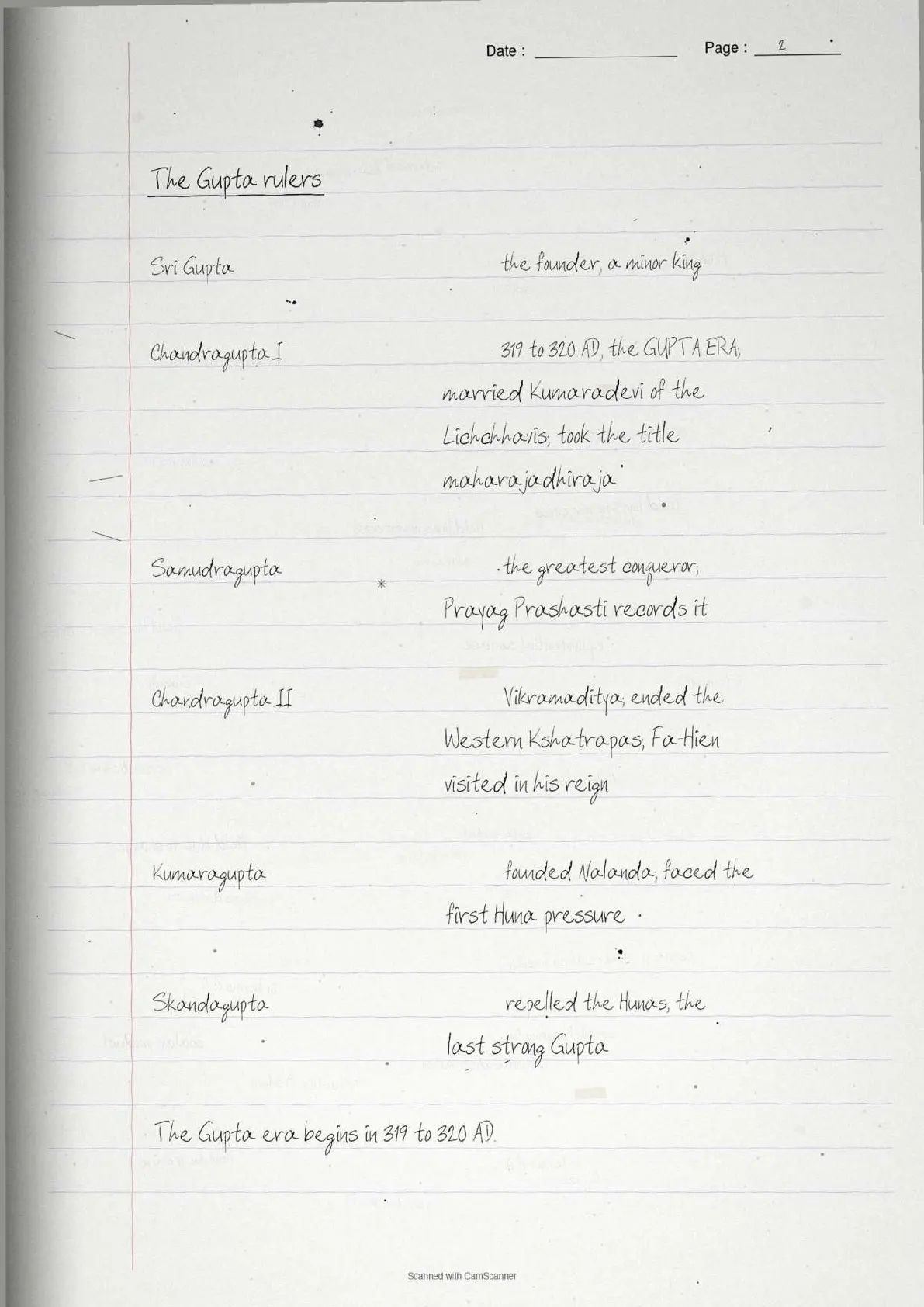
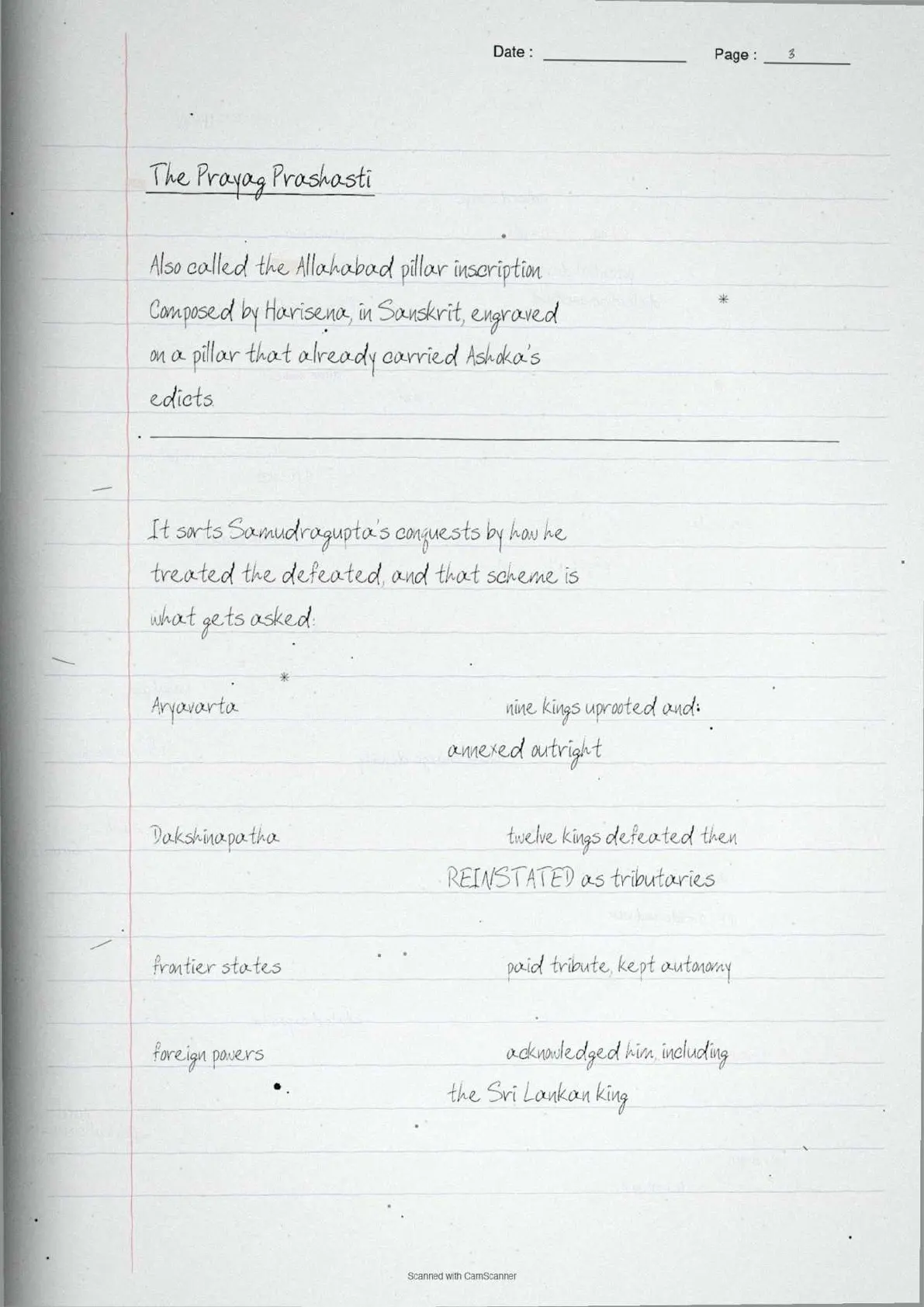
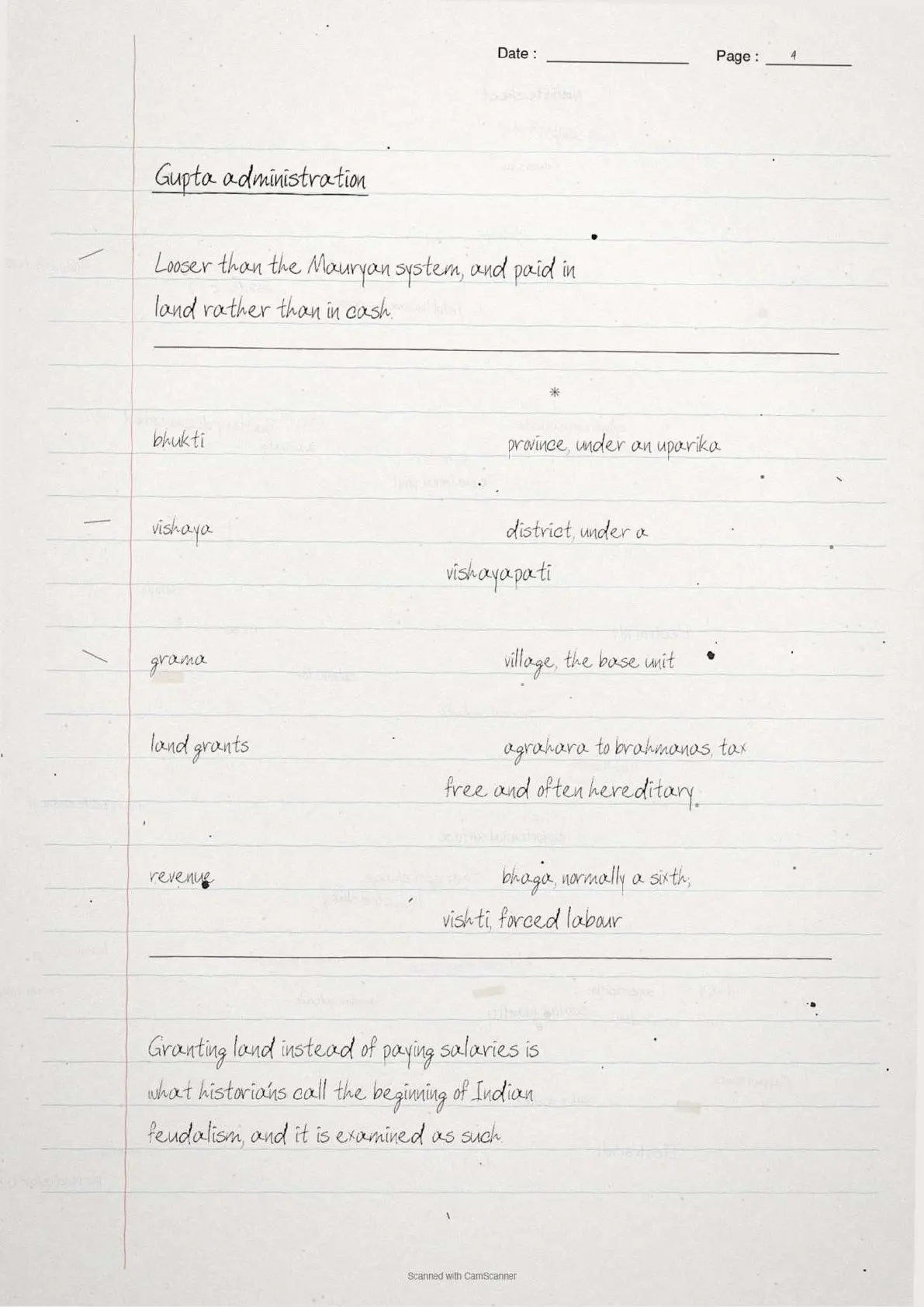
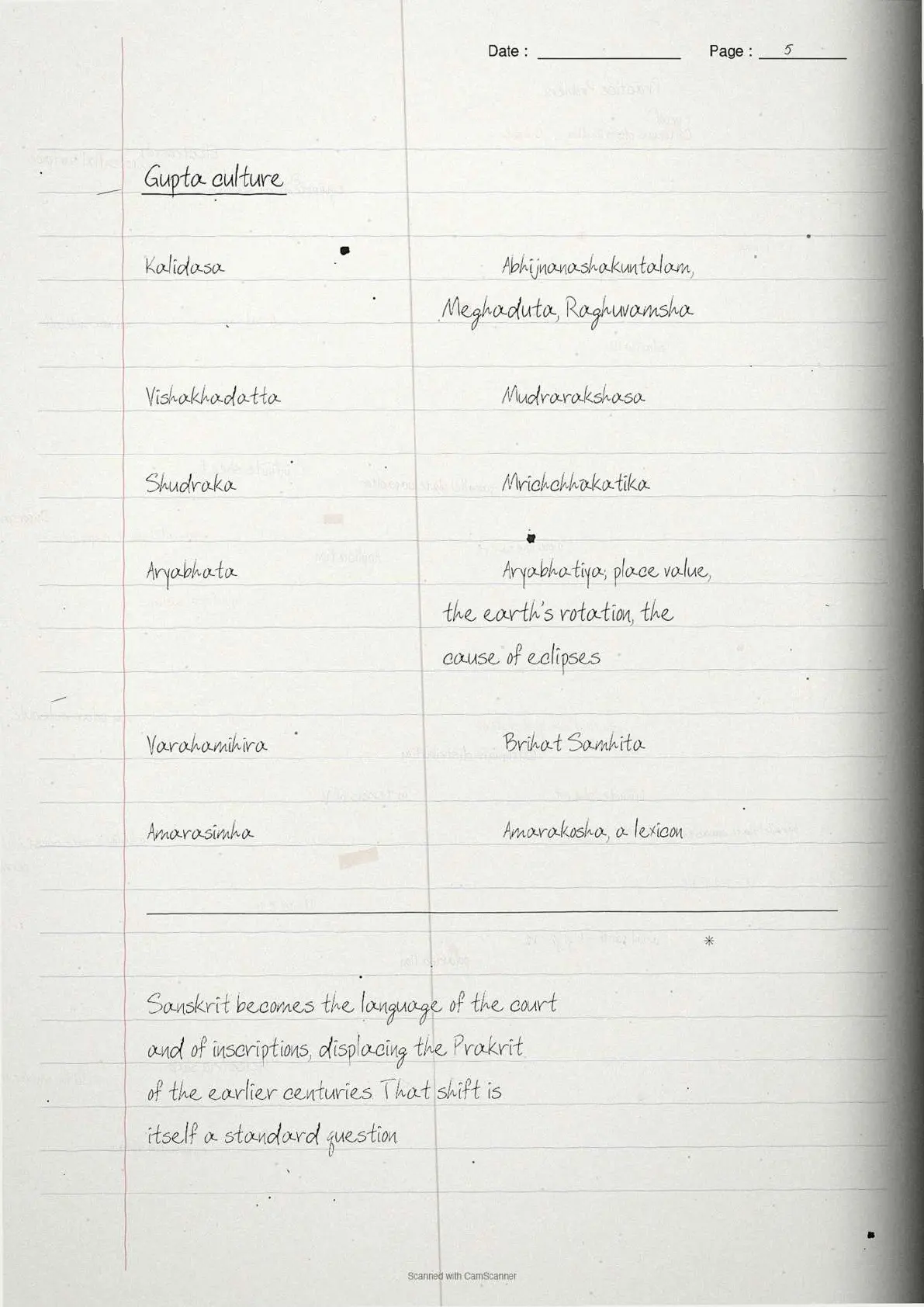



The notes are scans of a real notebook: short lines, boxed rules, and a margin note wherever something is easy to get wrong.
Where This Sits in HUQP09
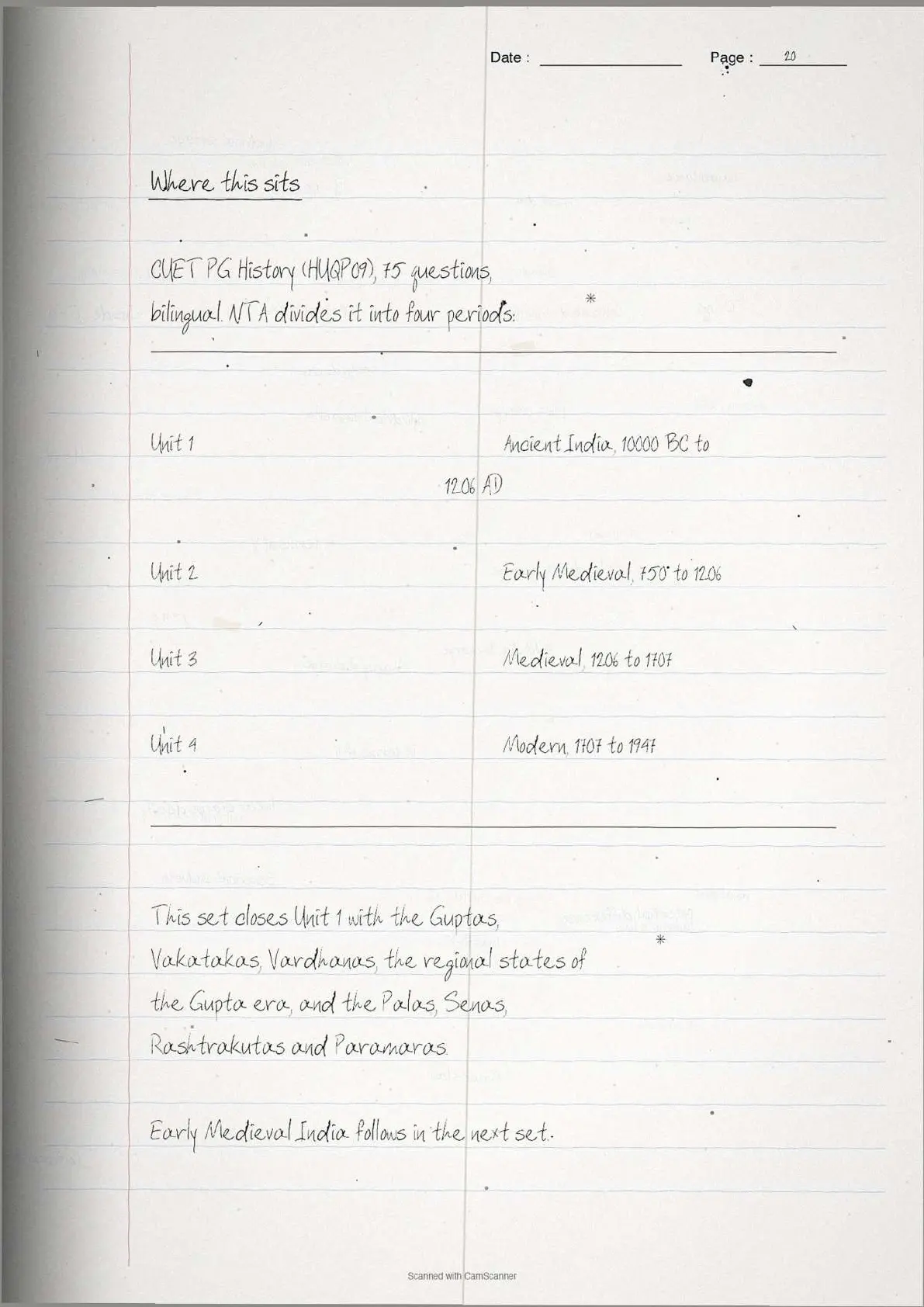
The Guptas, the regional states of their era, and the Palas, Senas, Rashtrakutas and Paramaras are all named in Unit 1. Unit 2 then covers the same closing centuries from a different angle.
| Unit | Period | Span |
|---|---|---|
| 1 | Ancient History of India | 10000 BC to 1206 AD |
| 2 | Early Medieval India | 750 AD to 1206 AD |
| 3 | Medieval History of India | 1206 to 1707 AD |
| 4 | Modern History of India | 1707 to 1947 |
What the Notes Cover
- The Gupta rulers from Sri Gupta to Skandagupta, and the era that begins in 319 AD
- The Prayag Prashasti, and how Harisena sorts Samudragupta's conquests
- Administration: bhukti, vishaya and grama, and the land grants that paid for it
- Literature and science, from Kalidasa to Aryabhata and Varahamihira
- Art and architecture, and the beginning of the Nagara temple form
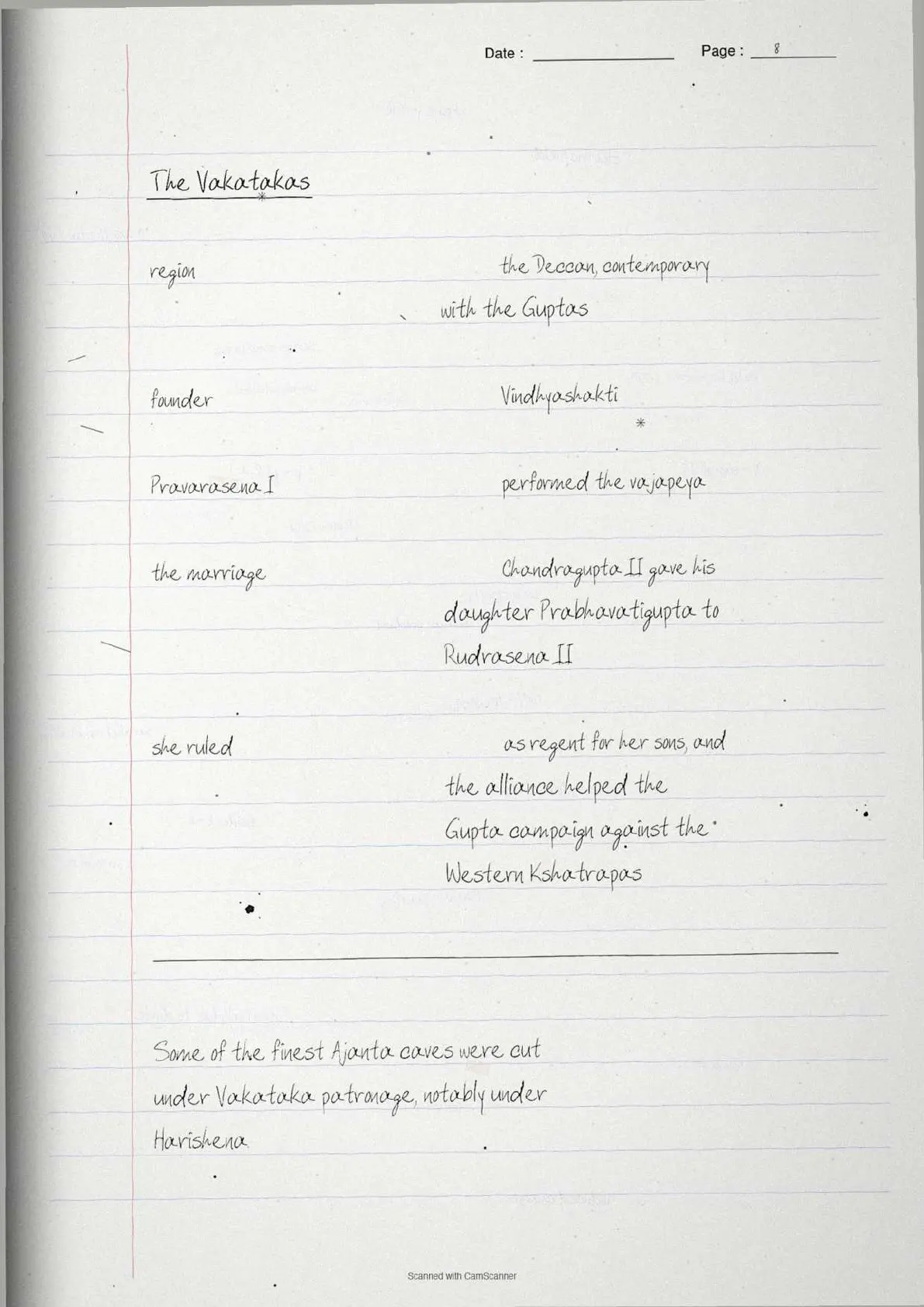
- The Vakatakas, the Prabhavatigupta marriage, and Ajanta
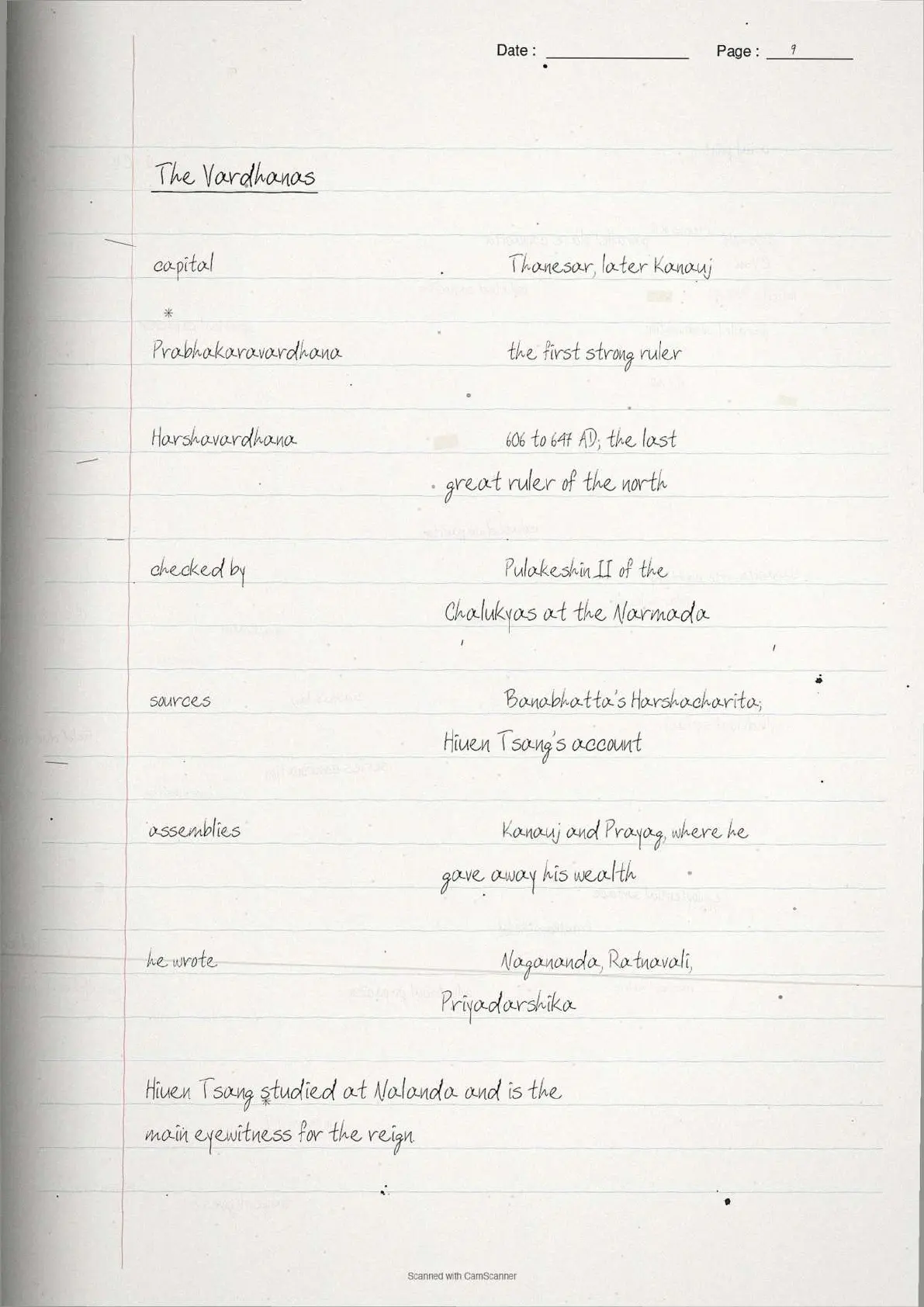
- Harshavardhana, his sources, and the check at the Narmada
- The Kadambas, Pallavas and Chalukyas, and the tripartite struggle for Kanauj
How to Approach the Topic
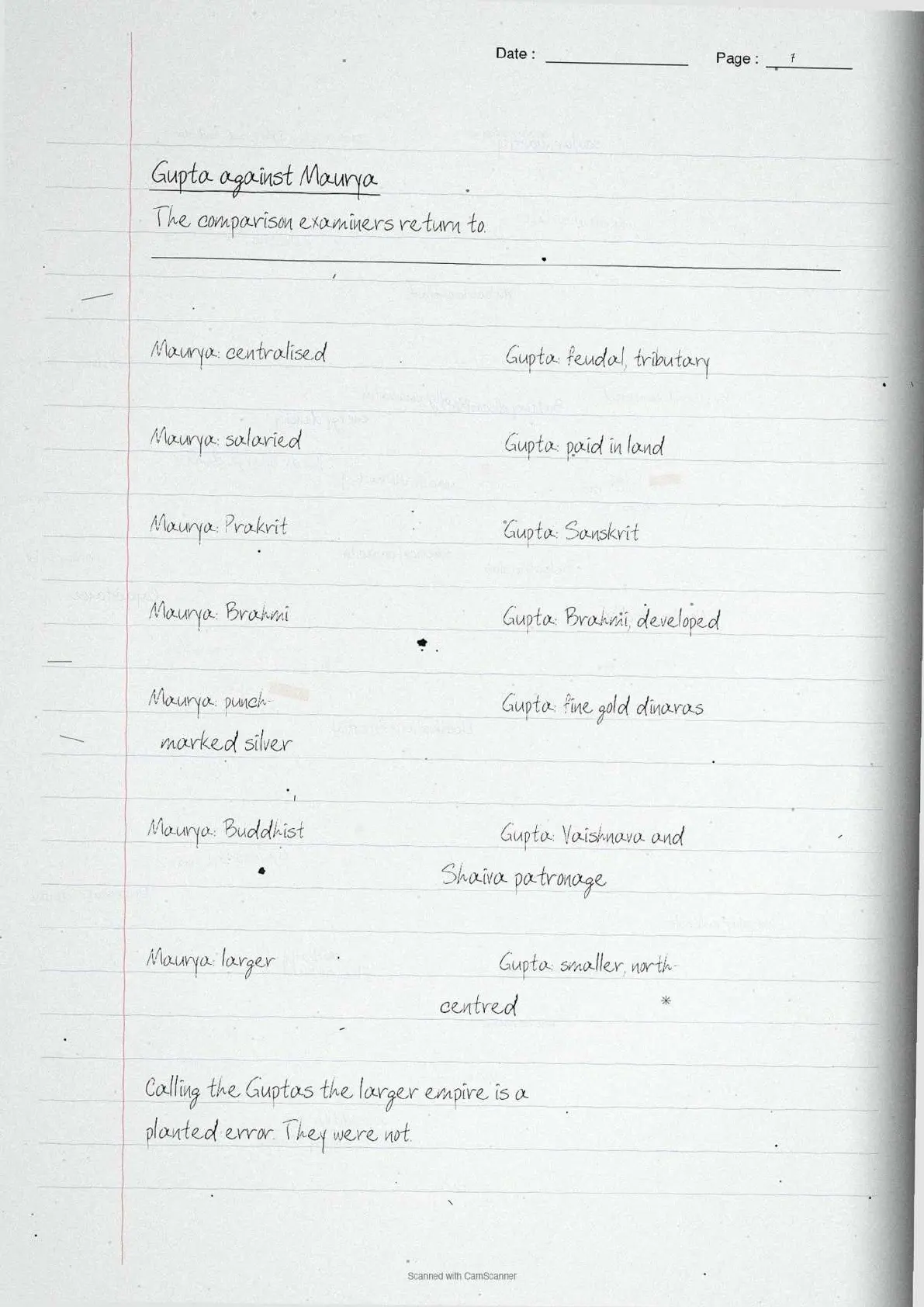
The golden-age label attaches to Gupta culture, not to the reach of the Gupta state, and the paper tests exactly that distinction. Mauryan rule was centralised and paid salaries; Gupta rule worked through tributary kings and paid in land. Anything that follows from that contrast is fair game.
Matching is the dominant question form here. Pilgrim to king, inscription to composer, temple to dynasty. Fa-Hien came under Chandragupta II and Hiuen Tsang under Harsha; Harisena wrote the Prayag Prashasti and Ravikirti the Aihole inscription; Ellora's Kailasa temple is Rashtrakuta and Khajuraho is Chandella.
The land grants are worth a second reading, because they are also the starting point of the feudalism debate in Unit 2. Paying an officer with a tax-free village rather than a salary is the change every later argument is built on.
Common Mistakes
- Calling the Gupta empire larger than the Mauryan. It was smaller and looser
- Dating the Gupta era to 78 AD, which is the Saka era
- Placing Fa-Hien under Harsha rather than under Chandragupta II
- Giving the Kailasa temple at Ellora to the Chalukyas. It is Rashtrakuta
- Saying Harsha conquered the Deccan. Pulakeshin II stopped him at the Narmada
- Attributing the Prayag Prashasti to Banabhatta rather than to Harisena
- Calling the Palas a Shaiva dynasty. They were Buddhist patrons
Video Revision
Source: GS History by Aadesh Singh
How to Use These Notes
Page 7 sets the Guptas against the Mauryas in eight paired lines, and page 10 does the same for the three Chinese pilgrims. Those two answer most of what is asked.
Page 19 is the recall grid, and page 16 lists the errors above with the correction beside each.
The previous set covers the Mauryas and the Kushanas, and the next one opens Unit 2 with the Rajputs, the Cholas and the feudalism debate.
CUET PG History Guptas and Vardhanas Notes FAQs
Ques. When does the Gupta era begin?
Ans. 319 to 320 AD, under Chandragupta I. The Saka era of 78 AD is a different reckoning and is the usual wrong option.
Ques. Who composed the Prayag Prashasti?
Ans. Harisena, for Samudragupta. It is engraved on an Allahabad pillar that already carried Ashoka's edicts, and it sorts the defeated kings by whether they were annexed, reinstated as tributaries, or merely made to pay tribute.
Ques. Which Chinese pilgrim came under which ruler?
Ans. Fa-Hien under Chandragupta II, Hiuen Tsang under Harsha, and I-Tsing later in the seventh century. All three were Buddhist monks, which is why their accounts are fullest on monasteries.
Ques. Was Gupta rule more centralised than Mauryan rule?
Ans. No, the opposite. The Mauryas ran a salaried bureaucracy over a larger territory. The Guptas worked through tributary kings and granted land instead of paying wages, which is why the period is read as the start of Indian feudalism.
Ques. Can the notes be downloaded free?
Ans. Yes. All 20 pages can be read on this page and downloaded at no cost.



Comments