




CUET PG History Mauryan and Post-Mauryan Handwritten Notes, free to download as a 20-page PDF. HUQP09 asks 75 questions at four marks each, and this stretch of Unit 1 takes roughly two days to learn, so give the edicts a sitting of their own.
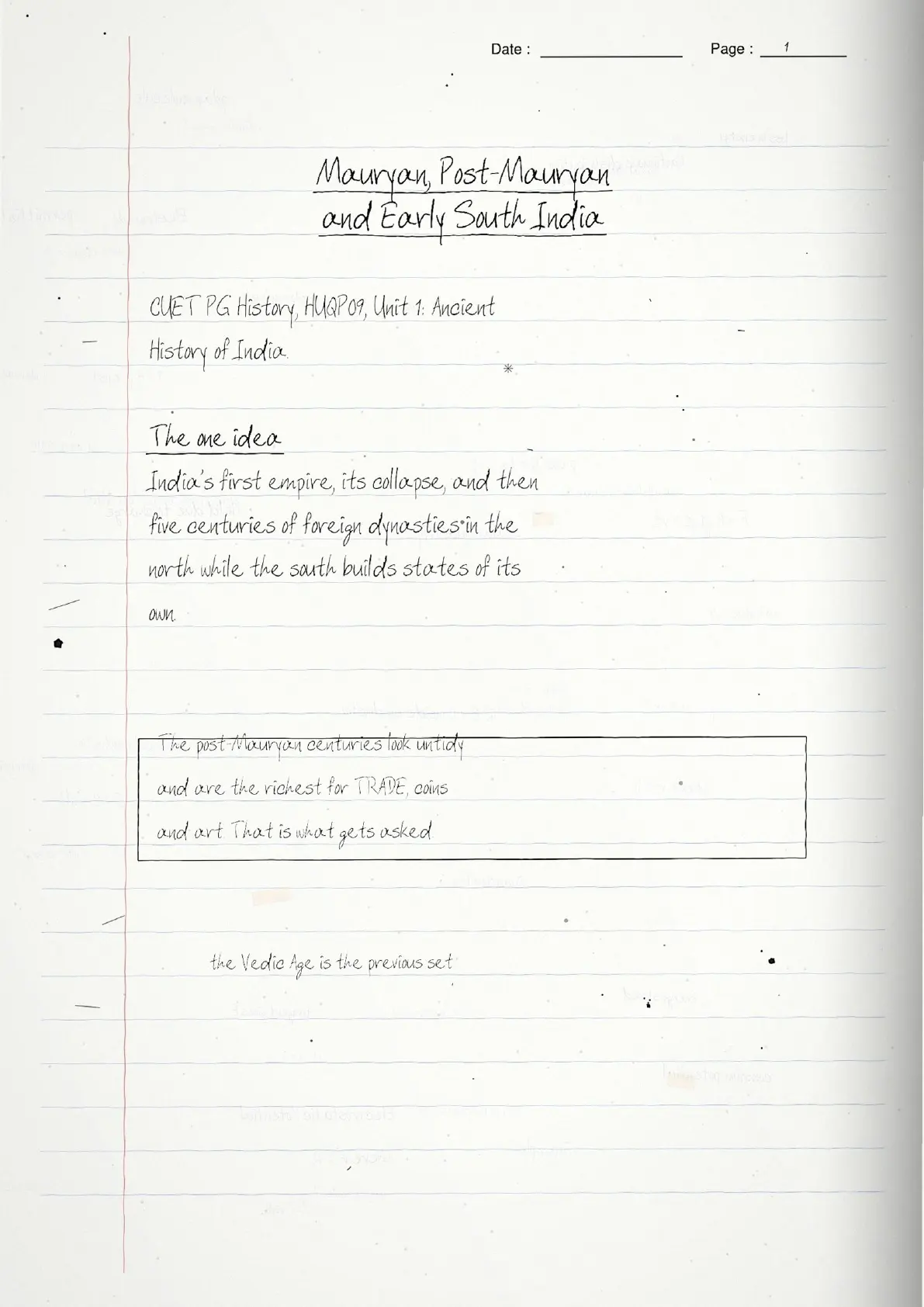
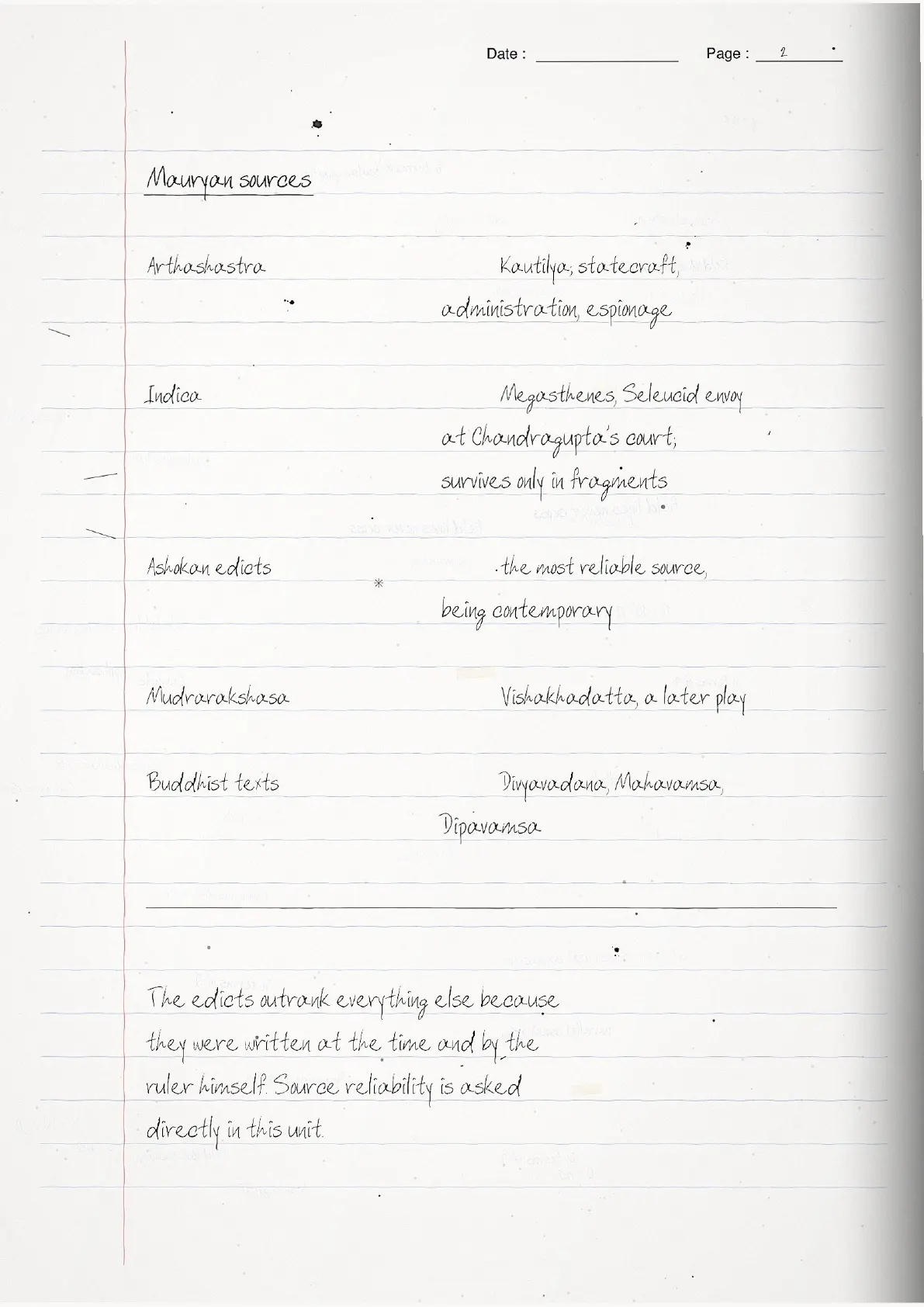
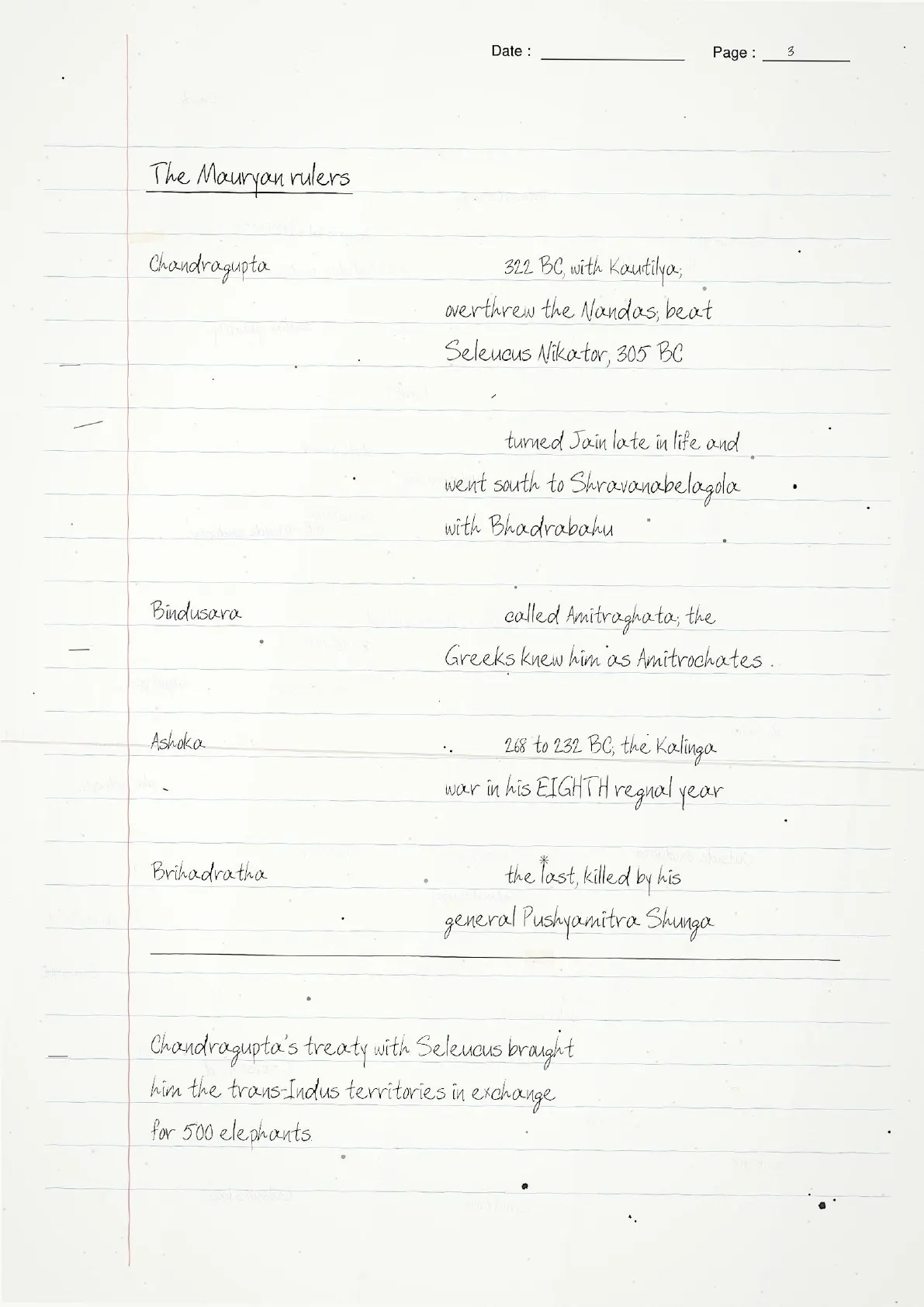
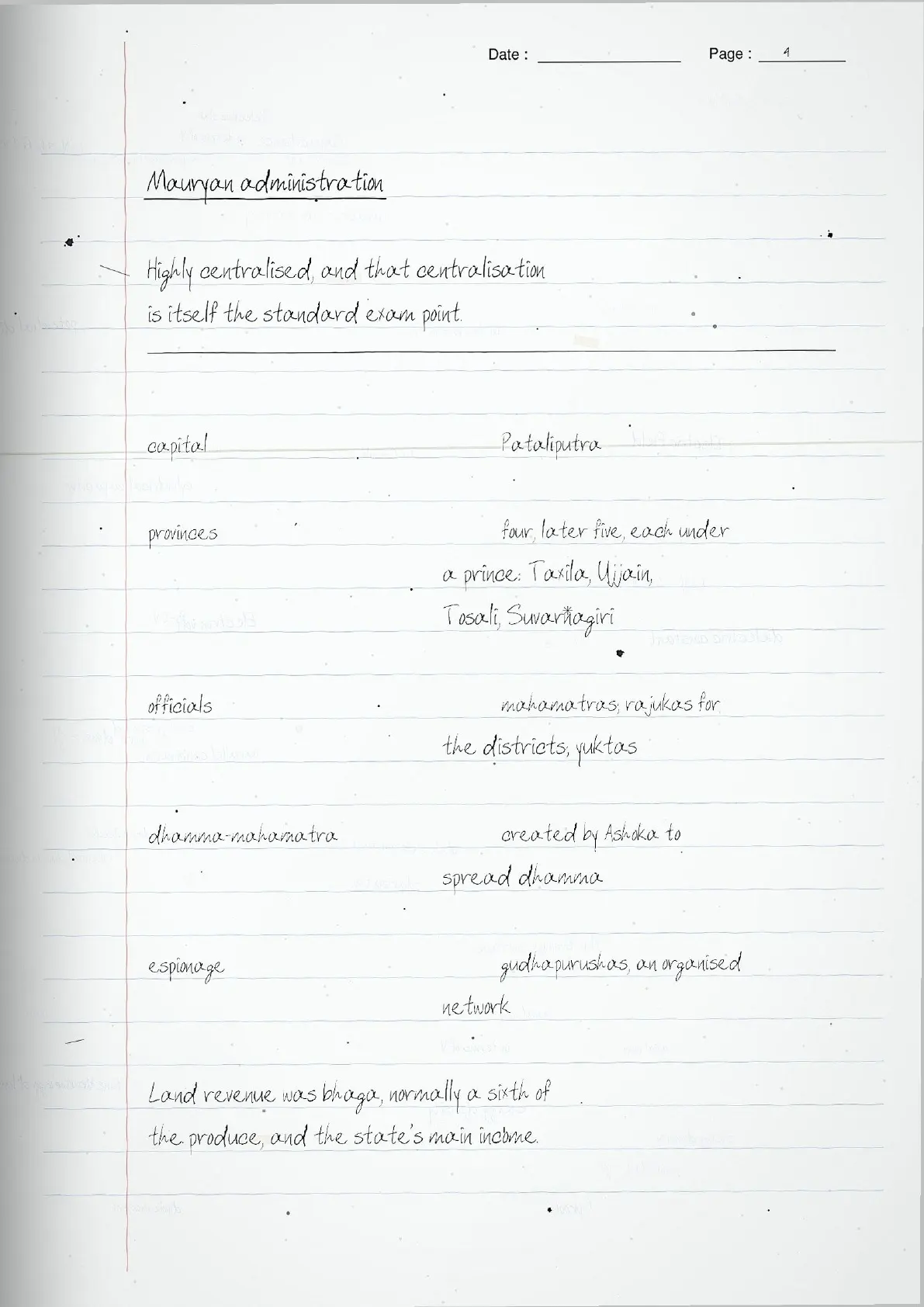
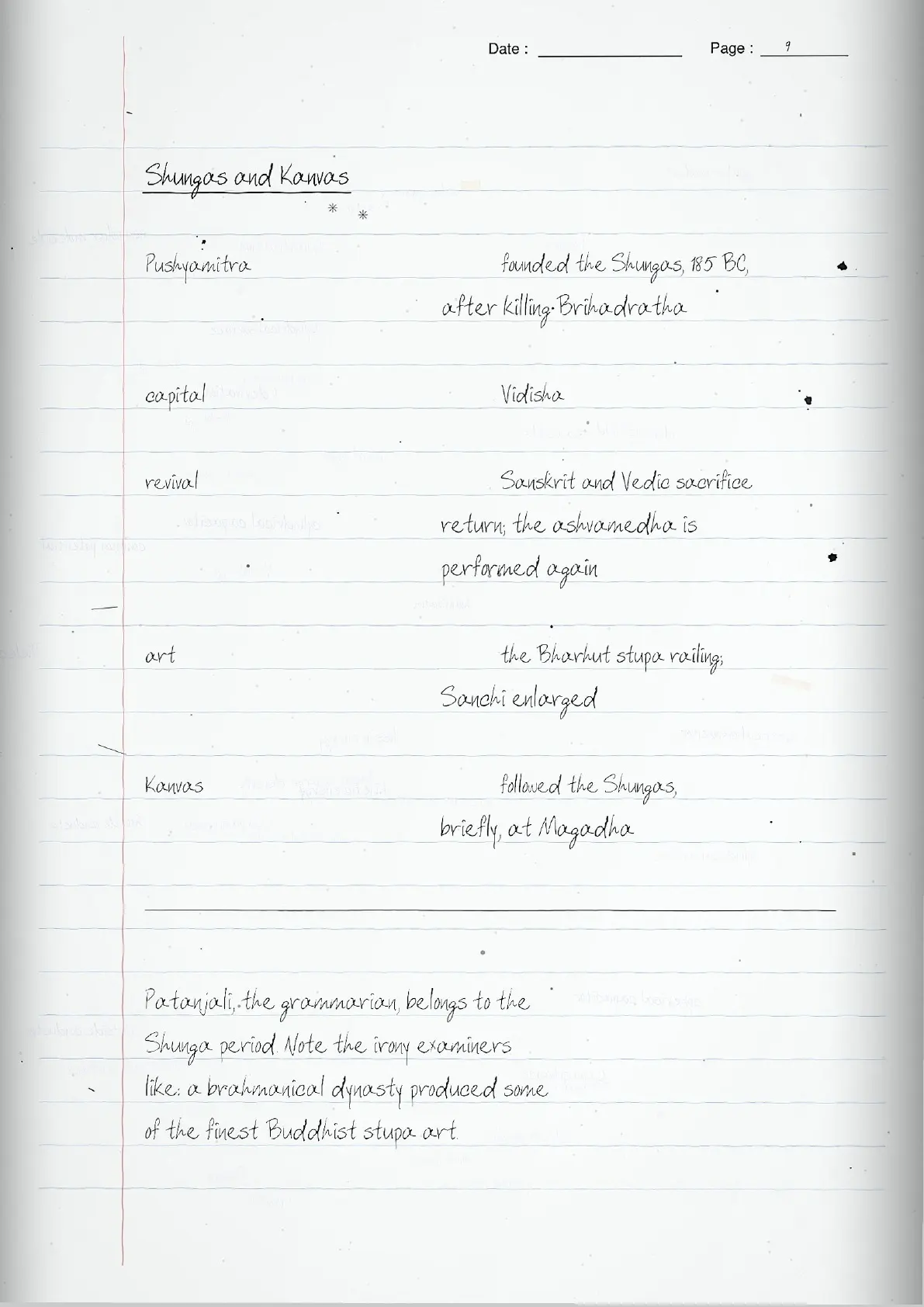
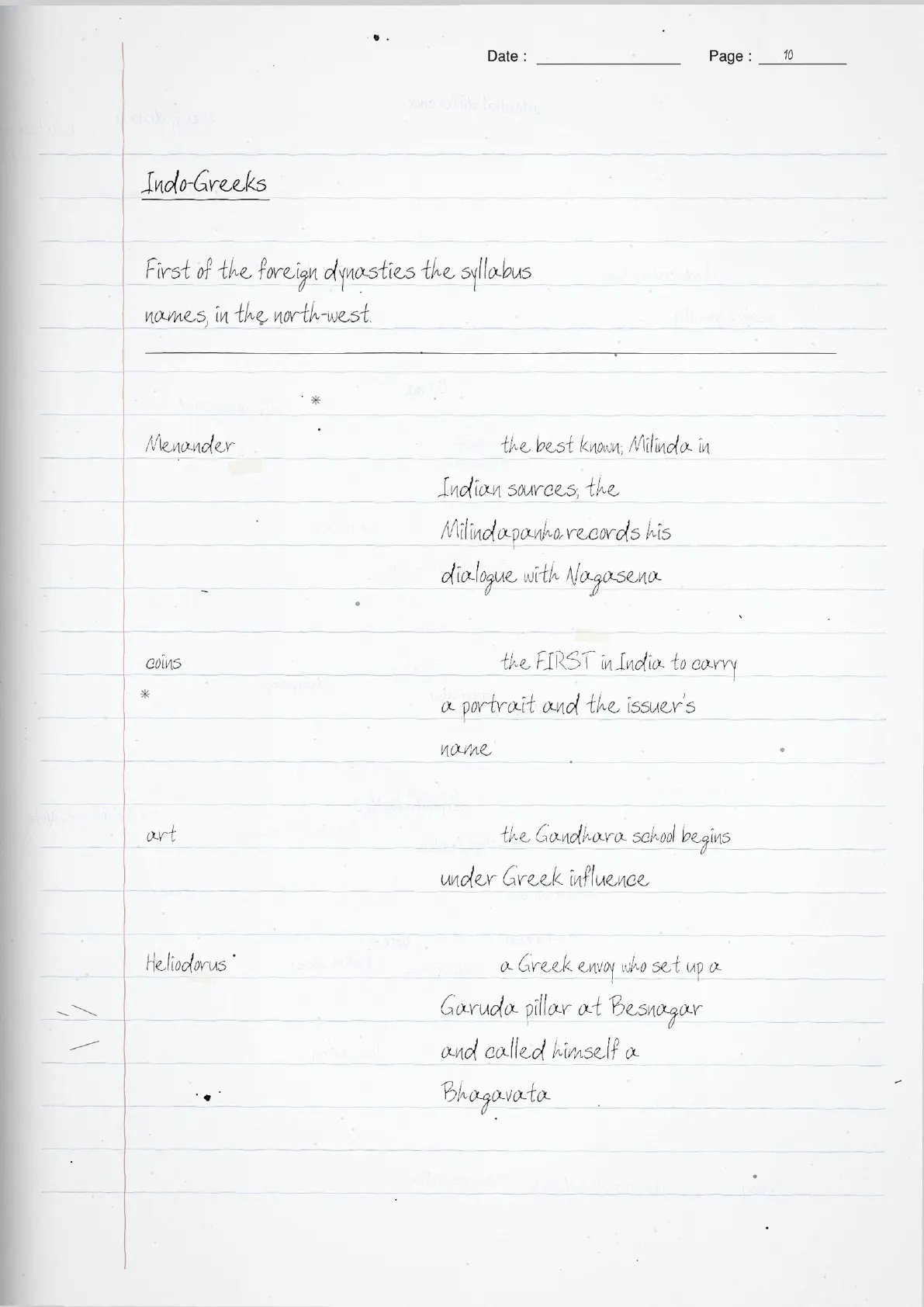
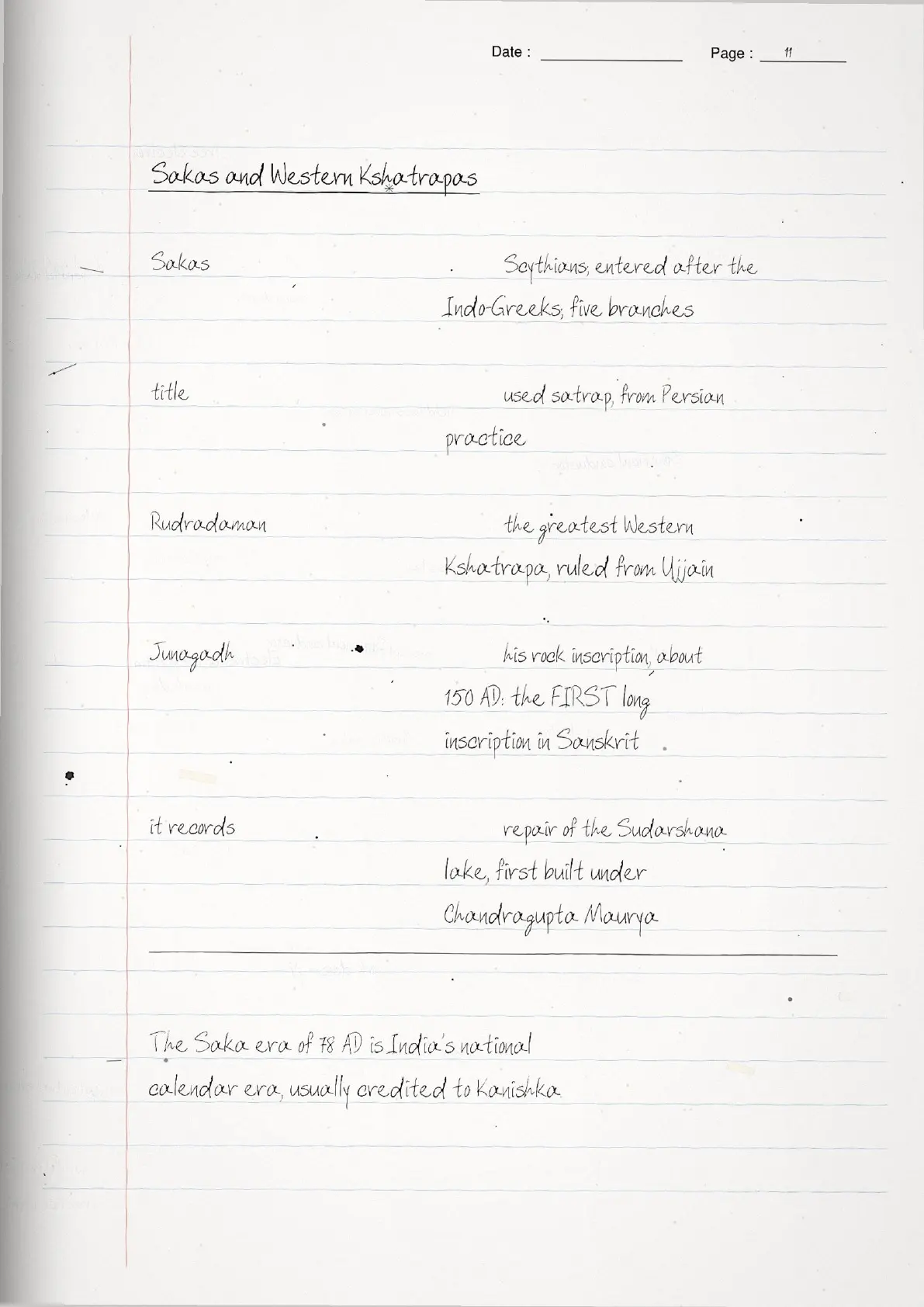
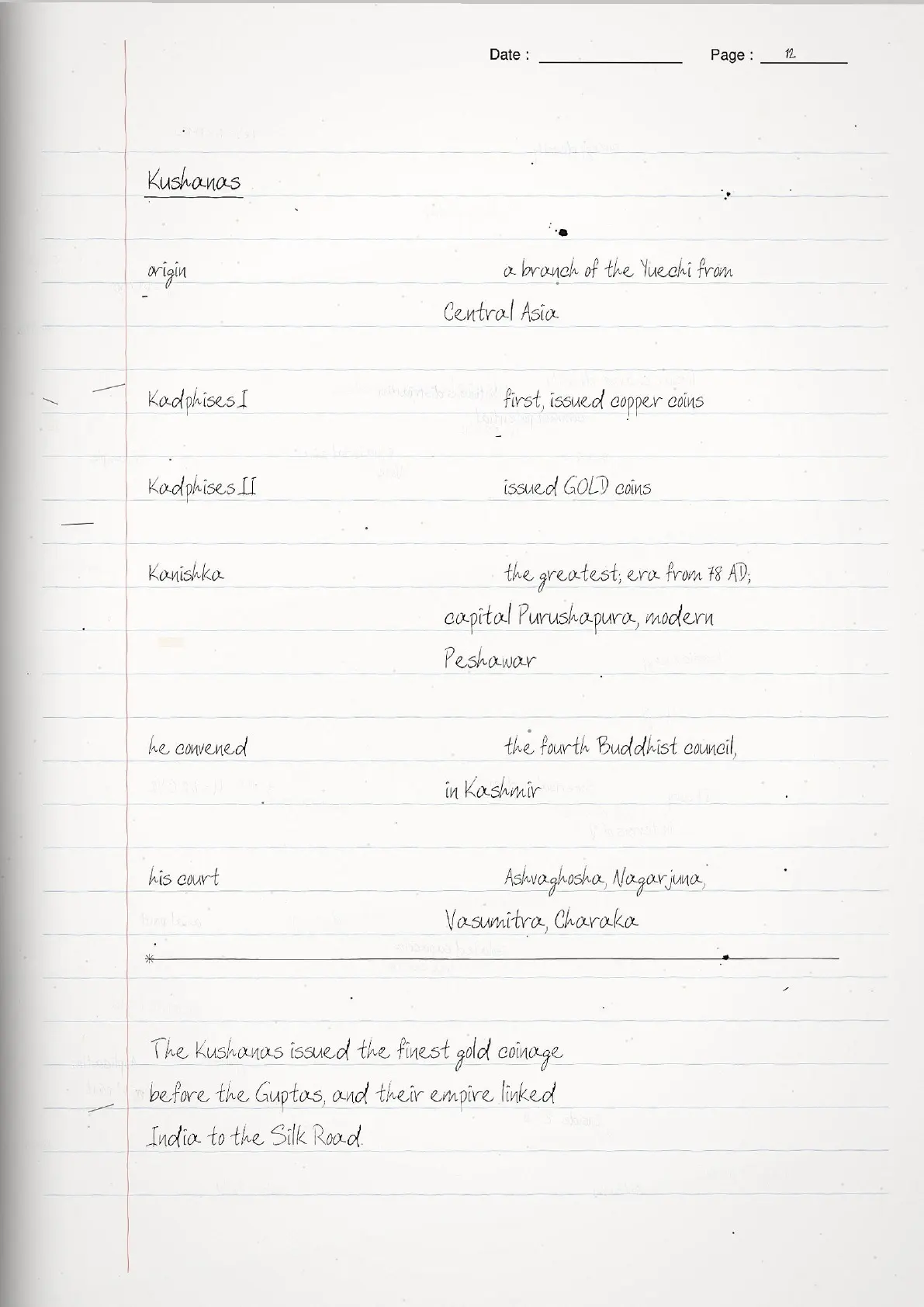
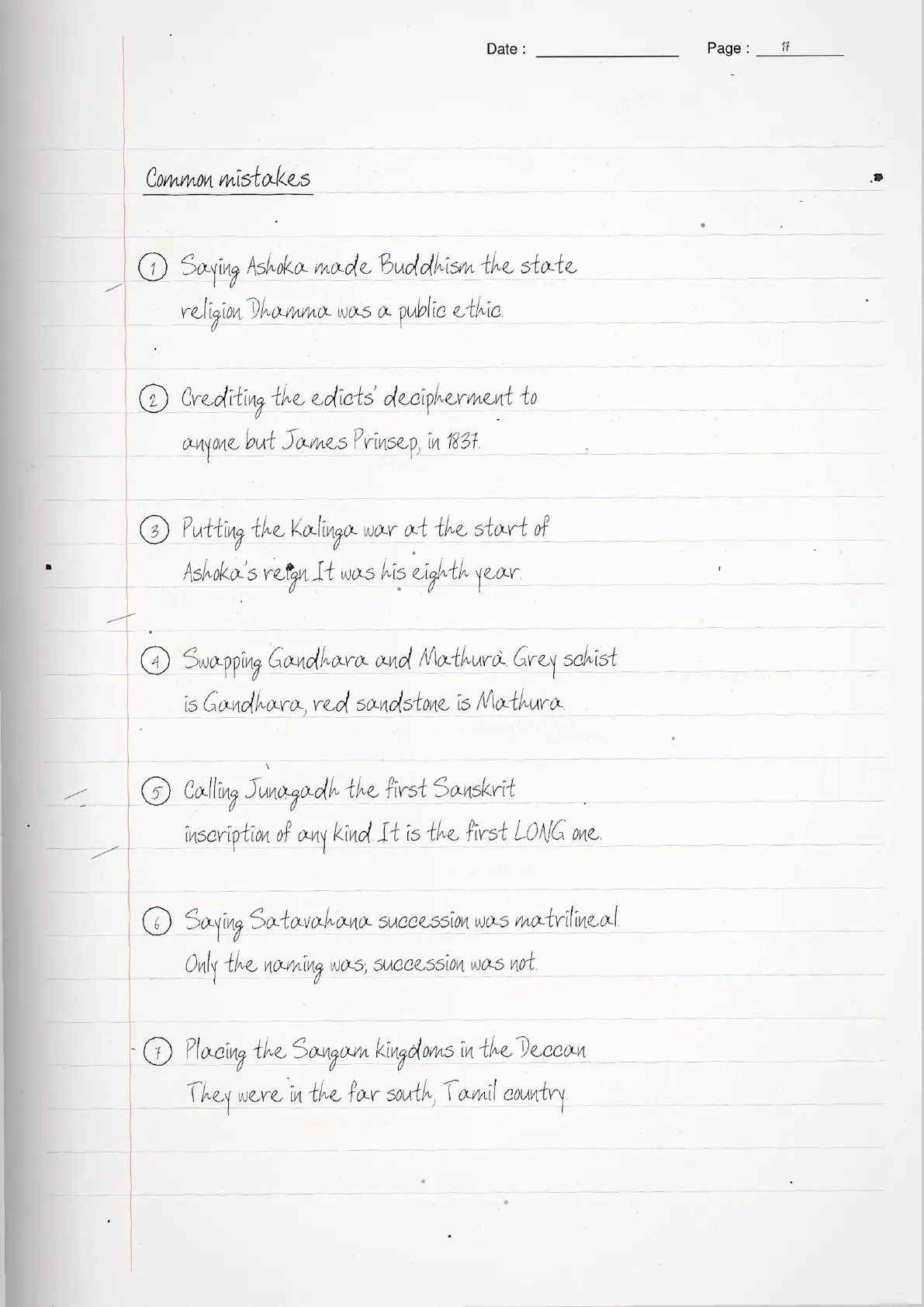
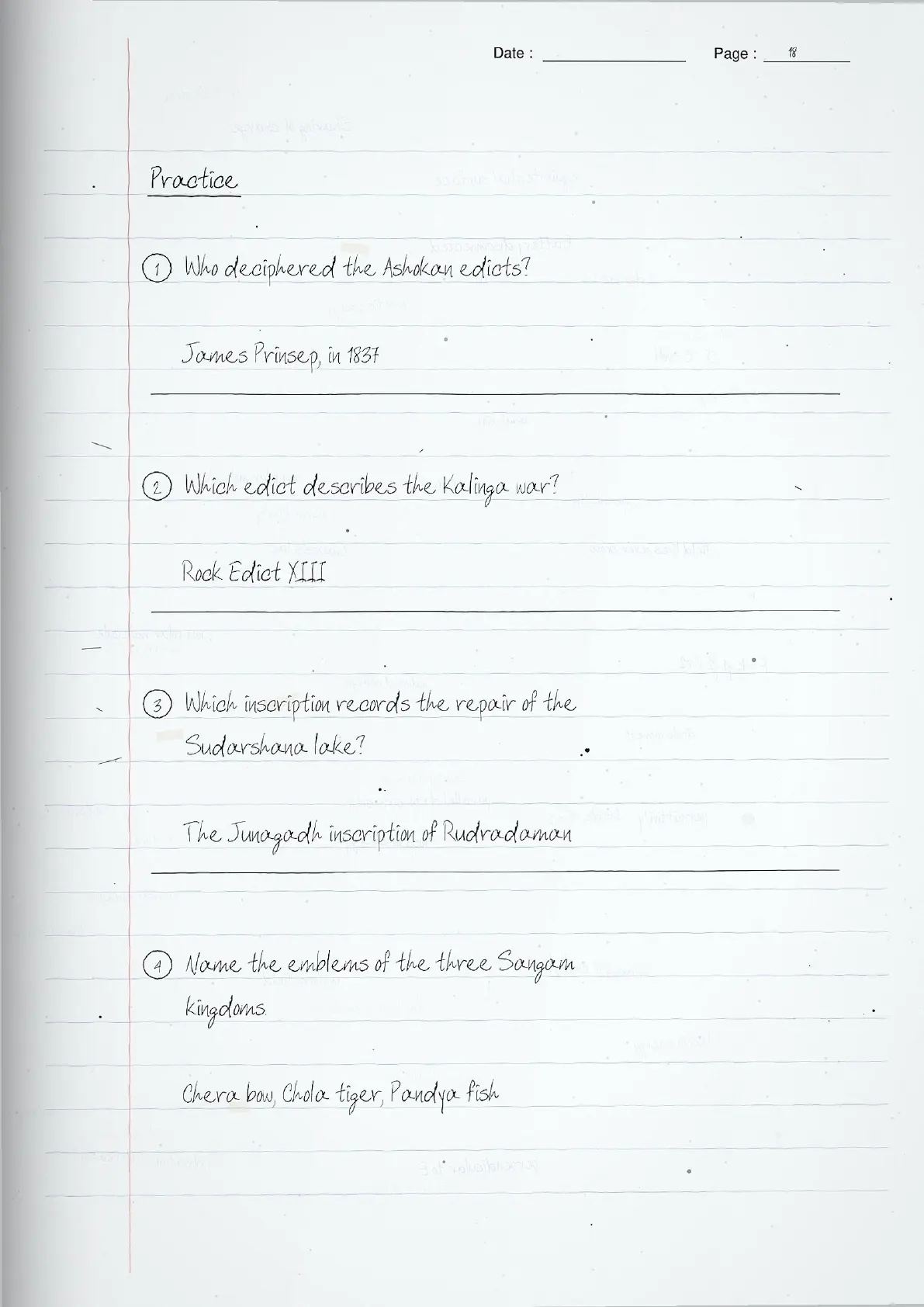
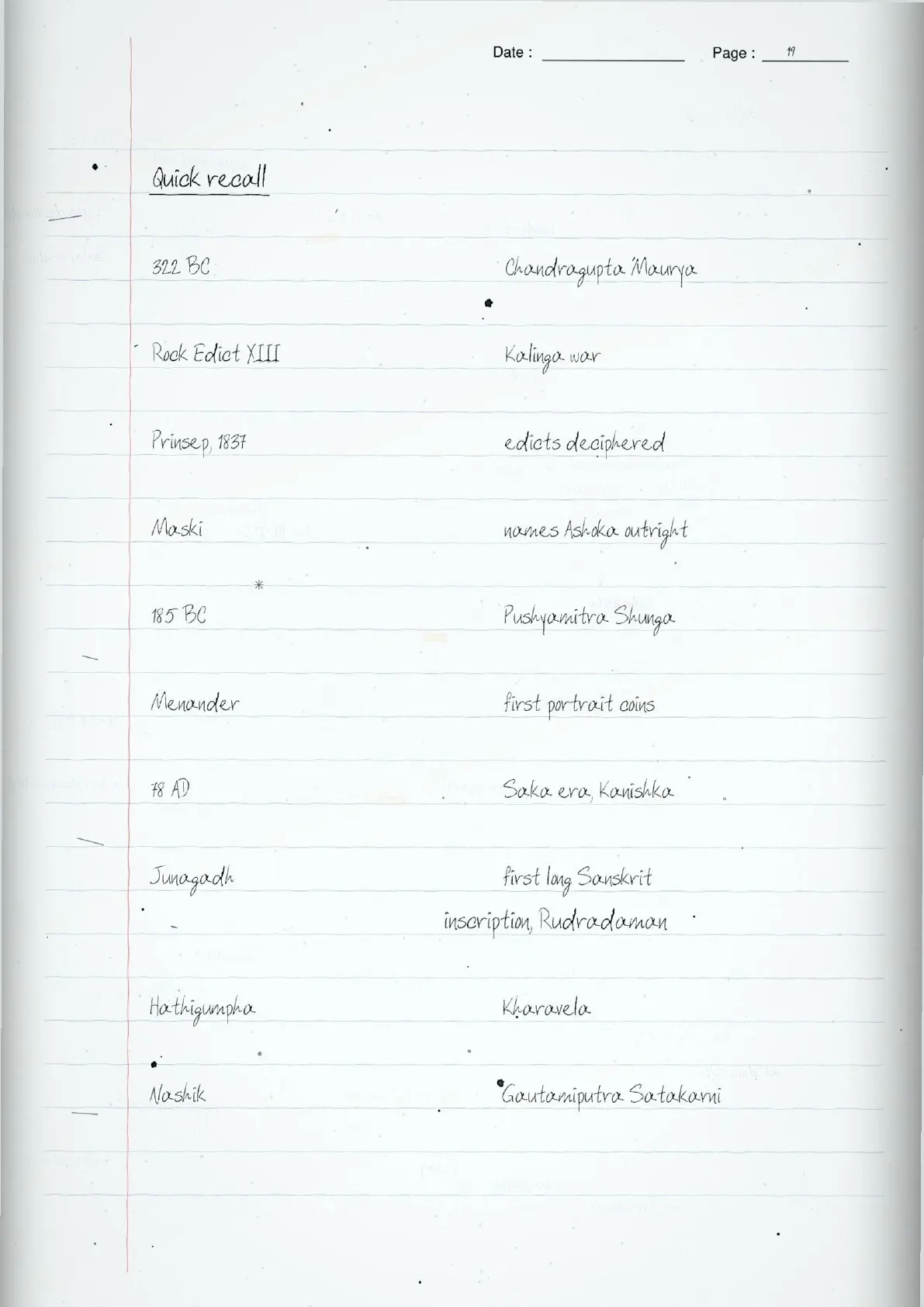
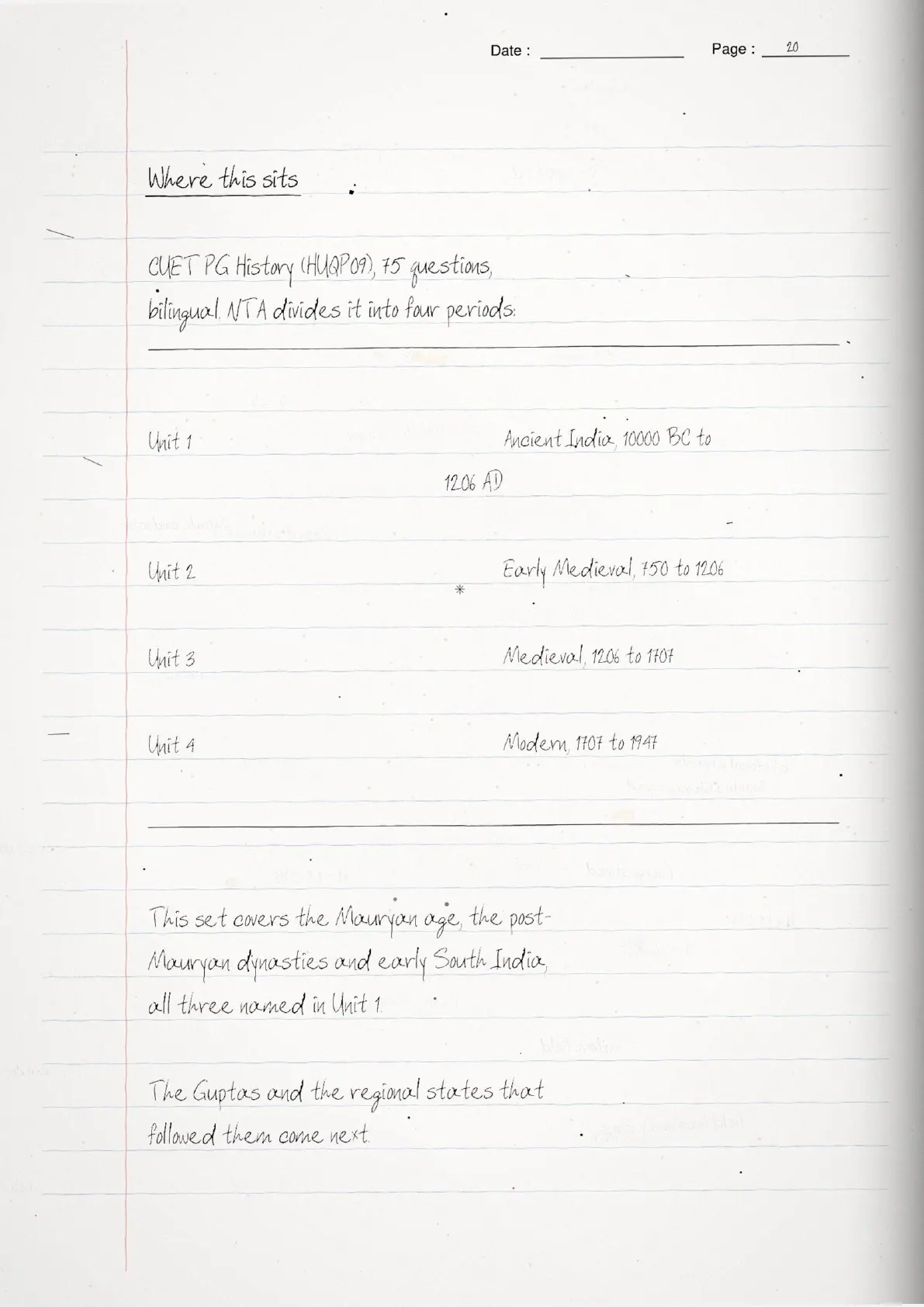
The notes are scans of a real notebook: short lines, boxed rules, and a margin note wherever something is easy to get wrong.
Where This Sits in HUQP09
The four NTA periods and their spans are below. The Mauryas, the Kushanas and the Sangam kingdoms all sit inside the first of them.
| Unit | Period | Span |
|---|---|---|
| 1 | Ancient History of India | 10000 BC to 1206 AD |
| 2 | Early Medieval India | 750 AD to 1206 AD |
| 3 | Medieval History of India | 1206 to 1707 AD |
| 4 | Modern History of India | 1707 to 1947 |
What the Notes Cover
- The sources: the Arthashastra, Megasthenes, the Puranas and the edicts themselves
- Chandragupta, Bindusara and Ashoka, and what each is asked about
- Mauryan administration, from the mantriparishad down to the district officers
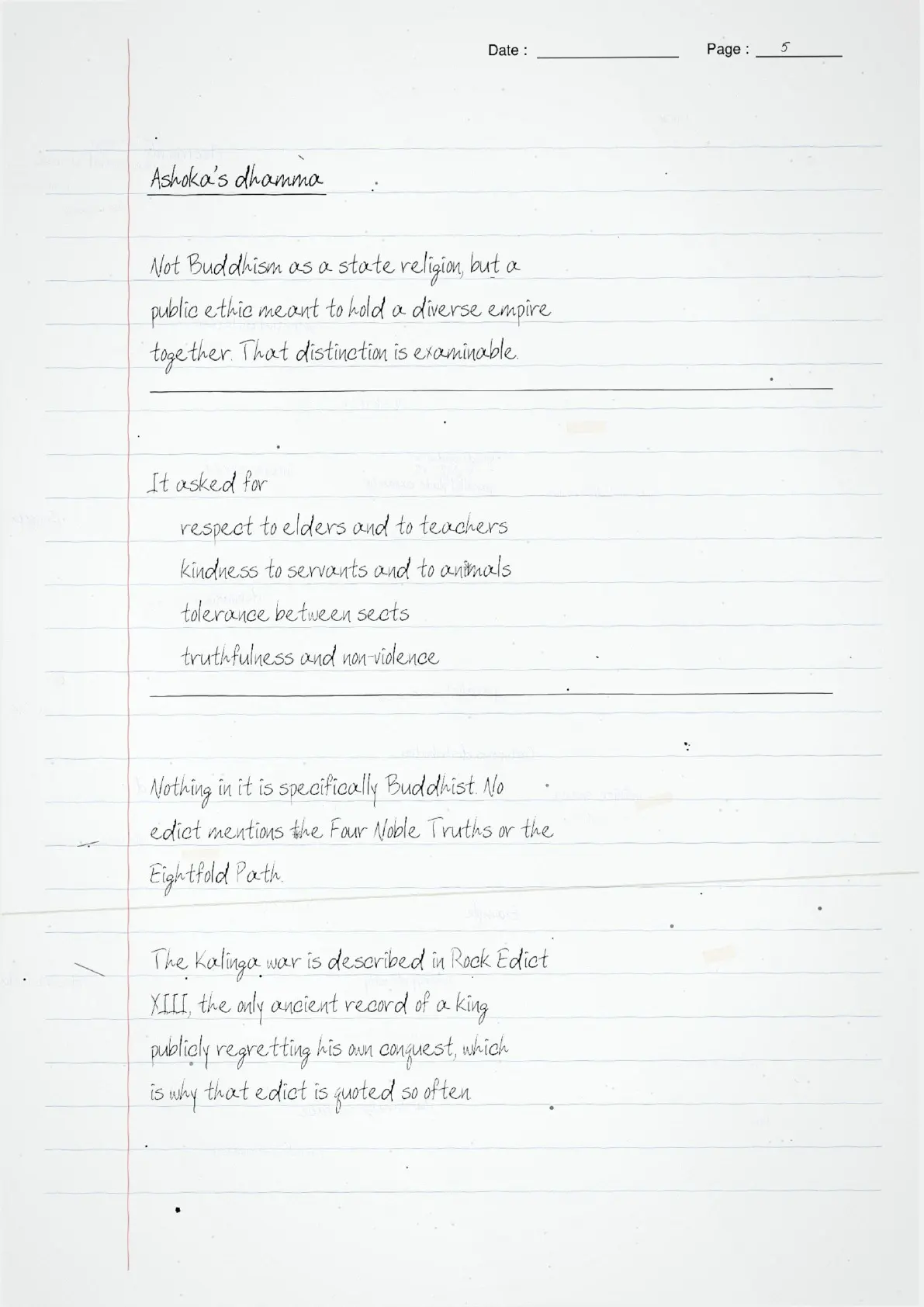
- Ashoka's dhamma, and how it differs from Buddhism as a religion
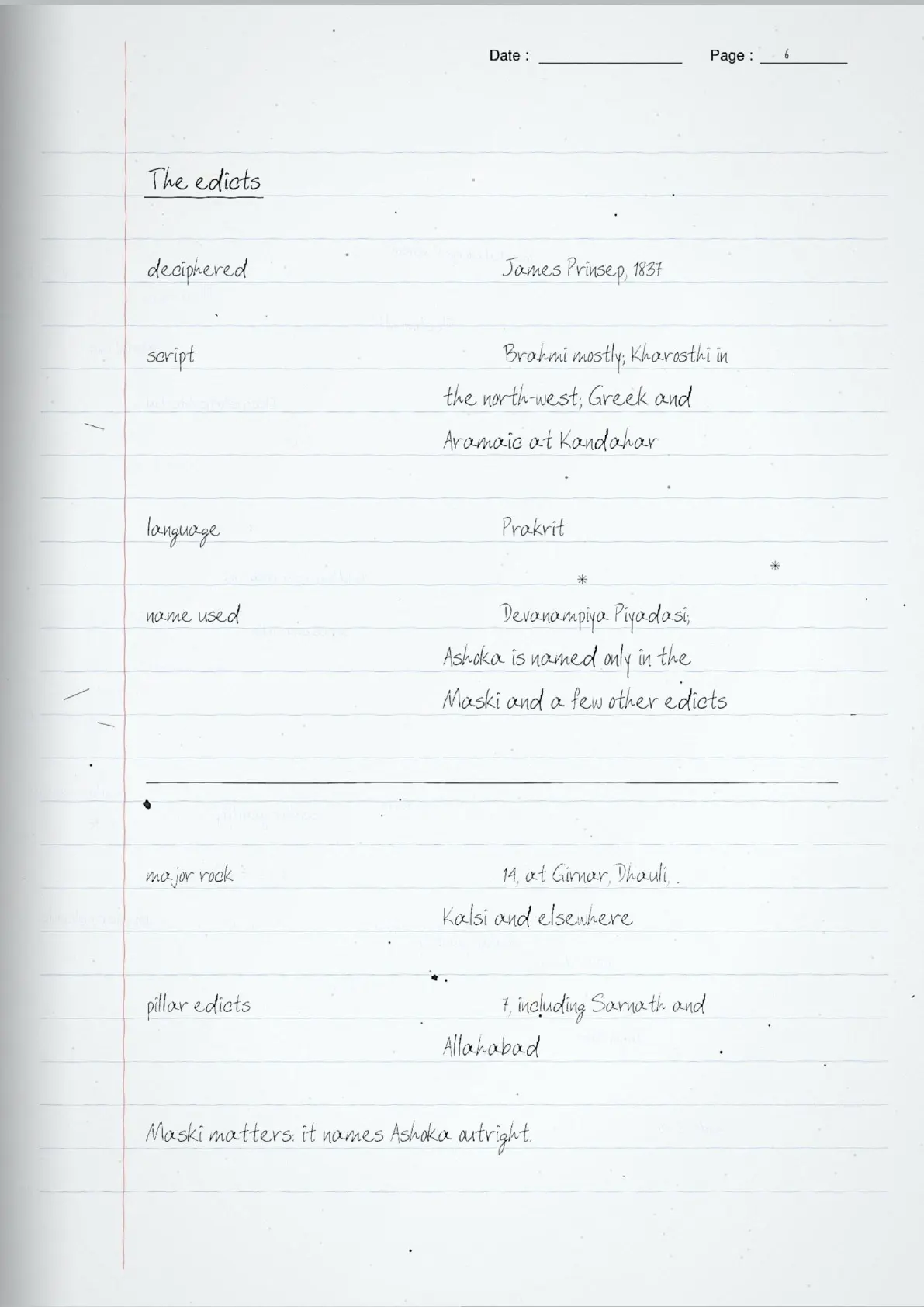
- The edicts: major and minor rock edicts, pillar edicts, and the two in Kharoshthi
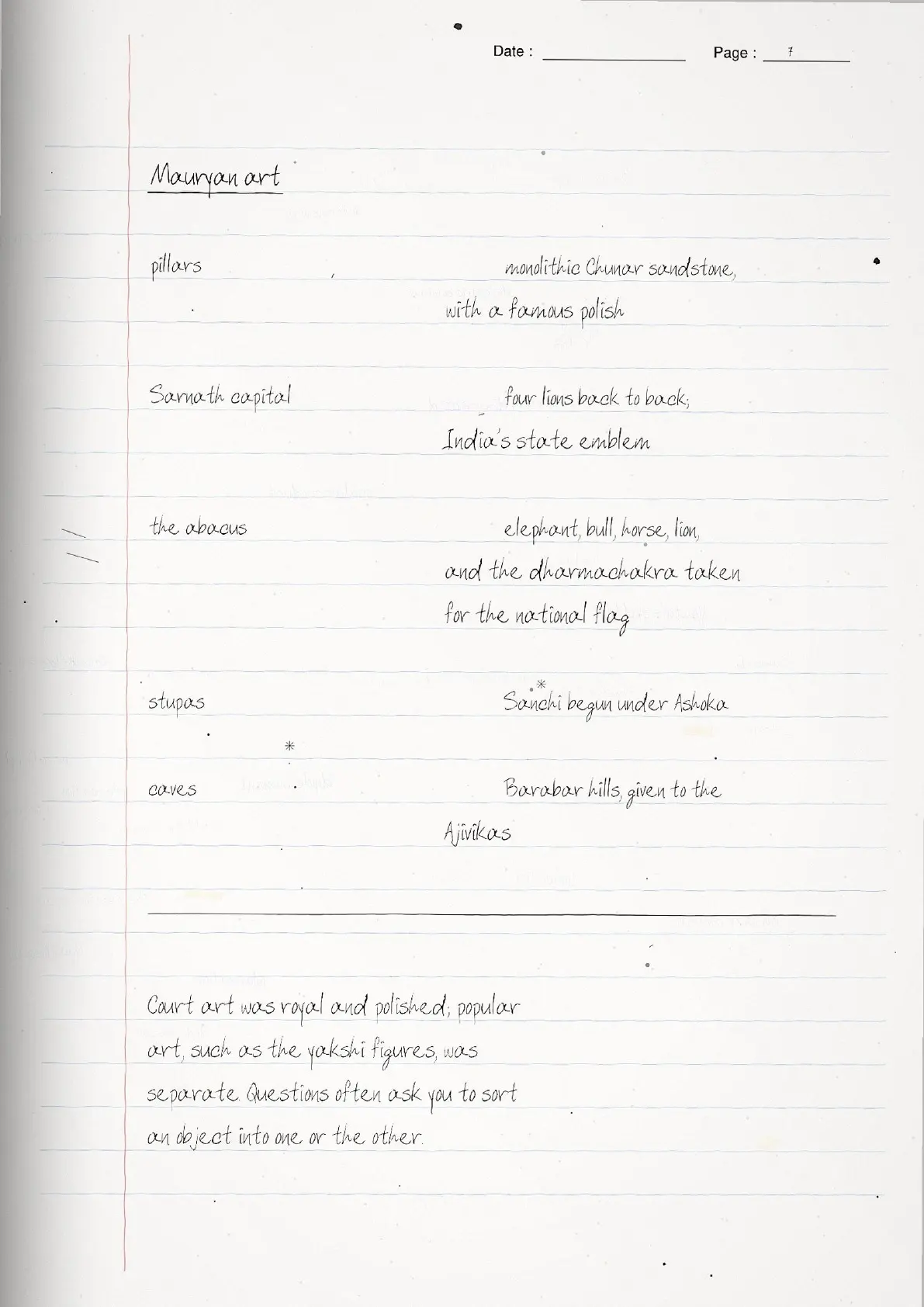
- Mauryan art, and the Sarnath capital that became the state emblem
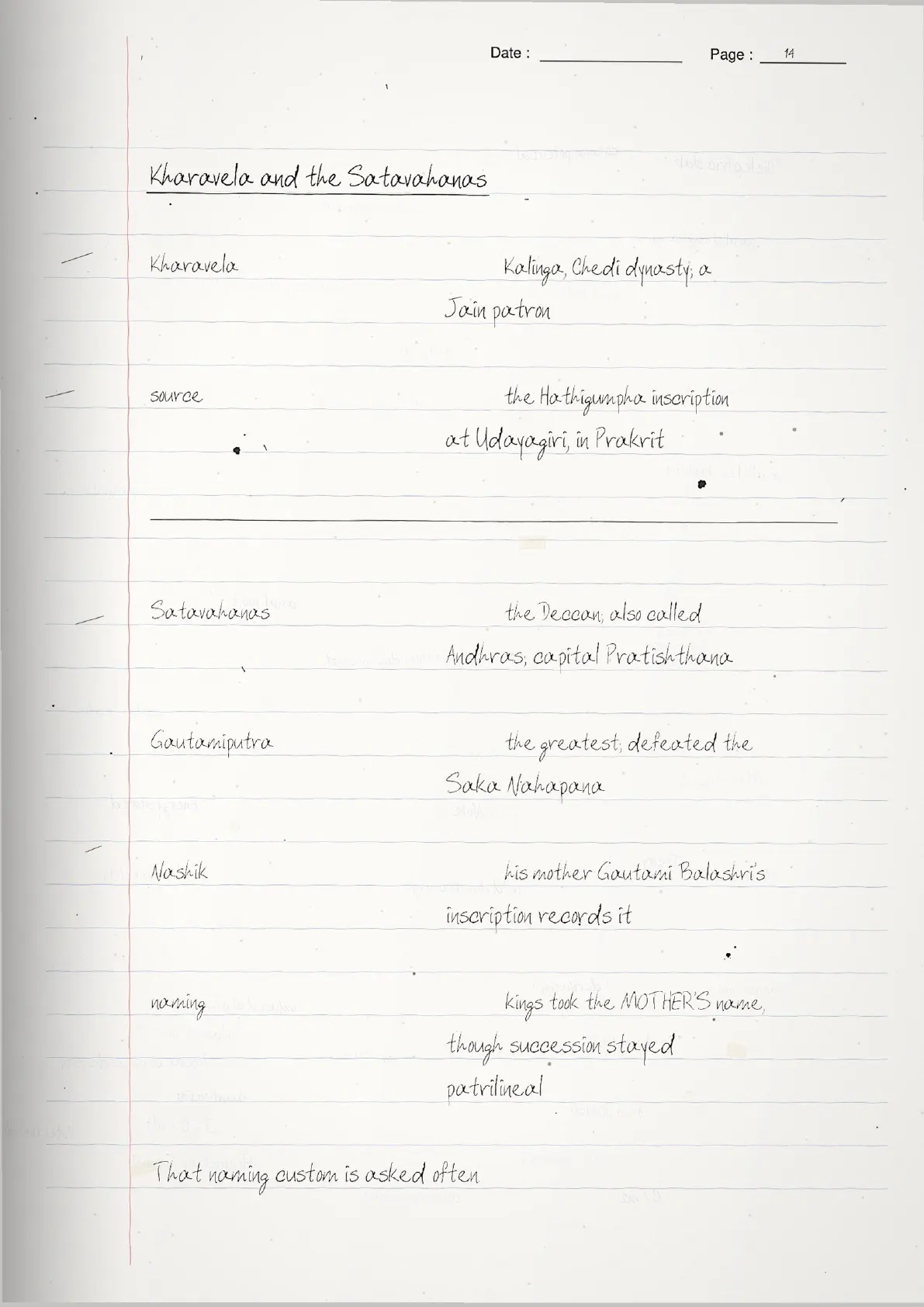
- Shungas, Kanvas, Indo-Greeks, Sakas and Kushanas in sequence
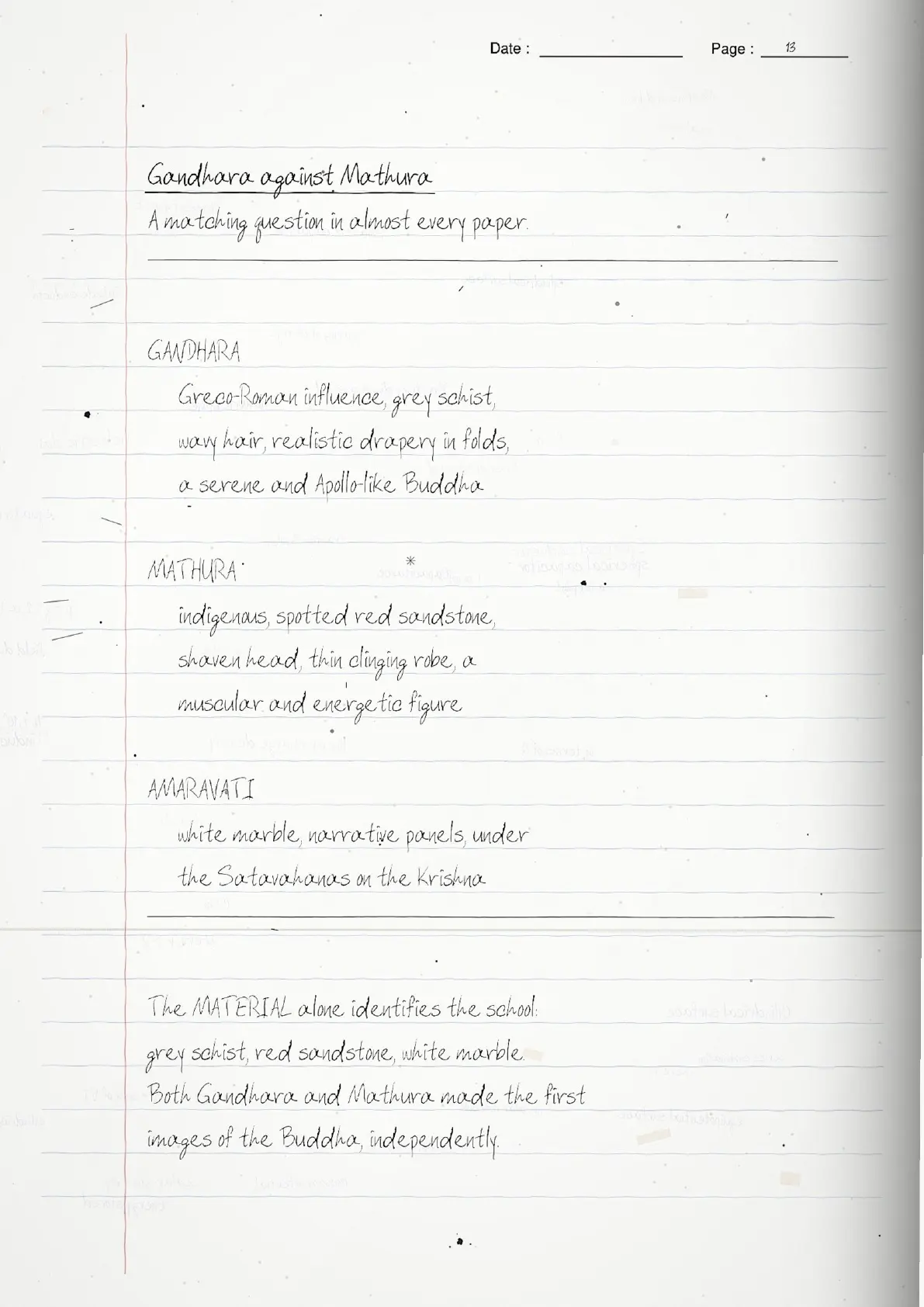
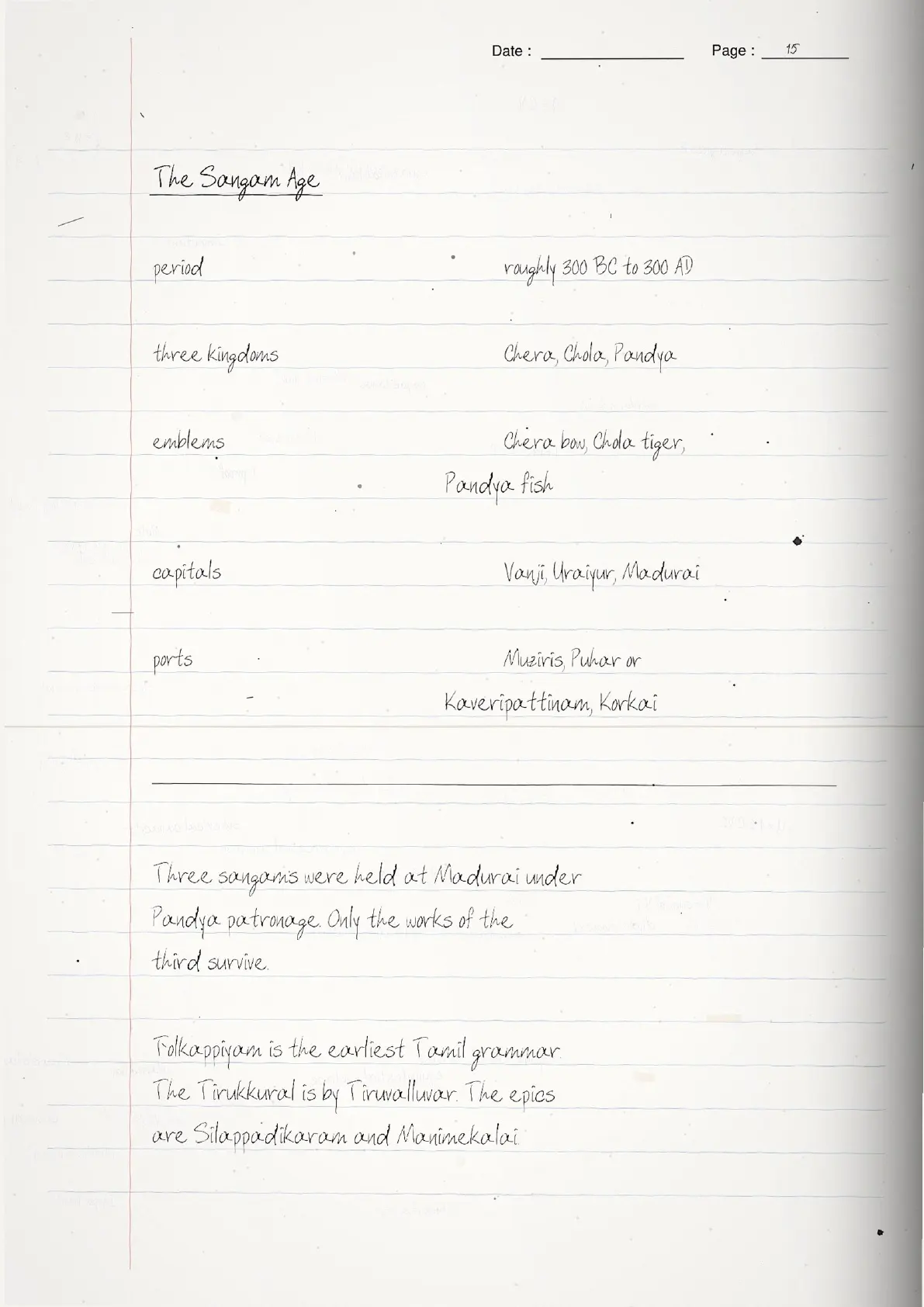
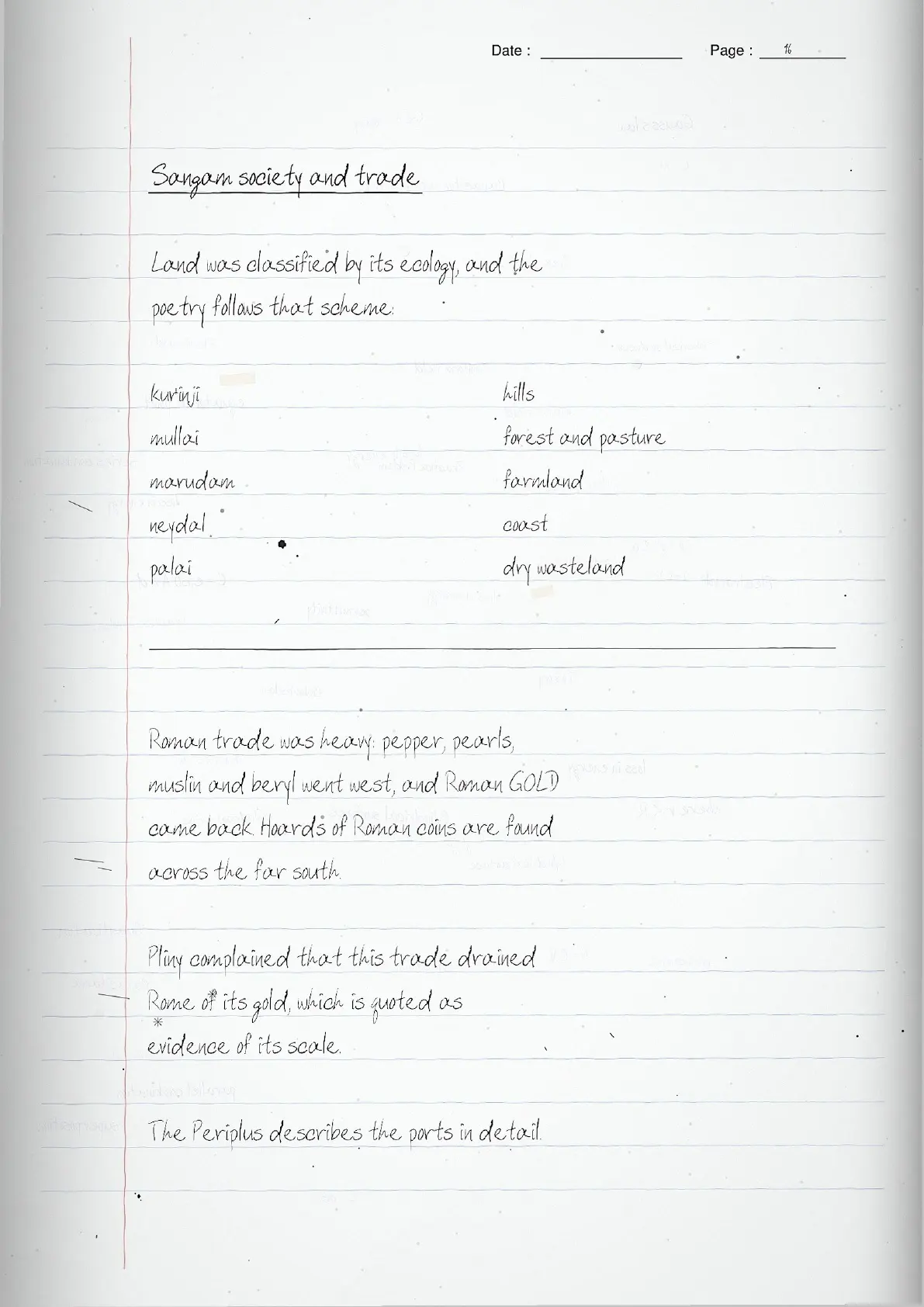
- Gandhara against Mathura, and the Sangam age in the far south
How to Approach the Topic
Ashoka's inscriptions are the first Indian sources that can be dated and located, and the paper leans on them heavily. The most common question is not what an edict says but where a particular one is, so the geography matters as much as the content.
Dhamma is where candidates lose marks. It is a public ethic of tolerance, non-violence and respect for elders that Ashoka addressed to everyone in the empire, and it is not the Buddhist doctrine of the four truths. Ashoka was a Buddhist; his dhamma was not Buddhism.
The post-Mauryan centuries are easiest as a sequence rather than as a set of stories. Shunga, Kanva, Indo-Greek, Saka, Parthian, Kushana. Getting that order right answers more questions than knowing any single dynasty well.
Common Mistakes
- Reading dhamma as Buddhism. It is a public ethic, addressed to the whole empire
- Giving Chandragupta the Kalinga war. It is Ashoka's
- Placing the Kushanas before the Sakas
- Saying every edict is in Brahmi. Shahbazgarhi and Mansehra are in Kharoshthi
- Attributing the Arthashastra to Megasthenes rather than to Kautilya
- Putting the Sangam academies in the north
- Crediting the Gandhara Buddha to Mathura. The Greek-influenced style is Gandhara
Video Revision
Source: PW OnlyIAS Prarambh
How to Use These Notes
Page 6 lists the edicts by name and location, which is the single most examined page in the set. Page 13 puts Gandhara and Mathura side by side.
Page 19 is the recall grid, and page 17 collects the mistakes above with the correction next to each one.
The previous set covers the Vedic age and the rise of Buddhism and Jainism, and the next one takes the story on to the Guptas and Harsha.
CUET PG History Mauryan and Post-Mauryan Notes FAQs
Ques. Is Ashoka's dhamma the same as Buddhism?
Ans. No. Dhamma is a code of public conduct built on non-violence, tolerance between sects, respect for elders and kindness to servants. Ashoka was personally a Buddhist, but the edicts address the whole population, not a religious community.
Ques. Which scripts are the edicts written in?
Ans. Mostly Brahmi. Shahbazgarhi and Mansehra, in the north-west, are in Kharoshthi, and the Kandahar inscriptions are in Greek and Aramaic.
Ques. Who wrote the Arthashastra?
Ans. Kautilya, also called Chanakya. Megasthenes was the Seleucid ambassador at Chandragupta's court and wrote the Indica, which survives only in quotation.
Ques. What is the Sangam age?
Ans. The early historical period of the far south, known through Tamil poetry composed at assemblies of poets. The three ruling houses are the Cholas, the Cheras and the Pandyas, and the literature is the main source for the period.
Ques. Can the notes be downloaded free?
Ans. Yes. All 20 pages can be read on this page and downloaded at no cost.



Comments