




CUET PG History Stone Age and Indus Valley Handwritten Notes, free to download as a 20-page PDF. HUQP09 asks 75 questions at four marks each, and this opening stretch of Unit 1 takes roughly two days to learn, so plan two sittings.
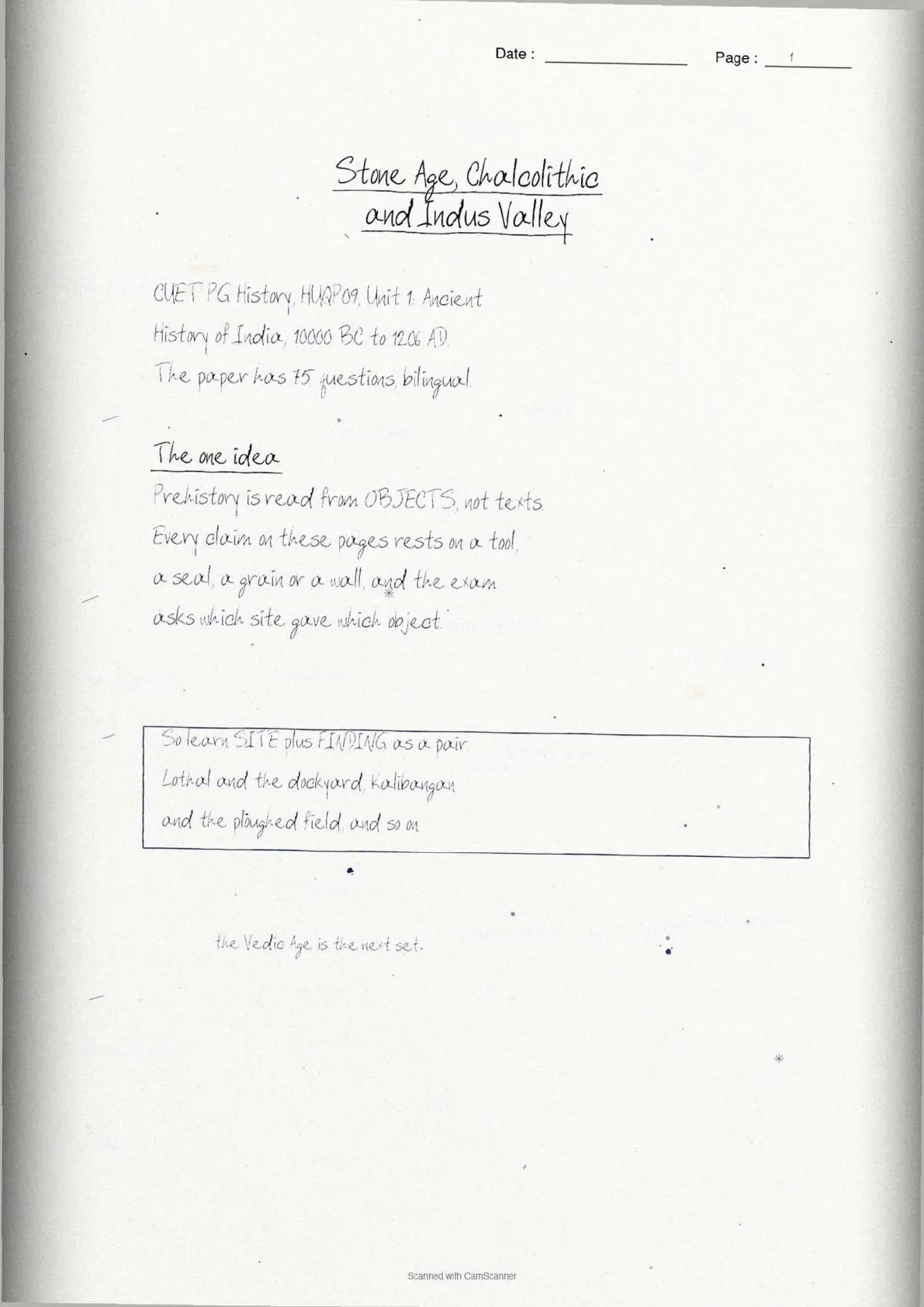
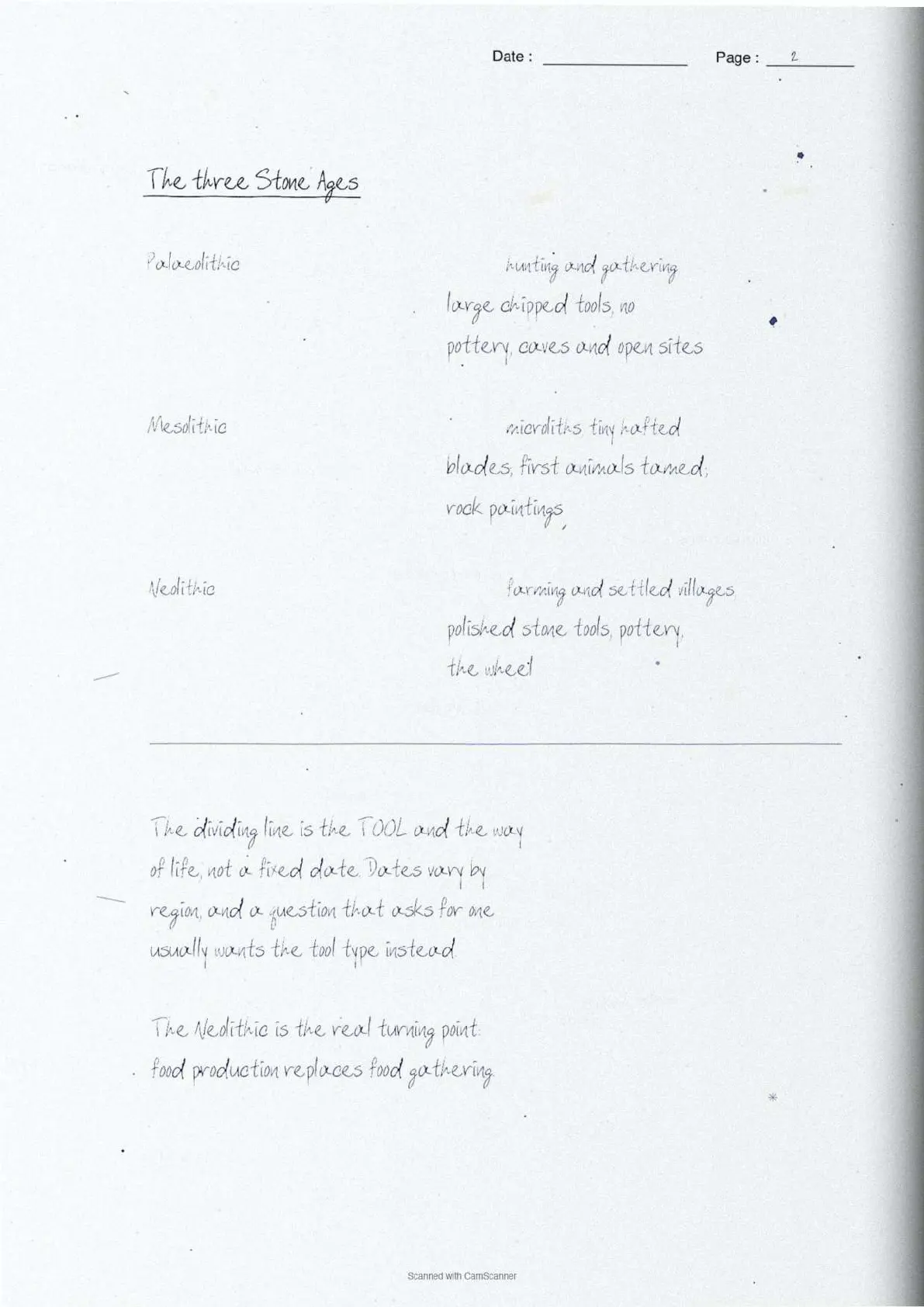
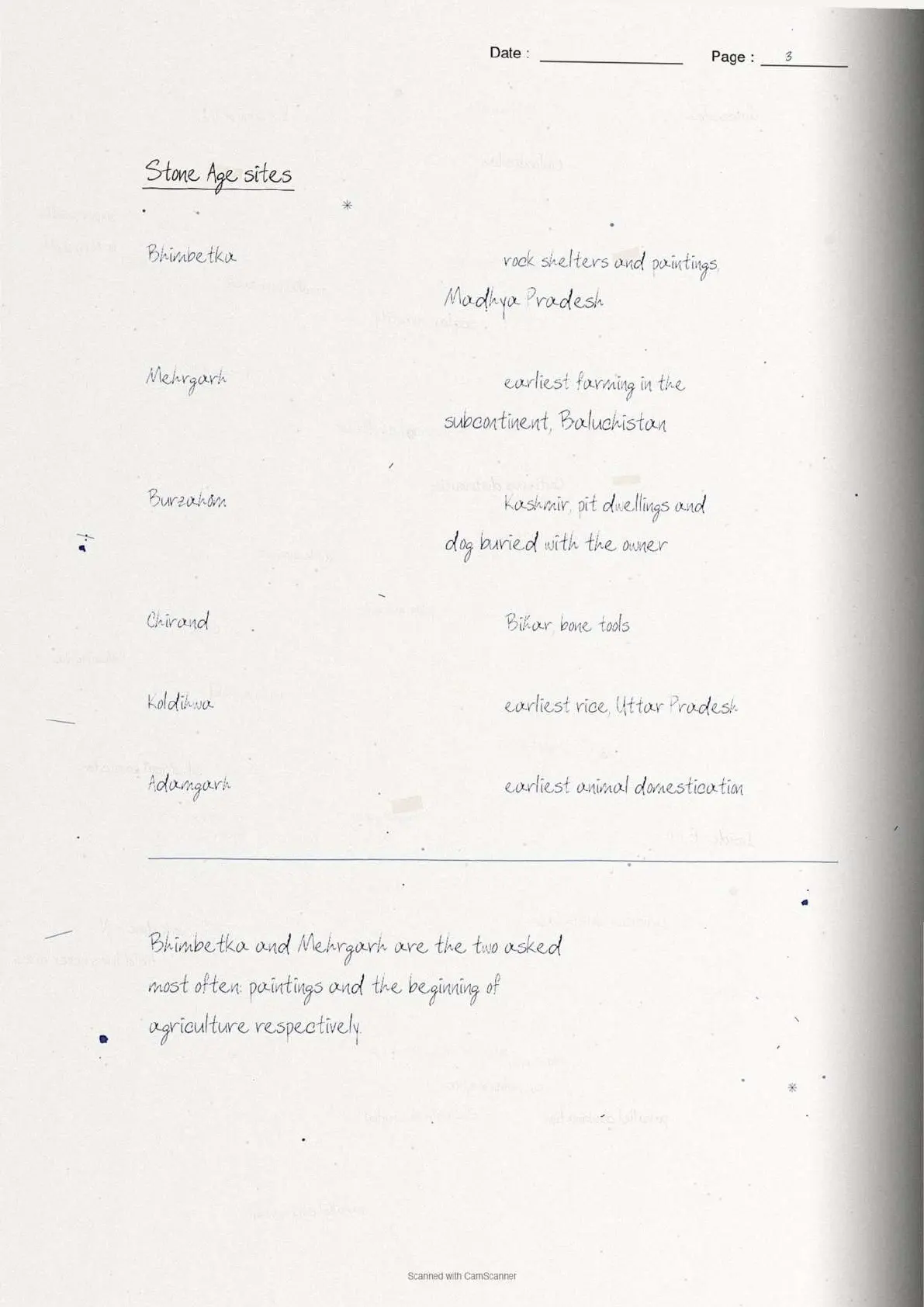
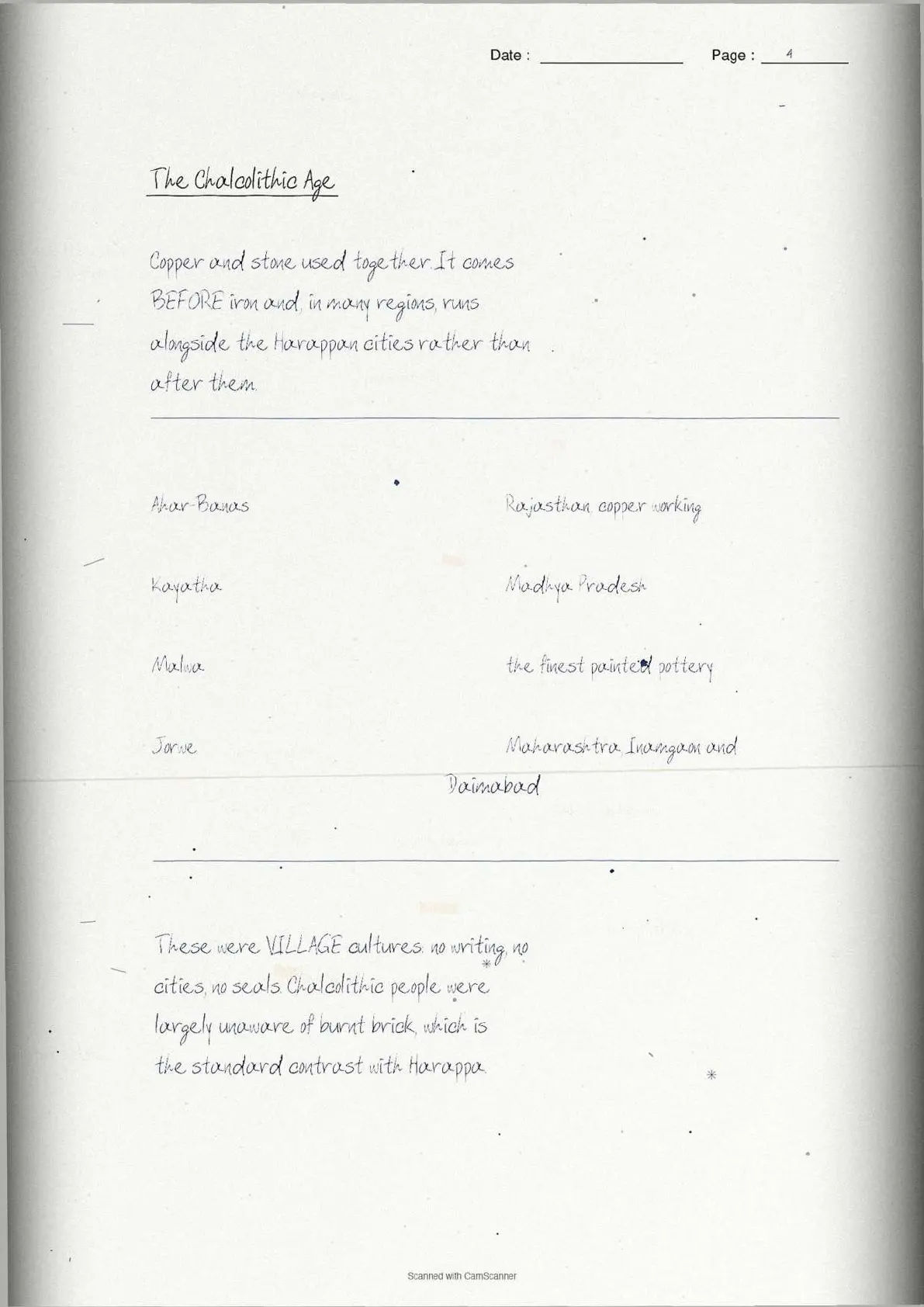
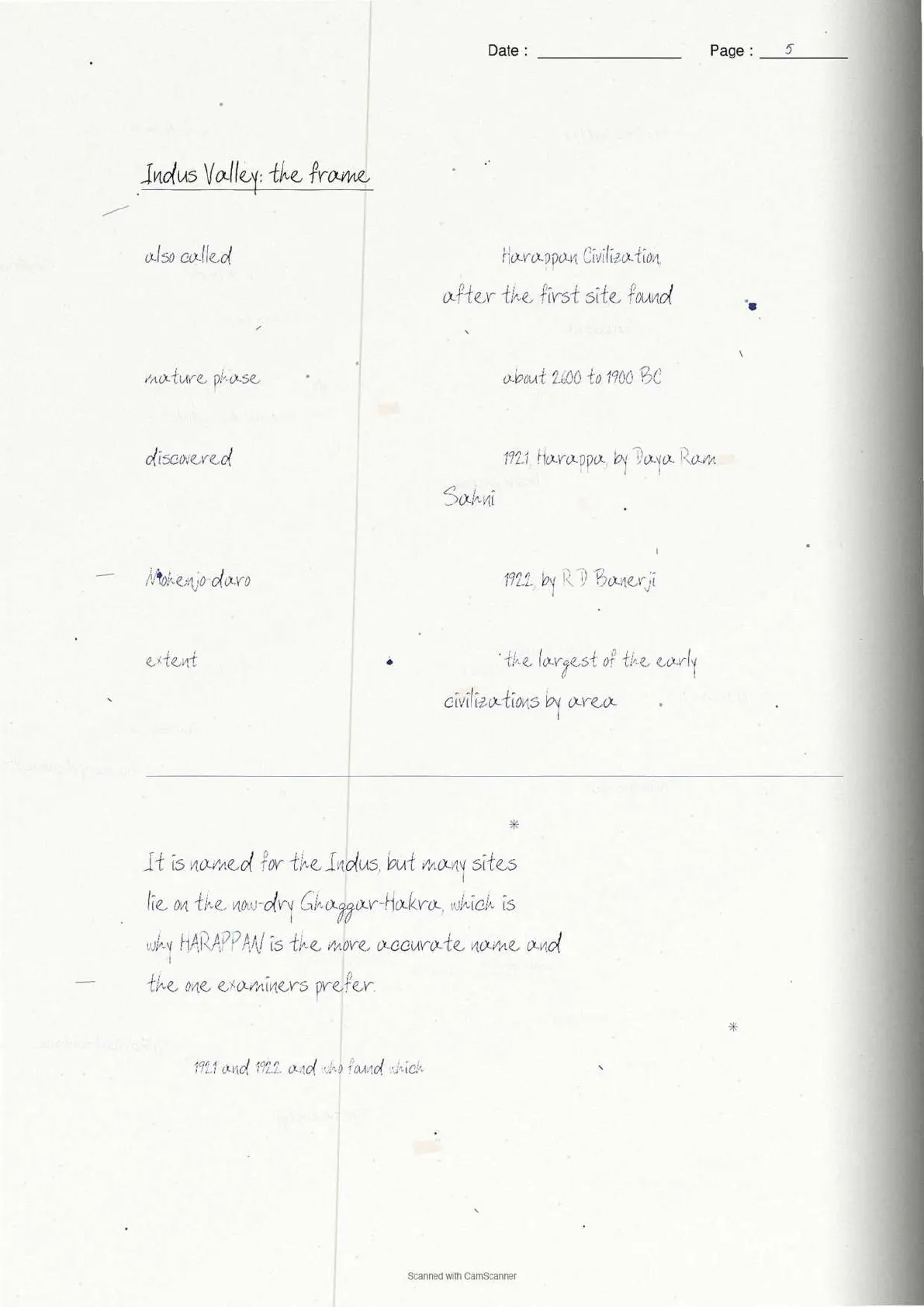
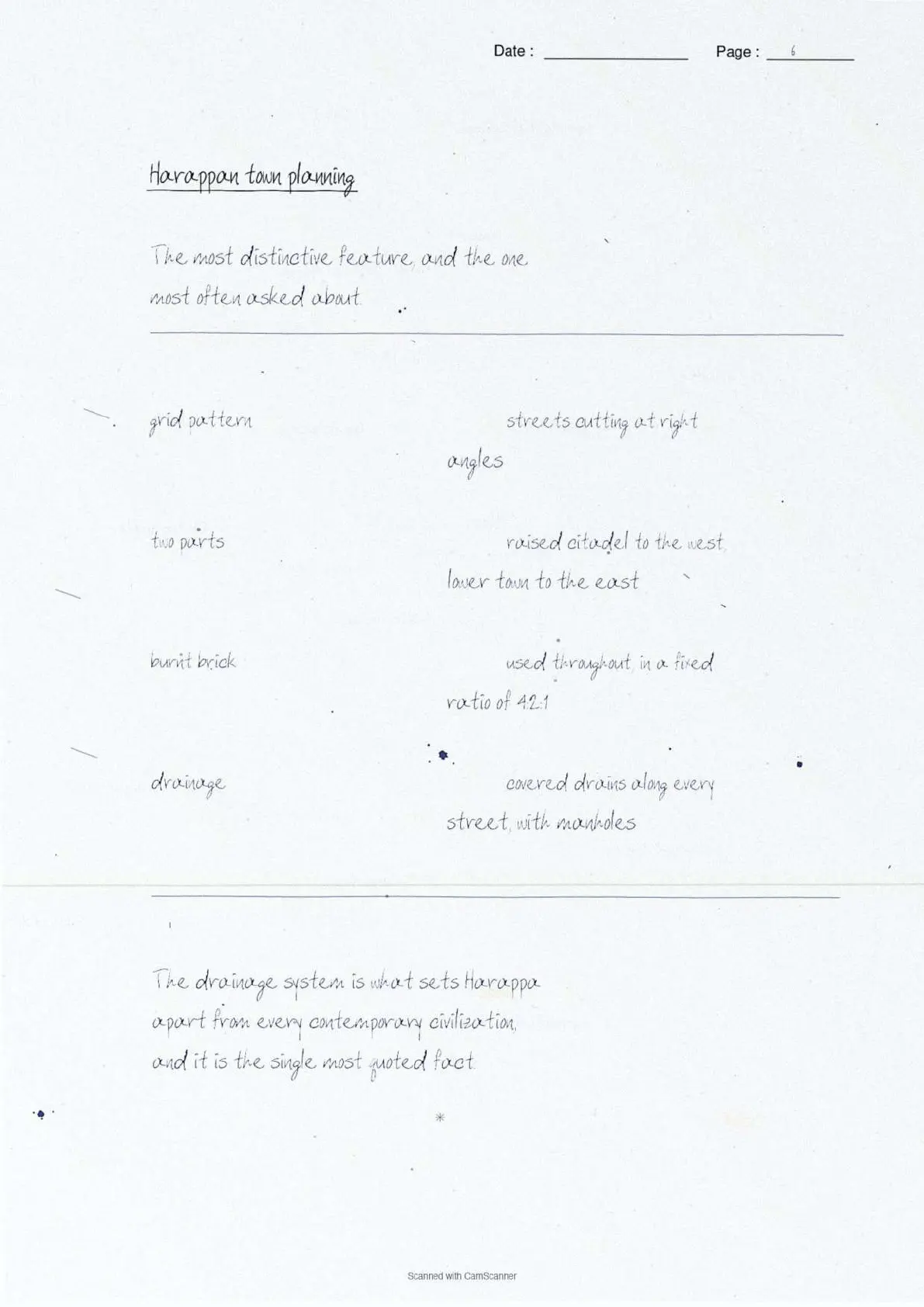
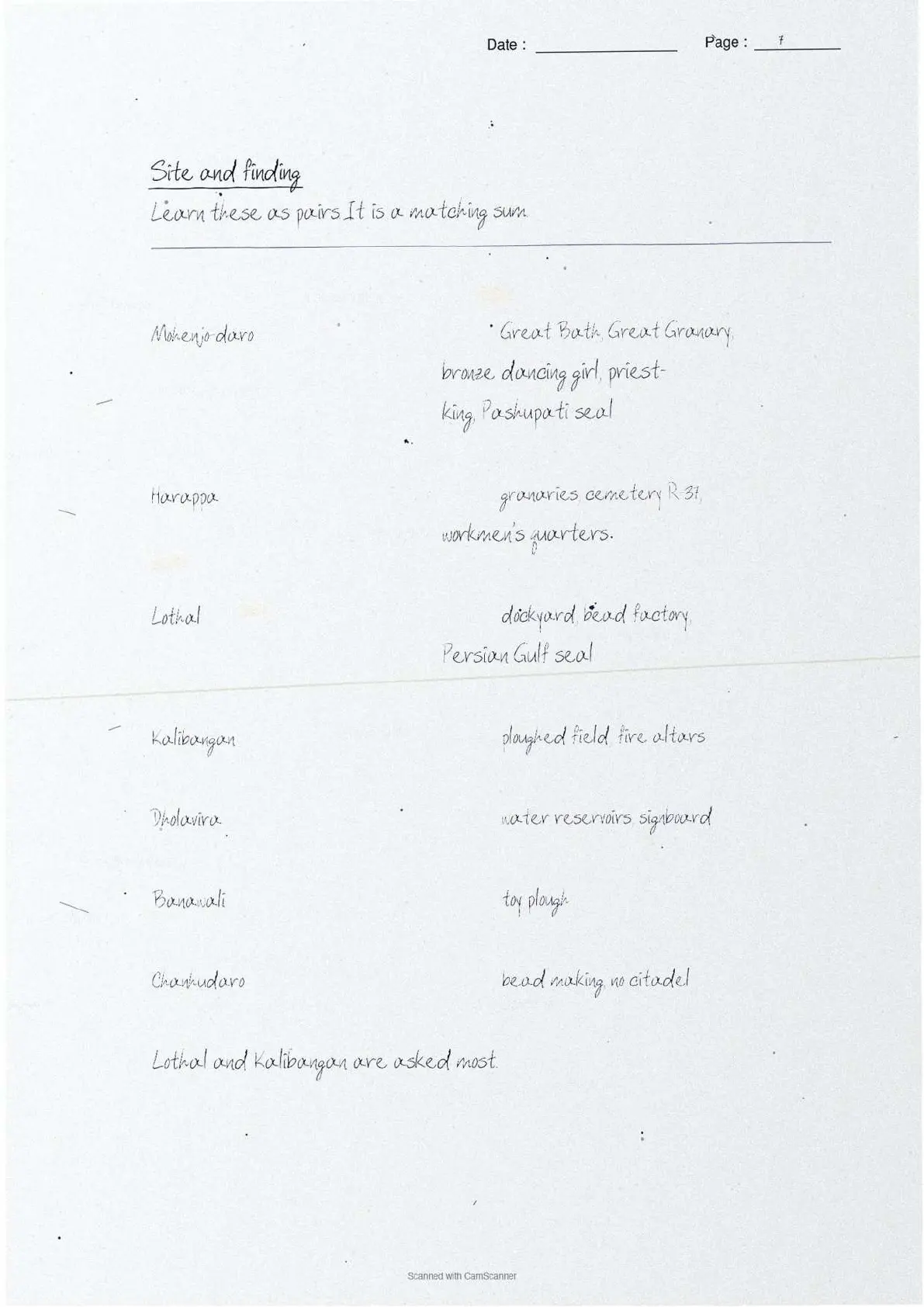
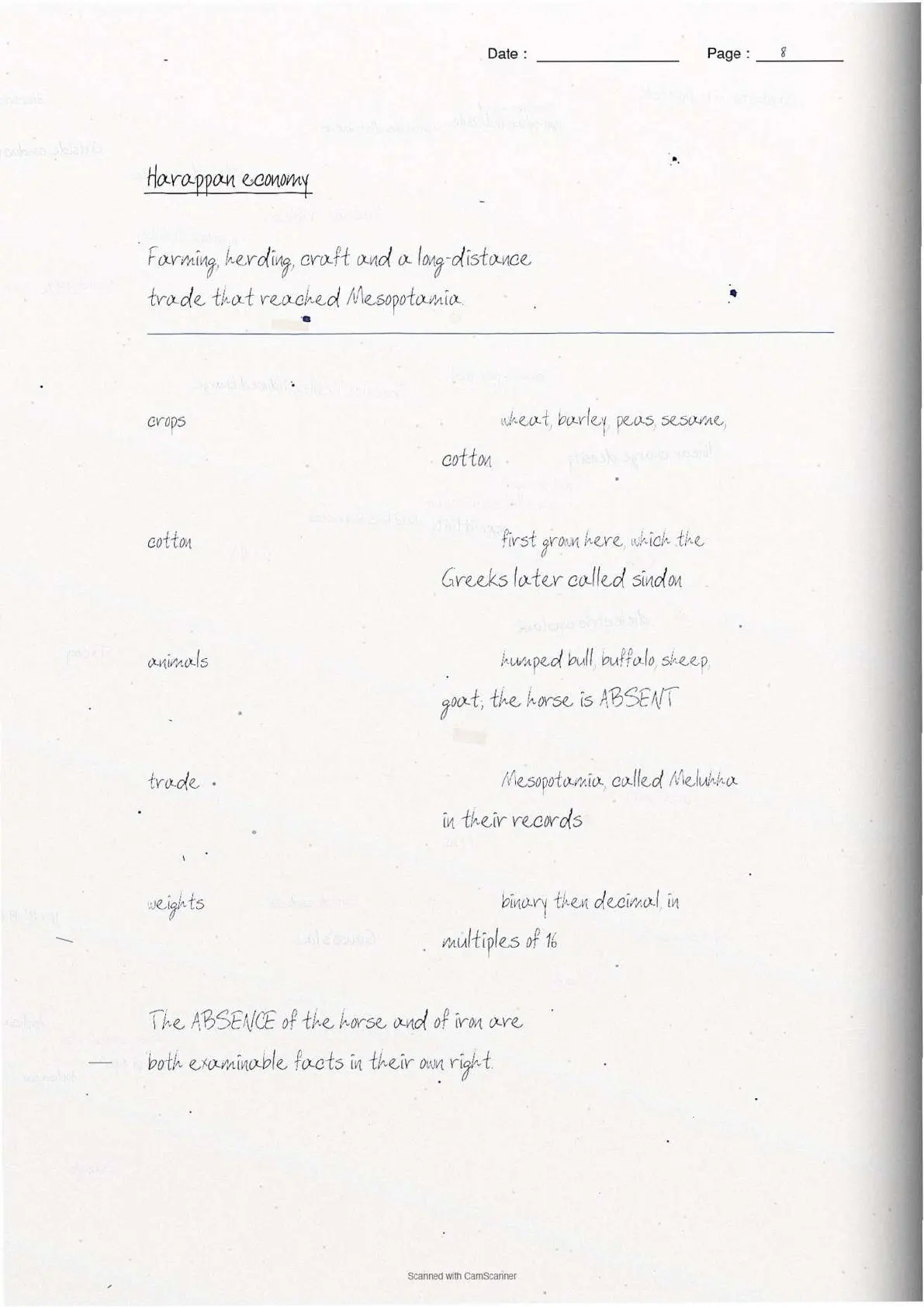
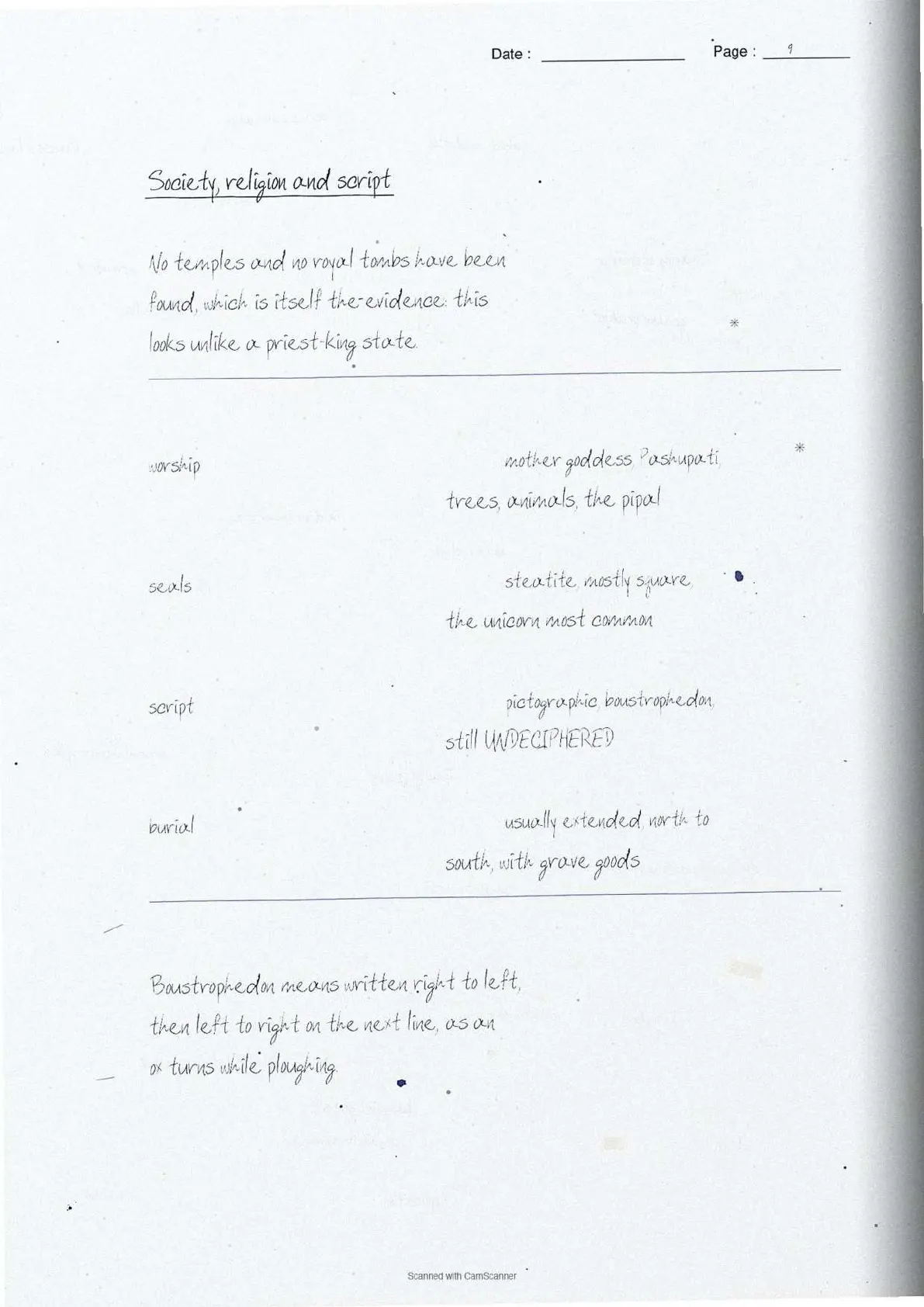
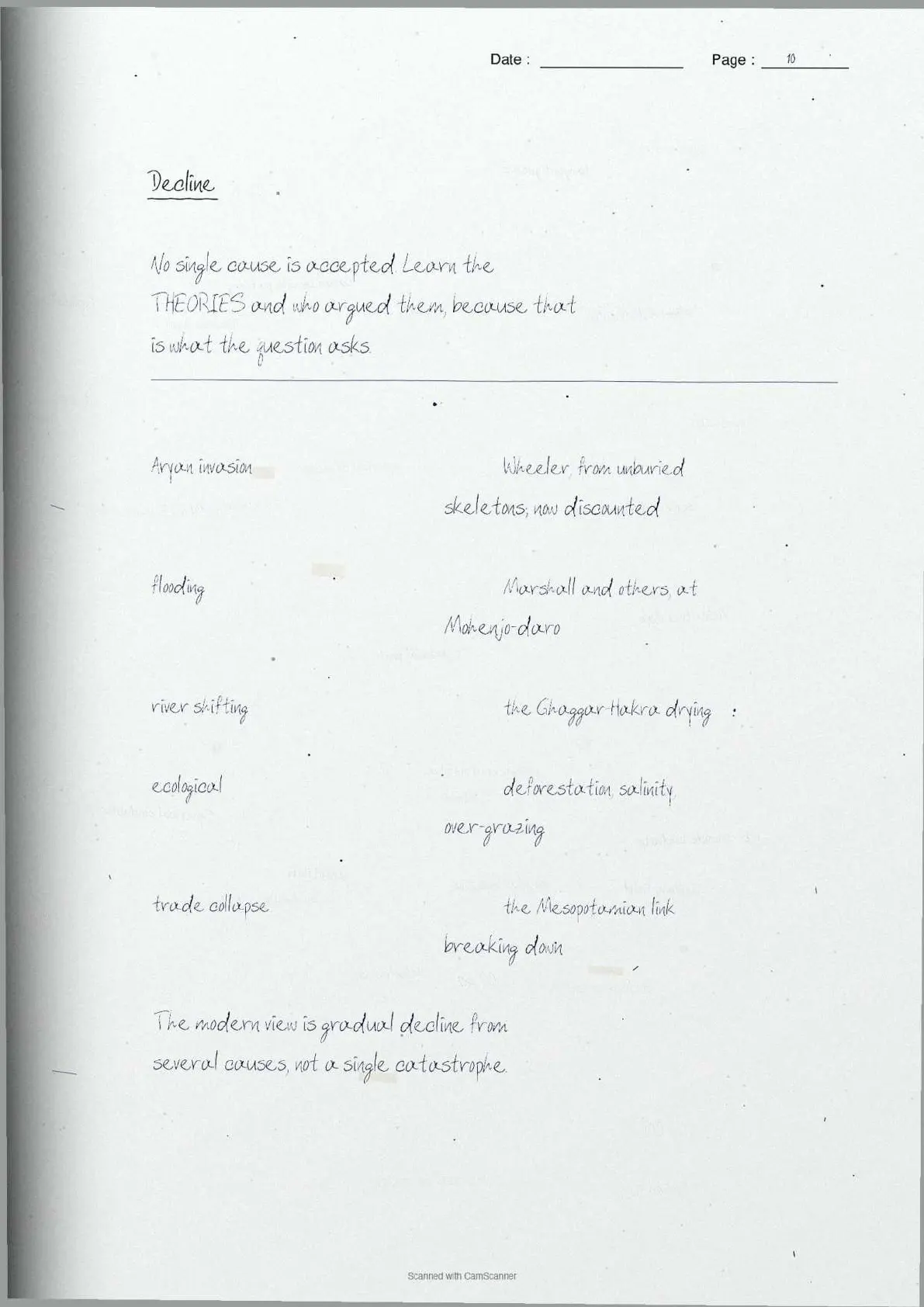
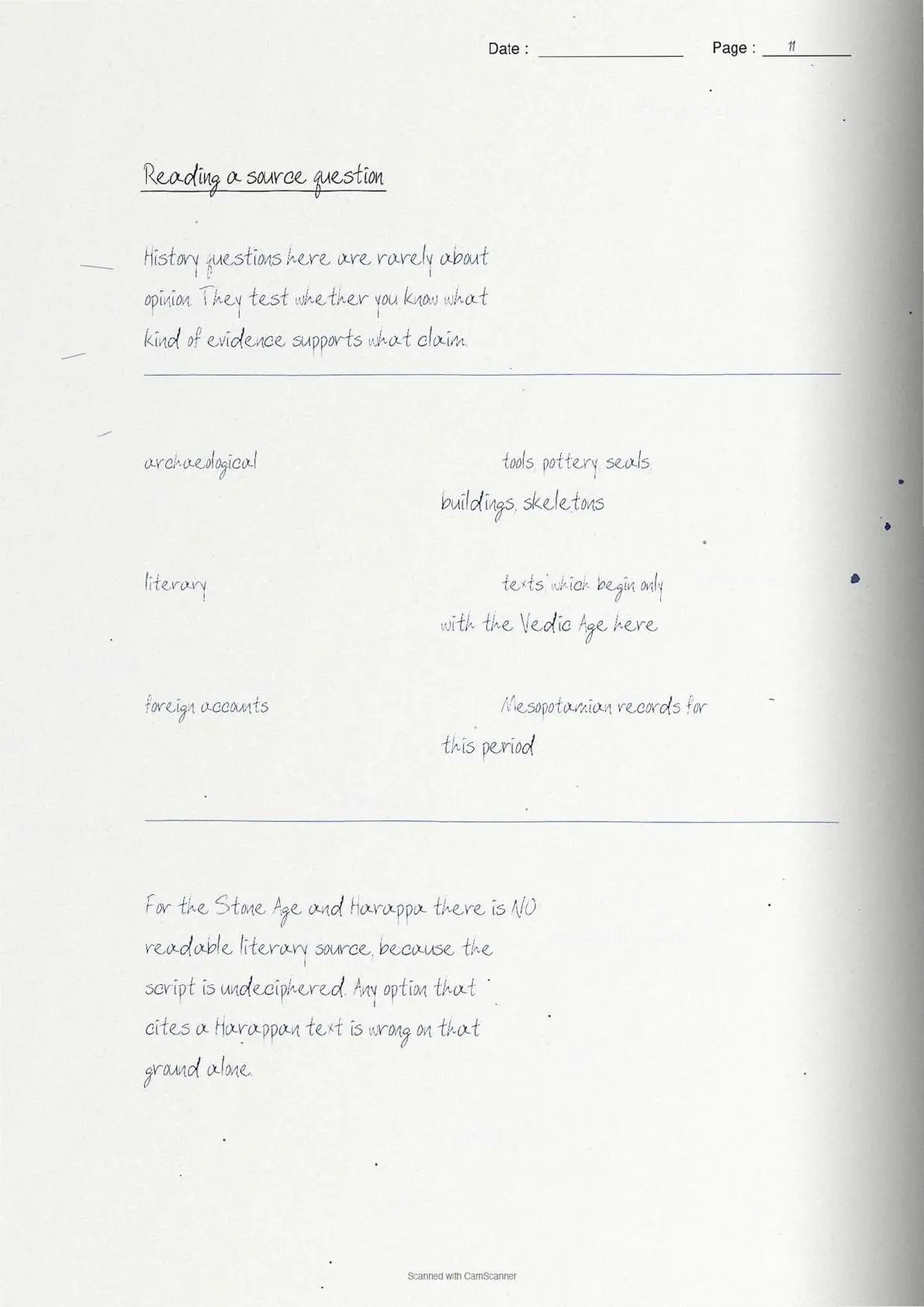
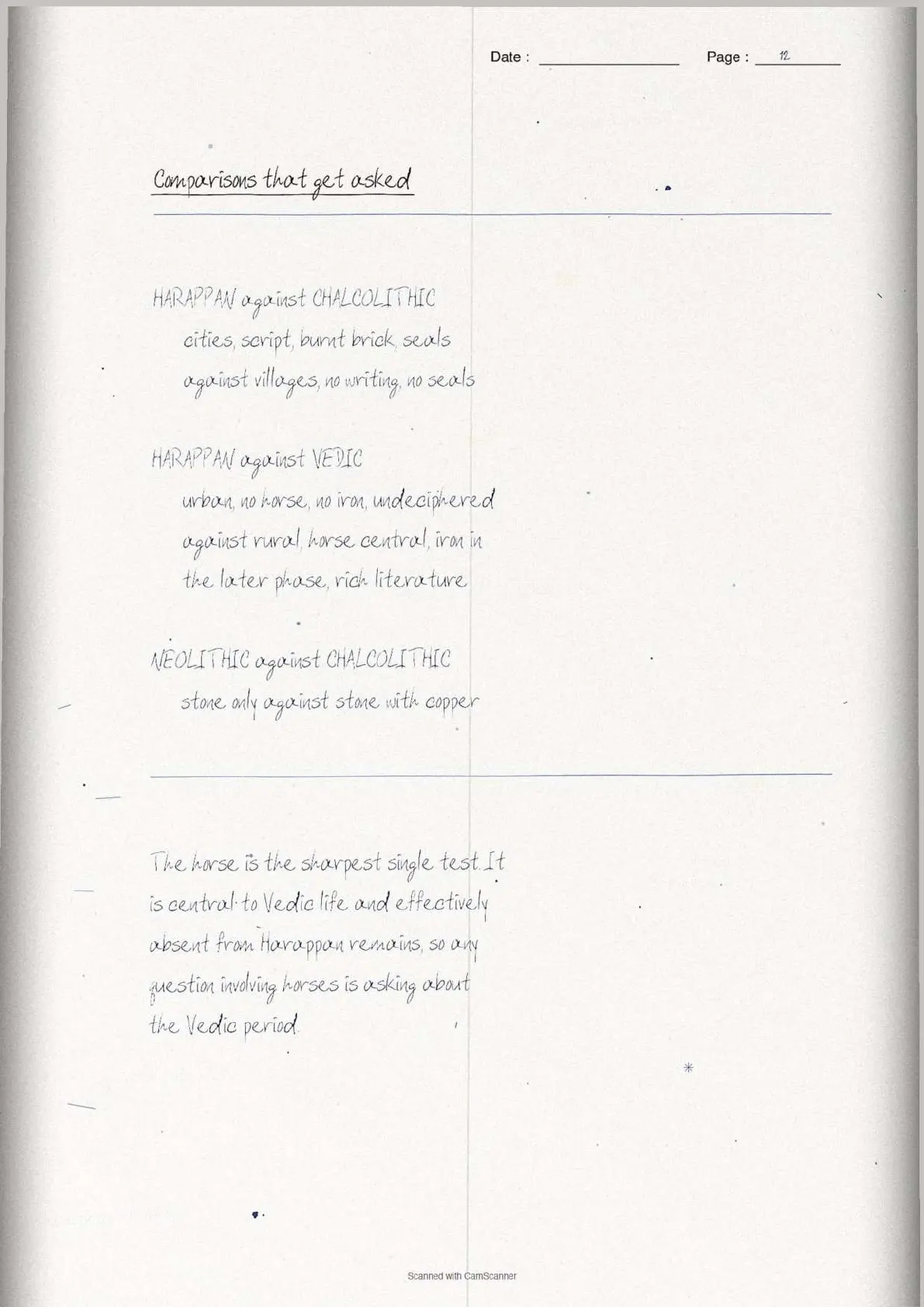
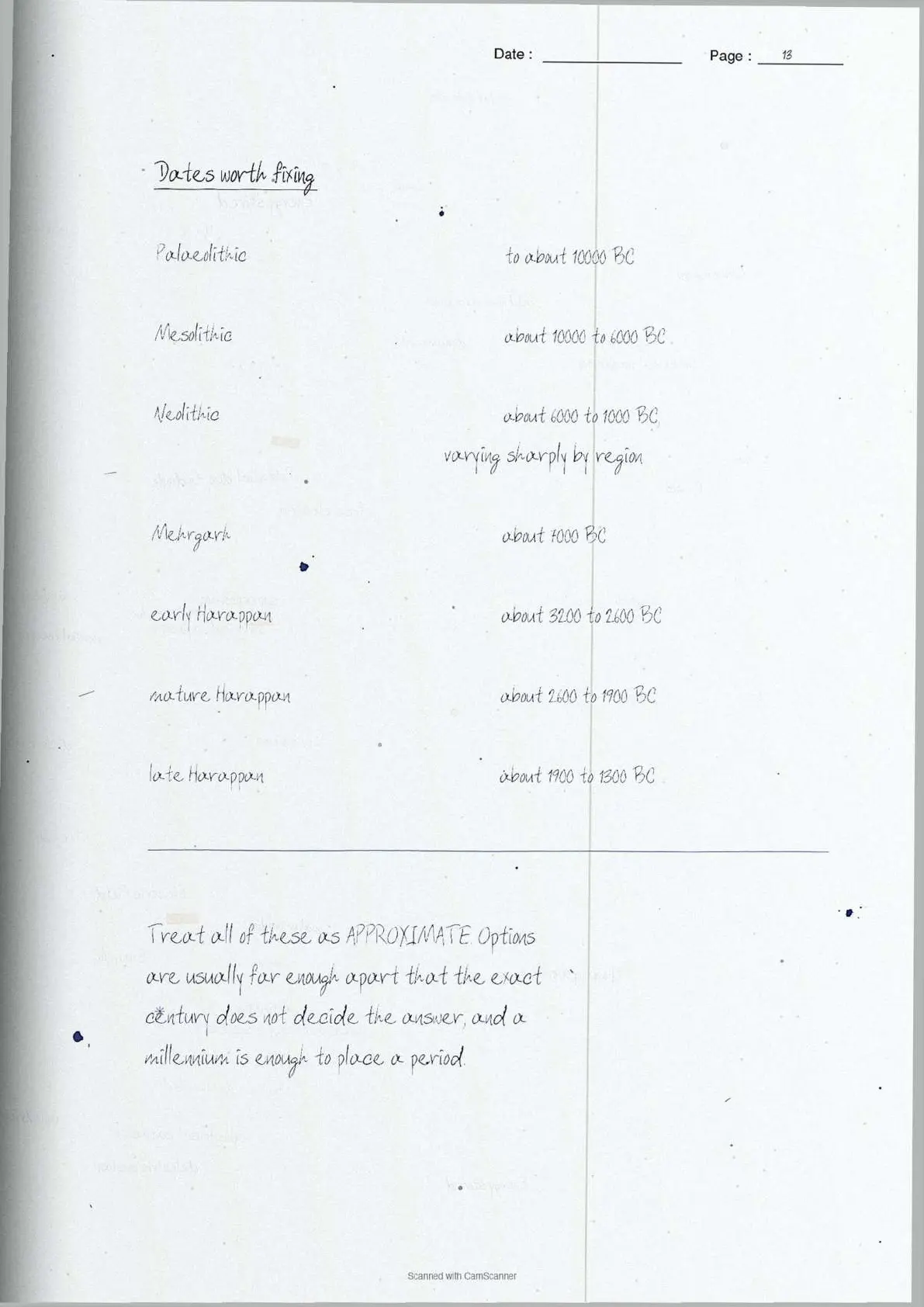
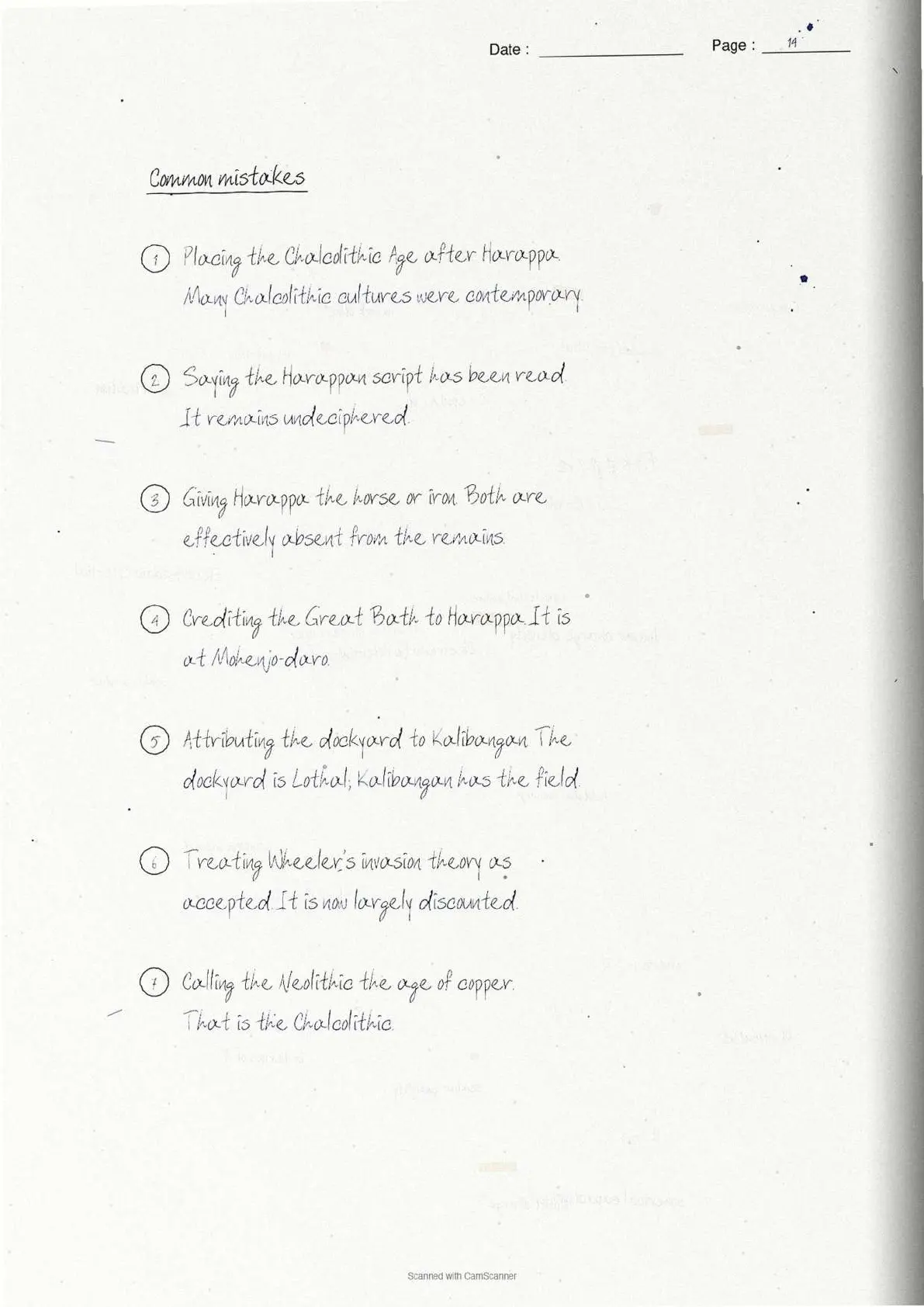
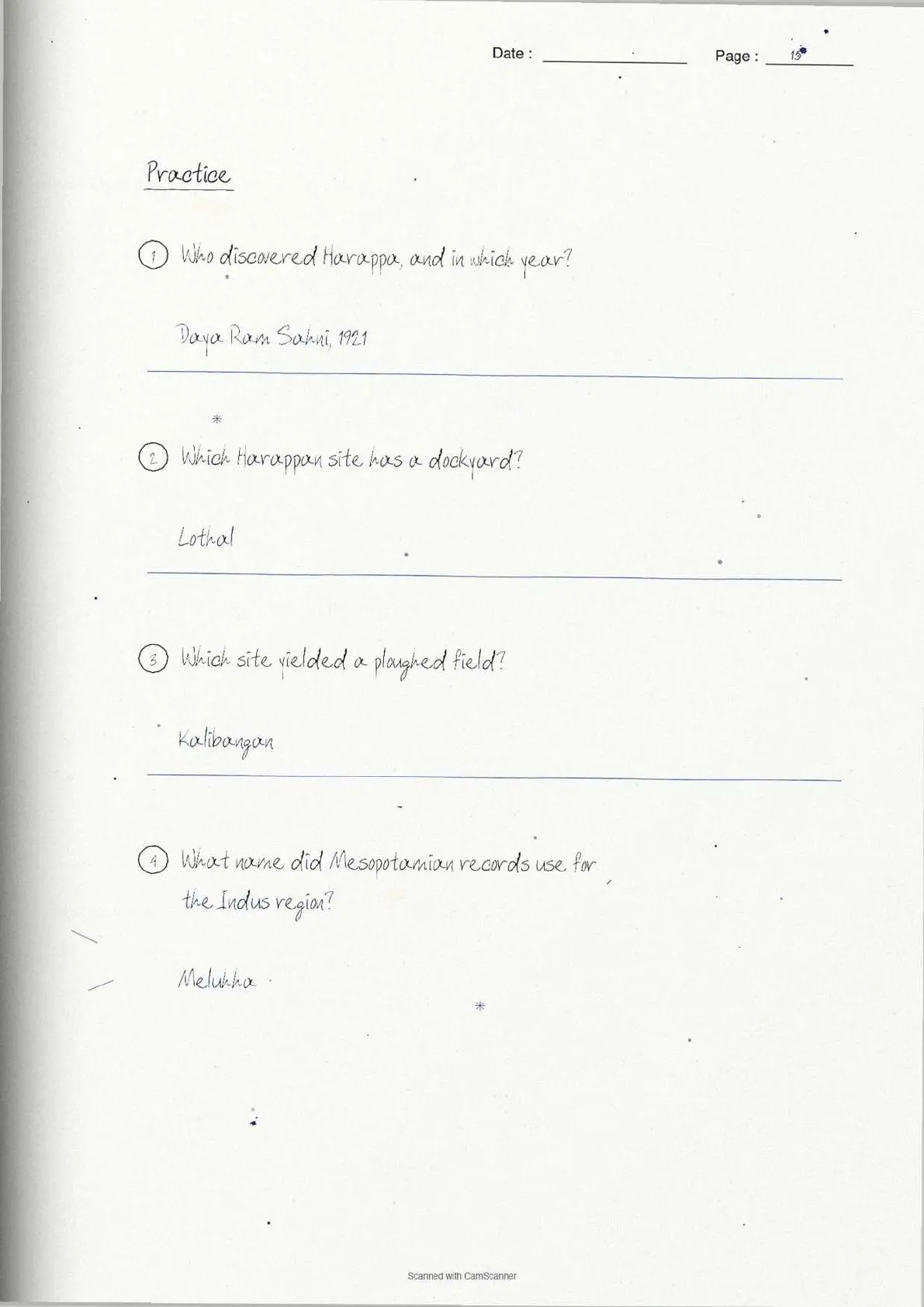
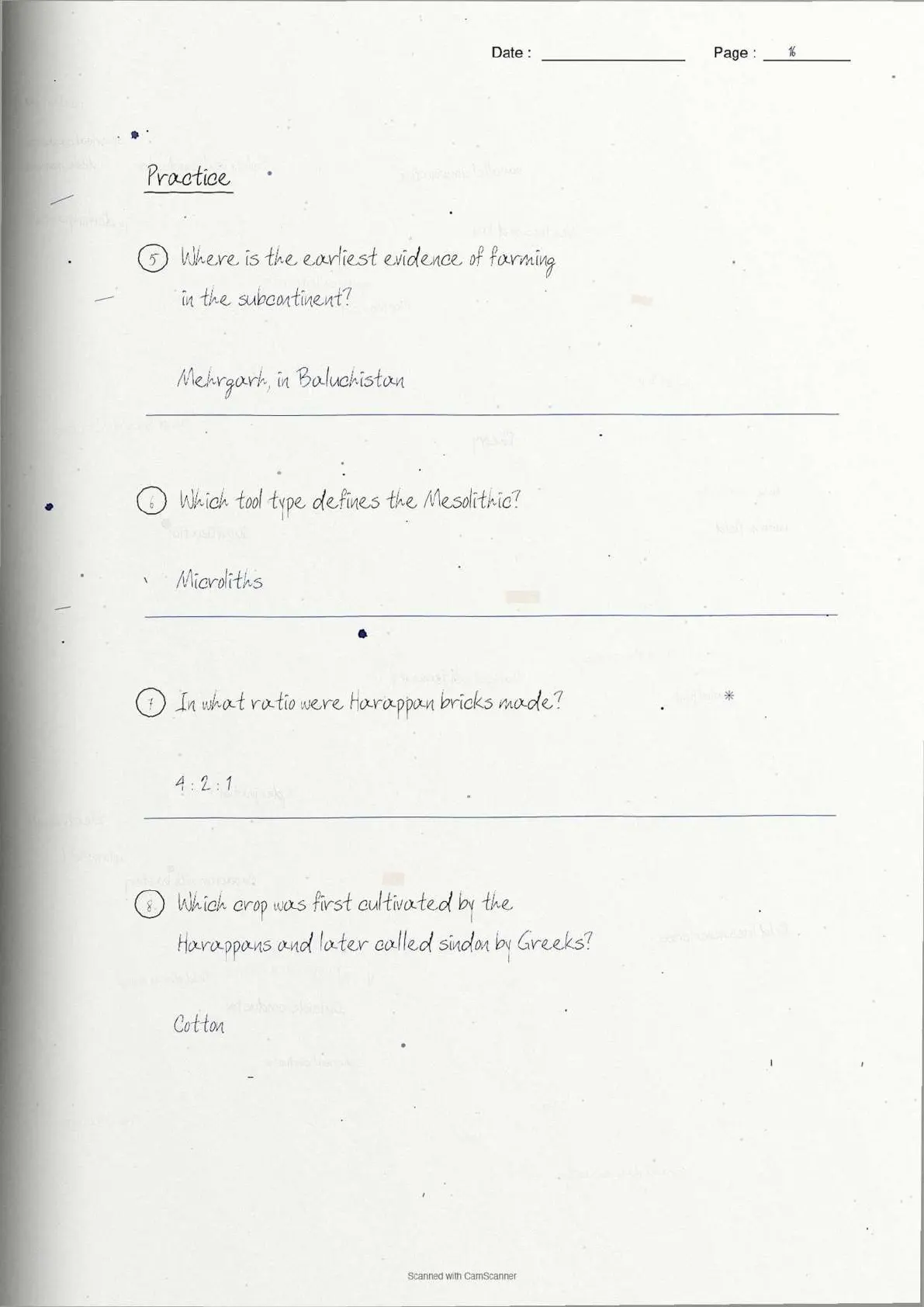
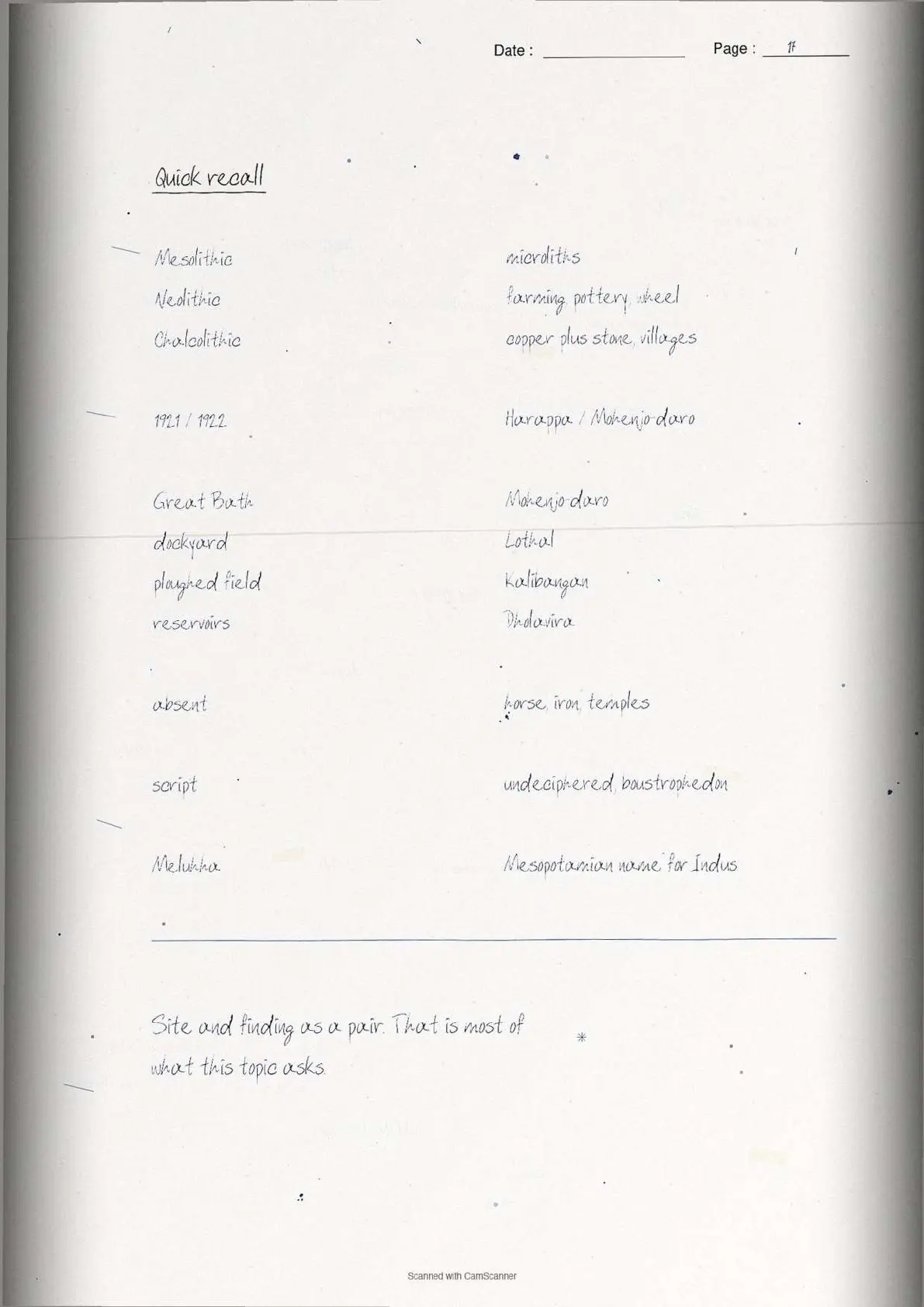
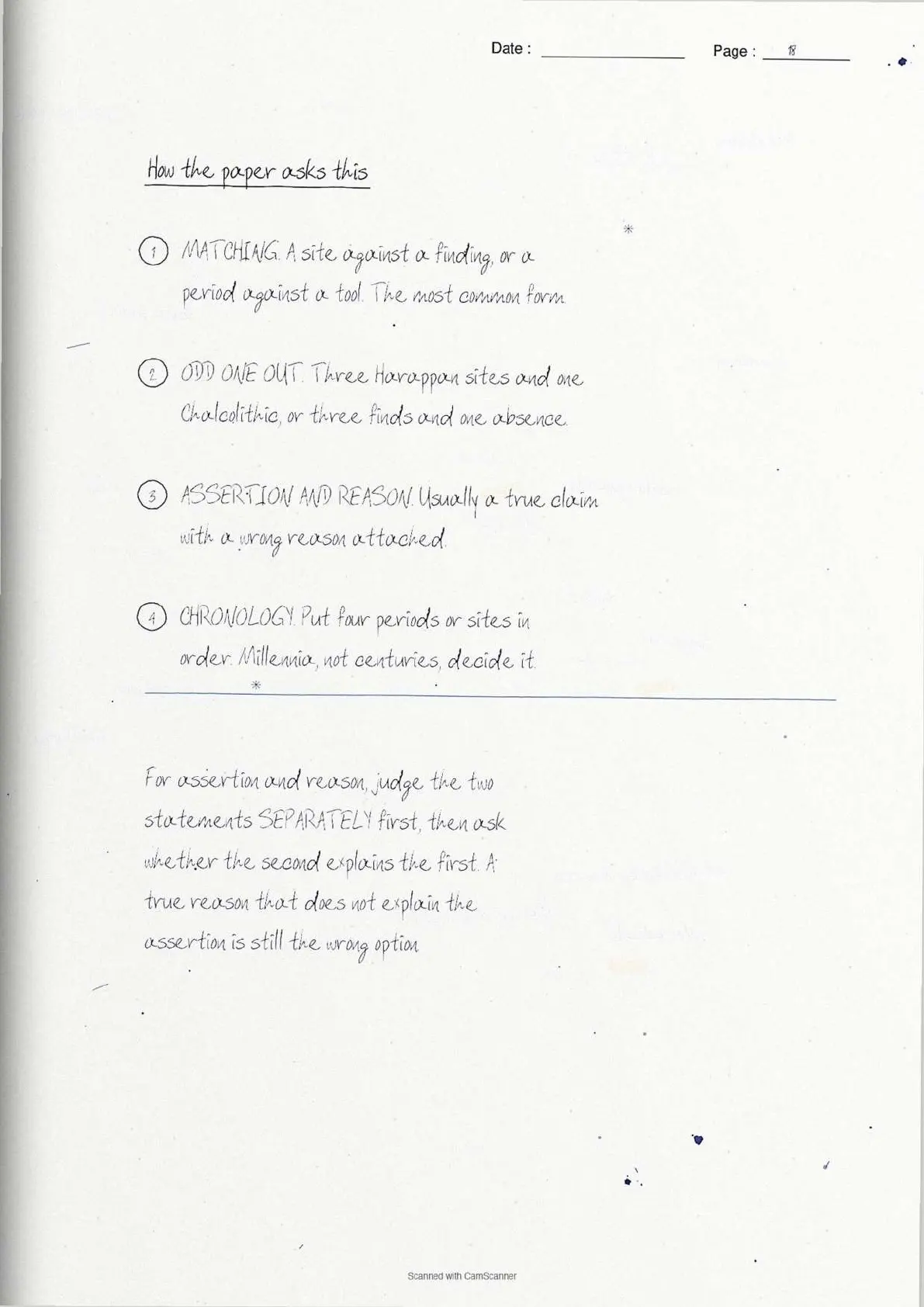
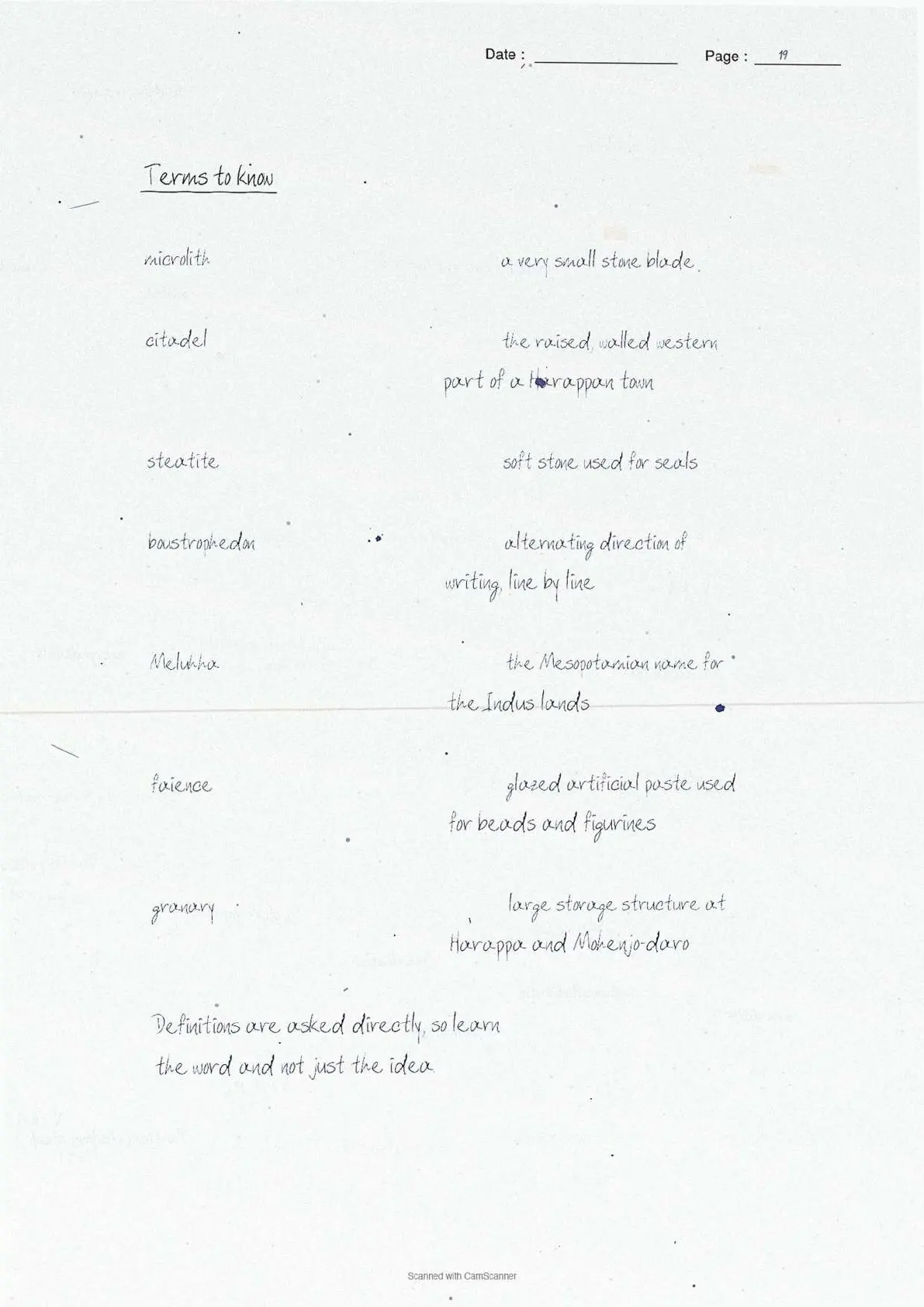
The notes are scans of a real notebook: short lines, boxed rules, and a margin note wherever something is easy to get wrong.
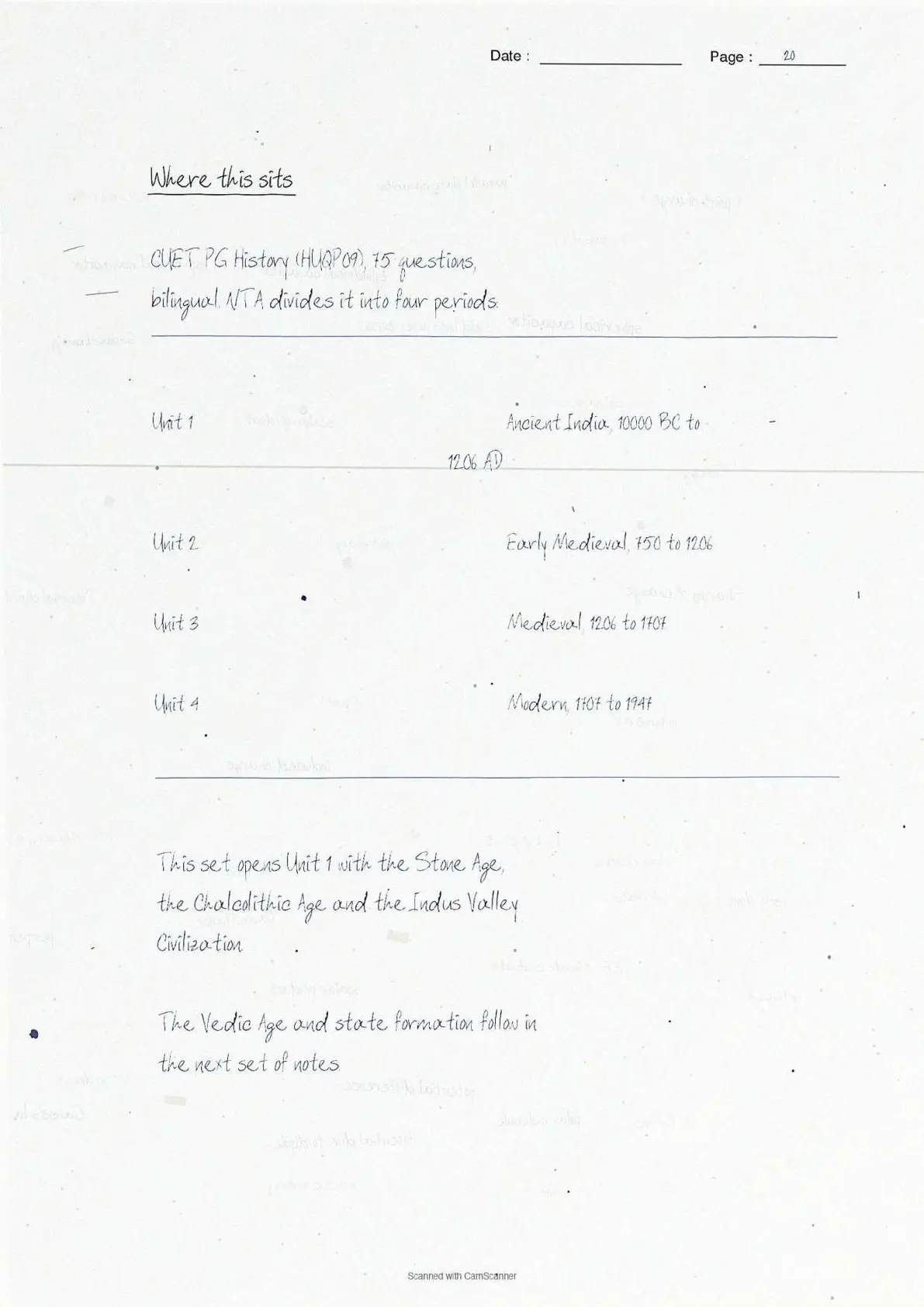
Where This Sits in HUQP09
CUET PG History carries 75 bilingual questions. NTA divides the syllabus into four named periods rather than into themes, so knowing which period a name belongs to is half of what the paper tests.
| Unit | Period | Span |
|---|---|---|
| 1 | Ancient History of India | 10000 BC to 1206 AD |
| 2 | Early Medieval India | 750 AD to 1206 AD |
| 3 | Medieval History of India | 1206 to 1707 AD |
| 4 | Modern History of India | 1707 to 1947 |
What the Notes Cover
- Palaeolithic, Mesolithic and Neolithic, with the tool and the way of life that separates them
- The named sites, from Bhimbetka and Mehrgarh to Burzahom and Chirand
- The Chalcolithic cultures, and why copper did not end the use of stone
- Harappan chronology, extent, and the six major cities
- Town planning: the grid, the drains, the citadel and the granary
- Site-and-finding pairs, which is how most Harappan questions are framed
- Economy, trade with Mesopotamia, weights, seals and the undeciphered script
- The decline theories, and what the evidence actually supports
How to Approach the Topic
Almost nothing here rewards argument. The Harappan script is undeciphered and there are no written sources at all for the Stone Age, so what survives is archaeology, and what the examiner can ask about archaeology is where a thing was found.
That makes site-and-finding pairs the whole game. The dockyard is Lothal, the ploughed field is Kalibangan, the great bath is Mohenjodaro, the stadium is Dholavira. A page of these is worth more than a page of prose about Harappan society.
The second habit is holding the dates loosely but the sequence firmly. Mature Harappan is roughly 2600 to 1900 BC, and the exact figure varies by scholar, but no version of the chronology puts the Vedic age before it. Sequence questions are safe; precise-date questions are rarely asked because the precision does not exist.
Common Mistakes
- Calling the civilization Bronze Age and then dating it alongside the Iron Age
- Placing the Vedic age before the Harappan period
- Saying the script has been read. It has not
- Giving Harappa the great bath, which is at Mohenjodaro
- Treating the Aryan invasion as settled fact rather than one contested theory
- Assuming horses are well attested at Harappan sites
- Confusing Mehrgarh, which is Neolithic, with a Harappan city
Video Revision
Source: CUET PG Wallah
How to Use These Notes
Page 7 is the site-and-finding table and page 17 the recall grid. Between them they are a workable revision on the morning of the exam.
Page 11 works through how a source question on the Harappans is set, which is worth reading before any practice paper, because the answer usually turns on what the evidence cannot show rather than on what it does.
The next set picks the story up at the Vedic age, state formation and the rise of Buddhism and Jainism.
CUET PG History Stone Age and Indus Valley Notes FAQs
Ques. Which unit does the Indus Valley Civilization fall under?
Ans. Unit 1, Ancient History of India, which NTA dates from 10000 BC to 1206 AD. It is the first of the four periods the HUQP09 syllabus names.
Ques. Has the Harappan script been deciphered?
Ans. No. It is written right to left, runs to several hundred signs, and no reading of it is accepted. Any option that claims a translation is wrong.
Ques. Which site goes with which finding?
Ans. The pairs asked most often are Lothal and the dockyard, Kalibangan and the ploughed field, Mohenjodaro and the great bath, Harappa and the granaries and cemetery R37, Dholavira and the signboard, and Chanhudaro, which has no citadel.
Ques. What ended the civilization?
Ans. No single cause is established. Climate change and the drying of rivers, flooding, the decline of the Mesopotamian trade, and ecological damage are all argued. Invasion is the weakest of the explanations on the evidence available.
Ques. Can the notes be downloaded free?
Ans. Yes. All 20 pages can be read on this page and downloaded at no cost.



Comments