




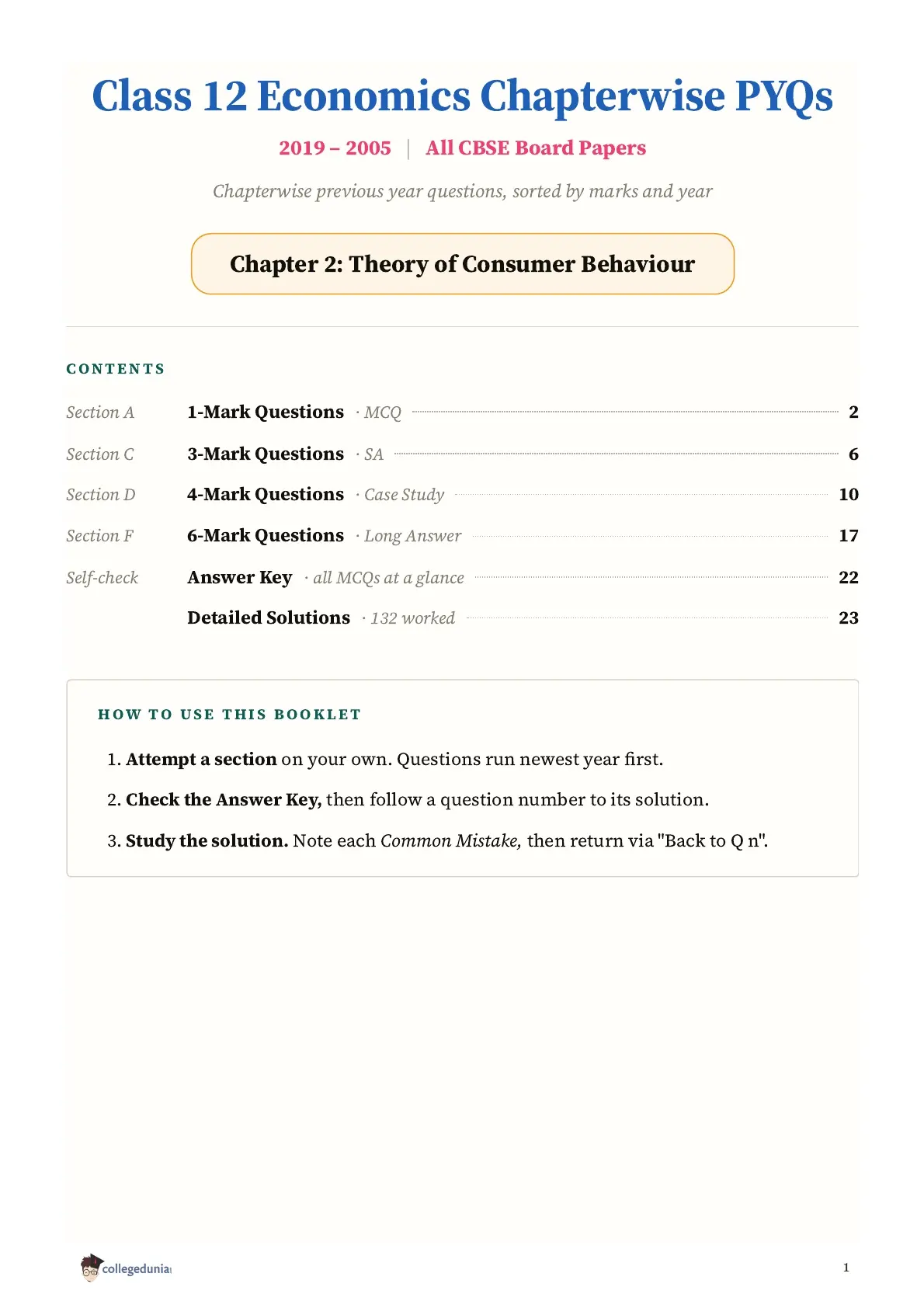
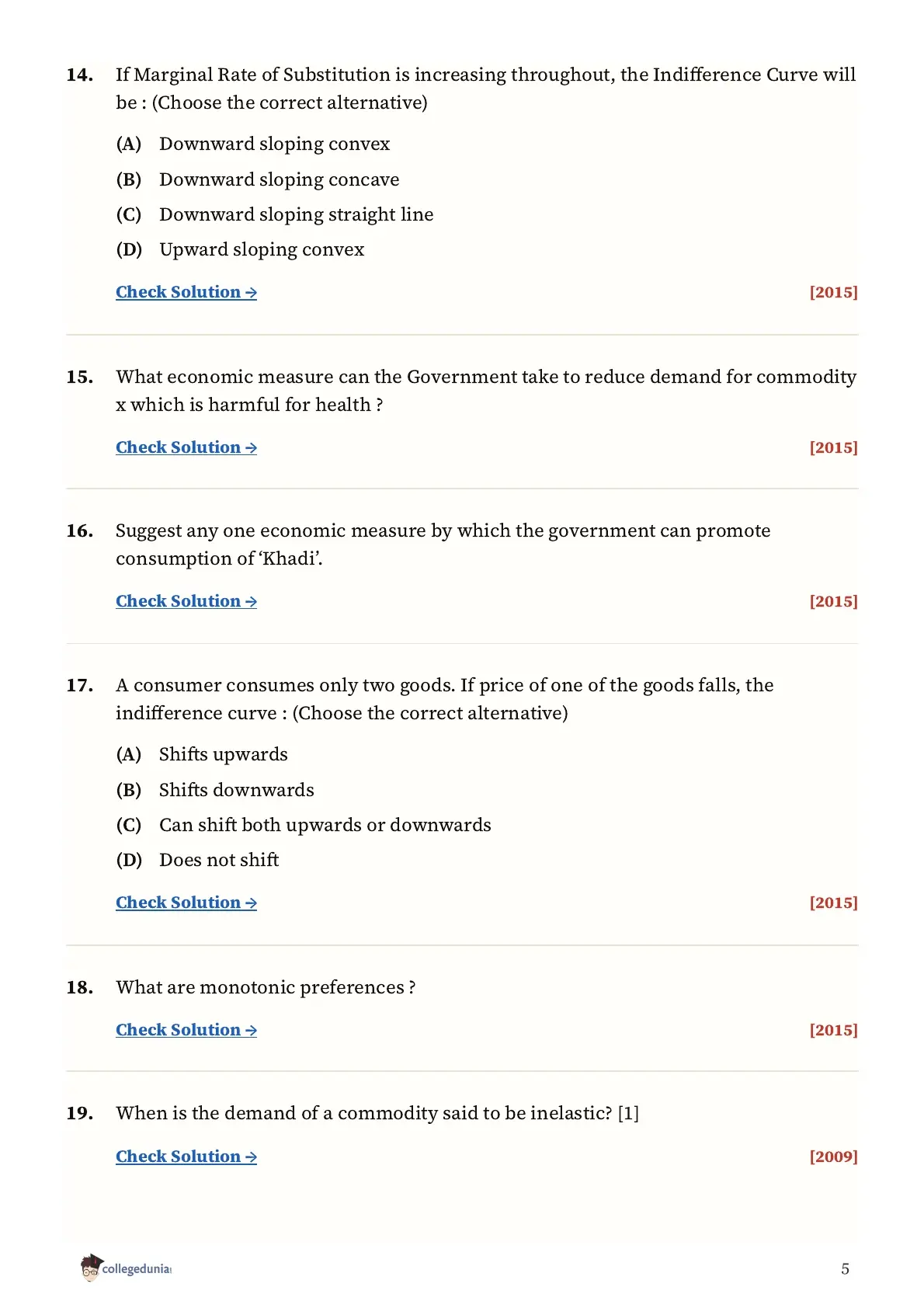
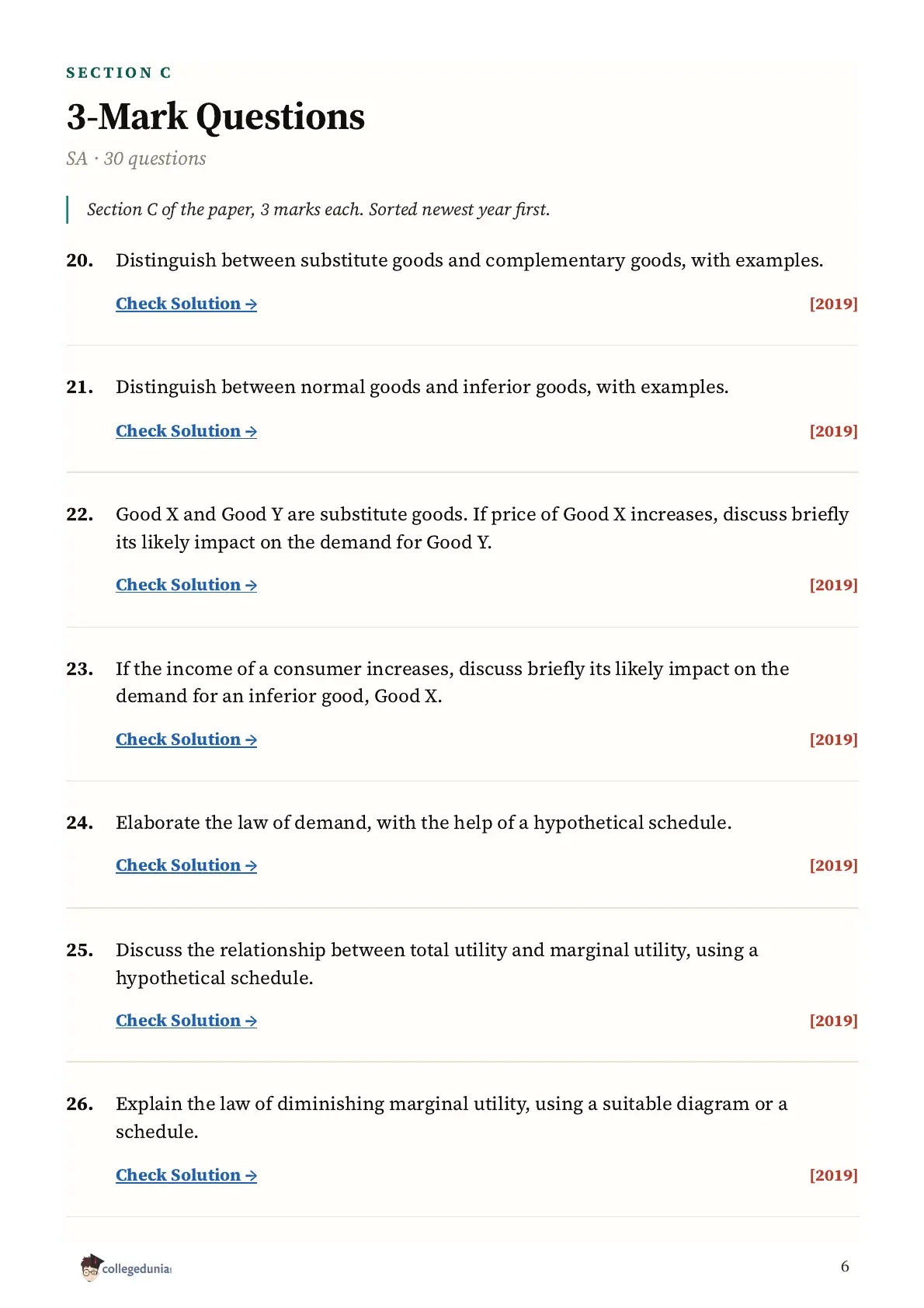
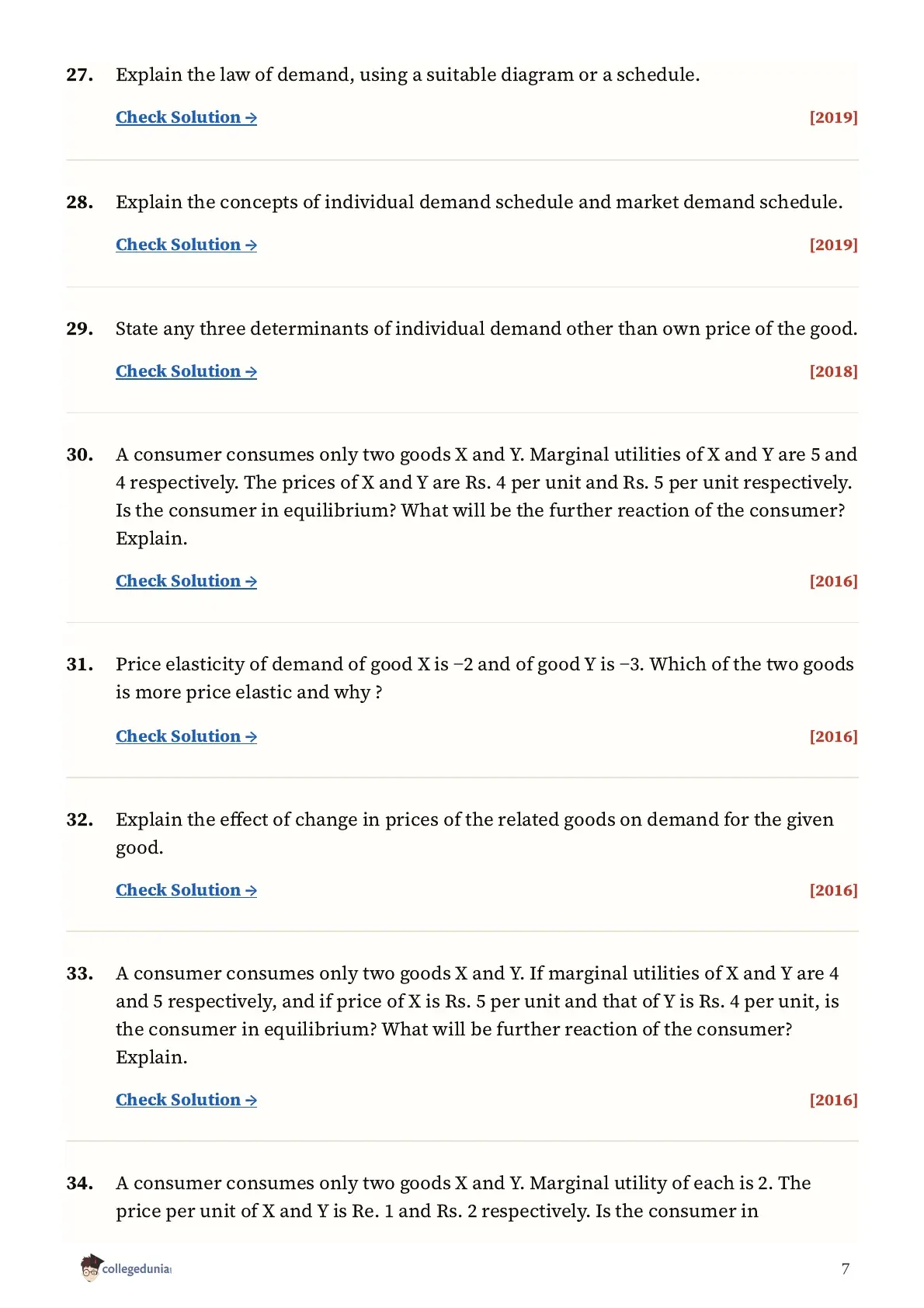
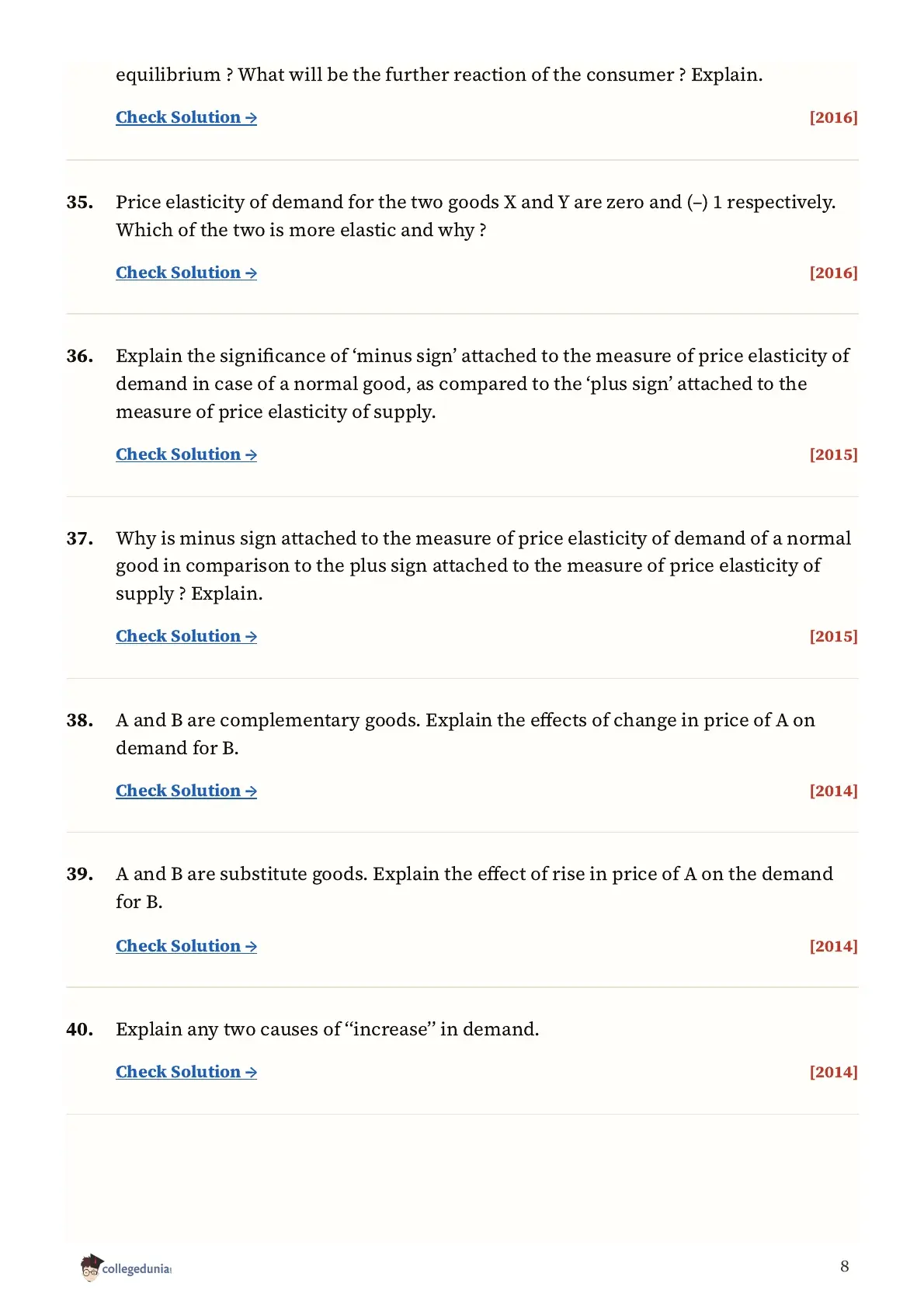
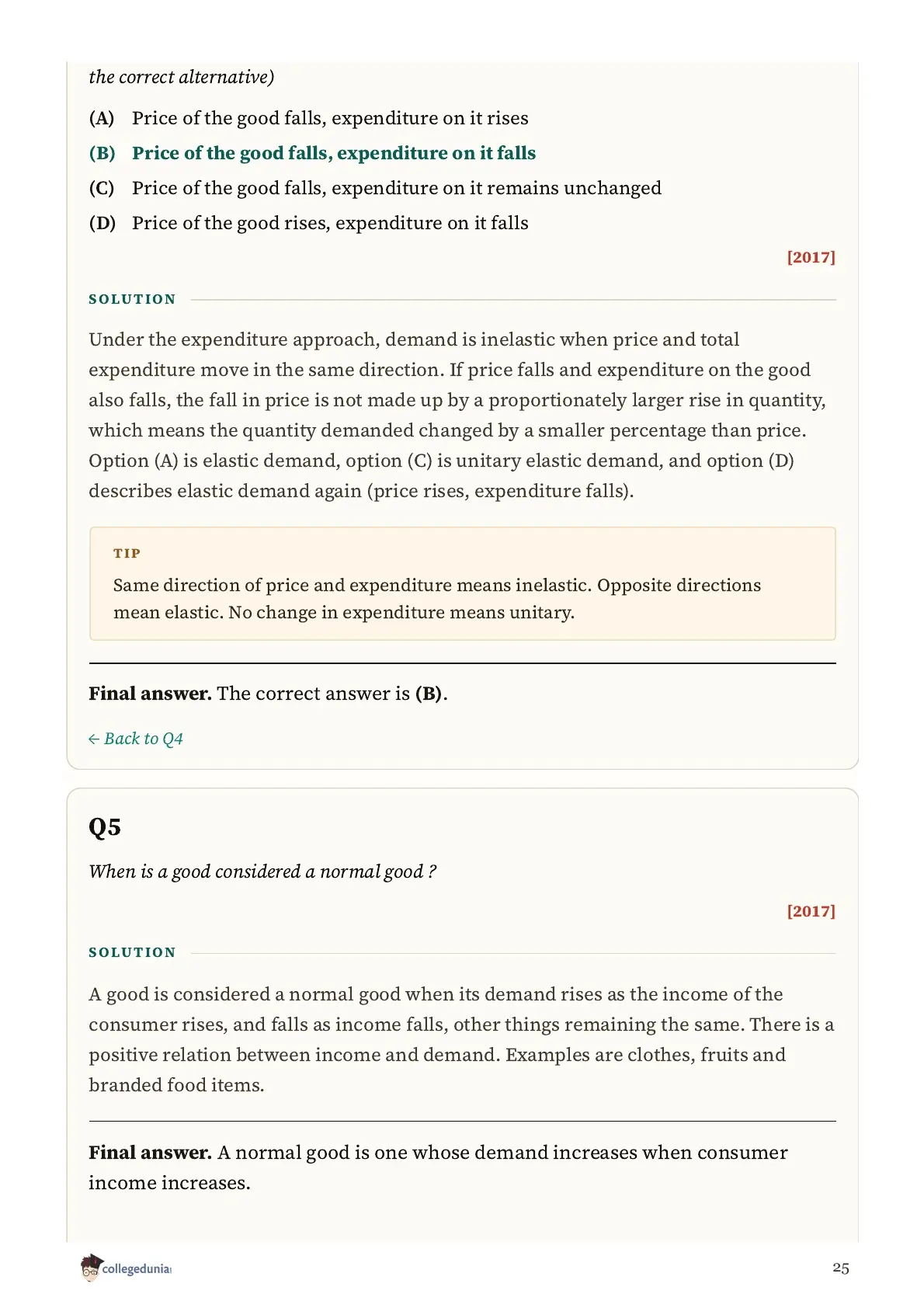
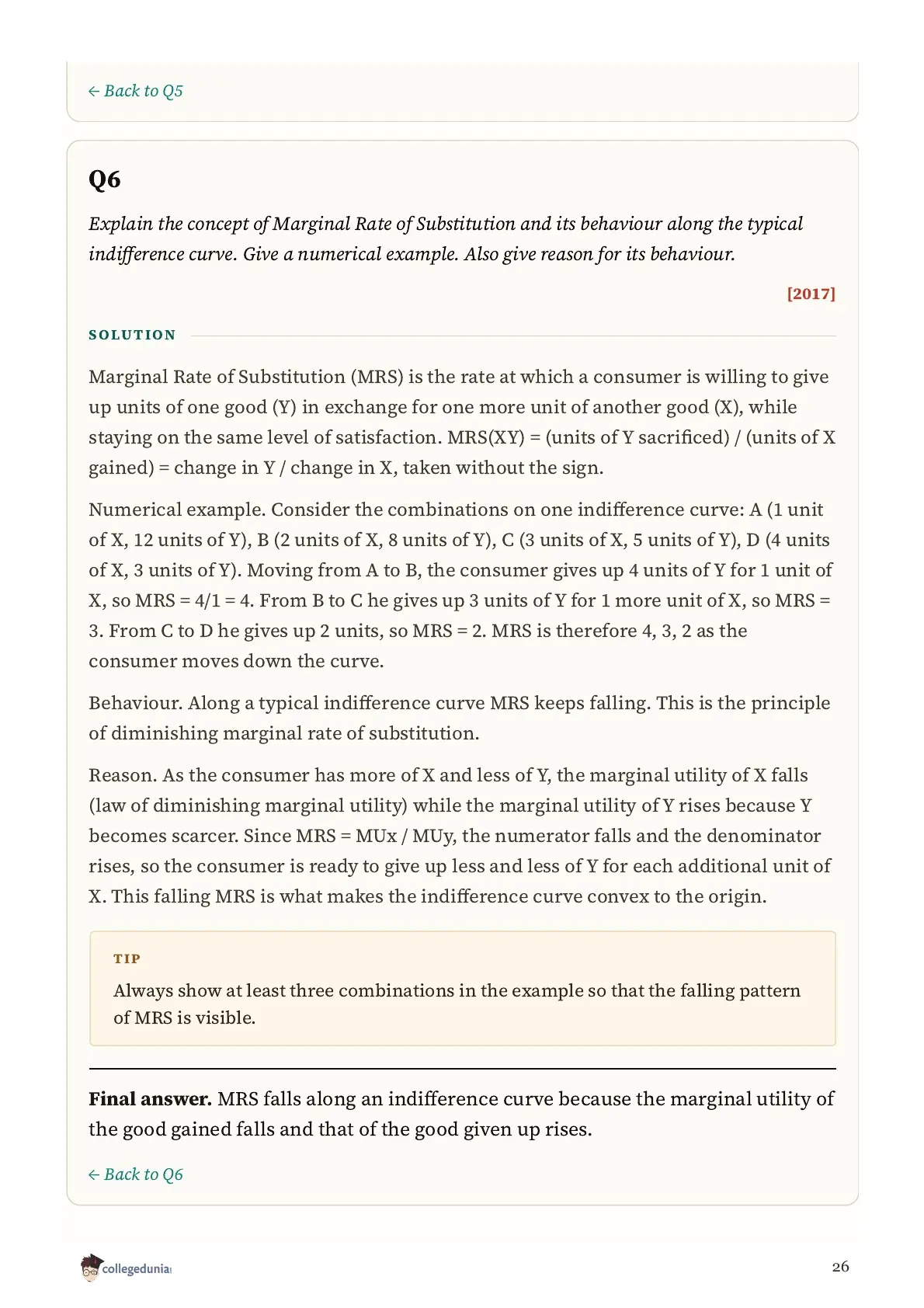
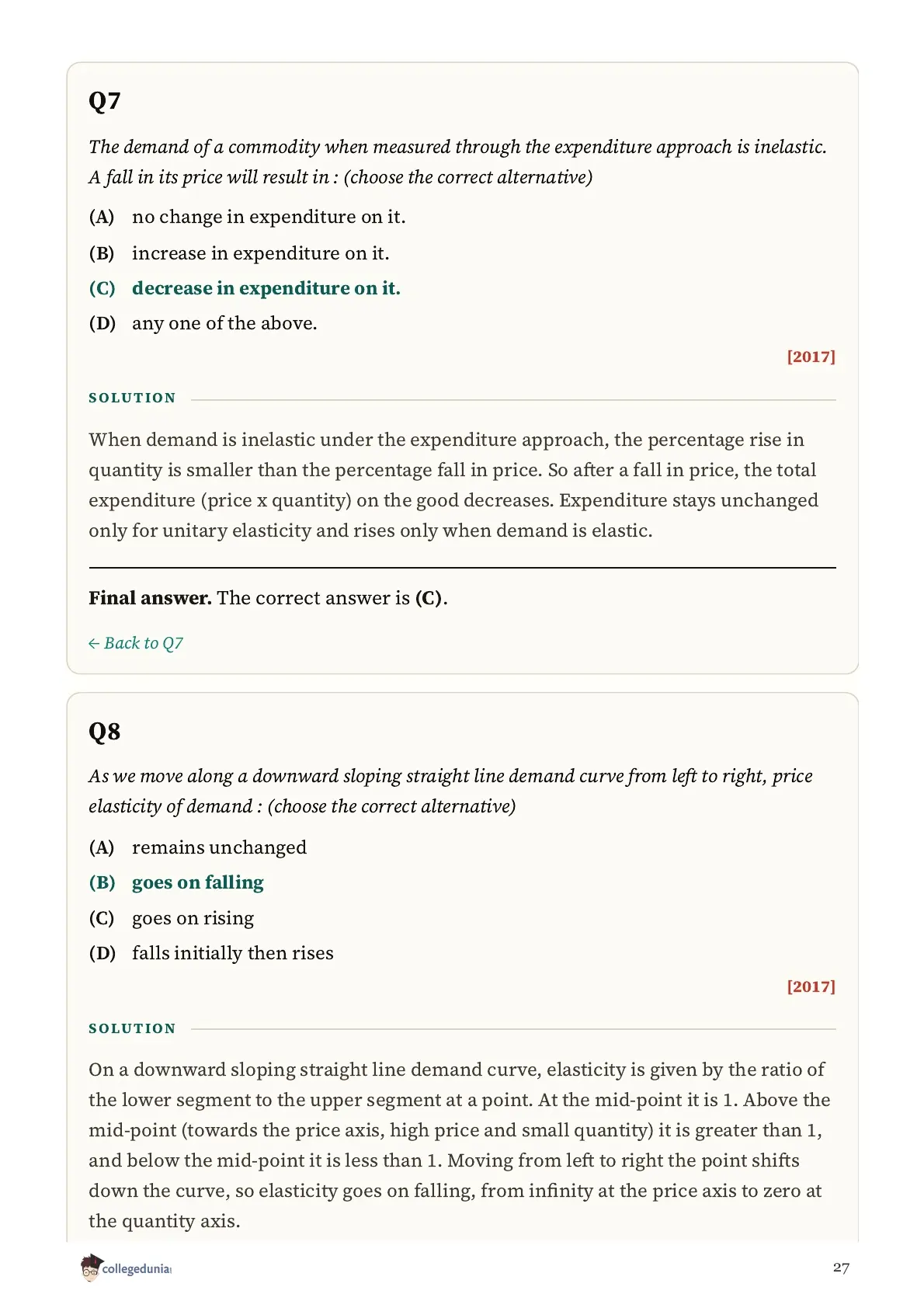
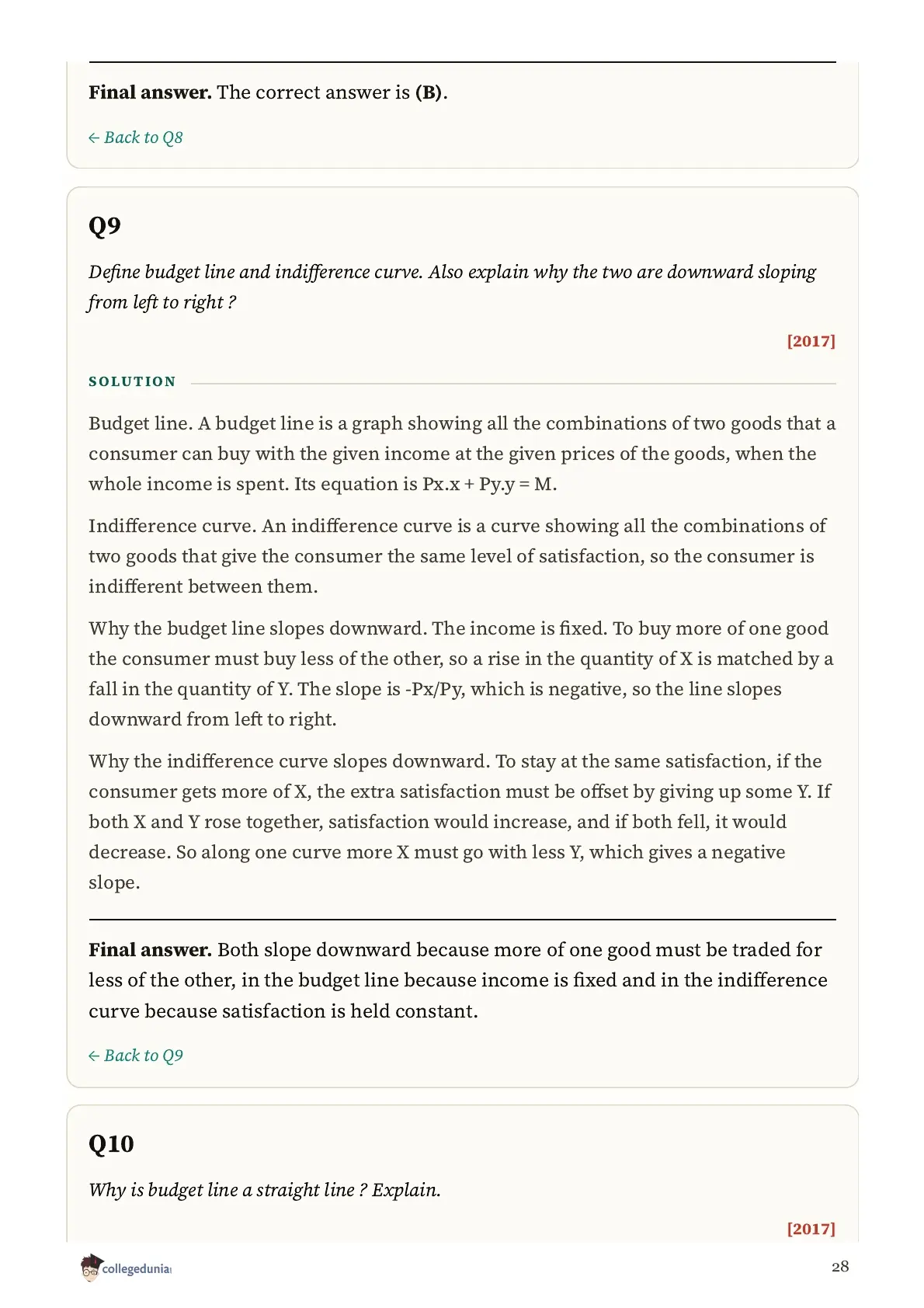
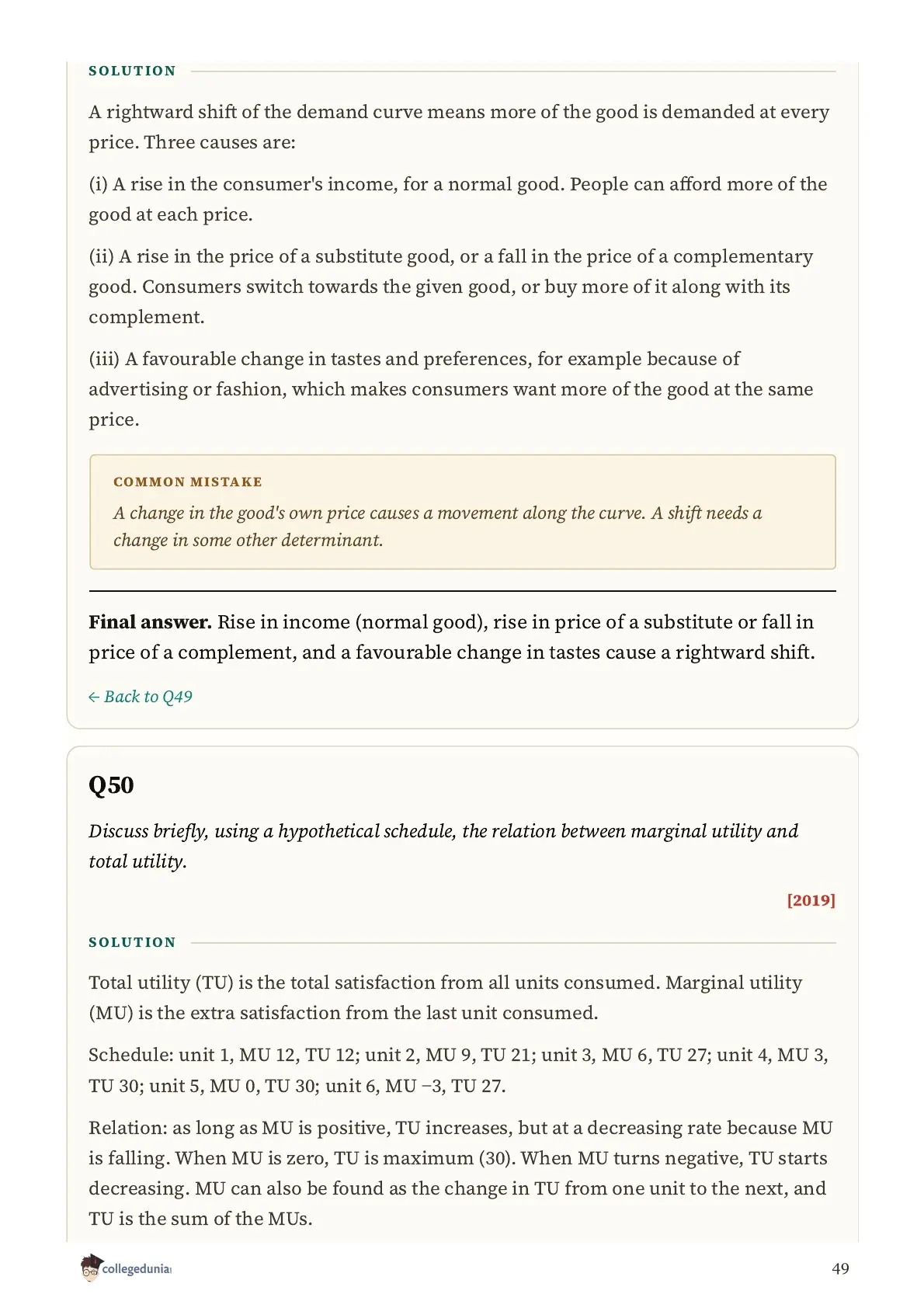
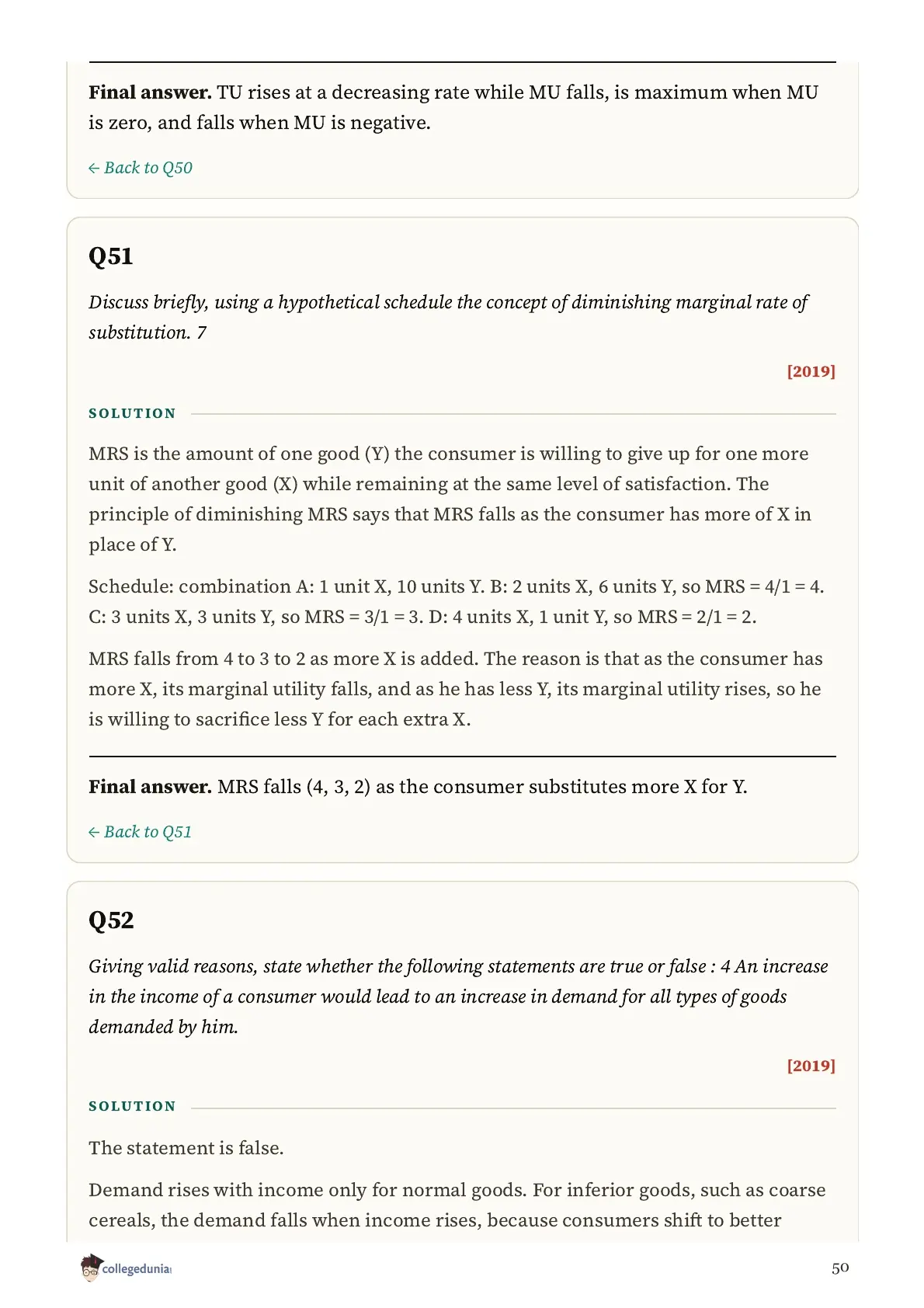
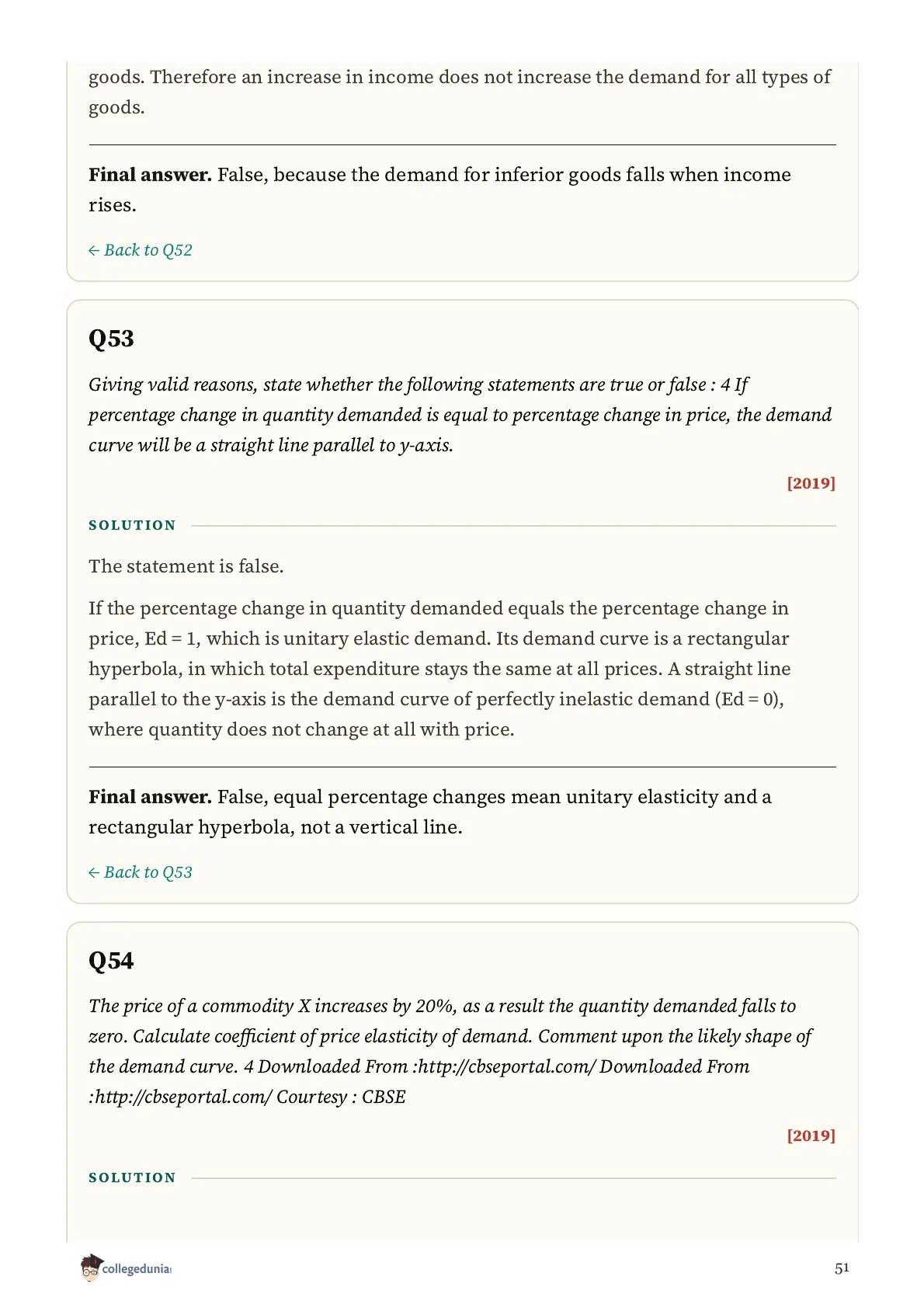
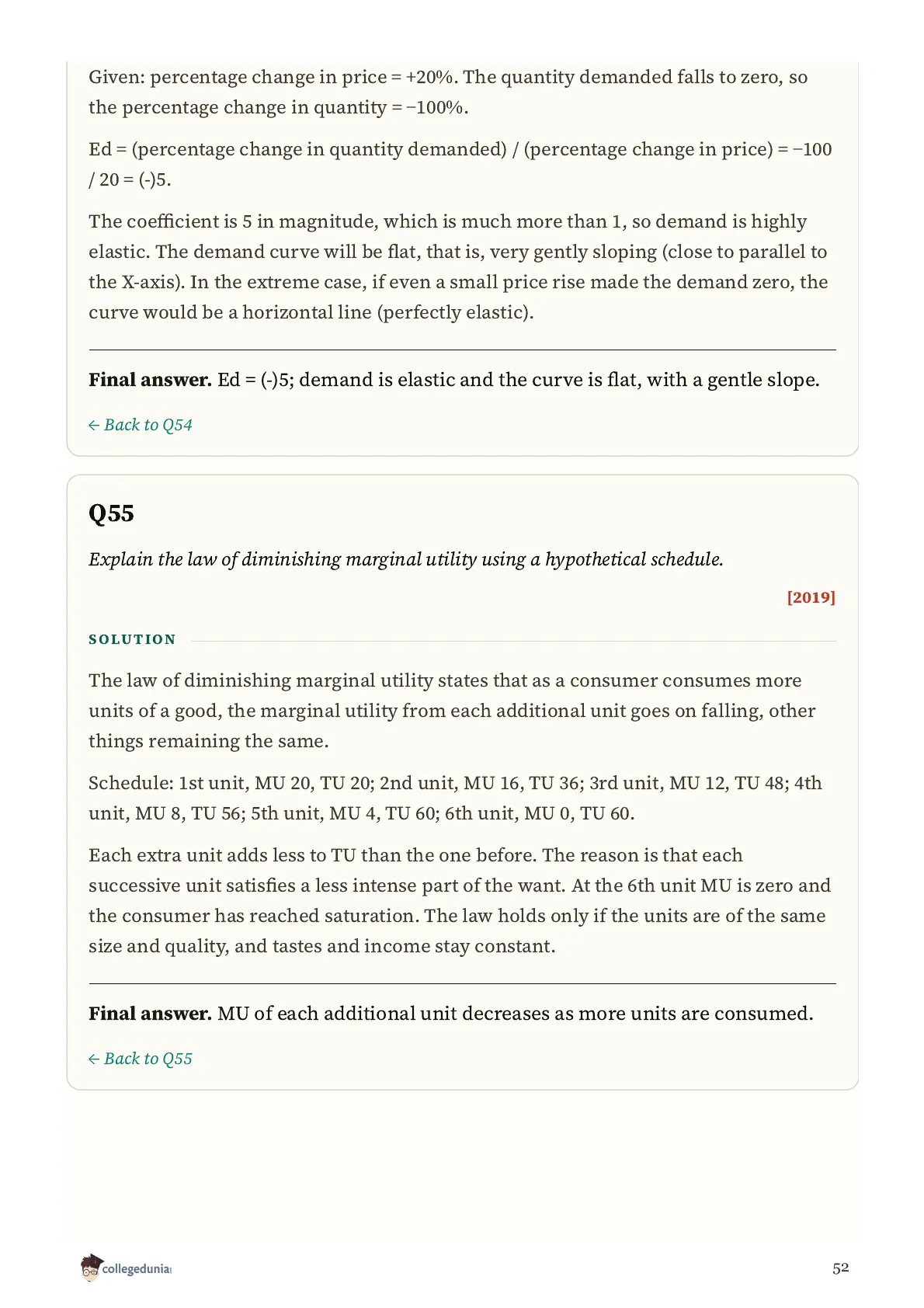
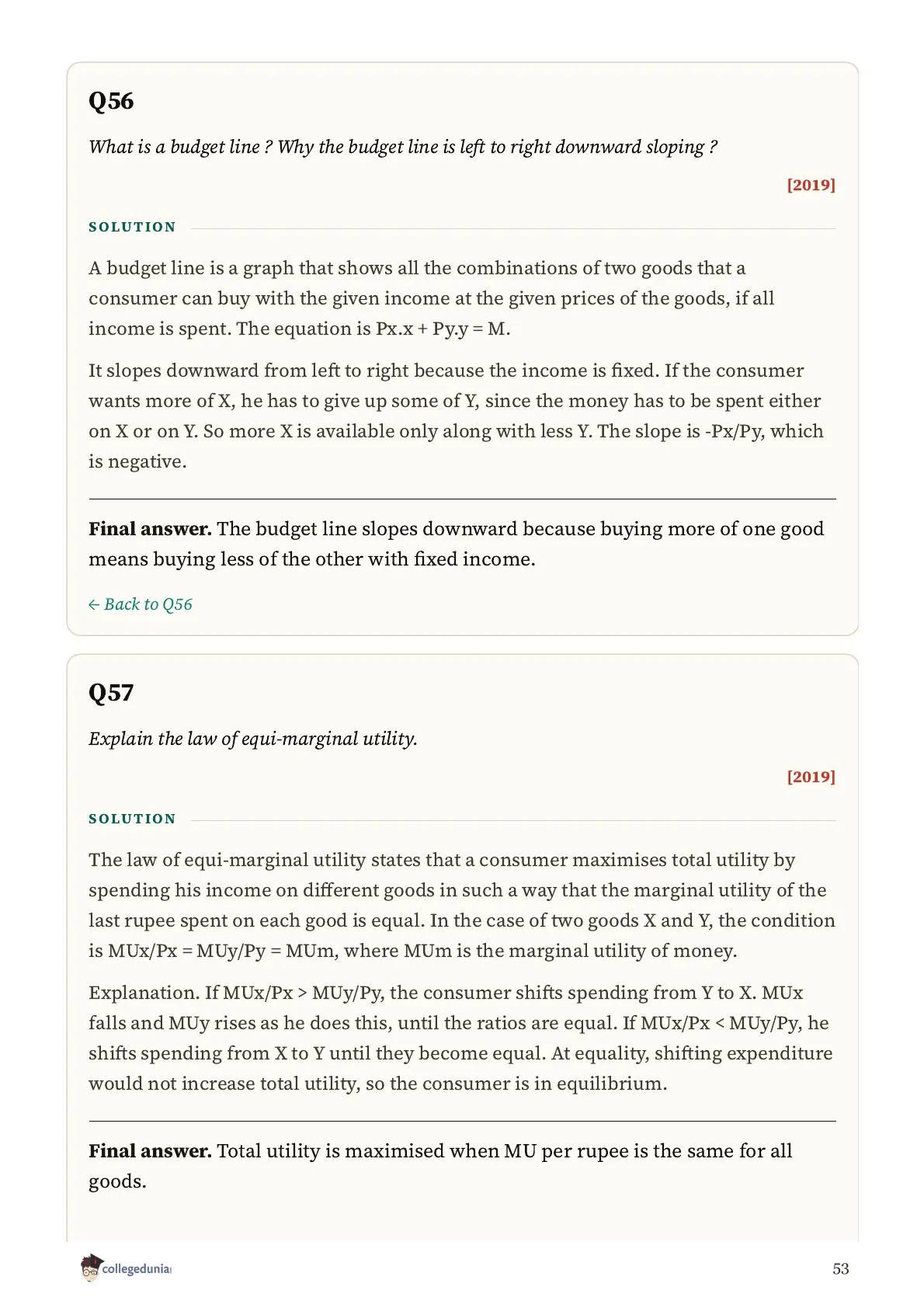
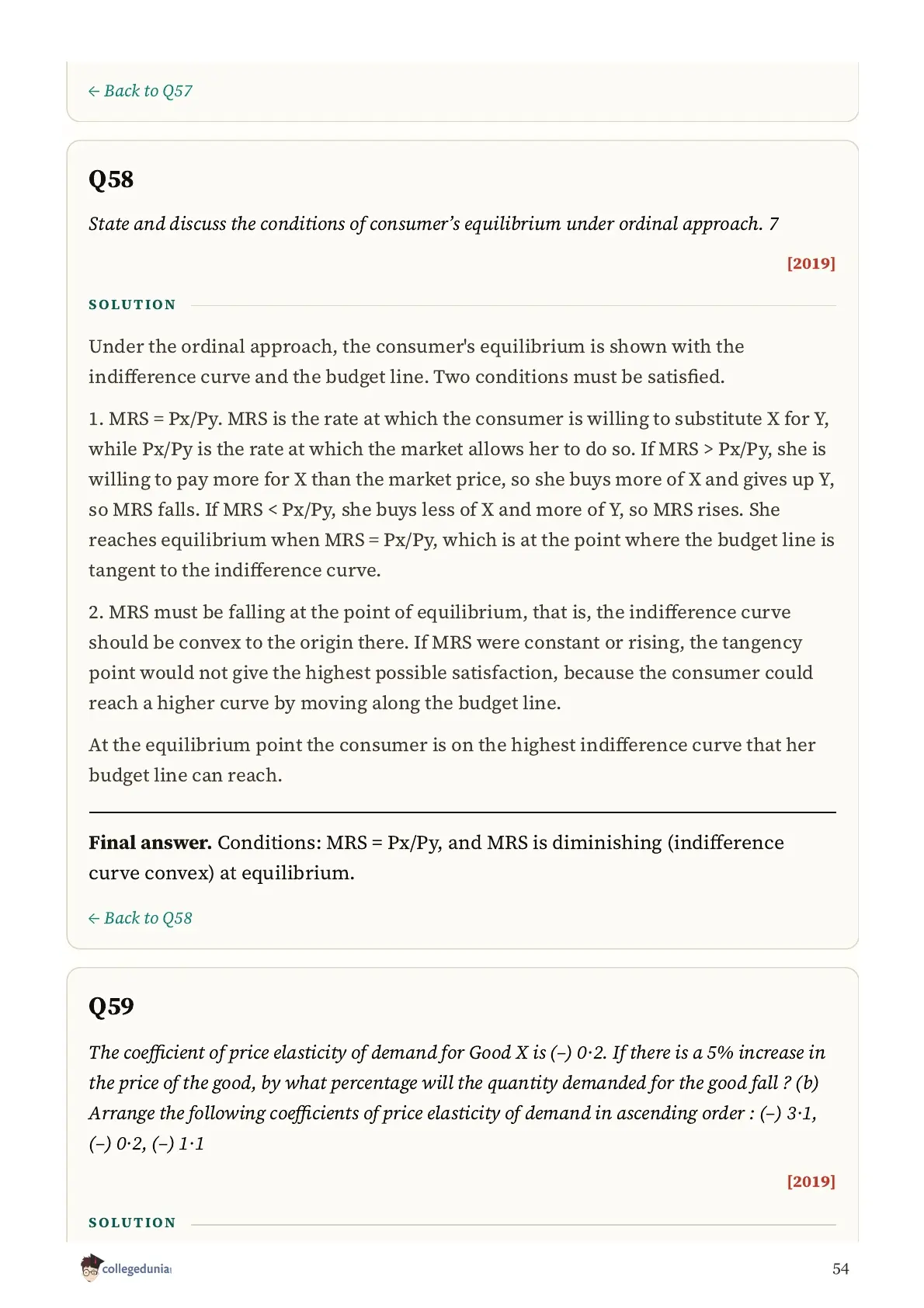
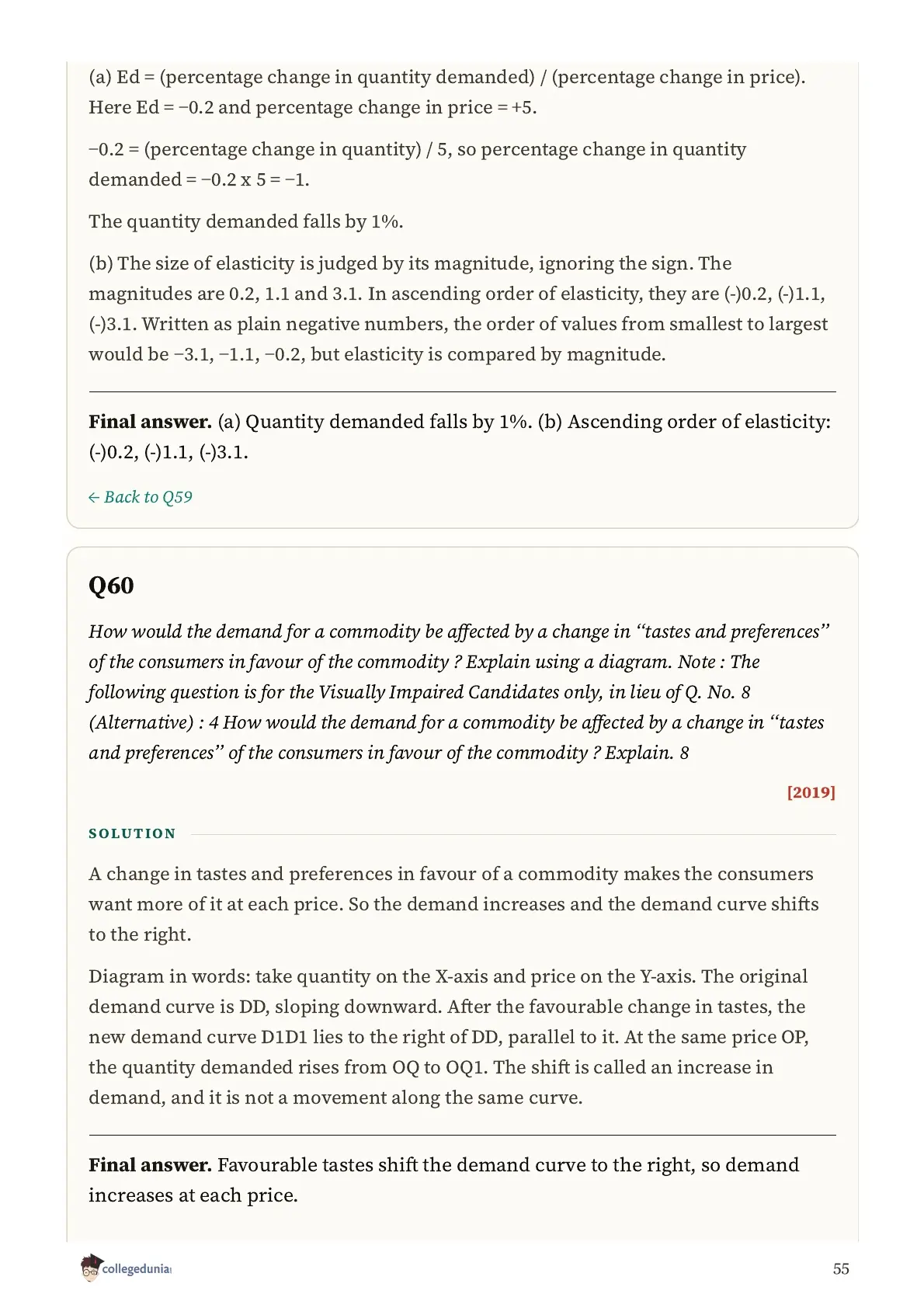
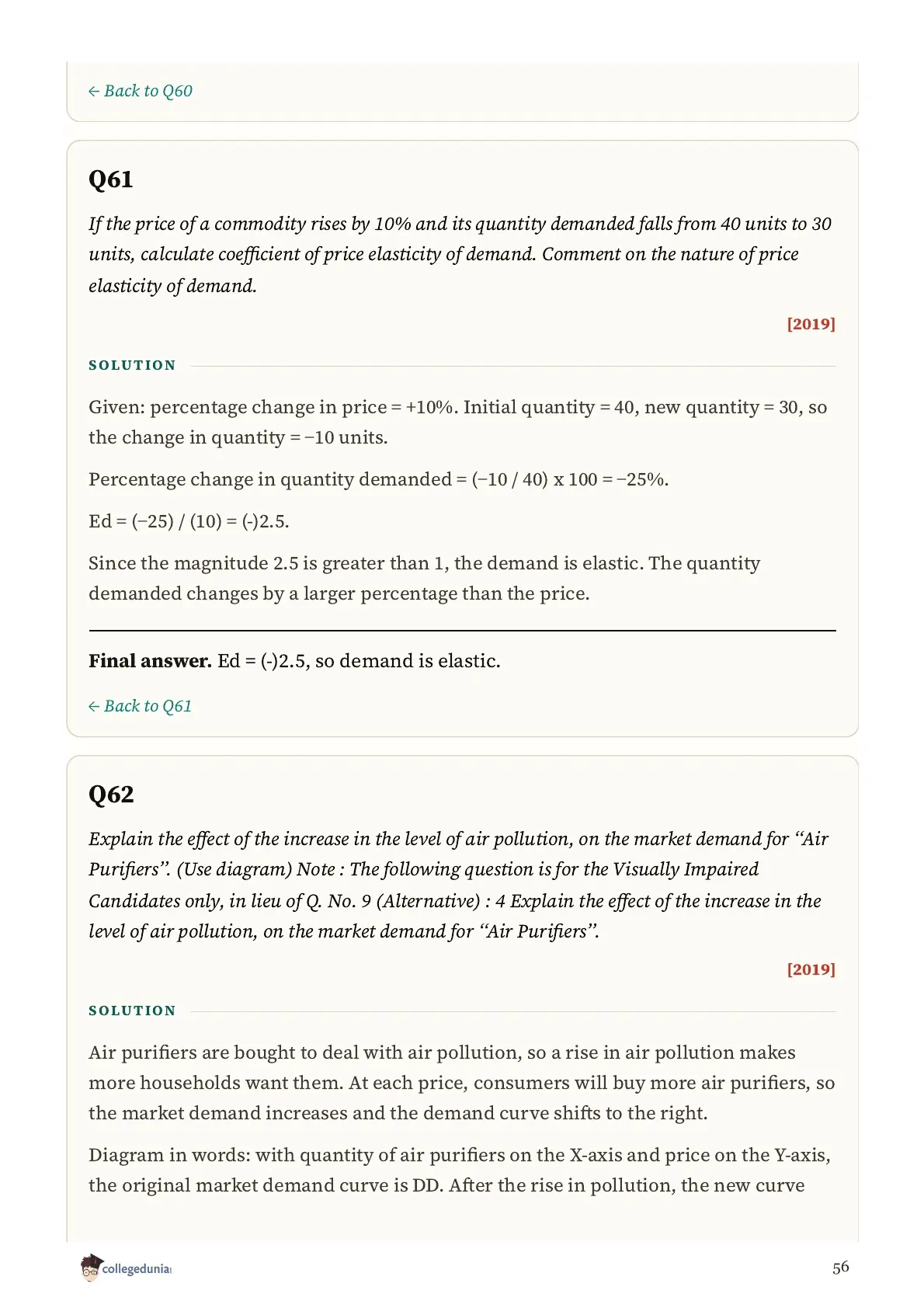
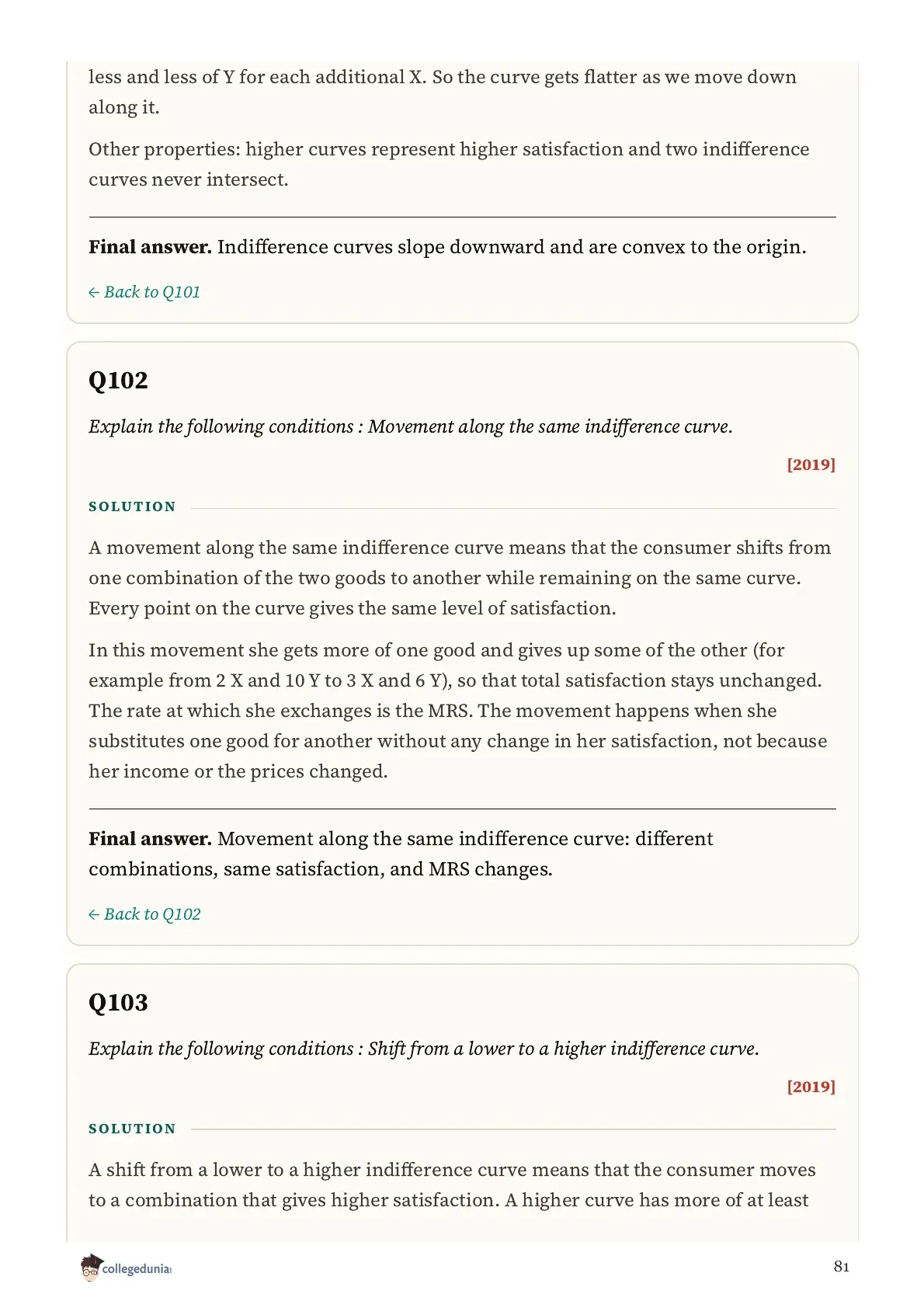
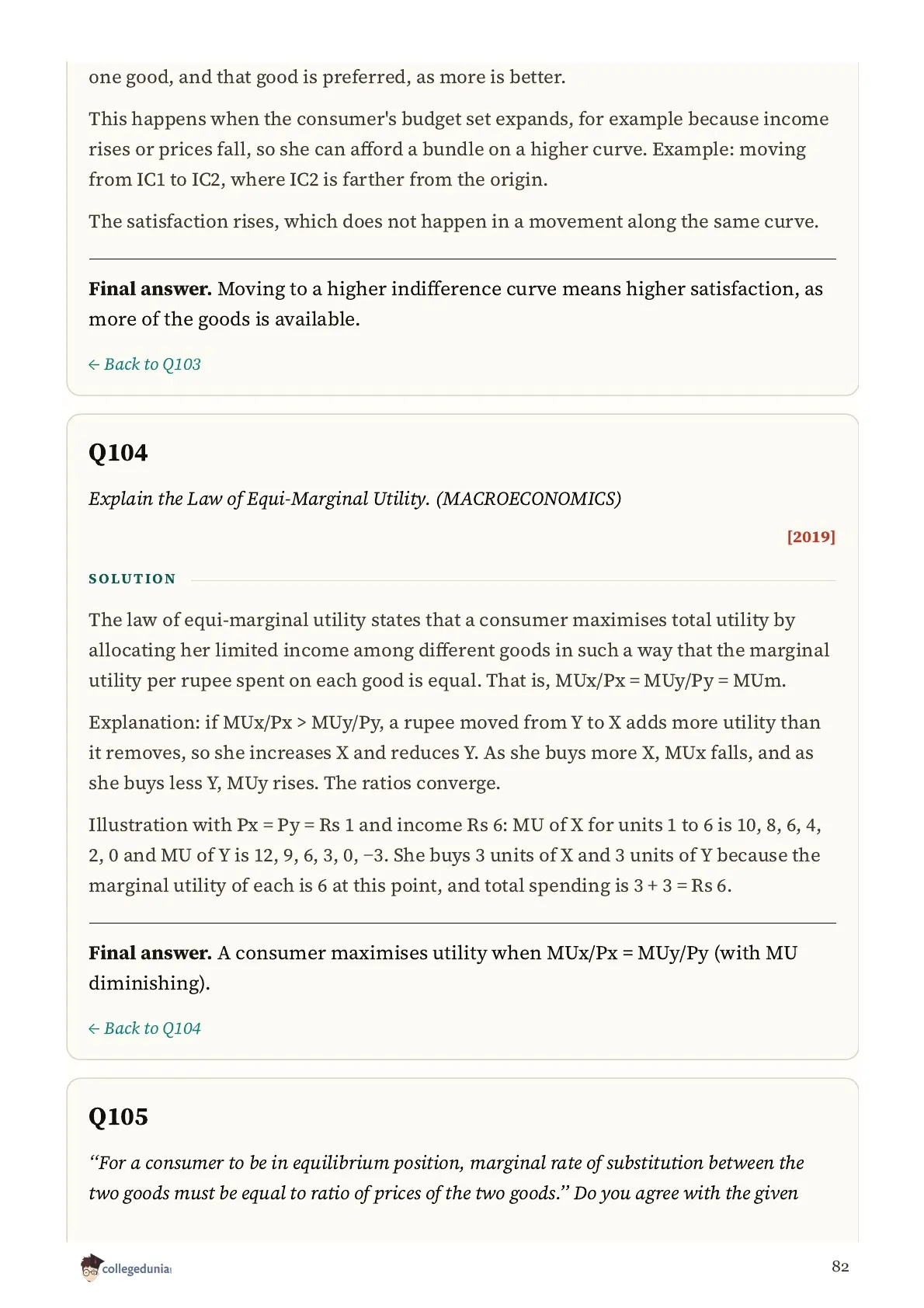
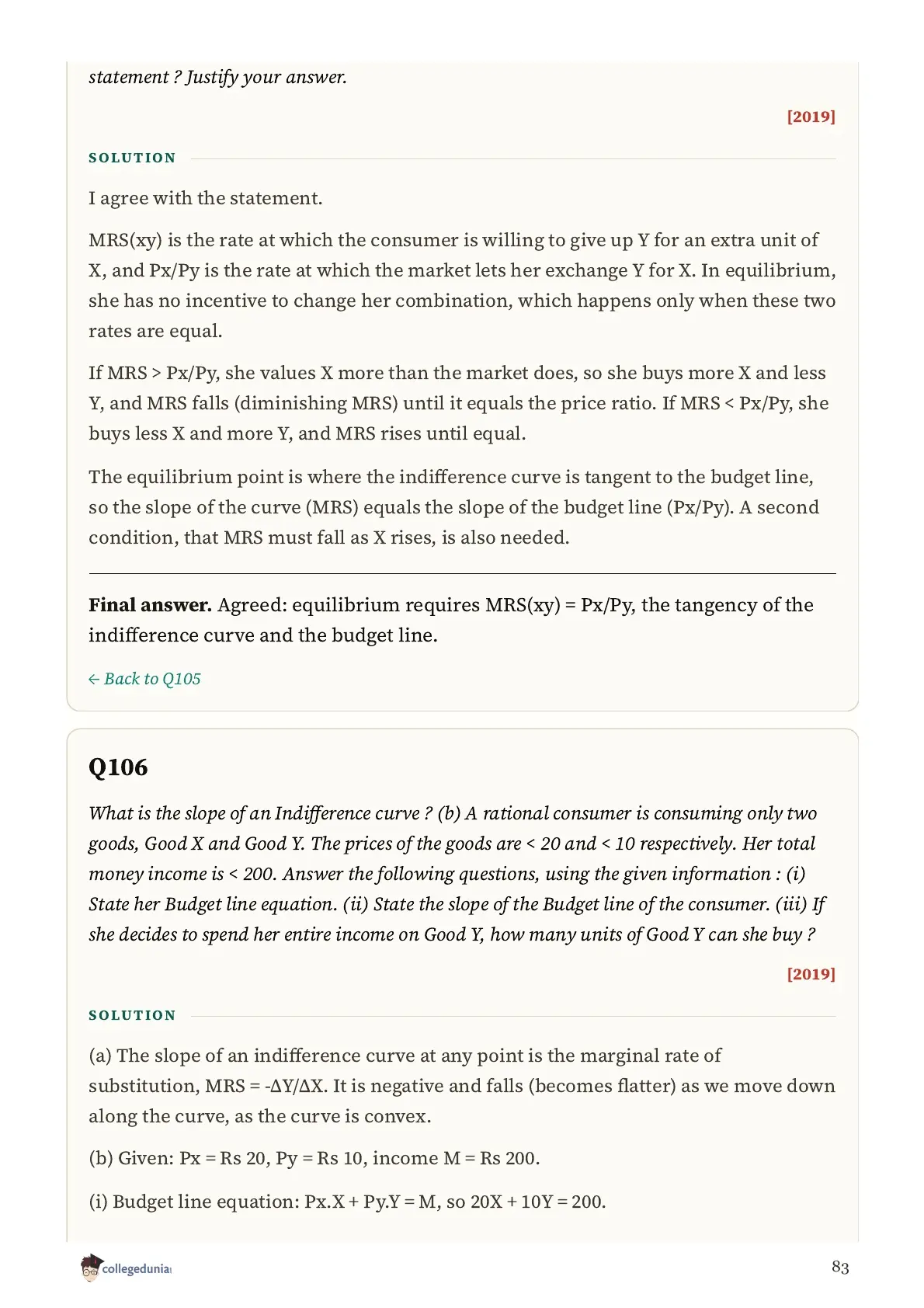
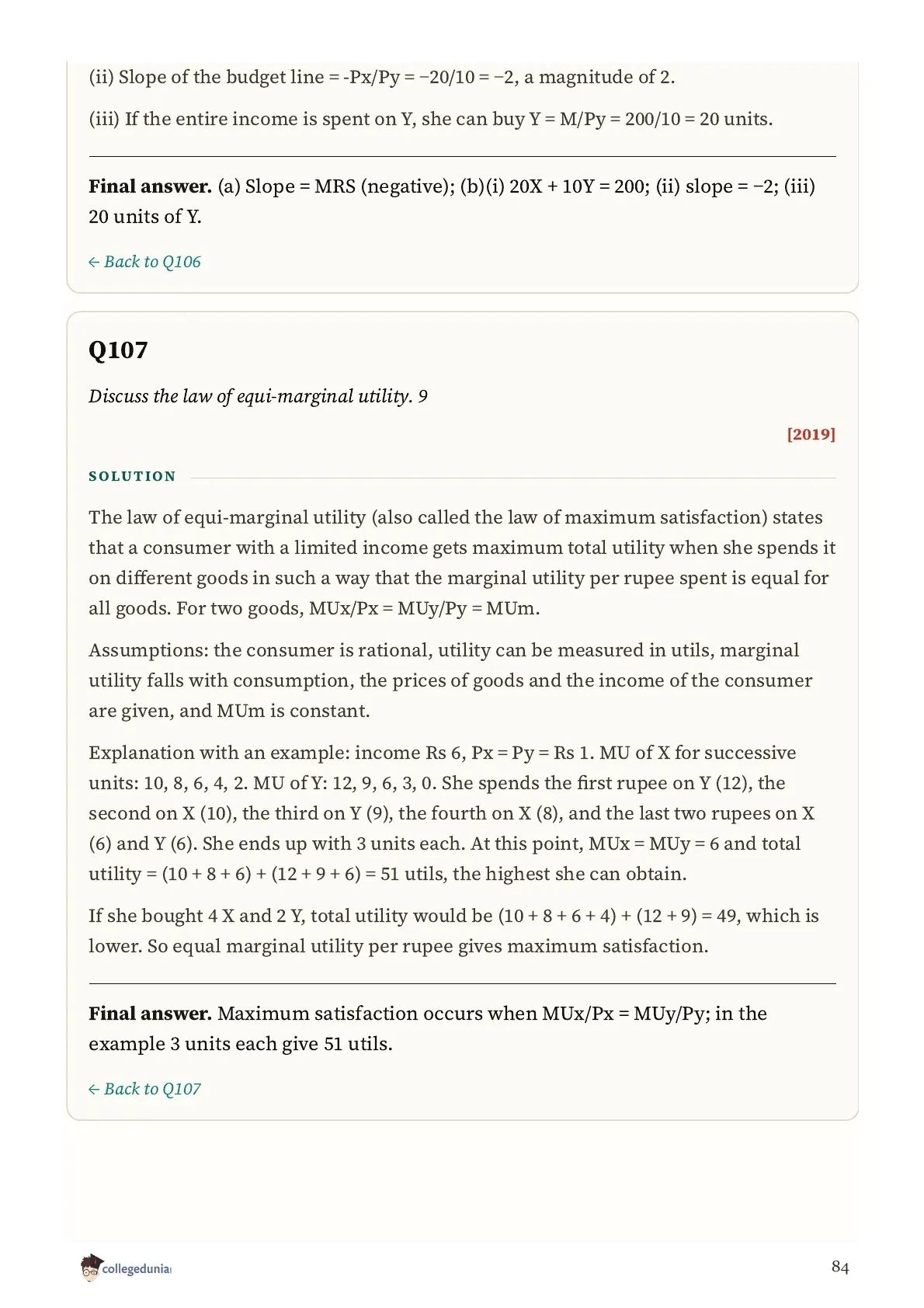
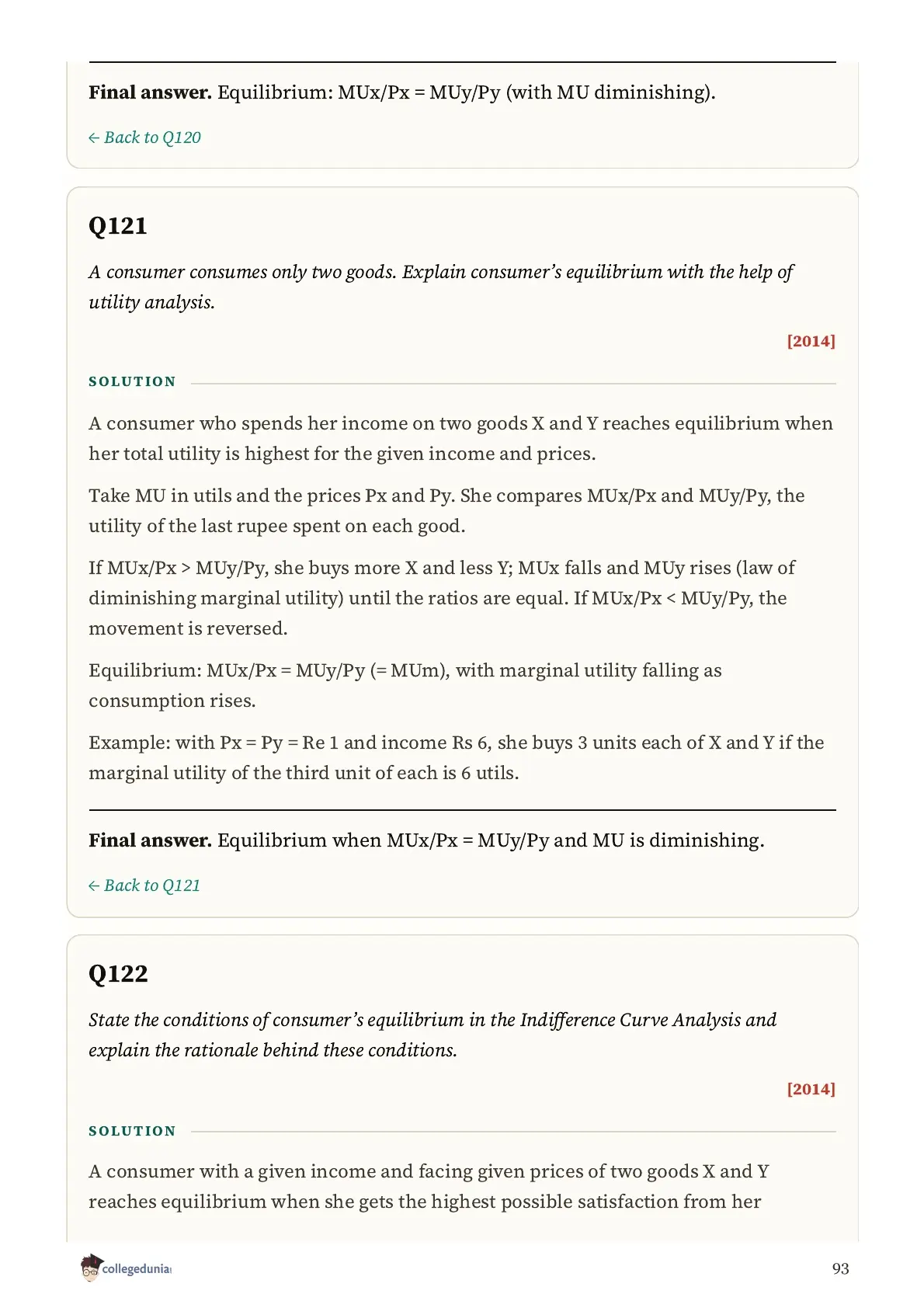
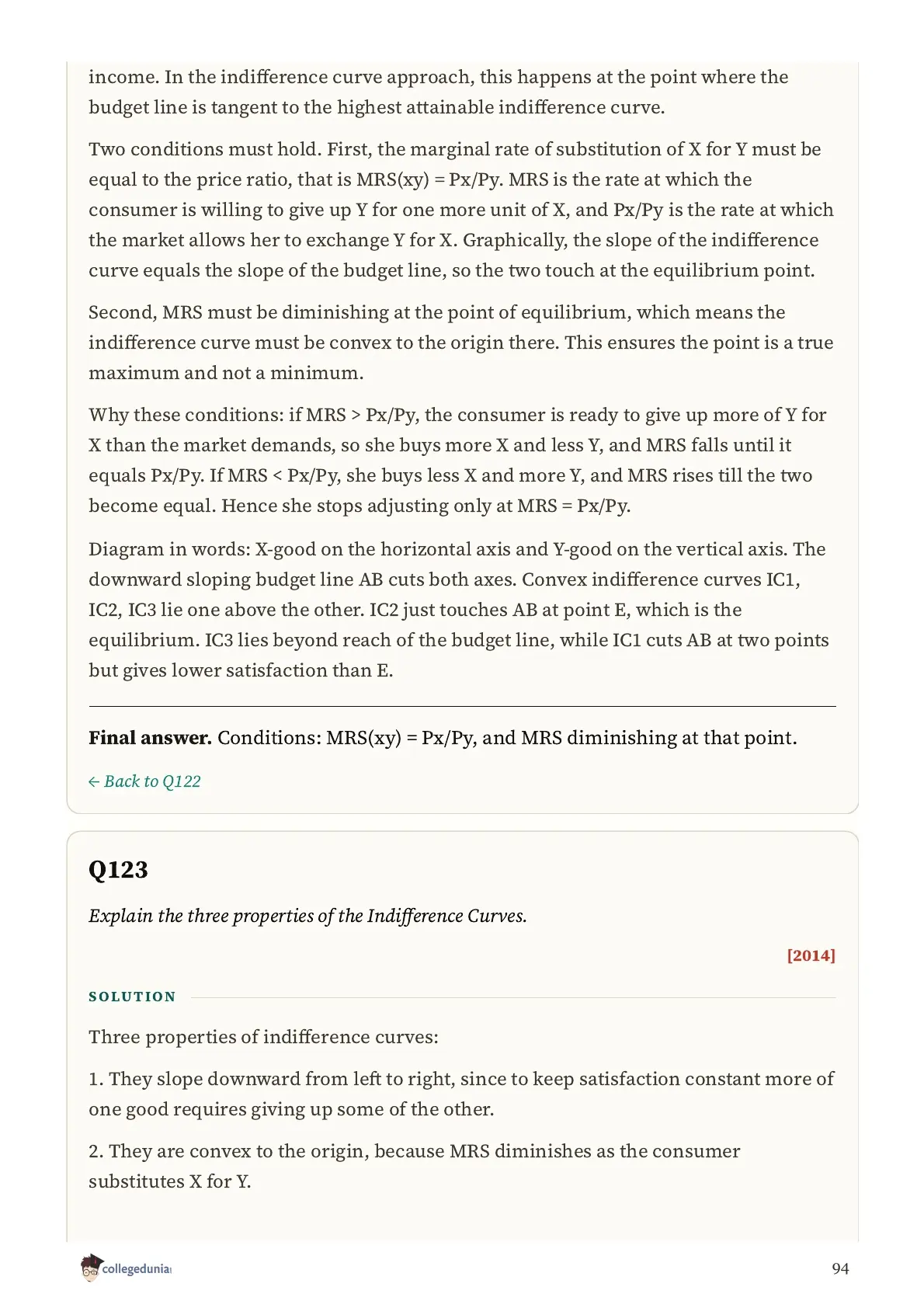
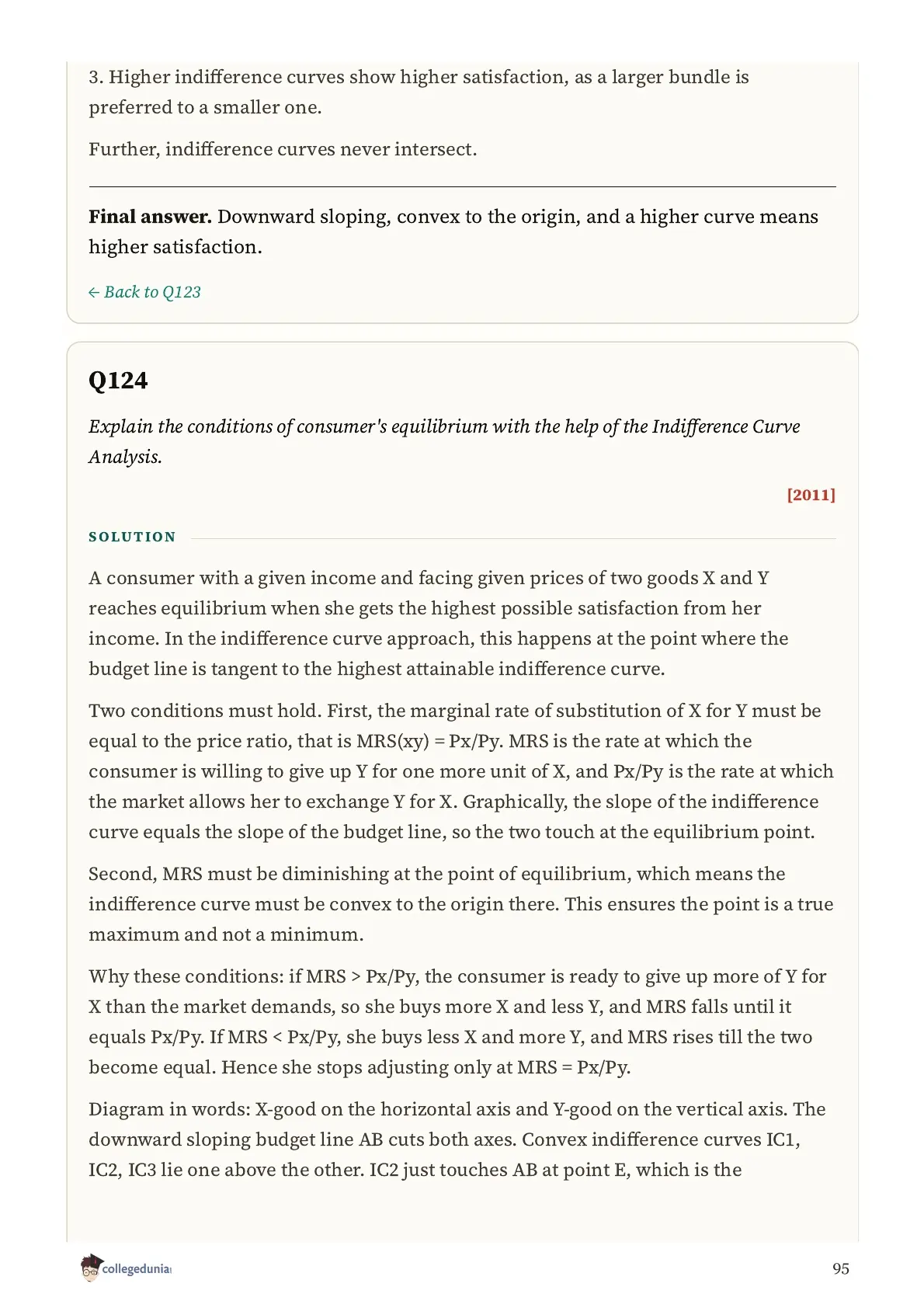
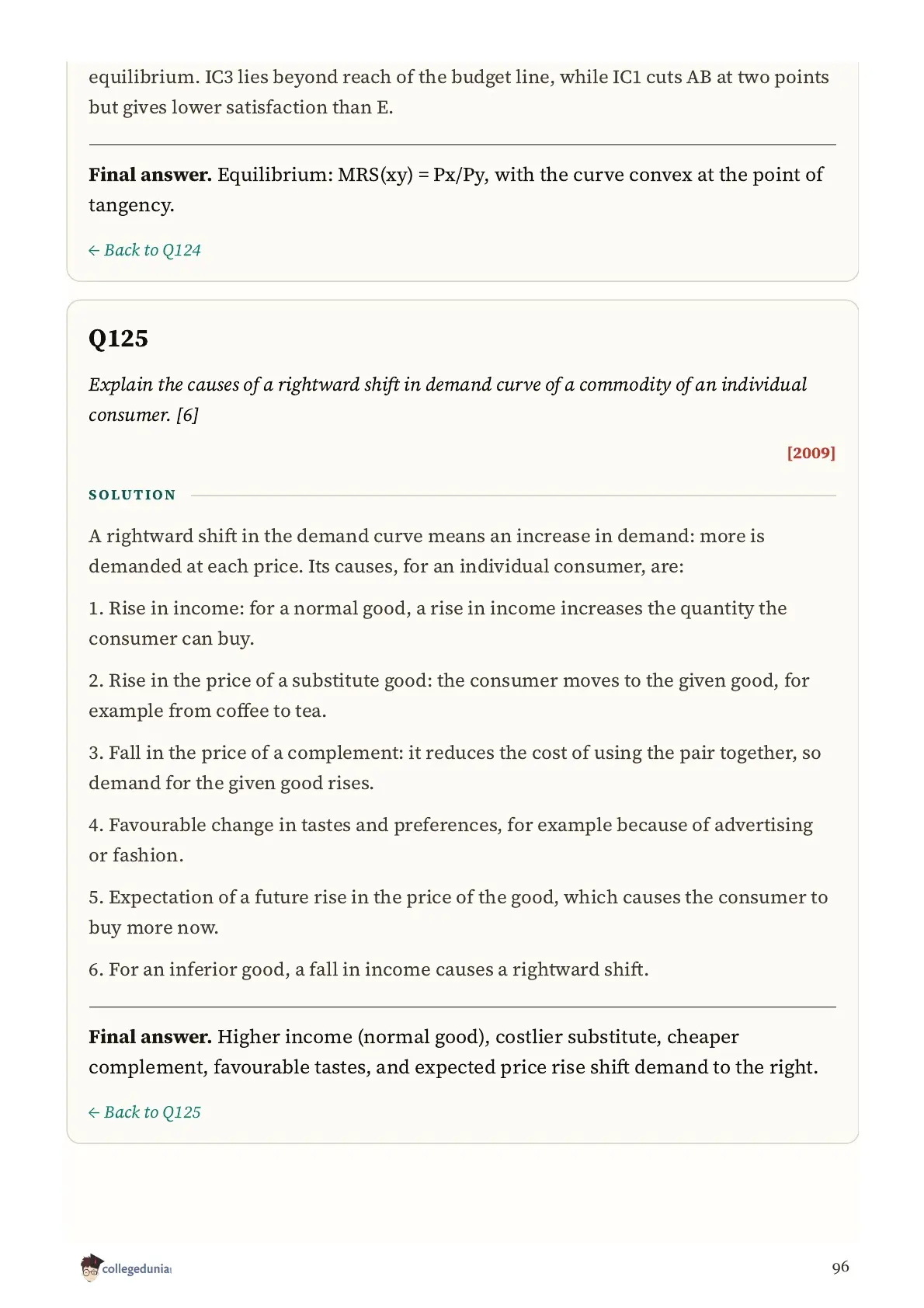
Class 12 Economics Theory of Consumer Behaviour PYQ, free to download as a 101-page PDF. The chapter comes from the Microeconomics part of the older board pattern, and the set holds 132 solved questions from the 2005 to 2019 papers on utility and marginal utility, the law of diminishing marginal utility, consumer's equilibrium, indifference curves and the marginal rate of substitution, the budget line, the law of demand, shifts in demand, normal and inferior goods, substitutes and complements and price elasticity of demand, and takes roughly ten hours to work through, so do the 19 one-mark questions and the 30 three-mark ones on the first day, the 49 four-mark questions on the second and the 34 six-mark questions on the third.
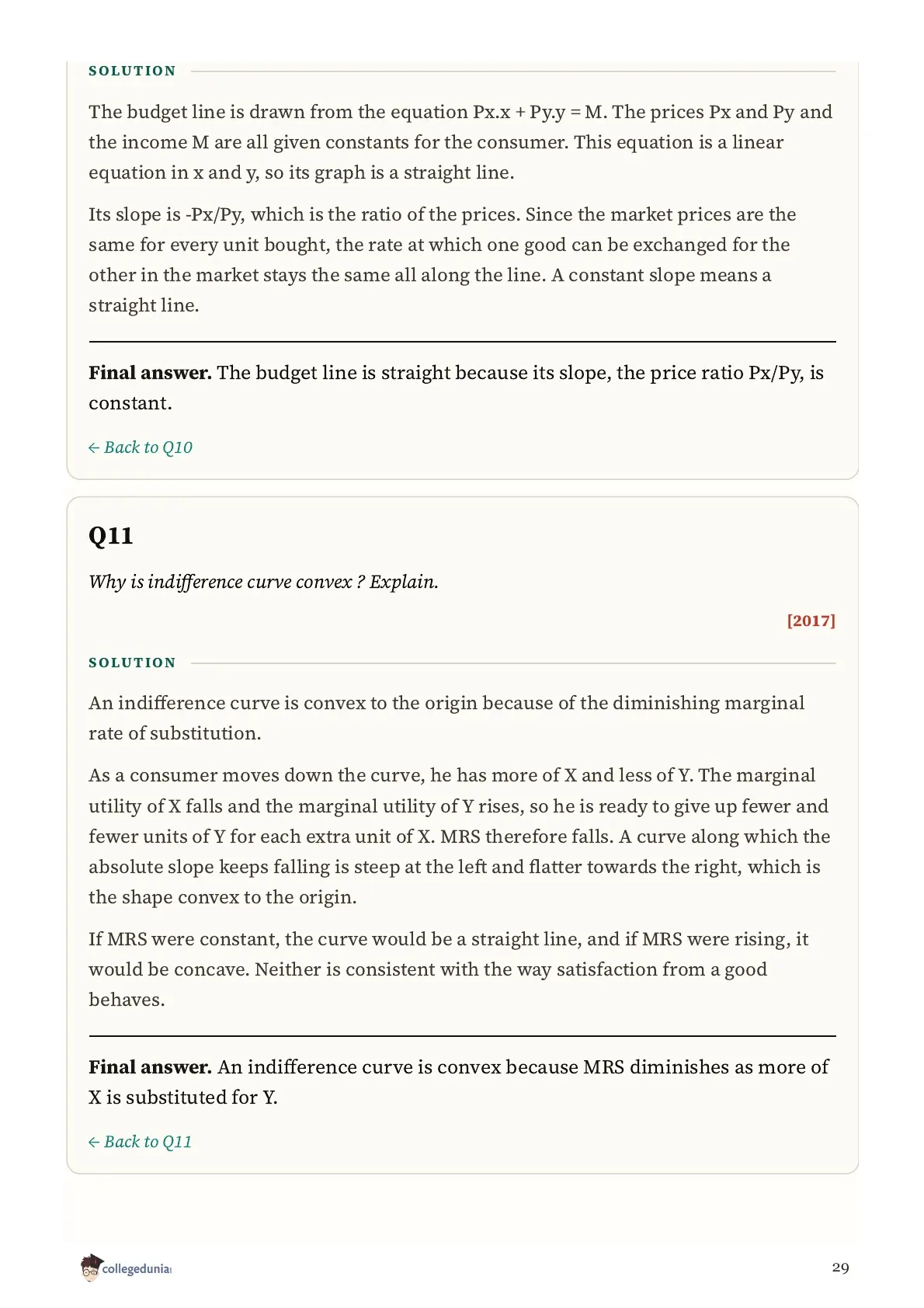
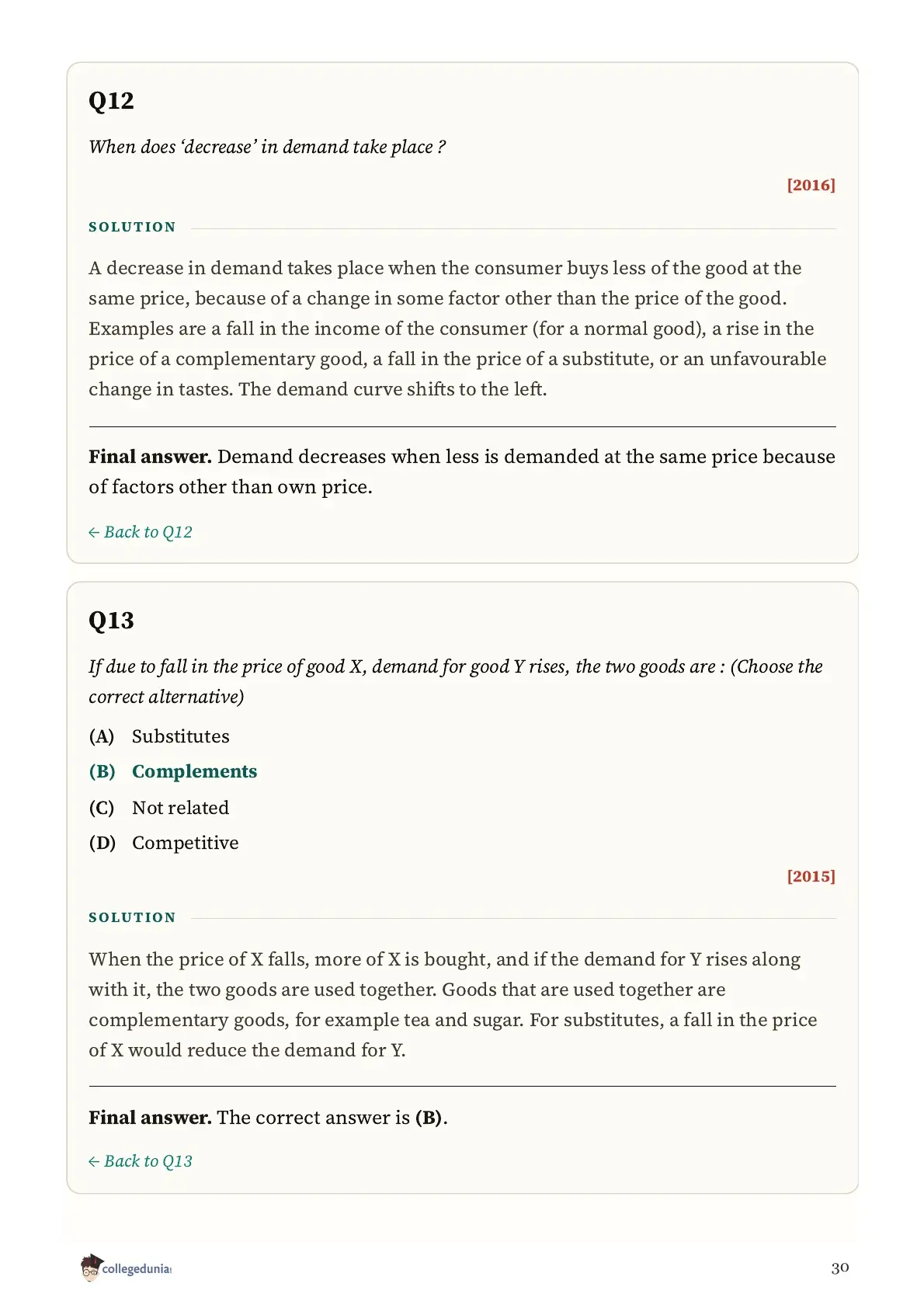
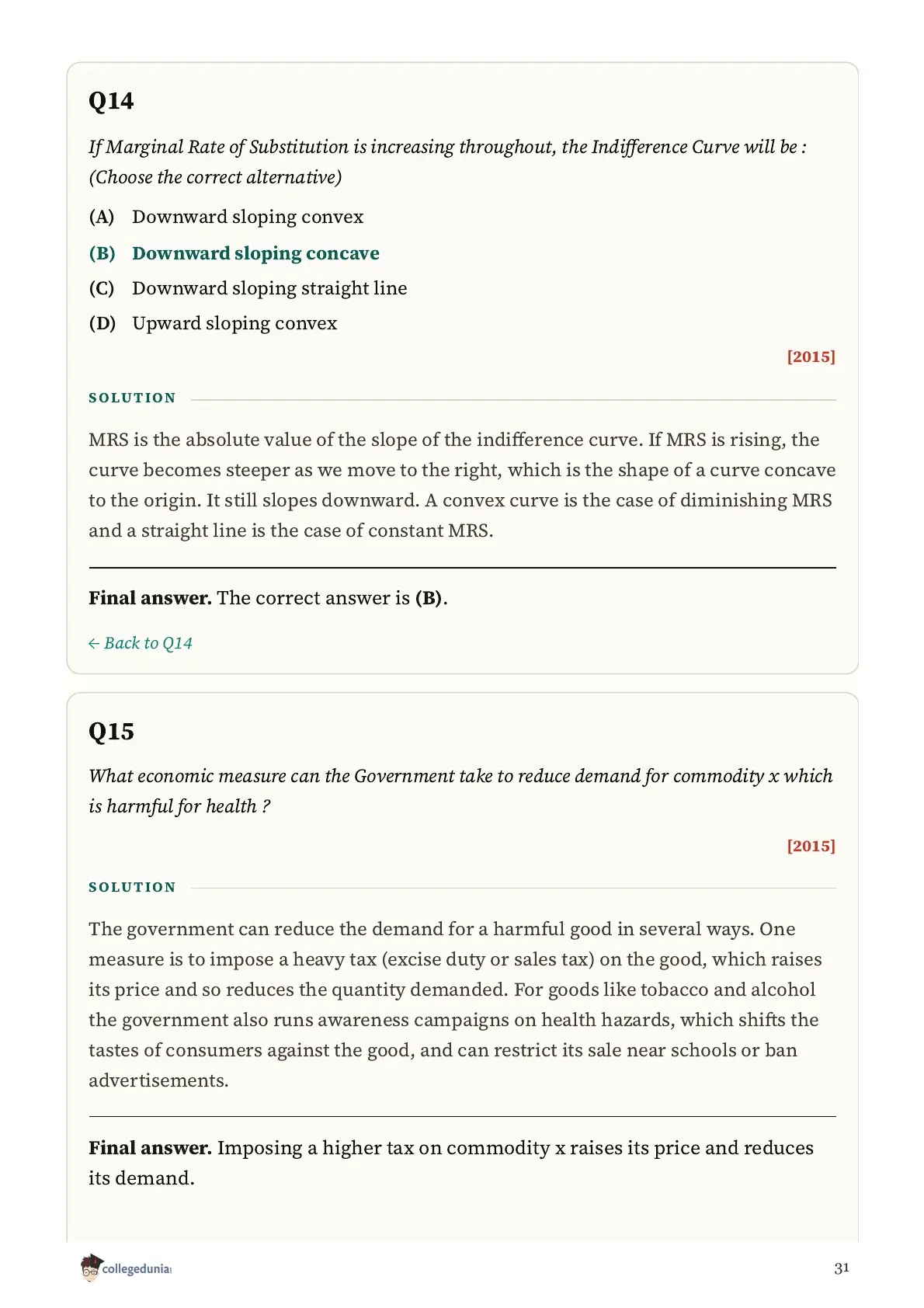
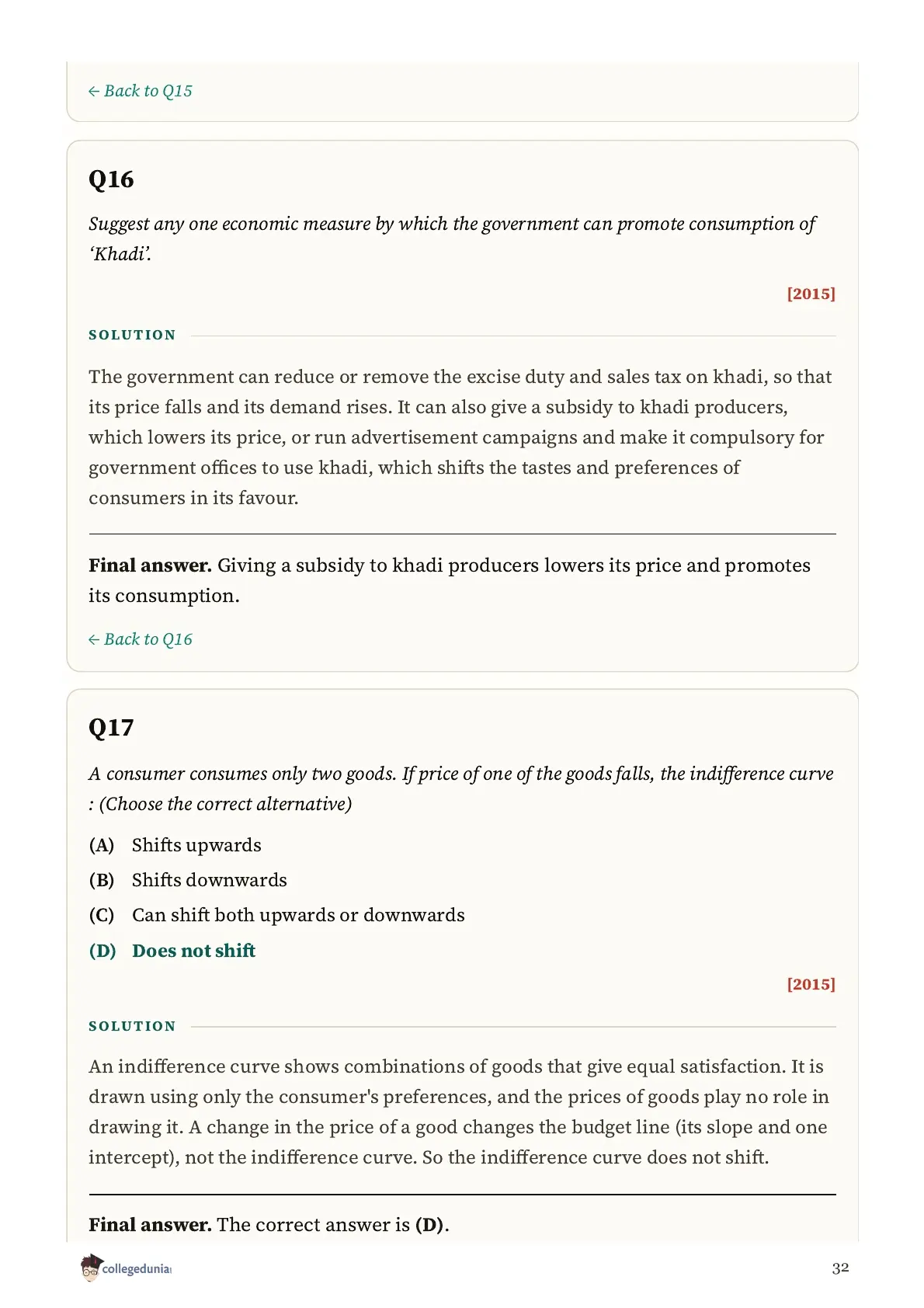
Theory of Consumer Behaviour Weightage in the Class 12 Board Paper
As per Economics Theory of Consumer Behaviour weightage from past years, this chapter sat in the Microeconomics part of the older Class 12 paper, which shared the theory marks with Macroeconomics. The Class 12 Economics paper now listed for 2026-27 pairs Introductory Macroeconomics with Indian Economic Development, so it has no Microeconomics part, and we have not found an official chapter-wise mark figure for the old pattern. Use this set to practise the concepts and for school tests that still follow the Micro book, not as a forecast of this year's board paper.
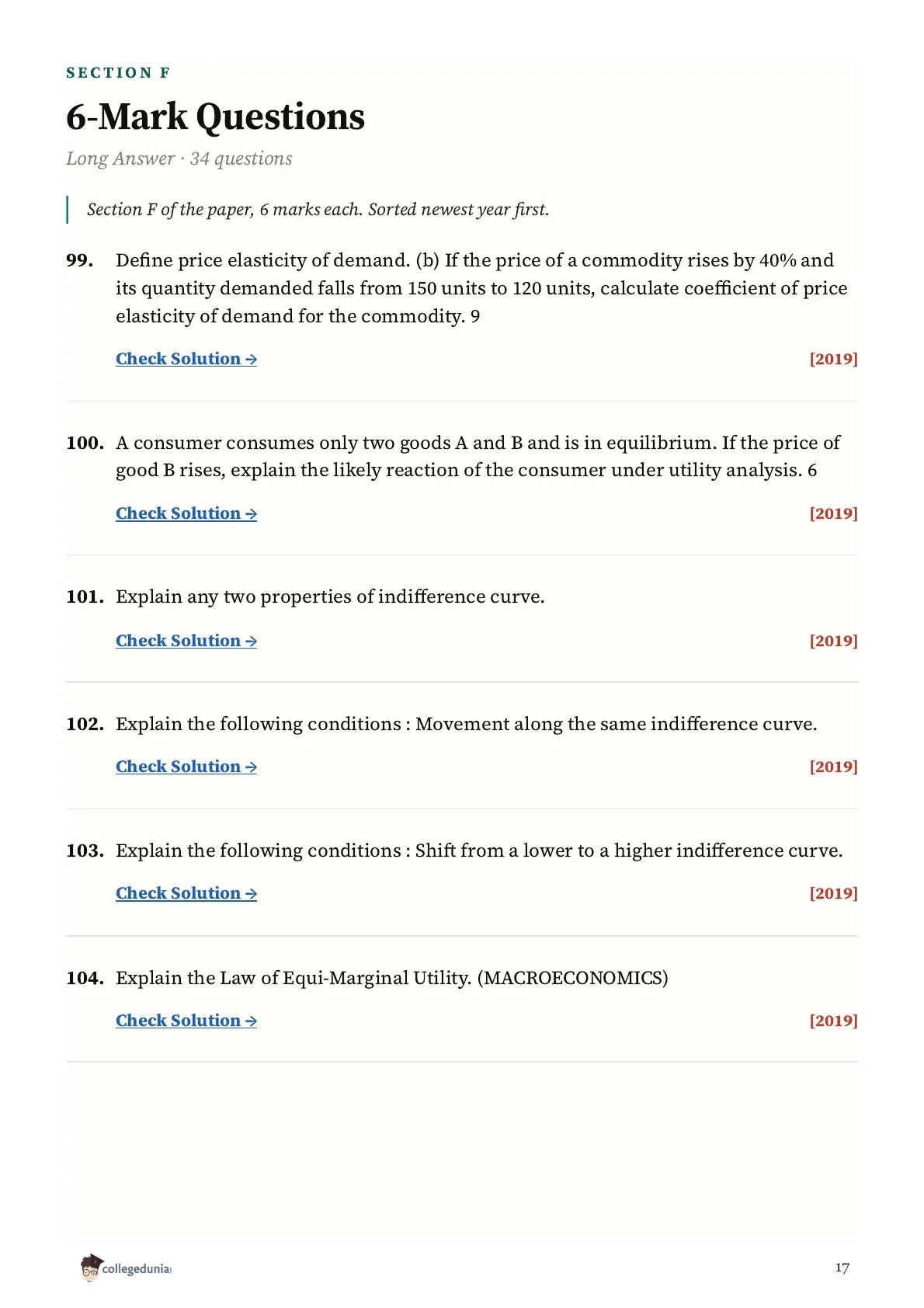
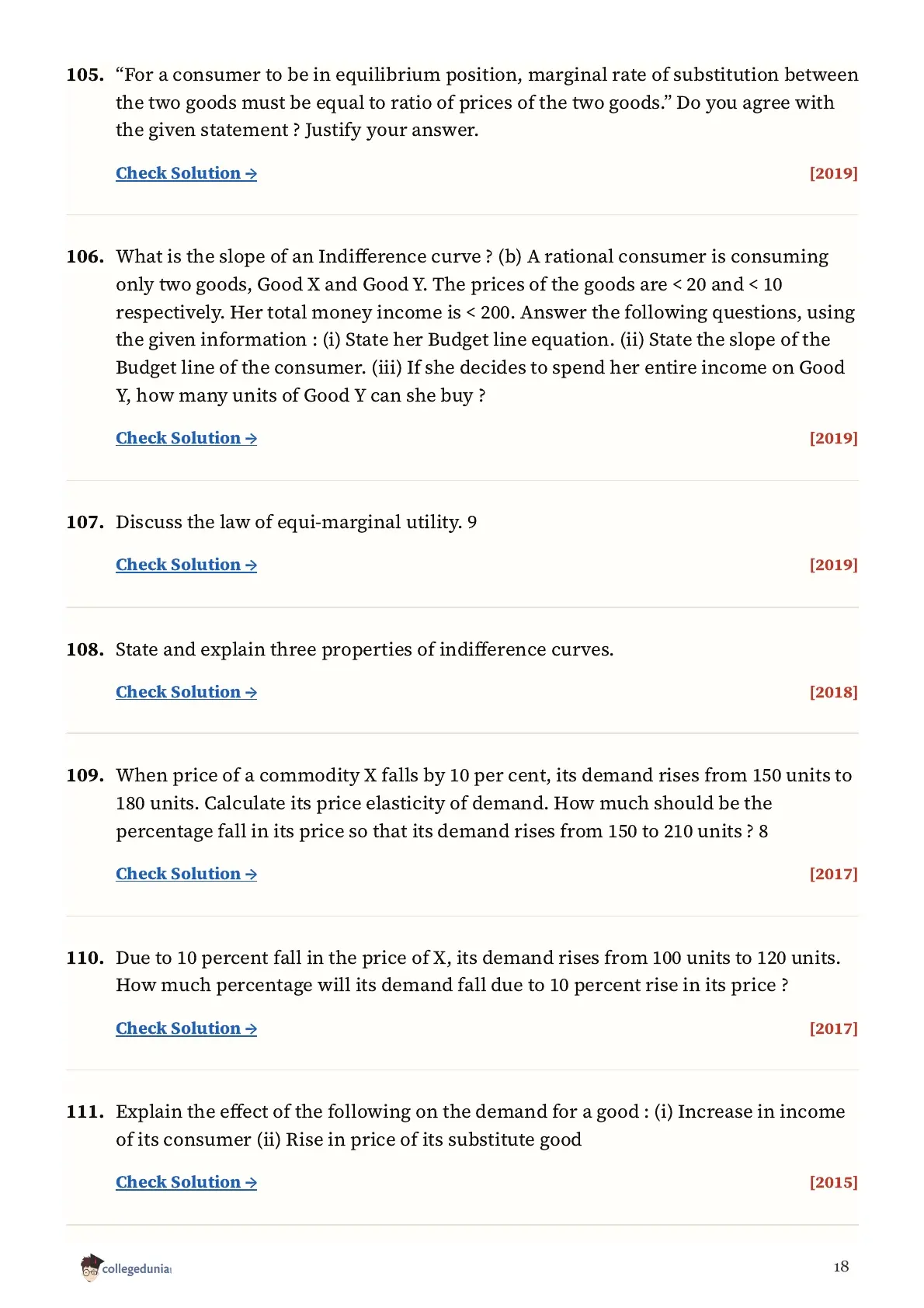
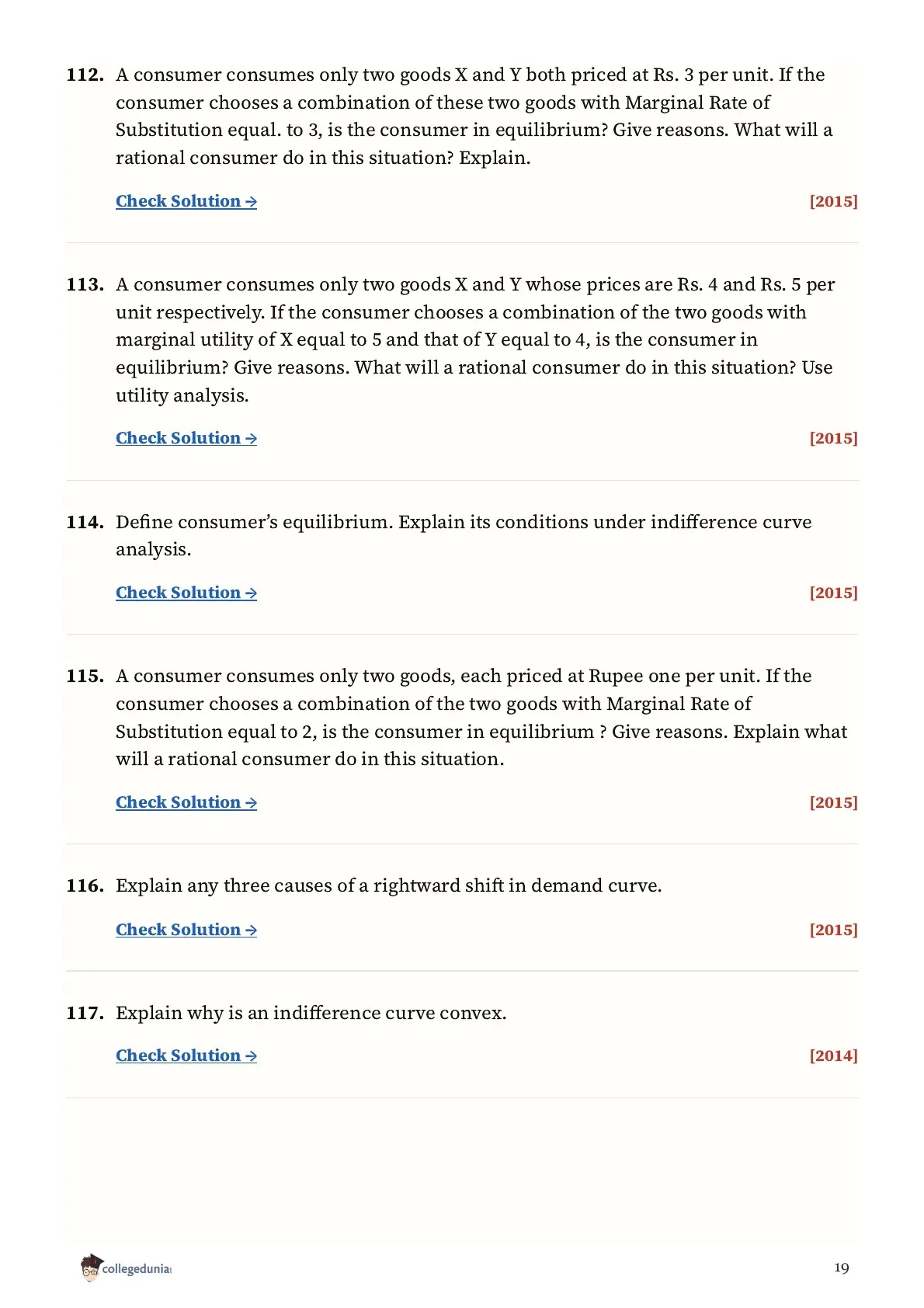
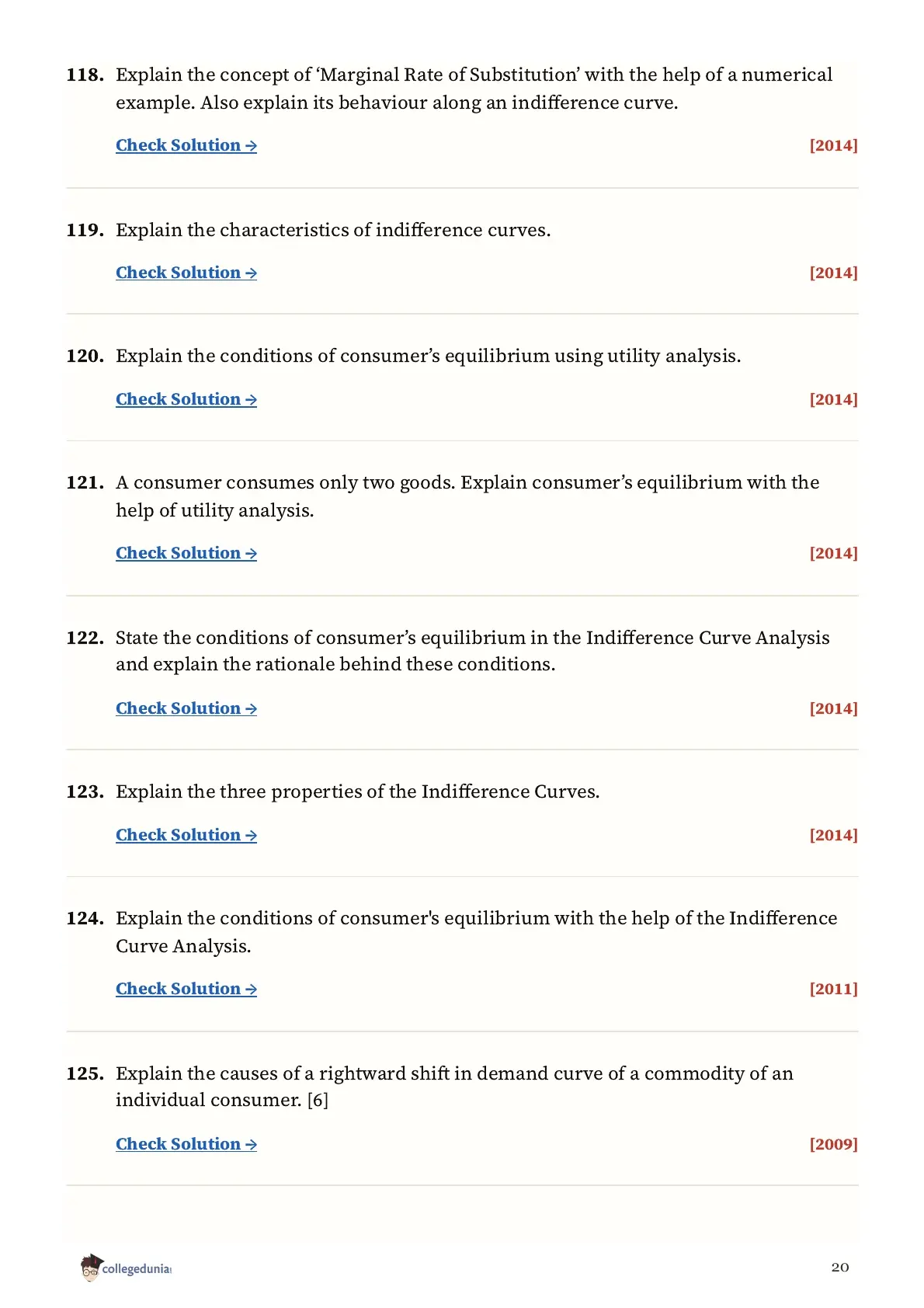
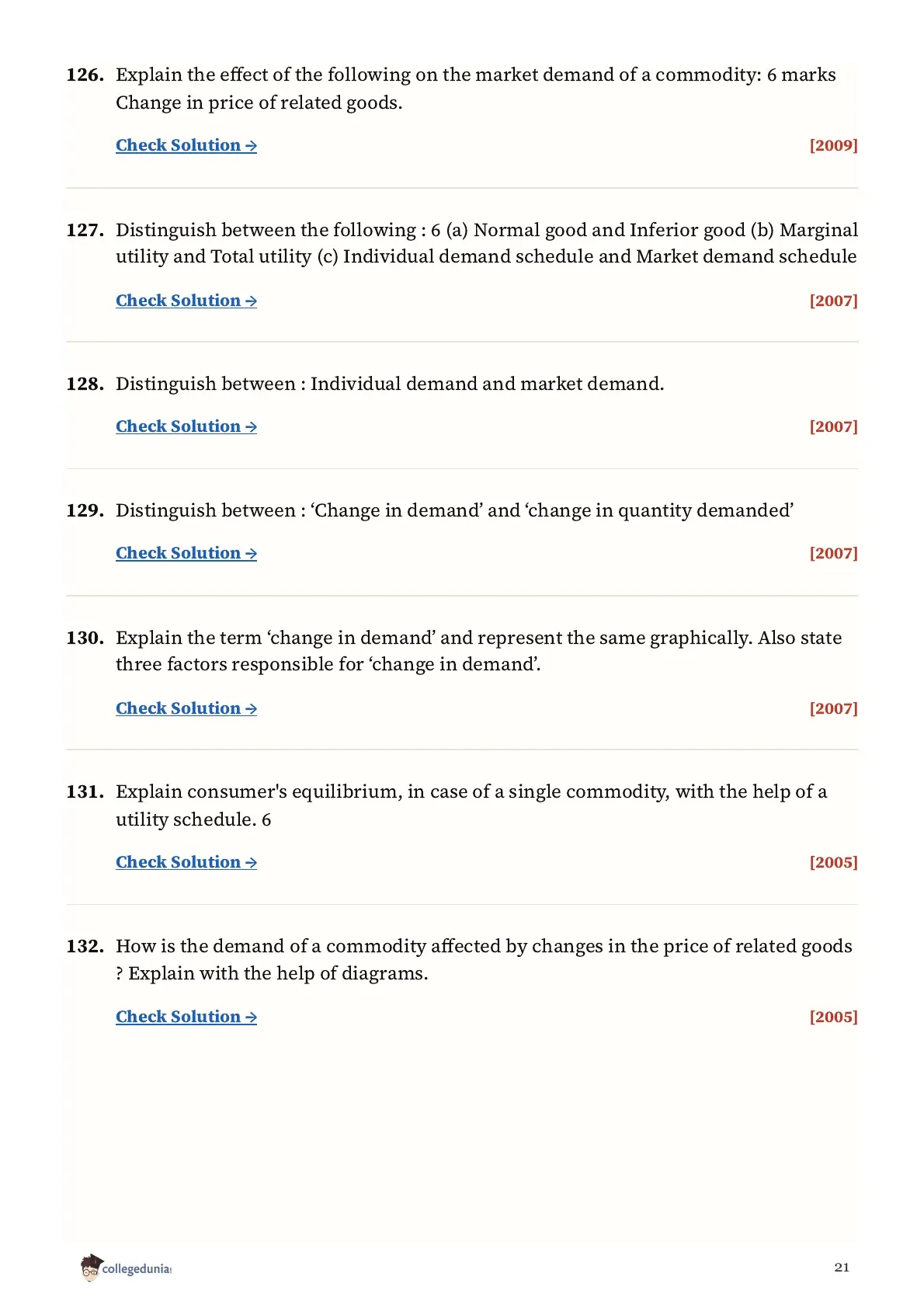
The 132 questions in this set fall in four groups. 49 are 4-mark questions, 34 are 6-mark long answers, 30 are 3-mark short answers and 19 are one-mark questions. That leaves 113 questions that need a written answer.
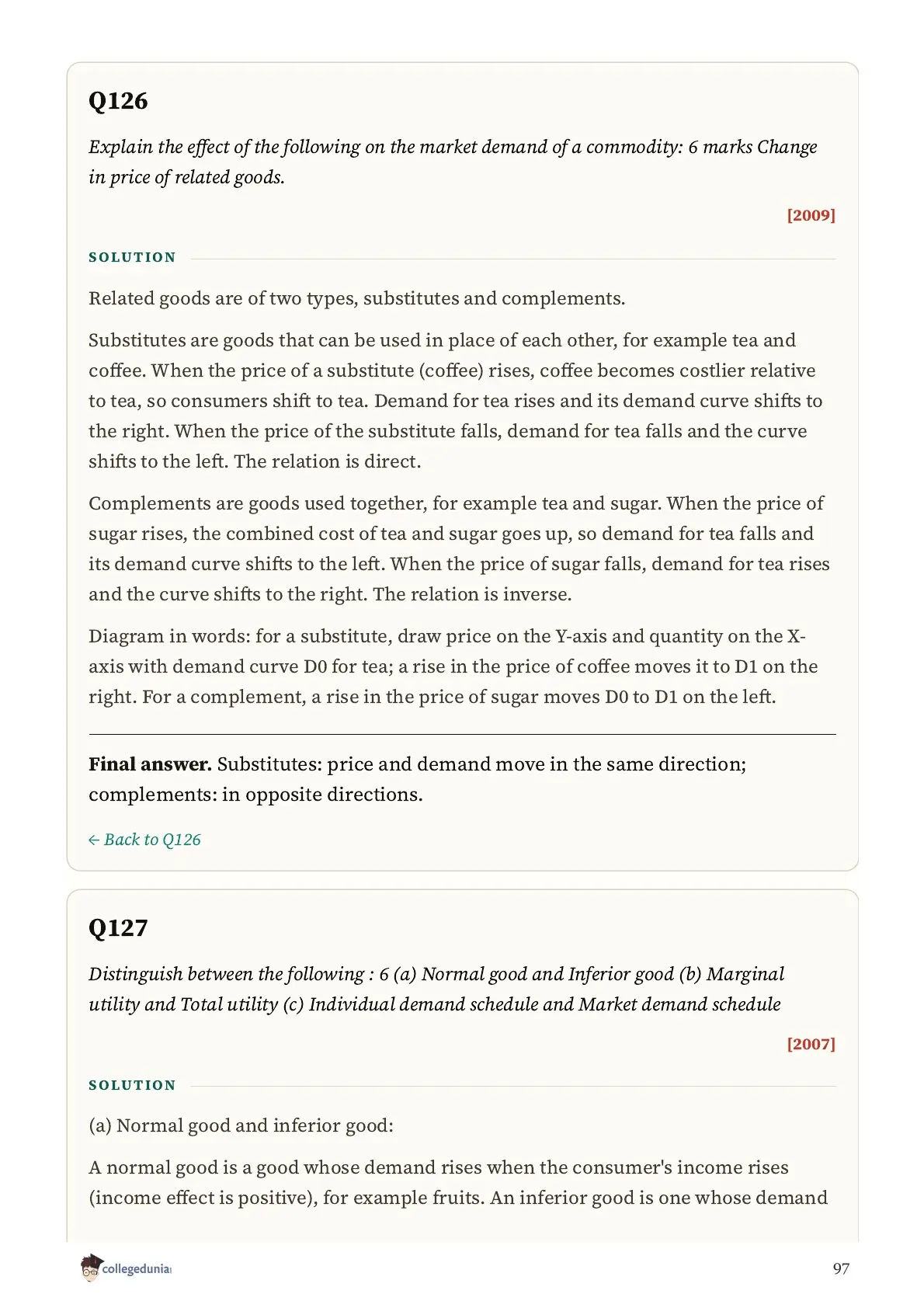
| Marks Each | Question Type | Questions in the Set |
|---|---|---|
| 1 mark | MCQ and short definition | 19 |
| 3 marks | Short Answer (SA) | 30 |
| 4 marks | Case Study and Short Answer | 49 |
| 6 marks | Long Answer (LA) | 34 |
Theory of Consumer Behaviour Questions by Topic
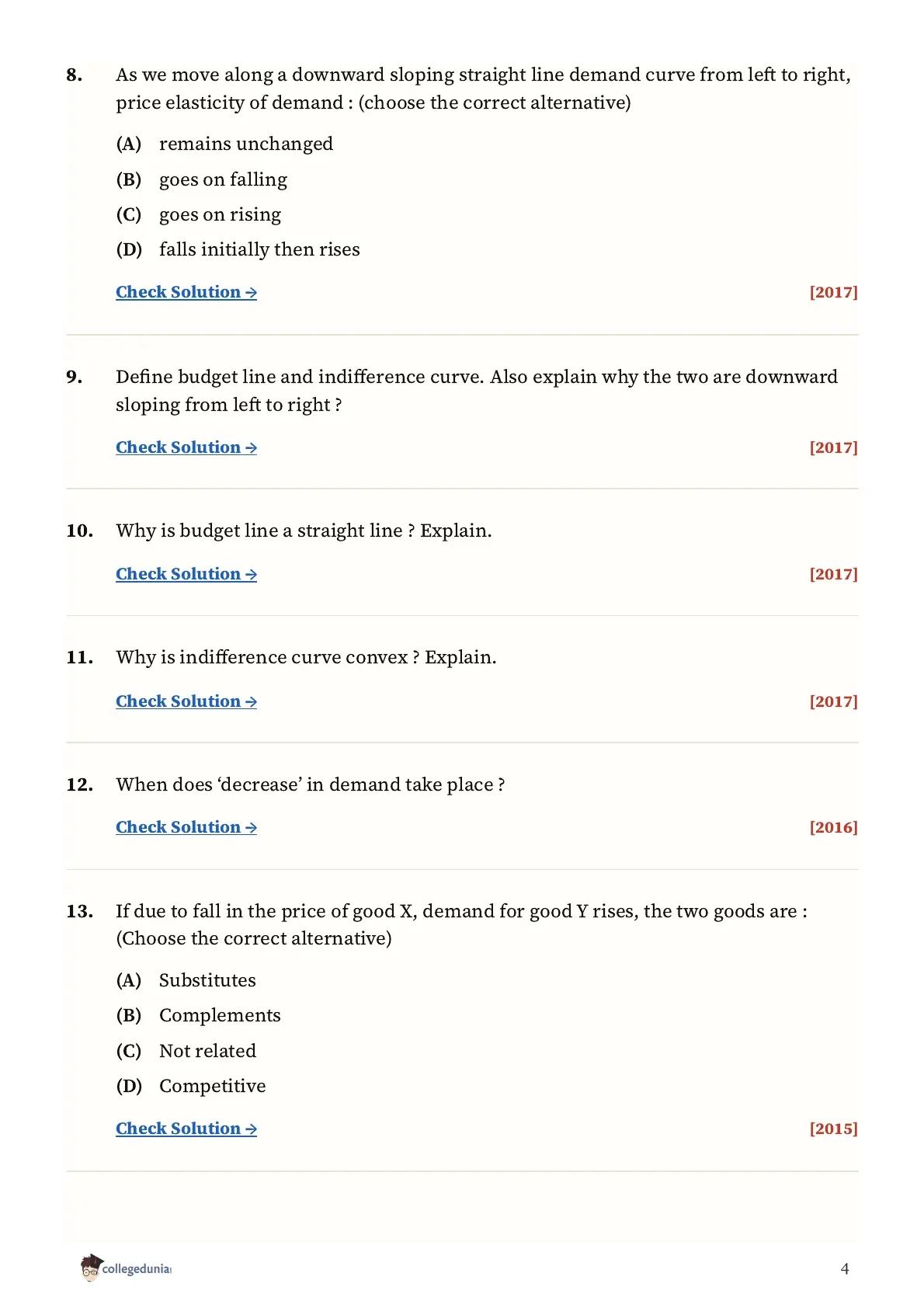
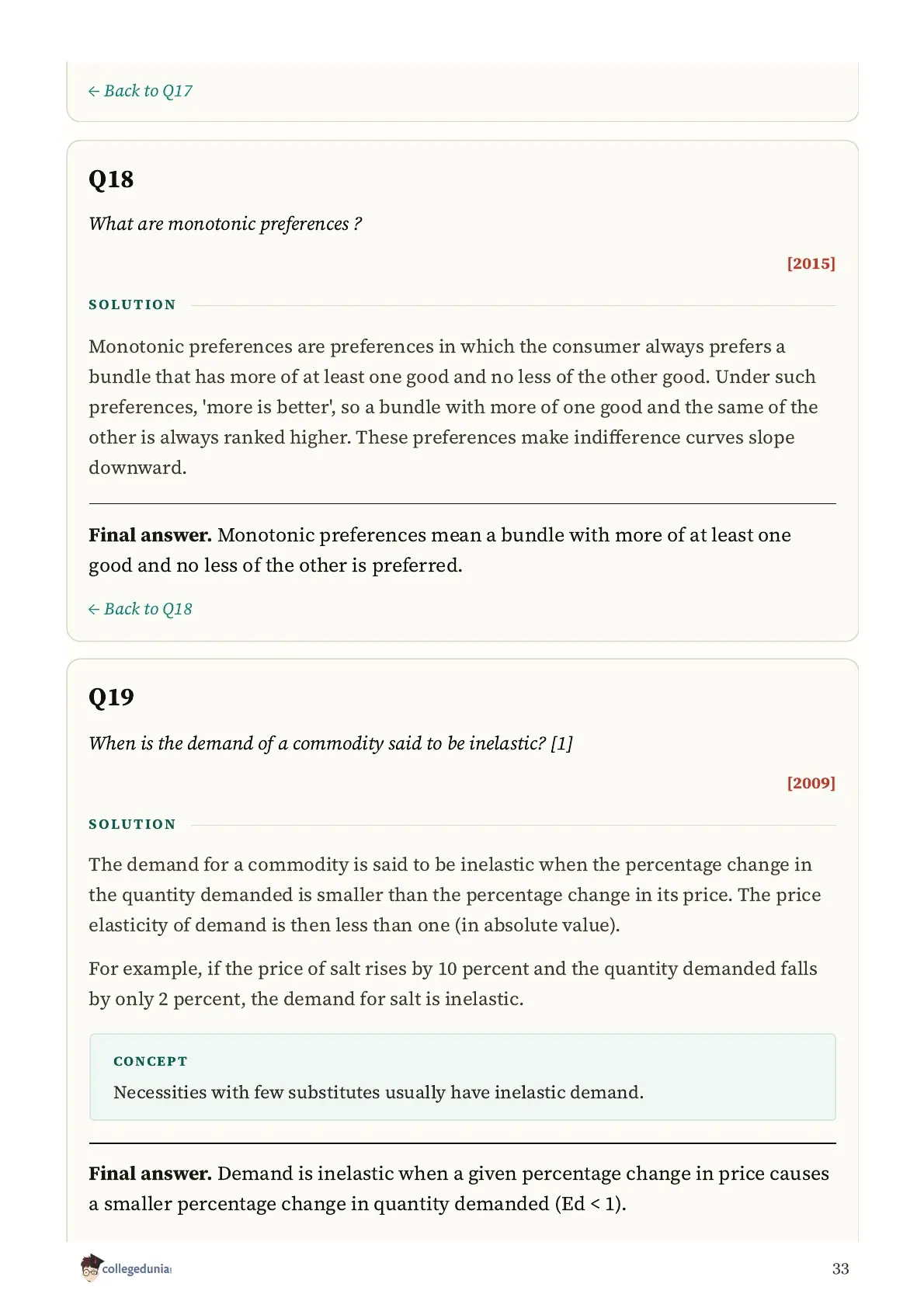
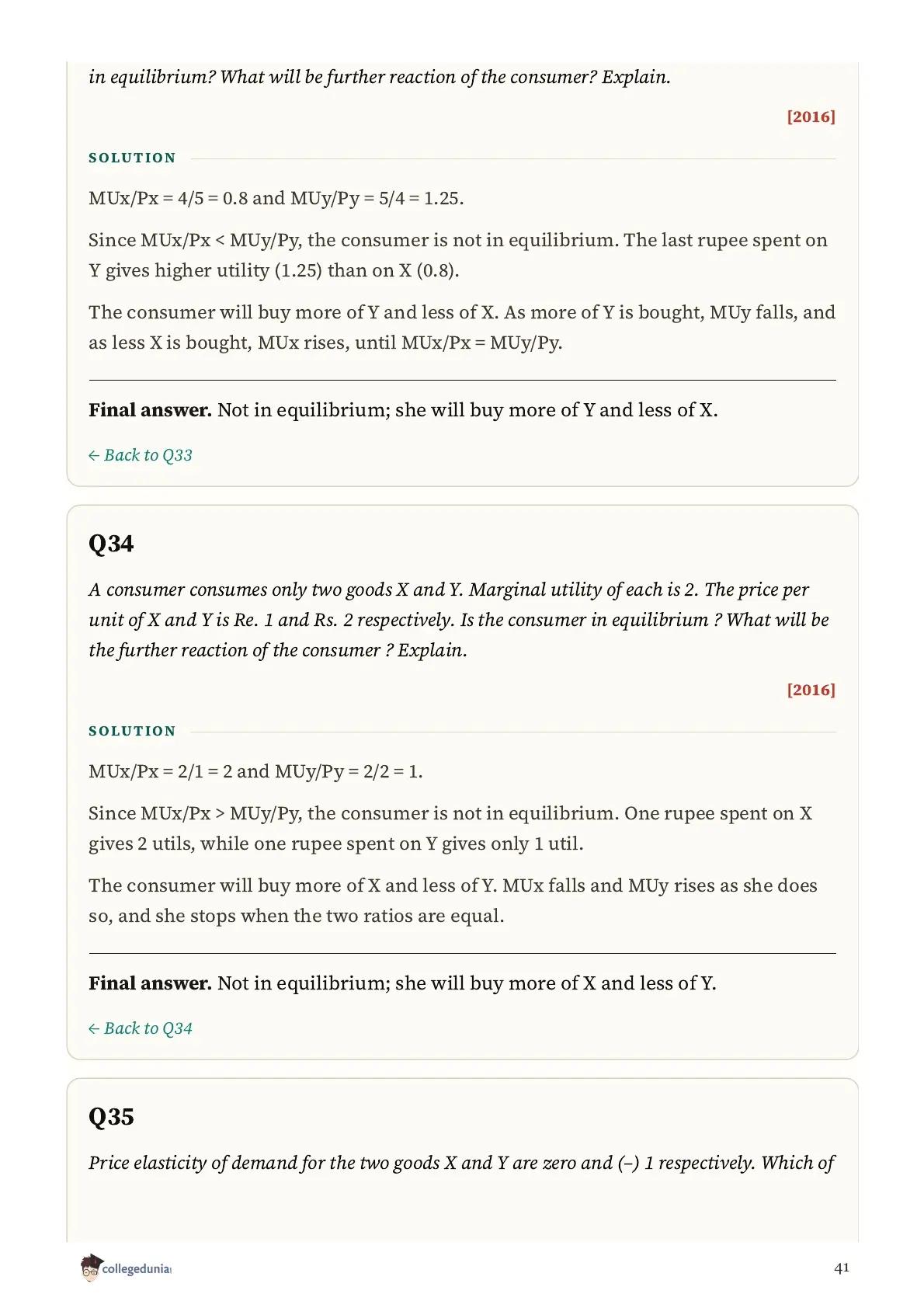
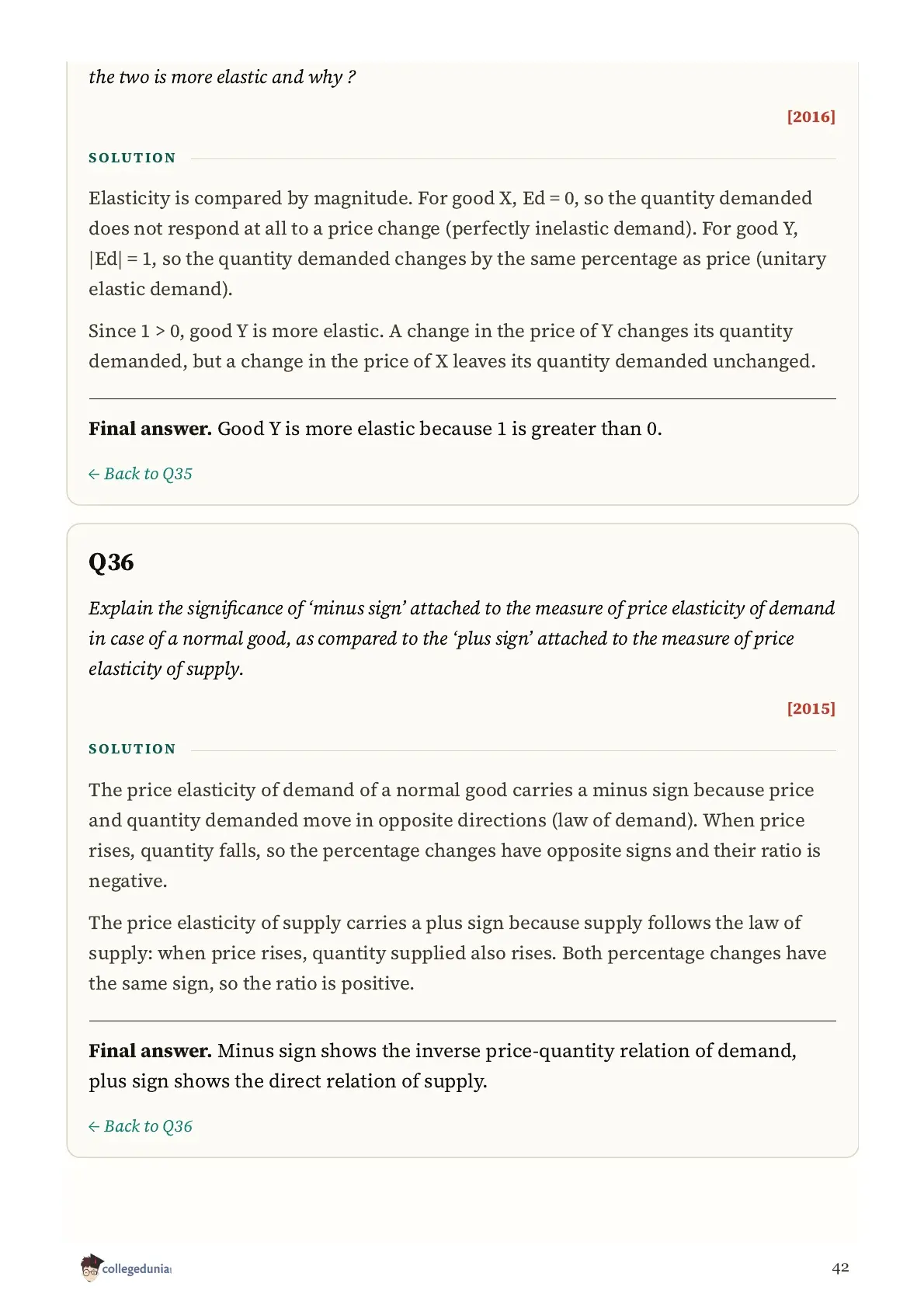
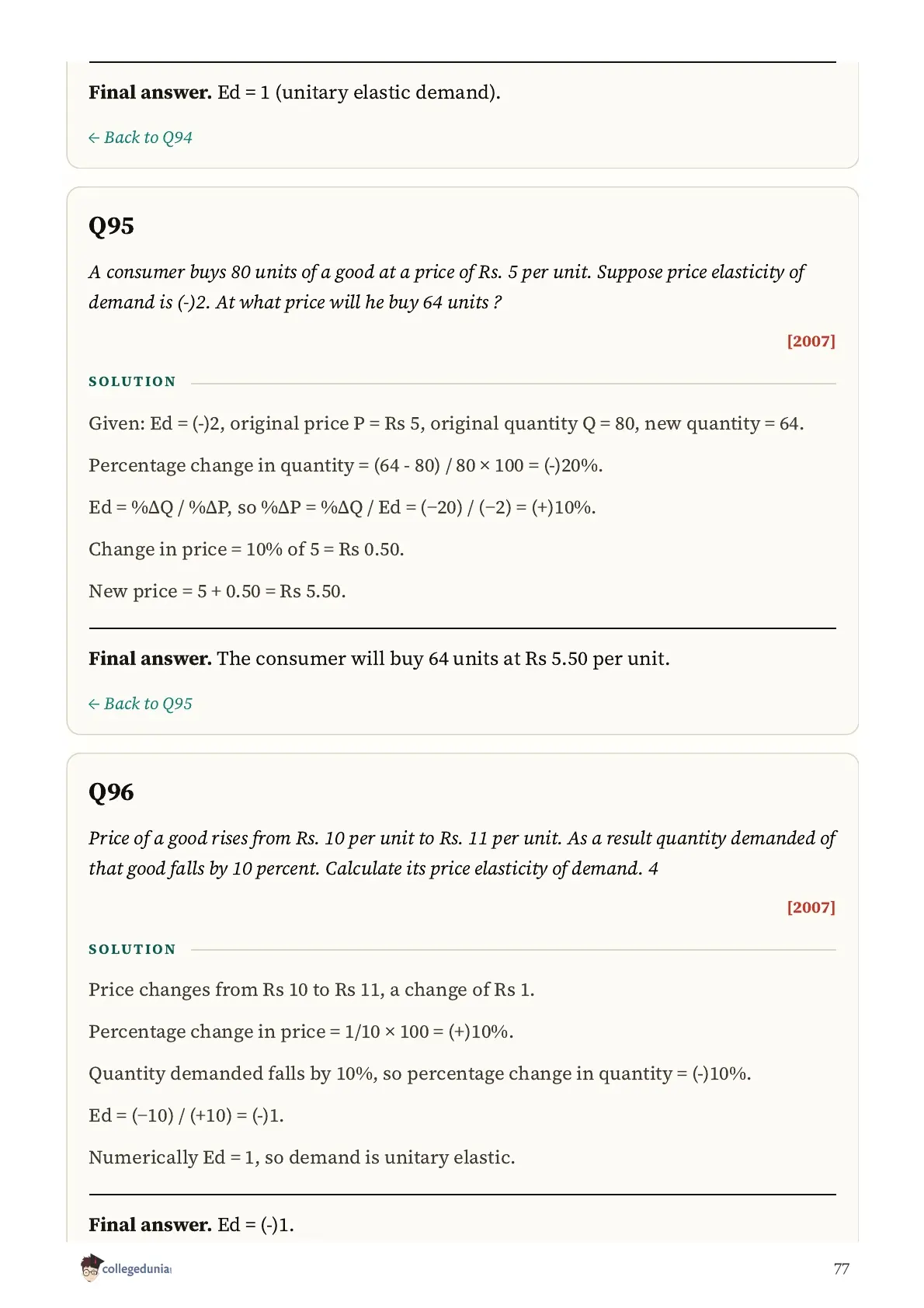
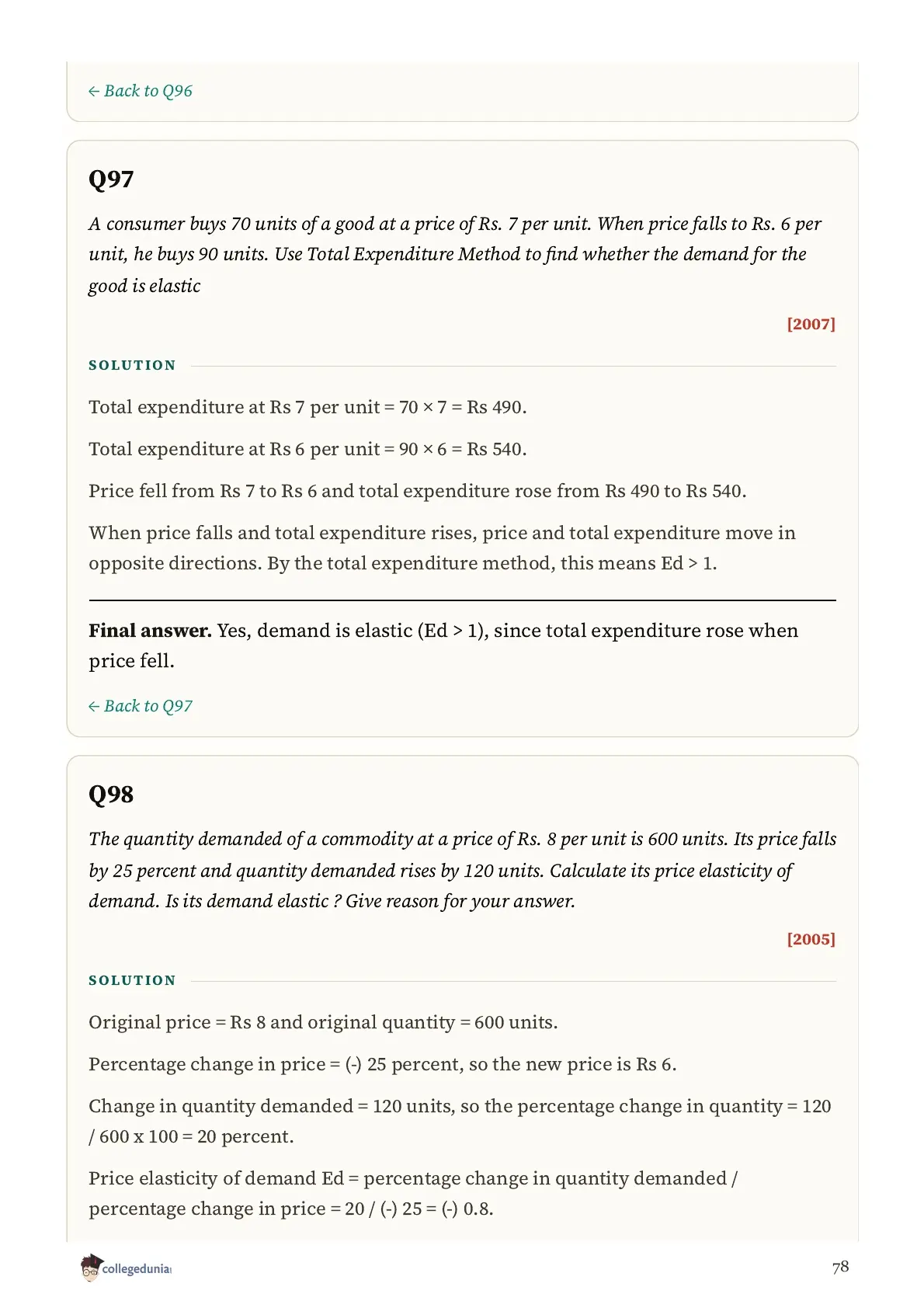
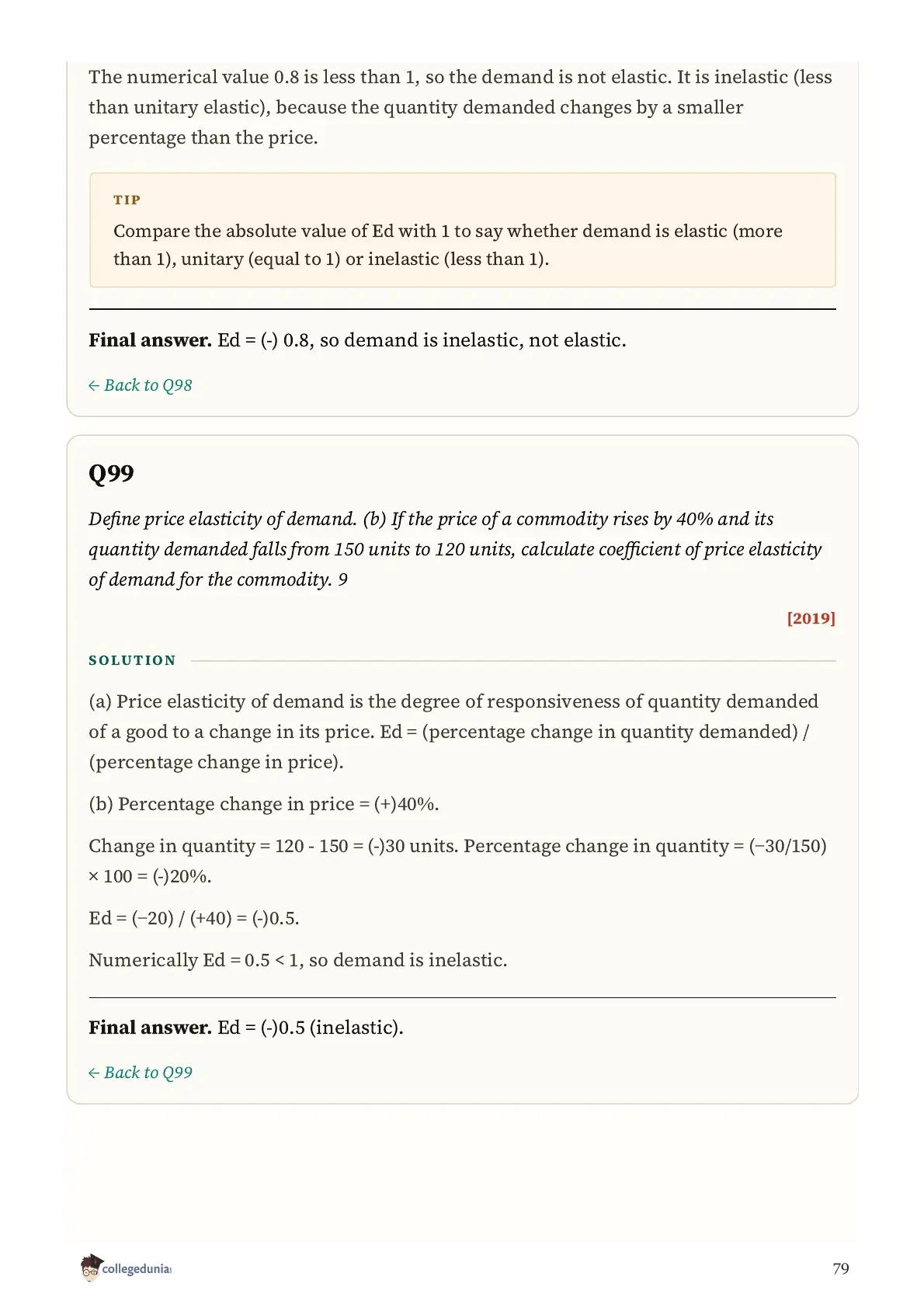
Price elasticity of demand is the largest single topic, with 23 questions that name it. 13 of them are calculations: a percentage change in price and quantity given and the coefficient asked, a fall from 40 units to 30 units after a price rise, or the new price at which a consumer buys after an elasticity of (-)2. The rest ask for the meaning, the factors, the minus sign, the geometric method or which of two goods is more elastic.
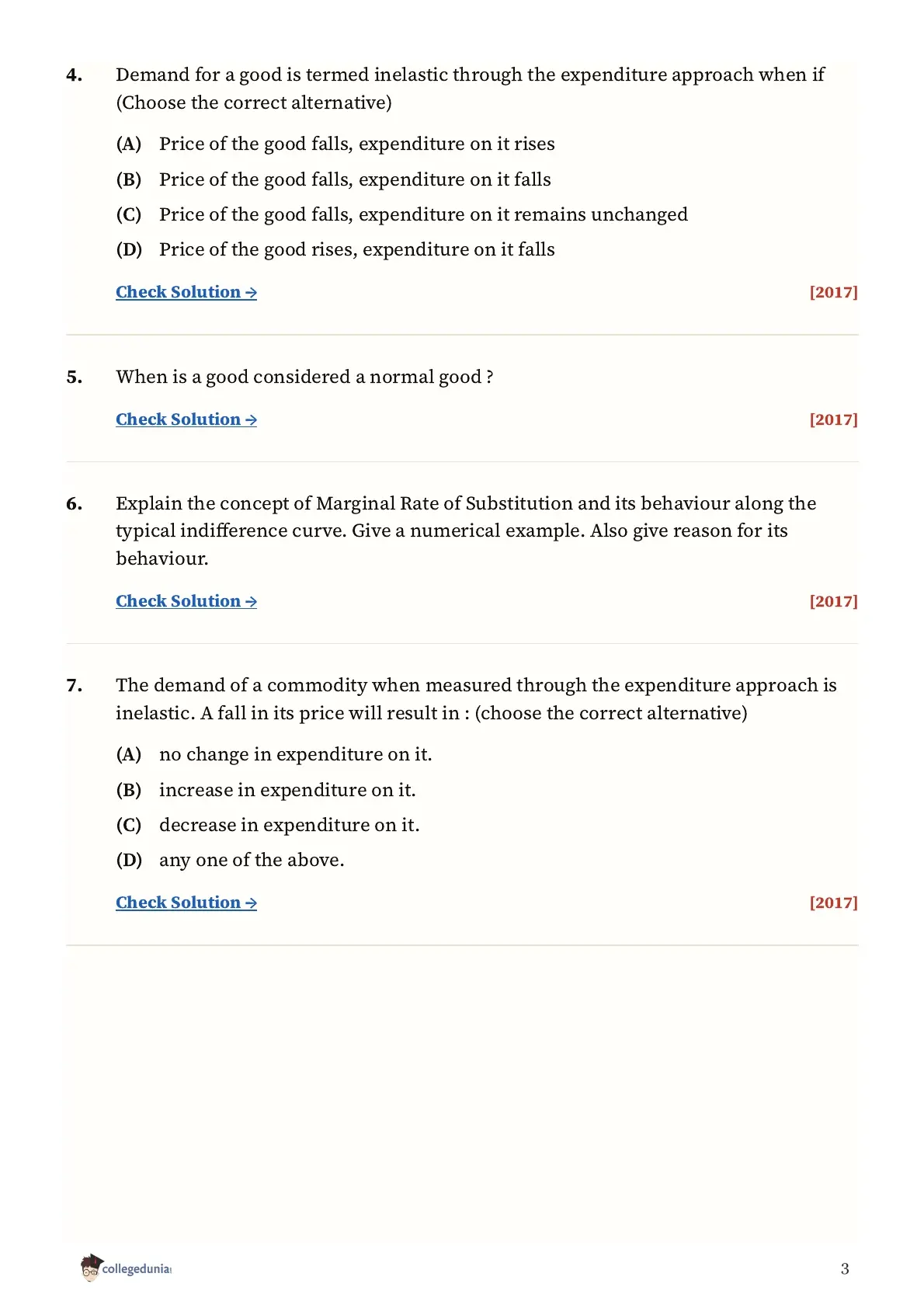
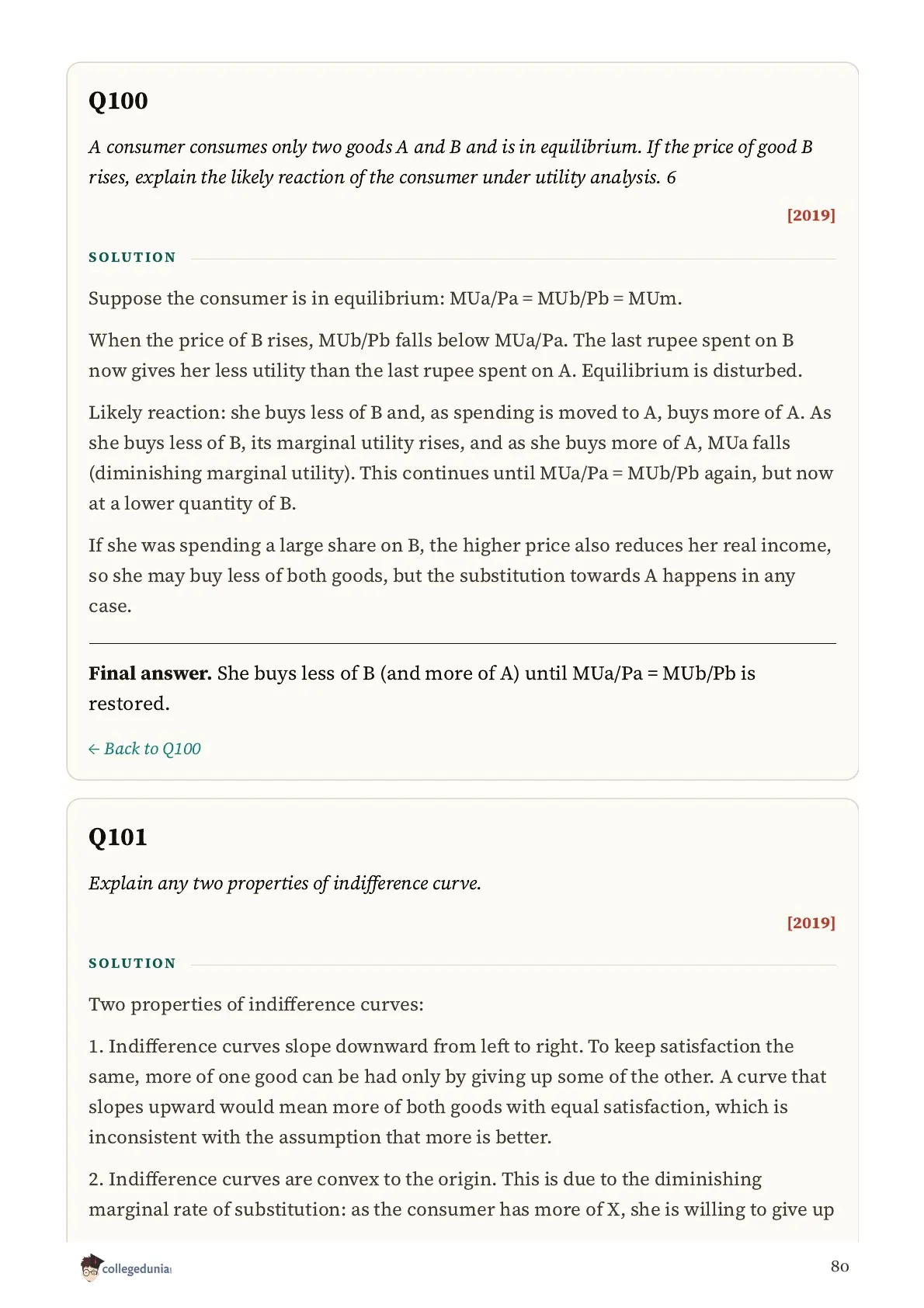
Utility and equilibrium come next. 22 questions use utility or marginal utility, 6 are on diminishing marginal utility, and 19 mention consumer's equilibrium, 9 of them through utility and 4 through indifference curves. Indifference curves appear in 19 questions and the marginal rate of substitution in 10, including the diminishing MRS with a numerical example. The budget line or budget set is in 7.
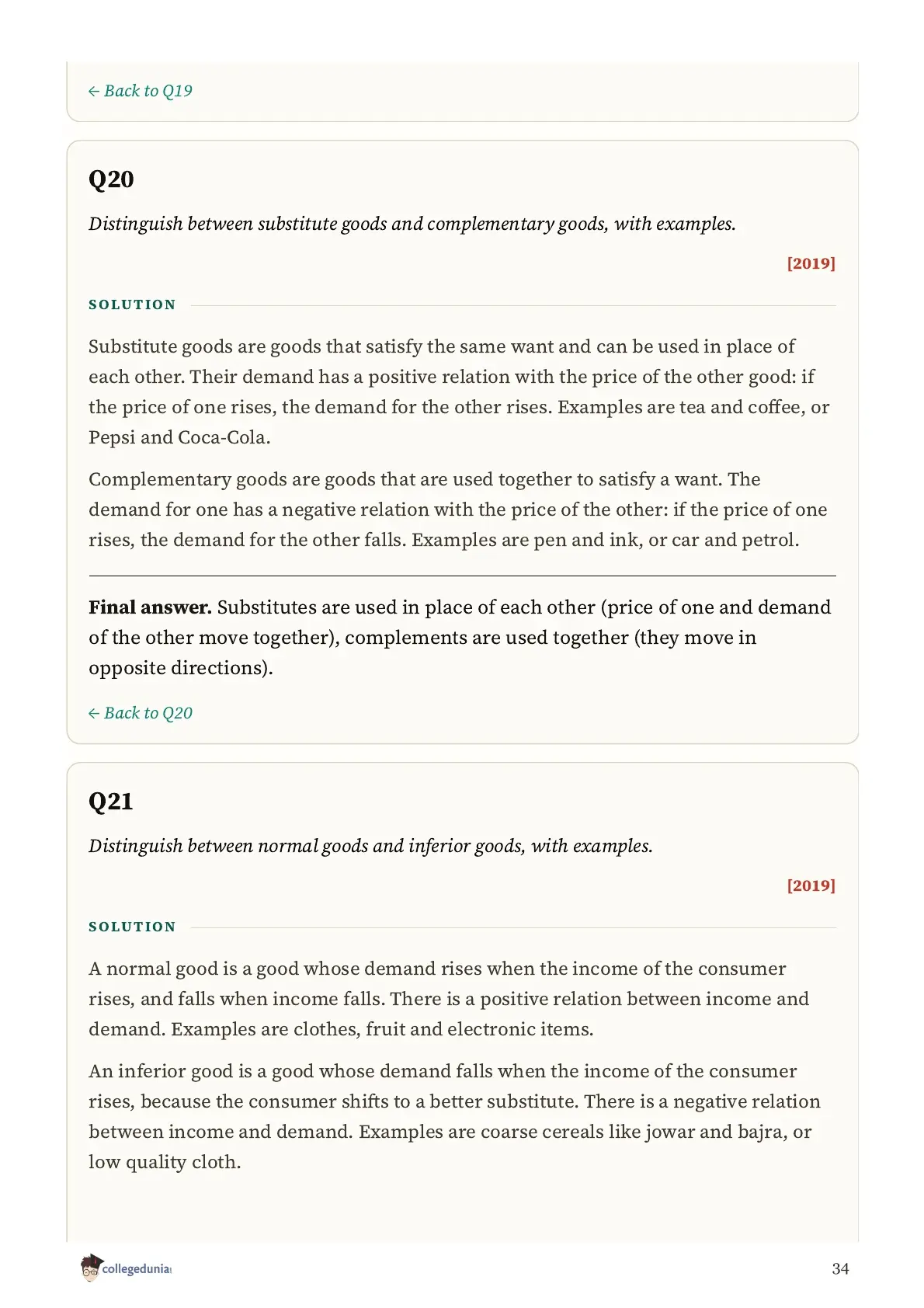
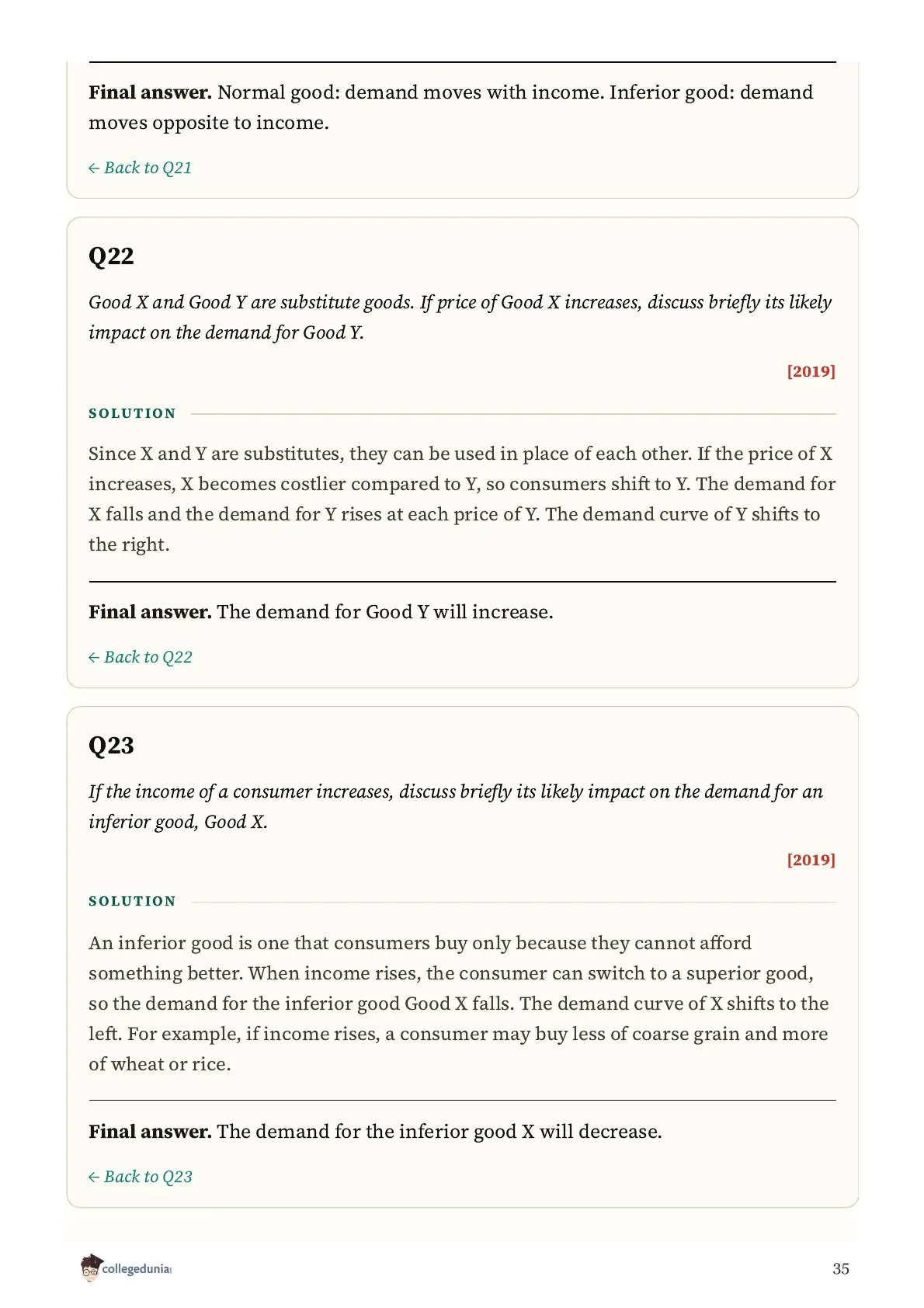
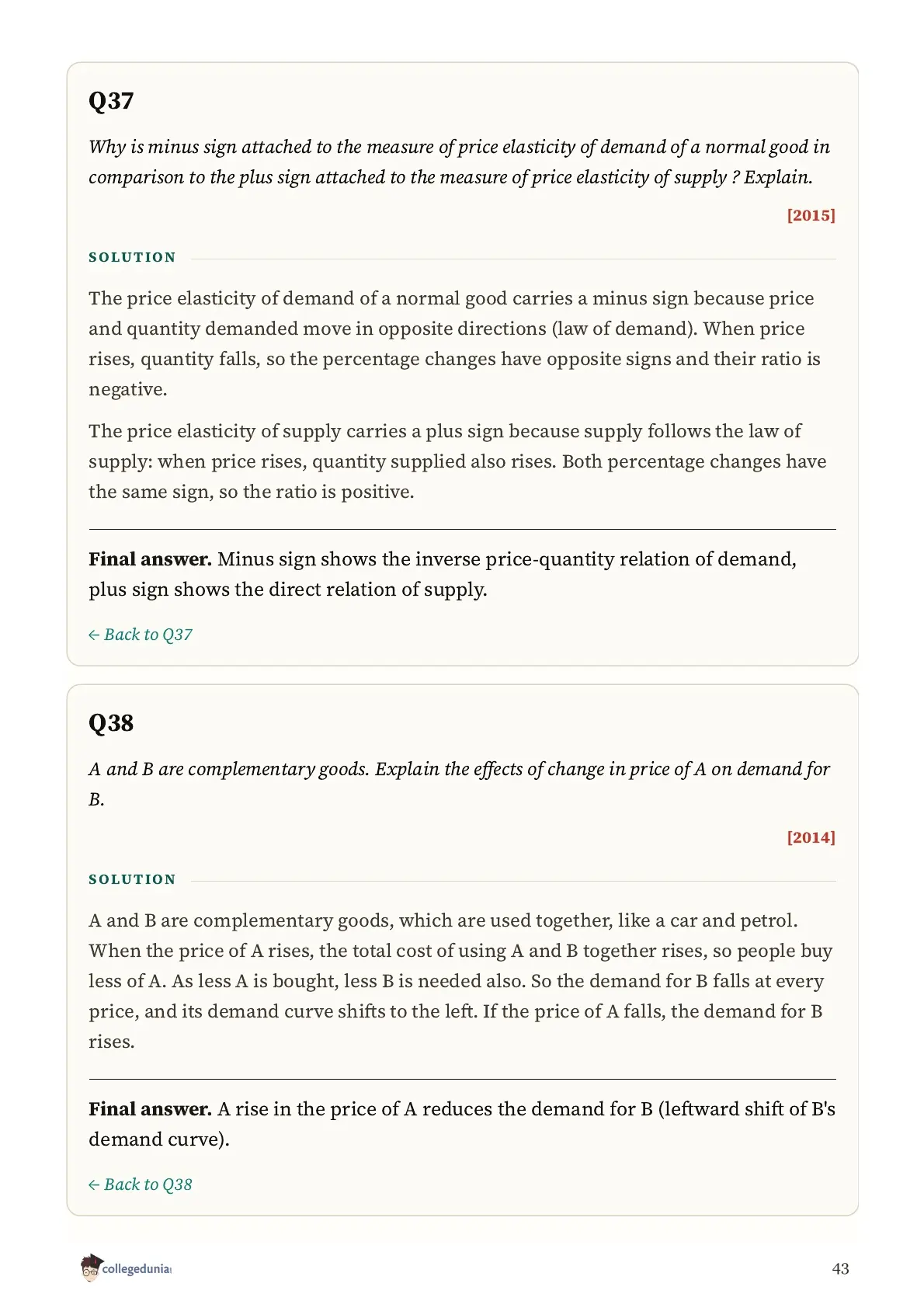
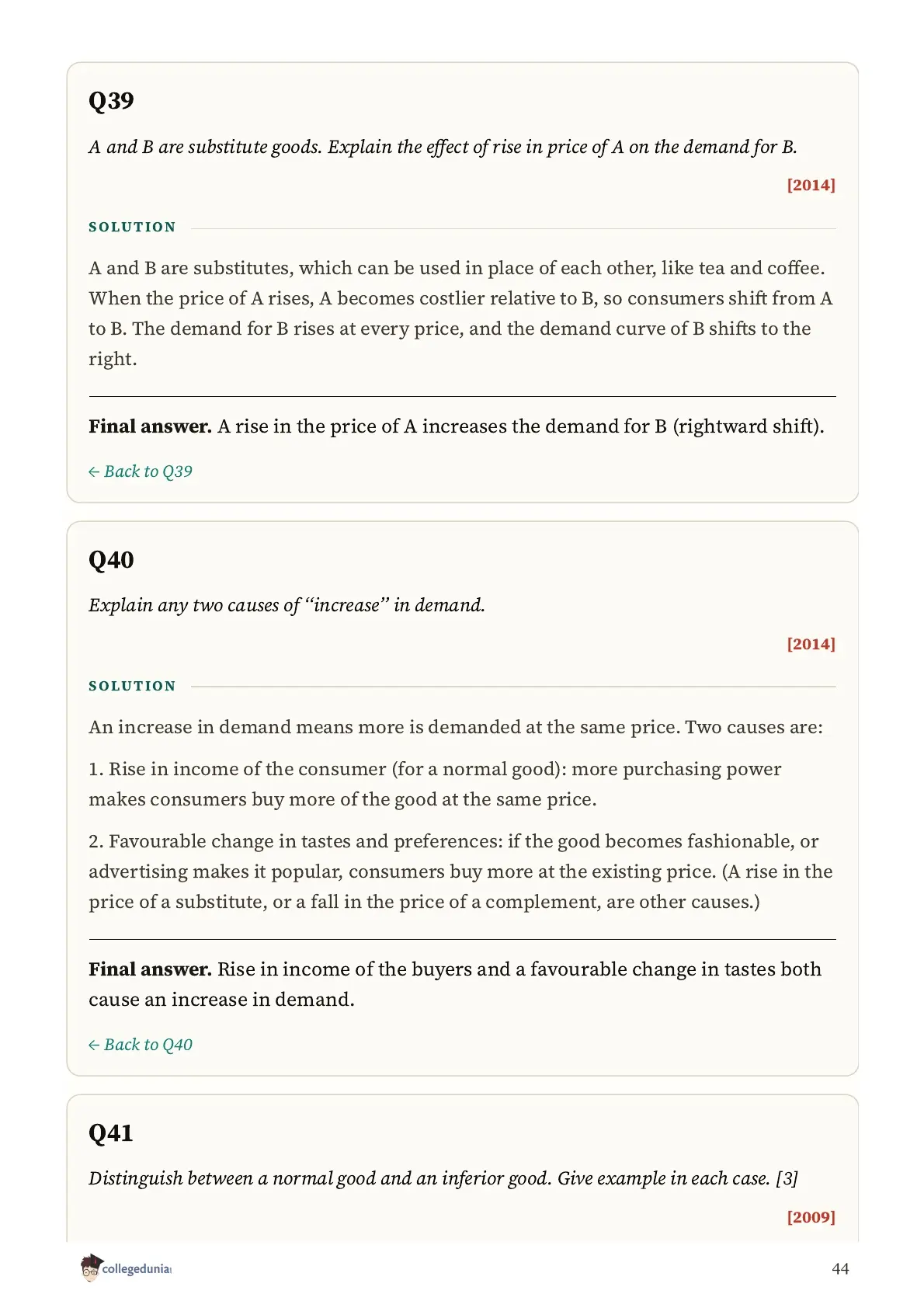
On the demand side, 12 questions are on determinants or shifts, 11 on normal and inferior goods, 9 on substitutes and complements, 10 on a demand curve or schedule and 3 on the law of demand. The counts come from keyword matches, so a question on two topics is counted under both.
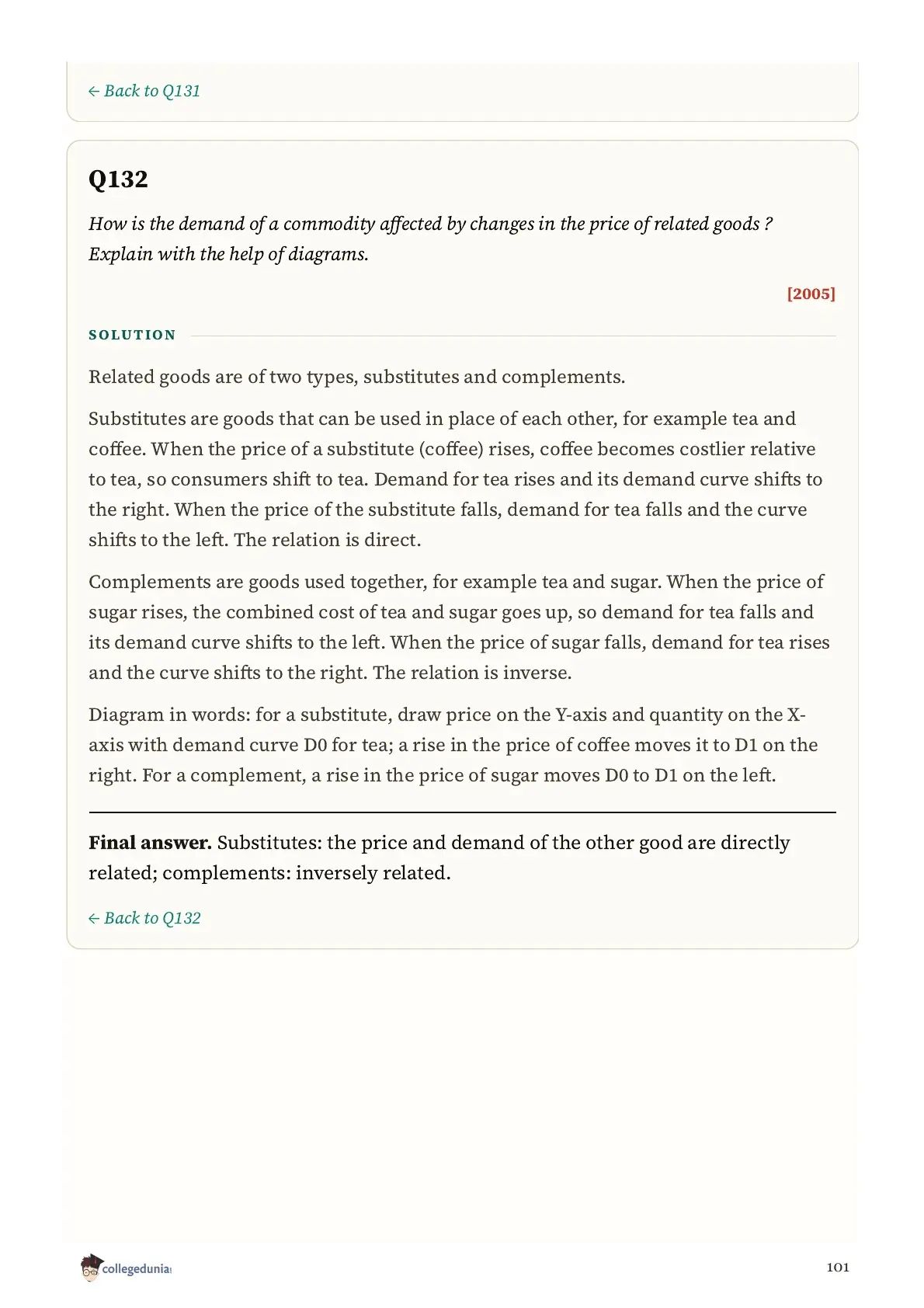
14 questions are numerical in all. 6 ask for a diagram or graph, such as the law of diminishing marginal utility, the law of demand or the effect of related goods on demand. 4 are true or false with reasons, and one asks you to agree or disagree with the equilibrium condition and justify it.
Consumer Equilibrium Video Lesson
Source: Next Toppers - 11th Commerce on YouTube
How to Approach the Theory of Consumer Behaviour Set
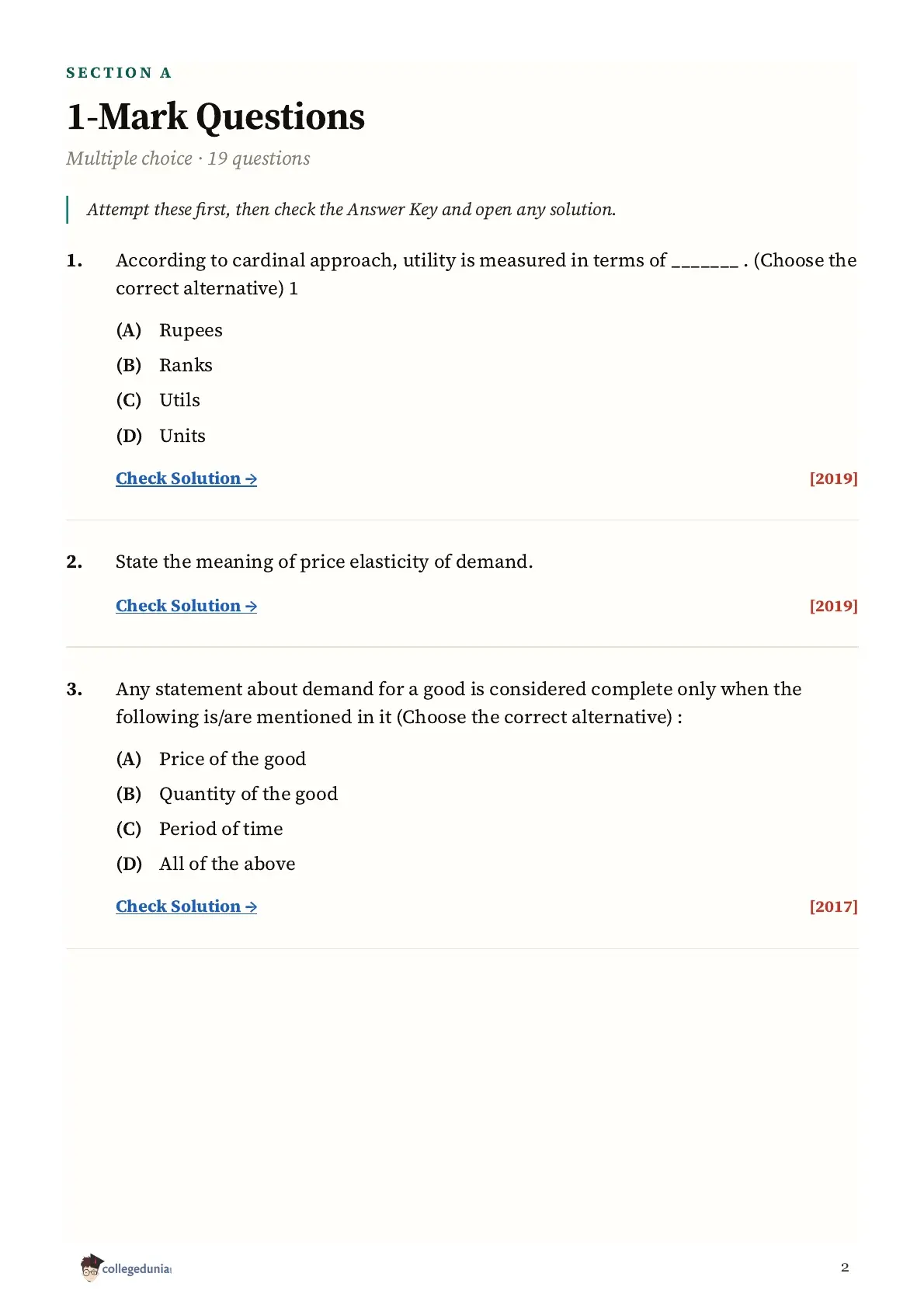
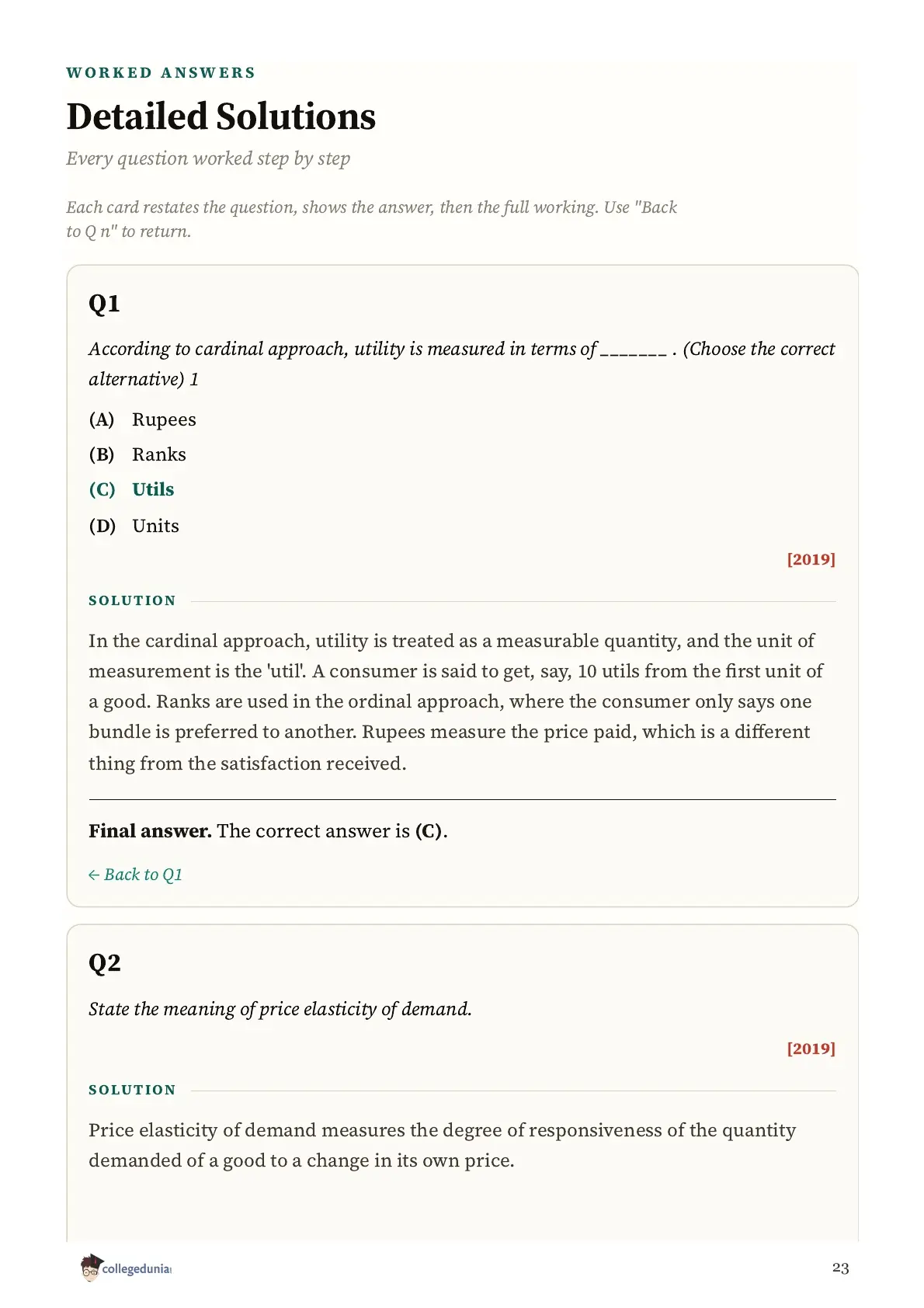
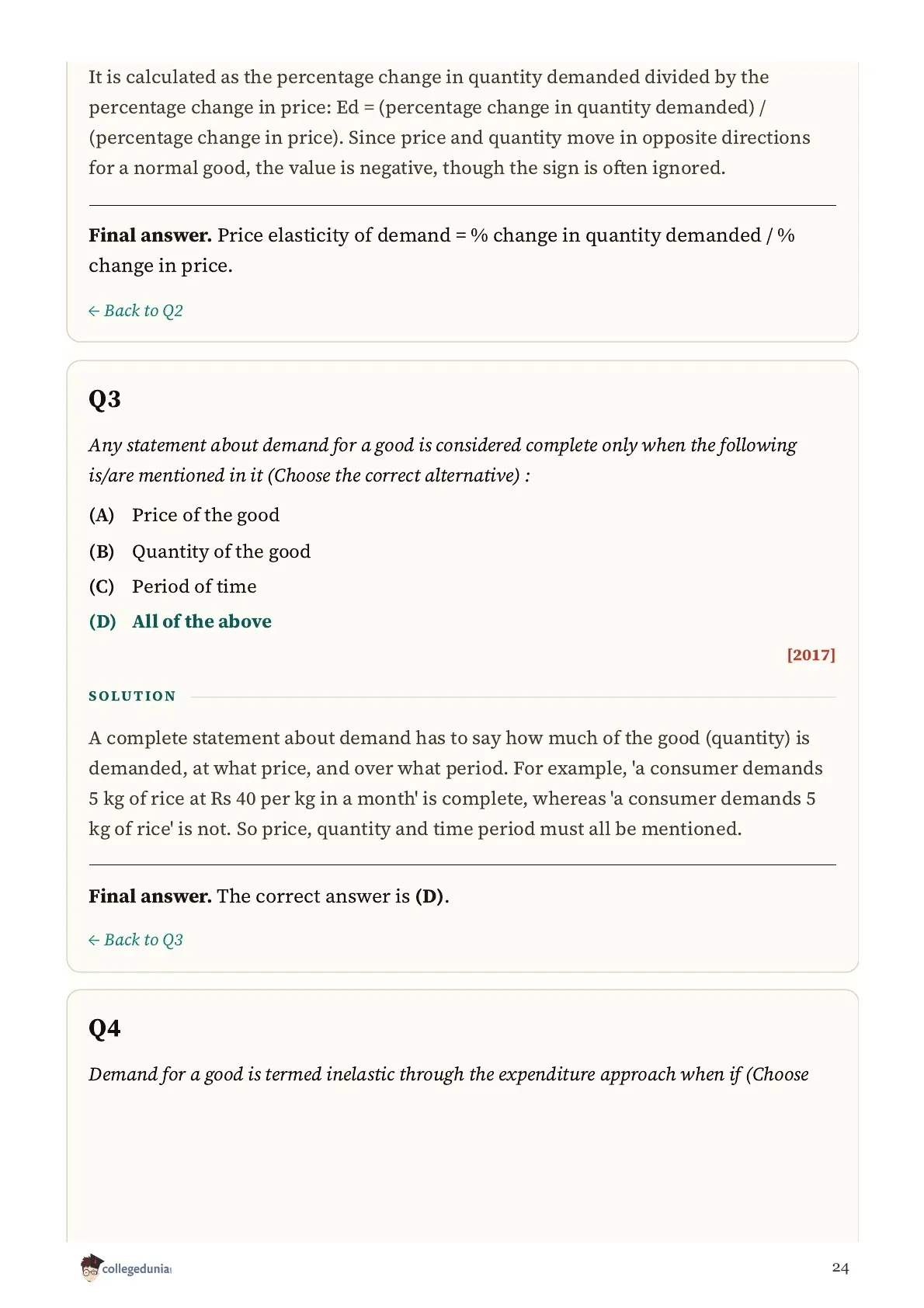
Take the 19 one-mark questions first; they are about 20 minutes of definitions such as the unit of utility in the cardinal approach and what a complete statement of demand needs. Then do the 13 elasticity calculations together, because the same two steps repeat: find the percentage change in quantity, then divide by the percentage change in price.
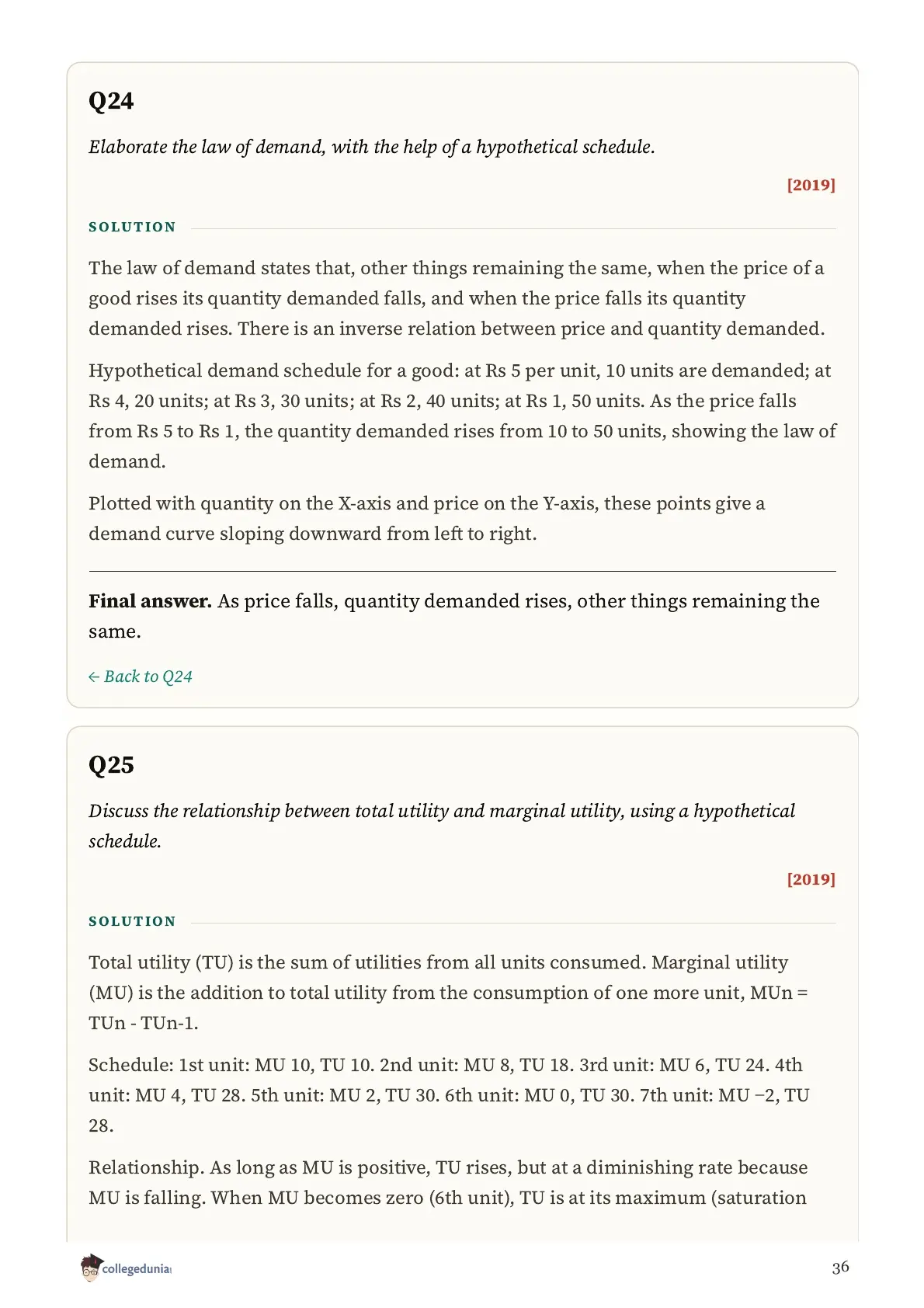
For the 4-mark and 6-mark questions, start with the utility schedule and equilibrium questions, since a table of total and marginal utility is the working you will be asked to show. Move to the indifference curve questions next and draw the curve and the budget line on one set of axes before writing the condition. Leave the demand shift questions for the last session, and for each one say which determinant moved and in which direction the curve shifts.
Common Mistakes in Theory of Consumer Behaviour Questions
- Dropping the minus sign when giving the coefficient of price elasticity for a normal good.
- Using the starting quantity as a percentage of the end quantity, not of the original, in elasticity calculations.
- Stating the equilibrium condition without the second condition: marginal utility must fall as consumption rises, and the indifference curve must be convex to the origin.
- Treating a change in the good's own price as a shift of the demand curve. It is a move along the curve.
- Calling a good inferior because its price is low. The test is that demand falls as income rises.
- Describing the MRS as the ratio of prices. It equals the price ratio only at equilibrium.
Using the Answer Key and Solutions
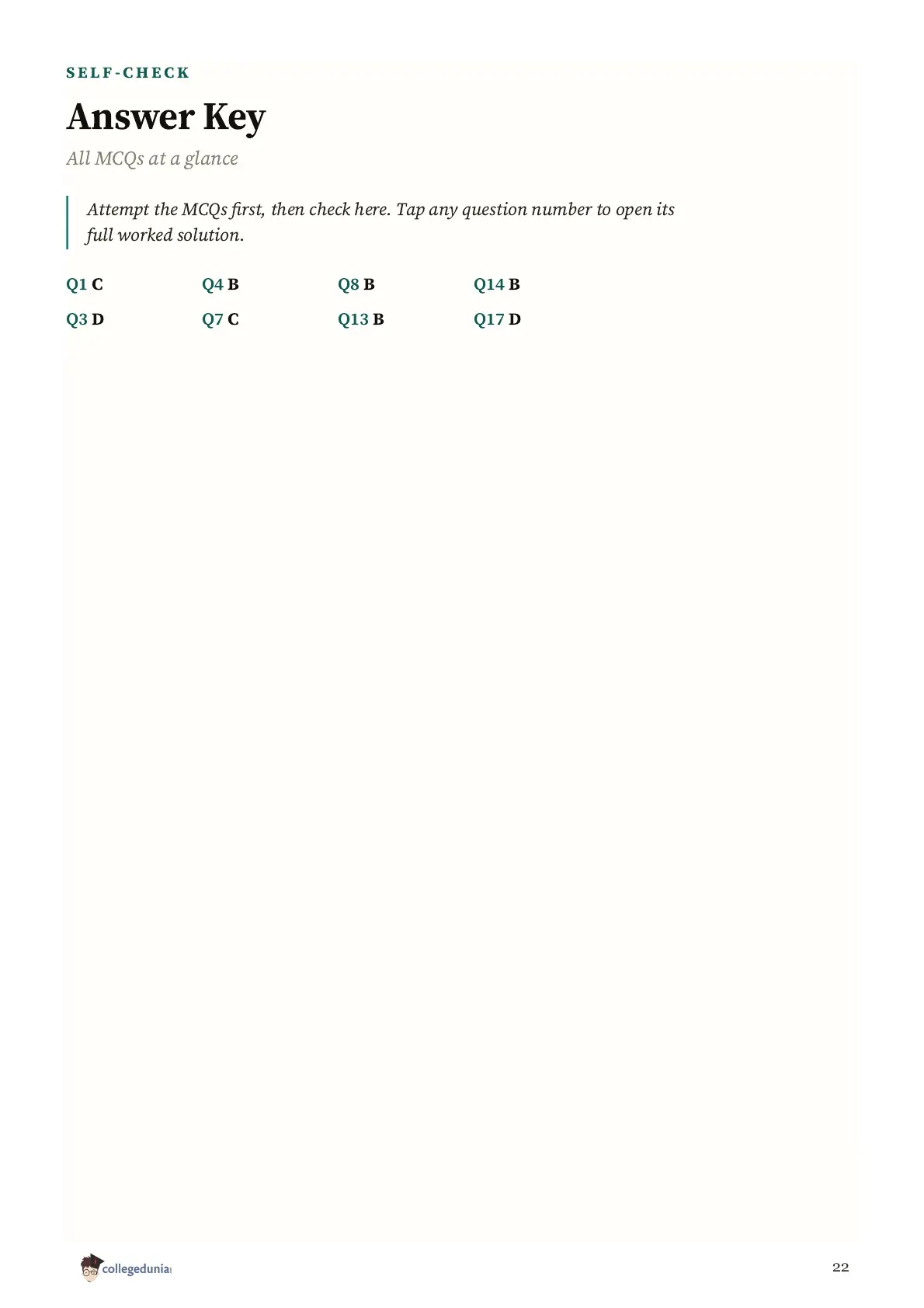
The PDF is 101 pages and free to download. Questions are grouped by marks, each links to its worked solution and back, and the Answer Key lists the one-mark answers at a glance. Attempt a group first, check the key, then read the solution. The solutions are written by Collegedunia's Economics experts and are not official CBSE marking schemes.
Class 12 Economics PYQs by Chapter
| Chapter | PYQ Page |
|---|---|
| Macro Chapter 1 | Macro Chapter 1: Introduction to Macroeconomics Class 12 PYQ |
| Macro Chapter 2 | Macro Chapter 2: National Income Accounting Class 12 PYQ |
| Macro Chapter 3 | Macro Chapter 3: Money and Banking Class 12 PYQ |
| Macro Chapter 4 | Macro Chapter 4: Determination of Income and Employment Class 12 PYQ |
| Macro Chapter 5 | Macro Chapter 5: Government Budget and the Economy Class 12 PYQ |
| Macro Chapter 6 | Macro Chapter 6: Open Economy Macroeconomics Class 12 PYQ |
| Micro Chapter 1 | Micro Chapter 1: Introduction to Microeconomics Class 12 PYQ |
| Micro Chapter 2 | Micro Chapter 2: Theory of Consumer Behaviour Class 12 PYQ |
| Micro Chapter 3 | Micro Chapter 3: Production and Costs Class 12 PYQ |
| Micro Chapter 4 | Micro Chapter 4: The Theory of the Firm under Perfect Competition Class 12 PYQ |
| Micro Chapter 5 | Micro Chapter 5: Market Equilibrium Class 12 PYQ |
Theory of Consumer Behaviour Class 12 Economics PYQ FAQs
Ques. How many questions are in the Theory of Consumer Behaviour Class 12 PYQ PDF?
Ans. The PDF has 132 questions from papers between 2005 and 2019: 19 one-mark questions, 30 three-mark questions, 49 four-mark questions and 34 six-mark questions.
Ques. Does this PYQ PDF include solutions, or only the questions?
Ans. Yes. All 132 questions have a worked solution in the PDF, and the one-mark questions also have an Answer Key.
Ques. Are the solutions official?
Ans. No. They are written by Collegedunia's Economics experts and are not an official CBSE marking scheme.
Ques. How many marks did Theory of Consumer Behaviour carry in the Class 12 board paper?
Ans. It belonged to the Microeconomics part of the older board pattern. The paper listed for 2026-27 does not have a Microeconomics part, and no official chapter-wise marks figure is available for the old pattern.
Ques. What is the law of diminishing marginal utility?
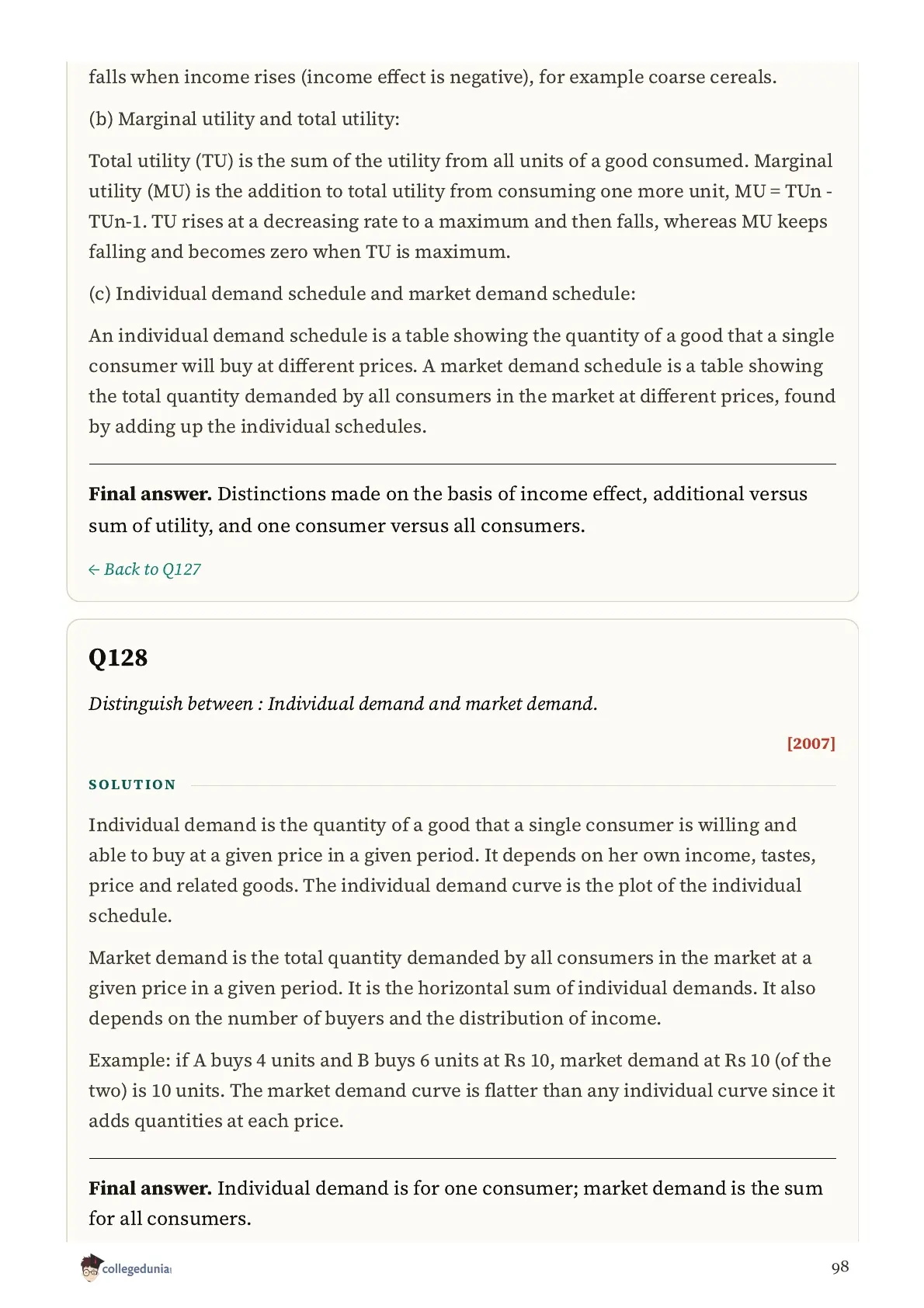
Ans. As a consumer takes more units of a good, the extra satisfaction from each additional unit falls. 6 questions in this set are on it, 3 of them asking for a schedule or example.
Ques. What is the condition for consumer's equilibrium?
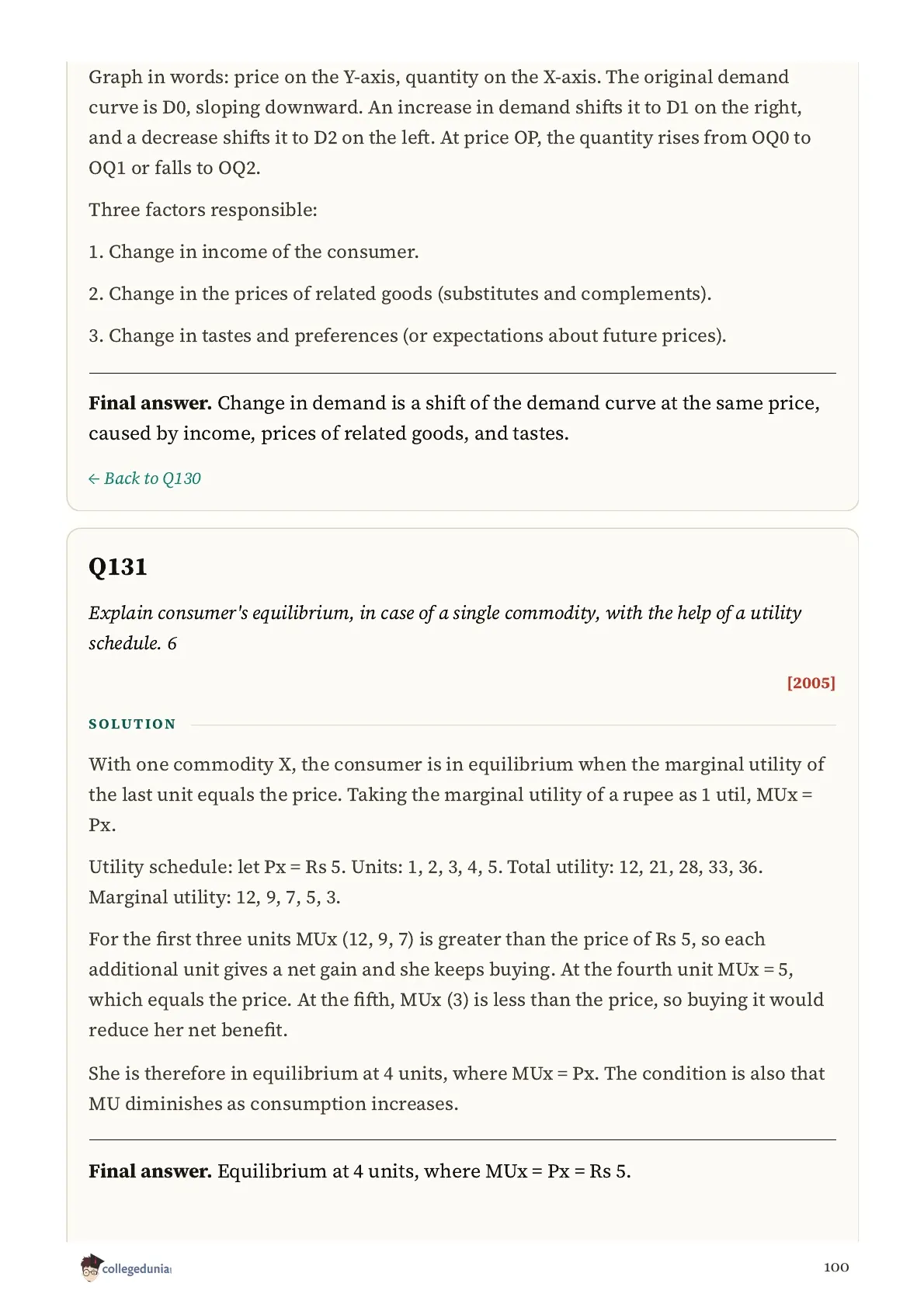
Ans. With one good, marginal utility equals price; with two goods under the indifference curve approach, the marginal rate of substitution equals the price ratio and the indifference curve is convex to the origin. 19 questions in this set mention equilibrium.
Ques. How do you calculate price elasticity of demand in the board exam?
Ans. Divide the percentage change in quantity demanded by the percentage change in price. 13 questions in this set are calculations of this kind, with the percentage method, the total expenditure method and the geometric method all asked.
Ques. What is the difference between a normal good and an inferior good?
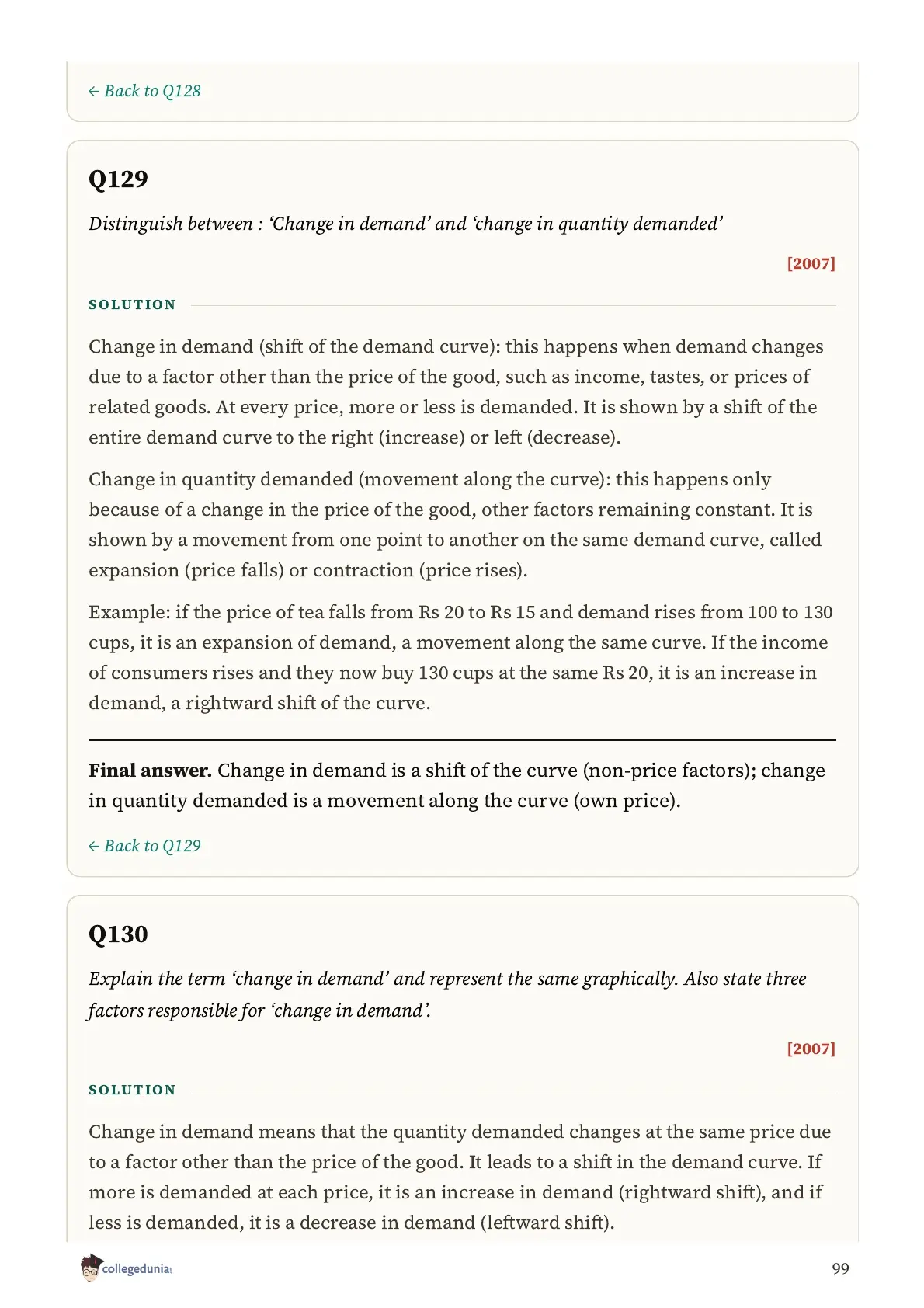
Ans. Demand for a normal good rises with income, while demand for an inferior good falls as income rises. 11 questions in this set are on the two.



Comments