




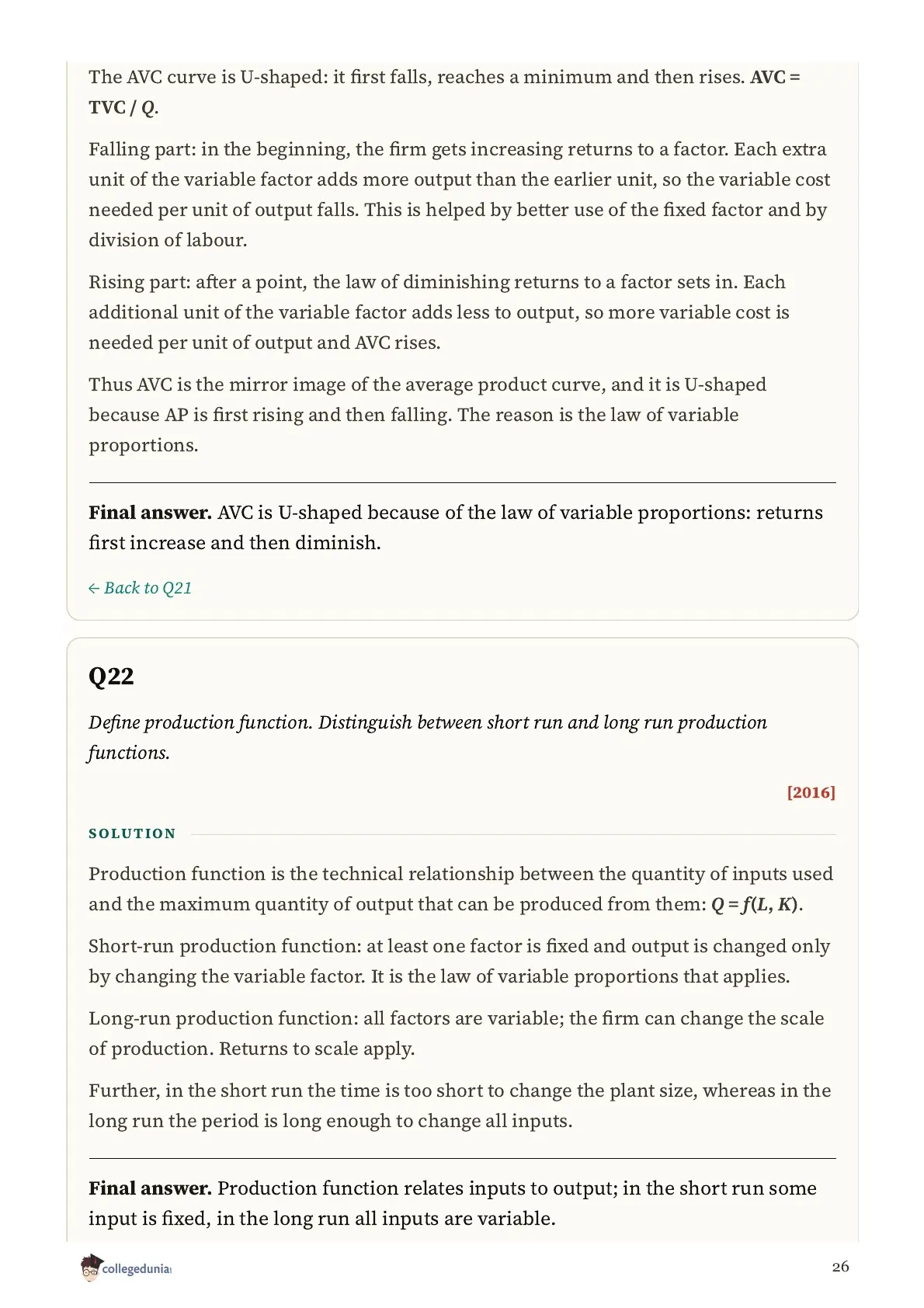
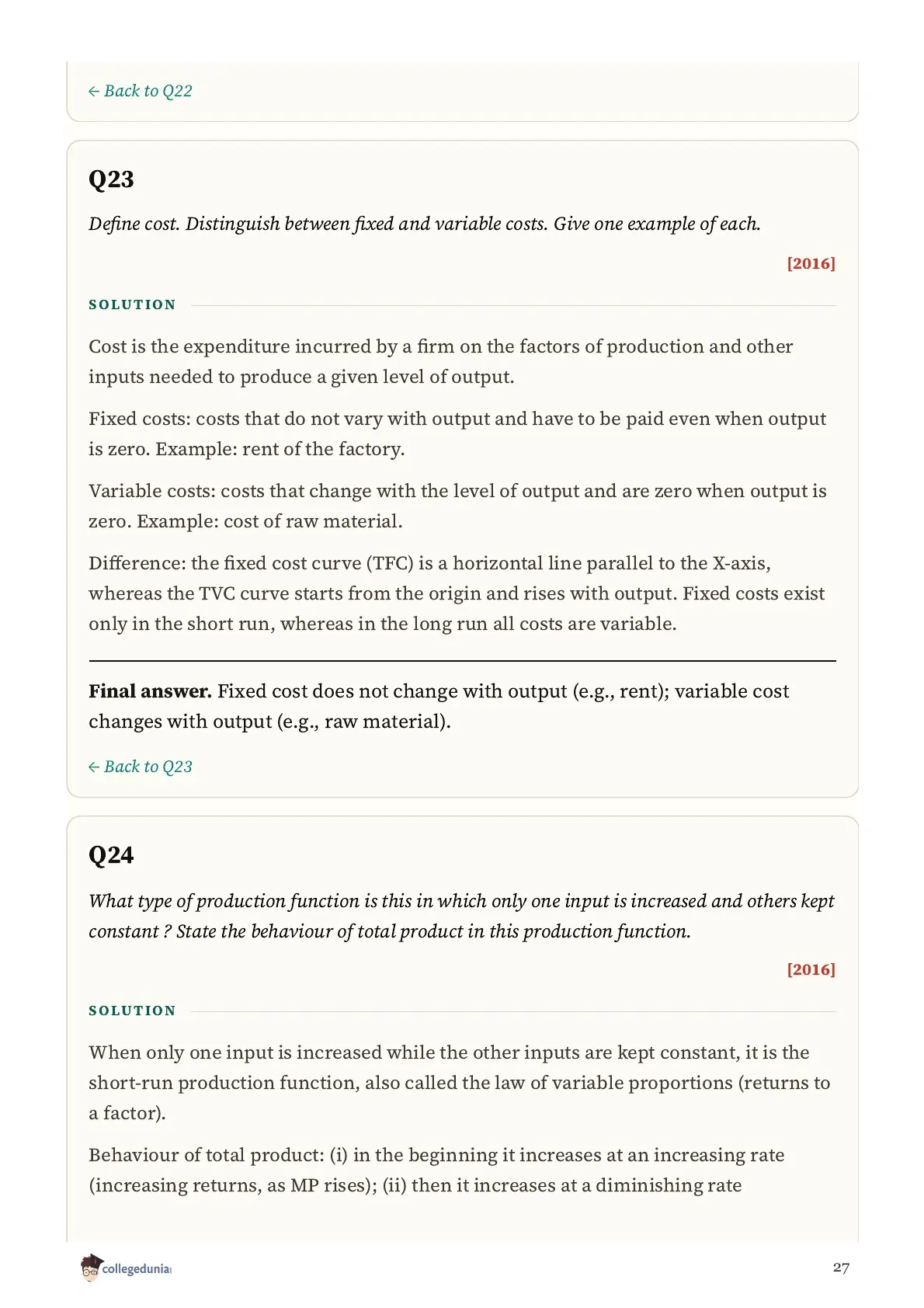
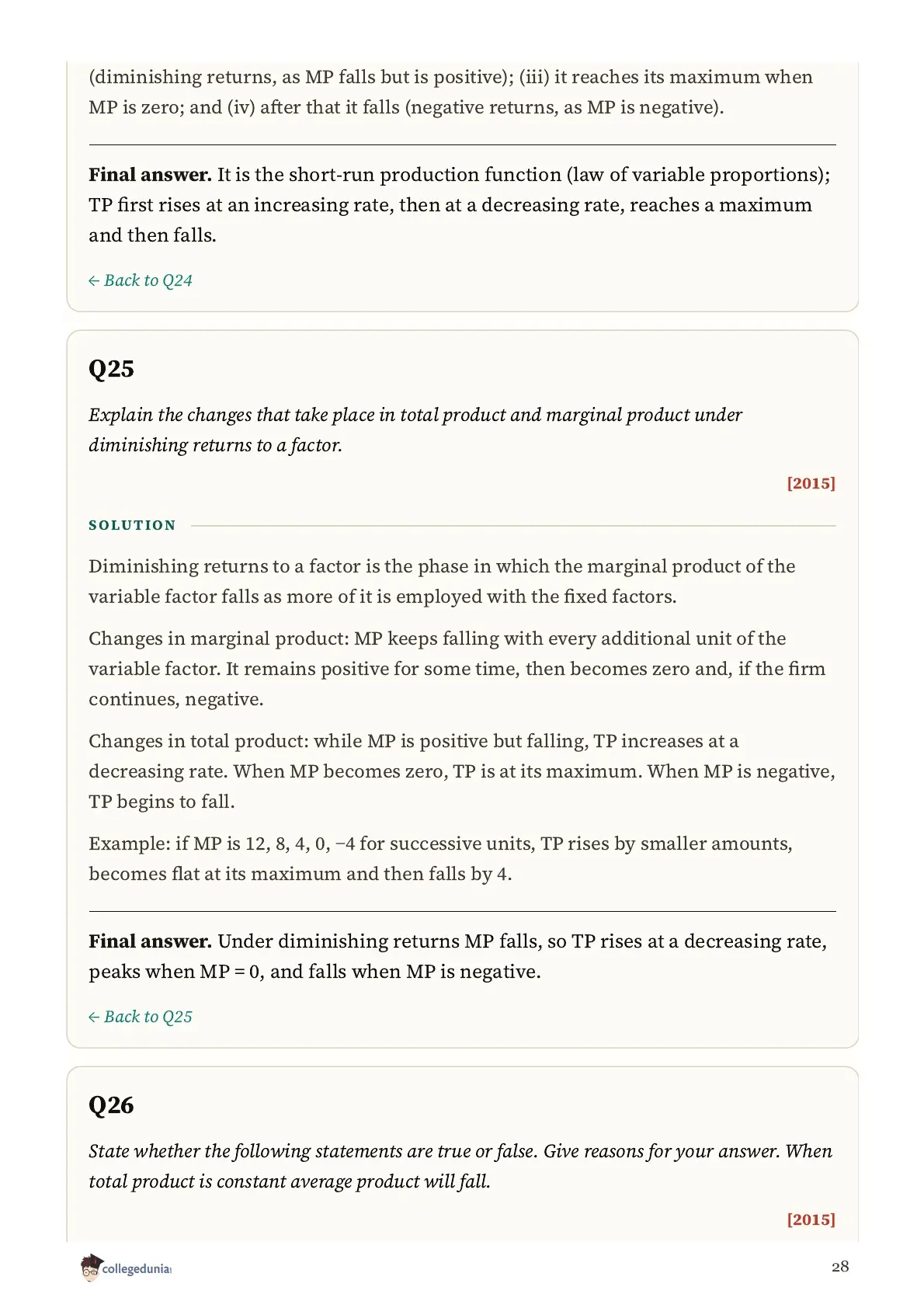
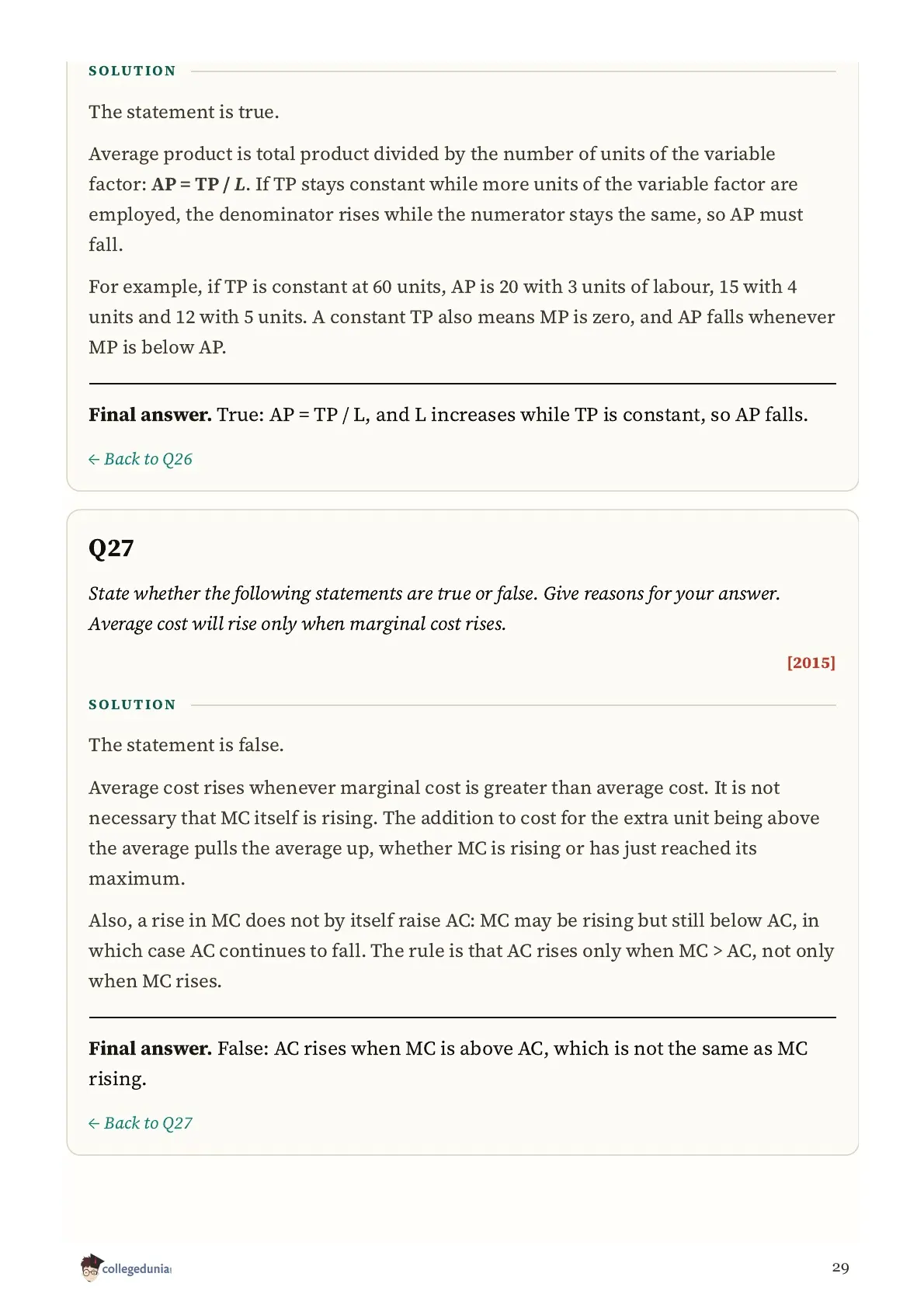
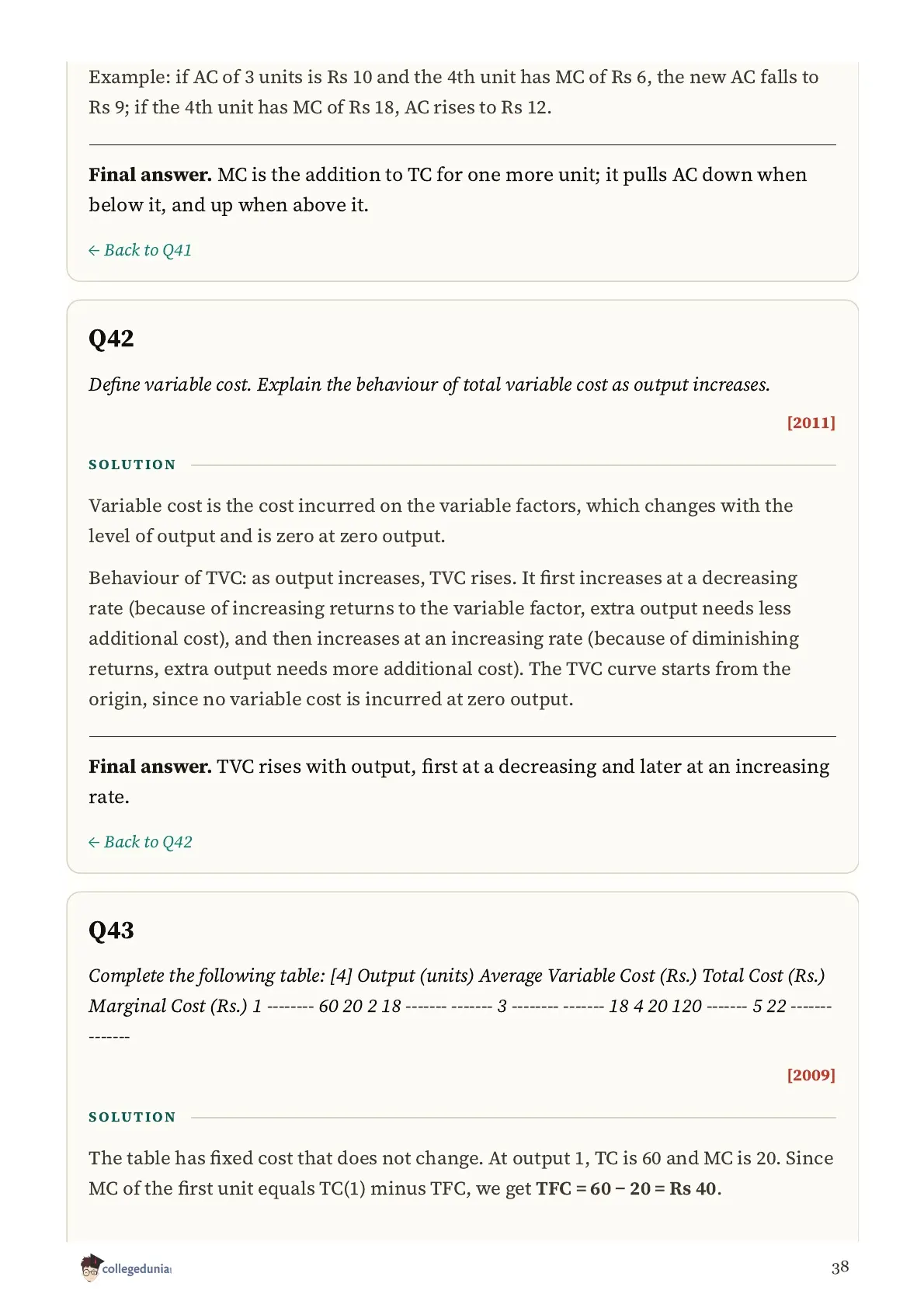
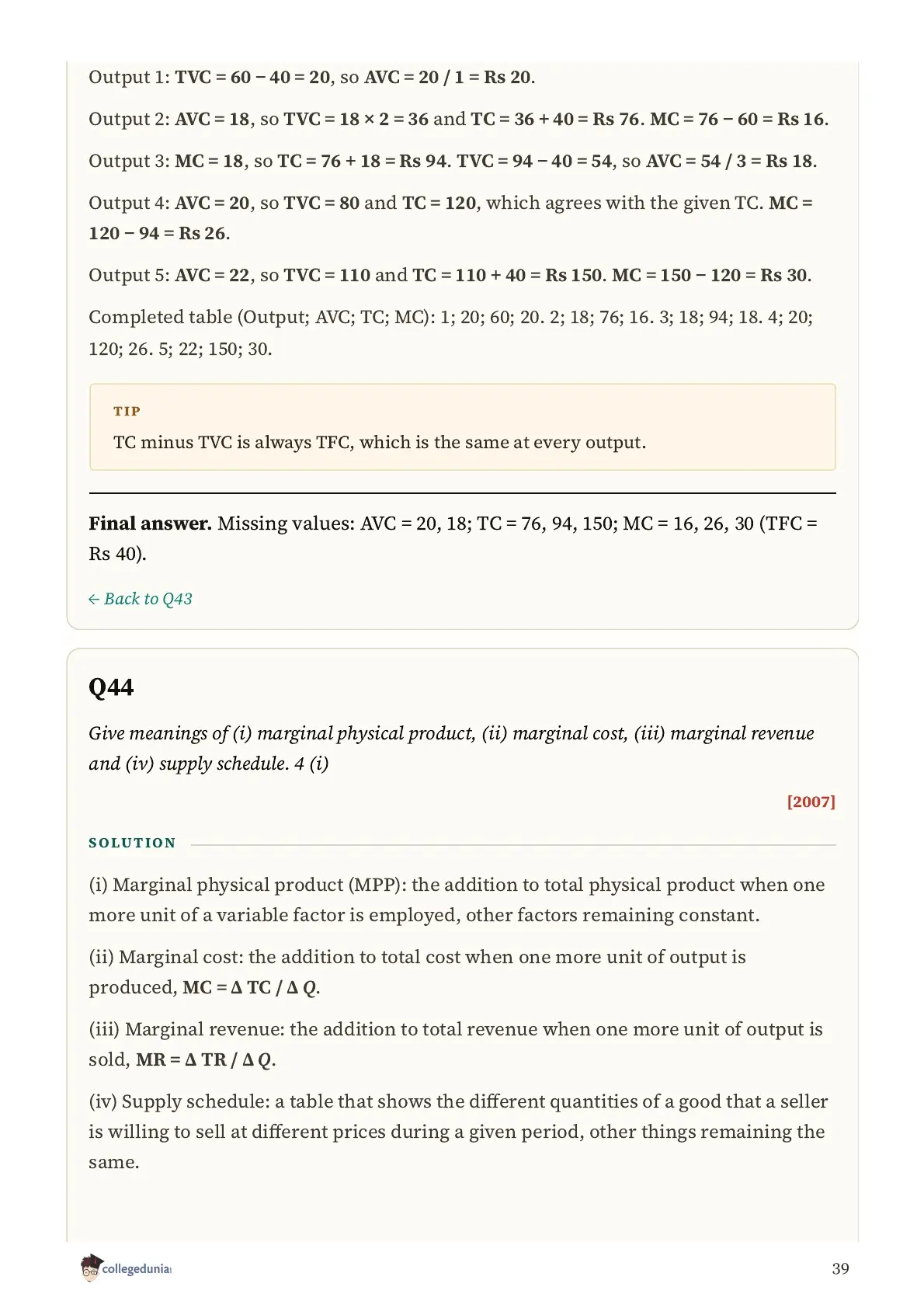
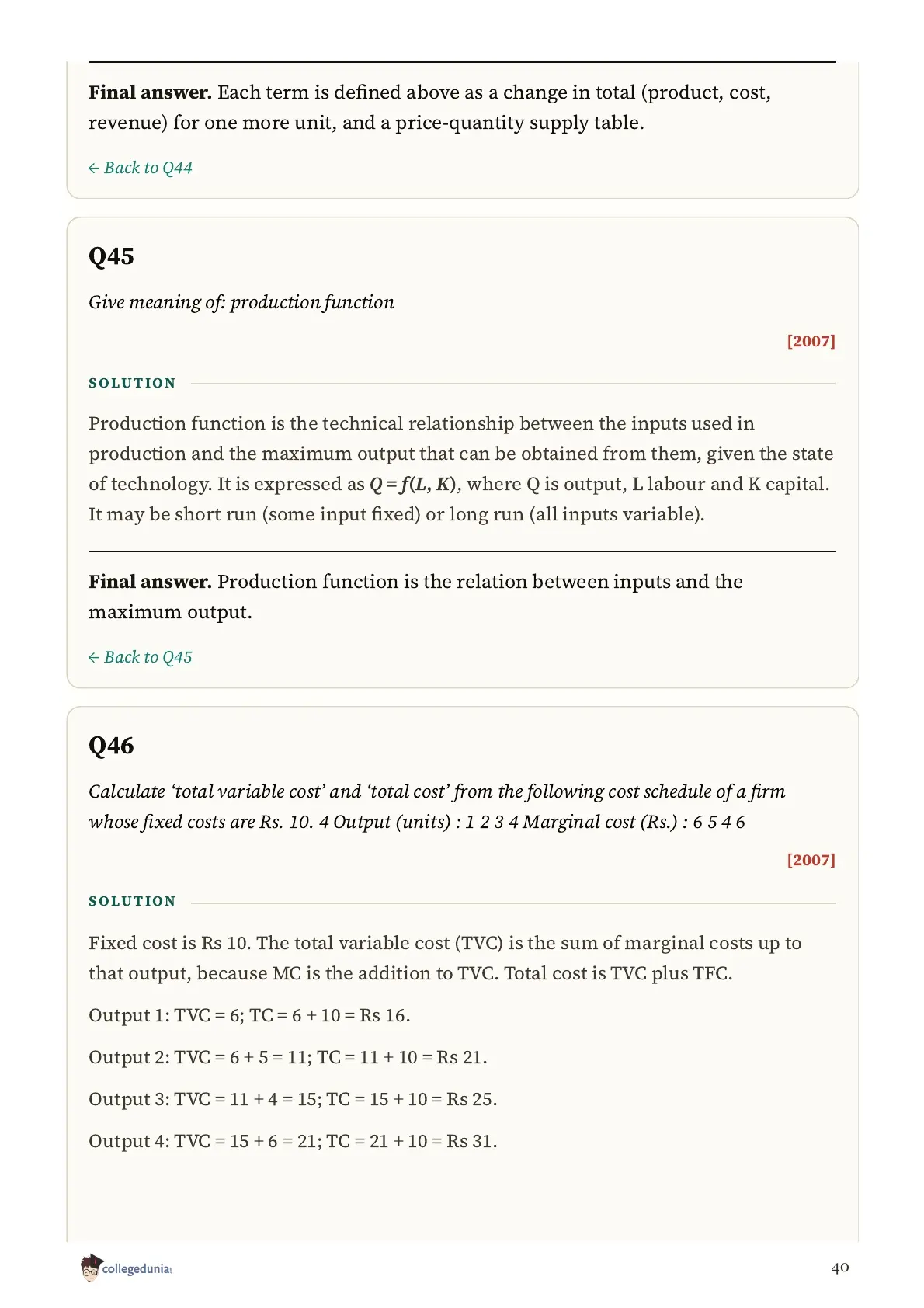
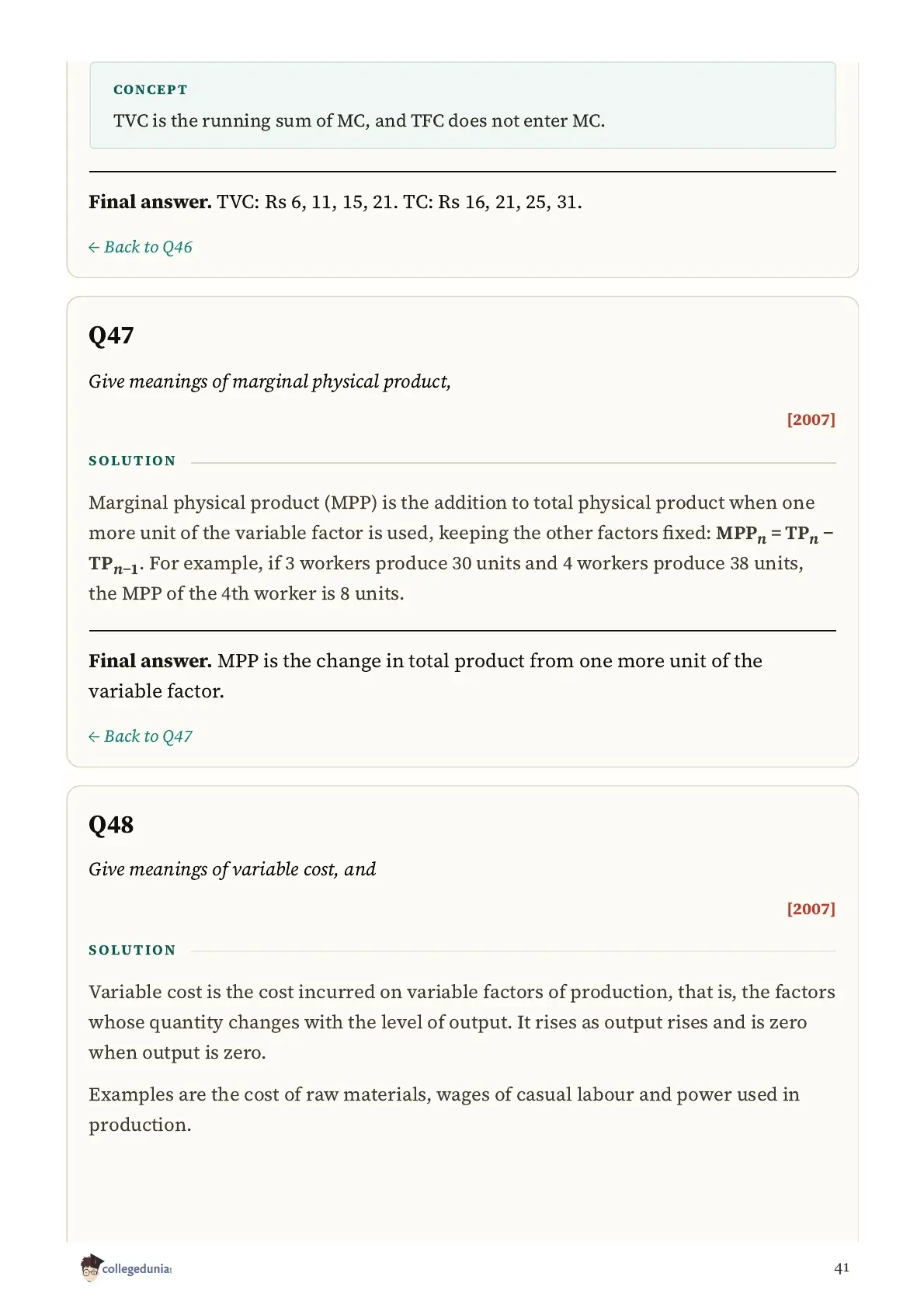
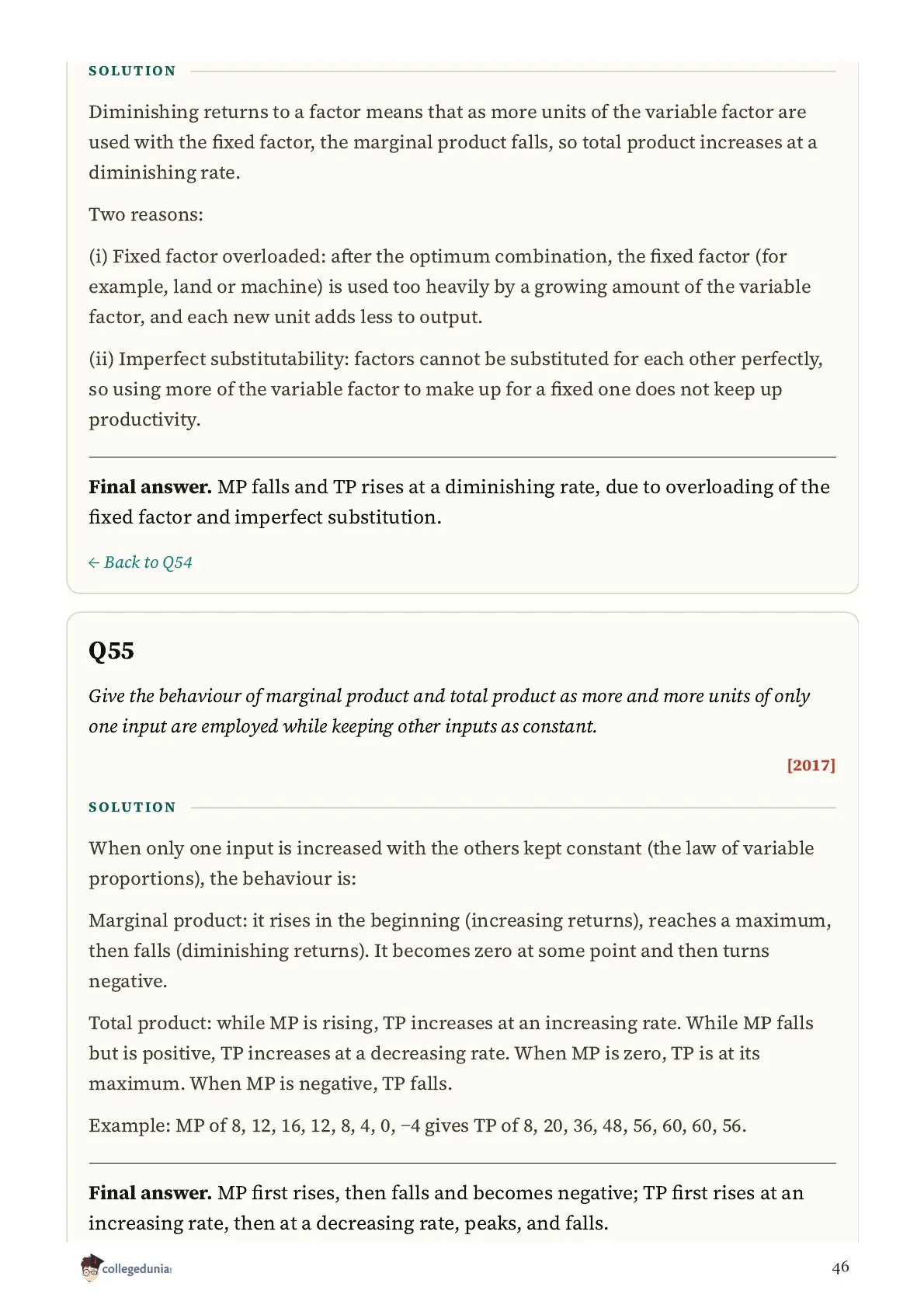
Class 12 Economics Production and Costs PYQ, free to download as a 51-page PDF. The chapter comes from the Microeconomics part of the older board pattern, and the set holds 61 solved questions from the 2005 to 2019 papers on the production function, total, marginal and average product, the law of variable proportions and its three phases, returns to scale, fixed, variable and total cost, explicit and implicit cost, and the relations between AFC, AVC, average cost and marginal cost, and takes roughly four hours to work through, so do the 19 one-mark and 13 three-mark questions in the first sitting, the 16 four-mark questions in the second and the 13 six-mark questions in the third.

Production and Costs Weightage in the Class 12 Board Paper
As per Economics Production and Costs weightage from past years, this chapter sat in the Microeconomics part of the older Class 12 paper, which shared the theory marks with Macroeconomics. The Class 12 Economics paper now listed for 2026-27 pairs Introductory Macroeconomics with Indian Economic Development, so it has no Microeconomics part, and we have not found an official chapter-wise mark figure for the old pattern. Use this set to practise the concepts and for school tests that still follow the Micro book, not as a forecast of this year's board paper.
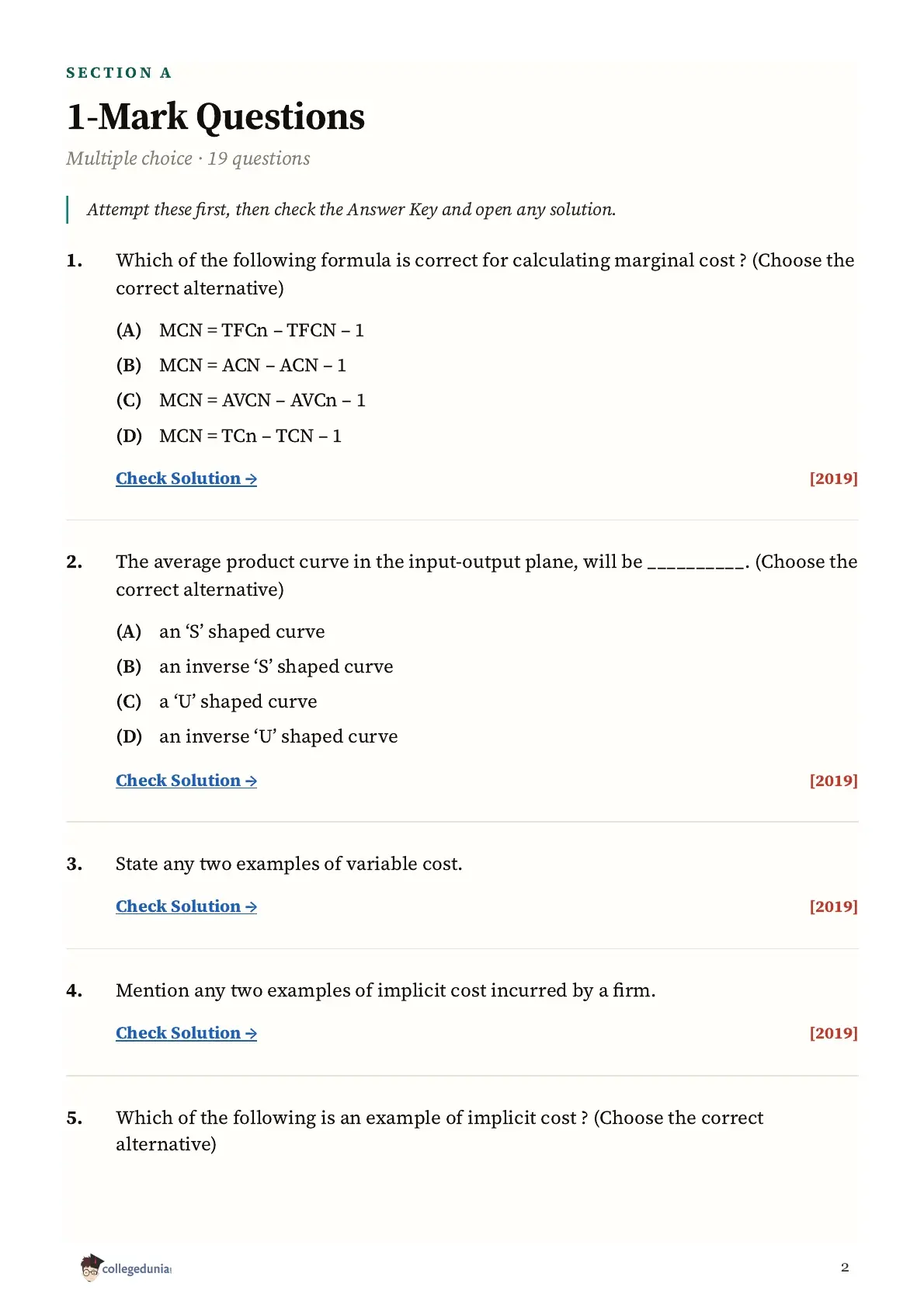
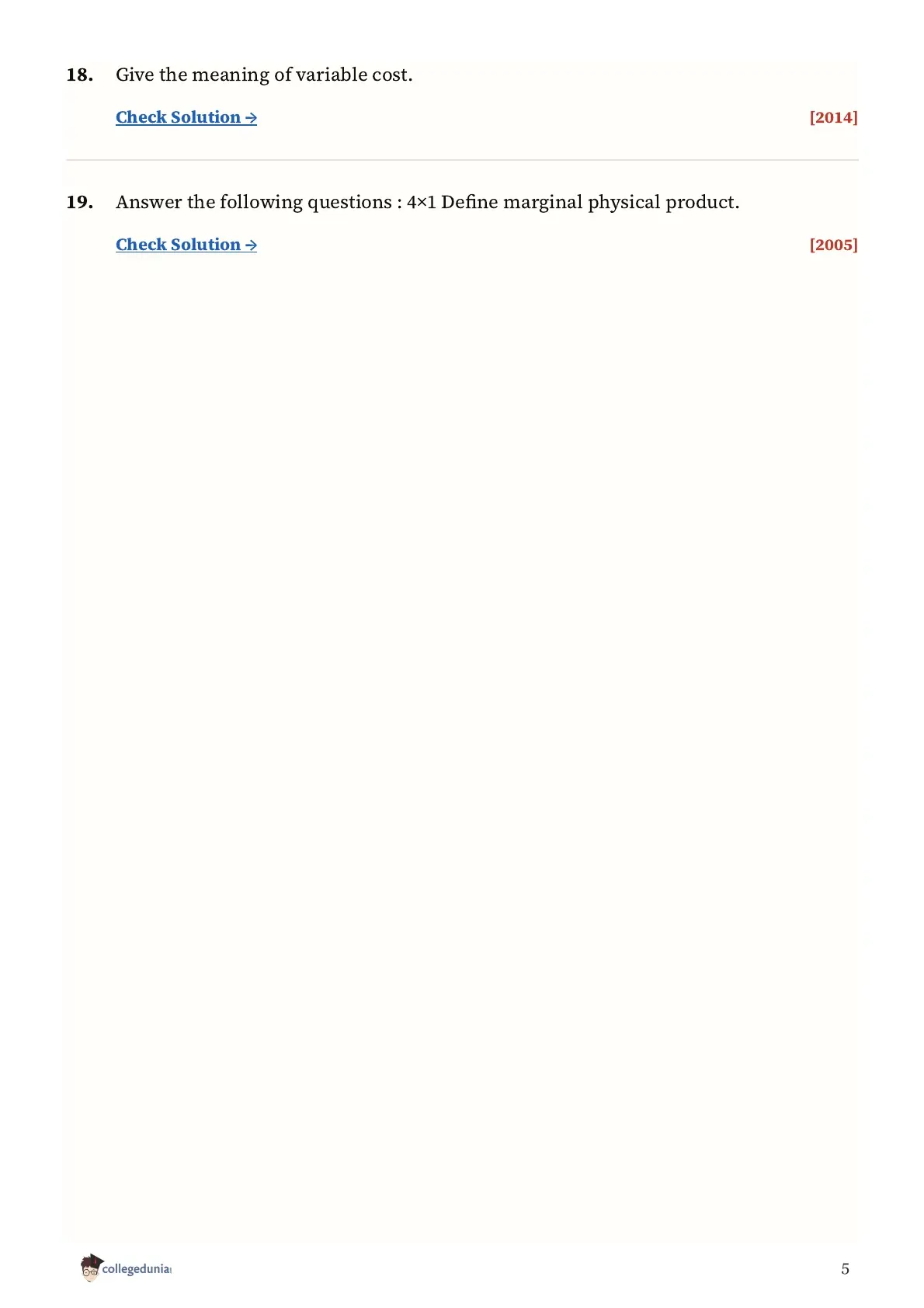
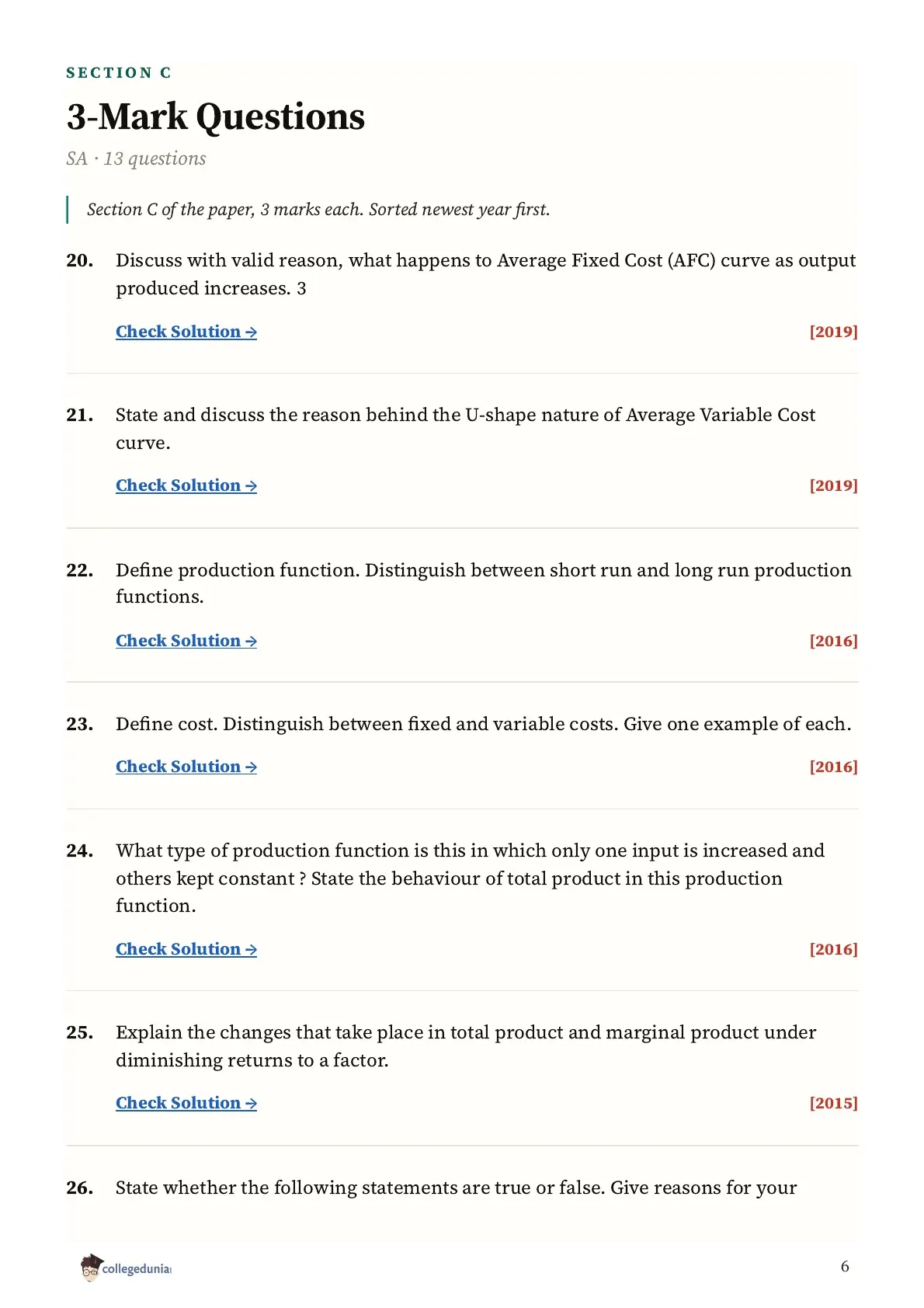
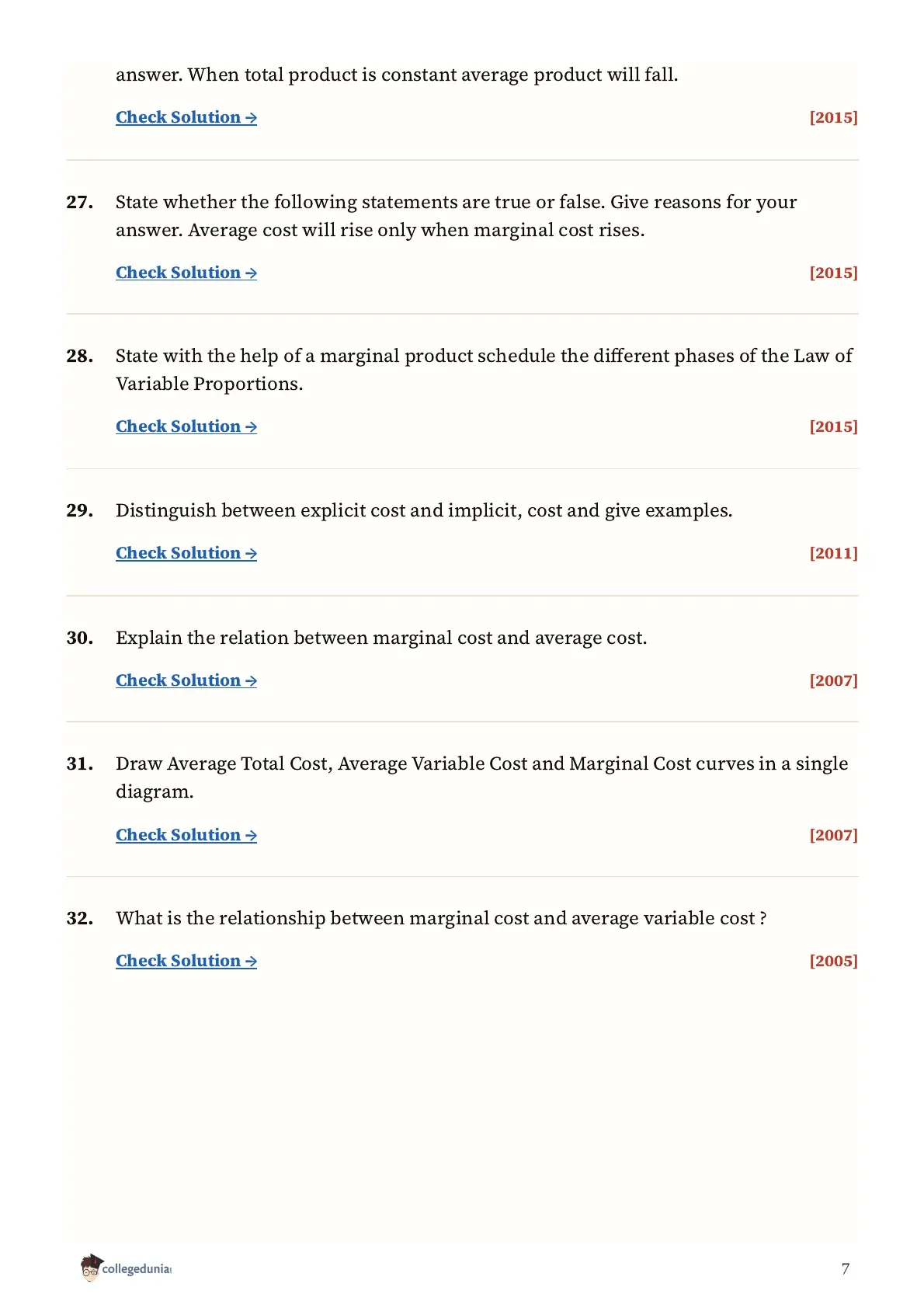
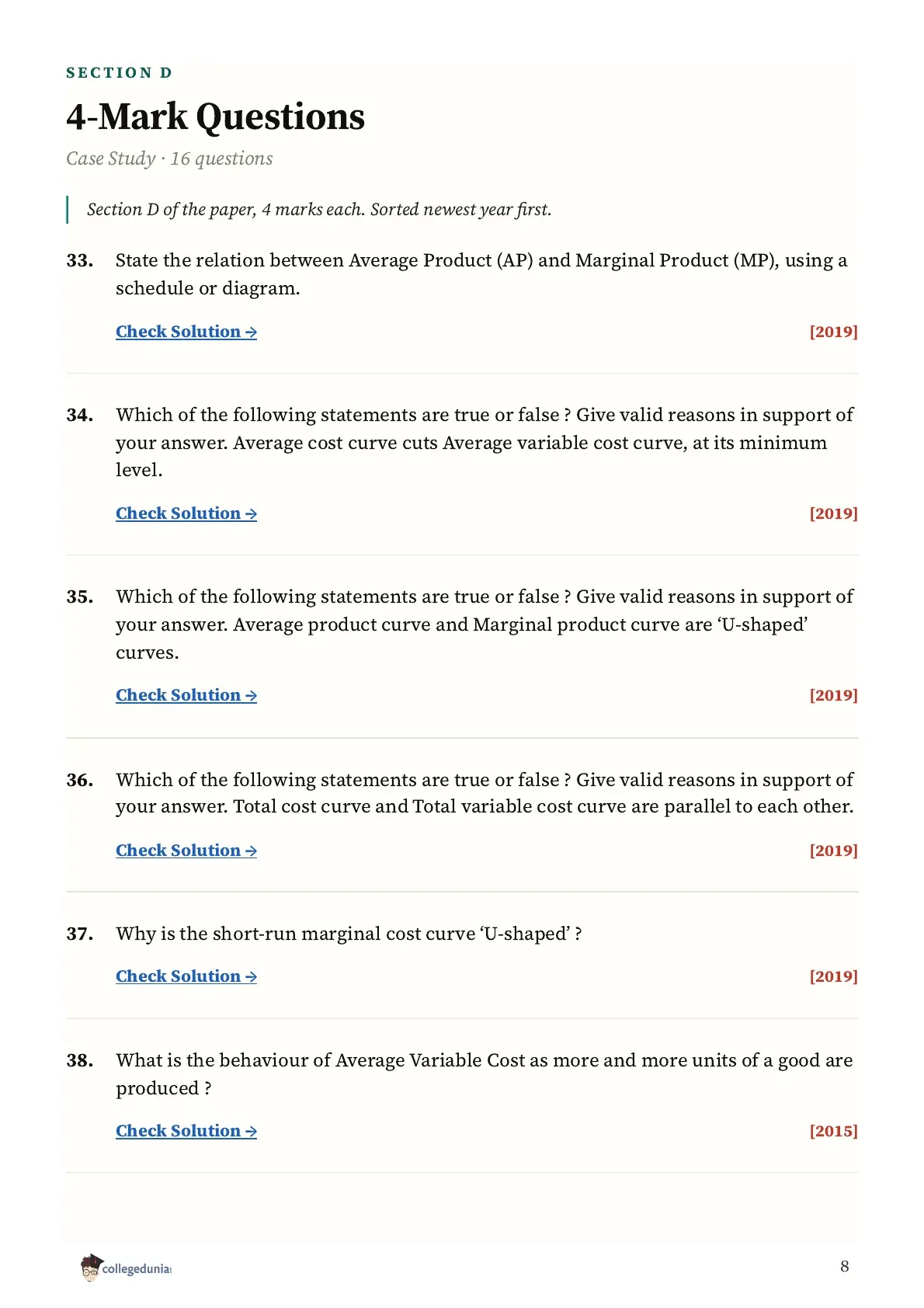
The 61 questions in this set fall in four groups. 19 are 1-mark questions, 16 are 4-mark questions, 13 are 3-mark short answers and 13 are 6-mark long answers. That leaves 42 questions that need a written answer of three marks or more.
| Marks Each | Question Type | Questions in the Set |
|---|---|---|
| 1 mark | MCQ and very short answer | 19 |
| 3 marks | Short Answer (SA) | 13 |
| 4 marks | Short Answer and Numerical | 16 |
| 6 marks | Long Answer (LA) | 13 |
Production and Costs Questions by Topic
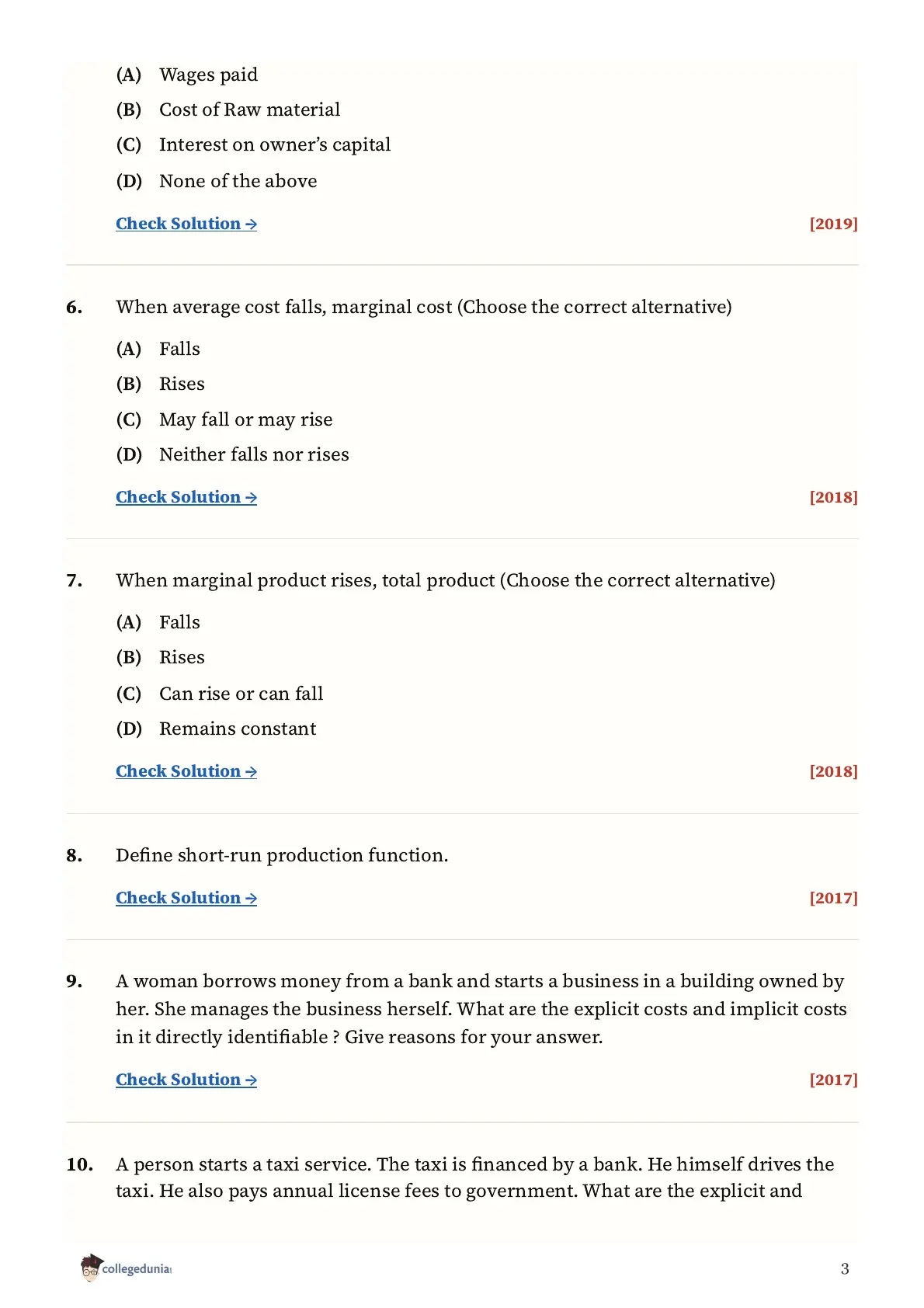
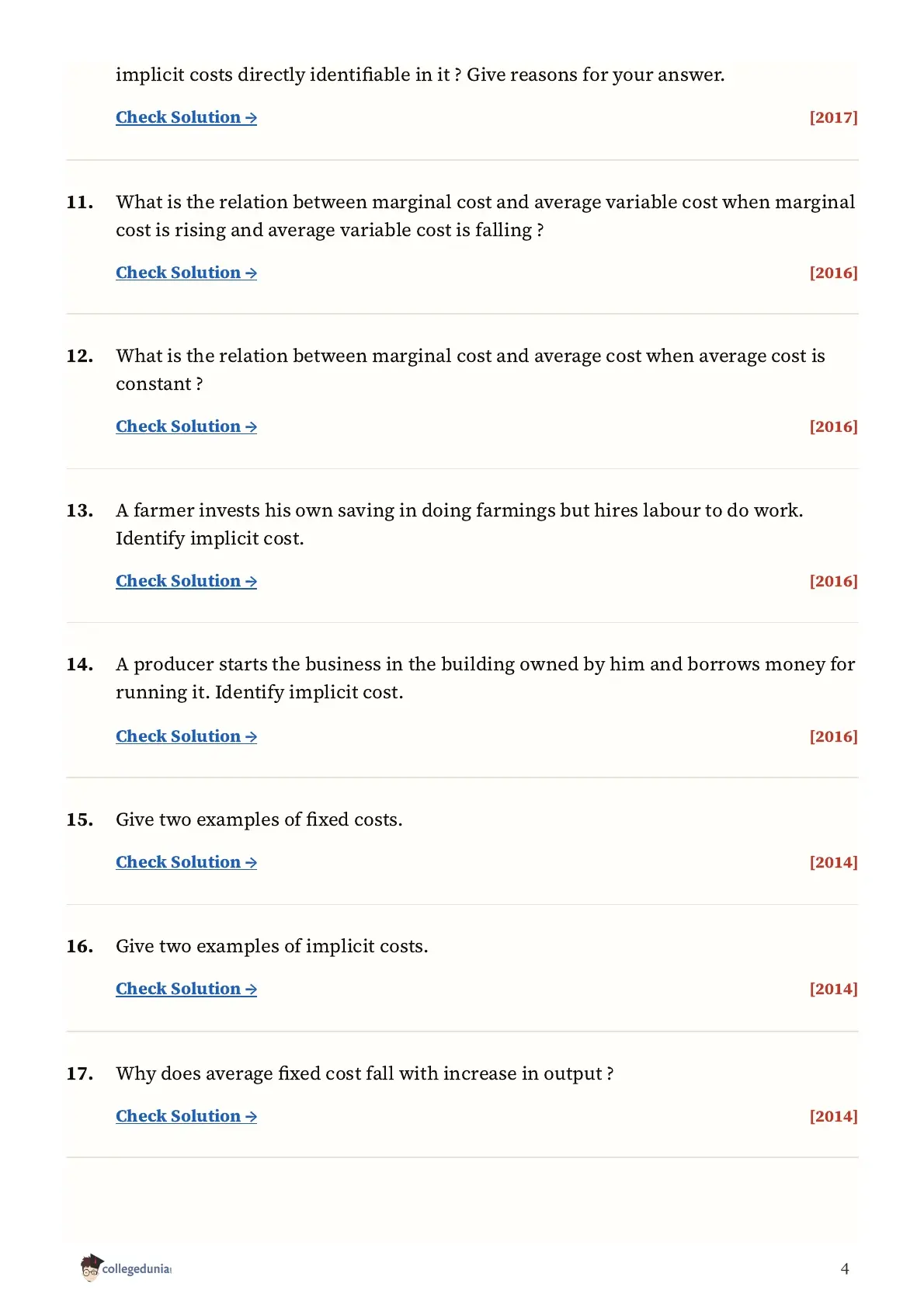
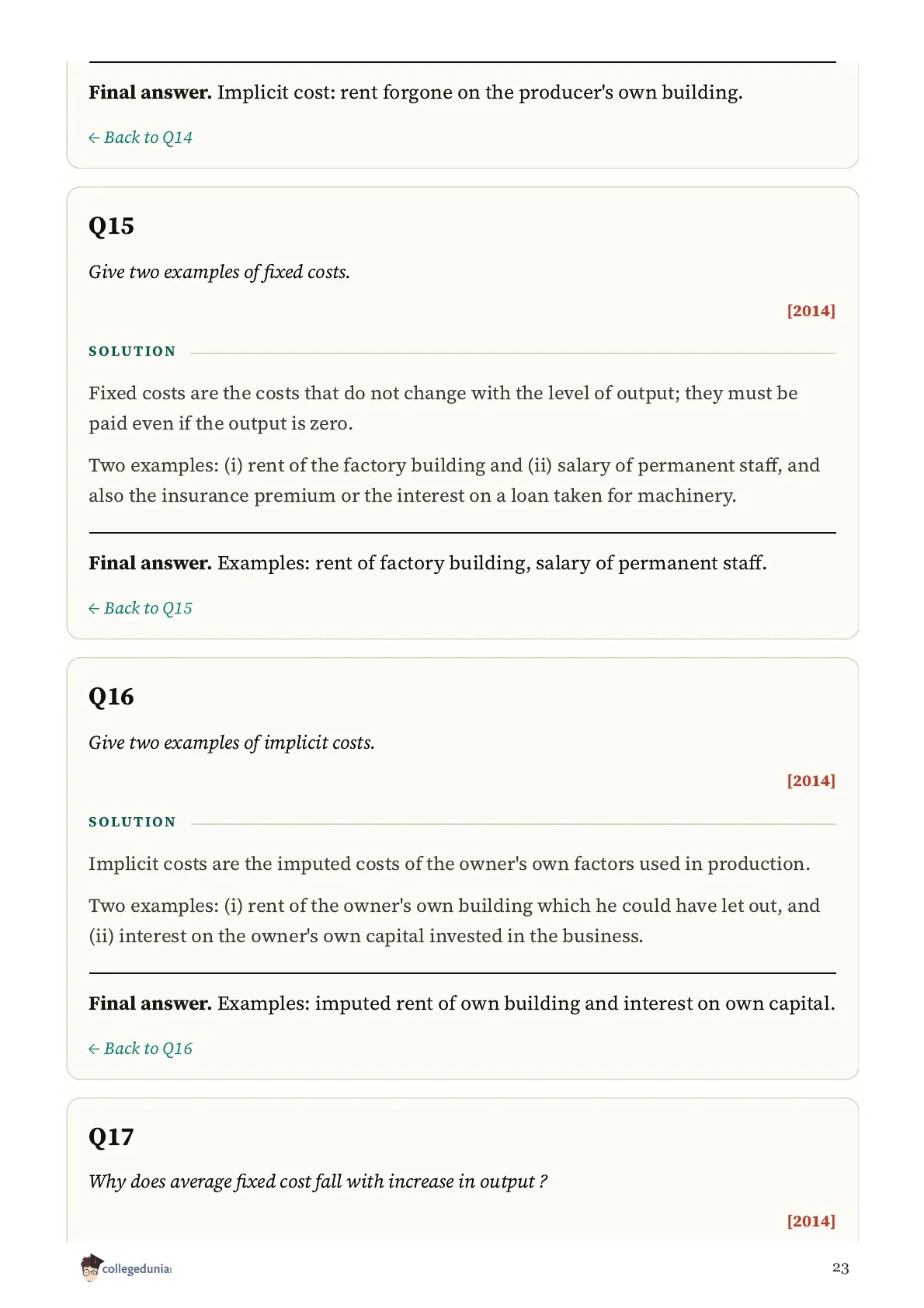
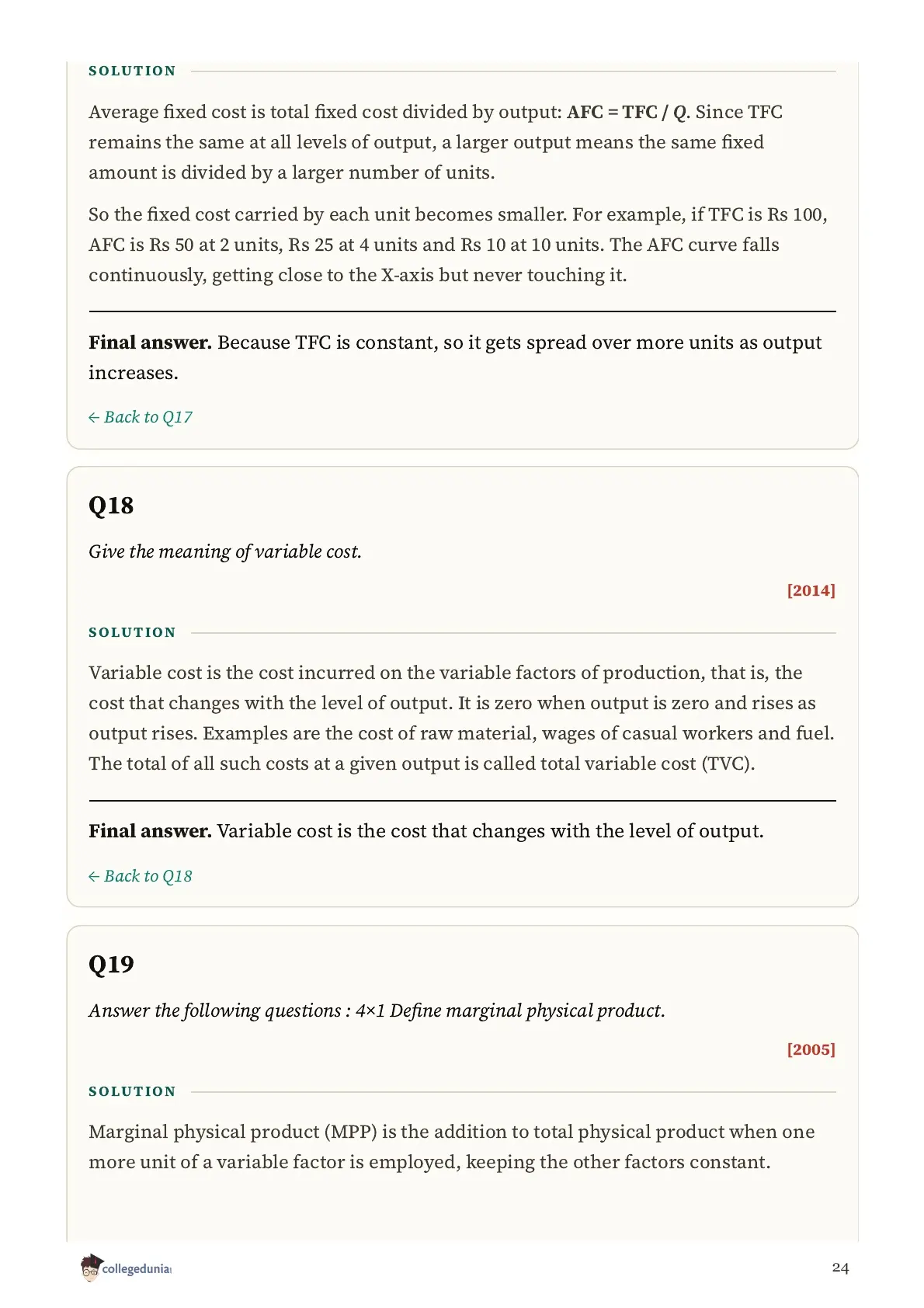
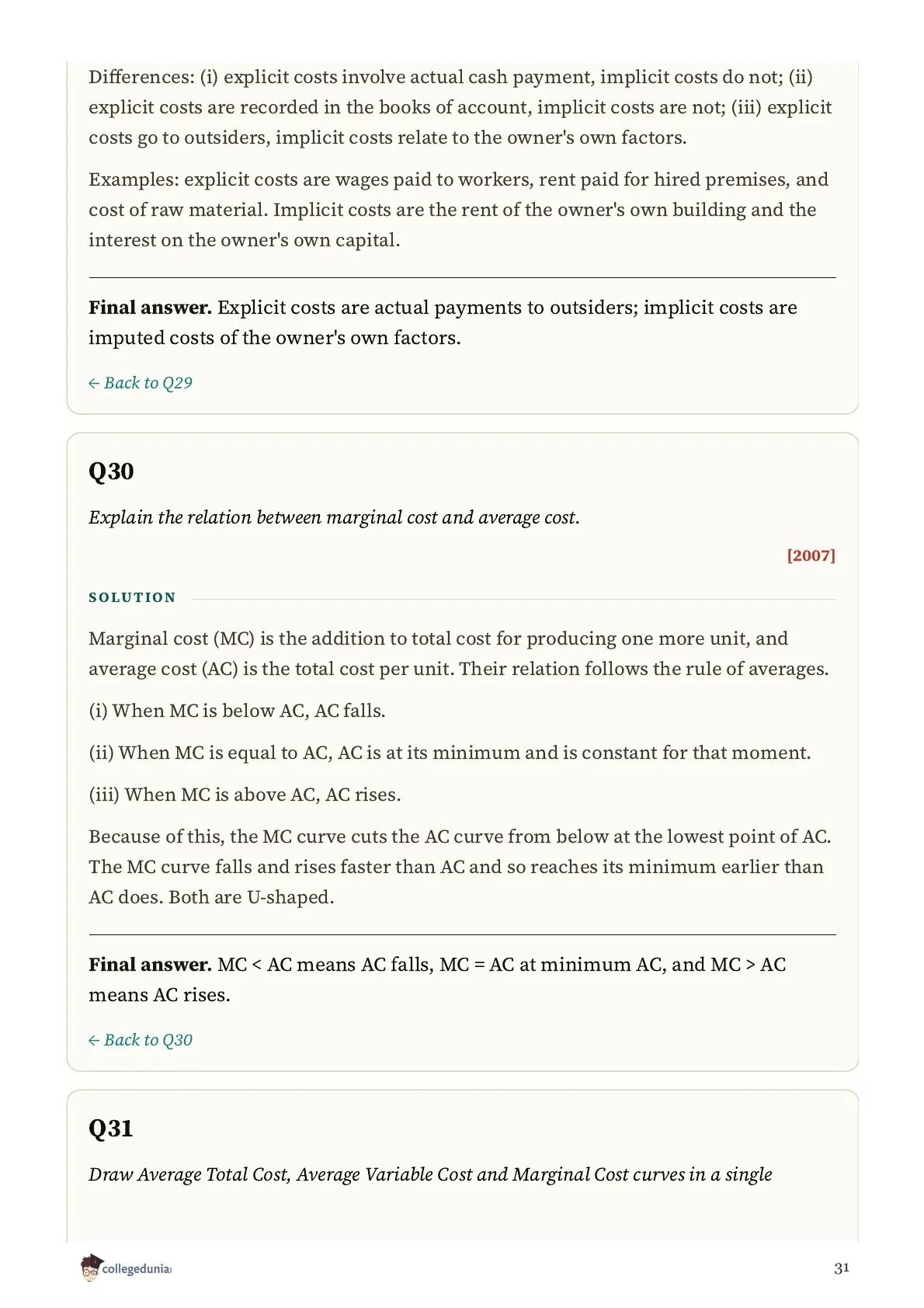
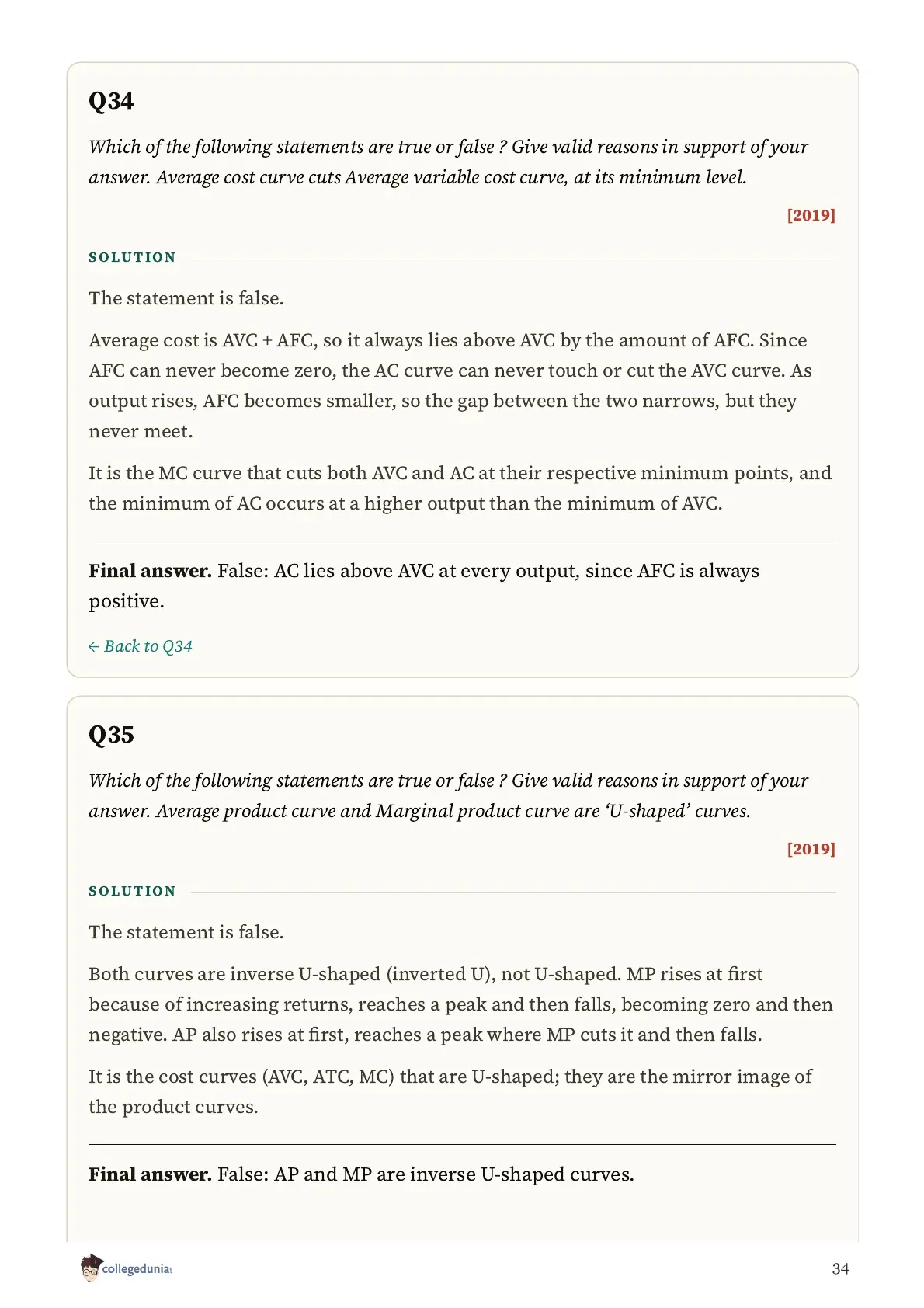
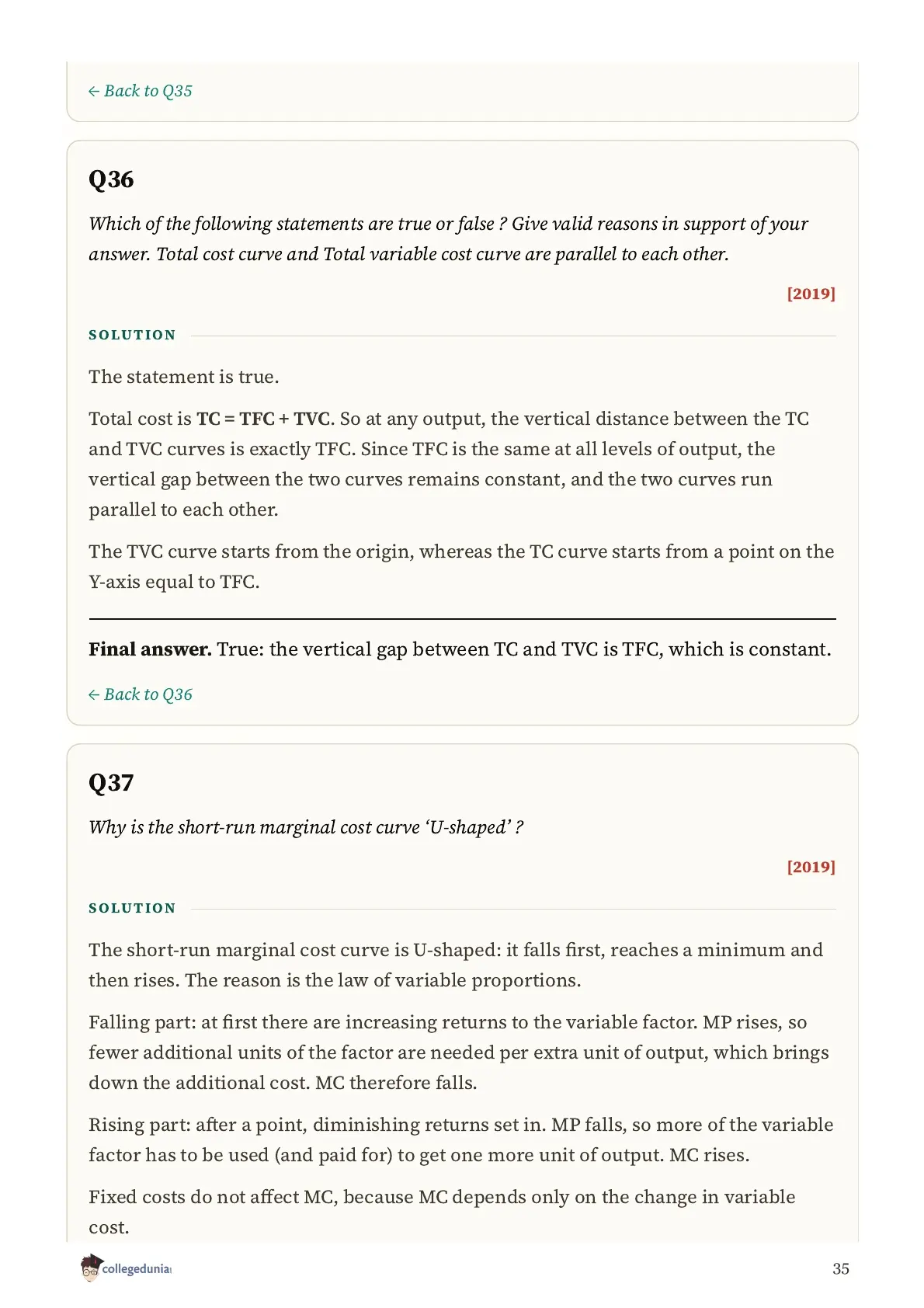
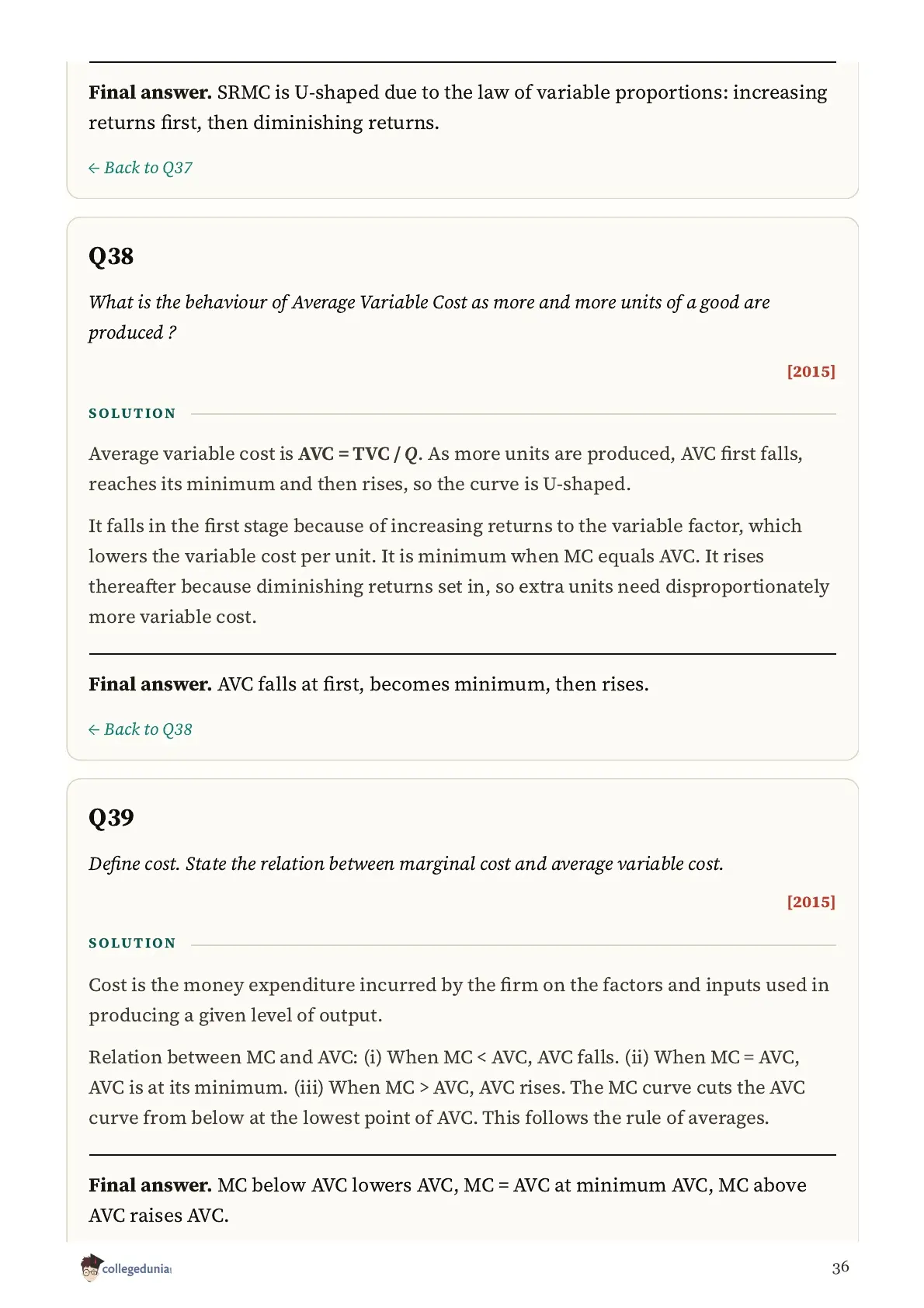
Variable cost is the most frequent topic, named in 17 questions, from the meaning and two examples to the shape of the AVC curve and the total variable cost schedule. Marginal cost is in 16 and fixed cost in 6, including why average fixed cost falls as output rises and why the total fixed cost curve runs parallel to the x-axis. Another 8 questions are on explicit and implicit cost, and 4 of them are short cases such as a woman running a business in her own building or a taxi owner who drives the taxi himself.
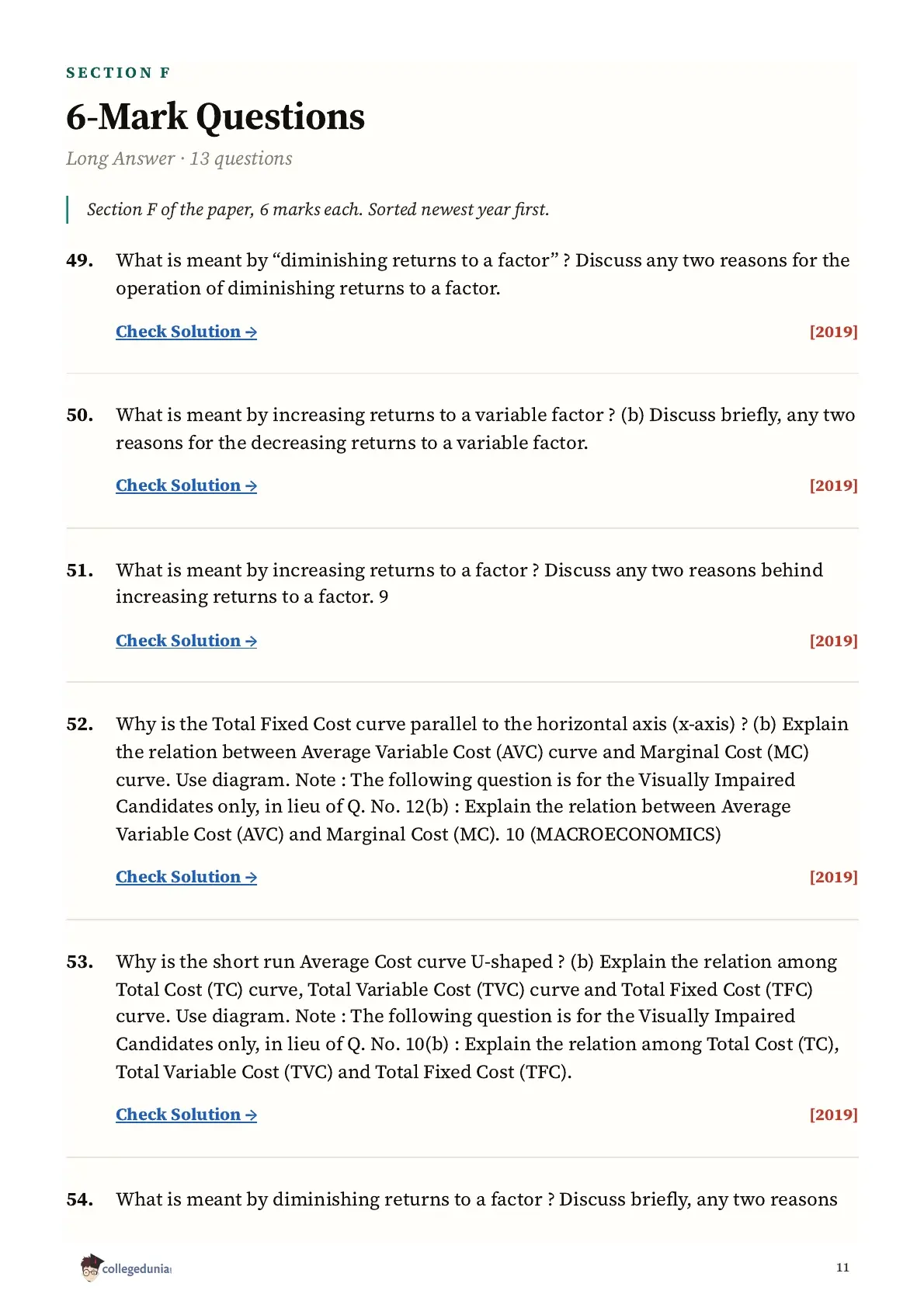
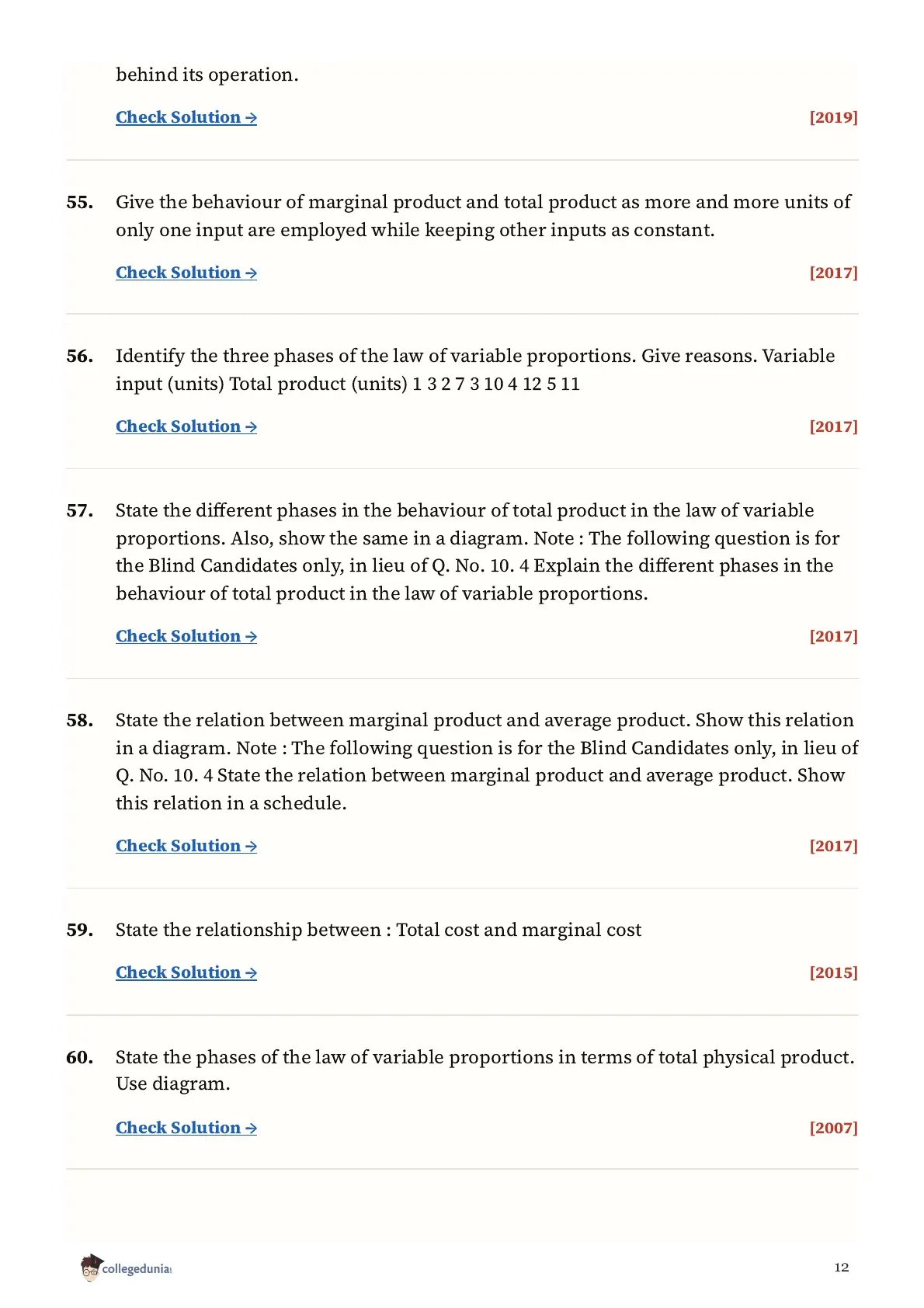
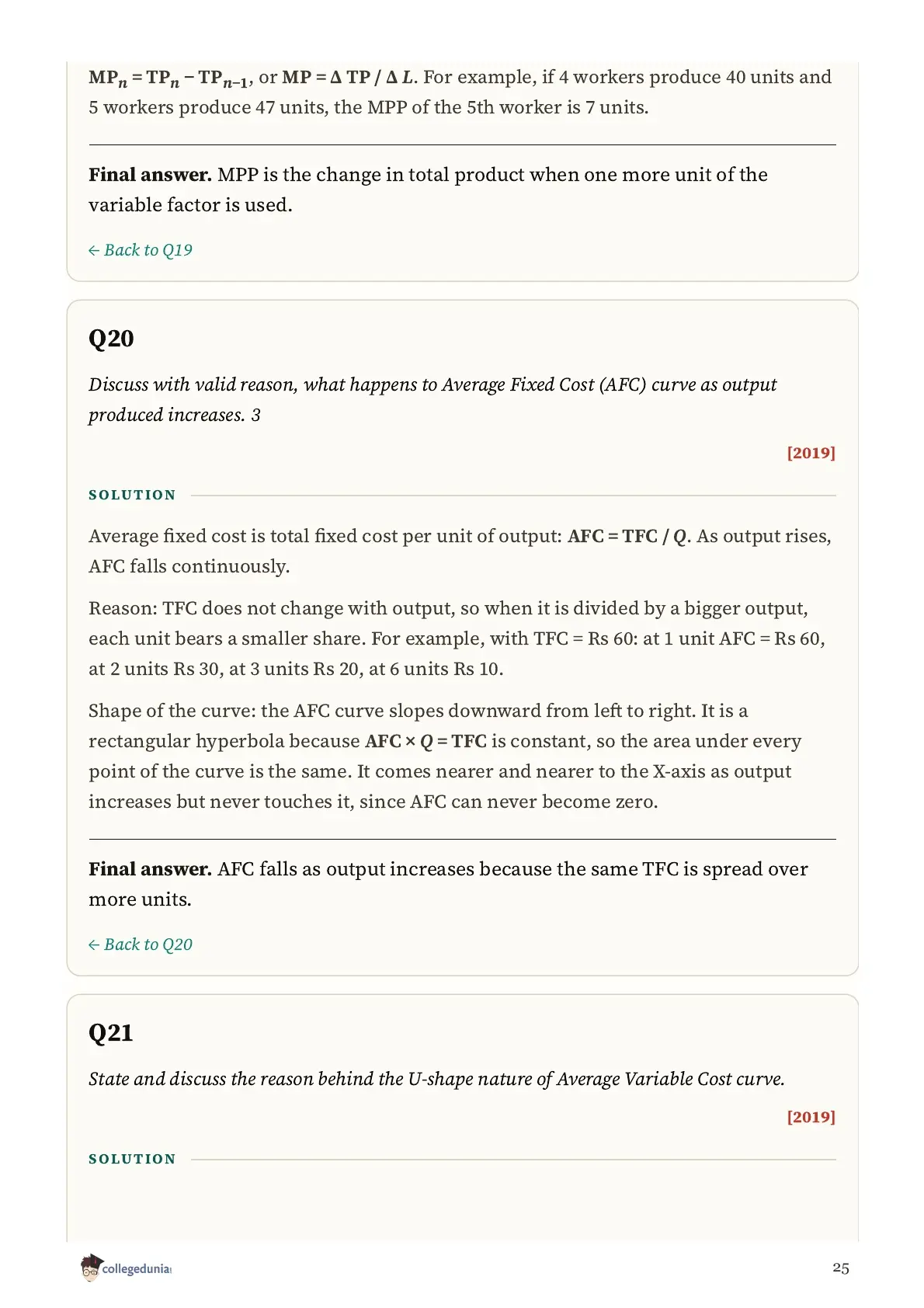
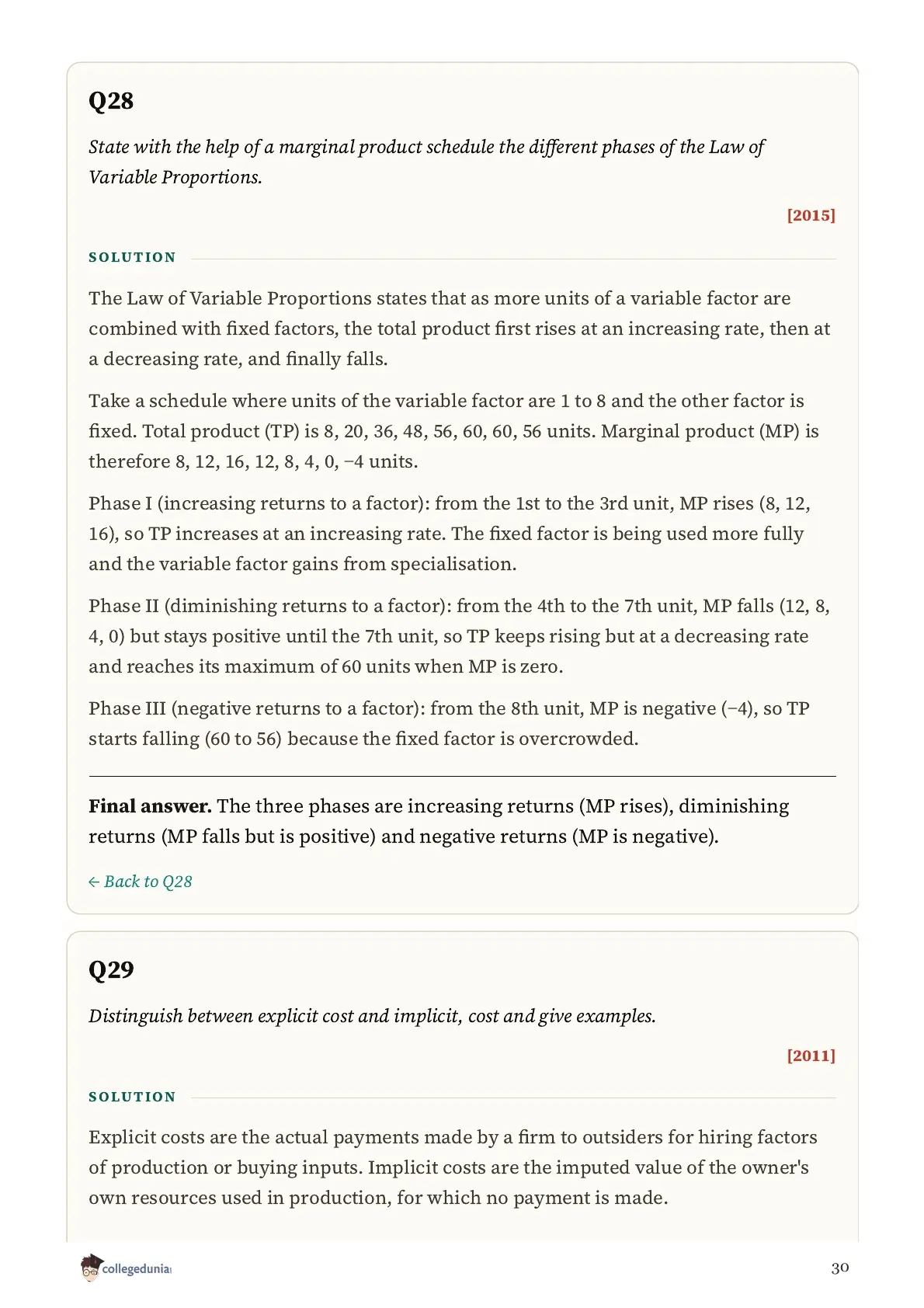
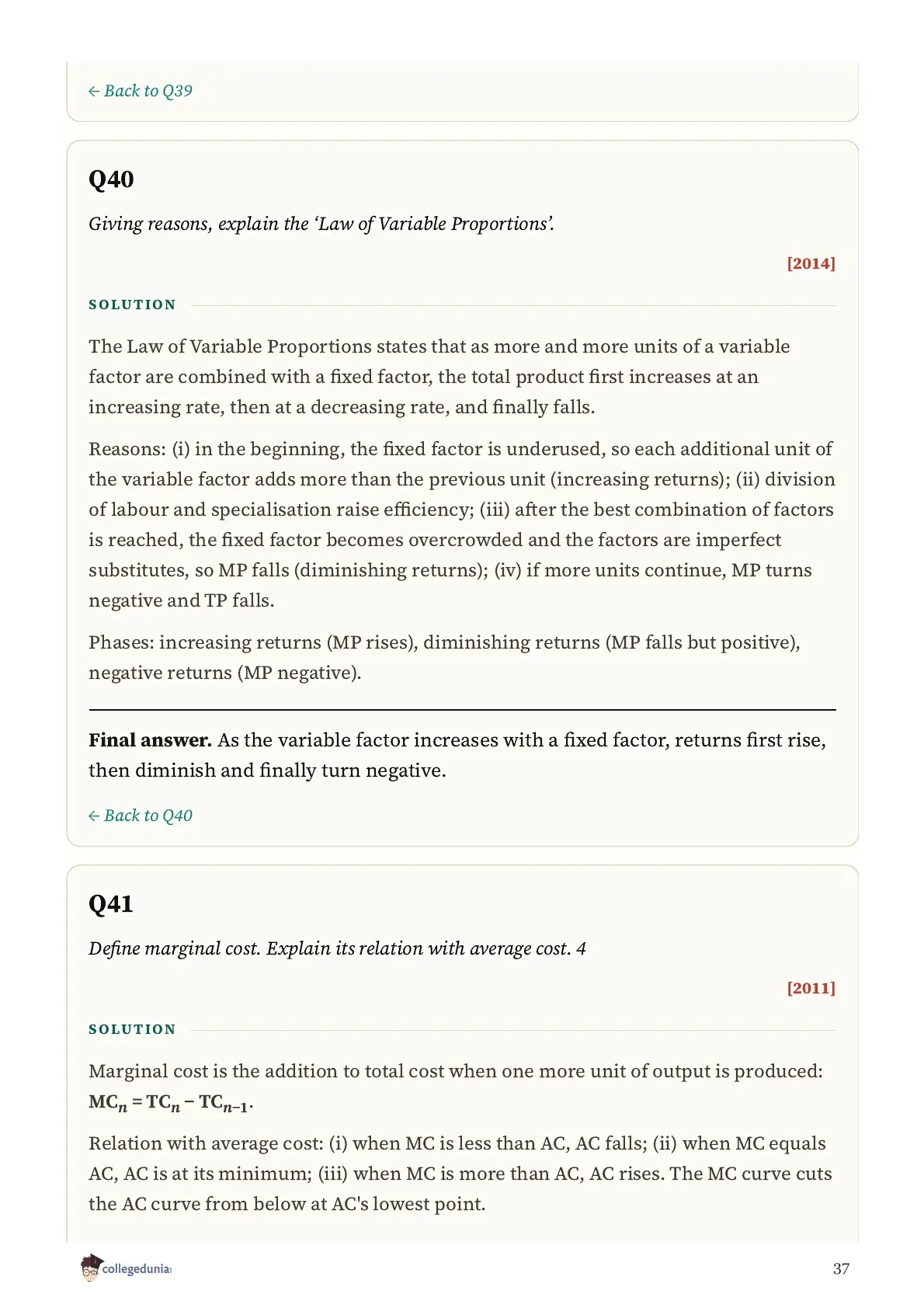
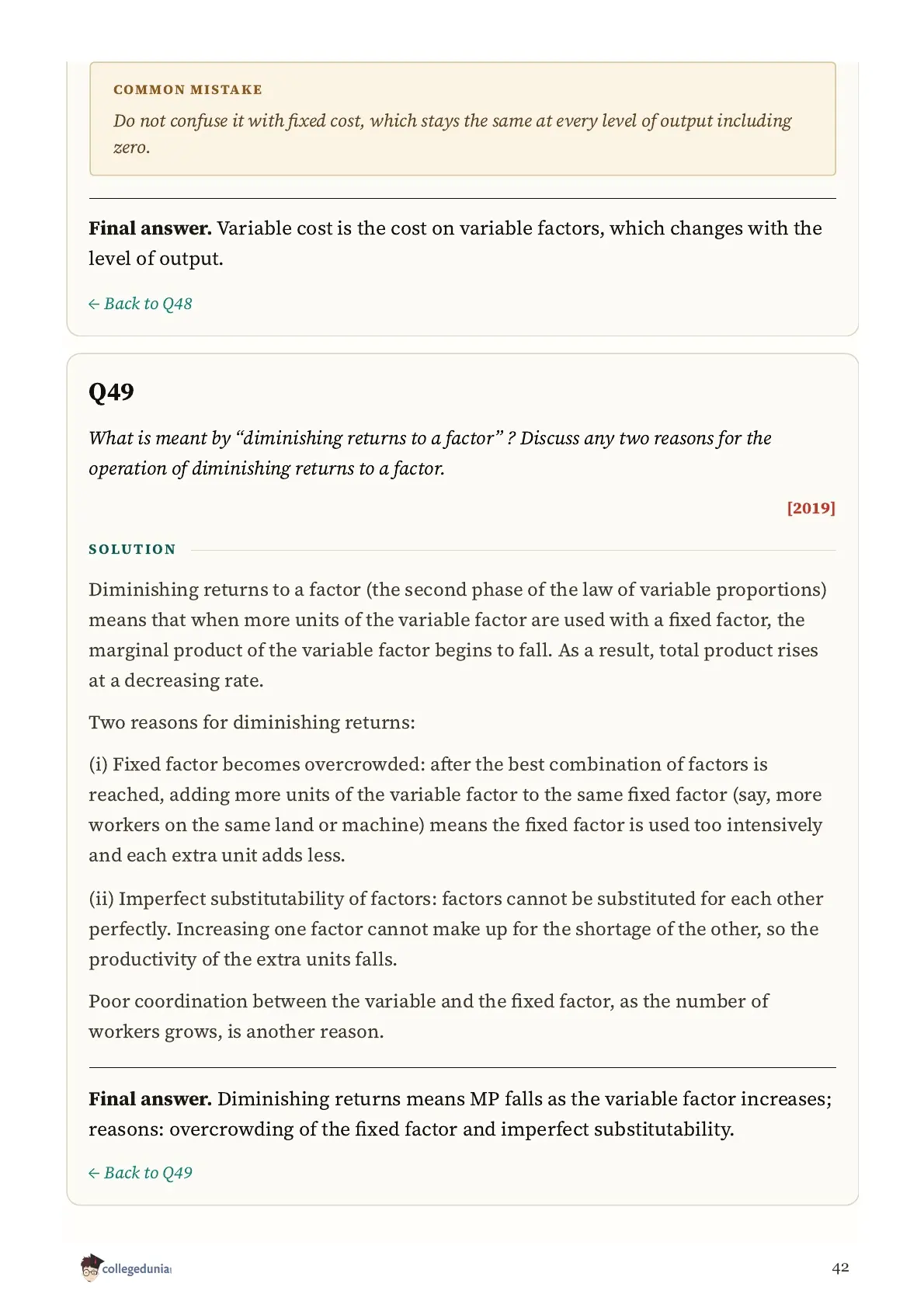
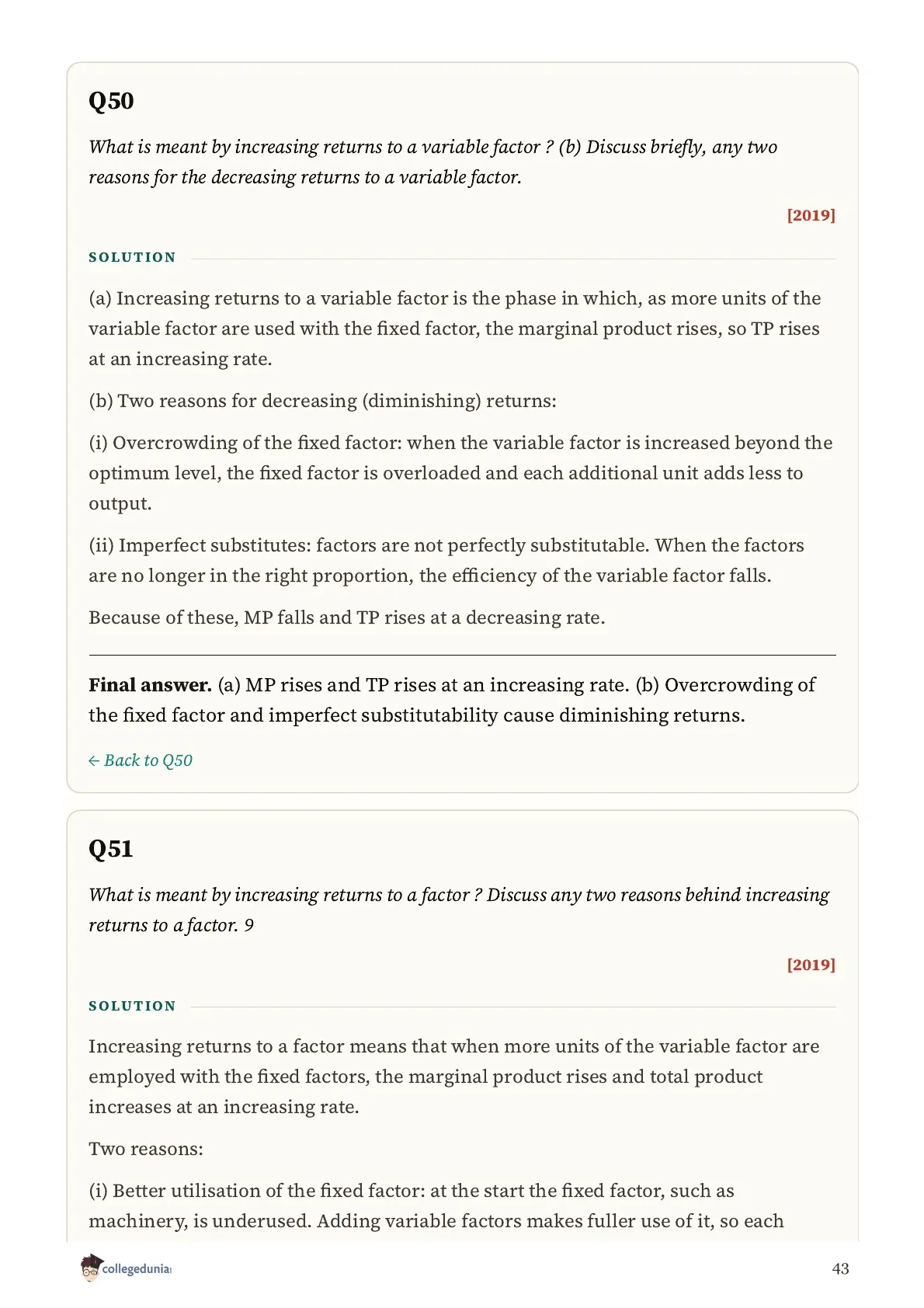
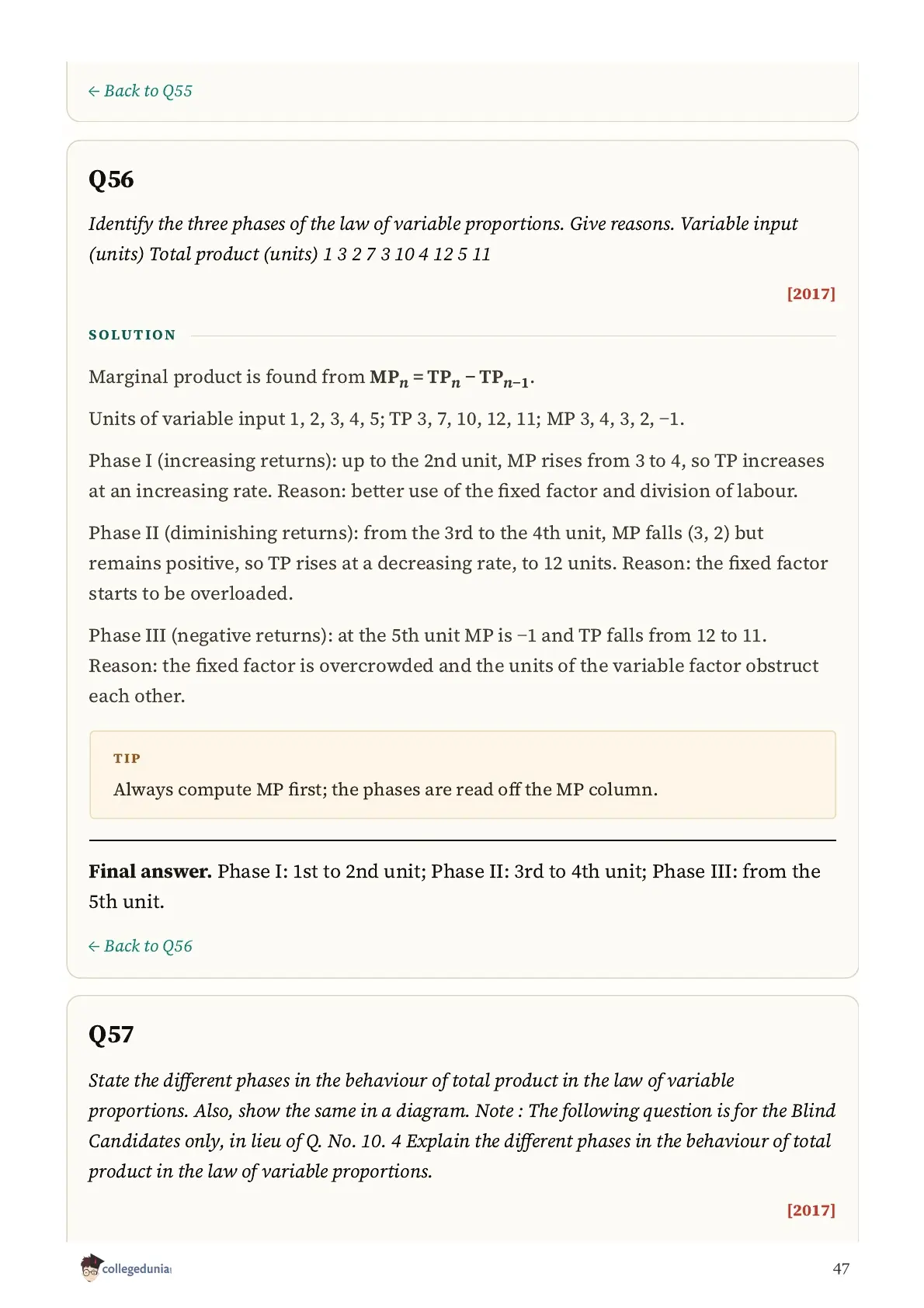
On the production side, 15 questions use total, average or marginal product. 11 are on the law of variable proportions or on diminishing and increasing returns to a factor, and 4 of those ask for the three phases. 4 ask for the production function, 3 of them its meaning or the short run and long run difference. Returns to scale appears in just 1 question, the 2007 long answer that contrasts it with returns to a factor.
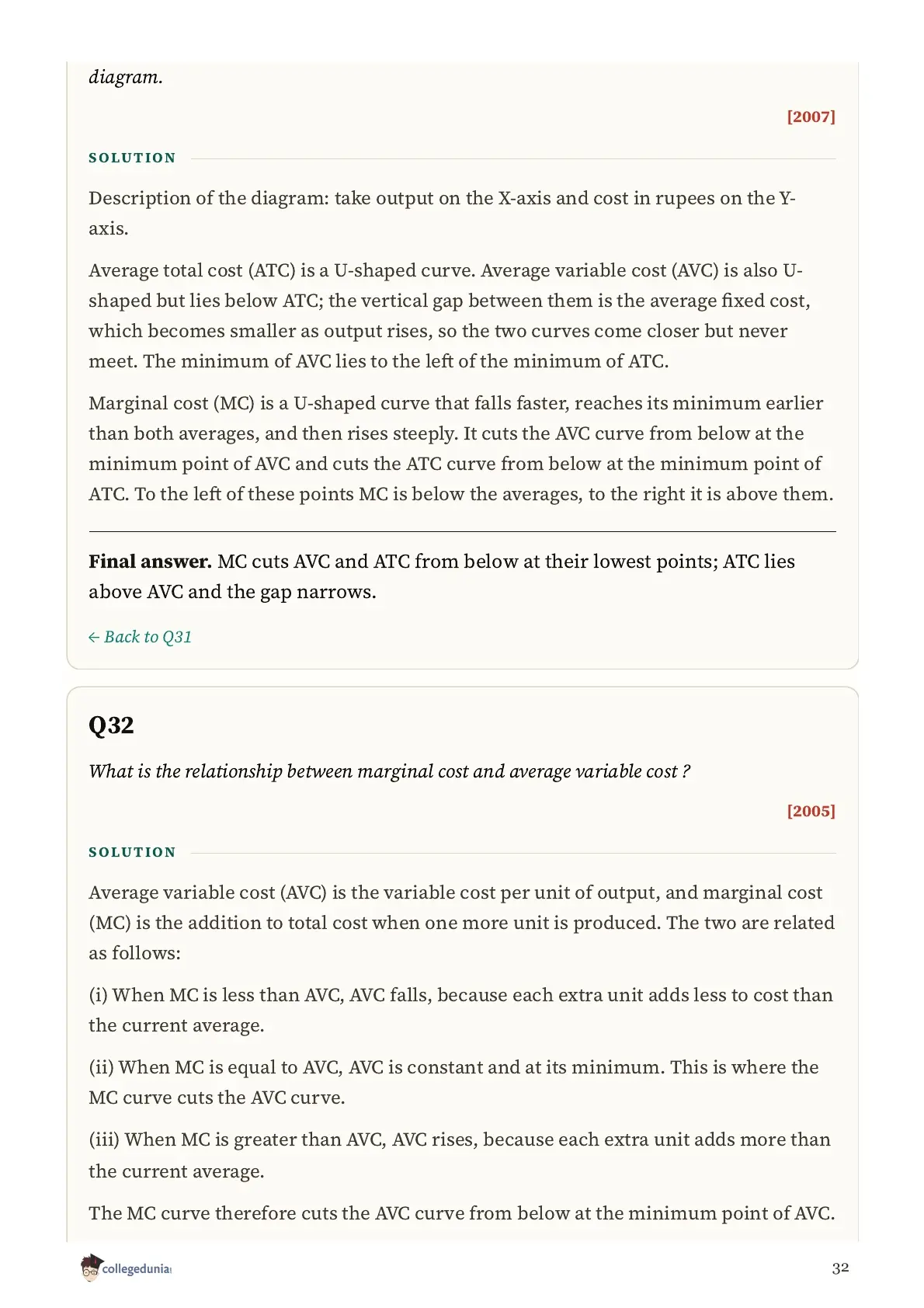
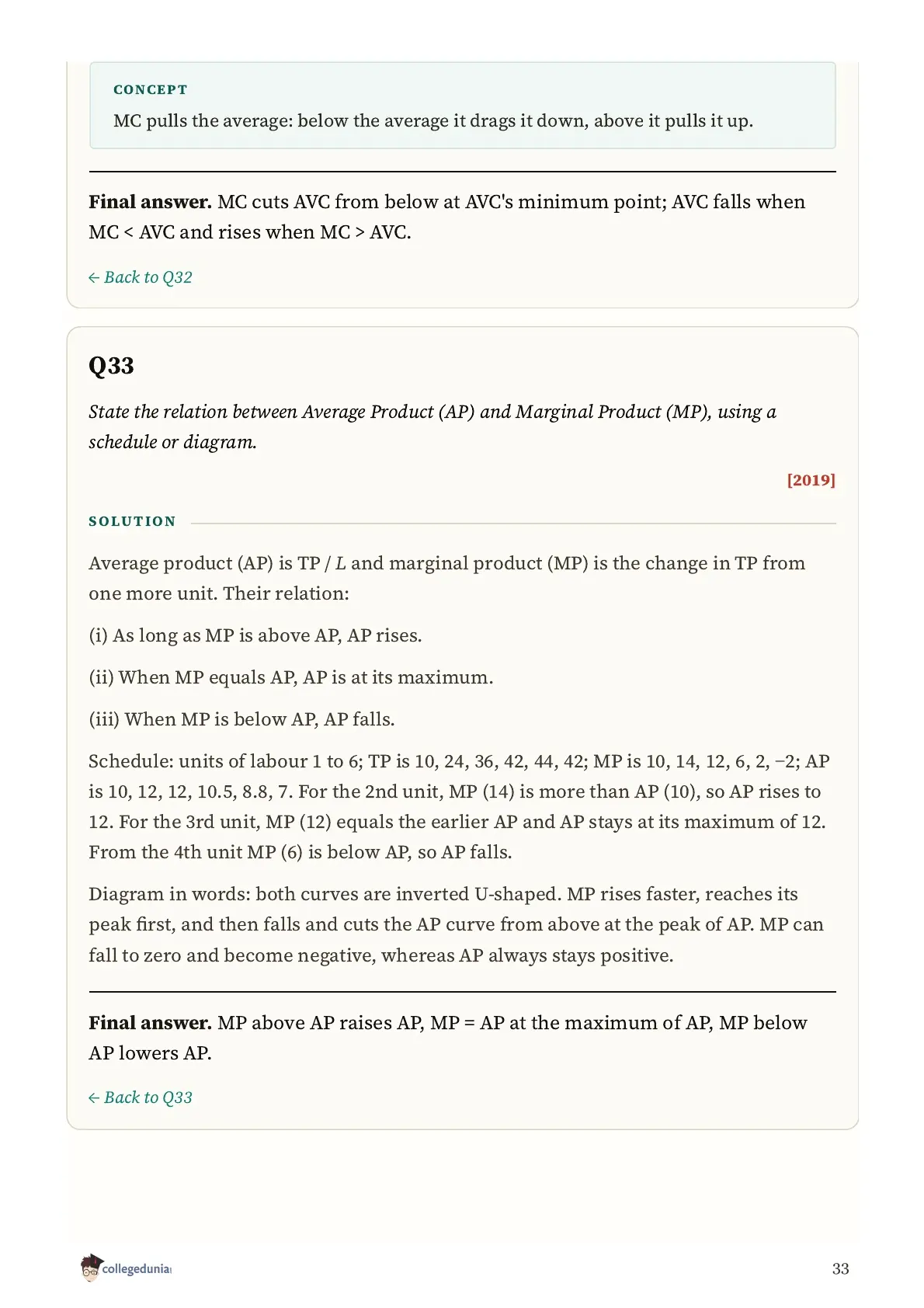
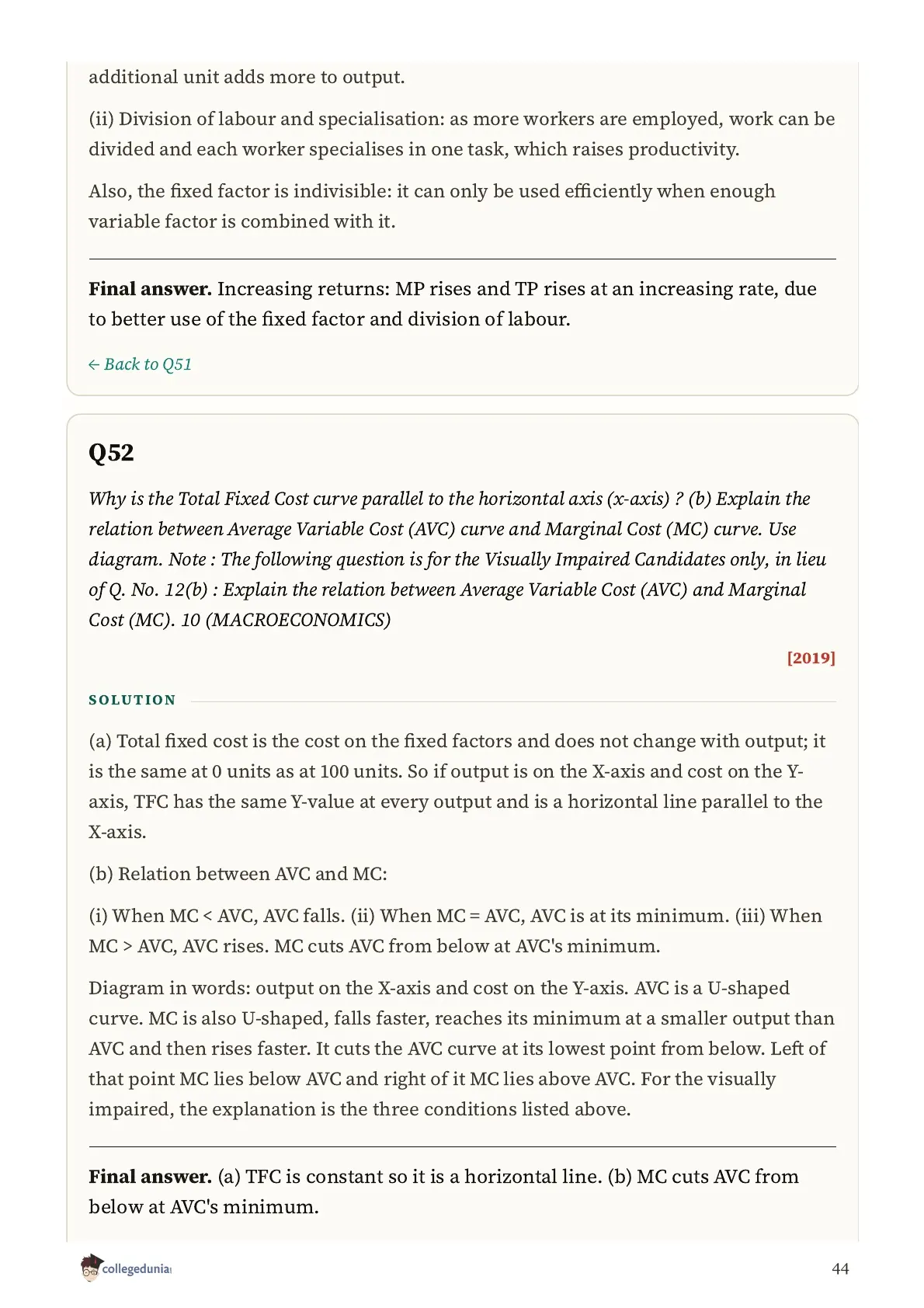
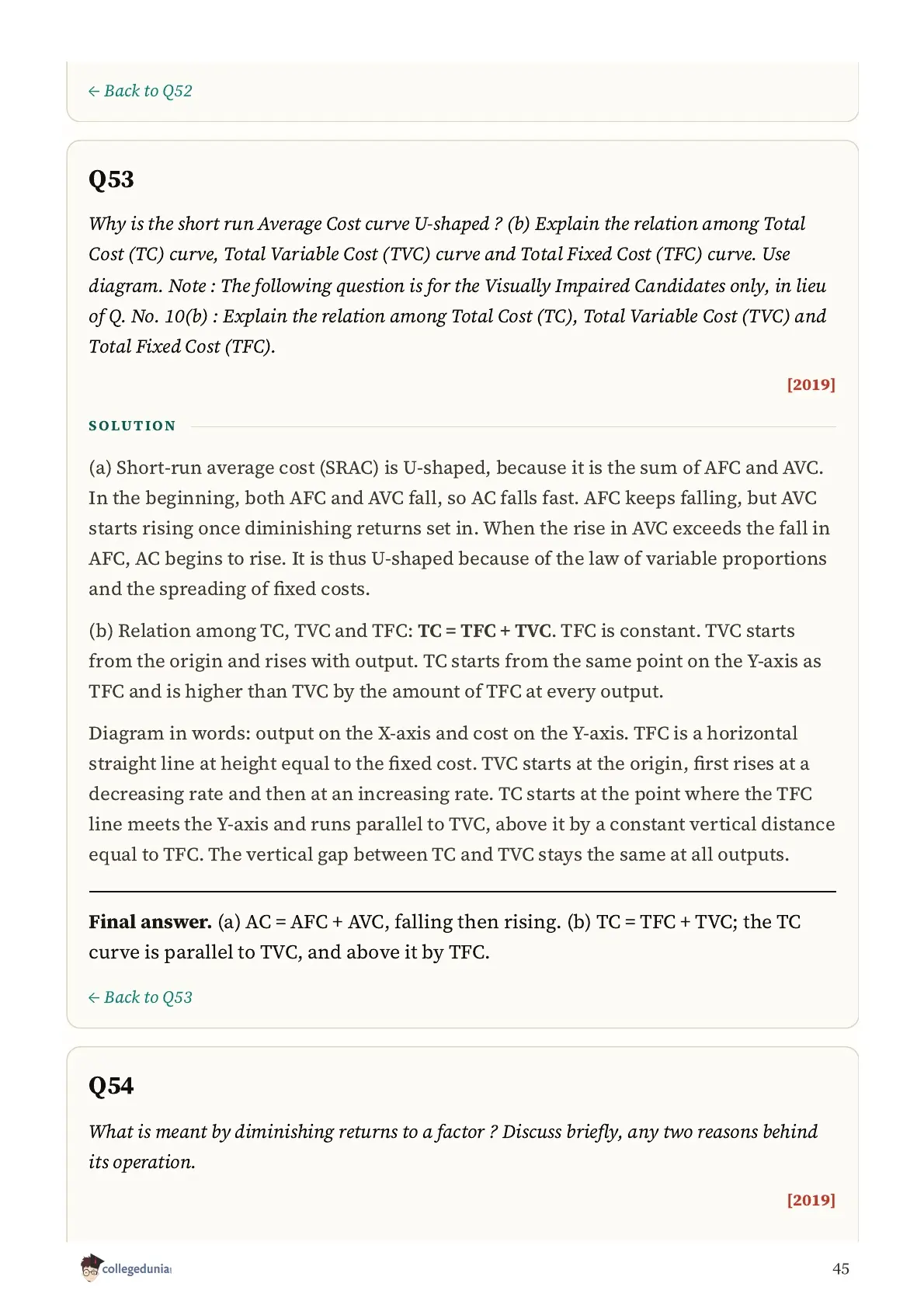
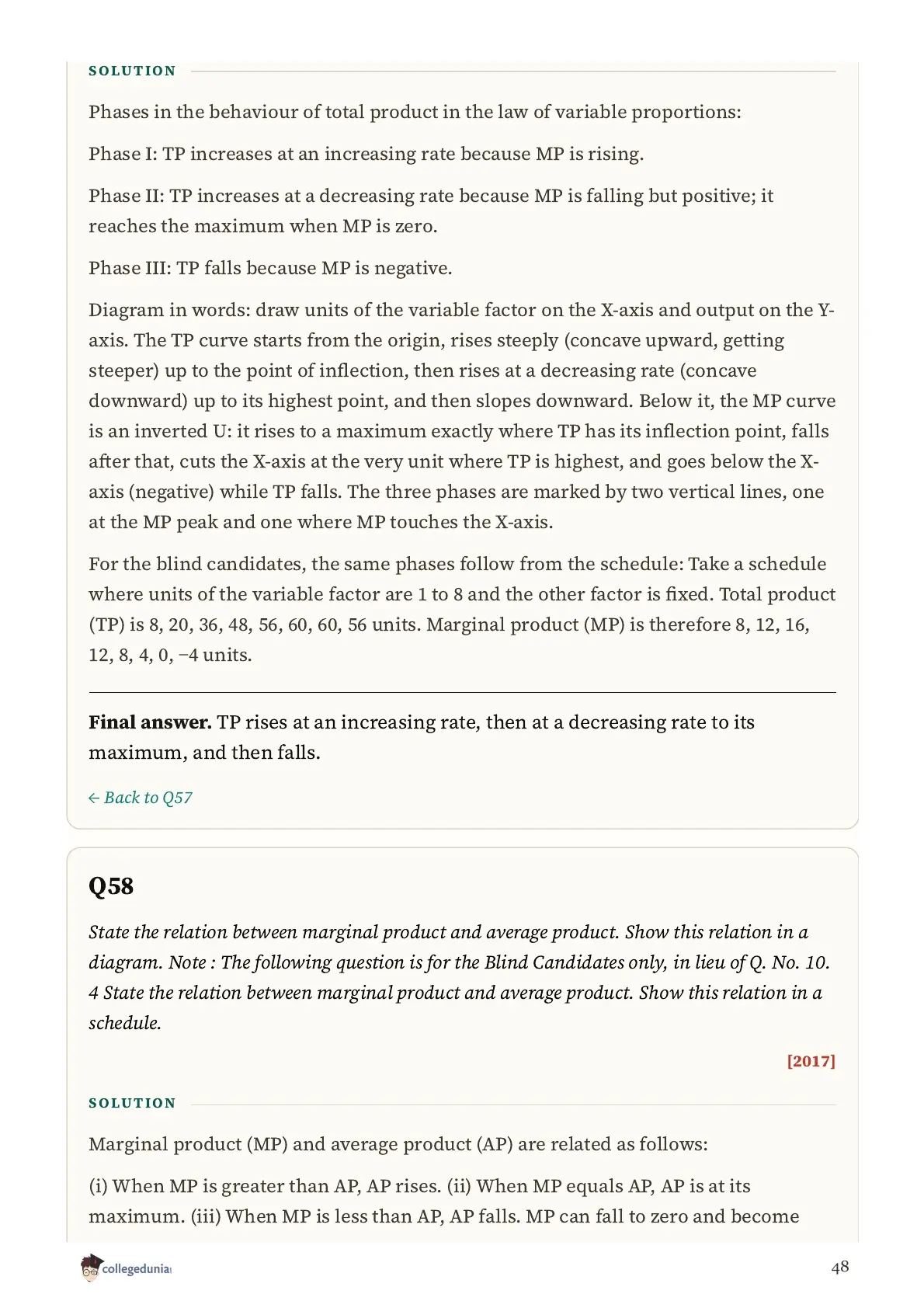
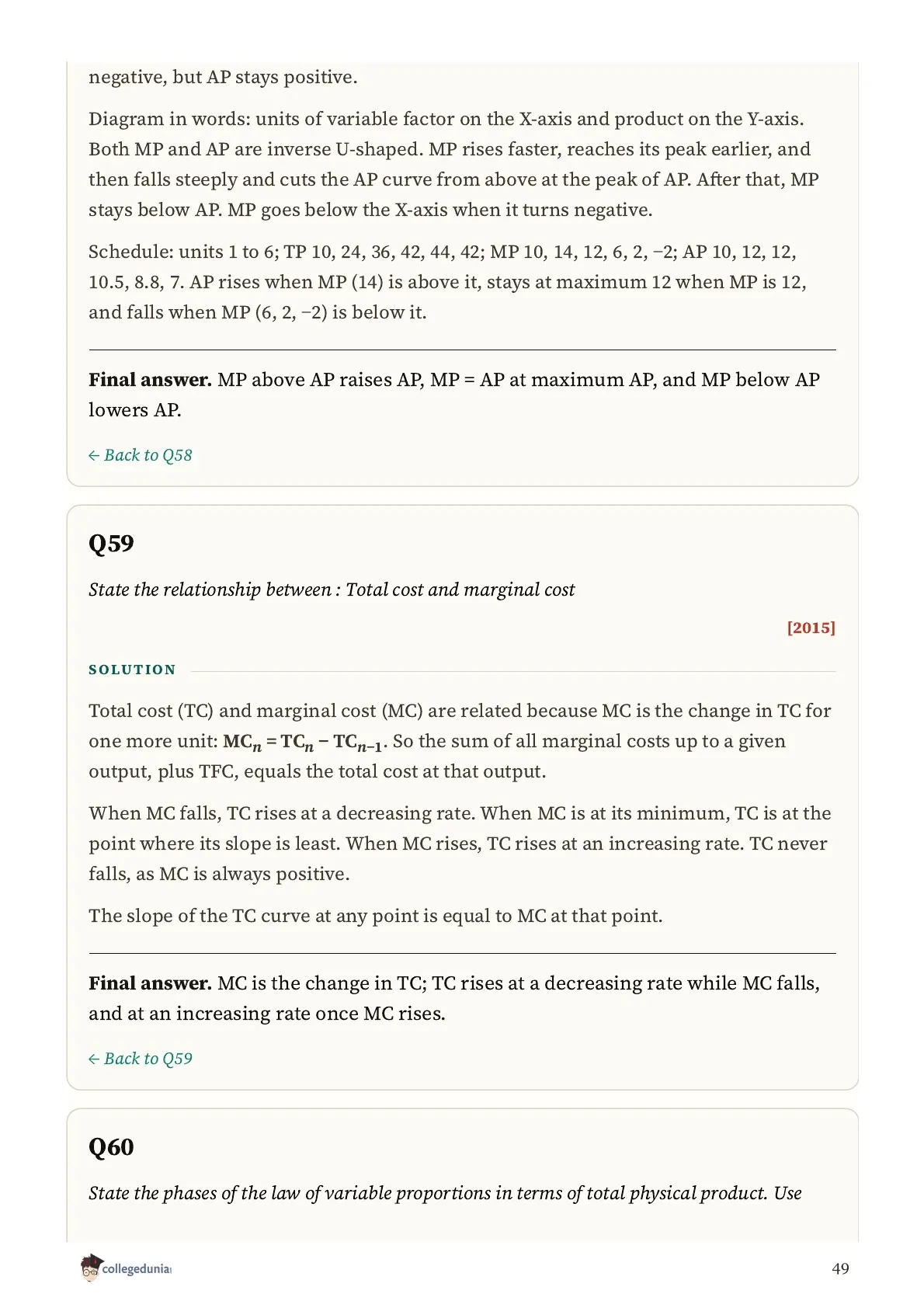
11 questions ask how two curves are related: marginal cost with average cost or average variable cost, average product with marginal product, and total cost with marginal cost. 5 mention a U-shaped or inverted U curve. The counts come from keyword matches, so a question on two topics is counted under both.
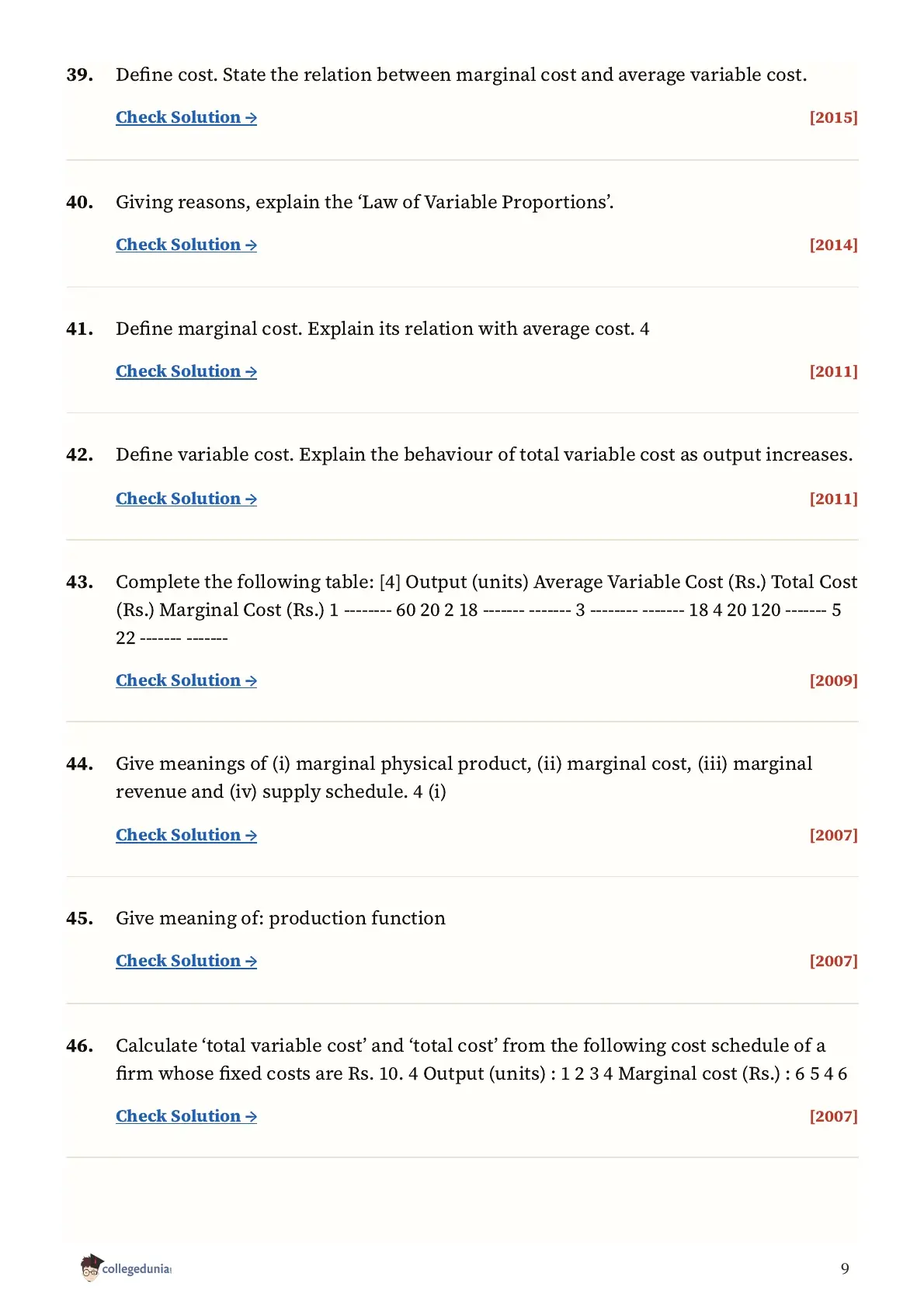
3 questions are numerical: completing a cost table from AVC, total cost and marginal cost, finding total variable cost and total cost from a marginal cost schedule with fixed cost of Rs. 10, and identifying the phases from a table of total product. 7 ask for a diagram or a drawn curve, and 5 are true or false with reasons, such as whether the average product and marginal product curves are U-shaped.
Production Function Video Lesson
Source: Next Toppers - 11th Commerce on YouTube
How to Approach the Production and Costs Set
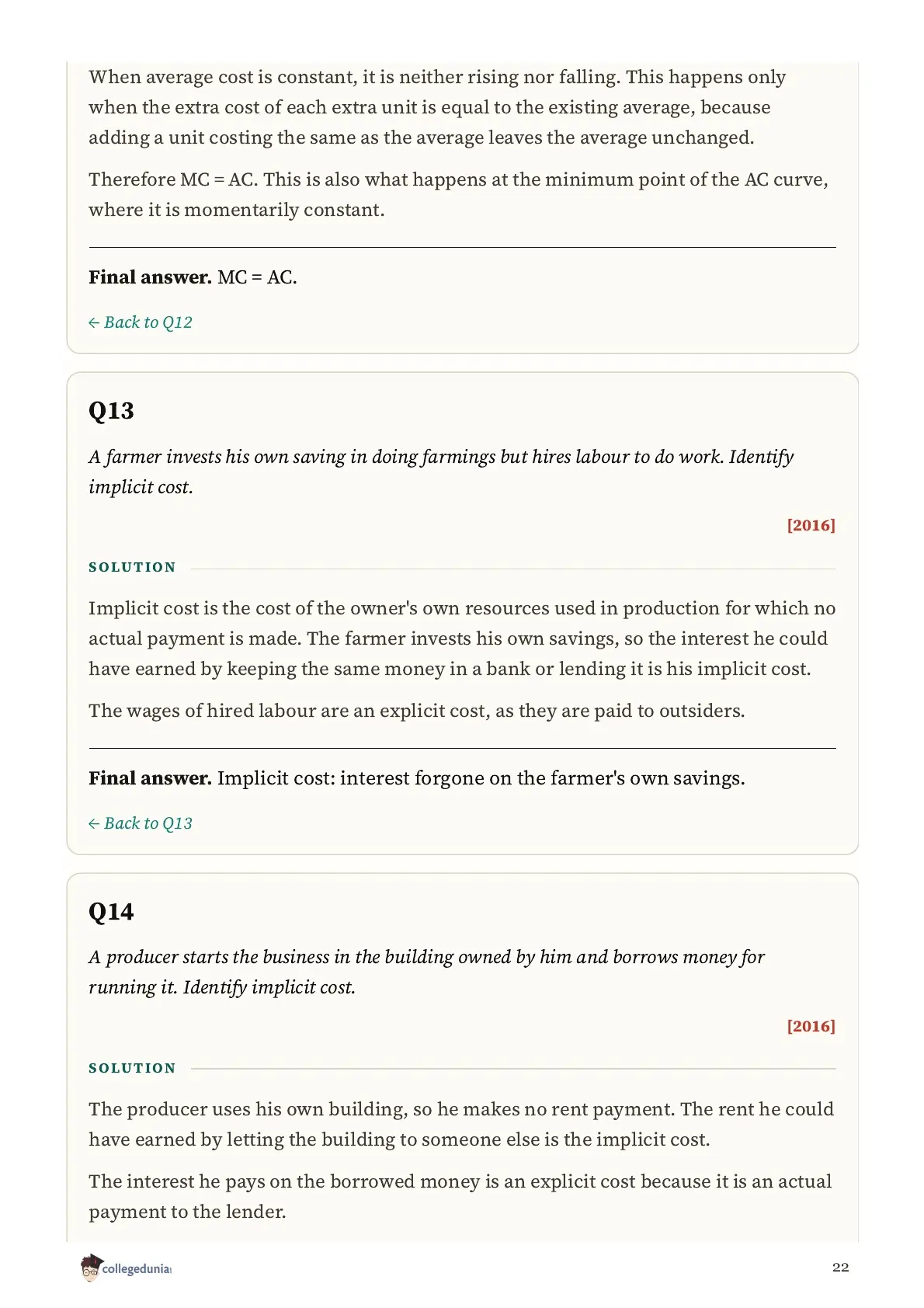
Take the 19 one-mark questions first; they are about 20 minutes of definitions and examples, such as two examples of implicit cost and why AFC falls. Then do the 13 three-mark questions, which mostly ask for one relation each, and sketch the AFC, AVC, ATC and MC curves on one set of axes until the ordering is automatic.
For the 4-mark questions, start with the two cost tables. Work from marginal cost to total variable cost by adding up, then add fixed cost to reach total cost. Save the 6-mark questions for the last sitting. The law of variable proportions answers need a total product curve with its three phases marked, and the cost questions need the diagram the question asks for.
Common Mistakes in Production and Costs Questions
- Calling average product and marginal product U-shaped. Both are inverted U curves; the cost curves are the U-shaped ones.
- Drawing the marginal cost curve so that it misses the minimum points. It cuts AVC and AC at their lowest points.
- Marking interest on a loan as an implicit cost. Implicit cost is the value of the owner's own resources, such as the rent of the building he owns.
- Choosing "falls" when asked what marginal cost does as average cost falls. It may fall or rise, but it stays below average cost.
- Drawing total fixed cost as a rising line. It is horizontal, and the gap between TC and TVC stays equal to it.
- Describing returns to a factor and returns to scale as the same thing. One input changes in the first, all inputs in the second.
Using the Answer Key and Solutions
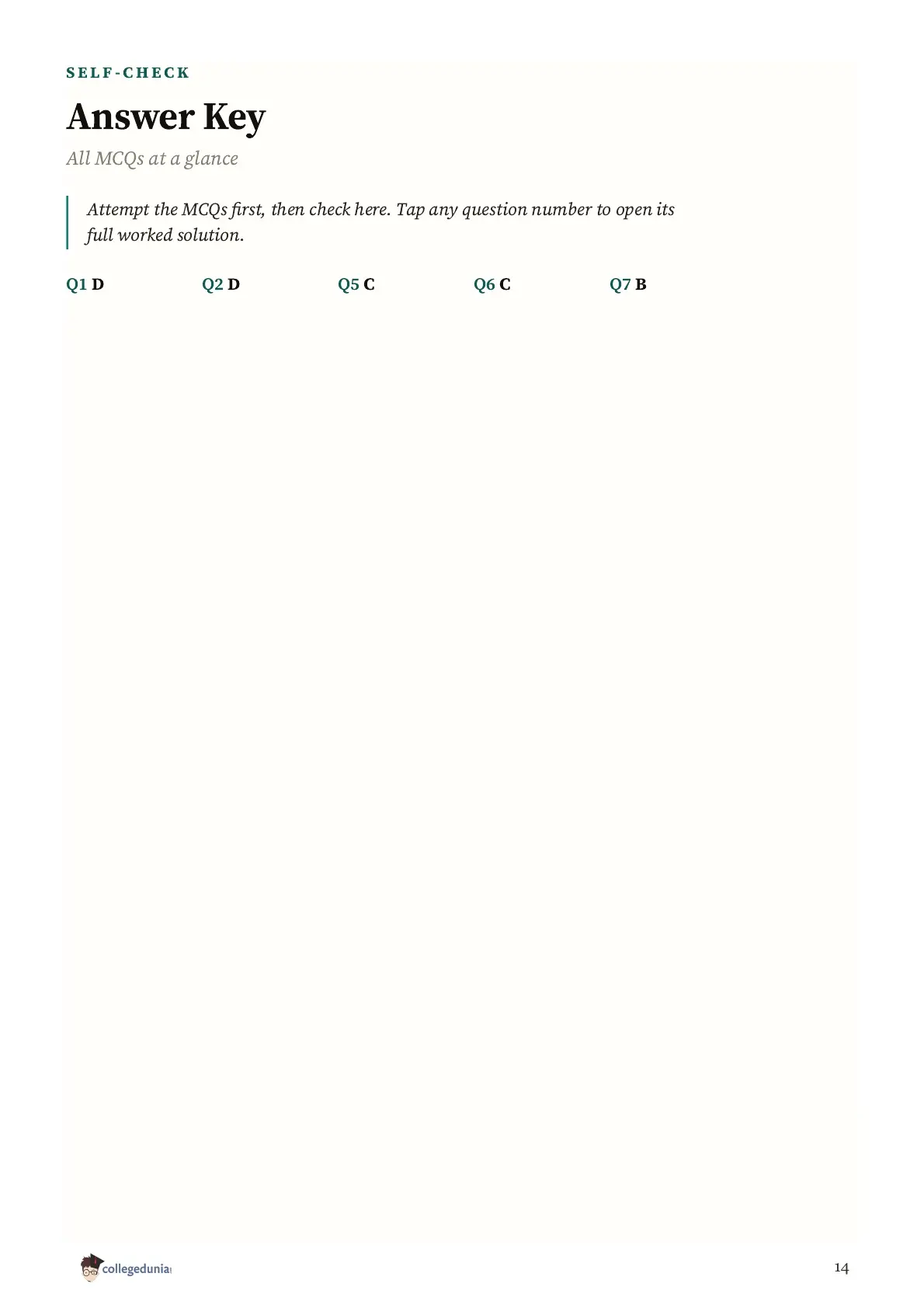
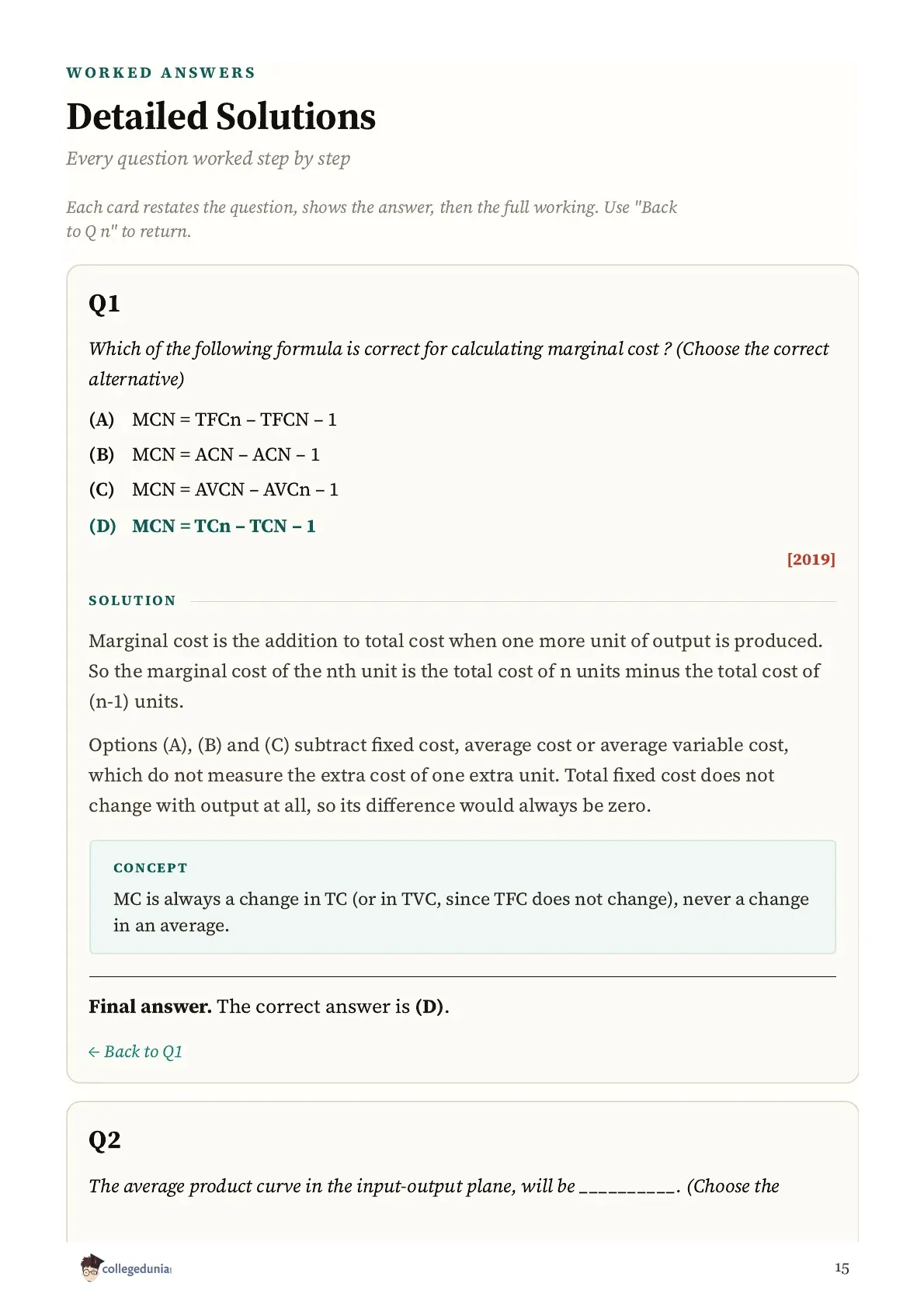
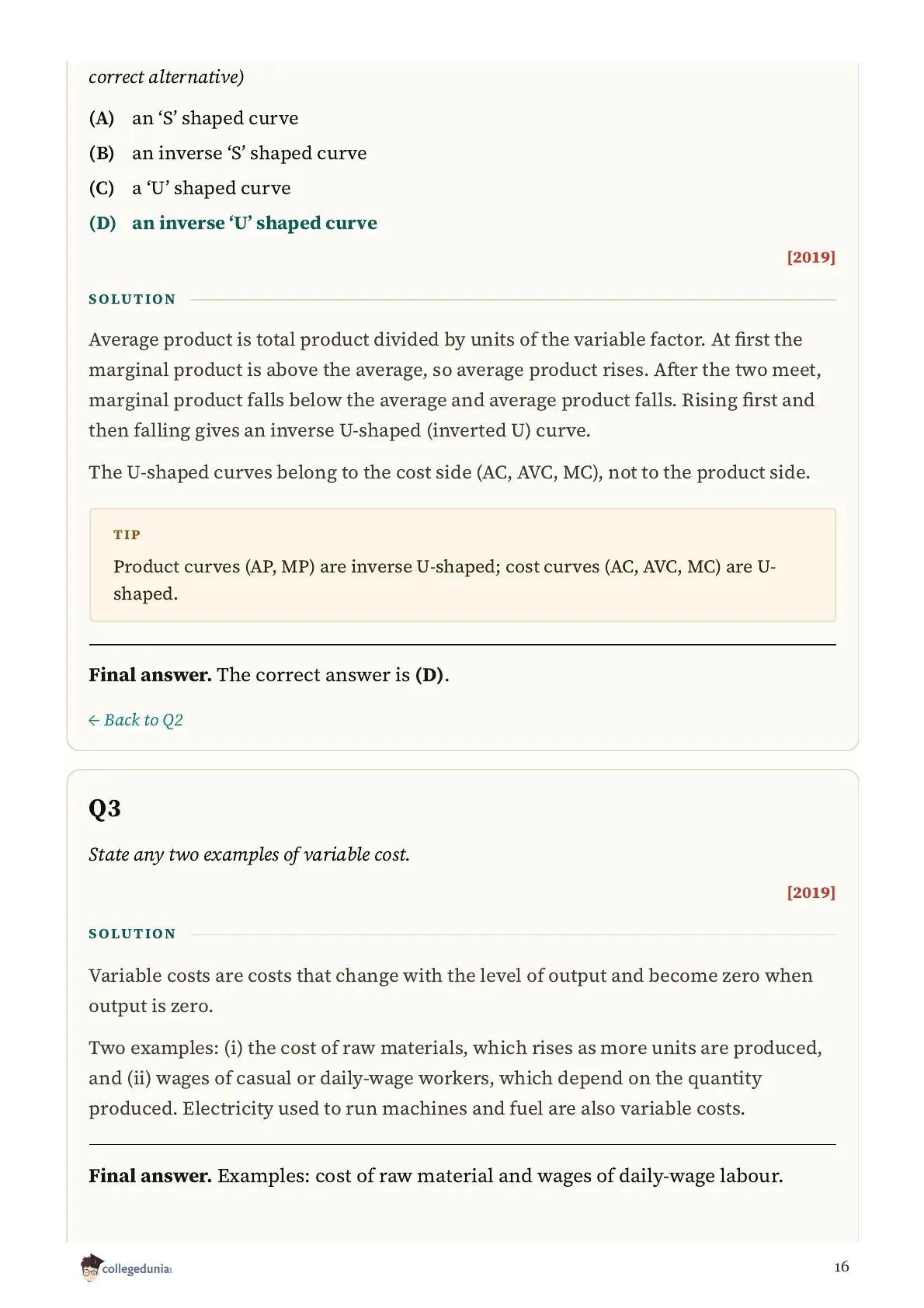
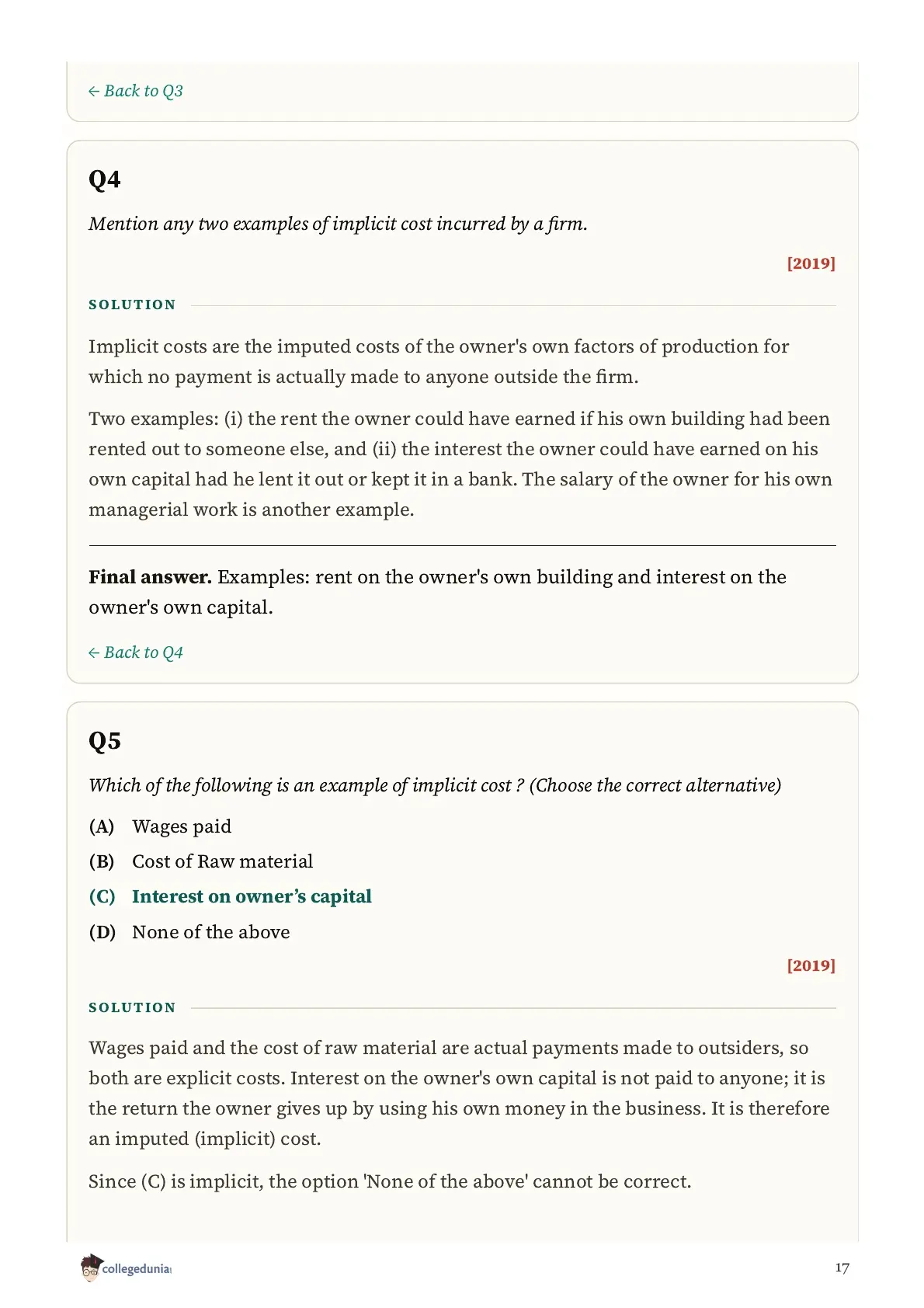
The PDF is 51 pages and free to download. Questions are grouped by marks, each links to its worked solution and back, and the Answer Key lists the MCQ answers at a glance. Attempt a group first, check the key, then read the solution. The solutions are written by Collegedunia's Economics experts and are not official CBSE marking schemes.
Class 12 Economics PYQs by Chapter
| Chapter | PYQ Page |
|---|---|
| Macro Chapter 1 | Macro Chapter 1: Introduction to Macroeconomics Class 12 PYQ |
| Macro Chapter 2 | Macro Chapter 2: National Income Accounting Class 12 PYQ |
| Macro Chapter 3 | Macro Chapter 3: Money and Banking Class 12 PYQ |
| Macro Chapter 4 | Macro Chapter 4: Determination of Income and Employment Class 12 PYQ |
| Macro Chapter 5 | Macro Chapter 5: Government Budget and the Economy Class 12 PYQ |
| Macro Chapter 6 | Macro Chapter 6: Open Economy Macroeconomics Class 12 PYQ |
| Micro Chapter 1 | Micro Chapter 1: Introduction to Microeconomics Class 12 PYQ |
| Micro Chapter 2 | Micro Chapter 2: Theory of Consumer Behaviour Class 12 PYQ |
| Micro Chapter 3 | Micro Chapter 3: Production and Costs Class 12 PYQ |
| Micro Chapter 4 | Micro Chapter 4: The Theory of the Firm under Perfect Competition Class 12 PYQ |
| Micro Chapter 5 | Micro Chapter 5: Market Equilibrium Class 12 PYQ |
Production and Costs Class 12 Economics PYQ FAQs
Ques. How many questions are in the Production and Costs Class 12 PYQ PDF?
Ans. The PDF has 61 questions from papers between 2005 and 2019: 19 one-mark questions, 13 three-mark questions, 16 four-mark questions and 13 six-mark questions.
Ques. Does this PYQ PDF include solutions, or only the questions?
Ans. Yes. All 61 questions have a worked solution in the PDF, and the MCQs also have an Answer Key.
Ques. Are the solutions official?
Ans. No. They are written by Collegedunia's Economics experts and are not an official CBSE marking scheme.
Ques. How many marks did Production and Costs carry in the Class 12 board paper?
Ans. It belonged to the Microeconomics part of the older board pattern. The paper listed for 2026-27 does not have a Microeconomics part, and no official chapter-wise marks figure is available for the old pattern.
Ques. What are the three phases of the law of variable proportions?
Ans. Total product rises at an increasing rate, then at a decreasing rate, and finally falls as marginal product turns negative. 4 questions in this set ask for the phases, each with a schedule, a table or a diagram.
Ques. What is the difference between explicit and implicit cost?
Ans. Explicit cost is a payment made to outsiders, such as wages or rent paid. Implicit cost is the value of the owner's own resources, such as interest on his capital. 8 questions in this set are on the two.
Ques. Why is the short run marginal cost curve U-shaped?
Ans. Marginal cost first falls as increasing returns to a factor set in, then rises once diminishing returns begin. 3 questions in this set ask why the AVC, short run marginal cost or short run average cost curve is U-shaped, and 5 mention a U-shaped curve in all.
Ques. How is marginal cost related to average cost?
Ans. When marginal cost is below average cost, average cost falls; when it is above, average cost rises; and marginal cost cuts average cost at its minimum. 11 questions in this set ask for a relation between two curves.



Comments