




NCERT Handwritten Notes for Class 11 Entrepreneurship Chapter 4 Entrepreneurship Skills help students revise entrepreneurship meaning, values, attitude, problem-solving, business ideas, market understanding and business planning for the 2026-27 syllabus.
- Resource: Class 11 Entrepreneurship Chapter 4 handwritten revision notes PDF.
- Chapter focus: entrepreneurship, entrepreneur values, idea creation, market survey and planning.
- Revision use: quick definitions, NCERT examples, tables and answer frames.
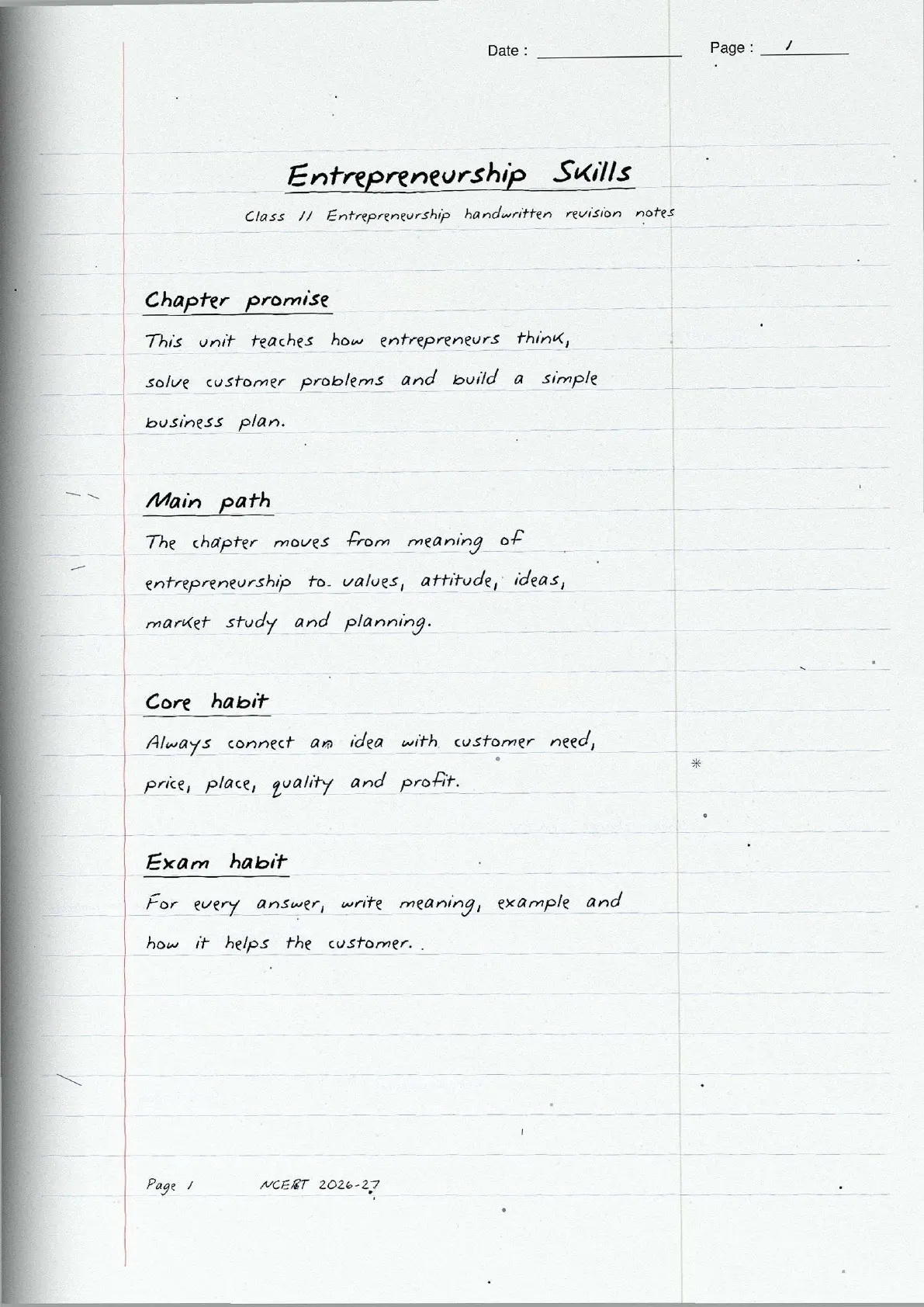
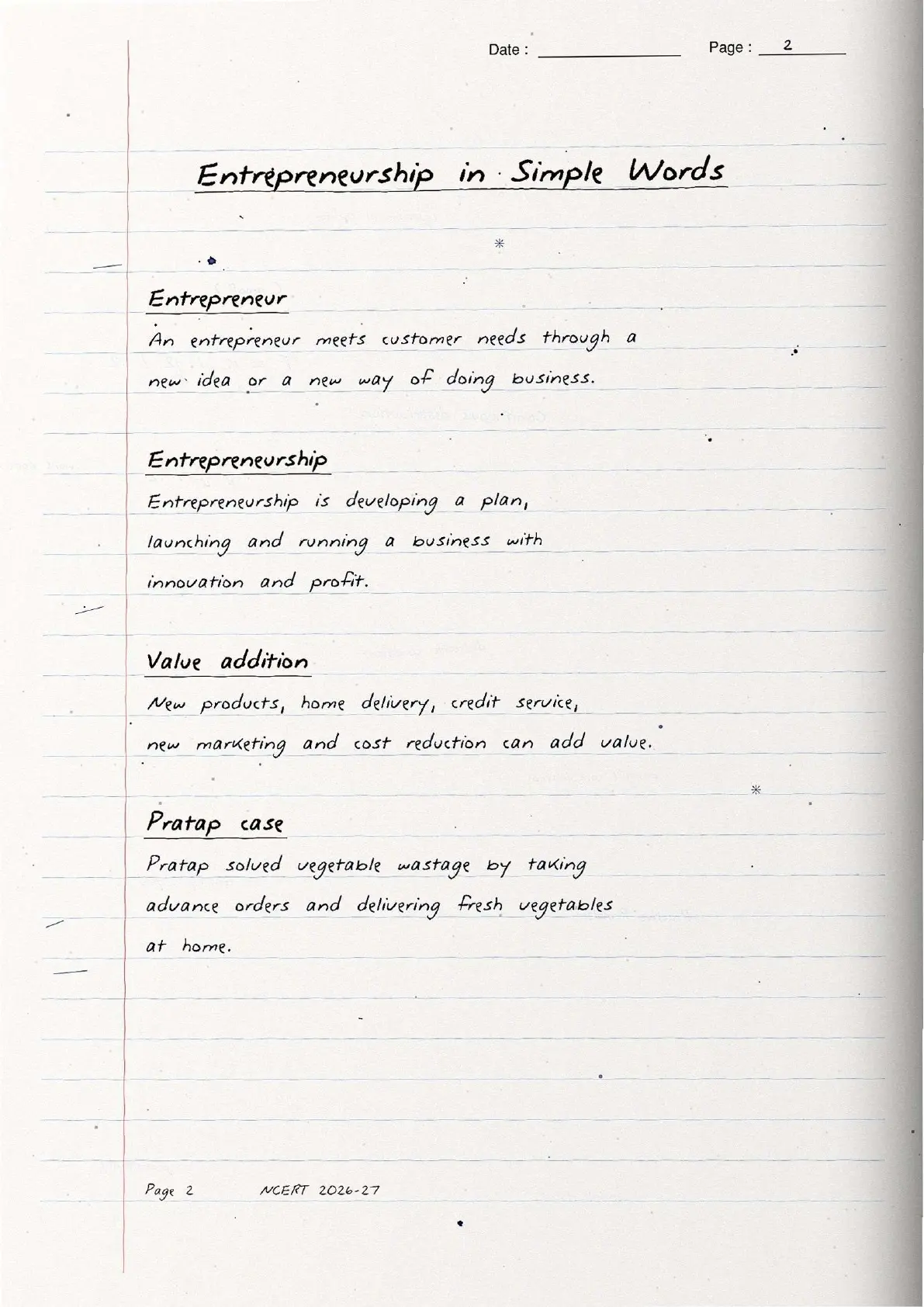
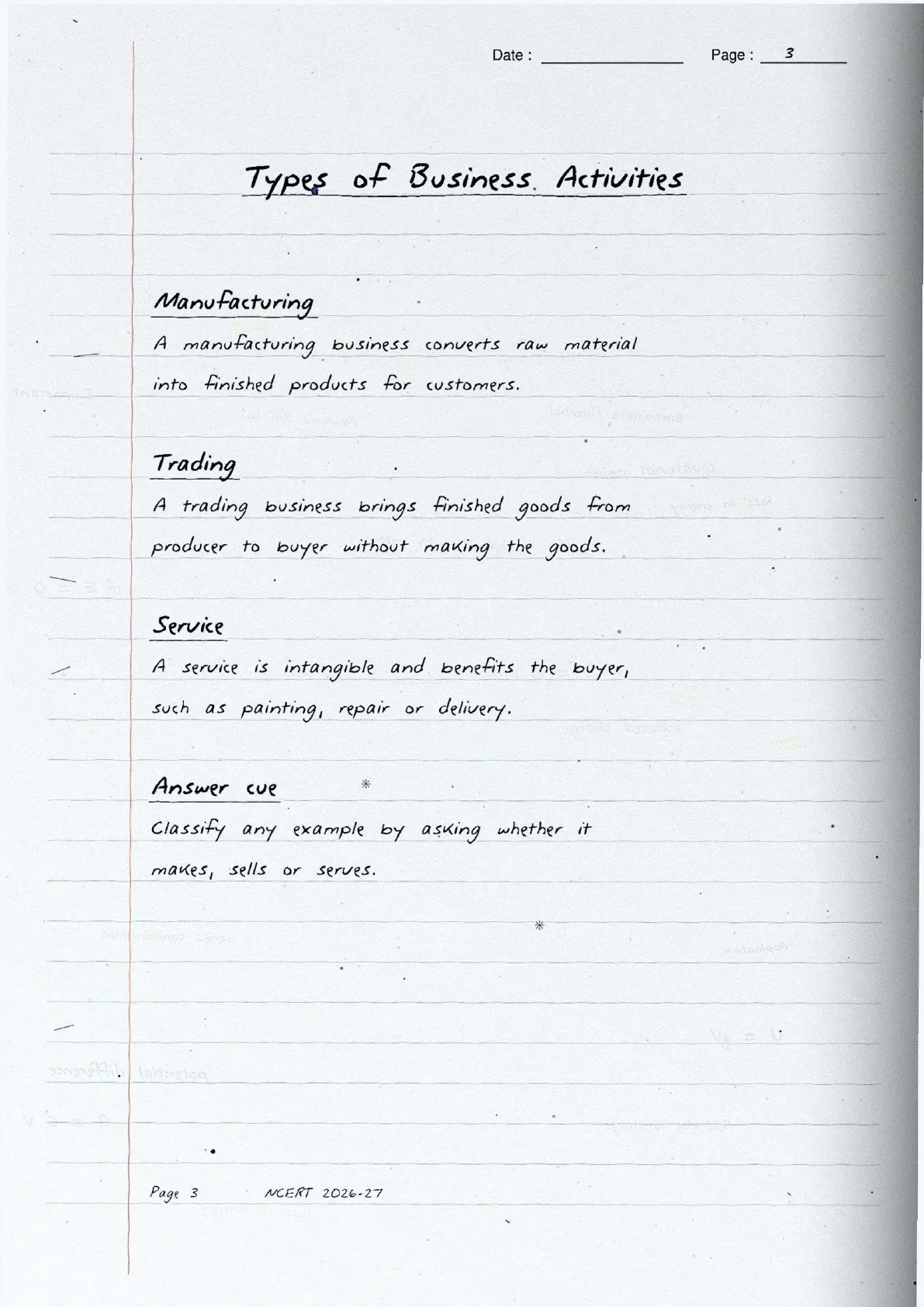
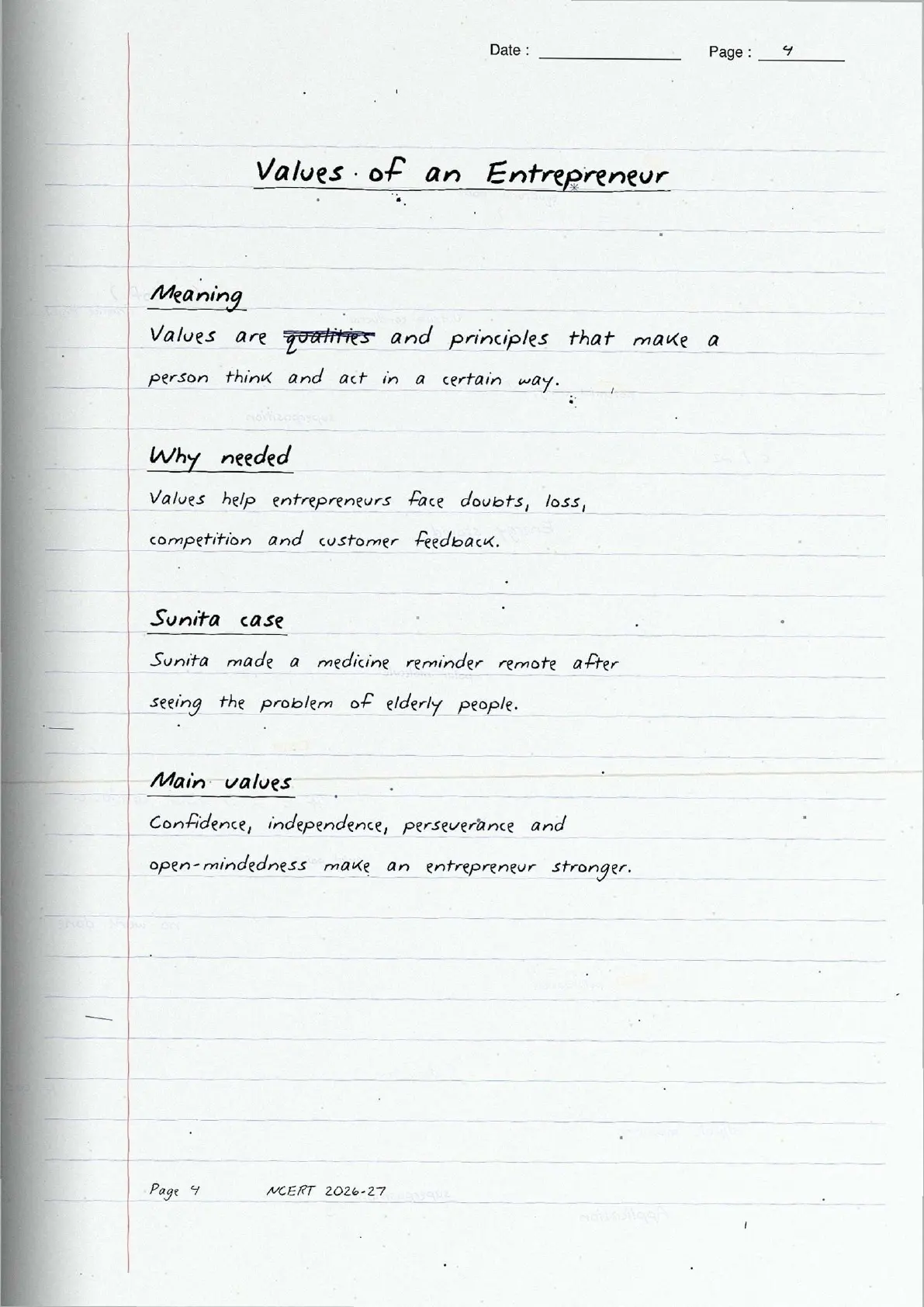
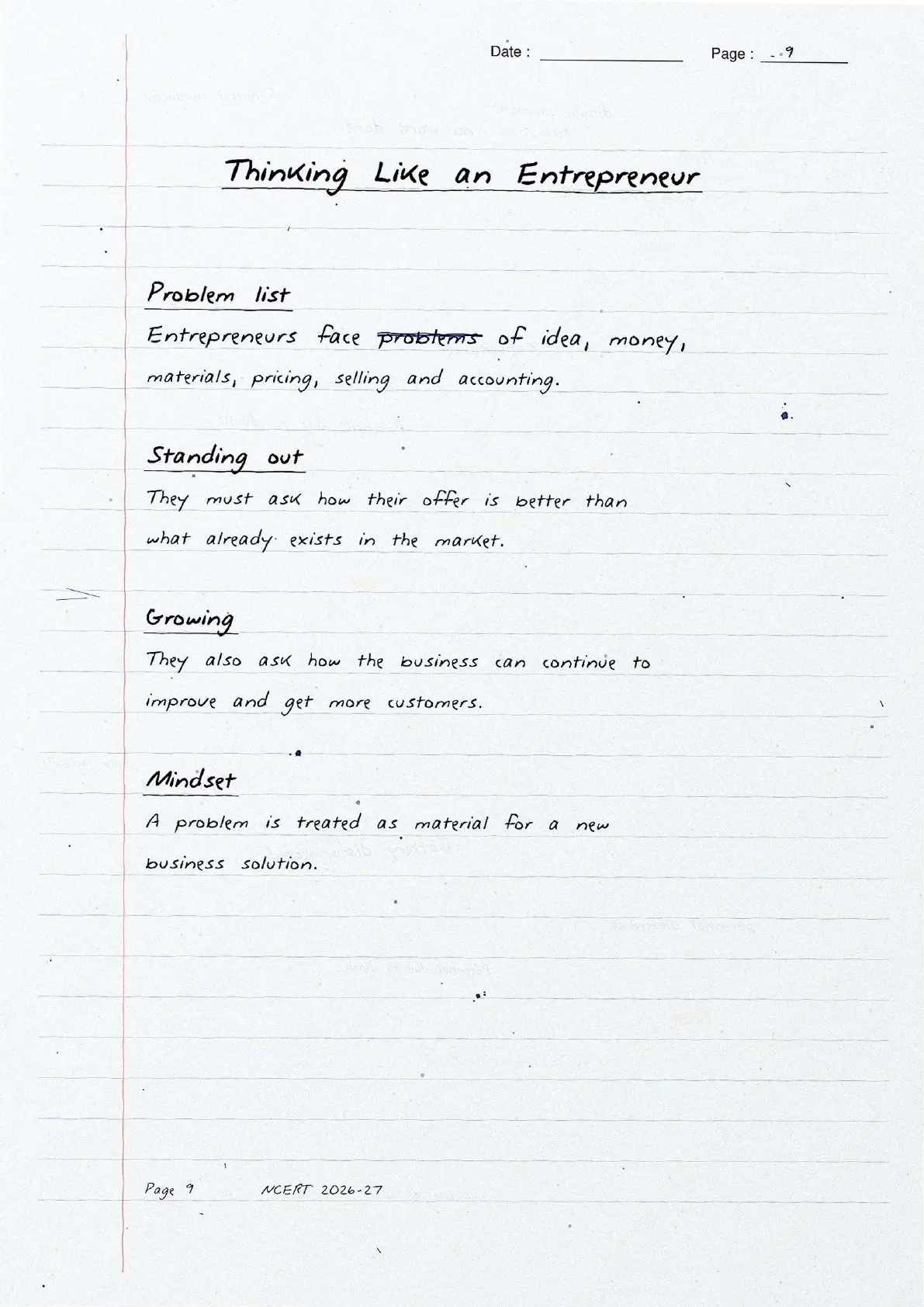
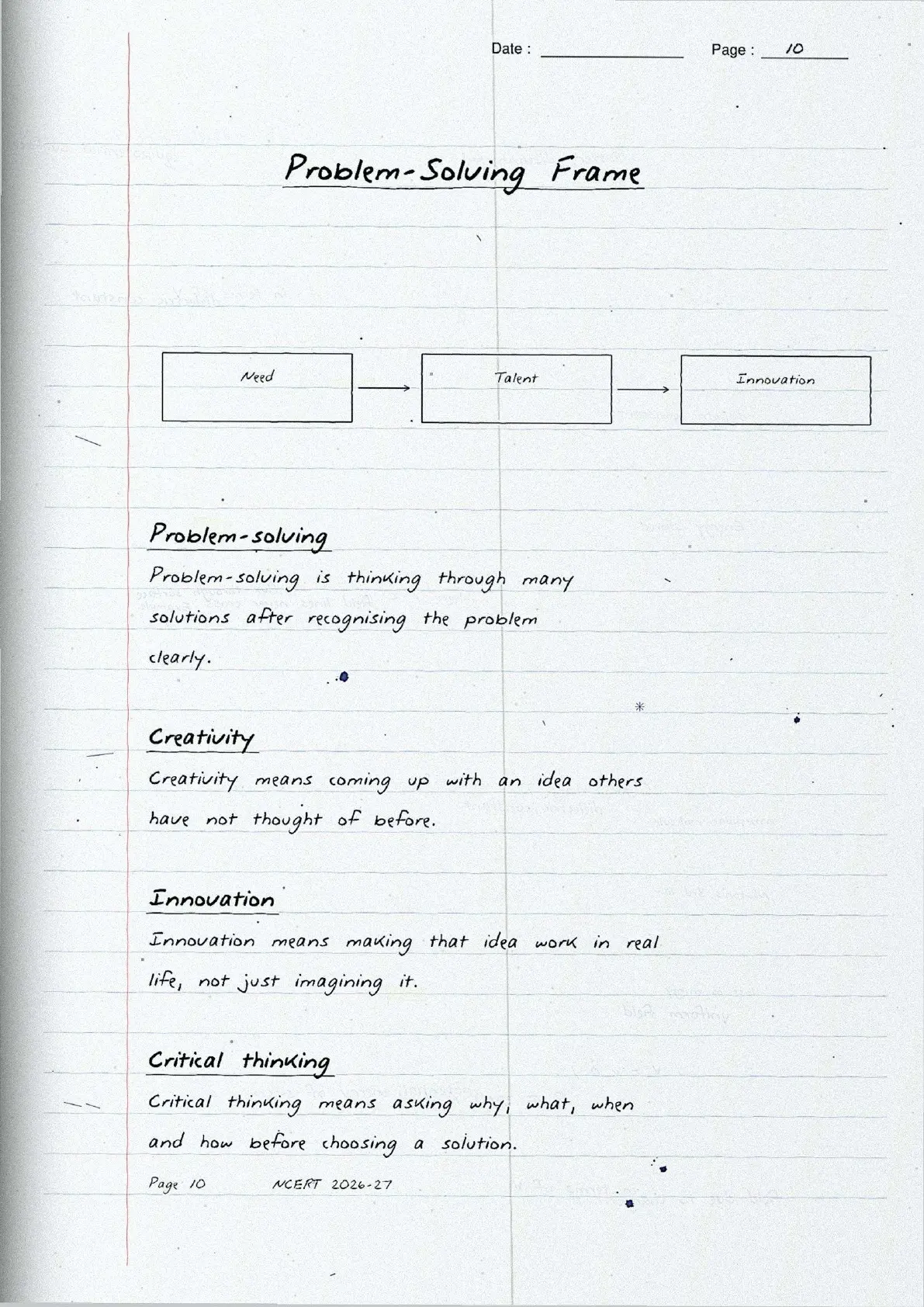
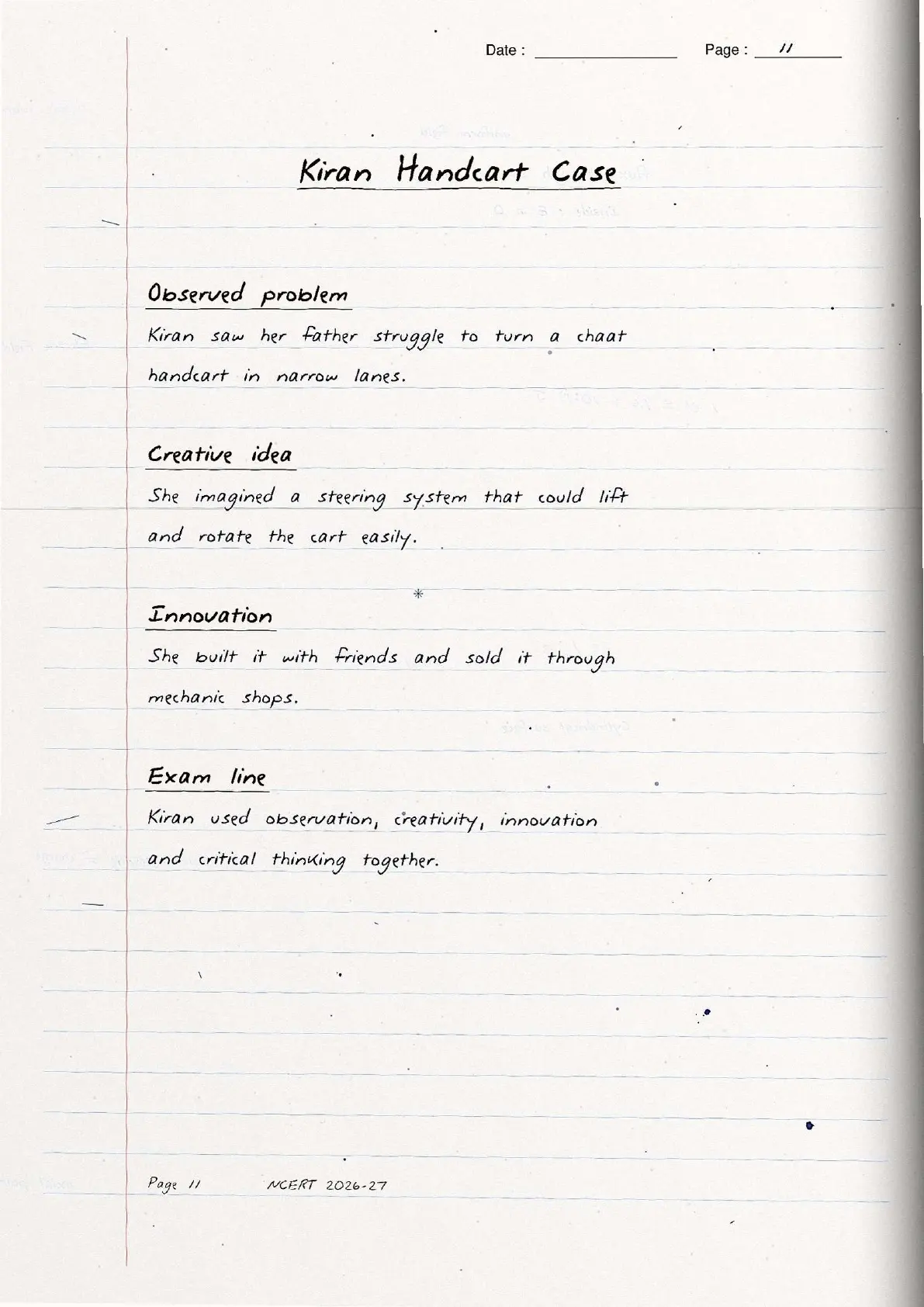
Student Feedback: Students usually revise this unit better when they connect every definition with a customer problem and one NCERT story.
Entrepreneurship Skills Chapter 4 Overview
Class 11 Entrepreneurship Chapter 4 explains how entrepreneurs use new ideas, values and planning to solve customer problems. The handwritten notes organise the full chapter into 22 short pages for fast revision.
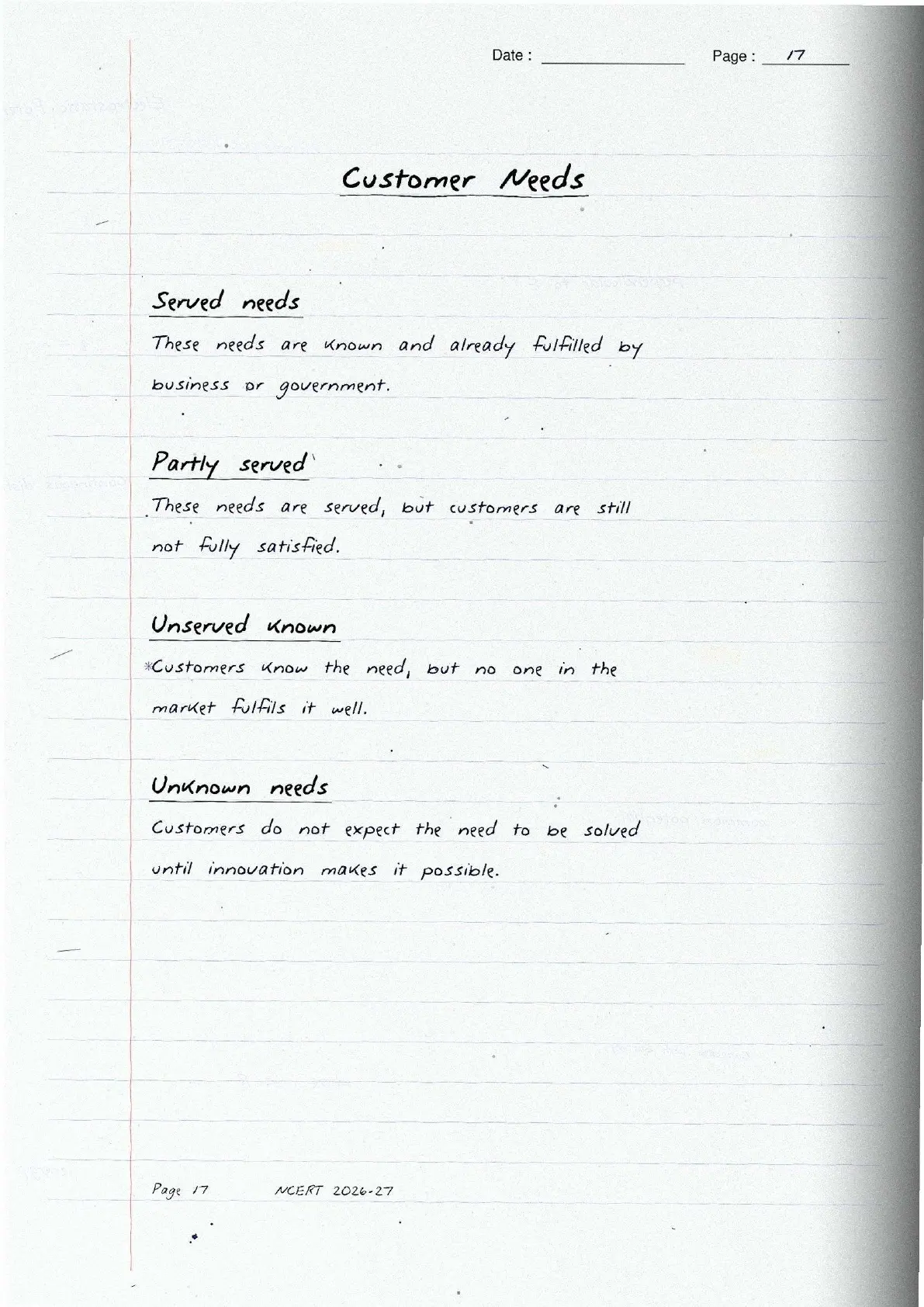
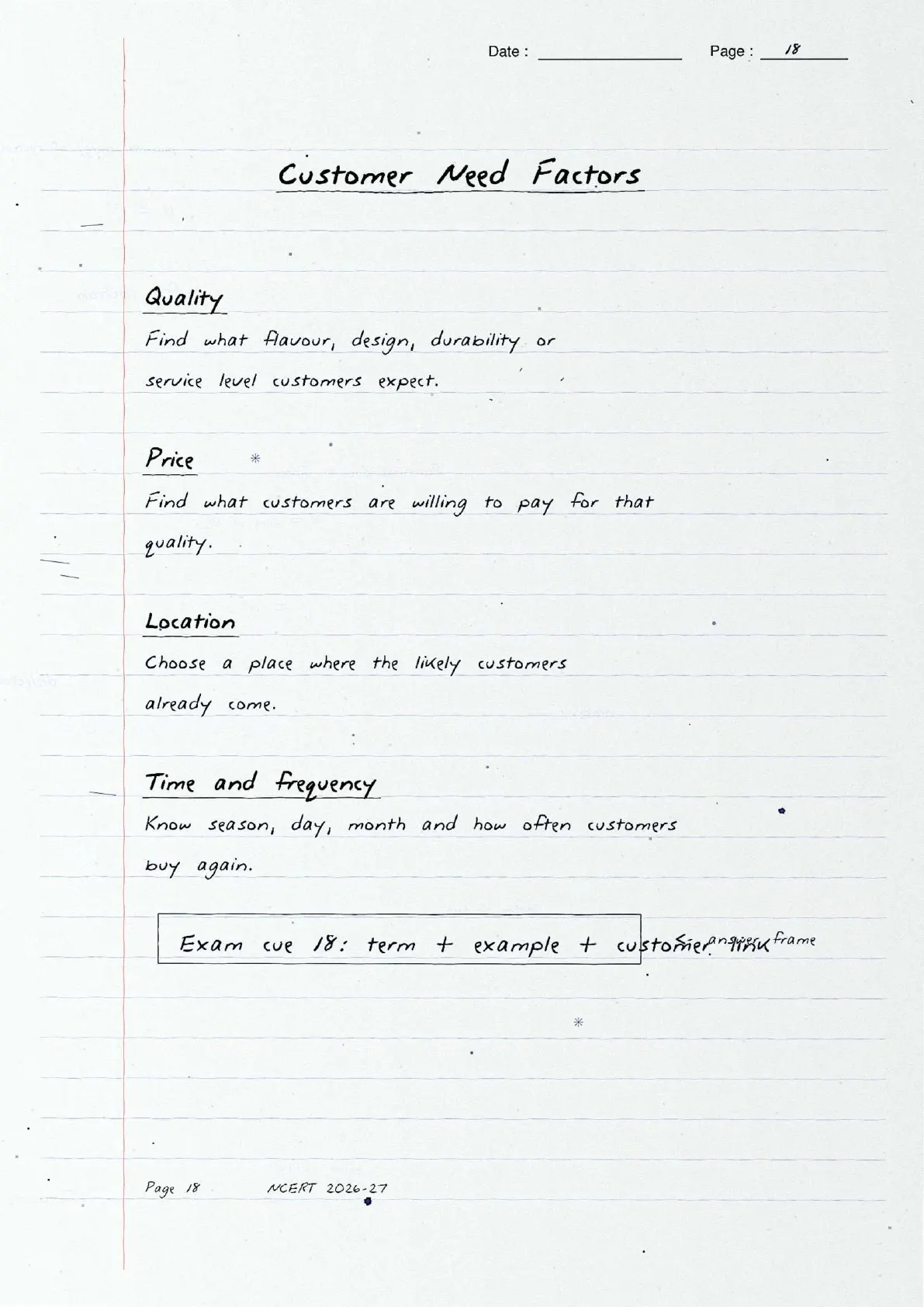
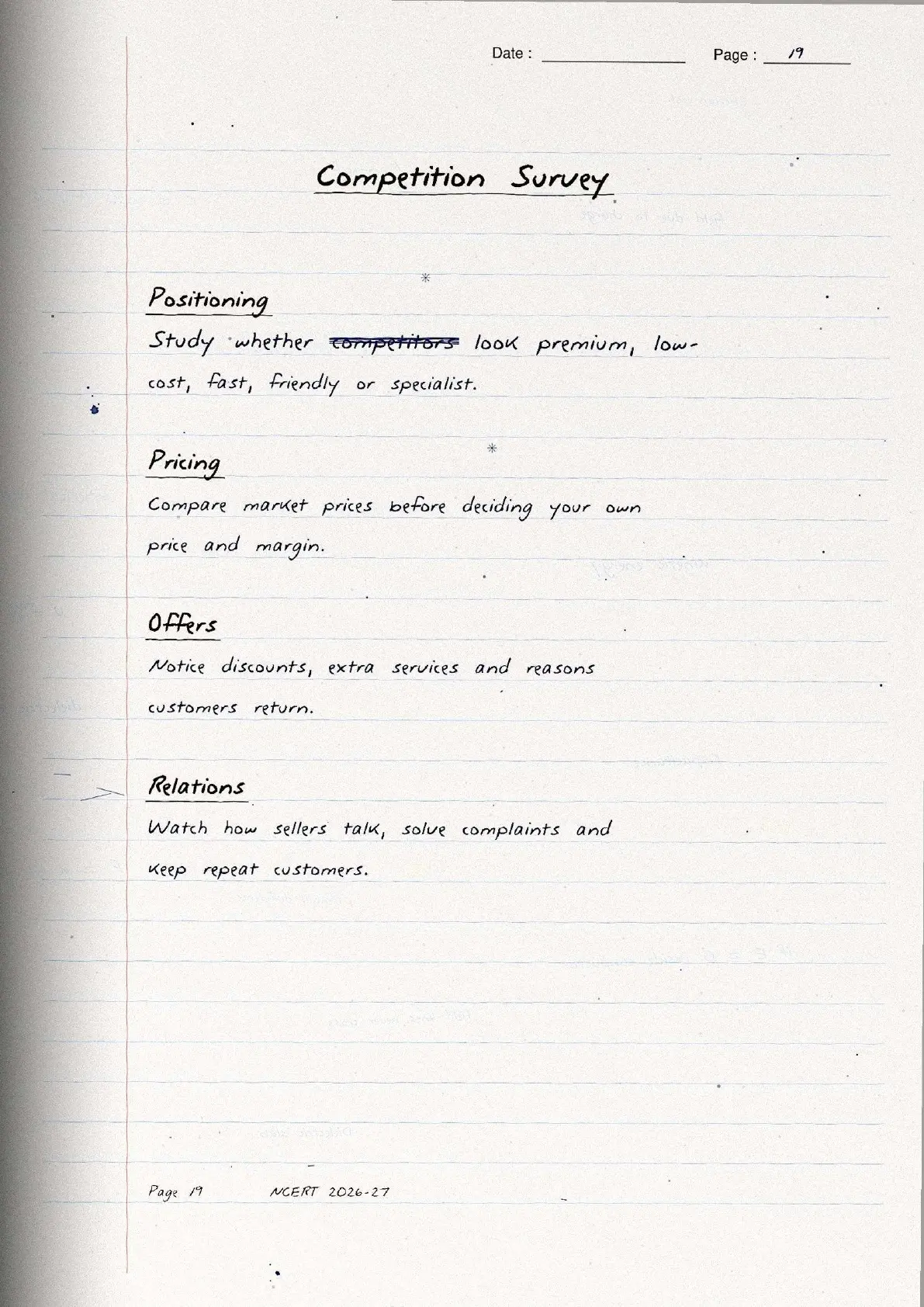
The unit starts with Pratap's vegetable delivery example, then moves to entrepreneur values, entrepreneur attitude, creative problem-solving, business ideas, customer survey, competition survey and business planning.
Entrepreneurship Skills Revision Cycle
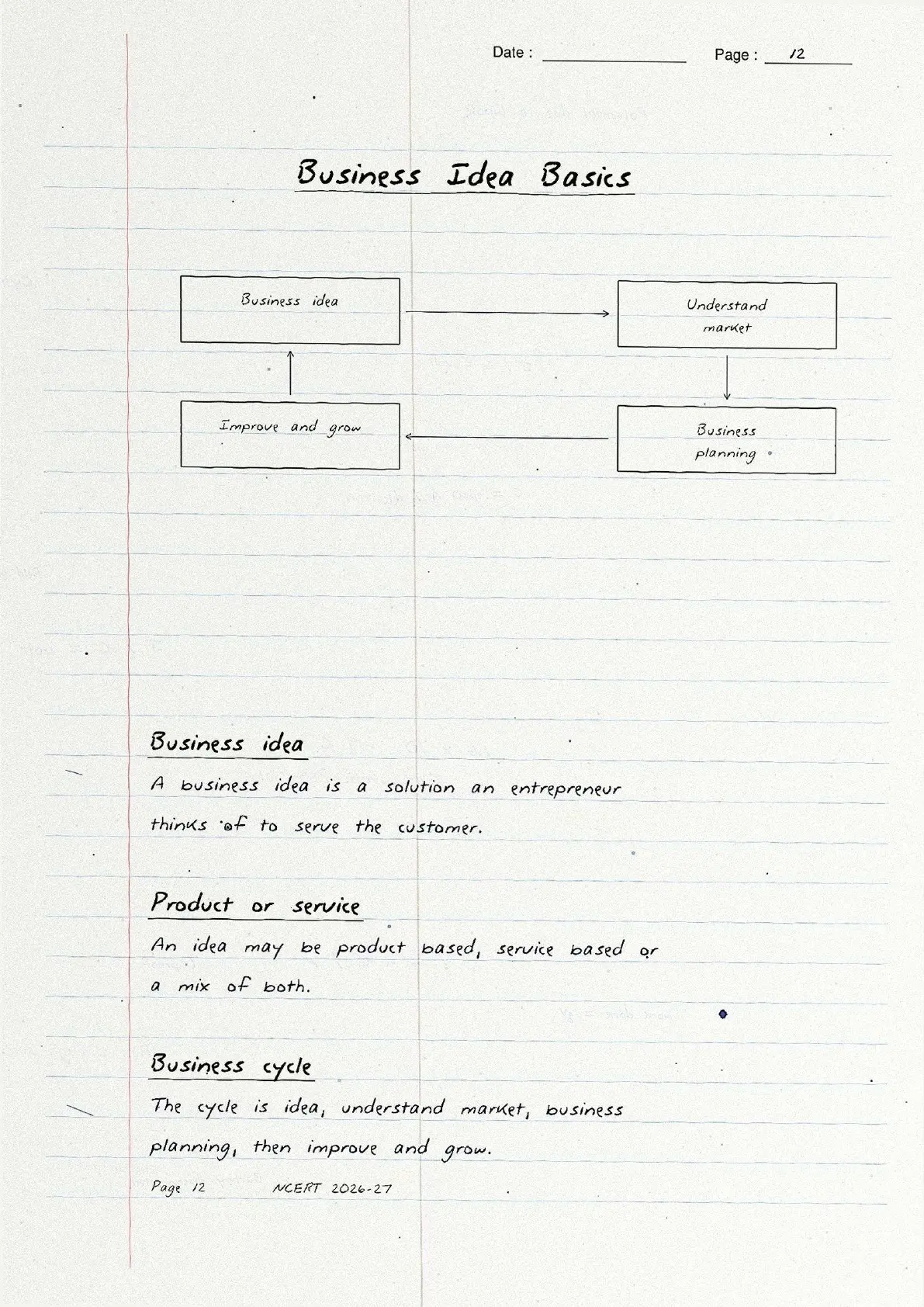
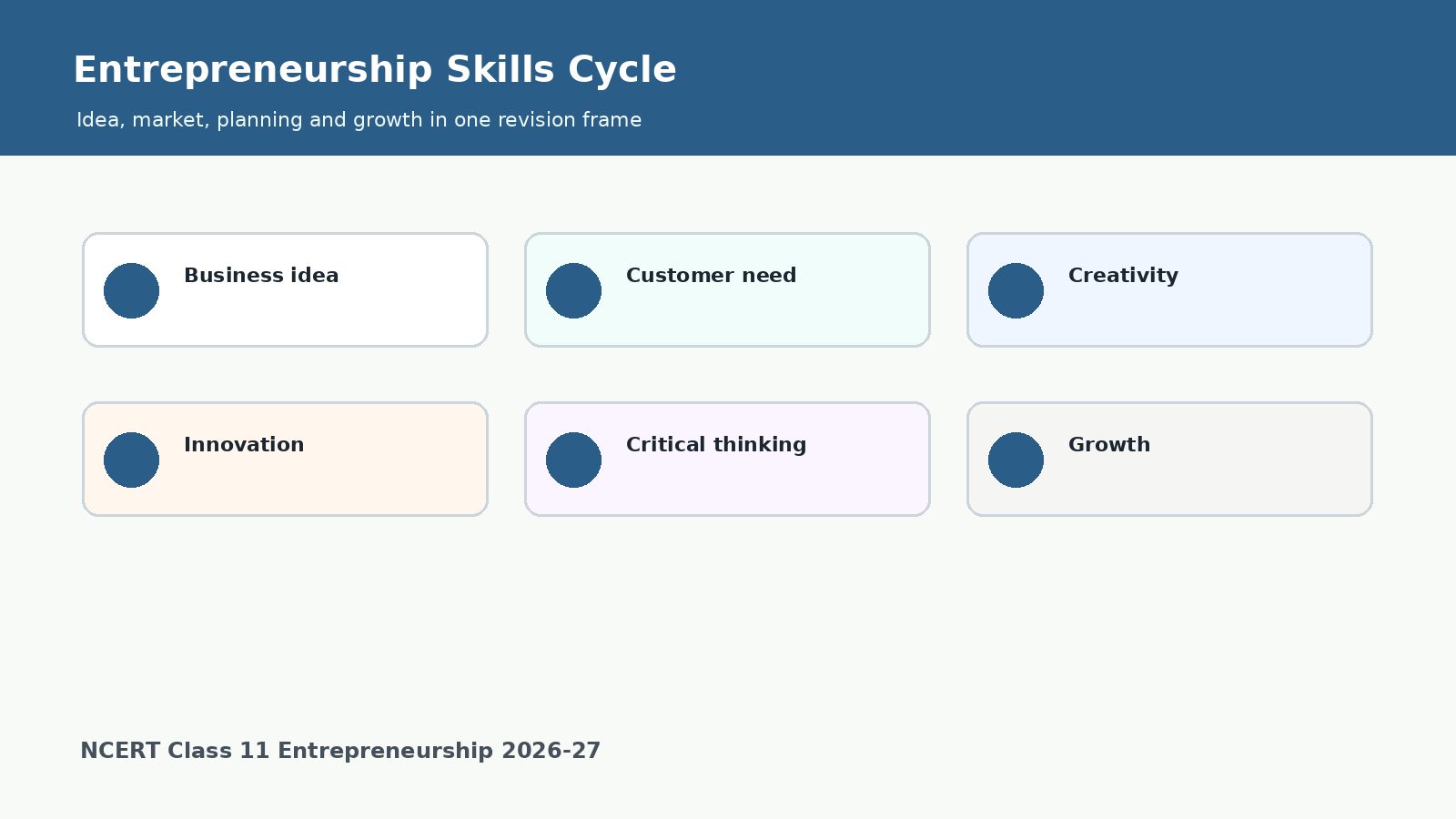
The chapter works like a cycle. Students first learn how to form an idea, then test the market, make a plan and improve the business after starting.
| Stage | Meaning | NCERT recall |
|---|---|---|
| Business idea | A solution planned to serve customer needs. | Vivek uses food and health interest. |
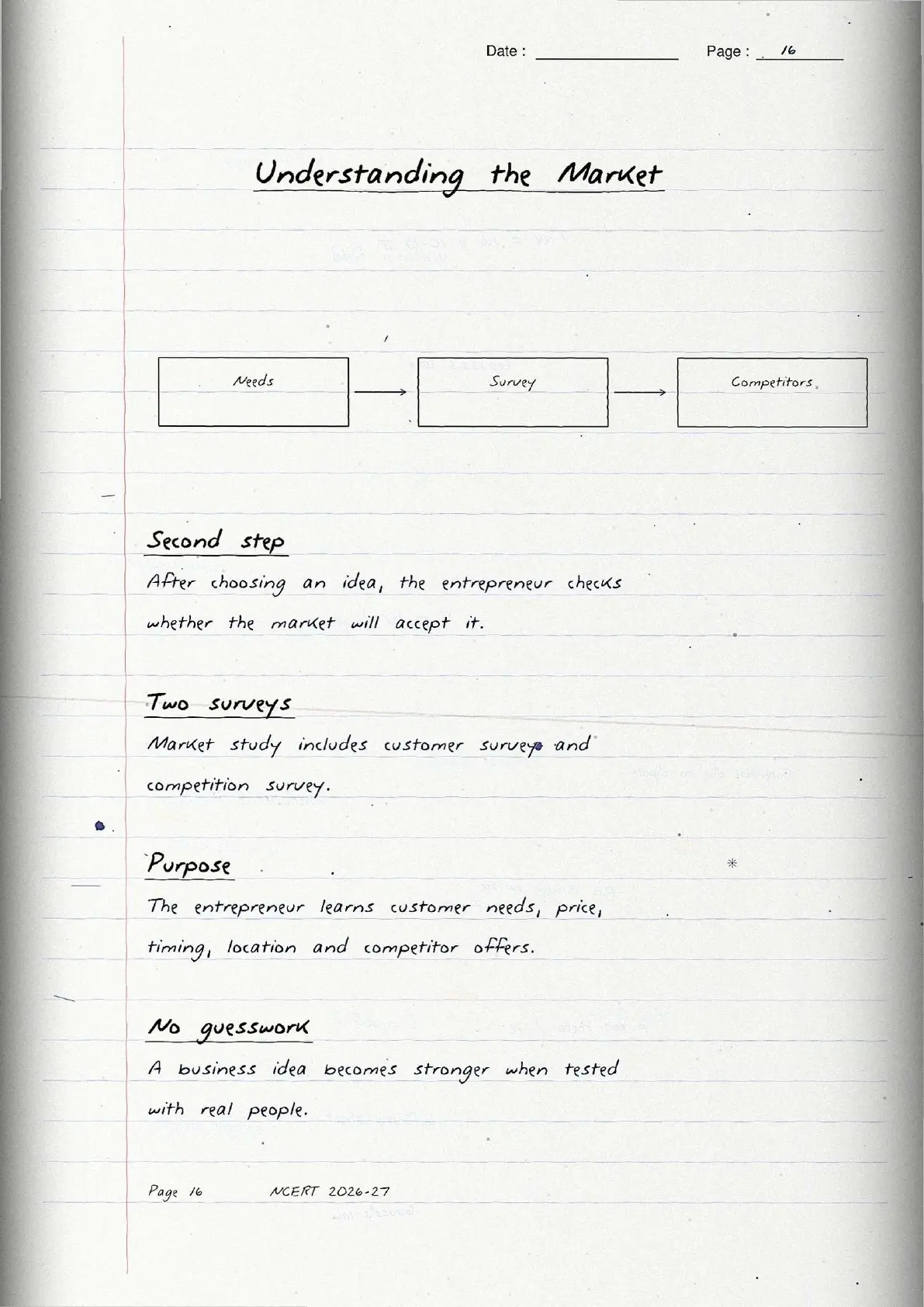
| Understand market | Check customers, competitors, price and location. | Use customer and competition survey. |
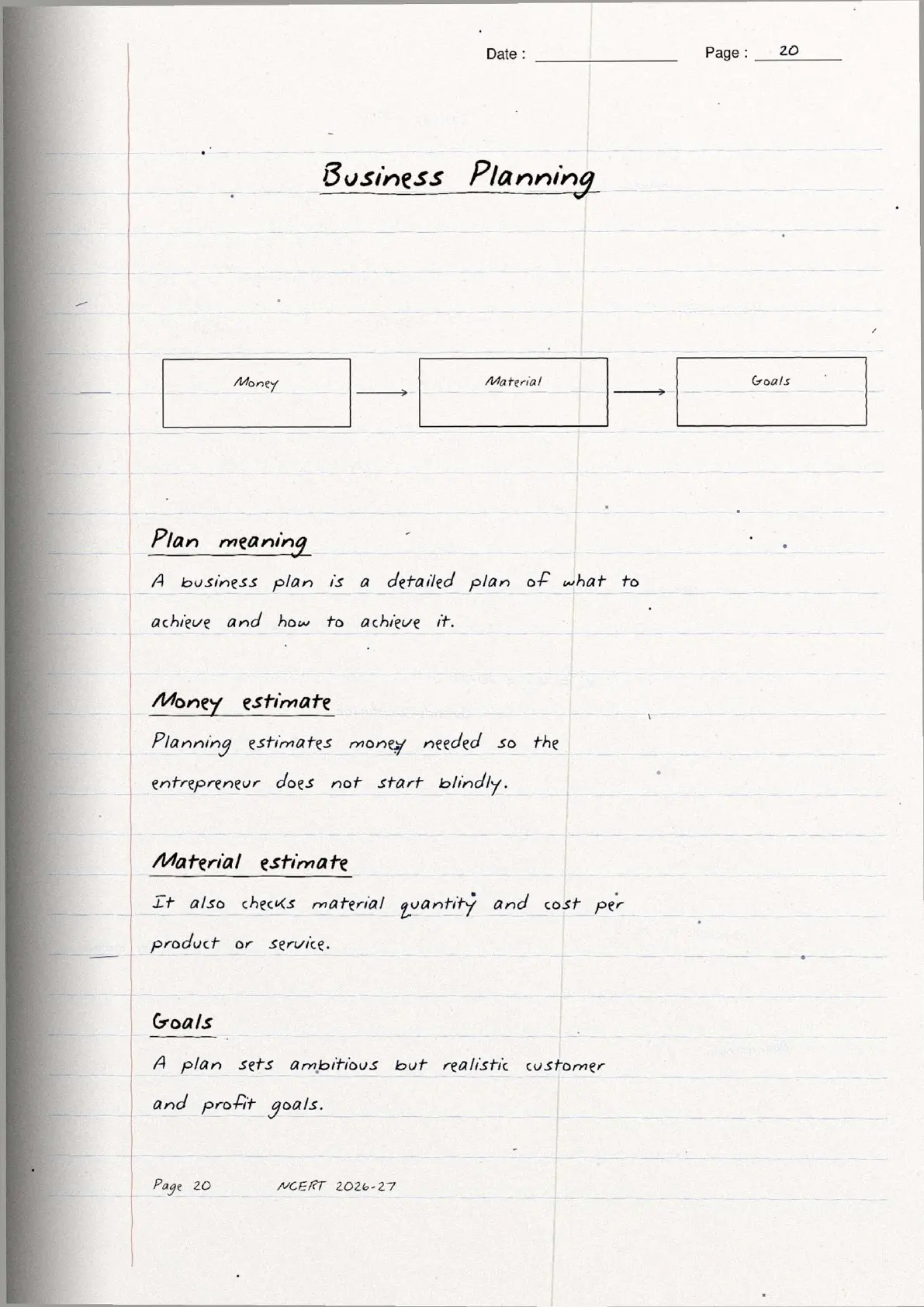
| Business planning | Decide money, material, selling method and goals. | Use the business planning template. |
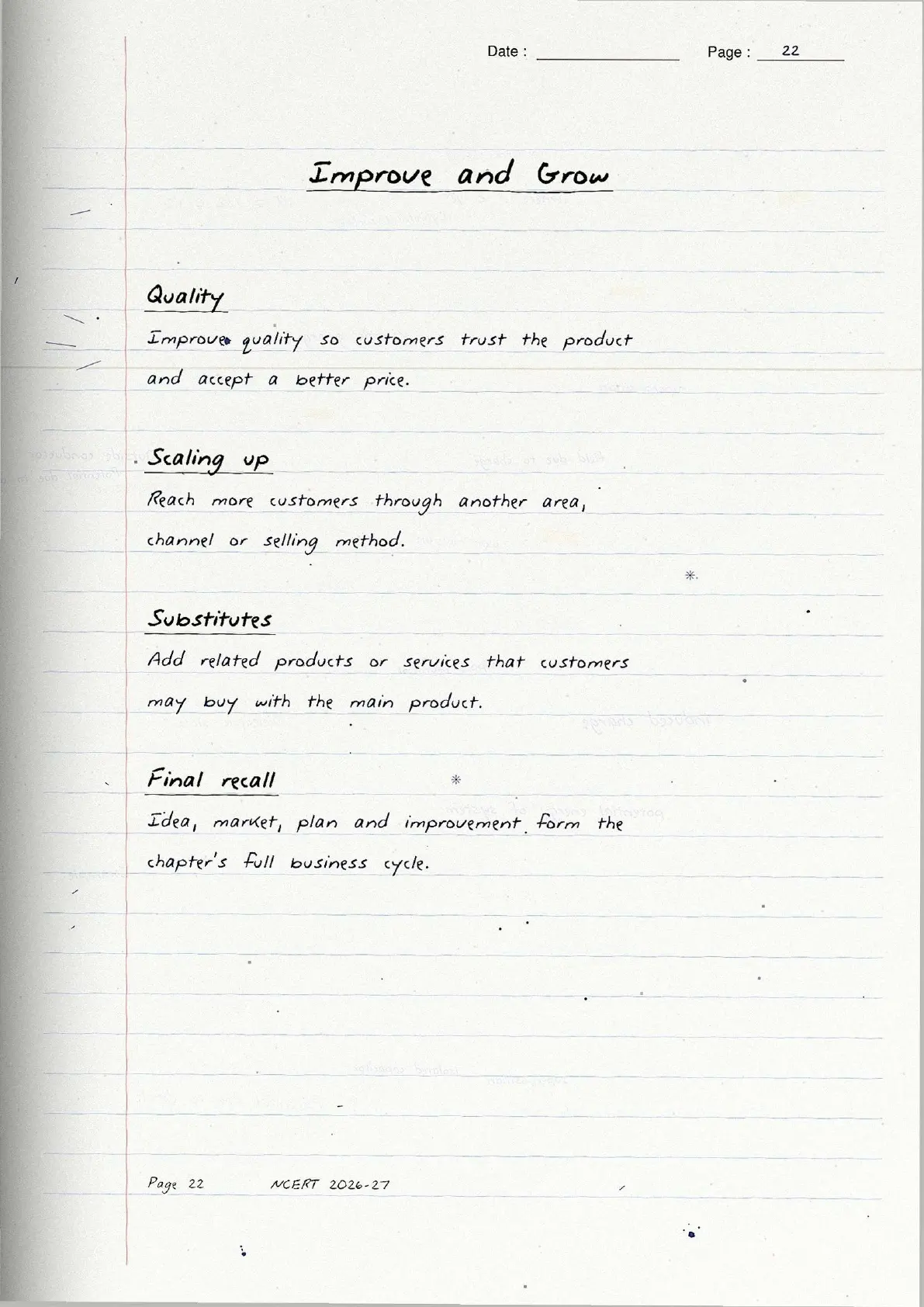
| Improve and grow | Increase value through quality, scale or substitutes. | Use Richa candle case. |
Entrepreneurship Skills Explanation Video
Source: YouTube classroom video
Values and Attitude of an Entrepreneur
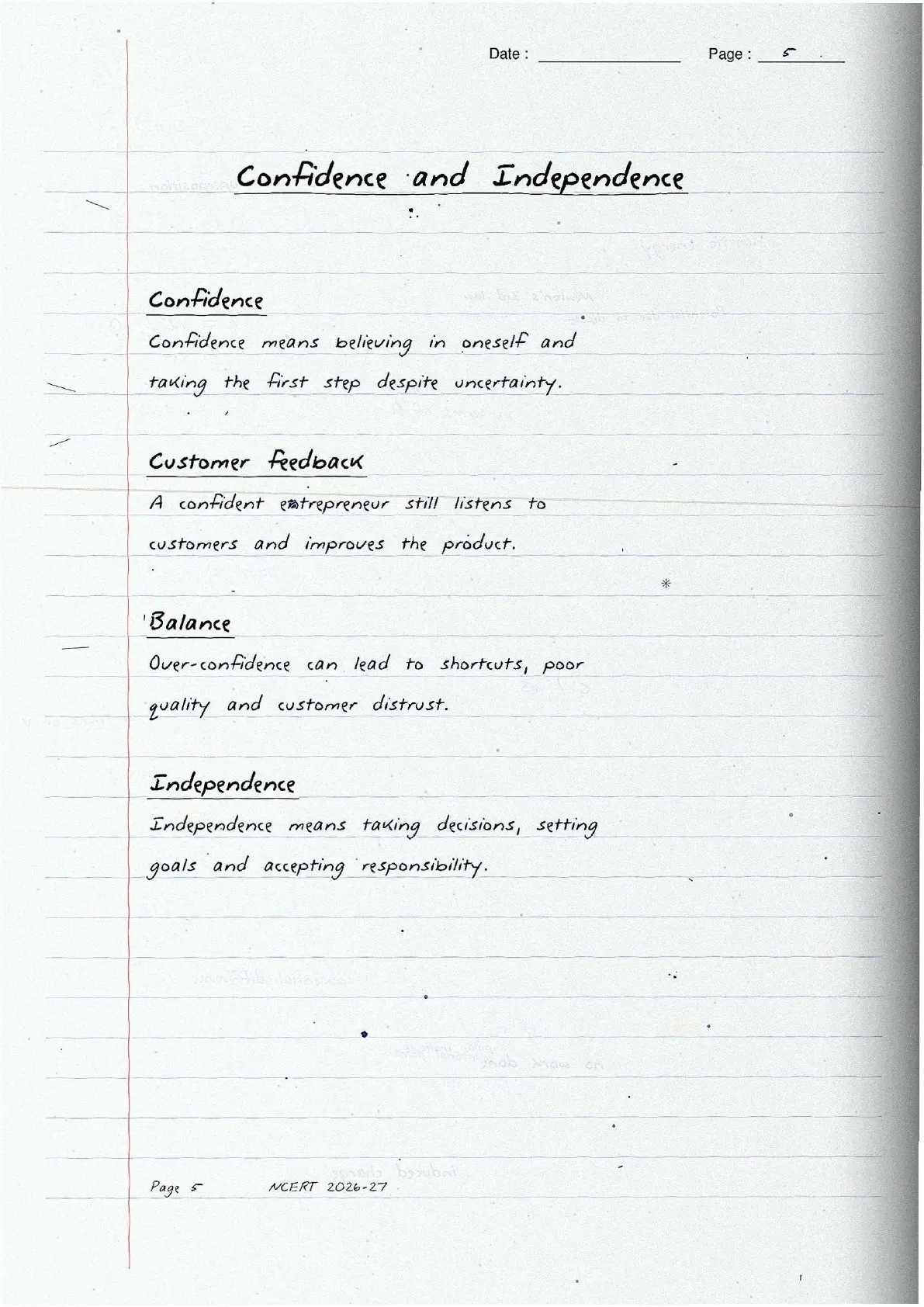
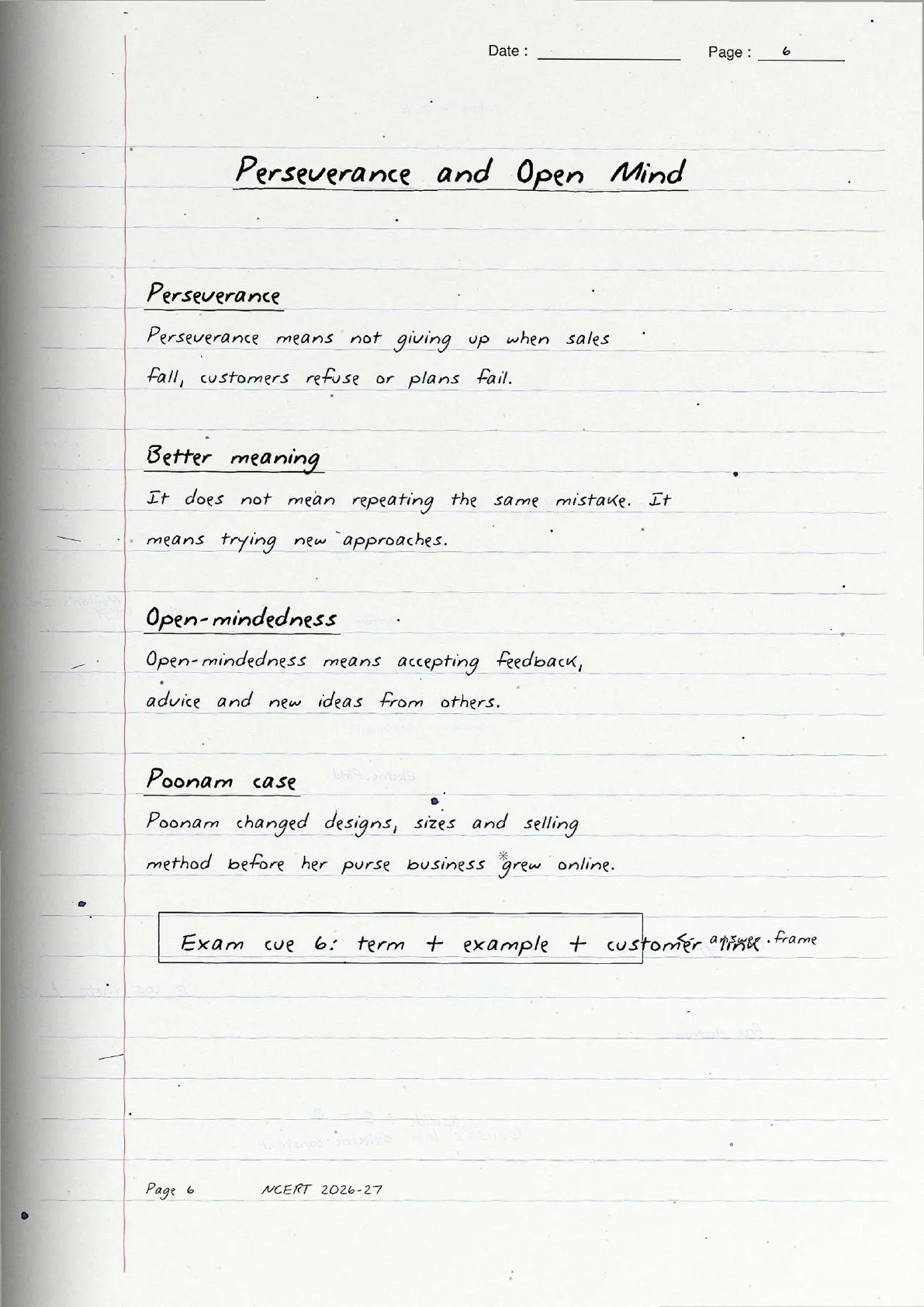
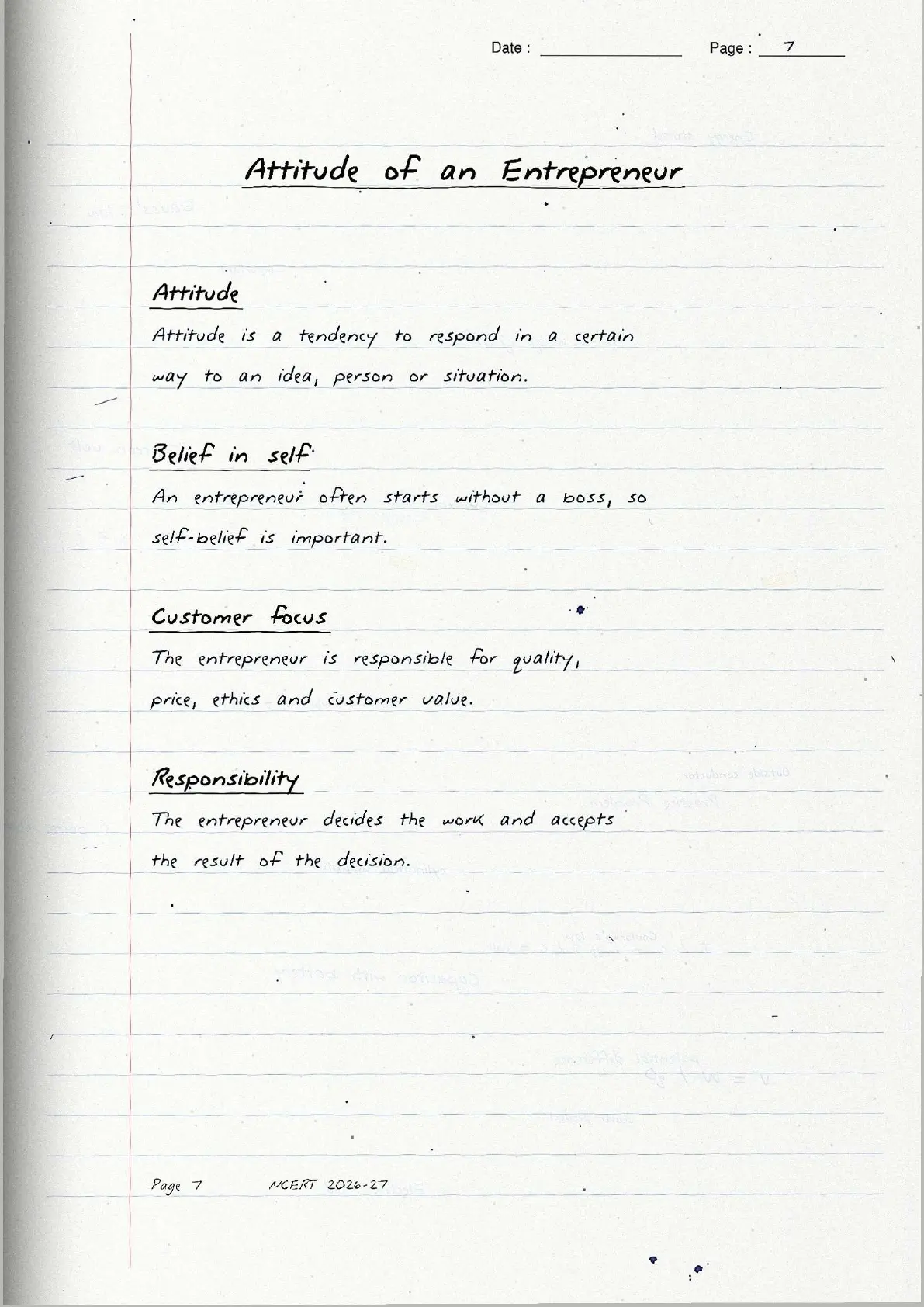
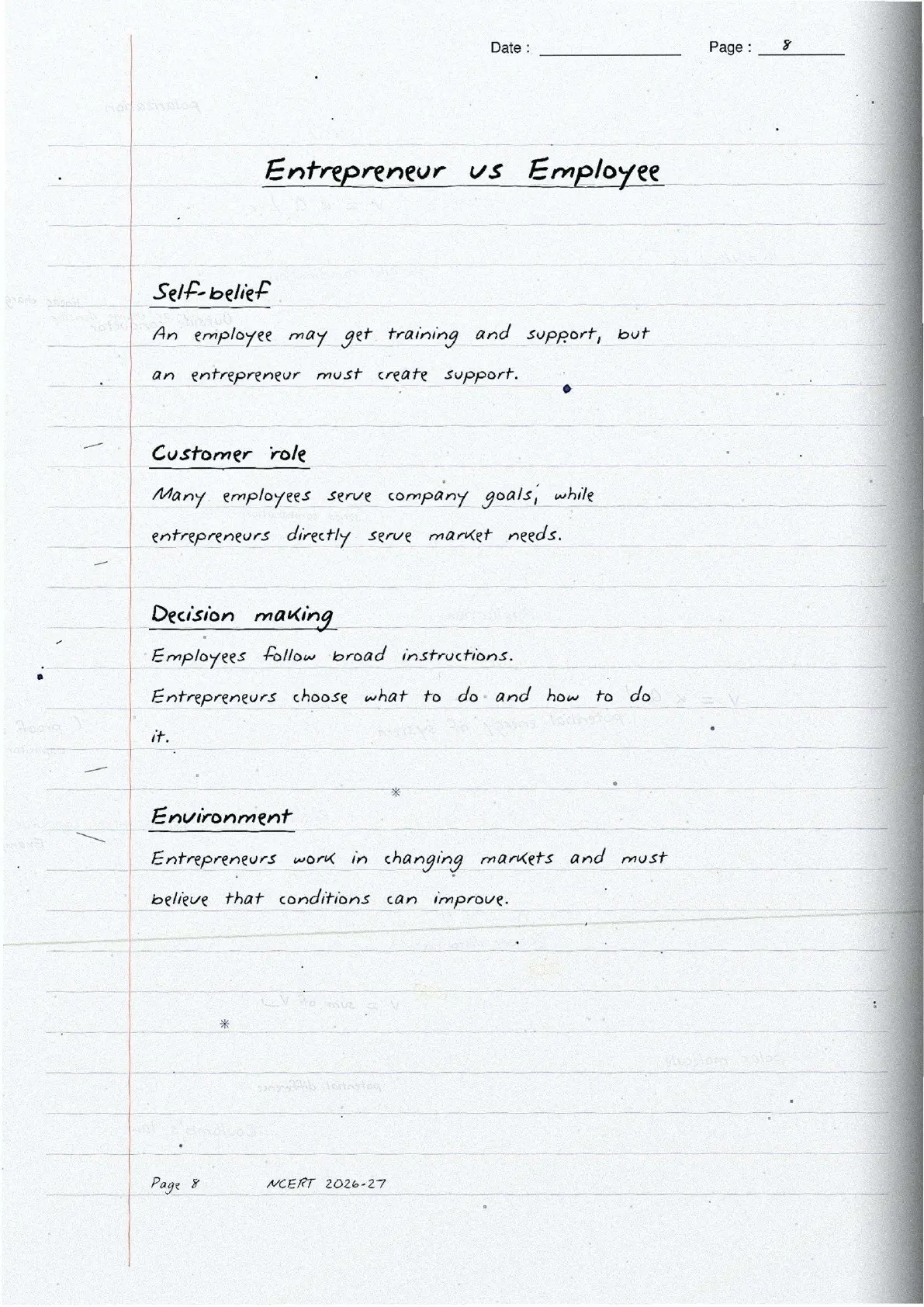
Entrepreneurial values help a person face doubt and difficulty. Entrepreneurial attitude decides how the person responds to risk, customers, decision-making and market change.
| Point | Meaning | Example cue |
|---|---|---|
| Confidence | Belief in self and approach without becoming careless. | Ask for feedback and improve. |
| Independence | Ability to work alone and make decisions. | Set goals and keep customer focus. |
| Perseverance | Keep going during failure with improved methods. | Poonam changes designs and selling method. |
| Open-mindedness | Accept new ideas, advice and feedback. | Learn from experts and customers. |
Business Ideas and Market Understanding
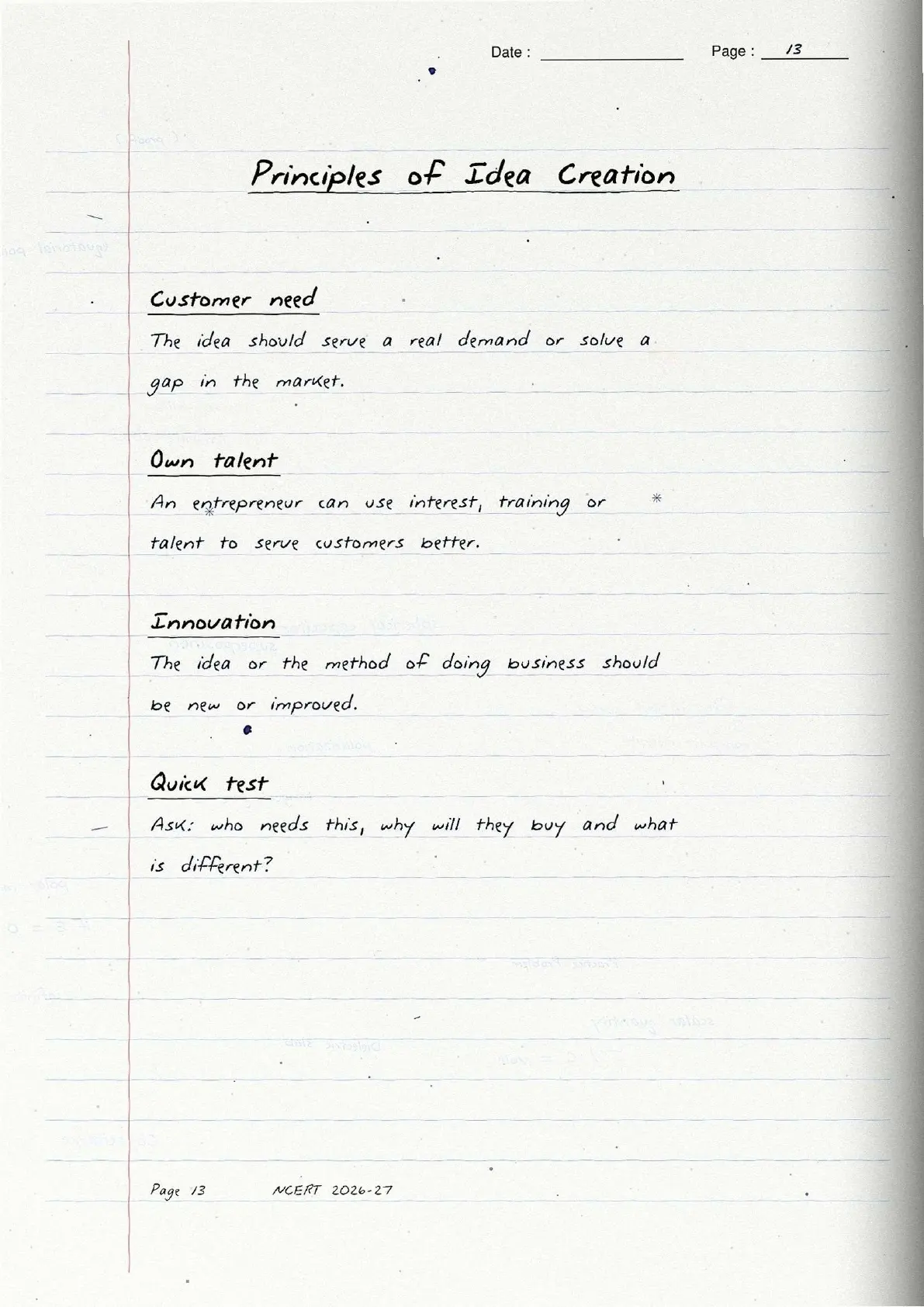
A strong business idea should serve a customer need, use the entrepreneur's interest or talent and include some innovation. After choosing the idea, the entrepreneur must check if the market will accept it.
- Need based idea: starts from a real customer demand or gap.
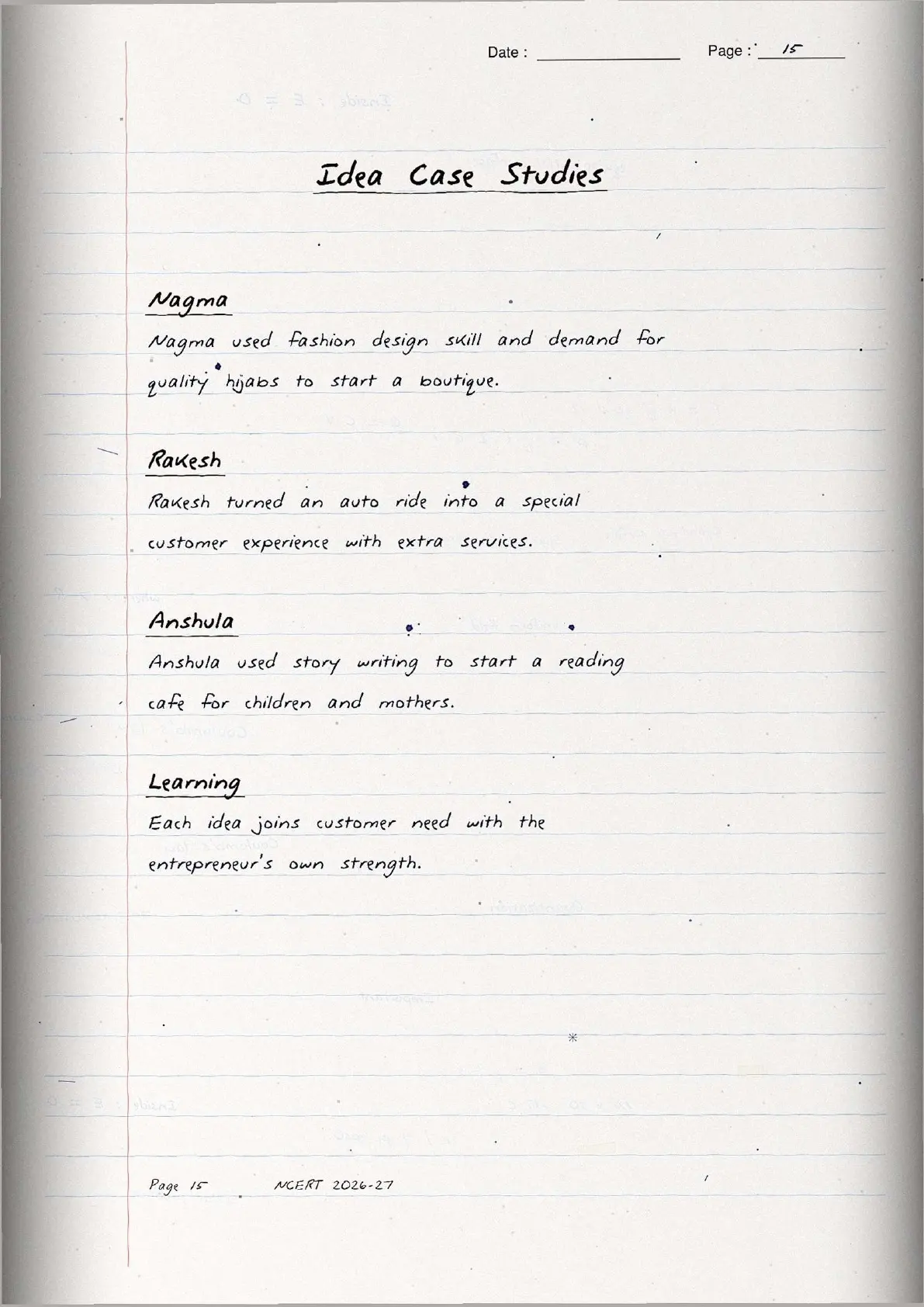
- Interest based idea: uses skill, training or personal talent.
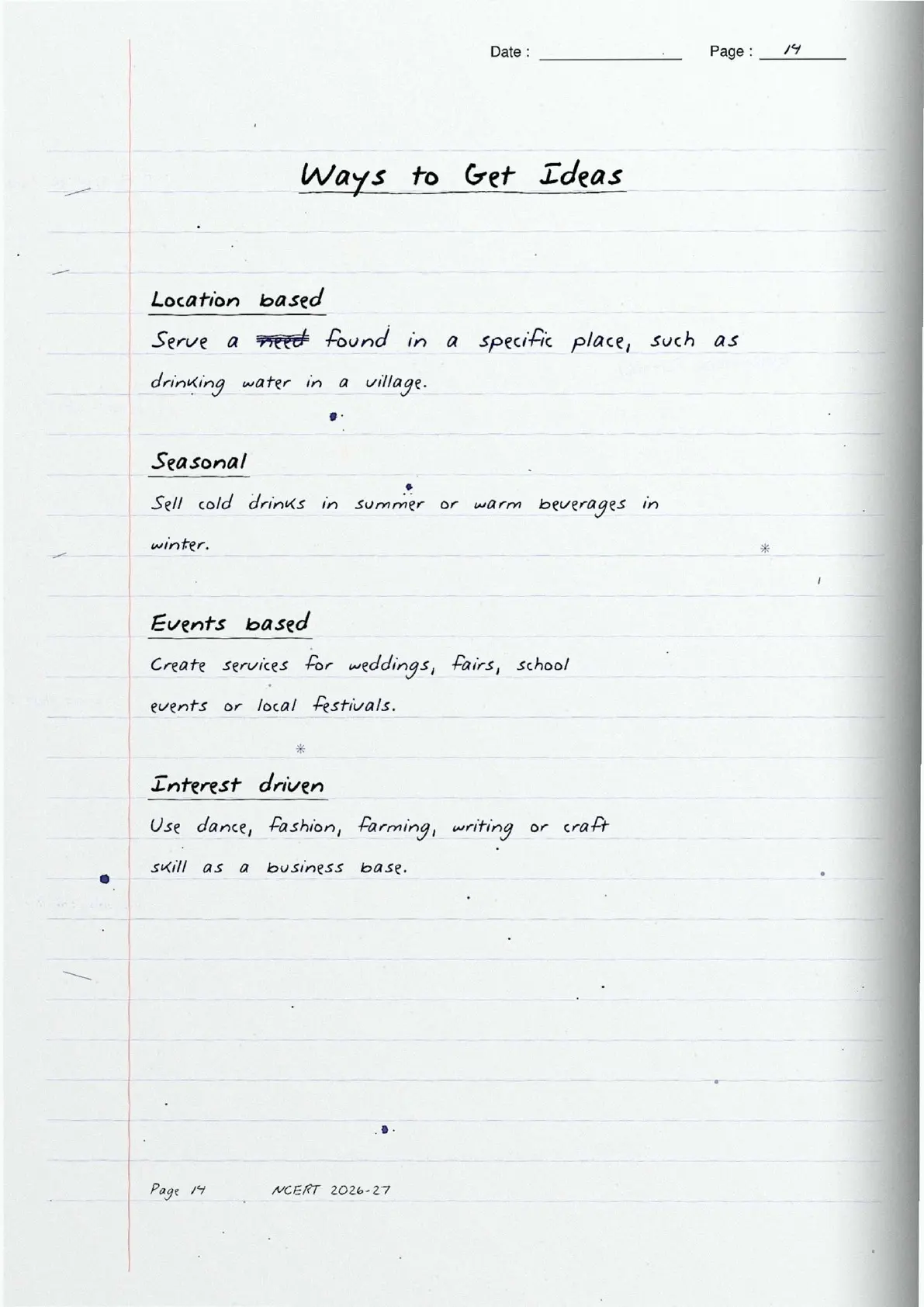
- Location based idea: solves a need in a specific place.
- Season or event idea: serves customers at the right time.
Business Planning Checklist
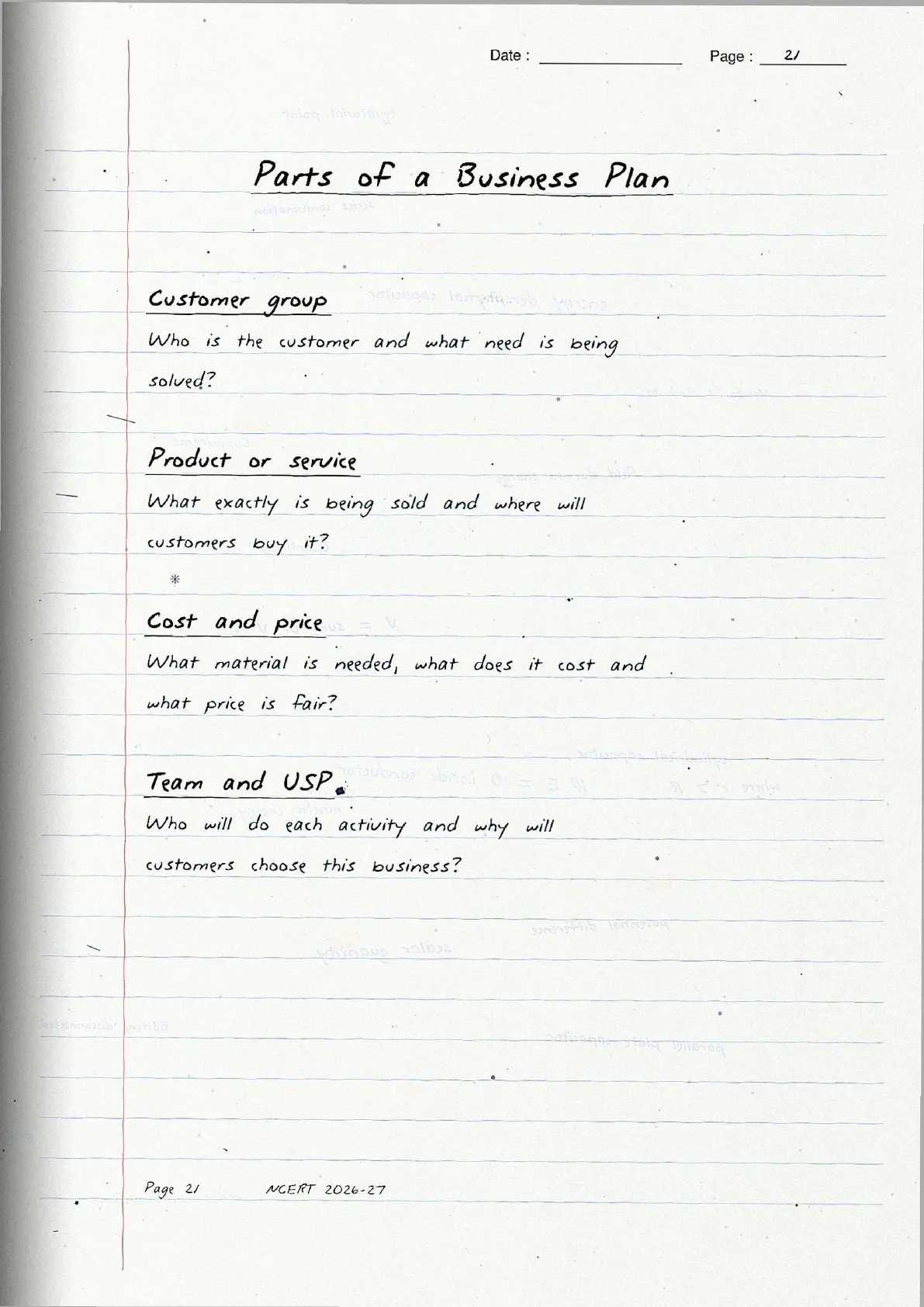
Business planning helps estimate money, material, price, sales method, roles, uniqueness, customer goal and profit goal before spending too much money.
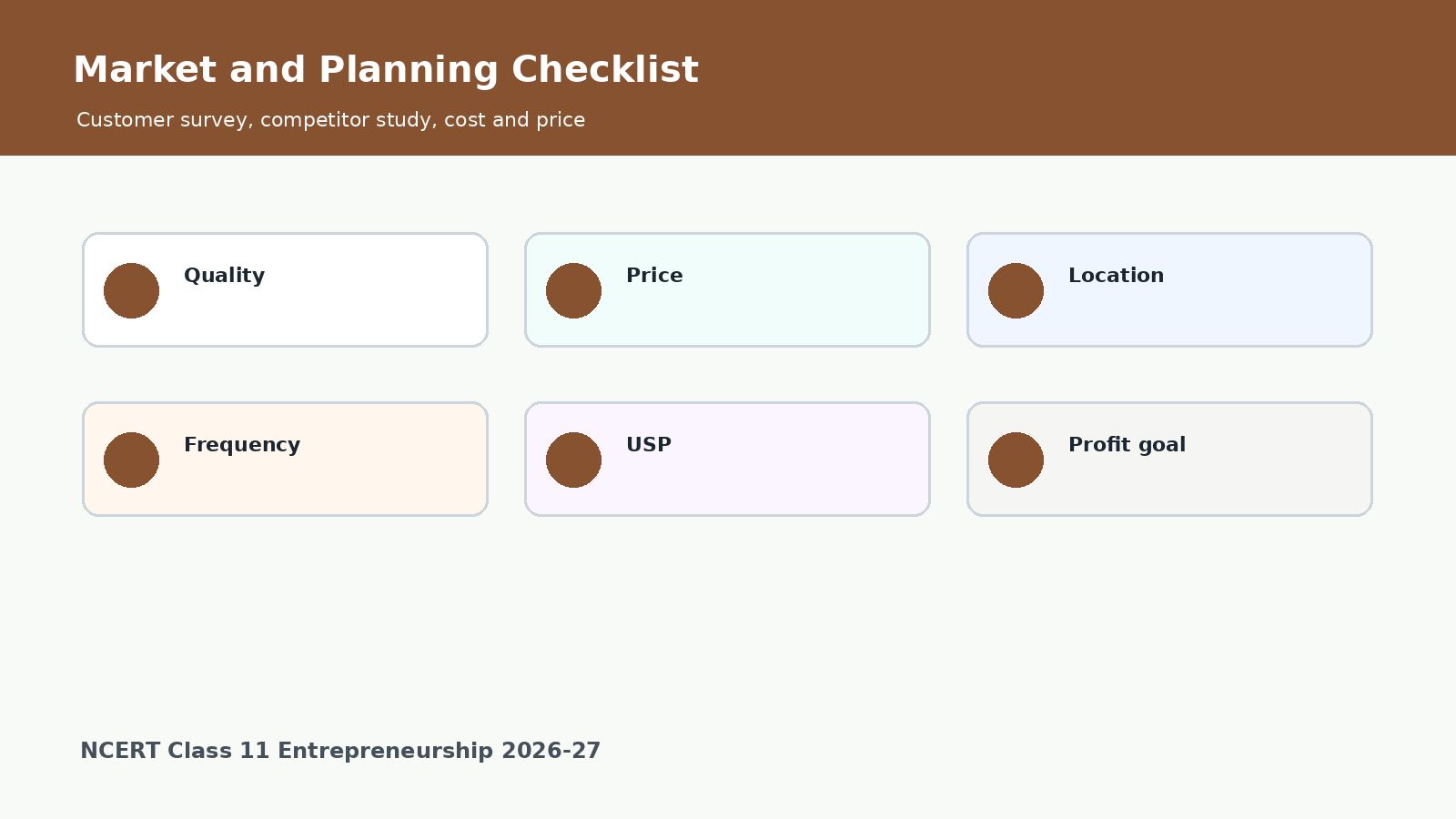
| Planning item | Question to ask | Why it matters |
|---|---|---|
| Customer group | Who will buy this product or service? | Keeps the plan focused. |
| Material and cost | What material is needed and how much will it cost? | Controls price and profit. |
| Selling method | Will customers buy online, door-to-door, by order or at a stall? | Matches the buying habit. |
| Unique selling point | Why will customers choose this business? | Helps the business stand out. |
Related Class 11 Entrepreneurship Resources
Use these related resources with the handwritten notes for complete Class 11 Entrepreneurship Chapter 4 preparation.
| Resource | Use it for | Link |
|---|---|---|
| NCERT Solutions | Exercise answers and textbook questions | Open solutions |
| NCERT Notes | Typed chapter summary and quick revision | Open notes |
| NCERT Book PDF | Official source chapter reading | Open book PDF |
All Class 11 Entrepreneurship Handwritten Notes
The table below keeps the same resource type together so students can move chapter by chapter through the Class 11 Entrepreneurship handwritten notes.
| Chapter | Title | Handwritten notes link |
|---|---|---|
| Chapter 1 | Entrepreneurship: Concept and Functions | Open handwritten notes |
| Chapter 2 | An Entrepreneur | Open handwritten notes |
| Chapter 3 | Entrepreneurial Journey | Open handwritten notes |
| Chapter 4 | Entrepreneurship Skills | Open handwritten notes |
| Chapter 5 | Concept of Market | Open handwritten notes |
Class 11 Entrepreneurship Chapter 4 Handwritten Notes FAQs
Ques. What do the Class 11 Entrepreneurship Chapter 4 handwritten notes cover?
Ans. The notes cover entrepreneurship meaning, values, attitude, problem-solving, idea creation, market understanding, customer survey, competition survey and business planning for 2026-27.
Ques. What values make an entrepreneur successful?
Ans. The main values are confidence, independence, perseverance and open-mindedness. These values help entrepreneurs face risk, feedback, failure and competition.
Ques. What are the main steps of the business cycle in this chapter?
Ans. The chapter explains business idea, understanding the market, business planning and improving or growing the business after it starts.
Ques. Are these handwritten notes aligned with the 2026-27 NCERT book?
Ans. Yes. The handwritten notes are prepared for Class 11 Entrepreneurship Chapter 4 Entrepreneurship Skills in the 2026-27 NCERT syllabus.



Comments