




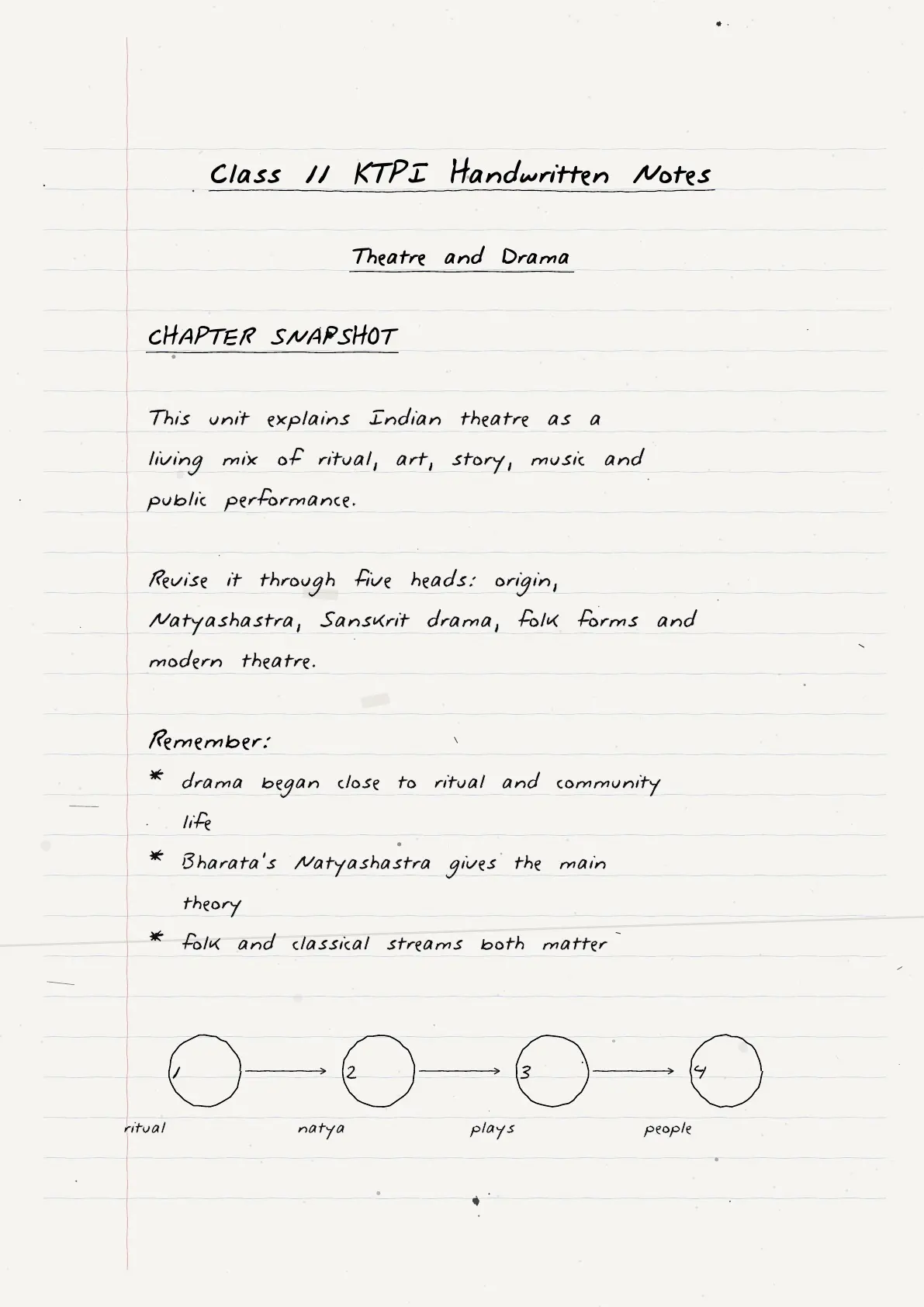
NCERT Handwritten Notes for Class 11 KTPI Chapter 9 Theatre and Drama in India are prepared for quick 2026-27 revision. The PDF covers the origin of drama, Bharata's Natyashastra, rasa, abhinaya, Sanskrit theatre, Kutiyattam, folk theatre and modern Indian theatre.
- Resource: Class 11 KTPI Theatre and Drama in India handwritten revision notes PDF.
- Chapter focus: Natyashastra, rasa theory, Sanskrit dramatists, folk forms and theatre institutions.
- Revision use: concept maps, comparison frames, answer plans and common mistakes.
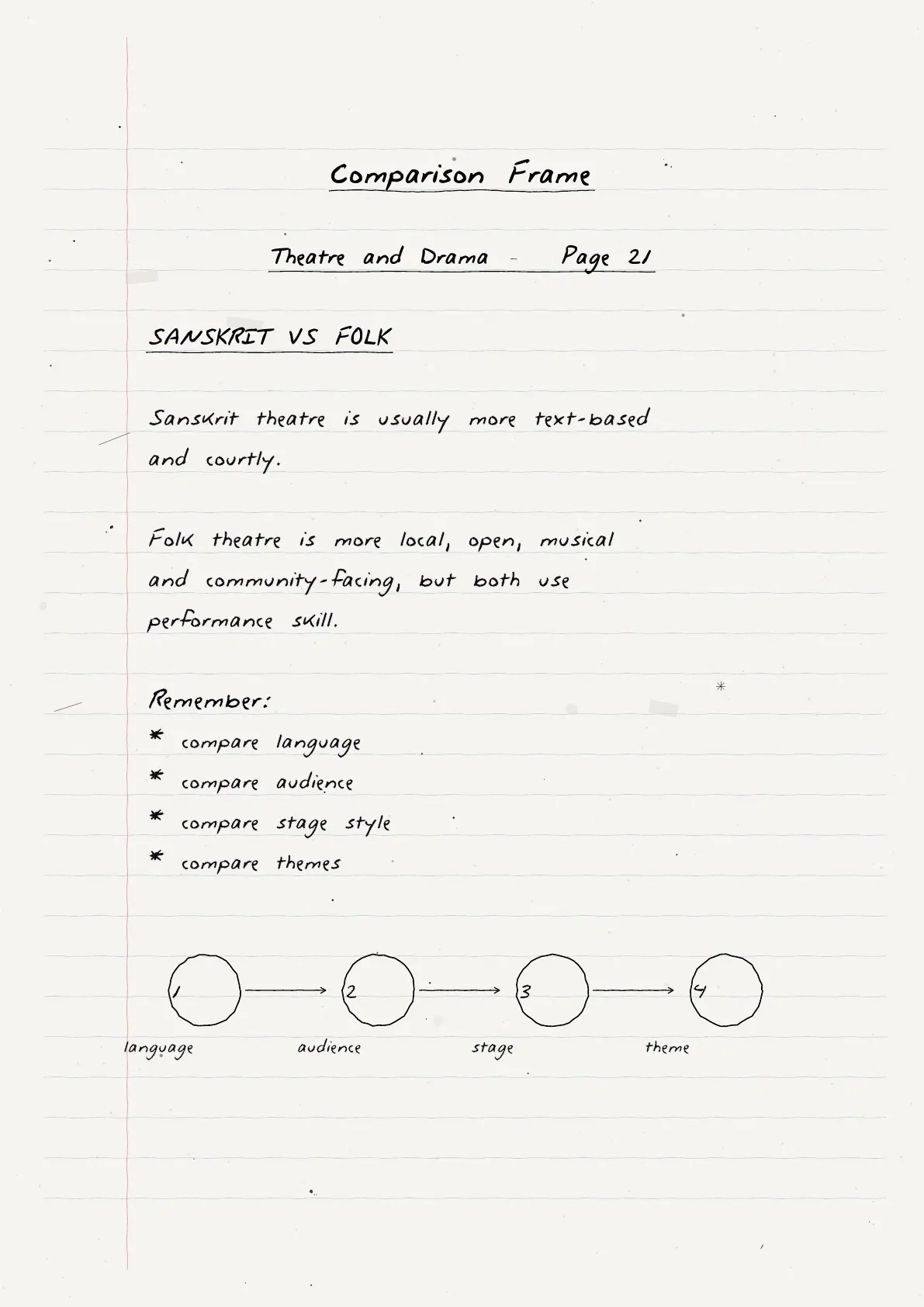
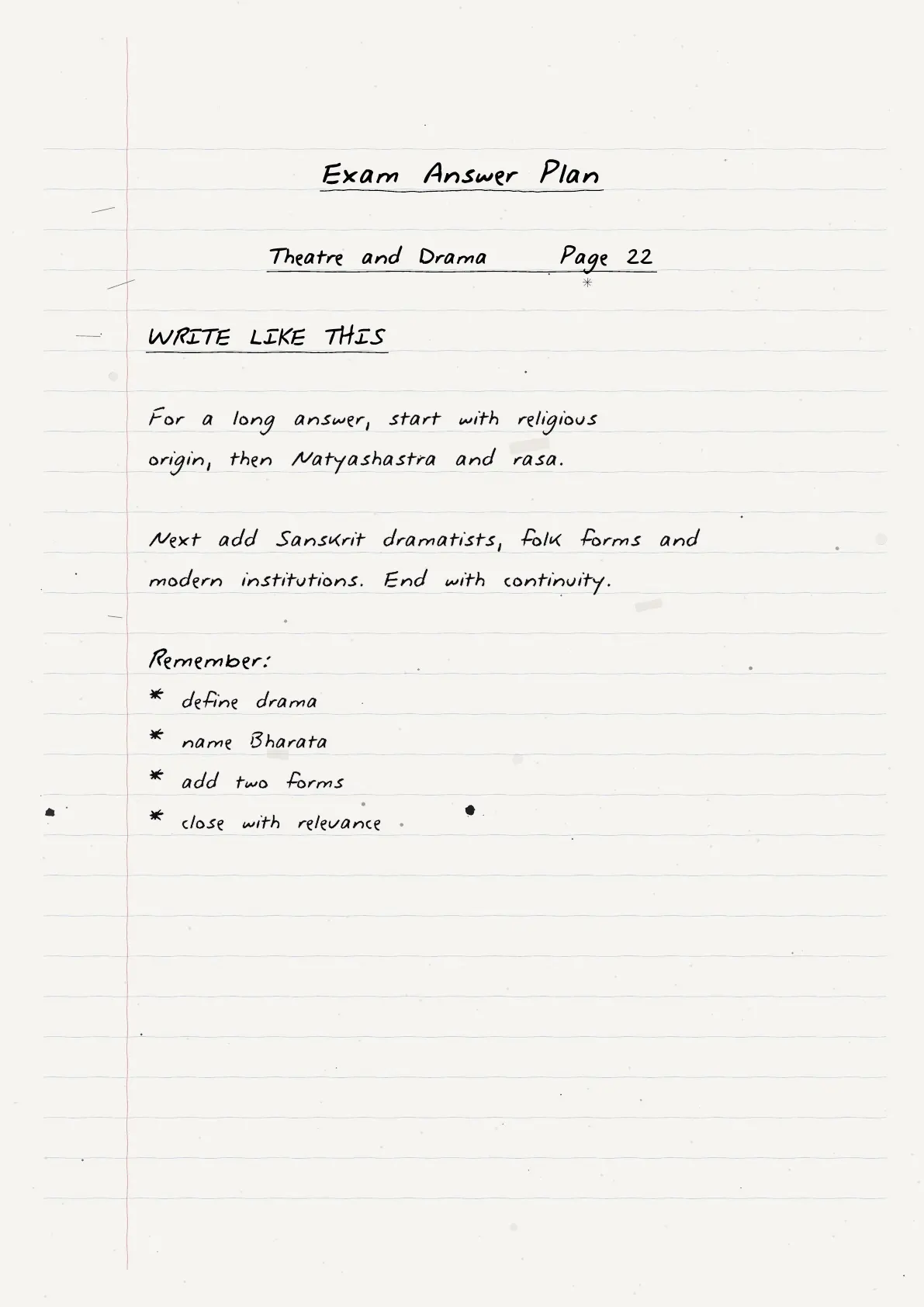
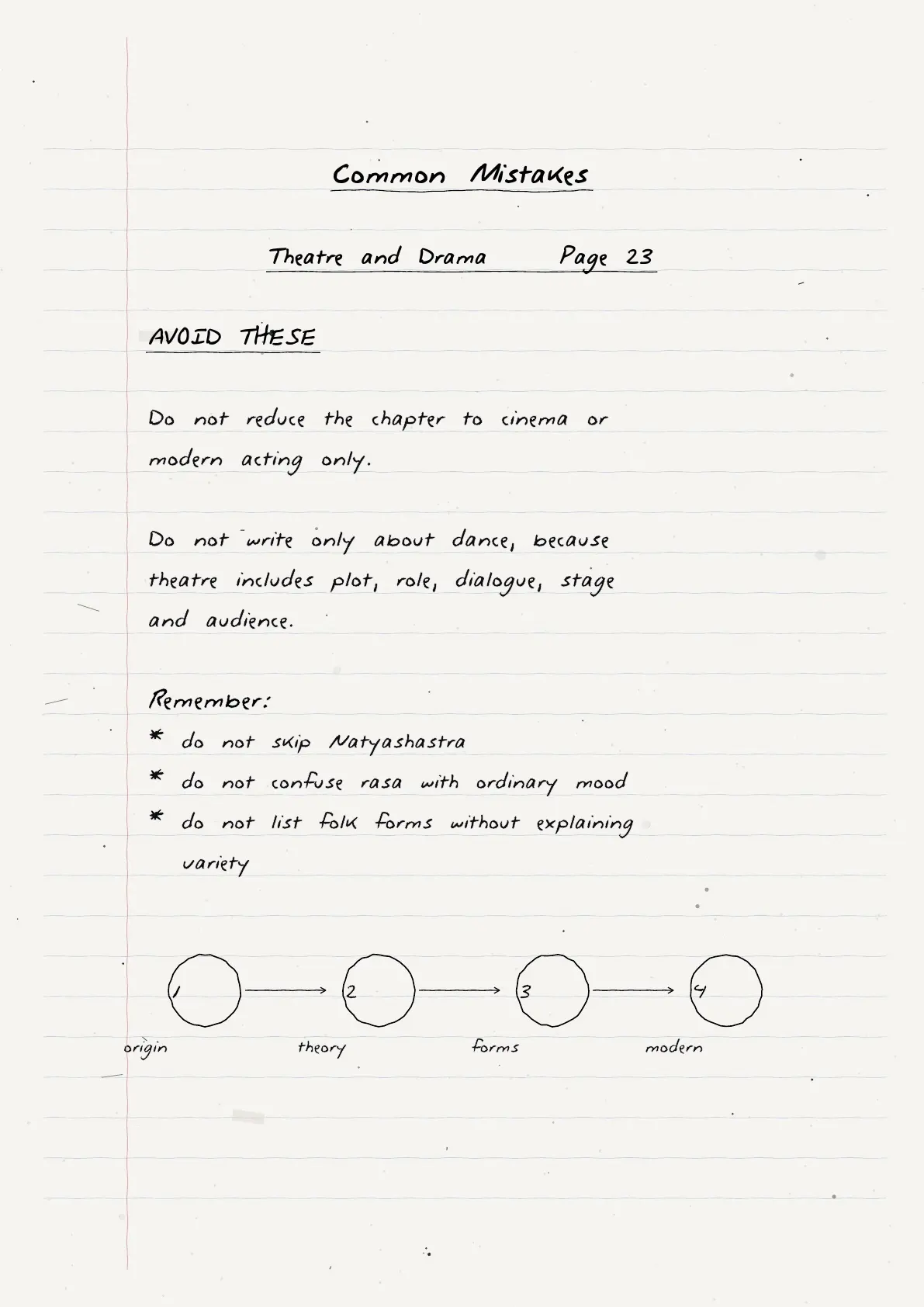
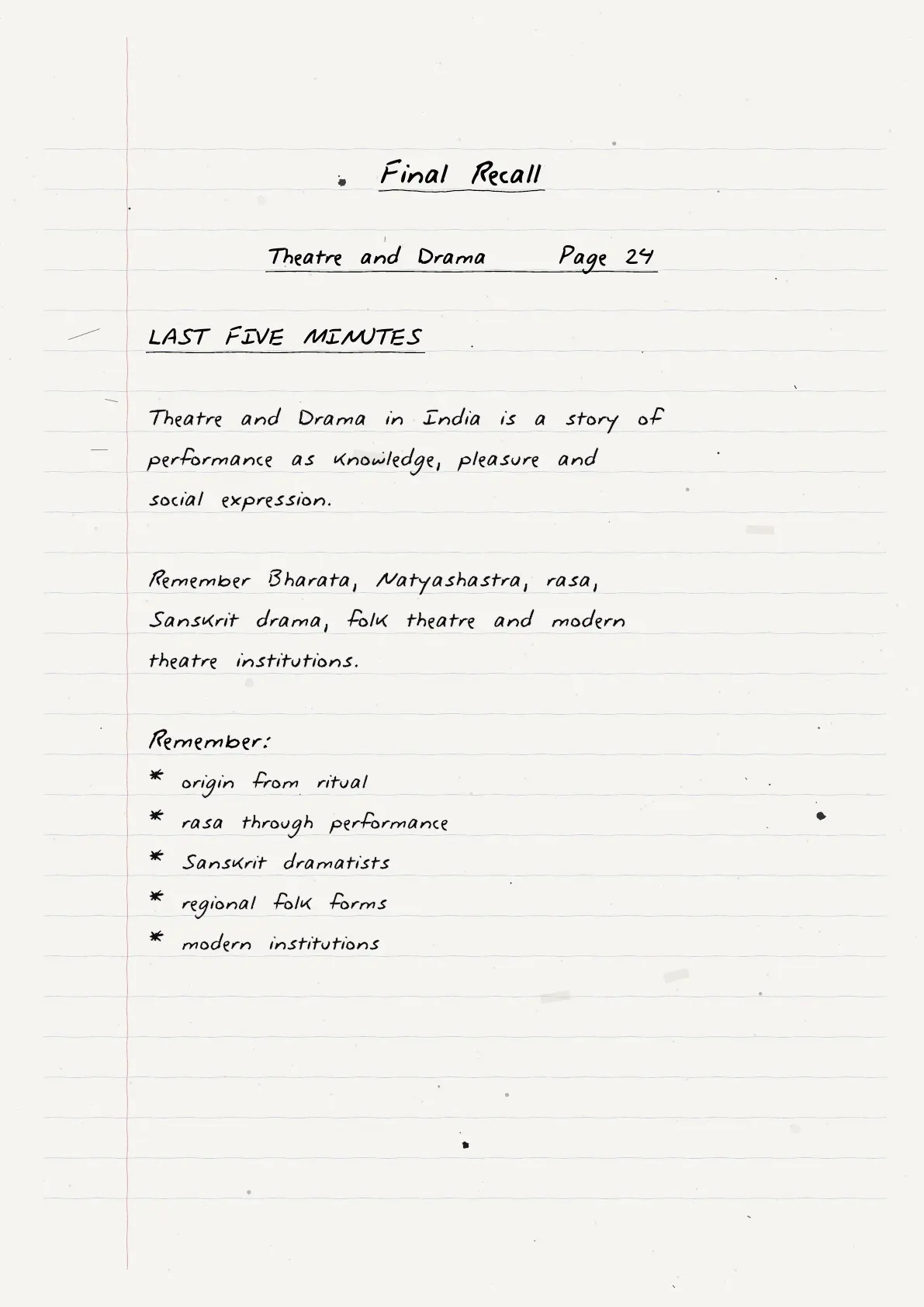
Student Feedback: Students revise this unit faster when they keep the chain clear: ritual origin, Natyashastra, rasa, Sanskrit theatre, folk forms and modern theatre.
Theatre and Drama in India Handwritten Notes Overview
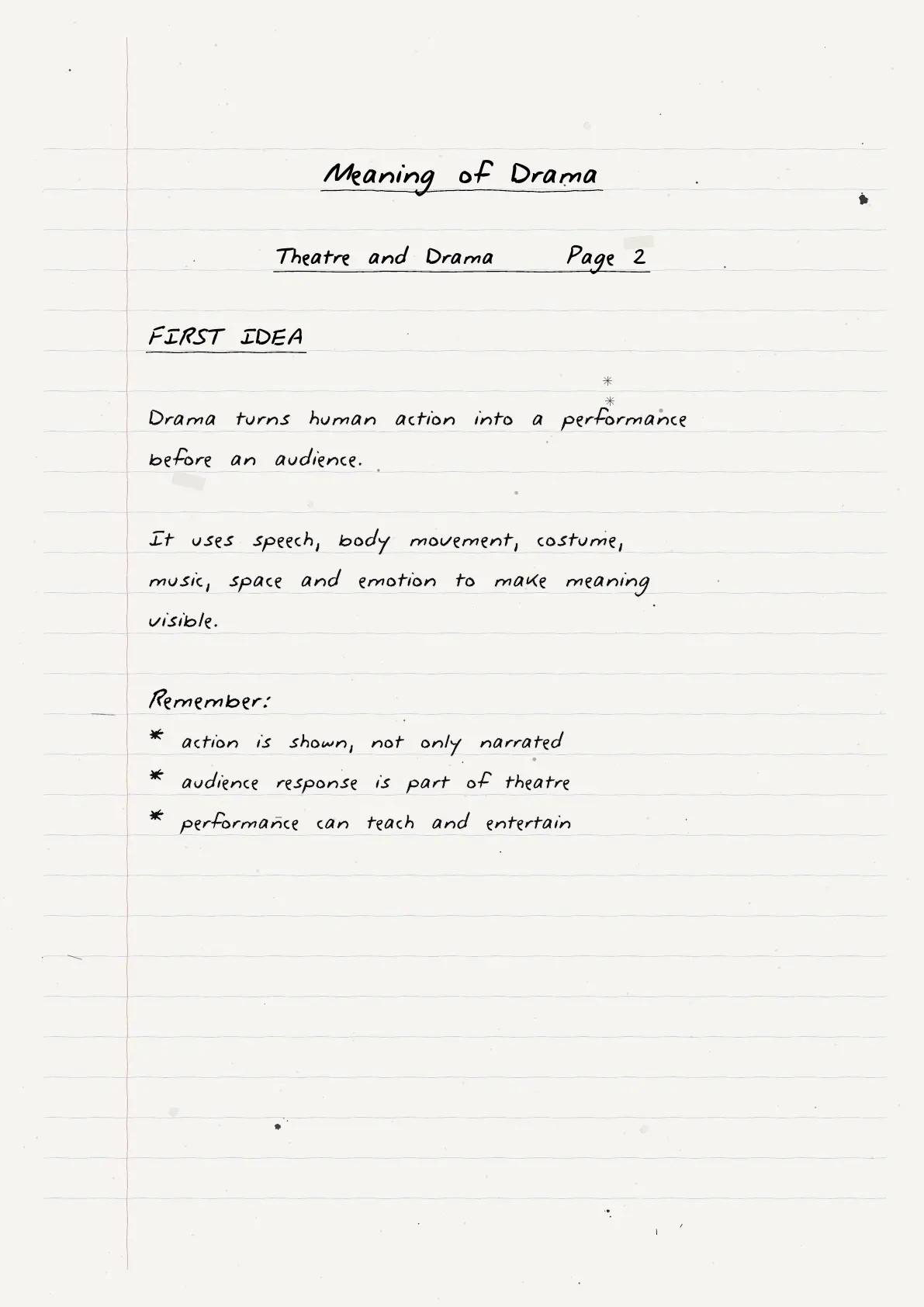
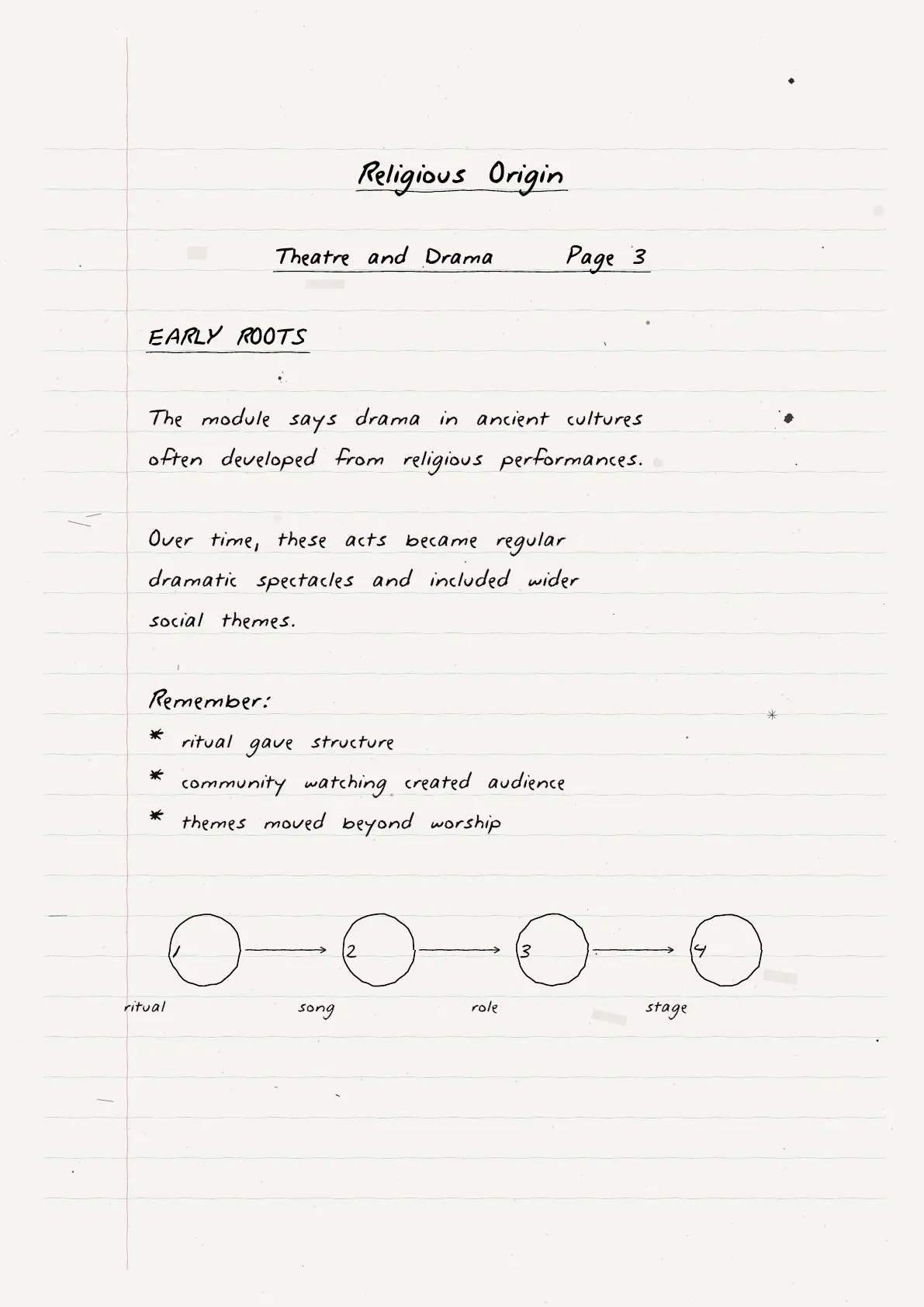
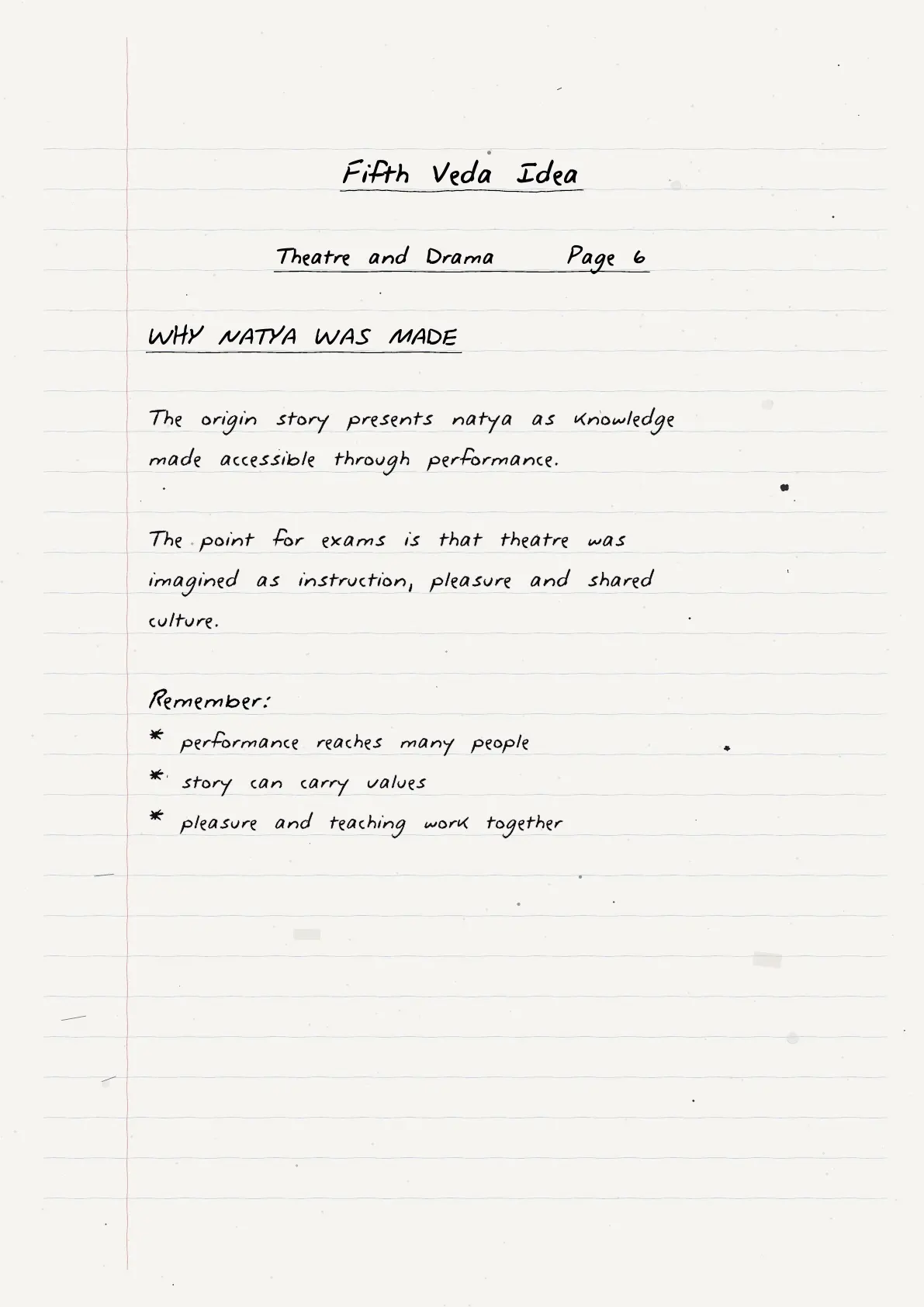
The Theatre and Drama in India handwritten notes explain how performance in India grew from ritual, community expression and artistic practice into classical, folk and modern theatre forms. The PDF is made for short 2026-27 Class 11 KTPI revision.
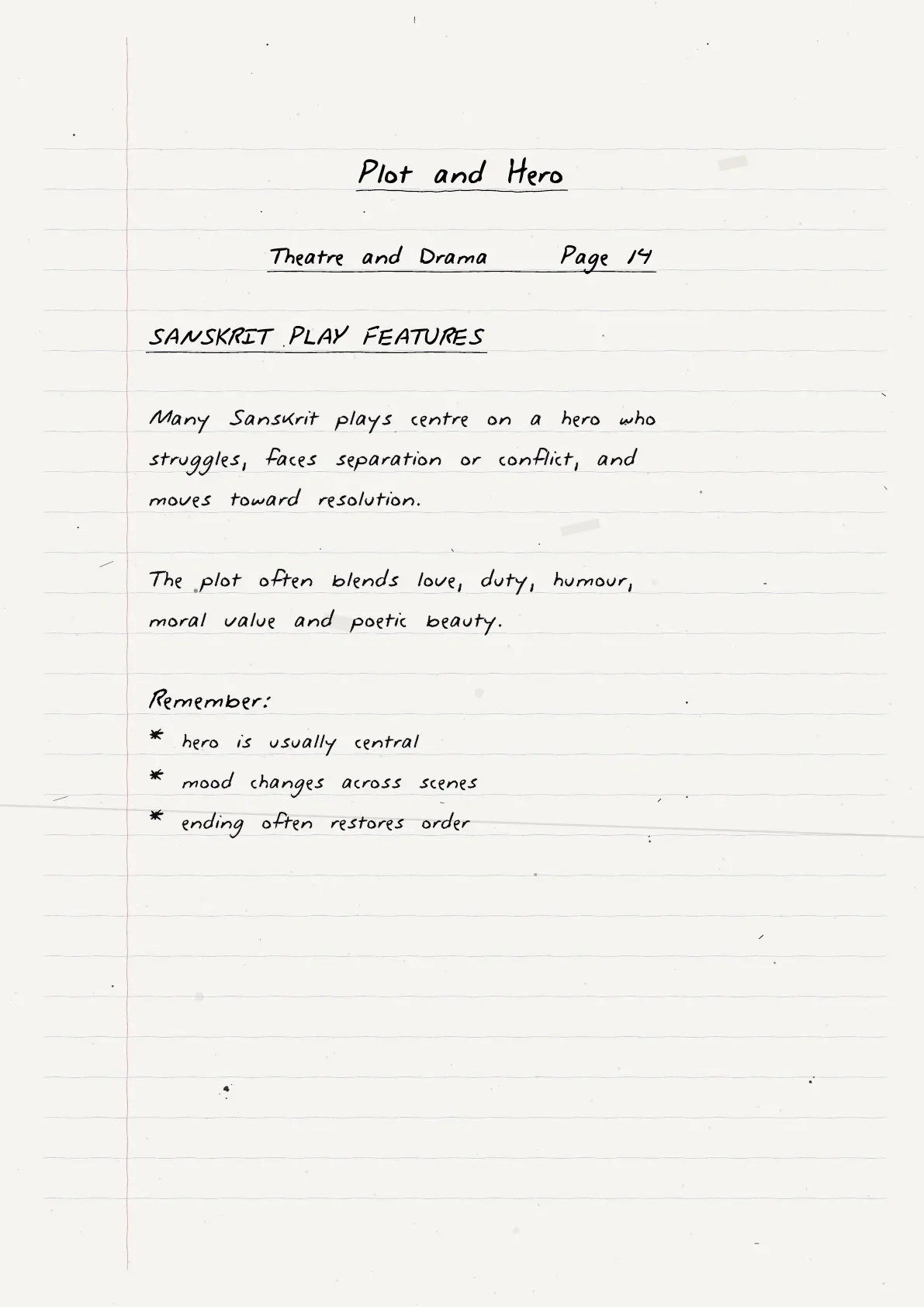
The central revision idea is simple: Indian theatre combines story, emotion, body, voice, music, stage space and student response.
- Theme: Indian drama as knowledge, pleasure and social expression.
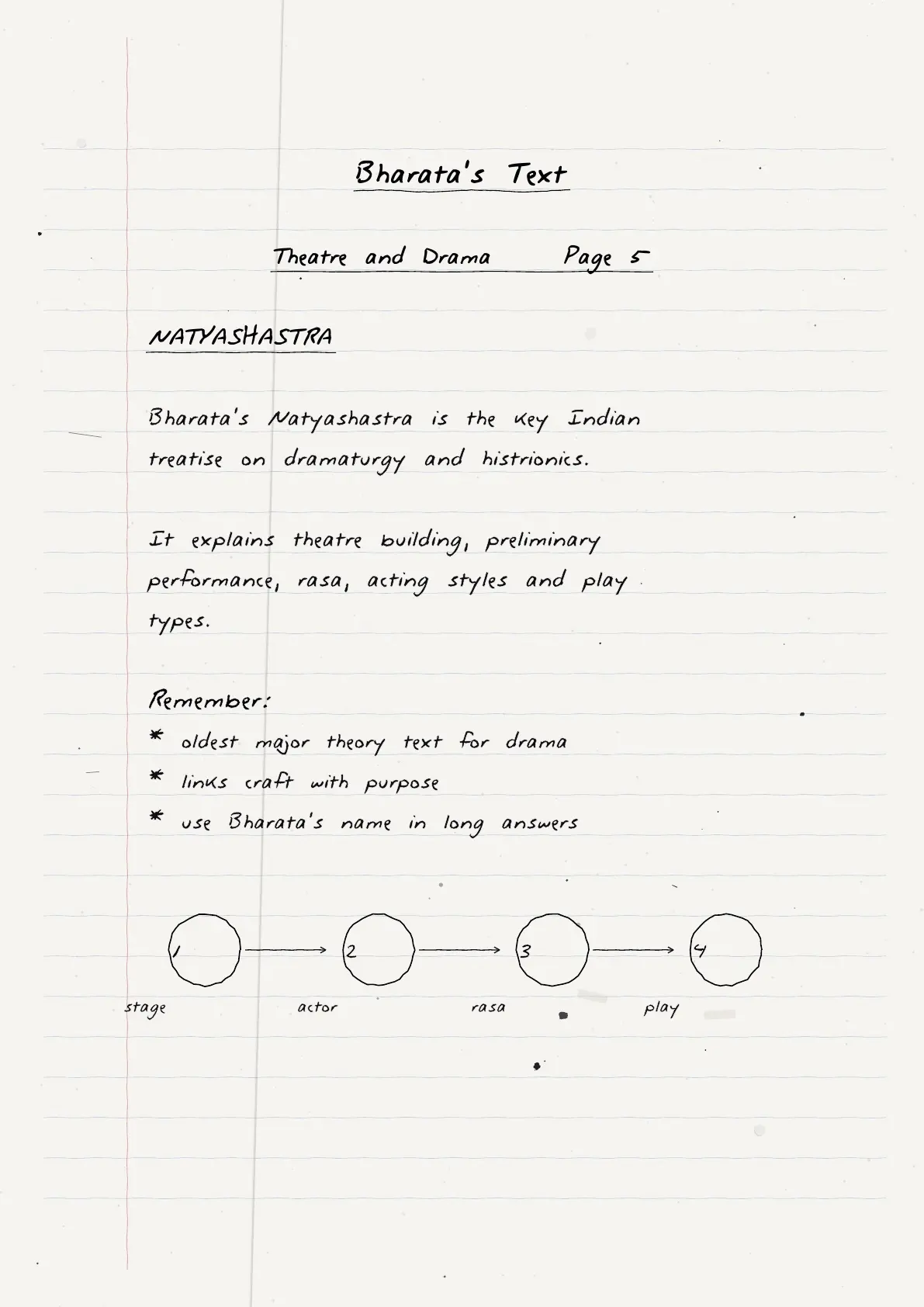
- Key text: Bharata's Natyashastra explains theatre theory and practice.
- Study map: origin, rasa, abhinaya, Sanskrit drama, folk theatre and modern institutions.
Bharata Natyashastra Rasa and Abhinaya
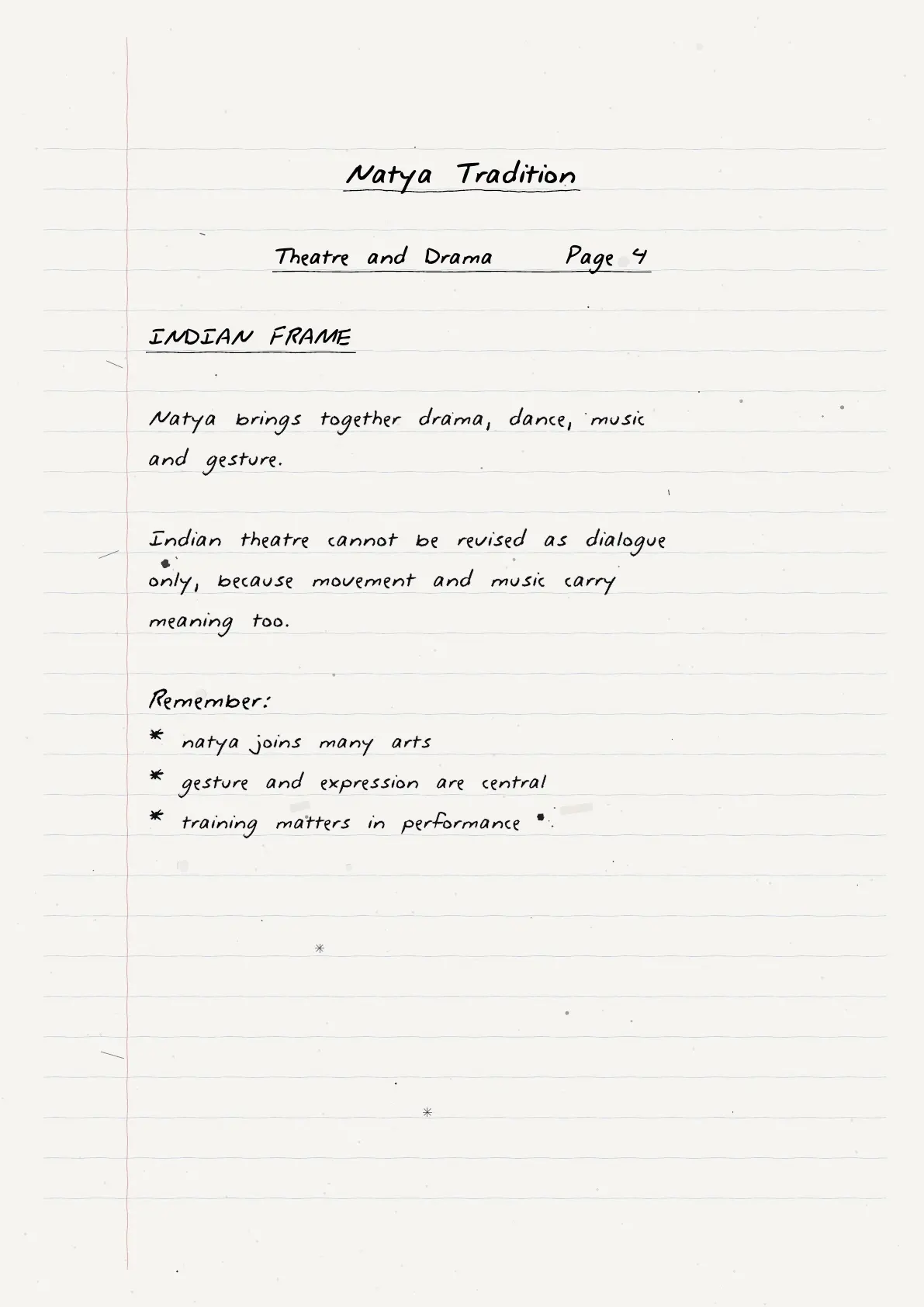
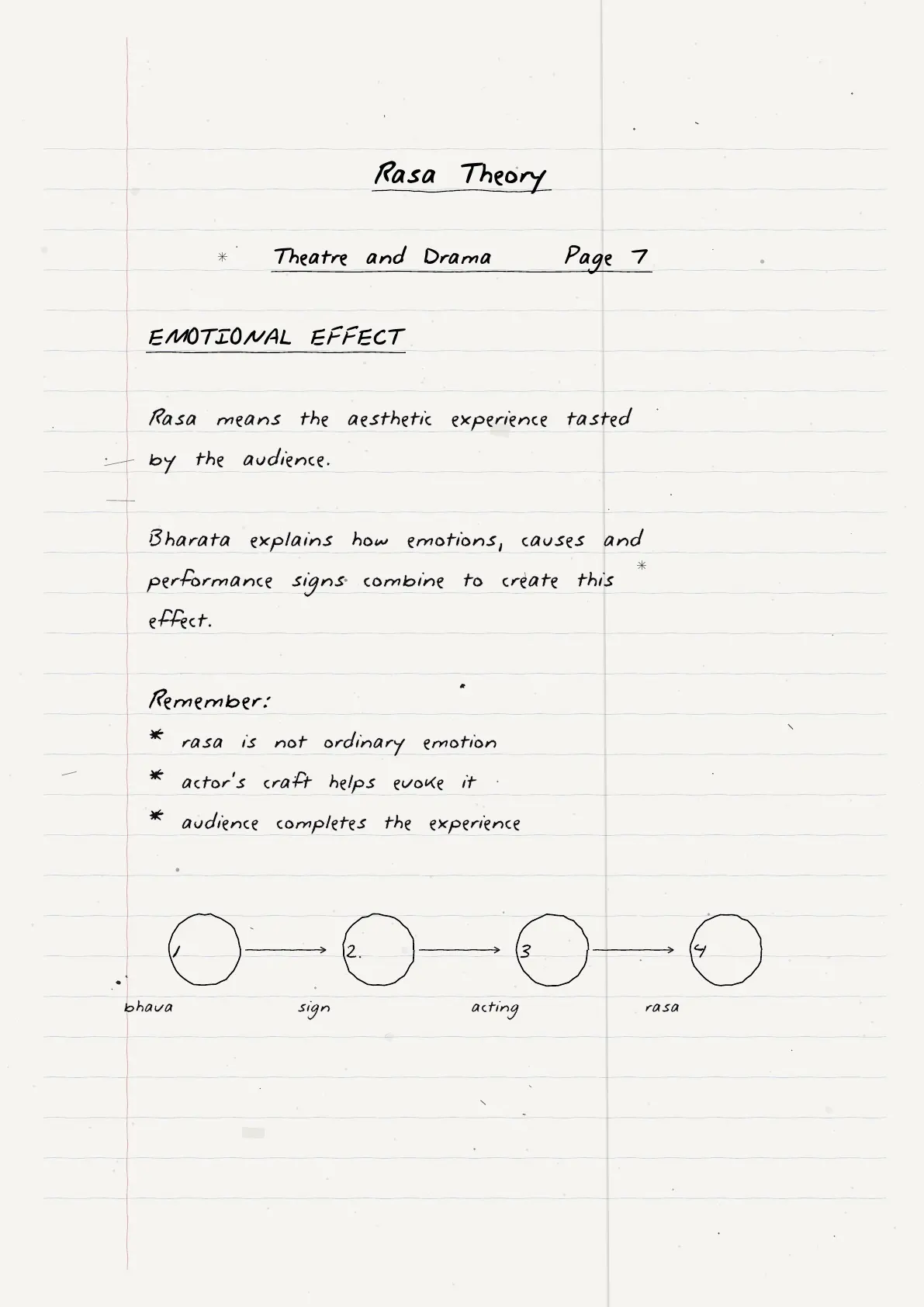
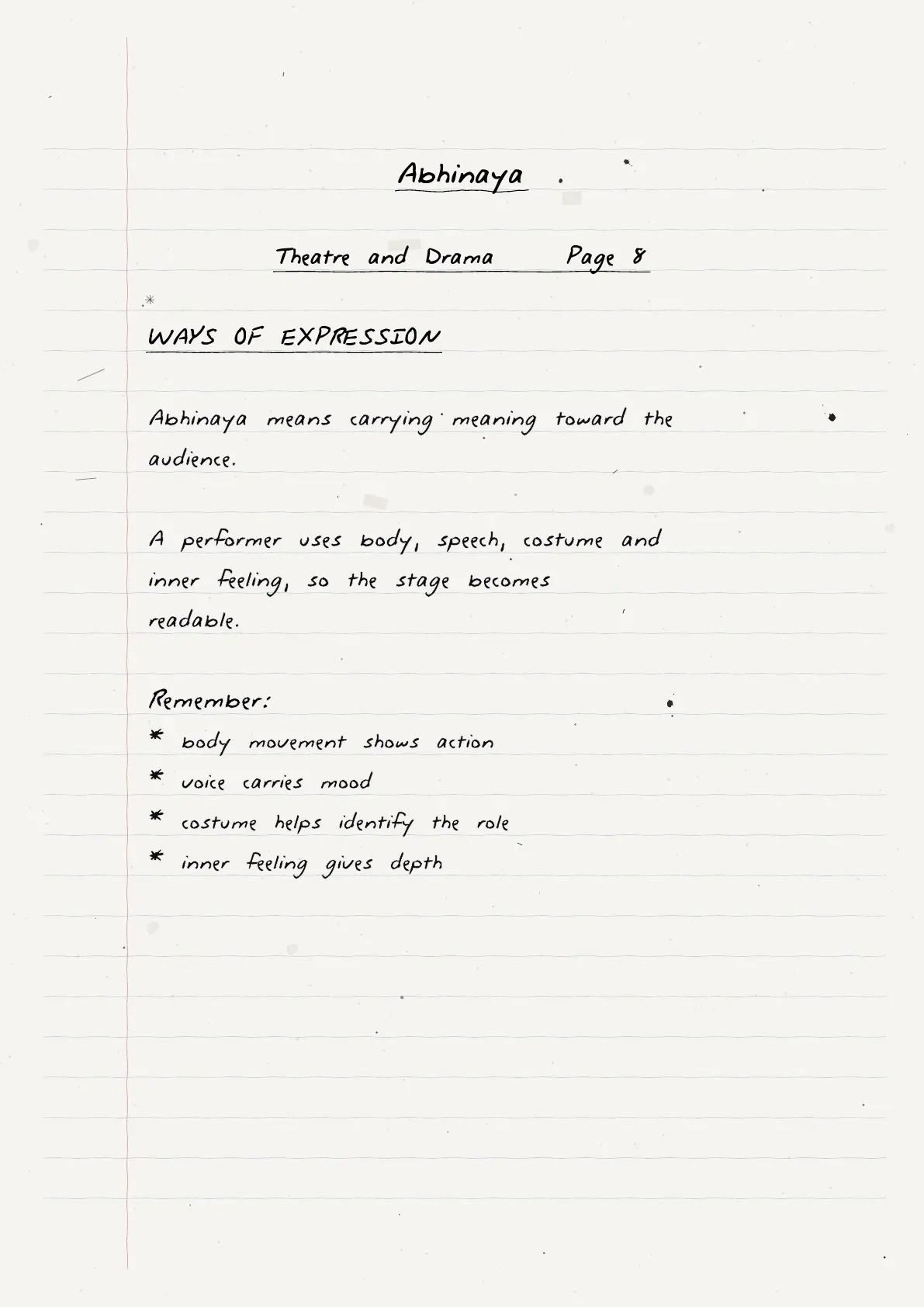
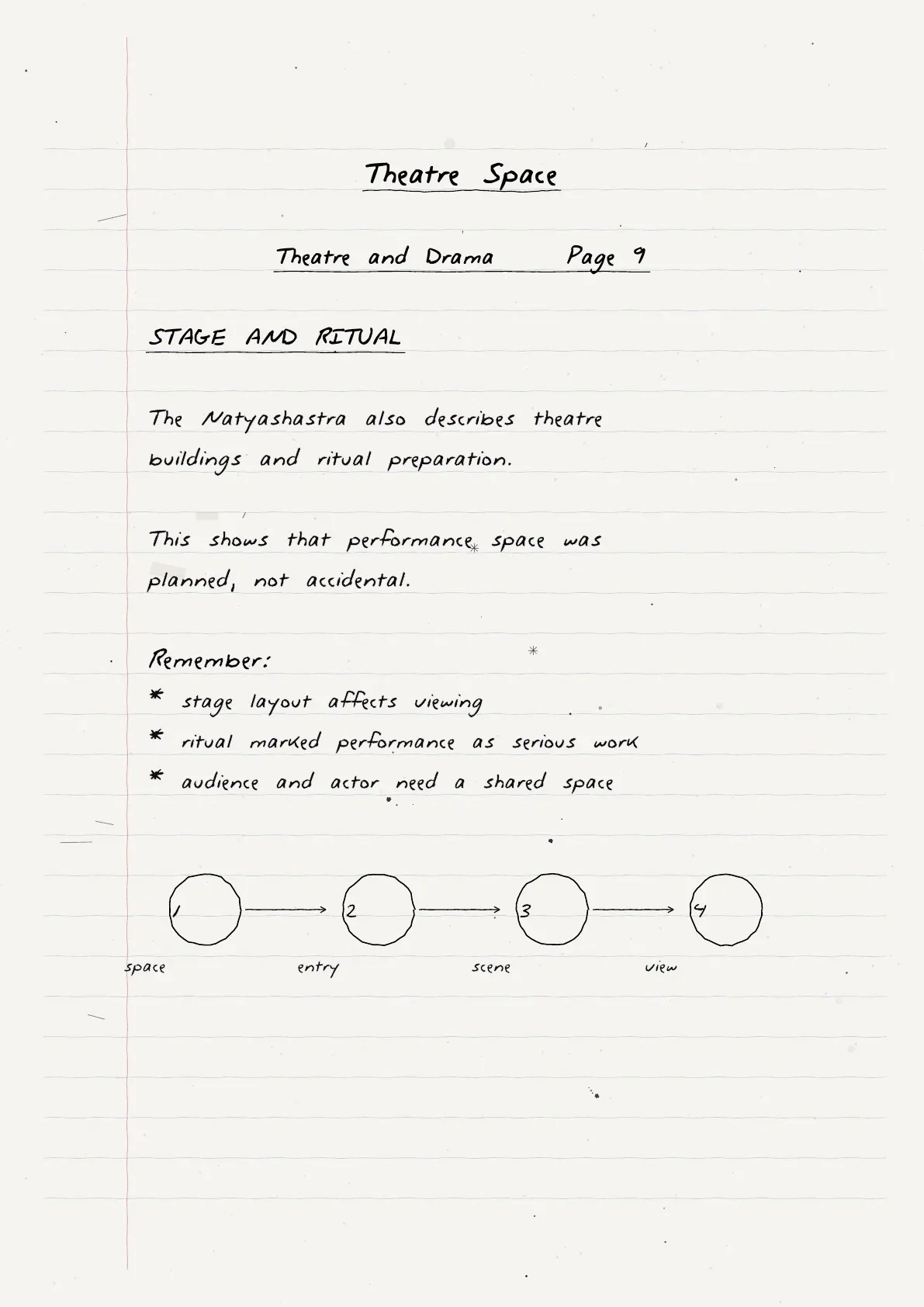
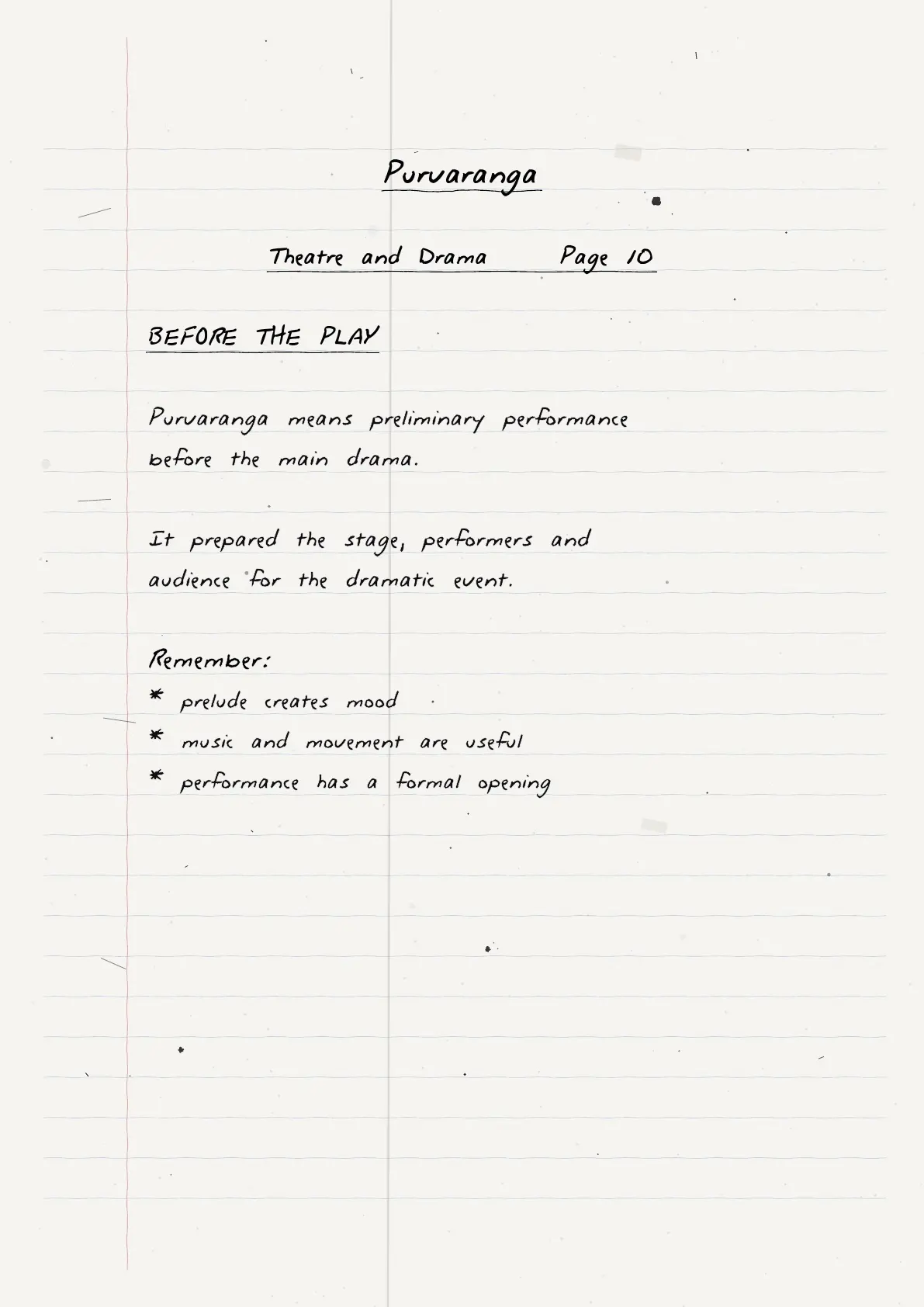
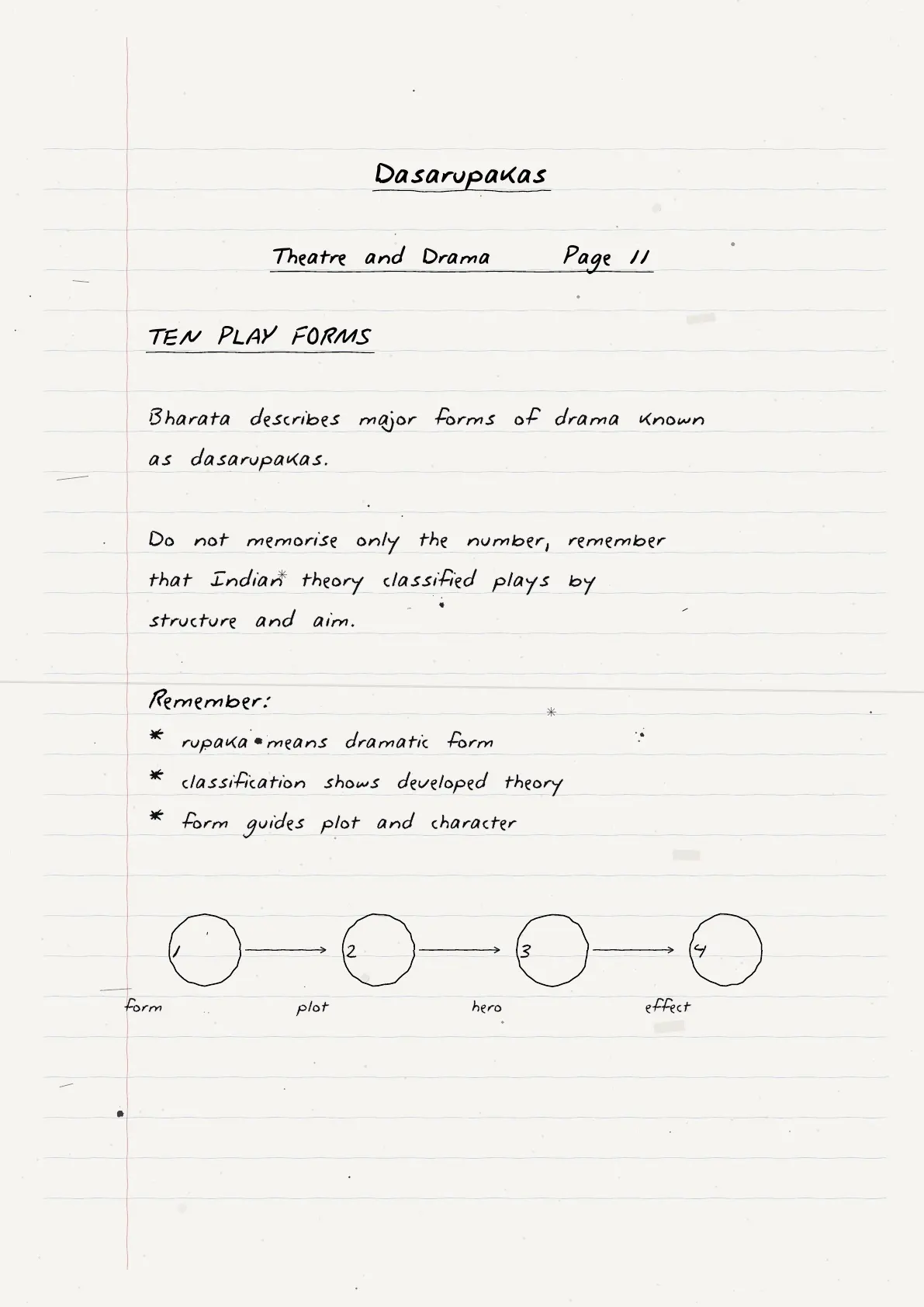
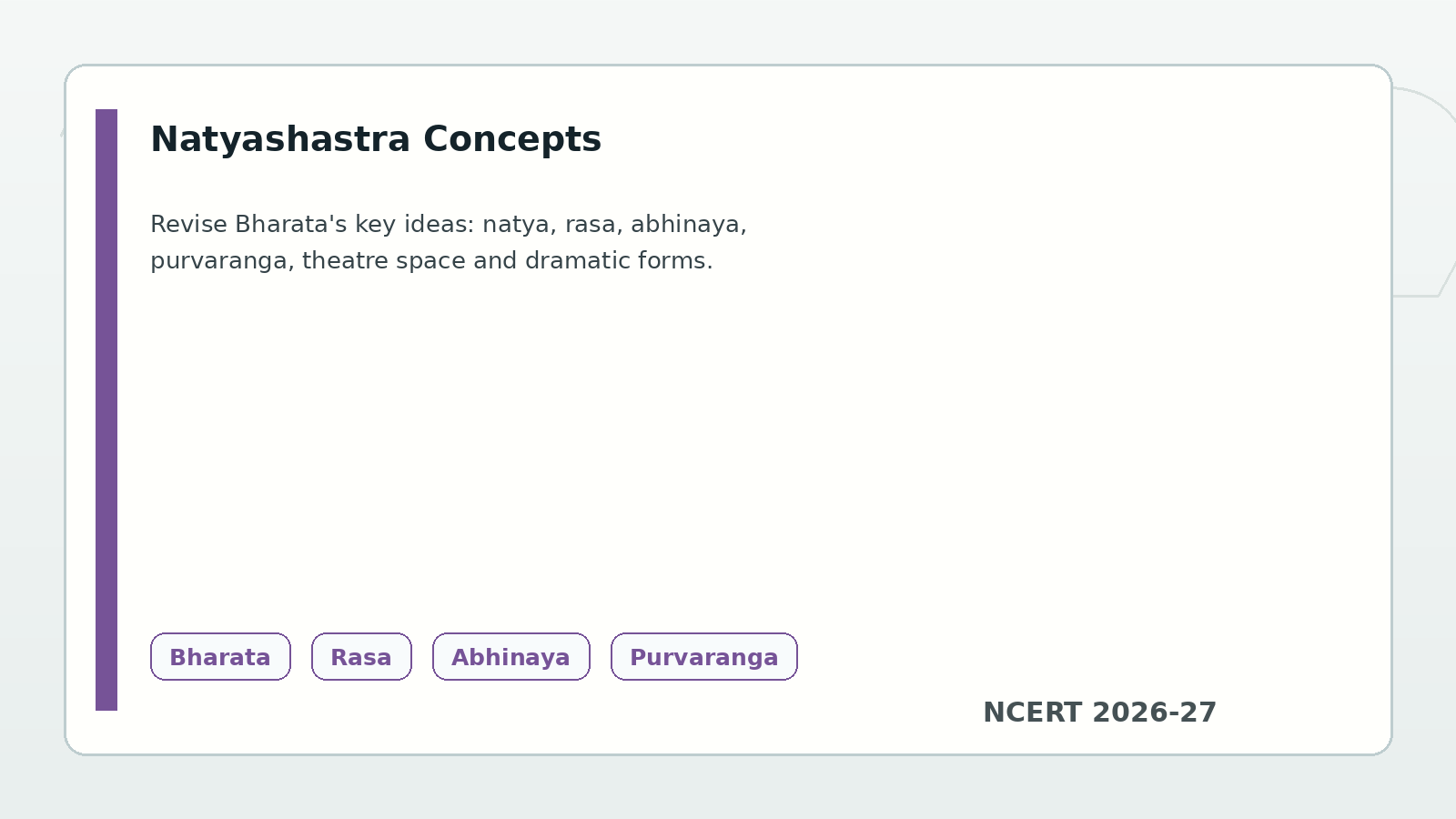
Bharata's Natyashastra is the safest anchor for this chapter. It discusses the origin of natya, theatre space, preliminary performance, rasa, expressive acting and major dramatic forms.
| Idea | Meaning | Revision use |
|---|---|---|
| Natya | A combined performance art using drama, dance, music and gesture. | Use as the broad Indian frame. |
| Rasa | Aesthetic experience felt by the student group. | Explain why drama affects viewers. |
| Abhinaya | Expression that carries meaning through body, voice, costume and feeling. | Use for acting craft. |
| Purvaranga | Preliminary performance before the main play. | Shows formal stage preparation. |
Class 11 KTPI Theatre and Drama Video
Source: Sangeet Natak Akademi on YouTube
Sanskrit Theatre Dramatists and Kutiyattam
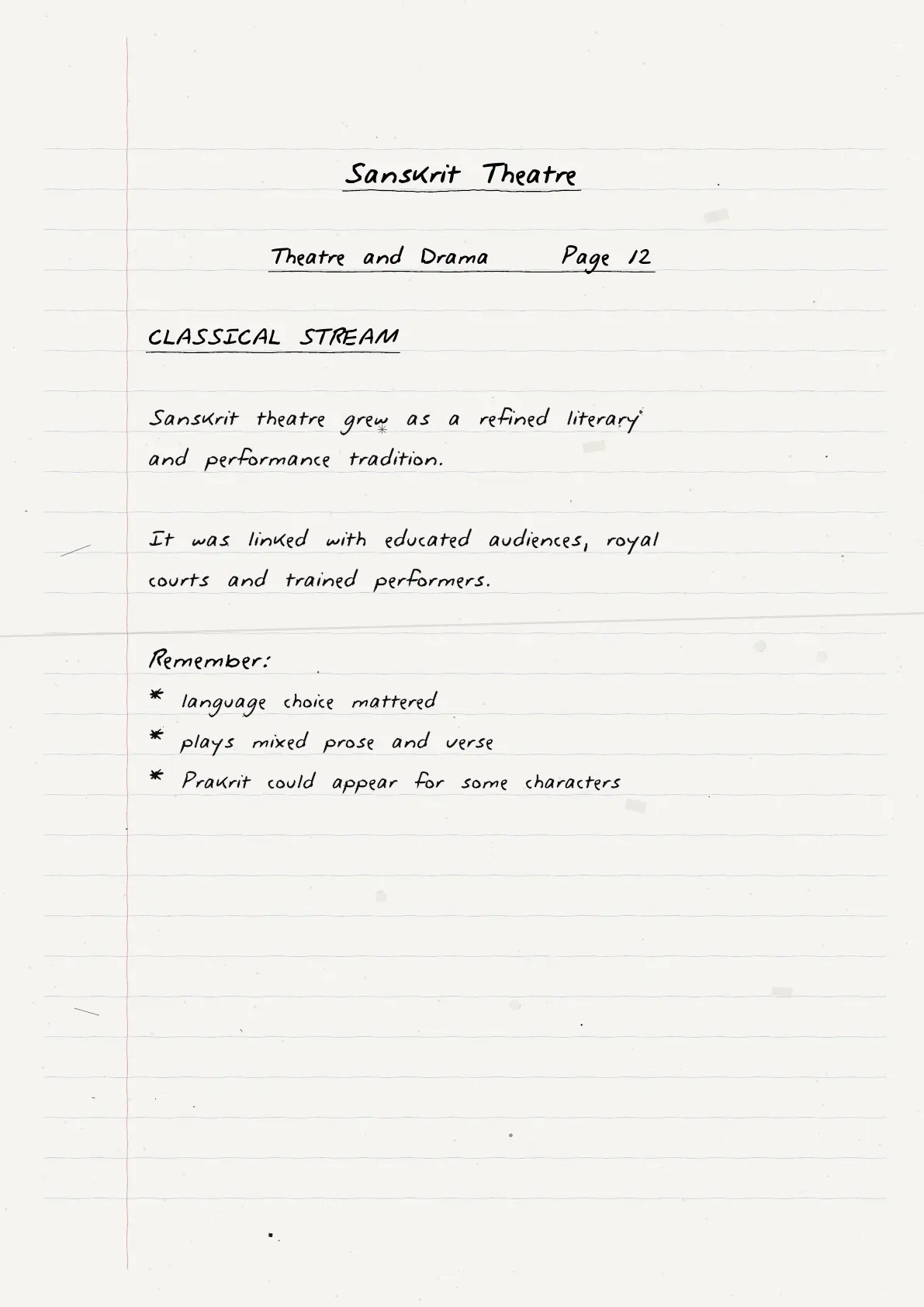
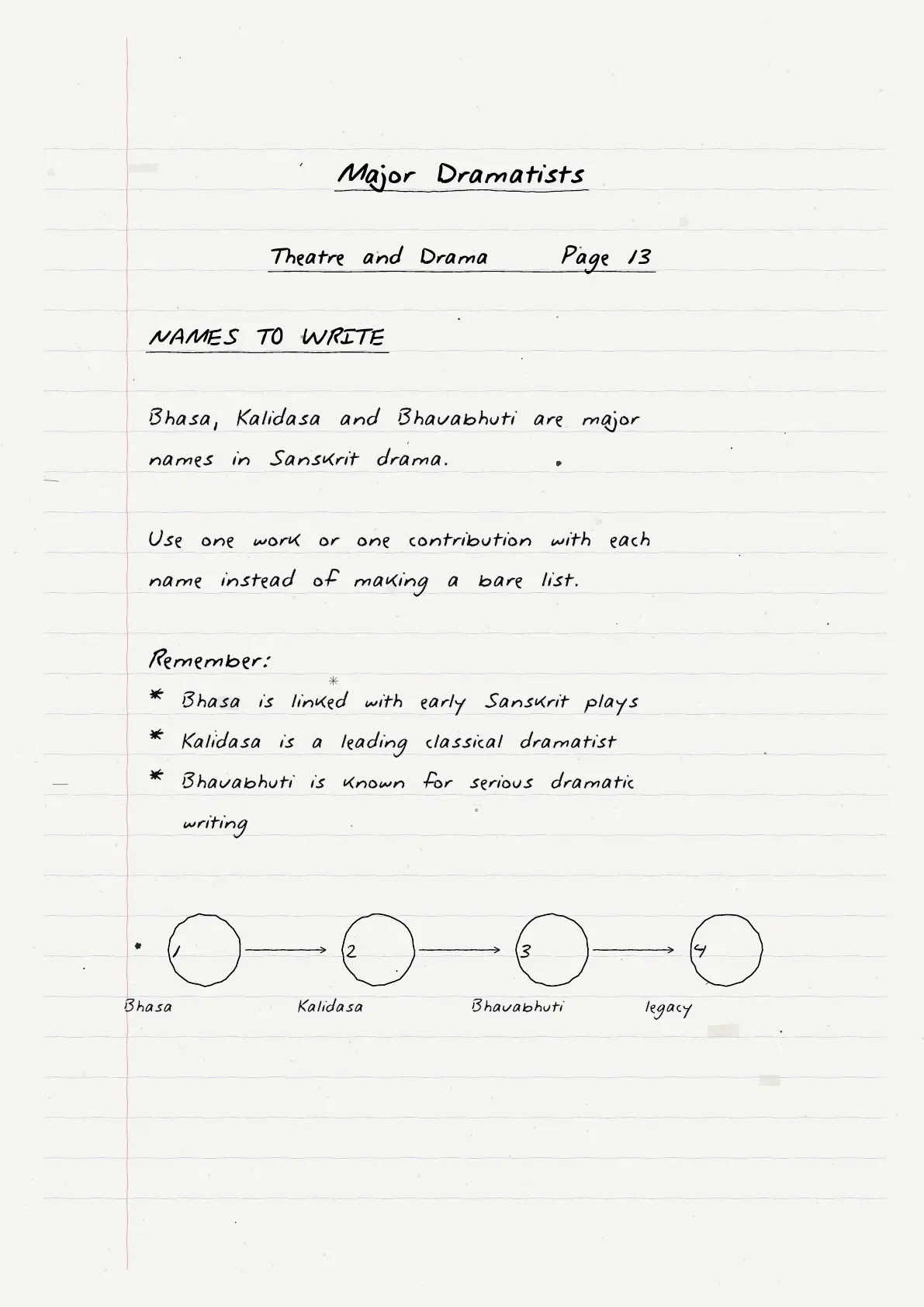
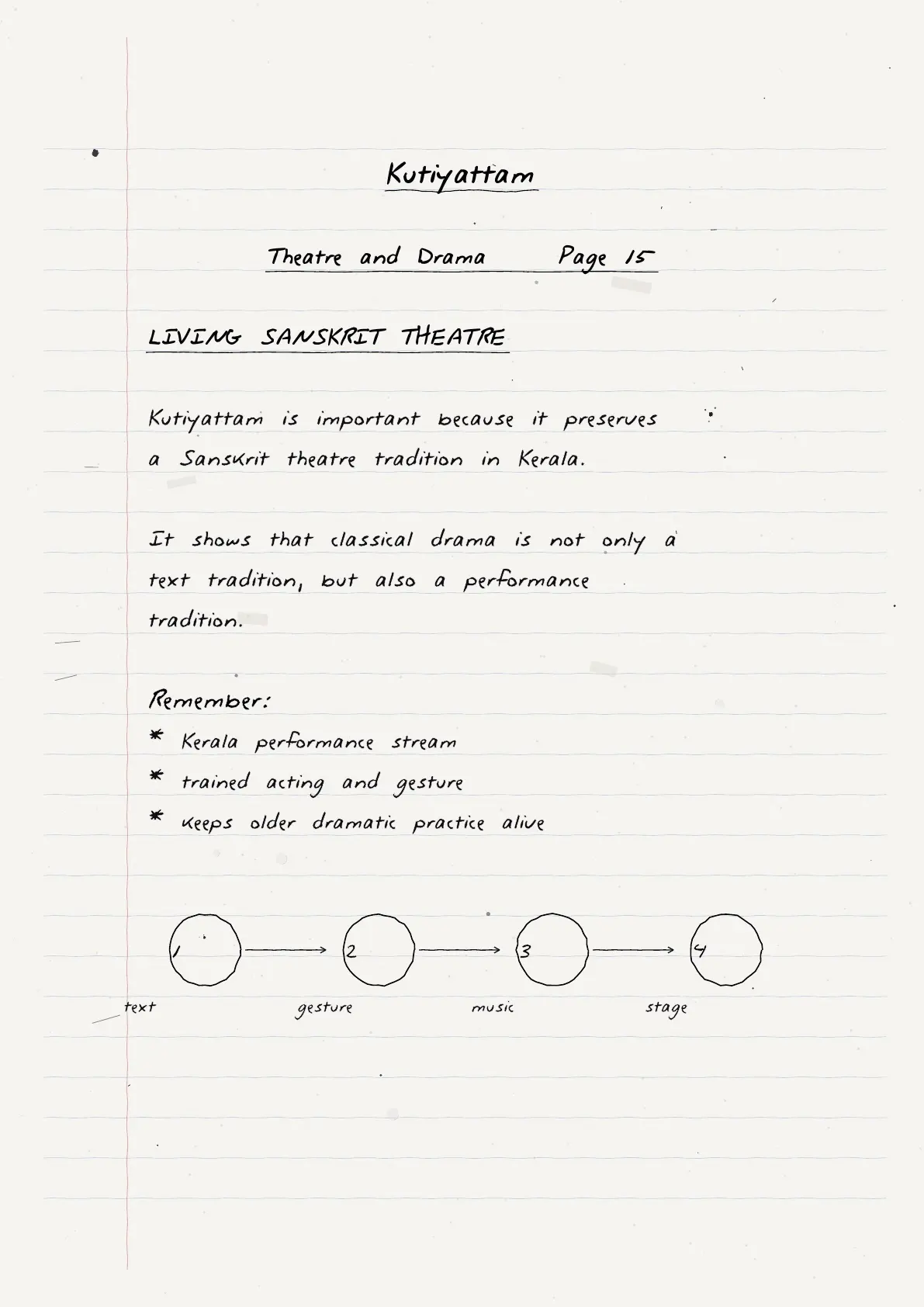
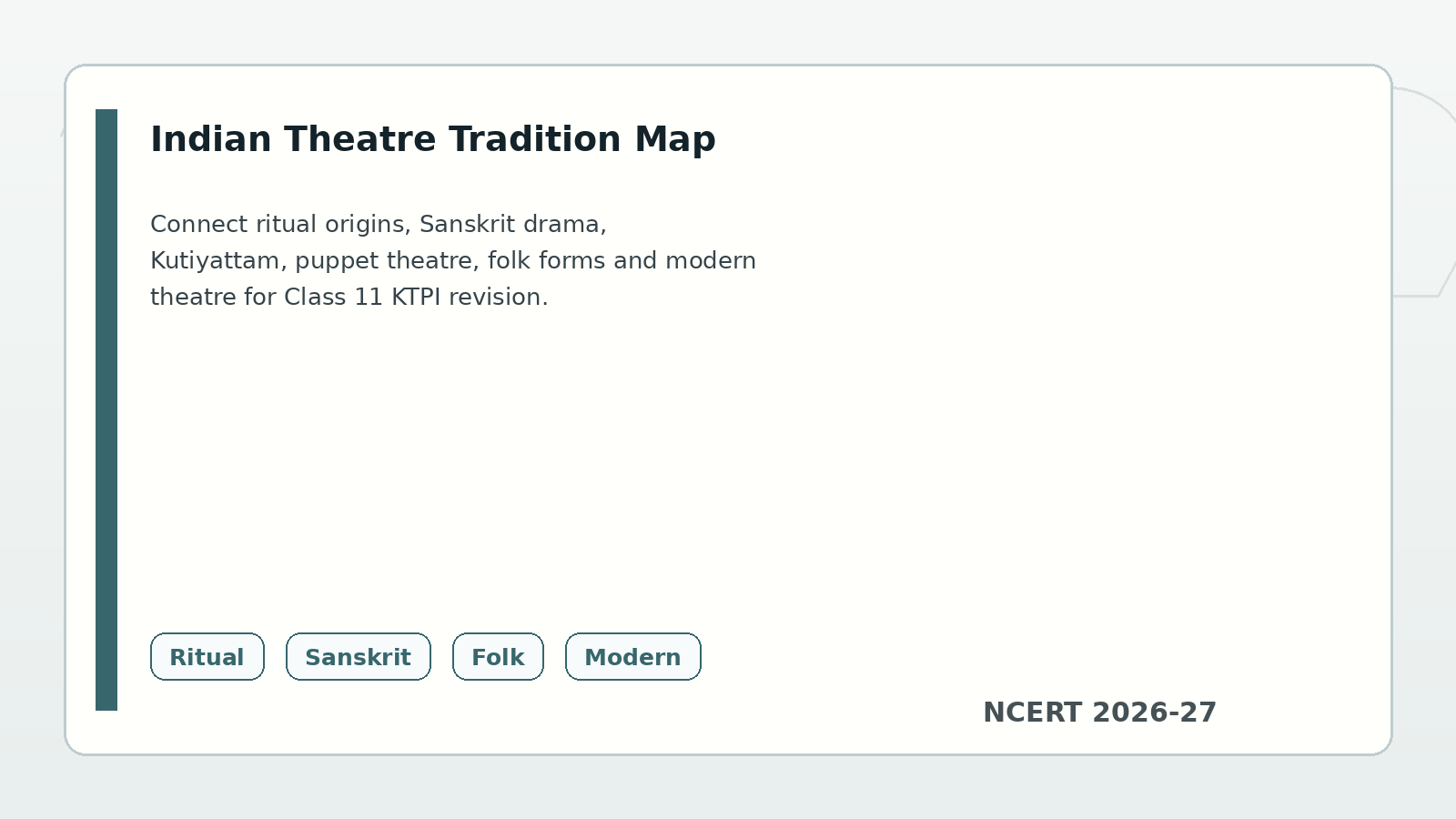
Sanskrit theatre is a classical stream with refined dramatic writing, trained performance and major dramatists. Bhasa, Kalidasa and Bhavabhuti are useful names for long answers, while Kutiyattam shows a living Sanskrit theatre tradition.
| Name or form | Key point | How to remember |
|---|---|---|
| Bhasa | Linked with early Sanskrit plays. | Use as an early dramatist. |
| Kalidasa | A leading classical Sanskrit dramatist. | Use for poetic dramatic excellence. |
| Bhavabhuti | Known for serious Sanskrit dramatic writing. | Use for later classical drama. |
| Kutiyattam | A Kerala performance tradition preserving Sanskrit theatre. | Use as living continuity. |
Folk Theatre Modern Theatre and Institutions
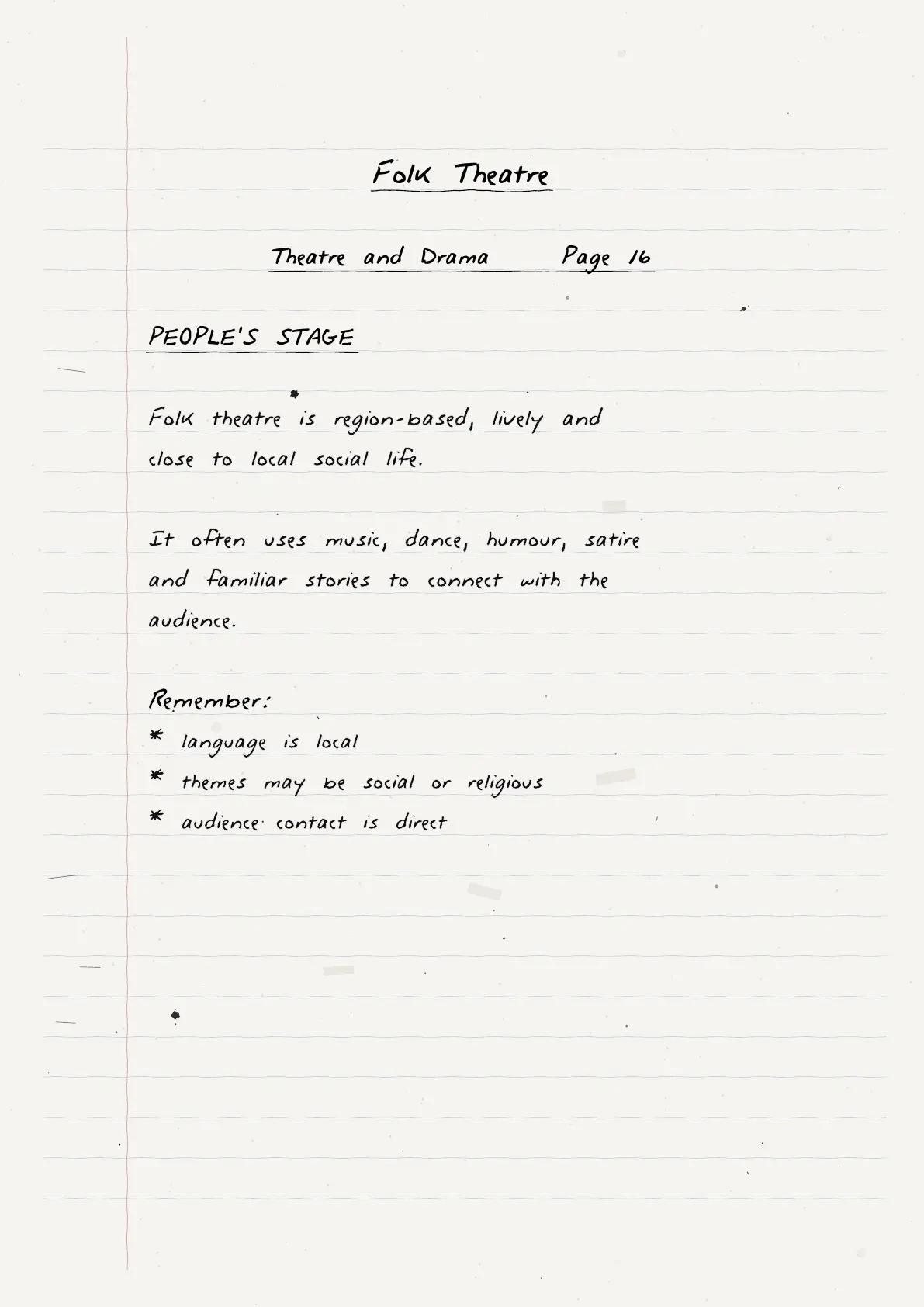
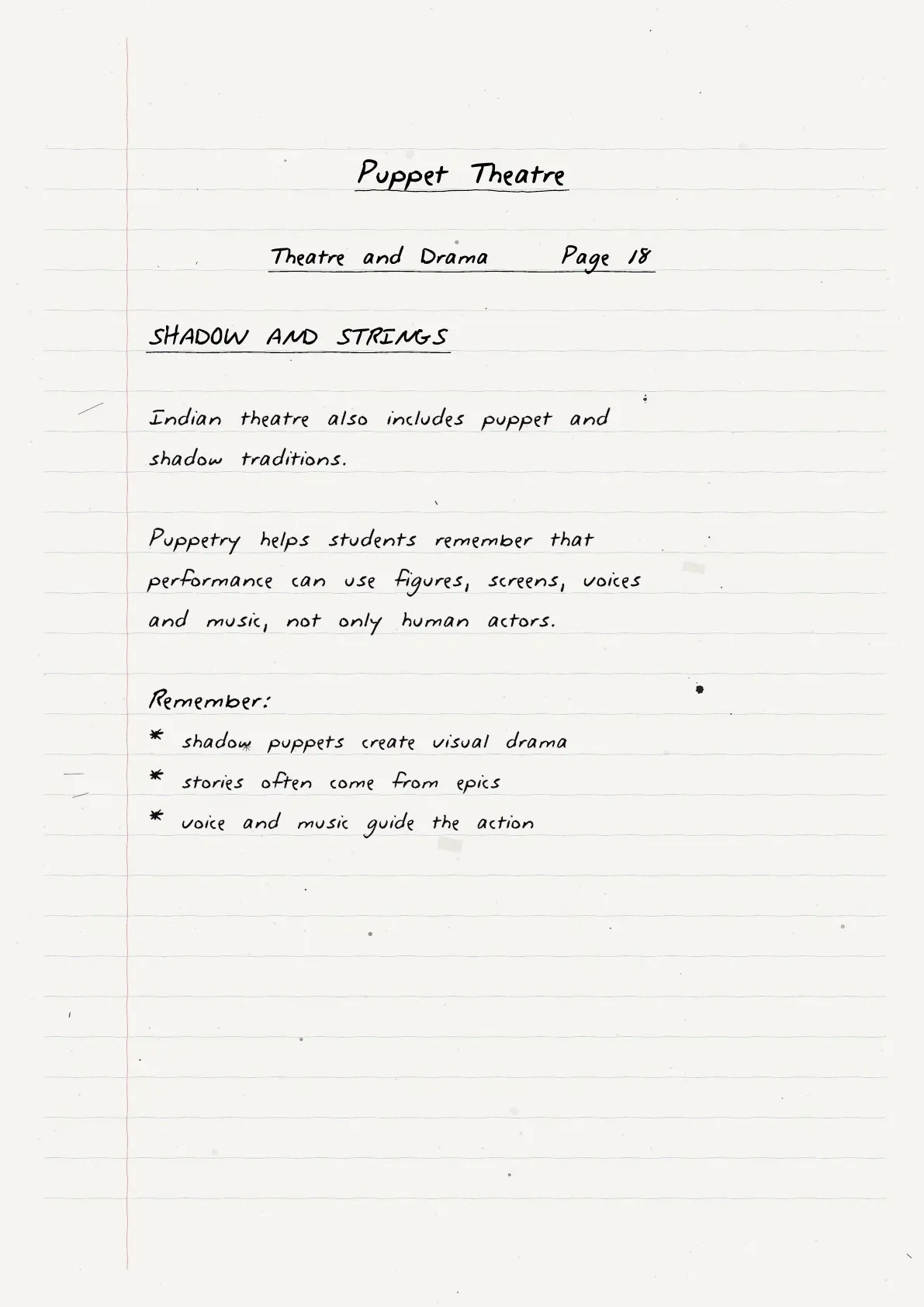
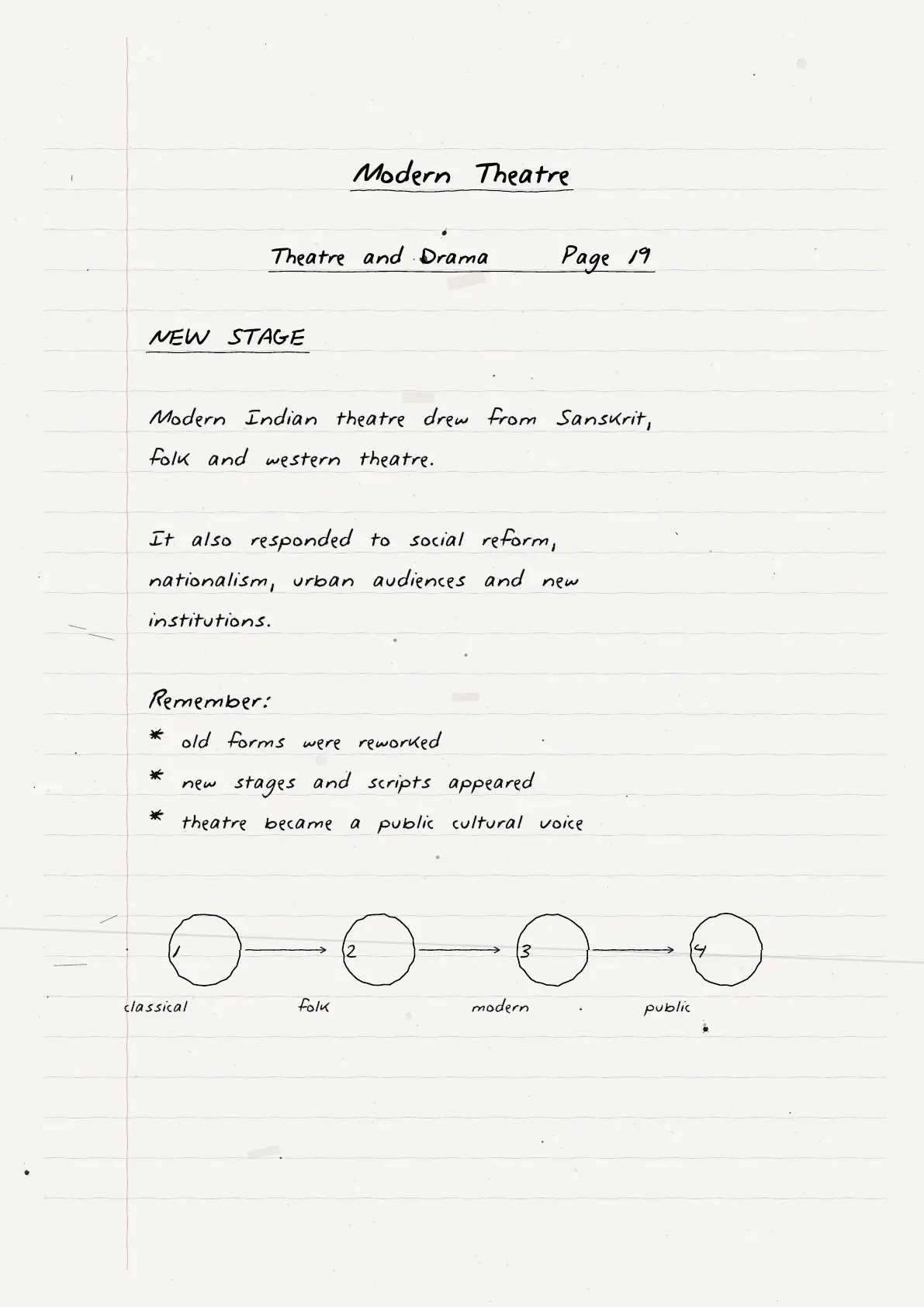
Indian theatre also has strong folk and modern streams. Folk theatre is regional, musical, direct and close to community life. Modern theatre drew from Sanskrit, folk and western theatre and grew with new institutions.
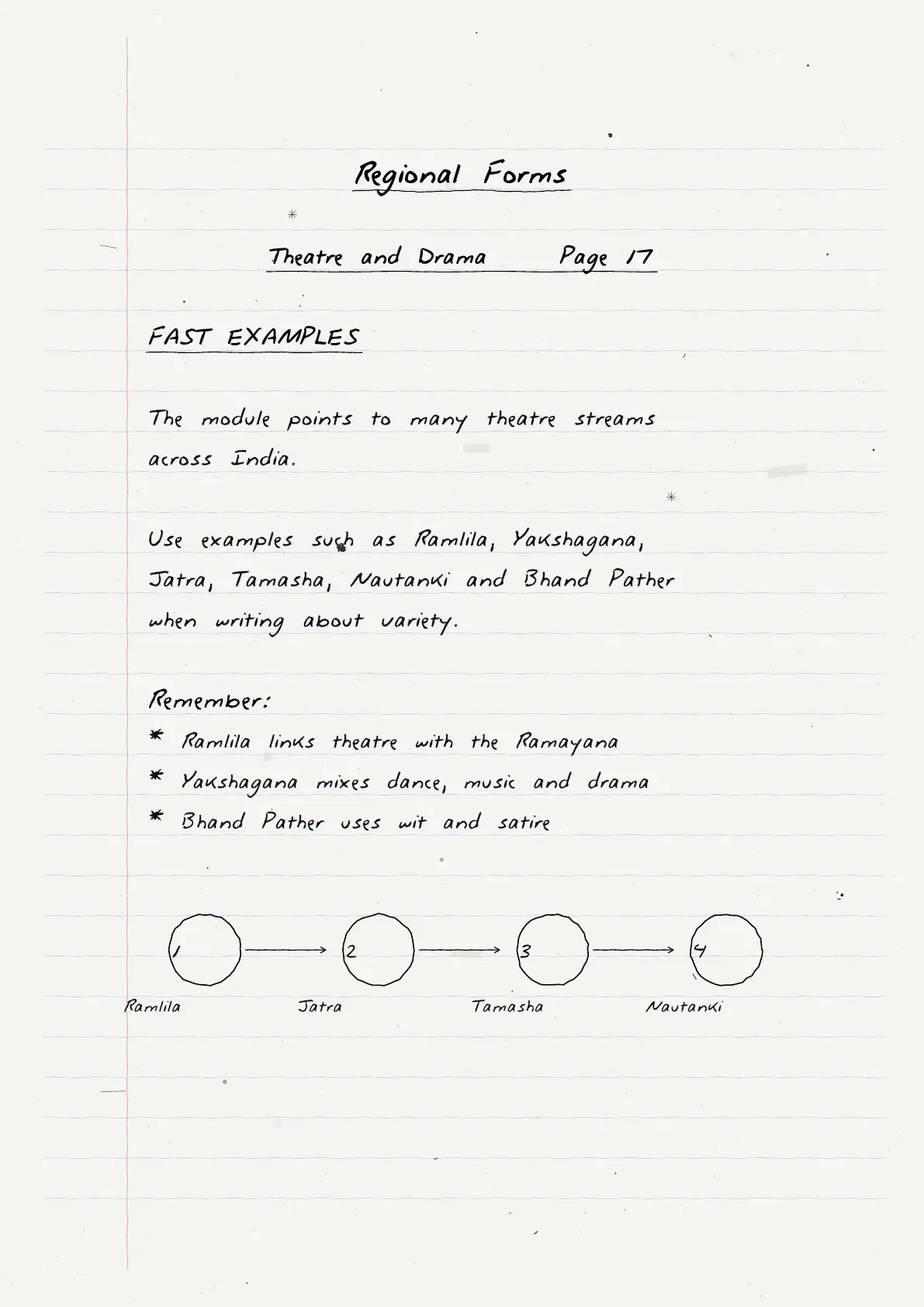
- Ramlila: dramatic performance linked with the Ramayana tradition.
- Yakshagana: a form mixing music, dance, costume and drama.
- Jatra, Tamasha and Nautanki: useful examples for regional variety.
- Bhand Pather: a Kashmiri form known for wit, satire and social comment.
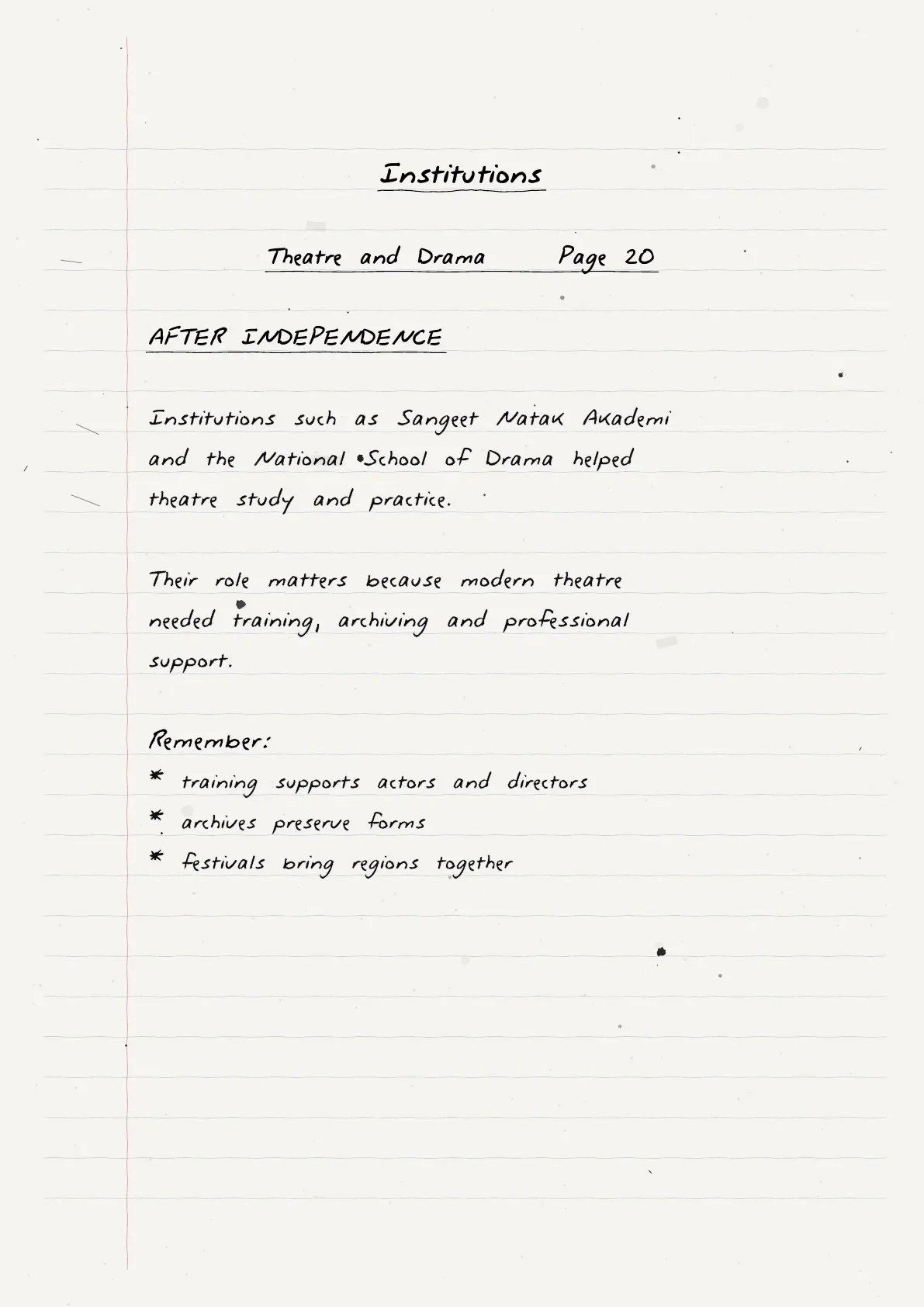
- Institutions: Sangeet Natak Akademi and National School of Drama helped modern theatre practice.
How to Use the Theatre and Drama in India Handwritten Notes PDF
Start with the first pages for the chapter theme. Then revise the pages on Natyashastra, rasa and abhinaya. End with Sanskrit theatre, folk theatre, modern institutions and the exam answer frame.
For a 200-word answer, use this order: define drama, explain ritual origin, name Bharata and Natyashastra, explain rasa, add Sanskrit and folk examples, then close with modern continuity. Exact terms score better than a general paragraph on acting.
Related Class 11 KTPI Resources
| Resource | Use it for | Link |
|---|---|---|
| NCERT Solutions | Exercise answers for related KTPI theatre and performance questions. | Class 11 KTPI Chapter 9 Solutions |
| NCERT Book PDF | Original textbook or module reading for the chapter. | Class 11 KTPI Theatre and Drama in India Book PDF |
| Notes | Typed revision notes for theory-heavy study. | Class 11 KTPI Theatre and Drama in India Notes |
| Handwritten Notes | Quick one-shot revision before tests. | Class 11 KTPI Theatre and Drama in India Handwritten Notes |
All Class 11 KTPI Handwritten Notes
| Chapter | Title | Handwritten Notes |
|---|---|---|
| Chapter 1 | Astronomy in India | Open handwritten notes |
| Chapter 2 | Chemistry in India | Open handwritten notes |
| Chapter 3 | Indian Literature Part I Introduction of Indian Literature | Open handwritten notes |
| Chapter 4 | Indian Philosophical Systems | Open handwritten notes |
| Chapter 5 | Indian Traditional Knowledge on Environmental Conservation | Open handwritten notes |
| Chapter 6 | Life Sciences 1 Ayurveda for Life Health and Well-Being | Open handwritten notes |
| Chapter 7 | Life Sciences 2 Historical Evolution of Medical Tradition in Ancient India | Open handwritten notes |
| Chapter 8 | Mathematics in India | Open handwritten notes |
| Chapter 9 | Theatre and Drama in India | Open handwritten notes |
Class 11 KTPI Theatre and Drama in India Handwritten Notes FAQs
Ques. What is covered in Class 11 KTPI Theatre and Drama in India handwritten notes?
Ans. The PDF covers drama origin, Bharata's Natyashastra, rasa, abhinaya, Sanskrit theatre, folk forms and modern theatre institutions.
Ques. Why is Natyashastra important in this chapter?
Ans. Natyashastra gives the main Indian theatre theory, including stage practice, rasa, abhinaya and dramatic forms.
Ques. Which theatre examples should students remember?
Ans. Revise Kutiyattam, Ramlila, Yakshagana, Jatra, Tamasha, Nautanki and Bhand Pather as examples of variety.
Ques. How should students write long answers from this chapter?
Ans. Start with origin and Natyashastra, explain rasa, add Sanskrit and folk theatre examples, then finish with modern continuity.



Comments