


Class 7 Maths Part 2 Chapter 1 Geometric Twins is about congruence. These class 7 maths handwritten notes chapter 1 Geometric Twins follow the 2026-27 NCERT and cover what makes two figures identical, the congruence rules for triangles, and isosceles angles.
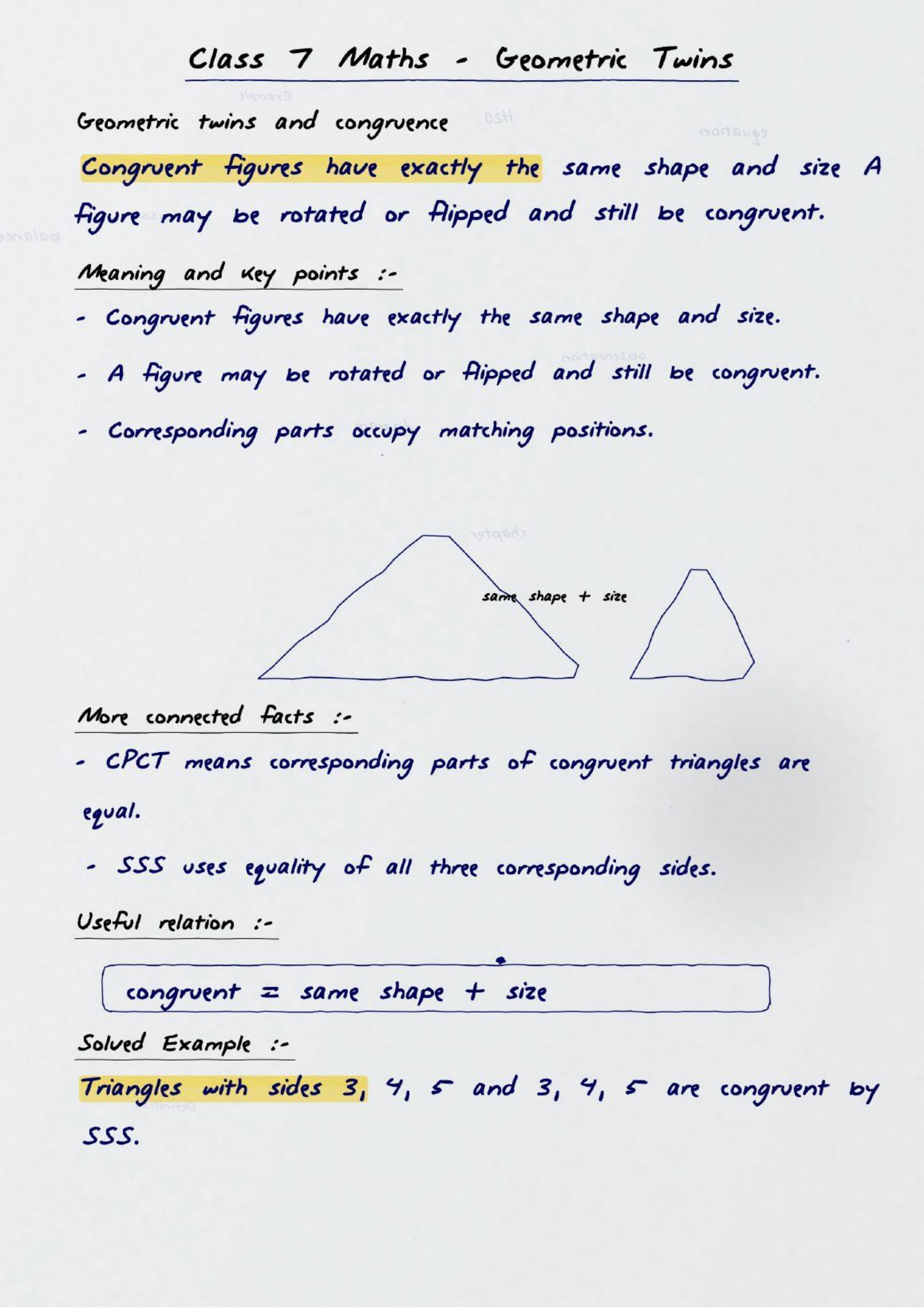
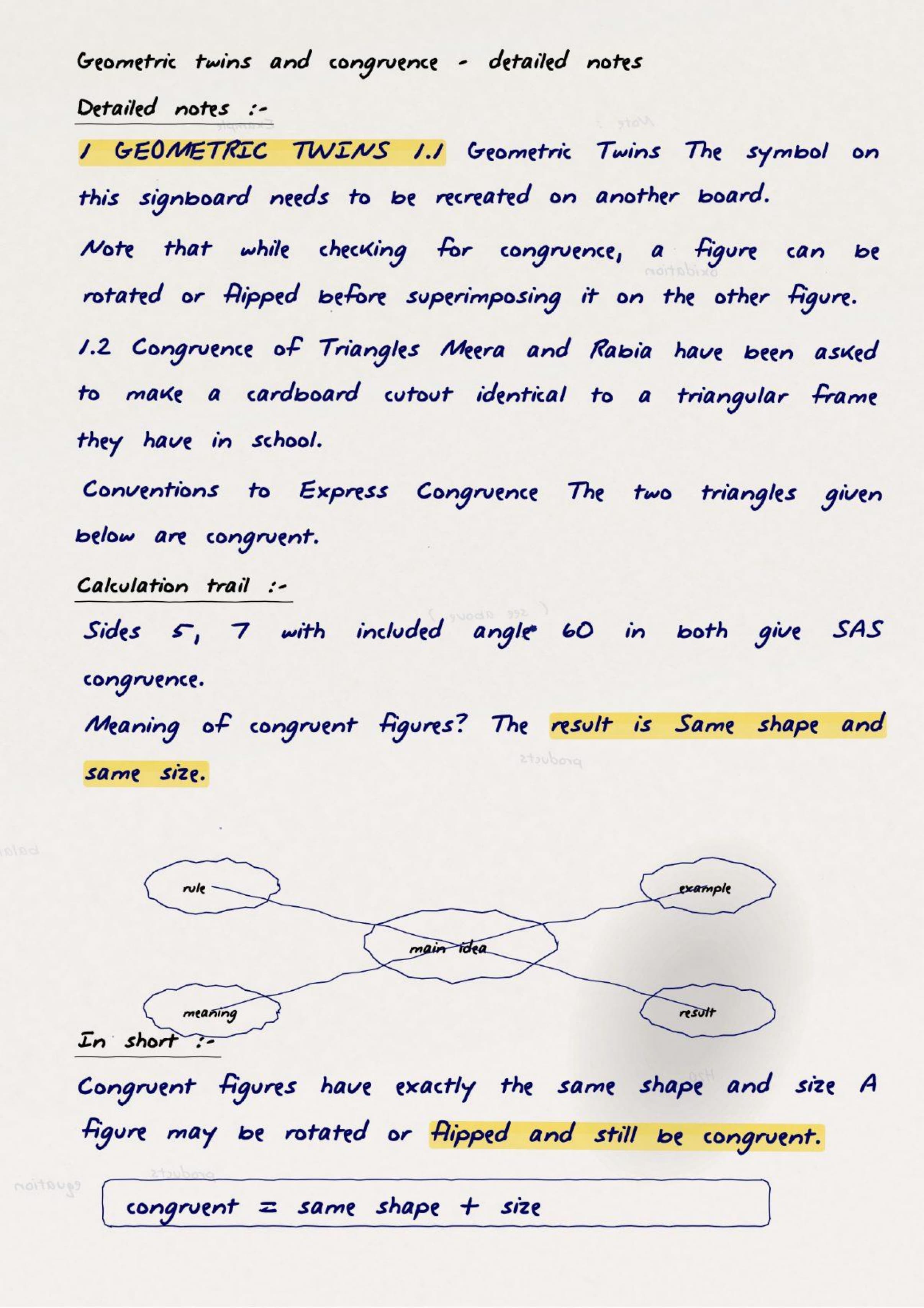
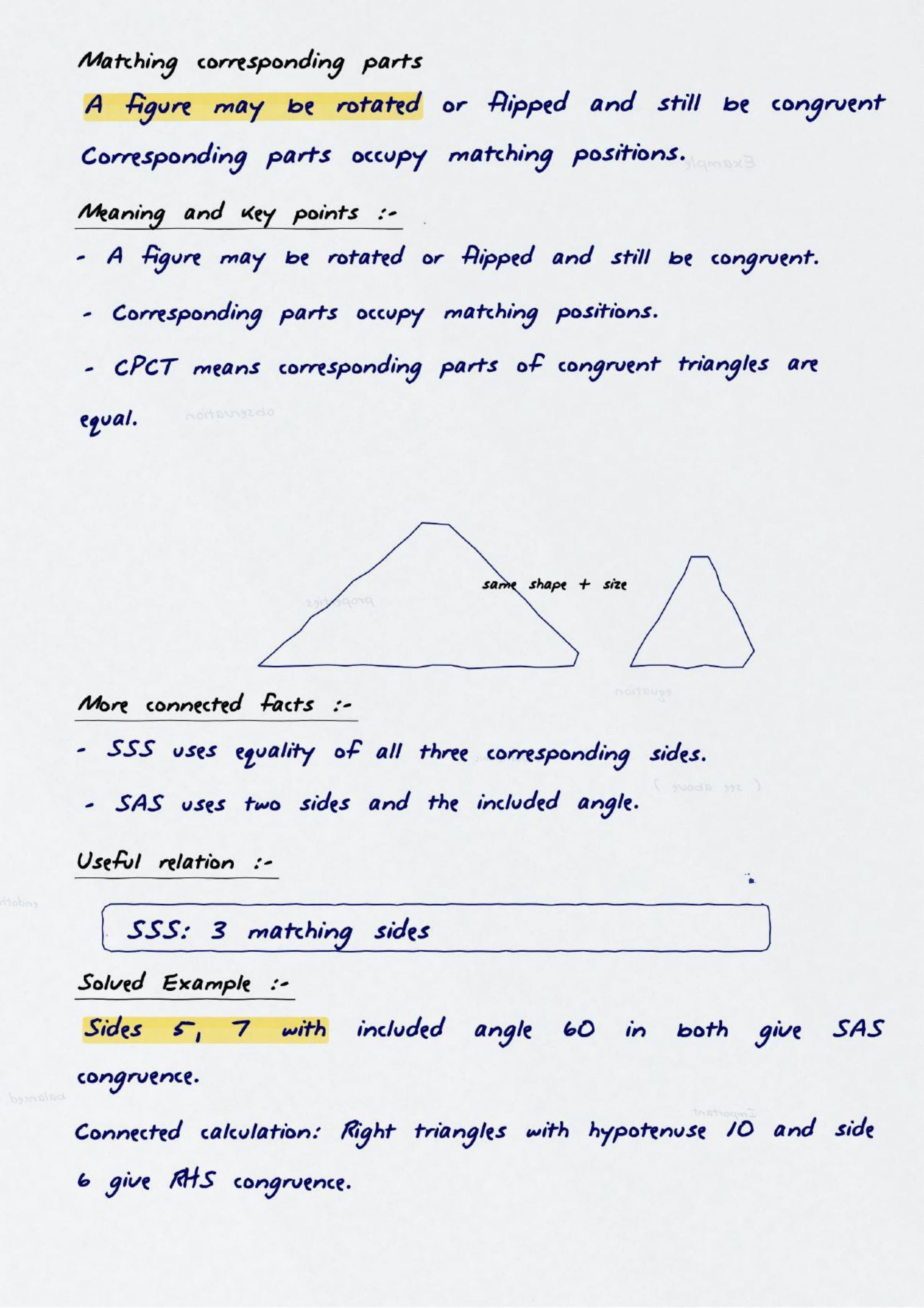
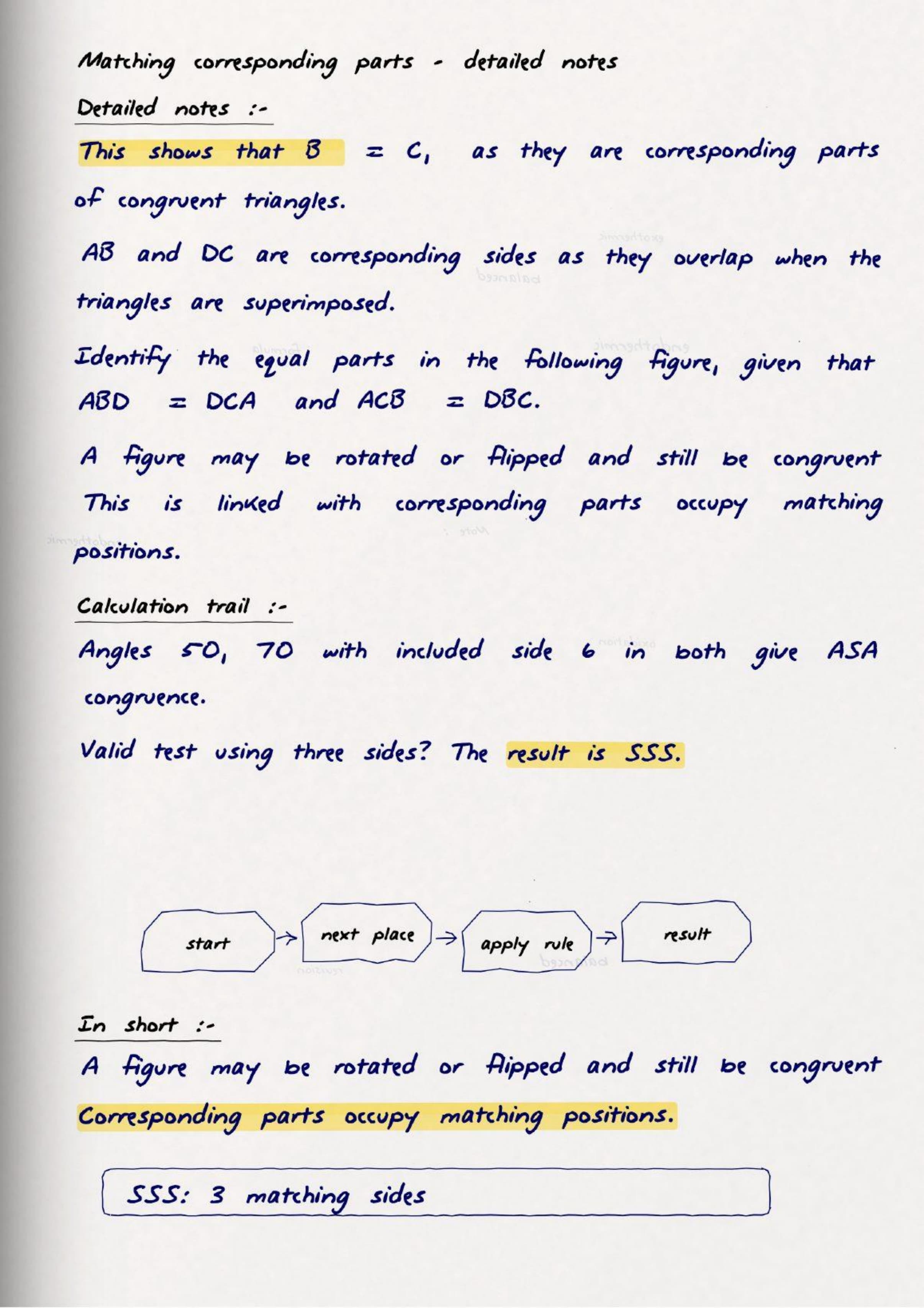
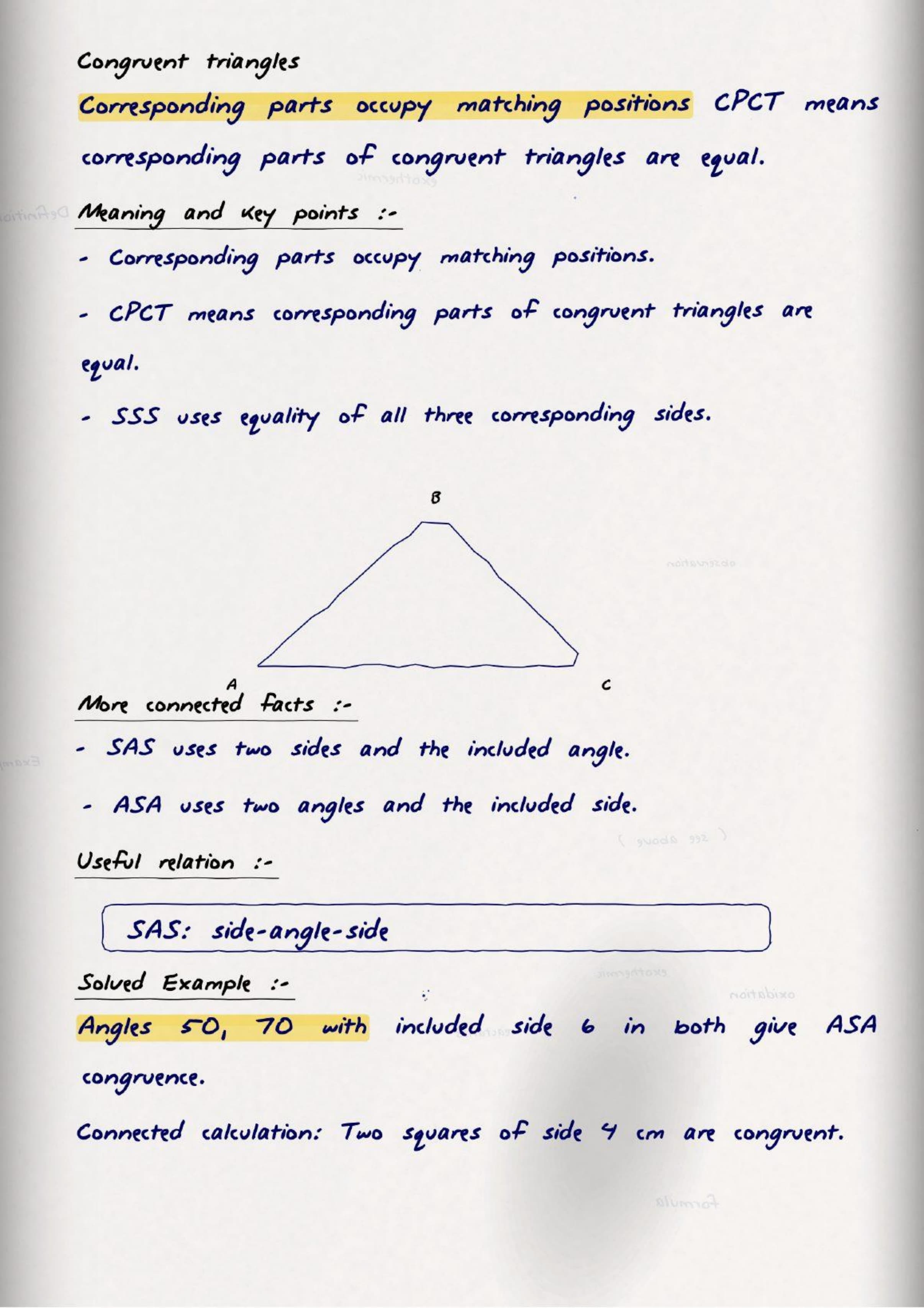
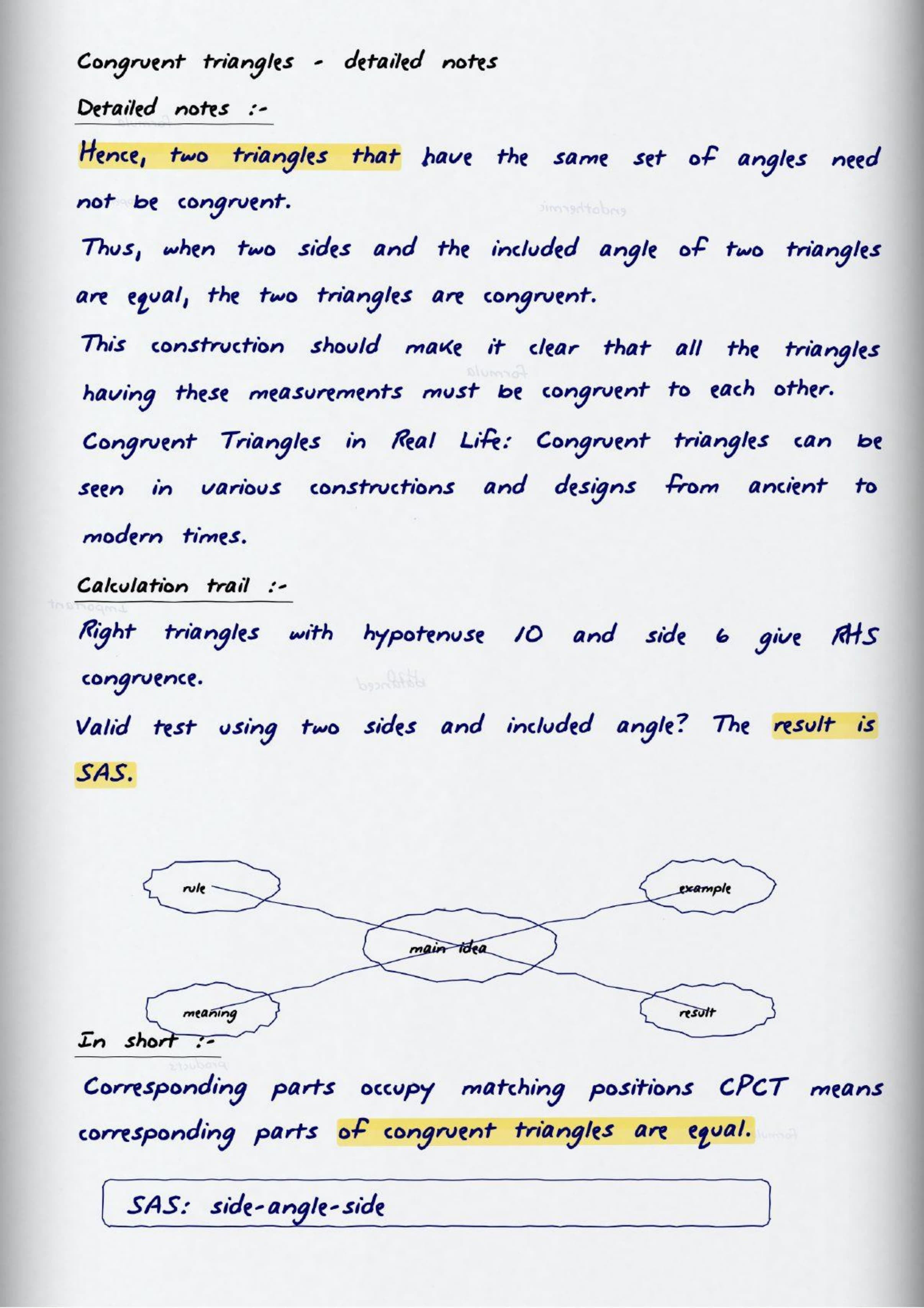
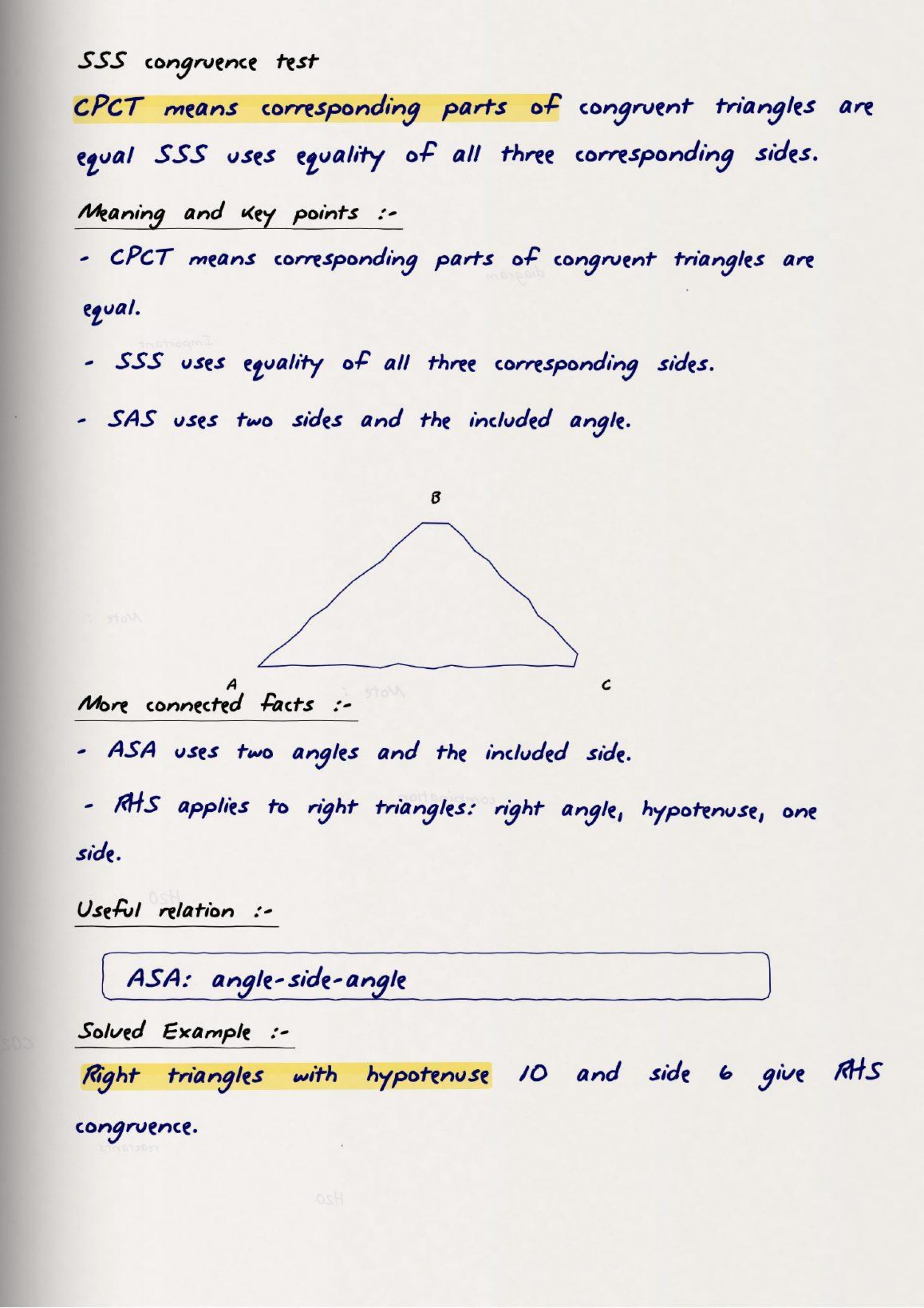
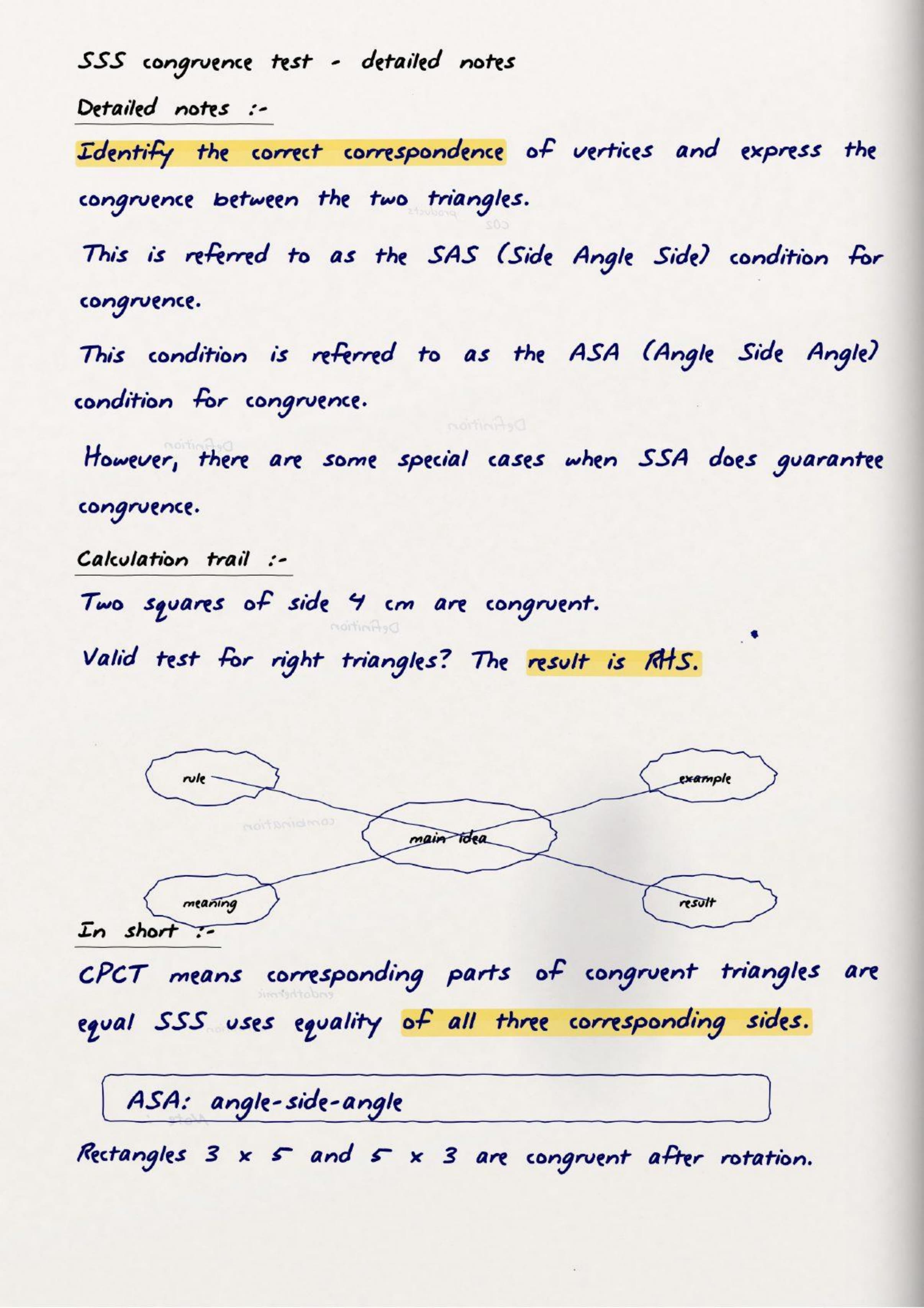
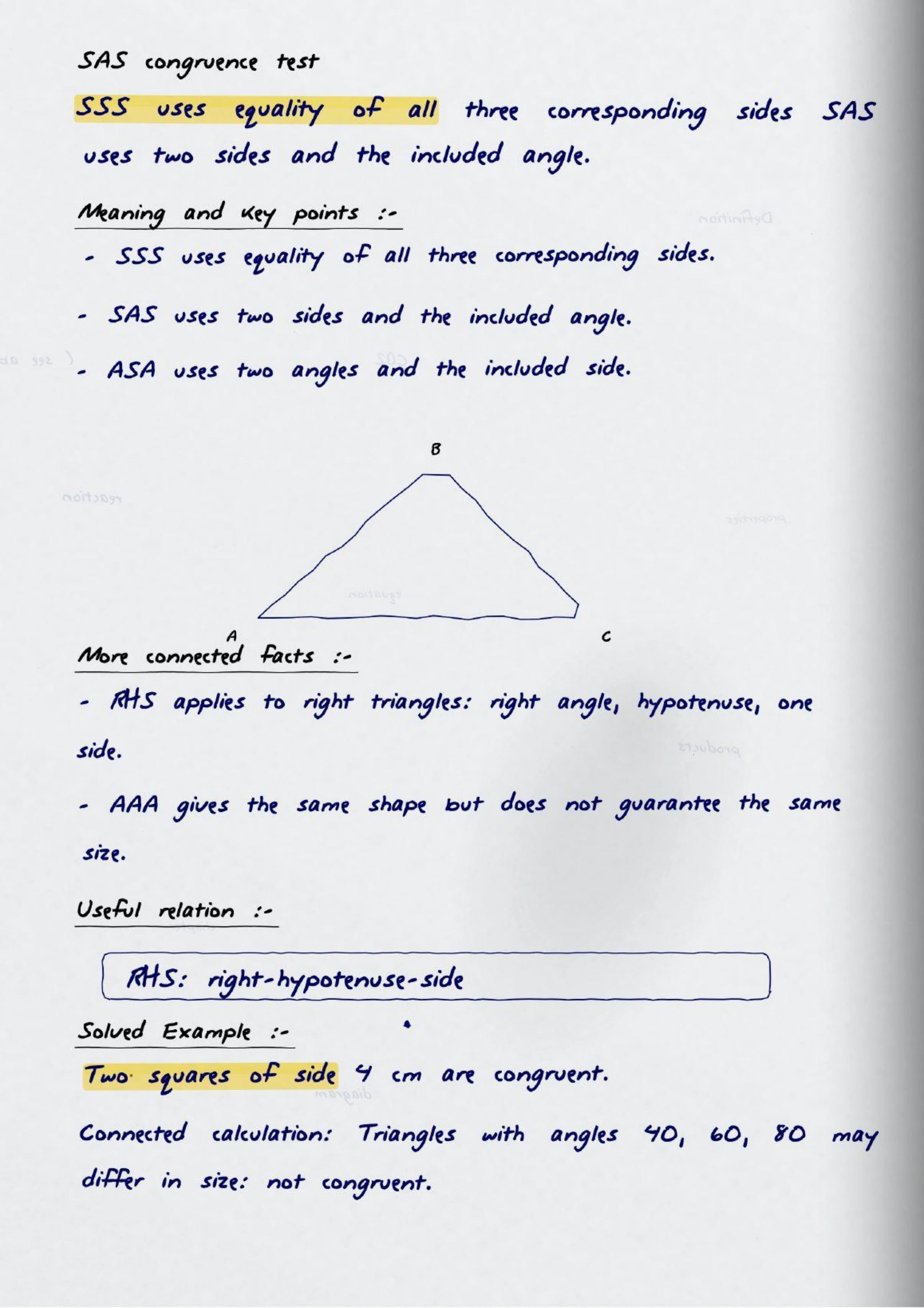
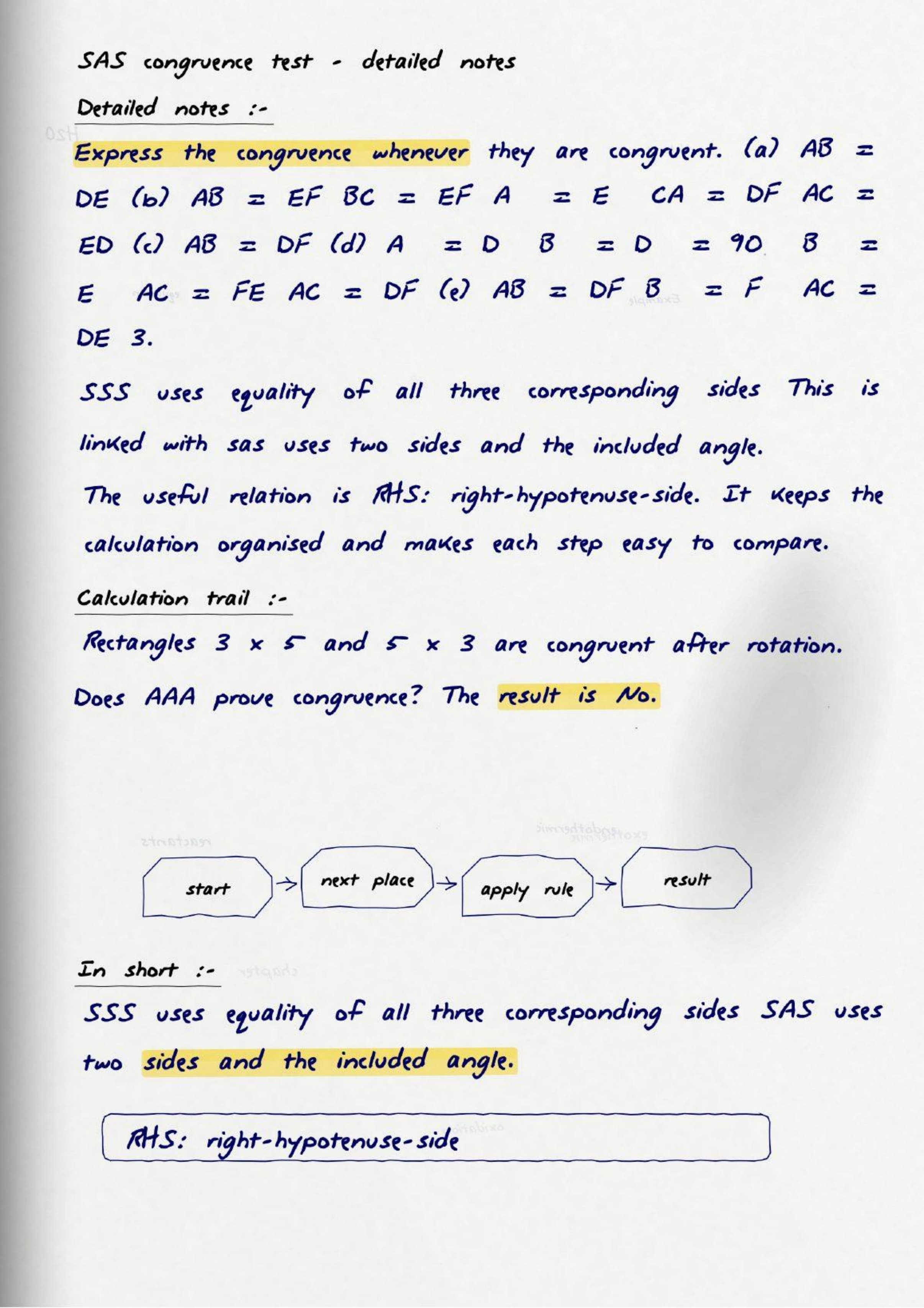
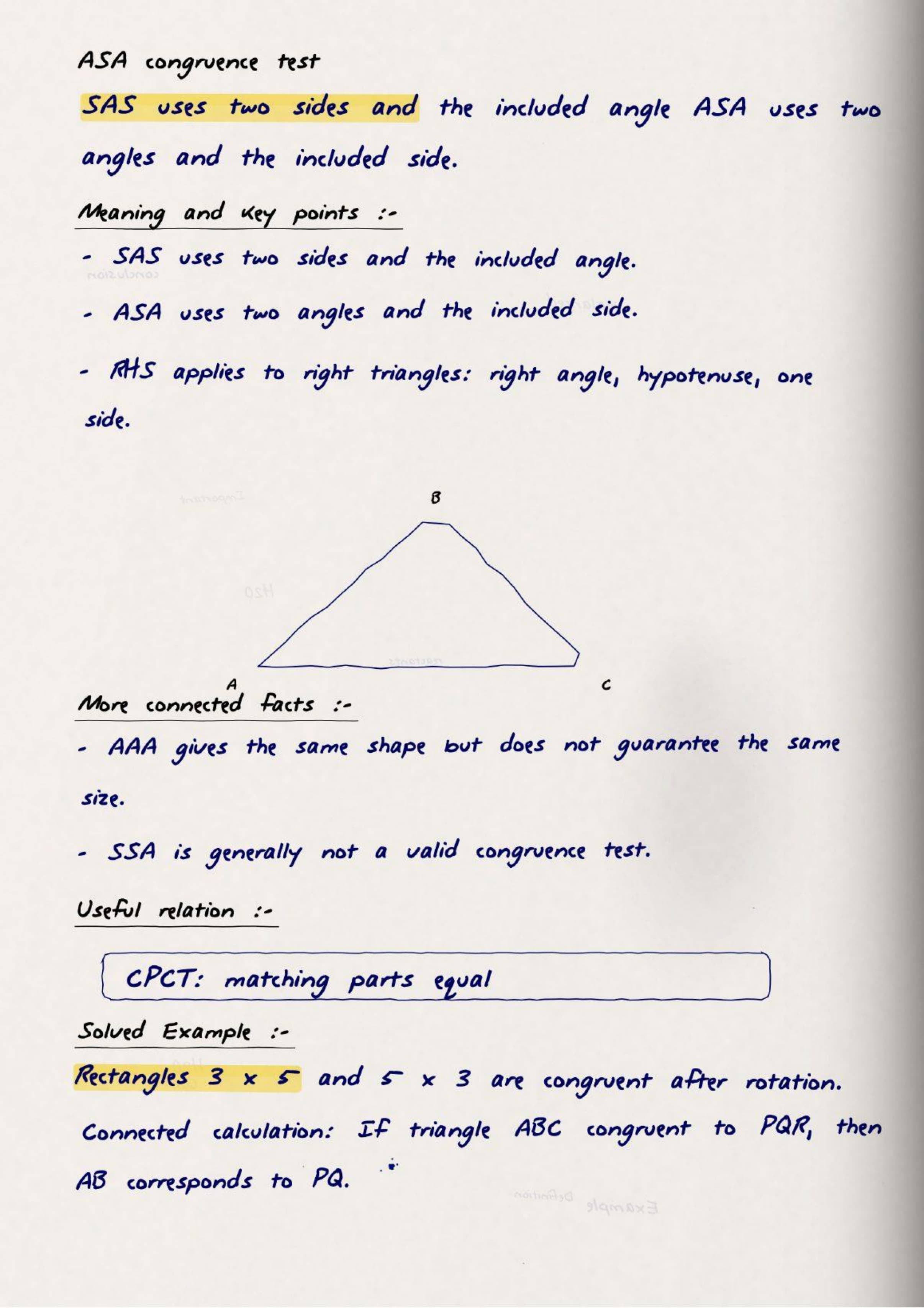
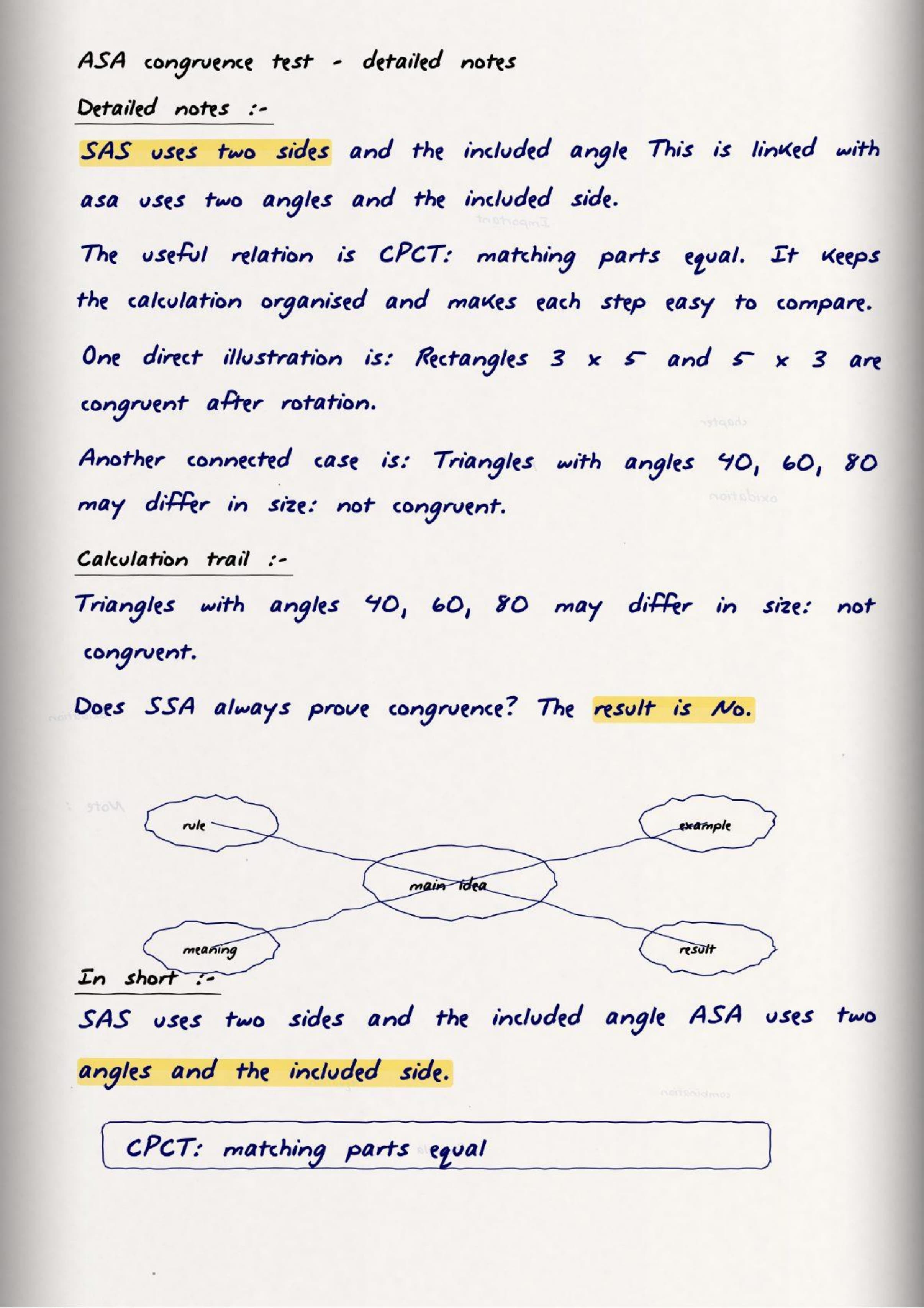
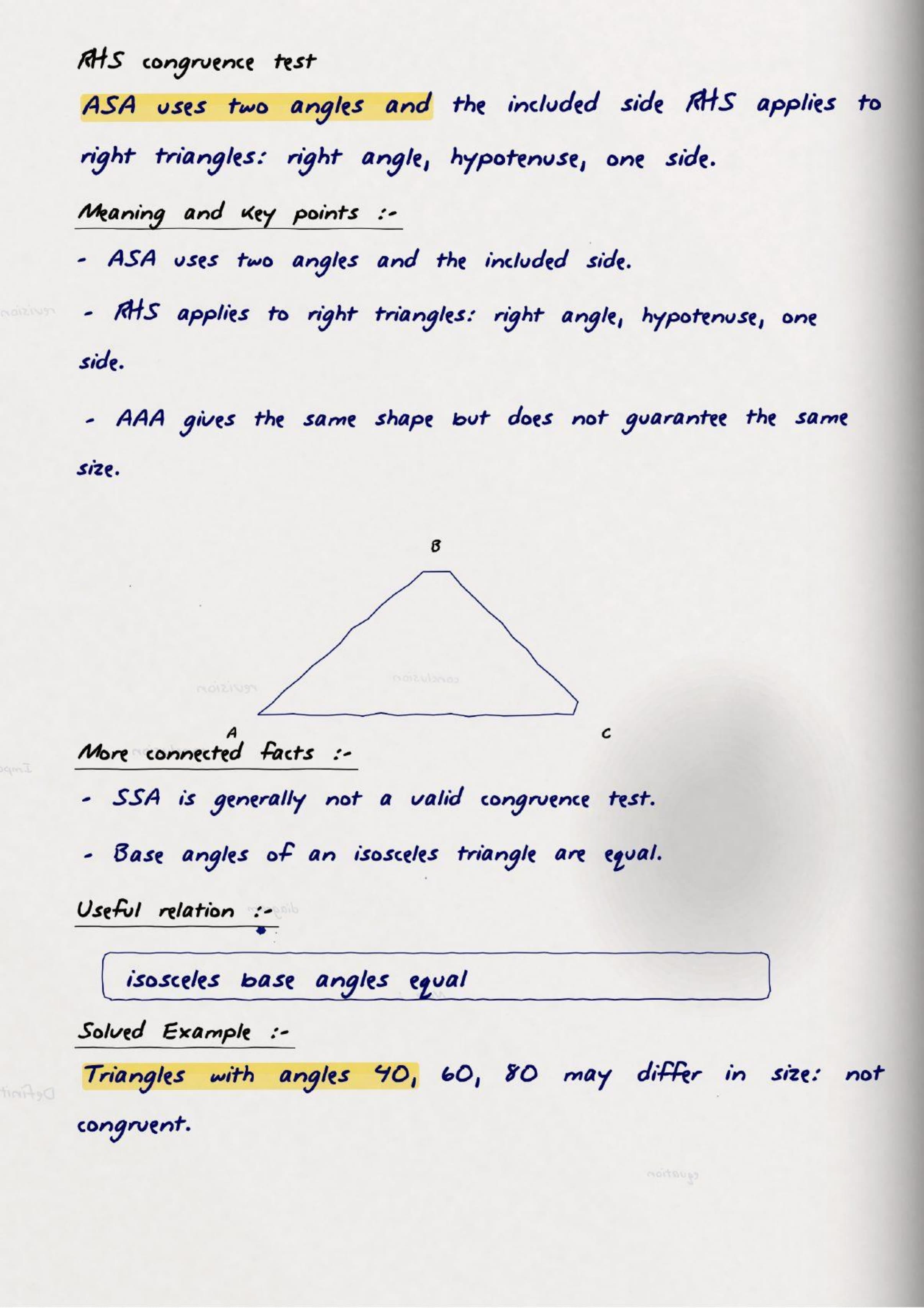
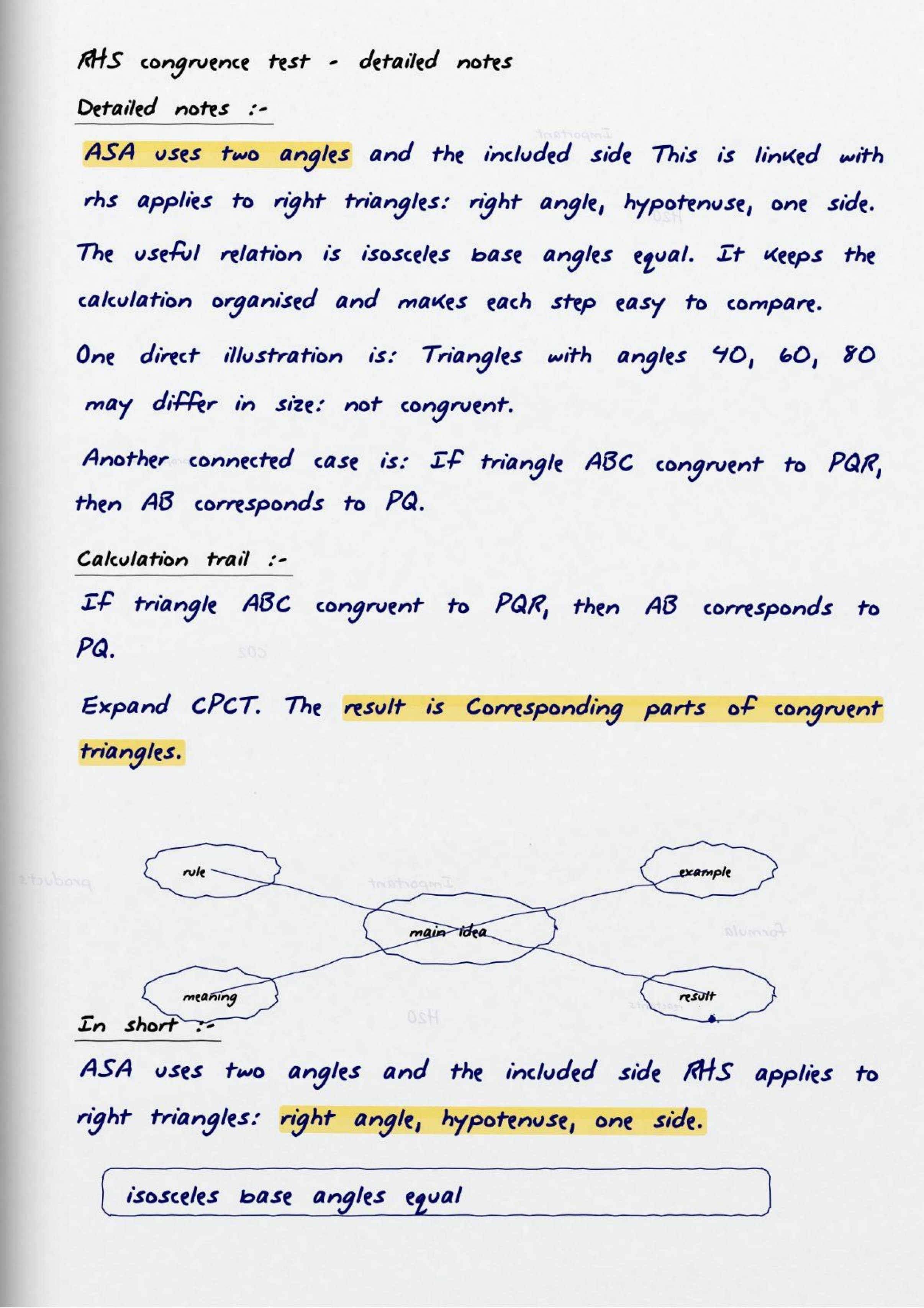
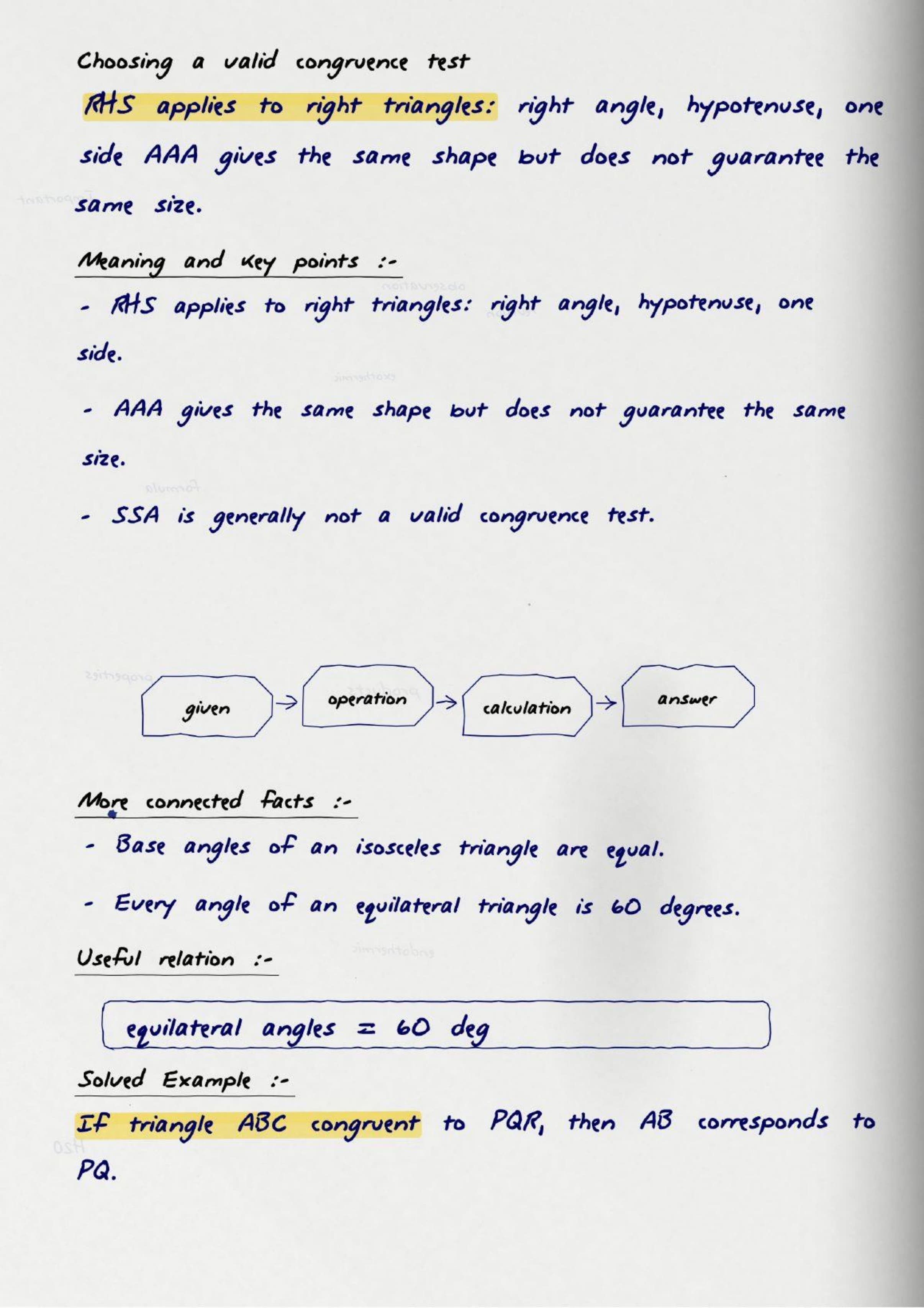
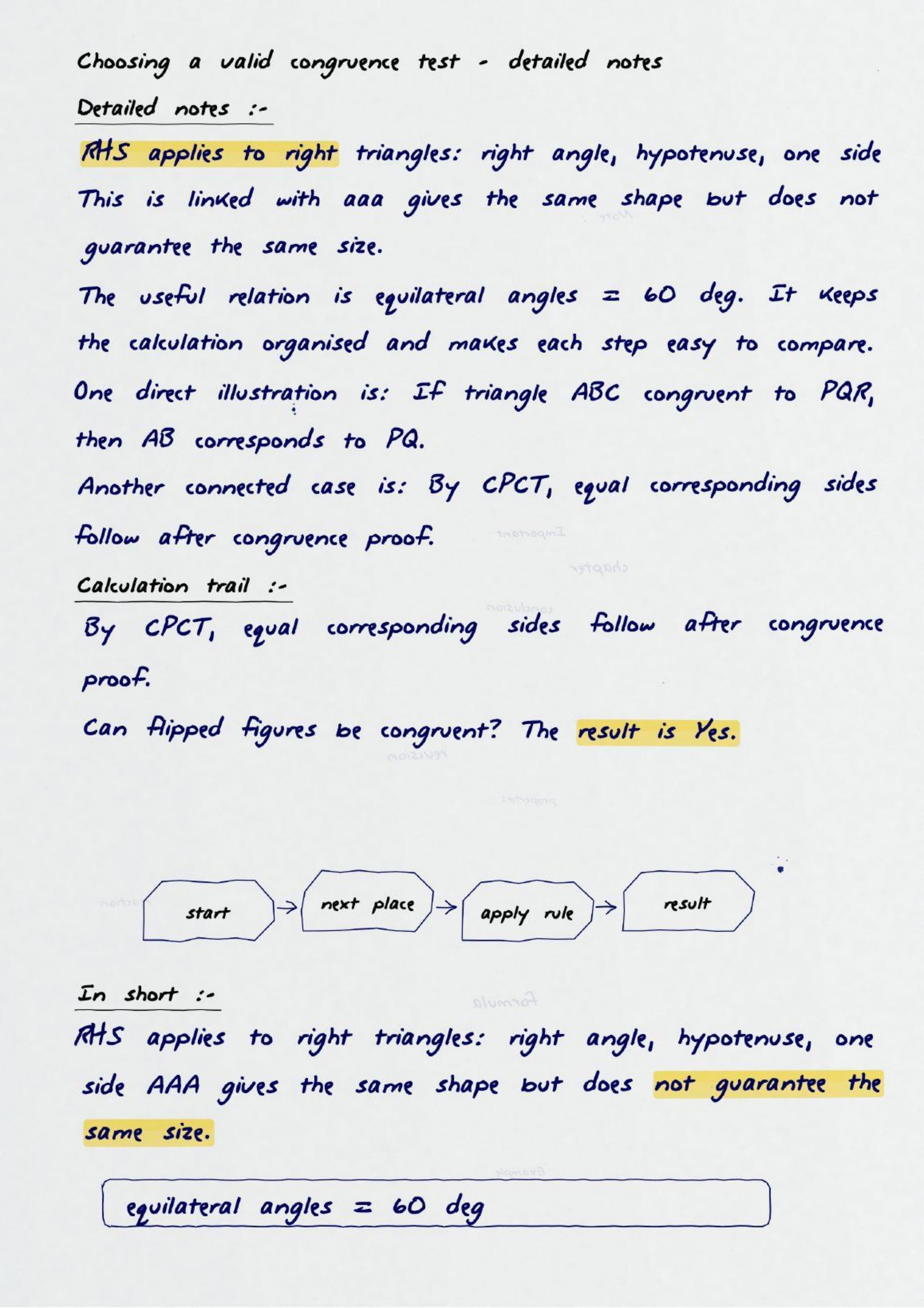
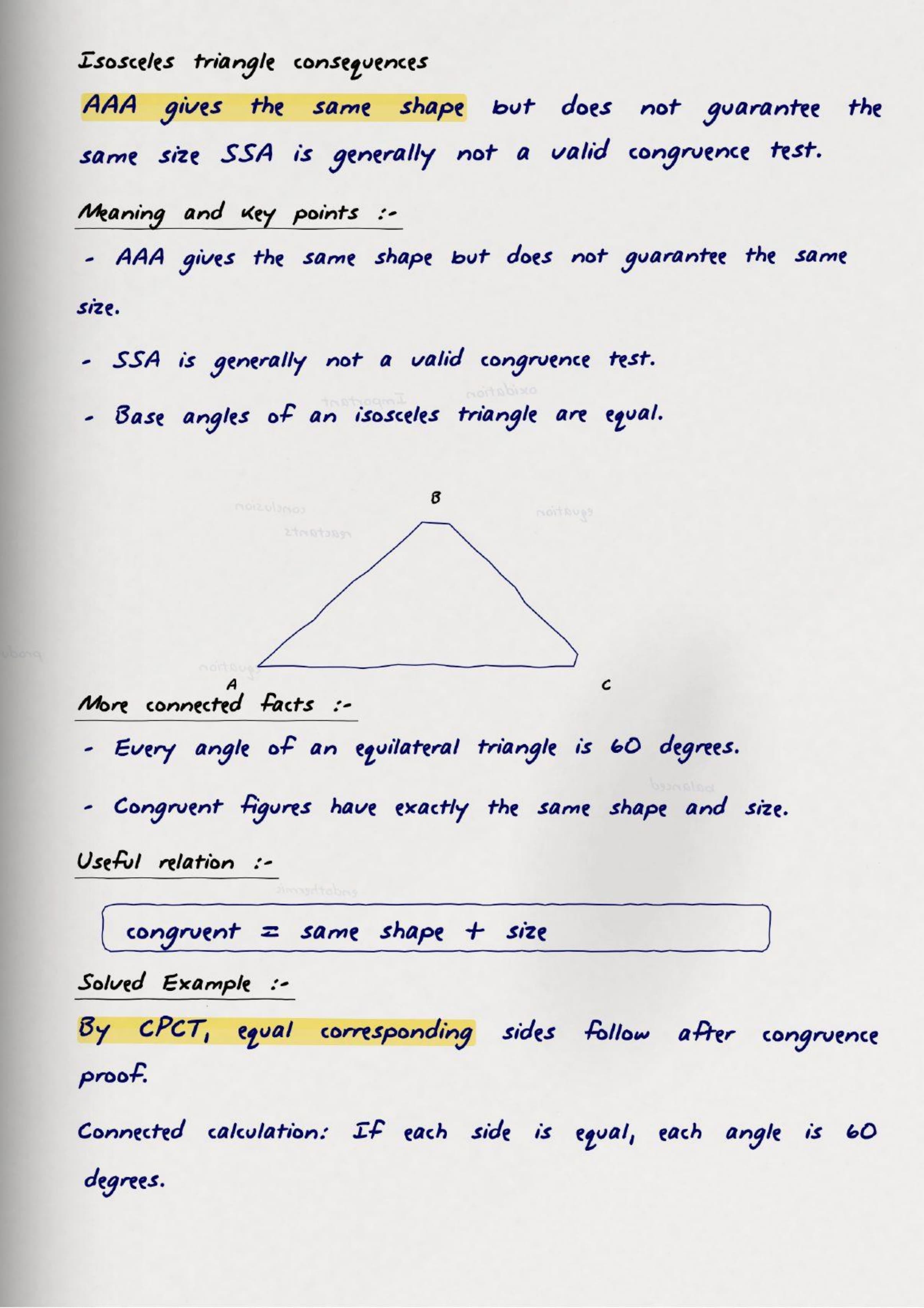
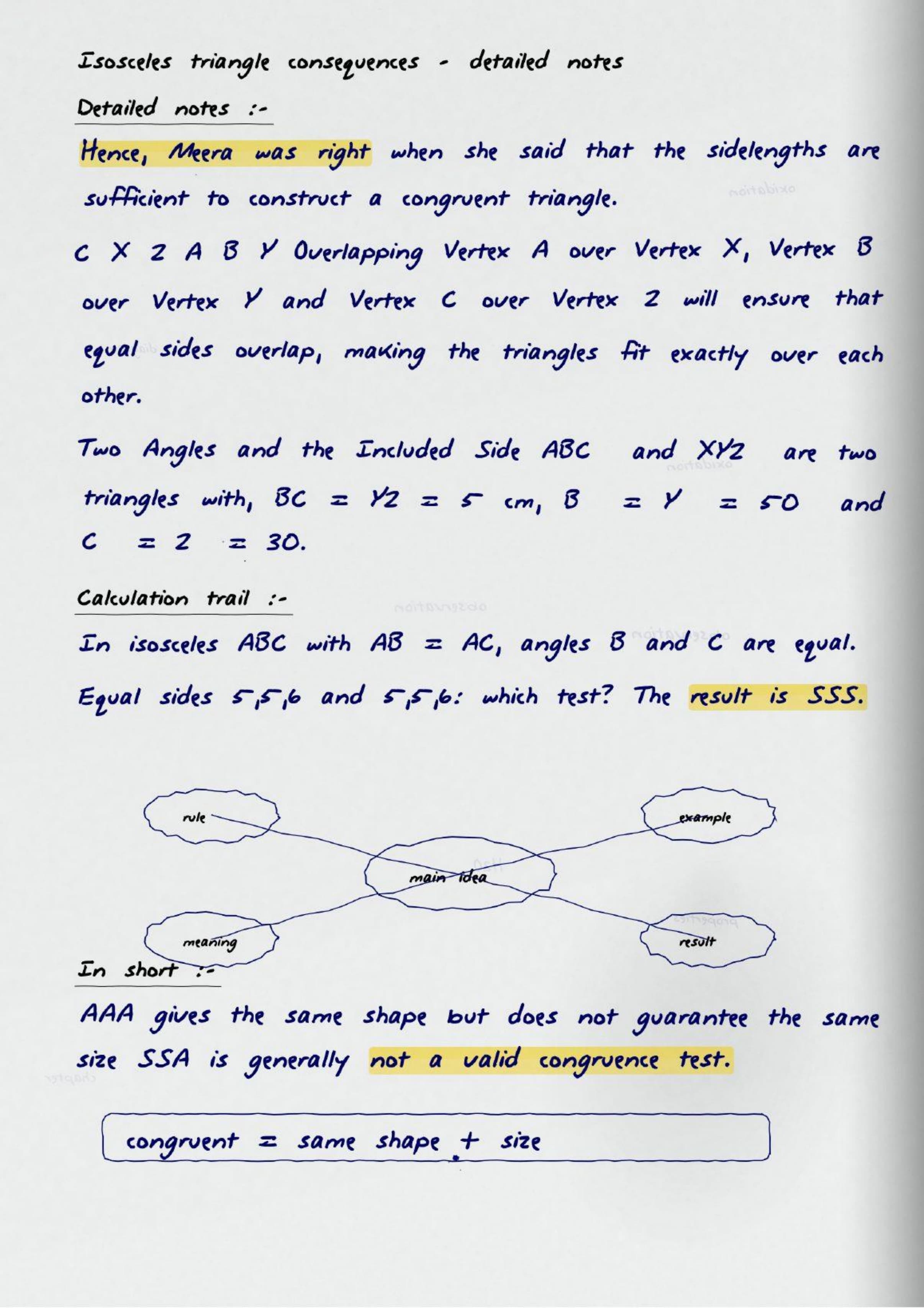
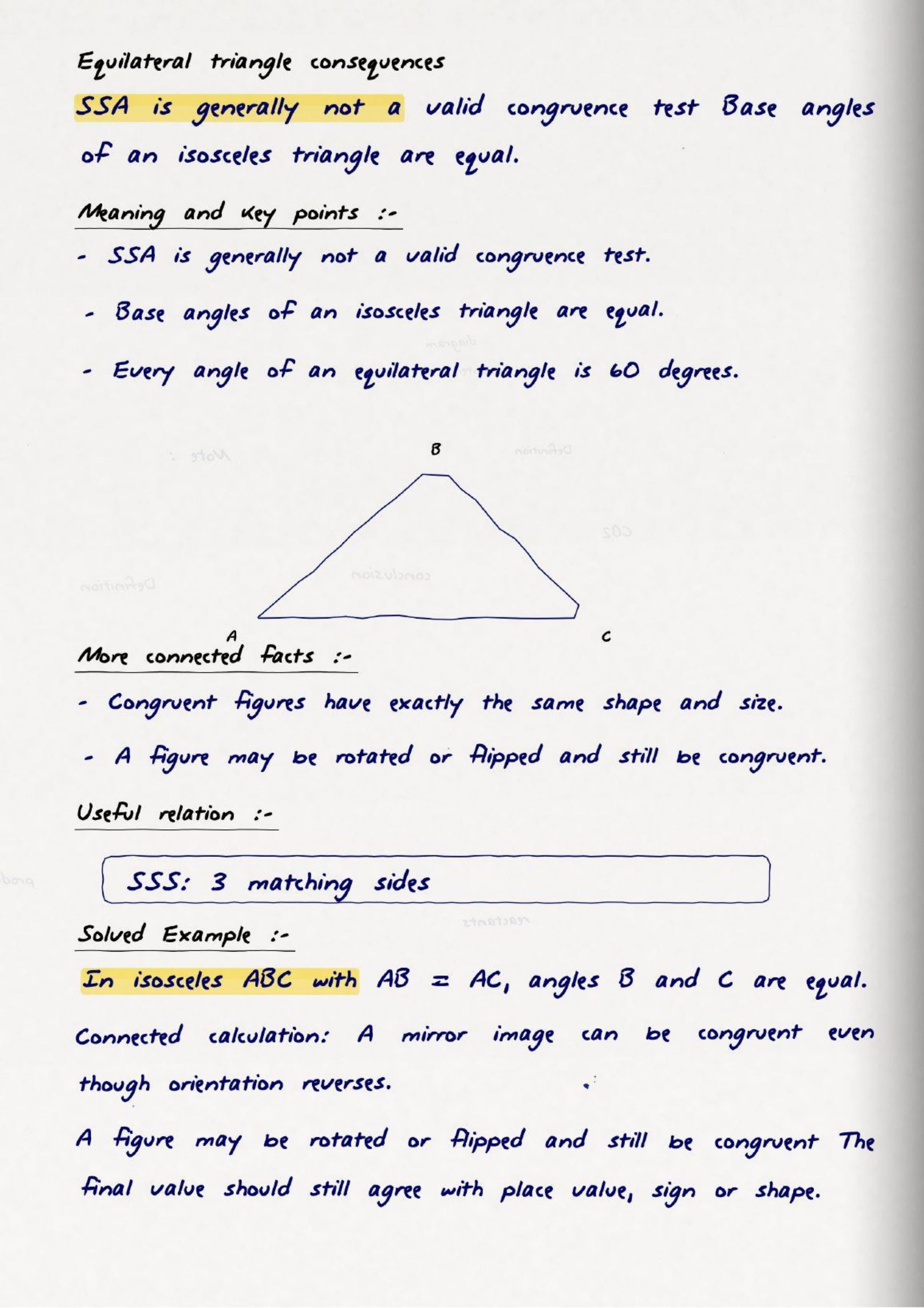
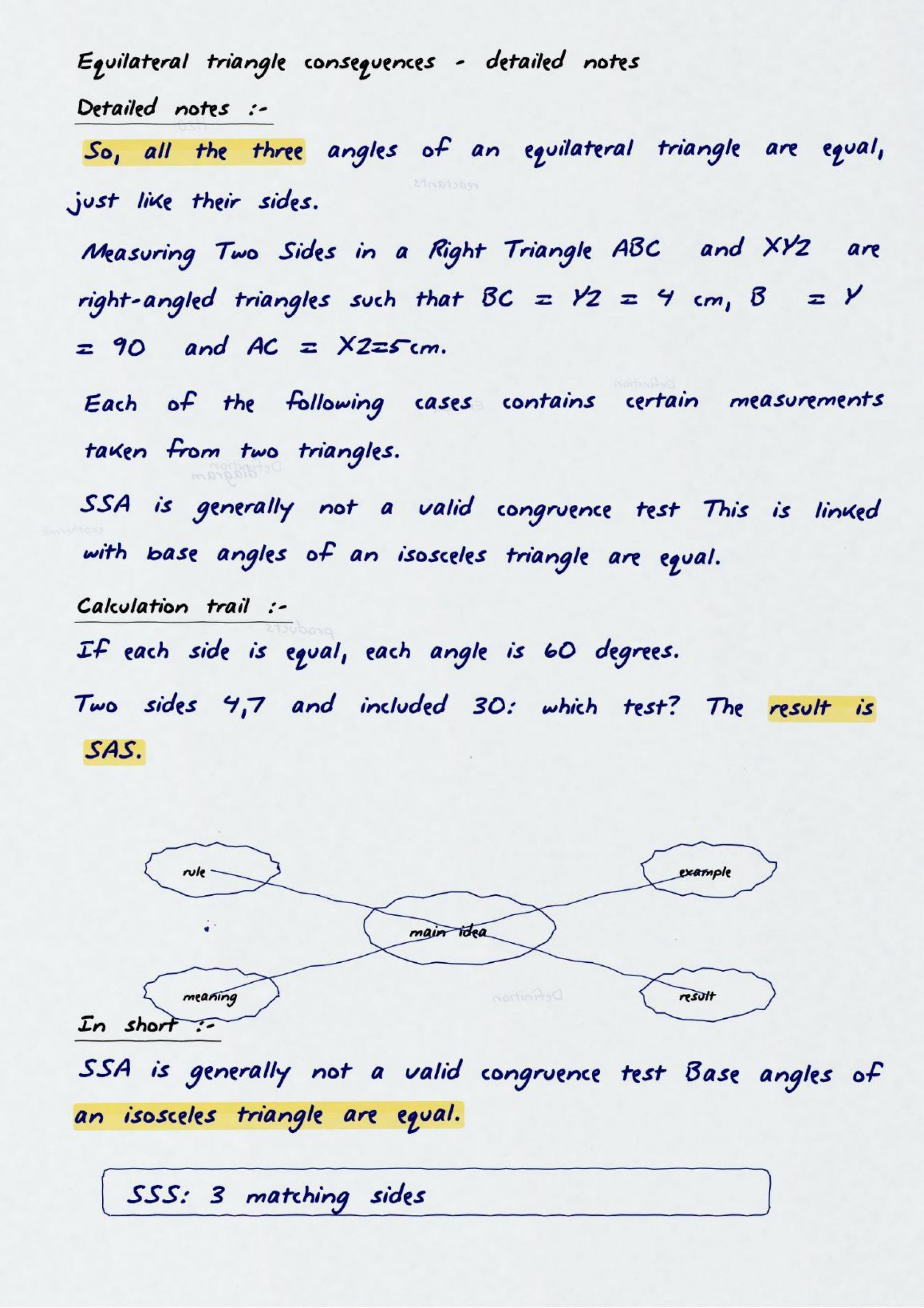
- Congruence rules boxed: the side and angle conditions that make two triangles congruent
- What the notes cover: recreating a figure from measurements, congruence of triangles, and angles of isosceles and equilateral triangles
- Best for: the prove-they-are-congruent question, a standard two or three mark answer
Open the PDF below for the complete class 7 maths handwritten notes covering Geometric Twins from the first page to the last.
These handwritten notes are written by Maths teachers, mapped to the 2026-27 NCERT Ganita Prakash book, and checked against Class 7 school question papers.
Where Students Lose Marks in Geometric Twins
Congruence is the first piece of real geometric reasoning students meet, and it is the base of proof work later.
- A congruence question is set in every geometry section
- Naming the rule used earns a separate mark
- The isosceles base-angle property is a direct one-mark question
- The same reasoning continues in Class 8 and Class 9 geometry
Why Students Pick Collegedunia's Geometric Twins Handwritten Notes
Collegedunia has these class 7 maths handwritten notes written by teachers who set Class 7 papers. The rules are drawn with a marked pair of triangles rather than written as abstract conditions.
- Rule panel: each congruence condition drawn on a marked pair of triangles
- Statement guide: how to write a congruence statement in the right order
- Isosceles angle box: the base-angle property drawn and labelled
- Colour-coded sub-headings: sub-topics in red so each rule is easy to find
Test Yourself on Geometric Twins
Five congruence questions. Tap each to check.
Two figures are congruent when they are
(a) the same shape only (b) the same size only (c) the same shape and size (d) both triangles
Answer: (c) the same shape and size
In an isosceles triangle, the base angles are
(a) unequal (b) equal (c) always 90 degrees (d) always 45 degrees
Answer: (b) equal
Each angle of an equilateral triangle measures
(a) 45 degrees (b) 60 degrees (c) 90 degrees (d) 30 degrees
Answer: (b) 60 degrees
If triangle ABC is congruent to triangle DEF, then side AB matches
(a) EF (b) DF (c) DE (d) any side
Answer: (c) DE
Congruent figures can be placed
(a) side by side only (b) exactly on top of each other (c) at right angles (d) never together
Answer: (b) exactly on top of each other
Topics Written Out in the Geometric Twins Notes
The chapter starts with a signboard symbol that has to be recreated exactly. Deciding which measurements are enough is the whole idea of congruence.
- Recreating a figure exactly
- Which measurements are enough
- What congruence means
- Congruence of triangles
- The side conditions for congruence
- The angle conditions for congruence
- Writing a congruence statement correctly
- Angles of an isosceles triangle
- Angles of an equilateral triangle
Geometric Twins Sub-topic Priority List for CBSE Class 7 Maths
The congruence rules and the isosceles angle property carry the marks.
| Sub-topic | Weightage | How often asked |
|---|---|---|
| Congruence rules for triangles | High | asked often |
| Angles of an isosceles triangle | High | asked often |
| Writing a correct congruence statement | Medium | asked sometimes |
| Which measurements determine a figure | Medium | asked sometimes |
| Angles of an equilateral triangle | Medium | asked sometimes |
| Recreating figures by tracing | Low | asked rarely |
Geometric Twins in the Last Hour Before the Exam
The card to open just before the geometry section.
- Congruent means the same shape and the same size
- Congruent figures fit exactly on top of one another
- In an isosceles triangle the base angles are equal
- Every angle of an equilateral triangle is 60 degrees
- Write congruence statements in matching vertex order
Hand-drawn Sketches Inside the Geometric Twins Notes
Congruence is a visual idea, so the notes rely on marked figures.
| Figure drawn by hand | What it shows |
|---|---|
| Signboard symbol | the figure to be recreated with its measurements marked |
| Rule panel | pairs of triangles with the matching sides and angles ticked |
| Congruence statement guide | two triangles with the vertex matching shown by arrows |
| Isosceles triangle | the two equal sides and the equal base angles marked |
| Equilateral triangle | all three sides and all three 60 degree angles marked |
Words and Ideas the Geometric Twins Notes Box Off
The order of letters in a congruence statement carries meaning, so be exact.
| Term / Idea | What it means |
|---|---|
| Congruent | exactly equal in shape and size |
| Corresponding sides | sides in matching positions in two figures |
| Corresponding angles | angles in matching positions in two figures |
| Congruence statement | a statement naming which vertex matches which |
| Isosceles triangle | a triangle with two equal sides |
| Equilateral triangle | a triangle with all three sides equal |
| Base angles | the two angles opposite the equal sides of an isosceles triangle |
Best Way to Read the Geometric Twins Handwritten Notes
A short plan works better than one long sitting with the class 7 maths handwritten notes. Mark the equal sides and angles on the figure first. The rule to use then becomes obvious.
- Mark equal sides with ticks and equal angles with arcs on five figures
- Write three congruence statements in the correct vertex order
- Prove two triangles congruent, naming the rule you used
- Before the test, revise the rule panel and the isosceles angle box
Where to Go After the Geometric Twins Notes
Use the notes with the solved exercises and the Ganita Prakash chapter itself.
Chapter-wise Class 7 Maths Handwritten Notes
Ganita Prakash Part 1 has eight chapters and Part 2 has seven. Use the table to open the class 7 maths handwritten notes for any other chapter.
| Chapter | Resource |
|---|---|
| Part 1 Chapter 1 | Large Numbers Around Us Handwritten Notes |
| Part 1 Chapter 2 | Arithmetic Expressions Handwritten Notes |
| Part 1 Chapter 3 | A Peek Beyond the Point Handwritten Notes |
| Part 1 Chapter 4 | Expressions using Letter-Numbers Handwritten Notes |
| Part 1 Chapter 5 | Parallel and Intersecting Lines Handwritten Notes |
| Part 1 Chapter 6 | Number Play Handwritten Notes |
| Part 1 Chapter 7 | A Tale of Three Intersecting Lines Handwritten Notes |
| Part 1 Chapter 8 | Working with Fractions Handwritten Notes |
| Part 2 Chapter 1 | Geometric Twins Handwritten Notes |
| Part 2 Chapter 2 | Operations with Integers Handwritten Notes |
| Part 2 Chapter 3 | Finding Common Ground Handwritten Notes |
| Part 2 Chapter 4 | Another Peek Beyond the Point Handwritten Notes |
| Part 2 Chapter 5 | Connecting the Dots... Handwritten Notes |
| Part 2 Chapter 6 | Constructions and Tilings Handwritten Notes |
| Part 2 Chapter 7 | Finding the Unknown Handwritten Notes |
Geometric Twins Class 7 Maths Handwritten Notes FAQs
Ques. Where can I download the Geometric Twins Class 7 Maths Handwritten Notes PDF?
Ans. The PDF is on this page, free, in both the normal and the HD version.
Ques. What does congruent mean in Class 7 Maths?
Ans. Two figures are congruent when they have exactly the same shape and the same size, so one can be placed exactly on top of the other.
Ques. How many pages is the Part 2 Chapter 1 handwritten notes PDF?
Ans. It runs 20 pages and covers all three sections of the chapter plus a quiz.
Ques. What are the base angles of an isosceles triangle?
Ans. The two angles opposite the equal sides. In any isosceles triangle those two base angles are equal to each other.
Ques. Why does the order of letters matter in a congruence statement?
Ans. Because the order says which vertex matches which. Writing triangle ABC is congruent to triangle DEF means A matches D, B matches E and C matches F, and the sides follow from that.



Comments