




Class 7 Maths Part 1 Chapter 8 Working with Fractions covers multiplication and division of fractions. These class 7 maths handwritten notes chapter 8 Working with Fractions follow the 2026-27 NCERT and cover both operations with solved word problems.
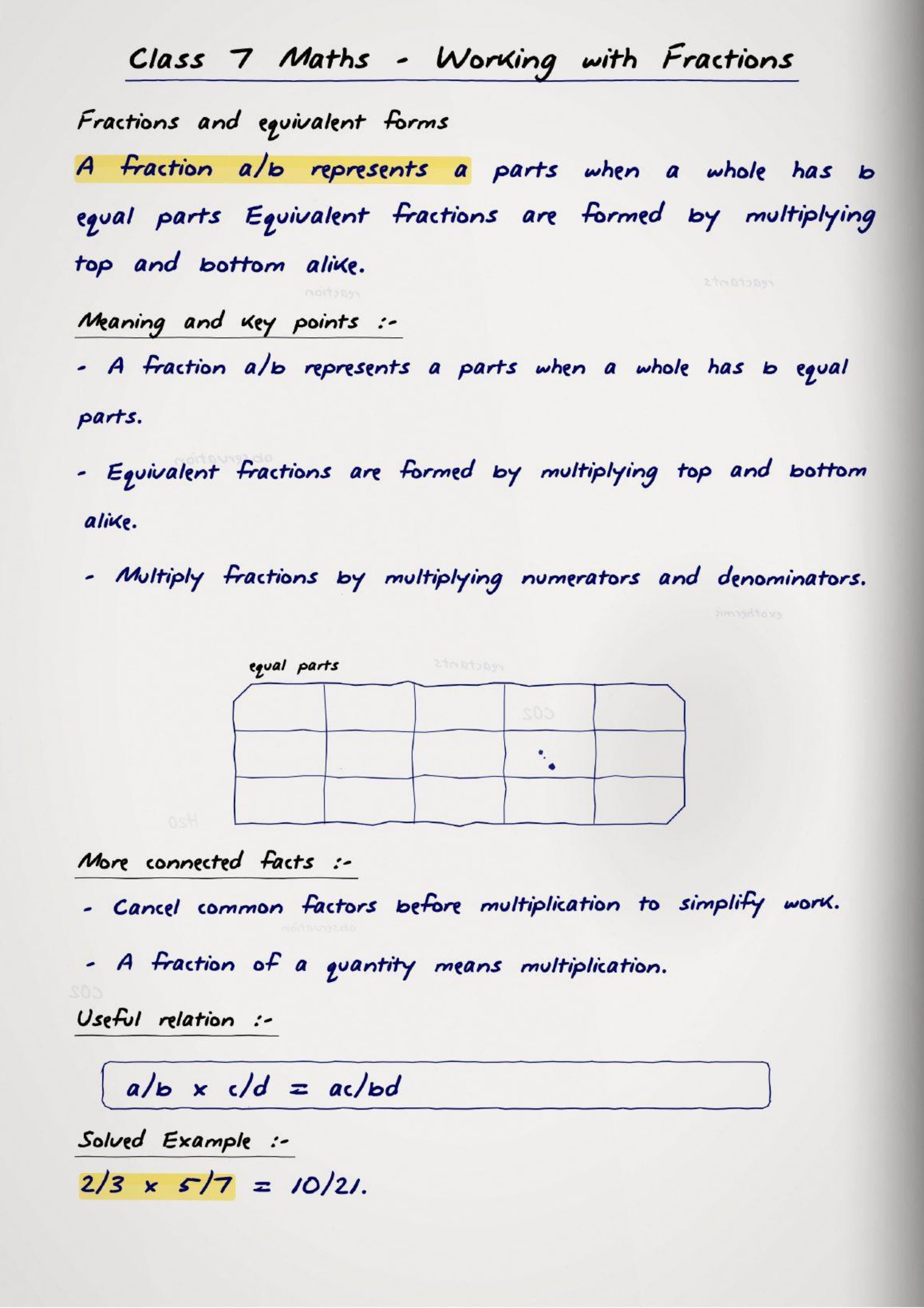
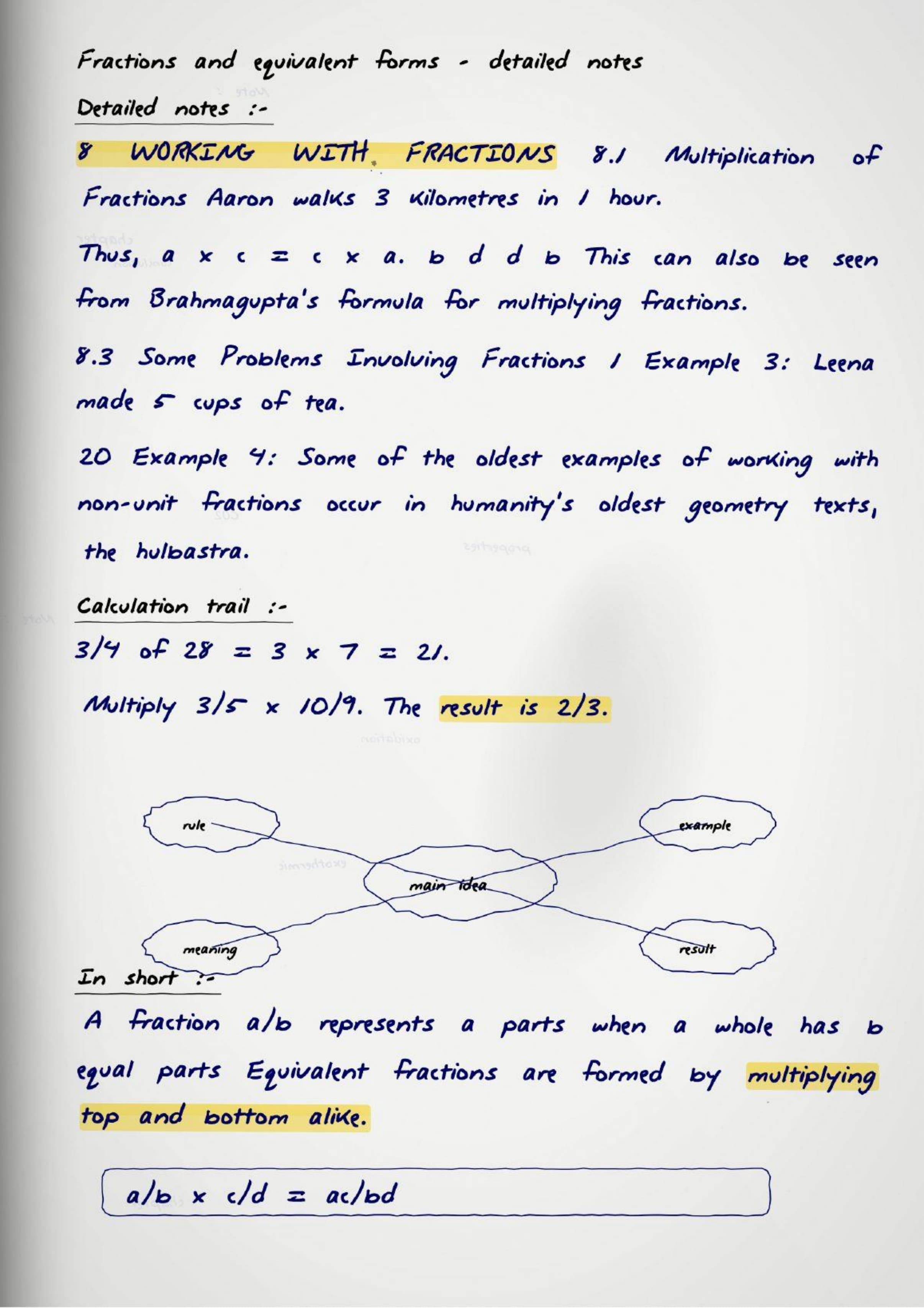
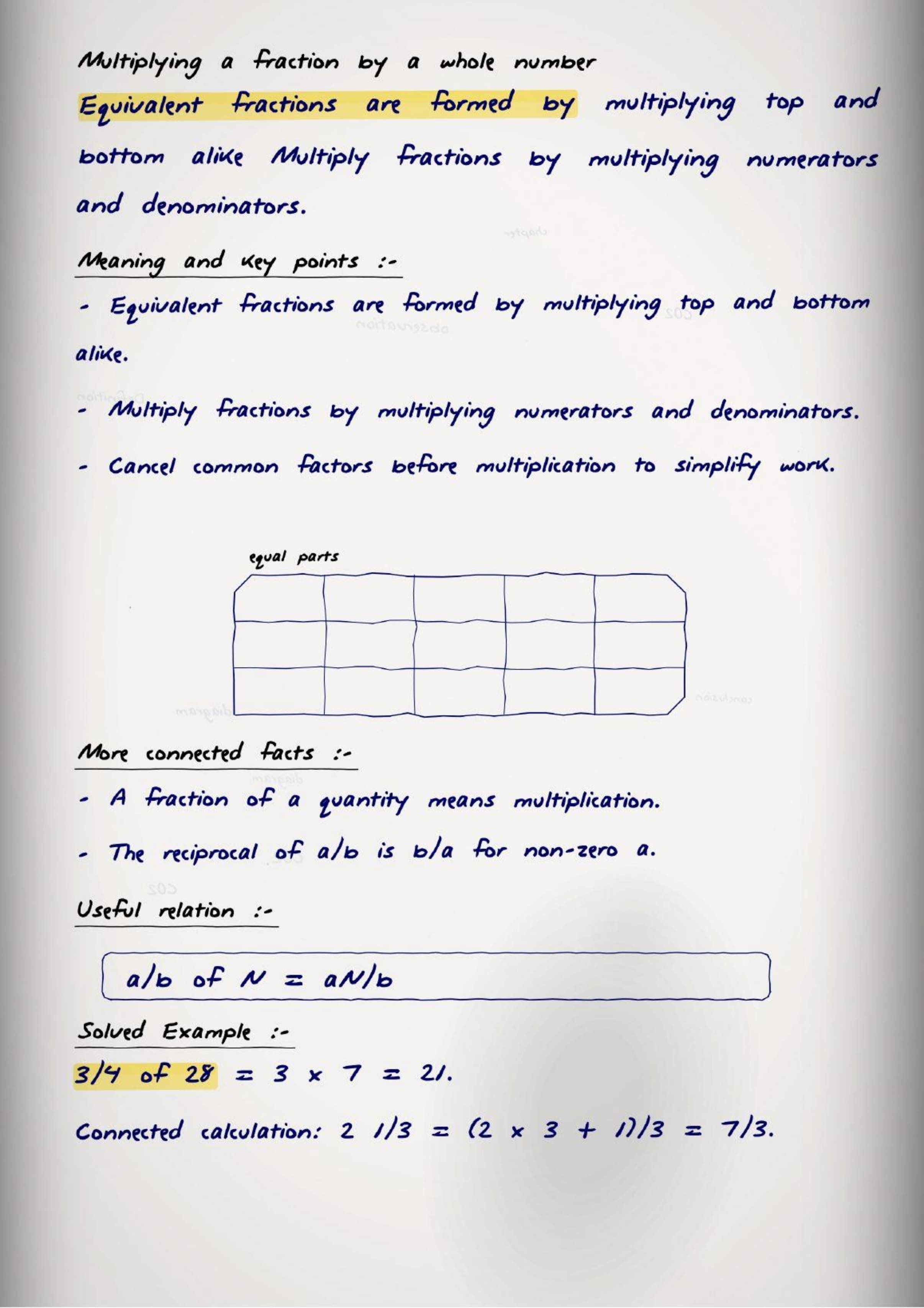
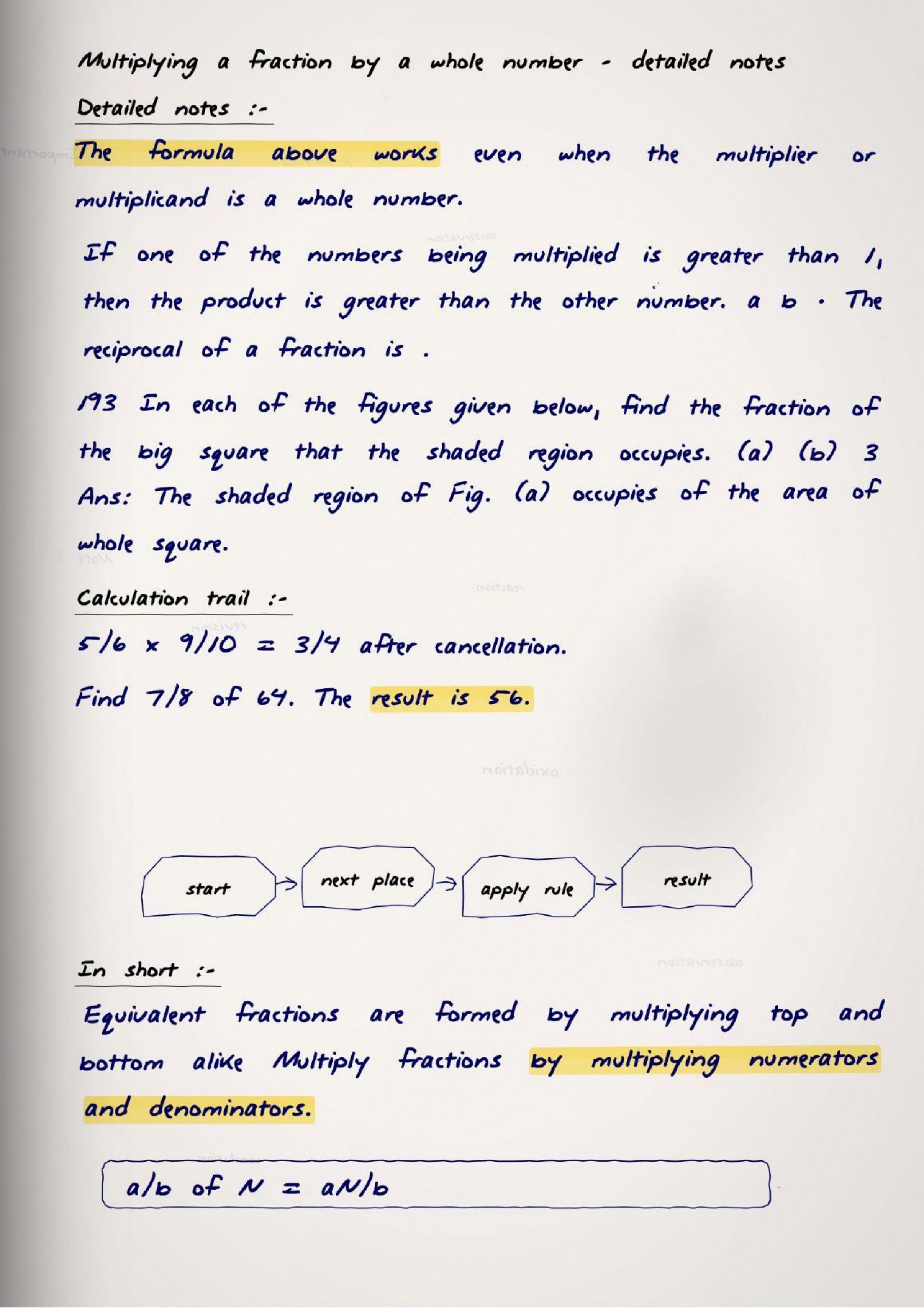
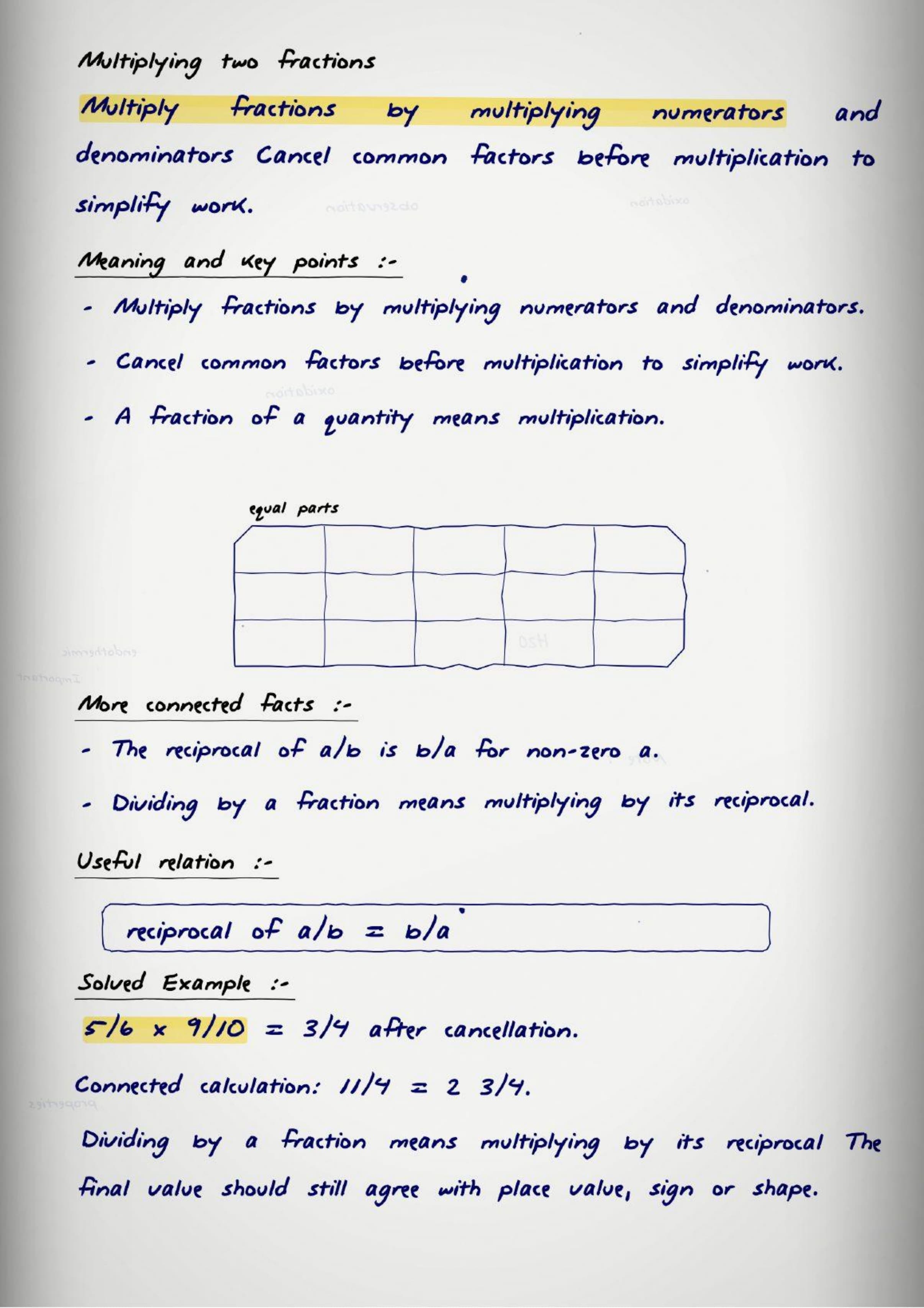
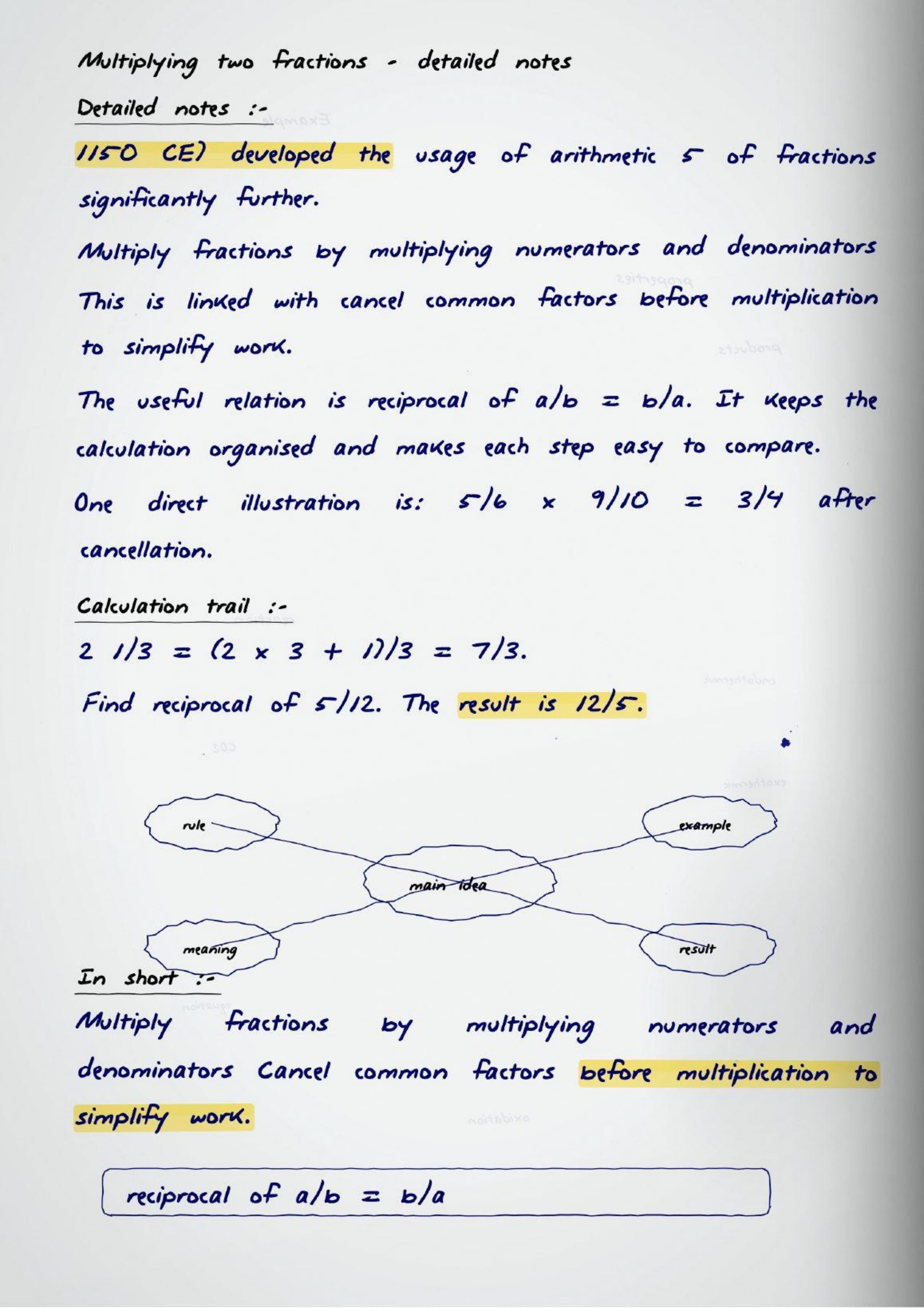
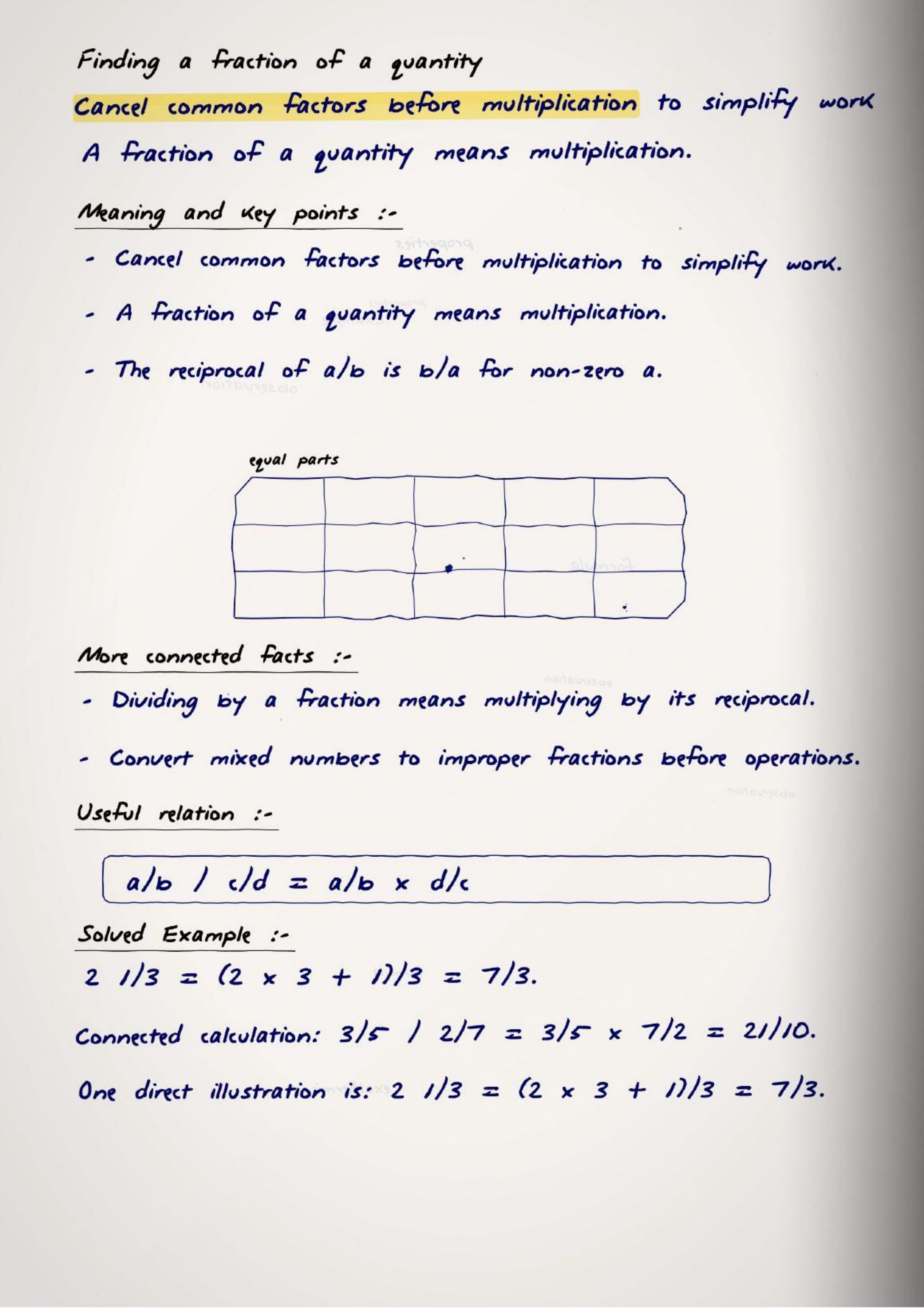
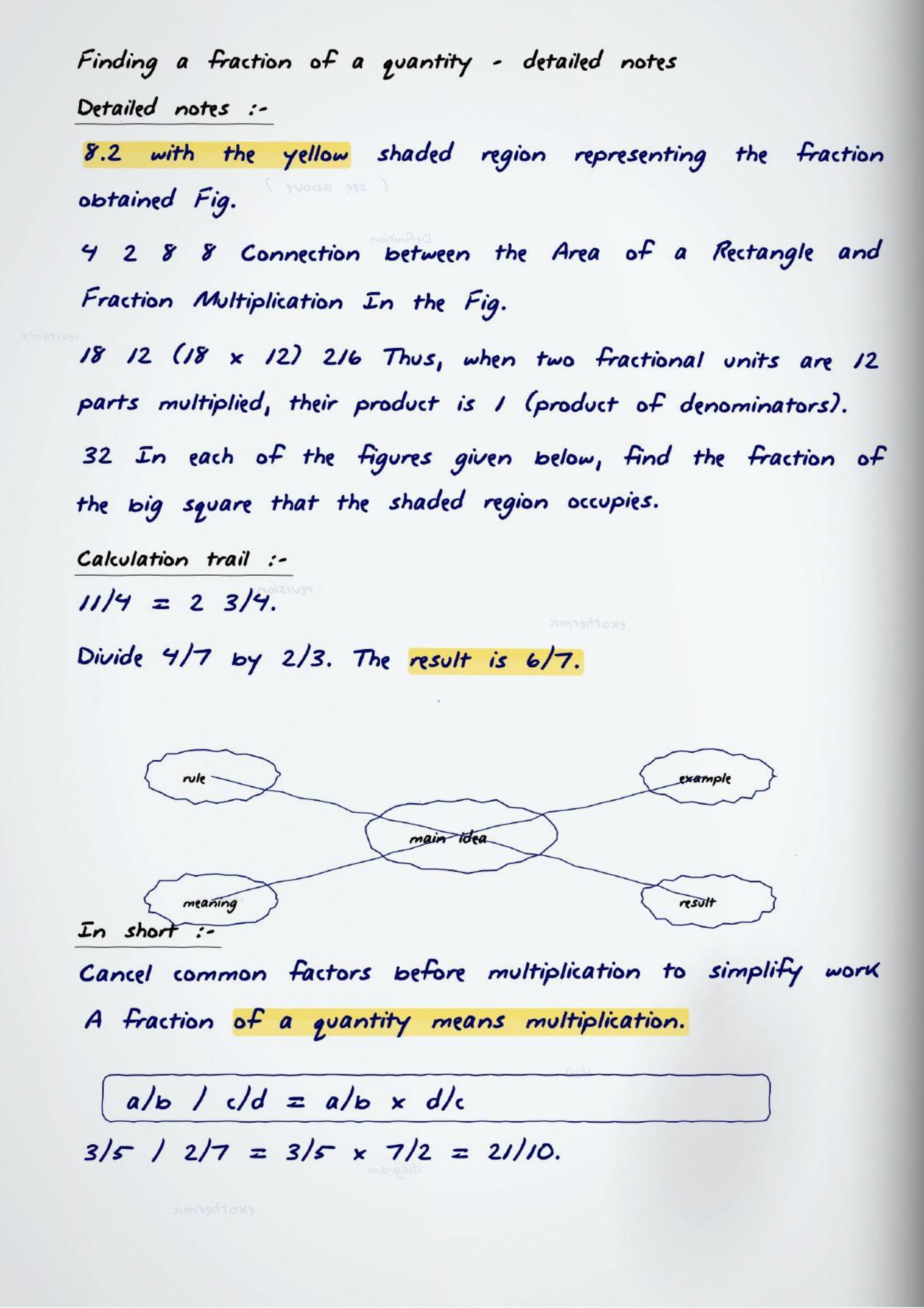
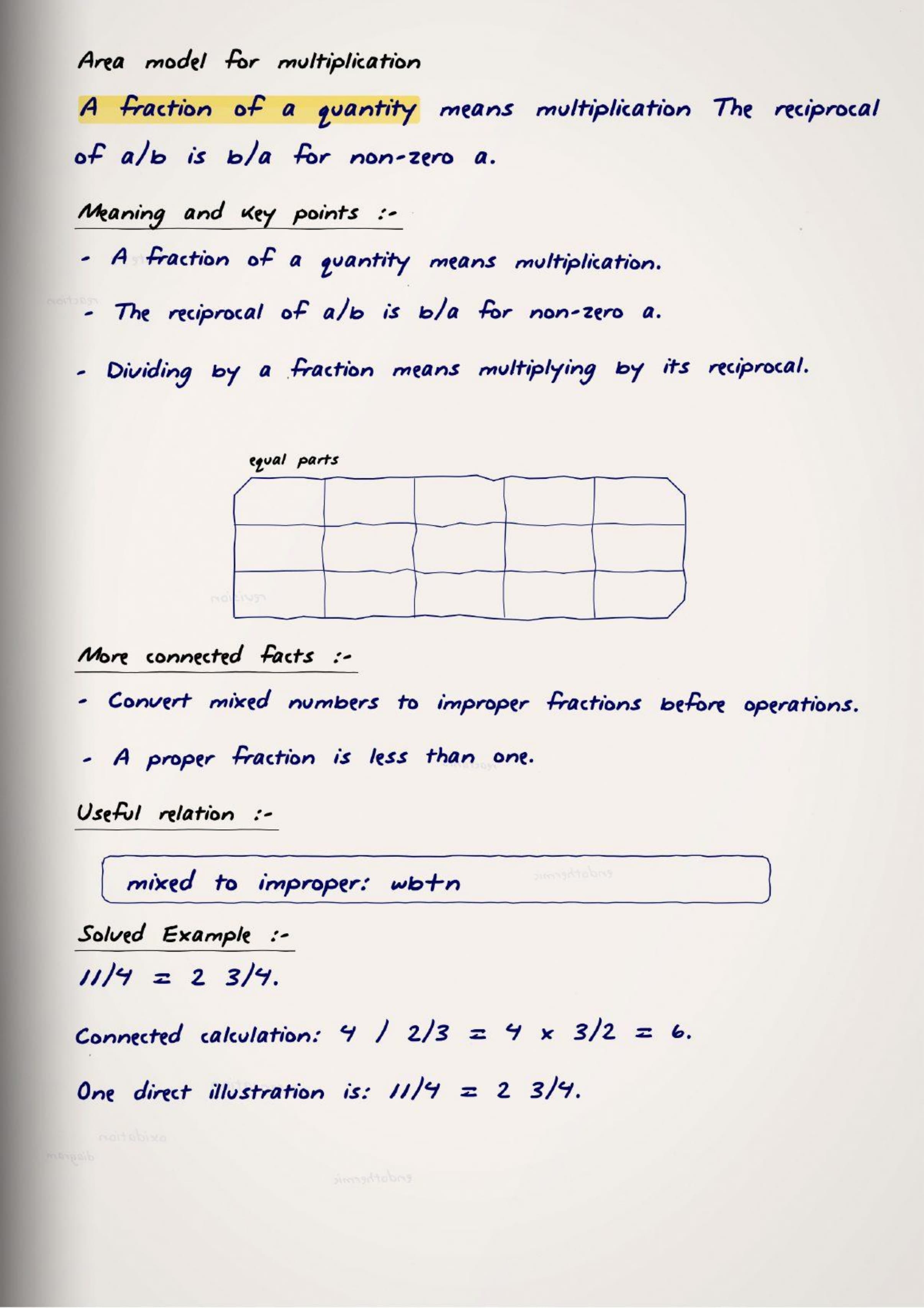
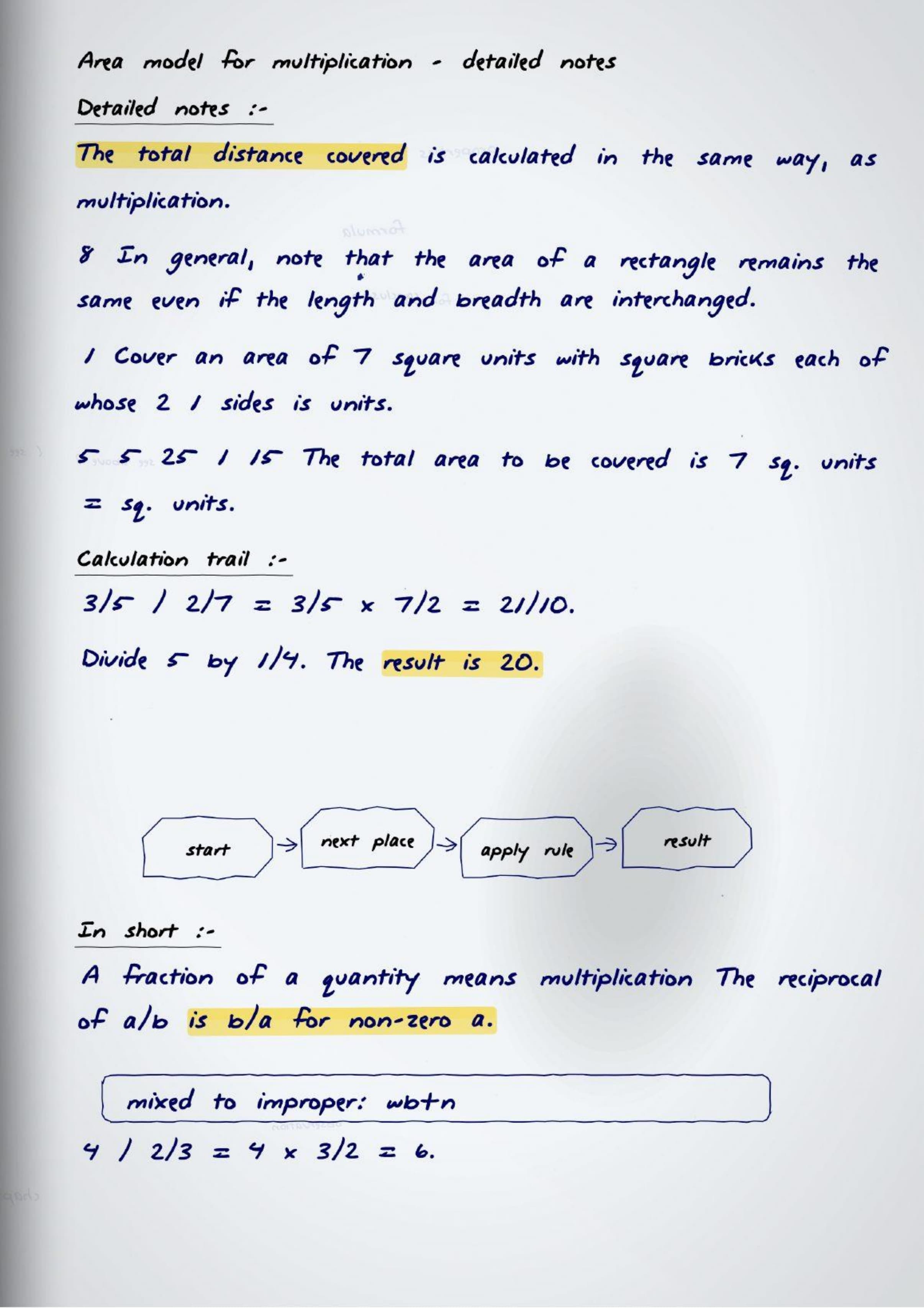
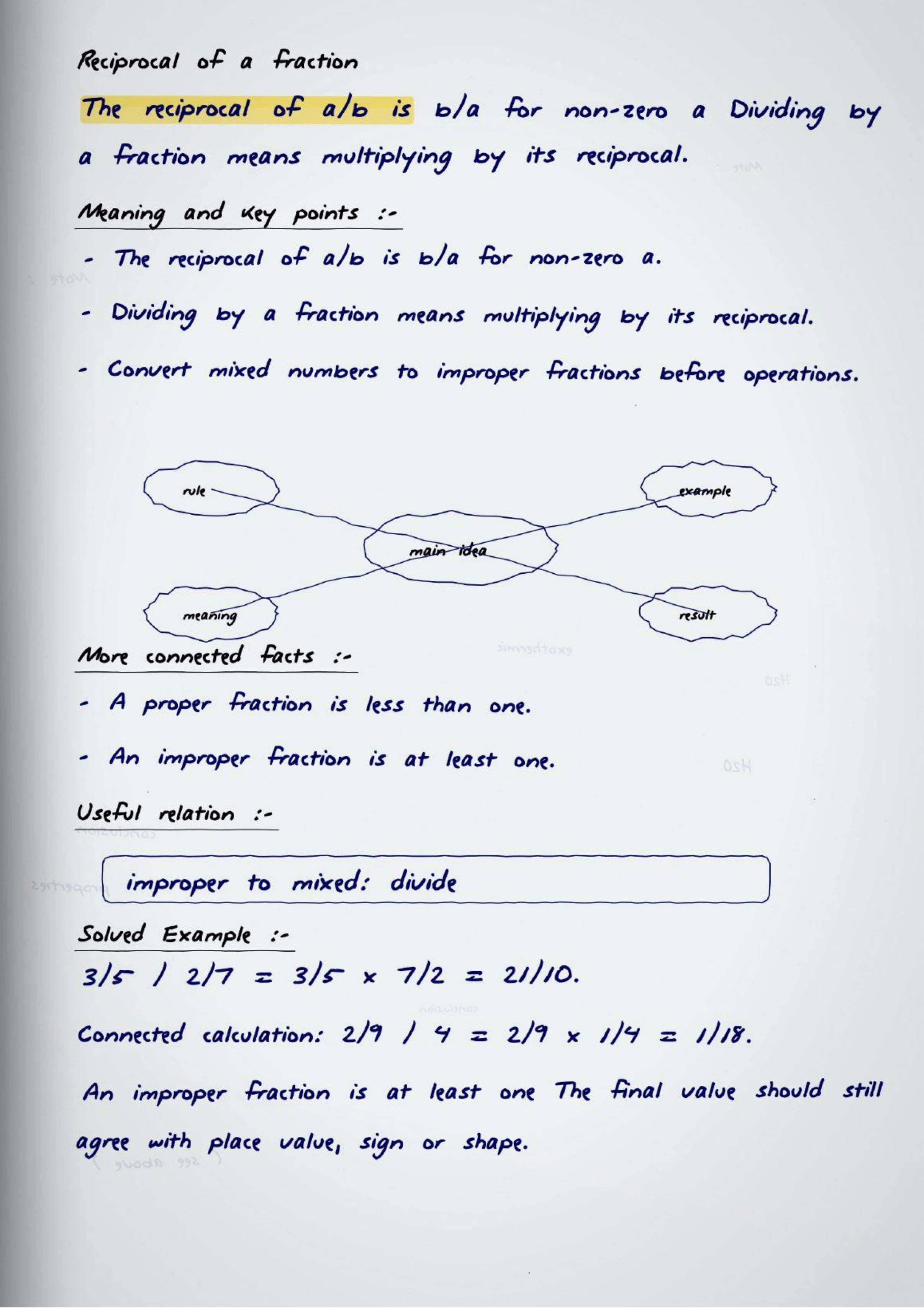
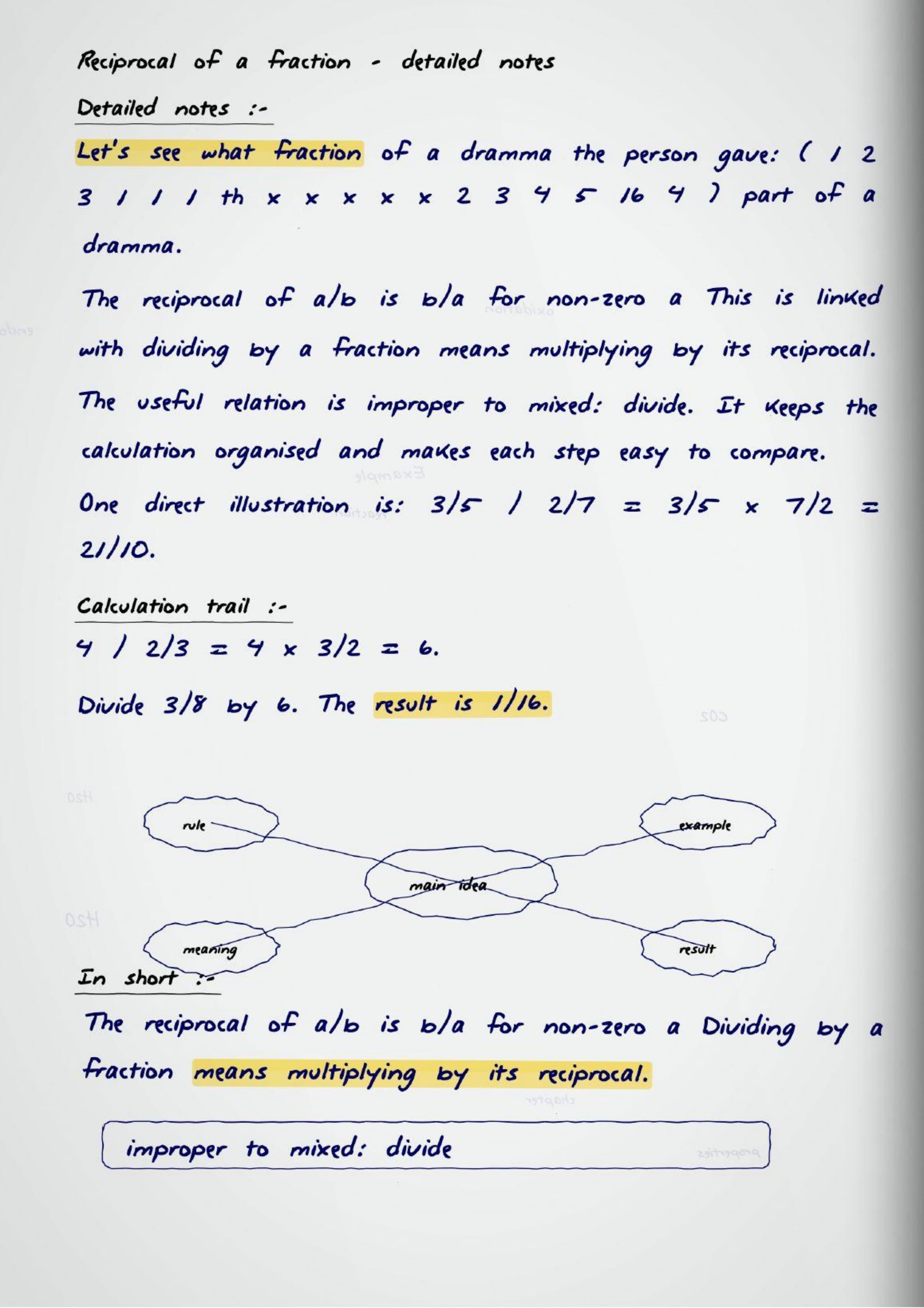
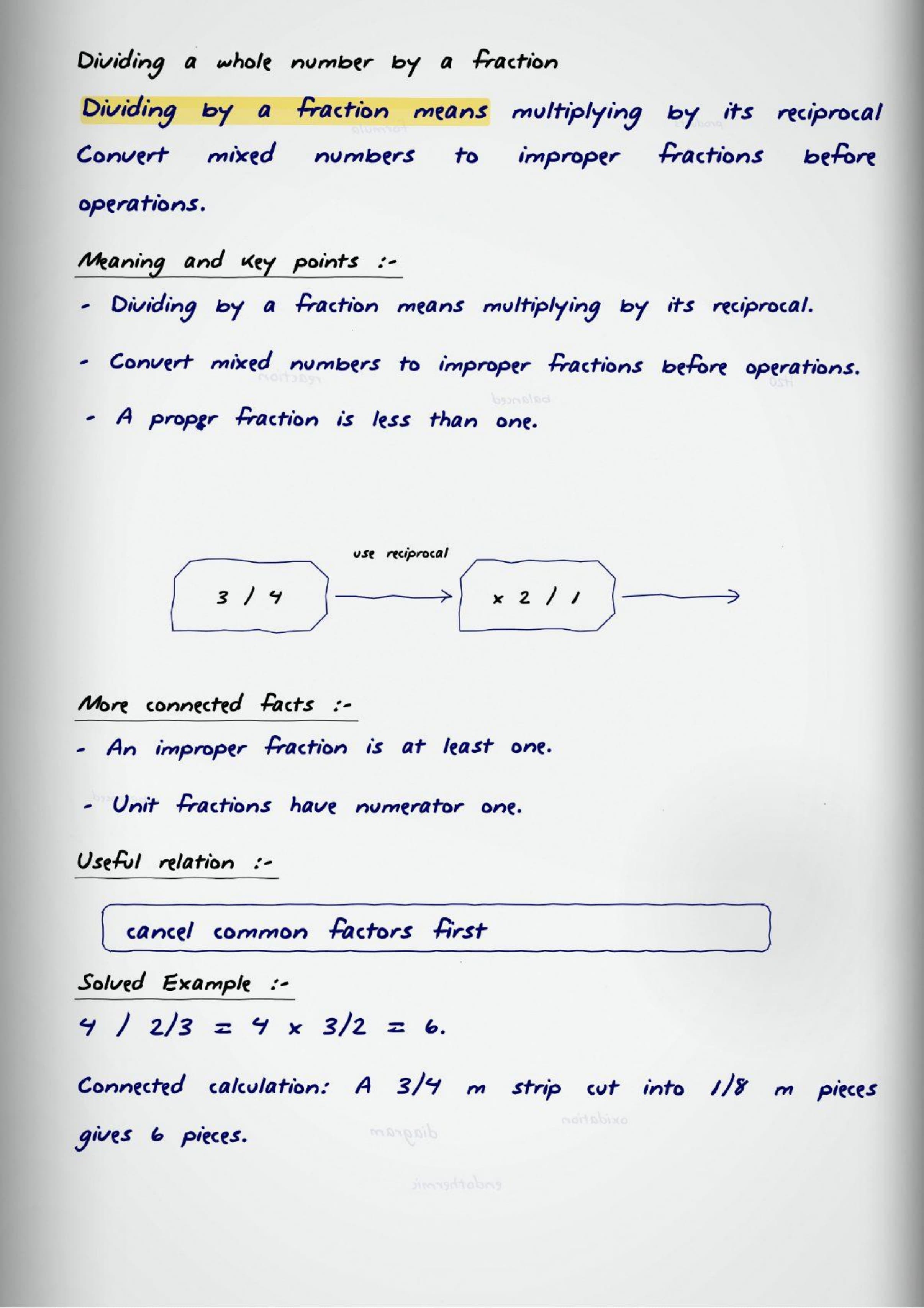
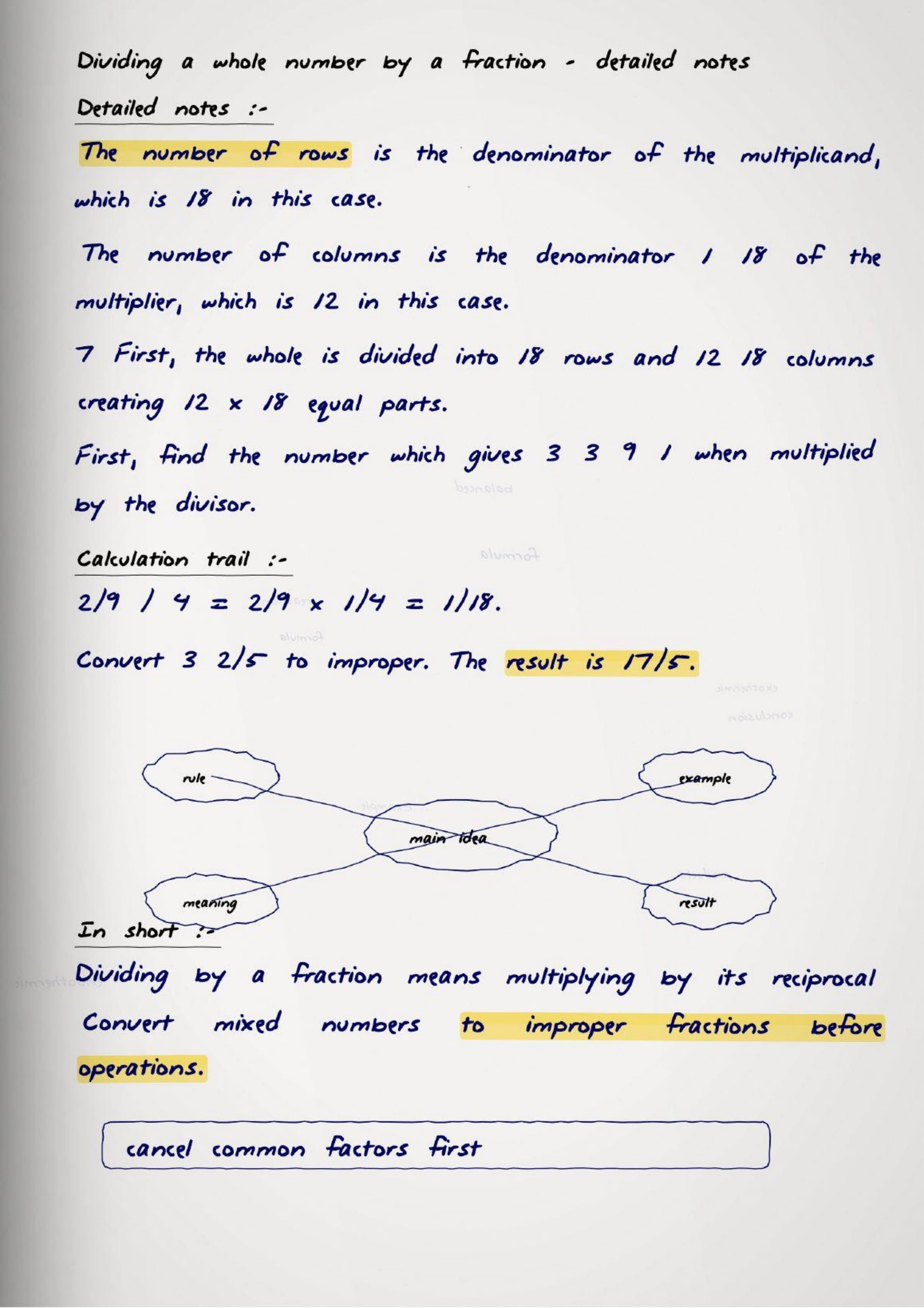
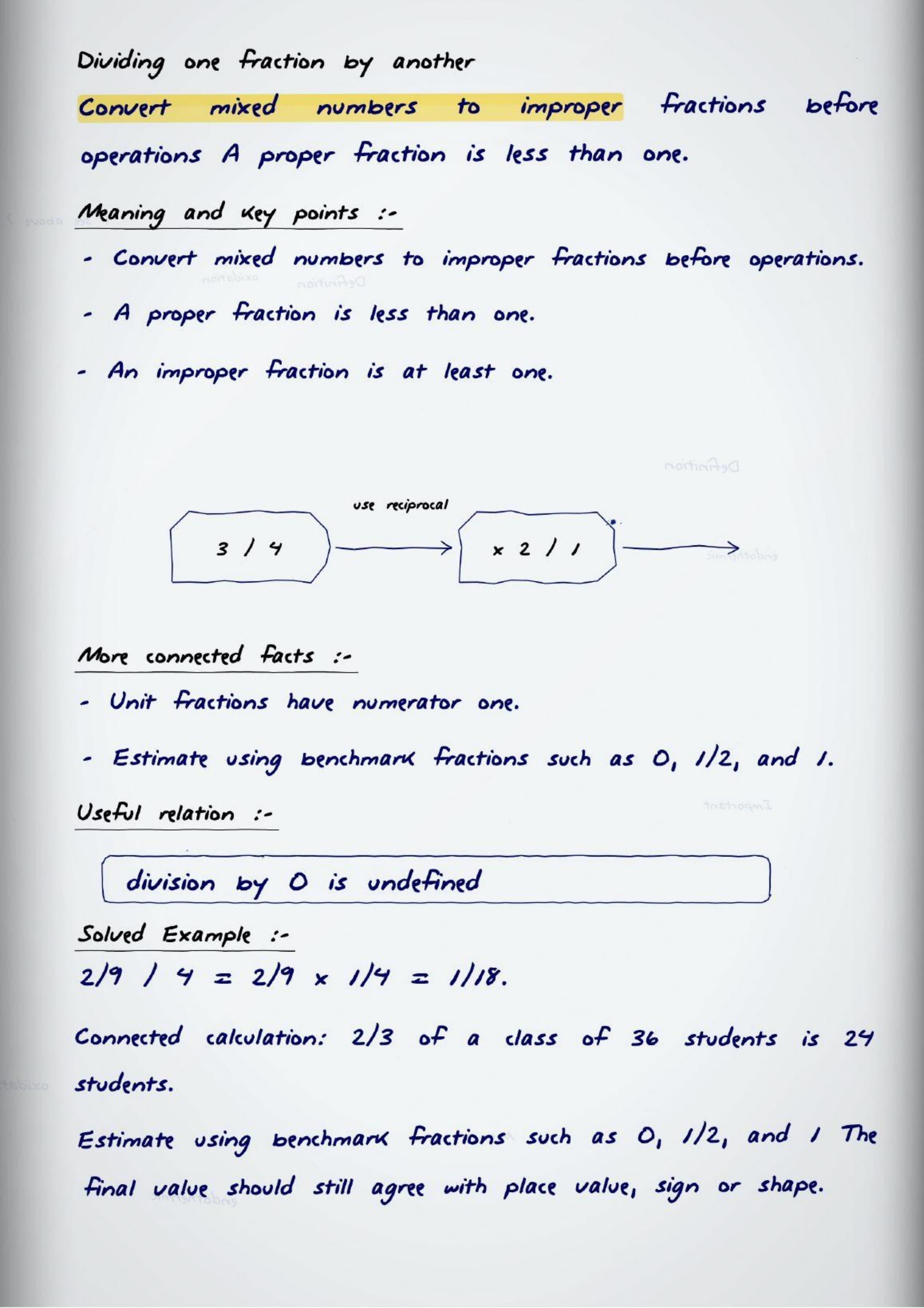
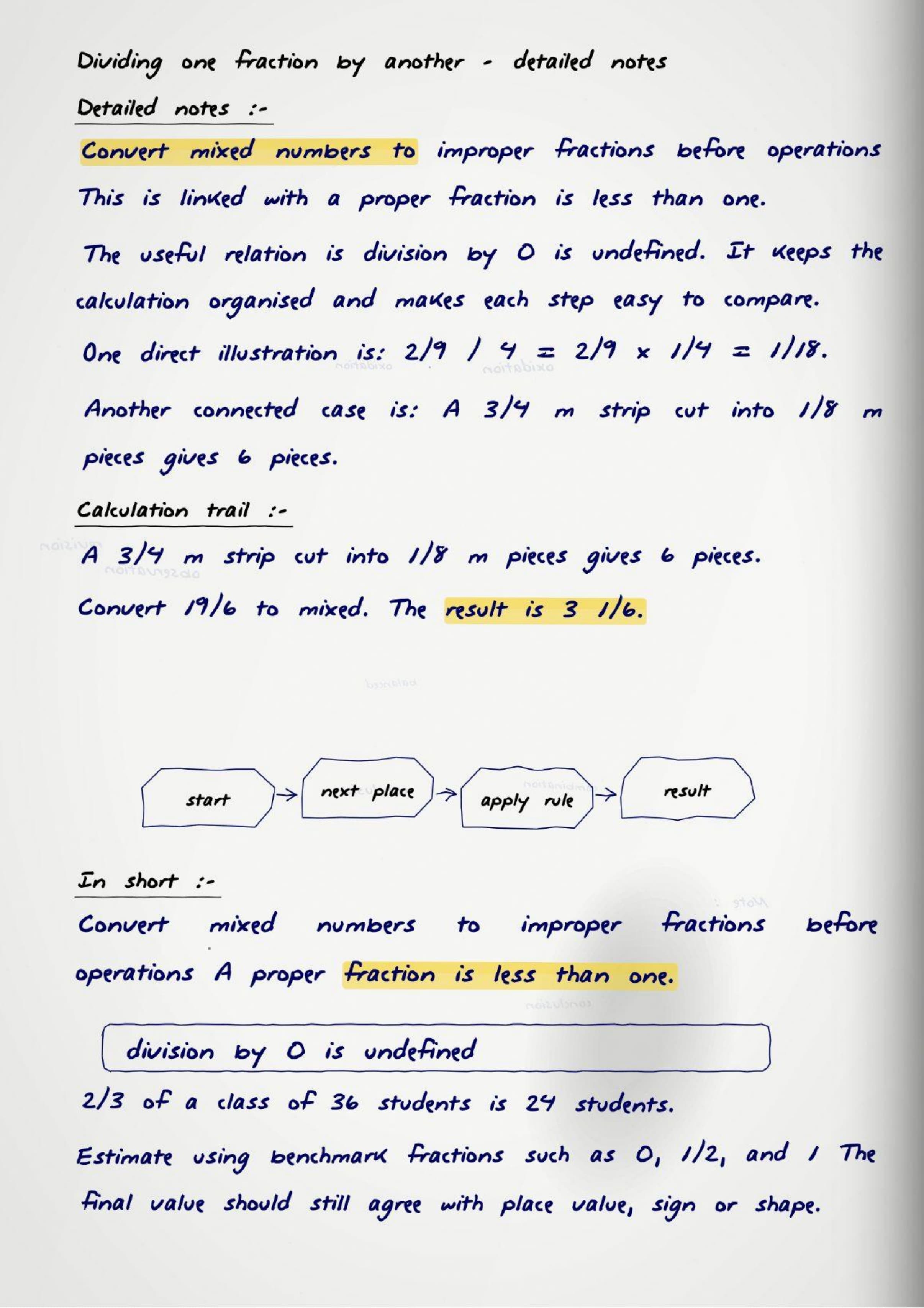
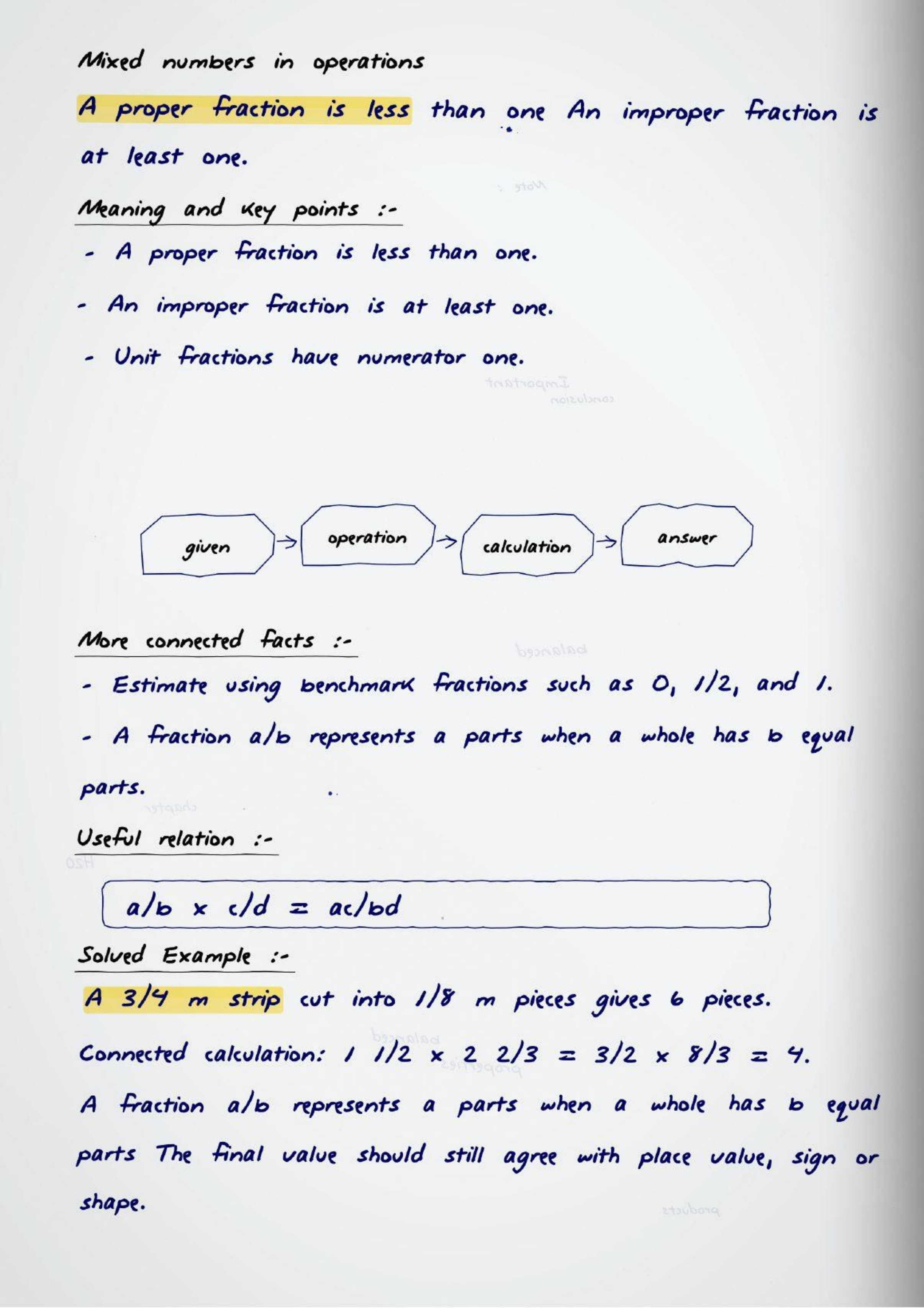
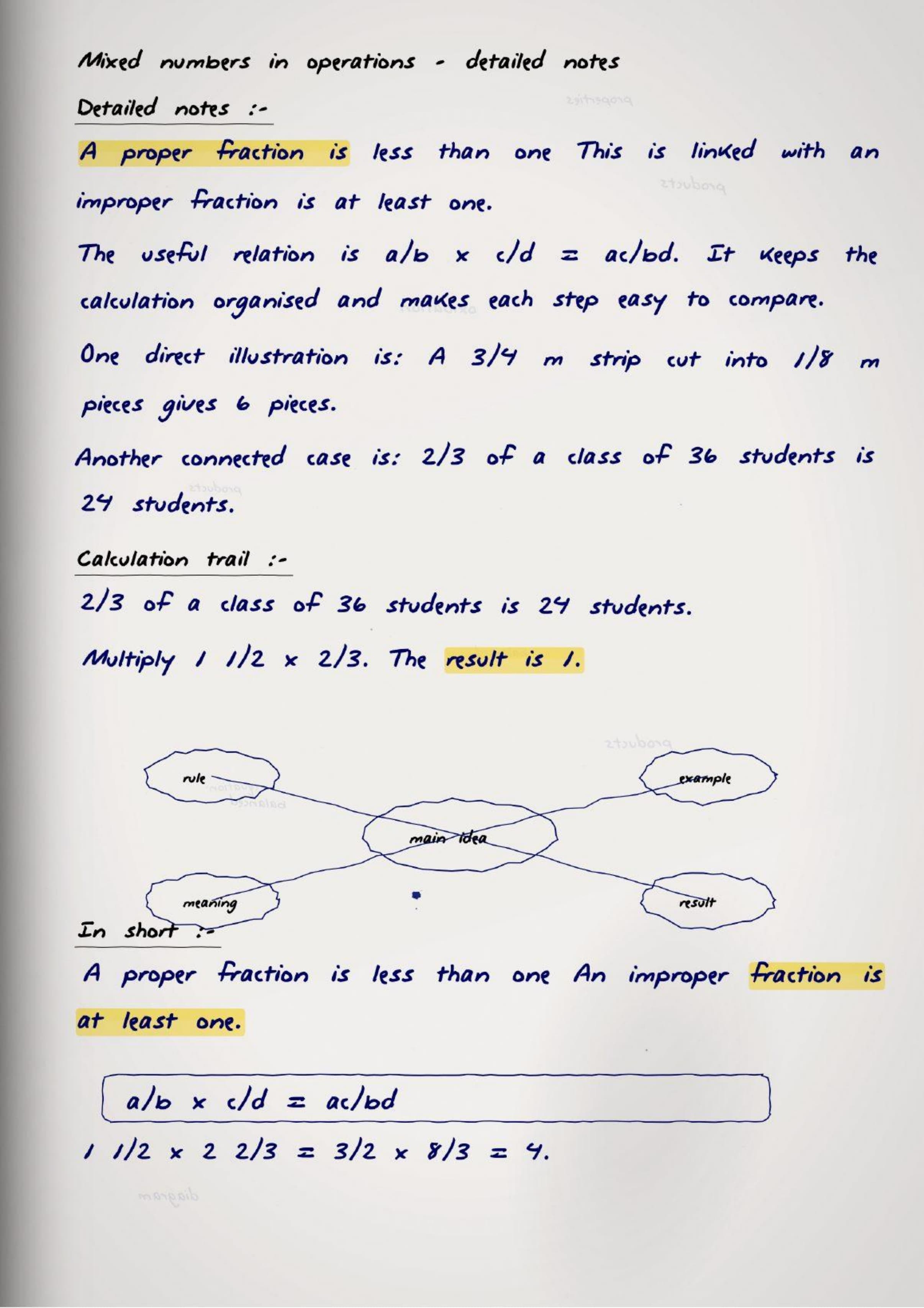
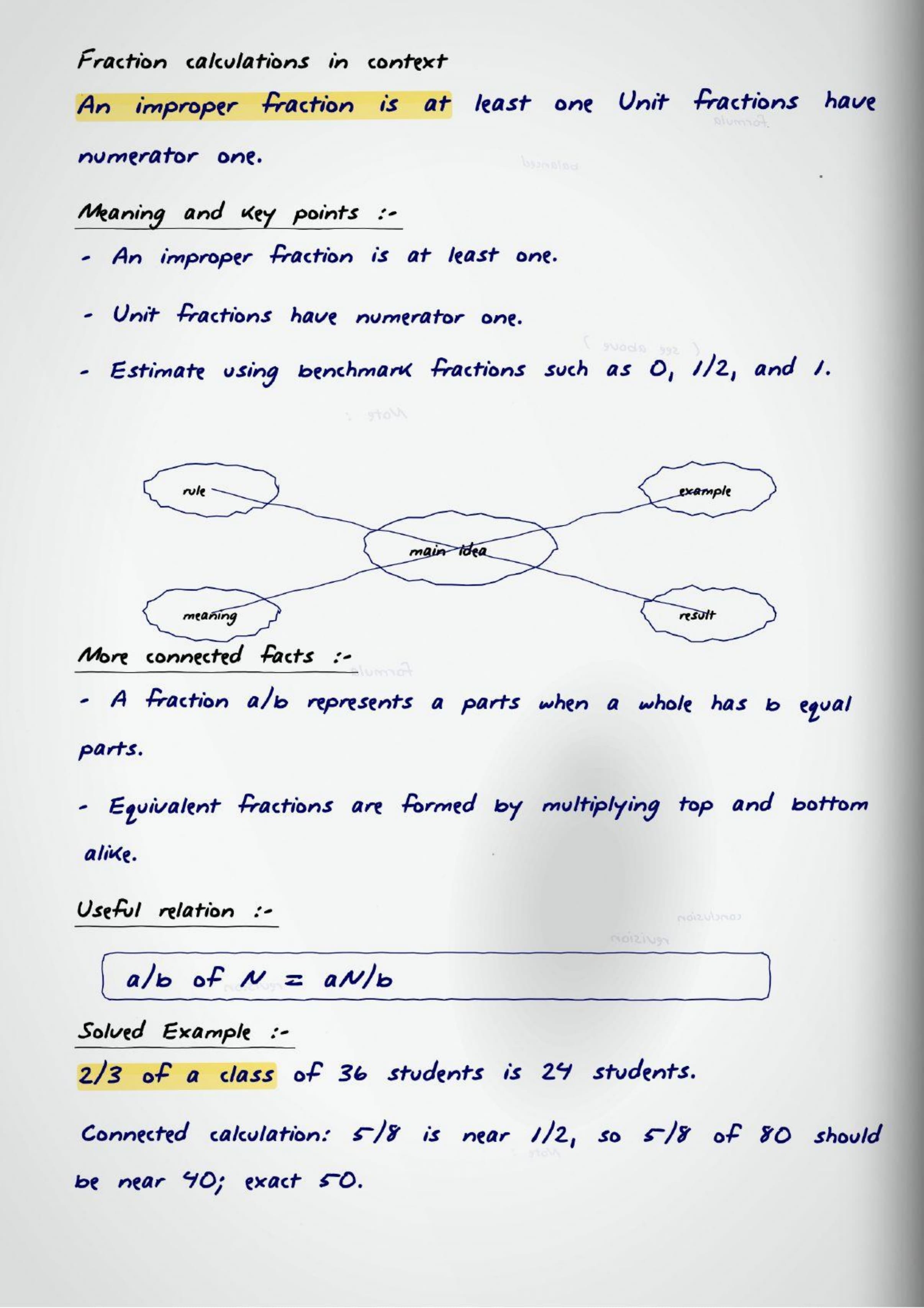
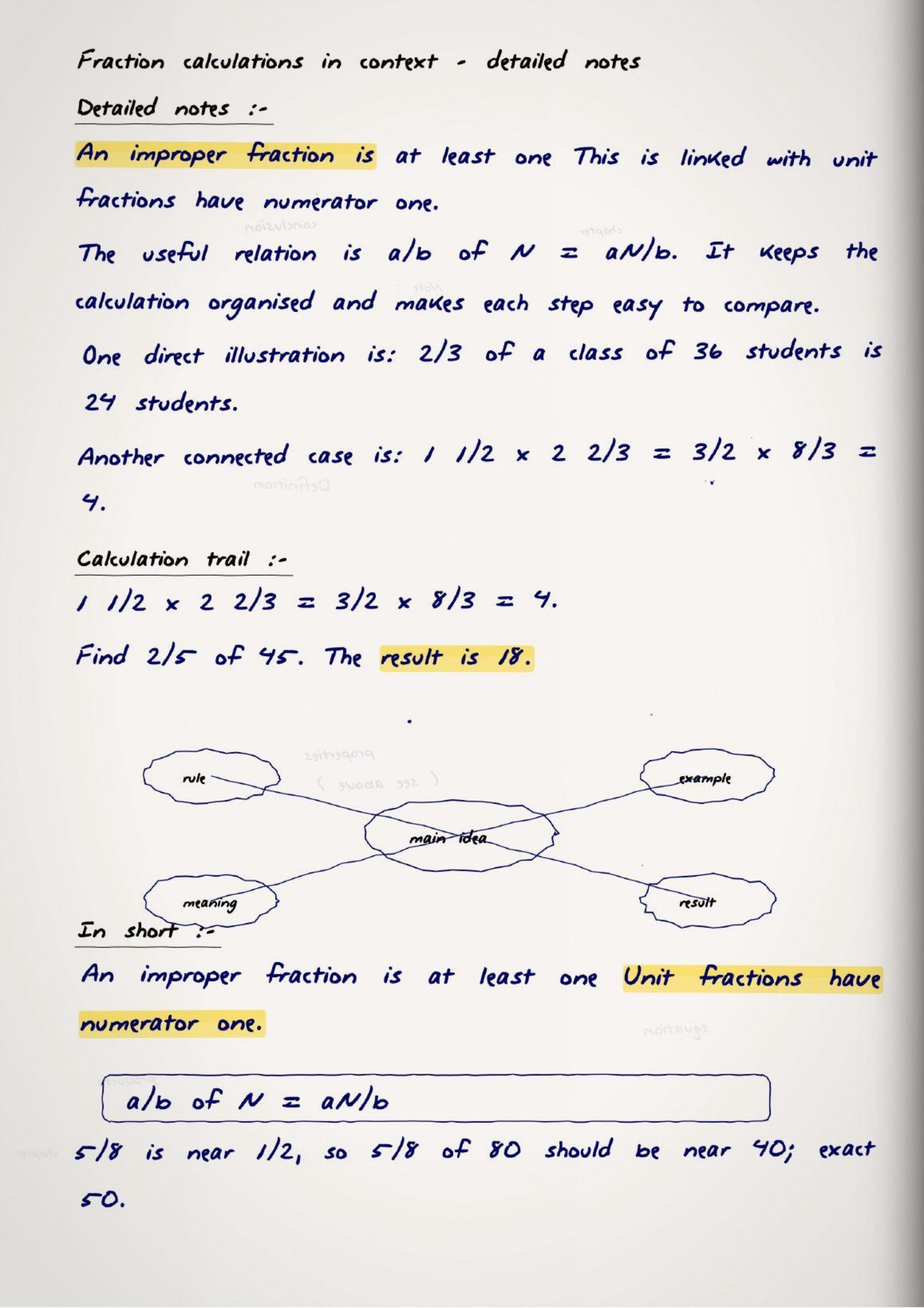
- Both rules boxed: multiply across the top and bottom; divide by flipping the second fraction
- What the notes cover: multiplication of fractions, division of fractions, and word problems using both
- Best for: the word problem question, which carries the most marks in this chapter
The full class 7 maths handwritten notes for Working with Fractions sit in the PDF below, with every box and figure included.
These handwritten notes are written by Maths teachers, mapped to the 2026-27 NCERT Ganita Prakash book, and checked against Class 7 school question papers.
Which Working with Fractions Topics CBSE Class 7 Maths Asks Most
Word problems take the most marks. The two rules themselves are quick to revise.
| Sub-topic | Weightage | How often asked |
|---|---|---|
| Word problems using fractions | High | asked often |
| Division of fractions | High | asked often |
| Multiplication of fractions | High | asked often |
| Reciprocal of a fraction | Medium | asked sometimes |
| Comparing the size of the answer | Medium | asked sometimes |
| Simplifying the result | Low | asked rarely |
Inside the Working with Fractions Handwritten Notes PDF
The chapter opens with Aaron walking 3 kilometres an hour and his tortoise walking a quarter of a kilometre. That contrast sets up fraction multiplication.
- Multiplication of fractions
- Multiplying a fraction by a whole number
- Multiplying a fraction by another fraction
- What happens to the size of the answer
- Division of fractions
- Dividing a whole number by a fraction
- Dividing a fraction by a fraction
- The reciprocal and why flipping works
- Word problems using fractions
What Collegedunia's Working with Fractions Handwritten Notes Give You
Both rules sit in one box, and every solved problem shows the flip step written out. That is the standard Collegedunia holds these class 7 maths handwritten notes to.
- Rule box: the multiply rule and the divide rule in one hand-drawn box
- Solved word problems: each written as the sentence, the expression, then the working
- Size panel: what happens to a number when multiplied by a proper fraction
- Colour-coded sub-headings: sub-topics in red so multiplication and division stay apart
Quick Check on Working with Fractions
Five fraction questions. Tap each one to reveal.
What is 1/2 multiplied by 8?
(a) 16 (b) 4 (c) 8.5 (d) 1/16
Answer: (b) 4, because multiplying by a proper fraction makes it smaller
The reciprocal of 3/4 is
(a) 3/4 (b) 4/3 (c) 1/4 (d) 7/4
Answer: (b) 4/3
To divide by a fraction you should
(a) flip the first fraction (b) flip the second fraction and multiply (c) add the fractions (d) subtract
Answer: (b) flip the second fraction and multiply
A tortoise walks 1/4 km in an hour. How far in 3 hours?
(a) 3/4 km (b) 4/3 km (c) 12 km (d) 1/12 km
Answer: (a) 3/4 km
What is 2/3 multiplied by 3/4?
(a) 6/7 (b) 5/7 (c) 1/2 (d) 8/9
Answer: (c) 1/2, since 6/12 simplifies to 1/2
Night-Before Revision Card: Working with Fractions
The last card for the Part 1 book.
- Multiply: numerator times numerator, denominator times denominator
- Divide: flip the second fraction, then multiply
- The reciprocal of 3/4 is 4/3
- Multiplying by a proper fraction makes the number smaller
- Always write the flip step
What Makes Working with Fractions a Scoring Chapter
Fractions run through the whole of Class 7 and beyond. Division of fractions is the single most common error in the annual paper.
- A fraction word problem appears in every test
- Division of fractions is the most common mistake in the paper
- Showing the flip step earns a method mark
- Part 2 Chapter 4 applies the same ideas to decimals
Working with Fractions Terms You Must Be Able to Define
These terms appear in the question wording, so know each one.
| Term / Idea | What it means |
|---|---|
| Fraction | a number written as one whole number over another, showing parts of a whole |
| Numerator | the number on top of a fraction |
| Denominator | the number at the bottom of a fraction |
| Product | the answer when you multiply |
| Reciprocal | the fraction turned upside down, so 3/4 becomes 4/3 |
| Proper fraction | a fraction whose numerator is smaller than its denominator |
| Improper fraction | a fraction whose numerator is larger than its denominator |
Working with Fractions Figures You Will Find in the Notes
Fractions make more sense as shaded shapes than as symbols.
| Figure drawn by hand | What it shows |
|---|---|
| Rule box | the multiply and divide rules written together |
| Fraction of a fraction | a rectangle shaded twice to show 2/3 of 3/4 |
| Reciprocal flip | a fraction and its reciprocal drawn side by side |
| Distance strip | Aaron and the tortoise walking, drawn to scale |
| Size panel | a number line showing a number shrinking when multiplied by 1/2 |
A Two-Pass Plan for the Working with Fractions Handwritten Notes
Always write the flip step. Answers that jump straight to the result lose method marks. Read the class 7 maths handwritten notes the same way twice, once slowly and once fast.
- Write both rules in your own words
- Solve ten multiplications and ten divisions, showing every step
- Turn three word problems into expressions before solving
- Before the test, revise the rule box and the size panel
More Maths Study Material for Working with Fractions
Use the notes with the solved exercises and the Ganita Prakash chapter itself.
All Chapters: Class 7 Maths Handwritten Notes
Every chapter has its own class 7 maths handwritten notes. Ganita Prakash Part 1 has eight chapters and Part 2 has seven.
| Chapter | Resource |
|---|---|
| Part 1 Chapter 1 | Large Numbers Around Us Handwritten Notes |
| Part 1 Chapter 2 | Arithmetic Expressions Handwritten Notes |
| Part 1 Chapter 3 | A Peek Beyond the Point Handwritten Notes |
| Part 1 Chapter 4 | Expressions using Letter-Numbers Handwritten Notes |
| Part 1 Chapter 5 | Parallel and Intersecting Lines Handwritten Notes |
| Part 1 Chapter 6 | Number Play Handwritten Notes |
| Part 1 Chapter 7 | A Tale of Three Intersecting Lines Handwritten Notes |
| Part 1 Chapter 8 | Working with Fractions Handwritten Notes |
| Part 2 Chapter 1 | Geometric Twins Handwritten Notes |
| Part 2 Chapter 2 | Operations with Integers Handwritten Notes |
| Part 2 Chapter 3 | Finding Common Ground Handwritten Notes |
| Part 2 Chapter 4 | Another Peek Beyond the Point Handwritten Notes |
| Part 2 Chapter 5 | Connecting the Dots... Handwritten Notes |
| Part 2 Chapter 6 | Constructions and Tilings Handwritten Notes |
| Part 2 Chapter 7 | Finding the Unknown Handwritten Notes |
Working with Fractions Class 7 Maths Handwritten Notes FAQs
Ques. Where can I download the Working with Fractions Class 7 Maths Handwritten Notes PDF?
Ans. The PDF is free on this page in both the normal and the HD version.
Ques. How do you multiply two fractions?
Ans. Multiply the two numerators to get the new numerator, and the two denominators to get the new denominator. Then simplify the result if you can.
Ques. How many pages is the Chapter 8 handwritten notes PDF?
Ans. It runs 20 pages and covers all three sections of the chapter plus a quiz.
Ques. How do you divide by a fraction?
Ans. Flip the second fraction to get its reciprocal, then multiply. So dividing by 3/4 is the same as multiplying by 4/3.
Ques. Why does multiplying by a fraction make a number smaller?
Ans. Because a proper fraction is less than one. Taking half of something gives you less than you started with, so 1/2 multiplied by 8 is 4.



Comments