




Class 7 Maths Part 2 Chapter 3 Finding Common Ground is the HCF and LCM chapter. These class 7 maths handwritten notes chapter 3 Finding Common Ground follow the 2026-27 NCERT and cover the greatest common factor, the least common multiple and their word problems.
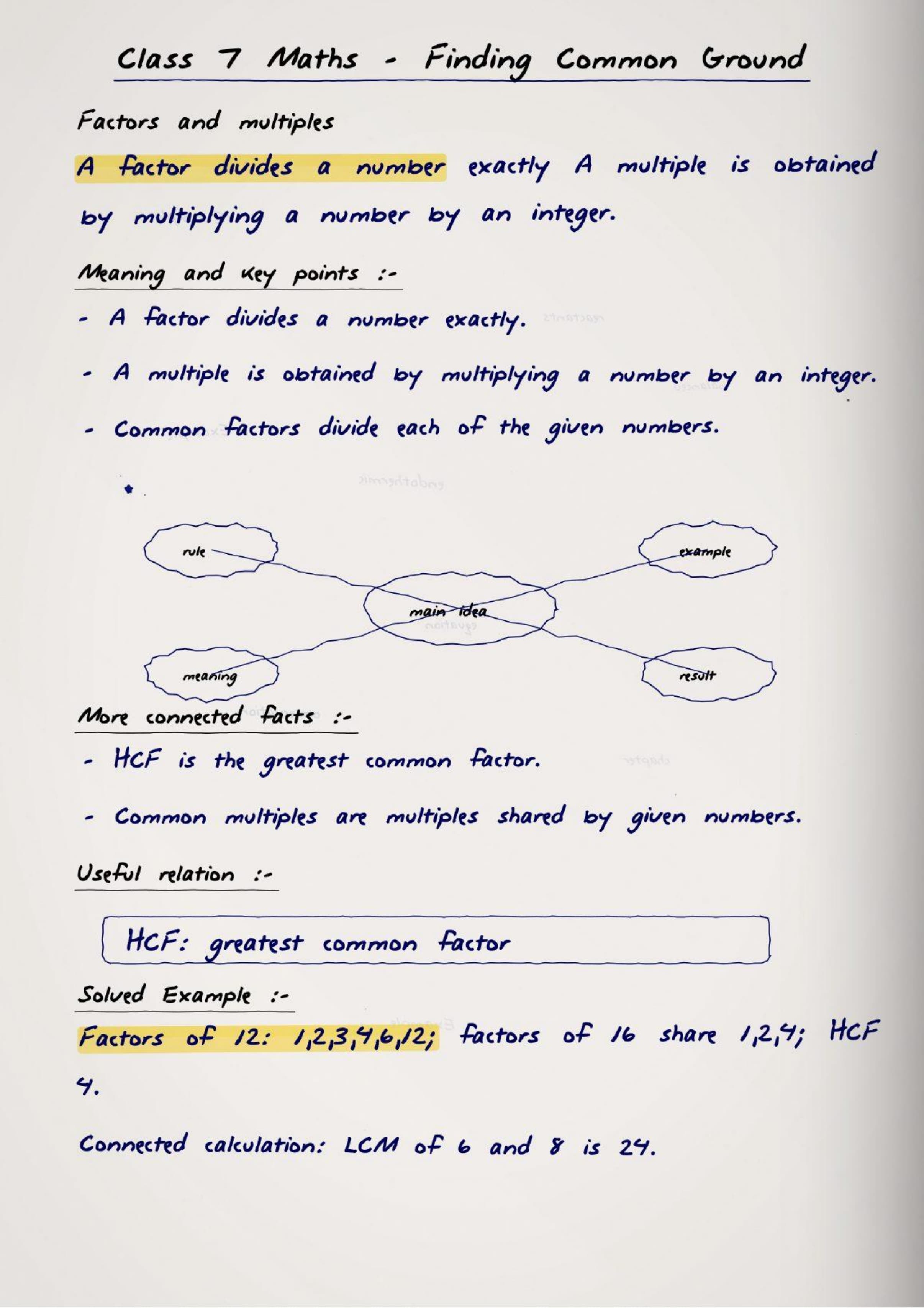
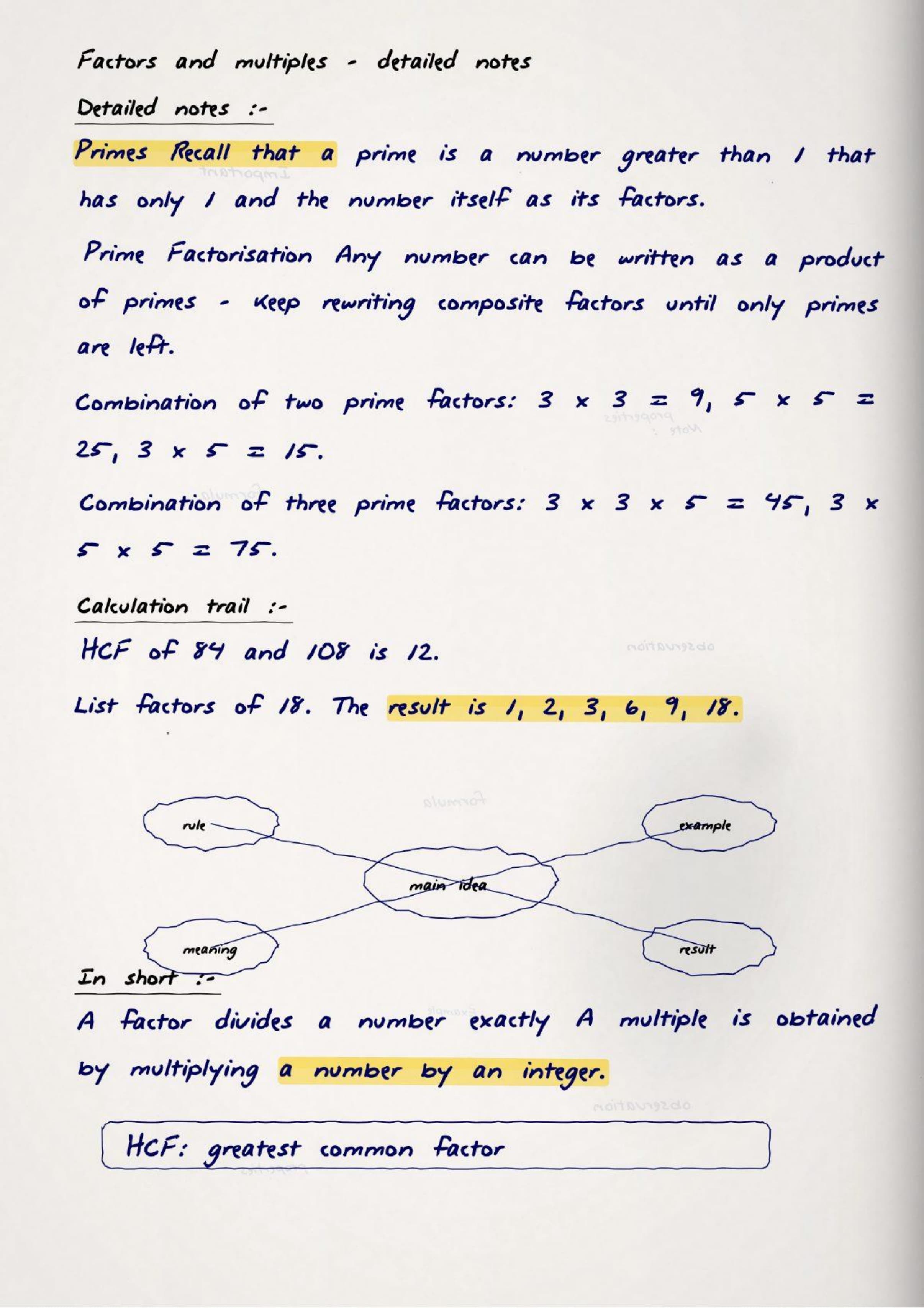
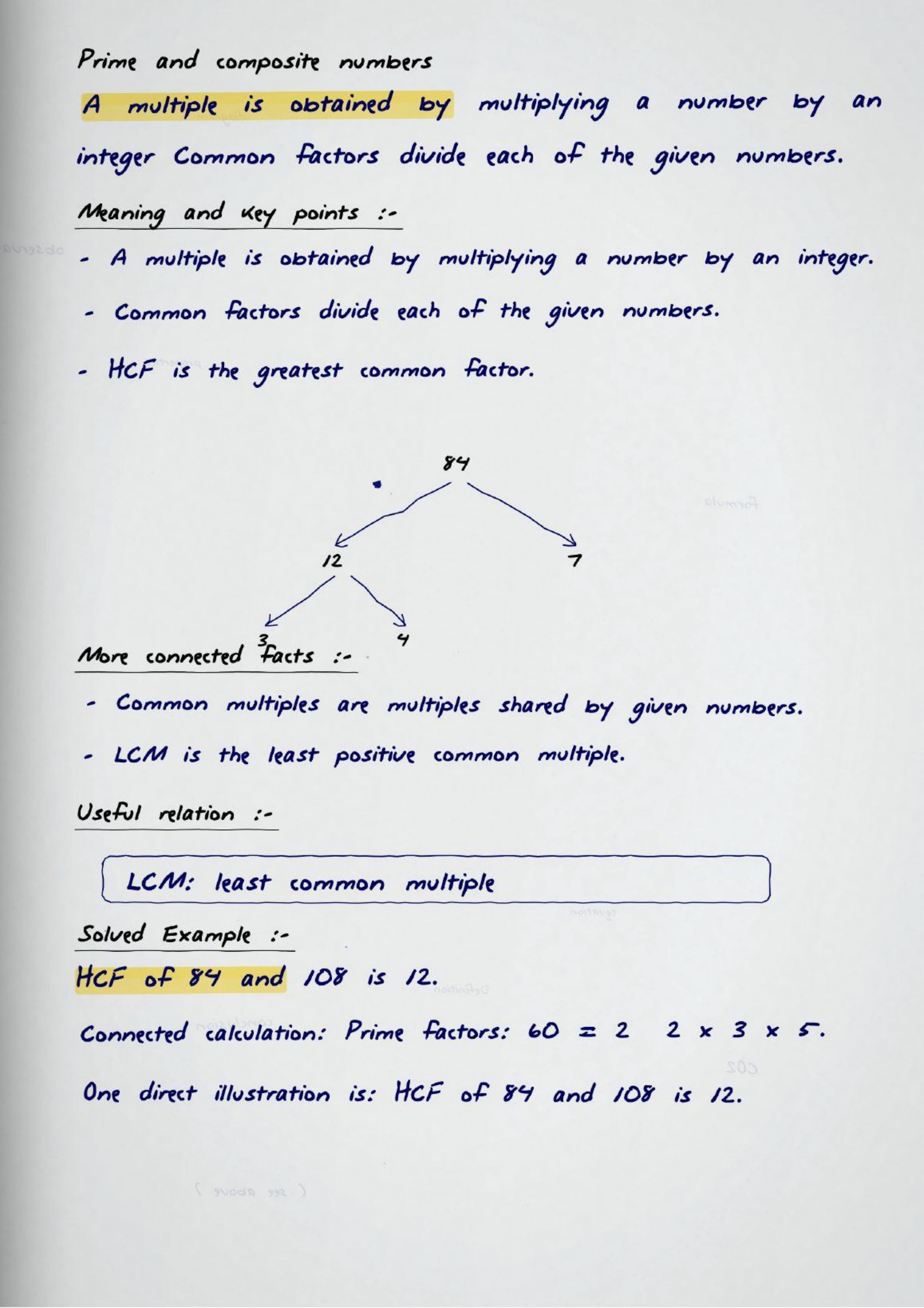
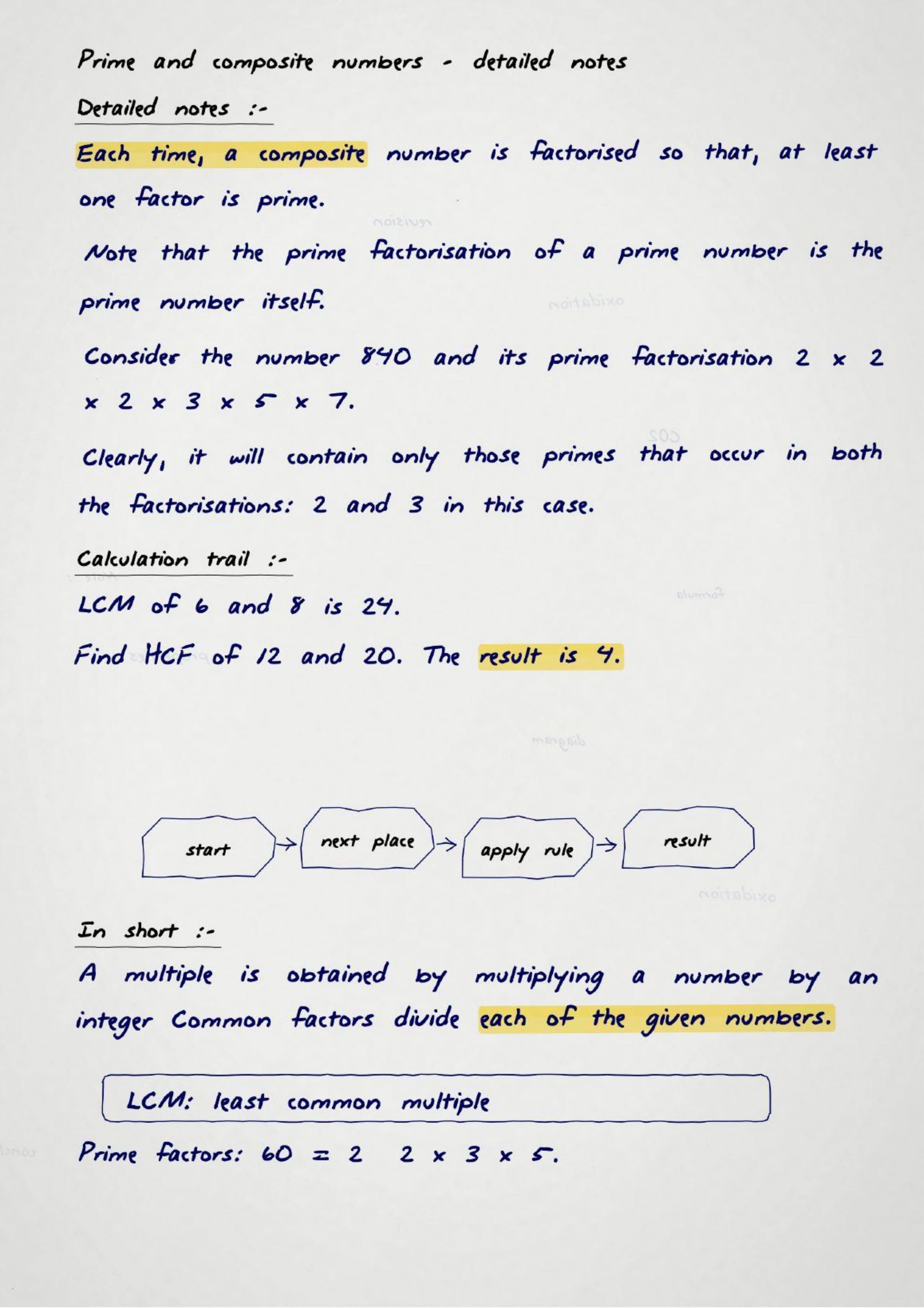
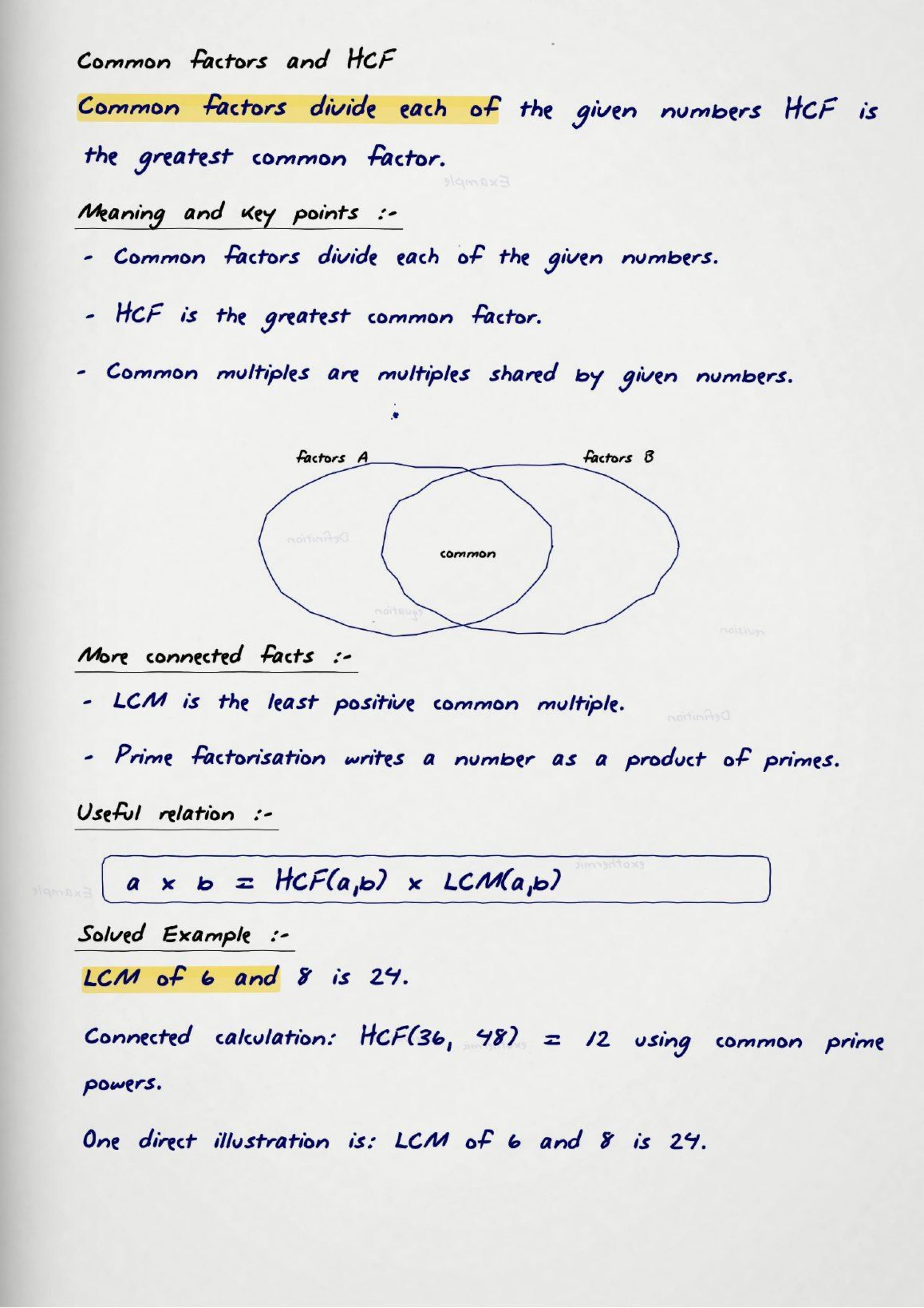
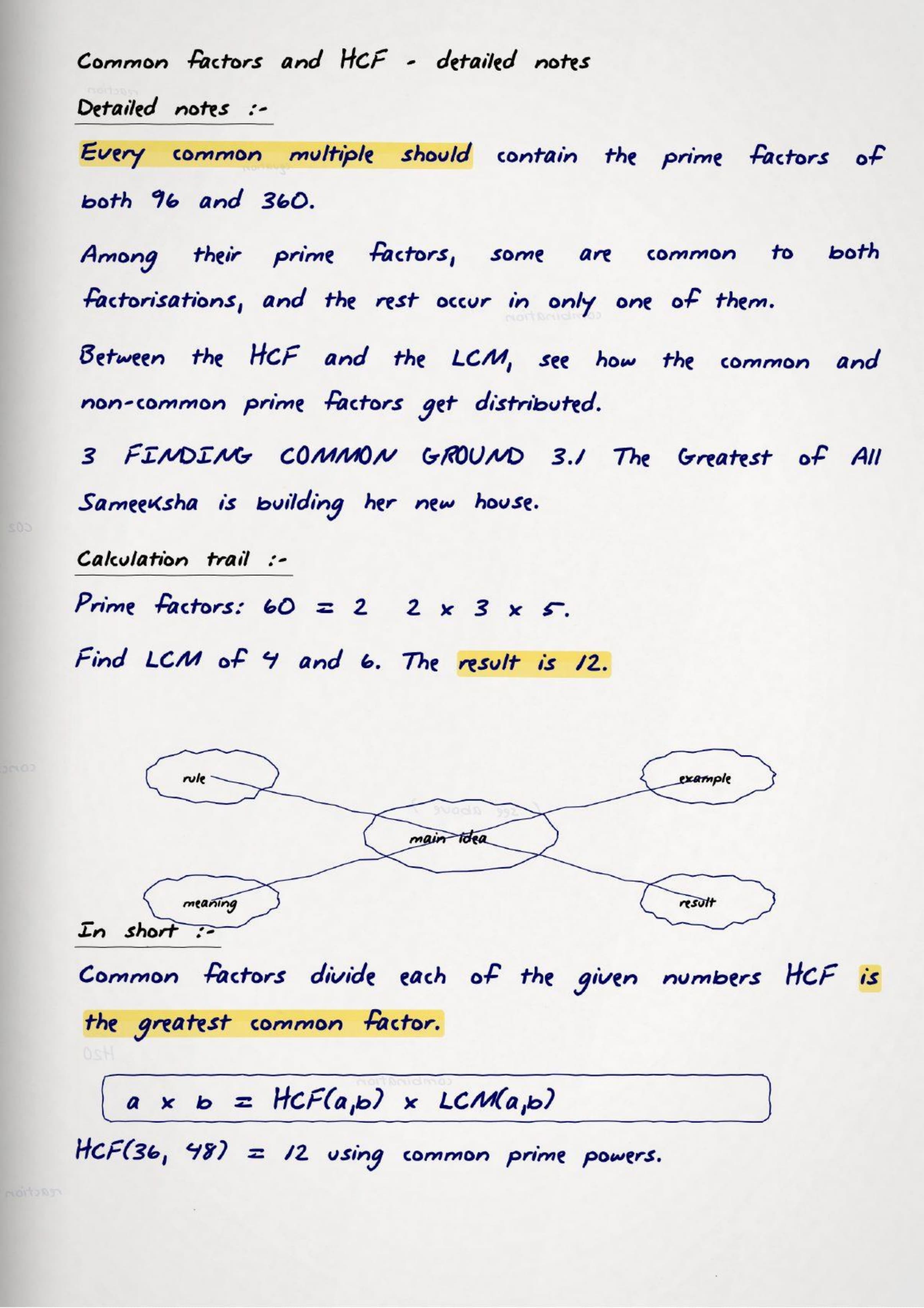
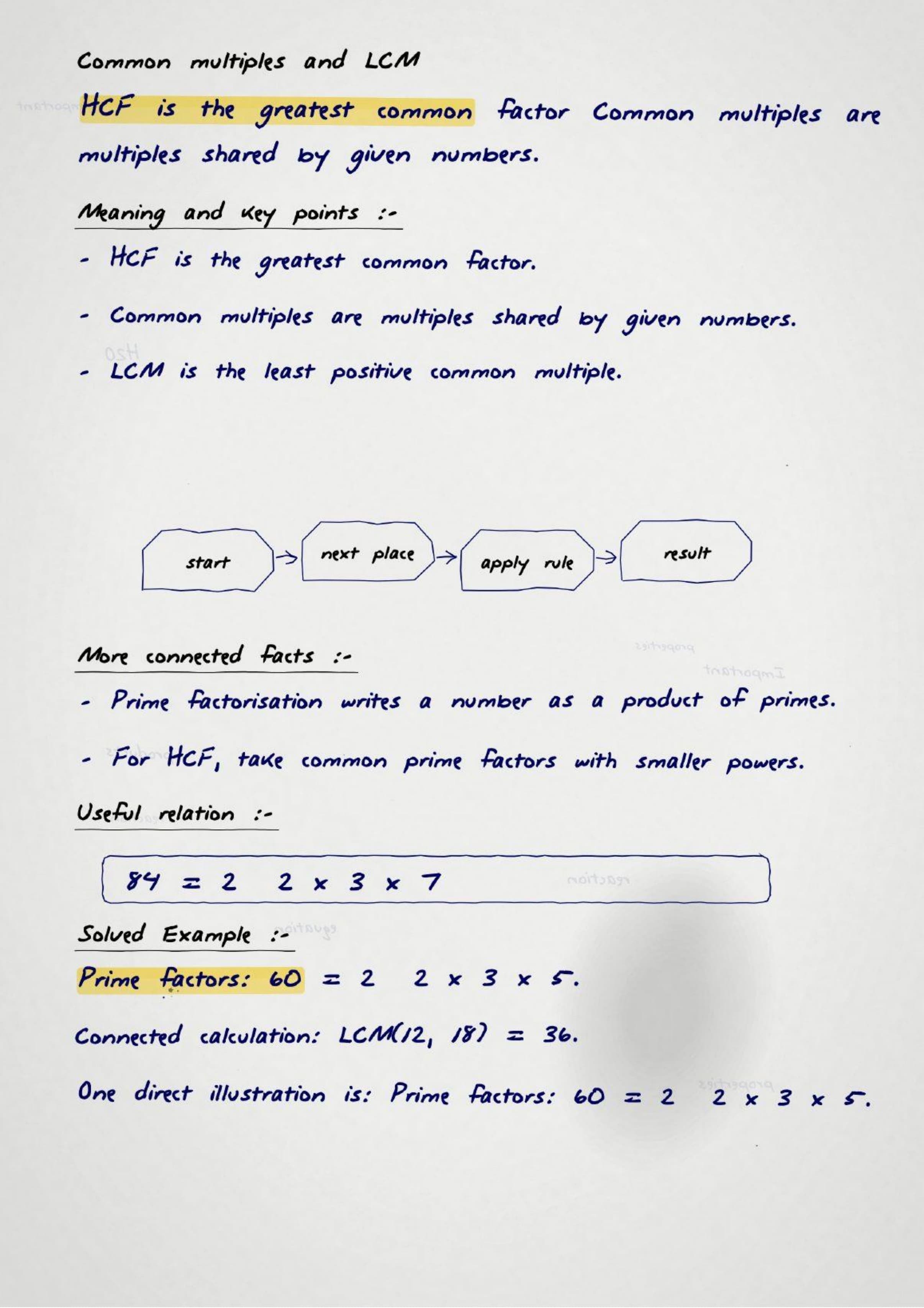
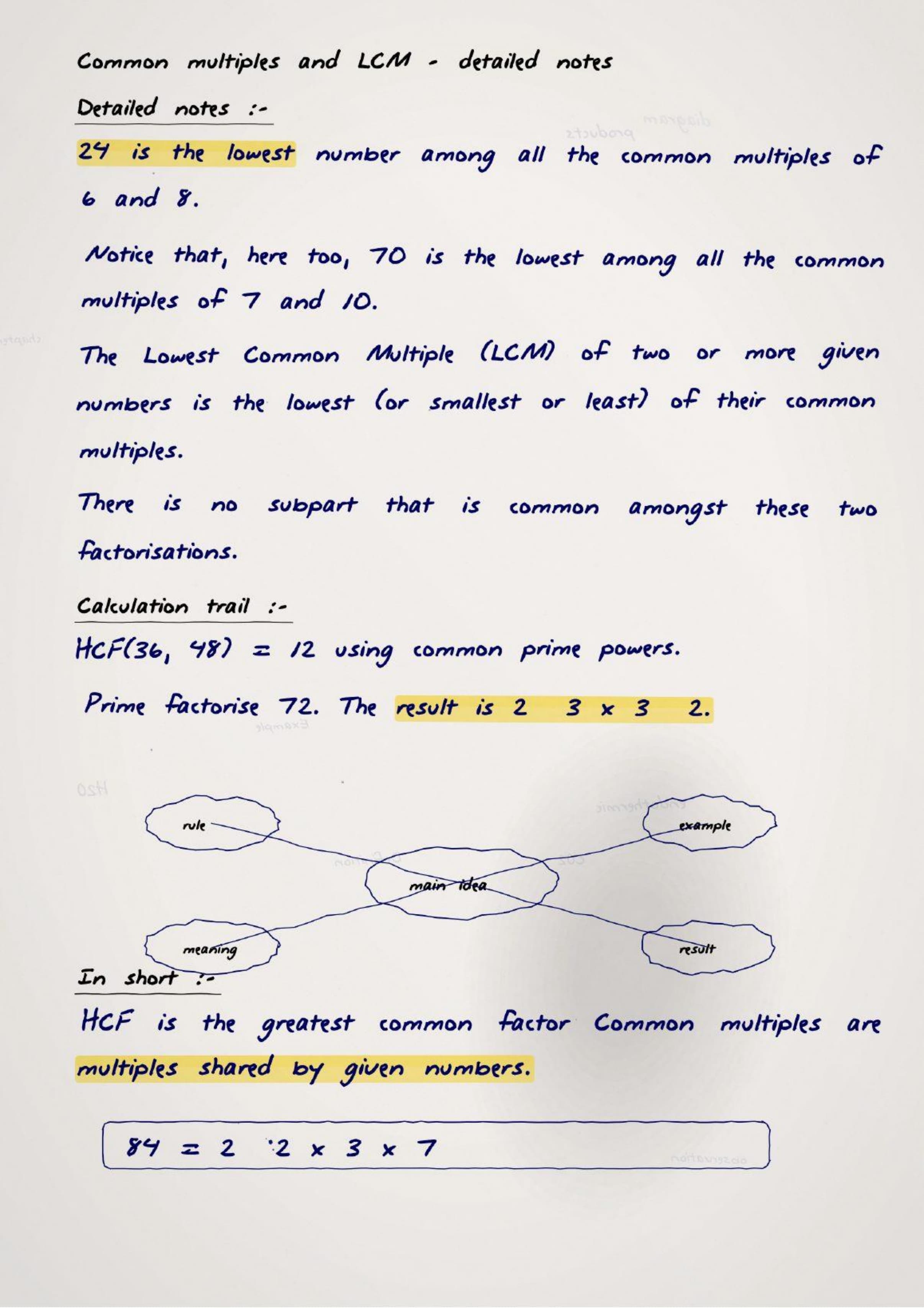
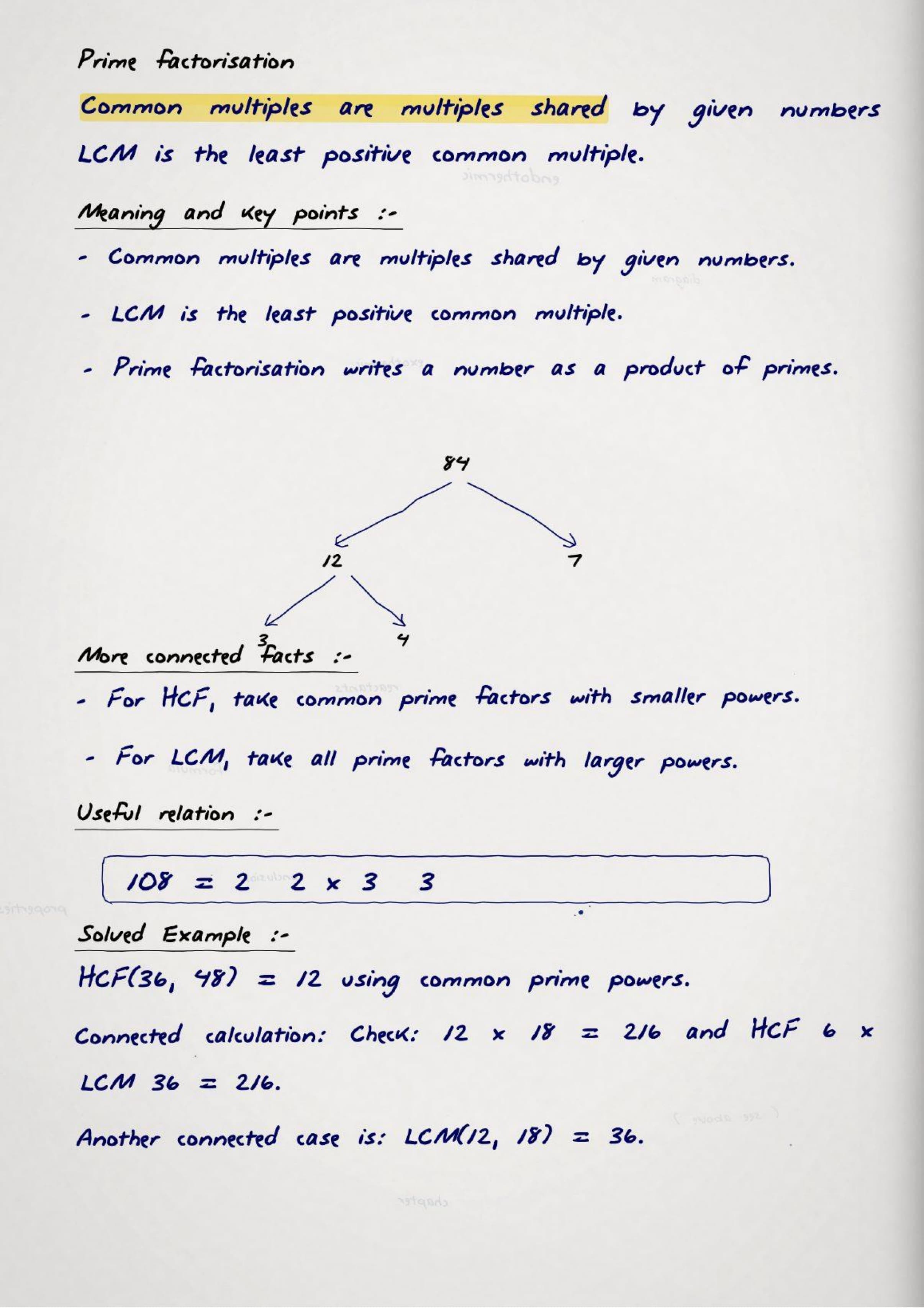
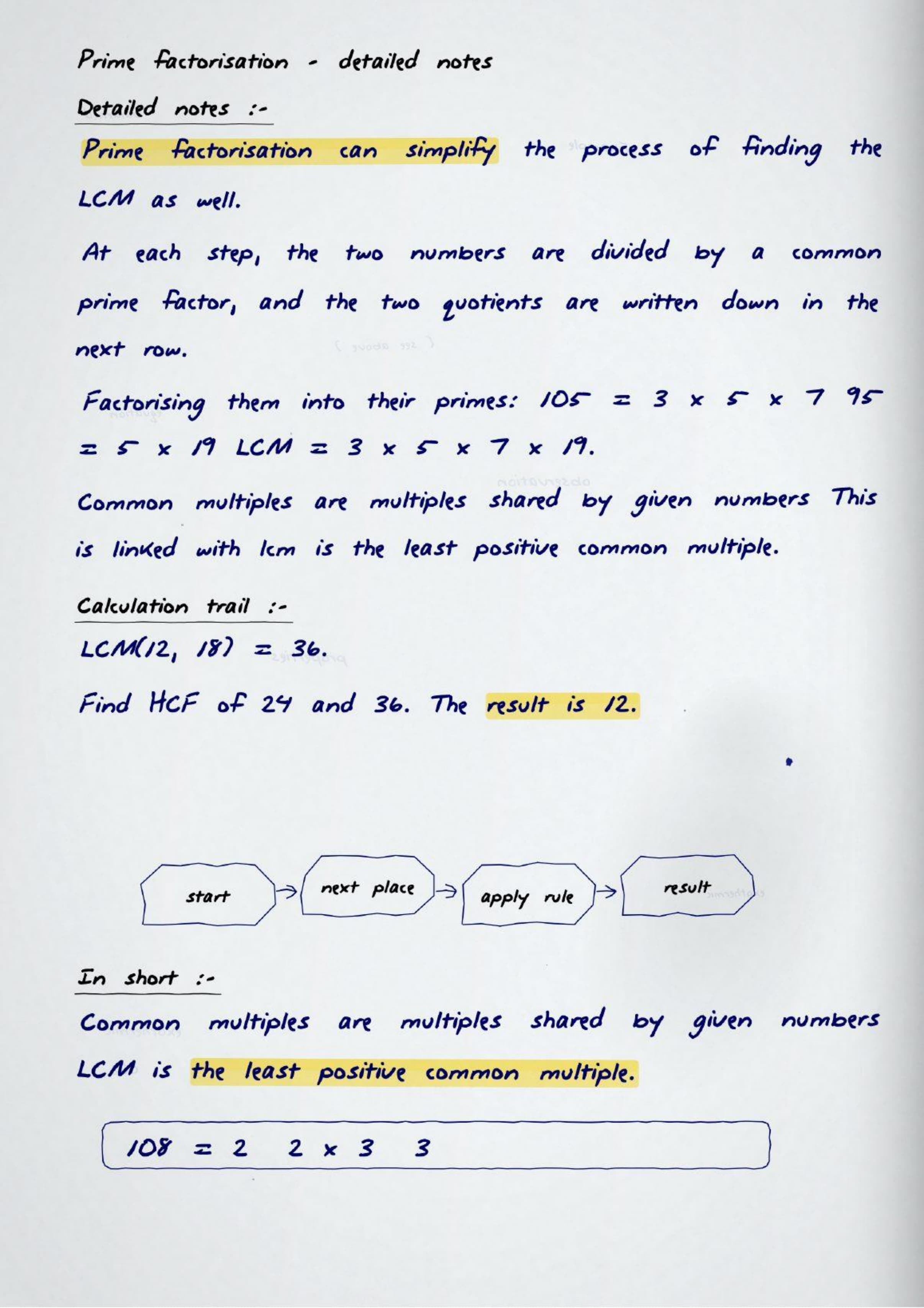
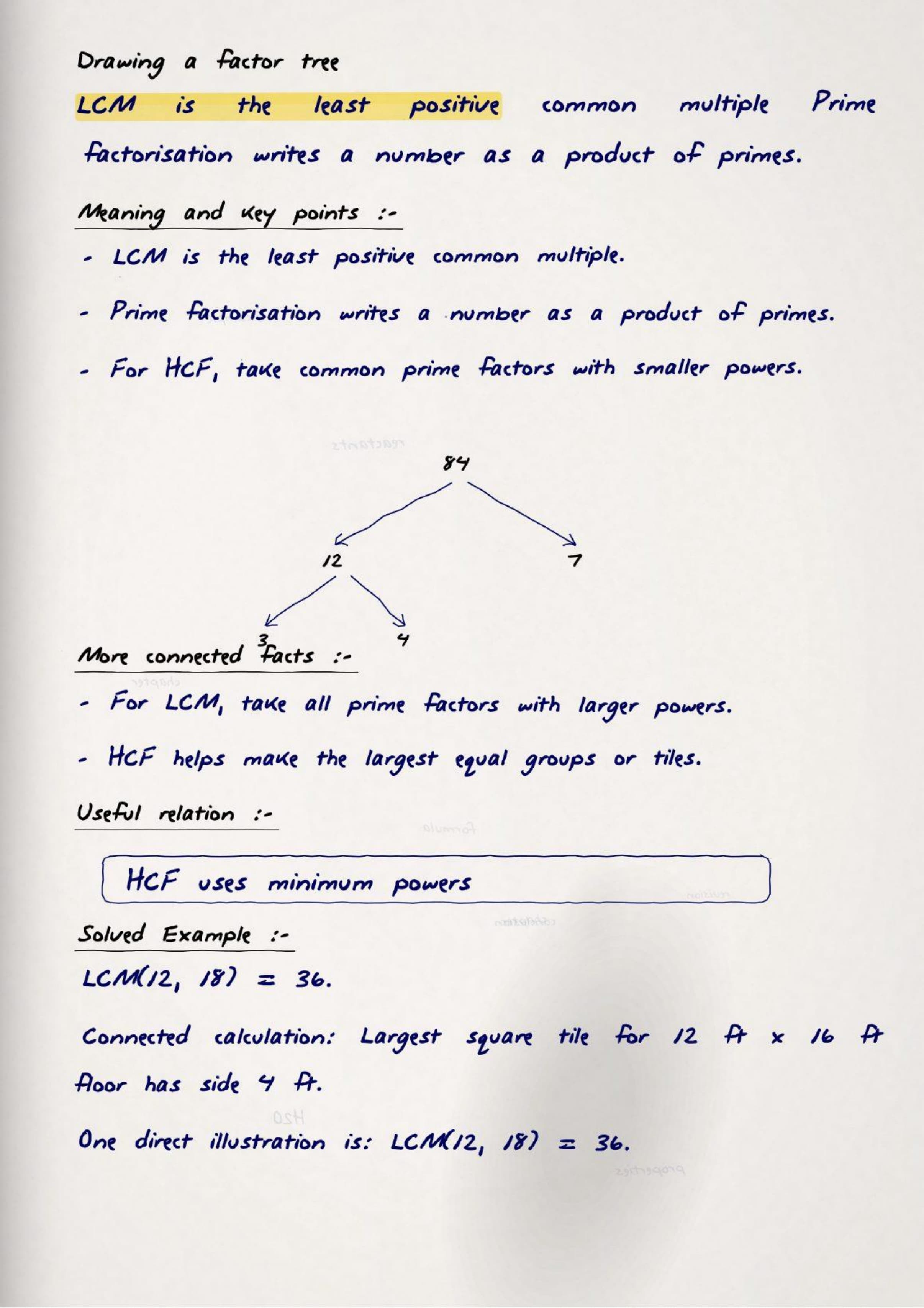
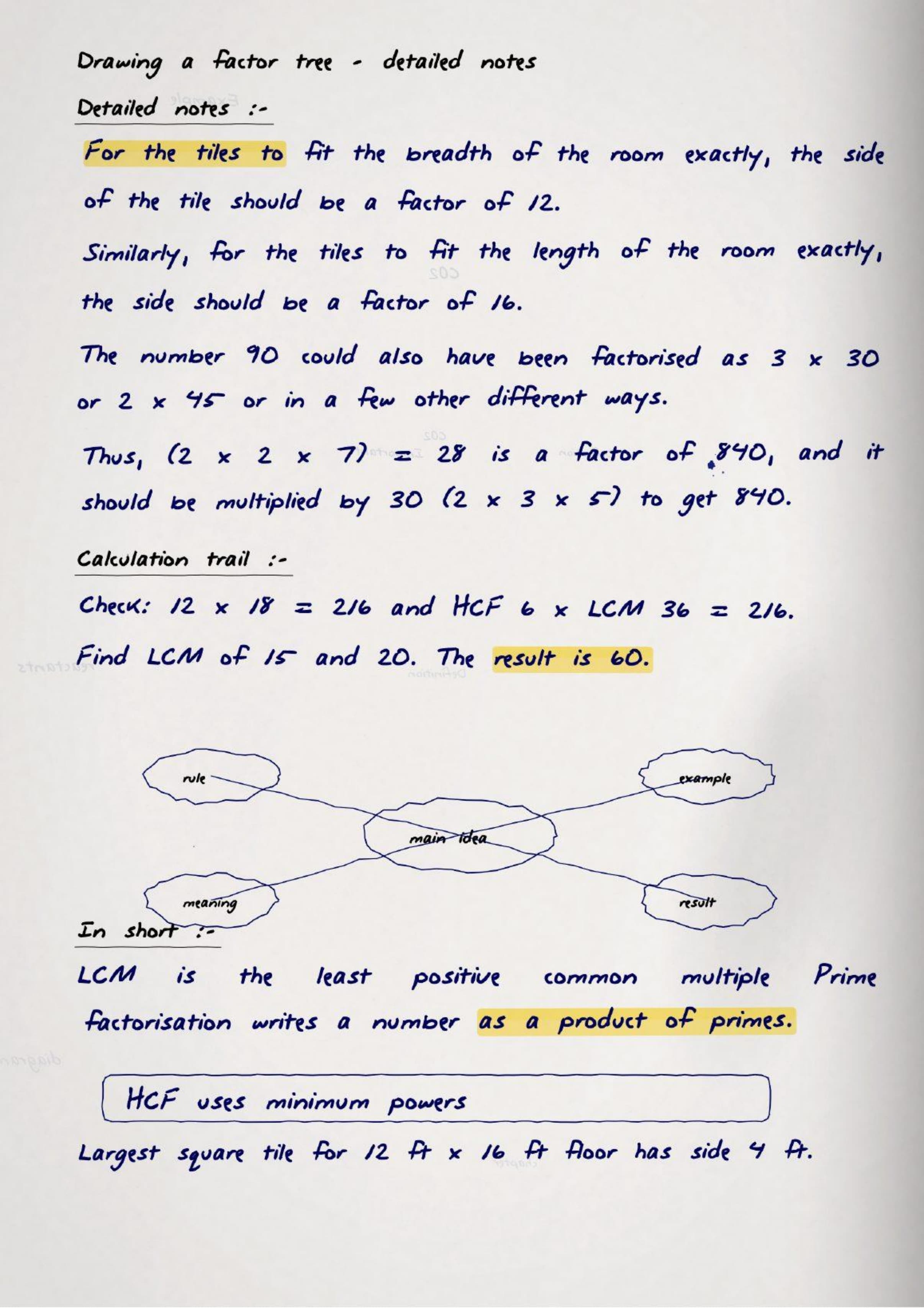
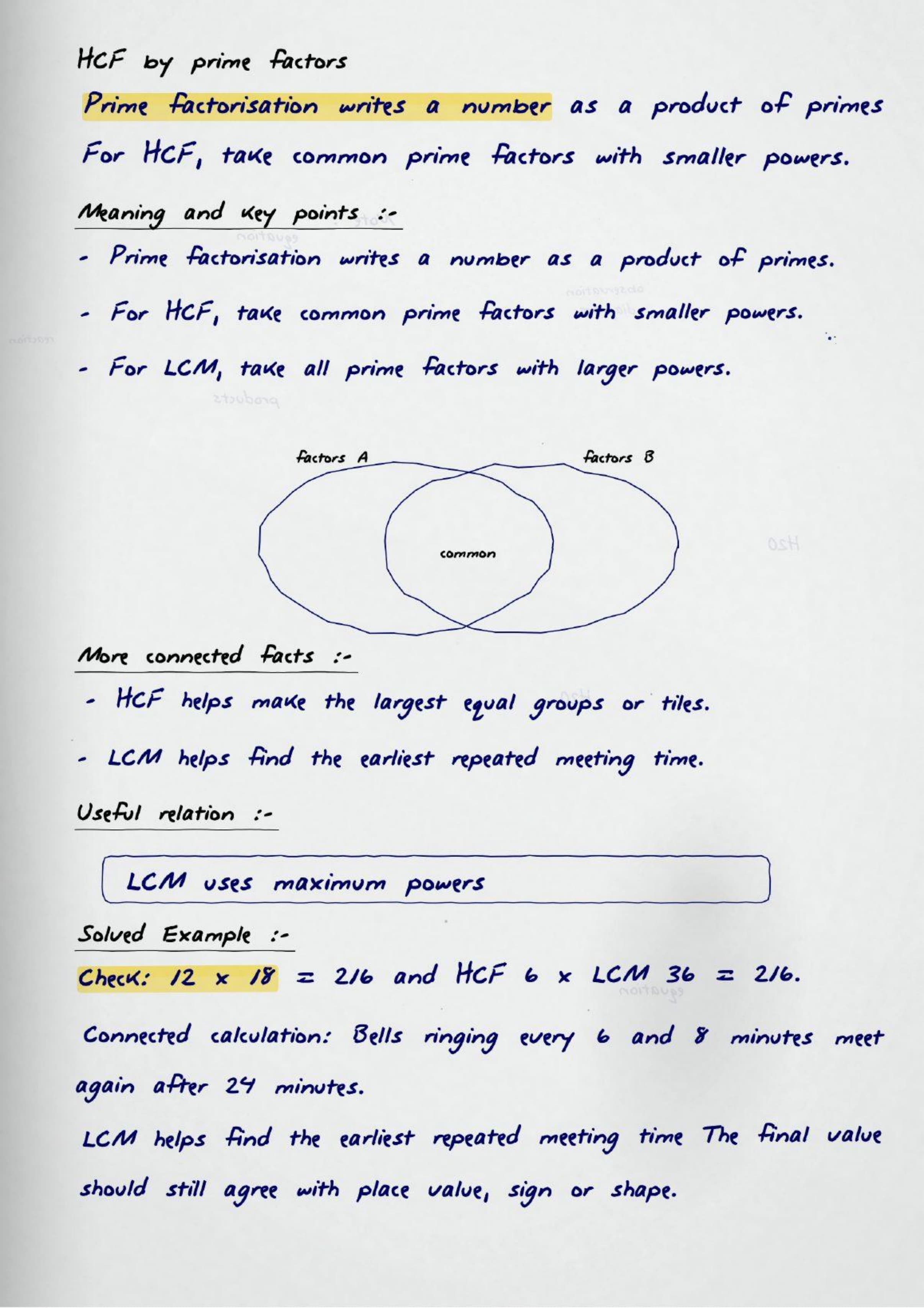
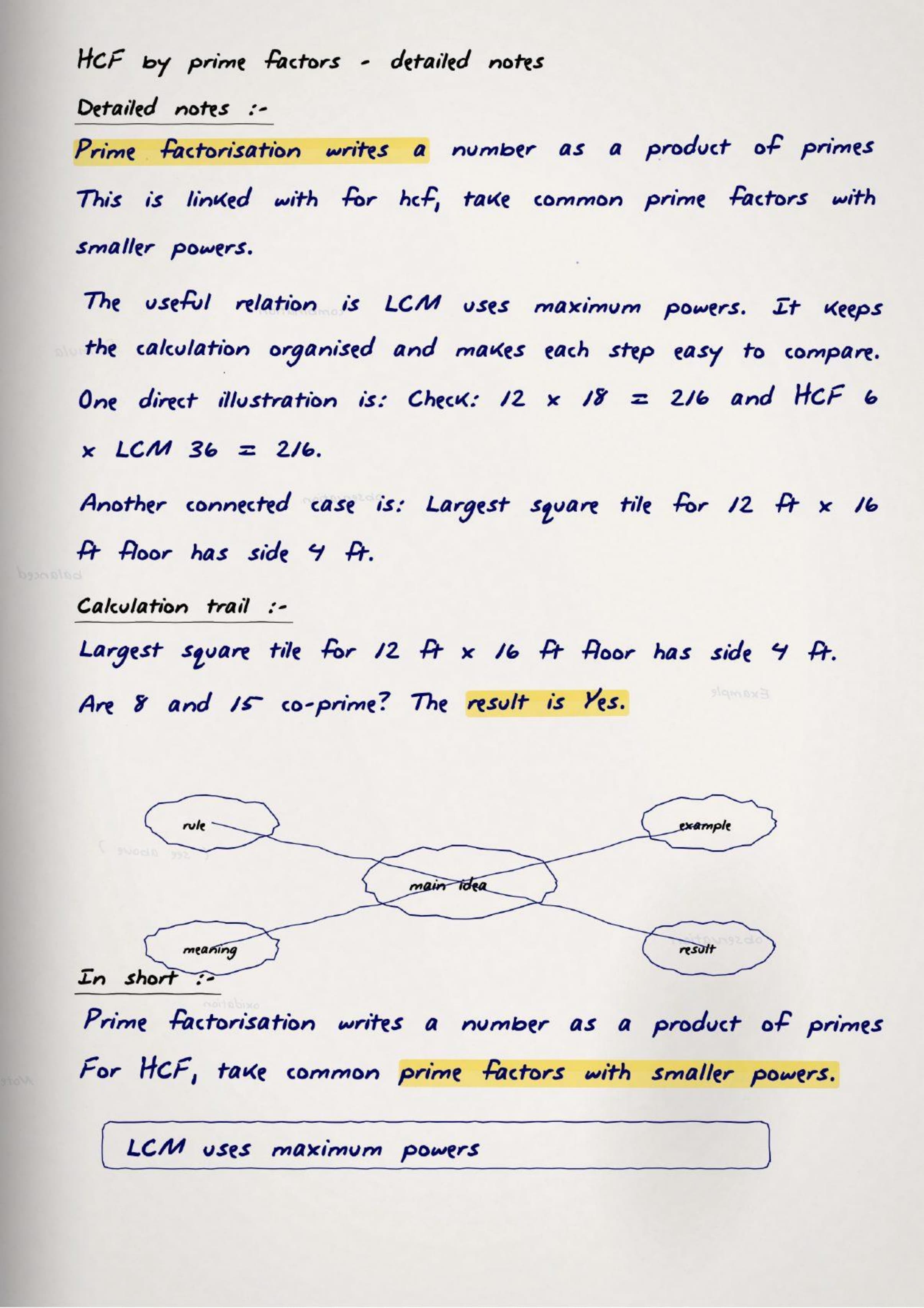
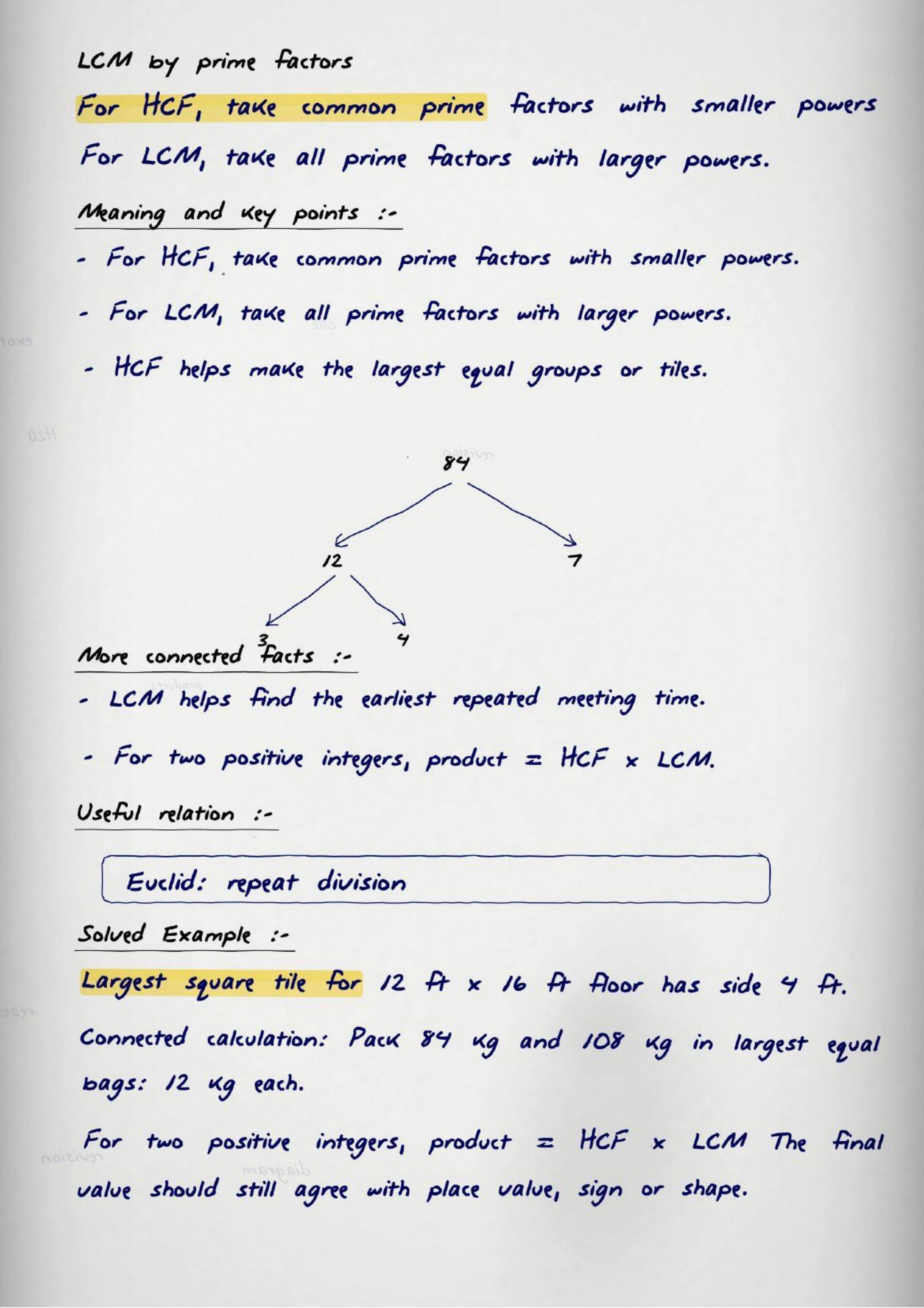
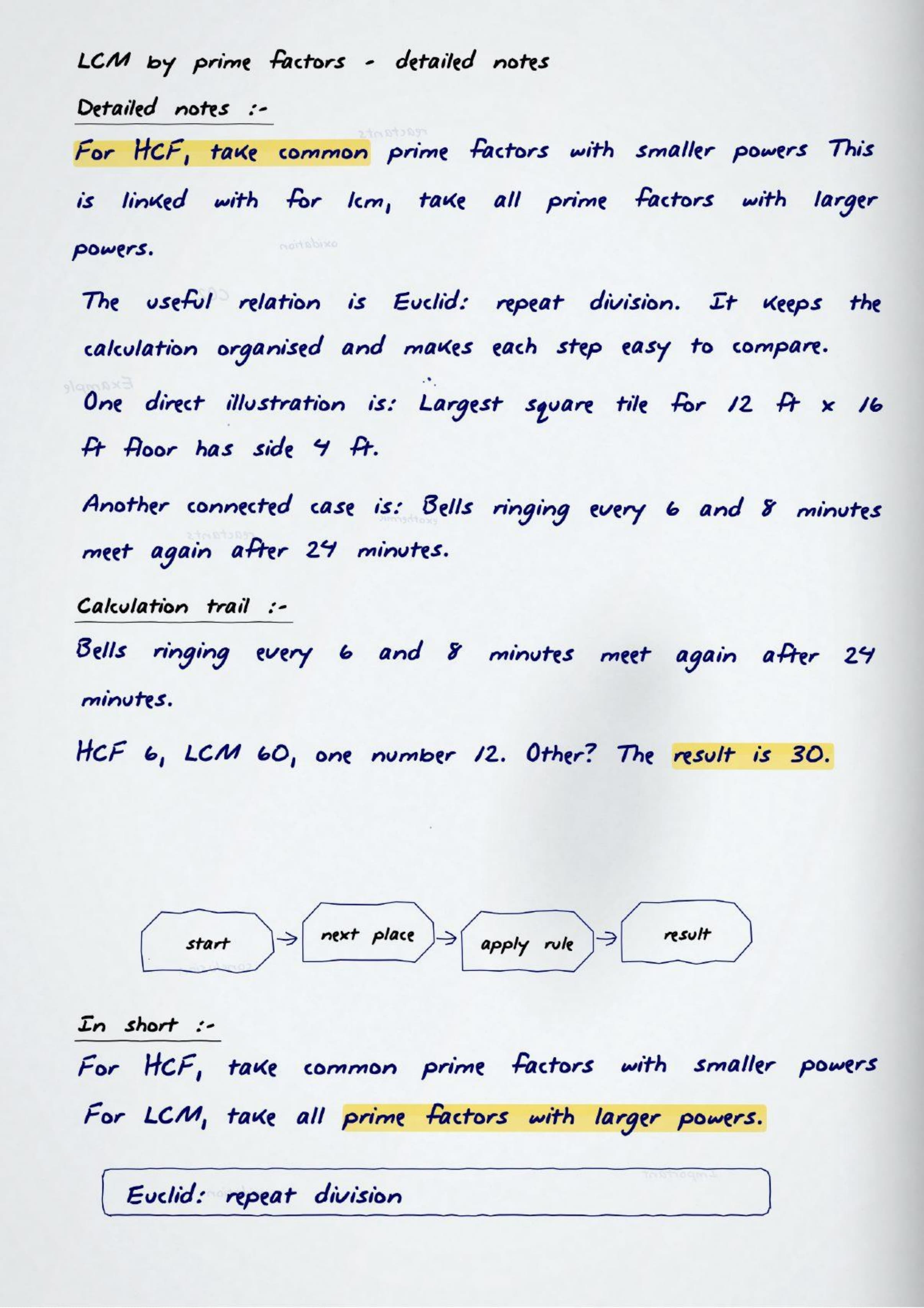
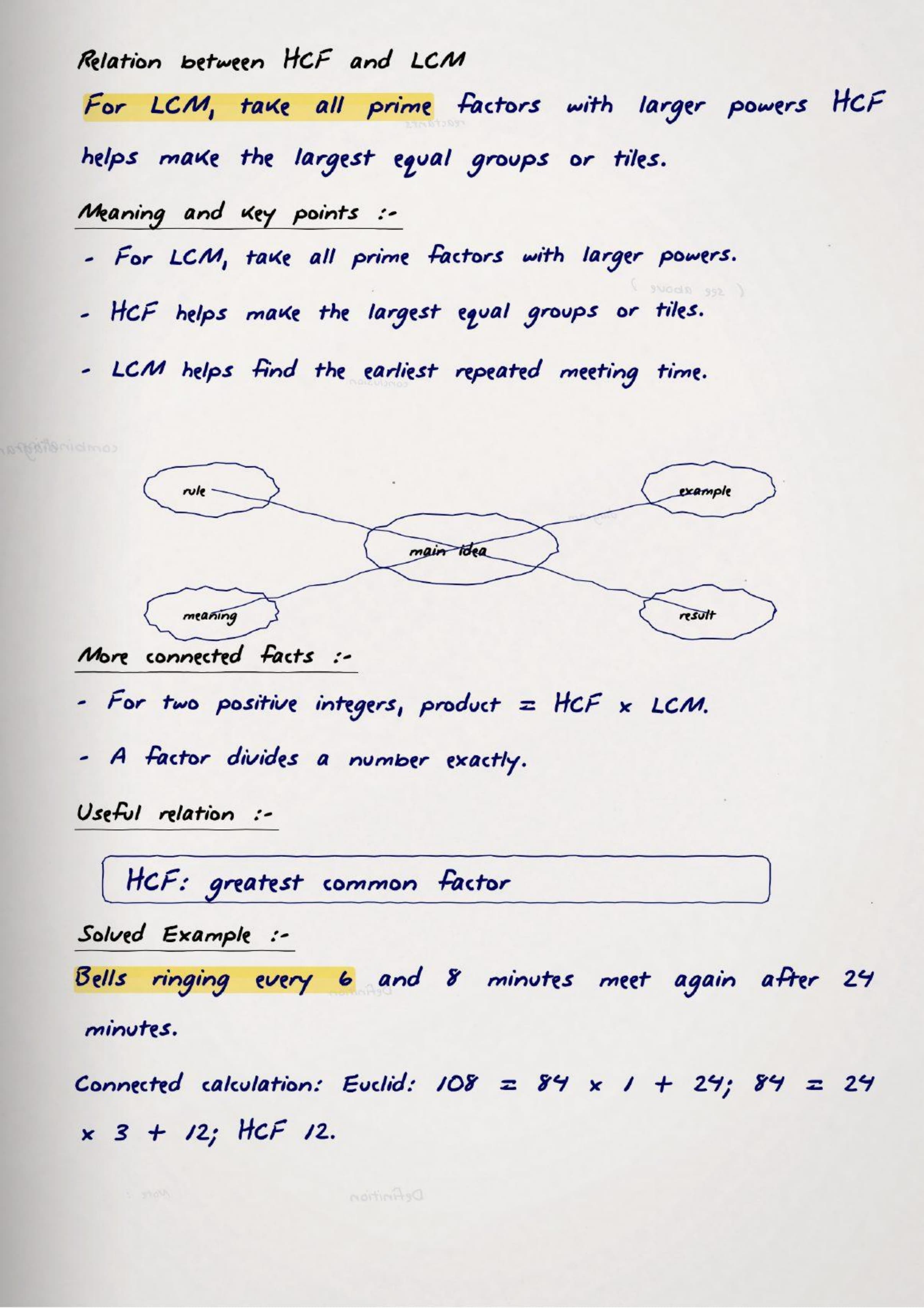
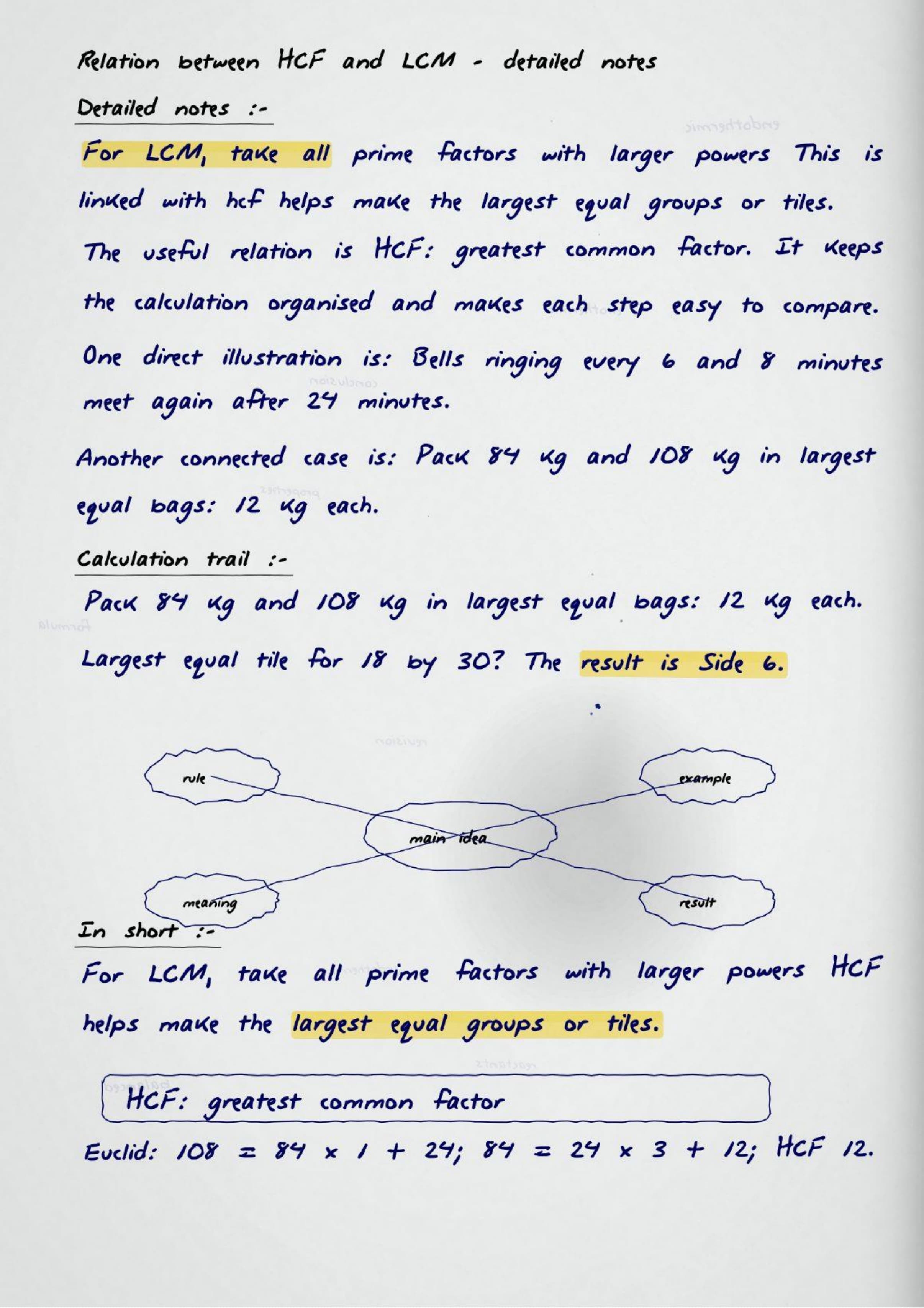
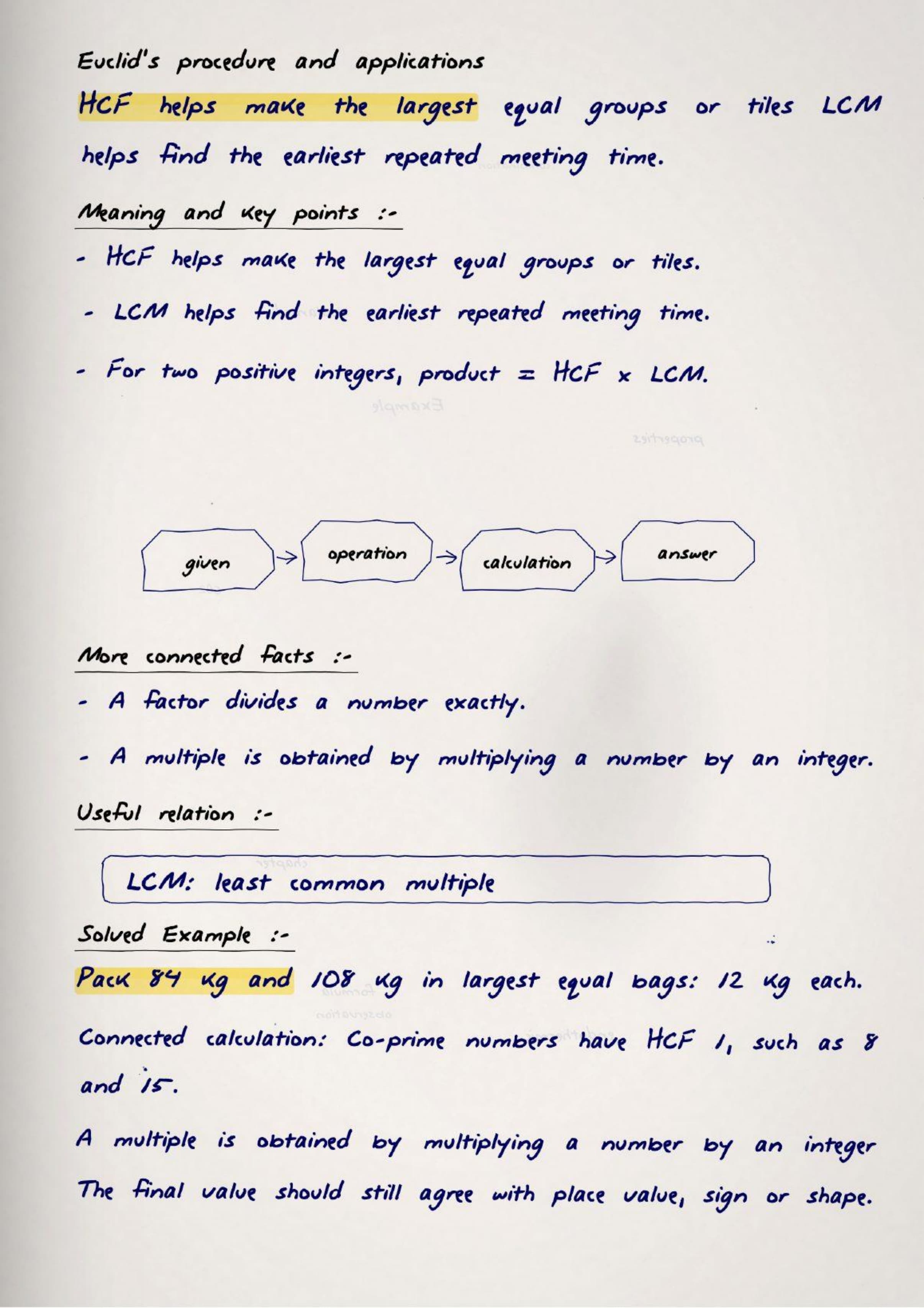
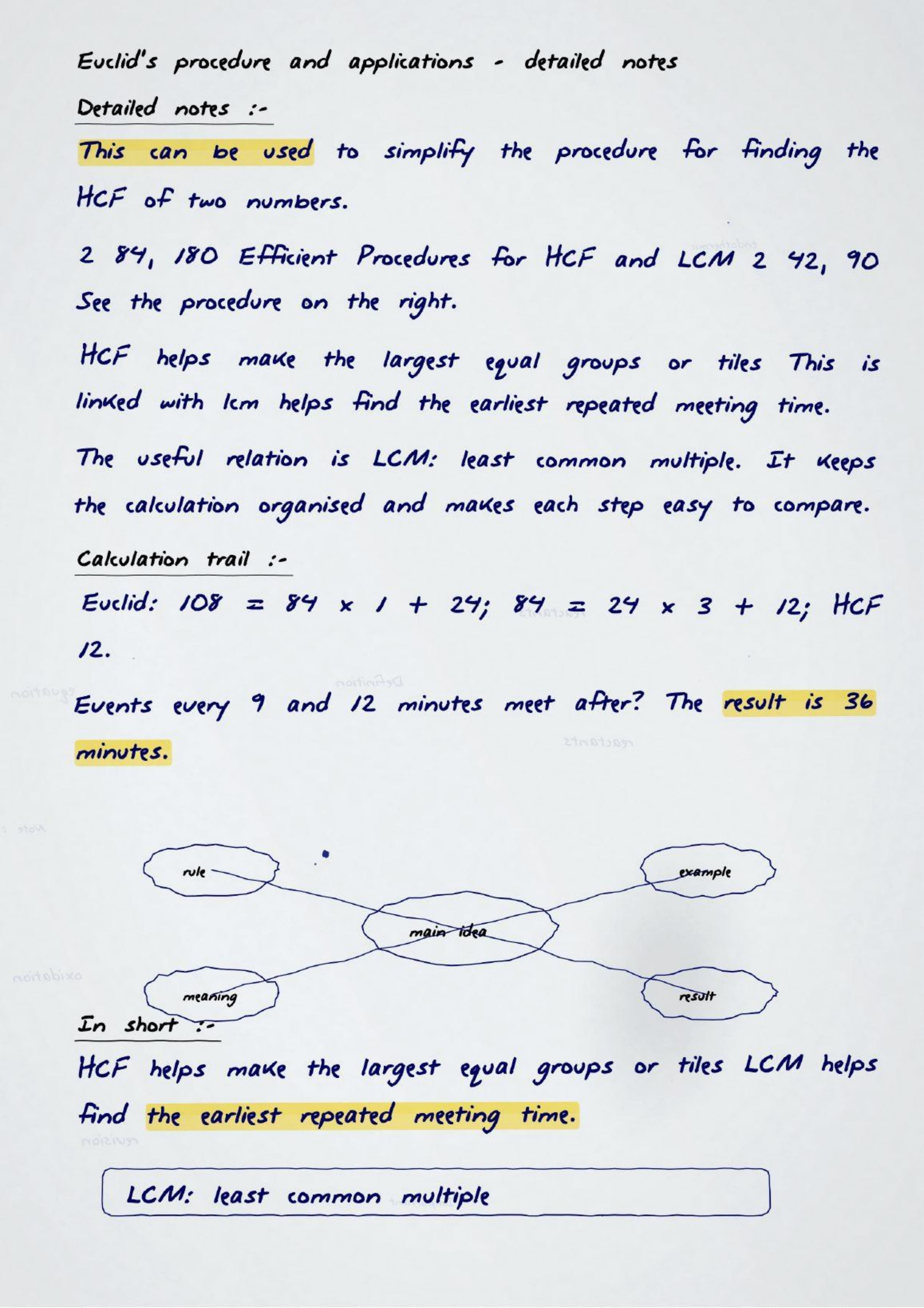
- Both methods boxed: finding HCF and LCM by listing and by prime factorisation
- What the notes cover: the greatest of all, the least but not last, and the properties that connect them
- Best for: the HCF or LCM word problem, worth the most marks in this chapter
Everything described here is in the class 7 maths handwritten notes PDF for Finding Common Ground, linked below.
These handwritten notes are written by Maths teachers, mapped to the 2026-27 NCERT Ganita Prakash book, and checked against Class 7 school question papers.
Section-by-Section Map of the Finding Common Ground Notes
Sameeksha wants to tile a 12 foot by 16 foot room with the largest possible square tiles. That question is exactly what an HCF is for.
- The greatest of all: highest common factor
- Finding HCF by listing factors
- Finding HCF by prime factorisation
- Least, but not last: lowest common multiple
- Finding LCM by listing multiples
- Finding LCM by prime factorisation
- Patterns and properties linking HCF and LCM
- Deciding whether a problem needs HCF or LCM
- Word problems on tiling, timing and grouping
How Collegedunia Wrote These Finding Common Ground Notes
Both methods are laid out side by side, so you can see which is faster for a given pair of numbers. Collegedunia checks every page of these class 7 maths handwritten notes against the textbook.
- Method comparison: listing and prime factorisation shown for the same numbers
- Factor trees: each prime factorisation drawn as a tree
- Which-one guide: the clue words that point to HCF or to LCM
- Colour-coded sub-headings: sub-topics in red so HCF and LCM stay separate
How CBSE Class 7 Maths Splits Marks Across Finding Common Ground
Word problems carry the marks, and choosing correctly between HCF and LCM is the skill being tested.
| Sub-topic | Weightage | How often asked |
|---|---|---|
| Word problems using HCF or LCM | High | asked often |
| Finding HCF by prime factorisation | High | asked often |
| Finding LCM by prime factorisation | High | asked often |
| Choosing between HCF and LCM | Medium | asked sometimes |
| Listing factors and multiples | Medium | asked sometimes |
| Properties linking HCF and LCM | Low | asked rarely |
The Finding Common Ground Vocabulary CBSE Class 7 Maths Expects
The words factor and multiple are opposites, and mixing them up is costly.
| Term / Idea | What it means |
|---|---|
| Factor | a number that divides another number exactly |
| Multiple | the result of multiplying a number by a whole number |
| Common factor | a factor shared by two or more numbers |
| Common multiple | a multiple shared by two or more numbers |
| HCF | the highest common factor, the largest number dividing all of them |
| LCM | the lowest common multiple, the smallest number all of them divide into |
| Prime factorisation | writing a number as a product of prime numbers |
Finding Common Ground Practice Questions with Answers
Five questions on factors and multiples. Tap to check.
What is the HCF of 12 and 16?
(a) 2 (b) 4 (c) 8 (d) 48
Answer: (b) 4, the largest number dividing both
What is the LCM of 4 and 6?
(a) 2 (b) 10 (c) 12 (d) 24
Answer: (c) 12, the smallest number both divide into
Sameeksha wants the largest square tile for a 12 by 16 foot room. She needs the
(a) LCM (b) HCF (c) sum (d) product
Answer: (b) HCF, which gives a 4 foot tile
Two bells ring every 6 and 8 minutes. They ring together again after
(a) 2 minutes (b) 14 minutes (c) 24 minutes (d) 48 minutes
Answer: (c) 24 minutes, which is the LCM
A factor of a number is always
(a) bigger than the number (b) equal to or smaller than the number (c) a prime (d) even
Answer: (b) equal to or smaller than the number
Why Finding Common Ground Matters Beyond Class 7
This chapter is examined through word problems, and the marks go to reading the problem correctly rather than to the arithmetic.
- A word problem on HCF or LCM is set in every test
- Choosing the wrong one loses the whole answer, not part of it
- Prime factorisation is asked as a method question
- The same ideas return in Class 8 and Class 9
One-Page Recall Card for Finding Common Ground
Read this card before the word problems.
- Factor divides the number; multiple is built from the number
- HCF is the largest number that divides both
- LCM is the smallest number both divide into
- Largest equal pieces means HCF
- Events meeting again means LCM
What the Finding Common Ground Notes Draw Out for You
Factor trees and Venn-style overlaps make this chapter much easier to see.
| Figure drawn by hand | What it shows |
|---|---|
| Tiling sketch | the 12 by 16 room covered with 4 foot square tiles |
| Factor tree | a number broken down to its primes step by step |
| Common factor overlap | two factor lists with the shared ones circled |
| Multiple ladder | the multiples of two numbers listed until they meet |
| Which-one guide | clue words sorted into an HCF column and an LCM column |
Fitting the Finding Common Ground Notes Into Your Revision Week
Read the word problem twice and decide HCF or LCM before you calculate anything. Treat the class 7 maths handwritten notes as a revision tool, not as a first-time textbook.
- Find the HCF and LCM of five pairs by prime factorisation
- Draw a factor tree for each number you use
- Sort ten word problems into HCF problems and LCM problems
- Before the test, revise the which-one guide and the method comparison
Pair the Finding Common Ground Notes With These
Use the notes with the solved exercises and the Ganita Prakash chapter itself.
Class 7 Maths Handwritten Notes Chapter List
The class 7 maths handwritten notes for all chapters are listed below. Ganita Prakash Part 1 has eight chapters and Part 2 has seven.
| Chapter | Resource |
|---|---|
| Part 1 Chapter 1 | Large Numbers Around Us Handwritten Notes |
| Part 1 Chapter 2 | Arithmetic Expressions Handwritten Notes |
| Part 1 Chapter 3 | A Peek Beyond the Point Handwritten Notes |
| Part 1 Chapter 4 | Expressions using Letter-Numbers Handwritten Notes |
| Part 1 Chapter 5 | Parallel and Intersecting Lines Handwritten Notes |
| Part 1 Chapter 6 | Number Play Handwritten Notes |
| Part 1 Chapter 7 | A Tale of Three Intersecting Lines Handwritten Notes |
| Part 1 Chapter 8 | Working with Fractions Handwritten Notes |
| Part 2 Chapter 1 | Geometric Twins Handwritten Notes |
| Part 2 Chapter 2 | Operations with Integers Handwritten Notes |
| Part 2 Chapter 3 | Finding Common Ground Handwritten Notes |
| Part 2 Chapter 4 | Another Peek Beyond the Point Handwritten Notes |
| Part 2 Chapter 5 | Connecting the Dots... Handwritten Notes |
| Part 2 Chapter 6 | Constructions and Tilings Handwritten Notes |
| Part 2 Chapter 7 | Finding the Unknown Handwritten Notes |
Finding Common Ground Class 7 Maths Handwritten Notes FAQs
Ques. Where can I download the Finding Common Ground Class 7 Maths Handwritten Notes PDF?
Ans. The PDF is available free on this page in both the normal and the HD version.
Ques. What is the difference between HCF and LCM?
Ans. The HCF is the largest number that divides all the given numbers exactly. The LCM is the smallest number that all the given numbers divide into exactly.
Ques. How many pages is the Part 2 Chapter 3 handwritten notes PDF?
Ans. It runs 20 pages and covers all three sections of the chapter plus a quiz.
Ques. How do I know whether a word problem needs HCF or LCM?
Ans. If the problem asks for the largest equal pieces or the biggest common size, use HCF. If it asks when events happen together again, or for the smallest quantity that fits several groups, use LCM.
Ques. What is prime factorisation?
Ans. Writing a number as a product of prime numbers, for example 12 as 2 times 2 times 3. It is the quickest route to both the HCF and the LCM.



Comments