




Class 7 Maths Part 1 Chapter 6 Number Play is the puzzle chapter of the year. These class 7 maths handwritten notes chapter 6 Number Play follow the 2026-27 NCERT and cover parity, grid explorations, the Virahanka sequence and digit puzzles.
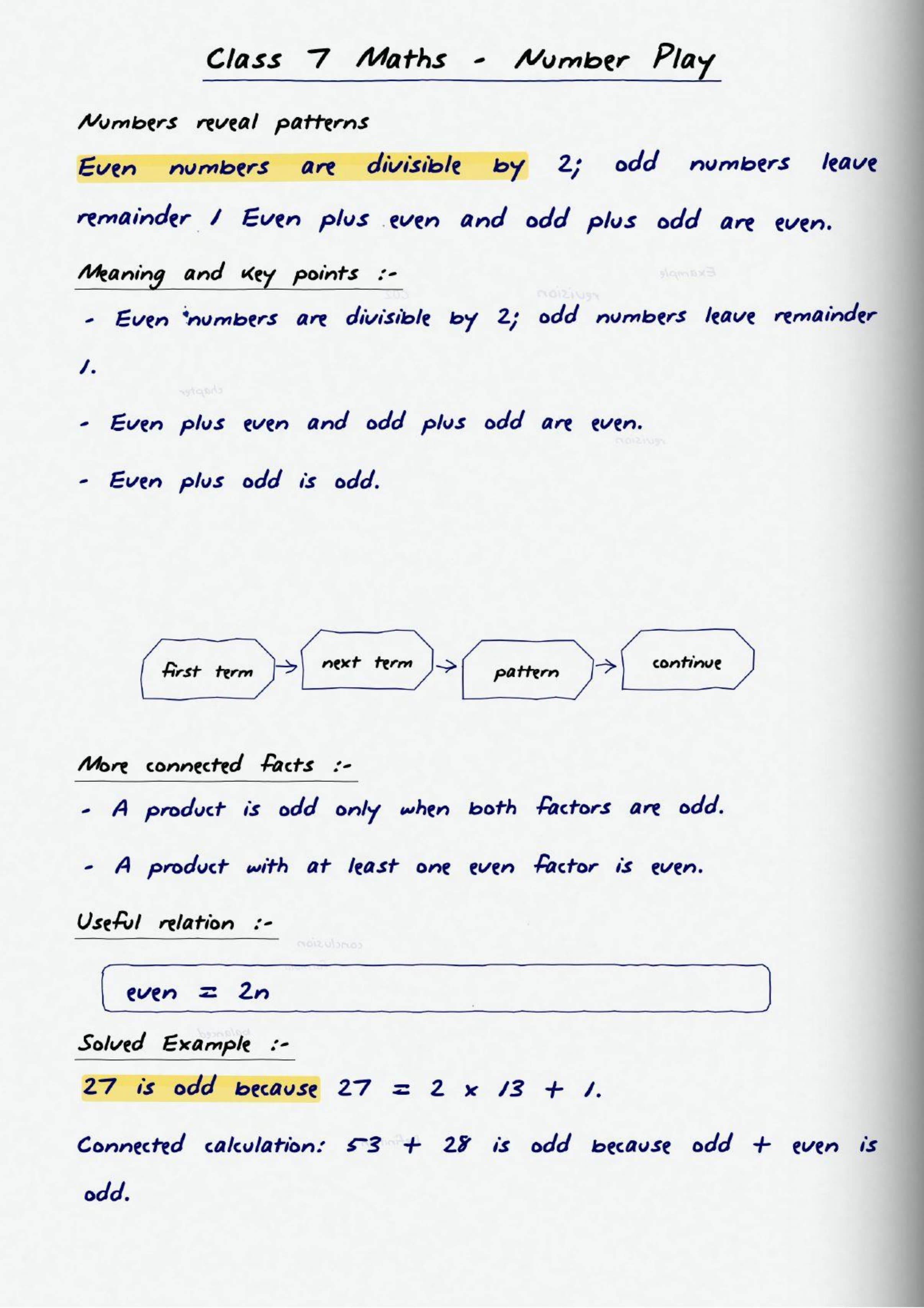
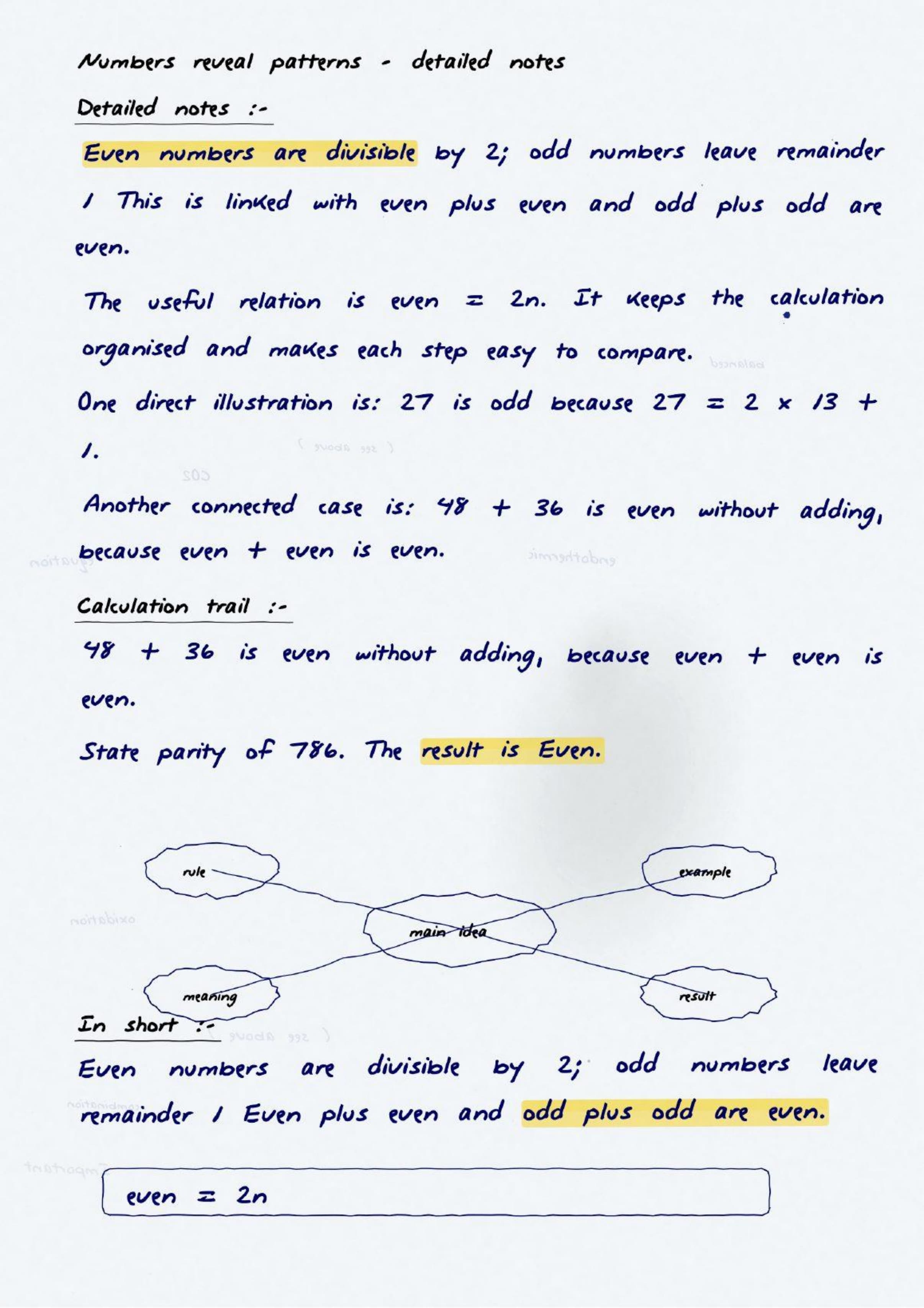
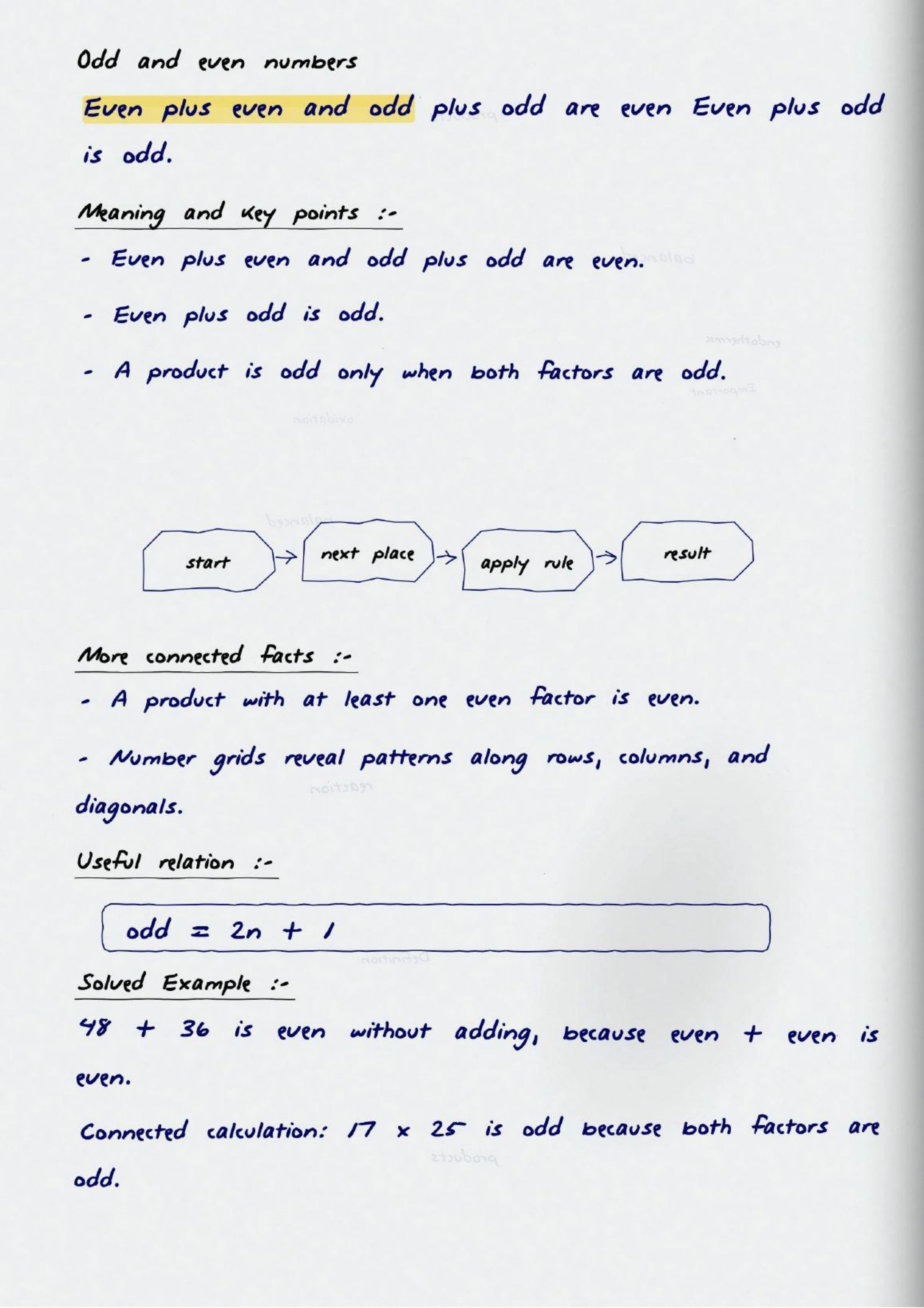
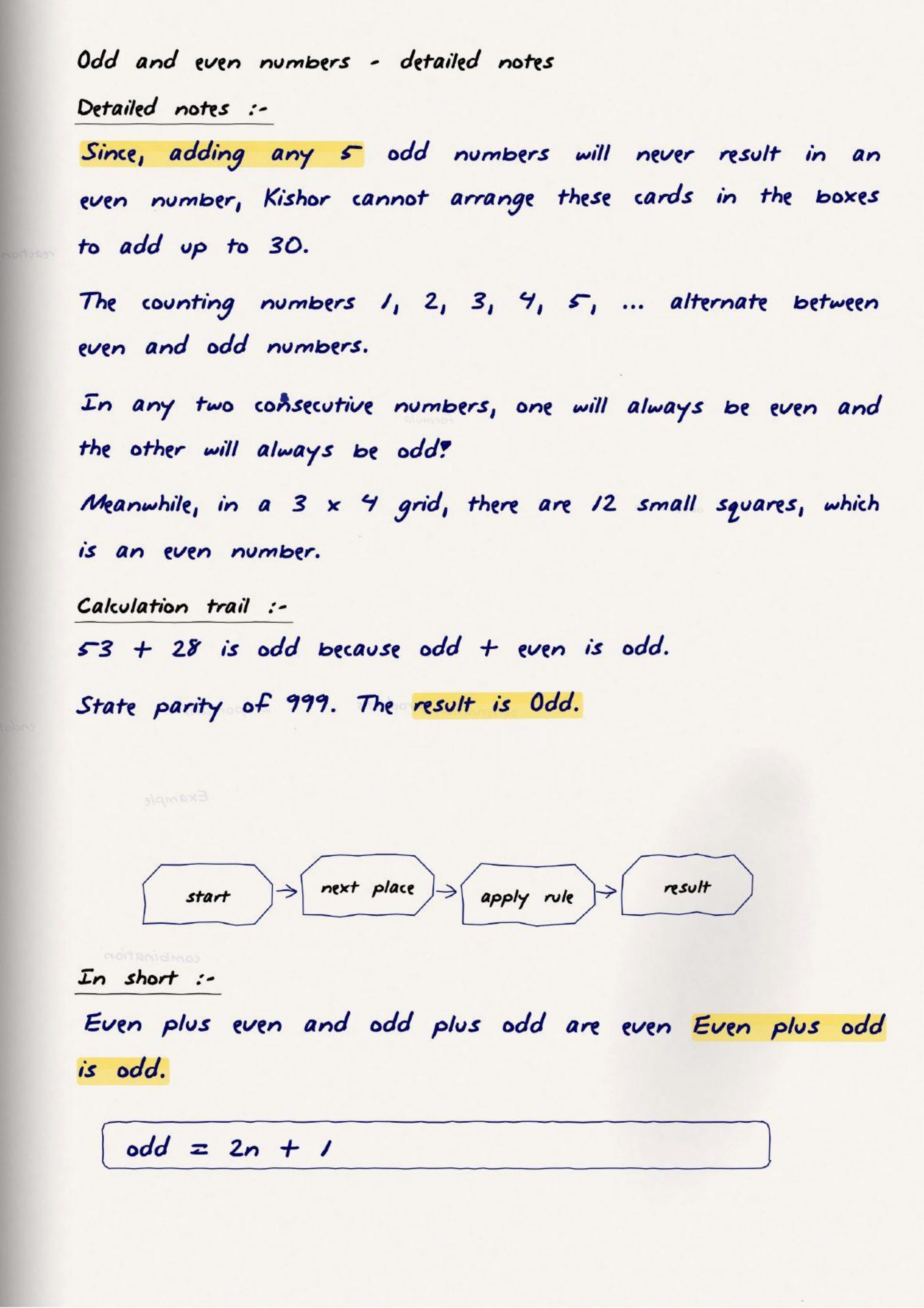
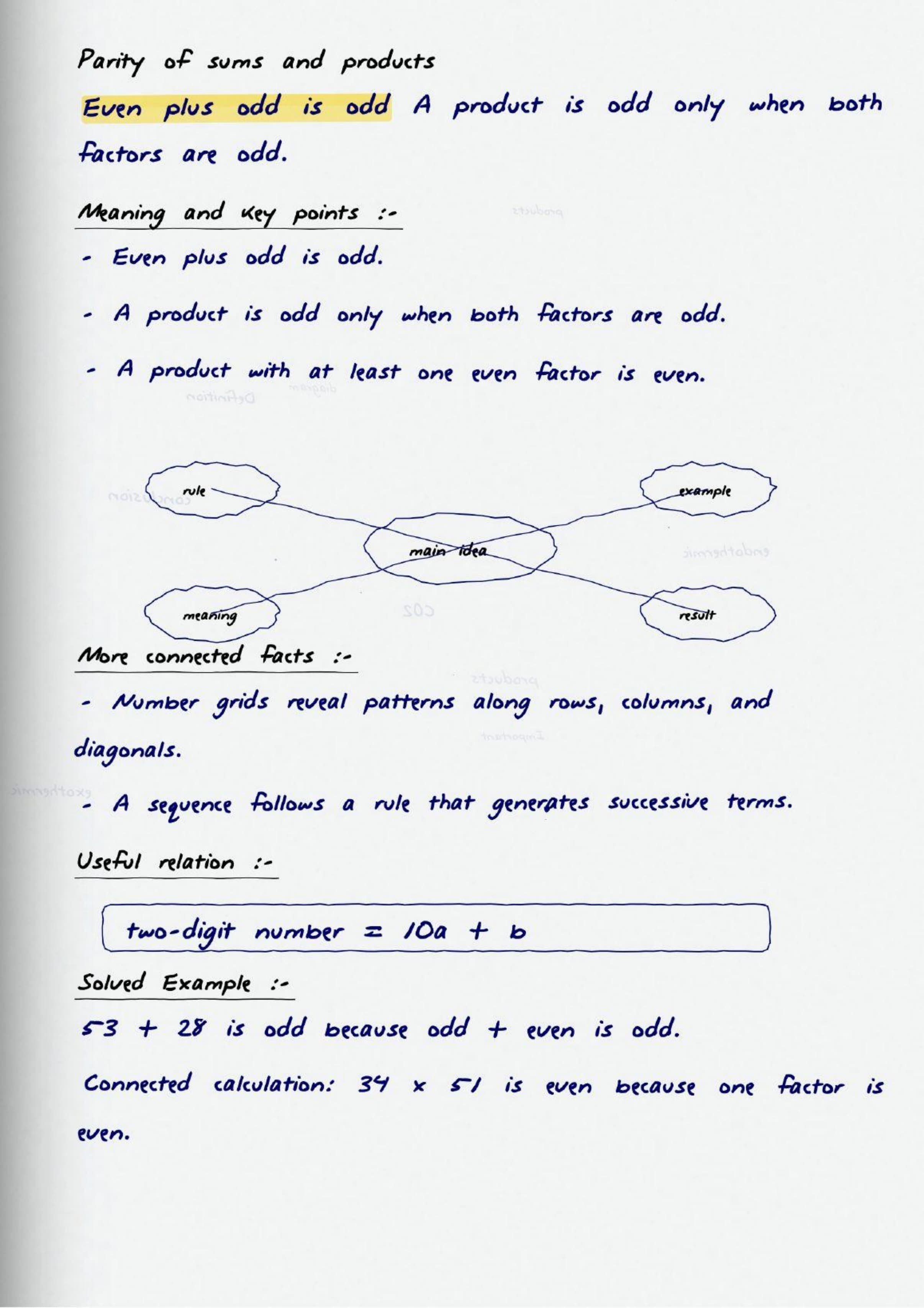
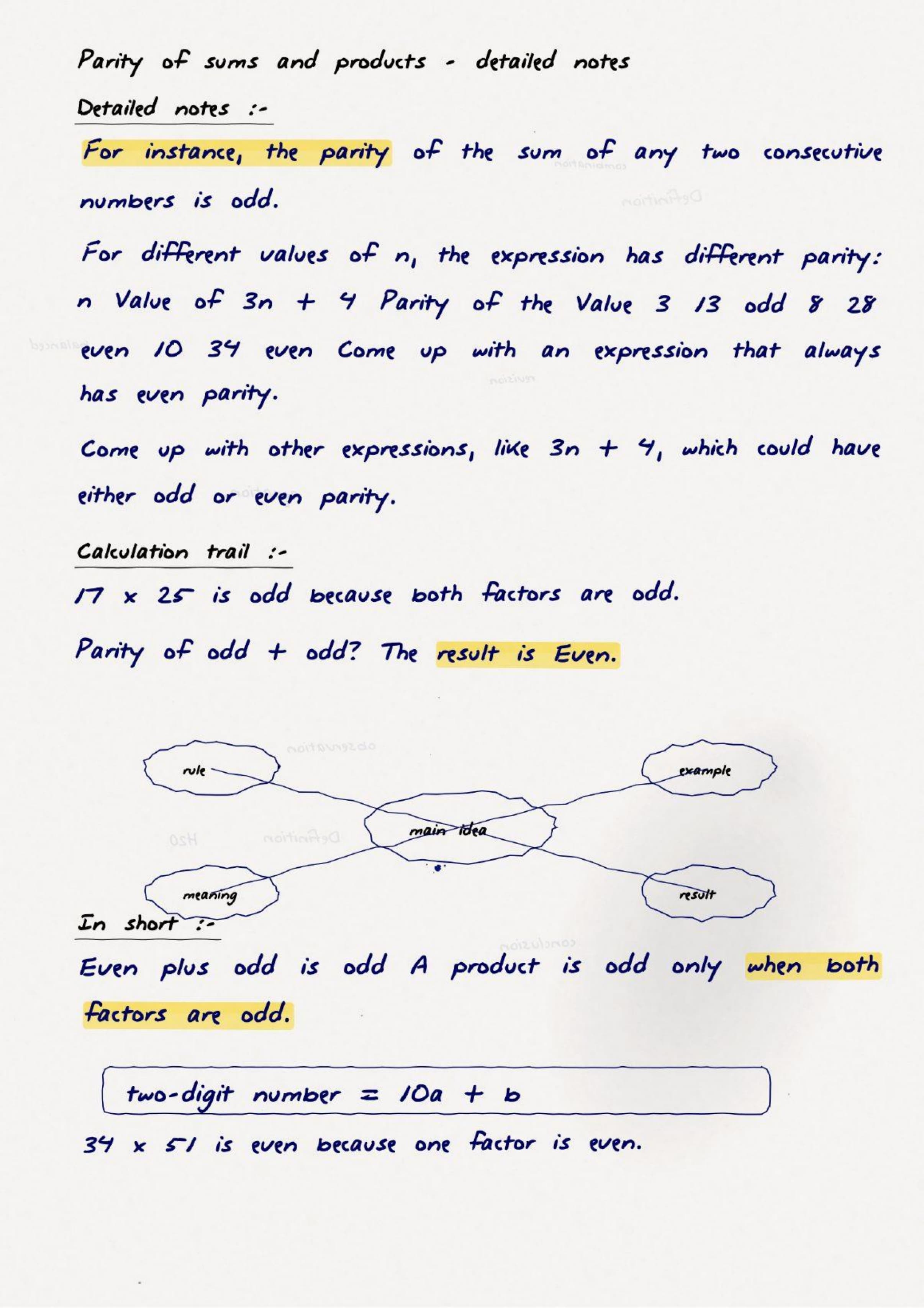
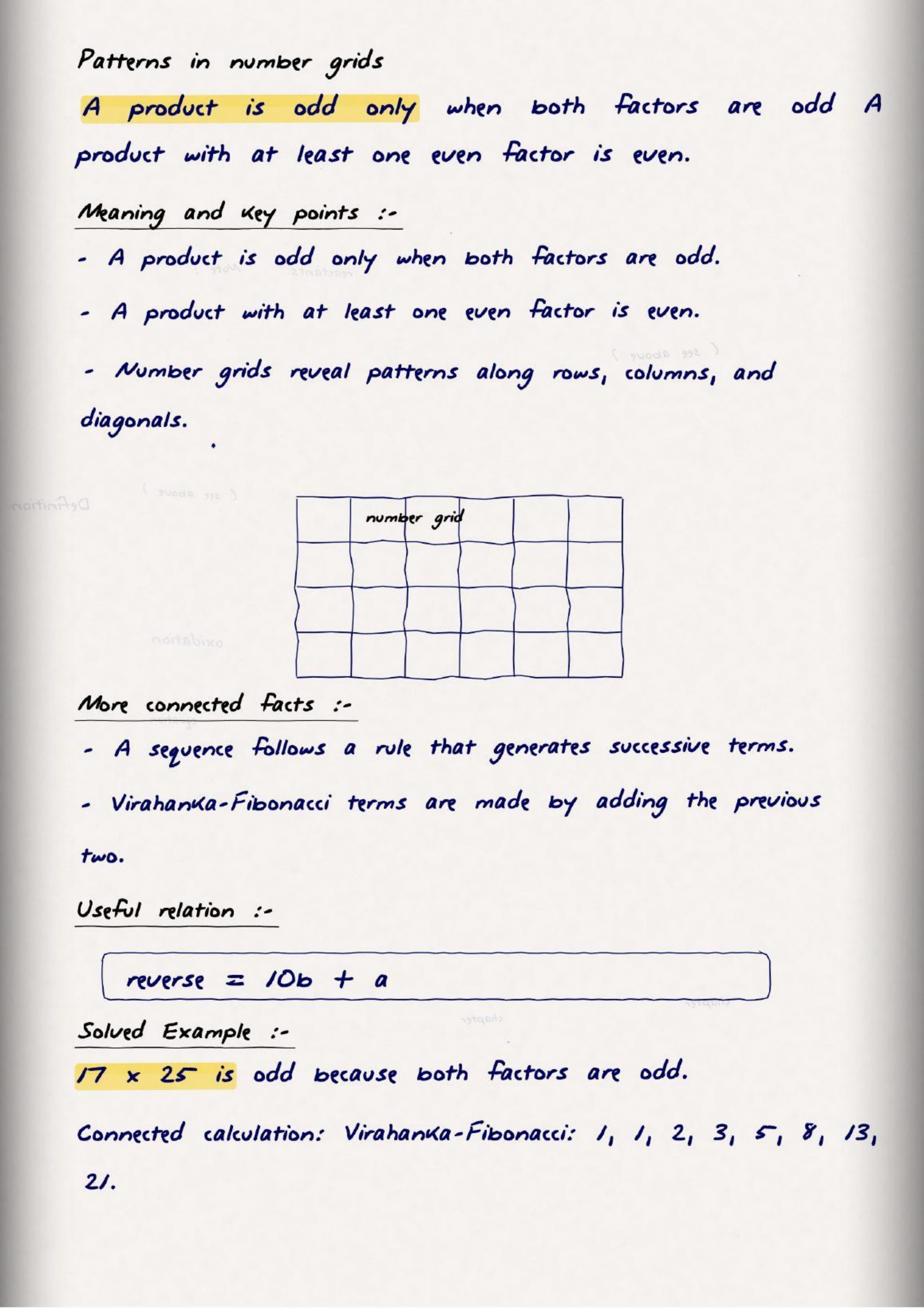
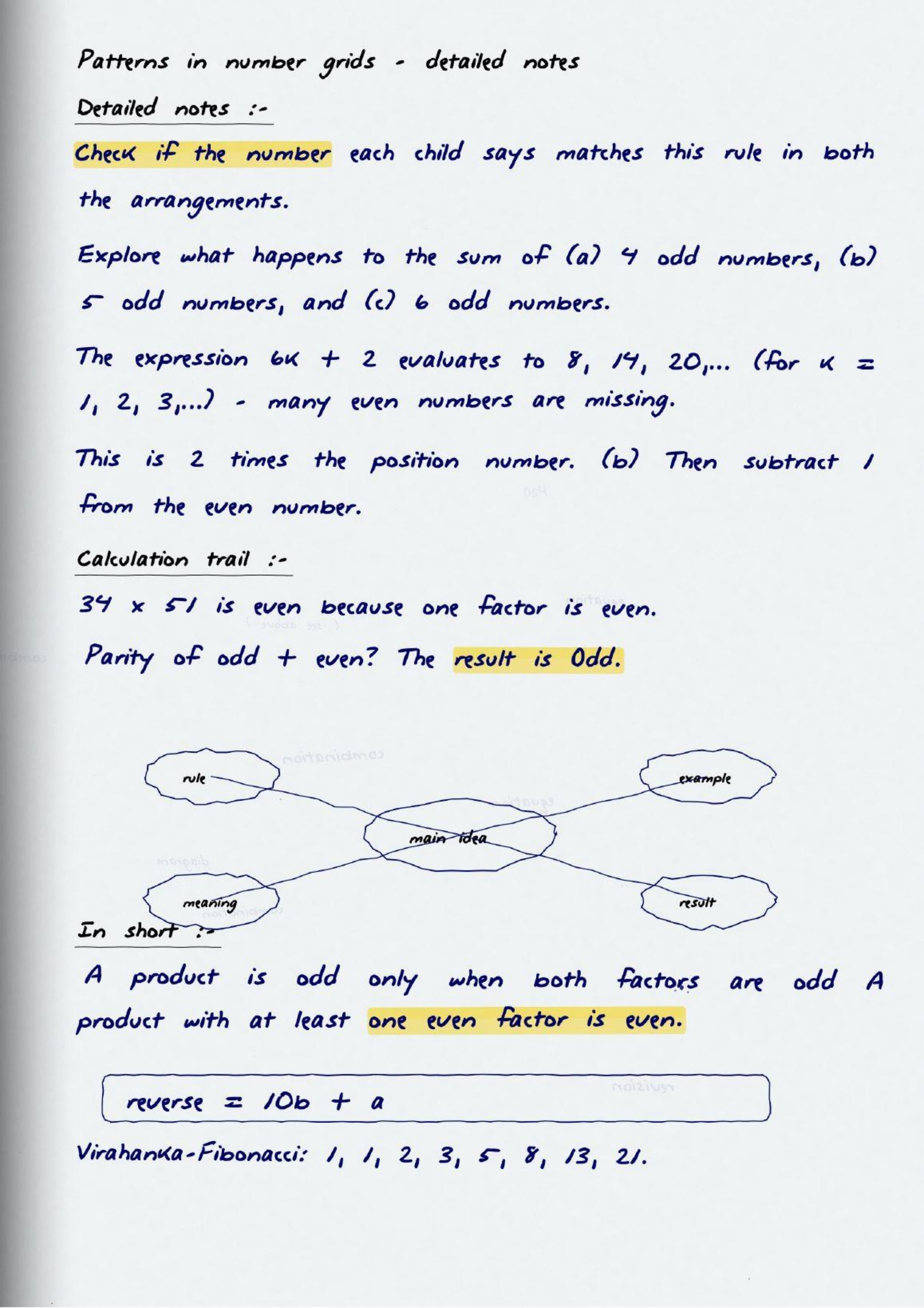
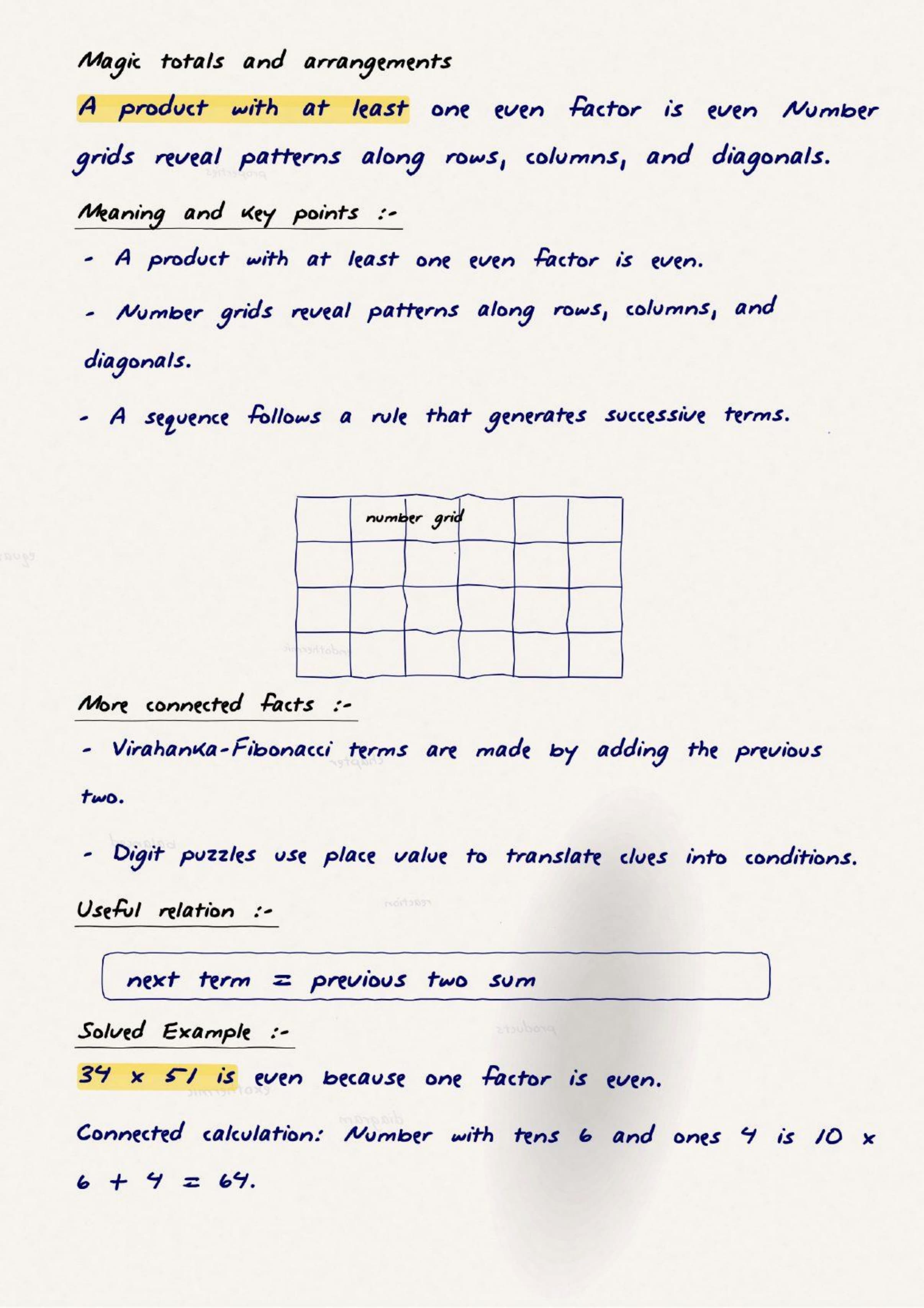
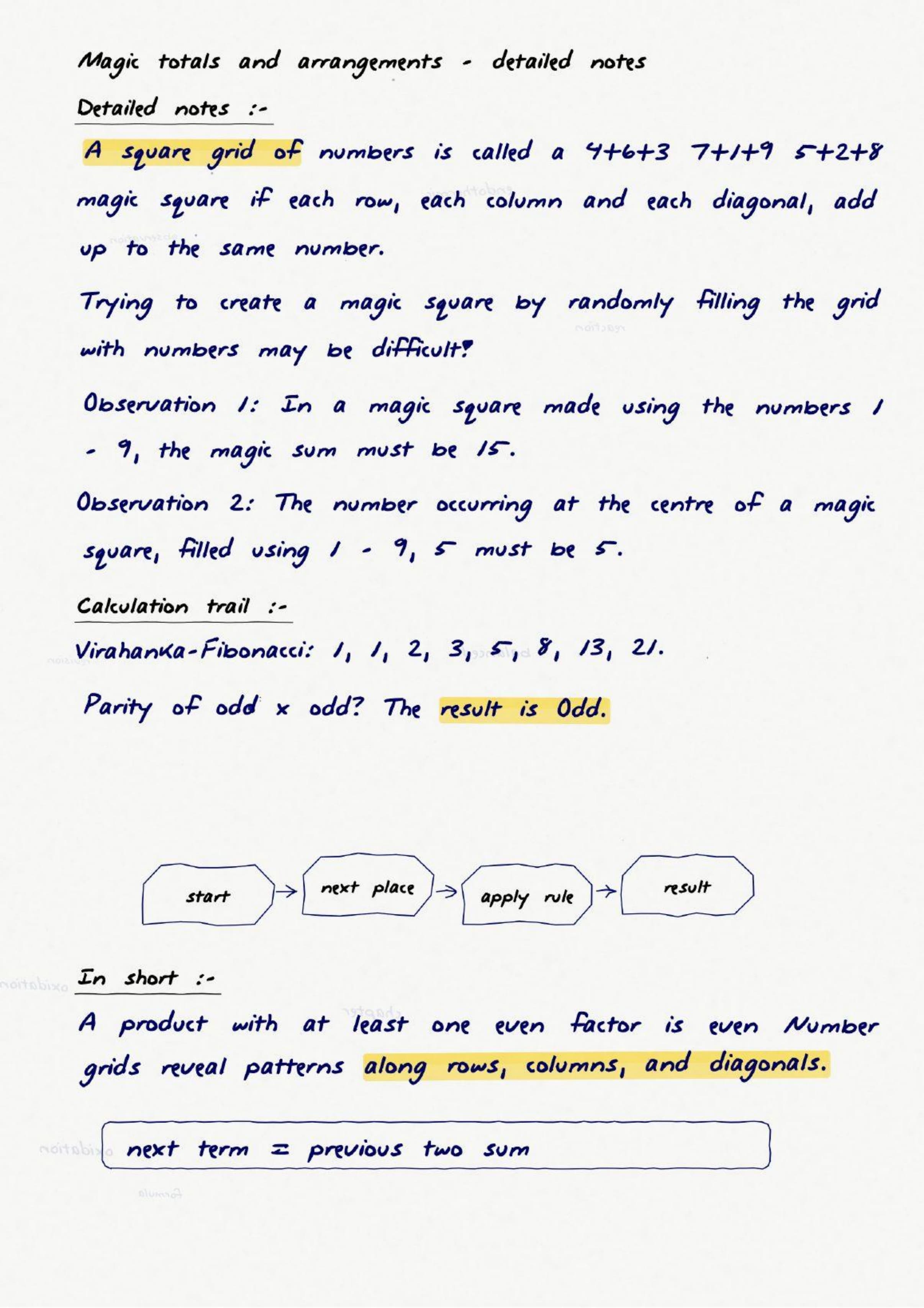
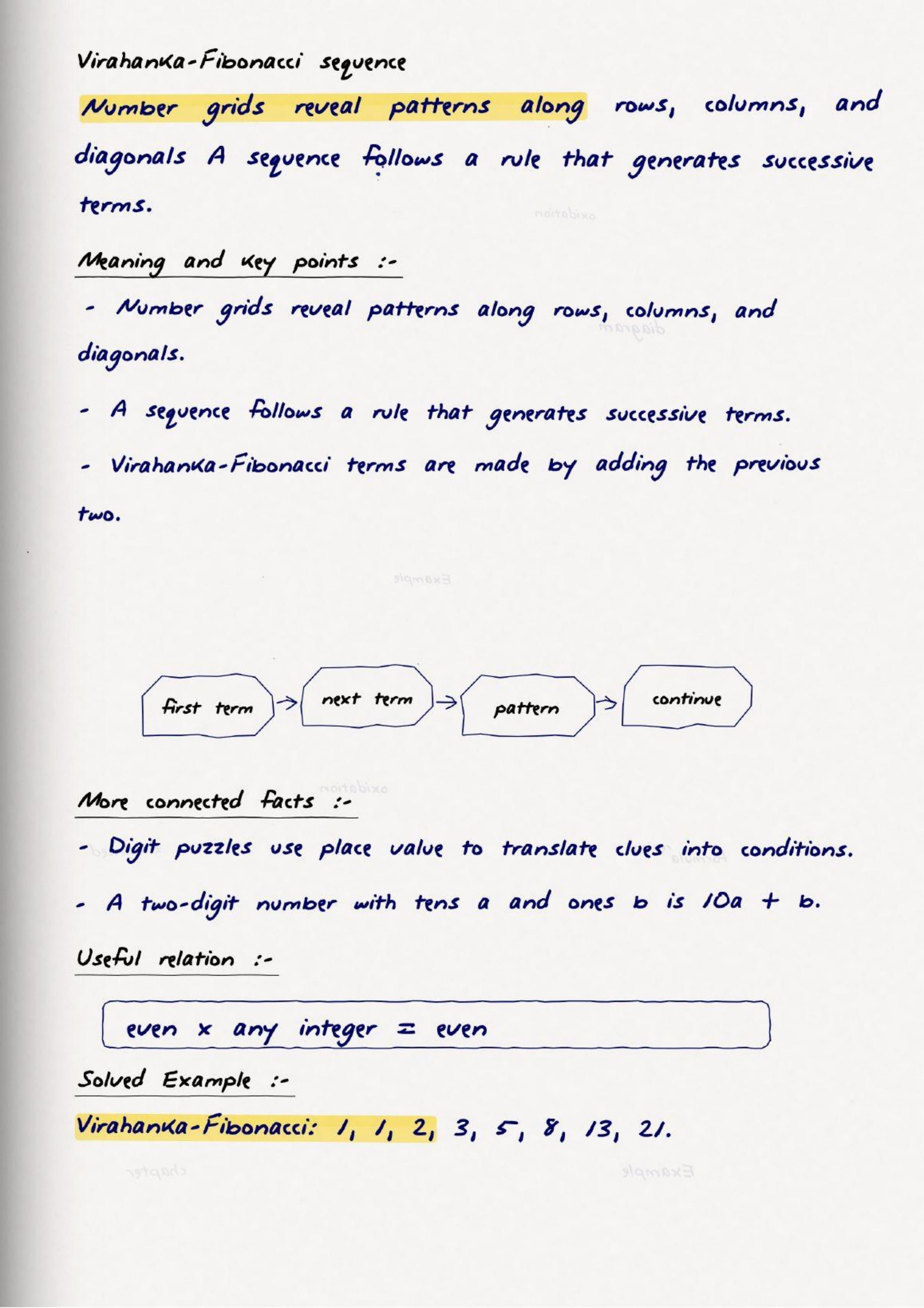
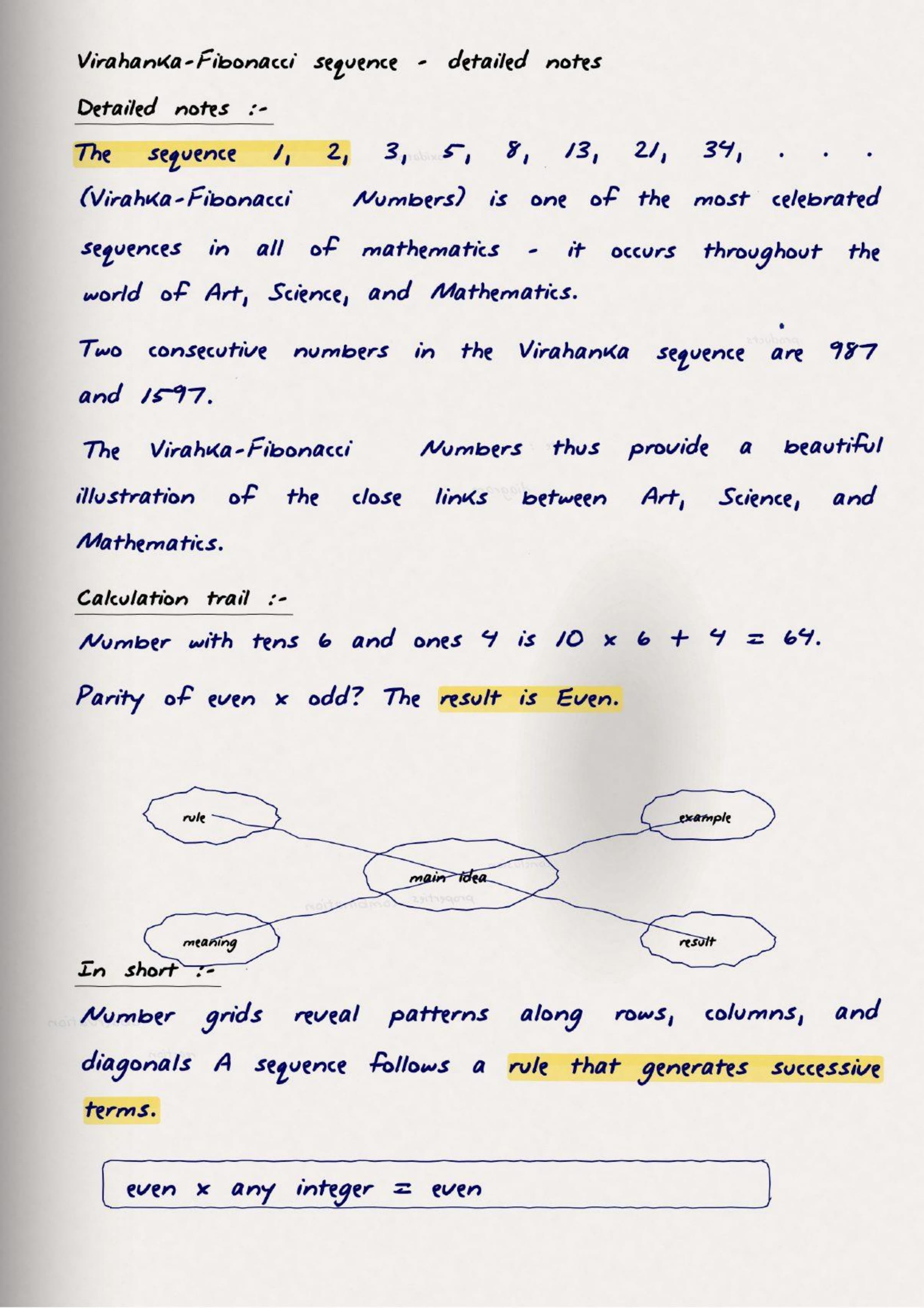
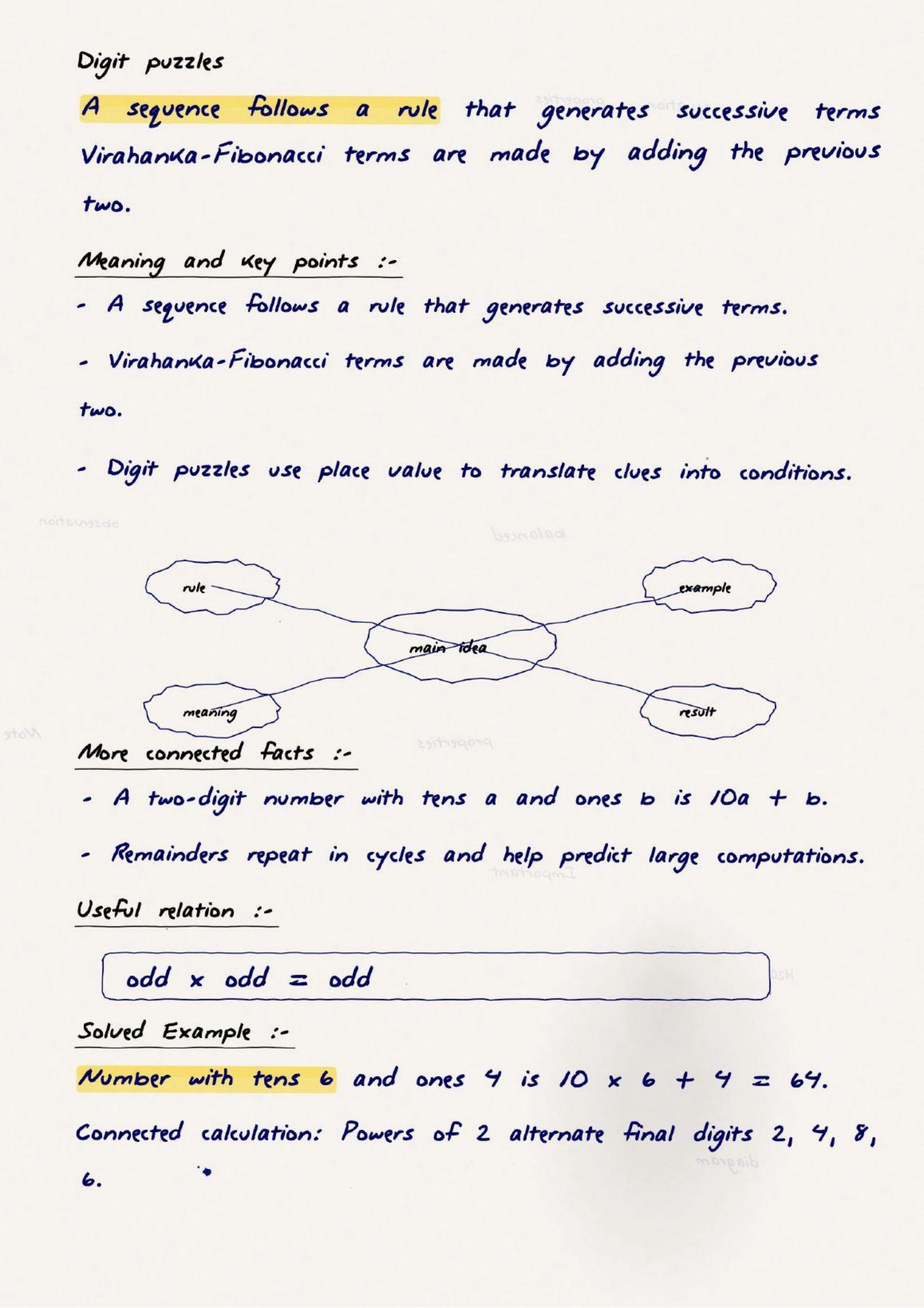
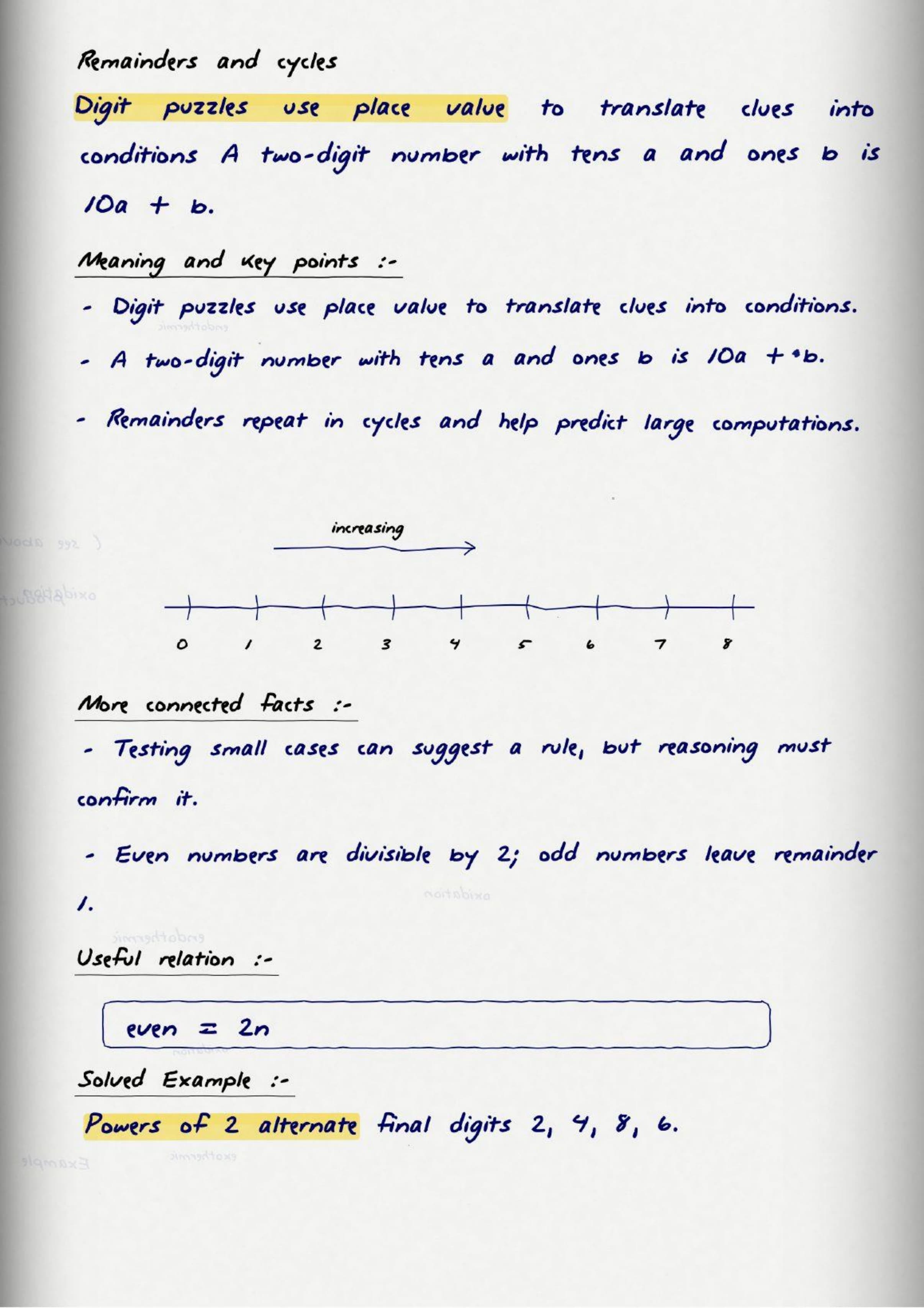
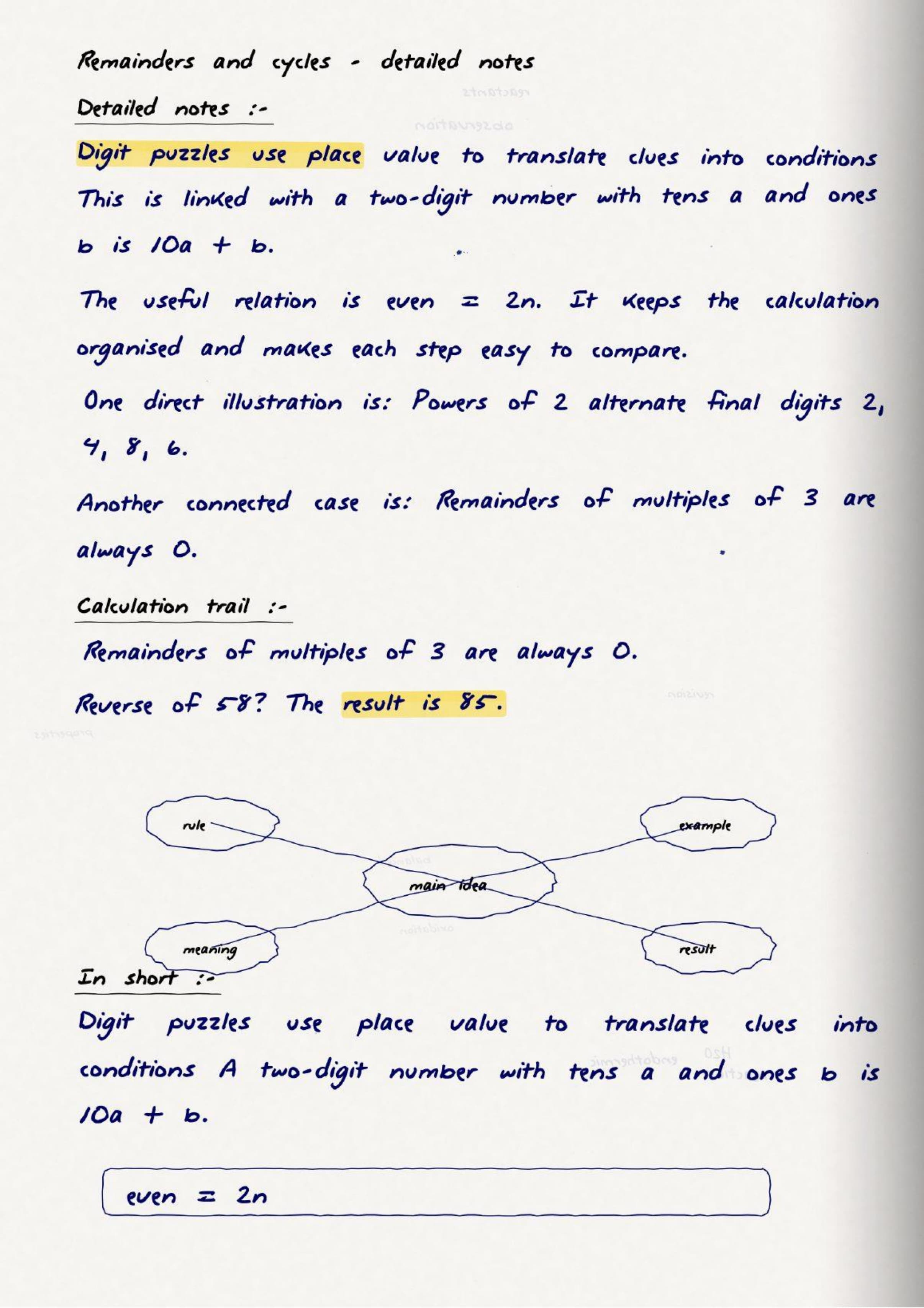
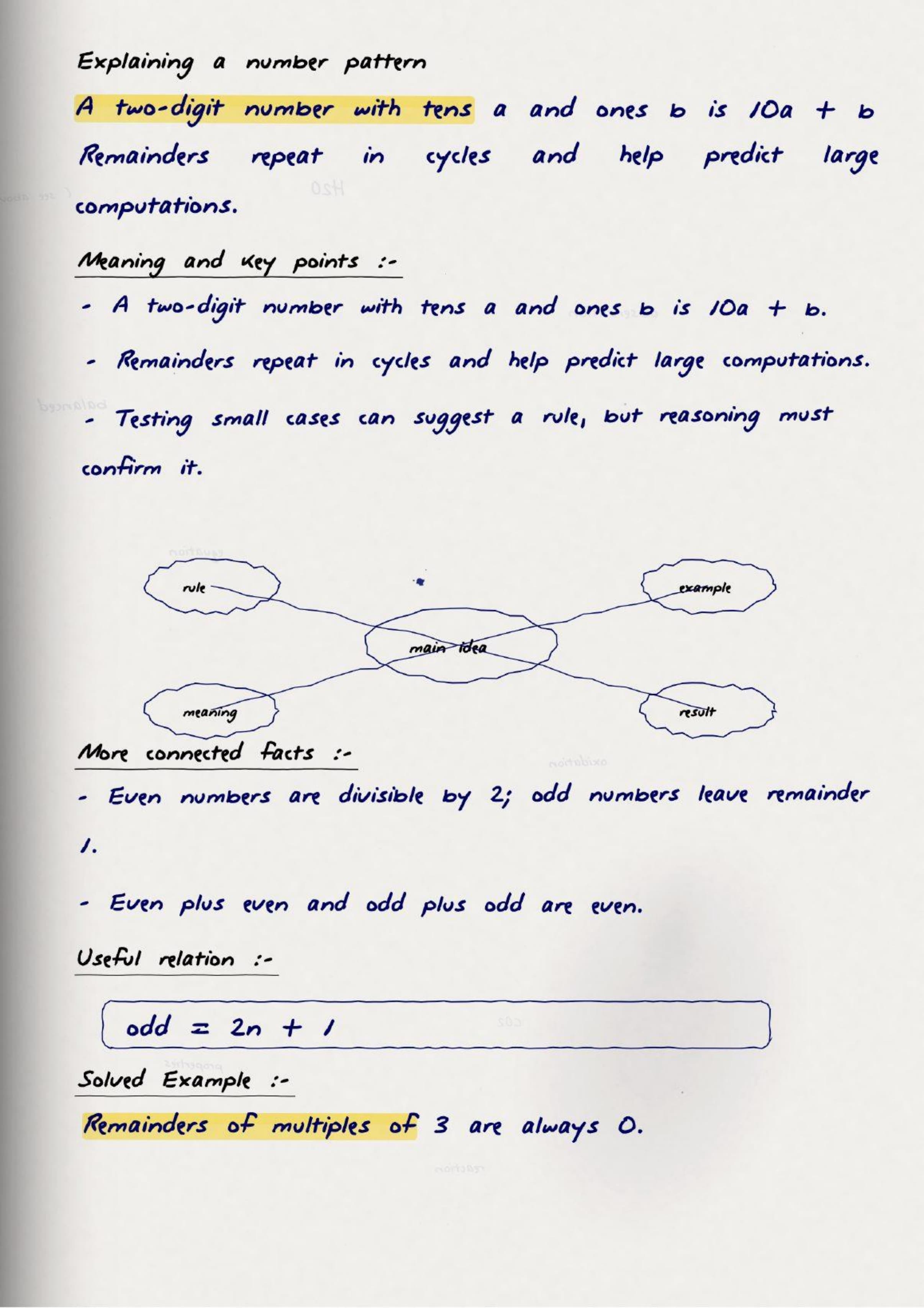
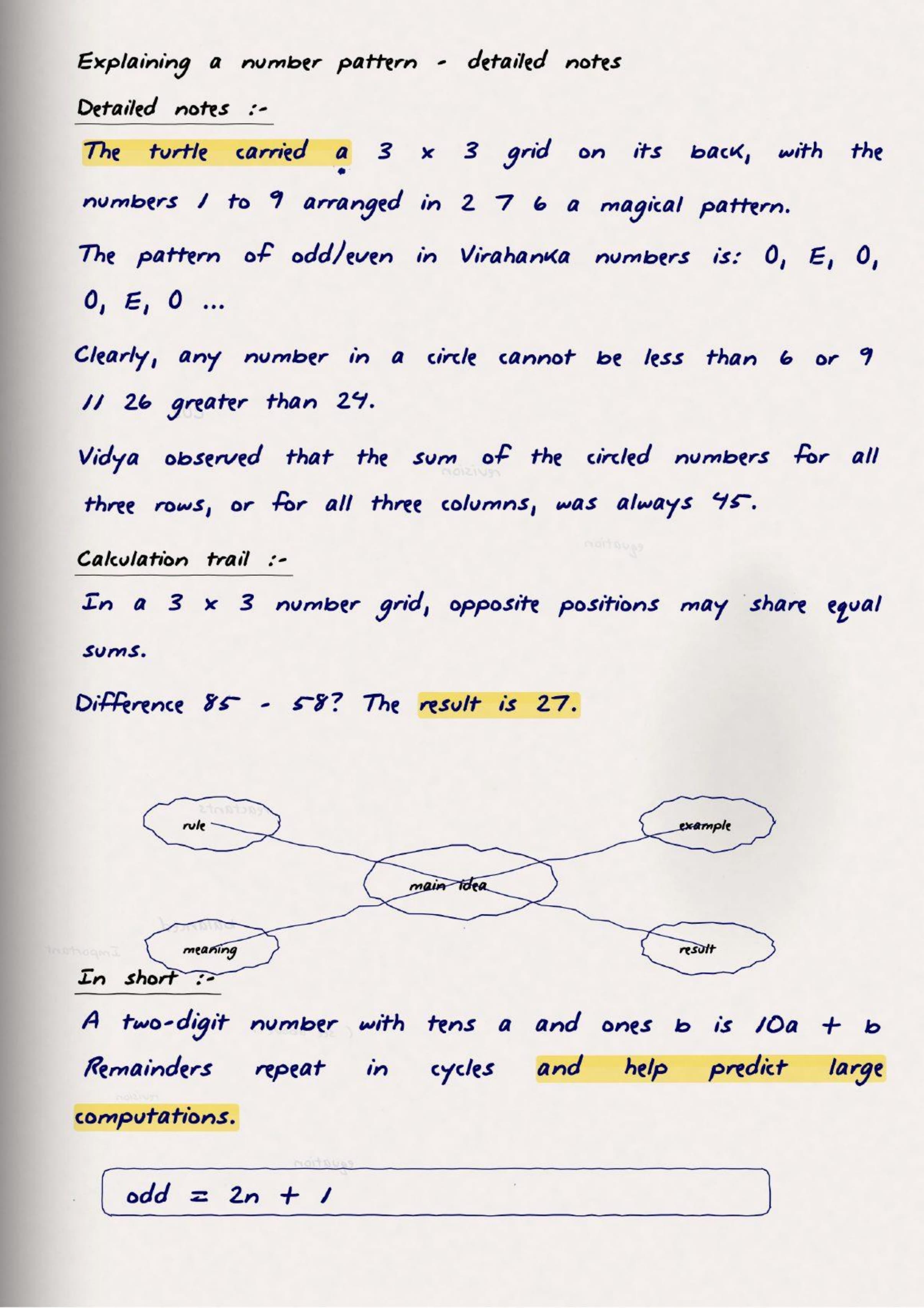
- Parity rules boxed: what happens when you add or multiply odd and even numbers
- What the notes cover: numbers that describe arrangements, parity, grid patterns, the Virahanka sequence and digit puzzles
- Best for: reasoning questions, which need a rule rather than a calculation
Everything described here is in the class 7 maths handwritten notes PDF for Number Play, linked below.
These handwritten notes are written by Maths teachers, mapped to the 2026-27 NCERT Ganita Prakash book, and checked against Class 7 school question papers.
Section-by-Section Map of the Number Play Notes
Children call out numbers based on where they stand. Working out the rule behind those numbers is how the chapter opens, and it sets the tone.
- Numbers that describe an arrangement
- Working out the rule behind a sequence of calls
- Parity: odd and even
- What happens when you add odd and even numbers
- Parity in multiplication
- Explorations in grids
- The Virahanka sequence
- How each term of the sequence is built
- Digits in disguise: digit puzzles
How Collegedunia Wrote These Number Play Notes
The parity rules are on one page as a small table, so they can be checked in seconds. Collegedunia checks every page of these class 7 maths handwritten notes against the textbook.
- Parity table: the rules for adding and multiplying odd and even numbers
- Sequence strip: the first ten Virahanka terms with the building rule marked
- Grid examples: the explorations drawn out with their patterns shaded
- Colour-coded sub-headings: sub-topics in red so each exploration is easy to find
How CBSE Class 7 Maths Splits Marks Across Number Play
Parity reasoning and the Virahanka sequence take most of the marks.
| Sub-topic | Weightage | How often asked |
|---|---|---|
| Parity of sums and products | High | asked often |
| The Virahanka sequence and its rule | High | asked often |
| Reasoning about grids | Medium | asked sometimes |
| Digit puzzles | Medium | asked sometimes |
| Numbers describing arrangements | Medium | asked sometimes |
| History of the sequence | Low | asked rarely |
The Number Play Vocabulary CBSE Class 7 Maths Expects
The vocabulary here is small but it is used precisely.
| Term / Idea | What it means |
|---|---|
| Parity | whether a number is odd or even |
| Even number | a number exactly divisible by 2 |
| Odd number | a number that leaves remainder 1 when divided by 2 |
| Sequence | a list of numbers in a definite order |
| Term | one number in a sequence |
| Virahanka sequence | a sequence where each term is the sum of the two before it |
| Pattern | a rule that a set of numbers or shapes follows |
Number Play Practice Questions with Answers
Five reasoning questions. Tap each to reveal.
Odd plus odd gives
(a) odd (b) even (c) sometimes odd (d) zero
Answer: (b) even
Odd times odd gives
(a) even (b) odd (c) zero (d) sometimes even
Answer: (b) odd
In the Virahanka sequence, each term is
(a) double the last (b) the sum of the two before it (c) one more than the last (d) a square number
Answer: (b) the sum of the two before it
Which of these is an even number?
(a) 27 (b) 41 (c) 58 (d) 93
Answer: (c) 58, since it is exactly divisible by 2
Even plus odd gives
(a) even (b) odd (c) zero (d) always a multiple of 4
Answer: (b) odd
Why Number Play Matters Beyond Class 7
Reasoning chapters look optional and are not. They train the explaining skill that later proofs depend on.
- Parity questions are set as short reasoning answers
- The Virahanka sequence rule is a direct one-mark question
- Grid explorations appear as a longer reasoning question
- Explaining why, not just what, is what earns full marks here
One-Page Recall Card for Number Play
Read this card if there is no time left for anything else.
- Odd + odd = even, even + even = even, odd + even = odd
- Odd x odd = odd; anything times an even number is even
- Virahanka sequence: each term is the sum of the two before it
- Even numbers divide exactly by 2
- In this chapter, explain the reason as well as the answer
What the Number Play Notes Draw Out for You
Patterns need to be seen, so the notes draw every exploration.
| Figure drawn by hand | What it shows |
|---|---|
| Parity table | odd and even results for addition and multiplication |
| Virahanka strip | the first ten terms with arrows showing how each is built |
| Grid exploration | the number grid with the pattern shaded |
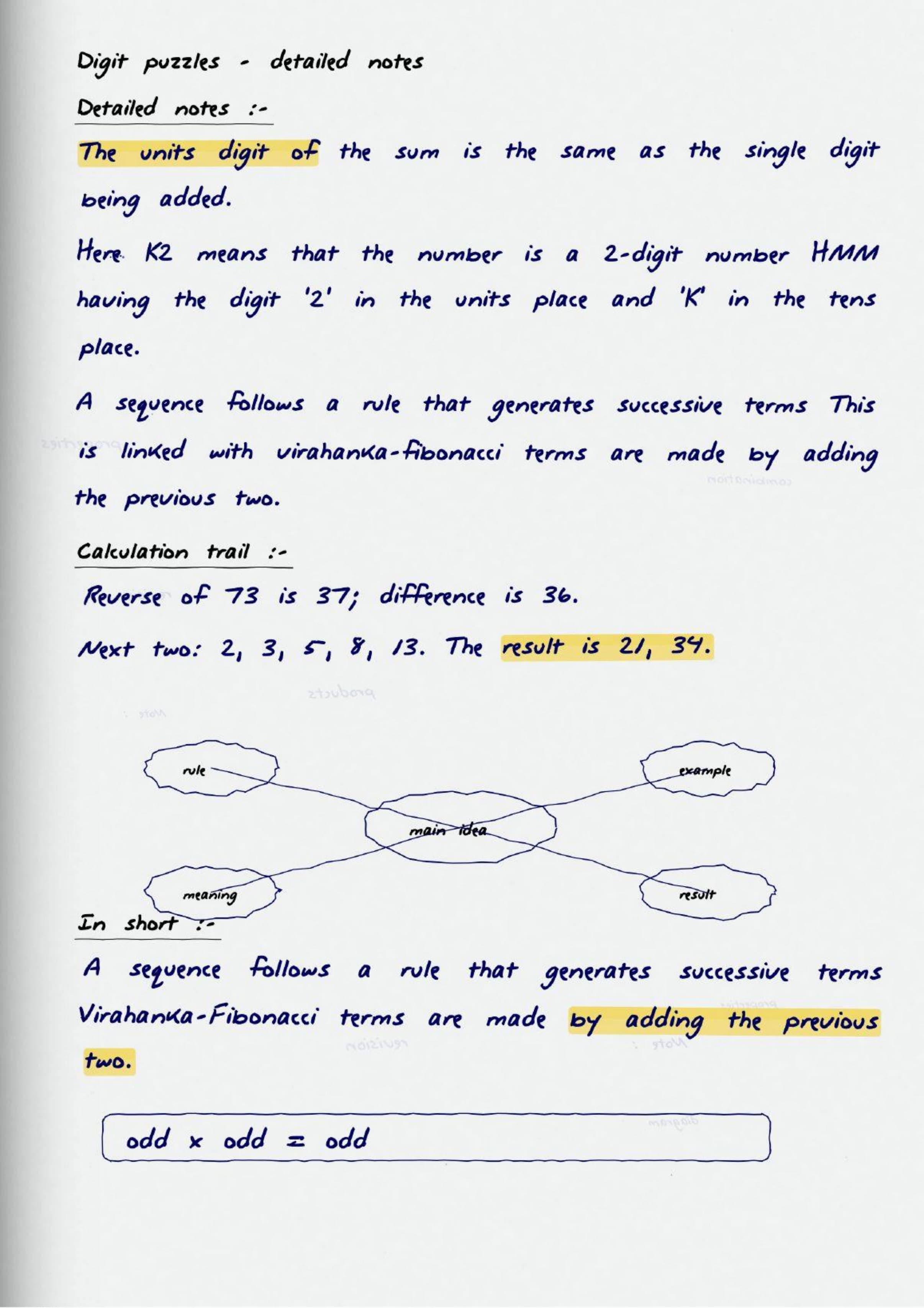
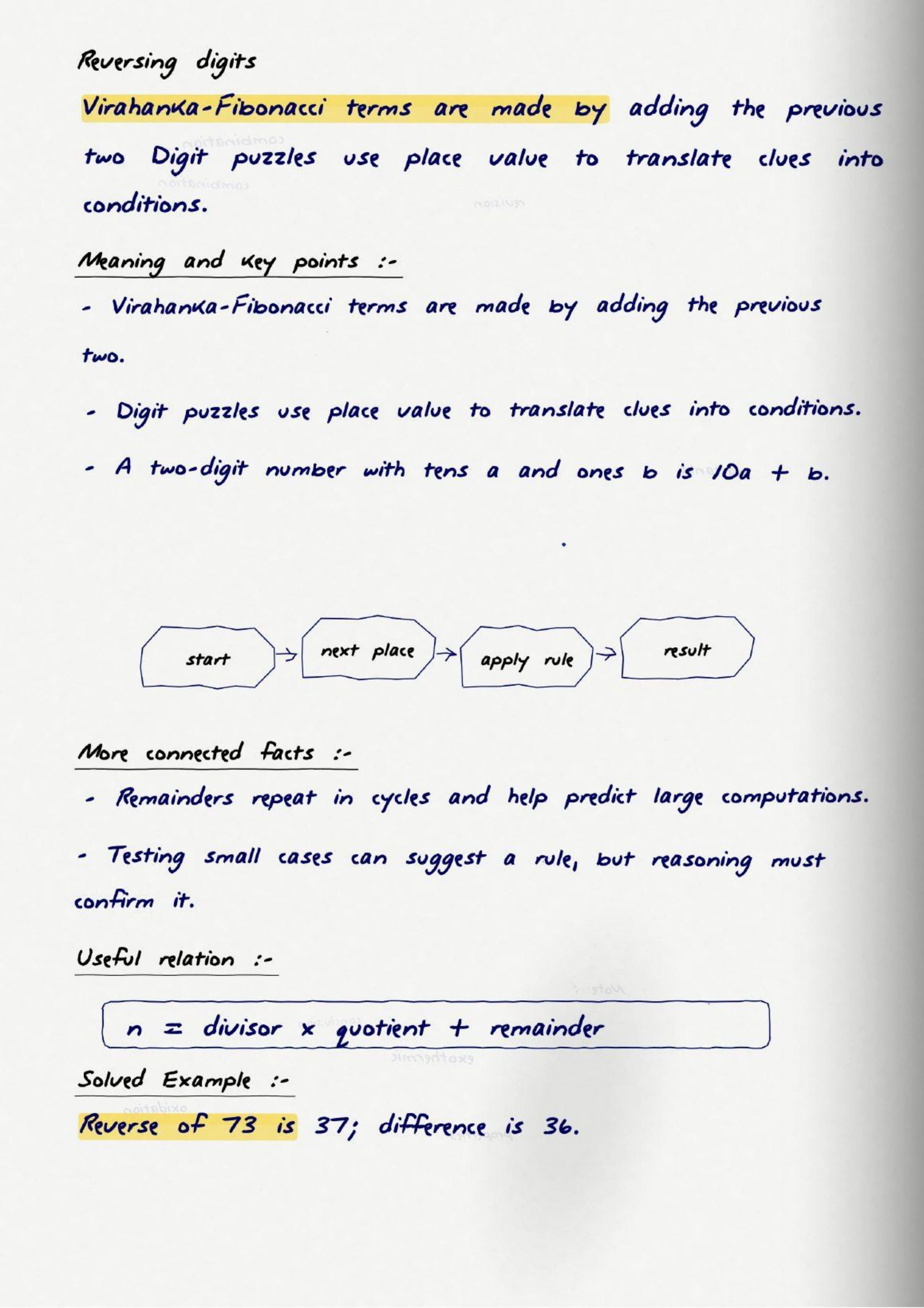
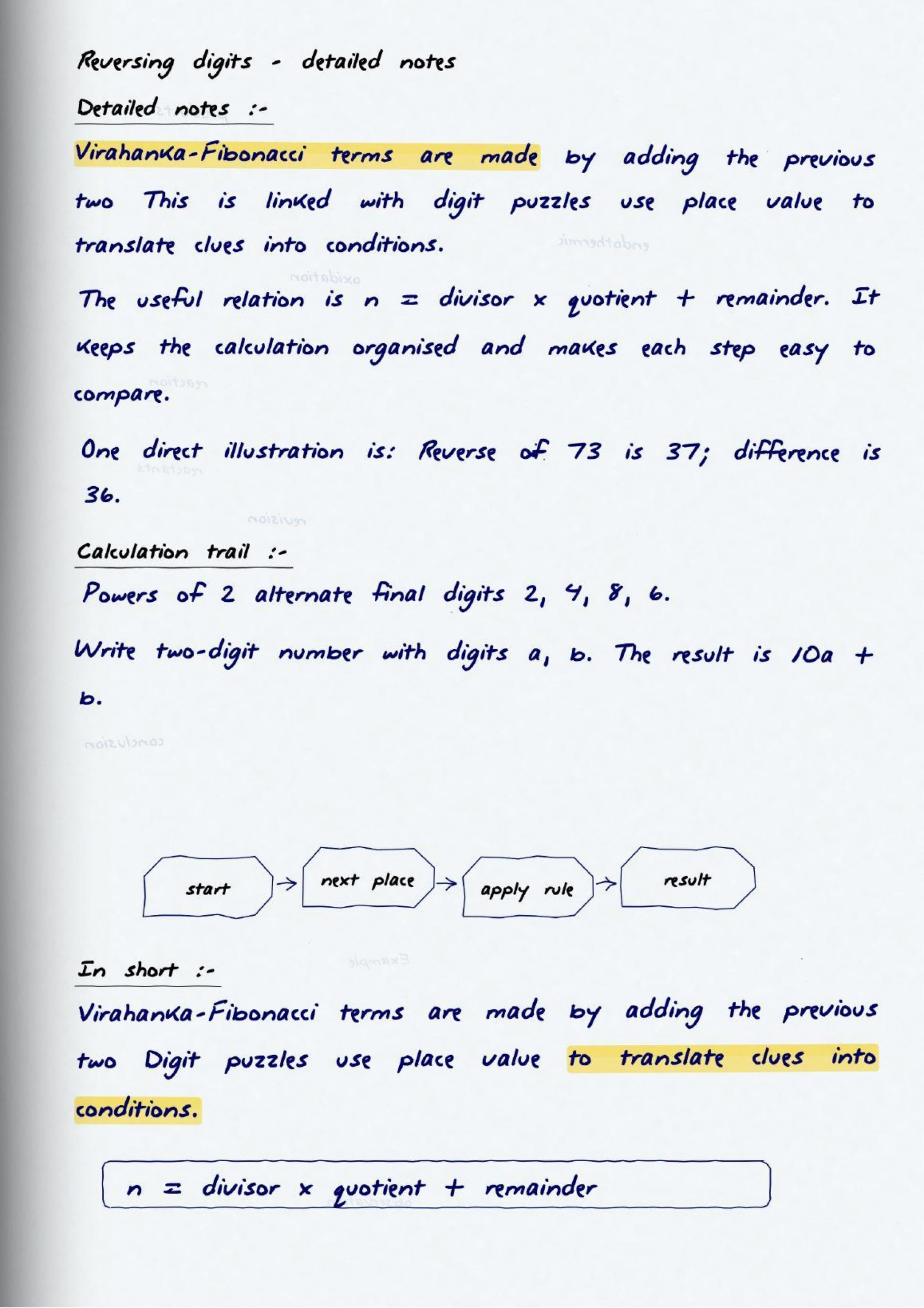
| Digit puzzle panel | a digits-in-disguise puzzle with its solution |
| Arrangement sketch | children in a row with the numbers they call out |
Fitting the Number Play Notes Into Your Revision Week
Answer the why, not only the what. That is where the marks sit in this chapter. Treat the class 7 maths handwritten notes as a revision tool, not as a first-time textbook.
- Write the parity rules for addition and multiplication from memory
- List the first ten Virahanka terms
- Explain one grid pattern in three sentences
- Before the test, revise the parity table and the sequence strip
Pair the Number Play Notes With These
Use the notes with the solved exercises and the Ganita Prakash chapter itself.
Class 7 Maths Handwritten Notes Chapter List
The class 7 maths handwritten notes for all chapters are listed below. Ganita Prakash Part 1 has eight chapters and Part 2 has seven.
| Chapter | Resource |
|---|---|
| Part 1 Chapter 1 | Large Numbers Around Us Handwritten Notes |
| Part 1 Chapter 2 | Arithmetic Expressions Handwritten Notes |
| Part 1 Chapter 3 | A Peek Beyond the Point Handwritten Notes |
| Part 1 Chapter 4 | Expressions using Letter-Numbers Handwritten Notes |
| Part 1 Chapter 5 | Parallel and Intersecting Lines Handwritten Notes |
| Part 1 Chapter 6 | Number Play Handwritten Notes |
| Part 1 Chapter 7 | A Tale of Three Intersecting Lines Handwritten Notes |
| Part 1 Chapter 8 | Working with Fractions Handwritten Notes |
| Part 2 Chapter 1 | Geometric Twins Handwritten Notes |
| Part 2 Chapter 2 | Operations with Integers Handwritten Notes |
| Part 2 Chapter 3 | Finding Common Ground Handwritten Notes |
| Part 2 Chapter 4 | Another Peek Beyond the Point Handwritten Notes |
| Part 2 Chapter 5 | Connecting the Dots... Handwritten Notes |
| Part 2 Chapter 6 | Constructions and Tilings Handwritten Notes |
| Part 2 Chapter 7 | Finding the Unknown Handwritten Notes |
Number Play Class 7 Maths Handwritten Notes FAQs
Ques. Where can I download the Number Play Class 7 Maths Handwritten Notes PDF?
Ans. The PDF is available free on this page in both the normal and the HD version.
Ques. What is parity in Class 7 Maths?
Ans. Parity is whether a number is odd or even. Knowing the parity of the numbers in a problem often lets you answer it without doing the arithmetic.
Ques. How many pages is the Chapter 6 handwritten notes PDF?
Ans. It runs 20 pages and covers all five sections of the chapter plus a quiz.
Ques. What is the Virahanka sequence?
Ans. A sequence in which each term is the sum of the two terms before it. It appears in the chapter as nature's favourite sequence and is named after the Indian scholar Virahanka.
Ques. What happens when you add two odd numbers?
Ans. You always get an even number. Odd plus even gives an odd number, and even plus even gives an even number.



Comments