



Class 7 Maths Part 2 Chapter 6 Constructions and Tilings combines compass work with pattern work. These class 7 maths handwritten notes chapter 6 Constructions and Tilings follow the 2026-27 NCERT and cover geometric constructions and how shapes tile a plane.
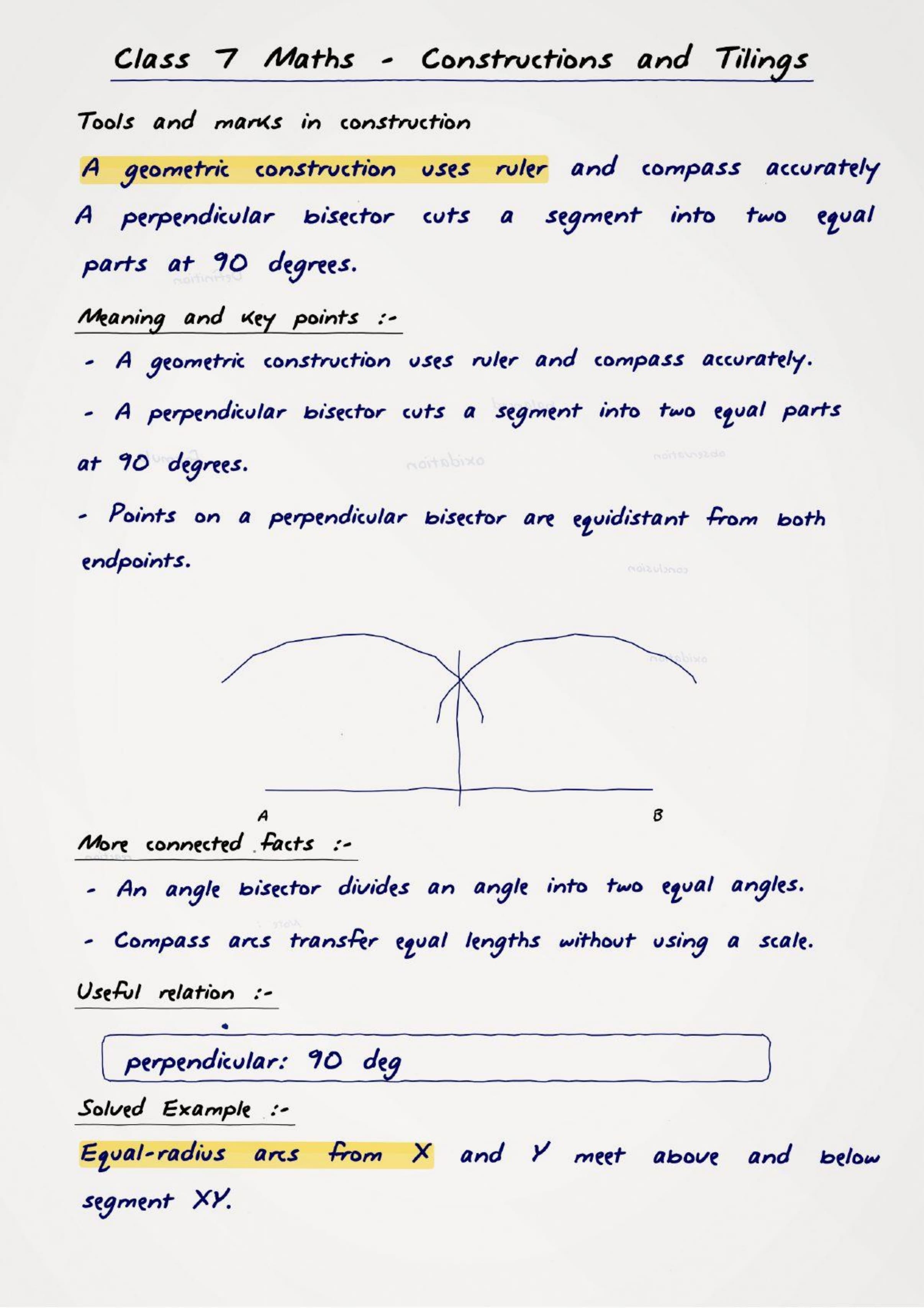
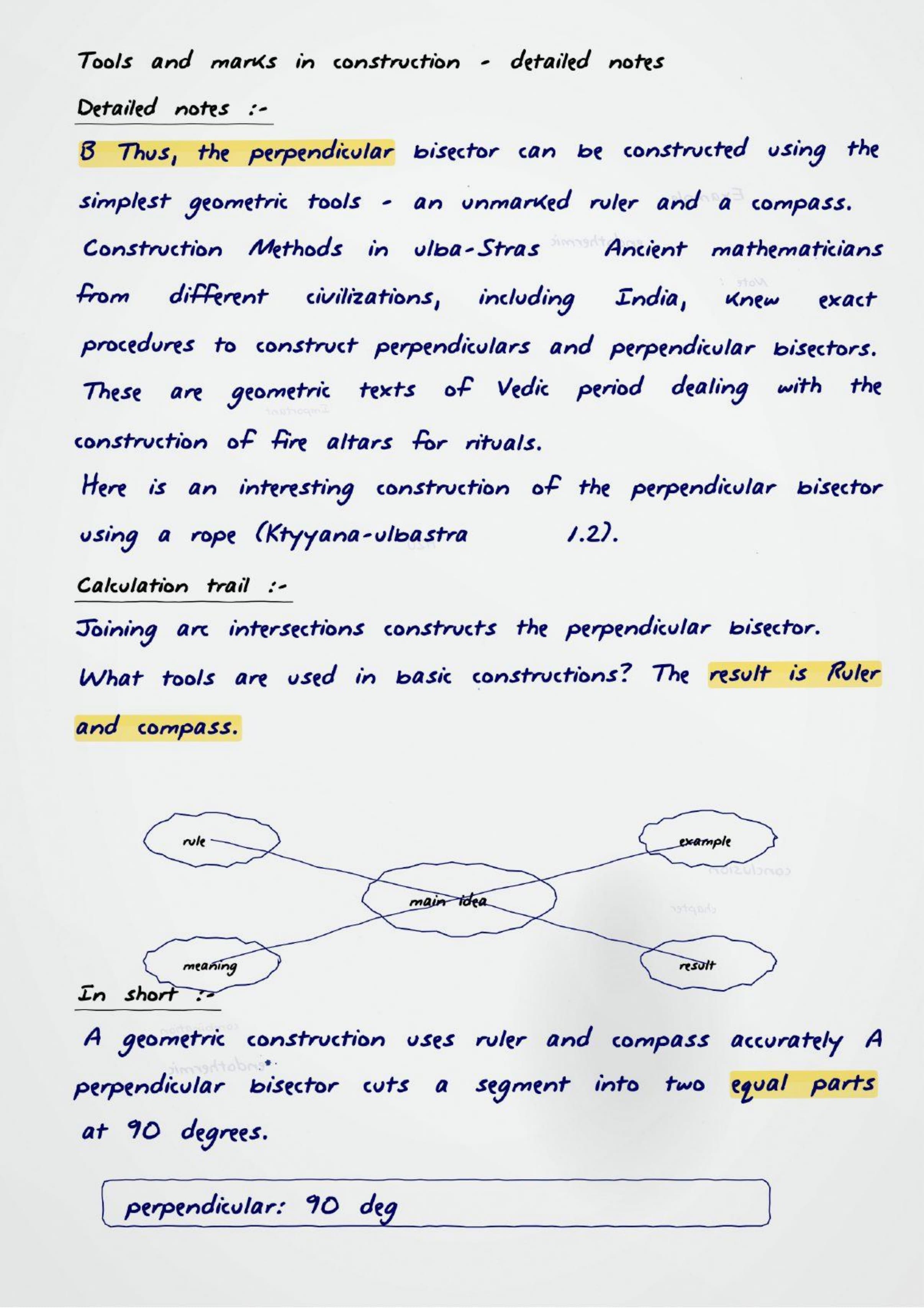
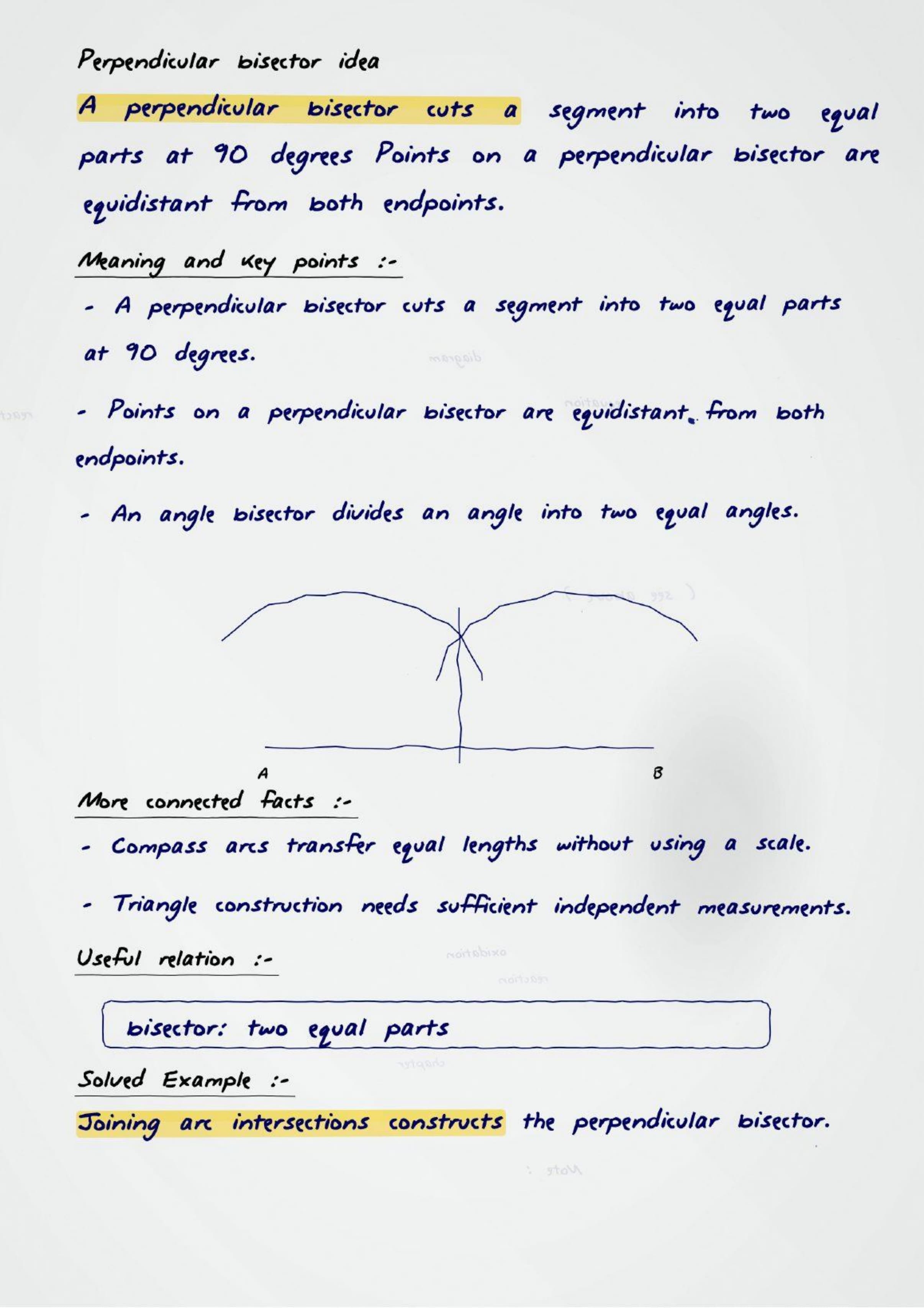
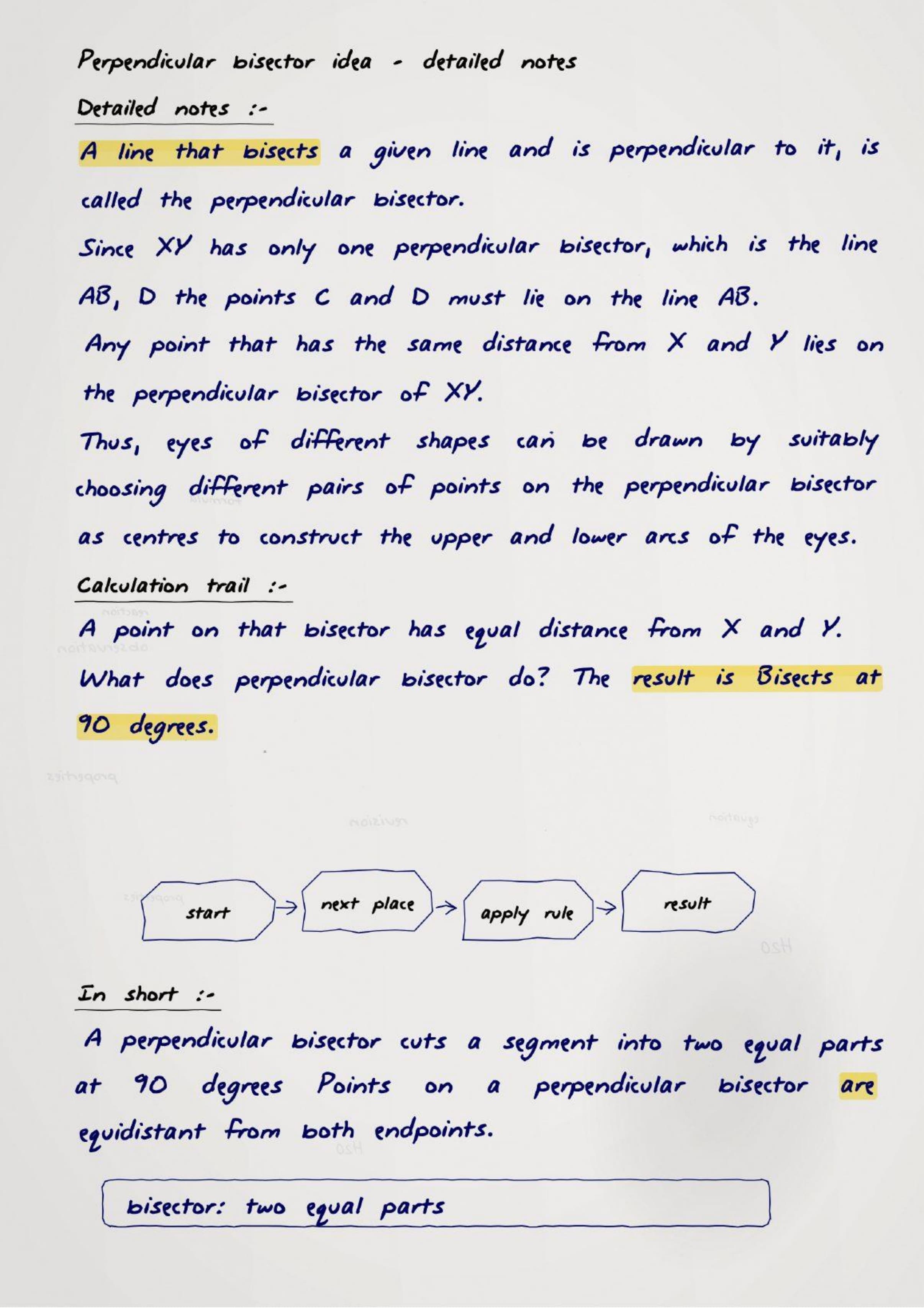
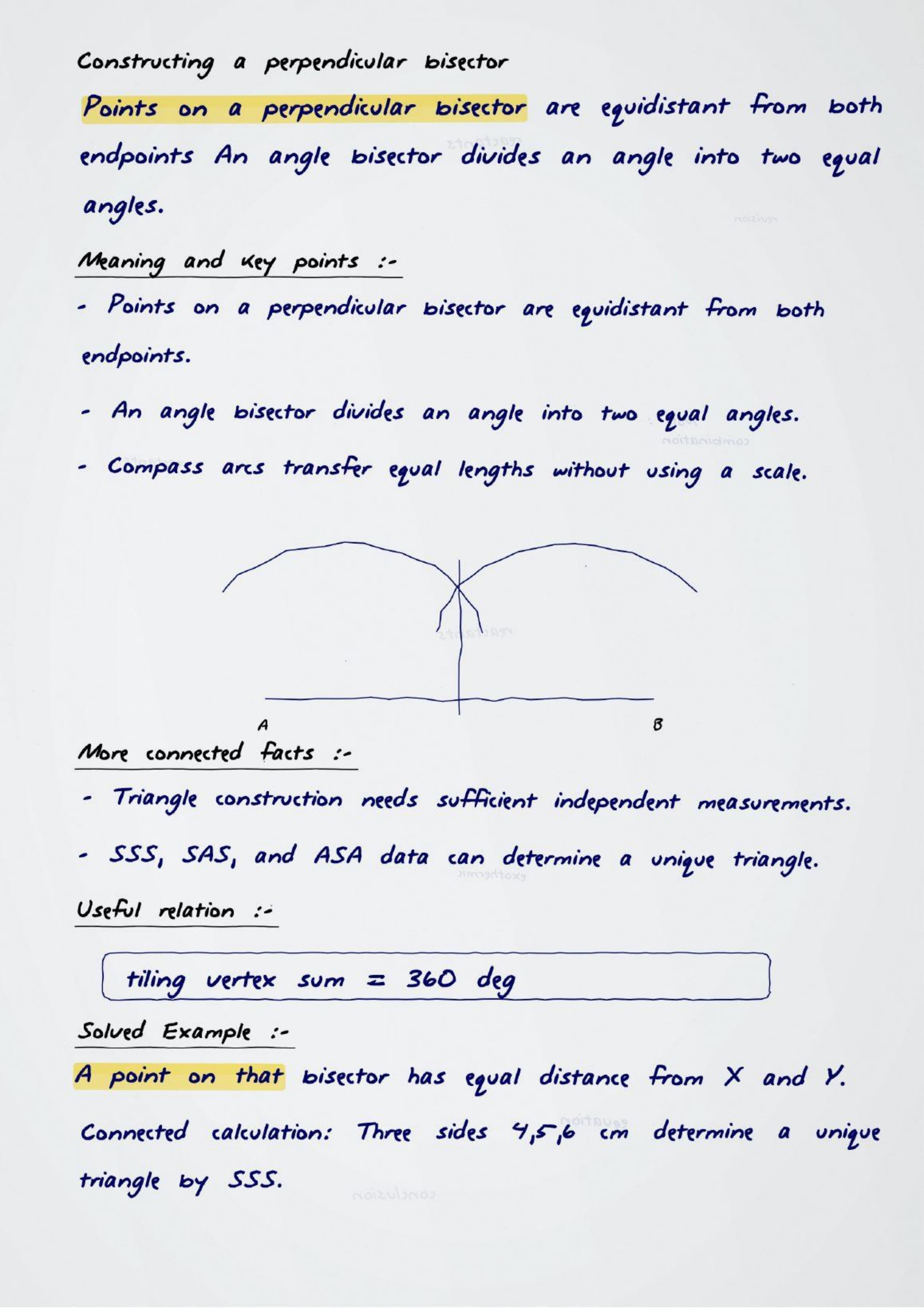
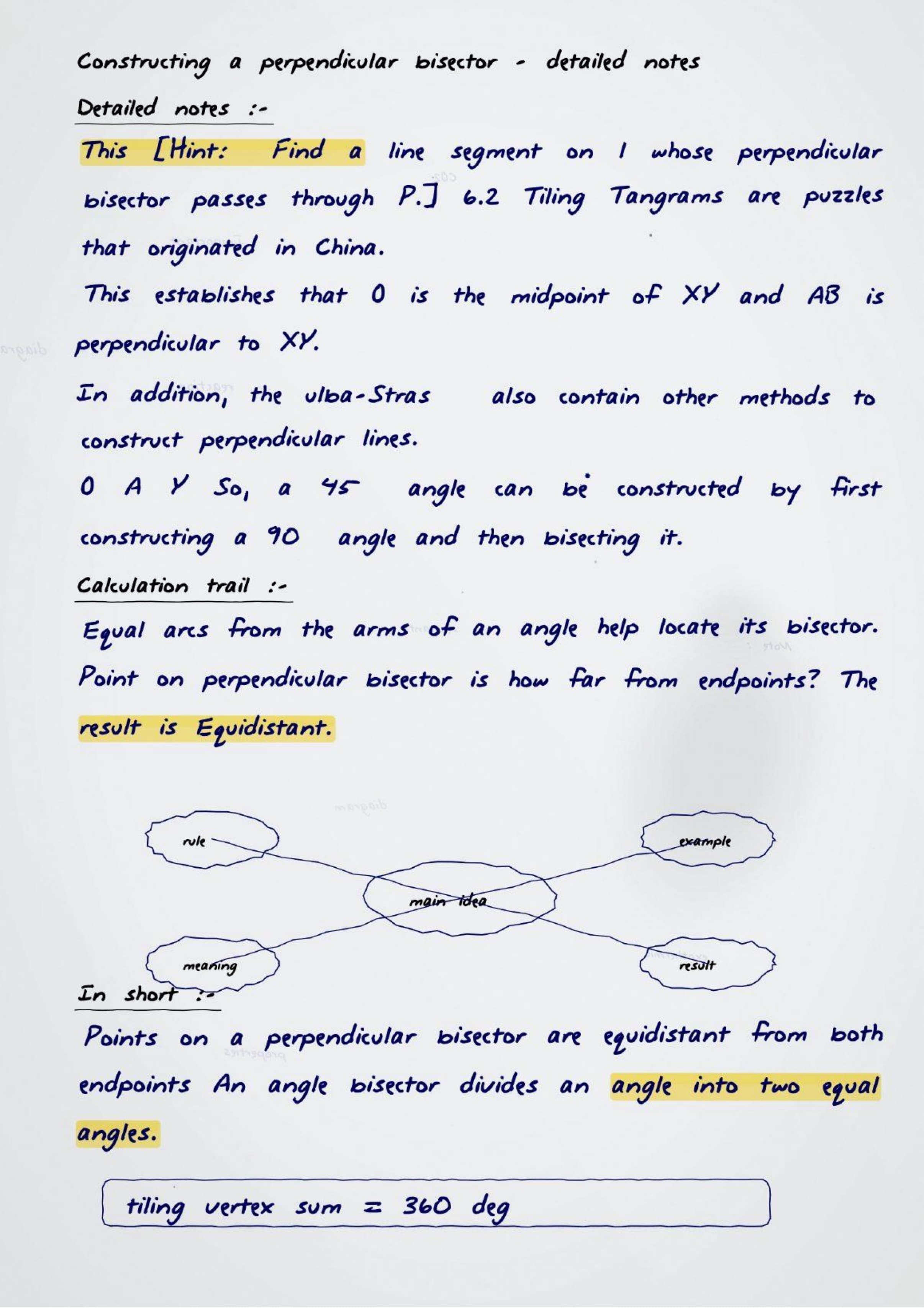
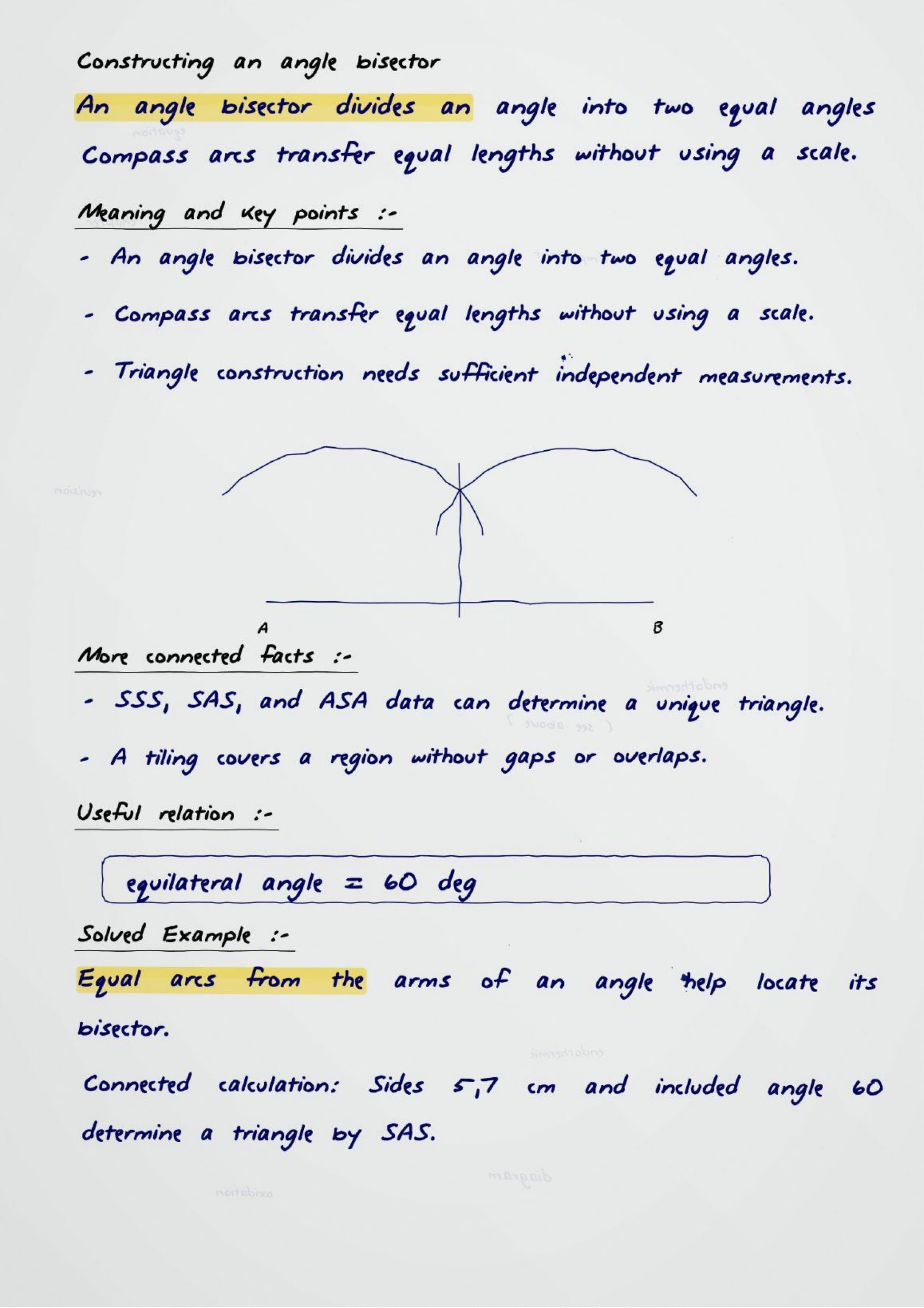
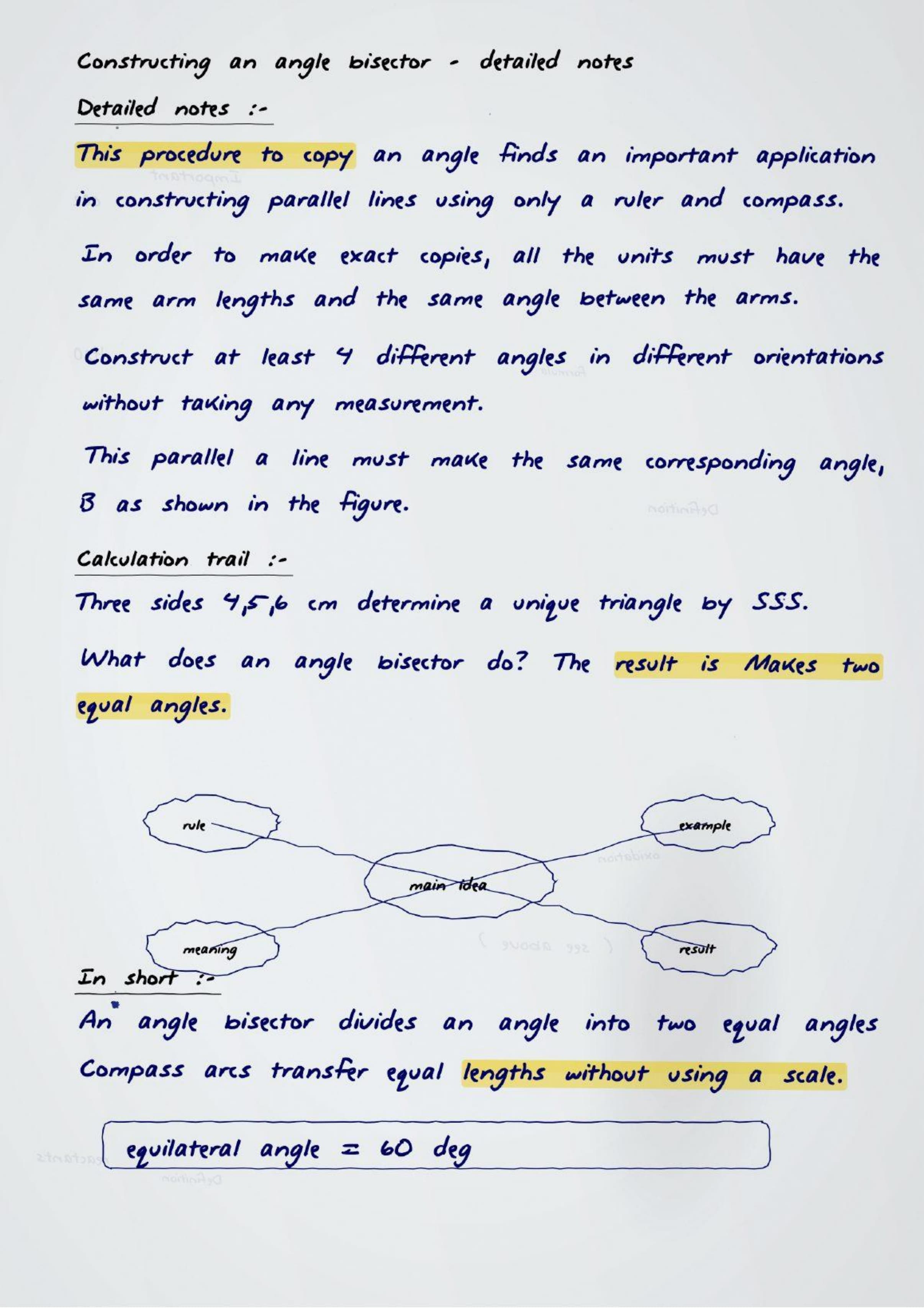
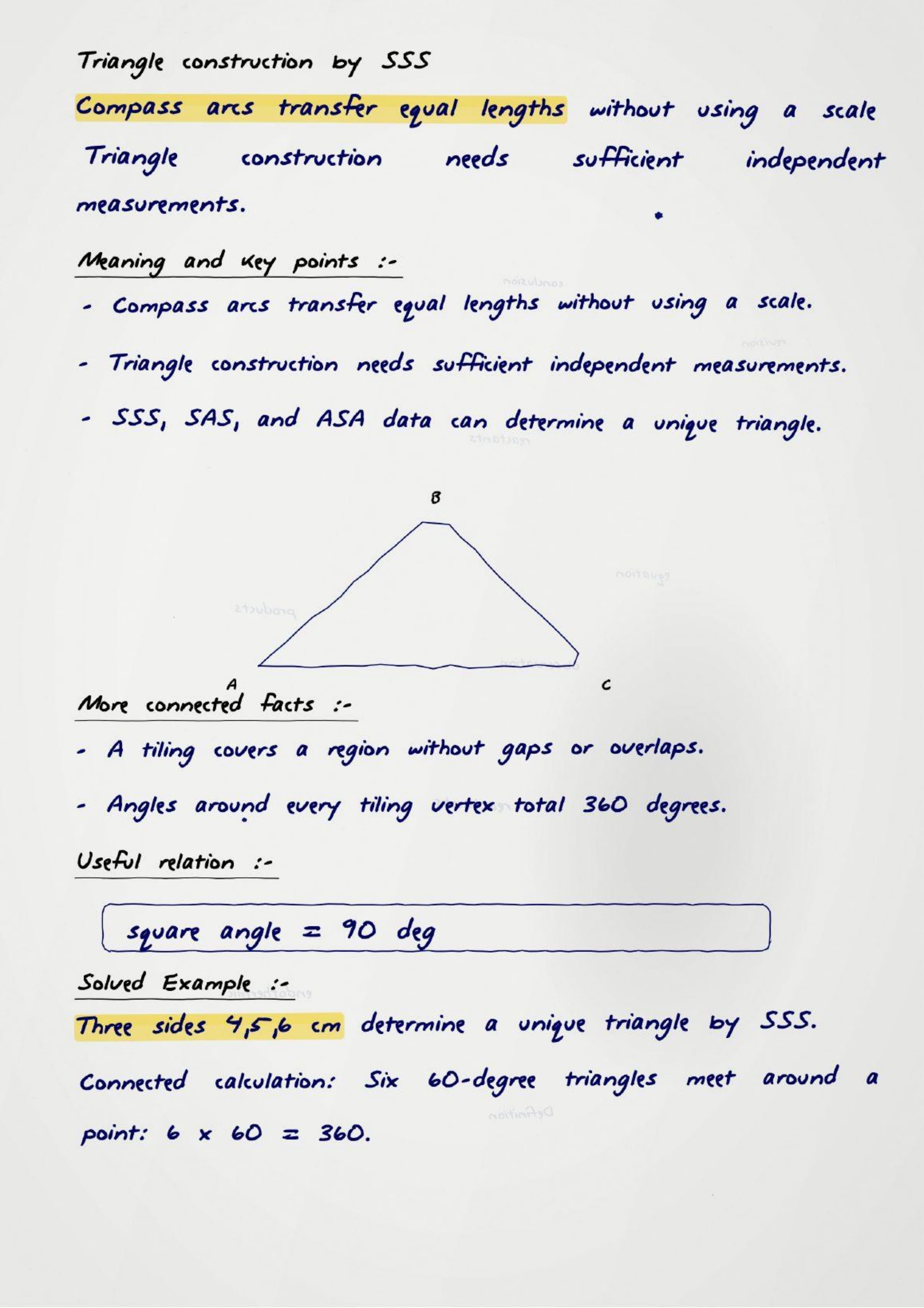
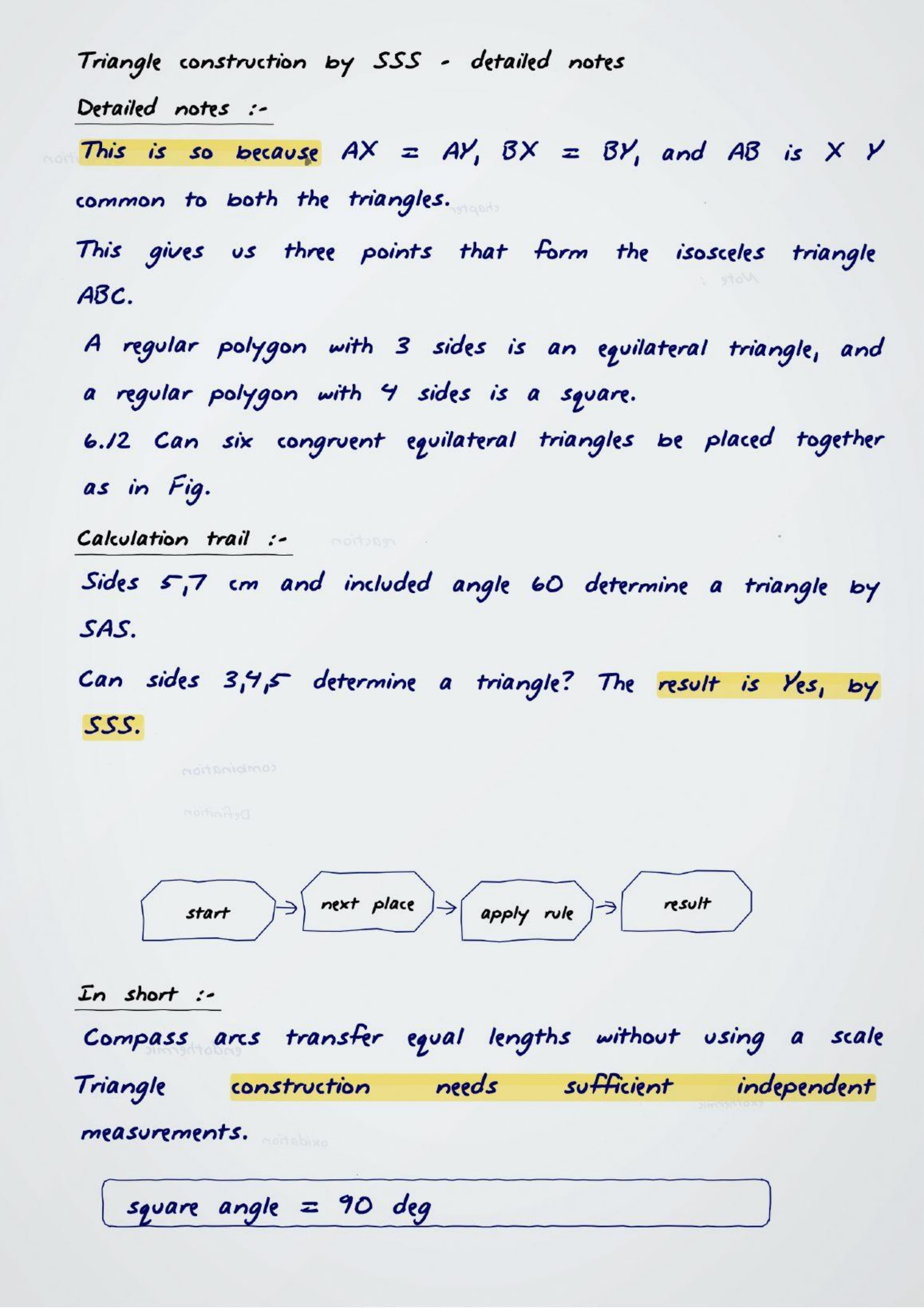
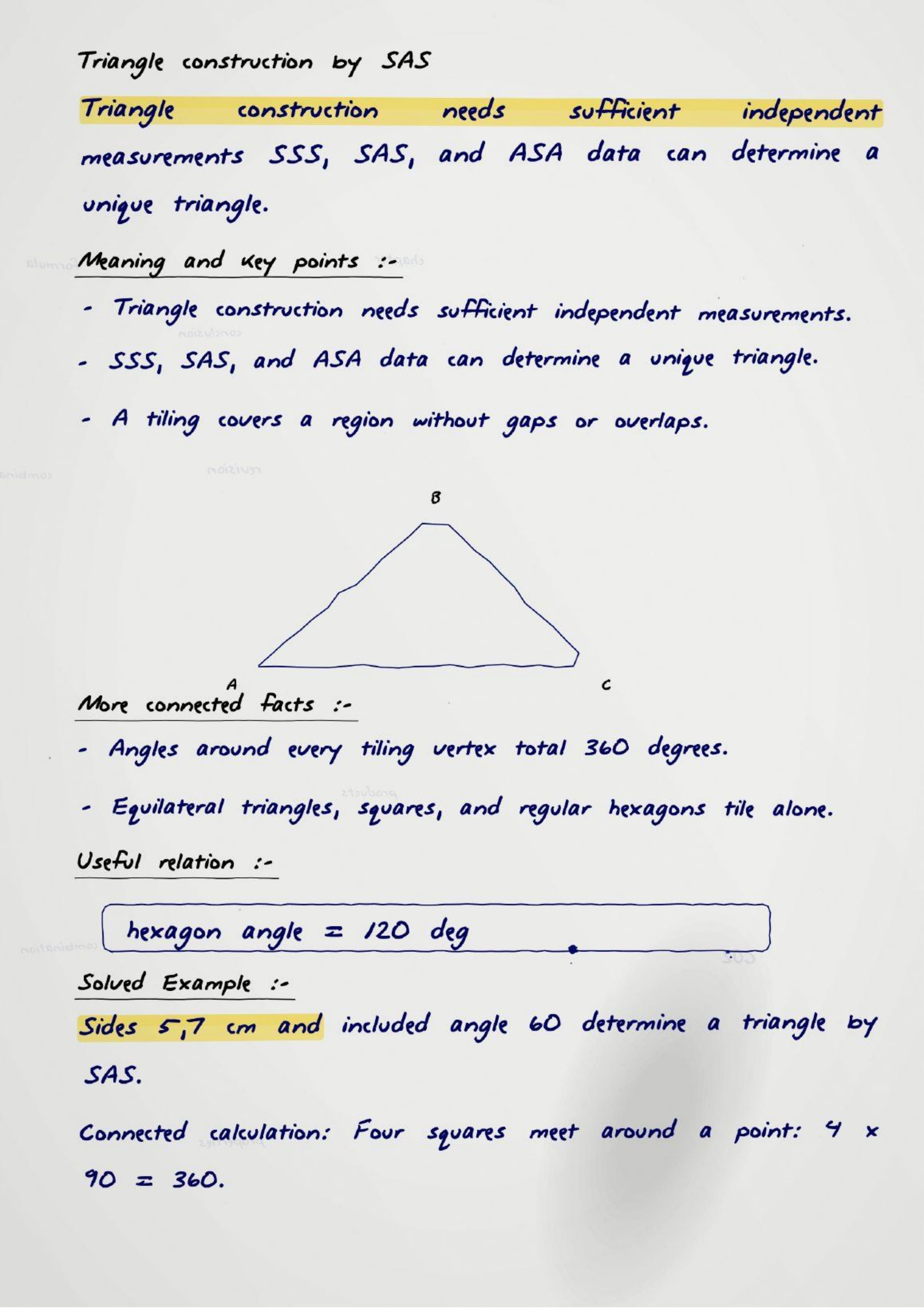
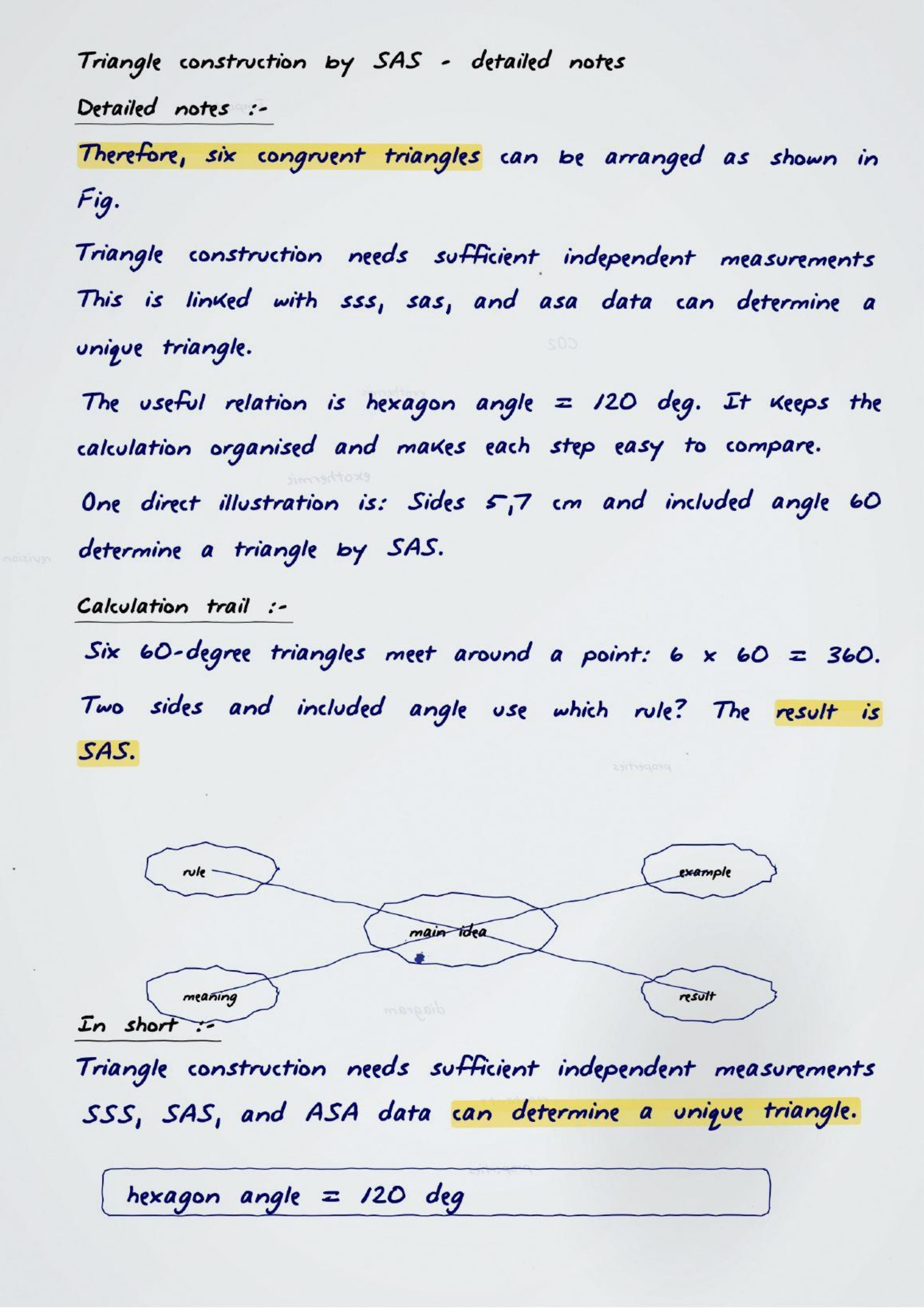
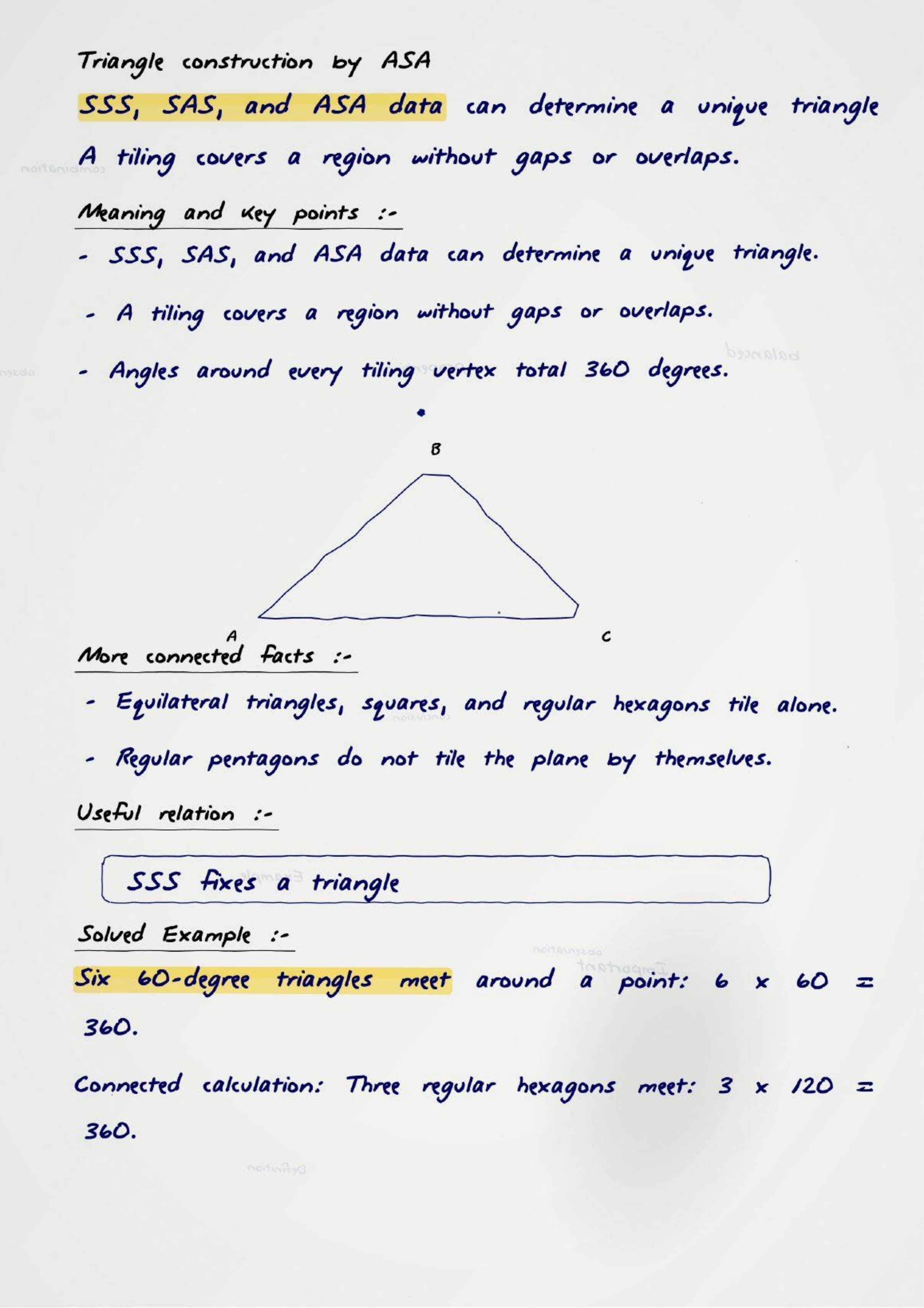
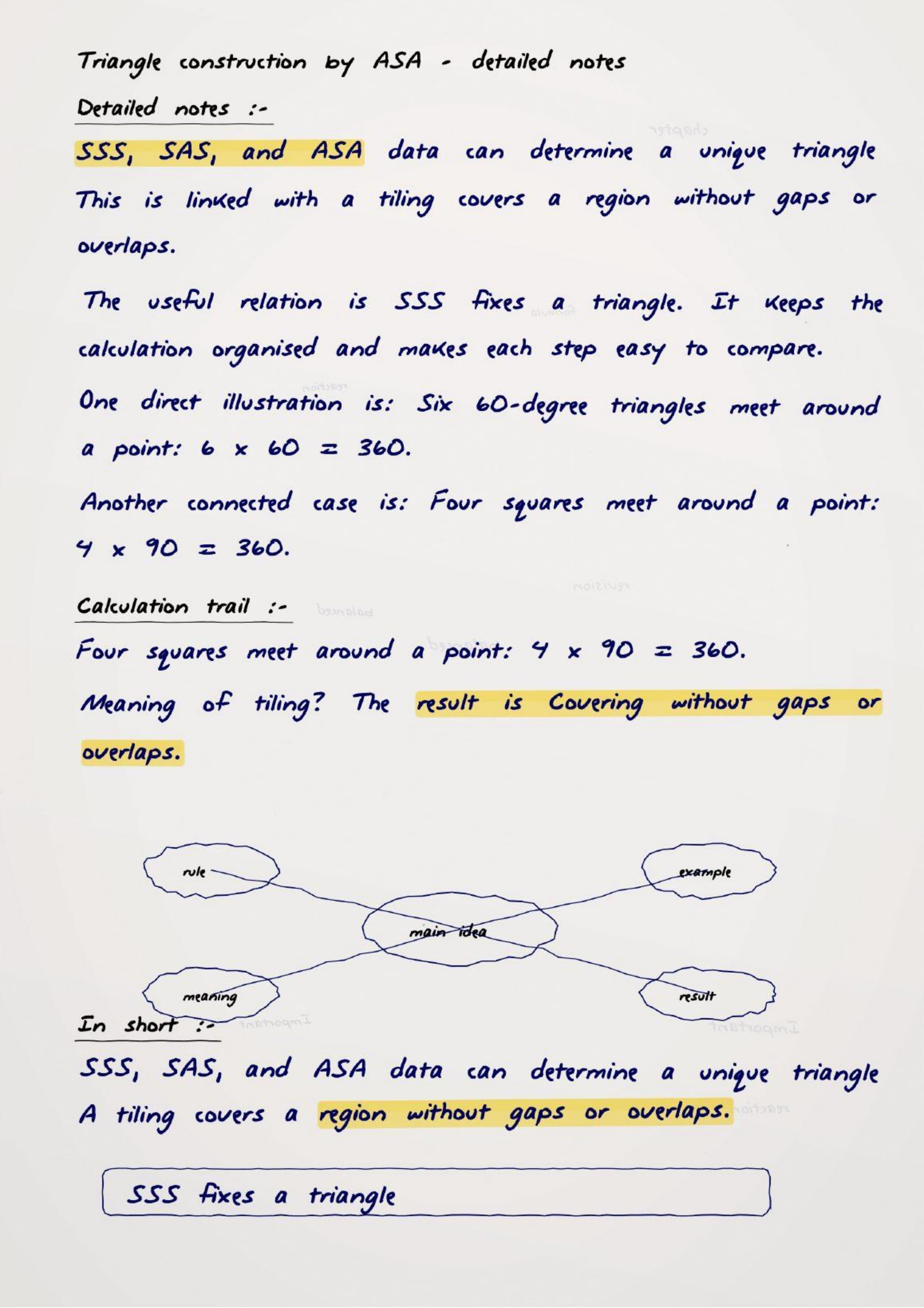
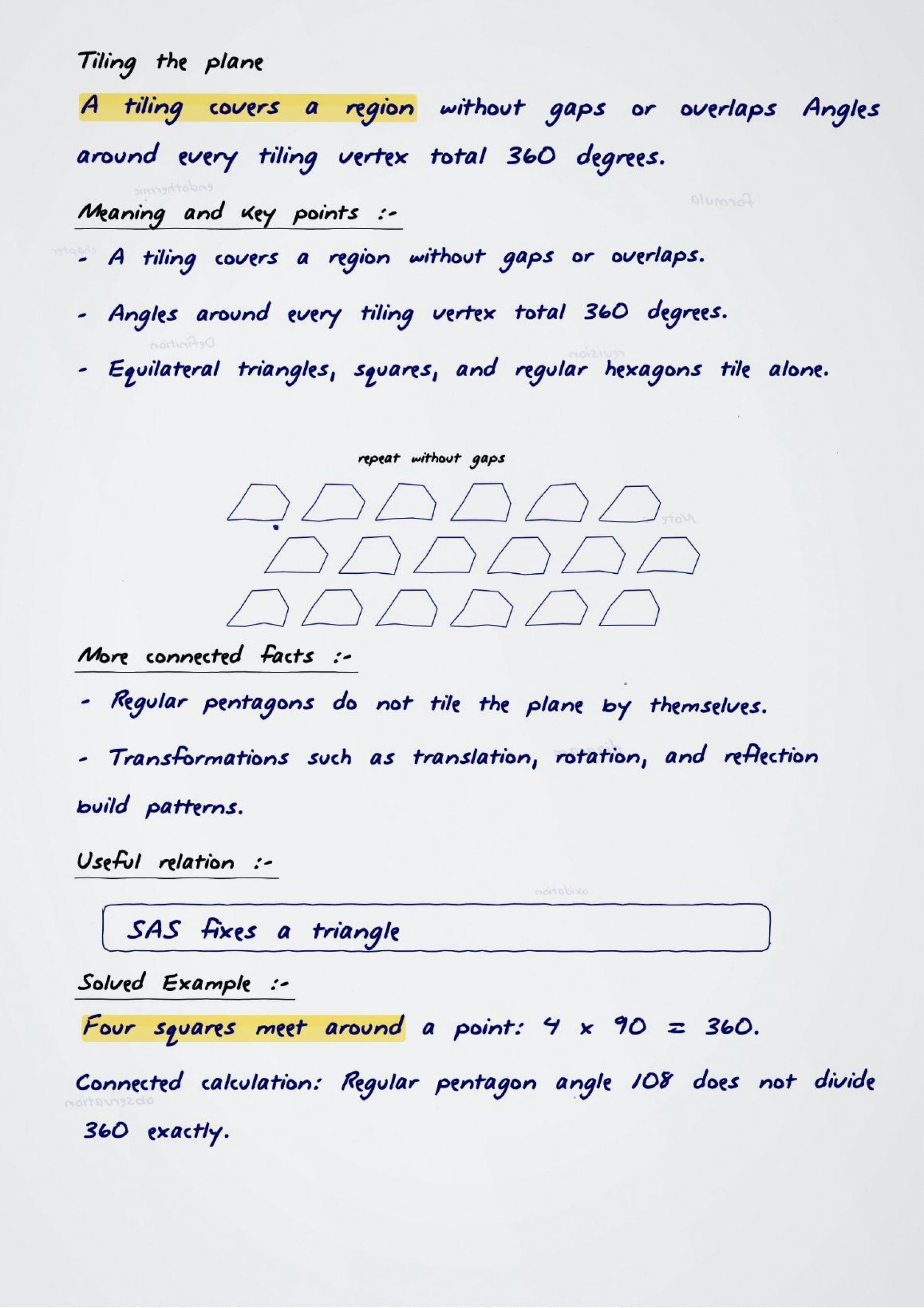
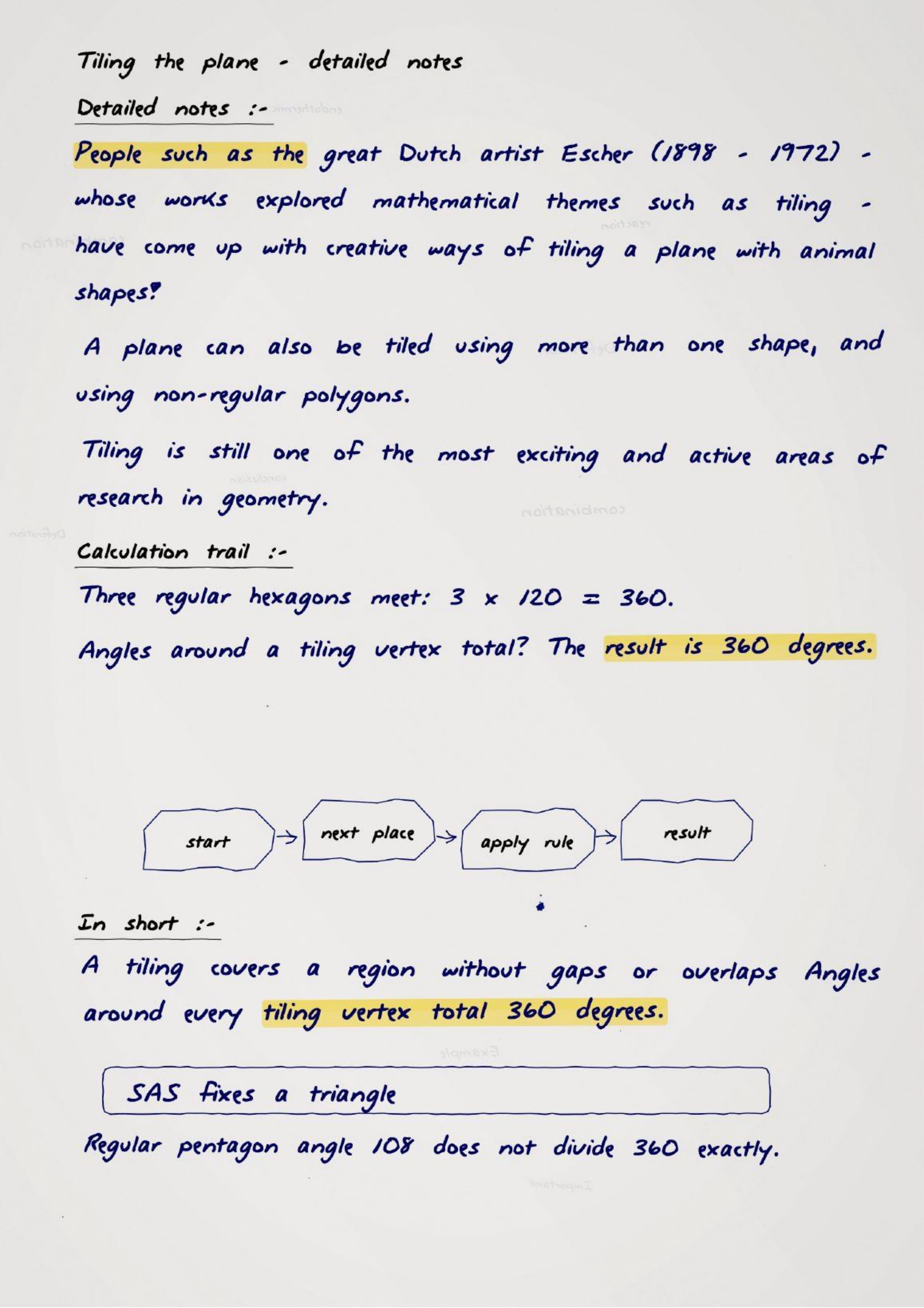
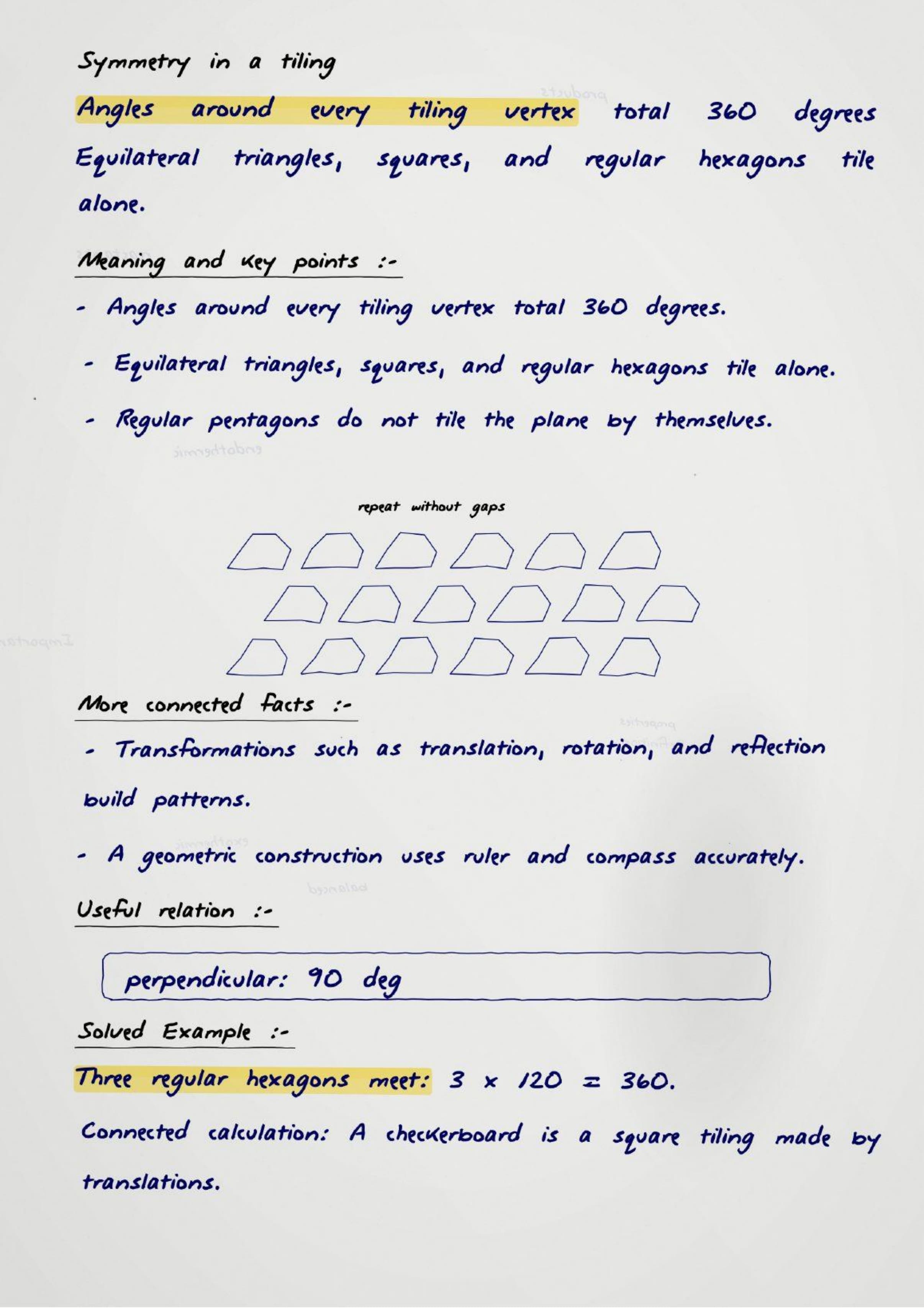
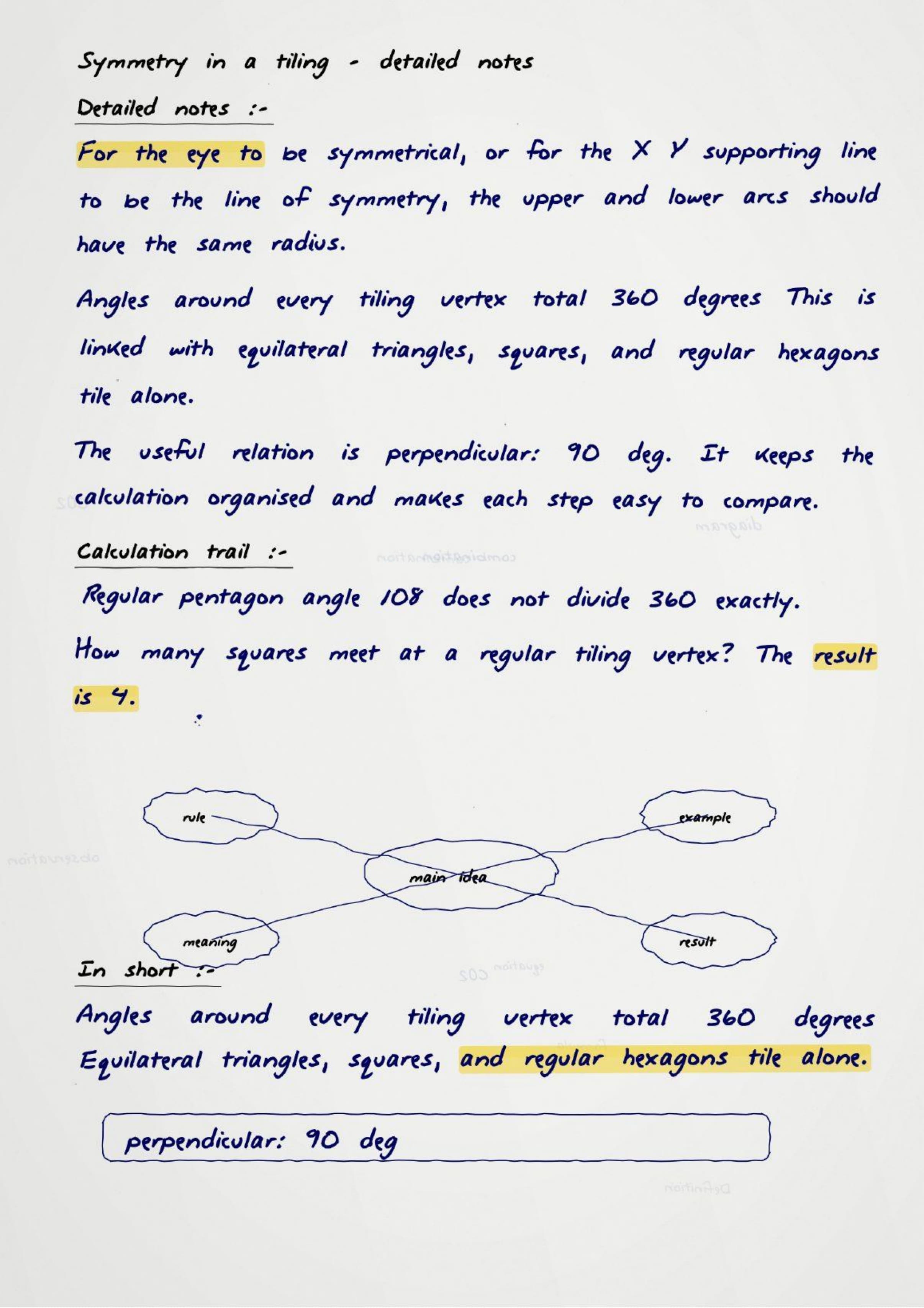
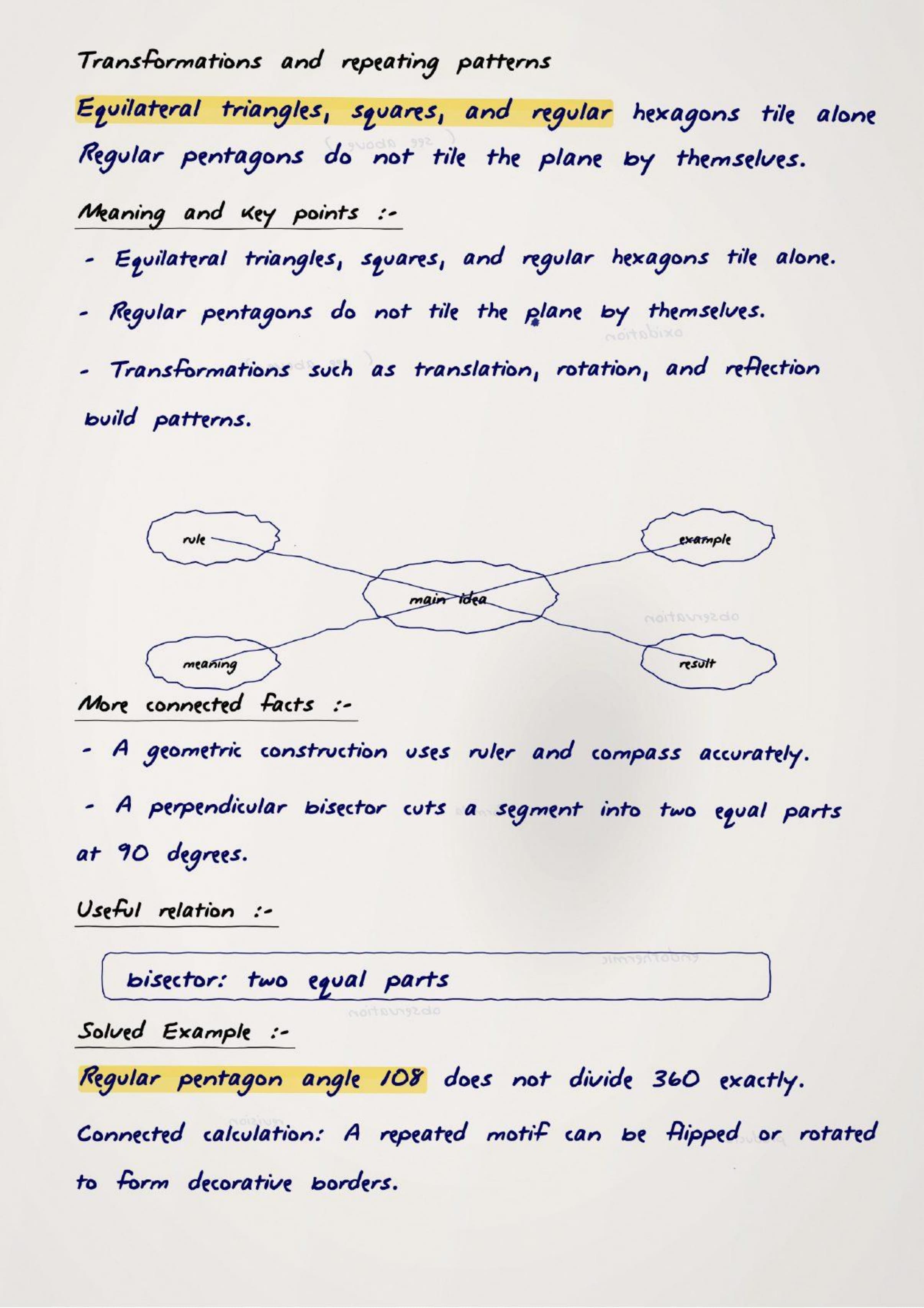
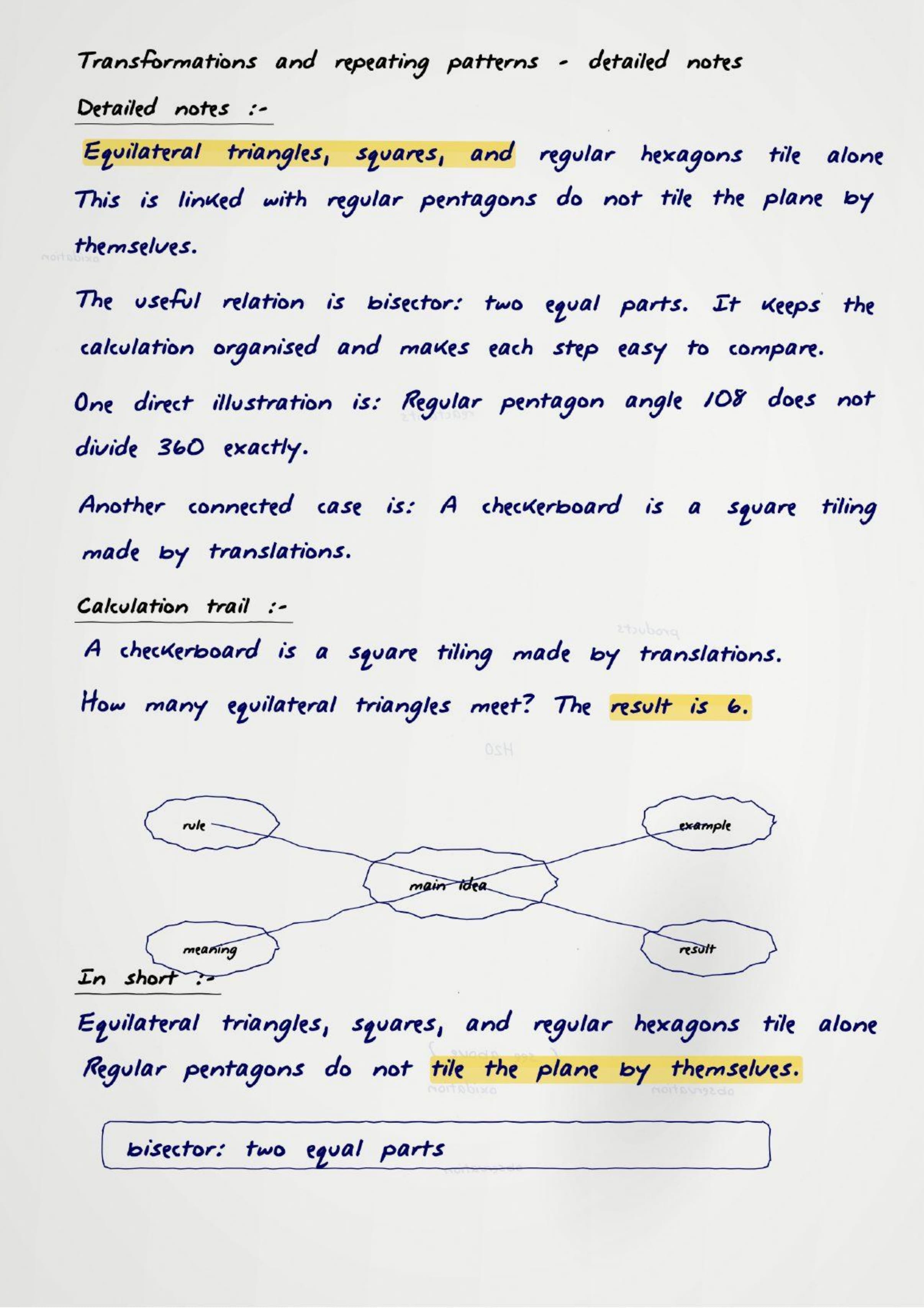
- Construction steps written out: each construction as numbered ruler and compass steps
- What the notes cover: geometric constructions building on Grade 6, and tiling with regular and irregular shapes
- Best for: the construction question and the which-shapes-tile question
You can read the complete class 7 maths handwritten notes for Constructions and Tilings, with boxed definitions and quick recall points, in the PDF below.
These handwritten notes are written by Maths teachers, mapped to the 2026-27 NCERT Ganita Prakash book, and checked against Class 7 school question papers.
How Collegedunia's Handwritten Notes Help You Revise Constructions and Tilings
Collegedunia writes its class 7 maths handwritten notes as one clean pass through the chapter. Constructions are given as numbered steps and tilings are drawn as full patterns.
- Numbered steps: each construction written as ruler and compass steps
- Tiling gallery: the shapes that tile drawn as continuing patterns
- Gap panel: a regular pentagon shown leaving gaps, with the angle reason
- Colour-coded sub-headings: sub-topics in red so construction and tiling stay apart
What the Constructions and Tilings Handwritten Notes Cover
The chapter revisits the Eyes construction from Grade 6, then makes it exact with a compass. Tiling follows, using the same shapes.
- Revisiting the Eyes construction
- Constructing arcs with a compass
- Constructing perpendiculars and bisectors
- Accuracy in geometric construction
- What tiling means
- Tiling with squares and rectangles
- Tiling with triangles
- Which regular shapes tile a plane
- Patterns and symmetry in tilings
Constructions and Tilings Topic-wise Weightage for CBSE Class 7 Maths
Constructions carry the marks. Tiling is asked as a shorter reasoning question.
| Sub-topic | Weightage | How often asked |
|---|---|---|
| Geometric constructions with compass | High | asked often |
| Which shapes tile without gaps | High | asked often |
| Perpendiculars and bisectors | Medium | asked sometimes |
| Tiling patterns and symmetry | Medium | asked sometimes |
| Accuracy in construction | Medium | asked sometimes |
| History of tiling patterns | Low | asked rarely |
Why Constructions and Tilings Is Worth Revising Carefully
Tiling questions look decorative but they test angle reasoning, which is why examiners like them.
- A construction question appears in every geometry section
- Which shapes tile is a common reasoning question
- Arcs left on the page earn method marks
- Symmetry in tilings connects to the Class 8 geometry work
Last 24-Hour Revision Card for Constructions and Tilings
The card for the geometry section.
- A construction uses only a ruler and a compass
- Keep every arc you draw
- Tiling means no gaps and no overlaps
- Squares, equilateral triangles and regular hexagons tile a plane
- Regular pentagons leave gaps
Constructions and Tilings Self-Assessment Quiz
Five questions on constructions and tilings. Tap to reveal.
Tiling means covering a surface
(a) with gaps (b) with overlaps (c) with no gaps and no overlaps (d) with curves only
Answer: (c) with no gaps and no overlaps
Which regular shape does not tile a plane on its own?
(a) square (b) equilateral triangle (c) regular pentagon (d) regular hexagon
Answer: (c) regular pentagon
A line that cuts another in half at a right angle is a
(a) transversal (b) perpendicular bisector (c) diagonal (d) tangent
Answer: (b) perpendicular bisector
A construction should be made using
(a) freehand drawing (b) a ruler and a compass (c) a protractor only (d) tracing paper
Answer: (b) a ruler and a compass
Part of a circle drawn with a compass is called an
(a) arc (b) angle (c) axis (d) altitude
Answer: (a) arc
Key Terms and Ideas in Constructions and Tilings
Construction and tiling each have their own small vocabulary.
| Term / Idea | What it means |
|---|---|
| Construction | an exact drawing made with only a ruler and a compass |
| Arc | part of a circle drawn with a compass |
| Perpendicular bisector | a line that cuts another line in half at a right angle |
| Tiling | covering a surface with copies of a shape, without gaps or overlaps |
| Tessellation | another word for a tiling pattern |
| Regular polygon | a polygon with all sides and all angles equal |
| Symmetry | a balance in a pattern, where one part matches another |
Diagrams Drawn by Hand in the Constructions and Tilings Notes
Both halves of this chapter are drawings, so the notes are figure-heavy.
| Figure drawn by hand | What it shows |
|---|---|
| Eyes construction | the two arcs and the supporting line drawn in stages |
| Perpendicular bisector | the compass arcs above and below the line segment |
| Square tiling | a continuing pattern of squares with no gaps |
| Triangle tiling | equilateral triangles fitted together |
| Hexagon tiling | a honeycomb pattern drawn out |
| Pentagon gap panel | regular pentagons leaving gaps, with the gap shaded |
How to Use These Handwritten Notes for Maths Revision
Use these class 7 maths handwritten notes in two passes. Draw the tilings on squared paper. Gaps show up immediately when the grid is there.
- Construct a perpendicular bisector three times with a compass
- Tile a page with squares, then with equilateral triangles
- Try tiling with regular pentagons and note where the gaps appear
- Before the test, revise the numbered steps and the tiling gallery
Other Maths Resources for Constructions and Tilings
Use the notes with the solved exercises and the Ganita Prakash chapter itself.
Class 7 Maths Handwritten Notes for All Chapters
Ganita Prakash Part 1 has eight chapters and Part 2 has seven. The table below links the class 7 maths handwritten notes for every chapter.
| Chapter | Resource |
|---|---|
| Part 1 Chapter 1 | Large Numbers Around Us Handwritten Notes |
| Part 1 Chapter 2 | Arithmetic Expressions Handwritten Notes |
| Part 1 Chapter 3 | A Peek Beyond the Point Handwritten Notes |
| Part 1 Chapter 4 | Expressions using Letter-Numbers Handwritten Notes |
| Part 1 Chapter 5 | Parallel and Intersecting Lines Handwritten Notes |
| Part 1 Chapter 6 | Number Play Handwritten Notes |
| Part 1 Chapter 7 | A Tale of Three Intersecting Lines Handwritten Notes |
| Part 1 Chapter 8 | Working with Fractions Handwritten Notes |
| Part 2 Chapter 1 | Geometric Twins Handwritten Notes |
| Part 2 Chapter 2 | Operations with Integers Handwritten Notes |
| Part 2 Chapter 3 | Finding Common Ground Handwritten Notes |
| Part 2 Chapter 4 | Another Peek Beyond the Point Handwritten Notes |
| Part 2 Chapter 5 | Connecting the Dots... Handwritten Notes |
| Part 2 Chapter 6 | Constructions and Tilings Handwritten Notes |
| Part 2 Chapter 7 | Finding the Unknown Handwritten Notes |
Constructions and Tilings Class 7 Maths Handwritten Notes FAQs
Ques. Where can I download the Constructions and Tilings Class 7 Handwritten Notes PDF?
Ans. The PDF is available free on this page in both the normal and the HD version.
Ques. What is tiling in Class 7 Maths?
Ans. Tiling means covering a flat surface with copies of a shape so that there are no gaps and no overlaps. It is also called tessellation.
Ques. How many pages is the Part 2 Chapter 6 handwritten notes PDF?
Ans. It runs 20 pages and covers both sections of the chapter plus a quiz.
Ques. Which regular polygons tile a plane?
Ans. Squares, equilateral triangles and regular hexagons tile a plane on their own. Regular pentagons do not, because their angles leave gaps.
Ques. Why must construction arcs be left on the page?
Ans. The arcs show the method you used, and examiners award marks for the method as well as the finished figure.



Comments