


Class 7 Maths Part 2 Chapter 7 Finding the Unknown closes the year with equations. These class 7 maths handwritten notes chapter 7 Finding the Unknown follow the 2026-27 NCERT and cover the balance method, solving systematically and checking your answer.
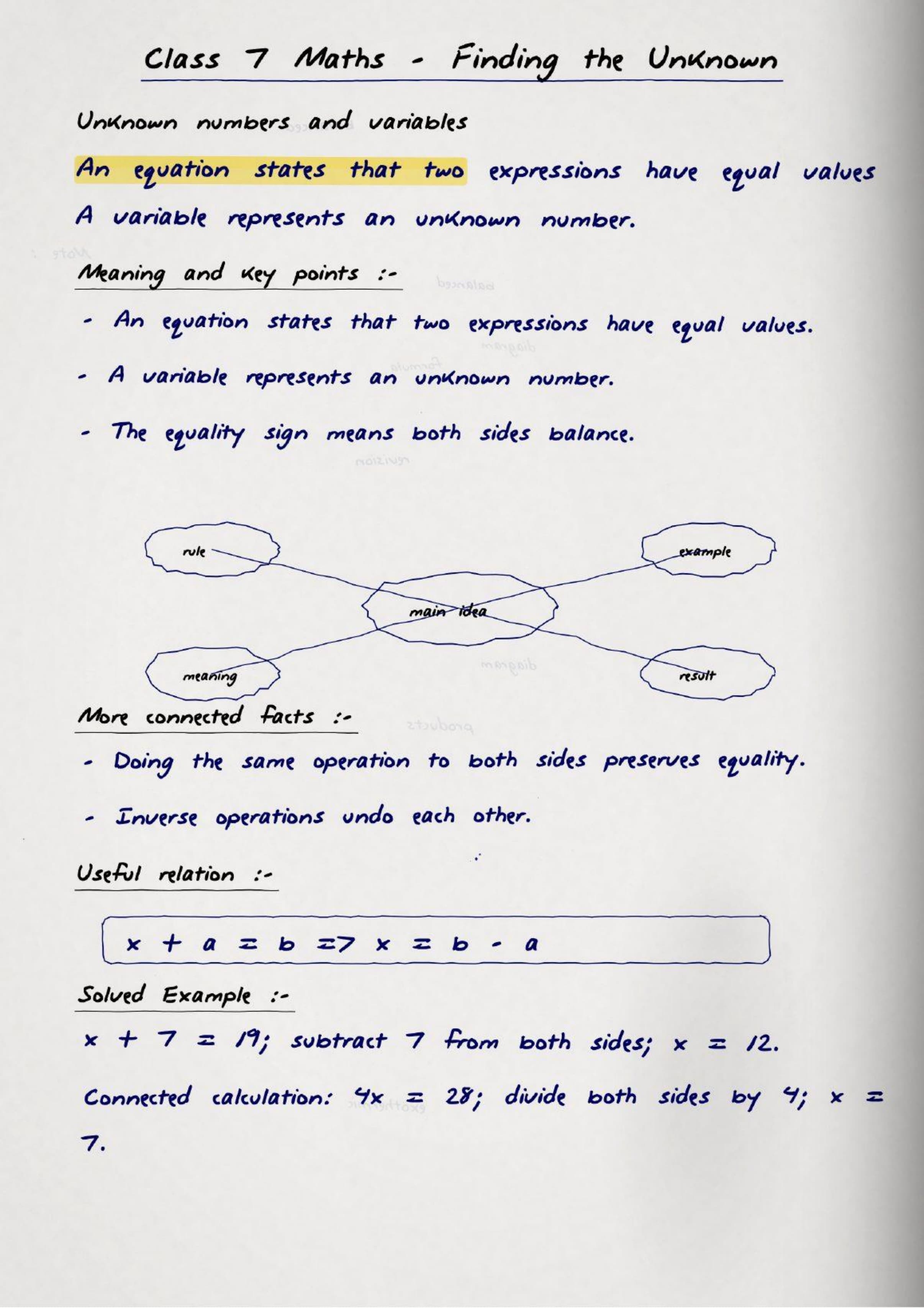
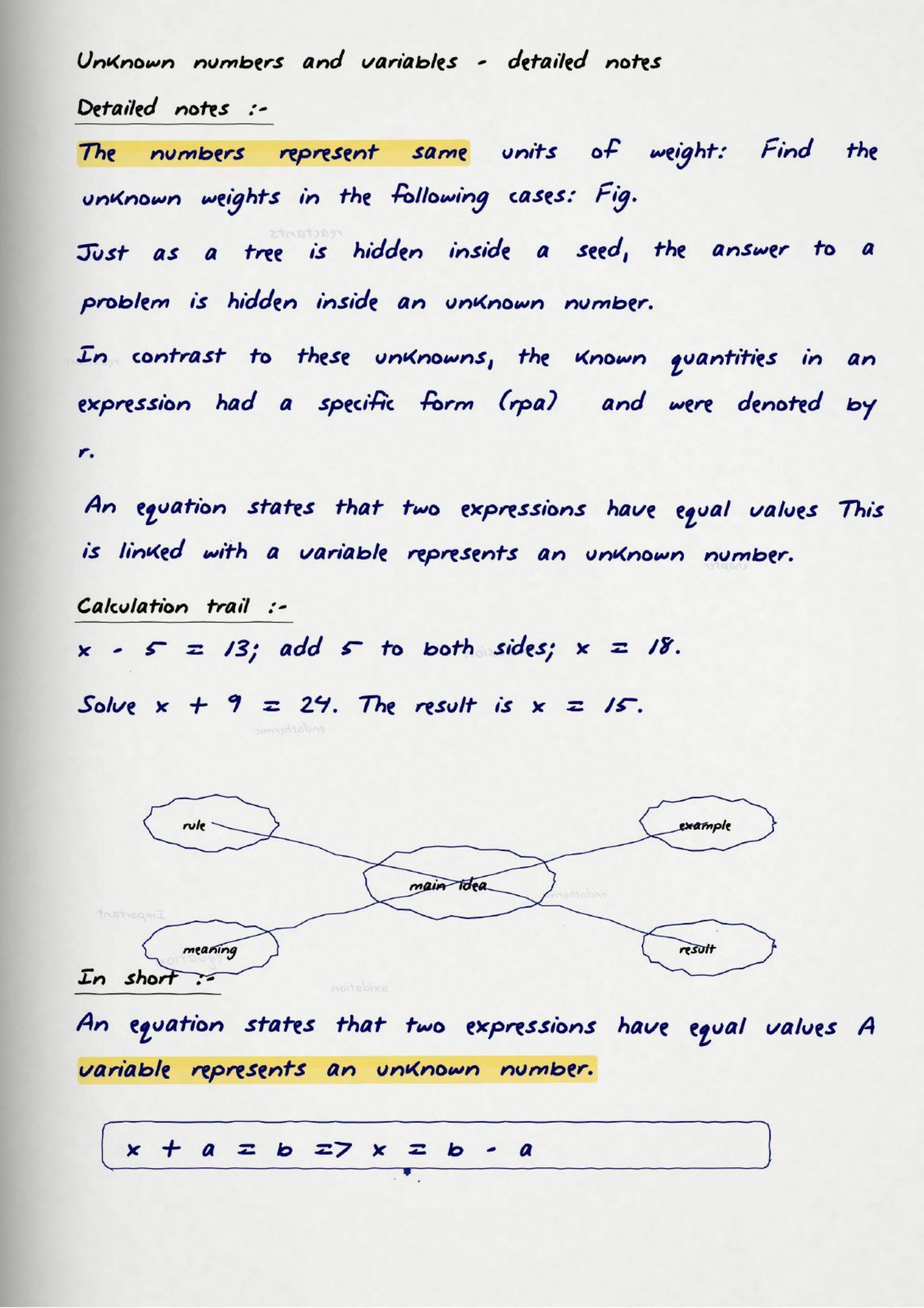
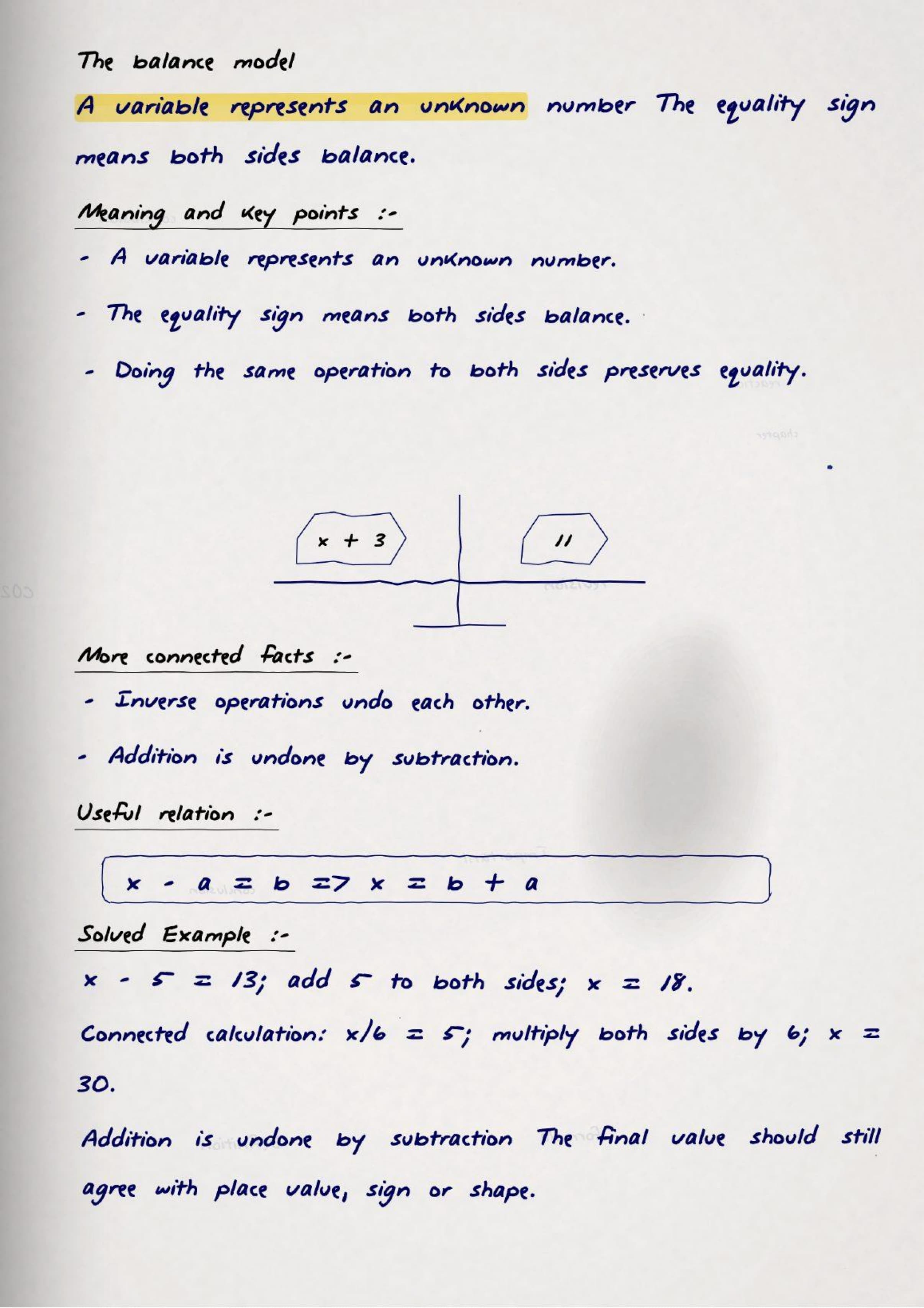
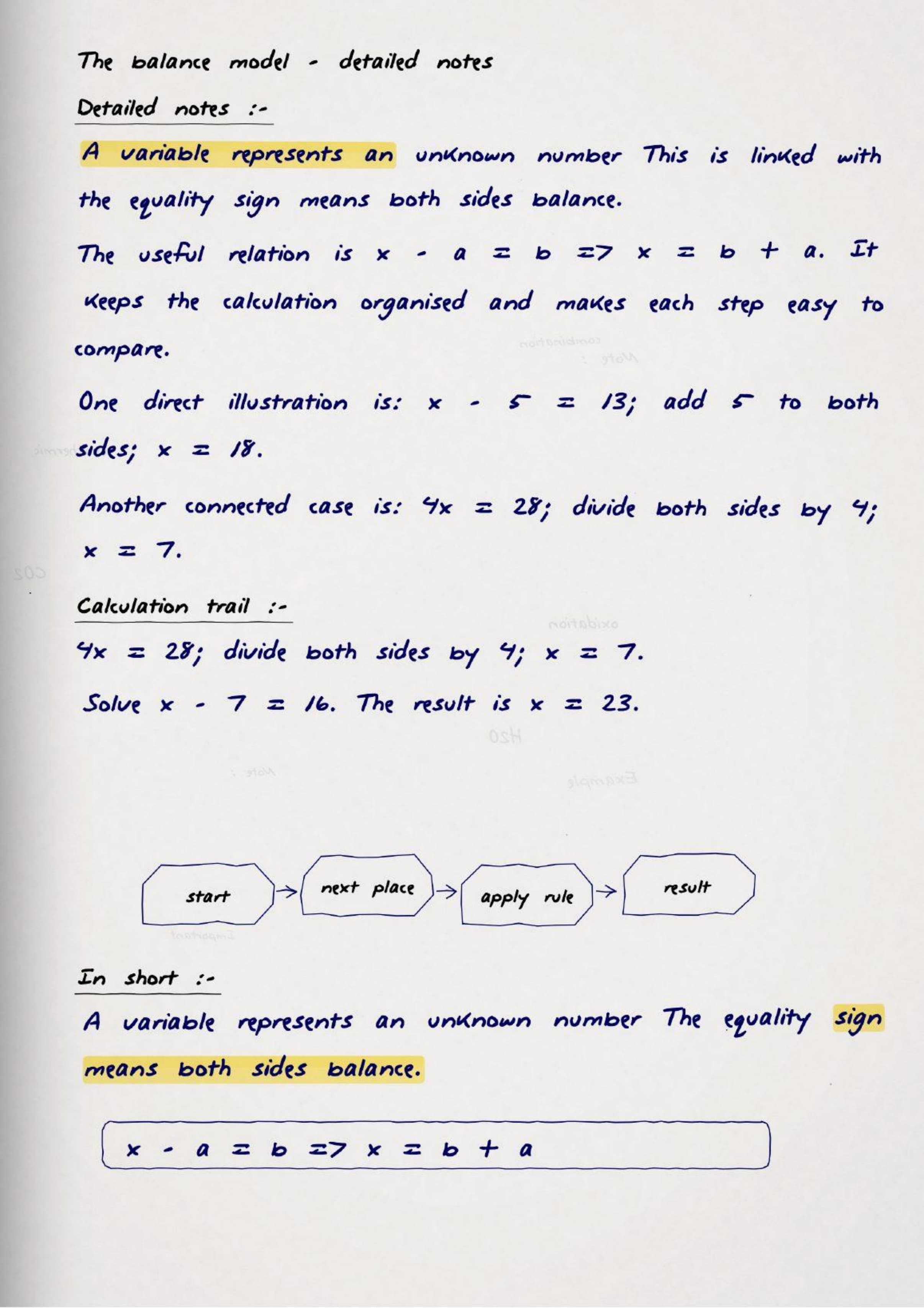
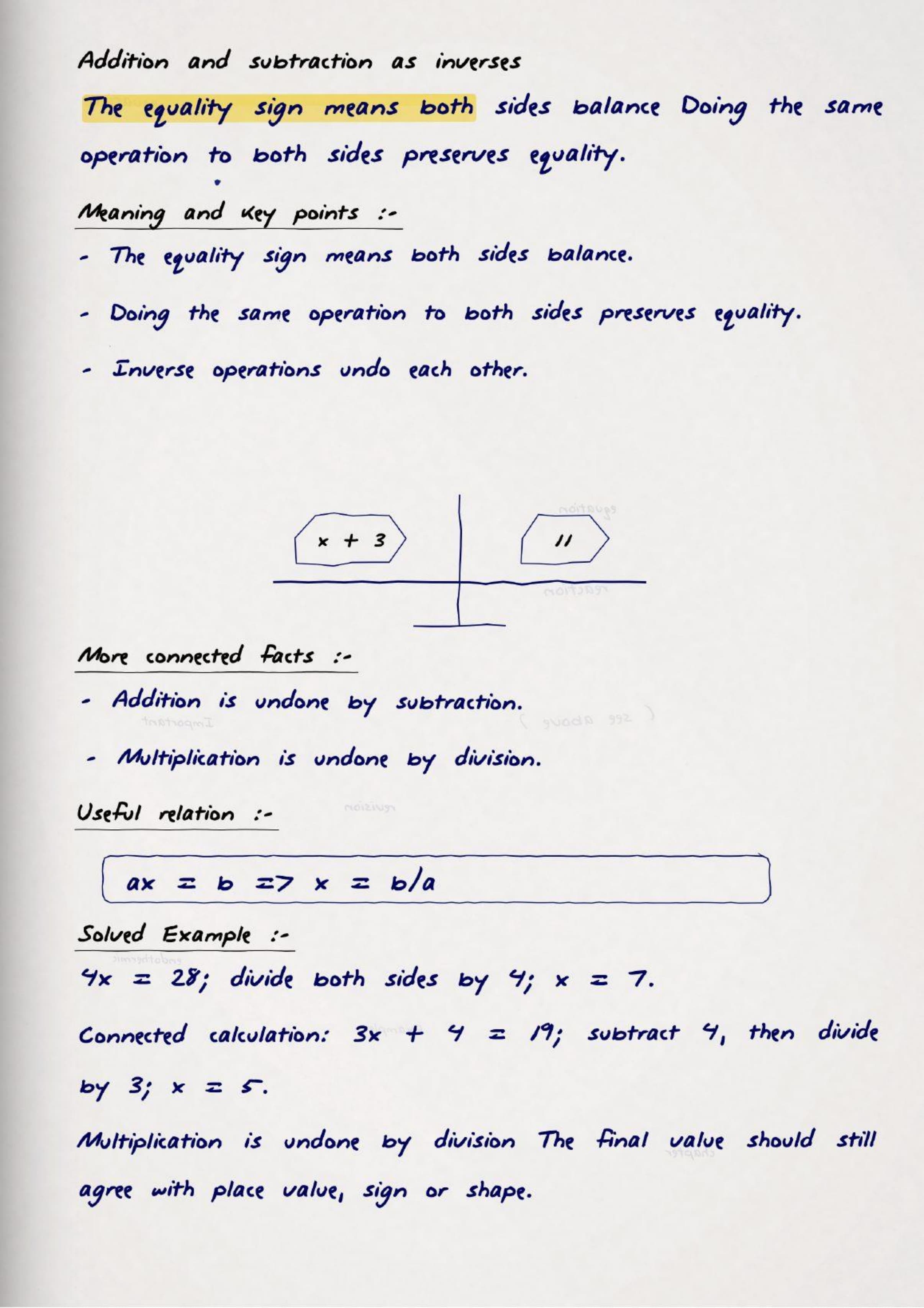
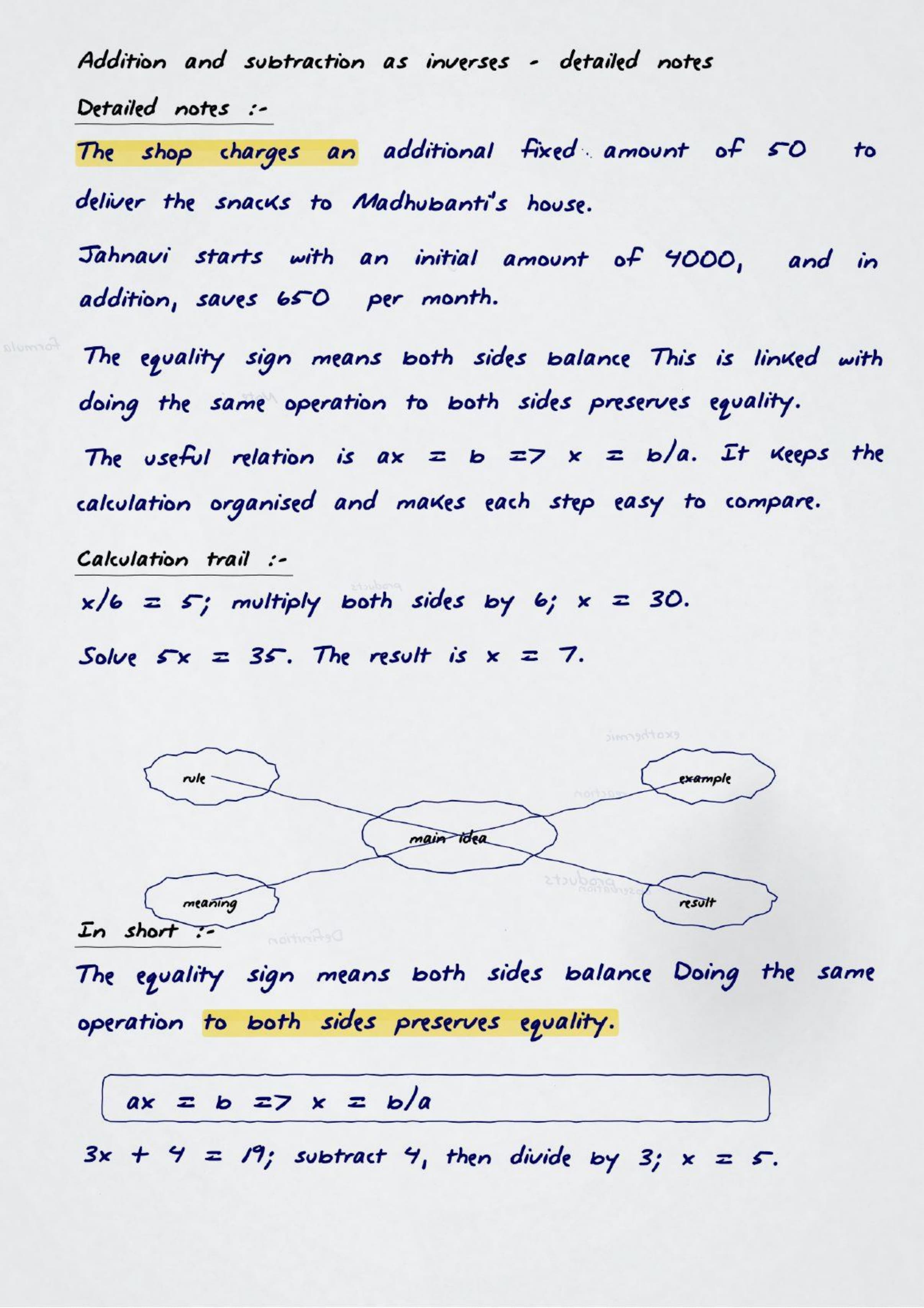
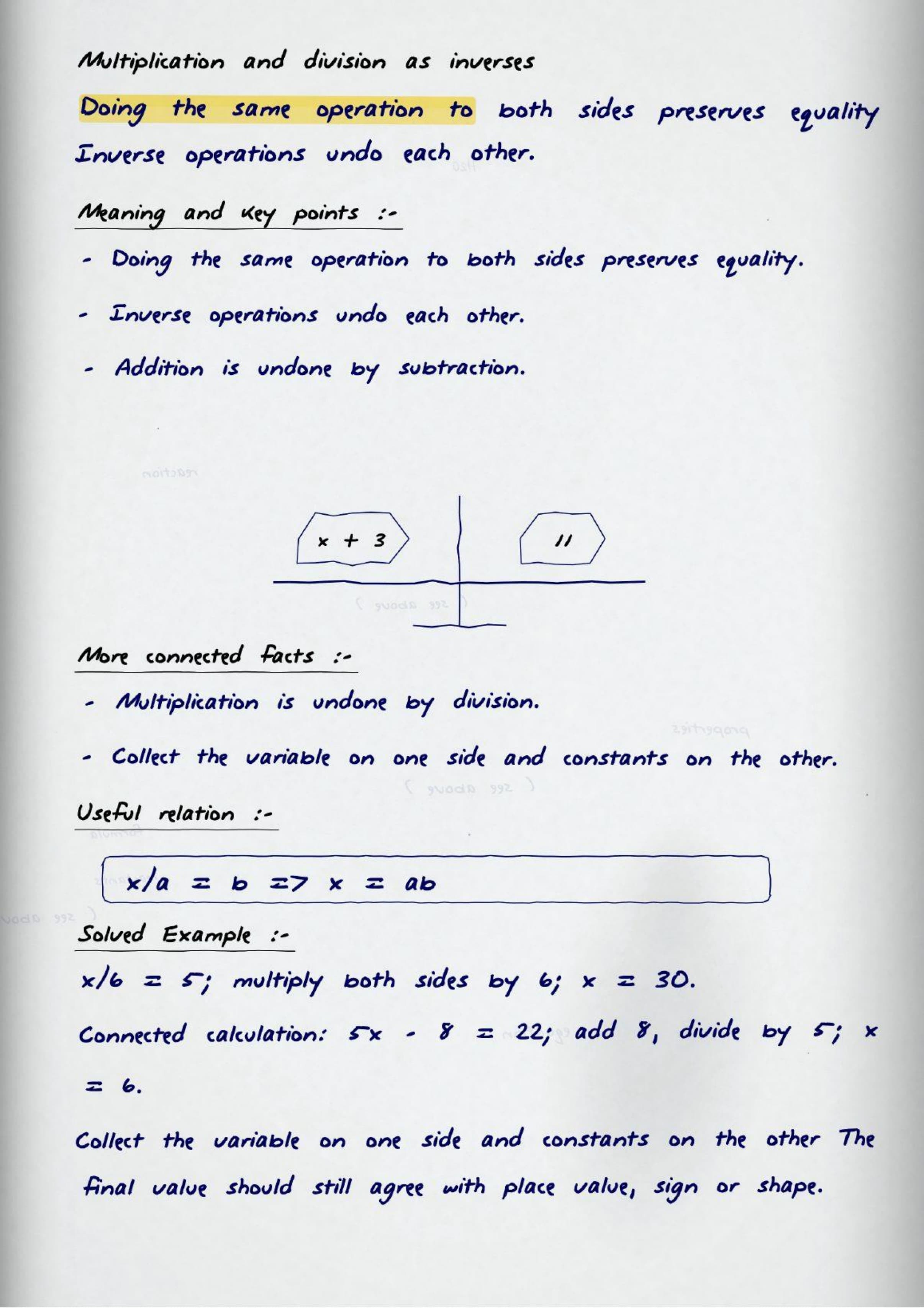
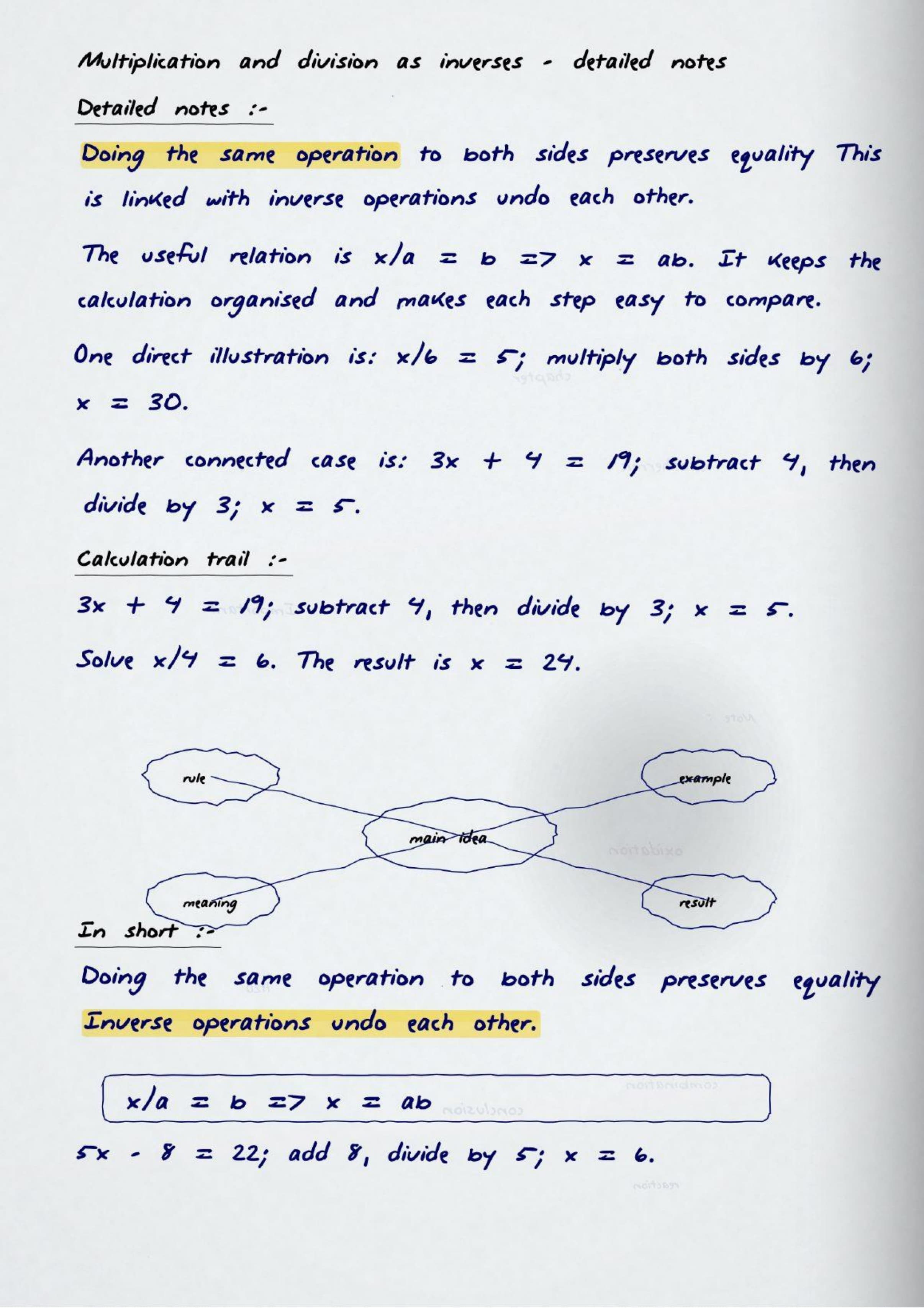
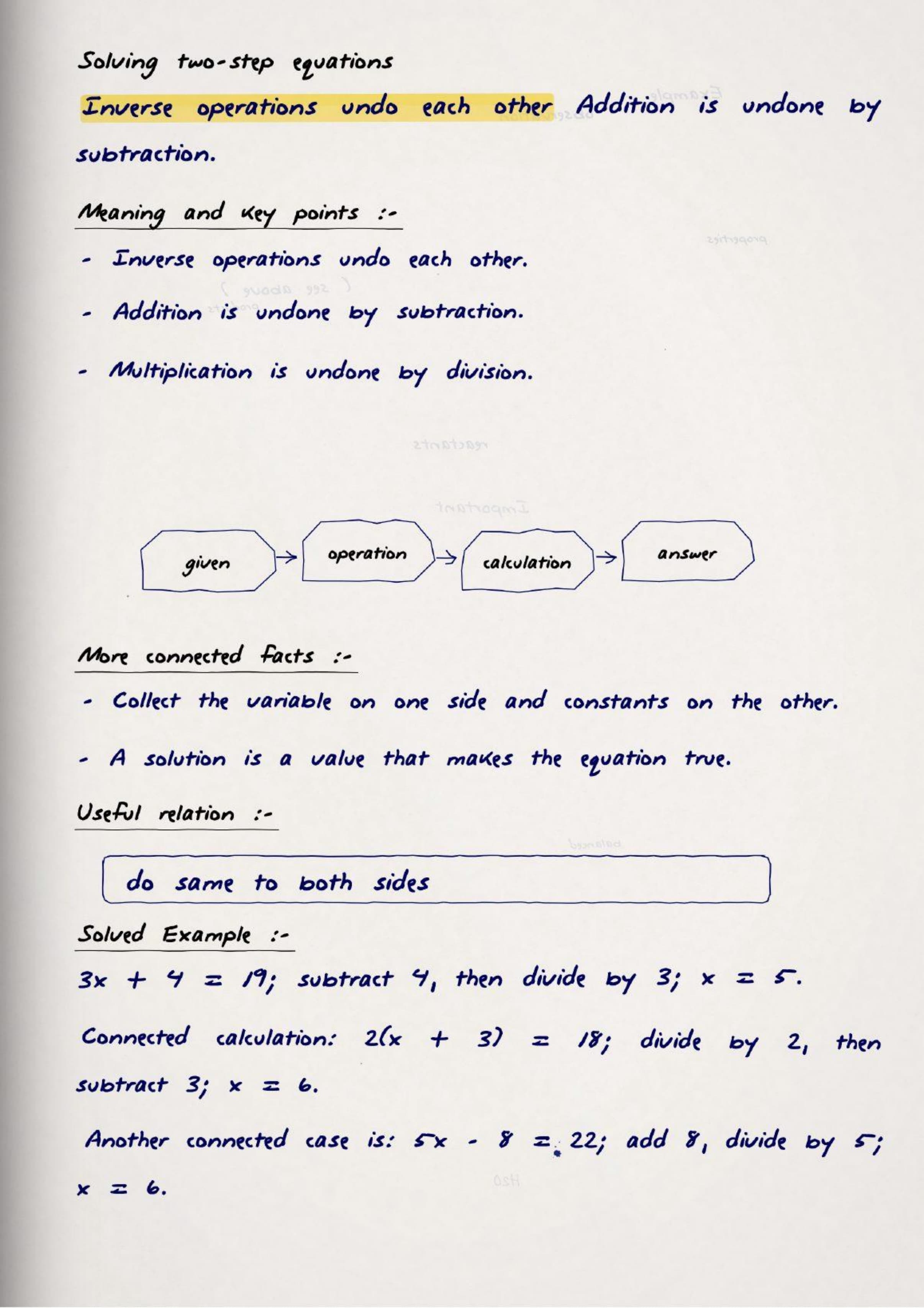
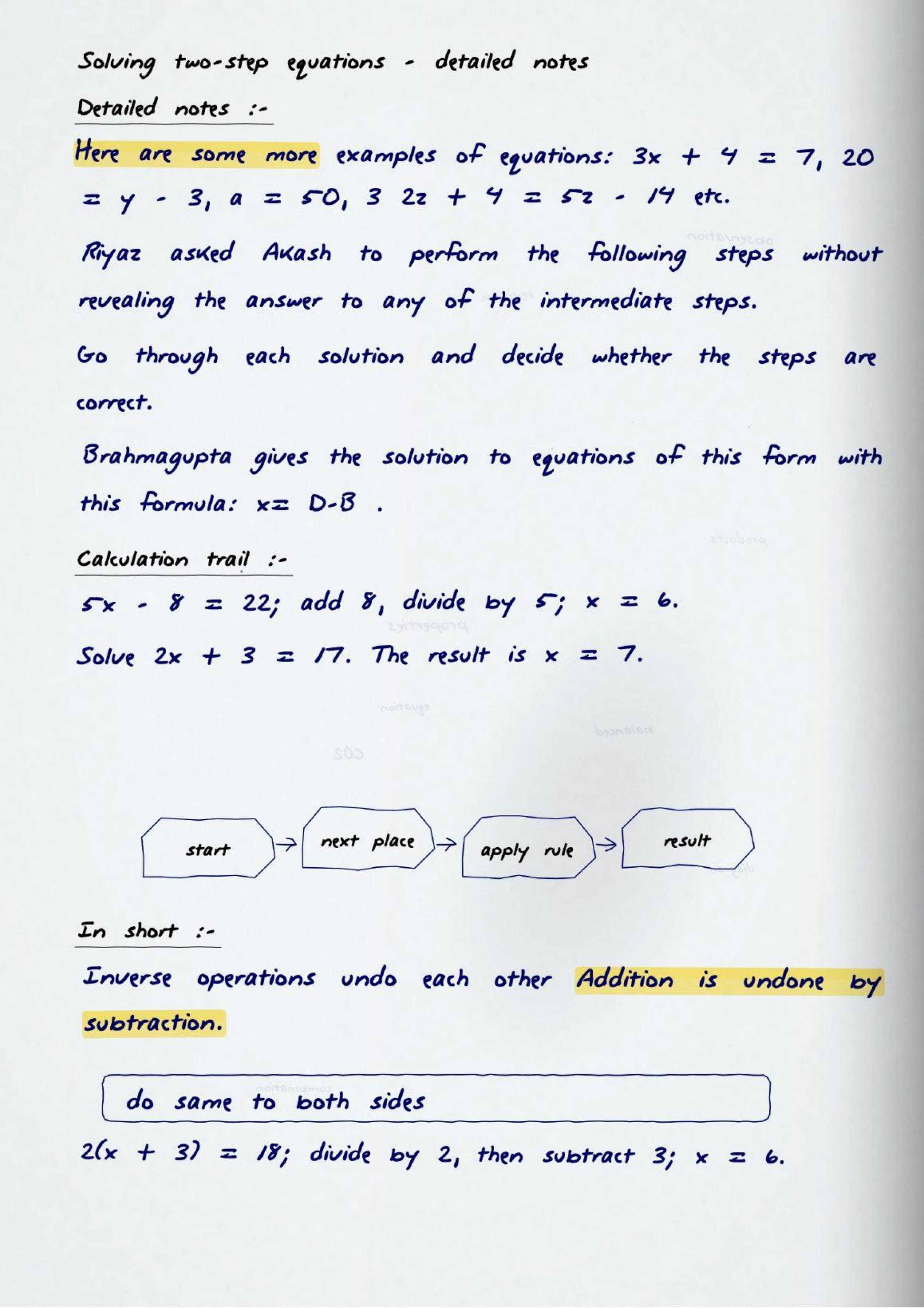
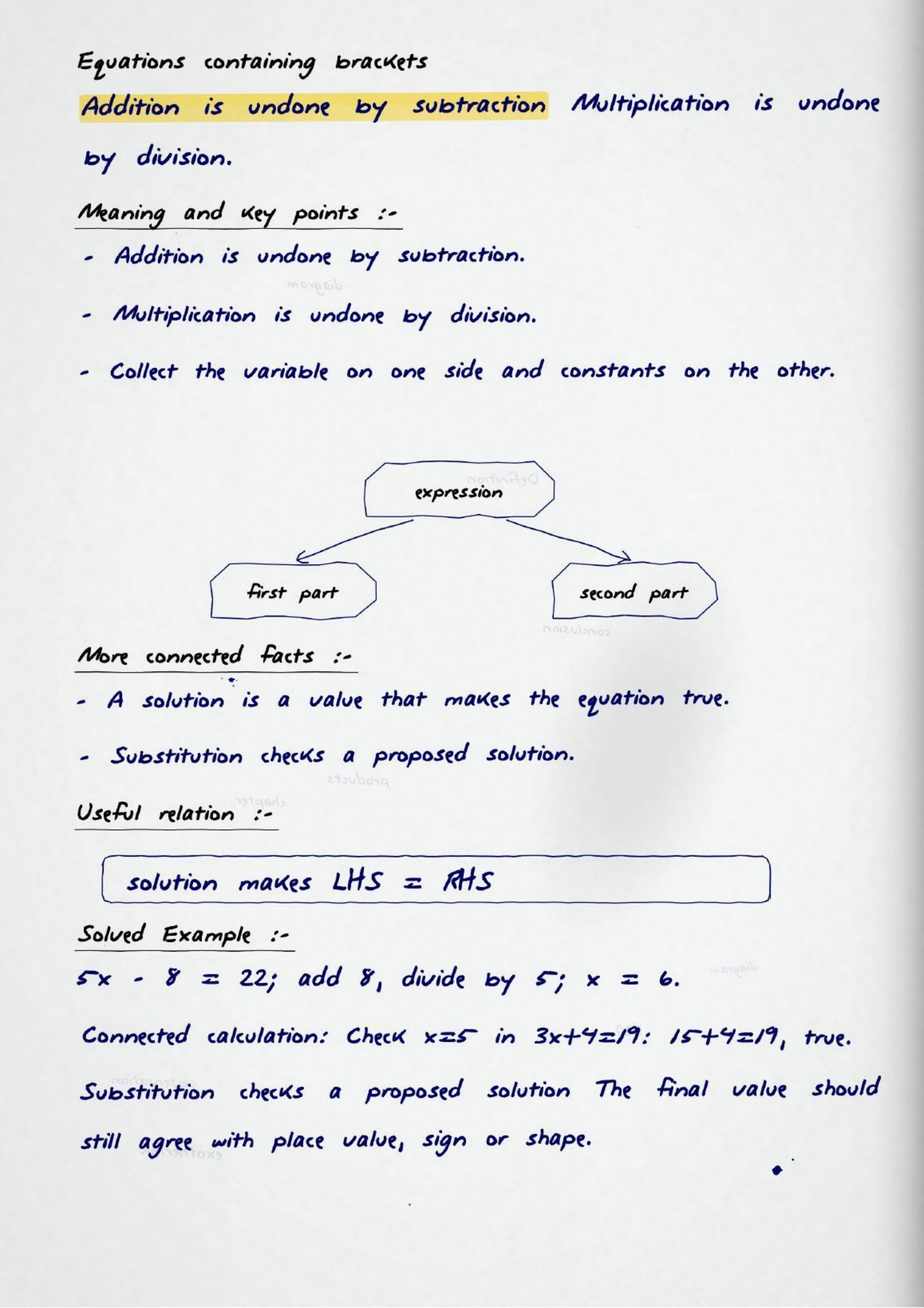
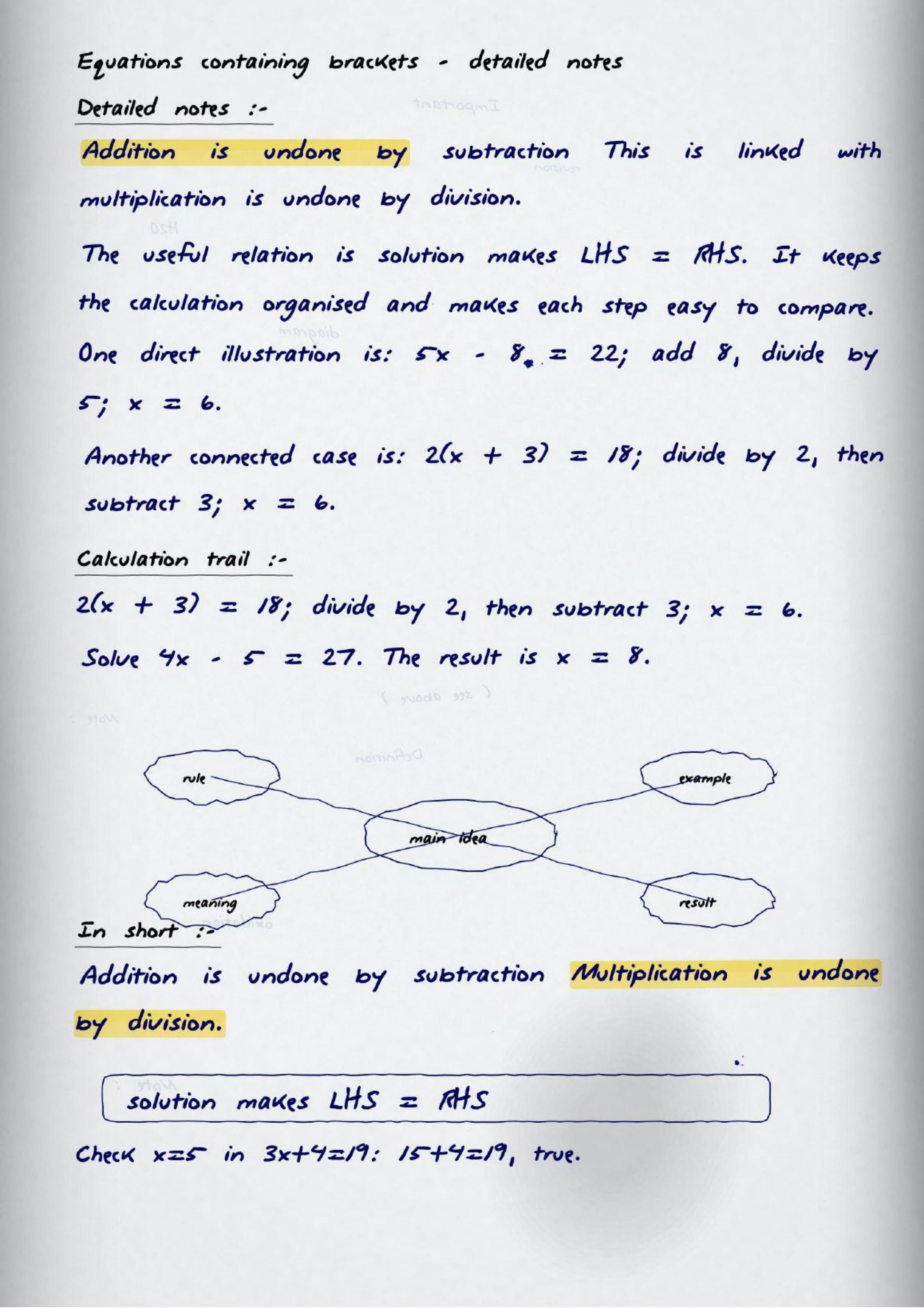
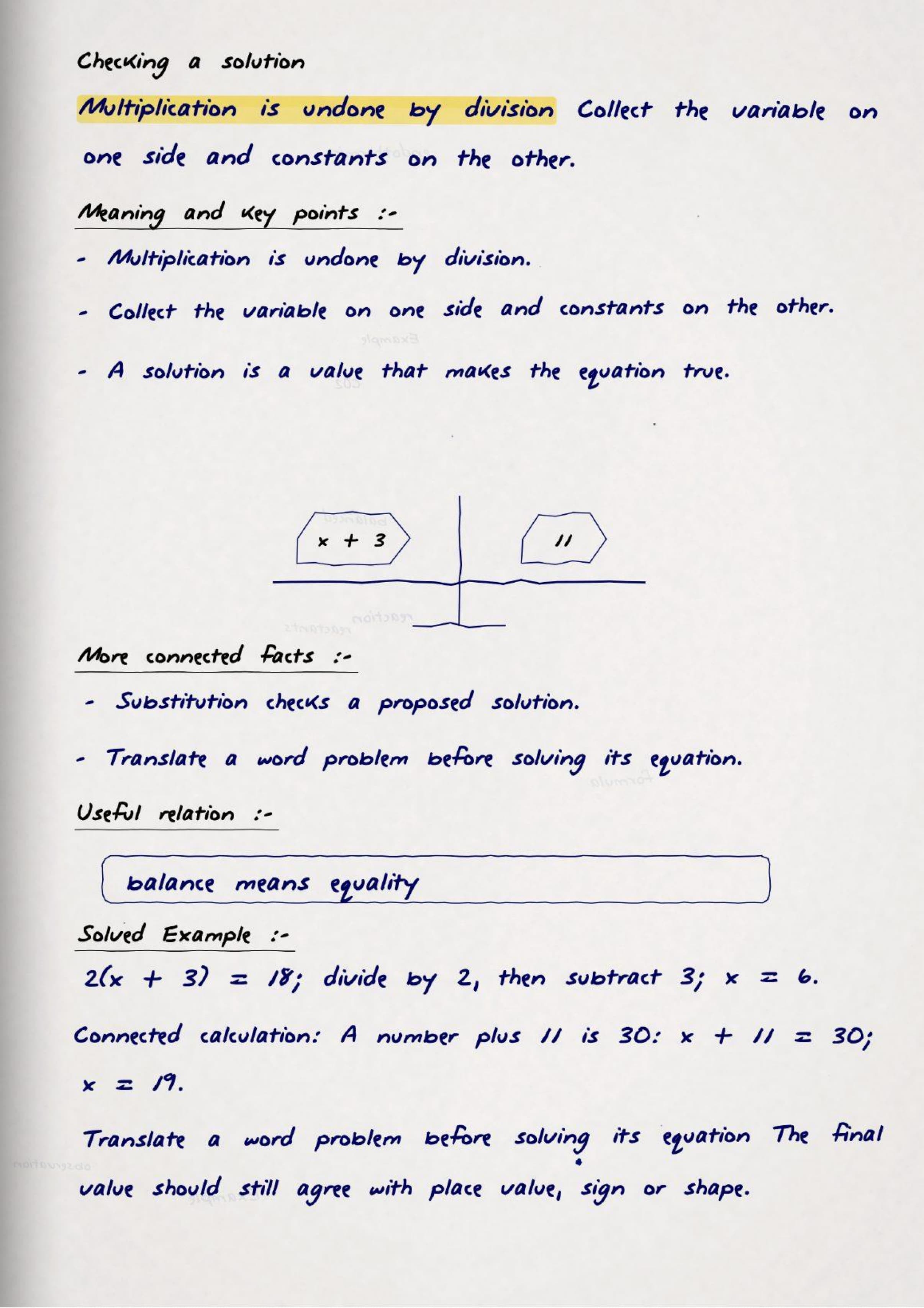
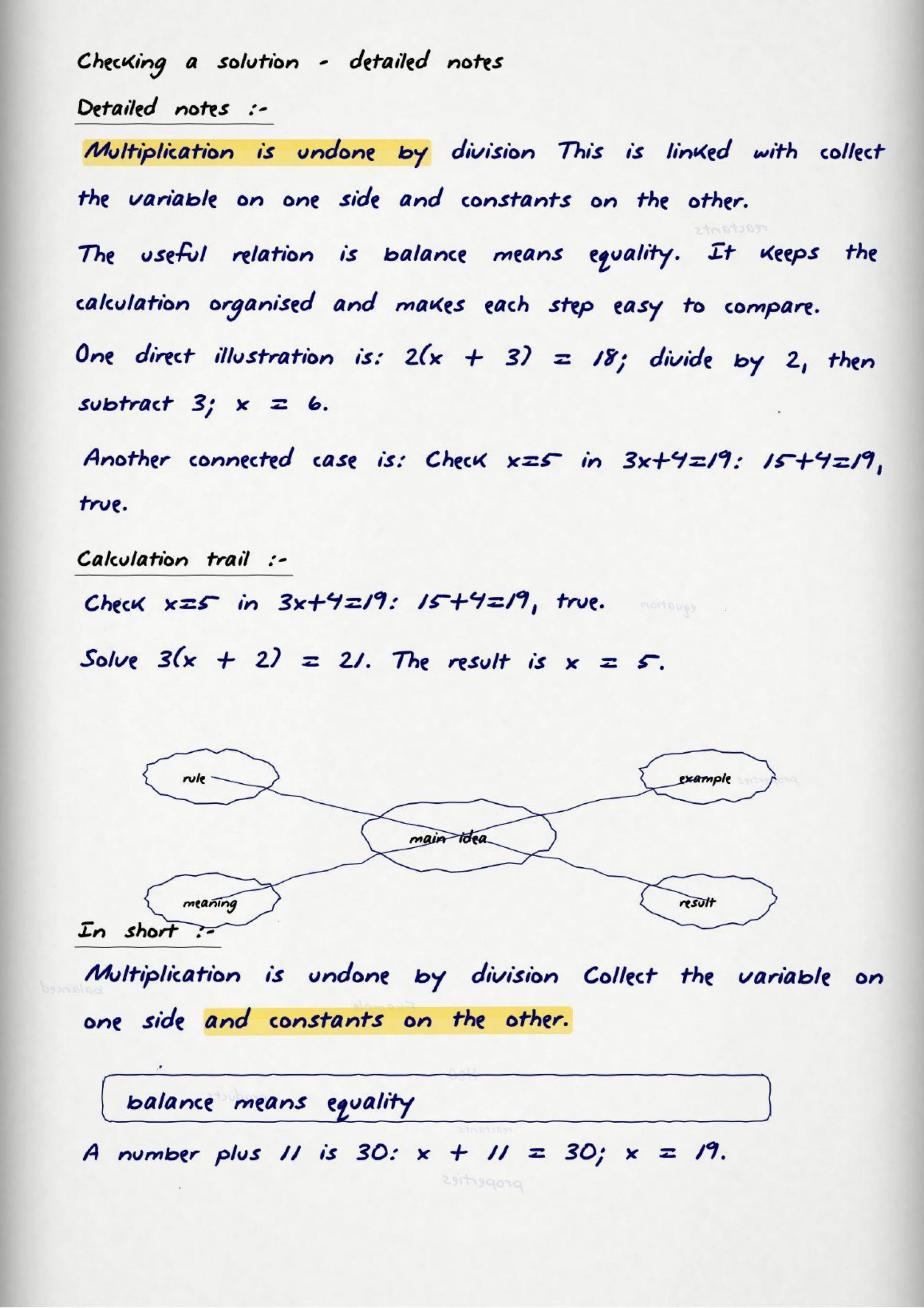
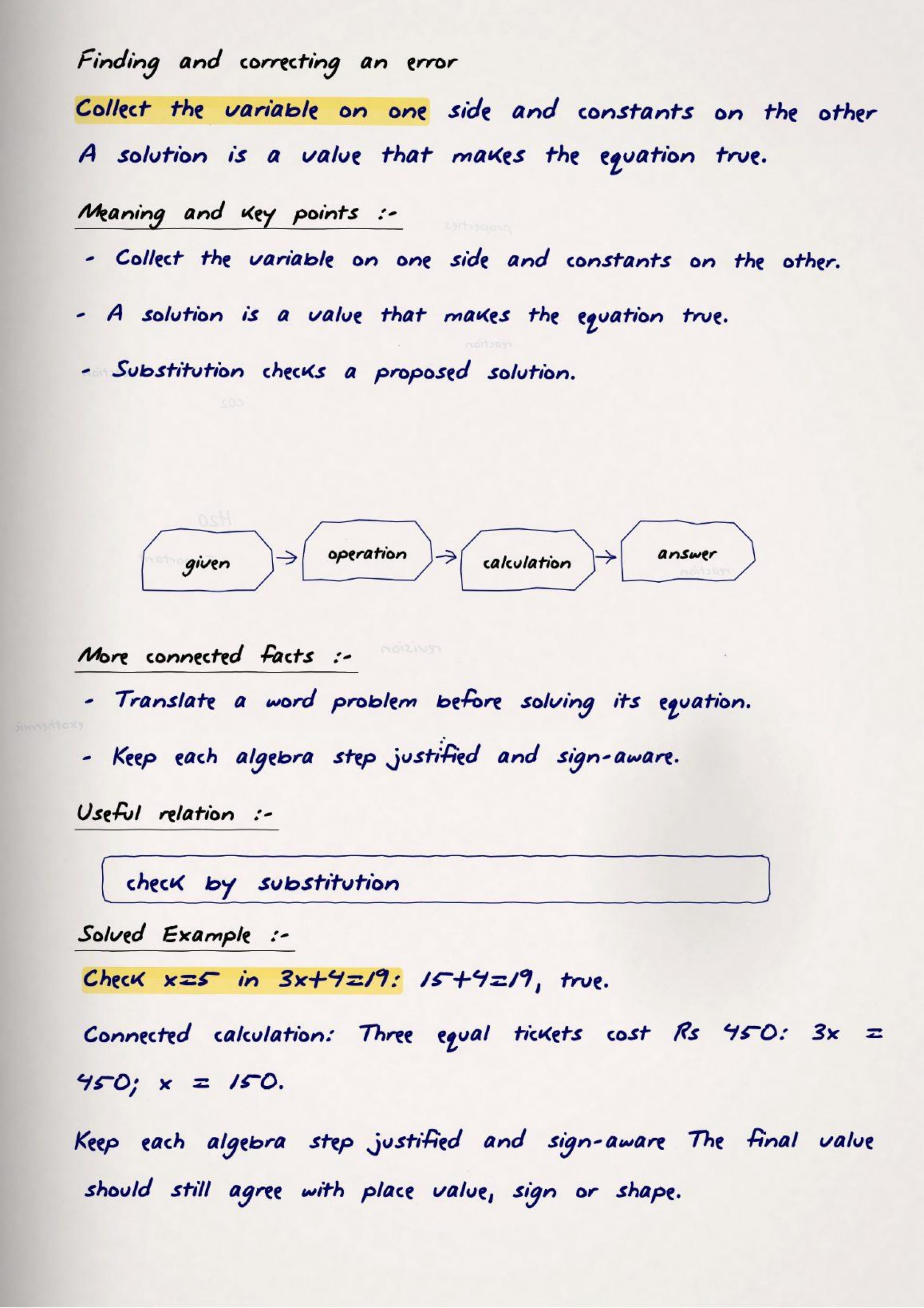
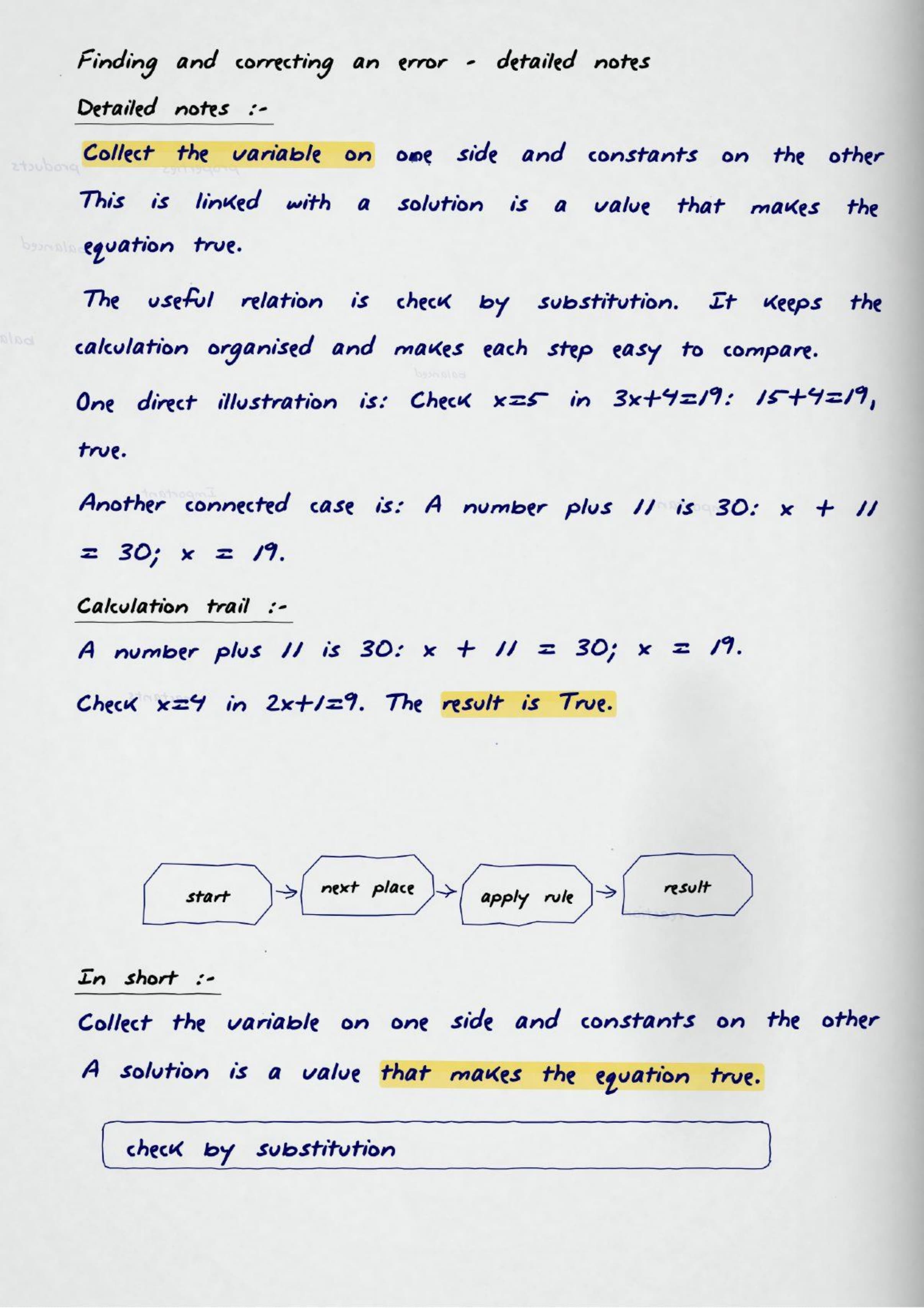
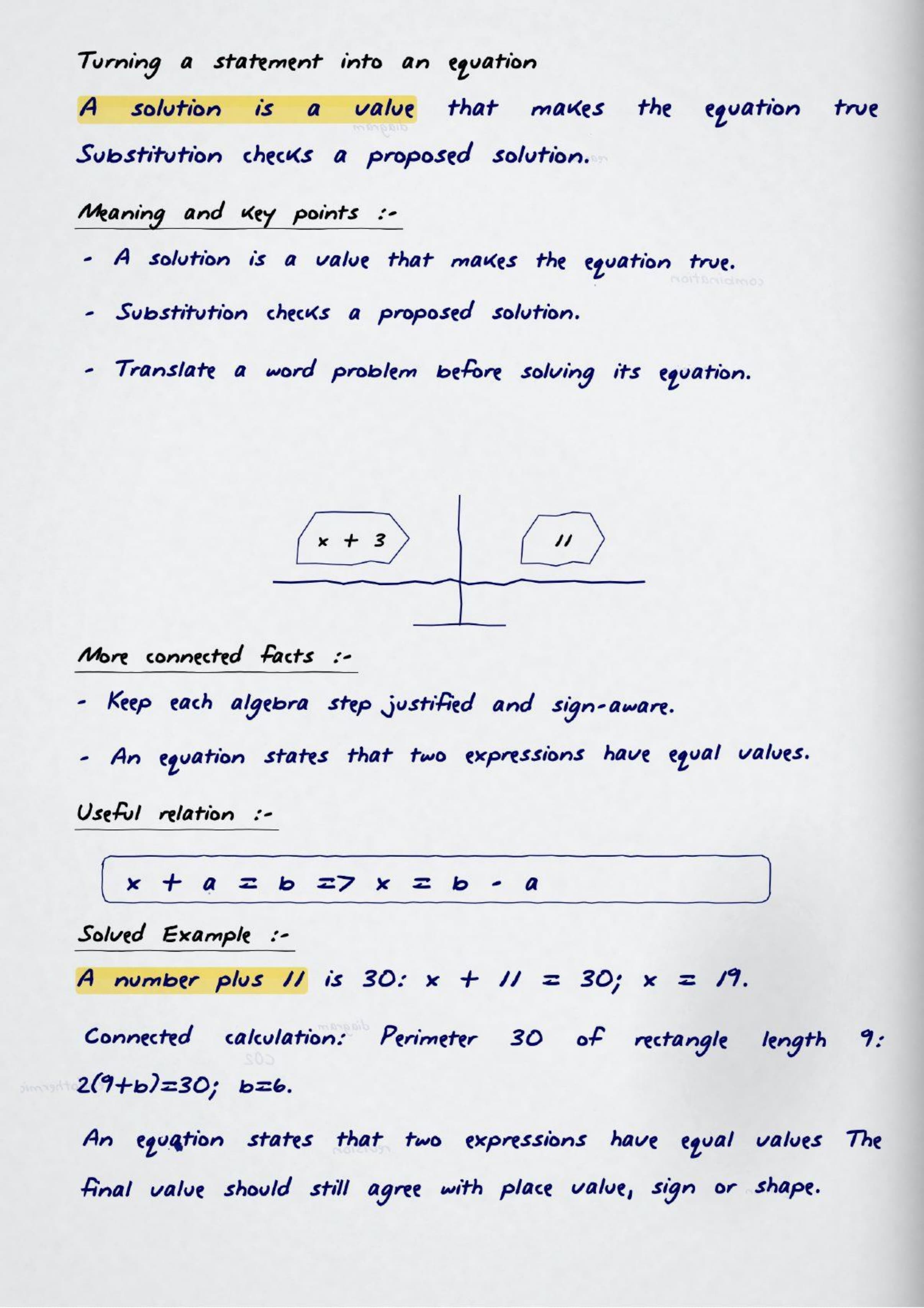
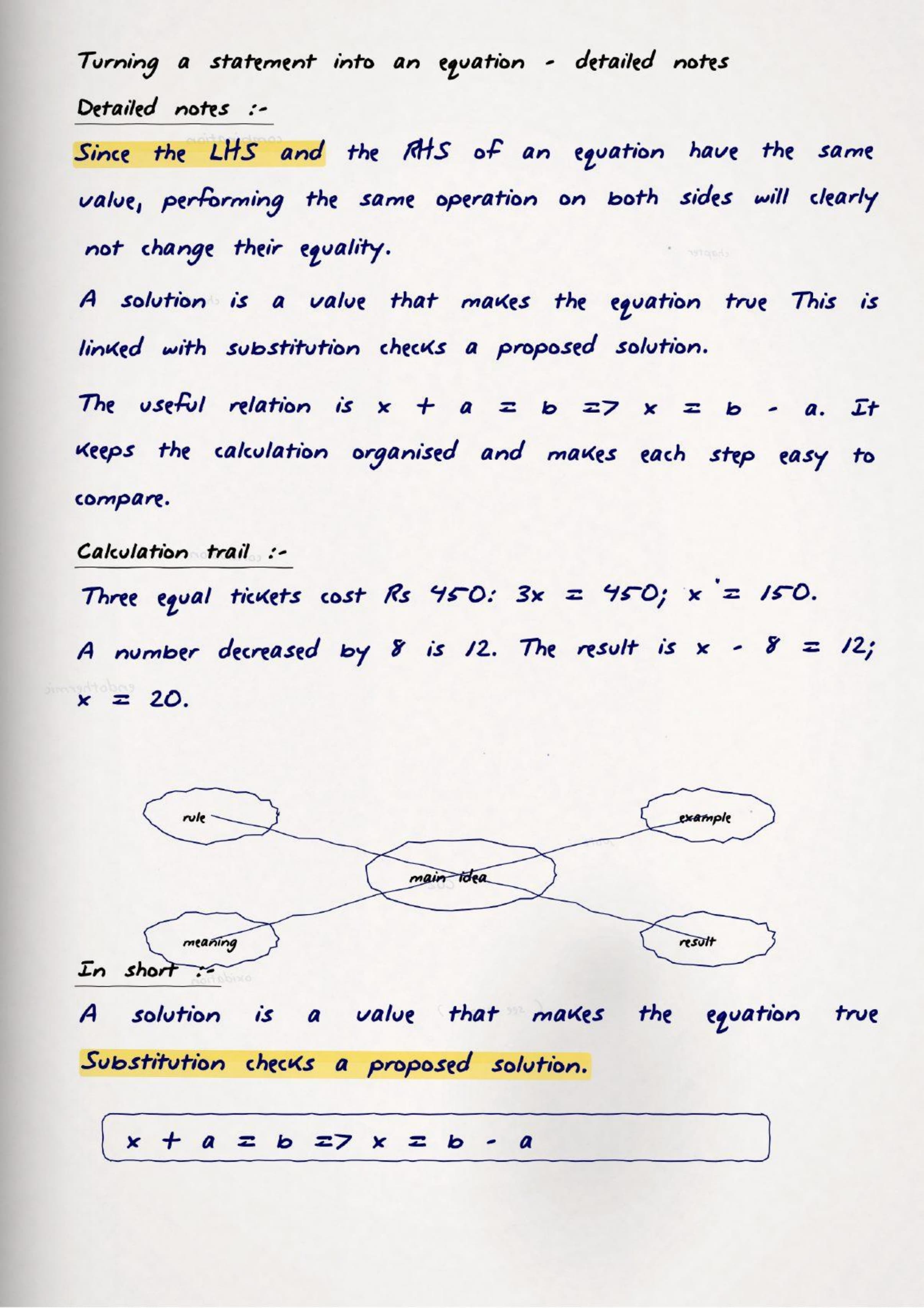
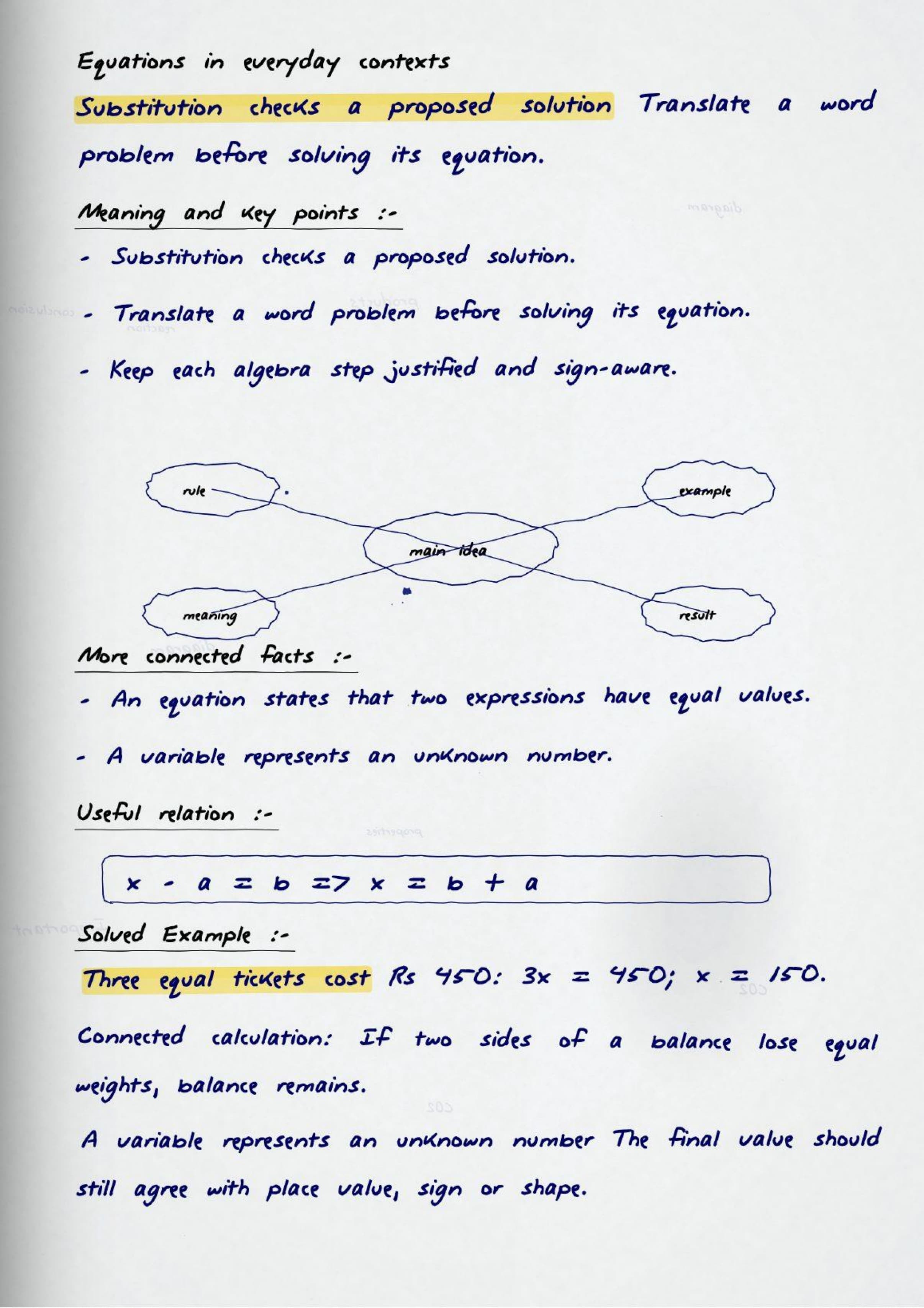
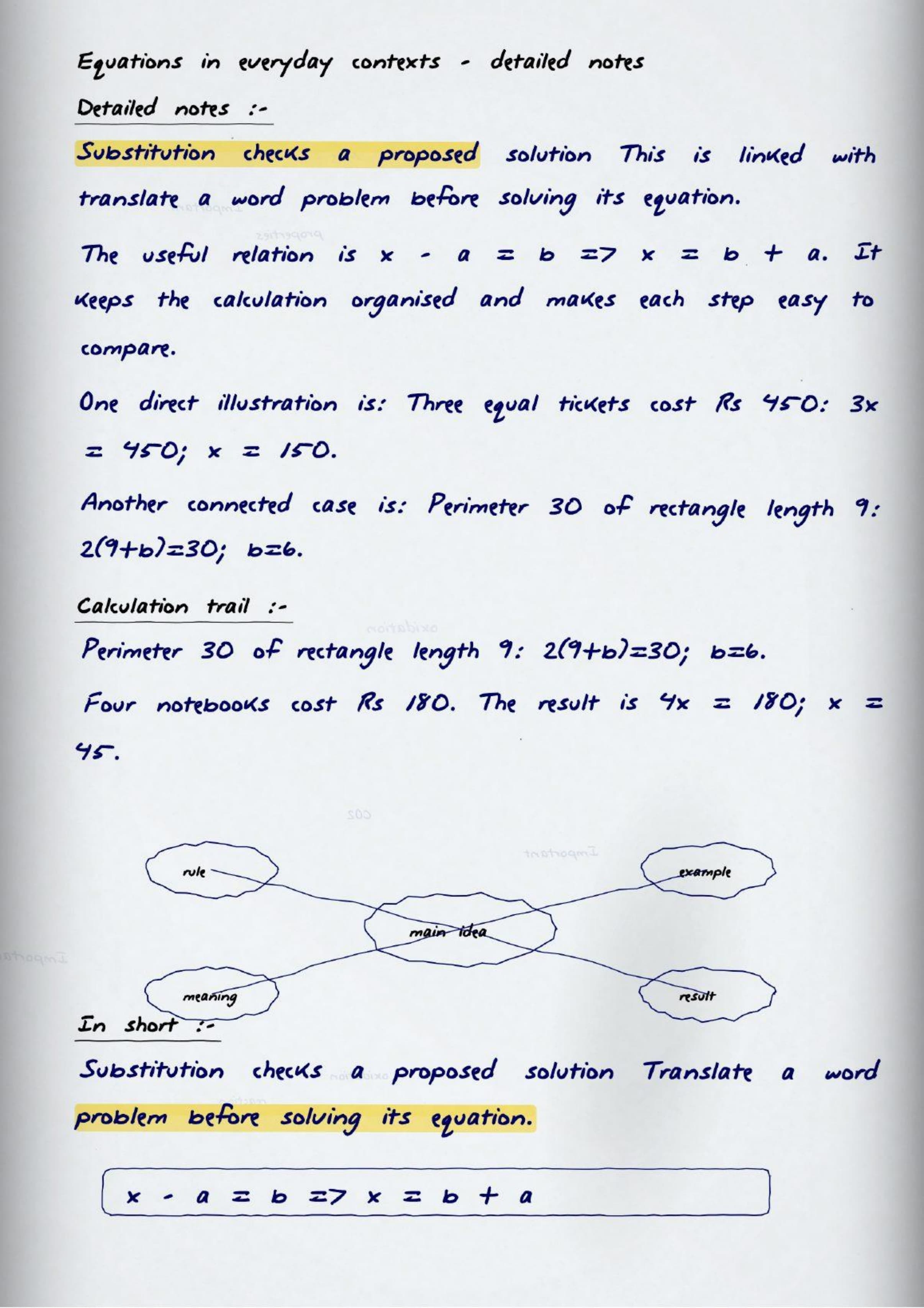
- Balance method boxed: whatever you do to one side, do to the other
- What the notes cover: unknown weights, solving equations step by step, correcting mistakes, and a note on history
- Best for: the solve-the-equation question, the highest-scoring type in the paper
Open the PDF below for the complete class 7 maths handwritten notes covering Finding the Unknown from the first page to the last.
These handwritten notes are written by Maths teachers, mapped to the 2026-27 NCERT Ganita Prakash book, and checked against Class 7 school question papers.
Where Students Lose Marks in Finding the Unknown
This chapter is the year's final skill and the one Class 8 opens with, so it is worth finishing well.
- A solve-the-equation question is set in every test
- Each correct step earns its own mark, so show all of them
- Substituting back to check is quick and often carries a mark
- Class 8 algebra begins exactly where this chapter ends
Why Students Pick Collegedunia's Finding the Unknown Handwritten Notes
Collegedunia has these class 7 maths handwritten notes written by teachers who set Class 7 papers. Every equation is solved down a ladder, one operation per line, with the check written underneath.
- Balance box: the do-the-same-to-both-sides rule drawn as a scale
- Step ladders: each equation solved one operation per line
- Error panel: common wrong solutions shown with the mistake circled
- Colour-coded sub-headings: sub-topics in red so each stage is easy to find
Test Yourself on Finding the Unknown
Five closing questions for the Class 7 Maths course. Tap to check.
Solve x + 5 = 12.
(a) x = 5 (b) x = 7 (c) x = 17 (d) x = 12
Answer: (b) x = 7, after subtracting 5 from both sides
Solve 3y = 21.
(a) y = 3 (b) y = 18 (c) y = 7 (d) y = 24
Answer: (c) y = 7, after dividing both sides by 3
An equation is a statement that
(a) two expressions are equal (b) one number is bigger (c) a shape is congruent (d) data is sorted
Answer: (a) two expressions are equal
If you add 4 to the left side of an equation, you must
(a) do nothing else (b) add 4 to the right side too (c) subtract 4 from the right (d) divide by 4
Answer: (b) add 4 to the right side too
How do you check that x = 7 solves x + 5 = 12?
(a) guess again (b) substitute 7 for x and see if both sides match (c) draw a graph (d) divide by 7
Answer: (b) substitute 7 for x and see if both sides match
Topics Written Out in the Finding the Unknown Notes
The chapter starts with a weighing scale and unknown weights. That image of a balance is what makes equation solving make sense.
- Unknown weights on a balance
- Reading a balance as an equation
- Writing an equation from a word problem
- Solving equations systematically
- Doing the same thing to both sides
- Checking a solution by substituting
- Mind the mistake, mend the mistake
- Common errors in solving
- A pinch of history: early algebra
Finding the Unknown Sub-topic Priority List for CBSE Class 7 Maths
Solving equations carries the marks, and the steps are marked as well as the answer.
| Sub-topic | Weightage | How often asked |
|---|---|---|
| Solving equations step by step | High | asked often |
| Writing an equation from a word problem | High | asked often |
| Checking a solution by substituting | High | asked often |
| Finding unknown weights on a balance | Medium | asked sometimes |
| Spotting and correcting errors | Medium | asked sometimes |
| History of algebra | Low | asked rarely |
Finding the Unknown in the Last Hour Before the Exam
The final card of the Class 7 Maths course.
- An equation says two expressions are equal
- Do the same thing to both sides, every time
- Solve one operation per line
- Substitute your answer back to check
- x + 5 = 12 gives x = 7
Hand-drawn Sketches Inside the Finding the Unknown Notes
The balance image carries this chapter, so the notes draw it repeatedly.
| Figure drawn by hand | What it shows |
|---|---|
| Weighing scale | unknown weights on a balance with the equation written beside |
| Balance box | the do-the-same-to-both-sides rule drawn as a scale |
| Step ladder | one equation solved down a ladder, one step per rung |
| Substitution check | the solution put back into the original equation |
| Error panel | a wrong solution with the faulty step circled |
Words and Ideas the Finding the Unknown Notes Box Off
Equation vocabulary is small and every word is used in the marking.
| Term / Idea | What it means |
|---|---|
| Equation | a statement that two expressions are equal |
| Unknown | the quantity you are trying to find |
| Solution | the value of the unknown that makes the equation true |
| Balance | the idea that both sides of an equation stay equal |
| Substitute | to put a value in place of a letter |
| Verify | to check that a solution makes the equation true |
| Both sides | the left and right parts of an equation, either side of the equals sign |
Best Way to Read the Finding the Unknown Handwritten Notes
A short plan works better than one long sitting with the class 7 maths handwritten notes. Solve down a ladder and substitute back every time. Checking costs seconds and saves marks.
- Write the balance rule in your own words
- Solve fifteen equations, one operation per line
- Substitute your answer back into every equation you solve
- Before the exam, revise the balance box and the error panel
Where to Go After the Finding the Unknown Notes
Use the notes with the solved exercises and the Ganita Prakash chapter itself.
Chapter-wise Class 7 Maths Handwritten Notes
Ganita Prakash Part 1 has eight chapters and Part 2 has seven. Use the table to open the class 7 maths handwritten notes for any other chapter.
| Chapter | Resource |
|---|---|
| Part 1 Chapter 1 | Large Numbers Around Us Handwritten Notes |
| Part 1 Chapter 2 | Arithmetic Expressions Handwritten Notes |
| Part 1 Chapter 3 | A Peek Beyond the Point Handwritten Notes |
| Part 1 Chapter 4 | Expressions using Letter-Numbers Handwritten Notes |
| Part 1 Chapter 5 | Parallel and Intersecting Lines Handwritten Notes |
| Part 1 Chapter 6 | Number Play Handwritten Notes |
| Part 1 Chapter 7 | A Tale of Three Intersecting Lines Handwritten Notes |
| Part 1 Chapter 8 | Working with Fractions Handwritten Notes |
| Part 2 Chapter 1 | Geometric Twins Handwritten Notes |
| Part 2 Chapter 2 | Operations with Integers Handwritten Notes |
| Part 2 Chapter 3 | Finding Common Ground Handwritten Notes |
| Part 2 Chapter 4 | Another Peek Beyond the Point Handwritten Notes |
| Part 2 Chapter 5 | Connecting the Dots... Handwritten Notes |
| Part 2 Chapter 6 | Constructions and Tilings Handwritten Notes |
| Part 2 Chapter 7 | Finding the Unknown Handwritten Notes |
Finding the Unknown Class 7 Maths Handwritten Notes FAQs
Ques. Where can I download the Finding the Unknown Class 7 Maths Handwritten Notes PDF?
Ans. The PDF is on this page, free, in both the normal and the HD version.
Ques. What is an equation in Class 7 Maths?
Ans. An equation is a statement that two expressions are equal, such as x + 5 = 12. Solving it means finding the value of the unknown that makes the statement true.
Ques. How many pages is the Part 2 Chapter 7 handwritten notes PDF?
Ans. It runs 20 pages and covers all four sections of the chapter plus a quiz.
Ques. What is the balance method for solving equations?
Ans. Think of the equation as a weighing scale that is level. Whatever you do to one side, do exactly the same to the other side, and the scale stays balanced.
Ques. How do you check the solution of an equation?
Ans. Substitute your answer back into the original equation. If both sides work out to the same value, the solution is correct.



Comments