




These Introduction to Probability handwritten notes are a topper's clear revision of the seventh chapter of the new Ganita Manjari book. The Class 9 Maths Handwritten Notes Chapter 7 Introduction to Probability fit every rule, table, and solved example onto a few pages, written by hand just as you would set it out in the exam.
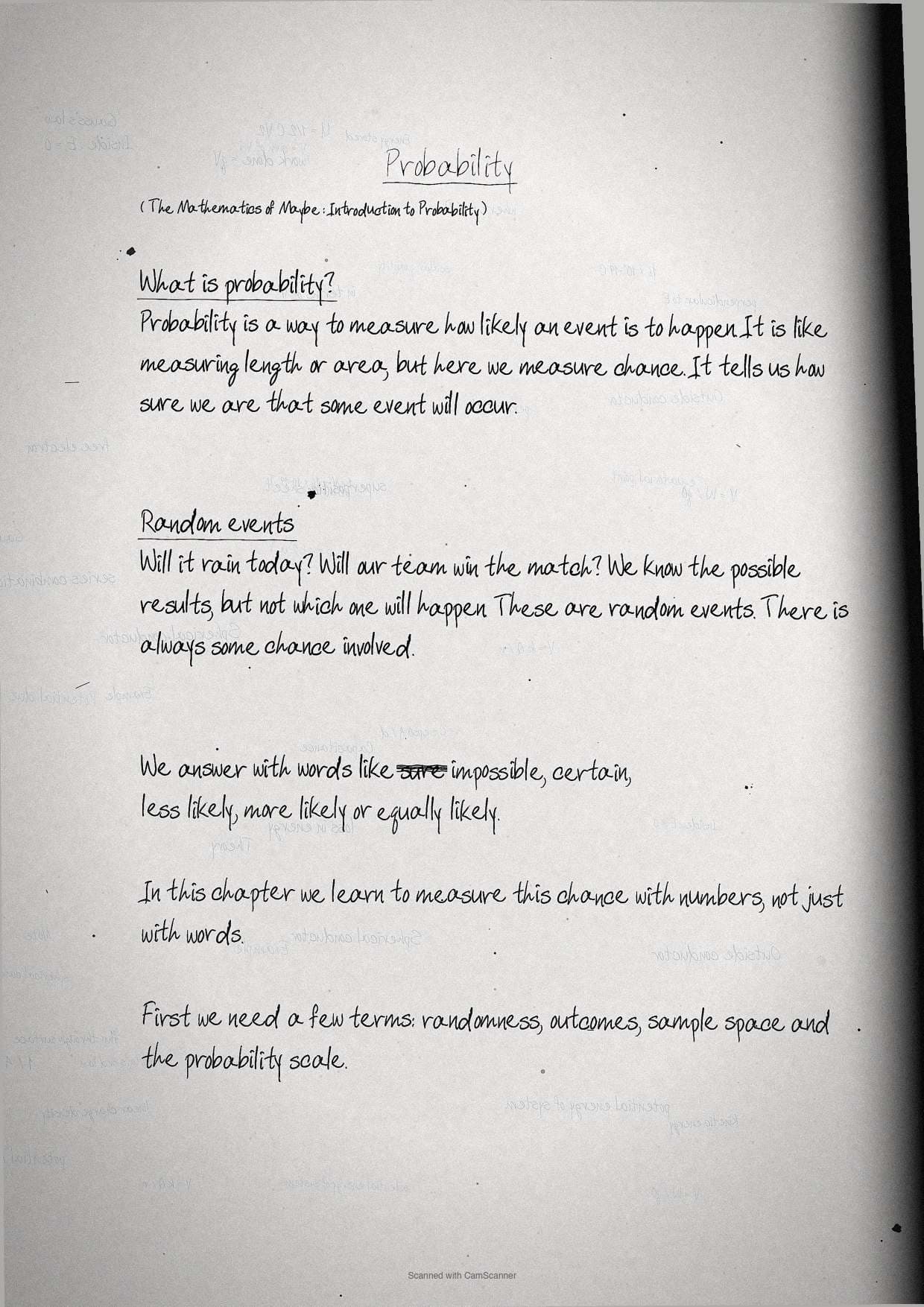
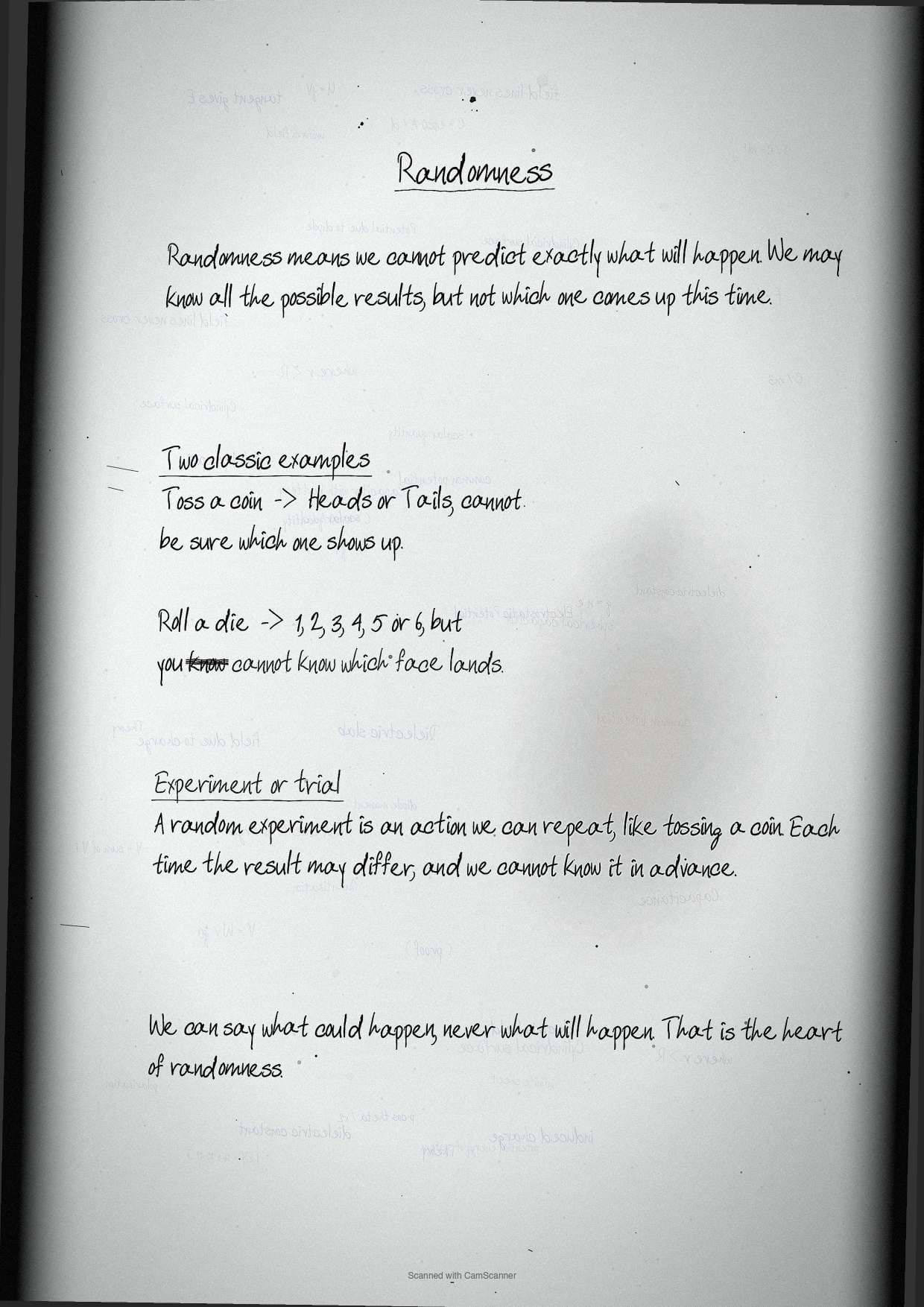
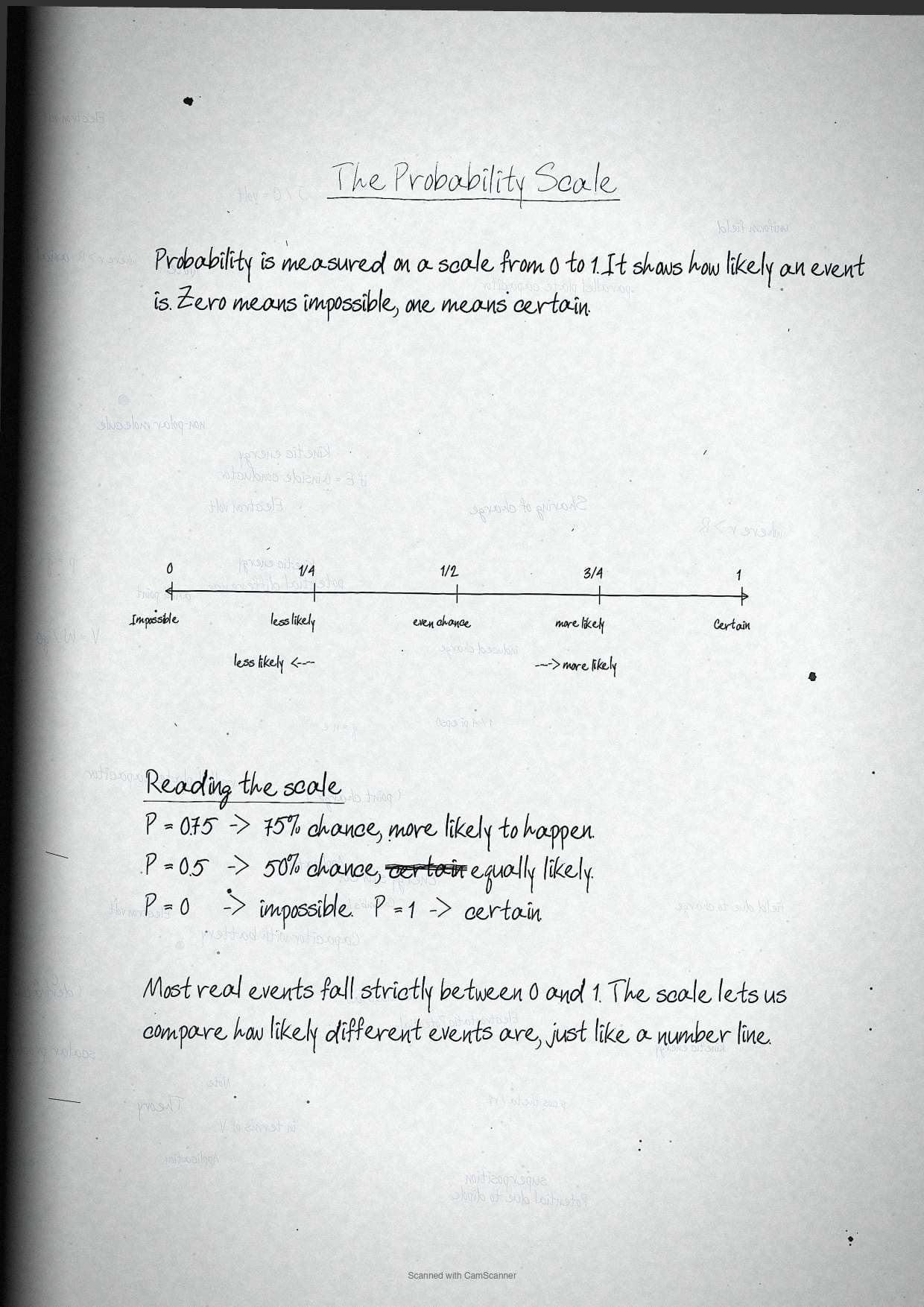
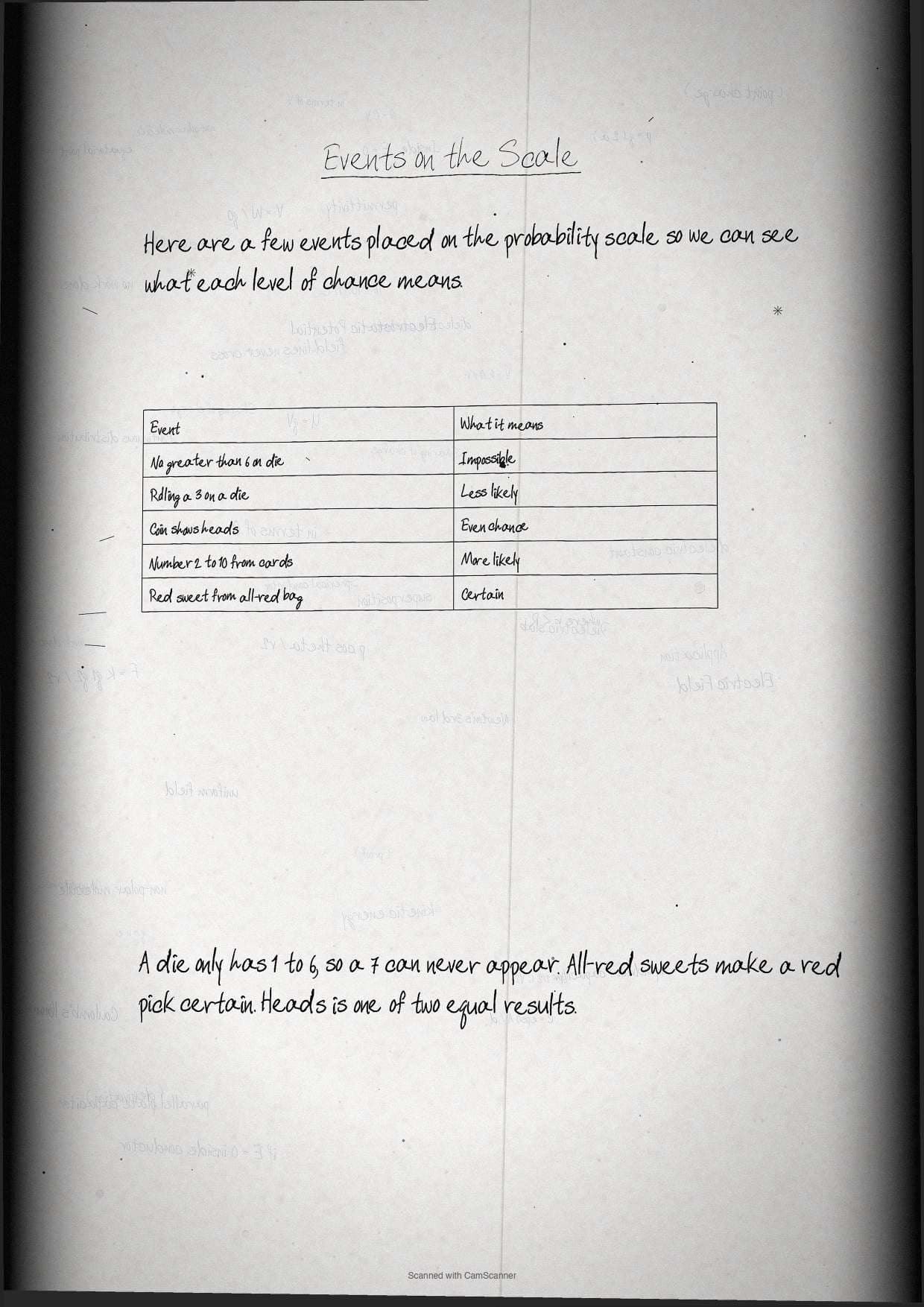
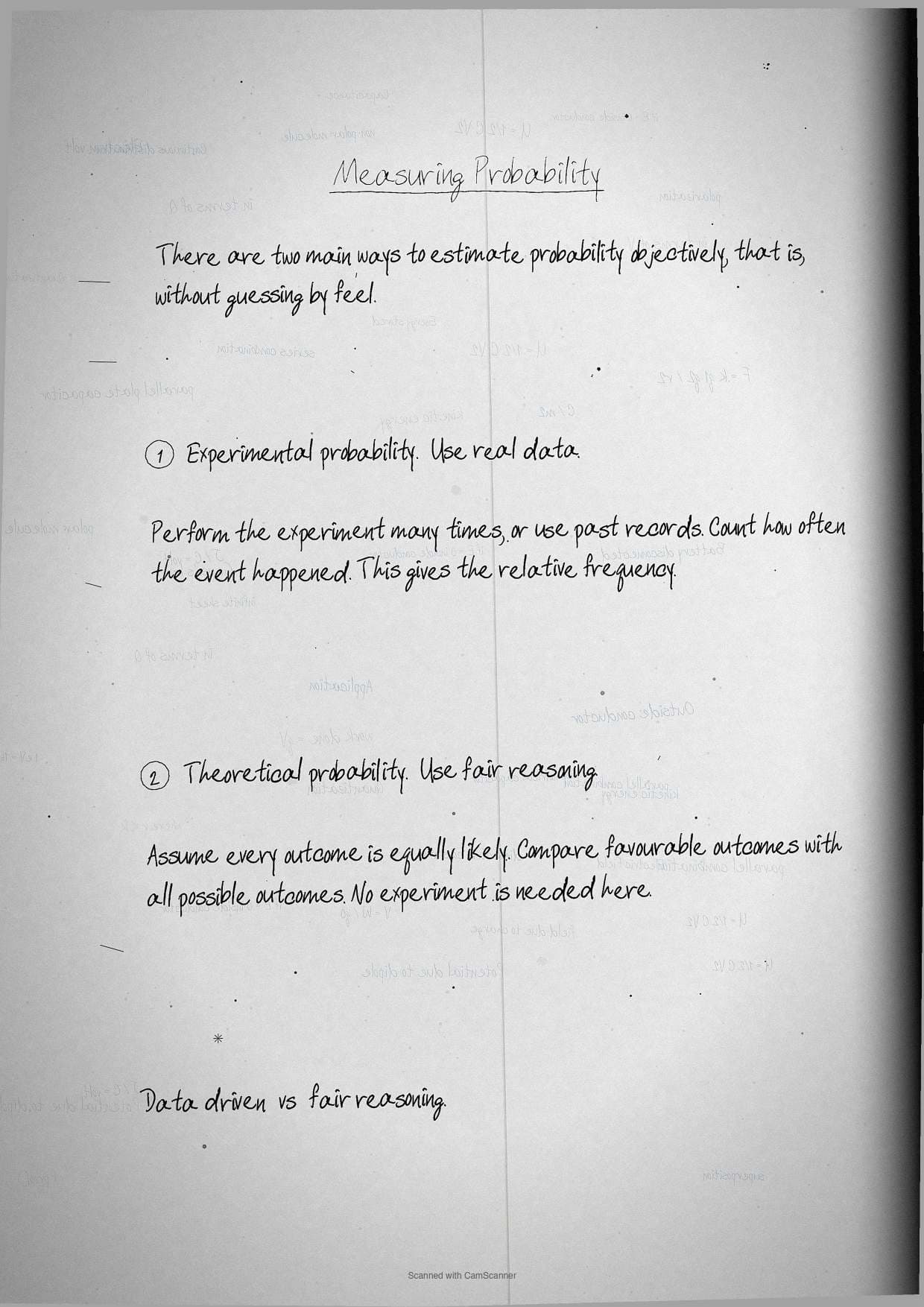
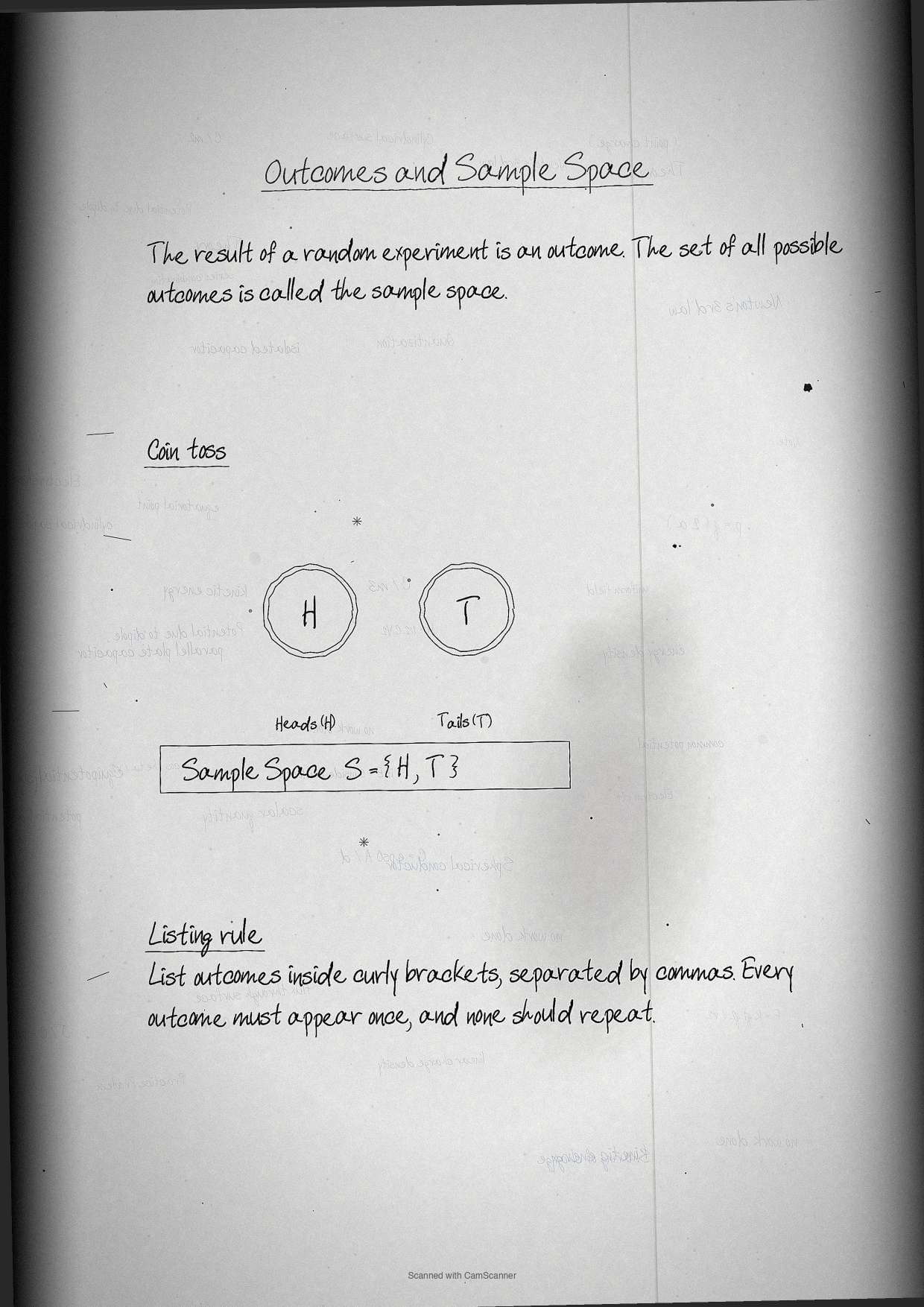
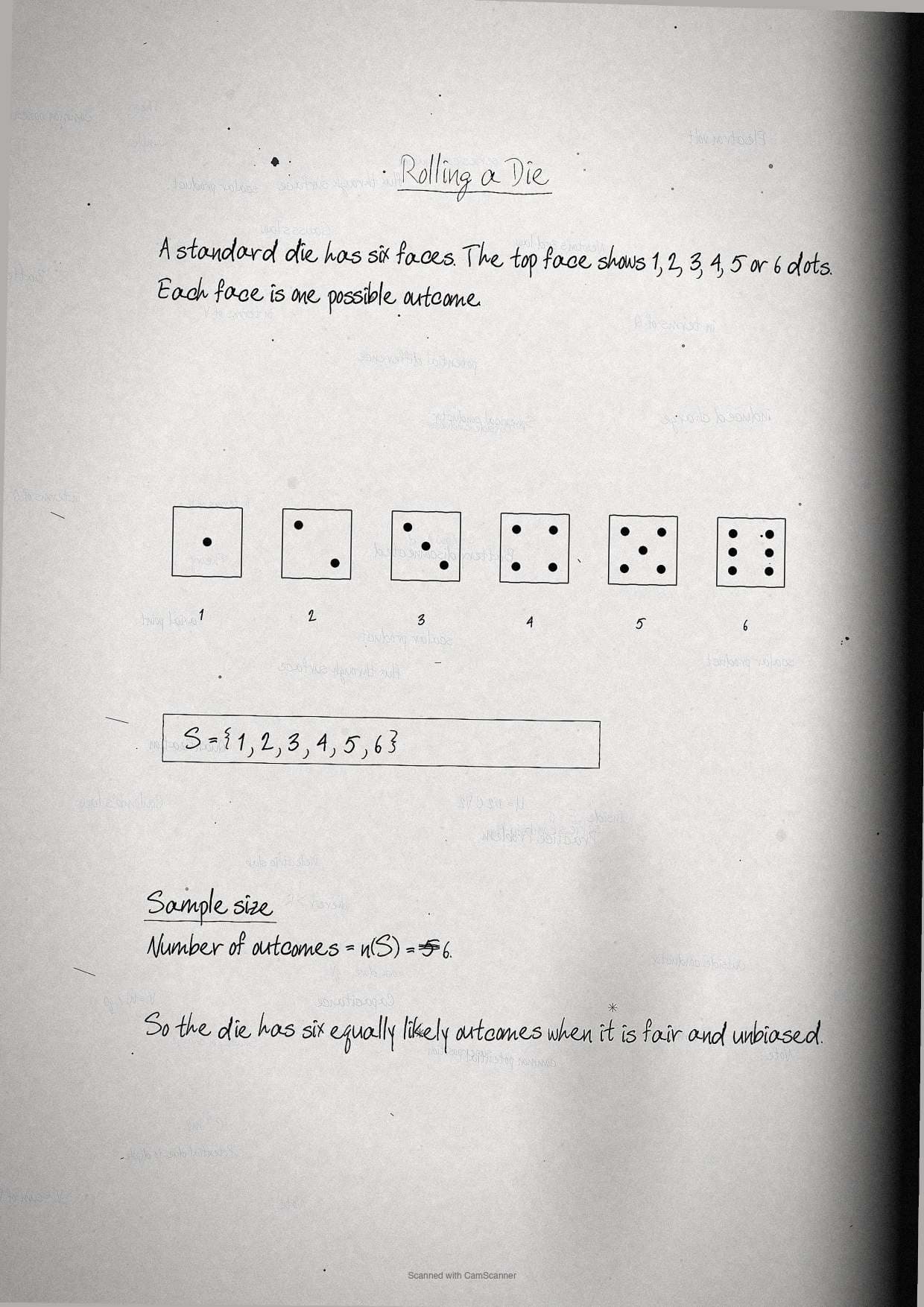
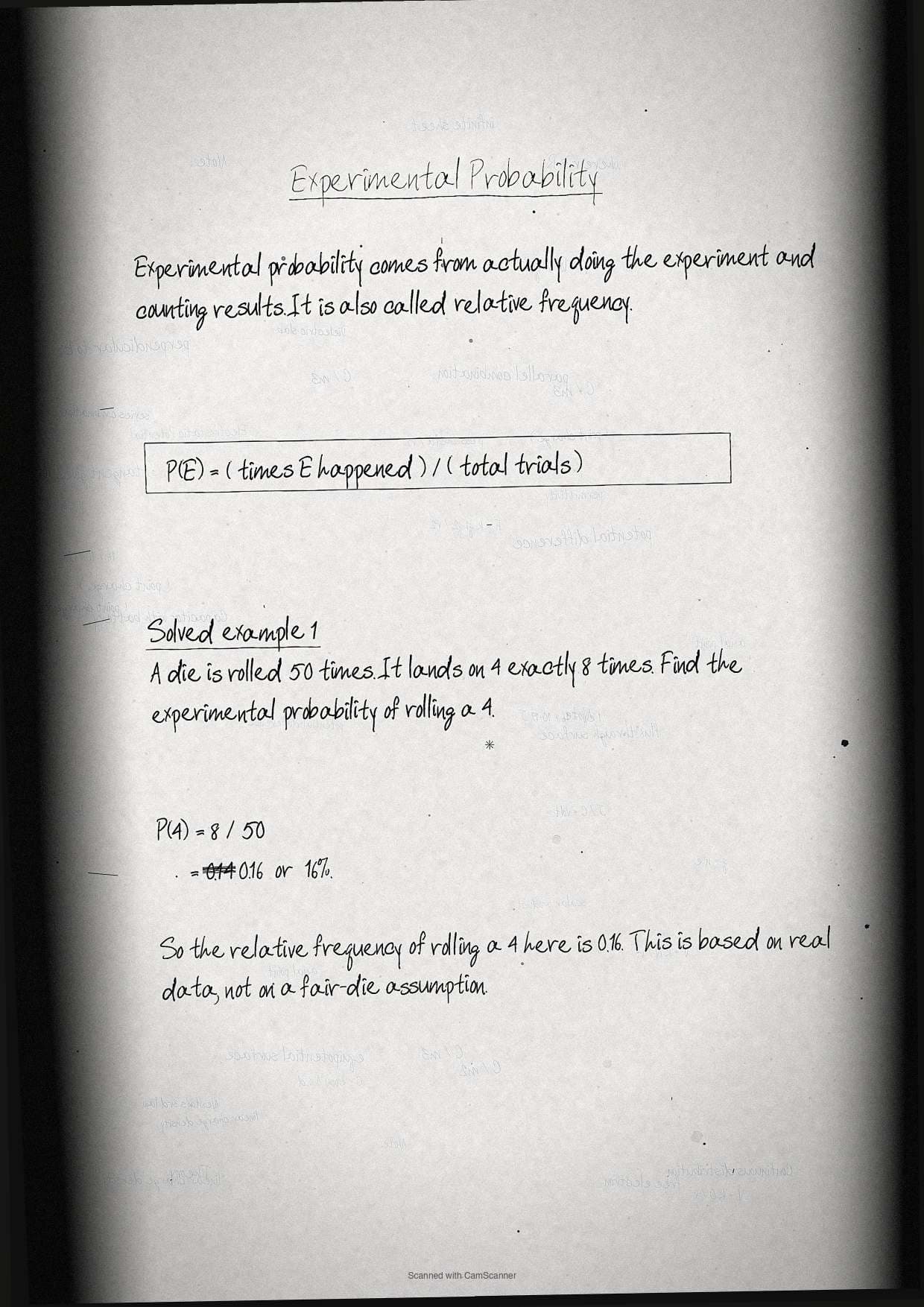
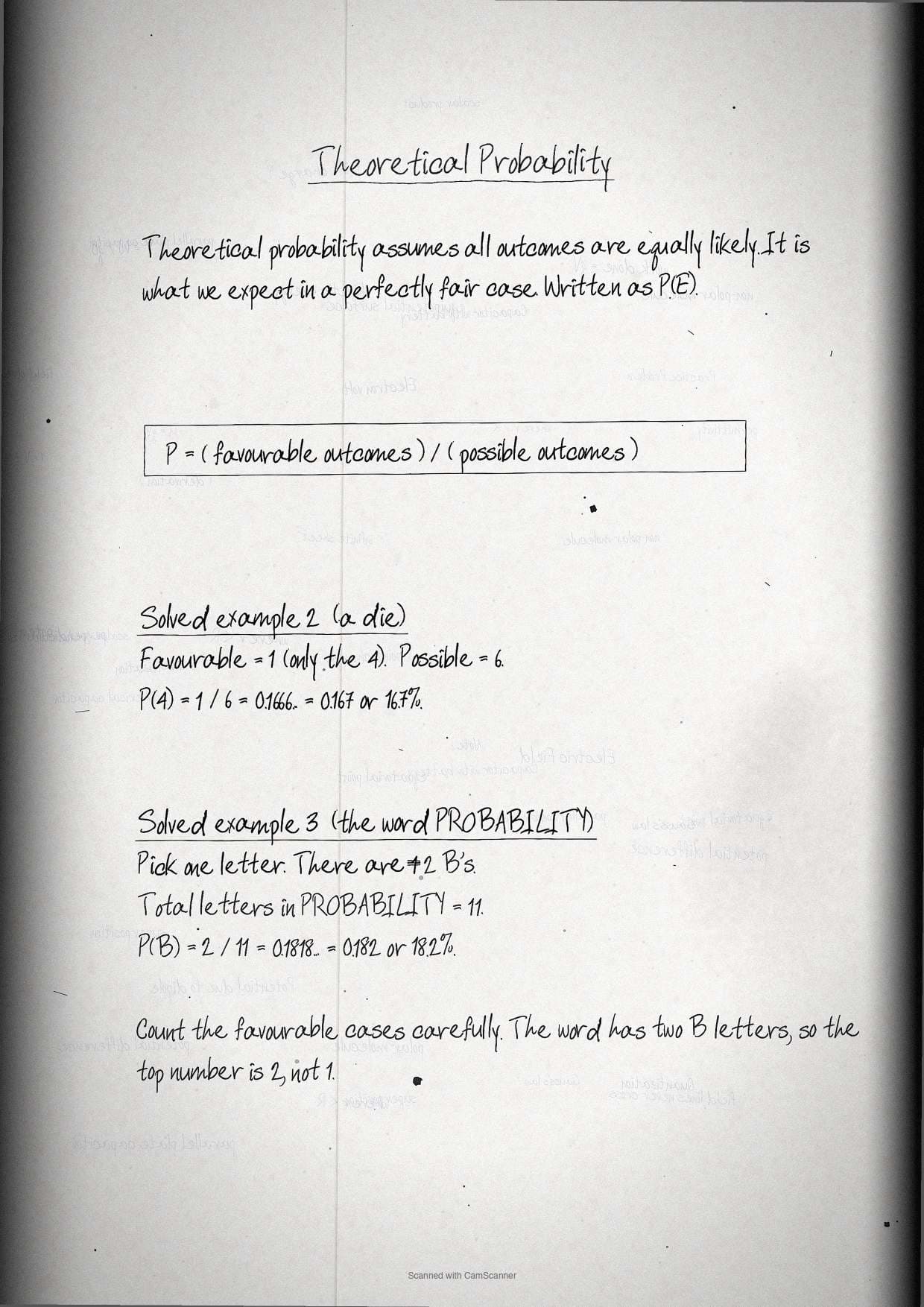
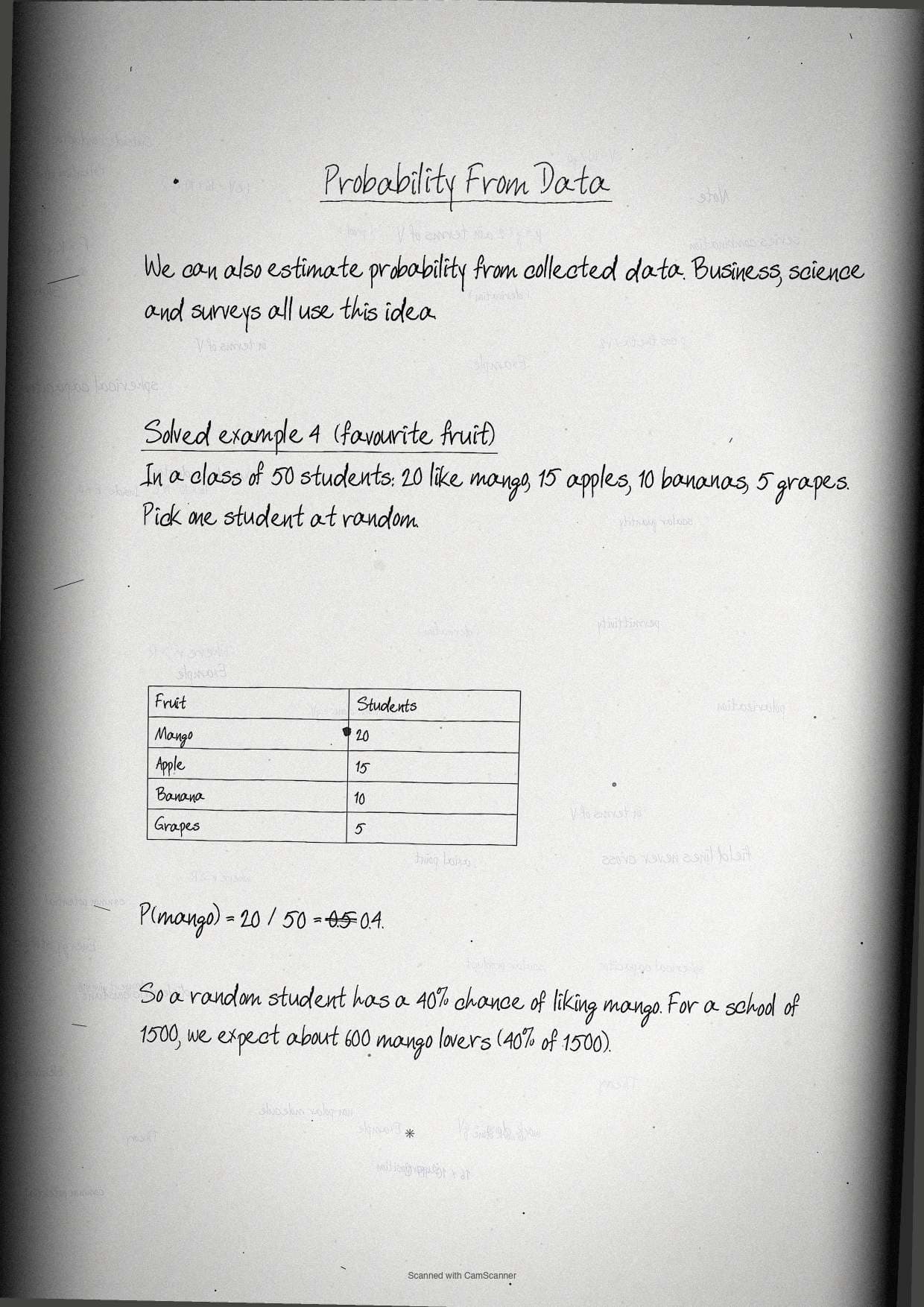
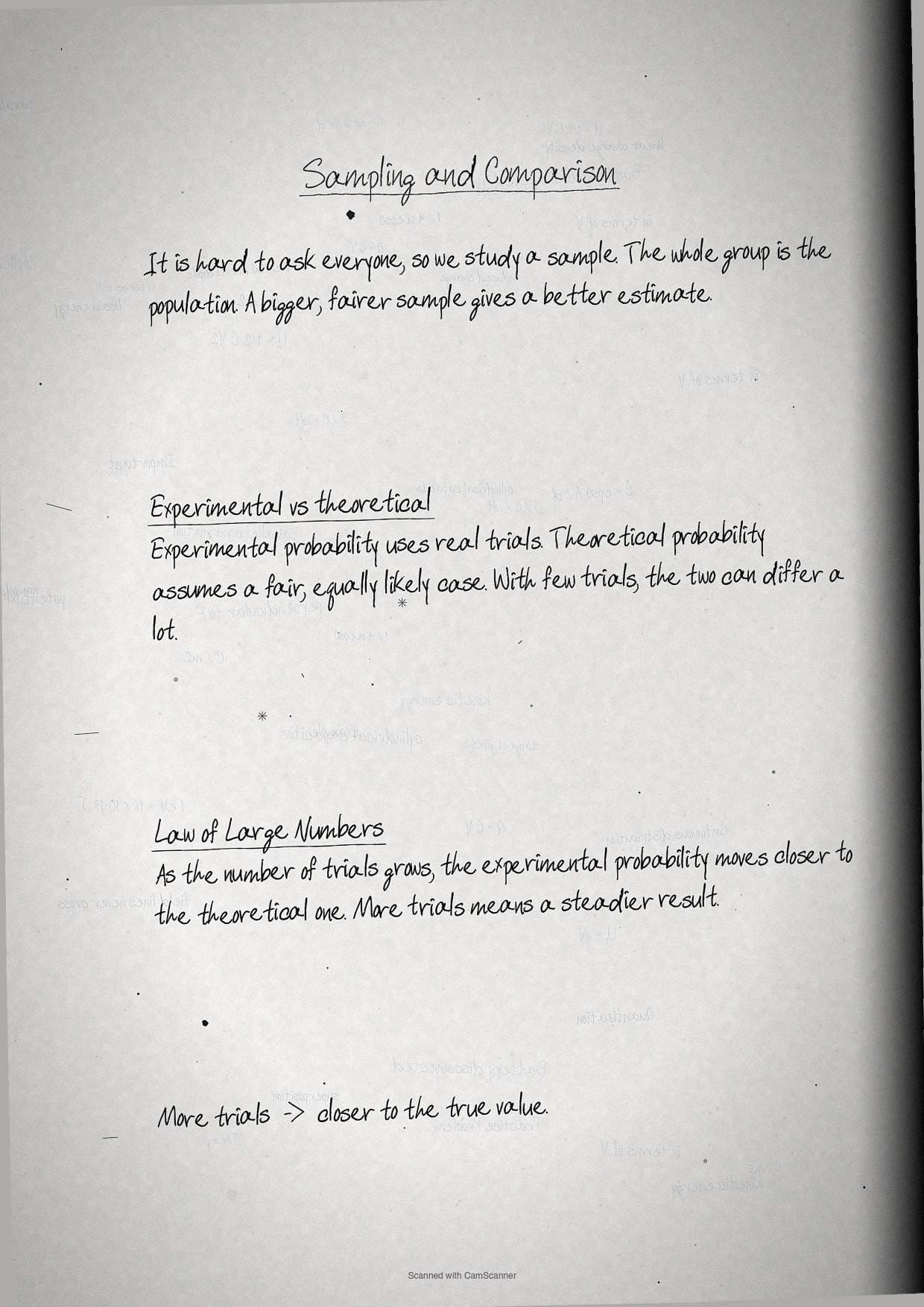
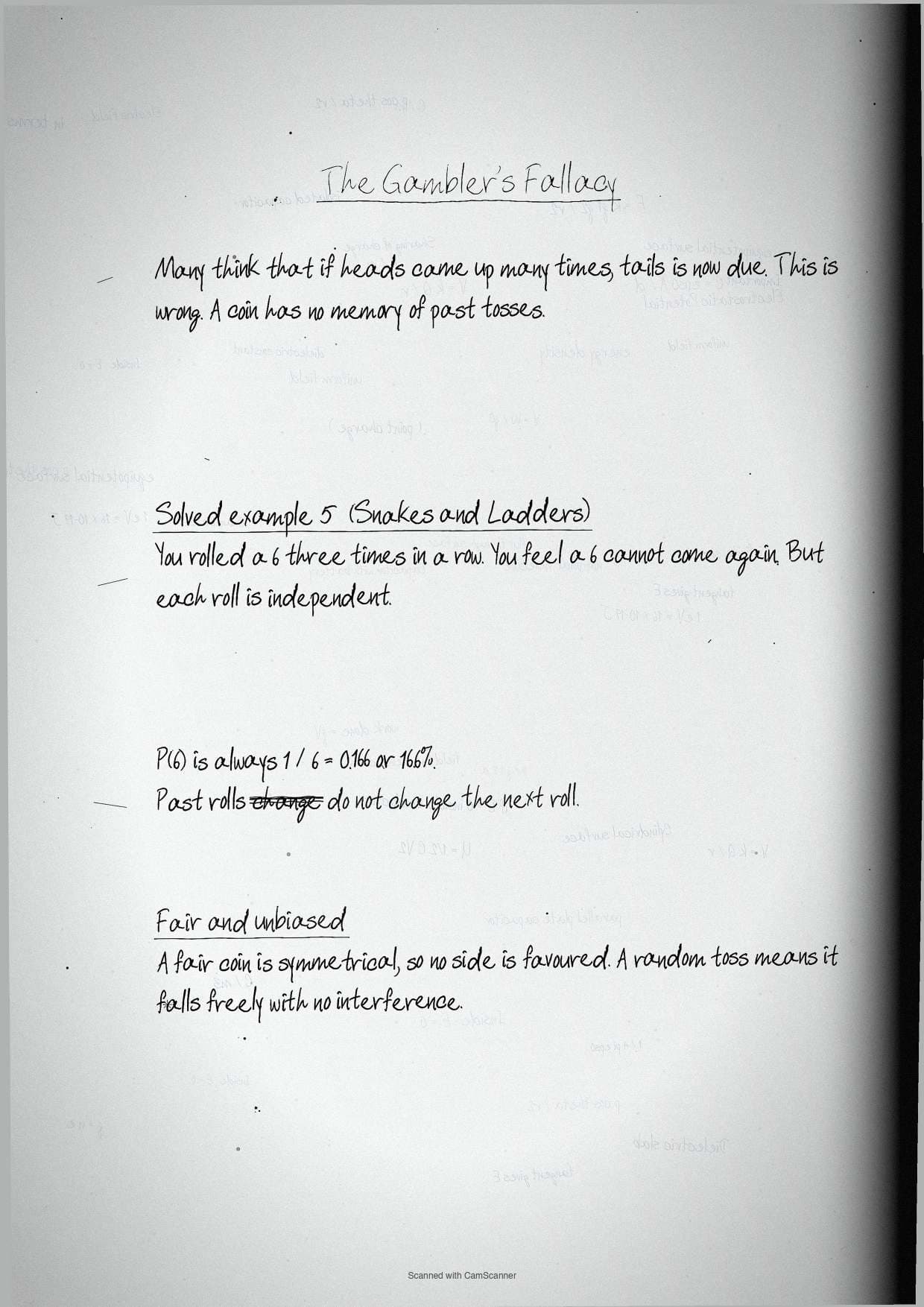
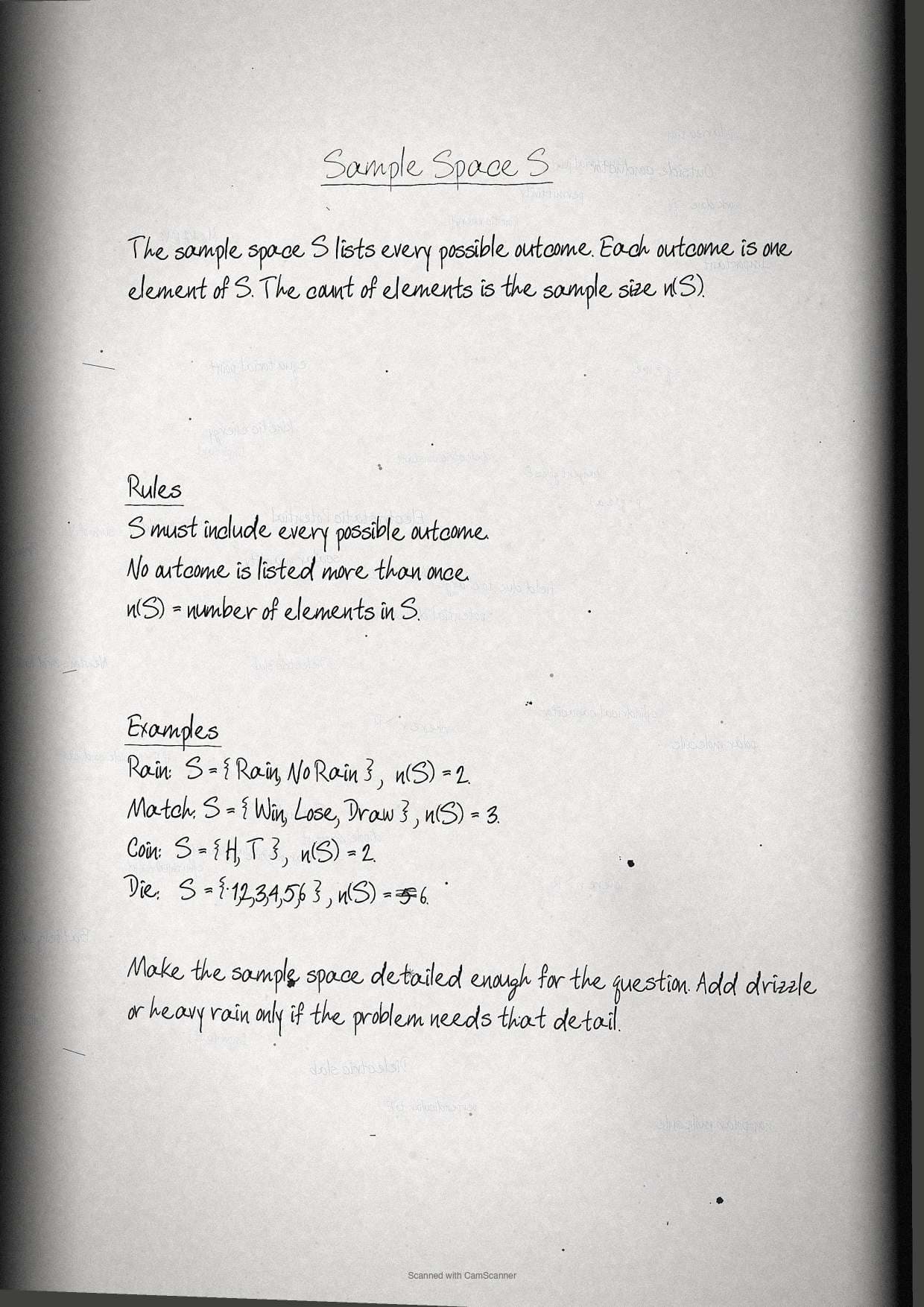
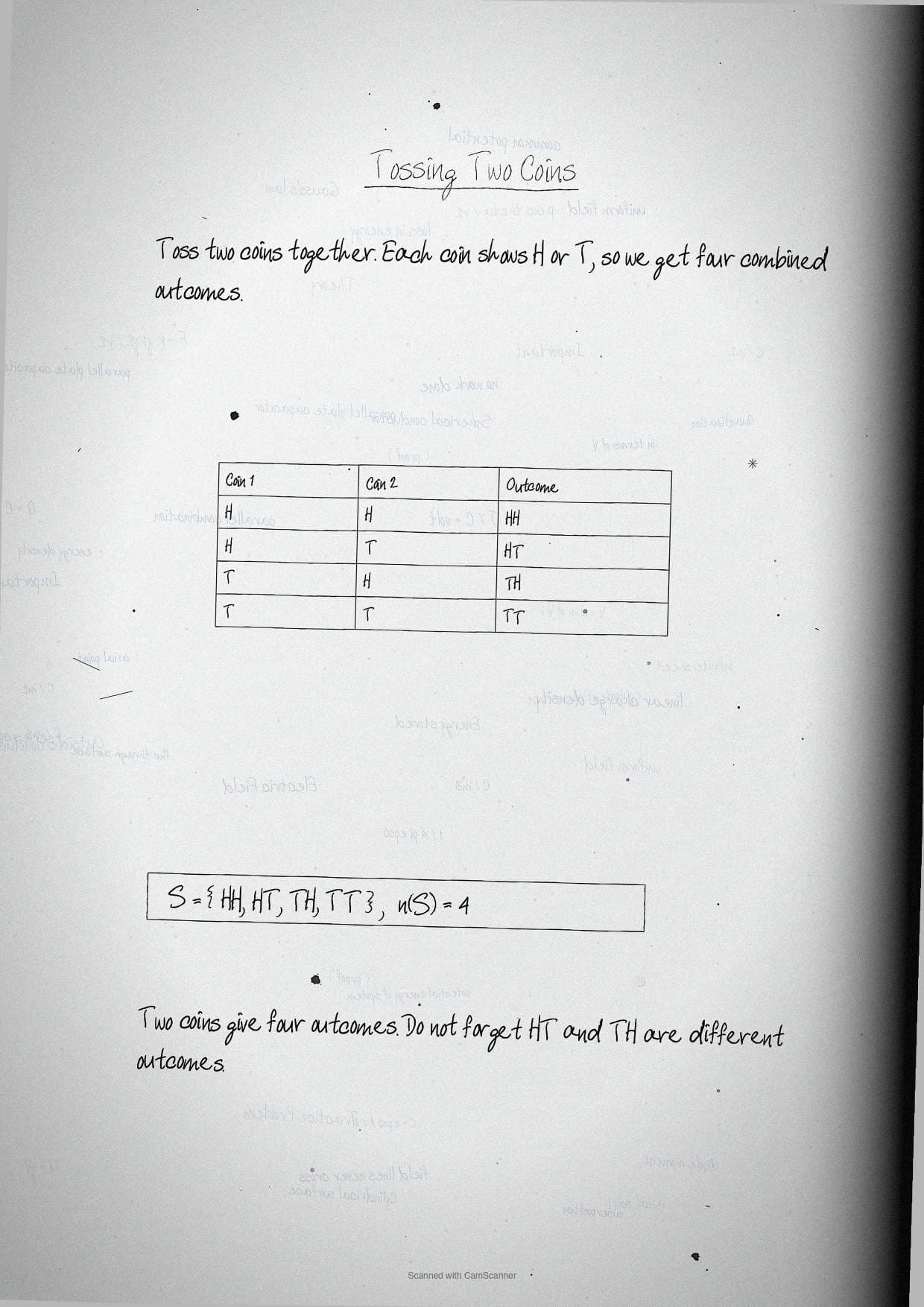
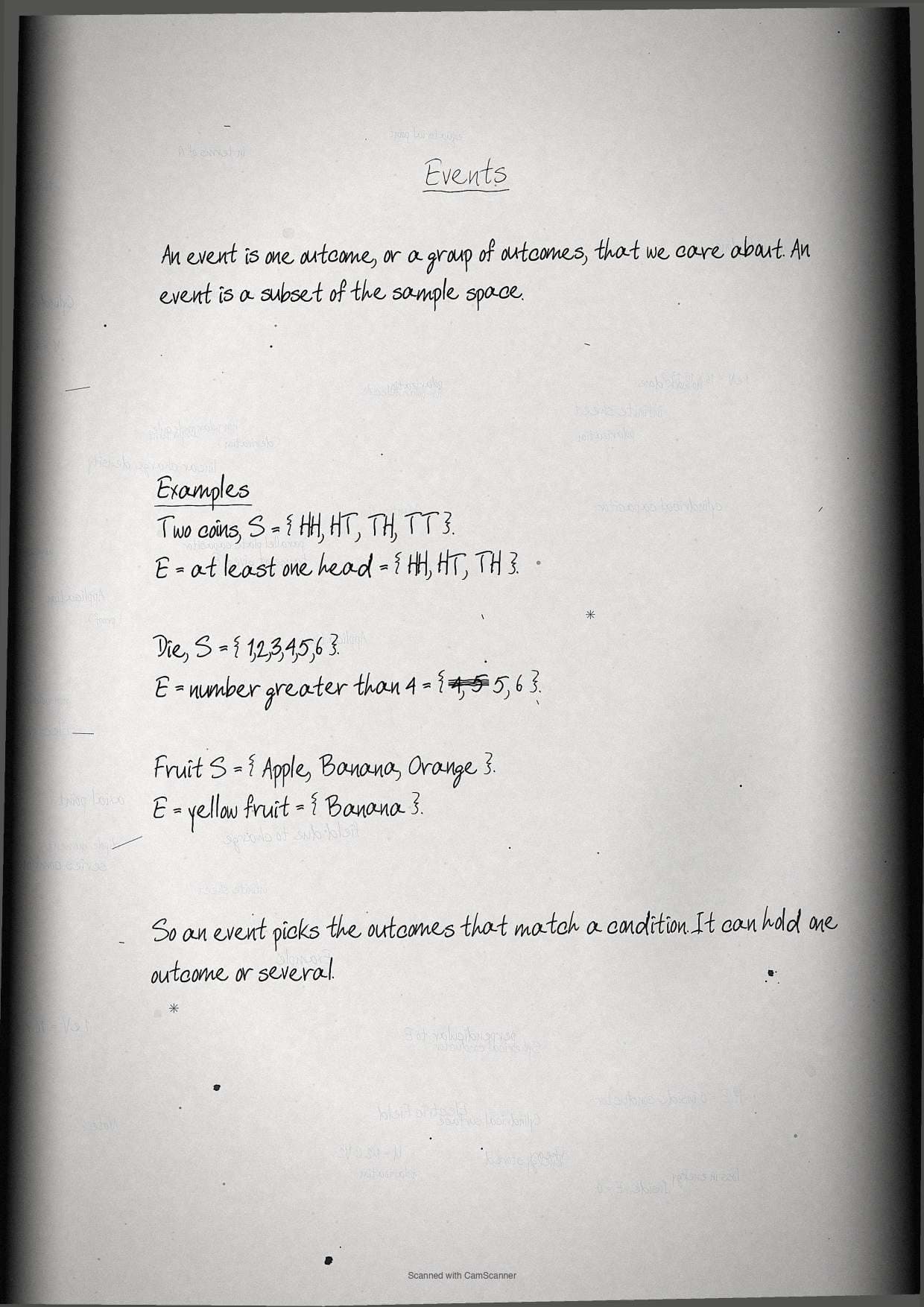
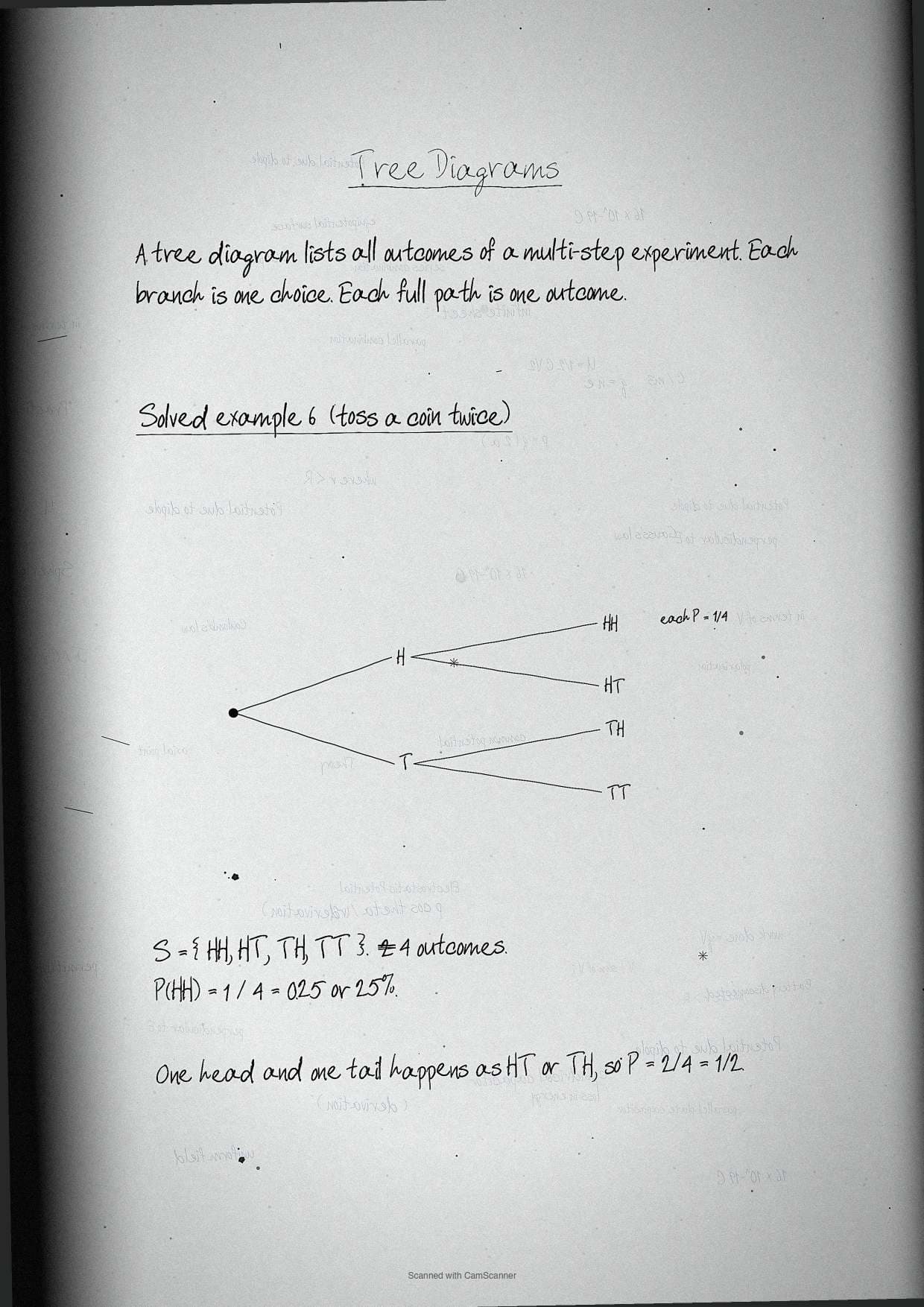
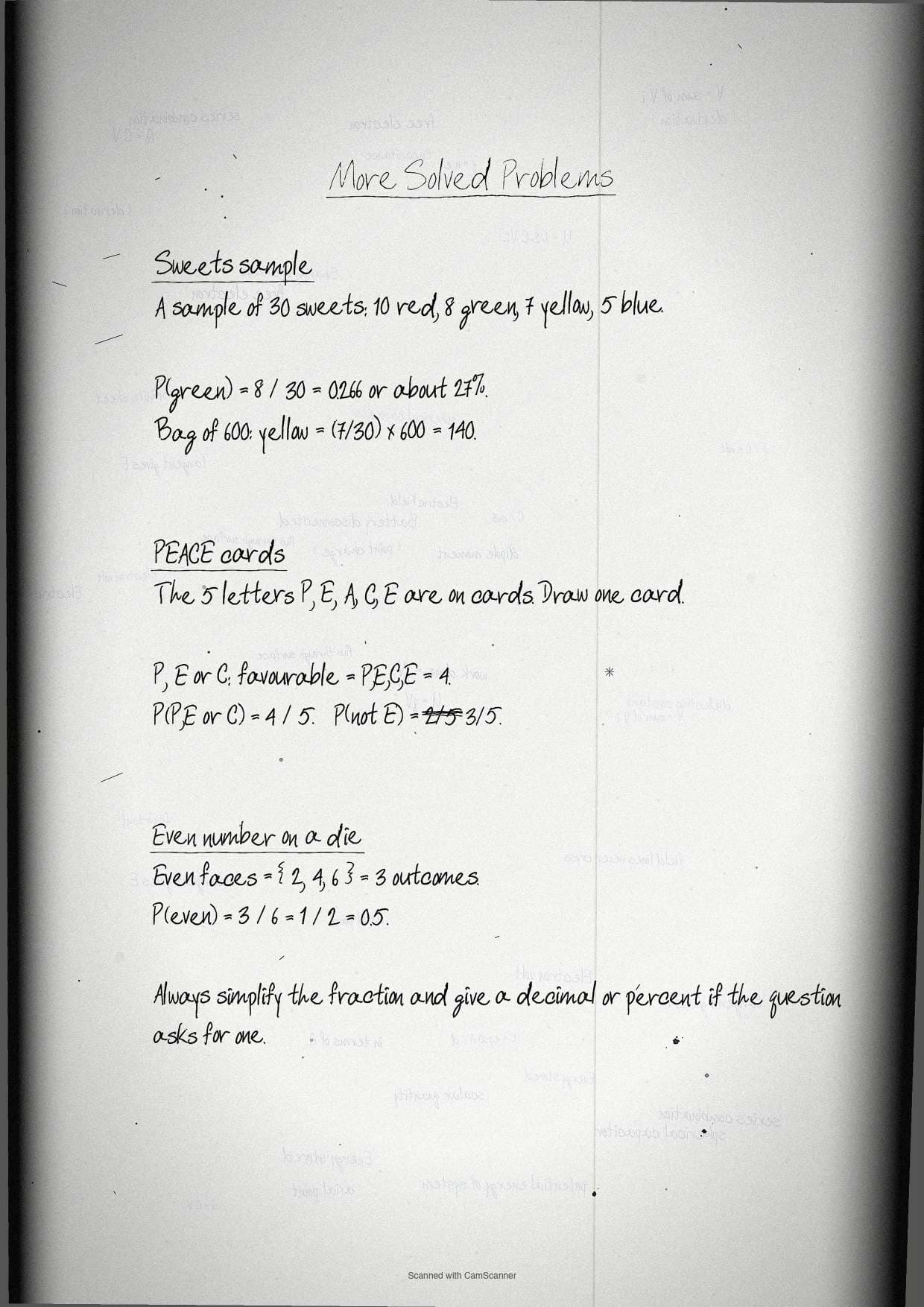
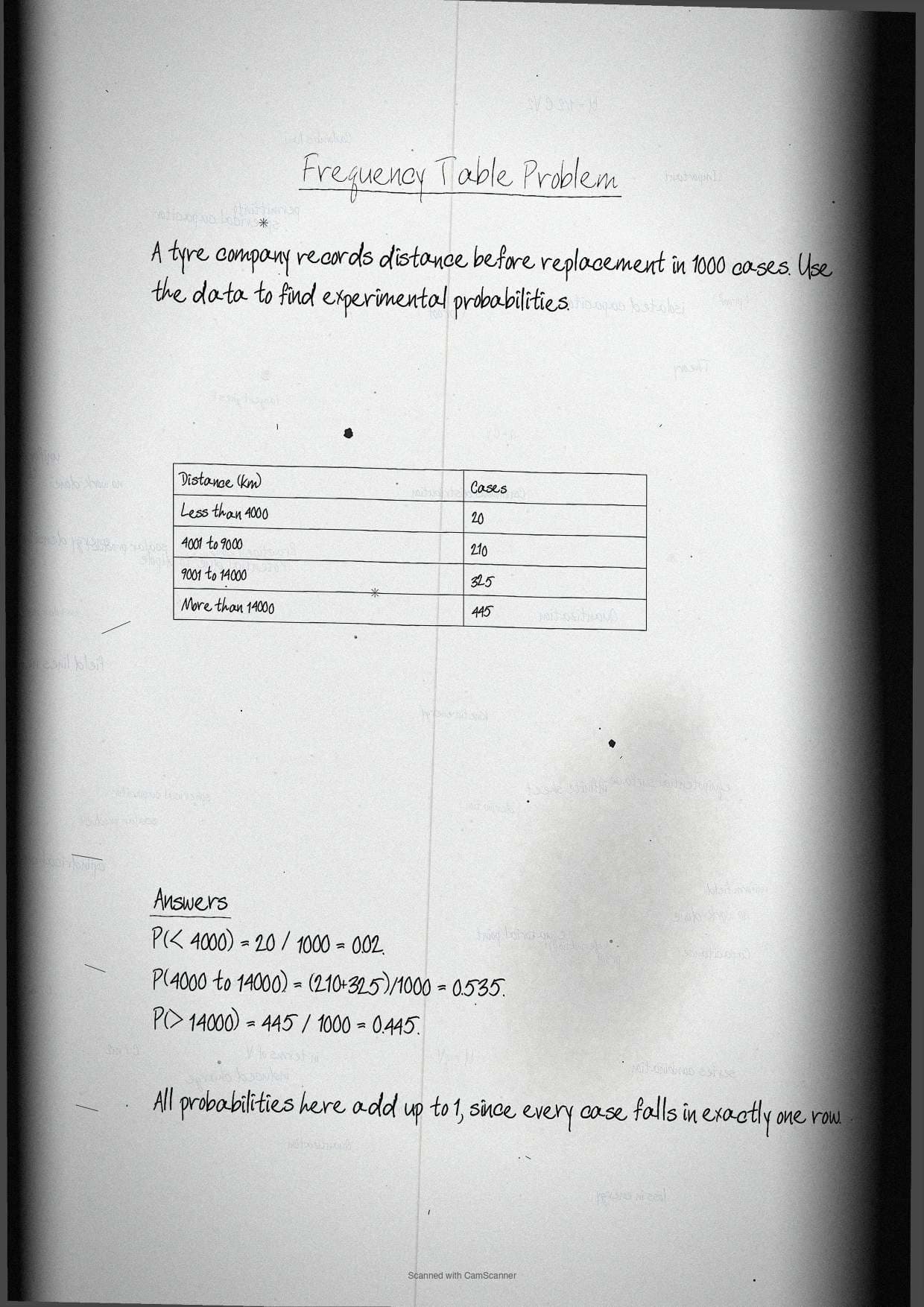
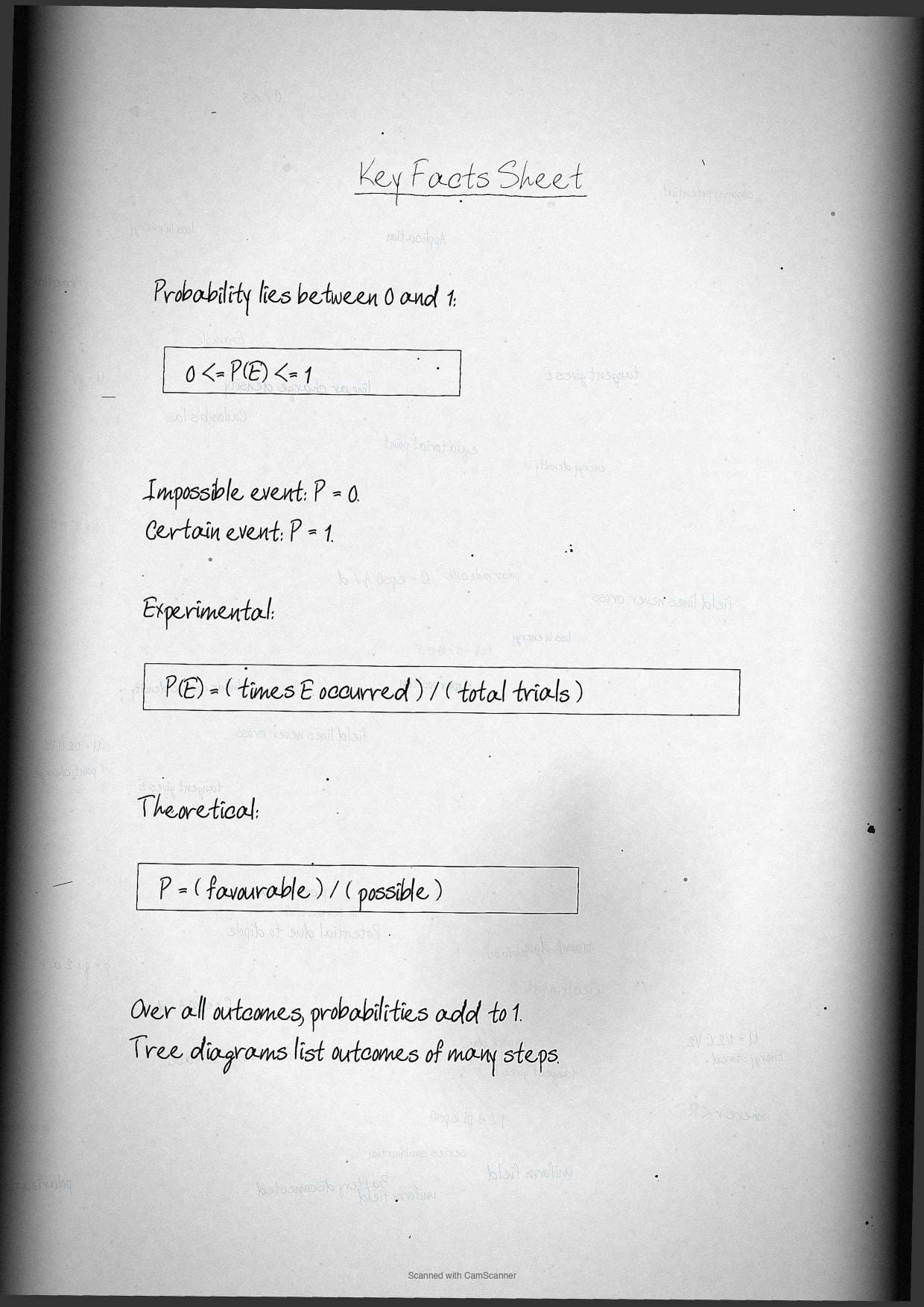
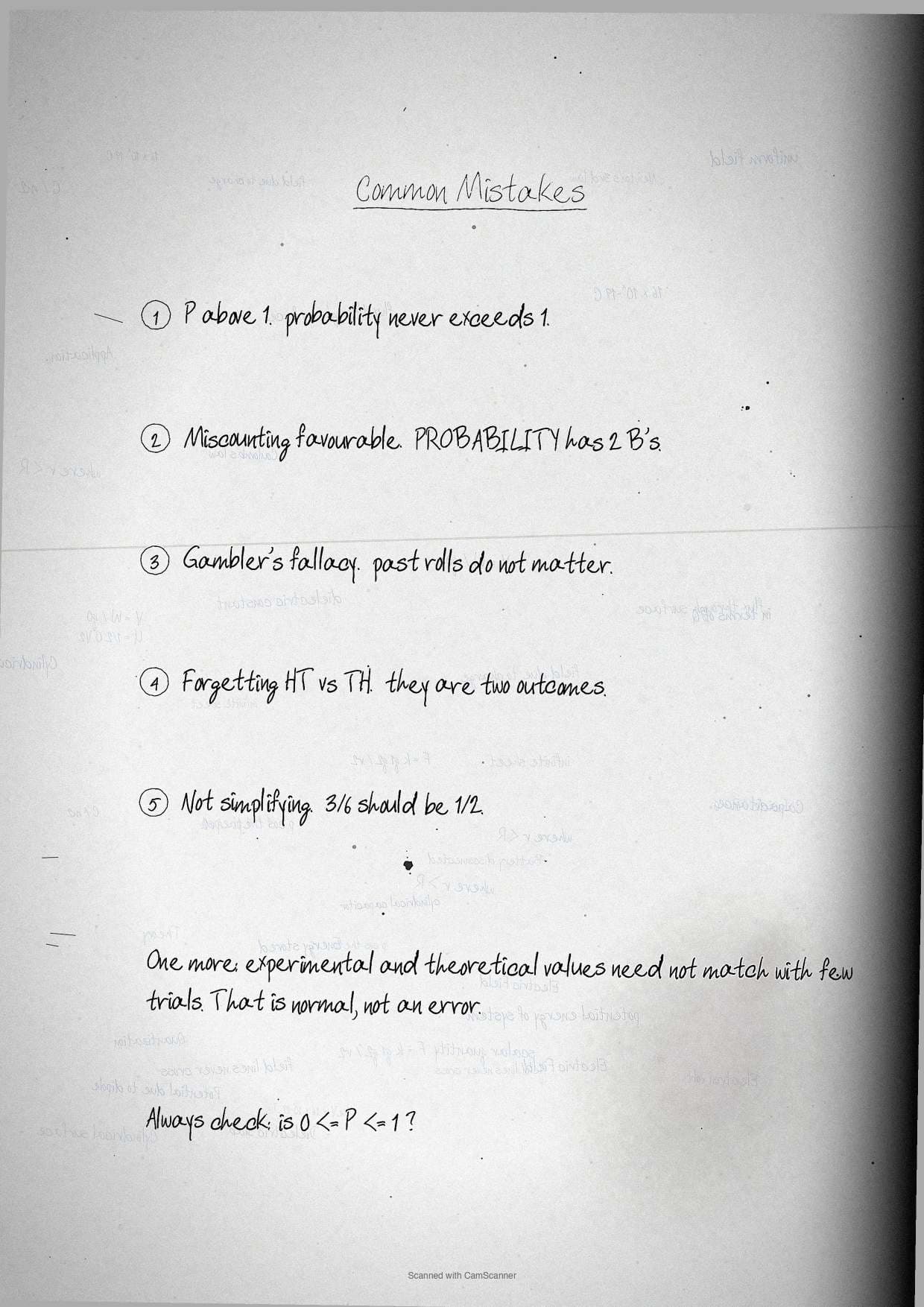
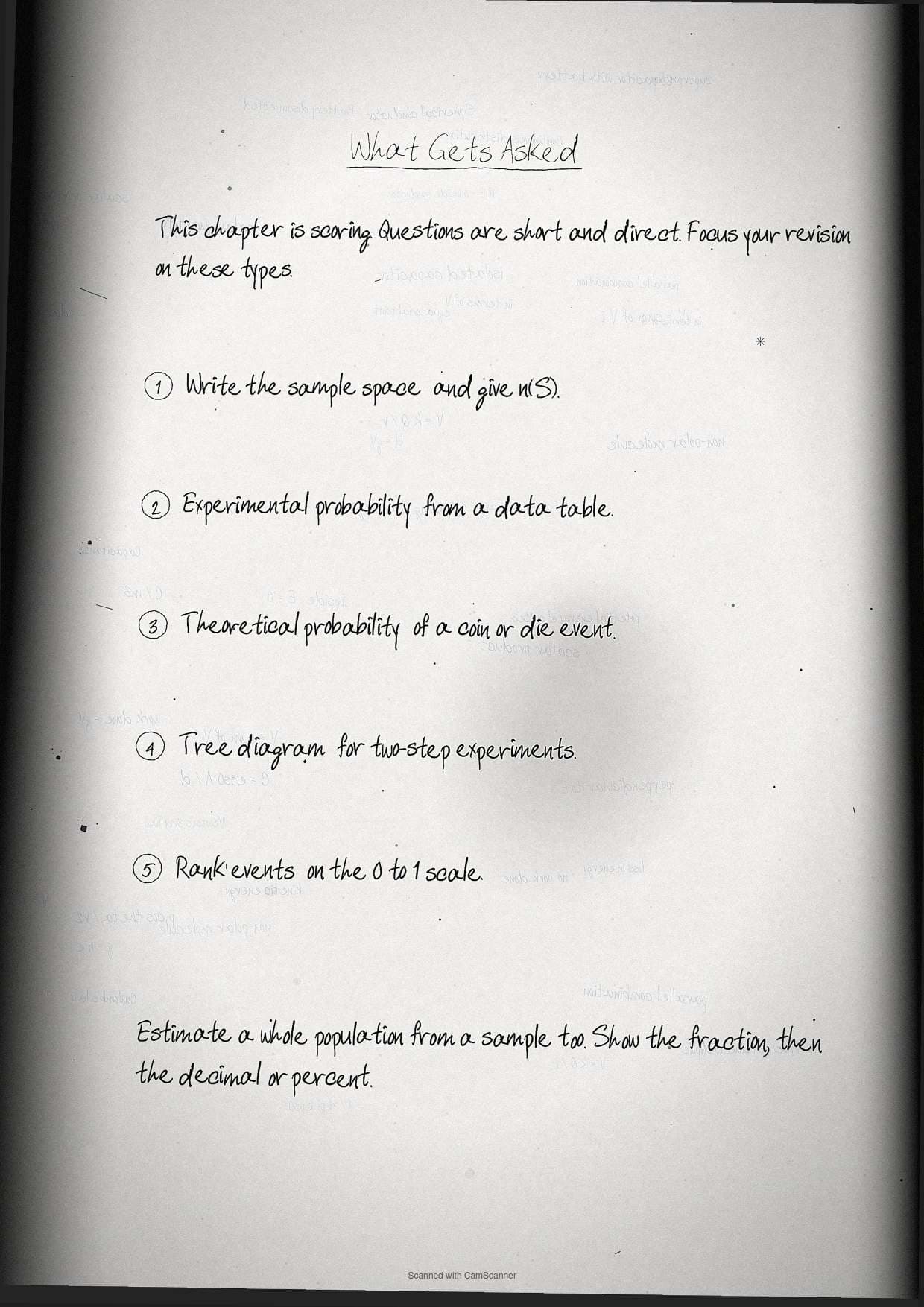
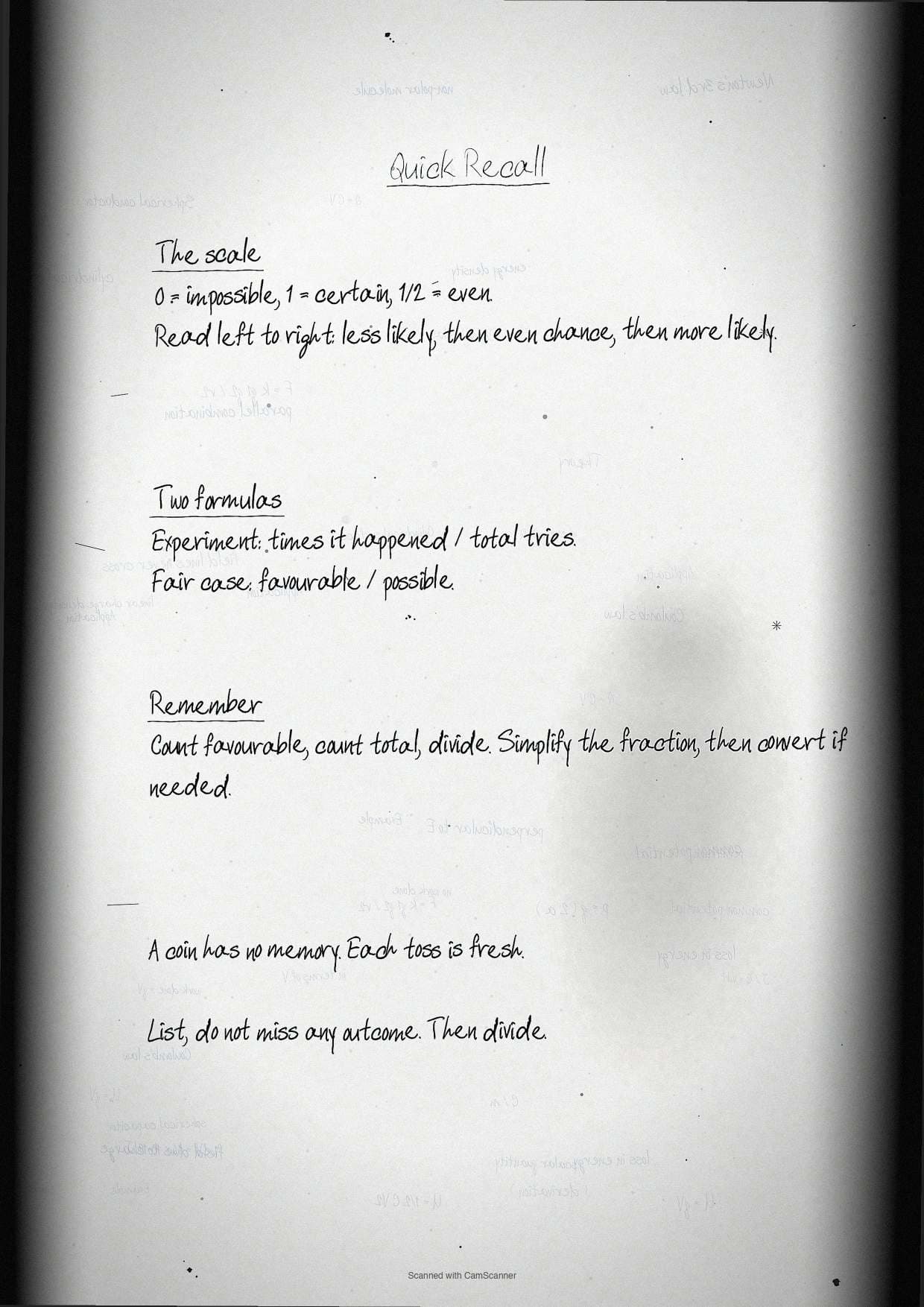
- What you get: outcomes and events, the probability scale, and both experimental and theoretical probability, all in clear handwriting.
- Colour-coded: new sub-topics in red, each formula in a hand-drawn box, and examples in blue.
- Why by hand: writing each rule out by hand helps the idea stay in your memory before a test.
These are a topper's own handwritten revision notes for the 2026-27 Ganita Manjari book, matched line by line to the current NCERT chapter.
Why Use Handwritten Notes for Class 9 Maths Introduction to Probability?
Probability is easy once the words are clear. The Class 9 Maths Handwritten Notes Chapter 7 Introduction to Probability show one idea per line, so outcomes, events, and the two formulas stay clear. You revise the full chapter in one sitting without flipping through the textbook.
- Each rule, like the probability formula, sits in its own hand-drawn box.
- Small tables for coins and dice sit next to the words that explain them.
- Red sub-headings split the chapter into short, easy parts.
- The wording is plain, like a senior showing you the method.
Video Walkthrough
Source: Magnet Brains on YouTube
What's Inside the Introduction to Probability Handwritten Notes PDF
The PDF runs to 22 pages of neat, hand-written revision. It moves from outcomes and the probability scale to experimental and theoretical probability, with a solved example after each idea. The colour code below tells you what each mark means.
- Red: new sub-topic headings, like Experimental Probability or The Complement Rule.
- Boxes: the two key formulas, drawn by hand for quick recall.
- Blue: solved examples and the counts worked out in them.
Introduction to Probability Diagrams and Formula Boxes Drawn by Hand
This chapter uses simple pictures and tables, so the notes lean on clear hand-drawn figures. You will find these drawn out step by step:
- The probability scale from 0 to 1, marking impossible to certain.
- A boxed relative-frequency formula for experimental probability.
- A boxed formula for theoretical probability with equally likely outcomes.
- A table of the outcomes when two coins are tossed together.
- A grid of the outcomes when two dice are rolled together.
Last-Minute Revision with These Introduction to Probability Notes
The night before your exam, the Class 9 Maths Handwritten Notes Chapter 7 Introduction to Probability work as a quick skim. Every boxed formula and red heading is a checkpoint, so you can cover the whole chapter in well under an hour.
- Recall what an outcome, an event, and the sample space mean.
- Place a few events on the 0 to 1 scale.
- Write the theoretical probability formula from its box.
- Find one probability with a coin or a die.
- Use the complement rule on one quick example.
- Glance at the common-mistake note before you close the notes.
How will Collegedunia's Handwritten Notes Help You with Introduction to Probability?
Collegedunia brings you the Class 9 Maths Handwritten Notes Chapter 7 Introduction to Probability as a free, clear PDF you can open on any phone. It saves you the time of making your own notes and matches the new Ganita Manjari book.
- 2026-27 match: the notes follow the new book, not the old chapter order.
- Clean handwriting: a topper's neat writing makes each rule easy to read.
- Exam-ready: boxes and colour cues let you revise fast before the annual exam.
- Free download: keep the PDF offline and revise any time.
More Introduction to Probability Maths Class 9 Resources
Use the box below to open the other resources for this chapter of the new Class 9 Maths book.
NCERT Handwritten Notes for Class 9 Maths: All Chapters
Use the table below to open the handwritten notes for any other chapter of the new Class 9 Maths book.
| Chapter | Resource |
|---|---|
| Chapter 1 | Coordinates Handwritten Notes |
| Chapter 2 | Linear Polynomials Handwritten Notes |
| Chapter 3 | The World of Numbers Handwritten Notes |
| Chapter 4 | Algebraic Identities Handwritten Notes |
| Chapter 5 | Circles Handwritten Notes |
| Chapter 6 | Perimeter and Area Handwritten Notes |
| Chapter 7 | Introduction to Probability Handwritten Notes |
| Chapter 8 | Sequences and Progressions Handwritten Notes |
Introduction to Probability Class 9 Maths Handwritten Notes FAQs
Ques. How many pages are the Introduction to Probability Class 9 Maths handwritten notes?
Ans. The handwritten notes run to 22 pages. They cover the full chapter, from outcomes and the probability scale to experimental and theoretical probability, with a solved example after each idea.
Ques. Are these real handwritten notes?
Ans. Yes. They are a topper's own clear handwritten revision notes, with formula boxes and outcome tables drawn by hand and sub-headings colour-coded in red.
Ques. Is Introduction to Probability part of the new Class 9 Maths book?
Ans. Yes. Introduction to Probability is Chapter 7 of the new Ganita Manjari book for the 2026-27 syllabus, which brings probability into Class 9.
Ques. Can I use these notes for last-minute revision?
Ans. Yes. The boxes and red headings let you skim the whole chapter in under an hour, so they suit the night before your annual exam.
Ques. What is the difference between experimental and theoretical probability?
Ans. Experimental probability comes from real trials, while theoretical probability comes from equally likely outcomes. The notes box both formulas so you can tell them apart.



Comments