




Class 11 Economics Chapter 11 Liberalisation Privatisation and Globalisation An Appraisal notes explain why India changed its economic policy after the 1991 crisis. These notes follow the 2026-27 NCERT syllabus and connect the crisis, reform measures, globalisation, outsourcing, WTO and NCERT's balanced appraisal in one revision flow.
- Download the Chapter 11 Economics notes PDF for quick offline revision.
- Revise liberalisation, privatisation and globalisation with examples from NCERT.
- Use the tables to compare reform benefits, concerns and exam-ready answer points.
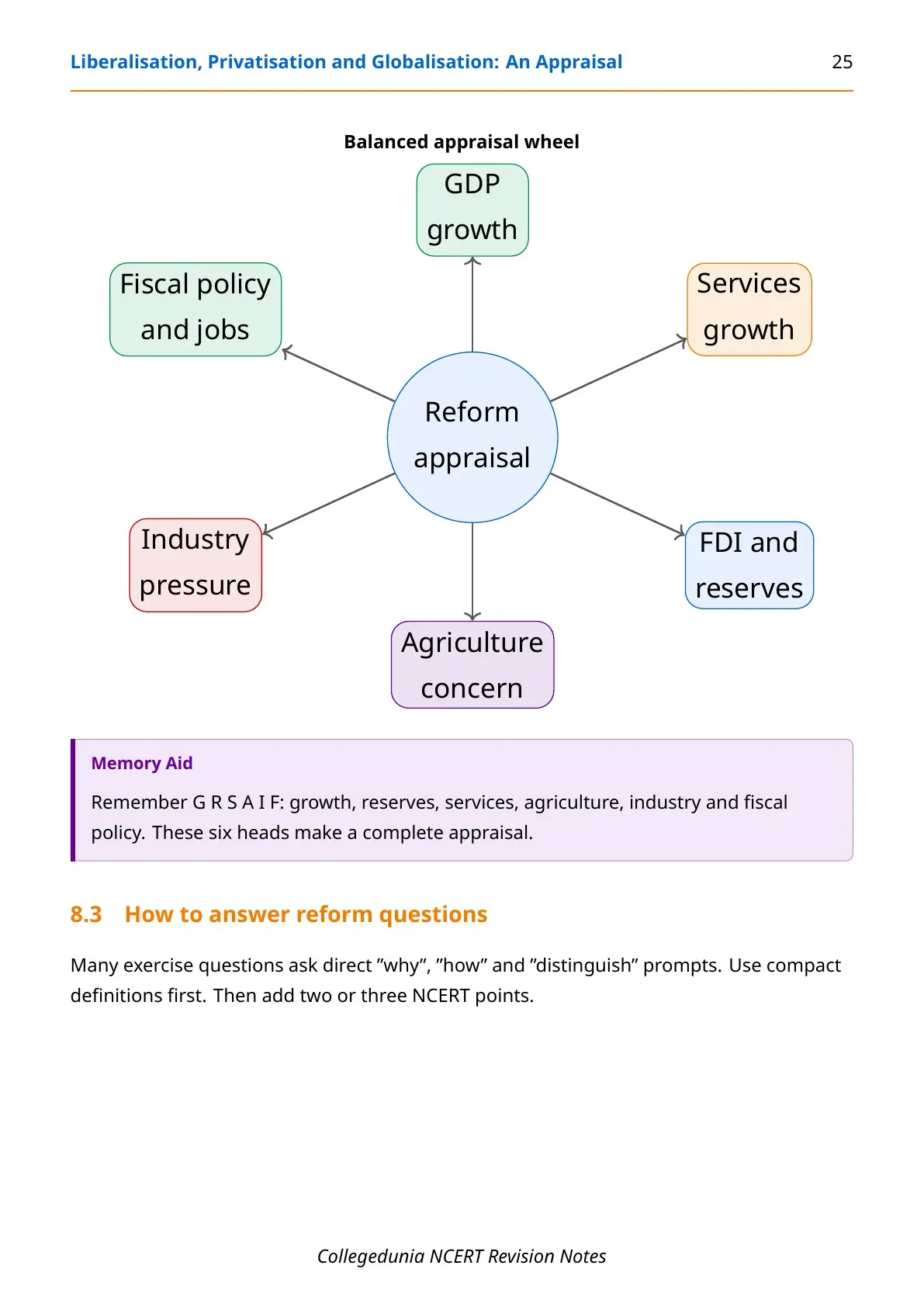
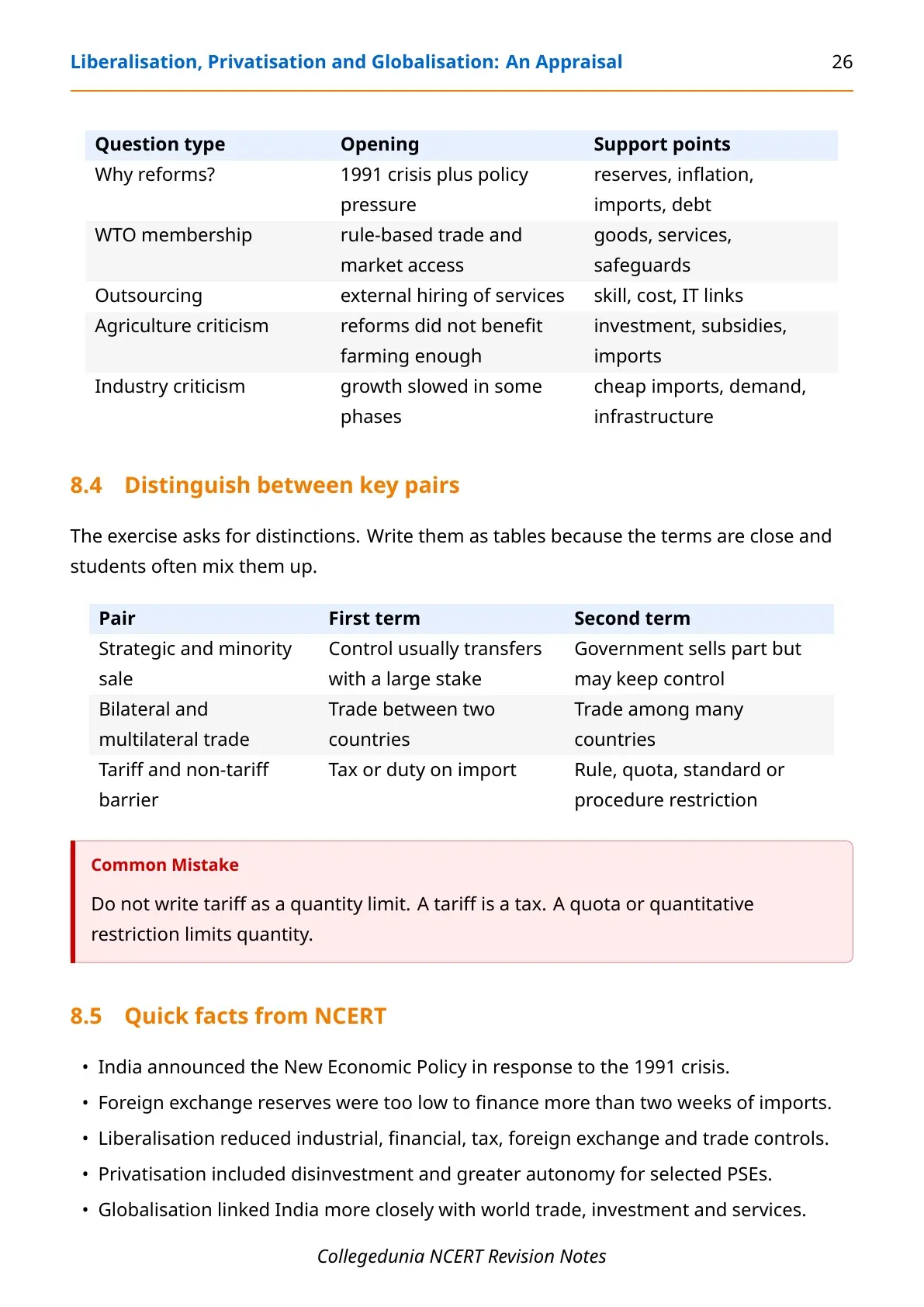
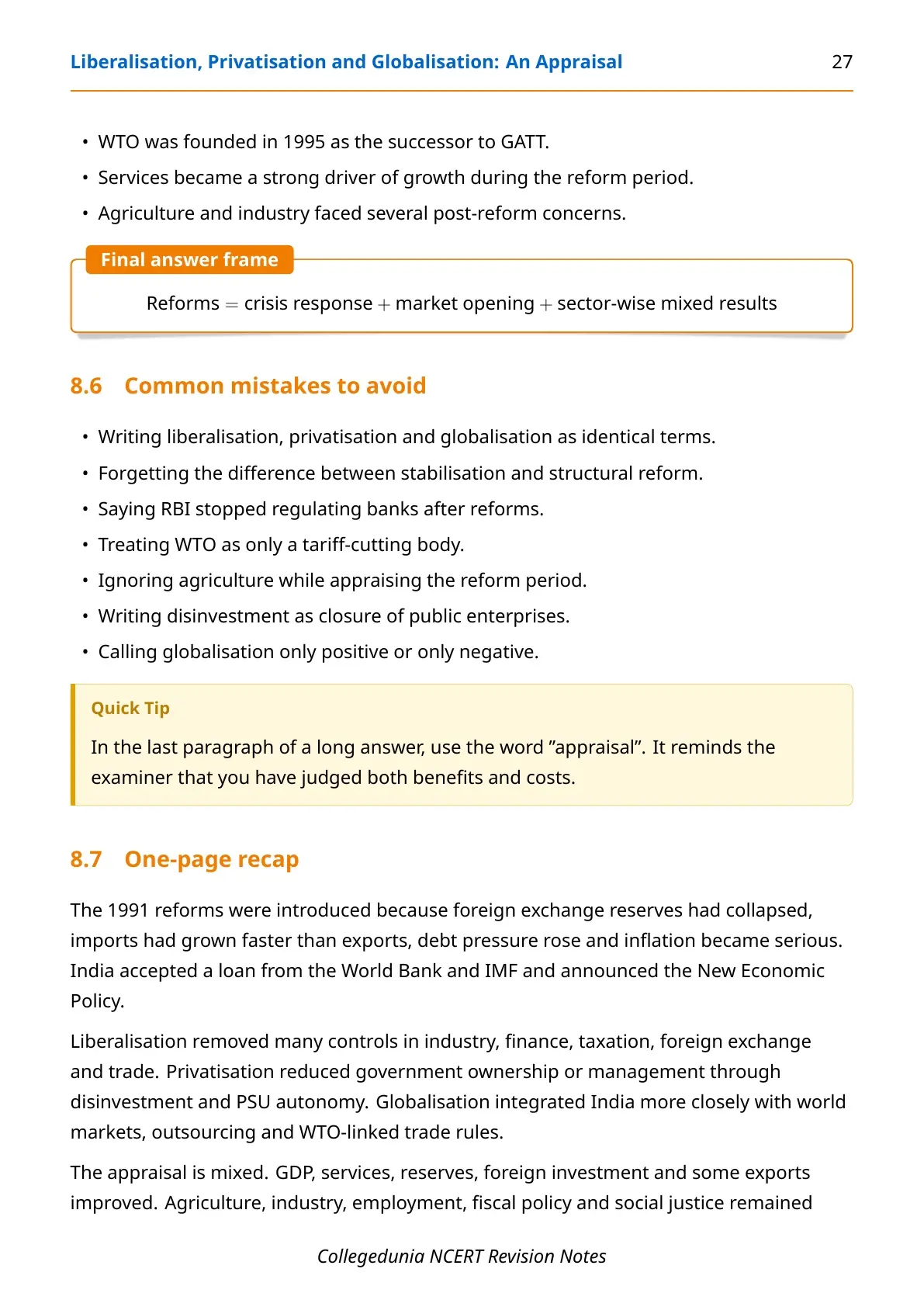
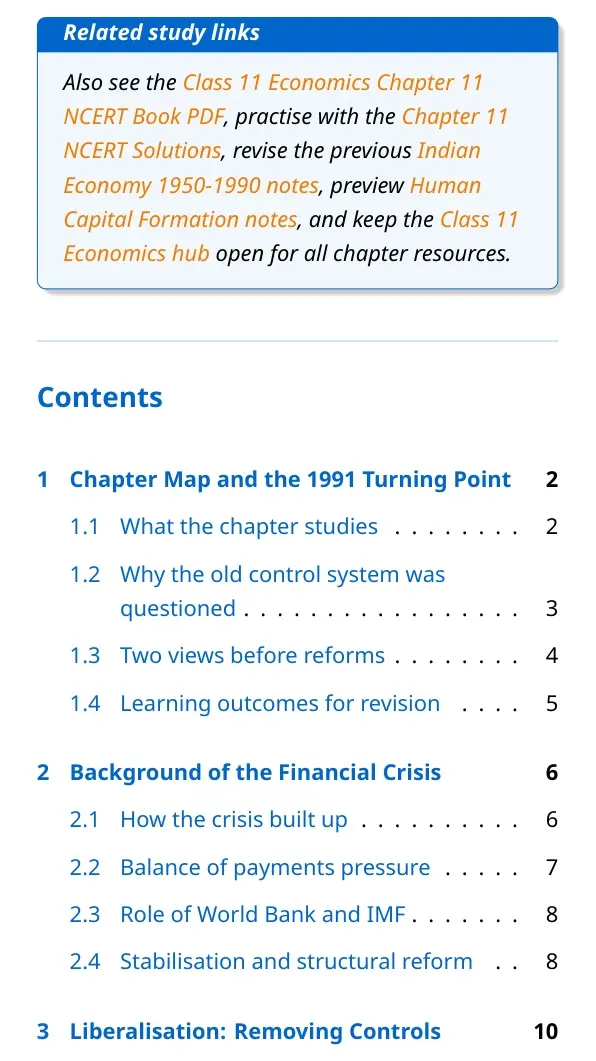
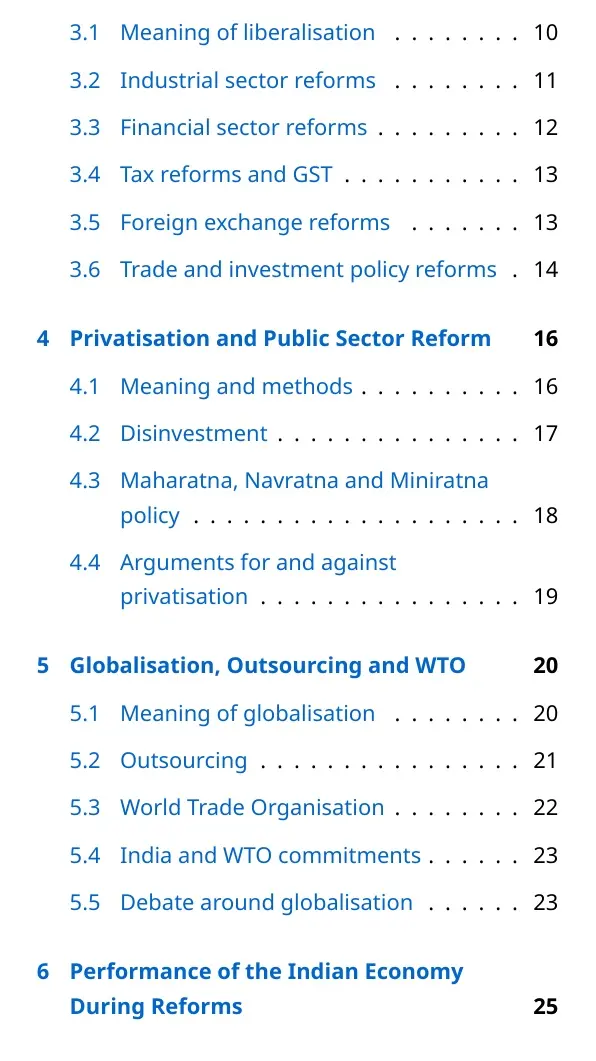
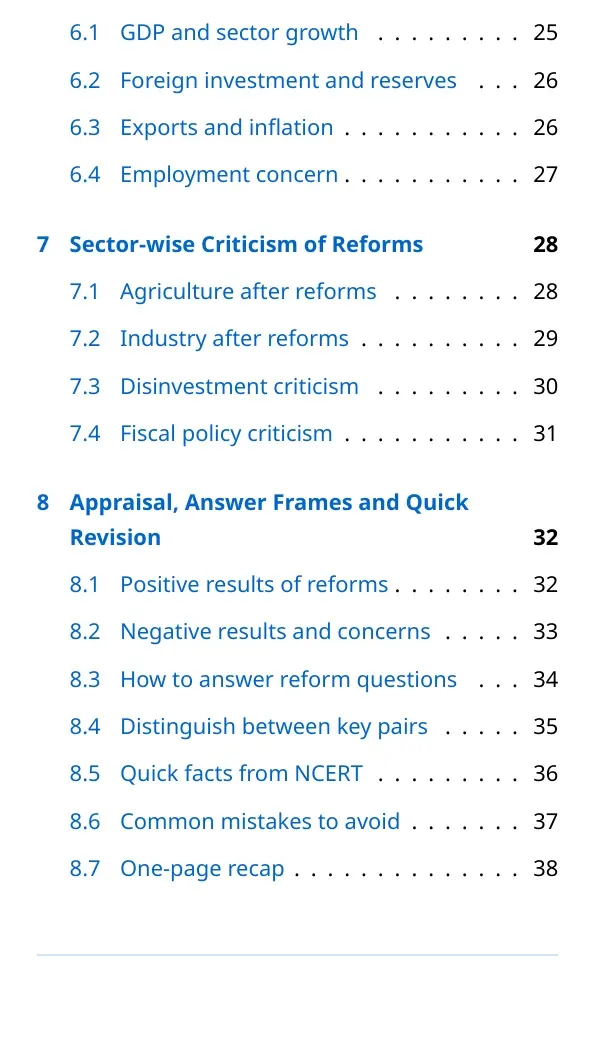
Each LPG appraisal notes PDF is based on the 2026-27 NCERT chapter and checked for policy sequence, key definitions and balanced evaluation.

Student Feedback: More than 10,000 students use Collegedunia NCERT Economics resources for revision before school tests and board-style practice. Students usually find this chapter easier when the crisis, three reforms and final appraisal are read as one connected timeline.
What Liberalisation Privatisation and Globalisation Covers
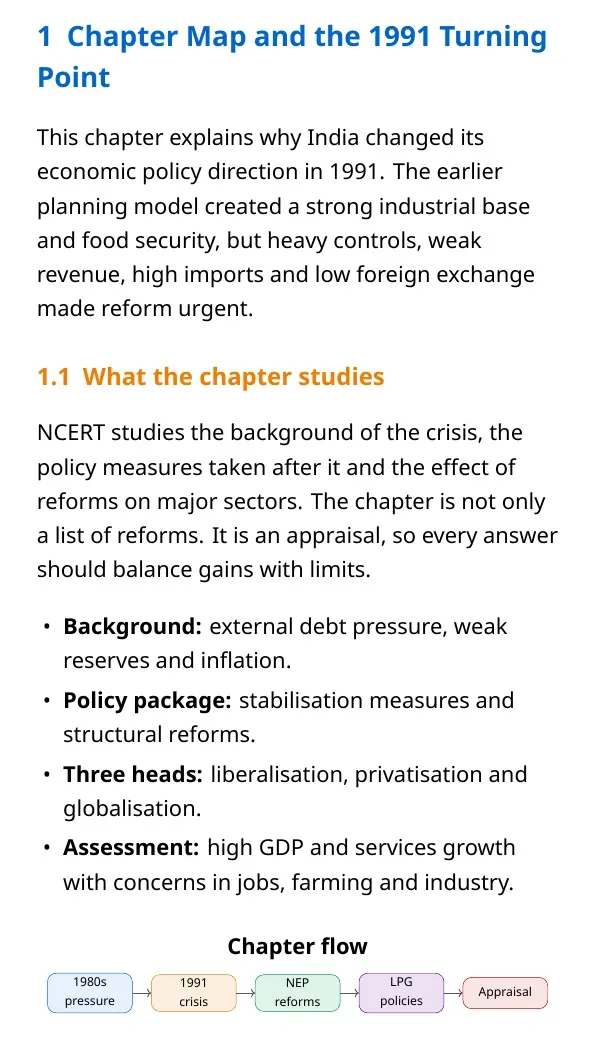
Liberalisation Privatisation and Globalisation An Appraisal explains the reform programme that began in 1991. NCERT first describes the economic crisis: foreign exchange reserves were low, prices were rising, fiscal deficit was high and India needed support from the IMF and the World Bank. The new policy changed how the government, private sector and foreign sector worked in the Indian economy.
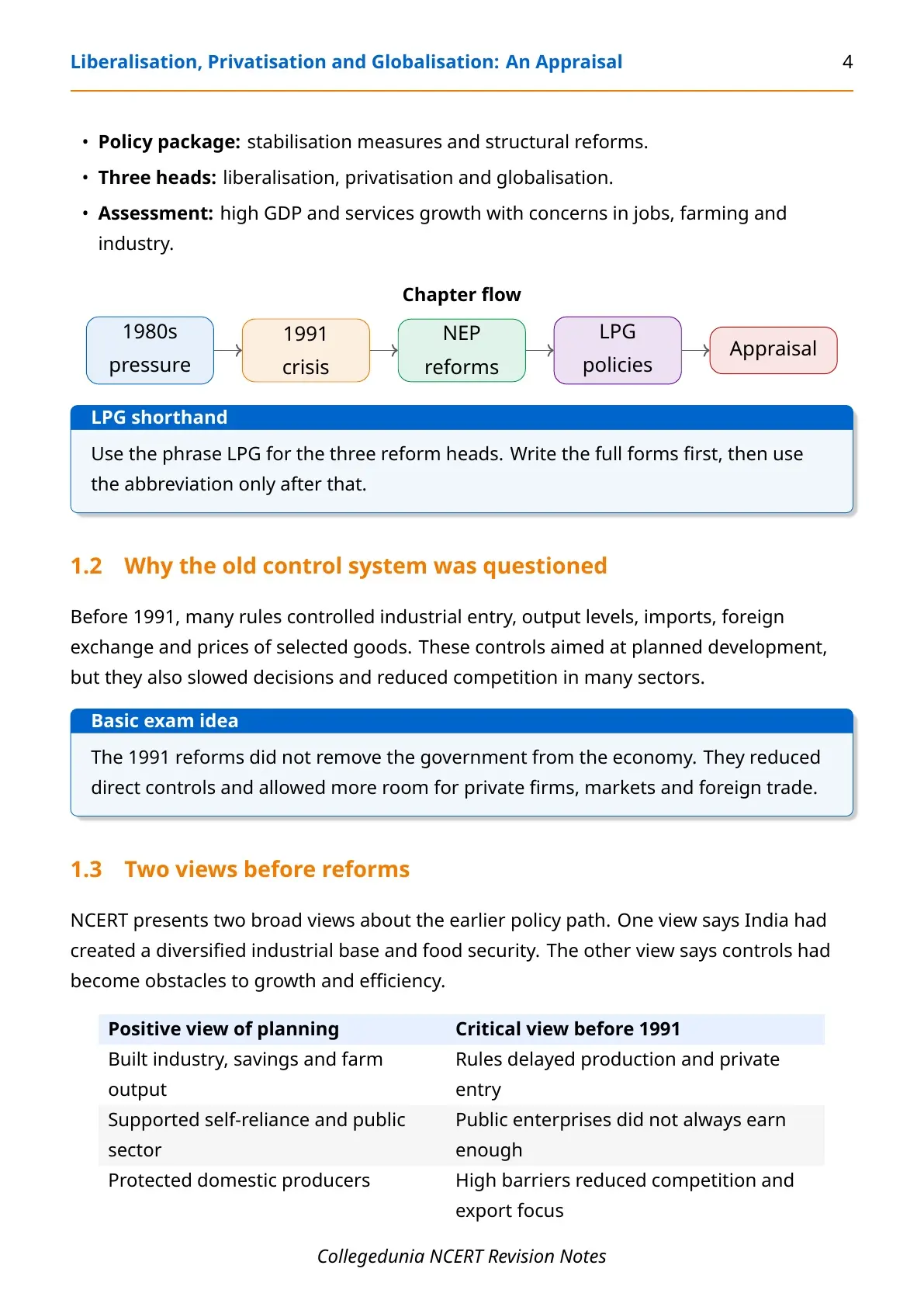
The chapter is not only a list of reforms. It asks students to understand why reforms were introduced, what each reform meant, which sectors benefited and where problems continued. The safest exam answer is balanced: LPG reforms opened the economy and raised competition, but they did not solve every problem of agriculture, employment and equity.
| Part of the chapter | NCERT focus | Revision clue |
|---|---|---|
| Background crisis | Foreign exchange, inflation, debt and fiscal pressure | Write the causes before reform measures |
| Liberalisation | Removing controls and licensing restrictions | Link it with industrial and trade policy |
| Privatisation | Greater role for private sector and disinvestment | Use public sector reform examples |
| Globalisation | Integration with the world economy | Mention outsourcing, WTO and trade |
| Appraisal | Benefits, limits and uneven sector outcomes | End long answers with both sides |
Liberalisation Privatisation and Globalisation Video Revision
Source: Magnet Brains on YouTube
Why India Introduced Economic Reforms in 1991
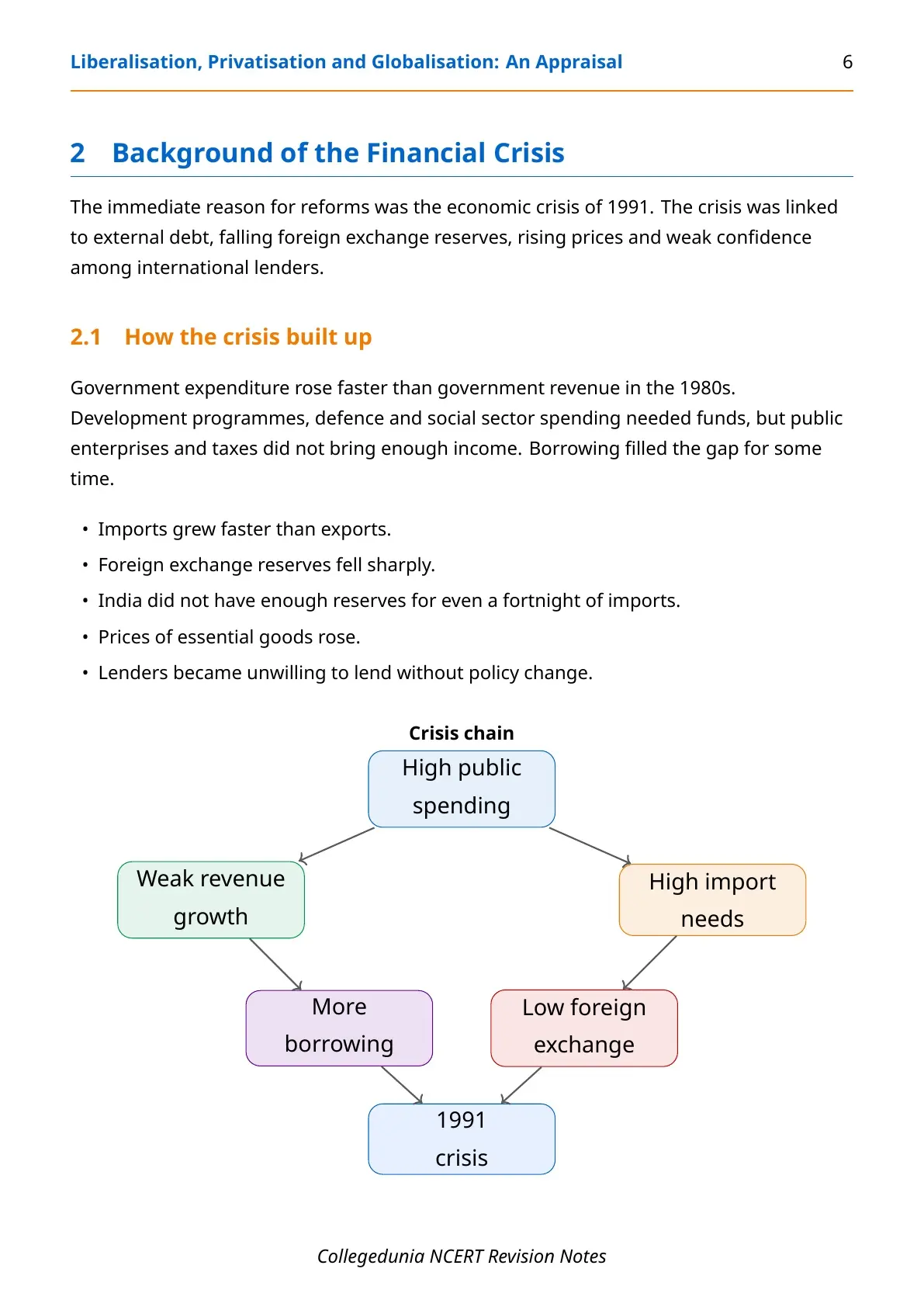
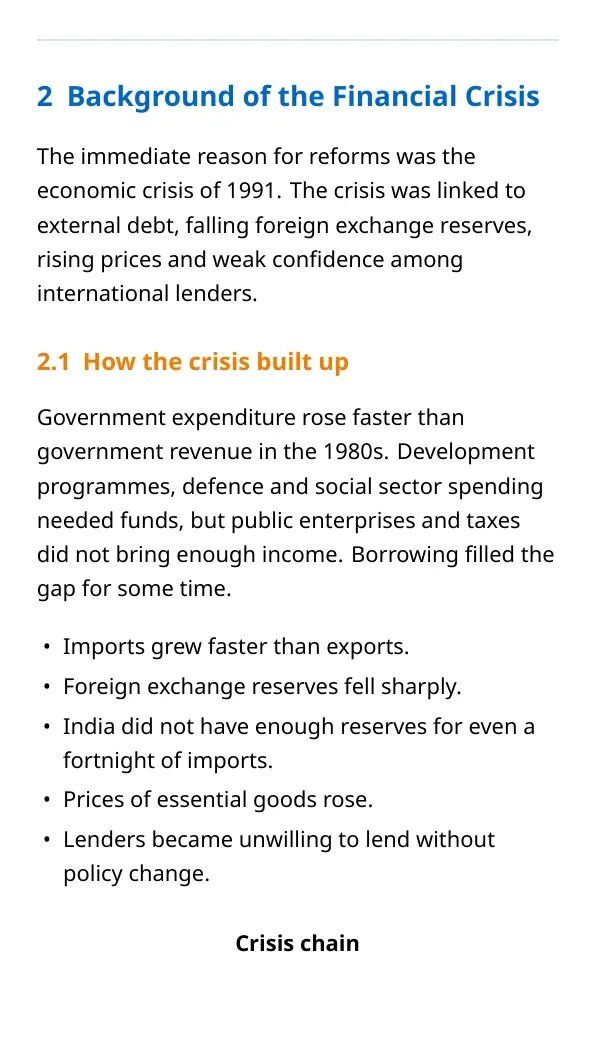
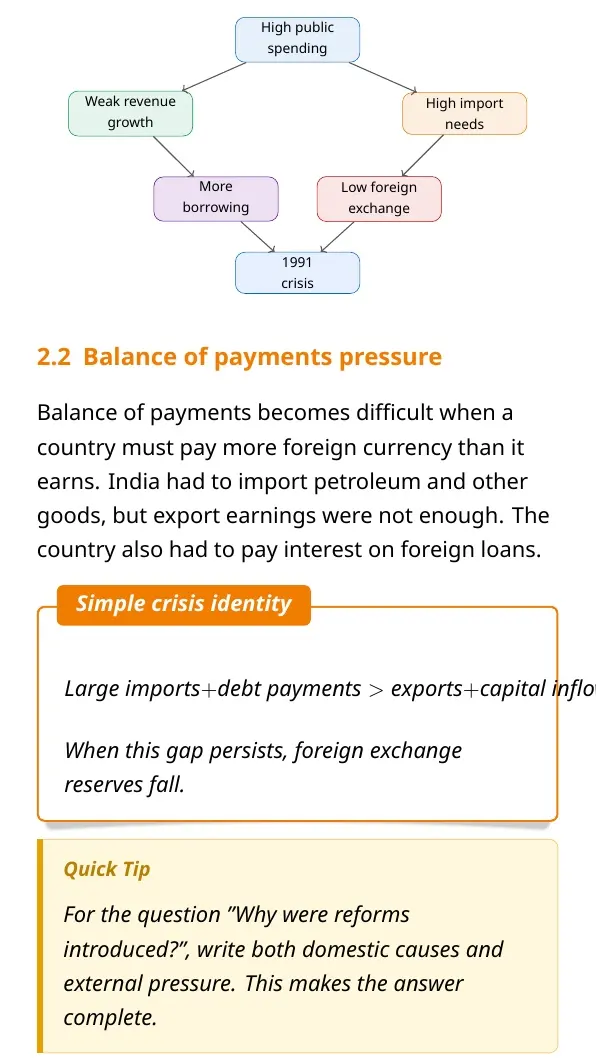
The immediate reason for economic reform was the balance of payments crisis. India did not have enough foreign exchange to pay for imports and external obligations for long. The government also faced a large fiscal deficit because expenditure was much higher than revenue. Inflation and rising debt made the situation more serious.
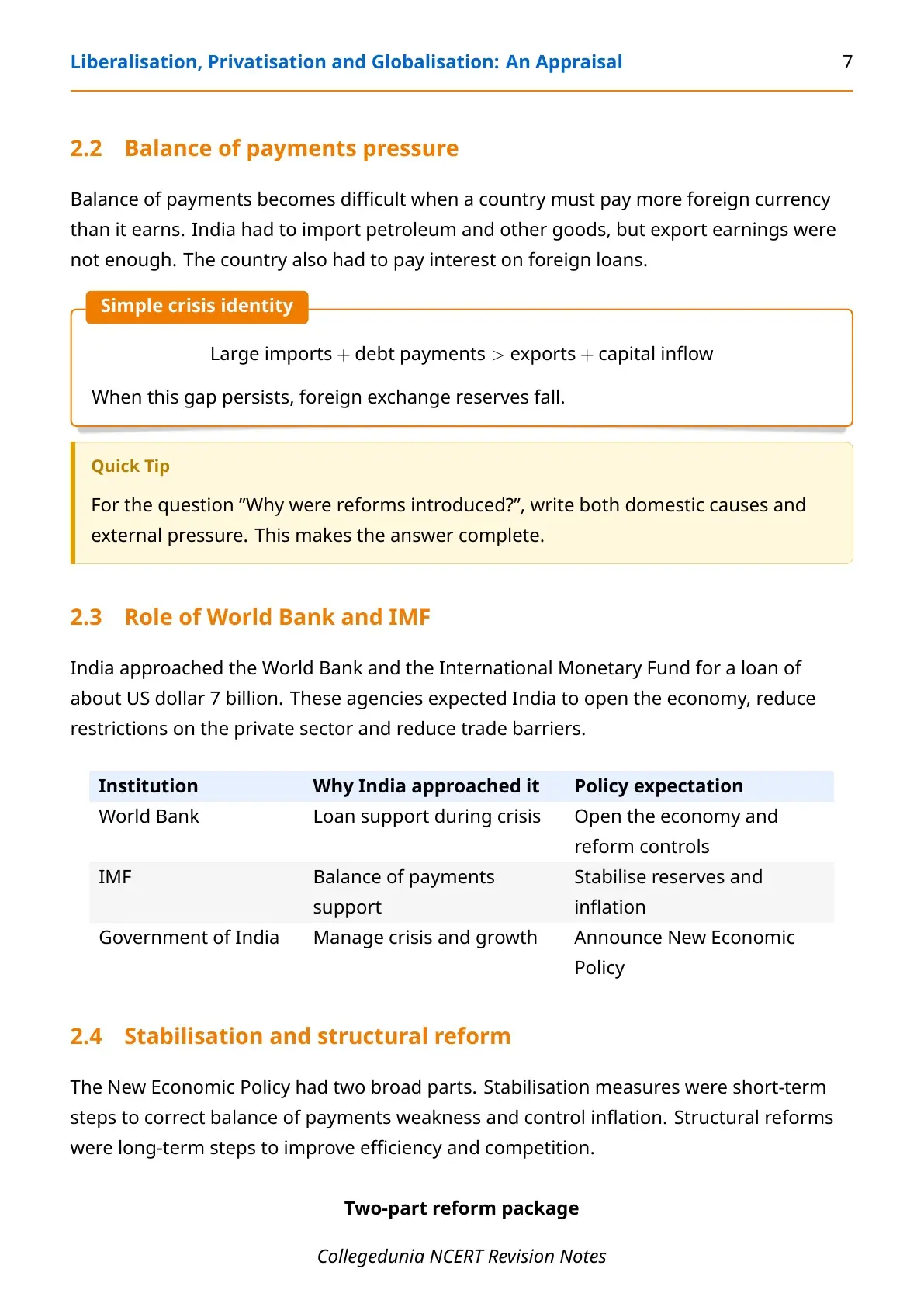
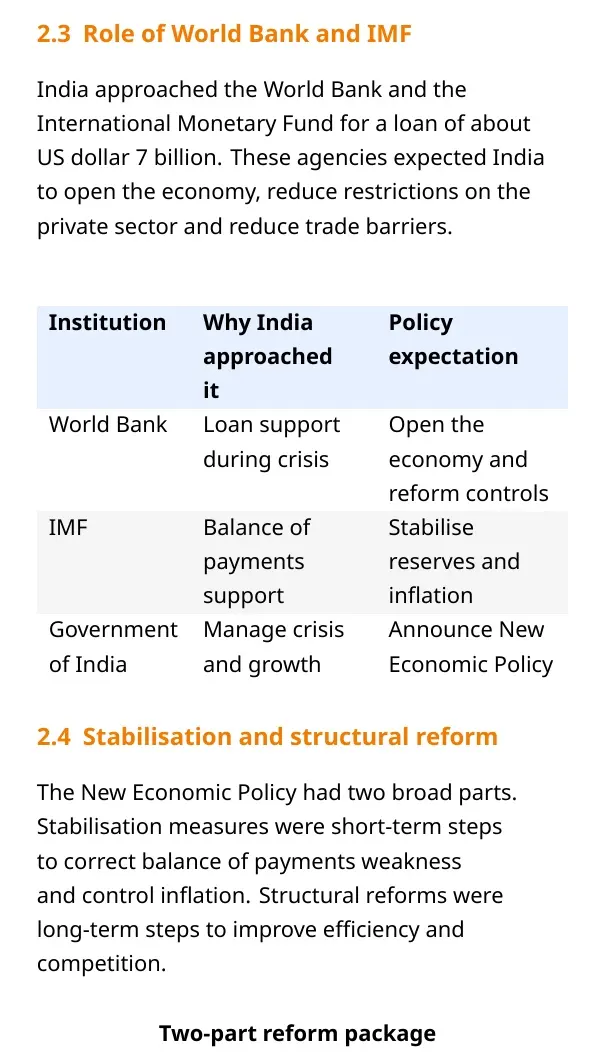
India approached the IMF and the World Bank for assistance. The support came with pressure to restructure the economy, reduce controls and increase the role of markets. NCERT presents this moment as a turning point from a highly regulated system towards a more open and competitive economy.
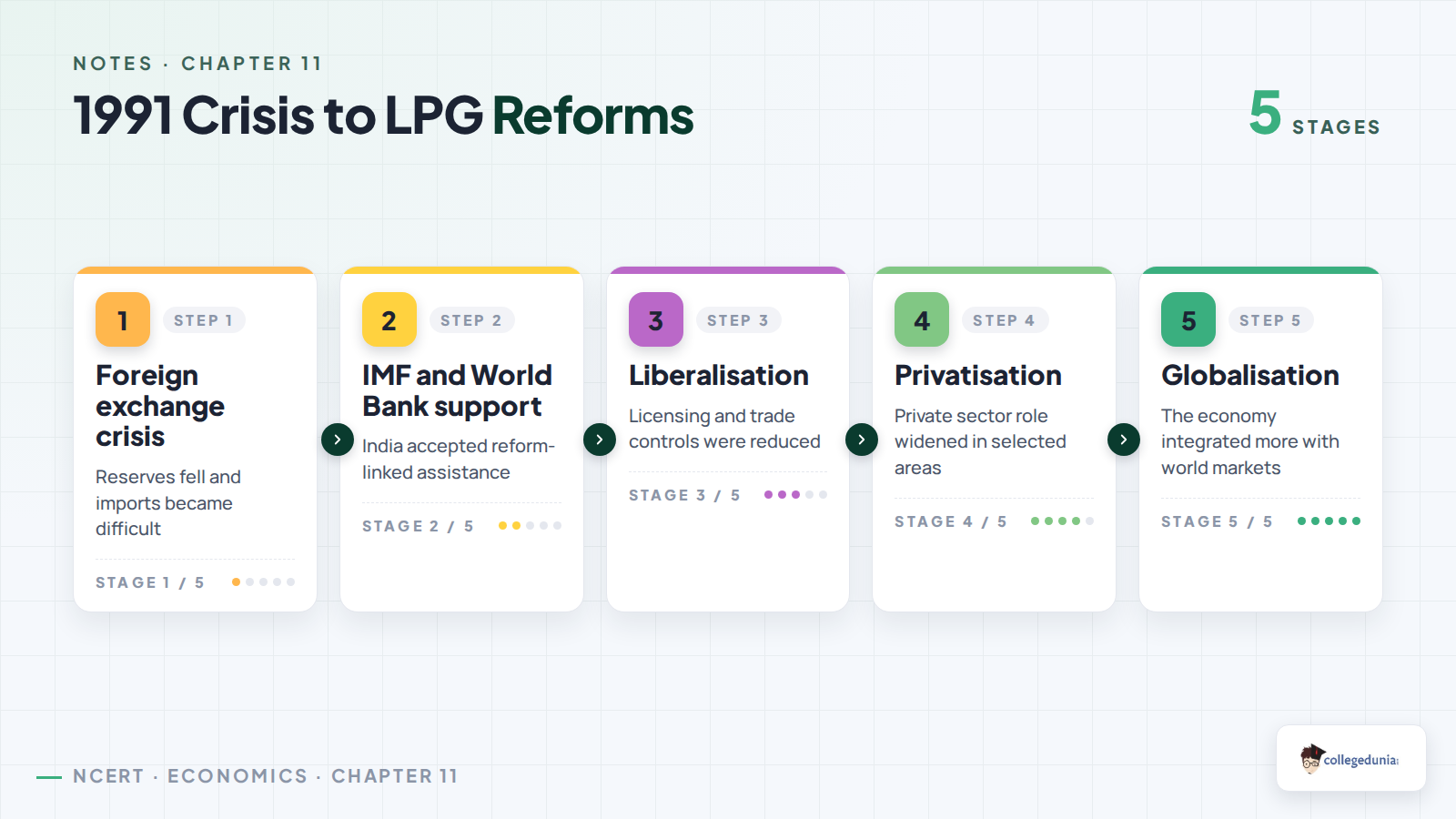
- Foreign exchange shortage: India needed dollars to pay for imports and debts.
- High fiscal deficit: government borrowing rose because spending exceeded revenue.
- Rising prices: inflation reduced purchasing power and policy room.
- External pressure: reform-linked assistance pushed policy change.
Liberalisation in Class 11 Economics Chapter 11
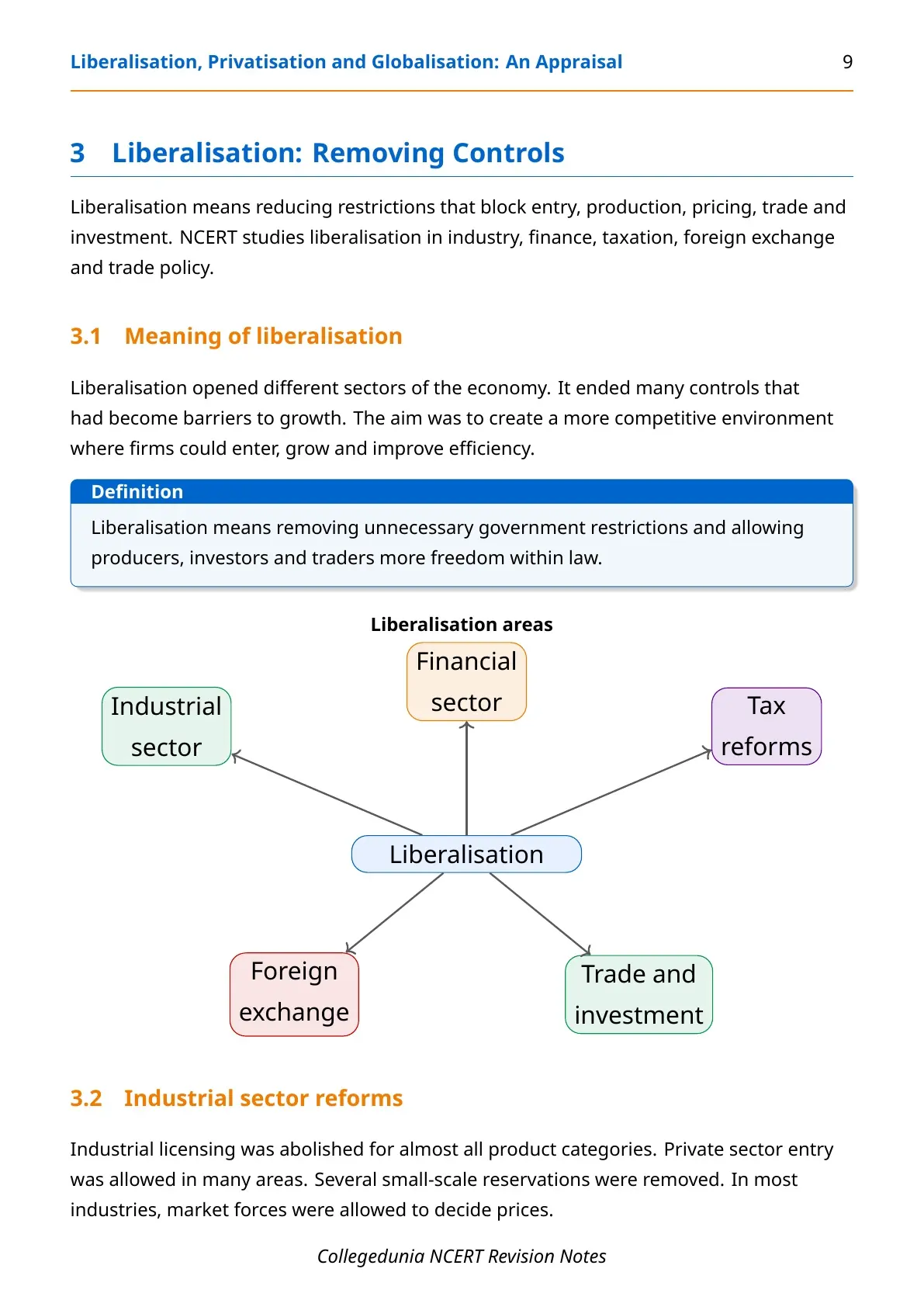
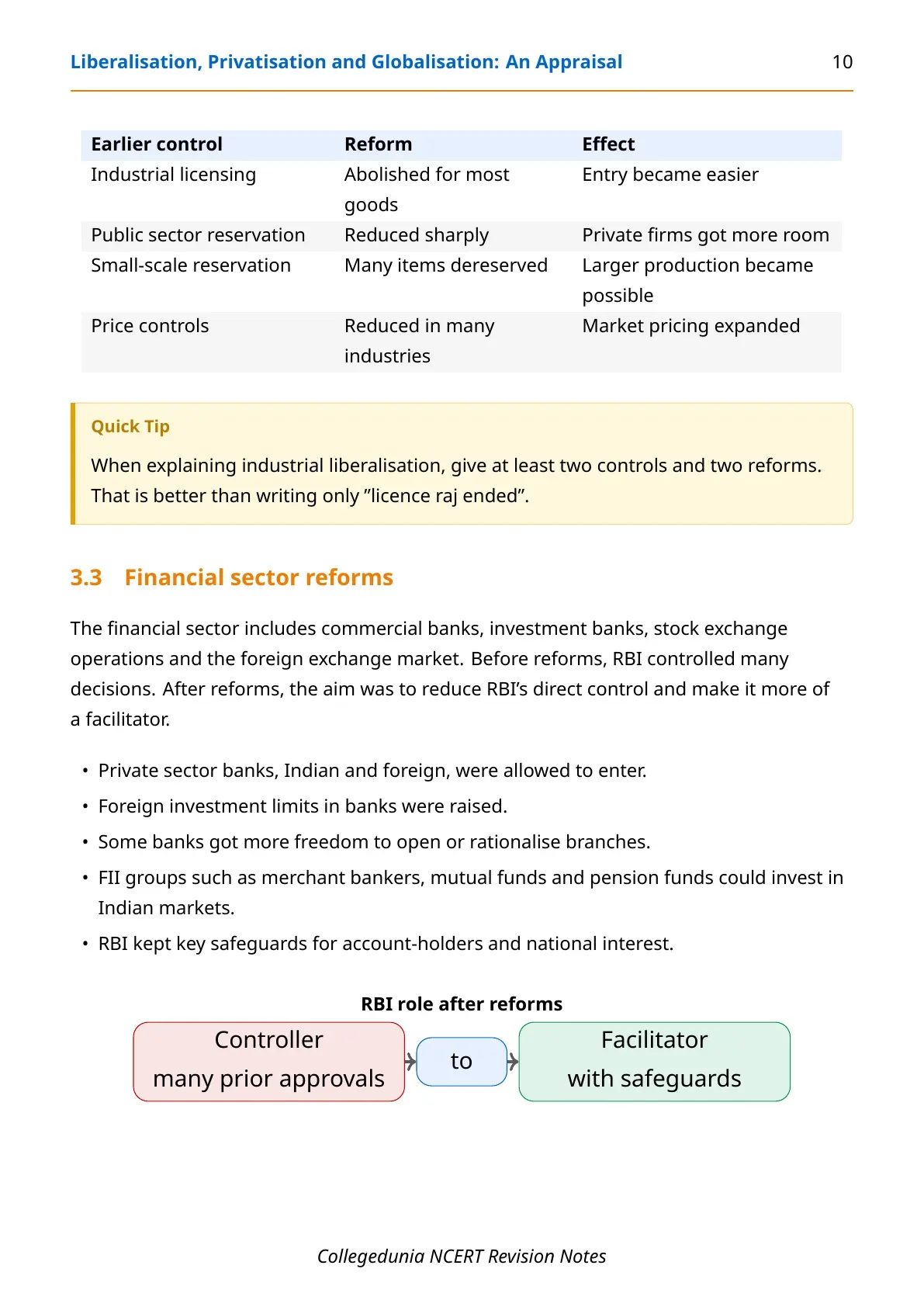
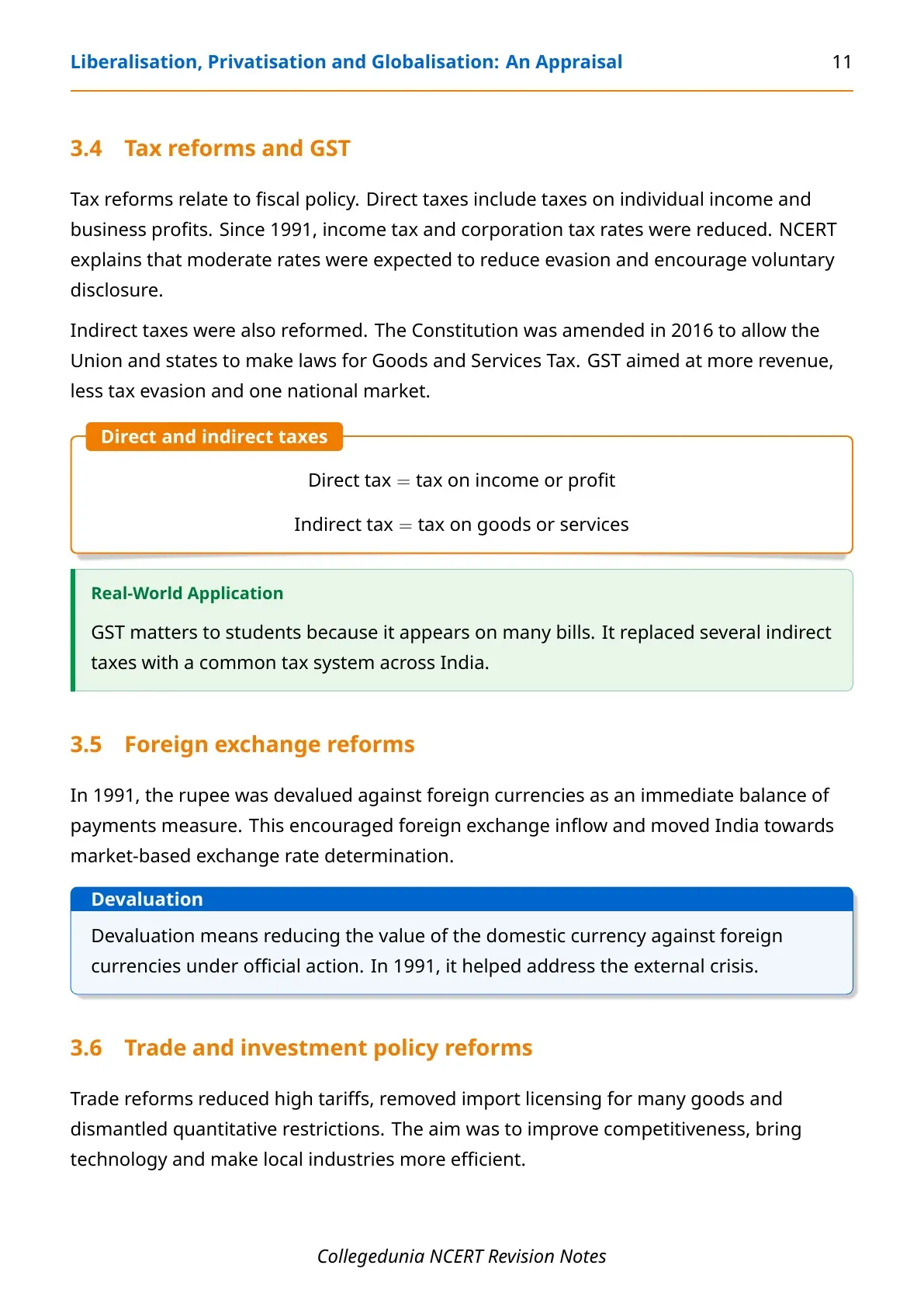
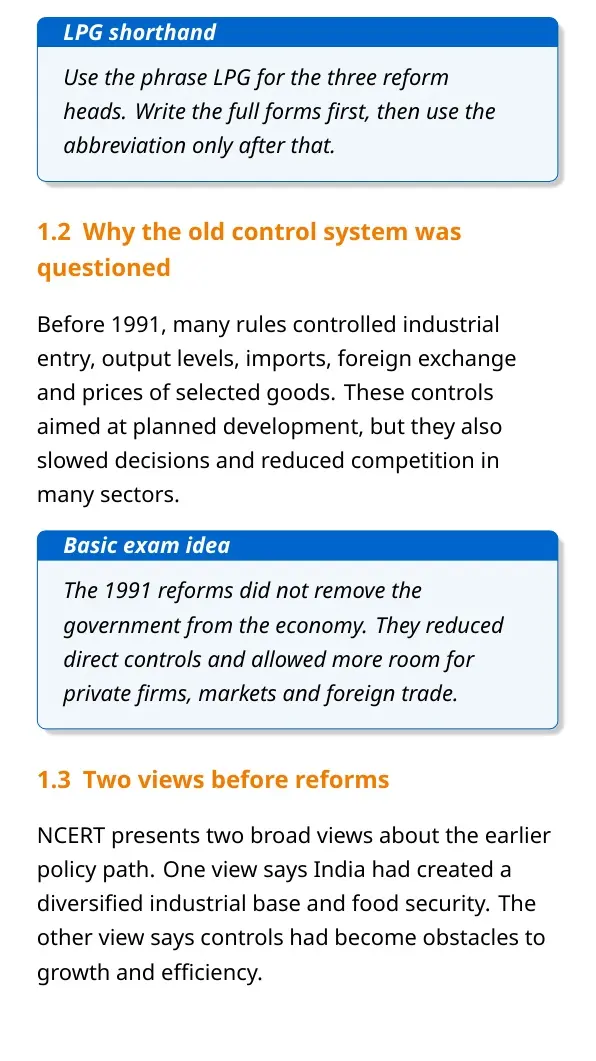
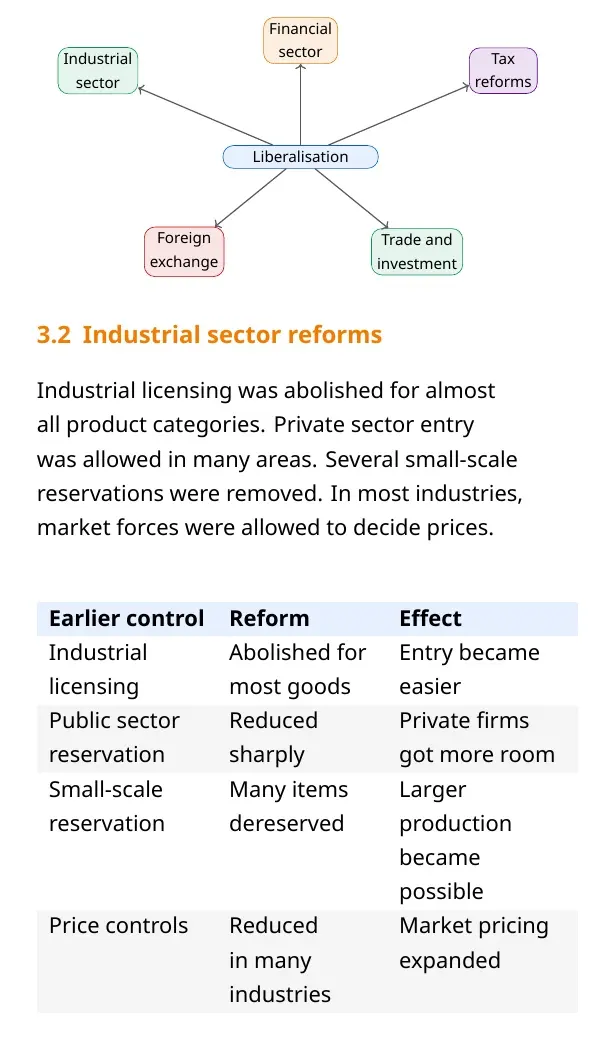
Liberalisation means removing unnecessary government controls and restrictions from economic activity. Before 1991, many industries needed licences for starting, expanding or changing production. Reforms reduced industrial licensing, opened many areas to private producers and allowed firms more freedom in deciding output and investment.
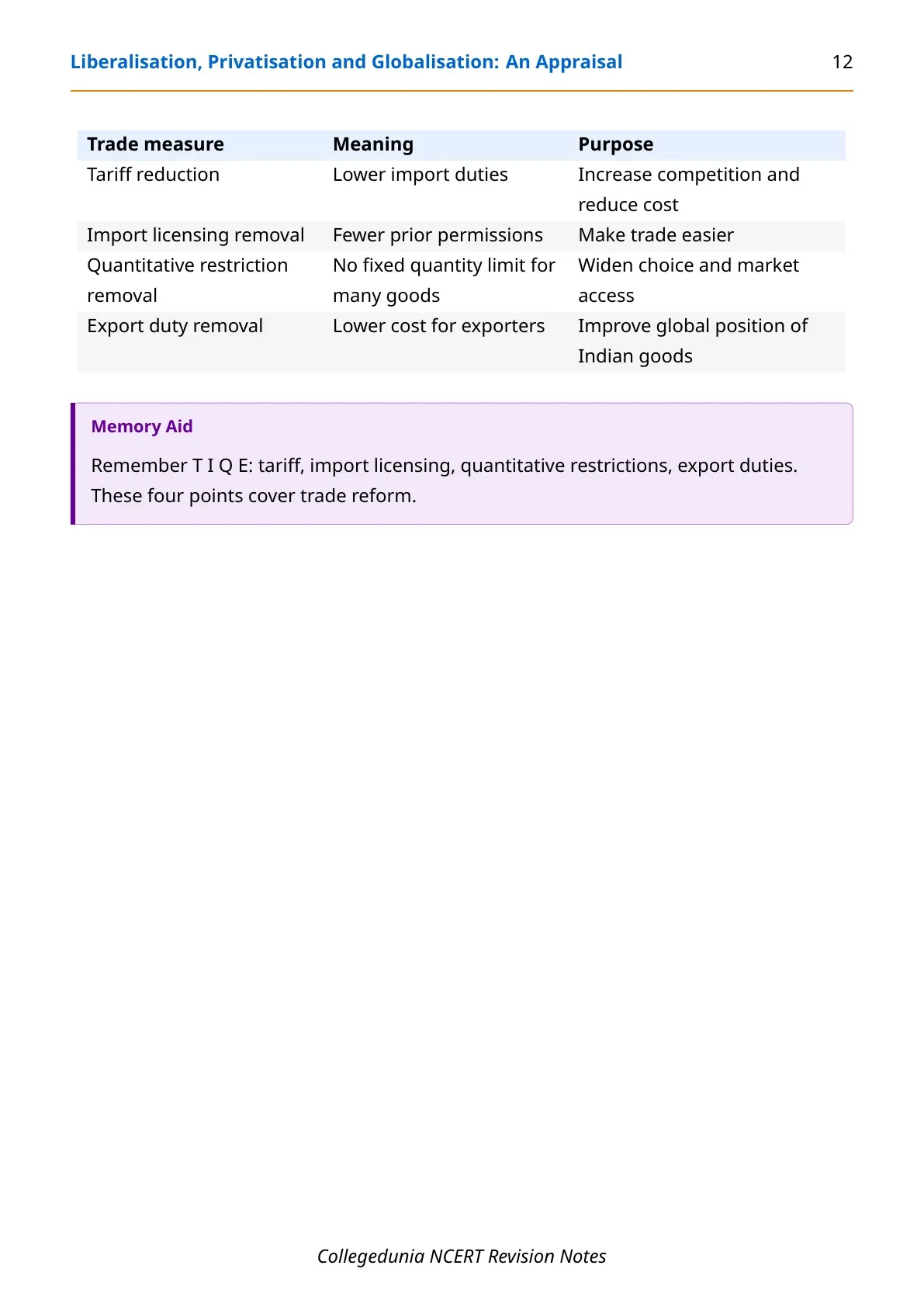
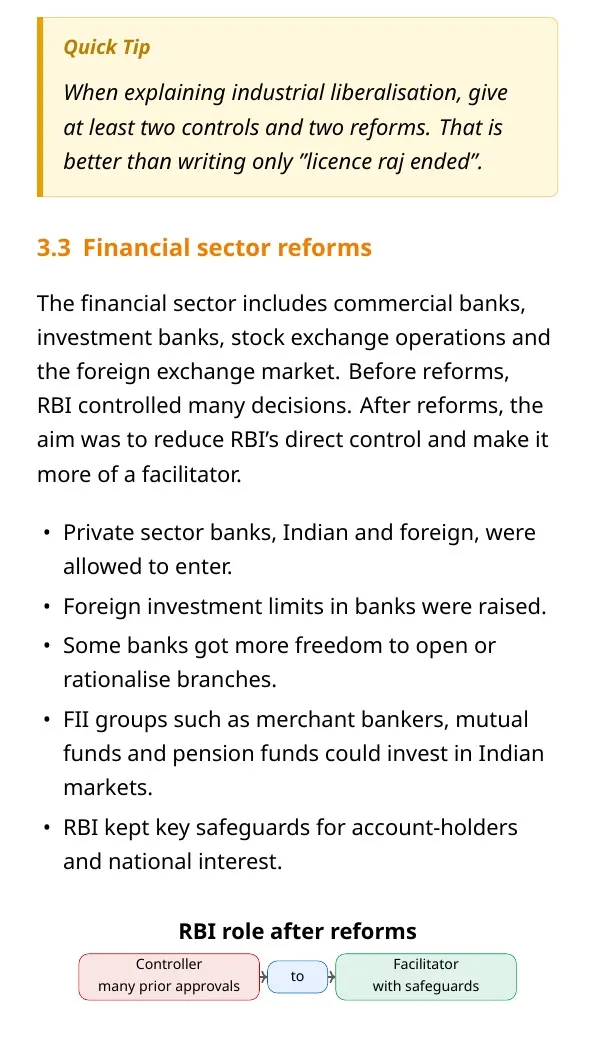
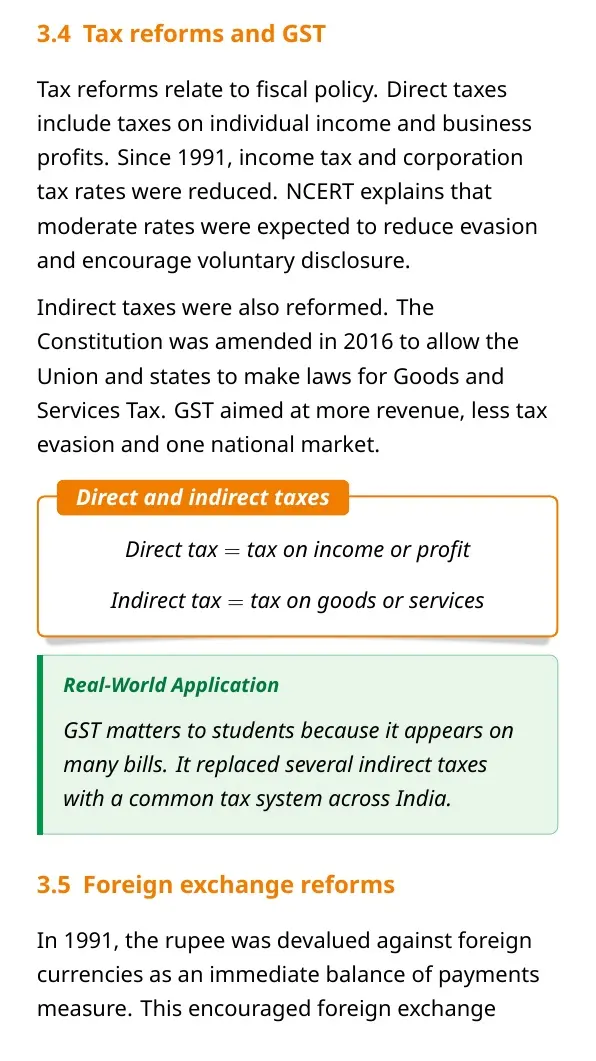
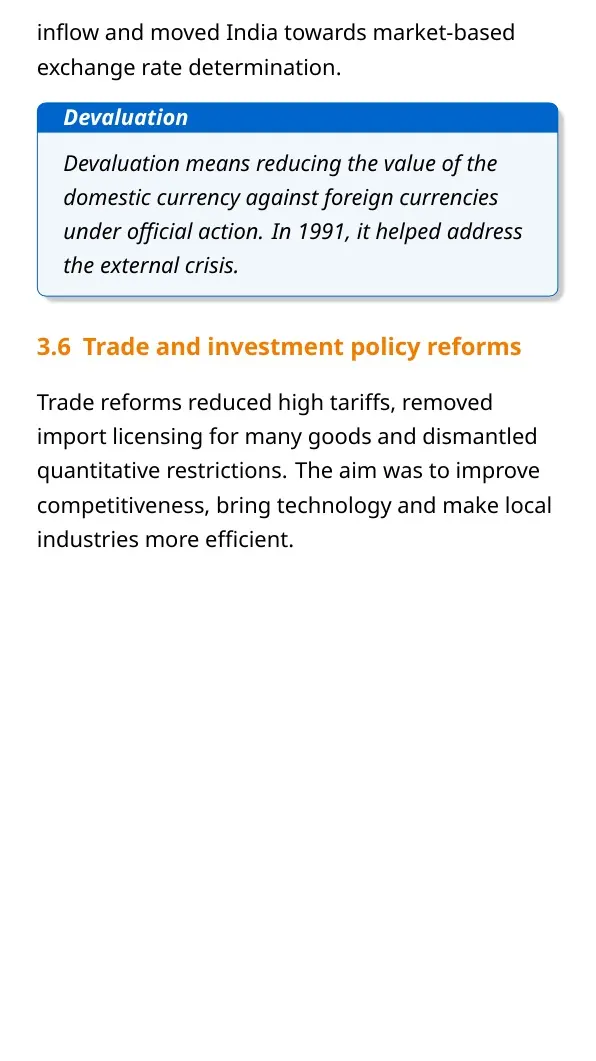
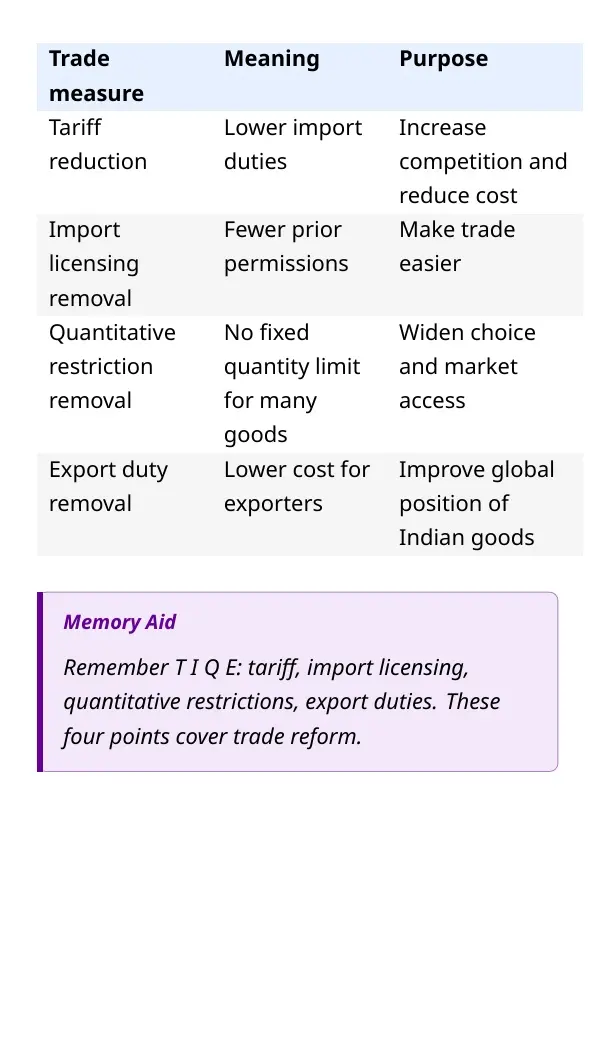
Trade policy also became more liberal. Import licensing was reduced, tariffs were lowered over time and export promotion became more important. Financial sector reforms changed the role of the Reserve Bank of India from mainly controlling banks to also supporting a more competitive financial system.
| Area | Before reform | After liberalisation |
|---|---|---|
| Industry | Licences controlled entry and expansion | Licensing reduced for many industries |
| Trade | High protection through tariffs and quotas | Import restrictions reduced in phases |
| Finance | Strong direct control over banks | More competition and market-linked rates |
| Foreign investment | Strict limits on foreign participation | Selected sectors opened more widely |
Privatisation and Public Sector Reform
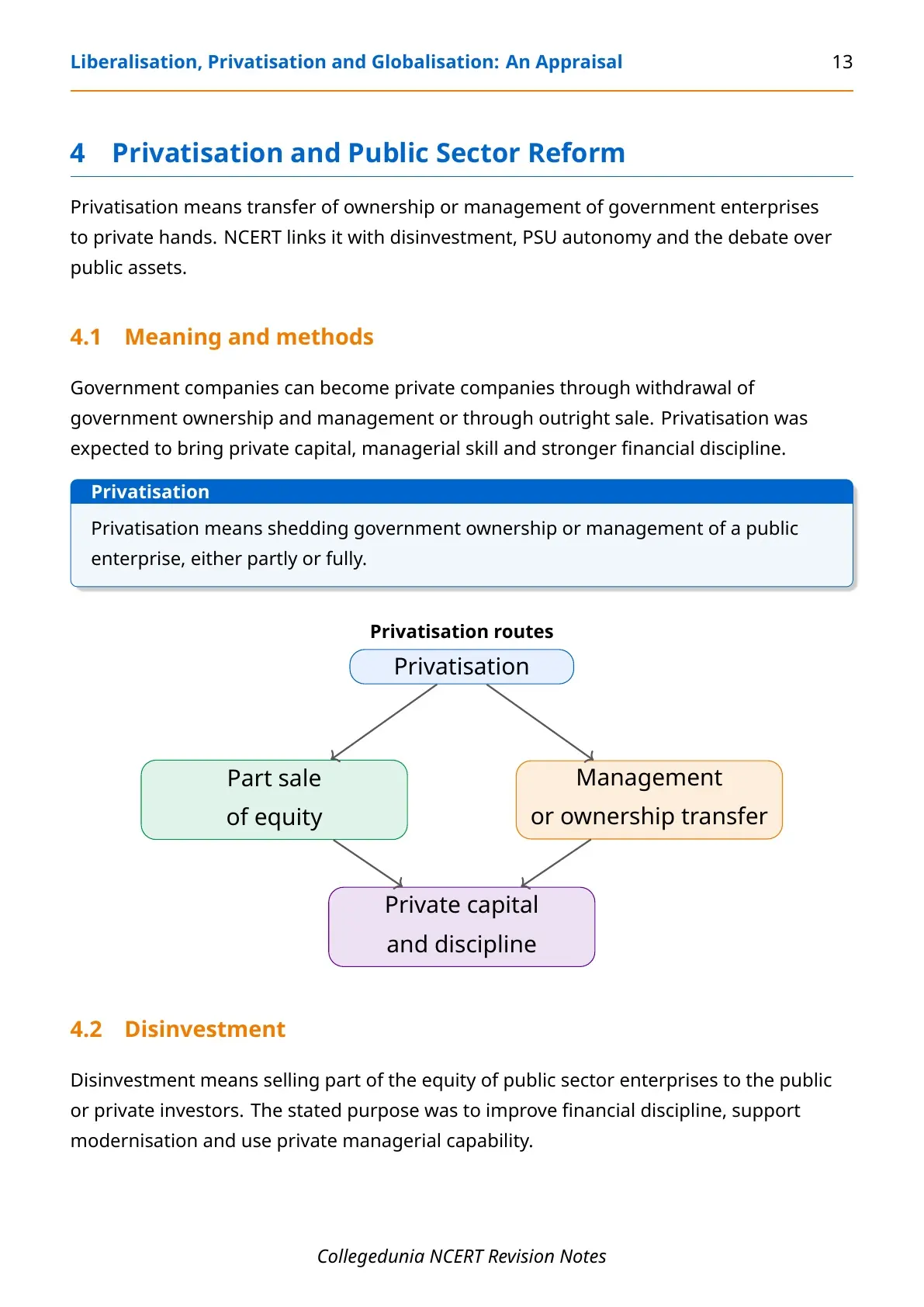
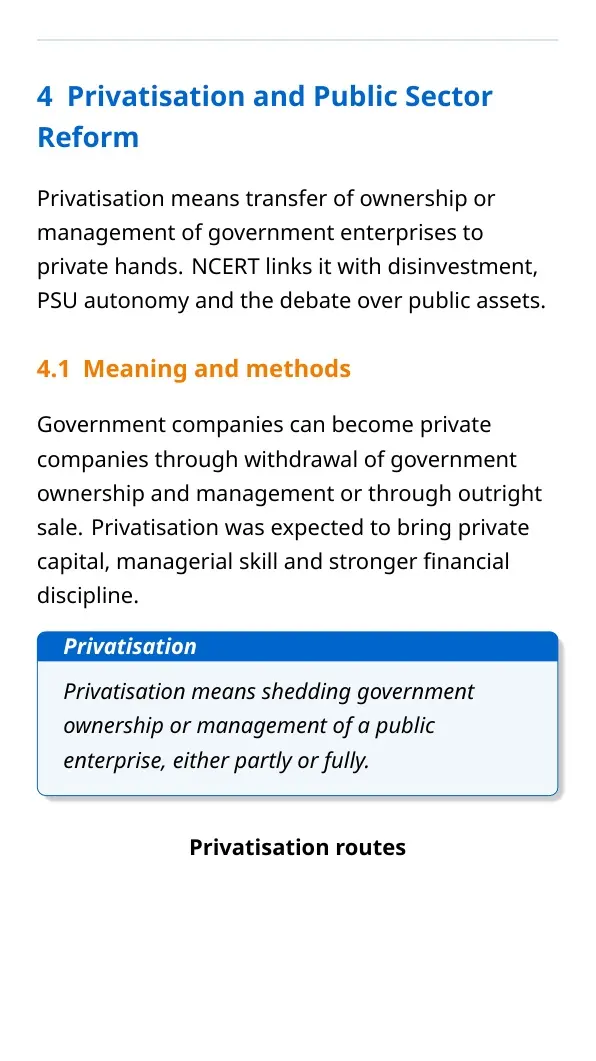
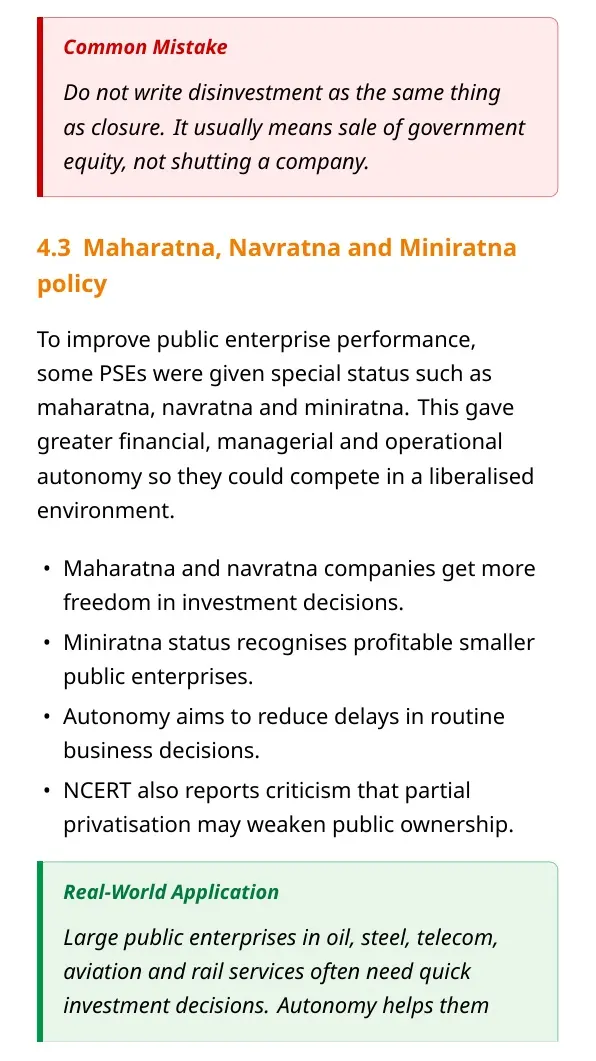
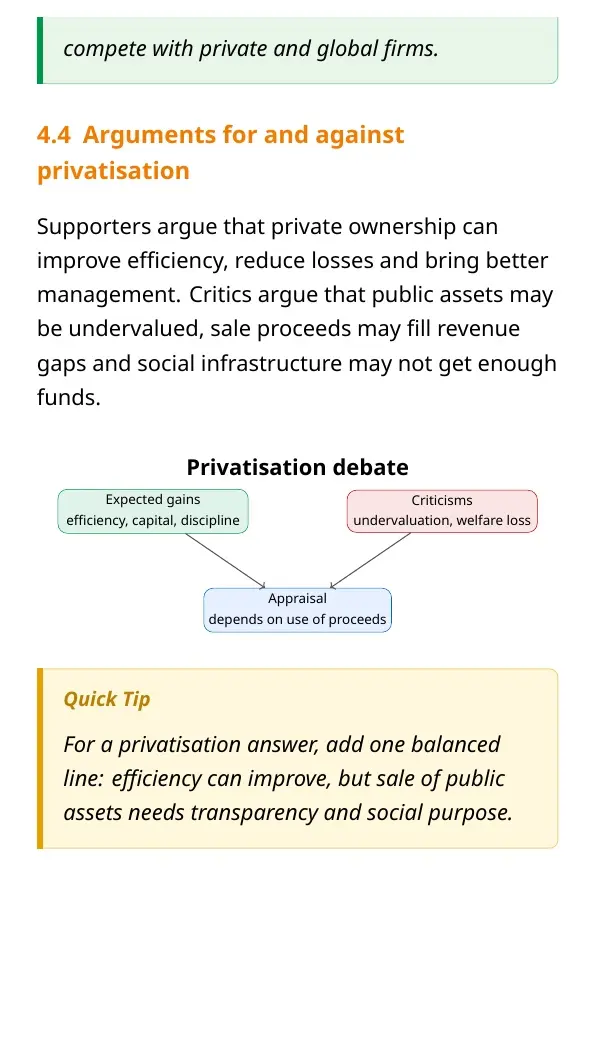
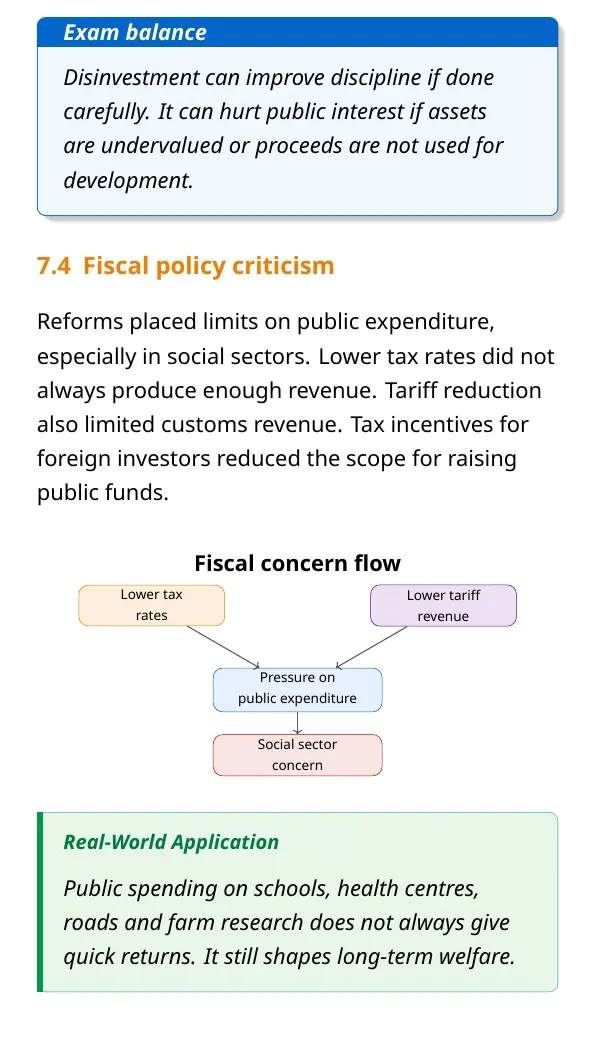
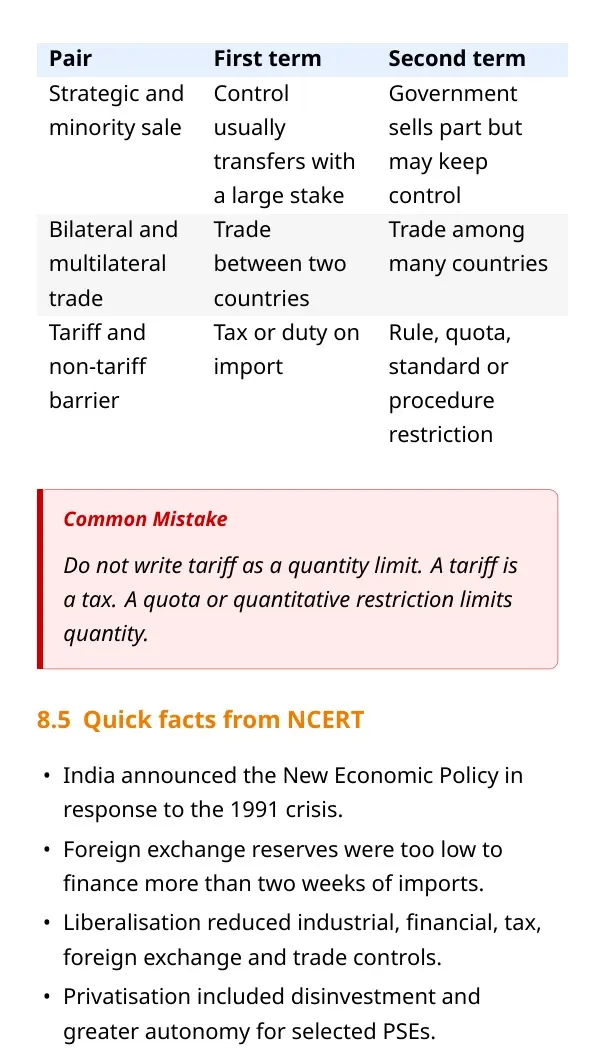
Privatisation means giving the private sector a larger role in ownership, management and production. It does not mean that the government disappears from the economy. In NCERT's chapter, privatisation is linked with disinvestment, public sector reform and a belief that private participation can improve efficiency in some areas.
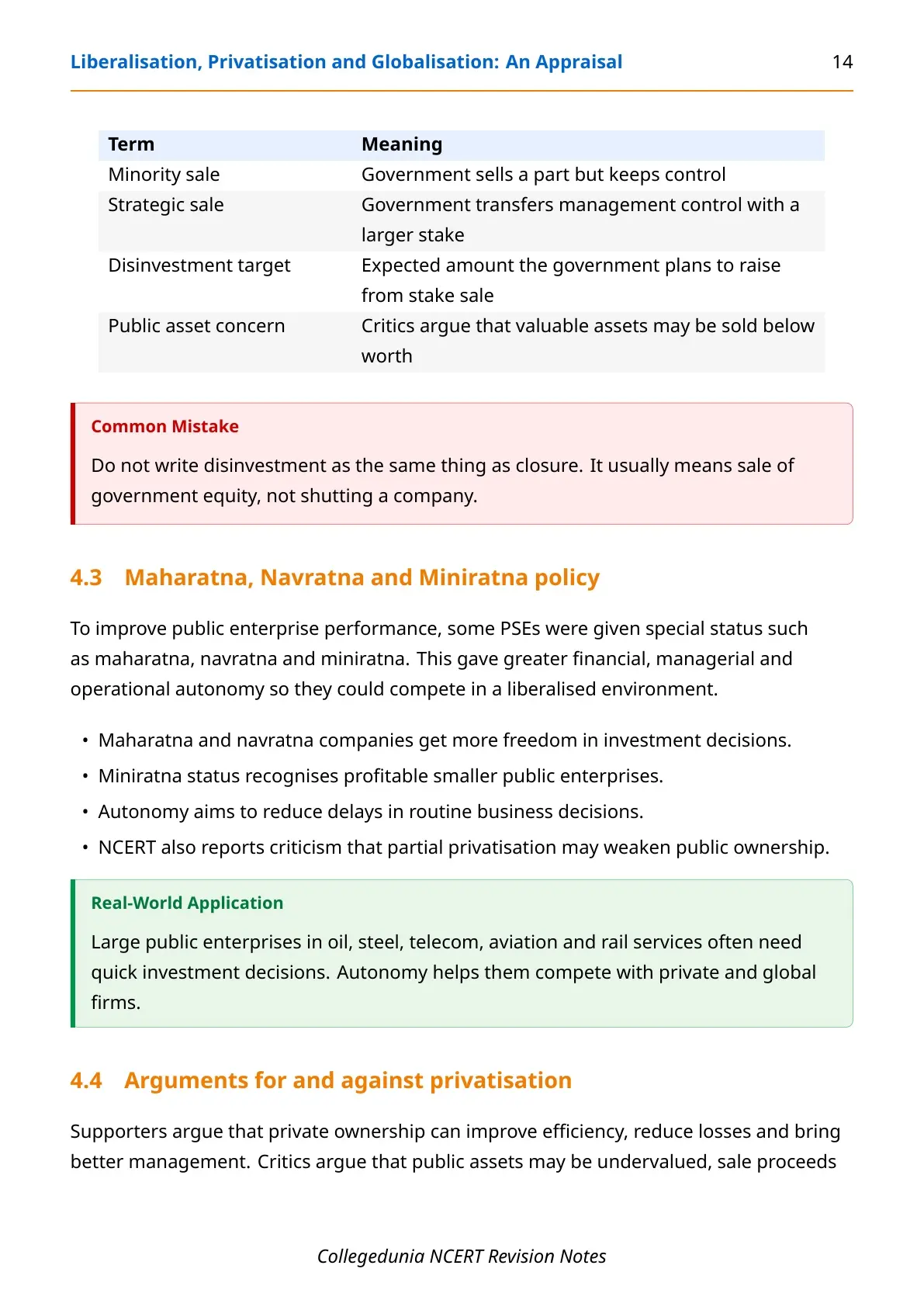
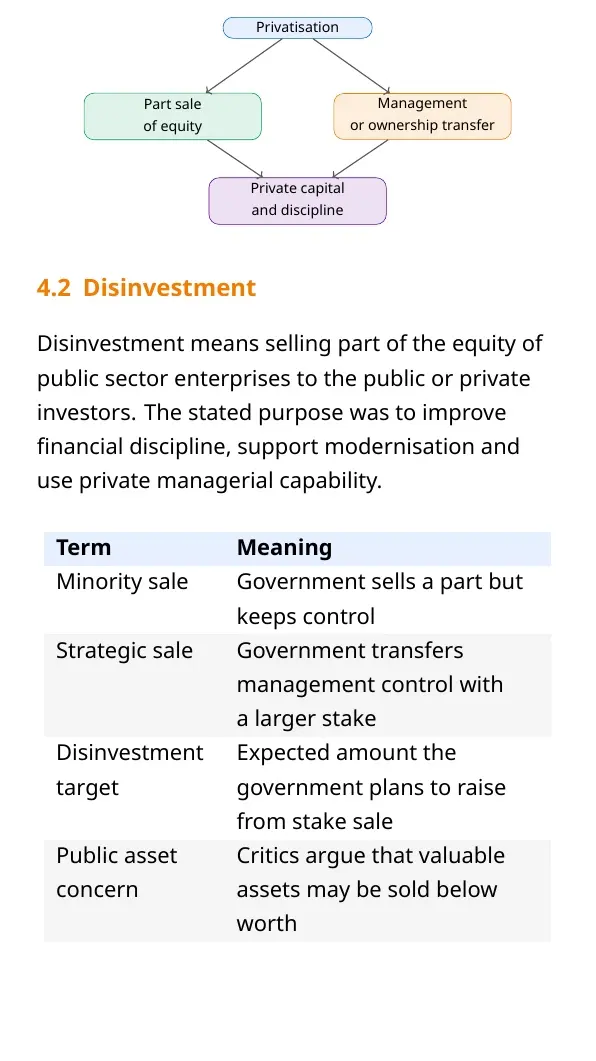
Disinvestment means selling part of the government's equity in public sector enterprises. The reform argument was that some public enterprises were inefficient, over-protected or financially weak. At the same time, NCERT reminds students that the public sector still matters in infrastructure, welfare and strategic areas.
- Privatisation widened the role of private producers in selected industries.
- Disinvestment reduced government ownership in some public sector enterprises.
- Public sector units were expected to improve efficiency and accountability.
- The state retained responsibility for regulation, social welfare and strategic sectors.
Globalisation Outsourcing and WTO
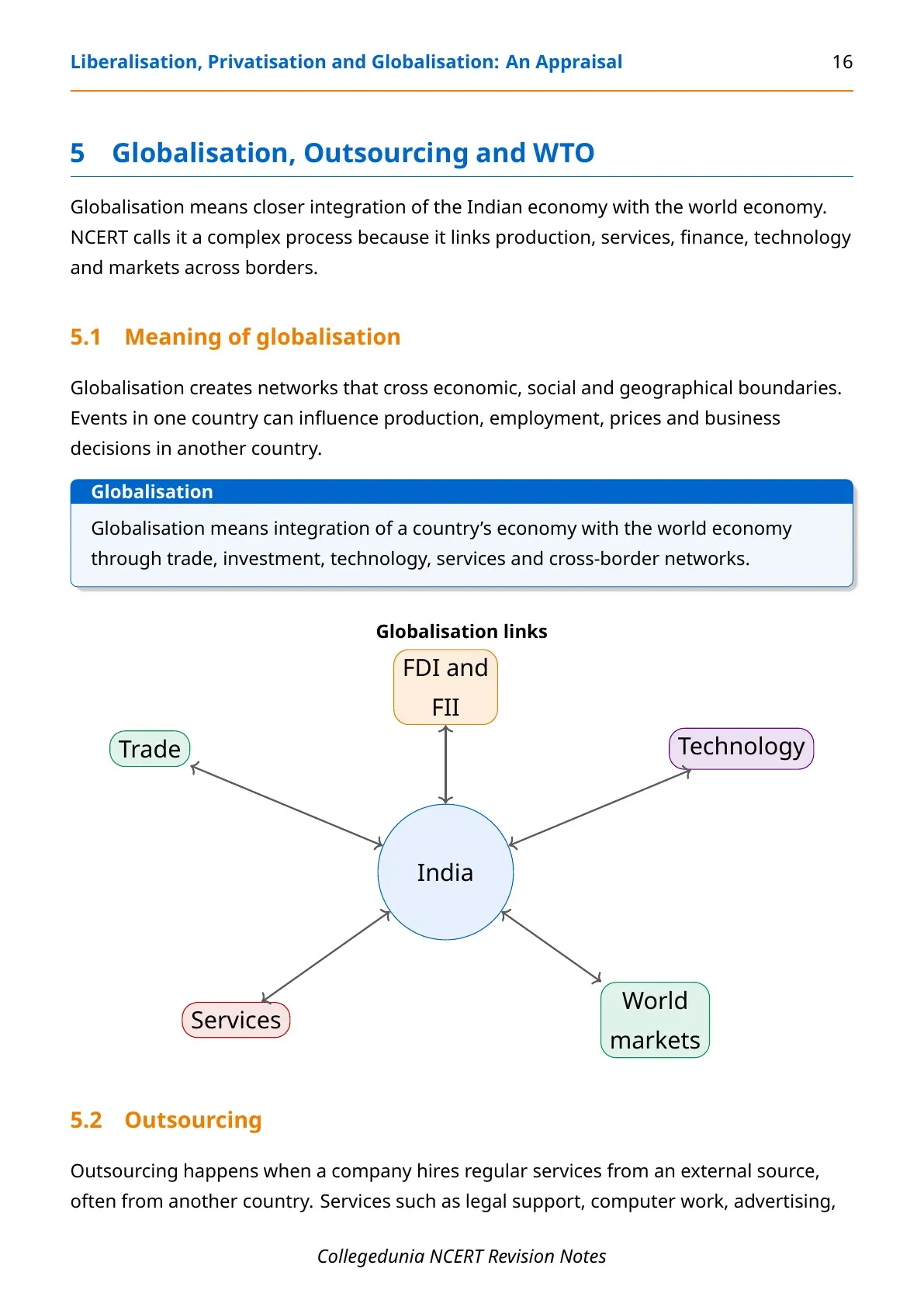
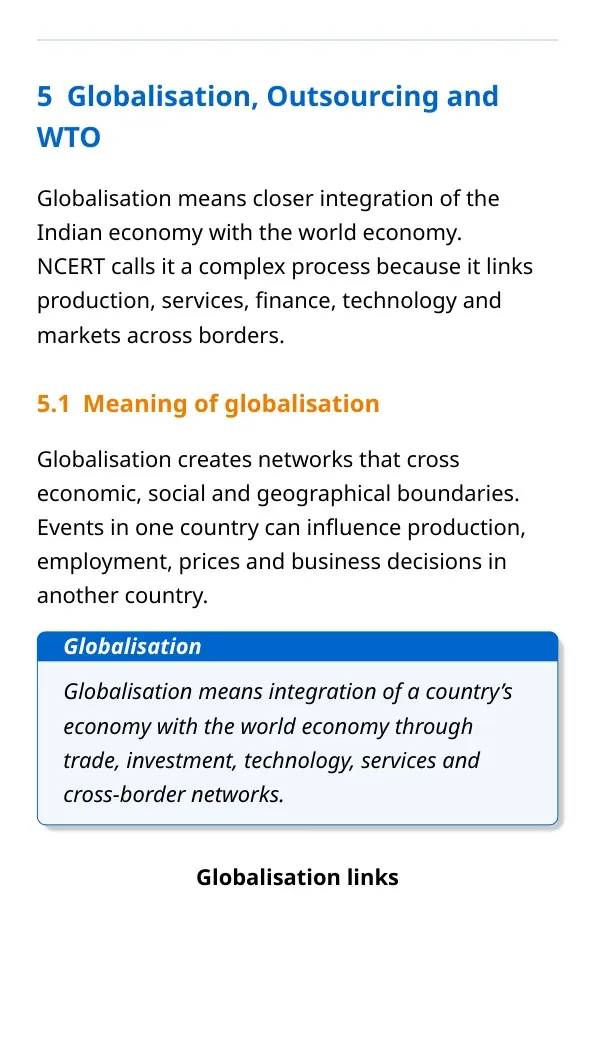
Globalisation means integrating a country's economy with the world economy through trade, investment, technology, services and capital flows. In this chapter, globalisation is not treated as a slogan. NCERT connects it with policy changes such as lowering trade barriers, encouraging foreign investment and linking Indian firms with global markets.
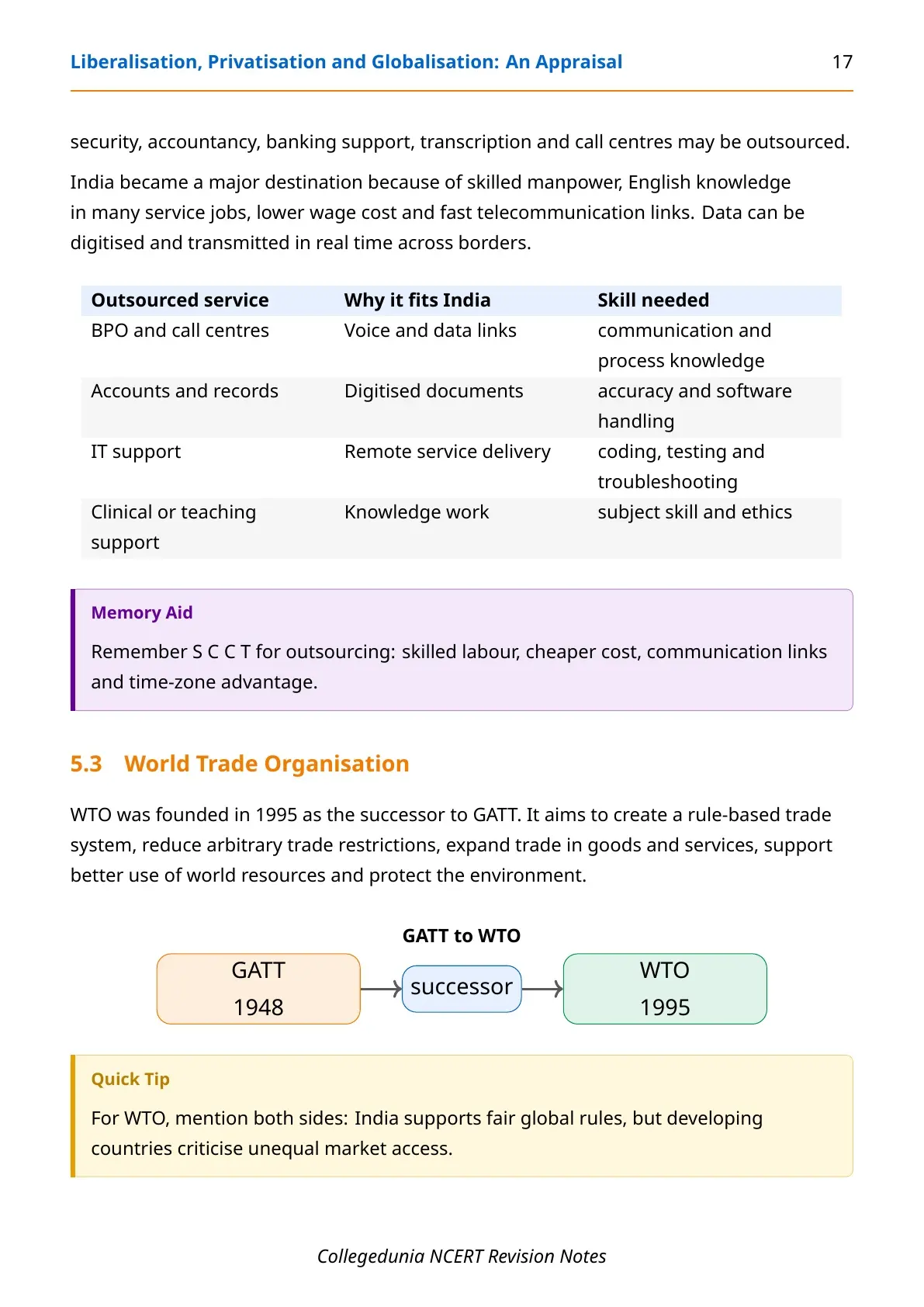
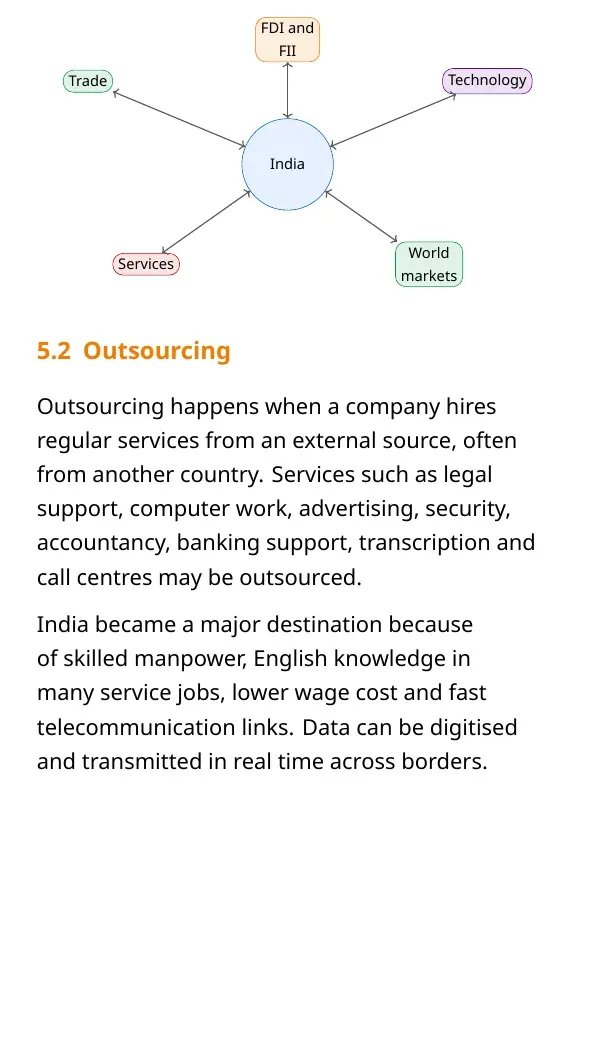
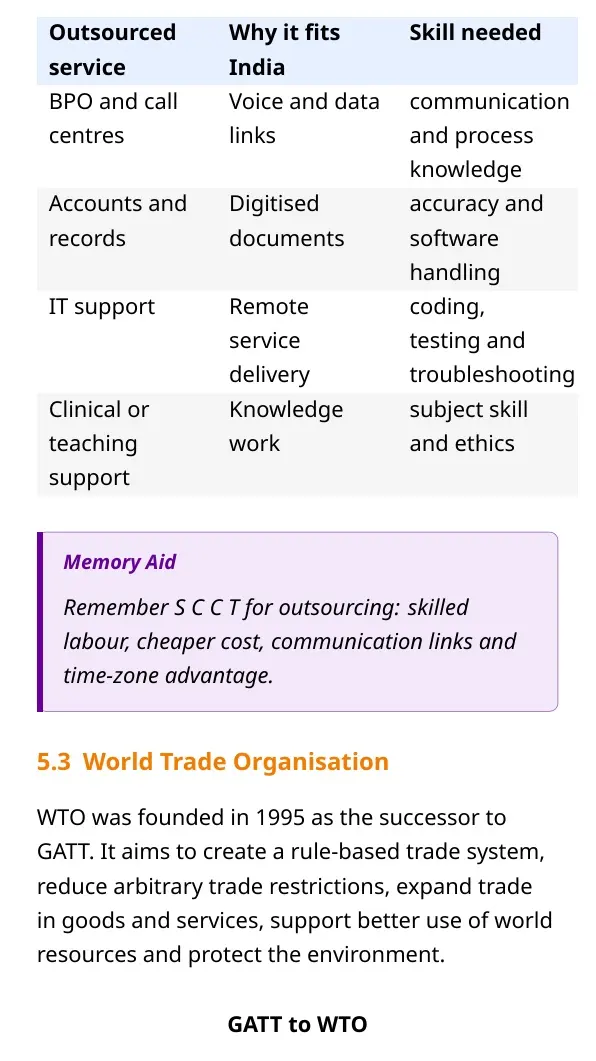
Outsourcing is one important example. Companies in developed countries contract services such as customer support, accounting, software work, data processing and medical transcription to countries where skilled labour is available at lower cost. India became an attractive outsourcing destination because of English-speaking workers, lower wages and growing IT capability.
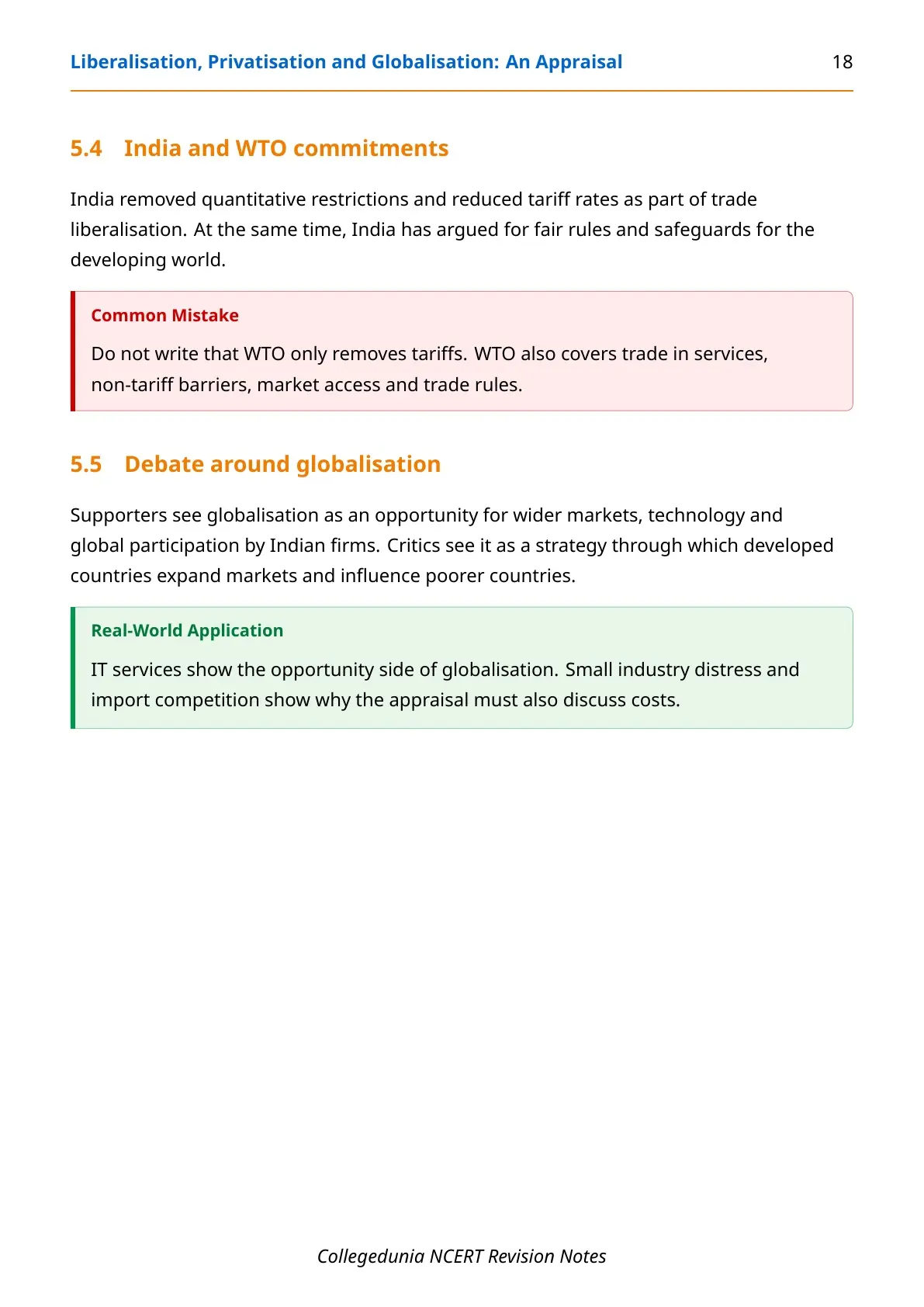
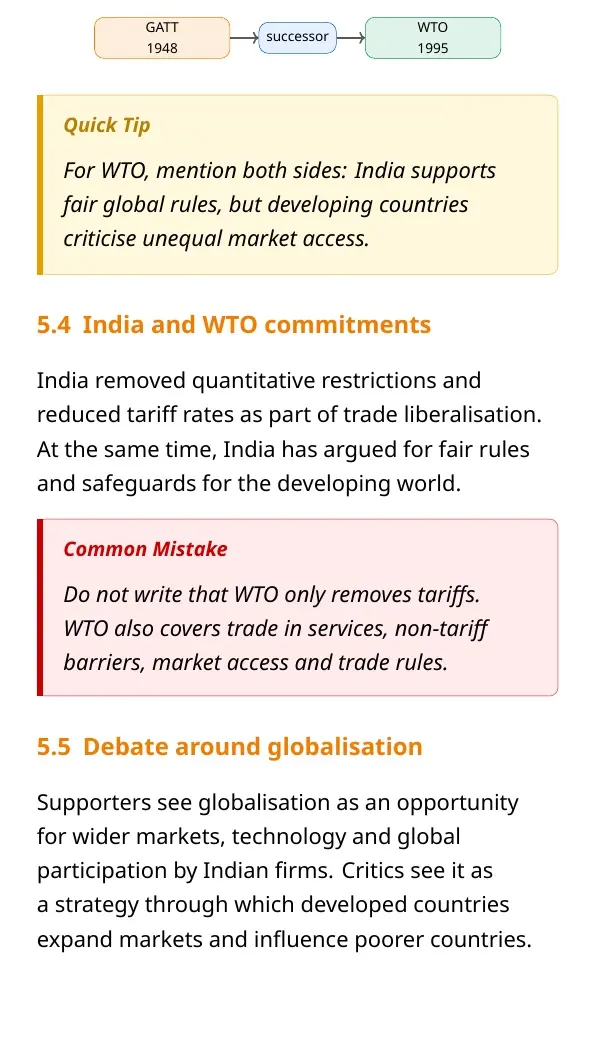
The World Trade Organization is also important. WTO aims to create a rule-based trading system and reduce trade barriers. NCERT asks students to notice both sides: developing countries can gain wider market access, but they may also face pressure from developed countries in agriculture, intellectual property and subsidies.
Positive Effects of LPG Reforms
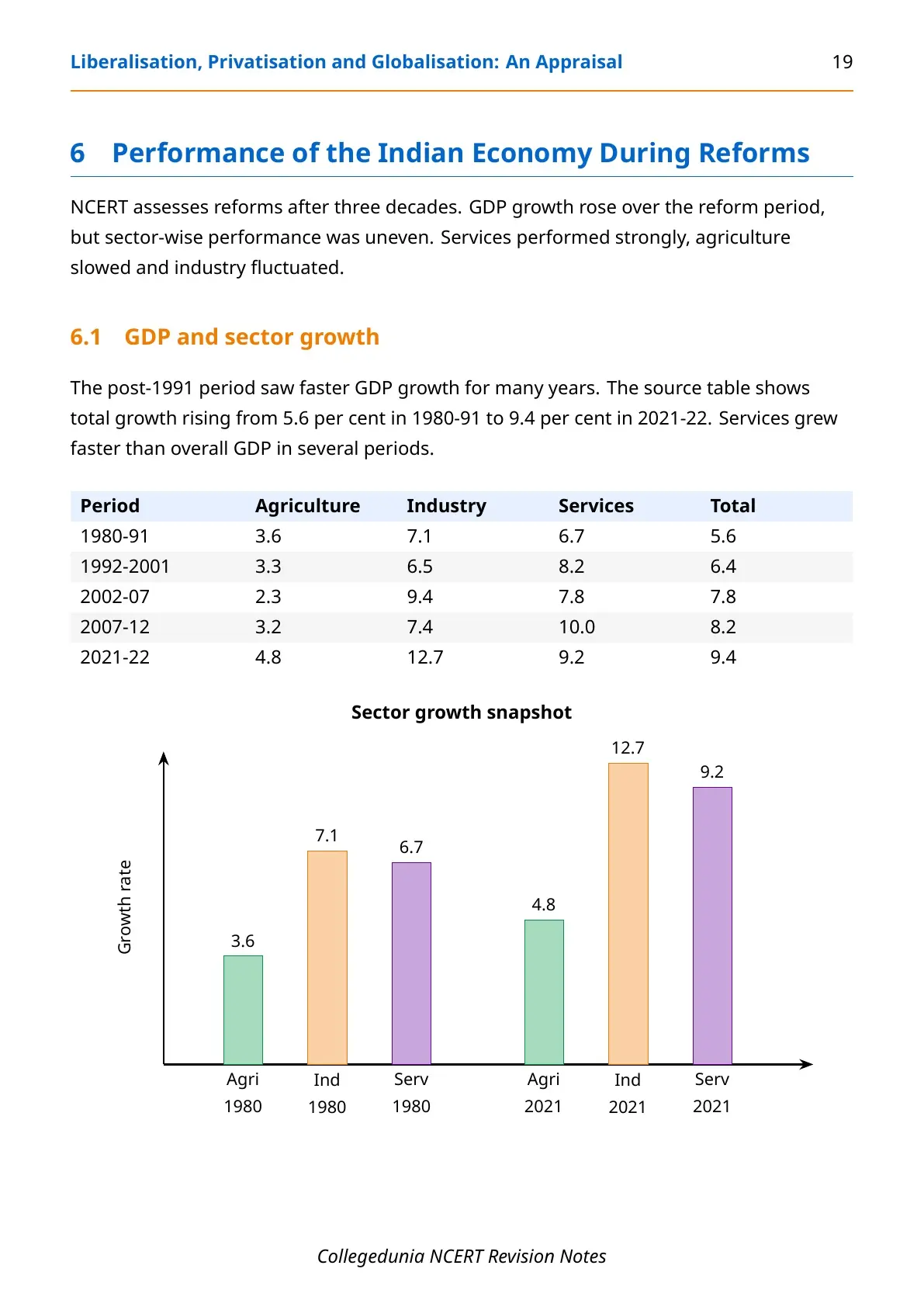
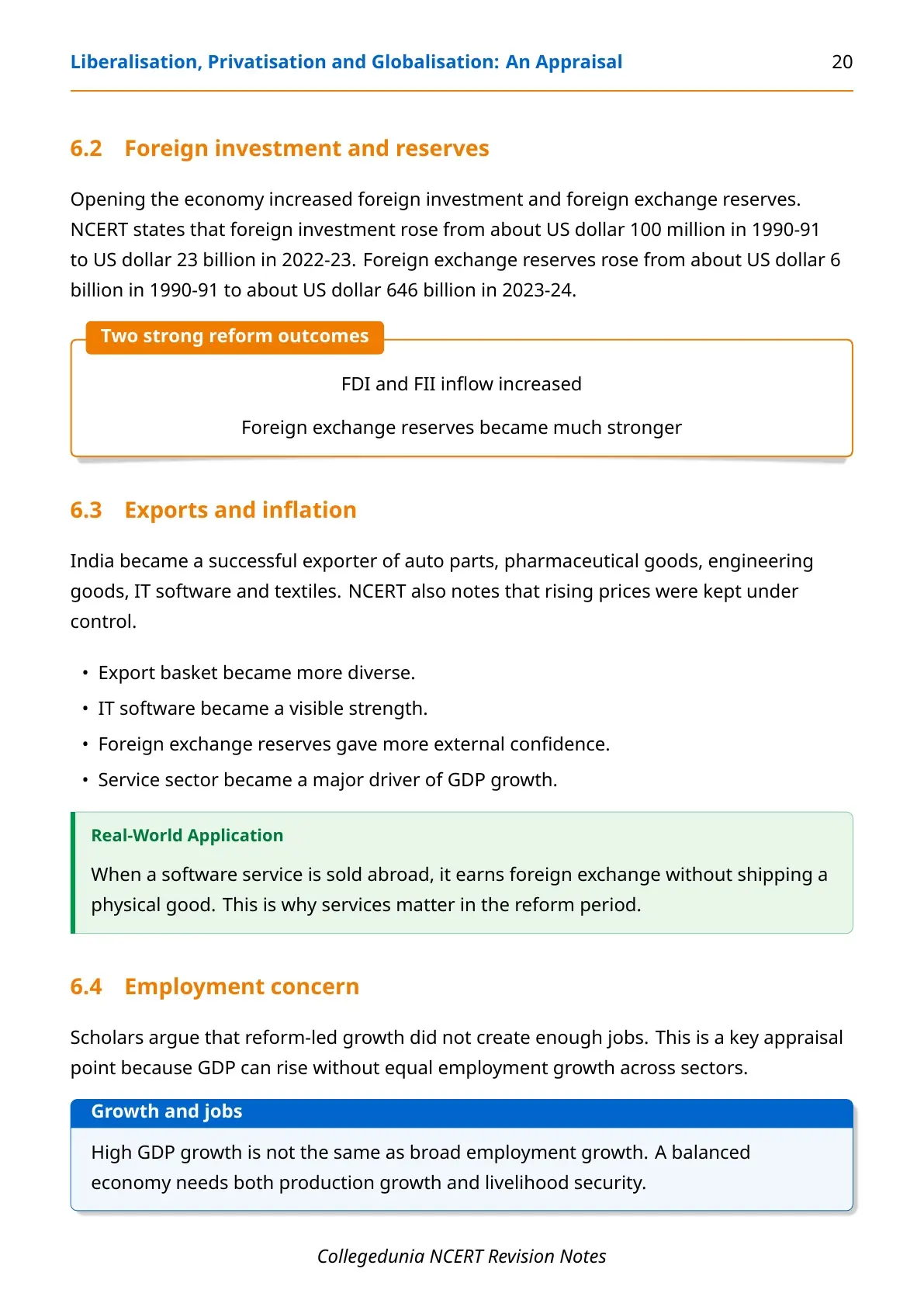
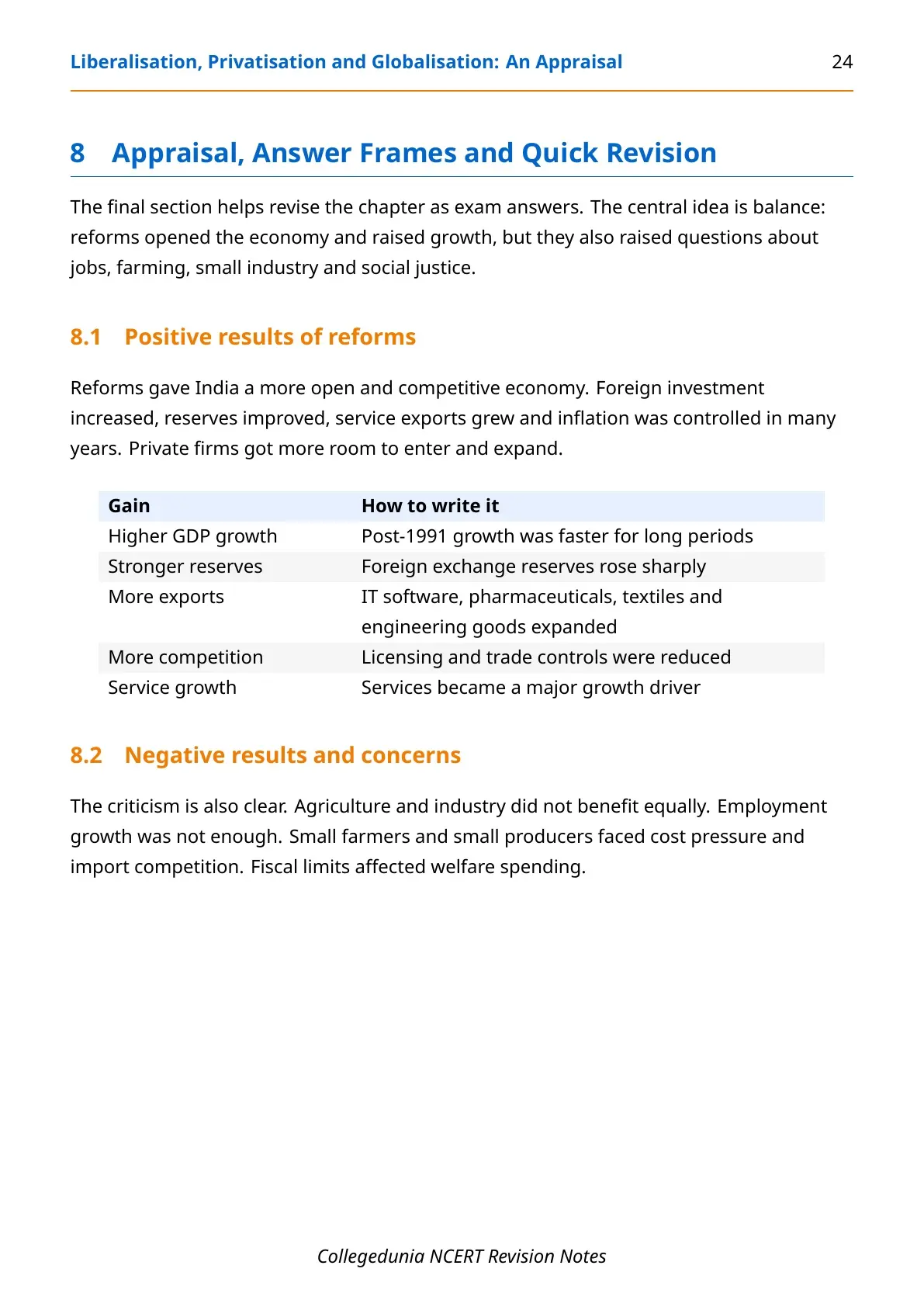
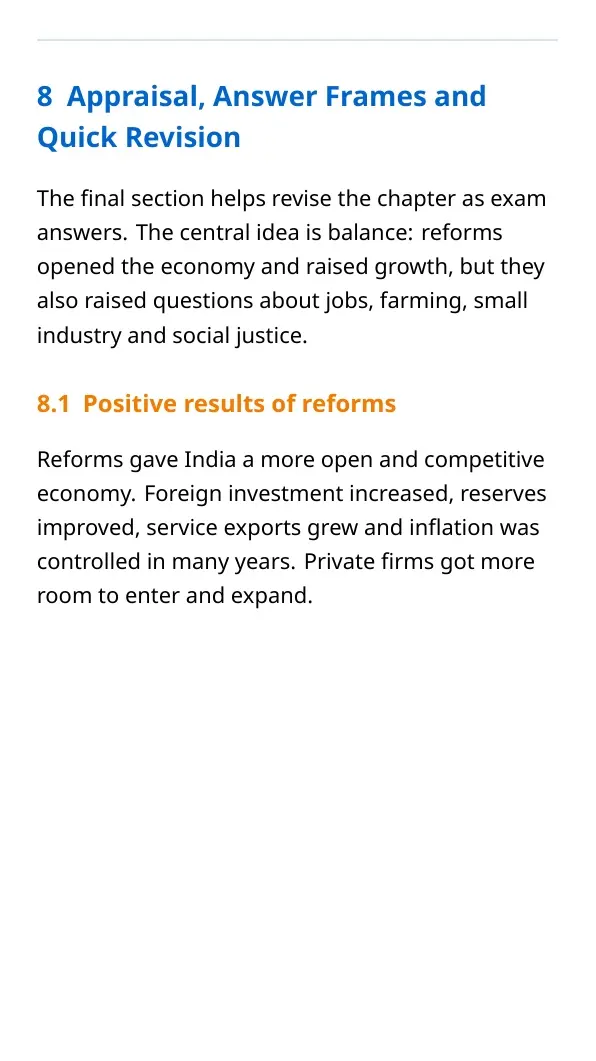
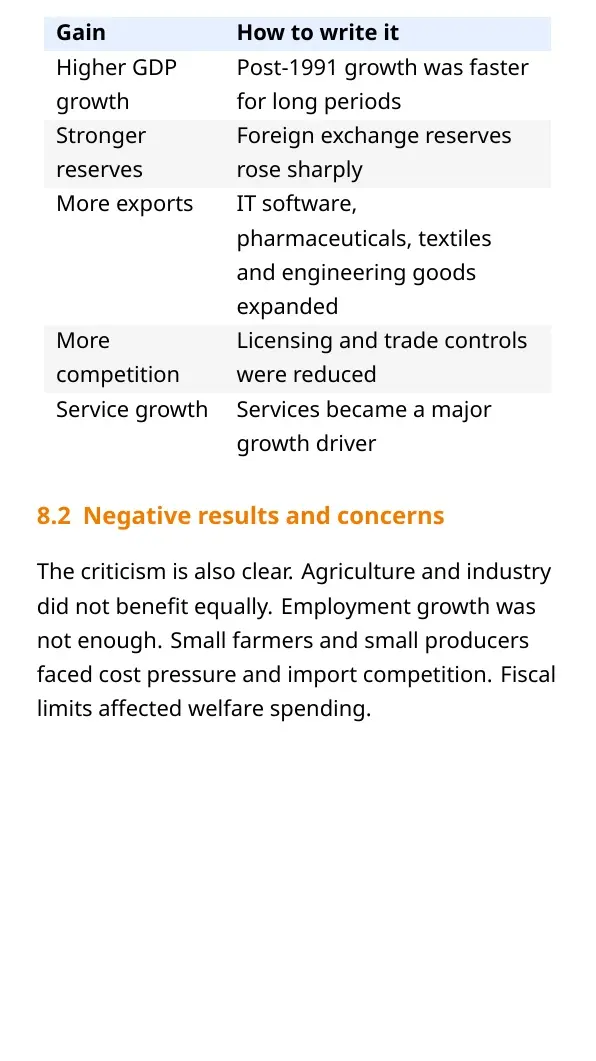
The reforms improved competition, widened consumer choice and encouraged private investment. Industrial licensing reforms gave firms more freedom. Foreign investment brought capital and technology in selected sectors. Services, especially information technology and communication, grew quickly. Exports of services became a visible strength of the Indian economy.
The reform period also changed how students should write economic answers. Instead of saying that the state alone drives growth, answers should show a mixed picture: government policy created the reform environment, private firms responded to opportunities and world-market links became more important.
| Positive effect | How it helped | NCERT link |
|---|---|---|
| More competition | Firms faced pressure to improve price and quality | Liberalisation and trade reform |
| More private role | Investment opportunities expanded | Privatisation and deregulation |
| Service-sector growth | IT and outsourcing created new export strength | Globalisation and outsourcing |
| Consumer choice | More goods and services became available | Imports and domestic competition |
Critical Appraisal of Economic Reforms
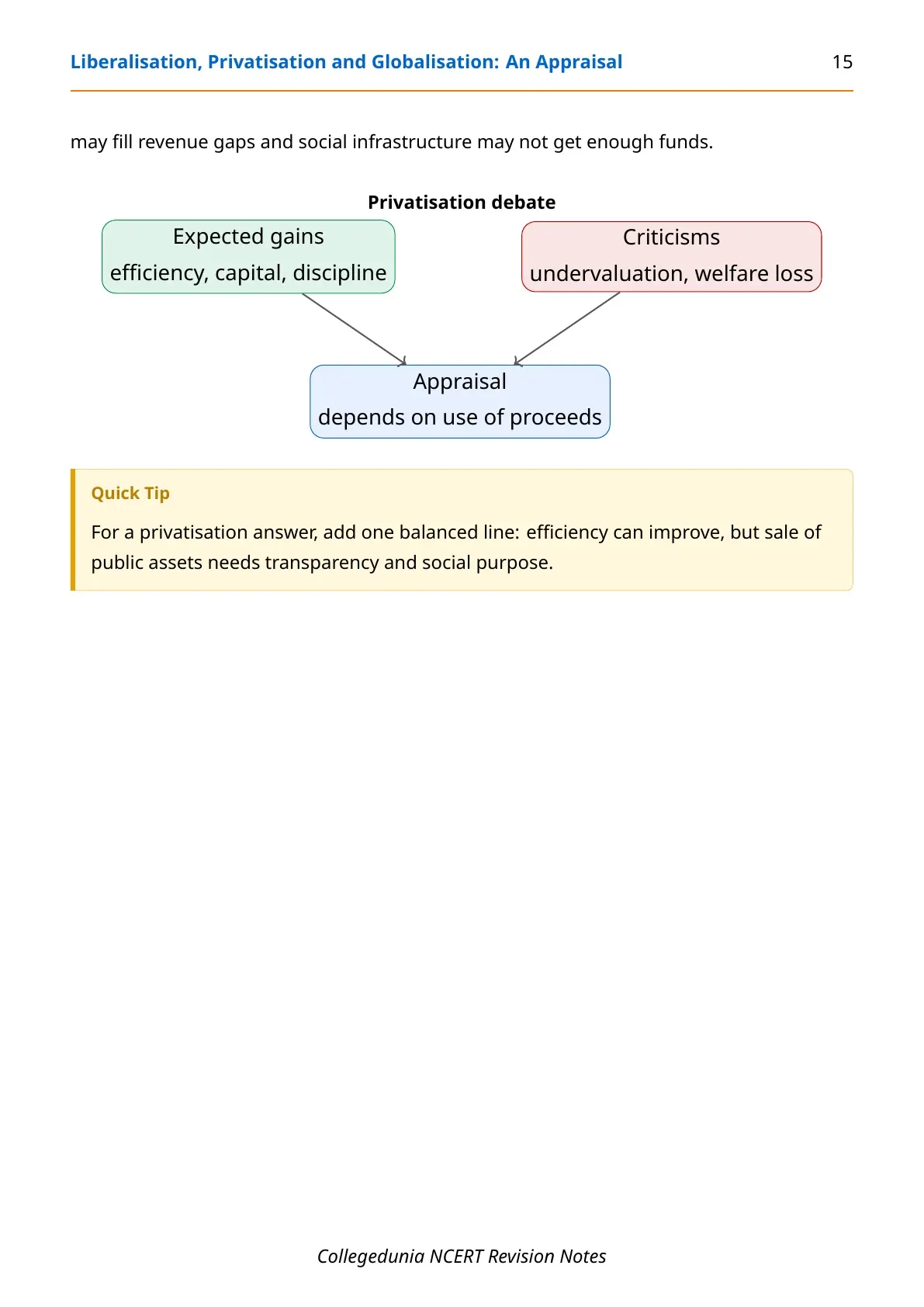
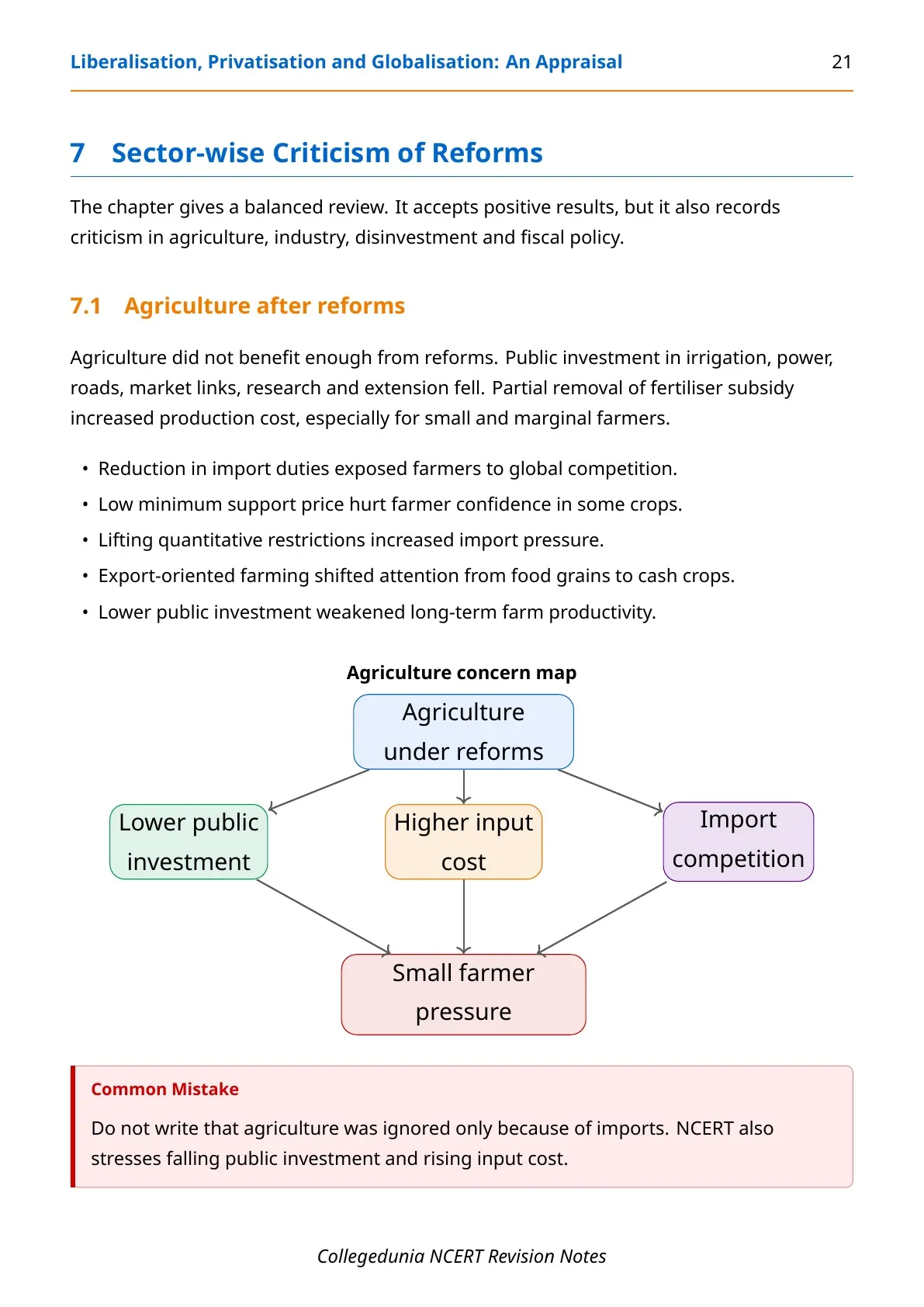
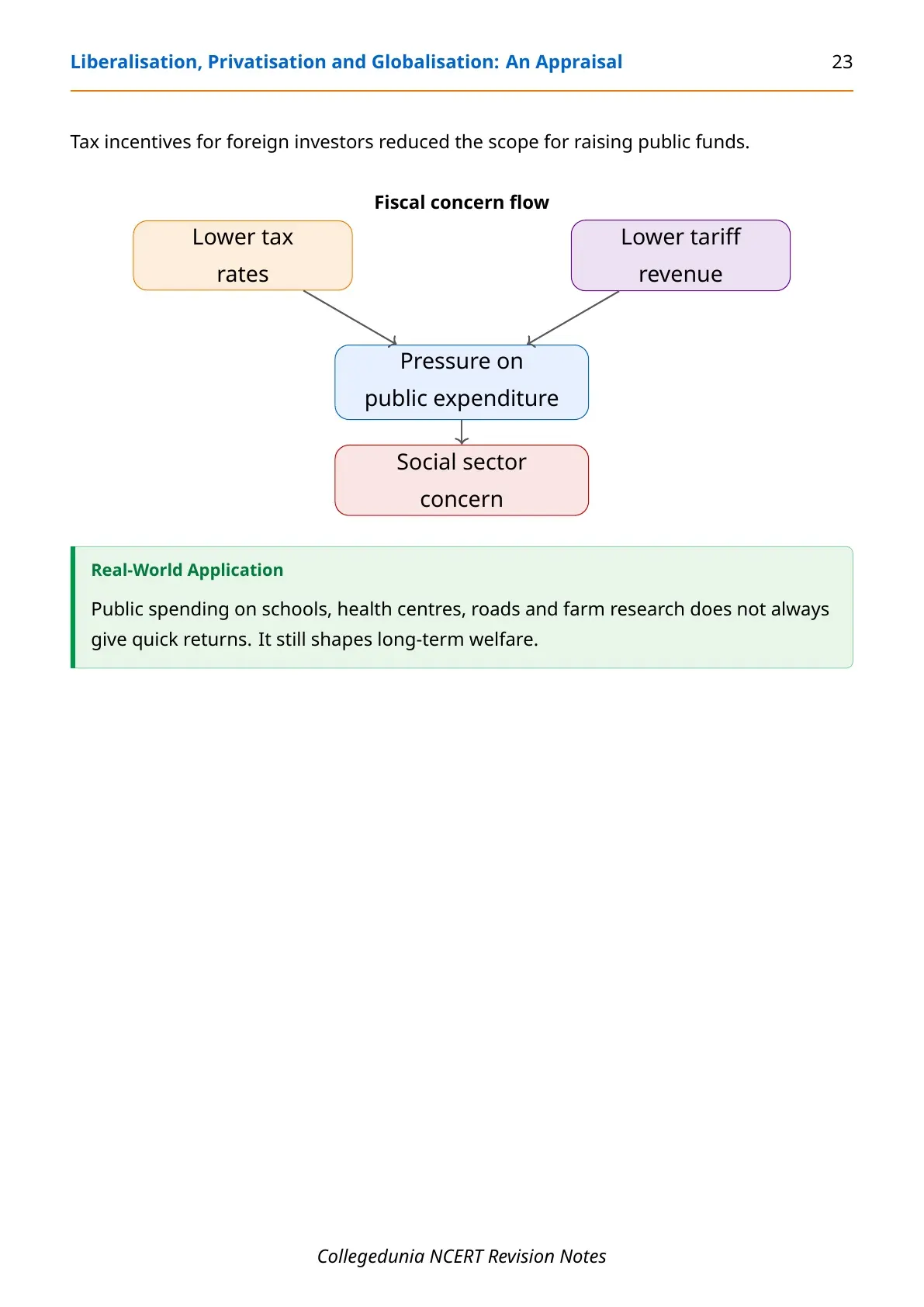
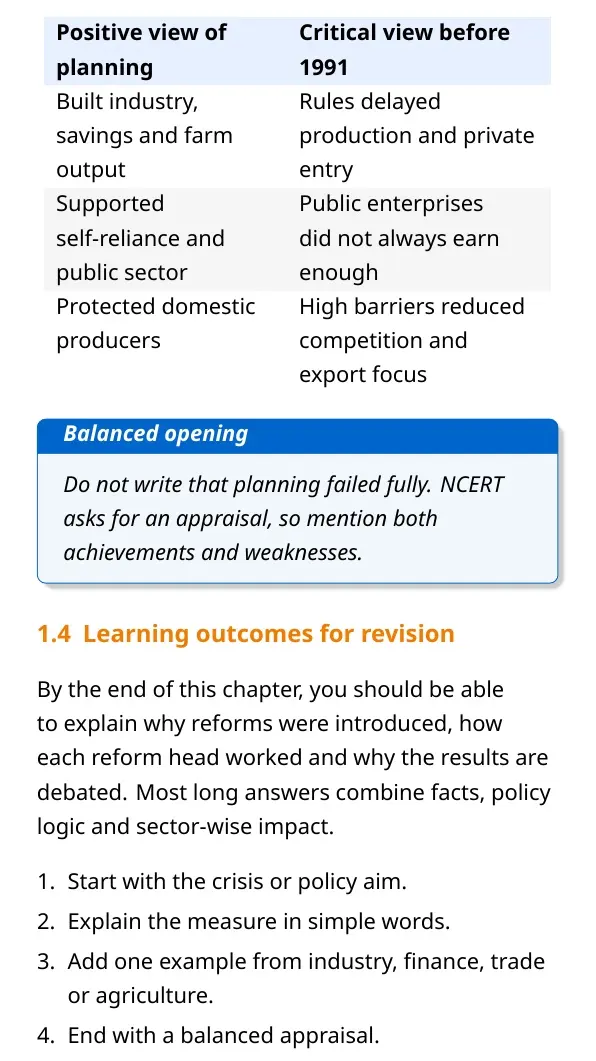
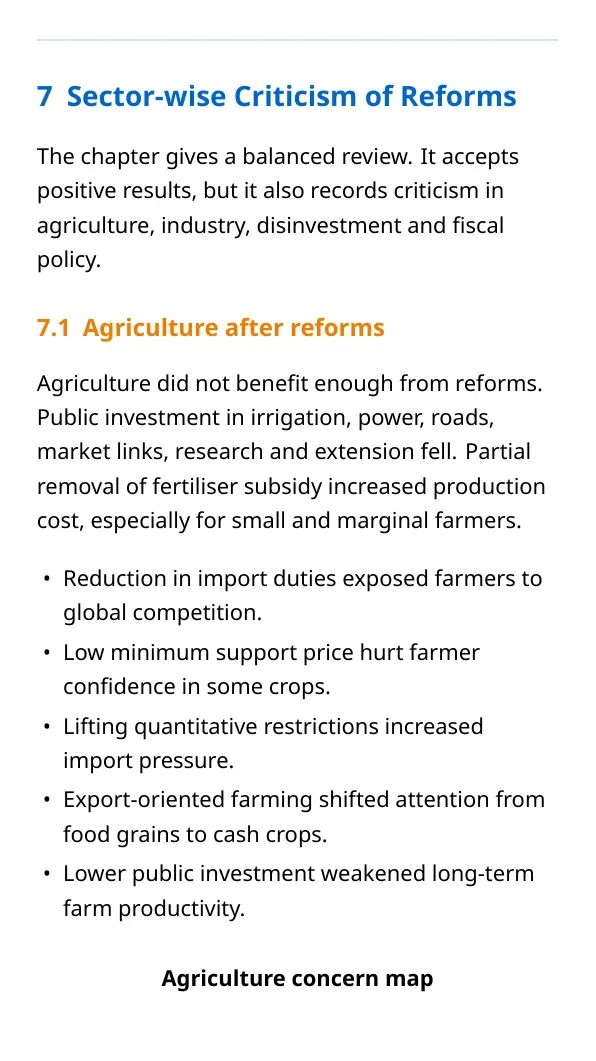
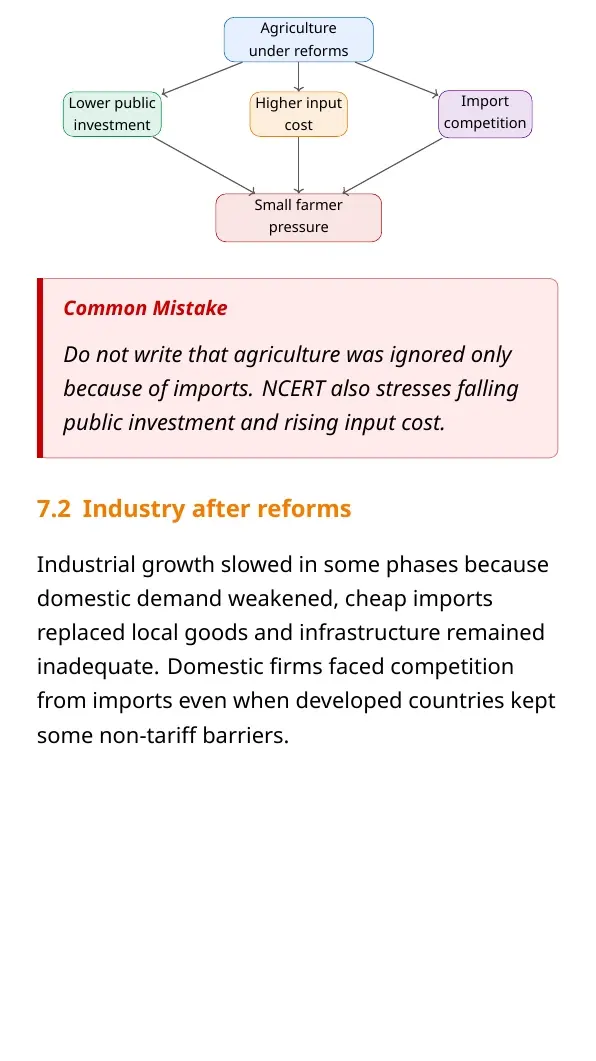
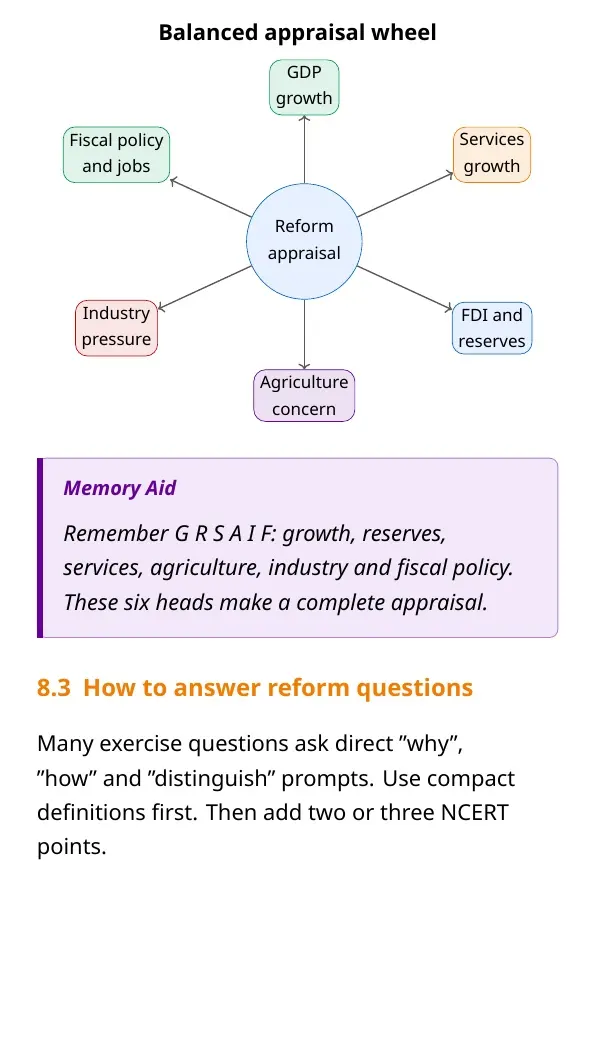
NCERT's appraisal is balanced. Reforms helped industry and services more directly than agriculture. Agricultural public investment slowed in some areas, and farmers faced greater exposure to global price competition. Employment growth did not always match output growth, so students should not write that reforms automatically solved unemployment.
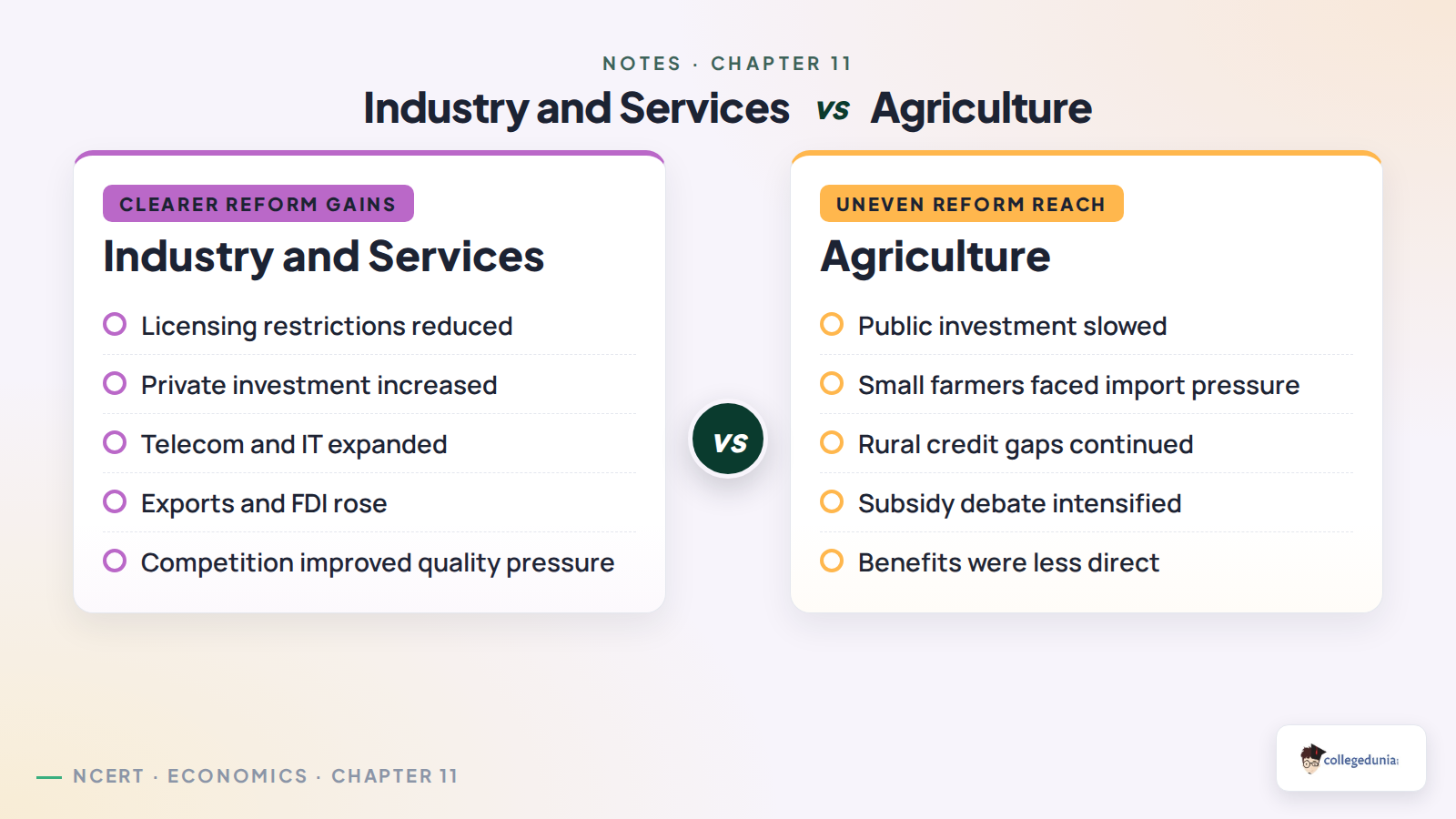
Another concern is inequality. When growth is driven by sectors that require capital, technology and skilled labour, benefits may not reach every region or worker equally. This is why the chapter's title includes An Appraisal. Students are expected to judge the reform process, not merely define it.
- Agriculture: reform benefits were less direct and rural investment remained a concern.
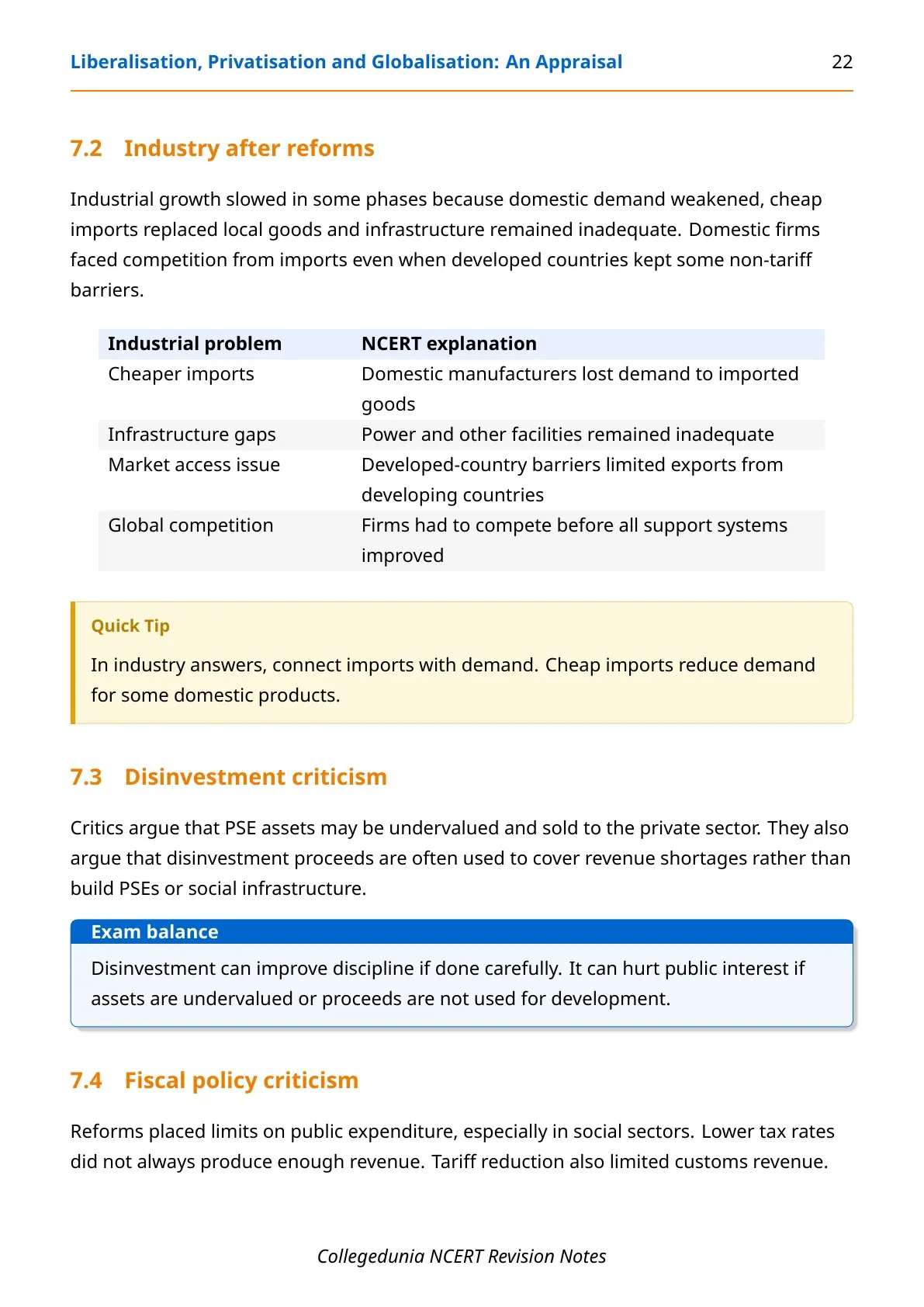
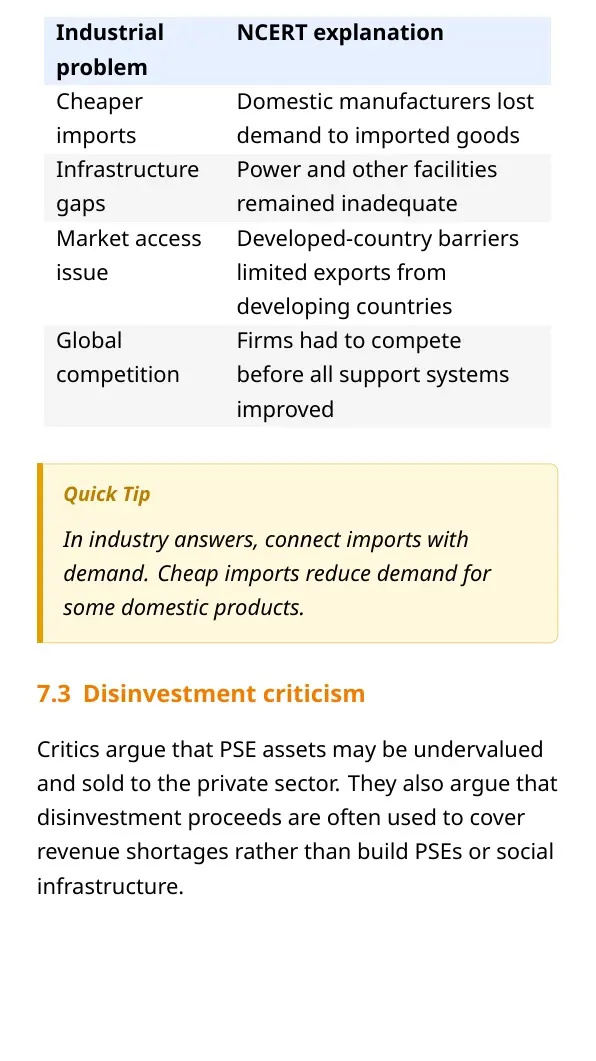
- Industry: competition rose, but small producers faced adjustment pressure.
- Employment: service growth was strong, but job creation remained uneven.
- Equity: reforms needed stronger social support to become inclusive.
How to Write Exam Answers from LPG Appraisal
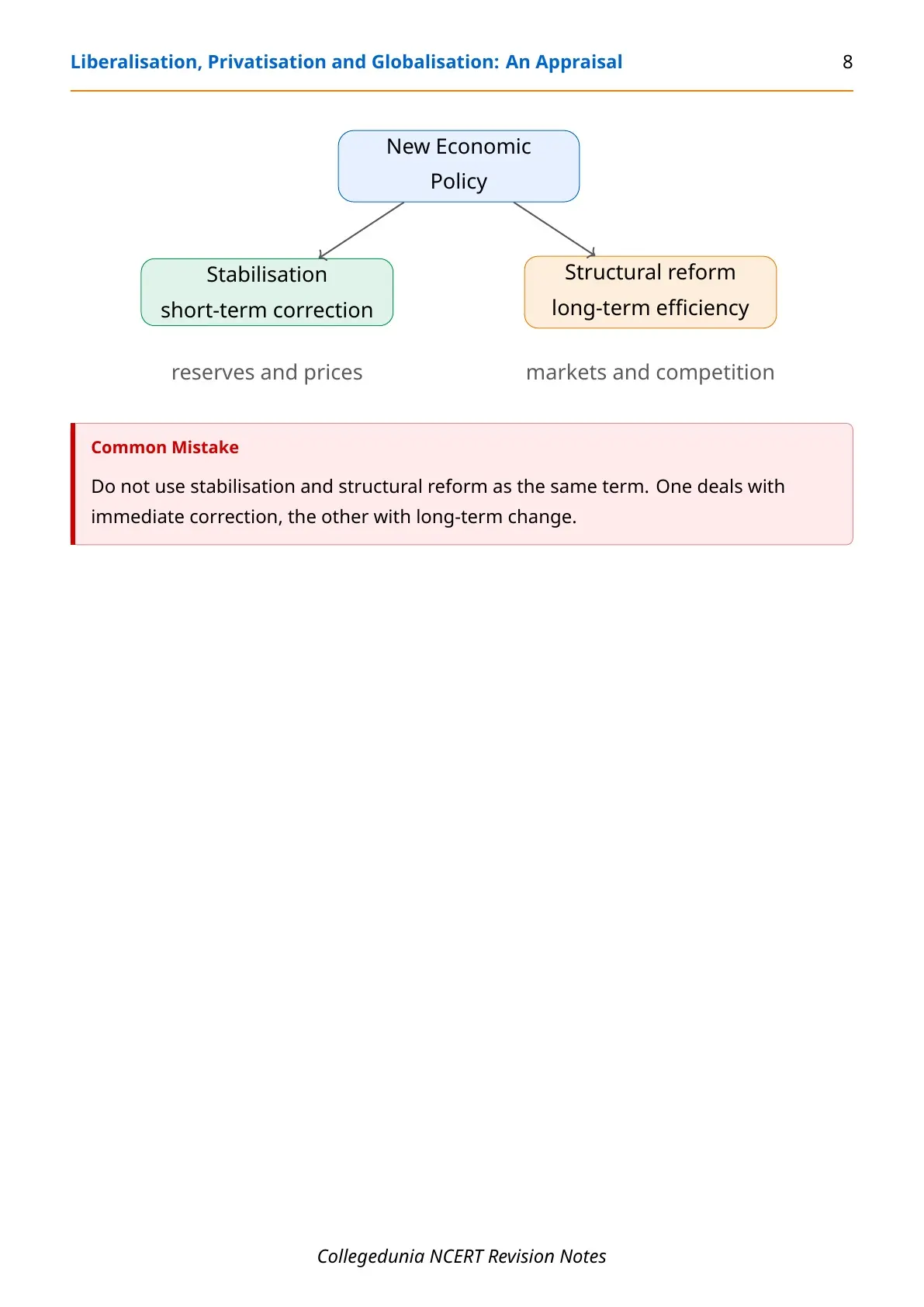
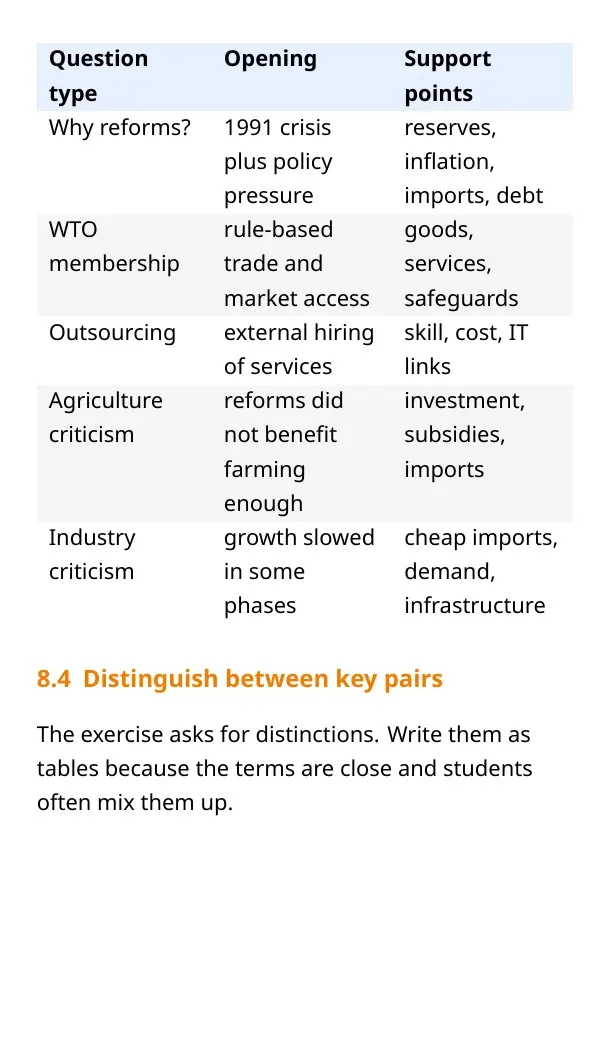
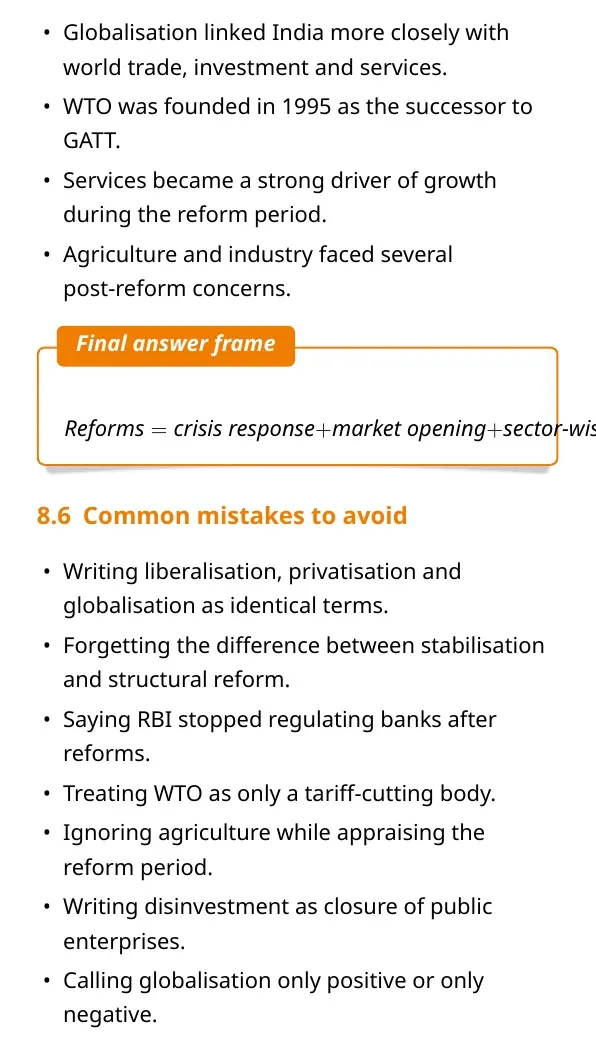
For a short answer, define the term, give one reform example and add one outcome. For a long answer, begin with the 1991 crisis, explain liberalisation, privatisation and globalisation separately, then write the positive and negative effects. A strong answer does not use only praise or only criticism.
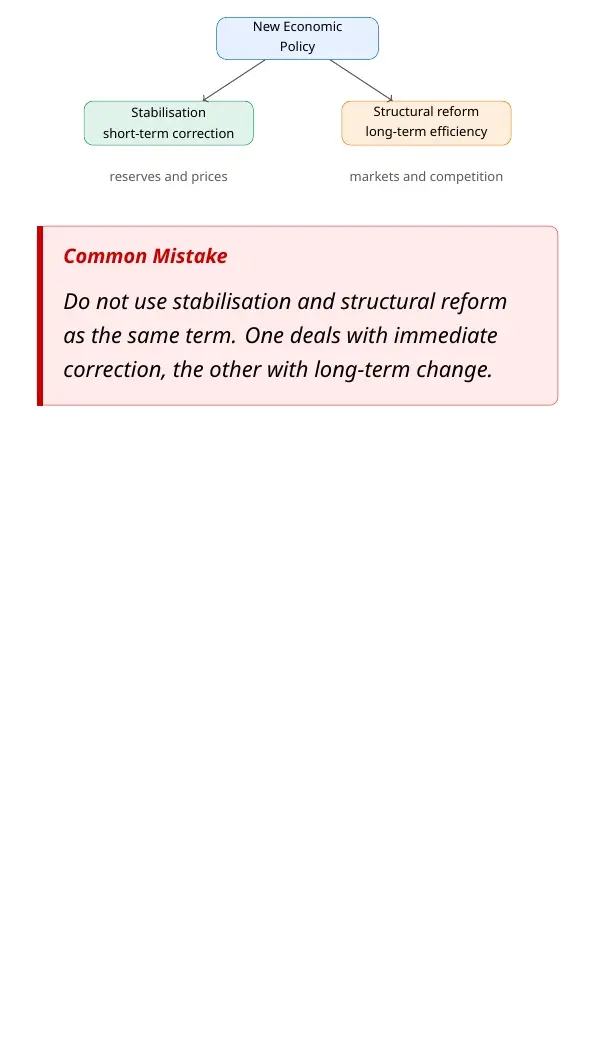
Use NCERT terms precisely. Liberalisation is about reducing controls. Privatisation is about increasing private-sector role and disinvestment. Globalisation is about integration with the world economy. WTO and outsourcing should be used as application points when the question asks for globalisation.
- Start with the crisis and need for reform.
- Explain each LPG term in one clean paragraph.
- Add sector examples: industry, services, agriculture and trade.
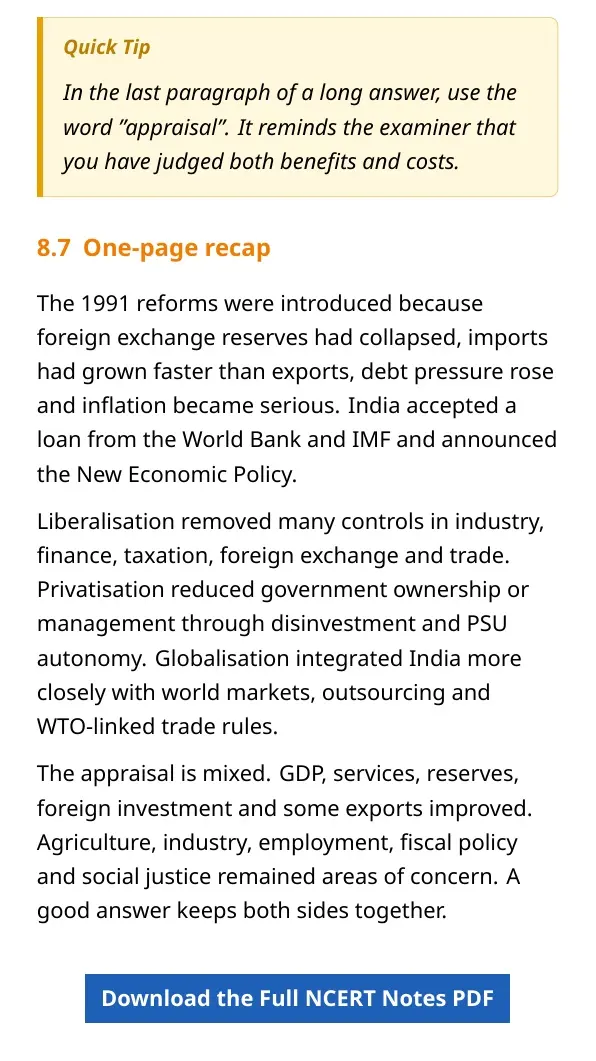
- Close with an appraisal: growth improved, but inclusiveness stayed a concern.
Related Resources for LPG Appraisal
| Resource | Use it for | Link |
|---|---|---|
| NCERT Book PDF | Read the complete official source chapter | Class 11 Economics Chapter 11 NCERT Book PDF |
| NCERT Solutions | Practise exercise answers and definitions | Class 11 Economics Chapter 11 NCERT Solutions |
| Handwritten Notes | Use compact visual notes for quick recall | Class 11 Economics Chapter 11 Handwritten Notes |
| Formula Sheet | Revise key terms, abbreviations and reform effects | Class 11 Economics Chapter 11 Formula Sheet |
Class 11 Economics Notes for All Chapters
| Chapter | NCERT Notes |
|---|---|
| Chapter 1 | Indian Economy on the Eve of Independence Notes |
| Chapter 2 | Indian Economy 1950-1990 Notes |
| Chapter 3 | Liberalisation Privatisation and Globalisation Notes |
| Chapter 4 | Poverty Notes |
| Chapter 5 | Human Capital Formation in India Notes |
| Chapter 6 | Rural Development Notes |
| Chapter 7 | Employment Growth Informalisation and Other Issues Notes |
| Chapter 8 | Infrastructure Notes |
| Chapter 9 | Environment and Sustainable Development Notes |
| Chapter 10 | Indian Economy 1950-1990 Notes |
Liberalisation Privatisation and Globalisation Class 11 FAQs
Ques. What is LPG in Class 11 Economics Chapter 11?
Ans. LPG means liberalisation, privatisation and globalisation. In this chapter, it refers to the 1991 economic reform programme that reduced controls, widened private participation and opened India more to the world economy.
Ques. Why did India introduce economic reforms in 1991?
Ans. India introduced reforms because of a serious balance of payments crisis, high fiscal deficit, rising prices and pressure linked with IMF and World Bank assistance.
Ques. What is the difference between liberalisation and privatisation?
Ans. Liberalisation reduces government controls on economic activity. Privatisation increases the role of private ownership, private management and disinvestment in selected public sector enterprises.
Ques. How should students conclude an appraisal answer on LPG reforms?
Ans. A strong conclusion should say that reforms improved competition, investment and services, but benefits were uneven and concerns remained in agriculture, employment and equity.



Comments