



The NCERT Class 11 Sociology Chapter 1 Sociology and Society Notes help students revise how society shapes individual choices in the 2026-27 NCERT textbook. The PDF explains sociological imagination, common sense, inequality, industrial change, colonial India and links with other social sciences in simple language.
- Best for: Class 11 school exams, quick revision and answer-writing practice.
- PDF focus: short definitions, comparison tables, diagrams and common mistake alerts.
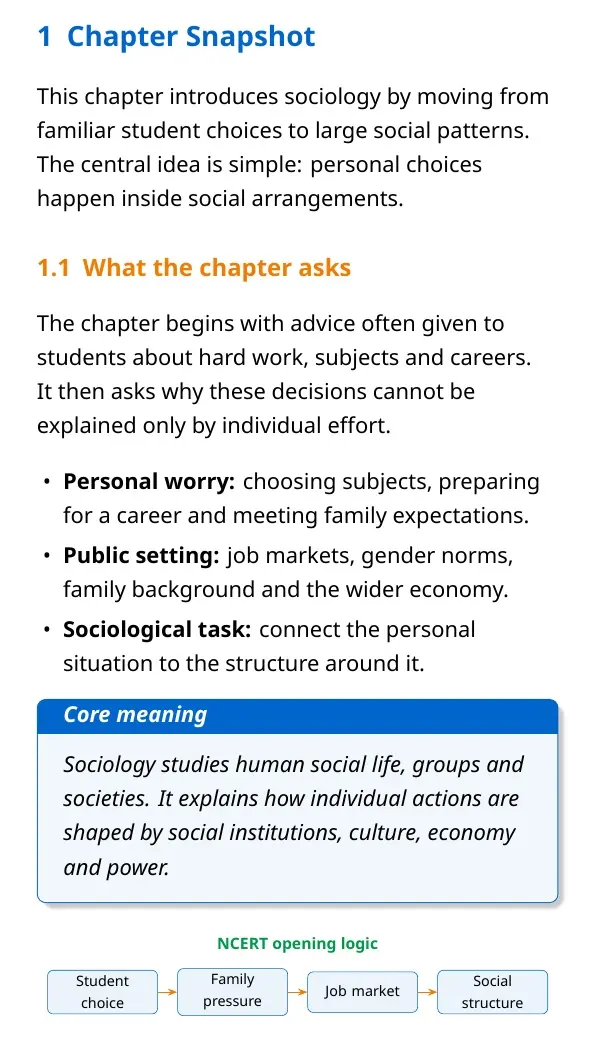
- Chapter value: this chapter builds the base for the full Sociology course.
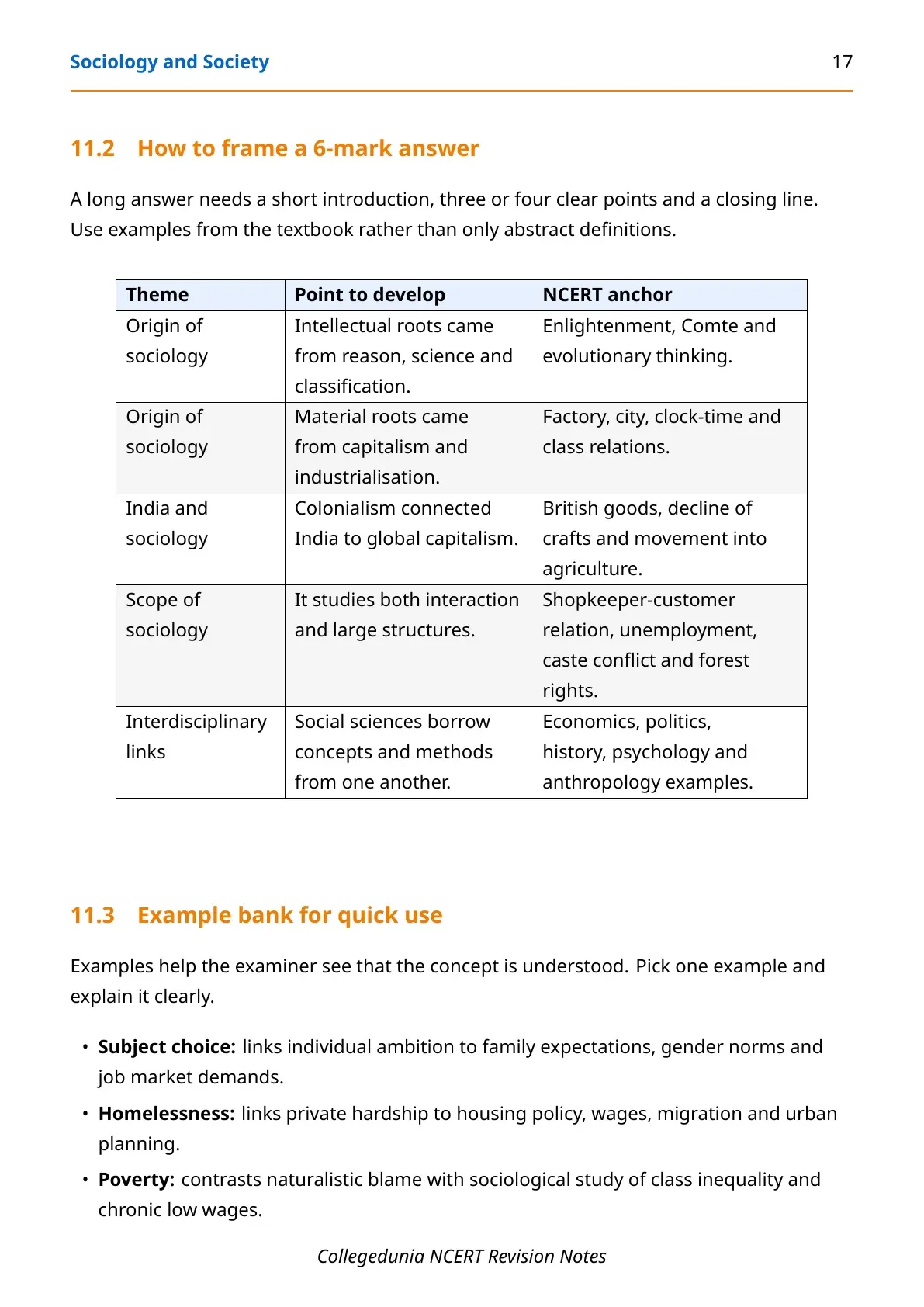
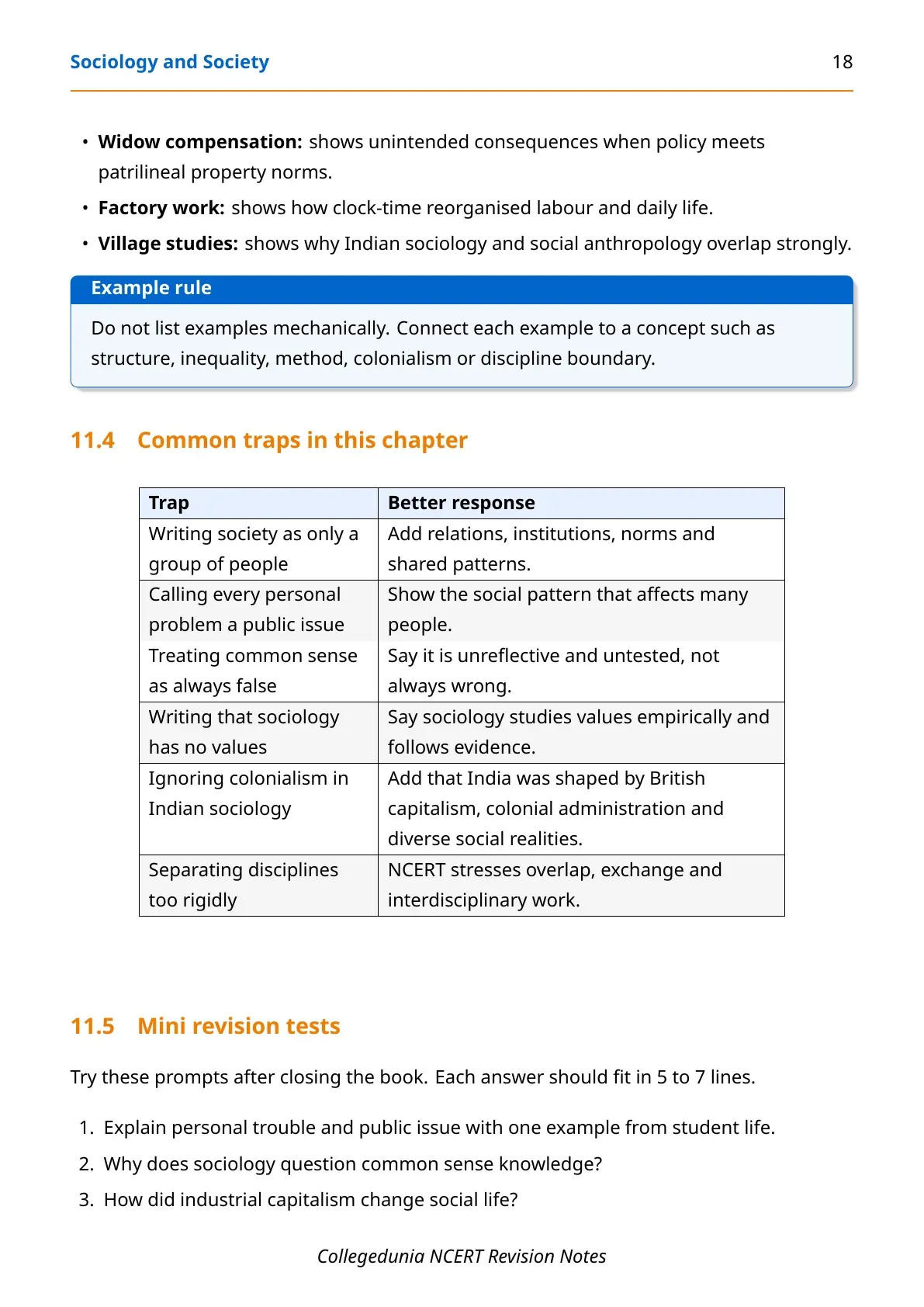
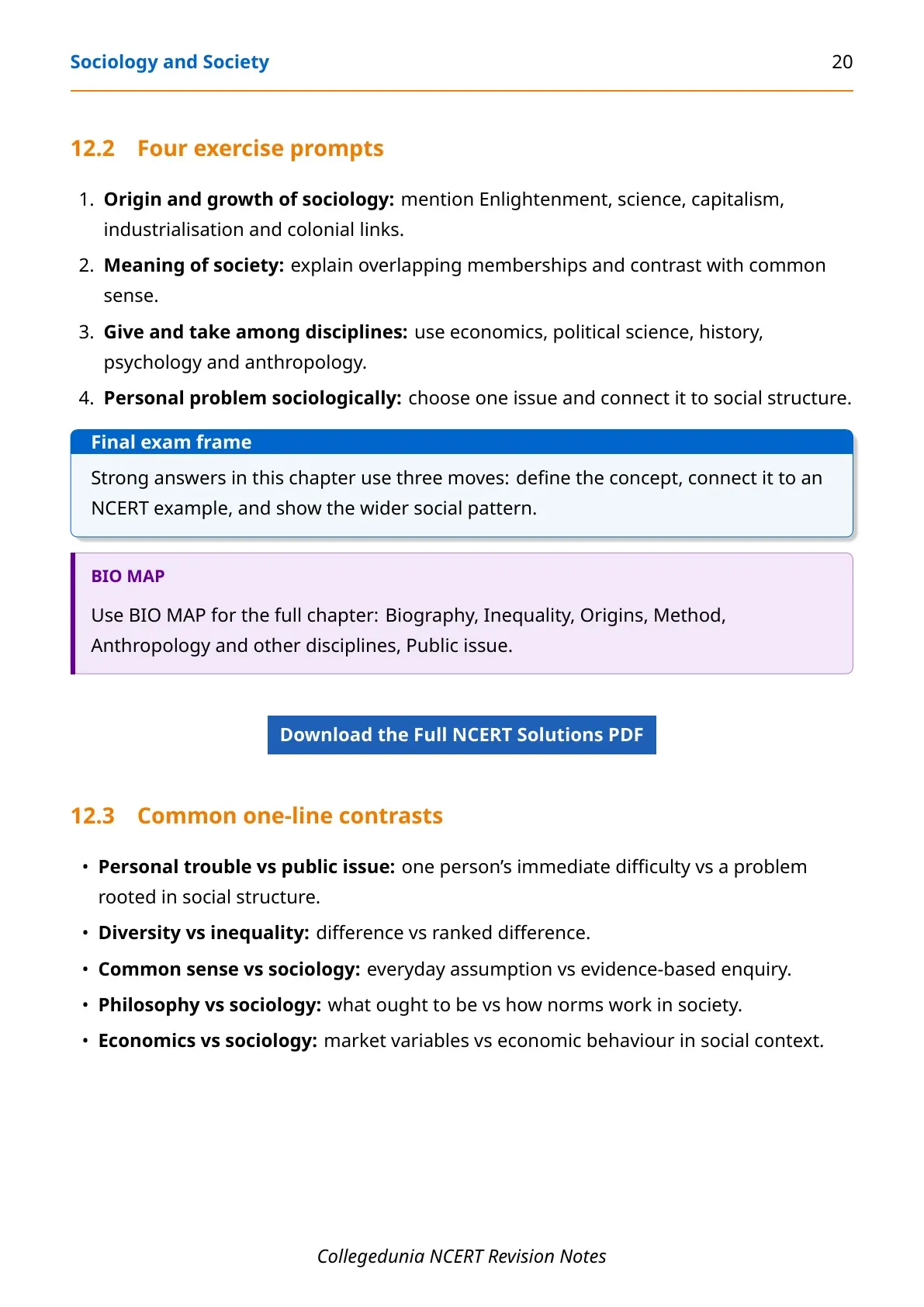
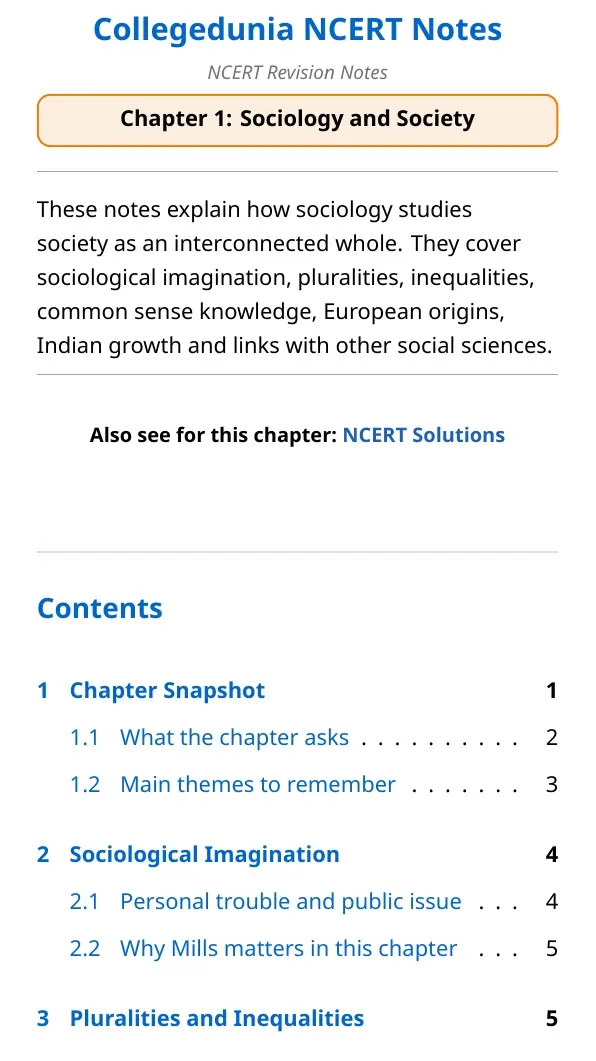
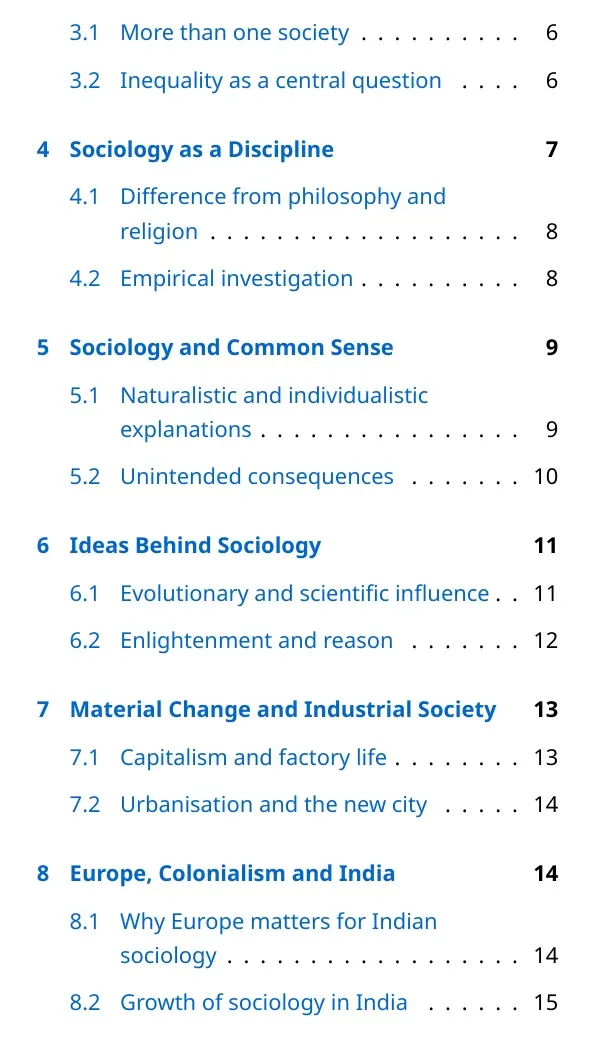
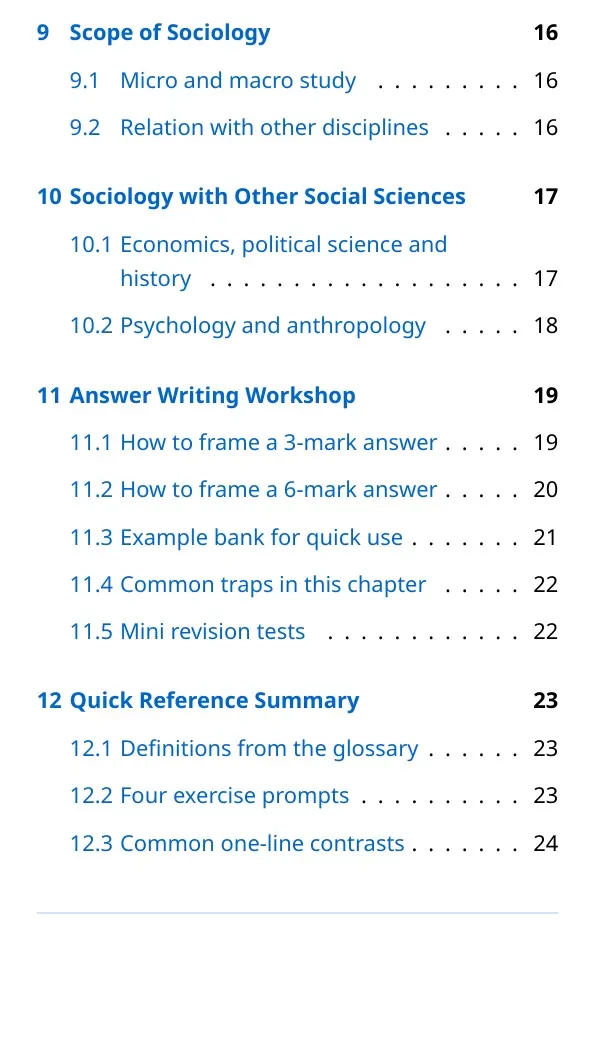
These Class 11 Sociology notes follow the 2026-27 NCERT chapter and keep every concept exam-ready for school revision.
Sociology and Society Notes: What Students Get in the PDF
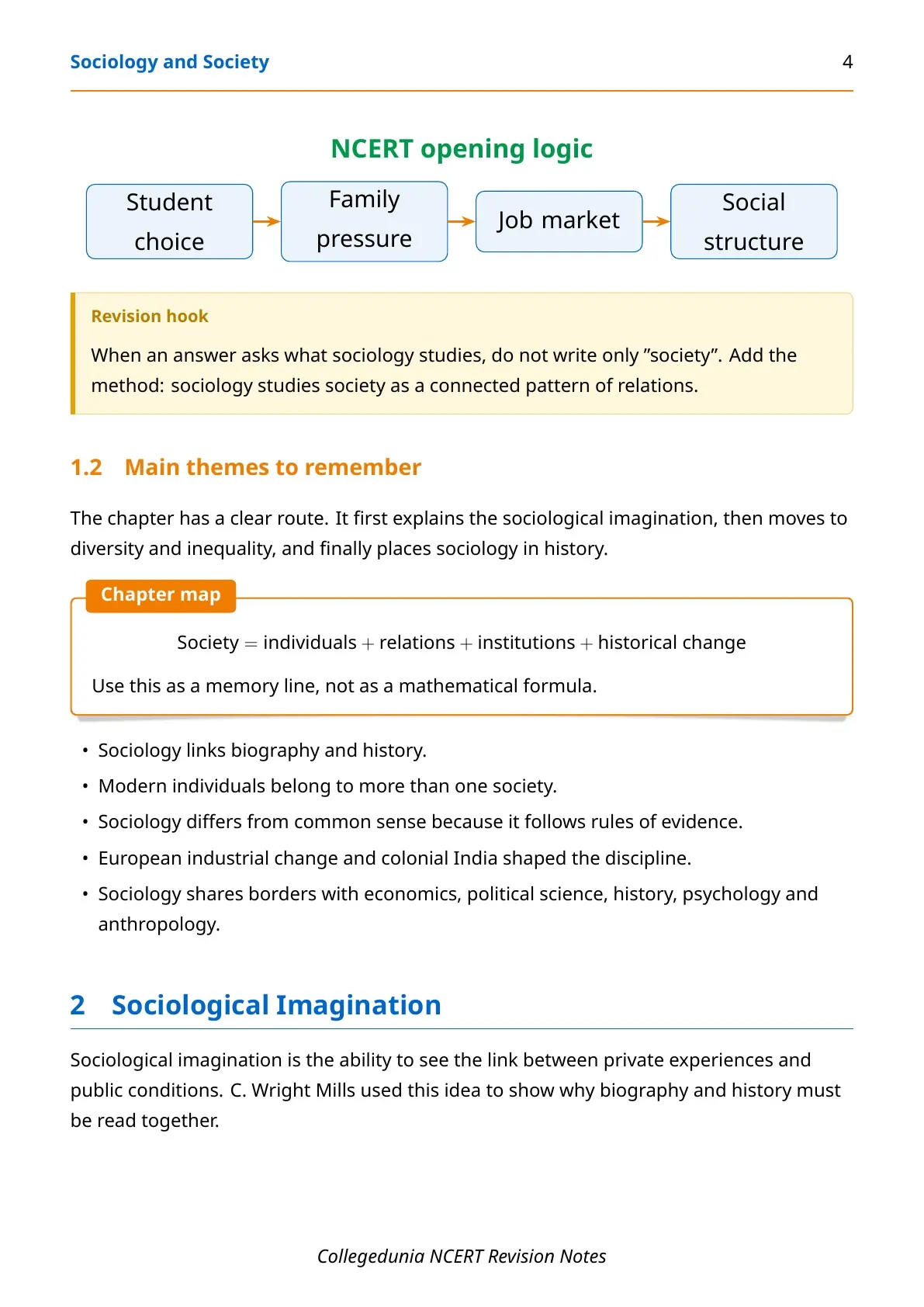
The notes start from a familiar question: why does a student choose one subject and not another? The chapter shows that individual decisions are shaped by family, gender, job markets and the economy.
| PDF section | What it covers |
|---|---|
| Sociological imagination | Personal troubles, public issues and C. Wright Mills. |
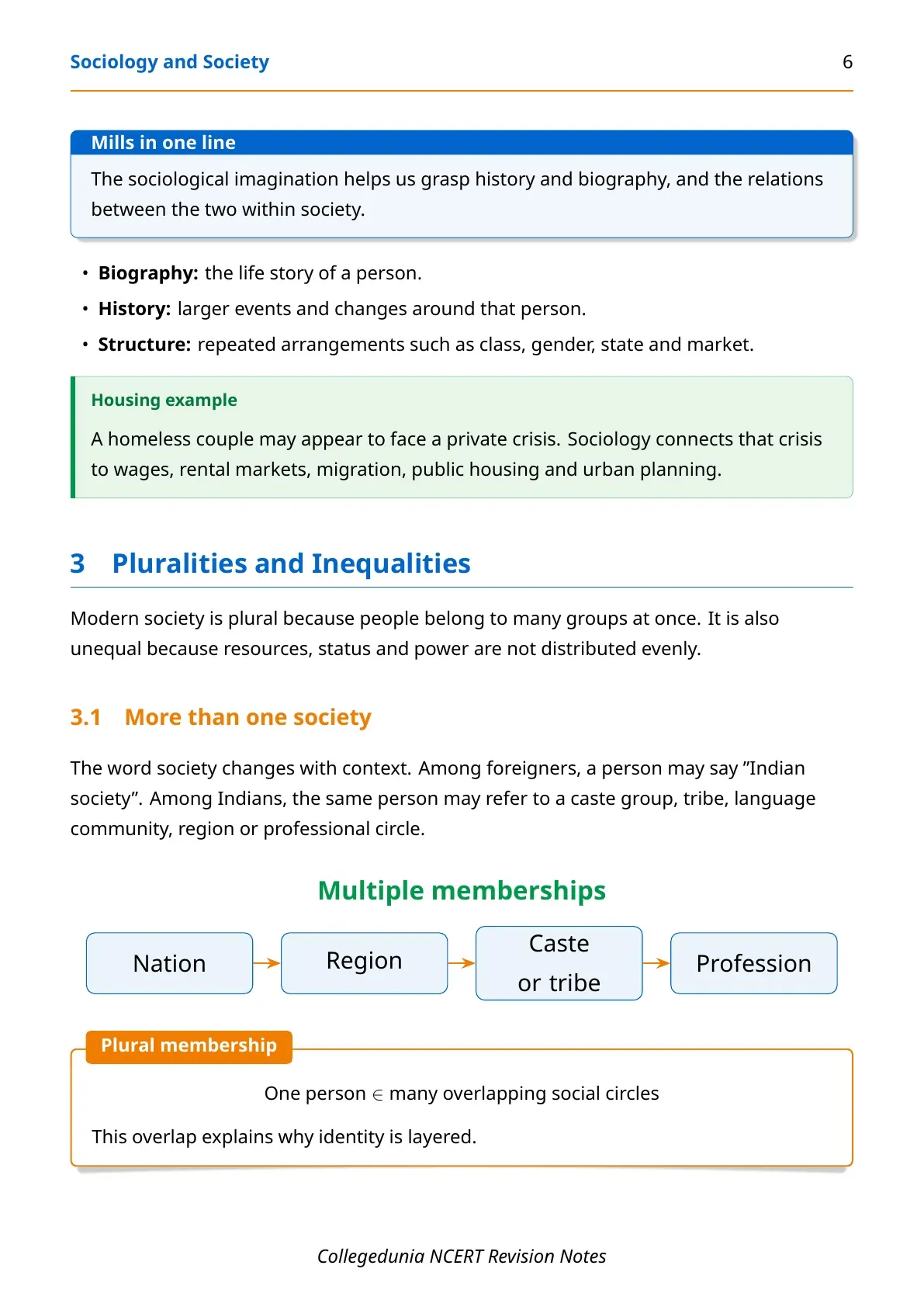
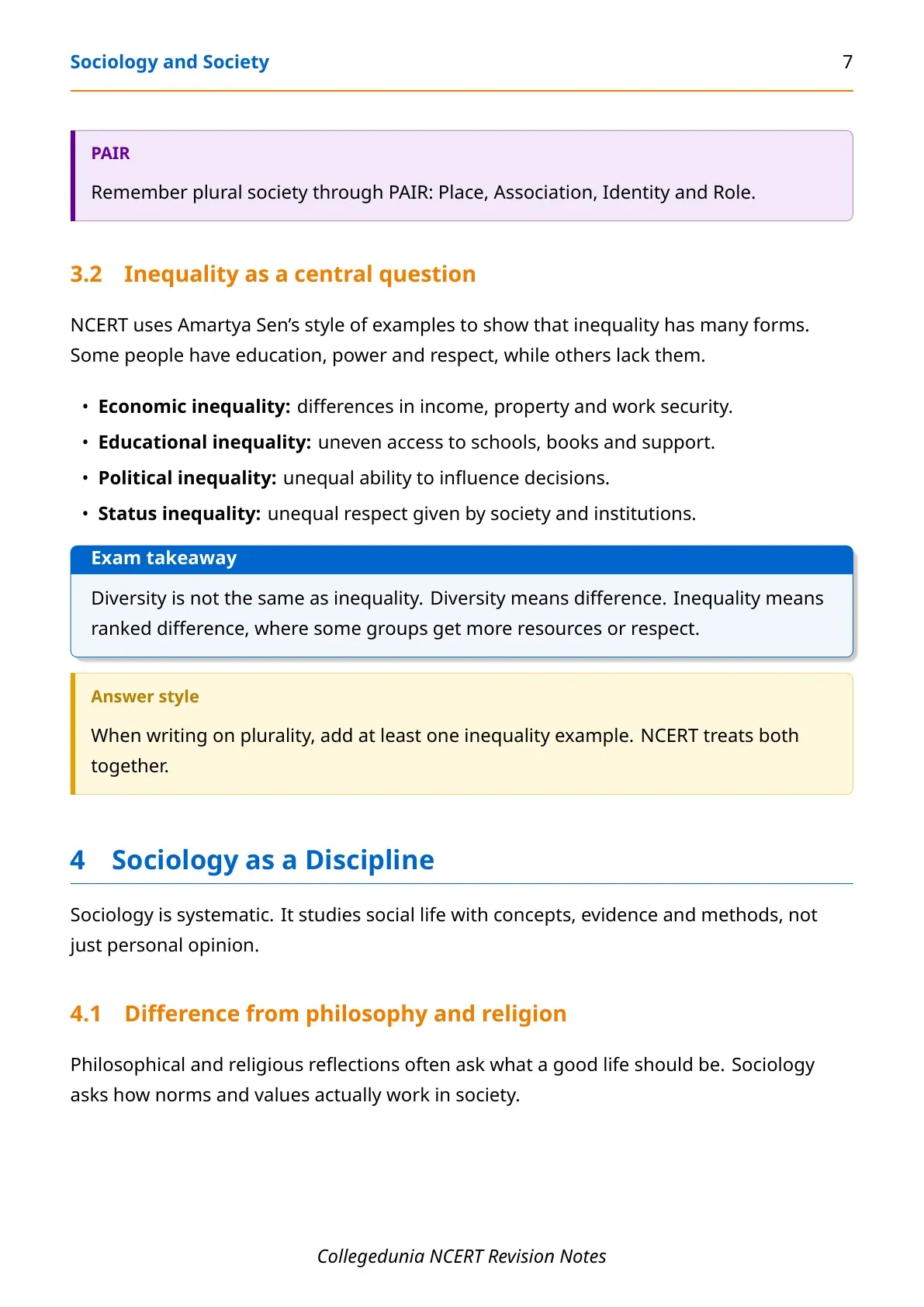
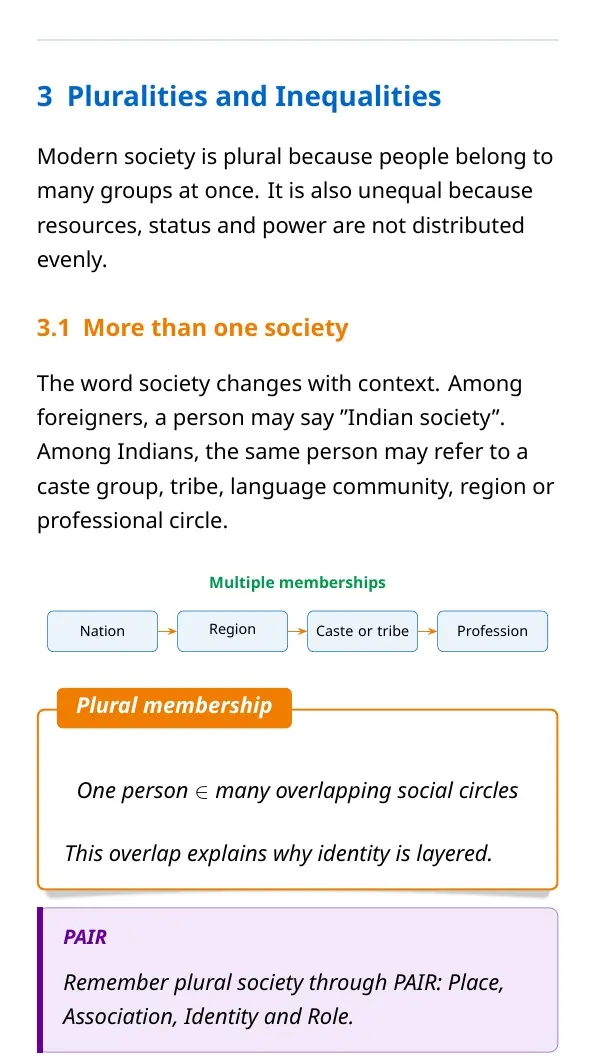
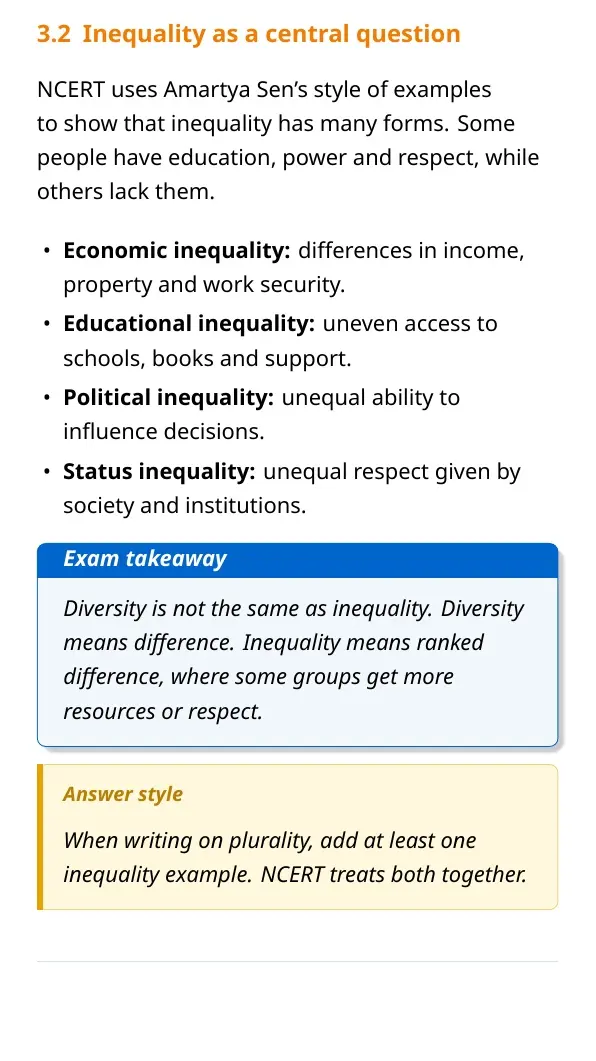
| Pluralities and inequalities | Multiple identities, social difference and unequal access. |
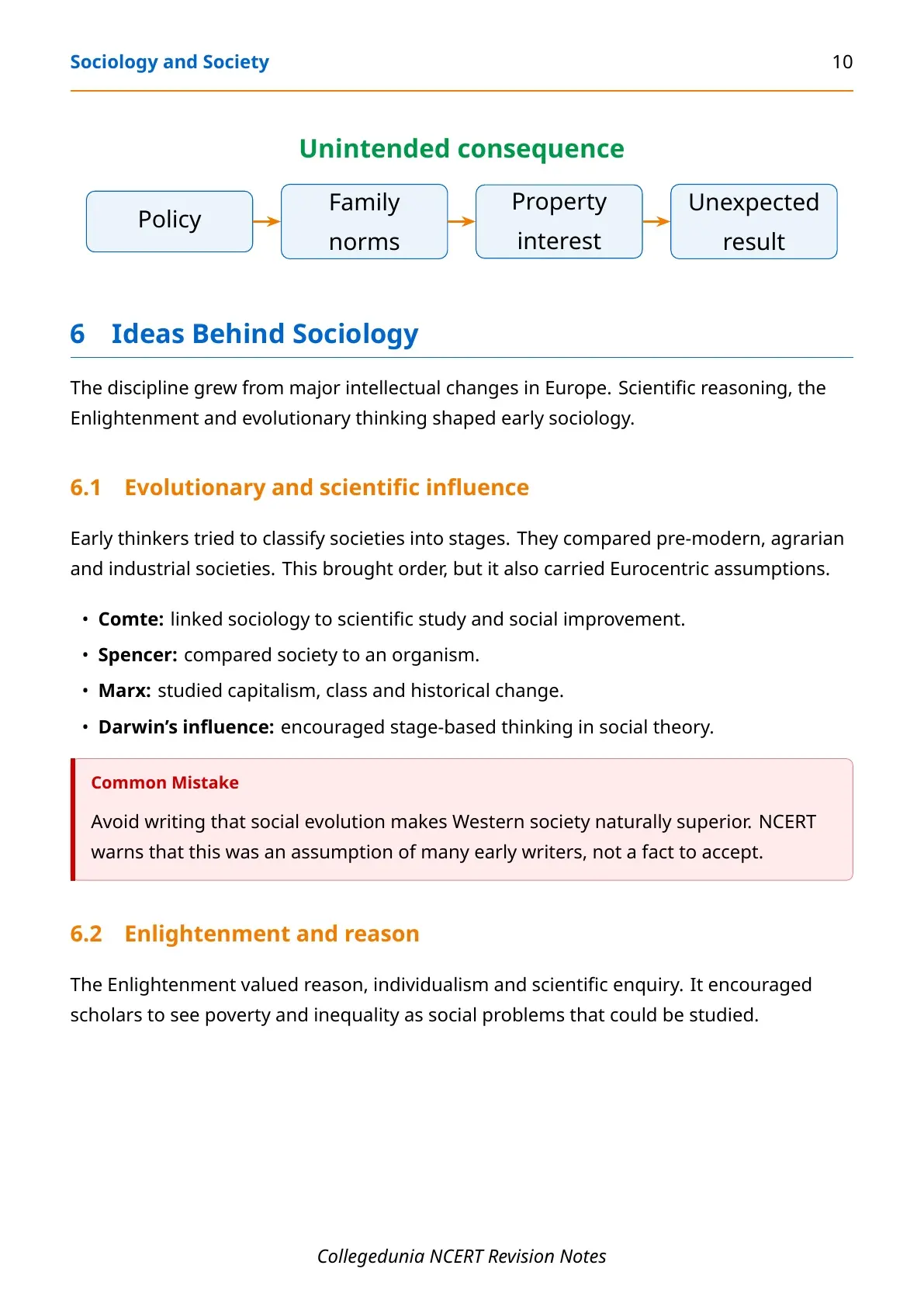
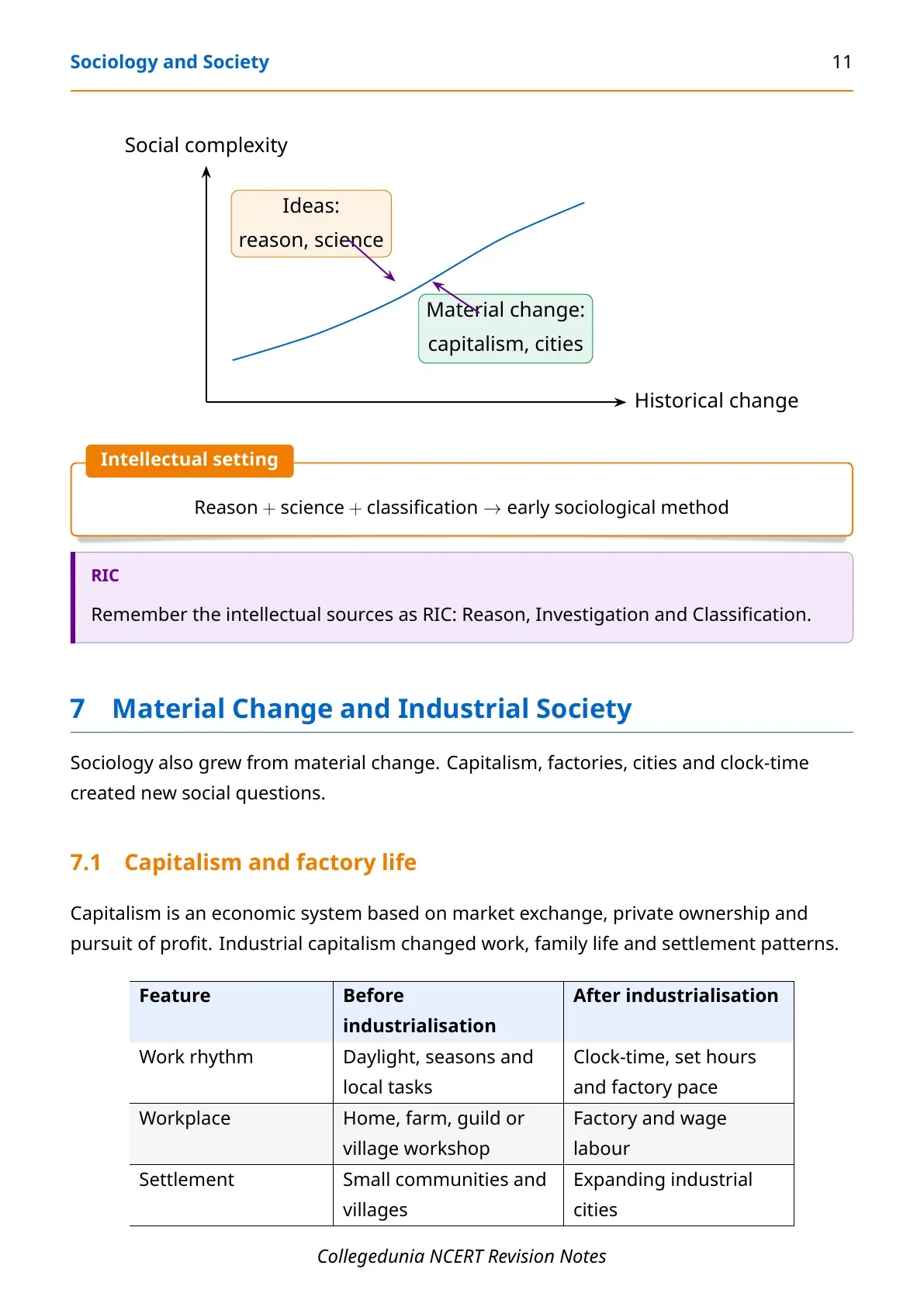
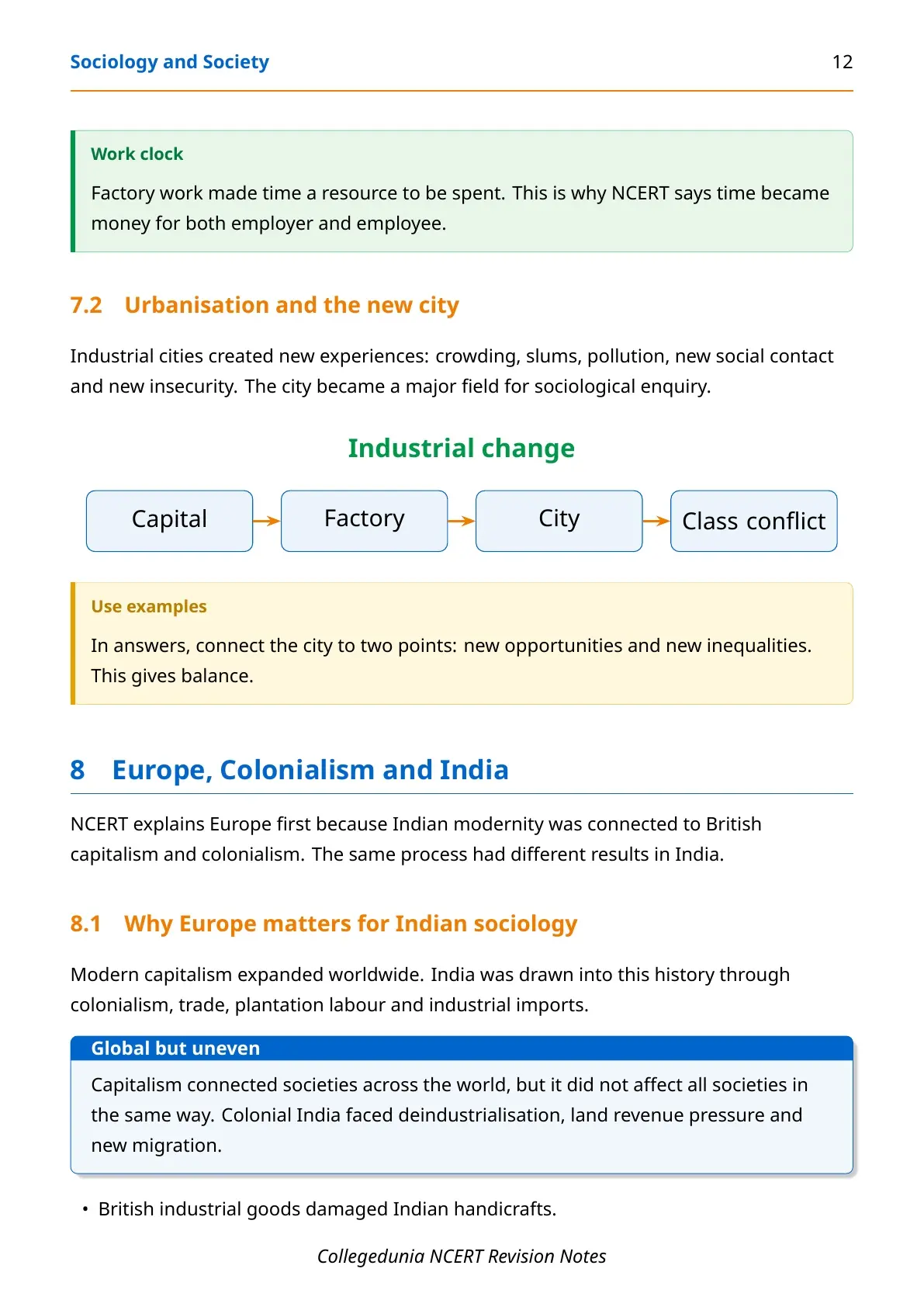
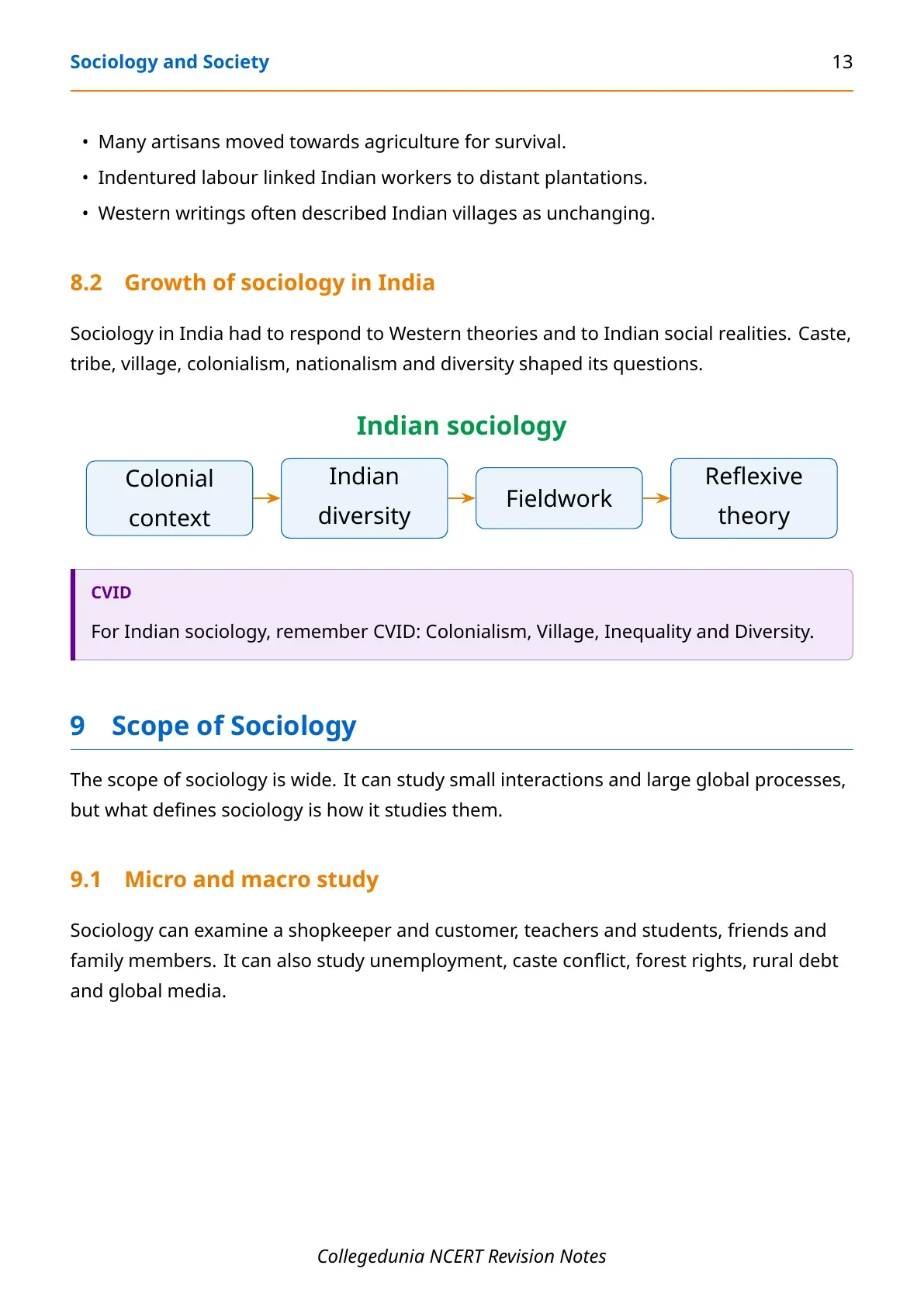
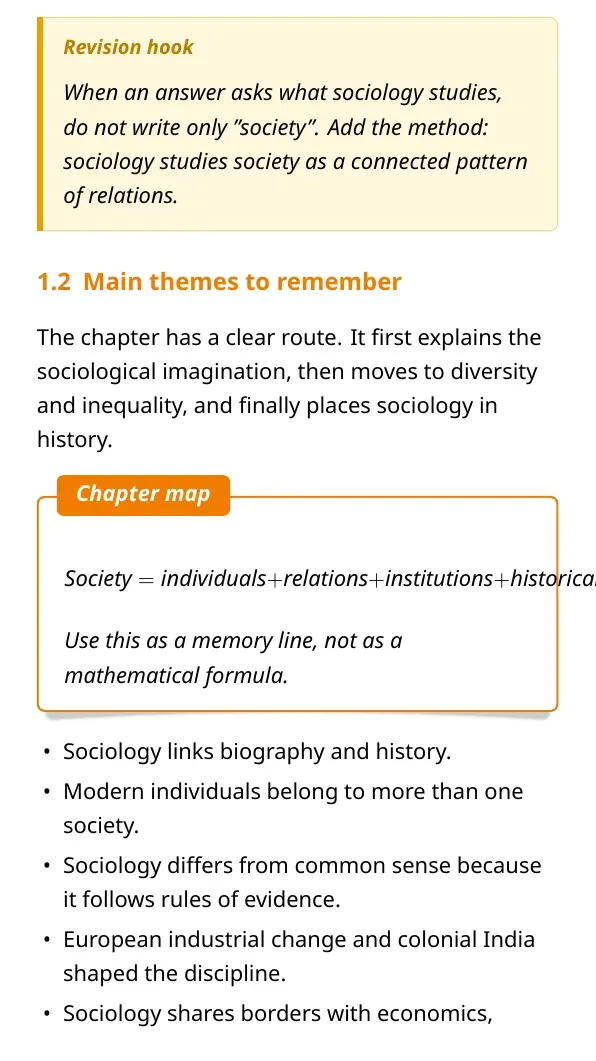
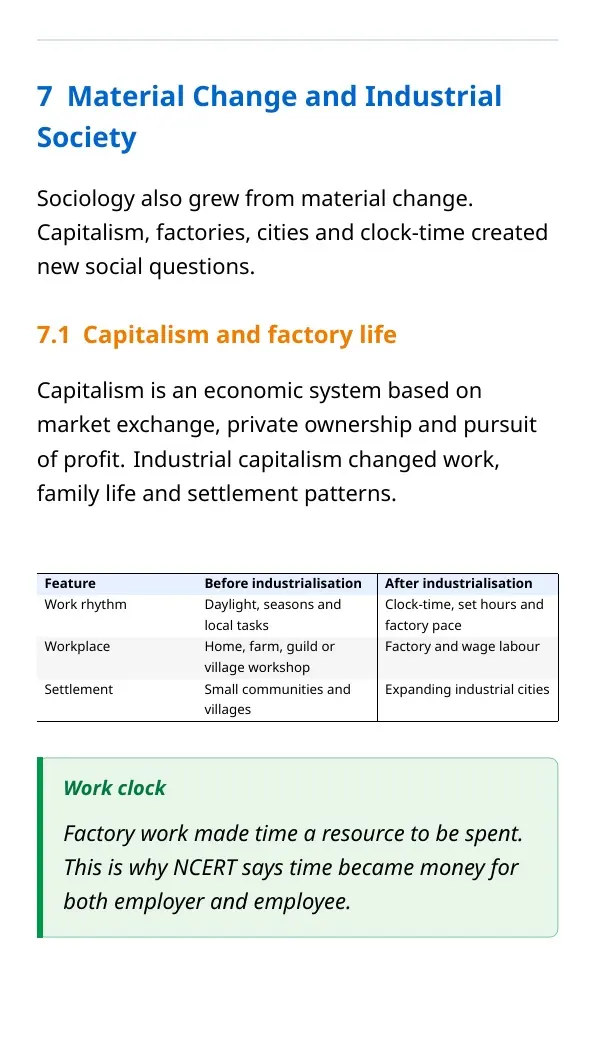
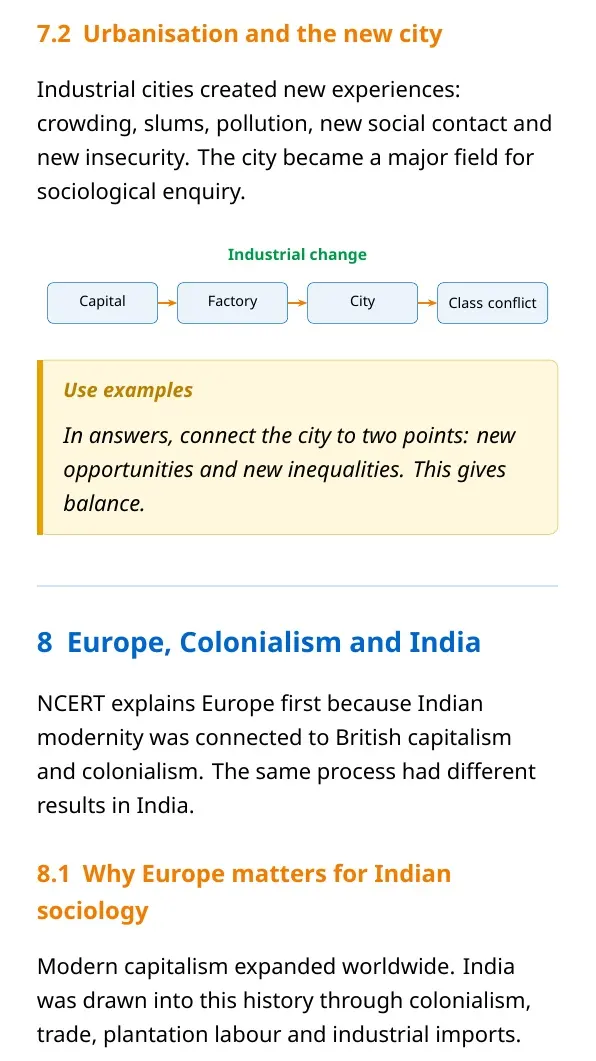
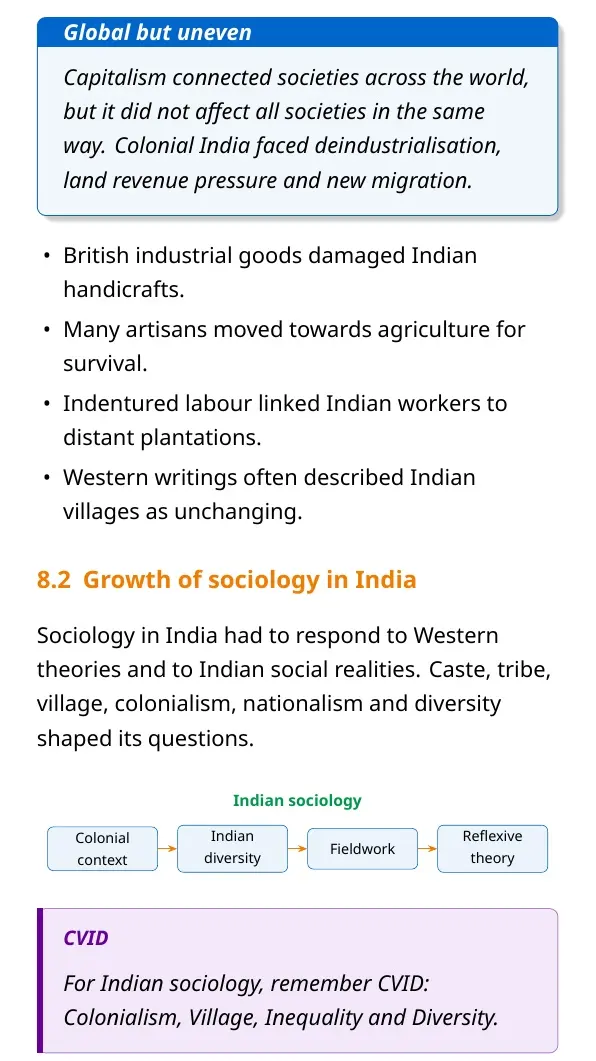
| Origins of sociology | Enlightenment, industrialisation, capitalism and colonial India. |
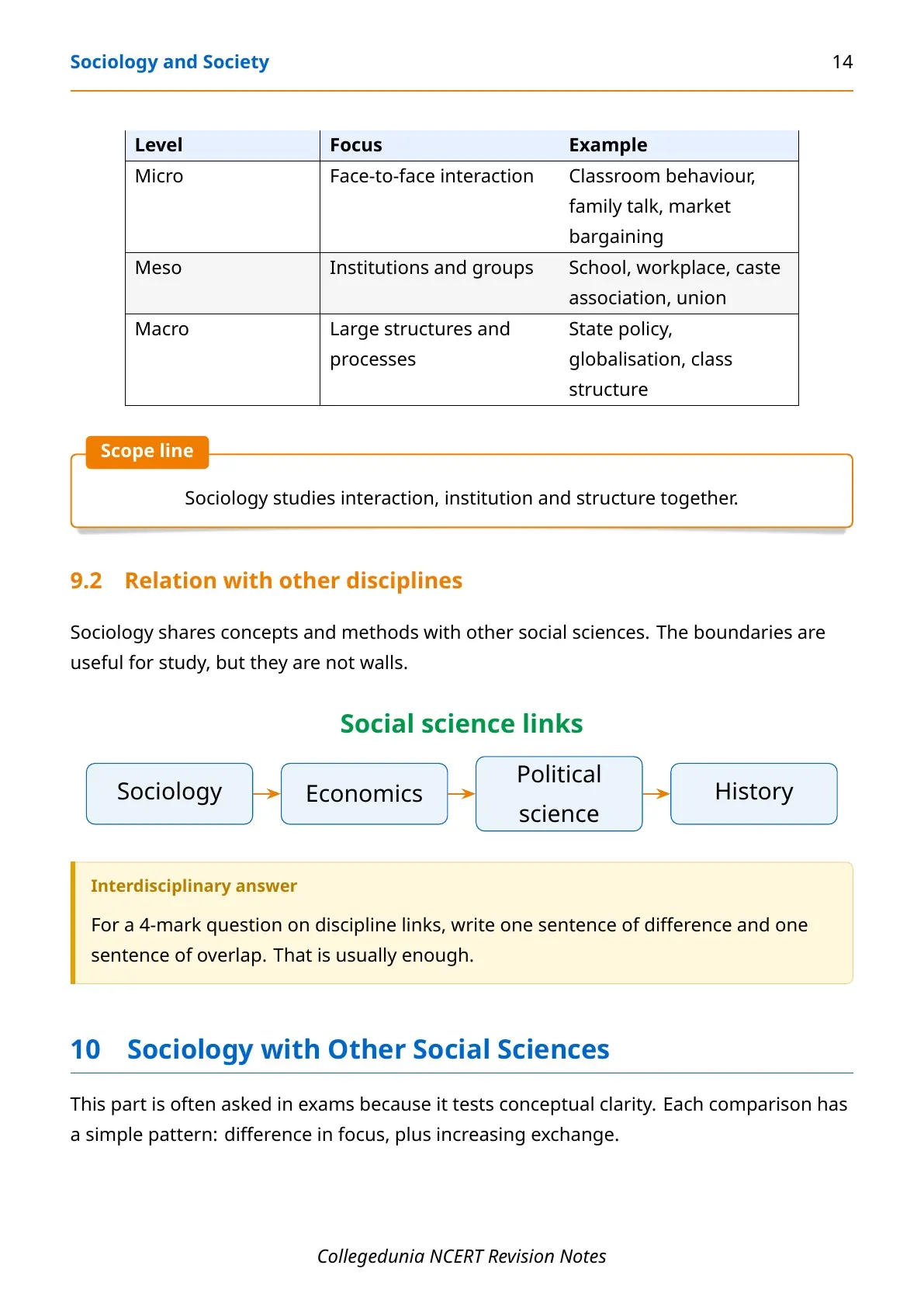
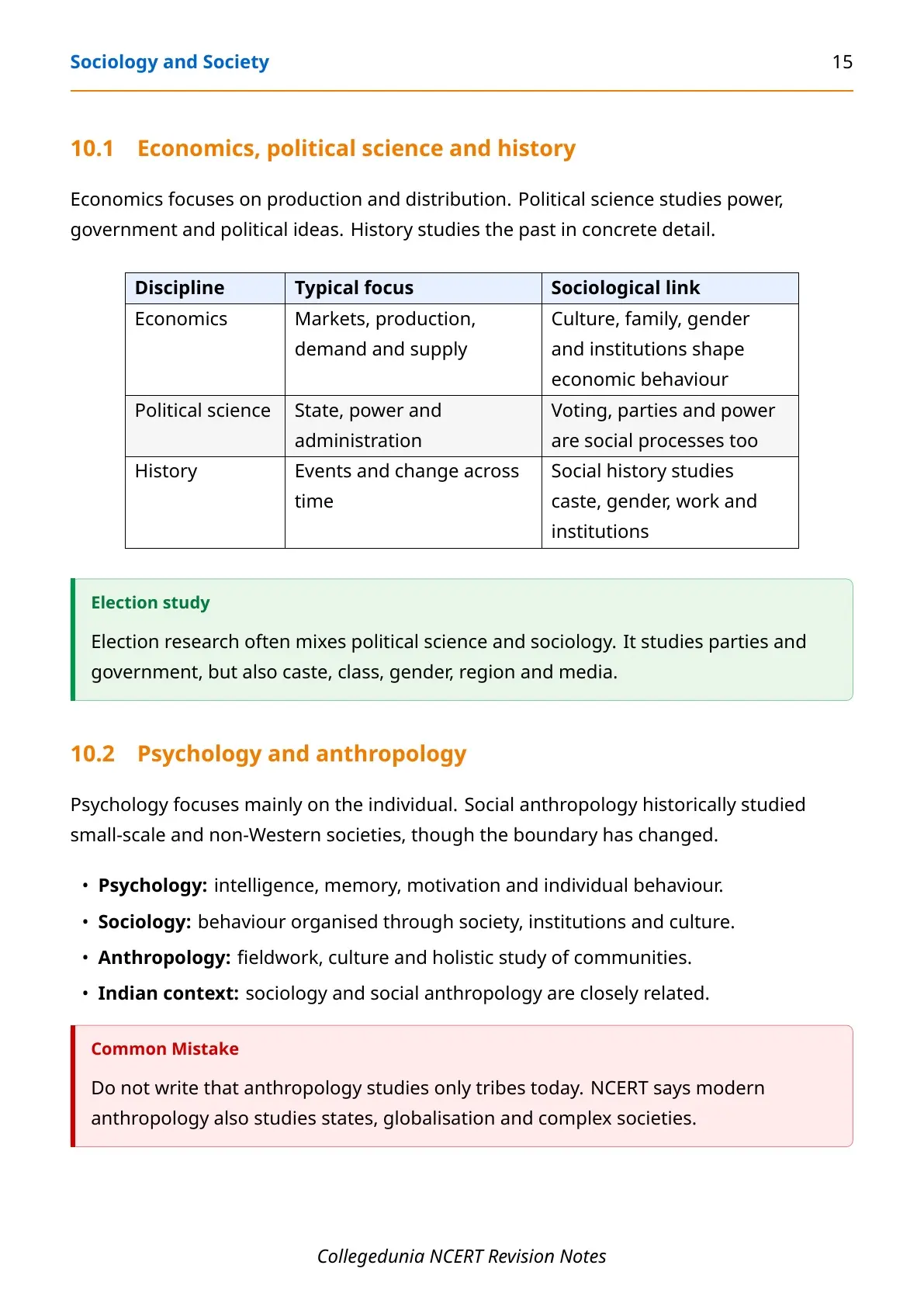
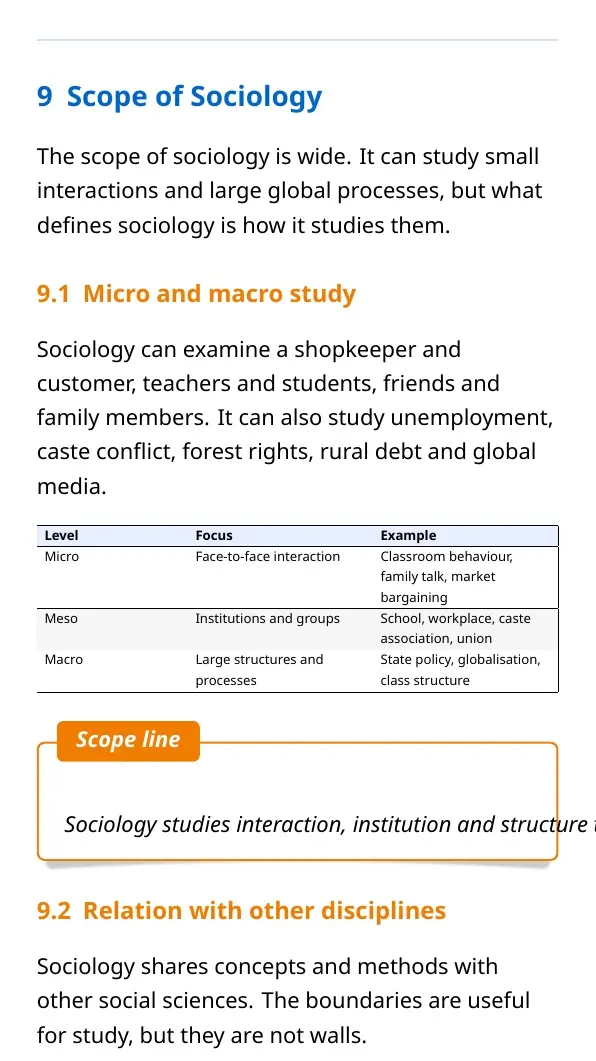
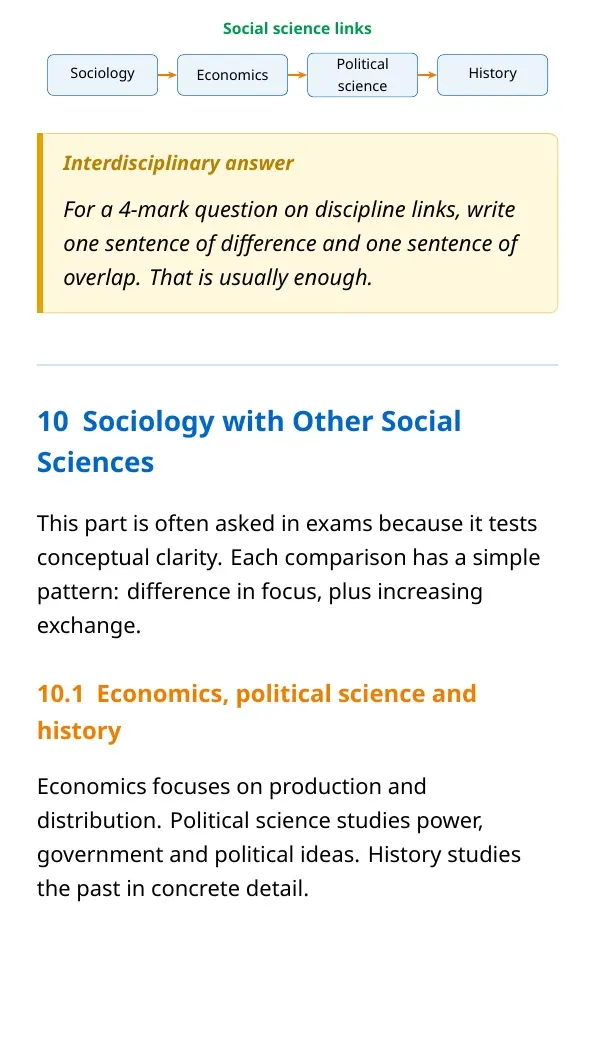
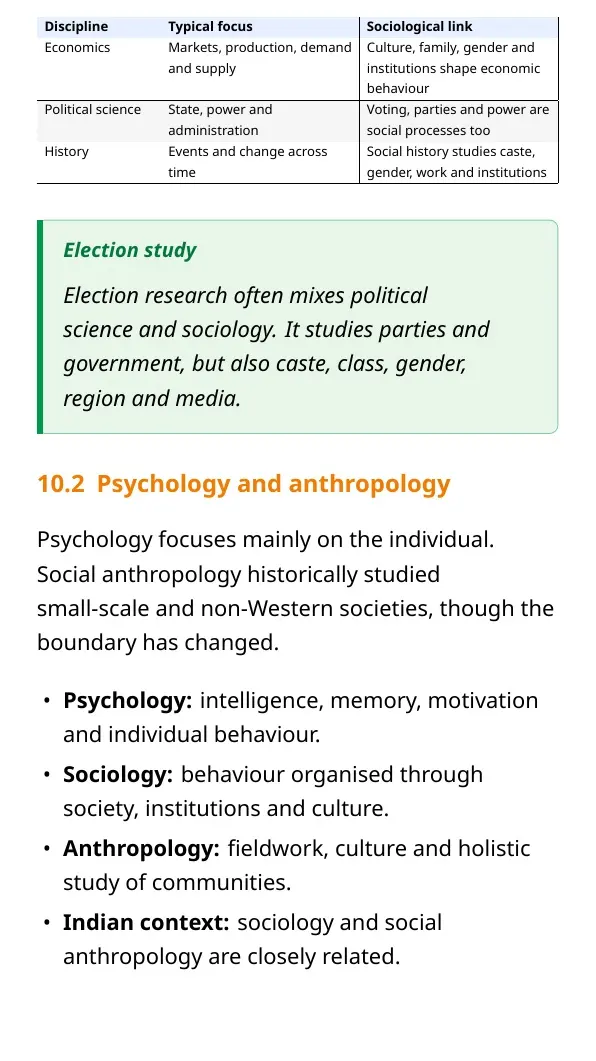
| Discipline links | Economics, political science, history, psychology and anthropology. |
Sociology and Society Explained for Class 11
Source: Magnet Brains on YouTube
Sociological Imagination in Sociology and Society
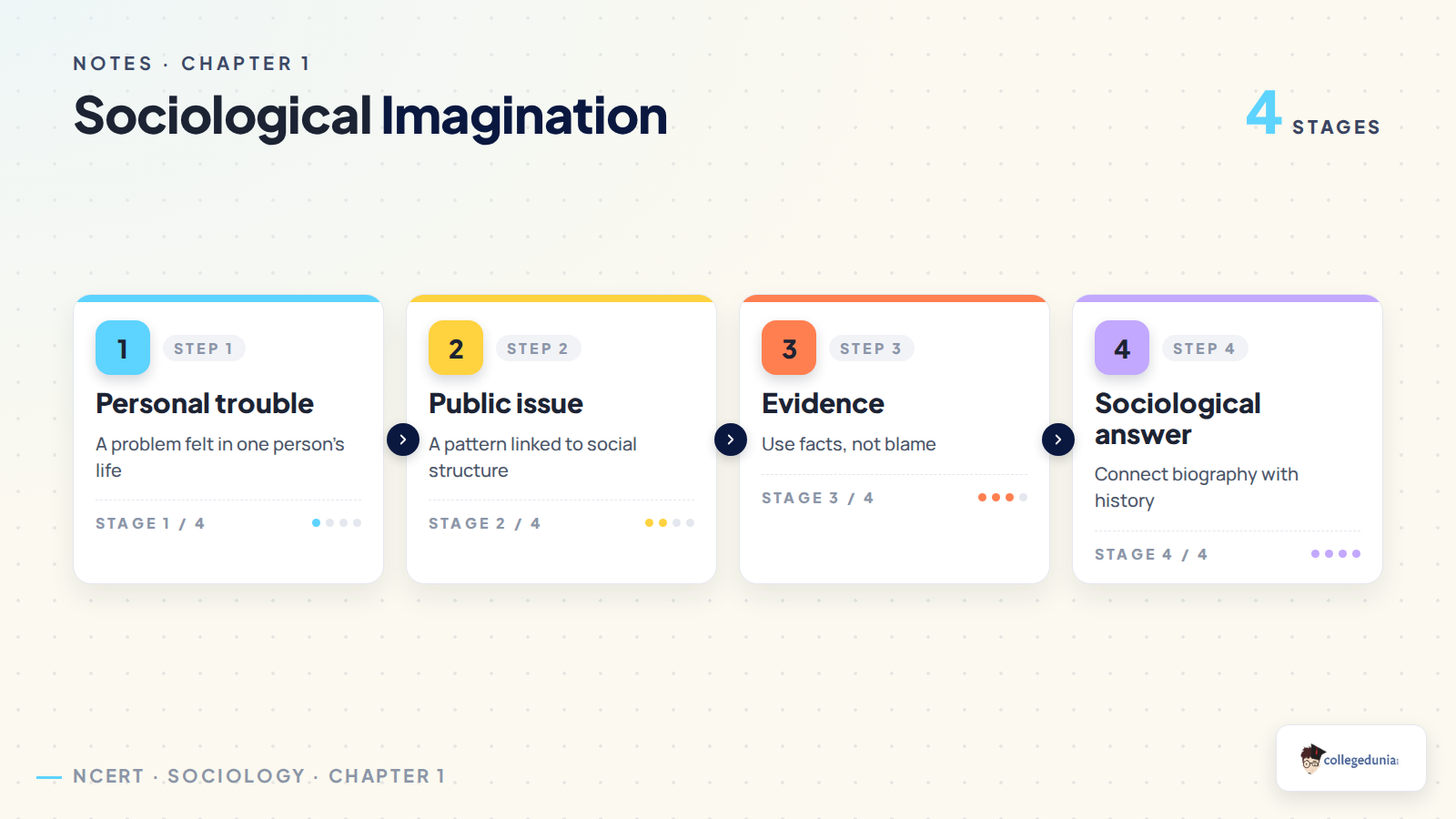
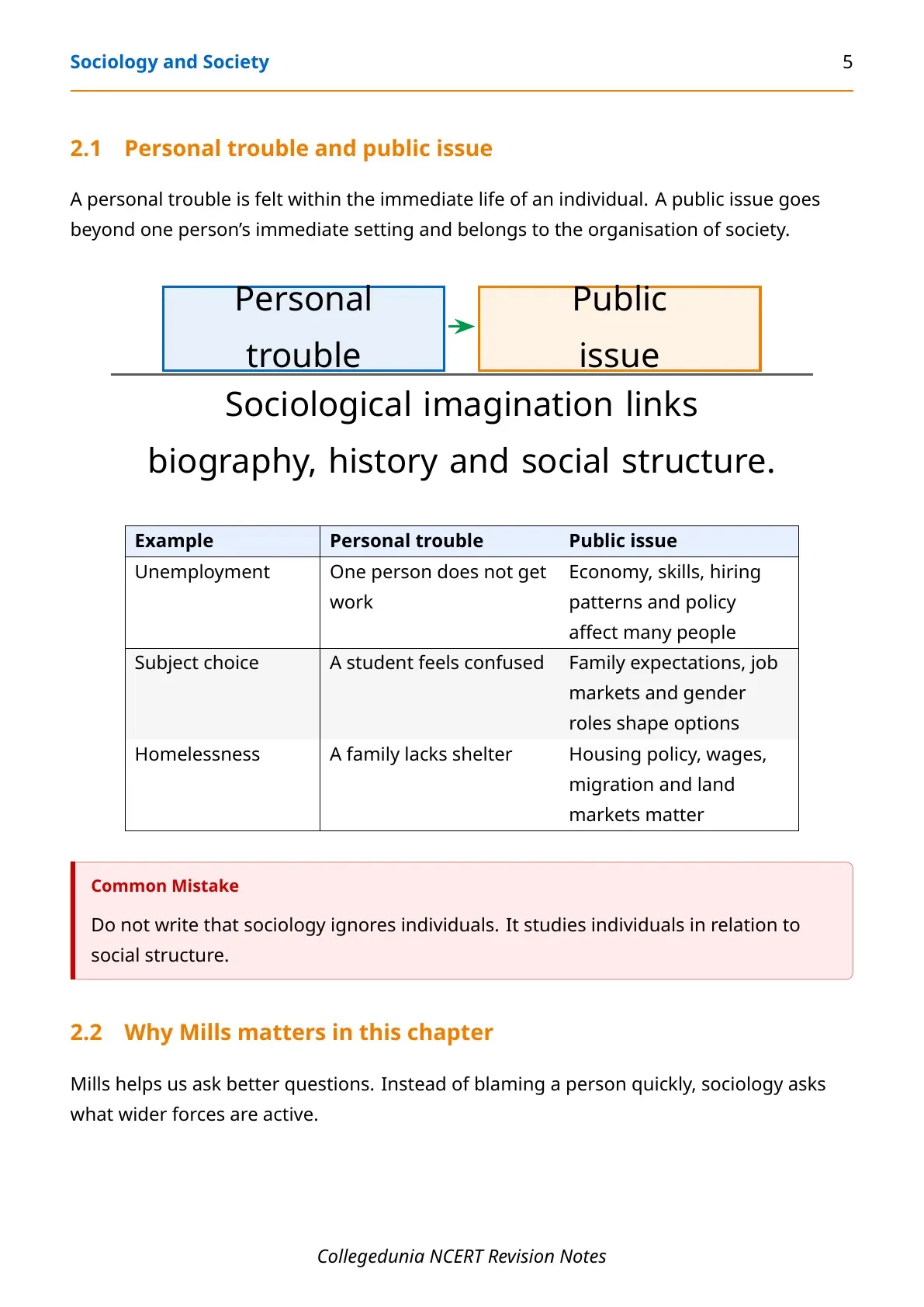
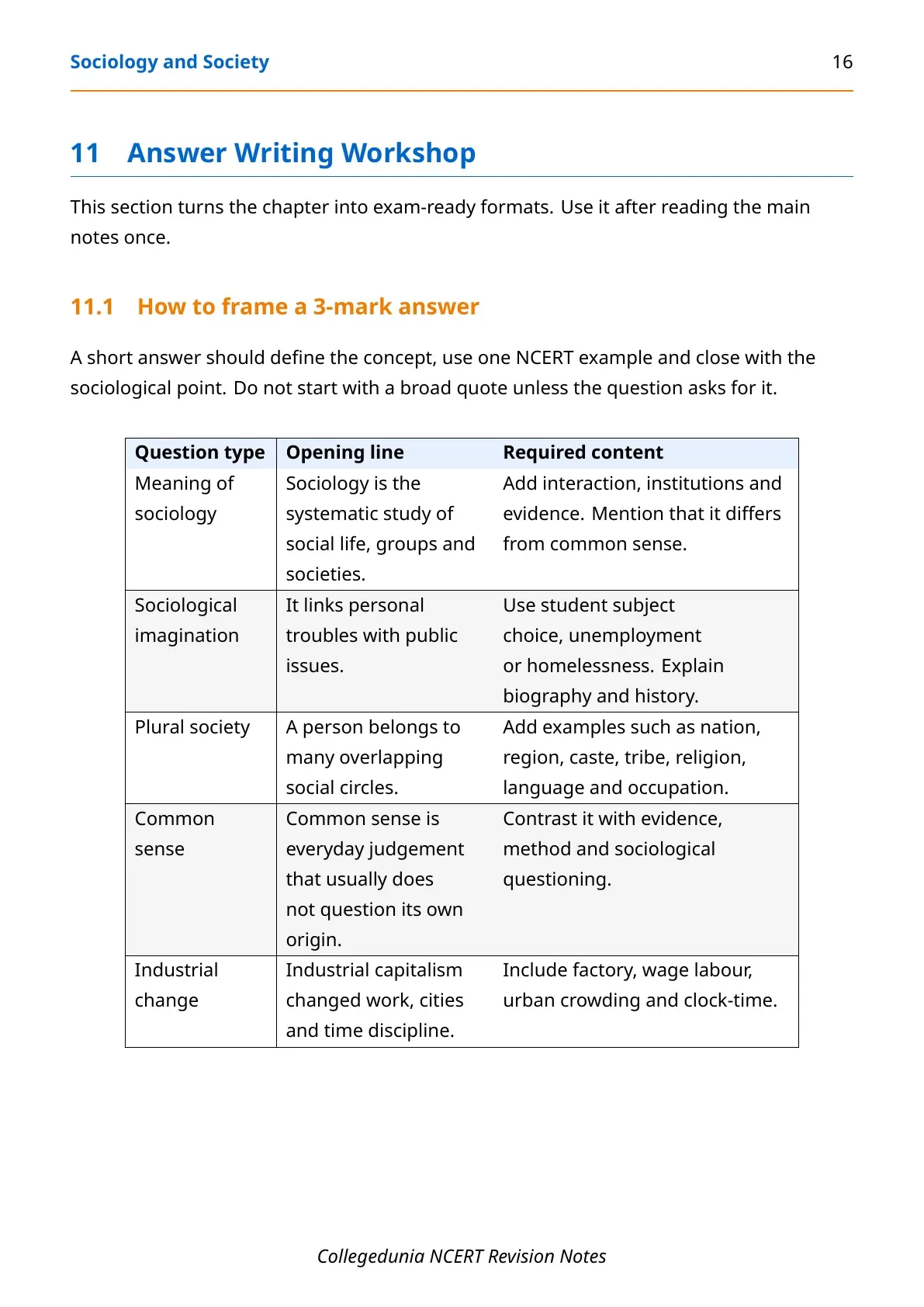
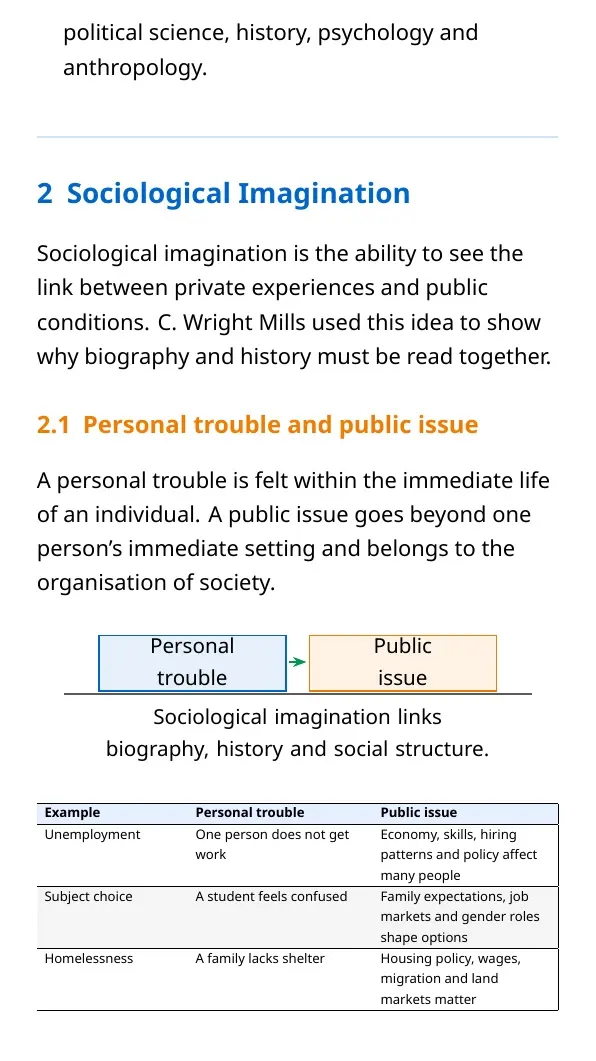
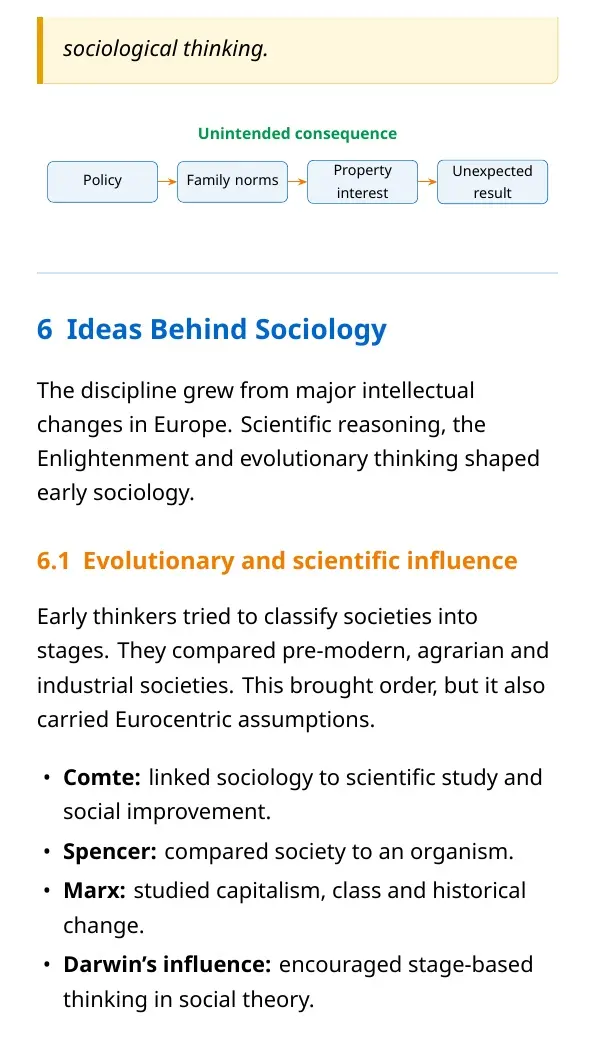
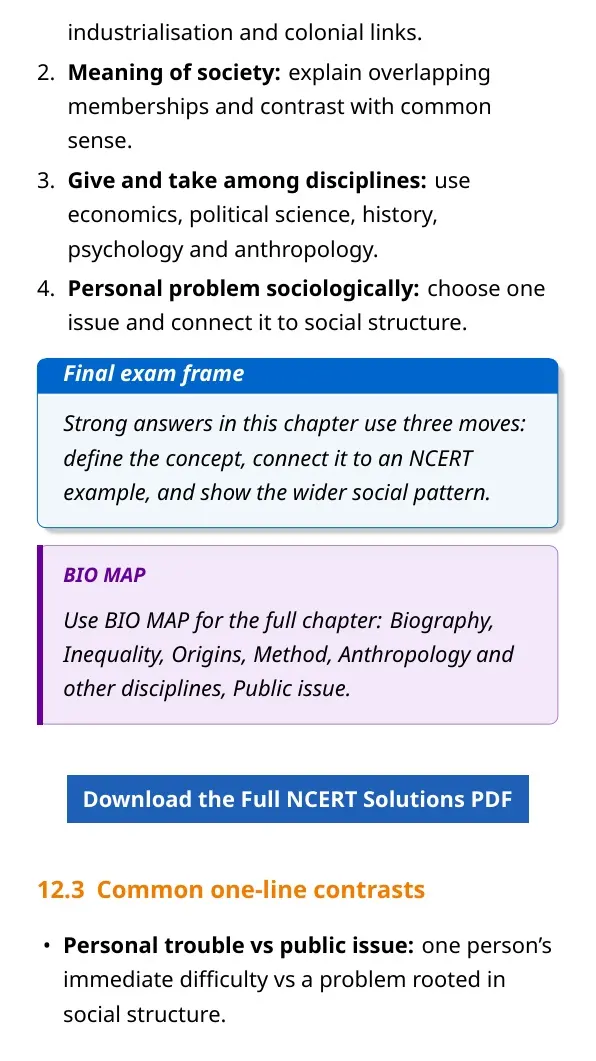
Sociological imagination helps students connect a private worry with a public issue. A student may feel confused about subjects, but that choice is also shaped by school access, family support and the job market.
- Personal trouble: a difficulty felt in one person's immediate life.
- Public issue: a wider pattern linked to social structure.
- Exam line: biography and history must be read together.
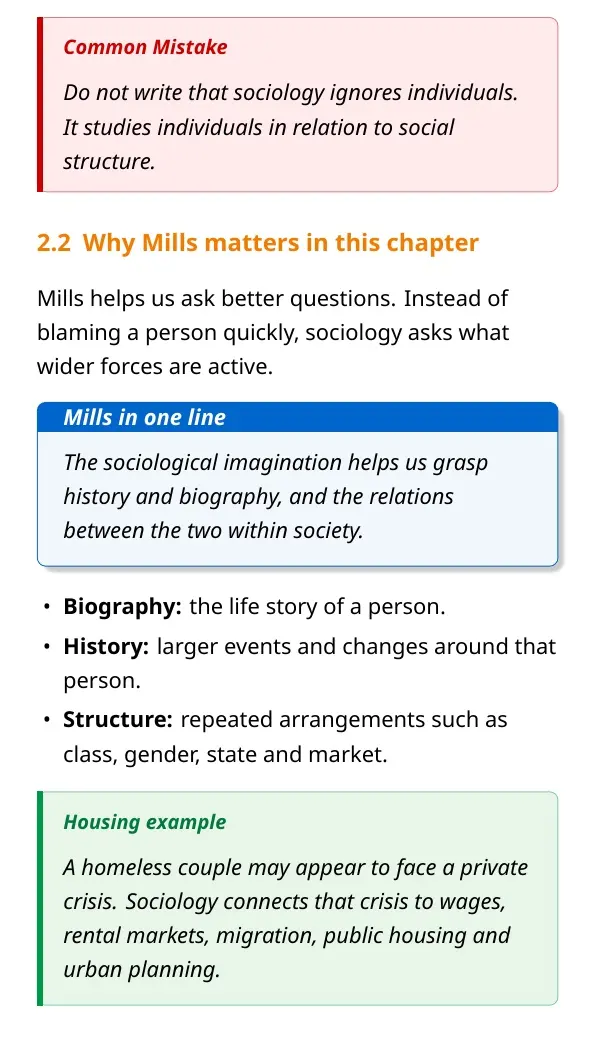
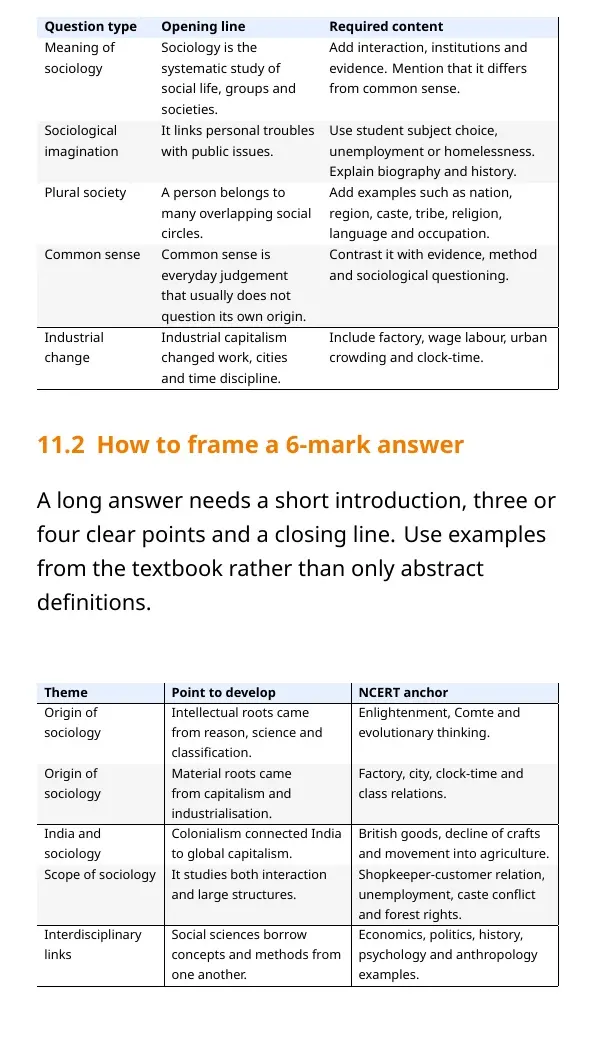
Use unemployment, homelessness or subject choice as examples in long answers.
Common Sense and Sociology Difference in Chapter 1
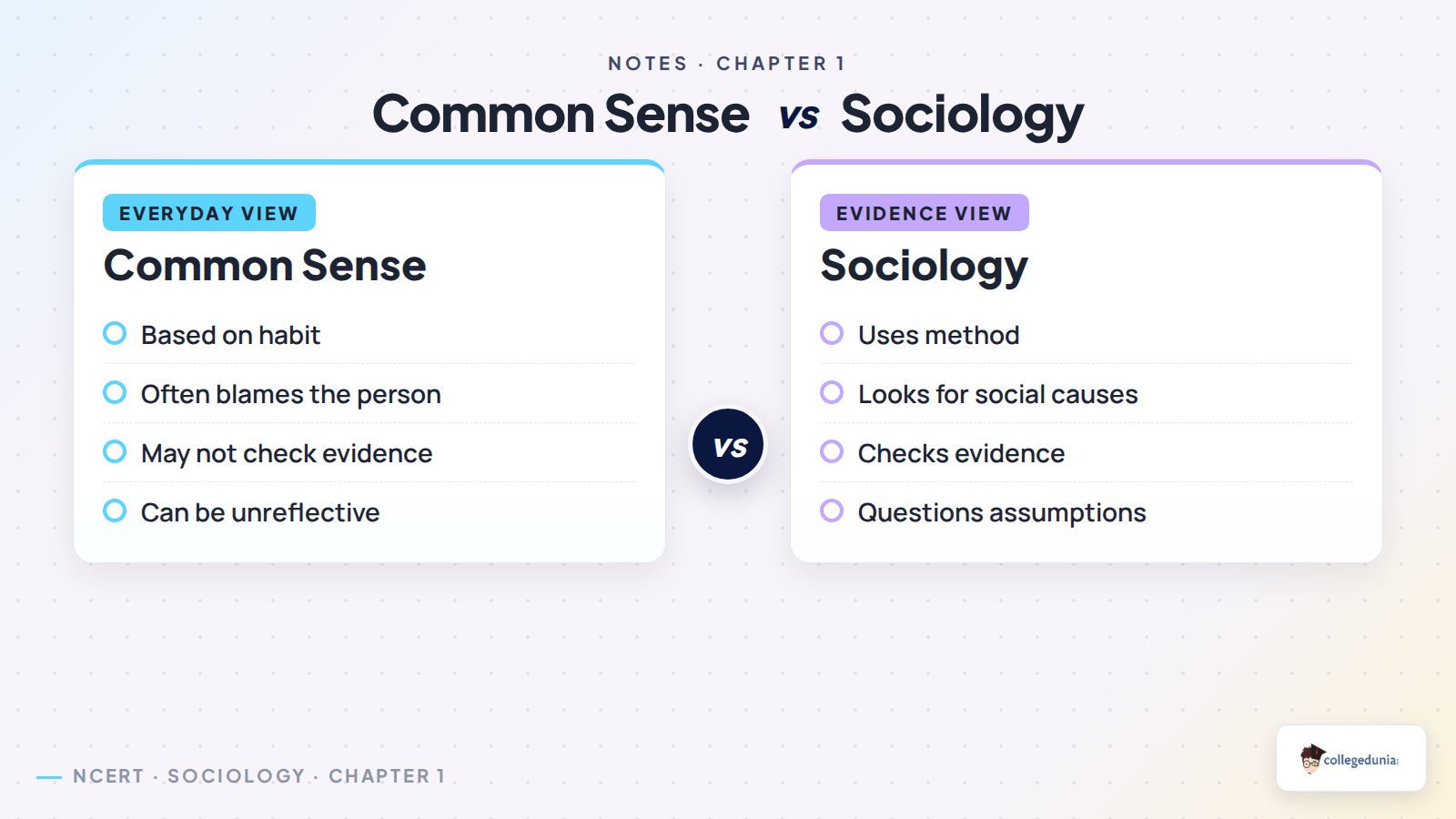
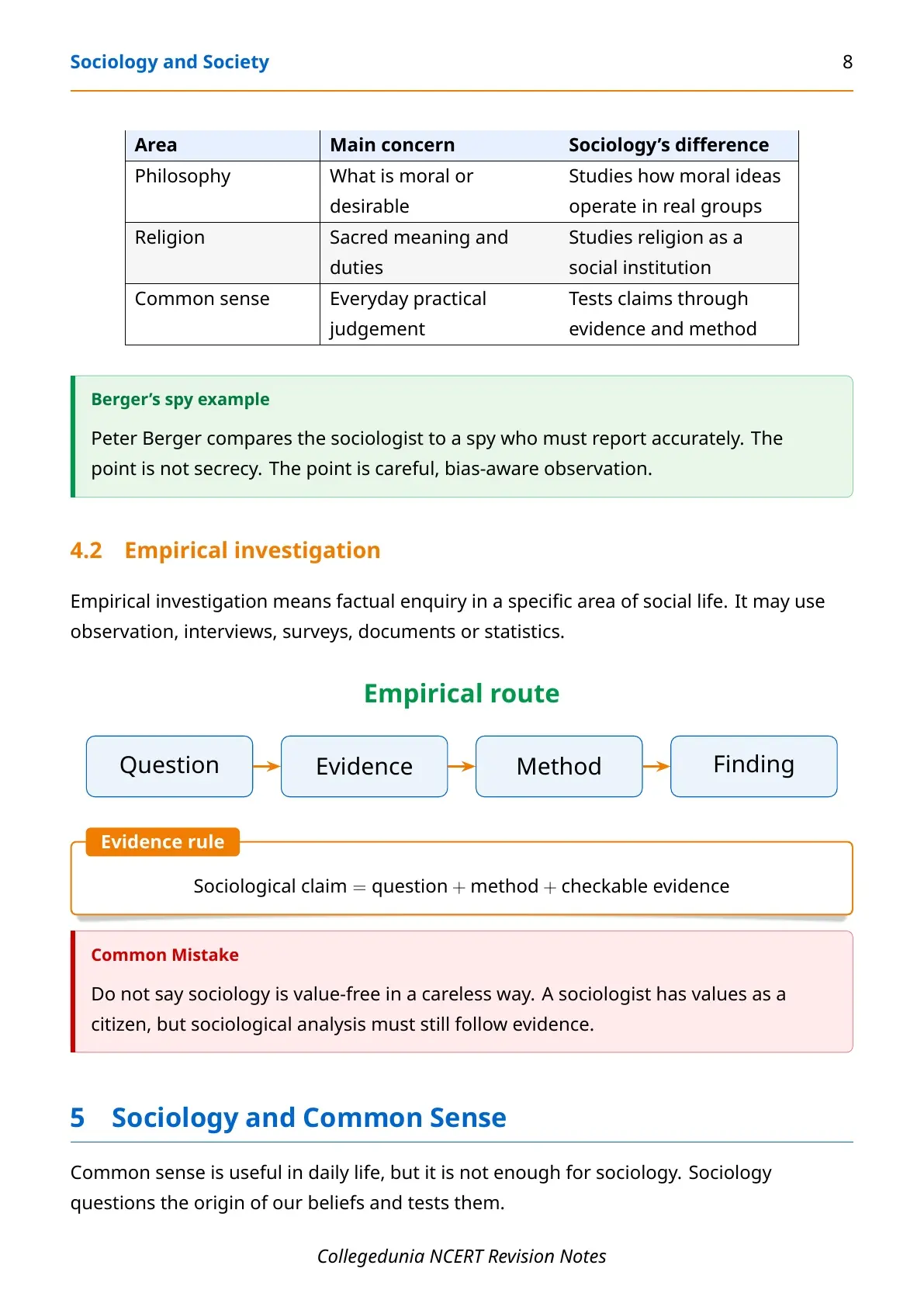
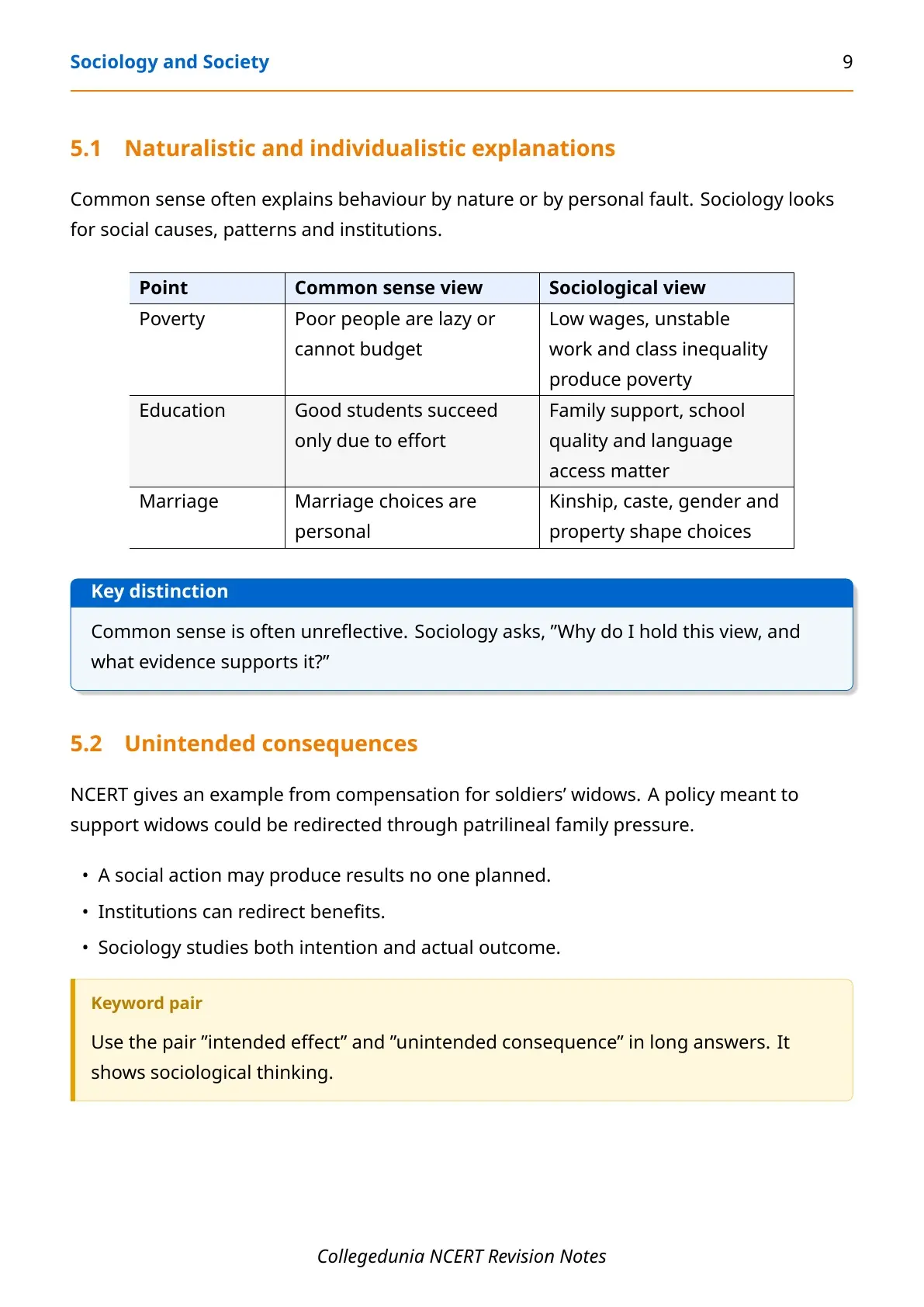
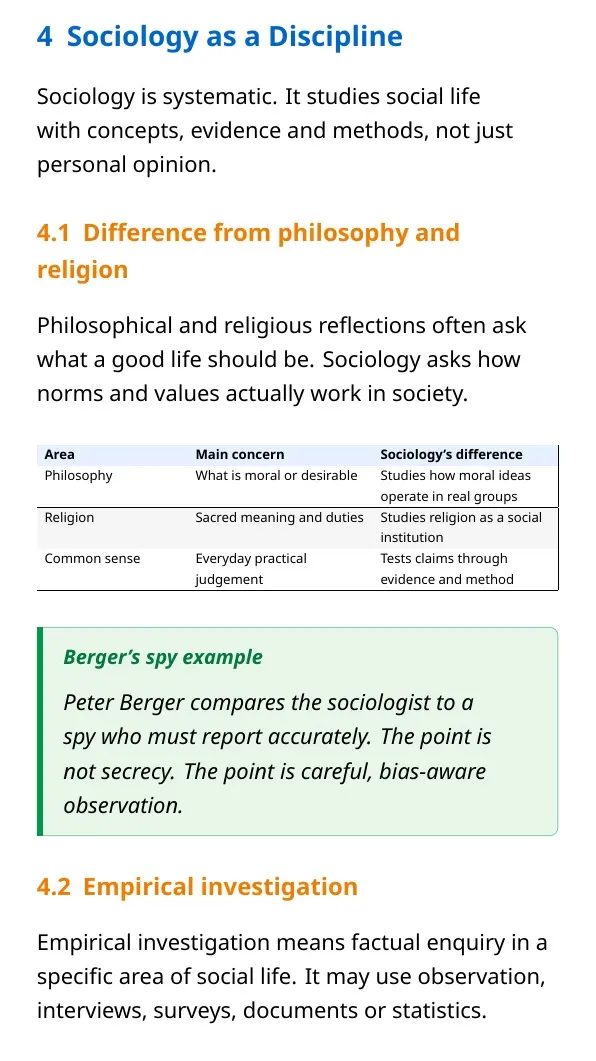
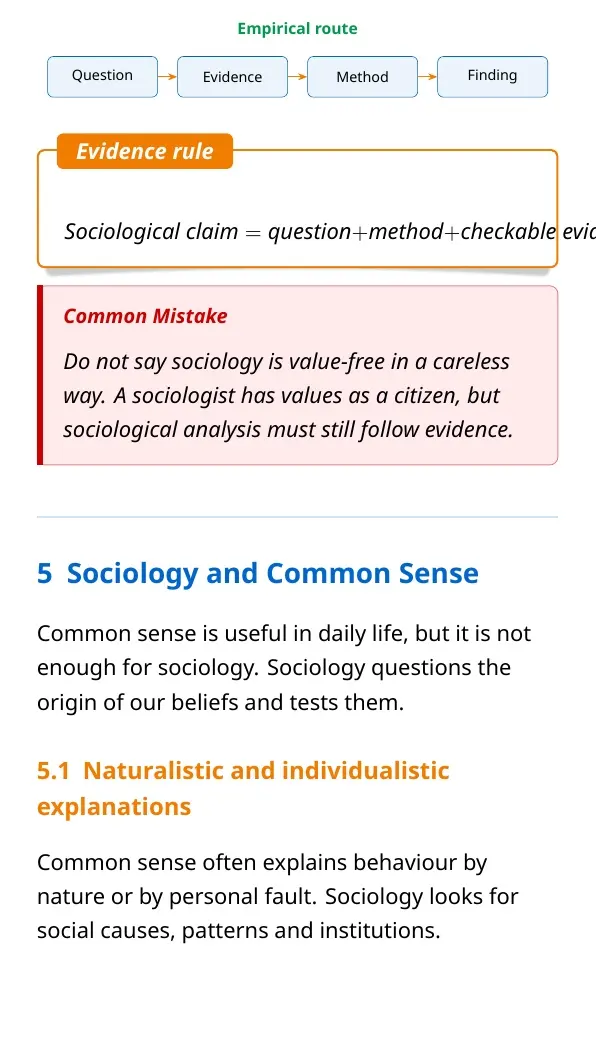
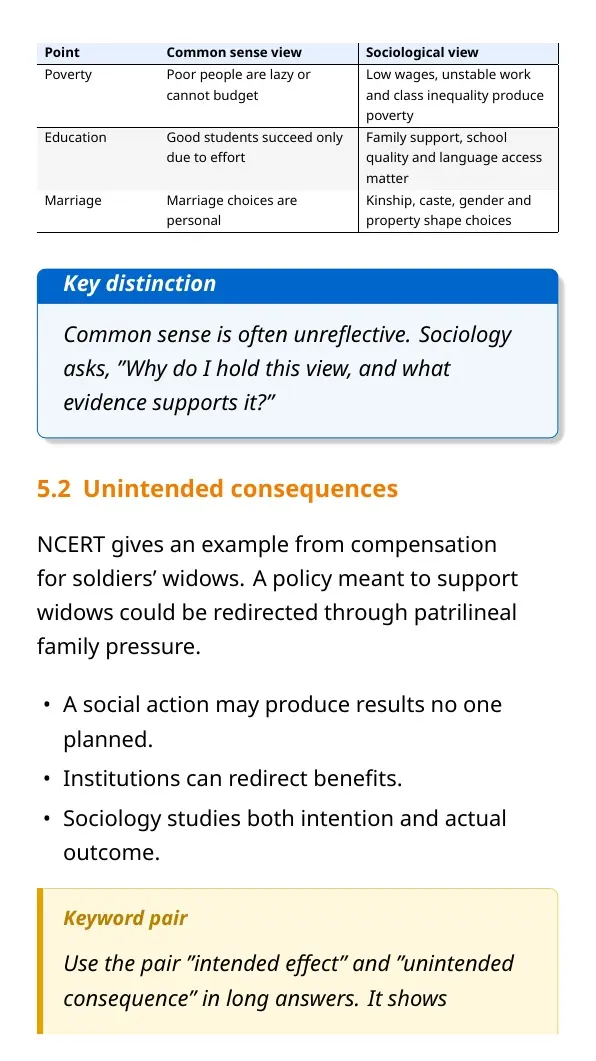
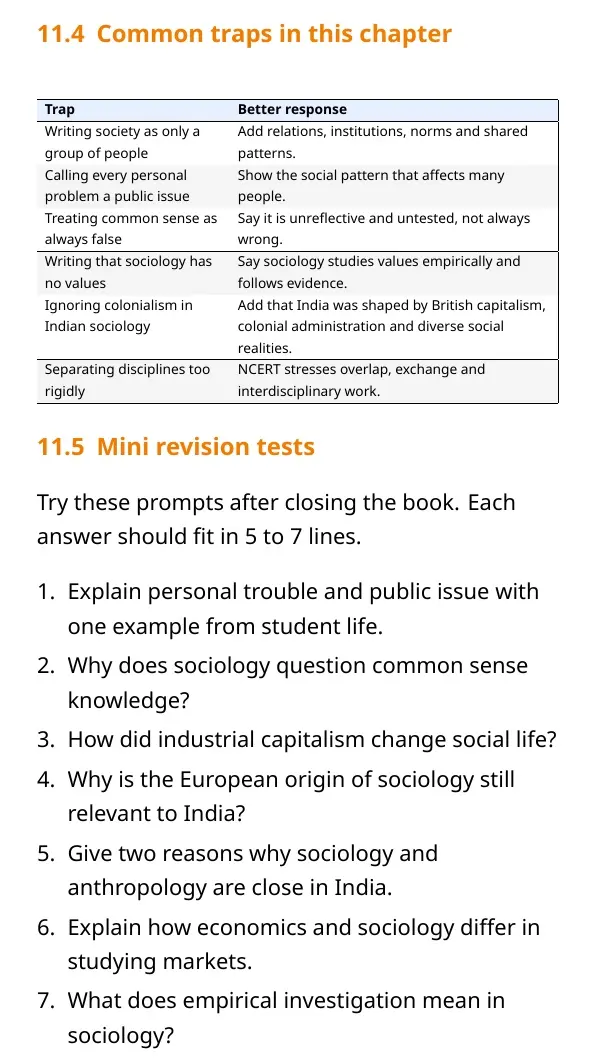
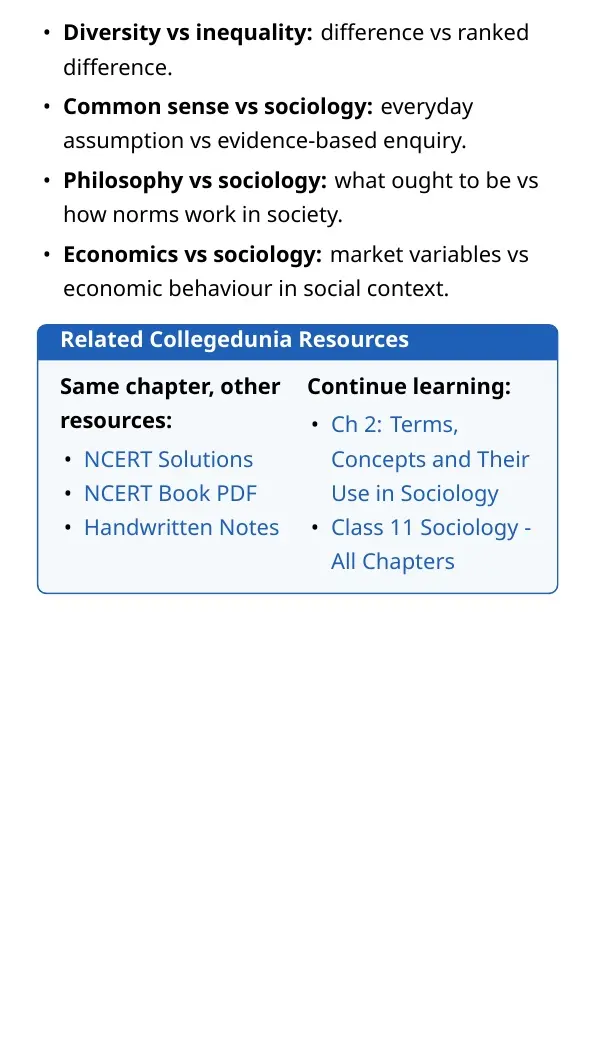
Common sense often blames individuals. Sociology asks how class, gender, culture, state policy and institutions shape behaviour. This is why poverty is not treated only as laziness or poor planning.
- Common sense: everyday ideas that may not check their own origin.
- Sociology: evidence-based study of social life and institutions.
- Important: sociology studies values, but it checks how values work in society.
Sociology and Society Important Terms for Revision
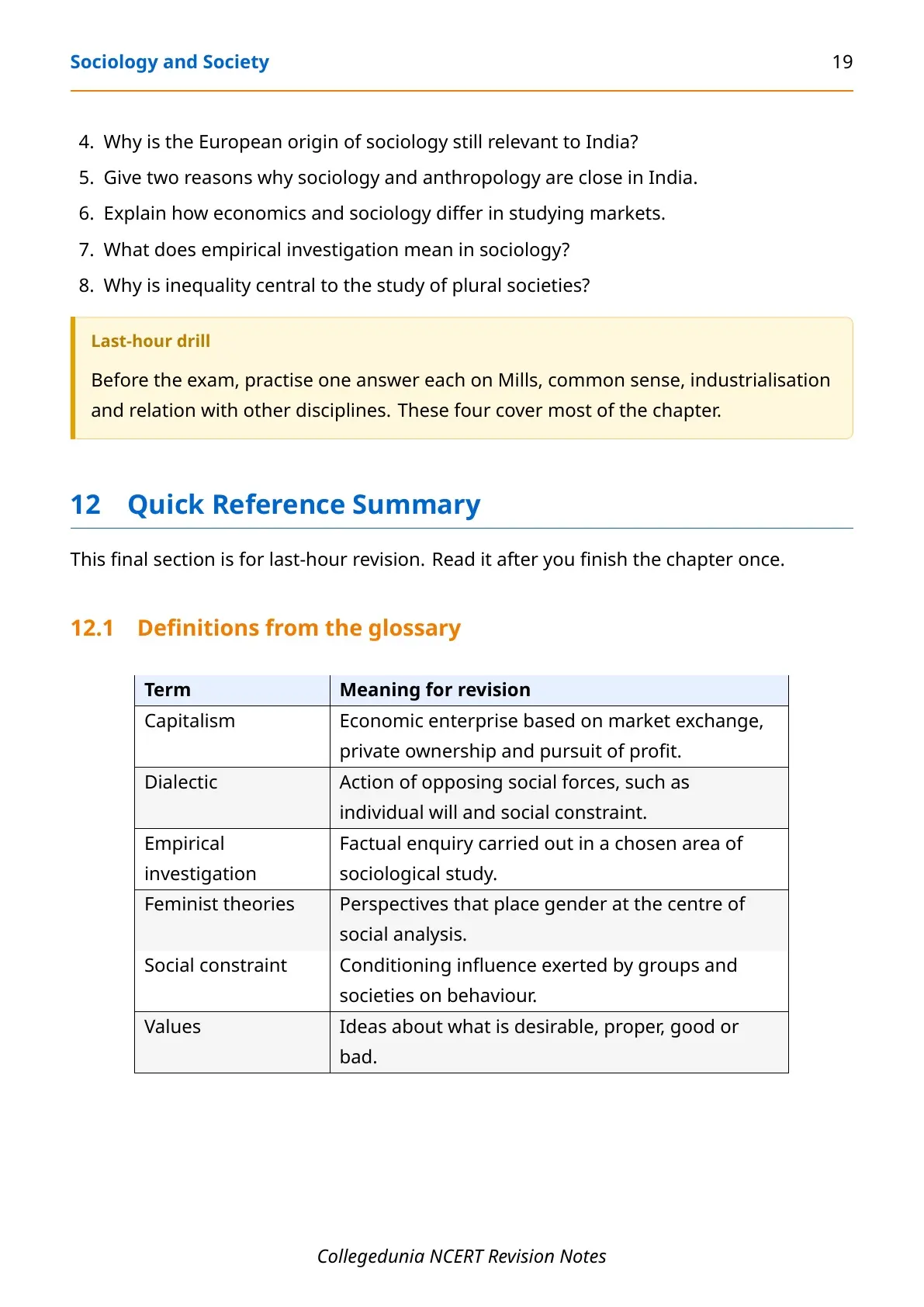
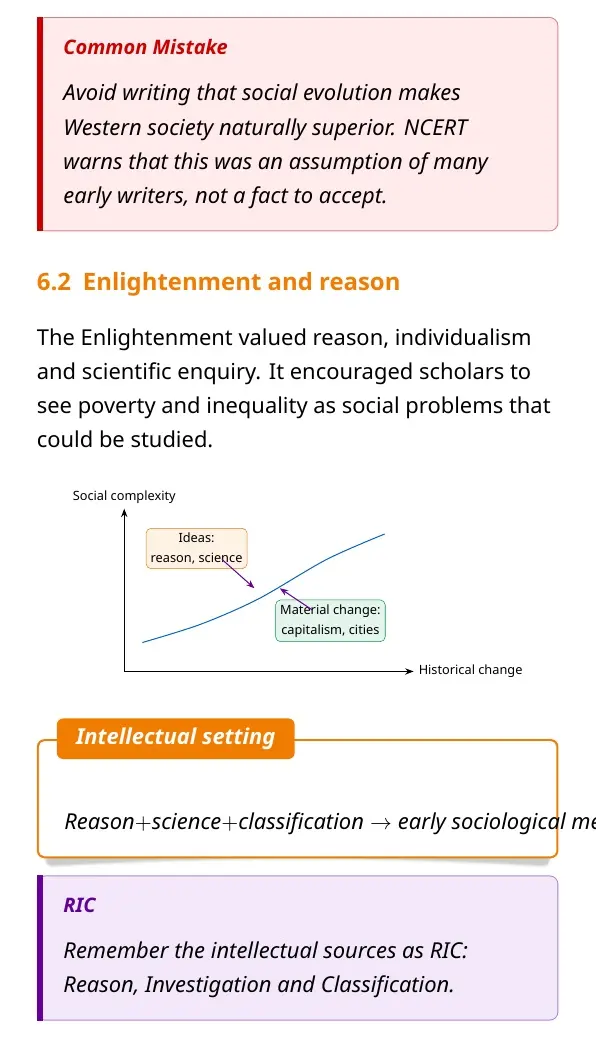
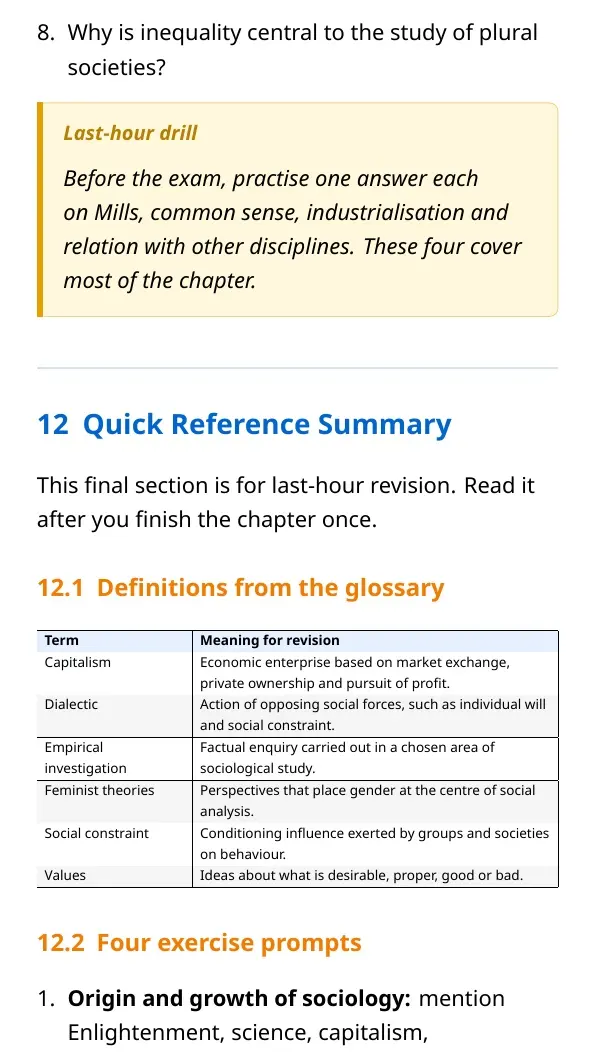
The glossary in Sociology and Society gives six terms students should know before moving to later chapters. Capitalism, dialectic and empirical investigation appear often in exam answers.
| Term | Meaning |
|---|---|
| Capitalism | Economic system based on market exchange and private ownership. |
| Dialectic | Opposing social forces acting together. |
| Empirical investigation | Factual enquiry in a sociological field. |
| Social constraint | Influence of groups and society on behaviour. |
Sociology and Society Student Feedback
In a Collegedunia student poll of 12,480 Class 11 Sociology students conducted before the 2026 school exams, 78% said the personal trouble versus public issue example made the chapter easier.
Source: 2026 Class 11 Sociology student poll across CBSE schools.
How to Use the Sociology and Society Notes PDF
Use the notes after reading the NCERT chapter once. The PDF is designed for quick recall, not as a replacement for the textbook.
- Read the chapter snapshot and glossary first.
- Revise the tables on common sense and sociology.
- Practise the four NCERT exercise questions.
- Use the examples in your own words during answer writing.
Related NCERT Resources for Sociology and Society
| Resource | Use it for |
|---|---|
| Sociology and Society Class 11 NCERT Solutions | Textbook exercise answers and example framing. |
| Sociology and Society Class 11 Book PDF | Official NCERT chapter reading. |
| Sociology and Society Class 11 Handwritten Notes | Quick handwritten revision once available. |
All Class 11 Sociology Notes Chapters
Sociology and Society Class 11 Notes FAQs
Ques. What is covered in Sociology and Society Class 11 Notes?
Ans. The notes cover sociological imagination, pluralities, inequalities, common sense, origins of sociology, Indian sociology and links with other social sciences.
Ques. Why is sociological imagination important in this chapter?
Ans. It helps students connect personal troubles with public issues, so individual problems are studied with social structure and history.
Ques. How is sociology different from common sense?
Ans. Common sense is often based on everyday assumptions. Sociology checks those assumptions with evidence, methods and concepts.
Ques. What examples should students revise from Sociology and Society?
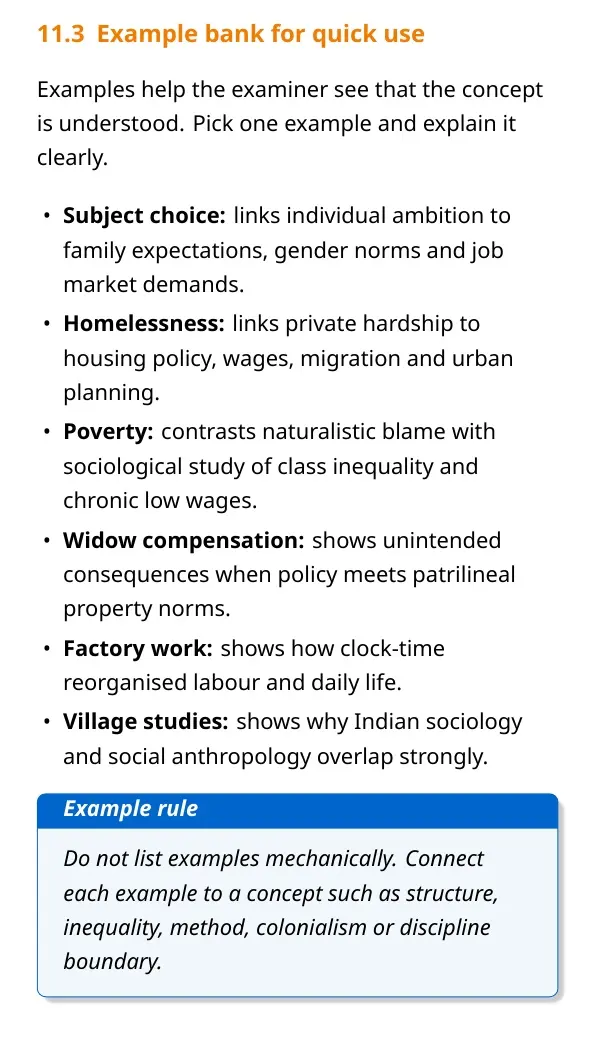
Ans. Students should revise subject choice, homelessness, poverty, industrial cities, colonial India and the link between sociology and other social sciences.



Comments