




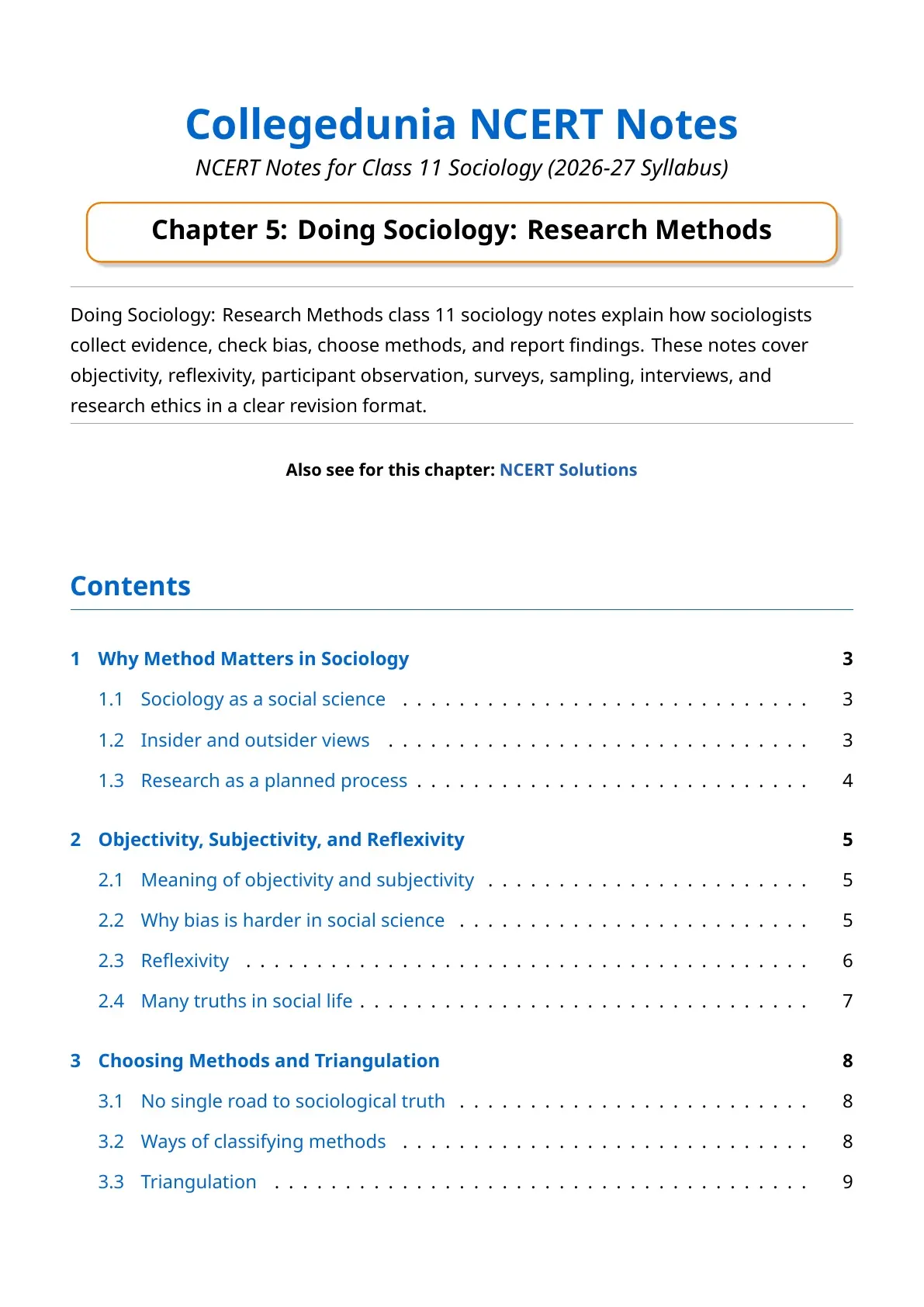
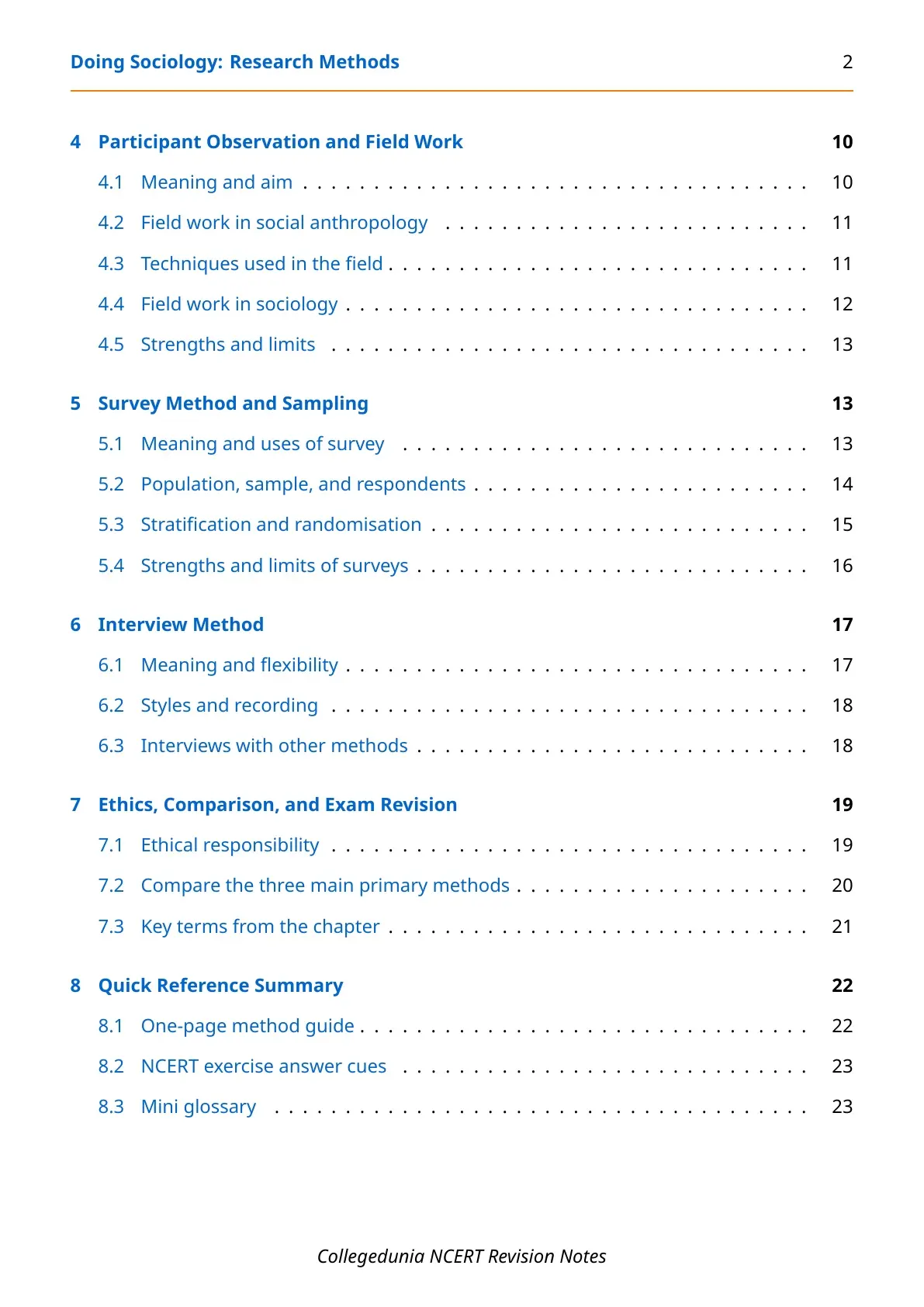
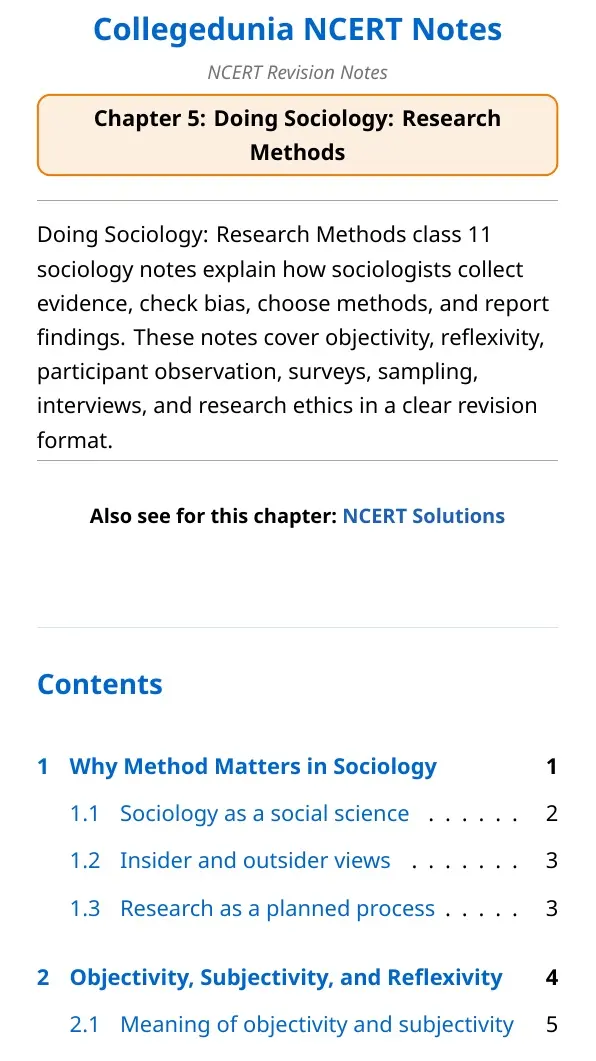
The NCERT Class 11 Sociology Chapter 5 Doing Sociology: Research Methods Notes help students revise the 2026-27 NCERT chapter on fieldwork, surveys, interviews and evidence-based sociology. The PDF explains how sociologists choose methods, collect data, stay reflexive and report findings with limits.
- Best for: Class 11 Sociology tests, project work and pre-exam revision.
- PDF focus: fieldwork, interviews, surveys, sampling, objectivity and reflexivity.
- Chapter value: this chapter shows how sociology moves from opinion to evidence.
Student Feedback: In a Collegedunia poll of 11,740 Class 11 Sociology students before the 2026 exams, 74% said research methods became easier after comparing fieldwork, surveys and interviews in one table.
Source: 2026 Class 11 Sociology student poll across CBSE schools.
What the Doing Sociology Research Methods Notes Cover
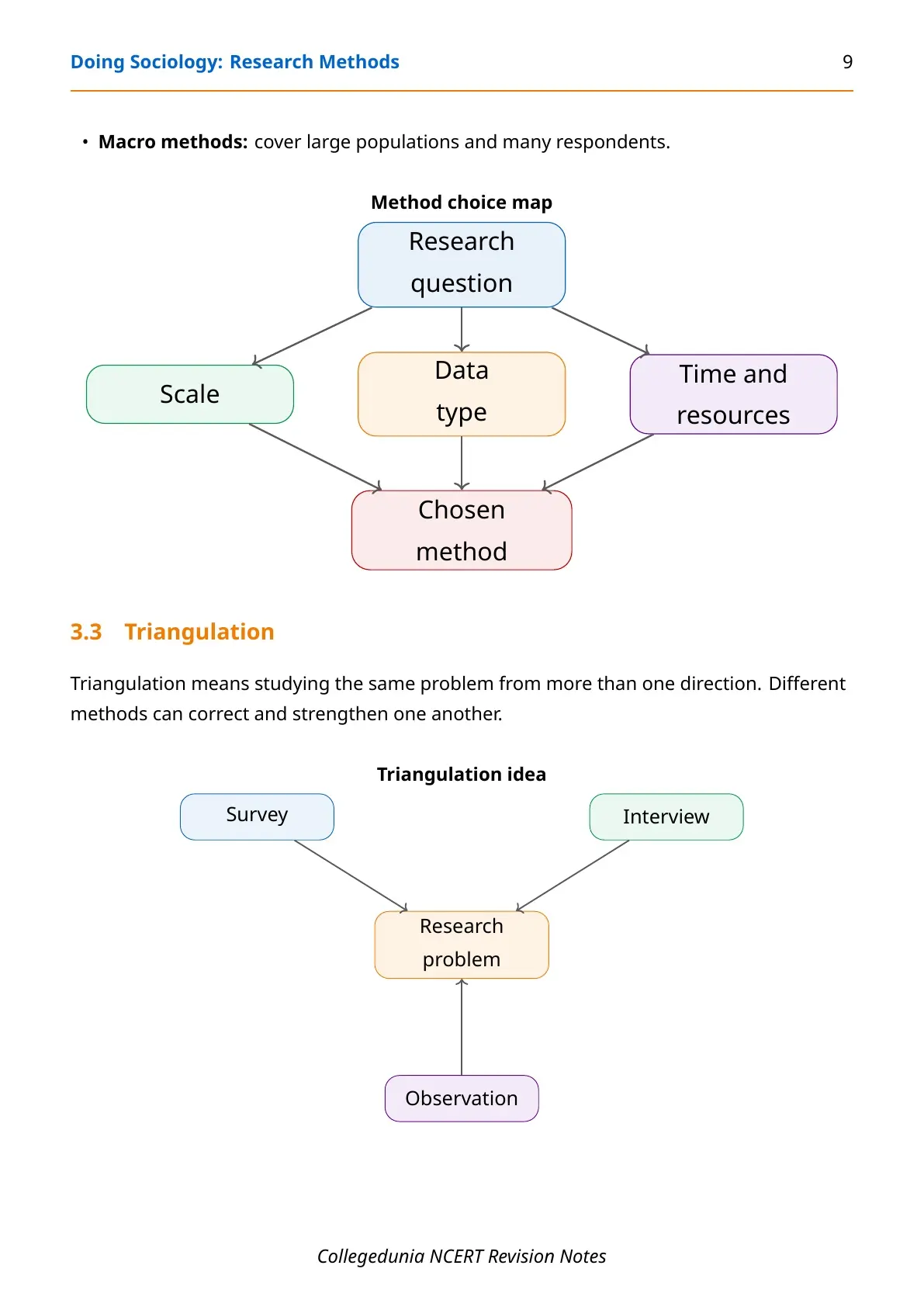
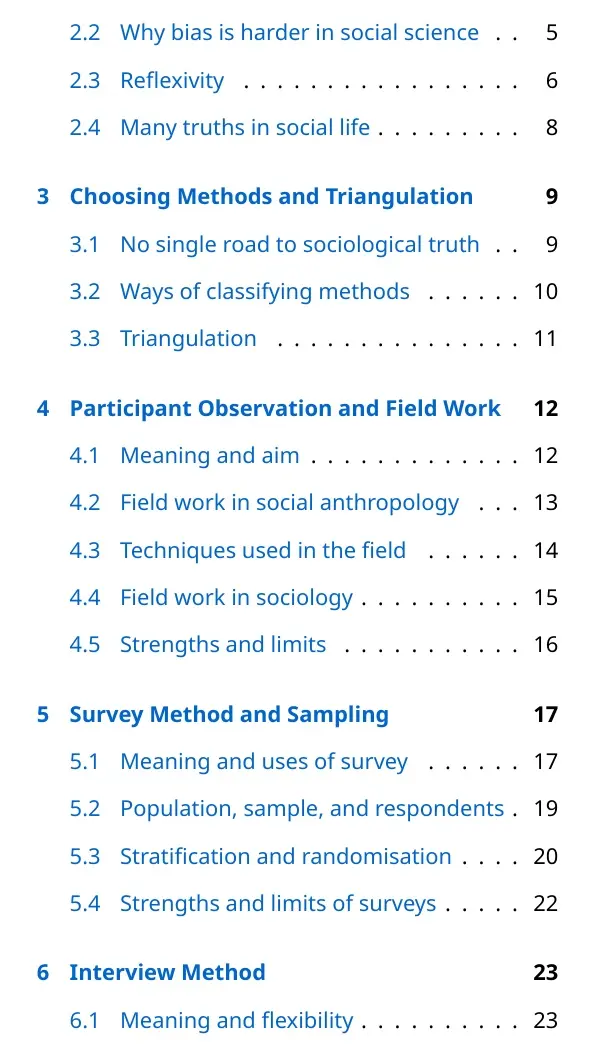
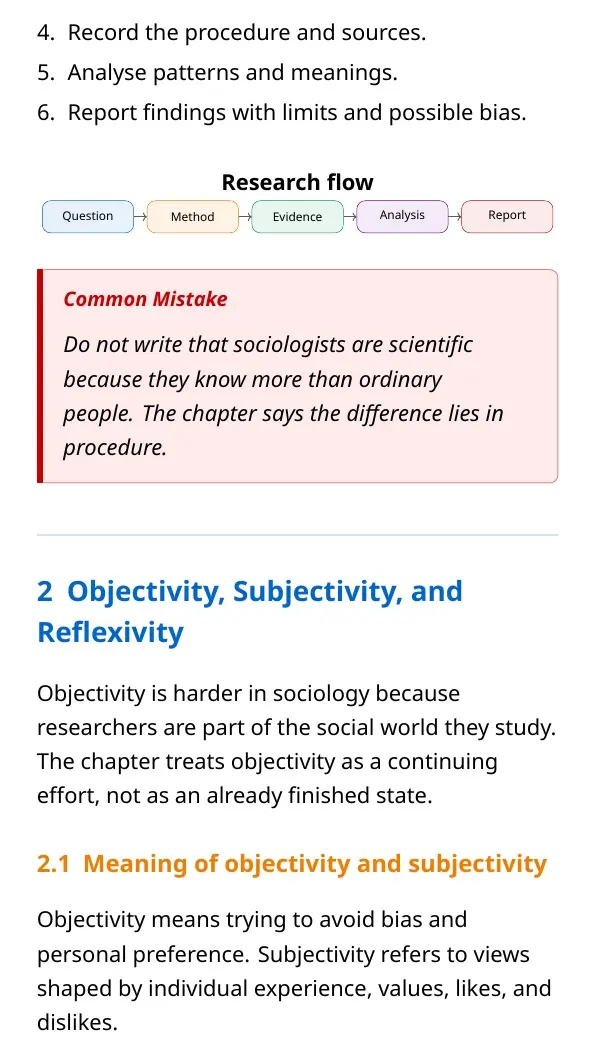
Chapter 5 explains how sociologists study society through planned methods instead of loose opinion. Method is the bridge between a question and evidence. It tells the researcher what to observe, whom to ask, what to record and how to read the findings.
| PDF section | What students revise |
|---|---|
| Meaning of method | Why sociological claims need evidence, concepts and a research plan. |
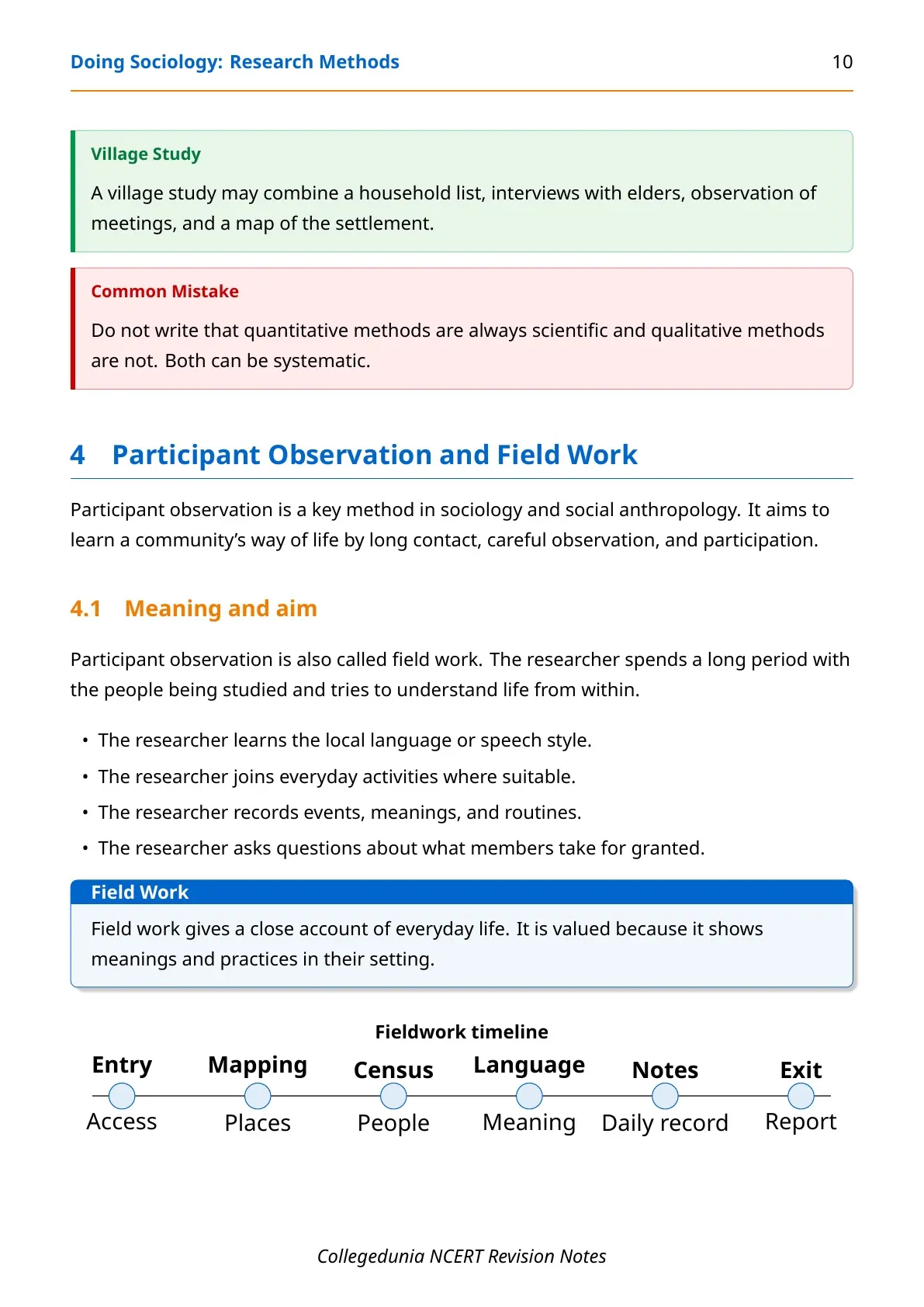
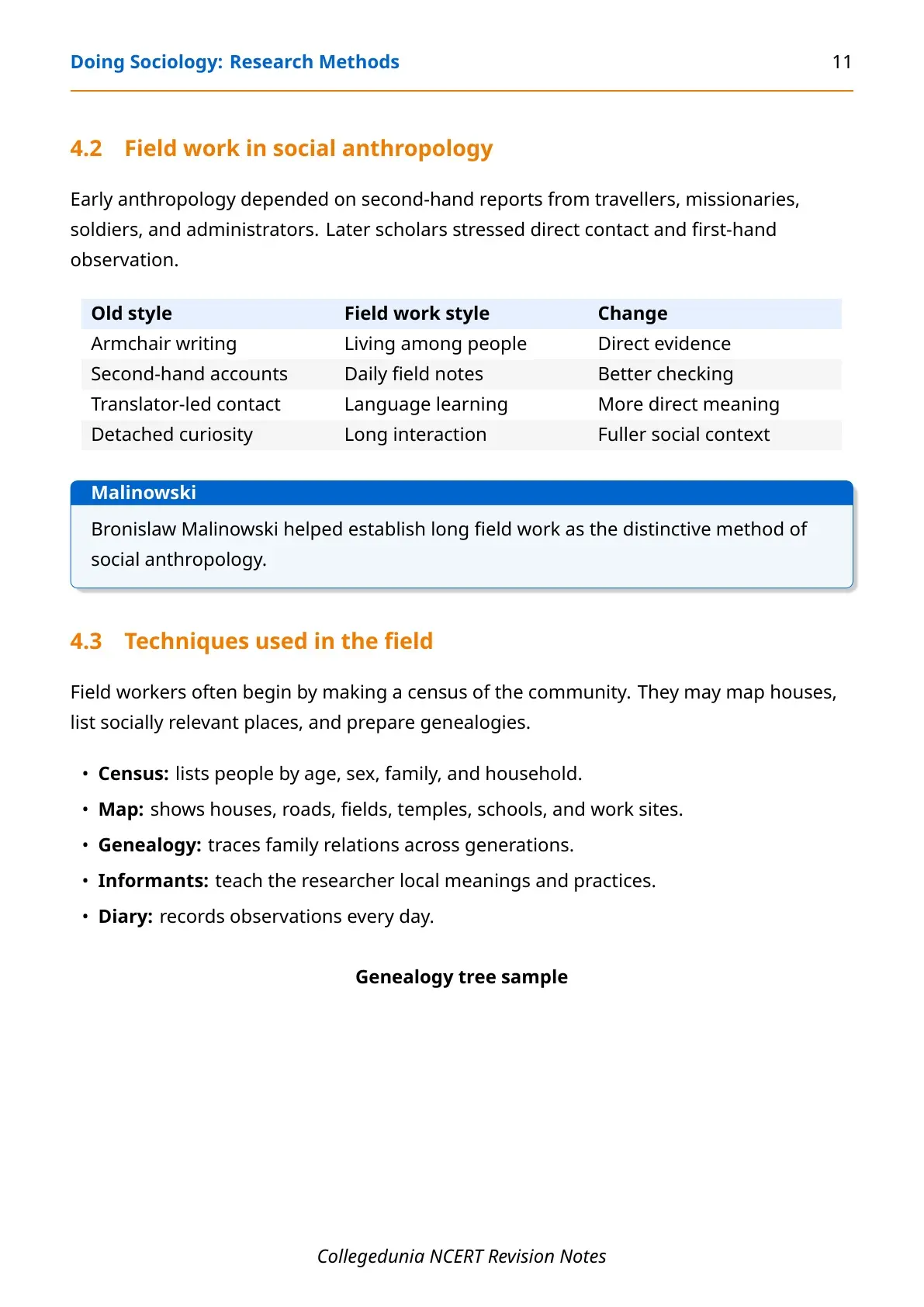
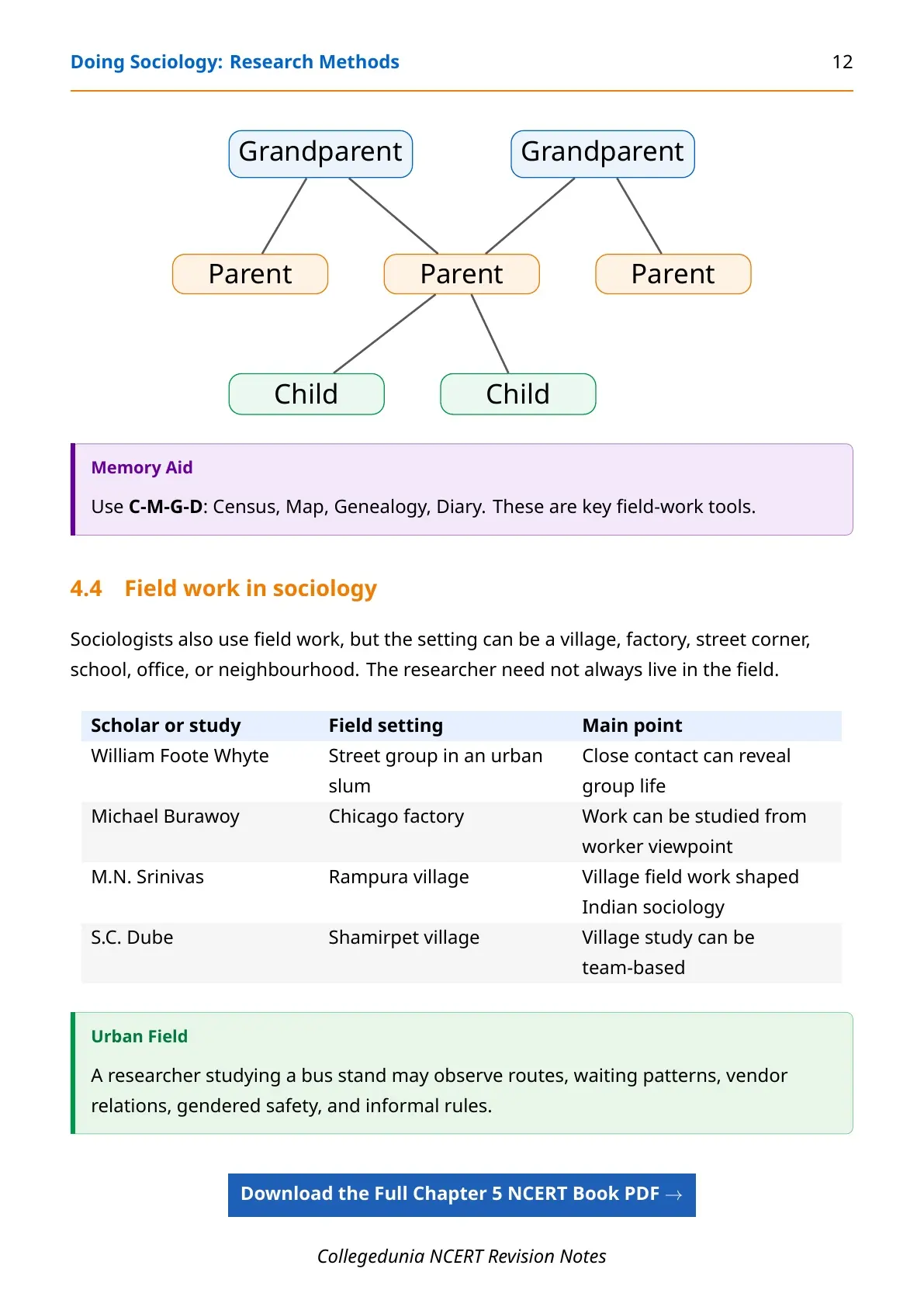
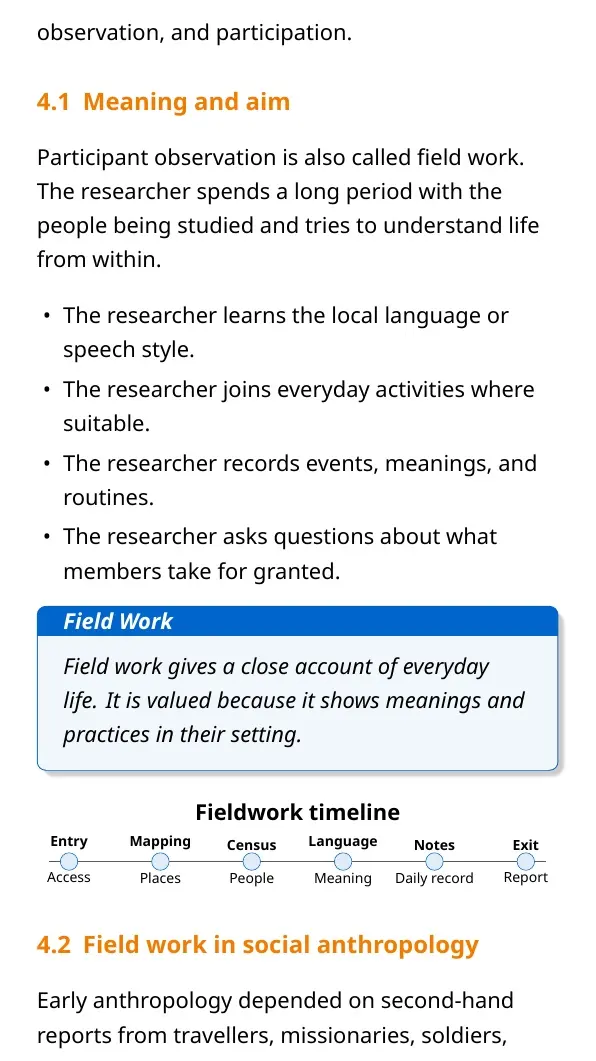
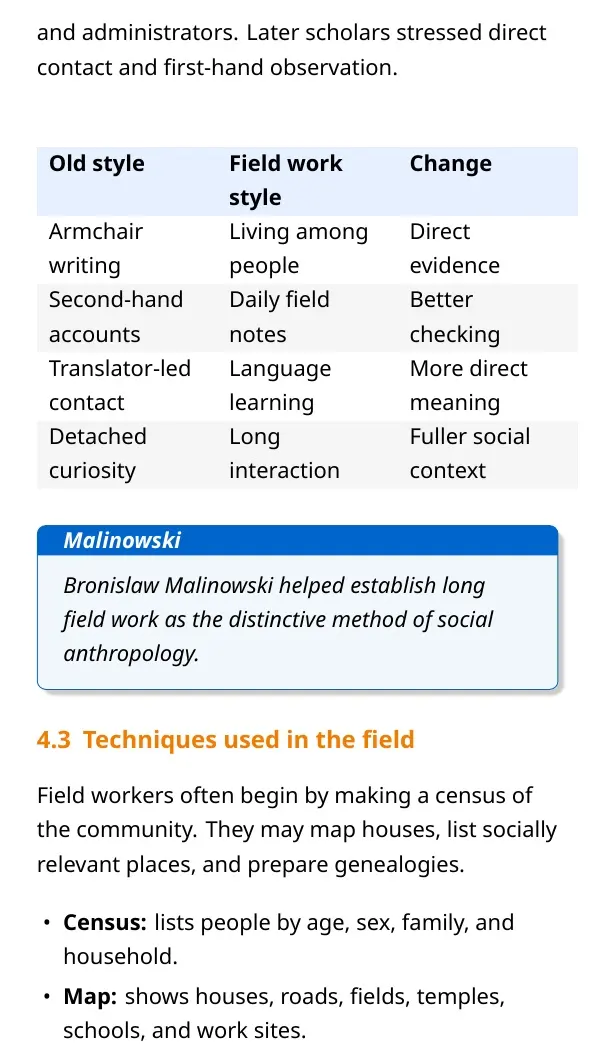
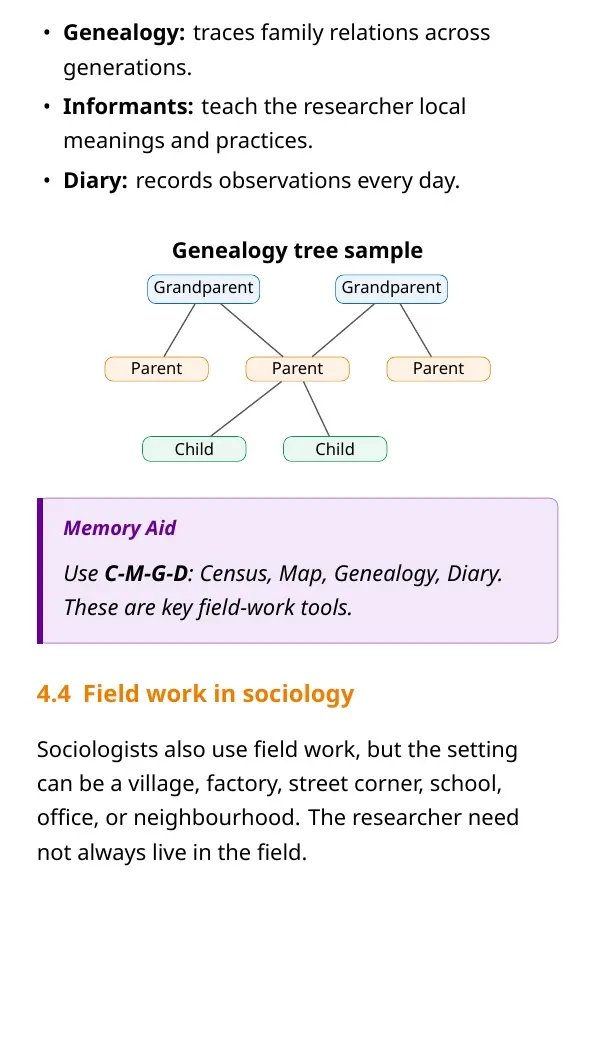
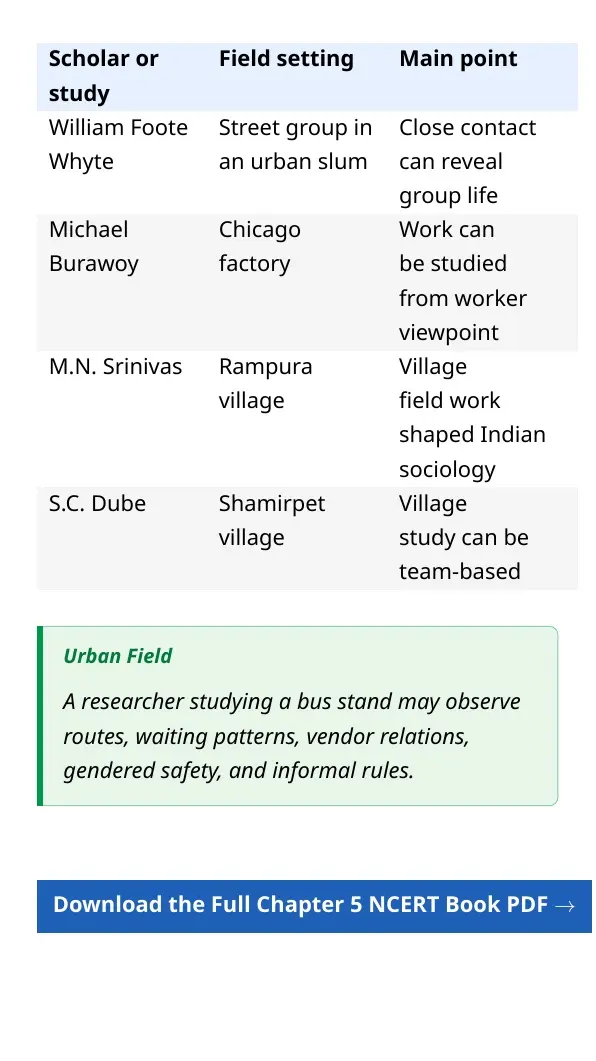
| Fieldwork | Observation, participation, trust, field notes and ethical distance. |
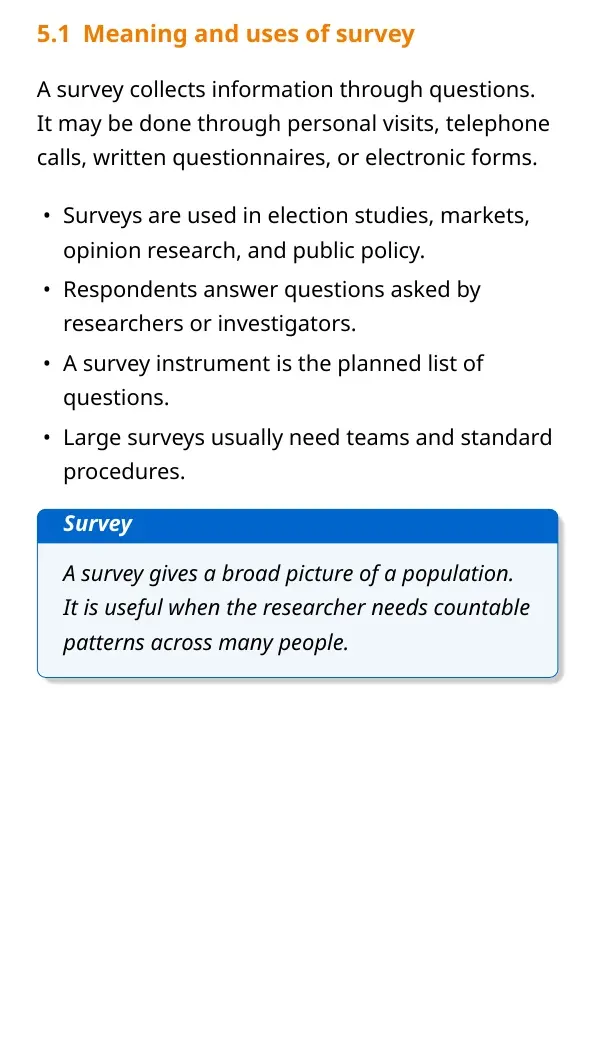
| Survey method | Schedules, questionnaires, Census, NSO surveys, samples and error margins. |
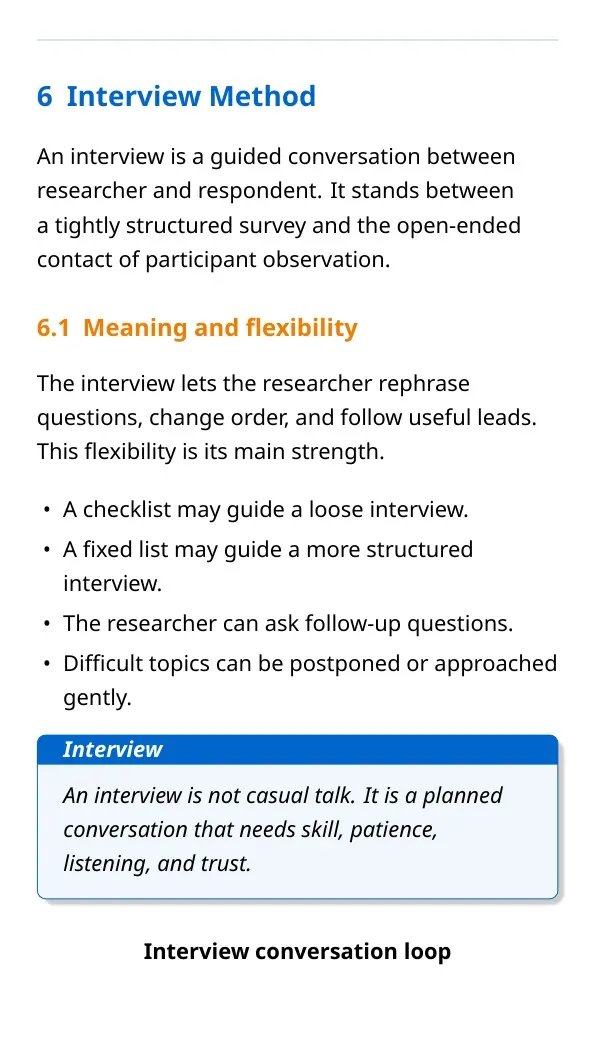
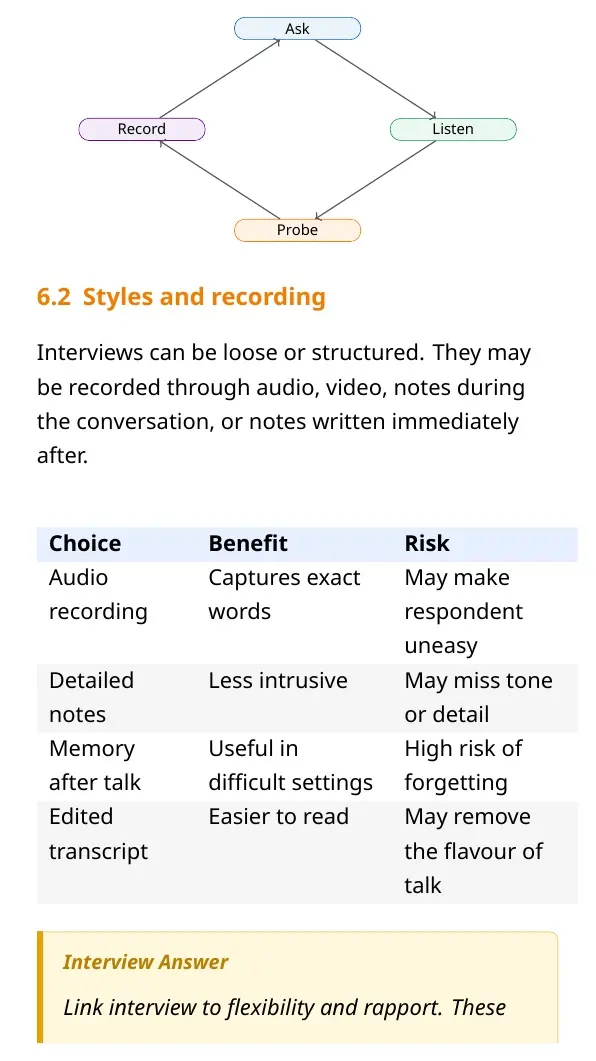
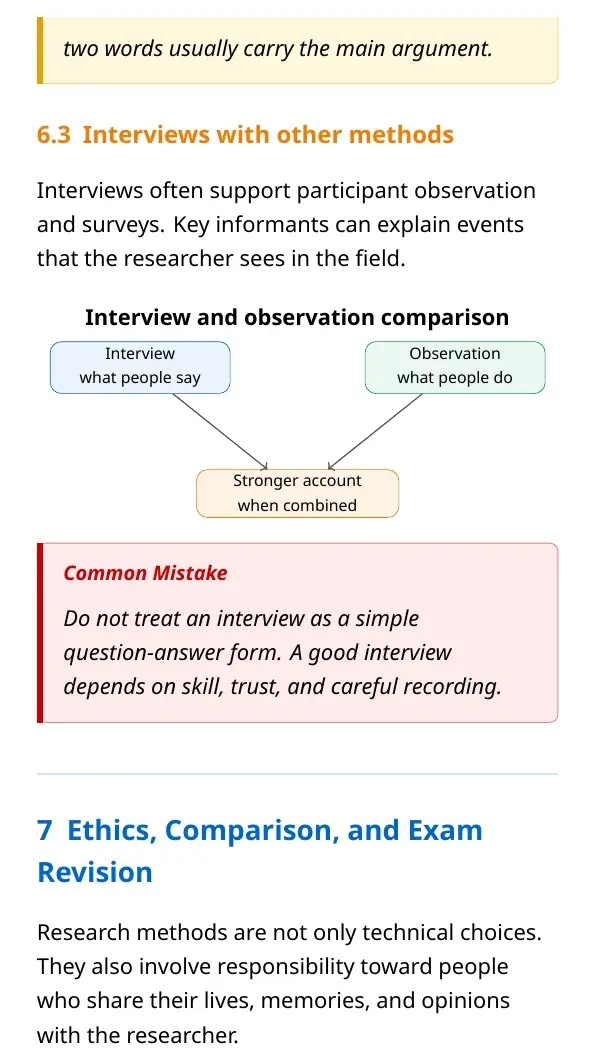
| Interview method | Structured, semi-structured and open conversations for social meanings. |
In exam answers, connect every research method to the kind of question it can answer.
Doing Sociology Research Methods Class 11 Video
Source: My UPSC Journal on YouTube
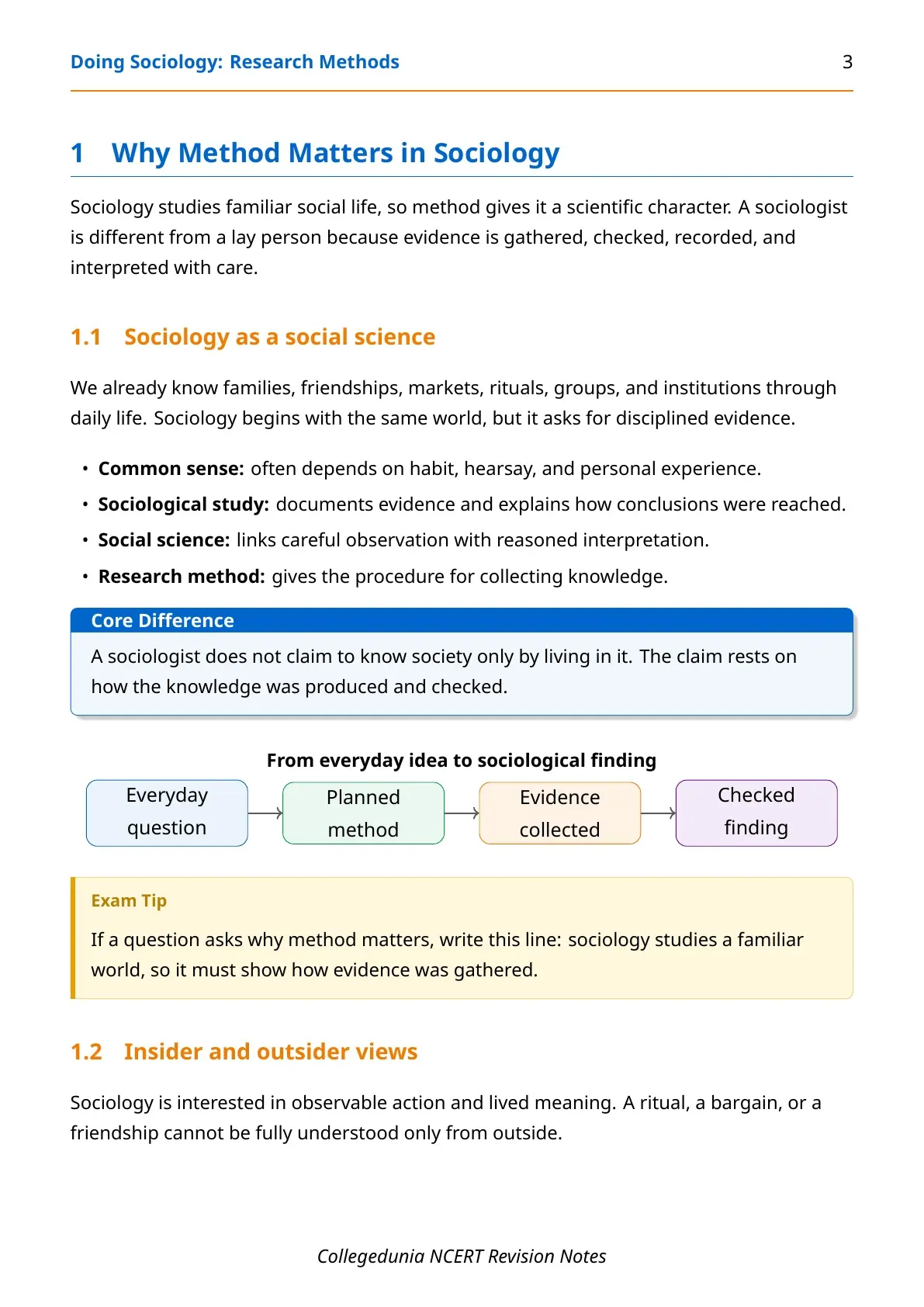
Why Method Matters in Sociology
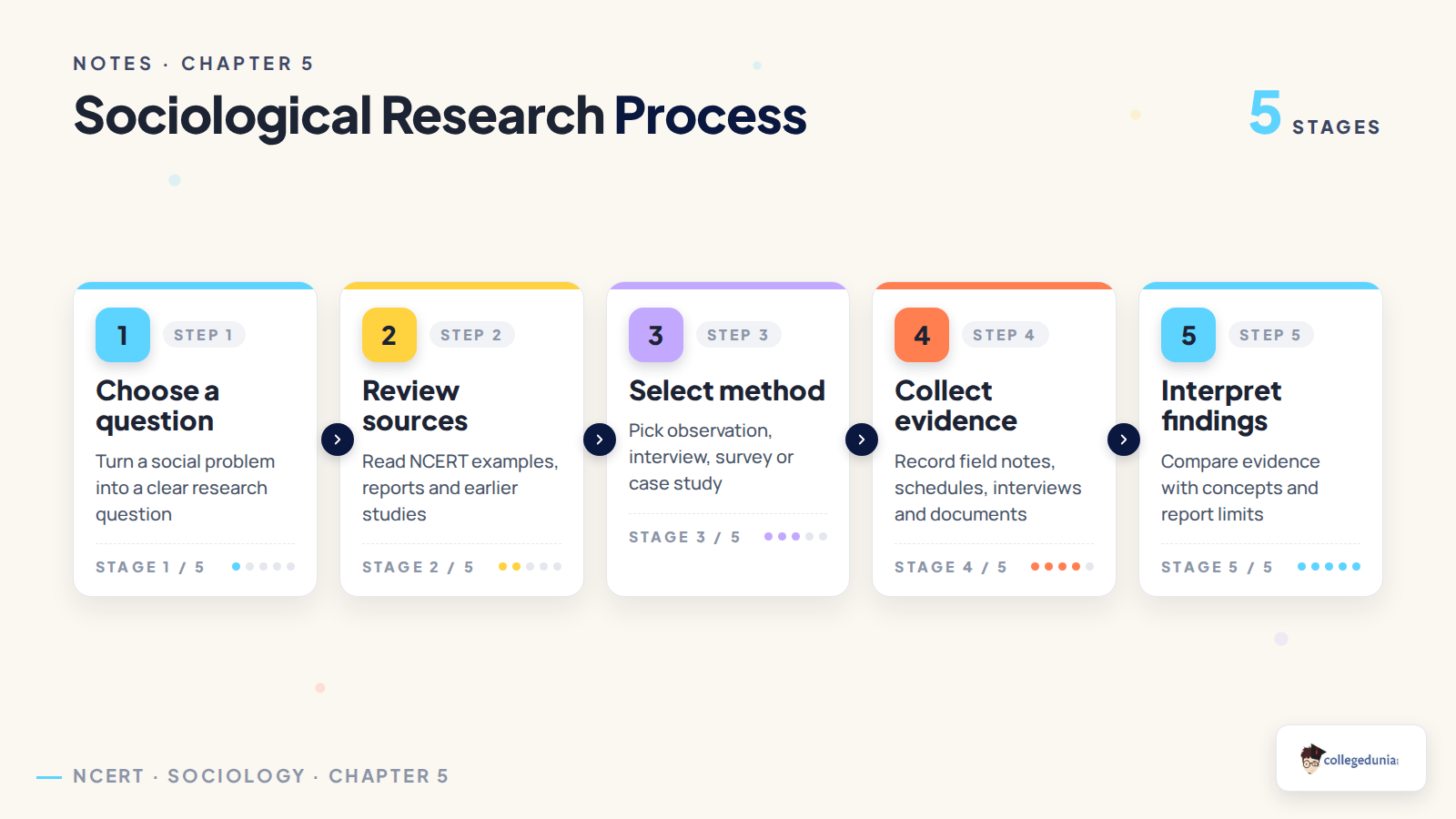
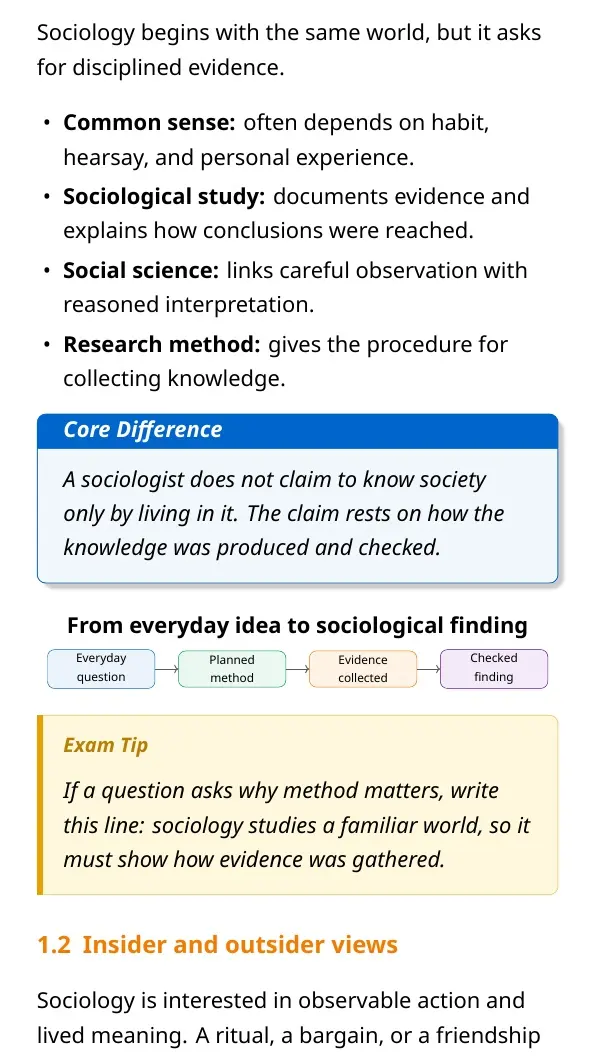
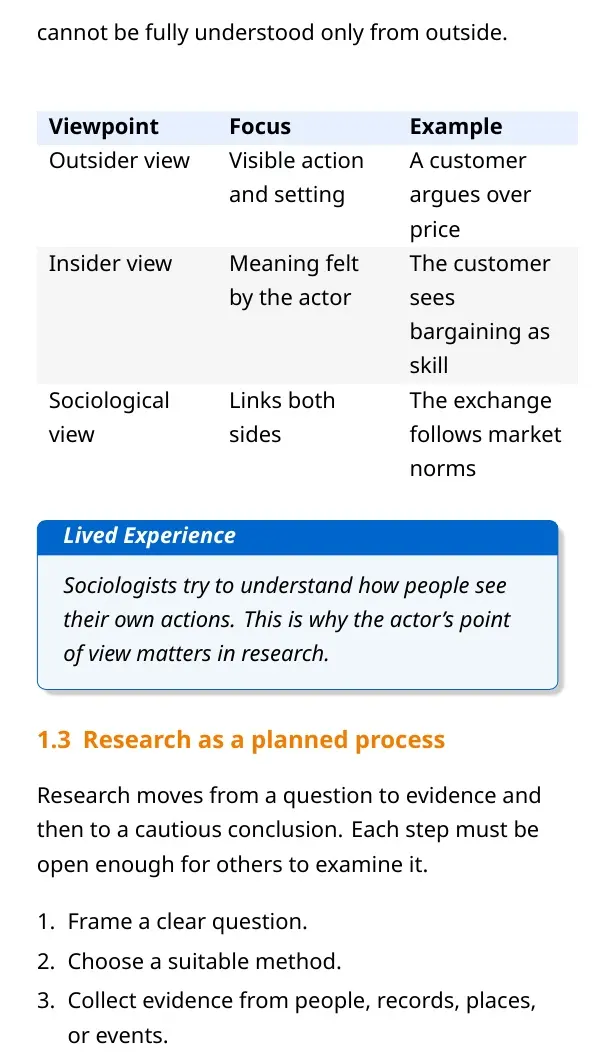
Sociology studies family, caste, class, work, gender and everyday life. These topics are close to common sense, so a sociologist must be careful. The chapter teaches that method reduces guesswork by asking the researcher to define the problem, choose evidence and explain the limits of the study.
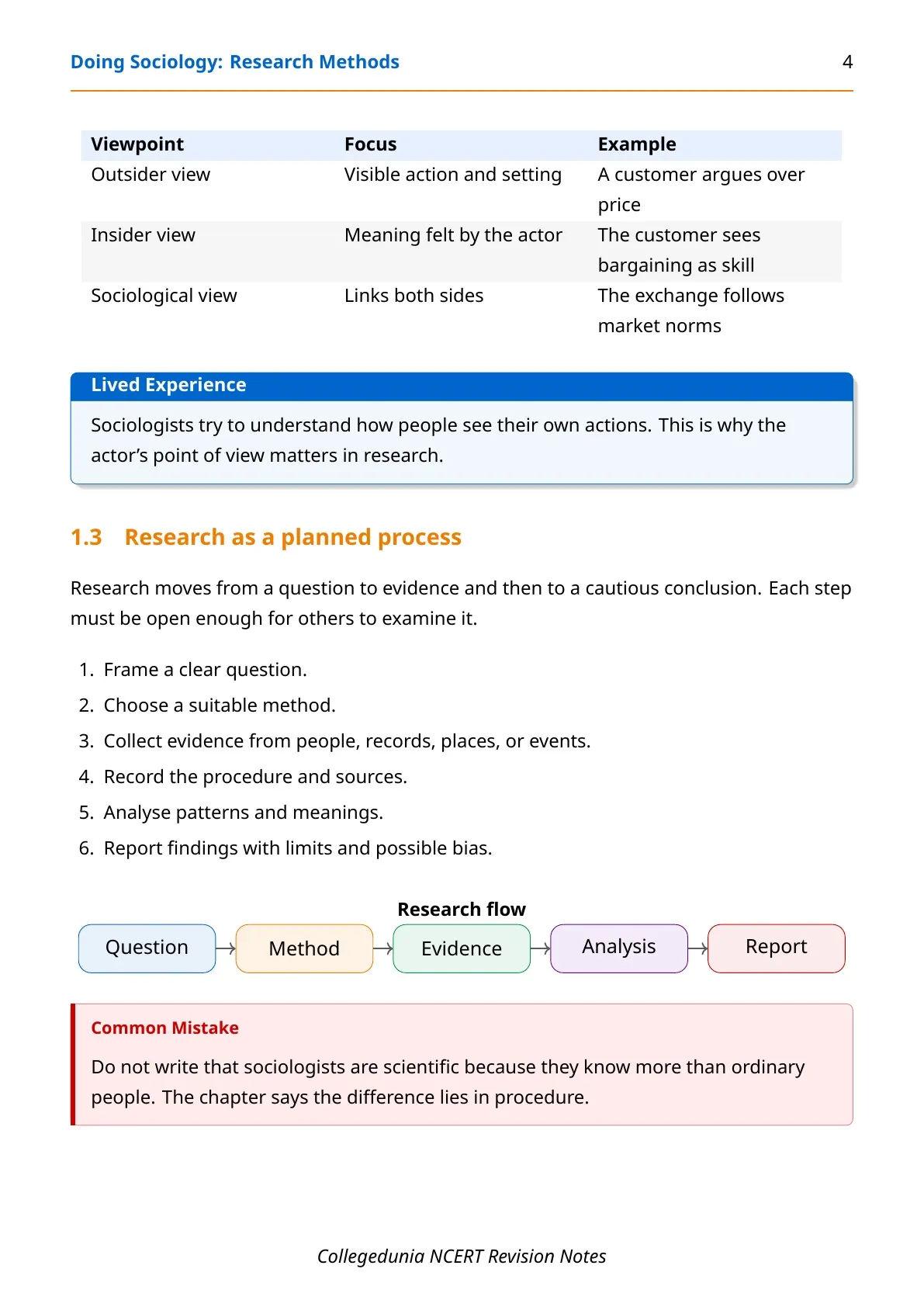
- Research question: the exact social issue the study wants to understand.
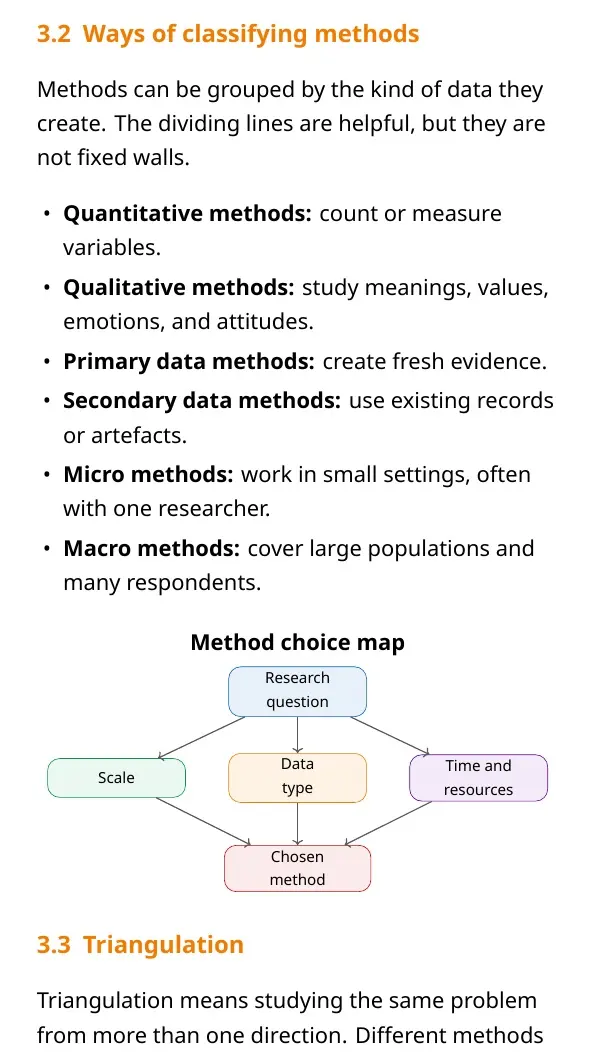
- Method: the tool used to collect evidence, such as survey or interview.
- Evidence: field notes, schedules, interview records, documents or statistics.
- Interpretation: the meaning drawn from evidence using sociological concepts.
Fieldwork, Surveys and Interviews in Class 11 Sociology
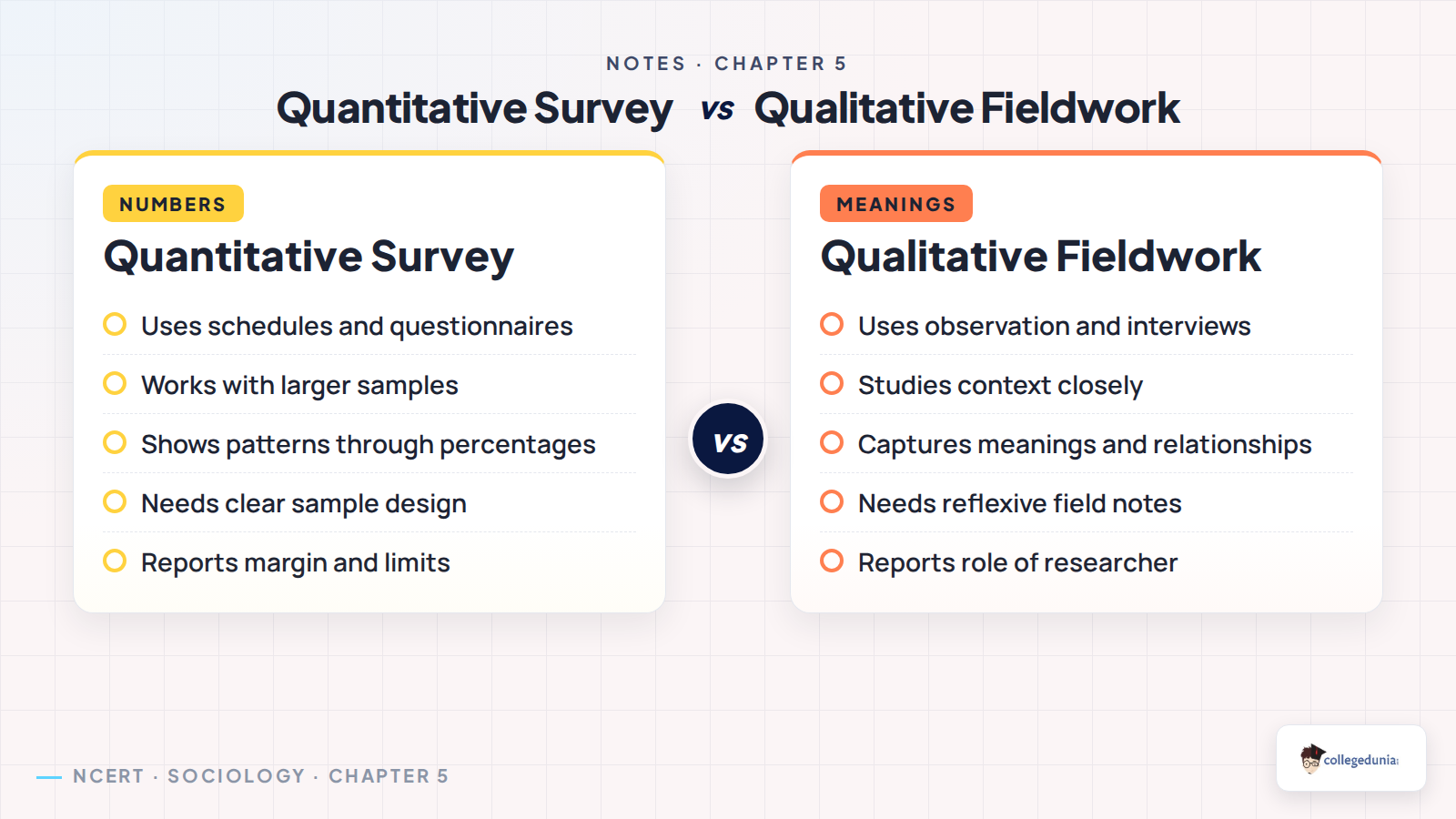
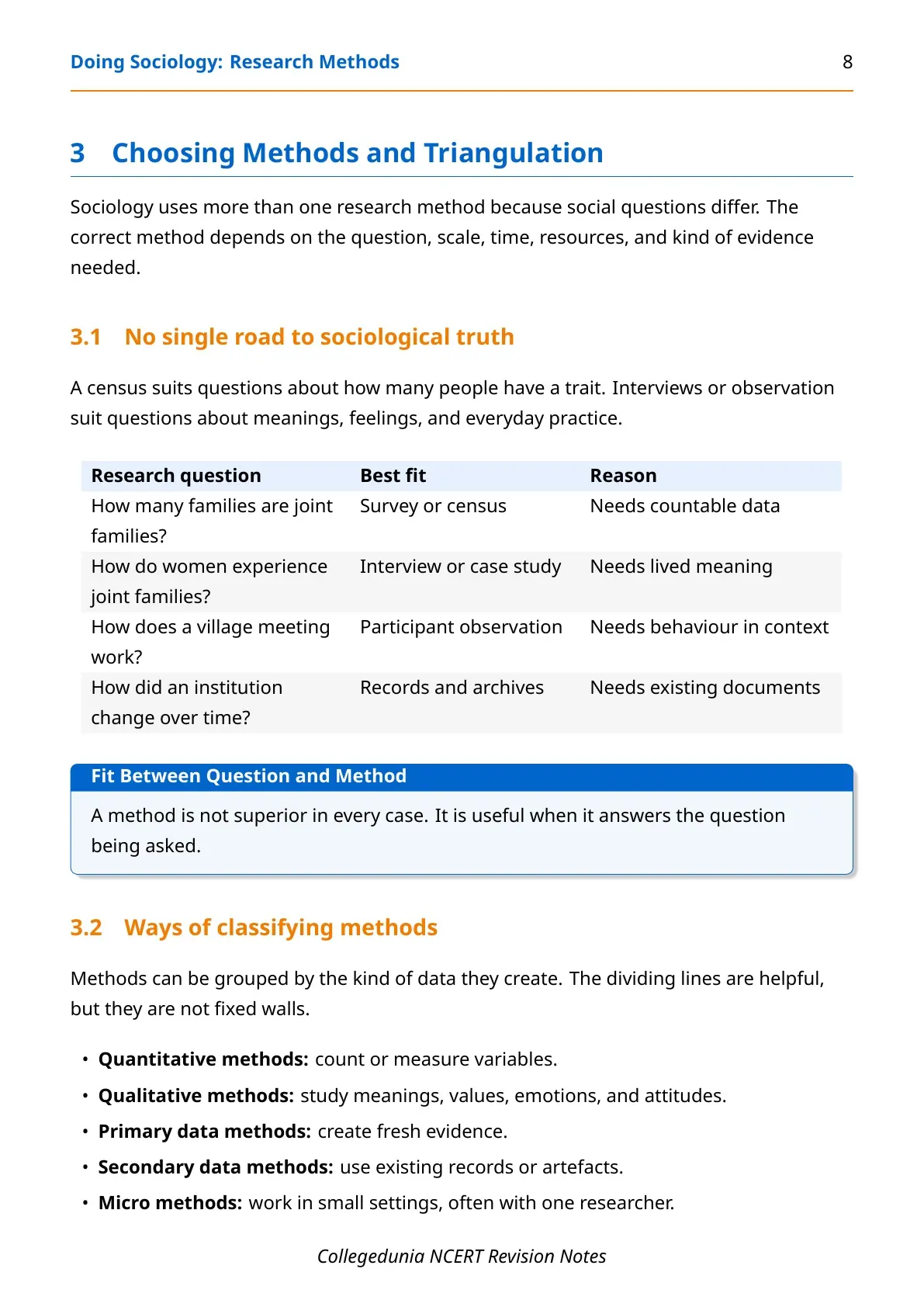
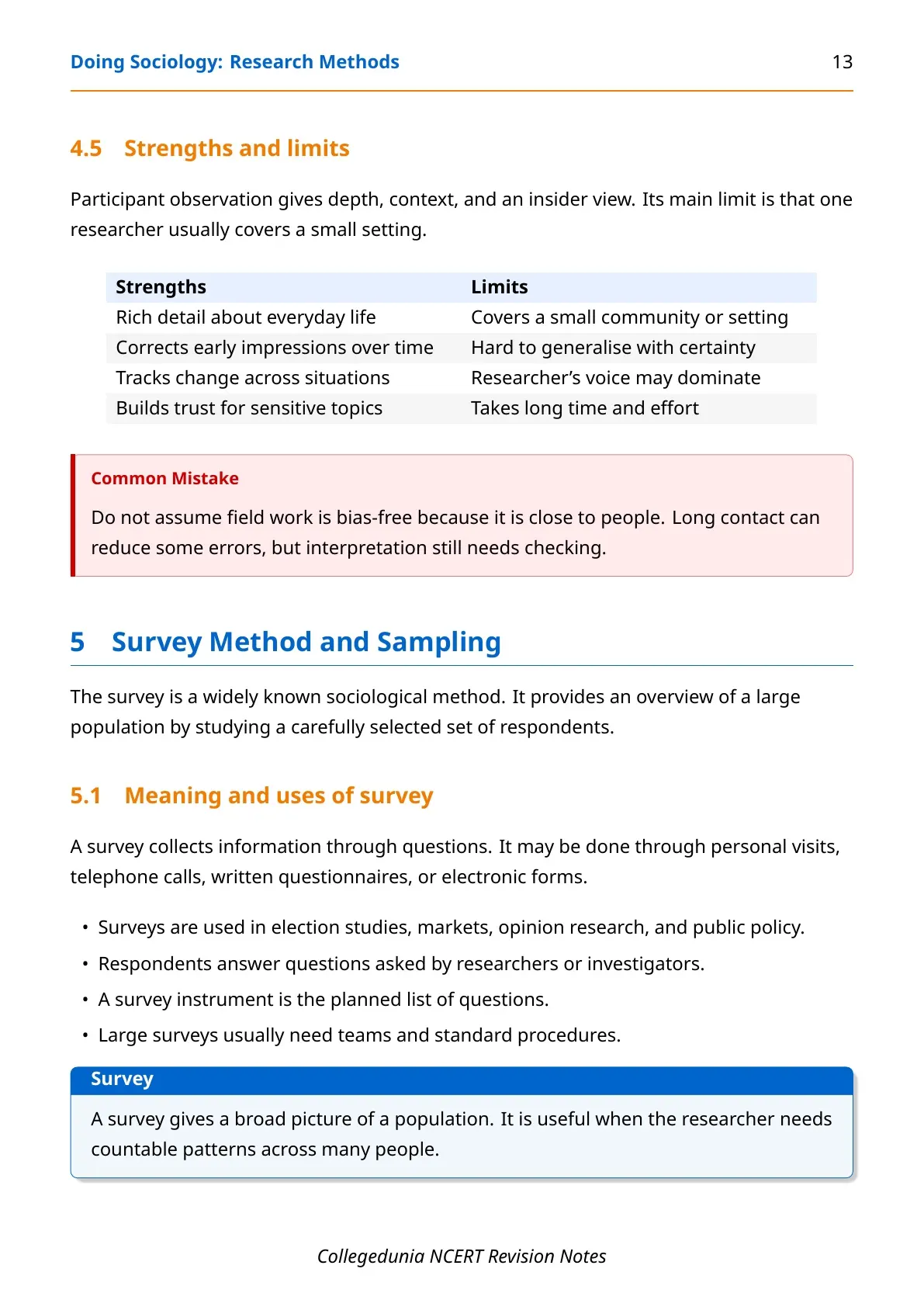
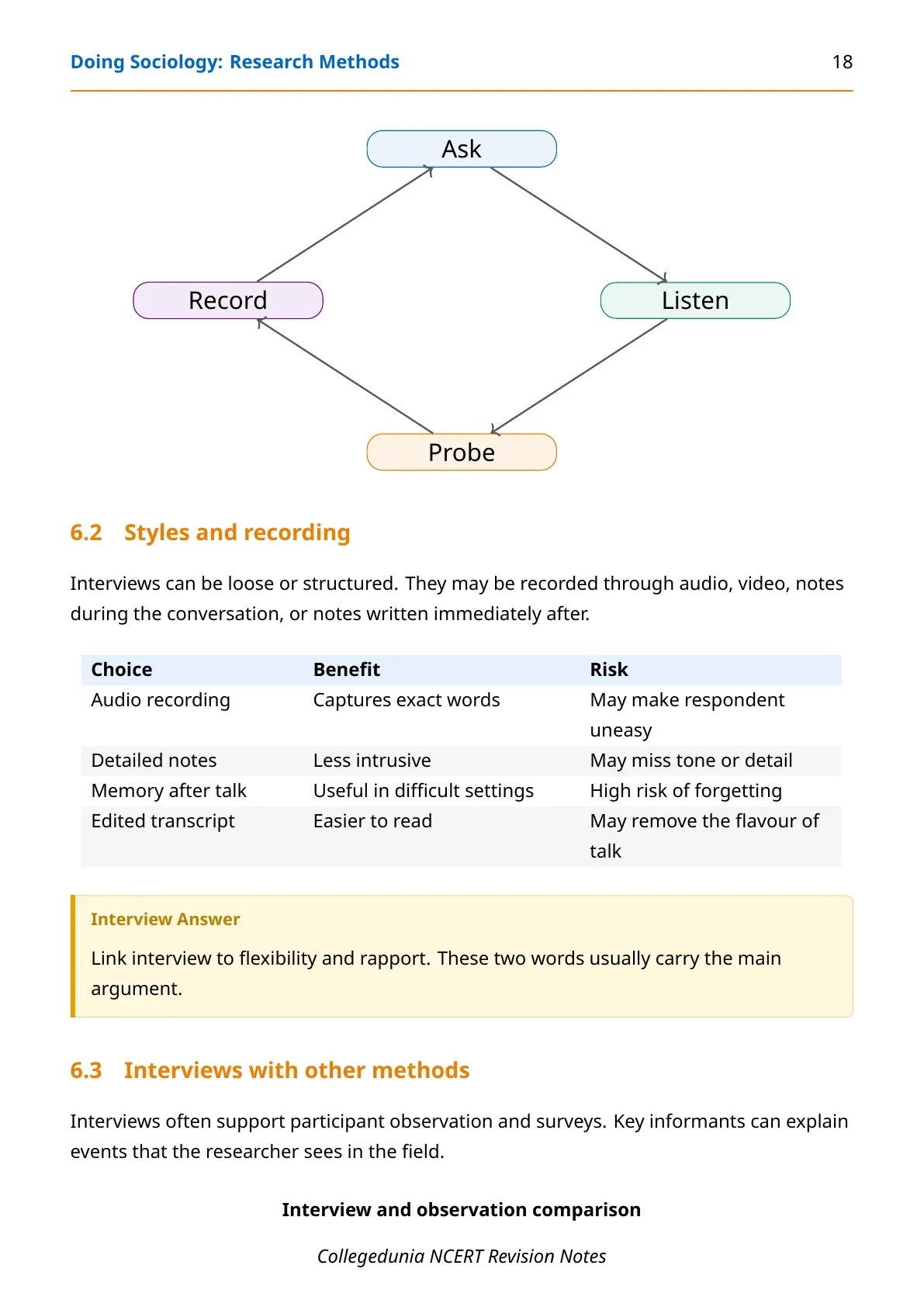
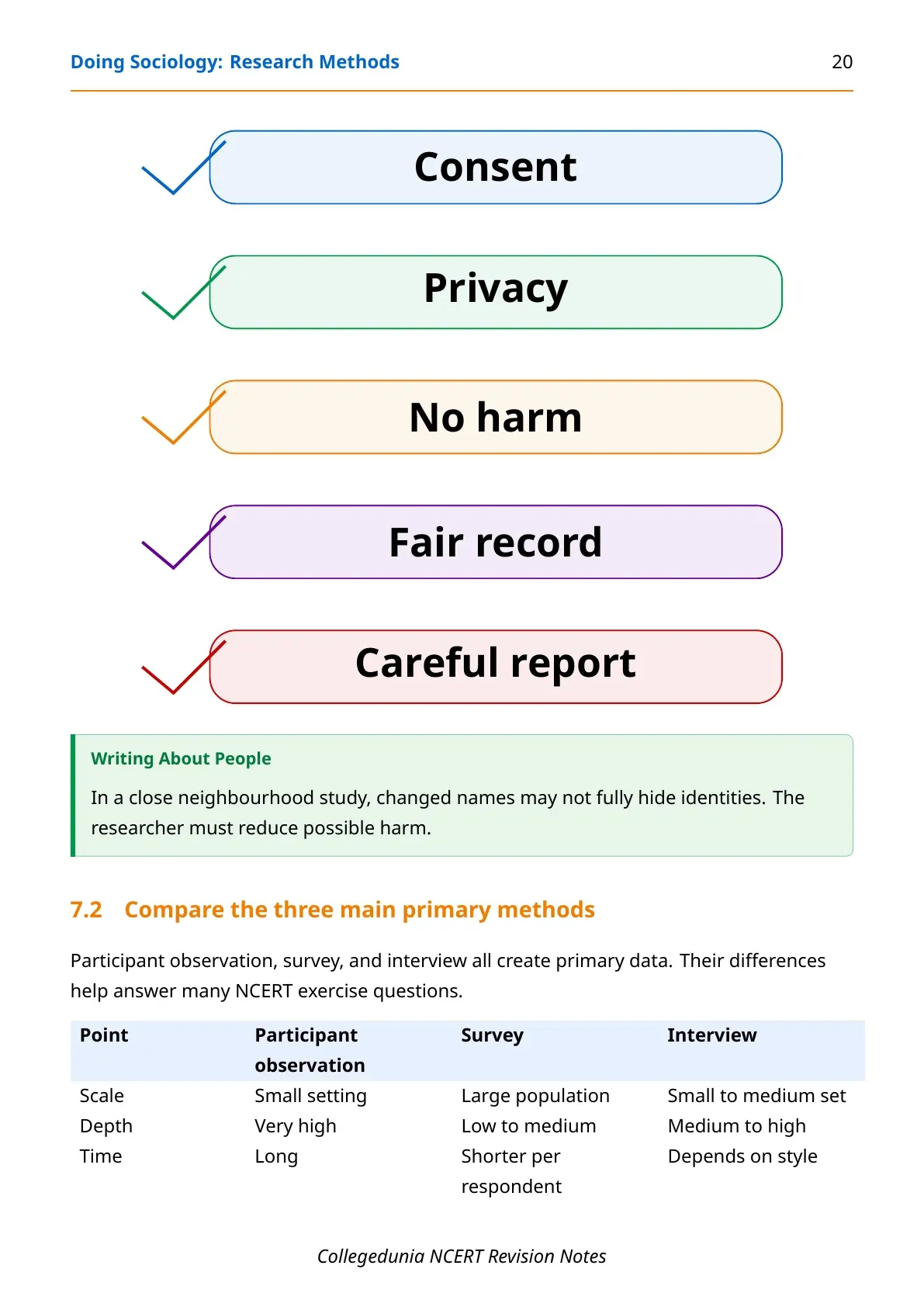
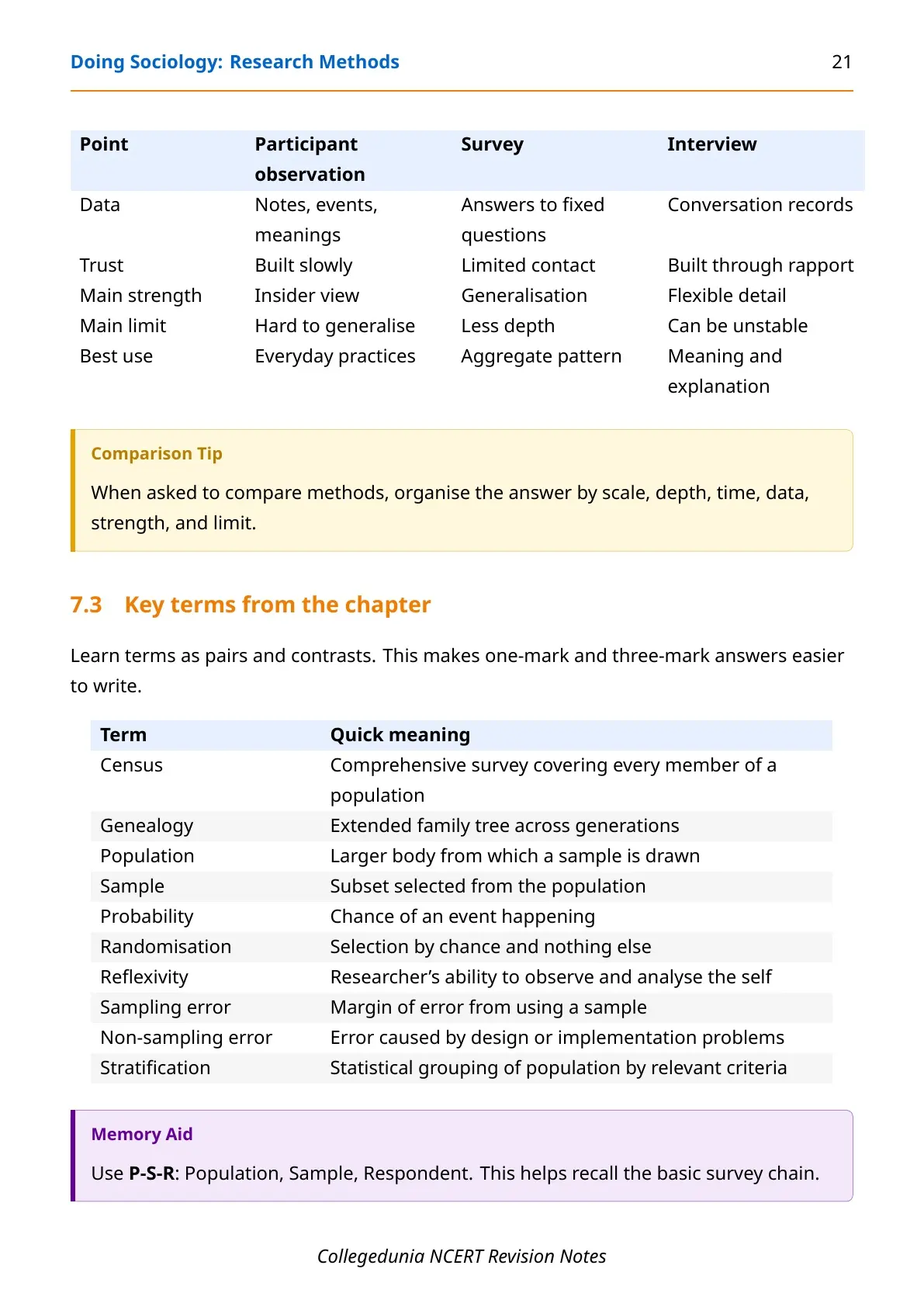
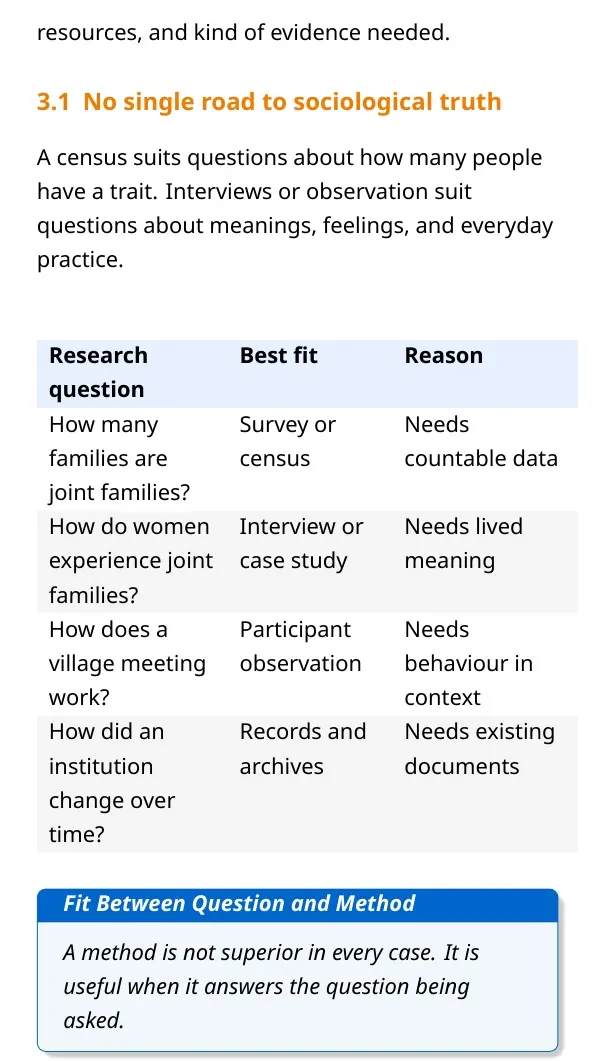
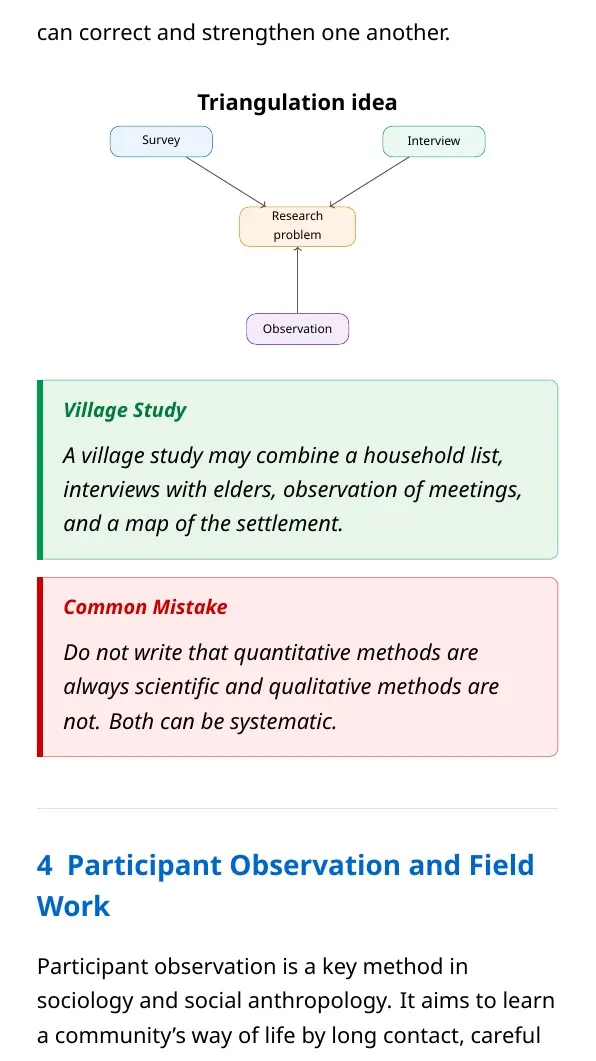
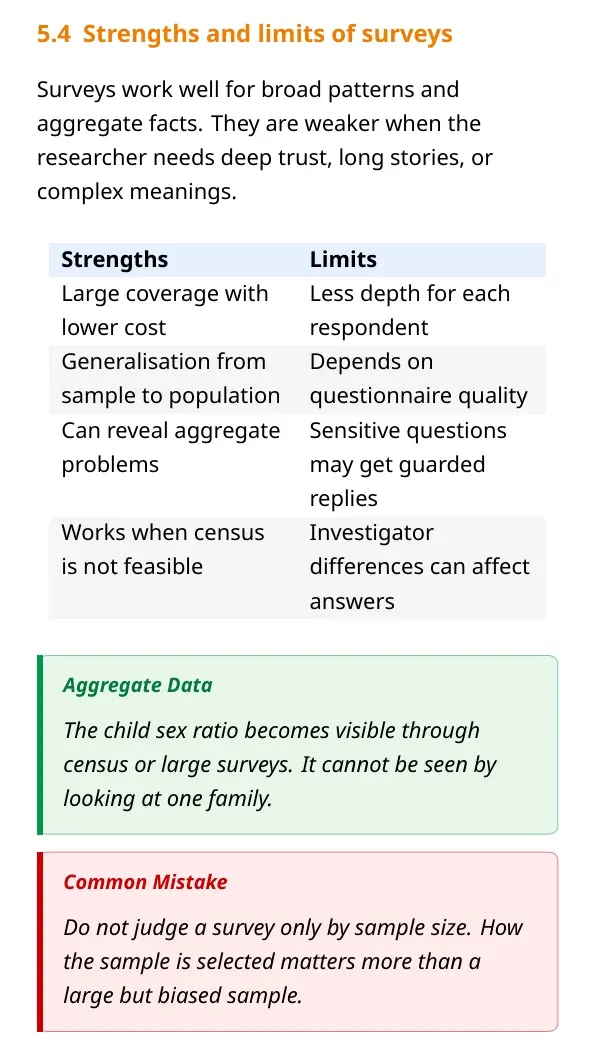
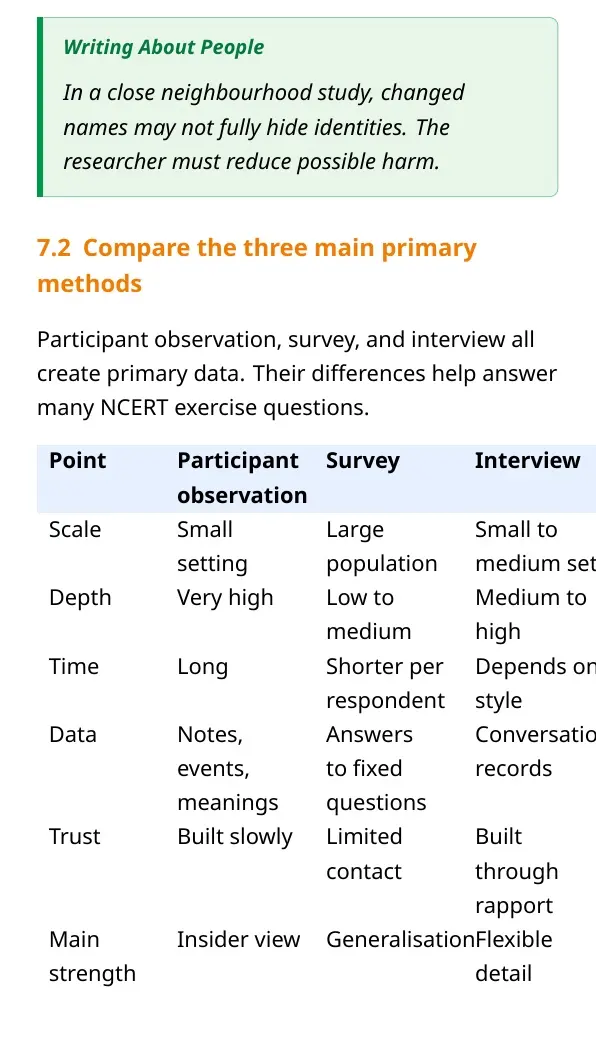
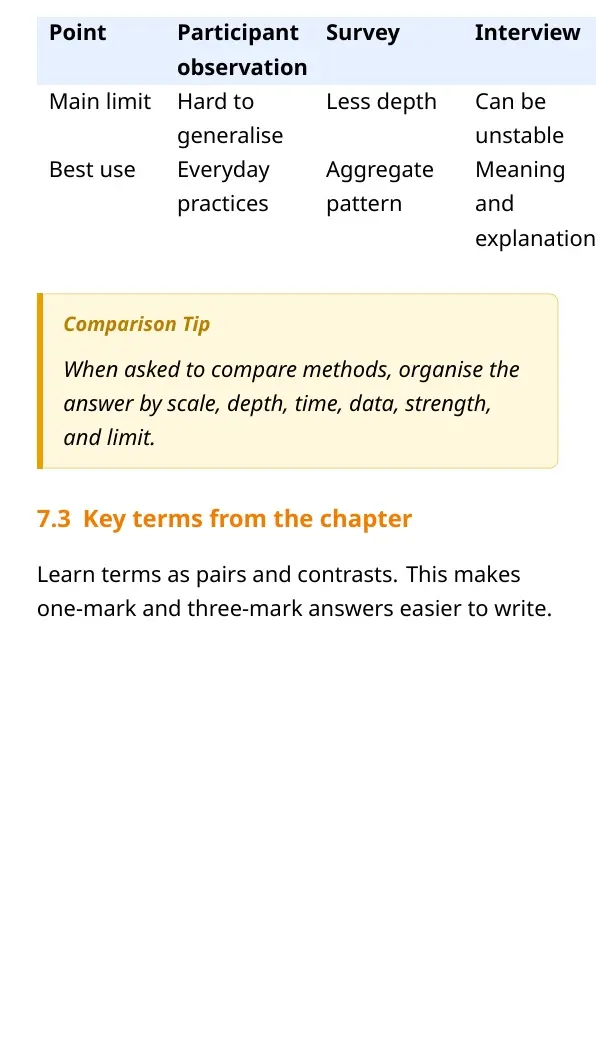
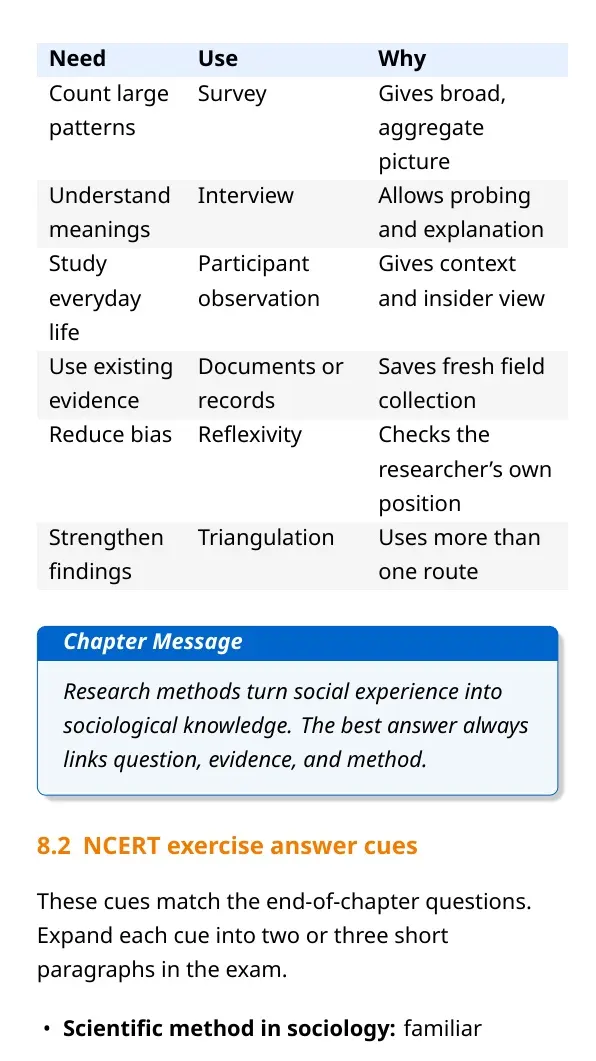
NCERT treats methods as choices, not as a fixed ladder. Fieldwork helps a researcher understand meanings in a social setting. Survey helps compare many cases through standard questions. Interview helps collect detailed accounts in the person's own words.
| Method | Best use | Care needed |
|---|---|---|
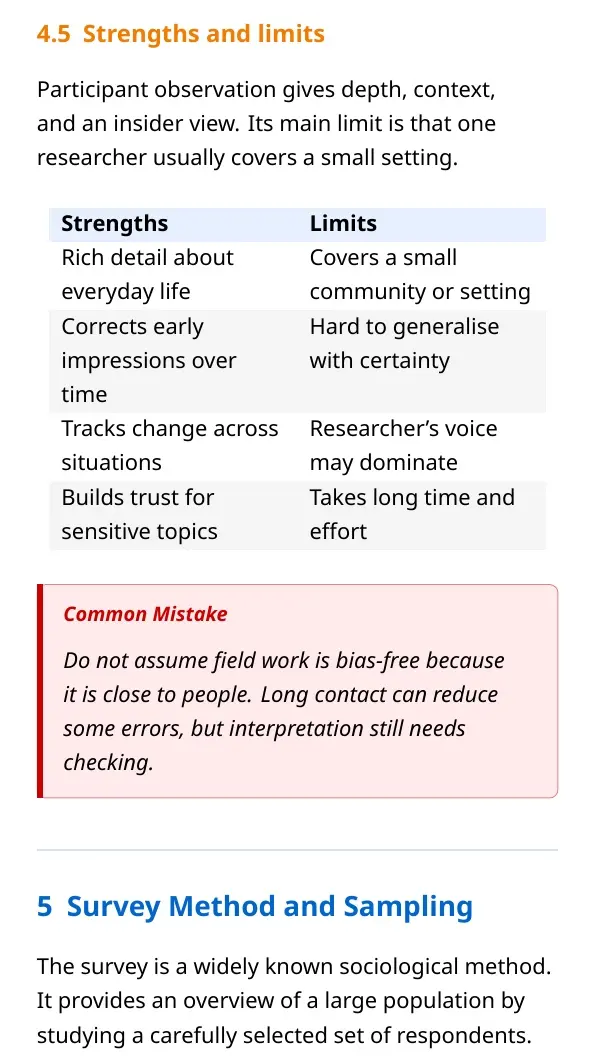
| Fieldwork | Studying behaviour in its natural setting. | Keep field notes and avoid becoming careless about distance. |
| Survey | Studying patterns across a large group. | Report sample size, sample design and possible sampling error. |
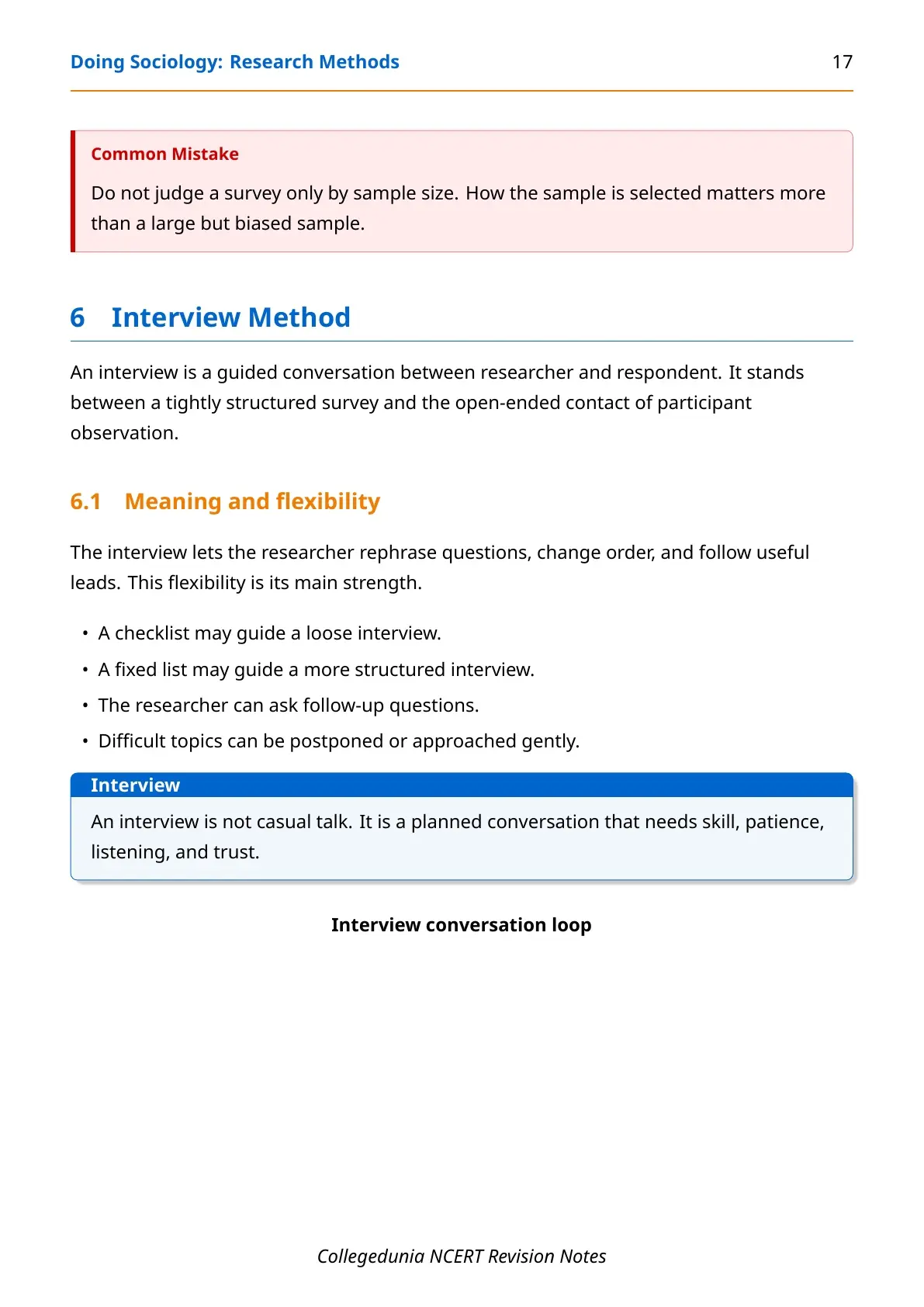
| Interview | Understanding opinions, experiences and meanings. | Ask clear questions and record answers fairly. |
| Case study | Studying one group, event or situation in detail. | Do not claim that one case explains every case. |
No method is best for every topic. A village festival, a school survey and a life-history interview all need different tools.
Sampling and Survey Design in Sociology
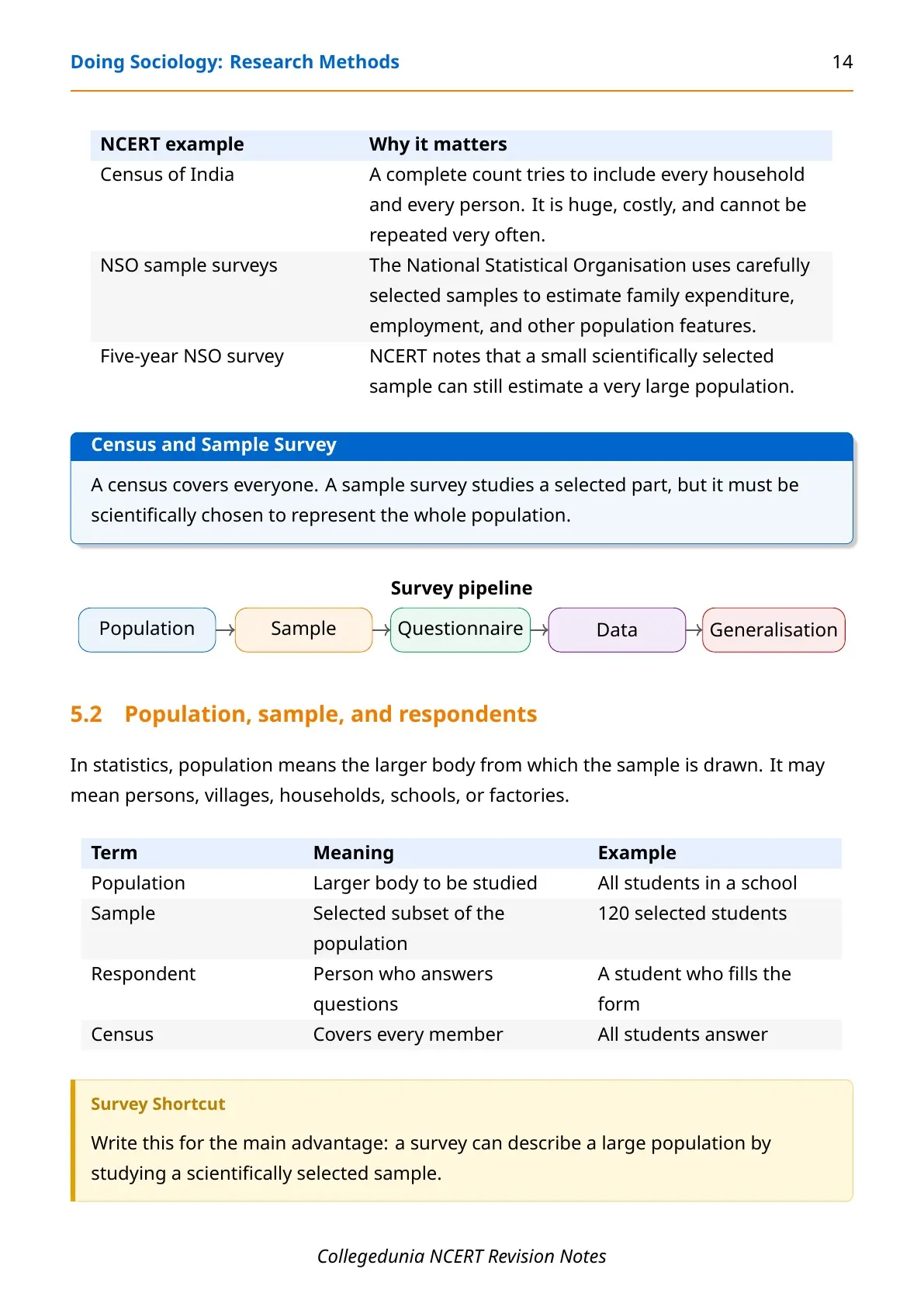
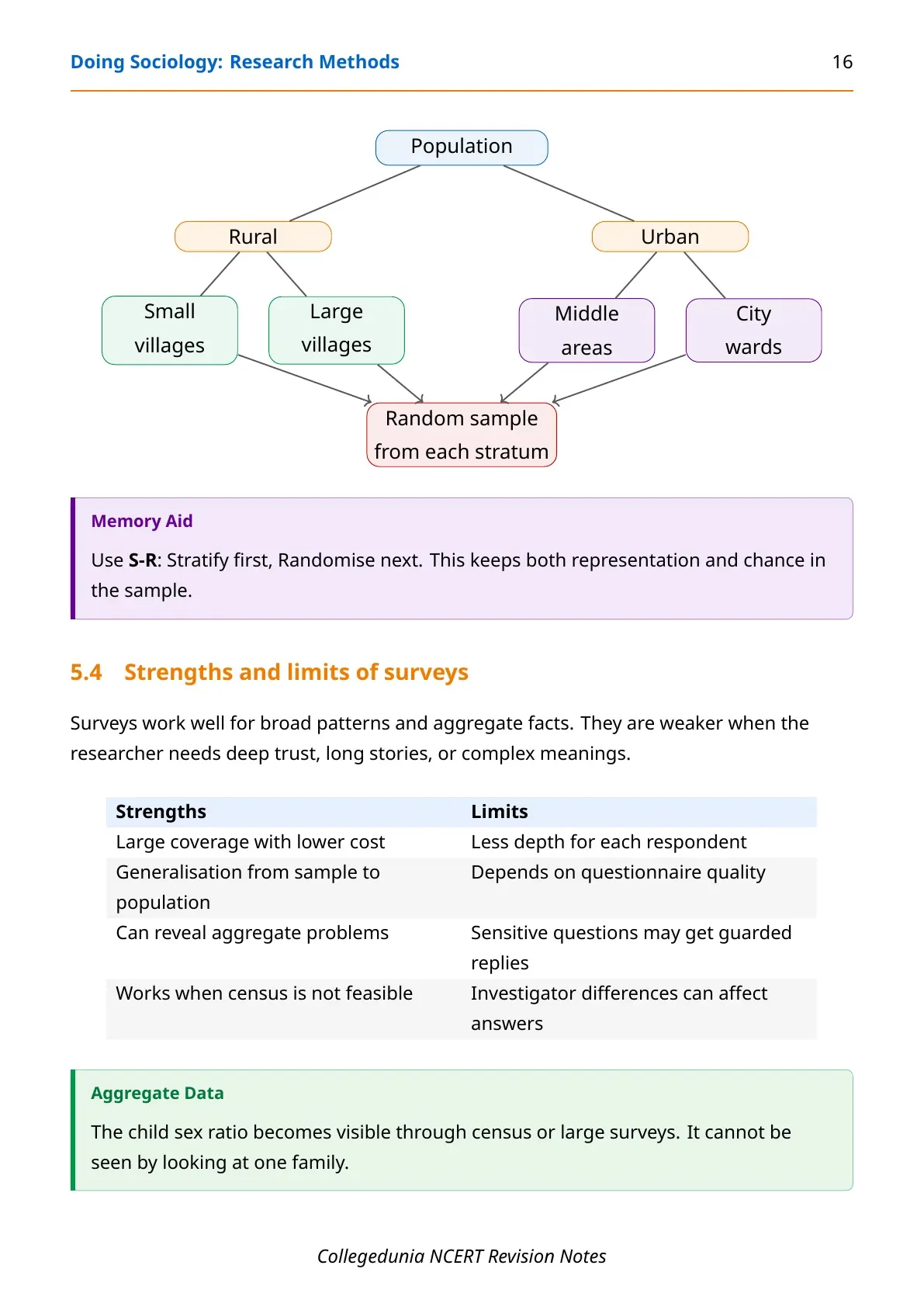
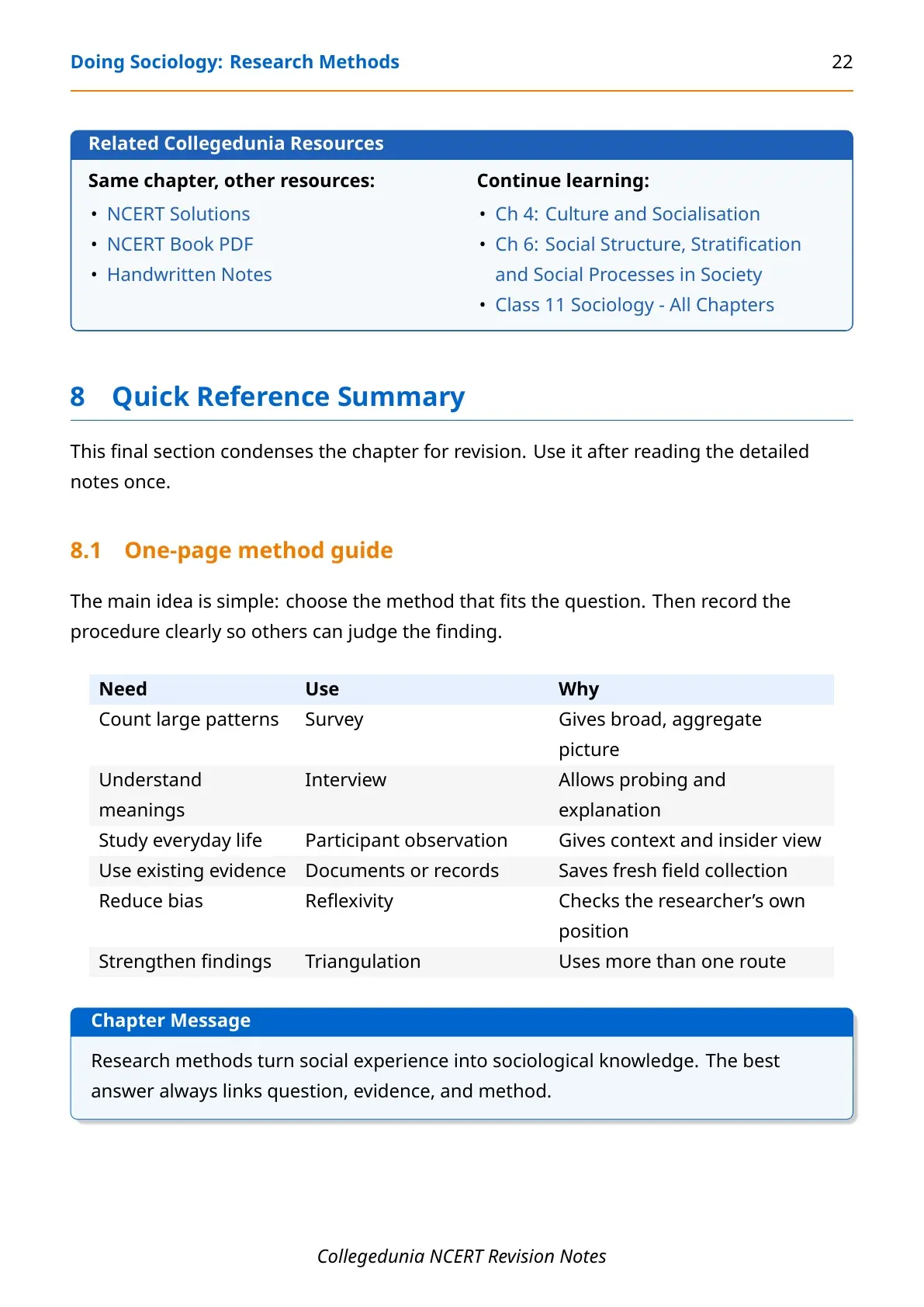
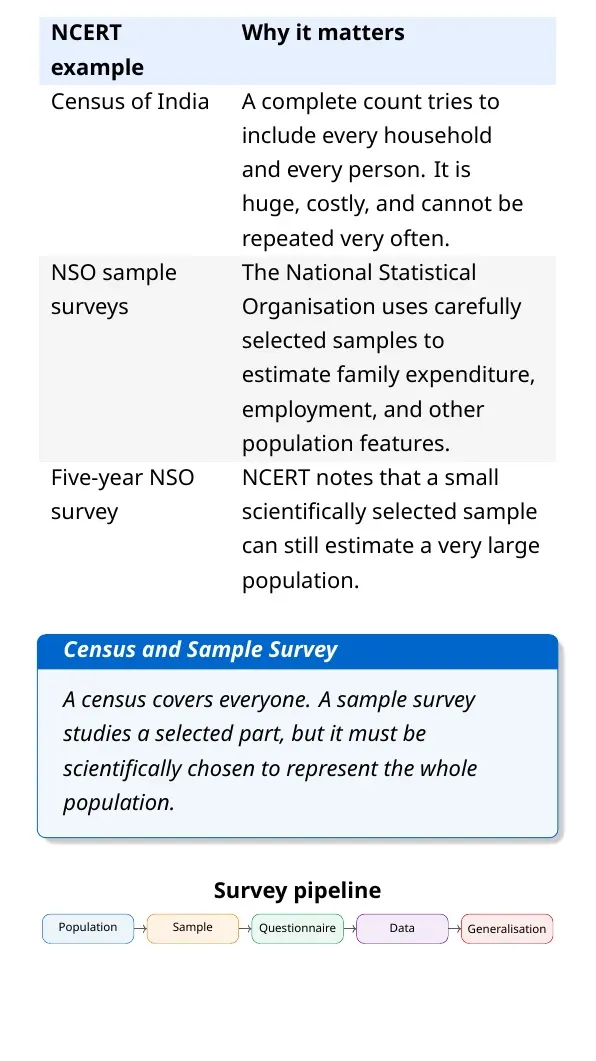
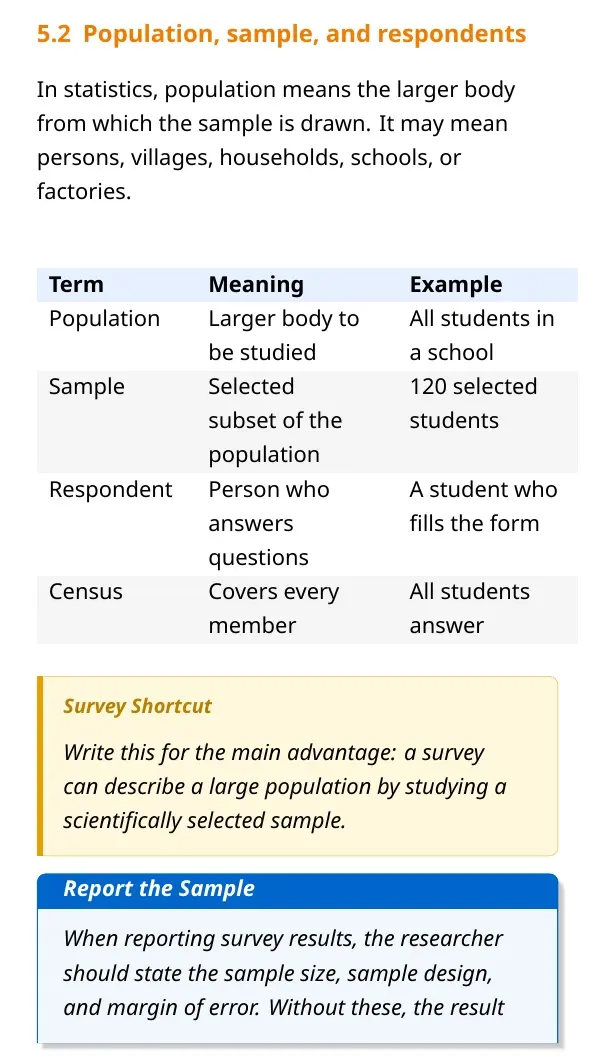
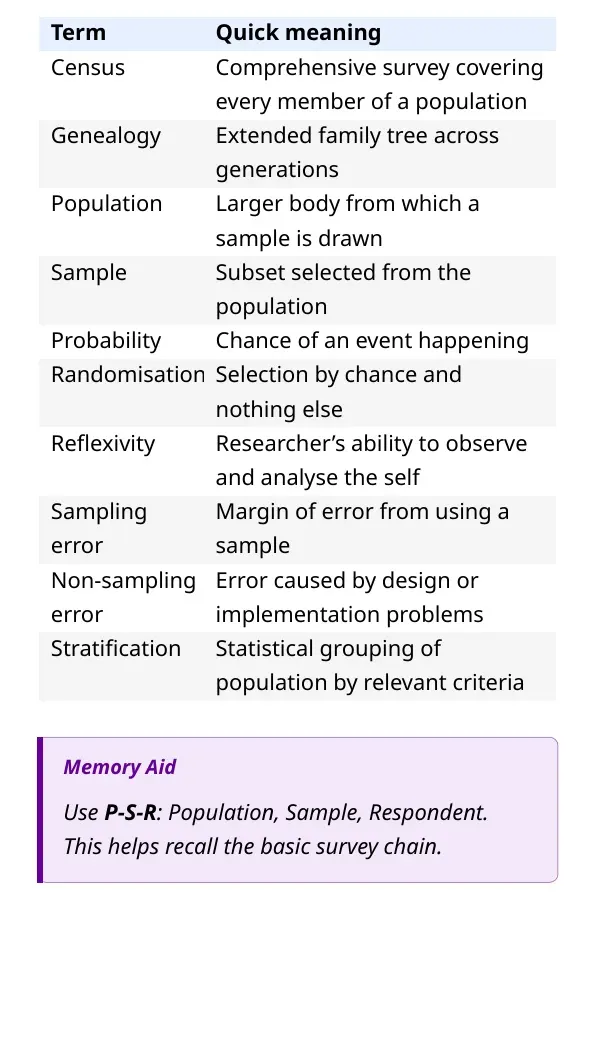
Survey research needs careful sampling because a researcher cannot ask every person in a population. NCERT asks students to notice the difference between a Census, which covers the whole population, and a sample survey, which studies a selected part.
| Term | Revision meaning | Example frame |
|---|---|---|
| Census | Study of every unit in the population. | Census of India counts households and population characteristics. |
| Sample survey | Study of selected units to understand a larger group. | NSO sample surveys collect data on work, consumption and households. |
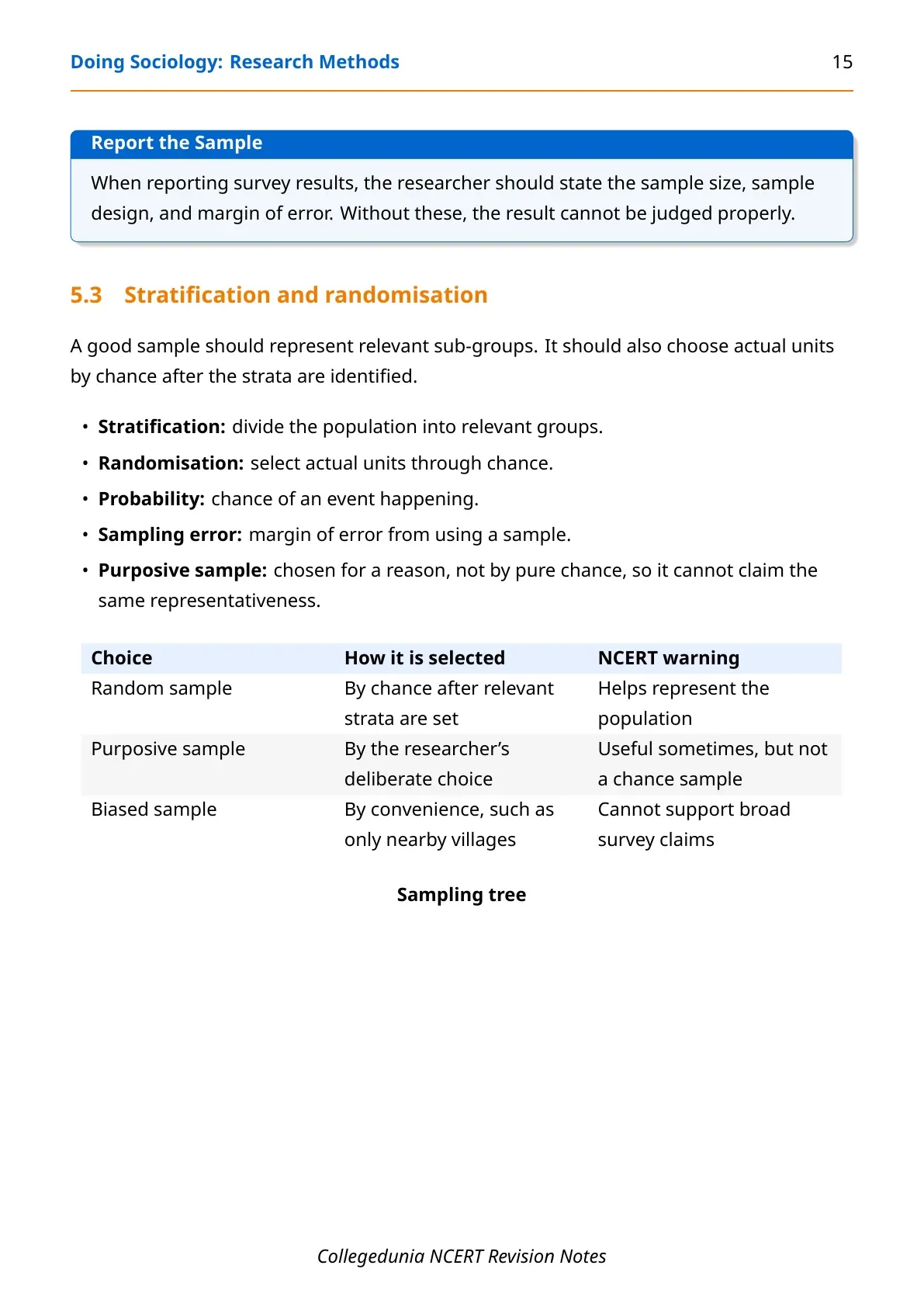
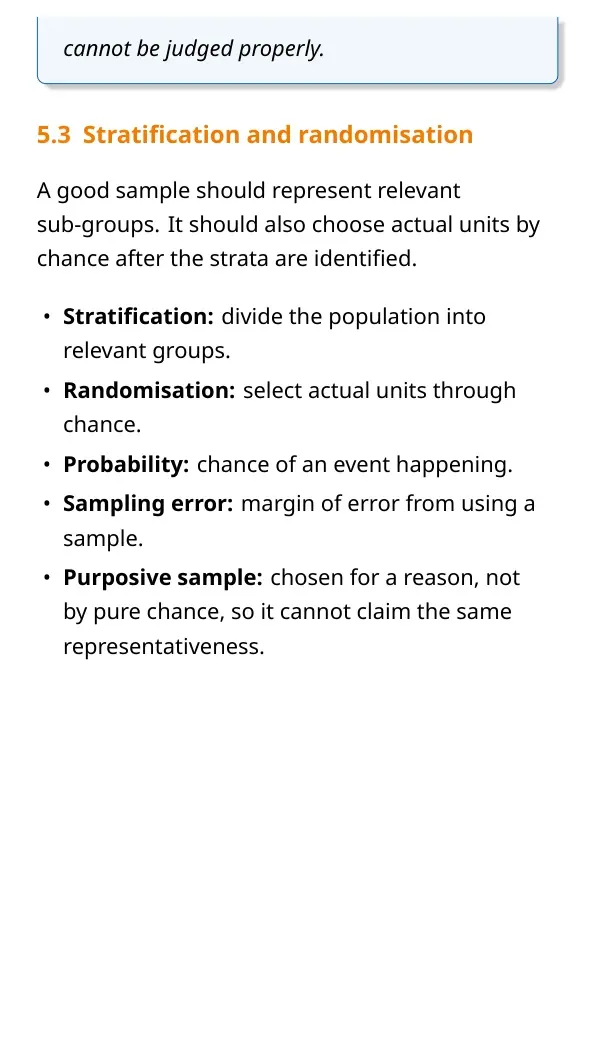
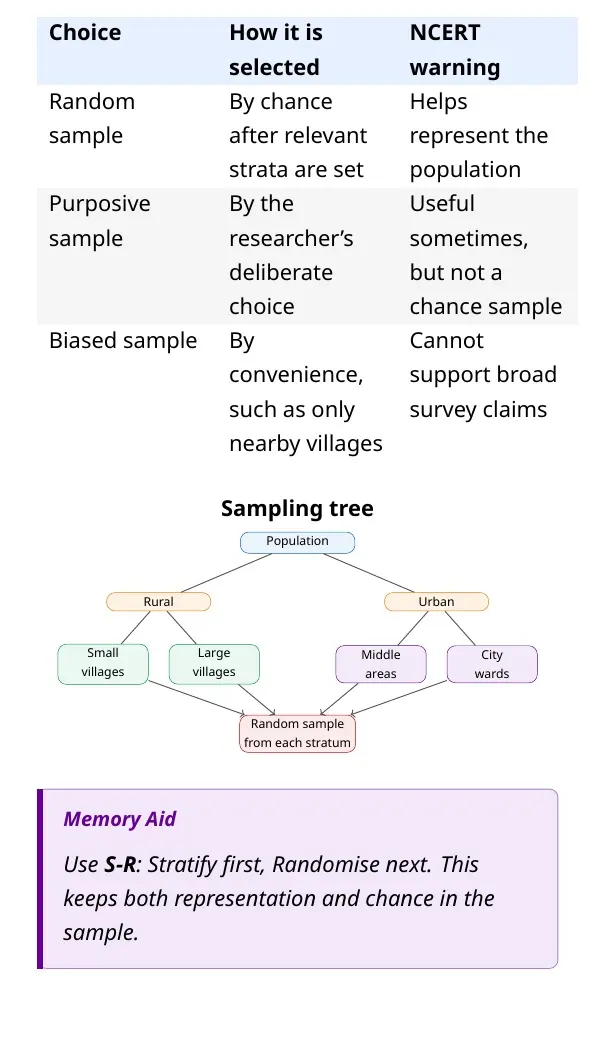
| Random sample | Each unit has a known chance of selection. | Lottery-style selection from a complete list. |
| Purposive sample | Cases are chosen because they fit the study aim. | Interviewing women workers in a specific informal sector. |
| Biased sample | Selection favours one type of case unfairly. | Only asking students from one section and calling it a school result. |
Good survey writing reports sample size, sample design, limits and margin of error. A percentage without sample details is weak evidence.
Objectivity, Subjectivity and Reflexivity
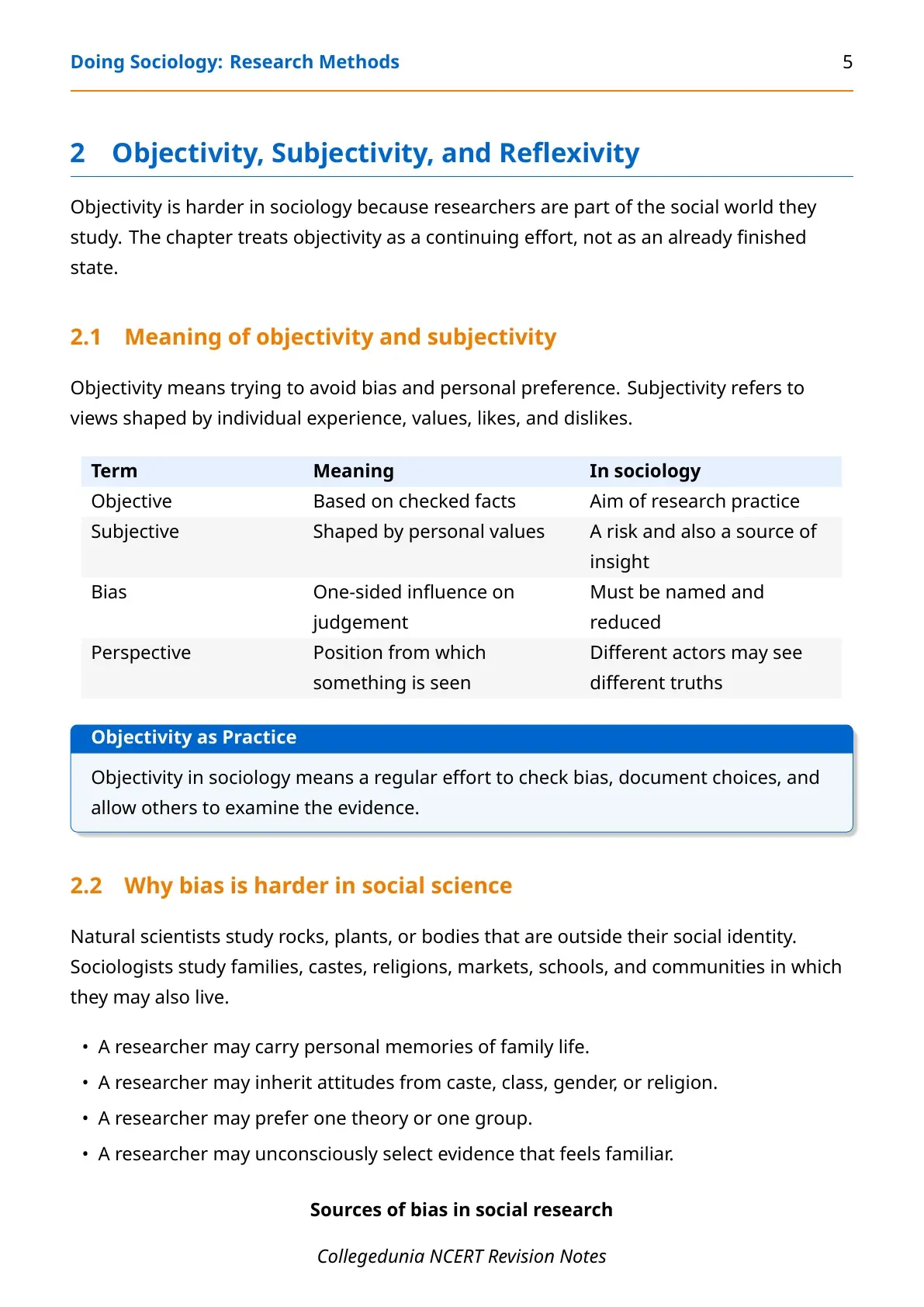
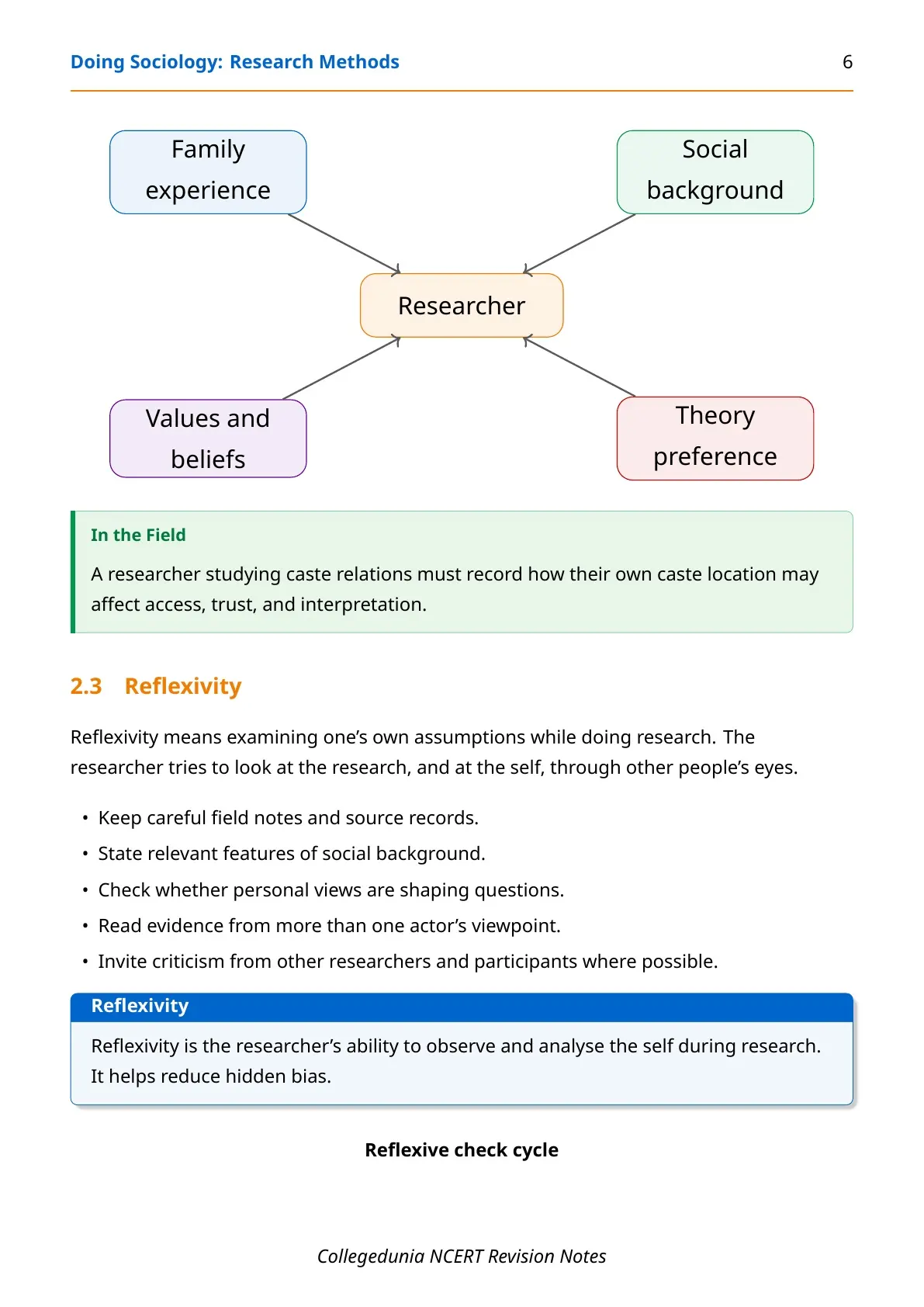
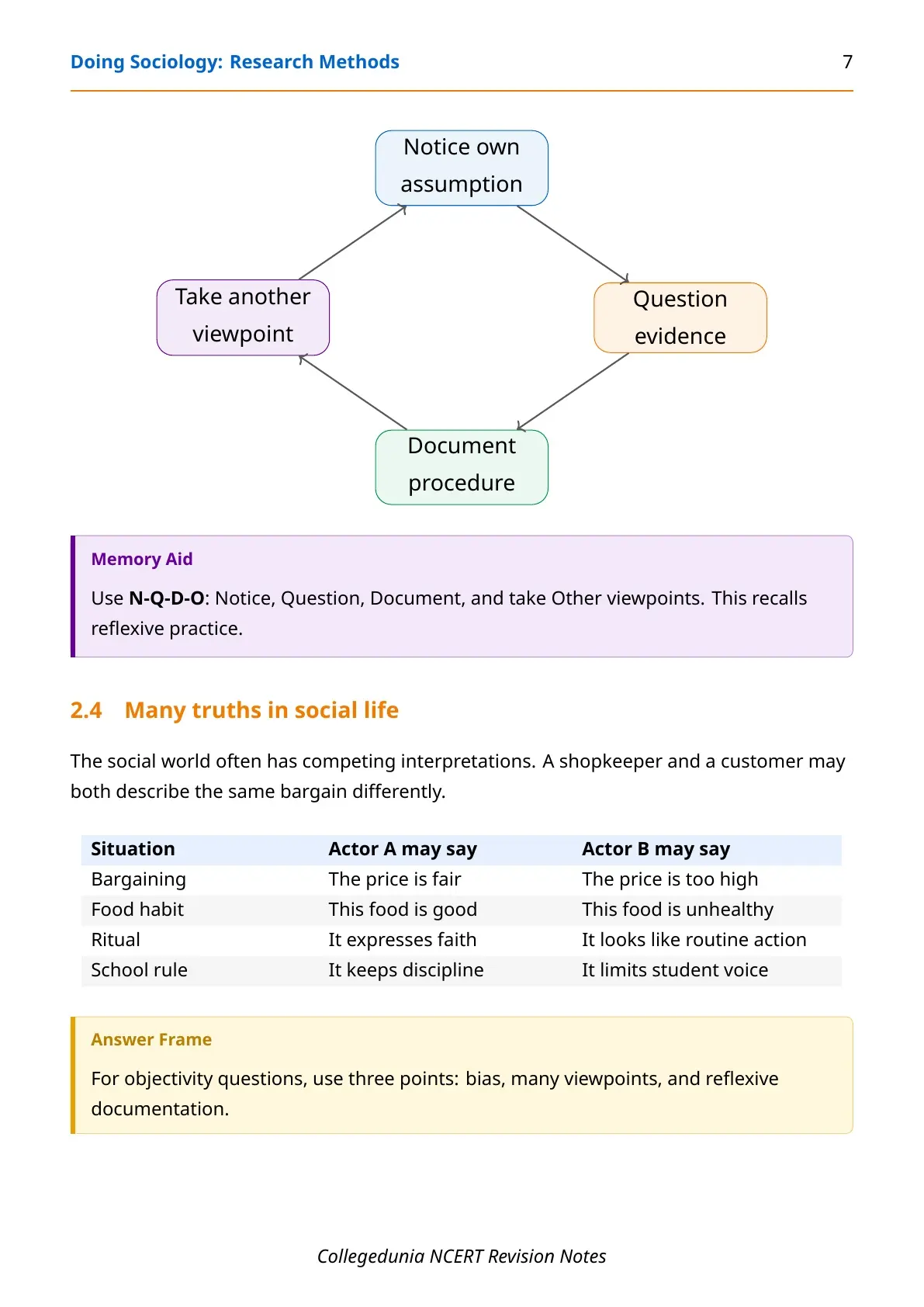
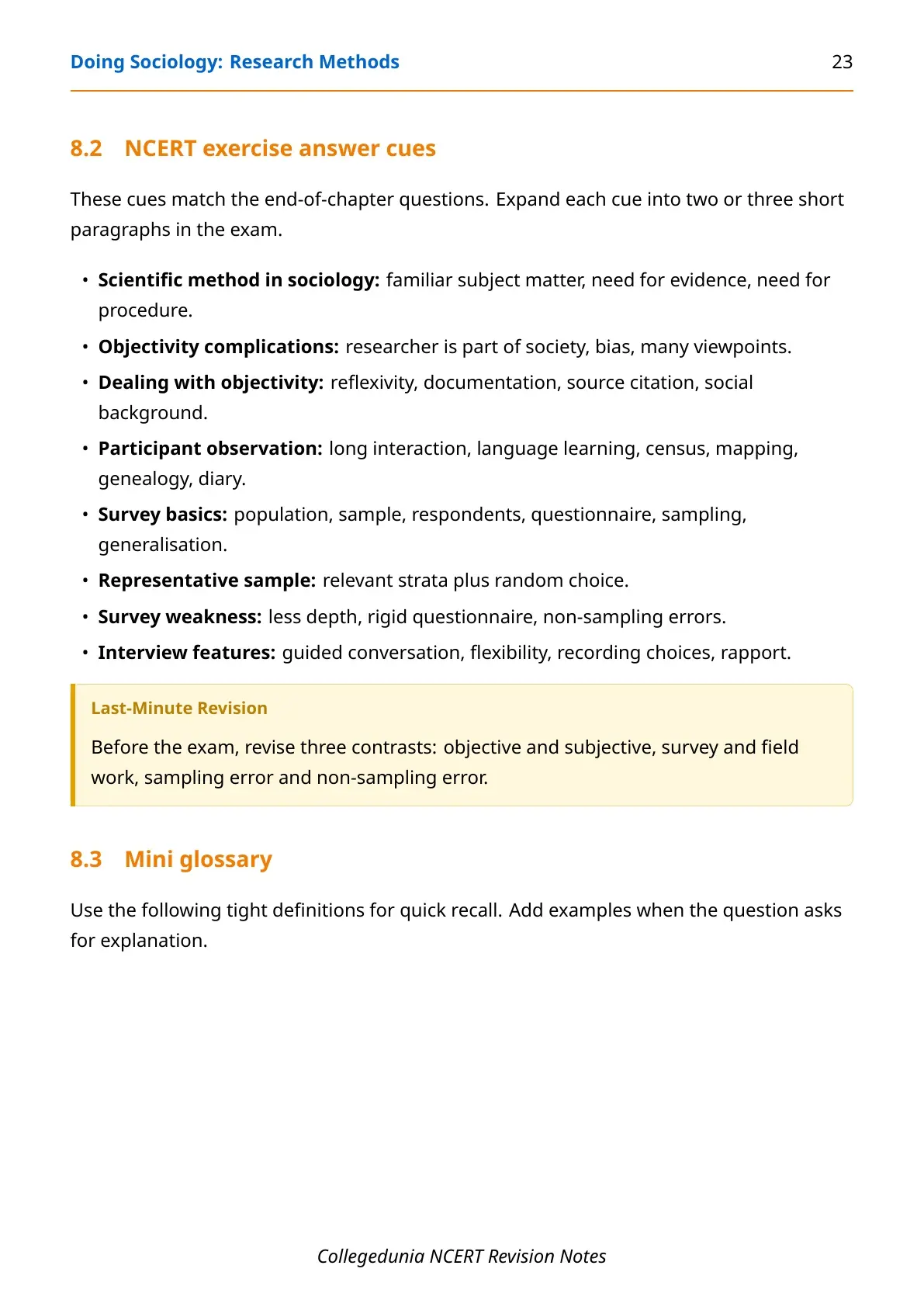
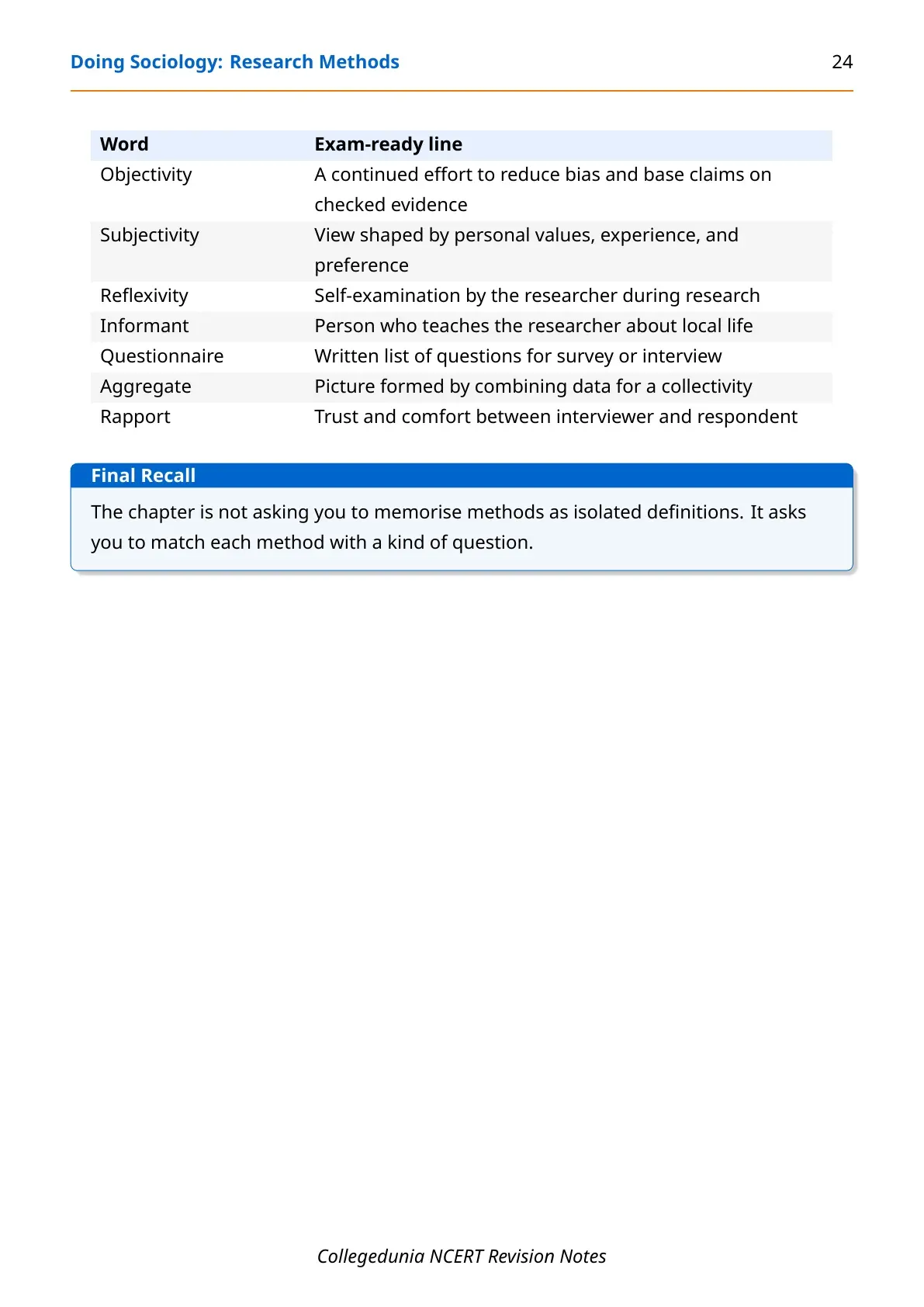
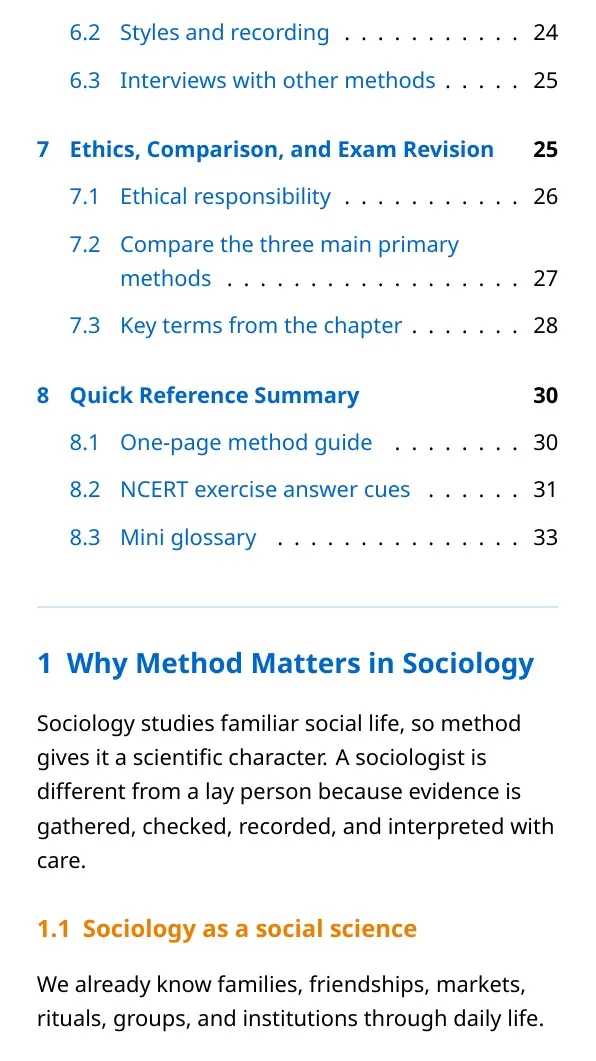
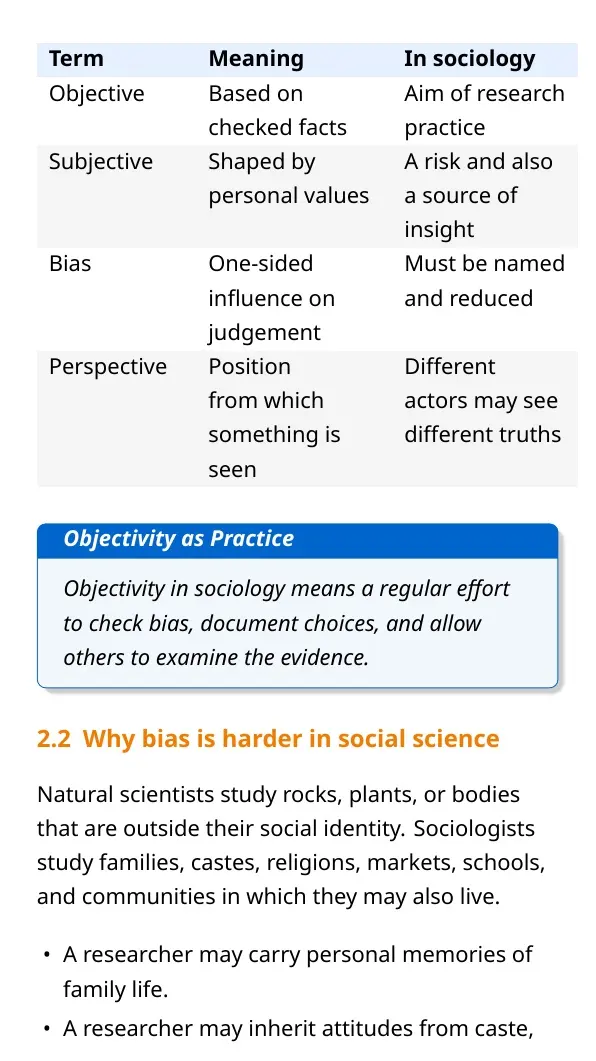
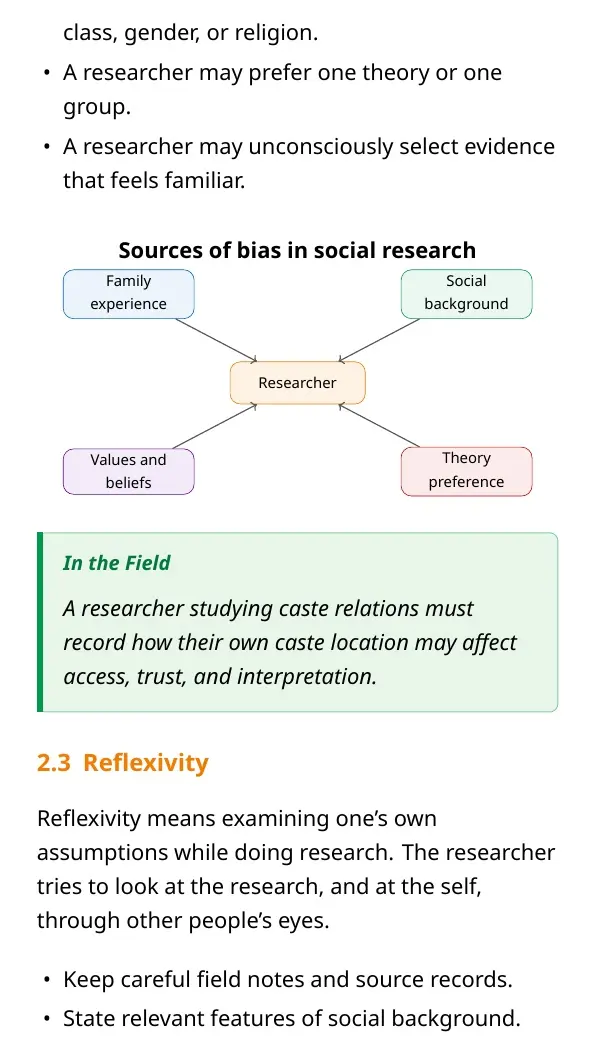
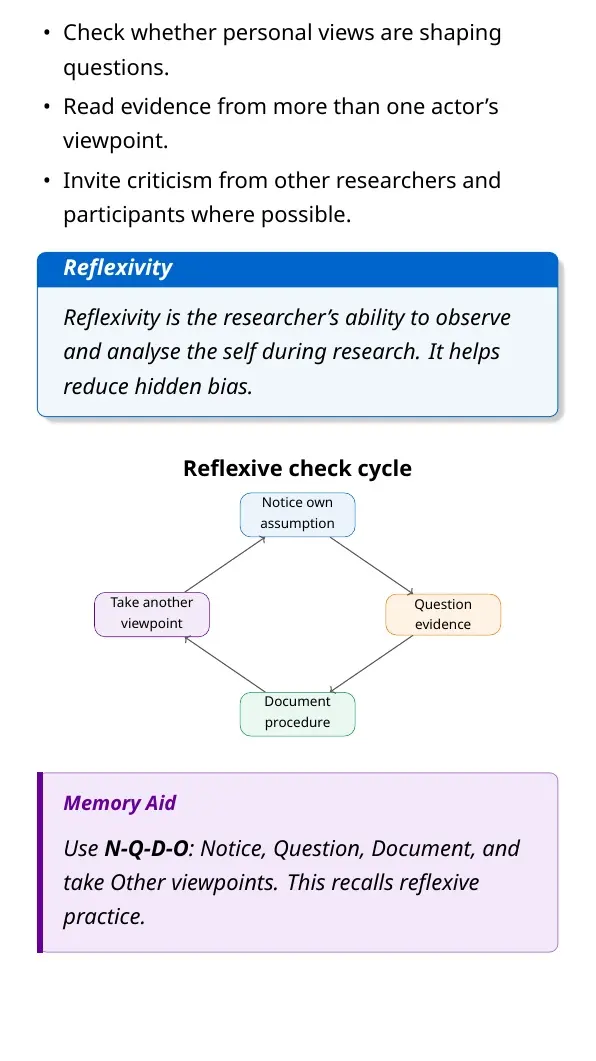
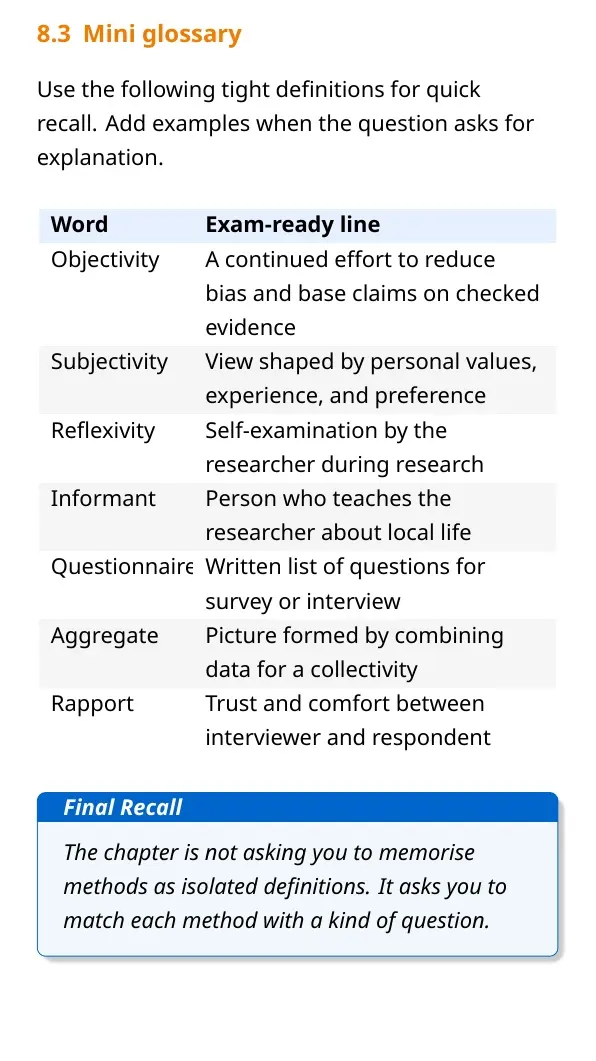
The chapter also explains why sociology needs reflexivity. The researcher is part of society and may carry class, gender, language, caste or regional assumptions into the study. Reflexivity means the researcher checks how their own position may shape the question, field contact and interpretation.
| Concept | Meaning | Exam use |
|---|---|---|
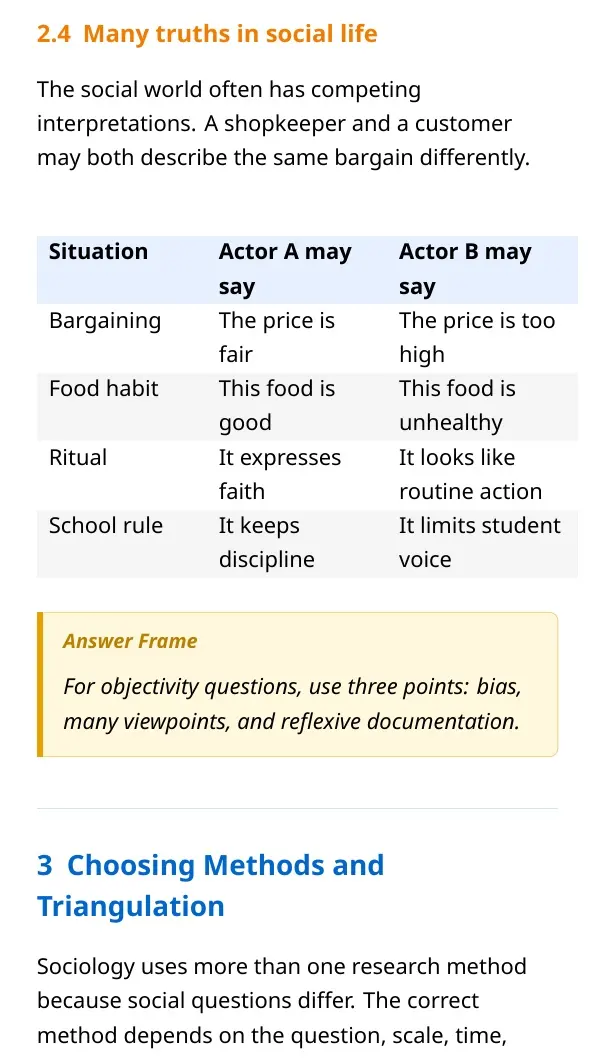
| Objectivity | Trying to make claims based on evidence rather than personal liking. | Use when explaining why method is needed. |
| Subjectivity | The influence of personal view, social position and experience. | Use when discussing limits of research. |
| Reflexivity | Awareness of how the researcher affects the research process. | Use in fieldwork and interview answers. |
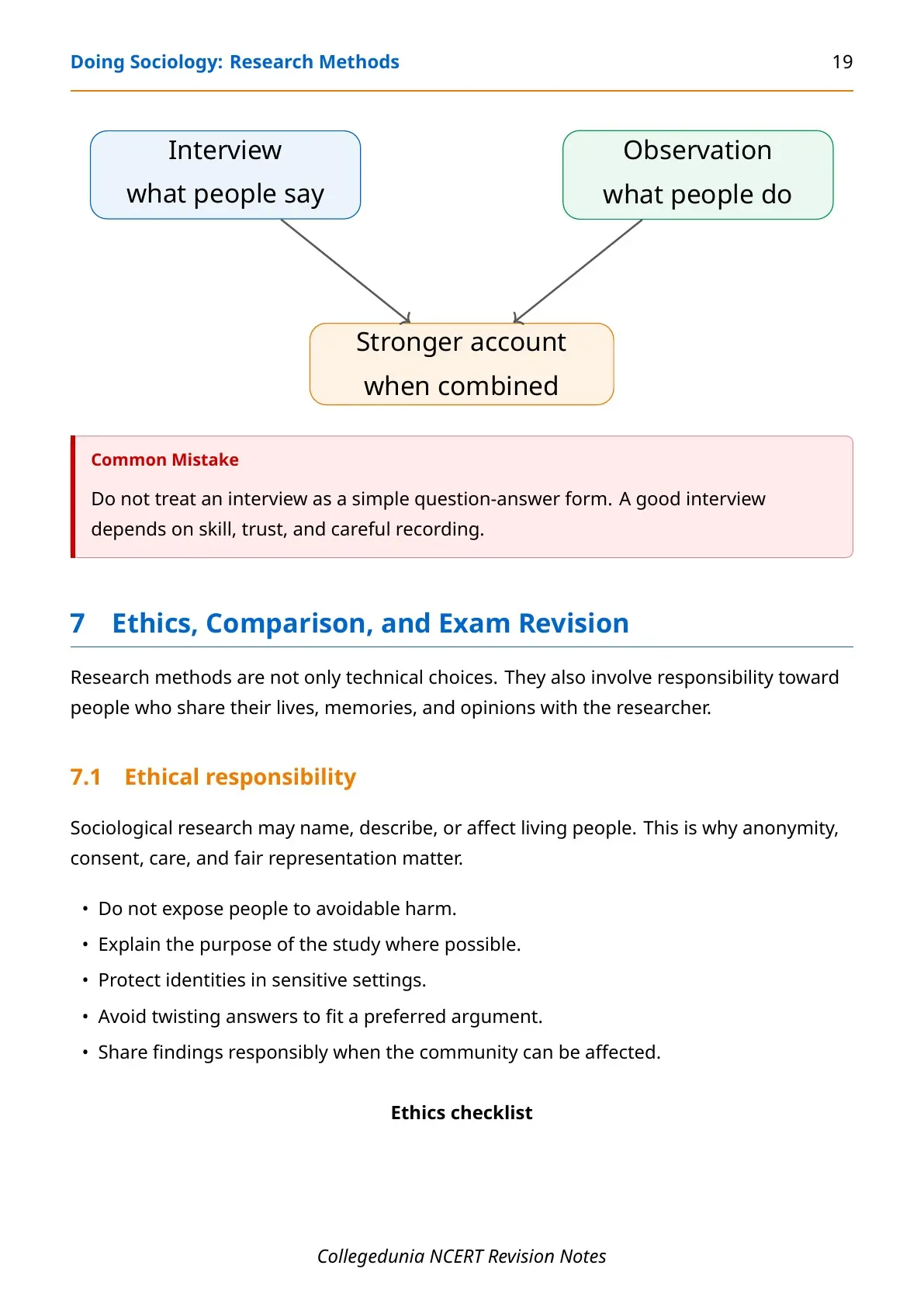
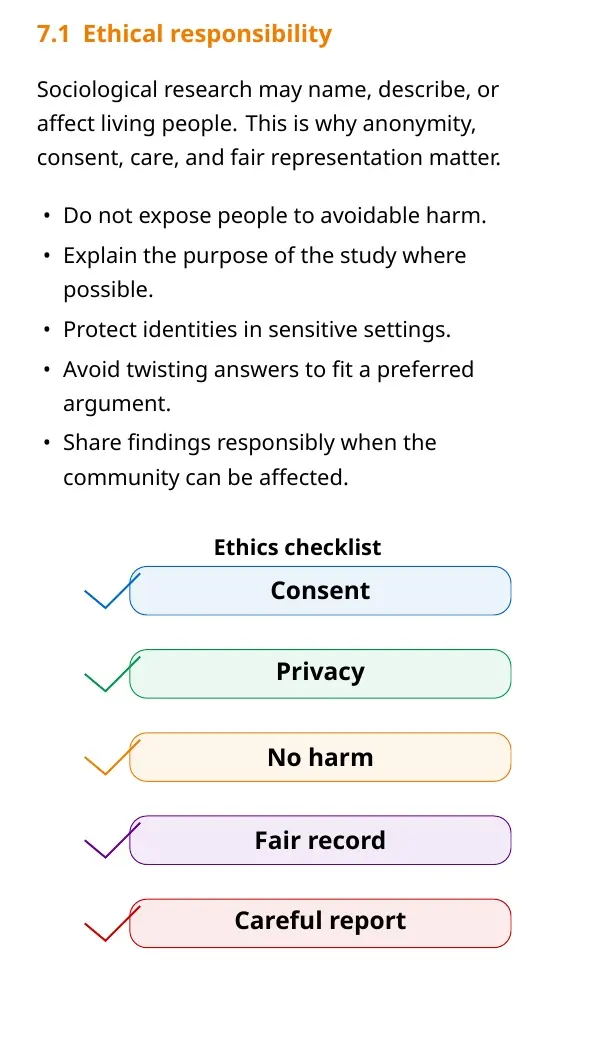
| Ethics | Respecting privacy, consent and fair representation. | Use when writing project-work answers. |
How to Use These Chapter 5 Sociology Notes
Read the PDF after one textbook reading. Start with the method table, then revise survey terms. Finish with reflexivity because school questions often ask why social research is different from natural-science research.
- Write one definition each for method, survey, interview and fieldwork.
- Compare quantitative and qualitative methods in a two-column answer.
- Use Census and NSO examples when explaining survey research.
- Add one sentence on reflexivity in answers about fieldwork or interviews.
| NCERT exercise anchor | Concept to use |
|---|---|
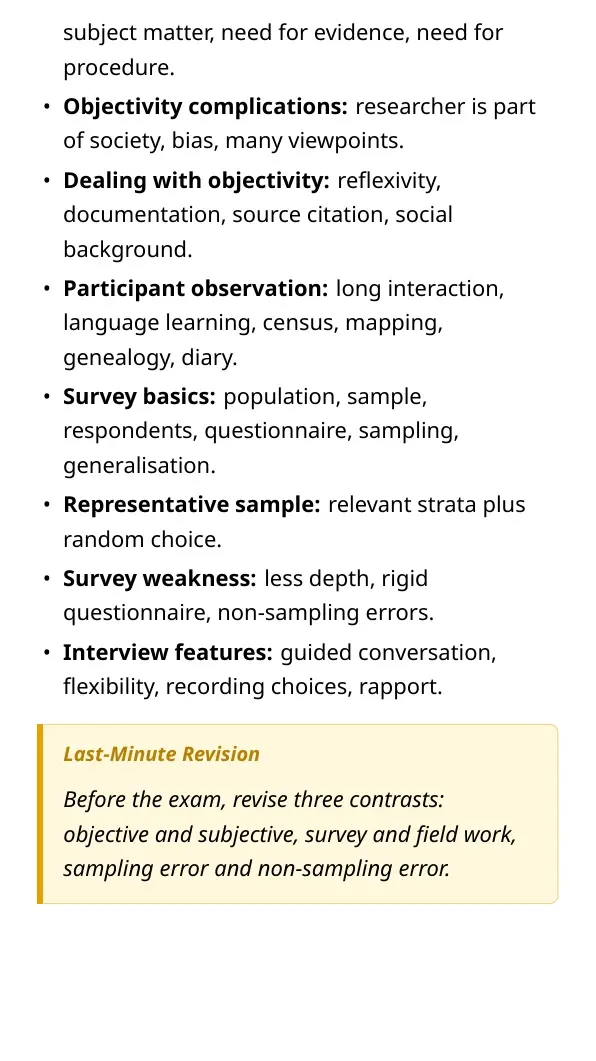
| Questions on method in sociology | Research question, evidence and systematic procedure. |
| Questions on fieldwork | Observation, participation, trust, field notes and reflexivity. |
| Questions on surveys | Sample, schedule, Census, NSO, percentage and limits. |
| Questions on objectivity | Evidence, bias control, researcher's position and ethical reporting. |
Related NCERT Resources for Doing Sociology Research Methods
| Resource | Use it for |
|---|---|
| Doing Sociology Research Methods Class 11 NCERT Solutions | Exercise answers and answer-writing format. |
| Doing Sociology Research Methods NCERT Book PDF | Official textbook reading and examples. |
| Doing Sociology Research Methods Handwritten Notes | Notebook-style last-minute revision once available. |
All Class 11 Sociology Notes Chapters
| Chapter | NCERT Notes link |
|---|---|
| Chapter 1 | Sociology and Society Notes |
| Chapter 2 | Terms, Concepts and Their Use in Sociology Notes |
| Chapter 3 | Understanding Social Institutions Notes |
| Chapter 4 | Culture and Socialisation Notes |
| Chapter 5 | Doing Sociology Research Methods Notes |
Doing Sociology Research Methods Class 11 Notes FAQs
Ques. What is covered in Class 11 Sociology Chapter 5 Notes?
Ans. The notes cover research method, fieldwork, survey, interview, sample design, Census, NSO surveys, objectivity, subjectivity and reflexivity.
Ques. What is method in sociology?
Ans. Method is the planned procedure a sociologist uses to collect and interpret evidence about society.
Ques. What is the difference between fieldwork and survey?
Ans. Fieldwork studies meanings and behaviour in a setting. Survey studies patterns across a selected group through standard questions.
Ques. How should students revise Doing Sociology Research Methods for 2026-27 exams?
Ans. Students should revise method types, sampling terms, survey examples, interview limits and reflexivity, then practise two-column comparisons.



Comments