




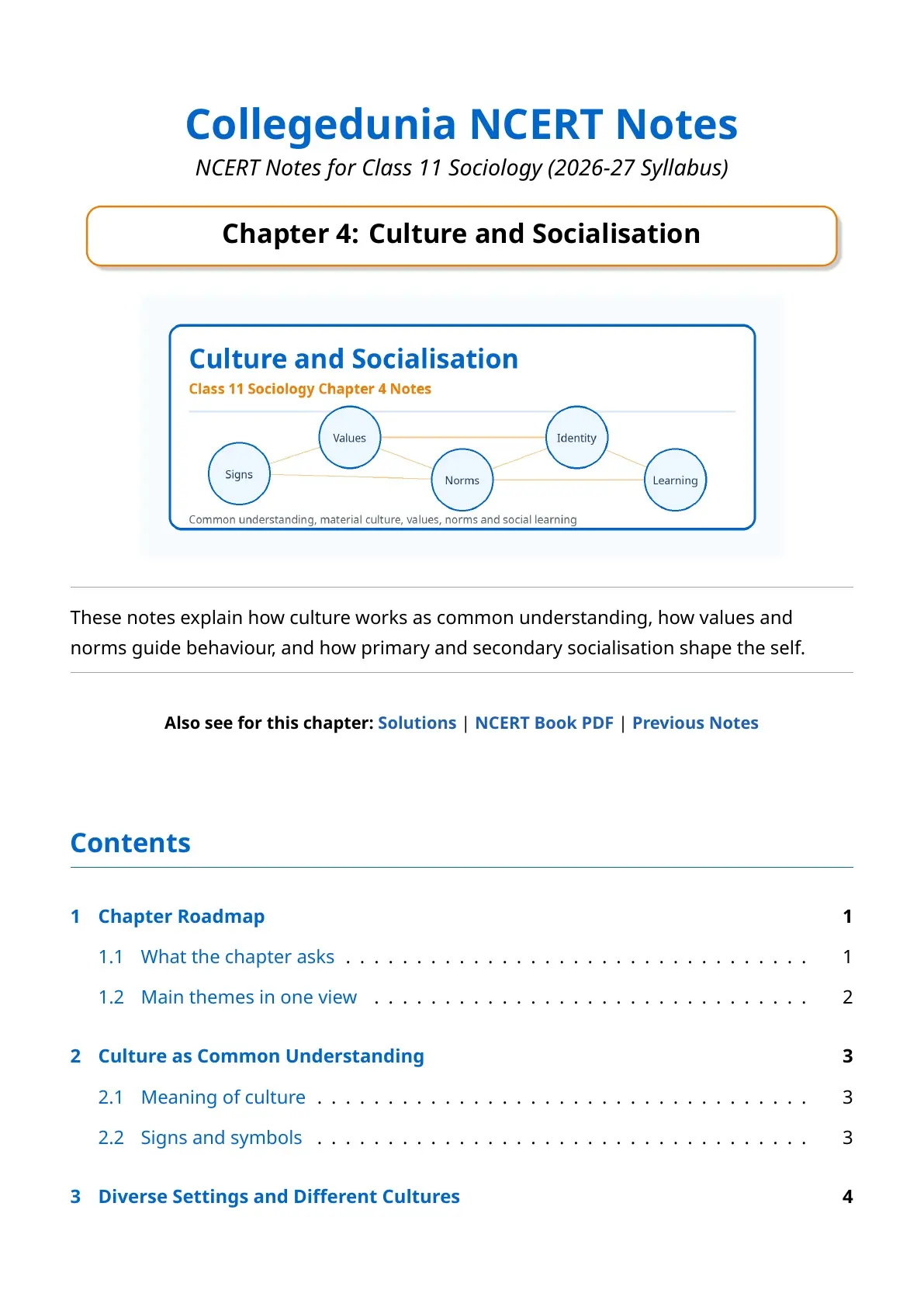
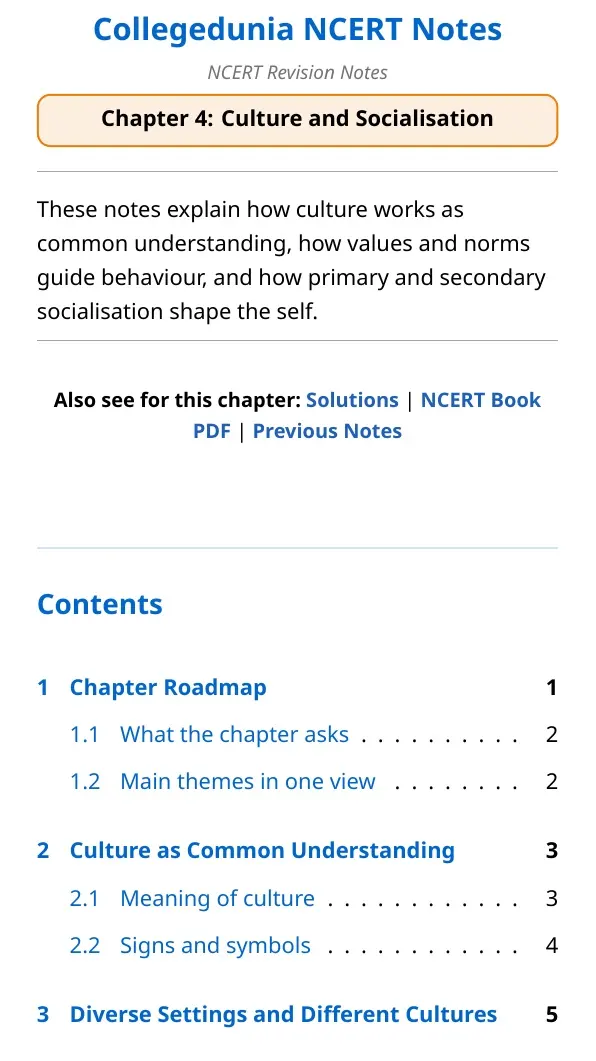
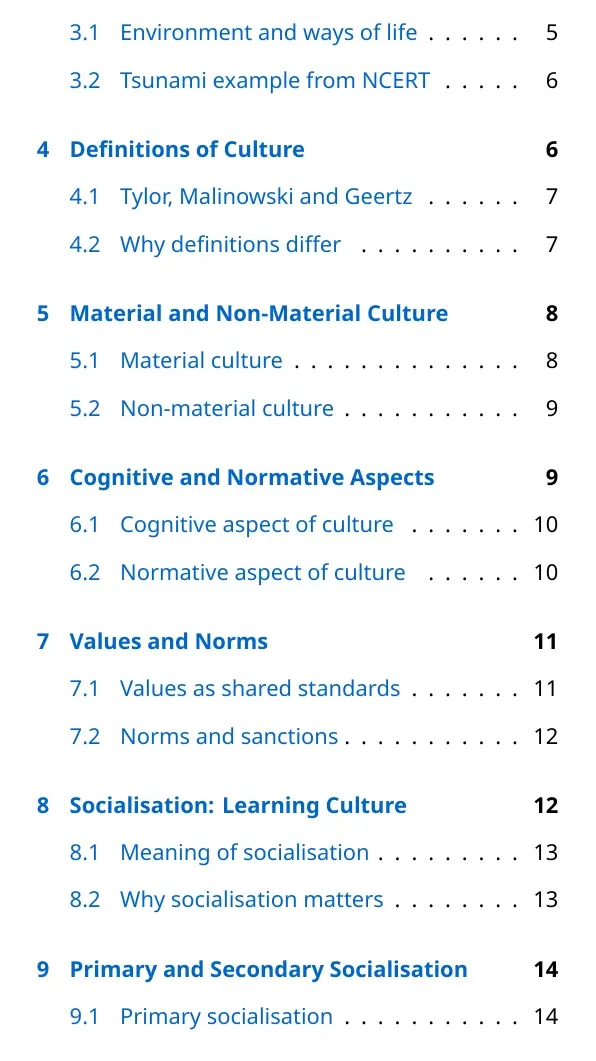
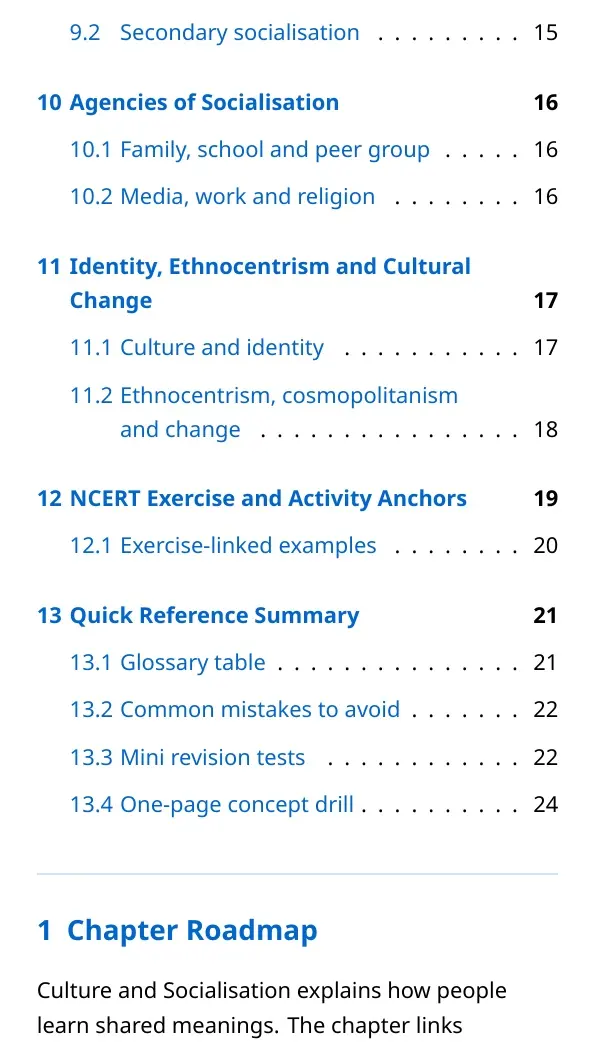
The NCERT Class 11 Sociology Chapter 4 Culture and Socialisation Notes help students revise the 2026-27 NCERT chapter on culture, values, norms and social learning. The PDF explains definitions of culture, material and non-material culture, ethnocentrism, cultural change and agencies of socialisation.
- Best for: Class 11 Sociology school tests and quick revision before exams.
- PDF focus: culture definitions, comparison tables, diagrams and common mistake alerts.
- Chapter value: this chapter explains how society teaches people shared meanings and roles.
Student Feedback: In a Collegedunia poll of 12,080 Class 11 Sociology students before the 2026 exams, 77% said culture became easier after revising values, norms and socialisation together.
Source: 2026 Class 11 Sociology student poll across CBSE schools.
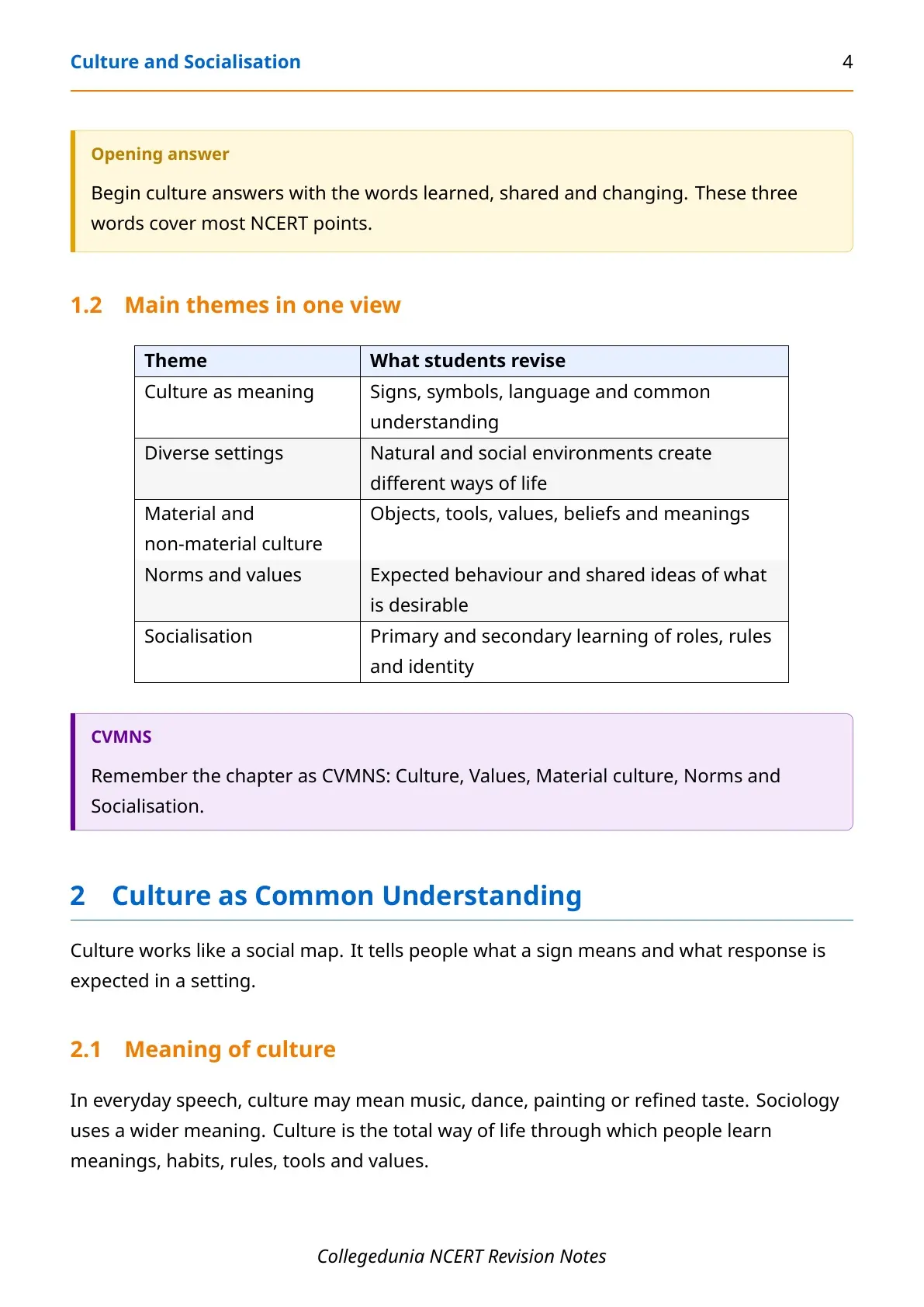
What the Culture and Socialisation Notes Cover
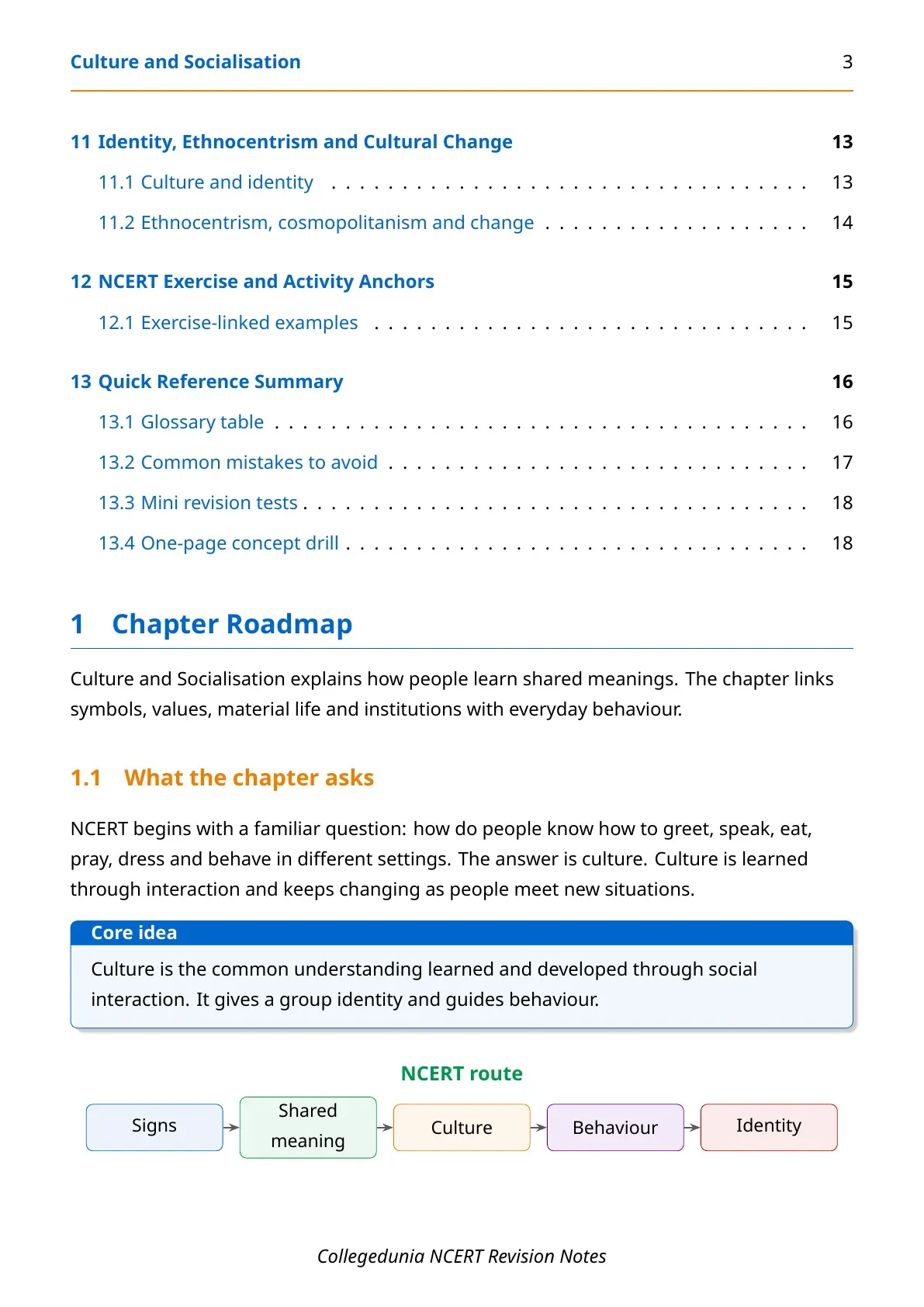
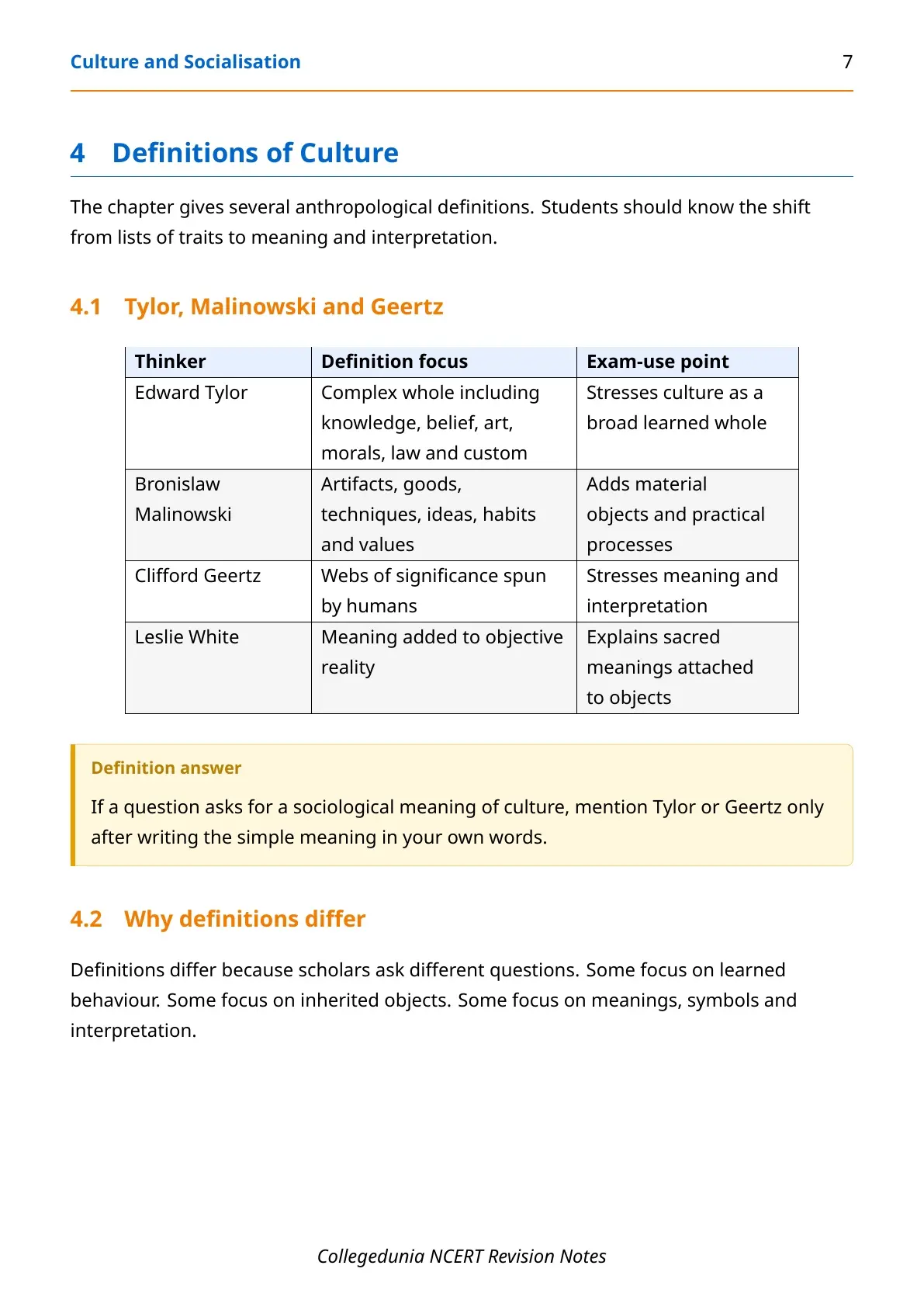
Chapter 4 explains culture as a learned and shared way of making meaning. Culture is not limited to art, dance or refined taste. It includes tools, beliefs, values, rules, language and everyday behaviour.
| PDF section | What students revise |
|---|---|
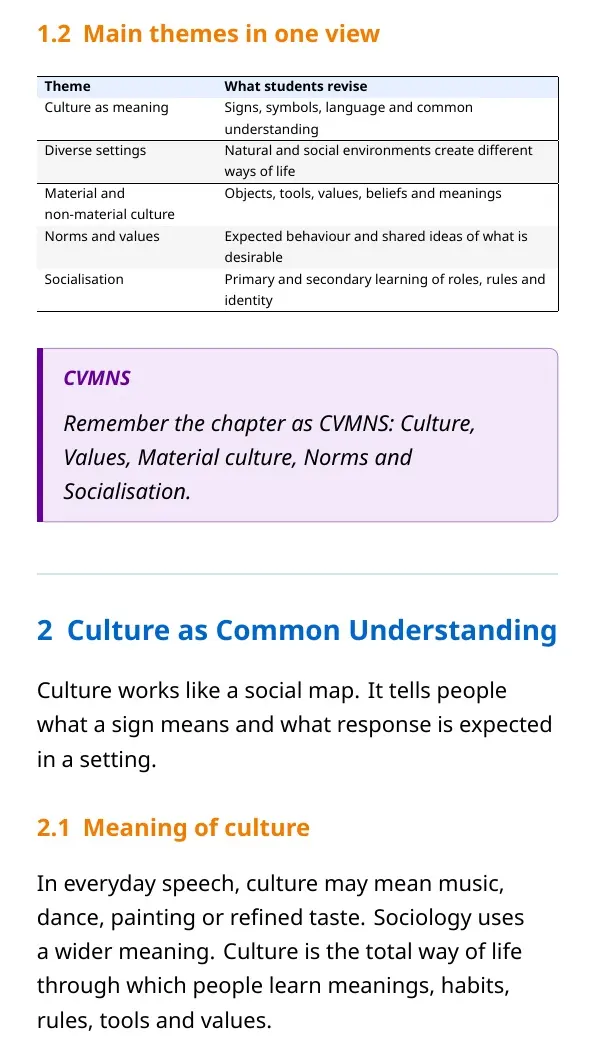
| Culture meaning | Common understanding, shared symbols and the sociological definition of culture. |
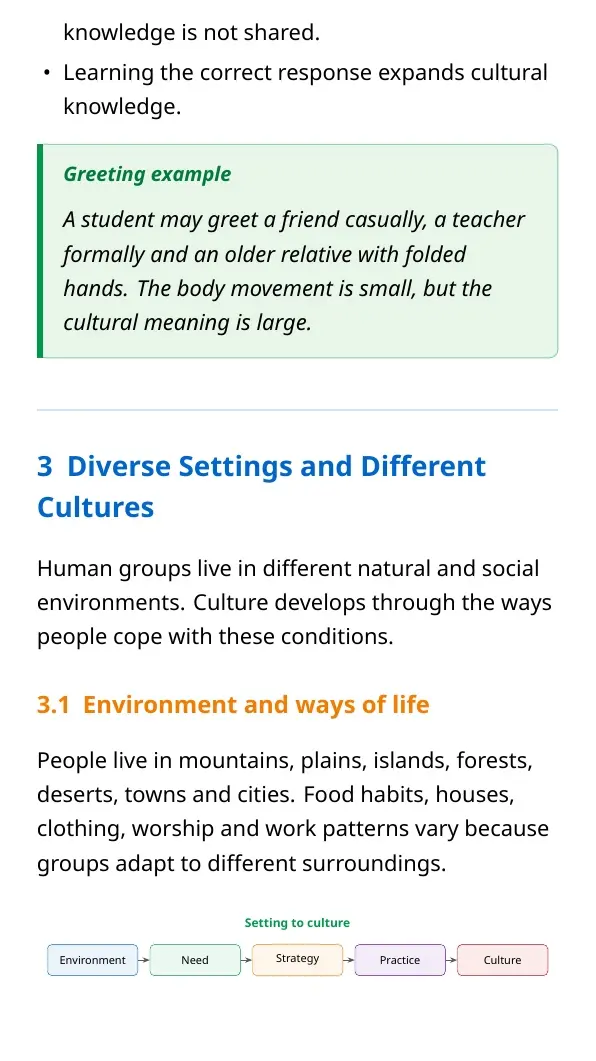
| Diverse settings | How environment, local knowledge and social setting shape different cultures. |
| Culture dimensions | Cognitive, normative and material dimensions with examples. |
| Socialisation | Primary learning, secondary learning and agencies such as family, school, peers and media. |
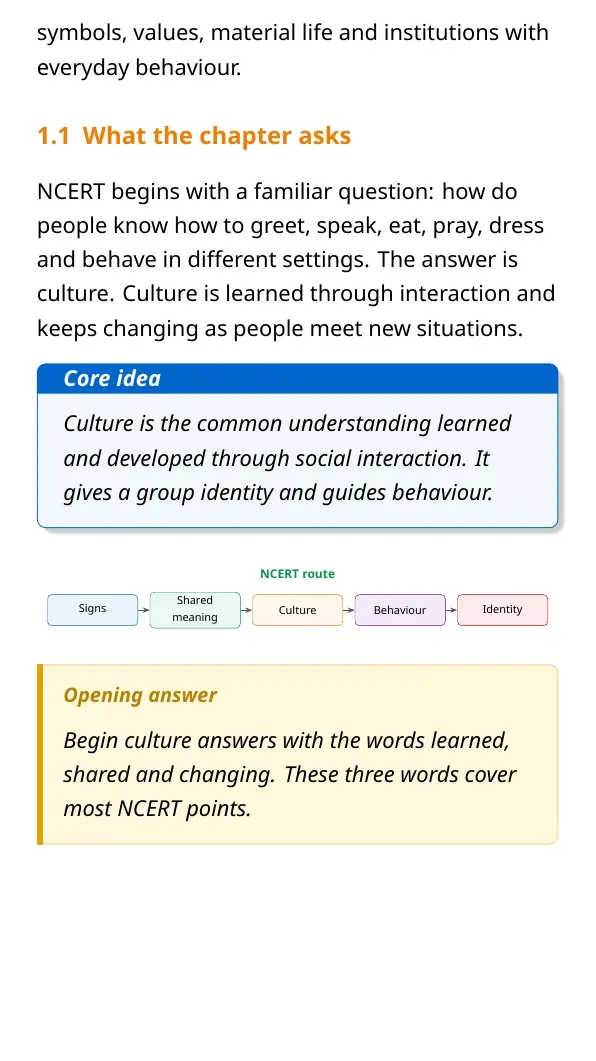
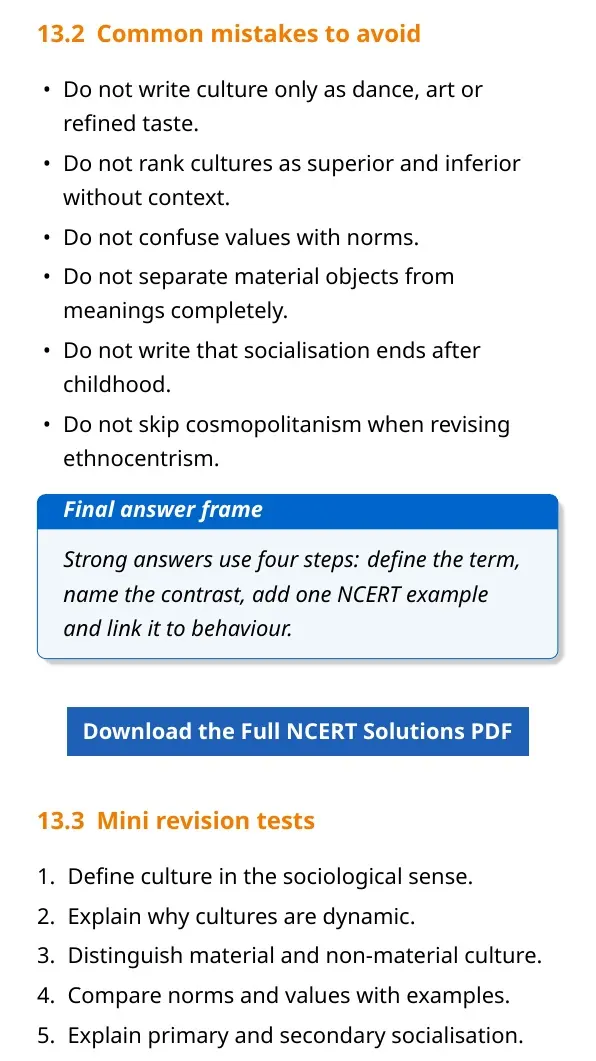
Use the words learned, shared and changing when defining culture in exams.
Culture and Socialisation Class 11 Video
Source: Magnet Brains on YouTube
Meaning of Culture in Class 11 Sociology
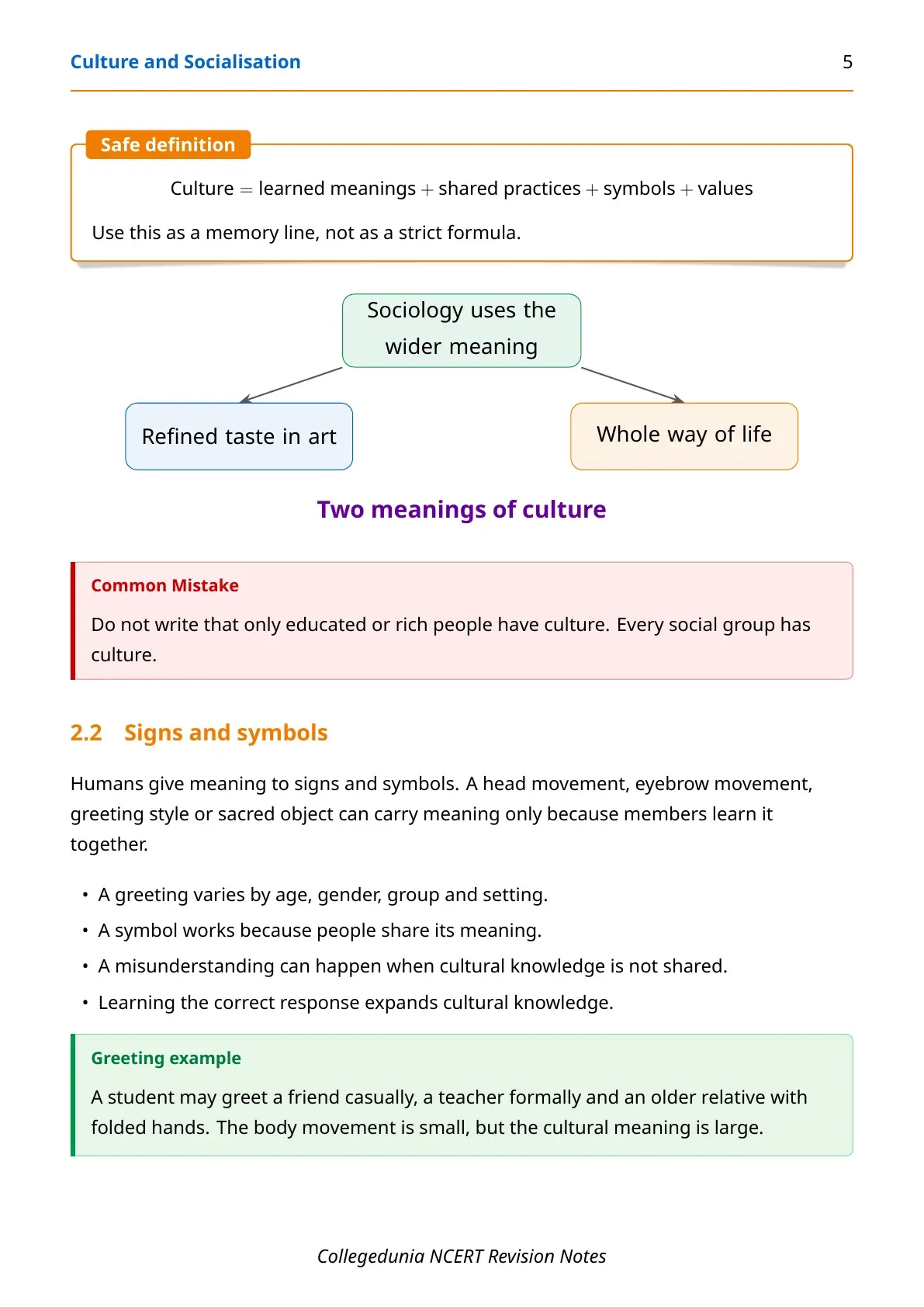
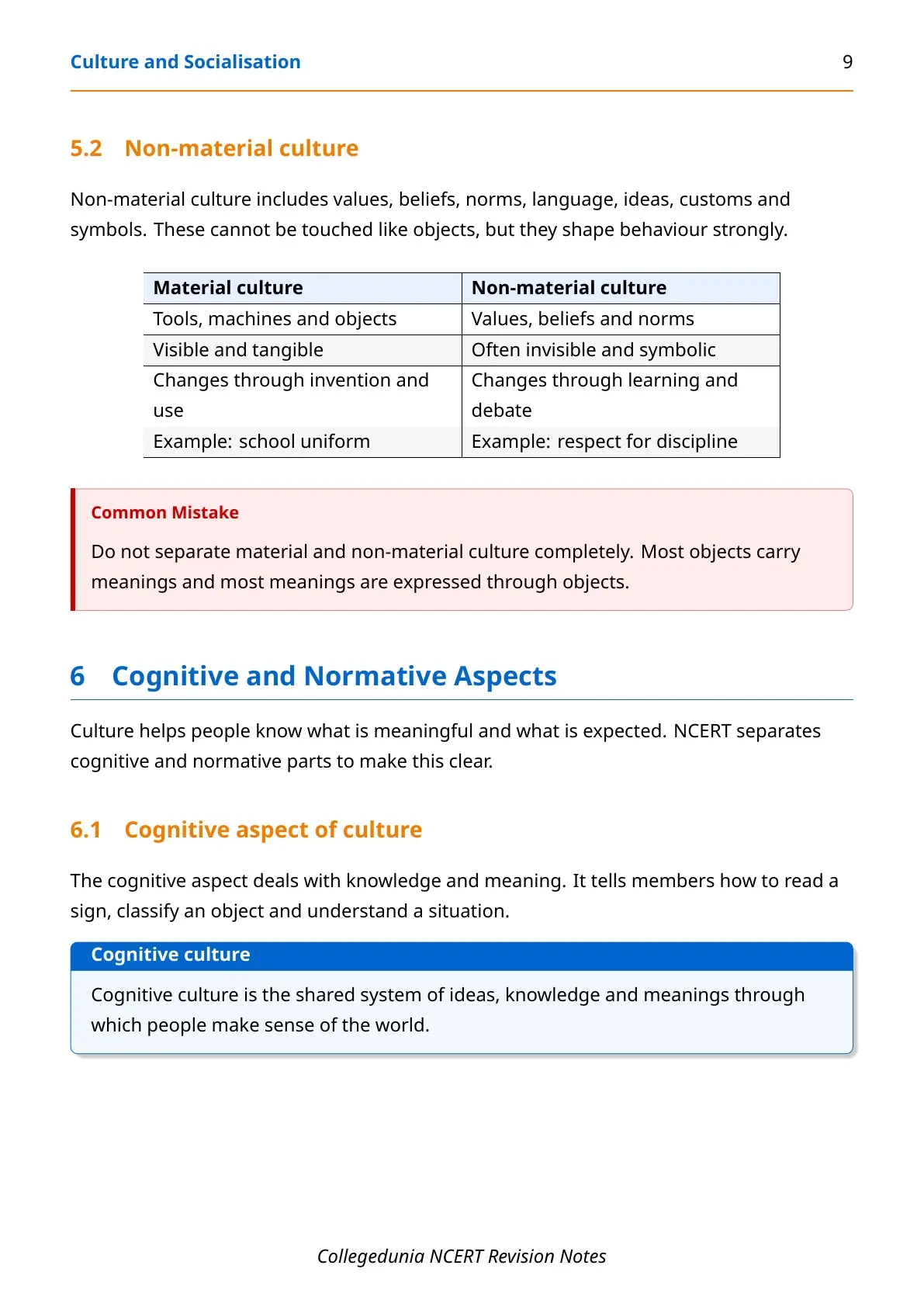
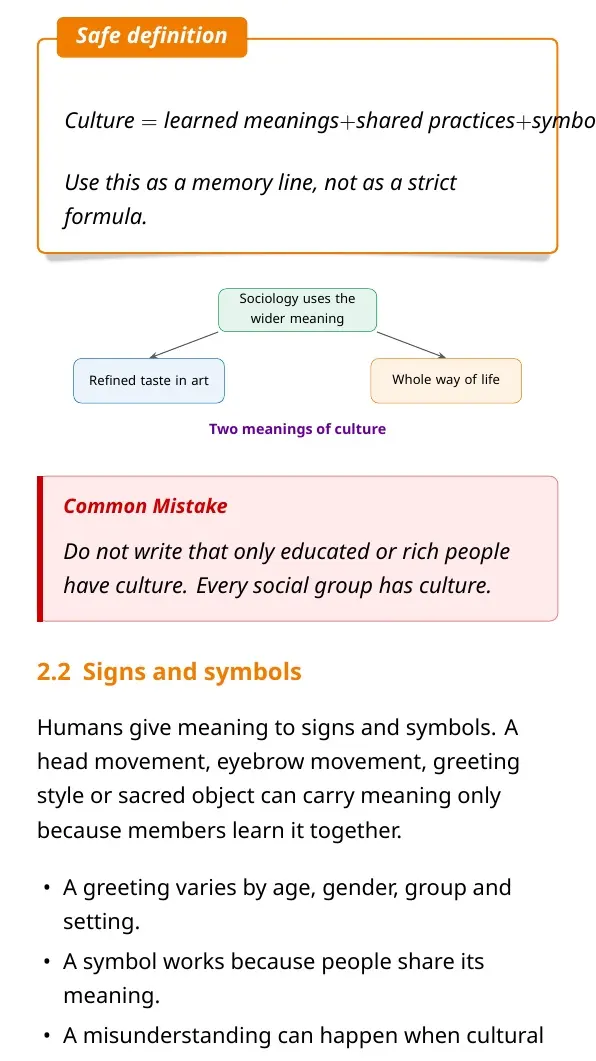
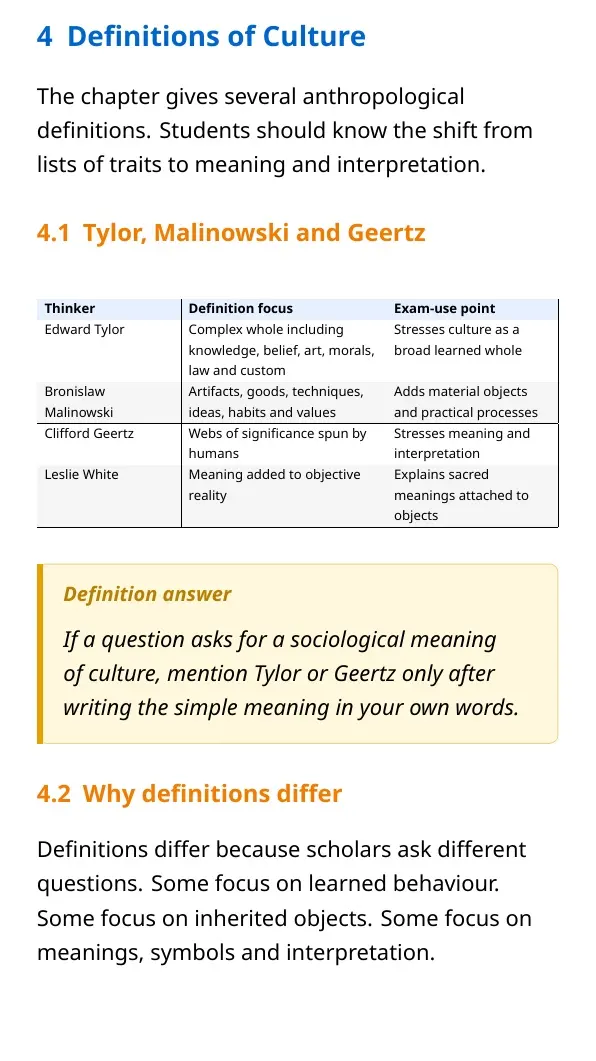
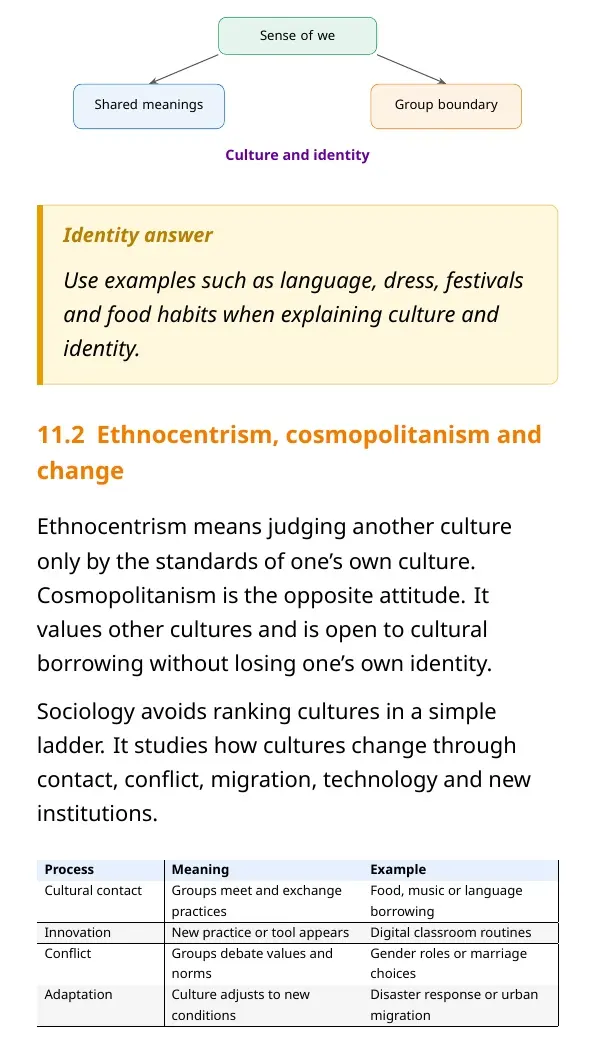
NCERT first separates the everyday use of culture from the sociological use. Everyday speech may call music, art or painting culture. Sociology uses the wider meaning: culture is the total way of life of a group.
- Learned: people acquire culture through interaction.
- Shared: members understand signs, symbols and practices together.
- Dynamic: cultures change when people meet new needs and settings.
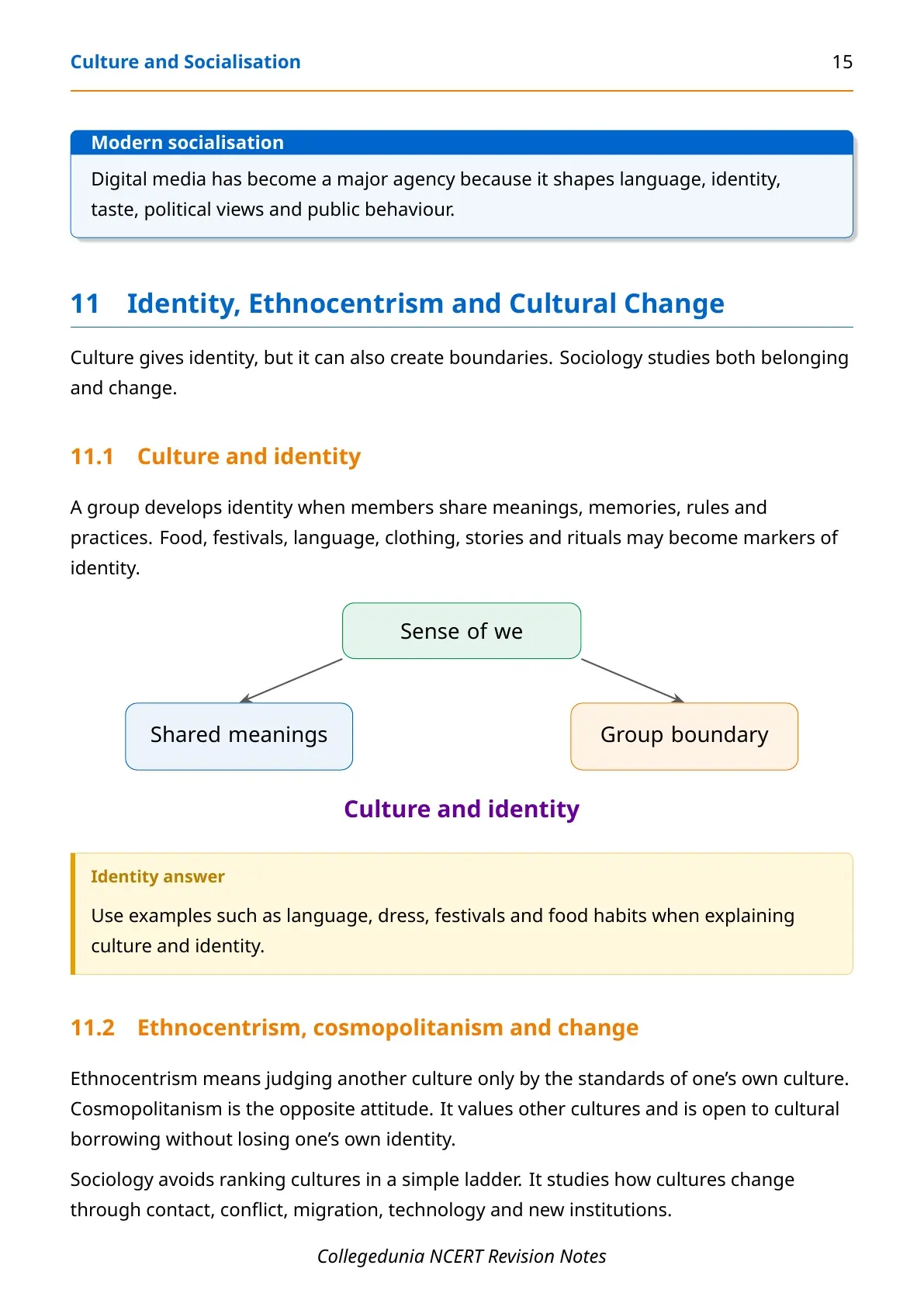
- Identity-forming: shared meanings help a group see itself as distinct.
Cognitive, Normative and Material Dimensions of Culture
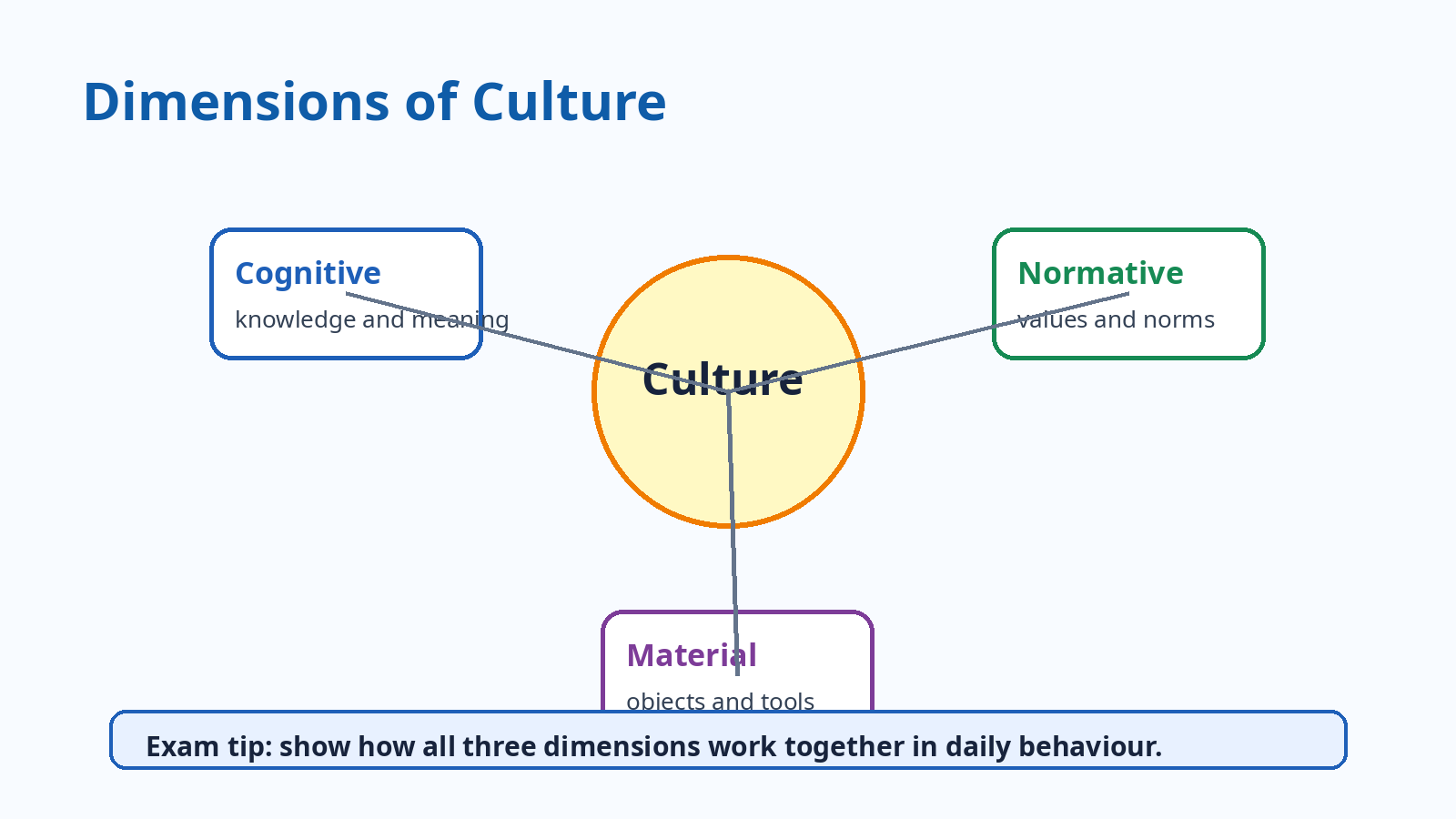
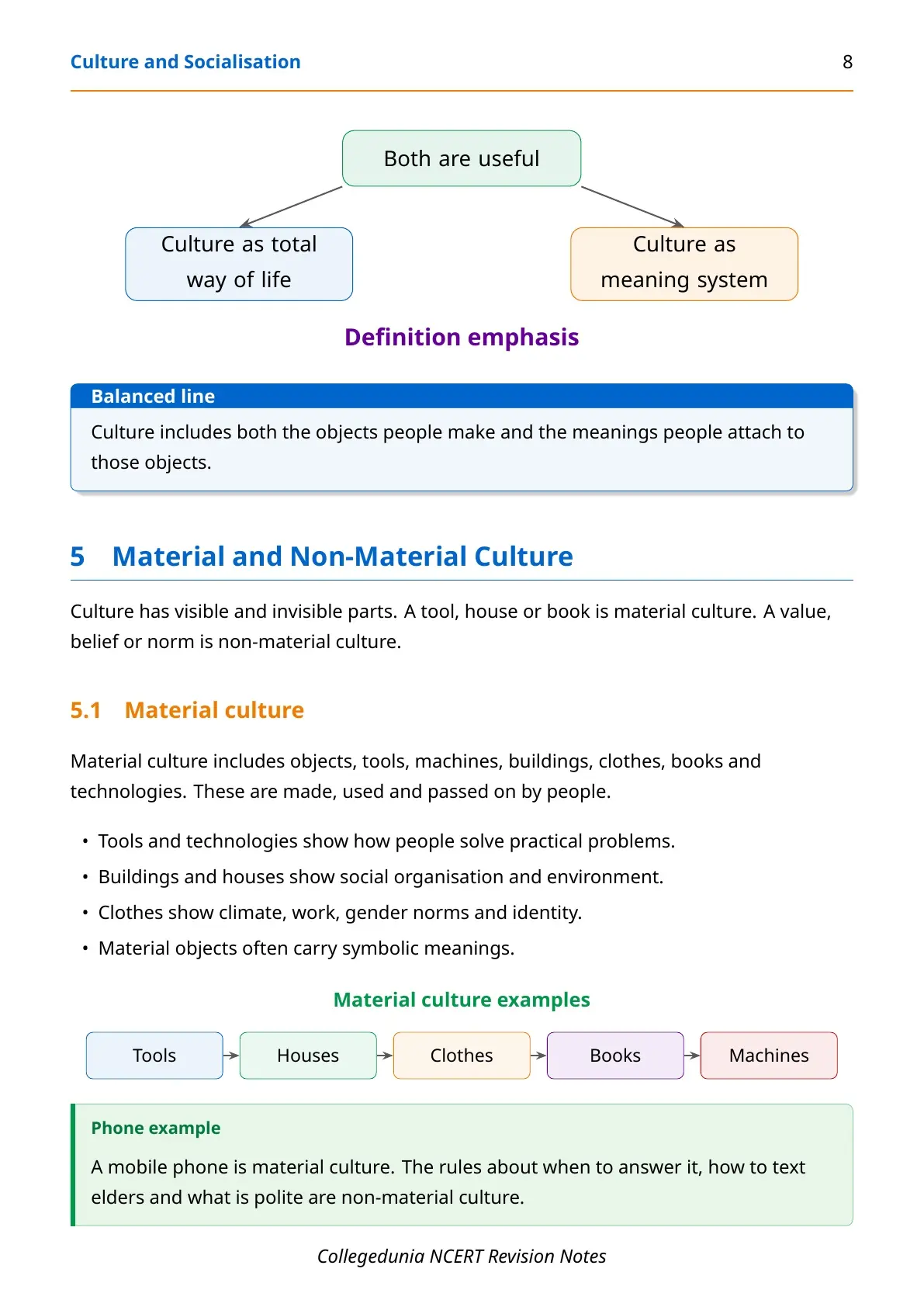
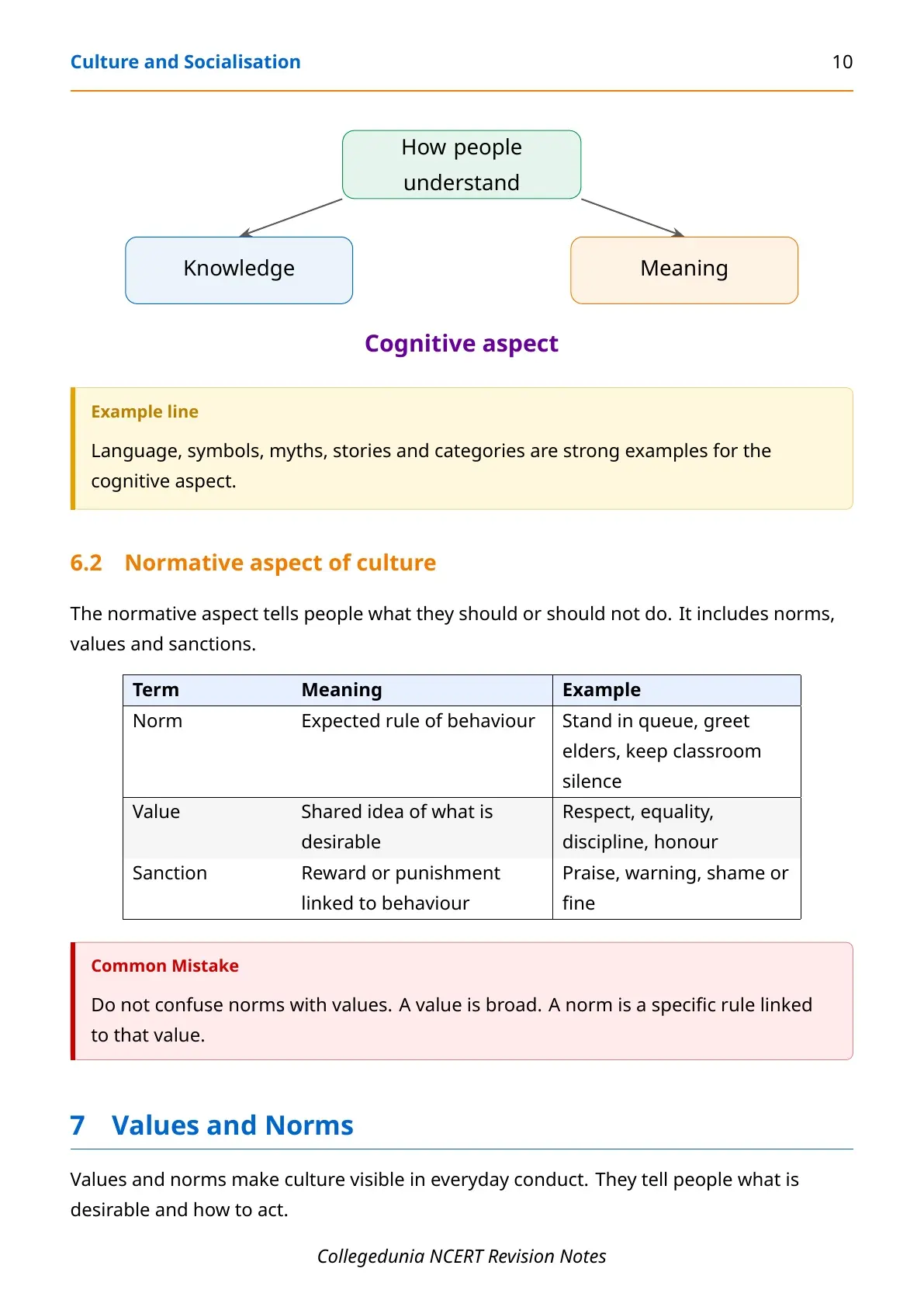
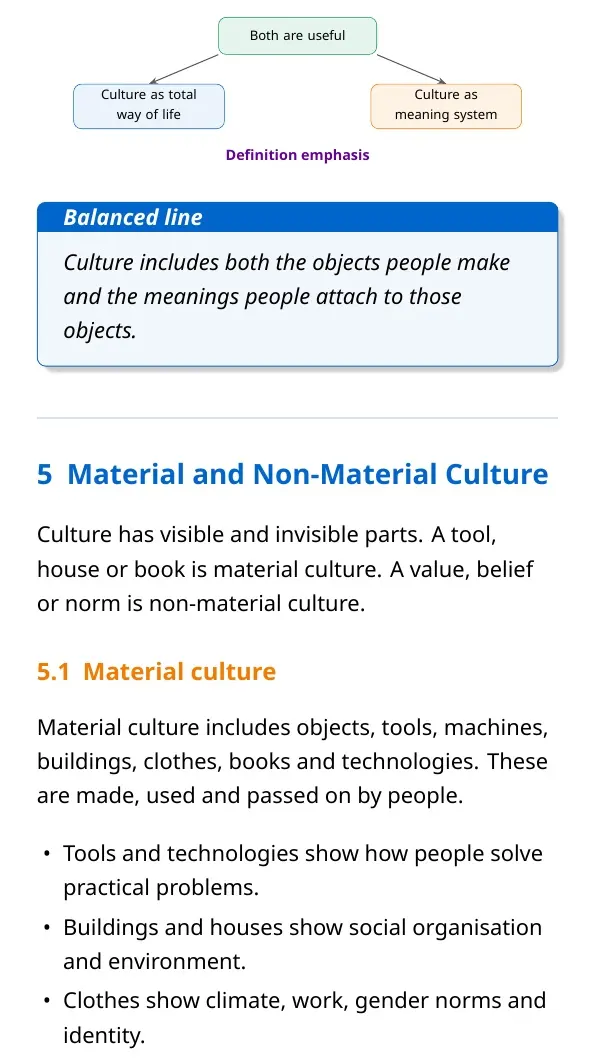
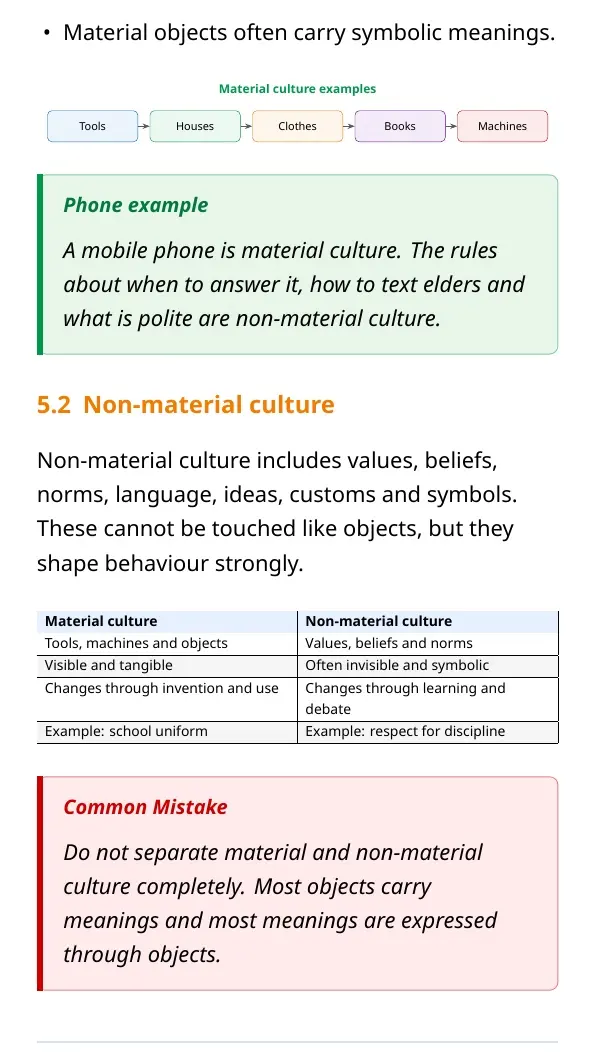
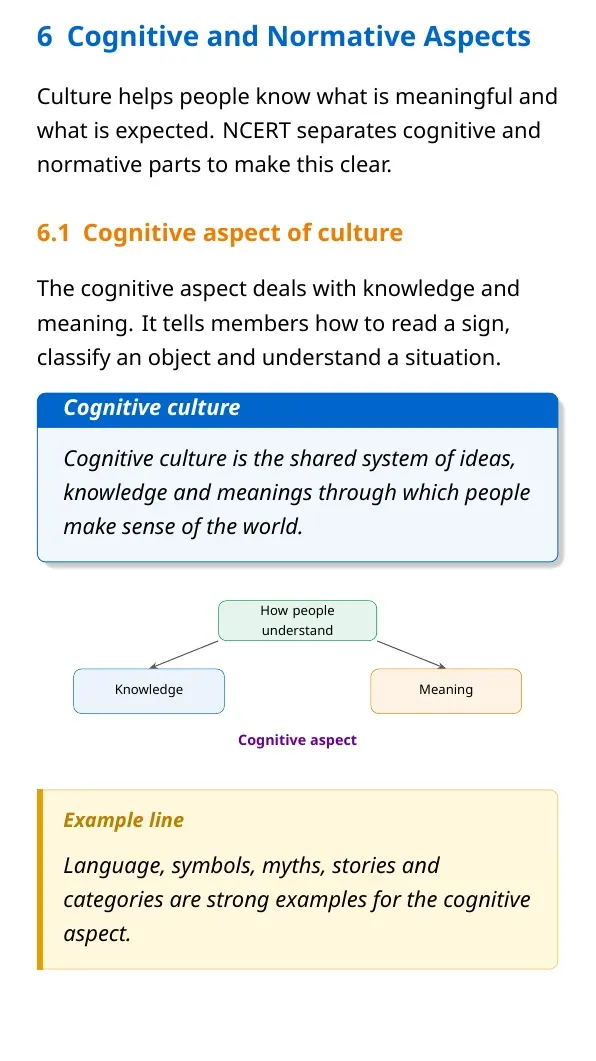
The chapter explains three connected dimensions of culture. Cognitive culture covers knowledge and meaning. Normative culture covers values, norms and sanctions. Material culture covers objects, tools and technologies.
| Dimension | Meaning | Example |
|---|---|---|
| Cognitive | How people know and interpret the world. | Language, symbols, stories and categories. |
| Normative | What people should or should not do. | Respect, queue rules, sanctions and manners. |
| Material | Objects and tools created by a group. | Clothes, houses, books, phones and machines. |
Do not separate the three dimensions completely. A phone is material culture, but phone etiquette is normative culture.
Values, Norms and Cultural Change
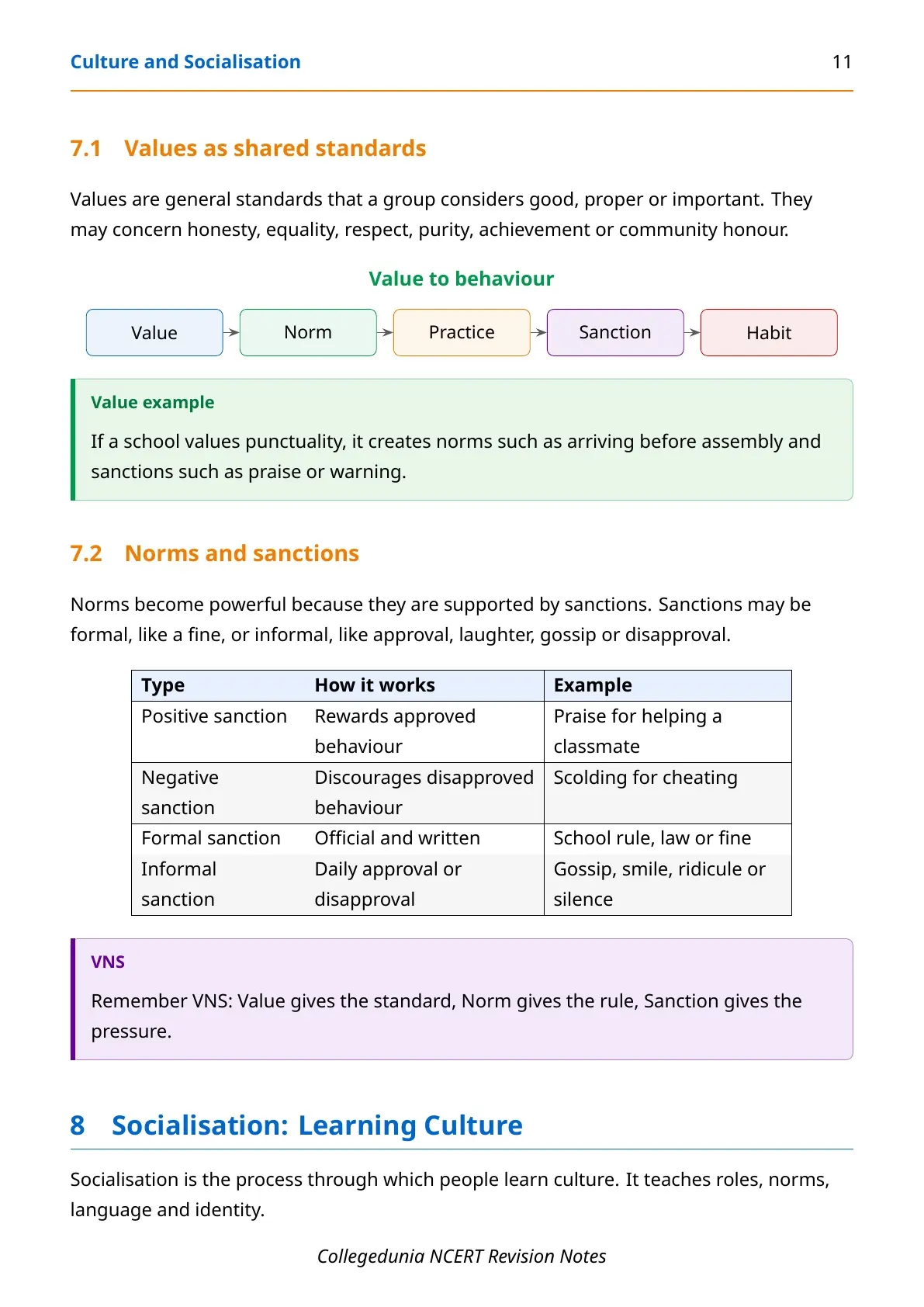
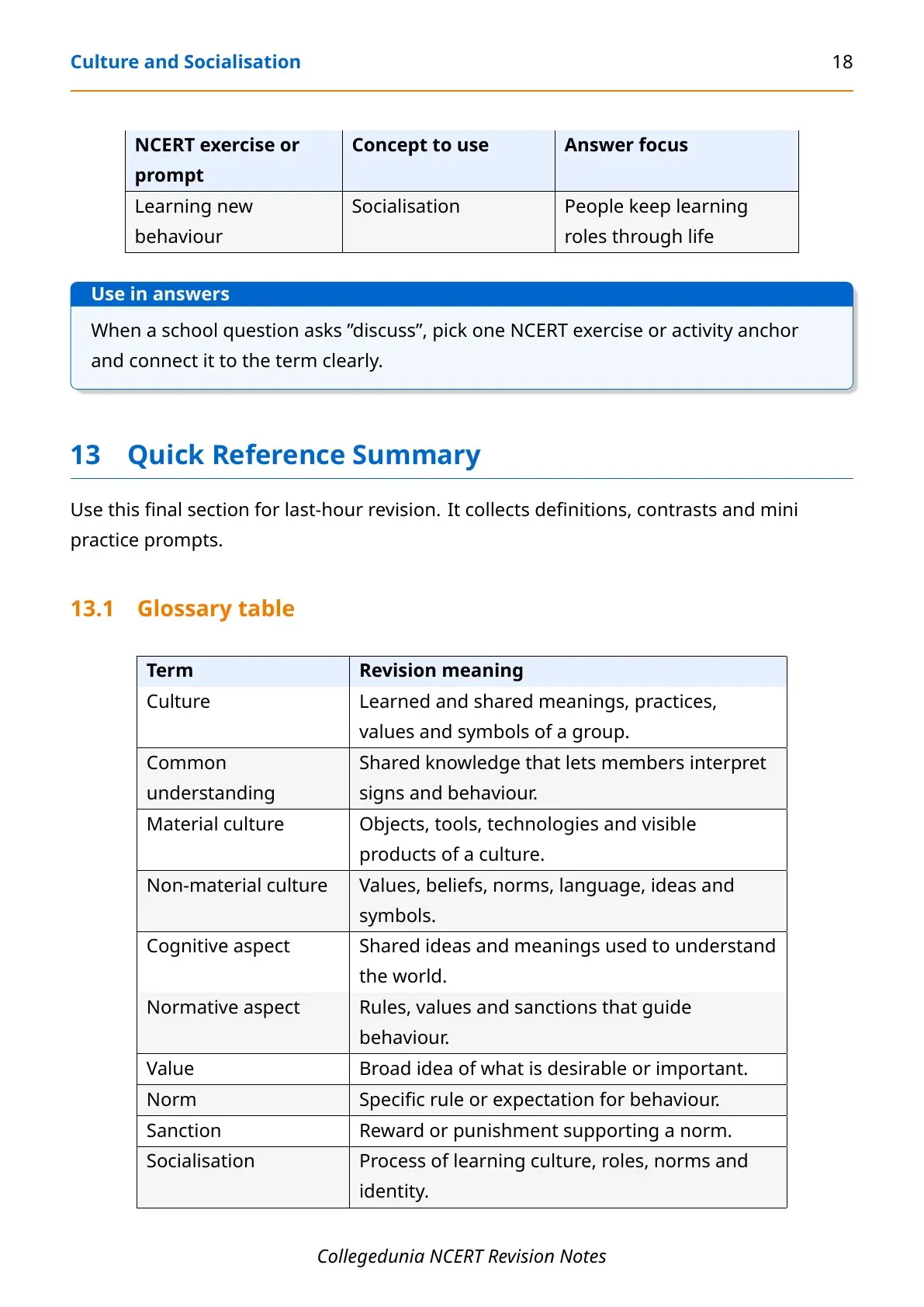
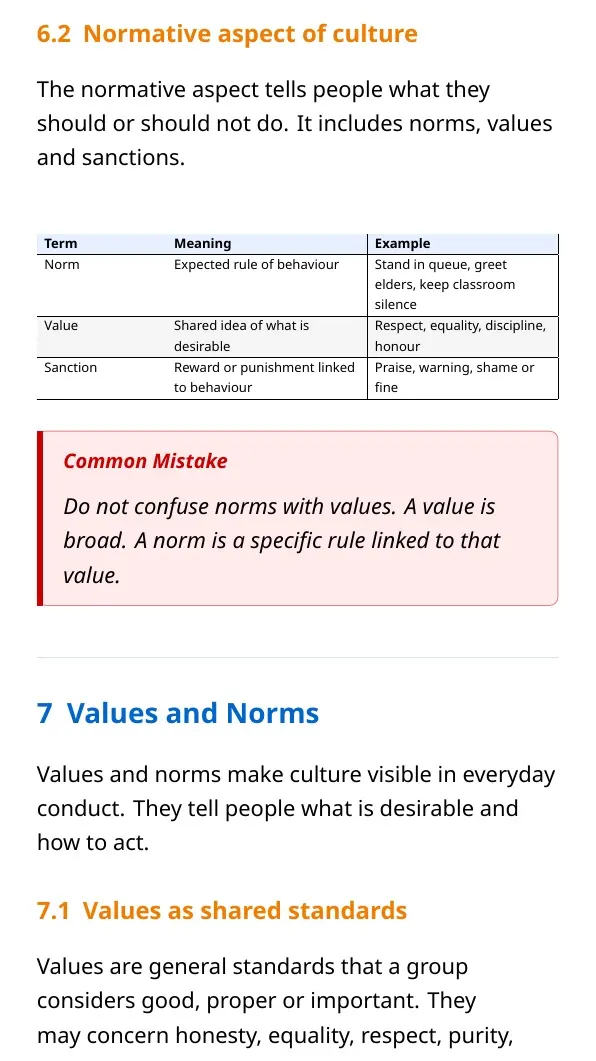
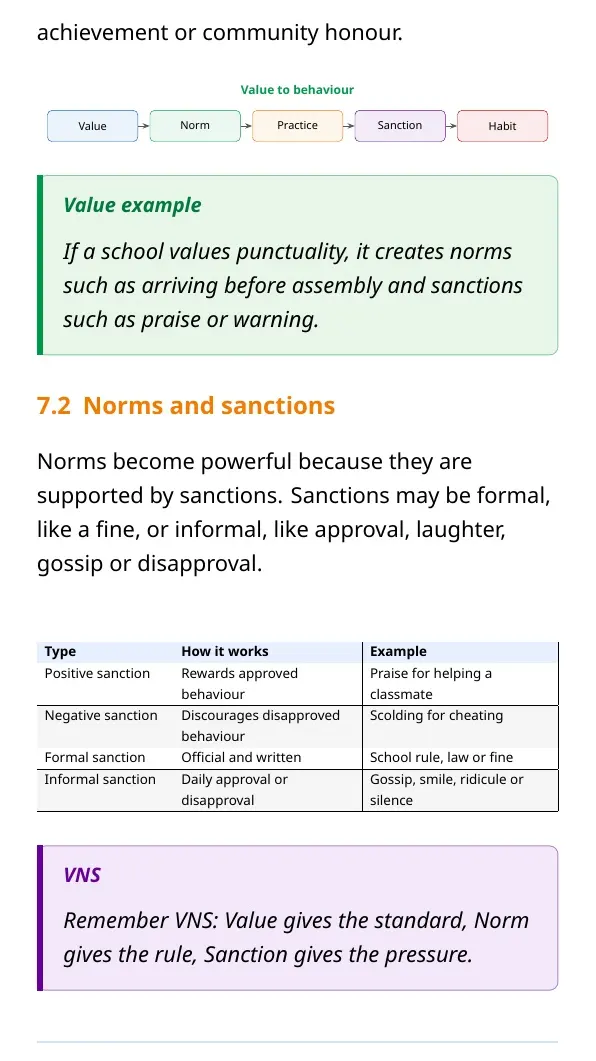
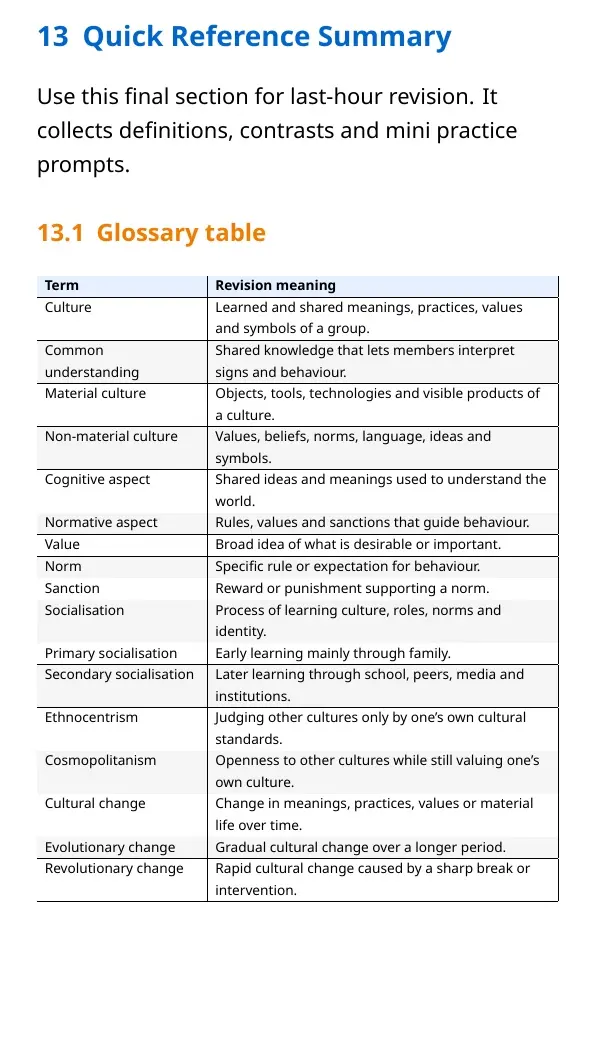
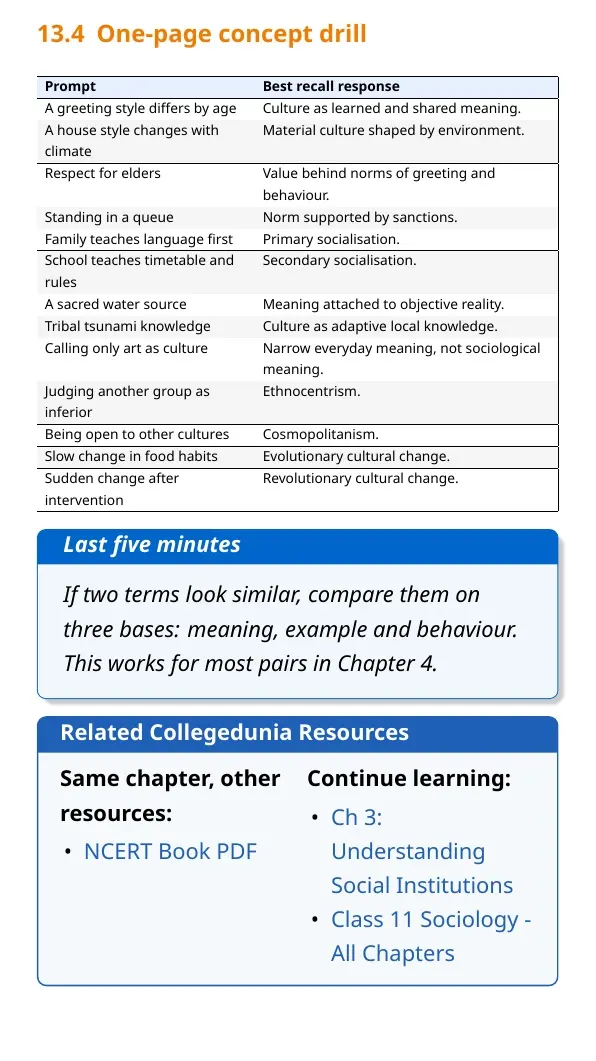
Values are broad ideas about what a group considers good or desirable. Norms are specific rules of behaviour built around those values. Sanctions support norms through reward or punishment.
| Term | Revision meaning | Example |
|---|---|---|
| Value | A shared idea of what is desirable. | Respect, equality, discipline or honour. |
| Norm | A specific expected behaviour. | Greeting elders or standing in a queue. |
| Sanction | A reward or punishment linked to a norm. | Praise, warning, shame, ridicule or fine. |
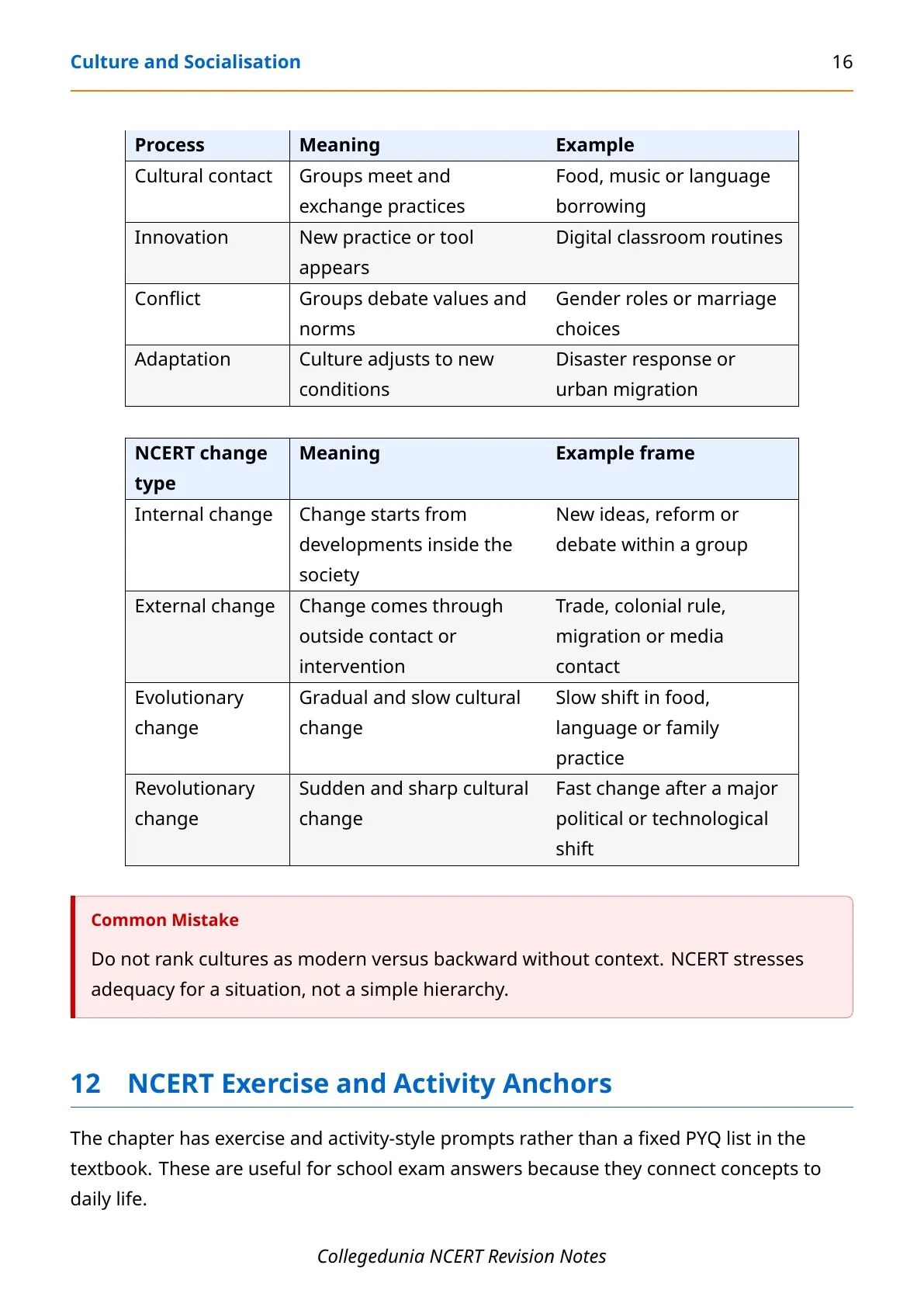
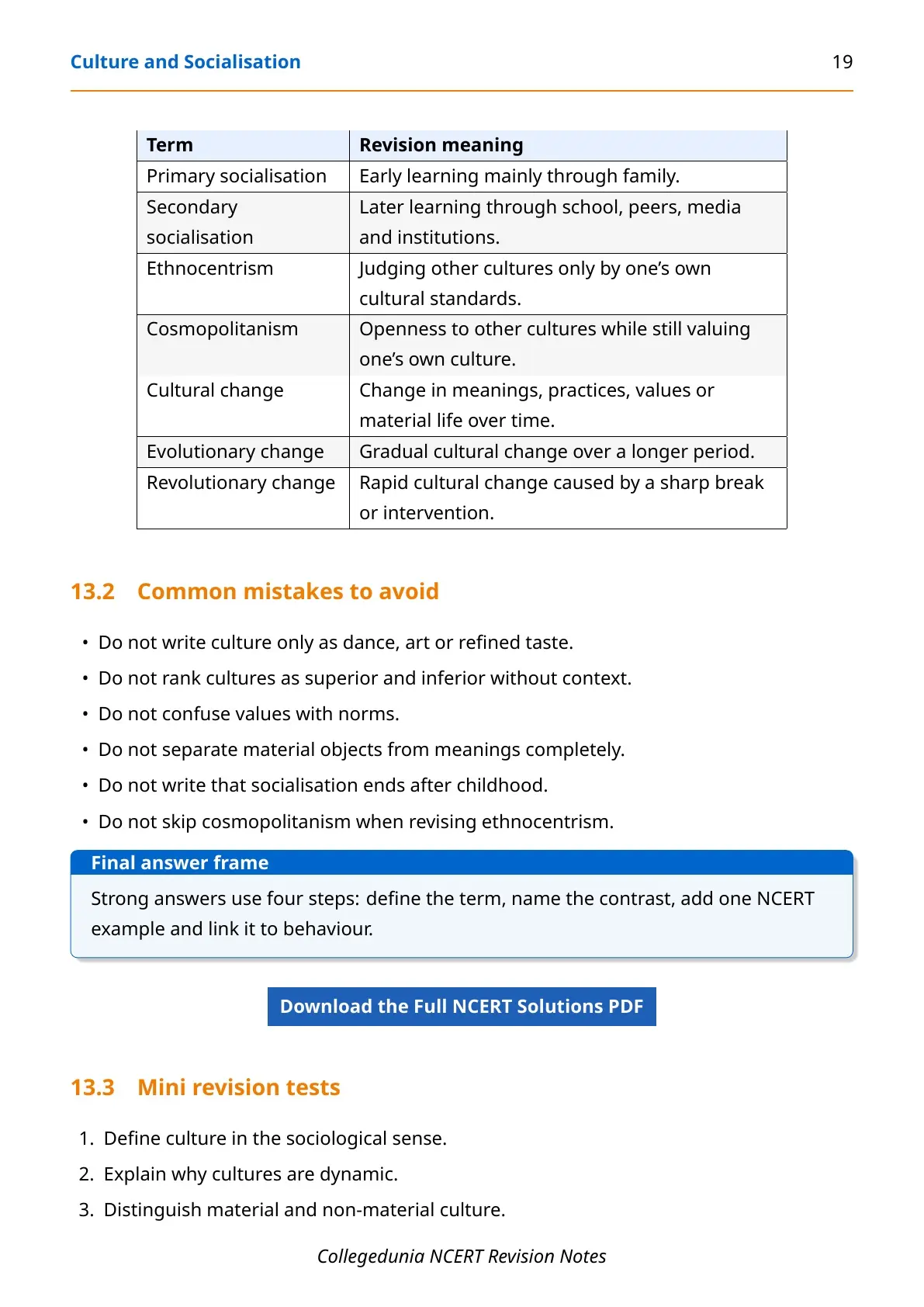
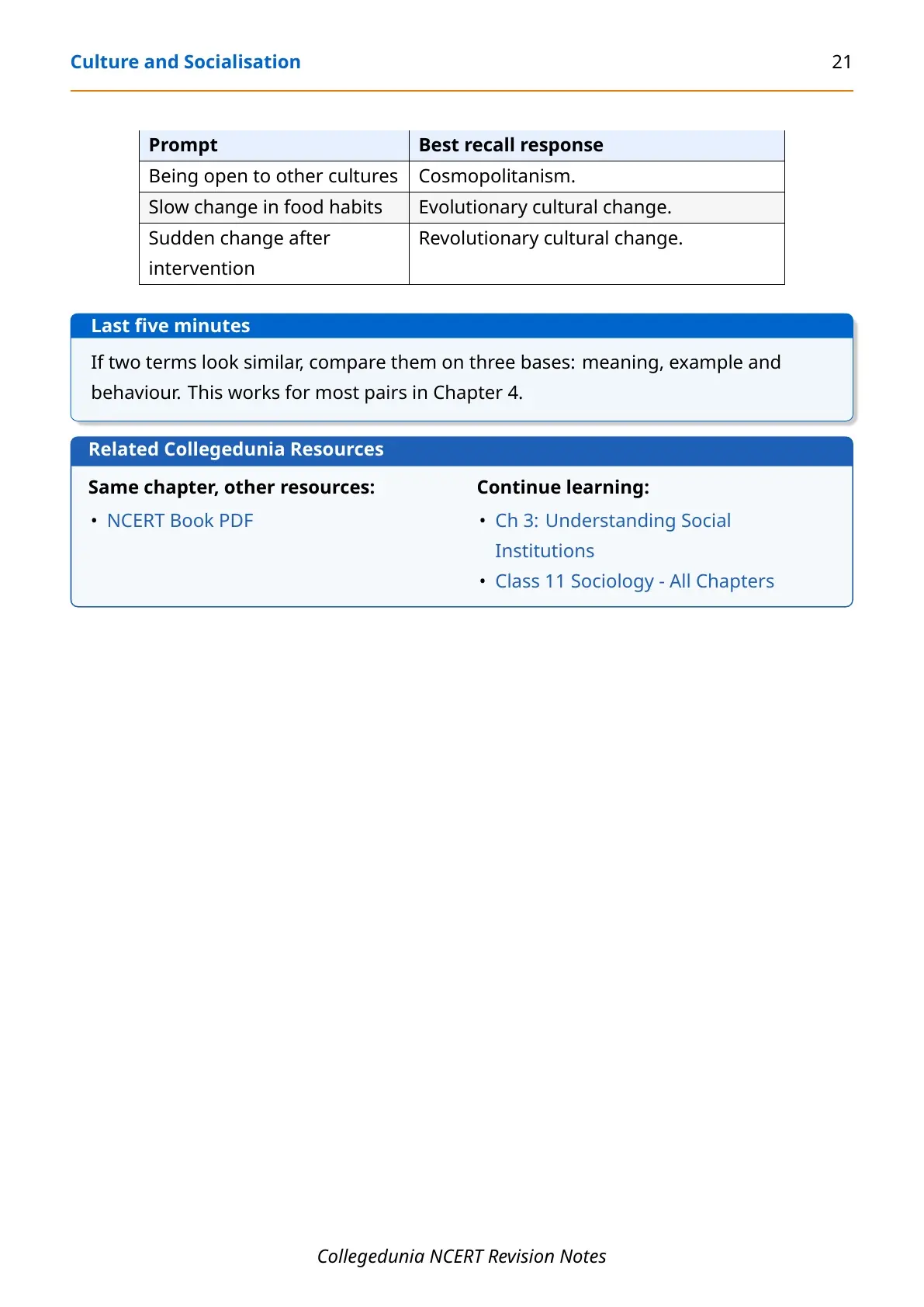
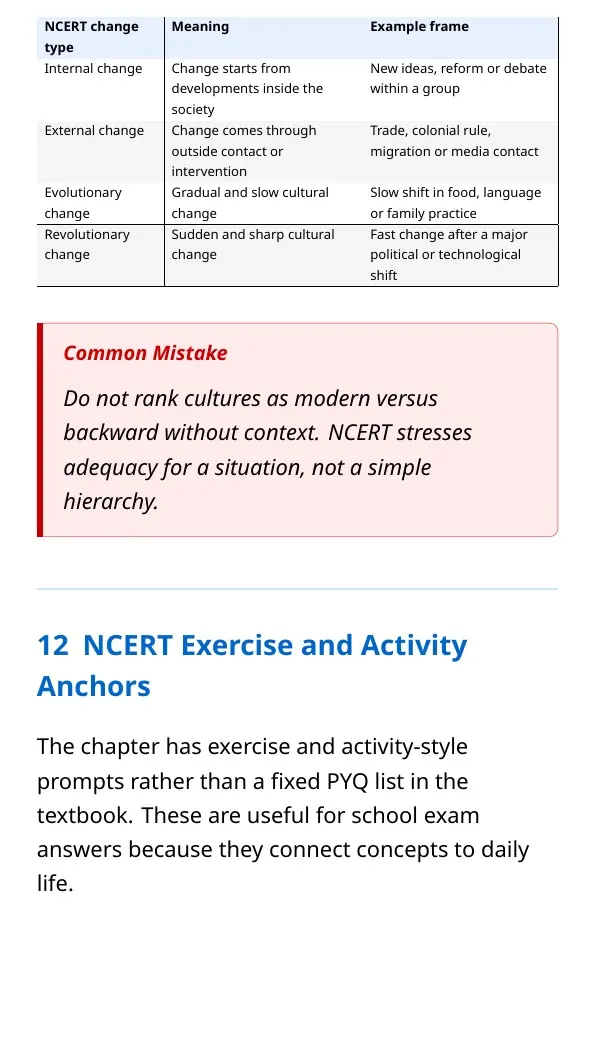
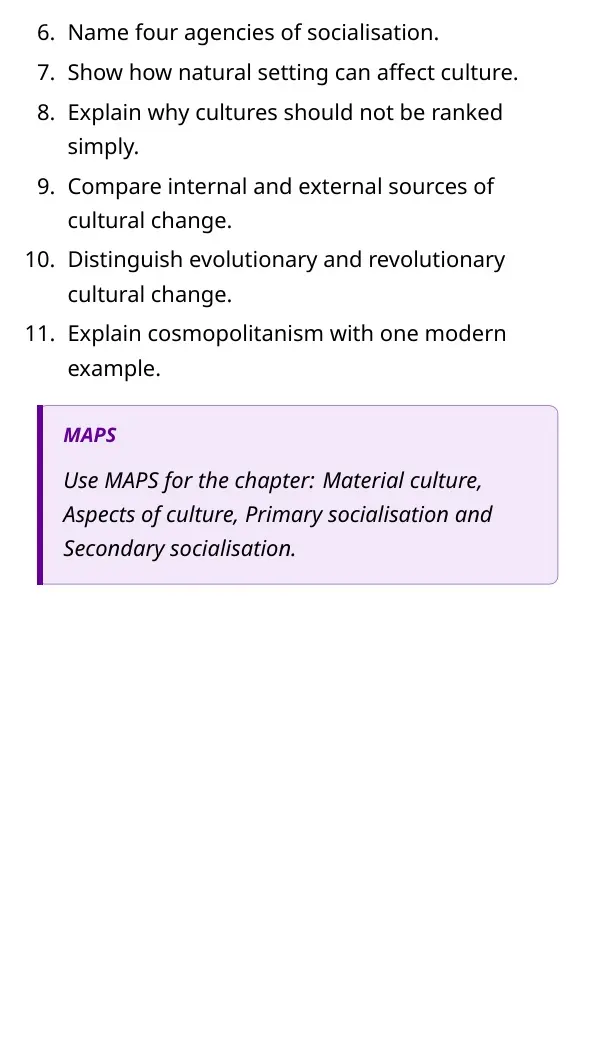
NCERT also treats cultural change as a key revision area. Change may be internal or external. It may also be evolutionary, meaning gradual, or revolutionary, meaning sudden and sharp. Cosmopolitanism is the opposite of ethnocentrism because it values other cultures without ranking them as inferior.
| NCERT term | Meaning | Example frame |
|---|---|---|
| Internal change | Change begins inside the society. | New farming method, reform or debate. |
| External change | Change comes through outside contact. | Colonial rule, migration, trade or media contact. |
| Evolutionary change | Gradual cultural change over time. | Slow shift in food, language or family practice. |
| Revolutionary change | Rapid cultural change after a sharp break. | Political intervention or major technological shift. |
Socialisation and Agencies in Class 11 Sociology
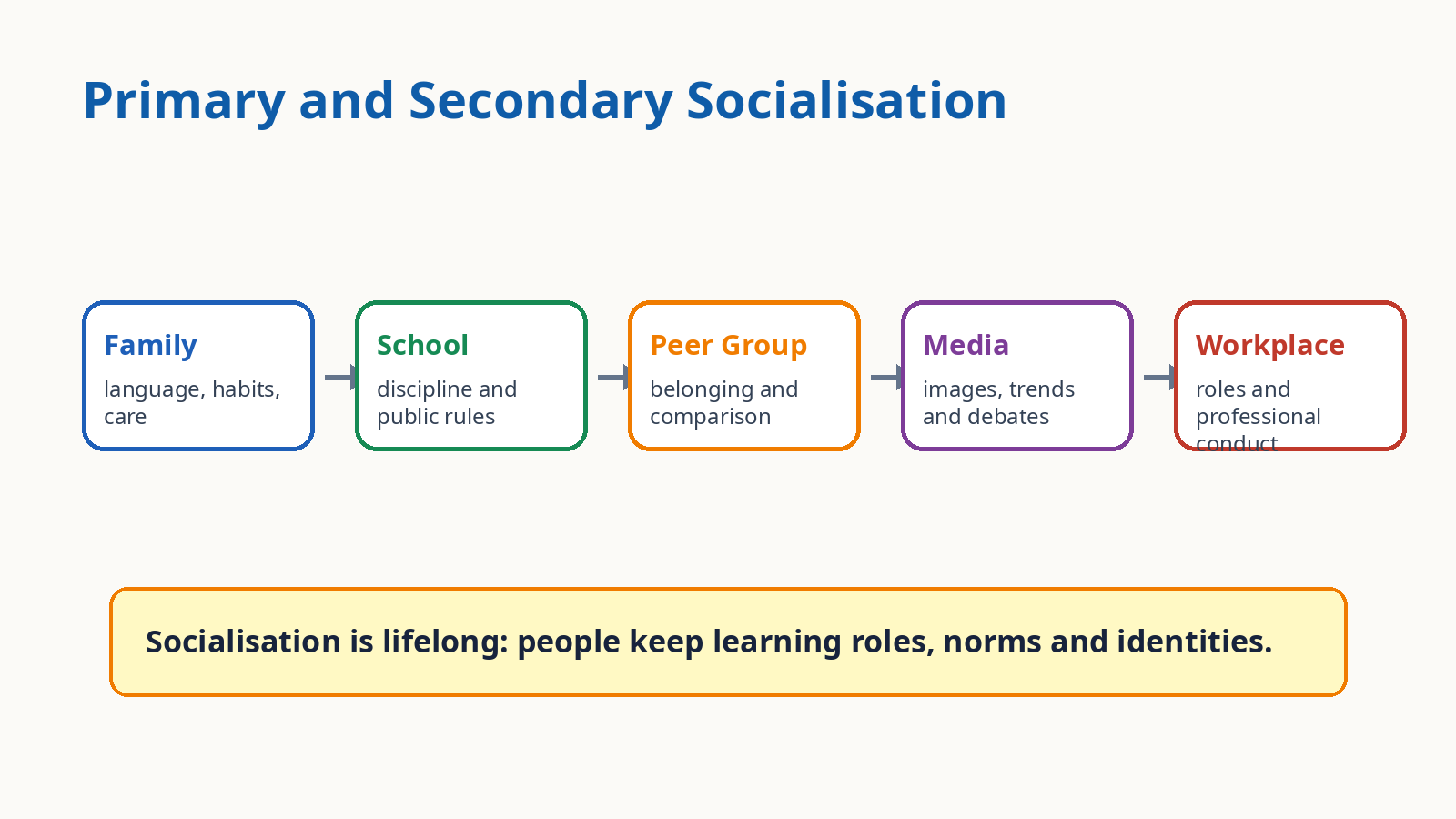
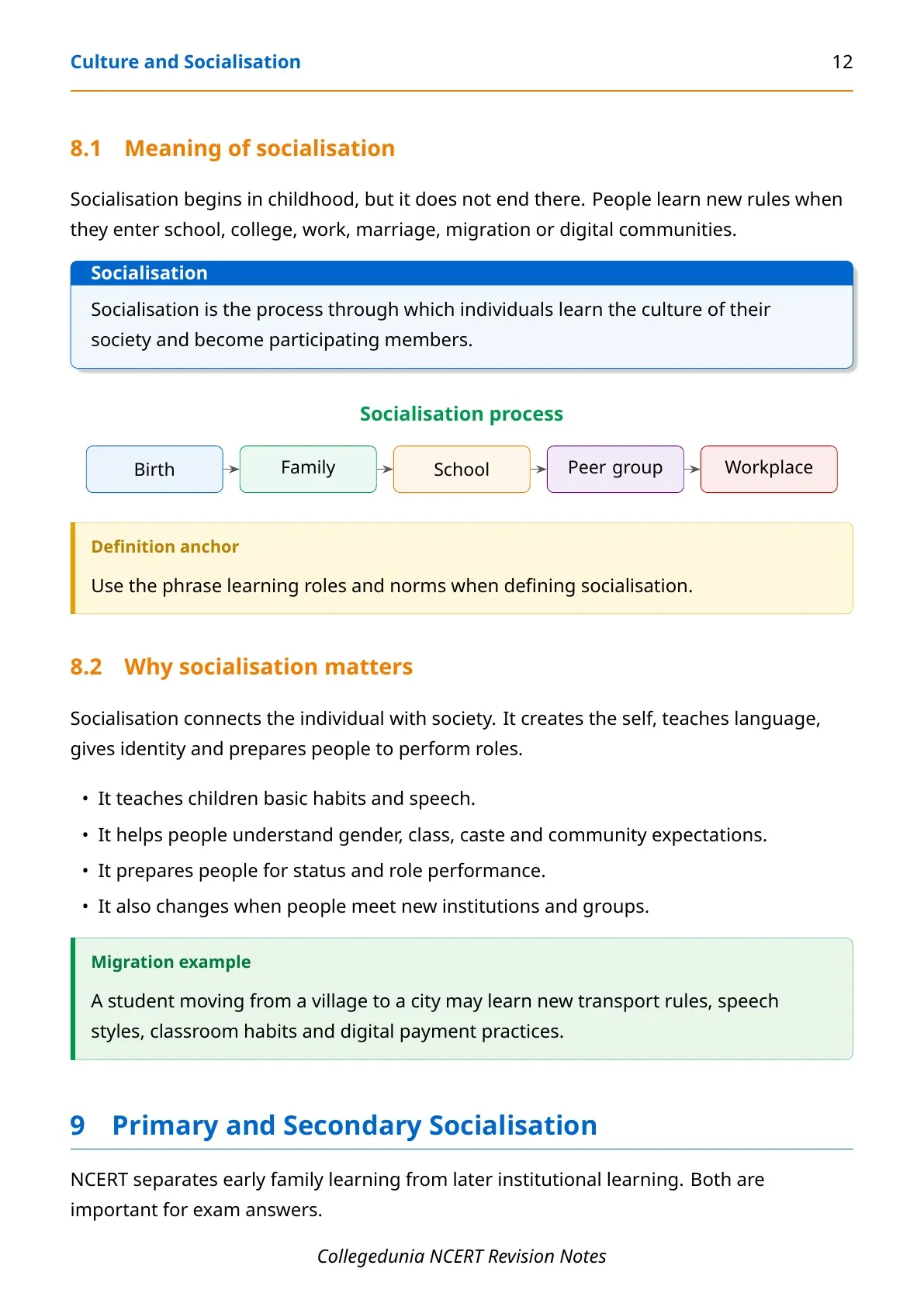
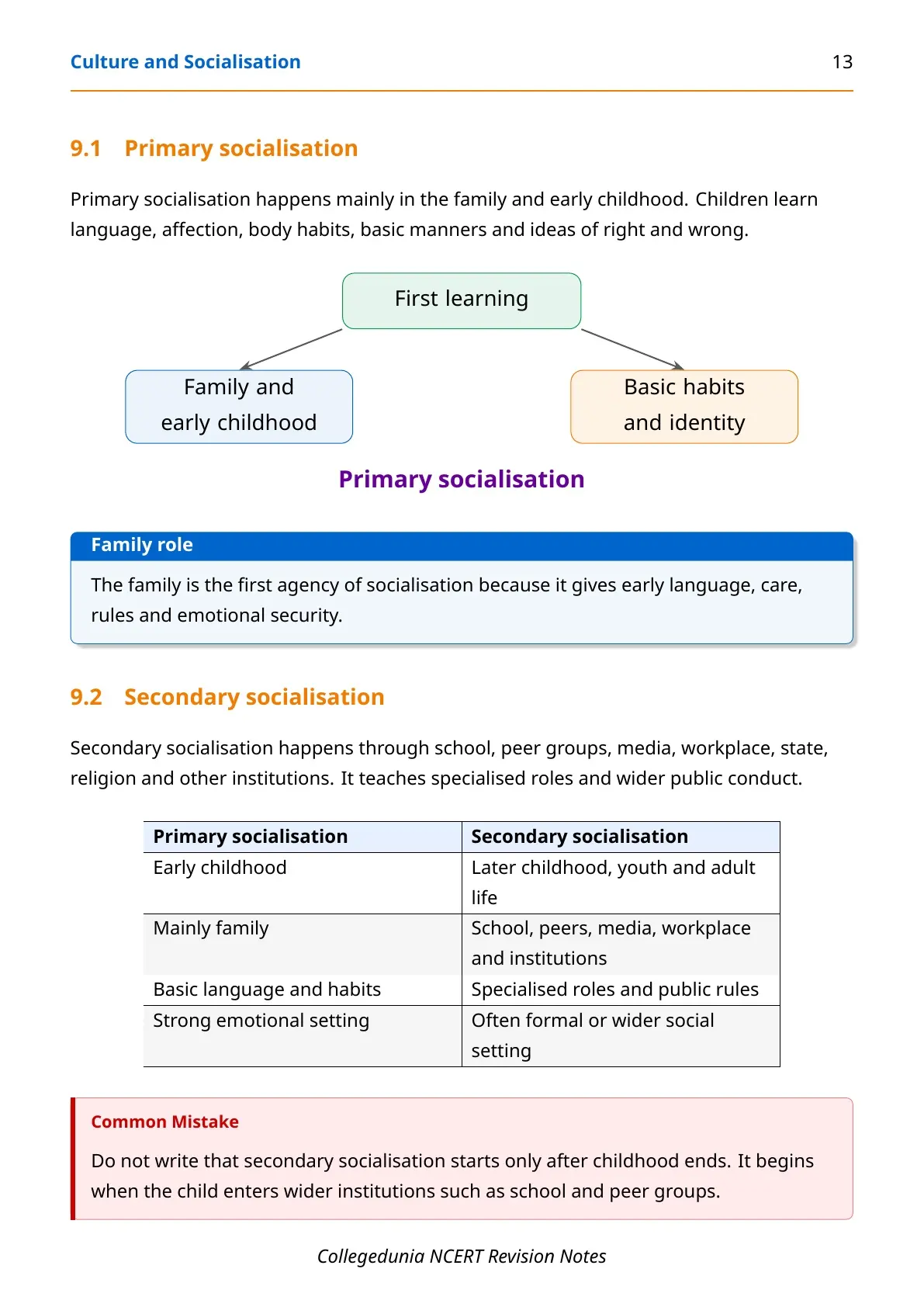
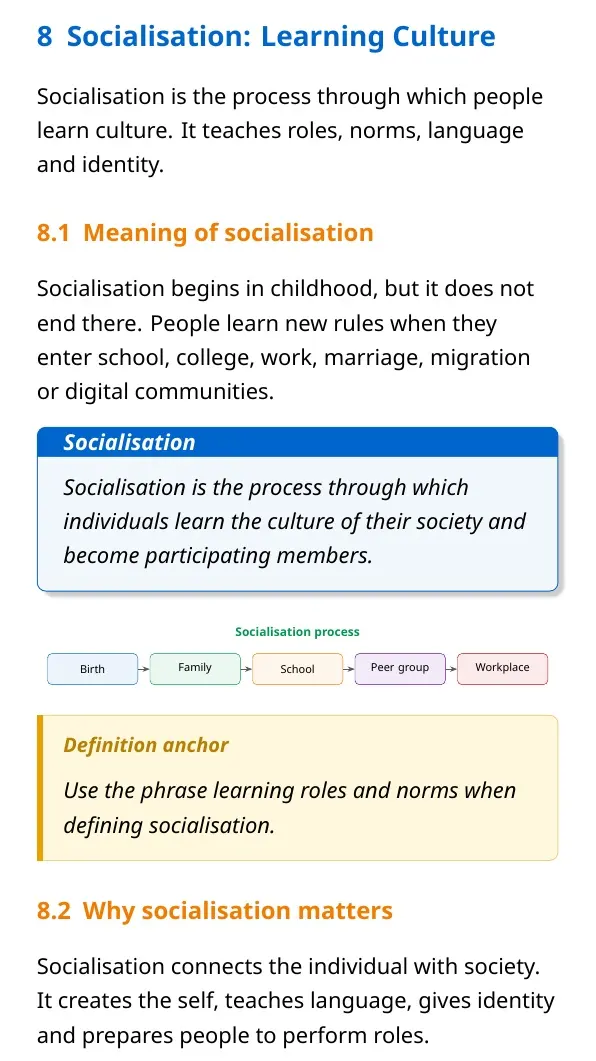
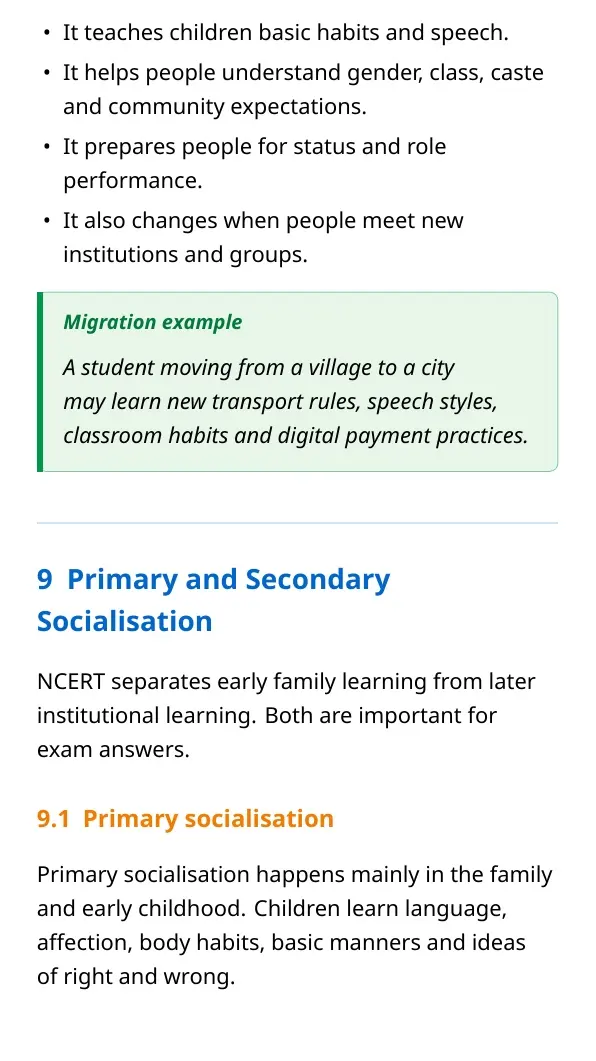
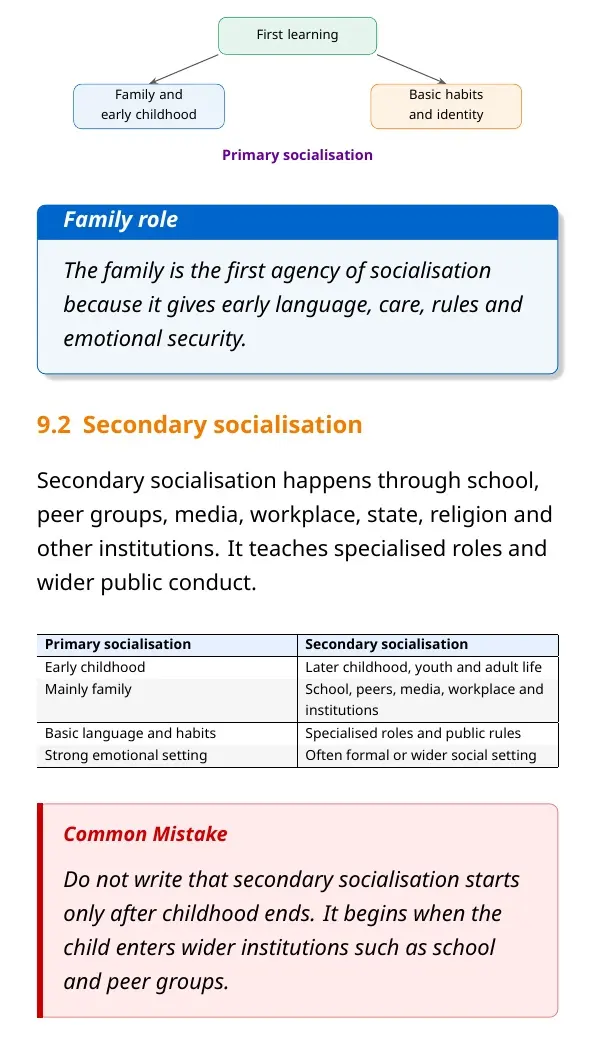
Socialisation is the process through which people learn culture, roles, language, norms and identity. Primary socialisation happens mainly through the family. Secondary socialisation happens through school, peers, media, religion, the state and workplaces.
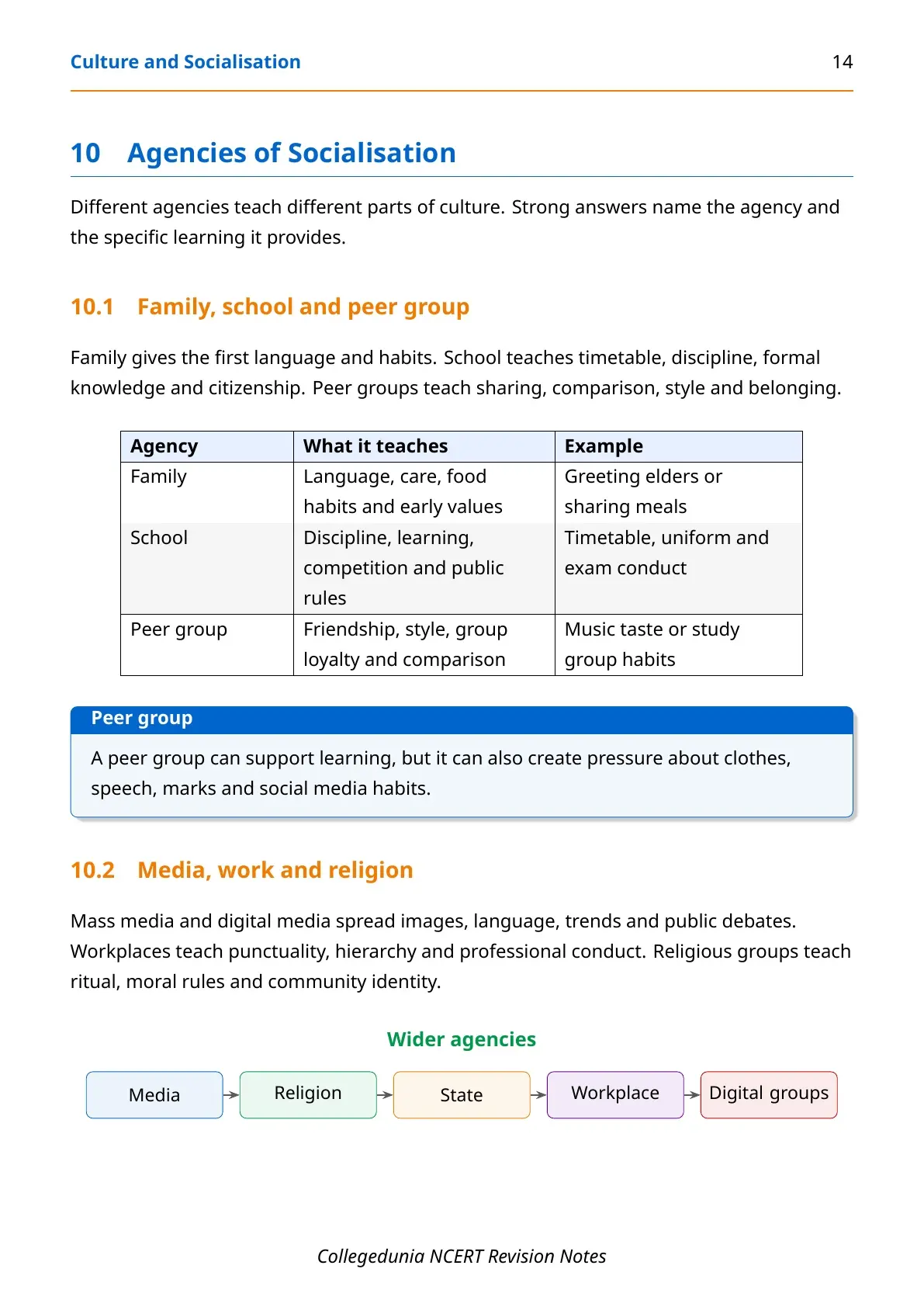
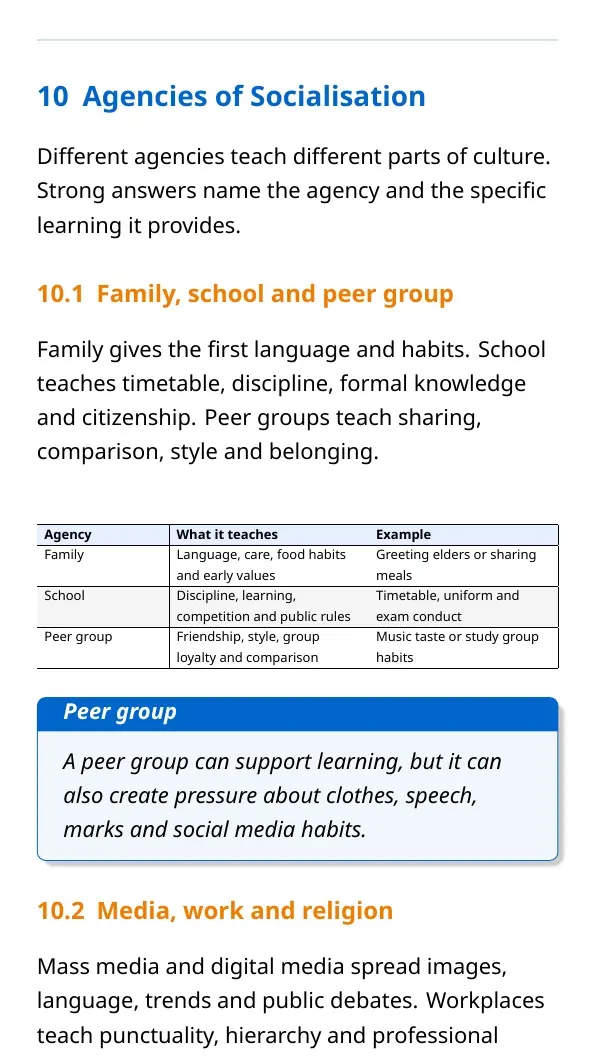
- Family: teaches language, early habits, affection and basic values.
- School: teaches timetable, discipline, formal knowledge and public rules.
- Peer group: teaches friendship, comparison, style and belonging.
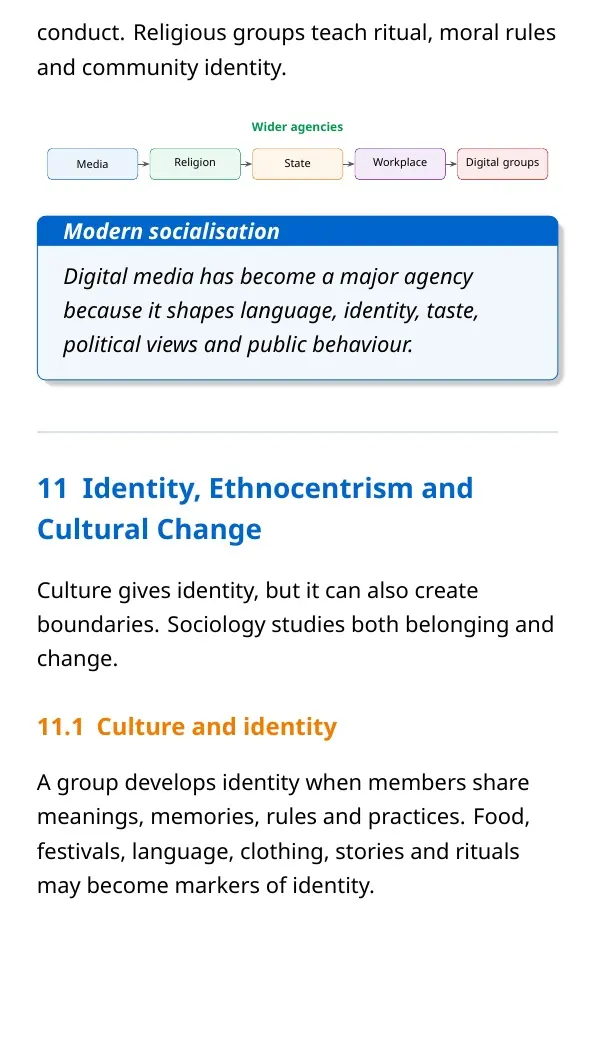
- Mass media: spreads images, trends, debates and new forms of identity.
How to Use These Chapter 4 Sociology Notes
Read the PDF after one textbook reading. Start with the culture definition, then revise the three dimensions table. Finish with socialisation agencies because many school questions ask for examples.
- Write every definition in one line.
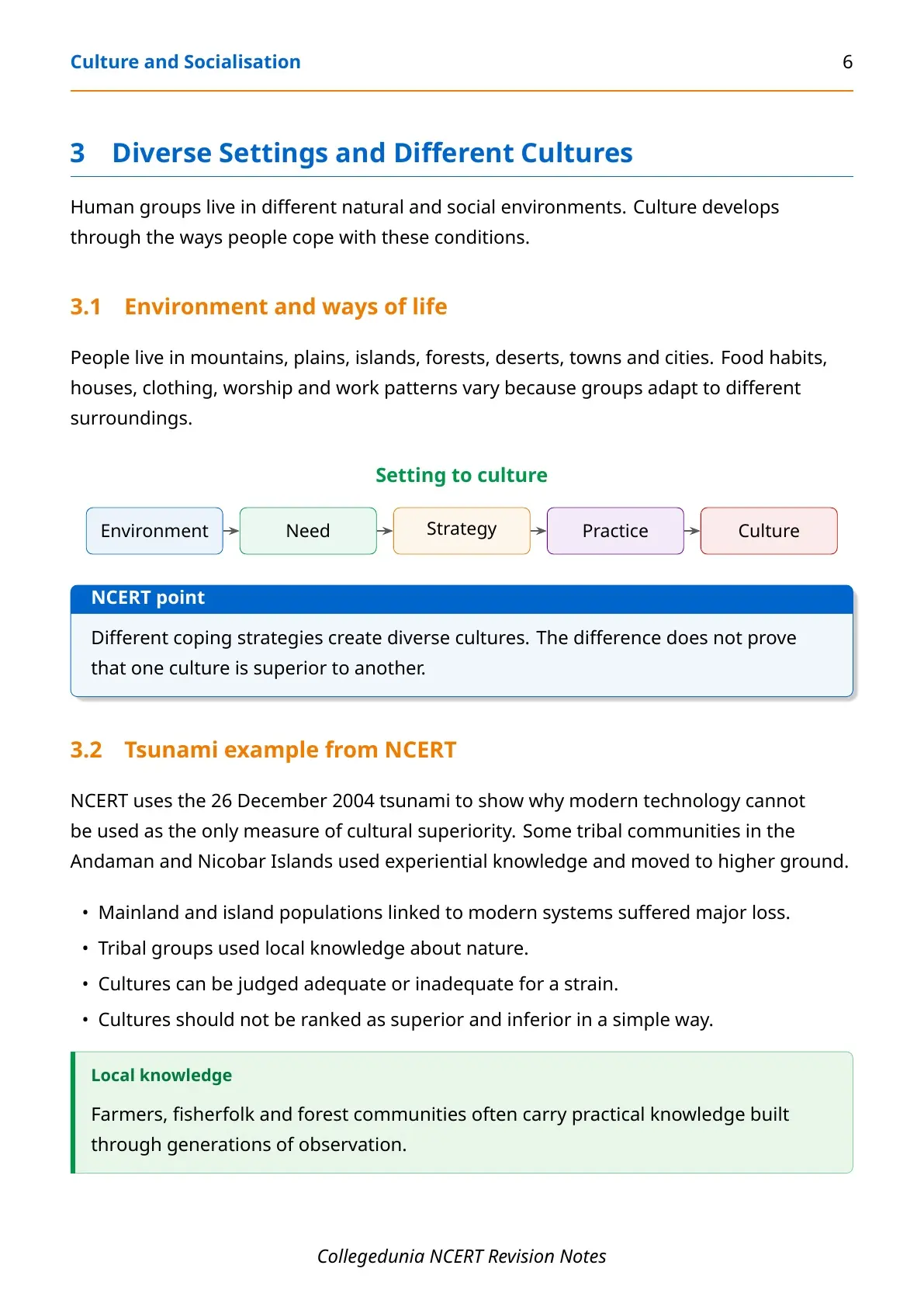
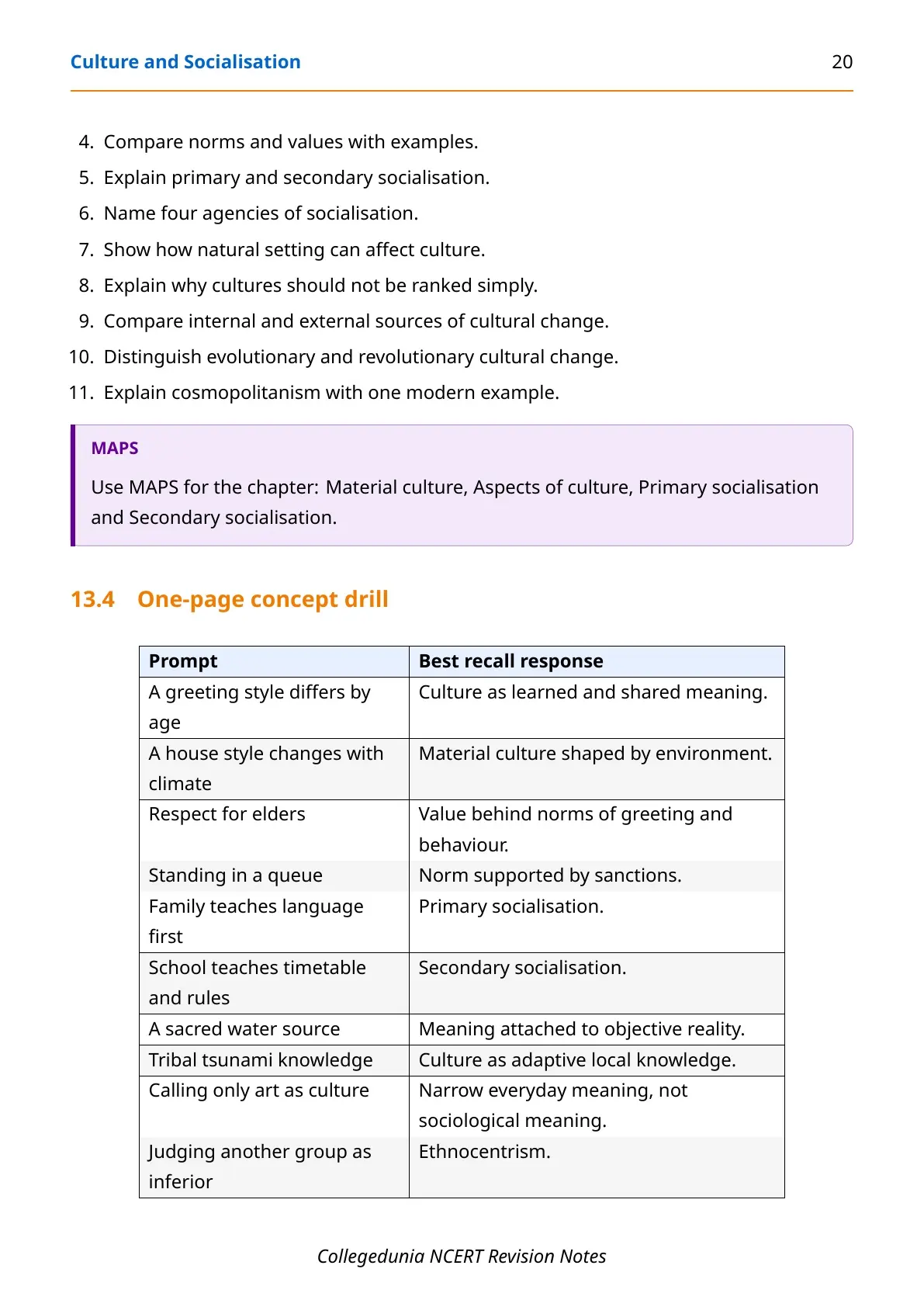
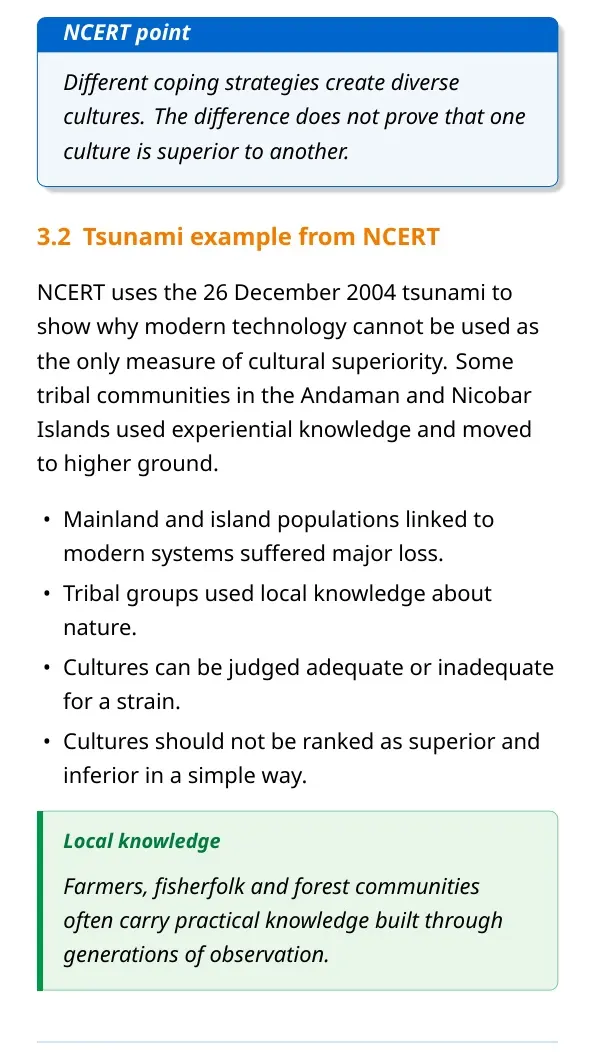
- Add one NCERT example, such as greeting style or tsunami knowledge.
- Compare paired terms such as value and norm.
- Use family, school, peers and media for socialisation answers.
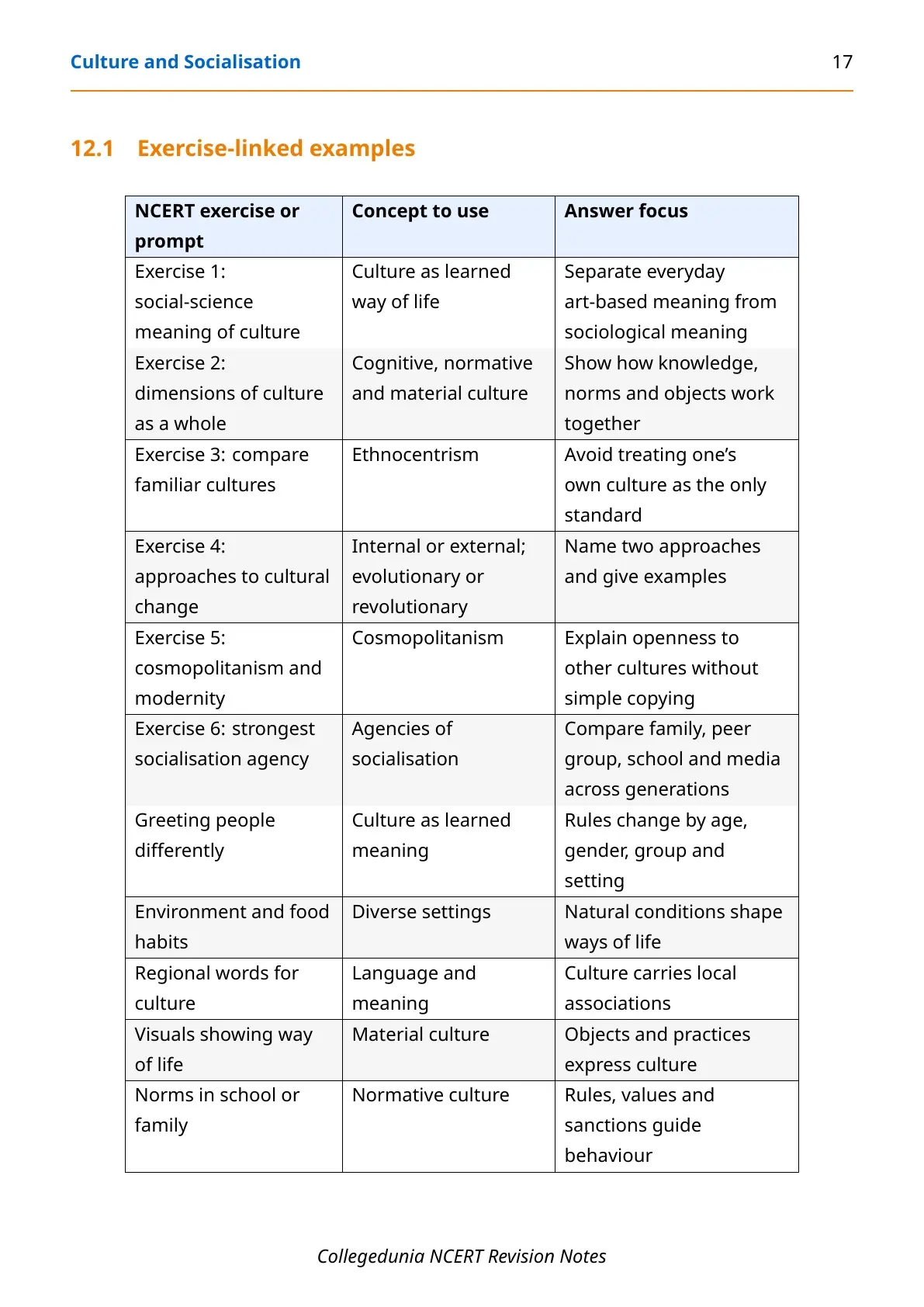
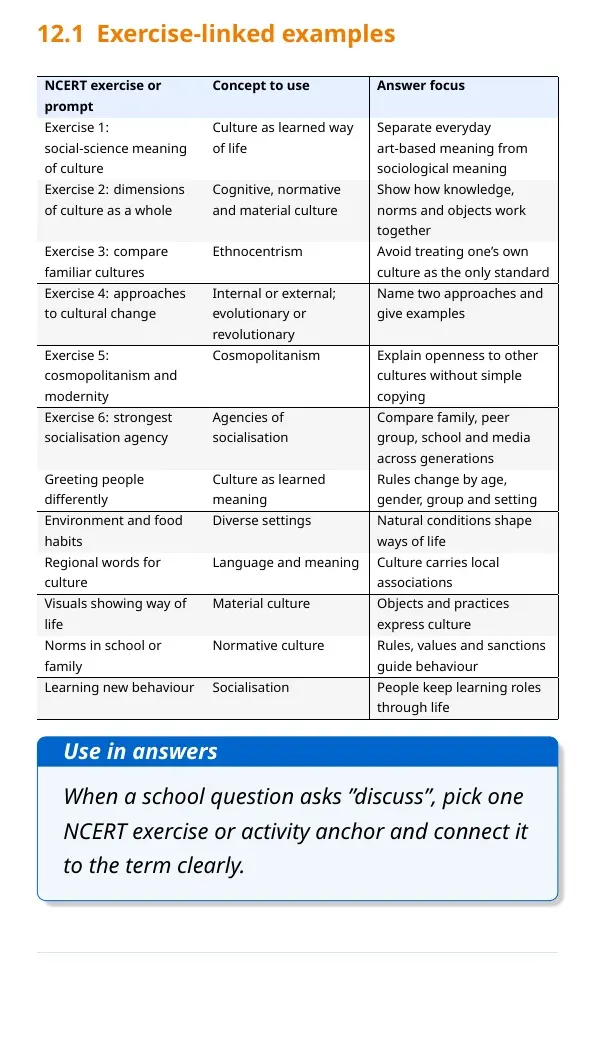
| NCERT exercise anchor | Concept to use |
|---|---|
| Exercise 1 asks how social-science culture differs from everyday use. | Culture as a learned way of life. |
| Exercise 2 asks how culture dimensions form a whole. | Cognitive, normative and material culture. |
| Exercise 4 asks for approaches to cultural change. | Internal or external, evolutionary or revolutionary change. |
| Exercise 5 asks about cosmopolitanism and ethnocentrism. | Openness to other cultures versus judging them by one's own standard. |
| Exercise 6 asks about the strongest agency of socialisation. | Family, peer group, school and media across generations. |
Related NCERT Resources for Culture and Socialisation
| Resource | Use it for |
|---|---|
| Culture and Socialisation Class 11 NCERT Solutions | Exercise answers and answer-writing format. |
| Culture and Socialisation NCERT Book PDF | Official textbook reading and examples. |
| Culture and Socialisation Handwritten Notes | Notebook-style last-minute revision once available. |
All Class 11 Sociology Notes Chapters
| Chapter | NCERT Notes link |
|---|---|
| Chapter 1 | Sociology and Society Notes |
| Chapter 2 | Terms, Concepts and Their Use in Sociology Notes |
| Chapter 3 | Understanding Social Institutions Notes |
| Chapter 4 | Culture and Socialisation Notes |
| Chapter 5 | Doing Sociology Research Methods Notes |
Culture and Socialisation Class 11 Notes FAQs
Ques. What is covered in Class 11 Sociology Chapter 4 Notes?
Ans. The notes cover culture, common understanding, cognitive and normative dimensions, material culture, values, norms, ethnocentrism, cultural change and socialisation.
Ques. What is culture in sociology?
Ans. Culture is the learned and shared way of life through which people create meanings, follow norms, use symbols and identify with a group.
Ques. What is the difference between primary and secondary socialisation?
Ans. Primary socialisation happens mainly in the family during early childhood. Secondary socialisation happens through school, peers, media and other institutions.
Ques. How should students revise Culture and Socialisation for 2026-27 exams?
Ans. Students should learn the culture definition, revise cognitive, normative and material dimensions, and prepare examples for family, school, peer group and media.



Comments