




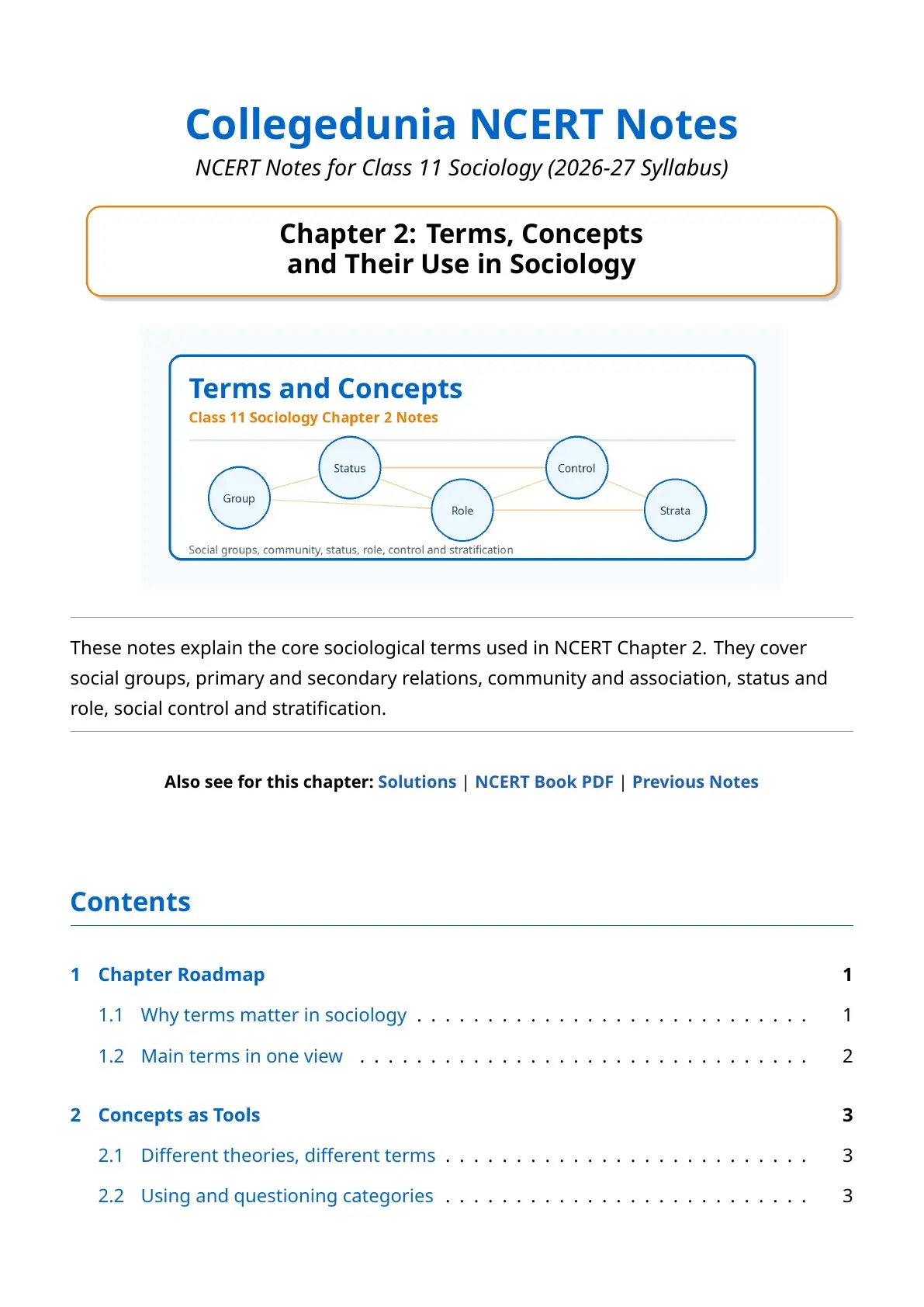
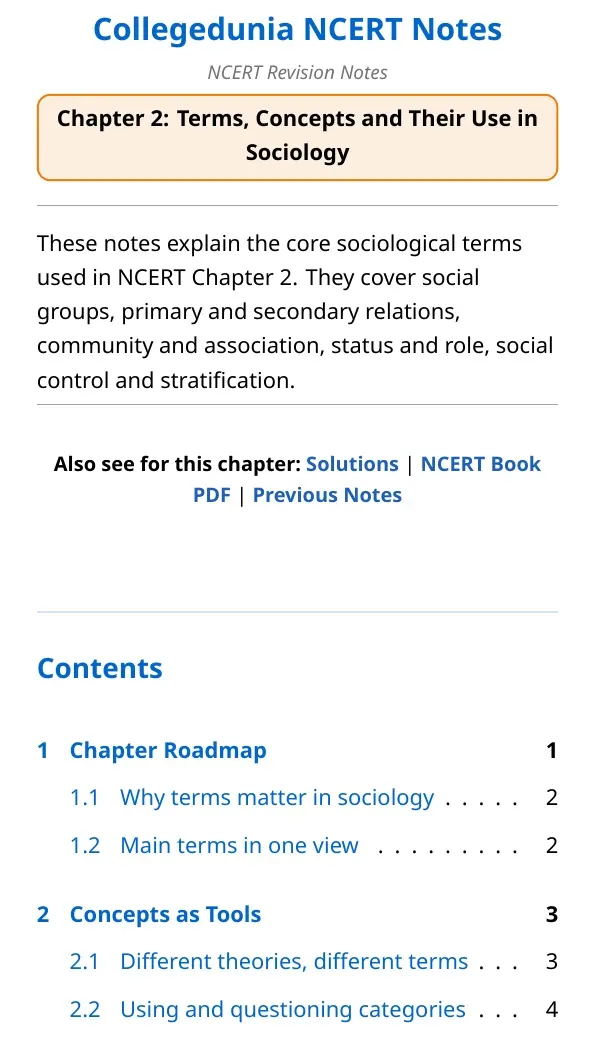
The NCERT Class 11 Sociology Chapter 2 Terms, Concepts and Their Use in Sociology Notes help students revise the exact vocabulary used in the 2026-27 NCERT textbook. The PDF explains social groups, quasi groups, community, association, status, role, social control and stratification with examples.
- Best for: quick Class 11 Sociology revision before school tests.
- PDF focus: term definitions, comparison tables, diagrams and common mistake alerts.
- Chapter value: this chapter builds the vocabulary used in later Sociology chapters.
Student Feedback: In a Collegedunia poll of 11,860 Class 11 Sociology students before the 2026 exams, 74% said Chapter 2 became easier after revising term pairs in tables.
Source: 2026 Class 11 Sociology student poll across CBSE schools.
In This Article
What the Terms, Concepts and Their Use in Sociology Notes Cover
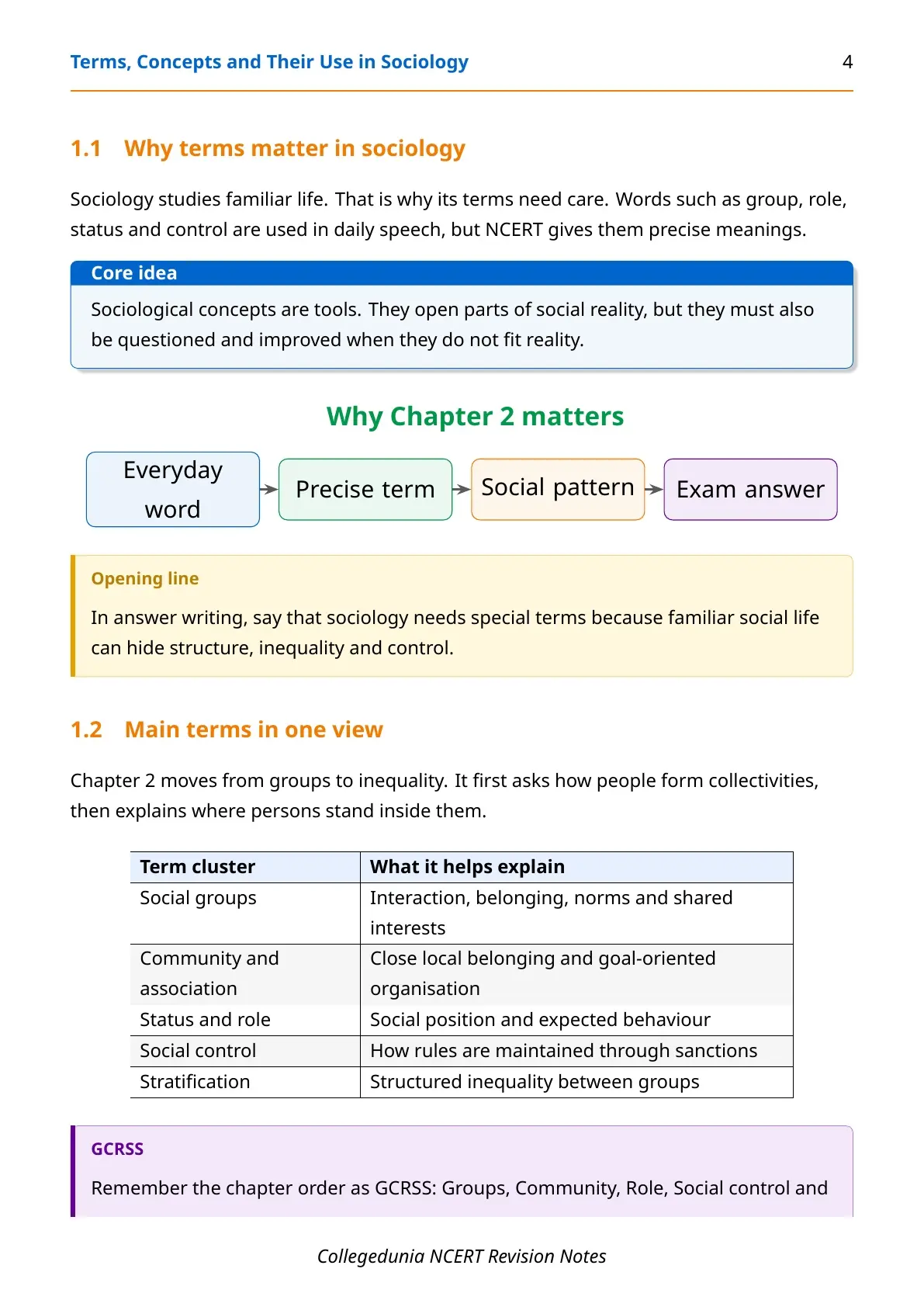
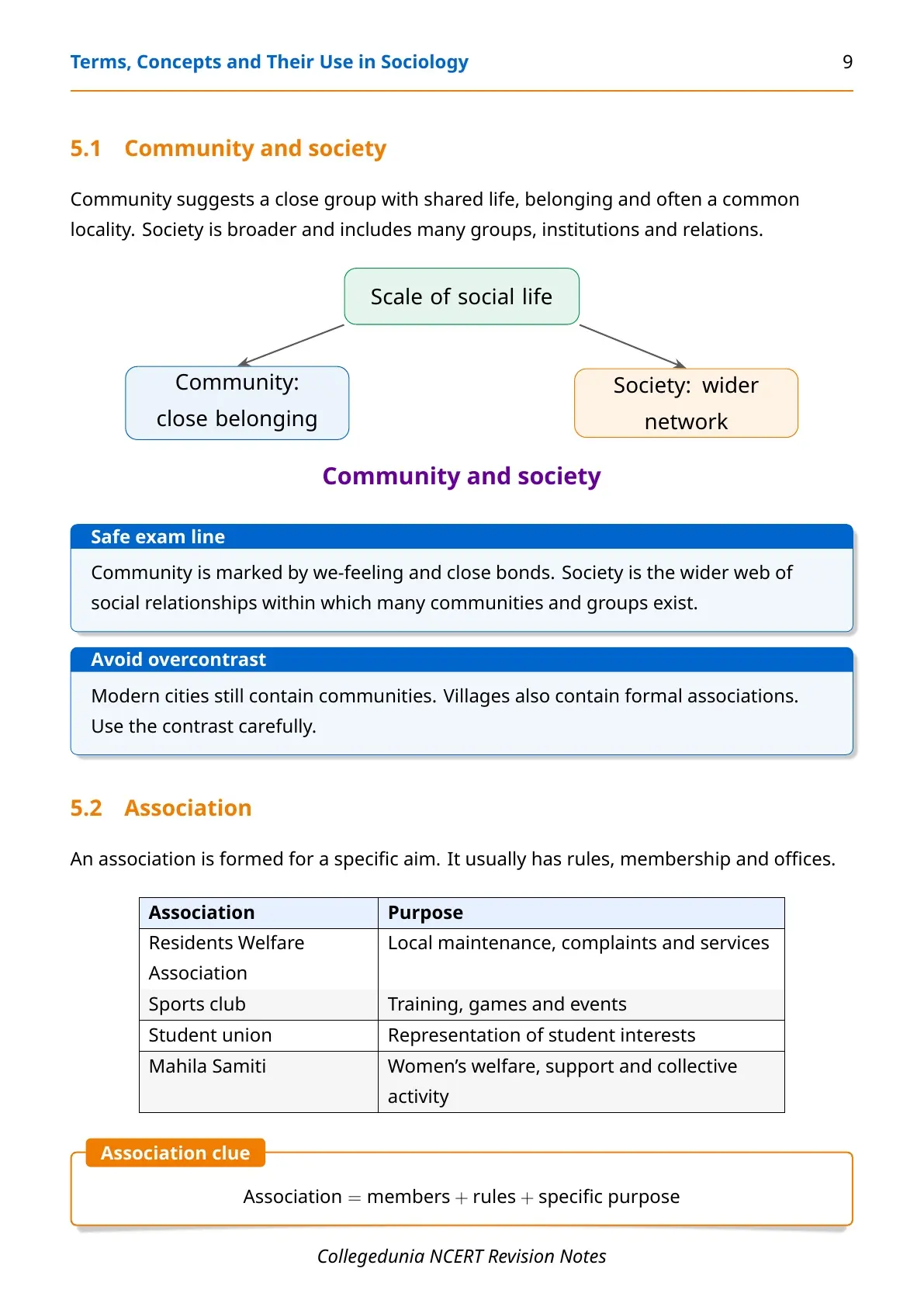
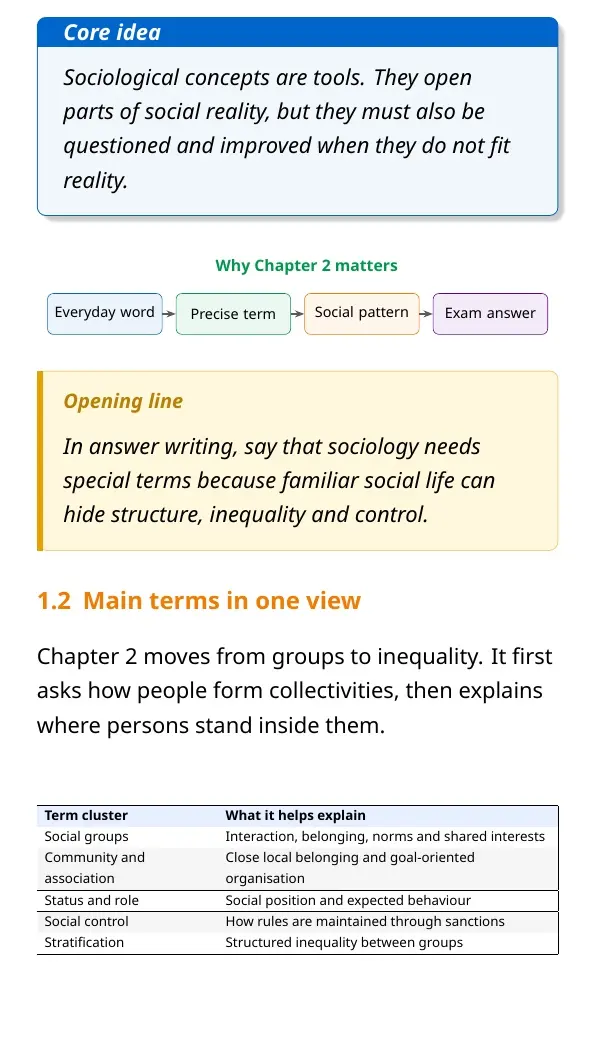
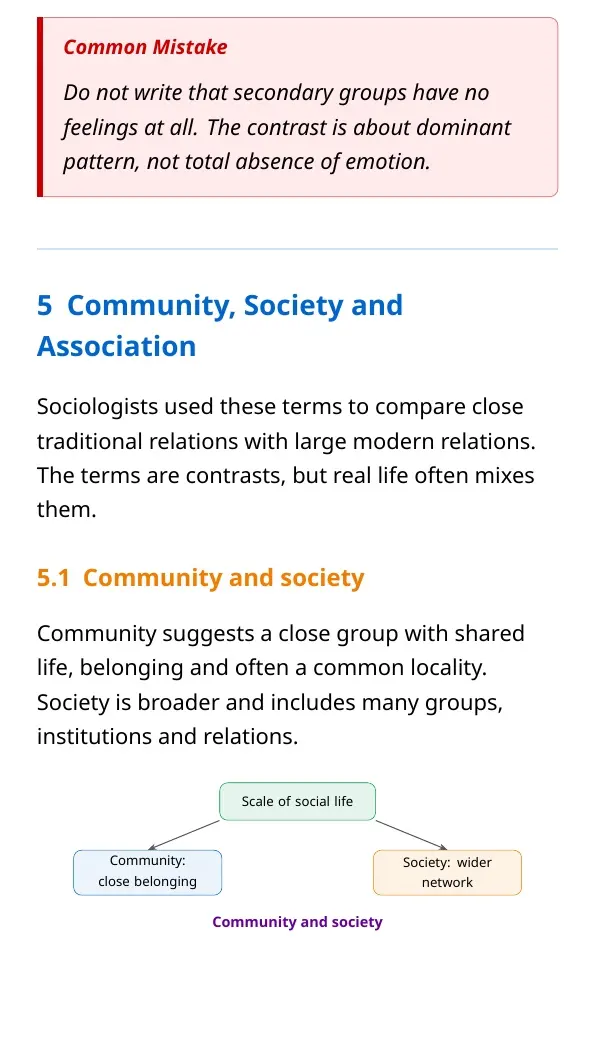
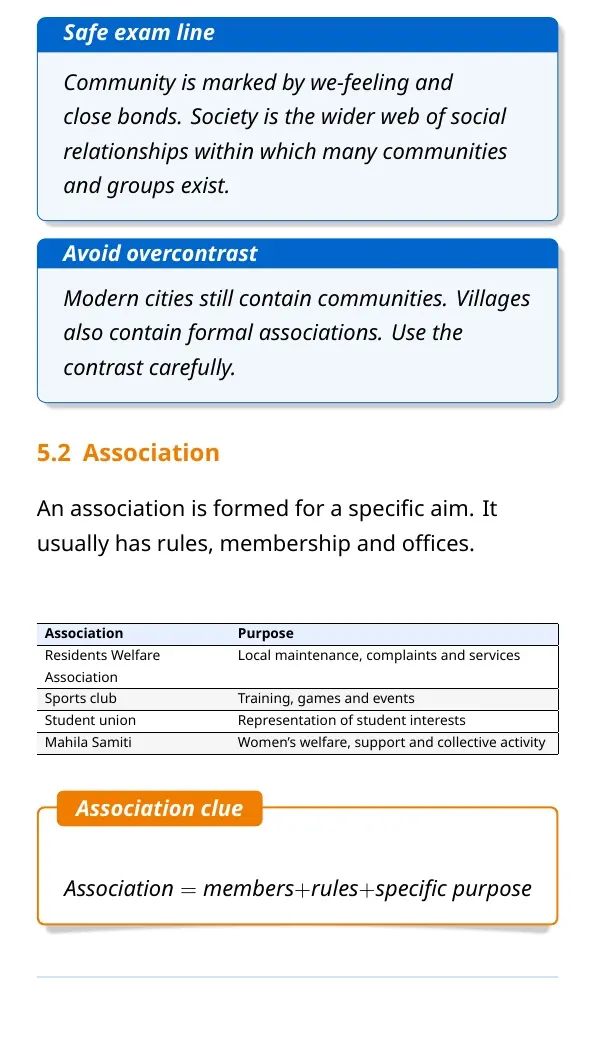
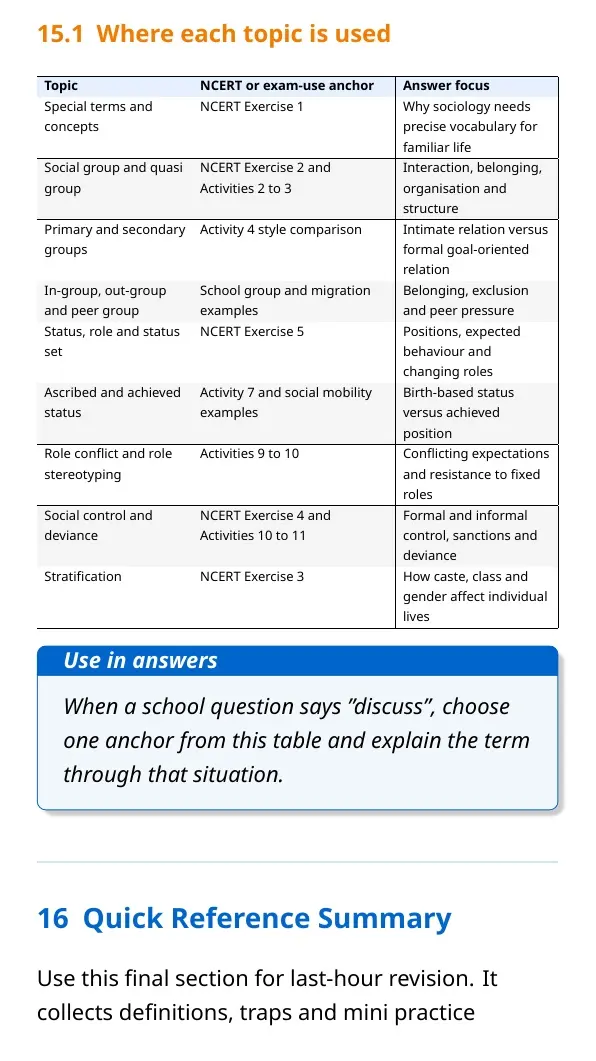
Chapter 2 gives students the working language of sociology. Everyday words such as group, status, role and control become precise concepts in the chapter. Use every term with one example to avoid vague answers.
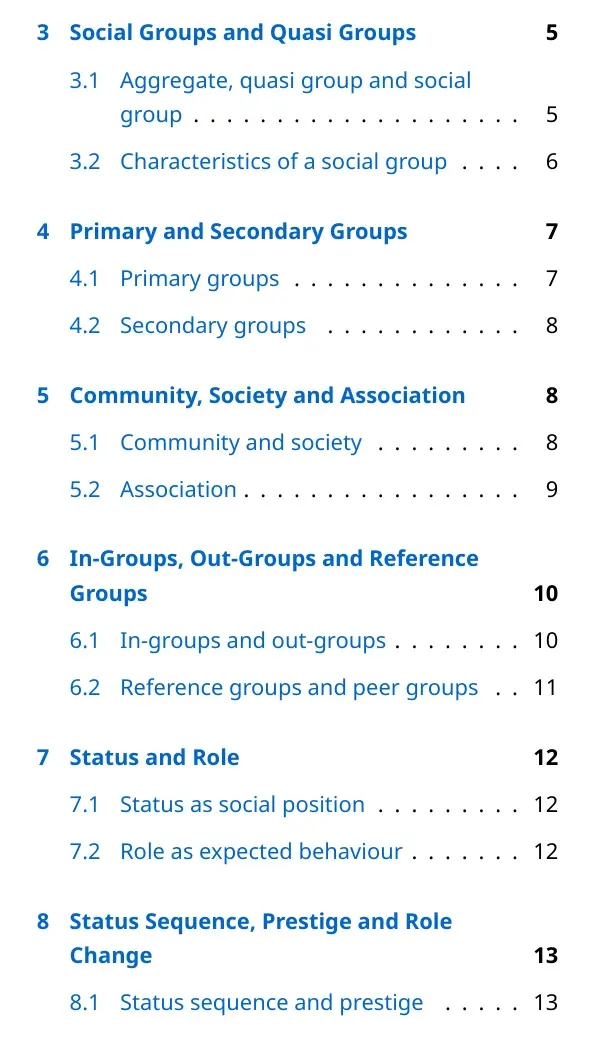
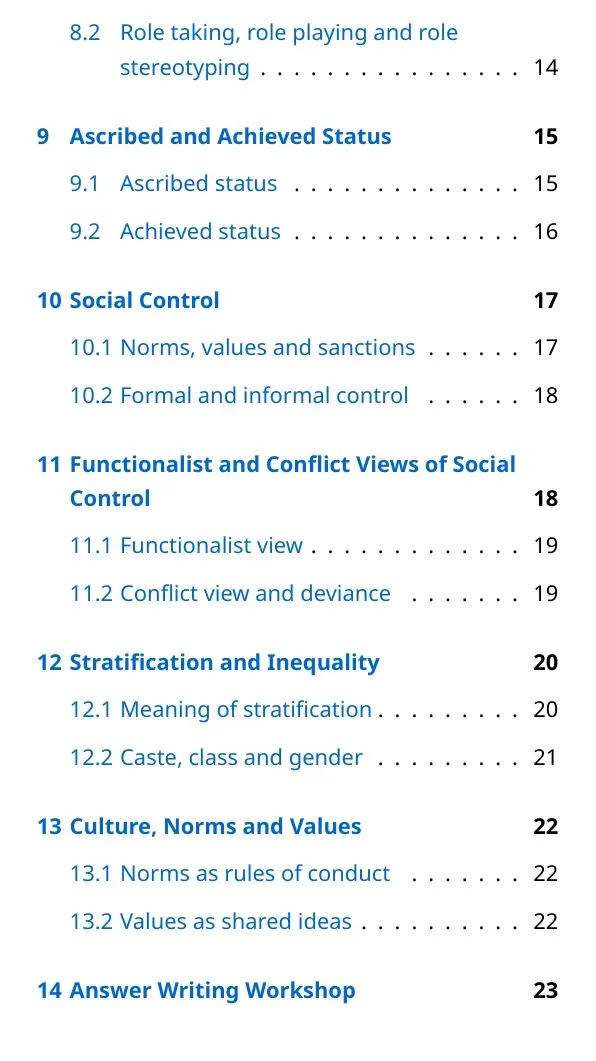
| PDF section | What students revise |
|---|---|
| Concepts as tools | Why sociology needs precise terms and why concepts must be questioned. |
| Social groups | Aggregate, quasi group, social group, primary group and secondary group. |
| Status and role | Status set, role expectations, role conflict and ascribed versus achieved status. |
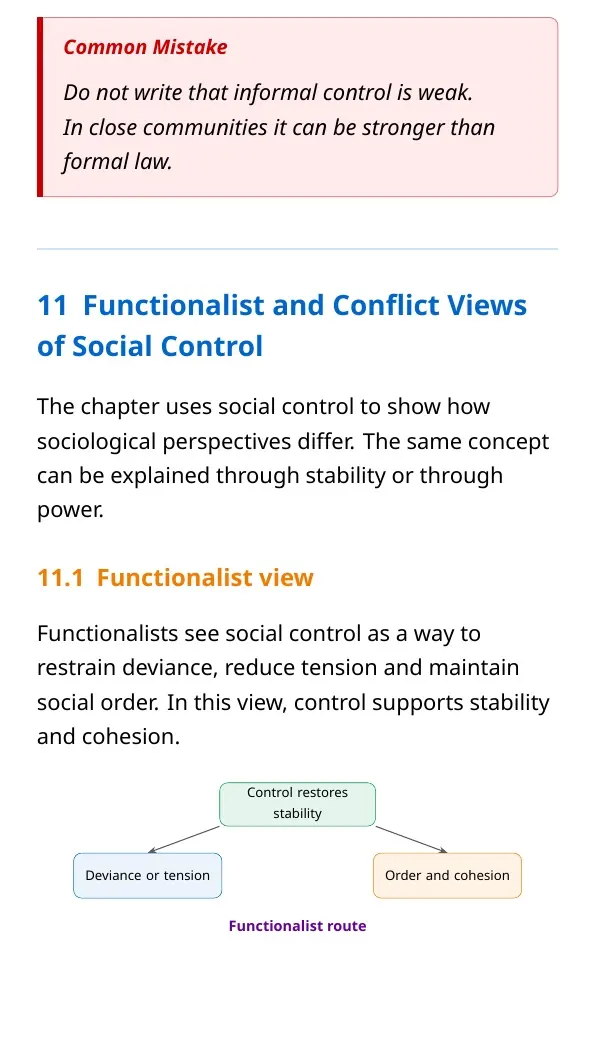
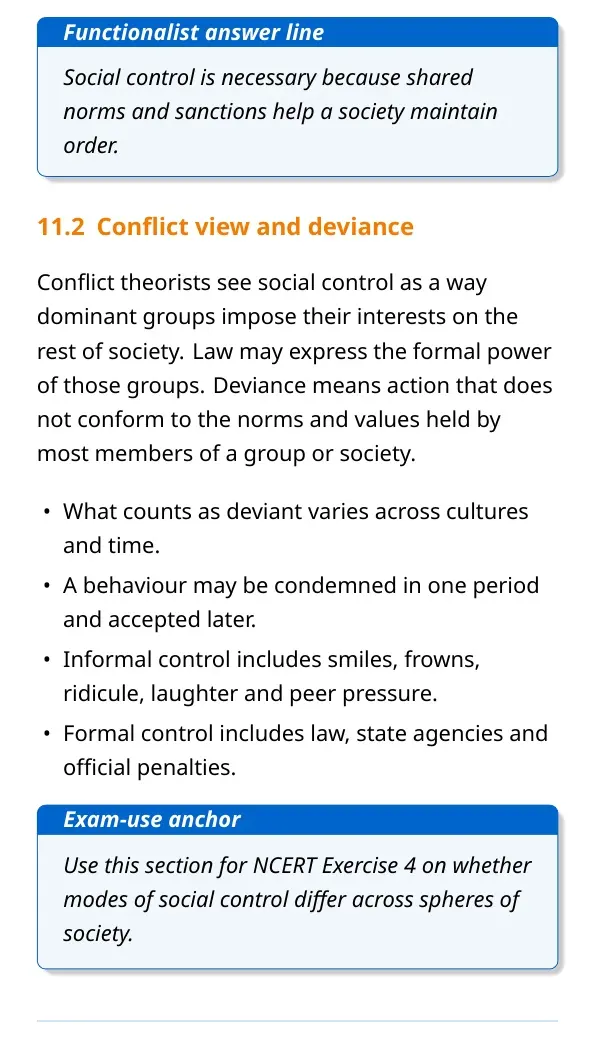
| Social control | Norms, values, sanctions, formal control and informal control. |
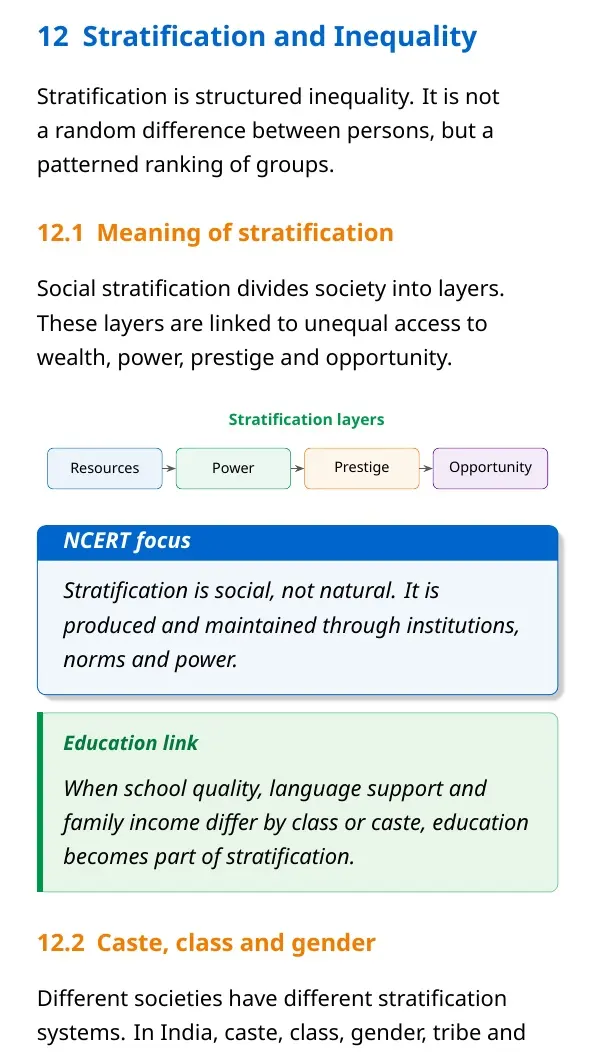
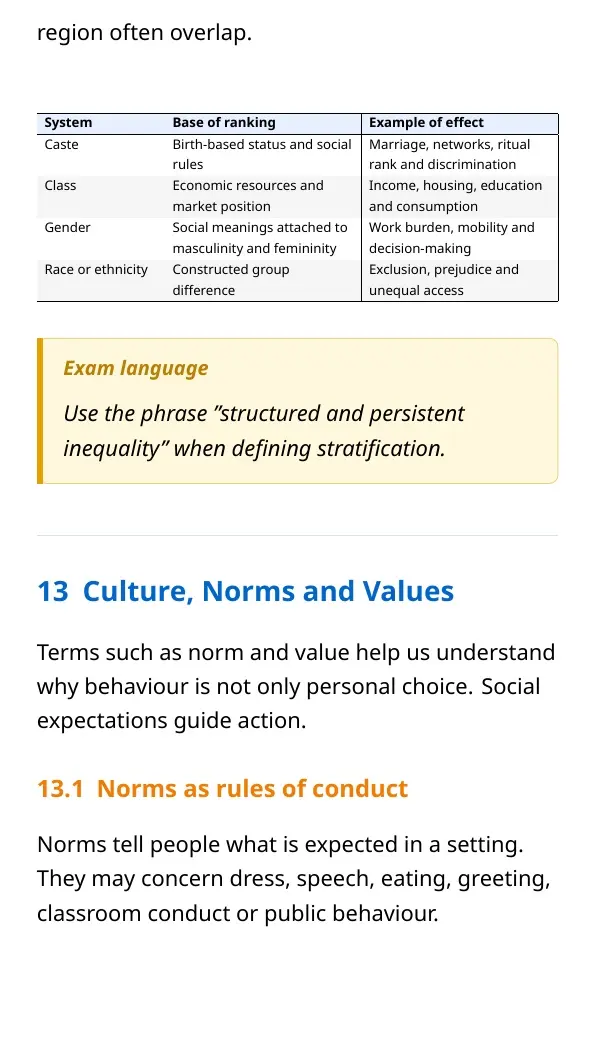
| Stratification | Structured inequality through caste, class, gender and other social rankings. |
Class 11 Sociology Chapter 2 Video on Social Groups
Source: Magnet Brains on YouTube
Social Groups and Quasi Groups in Chapter 2
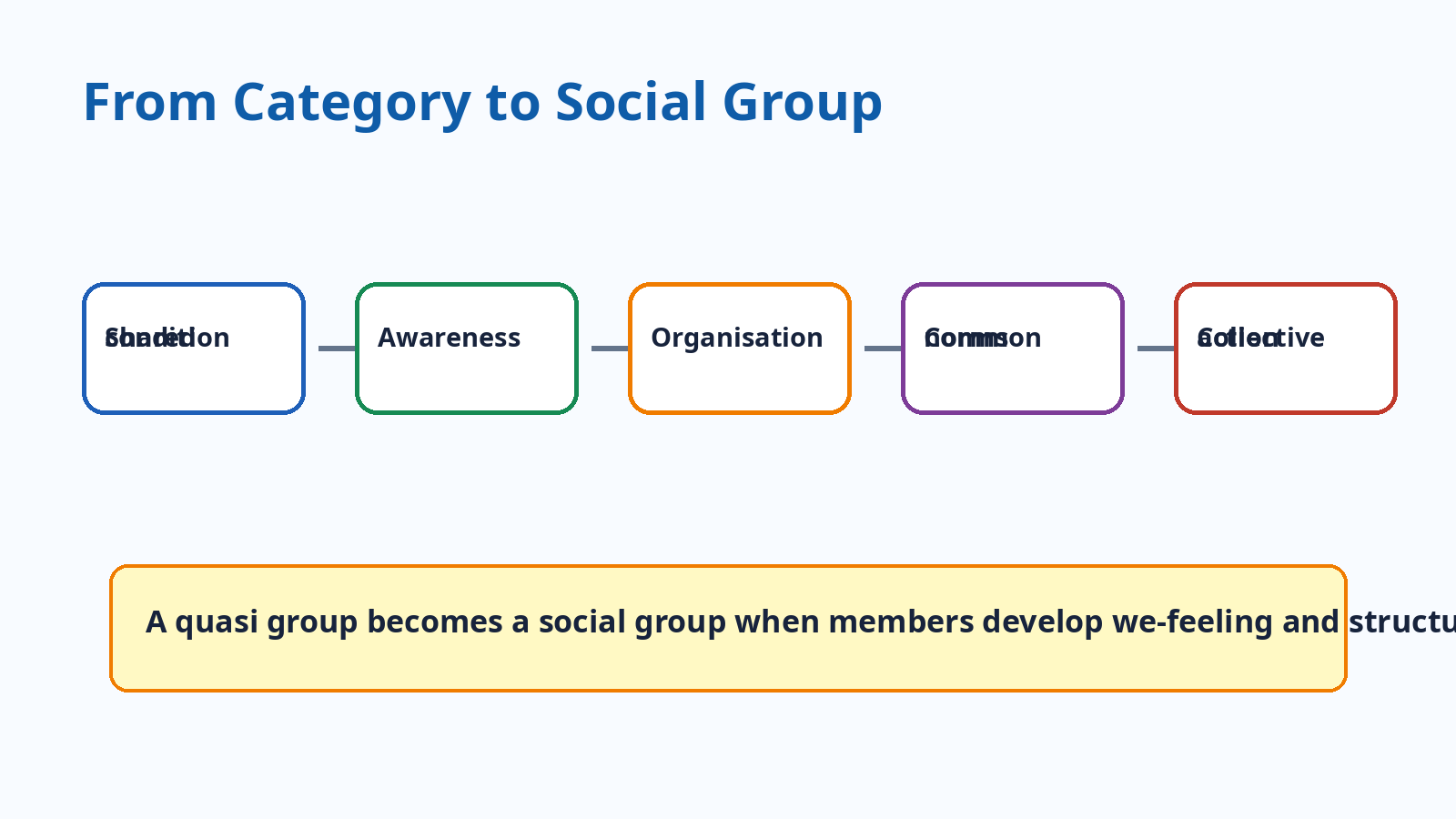
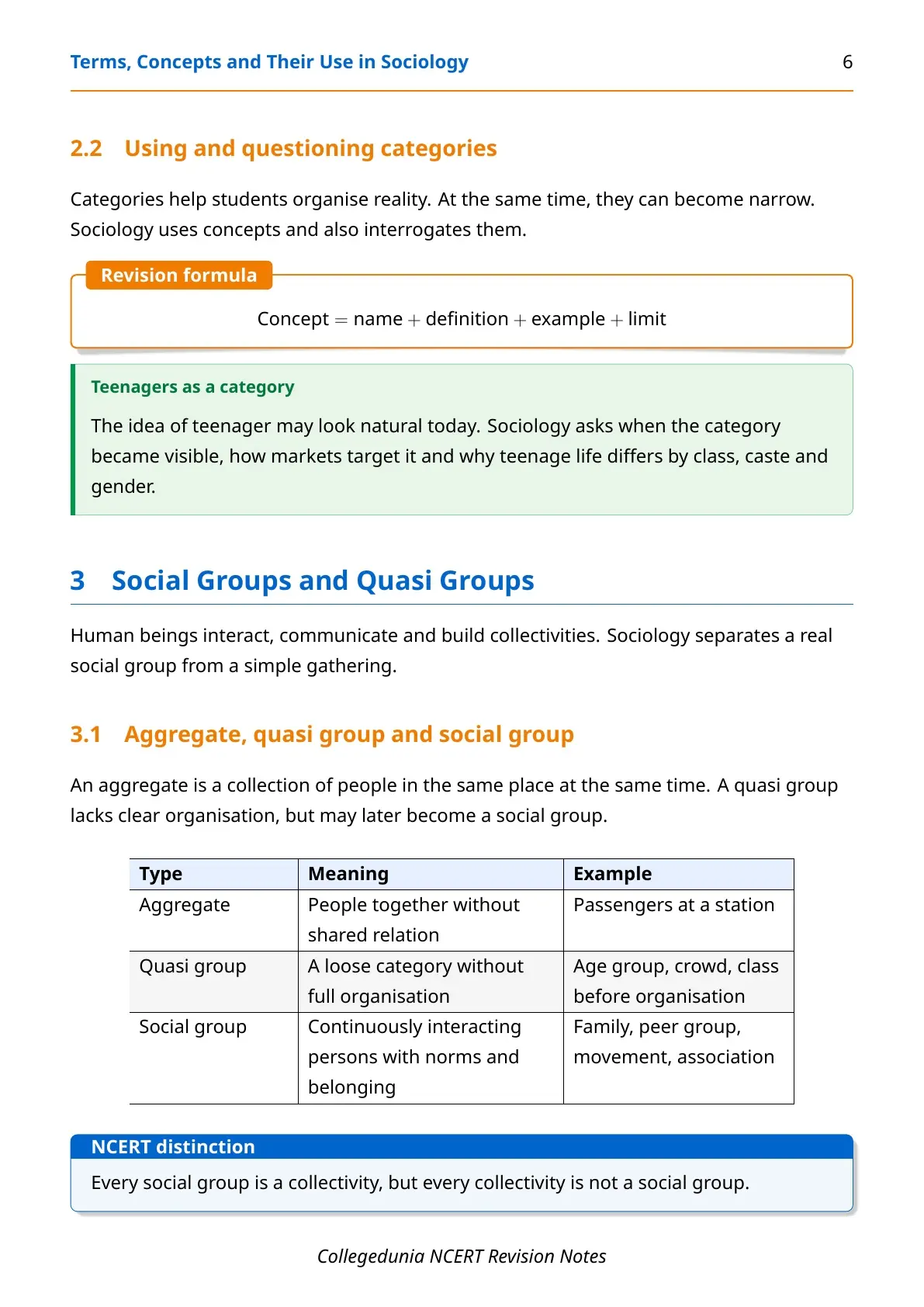
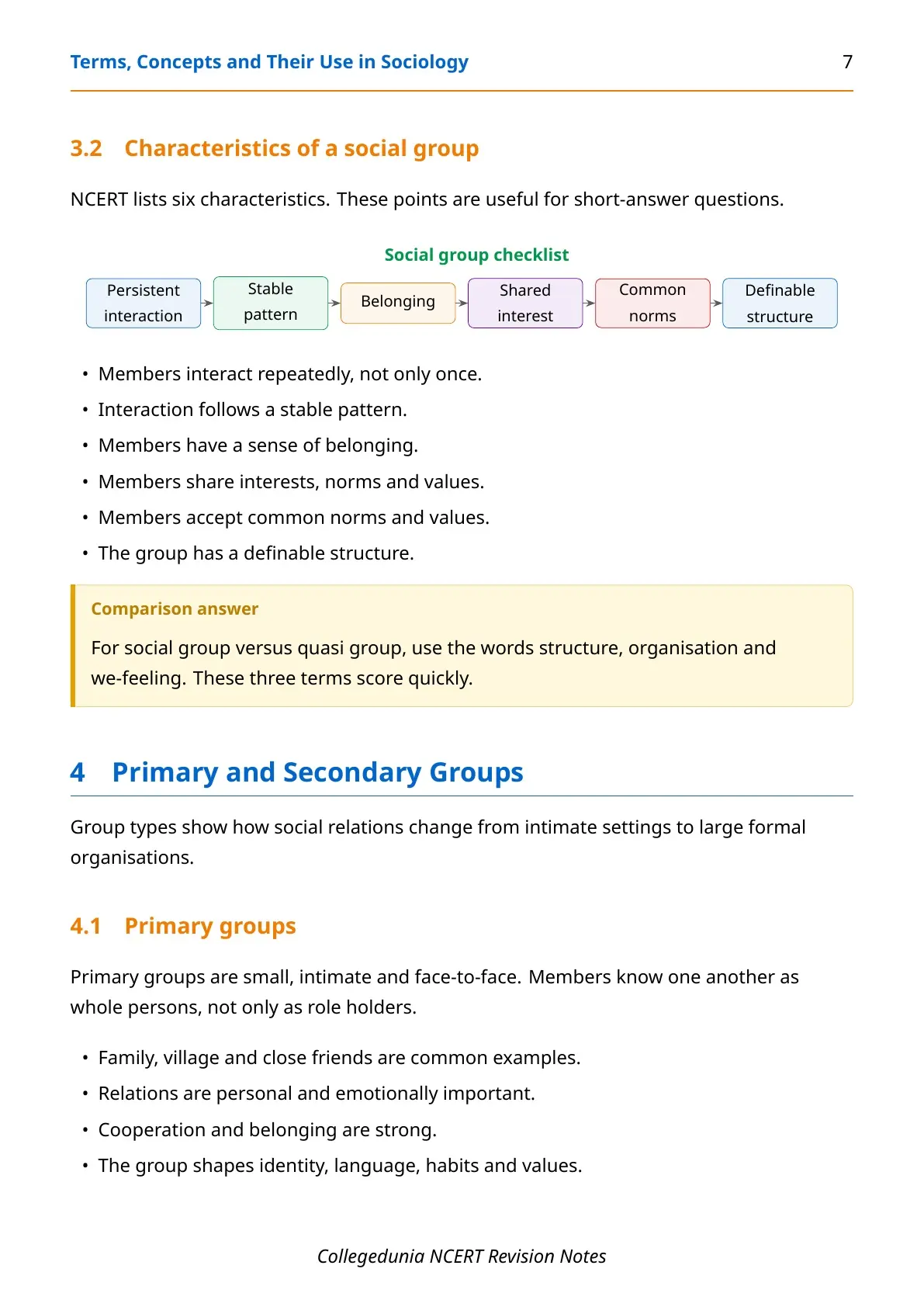
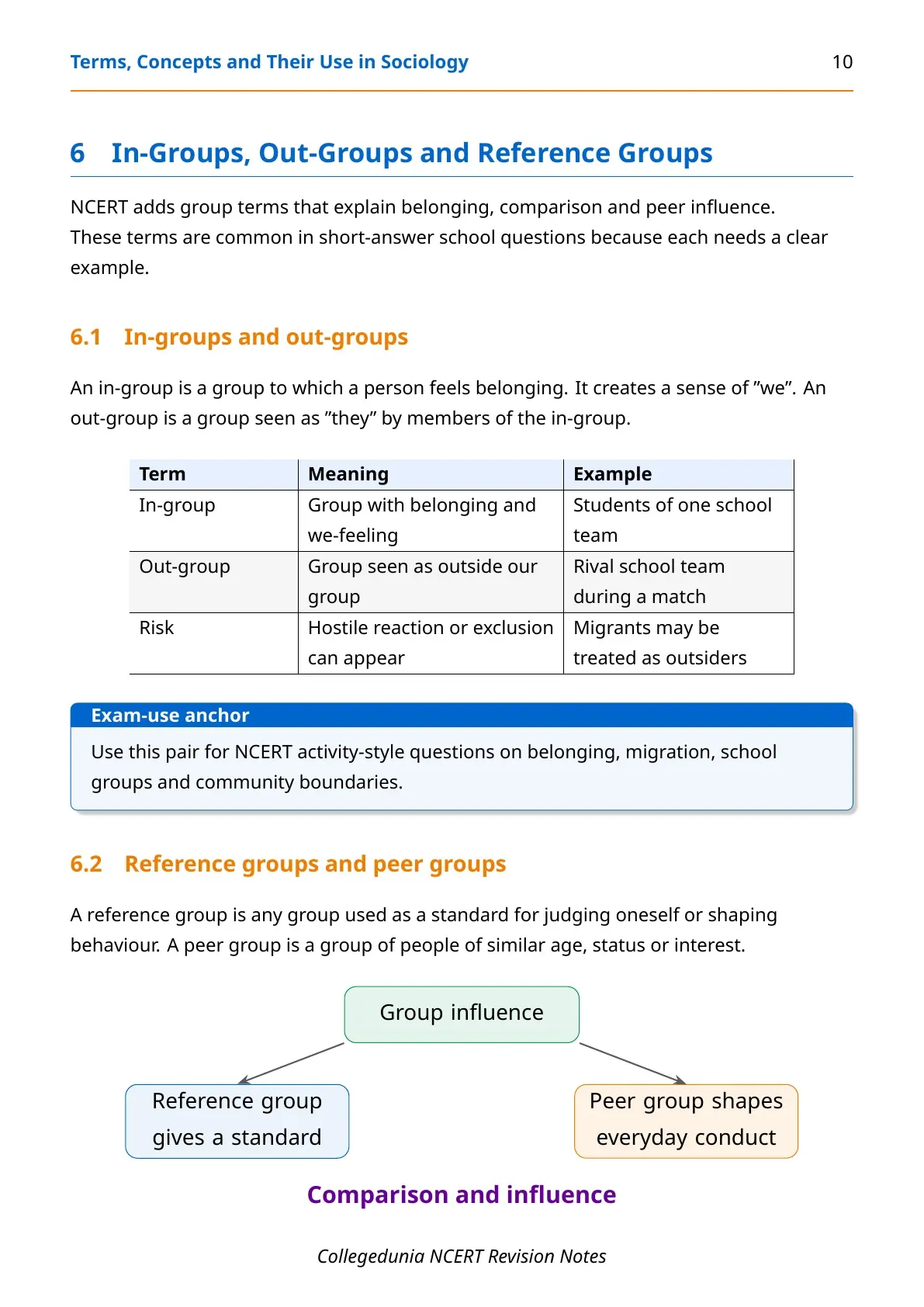
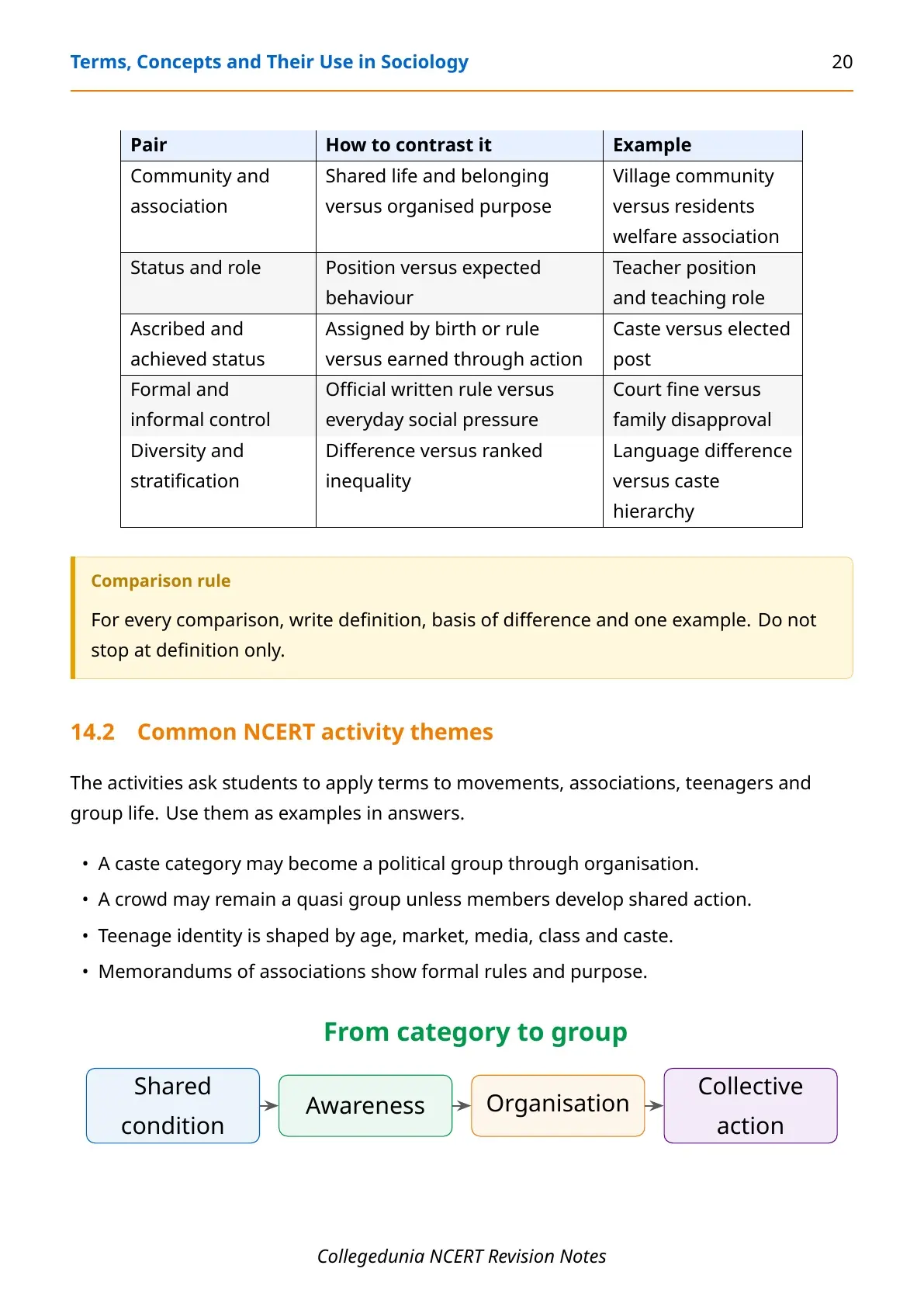
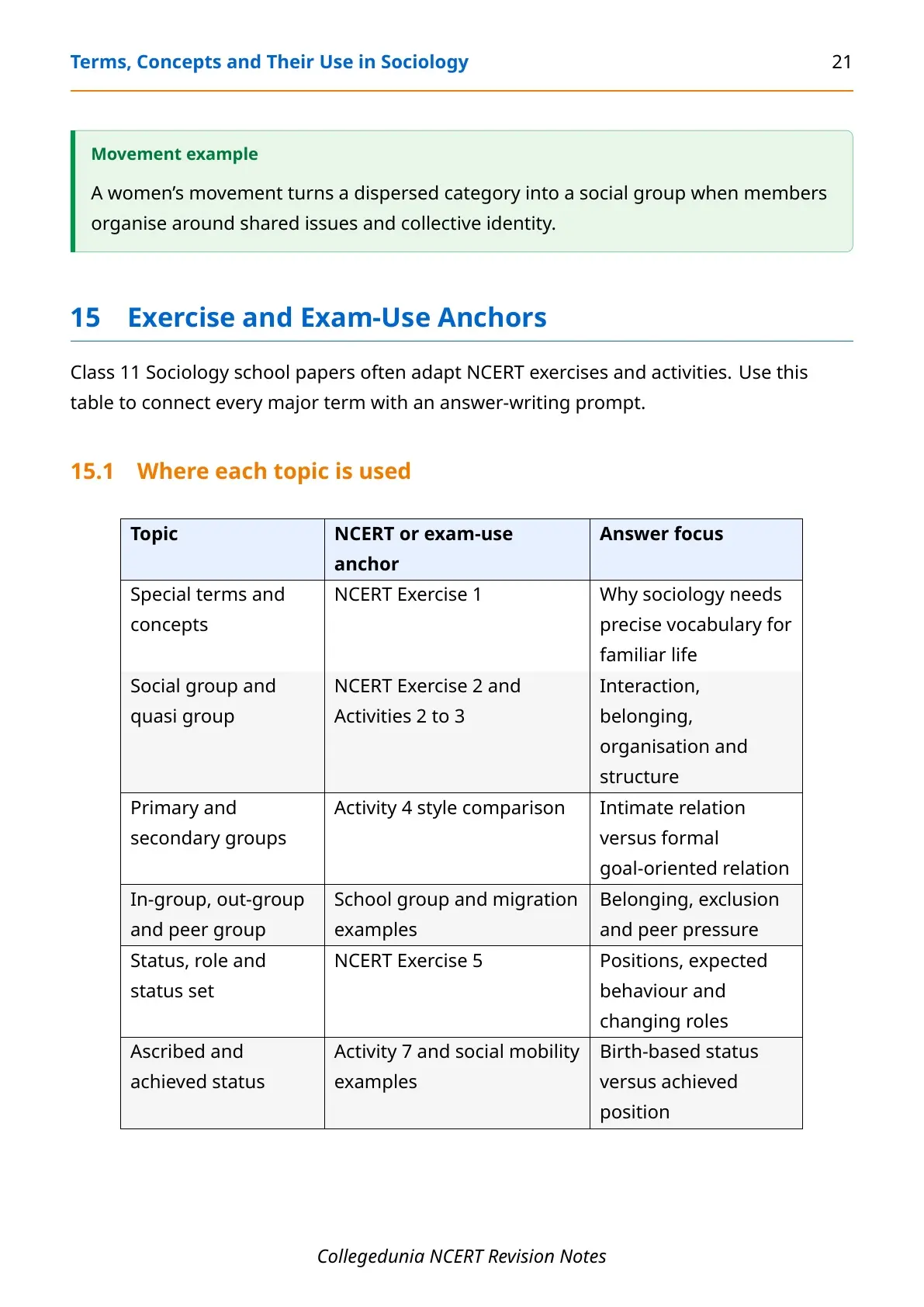
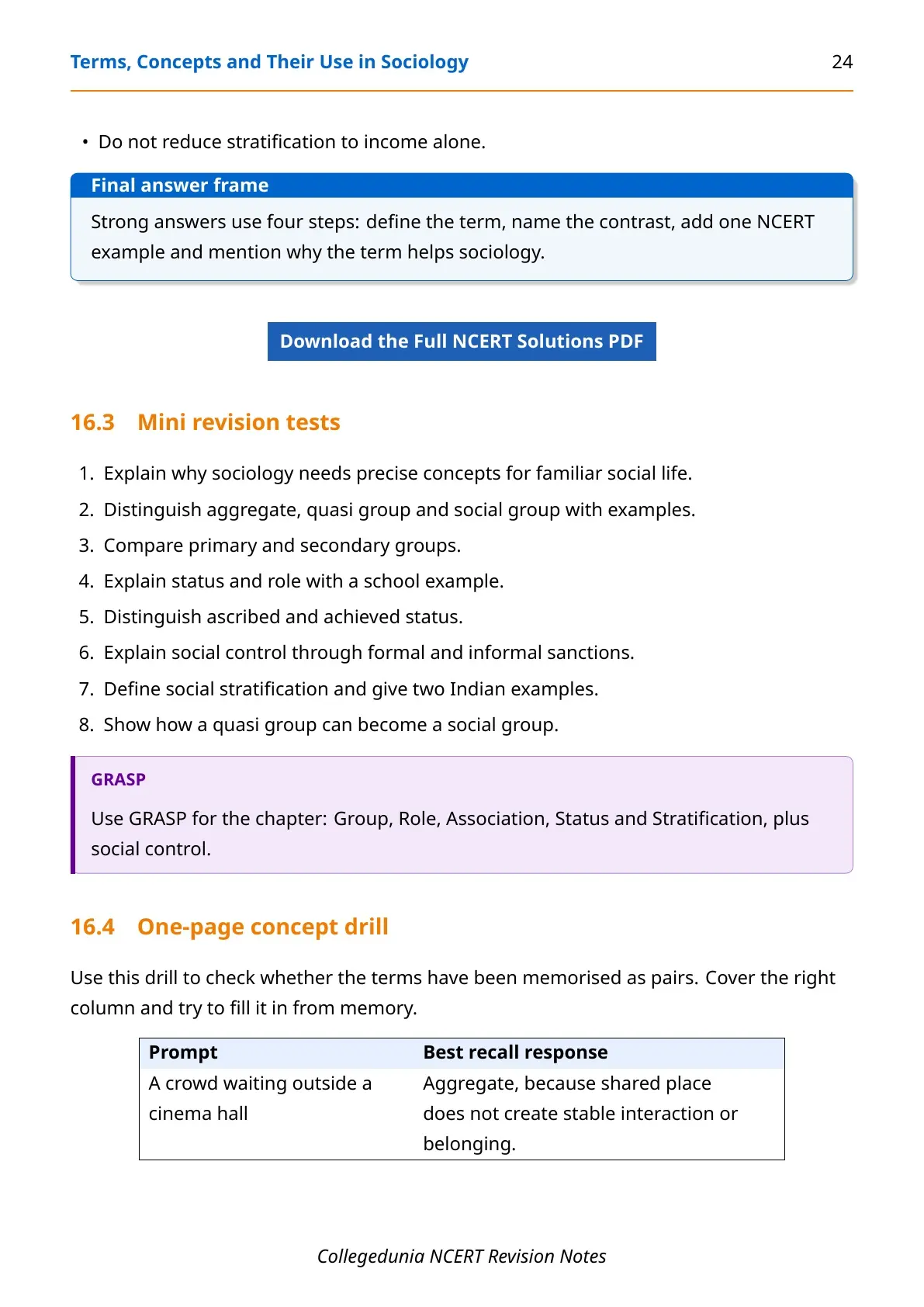
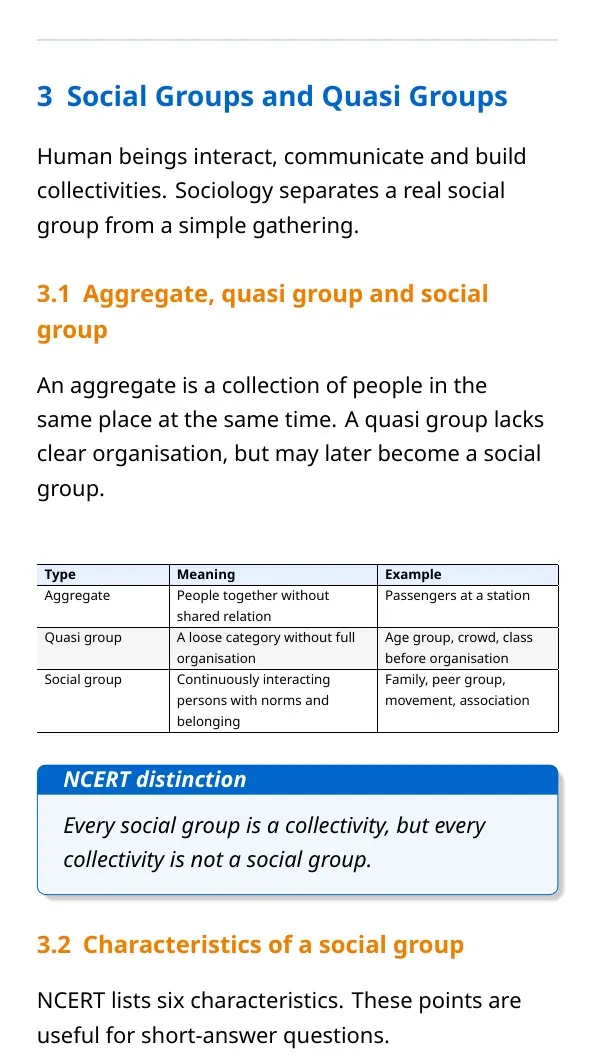
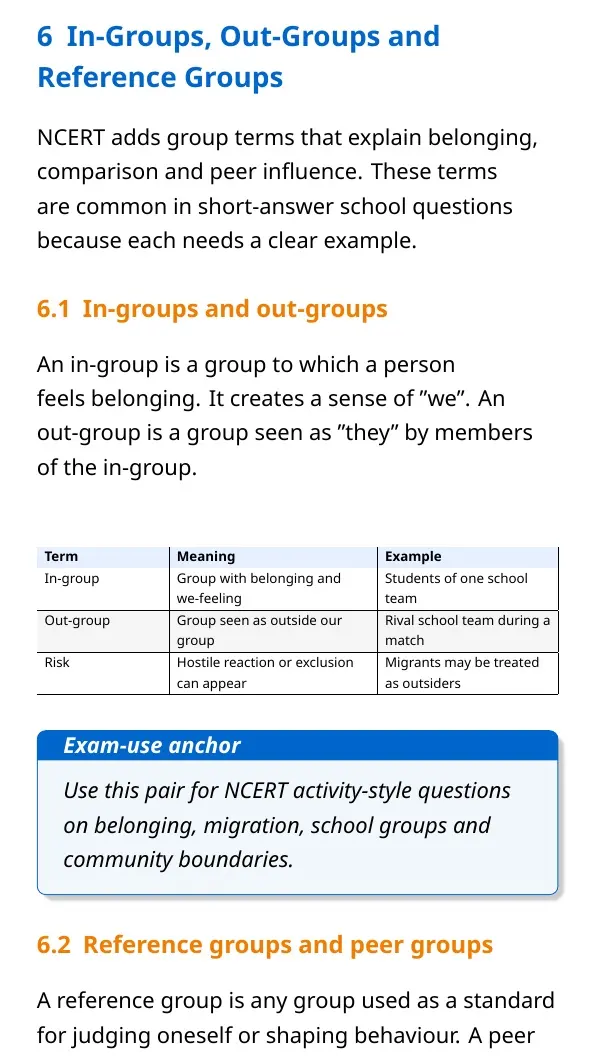
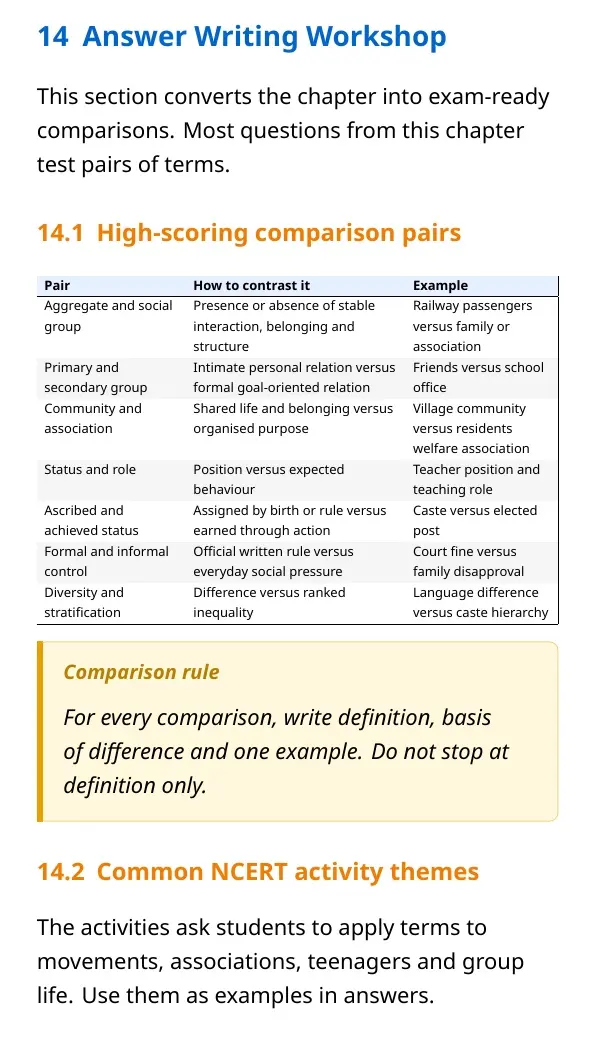
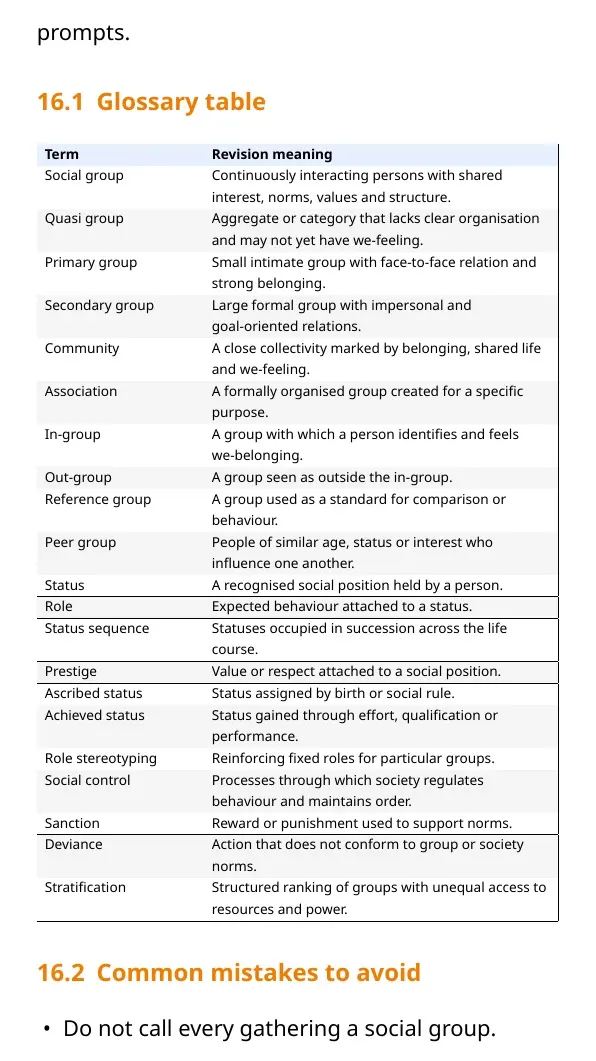
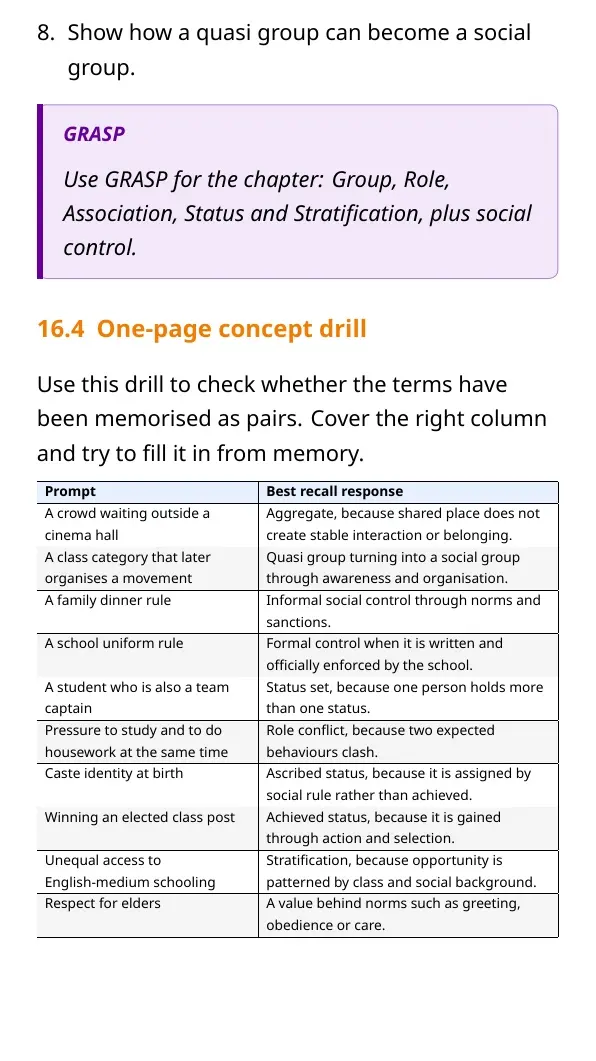
A gathering of people is not automatically a social group. NCERT separates an aggregate, a quasi group and a social group by looking at interaction, organisation and we-feeling.
- Aggregate: people in the same place without a stable relation, such as passengers at a station.
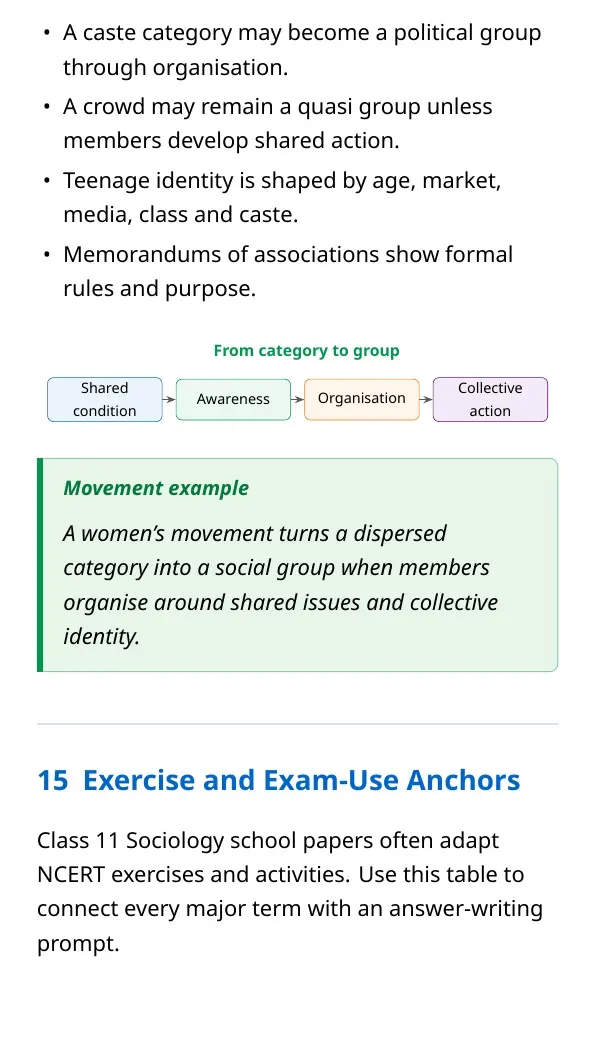
- Quasi group: a loose category that may not yet be organised, such as an age group or crowd.
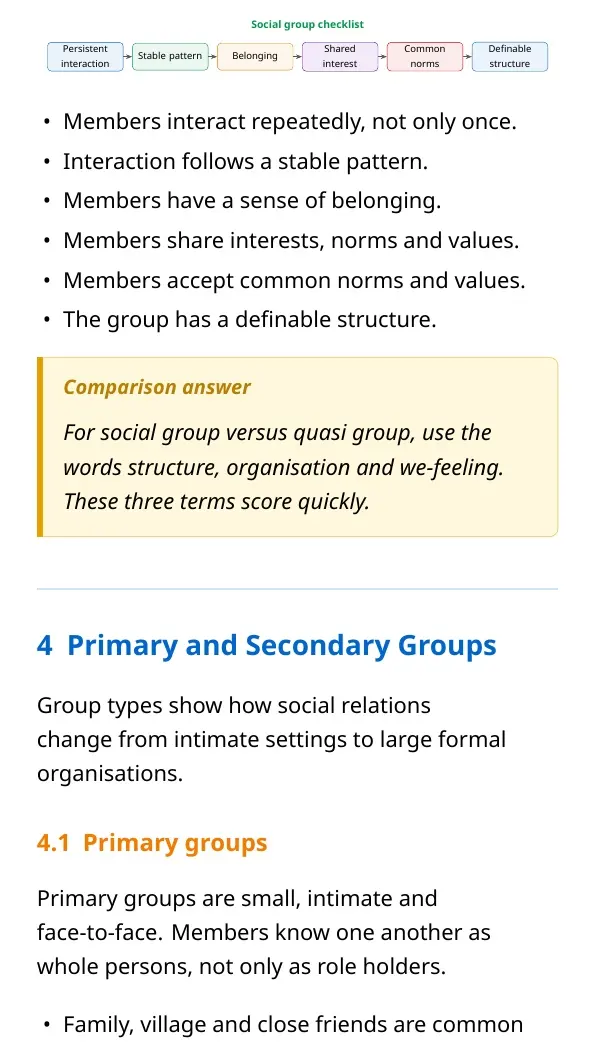
- Social group: interacting persons with shared norms, values, interests and structure.
Primary and Secondary Groups Difference
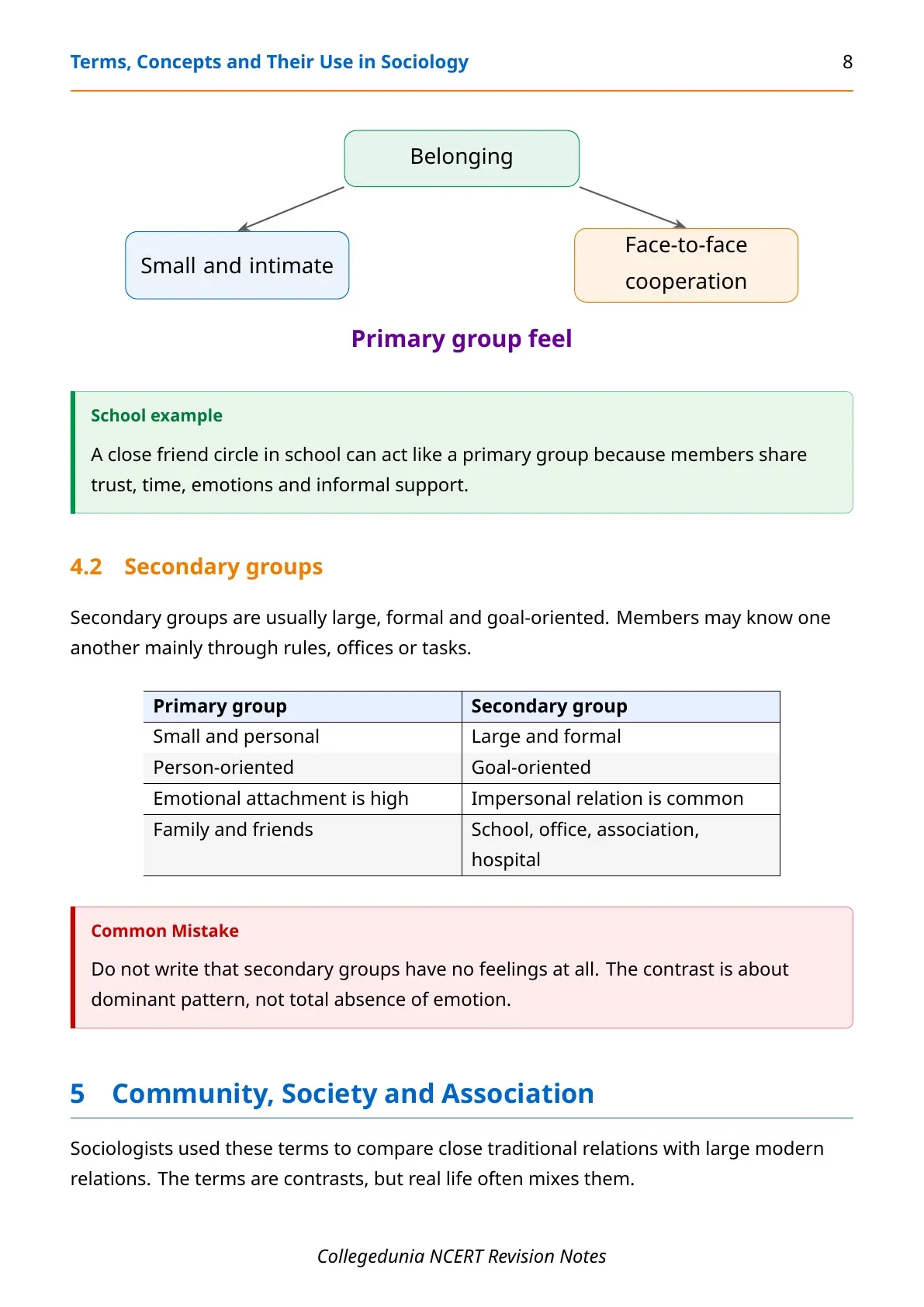
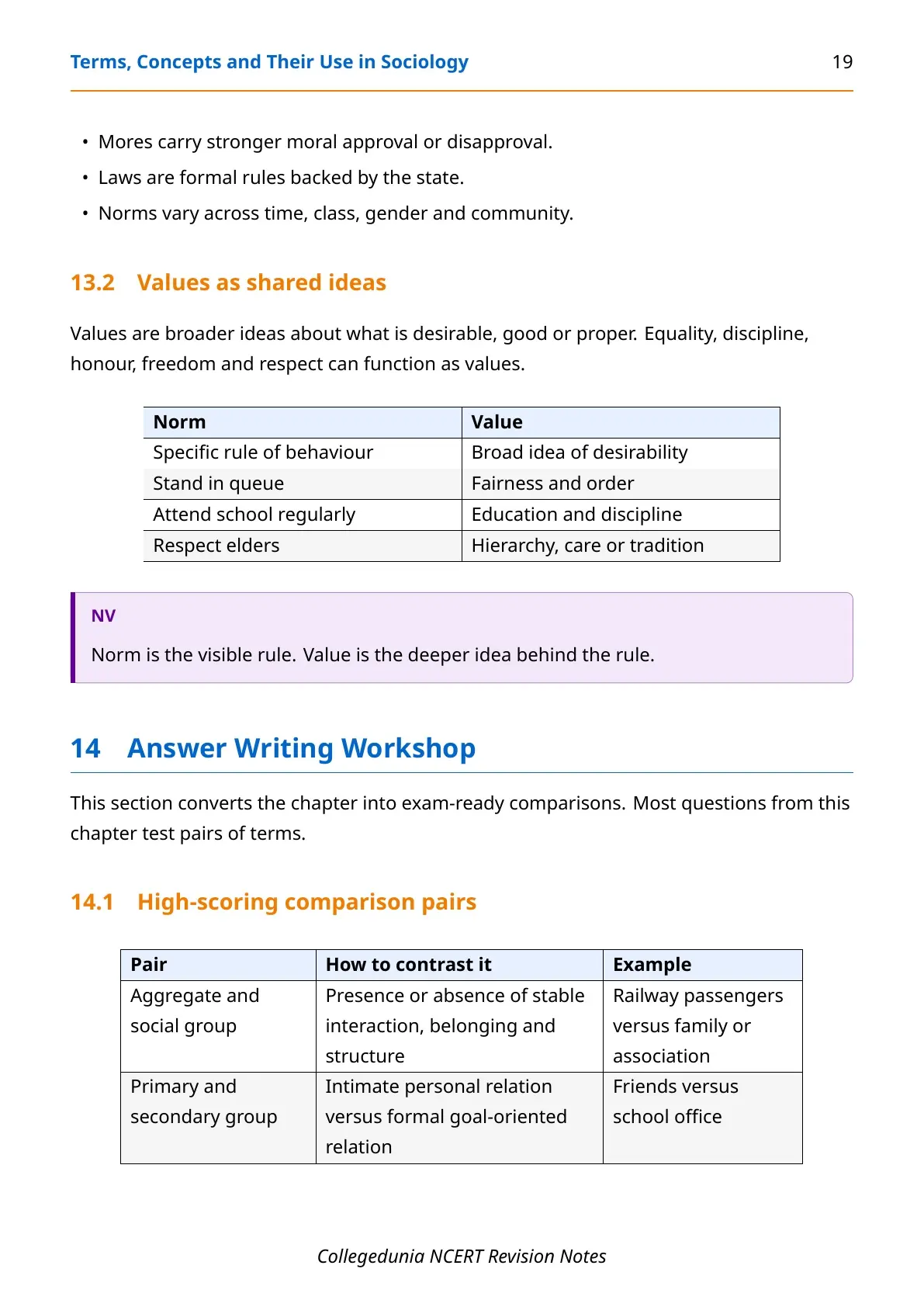
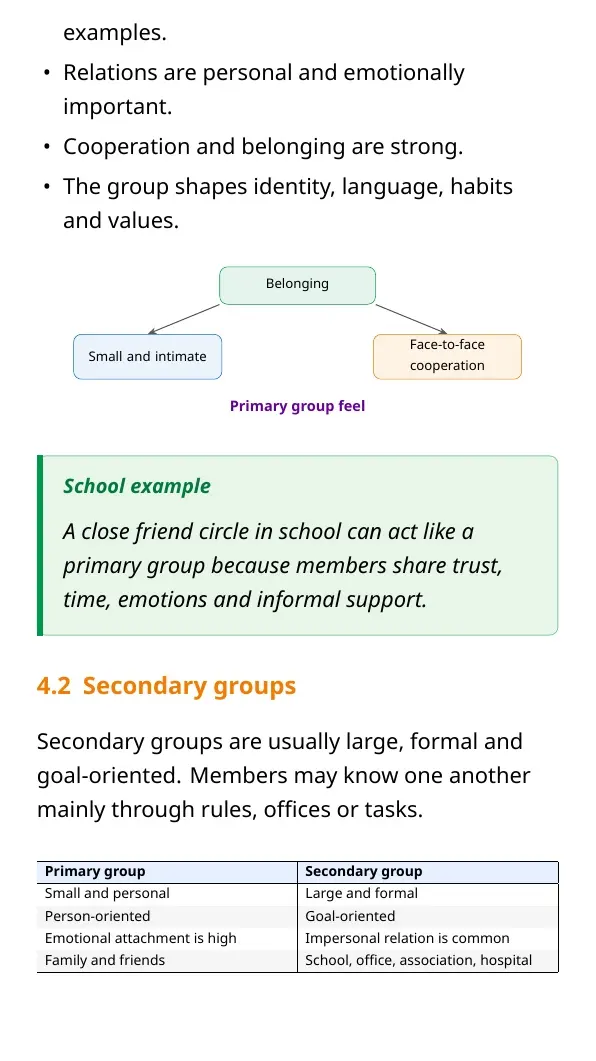
Primary groups are small, intimate and face-to-face. Secondary groups are larger, formal and goal-oriented. The contrast helps students explain the change from close traditional relations to organised modern relations.
| Primary group | Secondary group |
|---|---|
| Small and personal | Large and formal |
| Person-oriented | Goal-oriented |
| Family, village and close friends | School, office, hospital and association |
| Strong emotional belonging | Impersonal relation is common |
Status, Role and Social Control in Sociology
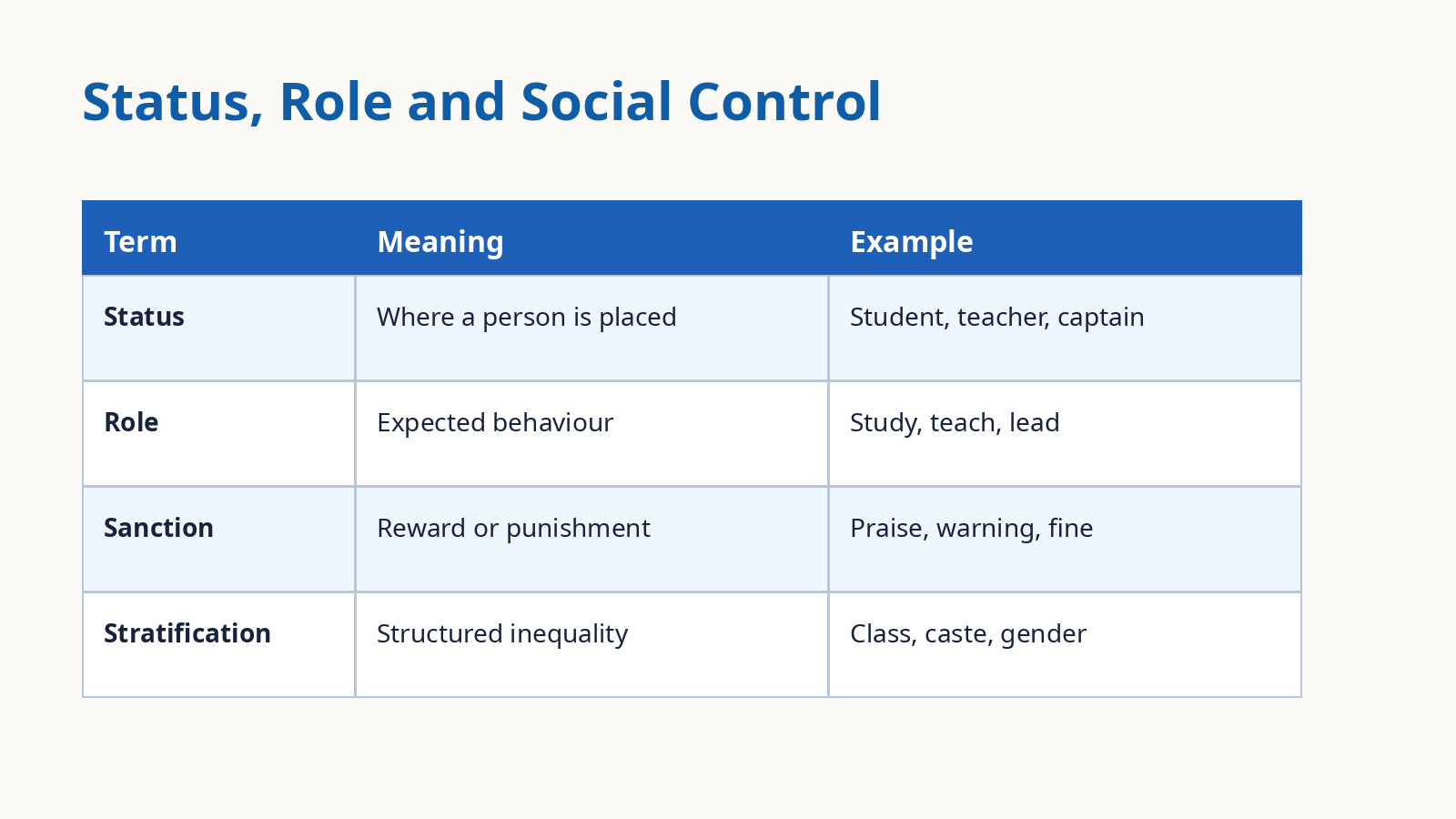
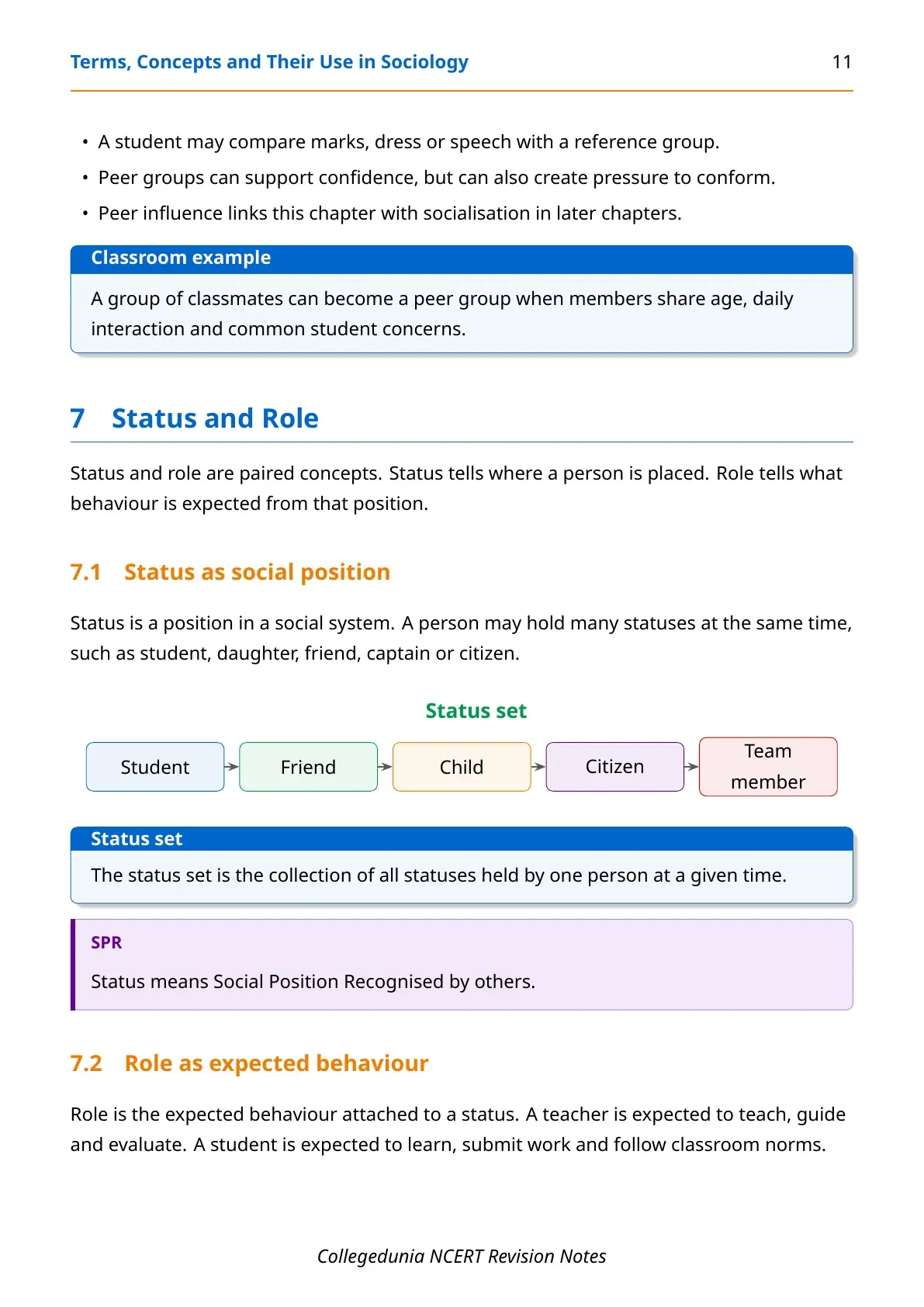
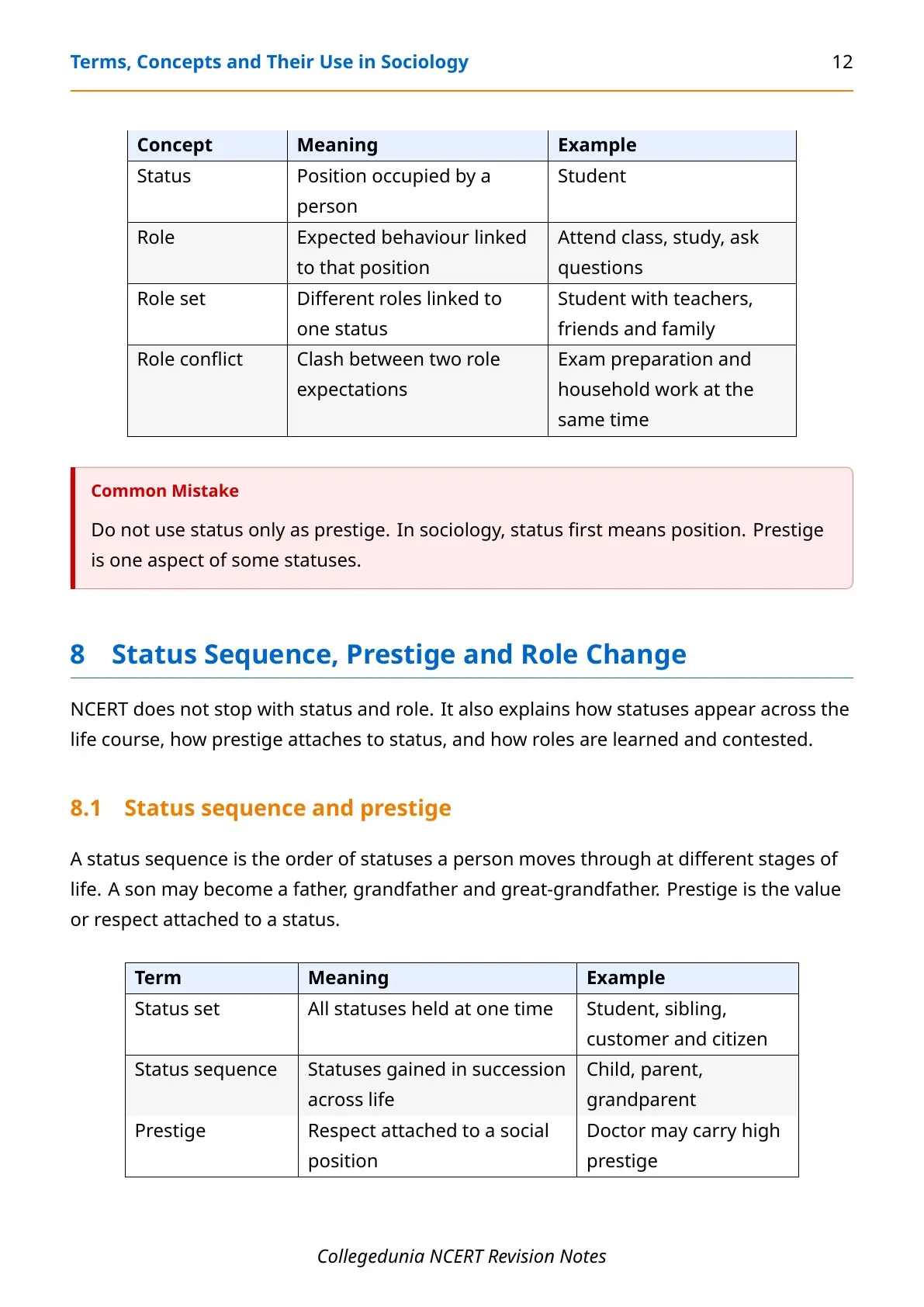
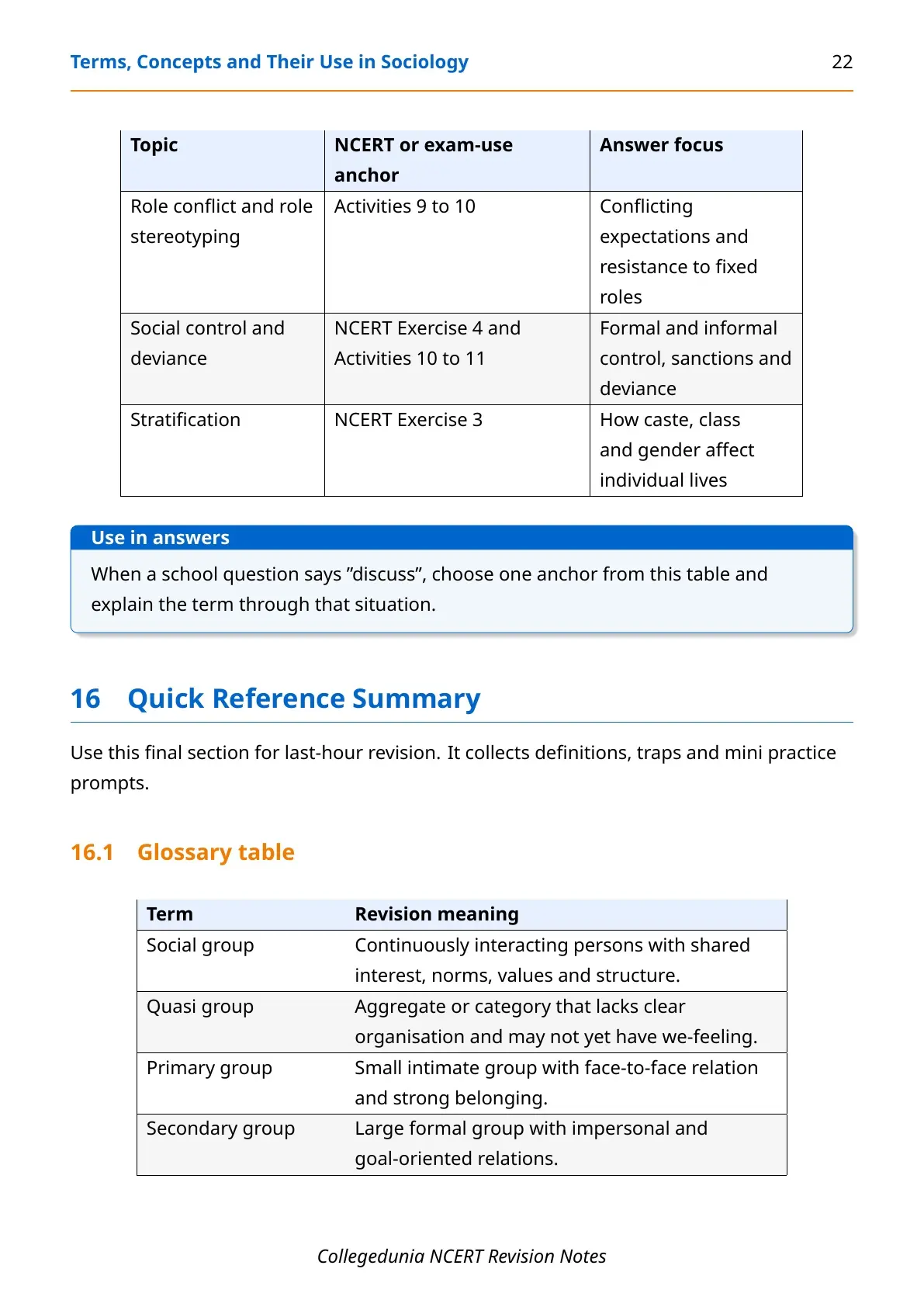
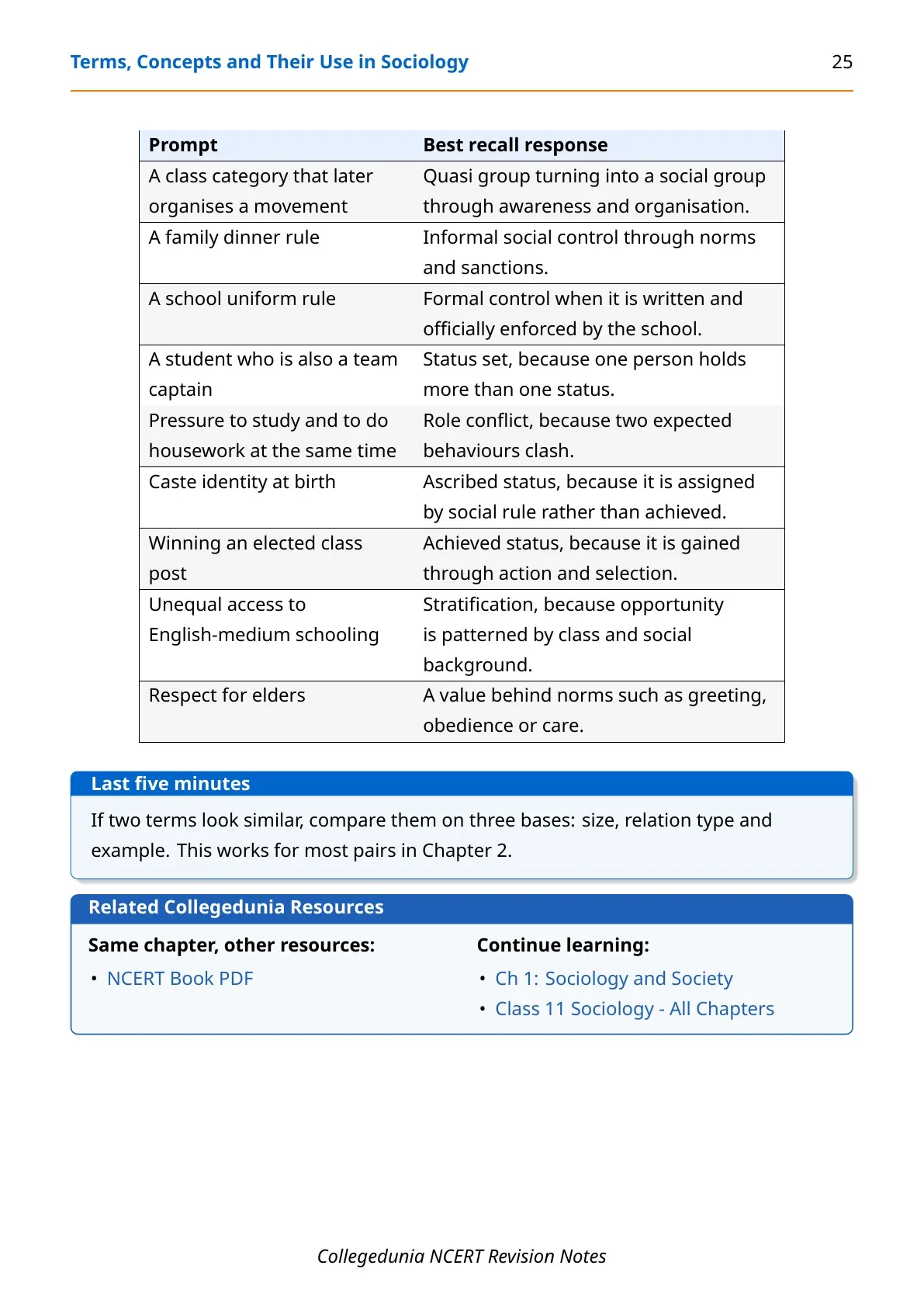
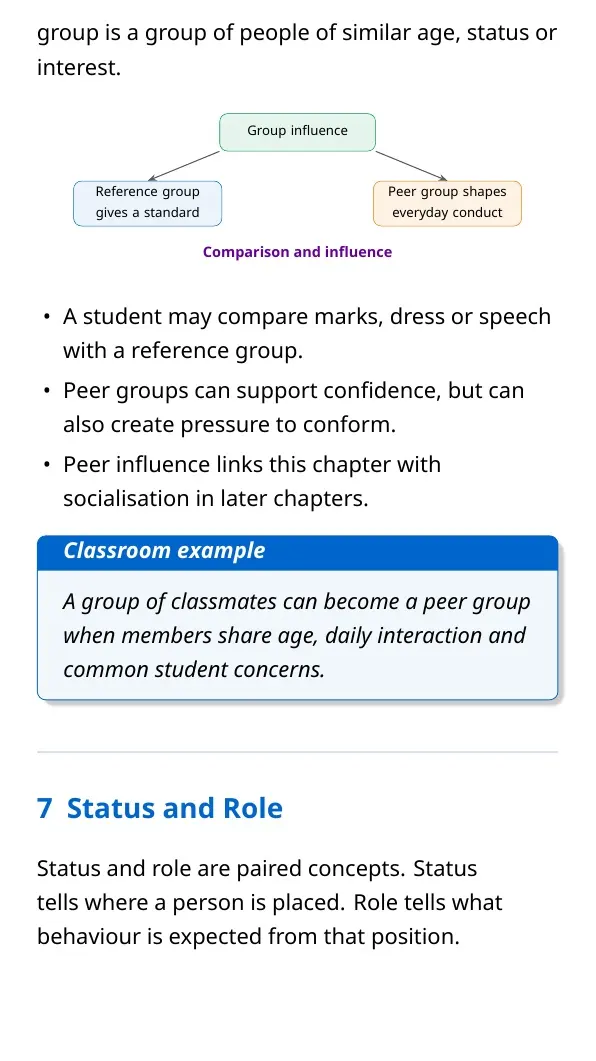
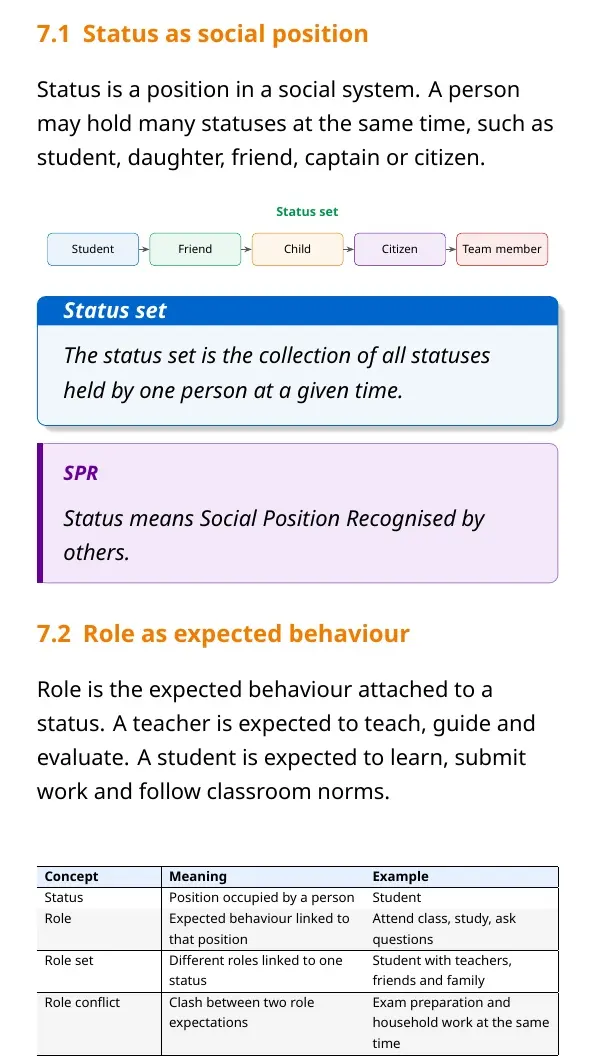
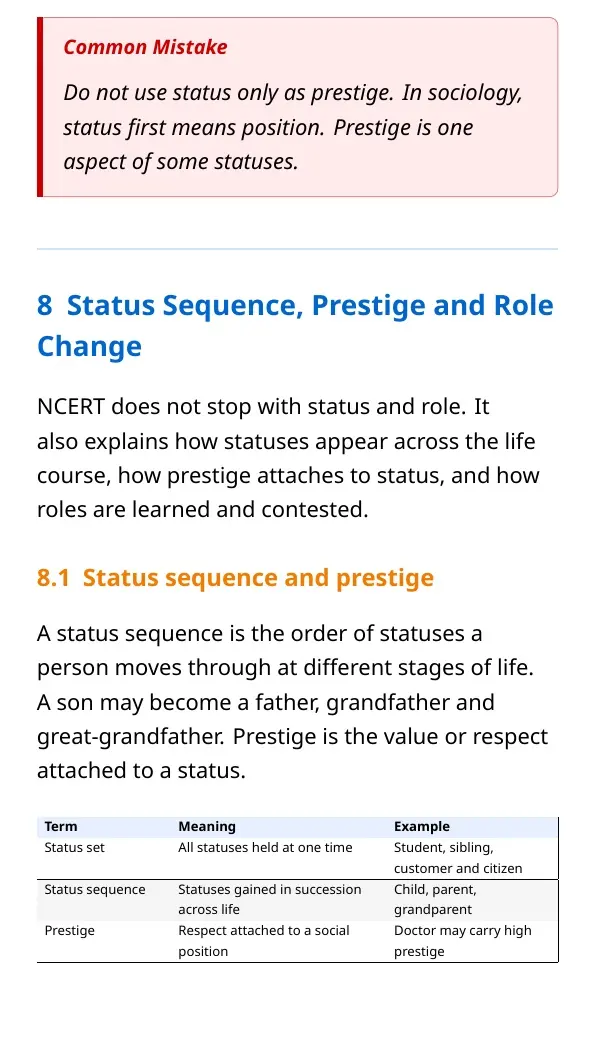
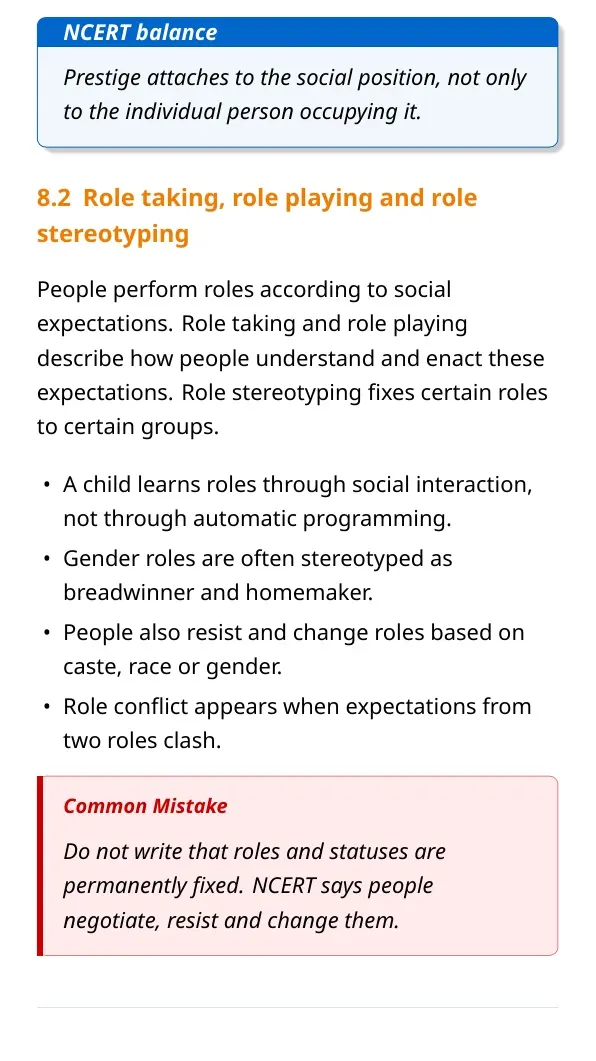
Status means a recognised position in a social system. Role means the expected behaviour attached to that position. A student, teacher, citizen, captain or sibling holds a status and performs roles linked to it.
- Status set: all statuses held by one person at a time.
- Role set: different role relations attached to one status.
- Role conflict: clash between two role expectations.
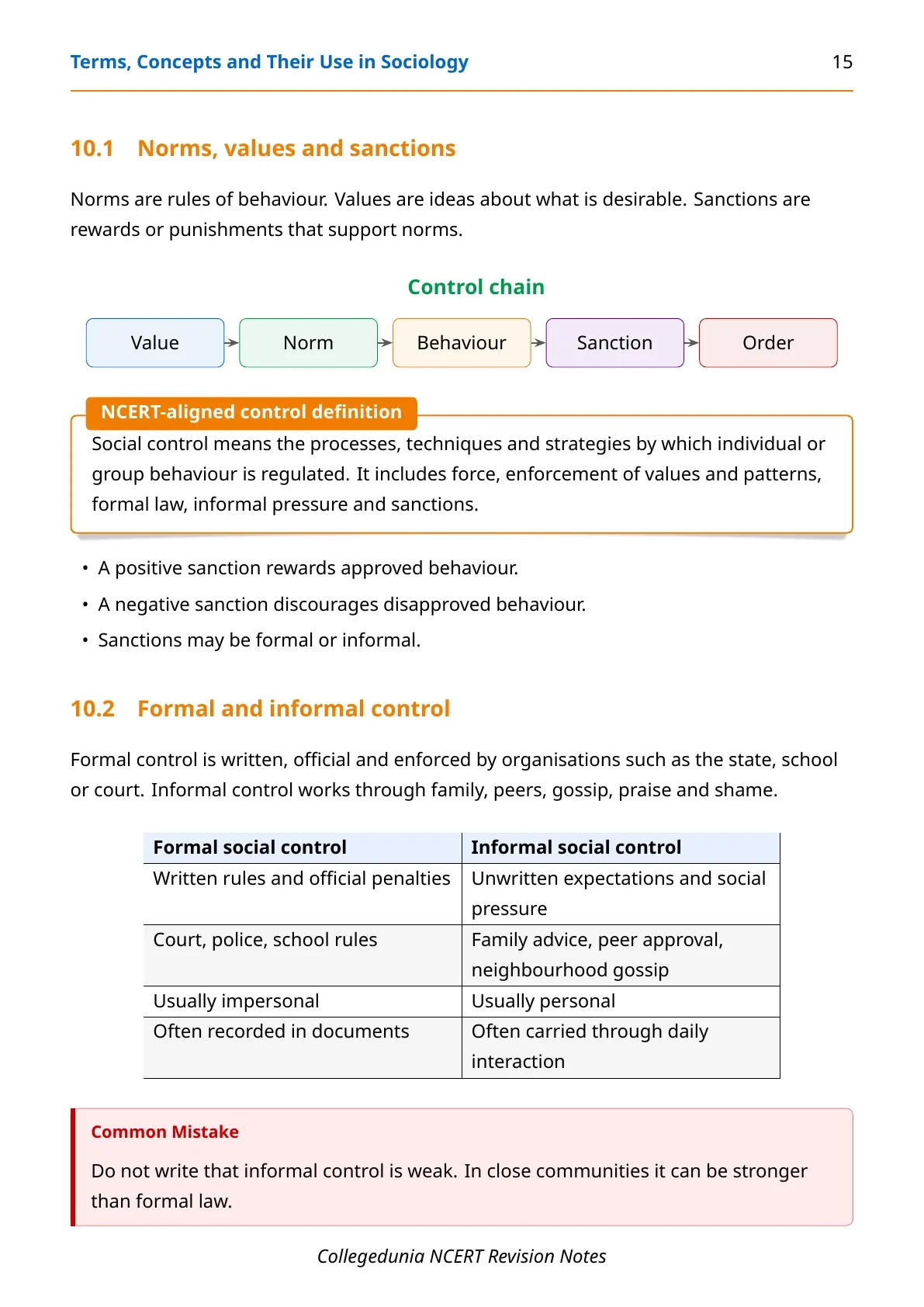
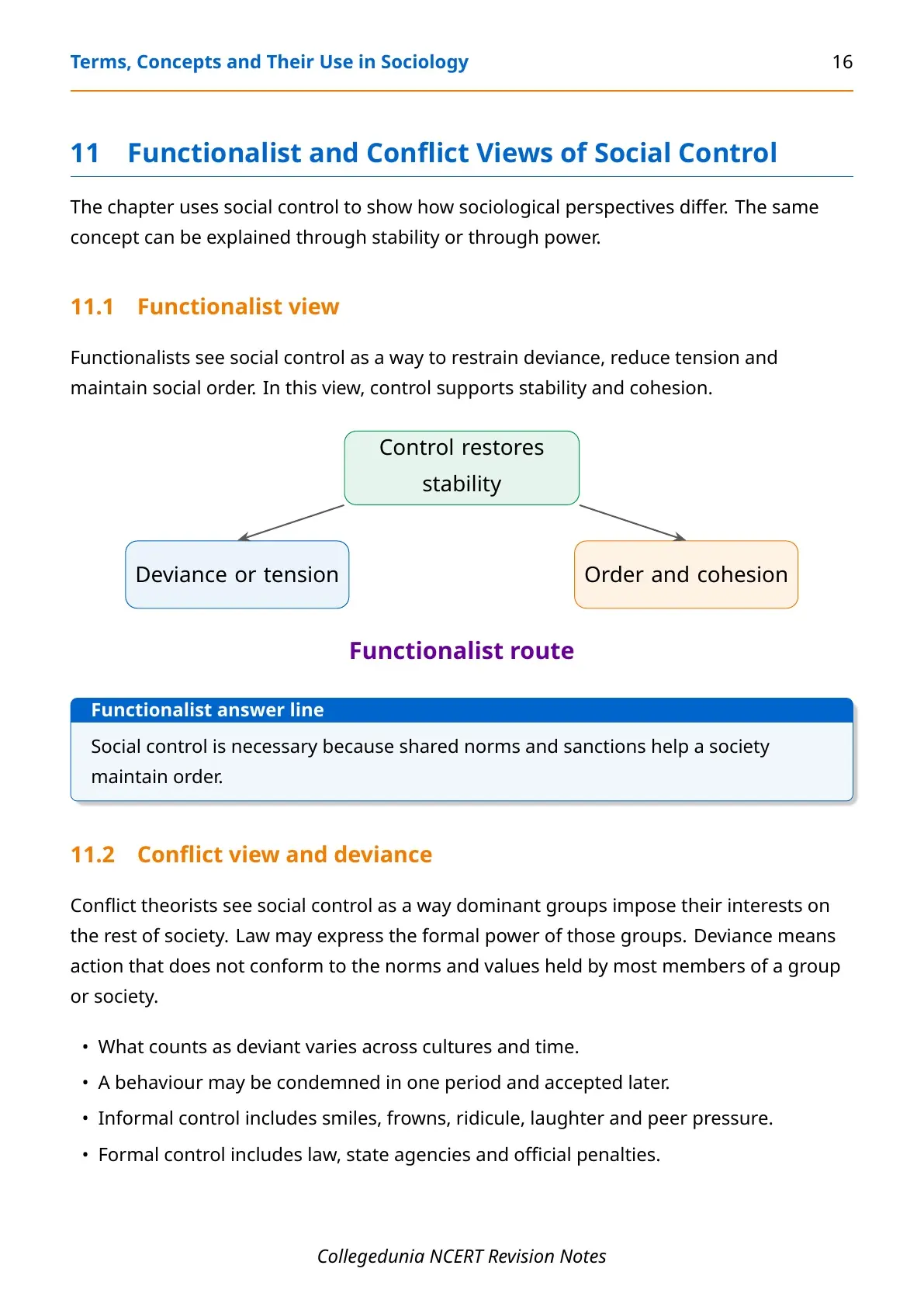
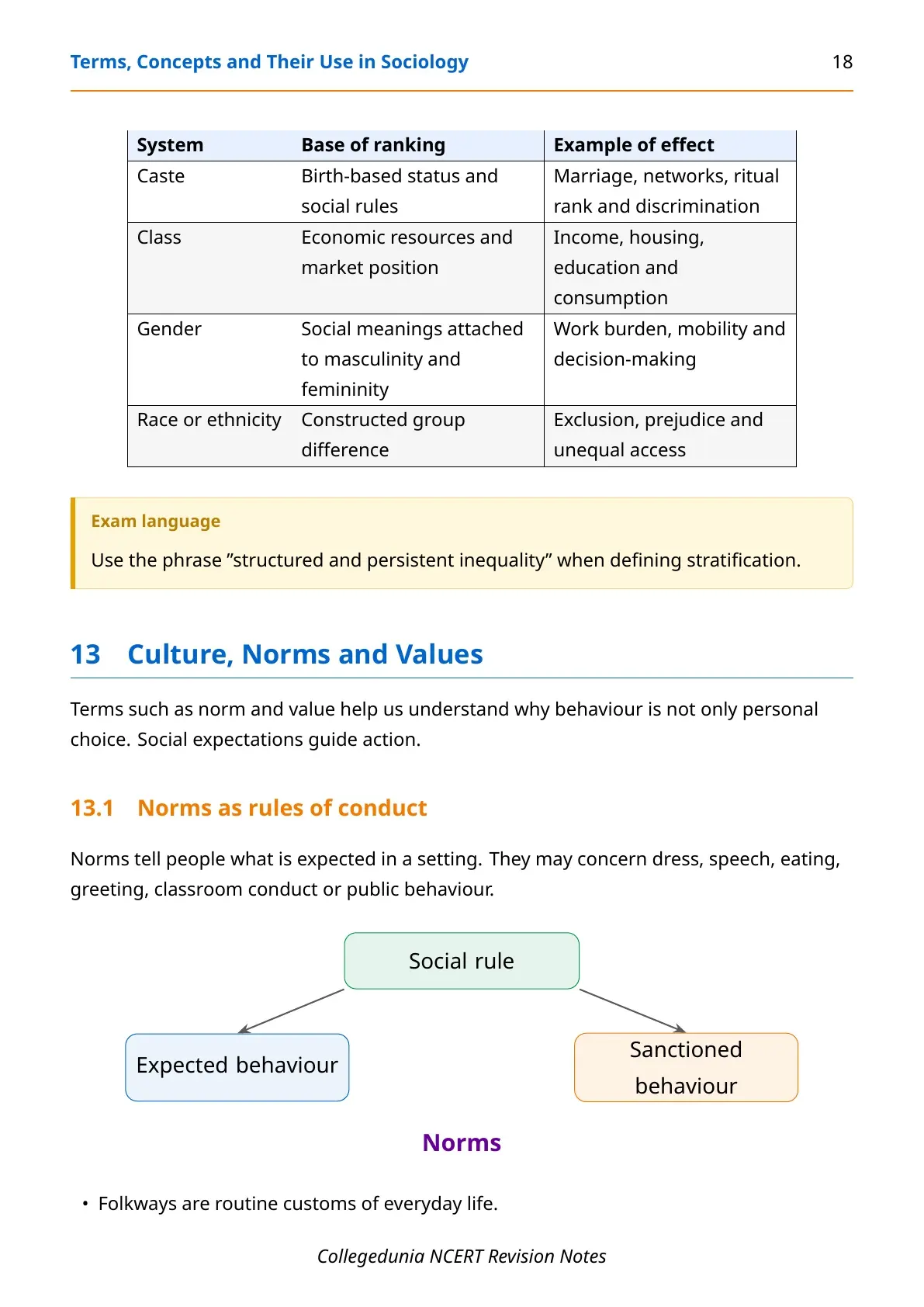
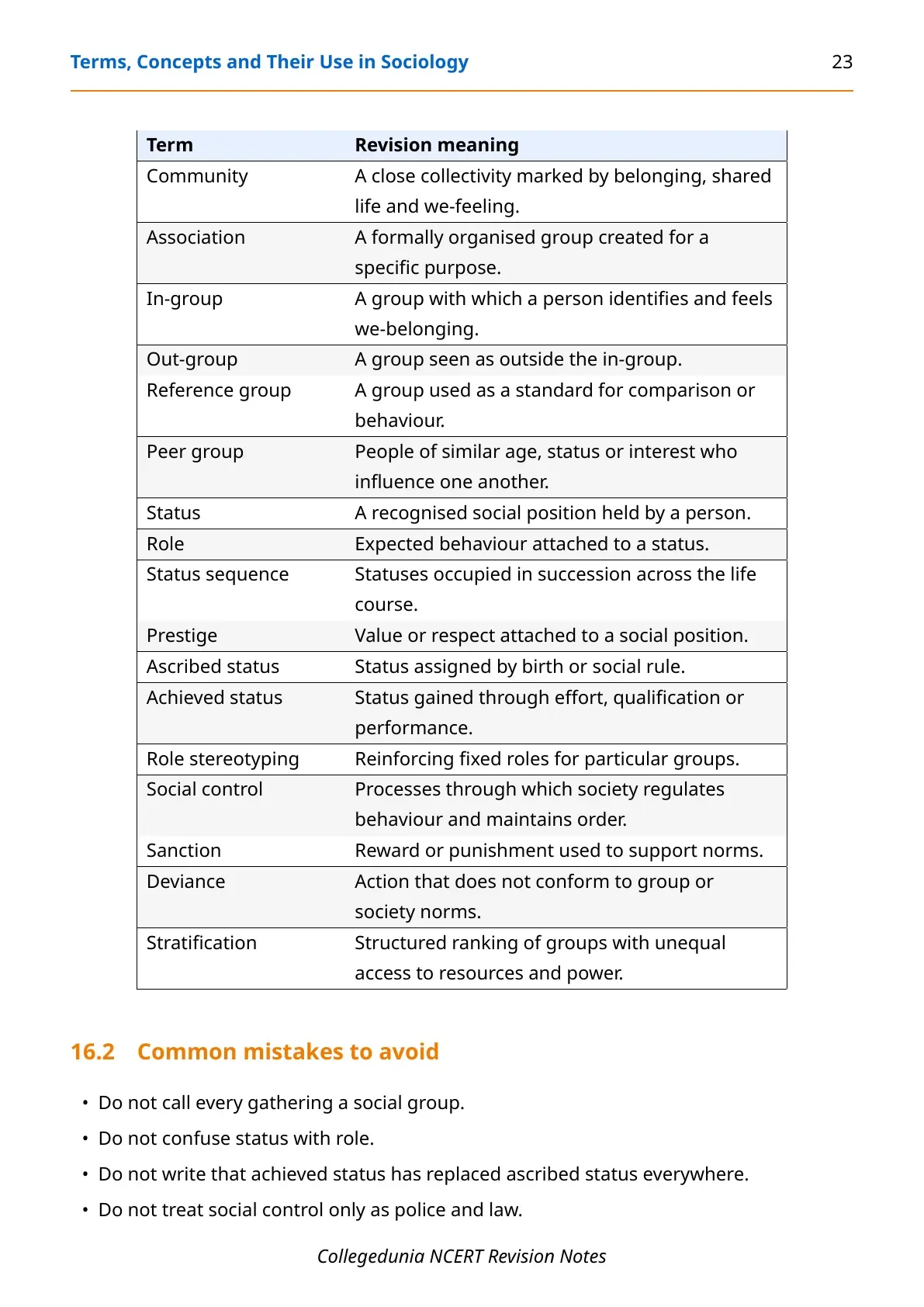
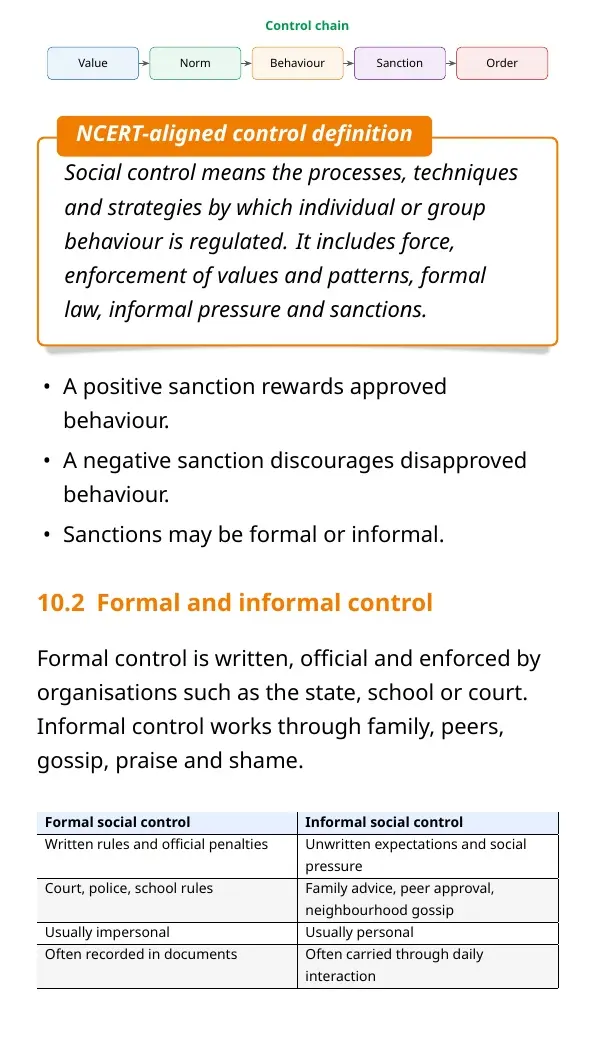
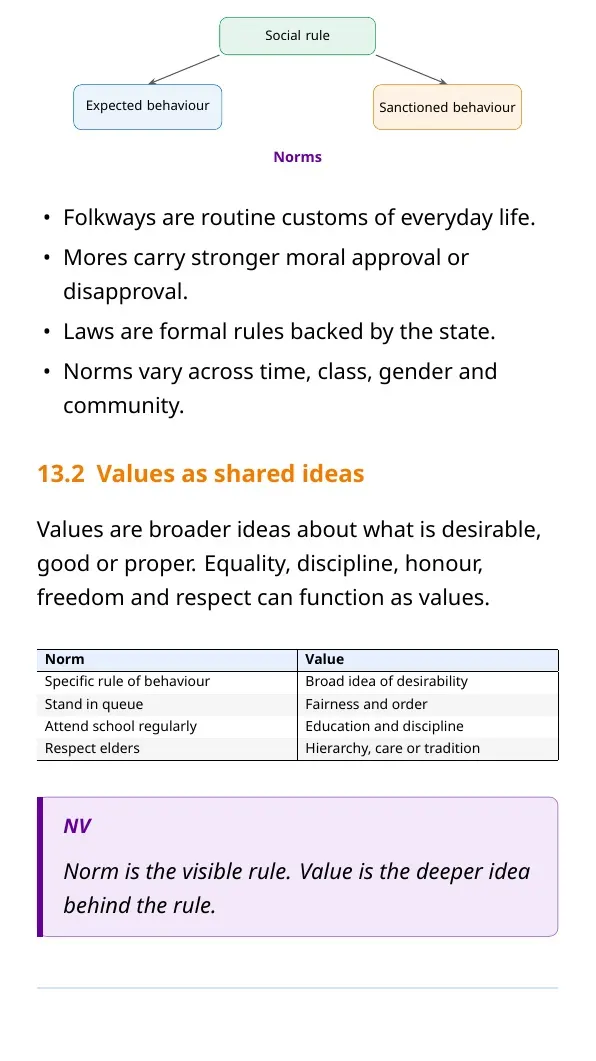
Social control works through norms, values and sanctions. Formal control uses written rules and official penalties. Informal control works through family, friends, approval, gossip, shame and praise.
Ascribed and Achieved Status Examples
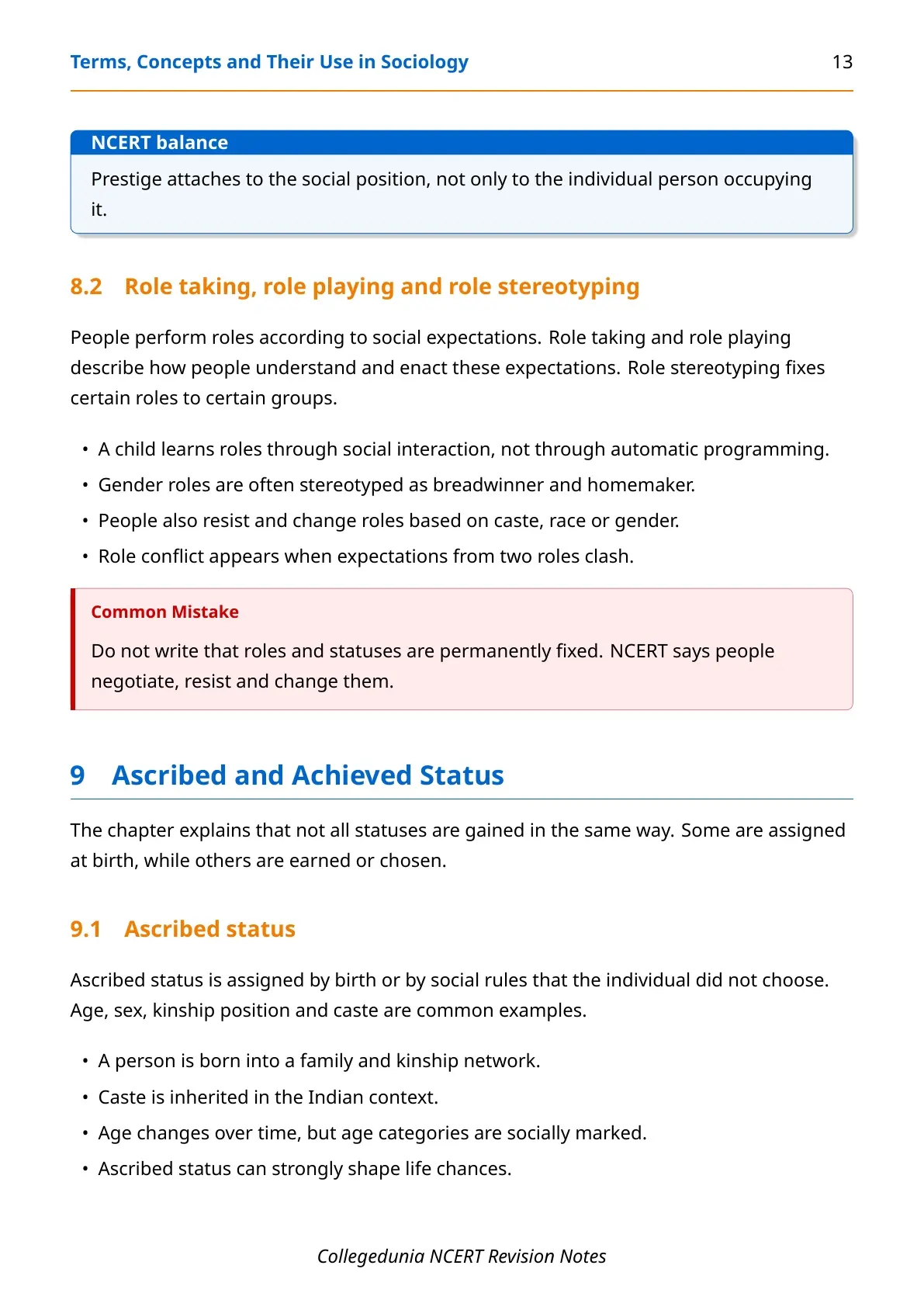
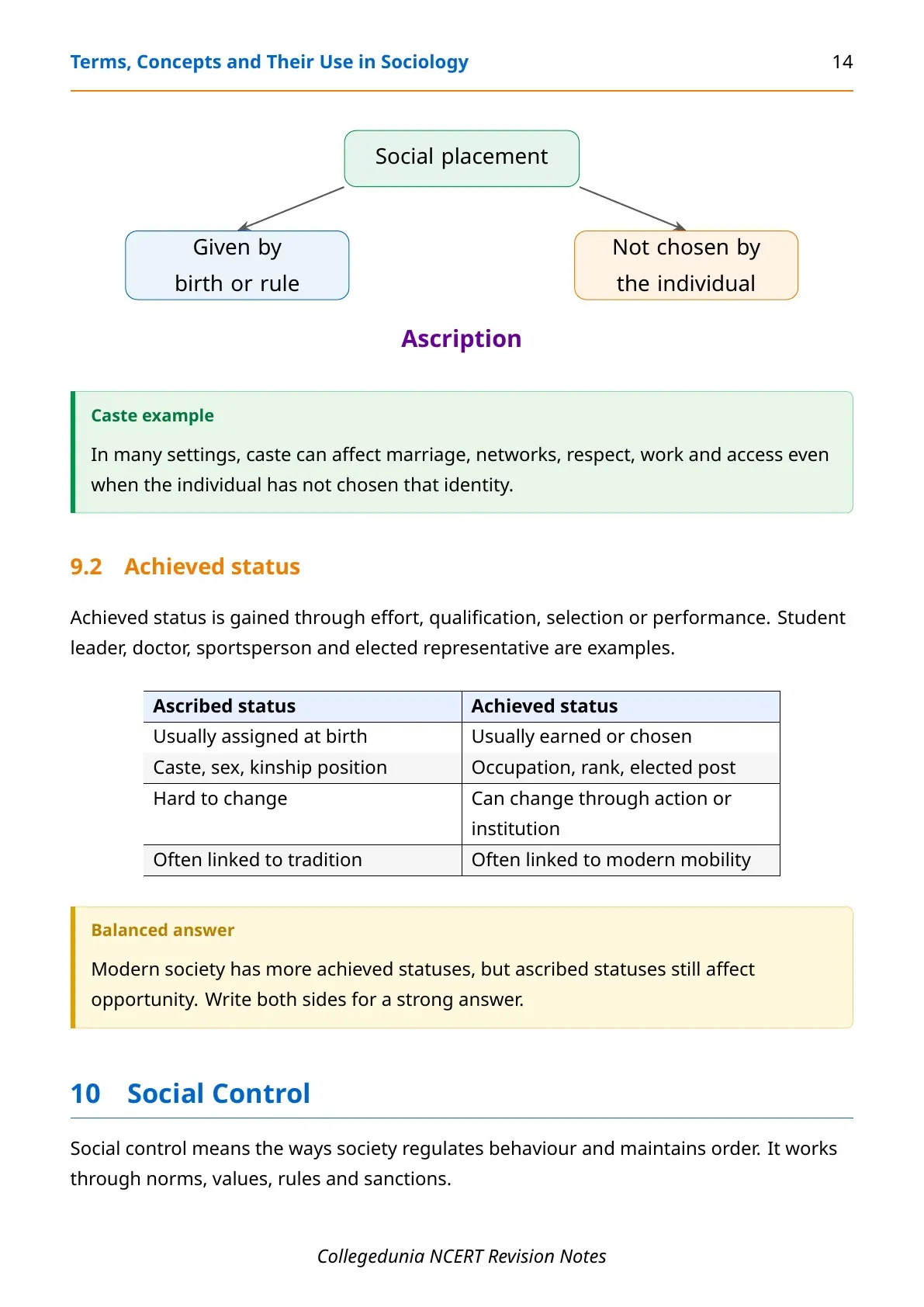
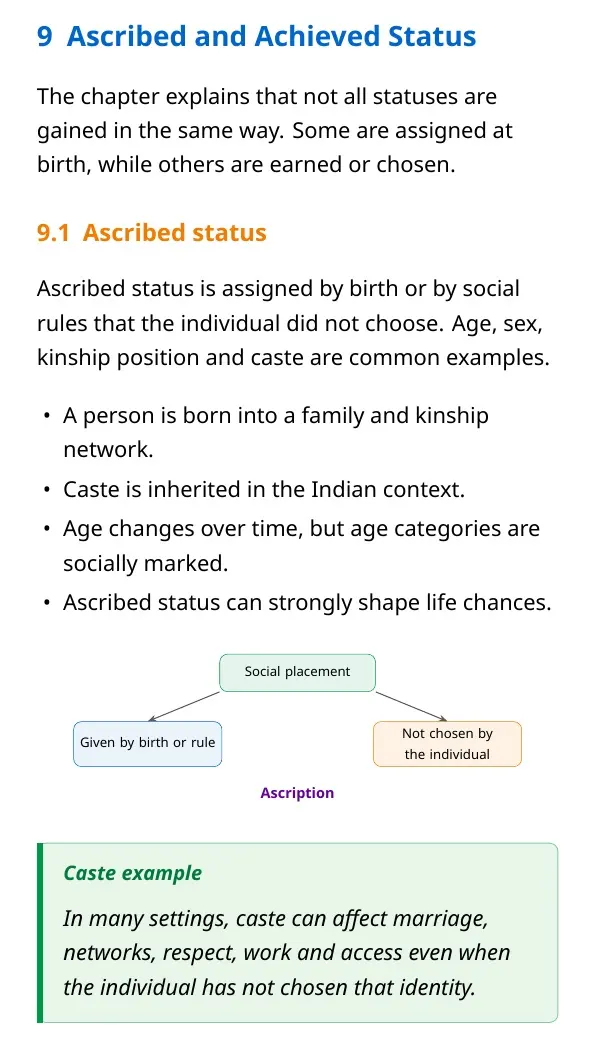
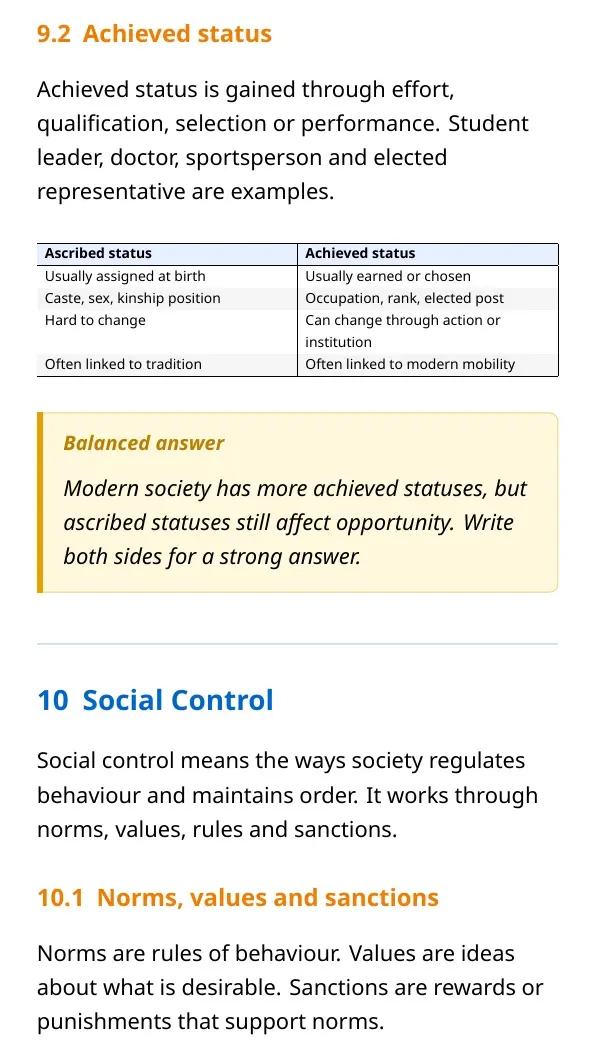
Ascribed status is assigned by birth or social rule. Achieved status is gained through action, qualification or selection. Modern society creates more achieved statuses, but ascribed status still shapes opportunity.
| Ascribed status | Achieved status |
|---|---|
| Caste, kinship position, age category and sex | Occupation, rank, elected office and academic result |
| Usually not chosen by the individual | Usually gained through effort or selection |
| Often hard to change | Can change through education, work or institution |
Stratification and Inequality in Class 11 Sociology
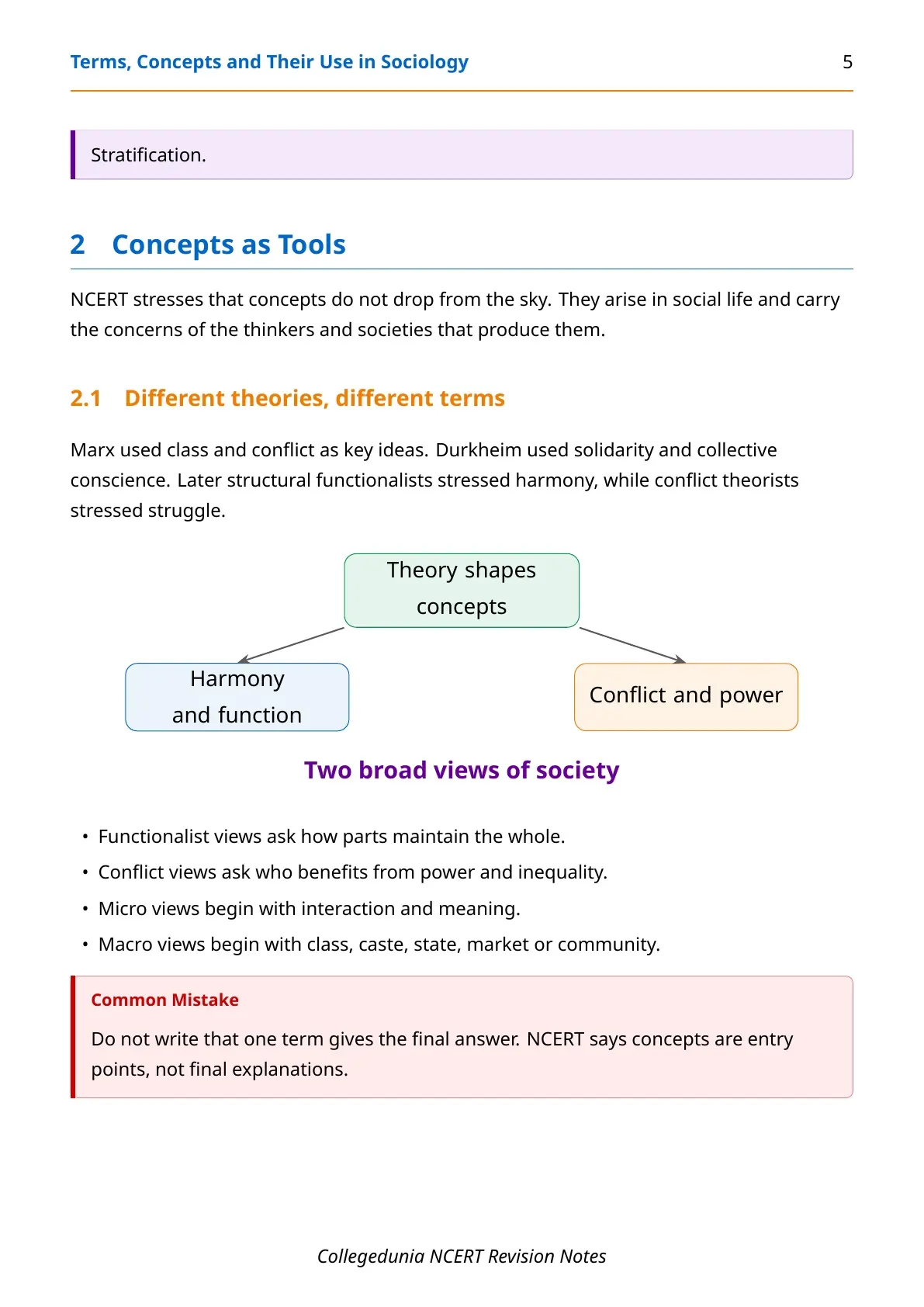
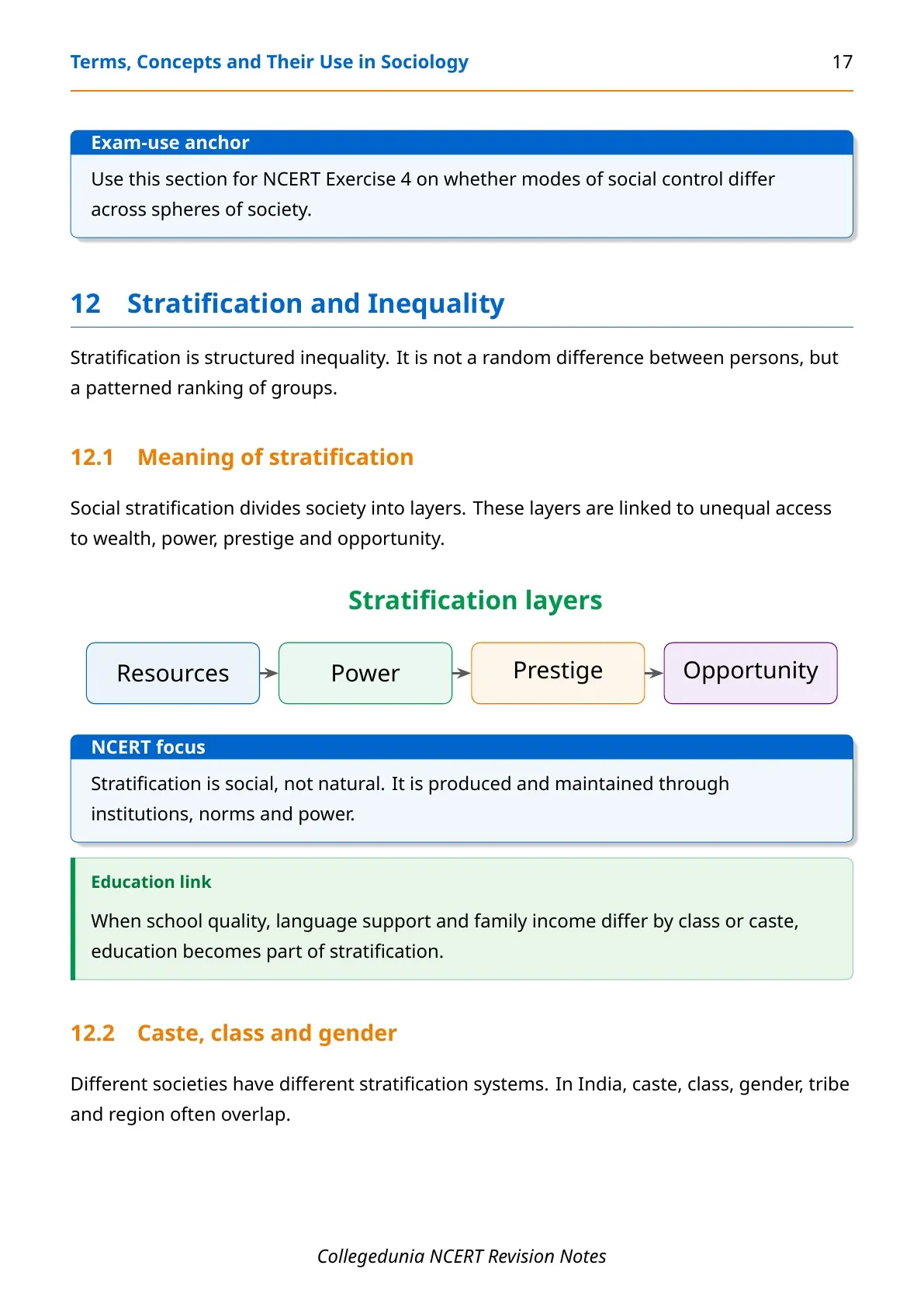
Social stratification means structured inequality between groups. It is different from simple diversity. Diversity means difference, while stratification means ranked difference with unequal access to resources, power and respect.
- Caste: birth-based ranking and social rules.
- Class: inequality in income, property, work and life chances.
- Gender: unequal expectations and opportunities linked to masculinity and femininity.
- Education: school quality and language access can reproduce inequality.
How to Use These Chapter 2 Sociology Notes
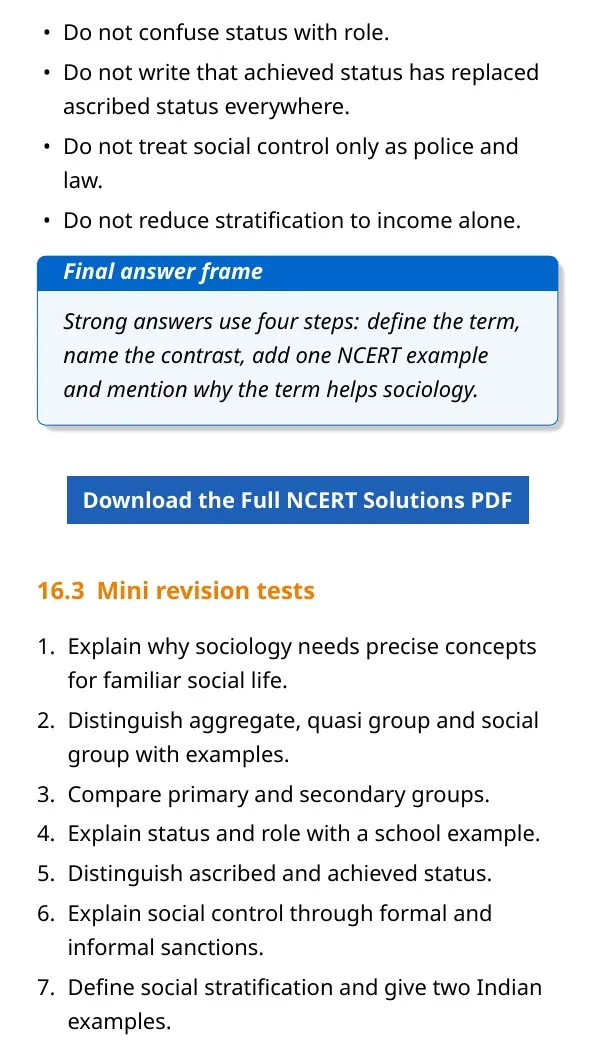
Read the glossary first, then revise the comparison tables. After that, practise short examples for each term. This method keeps answers precise and prevents term mixing.
- Write the definition in one line.
- Add one NCERT example.
- Compare the paired term if the question asks for a difference.
- Close with why the concept helps sociology study society.
Related NCERT Resources for Terms, Concepts and Their Use in Sociology
| Resource | Use it for |
|---|---|
| Terms and Concepts Class 11 NCERT Solutions | Exercise answers and answer-writing format. |
| Terms, Concepts and Their Use in Sociology NCERT Book PDF | Official textbook pages for reading. |
| Terms, Concepts and Their Use in Sociology Handwritten Notes | Notebook-style last-minute revision once available. |
All Class 11 Sociology Notes Chapters
| Chapter | NCERT Notes link |
|---|---|
| Chapter 1 | Sociology and Society Notes |
| Chapter 2 | Terms, Concepts and Their Use in Sociology Notes |
| Chapter 3 | Understanding Social Institutions Notes |
| Chapter 4 | Culture and Socialisation Notes |
| Chapter 5 | Doing Sociology Research Methods Notes |
Terms, Concepts and Their Use in Sociology Class 11 Notes FAQs
Ques. What is covered in Class 11 Sociology Chapter 2 Notes?
Ans. The notes cover social groups, quasi groups, primary and secondary groups, community, association, status, role, social control and stratification.
Ques. Why does sociology need special terms?
Ans. Sociology studies familiar social life, so special terms help students separate systematic sociological knowledge from everyday common sense.
Ques. What is the difference between status and role?
Ans. Status is the recognised position a person holds. Role is the expected behaviour attached to that position.
Ques. How should students revise this chapter for 2026-27 exams?
Ans. Students should prepare term pairs, revise one example for each concept and practise comparison answers such as primary group versus secondary group.



Comments