




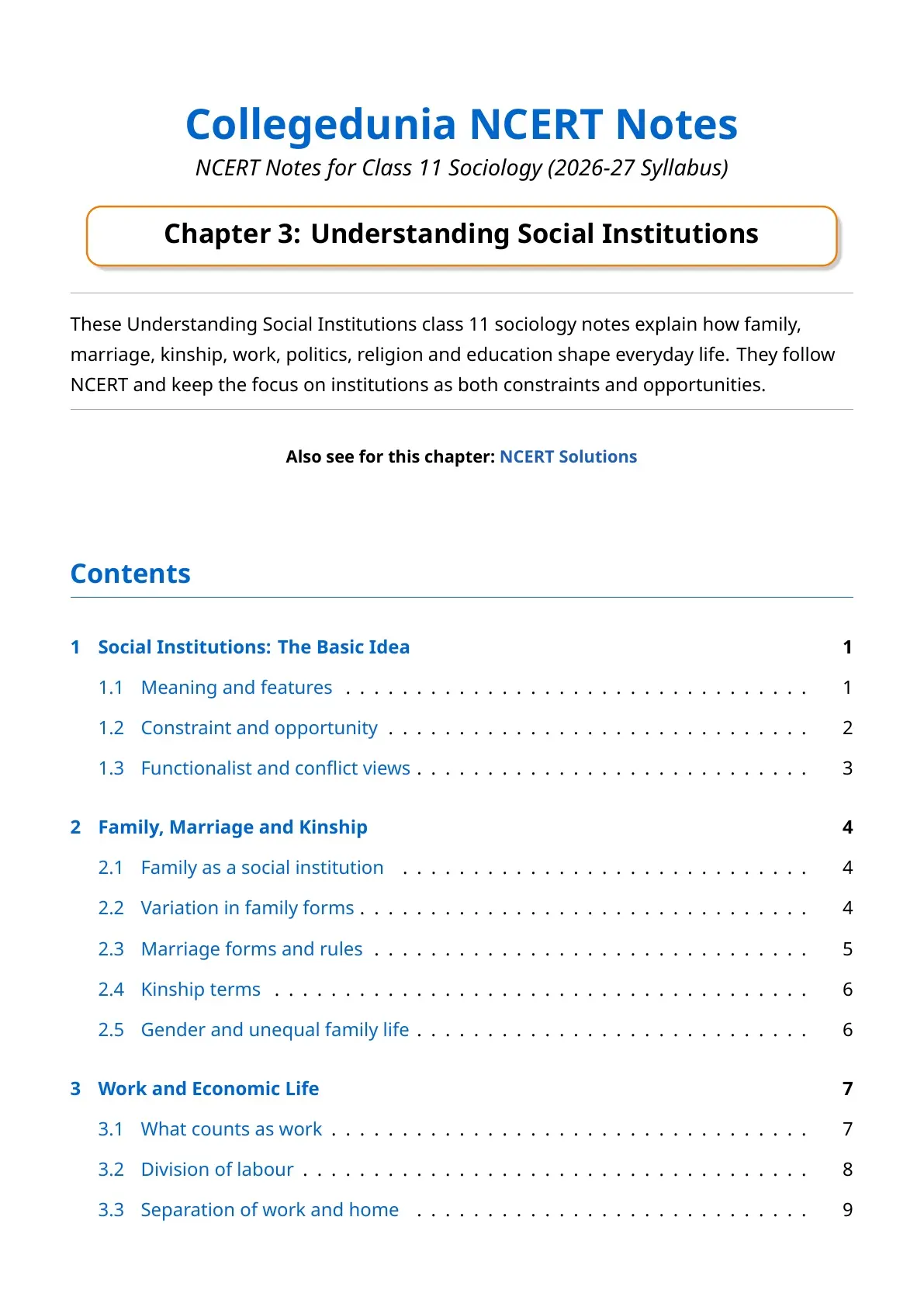
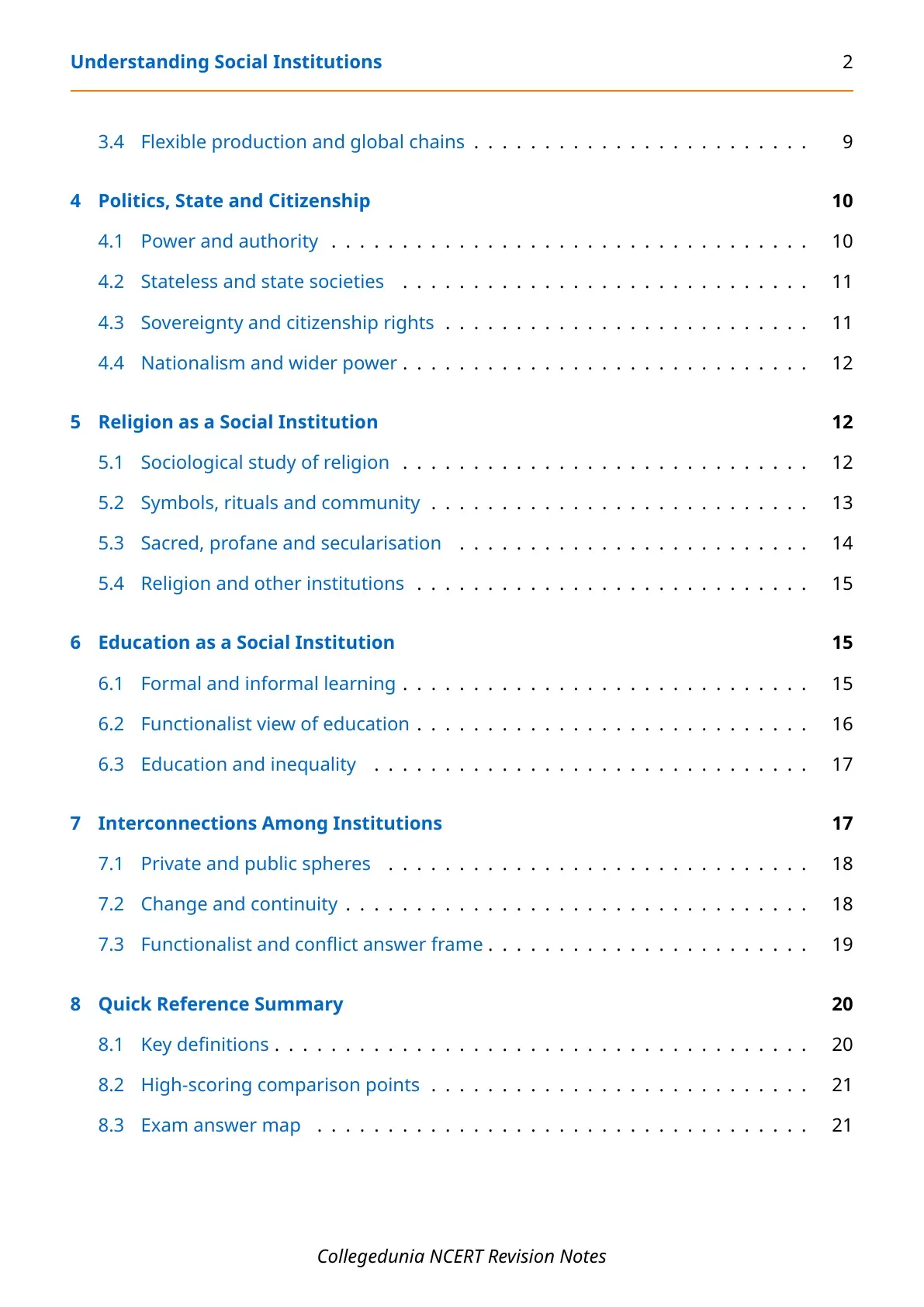
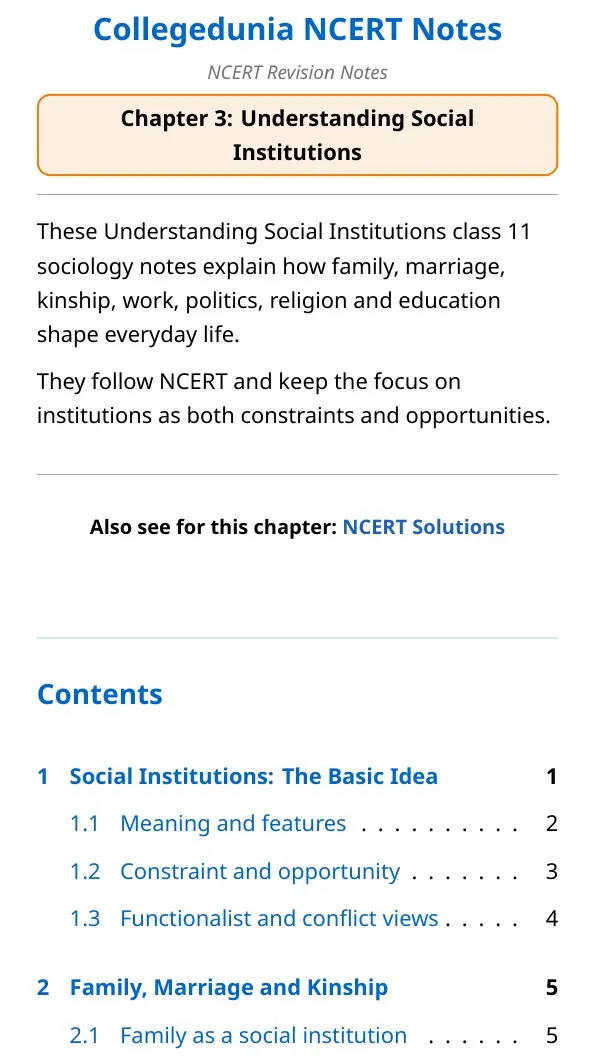
The NCERT Class 11 Sociology Chapter 3 Understanding Social Institutions Notes help students revise family, kinship, marriage, work, politics and religion according to the 2026-27 NCERT textbook. The PDF explains how social institutions organise everyday life and why their rules differ across societies.
- Best for: Class 11 Sociology school tests and short-answer revision.
- PDF focus: institution definitions, comparison tables, diagrams and quick recall boxes.
- Chapter value: this chapter links personal life with larger social structures.

Student Feedback: In a Collegedunia poll of 12,240 Class 11 Sociology students before the 2026 exams, 76% said Chapter 3 became easier after revising institutions through examples.
Source: 2026 Class 11 Sociology student poll across CBSE schools.
What the Understanding Social Institutions Notes Cover
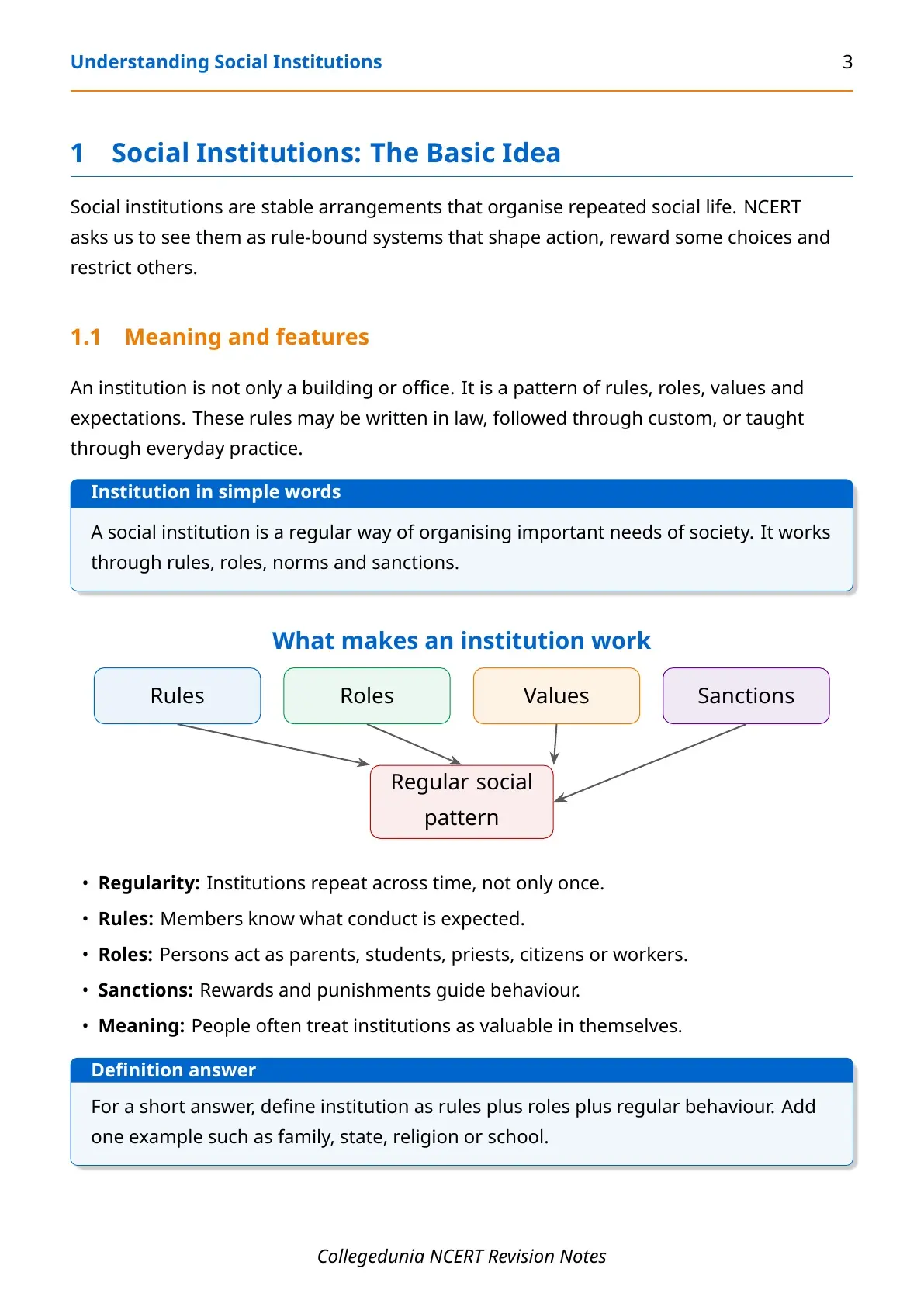
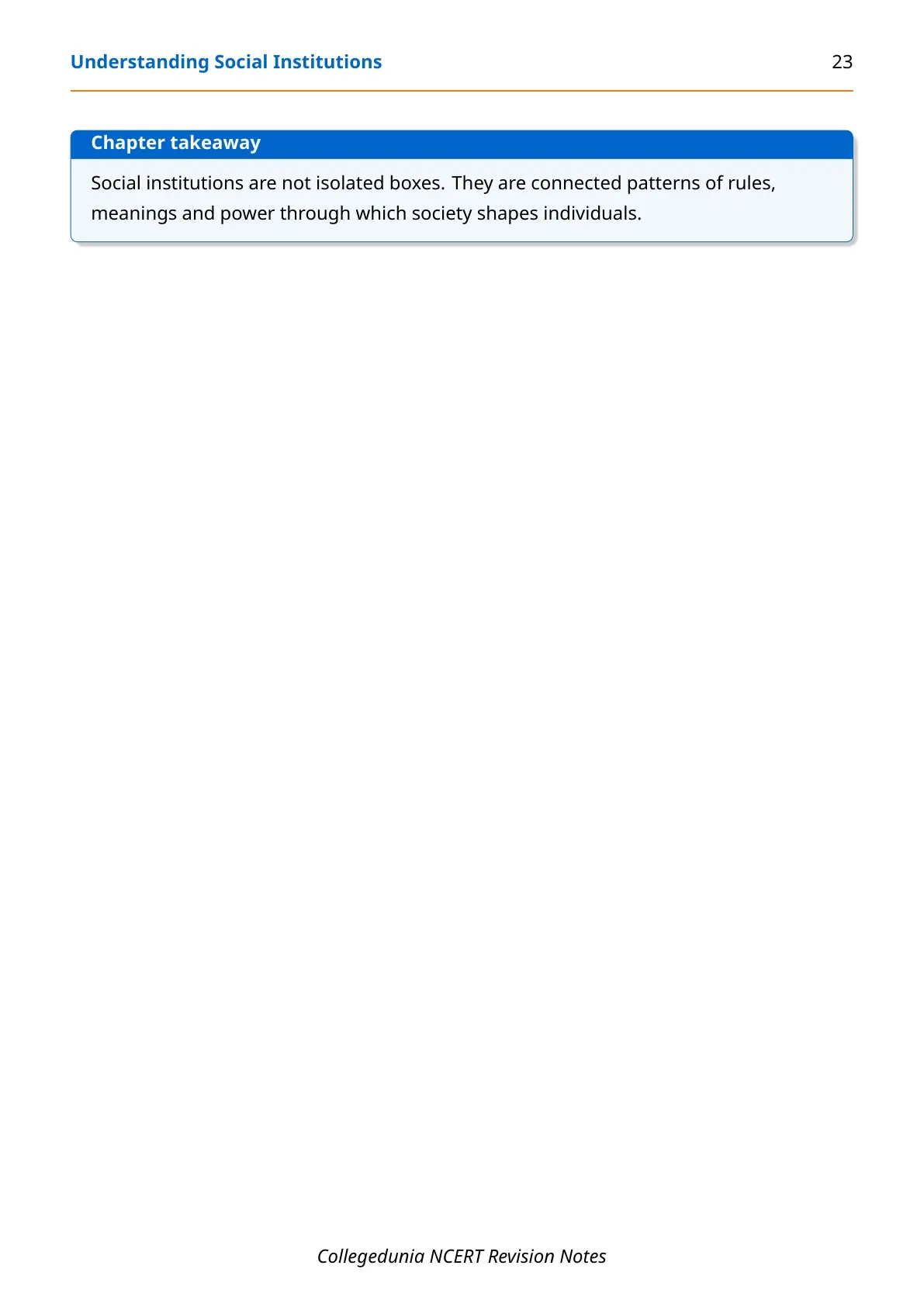
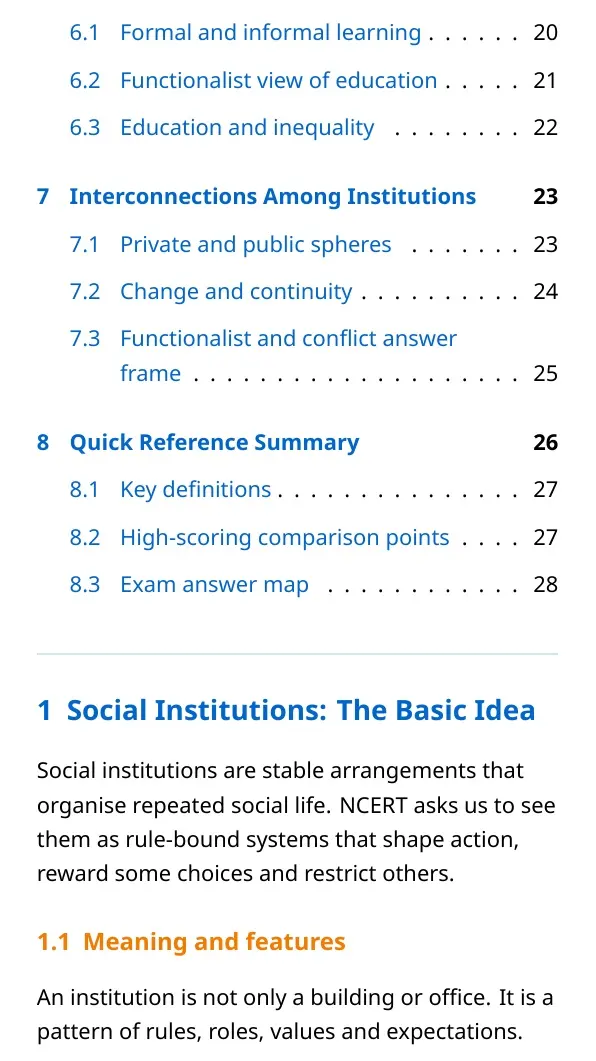
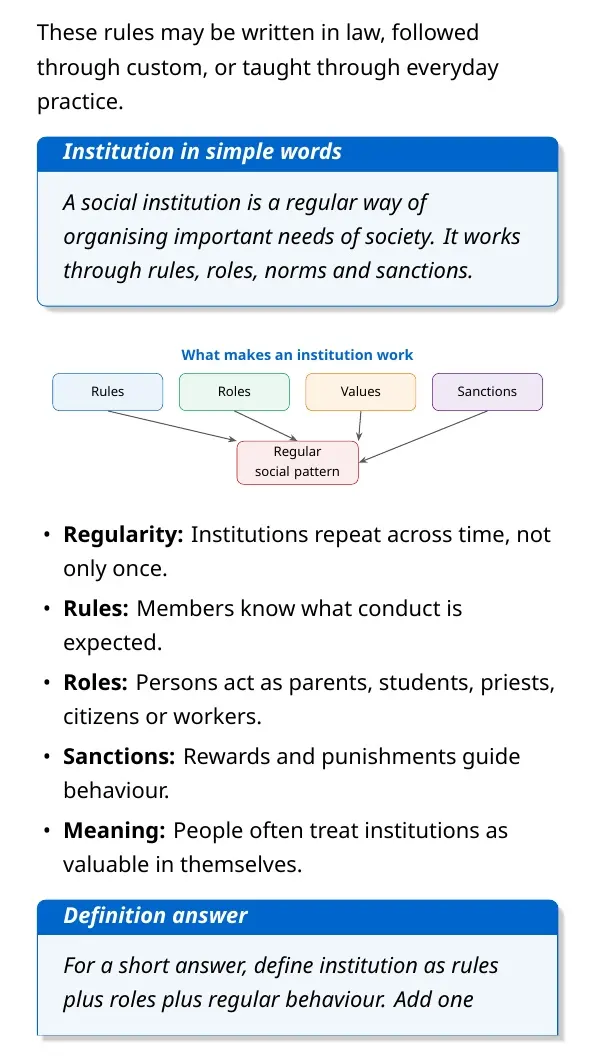
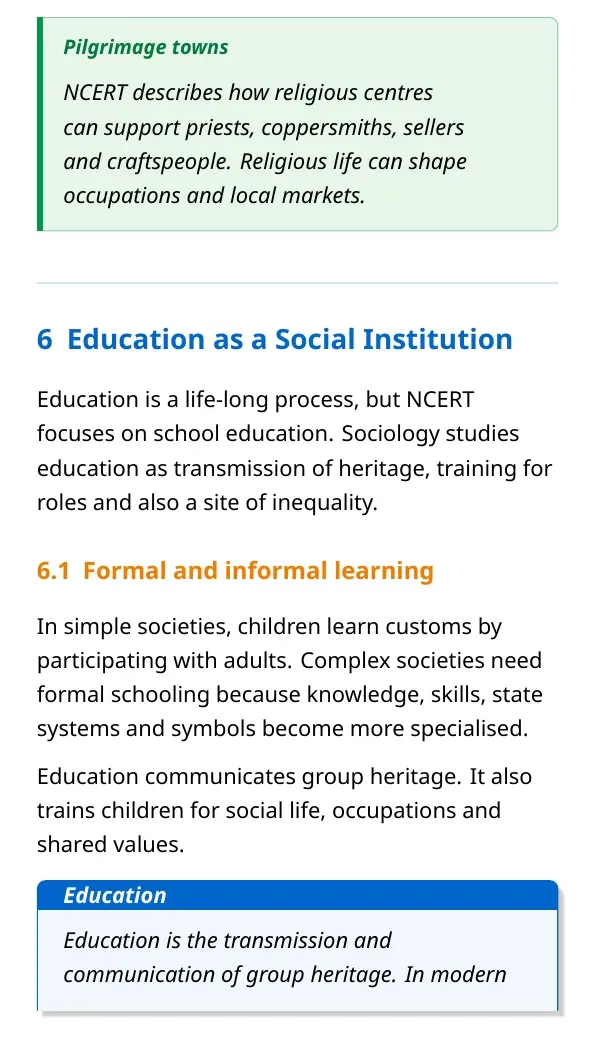
Chapter 3 explains how society creates stable patterns for family, work, power and belief. Social institutions are not buildings. They are accepted rules, roles and relationships that guide behaviour. Use this point first in any definition answer.
| PDF section | What students revise |
|---|---|
| Institution basics | Meaning of institution, norms, values, roles and patterned behaviour. |
| Family and kinship | Nuclear family, joint family, descent, residence and kinship terms. |
| Marriage | Rules of partner choice, alliance, family links and social recognition. |
| Economic institutions | Work, property, household labour, market and changing forms of production. |
| Politics and religion | Authority, power, ritual, belief and moral order. |
Understanding Social Institutions Class 11 Video
Source: Magnet Brains on YouTube
Social Institutions in Sociology Class 11
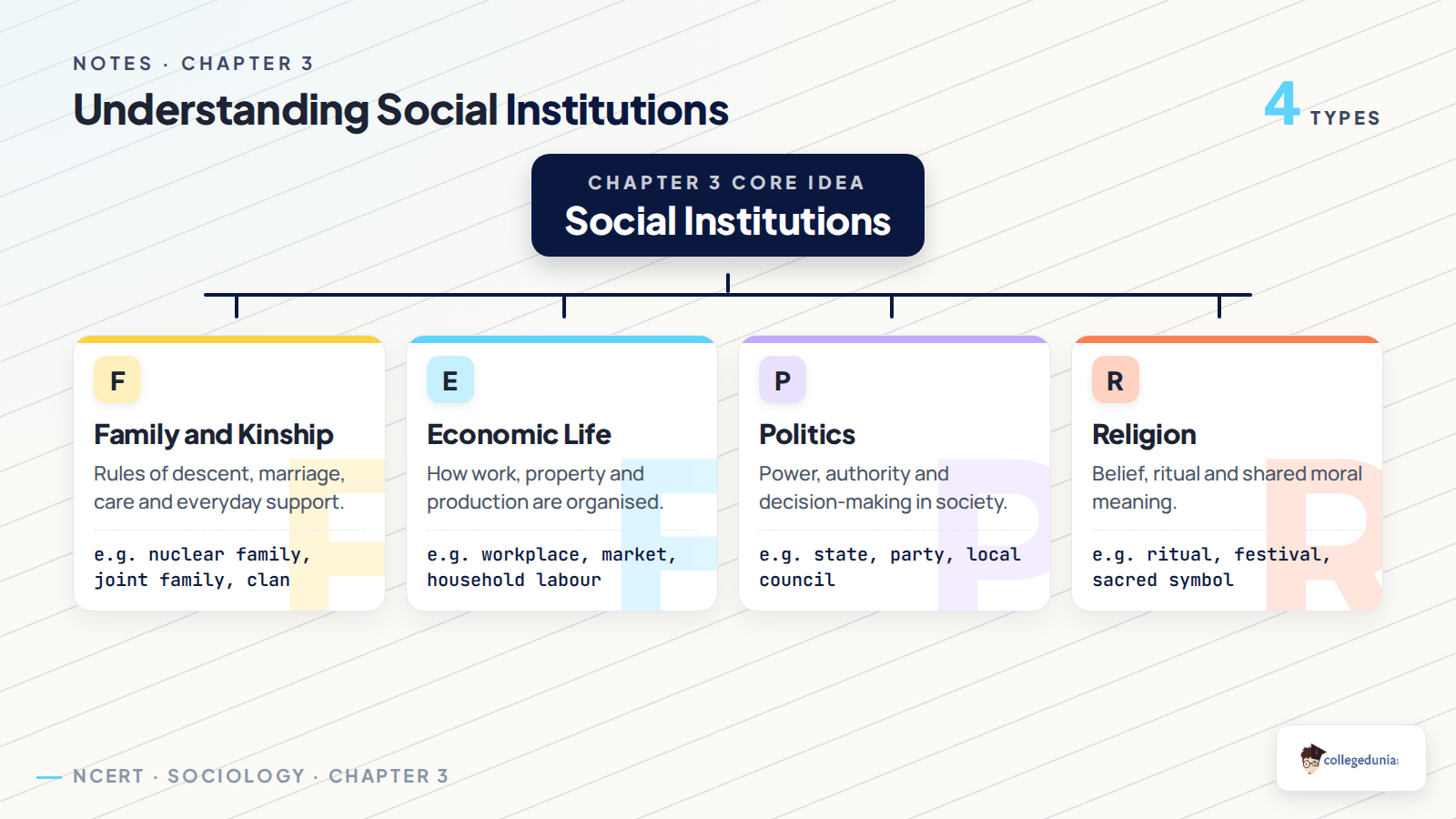
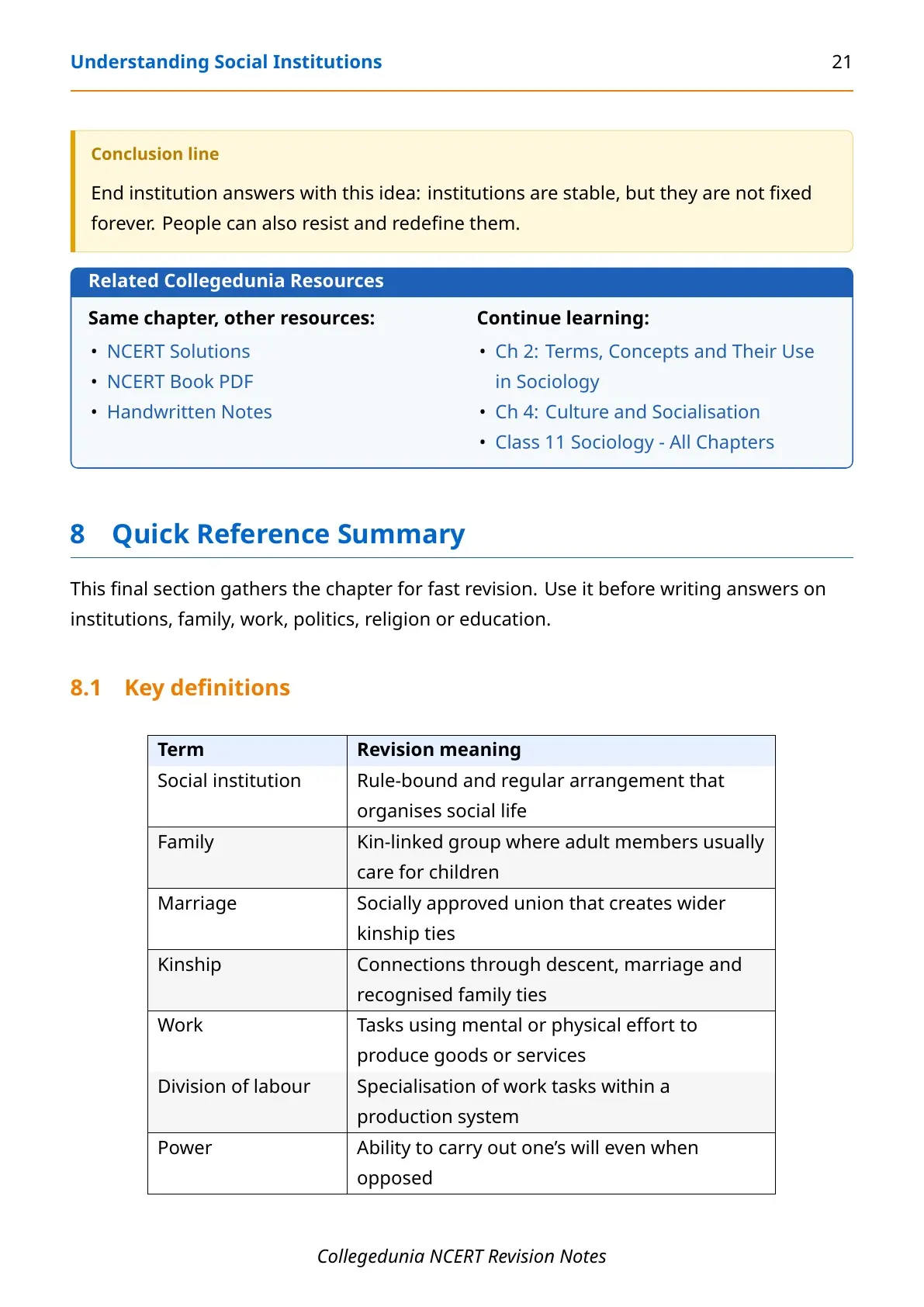
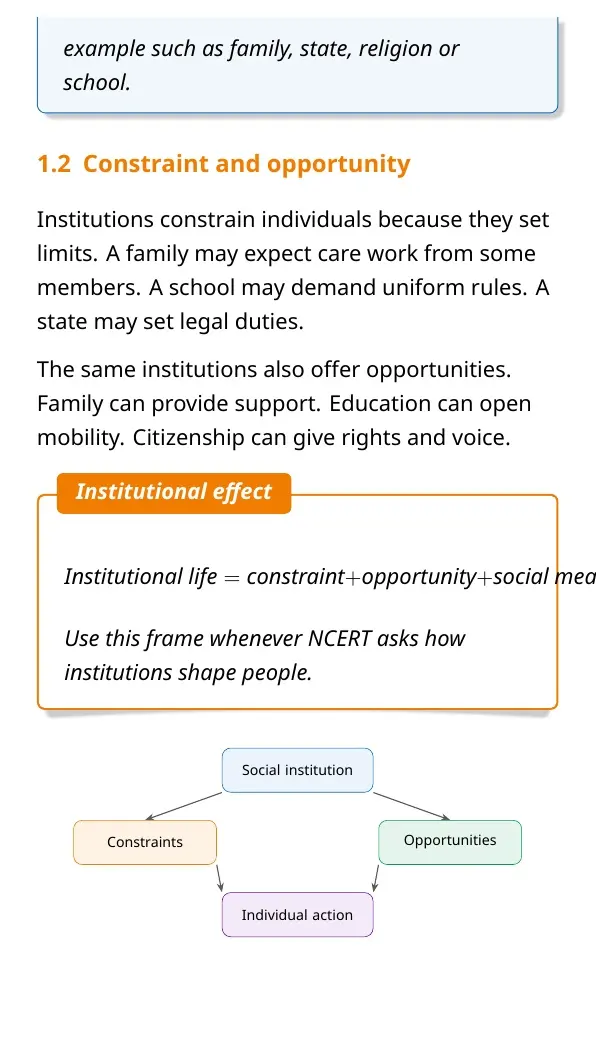
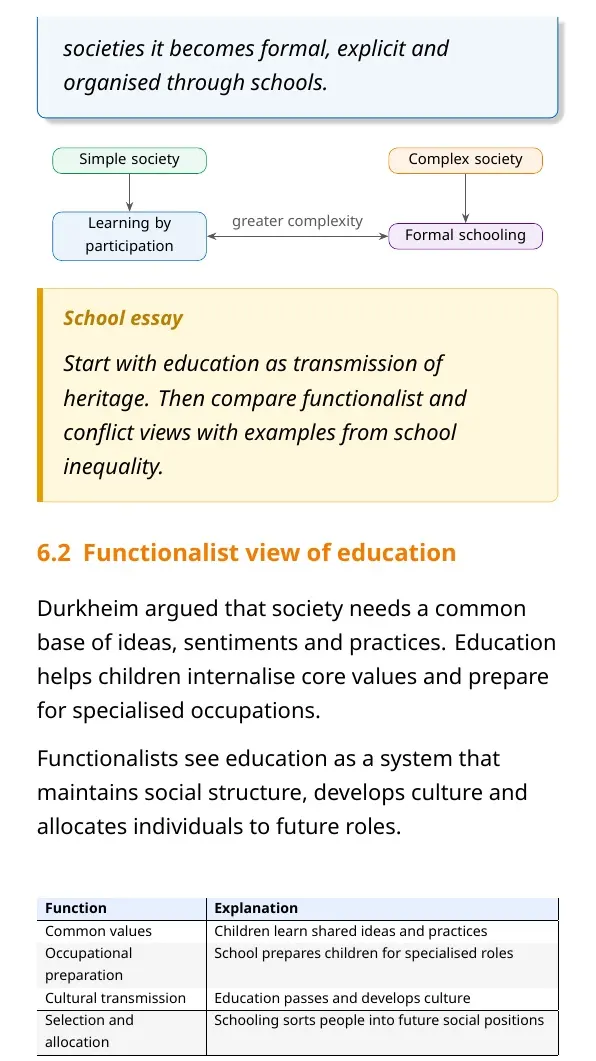
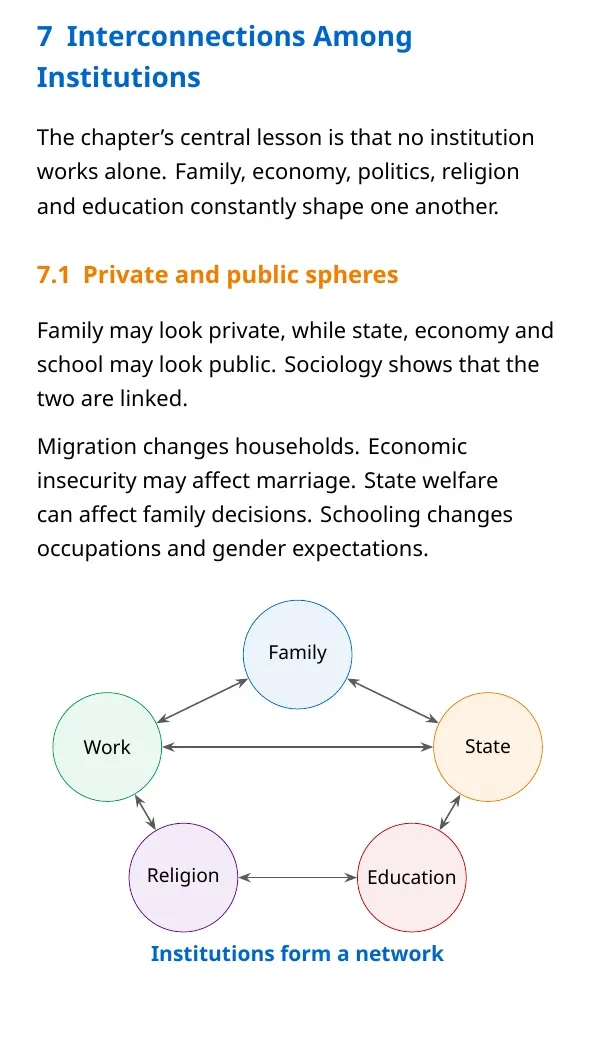
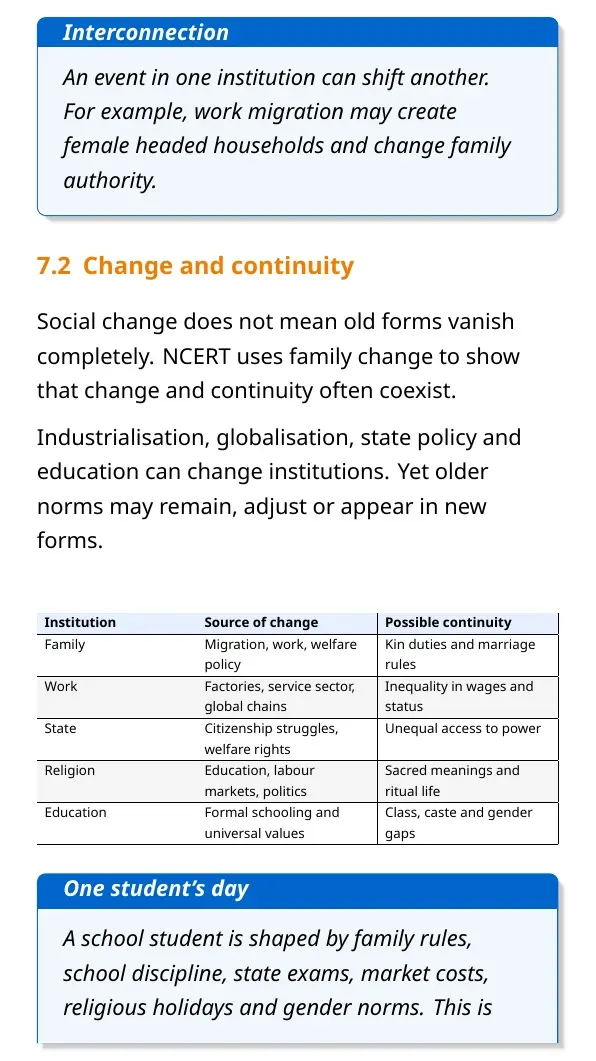
A social institution gives a repeated social activity a stable form. Family, economy, politics and religion appear in almost every society, but their rules change by time, place and culture.
- Family: organises care, socialisation and everyday support.
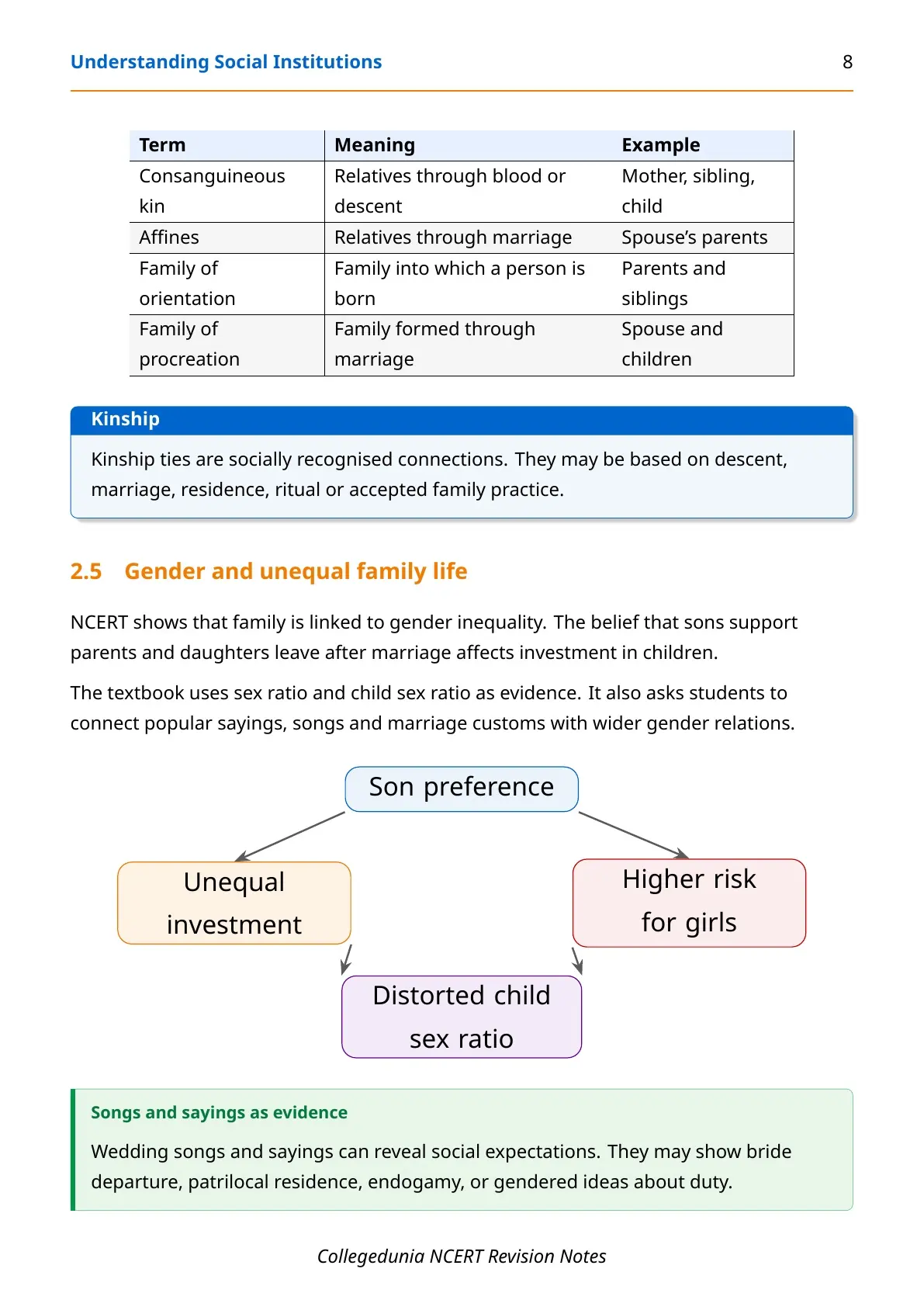
- Kinship: connects people through birth, marriage and descent.
- Economy: organises work, exchange, property and production.
- Politics: organises authority, power and collective decisions.
- Religion: organises belief, ritual and shared moral meaning.
Family and Kinship in Understanding Social Institutions
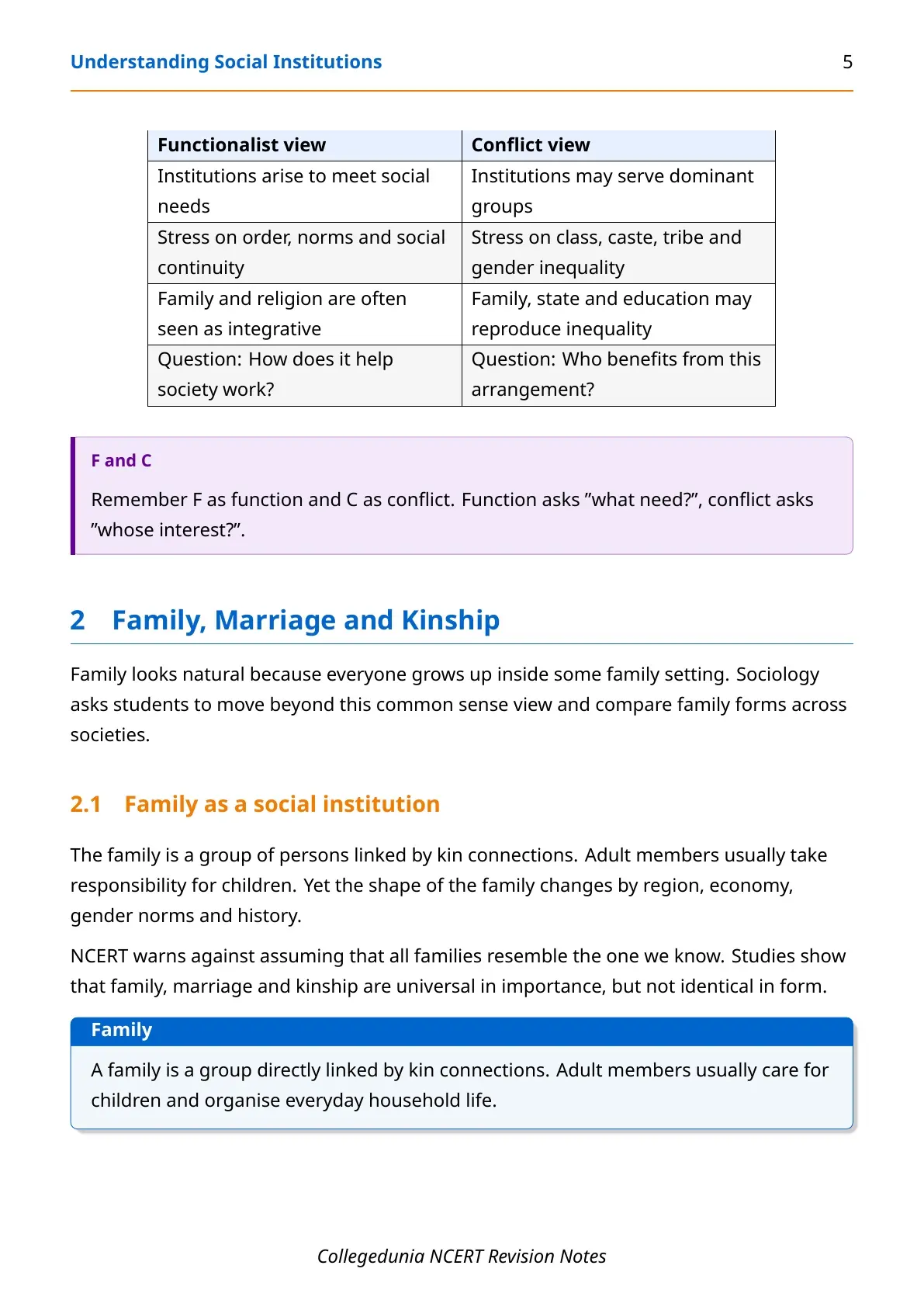
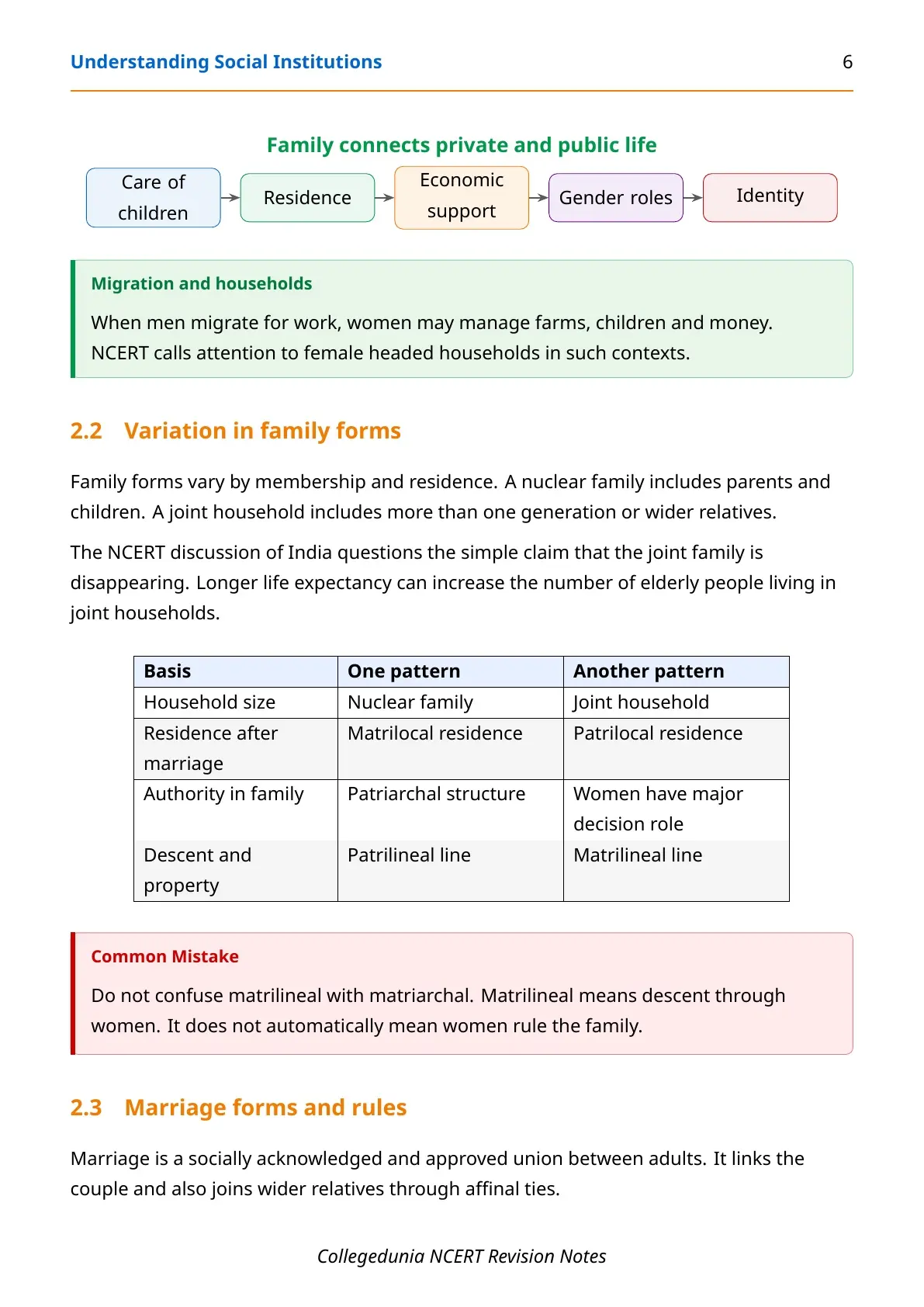
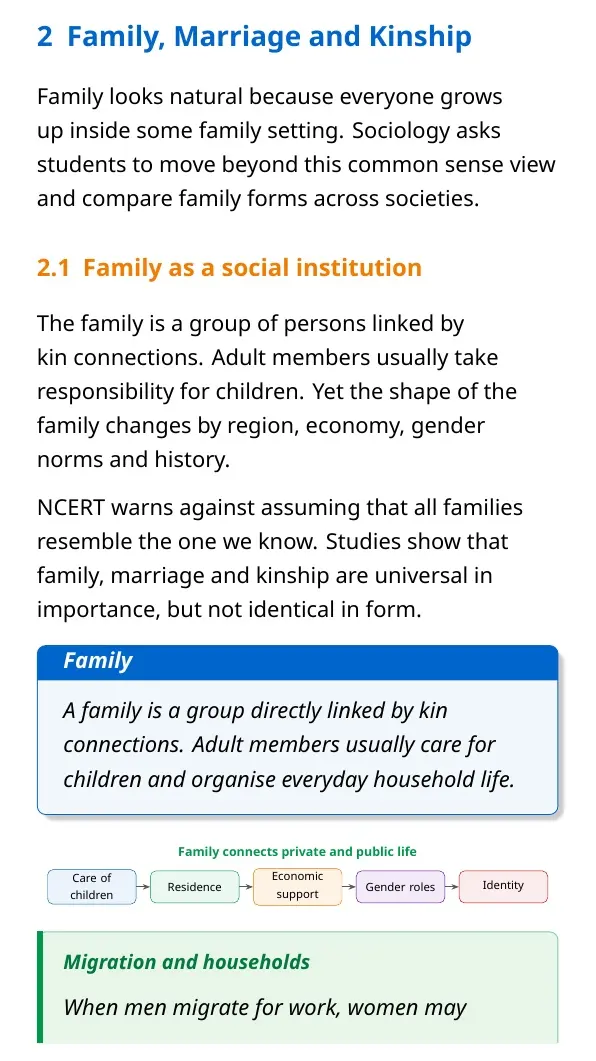
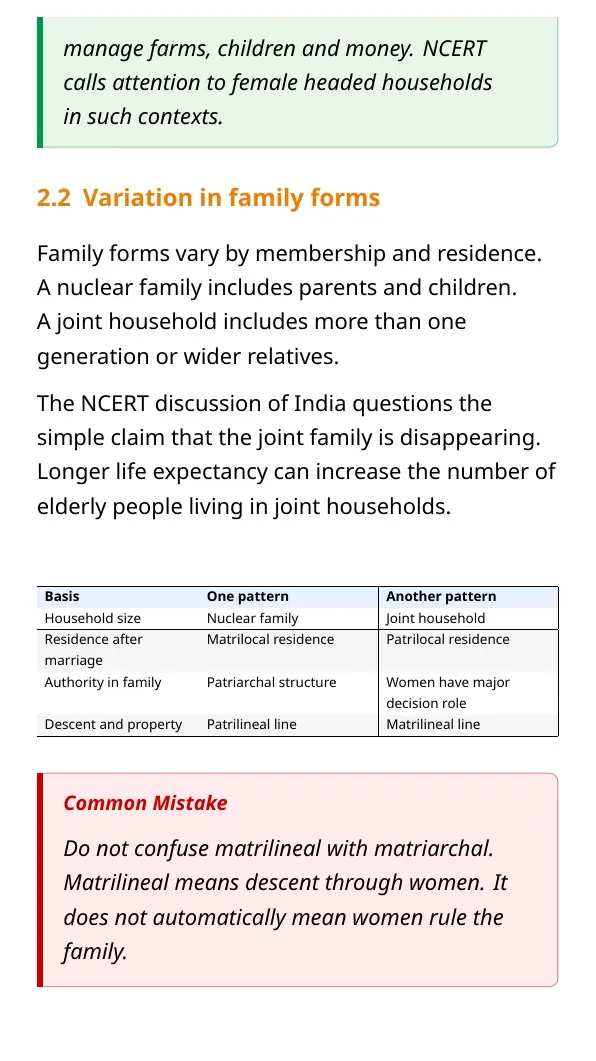
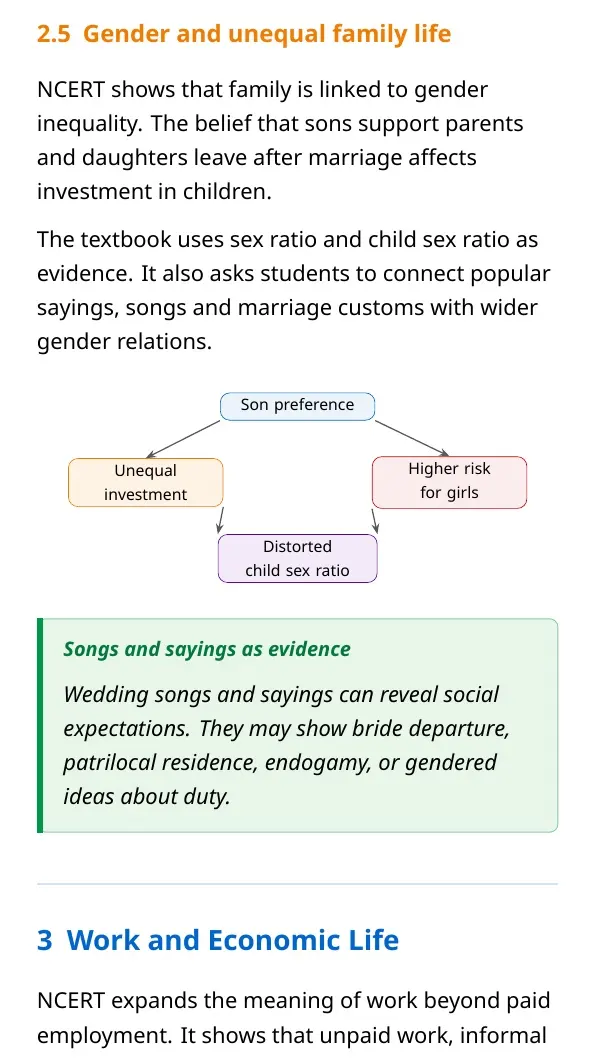
NCERT treats family as a basic but changing institution. Students should not describe one family type as universal. Societies differ in family size, descent rule, residence pattern and authority inside the household.
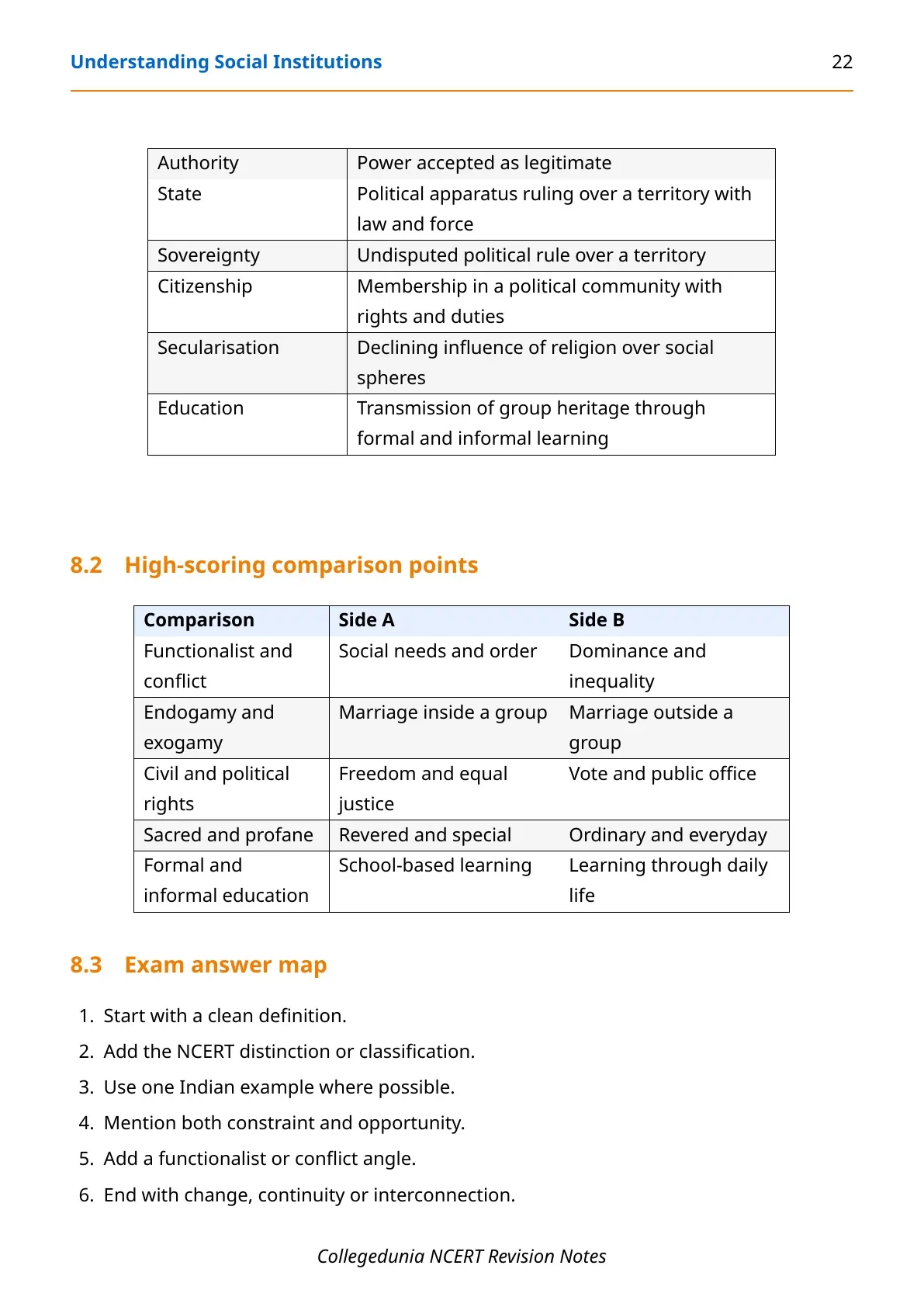
| Term | Meaning for revision |
|---|---|
| Nuclear family | Parents and their children form the core household. |
| Joint family | More than one generation or married siblings live within one family unit. |
| Matrilineal descent | Descent and inheritance are traced through the mother line. |
| Patrilineal descent | Descent and inheritance are traced through the father line. |
Marriage and Kinship Difference in Class 11 Sociology
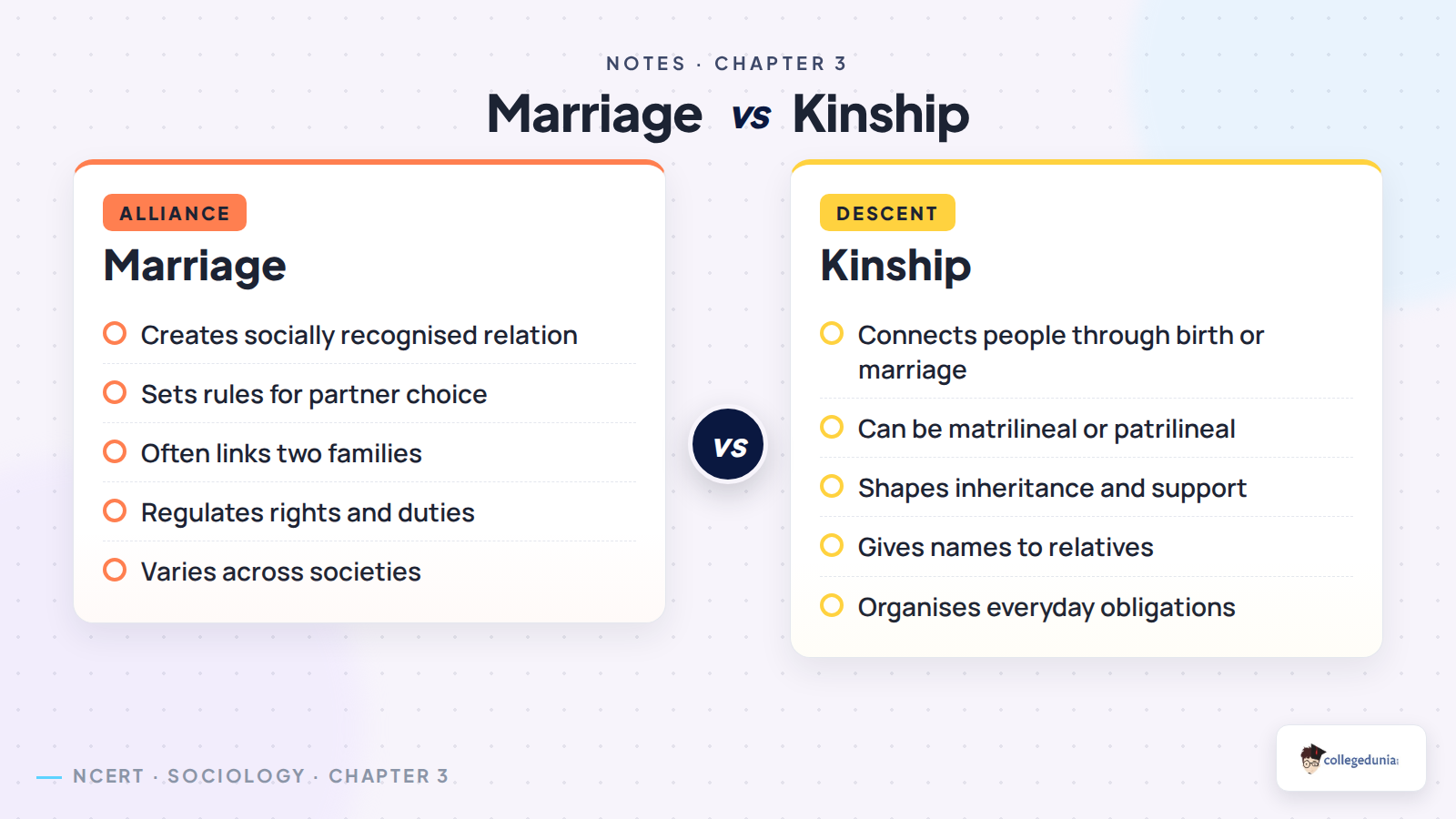
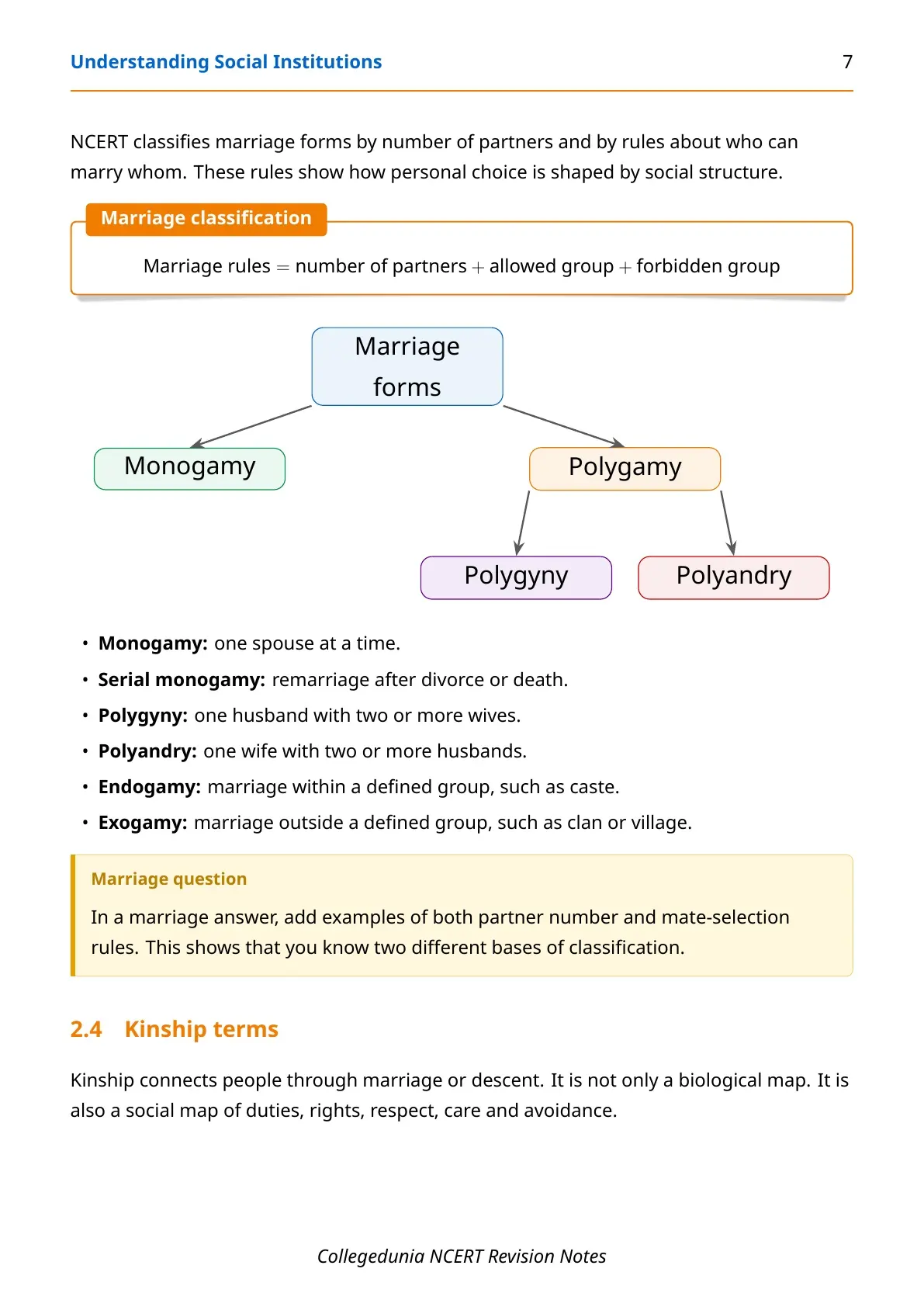
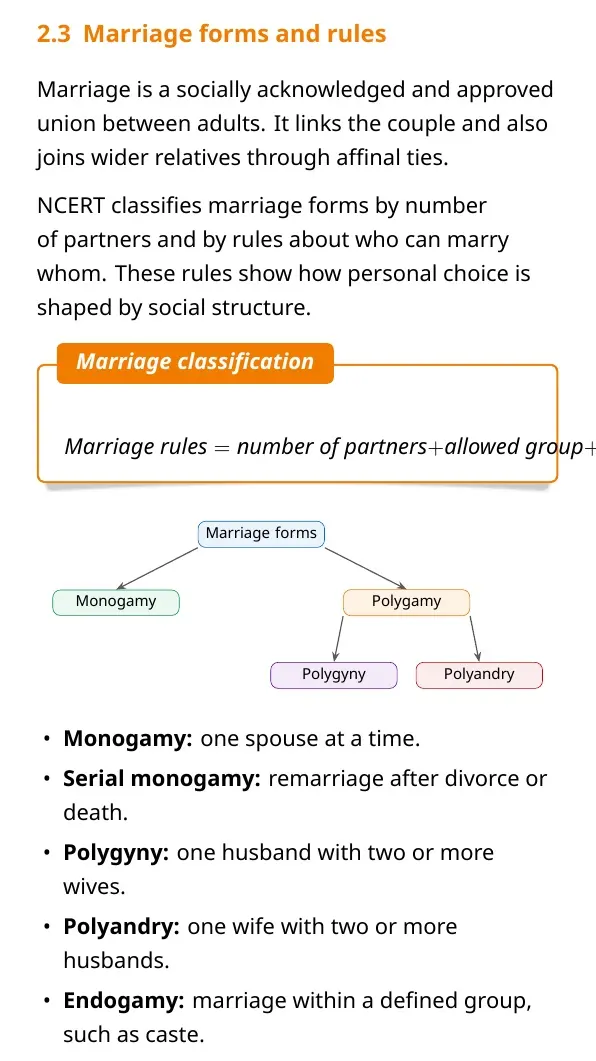
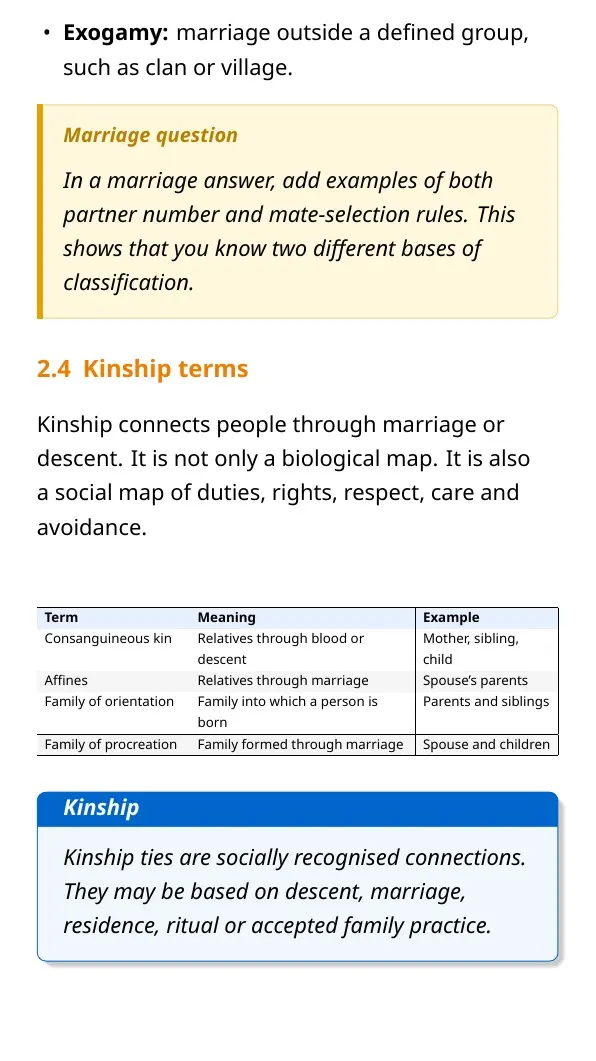
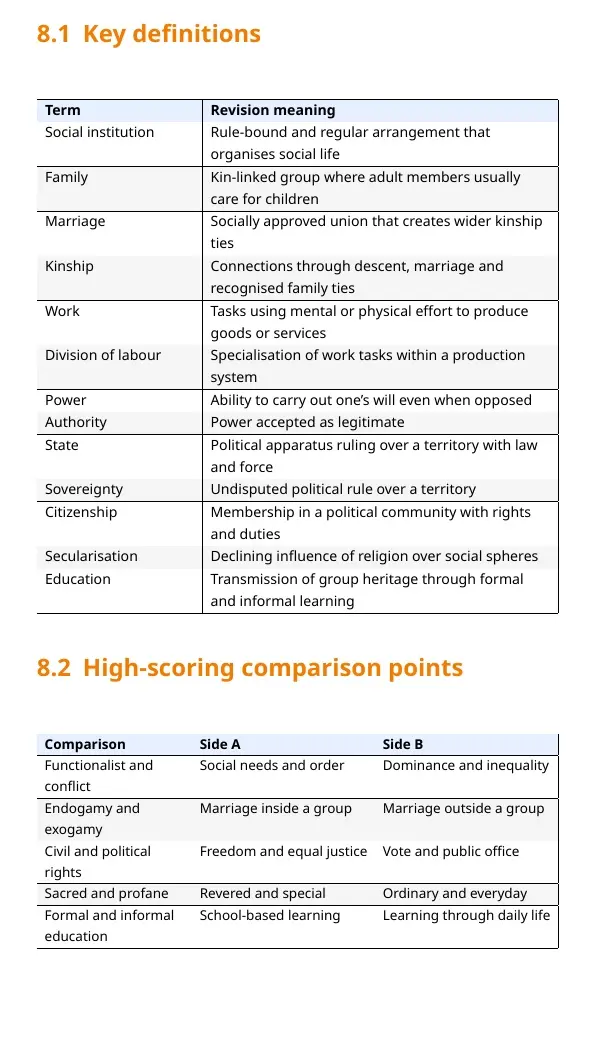
Marriage is a socially recognised relation that often creates an alliance between families. Kinship is wider because it includes relatives connected through birth and marriage. Do not write marriage and kinship as the same concept.
- Marriage: focuses on partner choice, alliance, legitimacy and duties.
- Kinship: focuses on relatives, descent, inheritance and support networks.
- Exam tip: give one family example when comparing both terms.
Work, Economy and Politics in Social Institutions
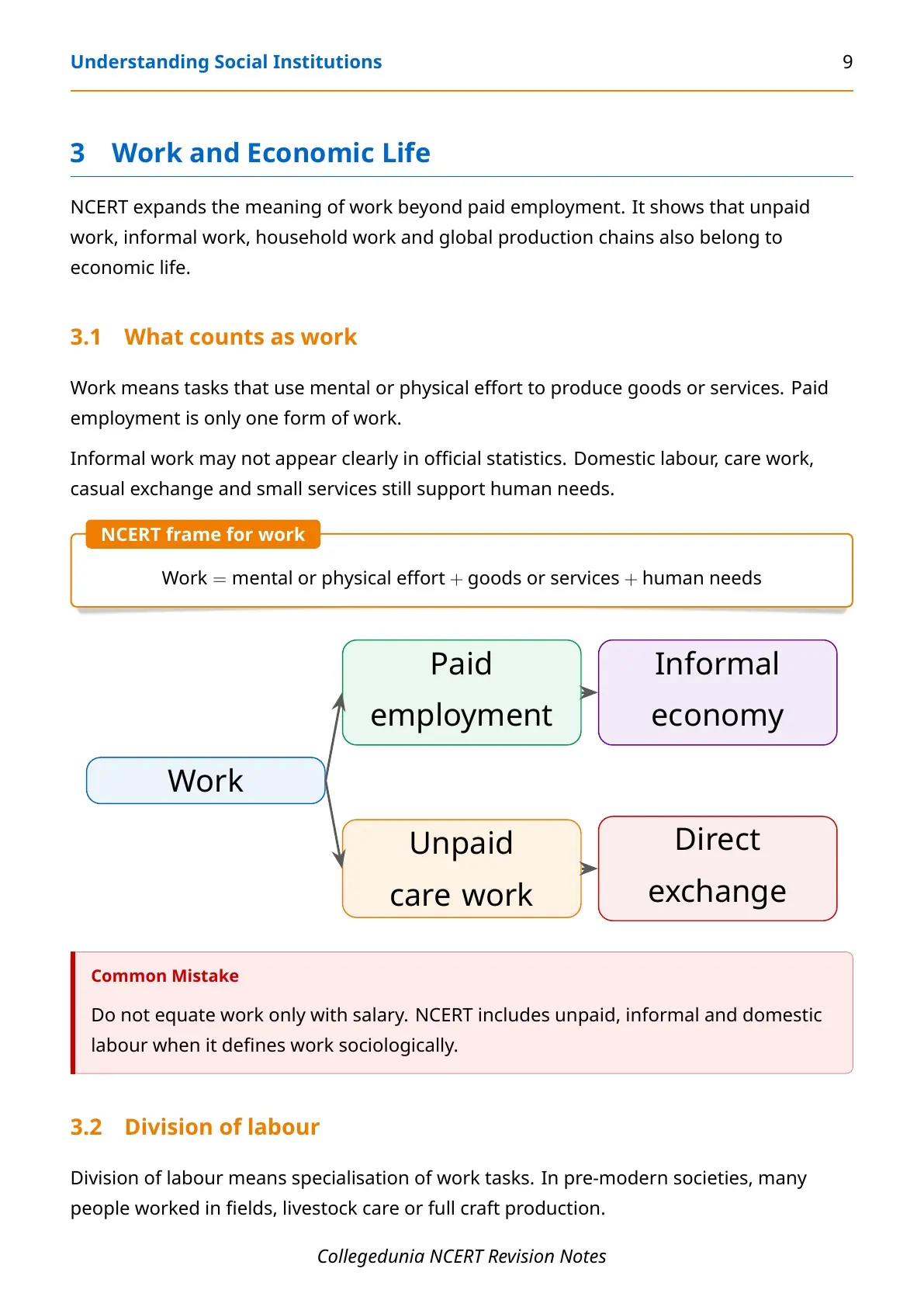
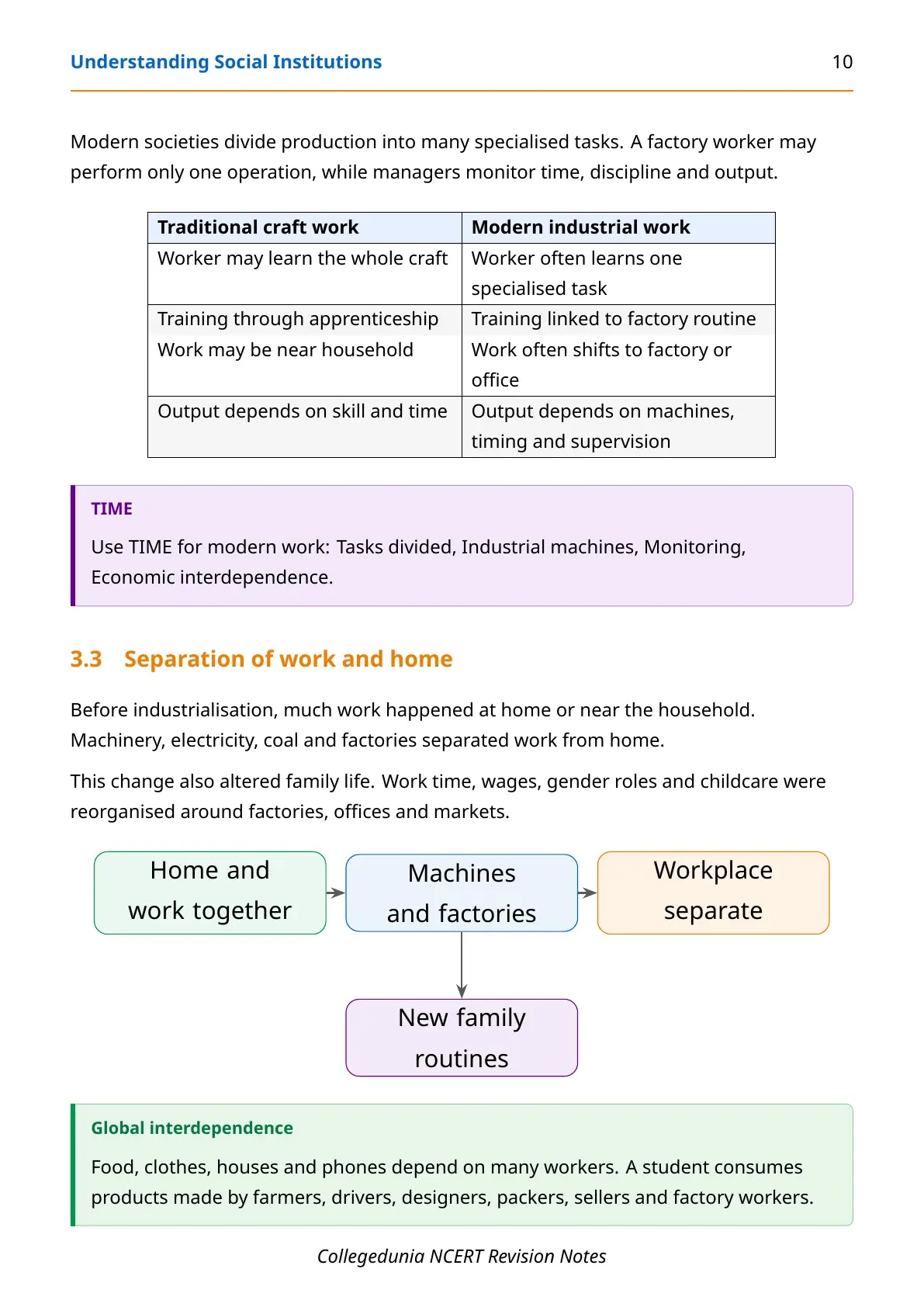
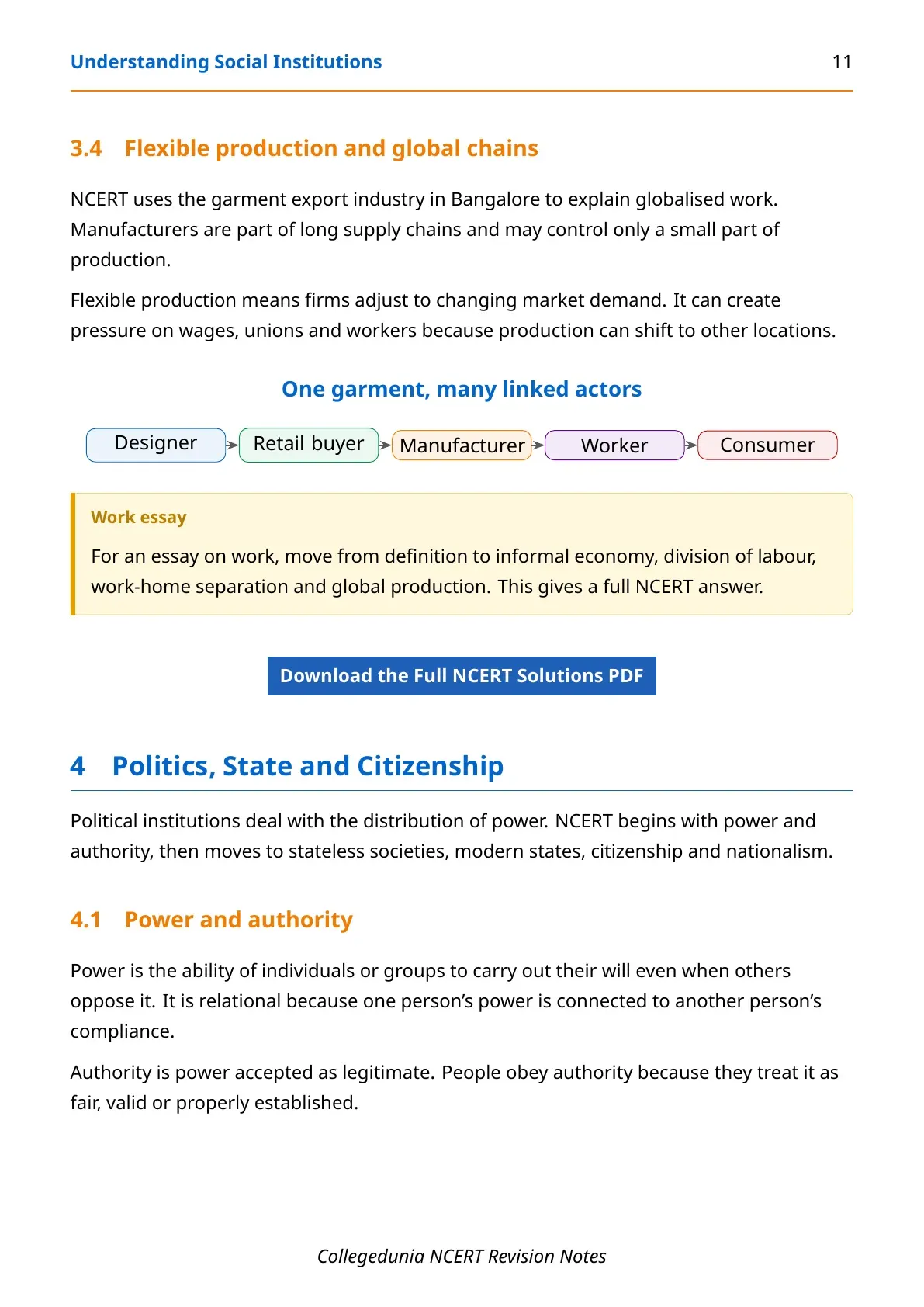
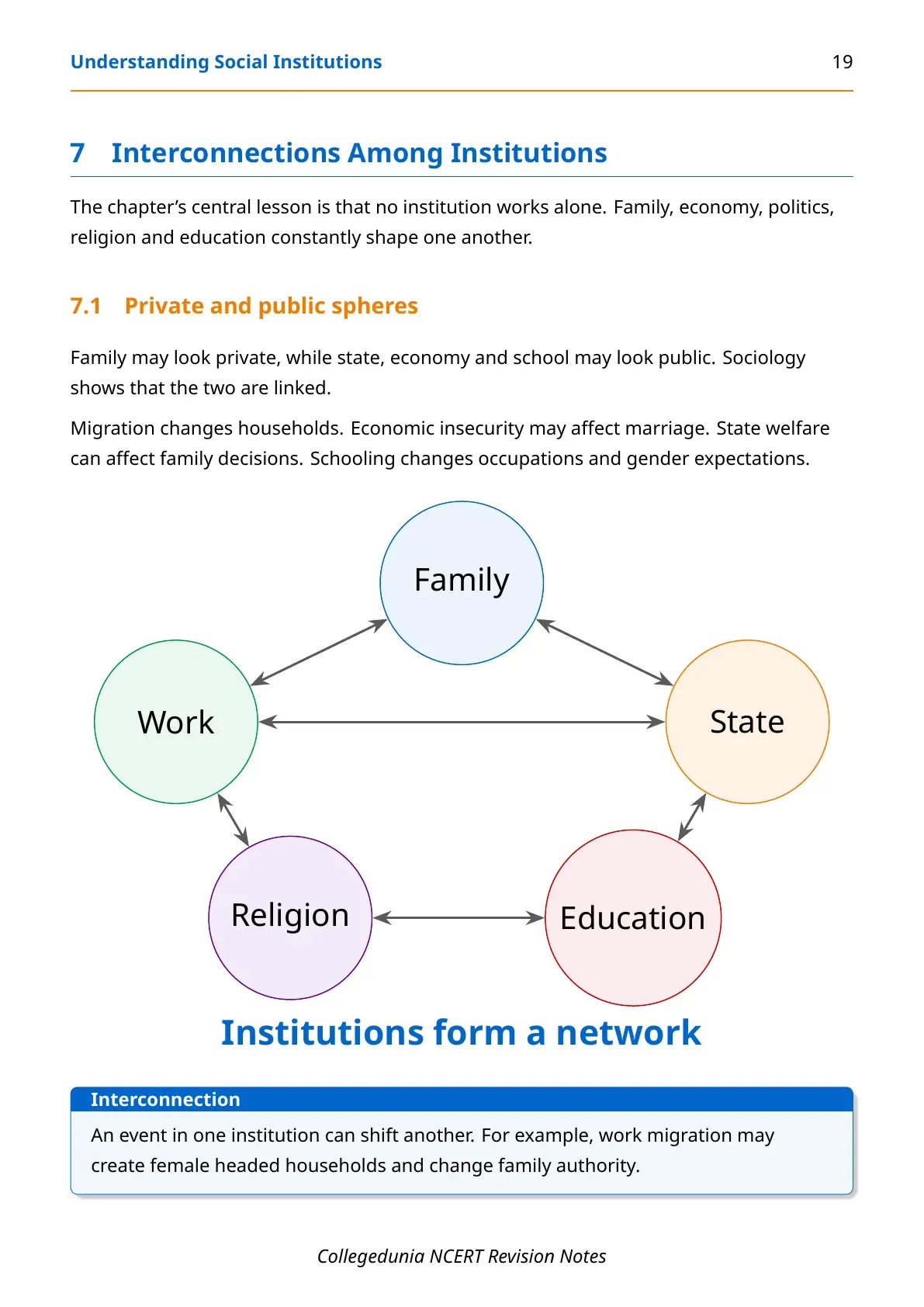
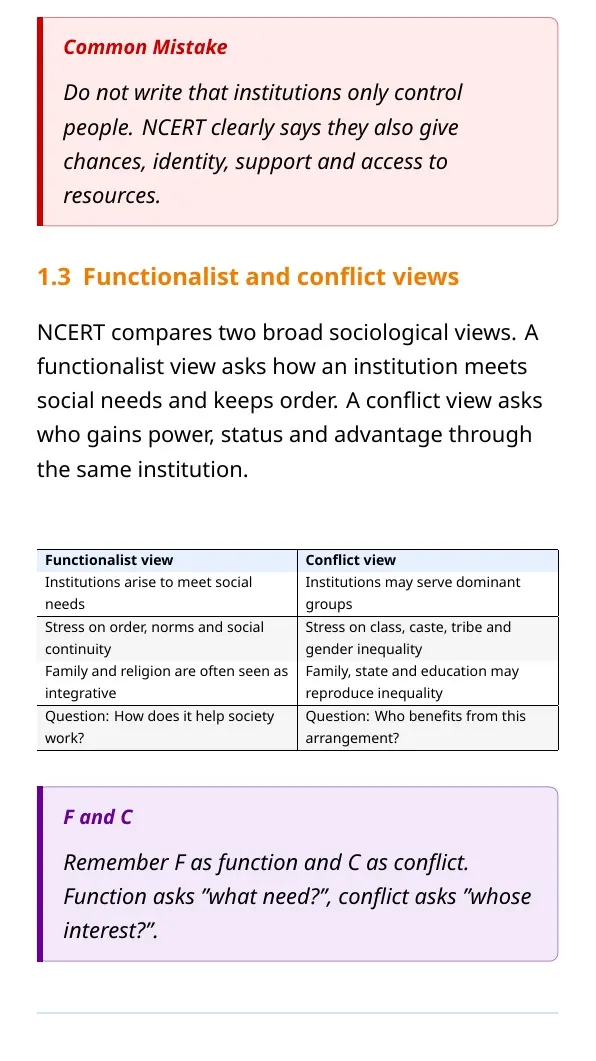
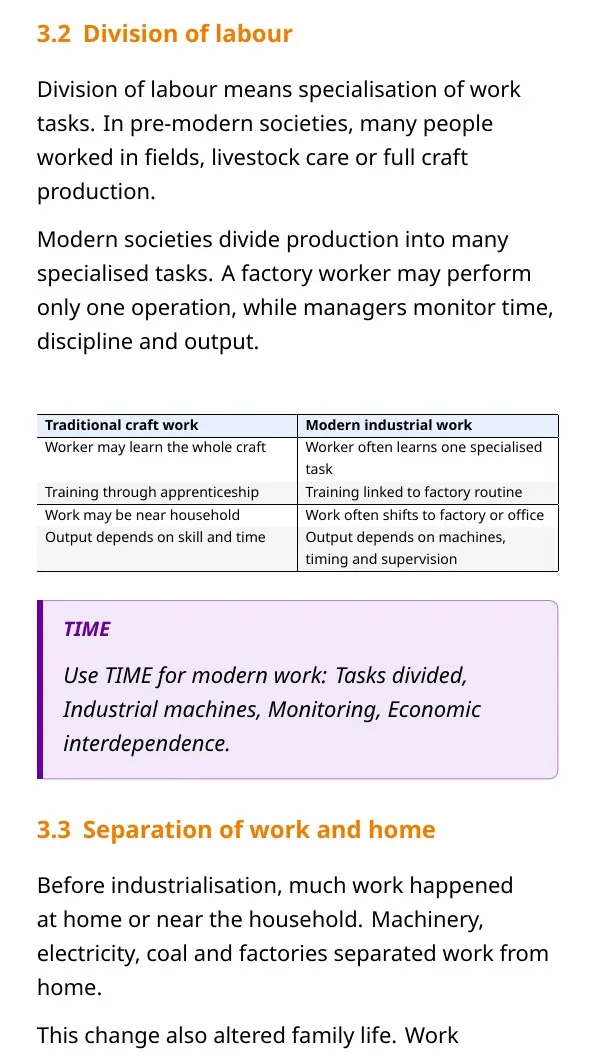
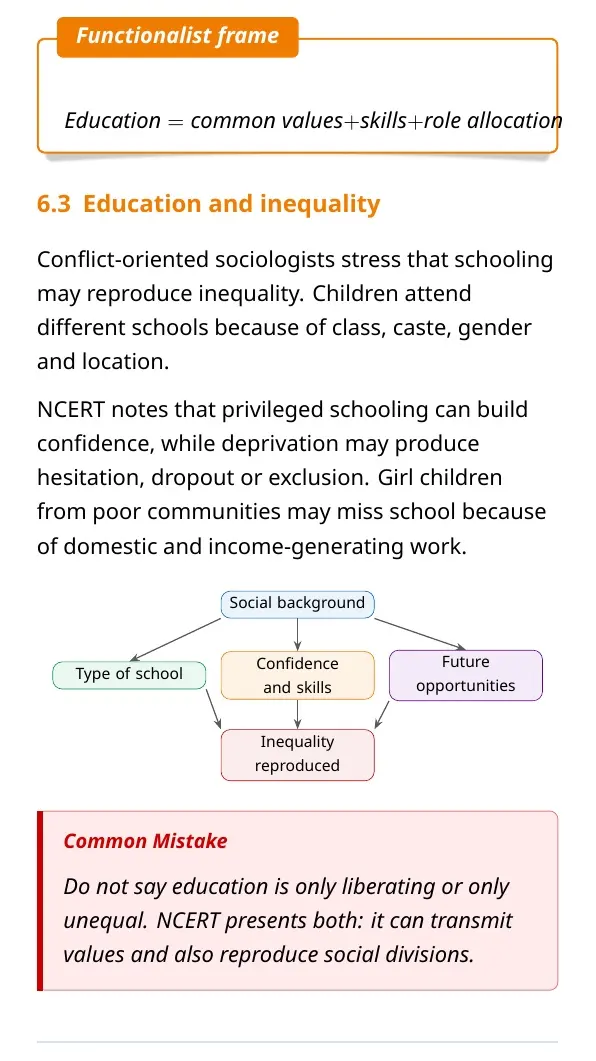
Economic institutions organise how work is divided and how resources move. Political institutions organise authority and collective decisions. These two areas often meet when states regulate labour, property, welfare and public resources.
| Institution | Key revision point |
|---|---|
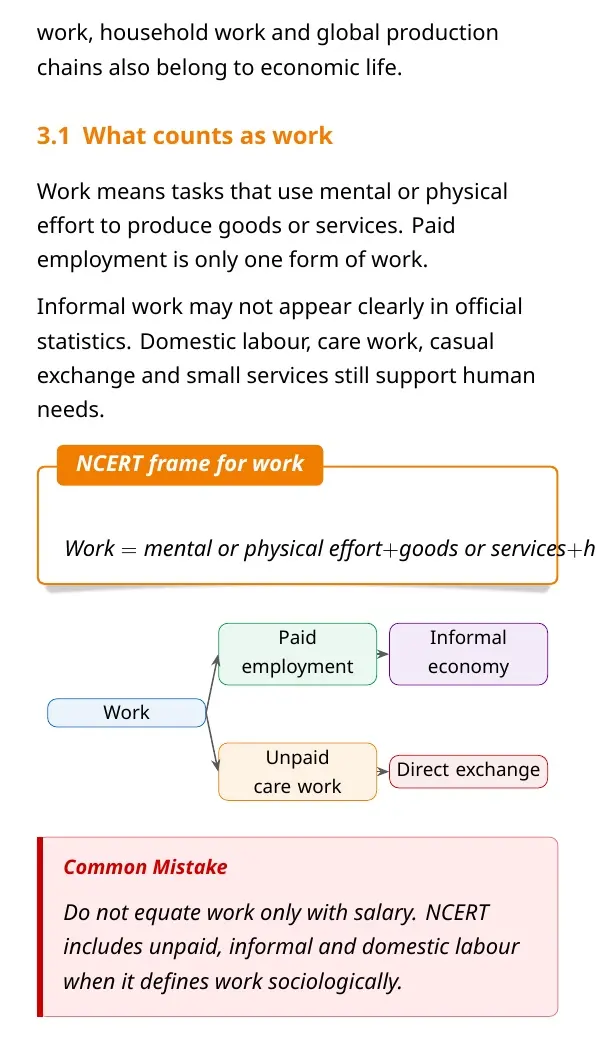
| Work | Work includes paid and unpaid activity, including household labour. |
| Market | Markets organise exchange, price and competition. |
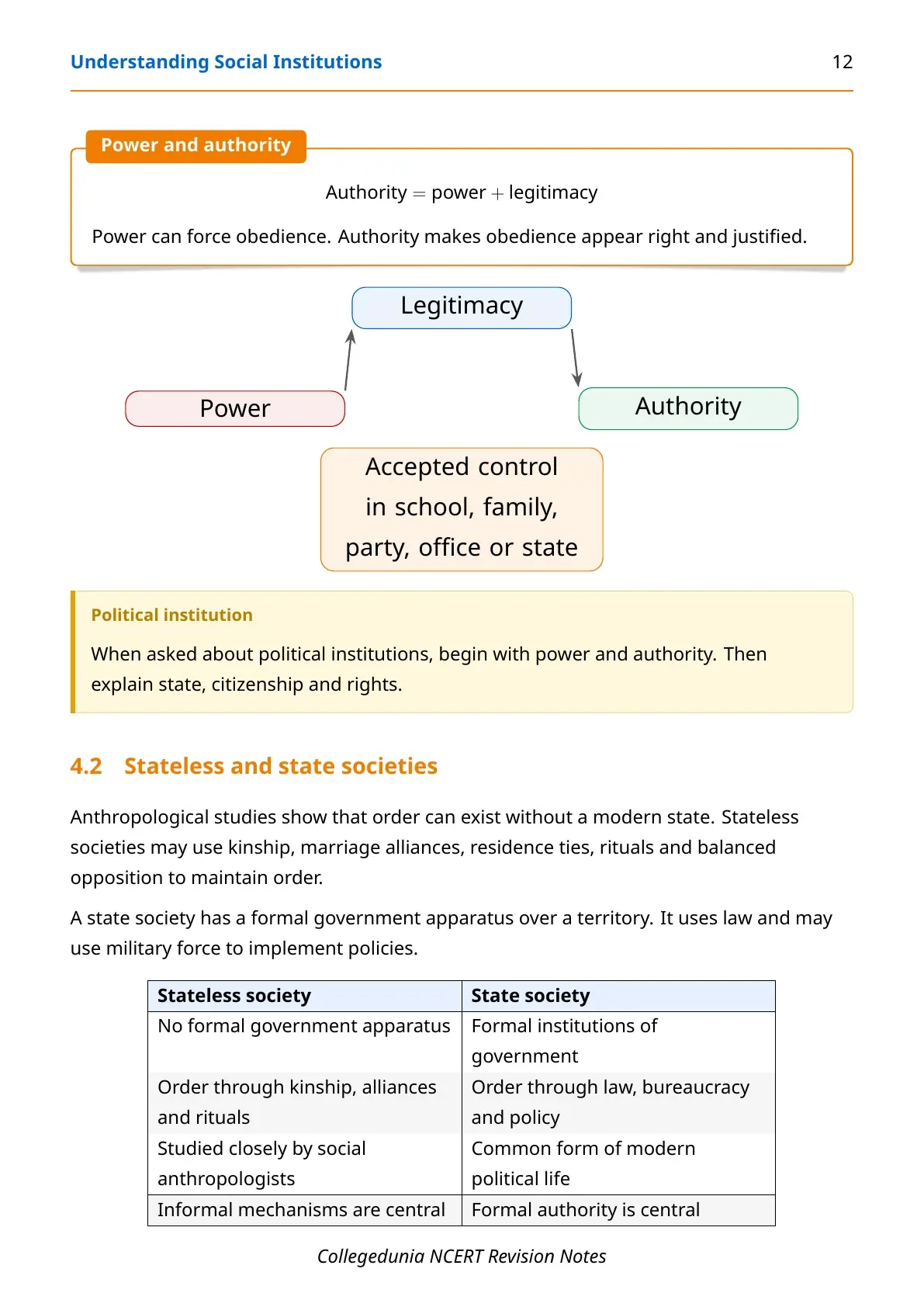
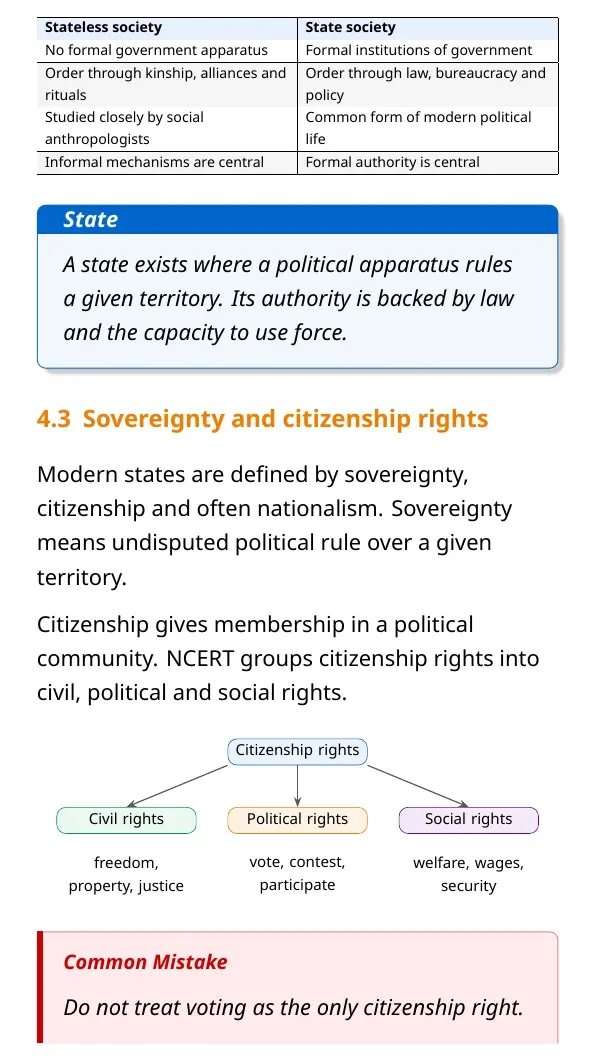
| State | The state claims authority over law, order and public decisions. |
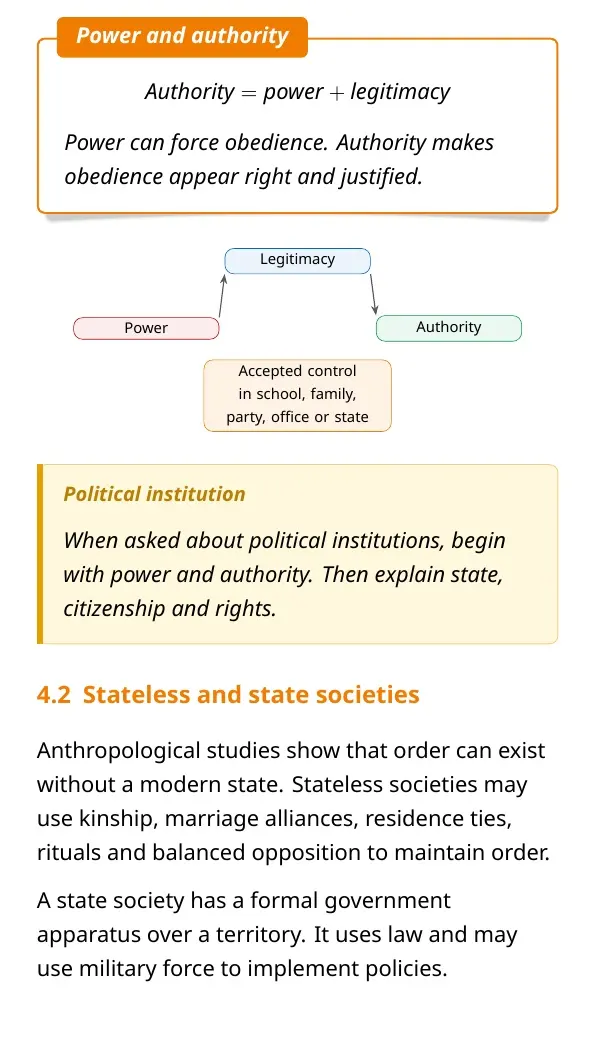
| Power | Power means the ability to influence or control action. |
Religion as a Social Institution in Sociology
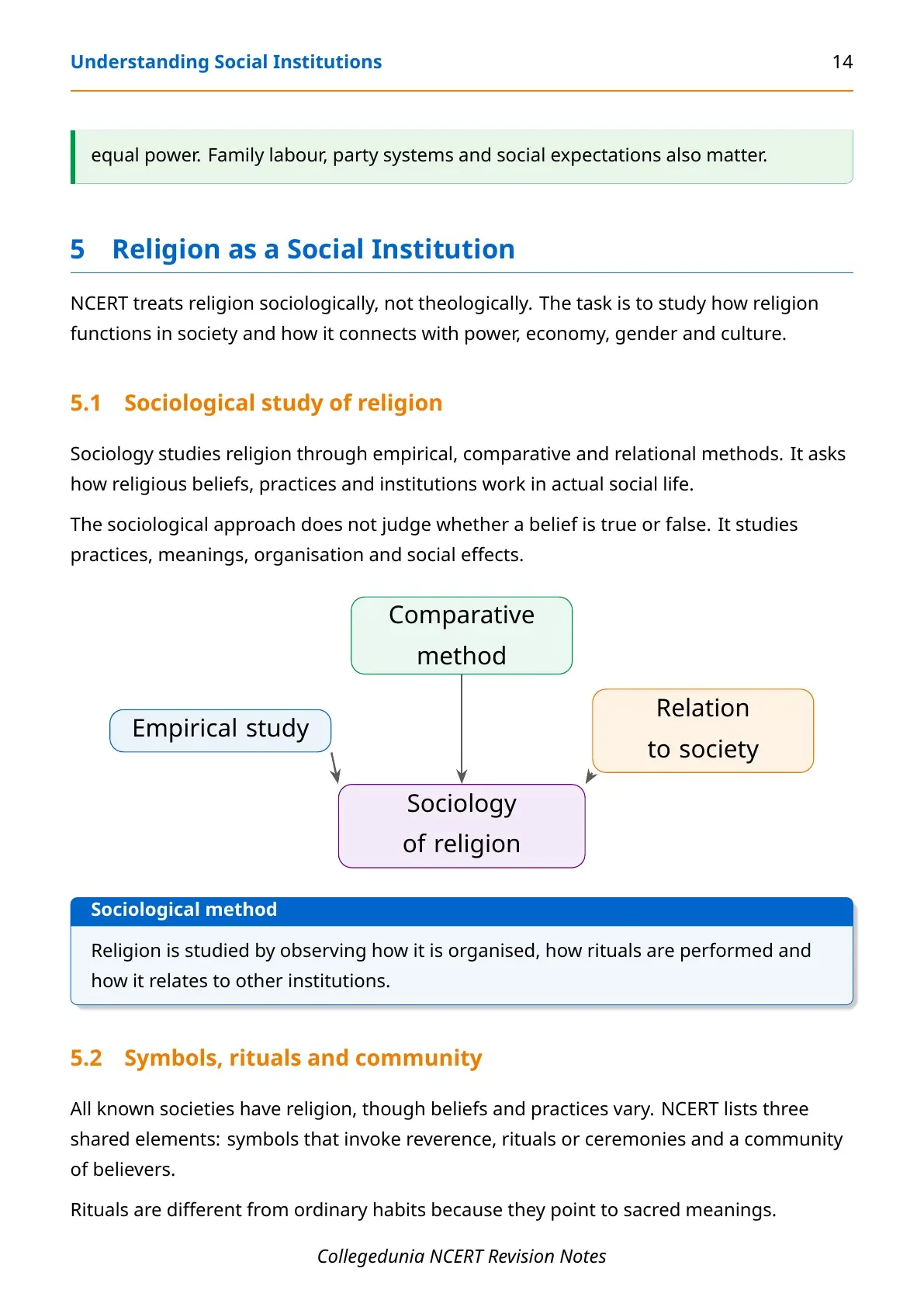
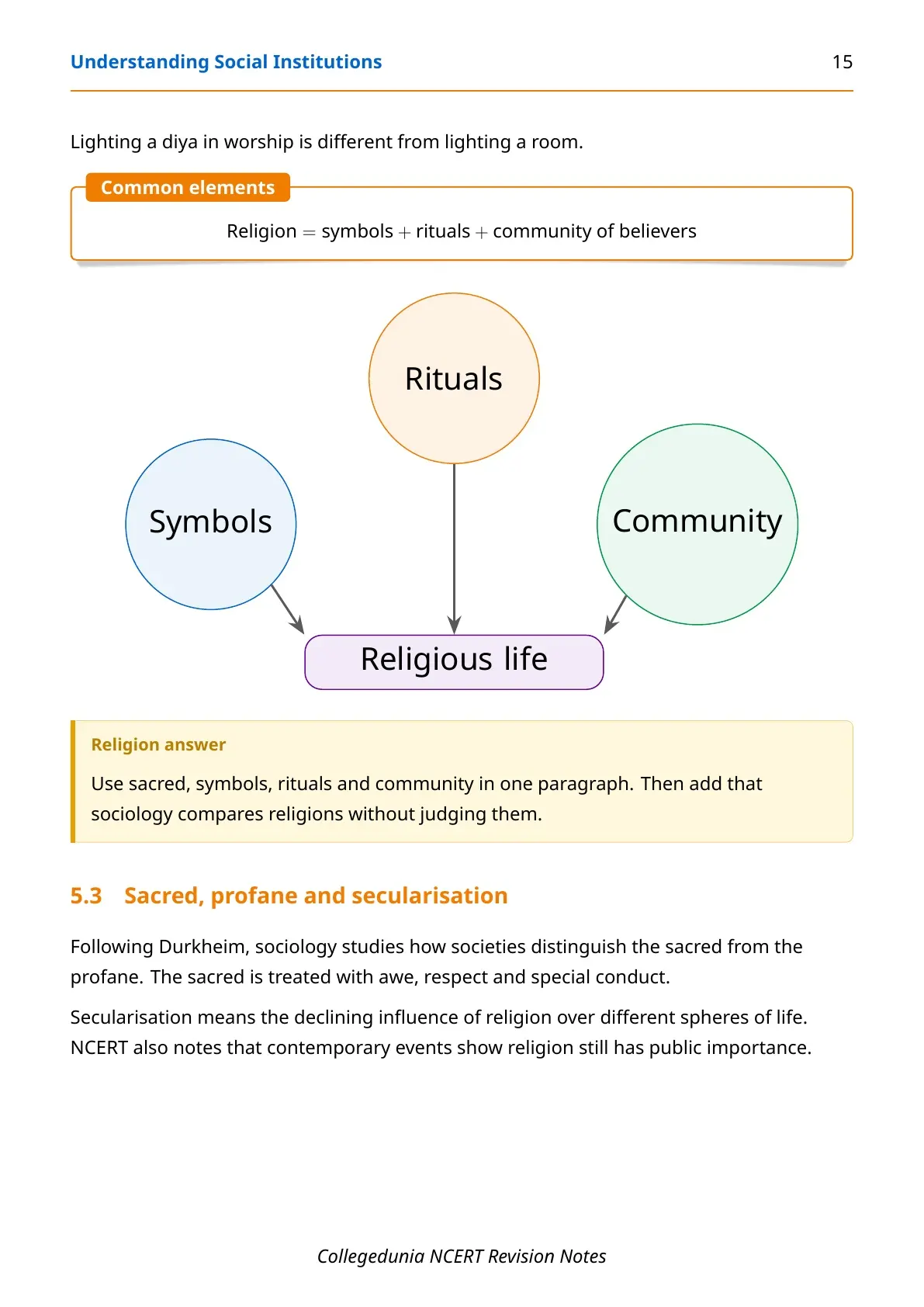
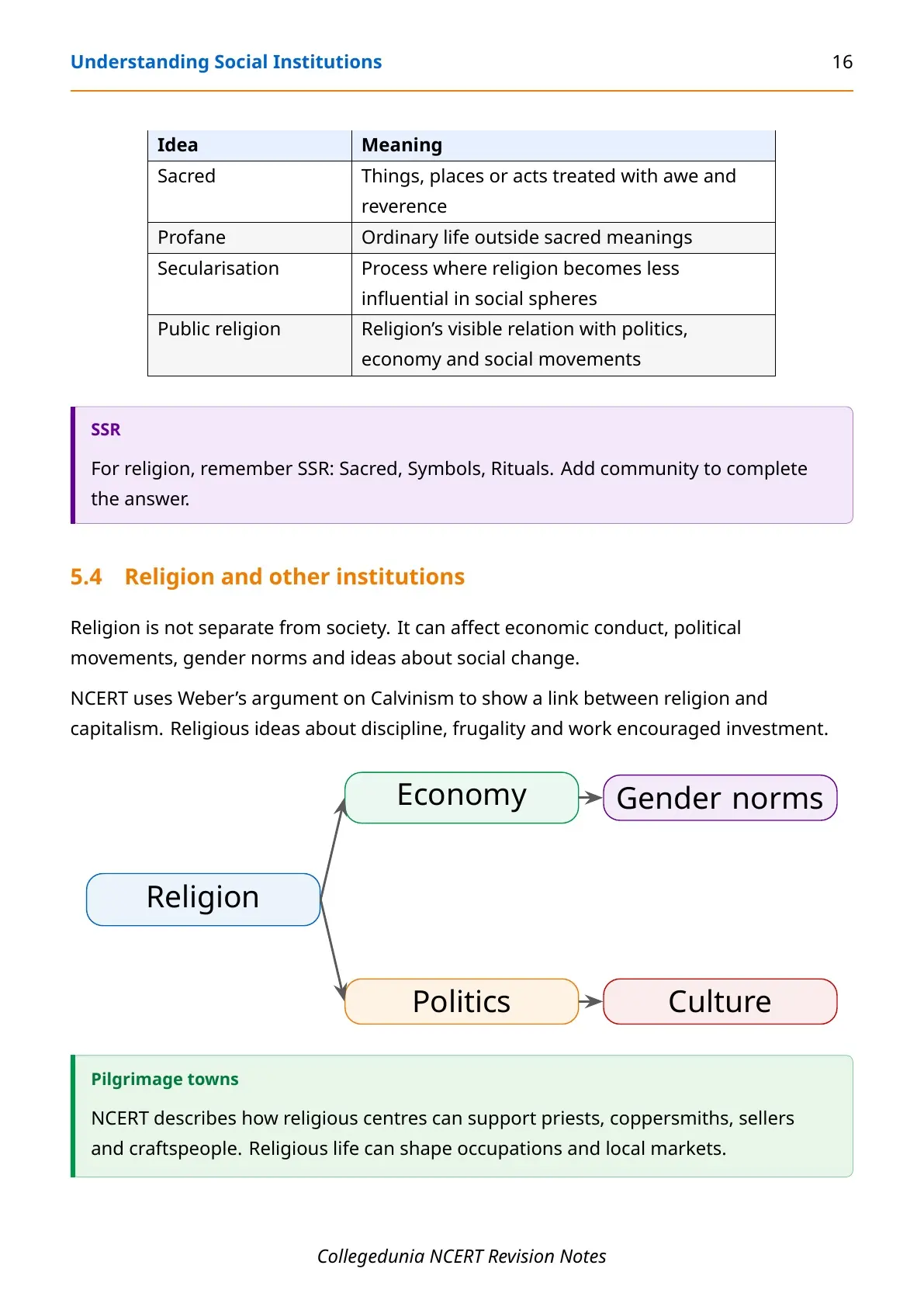
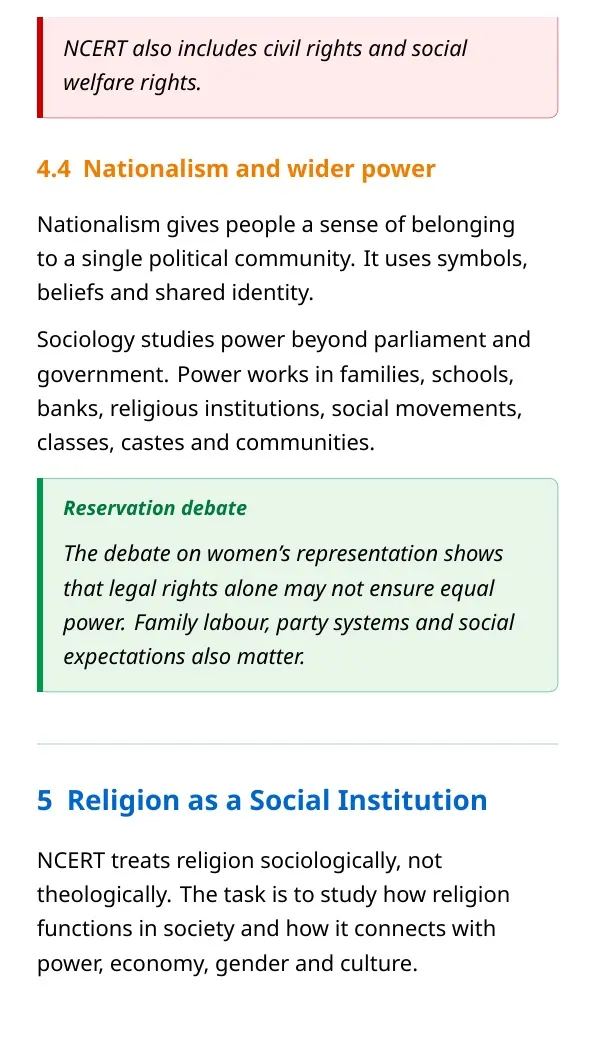
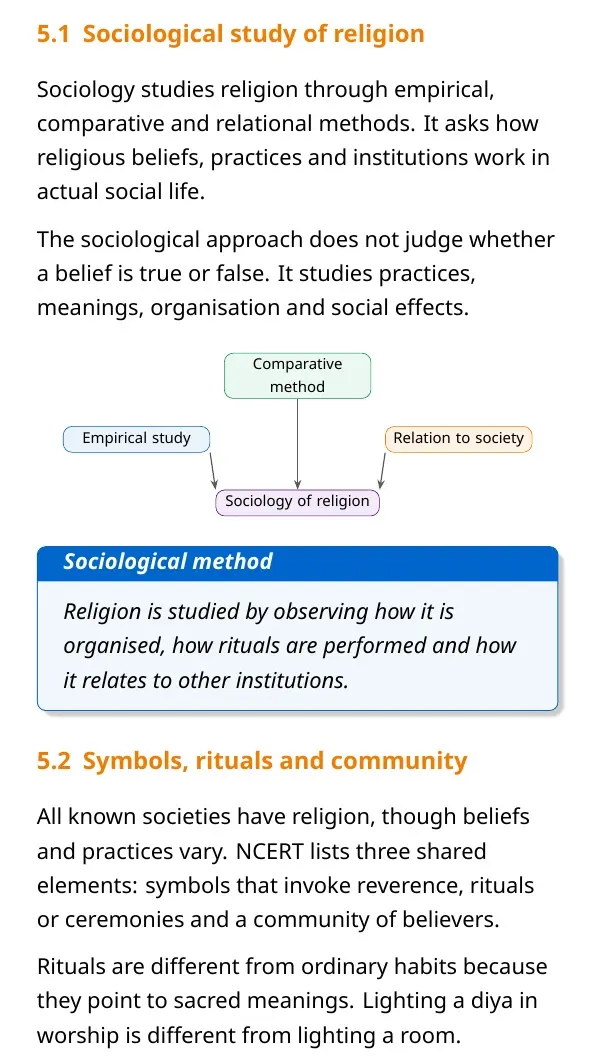
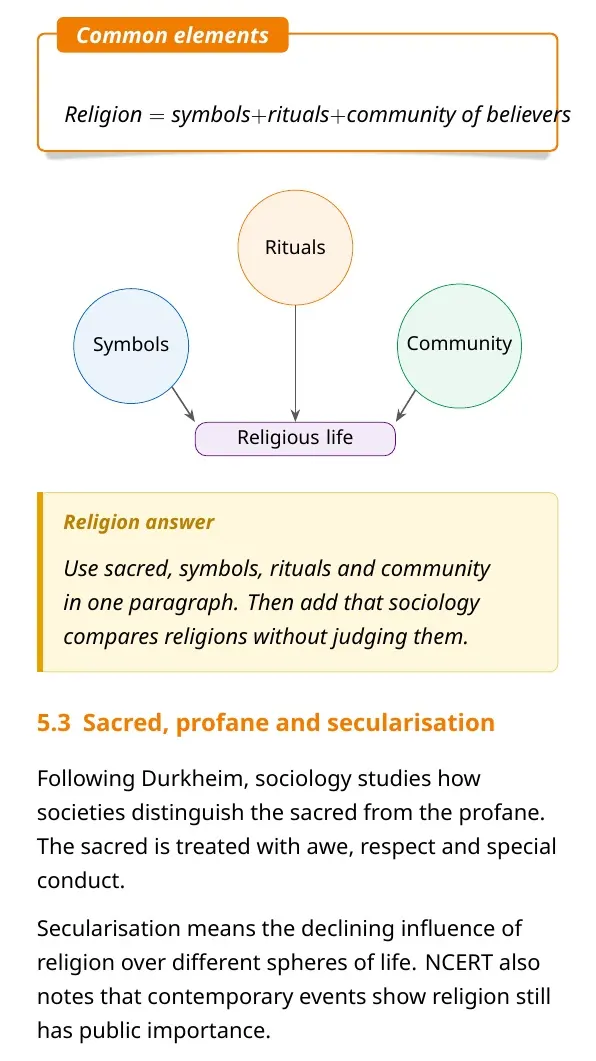
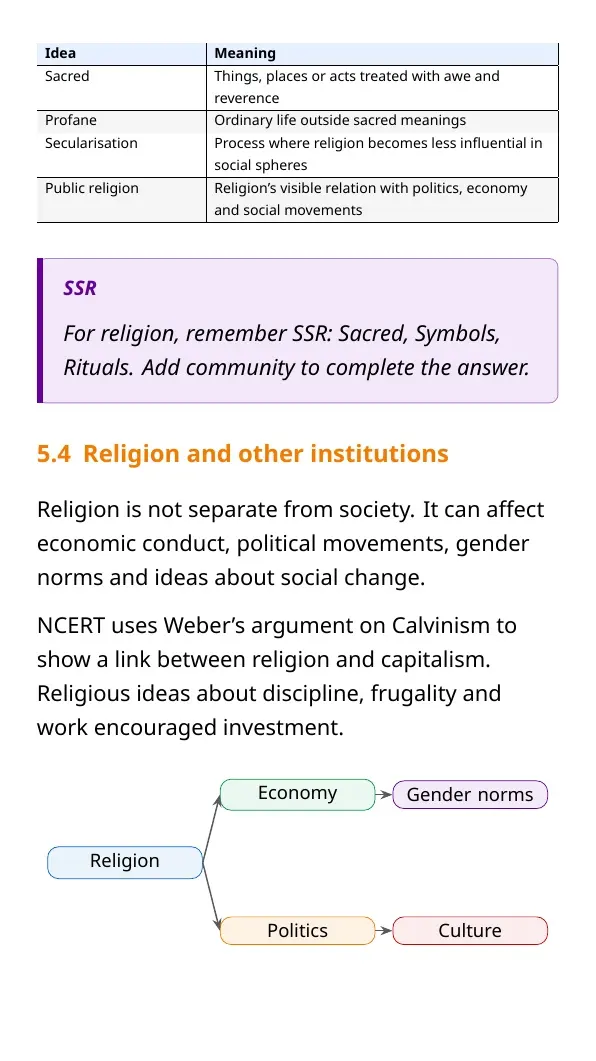
Religion is studied sociologically as a social institution, not only as private belief. It includes rituals, symbols, moral rules, sacred ideas and group identity. Write about social role, not personal judgement, in exam answers.
- Rituals create shared participation.
- Beliefs give meaning to life events.
- Religious groups can shape solidarity and social boundaries.
- Religion may support change or preserve older practices.
How to Use These Chapter 3 Sociology Notes
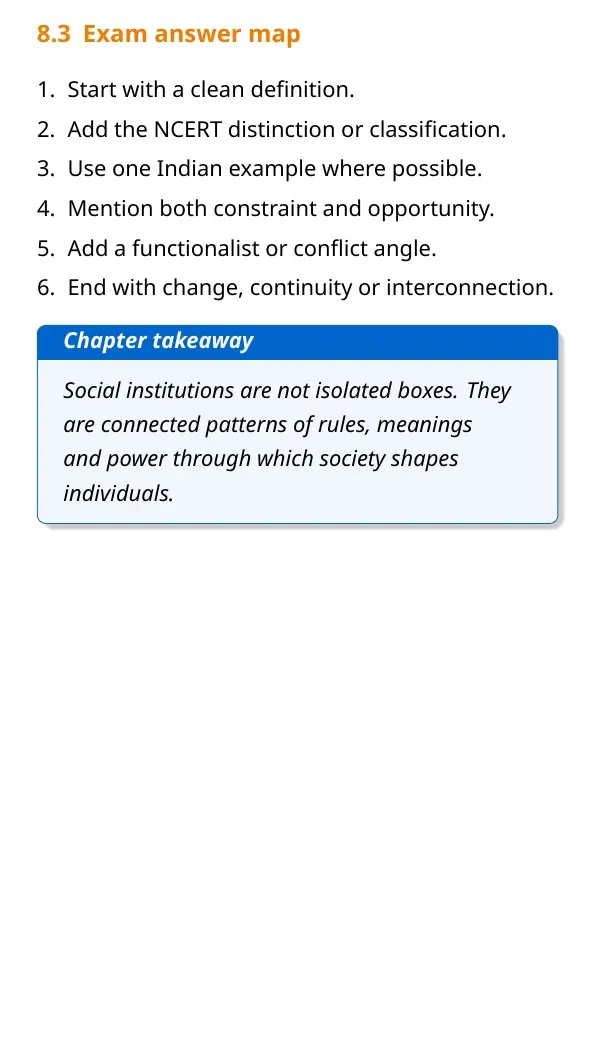
Start with the institution definition, then revise family and kinship tables. After that, link each institution with one example from everyday life. This keeps Class 11 answers concrete.
- Write the core term in one line.
- Add one NCERT-linked example.
- Compare paired terms such as marriage and kinship.
- Close with how the institution organises society.
Related NCERT Resources for Understanding Social Institutions
| Resource | Use it for |
|---|---|
| Understanding Social Institutions Class 11 NCERT Solutions | Exercise answers and answer-writing format. |
| Understanding Social Institutions NCERT Book PDF | Official textbook reading and examples. |
| Understanding Social Institutions Handwritten Notes | Quick handwritten revision once available. |
All Class 11 Sociology Notes Chapters
| Chapter | NCERT Notes link |
|---|---|
| Chapter 1 | Sociology and Society Notes |
| Chapter 2 | Terms, Concepts and Their Use in Sociology Notes |
| Chapter 3 | Understanding Social Institutions Notes |
| Chapter 4 | Culture and Socialisation Notes |
| Chapter 5 | Doing Sociology Research Methods Notes |
Understanding Social Institutions Class 11 Notes FAQs
Ques. What is covered in Class 11 Sociology Chapter 3 Notes?
Ans. The notes cover family, kinship, marriage, work, economic institutions, politics, power, authority and religion as social institutions.
Ques. What is a social institution?
Ans. A social institution is a stable pattern of rules, roles and relationships that organises important areas of social life.
Ques. Why are family and kinship important in this chapter?
Ans. Family and kinship show how personal relations are shaped by social rules such as descent, marriage, inheritance and household organisation.
Ques. How should students revise Understanding Social Institutions for 2026-27 exams?
Ans. Students should learn each institution with one definition, one example and one comparison point. This method keeps short answers precise.



Comments