



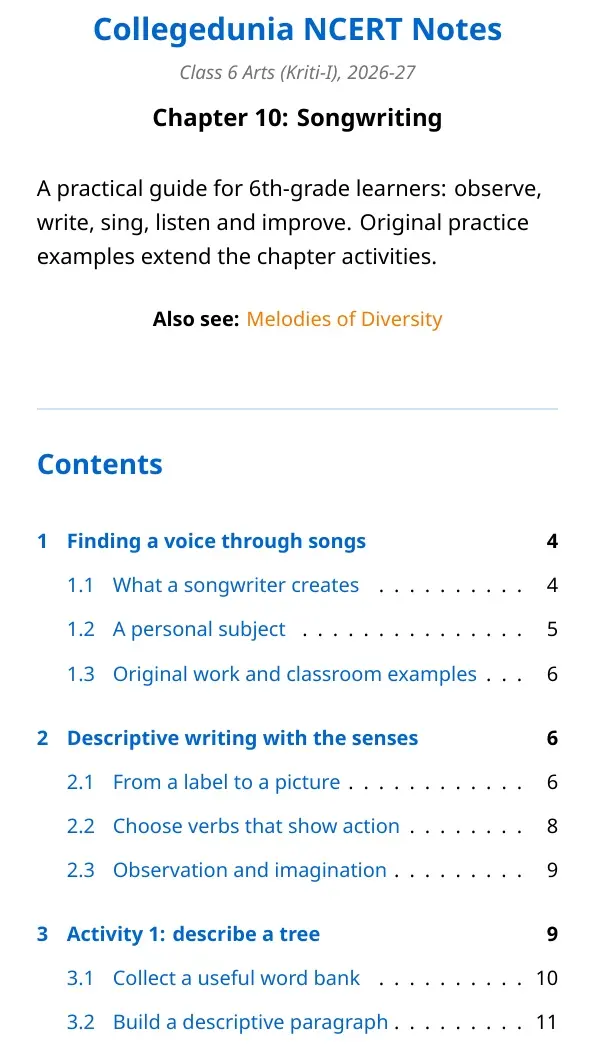
Inside the Collegedunia NCERT Class 6 Arts notes for Songwriting, you will find sensory writing prompts, melody practice and rhyme examples. These notes follow Chapter 10 of Kriti-I, reprinted for 2026-27. Start with a tree description, turn your ideas into short lyrics, then sing them aloud to hear what needs changing.
- Revise descriptive writing and the five chapter activities.
- Practise writing lyrics for familiar and unfamiliar melodies.
- Recognise rhyme schemes, verses, choruses and a bridge.
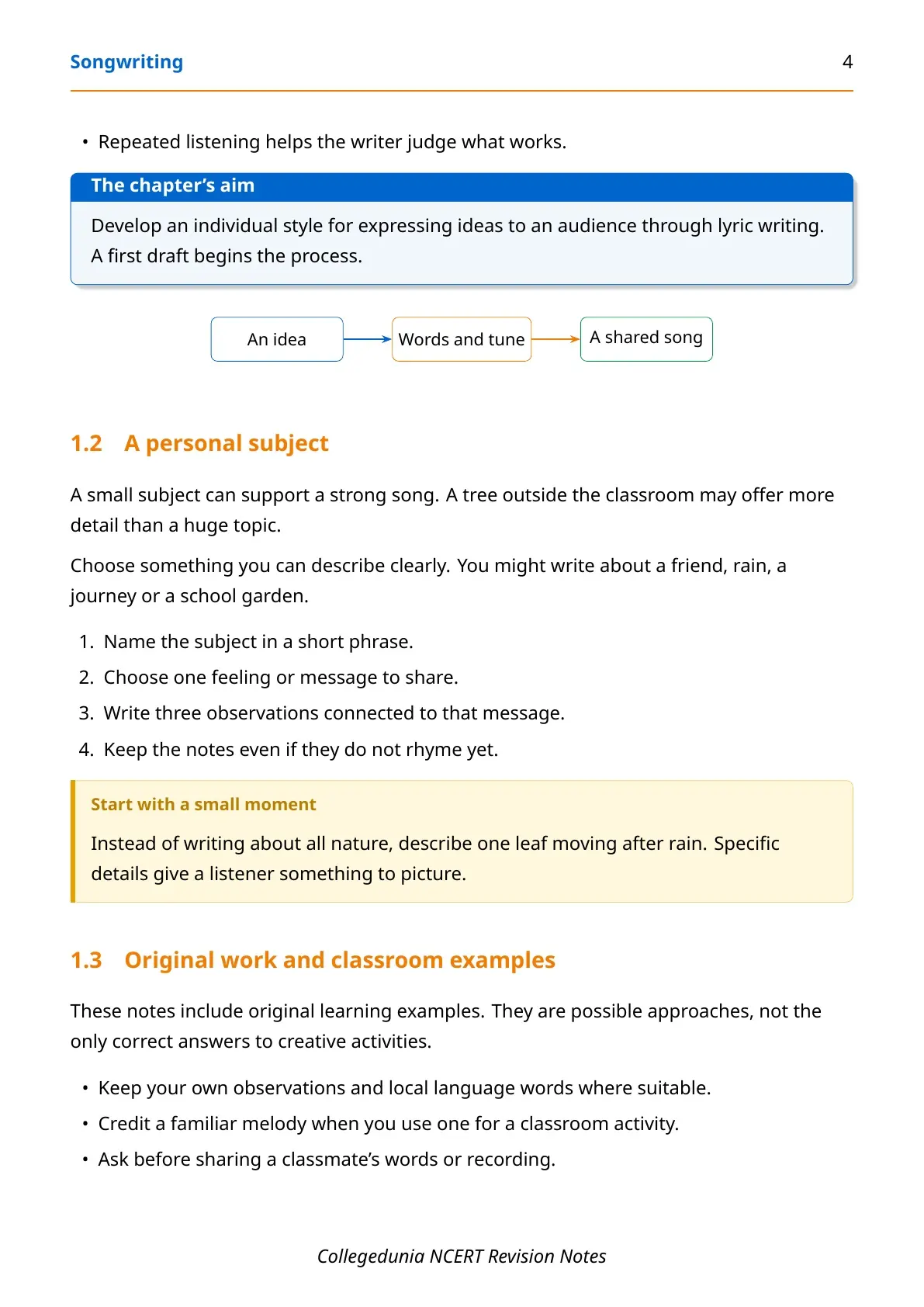
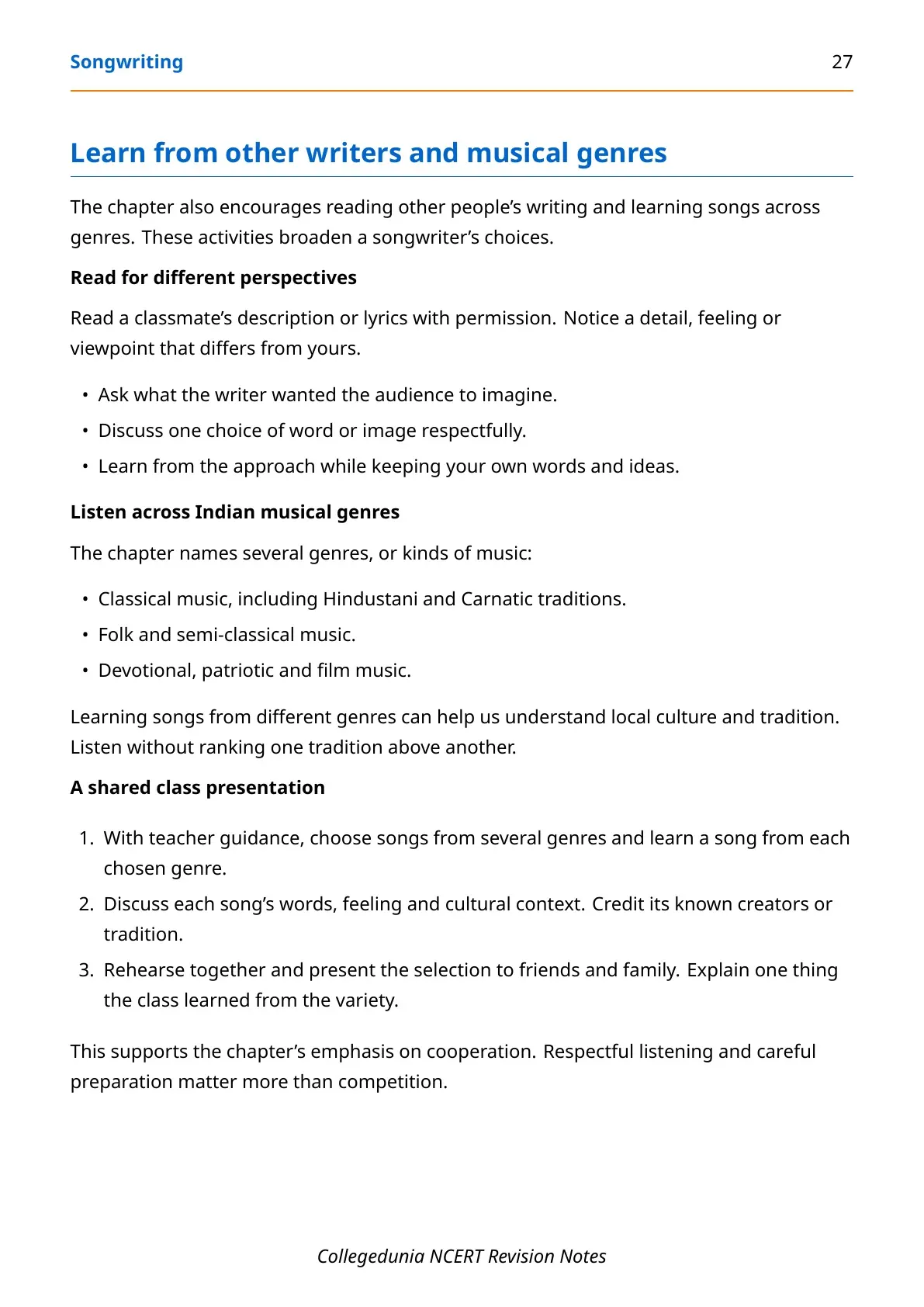
These Collegedunia notes explain the writing and listening activities in the official NCERT Kriti-I chapter.
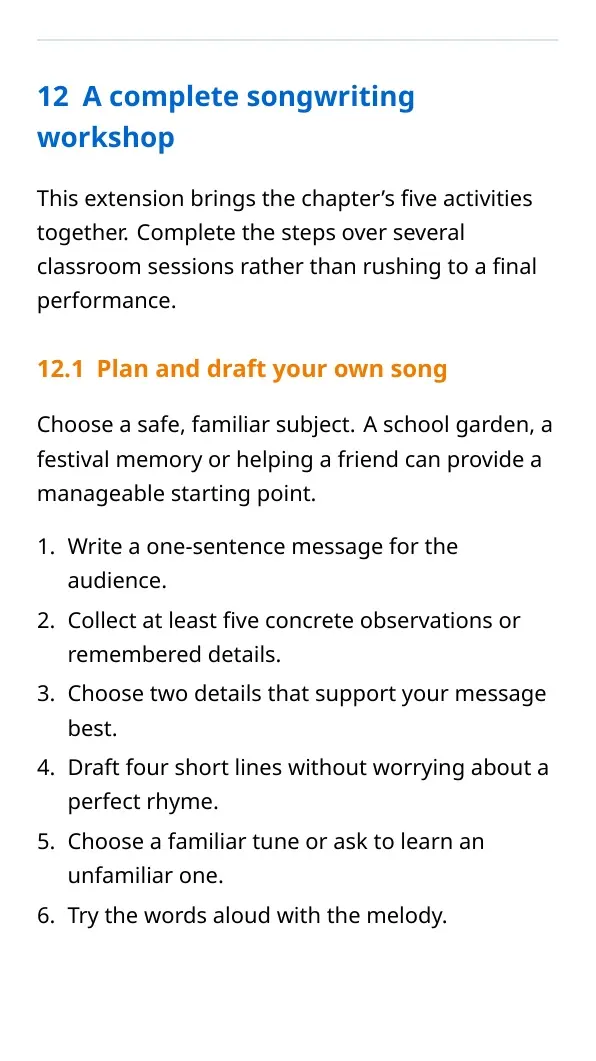
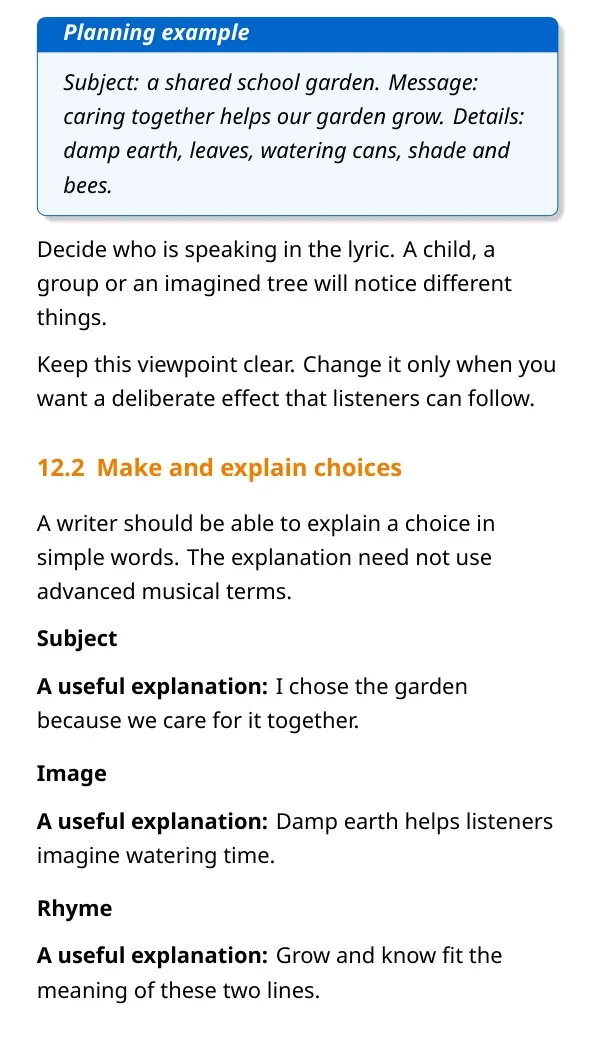
Read your lyrics to a classmate. Ask which image was clearest and which line was hard to sing. Offer one kind, useful suggestion in return.
Songwriting Descriptive Writing: Make Your Listener Picture It
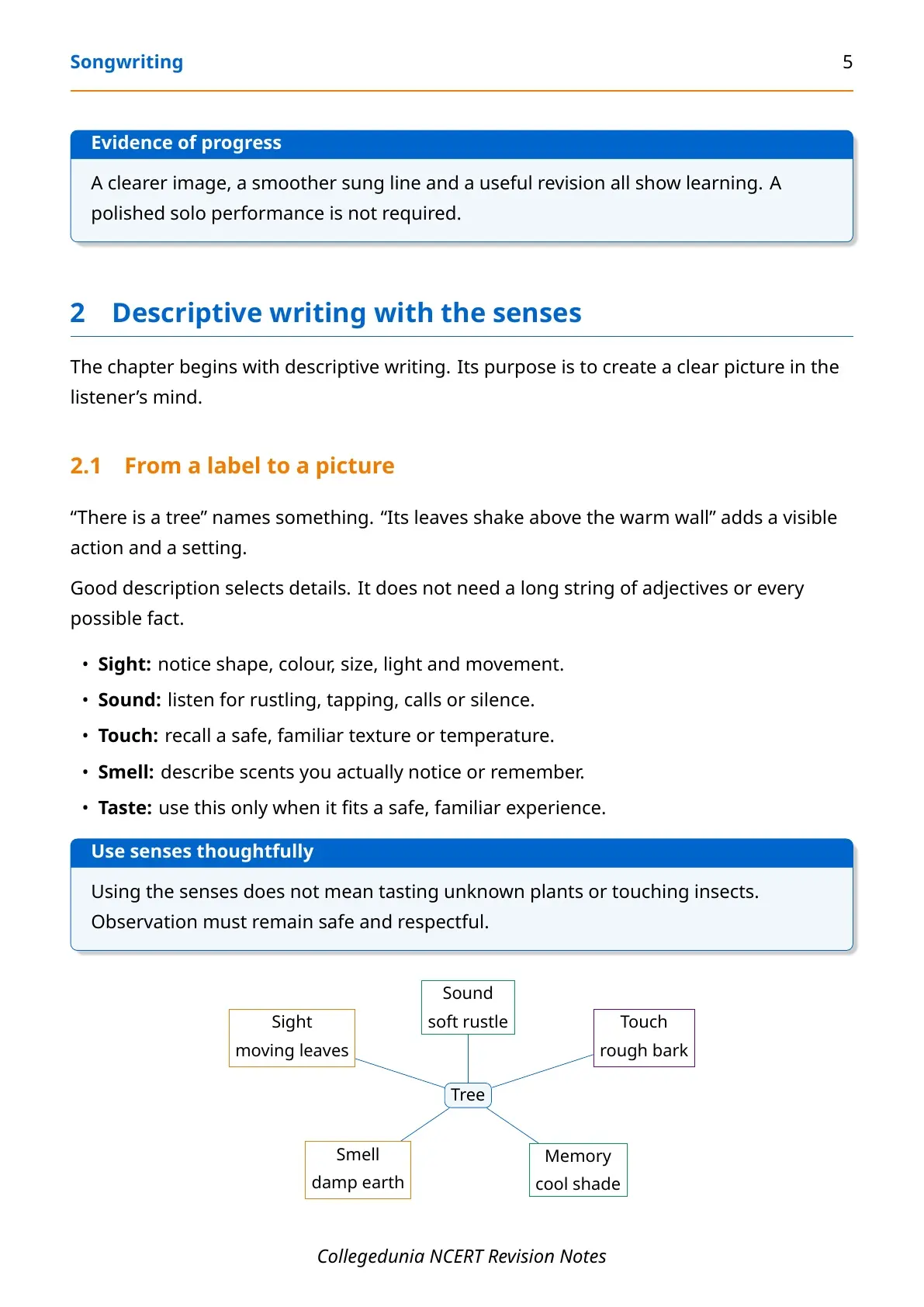
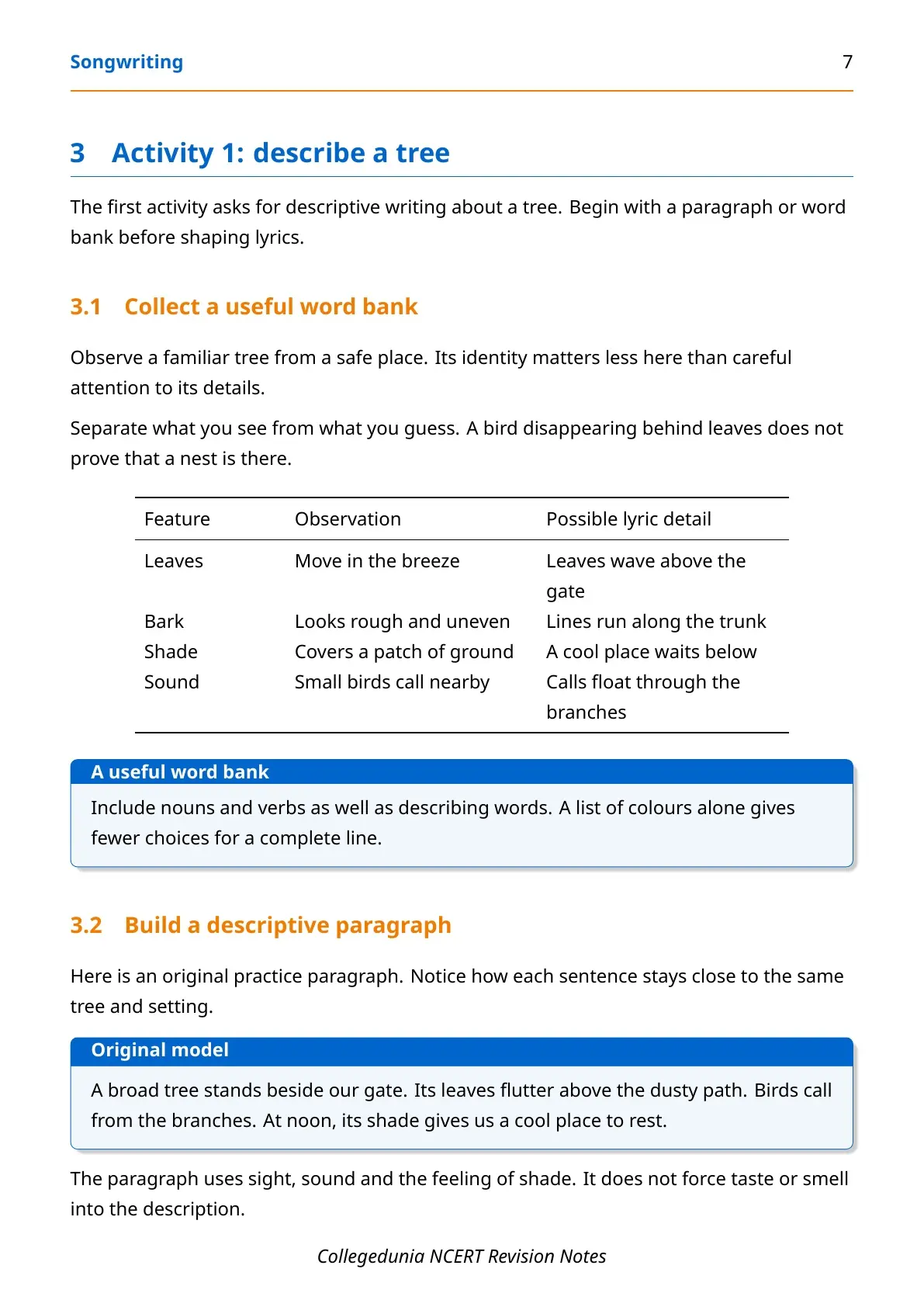
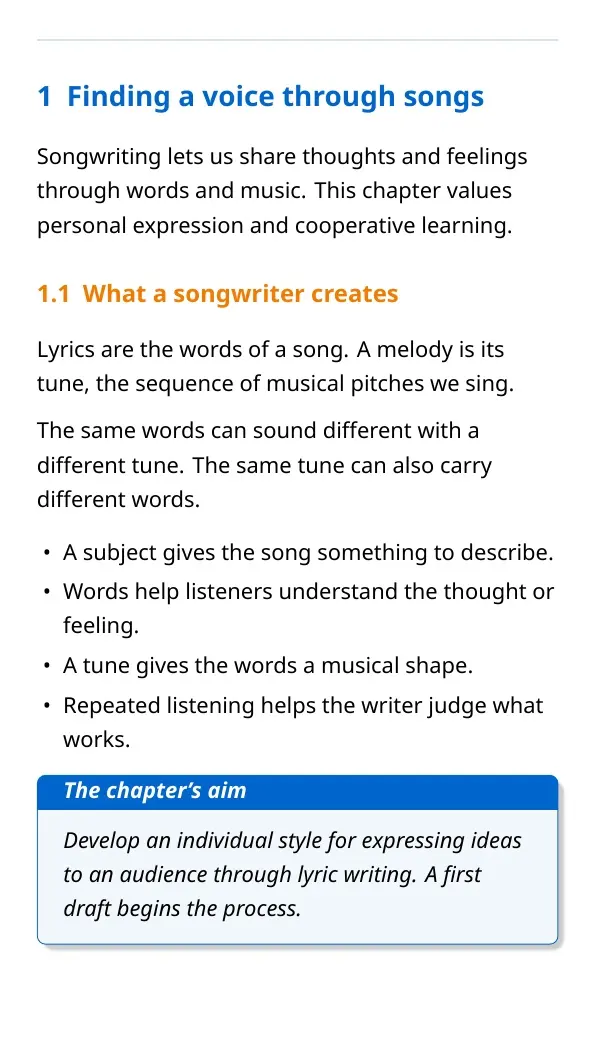
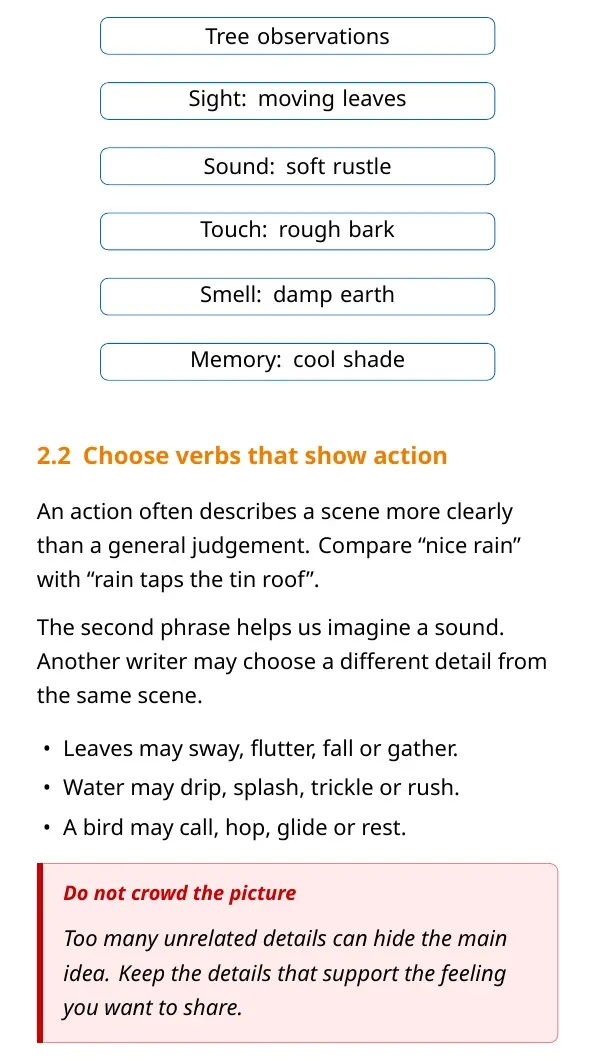
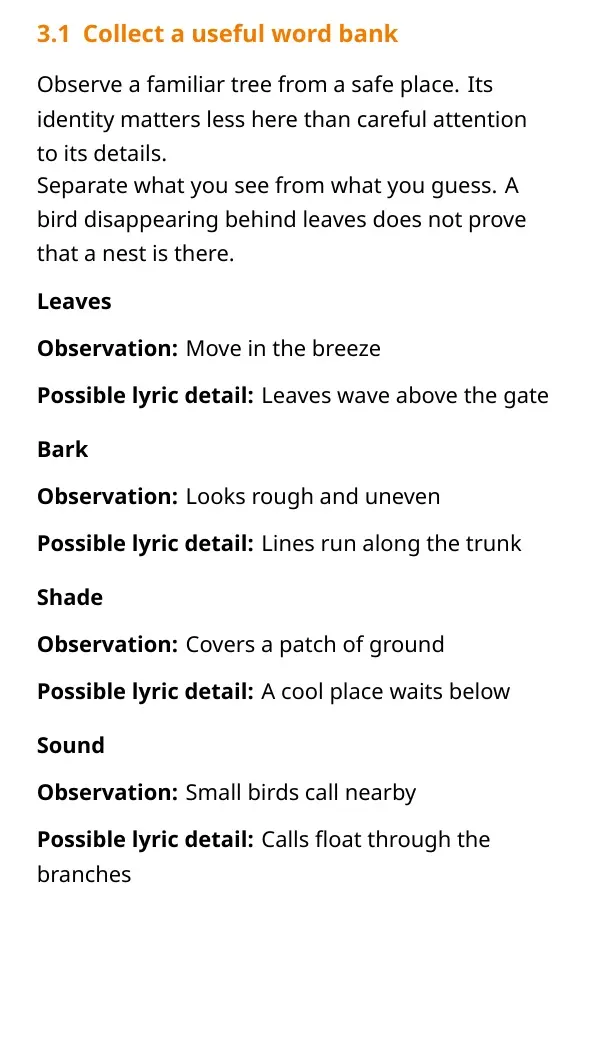
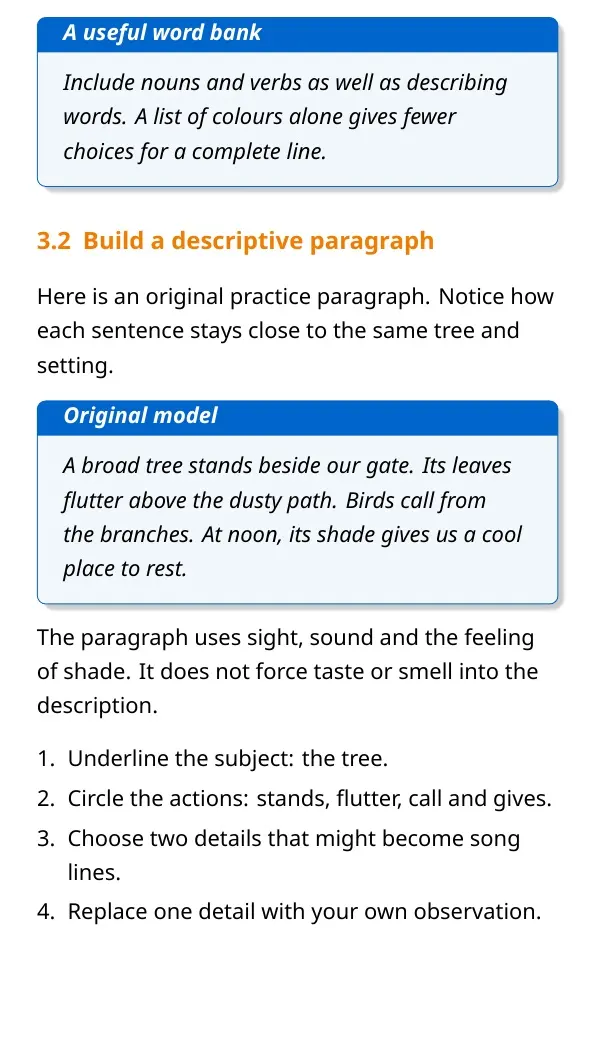
Songwriting lets you express thoughts and feelings through words and music. The chapter begins with descriptive writing: choosing details that create a clear picture. Instead of calling a tree beautiful, describe its rough bark, moving leaves or cool shade.
- Sight: notice colours, shapes and movement.
- Sound: listen for rustling leaves or birds.
- Smell and touch: describe fresh earth or rough bark when safe.
- Imagination: picture something you have never seen.
Choose details that help another person imagine your subject. You need not force every sense into every song. Read other people's writing to notice new ways of describing things.
Songwriting: Describe Your Subject Clearly
Source: Magnet Brains on YouTube
Songwriting Activities: From a Tree to Your Own Melody
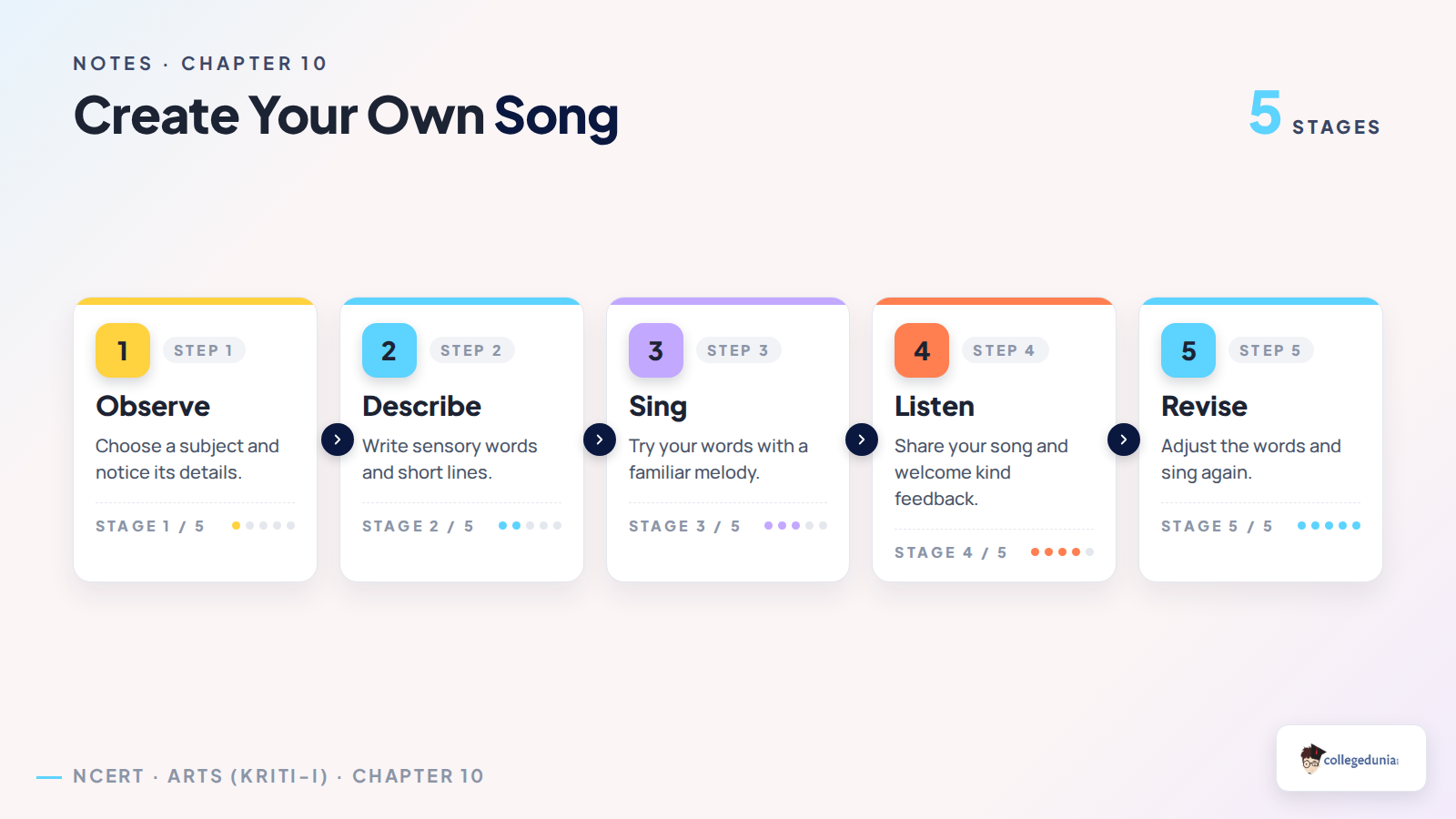
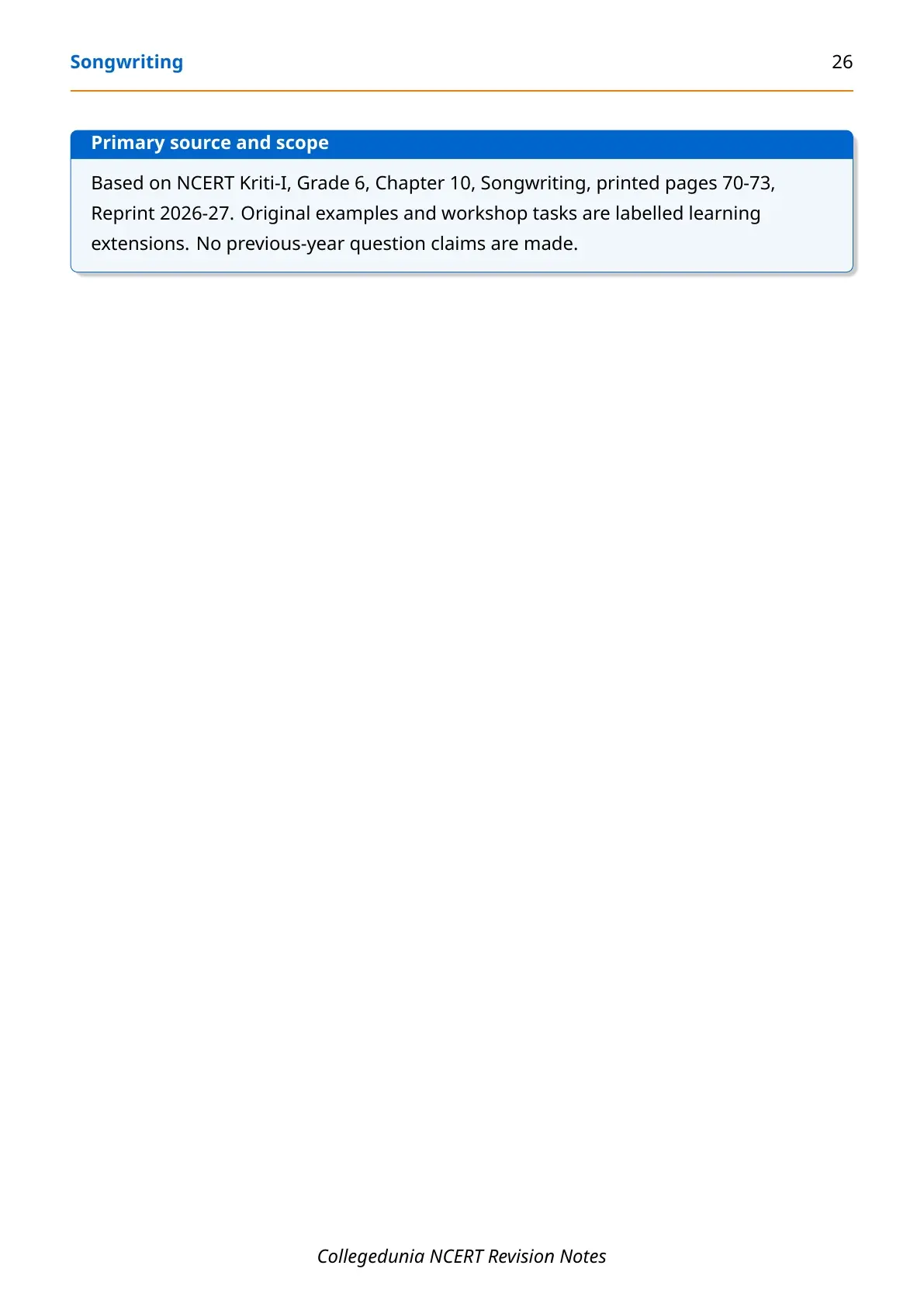
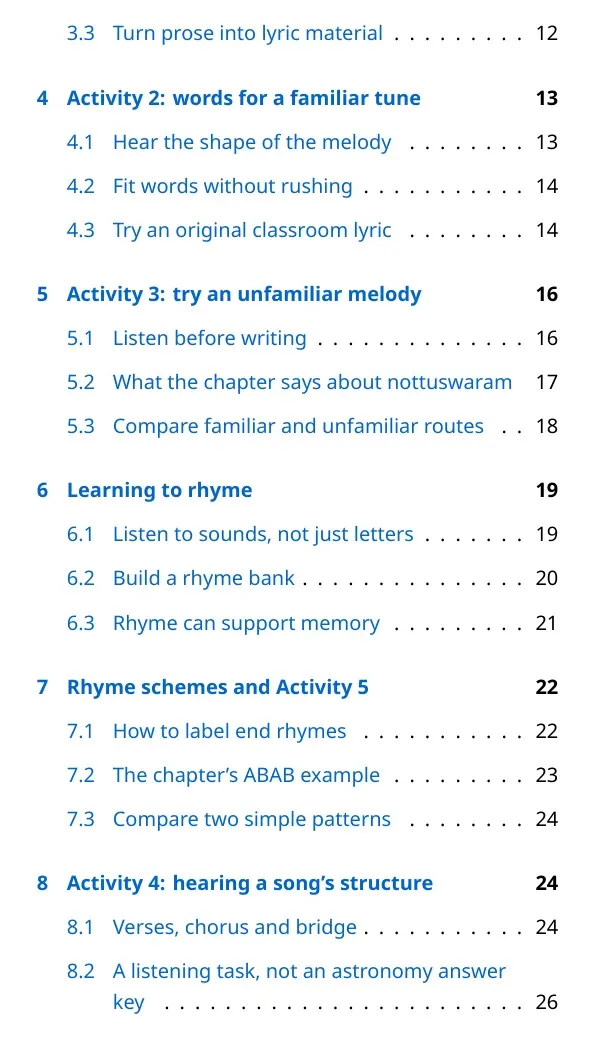
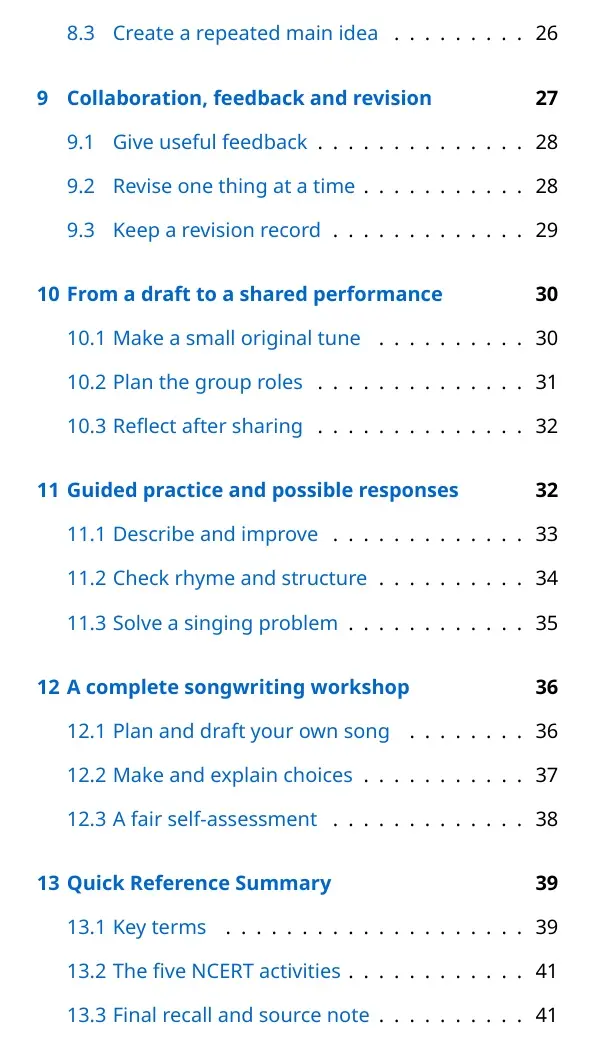
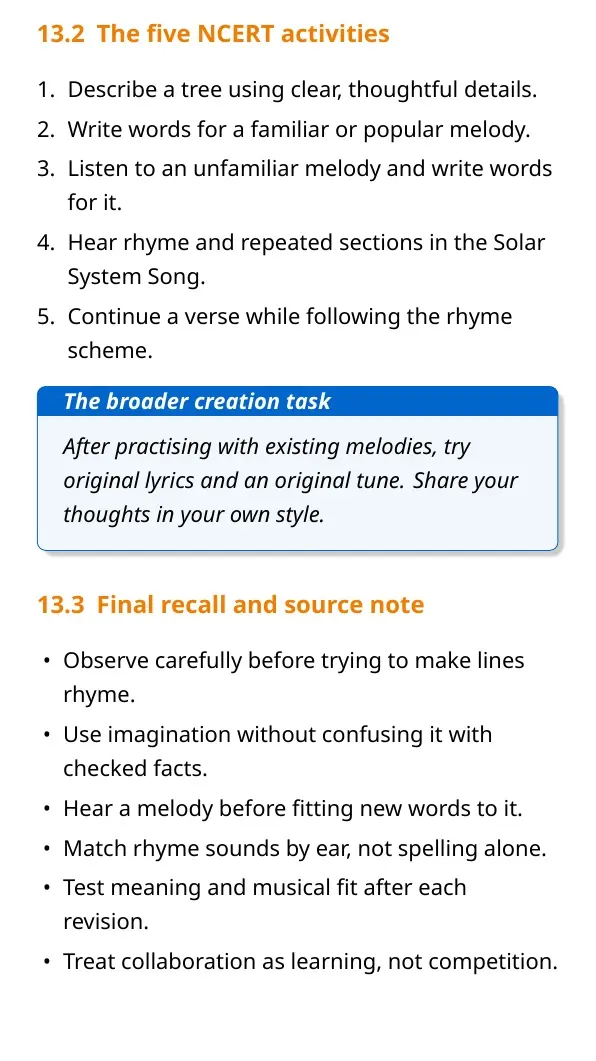
The five NCERT activities move from description to singing and rhyme. Try each task with your teacher or classmates. Lyrics are a song's words; its melody is the tune.
| Activity | What to practise |
|---|---|
| 1: Try it yourself | Write a detailed description of a tree. |
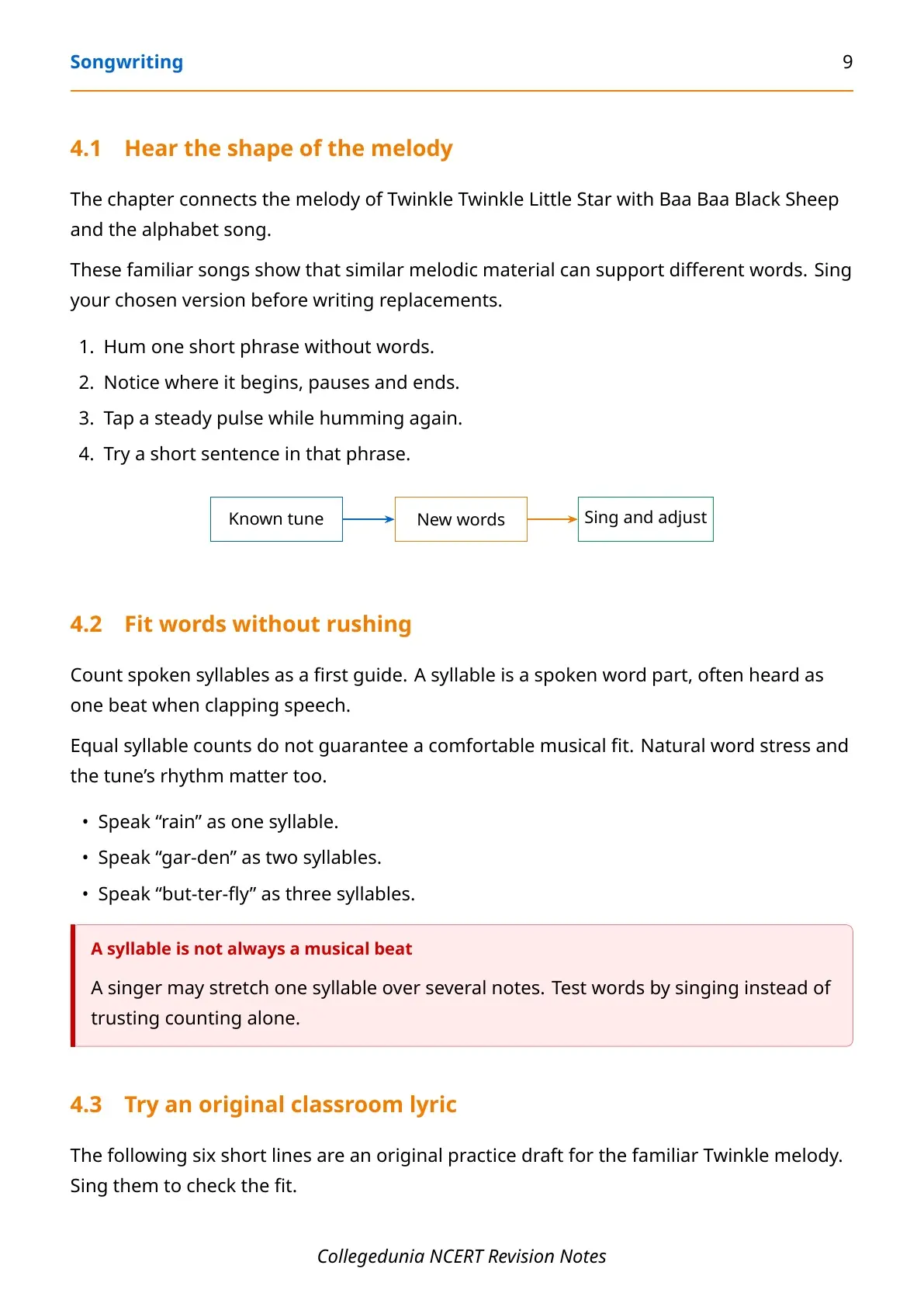
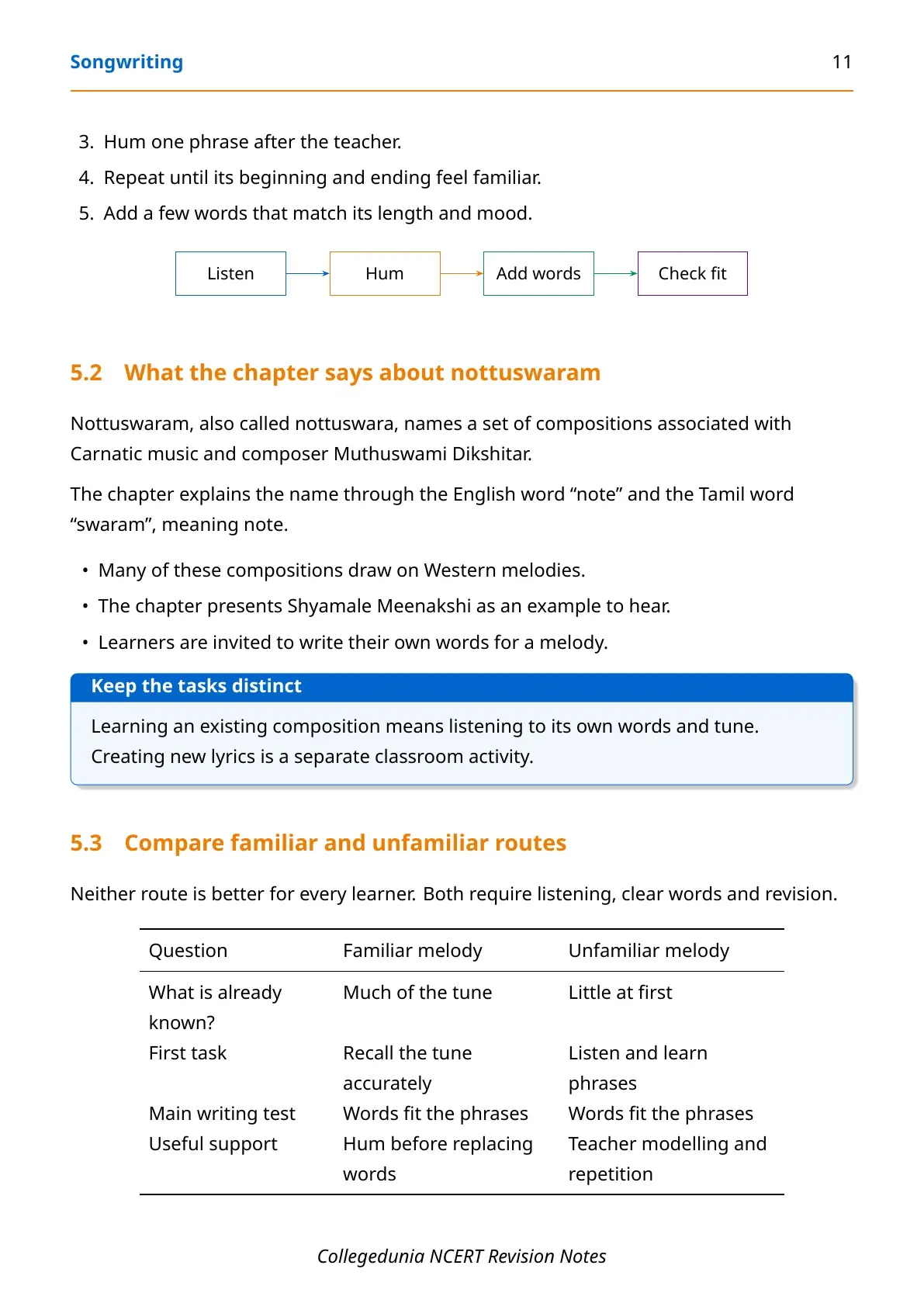
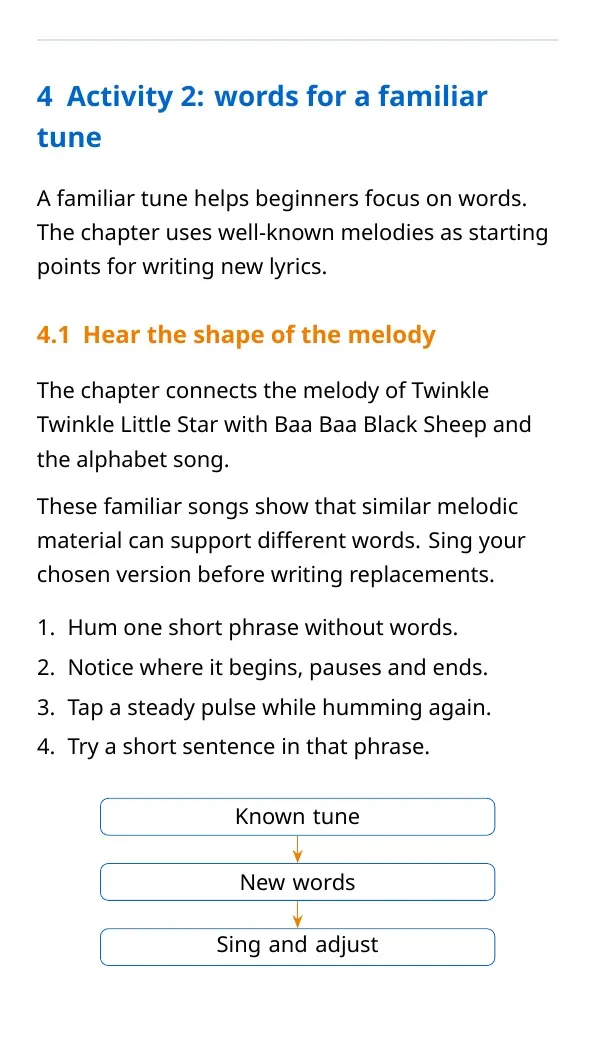
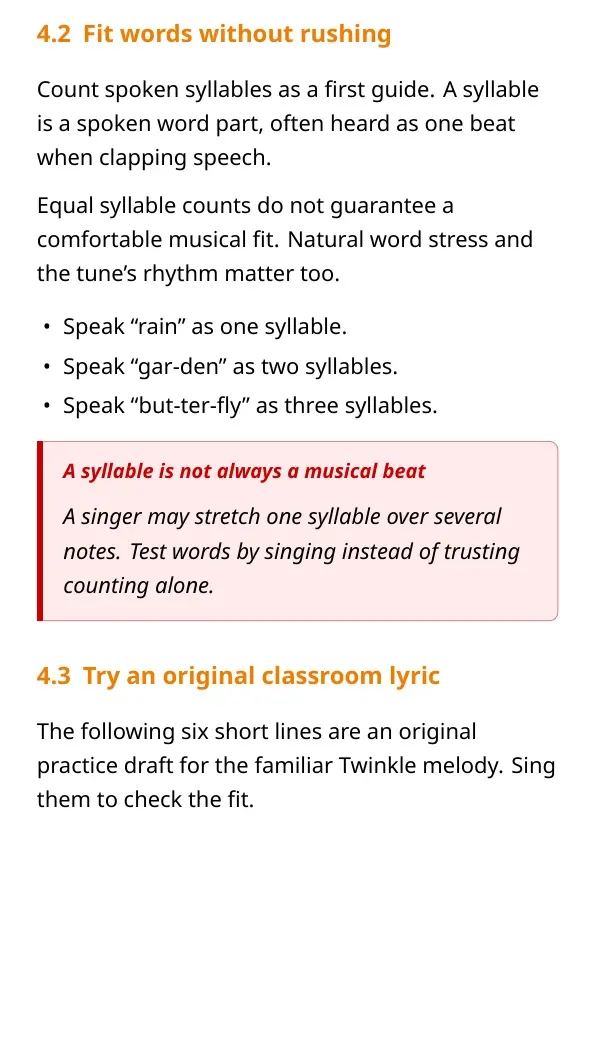
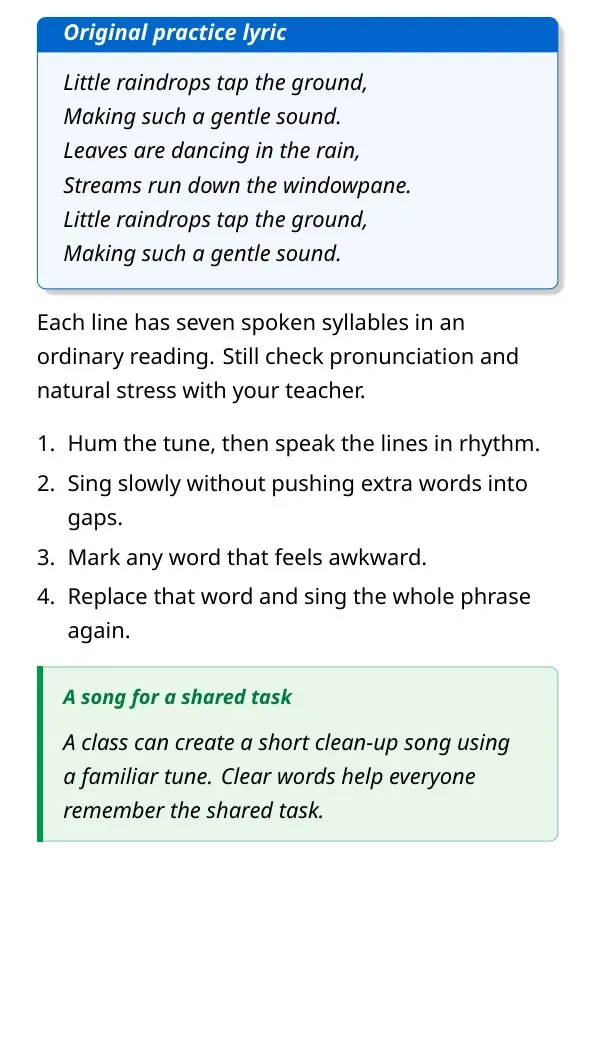
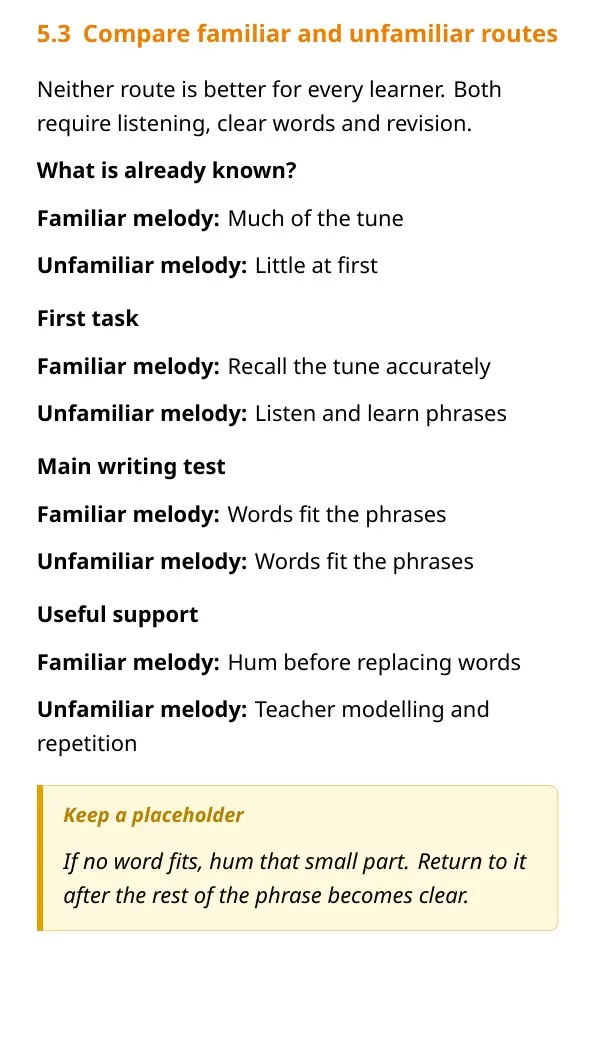
| 2: Familiar melody | Write new words for a tune you already know, such as Twinkle Twinkle Little Star. |
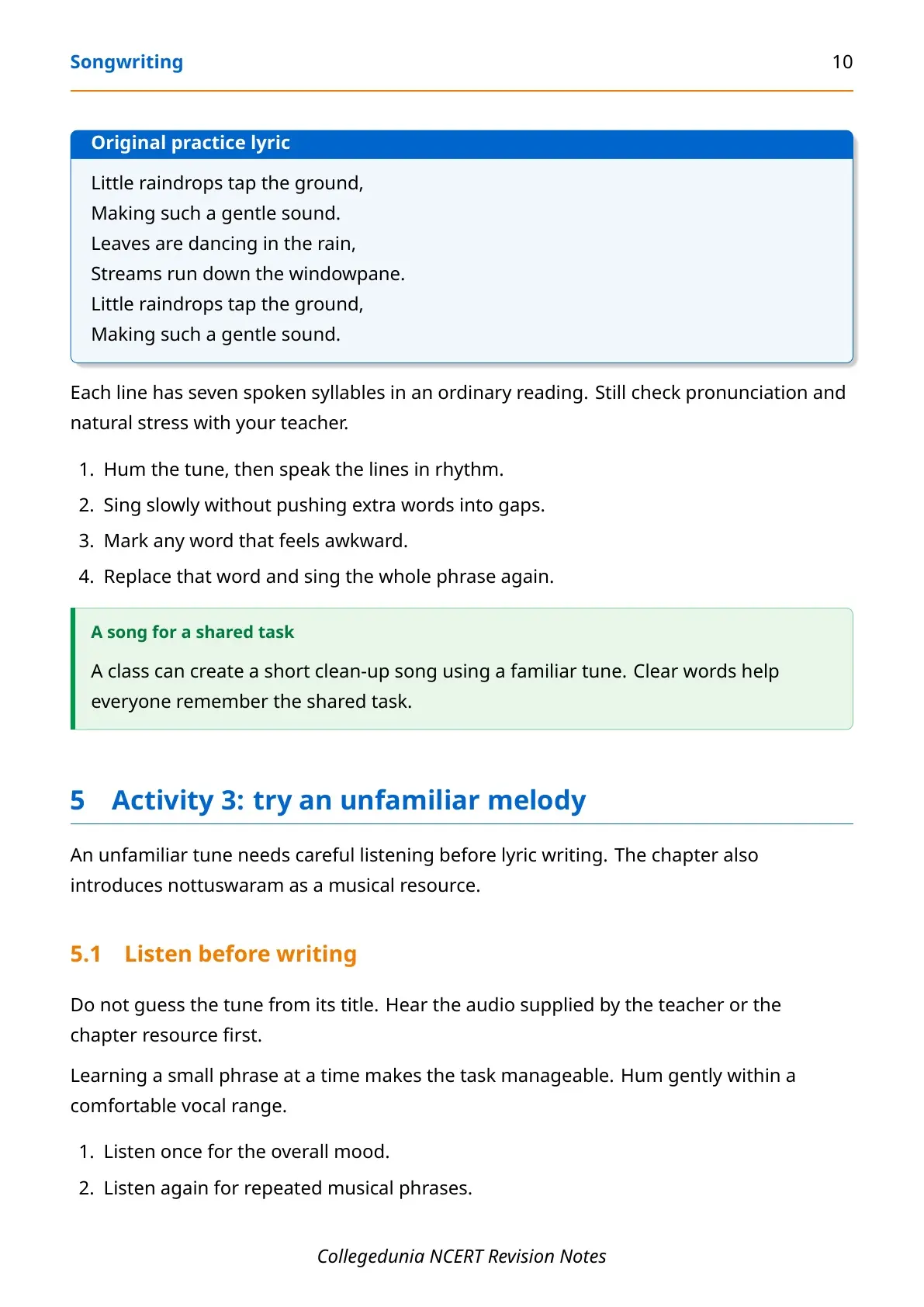
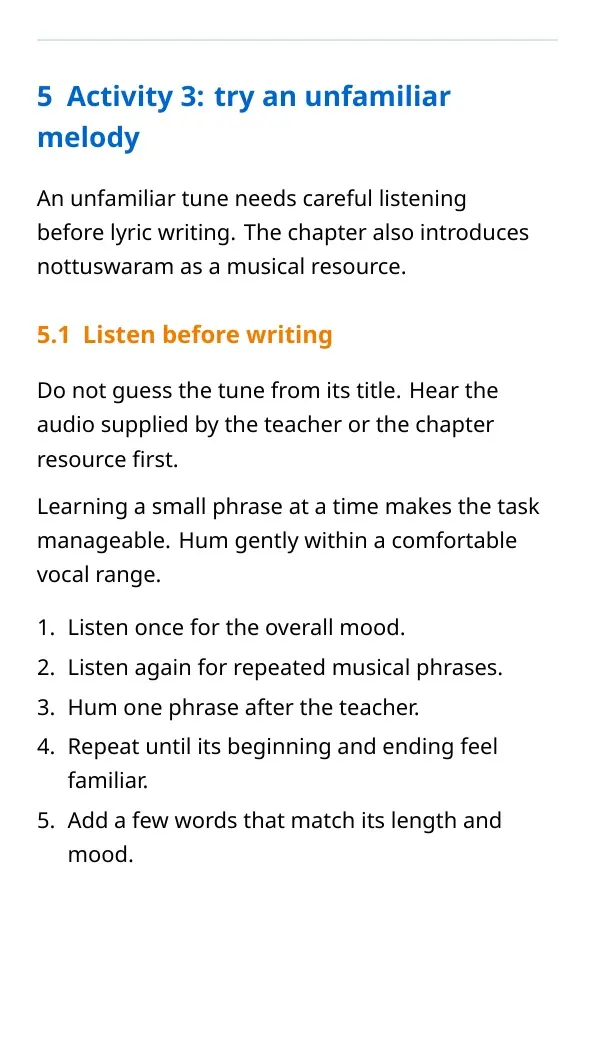
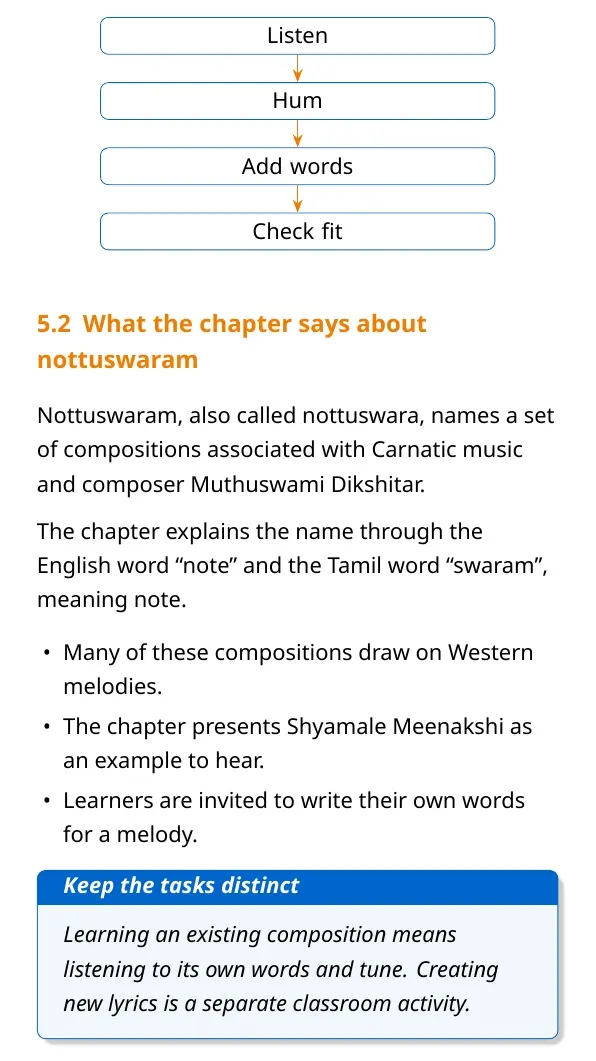
| 3: Unfamiliar melody | Listen carefully to a new tune and create words that fit it. |
| 4: Solar System Song | Listen for rhyming words and notice the song's sections. |
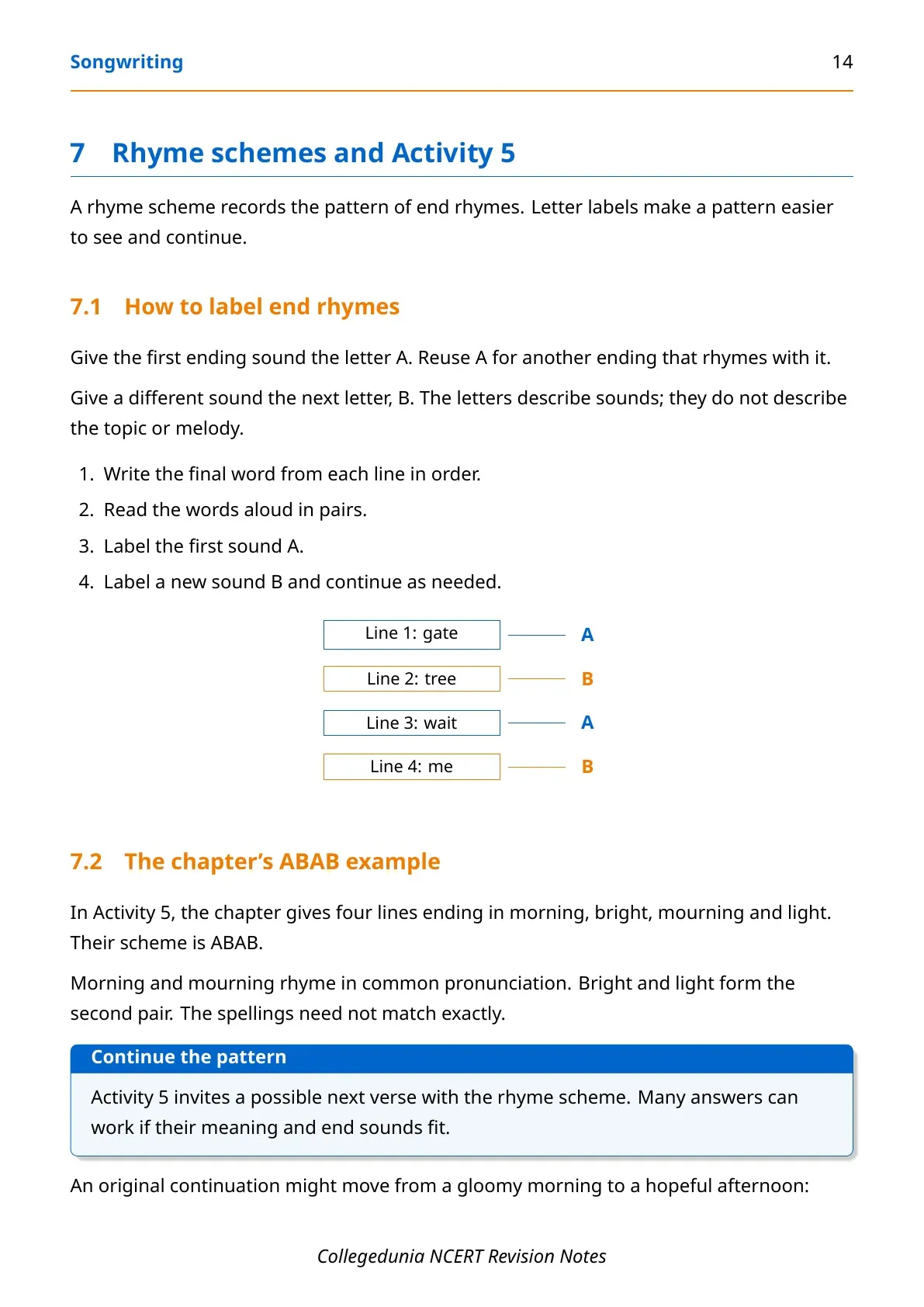
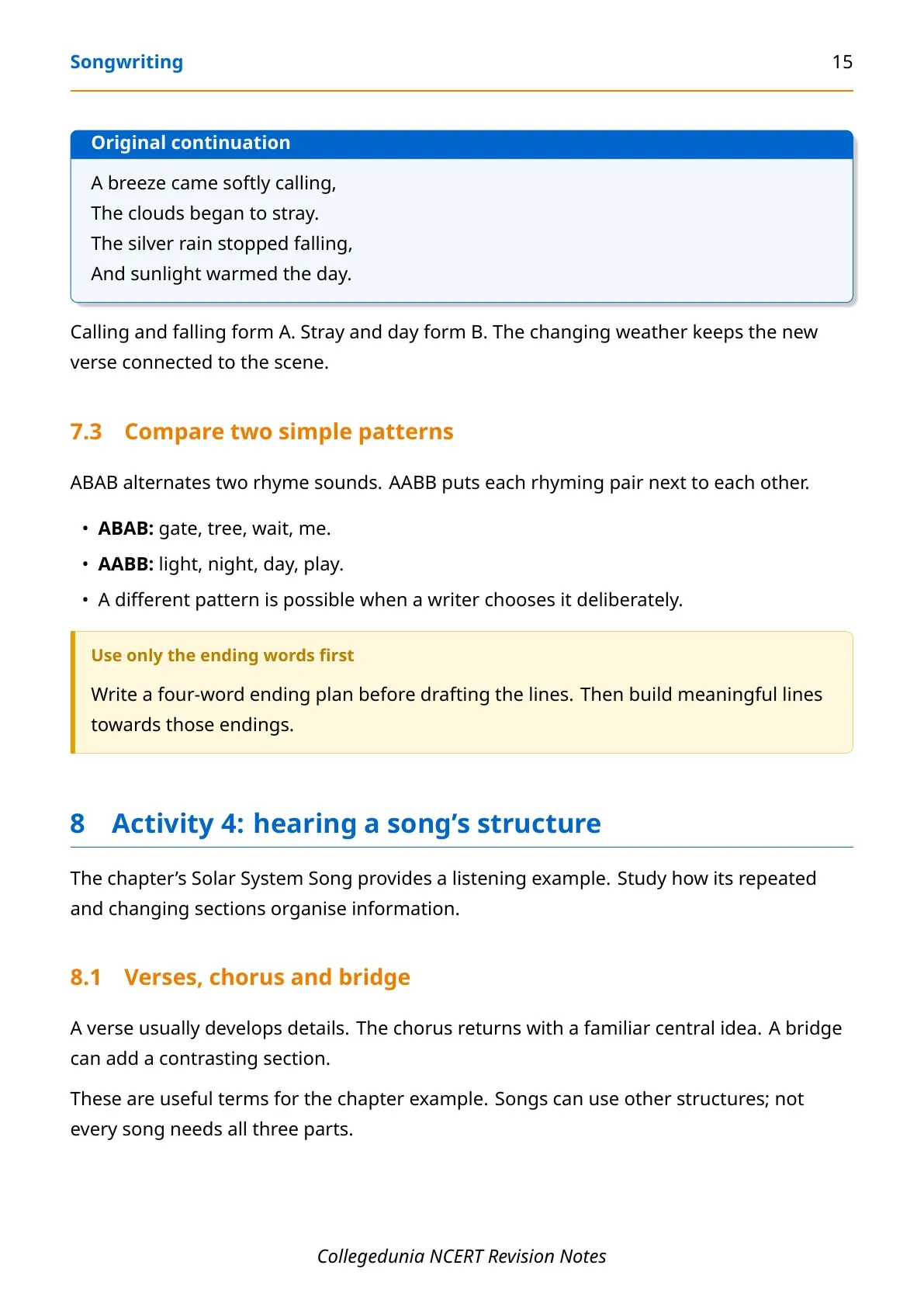
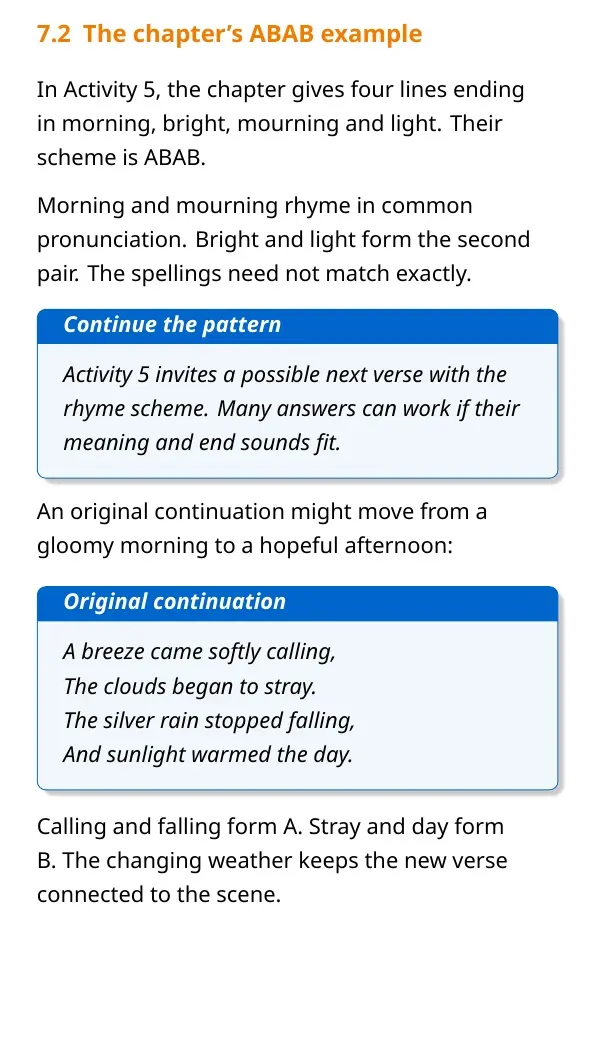
| 5: Next verse | Continue the verse while keeping its ABAB rhyme pattern. |
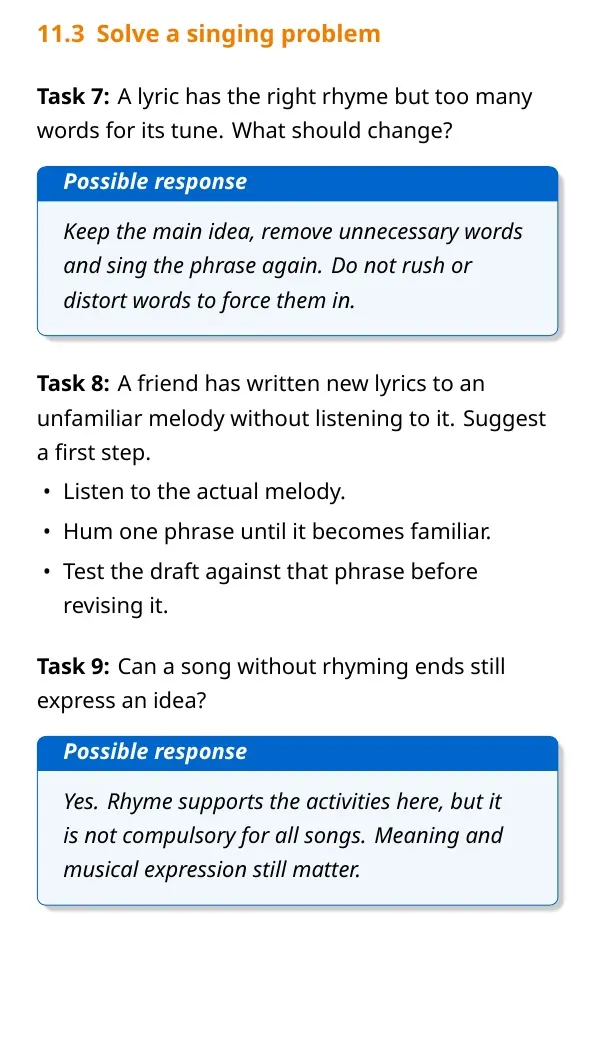
The chapter also invites lyrics for Shyamale Meenakshi, a nottuswaram composition. Listen before writing. Sing each draft aloud to check whether the words fit the tune. Shorten a crowded line instead of rushing through it.
Songwriting Rhyme Schemes and Song Parts with Examples
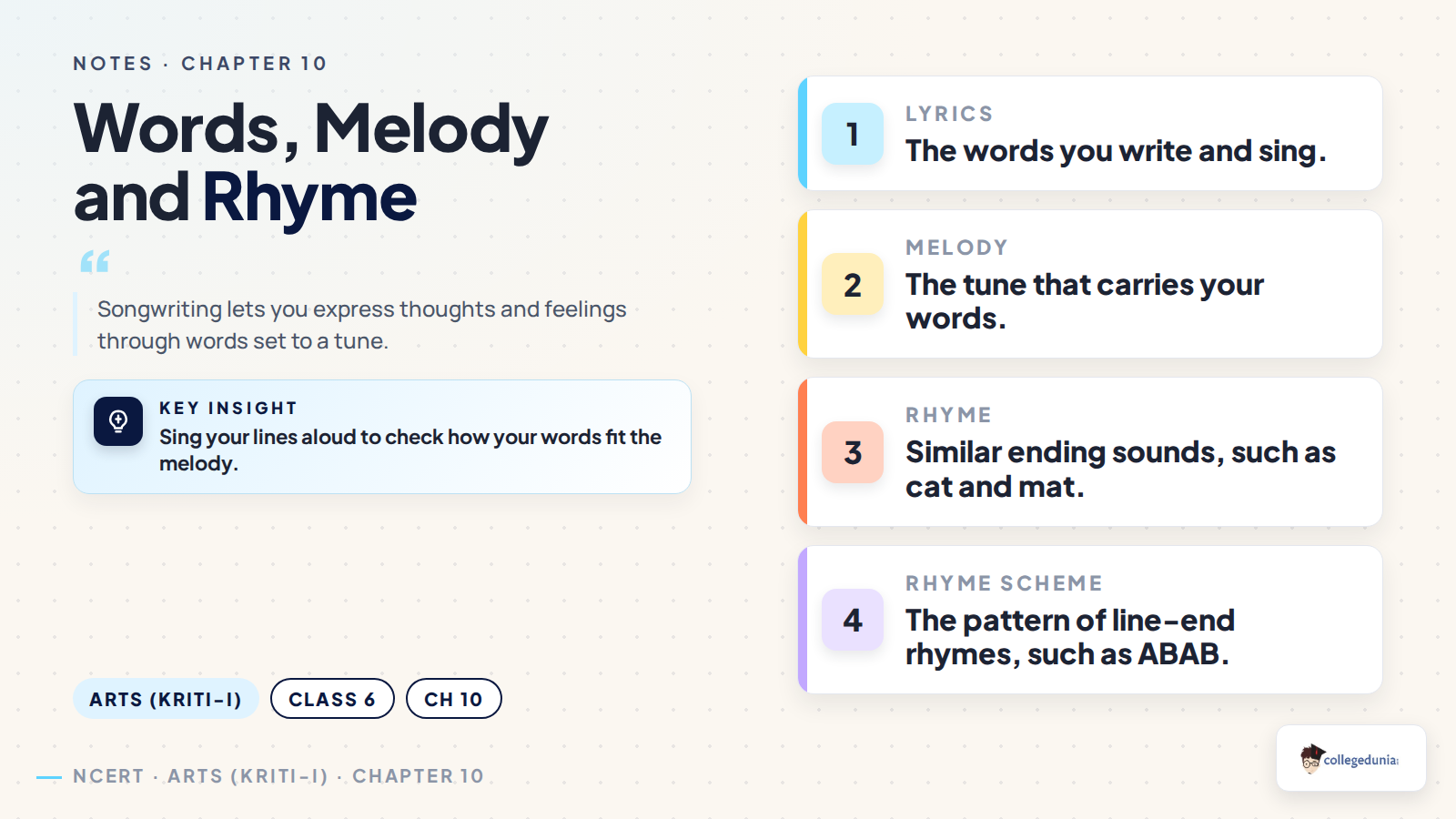
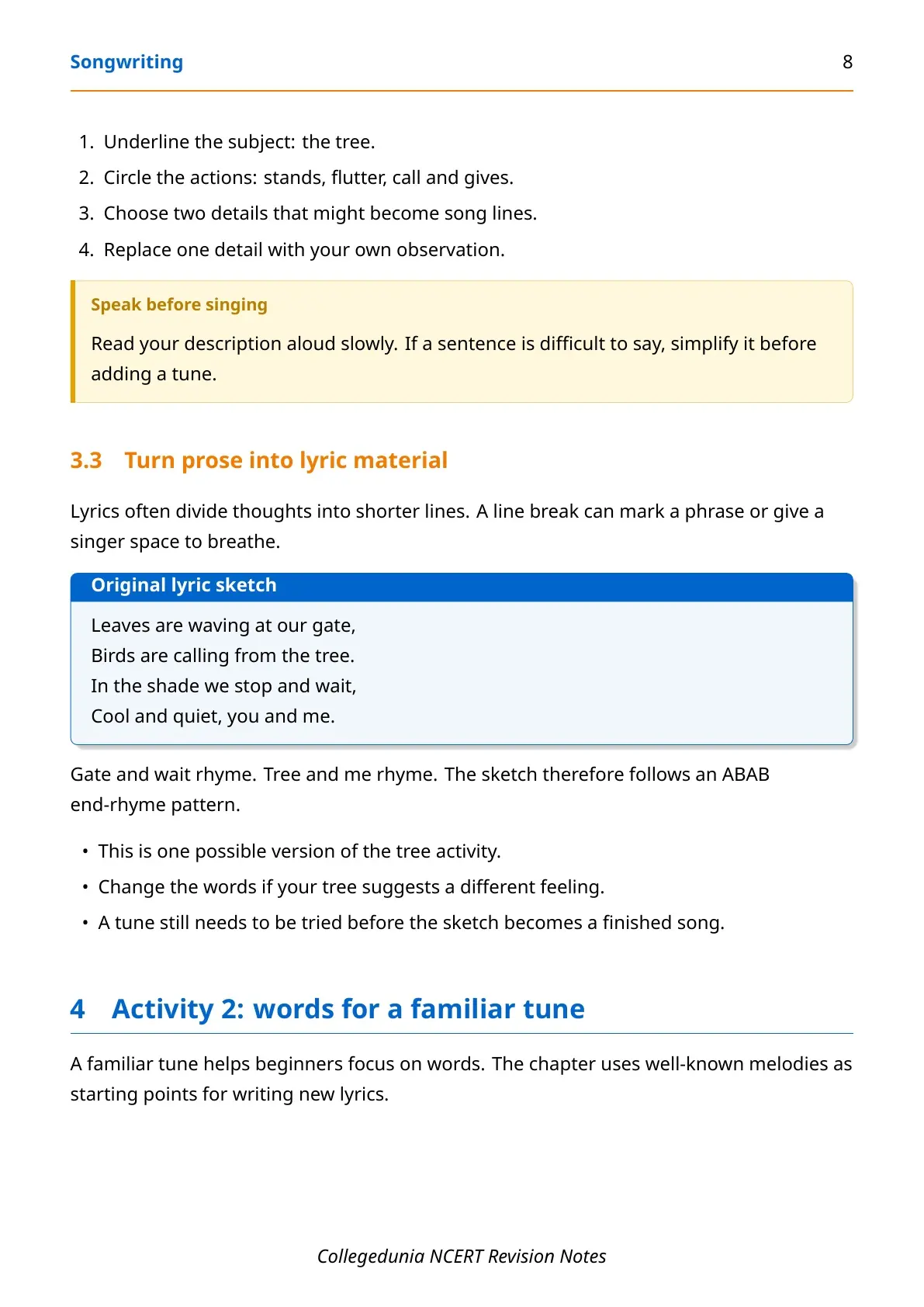
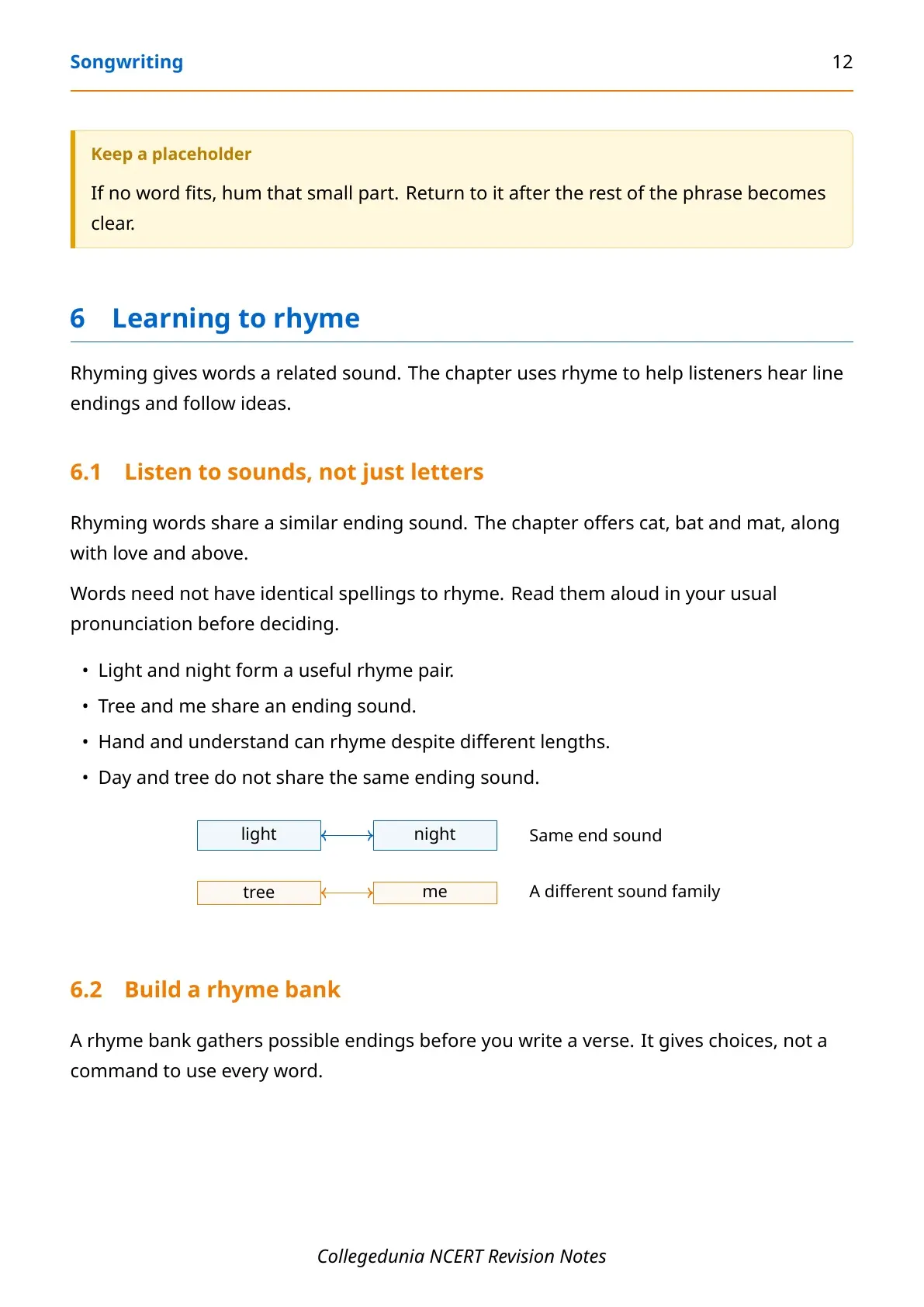
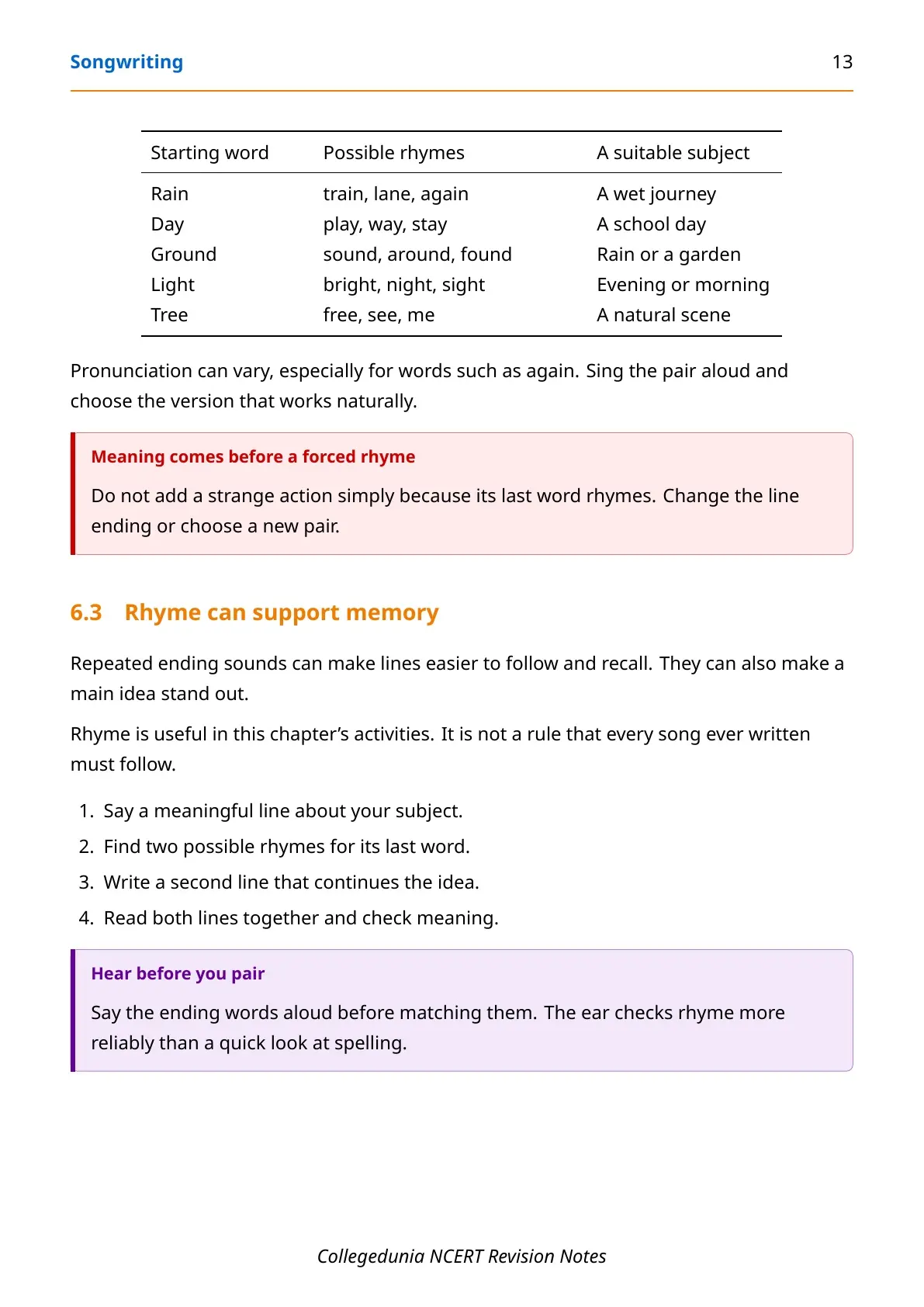
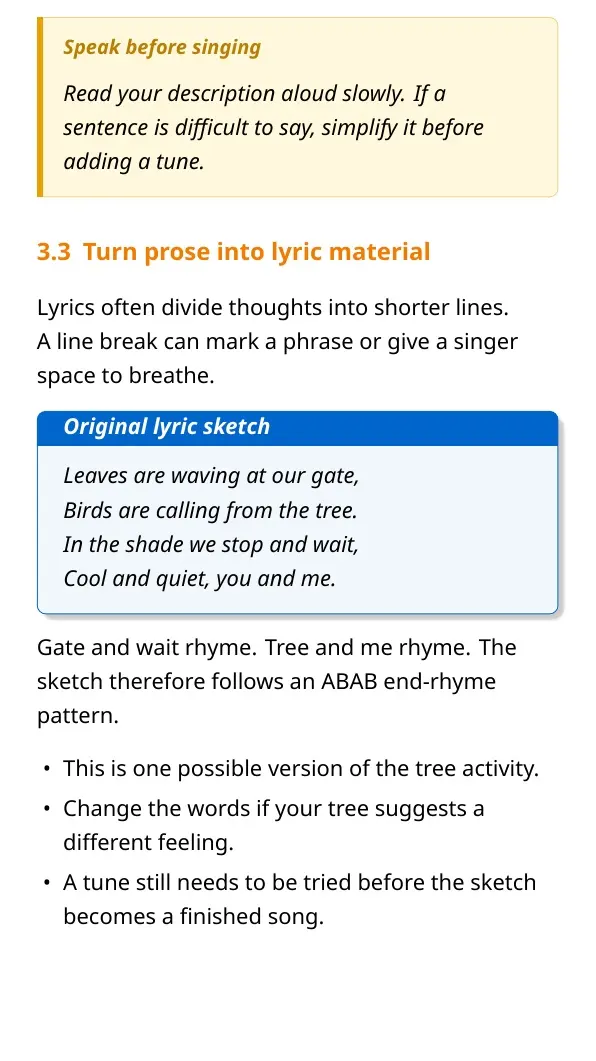
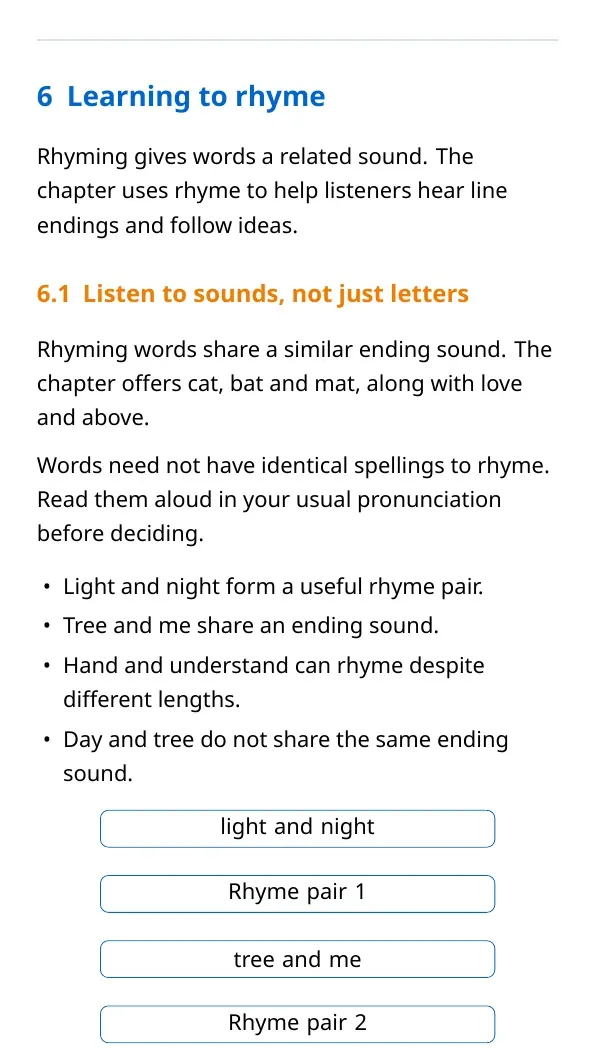
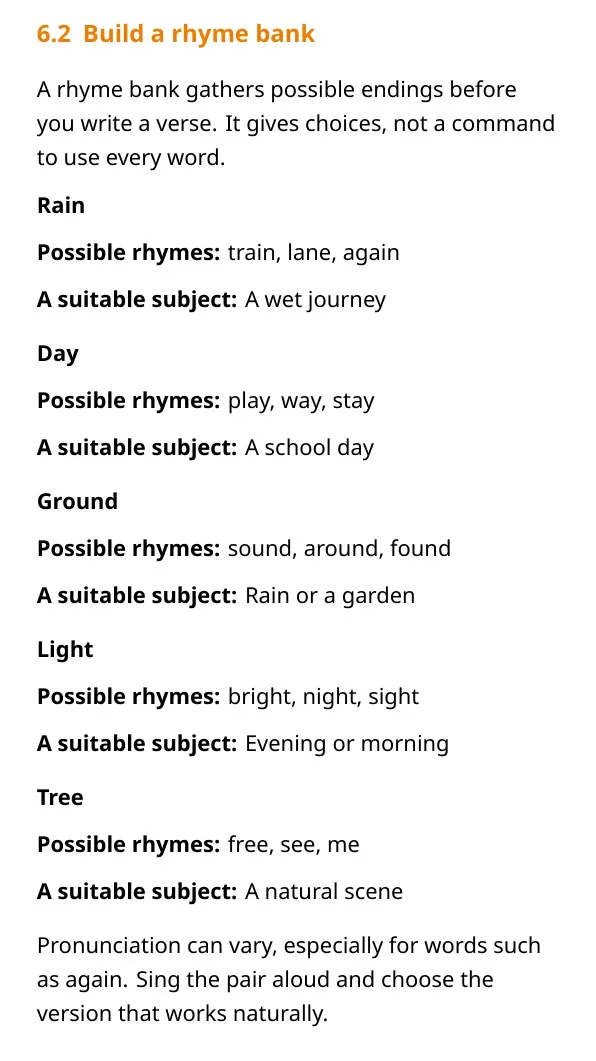
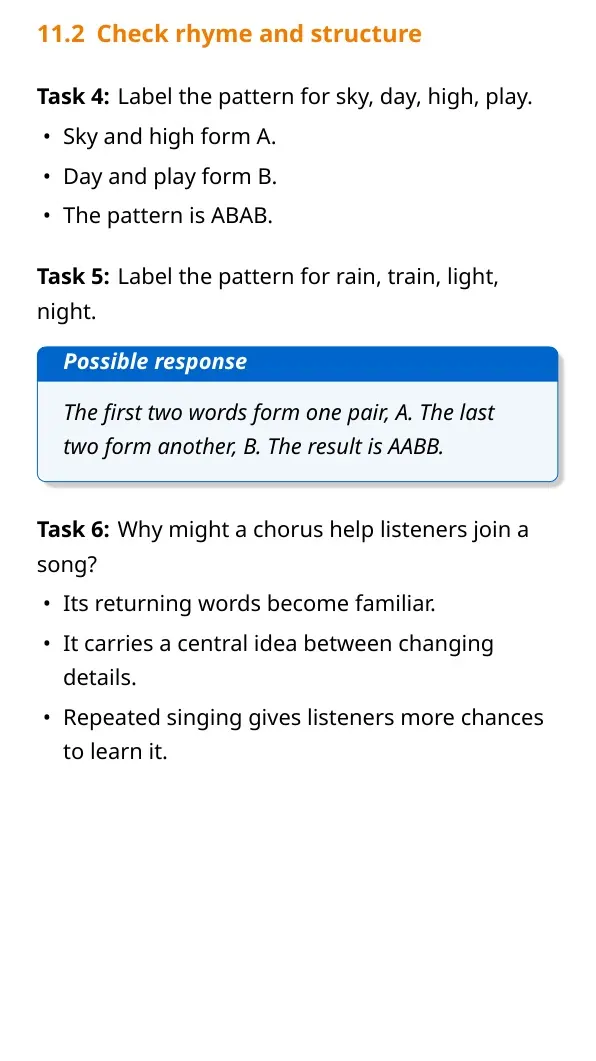
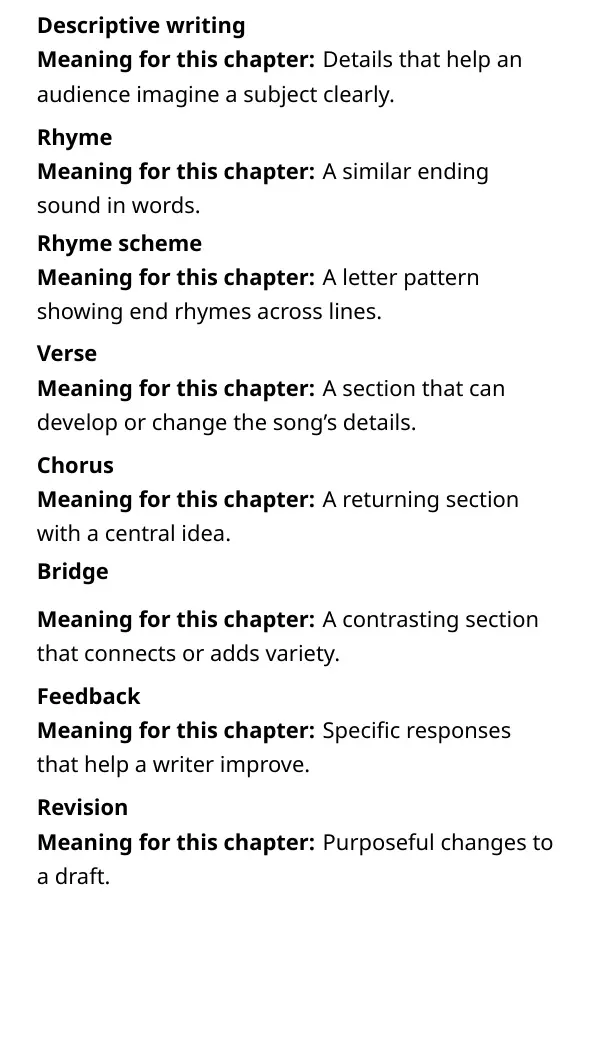
Rhyming words have matching ending sounds, such as light and night. Rhyme can draw attention to an idea and help listeners hear line endings. Match sounds rather than spelling alone.
| Term | Meaning and practice cue |
|---|---|
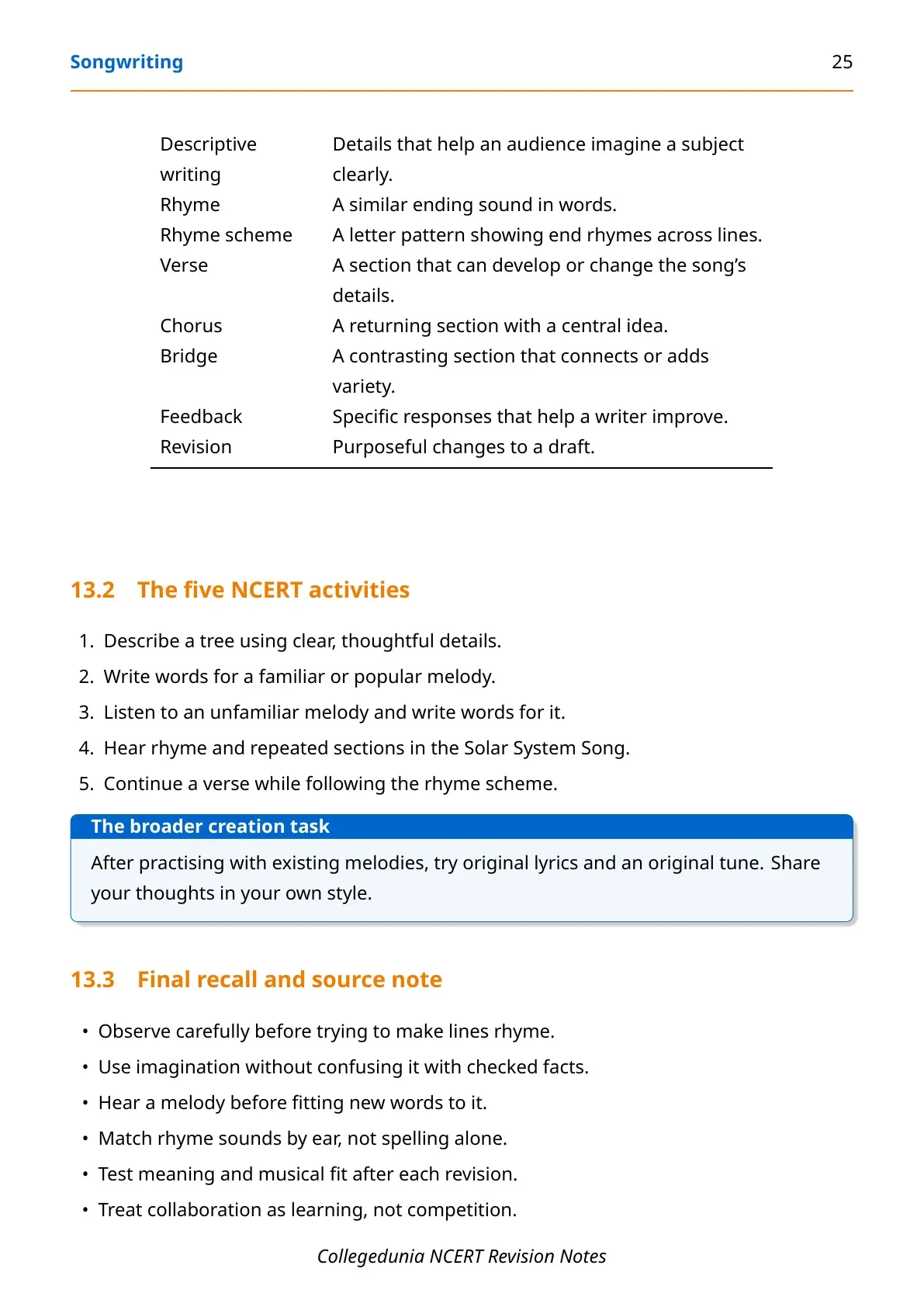
| Rhyme scheme | The pattern of rhyming line endings, labelled with letters. |
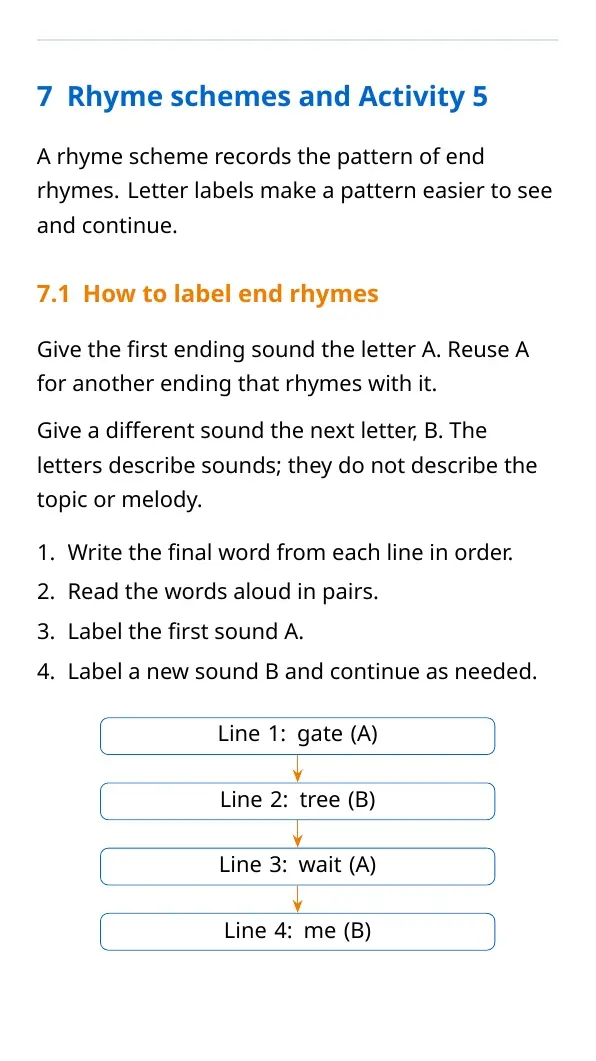
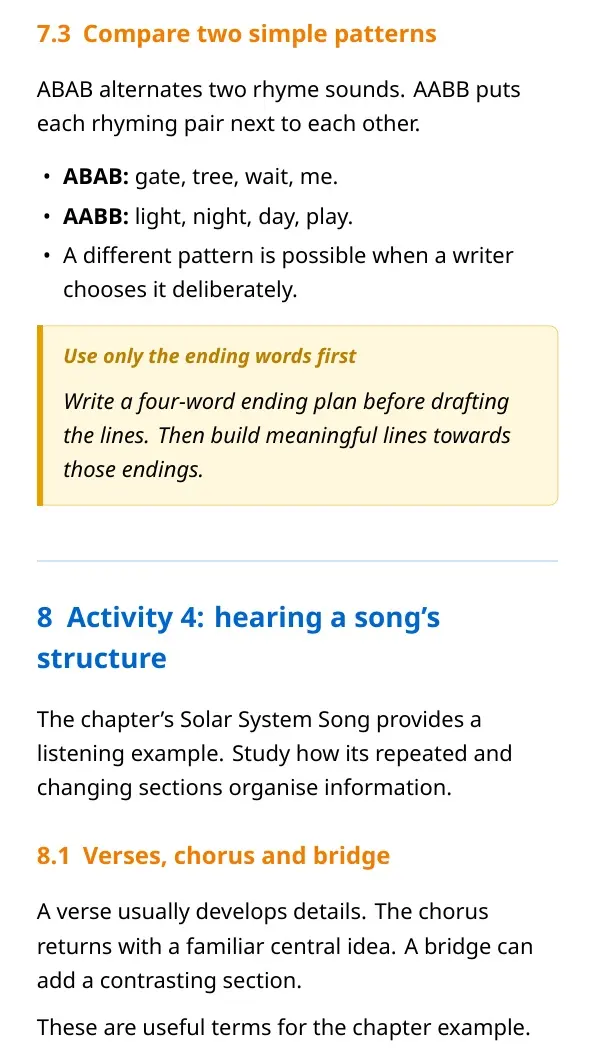
| ABAB | Lines 1 and 3 rhyme; lines 2 and 4 rhyme. Example endings: rain, tree, again, bee. |
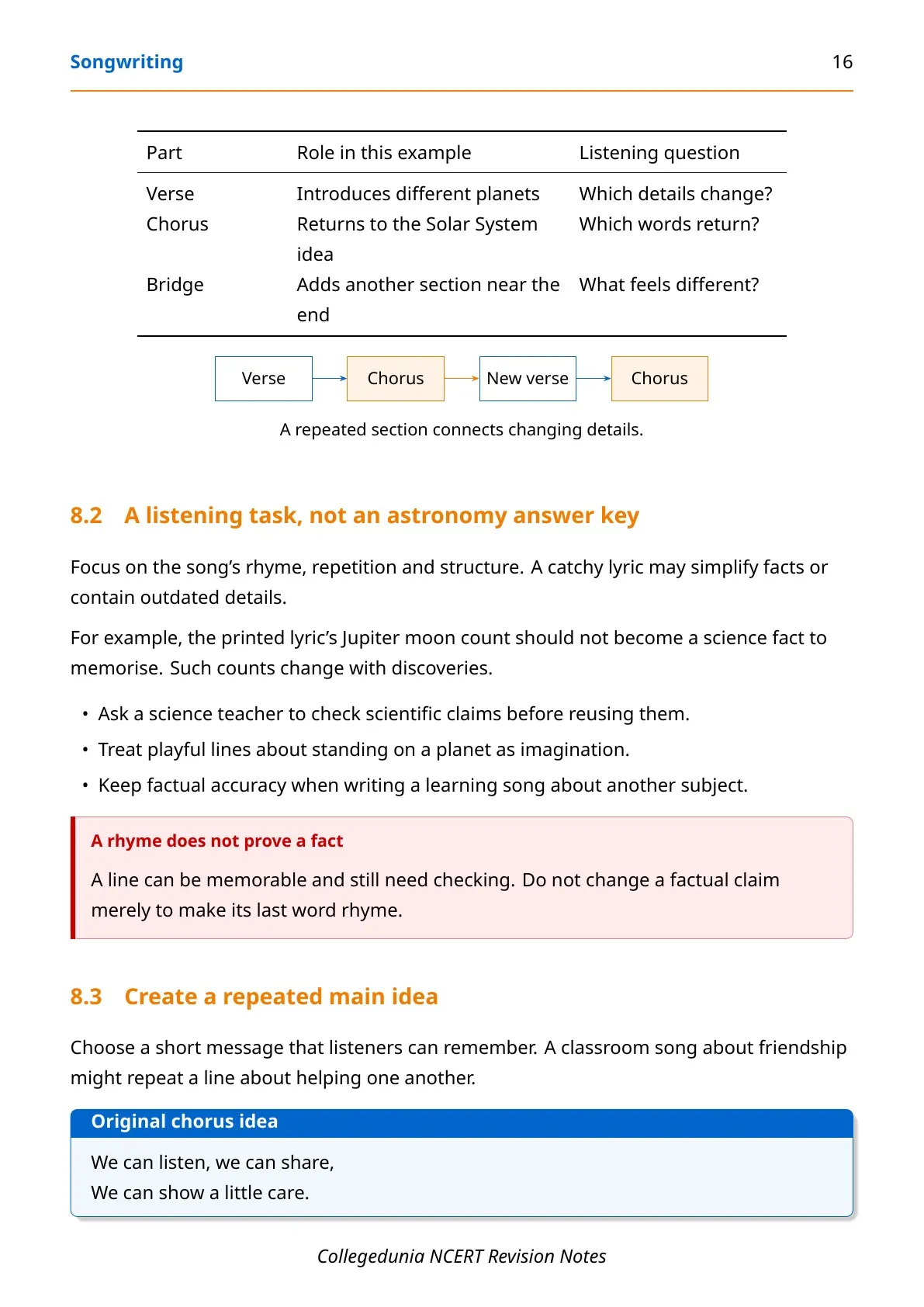
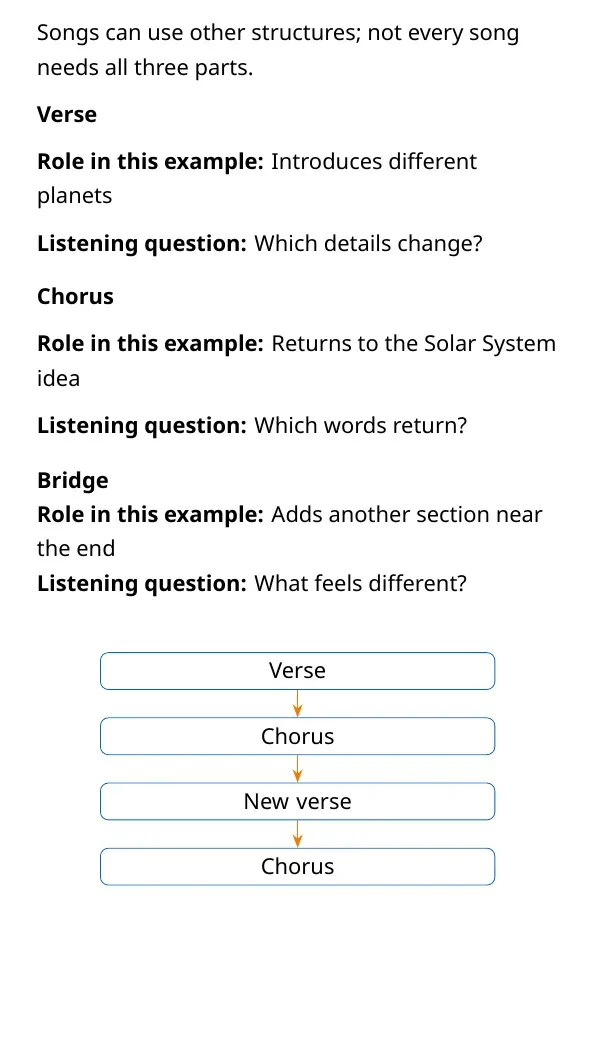
| Verse | A section that adds details or develops the song's idea. |
| Chorus | A returning section that repeats the main idea. |
| Bridge | A contrasting section that adds a change to the song. |
Use the Solar System Song to identify these musical parts. Check science information in a current science source before using it in new lyrics. The task here is to listen for rhyme and structure.
Songwriting Practice: Revise Lyrics without Losing Meaning
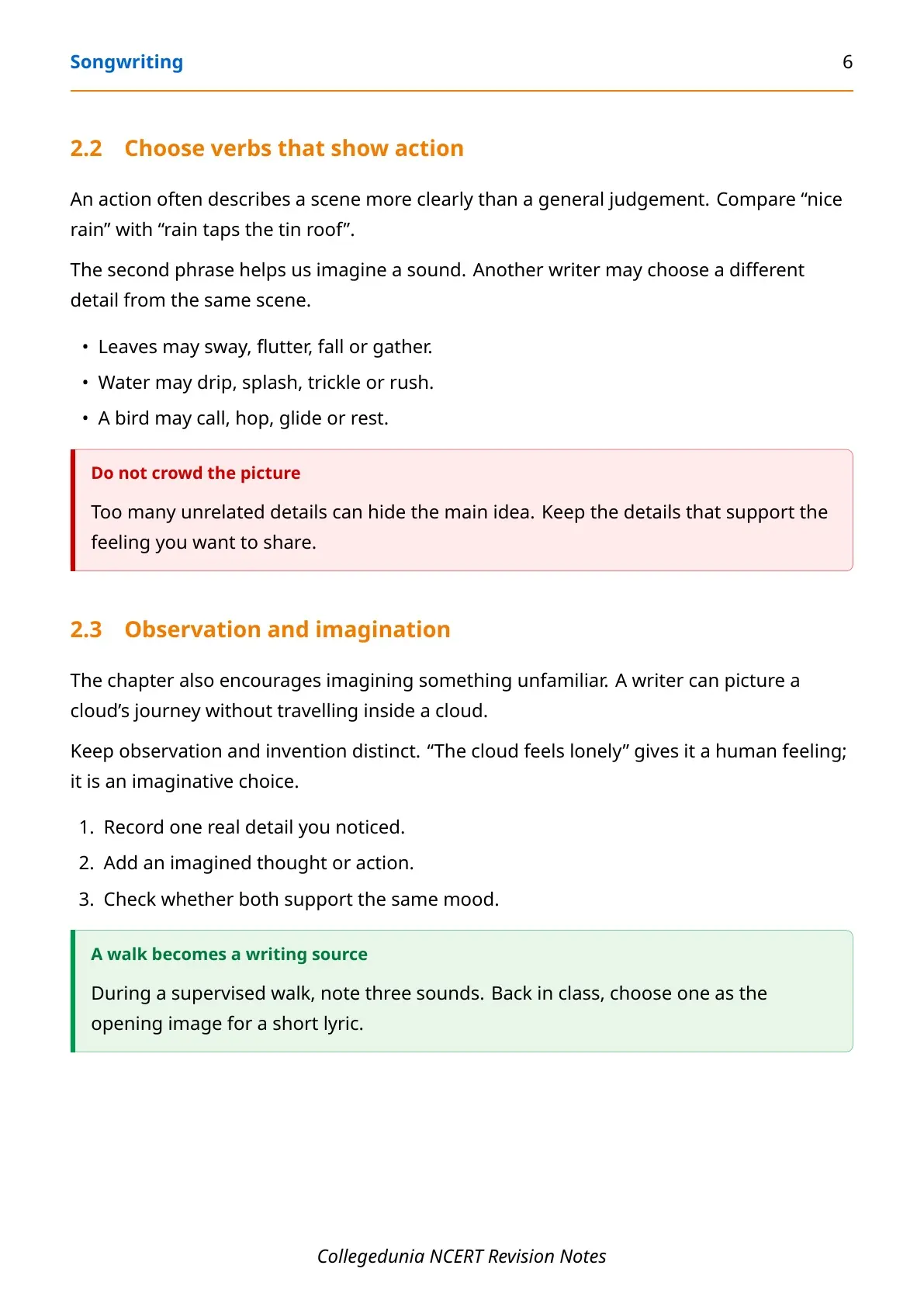
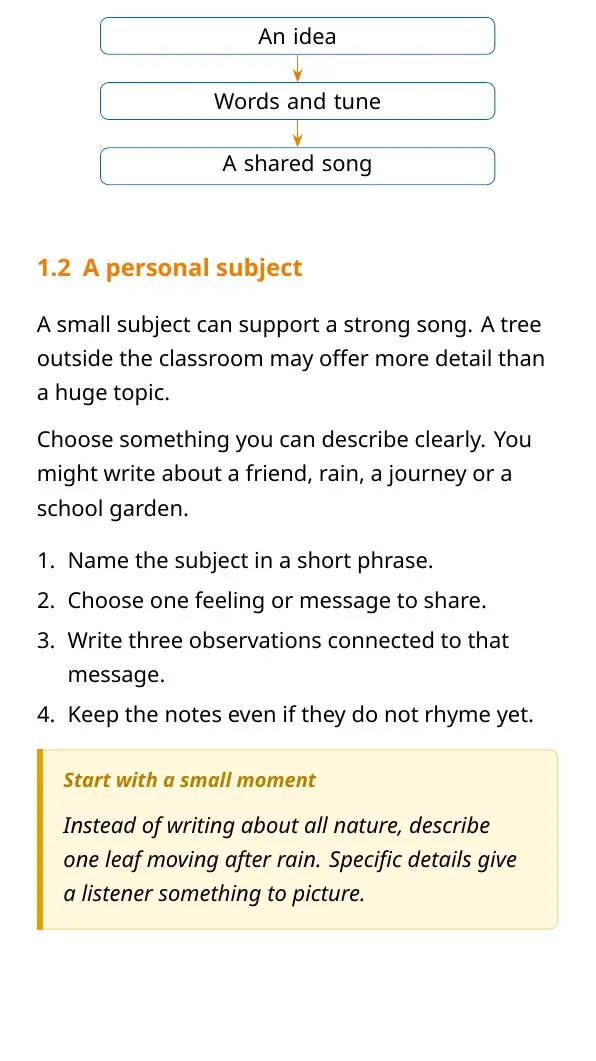
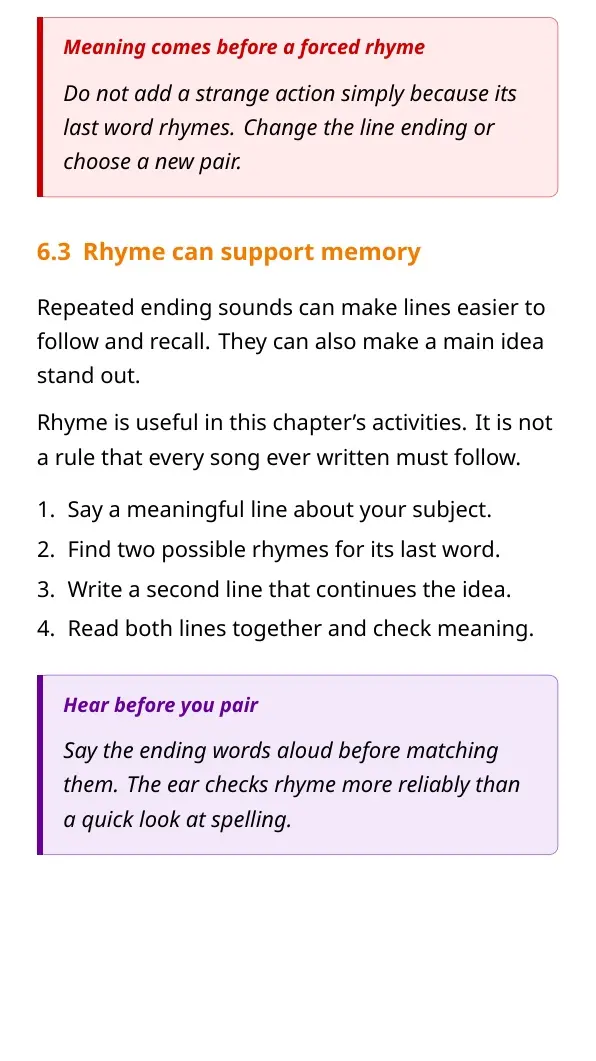
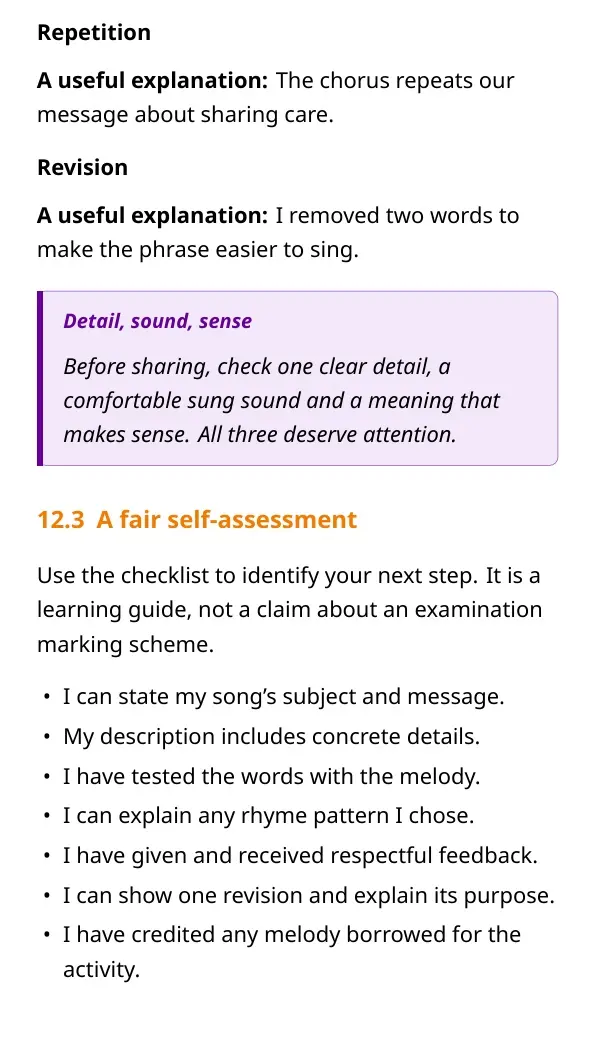
Write four lines about rain, a pet or your school garden. Choose one feeling you want to share. A useful rhyme should still make sense. Keep your own ideas instead of copying someone else's words.
- List three clear details about your subject.
- Choose a tune and speak your words to its rhythm.
- Check line endings if you chose a rhyme scheme.
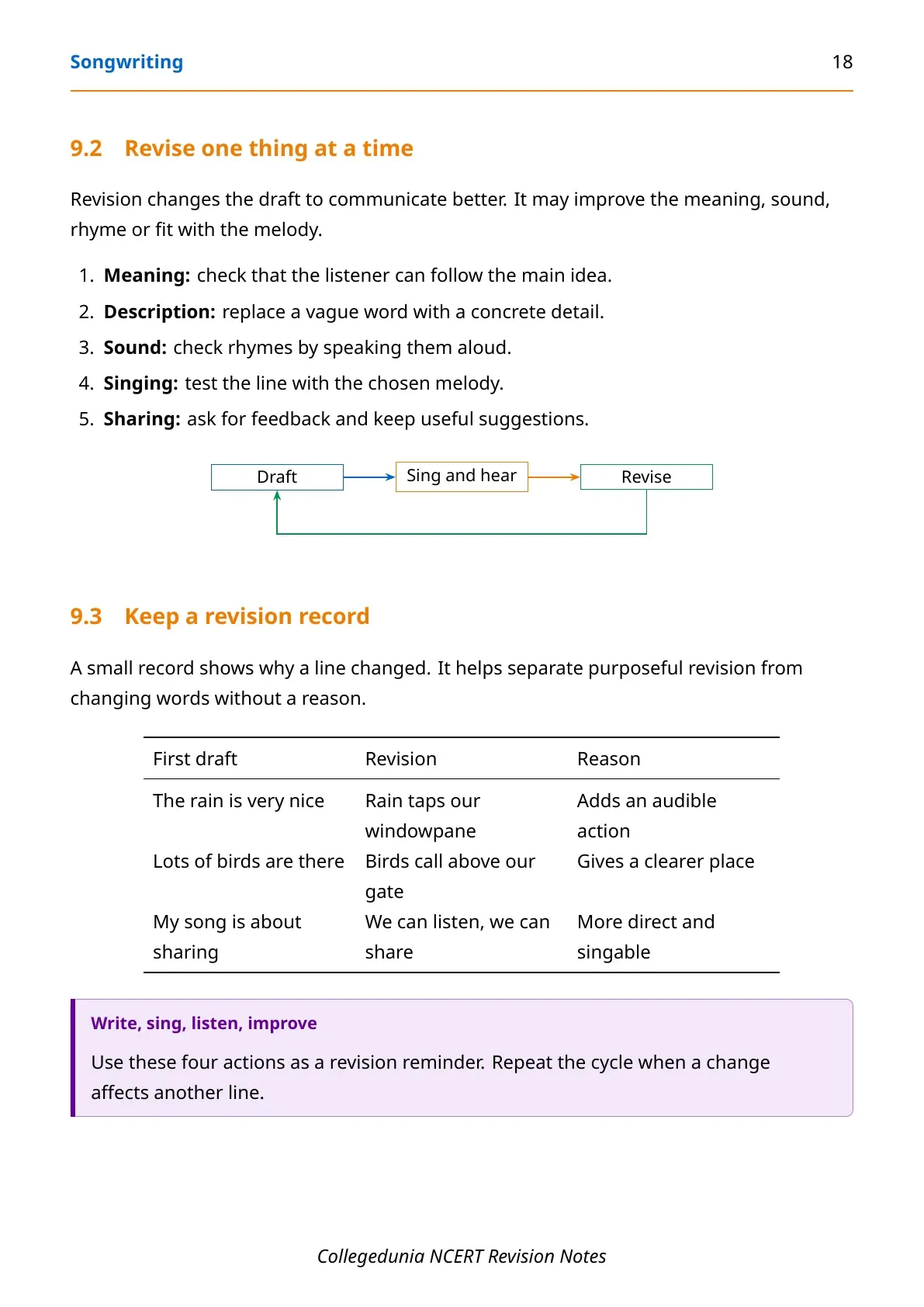
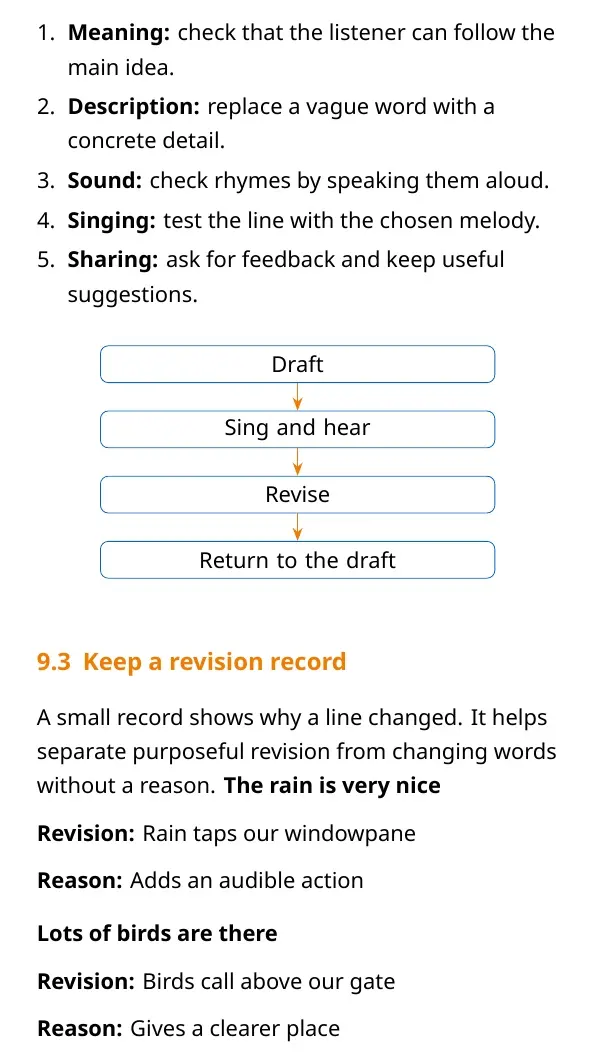
- Sing, listen to feedback and revise one line.
NCERT treats writing as cooperation rather than competition. Give specific, positive feedback: name a detail you liked, then suggest a helpful change. Trying a new version is part of creating a song.
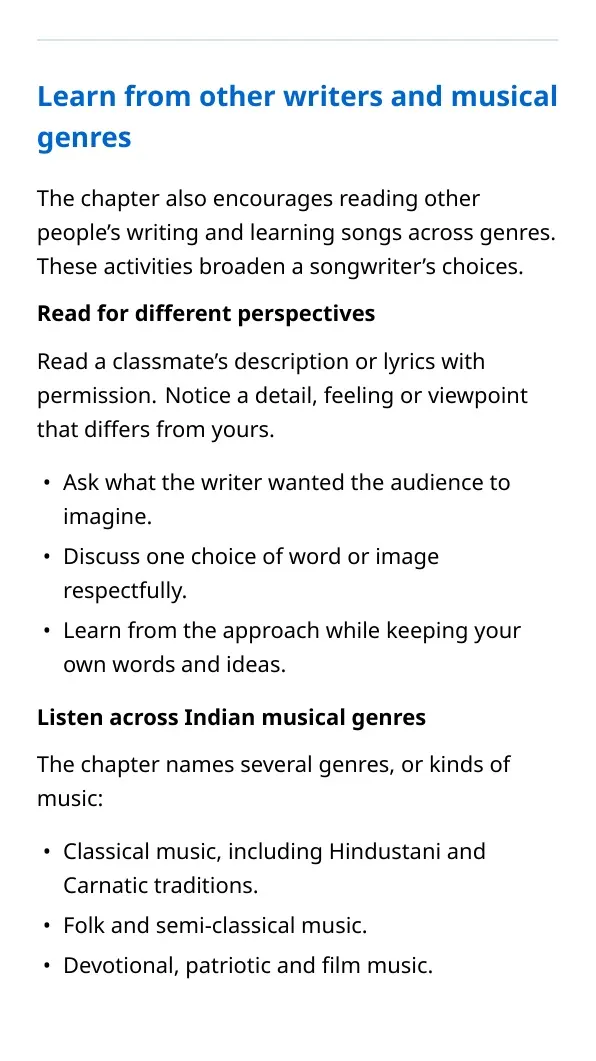
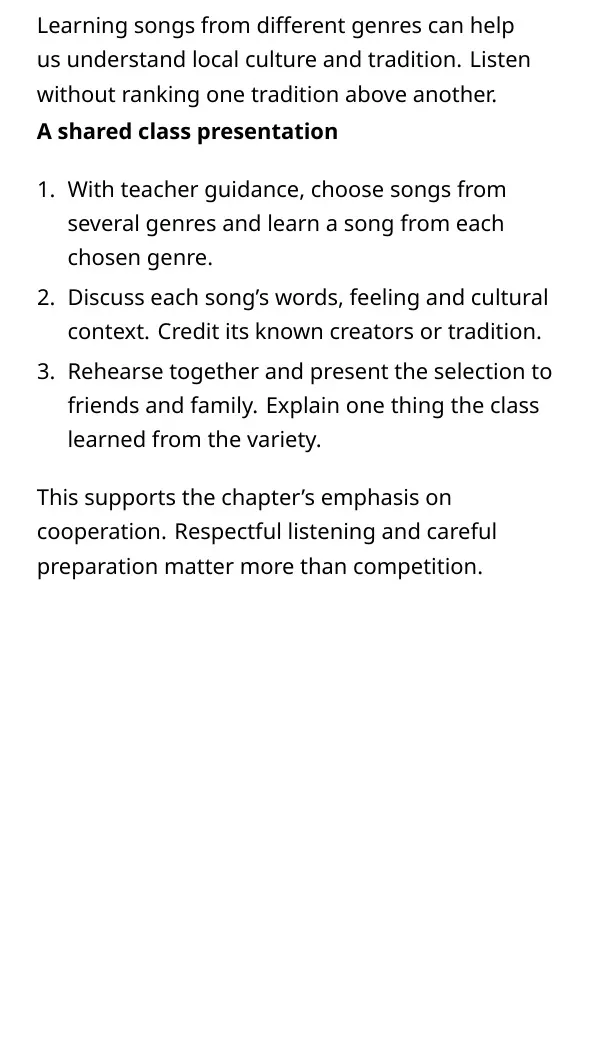
Reading other people's writing helps you understand different perspectives. Learning songs from different genres also helps you understand local culture and tradition. Explore these musical genres with your teacher:
- Classical traditions: Hindustani and Carnatic music.
- Other genres: folk, semi-classical, devotional, patriotic and film music.
- Class practice: learn songs from a few genres and present them to friends and family.
Songwriting Related Resources for Class 6 Arts
Use the textbook to hear the melodies linked through its activities. The solutions explain how to approach each creative task.
| Resource | What to use it for |
|---|---|
| Songwriting NCERT Solutions | Practise the creative tasks |
| Songwriting Handwritten Notes (not yet available) | Use the printed notes above for now |
| Official NCERT Songwriting chapter PDF | Read the source activities |
NCERT Notes for Class 6 Arts: All Chapters
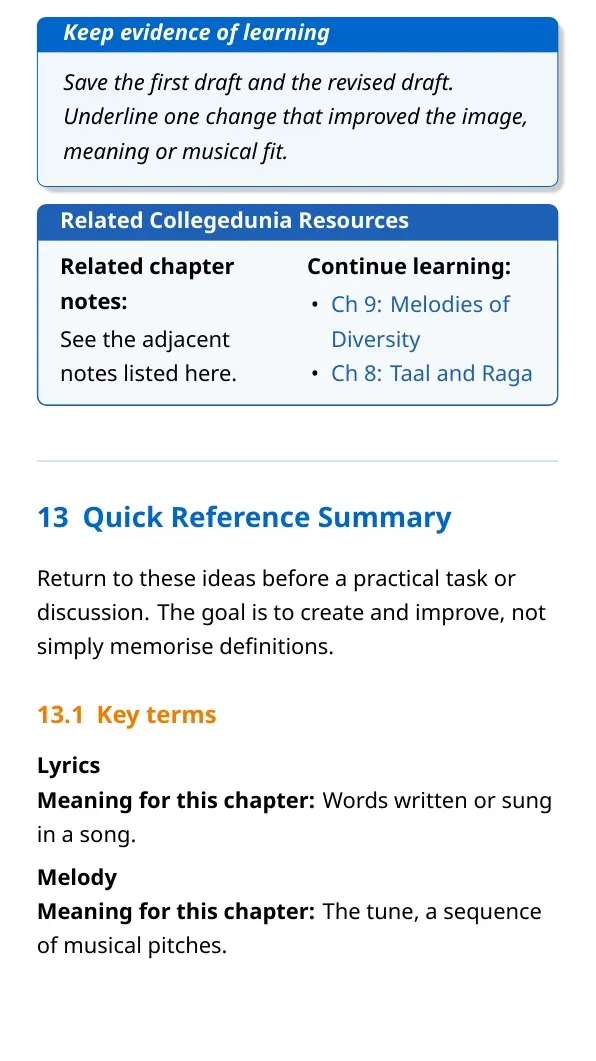
Music and Your Emotions helps you choose a feeling for your lyrics. Melodies of Diversity adds listening practice across musical traditions.
| Resource | What to use it for |
|---|---|
| Objects and Still Life Notes | Build your arts practice |
| Portraying People Notes | Build your arts practice |
| Paper Crafts Notes | Build your arts practice |
| Seals to Prints Notes | Build your arts practice |
| Taal or Talam and Raga or Ragam in Indian Music Notes | Build your arts practice |
| Melodies of Diversity Notes | Build your arts practice |
Songwriting Class 6 Arts Notes FAQs
Ques. What do the Songwriting notes cover?
Ans. They cover descriptive writing, lyrics for familiar and unfamiliar melodies, rhyme schemes and the five NCERT activities.
Ques. Are these notes based on the 2026-27 book?
Ans. Yes. They follow the official NCERT Kriti-I Chapter 10 reprinted for 2026-27.
Ques. What is the first Songwriting activity?
Ans. Write descriptively about a tree. Choose details that help someone picture it clearly.
Ques. Can I write new words for an existing tune?
Ans. Yes. Activity 2 asks you to write lyrics for a familiar melody. Sing your words to check their fit.
Ques. How do I begin with an unfamiliar melody?
Ans. Listen several times, notice the rhythm and phrase lengths, then try short lines that fit the tune.
Ques. Does every line need to rhyme?
Ans. No. Follow the chosen pattern. For the ABAB task, lines 1 and 3 rhyme, as do lines 2 and 4.
Ques. How should classmates give feedback?
Ans. Be constructive and positive. Explain what works, then suggest one clear change.
Ques. What should I listen for in the Solar System Song?
Ans. Notice rhymes and how verses, choruses and a bridge organise the song.
Ques. What is descriptive writing?
Ans. It describes an object, place, experience or thing in detail to create a clear picture.
Ques. How is a rhyme scheme defined?
Ans. It is the pattern of rhyming sounds at the ends of lines in a section of a song or poem.
Ques. What are lyrics?
Ans. Lyrics are the words of a song. They express ideas or feelings and are sung to a melody.



Comments