




Inside these Class 6 Arts notes on Taal or Talam and Raga or Ragam in Indian Music, you will find beat-cycle tables, musical terms and listening pointers. The notes follow the NCERT Kriti-I 2026-27 chapter. Use them alongside the textbook recordings to connect counting, singing and careful listening.
- Compare Keharva, Dadra and Teen Taal with Carnatic talams.
- Revise raga, aroha, avaroha, gamaka and octave notation.
- Practise the chapter songs with your teacher and the linked recordings.
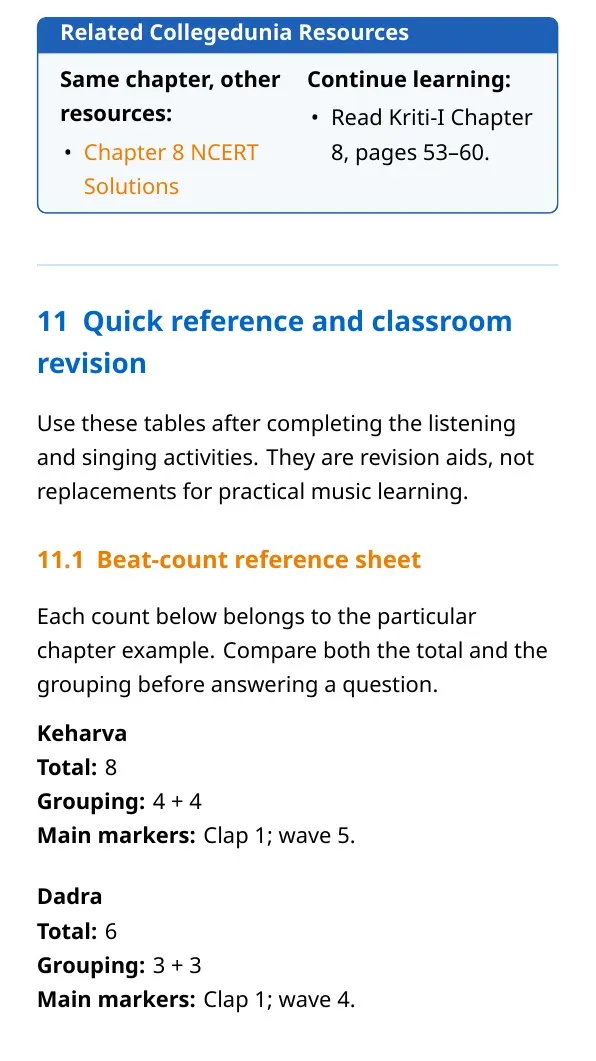
These Collegedunia notes explain the terms and activities in the official NCERT Kriti-I chapter.
Taal and Talam: Count the Repeating Beat Cycle
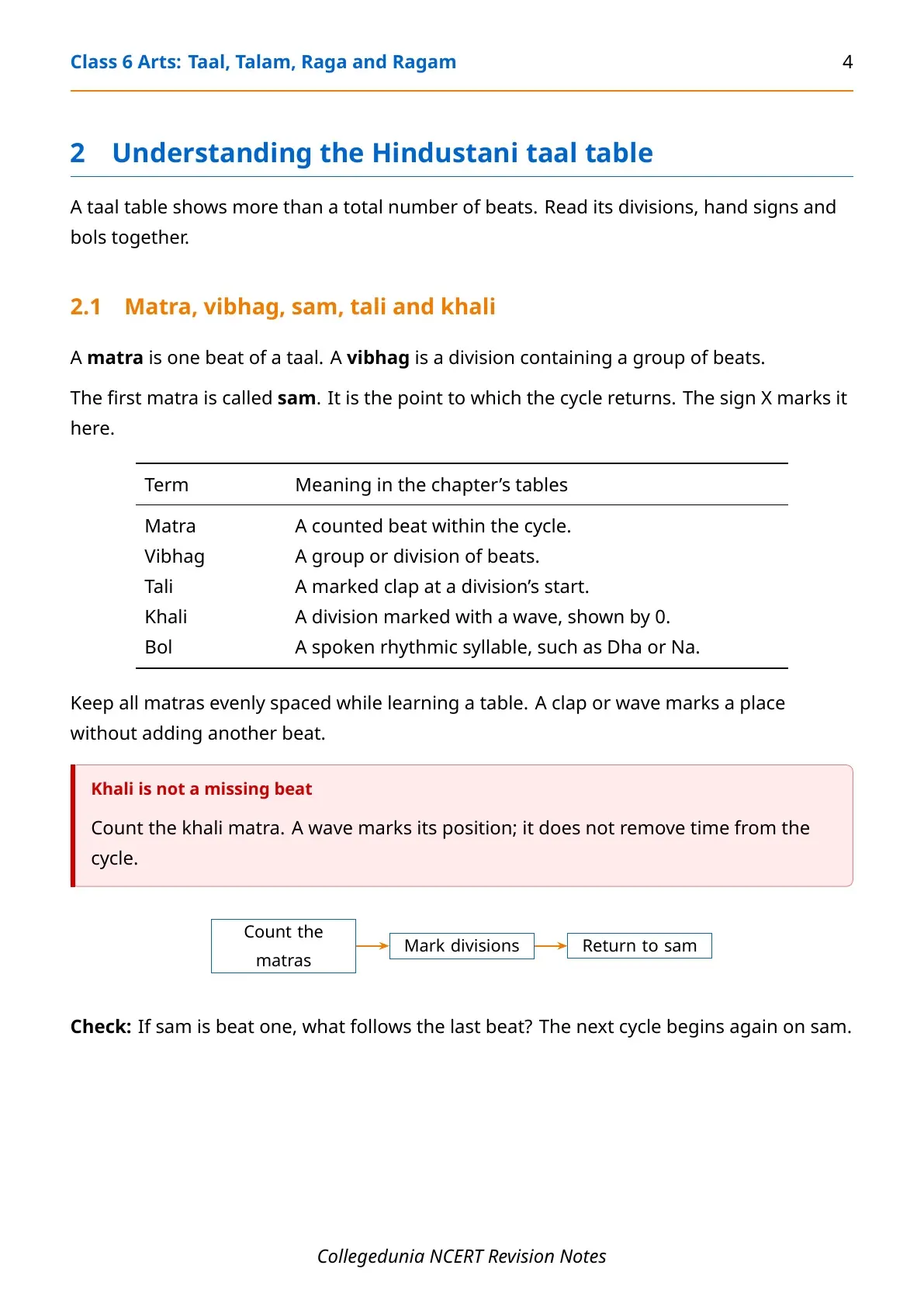
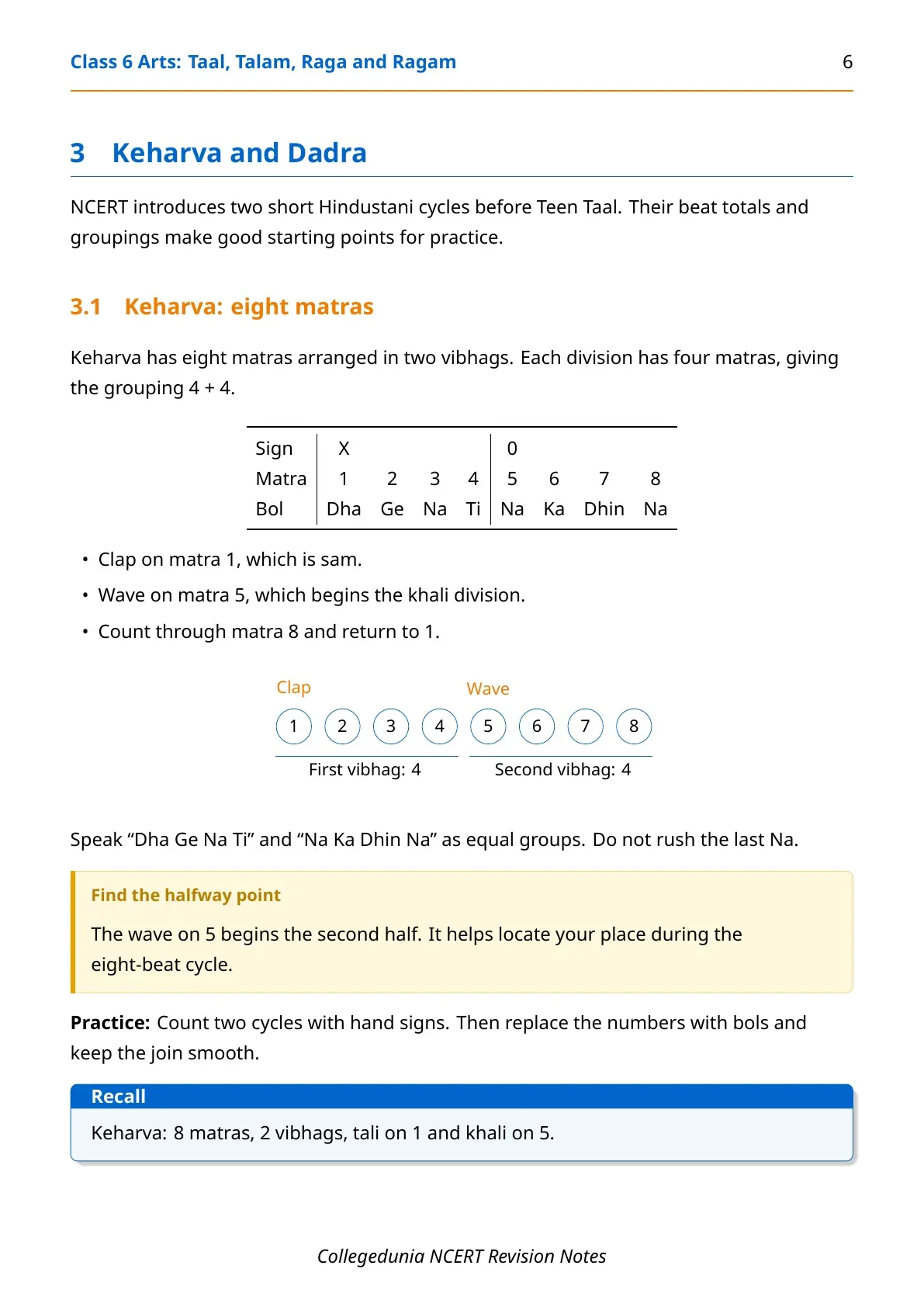
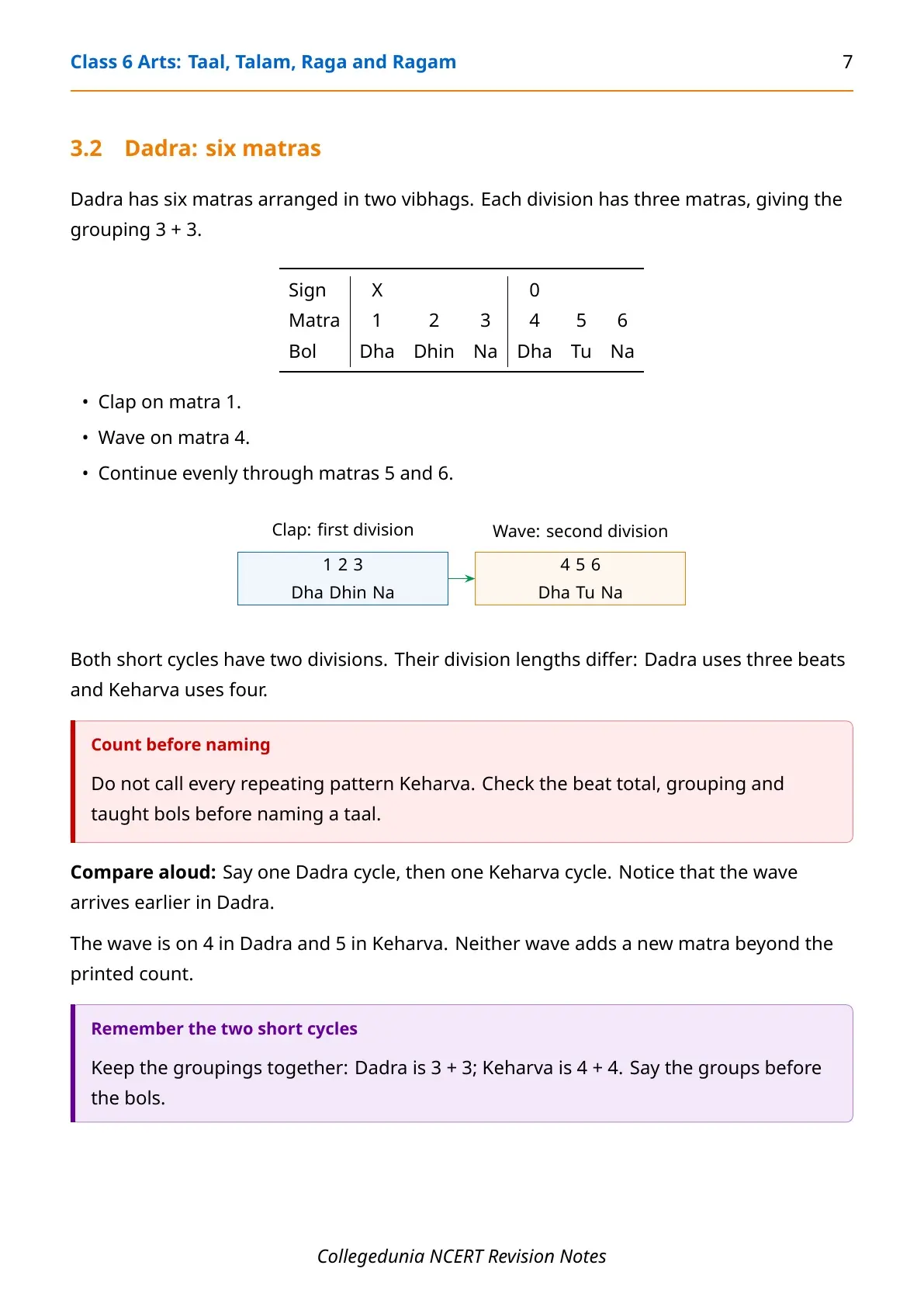
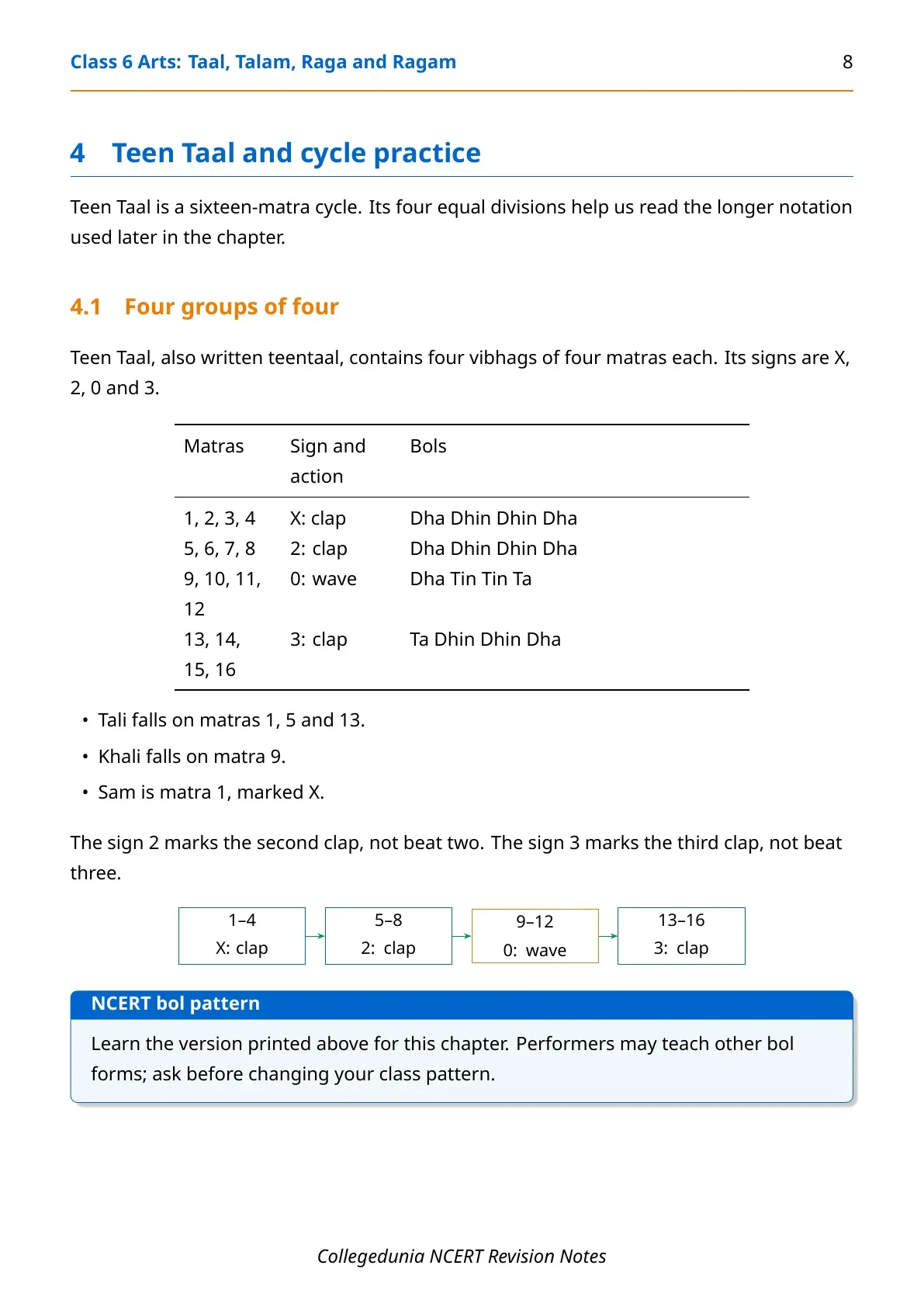
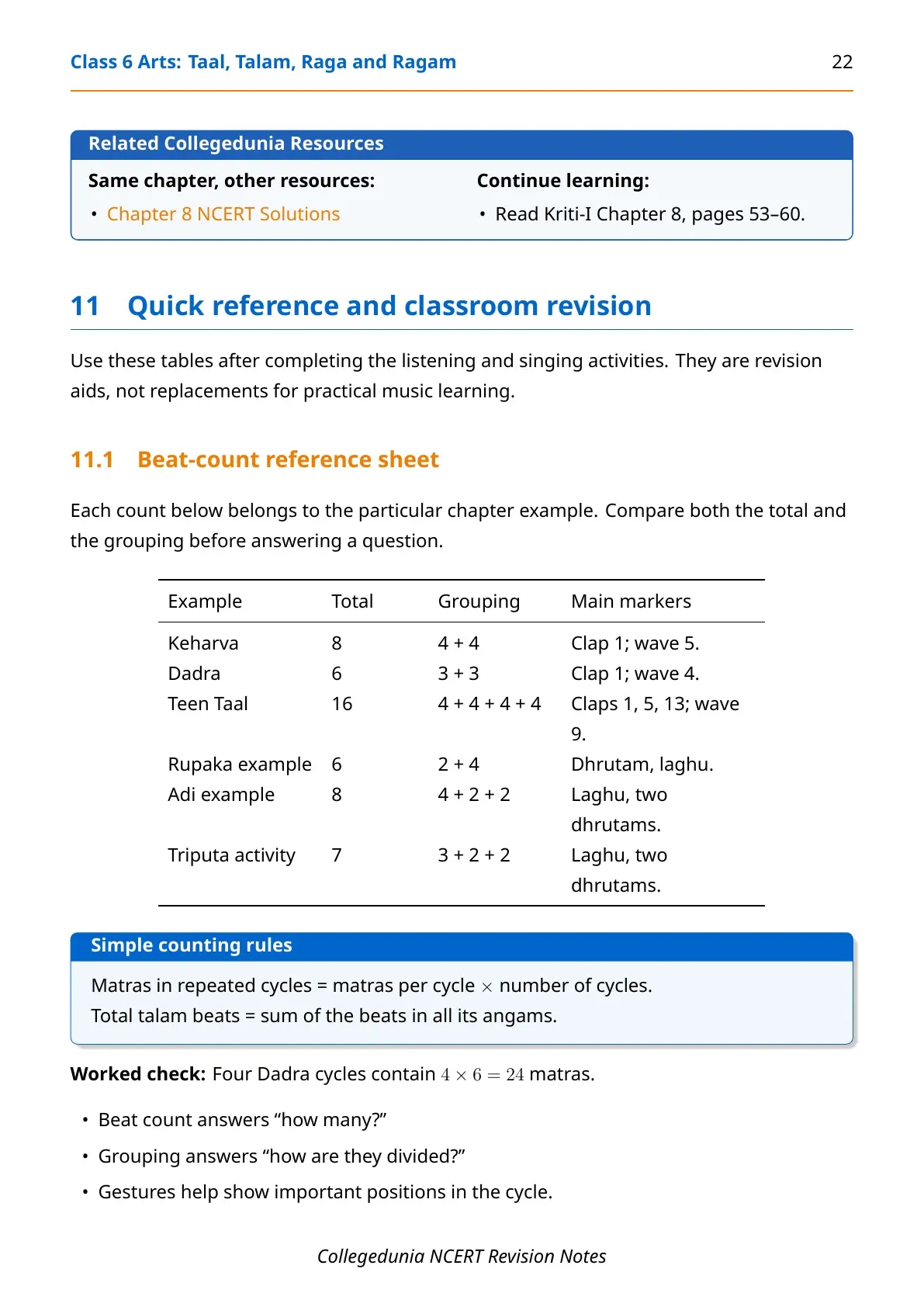
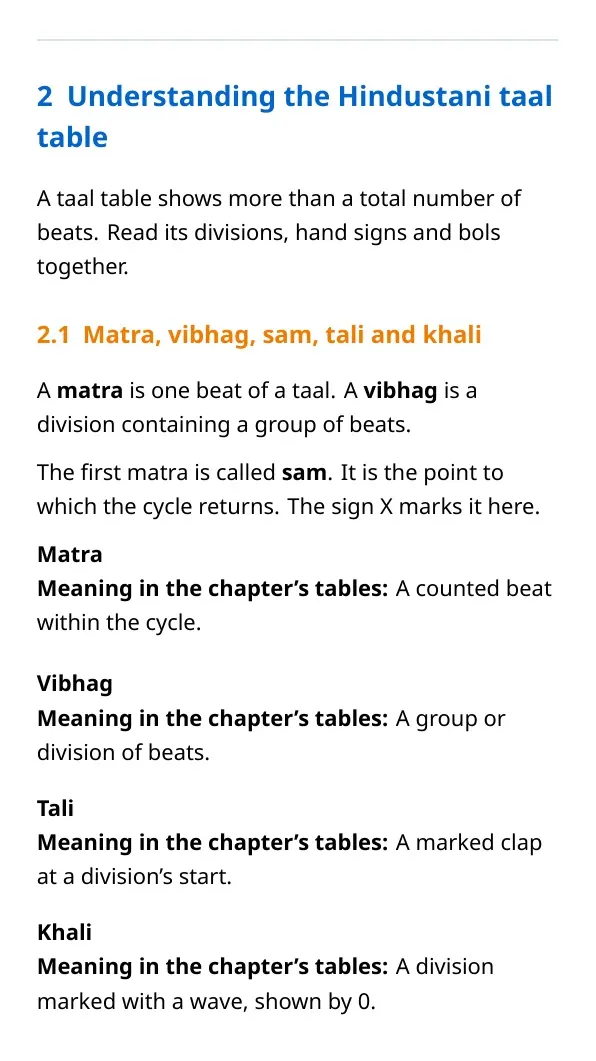
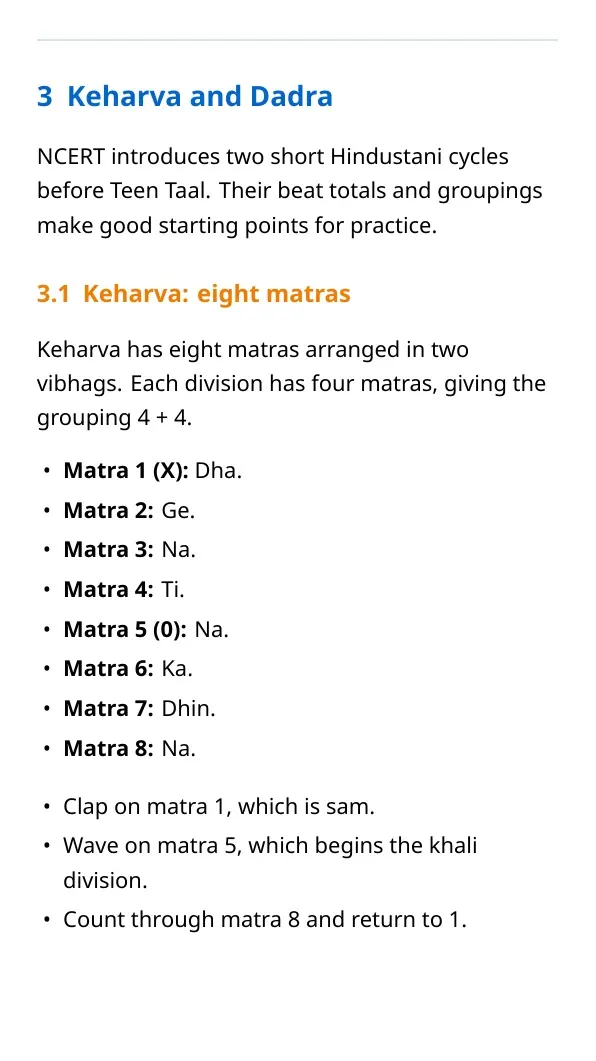
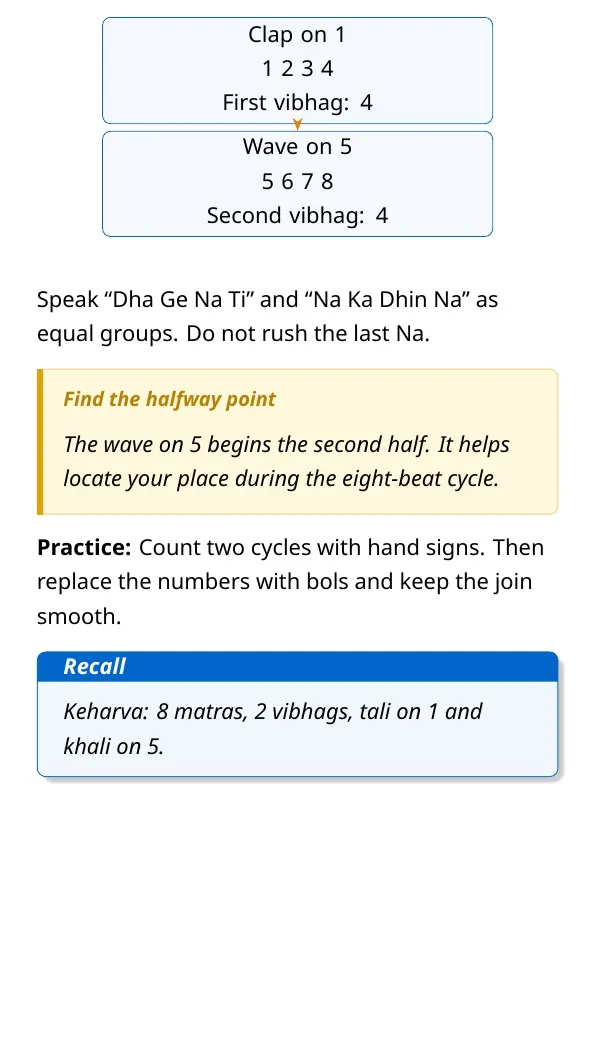
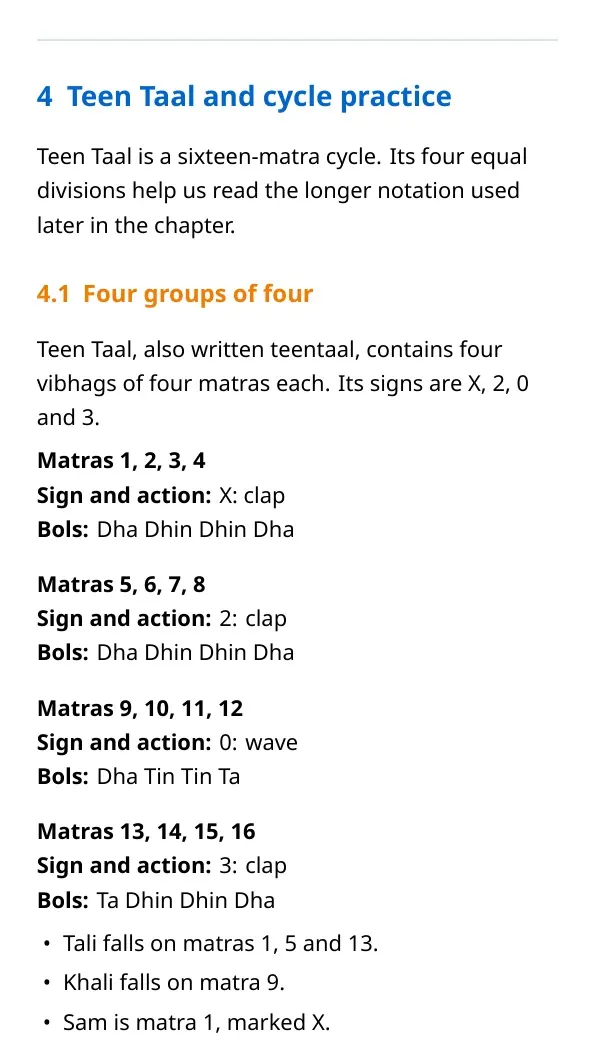
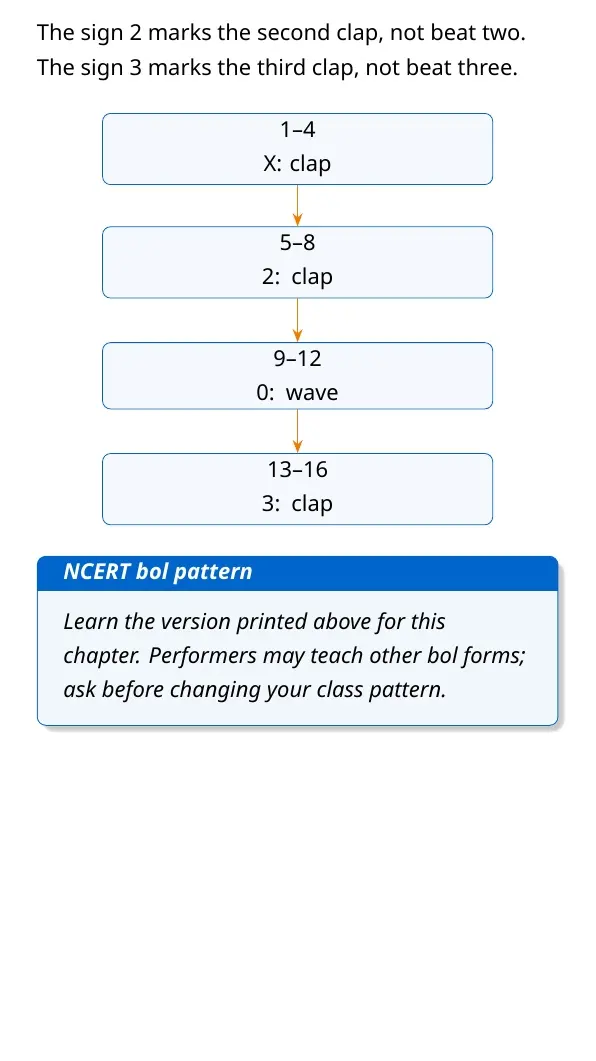
A taal organises beats into a repeating cycle. A matra is a beat, and a vibhag is a division within that cycle. The first matra is called sam. Claps mark tali positions; a hand wave marks khali. The textbook uses X for sam and 0 for khali.
| Taal | Matras | Vibhags | Tali | Khali |
|---|---|---|---|---|
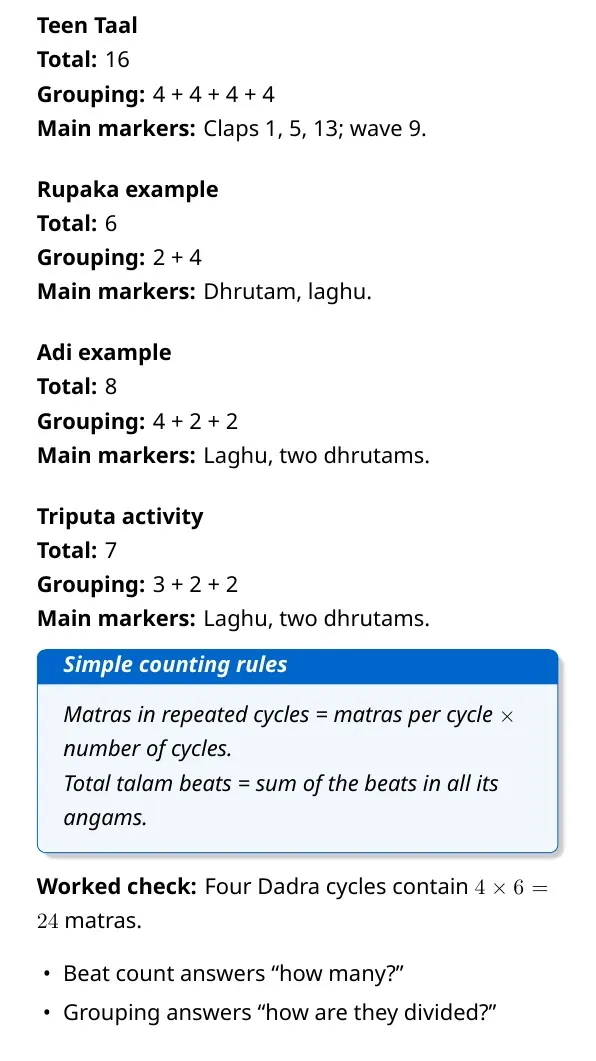
| Keharva | 8 | 2 | 1 | 5 |
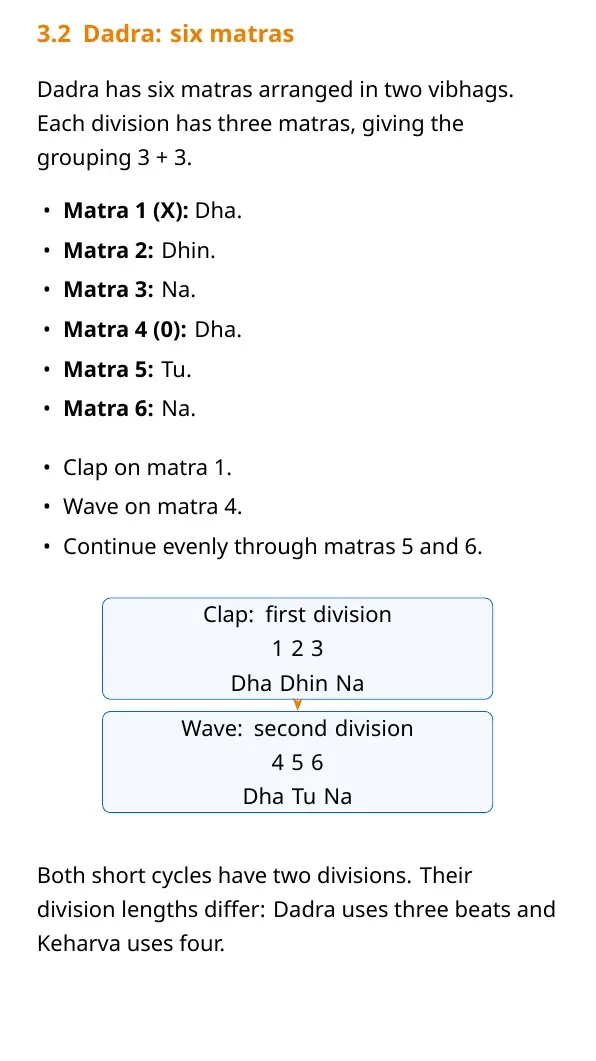
| Dadra | 6 | 2 | 1 | 4 |
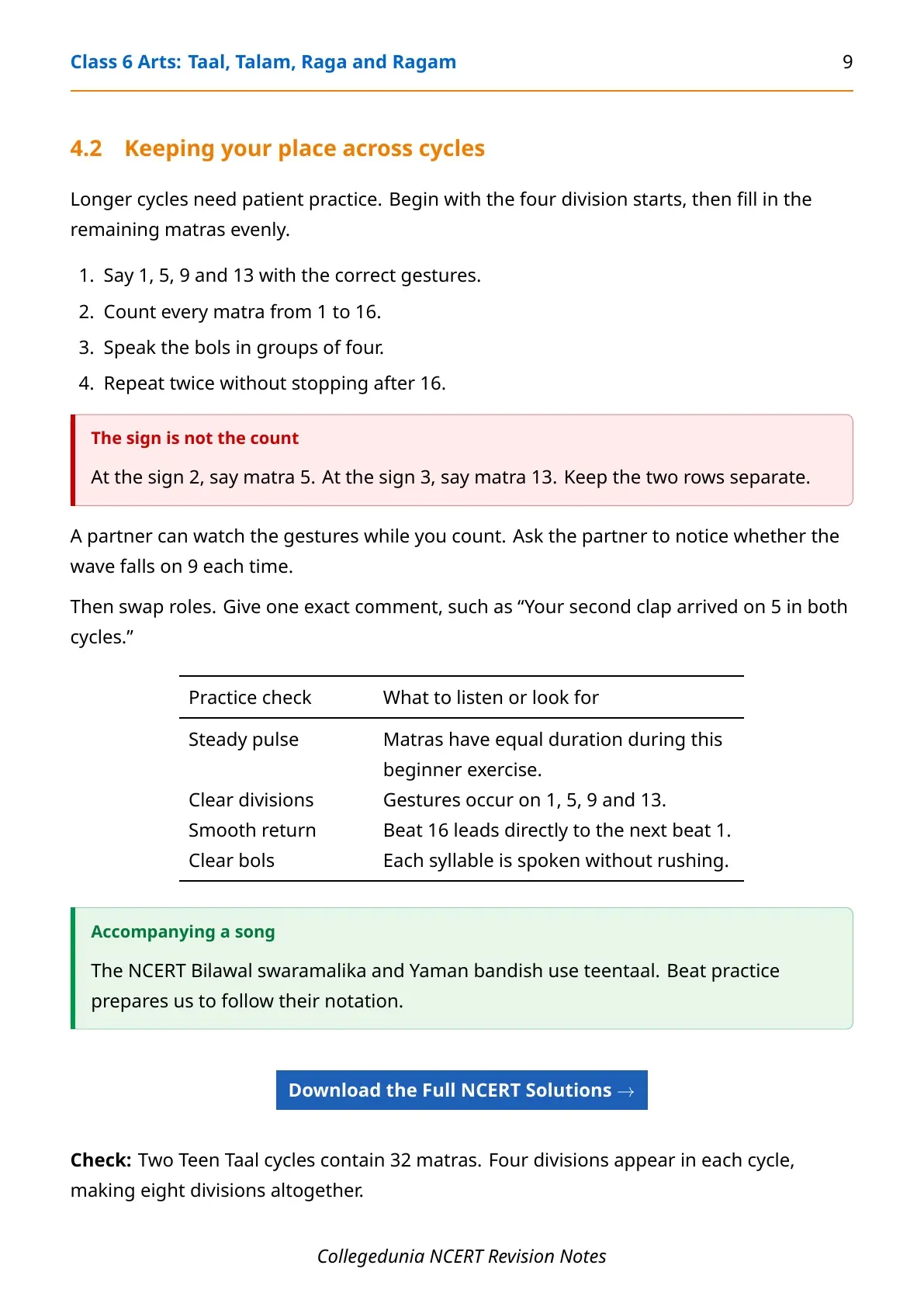
| Teen Taal | 16 | 4 | 1, 5, 13 | 9 |
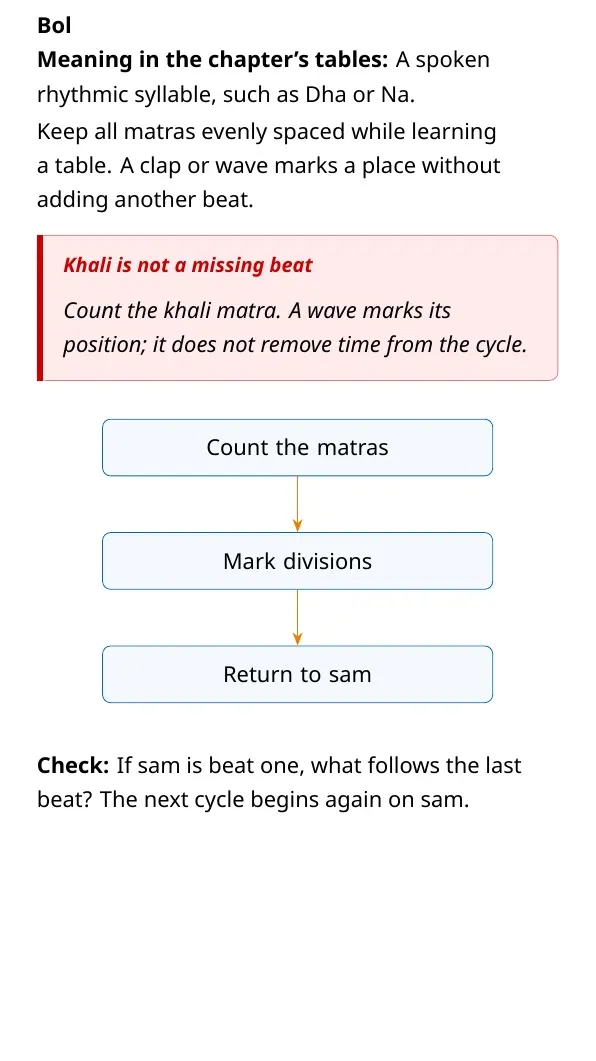
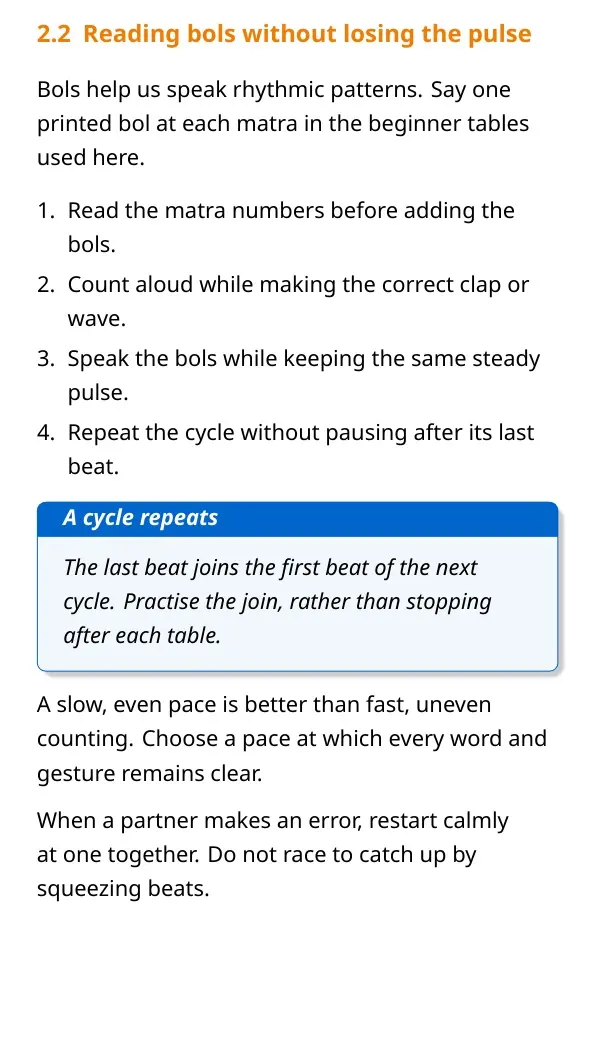
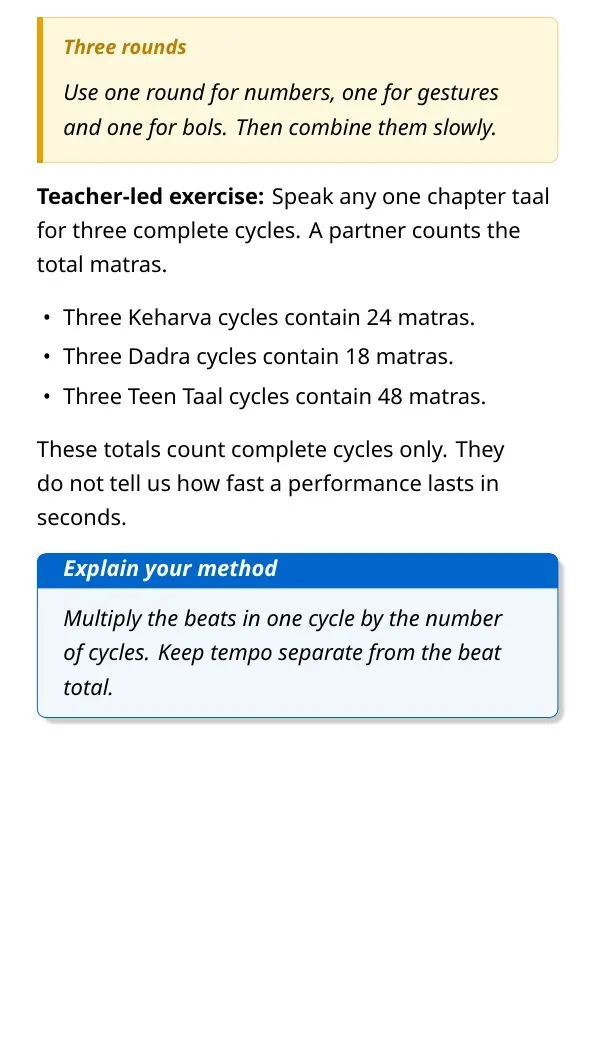
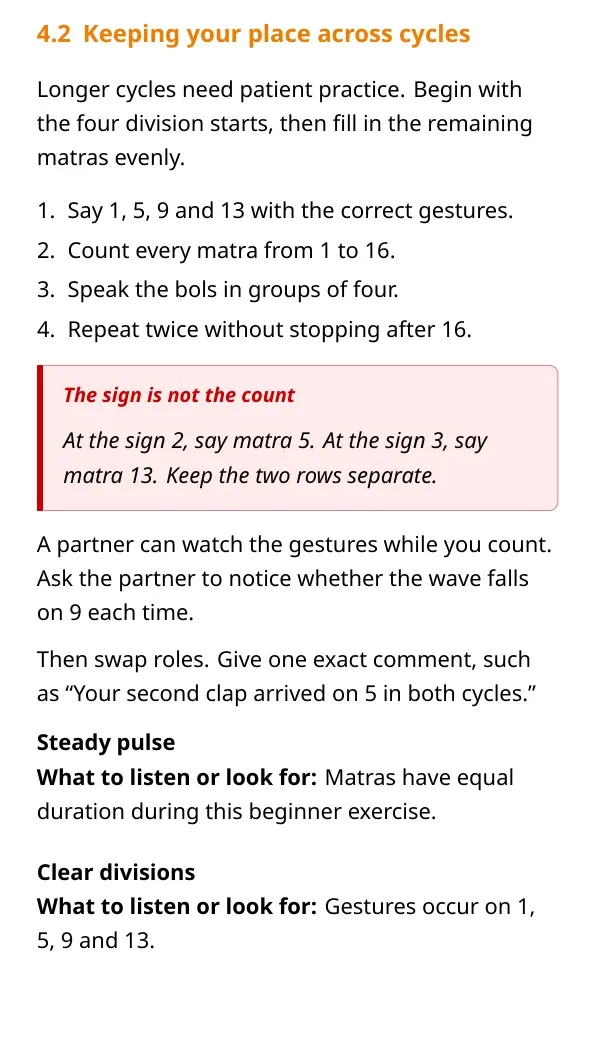
Khali is a marked part of the cycle, not an extra beat. Count every matra, including the ones around the hand wave. Say the textbook bols slowly before adding a tune. Keep the same pace when the cycle returns to sam.
Taal and Raga within the Class 6 Kriti Textbook
Watch the section from 10:28 to 14:14 for talam, avartanam, sam and the raga terms. This excerpt comes from a full-book lesson.
Source: Unacademy IAS: English on YouTube
Carnatic Talam: Build Cycles from Three Angams
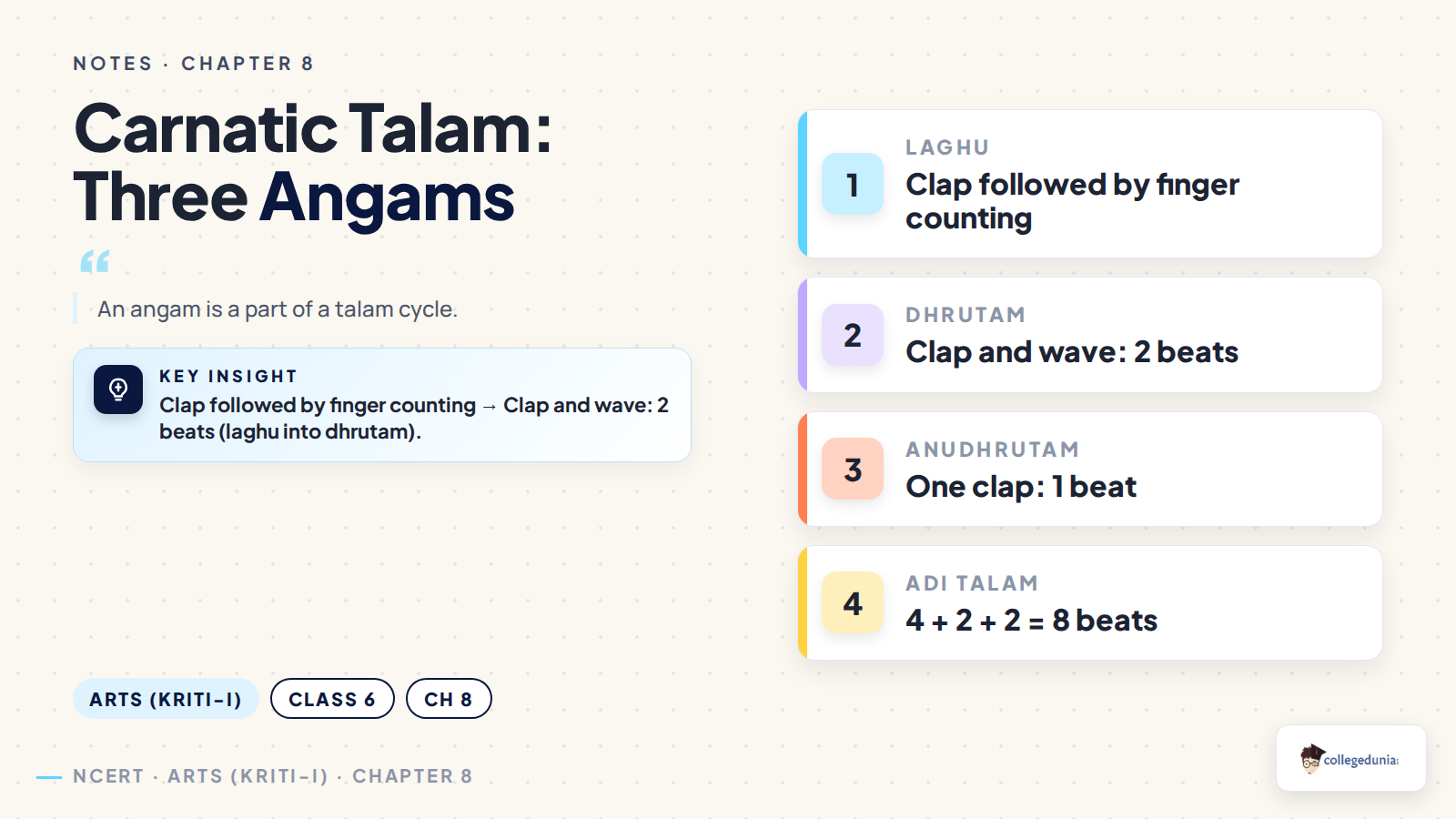
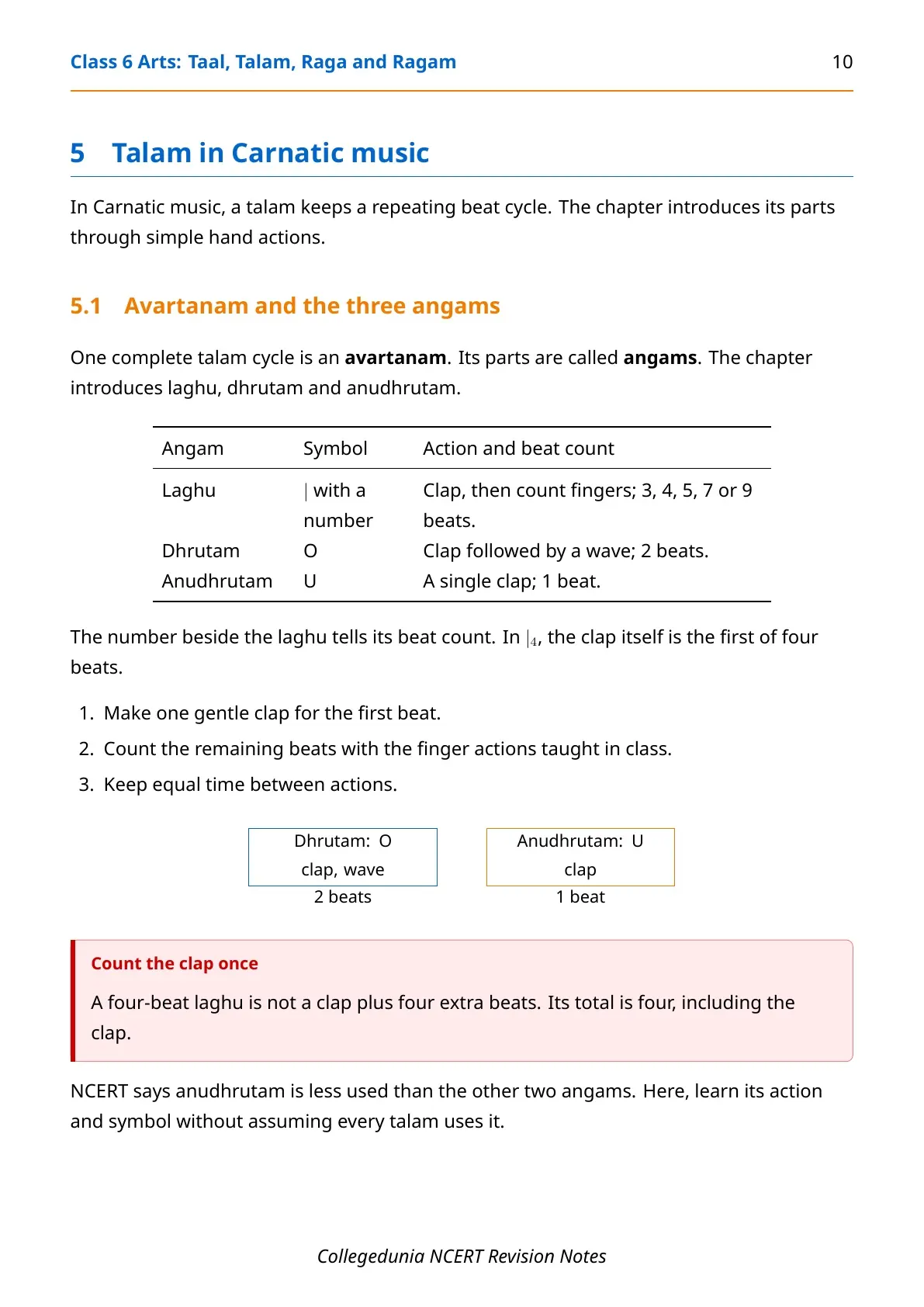
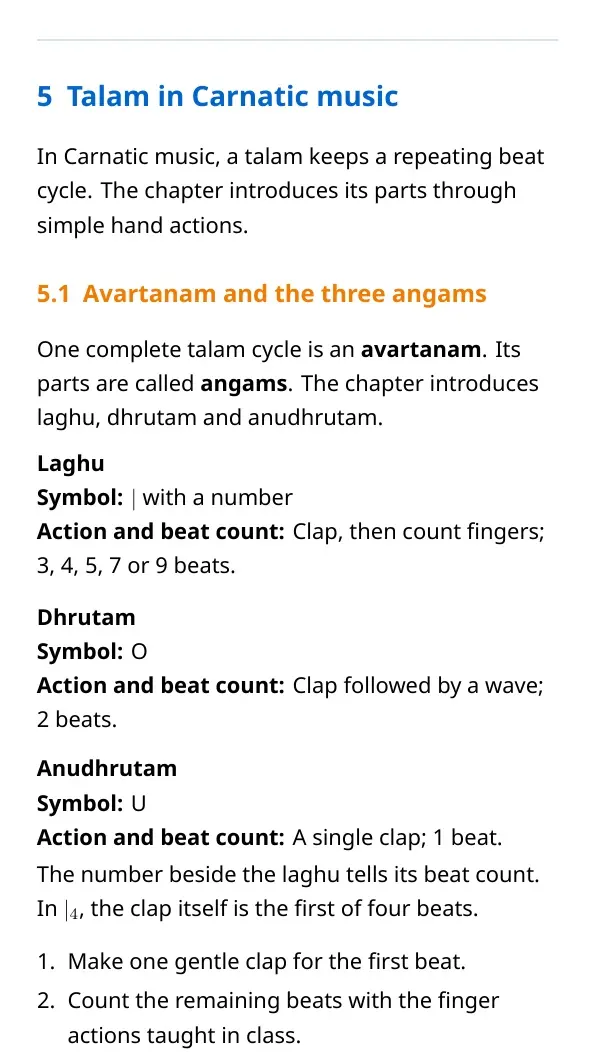
In Carnatic music, a talam cycle is called an avartanam. Its parts are angams. The chapter introduces three angams, each with a different hand action. A laghu can change length according to its jaati.
| Angam | Action | Beat count |
|---|---|---|
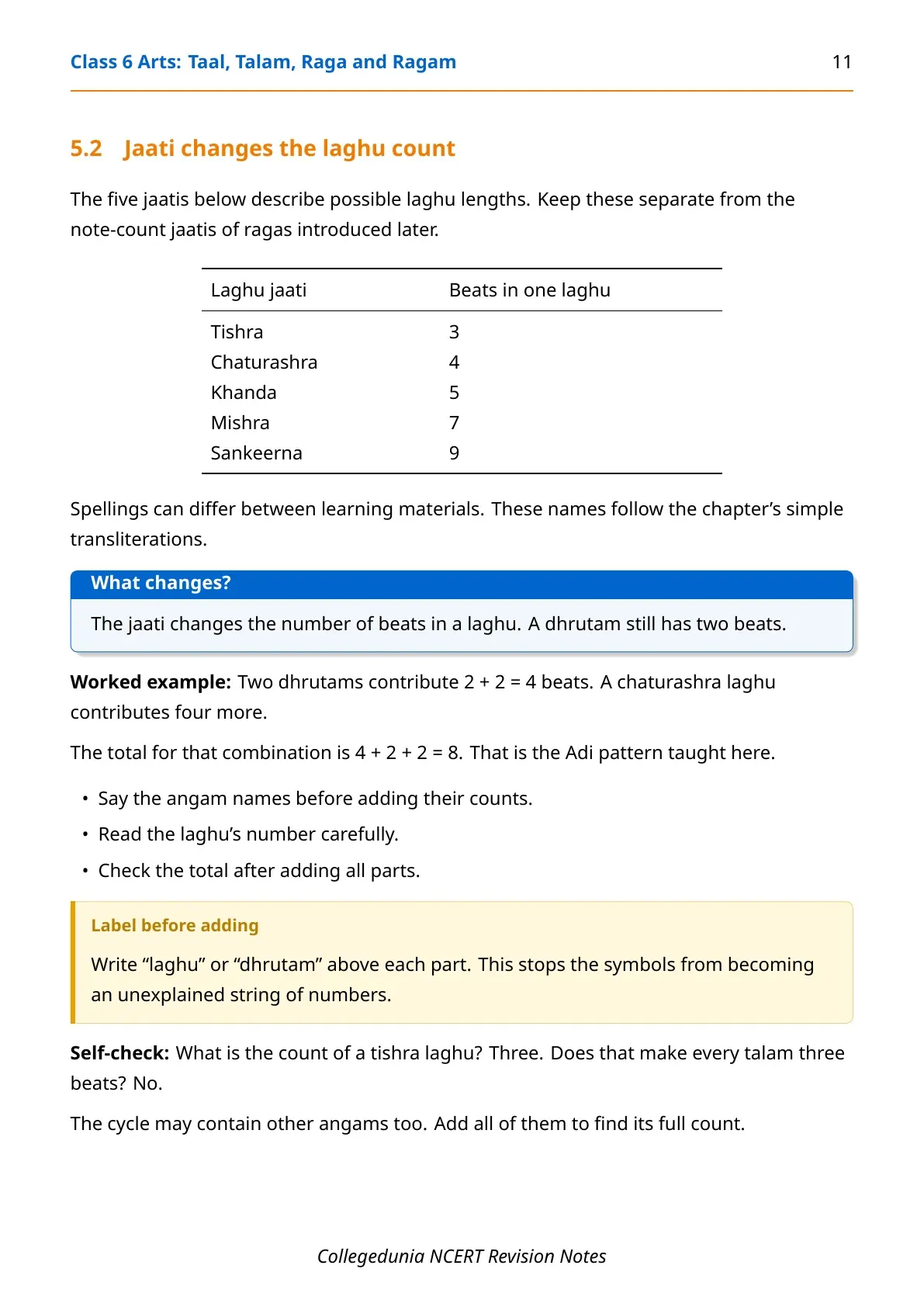
| Laghu | Clap, then count fingers | 3, 4, 5, 7 or 9 |
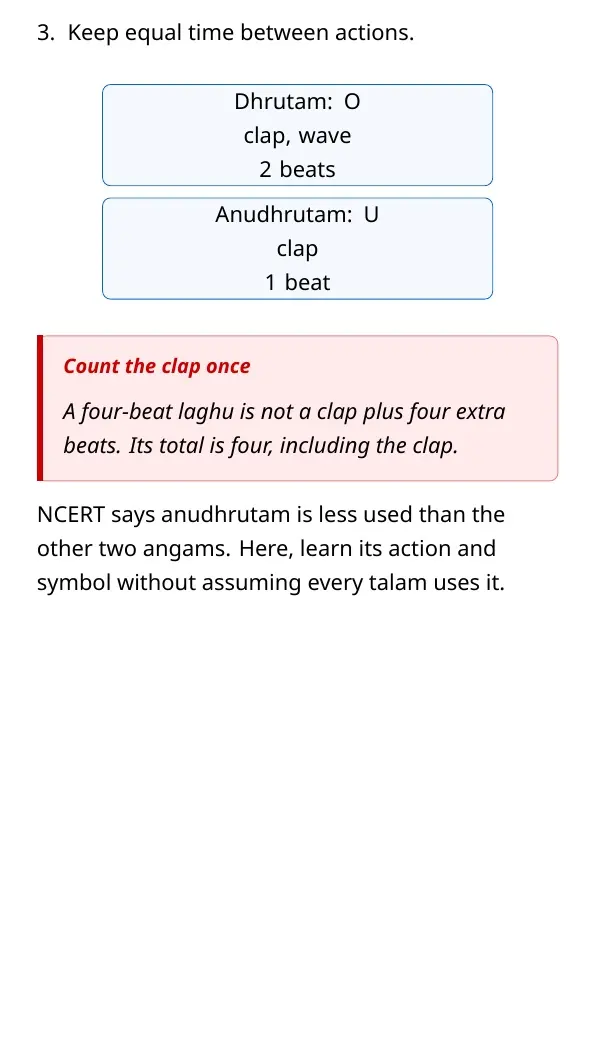
| Dhrutam | Clap followed by a wave | 2 |
| Anudhrutam | One clap | 1 |
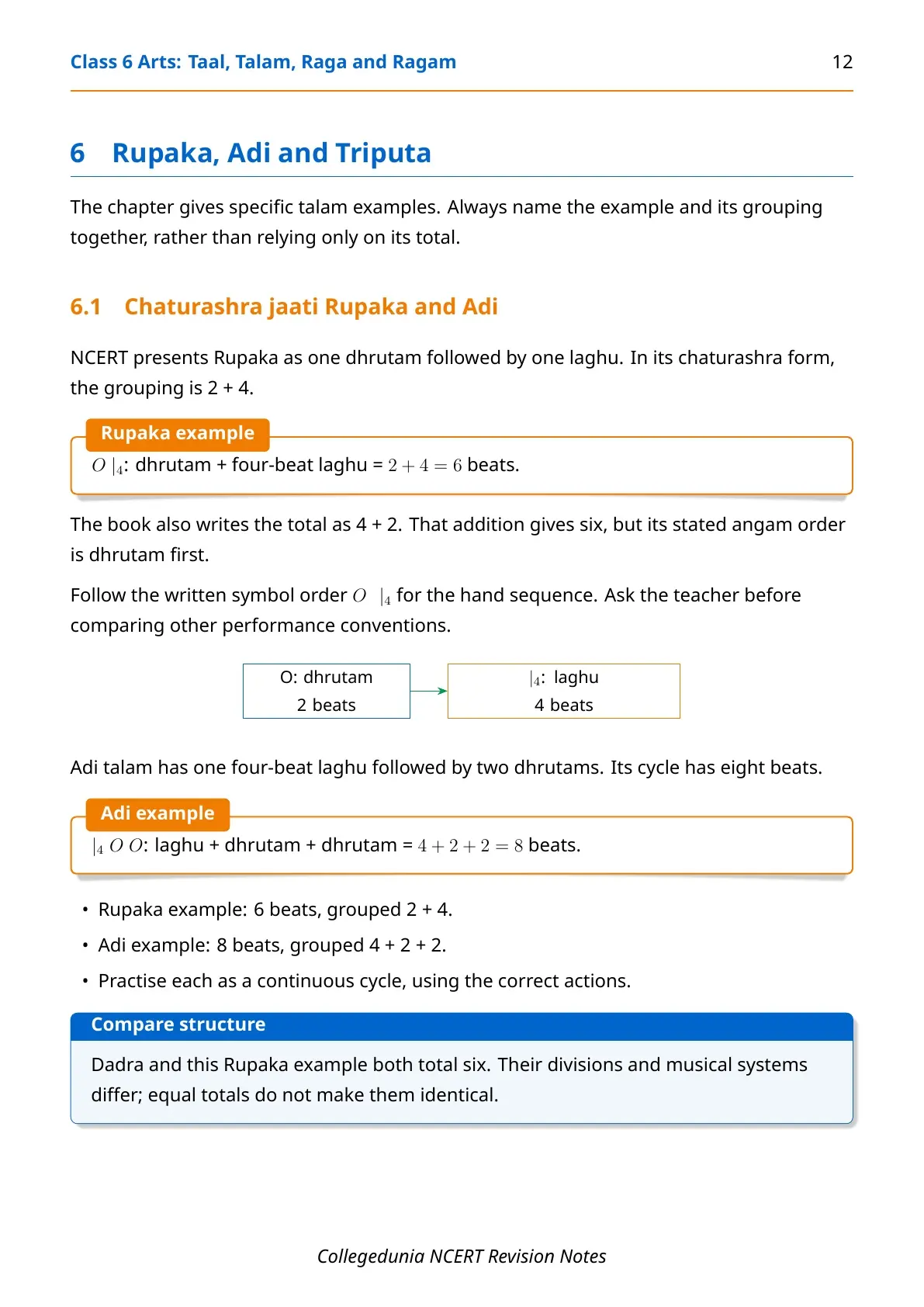
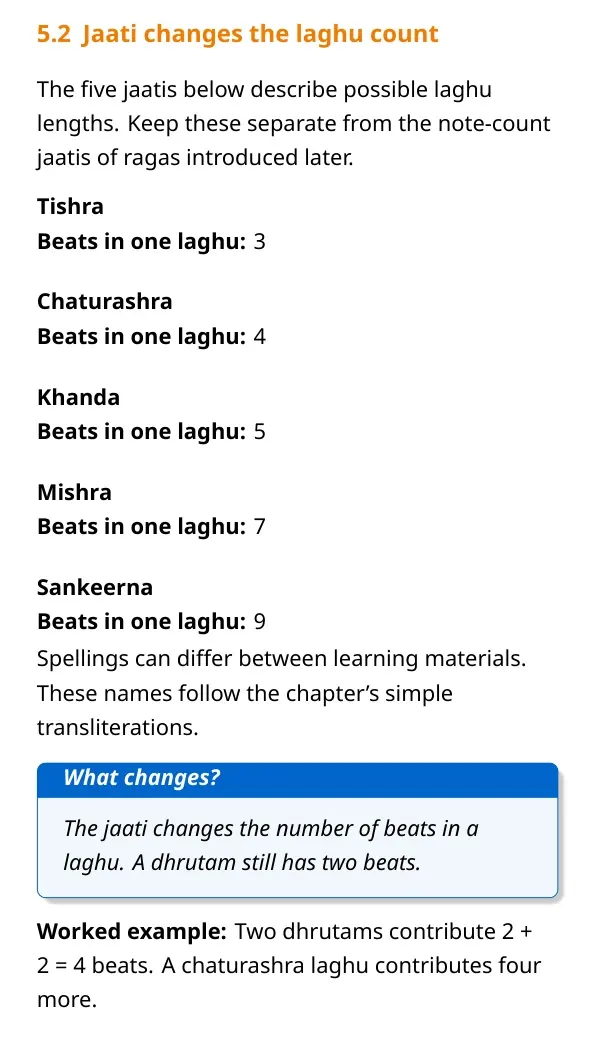
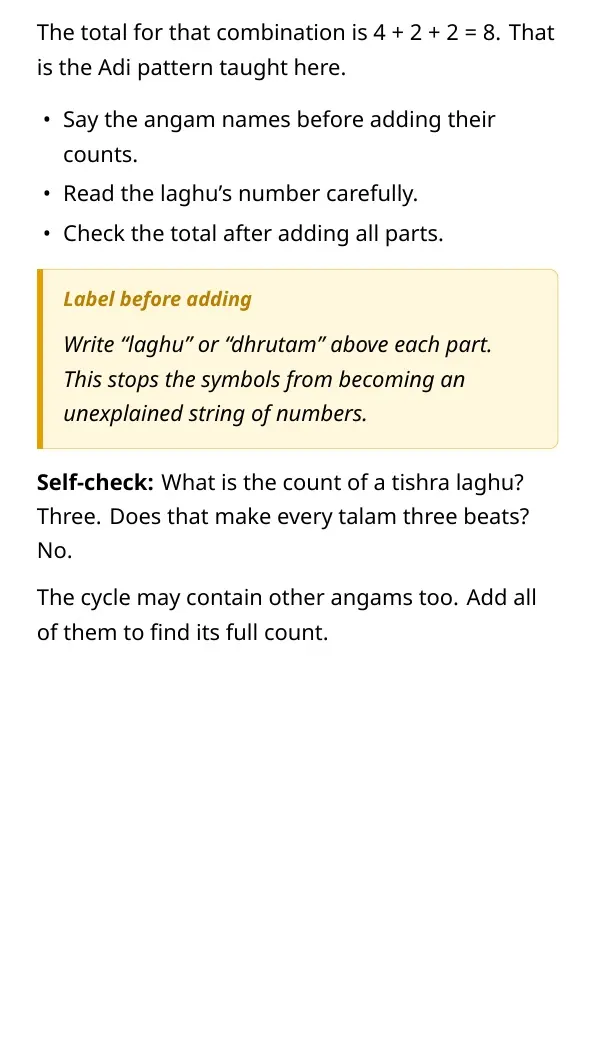
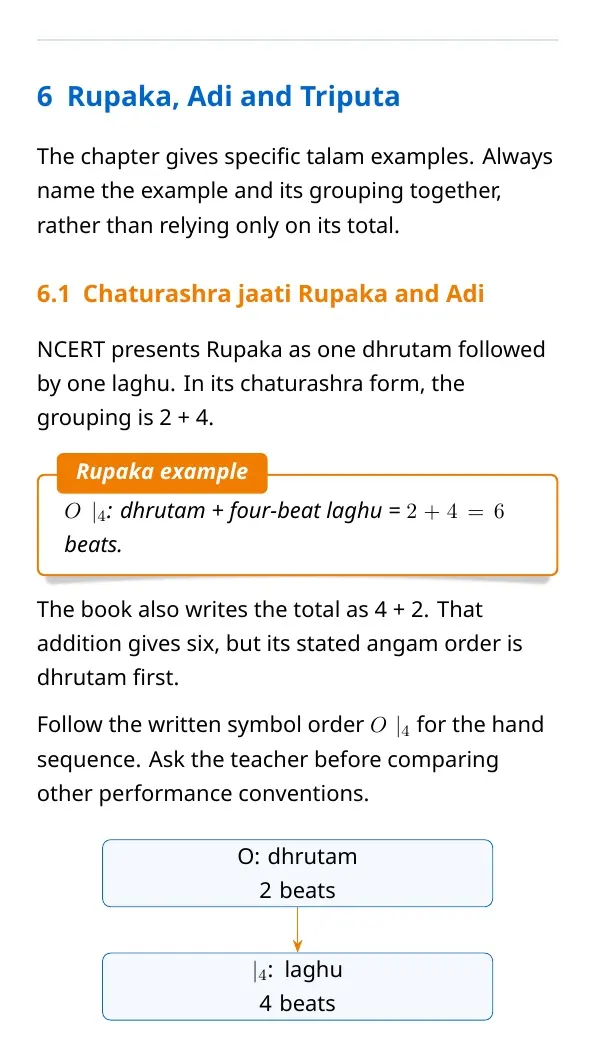
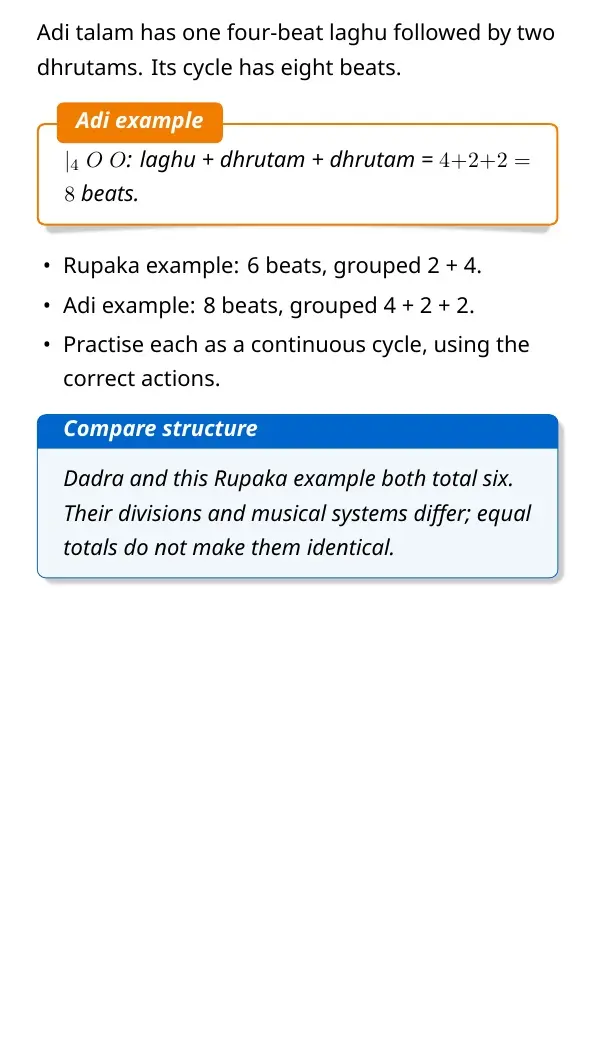
Laghu jaatis are tishra, chaturashra, khanda, mishra and sankeerna for 3, 4, 5, 7 and 9 beats. Chaturashra-jaati Rupaka has one dhrutam followed by a four-beat laghu: 2 + 4 = 6 beats. Adi talam has a four-beat laghu and two dhrutams: 4 + 2 + 2 = 8 beats.
- Show the actions in the stated order.
- Count the clap as part of the angam.
- Repeat without pausing between cycles.
Raga and Ragam: Notes, Phrases and Expression
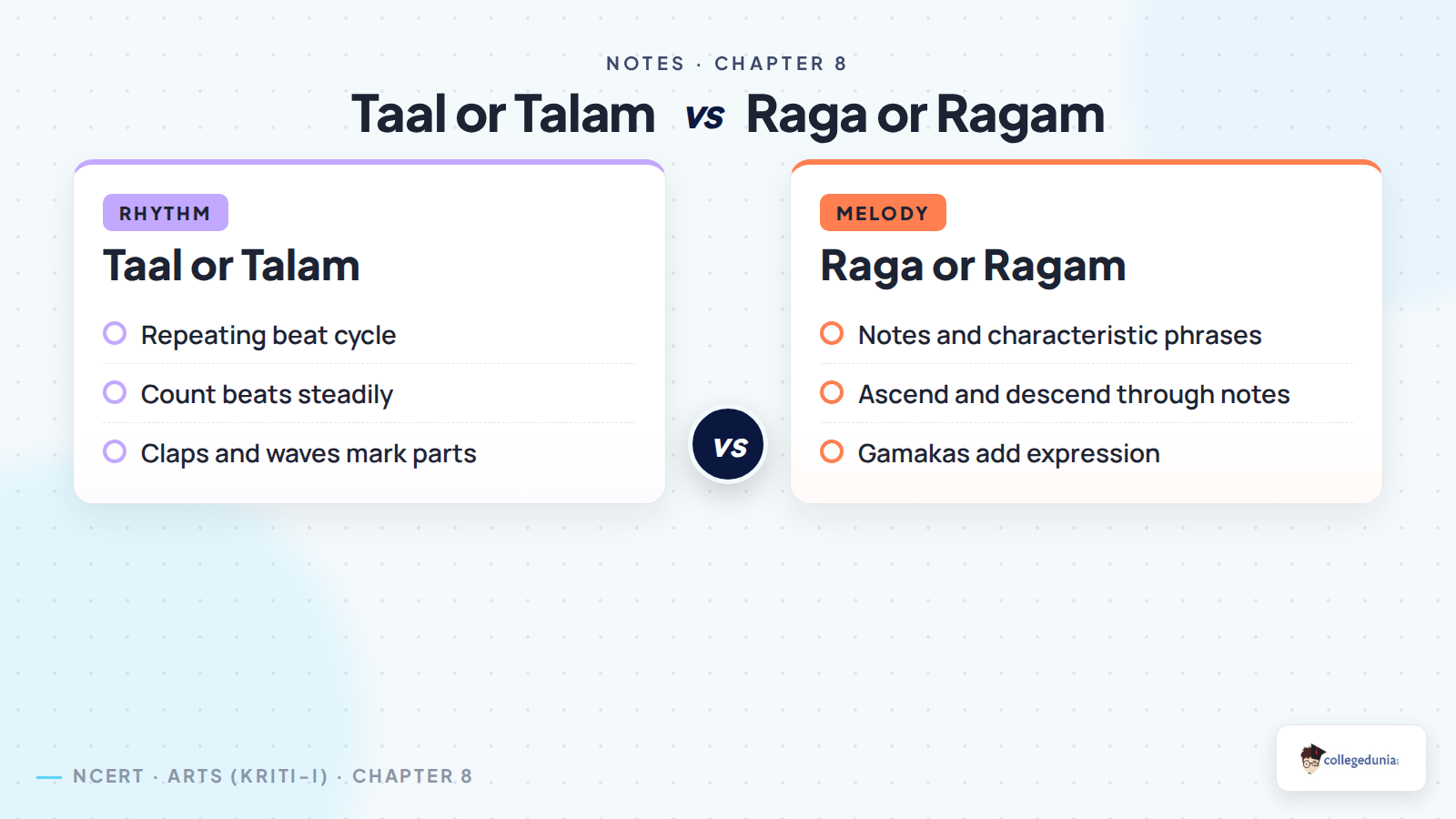
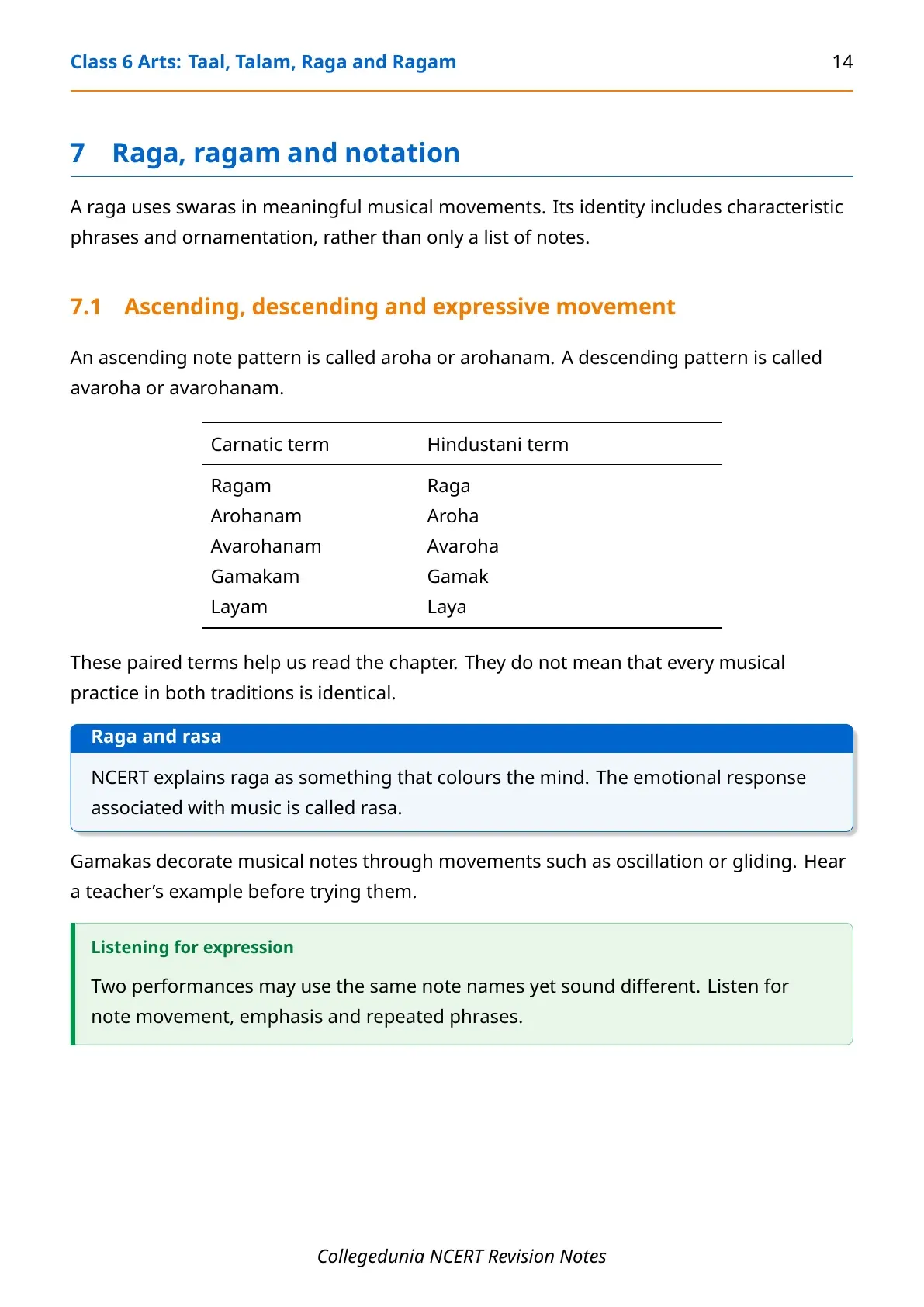
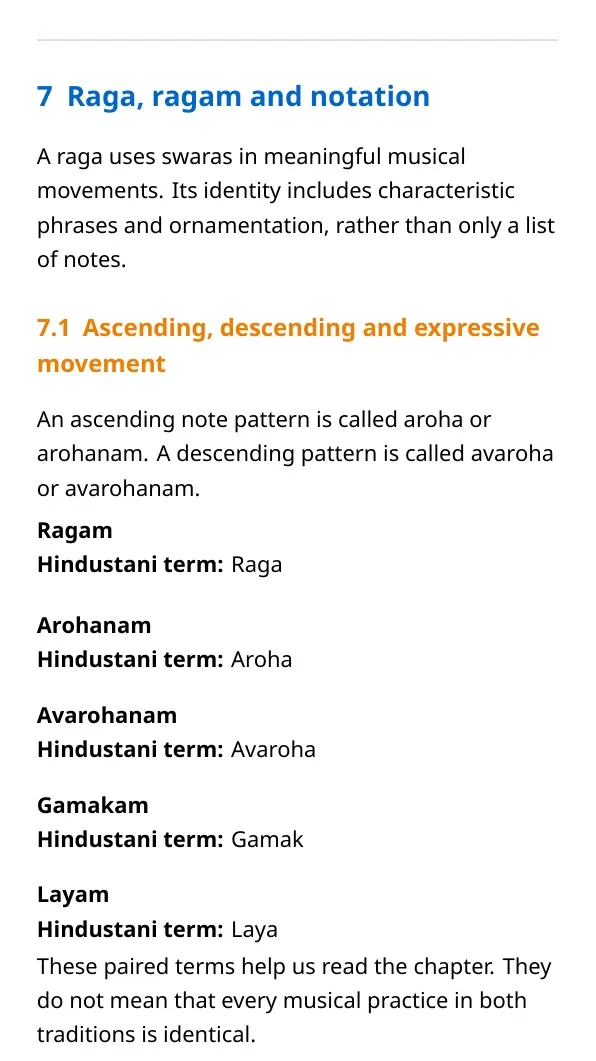
A raga uses chosen swaras, characteristic phrases and musical expression. Aroha or arohana means ascending notes. Avaroha or avarohana means descending notes. NCERT compares a scale to a staircase of swaras. A raga is more than a plain ascending scale. Special phrases, repeated notes and gamakas help give it character.
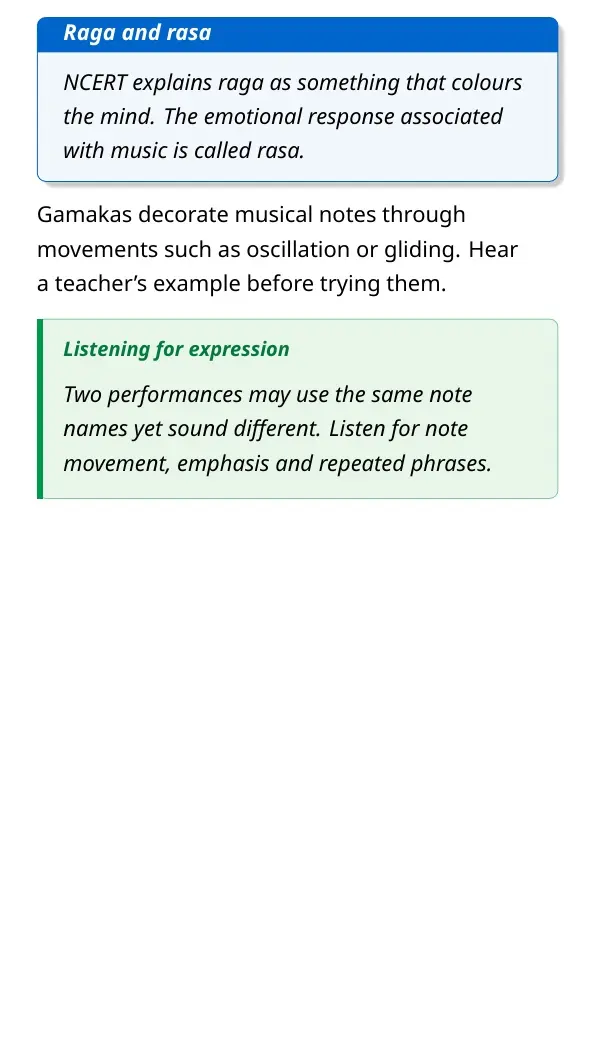
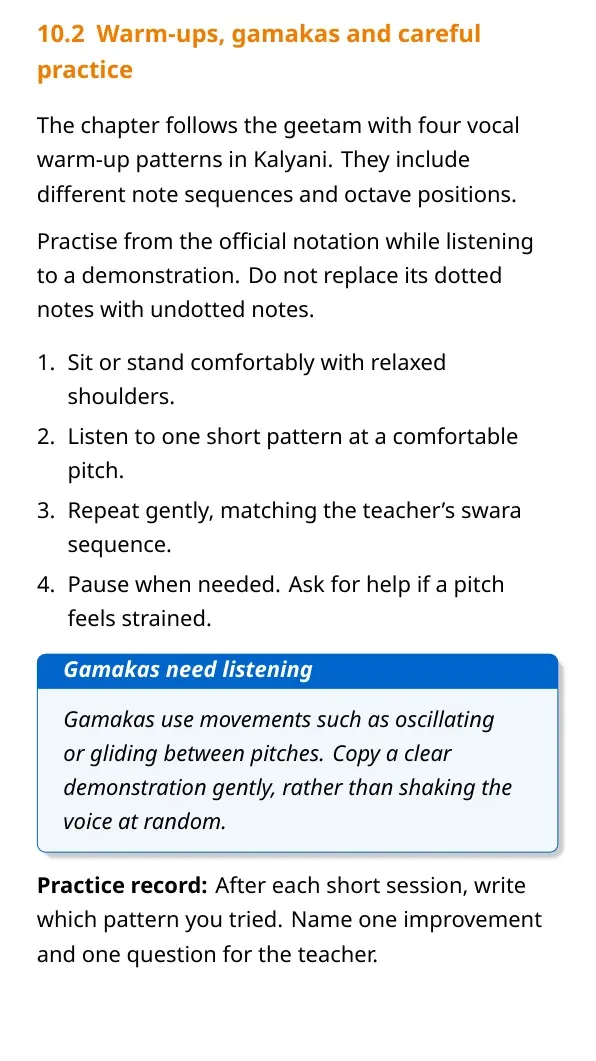
Gamakas are decorations made by moving or varying a note's pitch. Rasa describes the emotional response music can evoke. Listen to the teacher's phrase before trying to copy its expression.
| Term | Meaning or counterpart |
|---|---|
| Ragam | Raga in Hindustani terminology |
| Arohanam / Avarohanam | Aroha / Avaroha |
| Gamakam | Gamak |
| Layam | Laya, the pace of music |
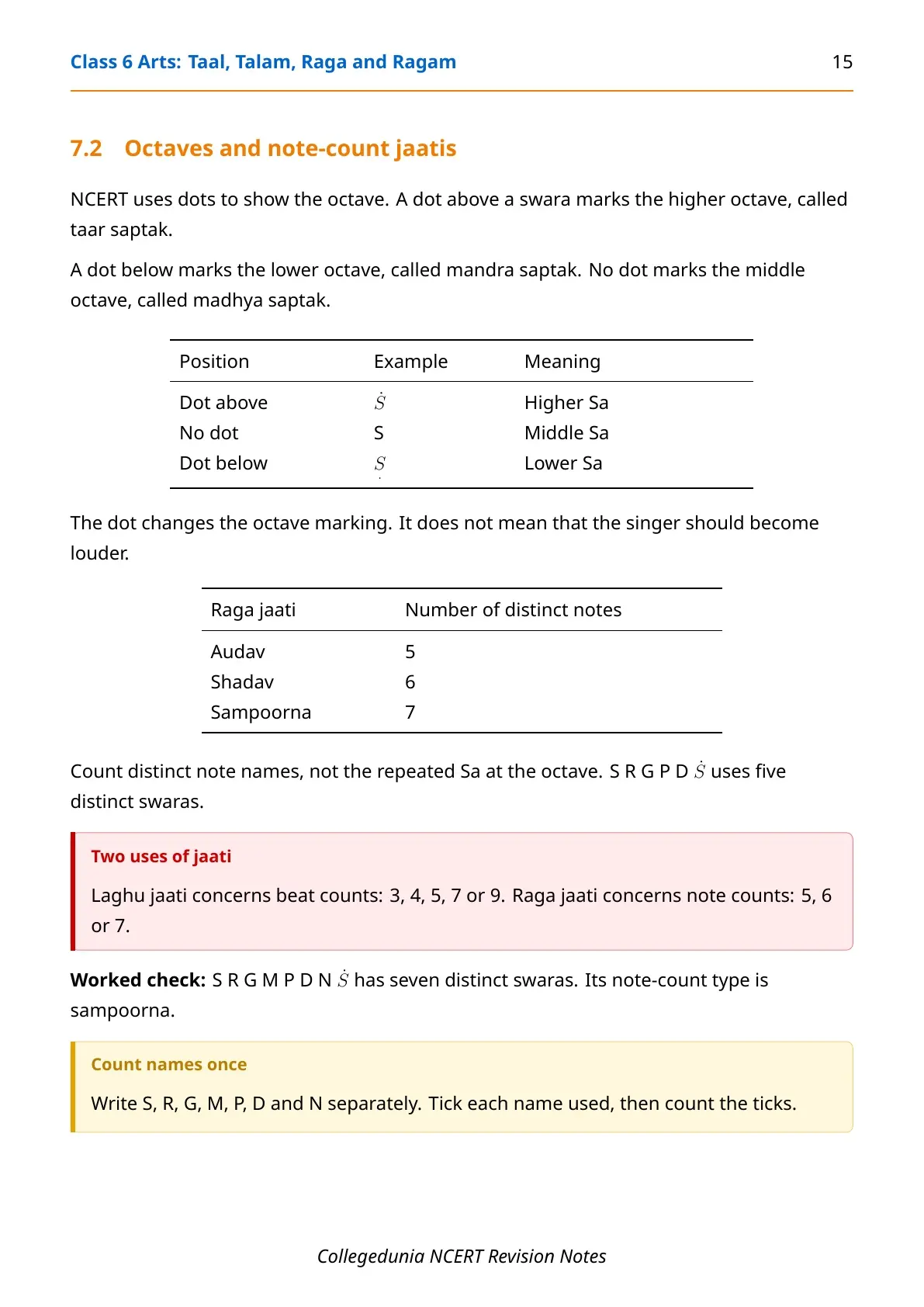
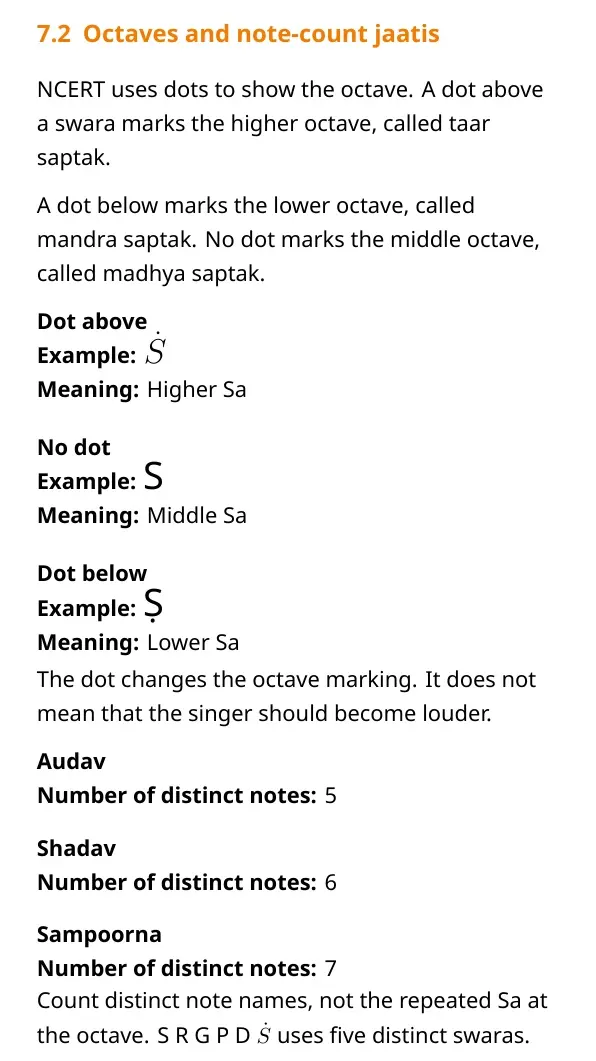
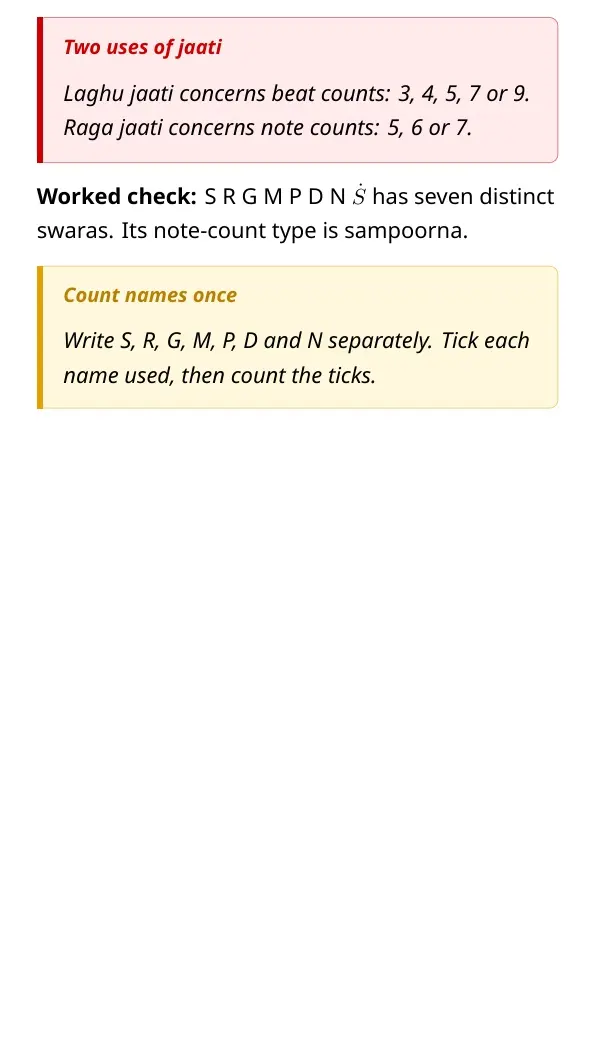
| Audav / Shadav / Sampoorna | Five / six / seven notes |
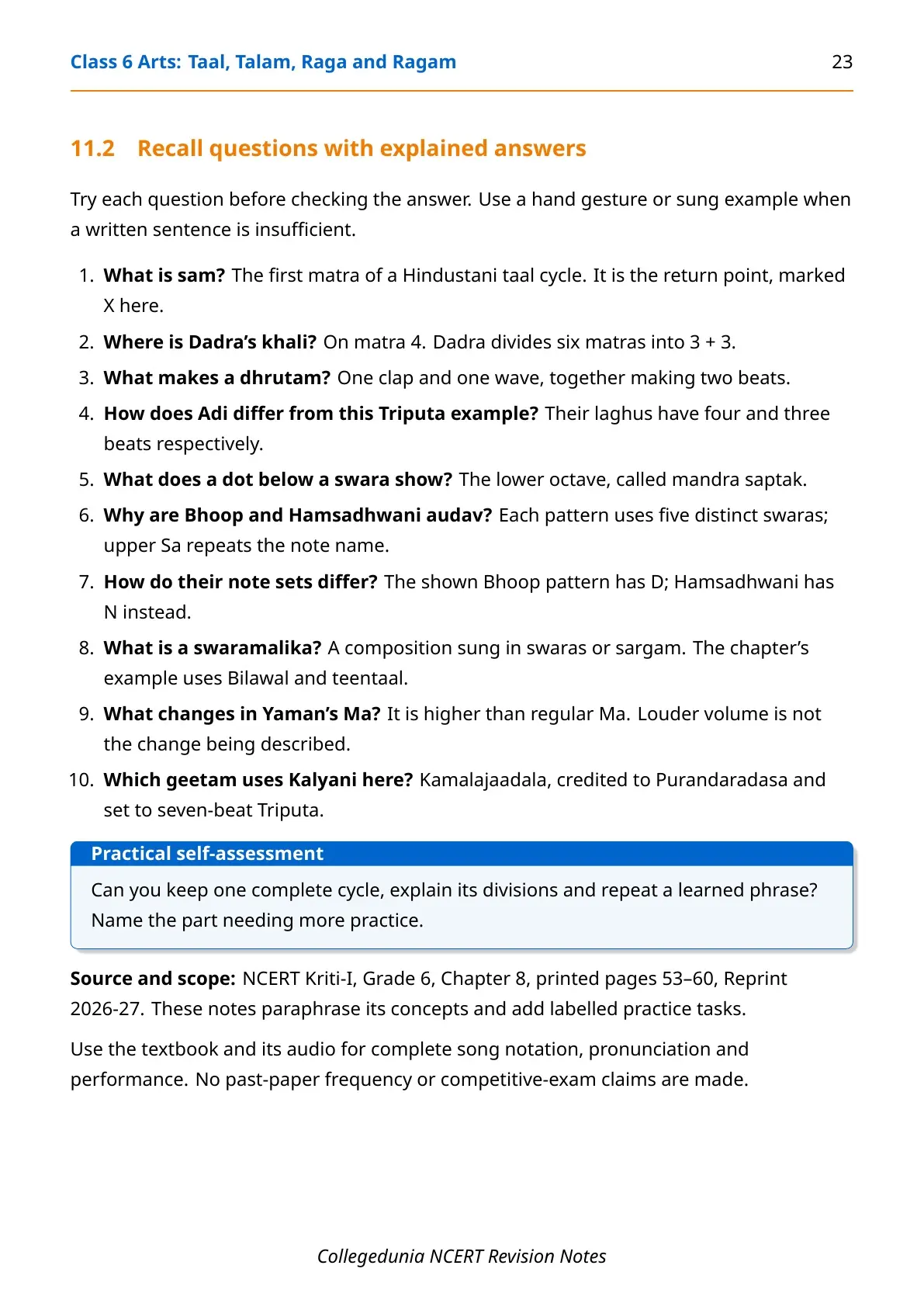
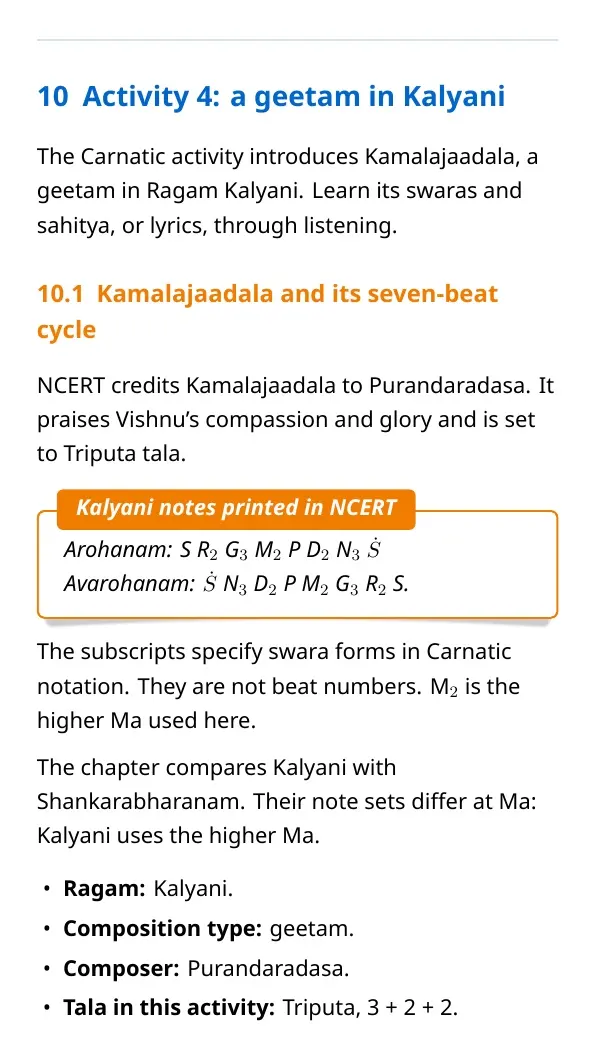
The textbook marks higher-octave notes with a dot above and lower-octave notes with a dot below. Middle-octave notes have no octave dot. Count different note names when finding a raga's jaati; the upper Sa repeats the starting note at a higher pitch.
Bhoop, Hamsadhwani and the Chapter Singing Activities
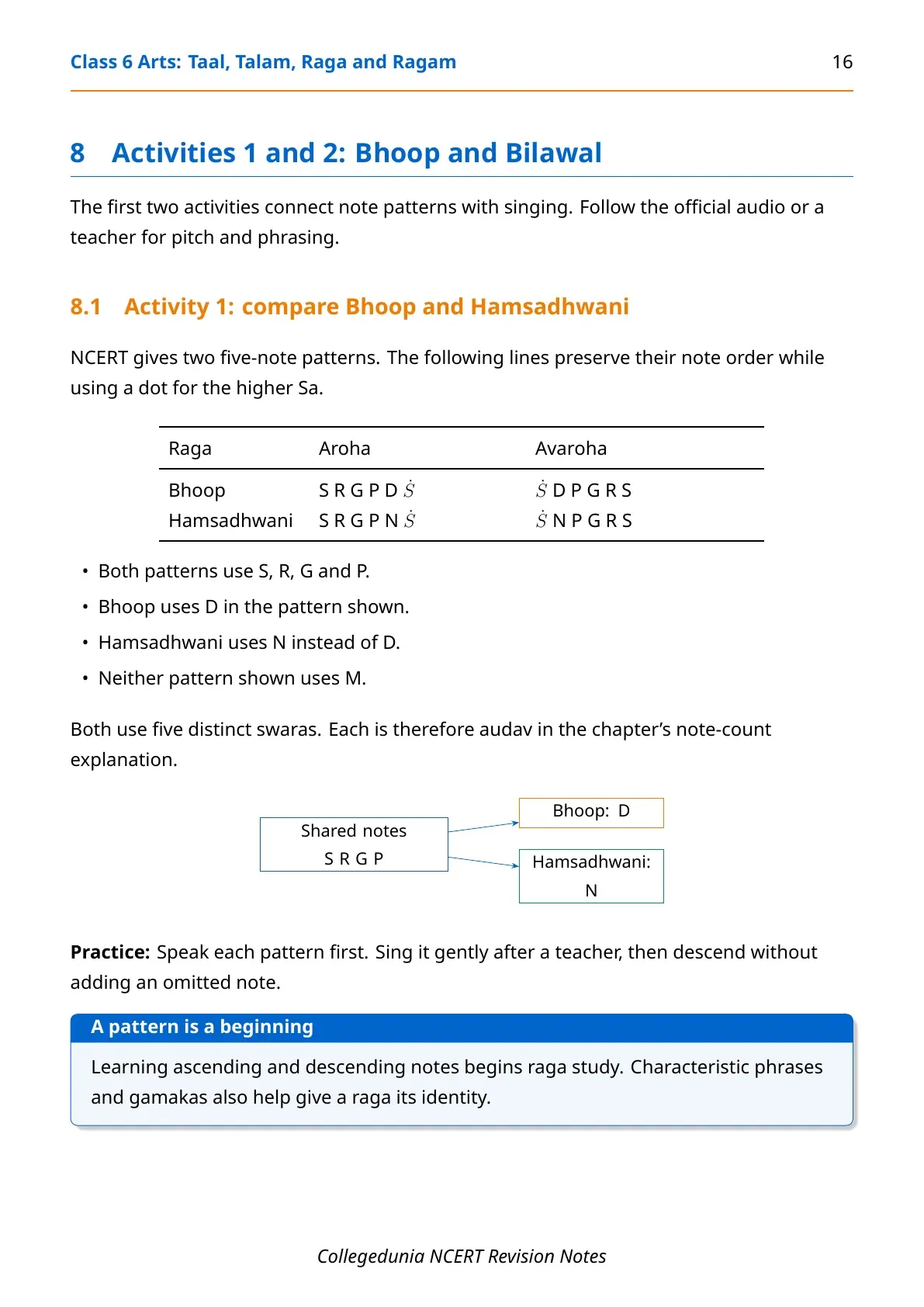
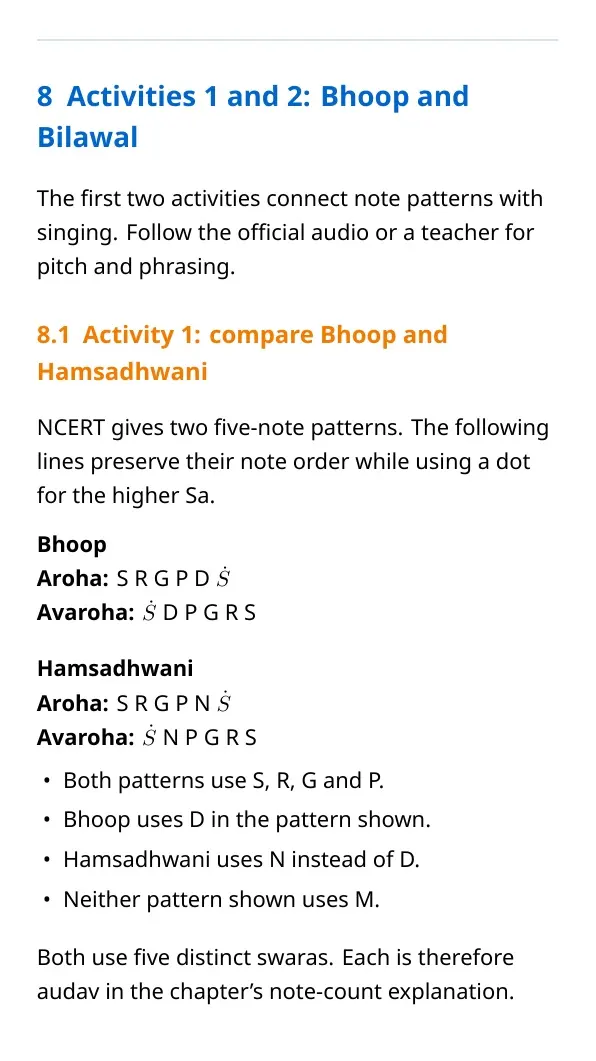
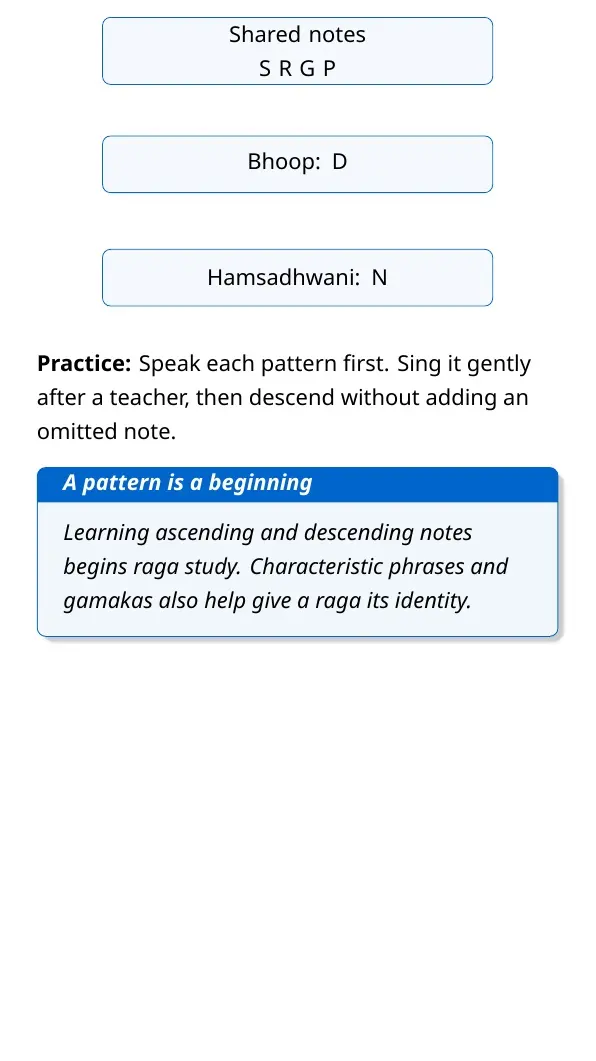
Bhoop uses Sa, Re, Ga, Pa and Dha. Hamsadhwani uses Sa, Re, Ga, Pa and Ni. Both examples use five note names. Sing each slowly in ascending and descending order. Notice how changing Dha to Ni changes the sound.
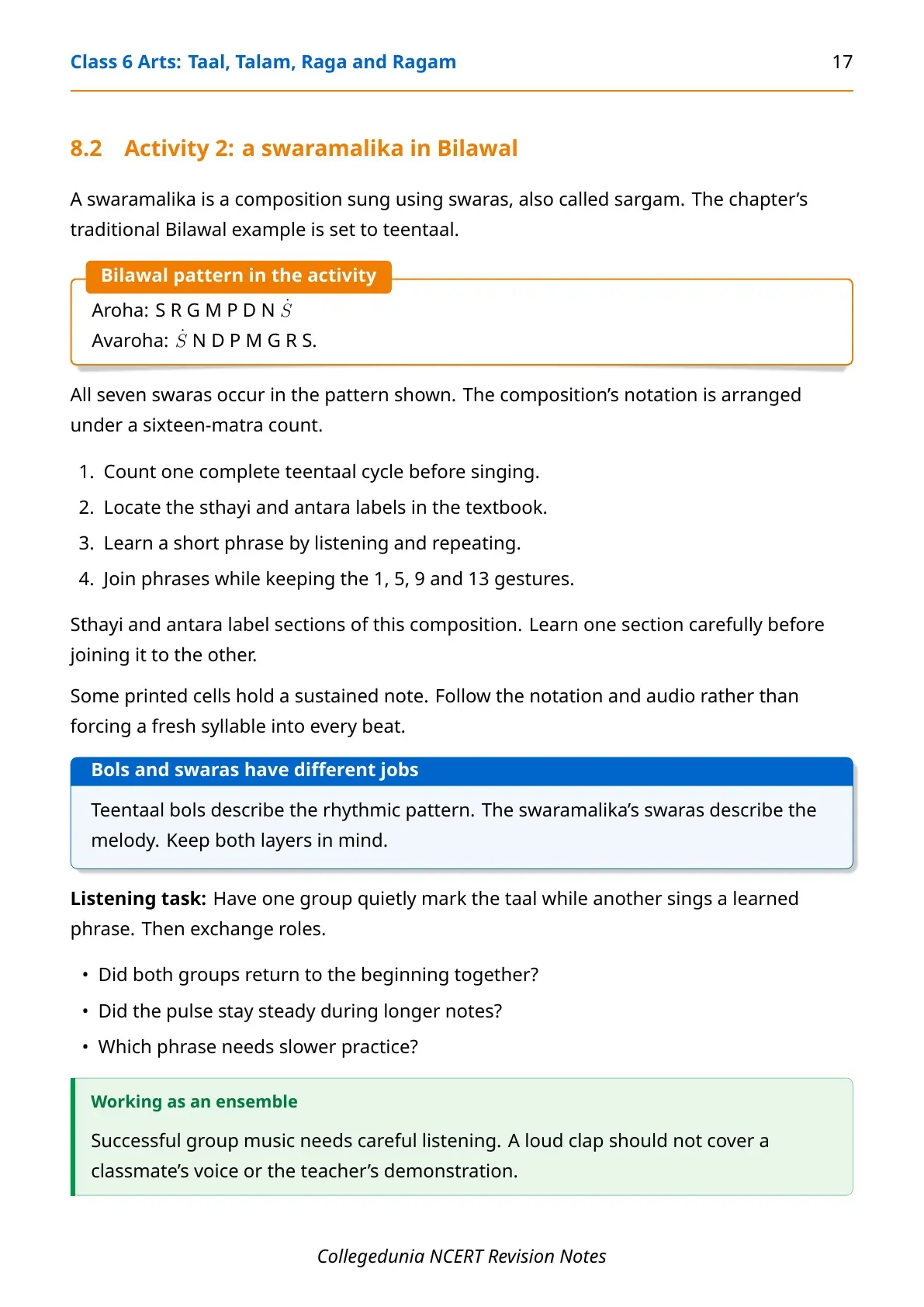
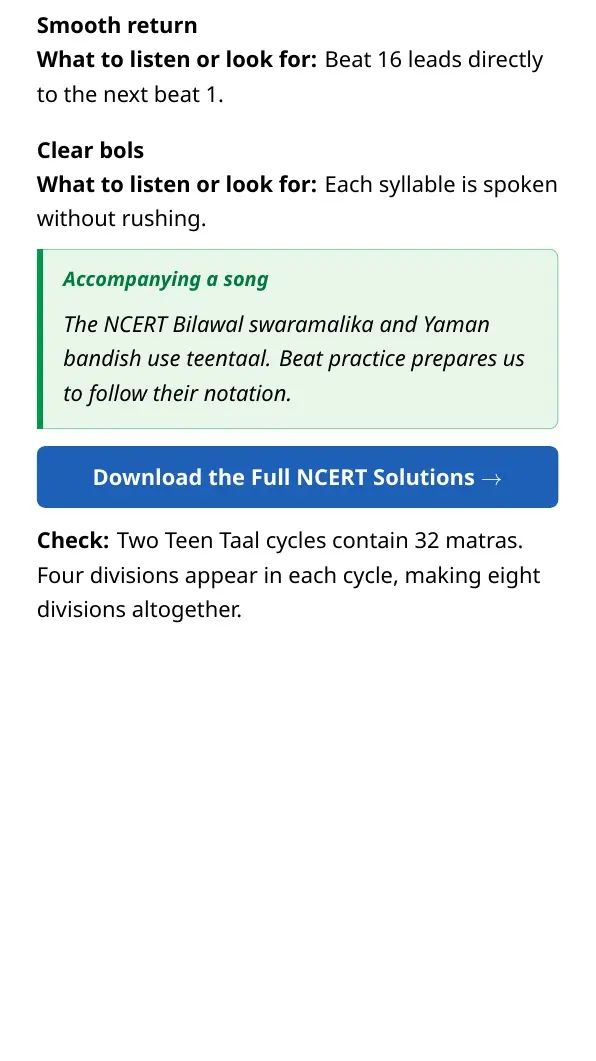
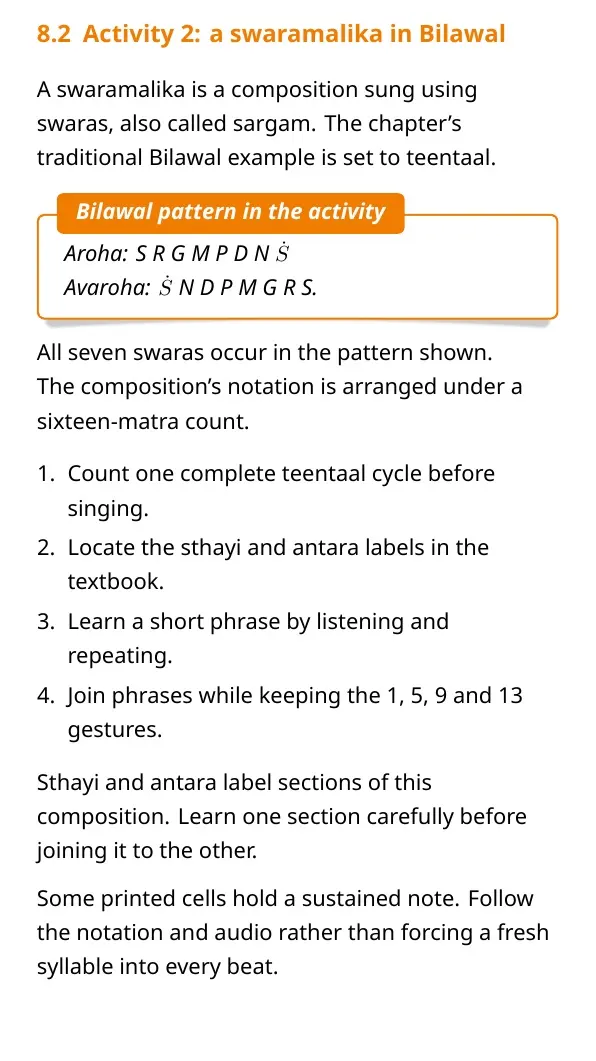
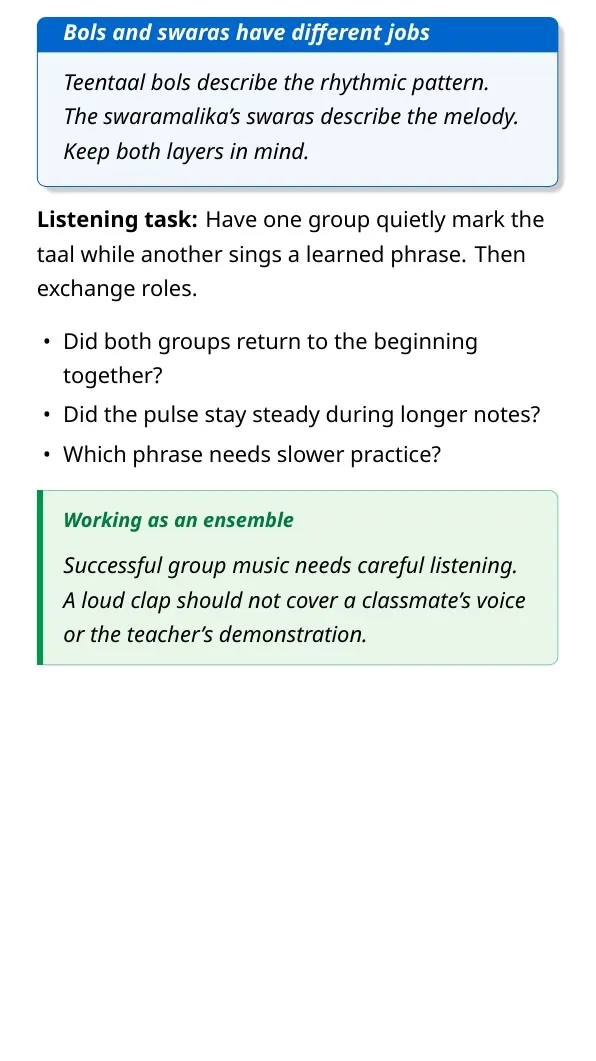
- Bilawal: learn the swaramalika, a composition sung in swaras, set to Teentaal.
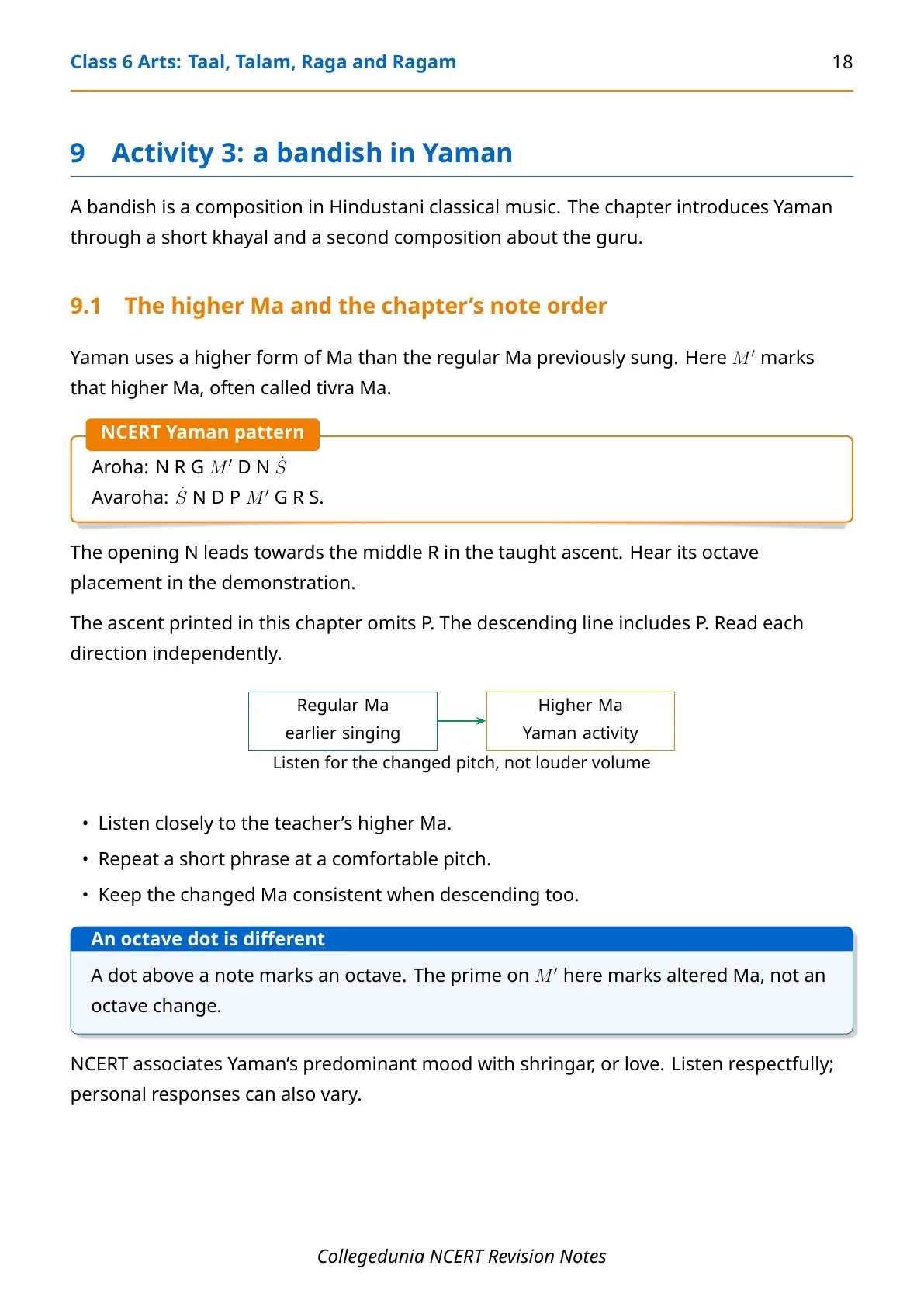
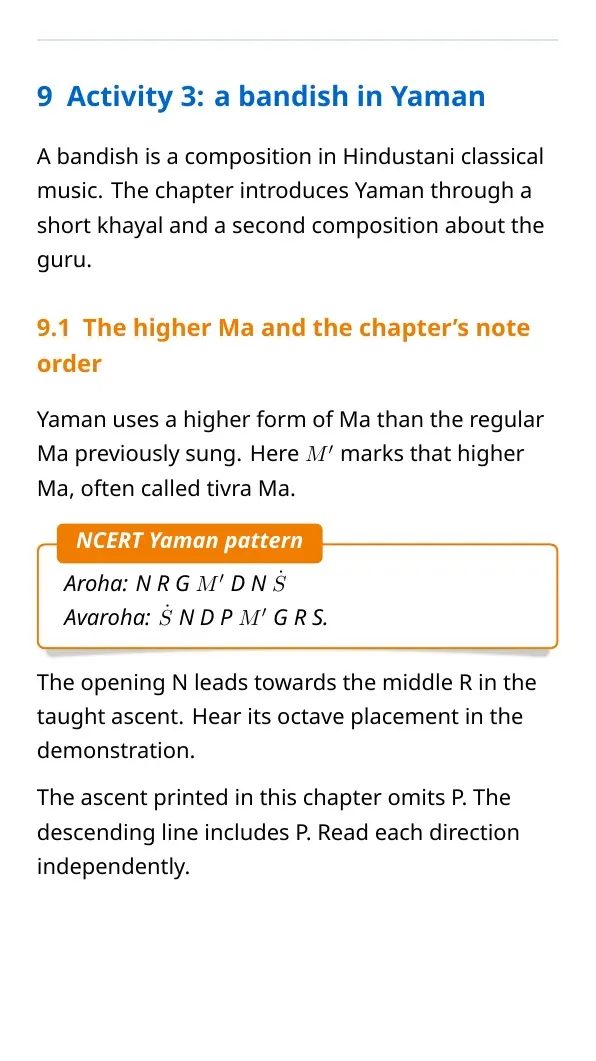
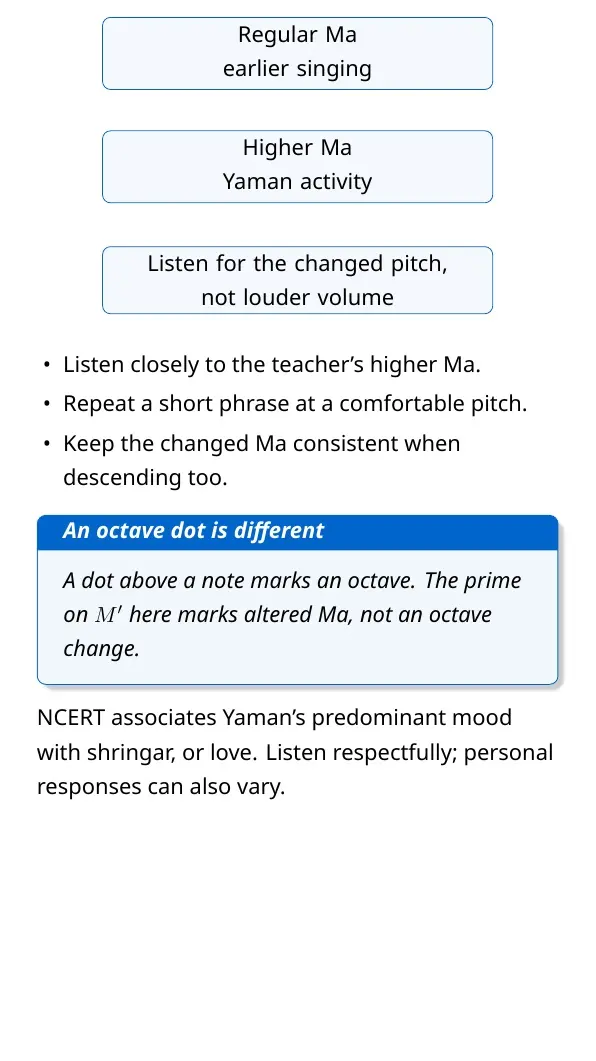
- Yaman: learn the bandish and notice the raised Ma.
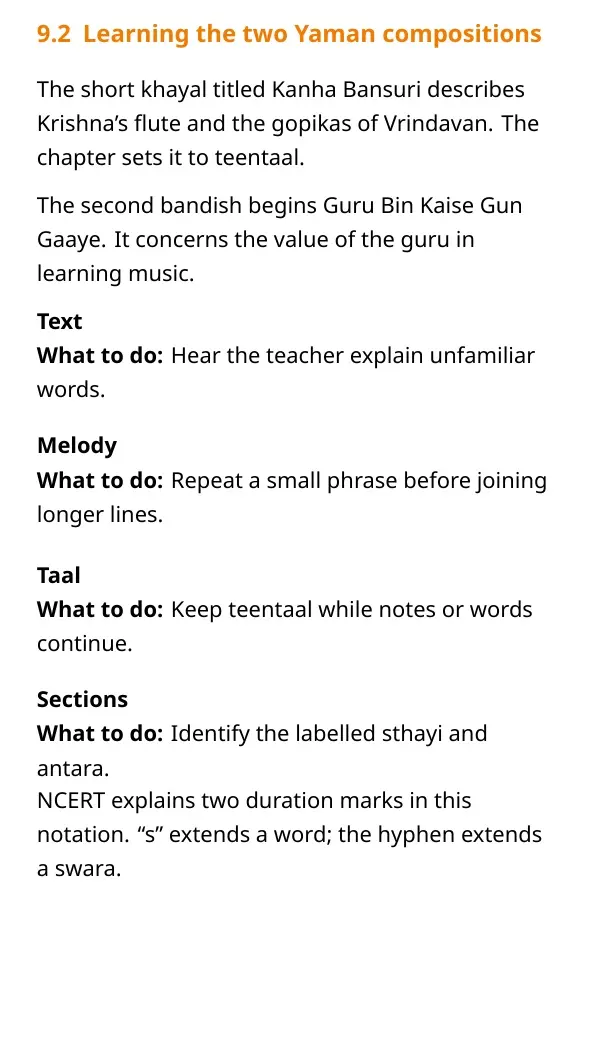
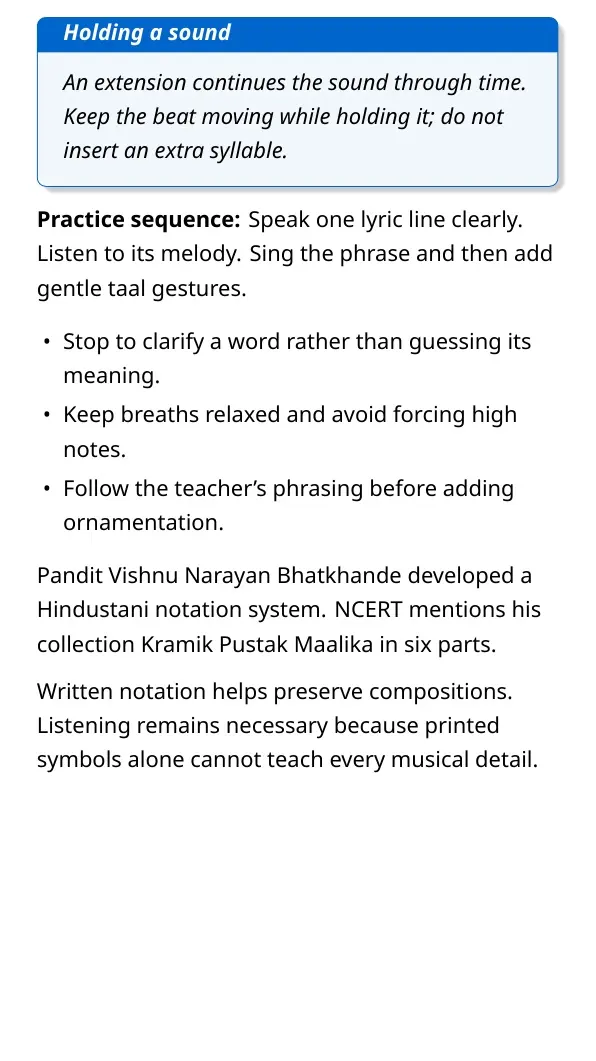
- Guru Bin Kaise Gun Gaaye: follow the teacher and the textbook notation.
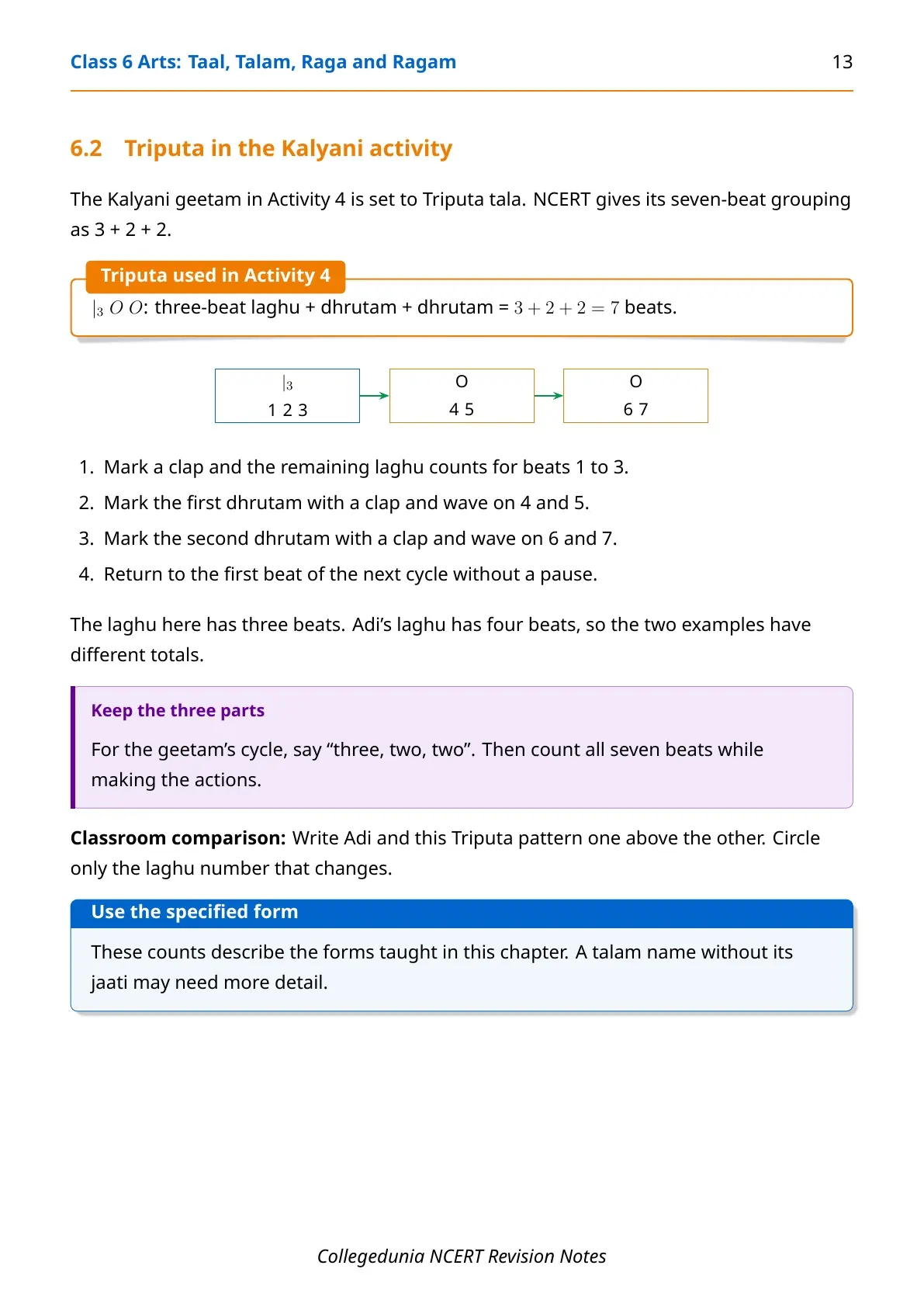
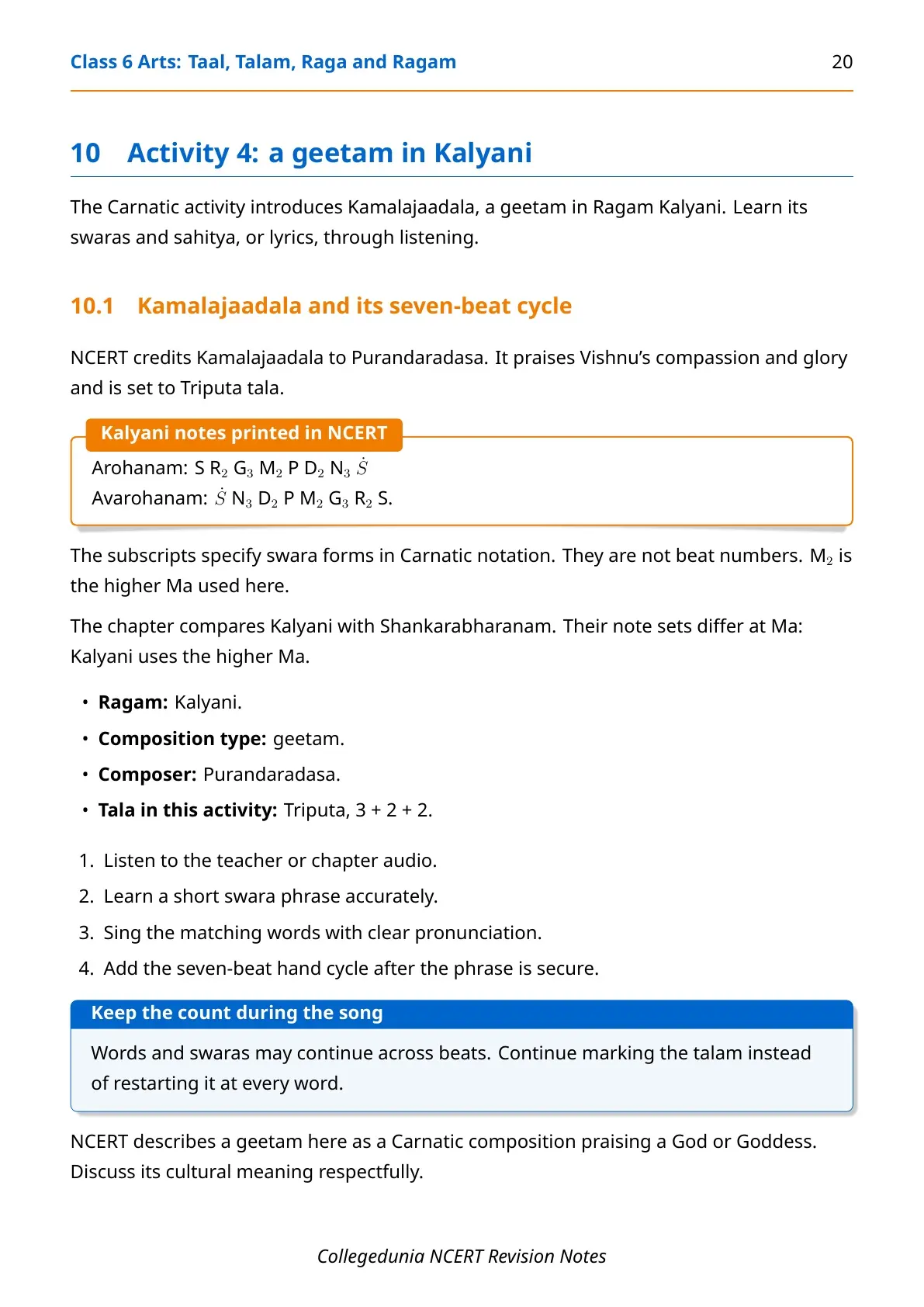
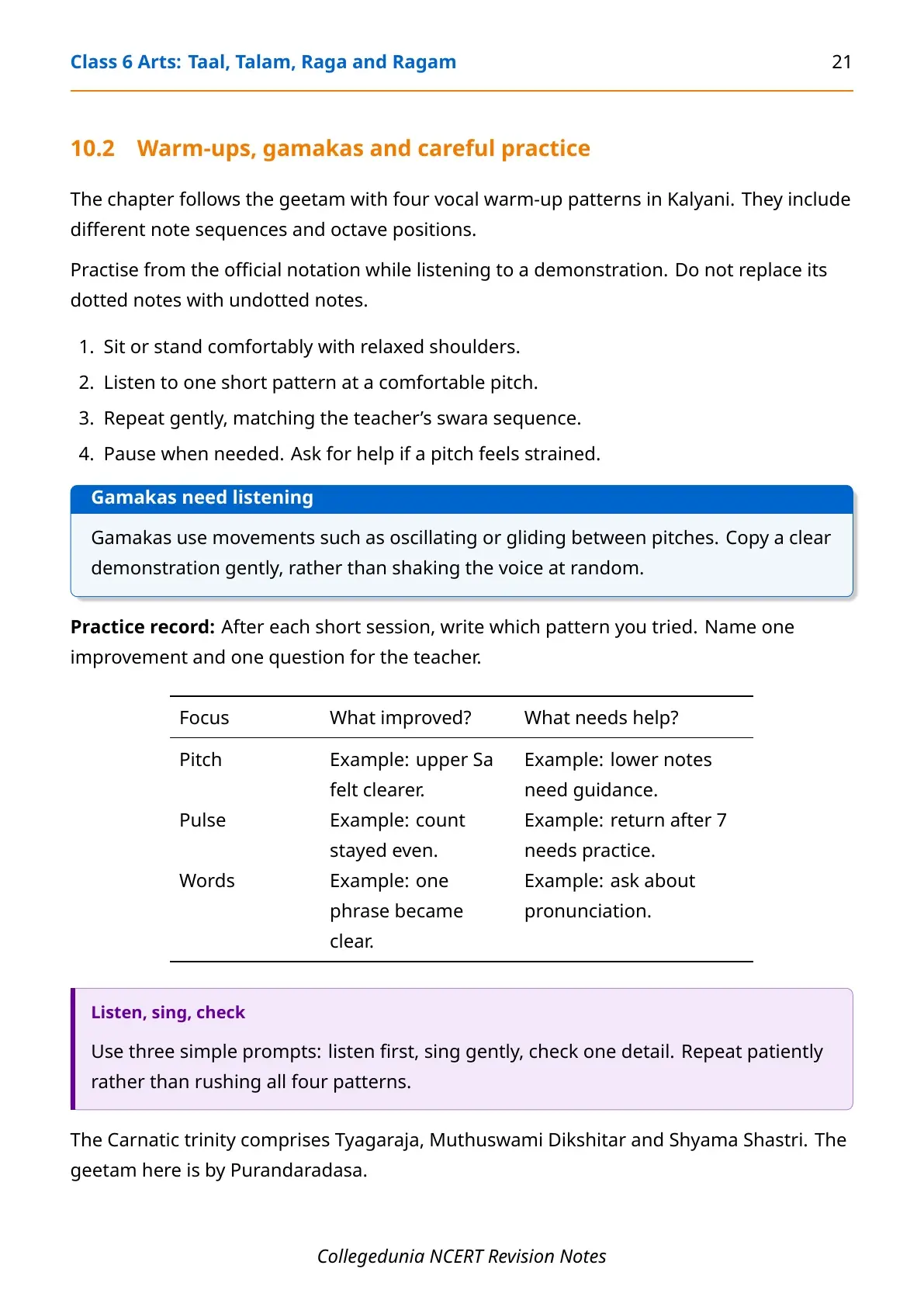
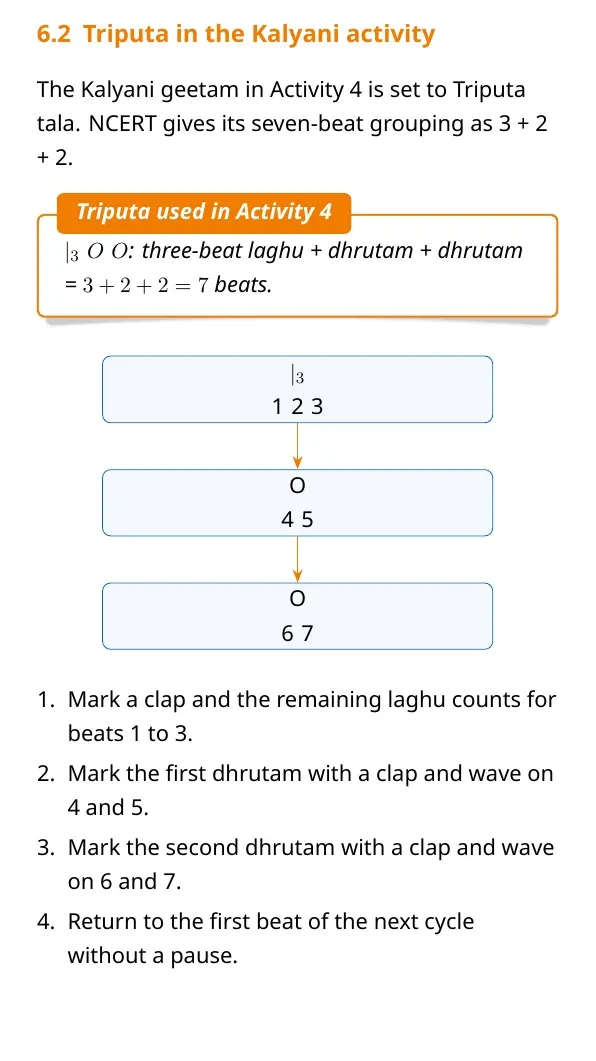
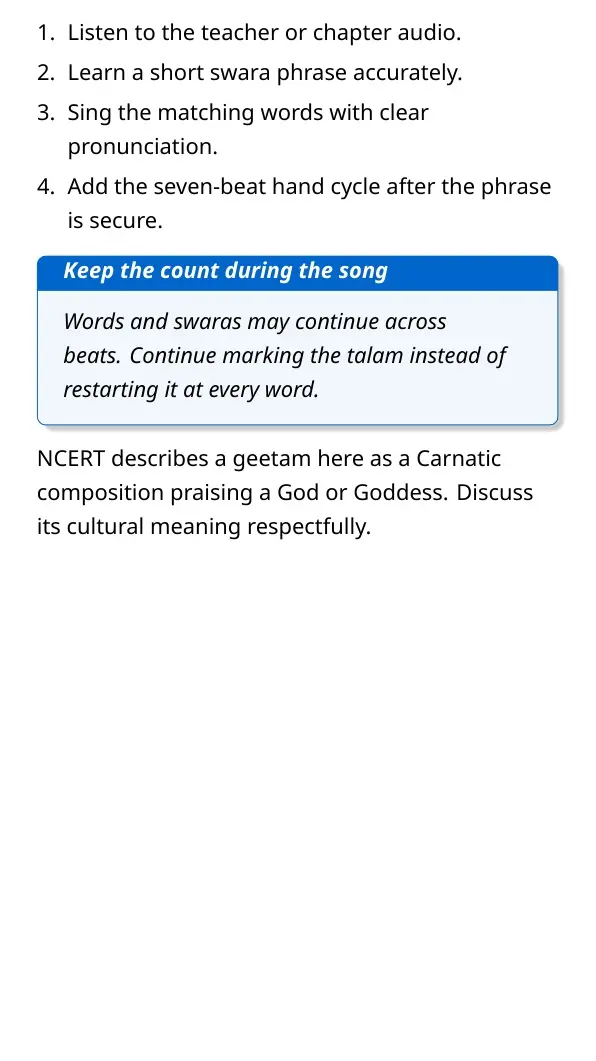
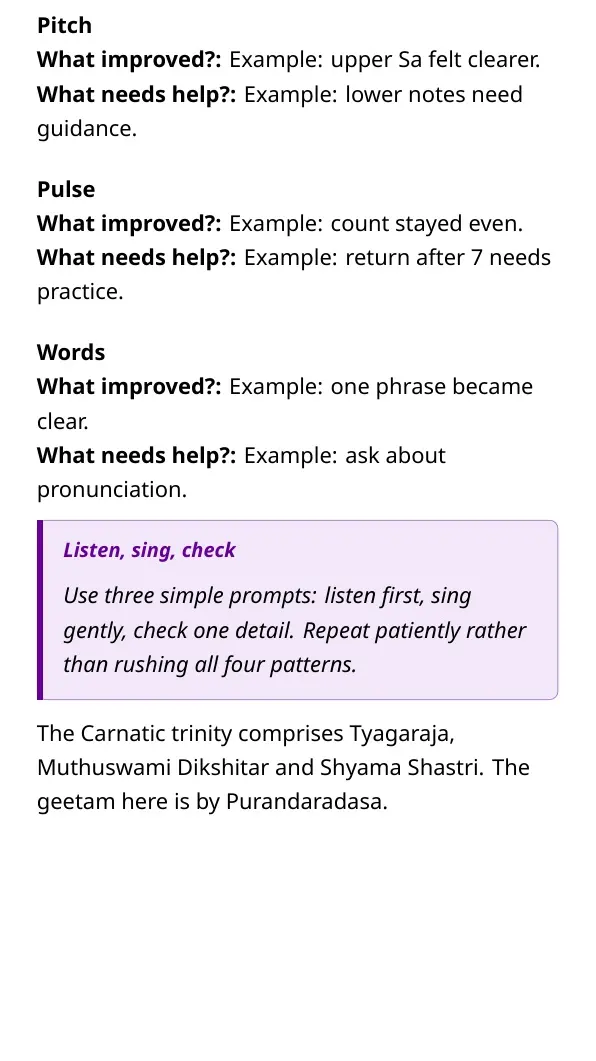
- Kalyani: practise the geetam Kamala Jaadala and the vocal warm-ups.
Use the chapter recordings for pitch and pronunciation. Written note names cannot show every detail of a performance. Keep a comfortable voice and a steady beat. Work on a short phrase, listen again, then join it to the next phrase.
Taal and Raga: Avoid These Common Mix-ups
Collegedunia's notes keep rhythm and melody terms separate so you can describe both parts of a performance.
| Mix-up | Correction |
|---|---|
| Taal means the tune | Taal concerns the beat cycle; raga concerns melodic form. |
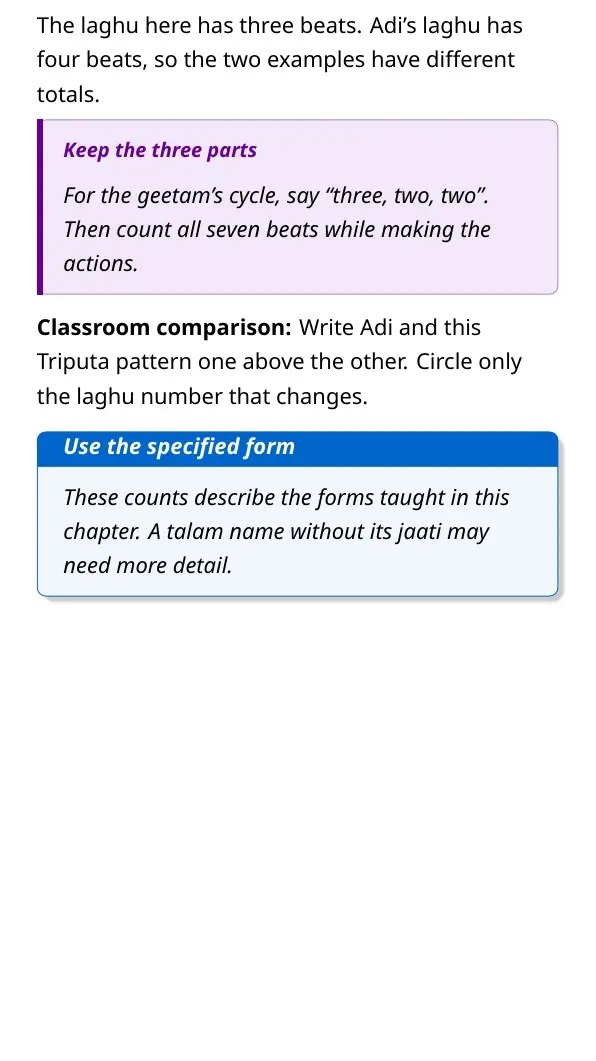
| Every laghu has four beats | Its length depends on jaati. |
| Khali means stop counting | Keep counting through the wave. |
| Aroha and avaroha are identical terms | One ascends; the other descends. |
Taal and Raga: Related Class 6 Arts Resources
Use the original textbook for notation, lyrics and listening links. The solutions page explains the classroom activities.
| Resource | Use |
|---|---|
| Official Taal and Raga NCERT Book PDF | Original tables, songs and recordings. |
| Taal and Raga Class 6 NCERT Solutions | Activity explanations and singing guidance. |
Taal and Raga and All Chapters: Class 6 Arts Notes
Revise related Arts topics with these chapter notes.
Taal and Raga Class 6 Arts Notes FAQs
Ques. What is sam?
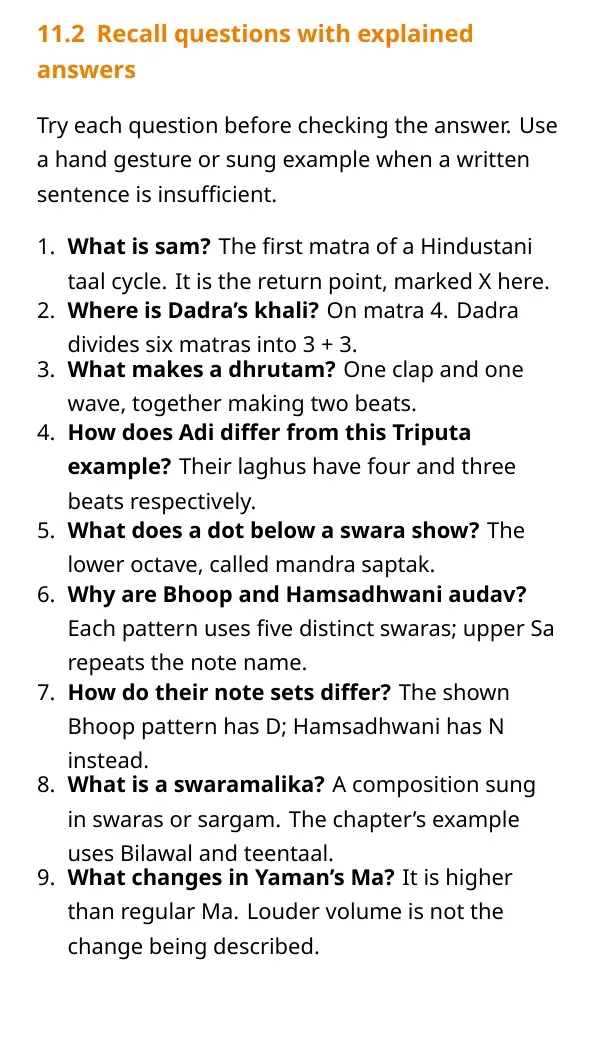
Ans. Sam is the first matra of a Hindustani taal cycle.
Ques. How many beats are in Keharva, Dadra and Teen Taal?
Ans. Keharva has 8, Dadra has 6 and Teen Taal has 16 matras.
Ques. What is the difference between Rupaka and Adi talam here?
Ans. Chaturashra-jaati Rupaka has 6 beats in dhrutam-laghu order. Adi has 8 beats in laghu-dhrutam-dhrutam order.
Ques. What does the dot above a swara mean?
Ans. It marks a note in the higher octave. A dot below marks the lower octave.
Ques. What changes between Bhoop and Hamsadhwani?
Ans. The chapter uses Dha in Bhoop and Ni in Hamsadhwani. Both use Sa, Re, Ga and Pa.
Ques. What is a raga?
Ans. A raga is a melodic form with chosen notes, characteristic phrases and expressive treatment.
Ques. What is a swaramalika?
Ans. A swaramalika is a composition sung in swaras, also called sargam.
Ques. What are gamakas?
Ans. Gamakas are musical decorations that vary pitch, such as oscillations and glides.



Comments