



Inside the Collegedunia Class 6 Arts notes for Melodies of Diversity, you will find regional song meanings, devotional forms and listening prompts. The notes follow Chapter 9 of NCERT Kriti-I, reprinted for 2026-27. Use the song tables to connect a language with its setting, then practise singing with your teacher.
- Compare songs from Manipur, Kerala, Assam, Gujarat and other regions.
- Revise kirtan, shabad, Christian hymns and Sufi music.
- Listen for rhythm, pronunciation and the message of each song.
These Collegedunia notes explain the songs and activities in the official NCERT Kriti-I chapter.
Melodies of Diversity: Regional Songs and Their Meanings
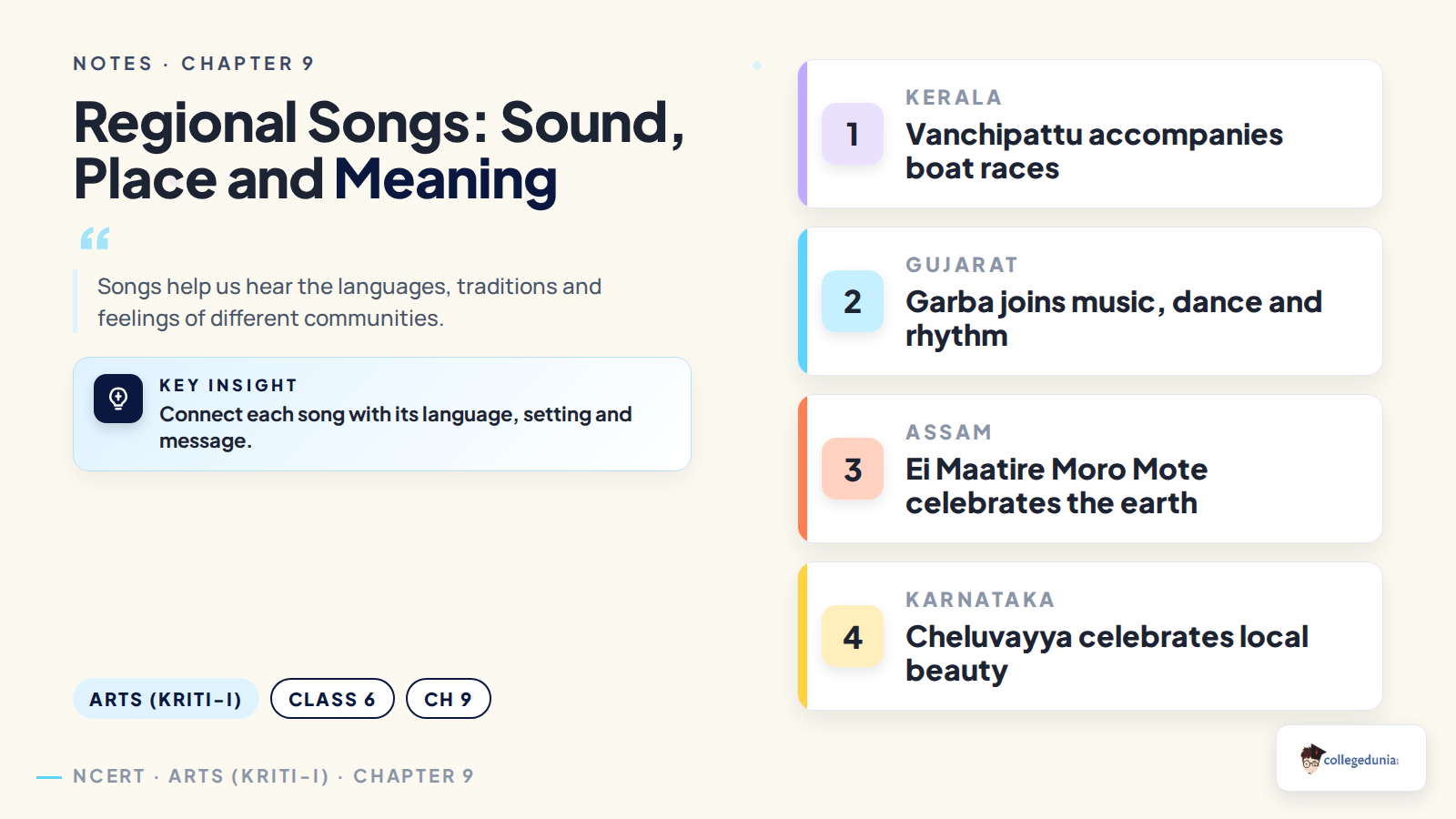
The chapter asks you to listen to music from different parts of India. Language, place and meaning help you understand each song. A familiar tune may sound different when another community sings it. Listen with respect before trying the words yourself.
| Song | Language or region | Meaning or setting |
|---|---|---|
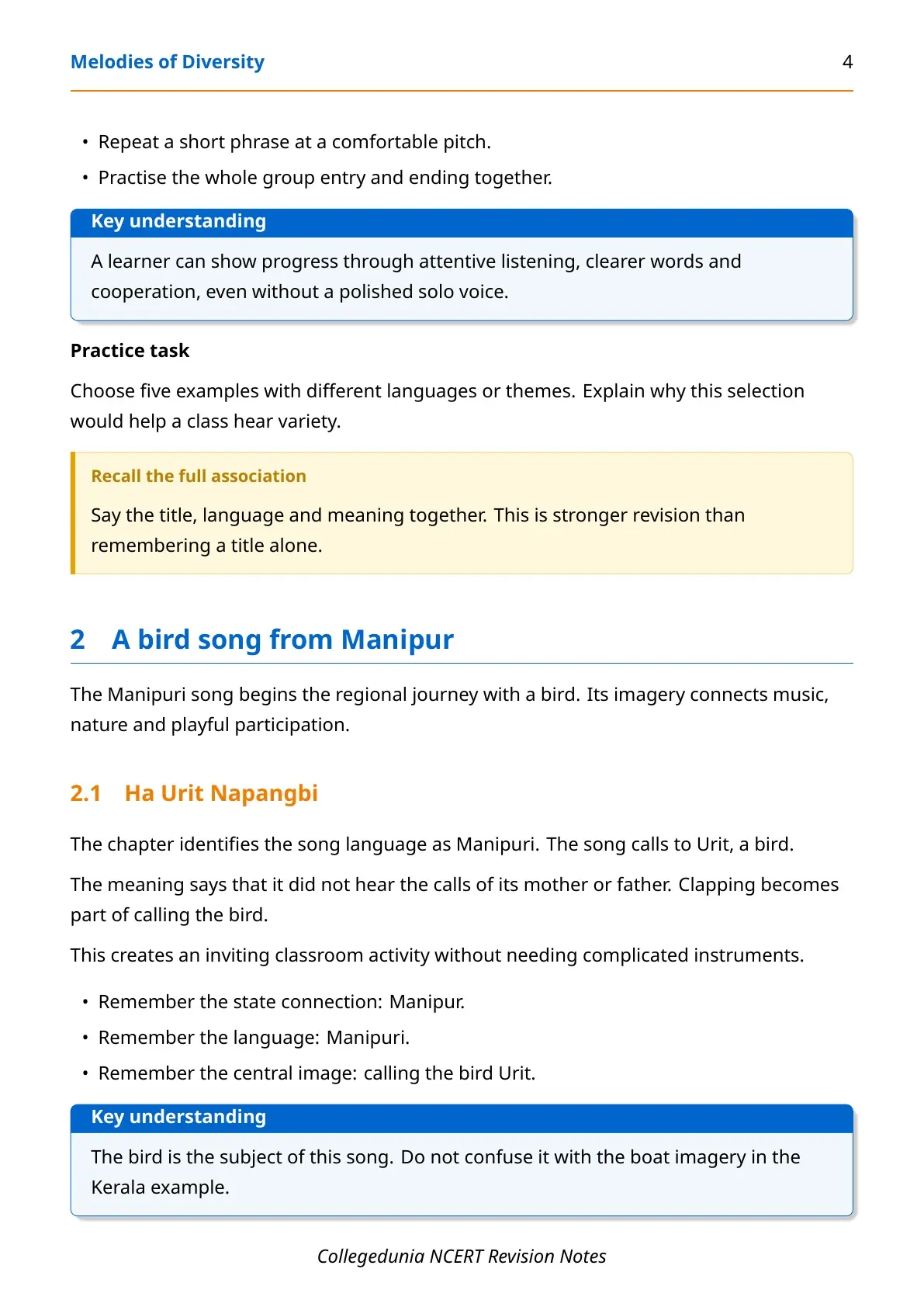
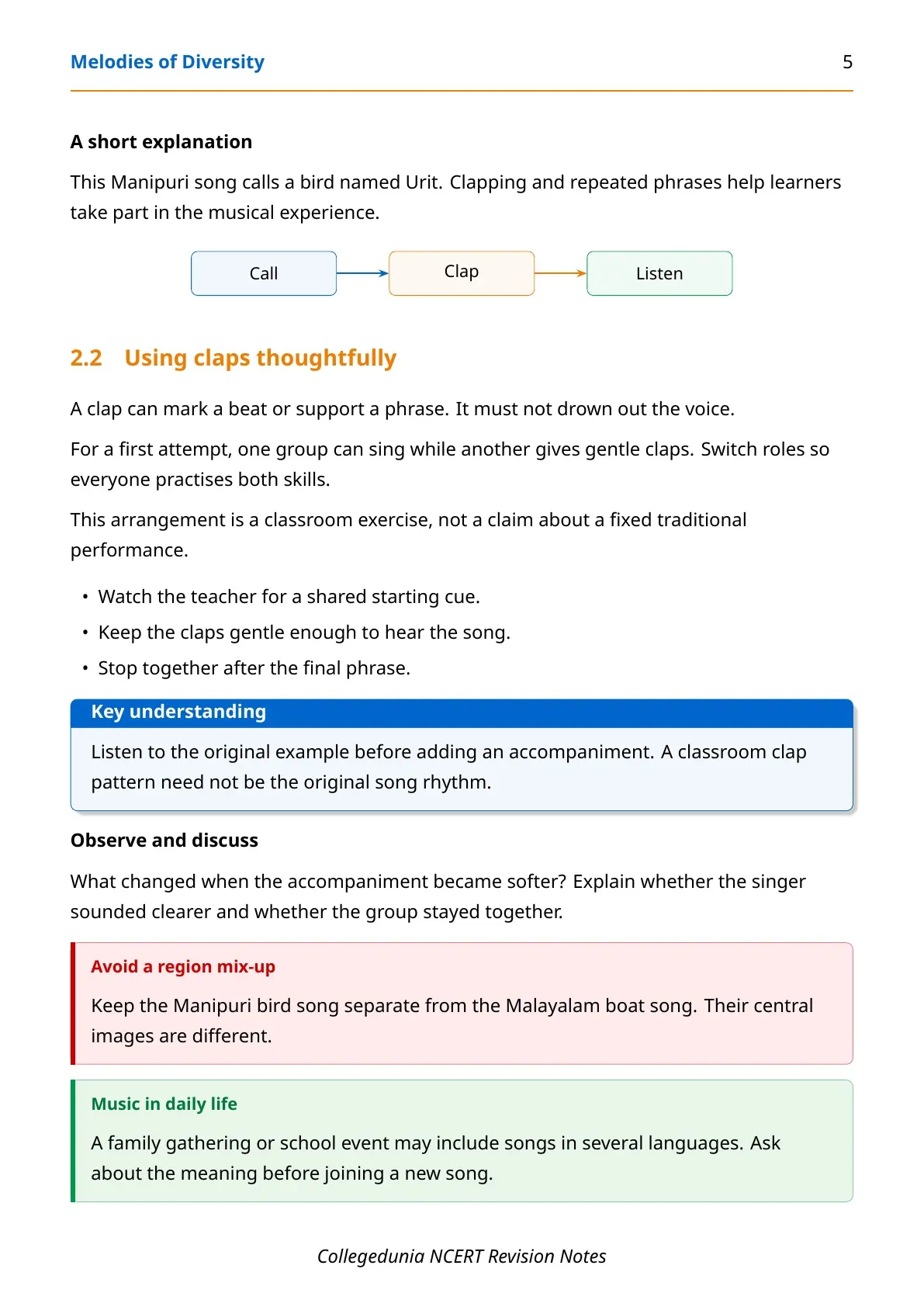
| Ha Urit Napanghi | Manipuri; Manipur | Calling the bird Urit, with clapping |
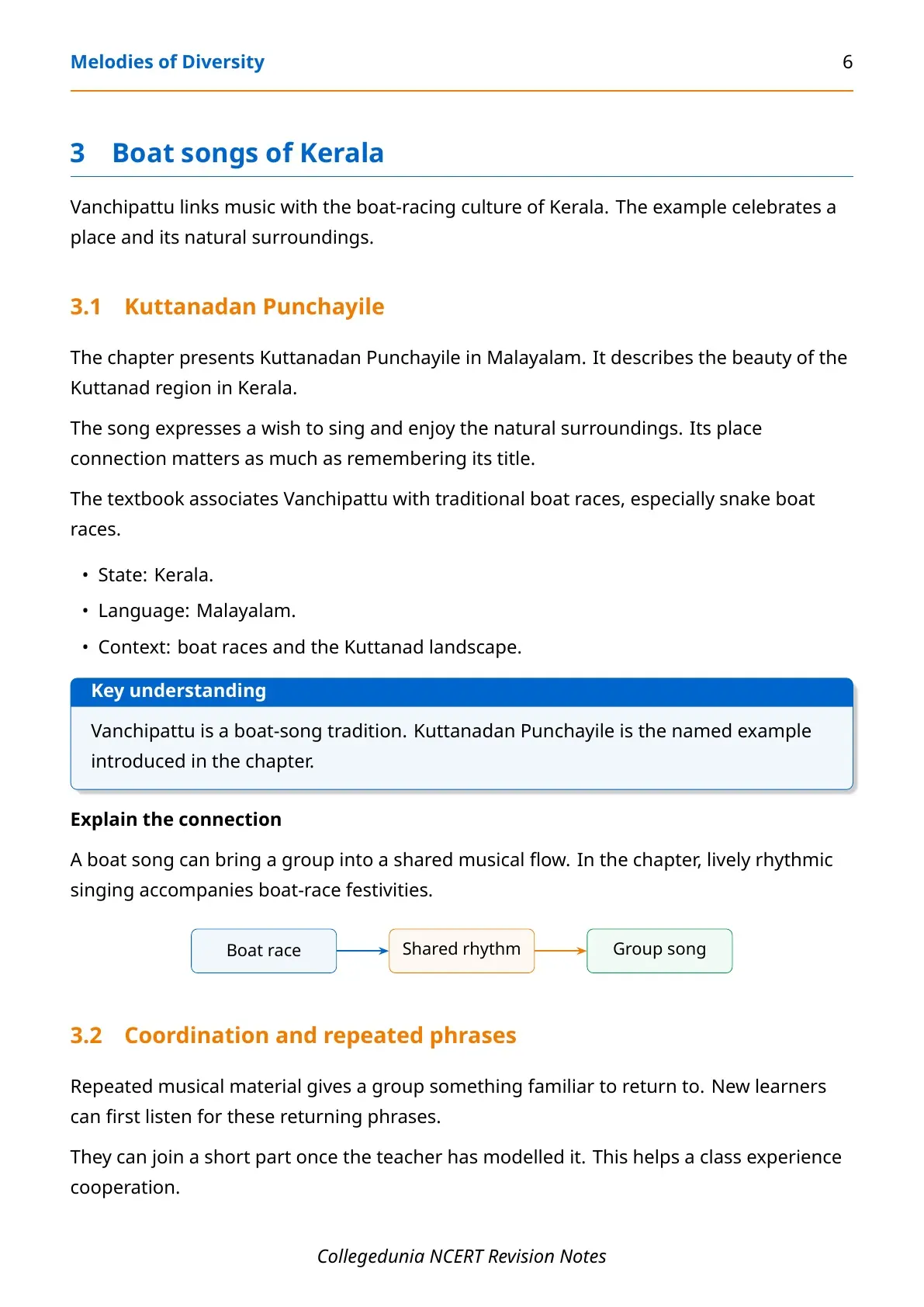
| Kuttanadan Punchayile | Malayalam; Kerala | The beauty of Kuttanad; a boat-song setting |
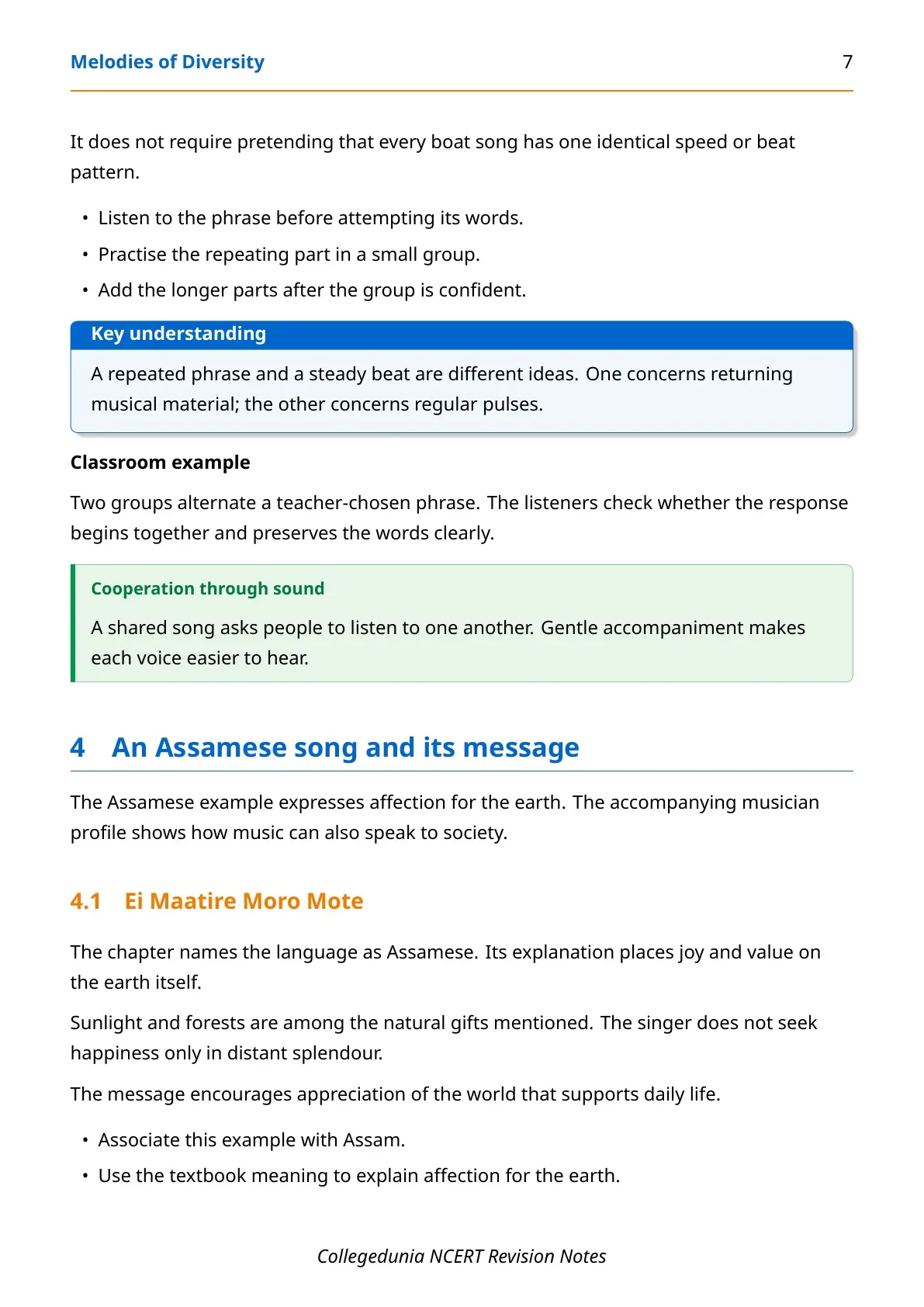
| Ei Maatire Moro Mote | Assamese; Assam | Love for the earth and the value of nature |
| Potana J Dariya Ma | Gujarati; Gujarat | Life as a sea journey; pearls as valuable experiences |
| Taari Baanki Re | Gujarati; Gujarat | A Garba song expressing love for Lord Krishna |
| Athinthom | Tamil | The joy of singing, with catchy rhythmic sounds |
| Cheluvayya | Kannada; Karnataka | Celebrating local beauty, including Chitradurga fort |
| O Jind Mahe Bajare | Punjabi | Love, longing and memories of loved ones |
| Kshatriya Kulavatsana | Marathi | Respect for Chhatrapati Shivaji Maharaj's courage and leadership |
Learn the meaning as well as the tune. The Gujarati sea imagery is a metaphor for life. It does not describe only a literal boat trip.
Melodies of Diversity within the Kriti Music Lessons
This full-book lesson places the music unit in context. The excerpt covers music terms, traditions, instruments and musicians.
Source: Unacademy IAS: English on YouTube
Melodies of Diversity: Boat Songs, Garba and Musical Context
Vanchipattu is linked with Kerala's traditional boat races, including snake boat races in the backwaters. Its lively rhythm belongs to that shared activity. Garba combines music and folk dance and is often performed during Navaratri.
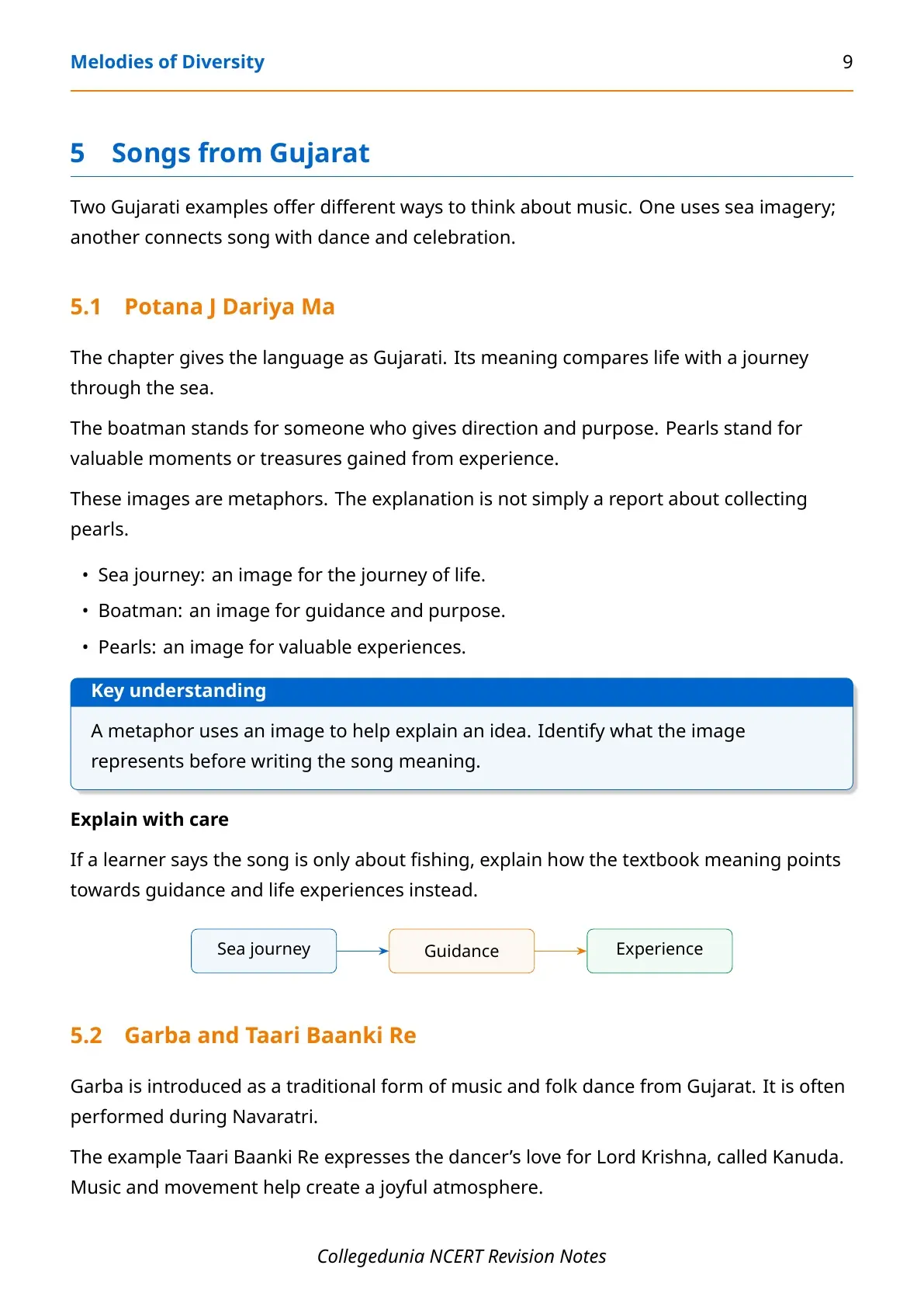
- Garba uses rhythmic instruments such as dhol, tabla and dholak.
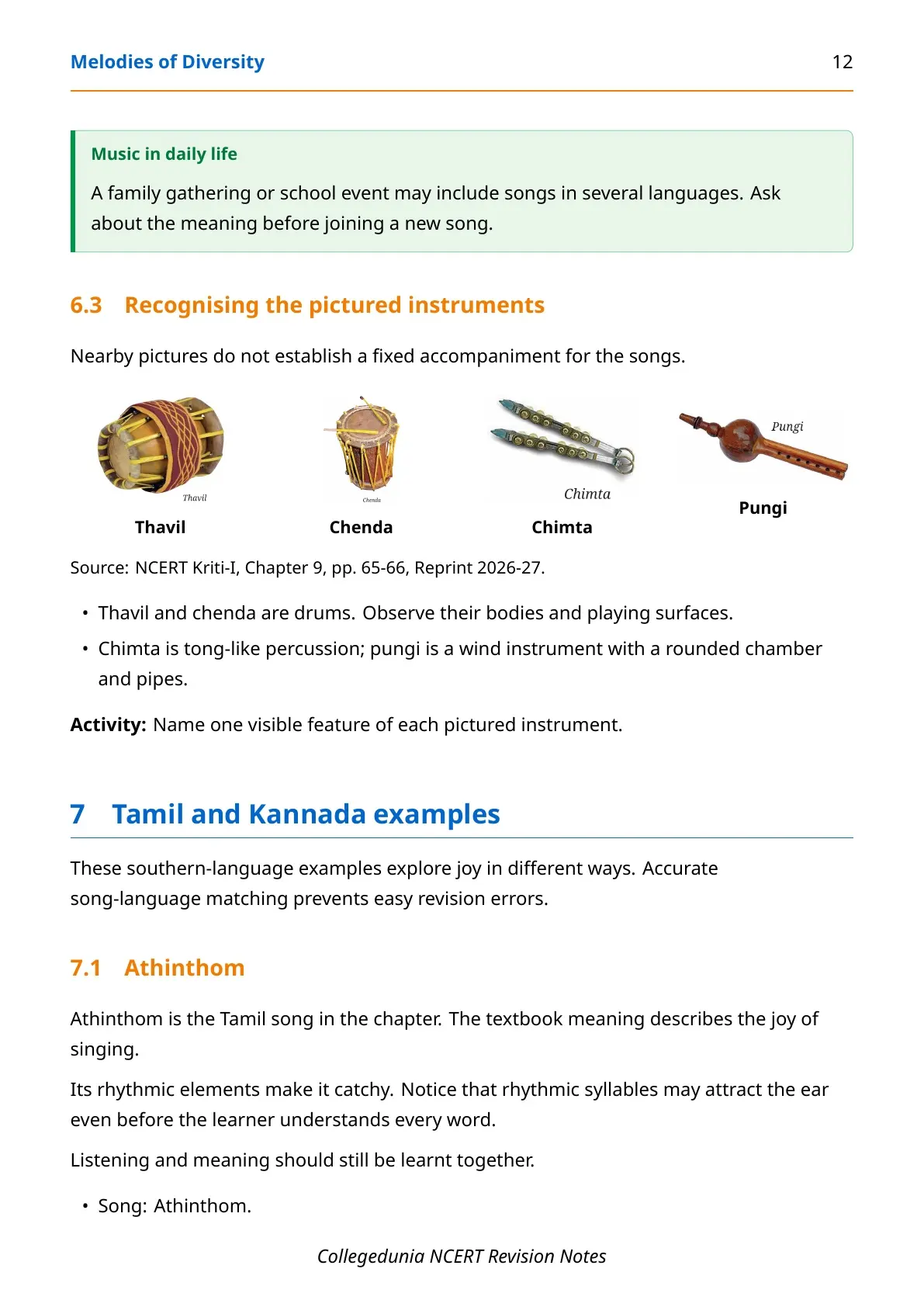
- Harmonium and flute can add melody.
- Clapping, stomping and tapping dandiya sticks add rhythmic layers in the textbook description.
- Describe a song's setting before comparing its sound with another song.
The chapter also introduces Bhupen Hazarika, born in Sadiya, Assam, in 1926. Known as Sudha Kontho, he used music for social change. Keep this musician profile separate from the meanings of the individual songs.
Melodies of Diversity: Devotional Music across Traditions
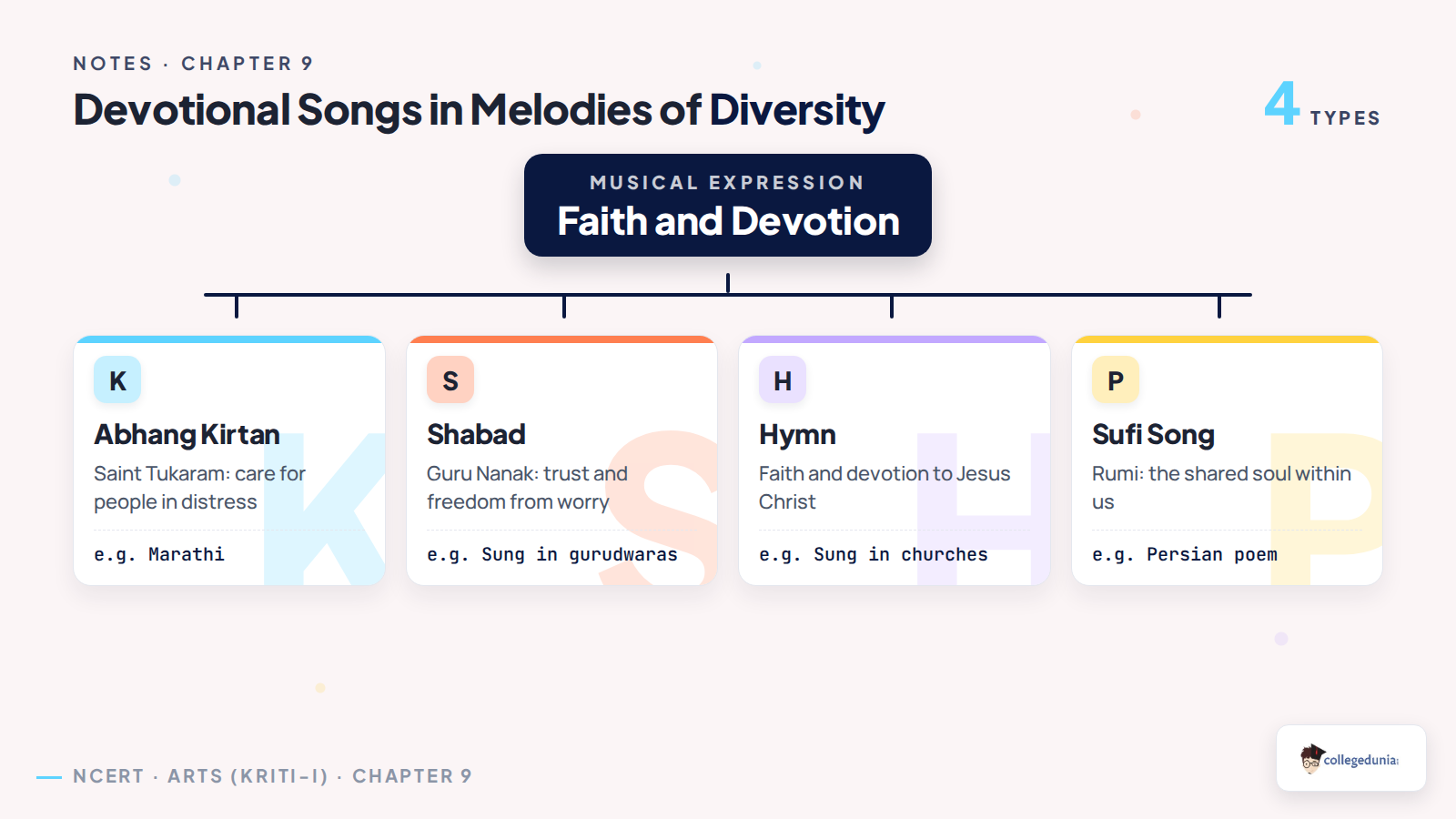
Devotional songs express faith in different ways. The chapter presents examples from several traditions. Their words and settings differ, while music helps express devotion. Learn each example on its own terms.
| Form | Chapter example | Main message |
|---|---|---|
| Abhang kirtan | Saint Tukaram's Marathi composition, sung by Bhimsen Joshi | Care for people in distress; God is present in compassionate hearts |
| Shabad | Guru Nanak's teaching; sung in gurudwaras | Avoid excessive worry and have faith in divine care |
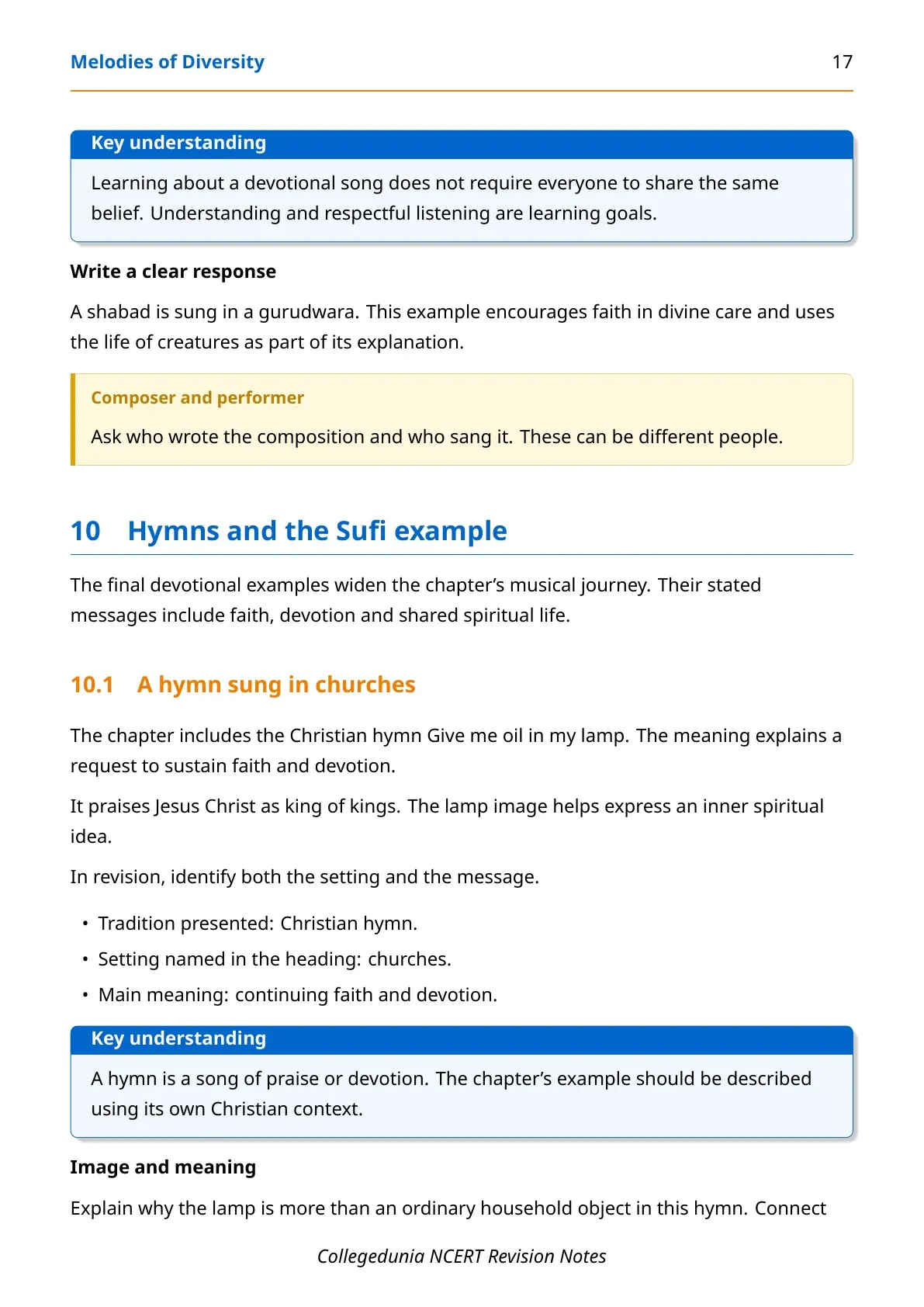
| Christian hymn | Give me oil in my lamp; sung in churches | Keep faith and devotion; praise Jesus Christ |
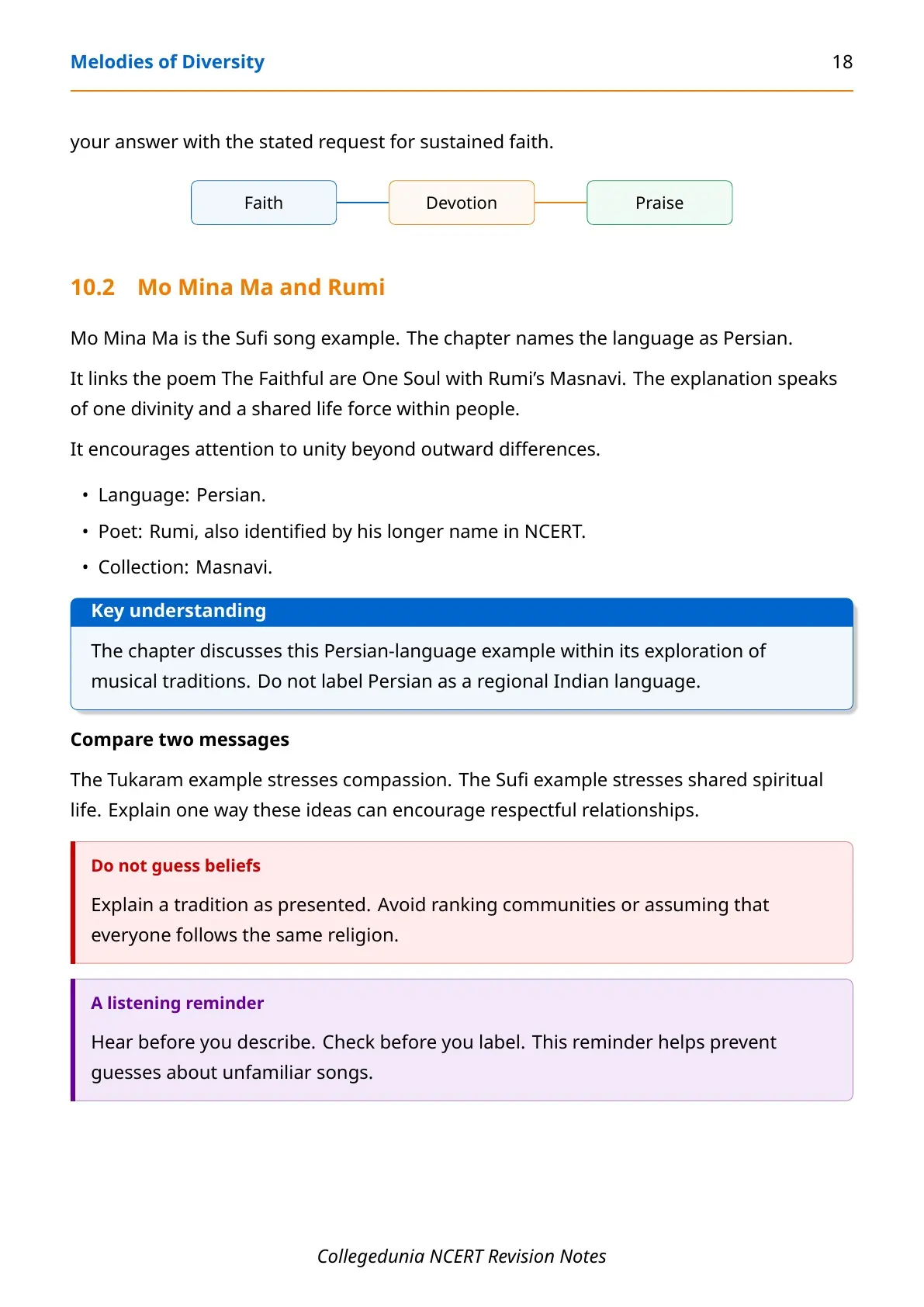
| Sufi song | Mo Mina Ma; a Persian poem from Rumi's Masnavi | The life force or soul within people is shared |
The closing section names classical, regional and devotional music among the forms of Indian music. These broad labels help organise listening. They do not mean that every song from a region sounds the same.
Melodies of Diversity: Listening Practice and Common Mix-ups
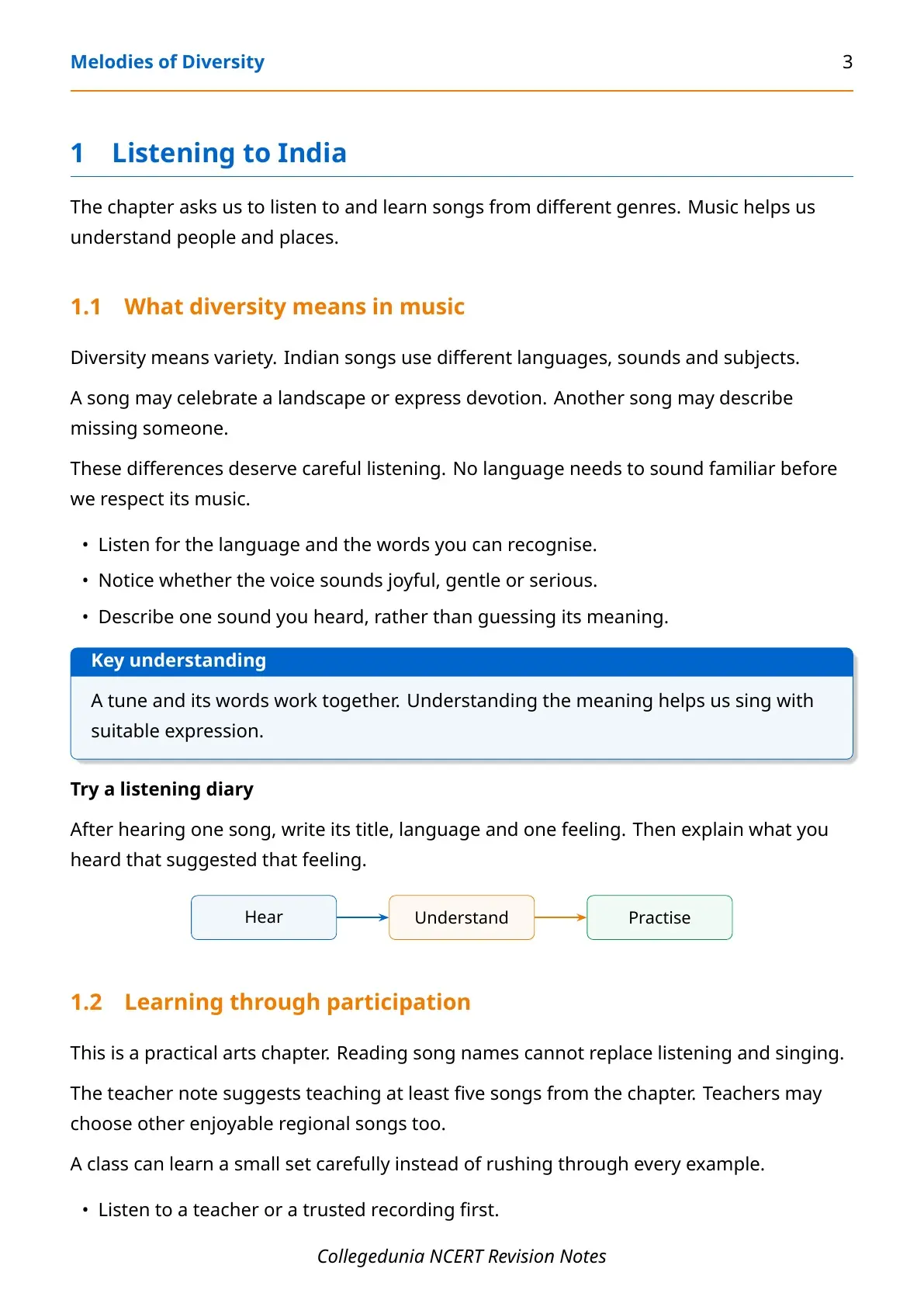
The teacher's note suggests teaching at least five songs from the list. Teachers may also choose suitable regional songs. Reading these notes supports the activity, but listening and singing remain central.
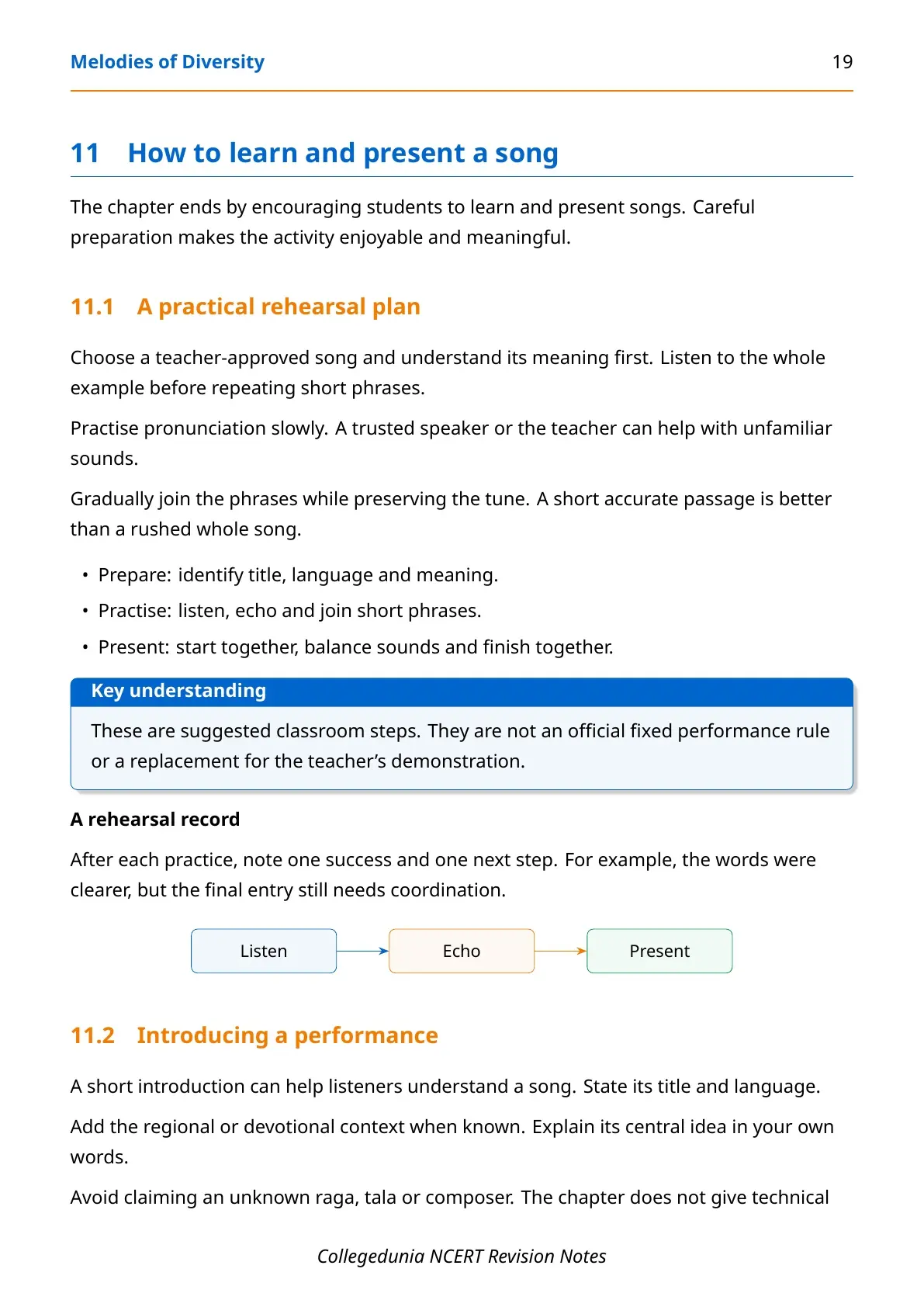
- Listen to a short phrase before repeating it.
- Say unfamiliar words slowly with help from your teacher.
- Keep a steady beat as you sing the phrase again.
- Explain the song's meaning in your own words.
- Present a song to your class, friends or family.
Melodies of Diversity: Related Arts Resources
Use the solved activities to practise explaining a song after listening to it.
| Resource | Use it for |
|---|---|
| Melodies of Diversity Class 6 NCERT Solutions | Activity explanations and question practice |
NCERT Notes for Class 6 Arts: All Chapters and Music Connections
Return to the music notes for rhythm practice, or explore the visual arts chapters below.
| Chapter | Notes |
|---|---|
| 1 | Objects and Still Life Notes |
| 3 | Portraying People Notes |
| 4 | Paper Crafts Notes |
| 5 | Seals to Prints Notes |
| 8 | Taal or Talam and Raga or Ragam in Indian Music Notes |
Melodies of Diversity Class 6 Arts Notes FAQs
Ques. What is the aim of Melodies of Diversity?
Ans. The aim is to listen to and learn songs from different genres of Indian music. The activities connect songs with languages, regions and traditions.
Ques. What do the Melodies of Diversity notes cover?
Ans. They cover regional song meanings, boat songs, Garba, devotional forms and listening practice from Chapter 9 of NCERT Kriti-I.
Ques. Are these notes based on the 2026-27 book?
Ans. Yes. They follow the official NCERT Kriti-I chapter reprinted for 2026-27, including its regional and devotional song examples.
Ques. How many songs should students learn?
Ans. The teacher note suggests at least five songs from the list. Teachers can also teach regional songs they think children will enjoy.
Ques. Which song celebrates the earth?
Ans. The Assamese song Ei Maatire Moro Mote expresses affection for the earth and values nature, including sunlight and forests.
Ques. Who wrote the kirtan composition in Melodies of Diversity?
Ans. Saint Tukaram wrote the Marathi composition. The chapter presents it as an abhang kirtan sung by Bhimsen Joshi.
Ques. What is Vanchipattu?
Ans. Vanchipattu is a boat-song tradition associated with Kerala boat races, including snake boat races in the backwaters.
Ques. What is Garba?
Ans. Garba is a traditional form of music and folk dance associated with Gujarat. It is often performed during Navaratri.
Ques. What is a shabad?
Ans. A shabad is a devotional song sung in gurudwaras. The chapter example gives Guru Nanak’s message about faith and freedom from excessive worry.



Comments