



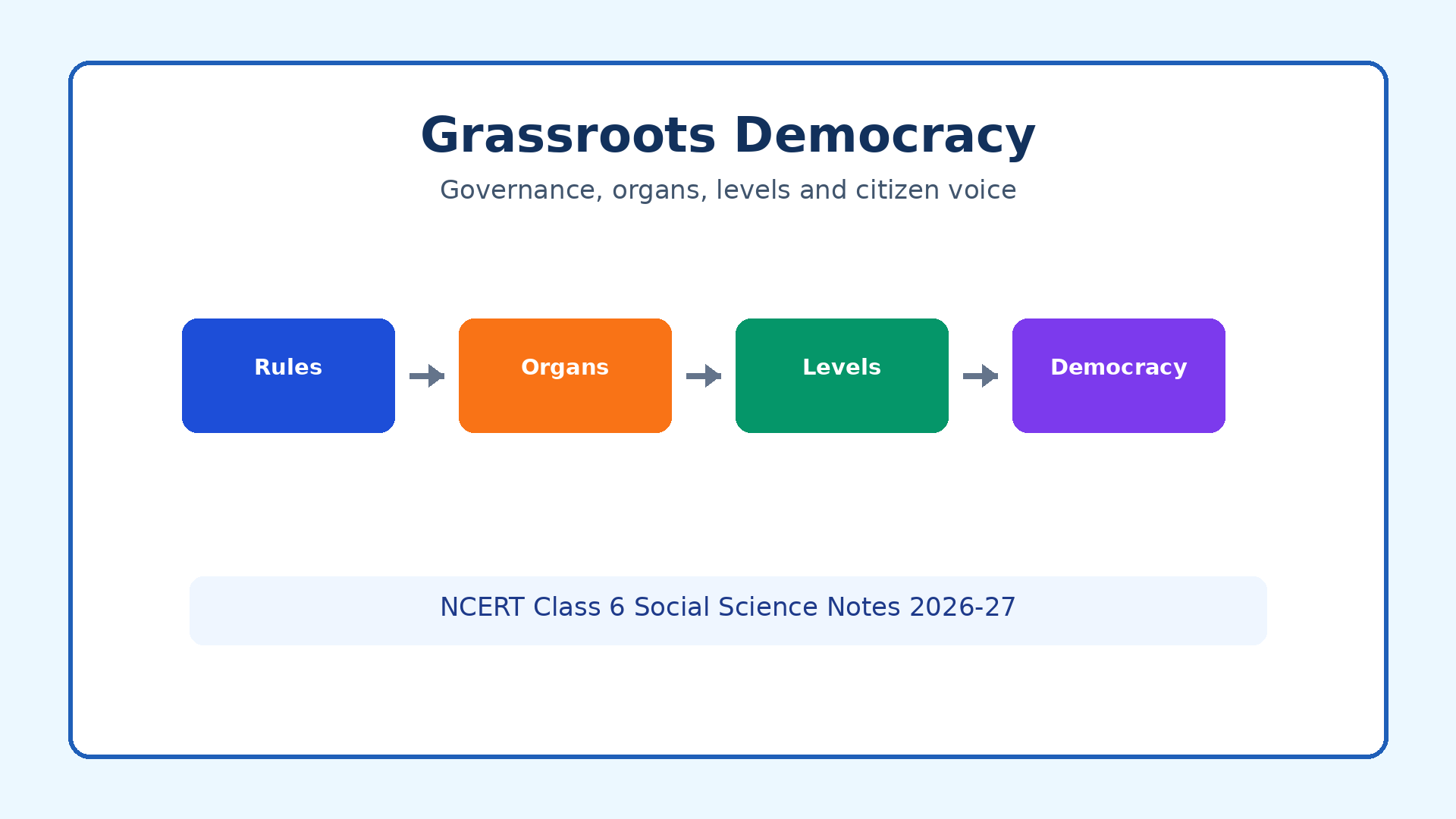
The NCERT Class 6 Social Science Chapter 10 notes for Grassroots Democracy Part 1 Governance explain rules, government, laws, three organs, three levels of government, democracy, voting and citizen participation. These notes follow the 2026-27 NCERT textbook and include a free PDF for quick revision.
- Best for revision: governance, legislature, executive, judiciary, three tiers and democracy.
- Use with the PDF: revise the comparison tables first, then practise textbook questions.
- 2026-27 focus: follows Exploring Society: India and Beyond, Chapter 10.


Student Feedback: Students usually understand this chapter faster by linking every term to an everyday example, such as school rules, traffic rules and class voting.
|
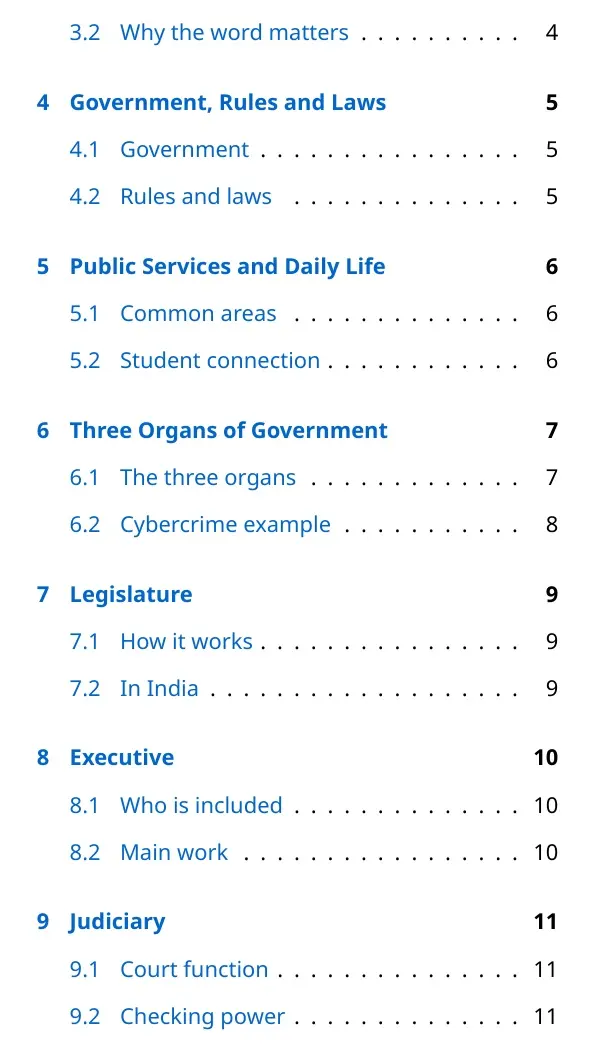
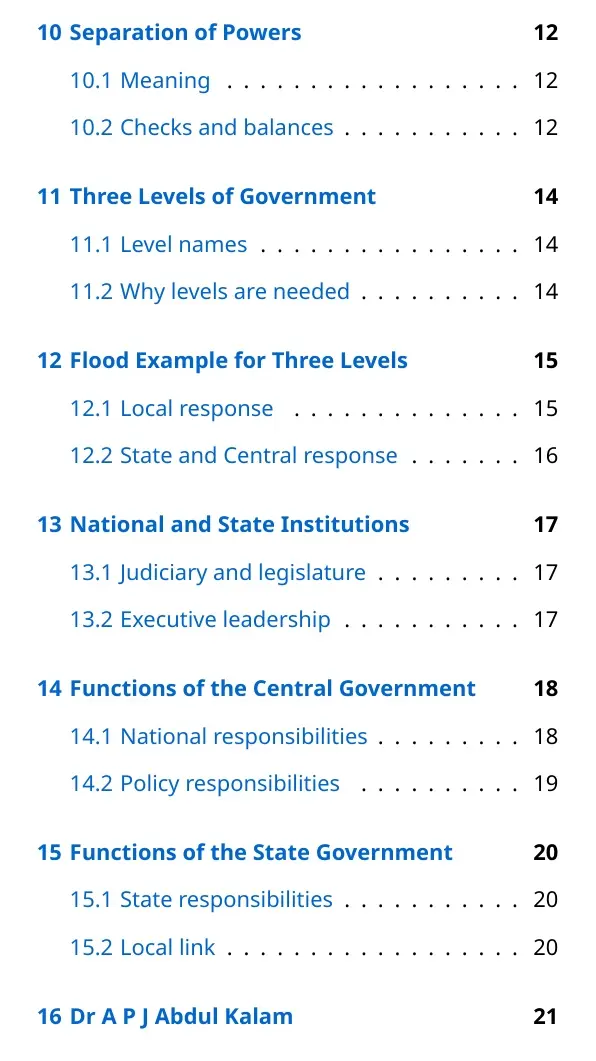
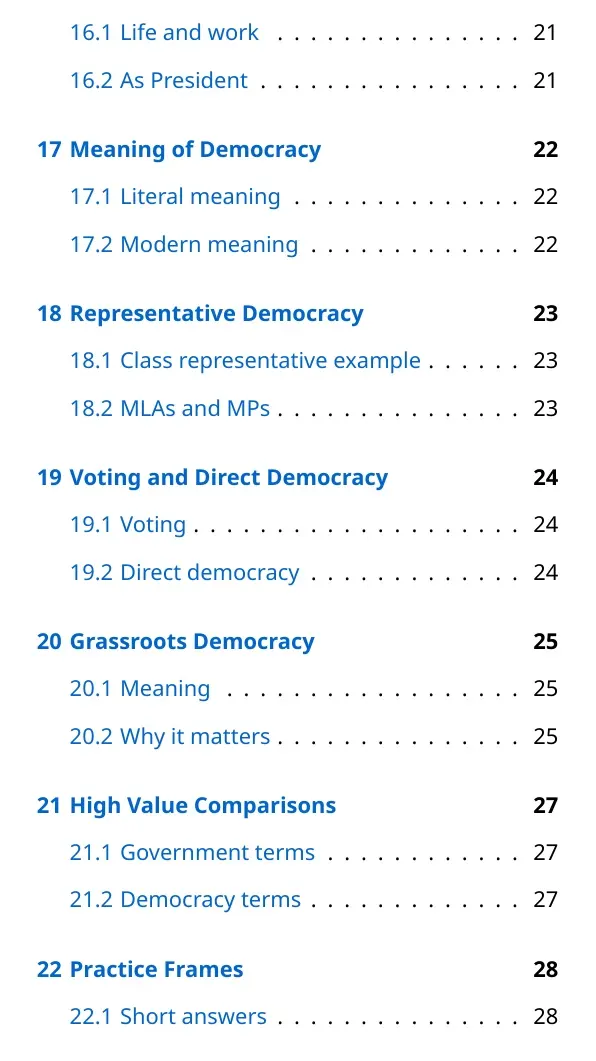
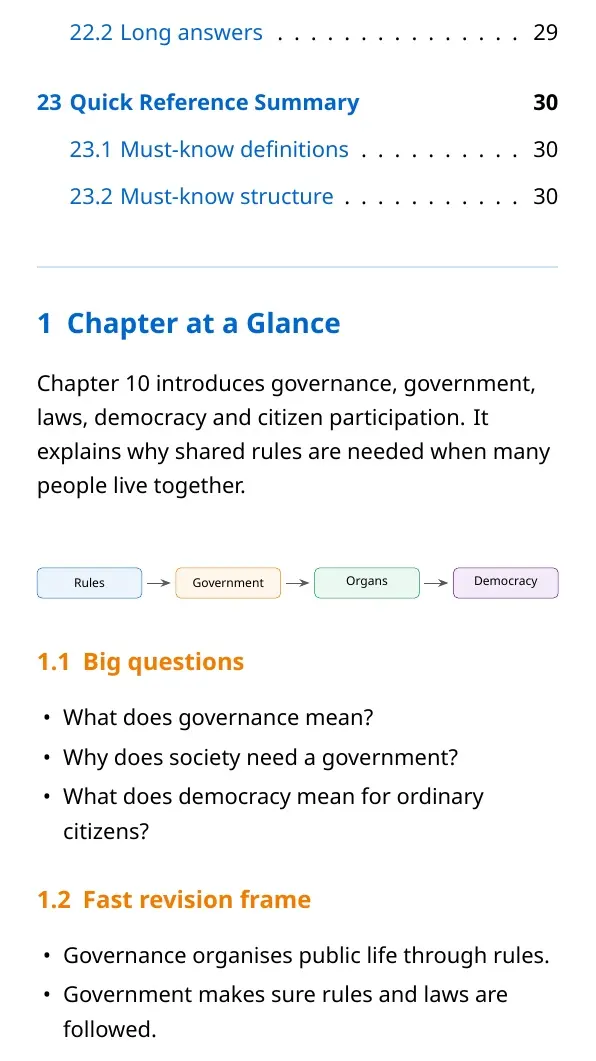
Table of Contents |
Grassroots Democracy Notes Overview
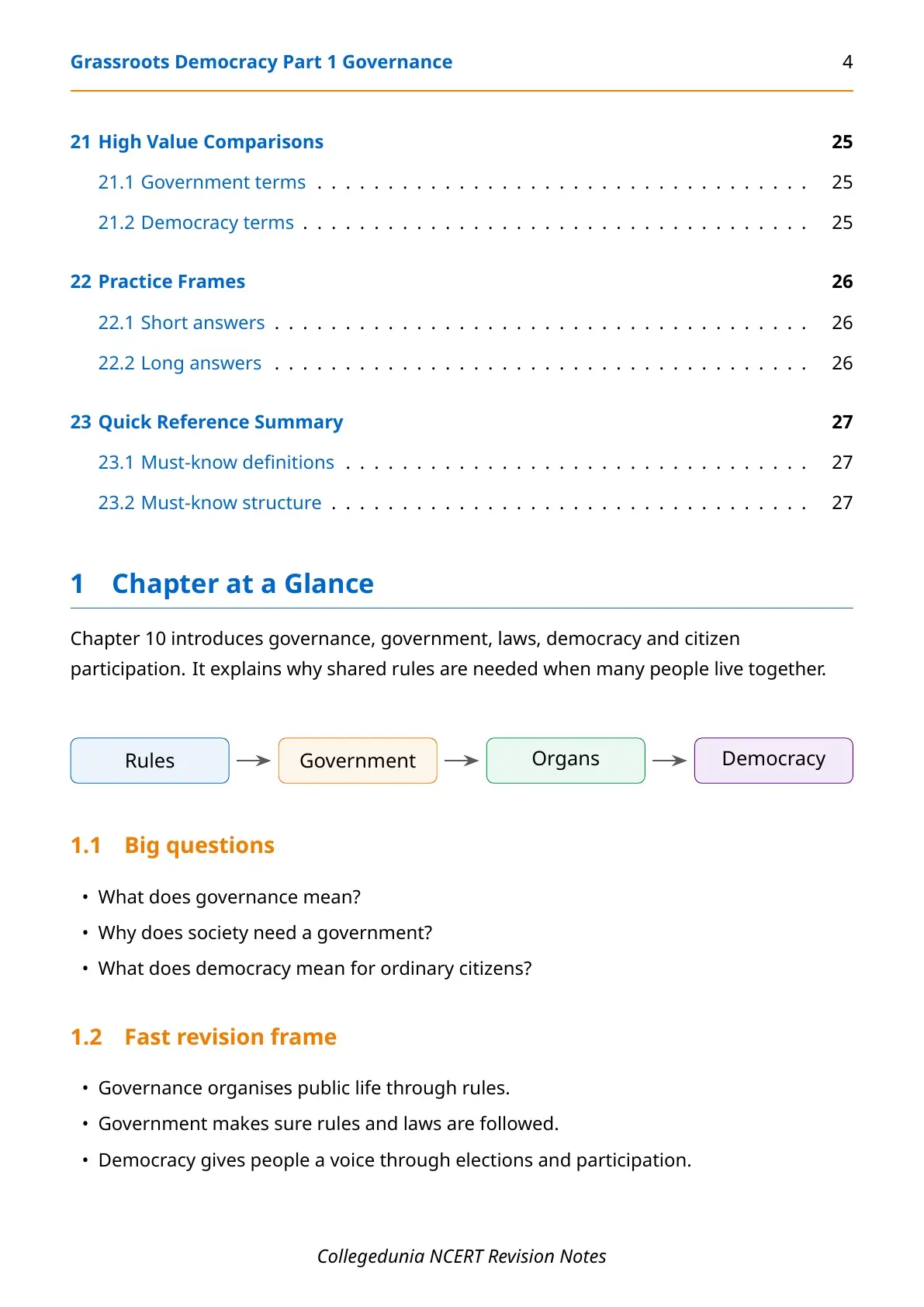
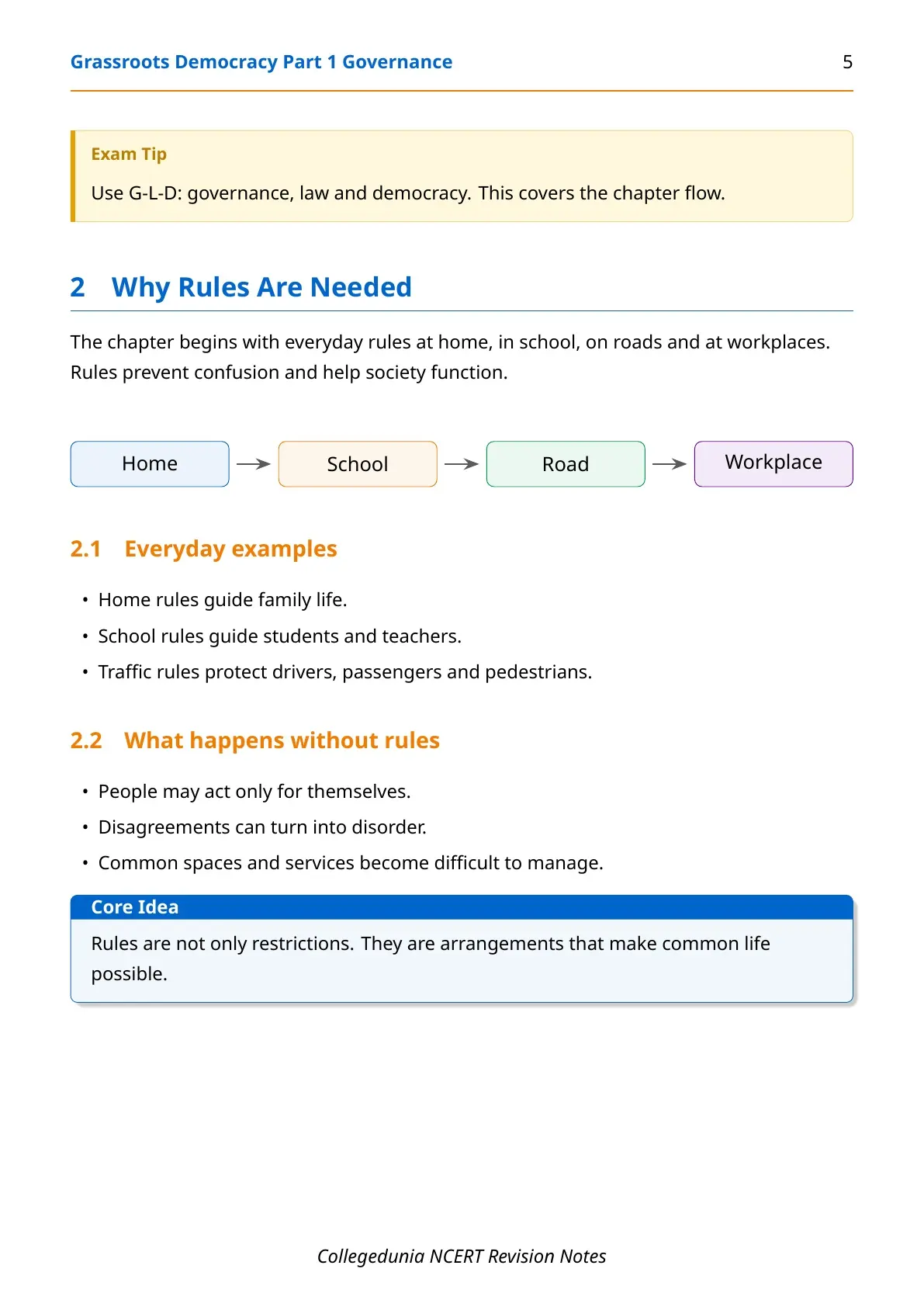
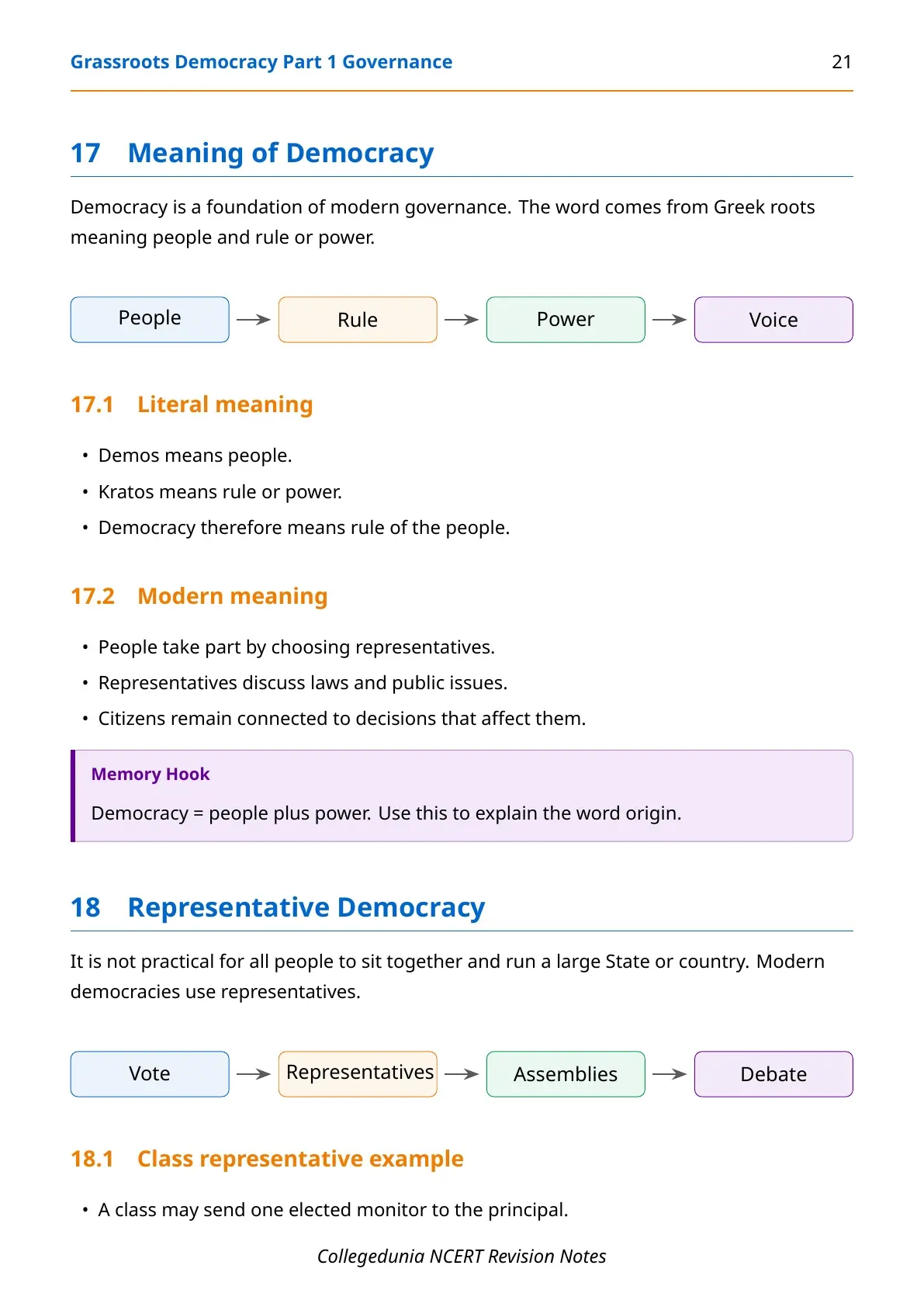
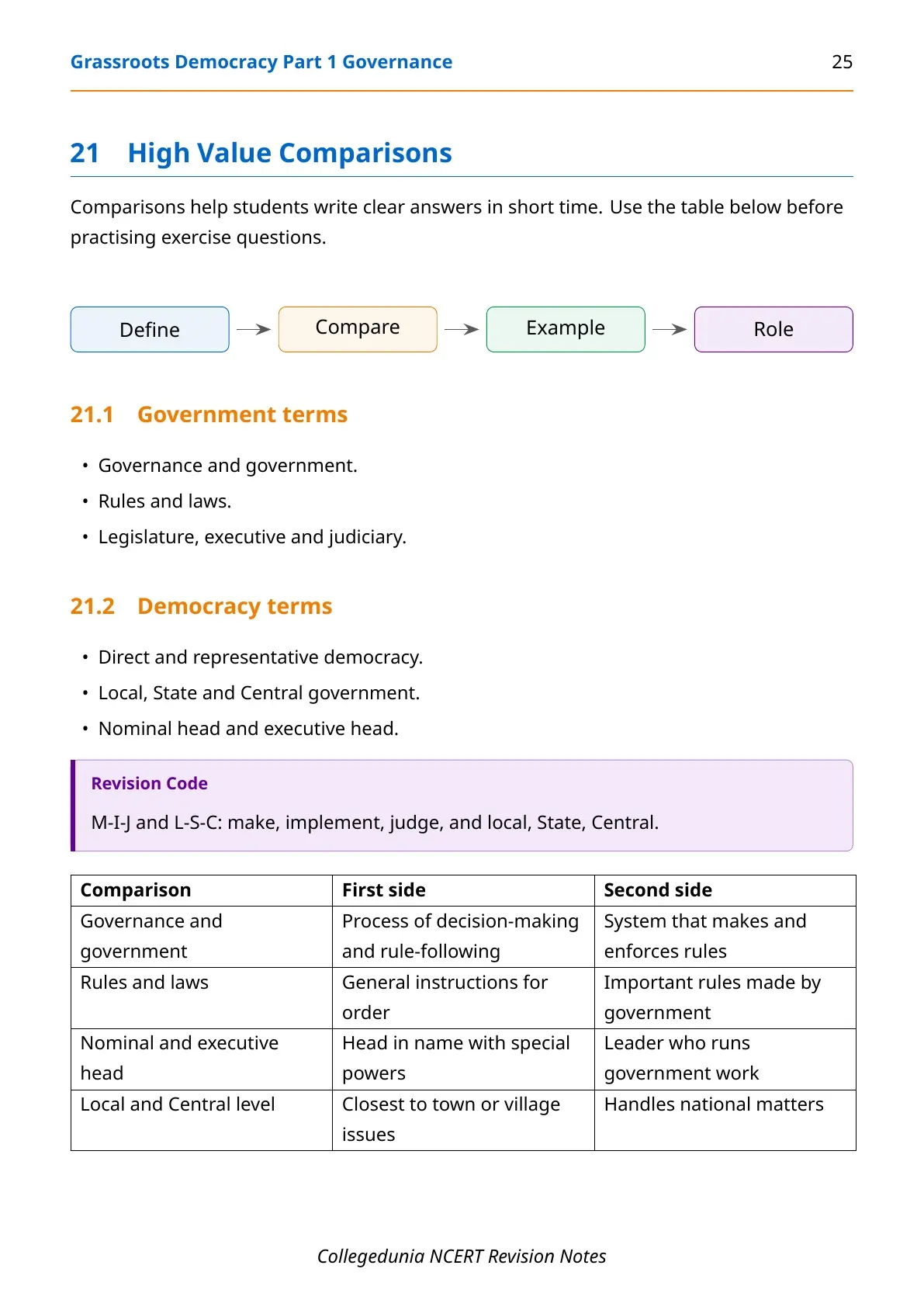
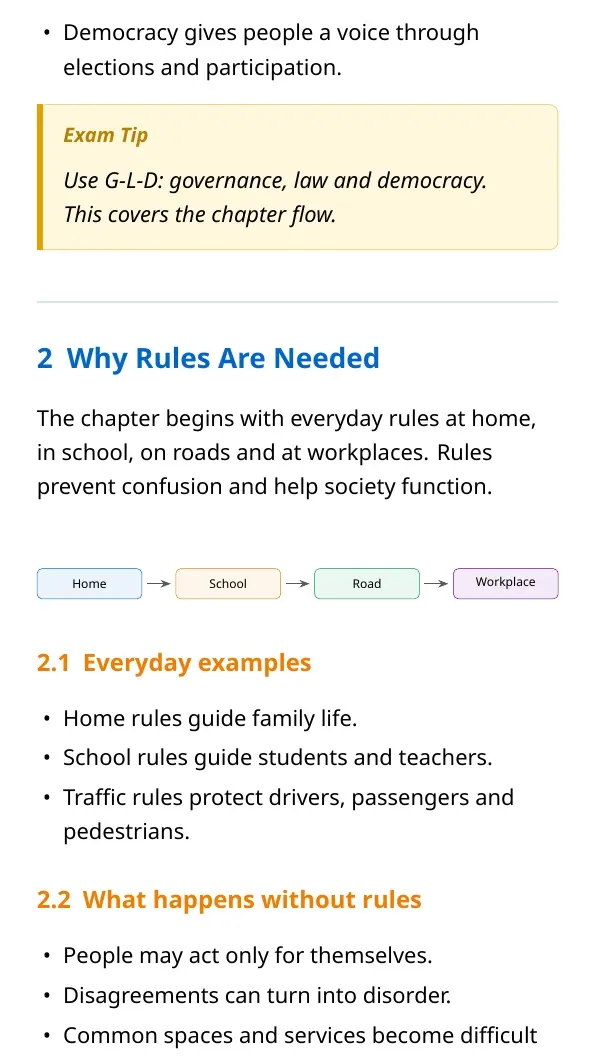
Chapter 10 explains why society needs rules, how governance works, and why democracy gives citizens a role in decisions. The chapter moves from everyday rules to the organs and levels of government, then connects them with voting and representative democracy.
| Revision area | Key idea | Example cue |
|---|---|---|
| Governance | Decision-making, organising rules and ensuring rules are followed | School rules or traffic rules |
| Government | System that makes and enforces rules | Institutions and public services |
| Laws | Important rules made by government | Cybercrime law |
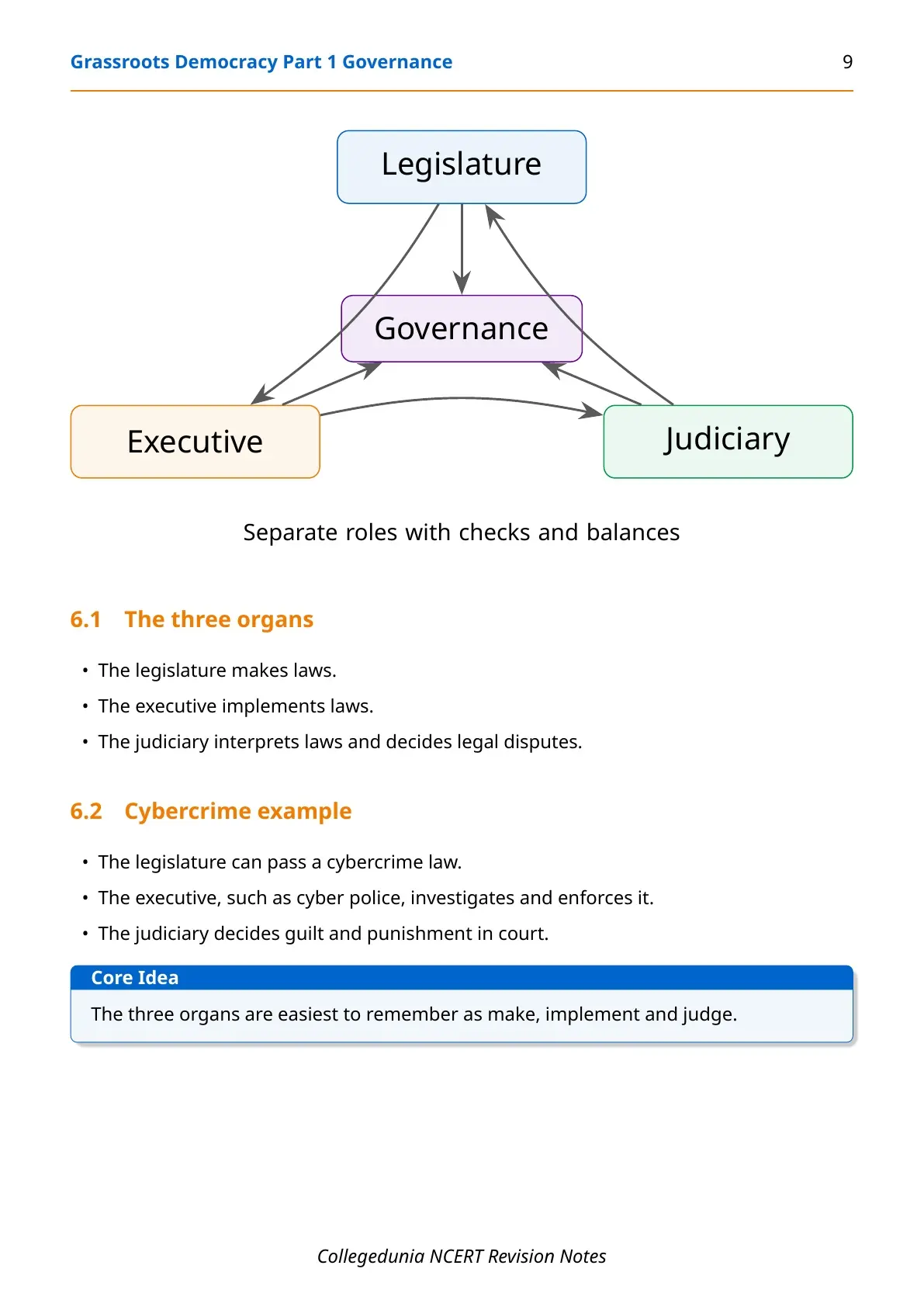
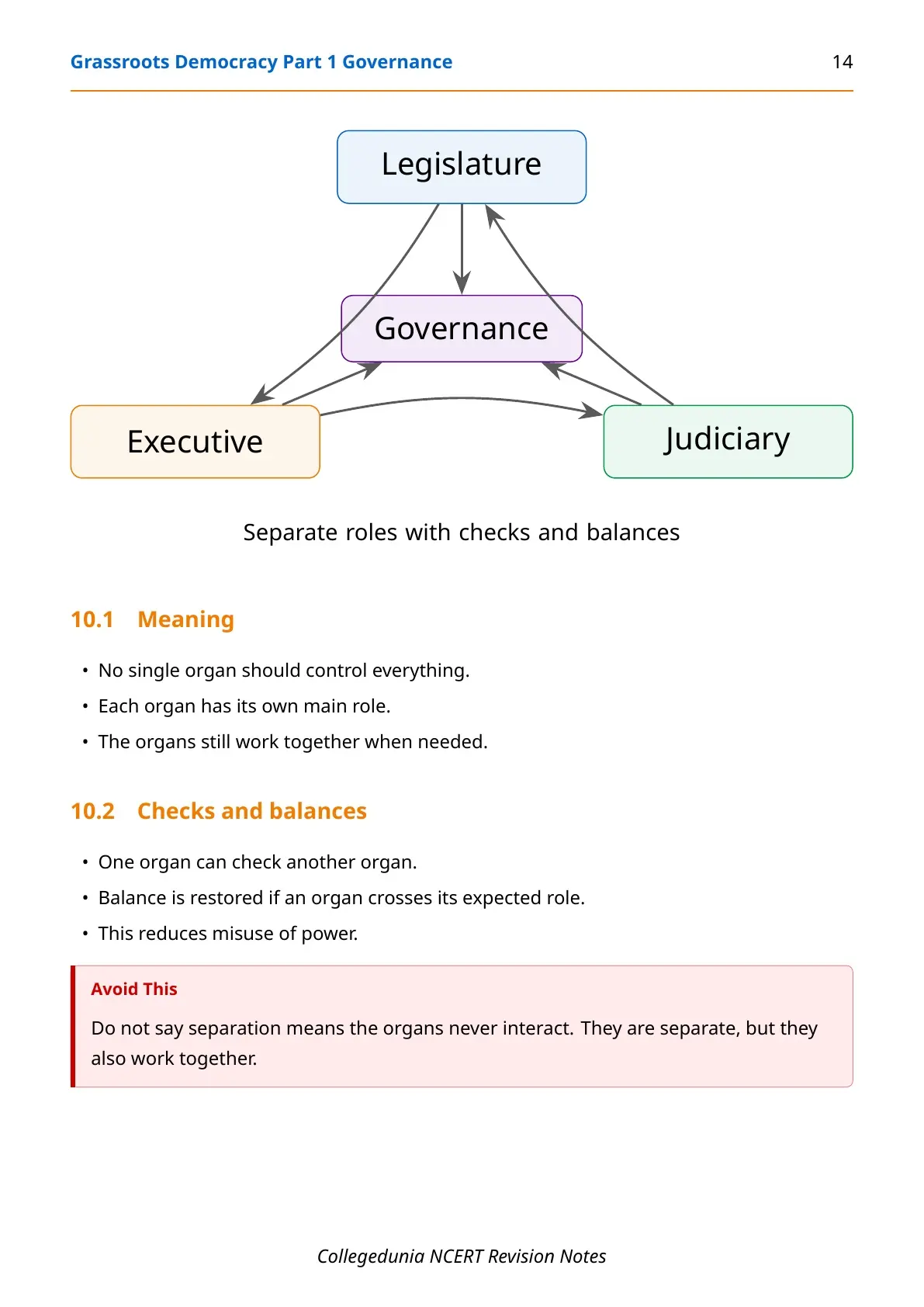
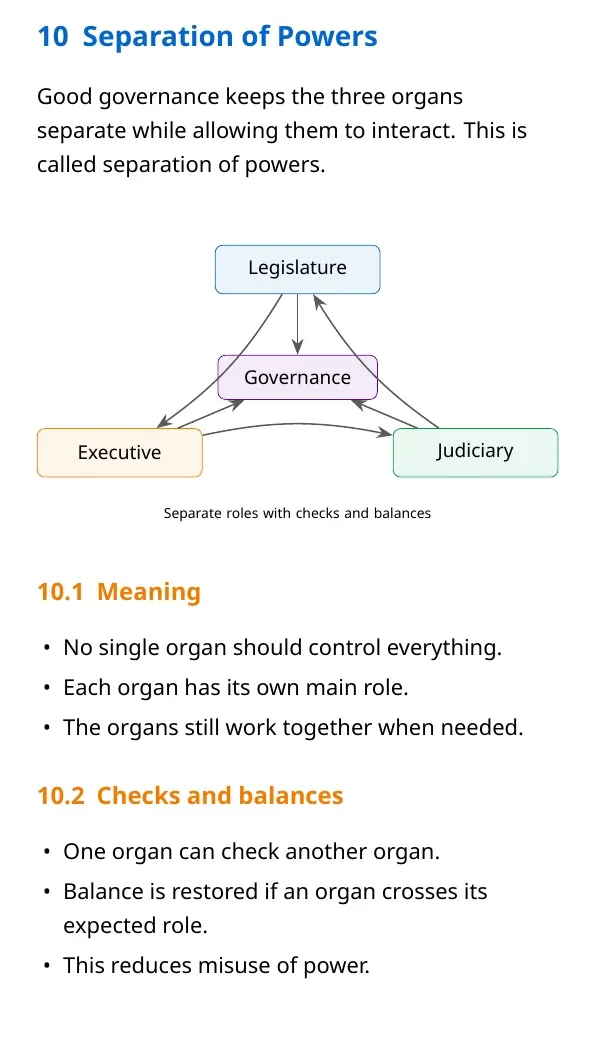
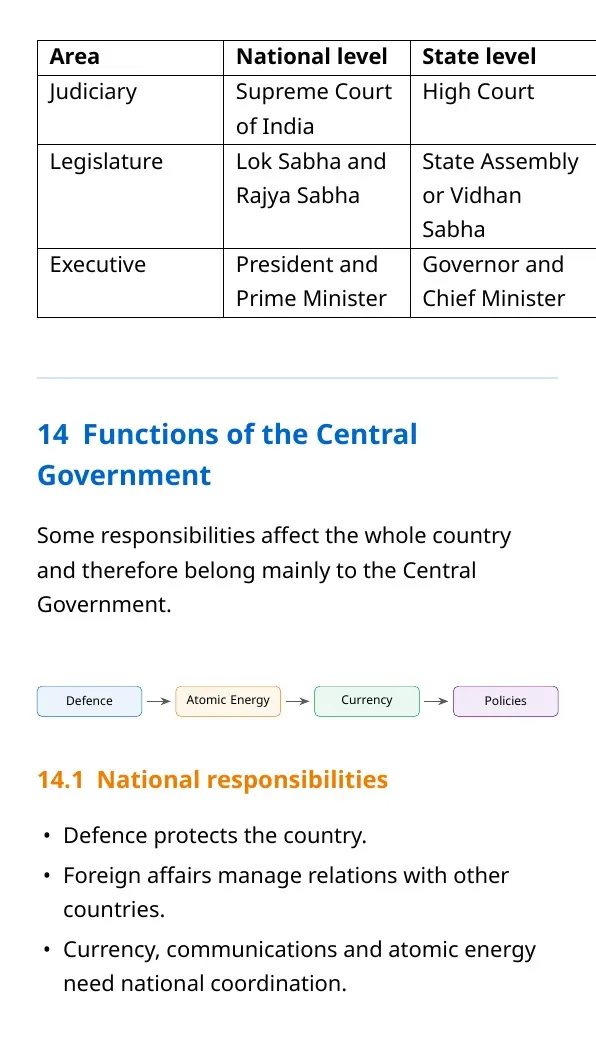
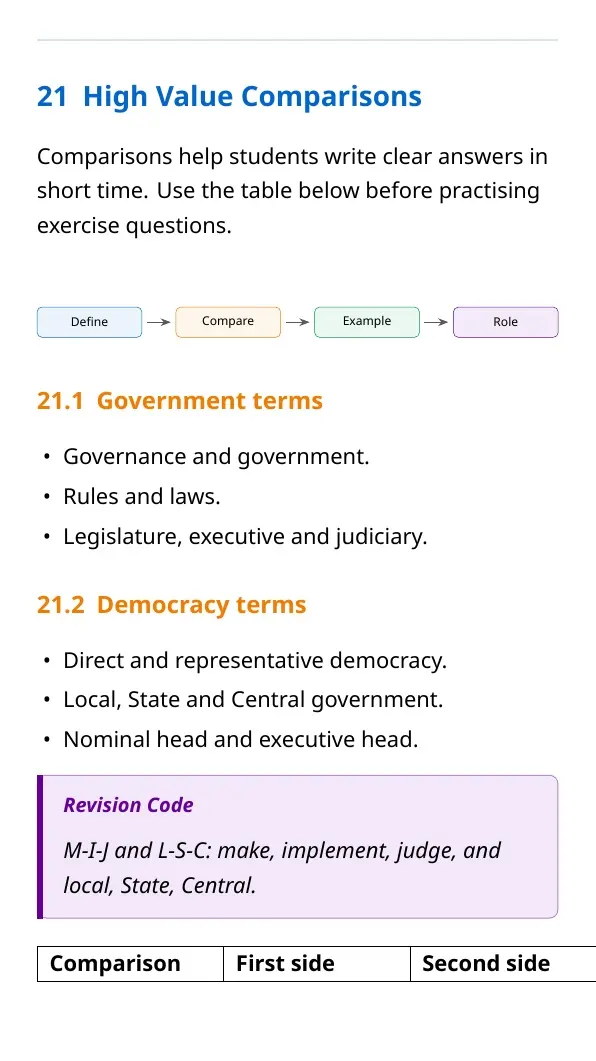
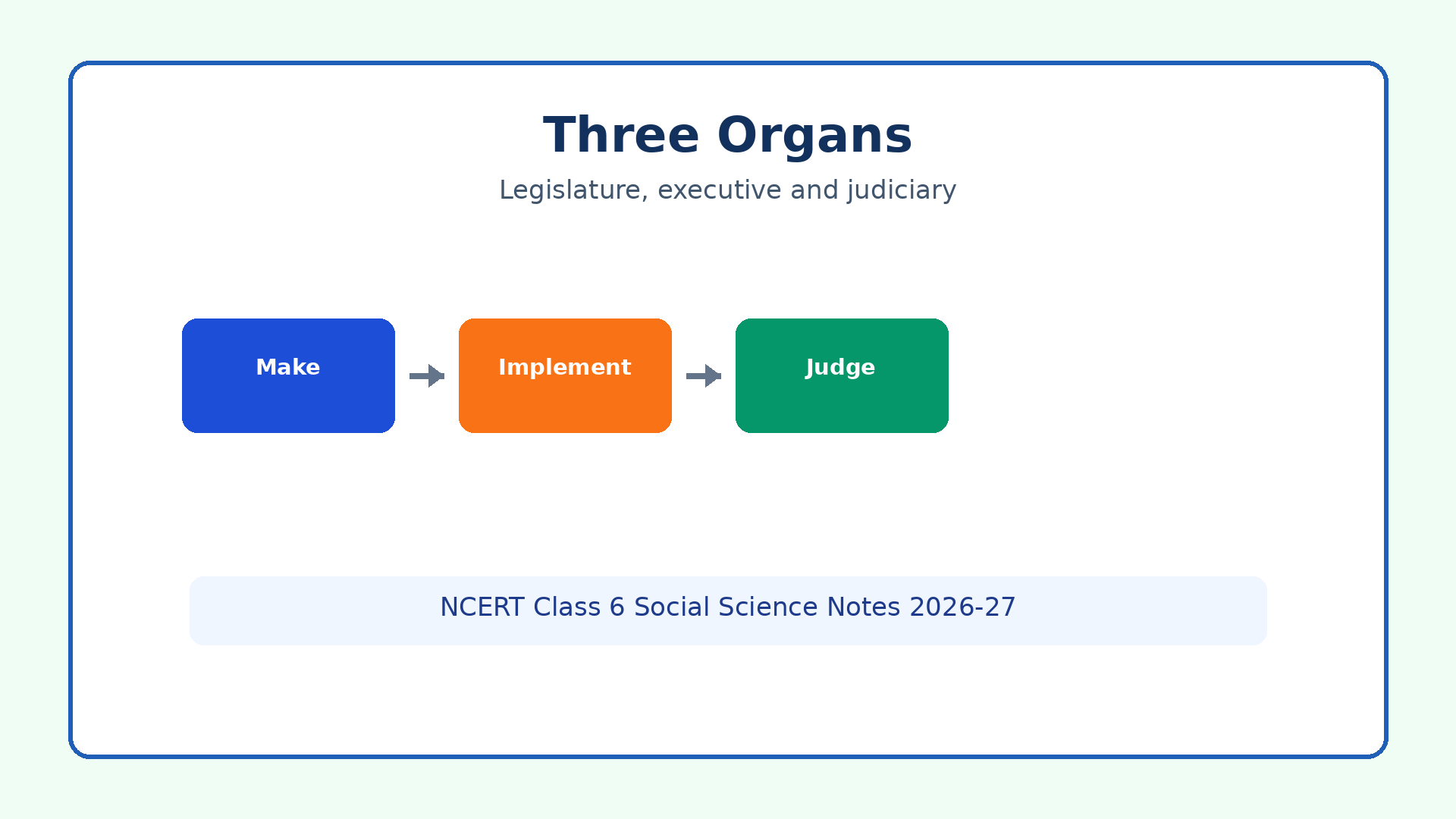
| Three organs | Legislature, executive and judiciary | Make, implement and judge |
| Democracy | Rule of the people through participation and representatives | Voting, MLAs and MPs |
Governance, Government, Rules and Laws
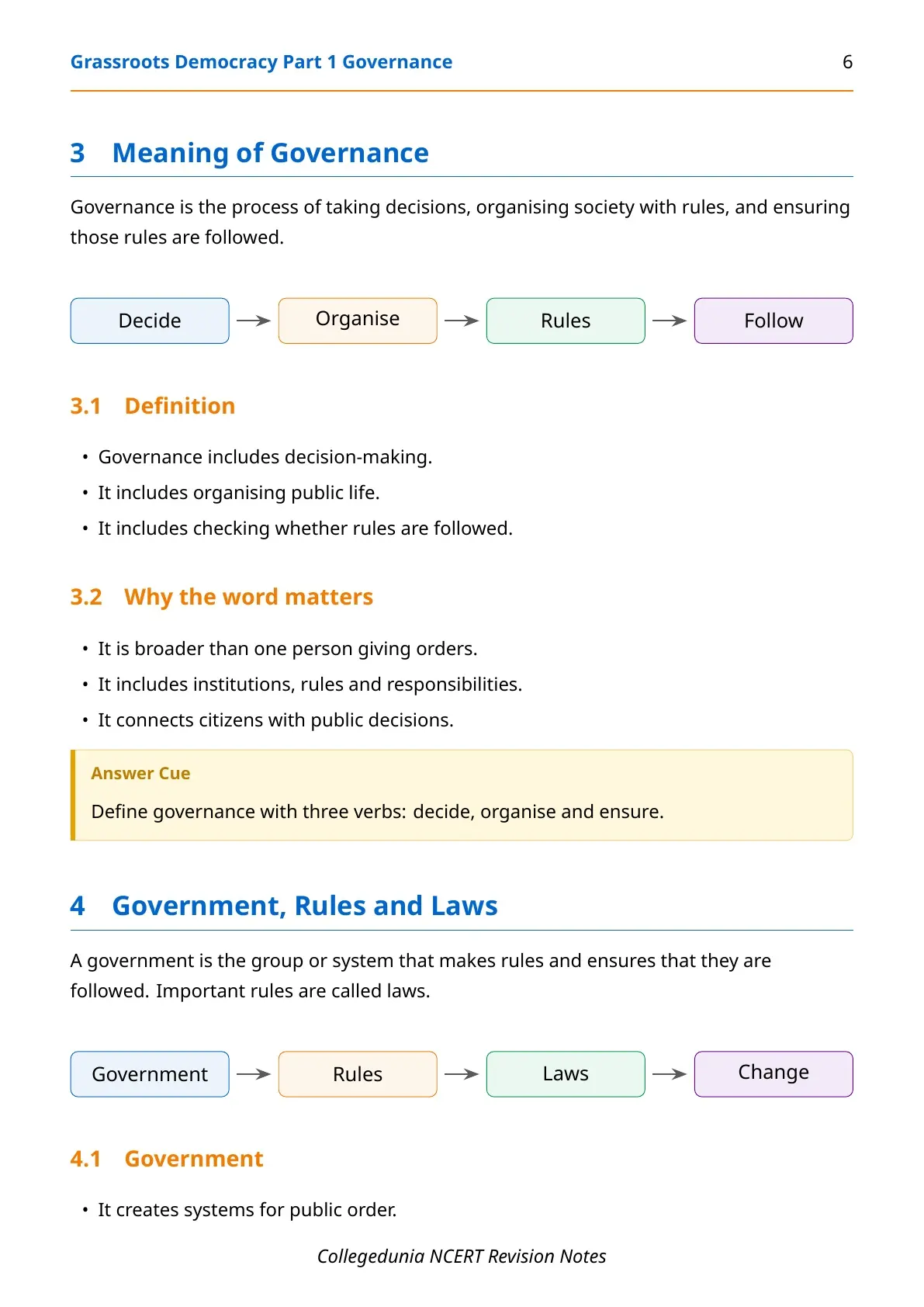
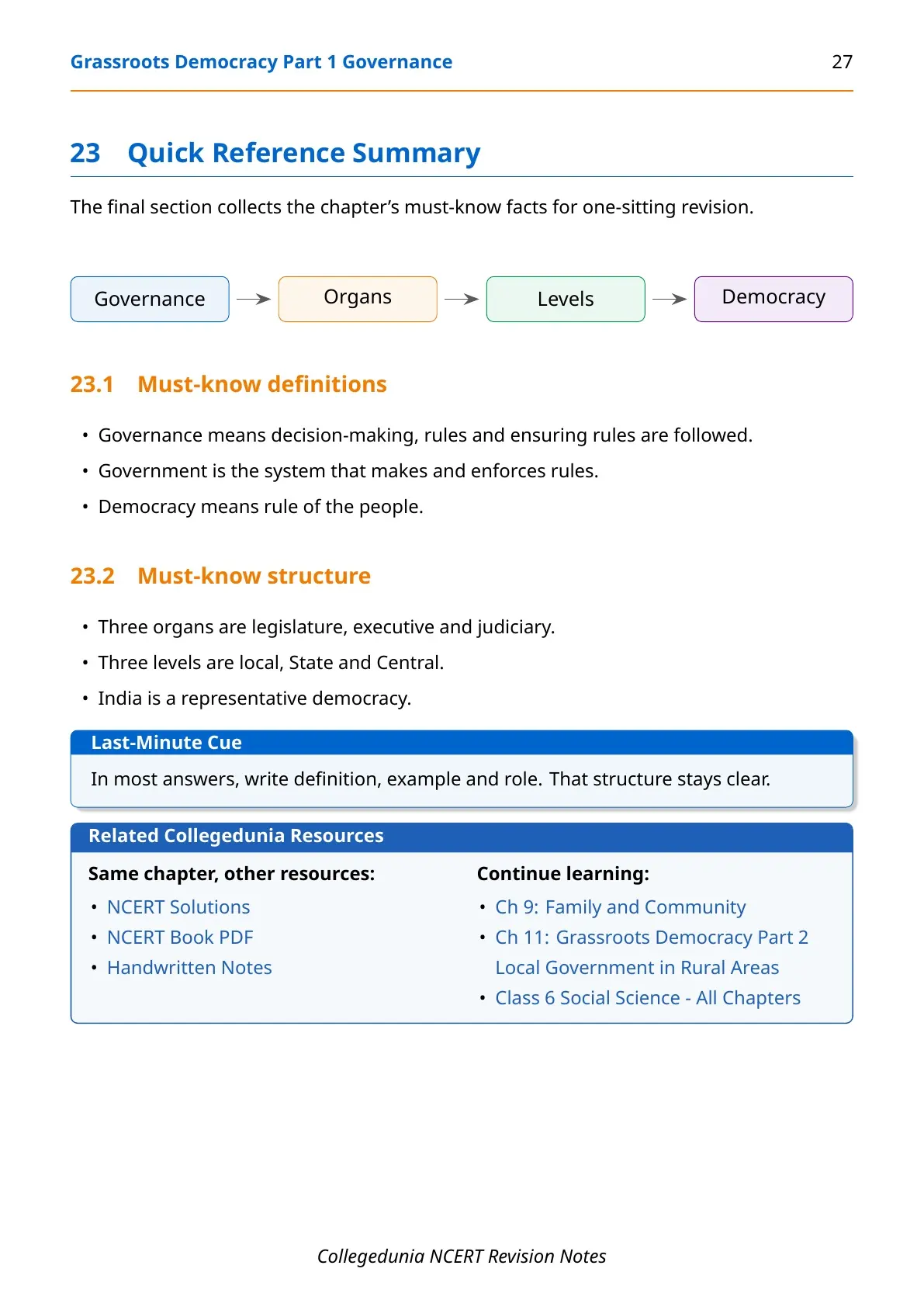
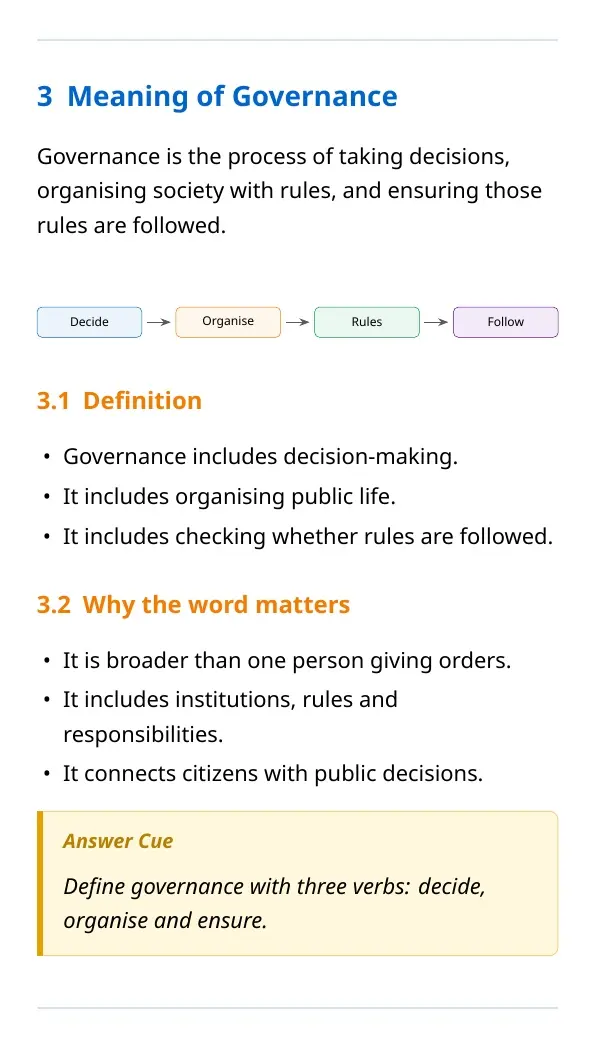
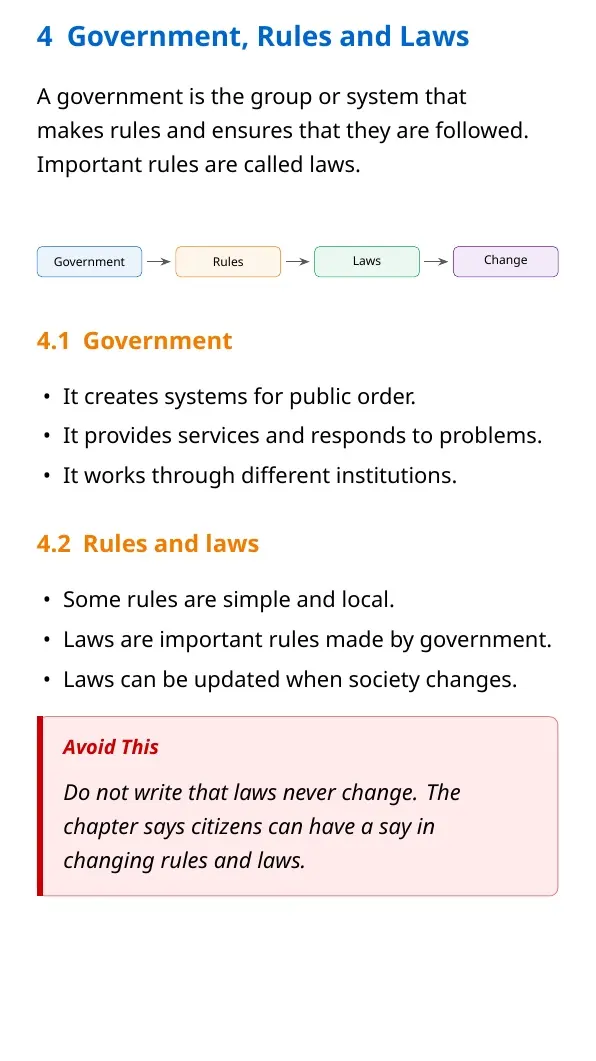
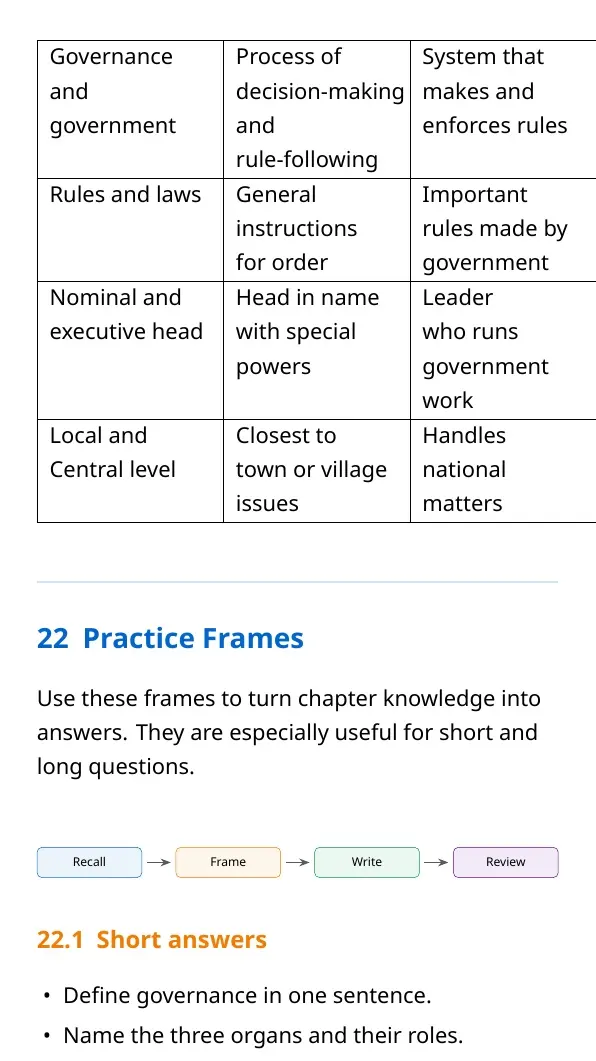
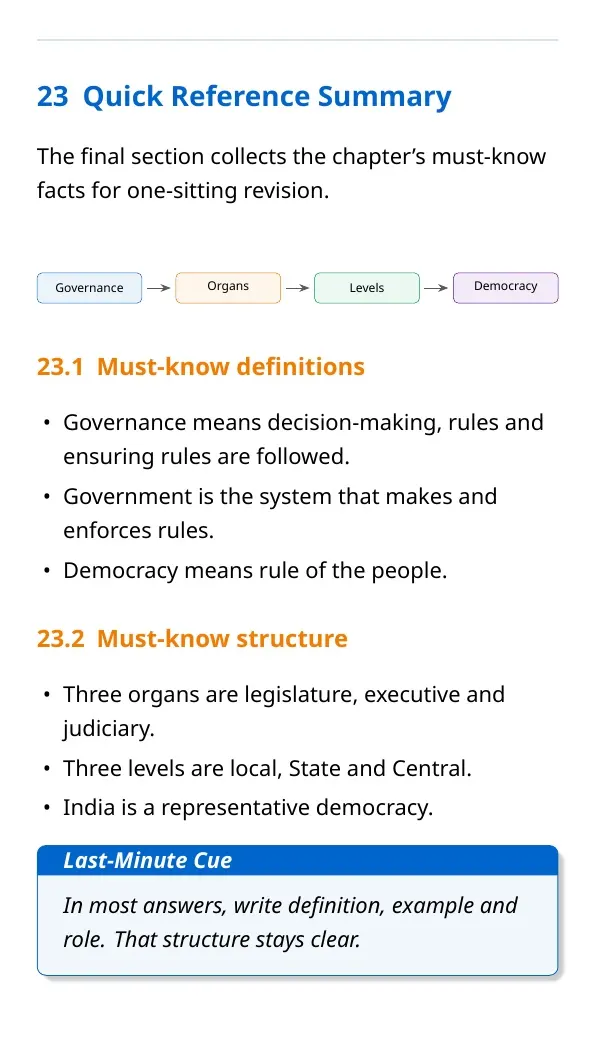
Governance is the process of taking decisions, organising society with rules, and making sure those rules are followed. Government is the system that makes rules and ensures order. Some important rules are called laws.
- Rules: guide behaviour at home, school, roads and workplaces.
- Laws: important rules made by government for society.
- Government: creates and enforces rules through institutions.
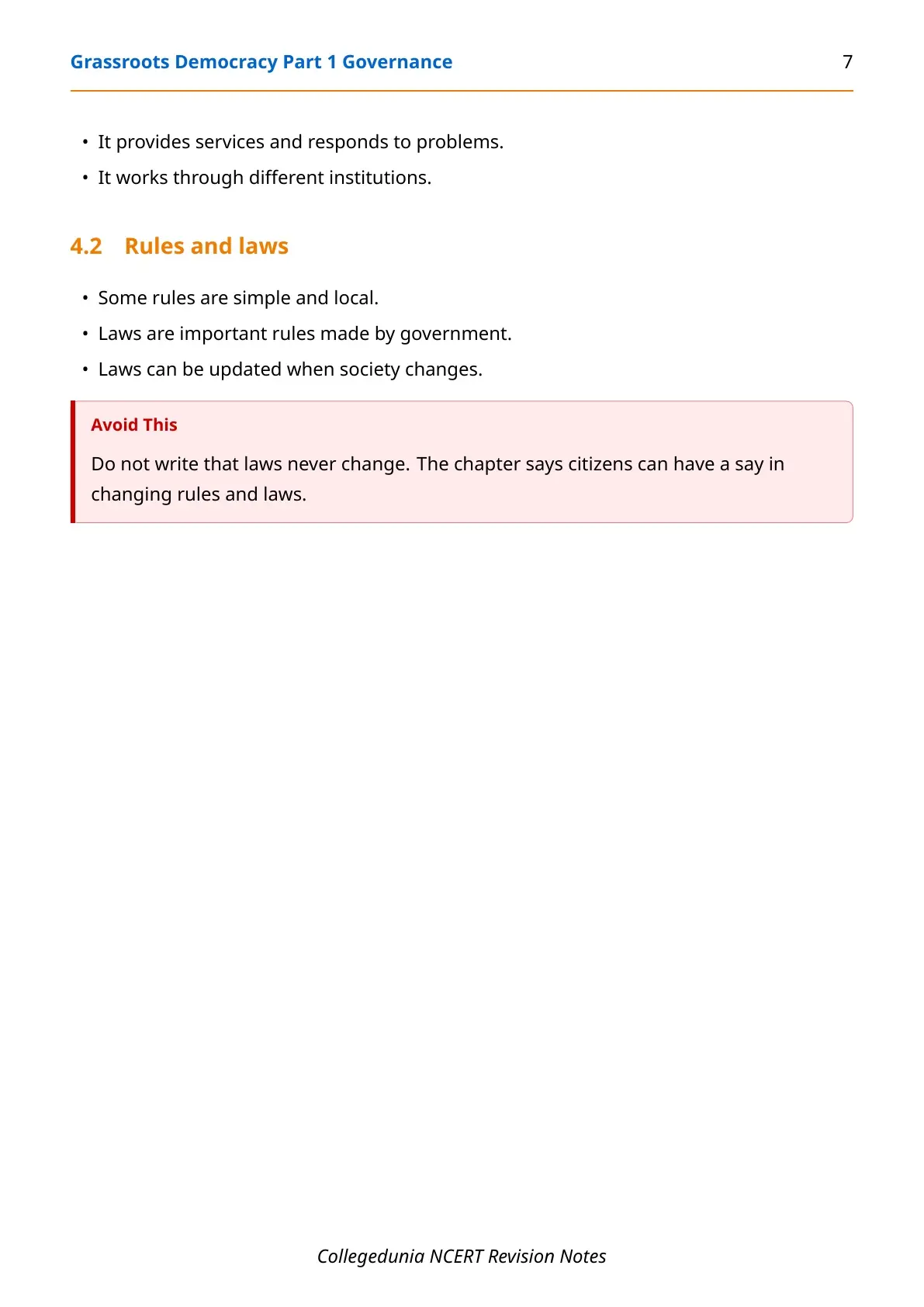
- Citizens: can have a say when rules and laws need change.
Grassroots Democracy Chapter 10 Revision Video
Source: PW Class 6 on YouTube
Three Organs and Three Levels of Government
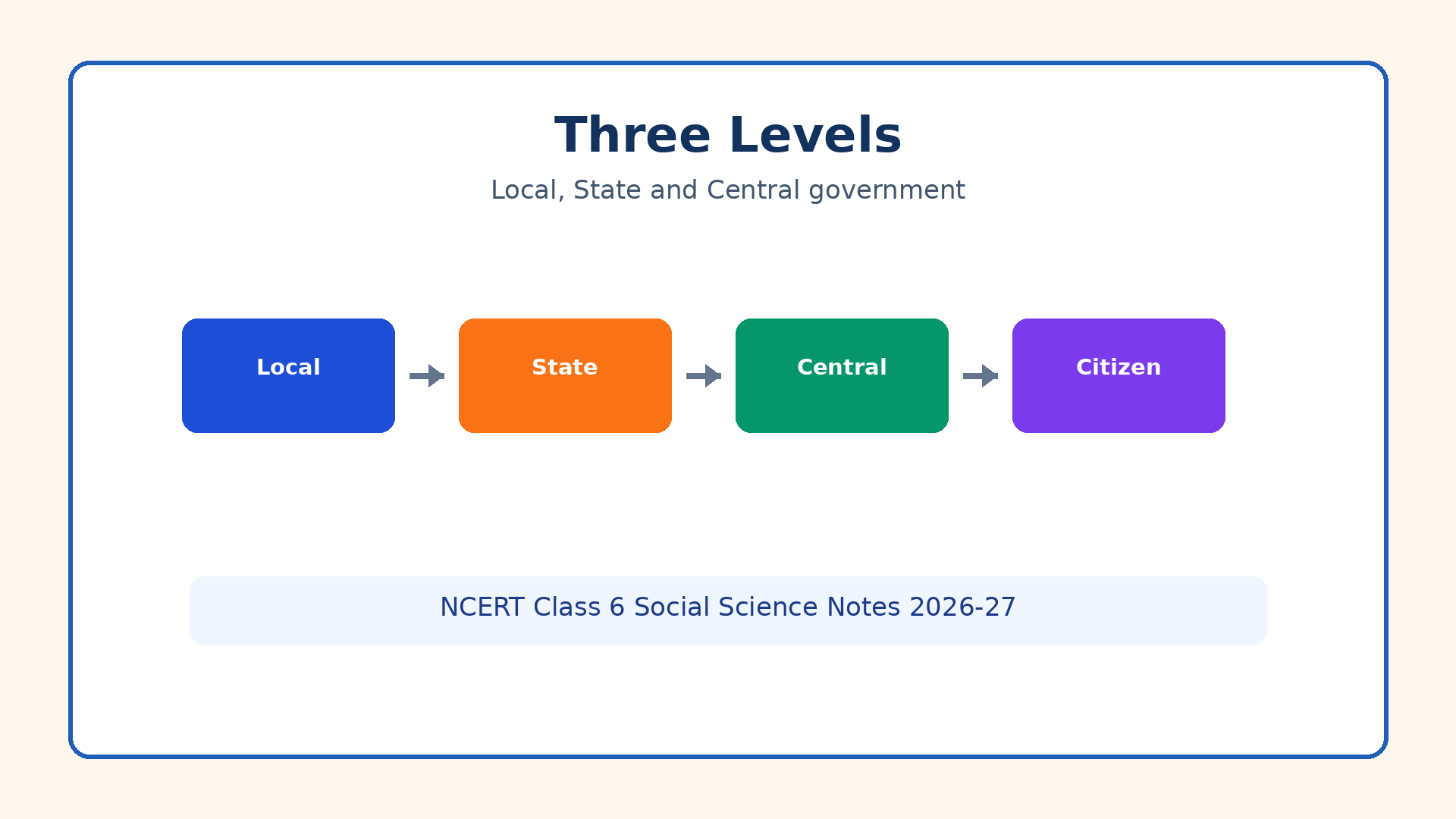
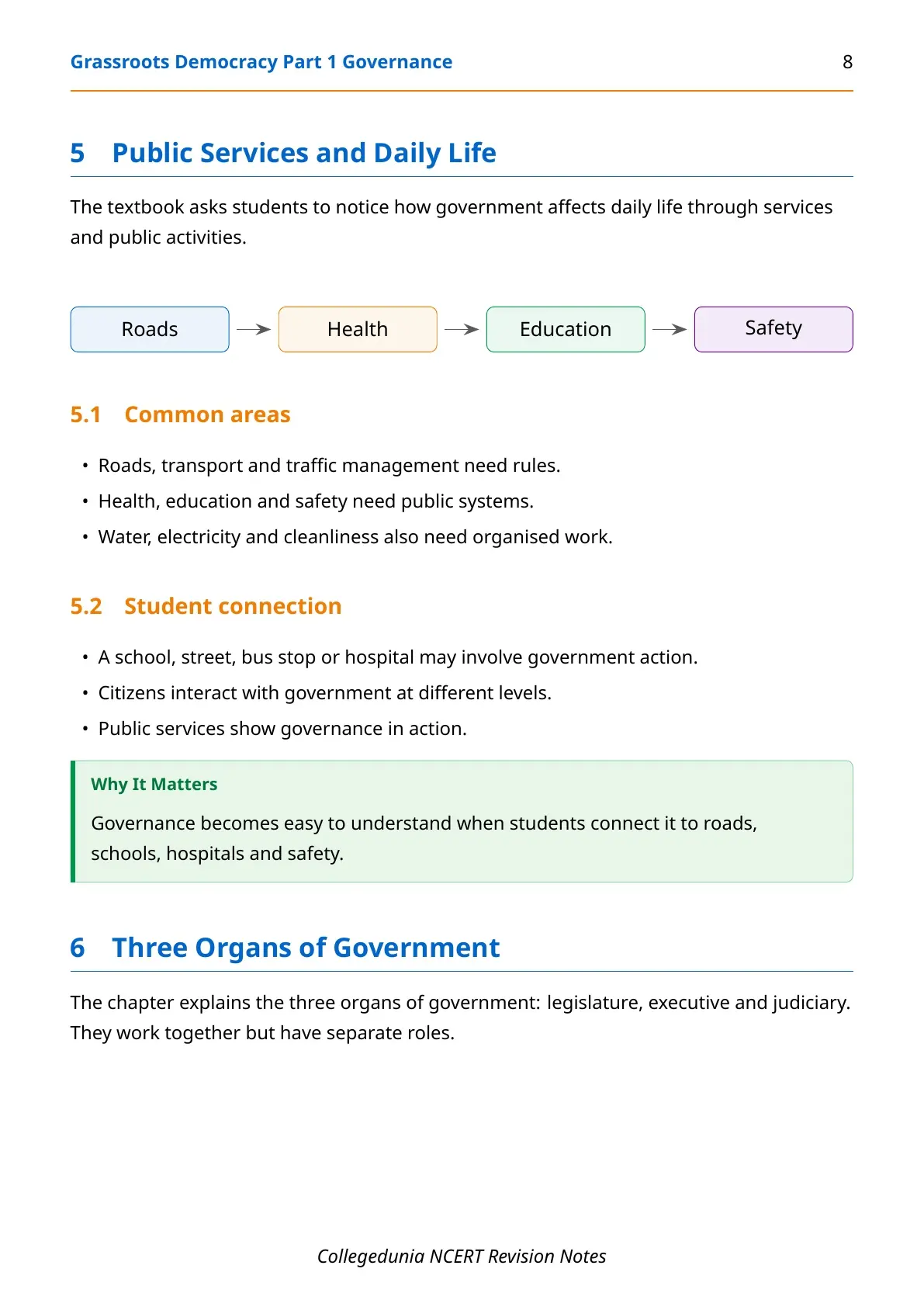
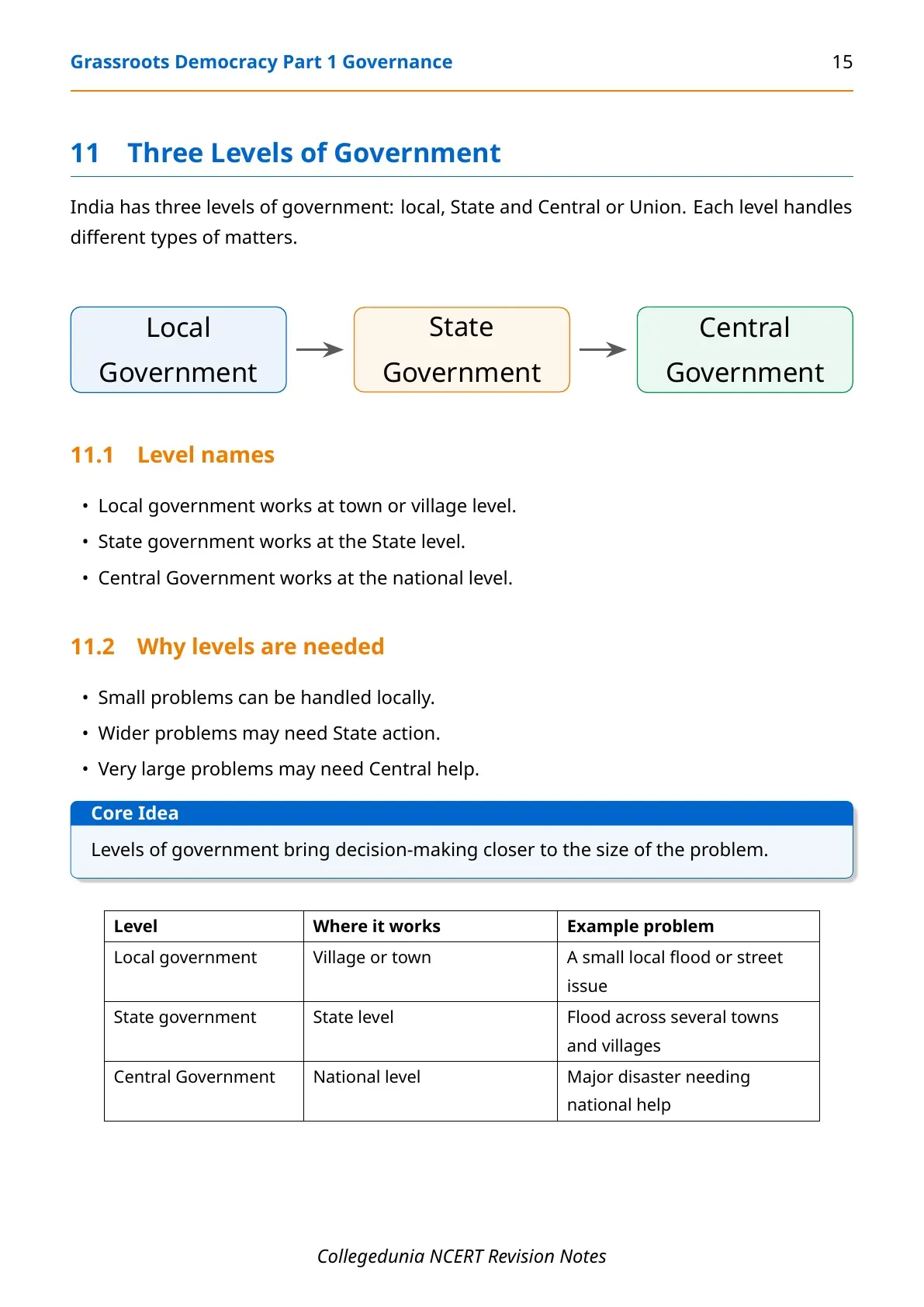
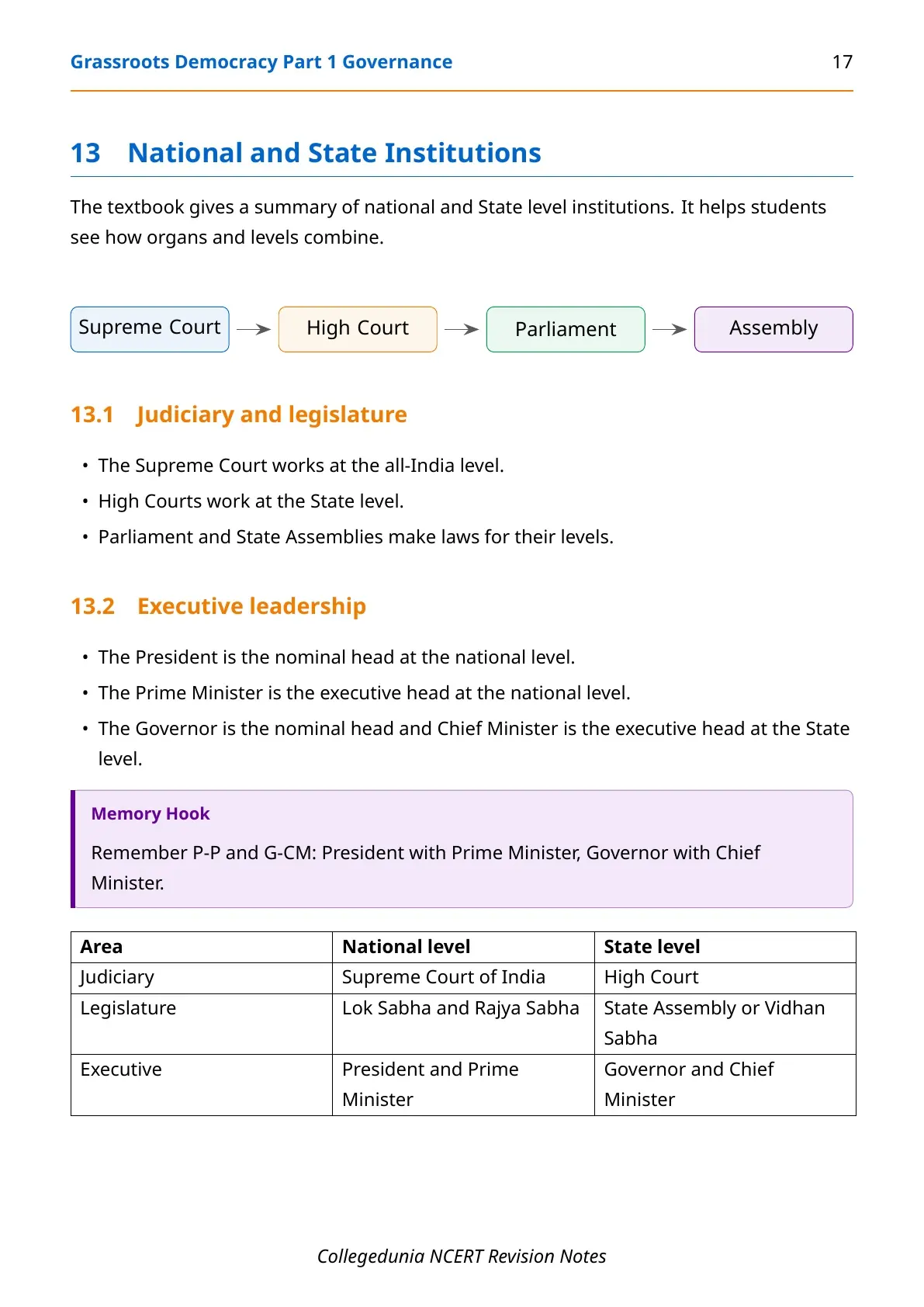
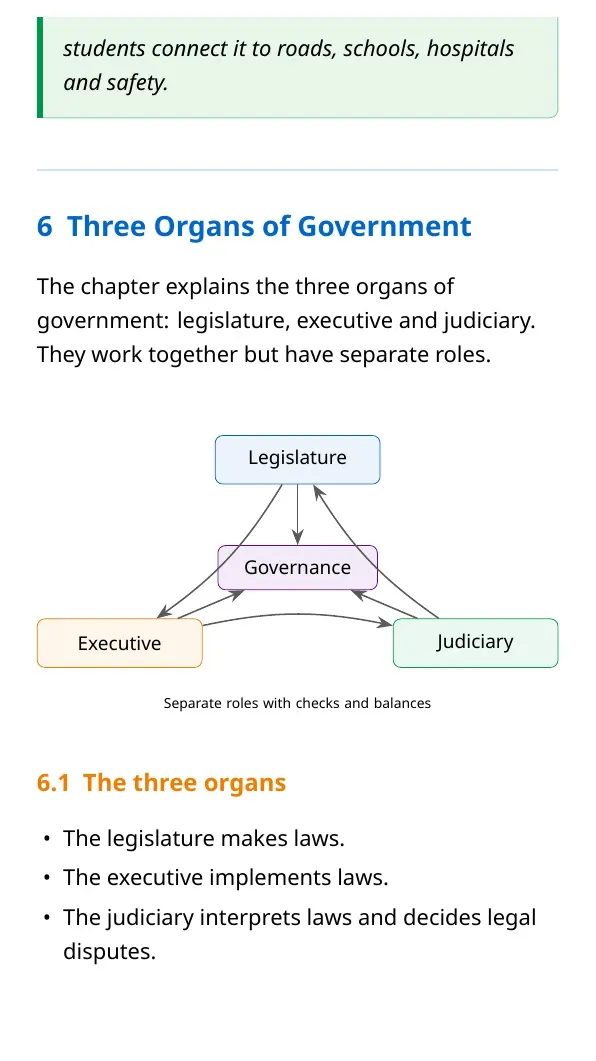
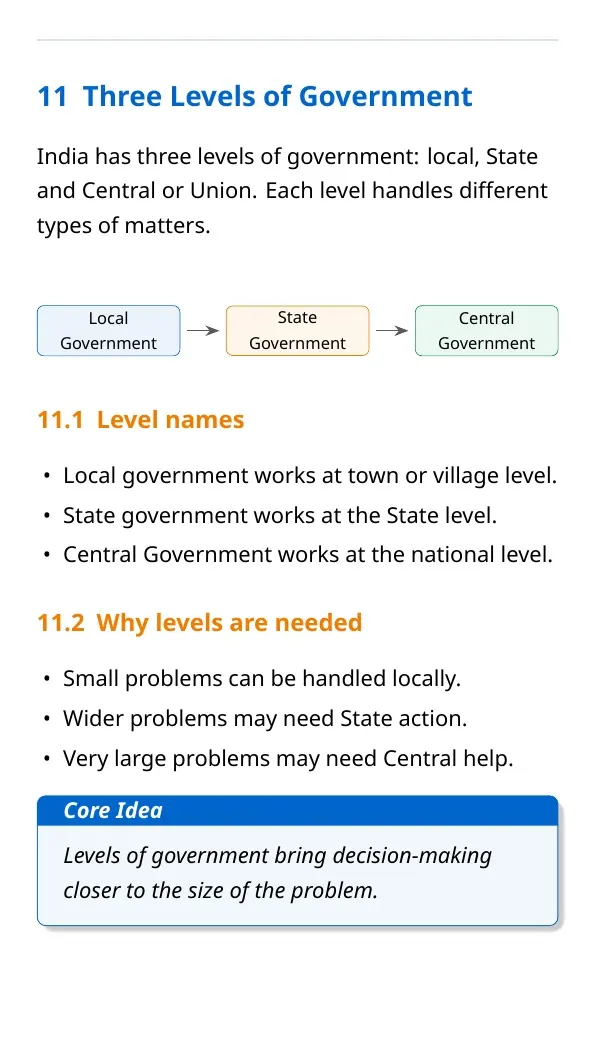
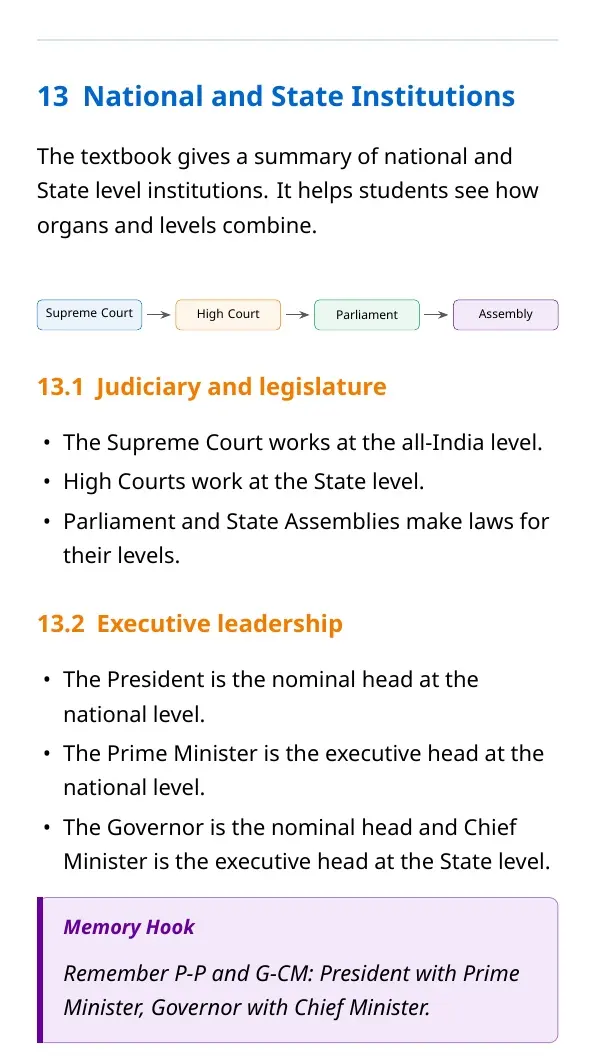
The three organs of government are legislature, executive and judiciary. India also has three levels of government: local, State and Central. The organs explain what government does, while the levels explain where decisions are handled.
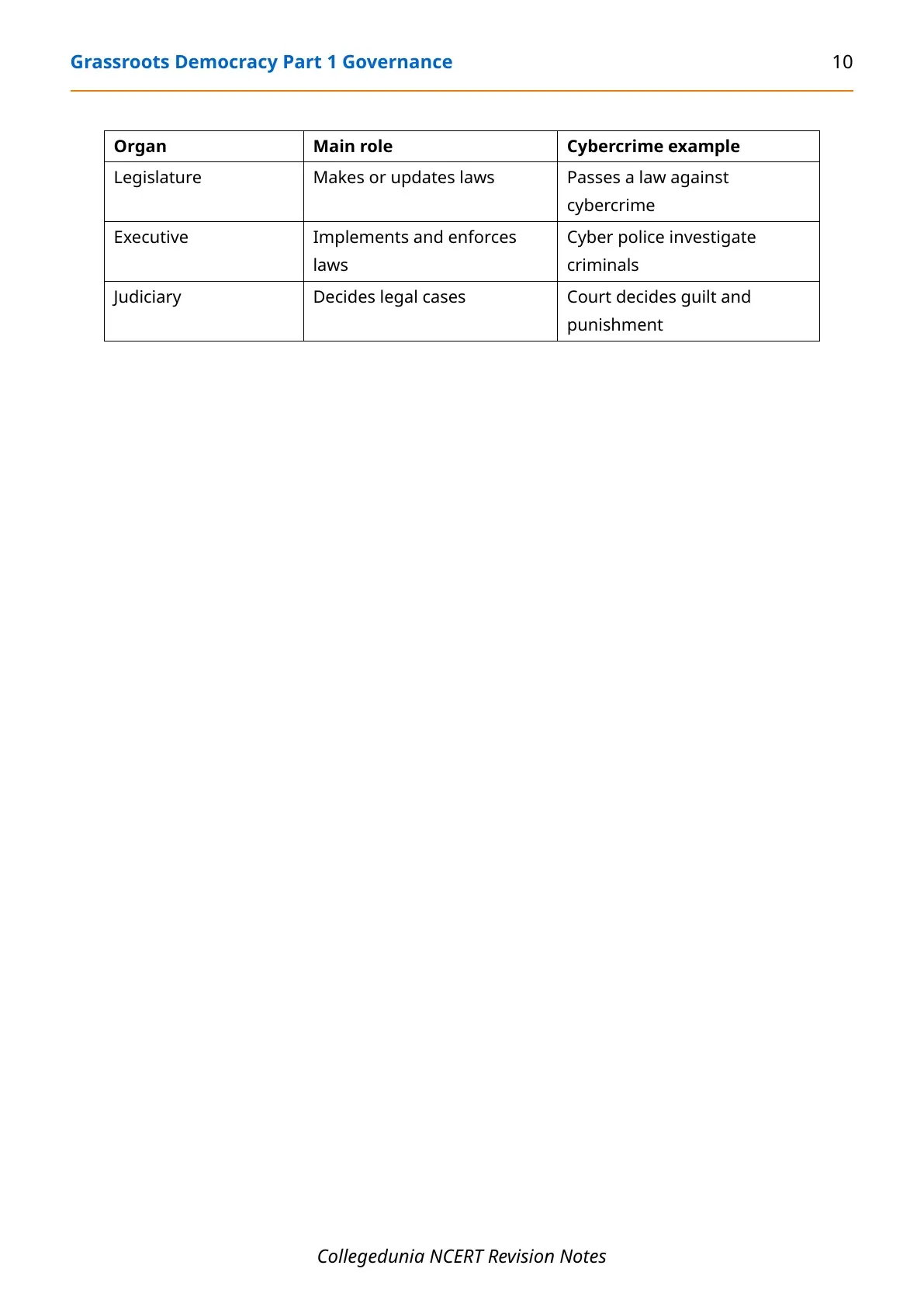
| Term | Role | Quick example |
|---|---|---|
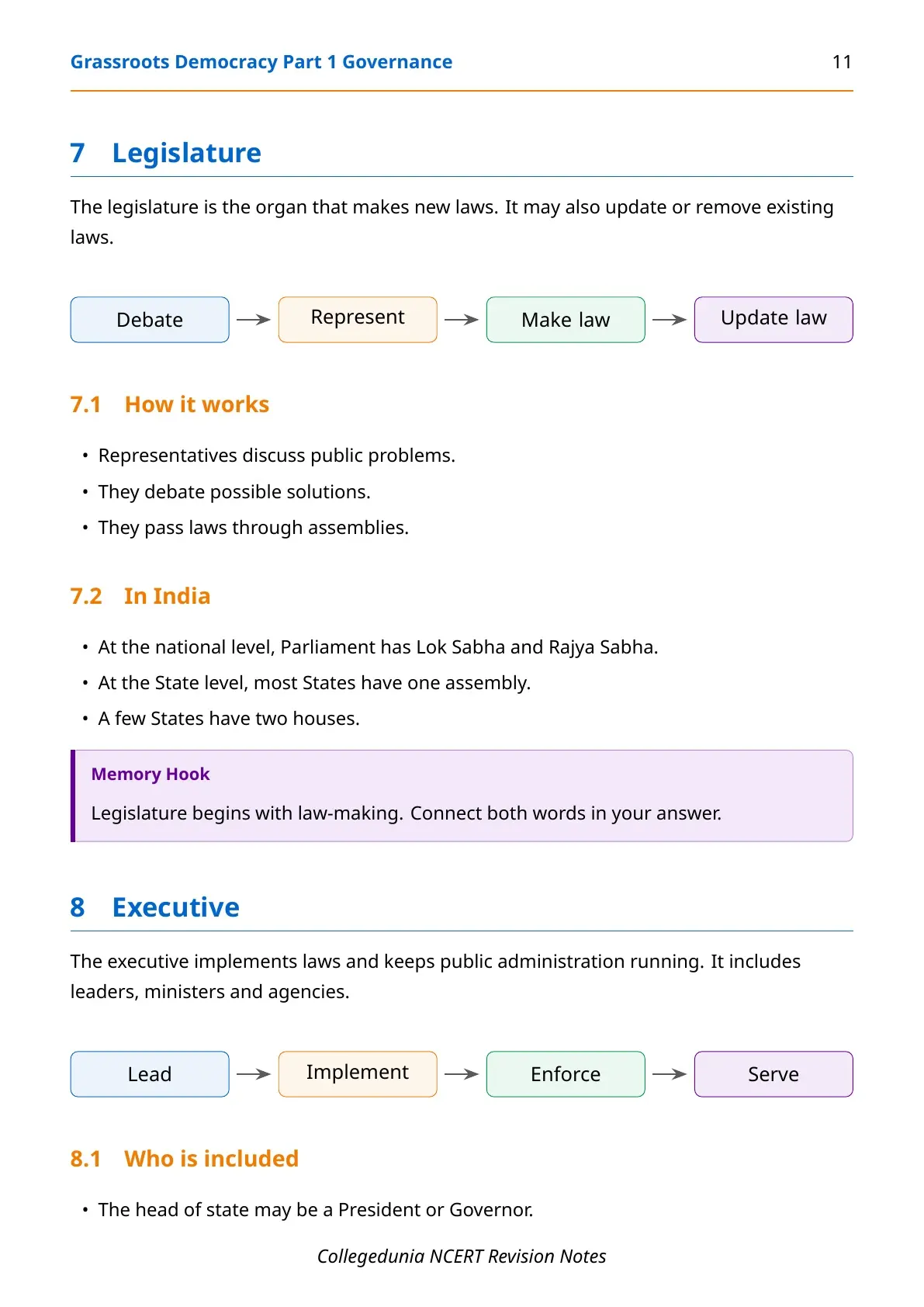
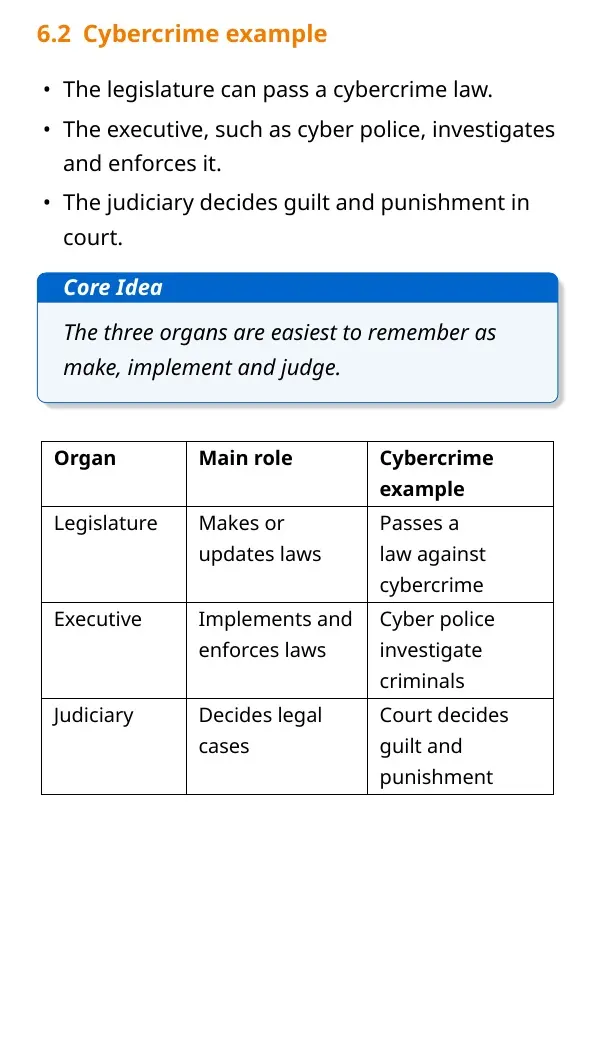
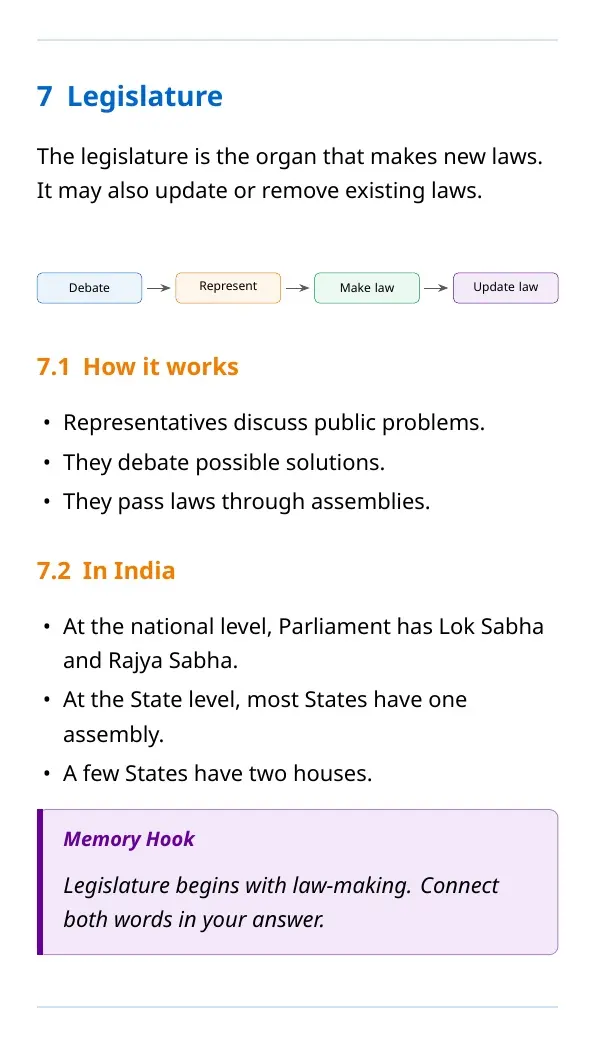
| Legislature | Makes laws | Passes a cybercrime law |
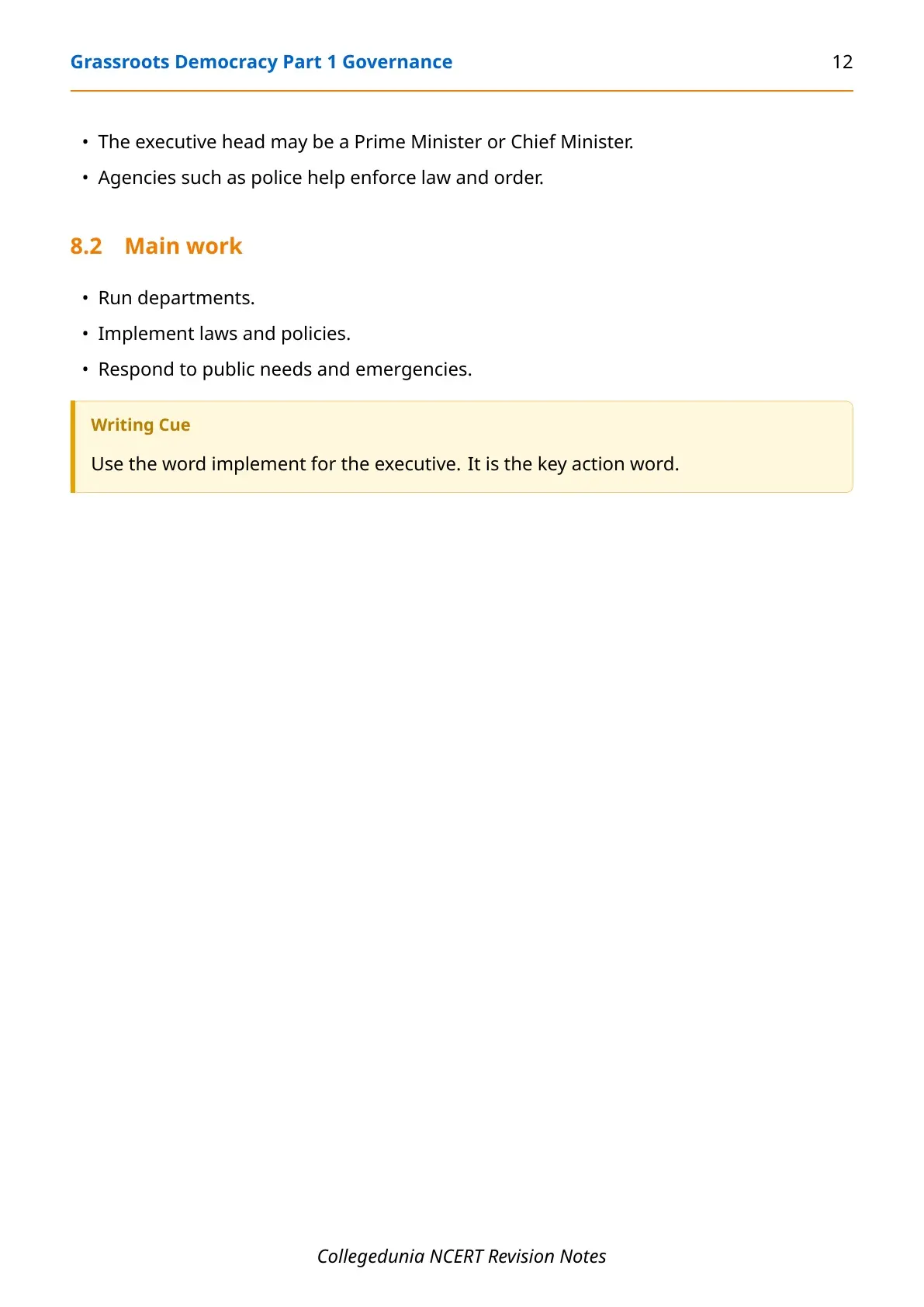
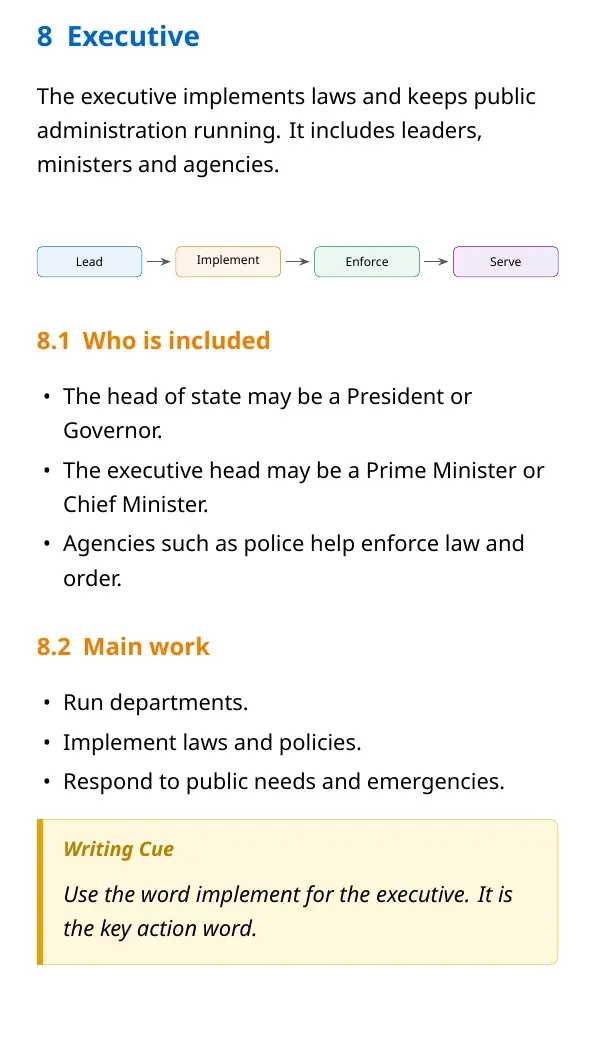
| Executive | Implements laws | Police investigate and enforce |
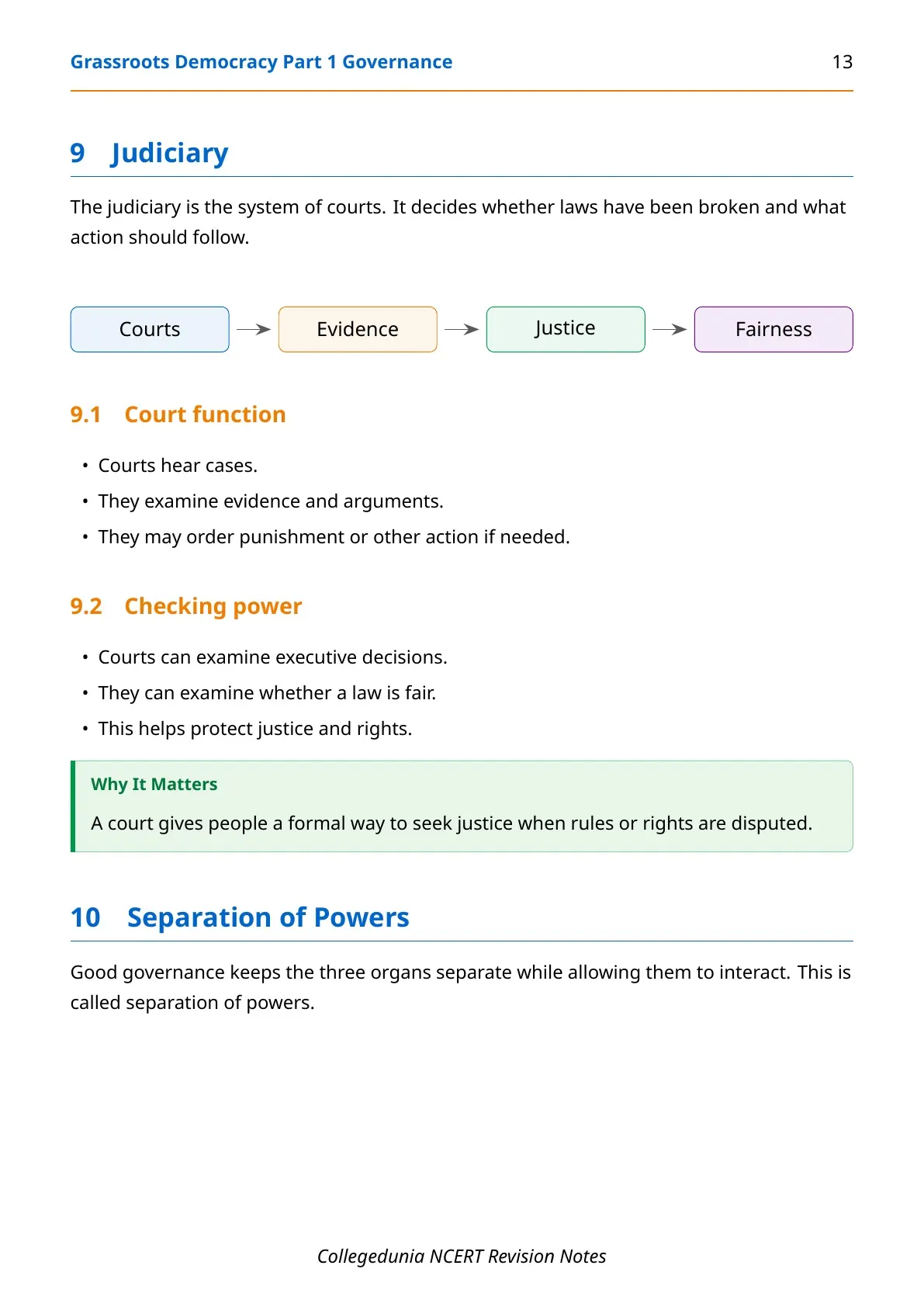
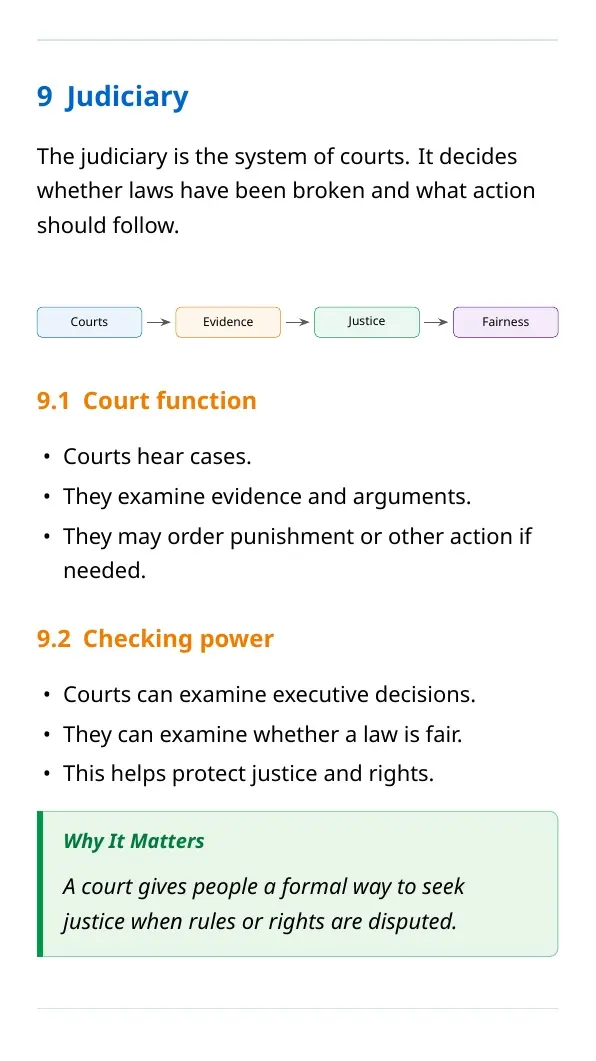
| Judiciary | Decides legal cases | Court decides guilt and punishment |
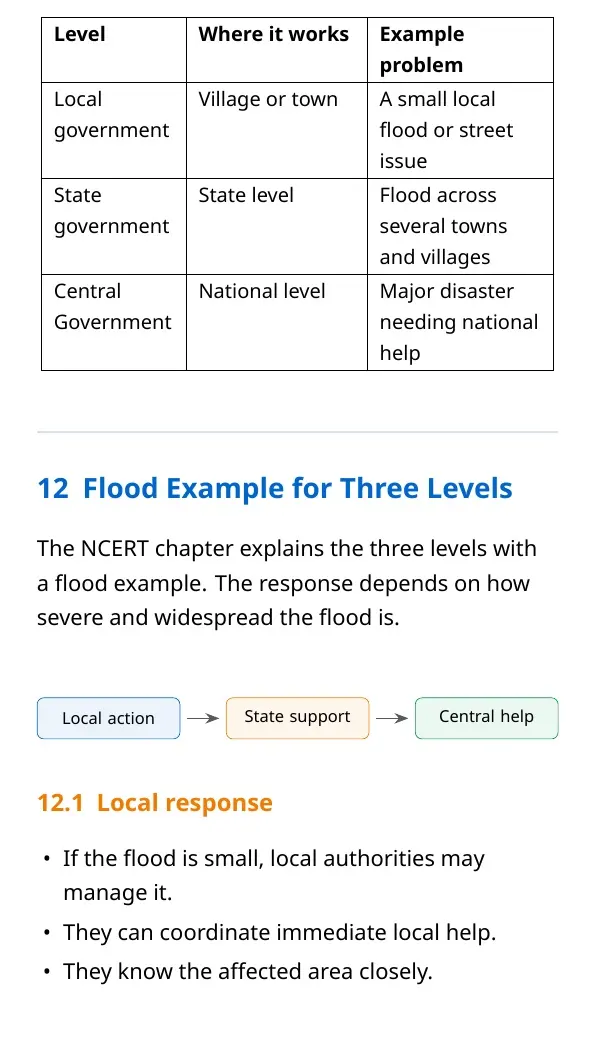
| Local government | Handles town or village issues | Small local problem |
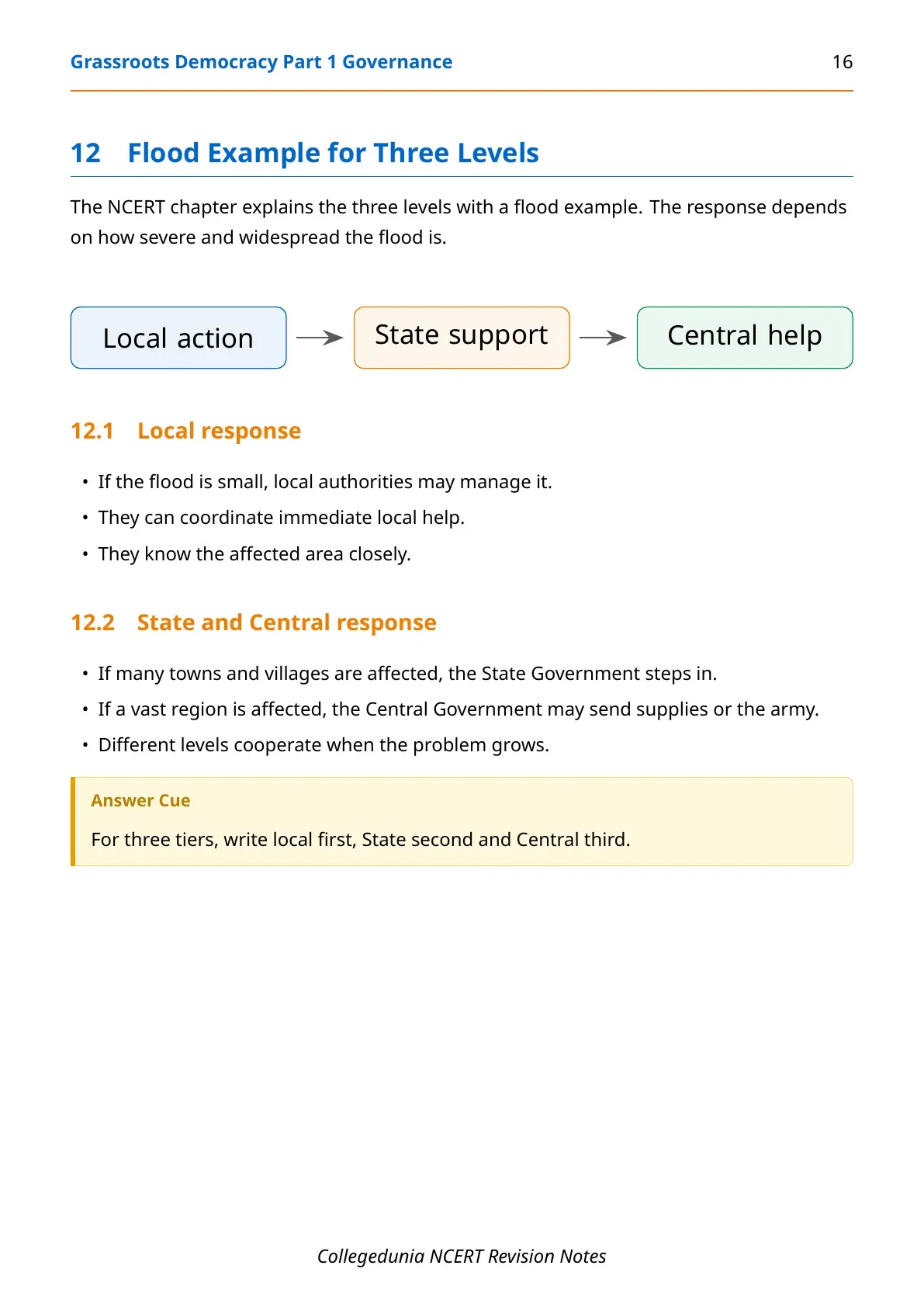
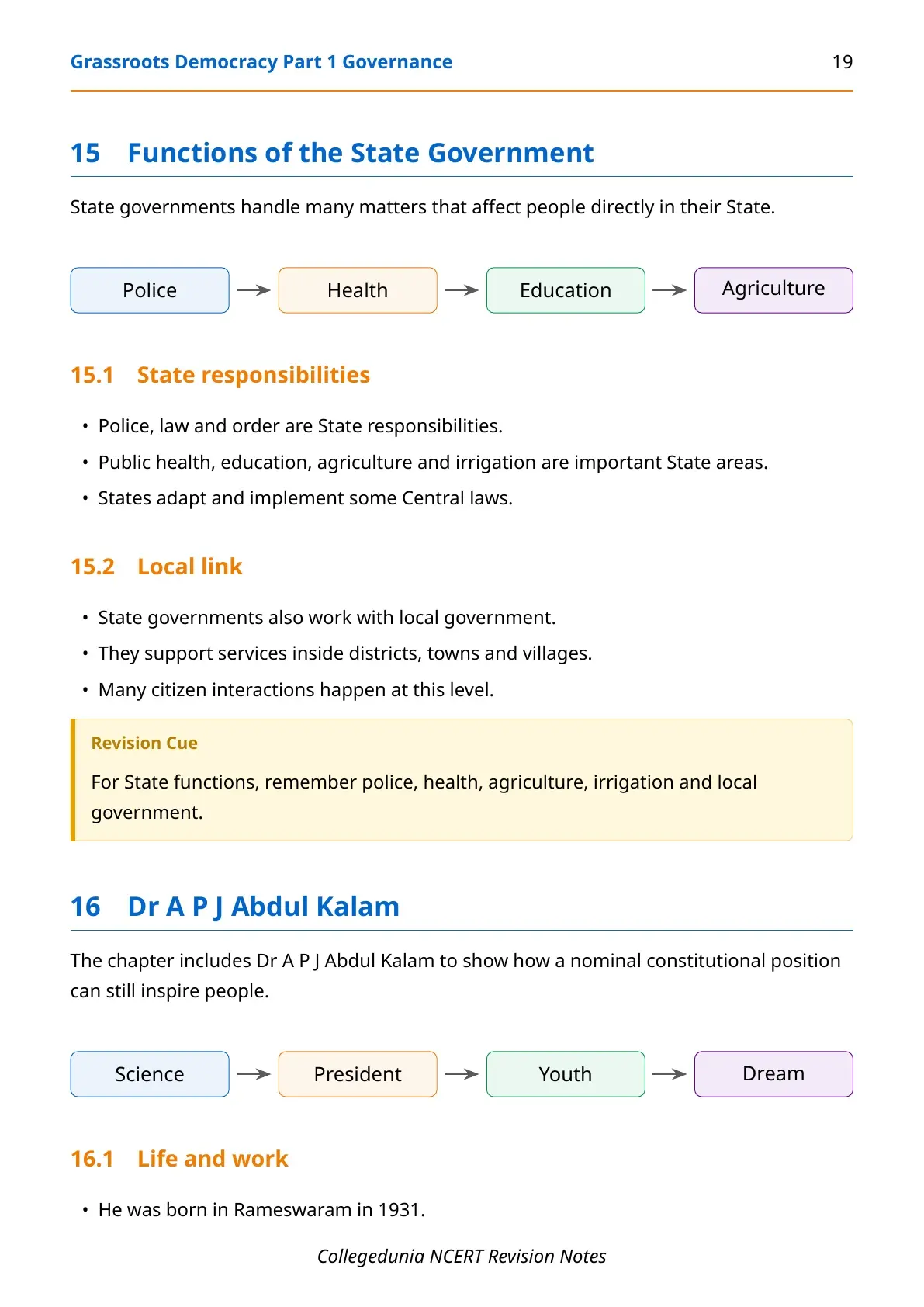
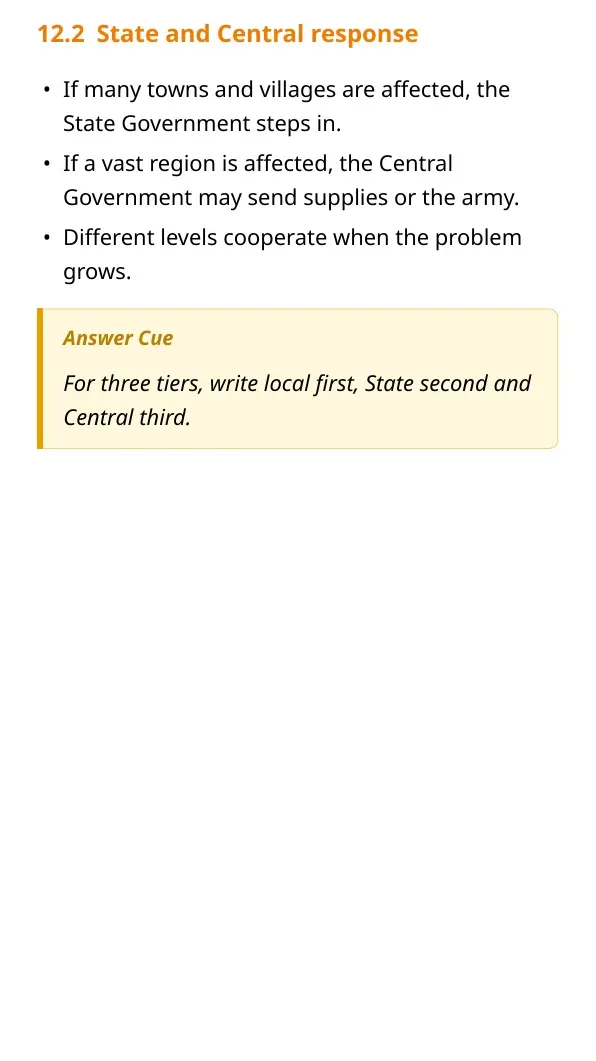
| State government | Handles State matters | Flood across districts |
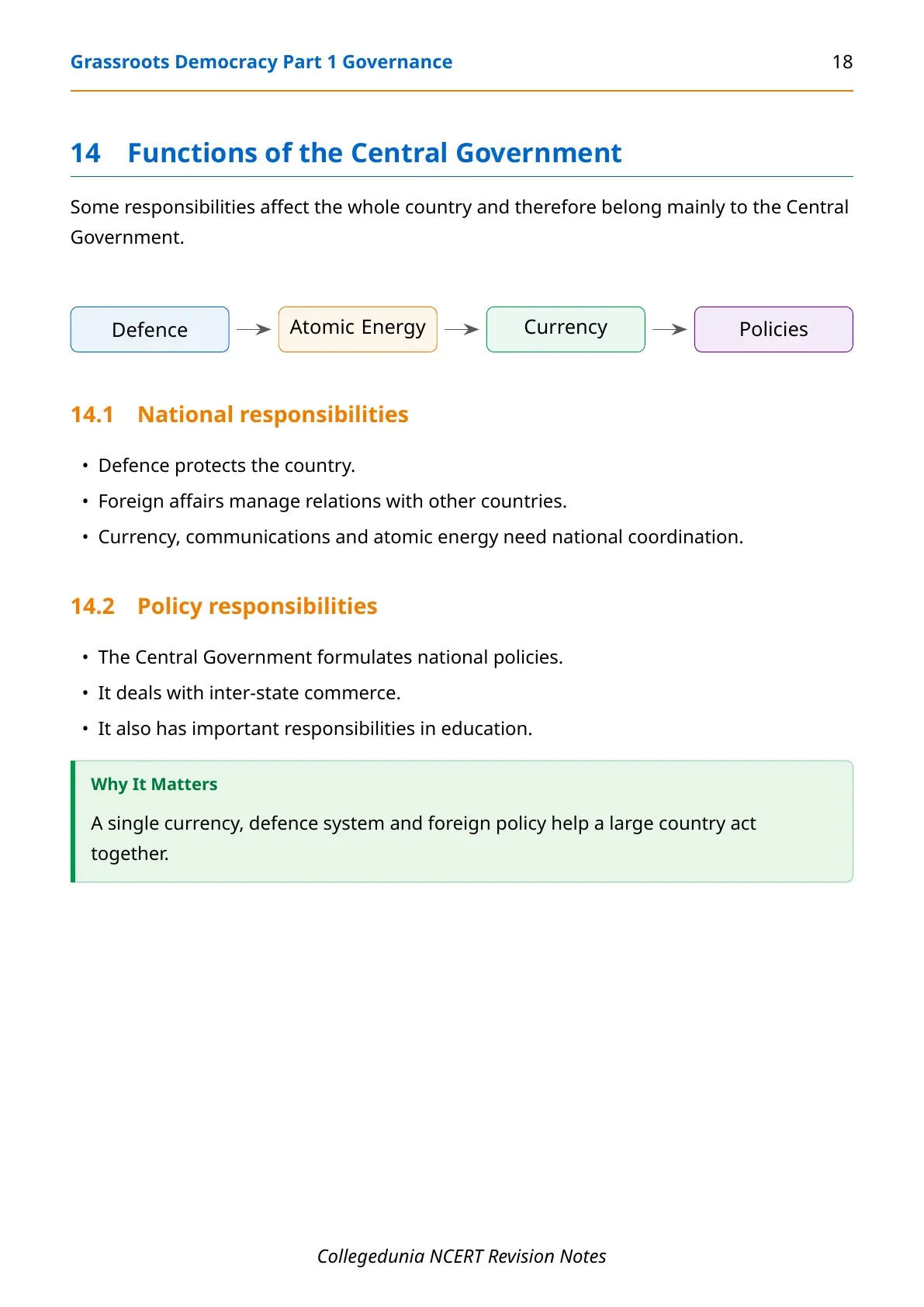
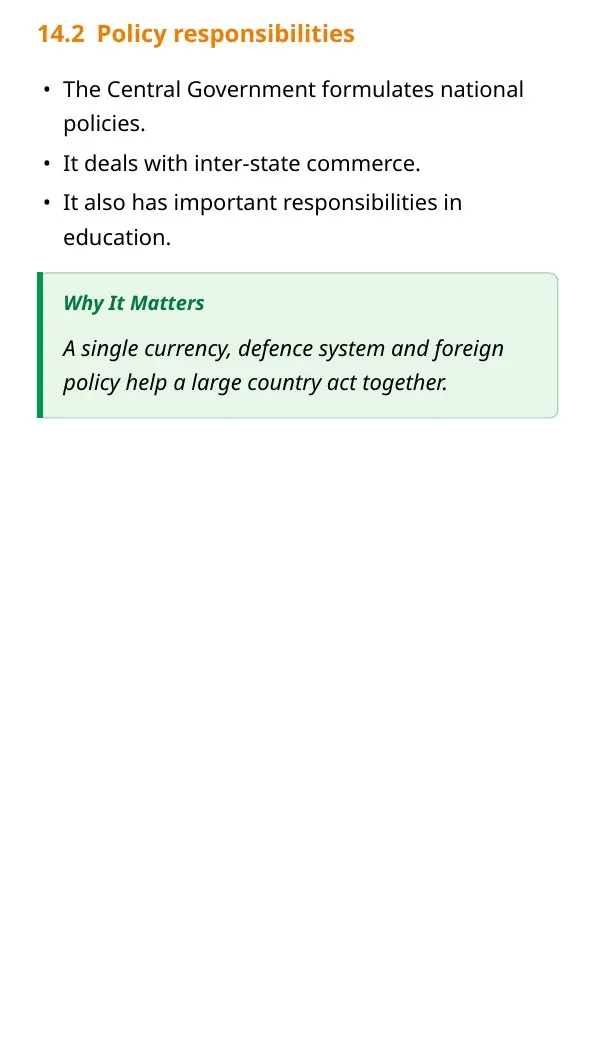
| Central Government | Handles national matters | Major disaster relief or defence |
Democracy, Voting and Citizen Participation
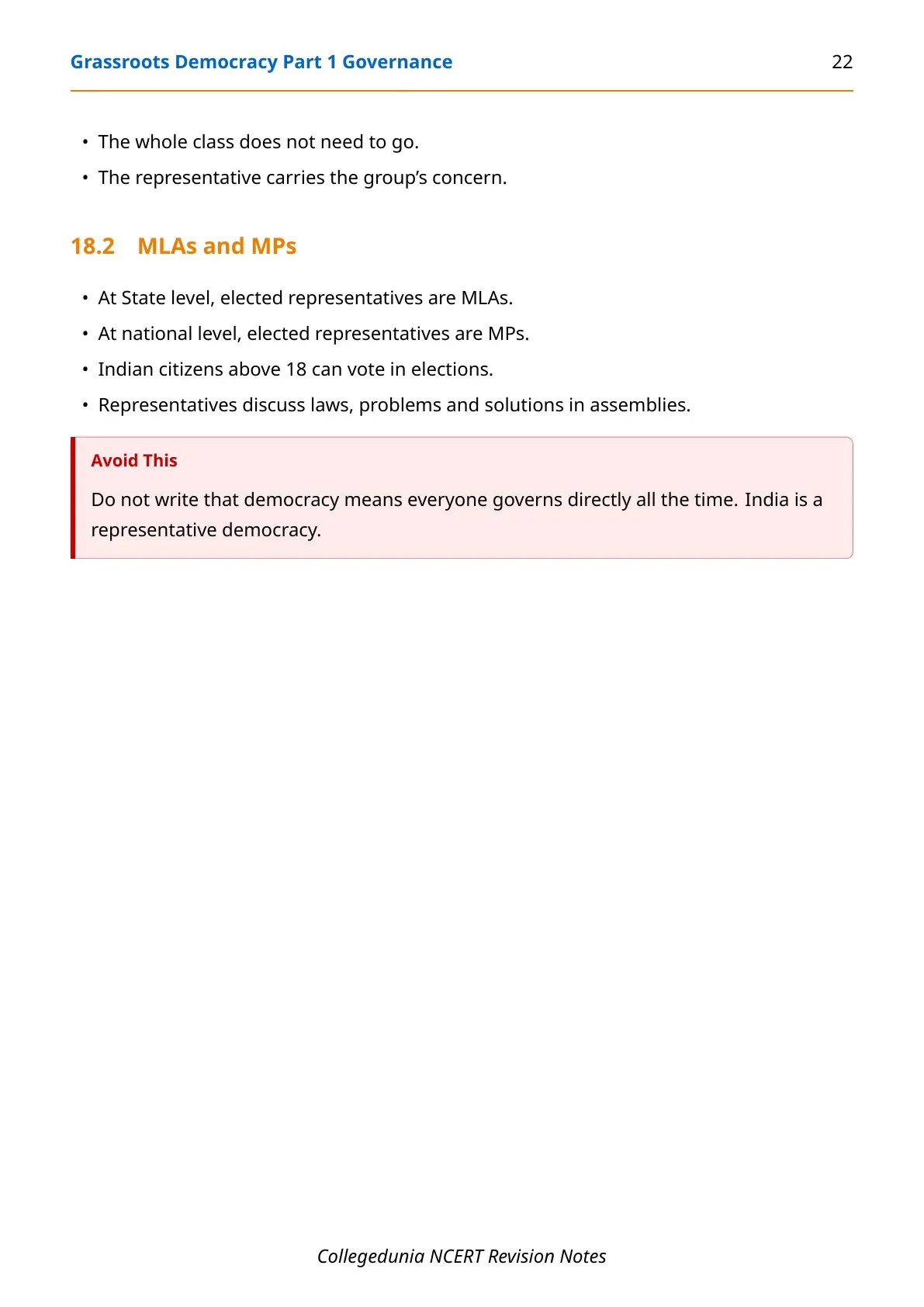
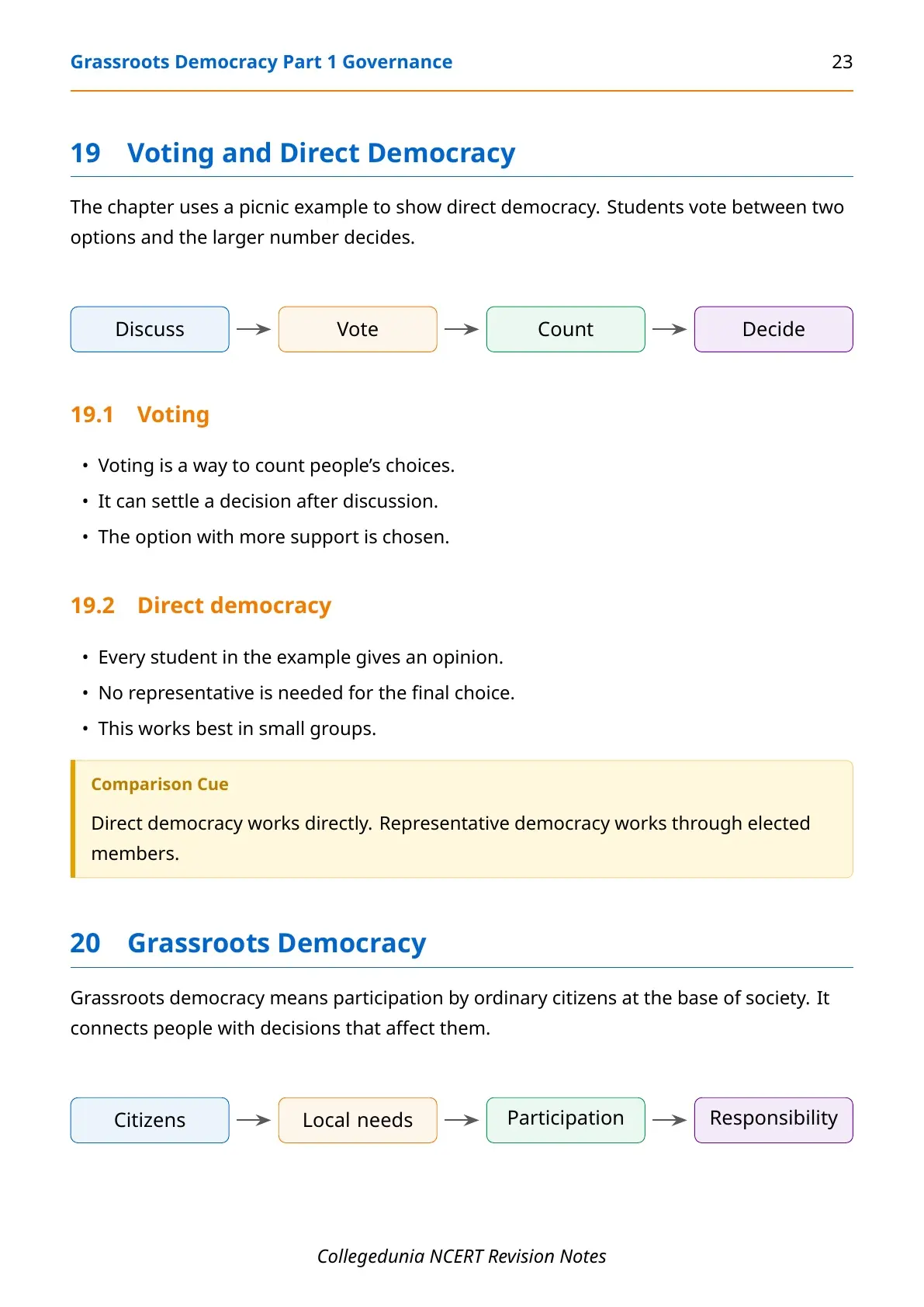
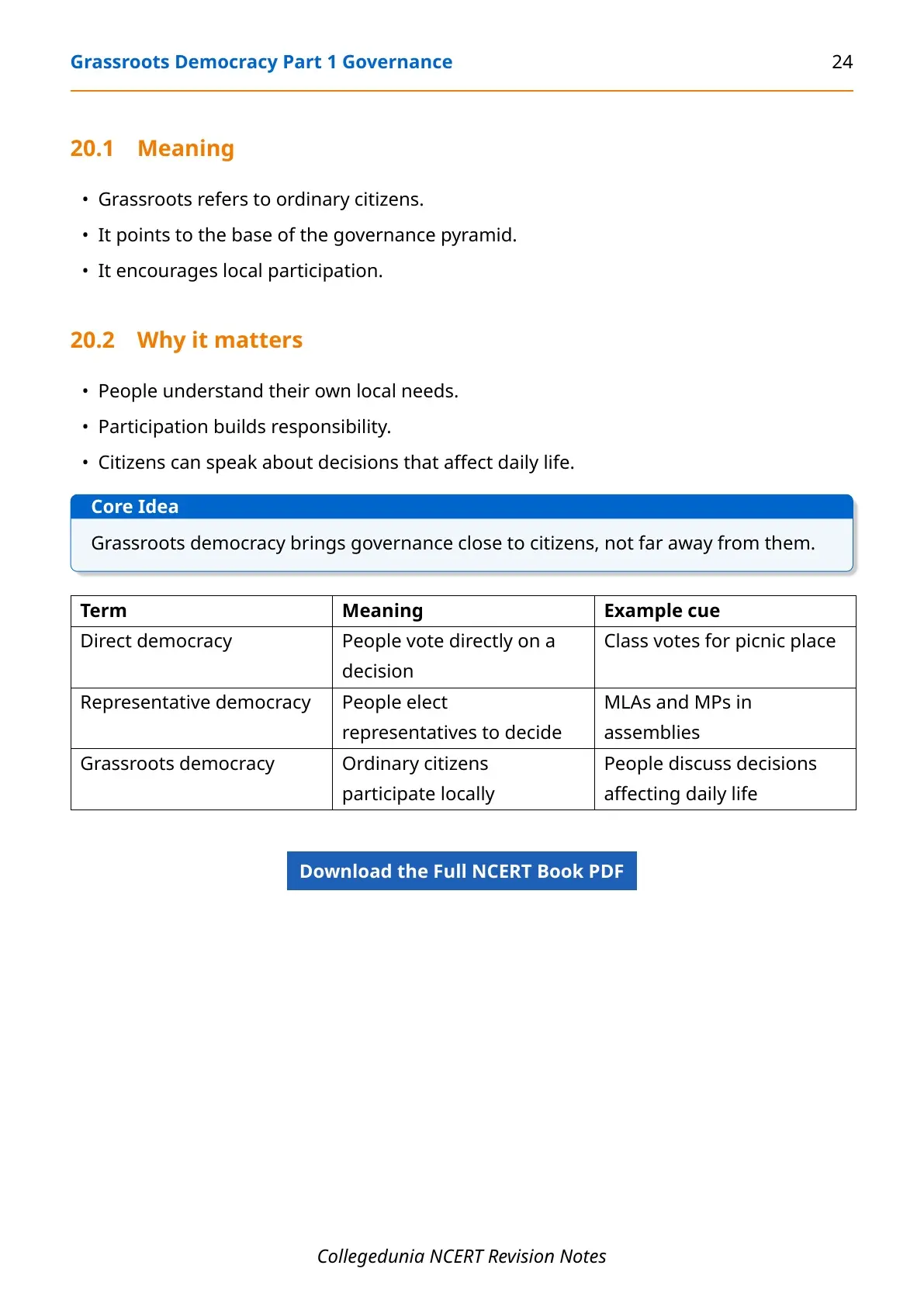
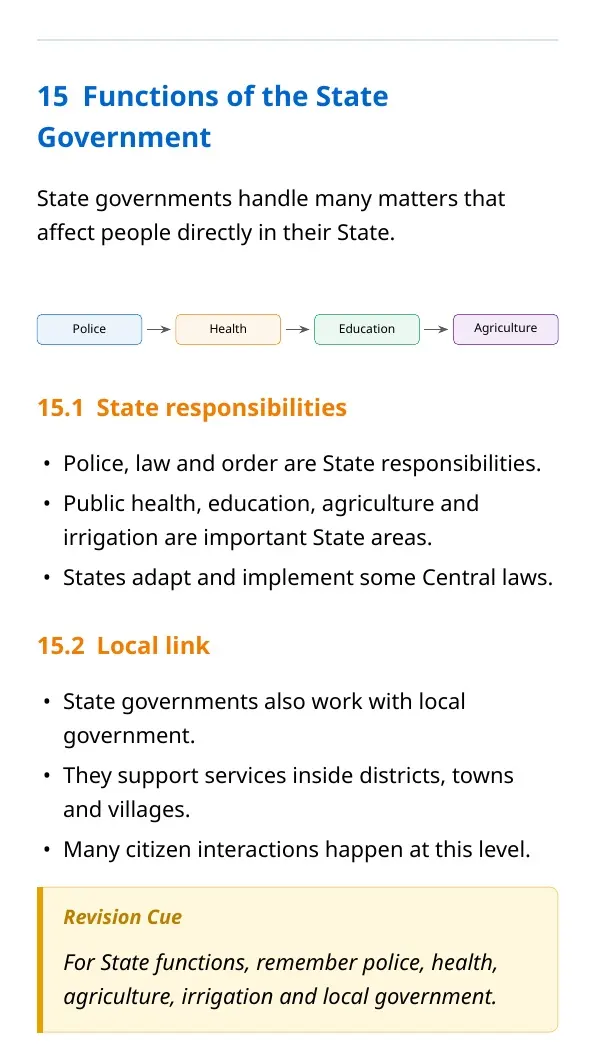
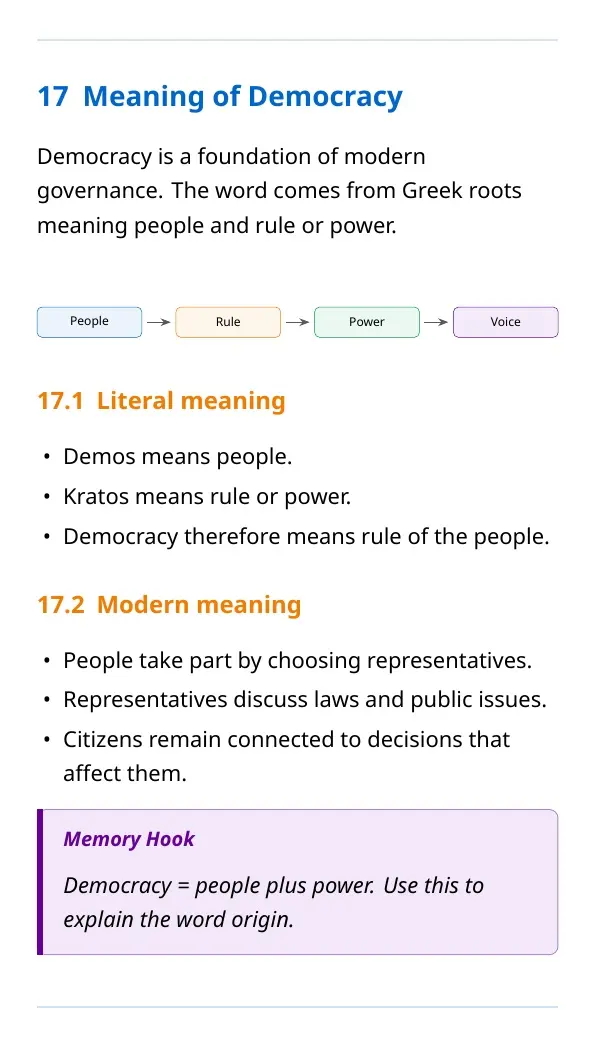
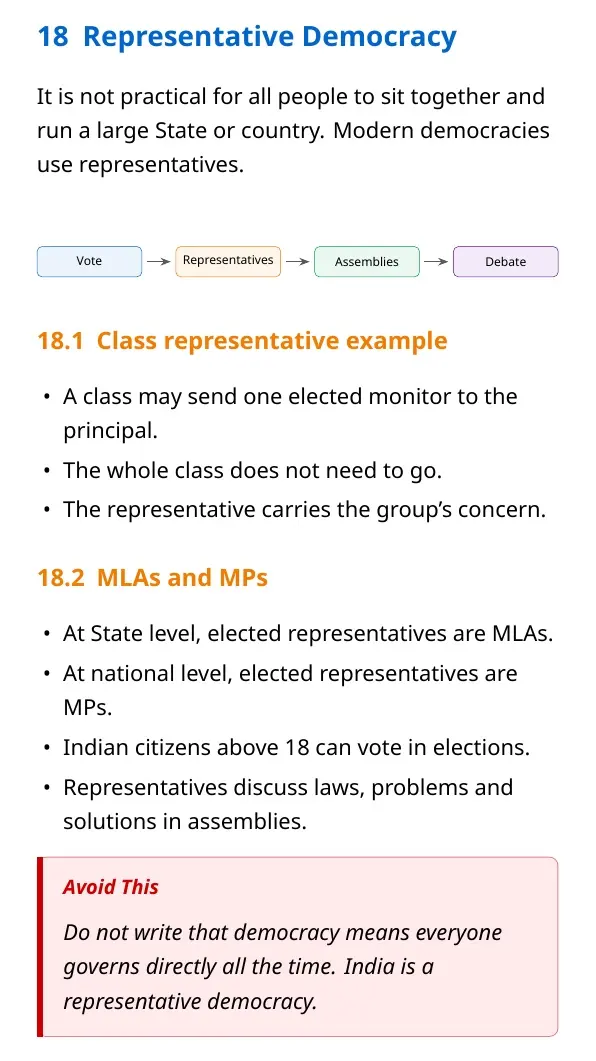
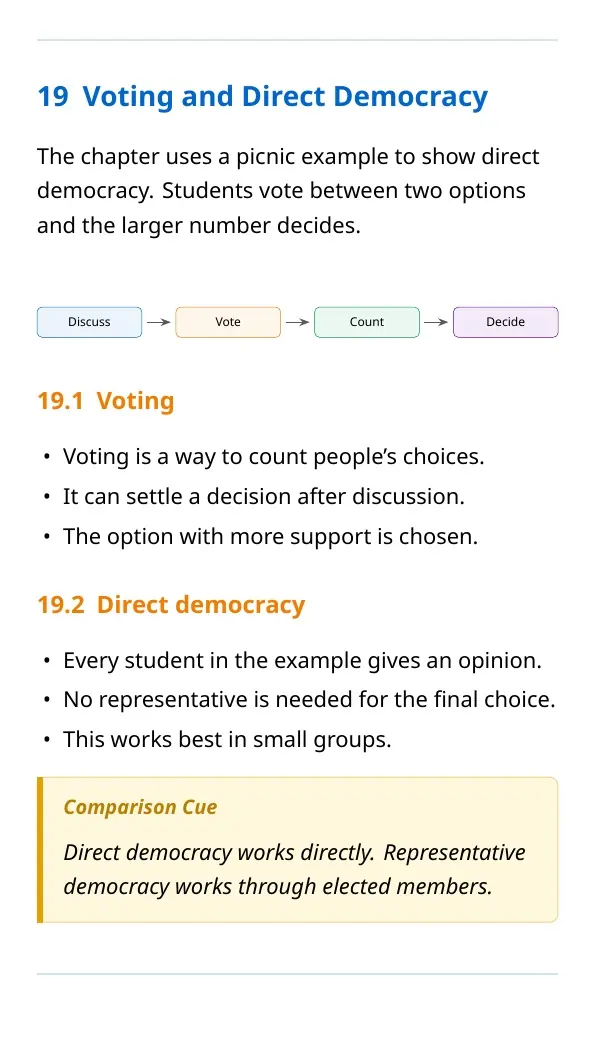
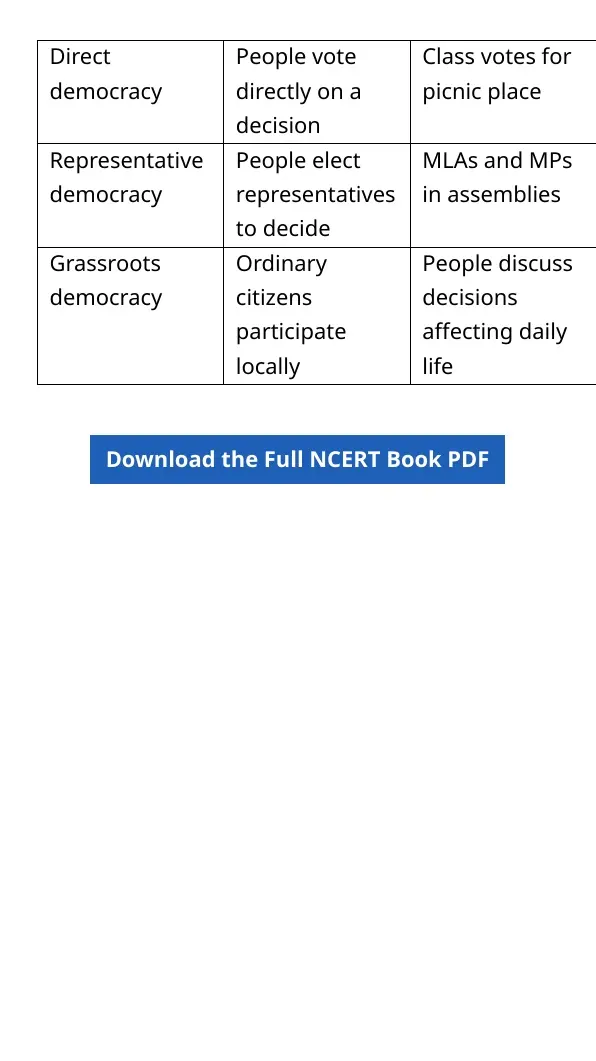
Democracy literally means rule of the people. In a large country, people choose representatives through elections. MLAs work at the State level and MPs work at the national level. Direct democracy can happen in small groups, such as a class voting for a picnic place.
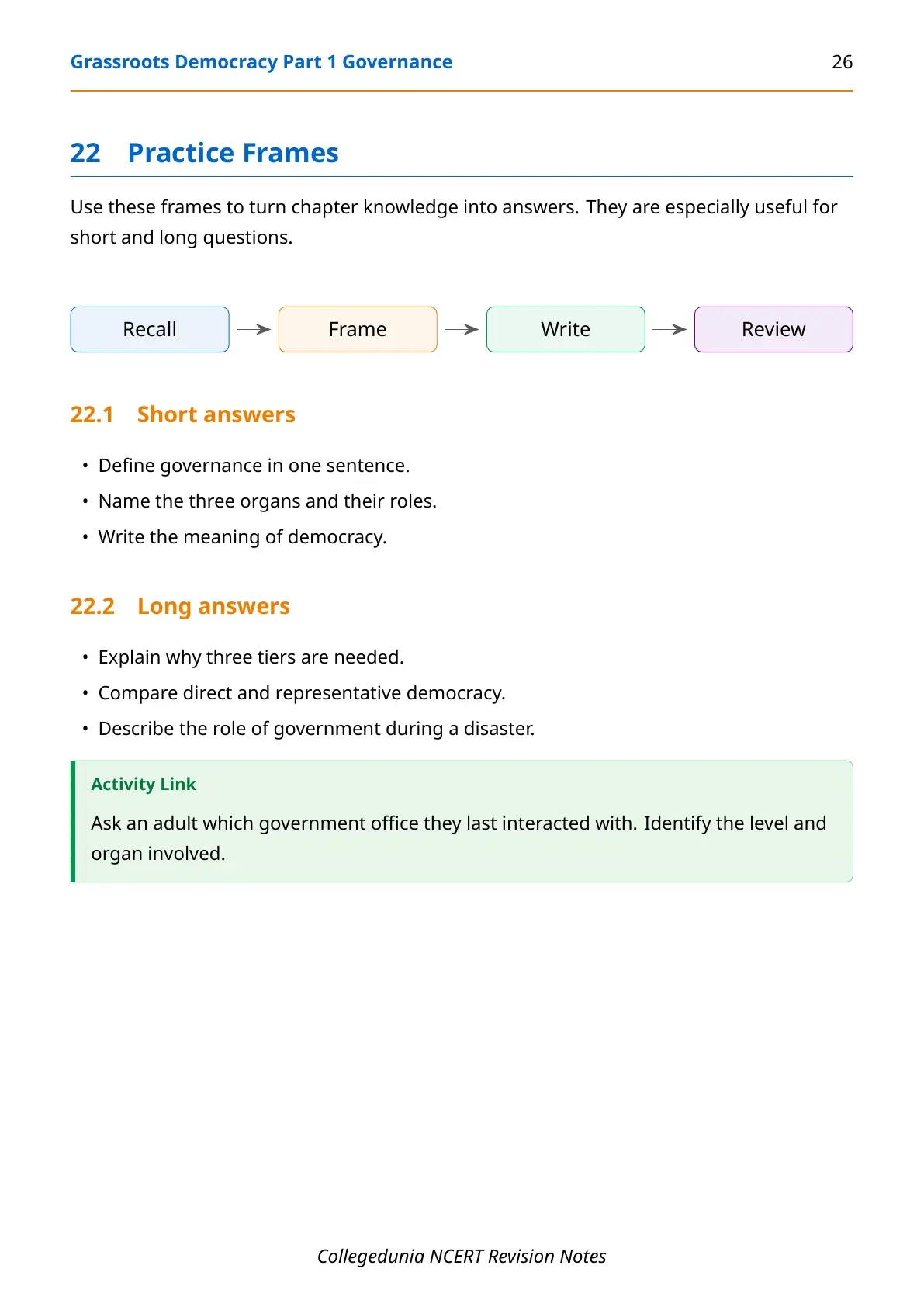
- Representative democracy: people elect members to discuss laws and public issues.
- Direct democracy: people vote directly on a decision in a small group.
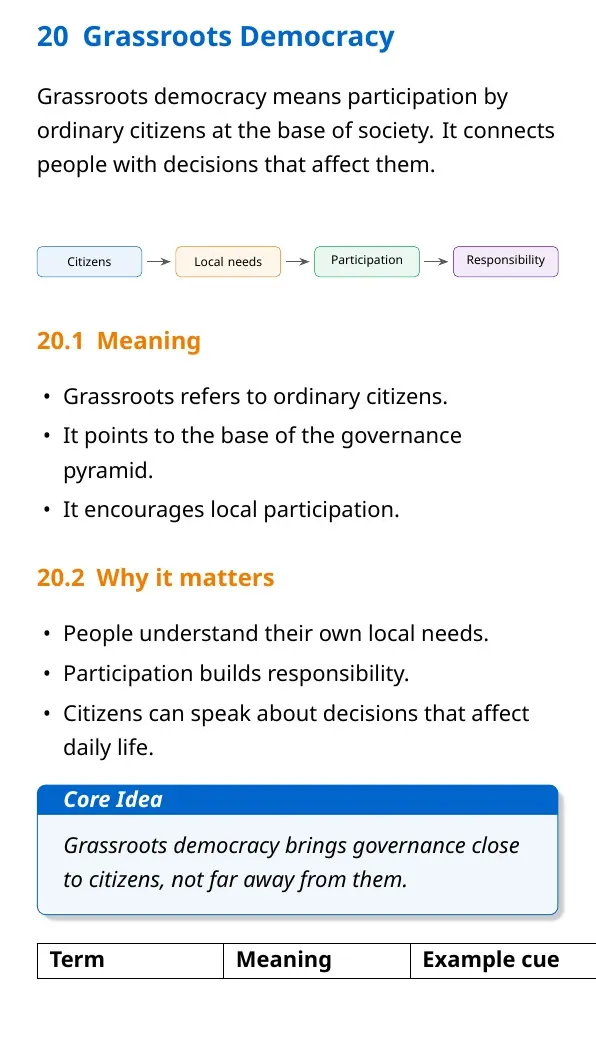
- Grassroots democracy: ordinary citizens participate in decisions that affect them.
- India: the world’s largest democracy, with citizens above 18 having the right to vote in principle.
Grassroots Democracy Part 1 Governance Related Resources
| Resource | Best use | Link |
|---|---|---|
| NCERT Notes | Topic-wise revision with tables | Current page |
| NCERT Solutions | Practice textbook questions | Open NCERT Solutions |
| NCERT Book PDF | Read the official chapter | Open Book PDF |
| Handwritten Notes | Quick one-sitting revision | Open Handwritten Notes |
Social Science Notes for All Chapters
| Chapter | NCERT chapter title | Notes link |
|---|---|---|
| Chapter 1 | Locating Places on the Earth | Open Notes |
| Chapter 2 | Oceans and Continents | Open Notes |
| Chapter 3 | Landforms and Life | Open Notes |
| Chapter 4 | Timeline and Sources of History | Open Notes |
| Chapter 5 | India, That Is Bharat | Open Notes |
| Chapter 6 | The Beginnings of Indian Civilisation | Open Notes |
| Chapter 7 | India's Cultural Roots | Open Notes |
| Chapter 8 | Unity in Diversity, or Many in the One | Open Notes |
| Chapter 9 | Family and Community | Open Notes |
| Chapter 10 | Grassroots Democracy Part 1 Governance | Current notes |
| Chapter 11 | Grassroots Democracy Part 2 Local Government in Rural Areas | Open Notes |
| Chapter 12 | Grassroots Democracy Part 3 Local Government in Urban Areas | Open Notes |
| Chapter 13 | The Value of Work | Open Notes |
| Chapter 14 | Economic Activities Around Us | Open Notes |
Grassroots Democracy Part 1 Governance Class 6 Notes FAQs
Ques. What is governance in Class 6 Social Science Chapter 10?
Ans. Governance is the process of taking decisions, organising society with rules, and ensuring that rules are followed.
Ques. What are the three organs of government?
Ans. The three organs are legislature, executive and judiciary. They make laws, implement laws and decide legal cases.
Ques. What are the three levels of government in India?
Ans. India has local government, State government and Central or Union government. Each level handles different matters.
Ques. What is representative democracy?
Ans. Representative democracy means people elect representatives, such as MLAs and MPs, who discuss laws, problems and solutions in assemblies.
Ques. What is grassroots democracy?
Ans. Grassroots democracy encourages ordinary citizens to participate in decisions that affect their daily life and local community.



Comments