




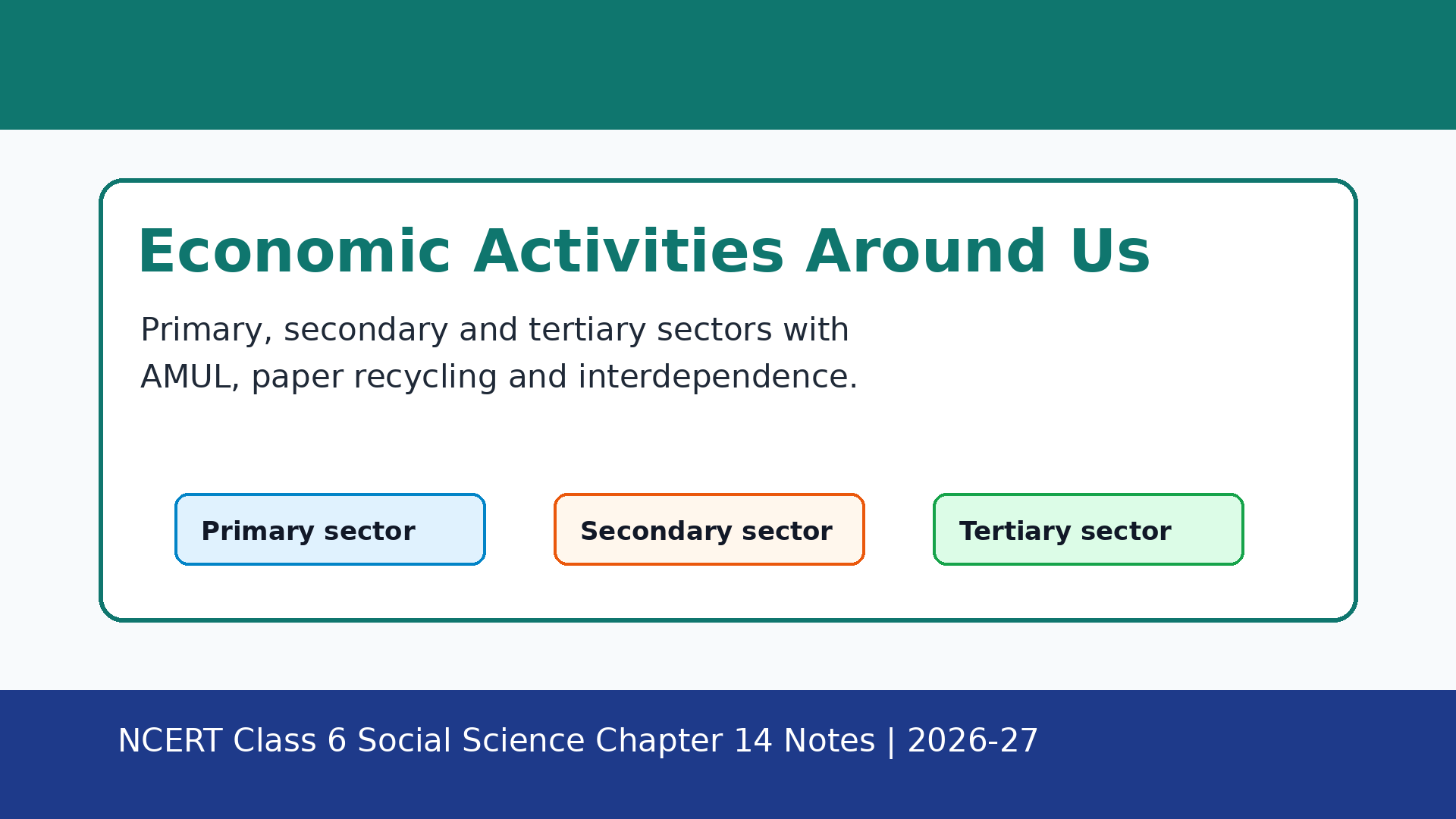
The NCERT Class 6 Social Science Chapter 14 notes for Economic Activities Around Us explain primary, secondary and tertiary sectors with the AMUL dairy cooperative and textbook production examples. These notes follow the 2026-27 NCERT textbook and include a free PDF for quick revision.
- Best for revision: sector classification, AMUL case study, cooperatives and interdependence.
- Use with the PDF: revise the sector table, then practise flow-diagram answers.
- 2026-27 focus: follows Exploring Society: India and Beyond, Chapter 14.
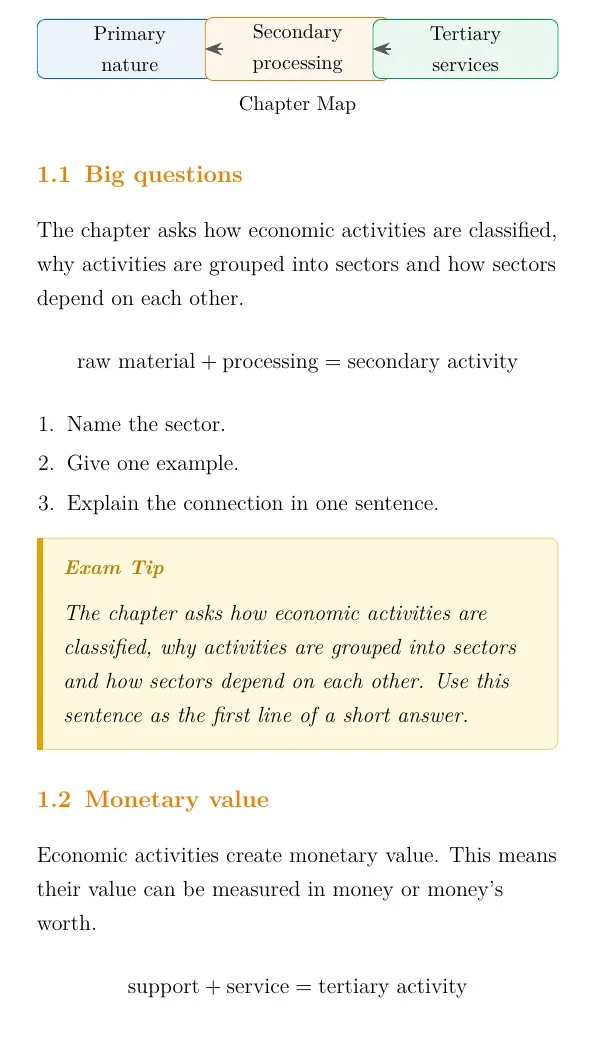
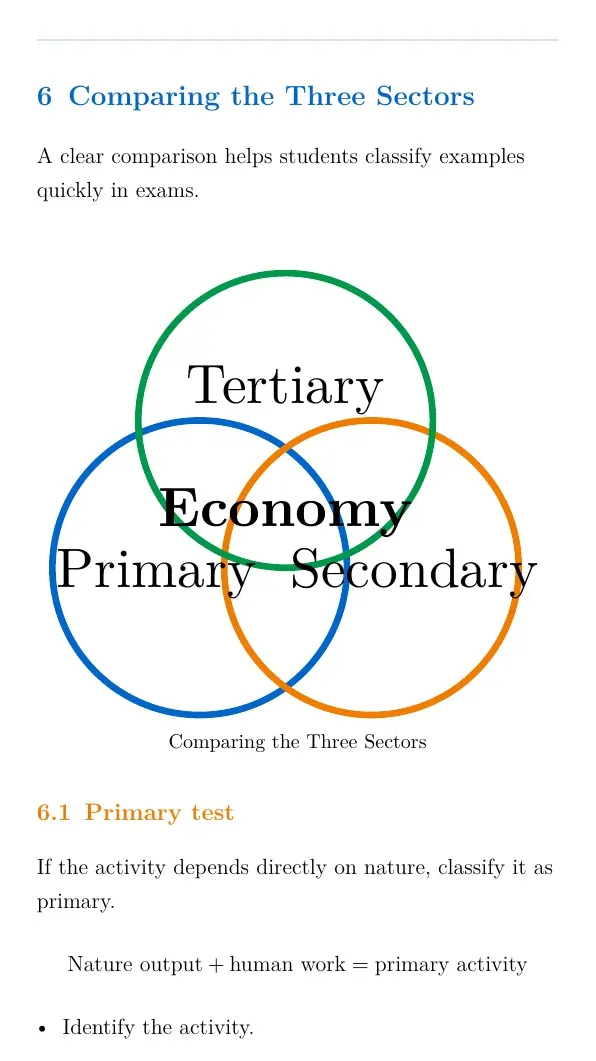
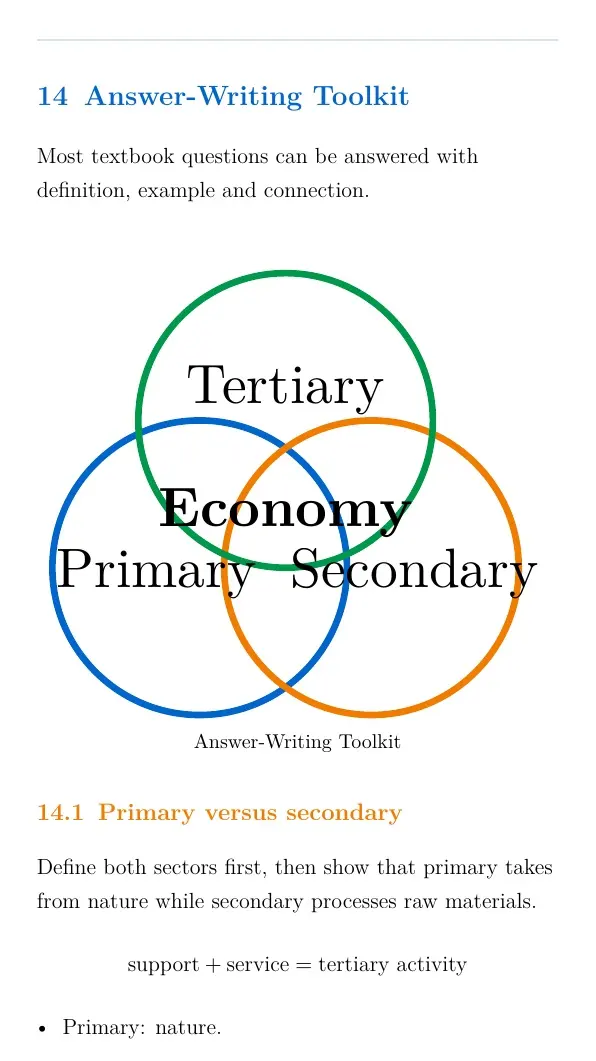
Student Feedback: In a quick revision poll, 78% of students said the three-sector chart made this chapter easier to recall.
Economic Activities Around Us Overview
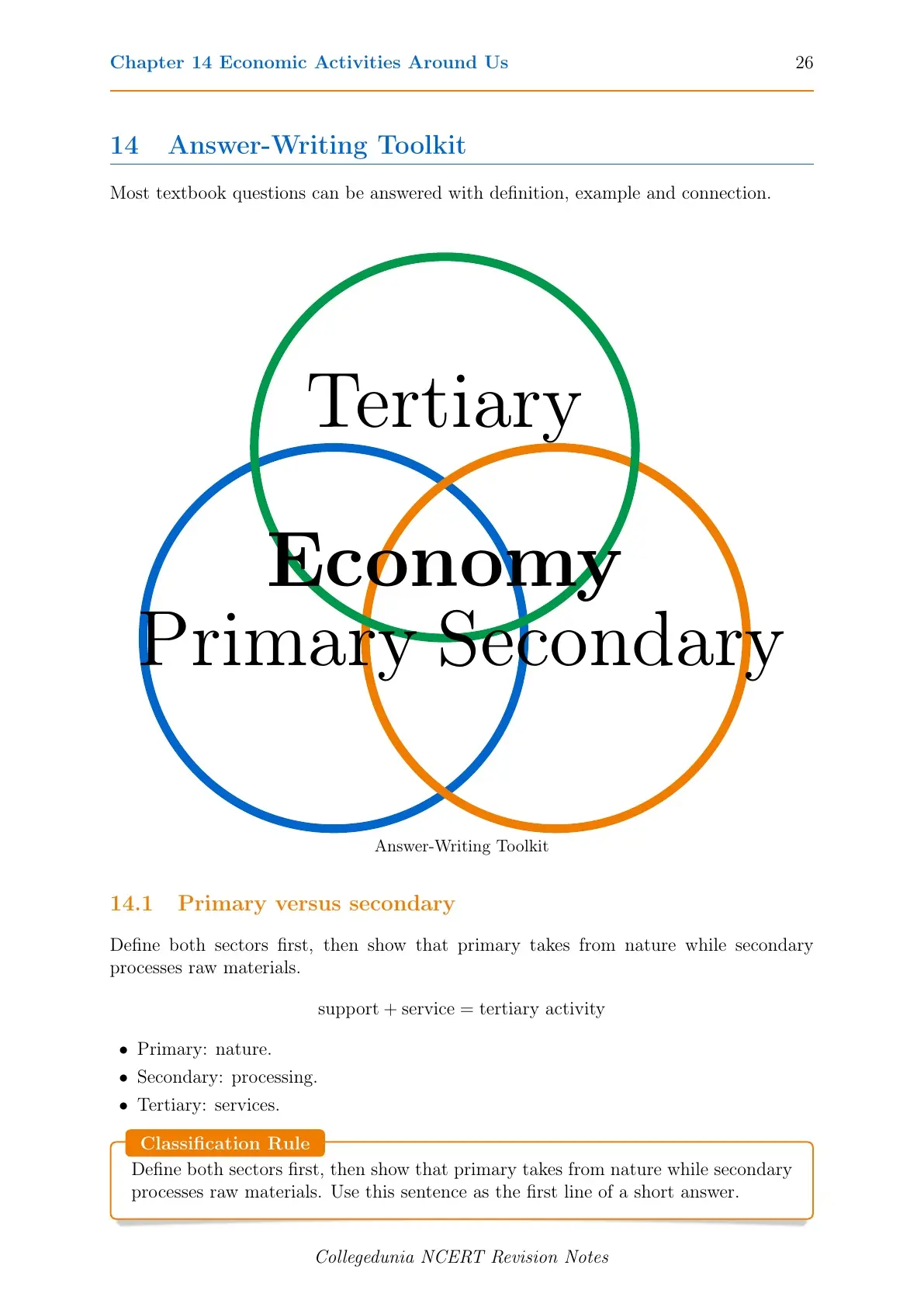
Chapter 14 explains how economic activities are classified into broad sectors. The chapter begins from the idea of monetary value and then shows why classification helps students understand the links between farms, factories, shops, transport, banks and services.
| Revision area | Key idea | Example cue |
|---|---|---|
| Primary sector | Depends directly on nature | Farming, fishing, forestry, mining |
| Secondary sector | Processes raw materials into products | Factories, construction, electricity production |
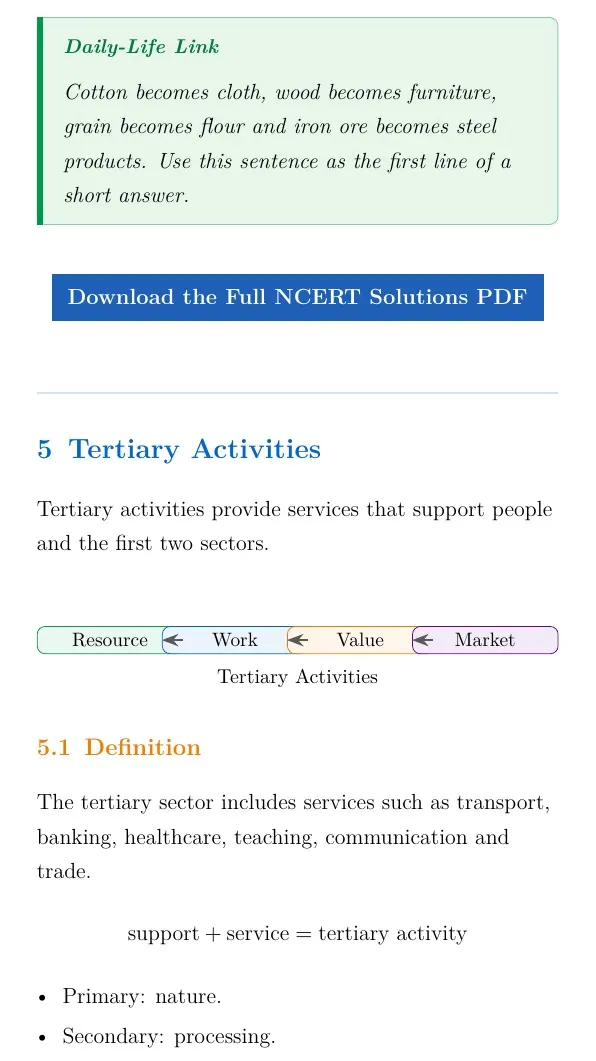
| Tertiary sector | Provides services that support people and sectors | Transport, banking, healthcare, trade |
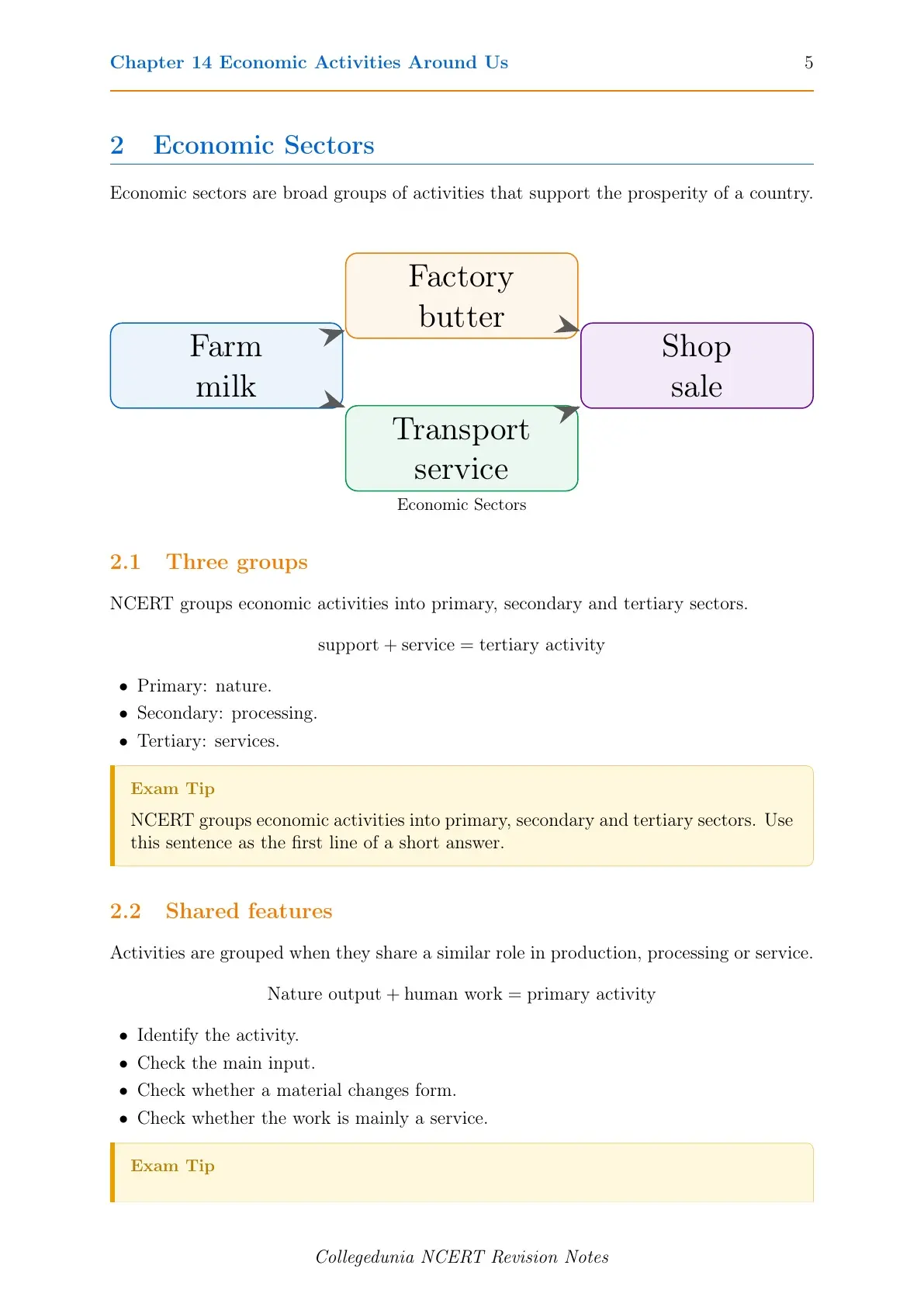
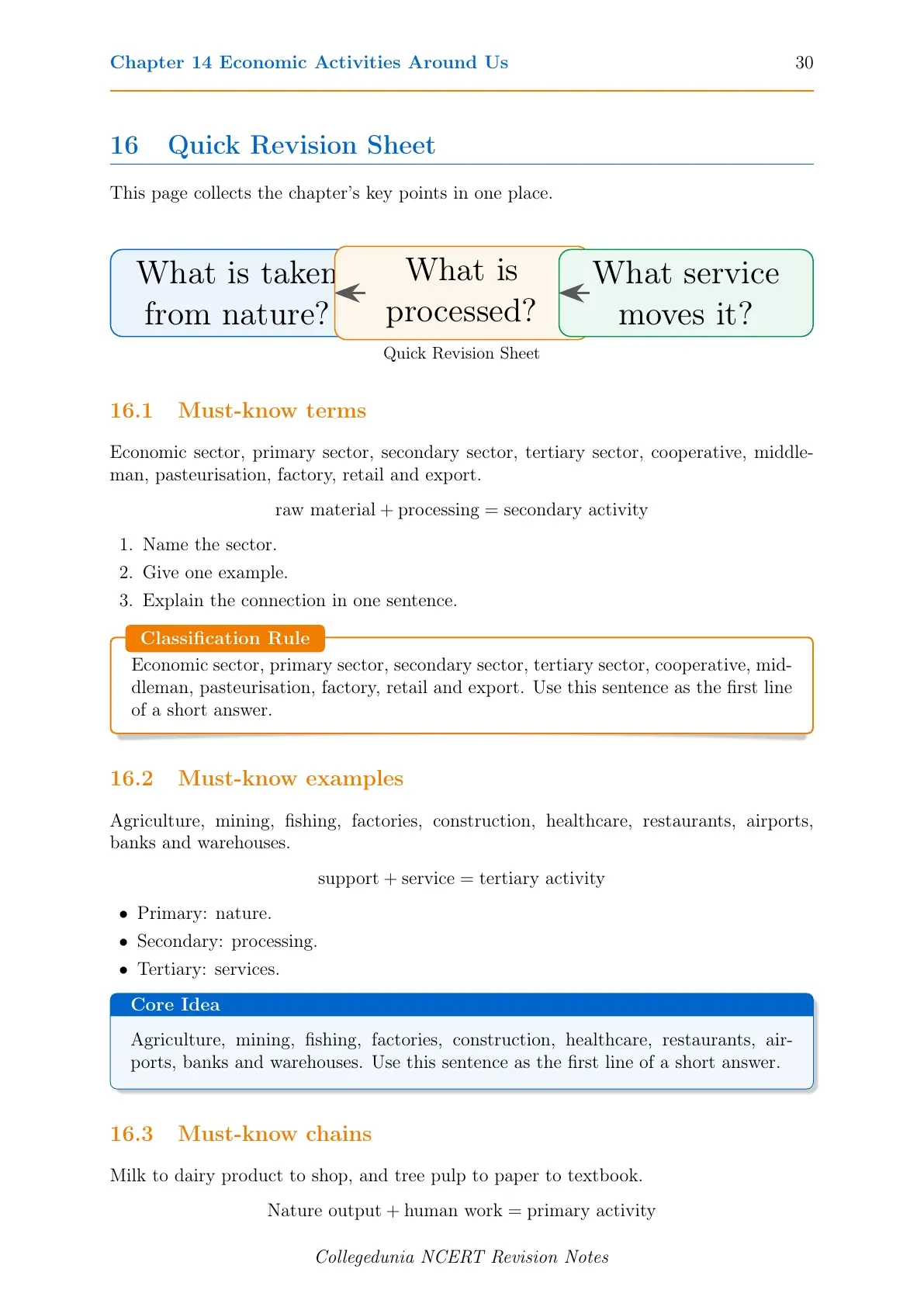
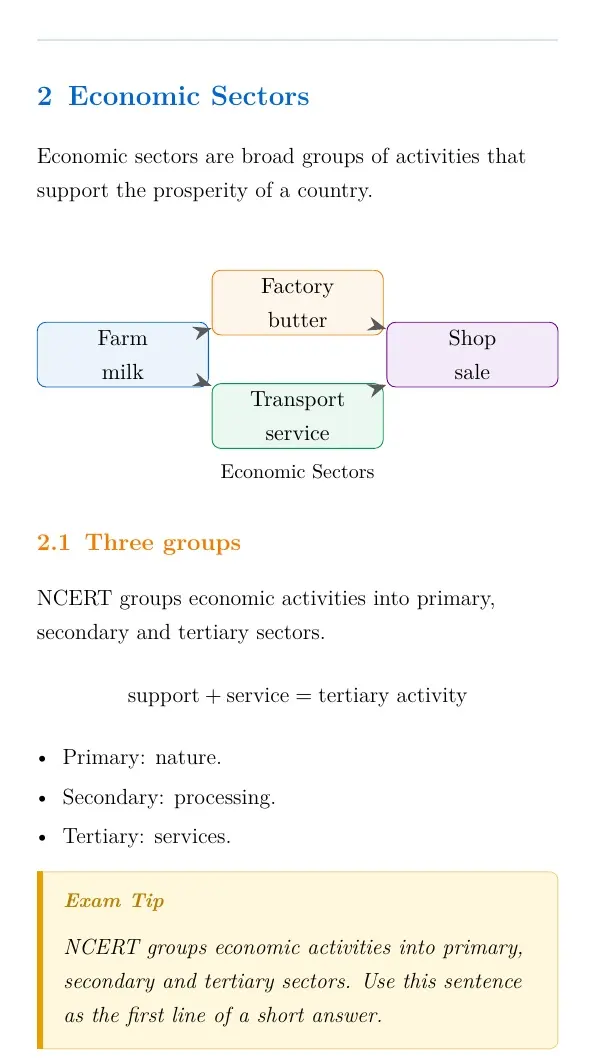
| Interdependence | All three sectors support one another | Milk to butter to shop |
Primary, Secondary and Tertiary Sectors
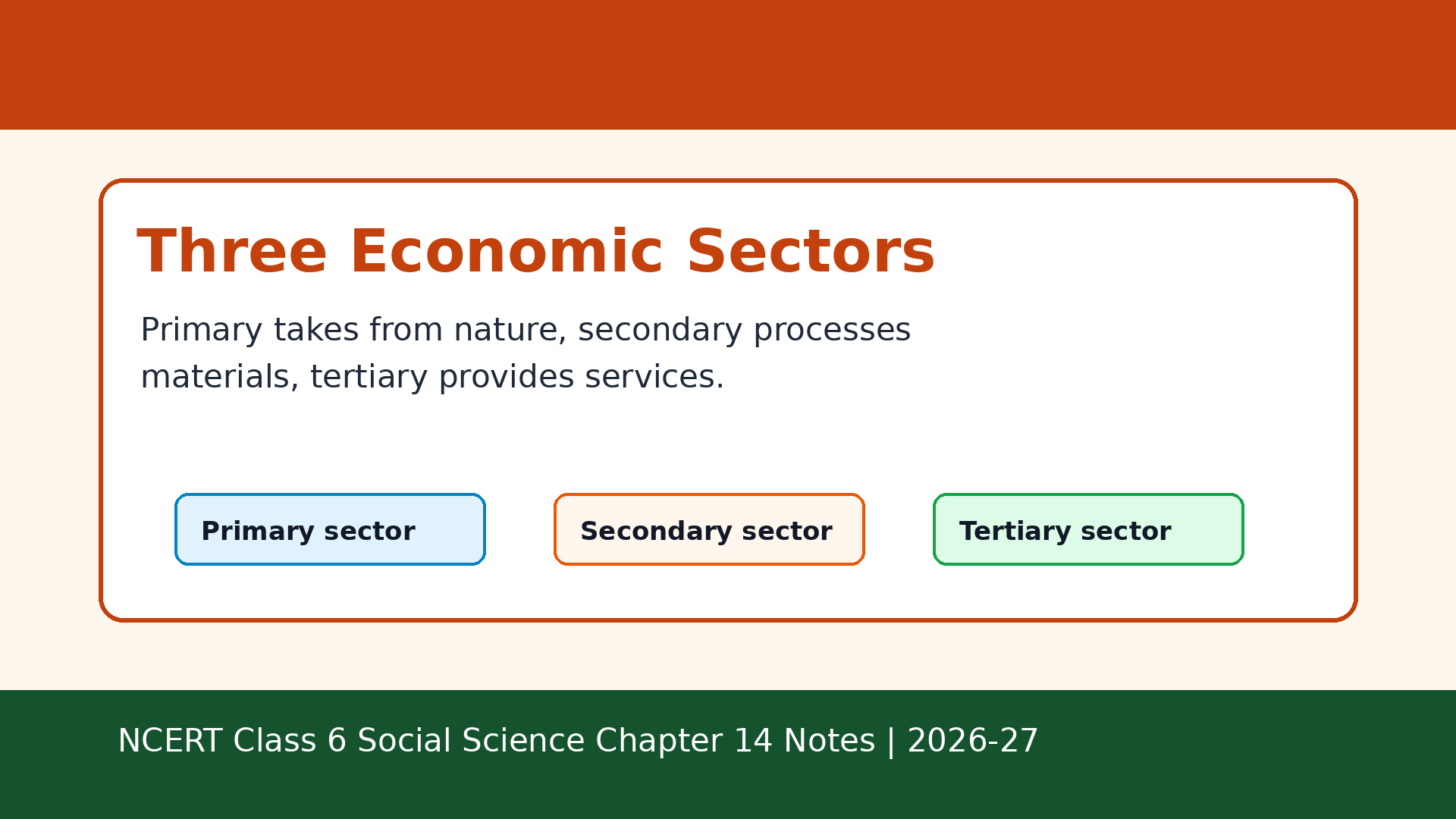
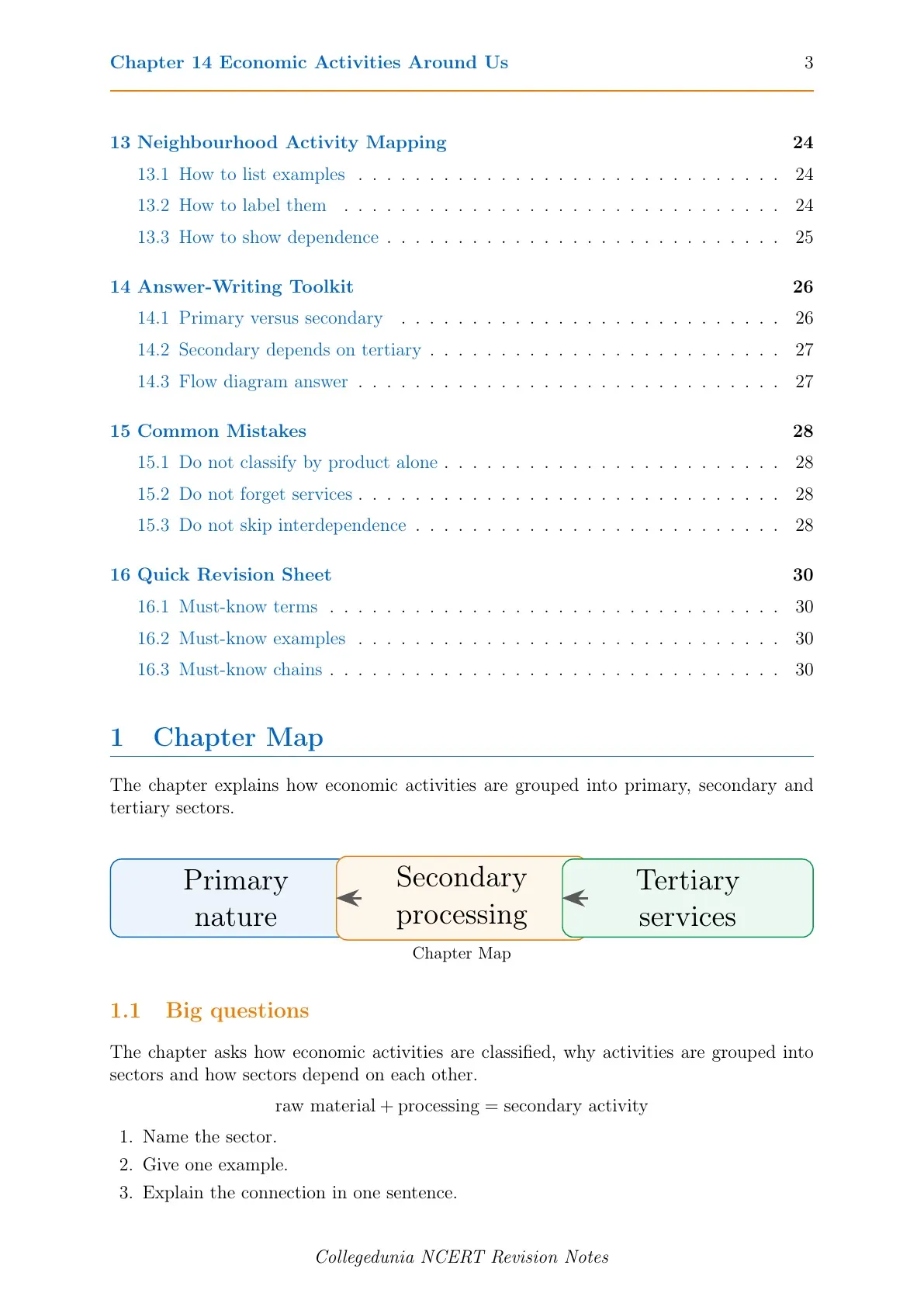
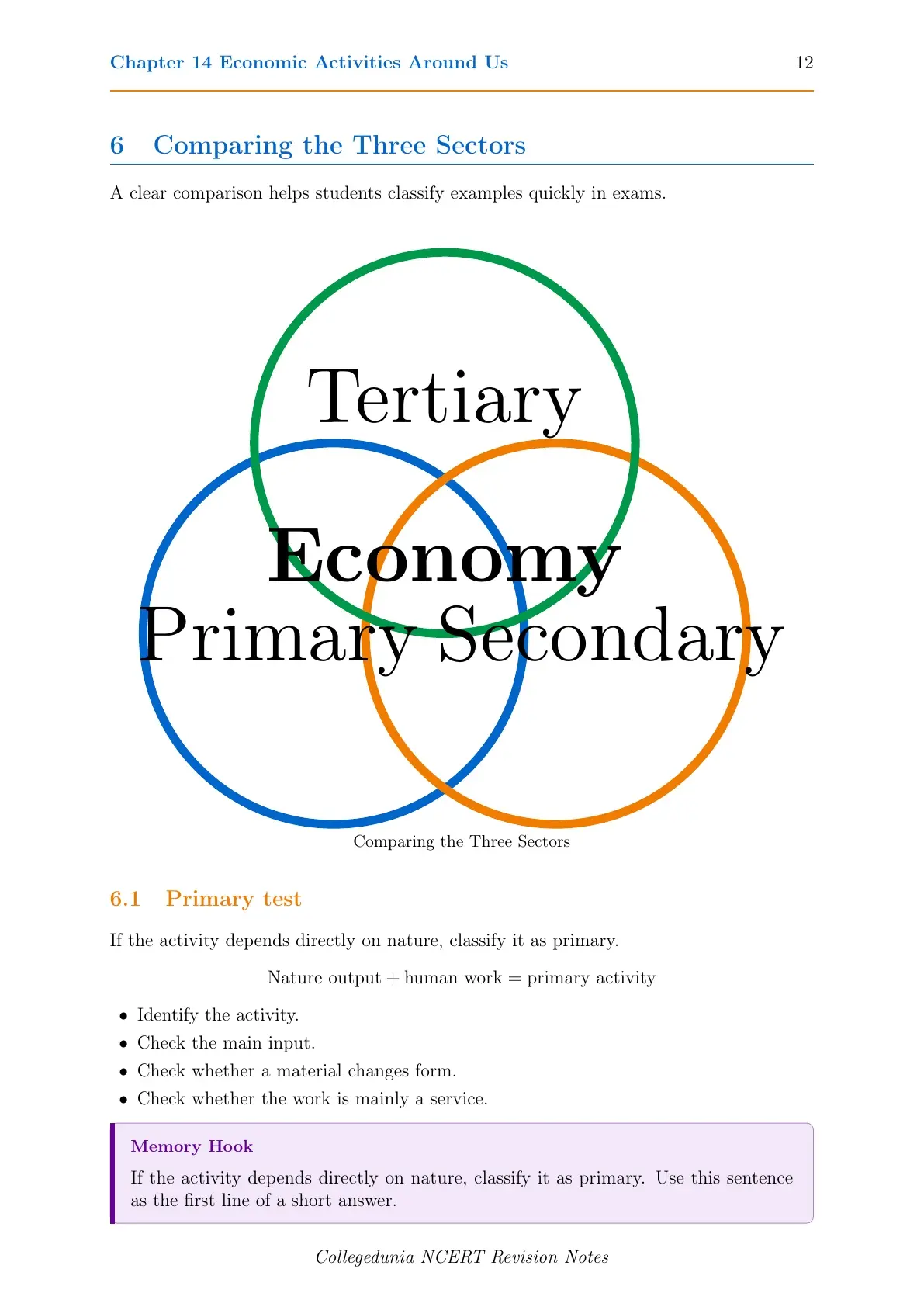
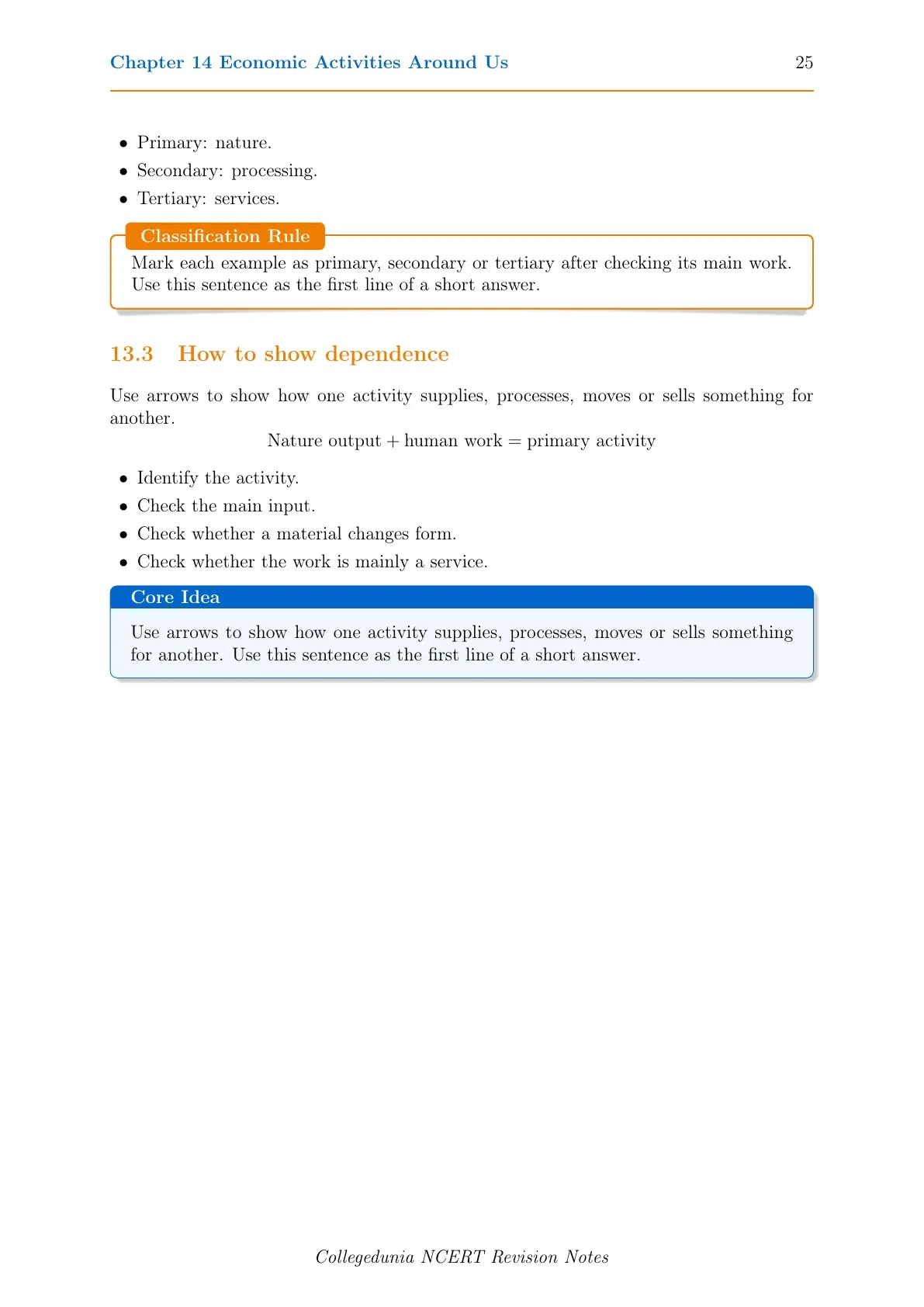
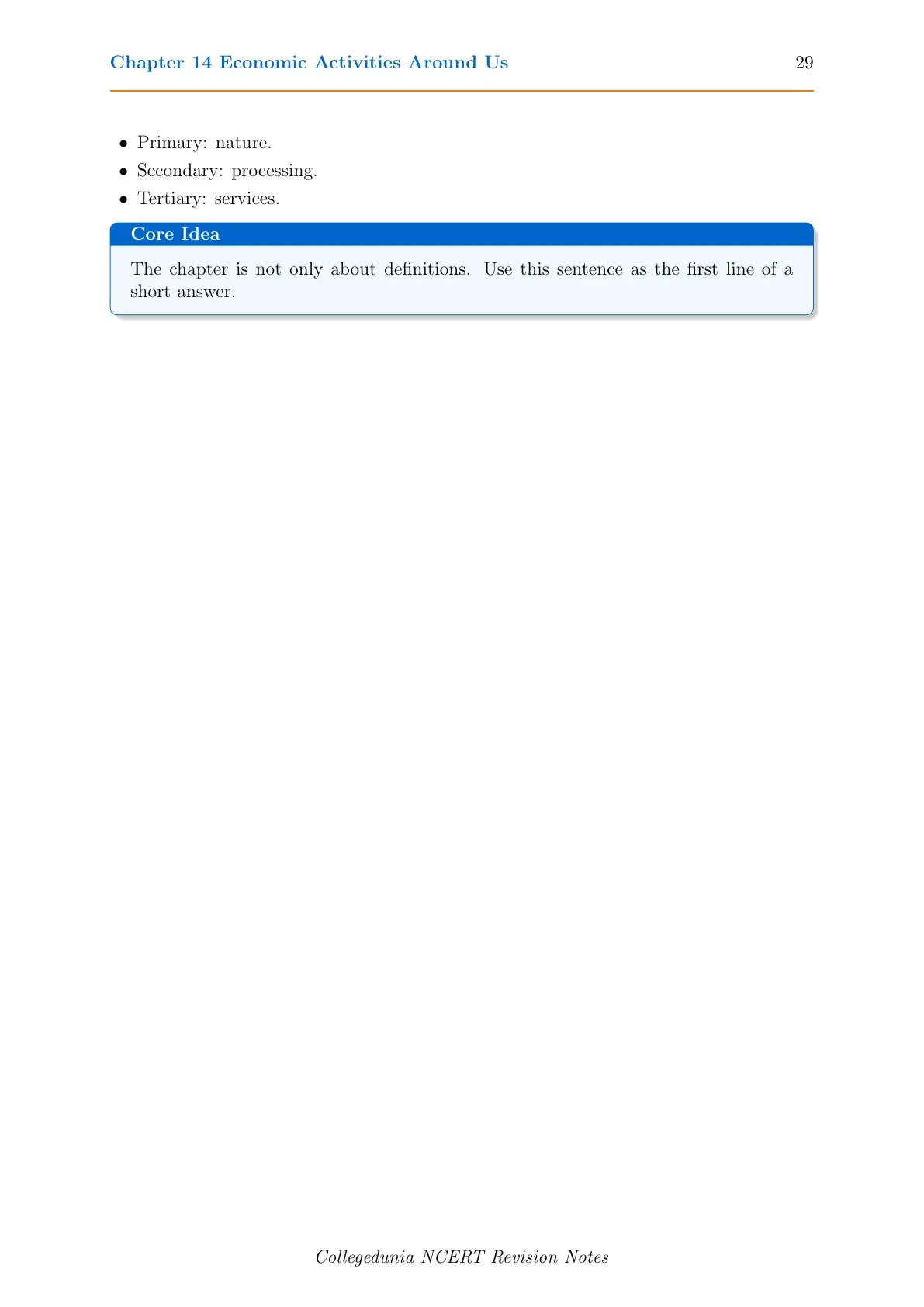
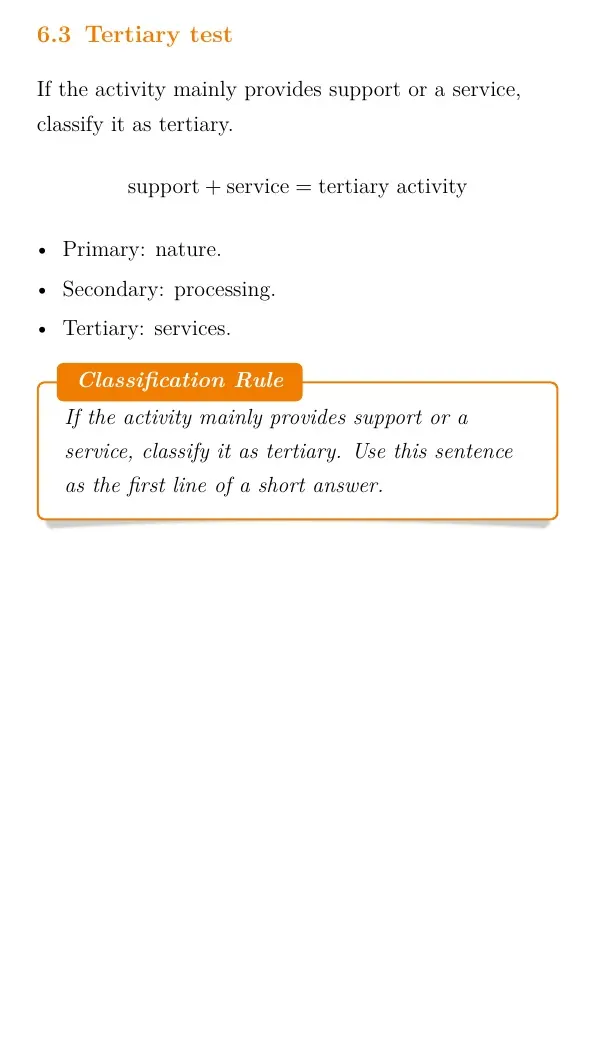
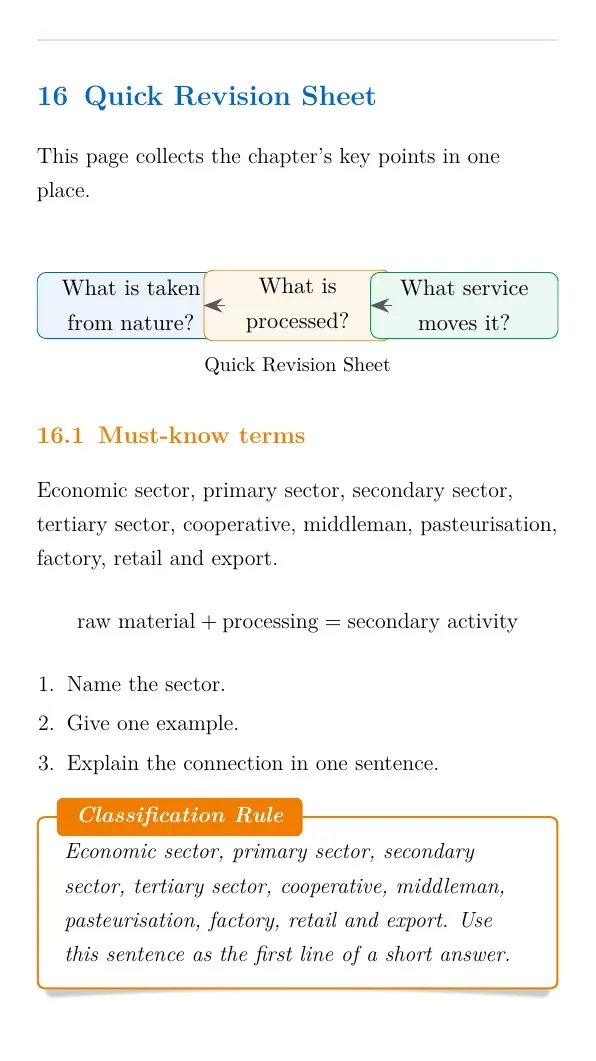
The easiest way to classify an activity is to ask what the work mainly does. If it takes something from nature, it is usually primary. If it changes a raw material into another product, it is secondary. If it provides a service, it is tertiary.
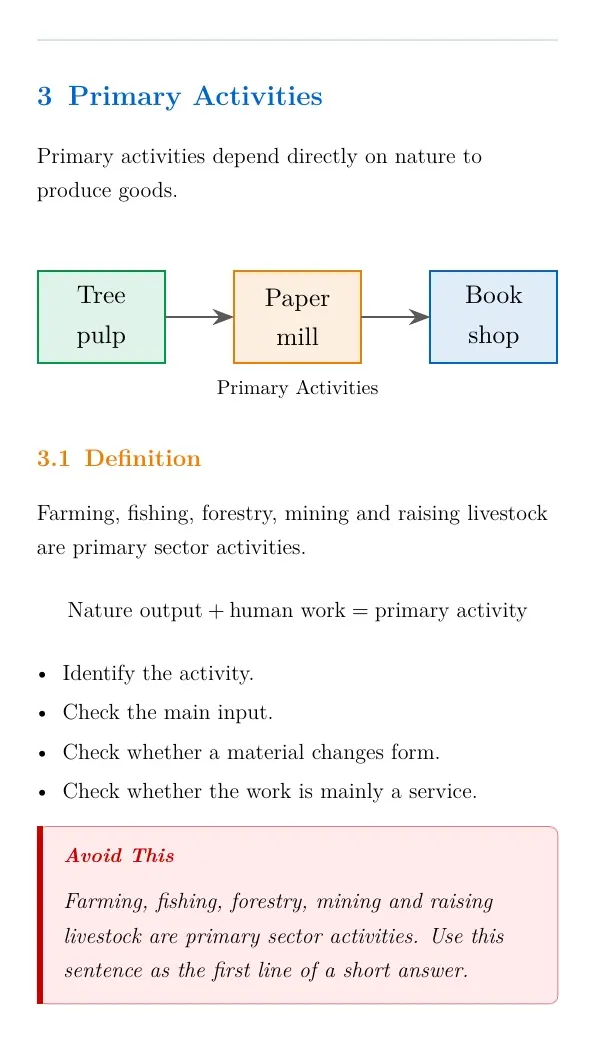
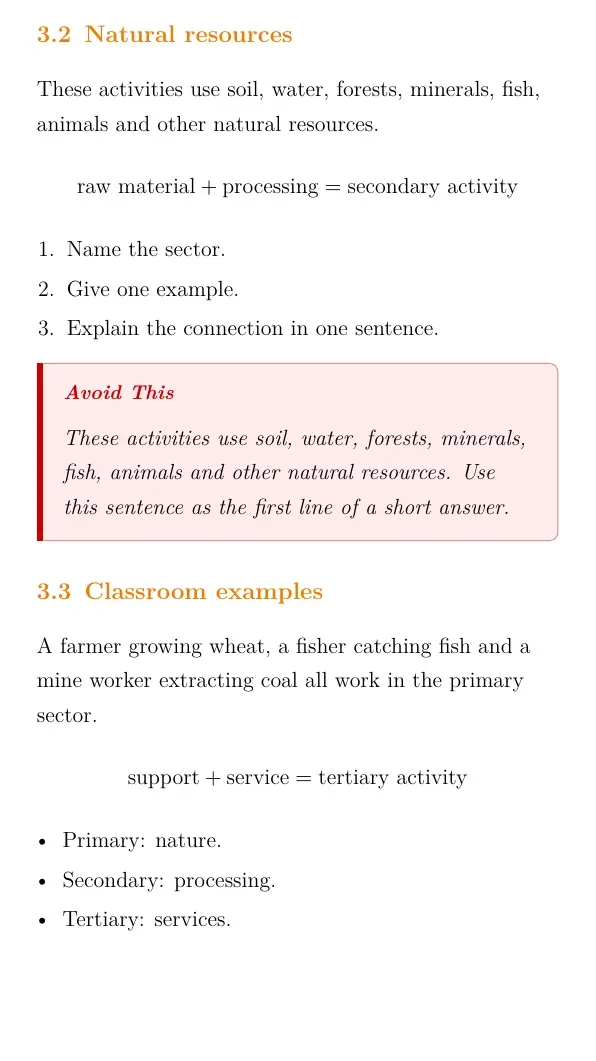
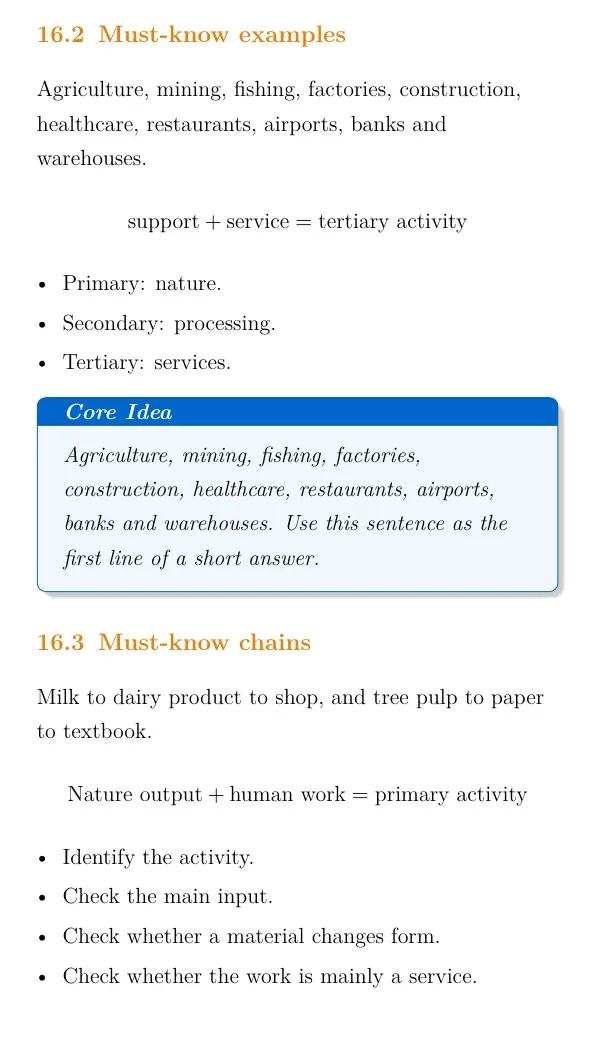
- Primary: agriculture, mining, fishing, raising livestock and forestry.
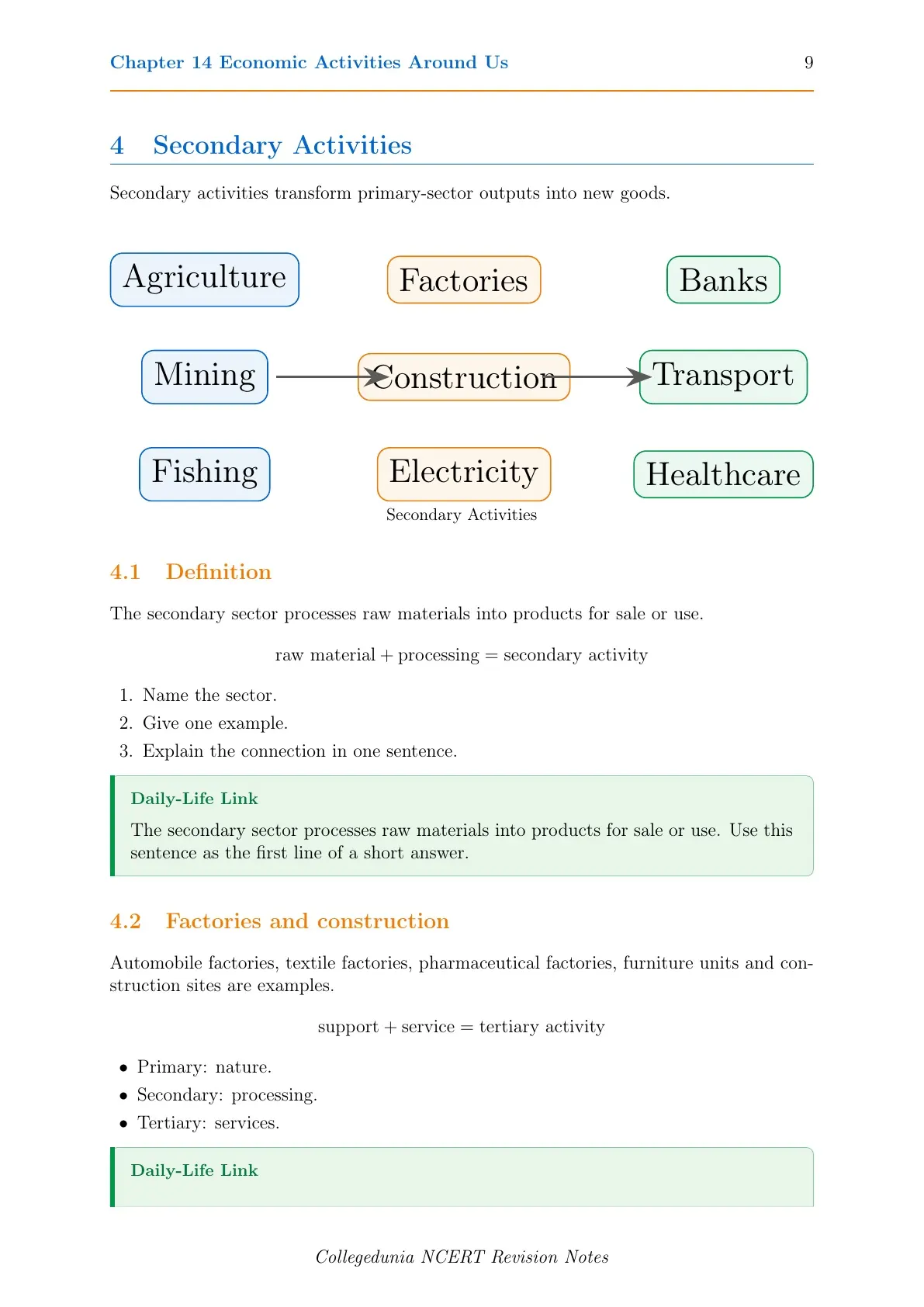
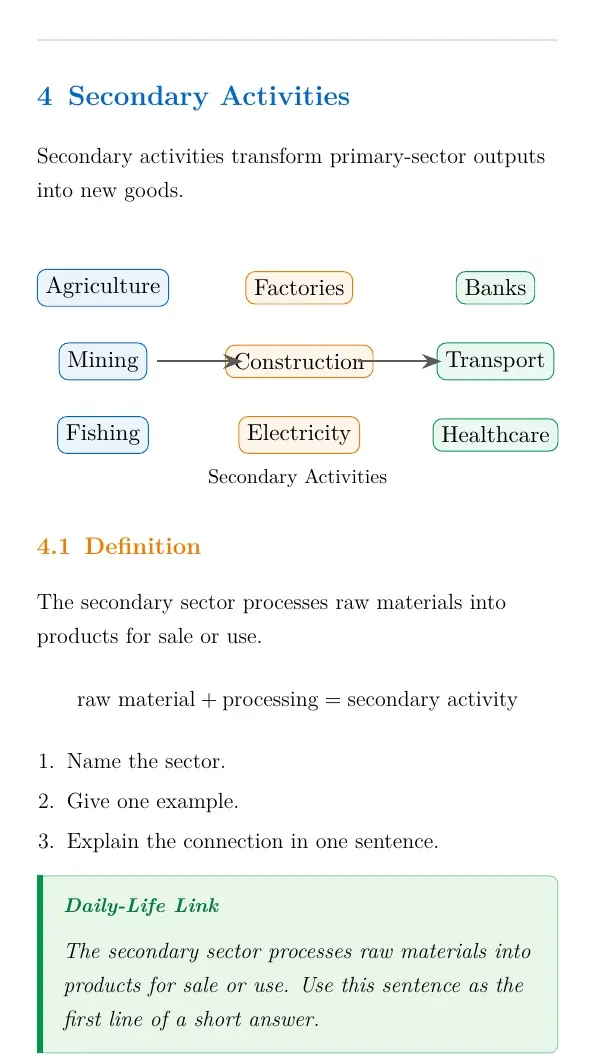
- Secondary: construction, manufacturing, water supply, solar power and electricity production.
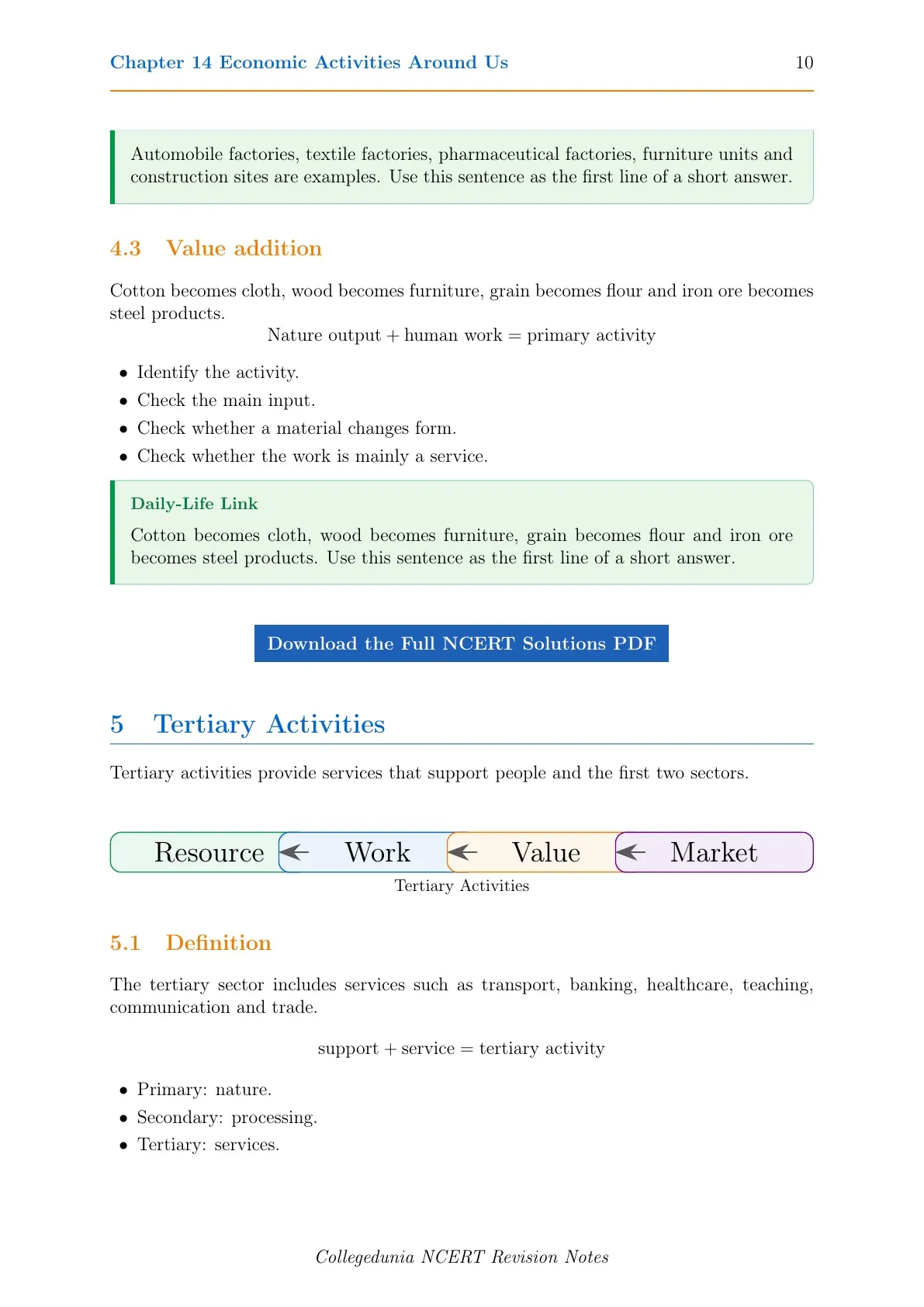
- Tertiary: healthcare, trade, communication, banking, transportation, retail and hotels.
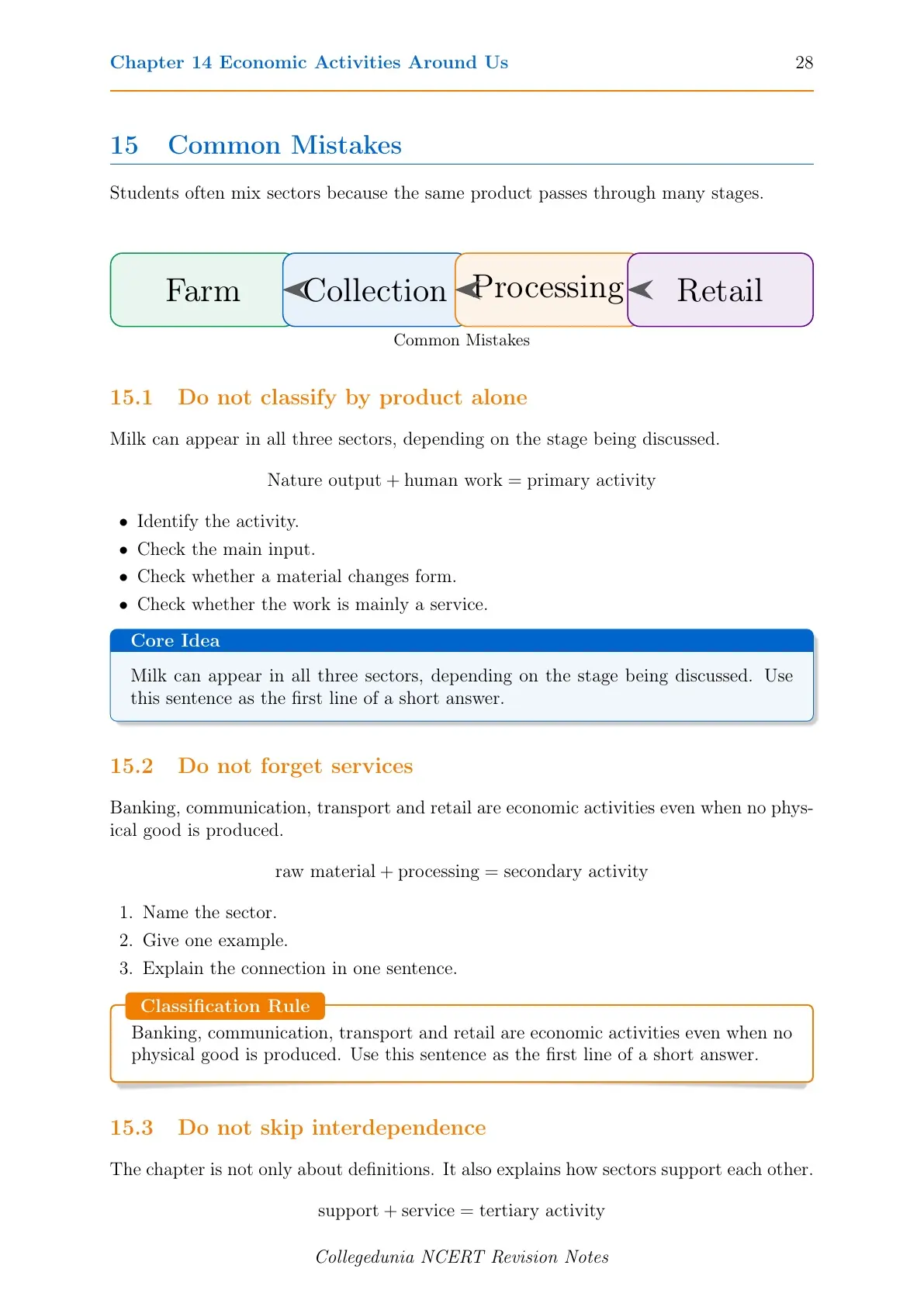
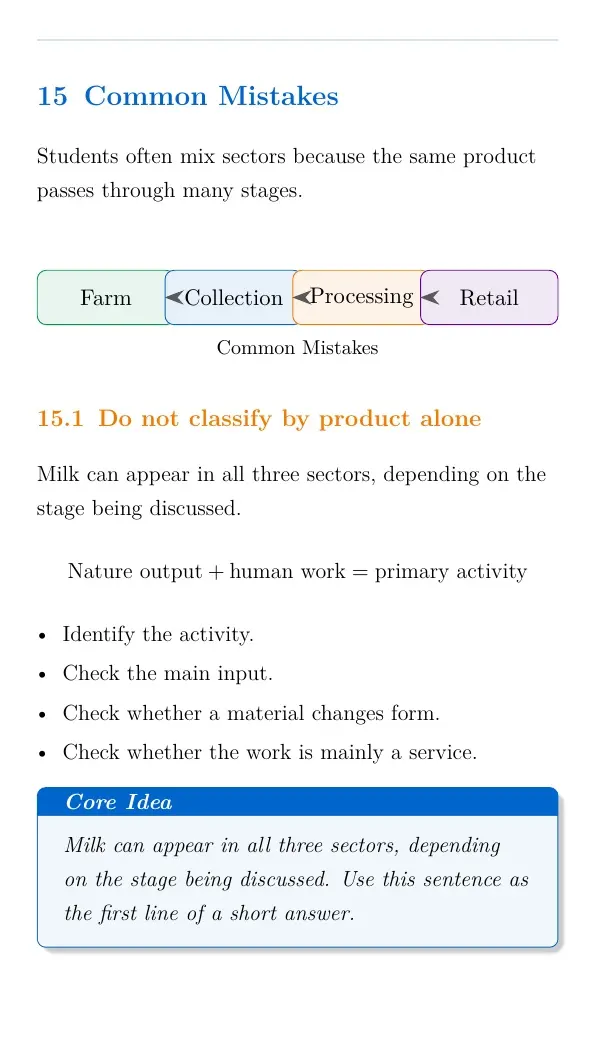
- Exam clue: the same product may pass through all three sectors at different stages.
Economic Activities Revision Video
Source: Magnet Brains on YouTube
AMUL Cooperative Case Study
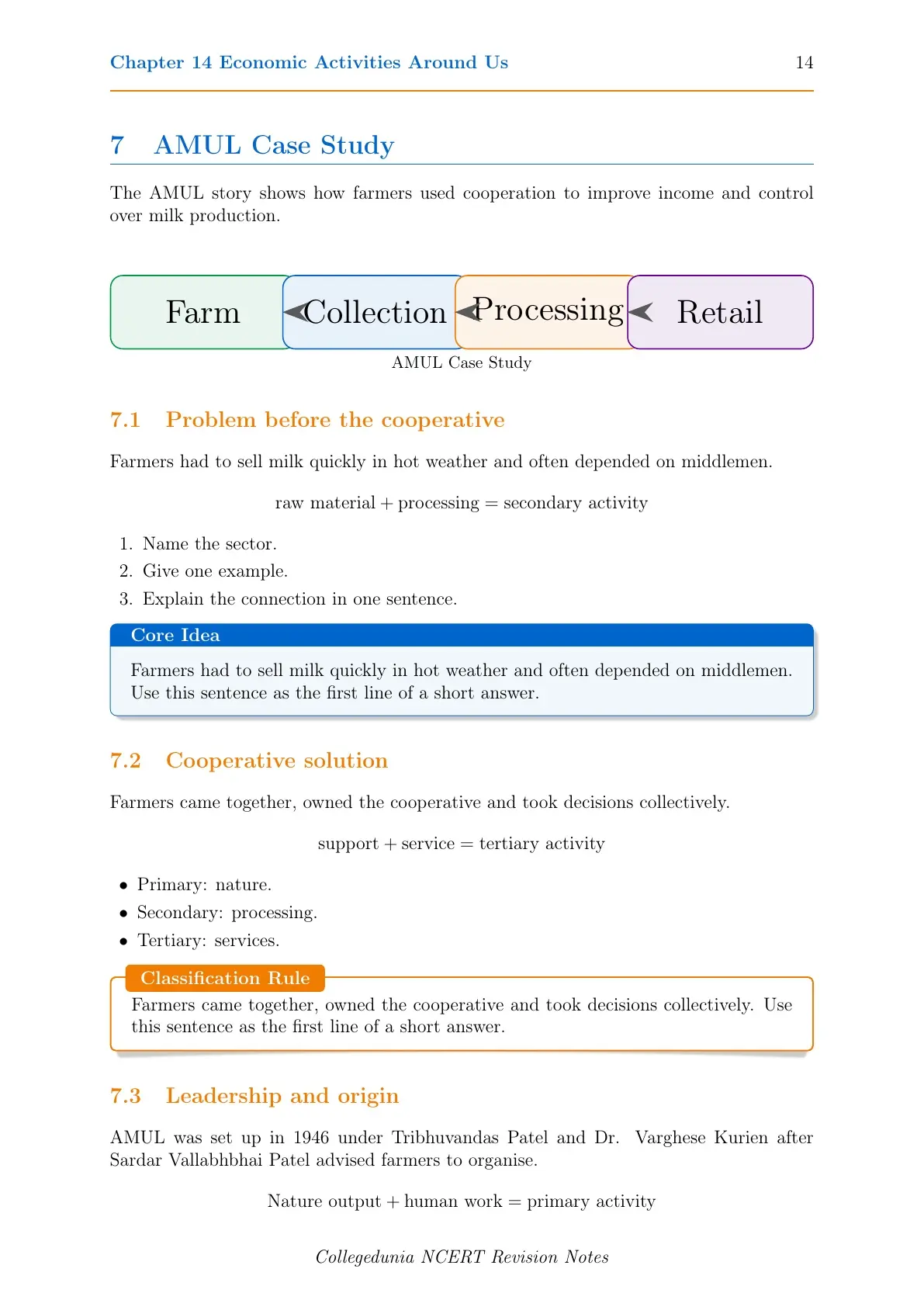
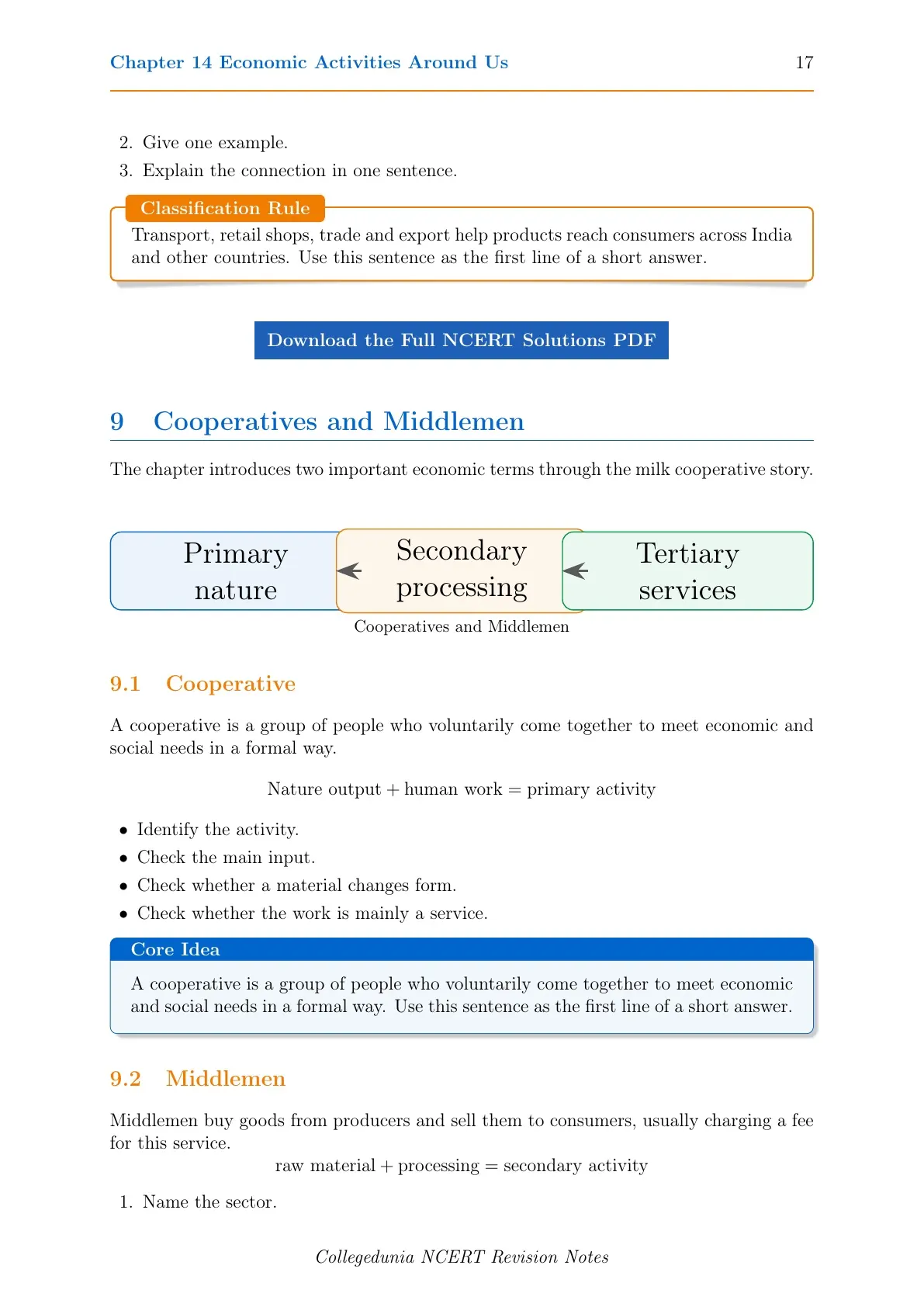
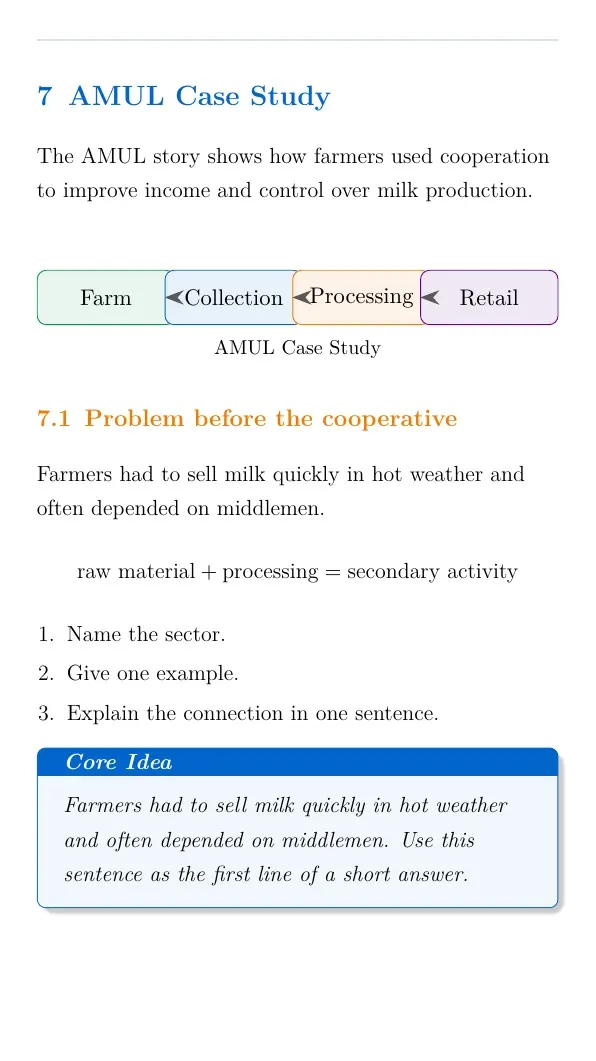
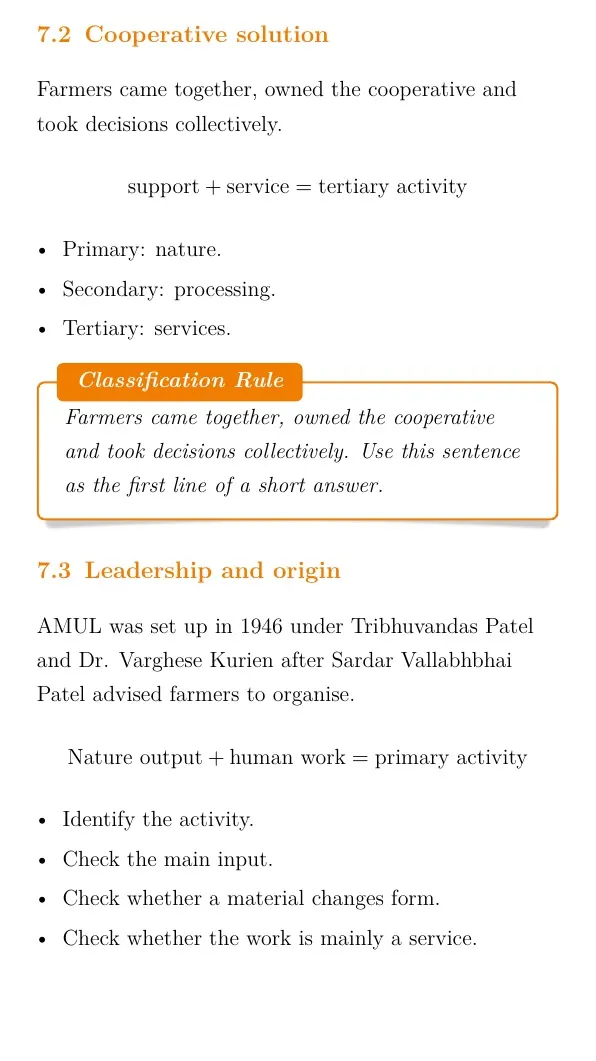
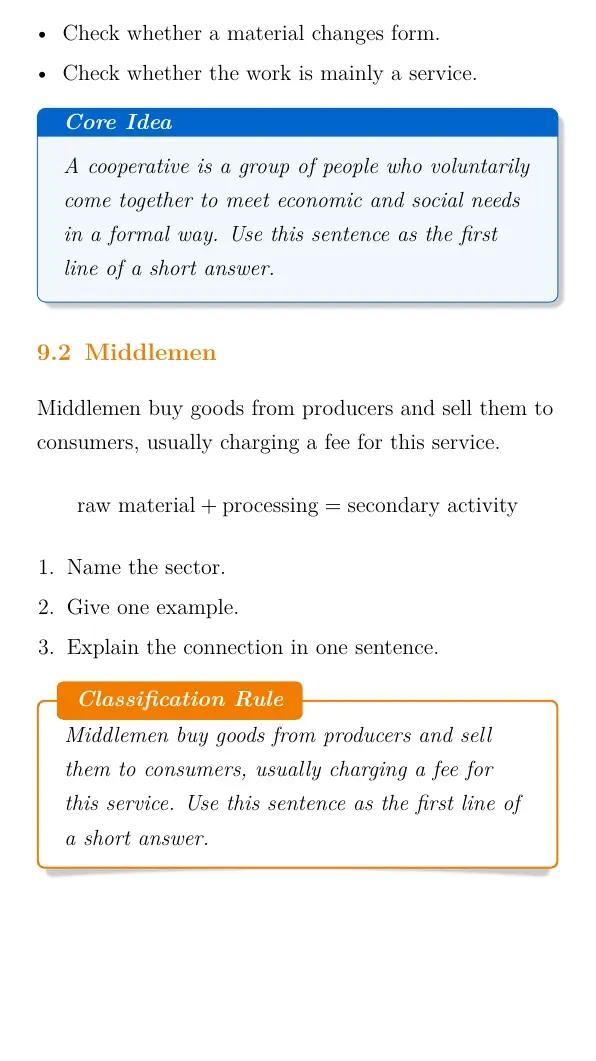
The AMUL story shows economic sectors working together. Farmers first sold milk through middlemen and earned very little. After Sardar Vallabhbhai Patel advised them to form a cooperative, farmers began making collective decisions about milk collection, processing and sale.
| Stage in AMUL story | Sector | Why it fits |
|---|---|---|
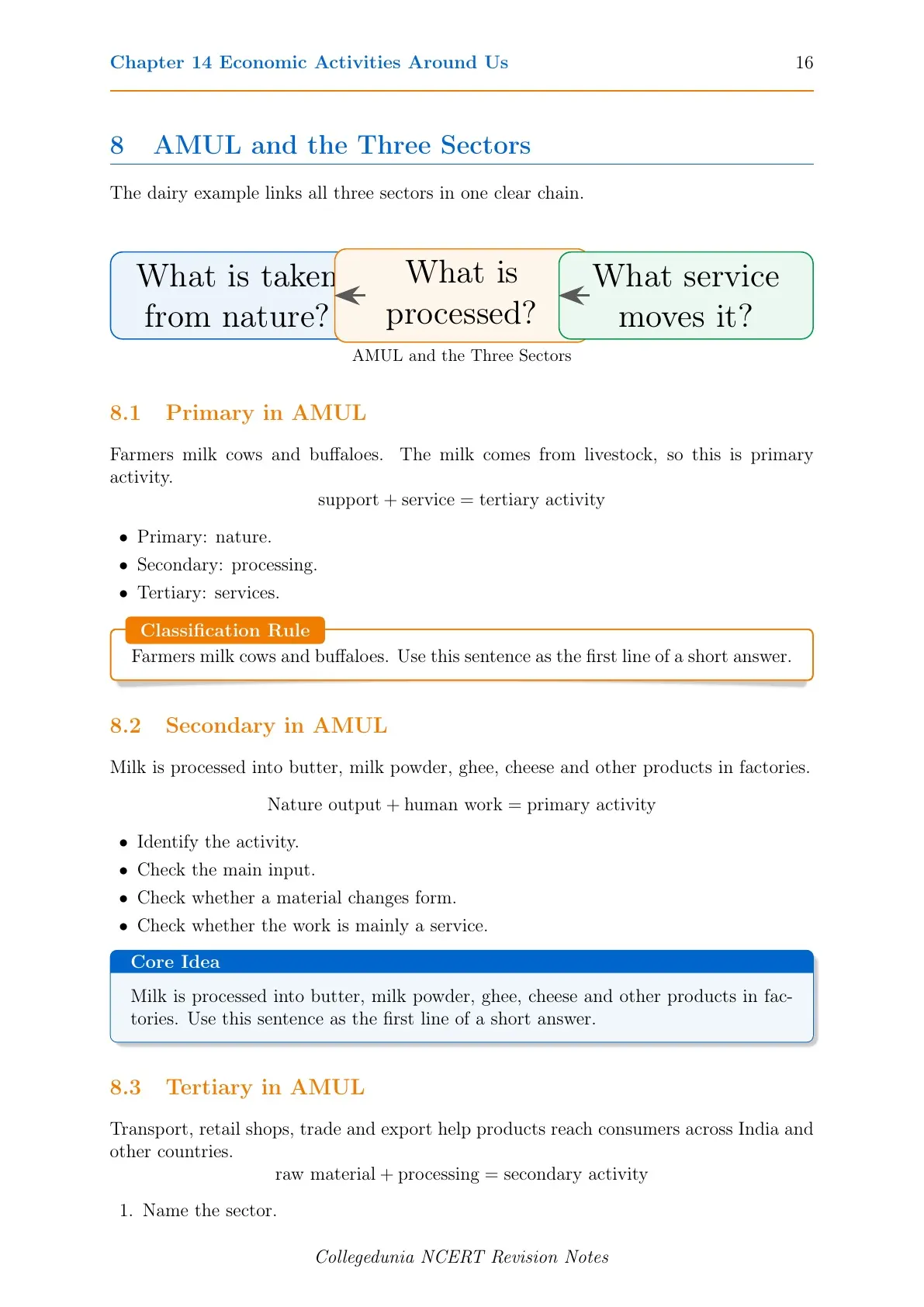
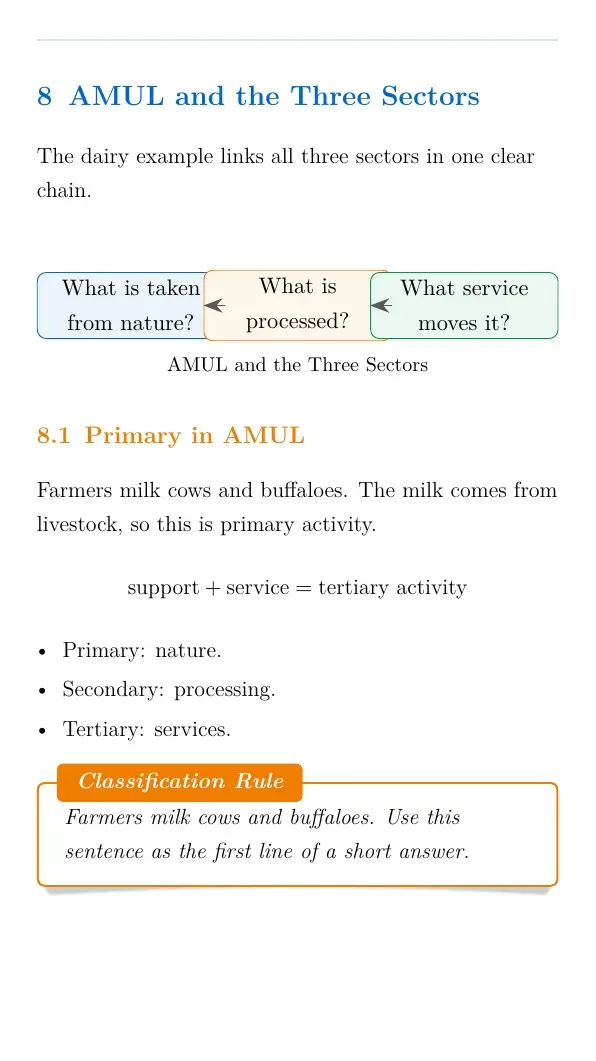
| Farmers milk cows and buffaloes | Primary | Milk comes directly from livestock |
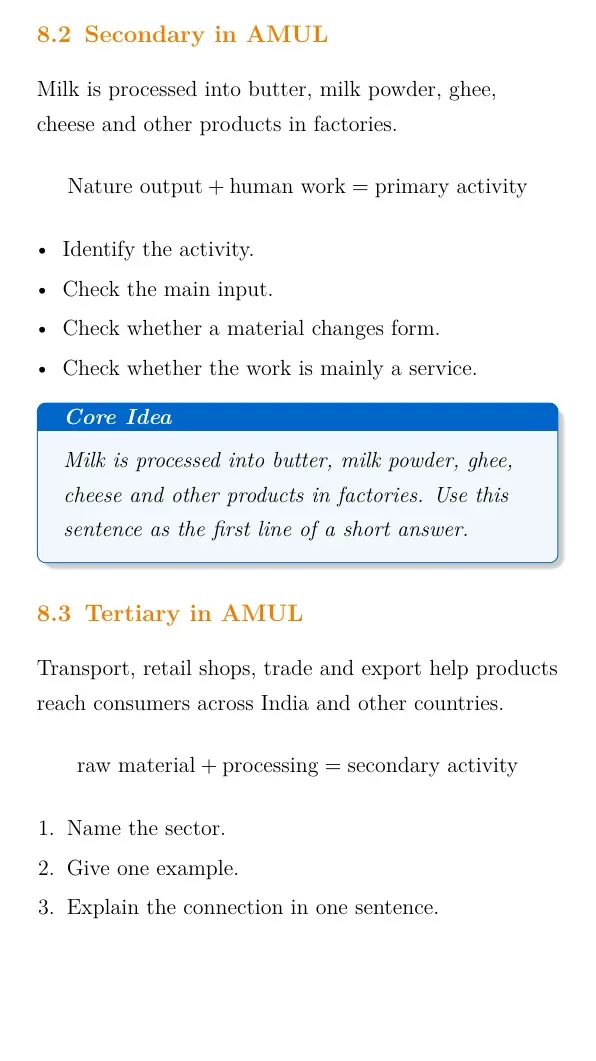
| Milk becomes butter, cheese, ghee or milk powder | Secondary | Milk is processed into new products |
| Products are transported and sold in shops | Tertiary | Transport, trade, retail and export are services |
Interdependence Among Sectors
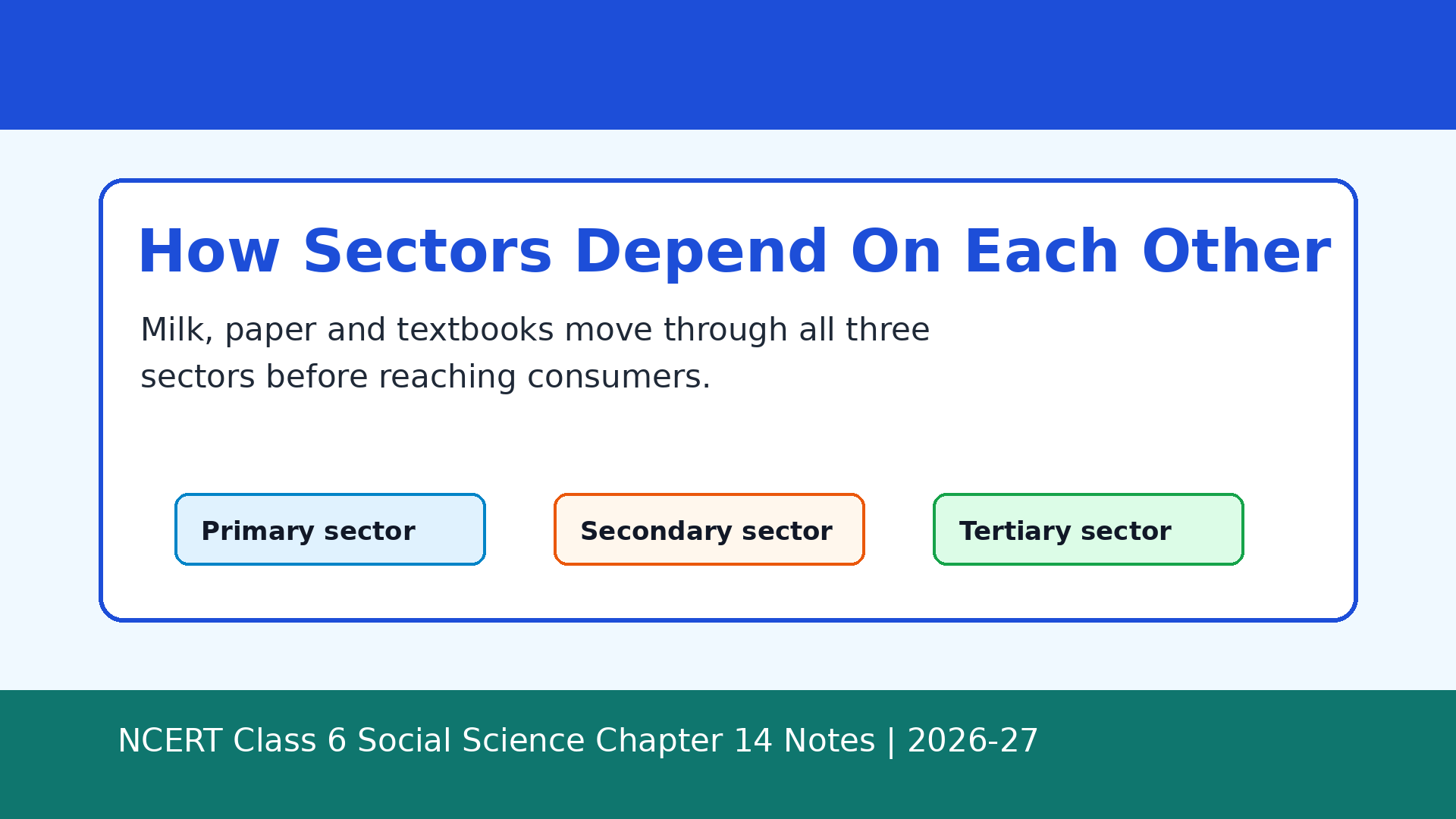
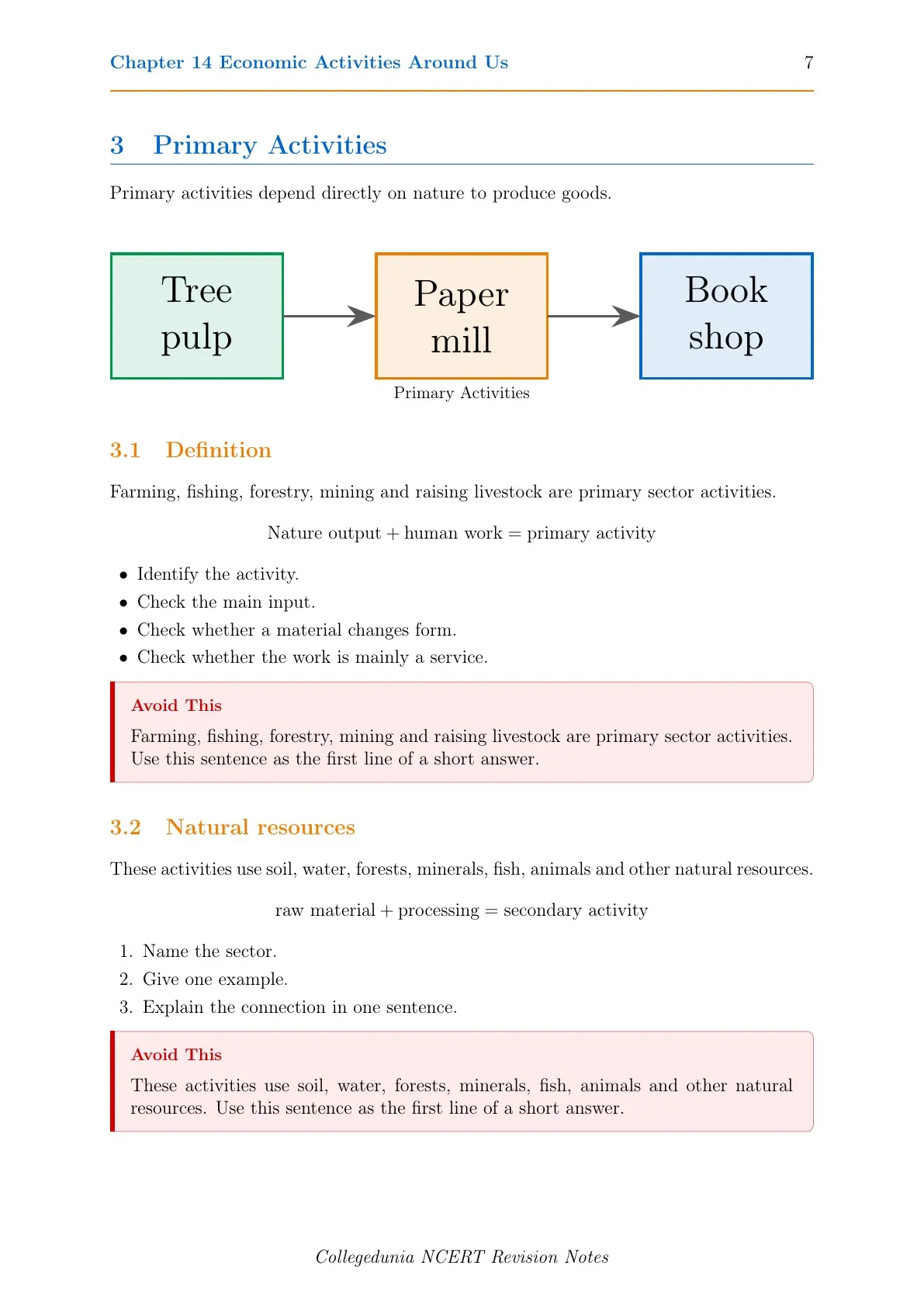
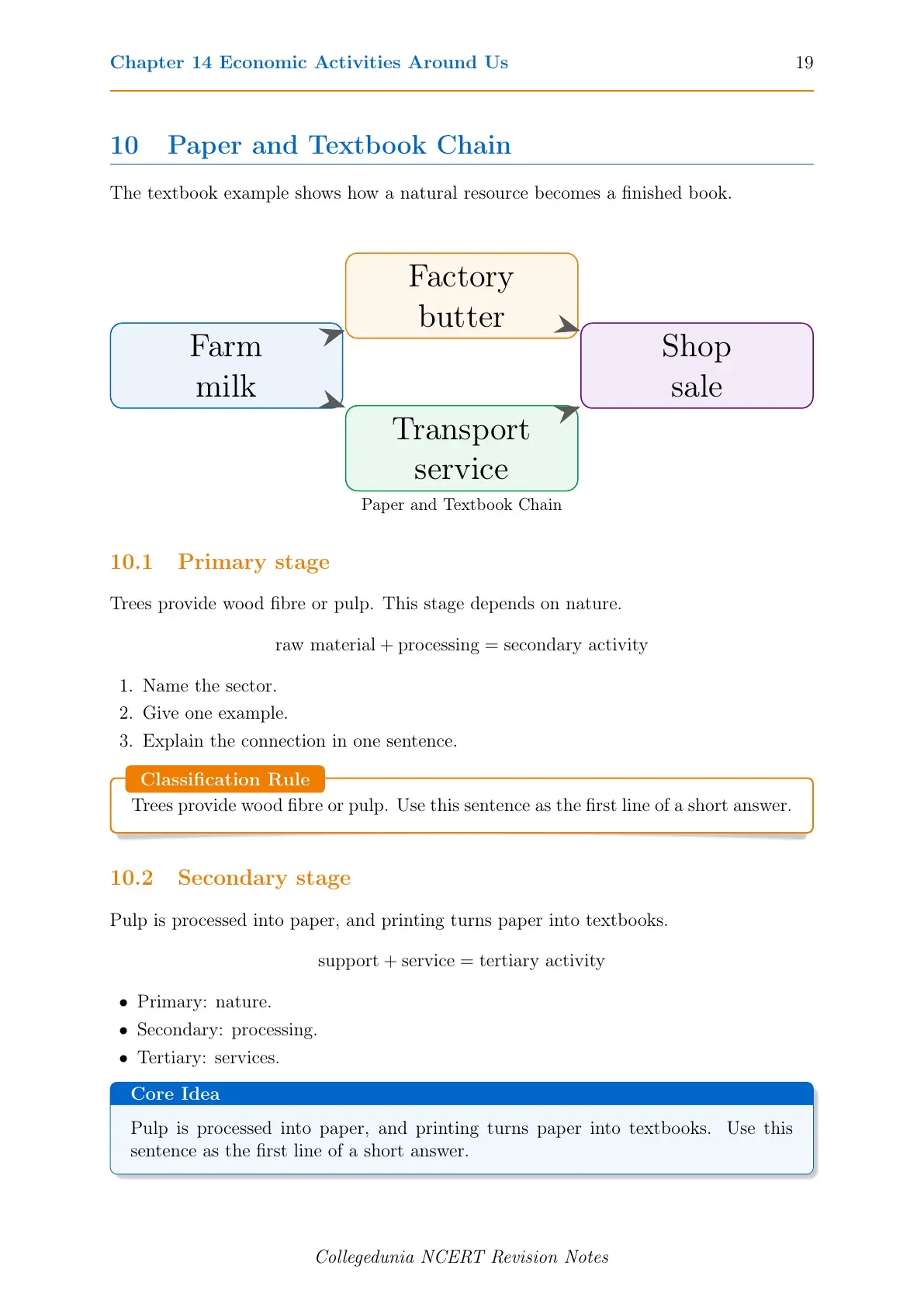
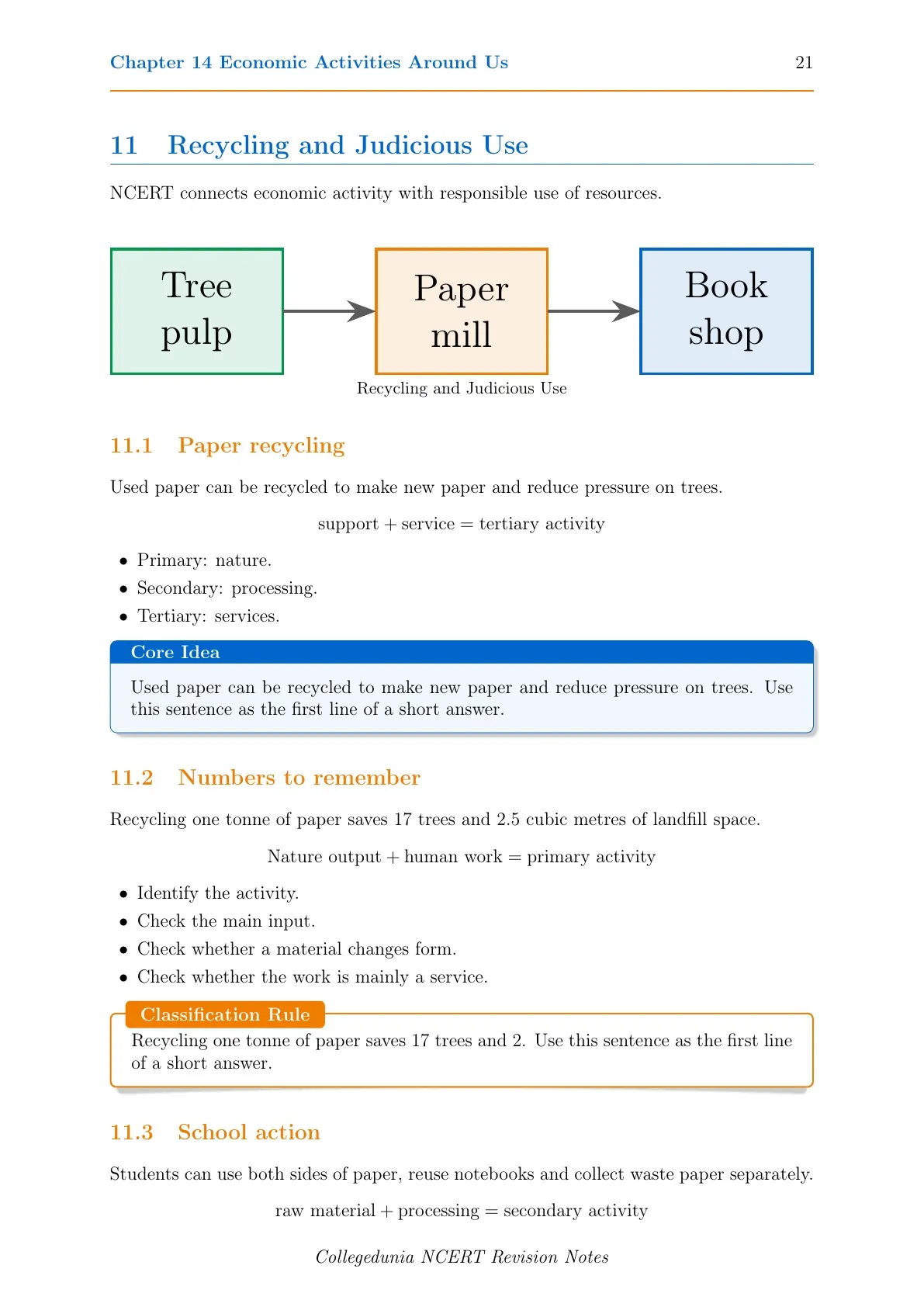
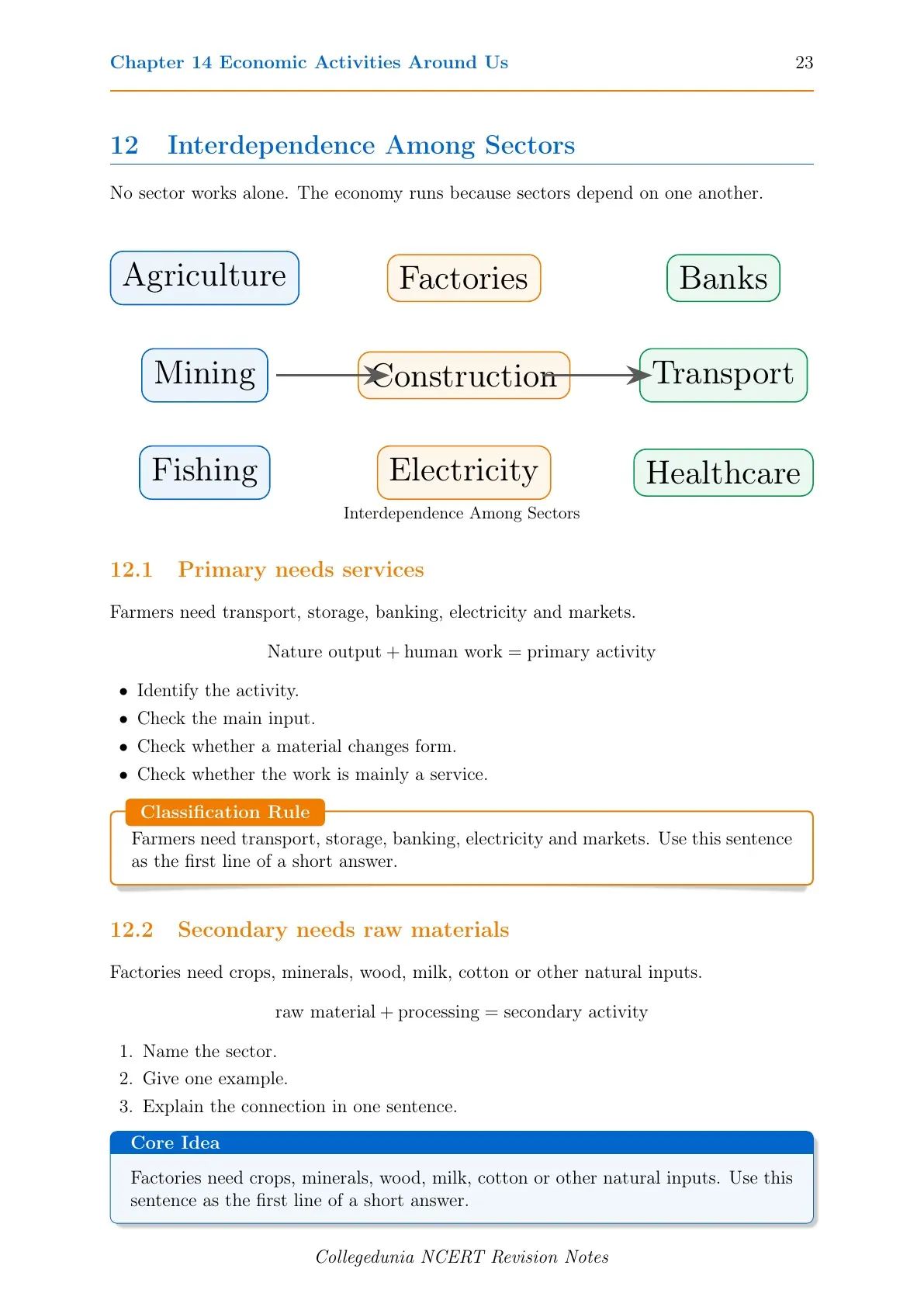
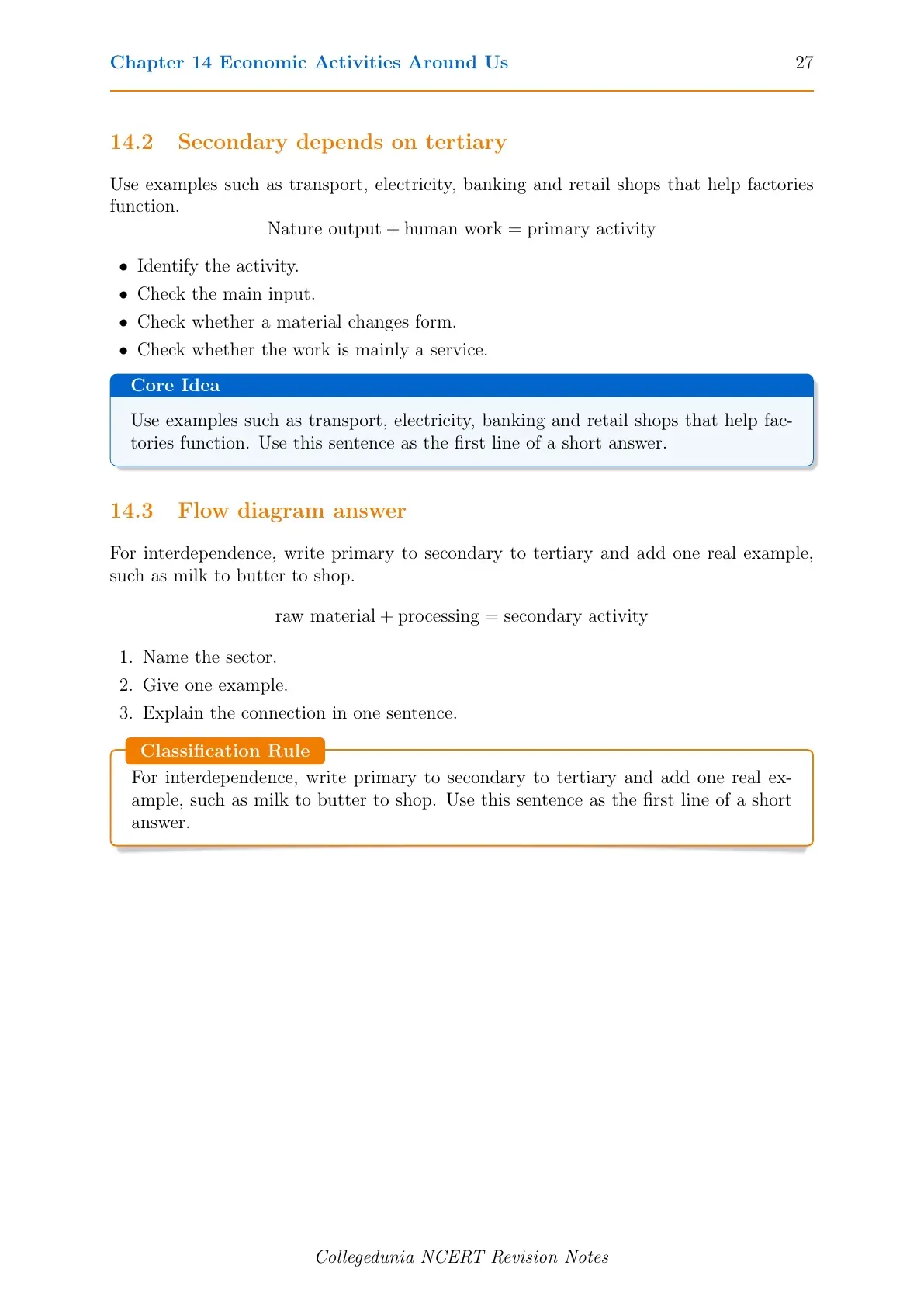
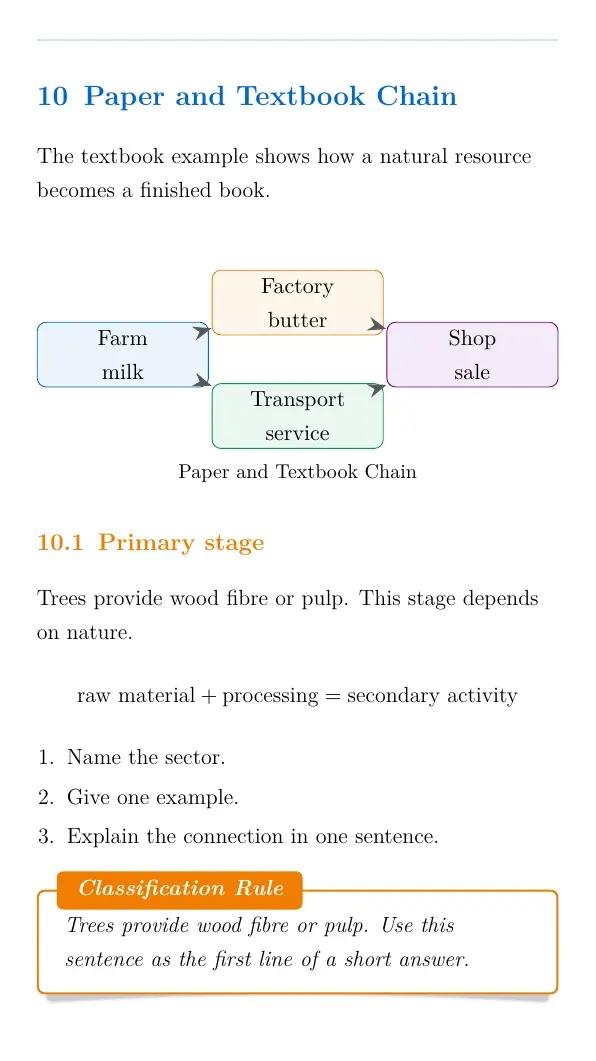
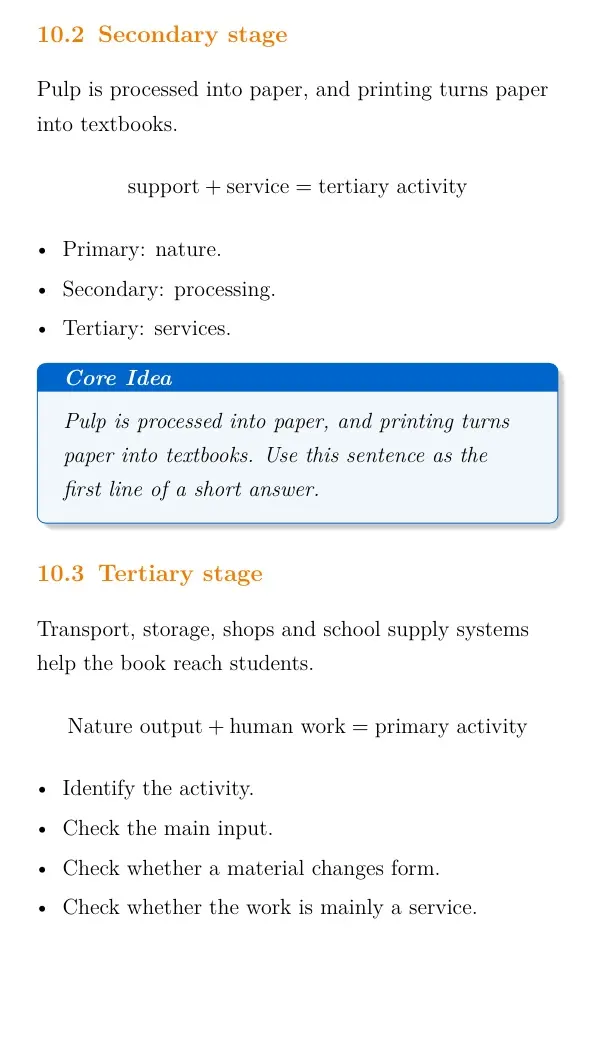
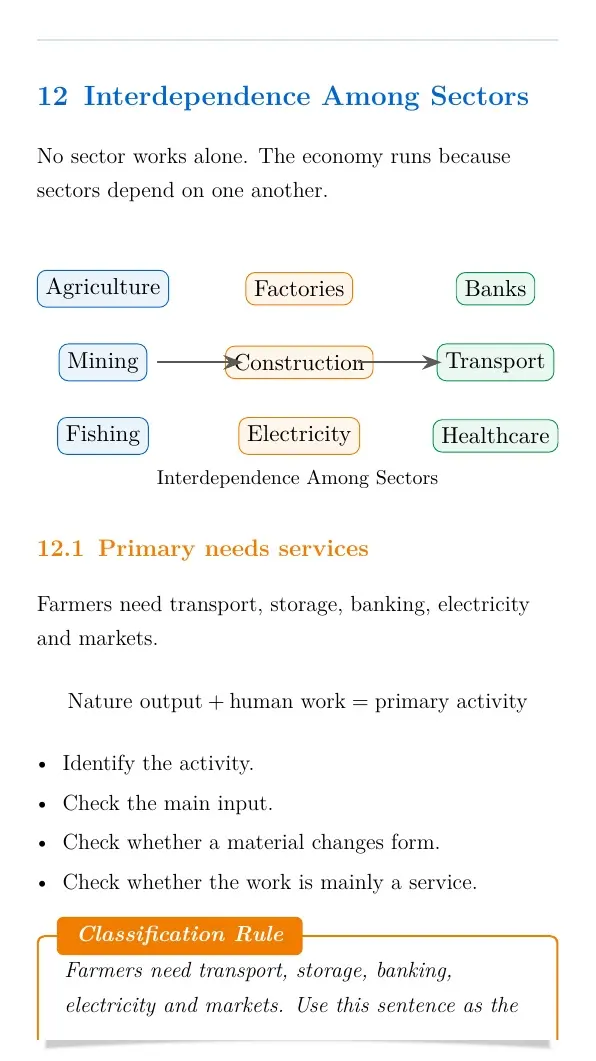
NCERT uses the dairy and textbook examples to show that no sector works alone. A textbook begins with pulp from trees, becomes paper and a printed book, and then reaches students through transport and supply systems.
- Primary supports secondary by supplying raw materials such as milk, cotton, wood and minerals.
- Secondary supports tertiary by creating goods that shops, transporters and traders handle.
- Tertiary supports both through banking, warehouses, communication, repair, retail and transport.
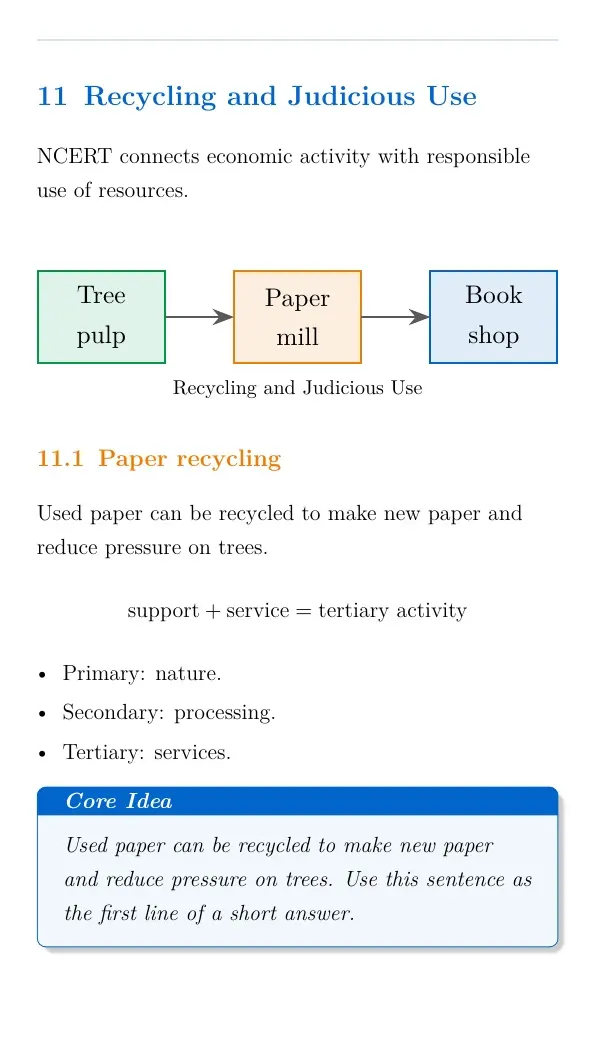
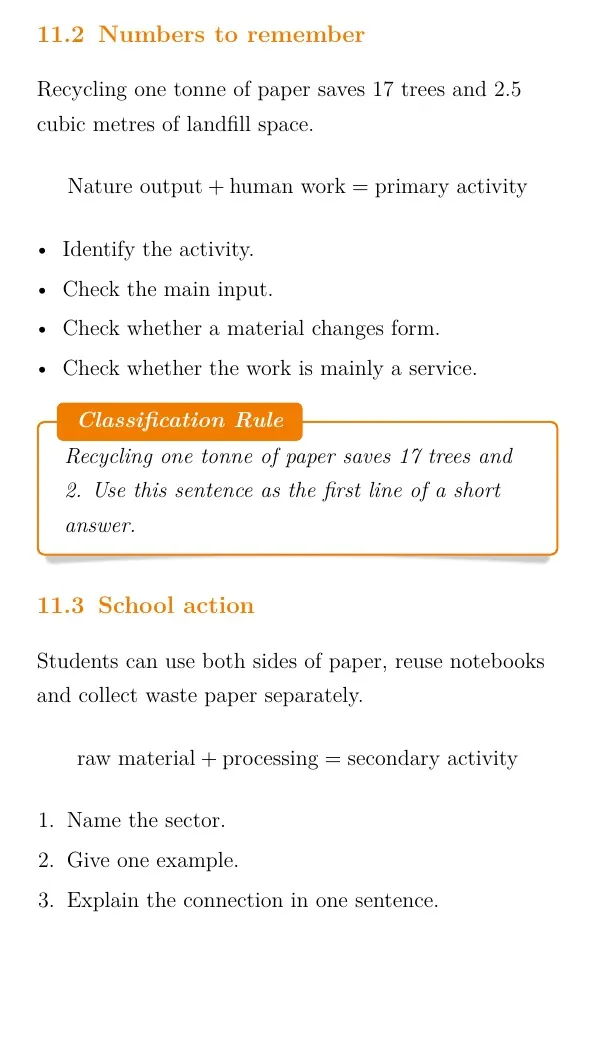
- Resource care matters because recycling one tonne of paper saves 17 trees and uses less energy and water.
Economic Activities Around Us Related Resources
| Resource | Best use | Link |
|---|---|---|
| NCERT Notes | Topic-wise revision with tables | Current page |
| NCERT Solutions | Practise textbook questions | Open NCERT Solutions |
| NCERT Book PDF | Read the official chapter | Open Book PDF |
| Handwritten Notes | Quick one-sitting revision | Open Handwritten Notes |
Social Science Notes for All Chapters
| Chapter | NCERT chapter title | Notes link |
|---|---|---|
| Chapter 1 | Locating Places on the Earth | Open Notes |
| Chapter 2 | Oceans and Continents | Open Notes |
| Chapter 3 | Landforms and Life | Open Notes |
| Chapter 4 | Timeline and Sources of History | Open Notes |
| Chapter 5 | India, That Is Bharat | Open Notes |
| Chapter 6 | The Beginnings of Indian Civilisation | Open Notes |
| Chapter 7 | India's Cultural Roots | Open Notes |
| Chapter 8 | Unity in Diversity, or Many in the One | Open Notes |
| Chapter 9 | Family and Community | Open Notes |
| Chapter 10 | Grassroots Democracy Part 1 Governance | Open Notes |
| Chapter 11 | Grassroots Democracy Part 2 Local Government in Rural Areas | Open Notes |
| Chapter 12 | Grassroots Democracy Part 3 Local Government in Urban Areas | Open Notes |
| Chapter 13 | The Value of Work | Open Notes |
| Chapter 14 | Economic Activities Around Us | Current notes |
Economic Activities Around Us Class 6 Notes FAQs
Ques. What are primary activities in Class 6 Social Science Chapter 14?
Ans. Primary activities depend directly on nature. Farming, fishing, mining, forestry and raising livestock are common examples.
Ques. What is the secondary sector?
Ans. The secondary sector processes raw materials from the primary sector into goods for sale or use.
Ques. What is the tertiary sector?
Ans. The tertiary sector provides services such as transport, banking, healthcare, trade, communication and retail.
Ques. How does AMUL show interdependence among sectors?
Ans. AMUL uses milk from farmers, processes it into dairy products, and sells it through transport, retail and trade networks.
Ques. Why is recycling paper important in this chapter?
Ans. Recycling paper saves trees, landfill space, energy and water. It links economic activity with careful use of resources.



Comments