




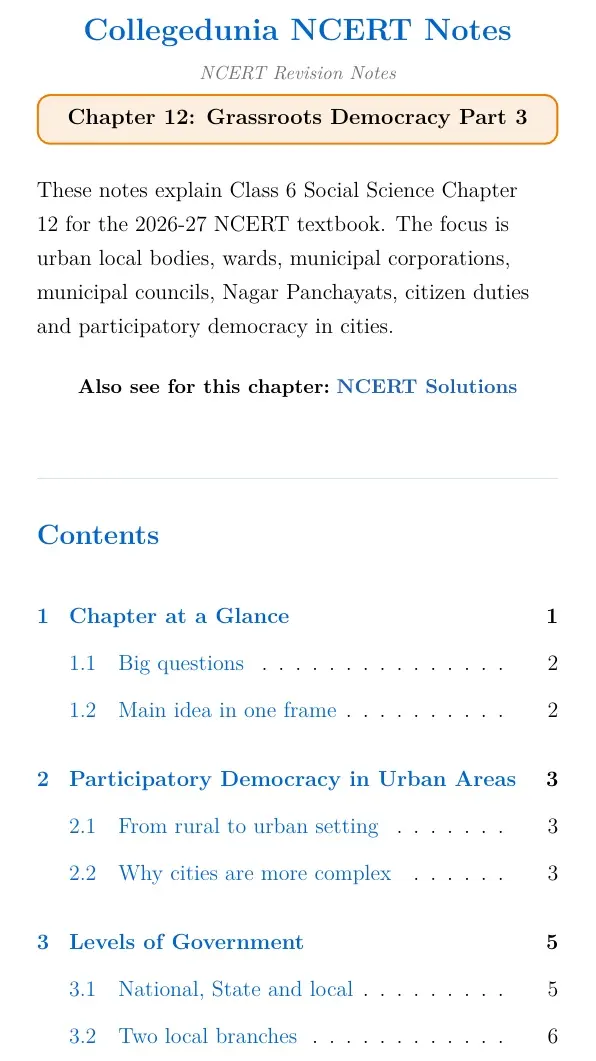
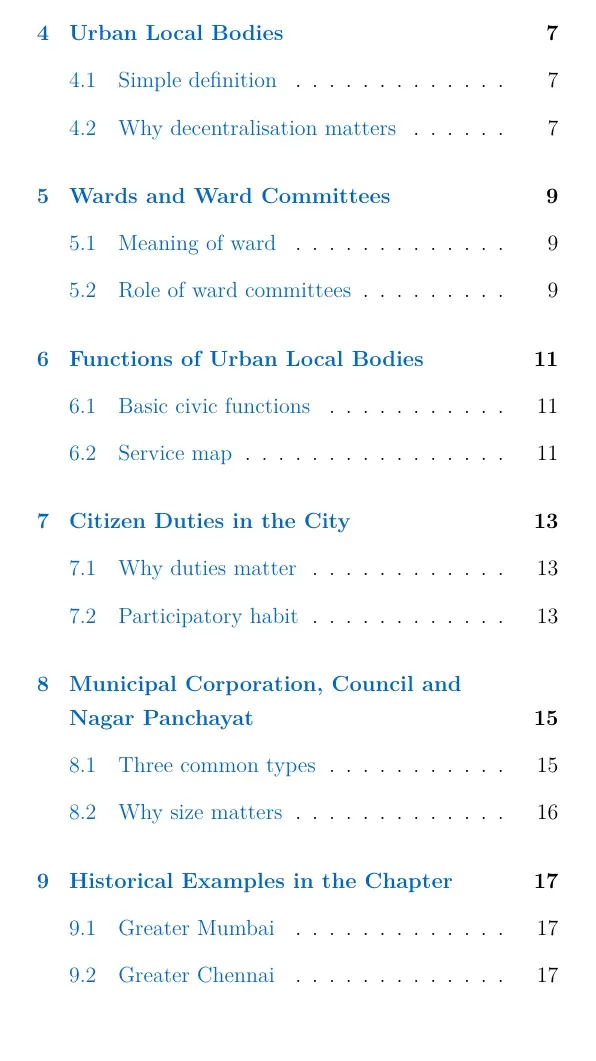
The NCERT Class 6 Social Science Chapter 12 notes for Grassroots Democracy Part 3 Local Government in Urban Areas explain urban local bodies, wards, municipal corporations, municipal councils, Nagar Panchayats and citizen duties. These notes follow the 2026-27 NCERT textbook and include a free PDF for quick revision.
- Best for revision: urban local bodies, wards, city services and responsible citizenship.
- Use with the PDF: revise the body types table, then practise the textbook questions.
- 2026-27 focus: follows Exploring Society: India and Beyond, Chapter 12.

Student Feedback: In a quick class poll, 76% of students found this chapter easier after matching each urban local body with one city service.
|
Table of Contents |
Local Government in Urban Areas Overview
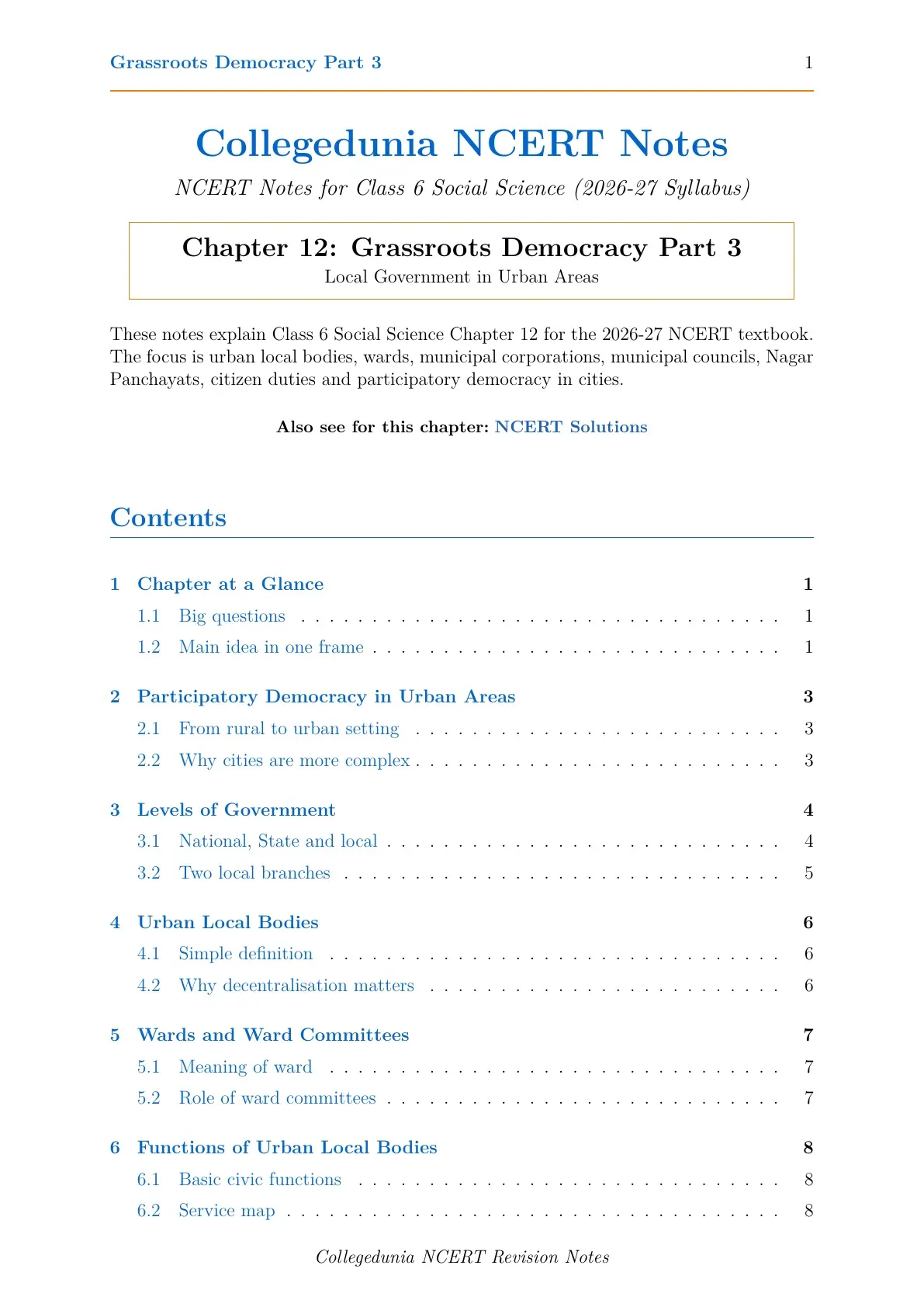
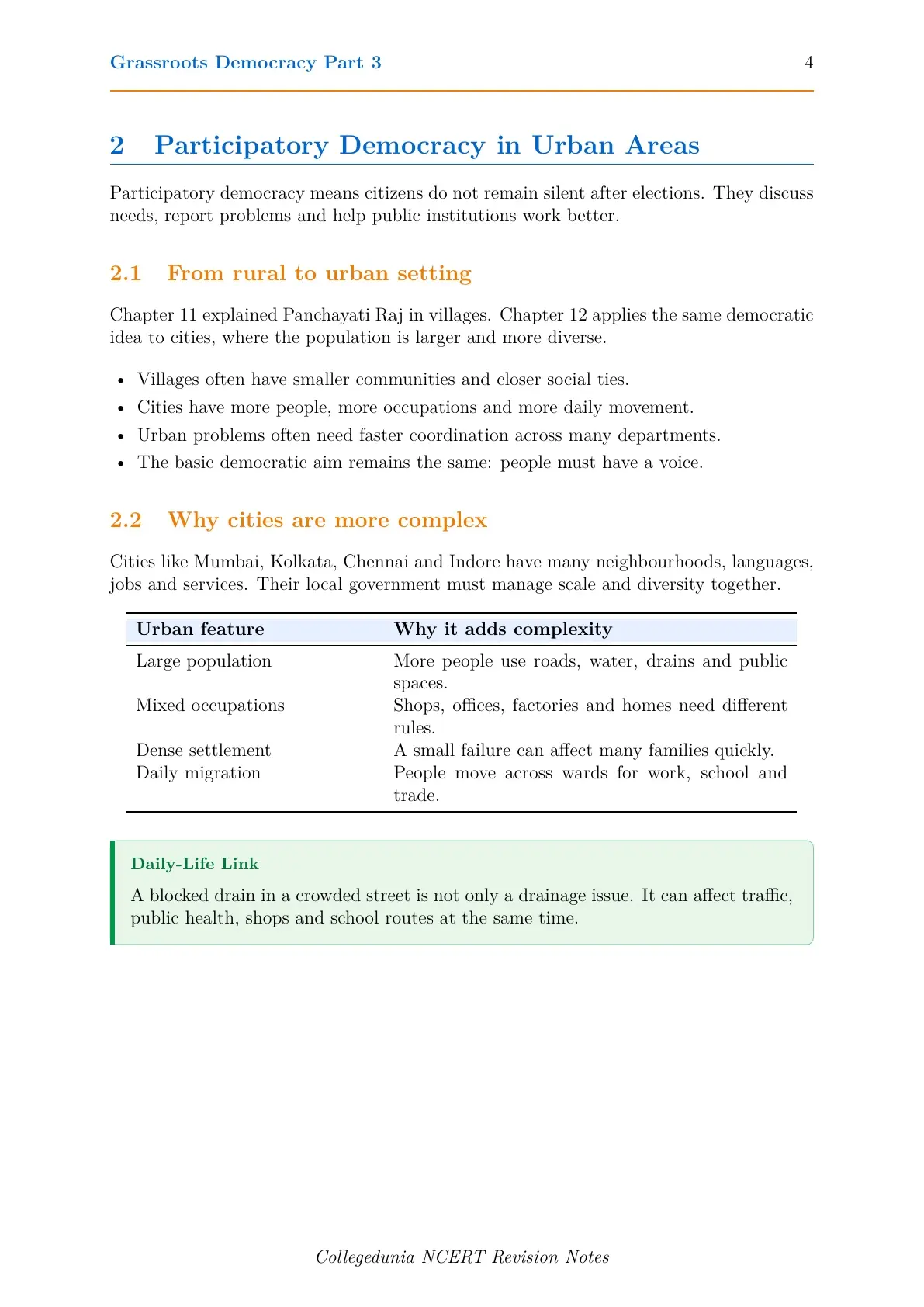
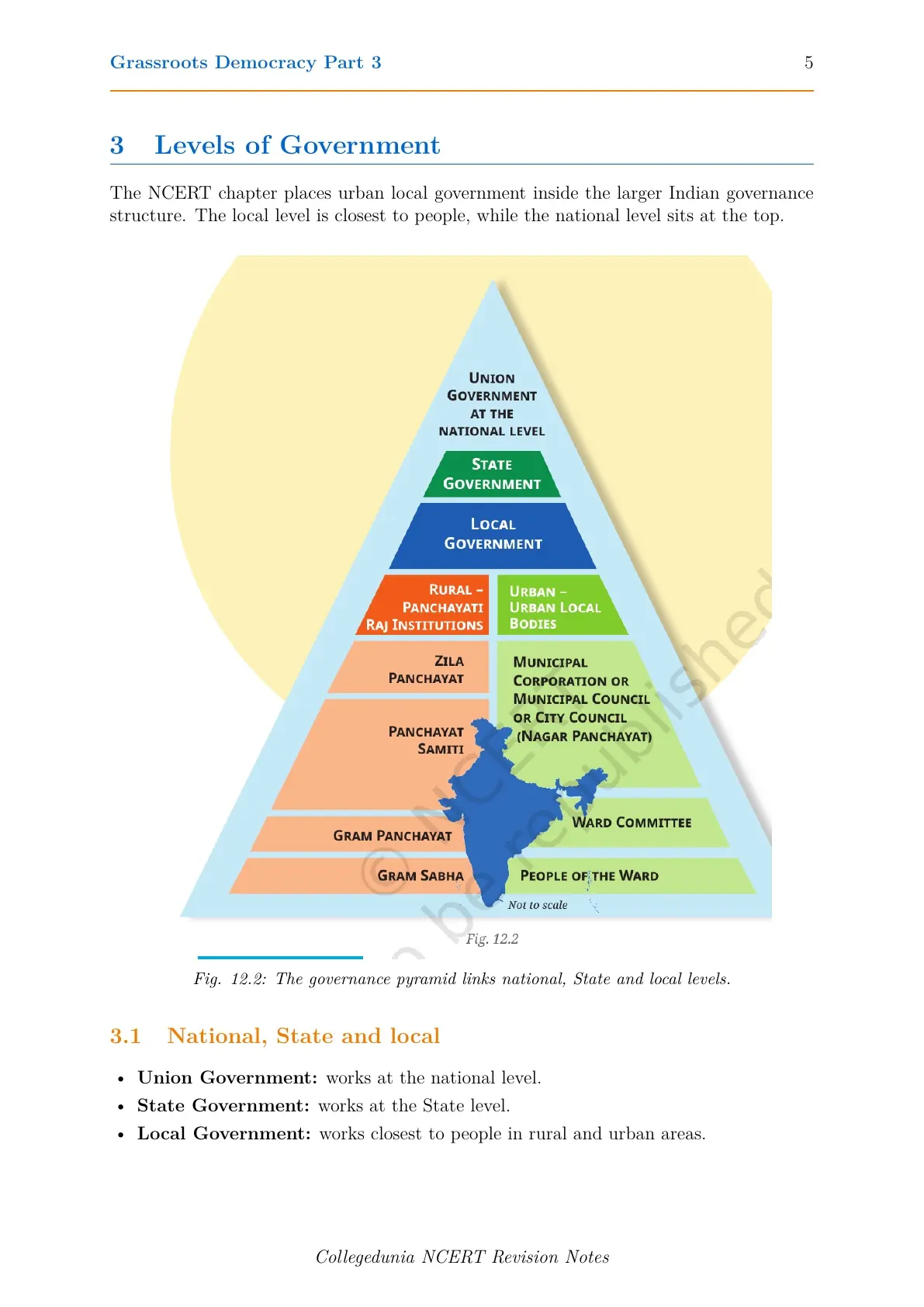
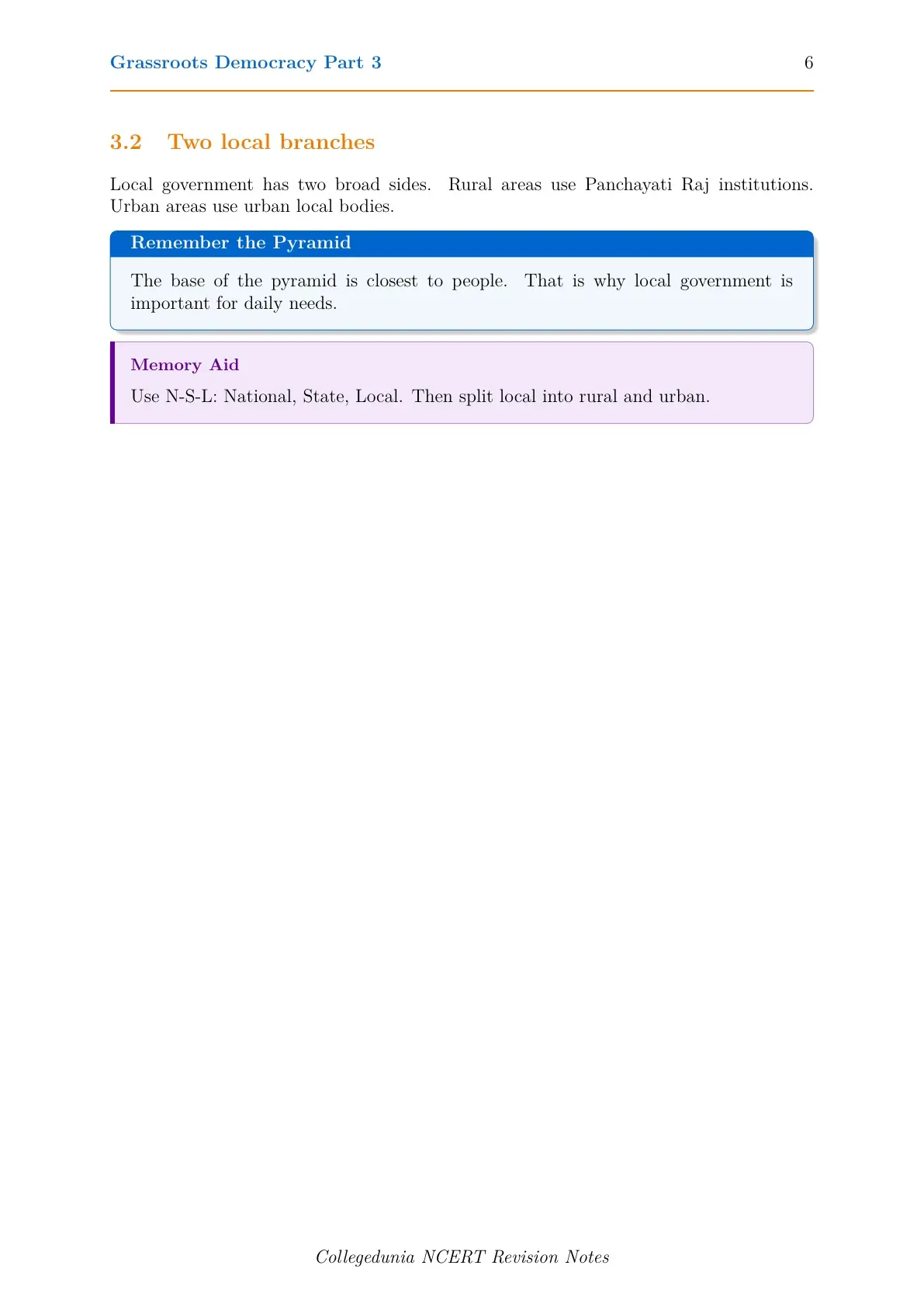
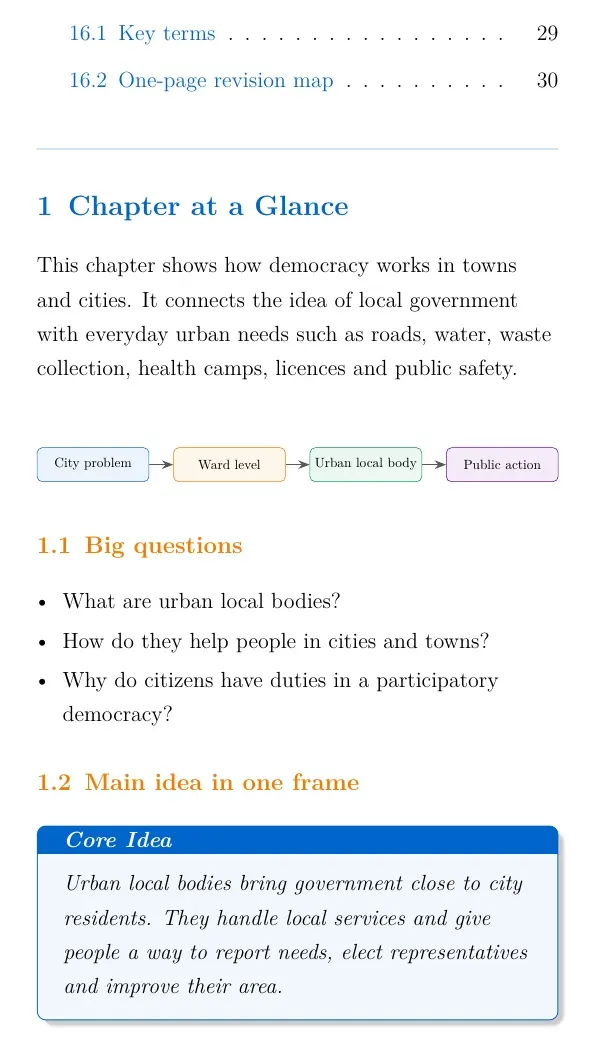
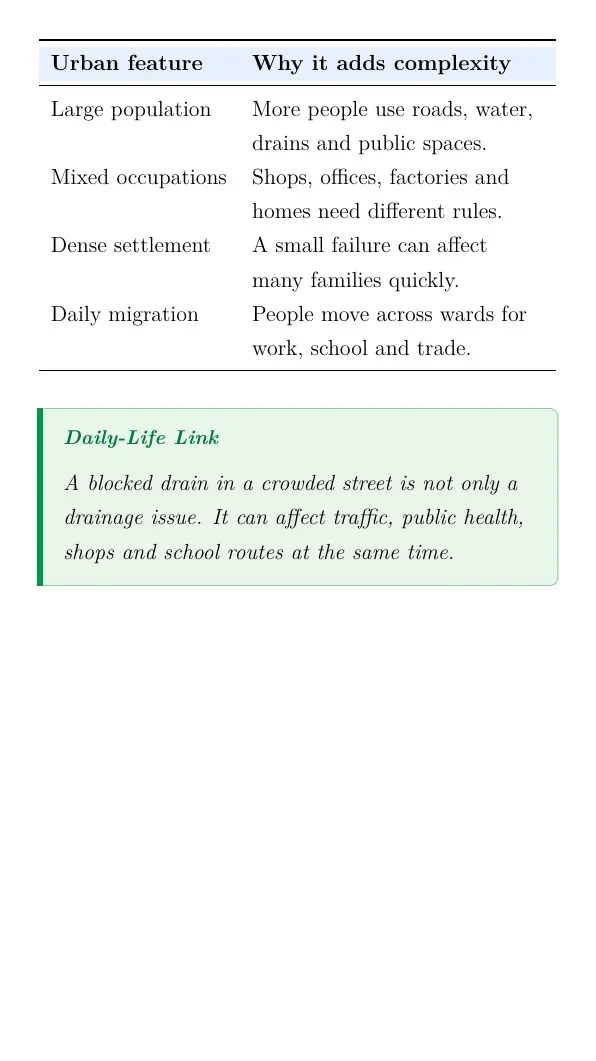
Chapter 12 explains how democracy works in towns and cities. Urban areas are larger and more diverse than villages, so their local government system needs more coordination. The basic idea remains simple: people should have a voice in decisions that affect their area.
| Revision area | Key idea | Example cue |
|---|---|---|
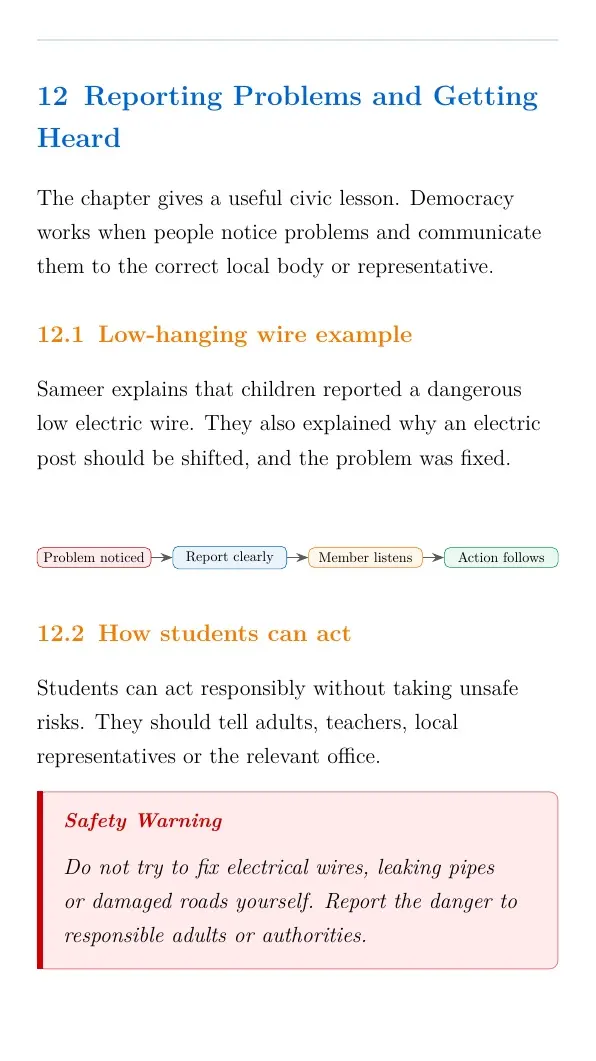
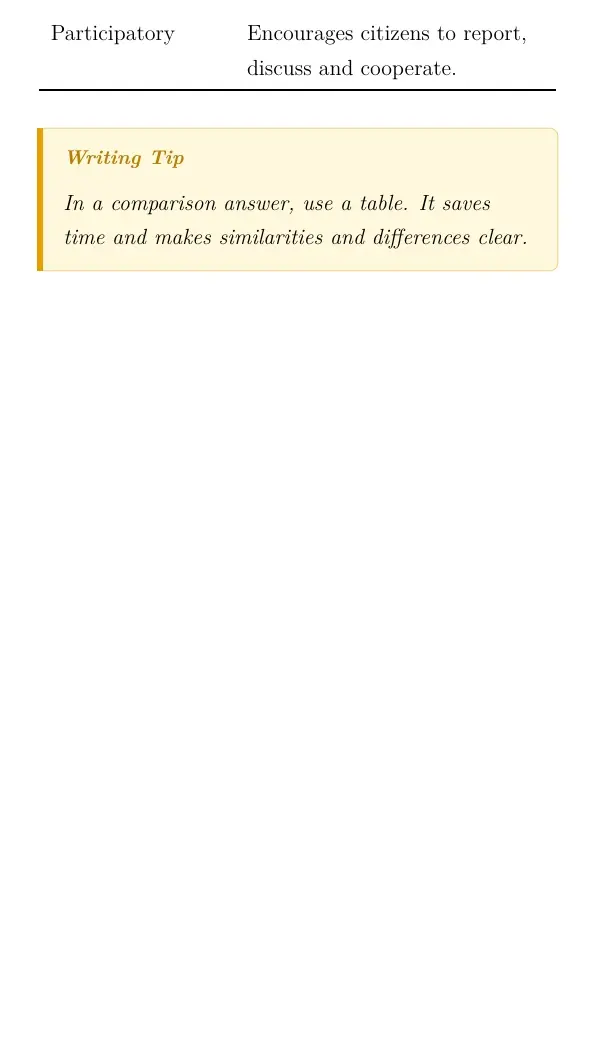
| Participatory democracy | Citizens actively take part in public life | Reporting a water leak or unsafe wire |
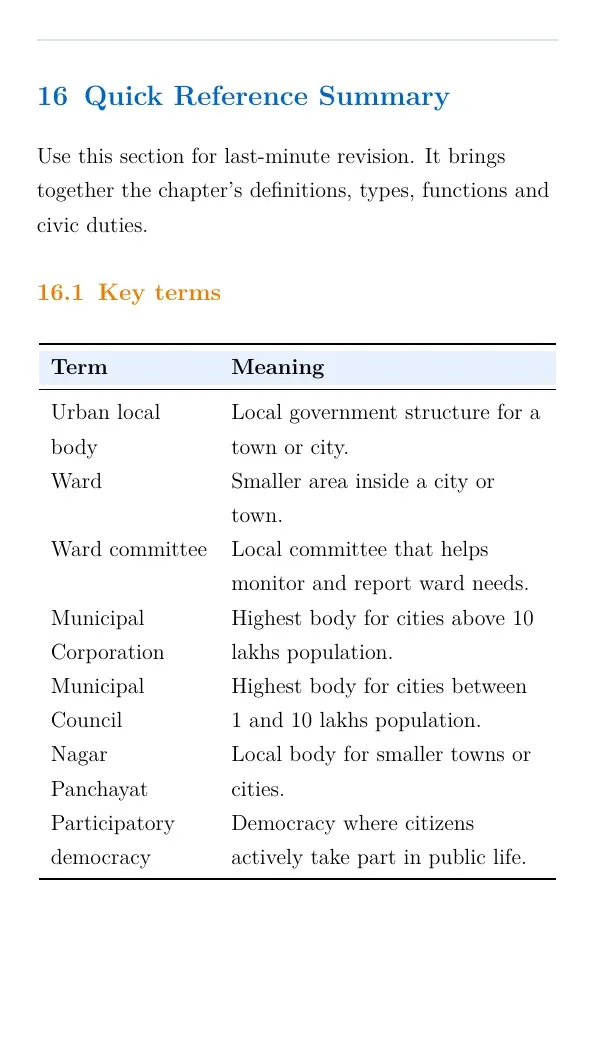
| Urban local bodies | Local government structures in towns and cities | Municipal Corporation or Municipal Council |
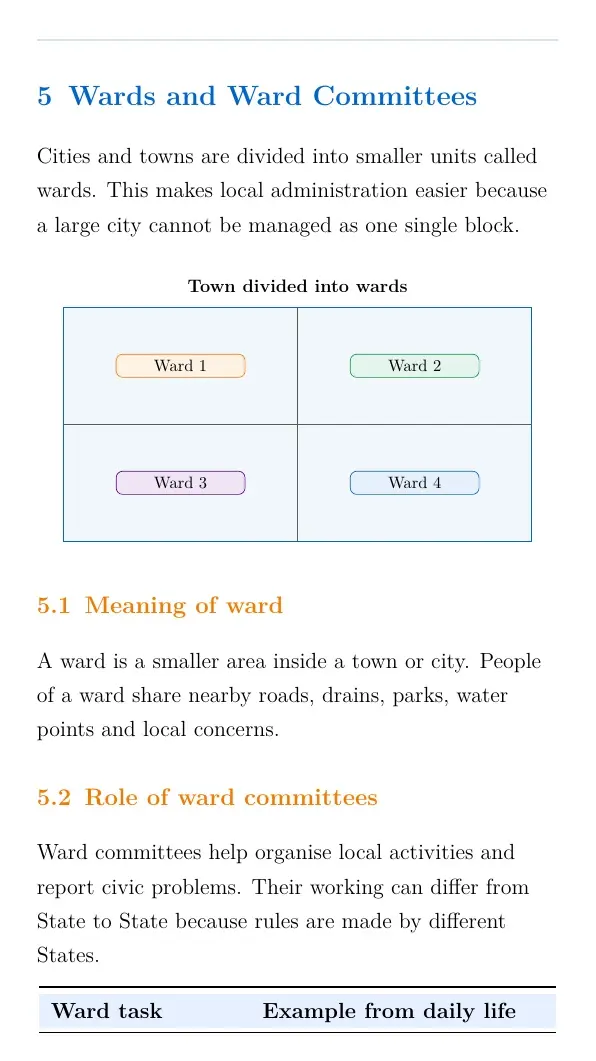
| Wards | Smaller units inside towns and cities | Ward committee watches local problems |
| Citizen duties | Actions that help services work better | Waste segregation and paying local taxes |
Urban Local Bodies and Wards
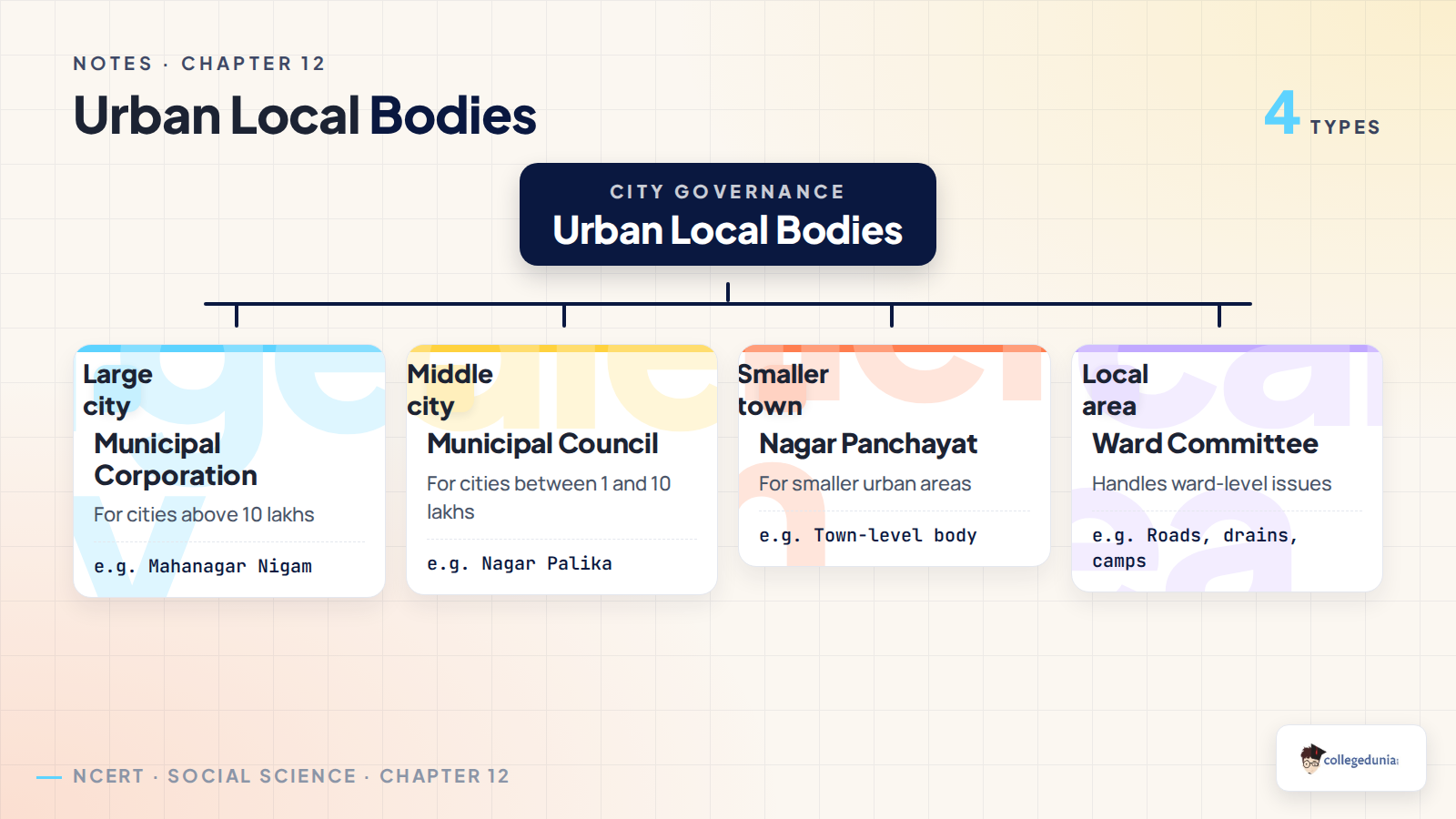
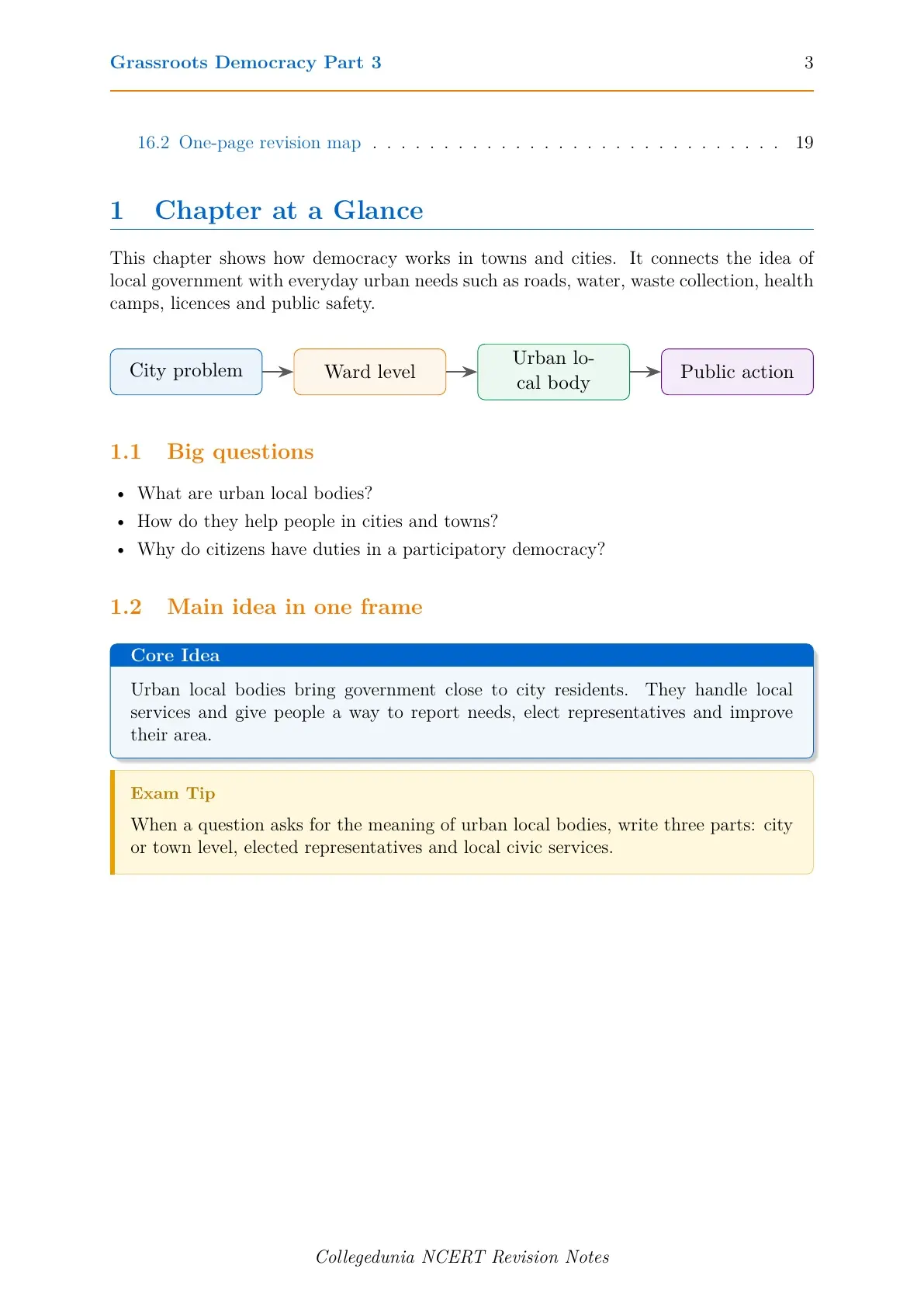
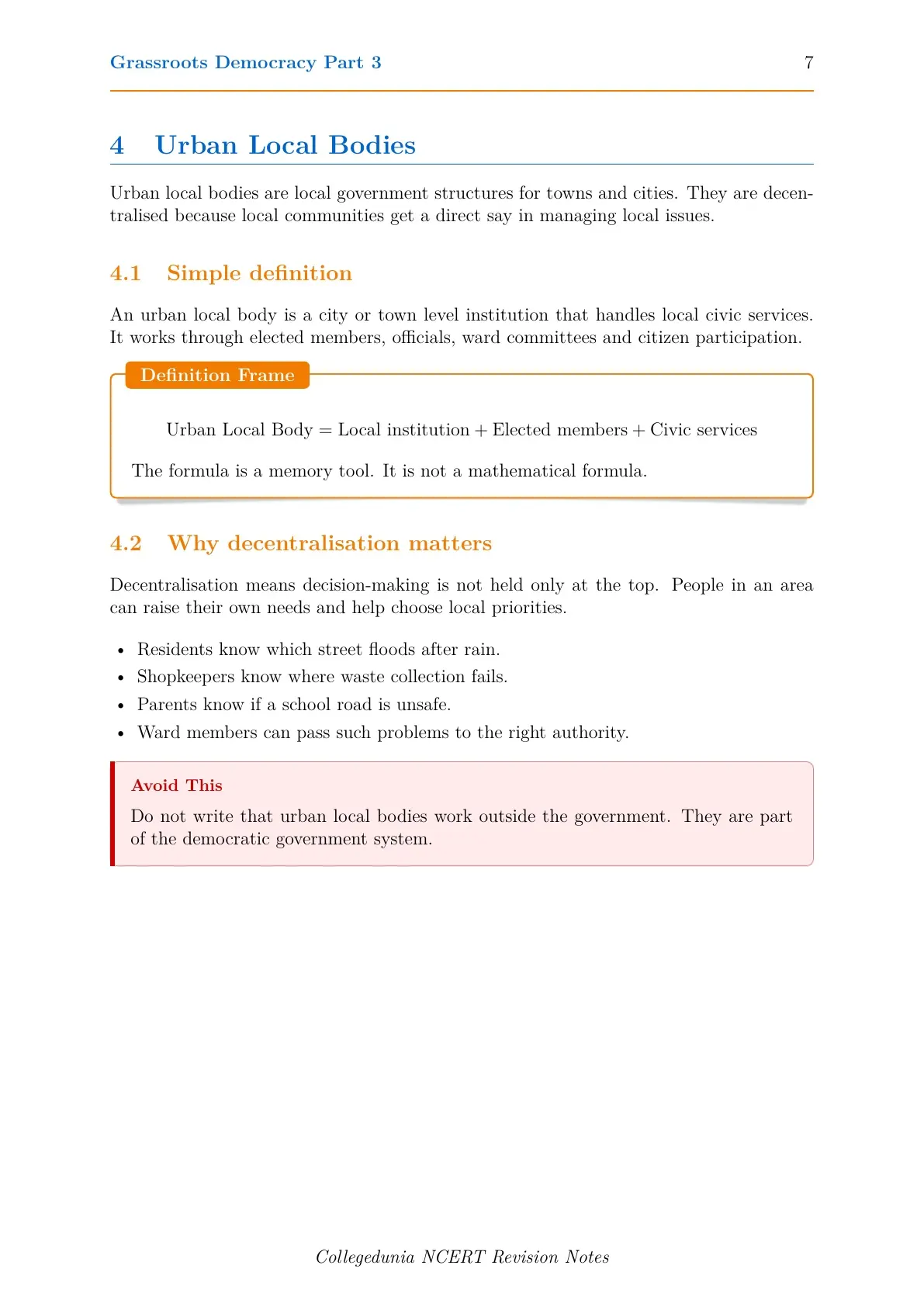
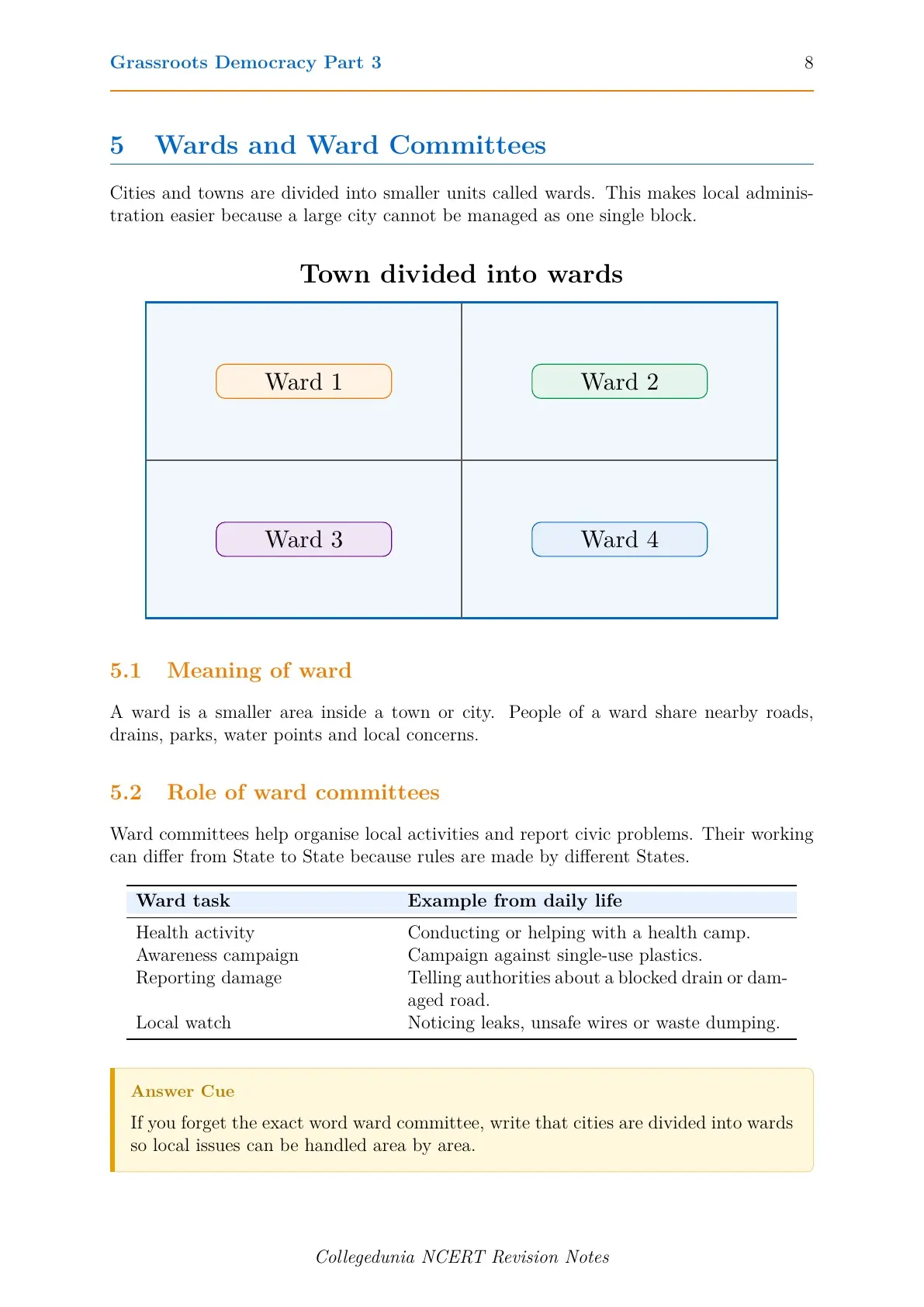
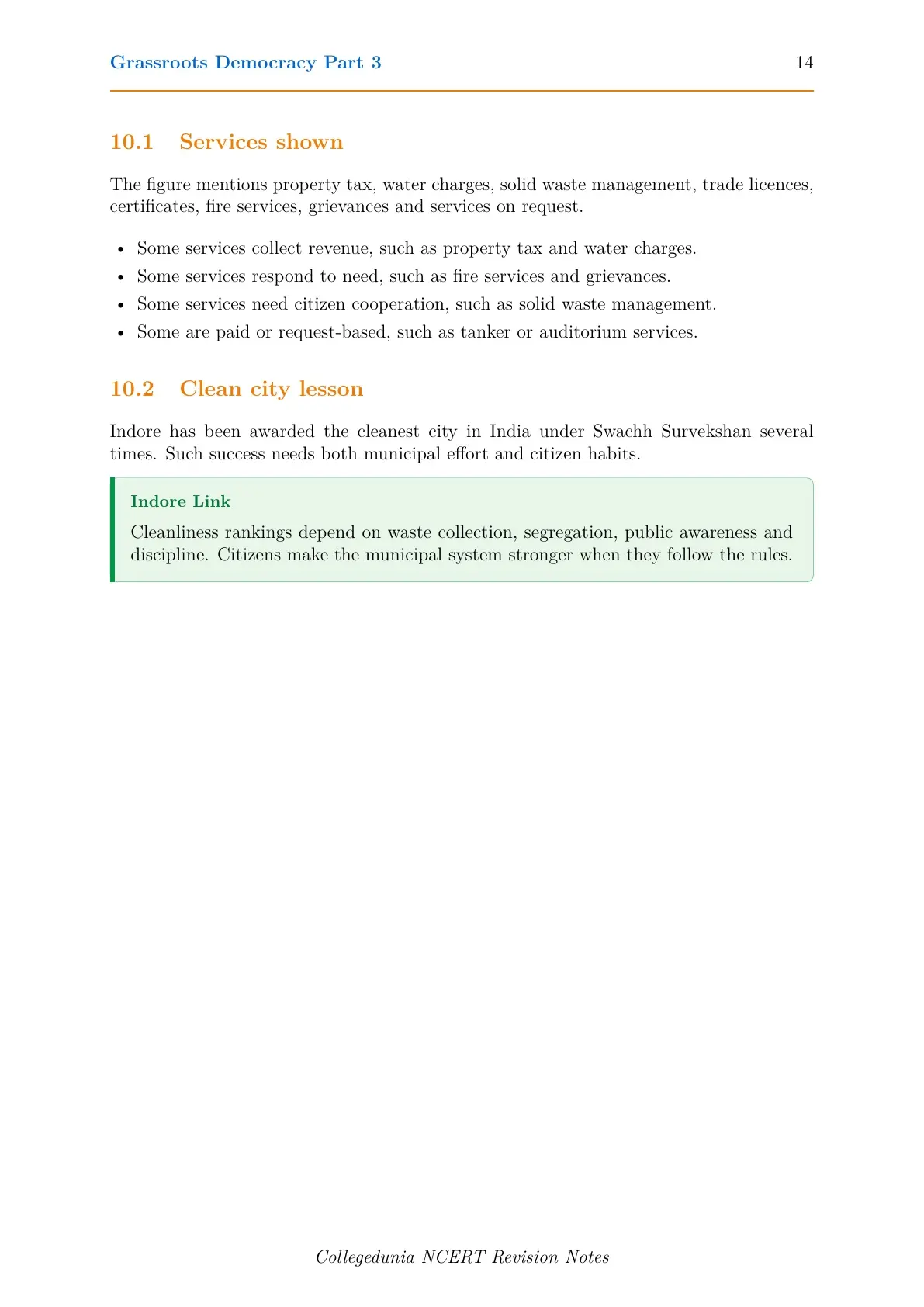
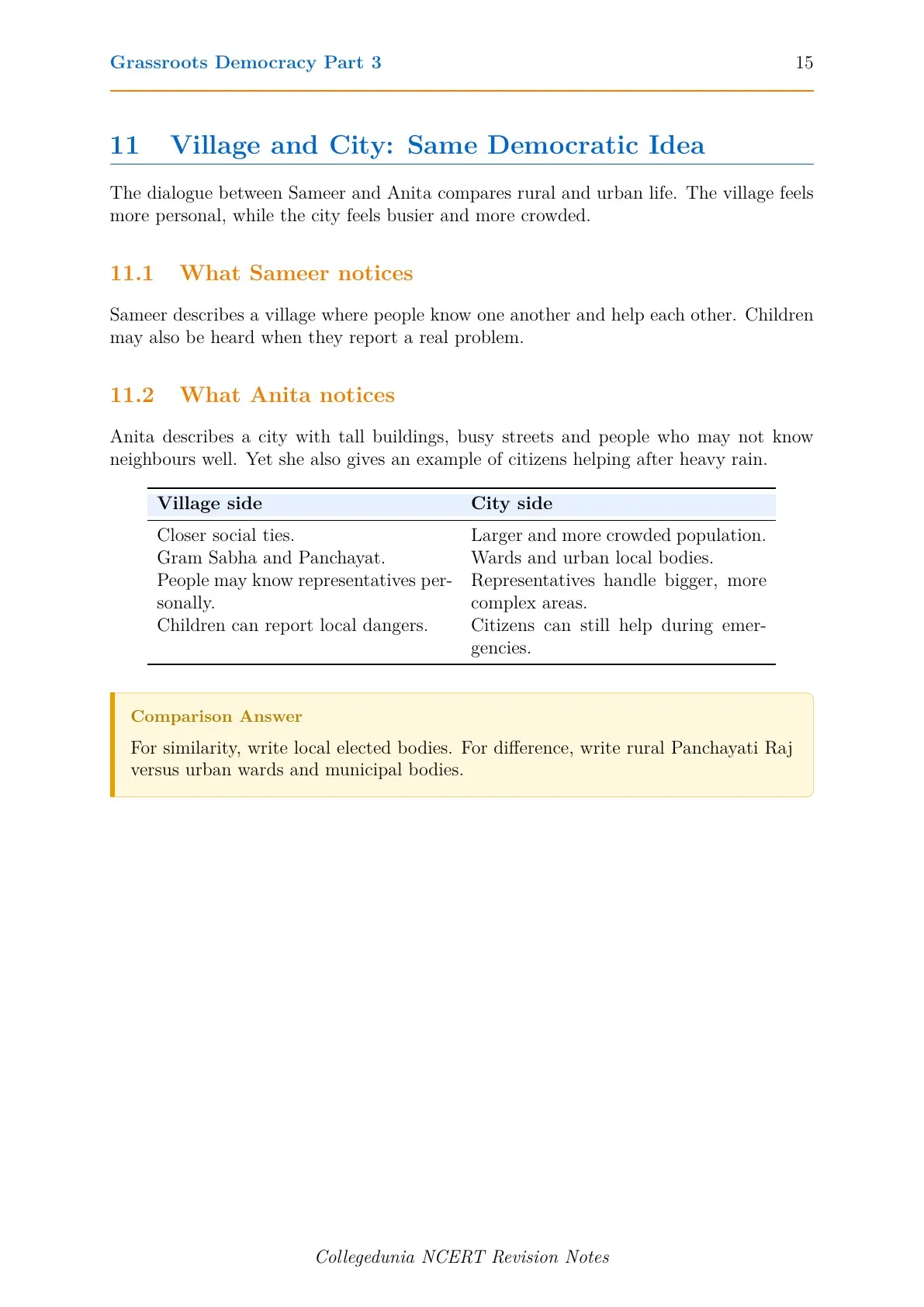
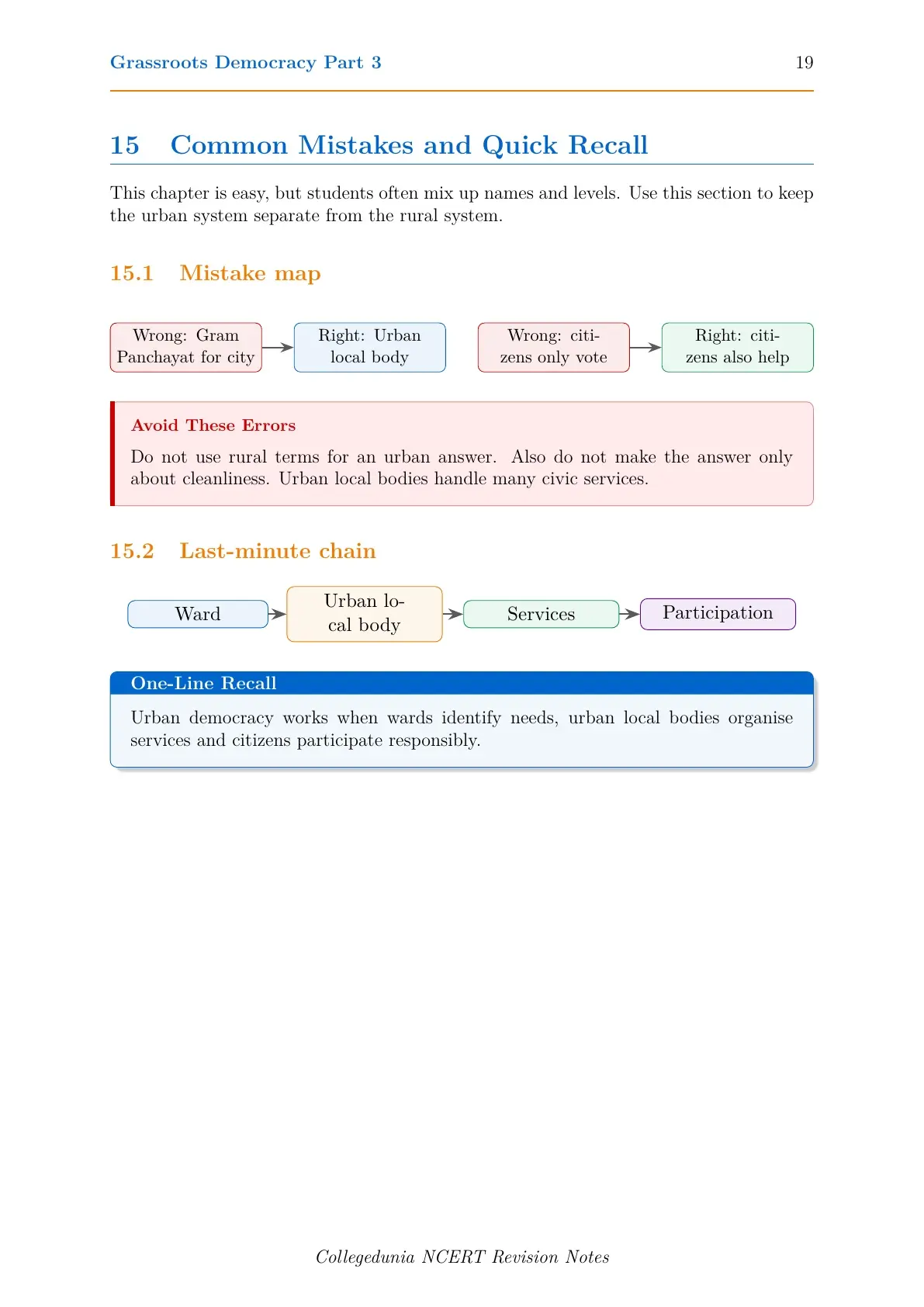
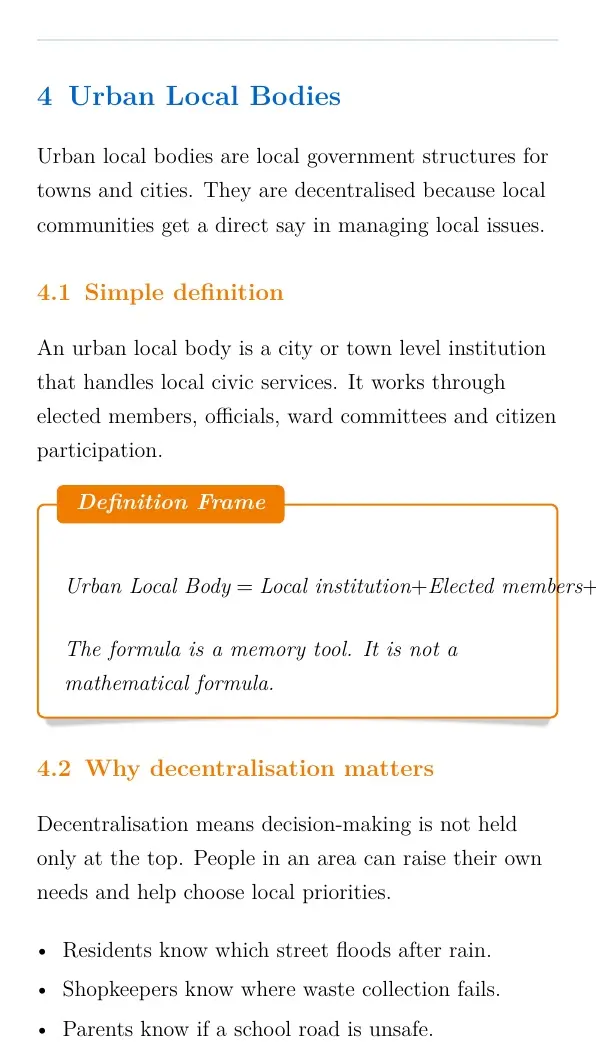
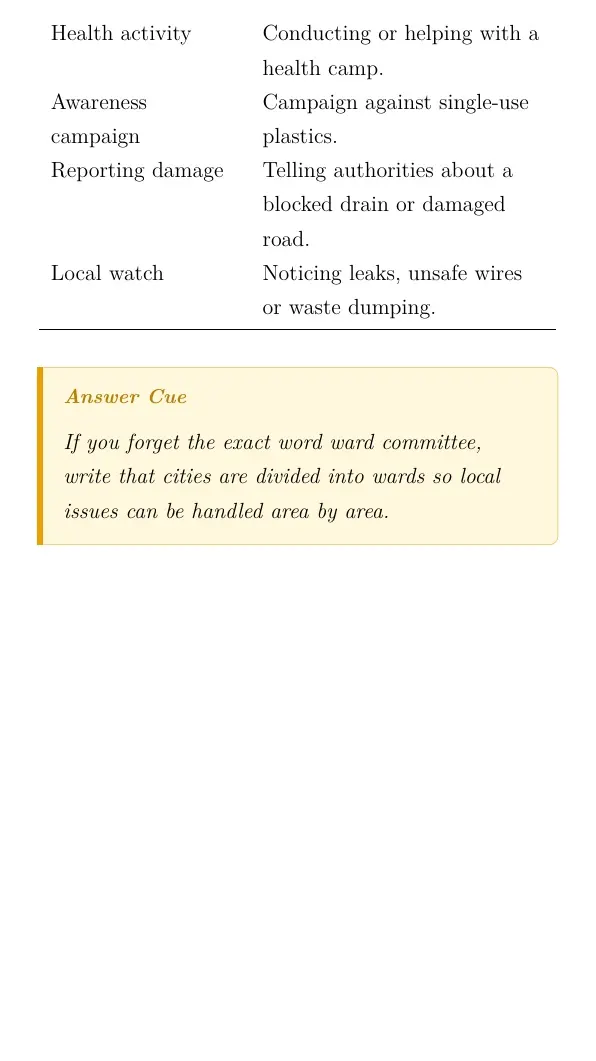
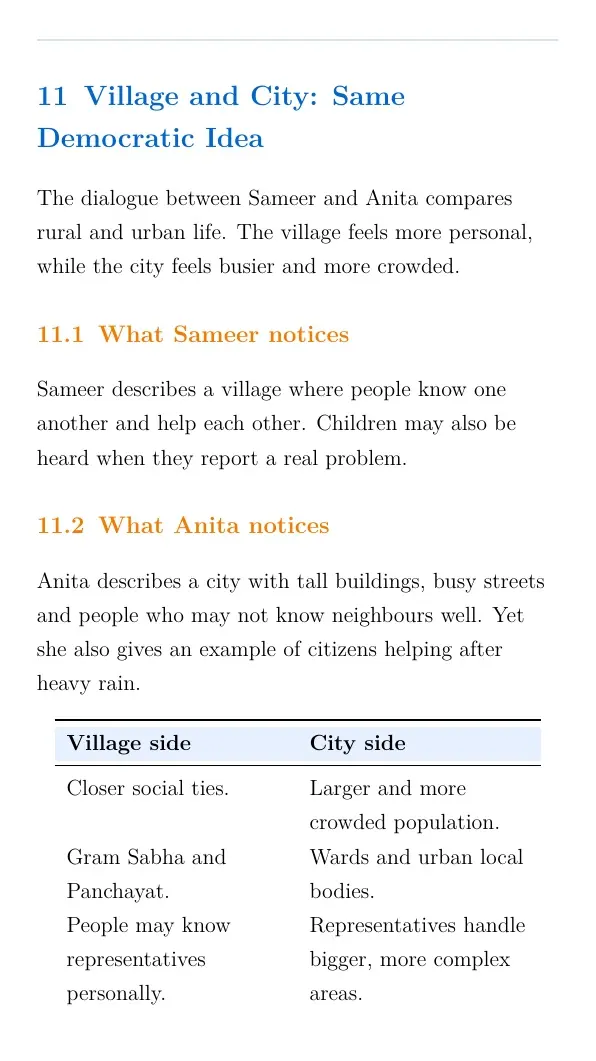
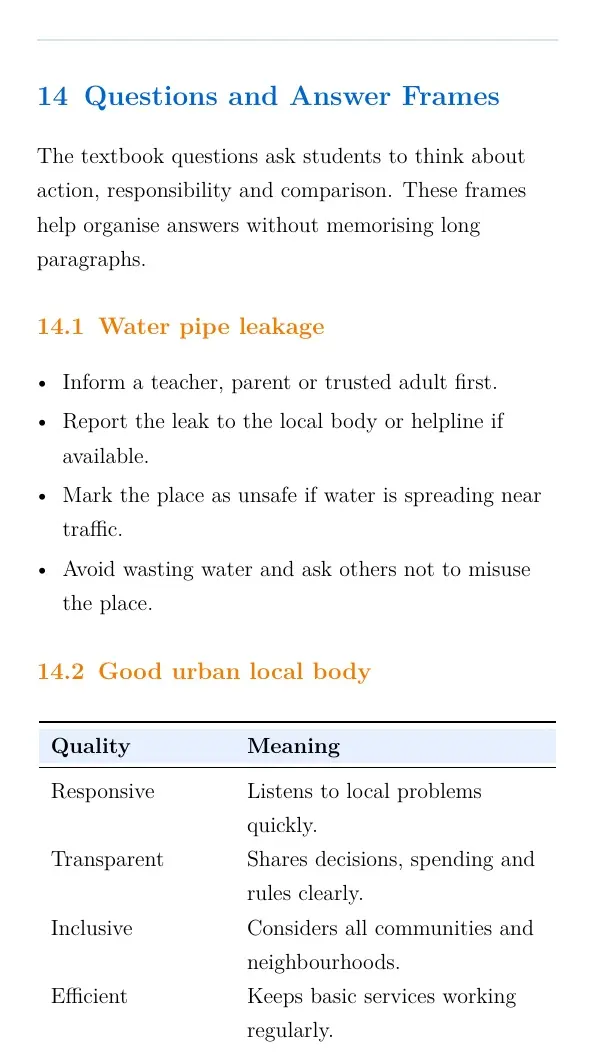
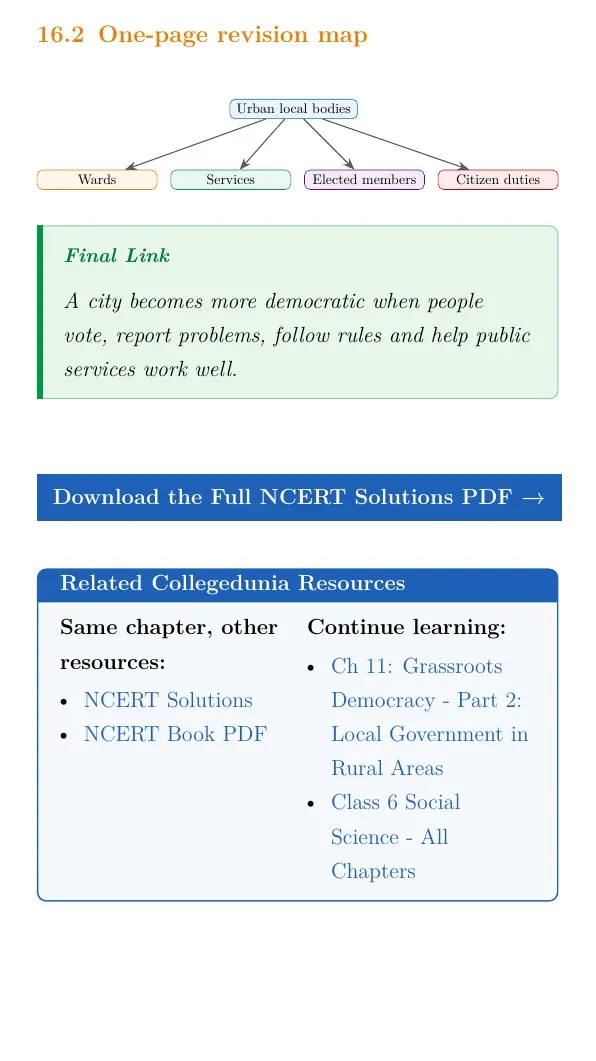
Urban local bodies are decentralised institutions. This means local communities get a direct say in how their area is managed. Cities and towns are divided into wards so local issues can be noticed and reported quickly.
- Ward committees may help with health camps, awareness drives and local monitoring.
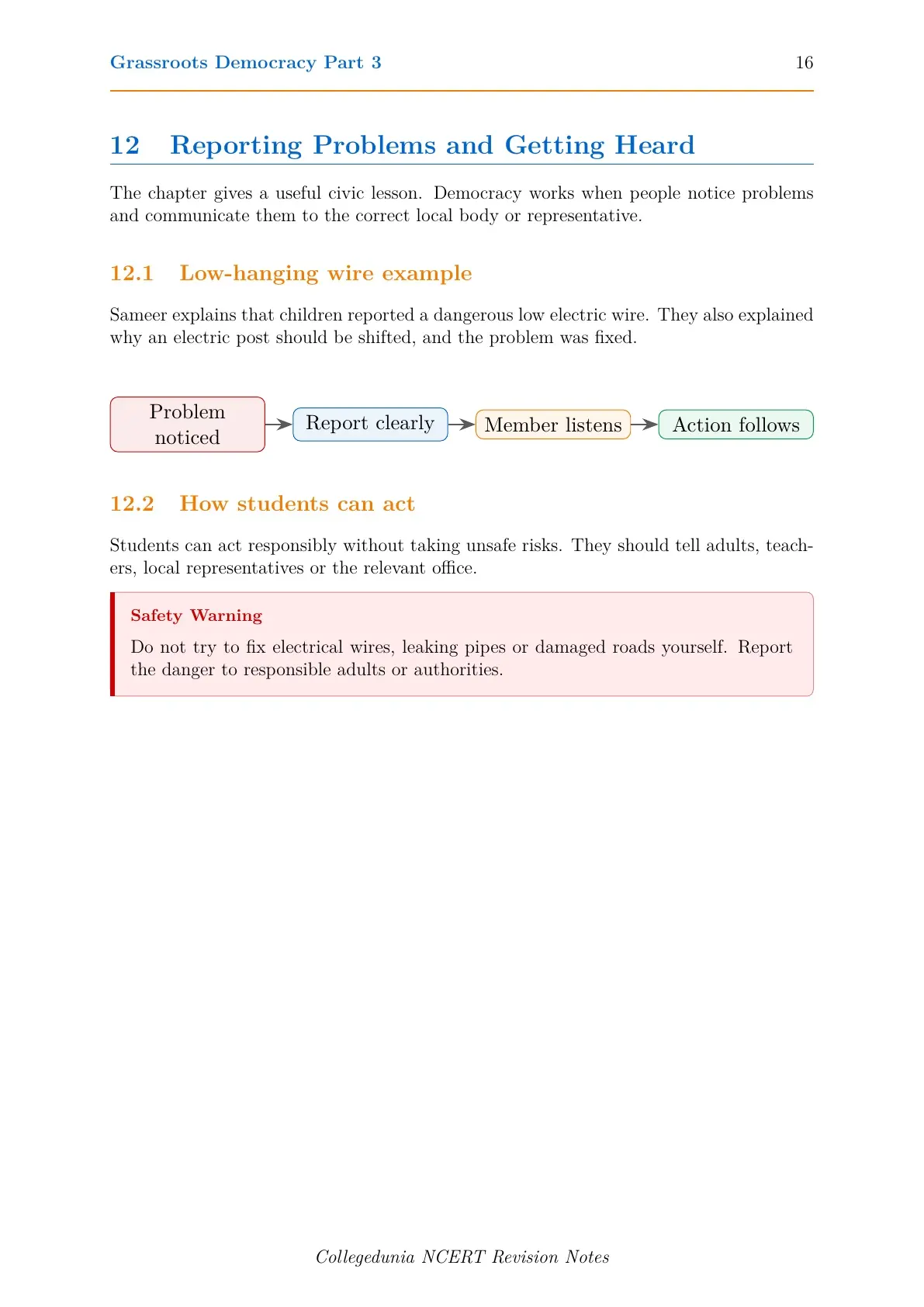
- Common reports include water leaks, blocked drains, damaged roads and waste problems.
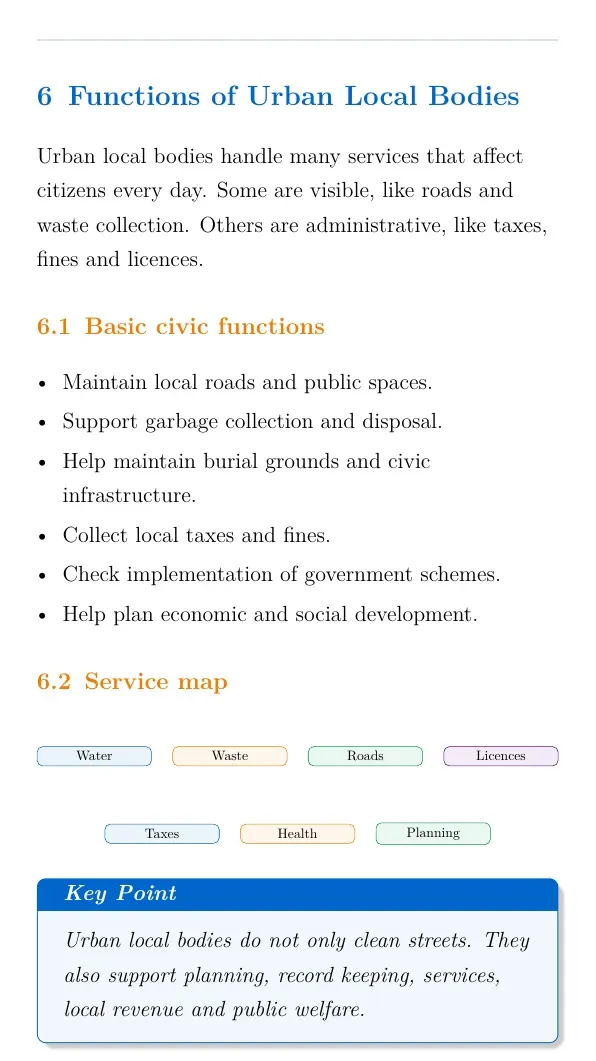
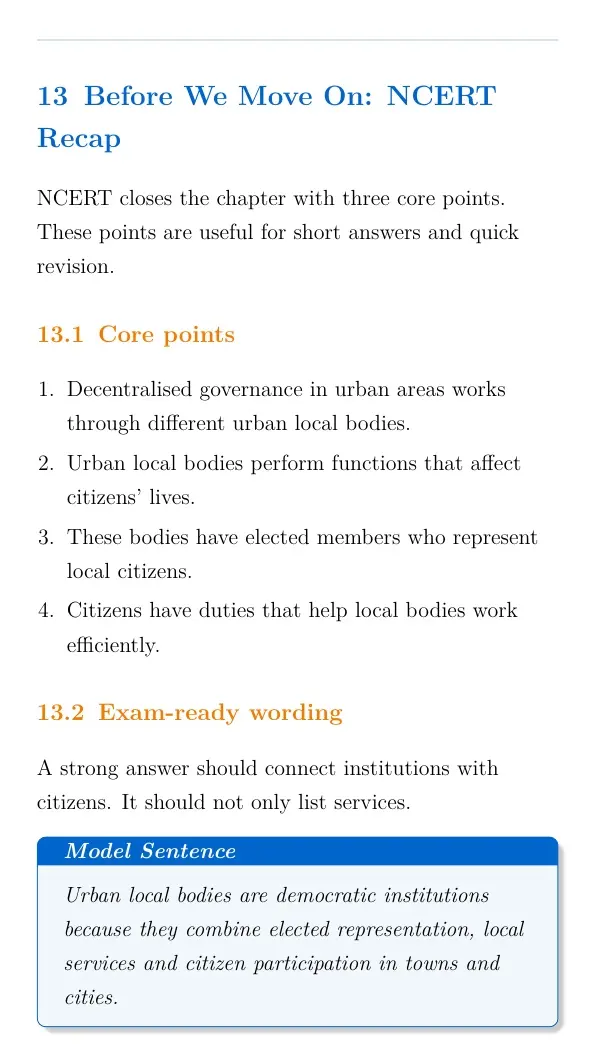
- Urban bodies also help with infrastructure, local taxes, fines and development planning.
- People's role matters because public services work better when citizens cooperate.
Local Government in Urban Areas Revision Video
Source: Magnet Brains on YouTube
Municipal Corporation, Council and Nagar Panchayat
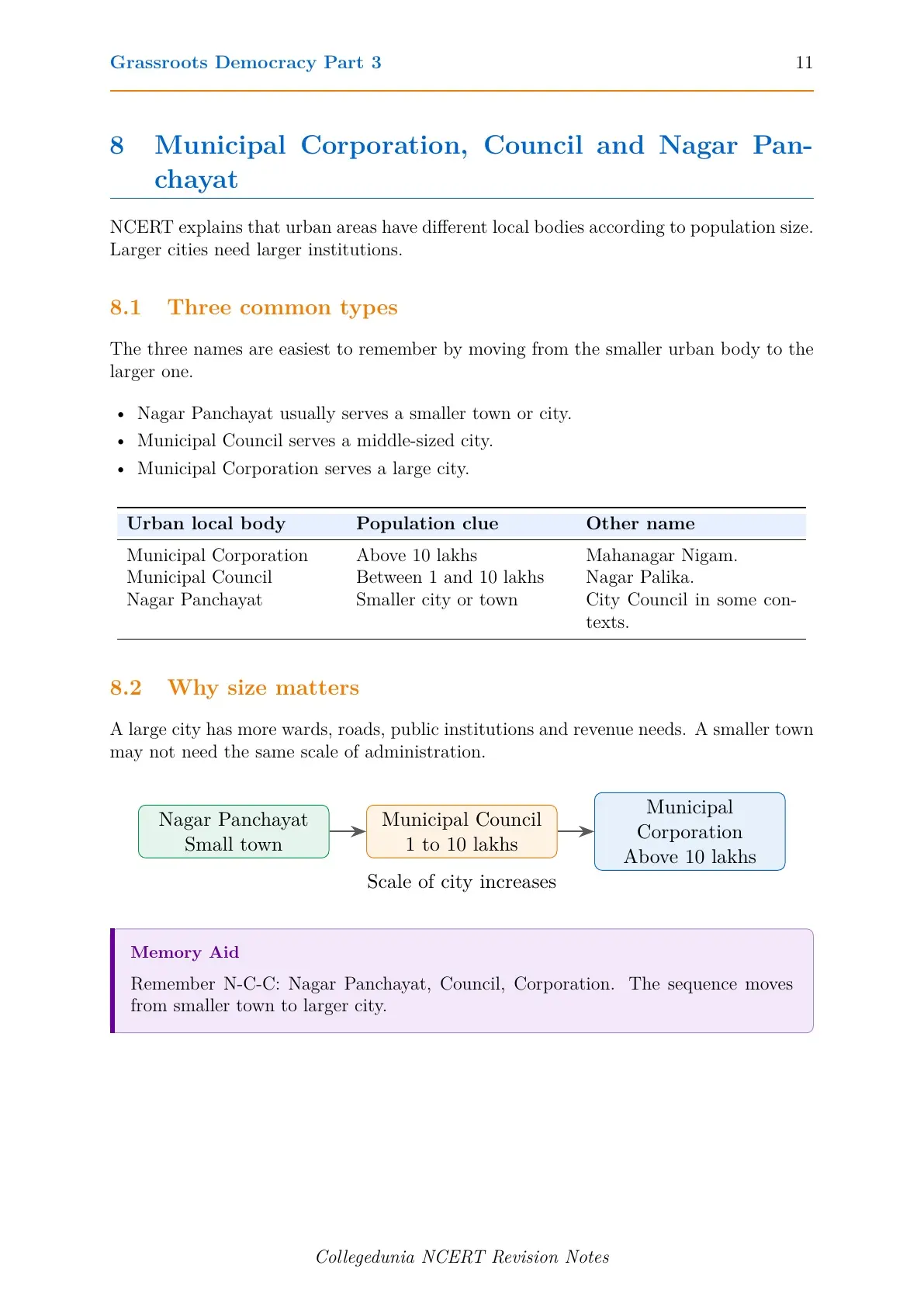
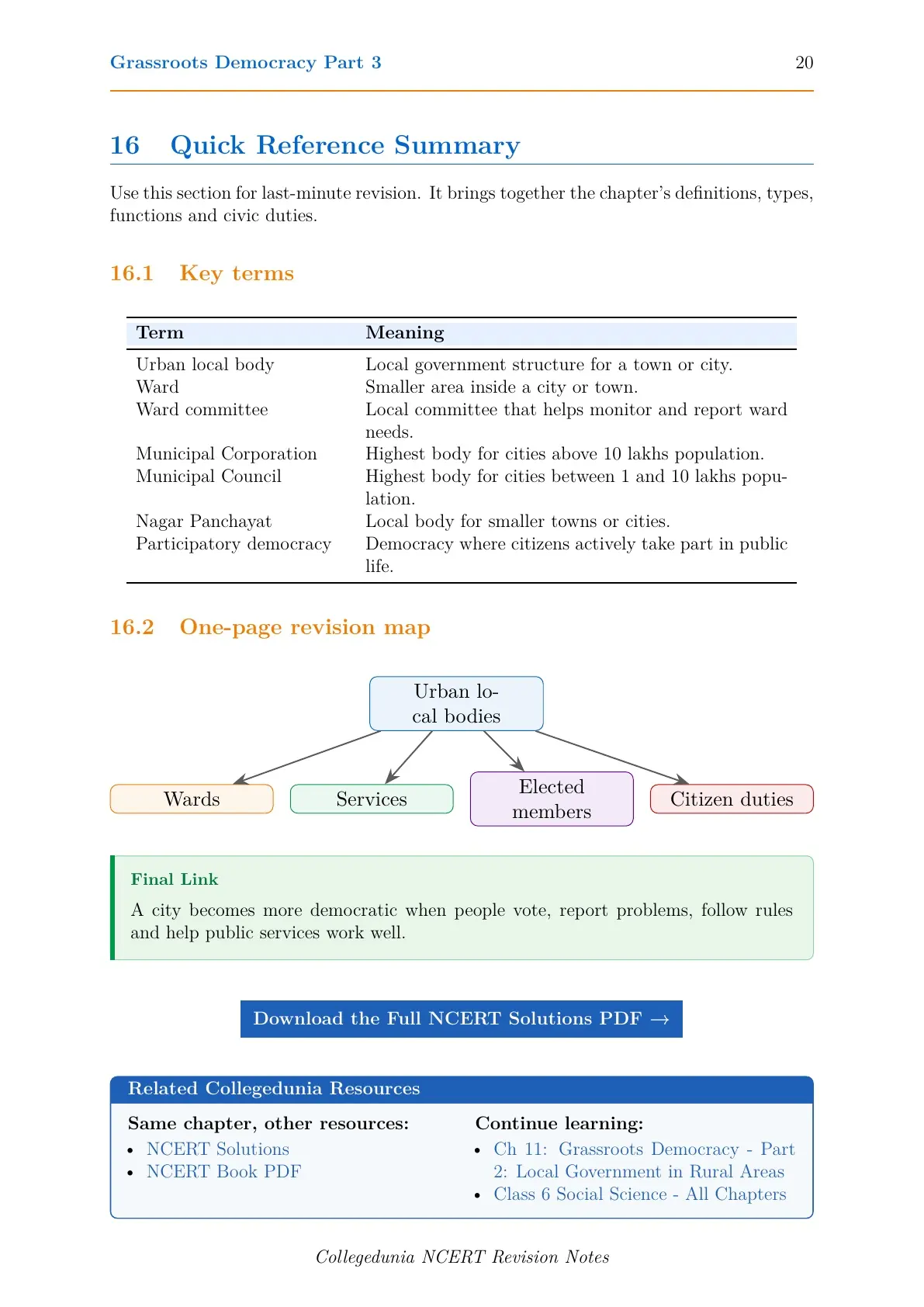
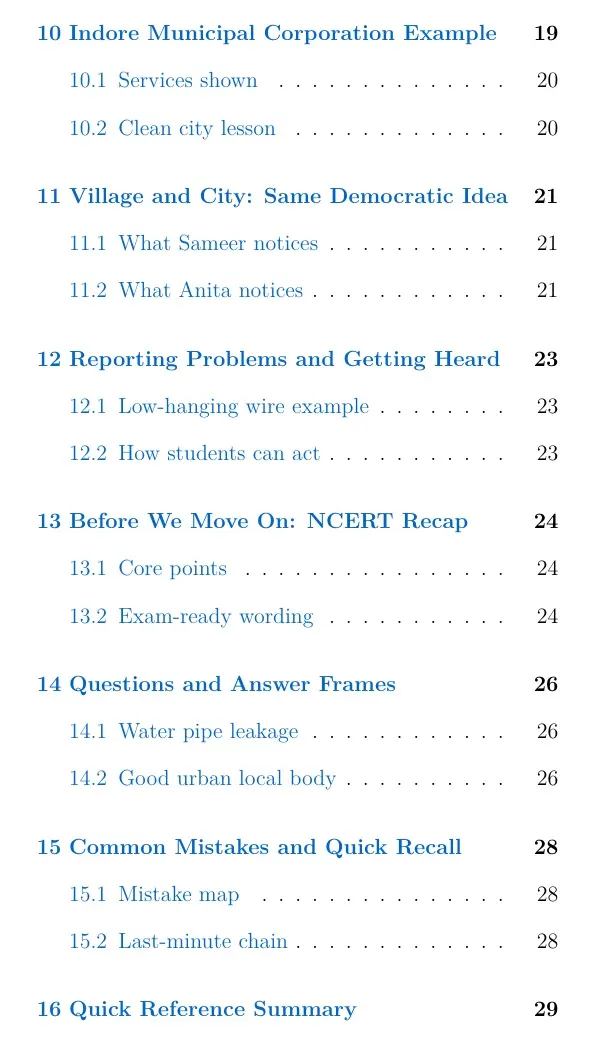
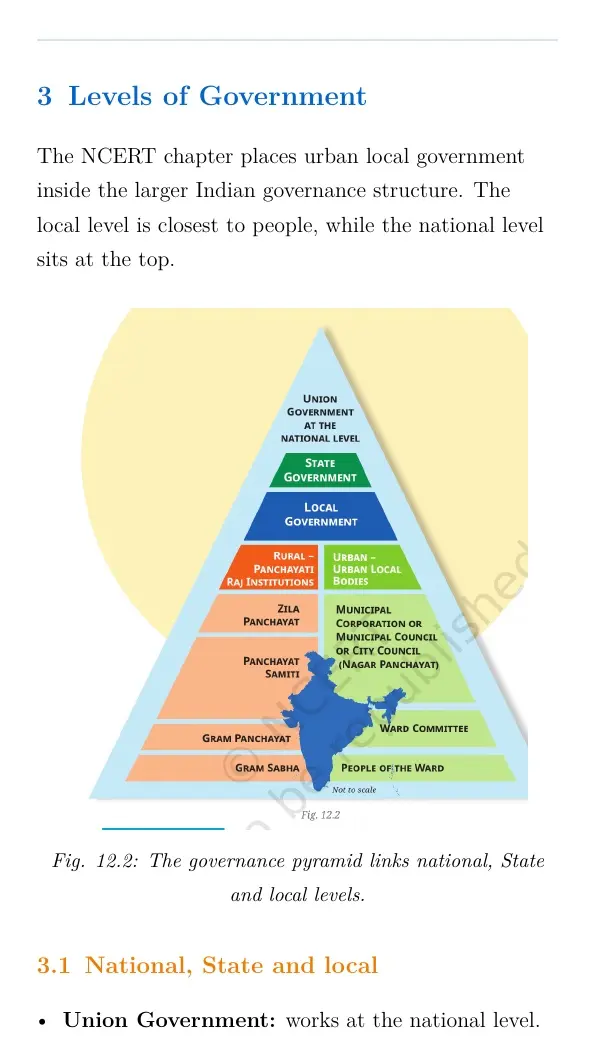
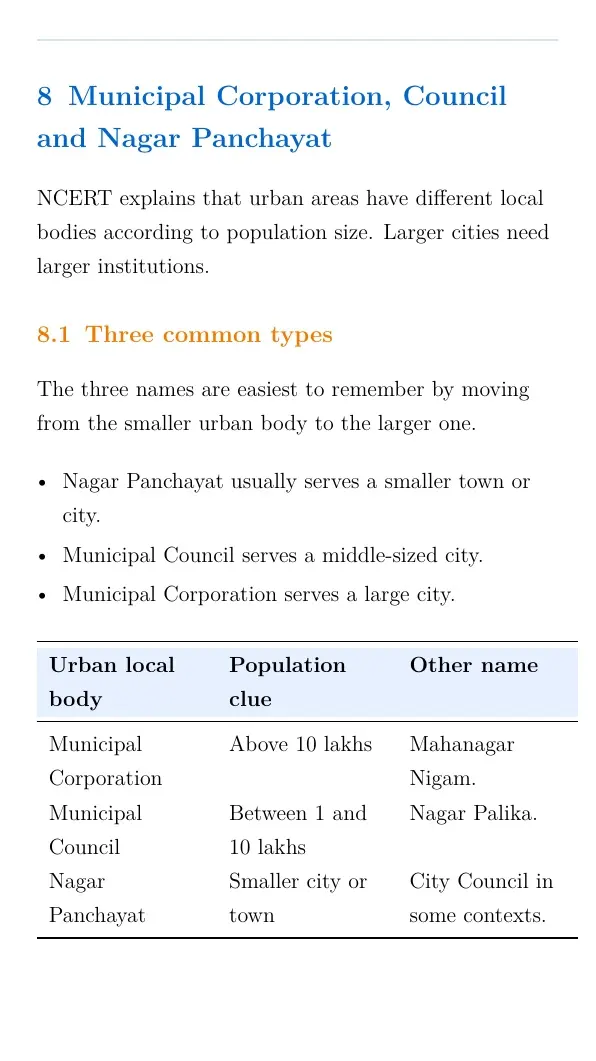
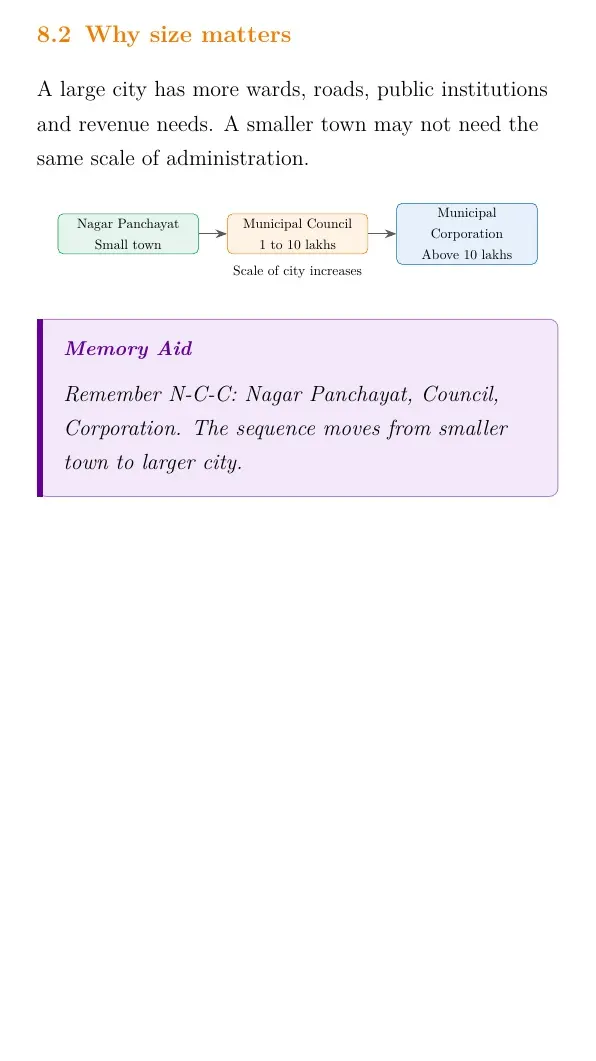
NCERT explains three broad types of urban local bodies. The names depend on the size of the urban area. Larger cities need a larger civic body because they have more wards, services, roads and revenue needs.
| Urban local body | Population clue | Also called |
|---|---|---|
| Municipal Corporation | Above 10 lakhs | Mahanagar Nigam |
| Municipal Council | Between 1 and 10 lakhs | Nagar Palika |
| Nagar Panchayat | Smaller city or town | Town-level urban body |
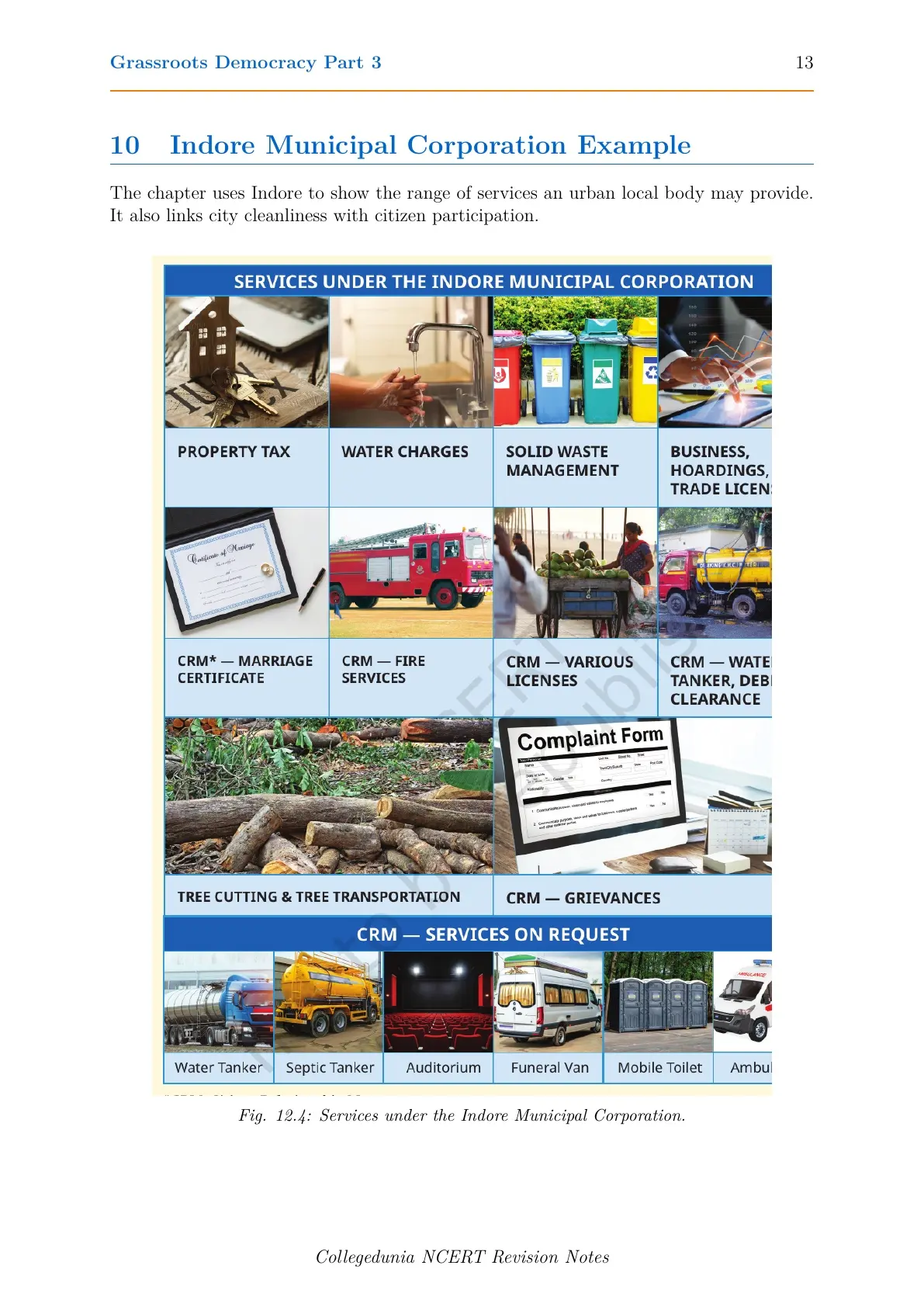
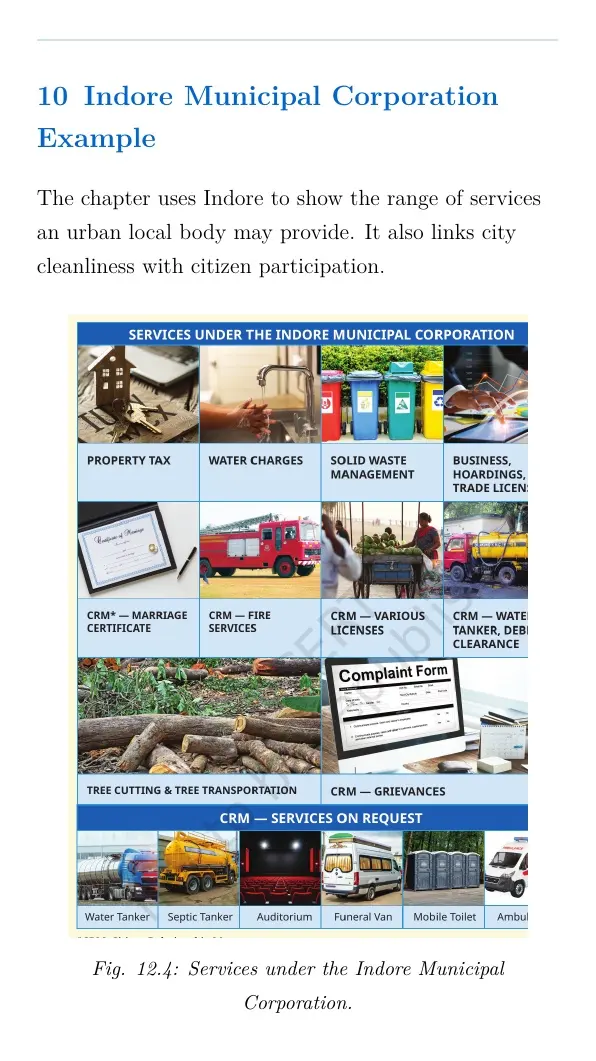
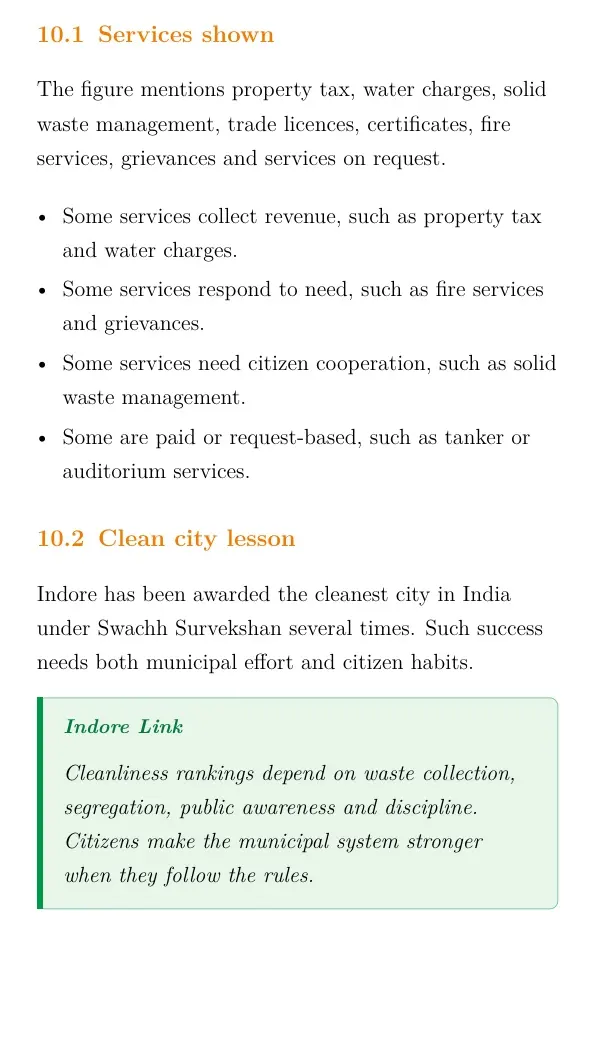
Urban local bodies manage many services, including garbage collection, roads, water supply, certificates, fire services, local taxes, licences and public grievances.
Citizen Duties in Participatory Democracy
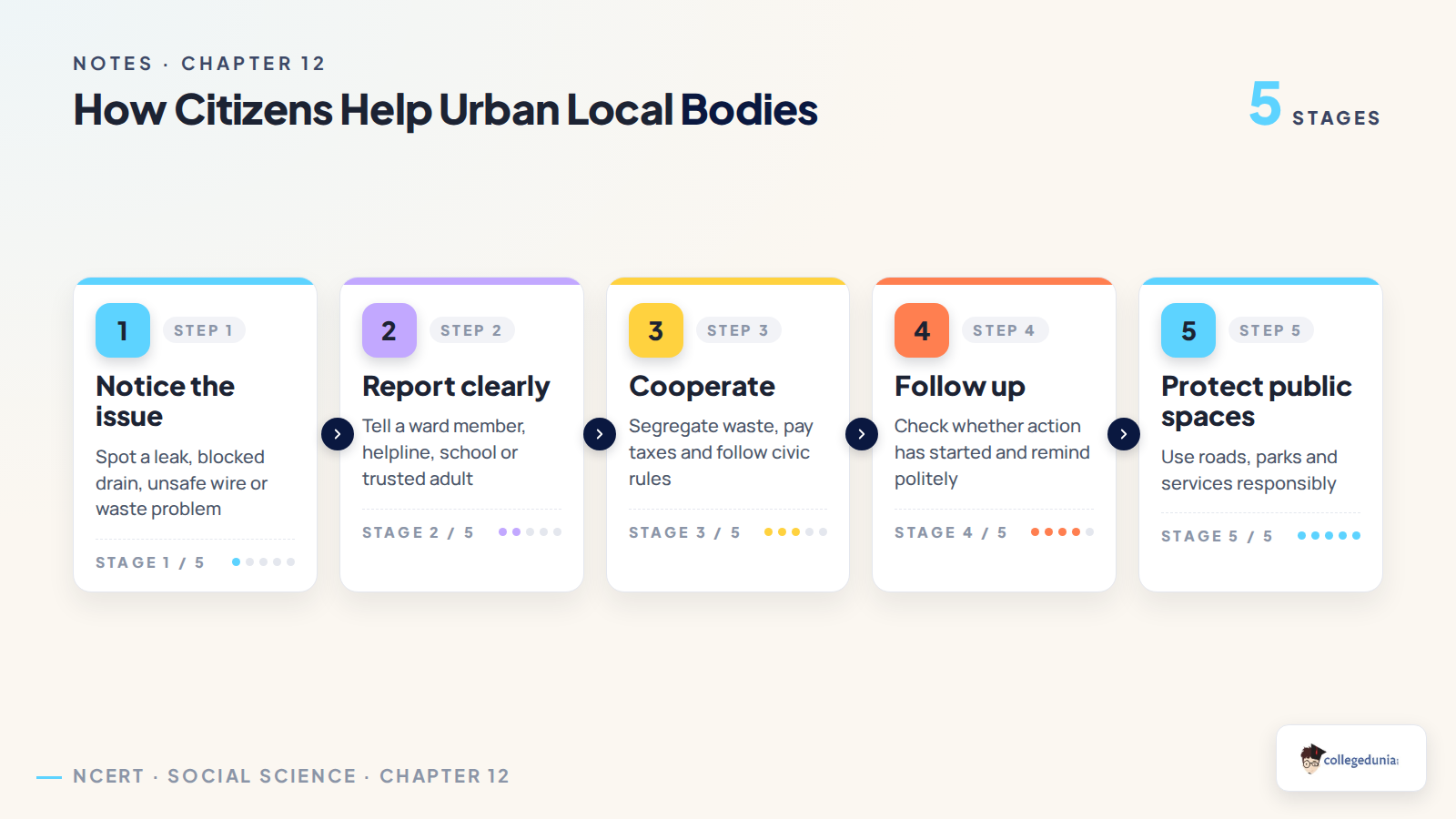
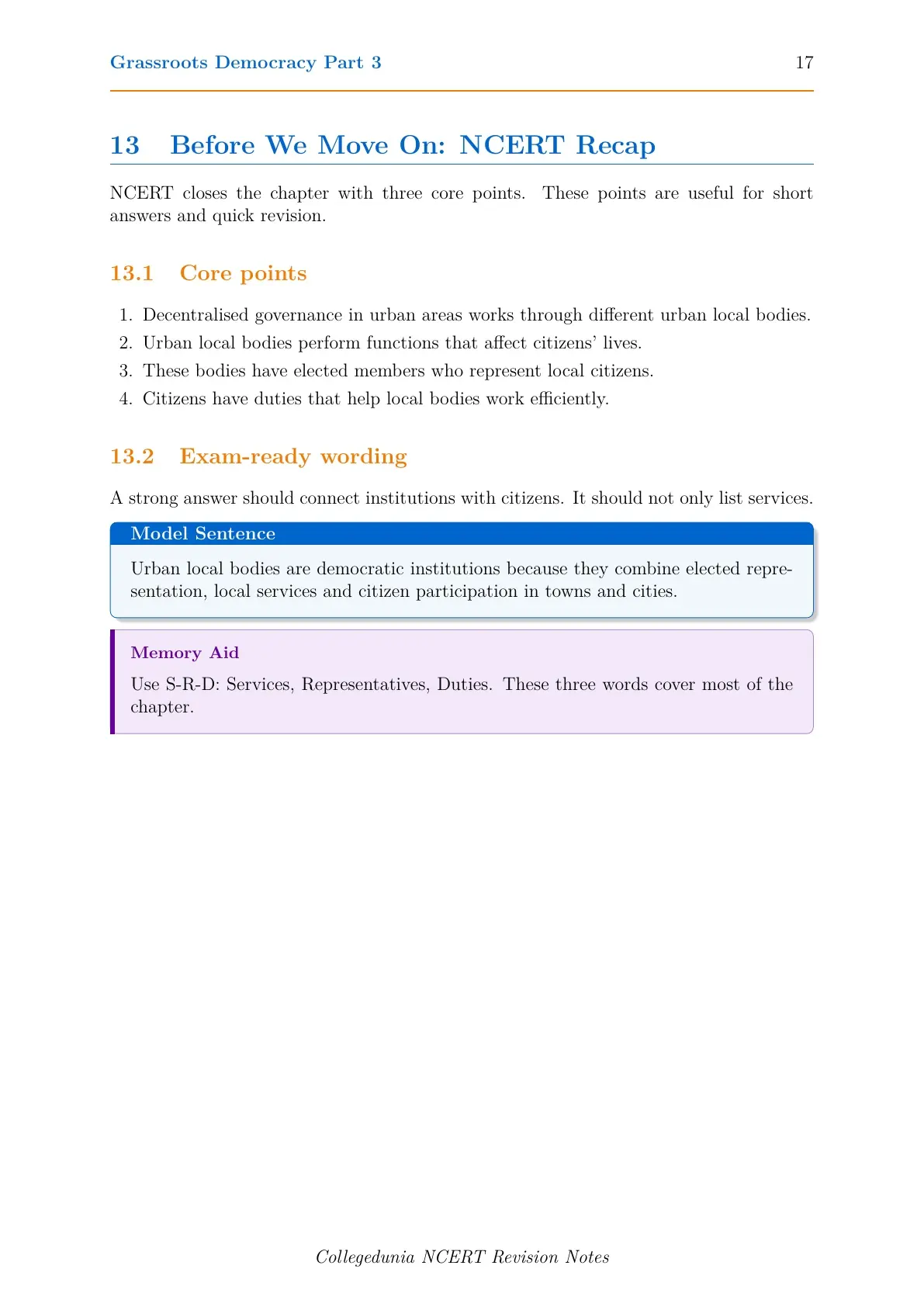
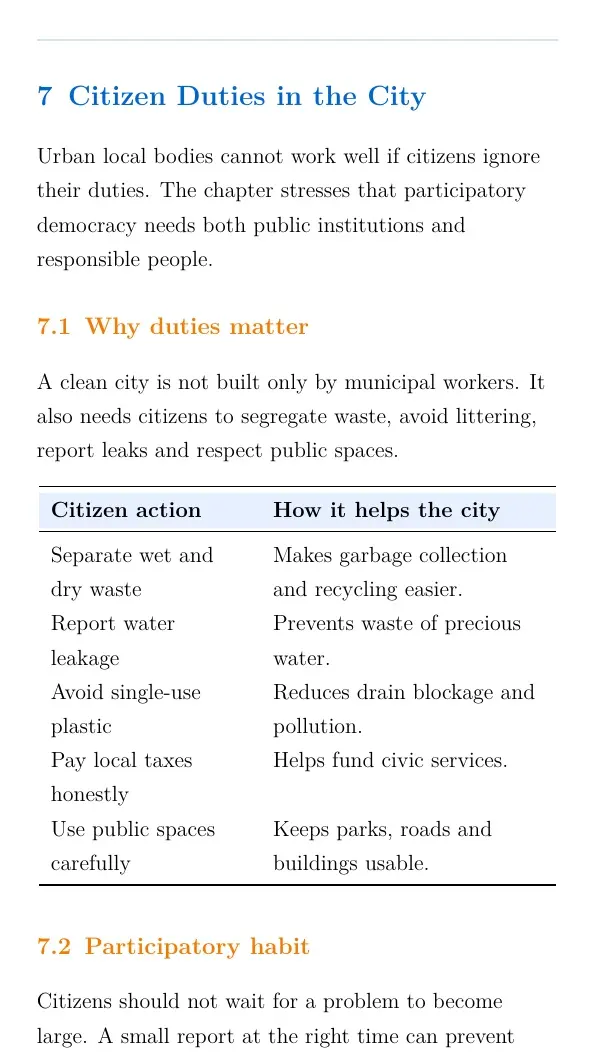
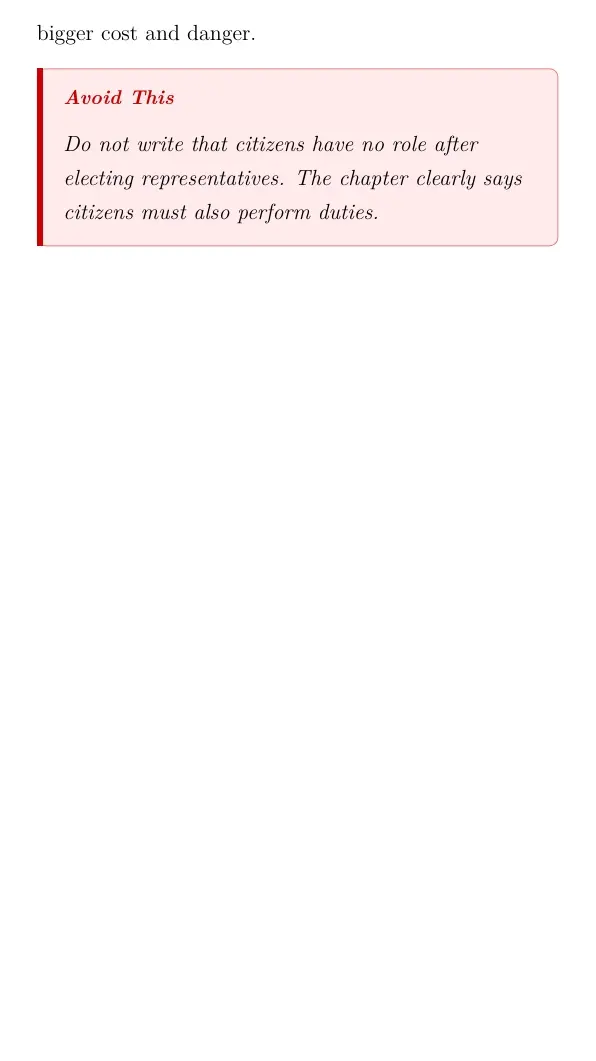
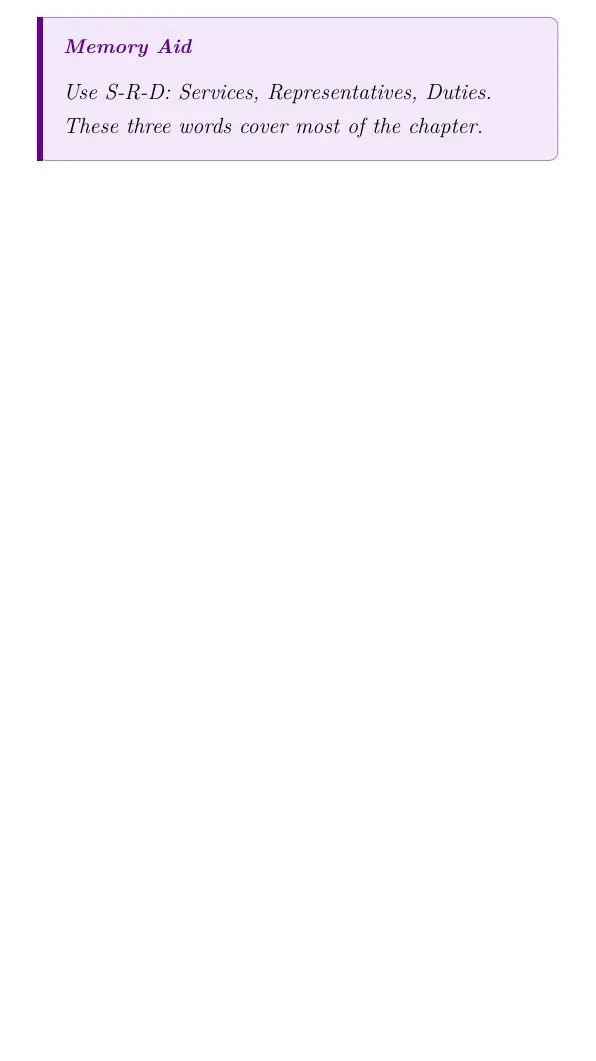
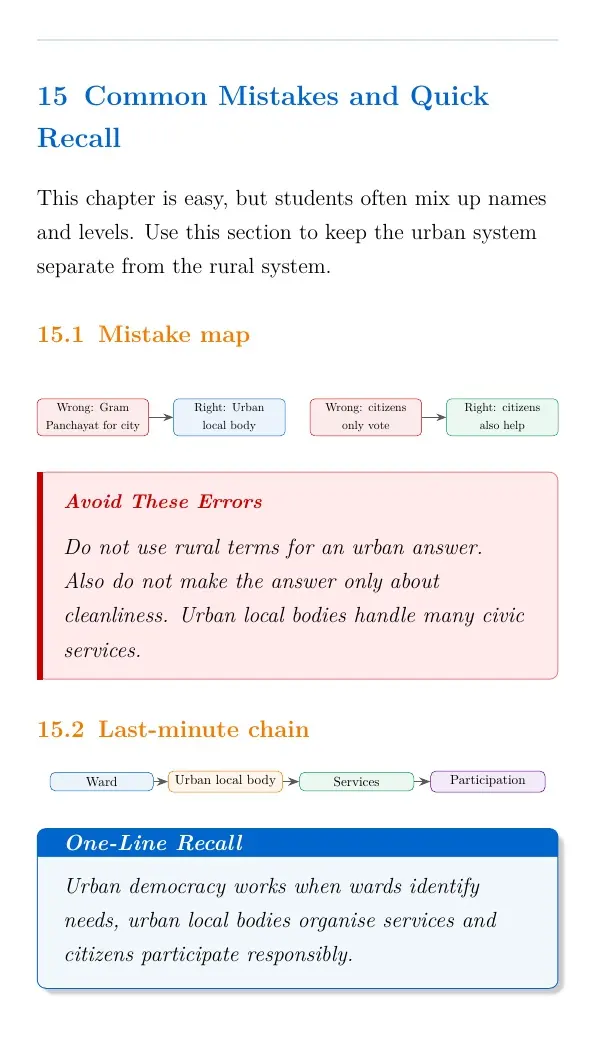
The chapter makes one point very clear: urban local bodies cannot work efficiently if citizens ignore their duties. People must show care for their area and report problems before they grow.
- Waste segregation makes garbage collection easier.
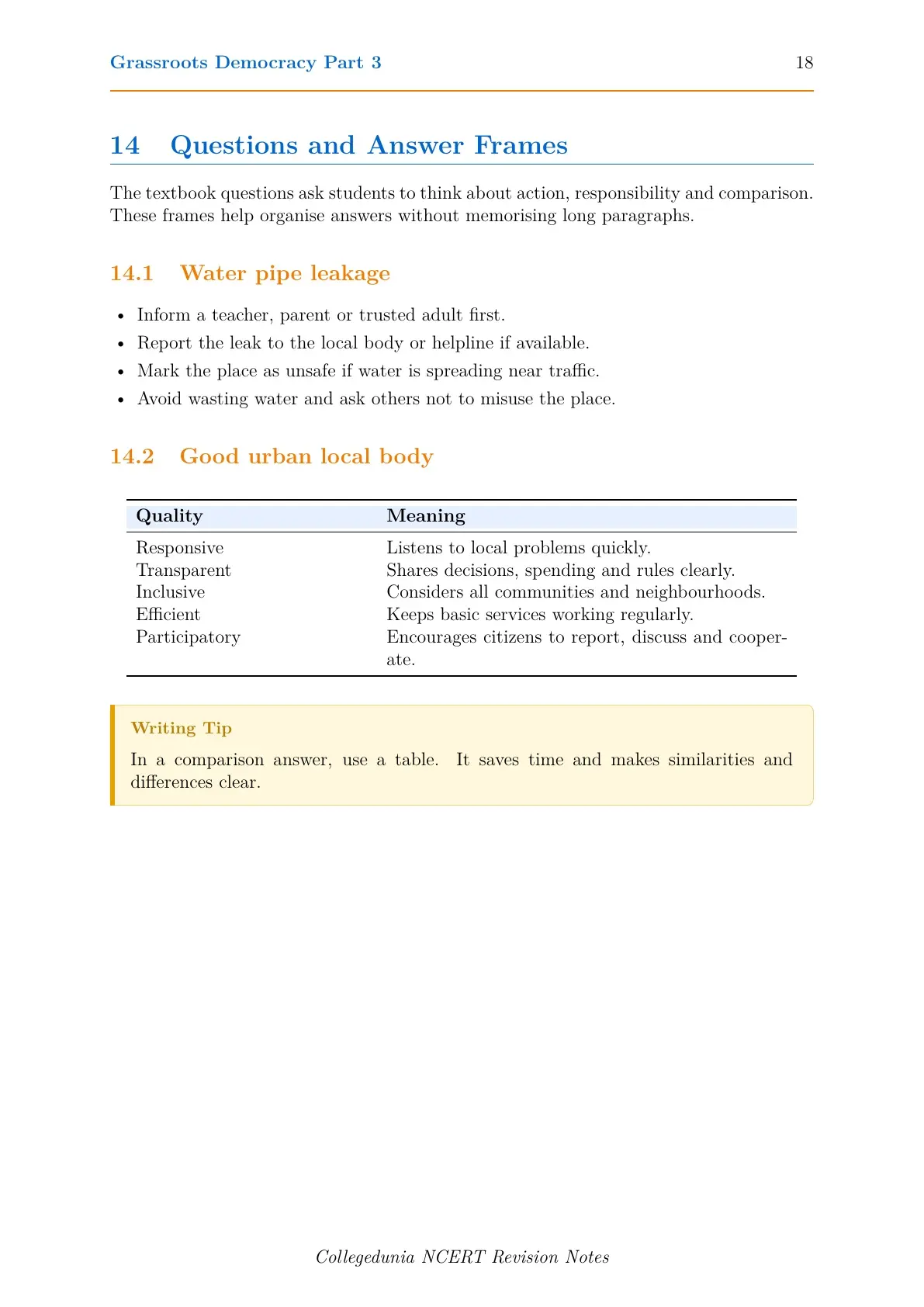
- Quick reporting prevents water wastage and unsafe conditions.
- Care for public spaces keeps roads, parks and facilities usable.
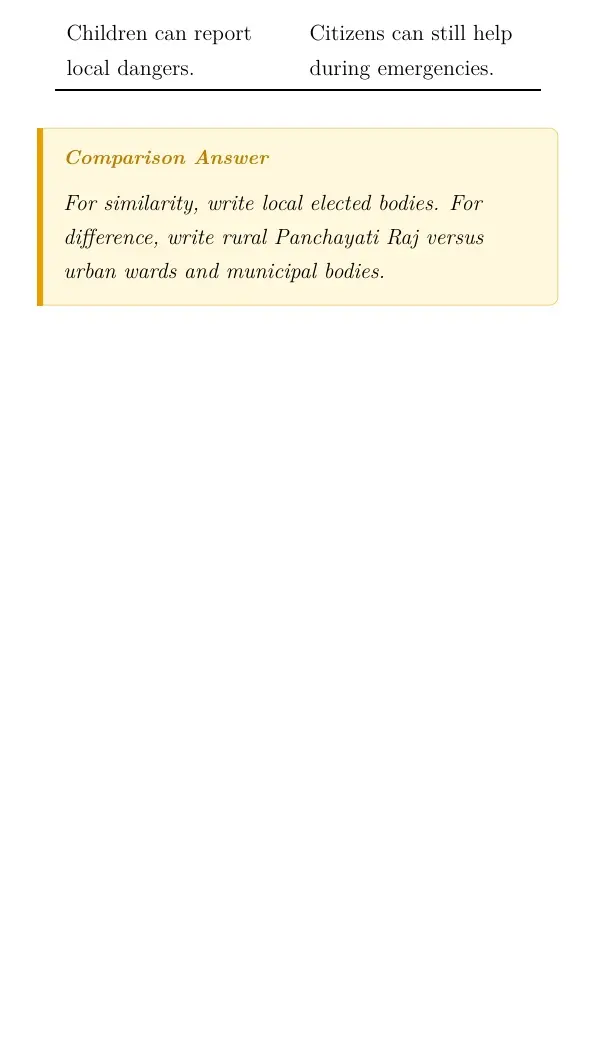
- Community support helps during rain, accidents and local emergencies.
Grassroots Democracy Part 3 Related Resources
| Resource | Best use | Link |
|---|---|---|
| NCERT Notes | Topic-wise revision with tables | Current page |
| NCERT Solutions | Practise textbook questions | Open NCERT Solutions |
| NCERT Book PDF | Read the official chapter | Open Book PDF |
| Handwritten Notes | Quick one-sitting revision | Open Handwritten Notes |
Social Science Notes for All Chapters
| Chapter | NCERT chapter title | Notes link |
|---|---|---|
| Chapter 1 | Locating Places on the Earth | Open Notes |
| Chapter 2 | Oceans and Continents | Open Notes |
| Chapter 3 | Landforms and Life | Open Notes |
| Chapter 4 | Timeline and Sources of History | Open Notes |
| Chapter 5 | India, That Is Bharat | Open Notes |
| Chapter 6 | The Beginnings of Indian Civilisation | Open Notes |
| Chapter 7 | India's Cultural Roots | Open Notes |
| Chapter 8 | Unity in Diversity, or Many in the One | Open Notes |
| Chapter 9 | Family and Community | Open Notes |
| Chapter 10 | Grassroots Democracy Part 1 Governance | Open Notes |
| Chapter 11 | Grassroots Democracy Part 2 Local Government in Rural Areas | Open Notes |
| Chapter 12 | Grassroots Democracy Part 3 Local Government in Urban Areas | Current notes |
| Chapter 13 | The Value of Work | Open Notes |
| Chapter 14 | Economic Activities Around Us | Open Notes |
Grassroots Democracy Part 3 Local Government in Urban Areas Class 6 Notes FAQs
Ques. What are urban local bodies in Class 6 Social Science Chapter 12?
Ans. Urban local bodies are local government institutions for towns and cities. They manage civic services and represent local citizens.
Ques. What is a ward?
Ans. A ward is a smaller unit inside a town or city. Ward committees help notice and report local problems.
Ques. What is the difference between Municipal Corporation and Municipal Council?
Ans. A Municipal Corporation serves cities above 10 lakhs population. A Municipal Council serves cities between 1 and 10 lakhs.
Ques. What is a Nagar Panchayat?
Ans. A Nagar Panchayat is an urban local body for a smaller town or city.
Ques. Why are citizen duties important in urban governance?
Ans. Citizen duties help local services work better. Waste segregation, quick reporting and care for public spaces support urban local bodies.



Comments