




The nationalism in india class 10 notes pdf draws straight from the official NCERT Chapter 2 of the India and the Contemporary World II textbook.
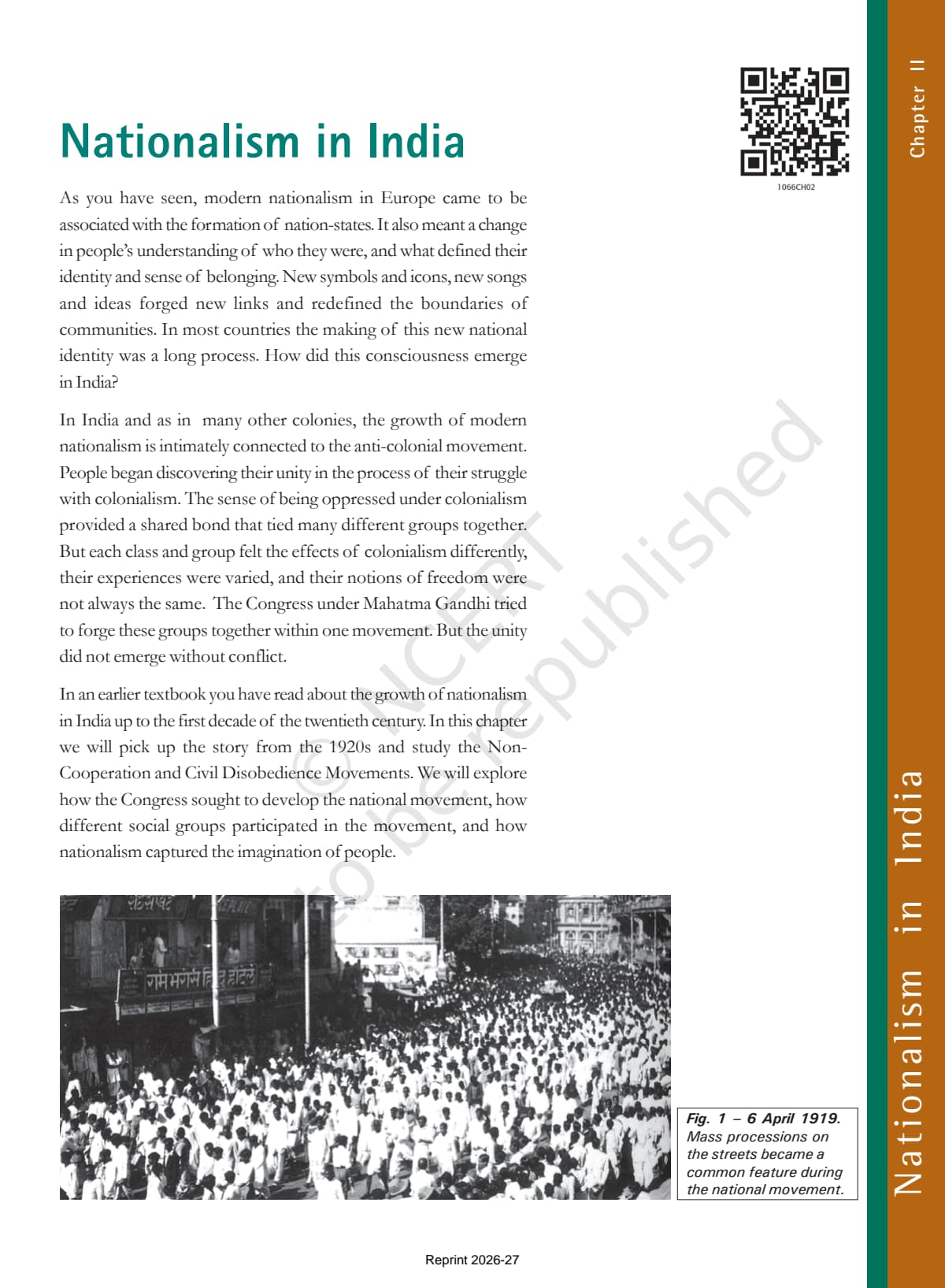
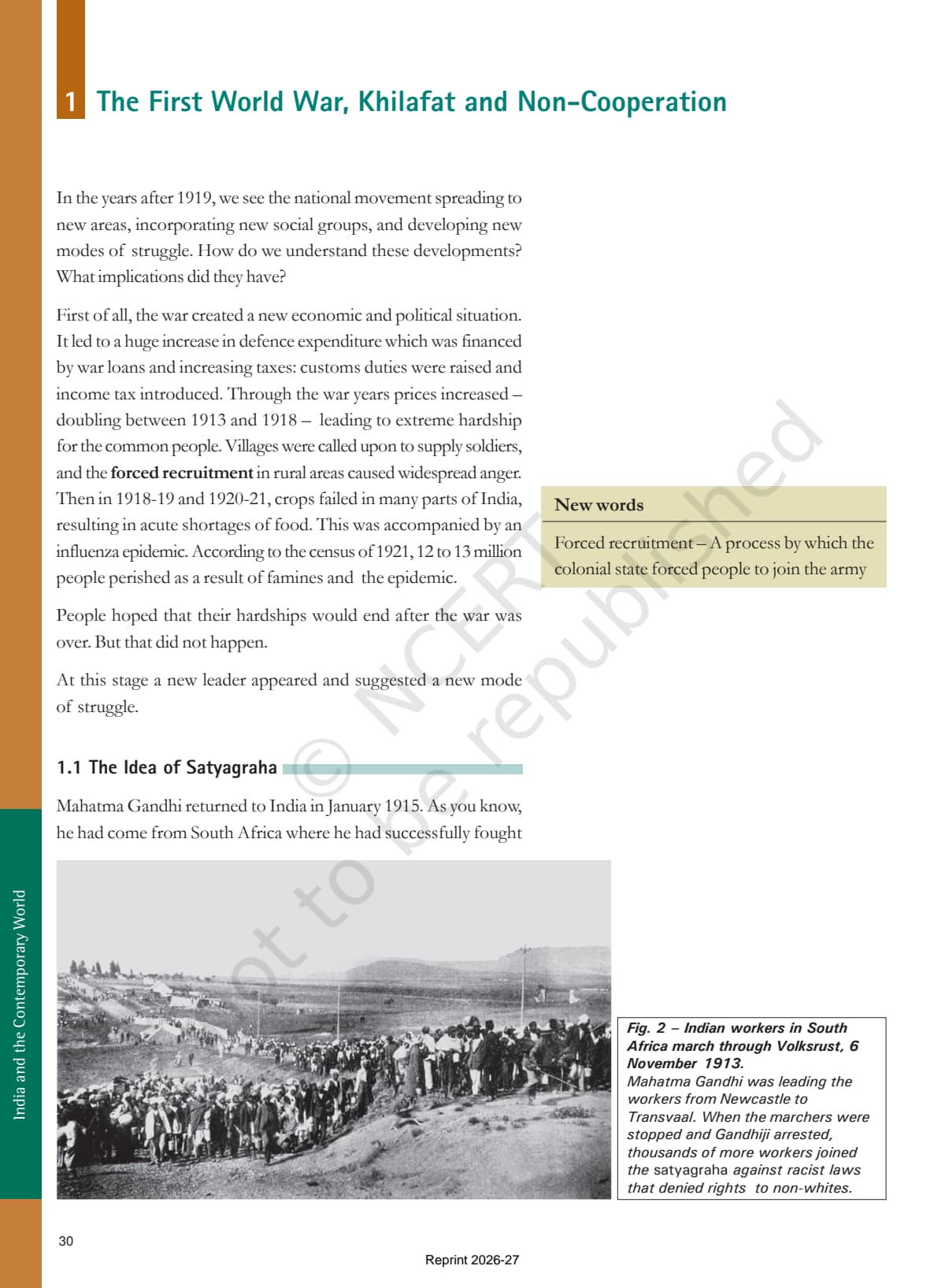
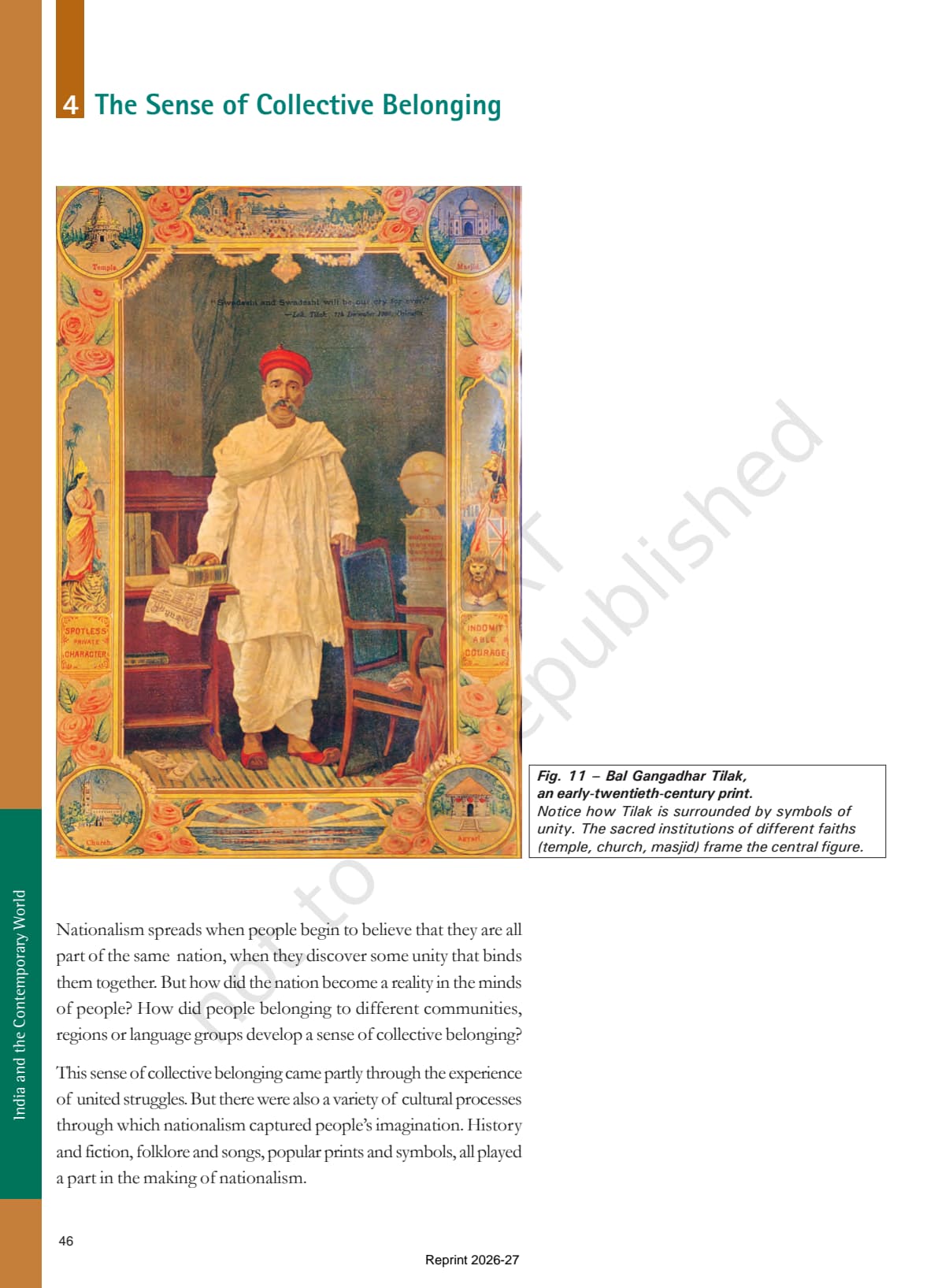
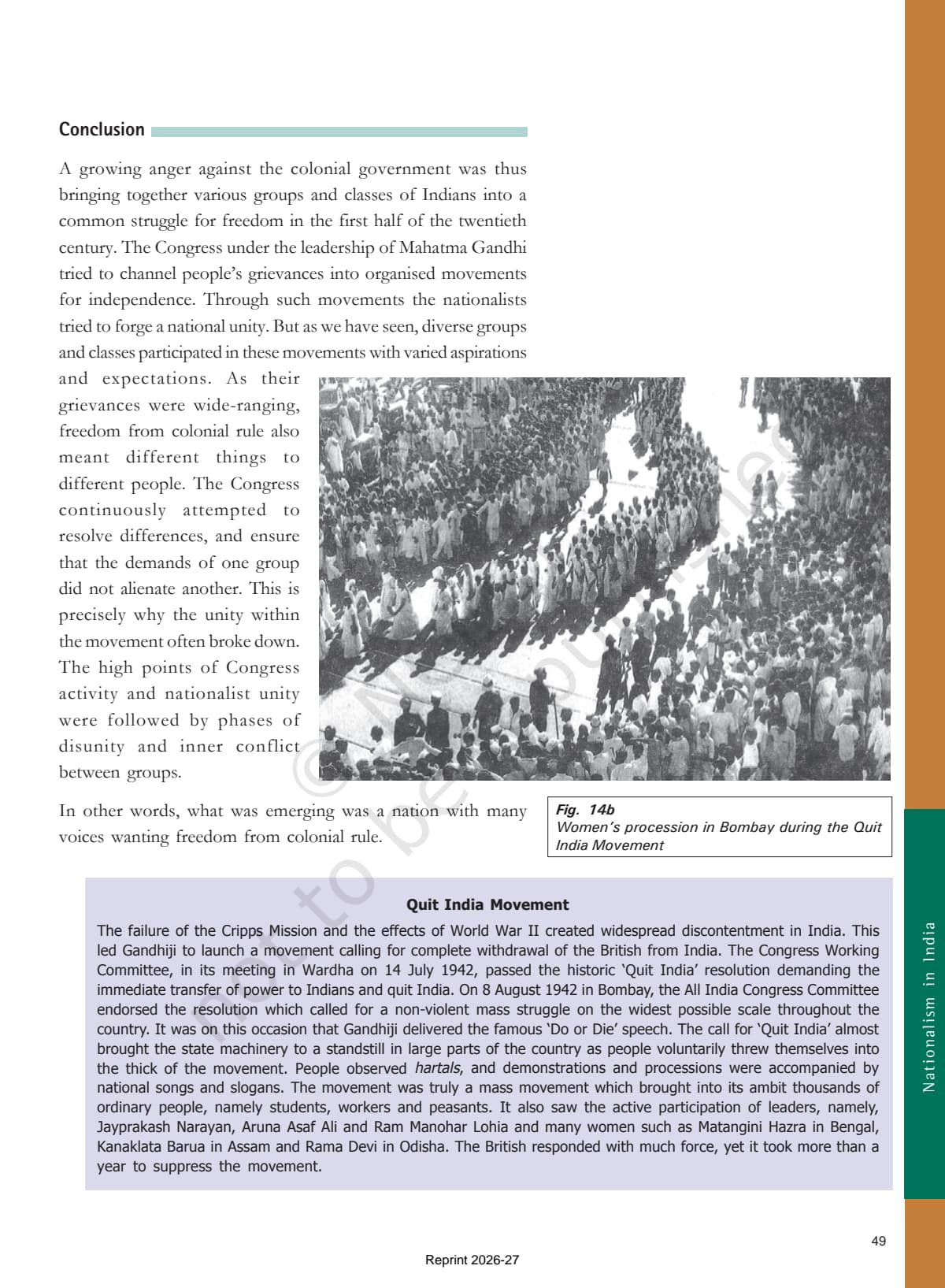
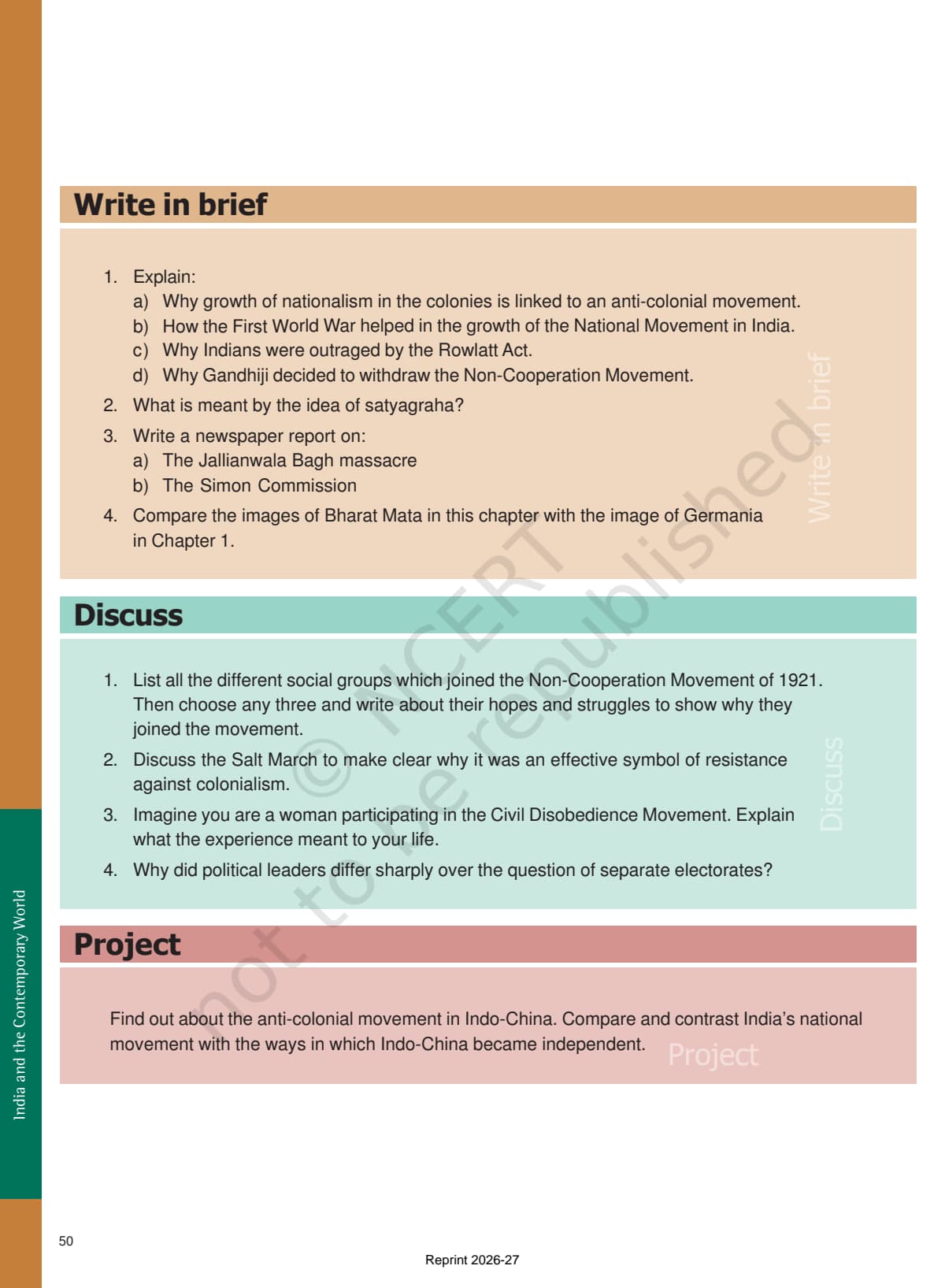
This chapter picks up the freedom story from the 1920s and traces the Non-Cooperation Movement, the Civil Disobedience Movement, and the Salt March under Mahatma Gandhi. Chapter 2 usually carries 5 to 6 marks in the Class 10 Social Science board paper, and every source extract, cartoon, and figure CBSE quotes comes straight from this PDF.
- Official NCERT Class 10 History textbook PDF for Chapter 2 Nationalism in India, aligned to the 2026-27 CBSE syllabus.
- 5 to 6 marks board-paper weightage; the only source CBSE references for the Bharat Mata painting and the Salt March extracts.
- Pair it with the matching NCERT Solutions and Handwritten Notes for full revision.
Every page is the official NCERT print, aligned to the 2026-27 CBSE syllabus.
What the NCERT Class 10 History Chapter 2 PDF Covers
This PDF explains how modern nationalism grew in India through the anti-colonial movement. The chapter moves from the Rowlatt Act of 1919 and the Jallianwala Bagh massacre, to the Non-Cooperation Movement of 1921, the Salt March of 1930, the Civil Disobedience Movement, and finally collective belonging through Bharat Mata. It shows how Mahatma Gandhi forged peasants, workers, the middle class, and business groups into one movement.
Nationalism in India Class 10 Video Lesson
Source: Magnet Brains on YouTube
Topics in the Chapter: Section-Wise Map of the NCERT PDF
The table below maps each section to its key event and exam concept. Sections on Non-Cooperation and the Civil Disobedience Movement together drive most of the board-paper marks.
| Section | NCERT sub-topic | Dominant exam concept |
|---|---|---|
| 1 | The First World War, Khilafat and Non-Cooperation | War economy, Rowlatt Act 1919, Jallianwala Bagh, Khilafat |
| 1.1 | The Idea of Satyagraha | Champaran, Kheda, Ahmedabad, truth and non-violence |
| 1.2 | The Rowlatt Act | Detention without trial, hartal, Jallianwala Bagh 1919 |
| 1.3 | Why Non-cooperation? | Boycott of foreign goods, titles, schools and courts |
| 2 | Differing Strands within the Movement | Towns, countryside, plantations, varied notions of swaraj |
| 2.2 | Rebellion in the Countryside | Baba Ramchandra, Awadh, Alluri Sitaram Raju, Gudem hills |
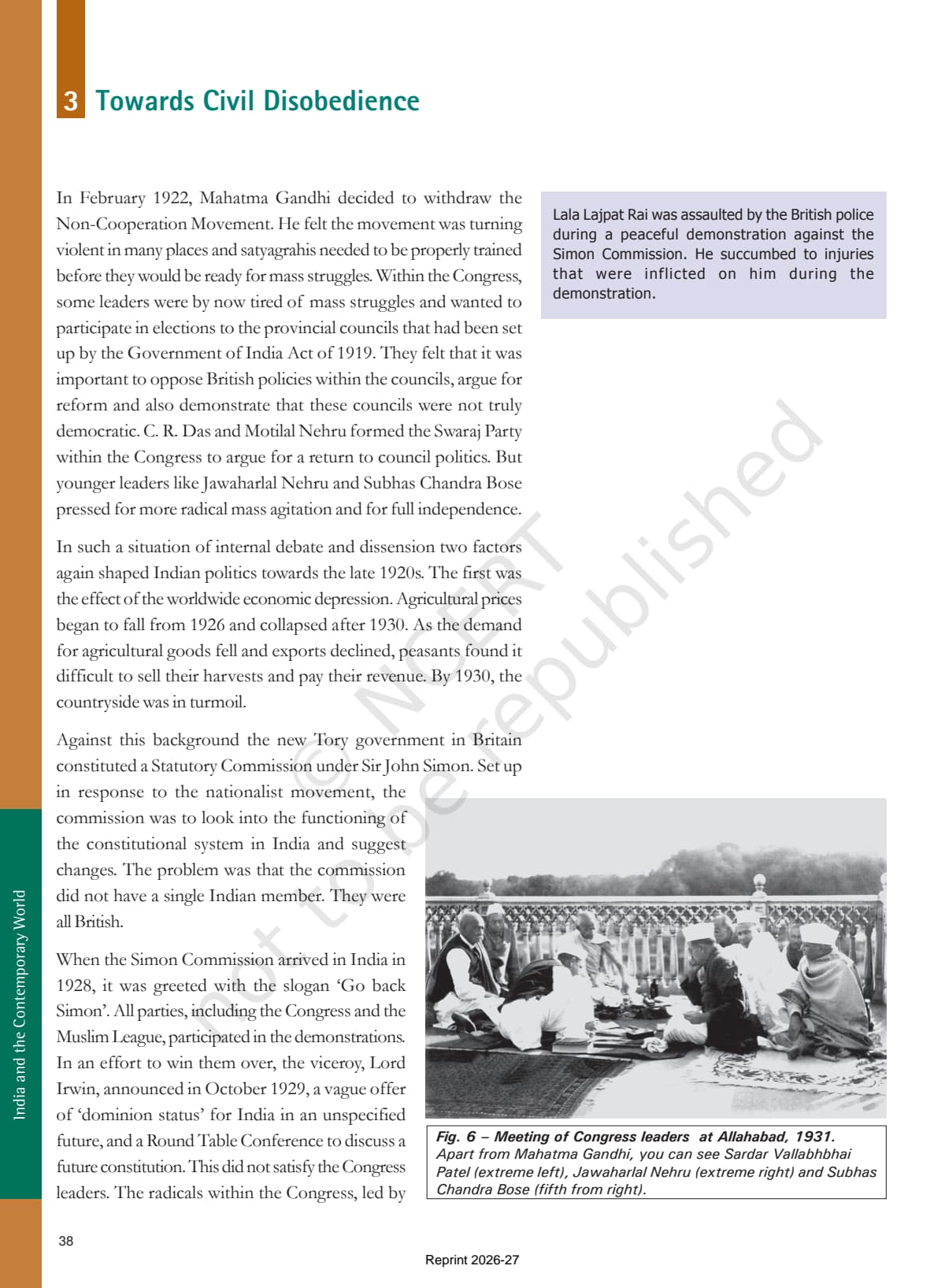
| 3 | Towards Civil Disobedience | Simon Commission, Lahore Congress 1929, Purna Swaraj |
| 3.1 | The Salt March and Civil Disobedience | Dandi march 1930, salt law, Gandhi-Irwin Pact 1931 |
| 4 | The Sense of Collective Belonging | Bharat Mata, Vande Mataram, folklore, flags, history |
The Non-Cooperation and Civil Disobedience Movements alone account for about half of every long-answer question set on this chapter, so the dates and leaders in Sections 1 and 3 need the most attention.
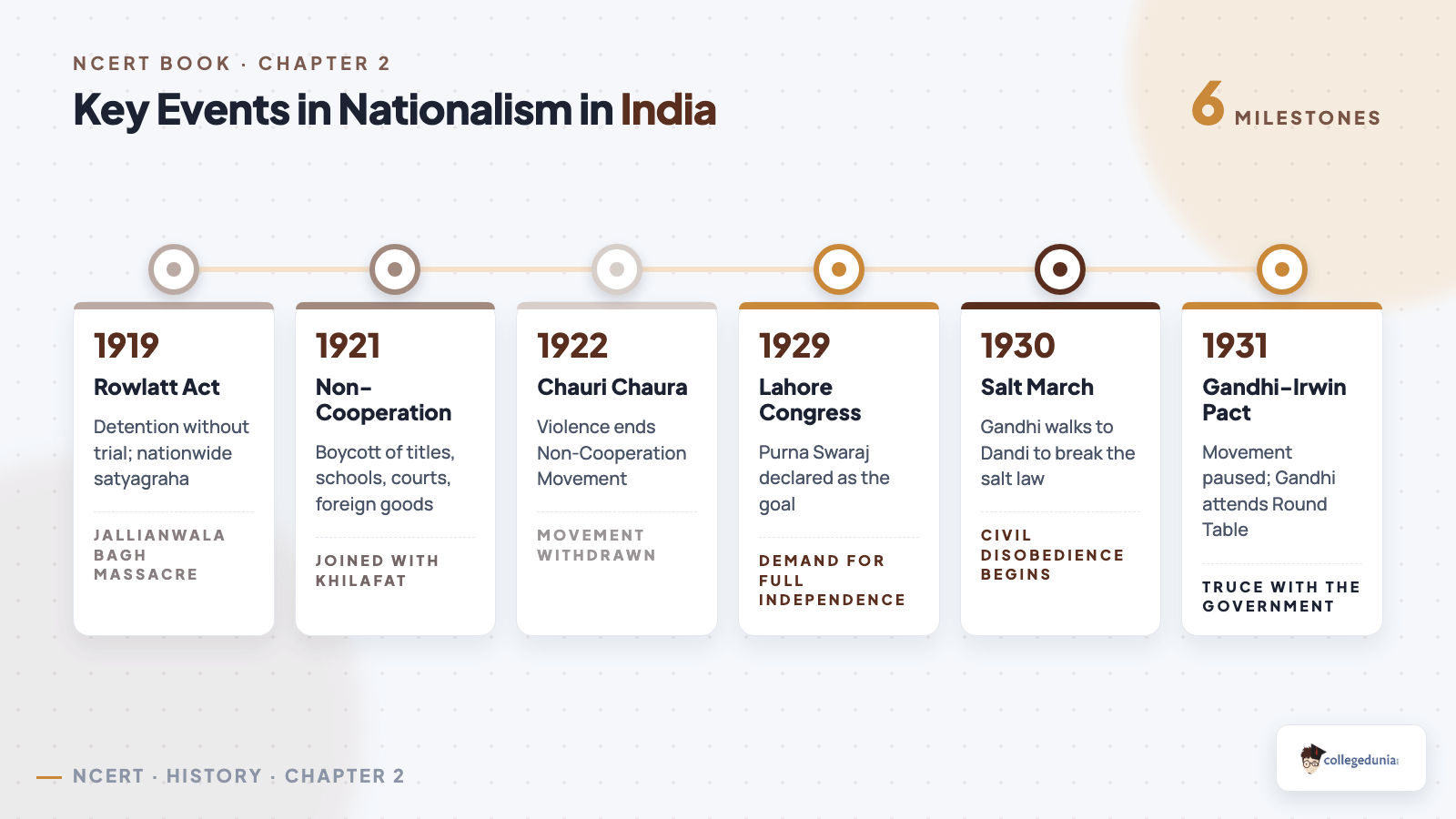
Key Events From the Class 10 History Chapter 2 Textbook
Reproducing the exact NCERT wording and the correct year is the fastest route to full marks on dated questions.
The Rowlatt Act and Jallianwala Bagh, 1919
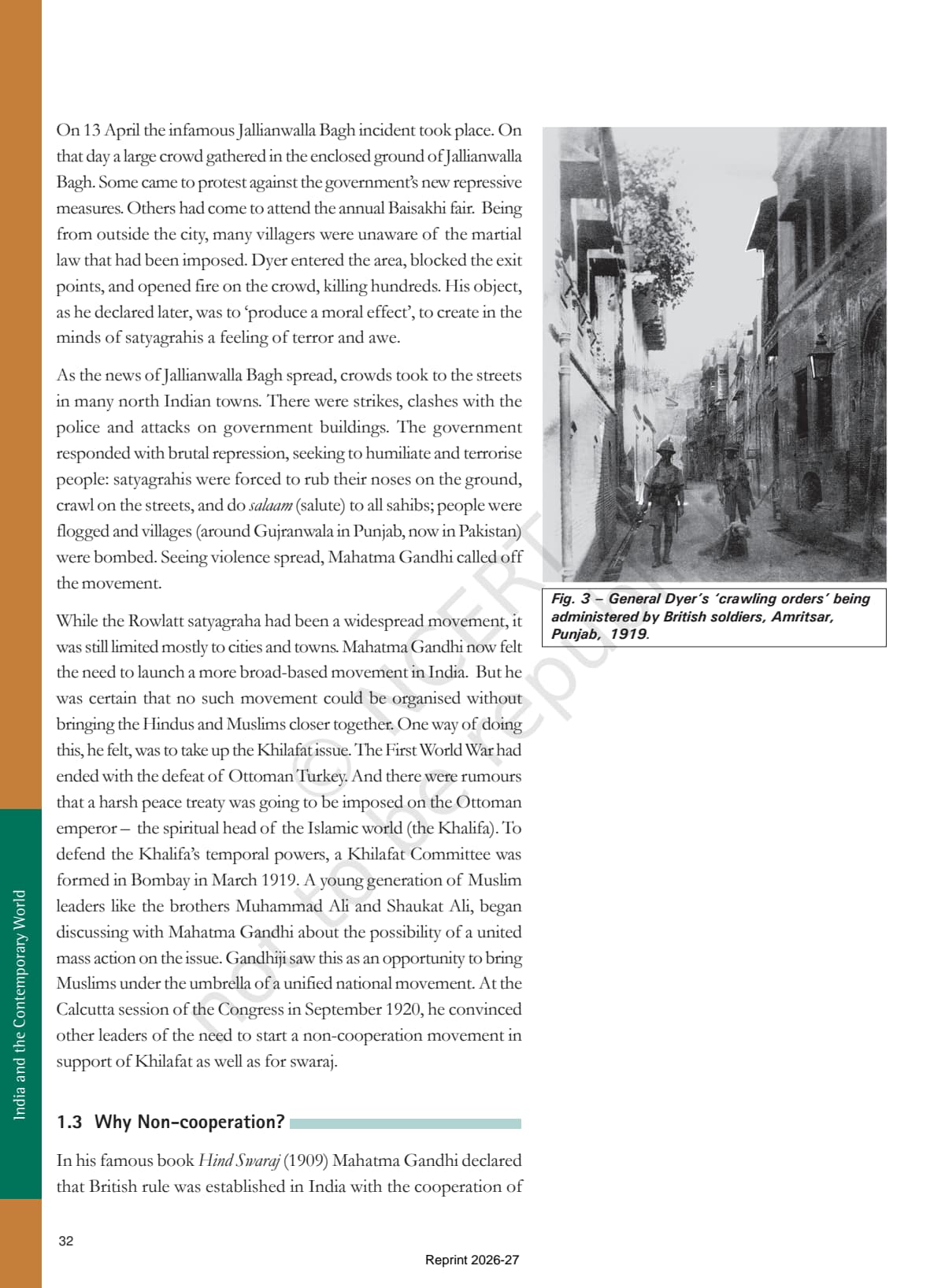
The Rowlatt Act of 1919 let the government repress political activity and detain prisoners without trial. Gandhi launched a nationwide satyagraha against it. On 13 April 1919, a peaceful crowd at Jallianwala Bagh in Amritsar was fired on by General Dyer, killing hundreds.
The Non-Cooperation Movement, 1921
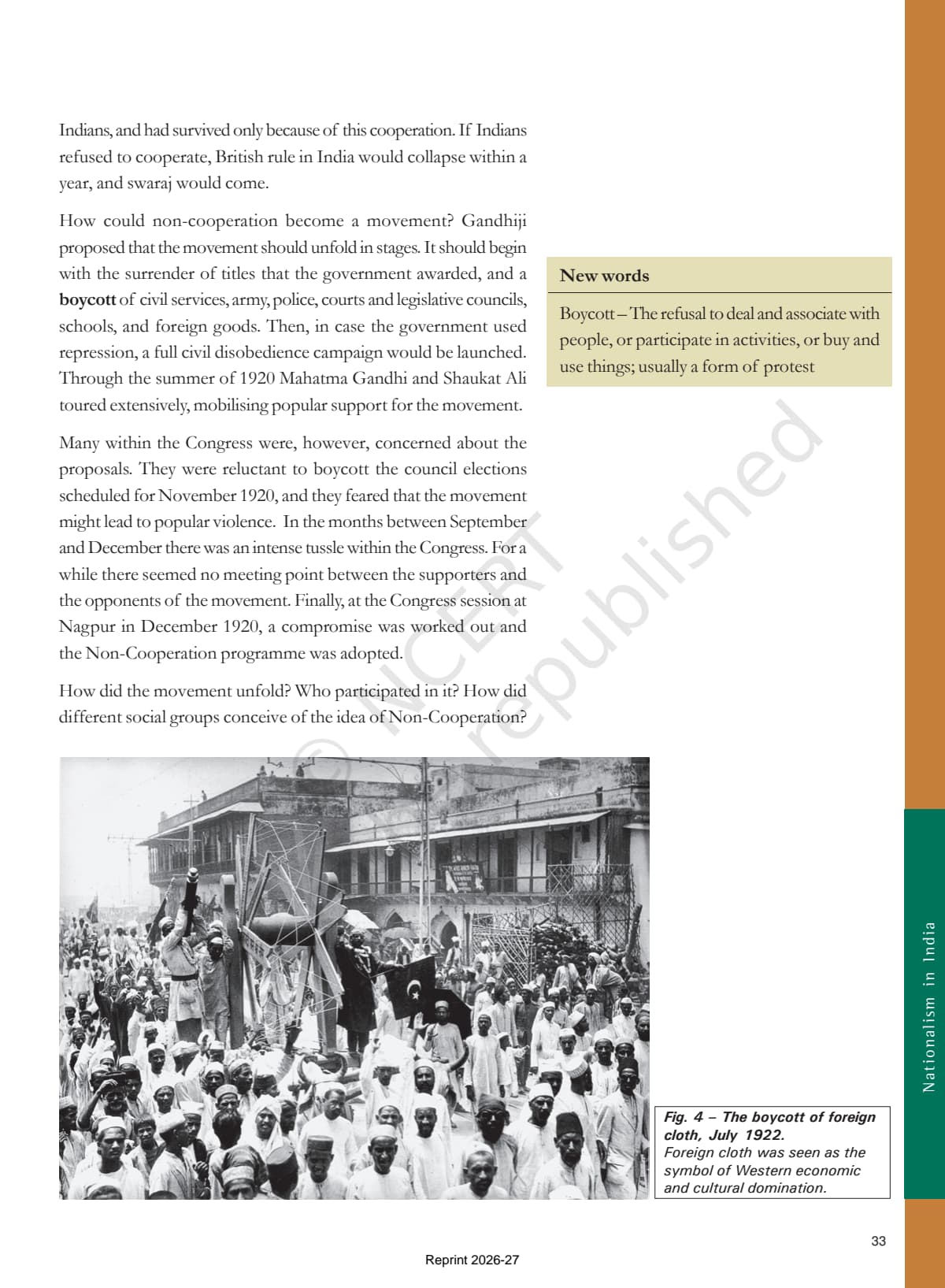
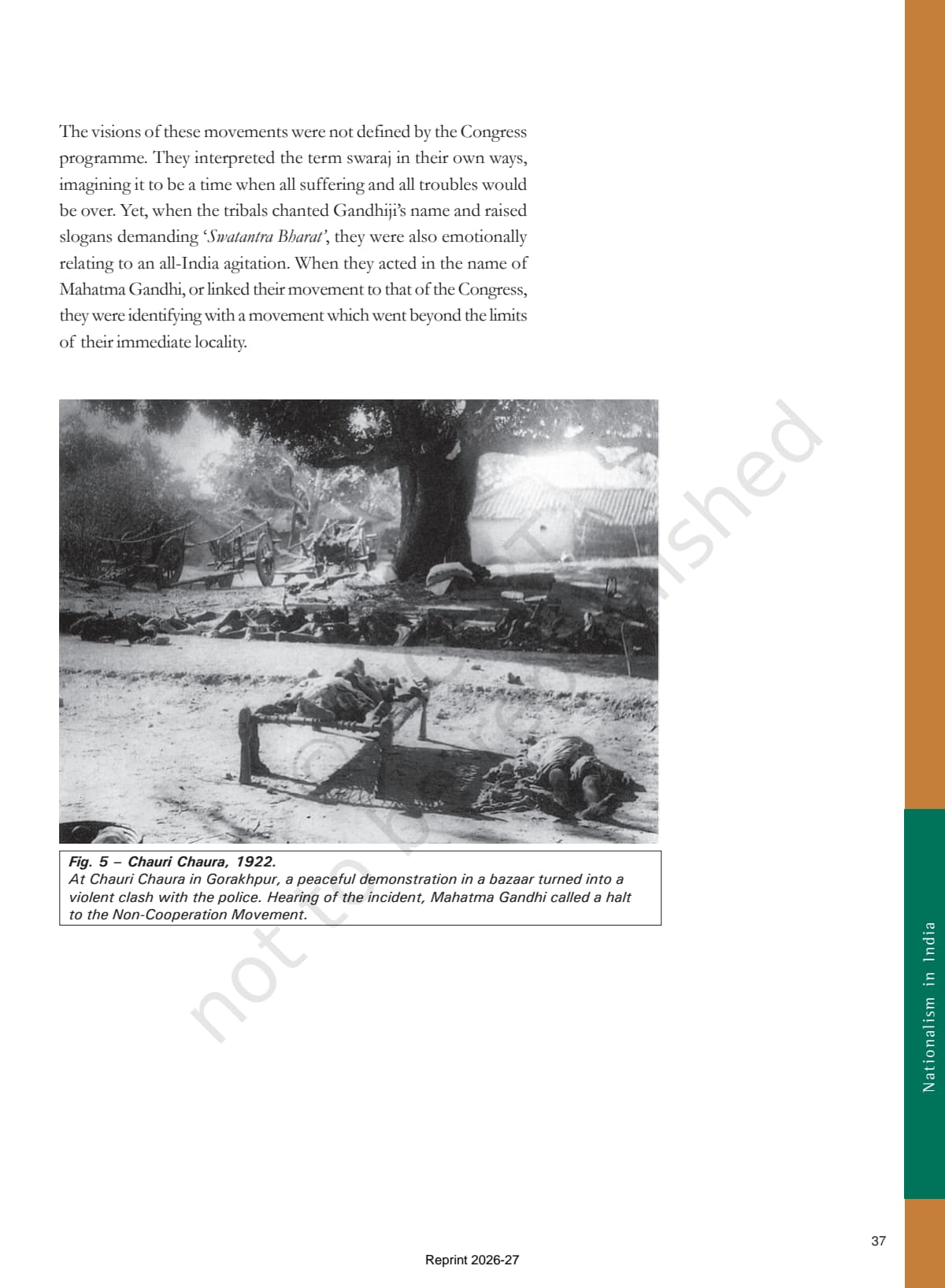
In Hind Swaraj, Gandhi argued British rule survived only with Indian cooperation. The Non-Cooperation Movement of 1921 called for the surrender of titles and the boycott of schools, courts, and foreign goods. It joined with the Khilafat issue to unite Hindus and Muslims, and was called off after Chauri Chaura in 1922.
The Salt March and Civil Disobedience, 1930
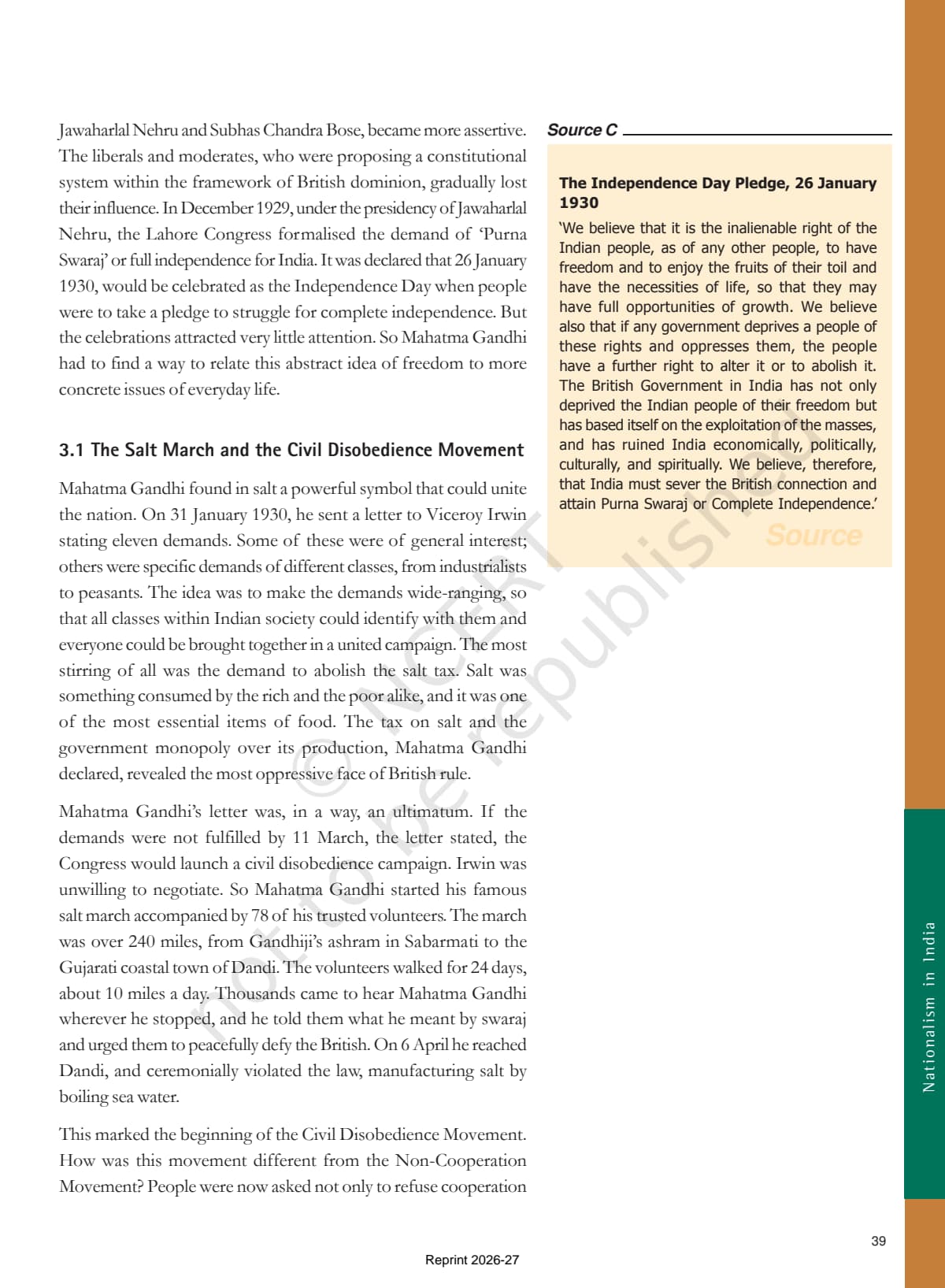
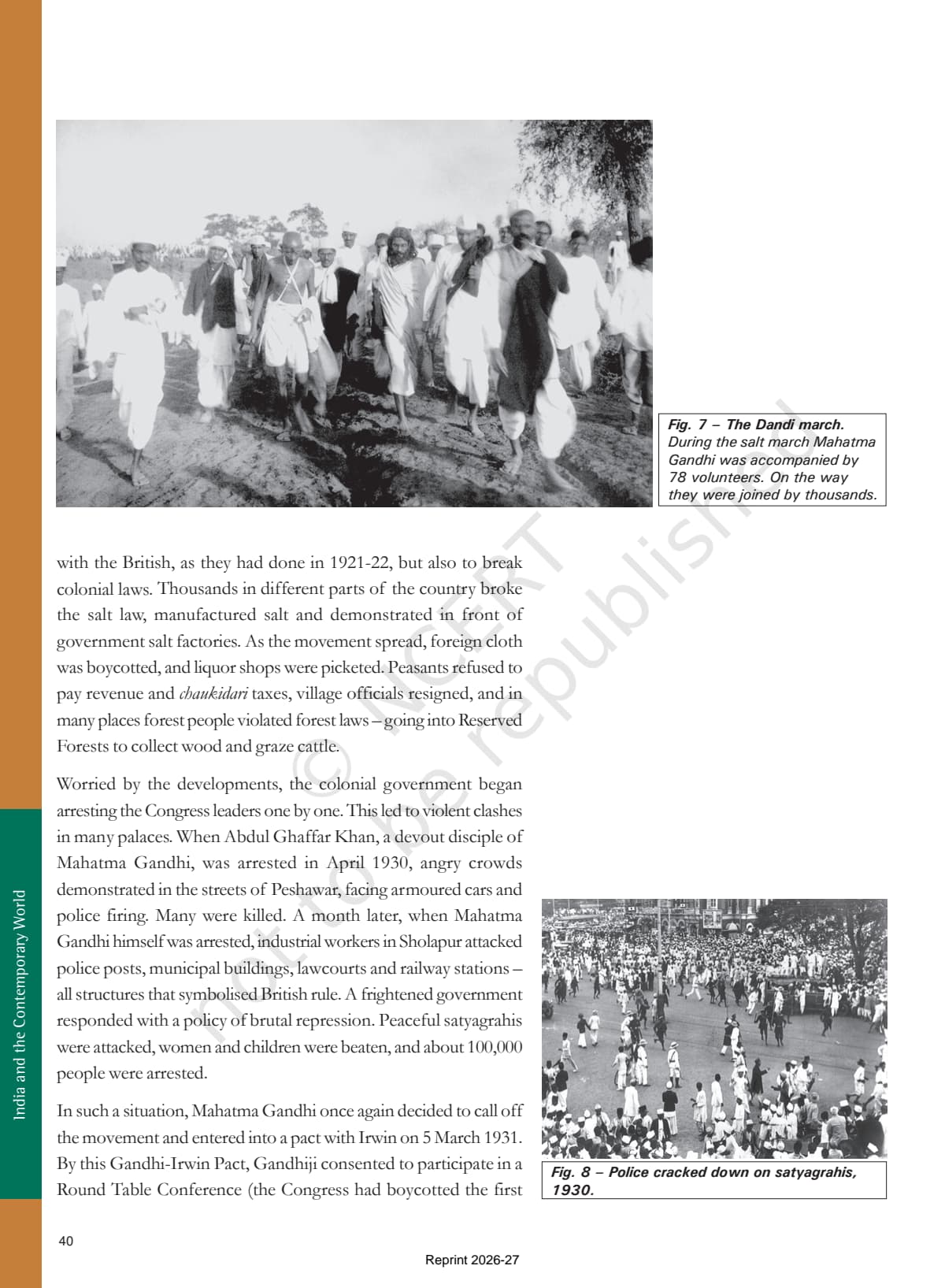
After the Lahore Congress of 1929 demanded Purna Swaraj, Gandhi began the Civil Disobedience Movement with the Salt March to Dandi in 1930, walking over 240 miles to break the salt law. It led to the Gandhi-Irwin Pact of 1931.
The Sense of Collective Belonging
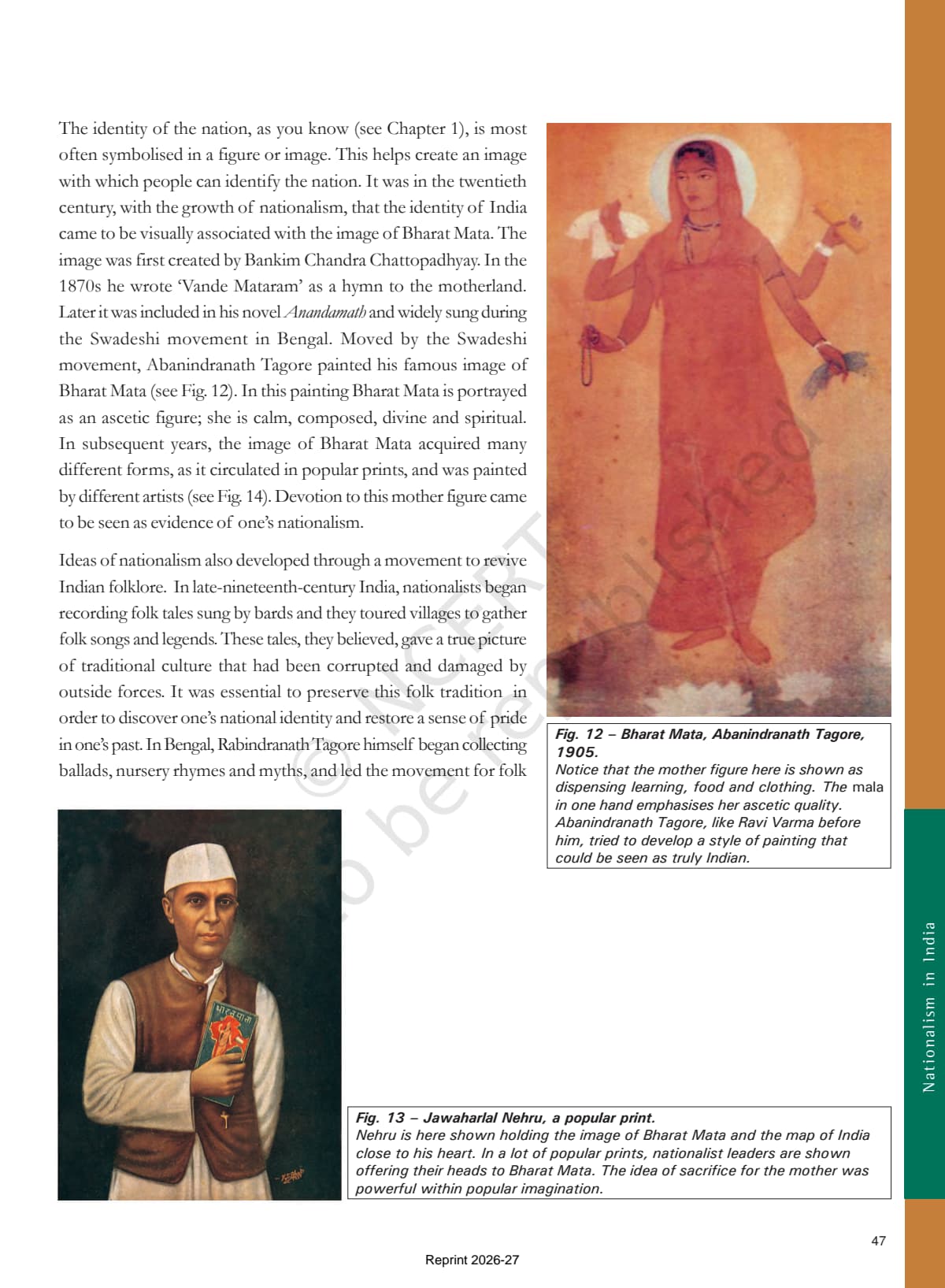
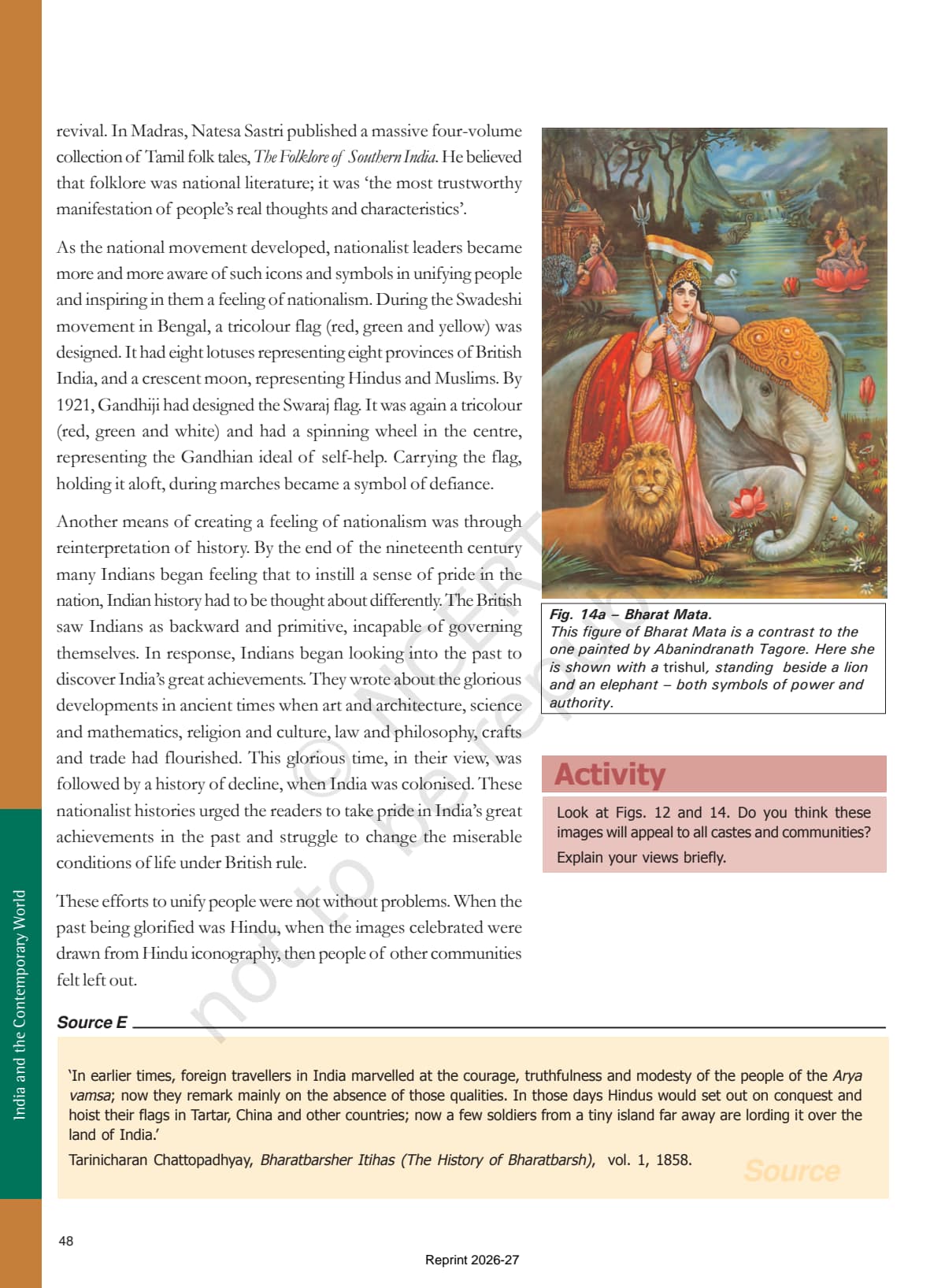
The chapter ends by showing how nationalism was also built through culture. The image of Bharat Mata, painted by Abanindranath Tagore, the song Vande Mataram, folklore and icons all built a shared sense of belonging. CBSE often sets a picture-based question on this image.
Key concepts the chapter introduces:
- Satyagraha as the power of truth and non-violent resistance.
- Khilafat and Non-Cooperation as the first mass nationwide movement.
- Civil Disobedience and the breaking of the colonial salt law.
- Bharat Mata and Vande Mataram as cultural symbols of the nation.
Why Read the NCERT PDF Directly Instead of a Guide Book
Guide books shorten the chapter into bullet timelines, but they cannot replace the official textbook. CBSE sets every source-based question from the exact extracts in the NCERT chapter, such as Gandhi's writings on satyagraha and the Awadh peasant movement. The Bharat Mata painting and the swaraj flag are reproduced in marking schemes too.
What the Guide Books Cannot Replace
- Gandhi's writings on satyagraha, the source for the definition-based question.
- The accounts of Baba Ramchandra and Alluri Sitaram Raju, sources on countryside rebellion.
- The Bharat Mata painting by Abanindranath Tagore, reproduced for picture-based questions.
- The swaraj flag of 1921, needed for the collective belonging answer.
- The Salt March and Dandi extracts, the base for the Civil Disobedience answer.
Previous Year Question Trends From This NCERT Chapter
The chapter has averaged 5.6 marks across the last five board papers, with source-based and picture questions appearing almost every year.
| Year | Total marks | Question types | Most common topic |
|---|---|---|---|
| 2025 | 6 | 1 source-based + 1 short answer + 1 MCQ | The Salt March and Civil Disobedience |
| 2024 | 5 | 1 picture question + 1 long answer | The Non-Cooperation Movement of 1921 |
| 2023 | 6 | 2 MCQs + 1 short answer | The Rowlatt Act and Jallianwala Bagh |
| 2020 | 5 | 1 source-based (peasants) + 1 short answer | Rebellion in the countryside, Awadh |
| 2019 | 6 | 1 picture question + 1 short answer | Bharat Mata and the idea of swaraj |
How to Read This NCERT PDF Alongside Other Resources
Pair the NCERT PDF with notes and solutions, in the order below.
- First read (cold): Read Sections 1 to 4 in order, marking every date and movement.
- Second read (with notes): Open the Class 10 History Chapter 2 Notes beside the PDF and copy the timeline of the movements.
- Question practice: Attempt every exercise, then check it against the NCERT Solutions for Class 10 History Chapter 2.
- Revision sprint: The day before the exam, scan the handwritten notes to recall dates fast.
What Students Should Avoid While Reading This NCERT PDF
The most expensive mistake is confusing the Non-Cooperation Movement of 1921 with the Civil Disobedience Movement of 1930.
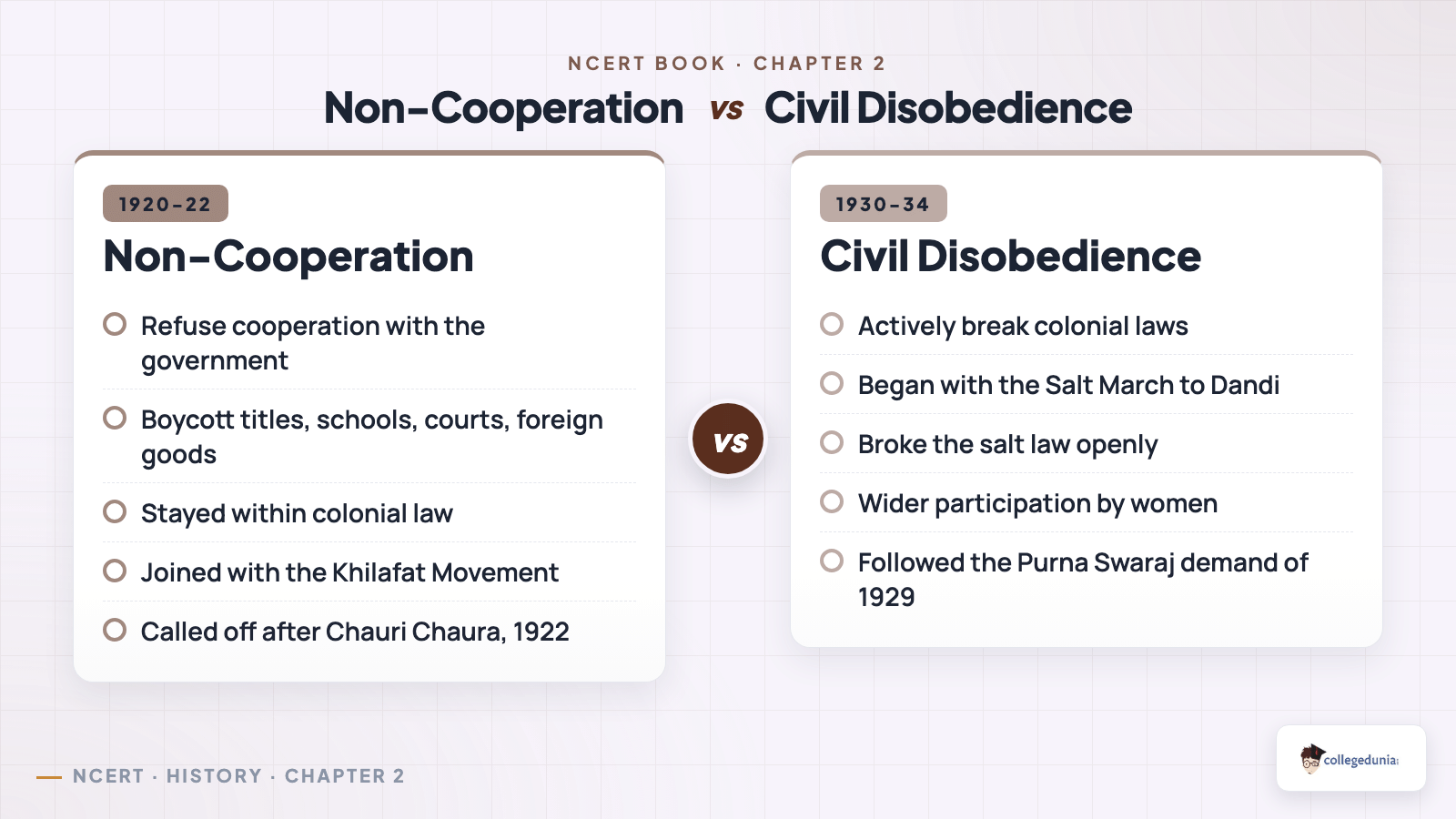
- Do not swap the two movements. Non-Cooperation refused cooperation; Civil Disobedience broke colonial laws.
- Do not skip the source extracts. The peasant and plantation sources are direct four-mark questions.
- Do not ignore the images. Picture questions on Bharat Mata and the swaraj flag appear almost every year.
- Do not learn dates without events. CBSE pairs the year with the event in match-the-following questions.
Quick Glossary From the Class 10 History Chapter 2
Define these terms in one line for MCQs.
- Satyagraha: Mass agitation based on the power of truth, without using violence.
- Boycott: The refusal to take part in activities, as a form of protest.
- Begar: Labour villagers were forced to give without payment.
- Swaraj: Self-rule, understood differently by peasants, workers, and the middle class.
- Picket: A demonstration in which people block the entrance to a shop or office.
Student Feedback
In a Collegedunia poll of 11,920 Class 10 students conducted before the 2026 boards, 78% said they read the official NCERT PDF before opening any guide book. Most students rated the difference between the Non-Cooperation and Civil Disobedience Movements as the hardest part to keep straight.
Source: 2026-27 Class 10 History student poll. Sample of 11,920 students from CBSE schools across 14 states.
Also Explore Other Resources for Class 10 History
Other Resources for This Chapter
Pair this with the other Class 10 History resources for this chapter, all linked below.
| Resource | Open |
|---|---|
| NCERT Solutions | Nationalism in India Class 10 NCERT Solutions |
| Notes | Nationalism in India Class 10 Notes |
| Formula Sheet | Nationalism in India Class 10 Formula Sheet |
| Handwritten Notes | Nationalism in India Class 10 Handwritten Notes |
| NCERT Book PDF | Nationalism in India Class 10 NCERT Book PDF |
All Chapters: Class 10 History NCERT Book PDF
| Chapter | NCERT Book PDF |
|---|---|
| Chapter 1 | The Rise of Nationalism in Europe NCERT Book PDF |
| Chapter 2 | Nationalism in India NCERT Book PDF |
| Chapter 3 | The Making of a Global World NCERT Book PDF |
| Chapter 4 | The Age of Industrialisation NCERT Book PDF |
| Chapter 5 | Print Culture and the Modern World NCERT Book PDF |
Frequently Asked Questions on Class 10 History Chapter 2 NCERT Book PDF
Ques. Where can students download the official NCERT Class 10 History Chapter 2 Nationalism in India PDF?
Ans. Students can download the official nationalism in india class 10 notes pdf directly from the download card at the top of this page. It is the single-chapter file from the India and the Contemporary World II textbook, aligned to the 2026-27 CBSE syllabus.
Ques. What is nationalism in India according to NCERT Class 10 History Chapter 2?
Ans. In this chapter, nationalism in India is the shared sense of identity that grew through the anti-colonial movement. The chapter shows how, in the 1920s and 1930s, people of different classes discovered their unity in the struggle against colonial rule under Mahatma Gandhi.
Ques. What is the difference between Non-Cooperation and Civil Disobedience in the Class 10 chapter?
Ans. The Non-Cooperation Movement of 1921 asked people to refuse cooperation by boycotting titles, schools, courts, and foreign goods. The Civil Disobedience Movement of 1930 went further and asked people to actively break colonial laws, beginning with the salt law during the Salt March.
Ques. What was the Rowlatt Act of 1919 in the Class 10 History chapter?
Ans. The Rowlatt Act of 1919 gave the government powers to repress political activities and to detain prisoners without trial for two years. Gandhi launched a nationwide satyagraha against it, which led to protests and the Jallianwala Bagh massacre in Amritsar.
Ques. What was the Salt March of 1930 in this chapter?
Ans. The Salt March was Gandhi's walk of over 240 miles to Dandi to break the colonial salt law by making salt from seawater. It began the Civil Disobedience Movement and is the most frequently tested event in the nationalism in india class 10 board paper.
Ques. What is Bharat Mata in the NCERT Class 10 History chapter?
Ans. Bharat Mata is the image of India as a mother figure, first painted by Abanindranath Tagore. The chapter explains that devotion to this mother figure, along with the song Vande Mataram, helped create a sense of collective belonging, and CBSE often asks students to interpret the image.



Comments