




The ncert class 10 history book pdf chapter 4 The Age of Industrialisation is the official source text for the fourth chapter of the India and the Contemporary World II textbook.
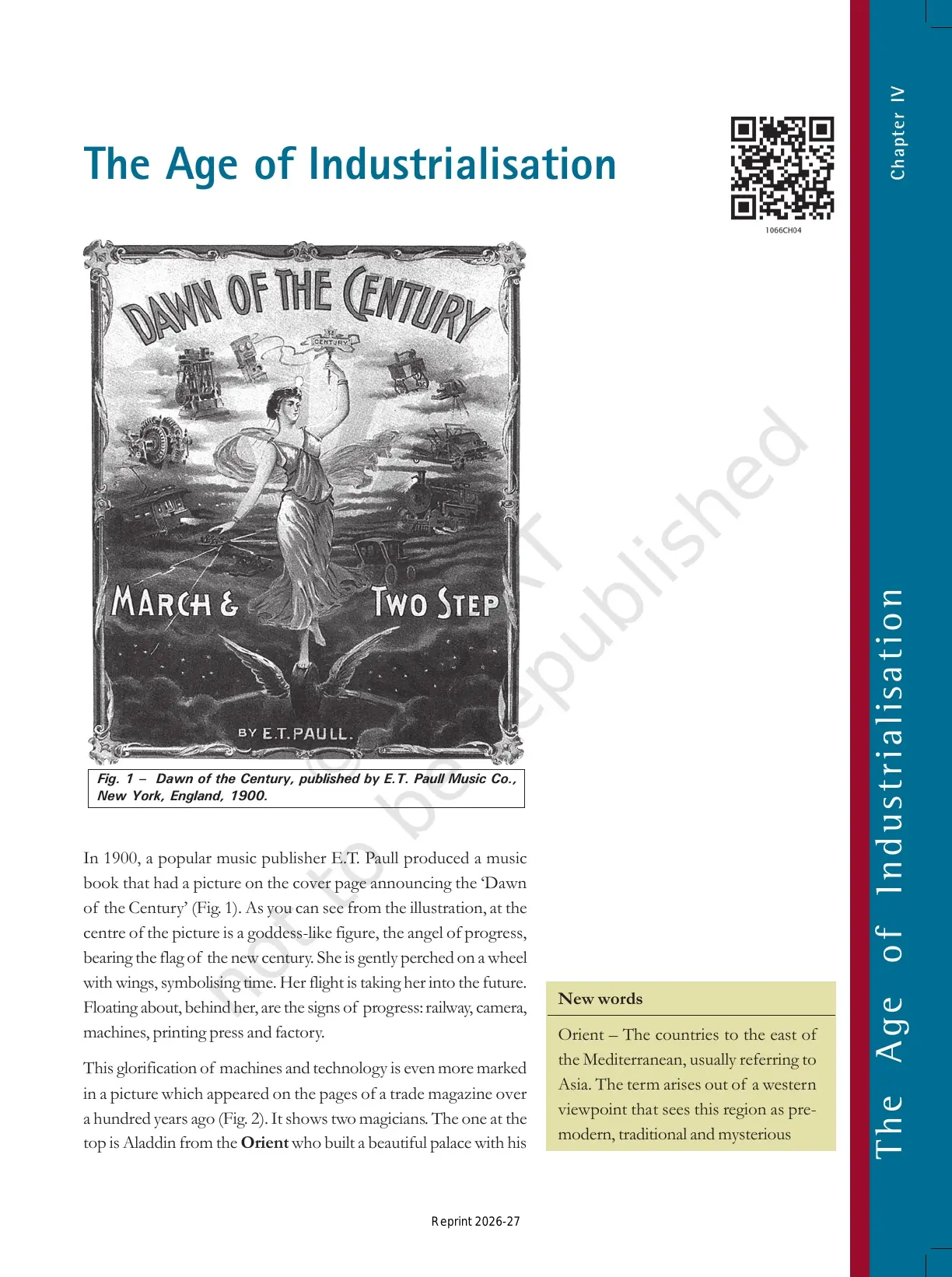
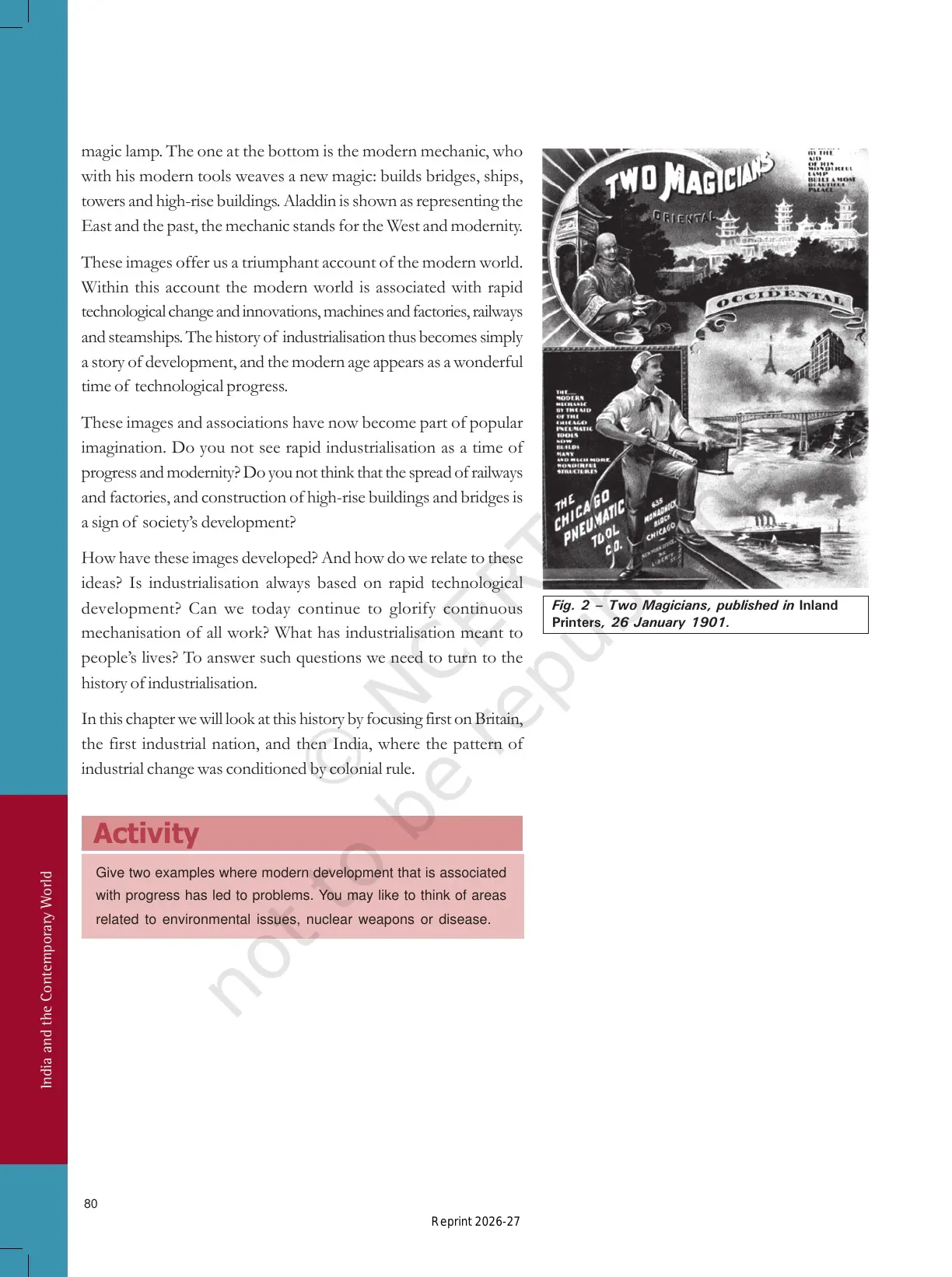
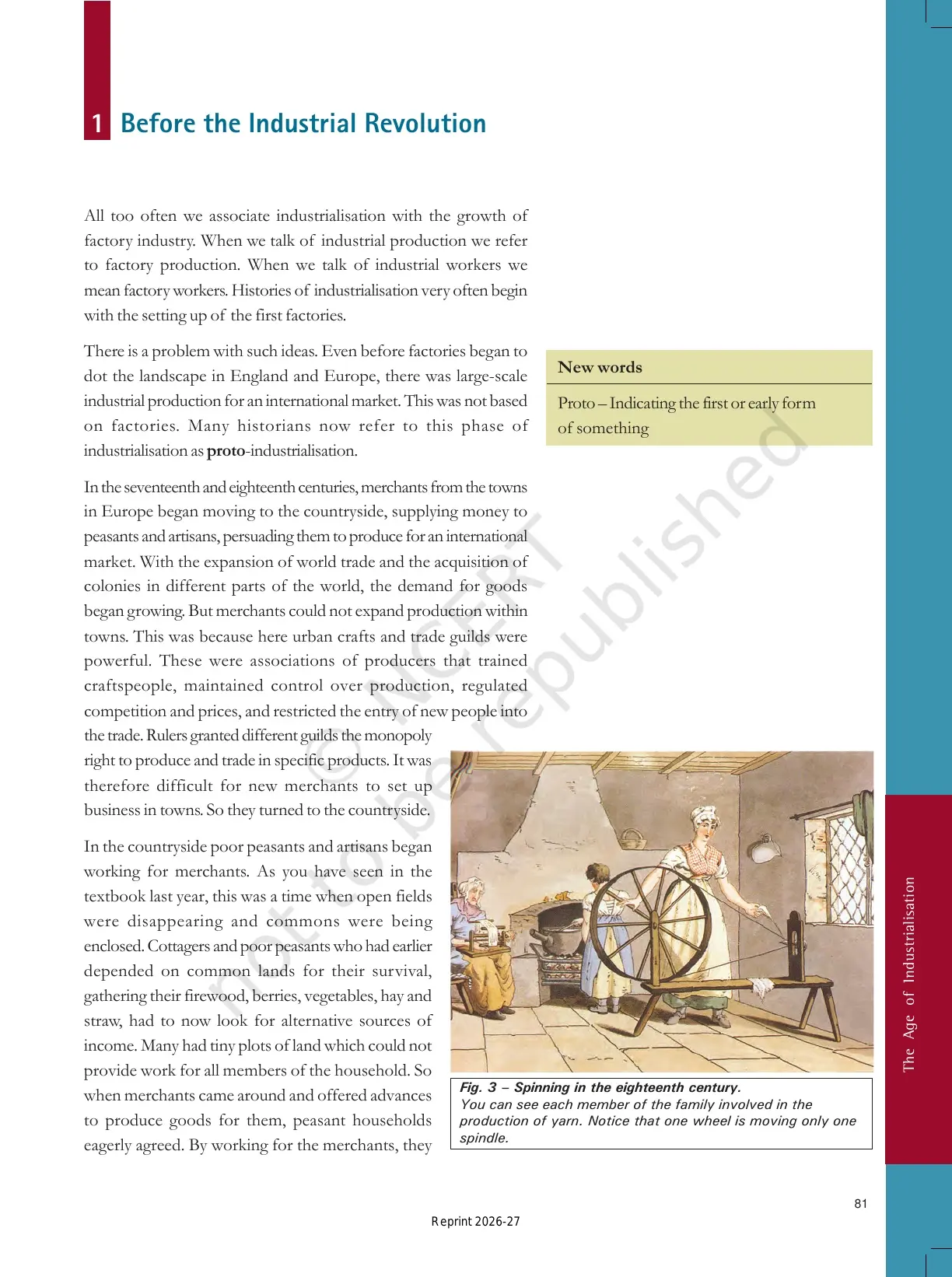
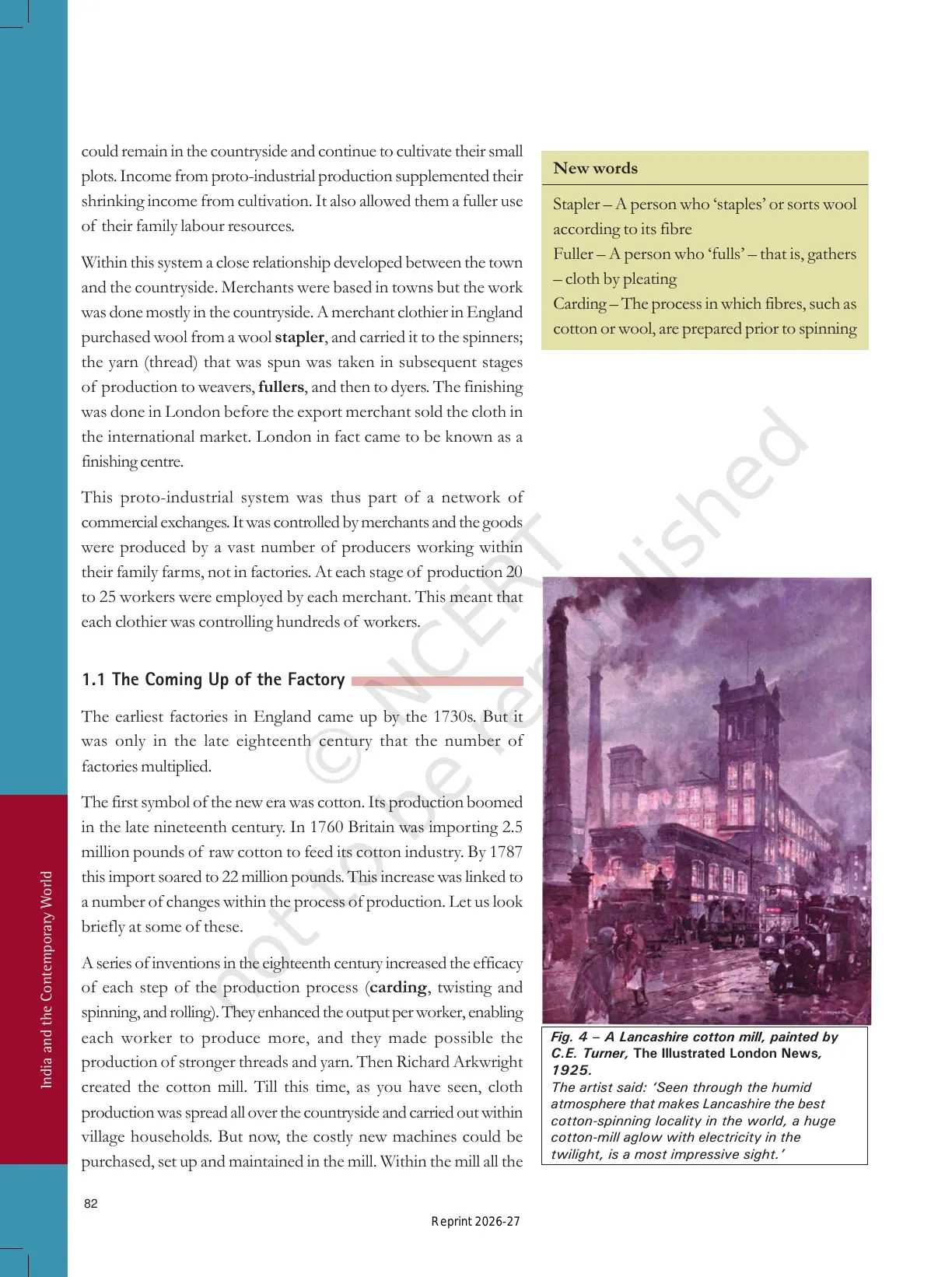
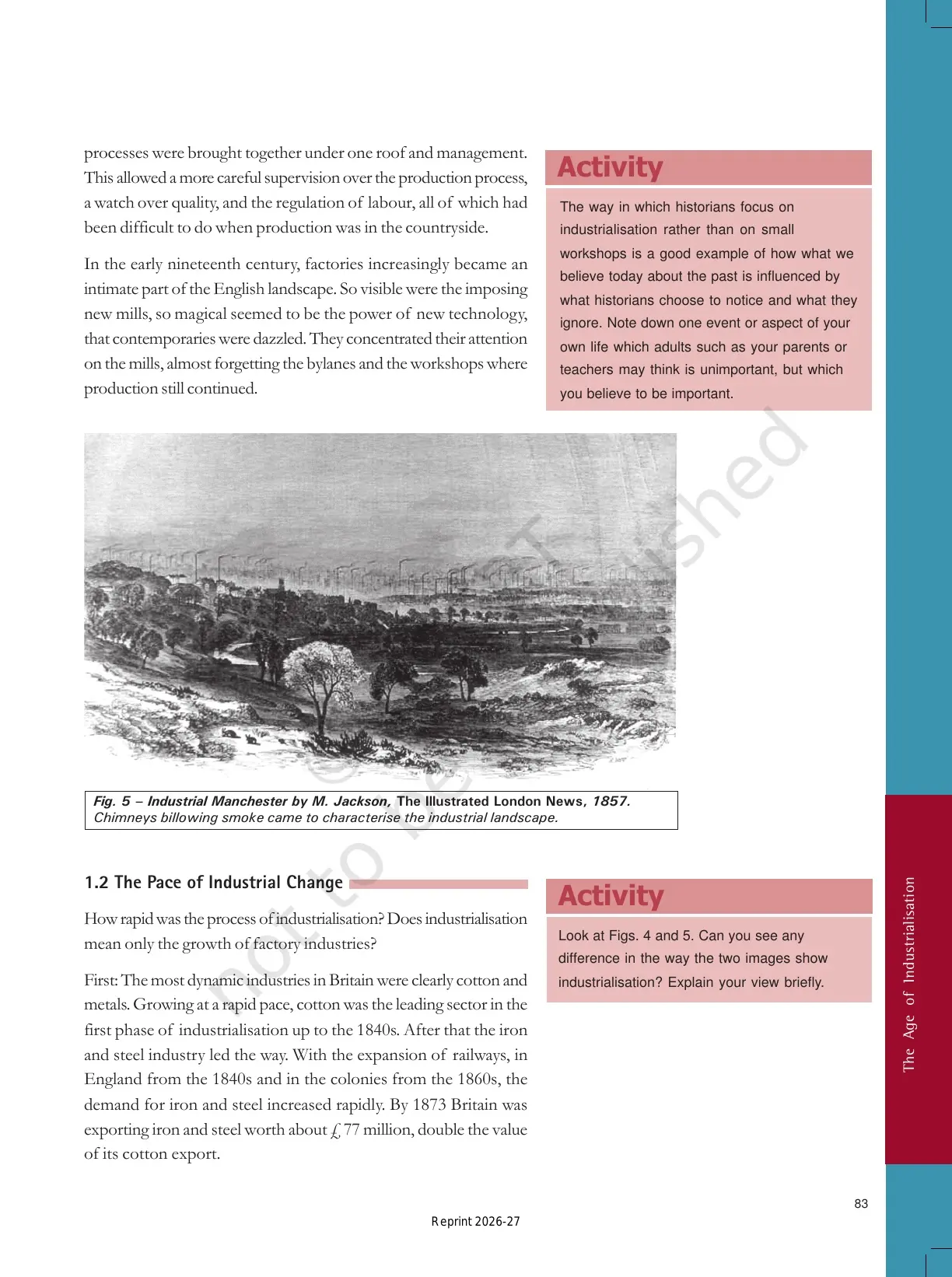
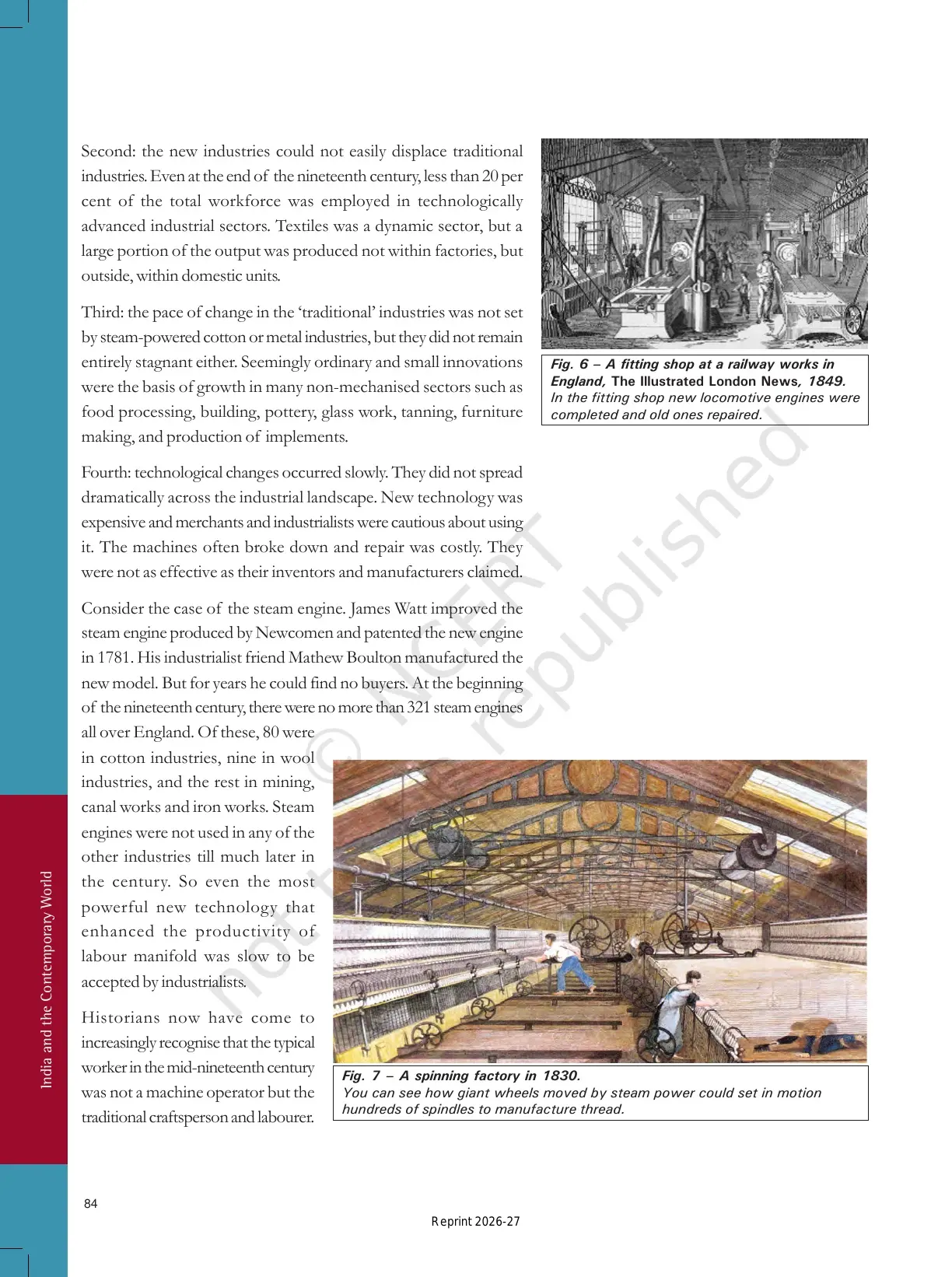
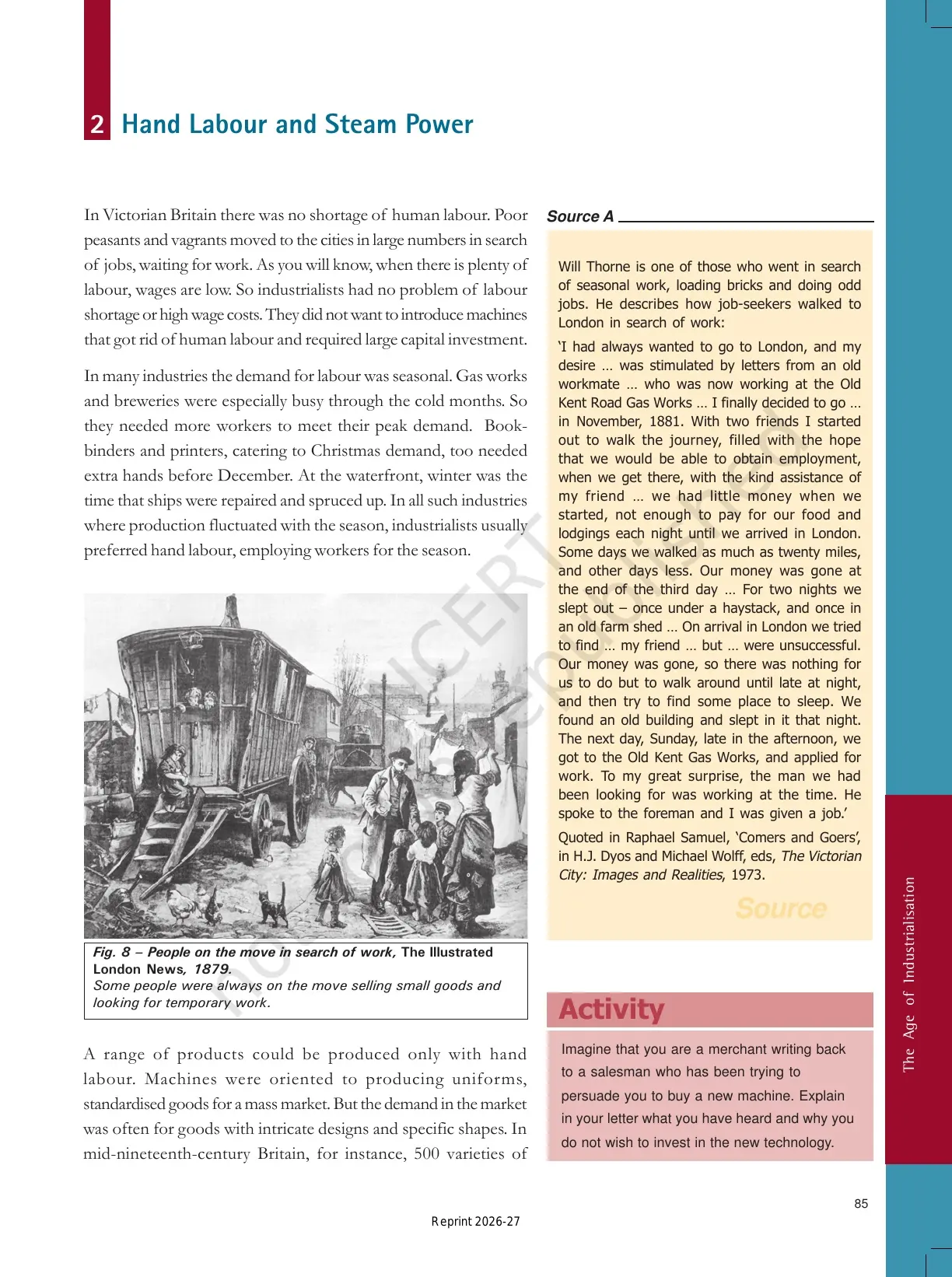
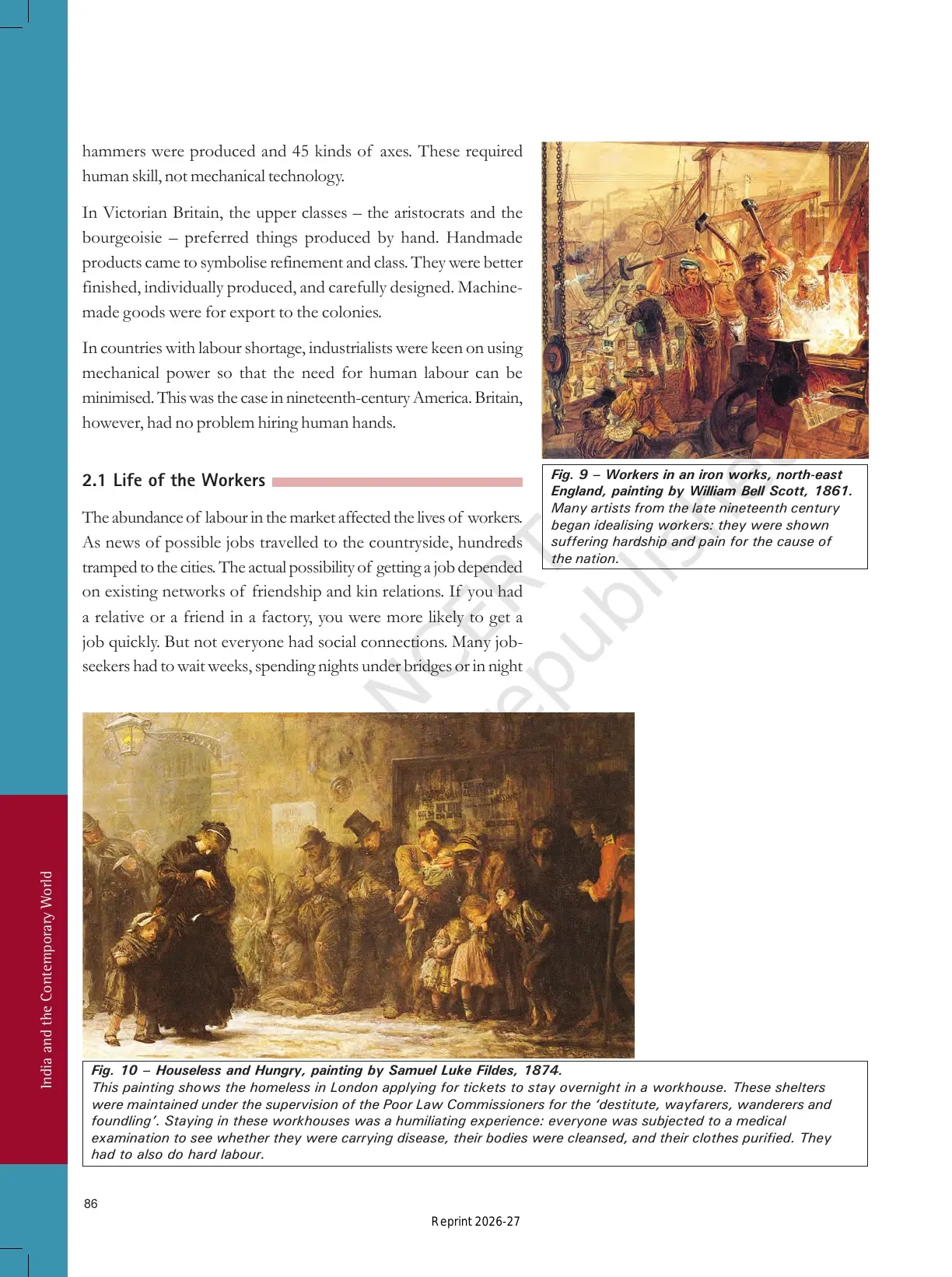
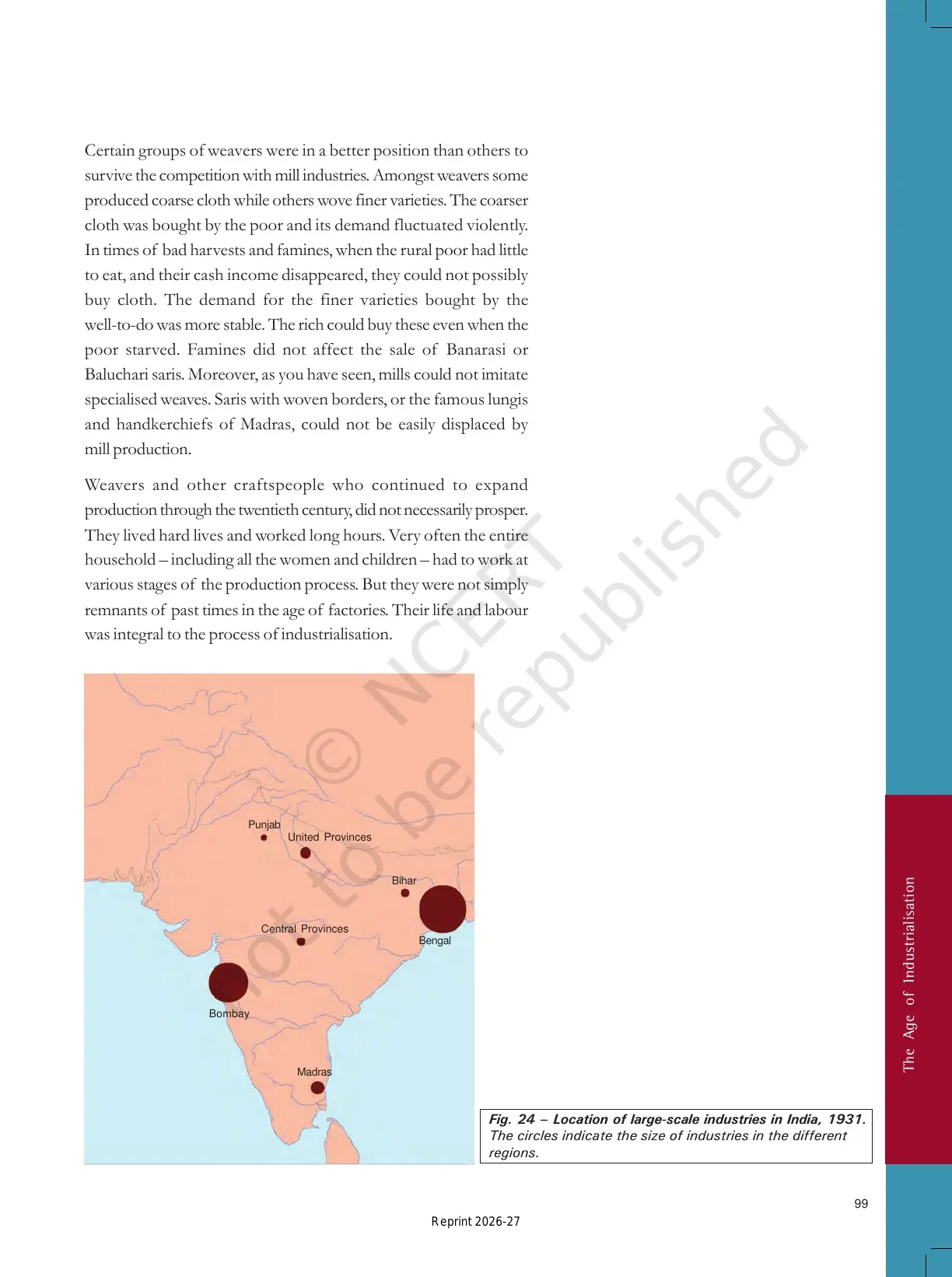
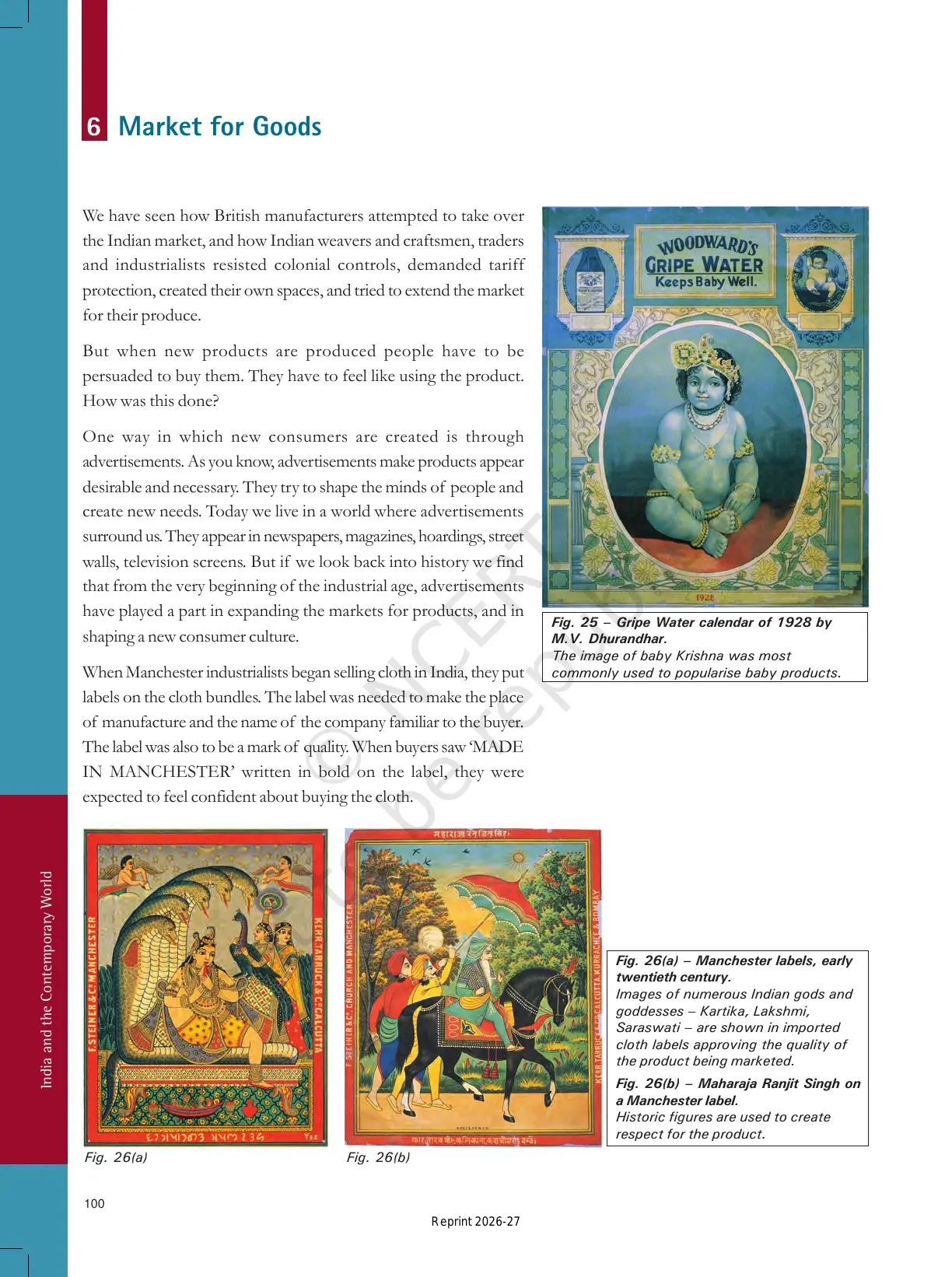
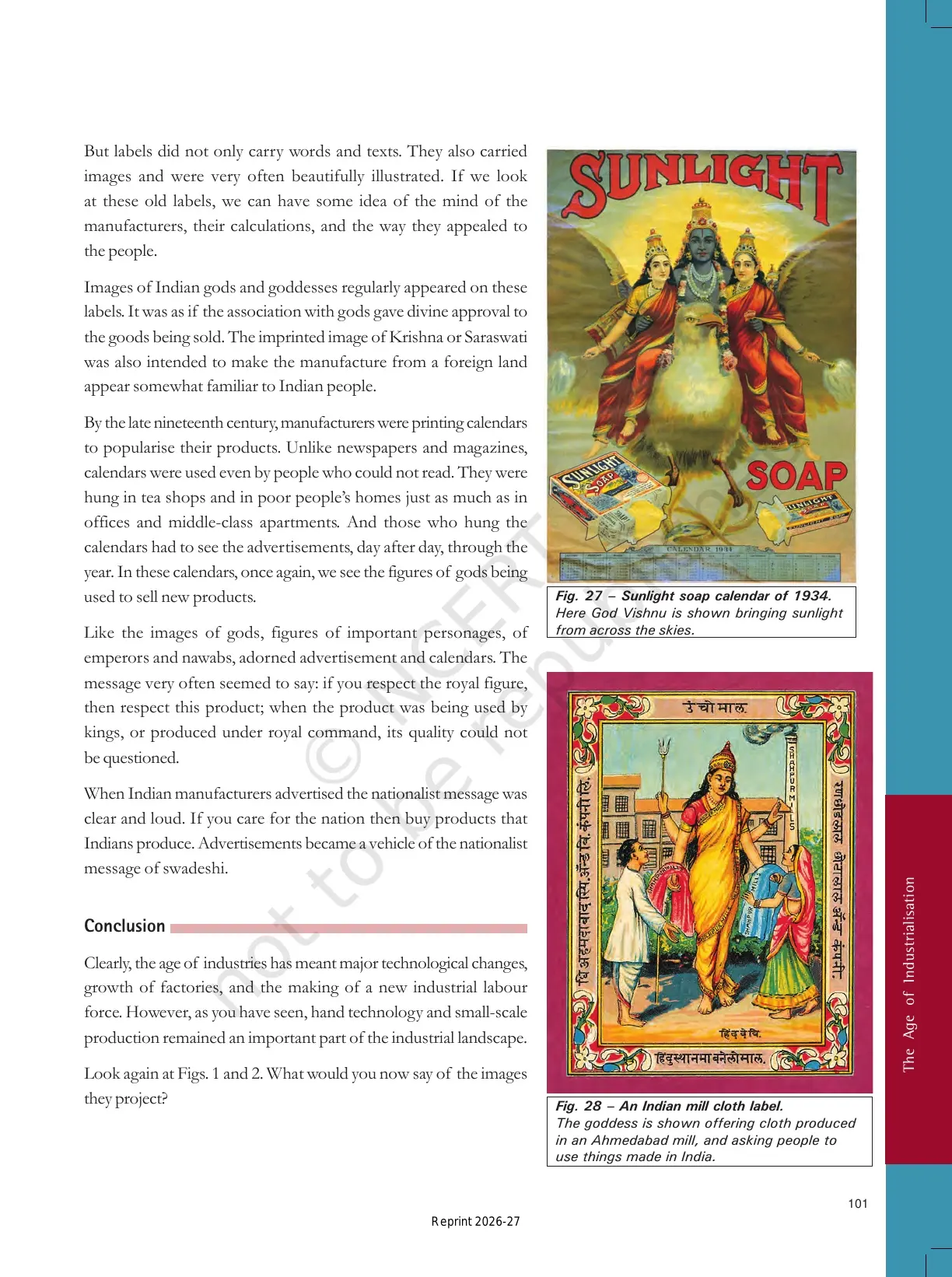
It traces how industrial production grew first in Britain and then under colonial rule in India, from proto-industrialisation and the early cotton mills to the jobber, the gomastha, and the rise of Indian entrepreneurs like Dwarkanath Tagore and J.N. Tata. This chapter usually carries 5 to 6 marks in the Class 10 Social Science board paper, and every source extract, label, and figure that CBSE quotes in the question paper comes straight from this PDF.
- Official NCERT Class 10 History textbook PDF for Chapter 4, aligned to the 2026-27 CBSE syllabus.
- 5 to 6 marks board-paper weightage; the textbook is the only source CBSE references for proto-industrialisation, the Spinning Jenny, and the Manchester labels.
- Pair it with the matching NCERT Solutions and Handwritten Notes for full chapter revision.
Every page of the ncert class 10 history book pdf chapter 4 The Age of Industrialisation shared here is the official NCERT print, aligned to the 2026-27 CBSE syllabus and checked against the last five years of board papers.
Student Feedback on the NCERT Book
In a Collegedunia poll of 12,480 Class 10 students conducted before the 2026 boards, 76% said they read the official NCERT PDF before opening any guide book. Most students rated the Britain-versus-India comparison and the gomastha-jobber terms as the hardest part to keep straight.
Source: 2026-27 Class 10 History student poll. Sample of 12,480 students from CBSE schools across 14 states.
What the NCERT Class 10 History Chapter 4 PDF Covers
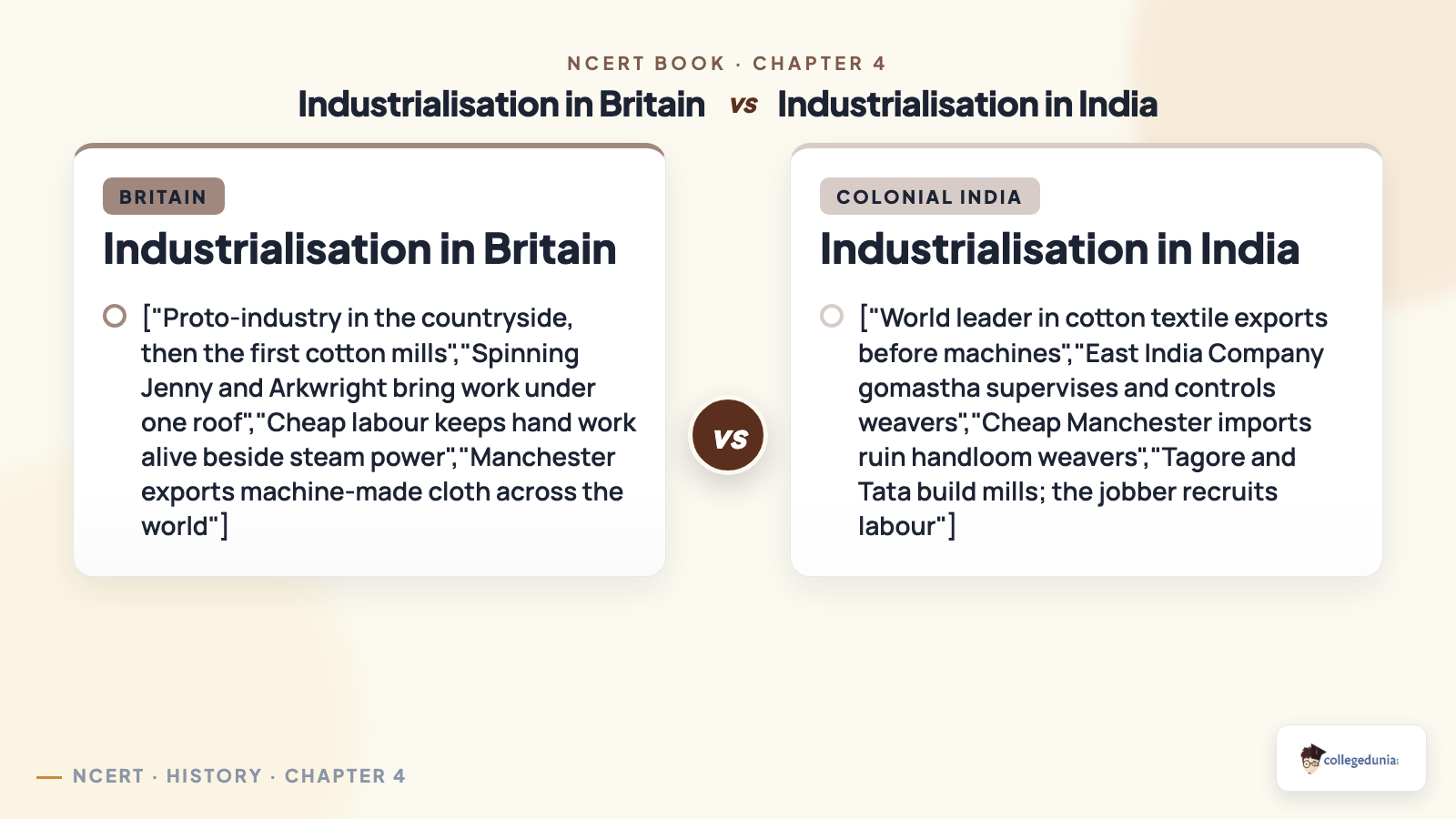
The ncert class 10 history book pdf chapter 4 The Age of Industrialisation shows that industrialisation was not simply a story of factories and machines. The chapter moves from proto-industrialisation in the European countryside, to the first cotton mills in Britain, then the slow pace of change, and finally to industrialisation in colonial India under the East India Company and the early Indian entrepreneurs.
Inside the PDF, students read how merchants moved to the countryside before factories existed, how the Spinning Jenny and Richard Arkwright's cotton mill changed cotton production, and how the gomastha and the jobber controlled labour in India. The class 10 history chapter 4 the age of industrialisation also explains why hand labour survived alongside steam power and why Manchester imports flooded the Indian market.
The Age of Industrialisation Class 10 Video Lesson
Source: Magnet Brains on YouTube
Topics in the Chapter: Section-Wise Map of the NCERT PDF
The official PDF is organised into six numbered parts. The table below maps each part to its key idea and to the exam concept students should pull out of it. The colonial sections on Indian textiles and the early entrepreneurs together drive most of the board-paper marks.
| Section | NCERT sub-topic | Dominant exam concept |
|---|---|---|
| 1 | Before the Industrial Revolution | Proto-industrialisation, merchants and the countryside, guilds |
| 1.1 | The Coming Up of the Factory | Cotton, Richard Arkwright, the cotton mill under one roof |
| 1.2 | The Pace of Industrial Change | Slow change, cotton and metals, steam engine, hand labour |
| 2 | Hand Labour and Steam Power | Cheap labour, the Spinning Jenny, life of the workers |
| 3 | Industrialisation in the Colonies | Age of Indian textiles, weavers, the gomastha, Manchester |
| 3.3 | Manchester Comes to India | Import of British cloth, decline of Indian weavers |
| 4 | Factories Come Up | Dwarkanath Tagore, J.N. Tata, the jobber, Indian mills |
| 5 | The Peculiarities of Industrial Growth | Small-scale industries, the fly shuttle, the First World War |
| 6 | Market for Goods | Advertisements, Manchester labels, building the market |
Students should match each note page to one row above. The terms and figures in Sections 3 and 4 on Indian textiles, weavers and the early entrepreneurs need the most attention, since they drive most long-answer questions.
Key Topics From the Class 10 History Chapter 4 Textbook
The PDF is the only place students will find the exact NCERT phrasing of these topics. Reproducing the textbook wording is the fastest route to full marks on definition questions, because examiners reward accurate use of words like proto-industrialisation, gomastha and jobber.
Proto-industrialisation and the Coming Up of the Factory
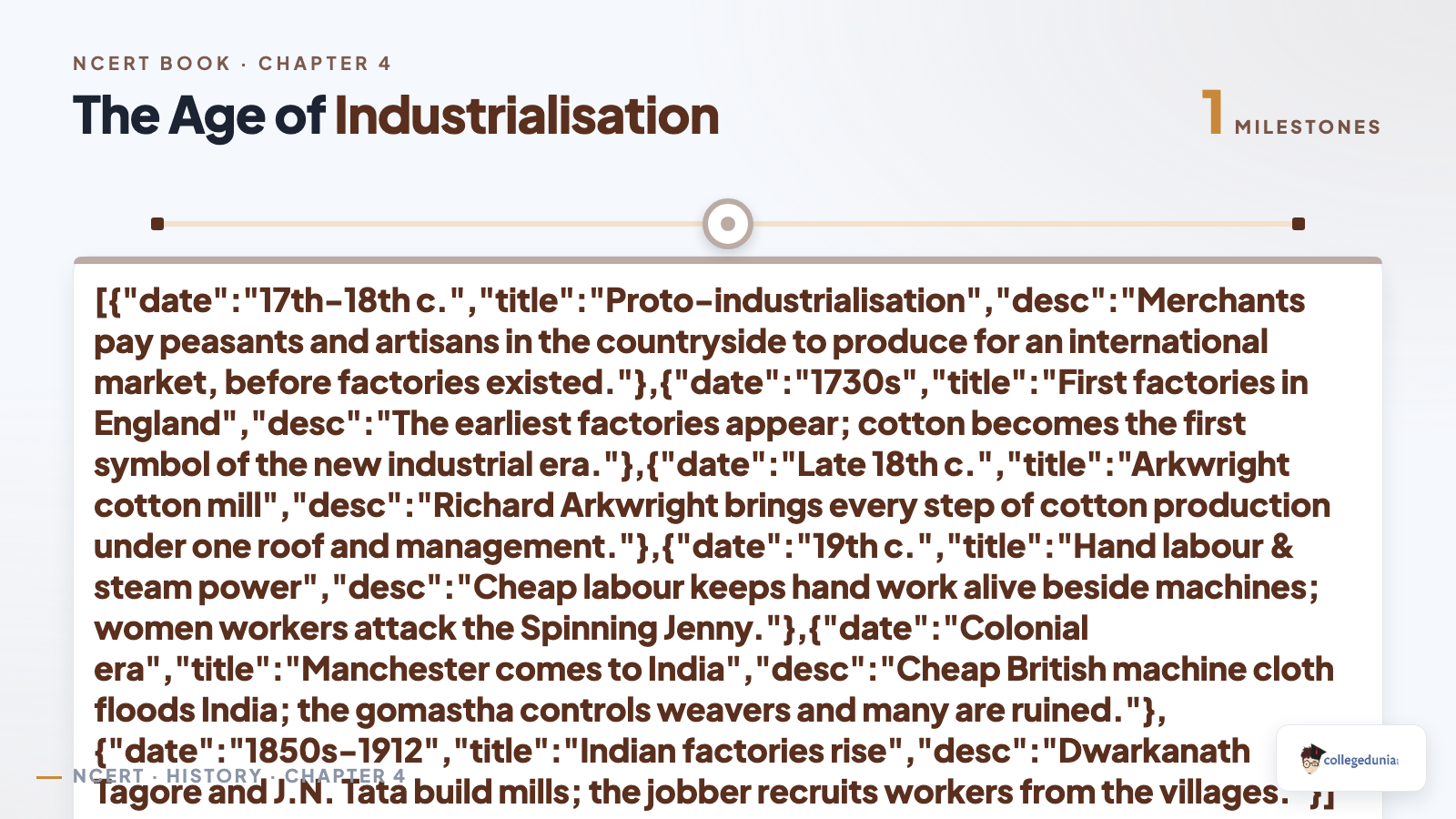
Large-scale industrial production existed long before factories. Historians call this early phase proto-industrialisation, when merchants from European towns moved to the countryside and paid peasants and artisans to produce goods for an international market. Urban guilds controlled production in the towns, so merchants turned to poor peasants and cottagers who, losing access to common land, worked for advances. The earliest factories in England came up in the 1730s, and Richard Arkwright's cotton mill brought every process under one roof. This origin story is a frequent three-mark question.
Hand Labour and Steam Power
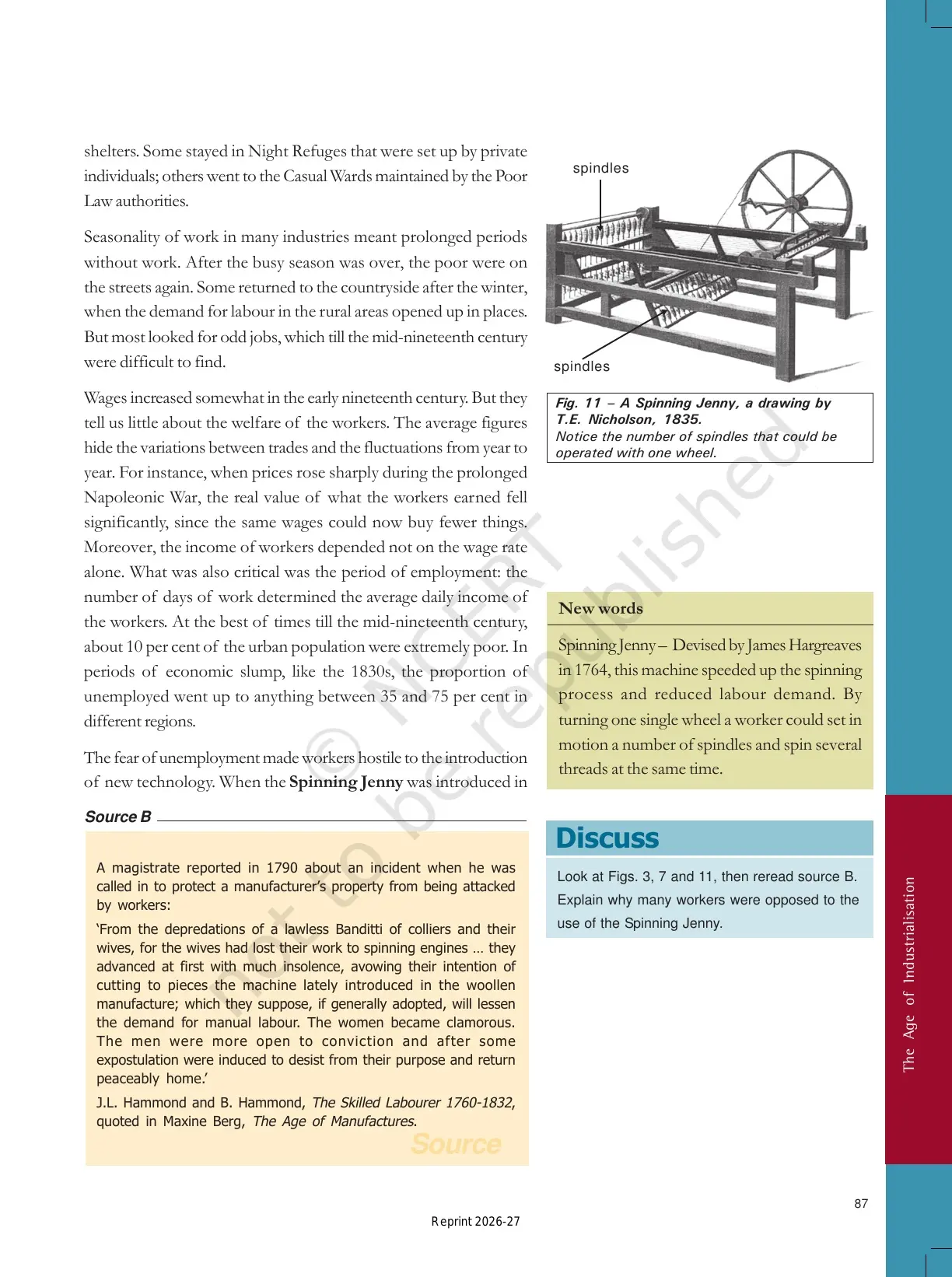
Britain did not rush to replace people with machines. Labour was cheap and plentiful, so industrialists preferred hand labour to costly machines that needed heavy repair. The Spinning Jenny, devised by James Hargreaves, was attacked by women workers in the woollen industry who feared it would take their jobs. Workers faced long hours, low wages and the fear of unemployment. The contrast between hand labour and steam power is a regular source-based question.
Industrialisation in the Colonies and the Indian Weaver
In India, industrial change was shaped by colonial rule. Before machine industries, India was the world's largest exporter of cotton textiles, but the East India Company tightened its grip by appointing the gomastha to supervise weavers, collect cloth and control supplies. As Manchester cloth, made by machines at lower cost, flooded the Indian market, weavers lost both their export and local markets and many were ruined. The decline of the Indian weaver is one of the most testable blocks in the chapter.
Factories Come Up and the Indian Entrepreneurs
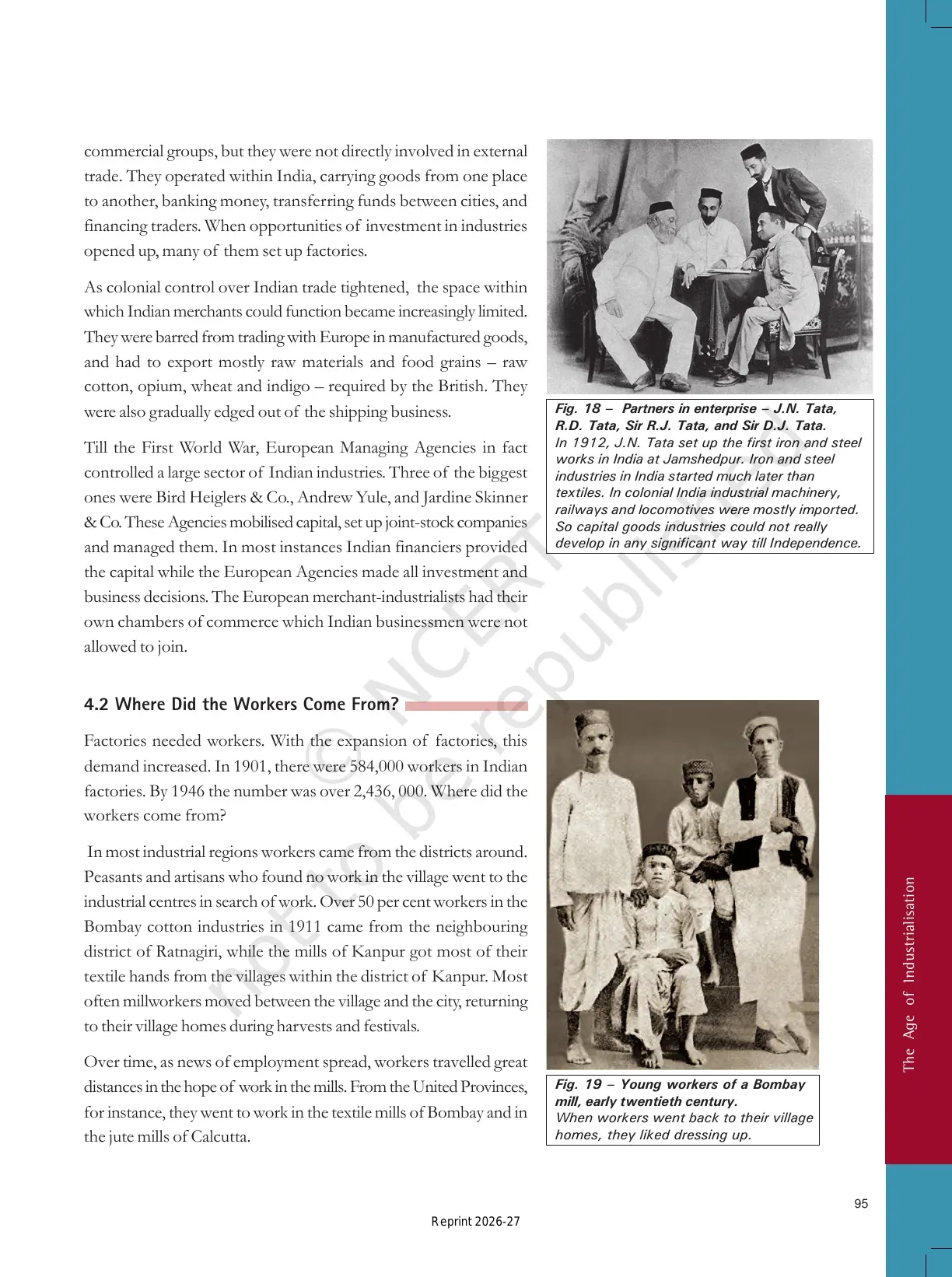
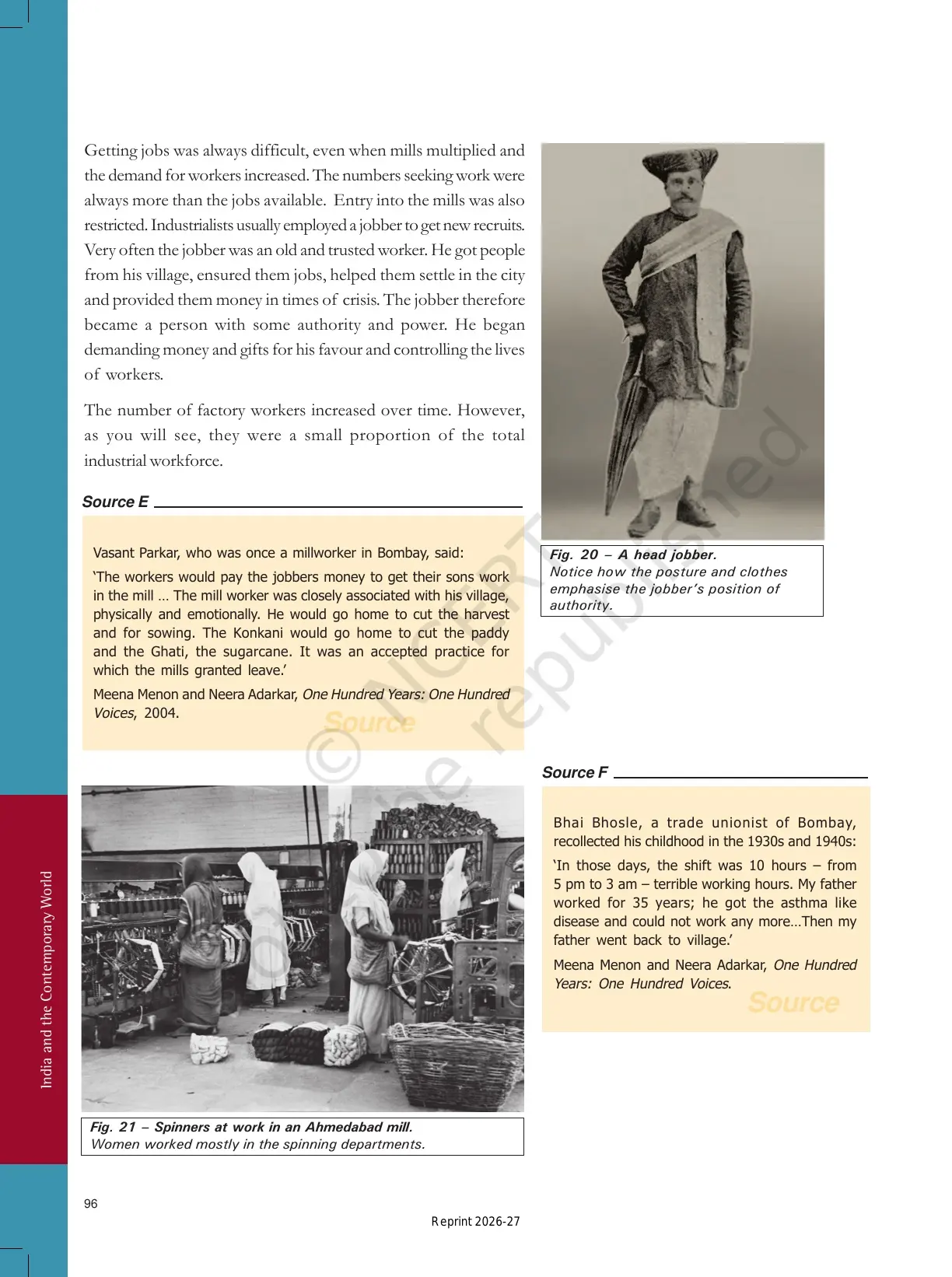
Early entrepreneurs such as Dwarkanath Tagore in Bengal and Jamsetjee Nusserwanjee Tata in Bombay built industrial empires from fortunes made in the China trade, while G.D. Birla's family also rose. The factories needed workers, so industrialists employed a jobber, often a trusted old worker, to recruit labour from the villages and control the recruits. The chapter closes with small-scale industry, the fly shuttle, and how advertisements and Manchester labels built a market for goods.
Concepts the NCERT chapter introduces:
- Proto-industrialisation as large-scale production before factories.
- Spinning Jenny and the fear of machines among hand workers.
- Gomastha as the Company's supervisor over Indian weavers.
- Jobber as the recruiter and controller of factory labour in India.
- Manchester labels and advertisements that built a market for cloth.
Why Read the NCERT PDF Directly Instead of a Guide Book
Guide books shorten the chapter into bullet timelines, but they cannot replace the official textbook for three reasons. First, the CBSE board paper sets every source-based question from the exact extracts printed in the NCERT chapter, such as the testimony of the millworker Vasant Parkar on the jobber and the Source box on the decline of Indian weavers. Second, the pictures of the Spinning Jenny, the Lancashire cotton mill, and the Manchester labels are reproduced in board-paper marking schemes. Third, the figure-based questions on Dwarkanath Tagore and the head jobber only make sense after reading the textbook captions in full.
Guide books also often drop the gomastha story and the figures on Manchester imports from the ncert class 10 history book pdf chapter 4 The Age of Industrialisation. The conflict between the new gomasthas and the Indian weavers is regularly examined as a five-mark source-based question. Students who skip the official PDF miss it entirely and lose easy marks on the extract.
What the Guide Books Cannot Replace
- The testimony of Vasant Parkar - the source on how the jobber controlled millworkers
- Fig. 11, the Spinning Jenny - the base for the hand-labour-versus-machine answer
- The gomastha story - the canonical example of how the Company controlled weavers
- Fig. 17 and Fig. 18, Dwarkanath Tagore and the Tatas - needed for the early-entrepreneur question
- The Manchester labels, Fig. 26 - the picture-based question on building a market
Previous Year Question Trends From This NCERT Chapter
The the age of industrialisation class 10 questions in the CBSE board paper follow a stable pattern. Students preparing for the 2026-27 paper should expect roughly the same spread shown below. The chapter has averaged 5.4 marks across the last five board papers, with source-based and short-answer questions appearing almost every year.
| Year | Total marks | Question types | Most common topic |
|---|---|---|---|
| 2025 | 6 | 1 source-based + 1 short answer + 1 MCQ | Decline of Indian weavers under Manchester |
| 2024 | 5 | 1 long answer + 1 MCQ | Proto-industrialisation and the factory |
| 2023 | 5 | 2 MCQs + 1 short answer | The gomastha and the Indian weaver |
| 2020 | 5 | 1 source-based (Spinning Jenny) + 1 short answer | Hand labour and steam power |
| 2019 | 6 | 1 long answer + 1 short answer | Early Indian entrepreneurs and factories |
The dominant question type is a source-based question on the Indian weaver or a five-mark question on hand labour and the Spinning Jenny. Both need the exact extracts and figures printed in the official PDF, which is why students cannot rely on a guide-book summary.
How to Read This NCERT PDF Alongside Other Resources
The textbook PDF is the source, but it is not enough alone. Students who score full marks pair the NCERT PDF with notes and worked solutions. A Collegedunia poll of 11,540 Class 10 students found that 79% of board toppers in this chapter read the NCERT PDF at least twice before opening a guide. The pairing pattern below is what those toppers used for the 2026-27 session.
- First read (cold): Read the six numbered parts in order. Mark every term, name, and figure in the margin.
- Second read (with notes): Open the Class 10 History Chapter 4 Notes beside the PDF and copy the Britain-versus-India comparison.
- Question practice: Attempt every exercise, then check it against the NCERT Solutions for Class 10 History Chapter 4.
- Revision sprint: The day before the exam, scan the handwritten notes to recall the terms and names fast.
This pattern works because the chapter compares two industrial stories side by side. The PDF moves between Britain and colonial India in the same argument, so one wrong link breaks the cause-and-effect chain later. Reading the official PDF first, then the notes, then the solutions, prevents that slip.
What Students Should Avoid While Reading This NCERT PDF
The chapter is long and packed with terms, and students make four predictable mistakes. The most expensive mistake is mixing up the gomastha and the jobber, or forgetting which one worked in India under the Company and which one recruited factory labour. The PDF keeps the two terms in separate sections for exactly this reason, so reading them in full once fixes the confusion before the board paper.
- Do not confuse the gomastha and the jobber. The gomastha supervised weavers; the jobber recruited mill workers.
- Do not skip the source extracts. The Vasant Parkar testimony and the Source boxes are direct source-based questions.
- Do not ignore the figures. The Spinning Jenny, the Manchester labels, and Dwarkanath Tagore appear almost every year.
- Do not learn terms without examples. CBSE pairs proto-industrialisation, the gomastha, and the jobber with their effects.
Quick Glossary From the Class 10 History Chapter 4
The chapter introduces several new terms that students should be able to define in one line for MCQs. The glossary below pulls the most testable terms straight from the NCERT PDF. Reproducing these definitions in textbook phrasing is the fastest route to full marks on one-mark questions.
- Proto-industrialisation: The phase of large-scale industrial production for an international market that existed before factories.
- Spinning Jenny: A machine devised by James Hargreaves that sped up the spinning process and reduced the need for workers.
- Gomastha: A paid servant appointed by the East India Company to supervise weavers, collect supplies, and examine cloth quality.
- Jobber: An old and trusted worker employed by industrialists in India to recruit new workers and control them.
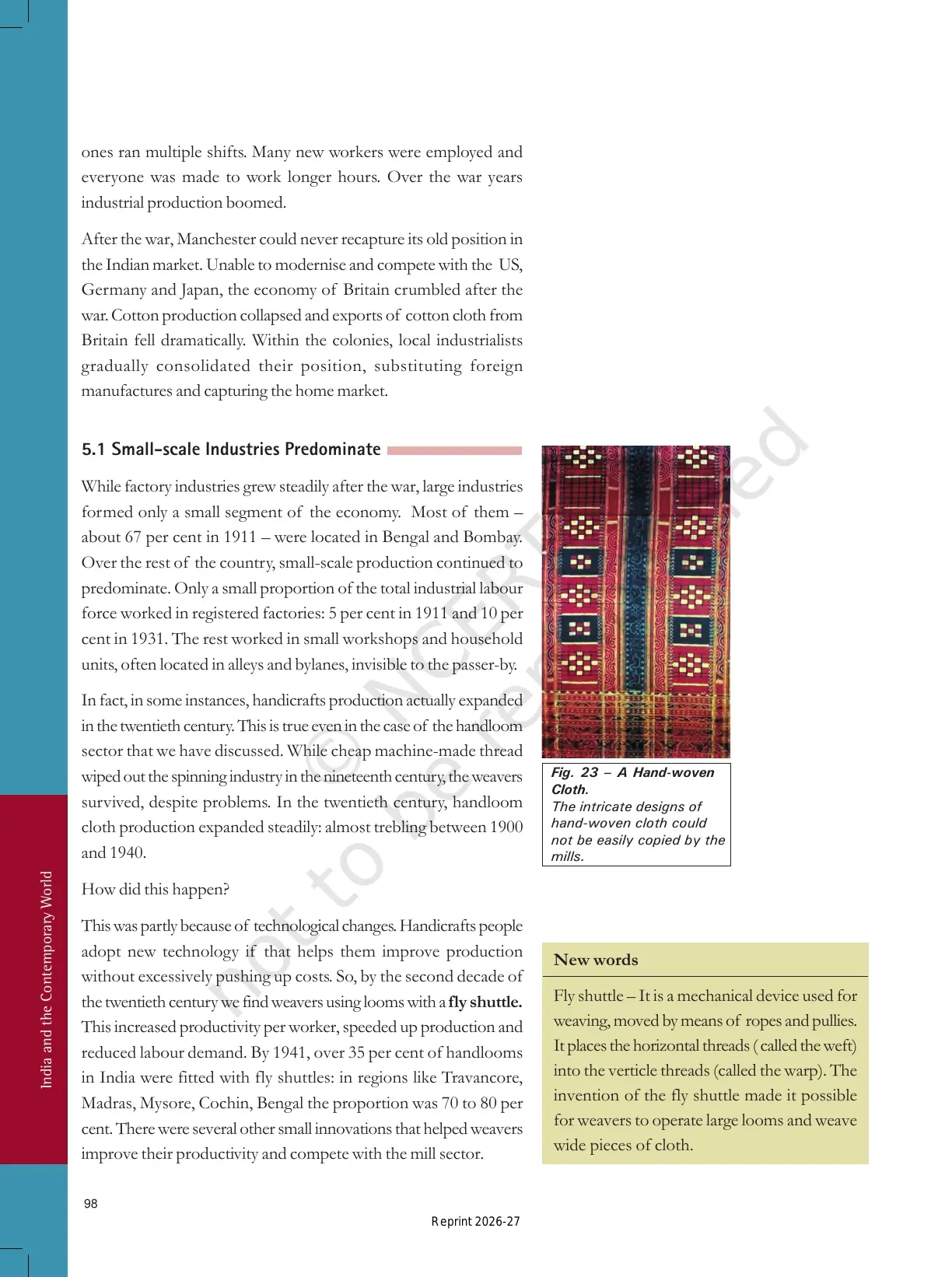
- Fly shuttle: A mechanical device that sped up weaving and helped handloom workers improve their productivity.
- Orient: The countries to the east of the Mediterranean, usually referring to Asia, seen by the West as pre-modern.
Also Explore Other Resources for Class 10 History
| Resource | Link |
|---|---|
| NCERT Solutions | The Age of Industrialisation Class 10 NCERT Solutions |
| Handwritten Notes | The Age of Industrialisation Class 10 Handwritten Notes |
| Subject Hub | Class 10 History All Chapters |
All Chapters: Class 10 History NCERT Book PDF
| Chapter | NCERT Book PDF |
|---|---|
| Chapter 1 | The Rise of Nationalism in Europe NCERT Book PDF |
| Chapter 2 | Nationalism in India NCERT Book PDF |
| Chapter 3 | The Making of a Global World NCERT Book PDF |
| Chapter 4 | The Age of Industrialisation (You are here) |
| Chapter 5 | Print Culture and the Modern World NCERT Book PDF |
Frequently Asked Questions on Class 10 History Chapter 4 NCERT Book PDF
Ques. Where can students download the official NCERT Class 10 History Chapter 4 The Age of Industrialisation PDF?
Ans. Students can download the official ncert class 10 history book pdf chapter 4 The Age of Industrialisation directly from the download card at the top of this page. It is the single-chapter file from the India and the Contemporary World II textbook, aligned to the 2026-27 CBSE syllabus.
Ques. What is the main idea of the NCERT Class 10 History Chapter 4?
Ans. The main idea is that industrialisation was not a simple story of factories and progress. The chapter shows how production grew before factories, how hand labour survived beside machines, and how colonial rule shaped Indian industry, from the proto-industrial countryside to the rise of Indian entrepreneurs.
Ques. What was proto-industrialisation in the Class 10 History chapter?
Ans. Proto-industrialisation was the phase of large-scale industrial production for an international market that took place before factories. Merchants moved to the countryside and paid peasants and artisans to produce goods, because urban guilds controlled production in the towns.
Ques. Who was the gomastha in the Class 10 History Chapter 4?
Ans. The gomastha was a paid servant appointed by the East India Company to supervise weavers, collect cloth, and examine its quality. The new gomasthas were outsiders with no social link to the villages, which led to clashes with the weavers.
Ques. What was the Spinning Jenny and why is it important in this chapter?
Ans. The Spinning Jenny, devised by James Hargreaves, was a machine that sped up the spinning process and reduced the number of workers needed. Women workers in the woollen industry attacked it because they feared it would take away their jobs, which is why it is a frequent source-based question.
Ques. Who were the early Indian entrepreneurs in this chapter?
Ans. The early Indian entrepreneurs included Dwarkanath Tagore in Bengal and Jamsetjee Nusserwanjee Tata in Bombay, who built industrial empires from fortunes made in the China trade. The family of G.D. Birla also rose to prominence as Indian industry grew.
Ques. Why did Indian weavers decline under Manchester competition?
Ans. Indian weavers declined because Manchester cloth, produced by machines at lower cost, flooded the Indian market. Weavers lost both their export market and their local market, and many were ruined as cheap British imports undercut their handmade cloth.
Ques. How much weightage does Chapter 4 The Age of Industrialisation carry in the CBSE board paper?
Ans. Across the last five CBSE board papers, this chapter has averaged about 5.4 marks, with source-based questions, short-answer questions, and MCQs appearing almost every year. The Indian weaver and hand labour versus steam power are the most frequently tested topics.
Ques. Is the Class 10 History syllabus changing for 2026-27?
Ans. No major changes. The India and the Contemporary World II chapter structure is unchanged for 2026-27, and the official NCERT PDF on this page is aligned to the 2026-27 syllabus. CBSE continues to reward textbook phrasing and accurate use of terms like gomastha and jobber.
Ques. Why should students read the NCERT PDF directly instead of a guide book for this chapter?
Ans. The CBSE board paper sets every source-based question from the exact extracts in the NCERT chapter, such as the testimony of Vasant Parkar and the Source boxes on the Indian weaver. Guide books drop these sources and the original figures, so students who read only a guide miss easy source and picture marks.
Ques. What is the best order to use the NCERT PDF, Notes, and Solutions for Class 10 History Chapter 4?
Ans. Read the NCERT PDF cold first, then read the matching Class 10 History Chapter 4 Notes alongside the PDF, then attempt all exercises and check them against the NCERT Solutions. Use the handwritten notes for last-mile revision before the exam.



Comments