



The NCERT Class 11 Economics Chapter 5 Measures of Central Tendency Book PDF gives students the official Statistics for Economics chapter for the 2026-27 syllabus. Use it to study arithmetic mean, median, mode, partition values and the way NCERT summarises a data set with one central value.
- Book section: official NCERT chapter text, examples, formulas and exercise questions.
- Best use: read the PDF before practising mean, median and mode numericals.
- Revision cue: check whether the data is individual, discrete or continuous before choosing the formula.
Student Feedback: In a Collegedunia check of 12,480 Class 11 Economics students, most mistakes in this chapter came from using the grouped-data formula on individual data, or writing the median position before arranging values in order.
|
Table of Contents
Show more |
Measures of Central Tendency Class 11 Economics NCERT Book PDF: What It Covers
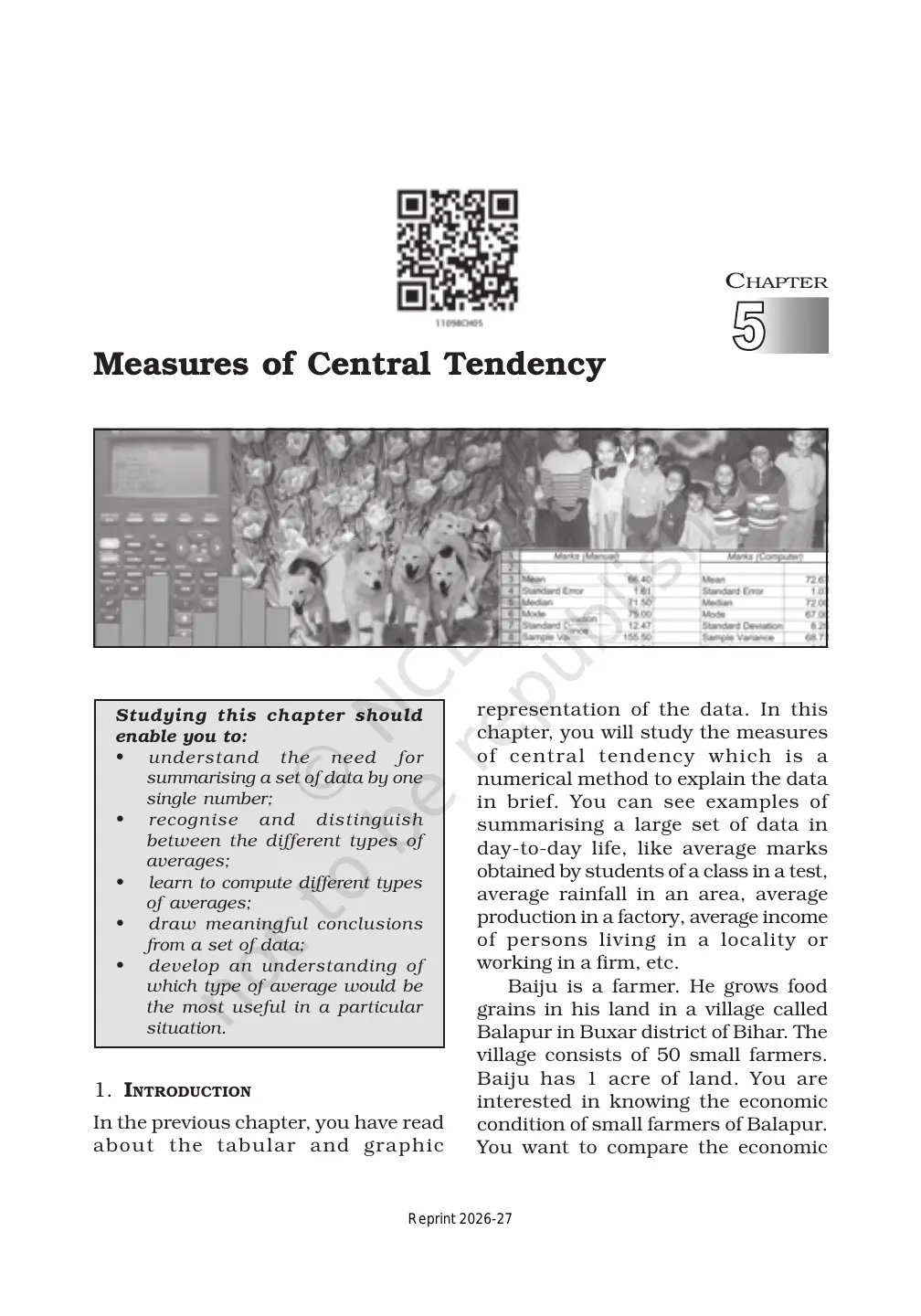
The chapter explains how one value can represent a full data set. NCERT first builds the need for averages, then explains arithmetic mean, median and mode with examples.
The PDF is the official source text for Chapter 5. It gives the theory, formulas, solved examples and exercise questions in the same order as the NCERT book.
| NCERT area | What students should notice | Answer cue |
|---|---|---|
| Arithmetic mean | Uses every observation in the data set. | Write the correct formula for the data type. |
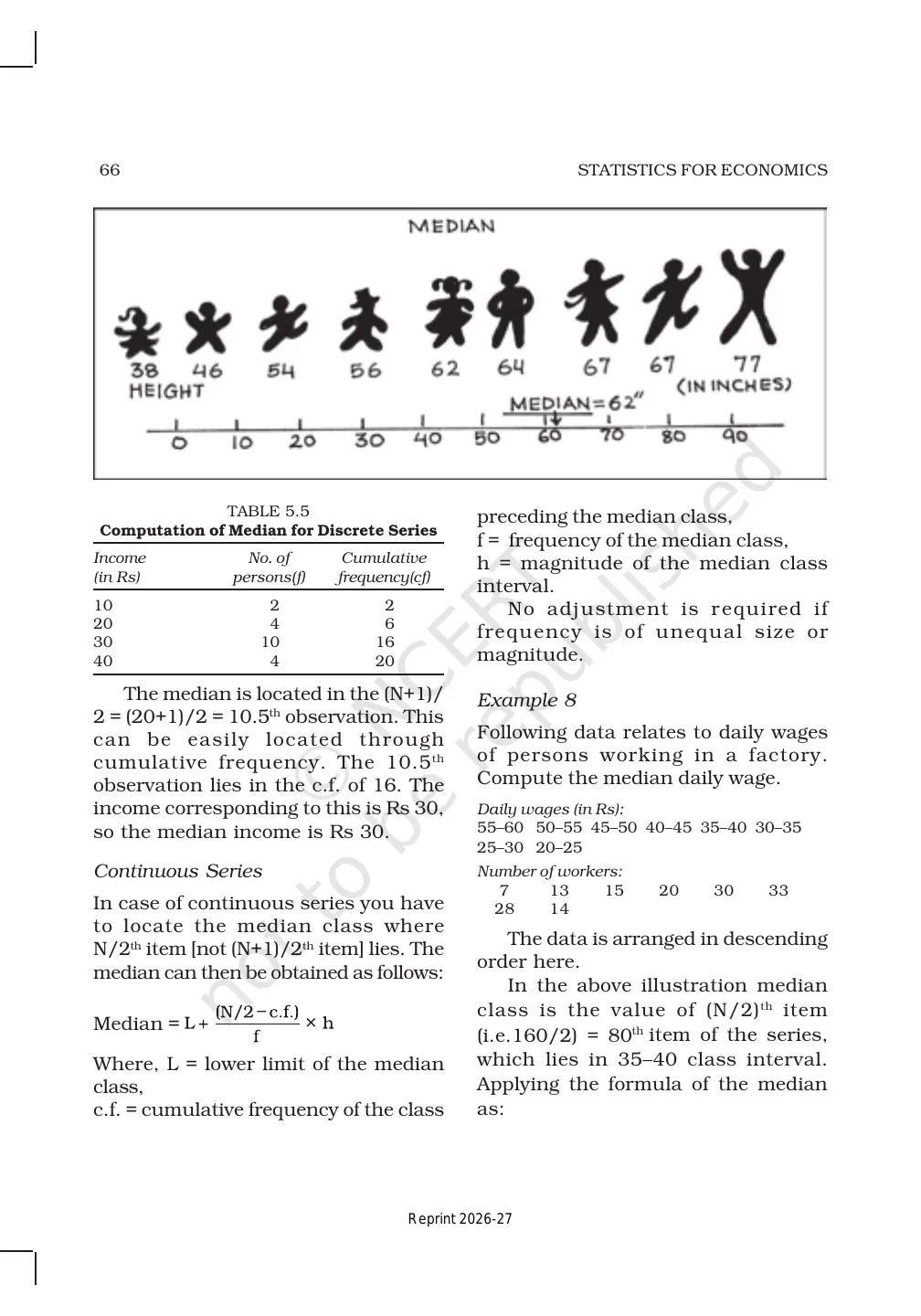
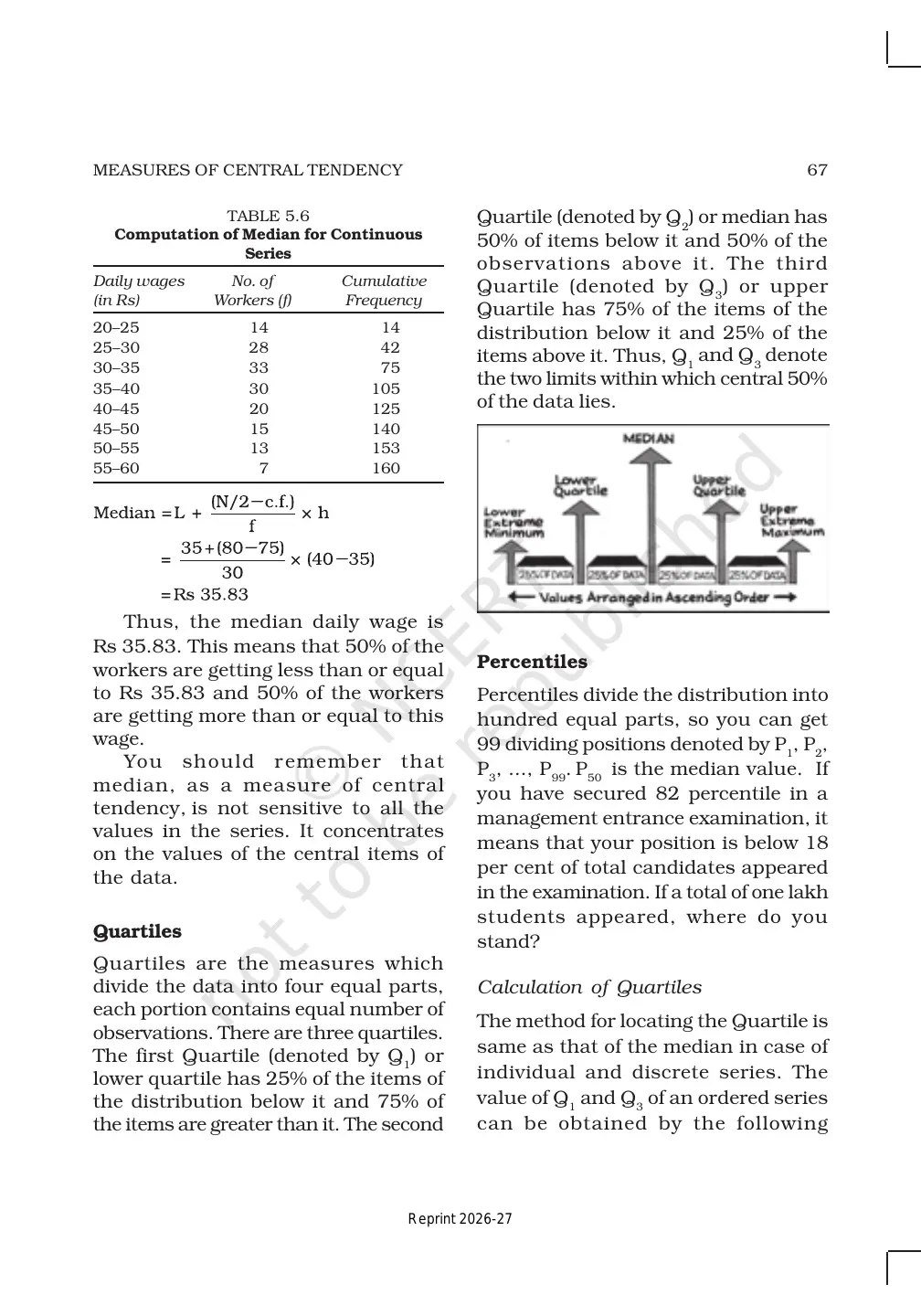
| Median | Finds the middle value after arranging data. | Arrange values first, then find the position. |
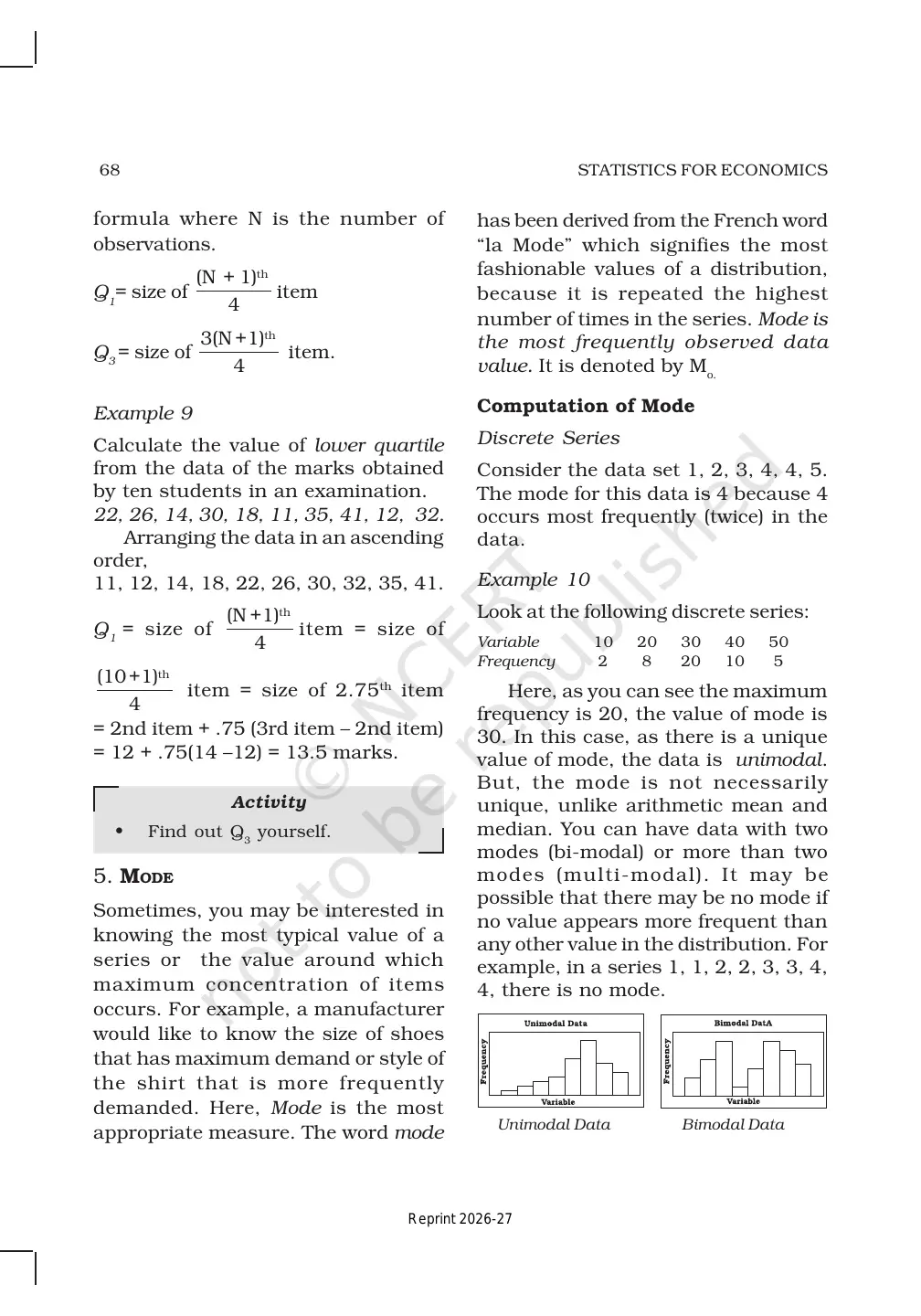
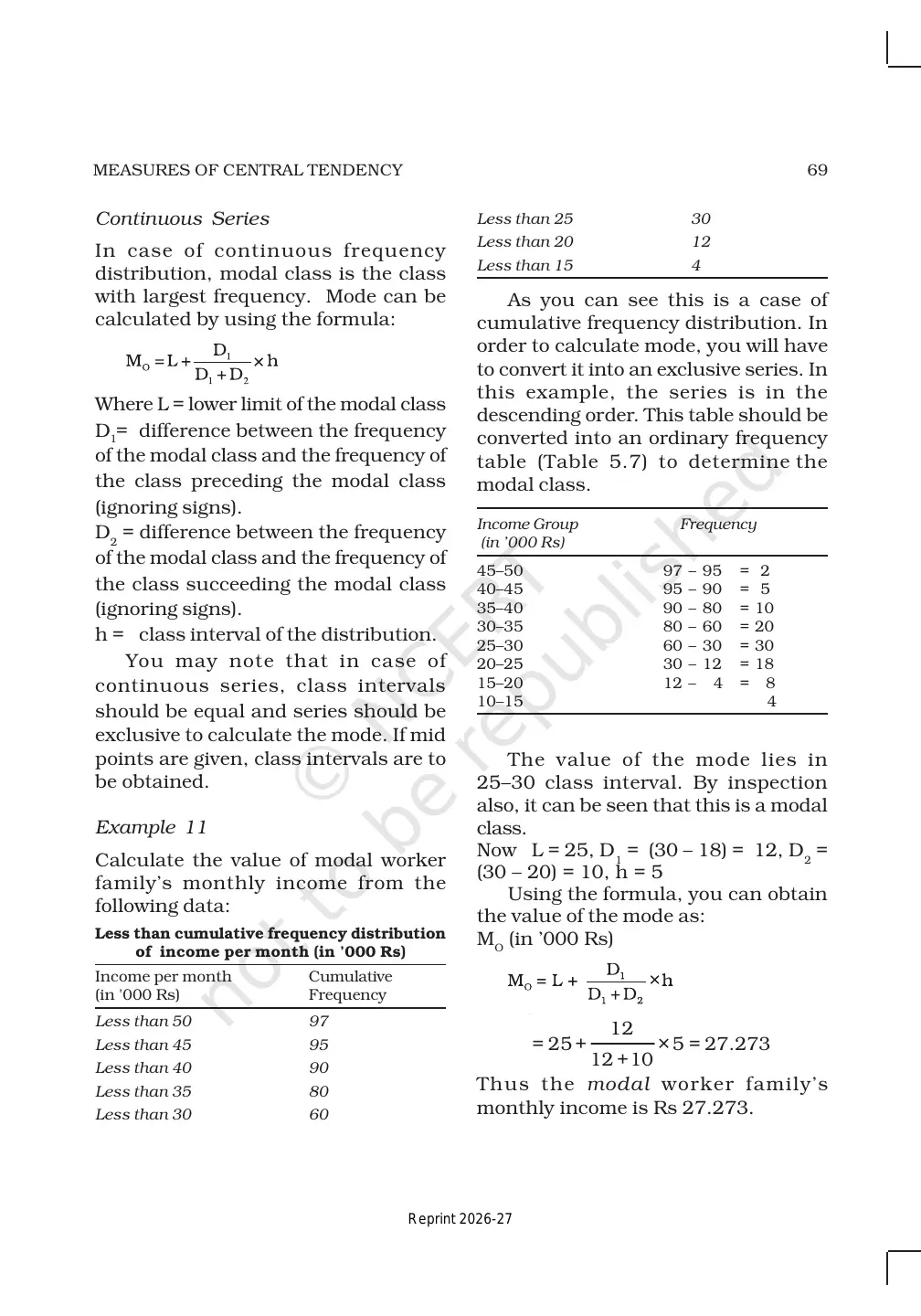
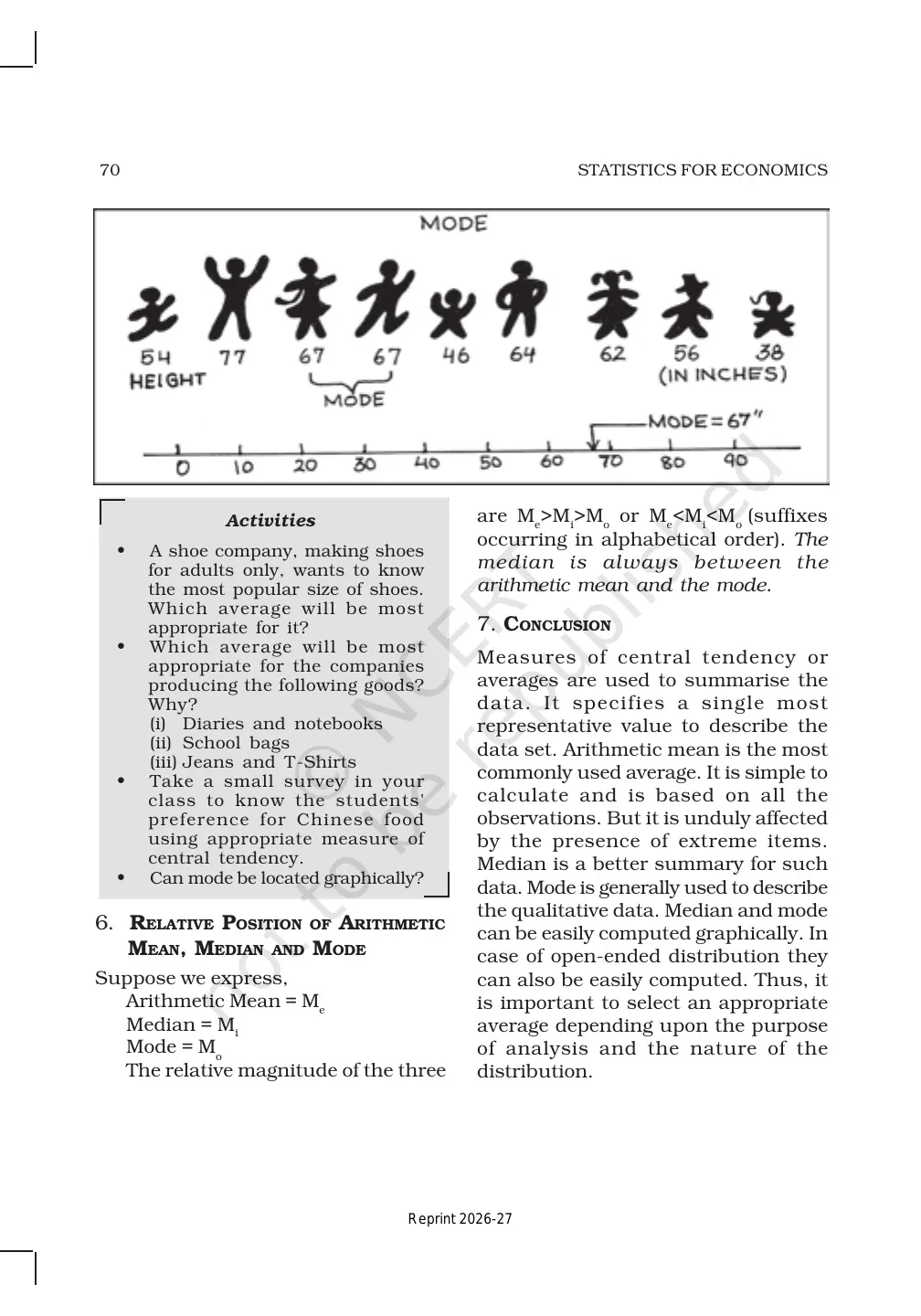
| Mode | Finds the value that appears most often. | Use grouping when frequencies are close. |
Arithmetic Mean Formula in Measures of Central Tendency
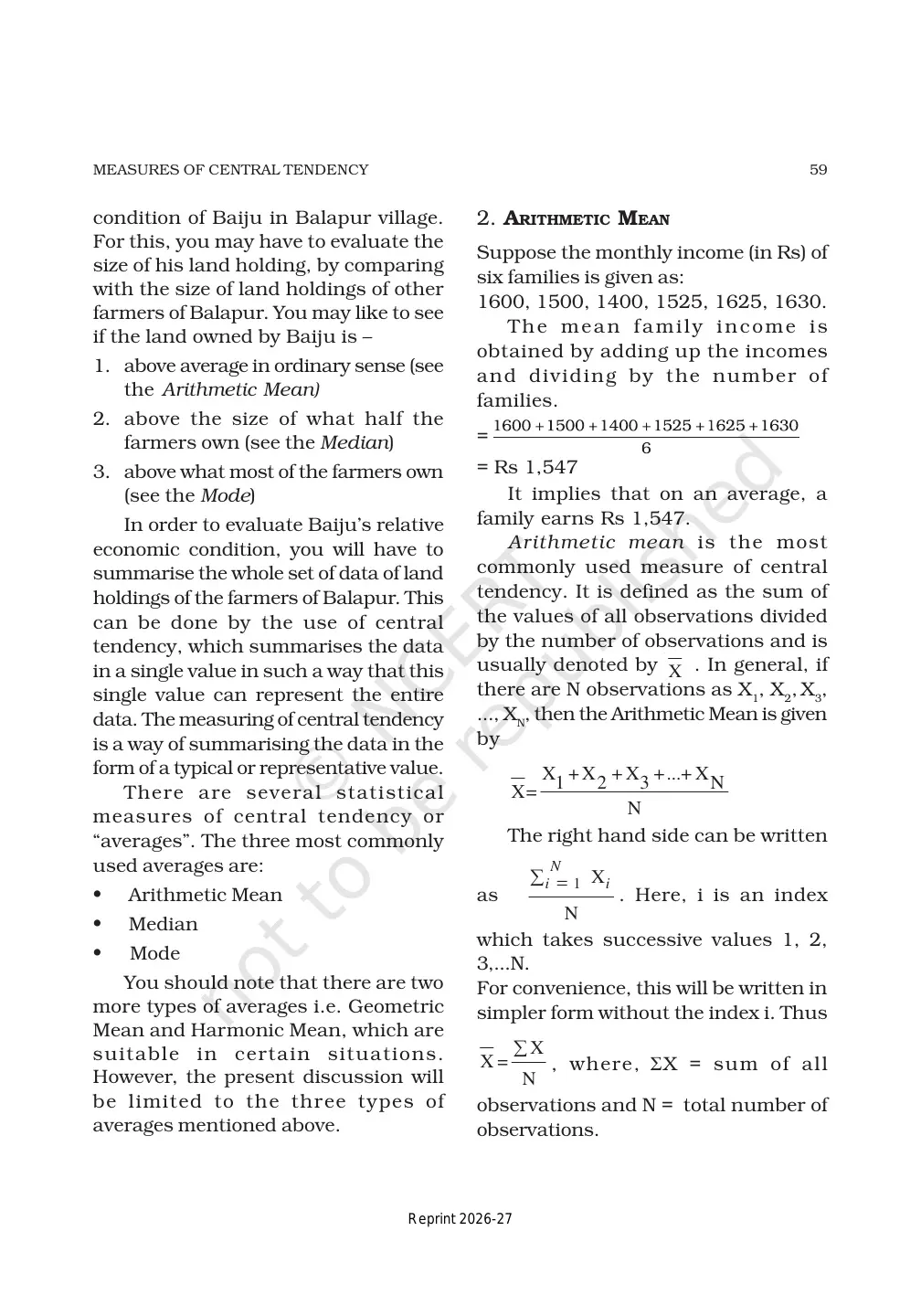
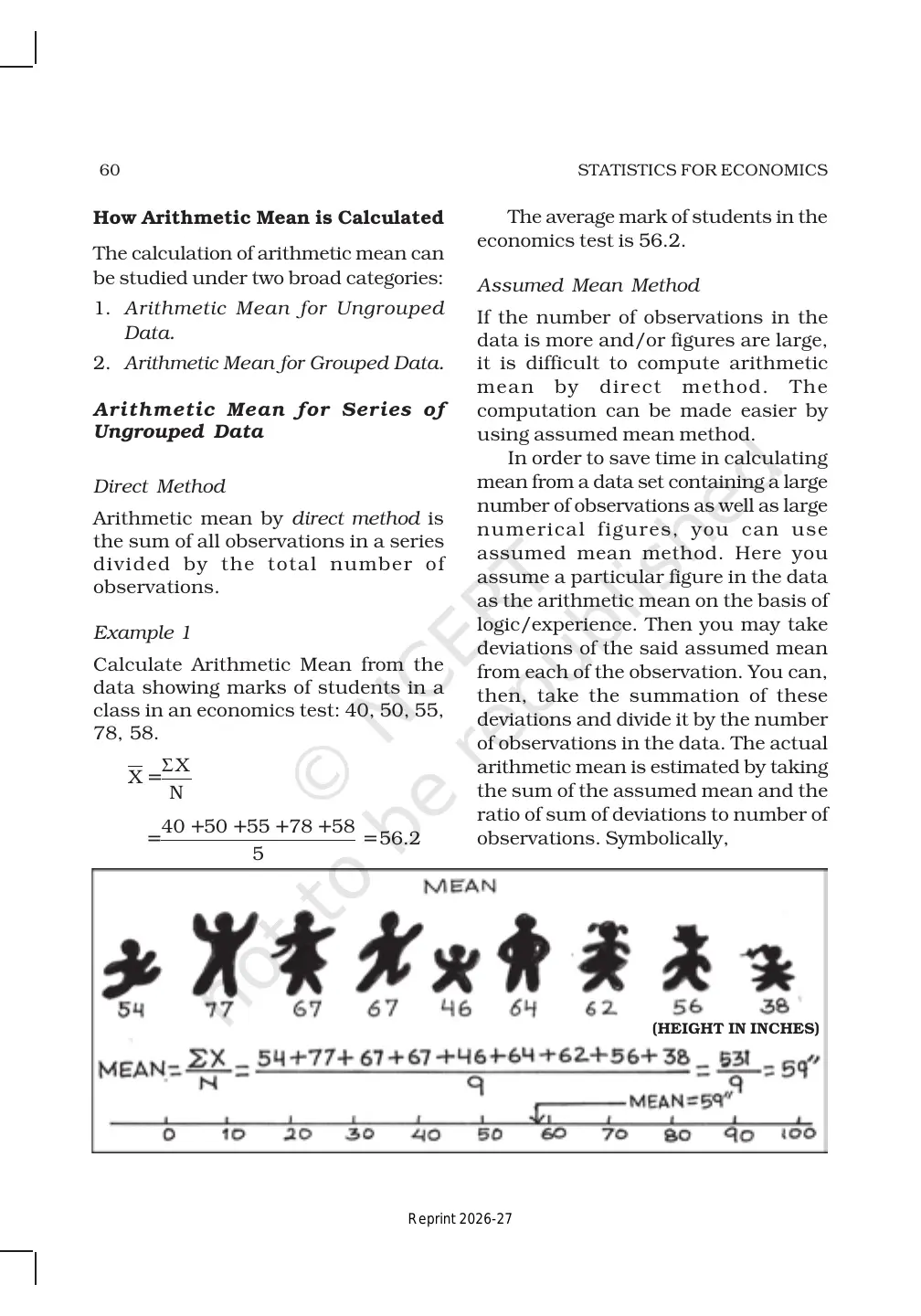
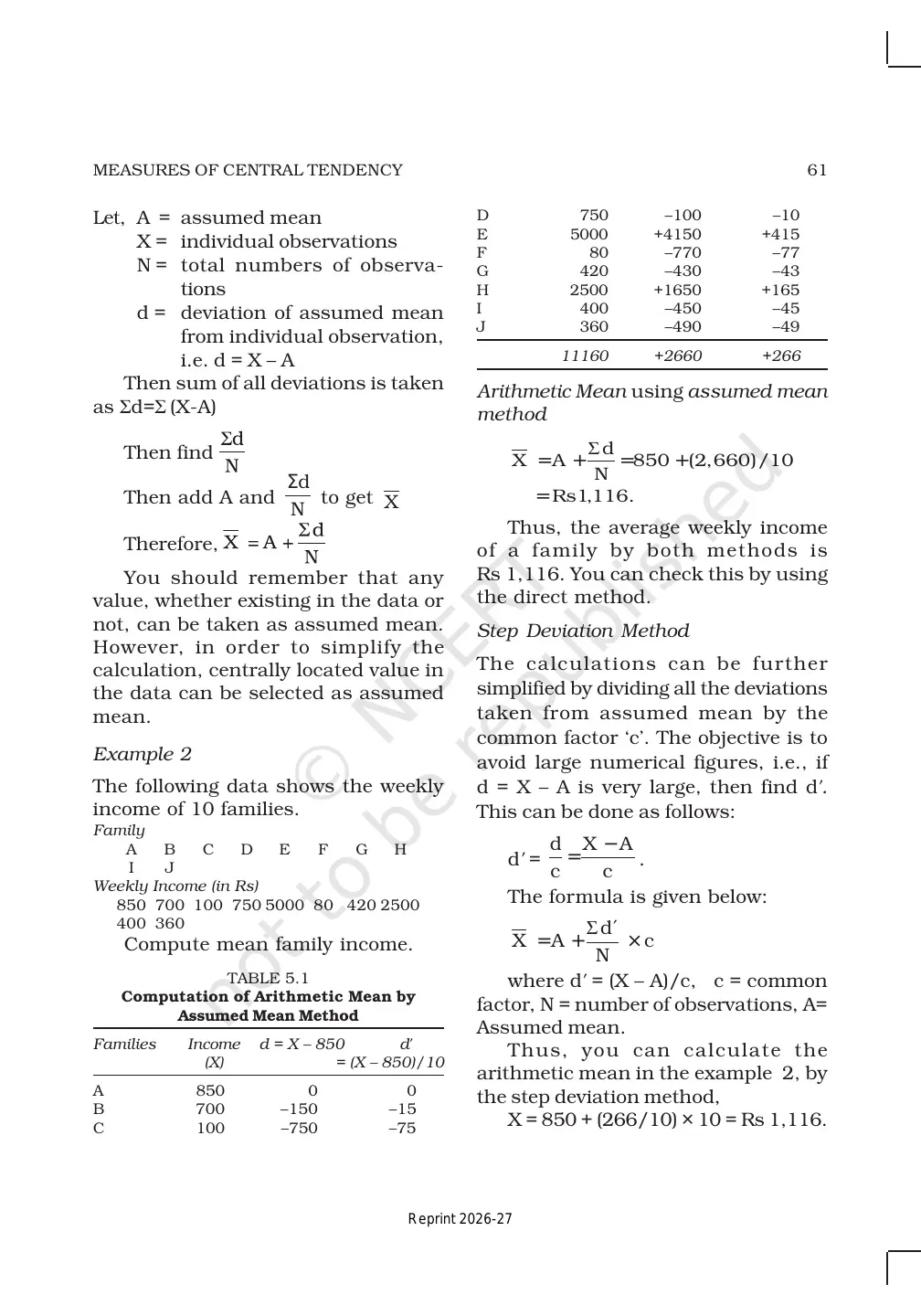
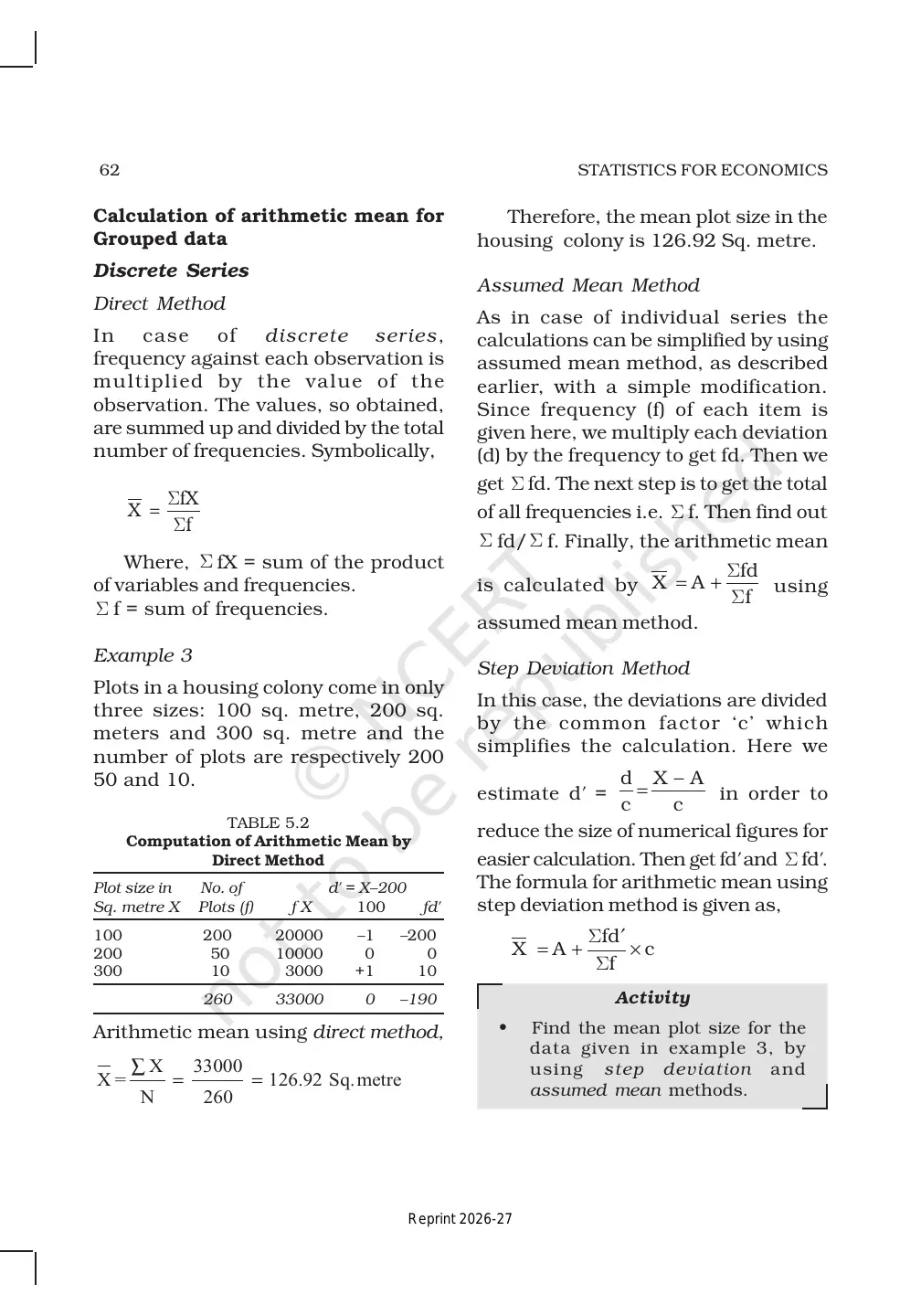
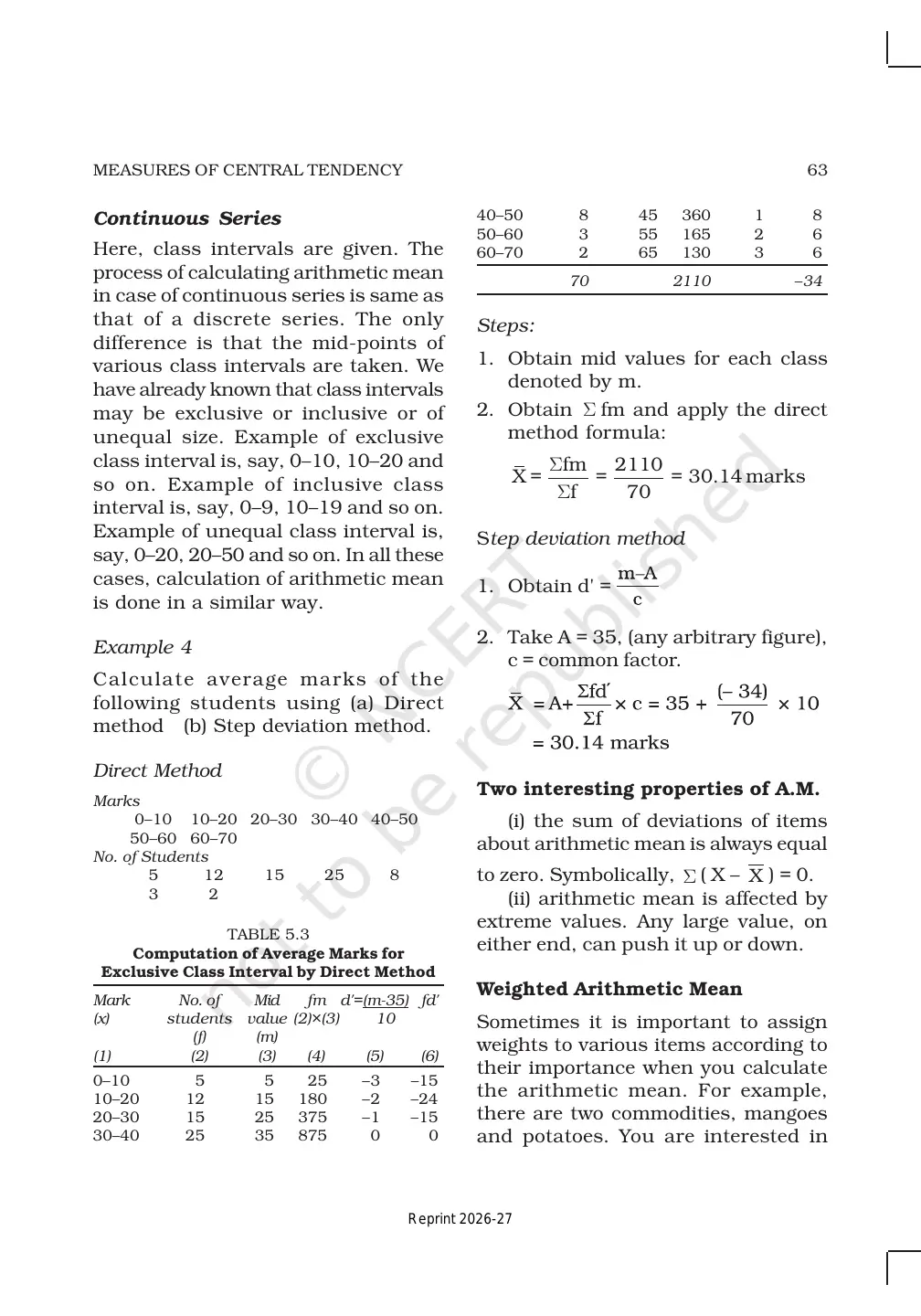
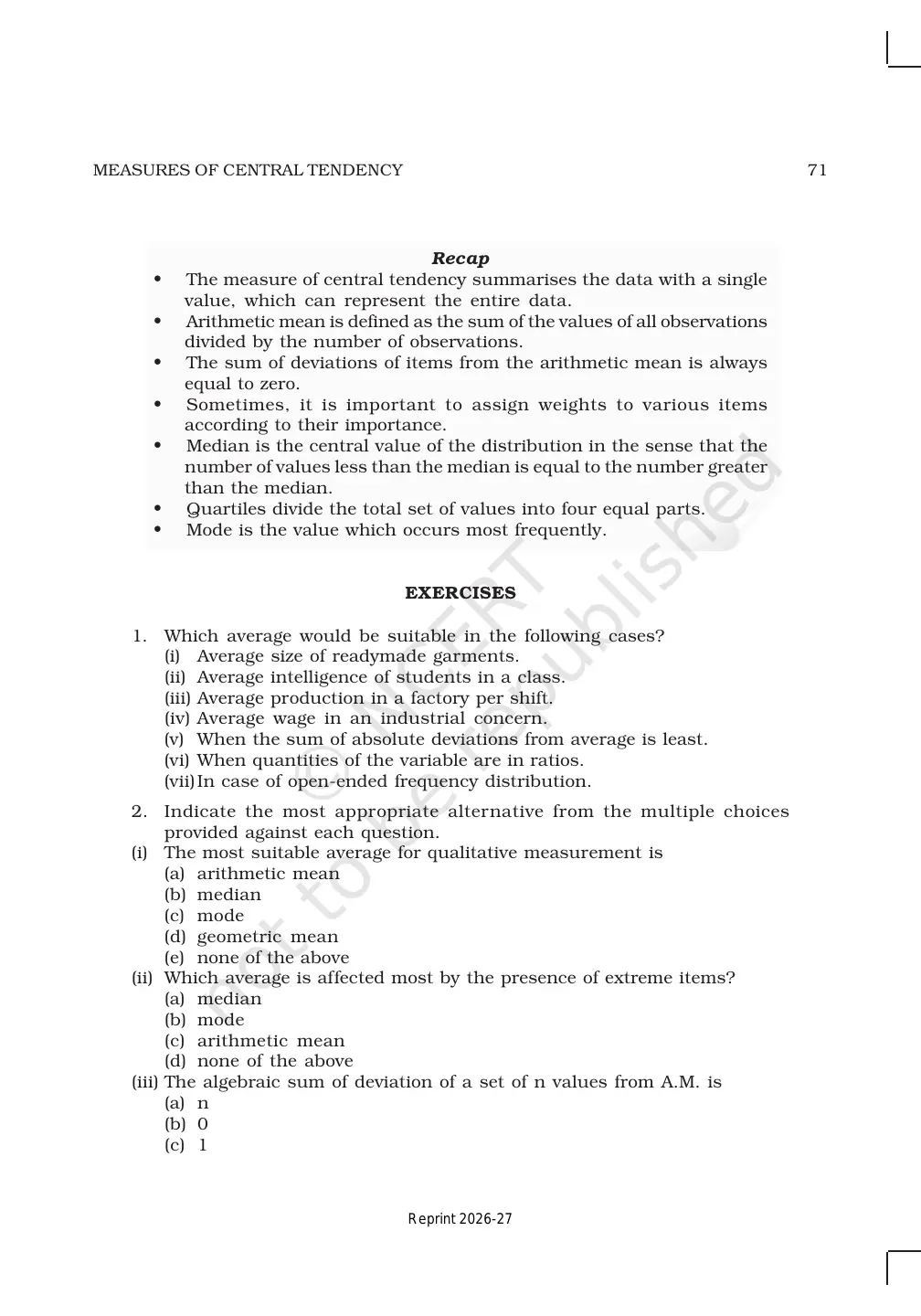
Arithmetic mean is the most used average in this chapter. For individual observations, add all values and divide by the number of observations. For frequency data, multiply each value by its frequency, add the products and divide by total frequency.
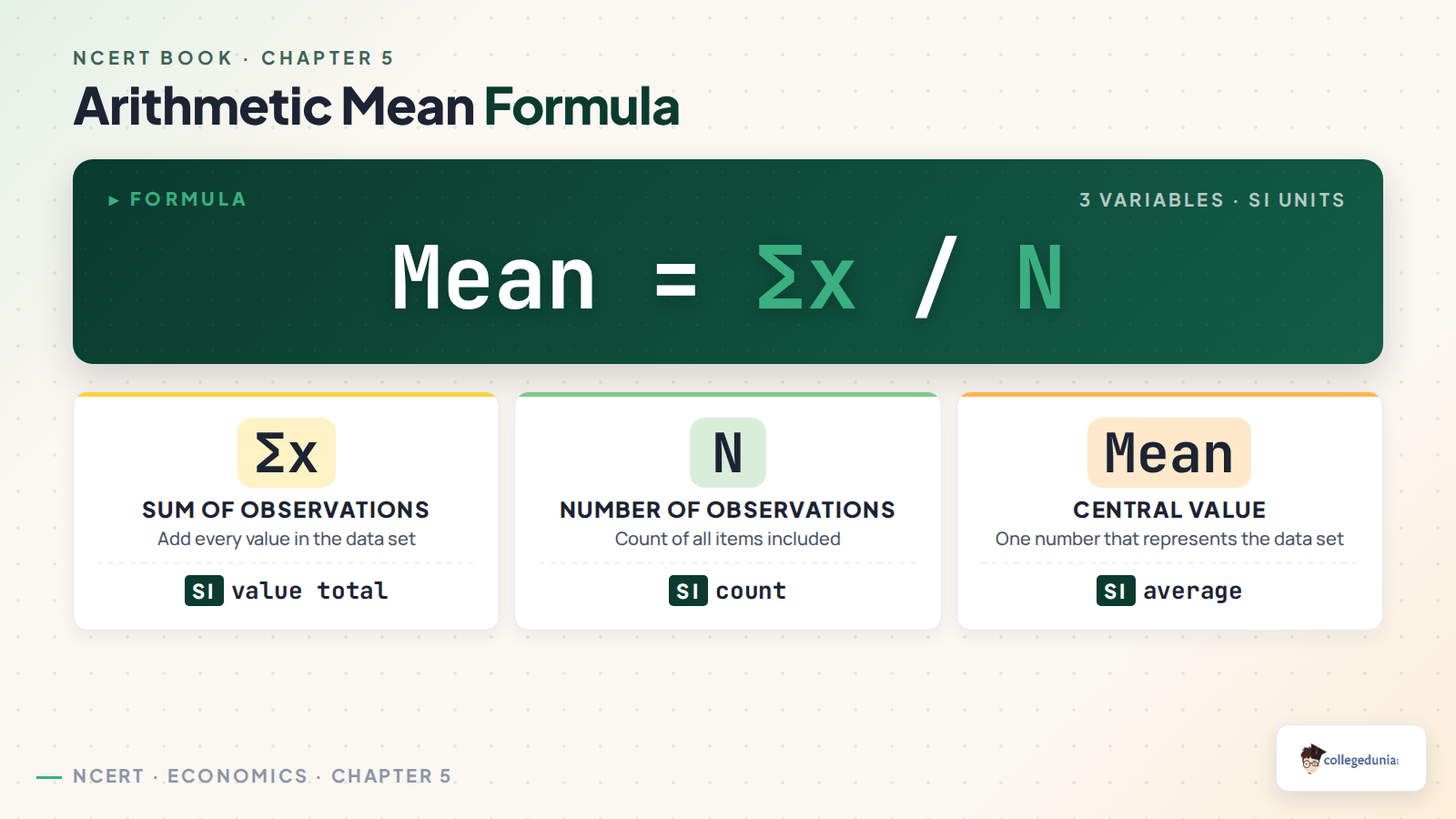
- Individual series: use the sum of observations divided by number of observations.
- Discrete series: use value times frequency, then divide by total frequency.
- Continuous series: first find class mid-points, then apply the grouped formula.
Always check the data type before choosing the mean formula. This one step prevents most formula mistakes.
Watch Measures of Central Tendency for Class 11 Economics
Source: Magnet Brains on YouTube
Mean, Median and Mode: Which Average to Use?
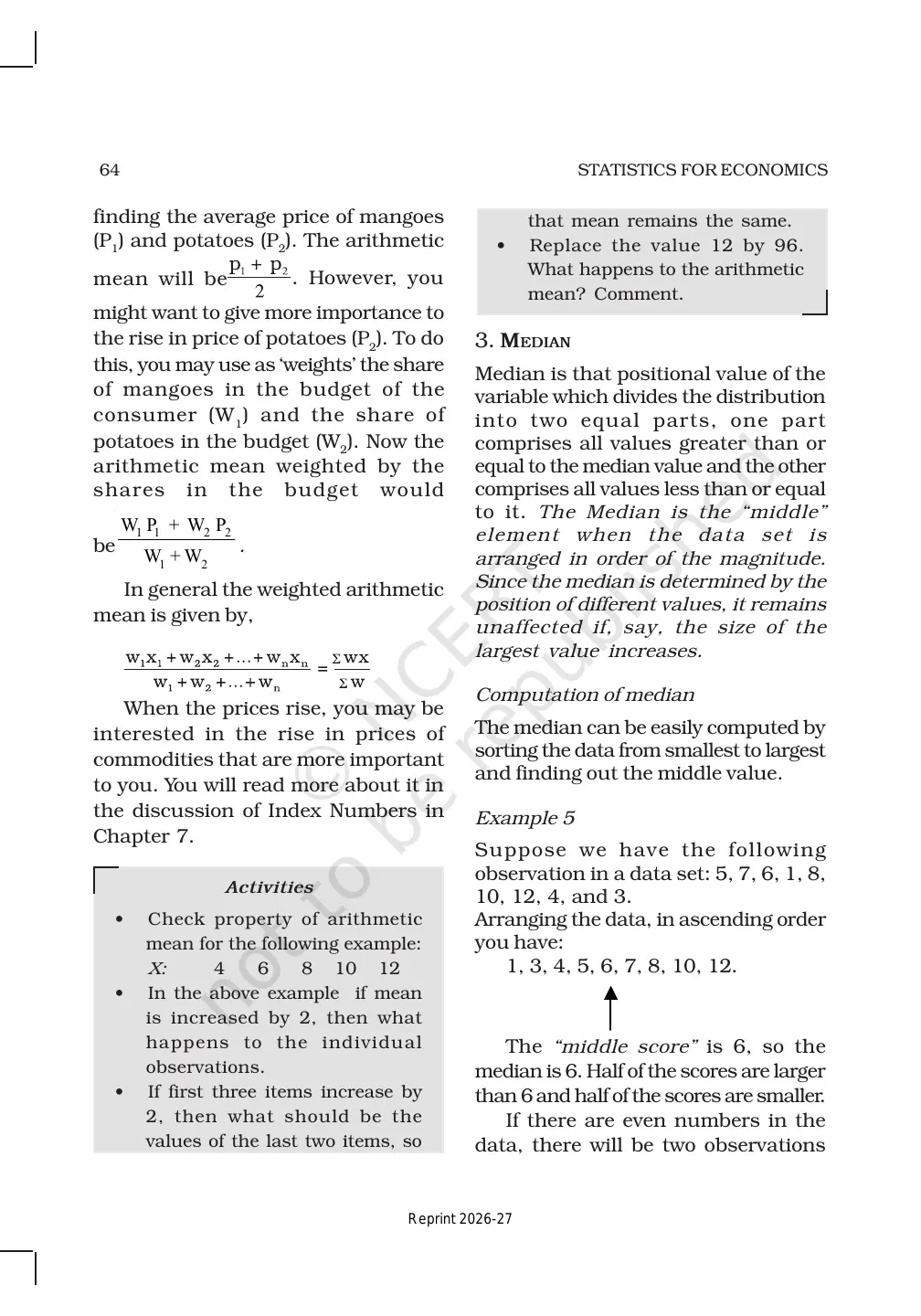
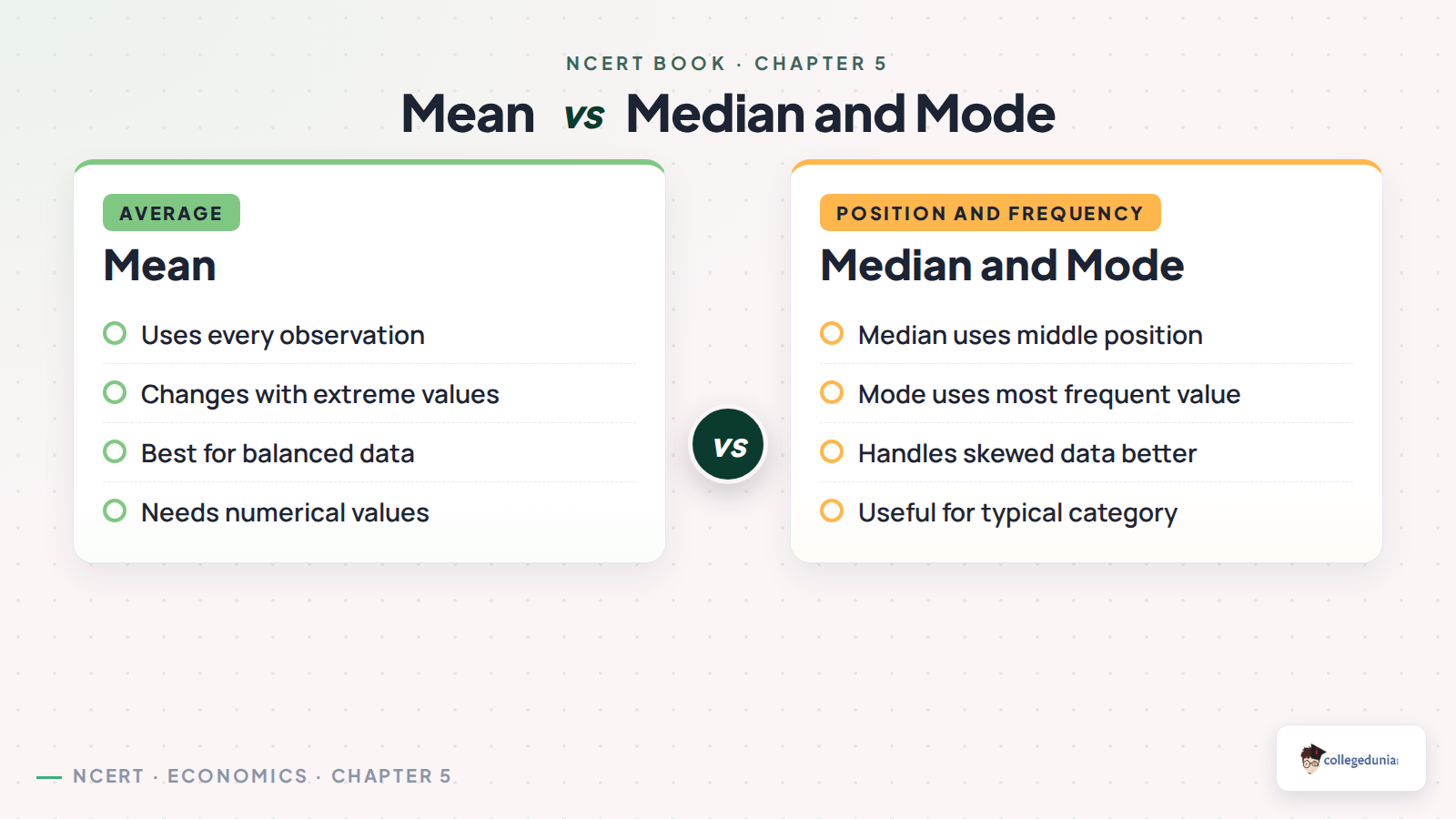
NCERT uses all three averages because each one answers a different question. Mean is useful when all observations matter. Median is useful when the middle position matters. Mode is useful when the most common value matters.
| Average | Best use | Common exam check |
|---|---|---|
| Mean | Balanced numerical data with no extreme value. | Use every observation in the formula. |
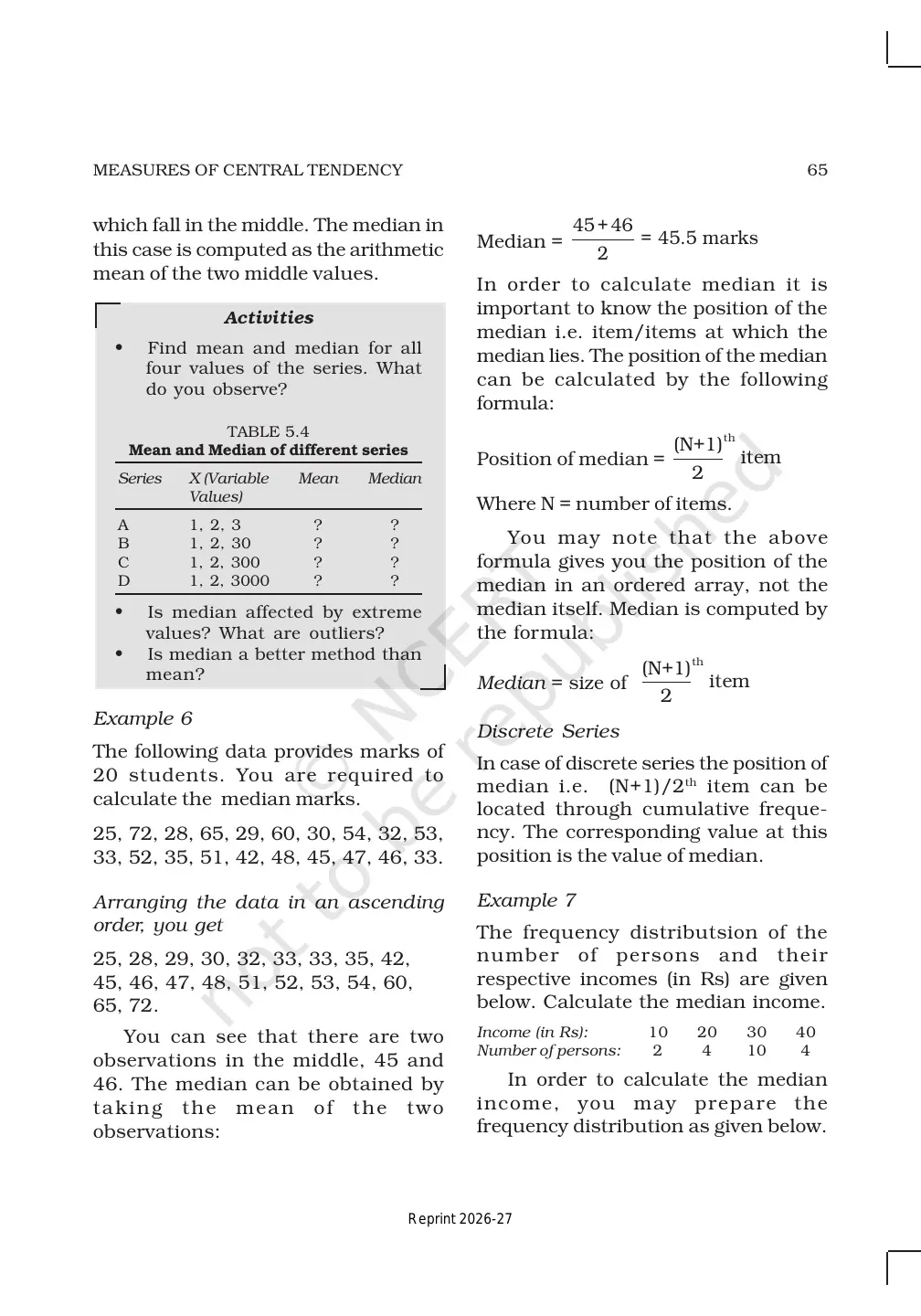
| Median | Ordered data where the central position is needed. | Arrange values before finding the middle item. |
| Mode | Data where the most frequent item matters. | Check the modal class or highest frequency carefully. |
| Partition values | Data split into quarters, tenths or hundredths. | Use quartile, decile and percentile positions correctly. |
Mean is affected by extreme values, but median is more stable in skewed data. That comparison is useful in short-answer questions.
How to Use the Chapter 5 NCERT Book PDF
Use the PDF in three passes. First, read the need for averages and the meaning of central tendency. Second, revise each formula with one example. Third, solve the exercise after marking the data type.
- For formula questions: write the series type before substituting values.
- For median questions: arrange values in ascending order before finding the position.
- For grouped data: identify class intervals, frequencies and cumulative frequencies neatly.
- For revision: compare the NCERT book PDF with notes after solving one example of each average.
Related Class 11 Economics Resources for Measures of Central Tendency
Also Check: use the official book PDF with notes and practice resources for the same chapter.
| Resource | Best use | Link |
|---|---|---|
| NCERT Notes | Revise formulas, definitions and examples quickly. | Measures of Central Tendency Notes |
| NCERT Solutions | Practise textbook questions after reading the PDF. | Measures of Central Tendency NCERT Solutions |
| Handwritten Notes | Use for quick formula revision before class tests. | Measures of Central Tendency Handwritten Notes |
Class 11 Economics NCERT Book PDFs for All Chapters
The table below keeps the Class 11 Economics NCERT Book PDF chapters in one place. Chapters 1 to 8 come from Statistics for Economics, and later chapters come from Indian Economic Development.
| Chapter | Title | NCERT Book PDF |
|---|---|---|
| Chapter 1 | Introduction | NCERT Book PDF |
| Chapter 2 | Collection of Data | NCERT Book PDF |
| Chapter 3 | Organisation of Data | NCERT Book PDF |
| Chapter 4 | Presentation of Data | NCERT Book PDF |
| Chapter 5 | Measures of Central Tendency | Current NCERT Book PDF |
| Chapter 6 | Correlation | NCERT Book PDF |
| Chapter 7 | Index Numbers | NCERT Book PDF |
| Chapter 8 | Use of Statistical Tools | NCERT Book PDF |
Measures of Central Tendency Class 11 Economics NCERT Book PDF FAQs
Ques. What does the Class 11 Economics Chapter 5 Measures of Central Tendency NCERT Book PDF include?
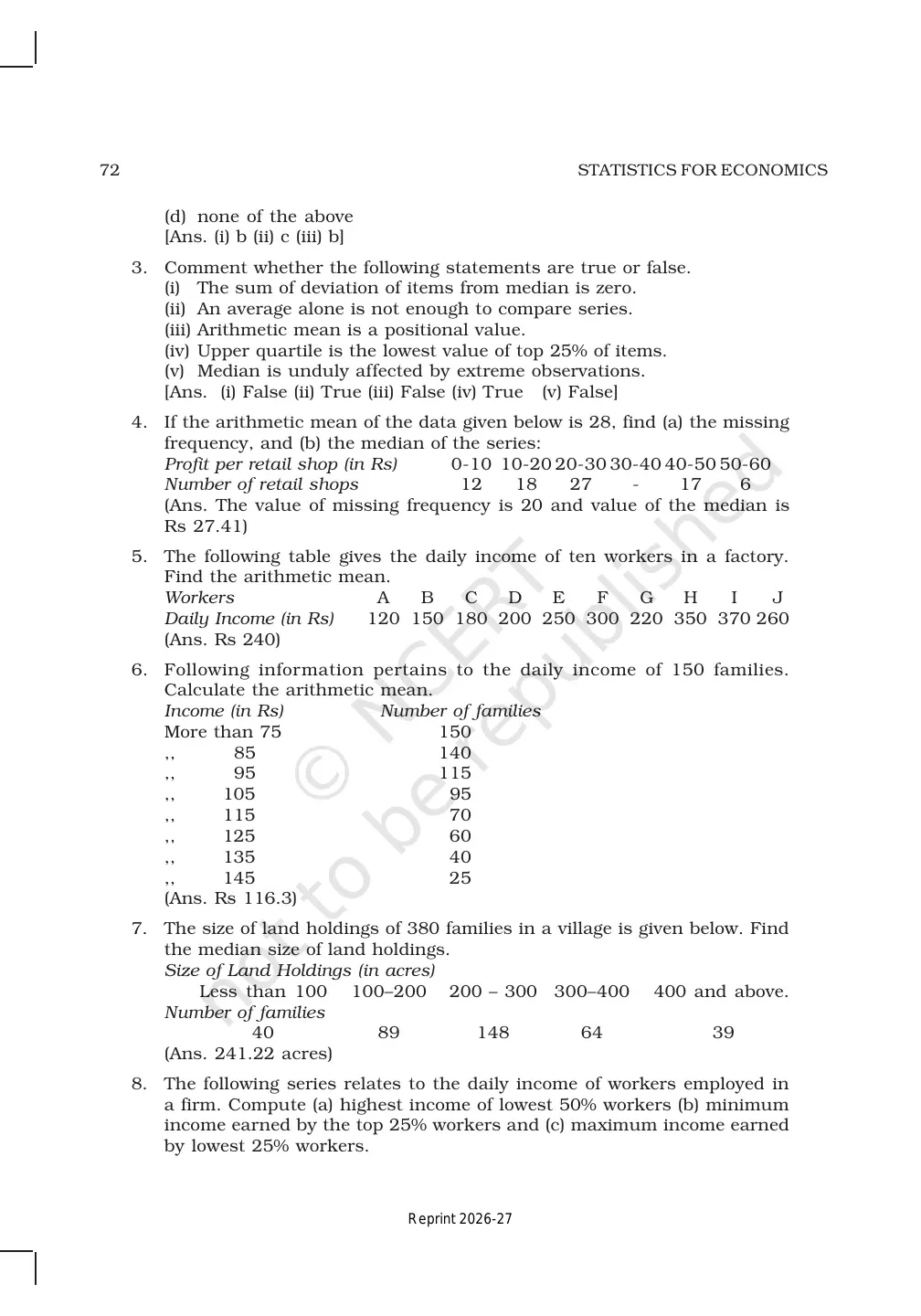
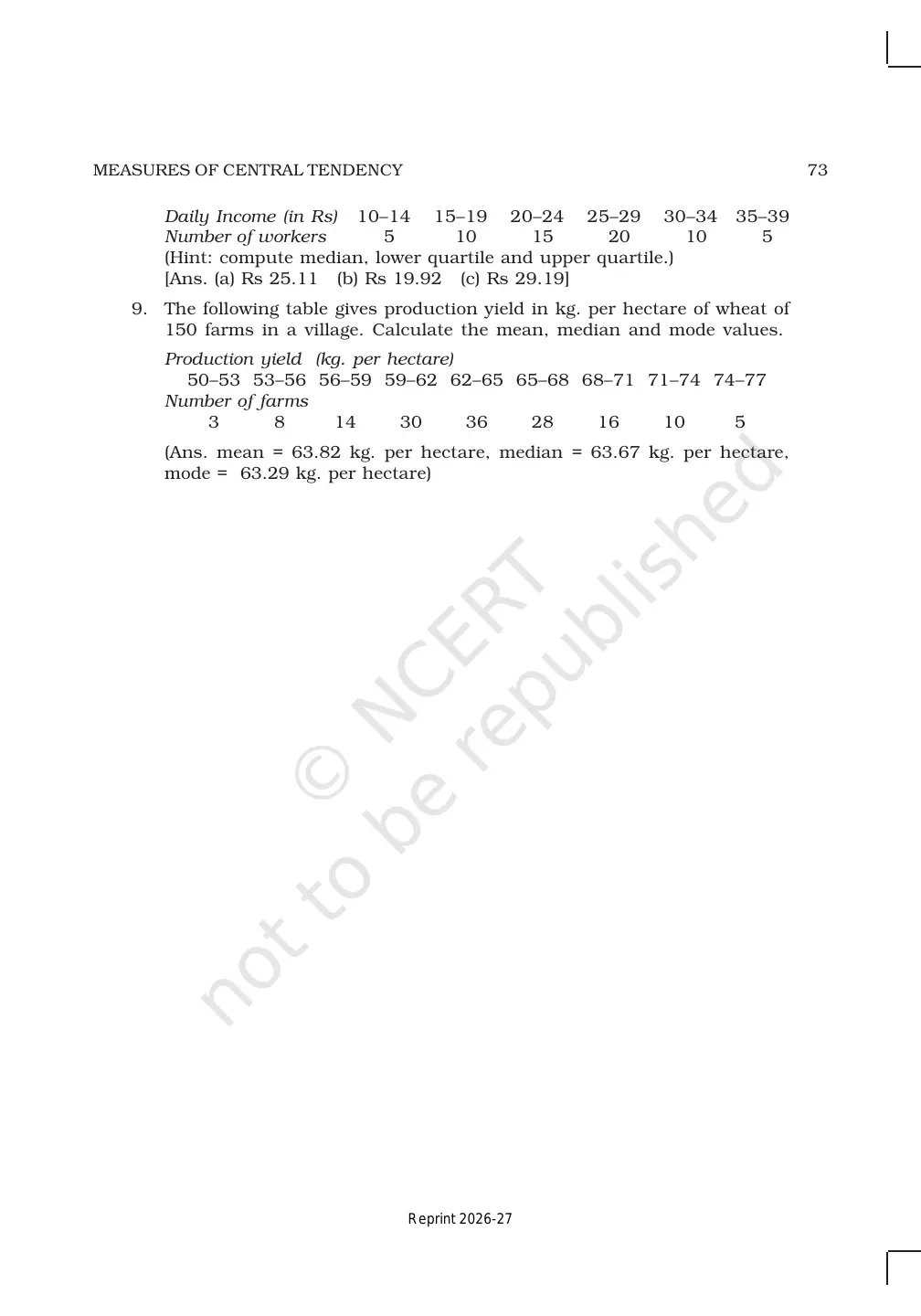
Ans. It includes the official NCERT chapter text, formulas, examples and exercise questions from Statistics for Economics.
Ques. Which averages are covered in Chapter 5 Measures of Central Tendency?
Ans. The chapter covers arithmetic mean, median, mode and partition values such as quartiles, deciles and percentiles.
Ques. Is this NCERT Book PDF useful for the 2026-27 syllabus?
Ans. Yes. The PDF is from the official NCERT book for the 2026-27 session and should be used as the source chapter before notes or solutions.
Ques. What should students revise first from this chapter?
Ans. Students should revise data types, arithmetic mean formulas, median positions, modal class, quartiles and the difference between mean, median and mode.



Comments