



The NCERT Class 11 Economics Chapter 9 Indian Economy on the Eve of Independence Book PDF gives students the official Indian Economic Development chapter for the 2026-27 syllabus. Use it to study colonial rule, weak agriculture, low industrial growth, foreign trade and the state of India in 1947.
- Book section: official NCERT chapter text, boxes, examples and exercise questions.
- Best use: read the PDF before making short notes on colonial economic policy.
- Revision cue: connect every sector to the idea of colonial underdevelopment.
Student Feedback: In a Collegedunia check of 11,840 Class 11 Economics students, many students said this chapter became easier after they separated agriculture, industry and trade into three columns.
Indian Economy on the Eve of Independence Class 11 NCERT Book PDF: What It Covers
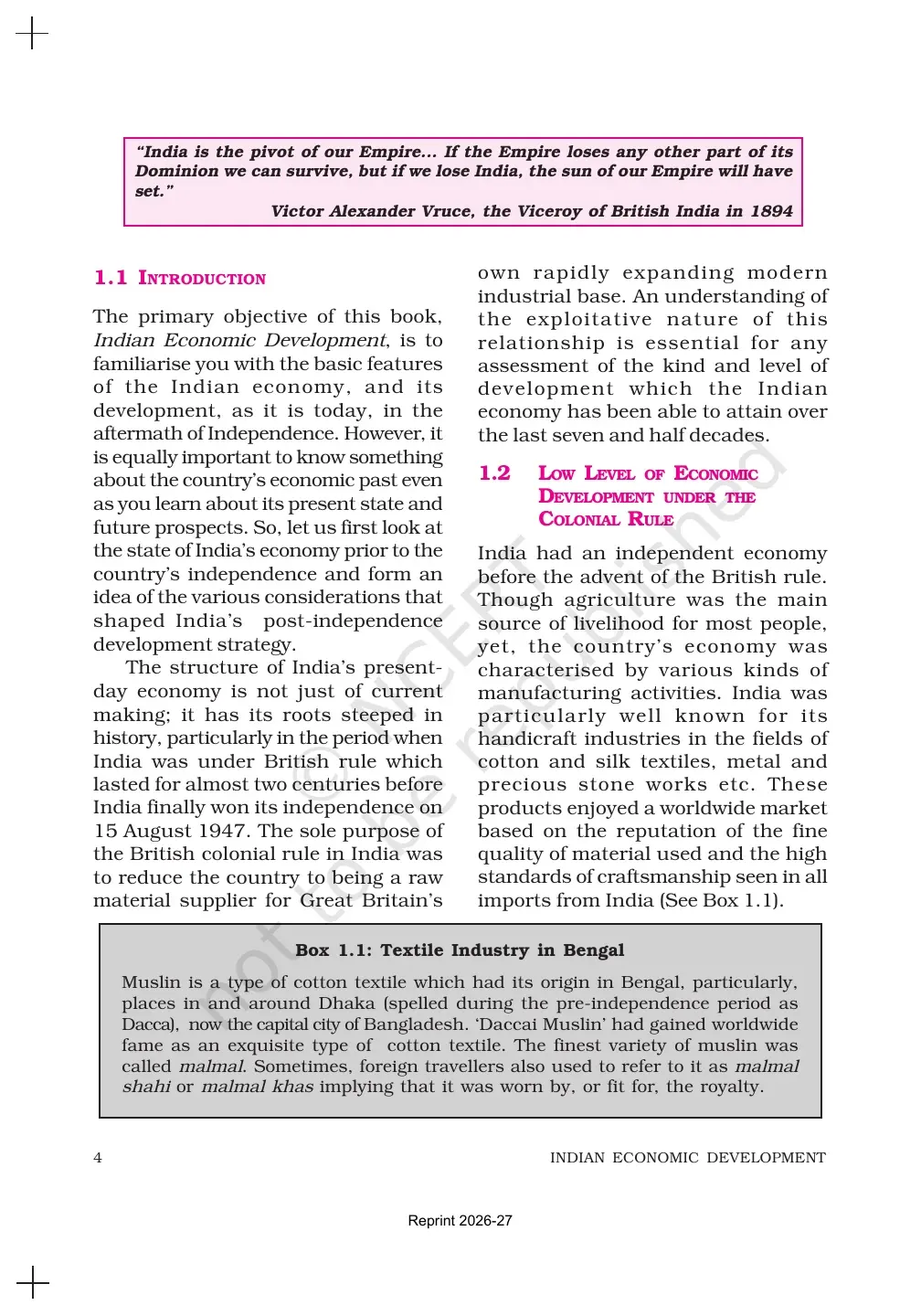
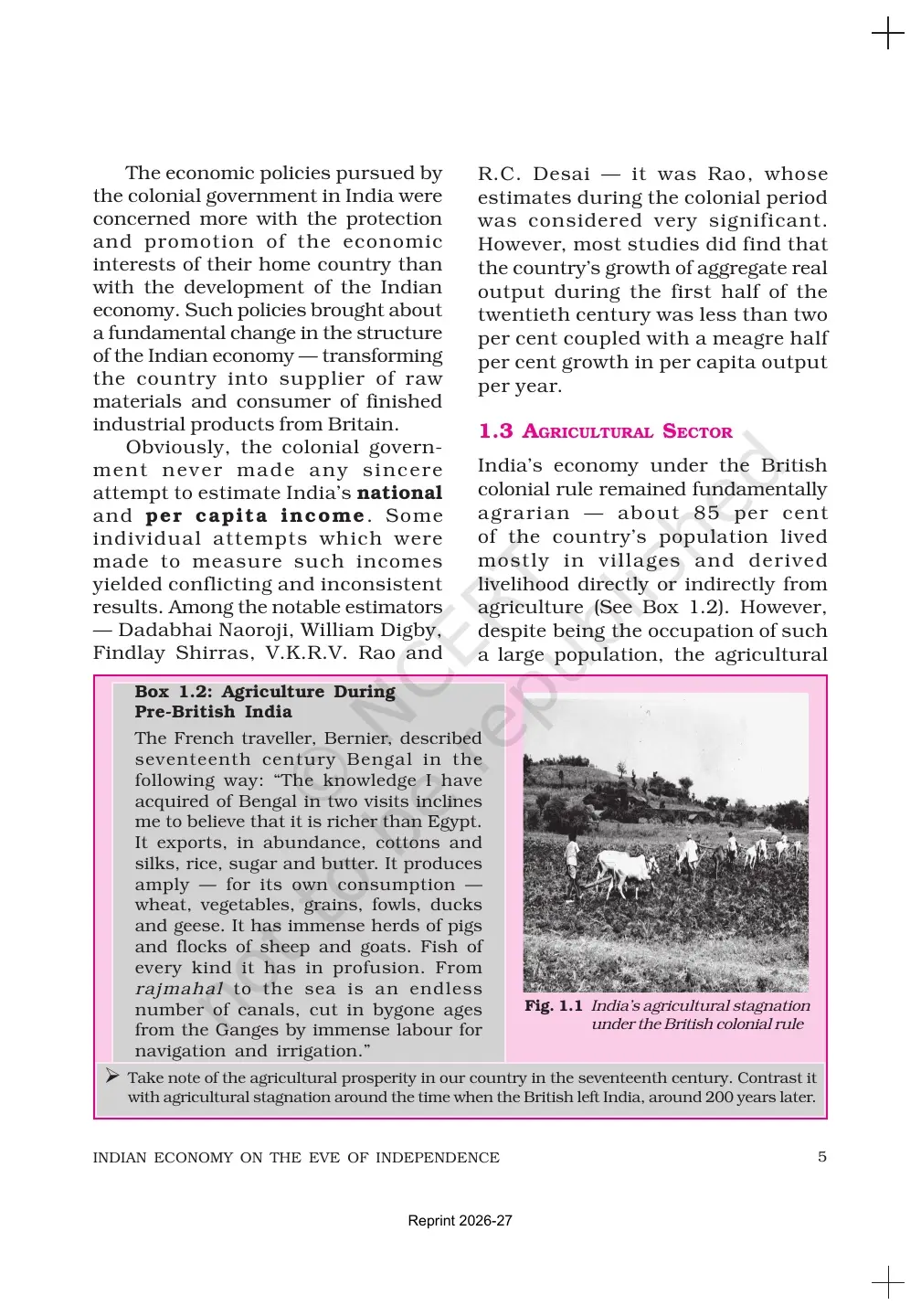
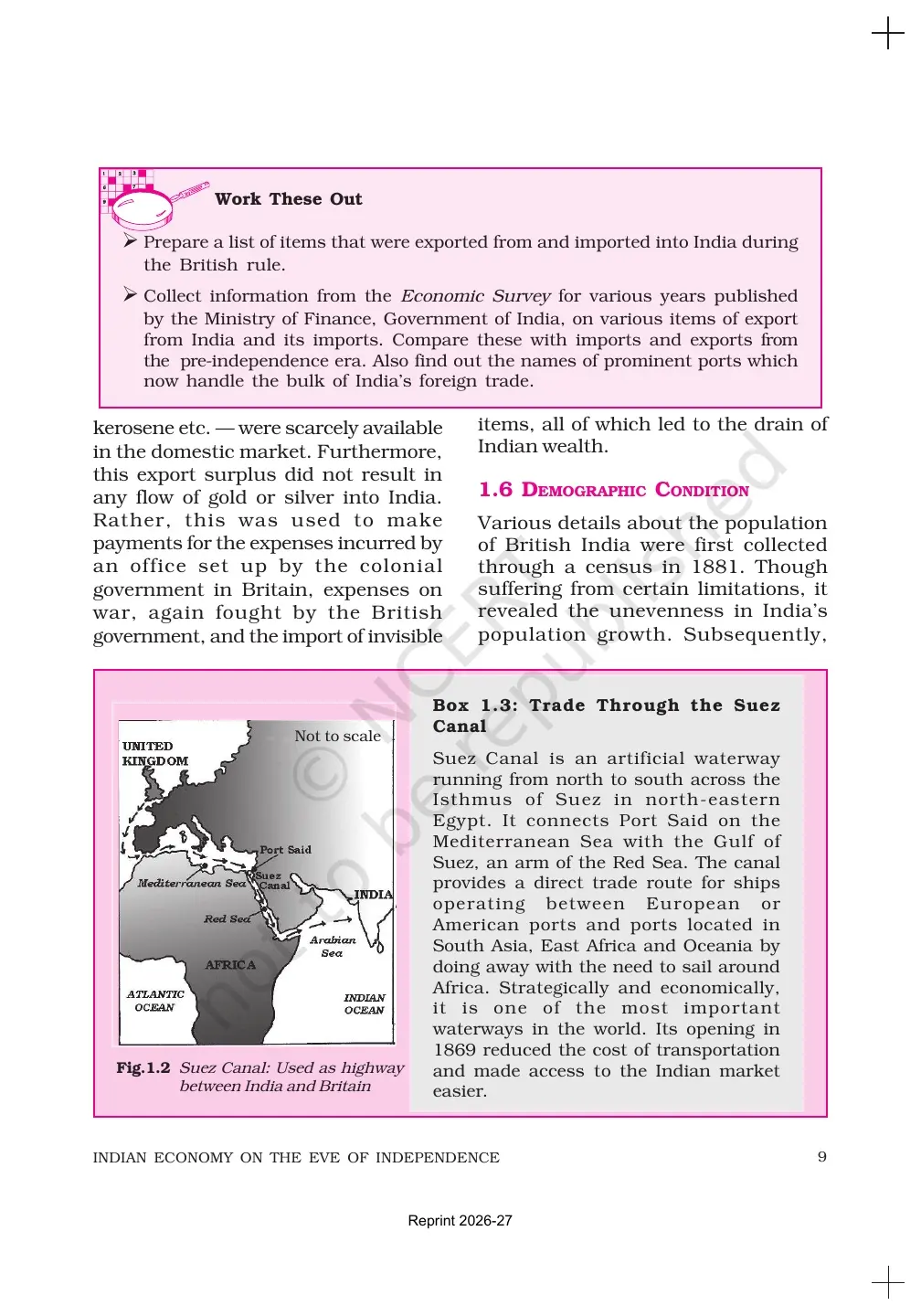
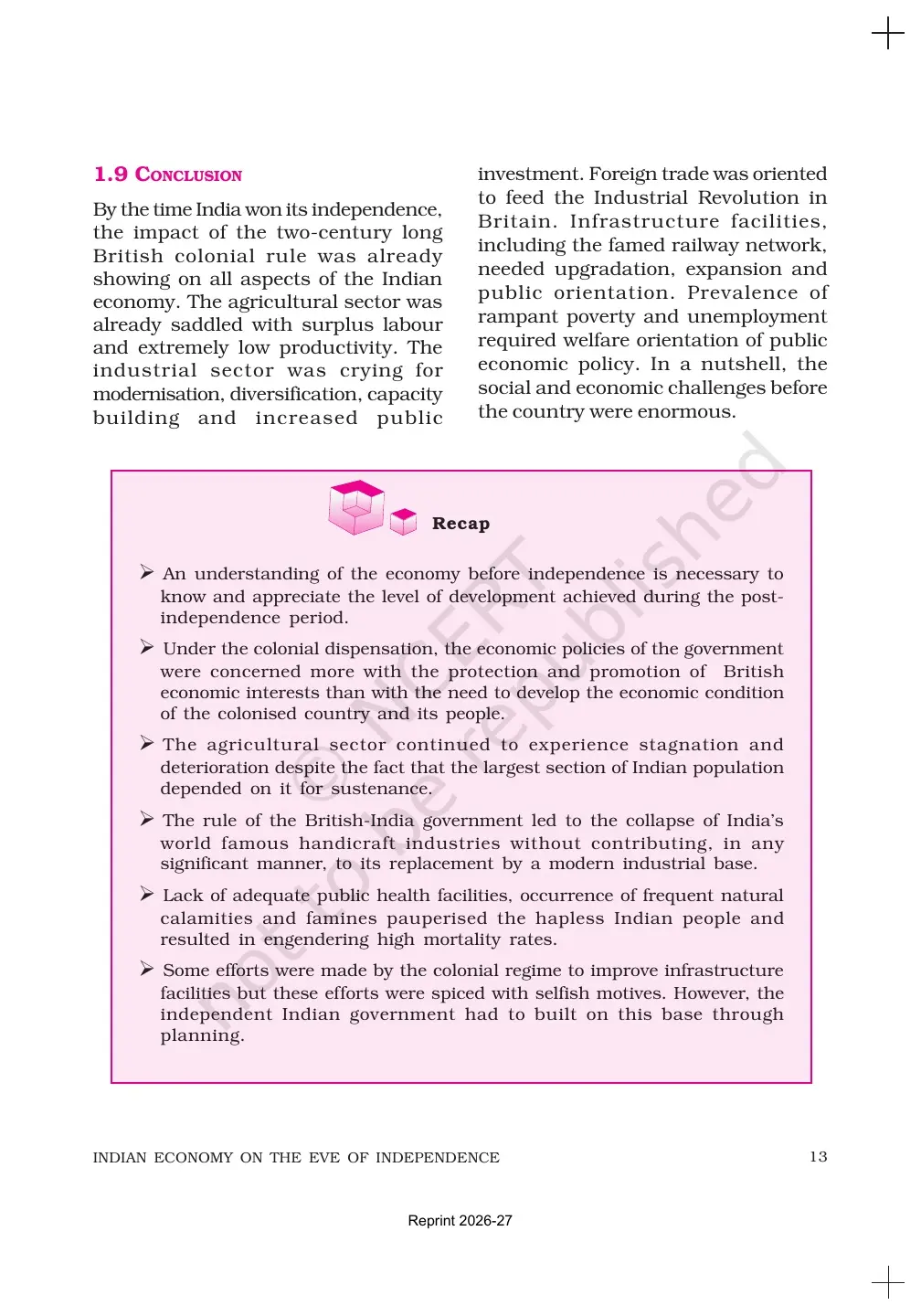
The PDF explains how British rule shaped India as a colonial economy. NCERT starts with national income, then moves to agriculture, industry, foreign trade, demography and occupational structure.
The official chapter is the best first source for school answers. It gives the exact NCERT wording students need for short-answer and long-answer questions.
| NCERT area | What students should notice | Answer cue |
|---|---|---|
| Agriculture | High dependence, low productivity and zamindari pressure. | Show stagnation with clear reasons. |
| Industry | Handicrafts declined and modern industry stayed narrow. | Mention deindustrialisation. |
| Trade | India exported raw material and imported finished goods. | Connect trade to colonial interests. |
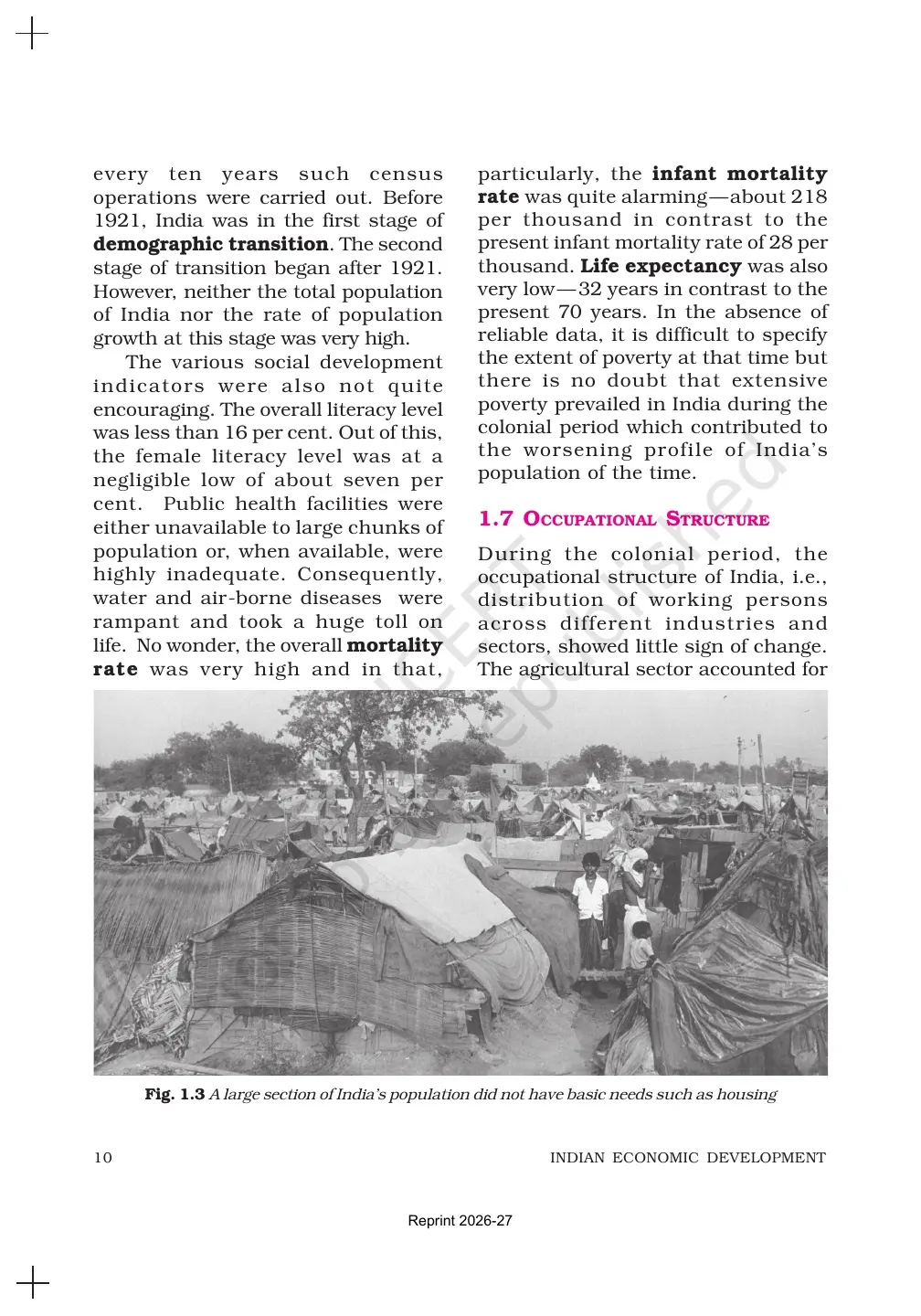
| Demography | Low literacy and life expectancy showed poor welfare. | Use facts only where NCERT gives them. |
Colonial Economy Chain in Chapter 9
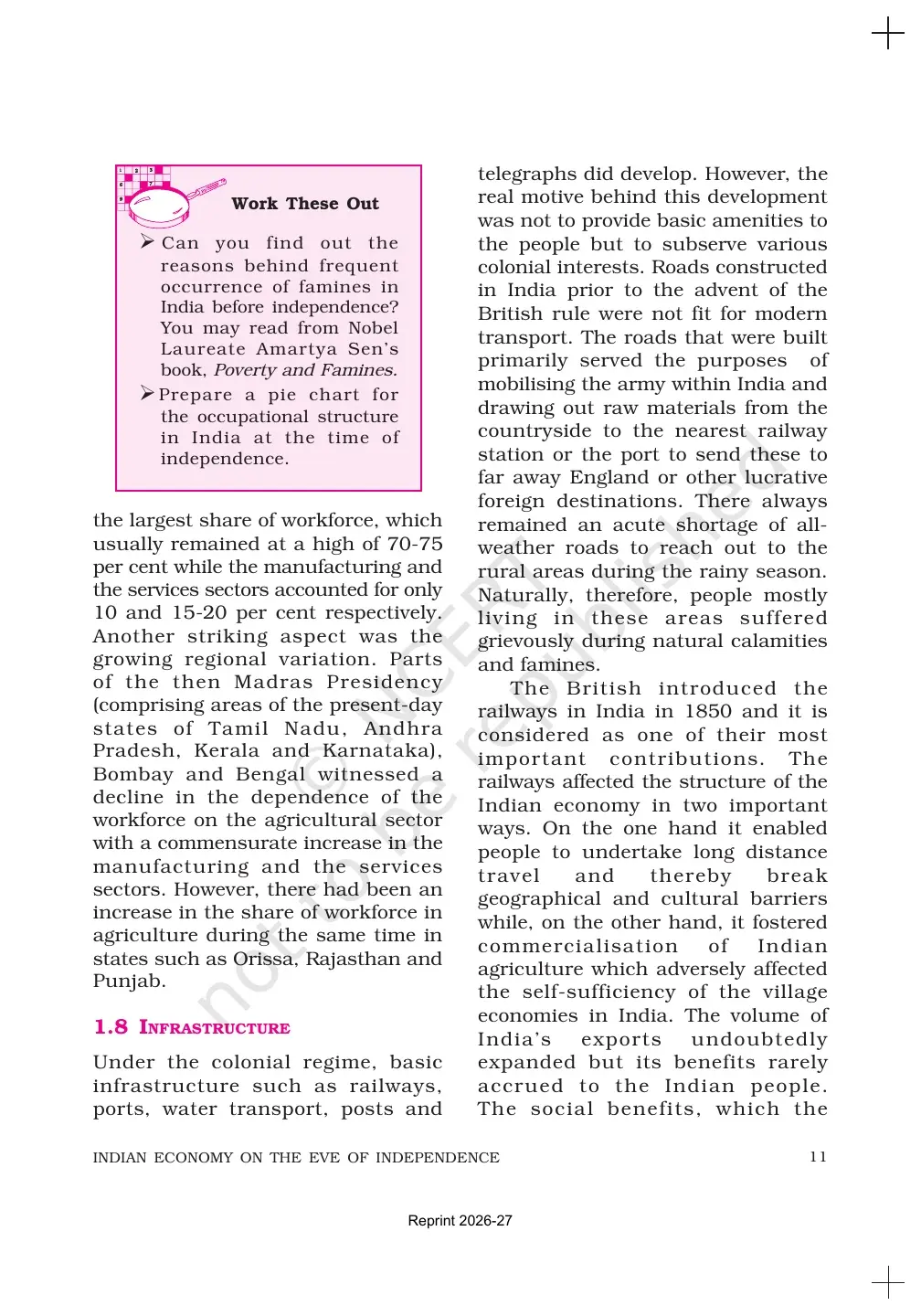
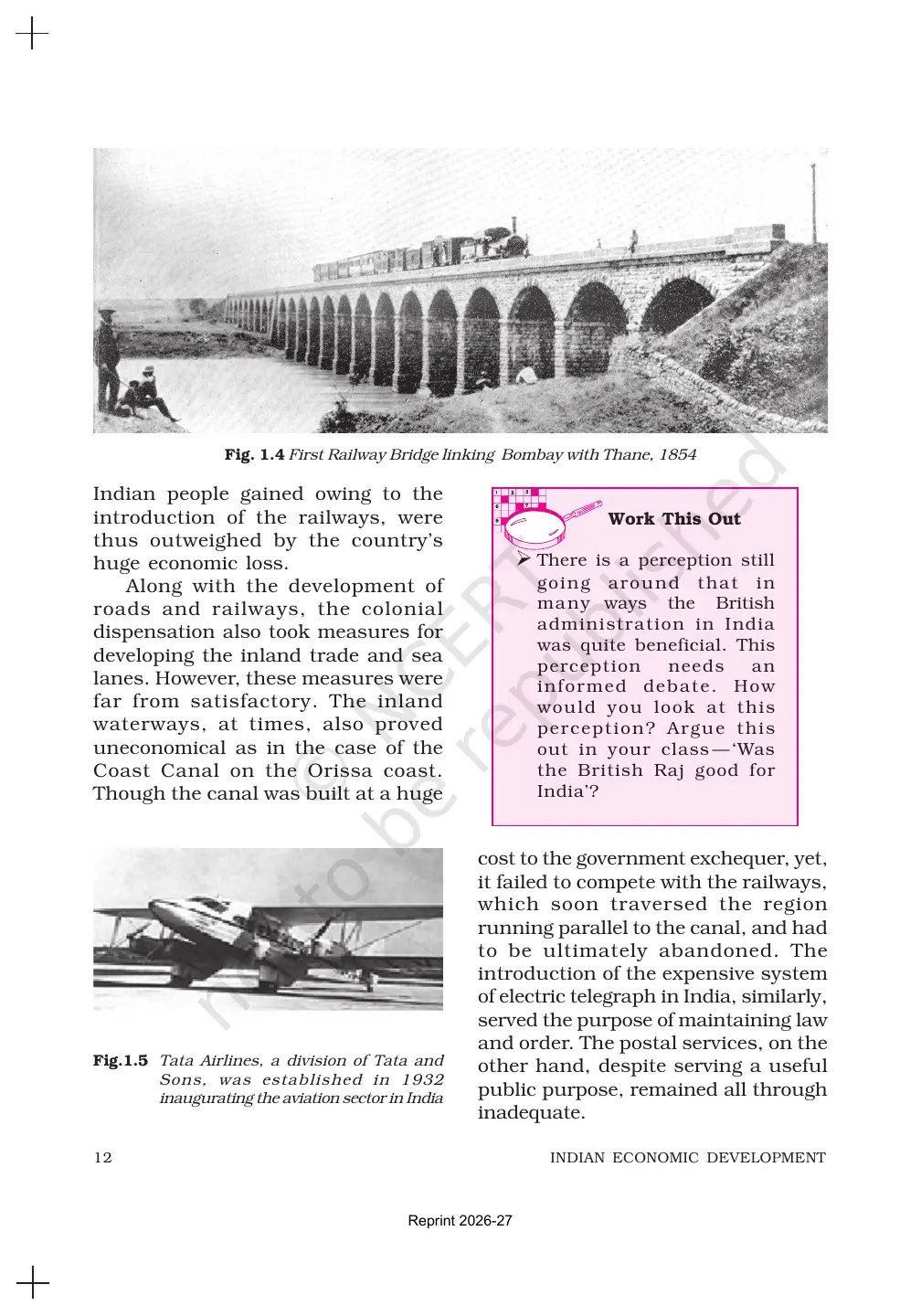
NCERT shows colonial rule as a chain of linked effects. Agriculture stayed weak, industry did not grow enough, and trade mainly served Britain. The chapter is not just a list of facts; it explains why growth stayed blocked.
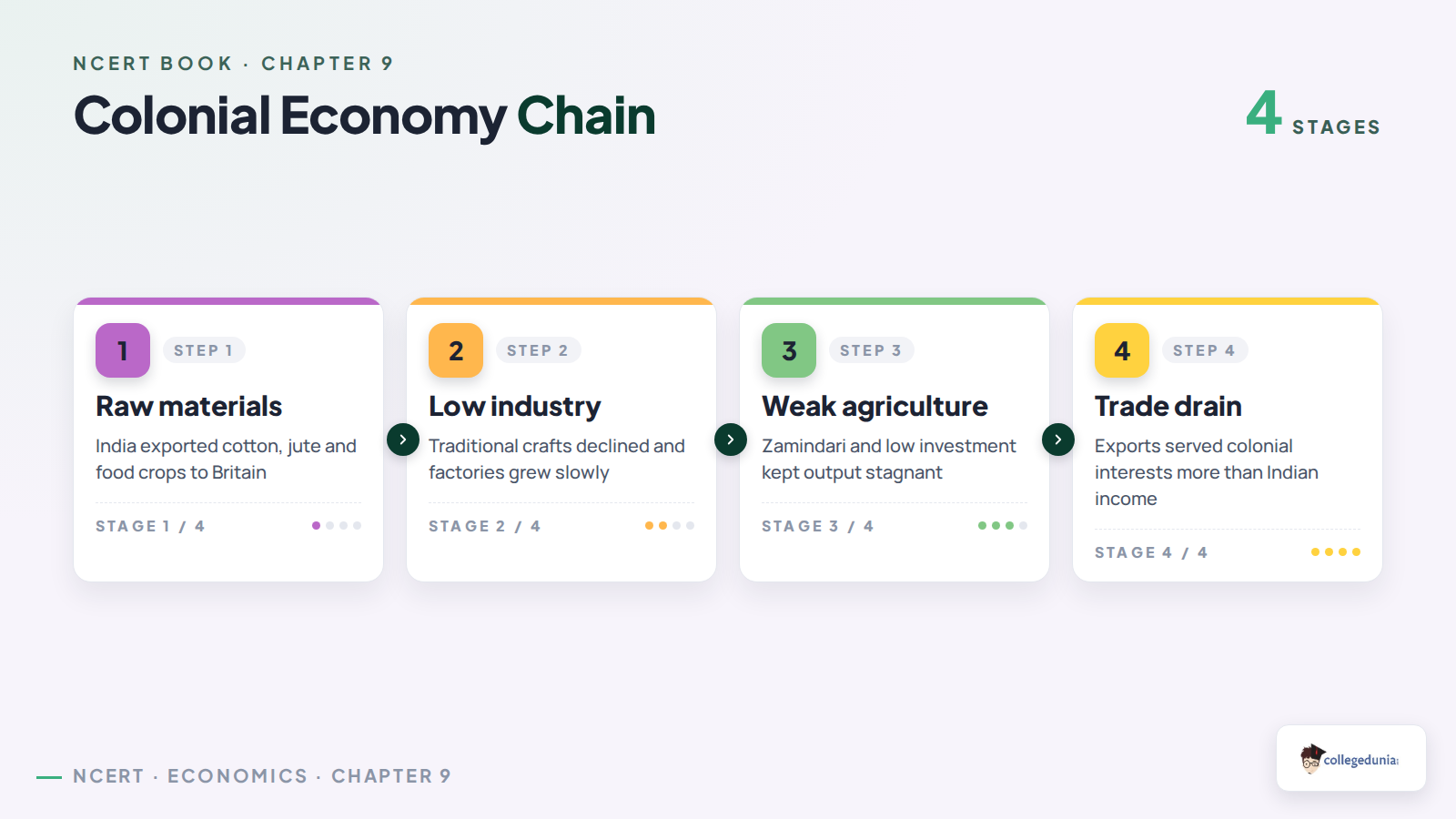
- Raw material flow: India supplied cotton, jute and food crops.
- Industrial weakness: traditional crafts declined before modern industry could absorb workers.
- Income pressure: low productivity kept most people close to subsistence.
Source: Magnet Brains on YouTube
Important Numbers from the 1947 Economy
Use numbers from this chapter only to support an answer, not to fill it. The stronger answer first names the sector problem, then uses the number as proof.
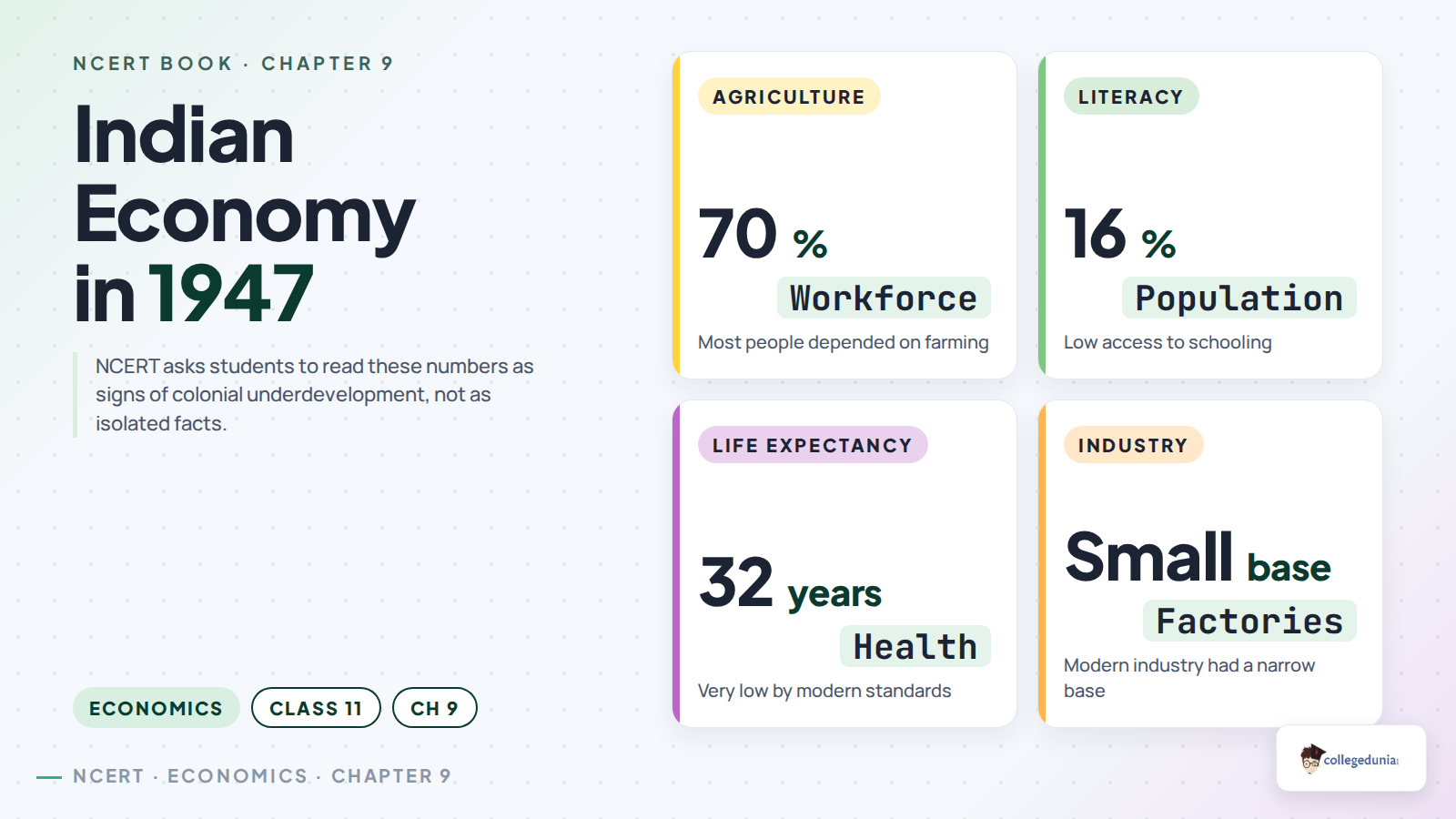
- Agriculture: most workers depended on farming, but output per worker stayed low.
- Literacy and health: poor schooling and health indicators showed weak human development.
- Industry: the modern industrial base was small compared with the needs of the economy.
How to Use the Chapter 9 NCERT Book PDF
Read this PDF in three passes. First, mark the main colonial policies. Second, write the sector-wise effects. Third, practise turning each effect into a two-line answer.
- For short answers: write one cause and one effect in simple words.
- For long answers: group the points under agriculture, industry, trade and demography.
- For revision: learn the link between colonial rule and underdevelopment.
- For examples: use the textile decline and foreign trade pattern carefully.
Related Class 11 Economics Resources for Indian Economy on the Eve of Independence
Also Check: use the official book PDF with notes and practice resources for the same chapter.
| Resource | Best use | Link |
|---|---|---|
| NCERT Notes | Revise colonial rule, agriculture, industry and trade quickly. | Indian Economy on the Eve of Independence Notes |
| Handwritten Notes | Use for one-shot revision before a class test. | Indian Economy on the Eve of Independence Handwritten Notes |
| NCERT Solutions | Practise textbook questions after reading the official PDF. | Indian Economy on the Eve of Independence NCERT Solutions |
Class 11 Economics NCERT Book PDFs for All Chapters
The table below keeps the Class 11 Economics NCERT Book PDF chapters in one place. Chapters 1 to 8 come from Statistics for Economics, and Chapter 9 starts Indian Economic Development.
| Chapter | Title | NCERT Book PDF |
|---|---|---|
| Chapter 1 | Introduction | NCERT Book PDF |
| Chapter 2 | Collection of Data | NCERT Book PDF |
| Chapter 3 | Organisation of Data | NCERT Book PDF |
| Chapter 4 | Presentation of Data | NCERT Book PDF |
| Chapter 5 | Measures of Central Tendency | NCERT Book PDF |
| Chapter 6 | Correlation | NCERT Book PDF |
| Chapter 7 | Index Numbers | NCERT Book PDF |
| Chapter 8 | Use of Statistical Tools | NCERT Book PDF |
| Chapter 9 | Indian Economy on the Eve of Independence | Current NCERT Book PDF |
Indian Economy on the Eve of Independence Class 11 Economics NCERT Book PDF FAQs
Ques. What does the Class 11 Economics Chapter 9 NCERT Book PDF include?
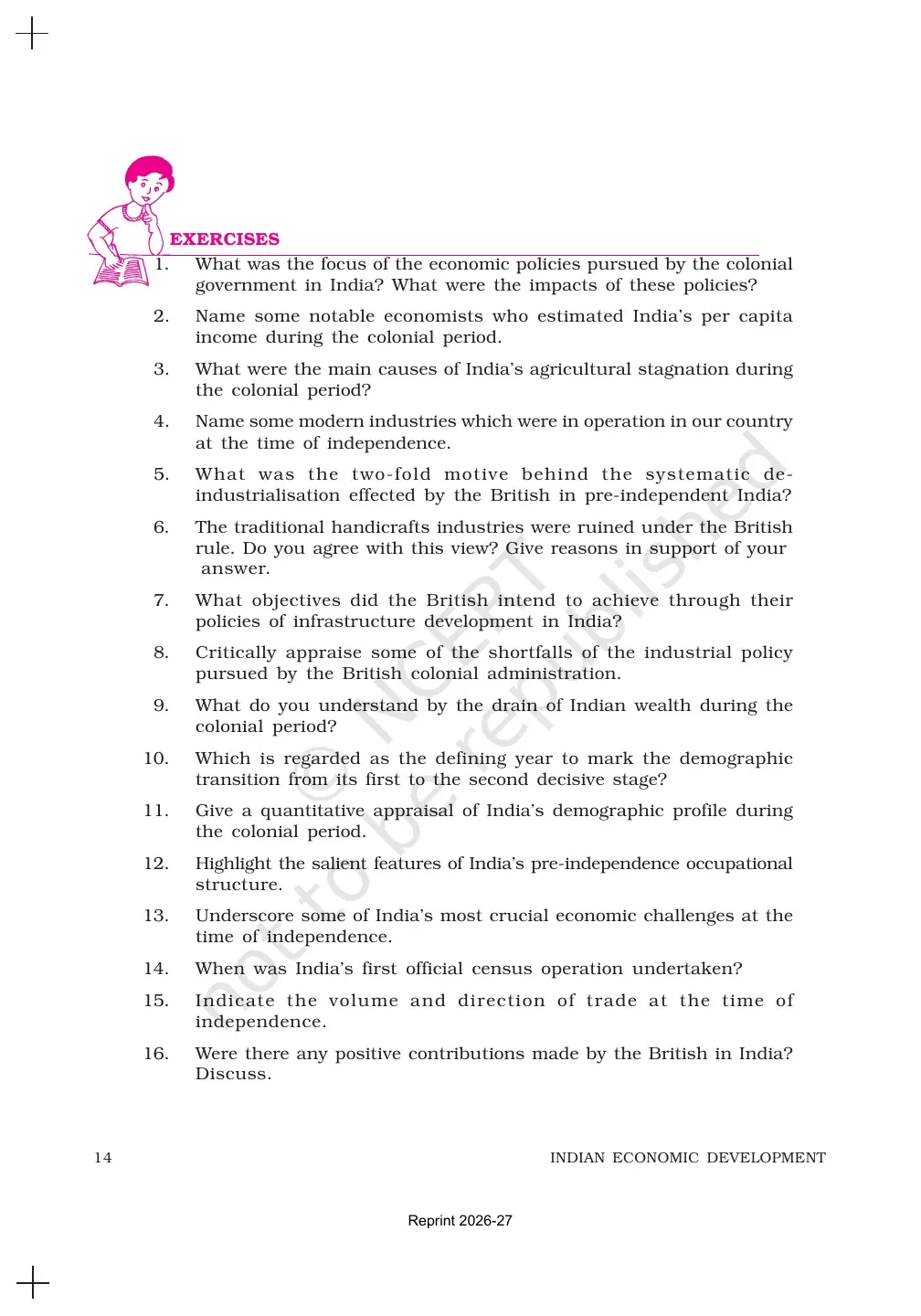
Ans. It includes the official NCERT chapter on the Indian economy before Independence, covering agriculture, industry, trade and population indicators.
Ques. Is this NCERT Book PDF useful for the 2026-27 syllabus?
Ans. Yes. The PDF follows the official NCERT chapter used for the 2026-27 Class 11 Economics syllabus.
Ques. Which book does this chapter belong to?
Ans. It belongs to the Indian Economic Development part of Class 11 Economics. It is the first chapter of that book in the official PDF set.
Ques. How should students revise this chapter?
Ans. Students should revise it sector wise: agriculture, industry, trade, population and occupational structure. This makes long answers easier to organise.



Comments