




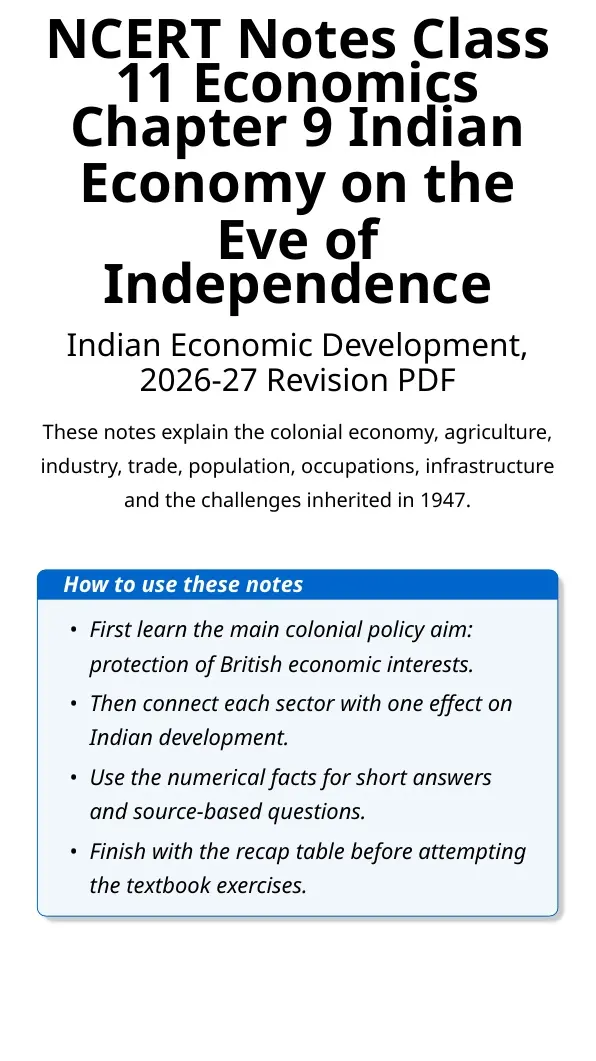
Class 11 Economics Chapter 9 Indian Economy on the Eve of Independence notes explain the condition of the Indian economy before 1947 as given in the 2026-27 NCERT textbook. The PDF covers colonial policy, stagnant agriculture, weak industry, foreign trade, demographic indicators, occupational structure and infrastructure inherited at independence.
- Download the Indian Economy on the Eve of Independence notes PDF for exam revision.
- Revise the colonial economy through agriculture, industry, trade and infrastructure.
- Use the tables and quick numbers for short-answer and long-answer questions.





Each Indian Economy on the Eve of Independence notes PDF is based on the 2026-27 NCERT chapter and checked for economic facts, chronology and syllabus-level explanation.

Student Feedback: More than 10,000 students use Collegedunia NCERT resources to revise Class 11 Economics. Students say this chapter becomes easier when colonial policy, sector-wise impact and the 1947 development challenge are studied together.
What Indian Economy on the Eve of Independence Covers
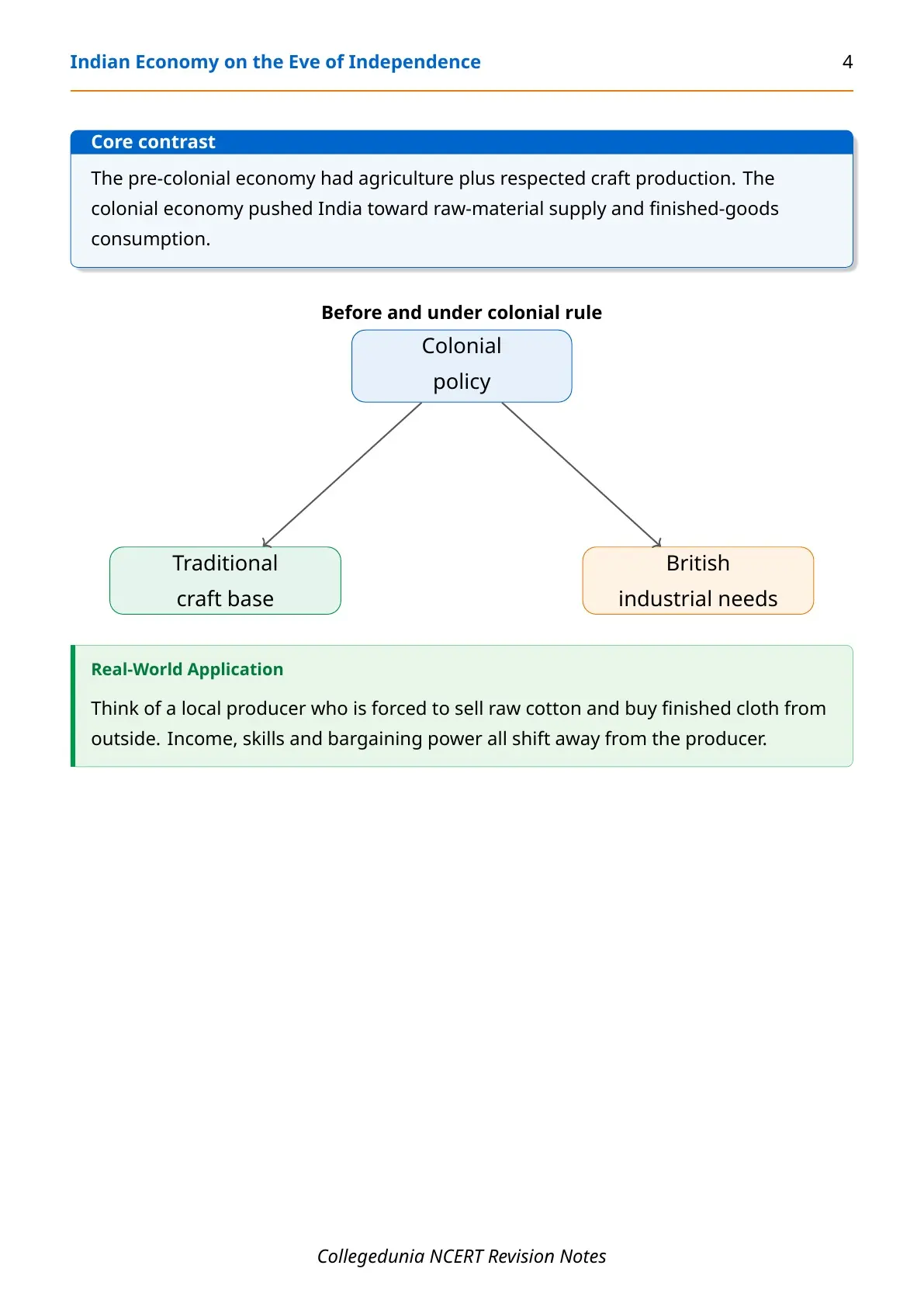
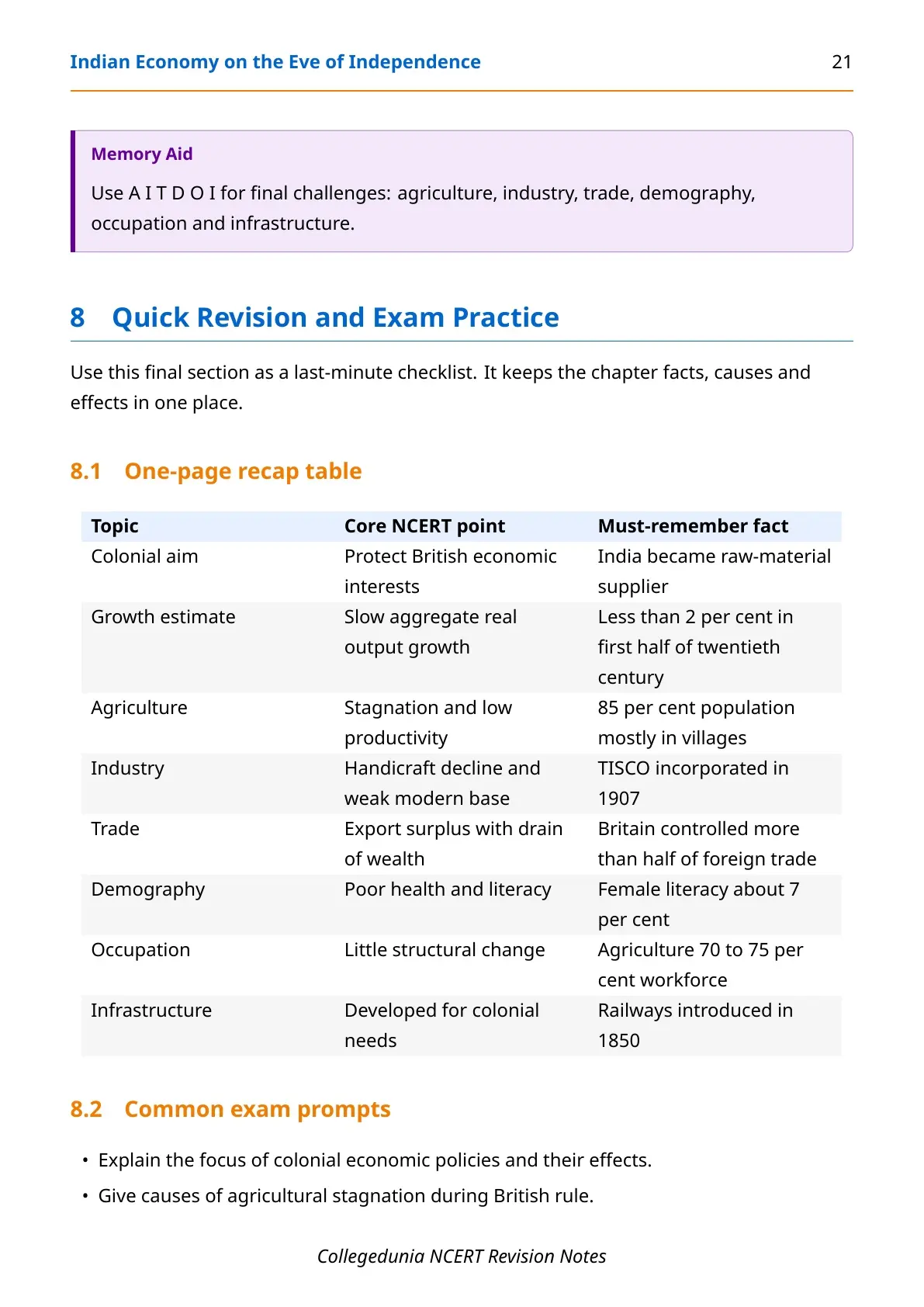
Indian Economy on the Eve of Independence explains why the Indian economy was underdeveloped when British rule ended. NCERT presents colonial rule as an economic system designed mainly to serve British industrial and administrative interests, not to build an independent production base in India.
| Area | Condition before independence | Exam clue |
|---|---|---|
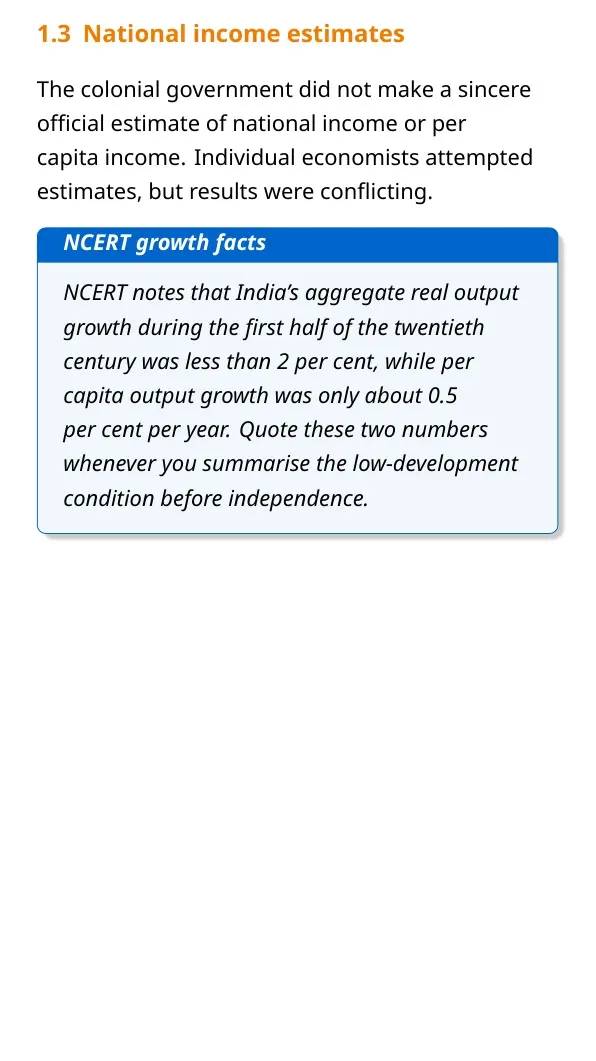
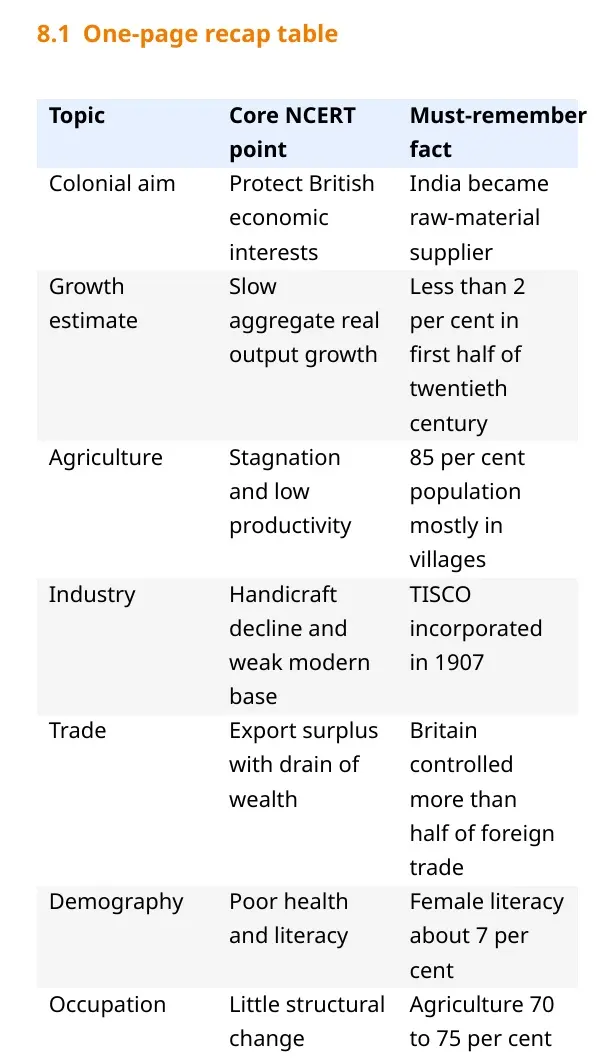
| Output growth | Real output grew below 2 percent in the first half of the twentieth century | Quote with low per capita growth |
| Agriculture | Large workforce, low productivity and zamindari pressure | Connect with stagnation |
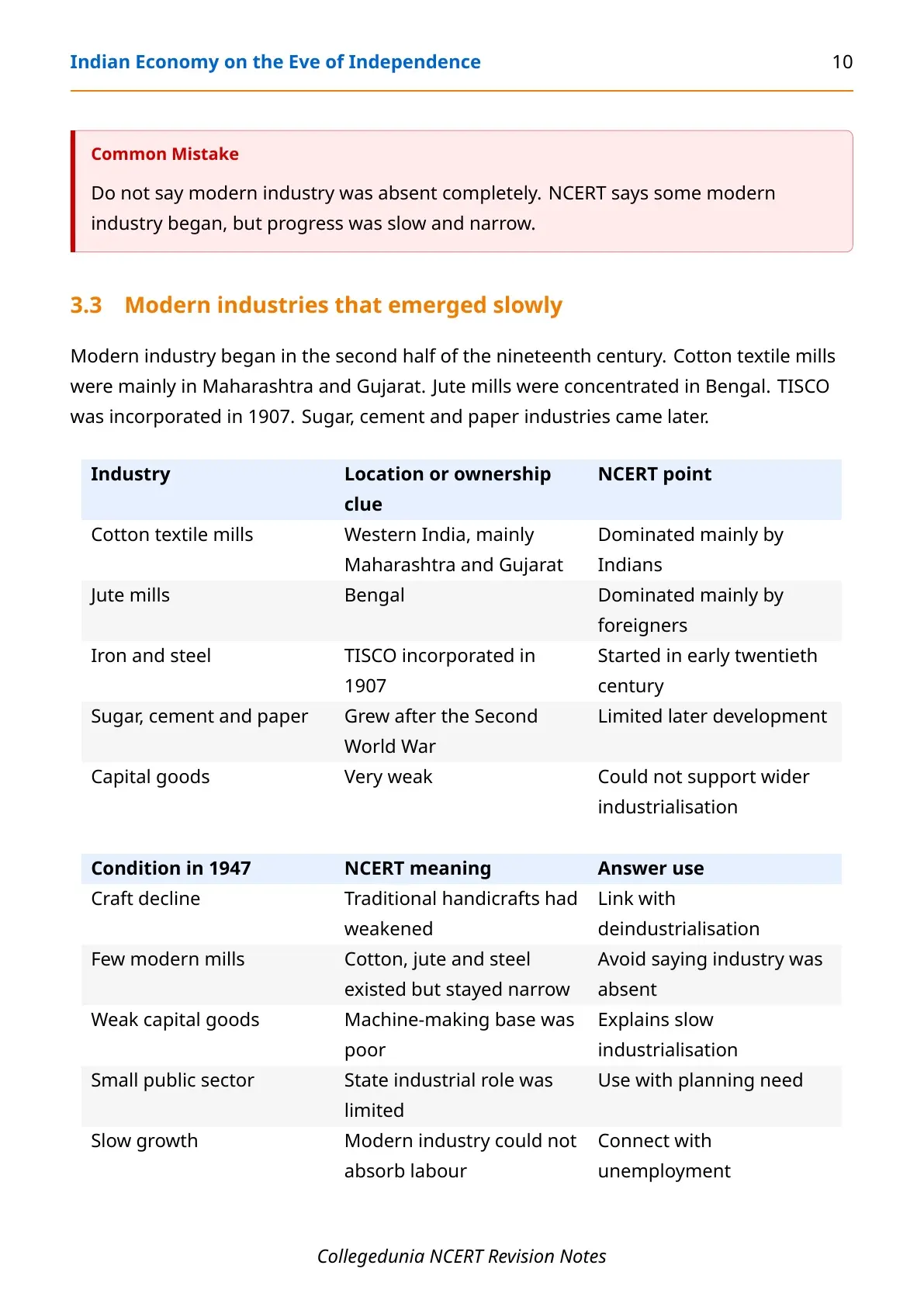
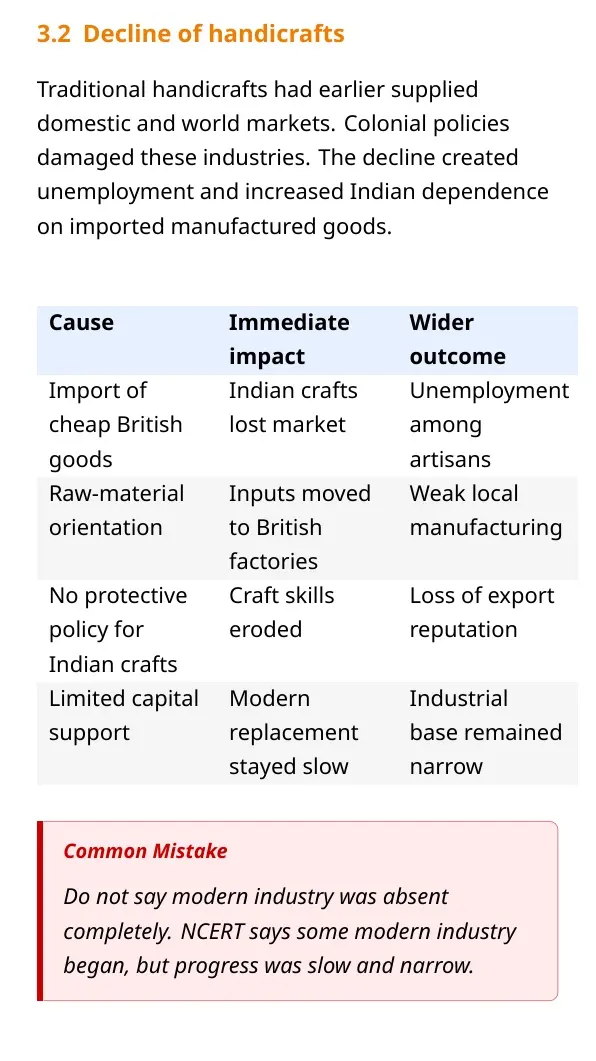
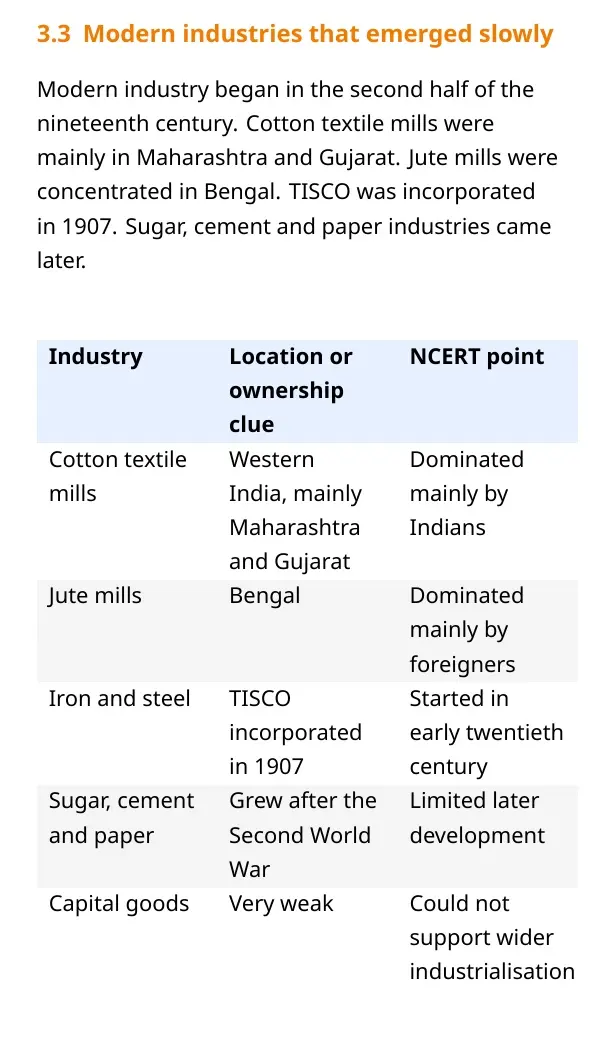
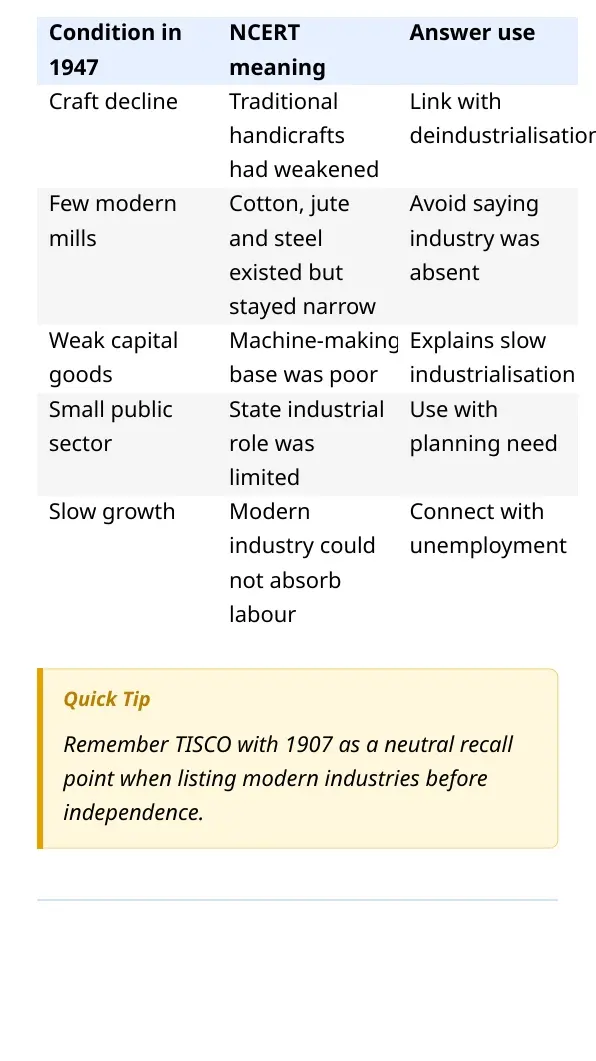
| Industry | Traditional handicrafts declined and modern industry grew slowly | Use the word deindustrialisation carefully |
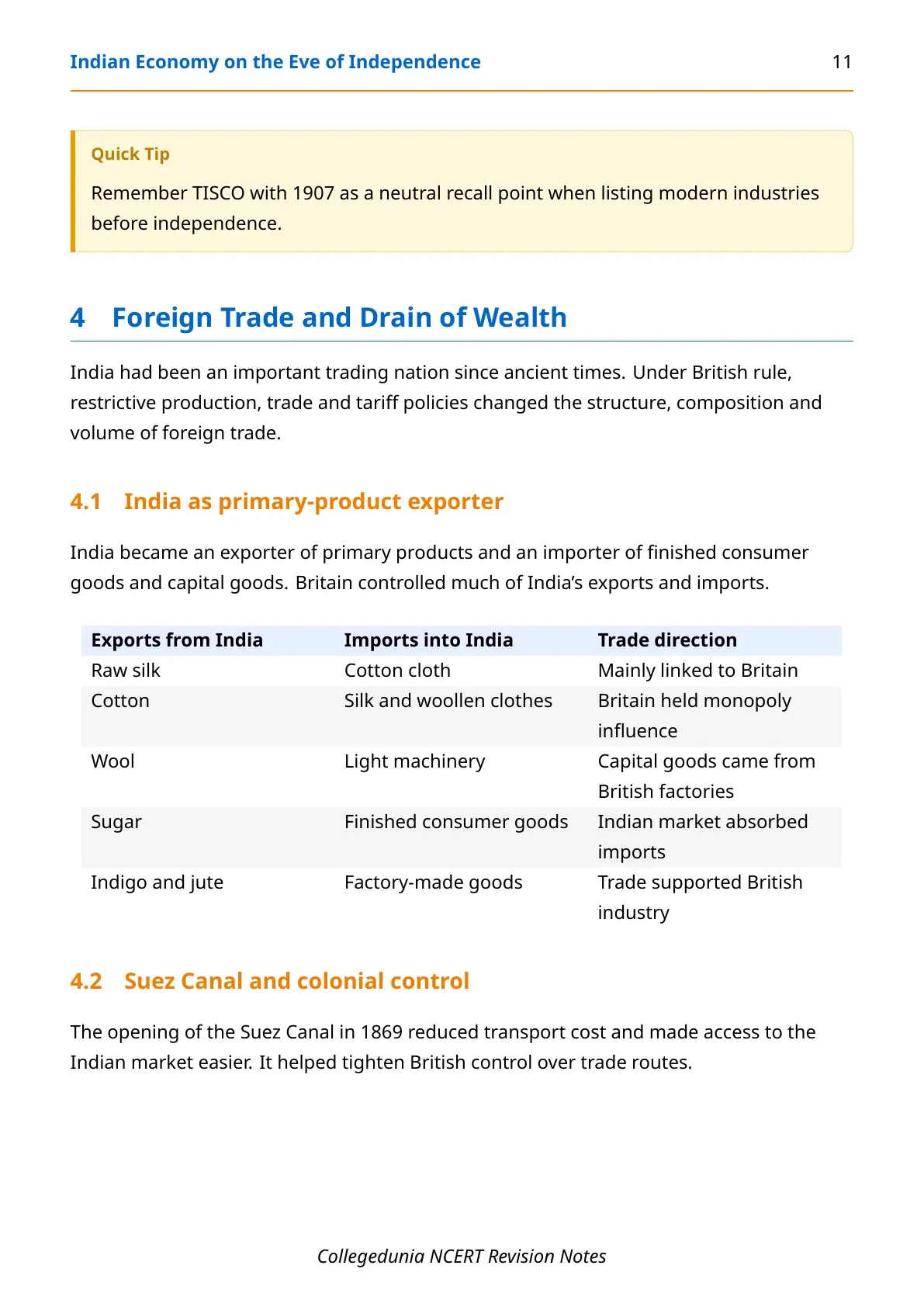
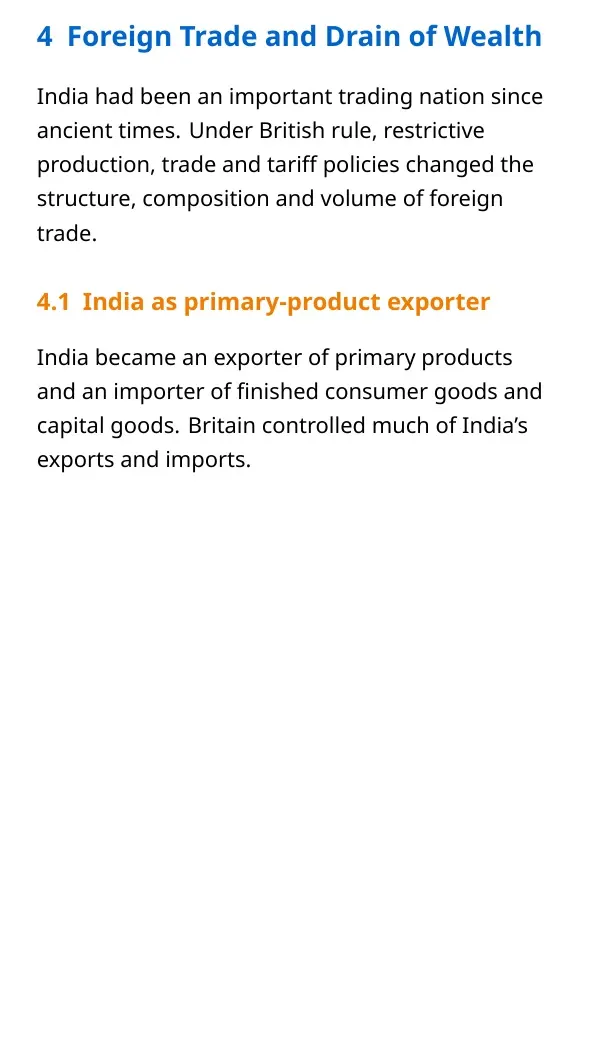
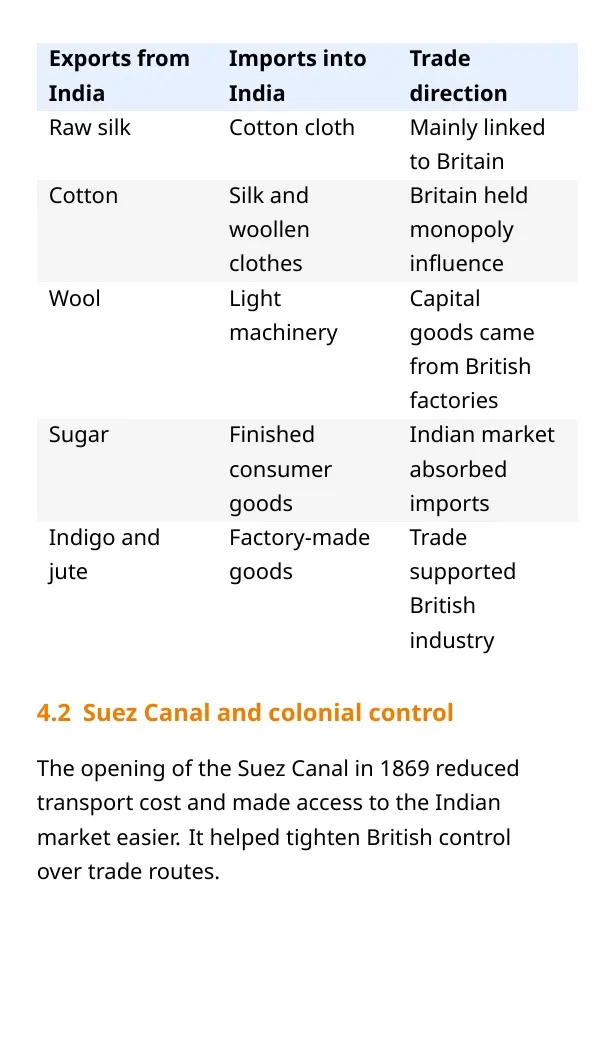
| Trade | Exports and imports served colonial needs | Mention primary exports and finished imports |
| Infrastructure | Railways, ports and posts were built mainly for colonial control and trade | Do not call them welfare-first projects |
Indian Economy on the Eve of Independence Revision Video
Source: Unacademy UPSC 101 on YouTube
Colonial Economic Policy and Low Development
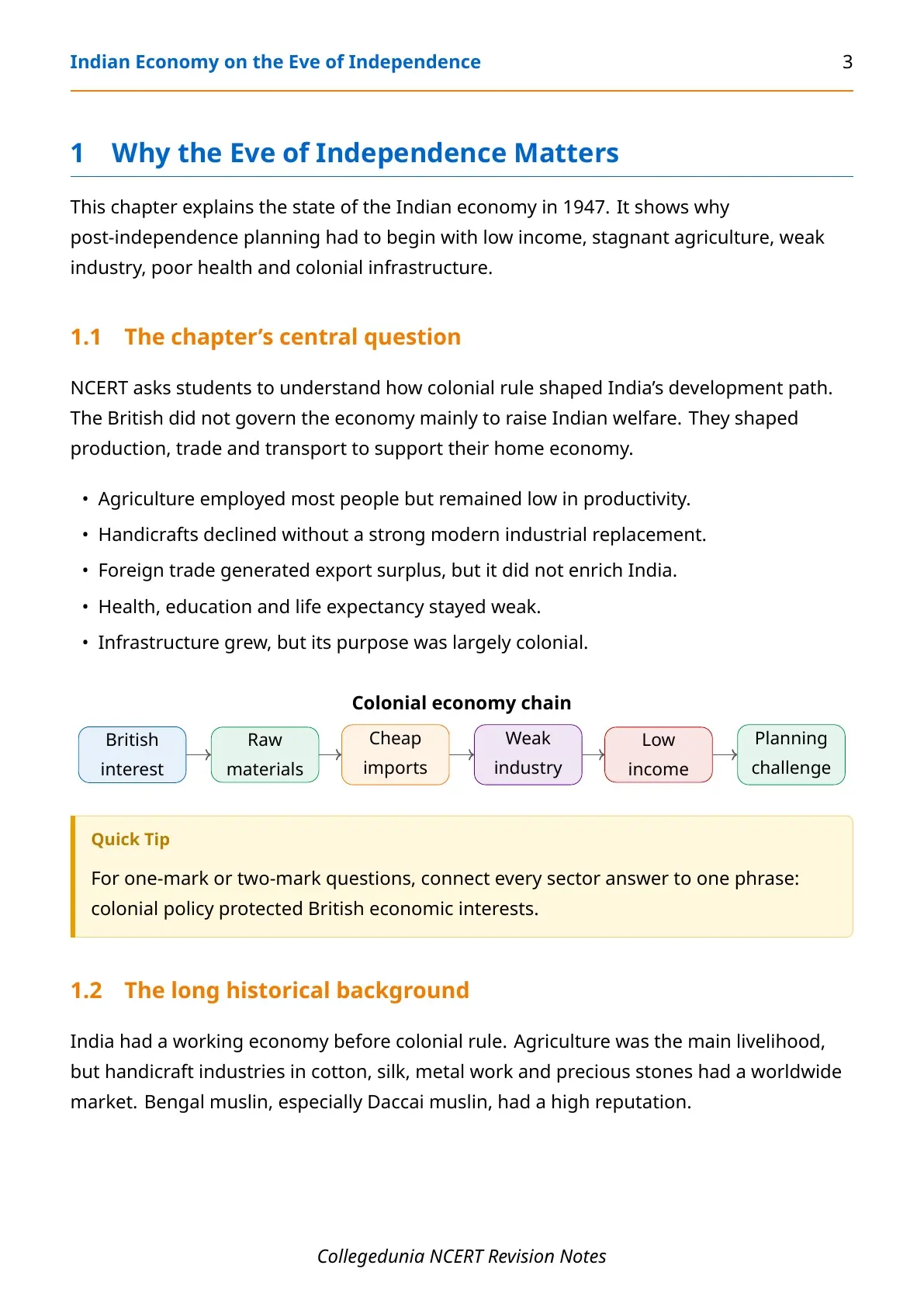
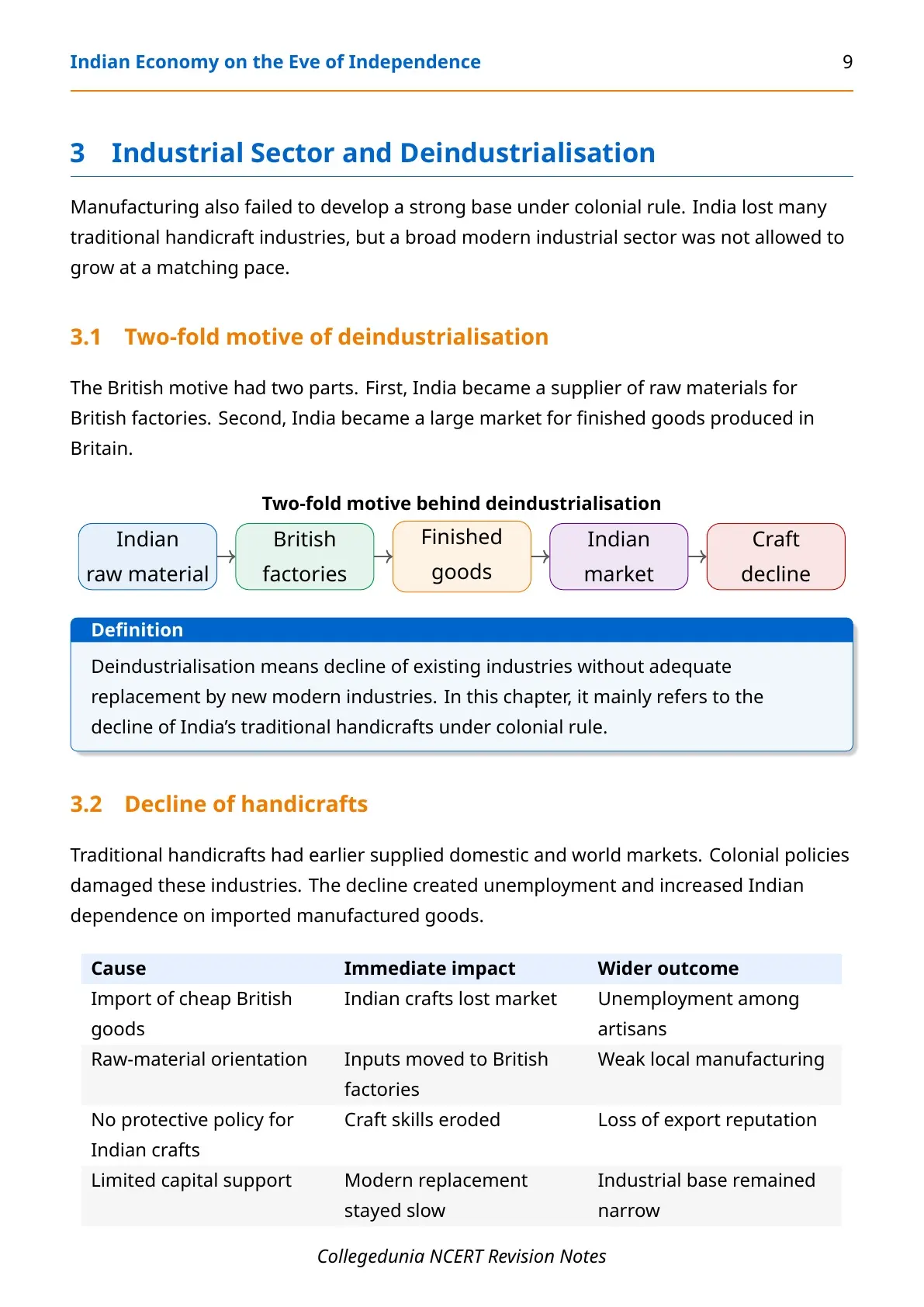
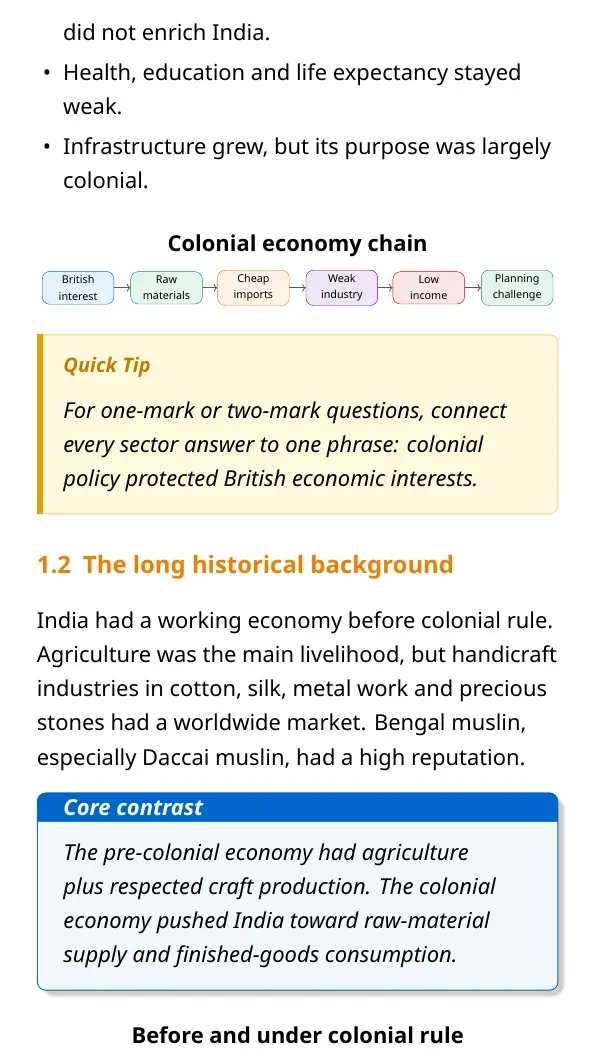
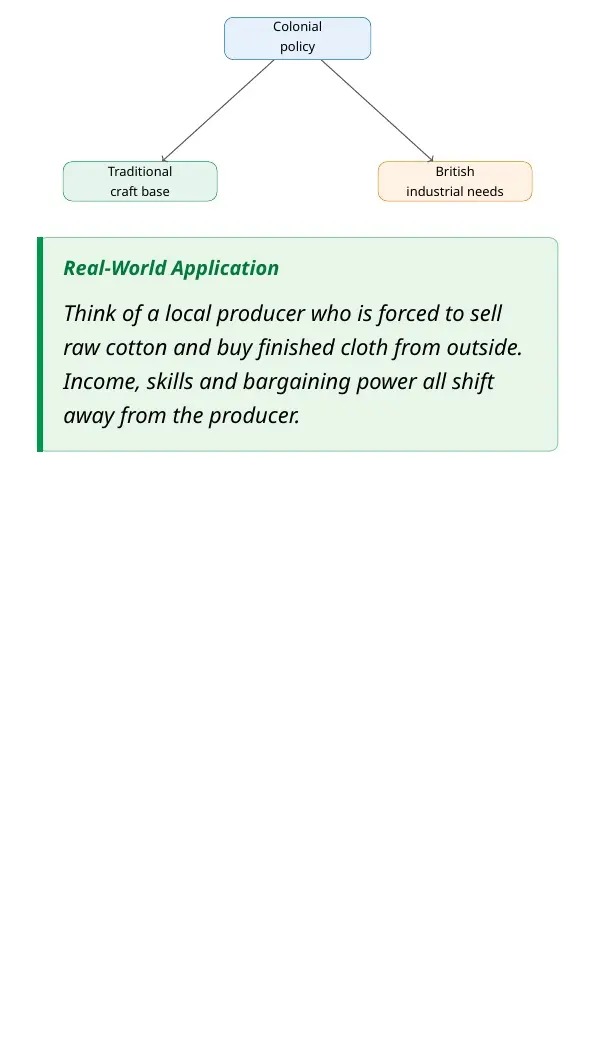
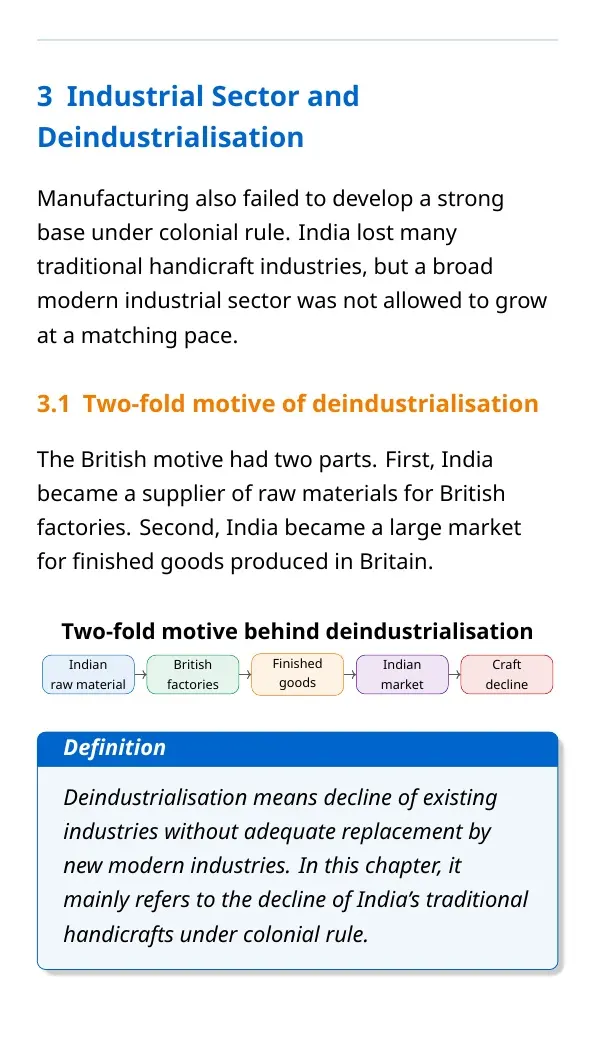
The central idea of the chapter is that colonial policy changed India into a supplier of raw materials and a market for finished British goods. Agriculture supplied crops and revenue, while many traditional manufacturing centres lost their old strength. Economic growth was not absent, but it was narrow, slow and externally directed.
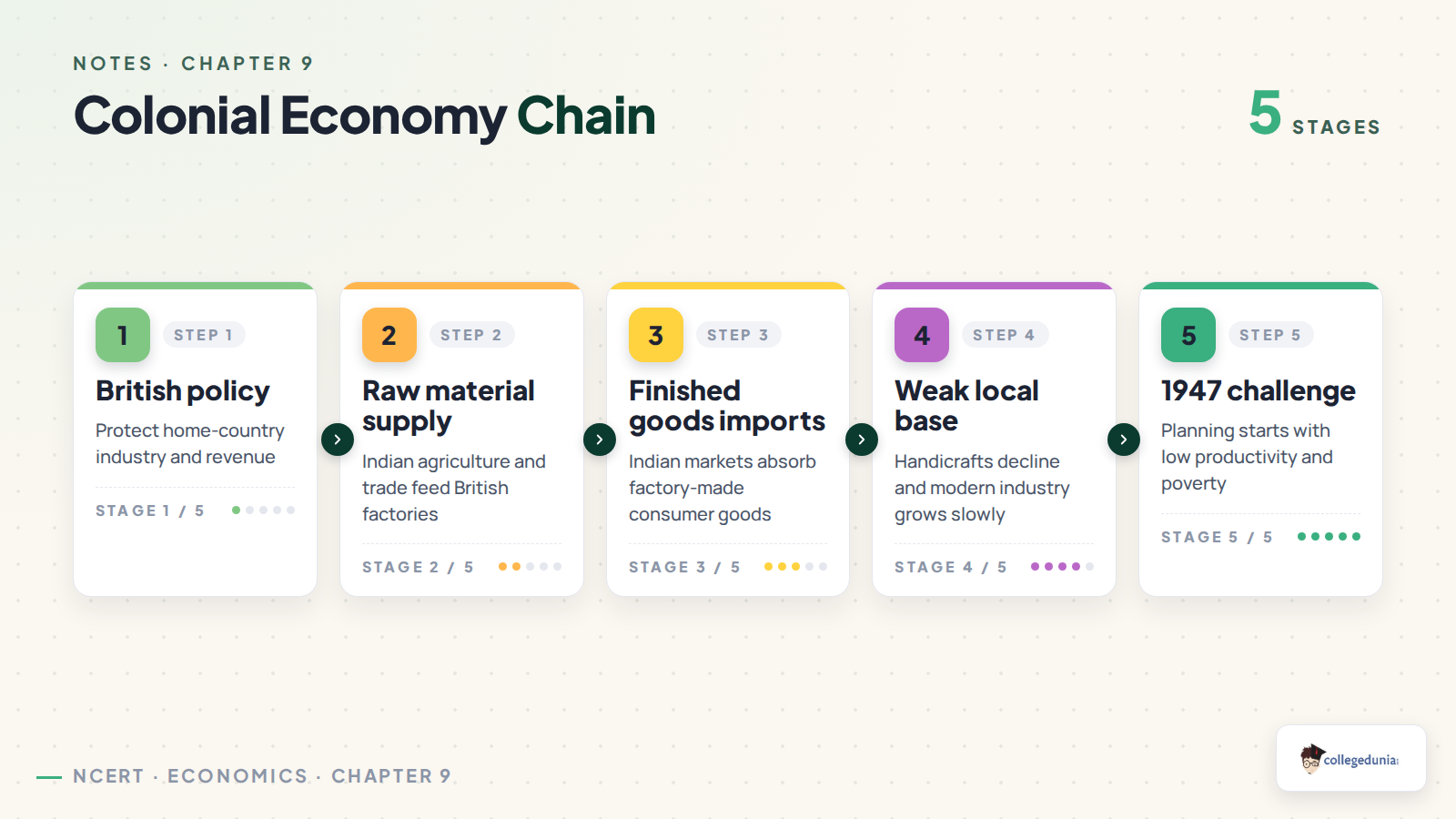
- India supplied raw materials needed by British industries.
- Indian markets absorbed imported finished goods from Britain.
- Revenue settlement systems increased pressure on cultivators.
- Public works served trade, administration and military movement more than balanced development.
Agriculture and Zamindari Under Colonial Rule
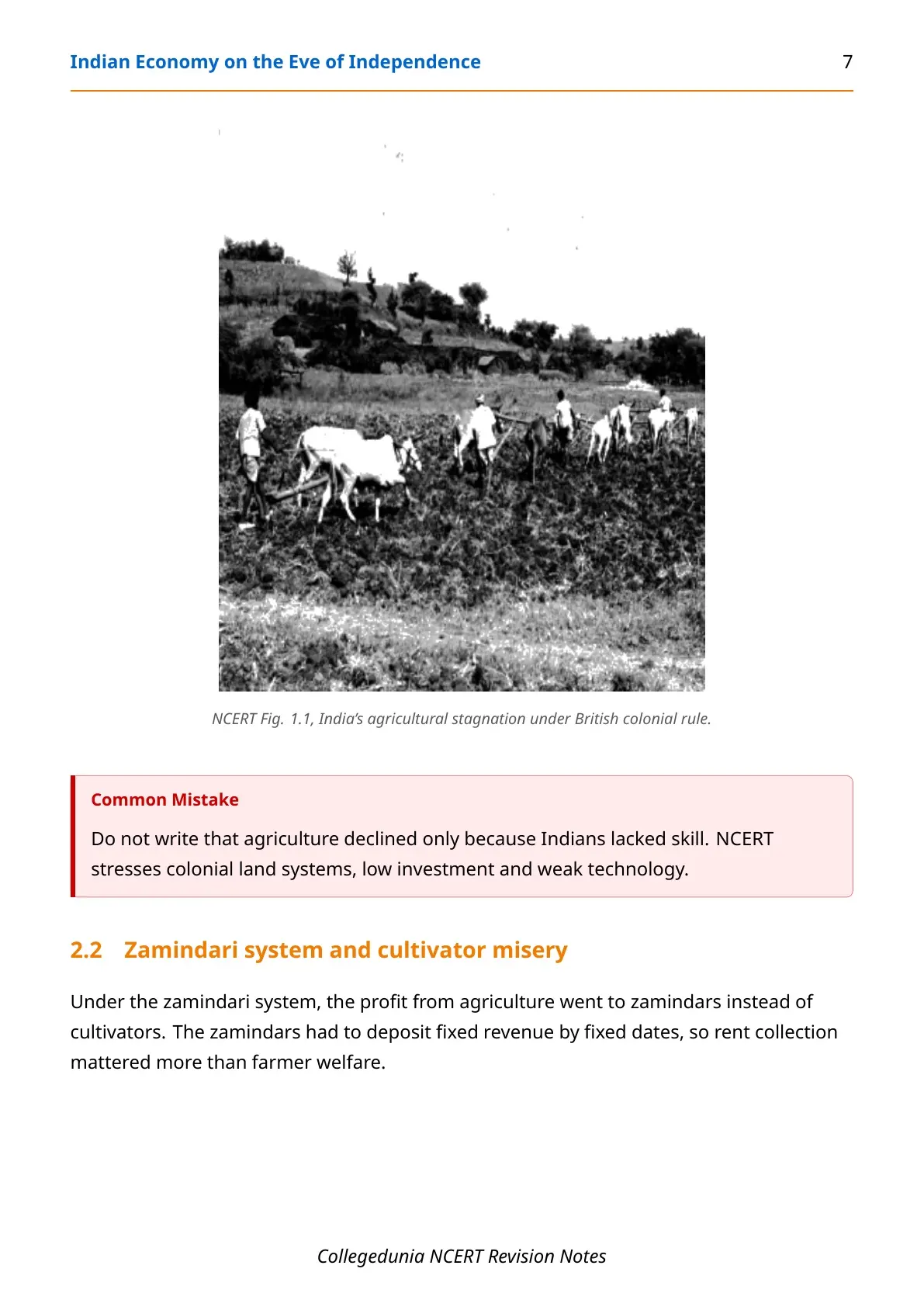
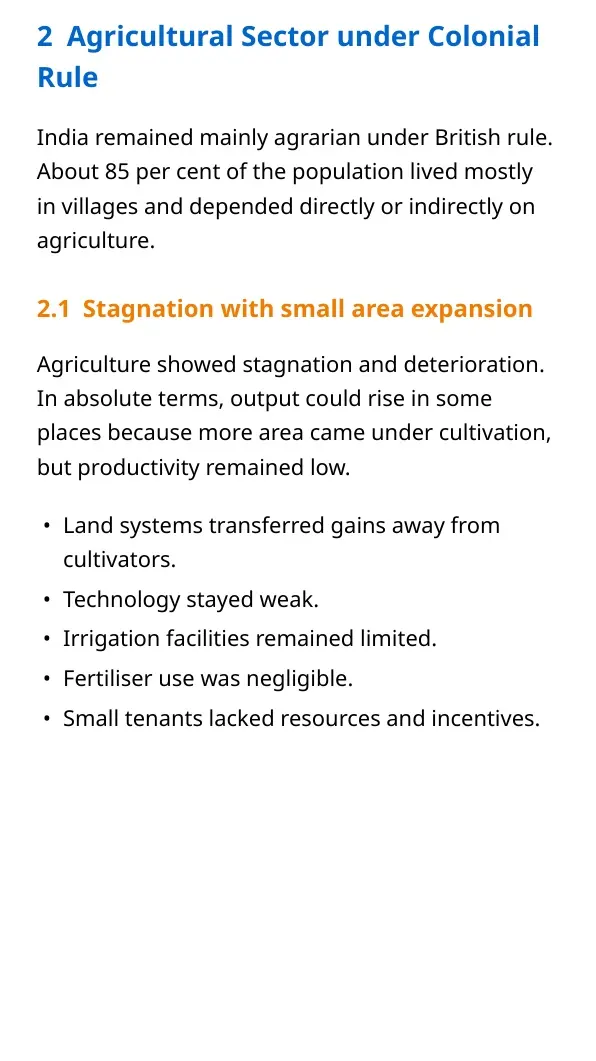
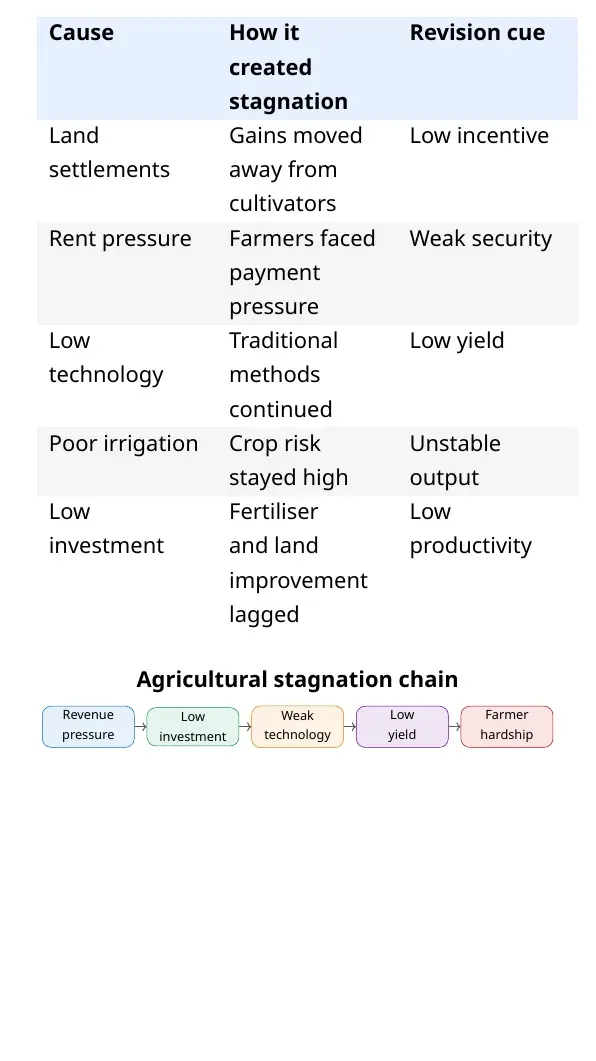
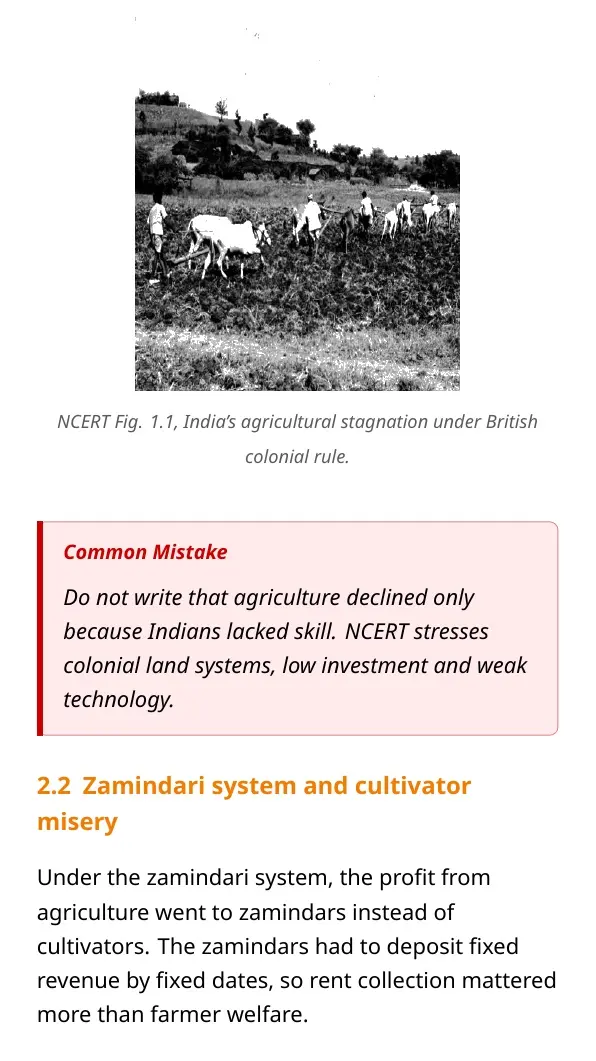
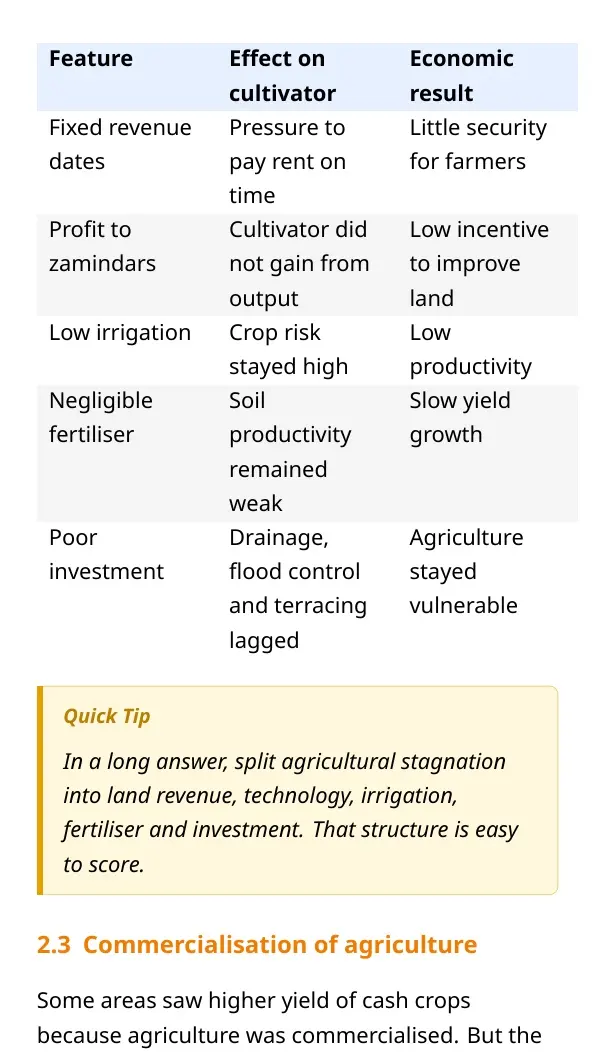
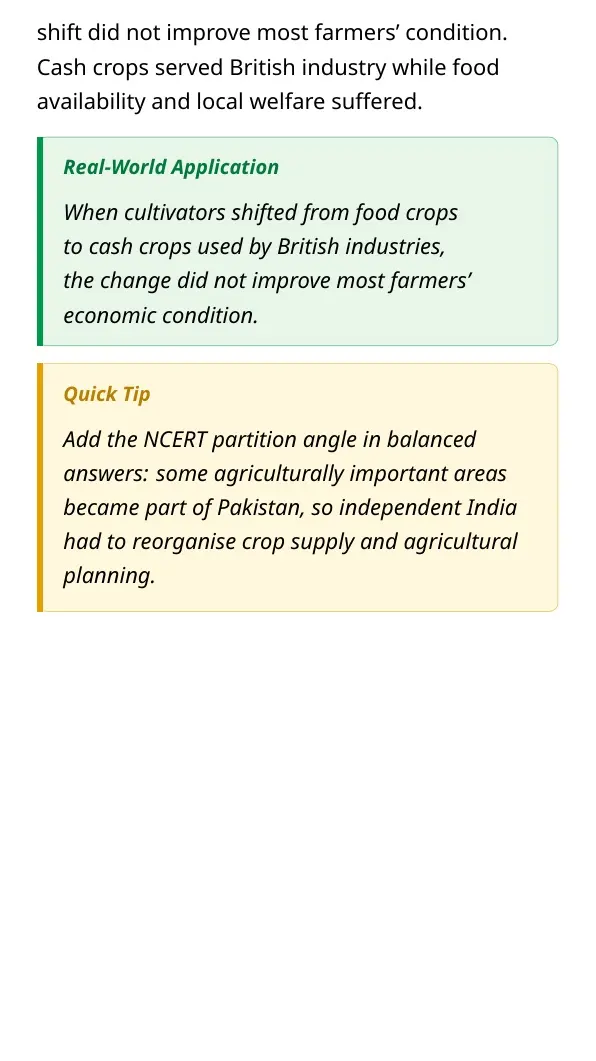
Agriculture was the largest occupation, but productivity remained low. Under the zamindari system, cultivators often faced high rent and insecure conditions. Commercialisation of agriculture pushed farmers towards cash crops, but the gain usually went to colonial trade channels and intermediaries rather than to cultivators.
| Feature | Meaning | Impact on farmers |
|---|---|---|
| Zamindari | Land revenue collected through intermediaries | High rent and low investment incentive |
| Low technology | Little irrigation, inputs or scientific cultivation | Low yield per hectare |
| Commercial crops | Crops grown for market and export | Food security could weaken |
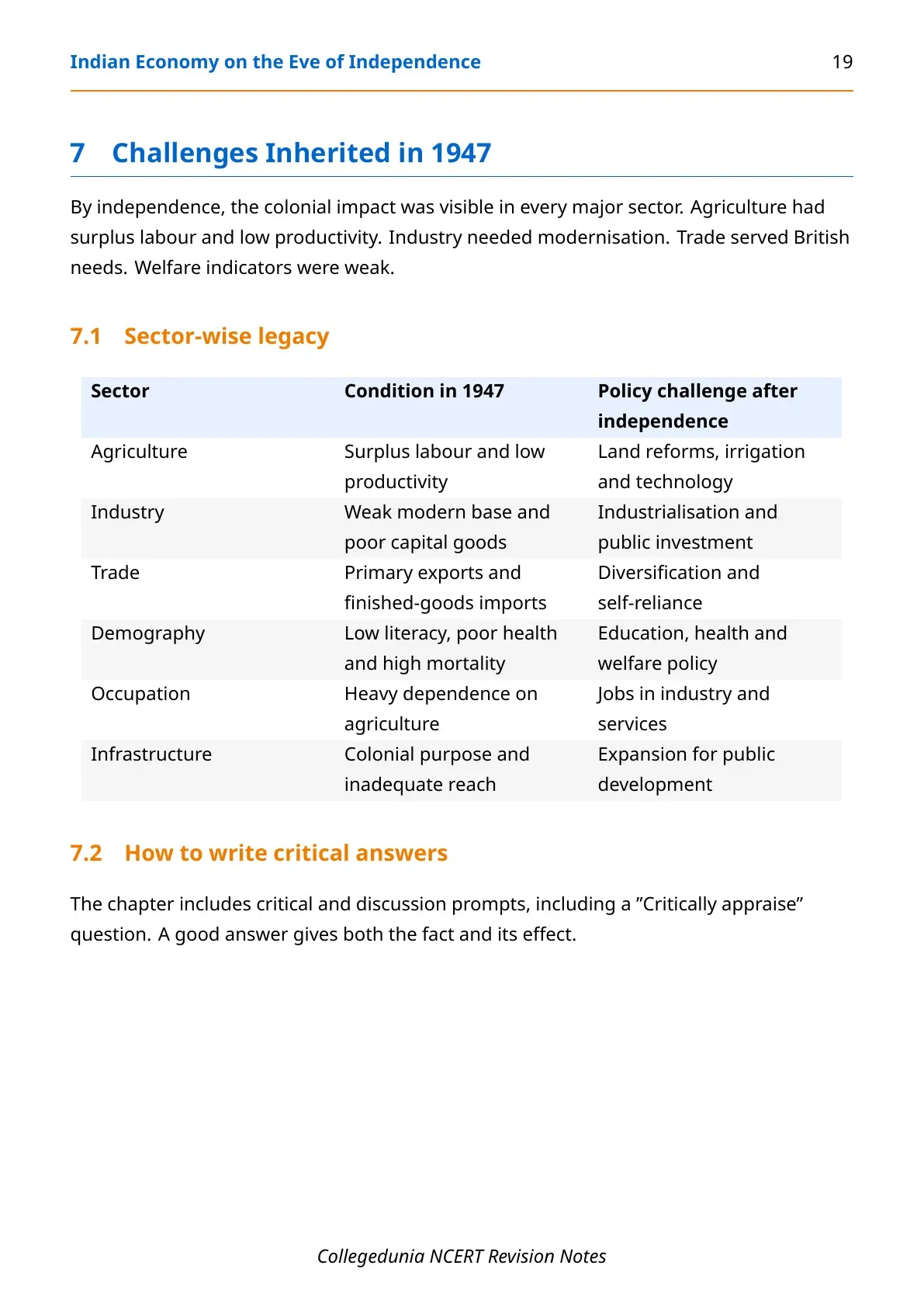
| Partition impact | Some fertile and irrigated regions went to Pakistan | Jute and foodgrain supply faced disruption |
Industry, Trade and the Drain of Wealth
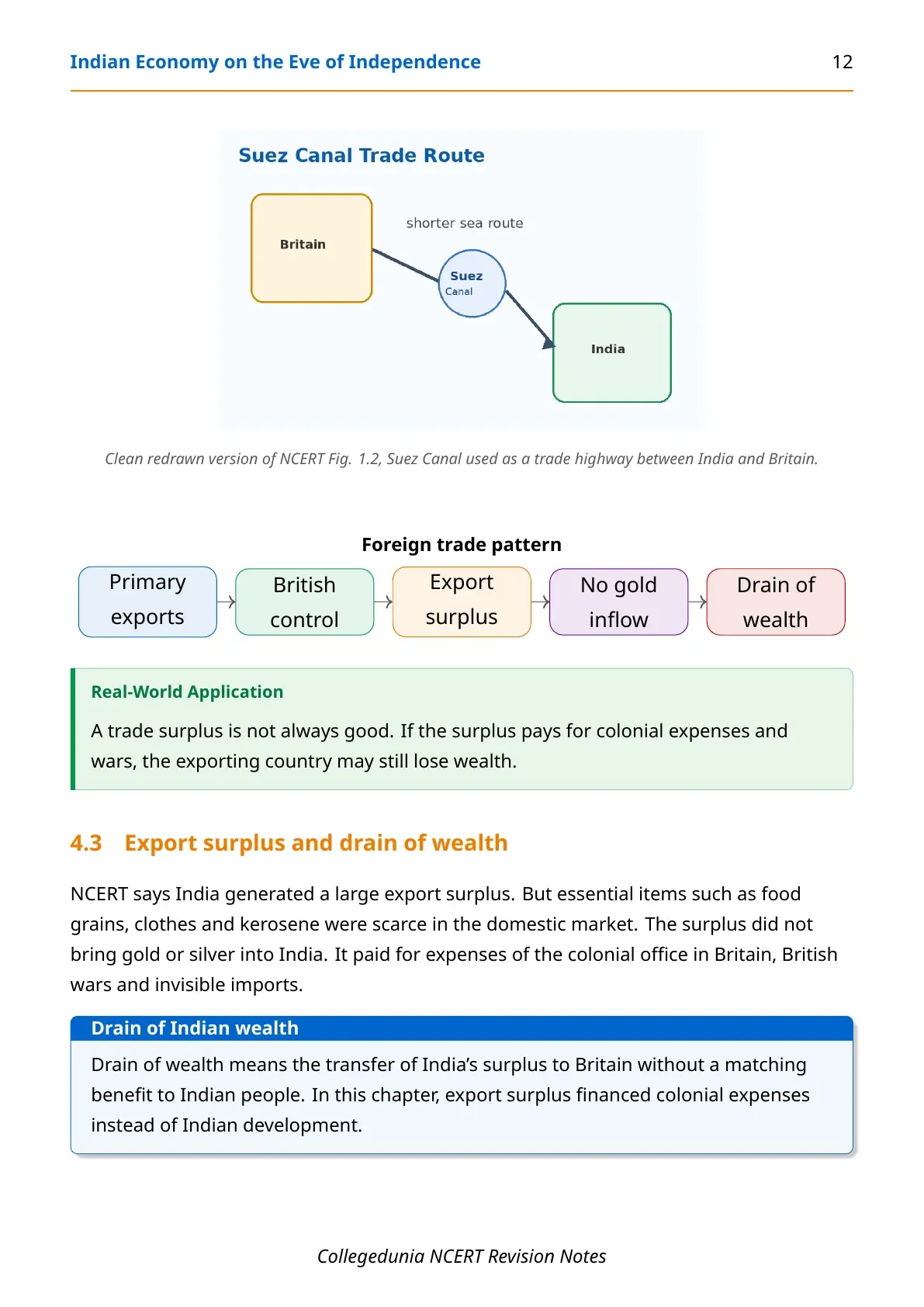
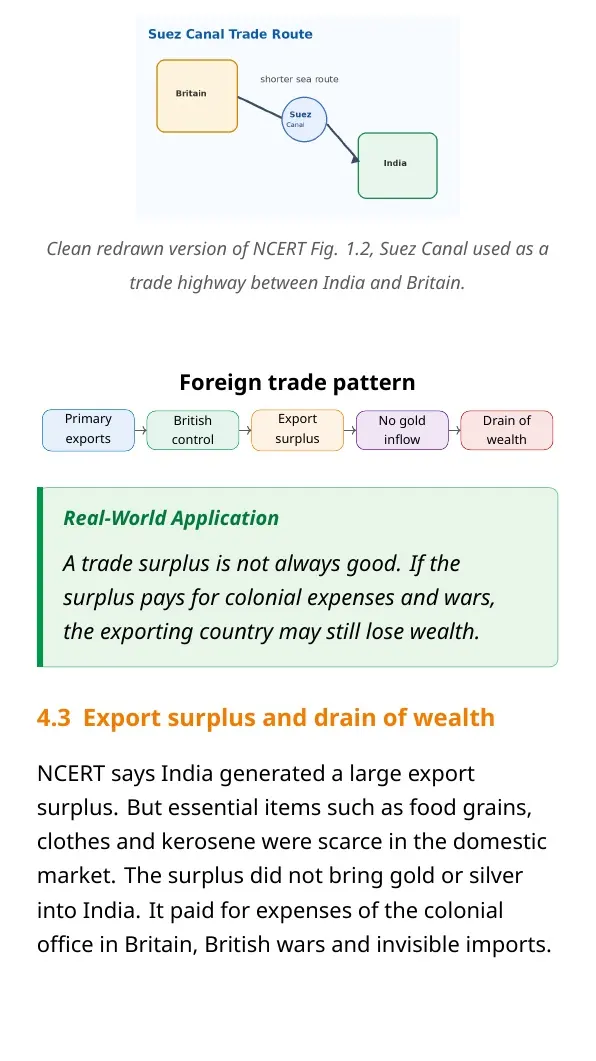
Colonial rule weakened the old handicraft base without building a strong modern industrial base in its place. India exported primary products such as raw cotton, jute, silk, indigo, sugar and foodgrains, while importing manufactured consumer goods. The export surplus did not become Indian development finance because it was used for colonial payments and administrative obligations.
- Deindustrialisation: decline of traditional handicraft industries under machine-made import competition.
- Capital goods gap: early modern industry grew slowly and lacked enough heavy industry.
- Trade pattern: exports were mostly primary goods, imports were mainly finished goods.
- Drain of wealth: part of India's surplus financed British expenses rather than Indian development.
Demographic and Occupational Indicators
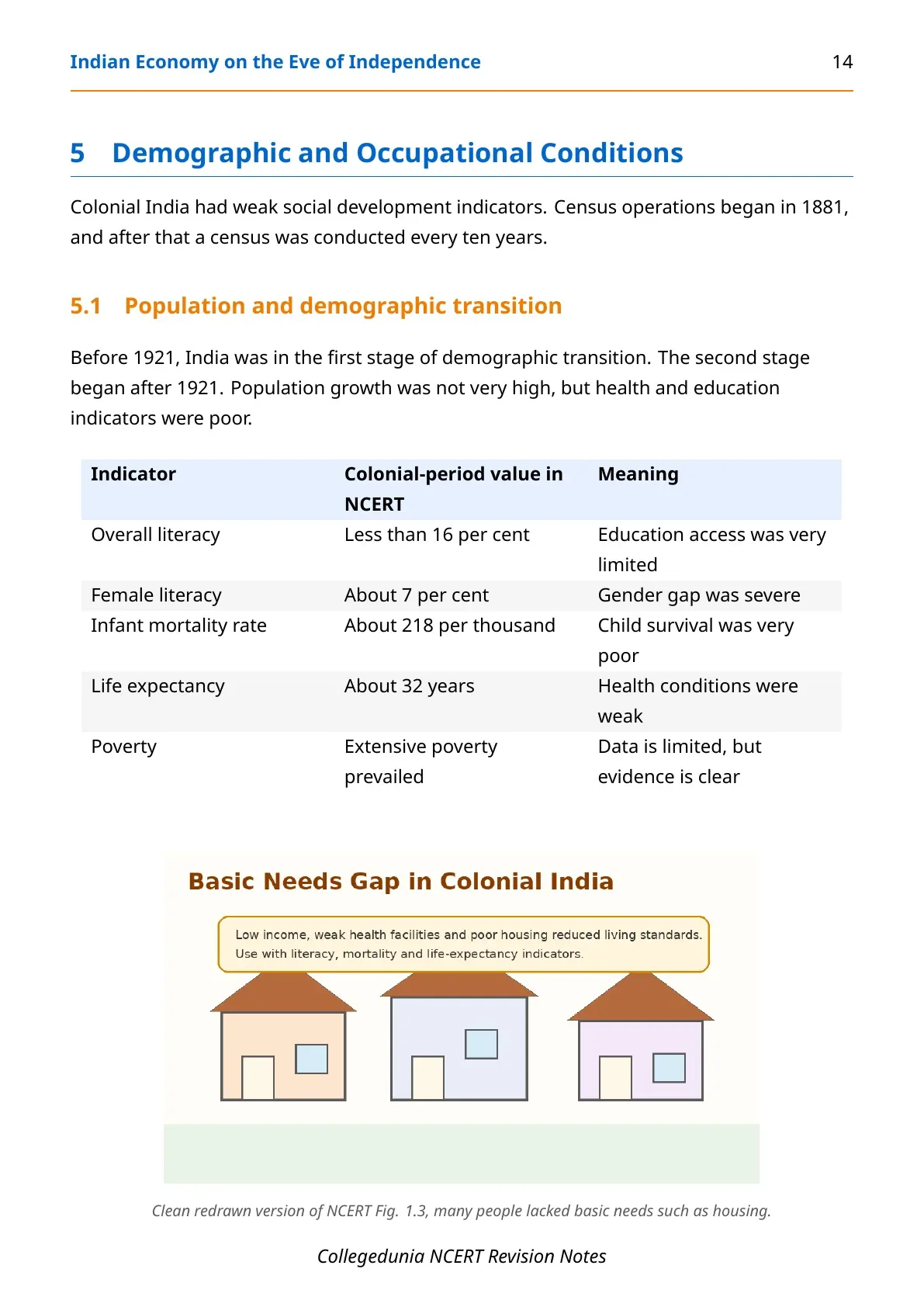
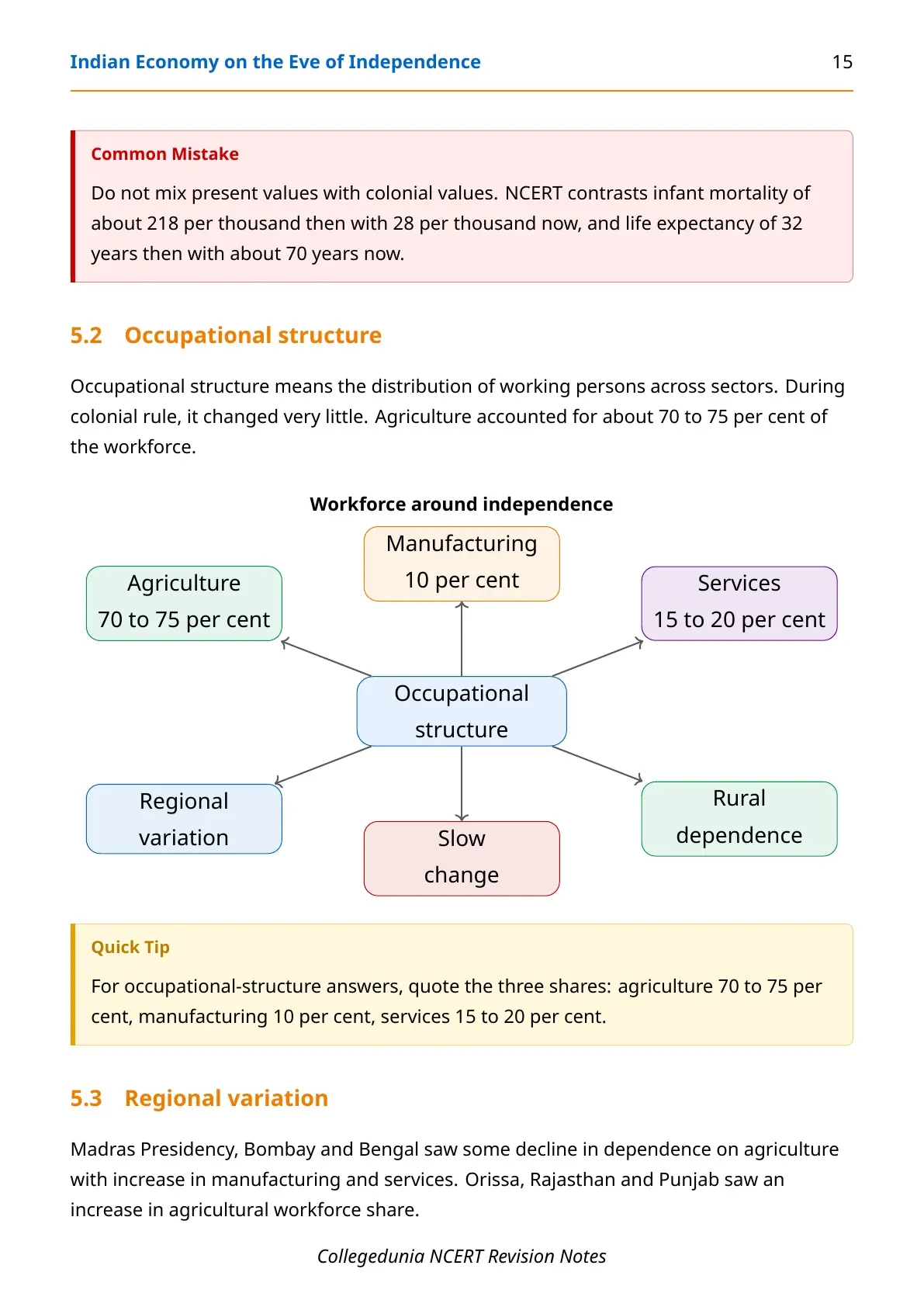
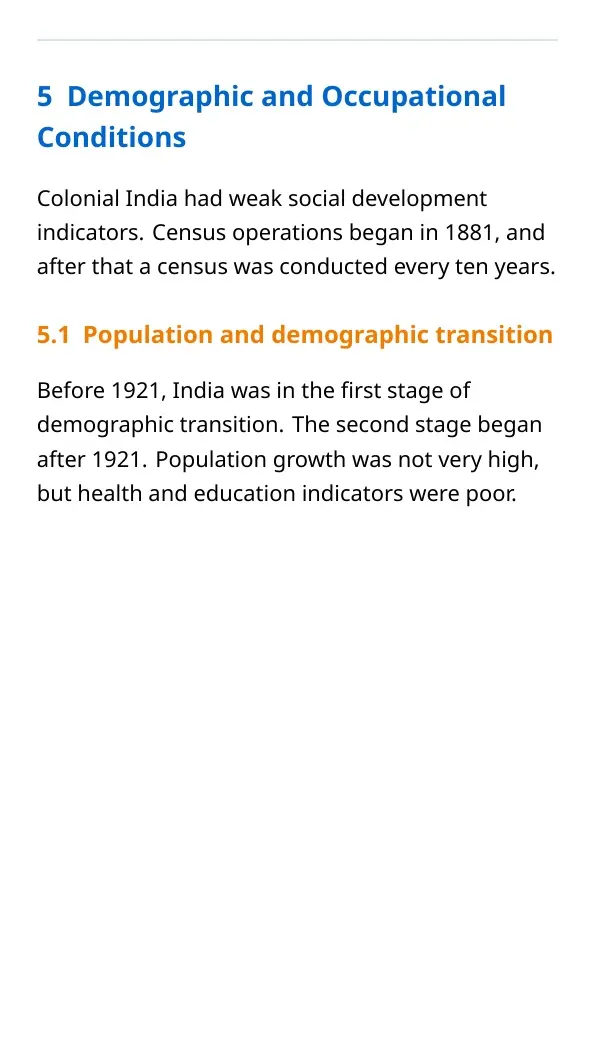
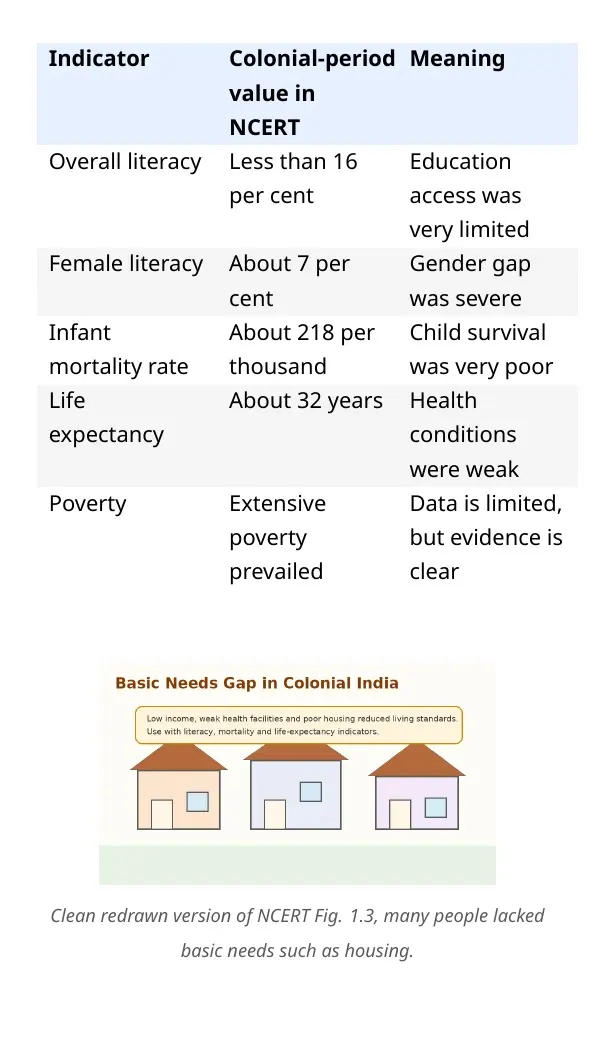
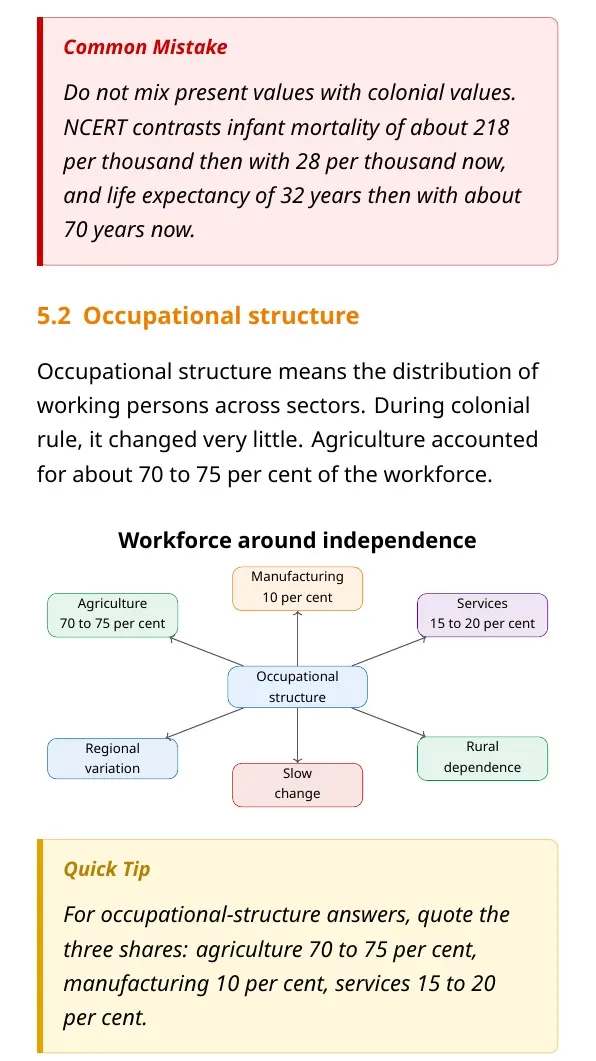
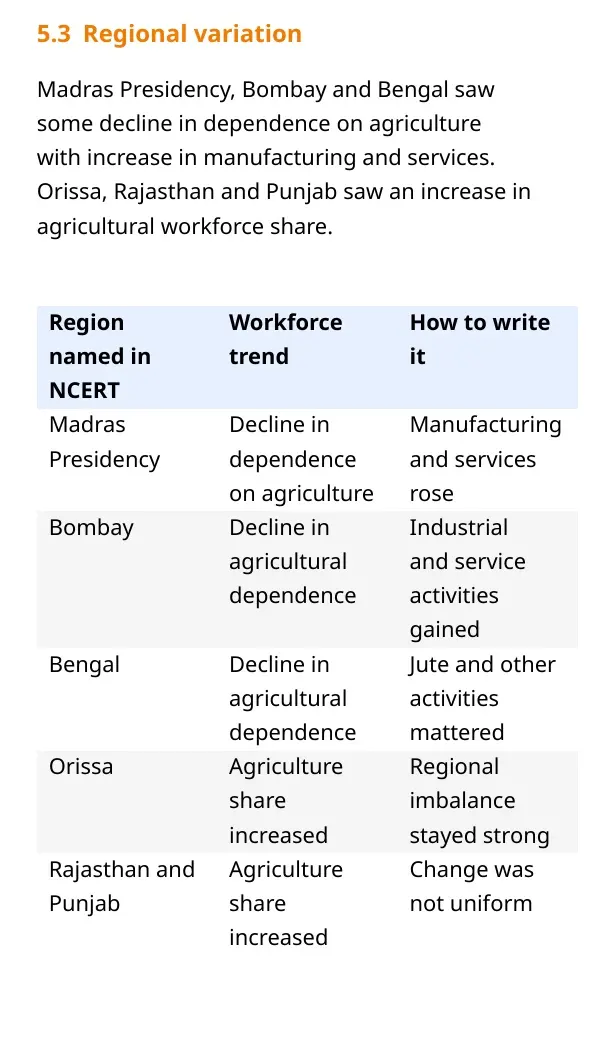
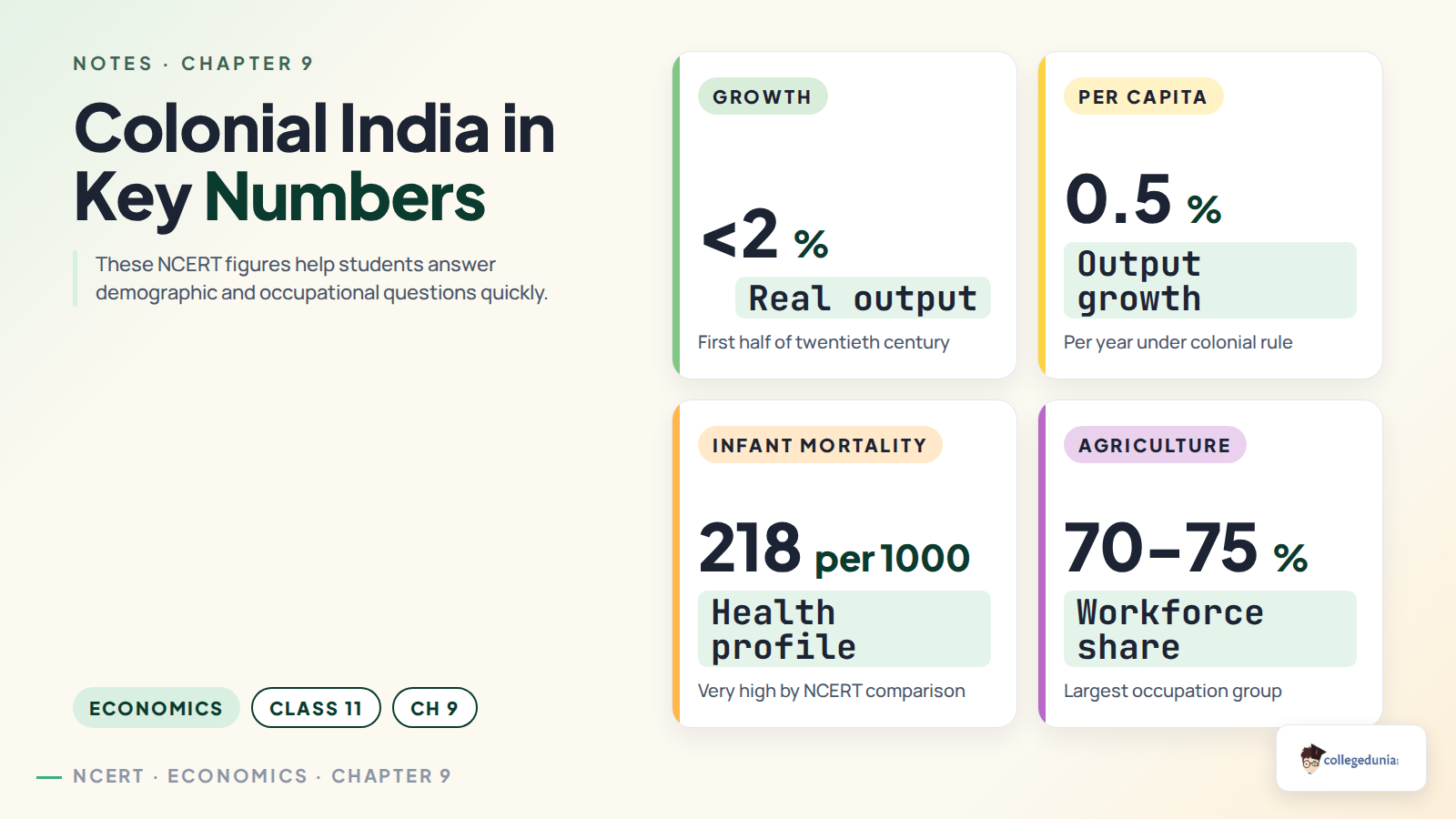
Demographic indicators show how limited development was. Before 1921, population growth was uneven, and after 1921 population rose faster. Literacy was low, female literacy was far lower, infant mortality was very high and life expectancy was only about 44 years. The occupational structure also stayed highly agrarian.
| Indicator | NCERT point | Revision use |
|---|---|---|
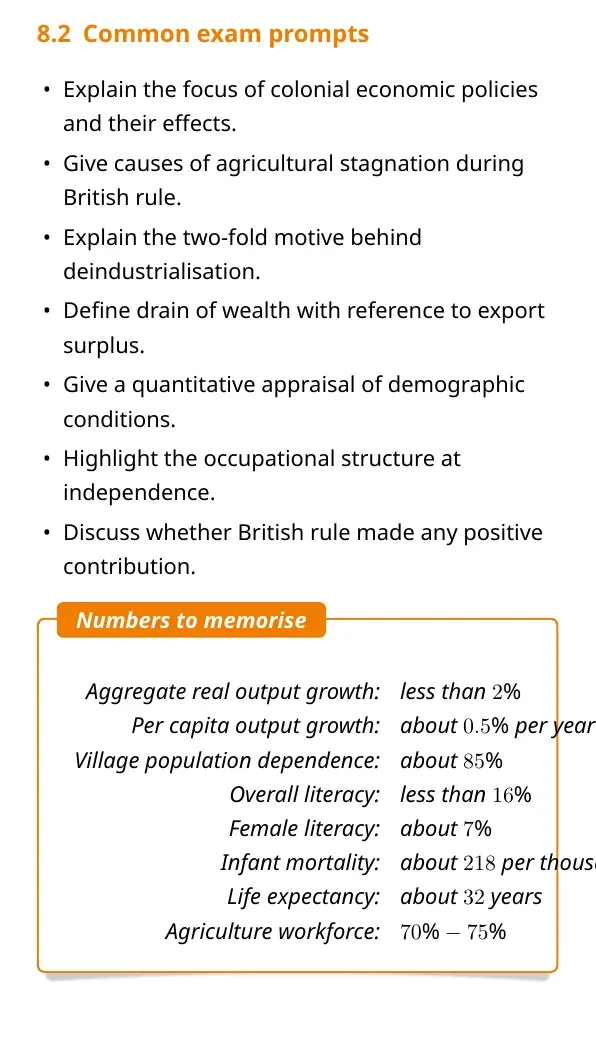
| Literacy | Overall literacy was below 16 percent | Shows low human development |
| Female literacy | About 7 percent | Use in gender gap answers |
| Infant mortality | About 218 per thousand live births | Supports poor health conditions |
| Life expectancy | About 44 years | Shows weak medical and nutrition standards |
| Workforce | 70 to 75 percent depended on agriculture | Use with occupational stagnation |
Infrastructure at the Time of Independence
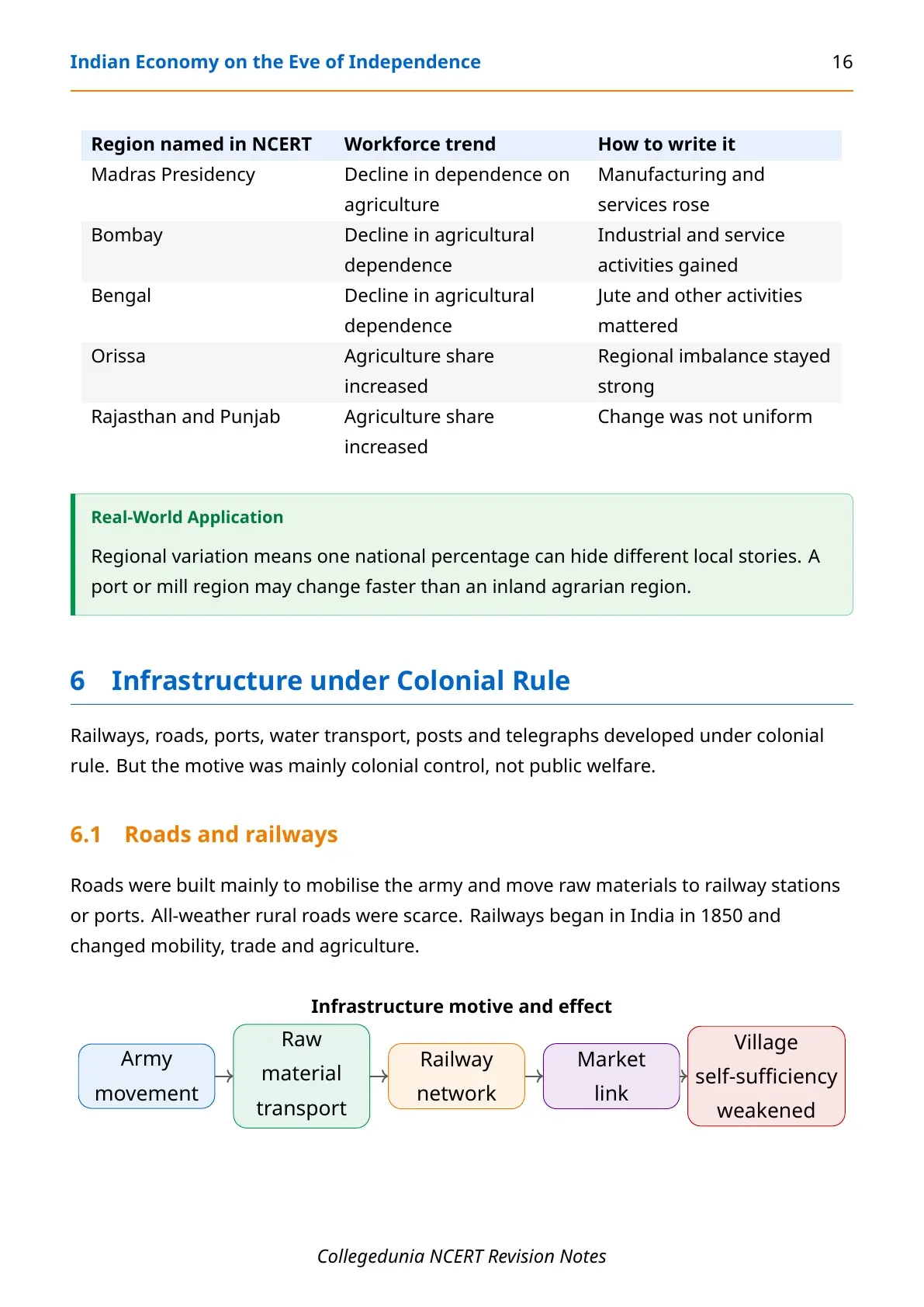
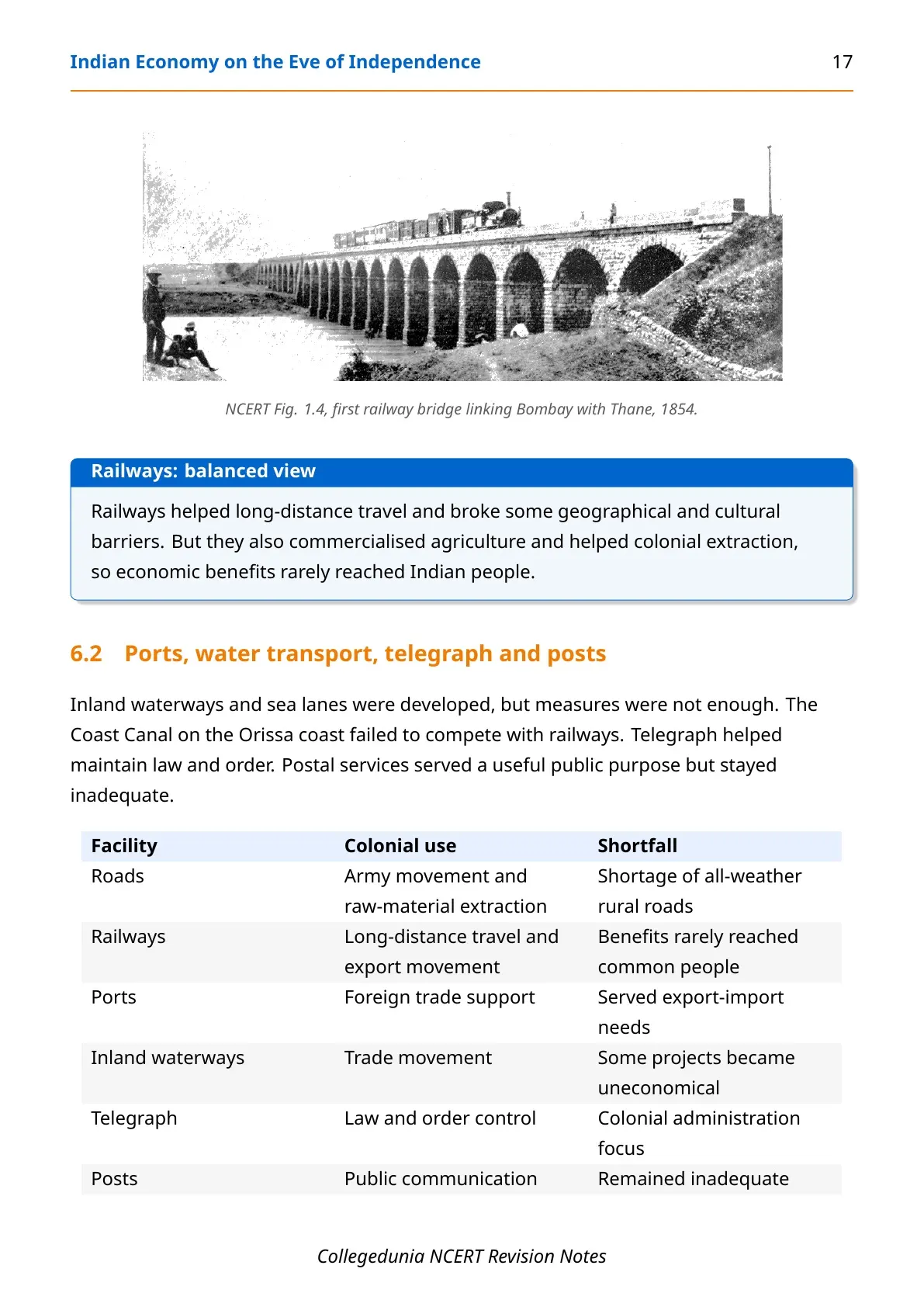
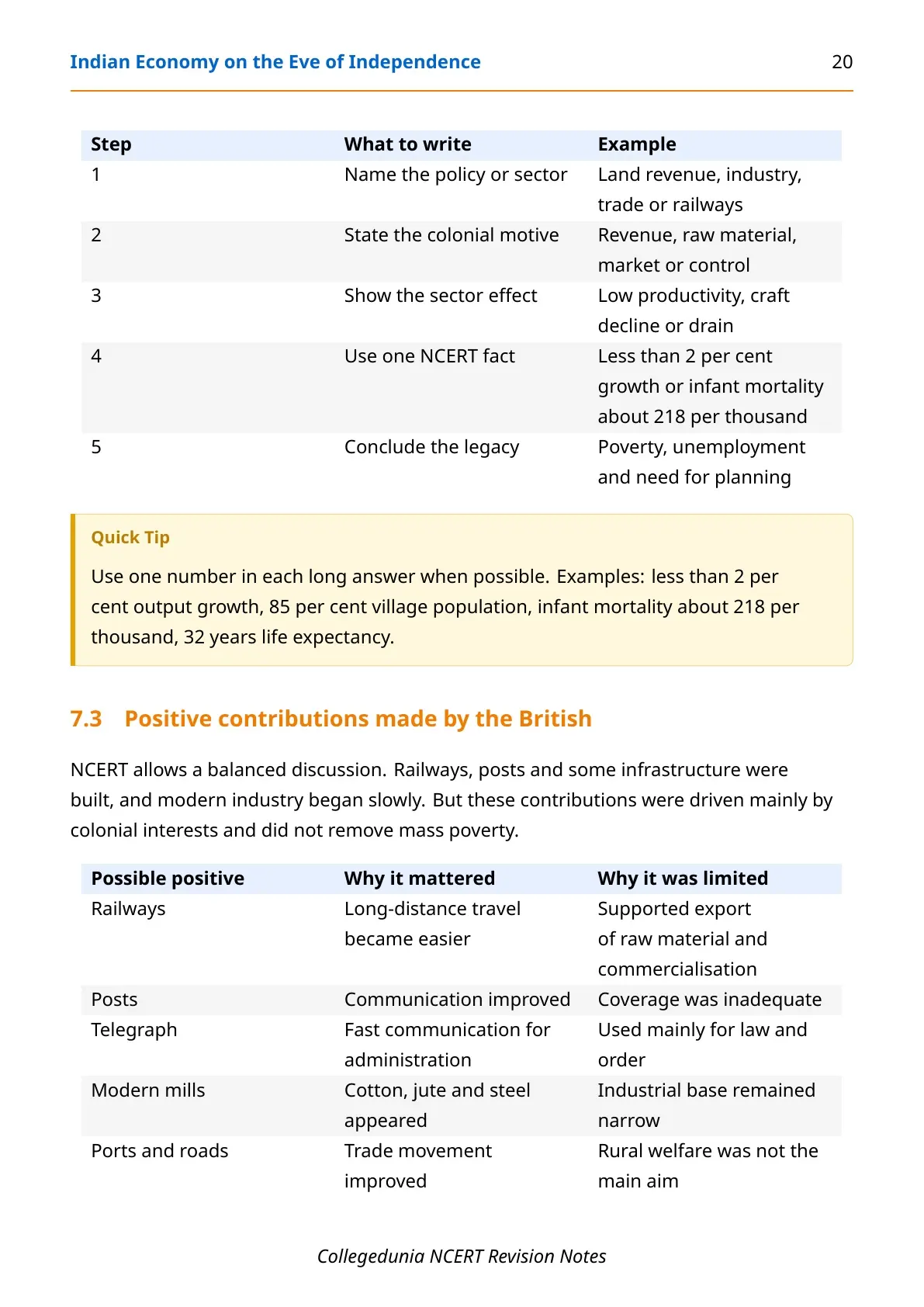
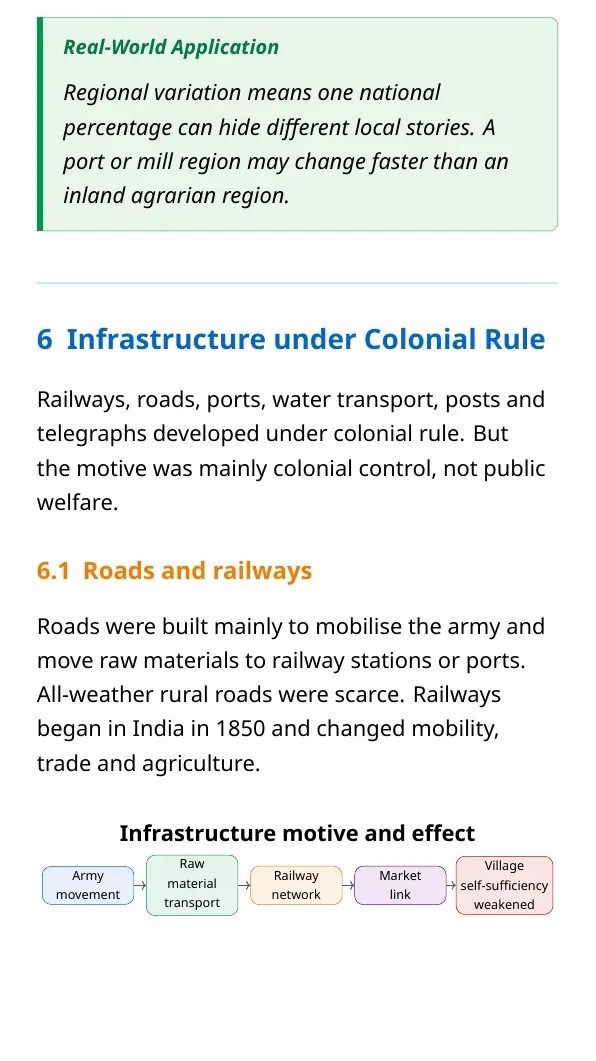
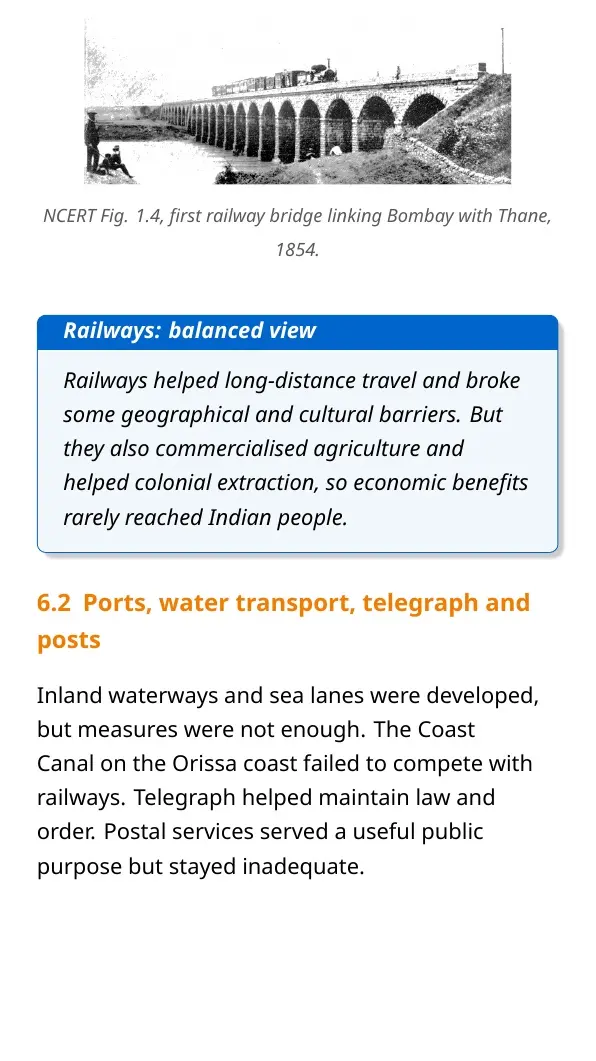
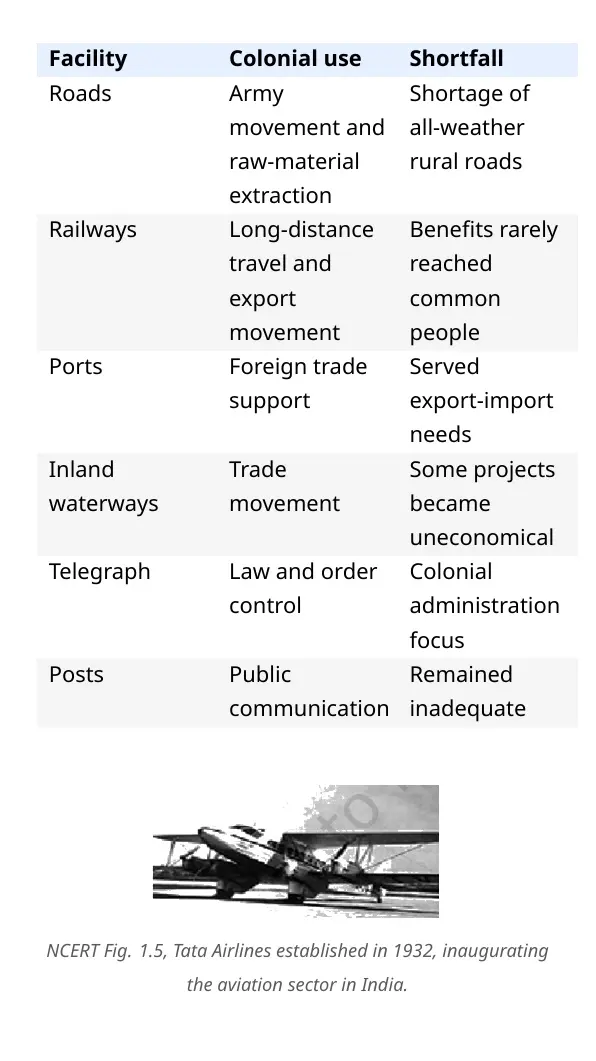
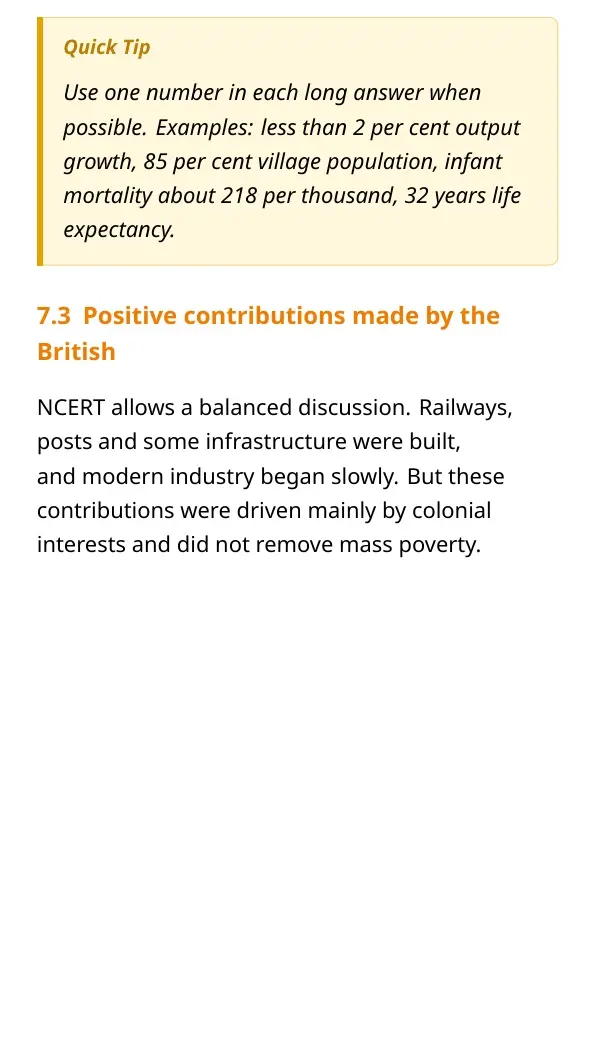
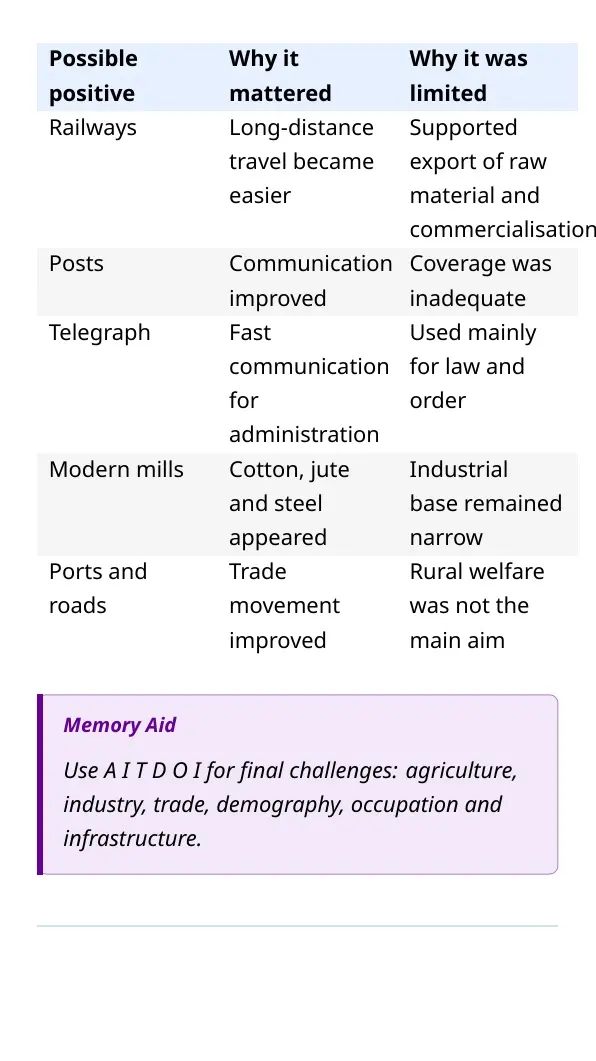
Railways, roads, ports, posts and telegraph services did expand under British rule, but their main purpose was colonial administration, troop movement and export-import trade. Railways helped connect regions and created some economic integration, yet the pattern of investment did not remove poverty or raise productivity broadly.
- Railways moved raw materials to ports and finished goods into inland markets.
- Road development remained limited outside military and administrative routes.
- Ports supported foreign trade more than balanced domestic industrialisation.
- Communication facilities helped administrative control and commercial coordination.
How to Write Answers from Chapter 9
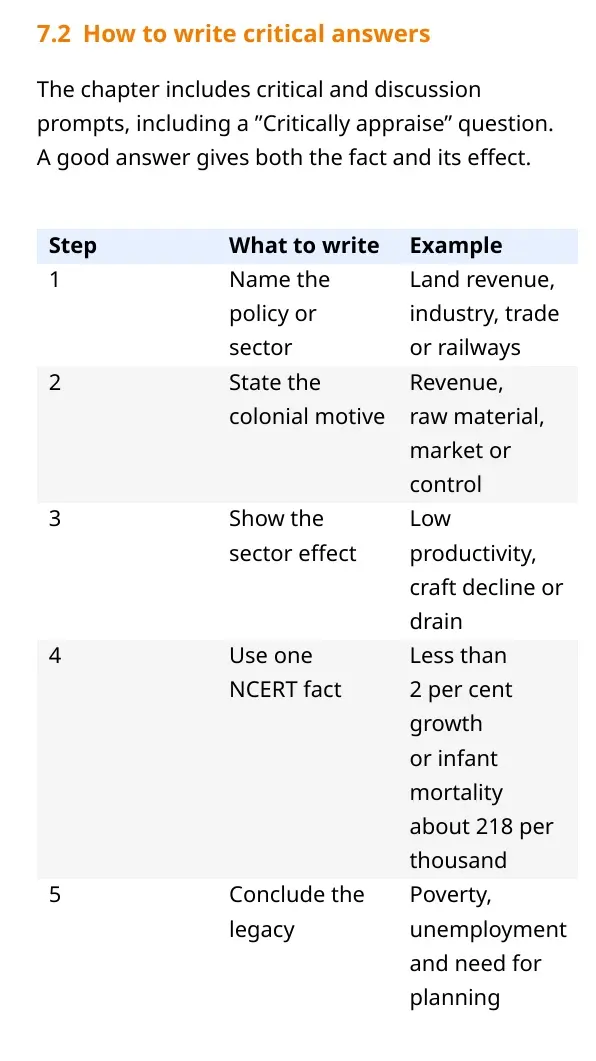
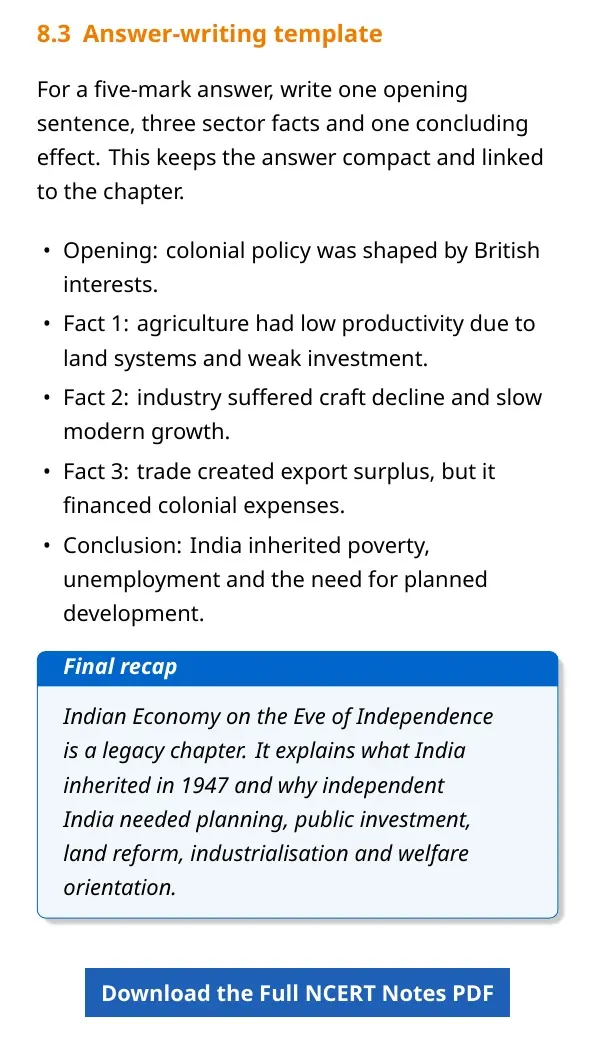
In exam answers, connect every fact to the colonial objective. For example, railways were an infrastructure gain, but the answer is incomplete unless it also explains why they served British trade and control. Similarly, agriculture was commercialised, but farmers did not gain enough because productivity, ownership security and investment stayed weak.
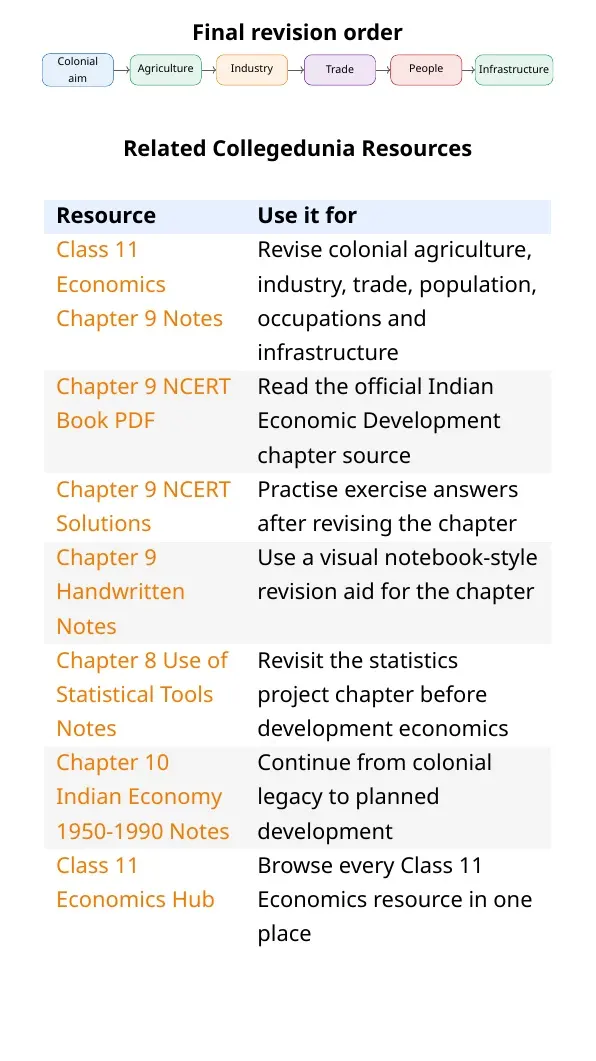
- Use sector headings: agriculture, industry, foreign trade, demography and infrastructure.
- Quote numbers only when they strengthen the answer.
- Explain both sides for infrastructure: benefit plus colonial purpose.
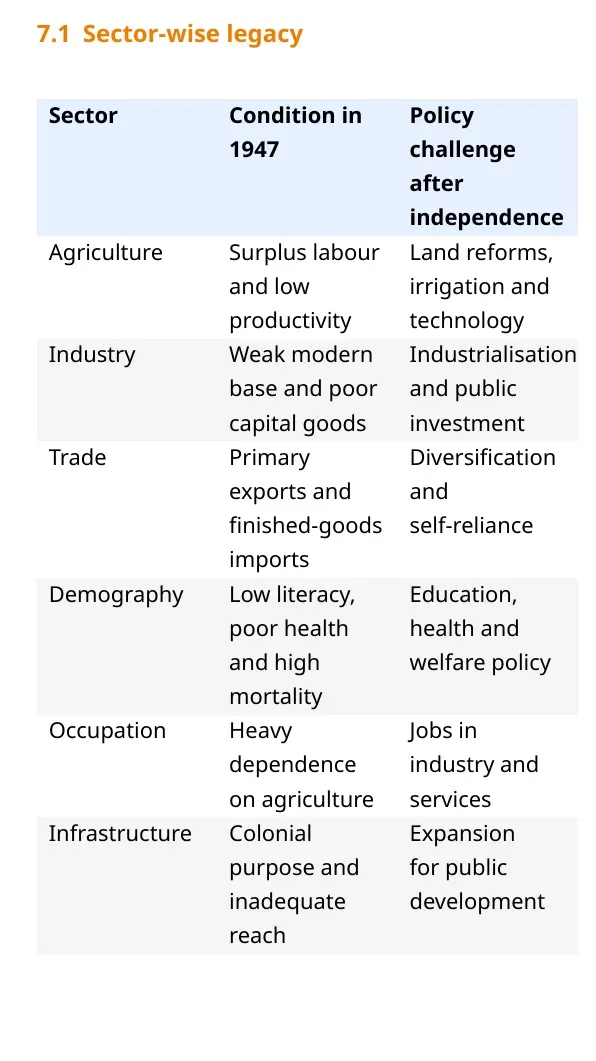
- End long answers with the 1947 challenge of poverty, low productivity and weak capital base.
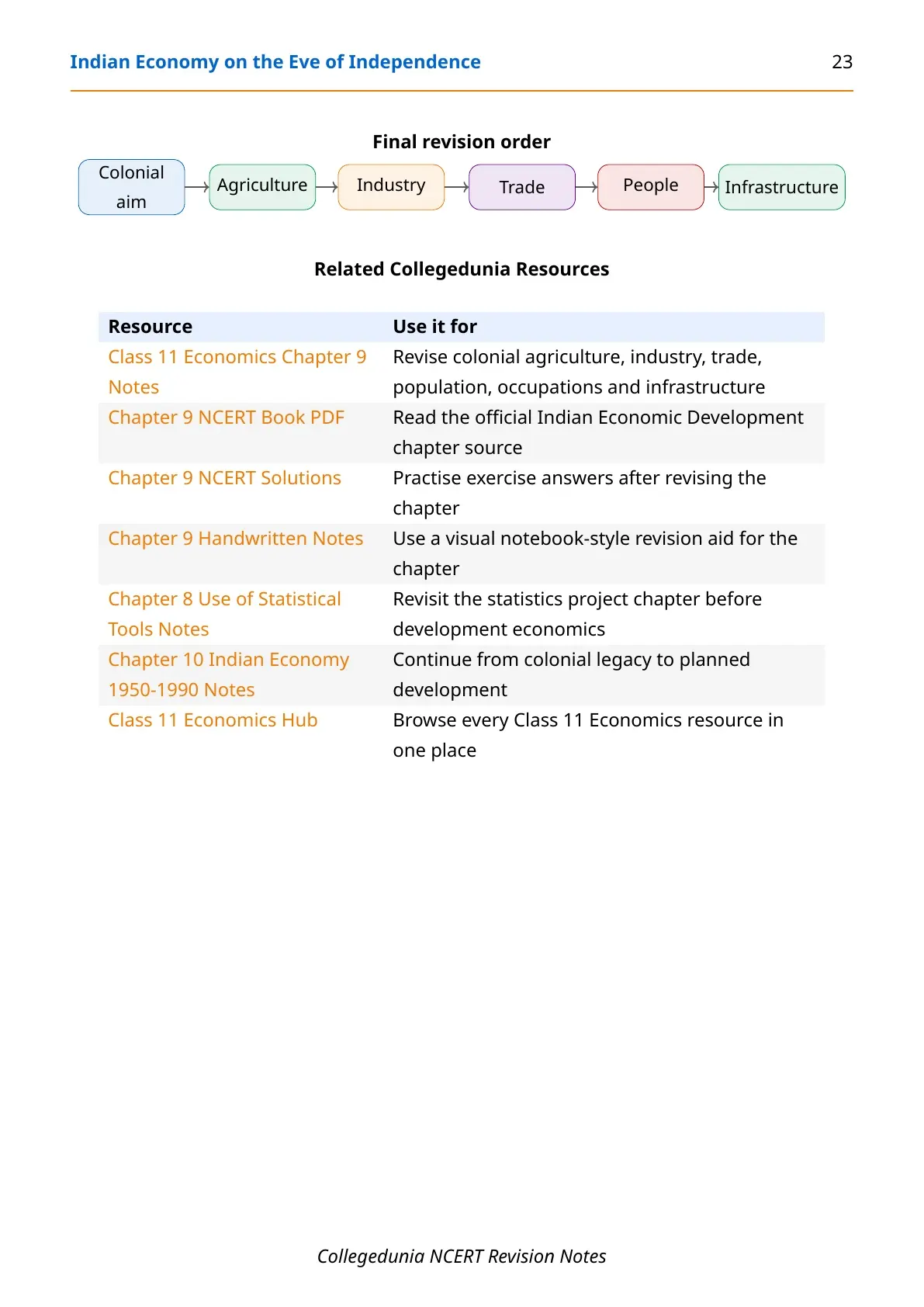
Related Class 11 Economics Resources for Indian Economy on the Eve of Independence
Also Check: use these links when you need the same chapter in another format.
| Resource | Best used for | Link |
|---|---|---|
| NCERT Book PDF | Official chapter wording and figures | Indian Economy on the Eve of Independence NCERT Book PDF |
| NCERT Solutions | Answers to textbook exercise questions | Indian Economy on the Eve of Independence NCERT Solutions |
| Handwritten Notes | Quick visual revision before tests | Indian Economy on the Eve of Independence Handwritten Notes |
Class 11 Economics Notes for All Chapters
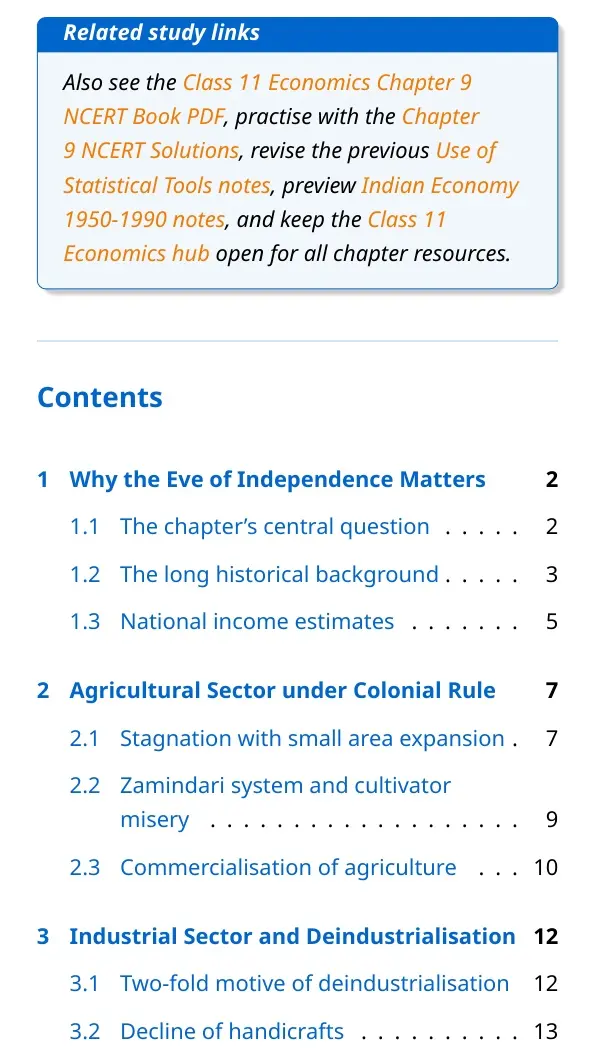
| Chapter | Notes Link |
|---|---|
| Chapter 1 | Introduction Notes |
| Chapter 2 | Collection of Data Notes |
| Chapter 3 | Organisation of Data Notes |
| Chapter 4 | Presentation of Data Notes |
| Chapter 5 | Measures of Central Tendency Notes |
| Chapter 6 | Correlation Notes |
| Chapter 7 | Index Numbers Notes |
| Chapter 8 | Use of Statistical Tools Notes |
| Chapter 9 | Indian Economy on the Eve of Independence Notes |
| Chapter 10 | Indian Economy 1950-1990 Notes |
Indian Economy on the Eve of Independence Class 11 Economics Notes FAQs
Ques. What is covered in Class 11 Economics Chapter 9 Indian Economy on the Eve of Independence notes?
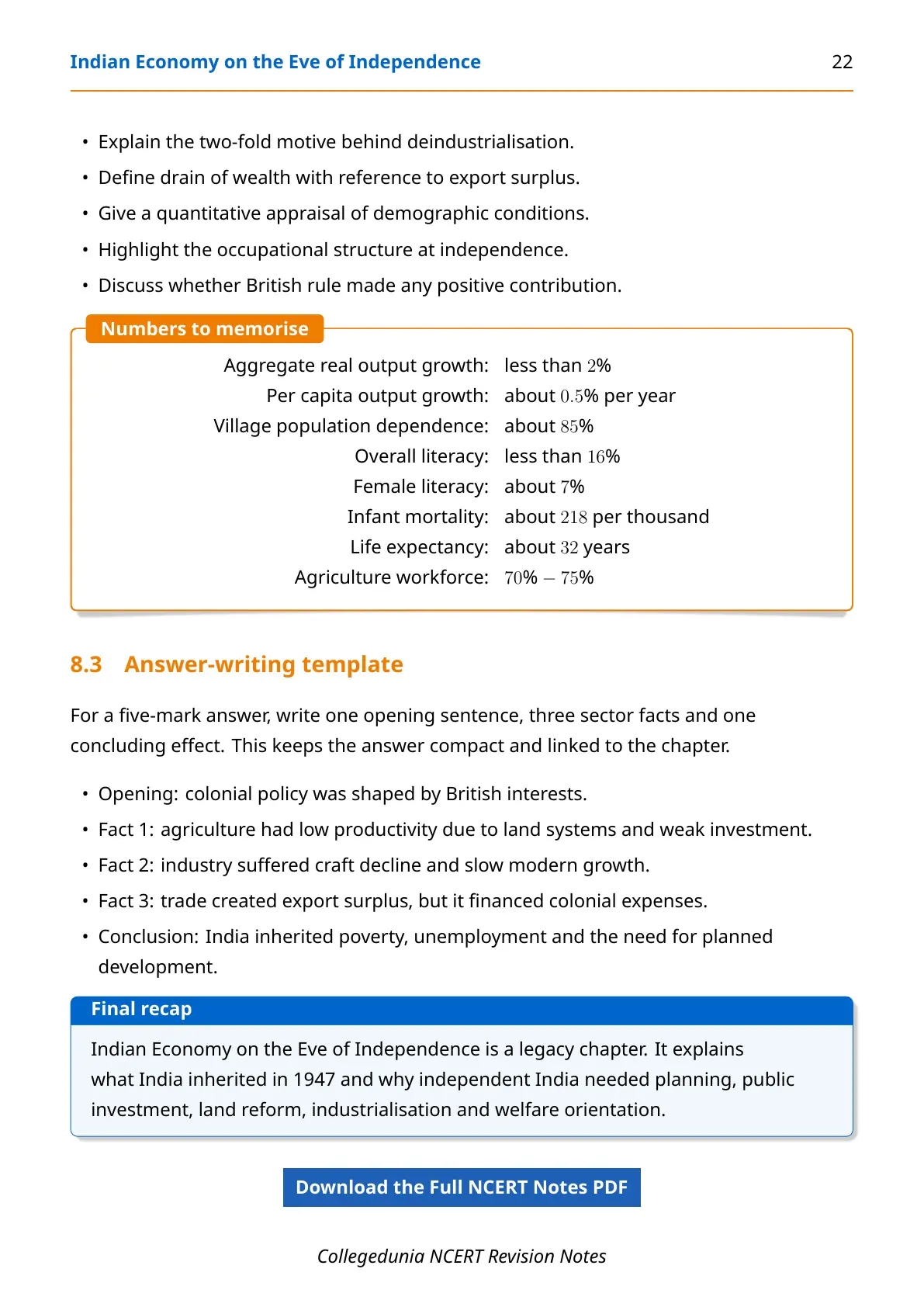
Ans. The notes cover colonial economic policy, agricultural stagnation, deindustrialisation, foreign trade, drain of wealth, demographic indicators, occupational structure and infrastructure.
Ques. Why was Indian agriculture stagnant before independence?
Ans. Agriculture stayed stagnant because of zamindari pressure, low technology, limited irrigation, lack of investment and commercial crop pressure under colonial trade needs.
Ques. What does deindustrialisation mean in this chapter?
Ans. It means the decline of traditional Indian handicraft industries when machine-made British goods entered Indian markets and local producers lost demand.
Ques. Was infrastructure development under British rule useful for India?
Ans. It had some useful effects, such as regional connection through railways, but its main colonial purpose was trade, control and movement of troops and raw materials.



Comments